
❤️ Would you like to save this?
A rounder face doesn’t suddenly get rounder because the hair gets shorter. That’s the fear that keeps plenty of women hanging onto length they don’t even particularly like. The more interesting question is what the cut does around the face: where the widest point lands, whether the hair collapses against the cheeks or moves away from them, how much neck shows, and whether the eye gets a strong line to follow.
Get those choices right and short hair can be surprisingly liberating. A cropped nape can uncover the neck. An angled bob can move its weight below the cheeks. A deep side part can break up symmetry. Texture can create movement where a solid curtain of hair once just hung there.
These 30 before-and-afters imagine women around 55 tackling the same problem from very different directions. There are pixie-bobs, blunt perimeters, waves, dramatic side sweeps, silver streaks, copper layers, and cuts that stop everywhere from the nape to the collarbone. No single haircut is going to “fix” a face shape — nor should it — but these show how dramatically proportion can change when the haircut starts working with the face instead of simply surrounding it.
FYI, thanks to AI imagery software, we’re able to create very specific fashion and hairstyle examples to illustrate the points being made. In some cases, imagery is exaggerated to hammer home the point. Also, assume links that take you off the site are affiliate links such as links to Amazon. this means we may earn a commission if you buy something.
30. Blonde Pixie-Bob, Side Part, and a Neck That’s Suddenly Part of the Look
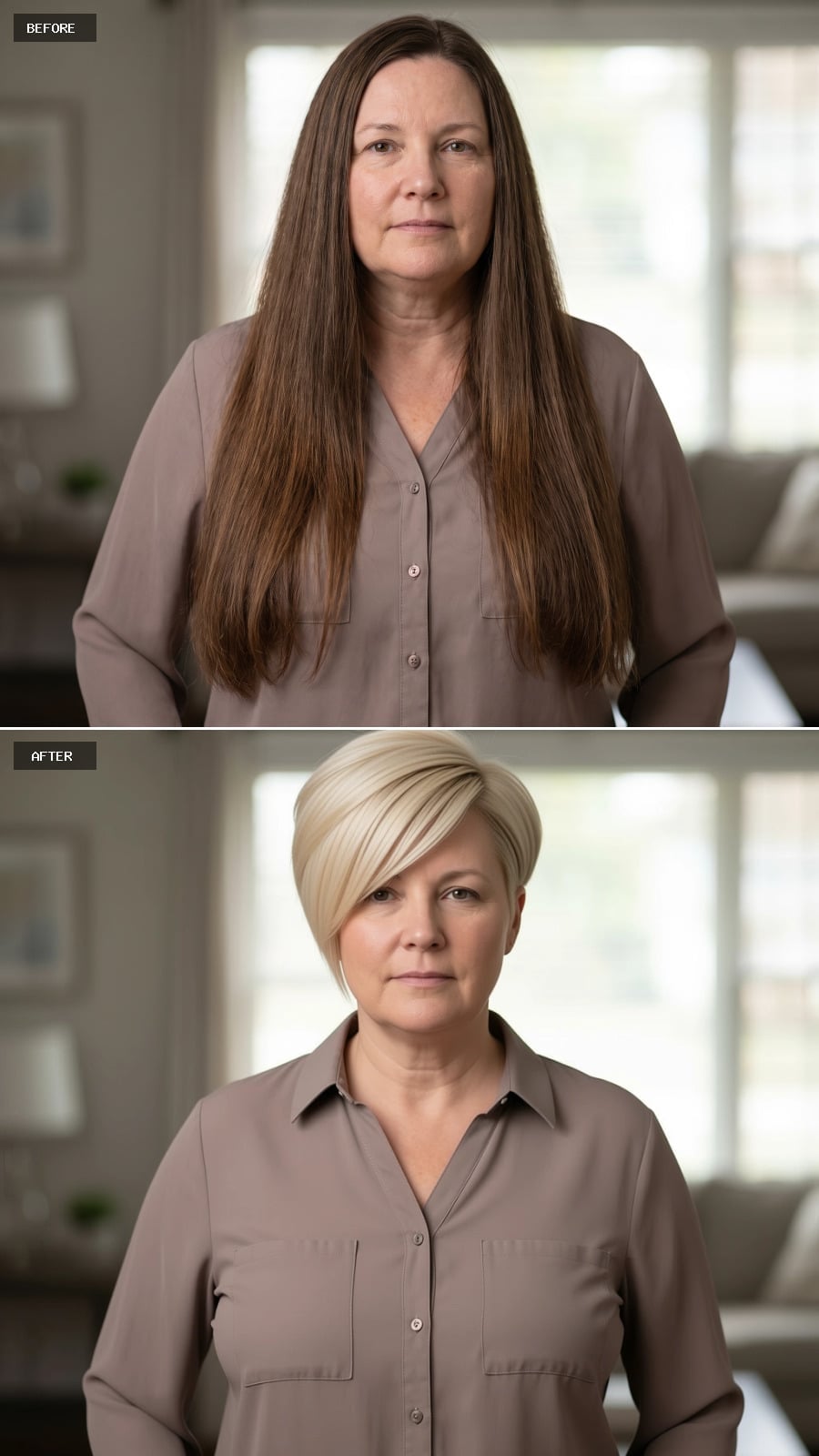
Cut close at the nape and swept decisively to one side, this blonde pixie-bob proves the gallery’s point almost immediately: shorter doesn’t have to mean wider. Exposing the neck changes the proportions before the color or styling even enters the conversation.
A deeper, slightly ashy root moves into brighter blonde at the ends, keeping the crop dimensional instead of flat. The longer side pieces skim past the temple while the back stays compact. It’s short enough to feel like a real departure, but the sweep across the forehead gives it softness where a severe crop might have felt abrupt.
29. Blonde and Structured: How a Jaw-Length Bob Redraws the Frame
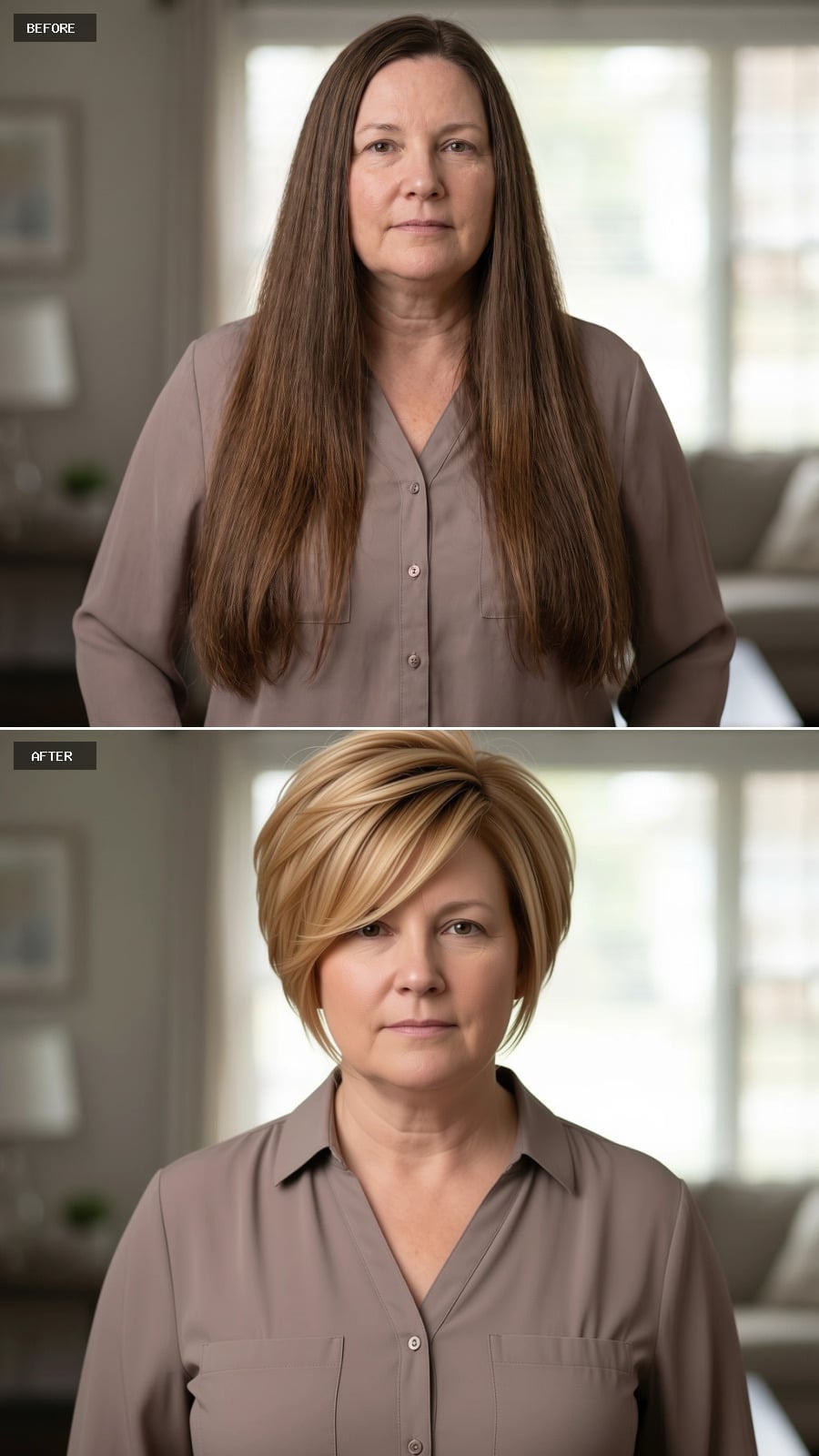
Her bob lands right around the jaw, but it isn’t sitting there like a helmet. The side sweep creates movement across the forehead while subtle layering keeps the perimeter from becoming one rigid horizontal line.
Warm golden blonde is broken up with lighter pieces around the top and front, so the color has movement as well as the cut. The result is clean and controlled without looking boxy — a useful reminder that “bob” describes a length, not one single silhouette.
What Our Readers Say
- When our readers loved a hairstyle, the top reason was the overall style, followed by the cut shape and how much younger it looked.
- When ThreadCurve readers disliked a hairstyle, colour was the most common reason, ahead of the cut looking dated or too severe.
From ThreadCurve reader polls and votes.
28. Red Layers Borrow Height Instead of Piling Width at the Cheeks
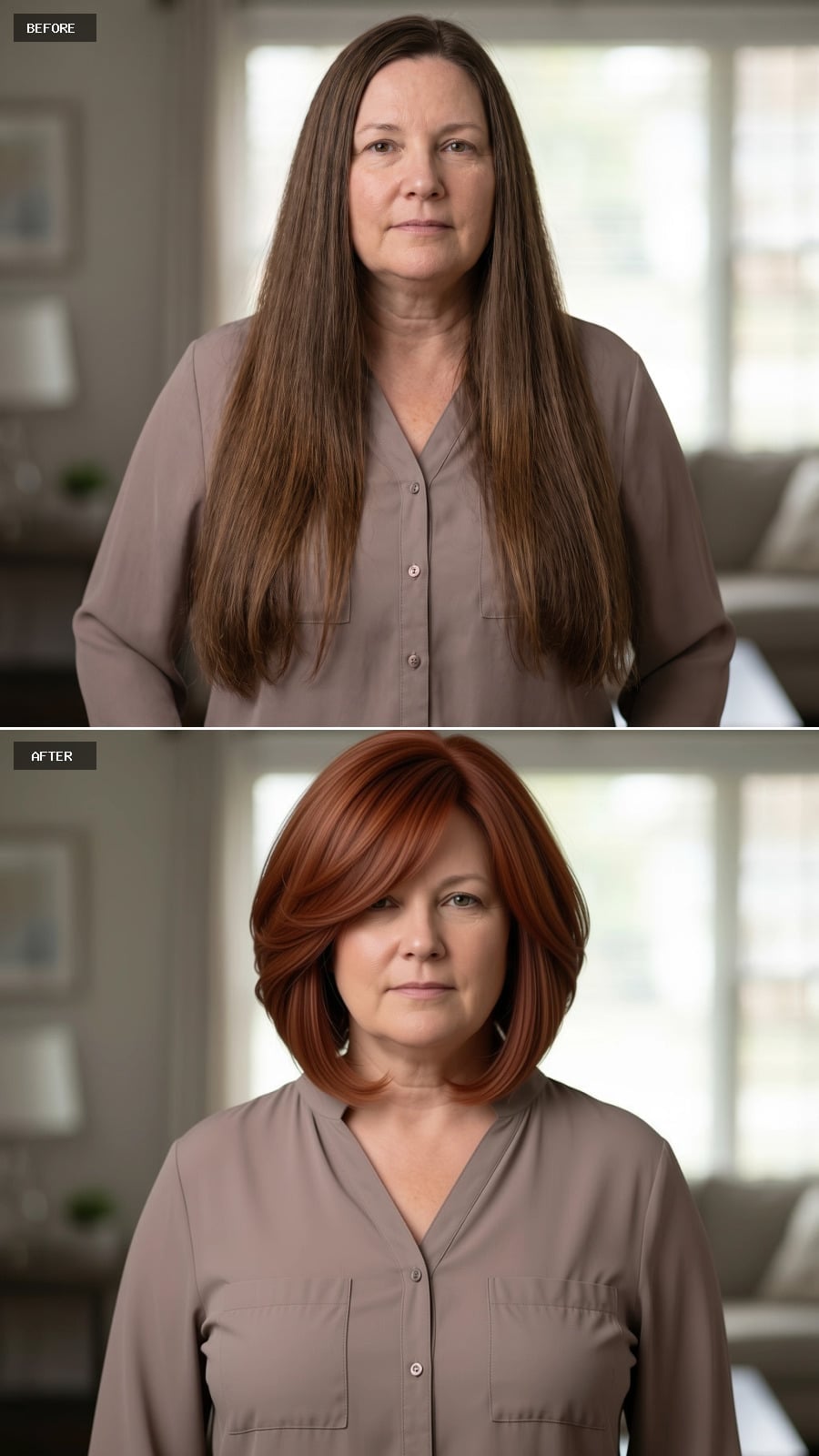
Copper-red shifts between auburn and rust as the light moves across this shoulder-skimming cut. The most important choice isn’t the color, though. The upper layers rise through the crown while the perimeter angles slightly longer toward the front.
That moves the widest part of the hairstyle away from the jaw. The layers then fall back toward the face rather than ballooning beside it, creating a silhouette that feels lifted without looking teased.
Warm red gives the whole thing presence, but the cut would still work if the color disappeared tomorrow. The architecture is already there.
27. Platinum Pixie-Bob Goes Short Without Going Severe
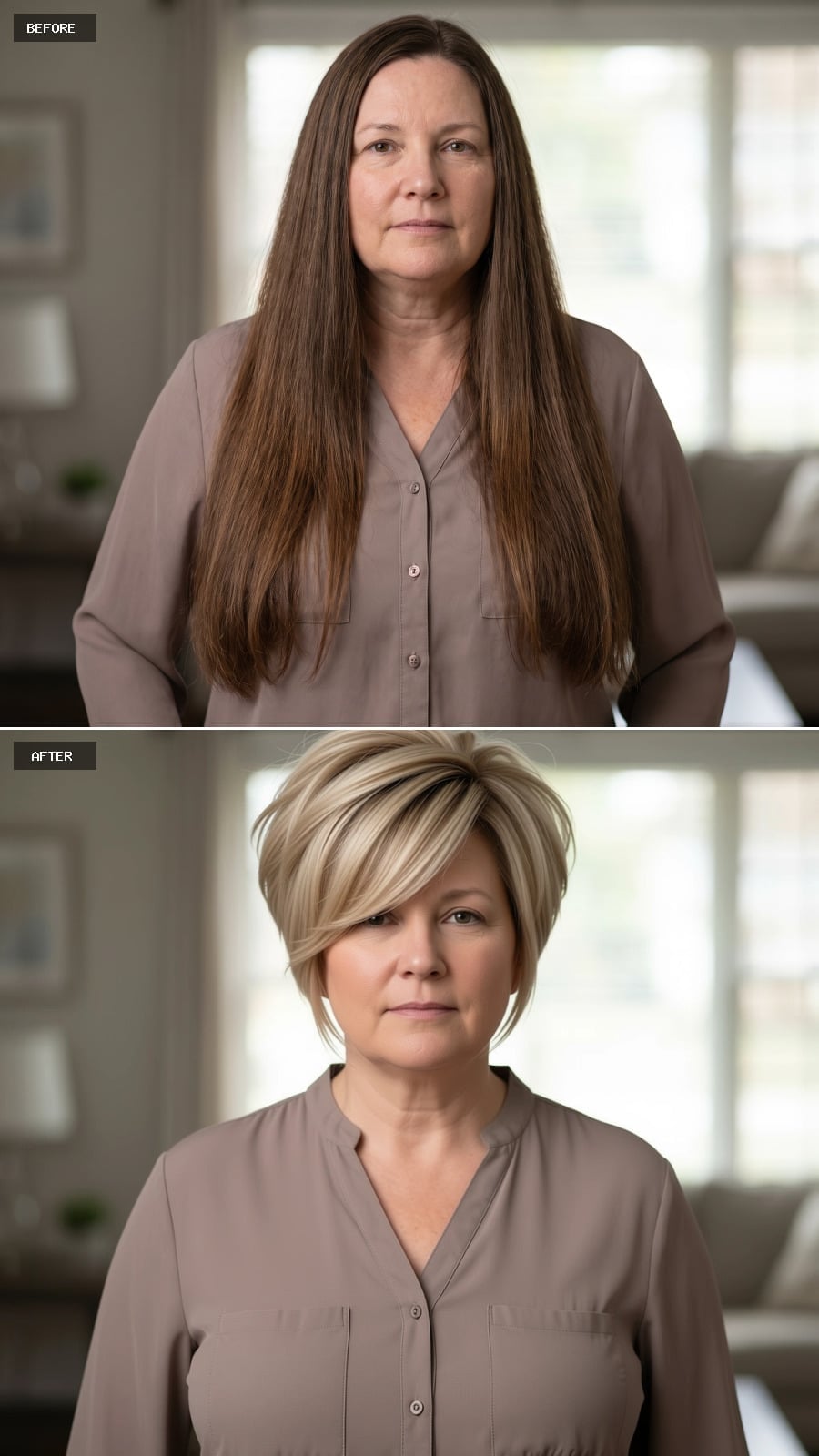
This pixie-bob keeps more length through the top and front while the back stays considerably closer, giving the haircut direction instead of one rounded outline. Layers sweep past the temple and toward the cheekbone, so the crop still has movement despite losing so much length.
Cool platinum near the top softens into a slightly sandier blonde through the ends. That variation keeps the hair from becoming one solid pale shape.
The simple V-neckline underneath leaves plenty of open space below the jaw, making the haircut look even lighter. Nothing is overloaded. That’s why the shortness feels confident rather than aggressive.
26. Shorter, Rounder Cut — Yet the Face Reads Longer. Here’s Why.
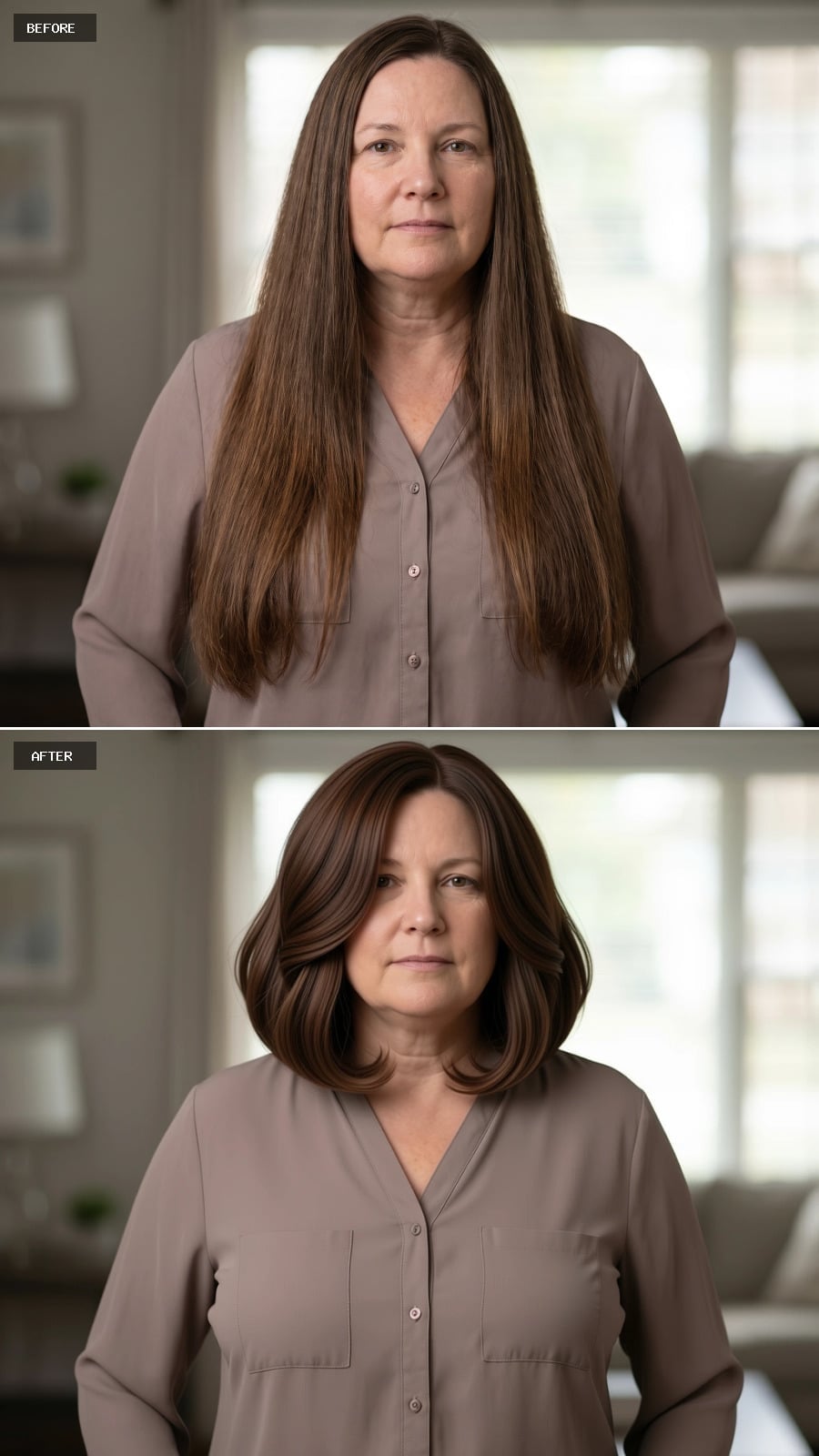
This collarbone-length bob is one of the softer options in the group. The ends curl inward and then release slightly, so the perimeter never lands as one heavy shelf across the lower face.
Caramel ribbons through the dark brown base keep the surface from looking dense. The interesting part is how much movement happens below the cheeks rather than directly beside them. It’s not dramatically short, but it shows that losing length doesn’t require losing softness.
25. Copper Waves Put the Width Below the Jaw Where It Can Actually Help
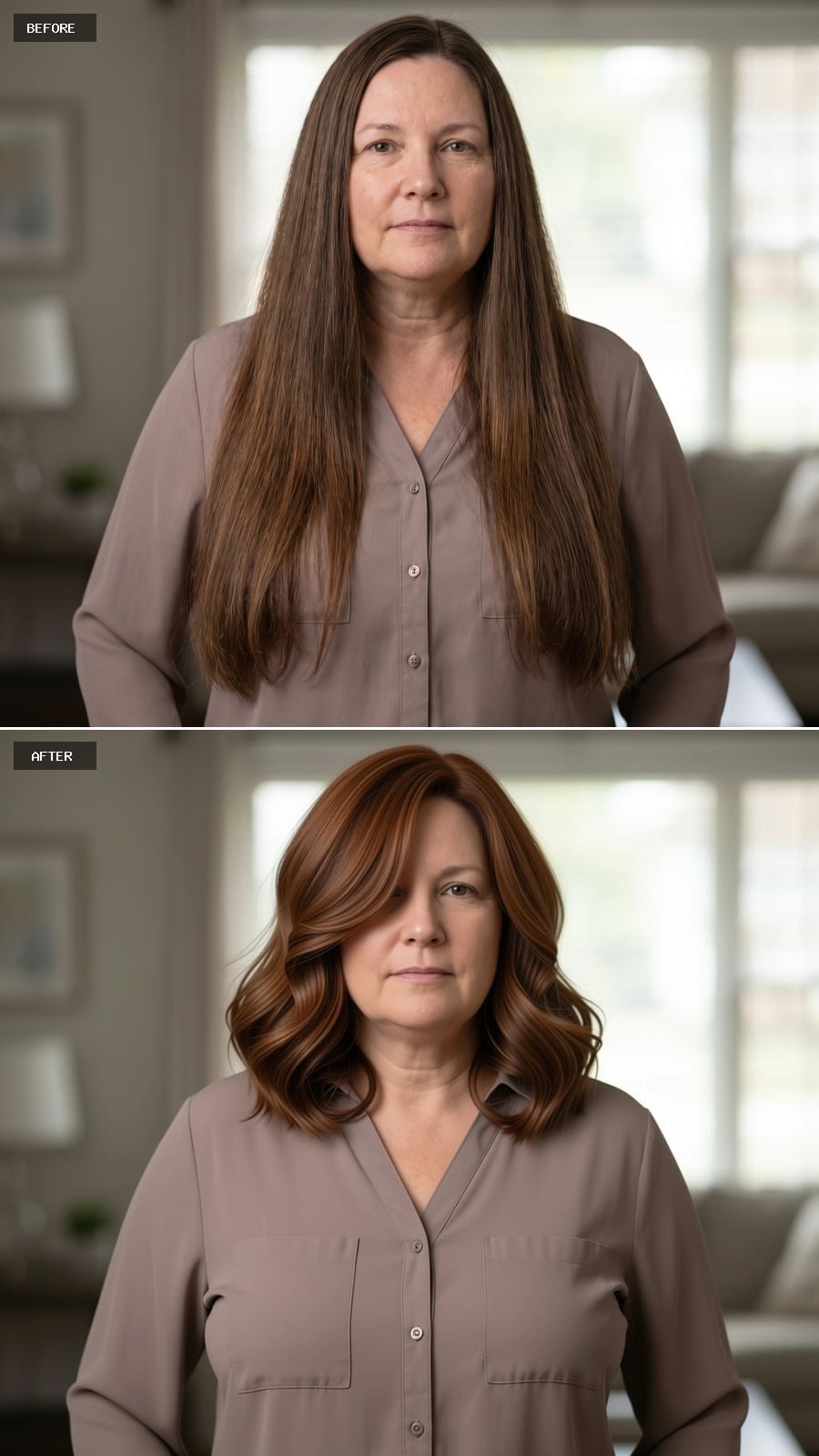
Copper-auburn gets brighter through the crown, but the standout feature is the shape at the bottom. The cut lands just below the jaw and curls outward, putting movement beneath the fullest part of the face instead of directly beside it.
That outward kick might sound risky on paper, yet its placement is what makes it interesting. The hair isn’t expanding at cheek level; it’s creating a wider base lower down, almost like a subtle inverted triangle.
The surprise isn’t that the ends flip outward. It’s where that movement begins — below the jaw rather than beside the cheeks.
24. Deep Espresso and a Side Sweep Give a Classic Bob More Edge
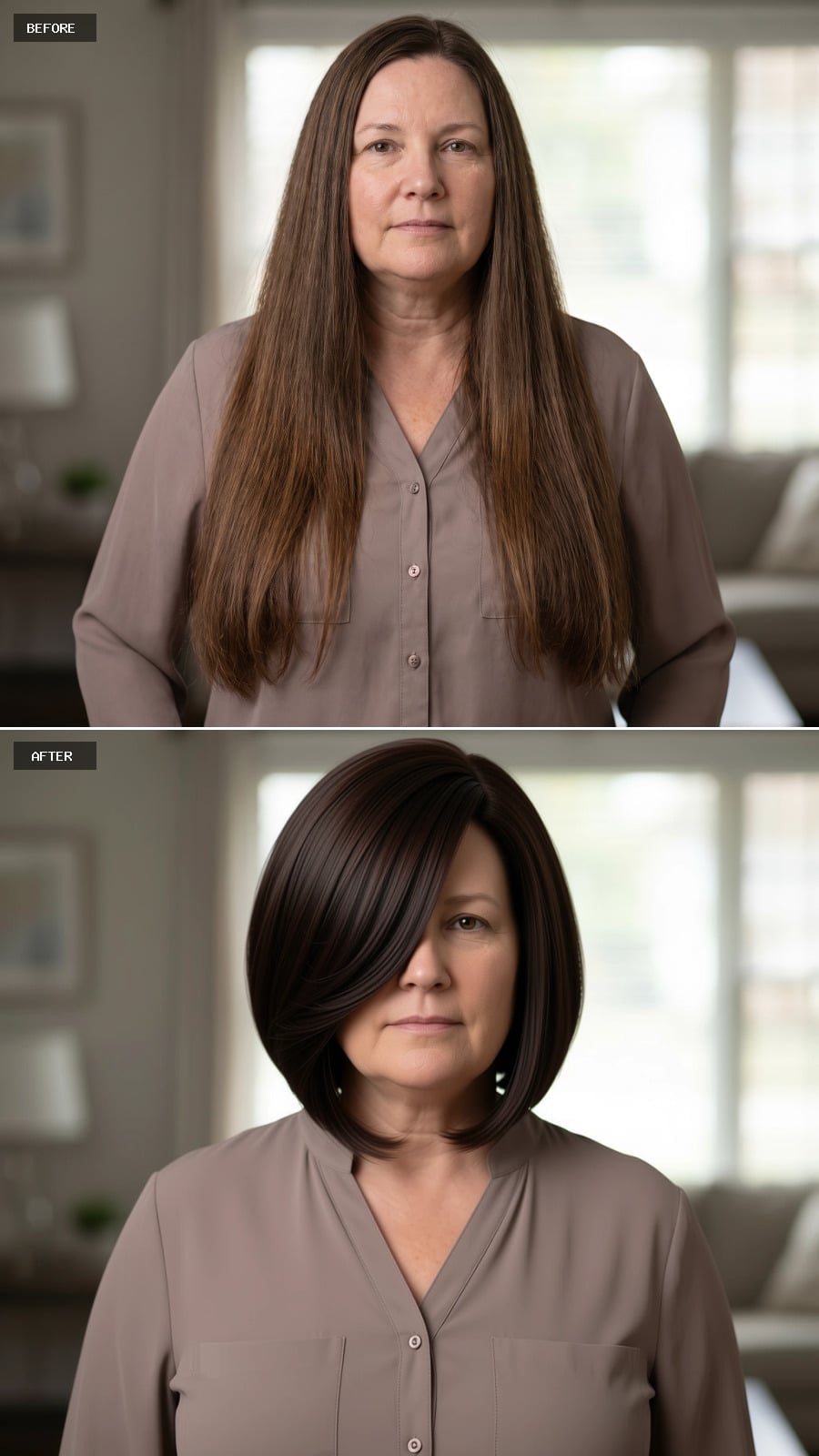
The shape here is familiar — chin-length bob, deep side part — but the styling keeps it from becoming predictable. One front section travels across the forehead before joining the rest of the cut, creating a clear directional sweep through an otherwise rounded silhouette.
The espresso-brown color makes the outline especially easy to read. Rather than treating darker hair as a magic slimming trick, the useful lesson is contrast: a strong, uninterrupted perimeter makes every angle of the cut more visible.
In our reader polls on bob length, shoulder, chin and jaw lengths came out as a statistical tie, so there is no single right answer here.
23. Blonde Bob With a Blunt Perimeter Makes Restraint Look Powerful
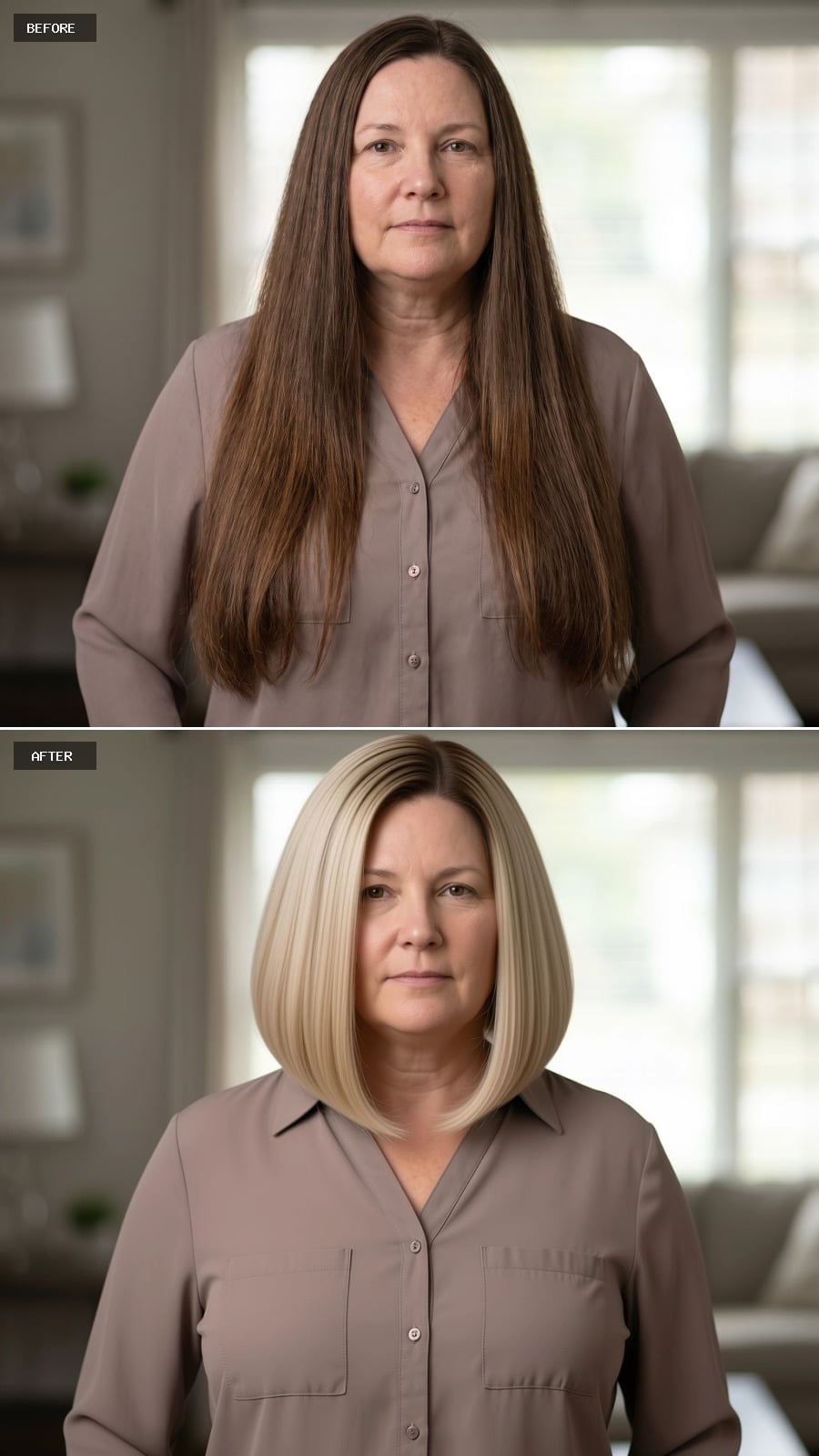
Sandy blonde with almost-platinum pieces through the ends gives this jaw-length bob a crisp finish without making it look hard. The perimeter is noticeably cleaner and more solid than many of the layered cuts in the gallery.
What saves it from looking overly round is the slight asymmetry through the part and front. One side carries a little more visual weight, so the face never gets framed by two perfectly matching halves. Quiet haircut, smart proportion.
22. Burgundy Bob Uses Asymmetry Instead of Extra Length
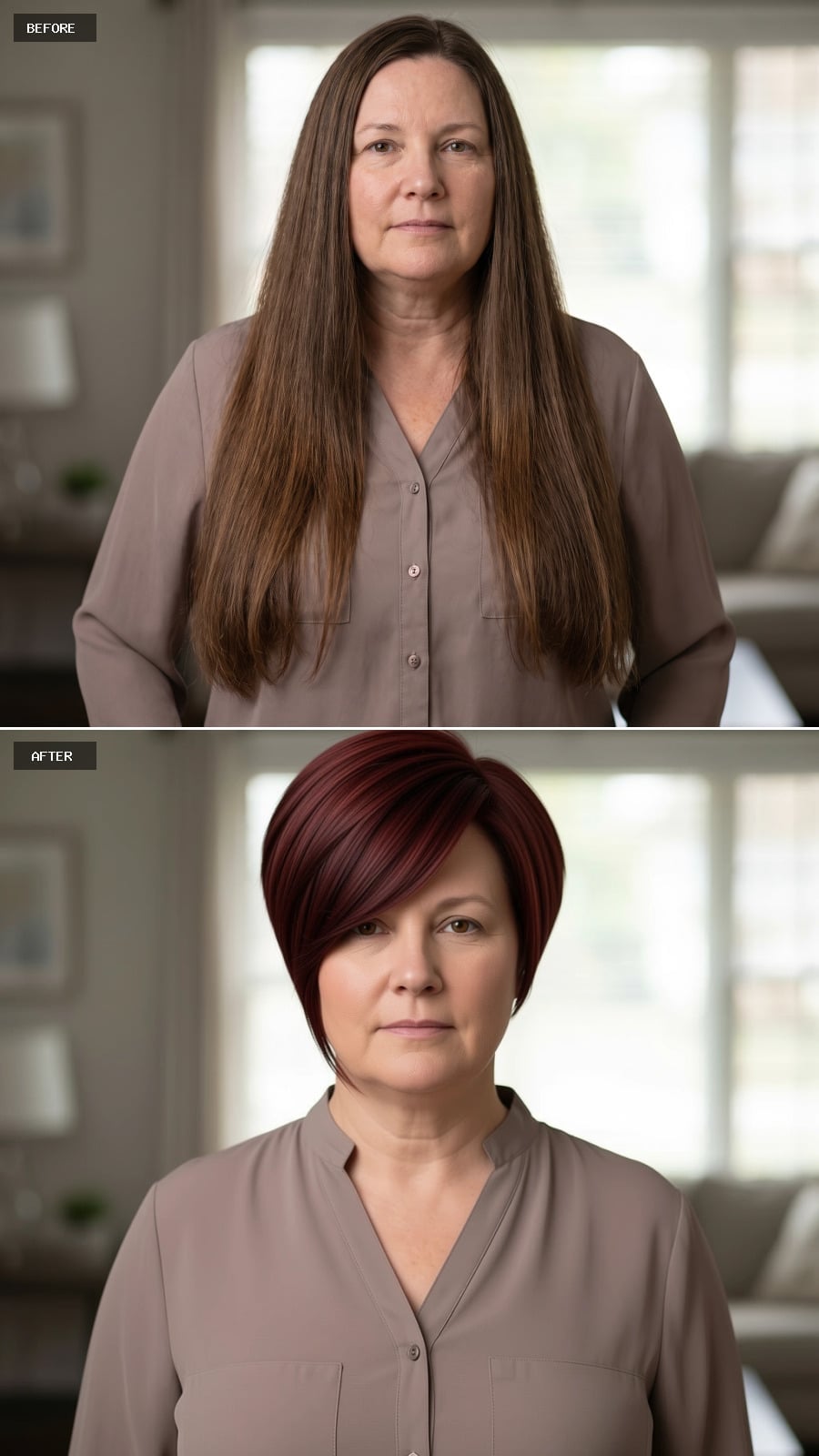
Deep burgundy with darker underlayers gives this short bob plenty of depth, but the real personality comes from the asymmetry. Hair sits close through the nape, then sweeps farther across the forehead on one side.
Instead of framing the face with two matching curtains, the cut deliberately throws the balance off. That makes the eye follow the hairstyle rather than simply tracing the face’s outline. Short hair with a little mischief is often more interesting than short hair trying to behave.
21. Silver and White Layers Give a Gray Bob Real Dimension
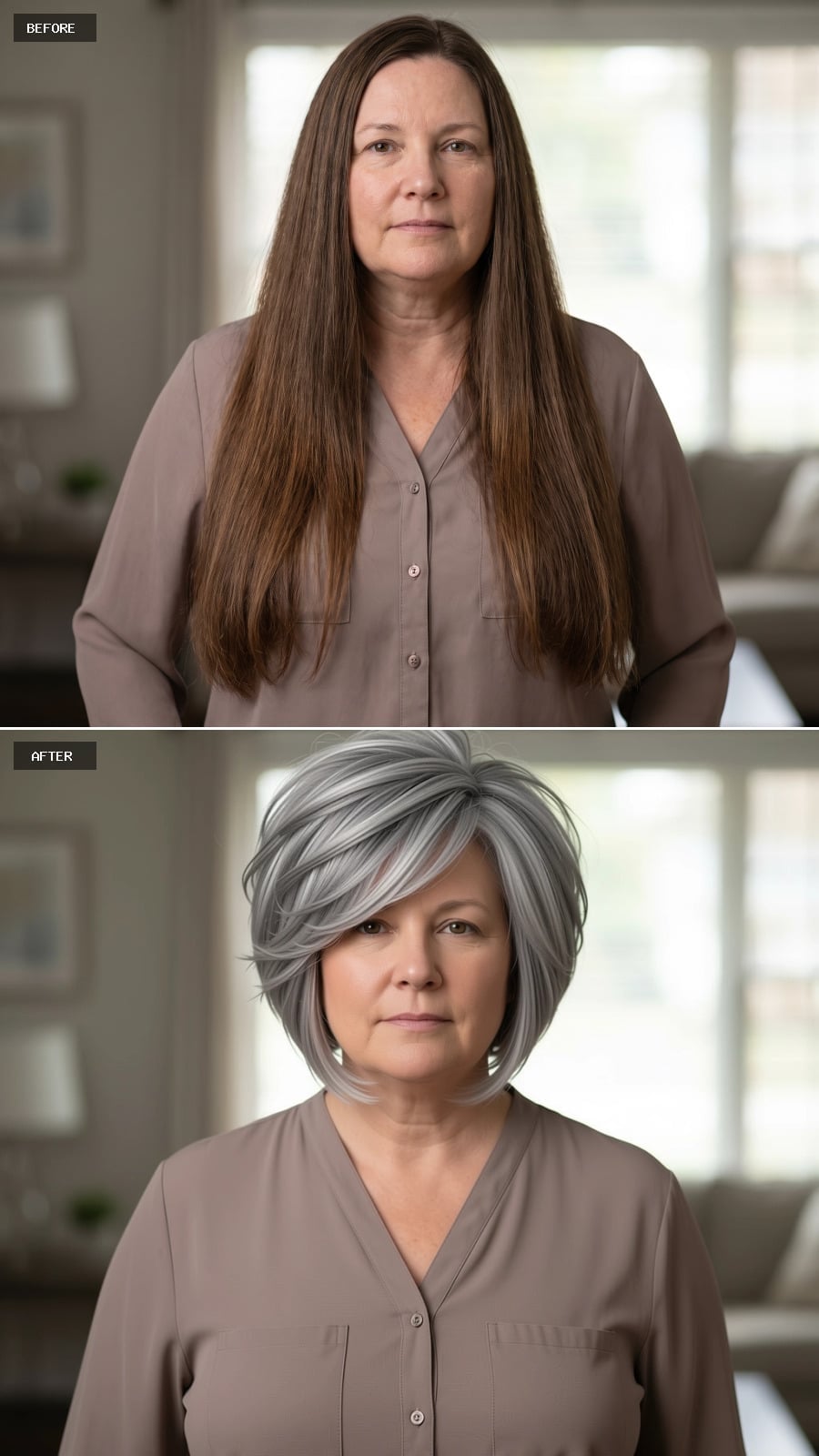
Silver and white streak together through a layered bob that sits just below the jaw. The longest pieces bend inward at the chin, so the shape narrows as it approaches the bottom instead of opening wider.
The color is especially good here because it isn’t one flat gray. Pale streaks around the face sit against deeper ash through the back, giving the hair visible depth even before the layers move.
A side sweep and gentle lift through the top finish the shape without making it look overstyled.
20. Copper-Red Volume Turns a Shoulder-Length Cut Into Something Sharper
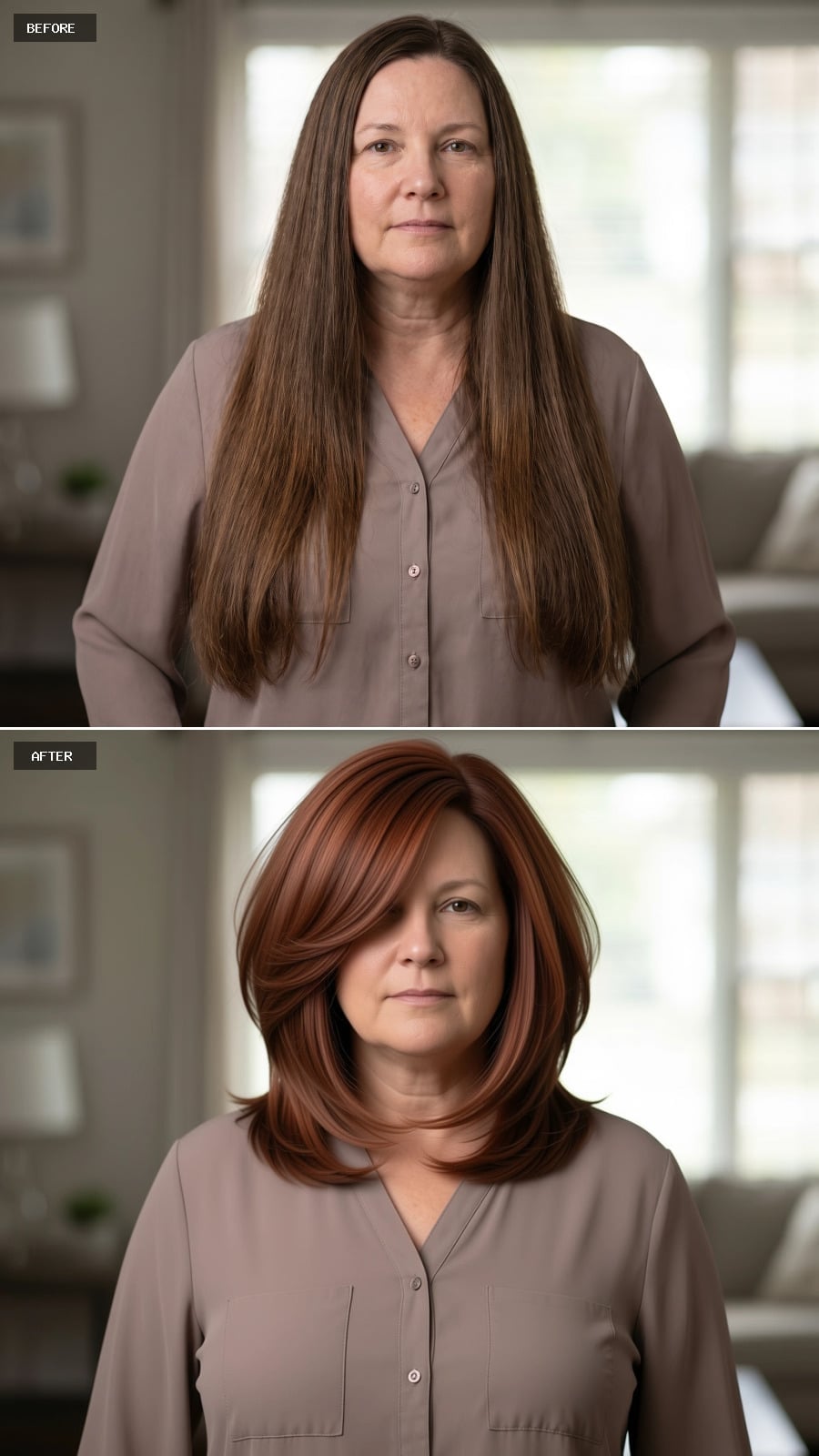
Rich auburn and copper highlights run through a shoulder-length cut with a dramatic sweep across the top. The layers graduate outward below the cheeks, which is very different from packing fullness directly beside them.
The result has plenty of volume without feeling wide. A little lift through the upper half gives the cut energy, while the flipped ends make it look intentionally styled rather than simply shortened.
There’s enough drama here to satisfy someone who wants a real change without committing to a pixie or jaw-grazing bob.
Across our hairstyle galleries, images with voluminous finishes got hearts from ThreadCurve readers 57% of the time, compared with 51% for the other images in the same articles.
19. Dark Bob and Deep Part Prove Symmetry Isn’t Always the Goal
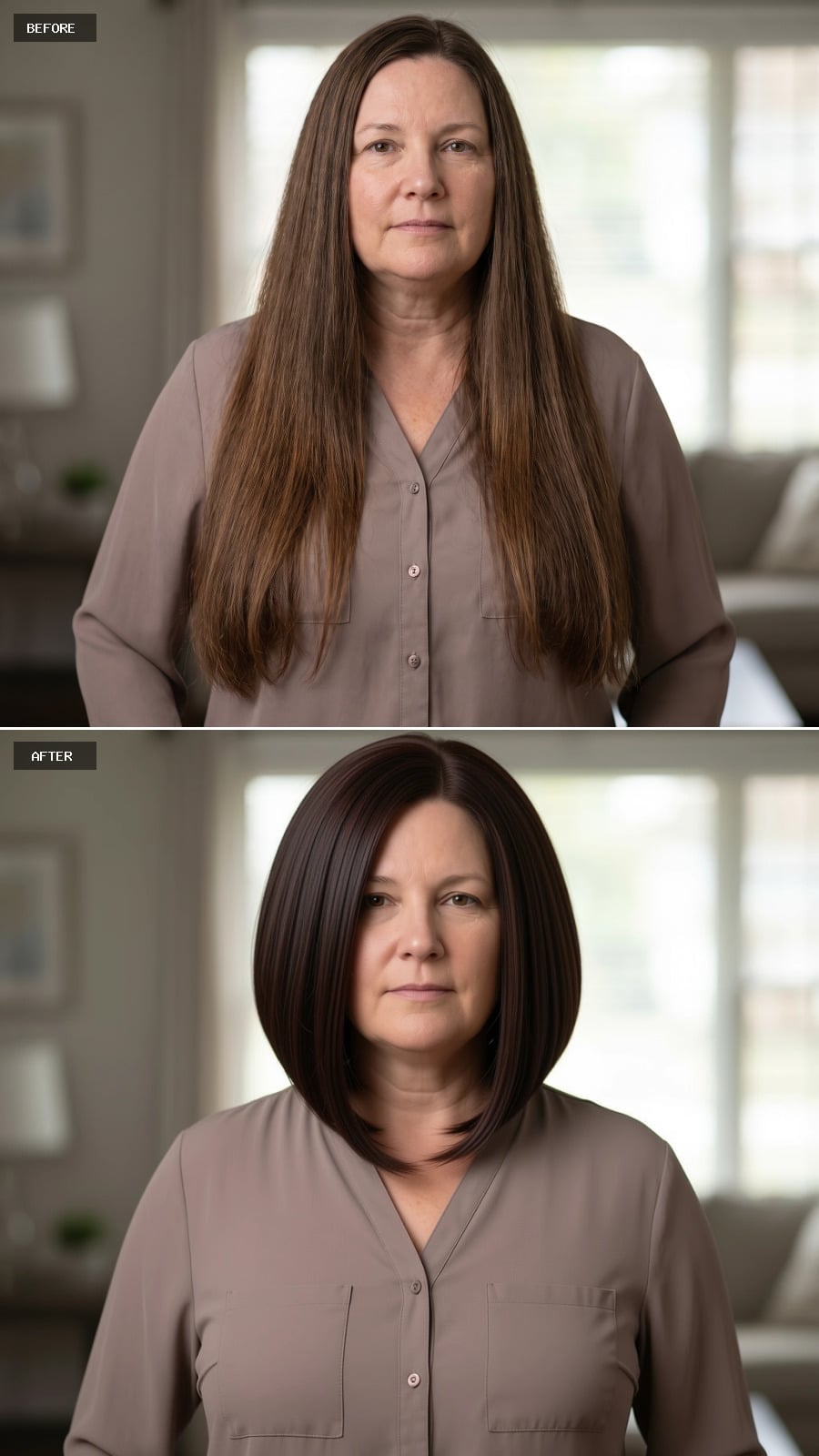
This rounded bob grazes the jaw, but the deep part keeps the overall shape from becoming perfectly circular. One side has noticeably more hair and movement, while the other stays cleaner and closer.
Deep espresso brown makes the silhouette feel graphic, and the V-neckline underneath leaves the throat open rather than stacking another horizontal line directly beneath the cut. It’s a good example of how proportion can come from the whole look, not just the scissors.
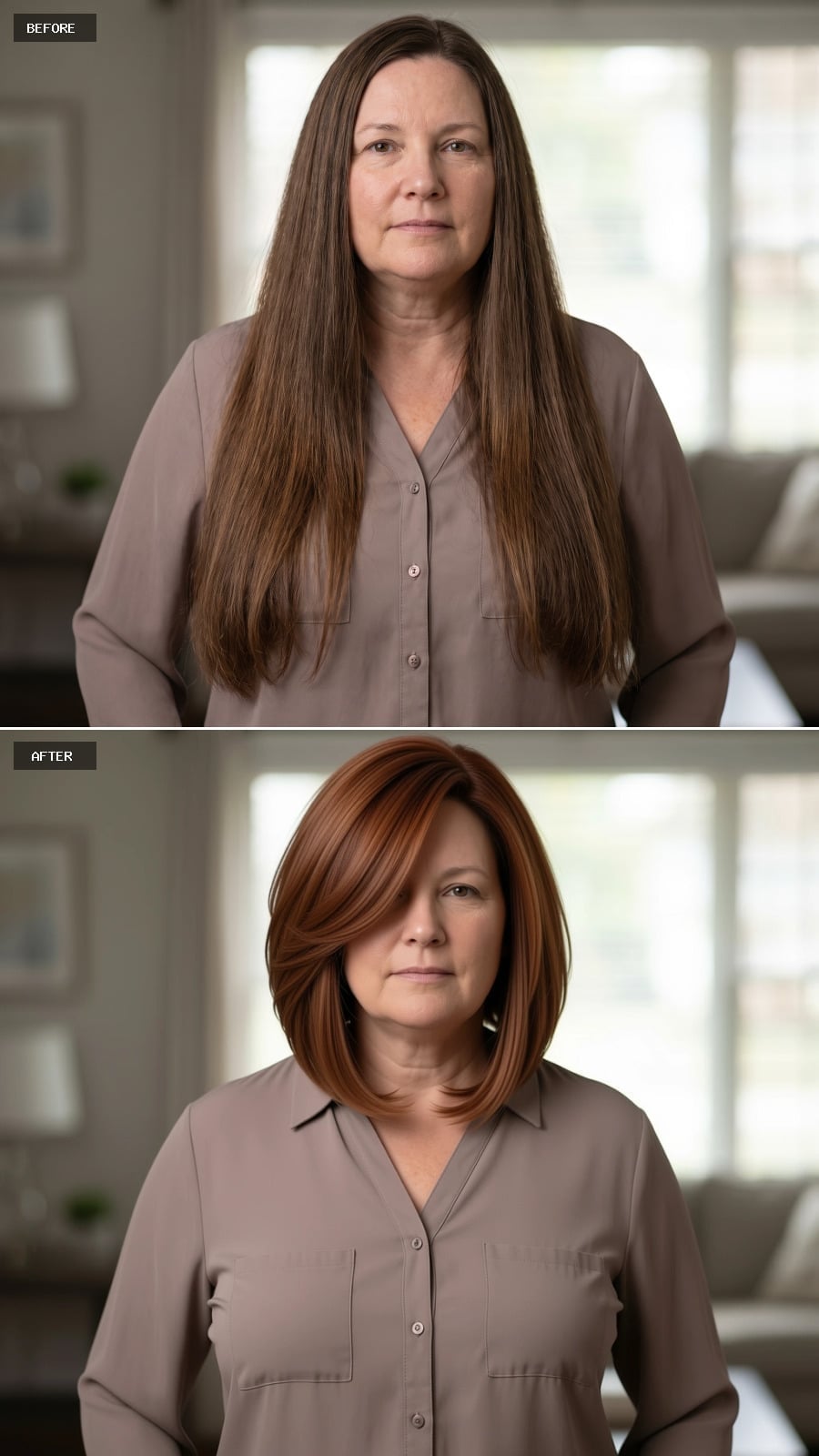
18. Auburn Bob With Side-Swept Bangs Keeps the Shape Moving
❤️ Would you like to save this?
Warm auburn and copper highlights give this collarbone bob plenty of color without overwhelming the cut. The fringe crosses the forehead at an angle, while the upper layers lift slightly before falling toward the shoulders.
Nothing about the haircut is extreme. That’s the appeal. It gives someone nervous about going short a halfway point that still changes the frame substantially.
By the Numbers: Auburn and copper shades can be especially flattering on warm and neutral complexions, but undertone isn’t a hard rule. The more useful takeaway here is length: stopping around the collarbone preserves movement and some visible neck while requiring less commitment than a jaw-length bob or pixie.
17. Dark-to-Silver Streaks Turn a Compact Bob Graphic
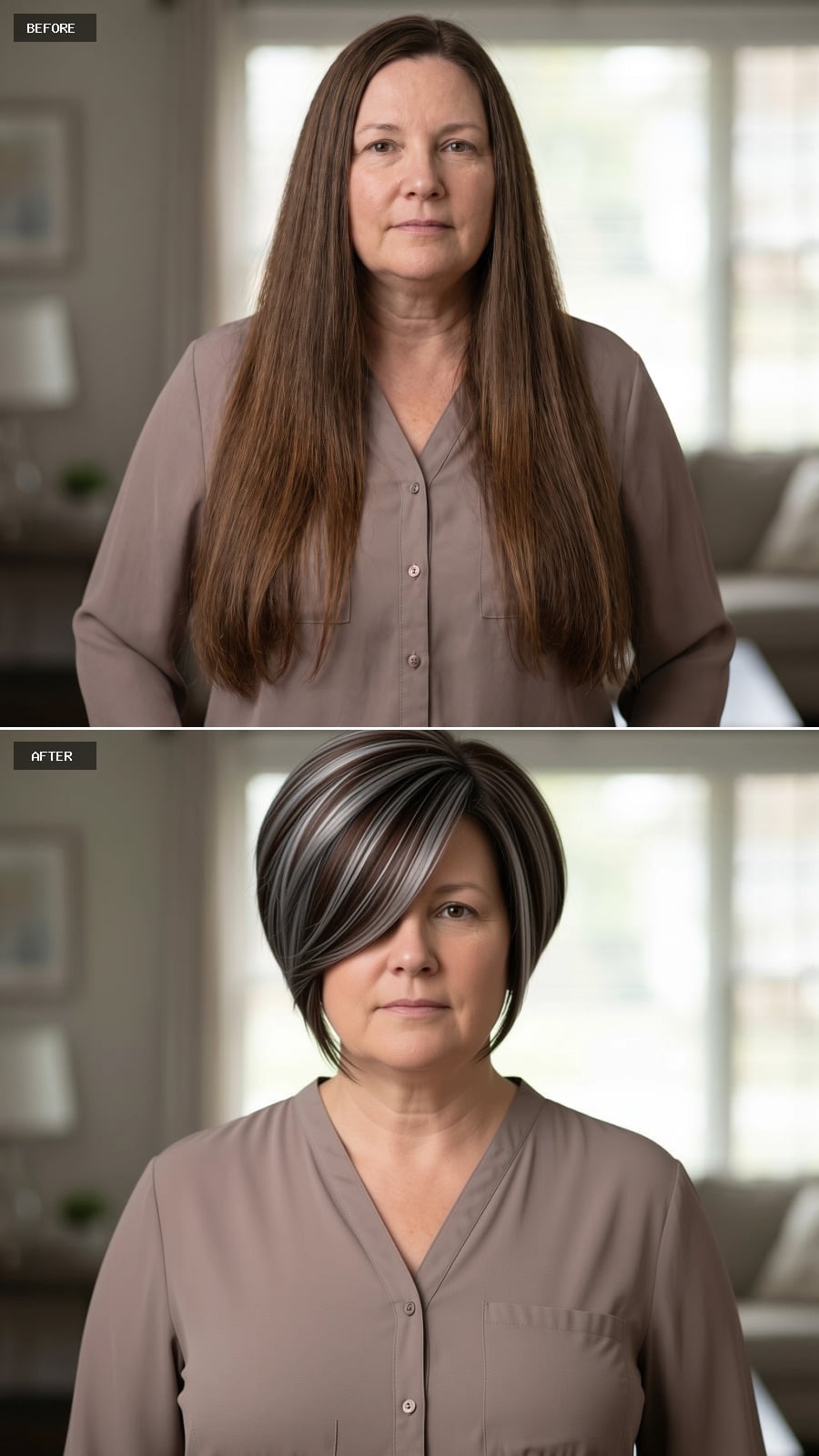
Silvery streaks cut through a dark brown base from crown to ends, giving this compact bob an almost graphic quality. The contrast makes the direction of every section easy to see: higher and fuller at the top, closer through the jaw.
That makes this less about “gray hair” and more about using natural-looking contrast as part of the design. The silver isn’t being hidden. It’s doing half the styling.
16. Highlights Angle With the Bob Instead of Sitting on Top of It
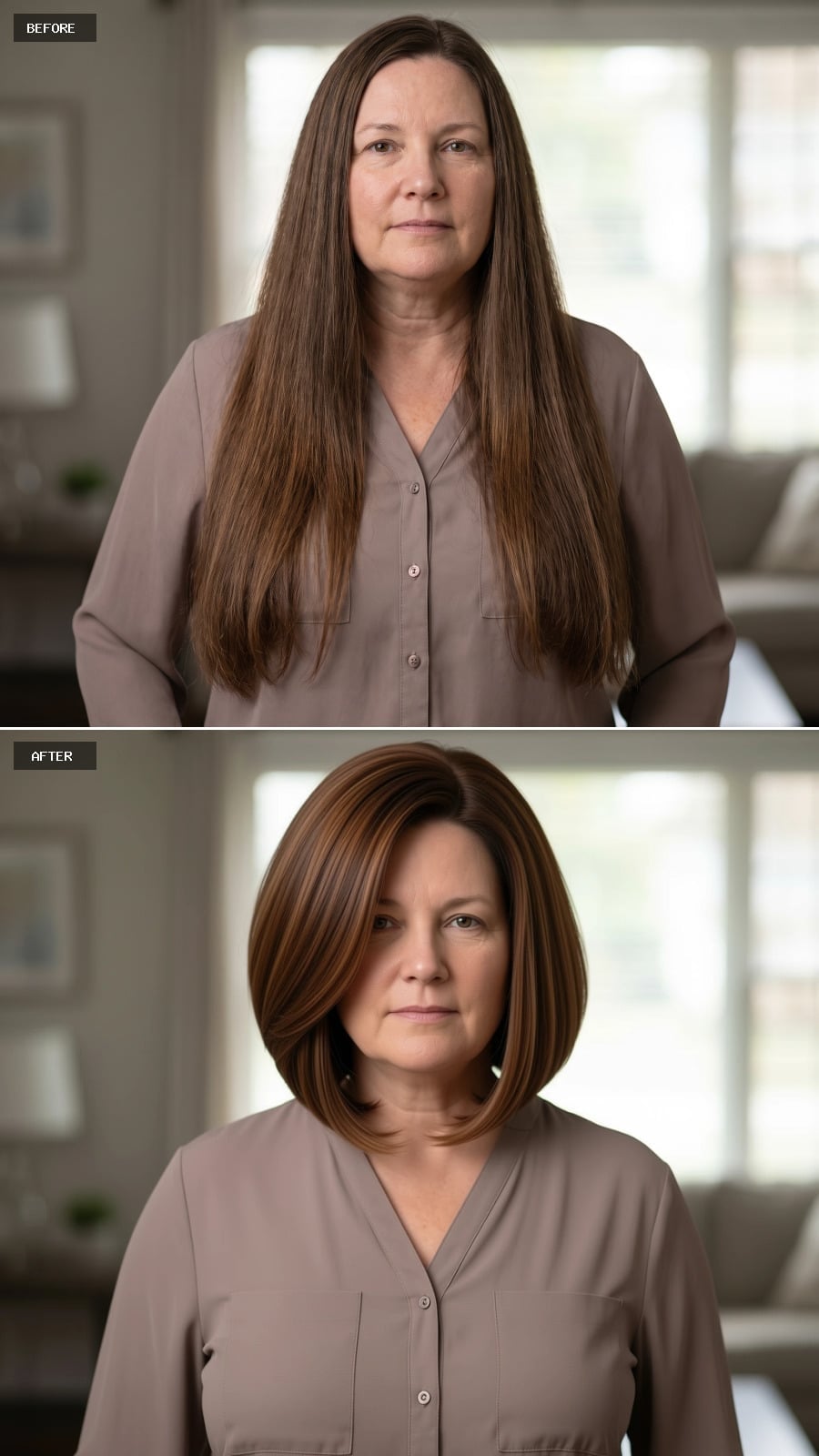
This rounded bob is more deliberate than its softness suggests. The longest section falls just beyond the jaw, keeping the perimeter from stopping exactly at the fullest point of the face.
Warm caramel and chestnut streaks follow the side sweep through the mid-lengths and ends. Instead of sitting as generic highlights, they reinforce the direction already built into the haircut. The result feels integrated rather than decorated.
History Corner: The bob became a defining break from long, pinned hairstyles in the 1920s. By the 1960s, Vidal Sassoon pushed the form toward precise, geometric cutting that depended on shape rather than elaborate setting. Today’s angled and face-framing bobs draw on that same geometric idea, even when the finish is much softer.
15. Dark Burgundy and a Smooth Drop Give the Bob a Cleaner Edge
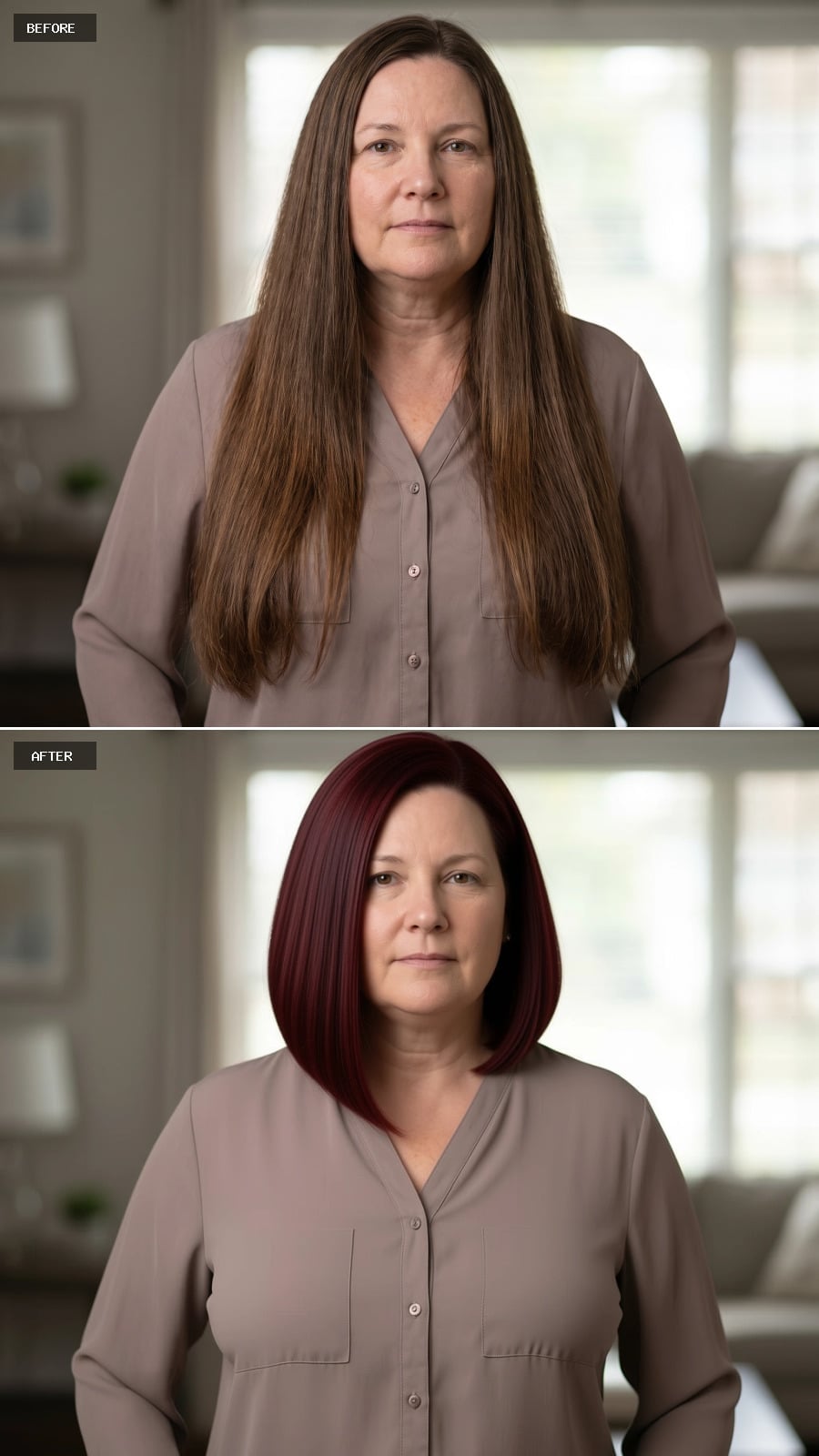
Deep burgundy reads almost plum through the roots, giving this smooth bob a saturated, polished finish. The cut falls just below the jaw and turns gently inward rather than kicking out beside the cheeks.
The side part creates one long uninterrupted section from temple toward chin. That’s what makes this version feel sleeker than the more layered burgundy cuts elsewhere in the gallery. The color adds drama; the smooth perimeter supplies the control.
14. Honey Blonde and an Inward Curve Keep This Bob Polished
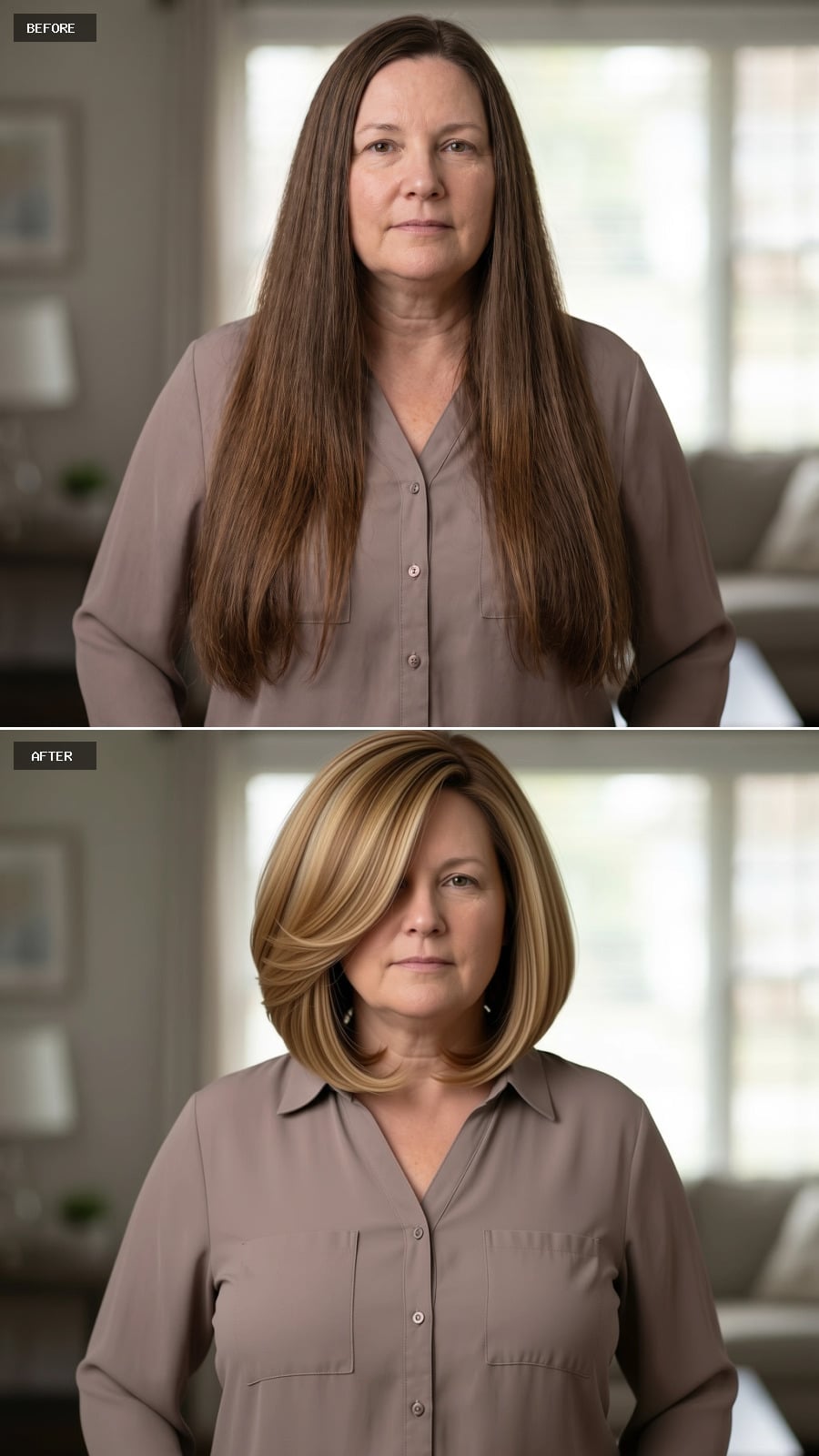
Honey blonde is broken up with lighter pieces around the face, while the bob itself finishes just below the jaw. The ends bend inward rather than flying outward, giving the perimeter a smooth, controlled finish.
A taupe V-neck blouse happens to continue the open vertical space below the chin, but the haircut doesn’t need wardrobe assistance to work. Its strength is that it looks polished without appearing rigid.
13. Gray-Toned Bob Turns Streaks Into Part of the Haircut
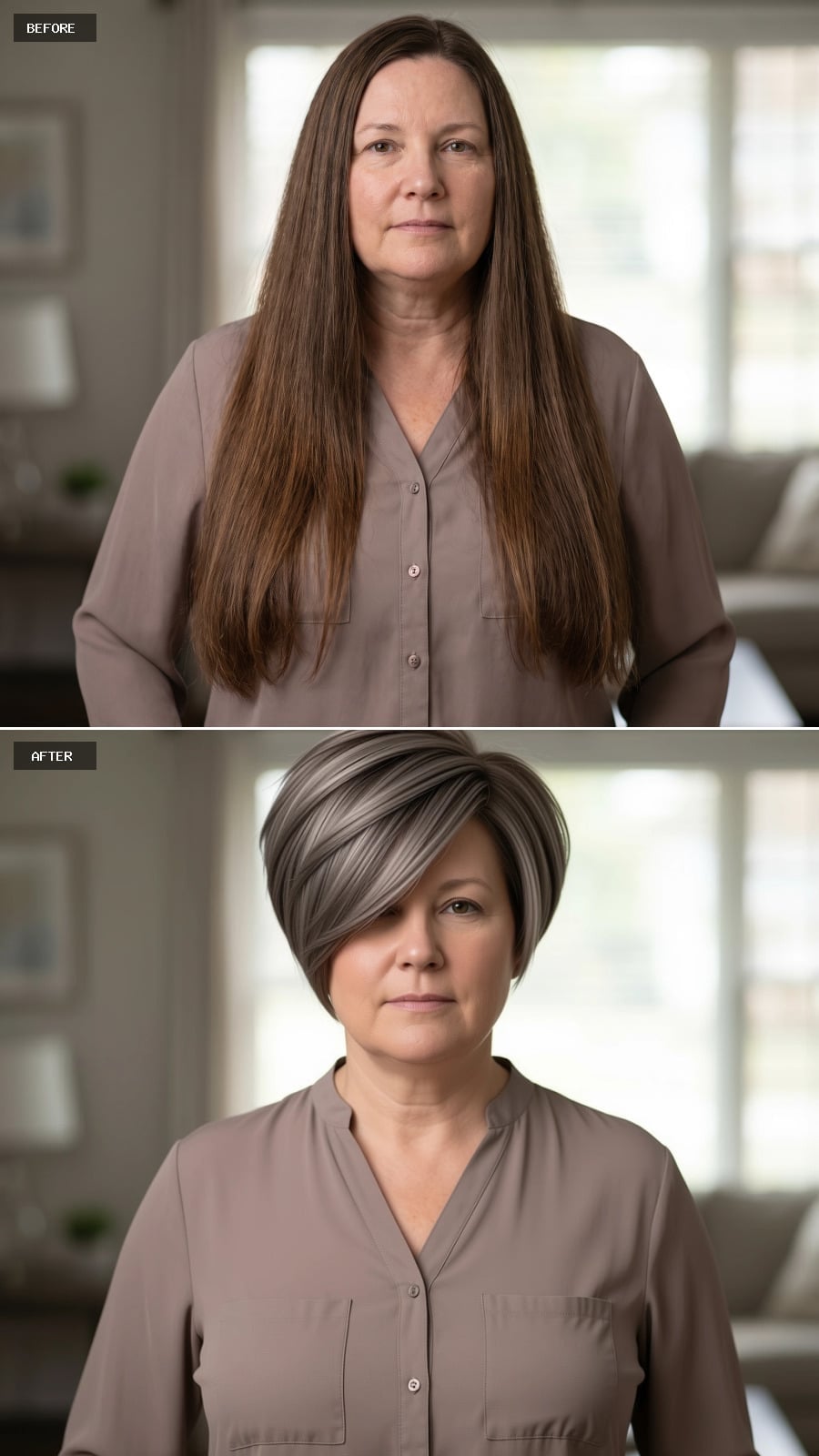
Ash and silver appear in deliberate streaks rather than one uniform wash, giving this bob movement before the hair itself even shifts. The crown has lift, the fringe crosses the forehead at an angle, and the lower shape stays relatively compact.
- Height through the crown keeps the haircut from concentrating all its volume beside the cheeks
- A side-swept fringe gives the eye a directional line to follow instead of framing the forehead symmetrically
- Multiple gray and ash tones create depth so the perimeter doesn’t read as one flat block of color
12. Rich Auburn Layers Put the Fringe in Charge
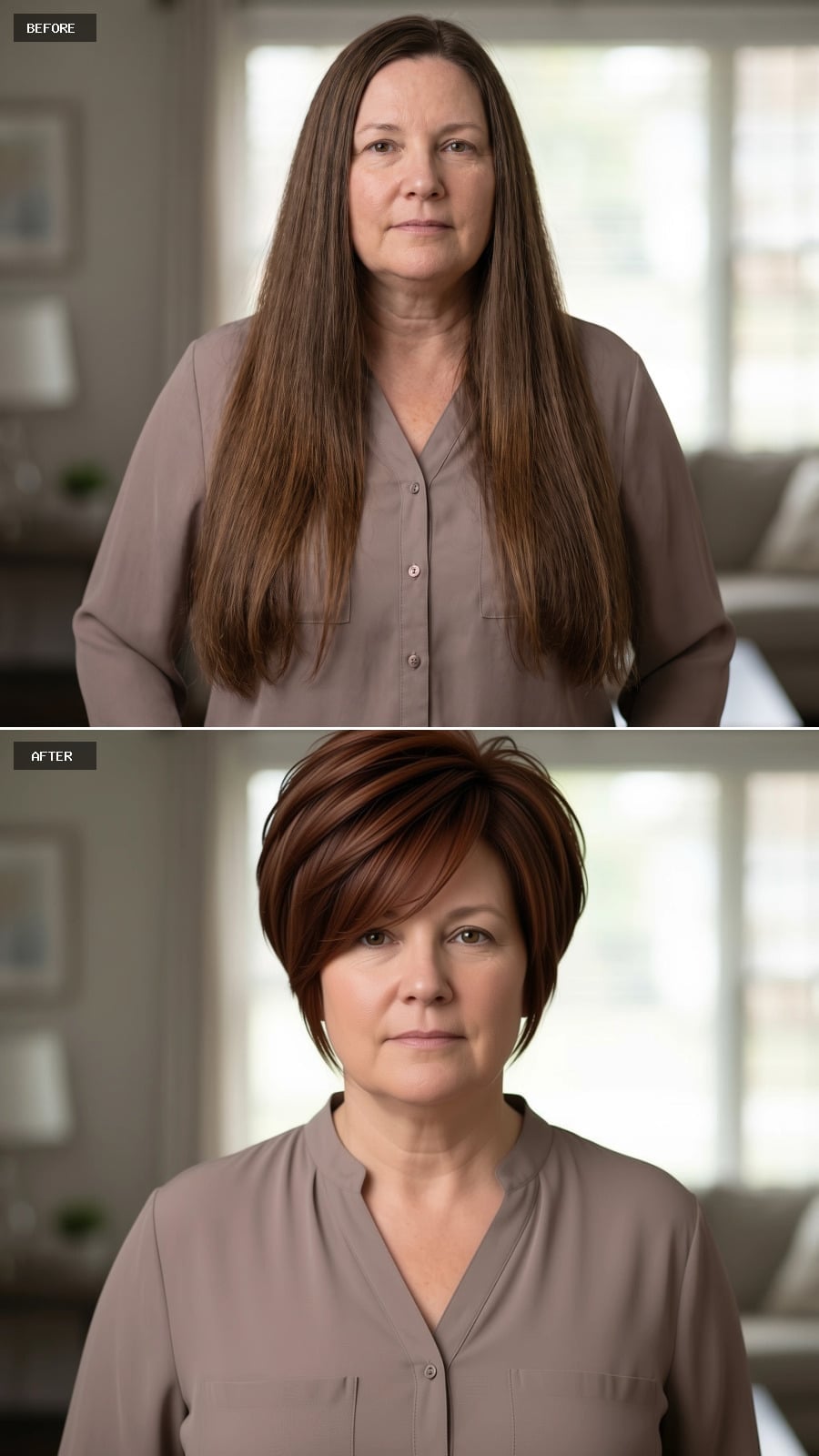
Copper-streaked auburn layers turn this short bob into something much more animated than a simple one-length cut. The fringe starts high and sweeps across the forehead, with different lengths around the cheeks and jaw keeping the front from forming one solid curve.
There is volume through the crown, but the more interesting move is inside the cut: shorter internal layers create movement without making the perimeter explode outward.
The deeper burgundy-brown base and brighter copper pieces give the hairstyle depth, but color is supporting the haircut here rather than pretending to change the face on its own.
11. Blonde Layers Flip at the Jaw Without Turning Into a Triangle
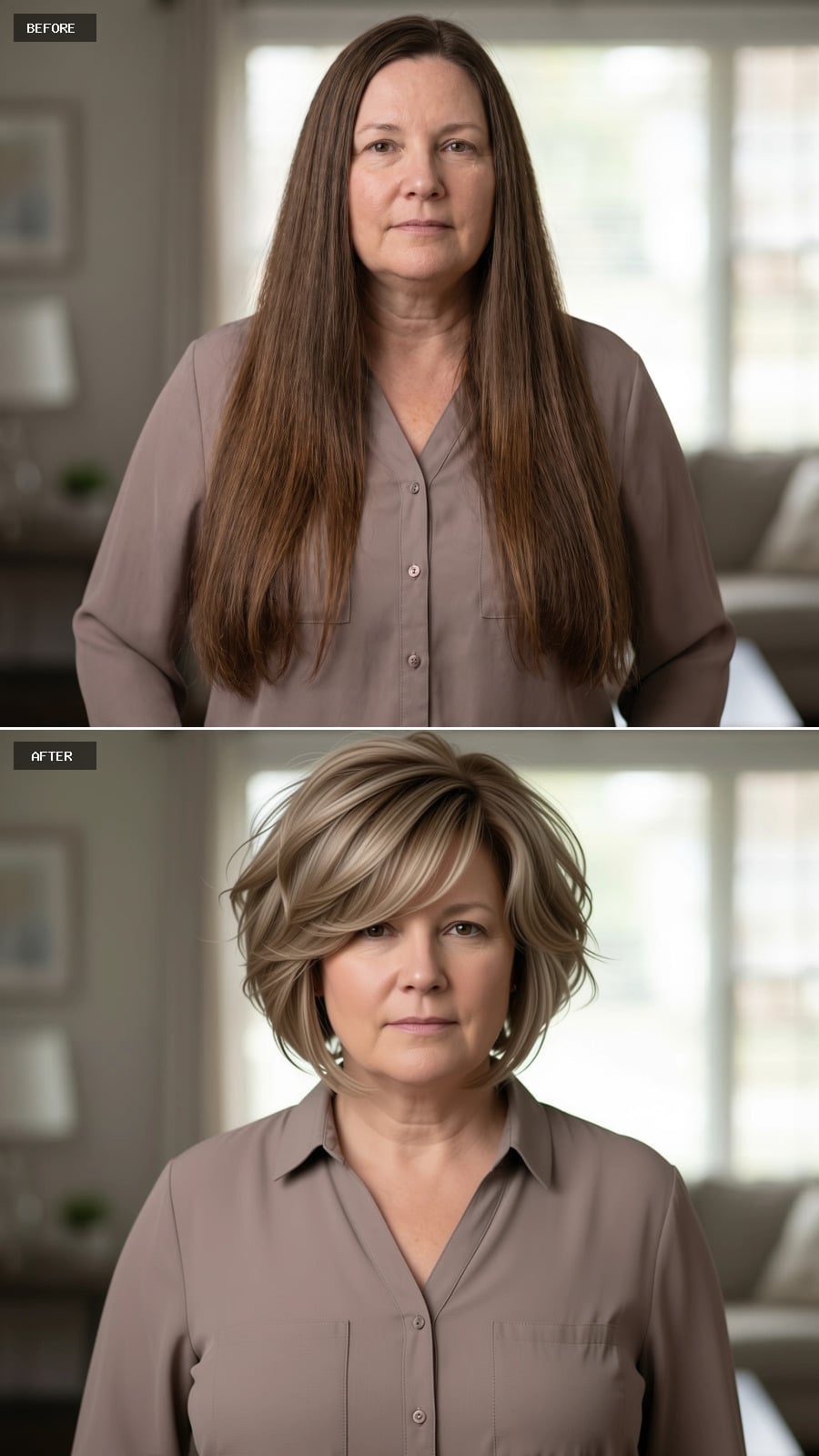
Cool blonde and ash highlights run through a chin-length bob with more layering through the top than the perimeter. The fringe sweeps across the forehead, while the ends flip outward just enough to keep the cut lively.
That little flip is the risk. Too much width at jaw level could make the hairstyle feel triangular, but here it stays restrained and broken up rather than forming one continuous shelf.
Small drop earrings peek through beneath the ends, adding polish without turning the styling into a costume.
10. Darker, Shorter, and Deliberately Uneven From Side to Side
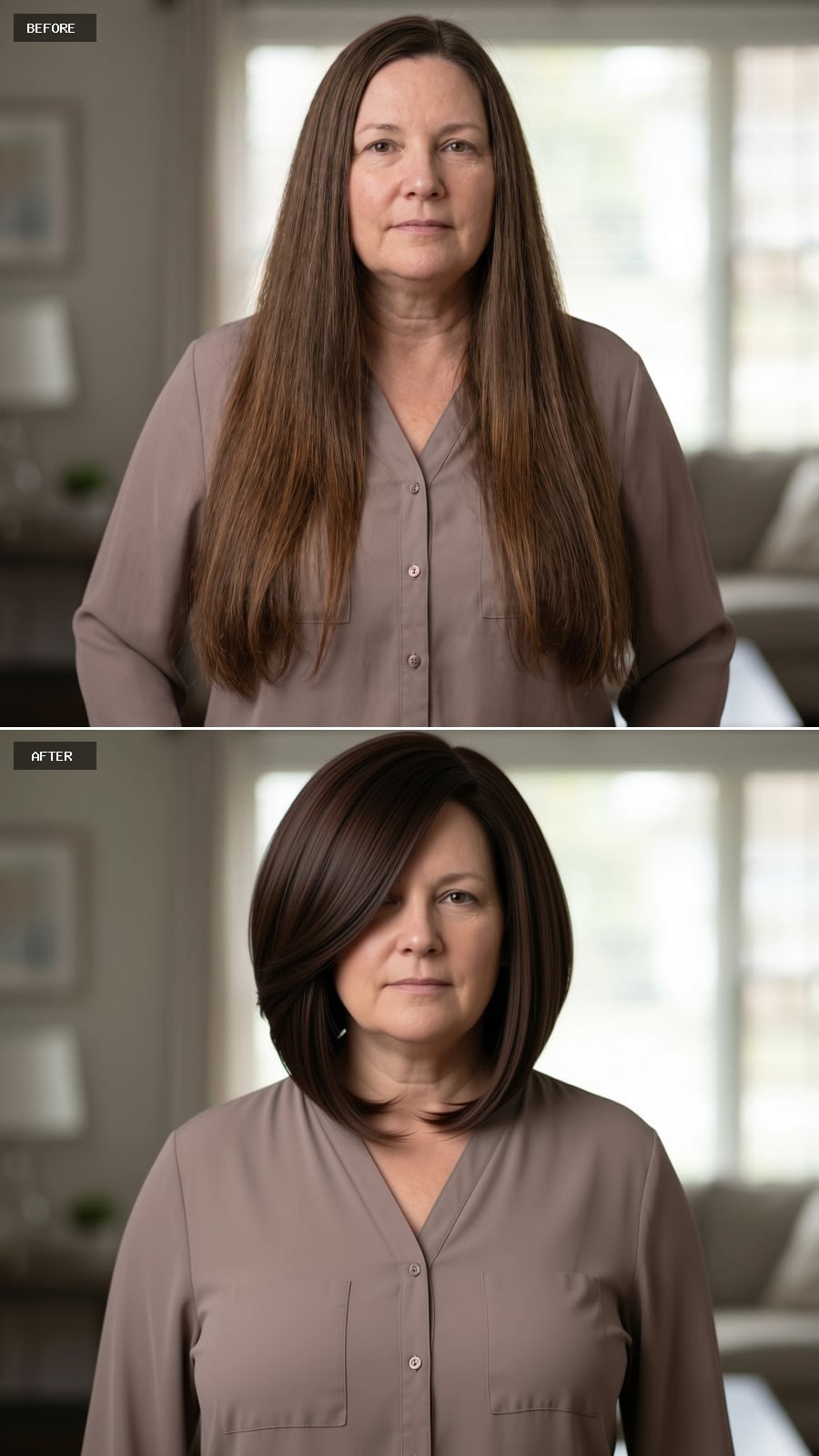
This chin-length bob swings forward on one side while tucking closer on the other, so the haircut never settles into perfect mirror-image symmetry. That small imbalance gives a very familiar shape more energy.
Dark chocolate brown makes the outline easy to see, but the real change comes from the cut sitting closer through one side and fuller through the other. It’s a classic bob refusing to stand perfectly still.
9. Golden Bob Uses One Big Sweep Instead of a Dozen Little Tricks
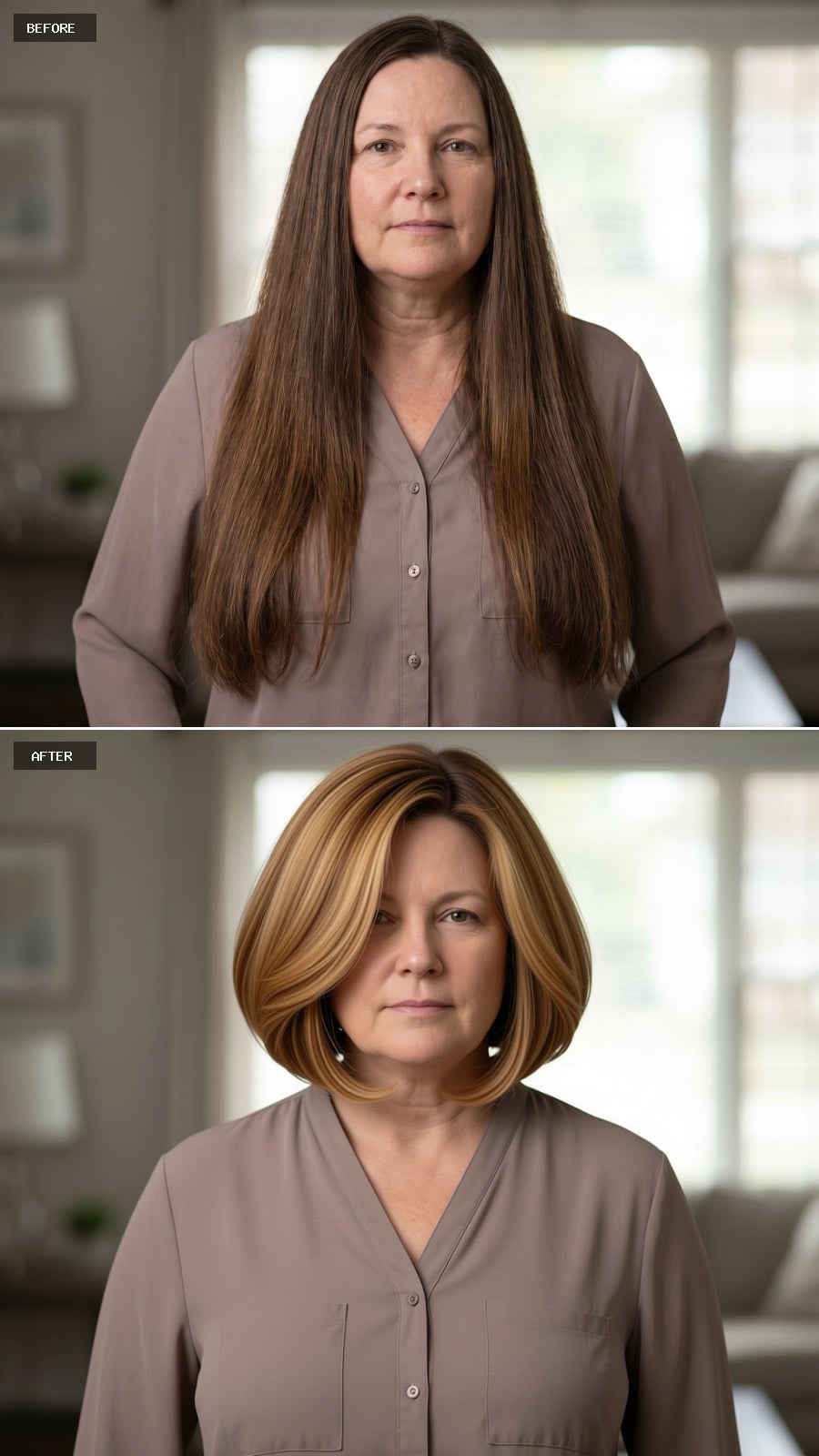
Warm caramel and honey run through a chin-length bob swept cleanly to one side. Rather than relying on lots of obvious layering, this one gets most of its personality from one broad movement across the crown.
The ends turn inward and stay close, so the upper sweep gets to be the dramatic part. It’s controlled, glossy, and considerably simpler than some of the more architectural cuts around it.
The Details: Highlight placement is most convincing when it reinforces an existing haircut rather than trying to create an optical effect on its own. Here the brighter pieces sit where the hair already rises and sweeps, so color and shape tell the same story.
8. Silver Streaks Concentrated at the Crown Make the Bob More Graphic
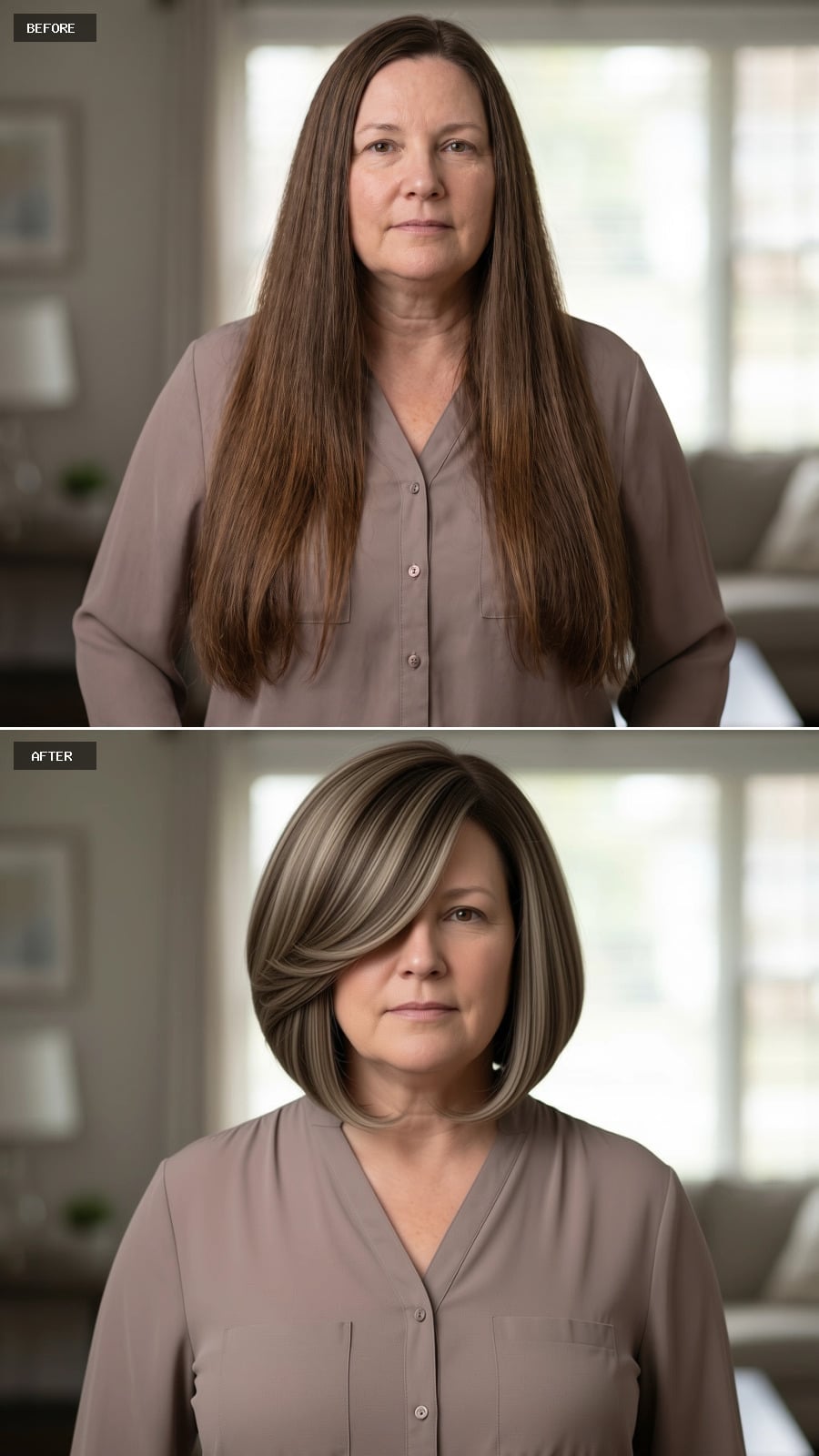
Silver streaks run through a dark brown base, with the brightest contrast concentrated near the top rather than scattered evenly through the ends. That gives the upper half of the haircut a strong focal point.
The bob itself sweeps to one side and curves softly toward the jaw. It’s less about creating “angles” on the face than giving the hairstyle enough directional movement that it doesn’t simply echo the face’s outline.
7. Burgundy Bob Goes Short Enough to Let the Neck Finish the Shape
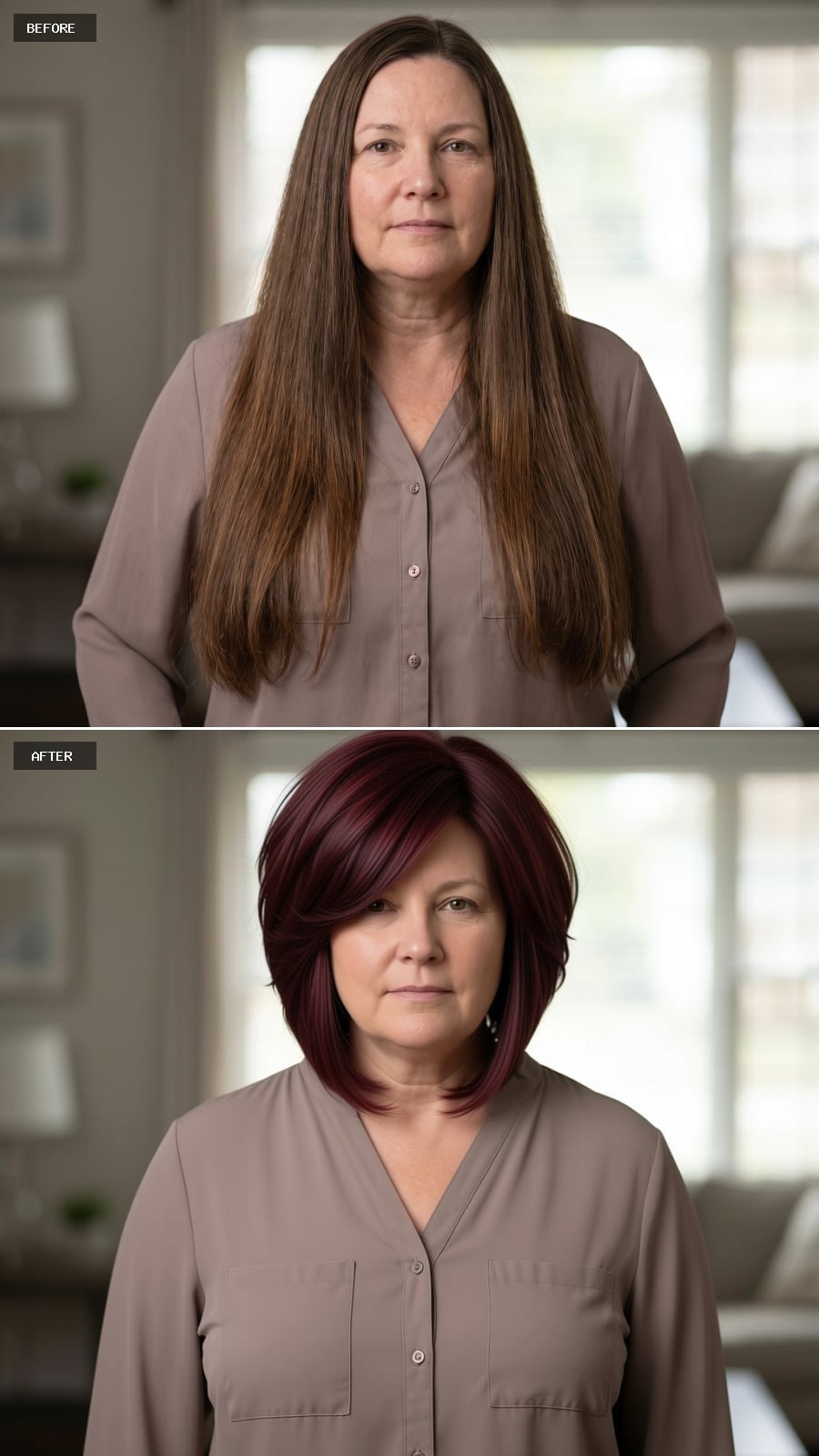
Rich burgundy with magenta highlights runs through a jaw-length bob that’s noticeably fuller through the top than the lower sides. The forehead sweep adds movement, but the strongest change is simply how much neck is visible underneath.
That’s one of the easiest details to overlook when comparing long and short hair. A shorter perimeter doesn’t just change the hair; it reveals more of the person beneath it.
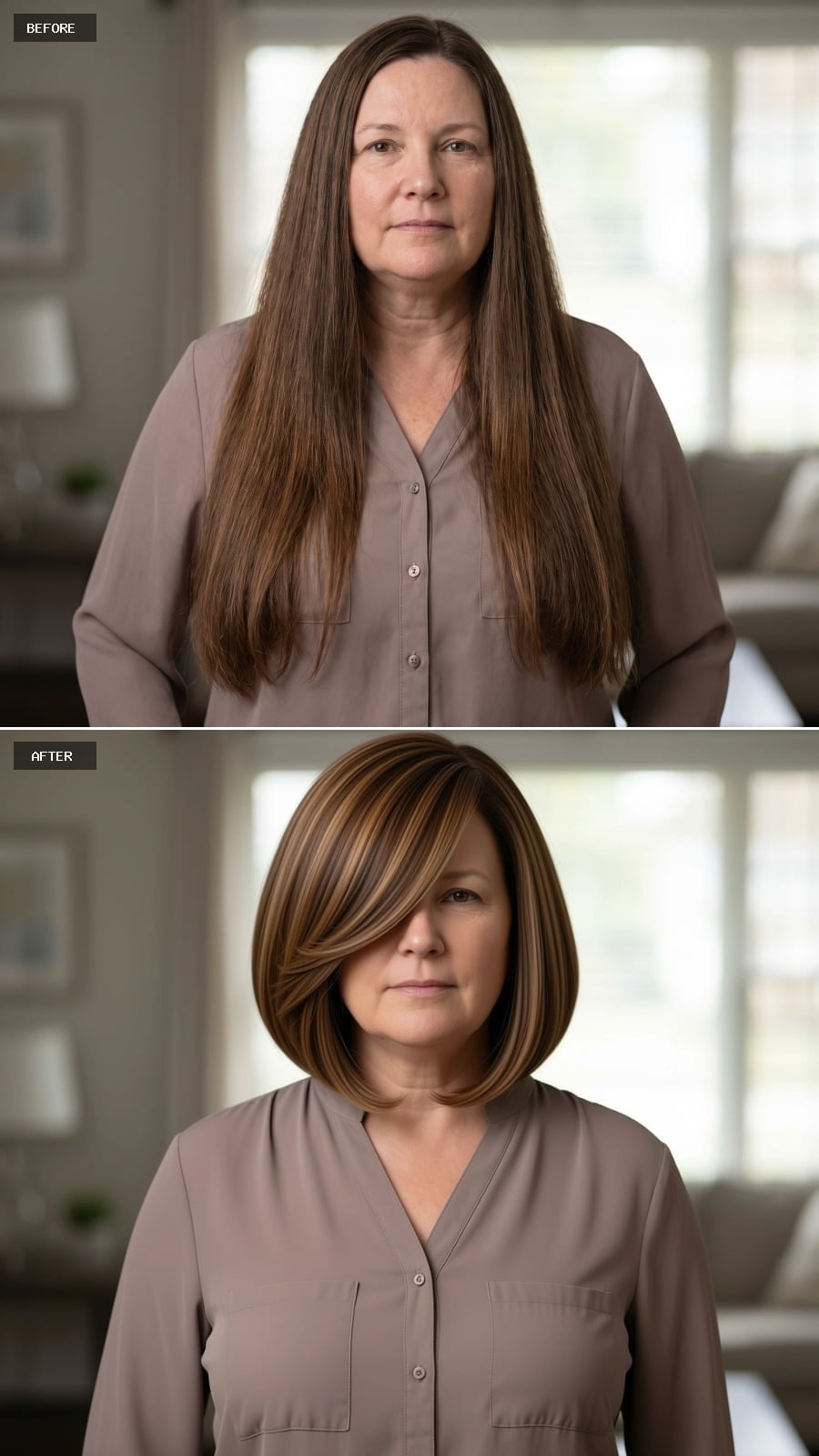
6. Caramel Highlights and a Rounded Bob Make Softness Look Intentional
❤️ Would you like to save this?
Brown hair with caramel and gold highlights forms a chin-length rounded bob that could easily have become too uniform. The side sweep prevents that, moving the front sections across the forehead rather than splitting them neatly down the middle.
Highlights sit through the upper and outer layers, emphasizing the haircut’s movement without pretending color alone can alter face shape. A V-neck blouse opens the neckline underneath and keeps the finished look light.
5. Blonde Bob Shows the Neck Without Going Anywhere Near Pixie-Short
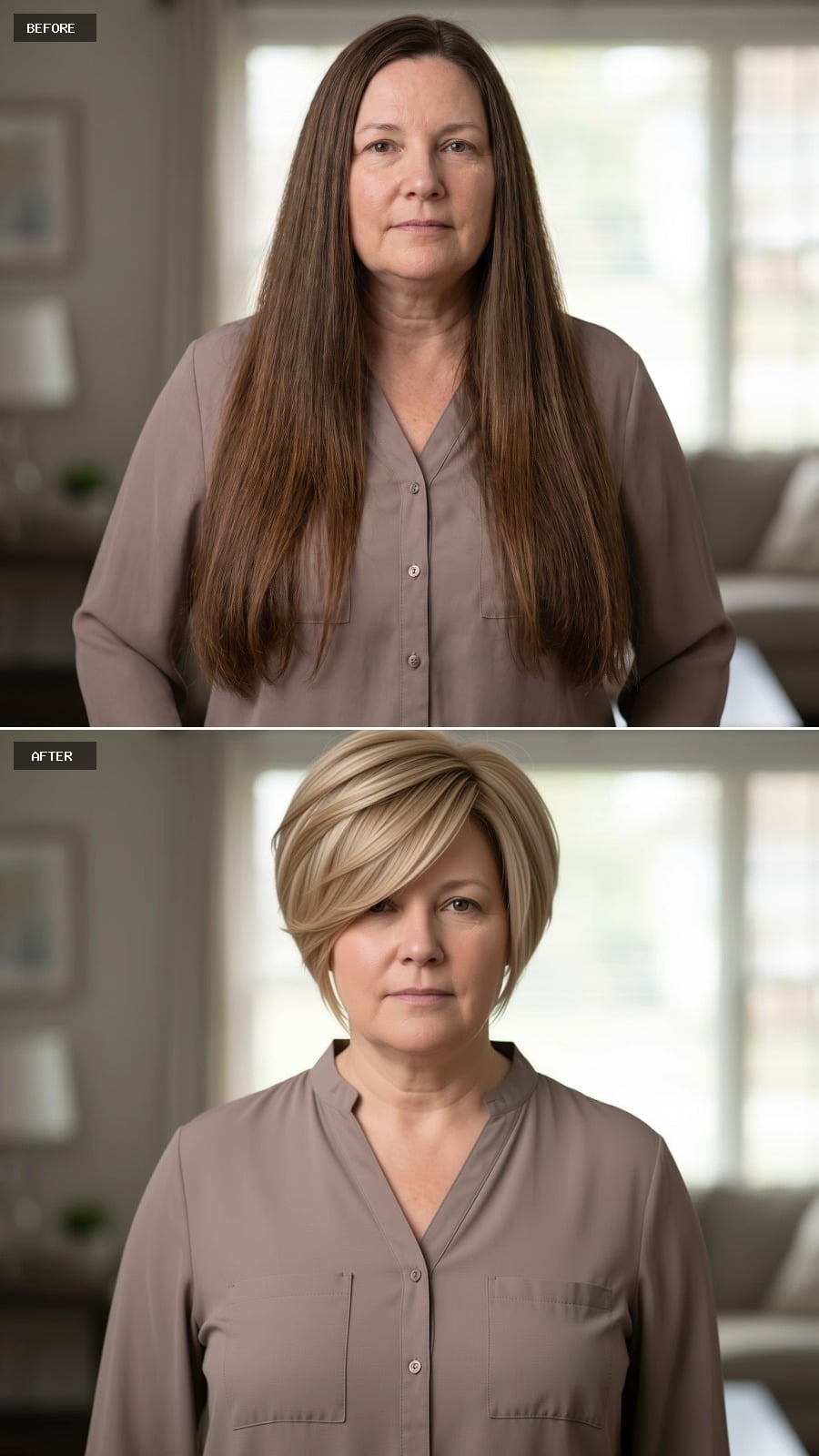
A deep side part sends the blonde hair across the crown while the lower edge tapers neatly around the jaw. The cut is short enough to expose plenty of neck without crossing into pixie territory.
That’s the useful middle ground here. Someone reluctant to lose all their length still gets the cleaner proportions of a short haircut without giving up the familiar movement of a bob.
4. Gray-and-Brown Streaks Turn a Jaw-Length Bob Into the Main Event
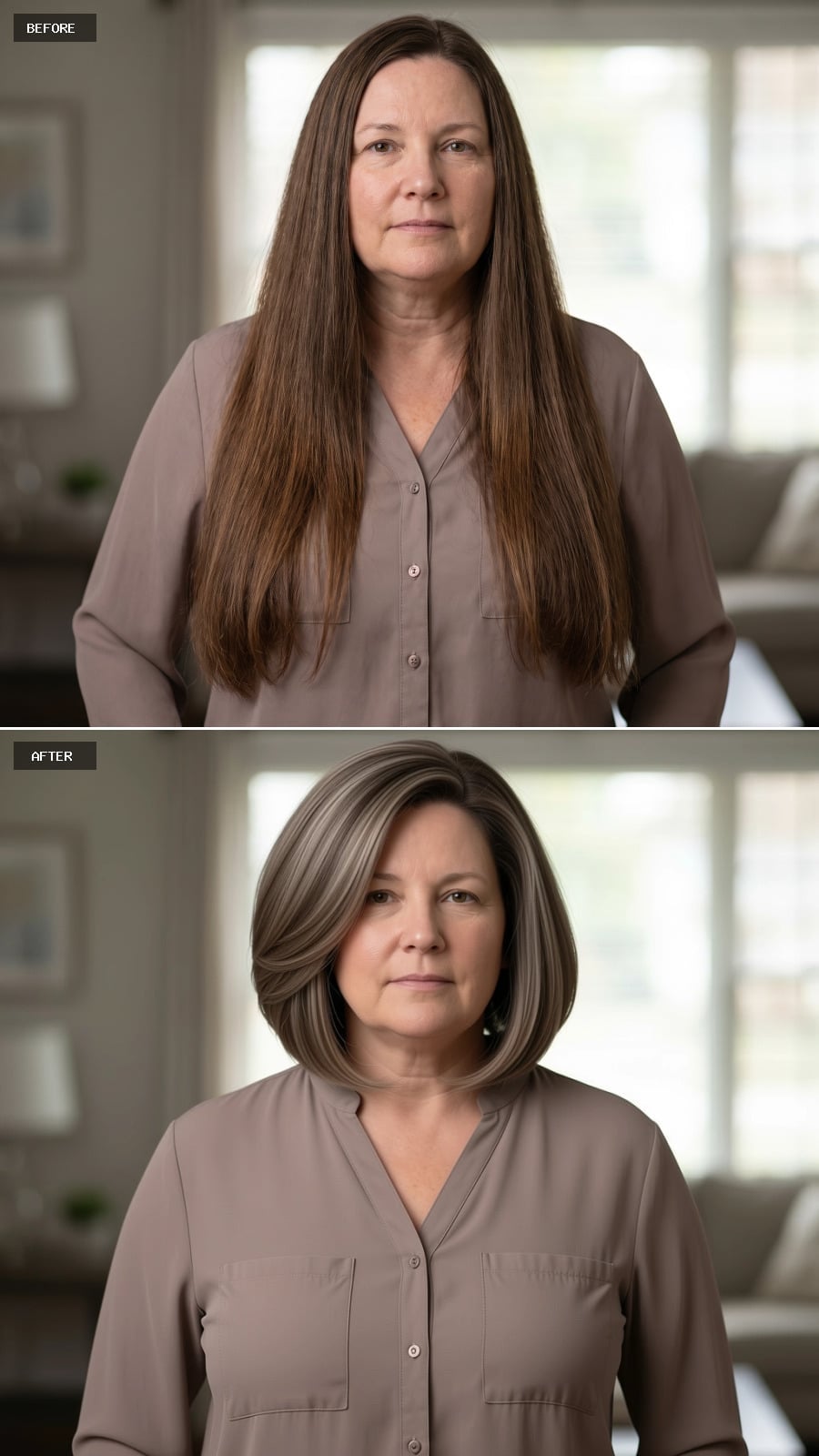
Dimensional gray-and-brown streaks run from a side-parted crown through a jaw-length bob angled slightly longer toward the front. The strongest silver pieces cluster near the top, making the color pattern as directional as the haircut.
A curved but fairly blunt perimeter keeps the bottom compact. The contrast between bold streaking above and controlled shape below is what gives this one its character; neither element has to pretend it’s performing facial engineering.
3. Caramel Highlights Follow the Shape Instead of Fighting It
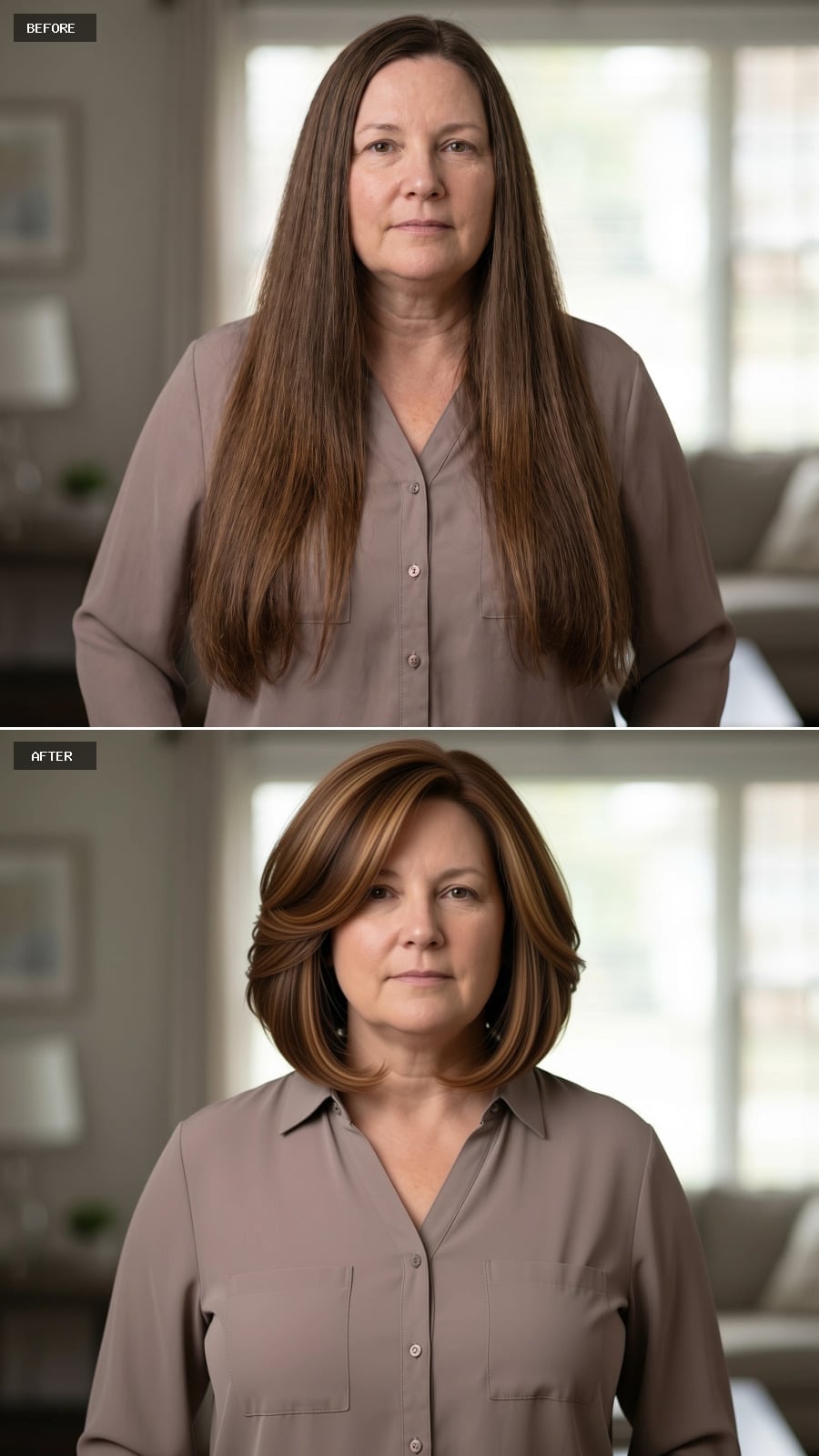
This jaw-length bob curves gently inward at the ends, giving the lower edge a contained shape rather than a flare. Caramel panels travel through the top and front, following the direction of the haircut rather than sitting in disconnected stripes.
The visual payoff comes from coordination. Shape and color are pointing the same way, while a little height through the top prevents all the interest from collecting at cheek level.
Drop earrings add one more slim vertical detail below the haircut without becoming part of the haircut’s argument.
2. Dark Bob Cut Just Below the Jaw Keeps the Front Longer Than the Back
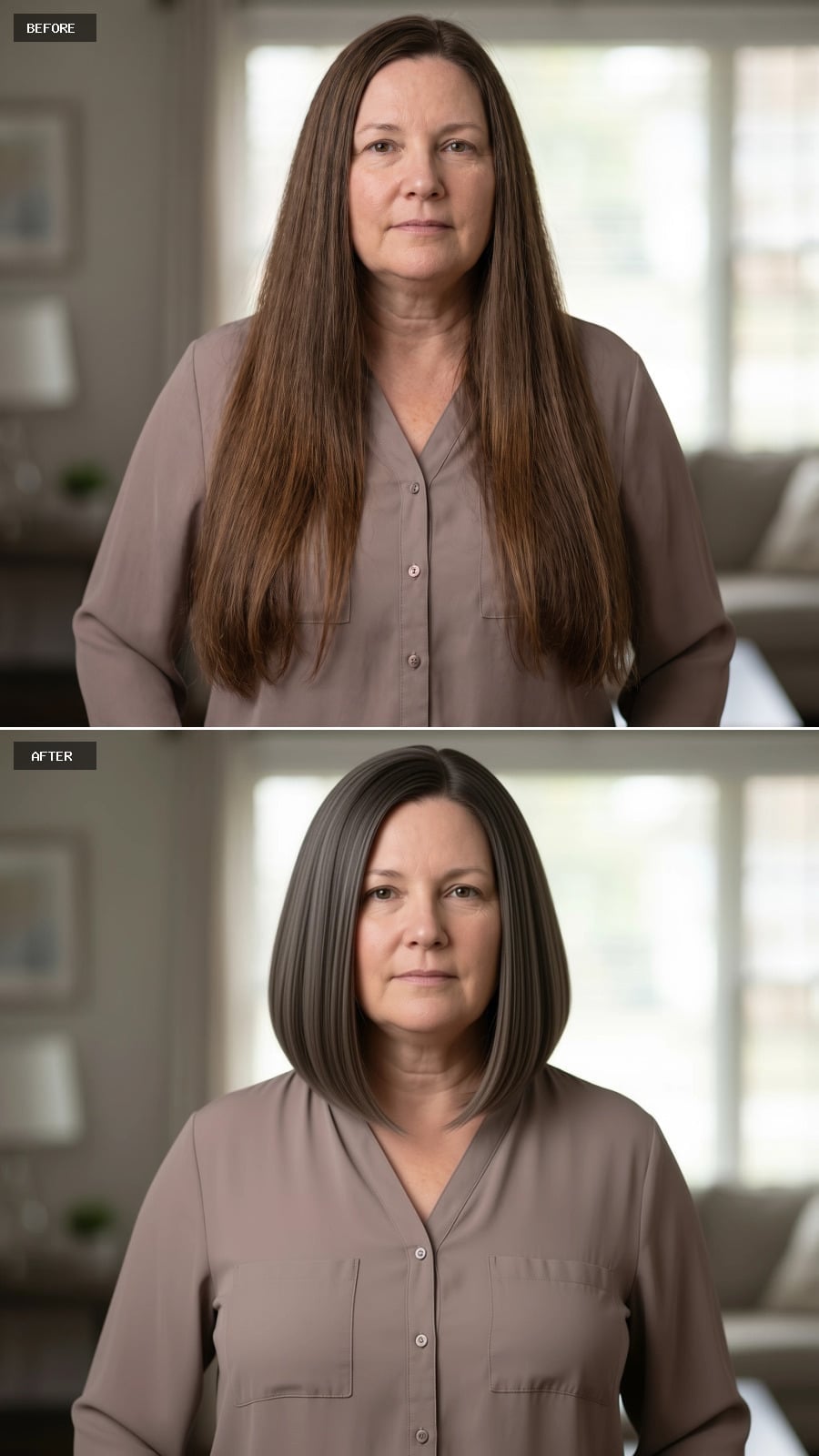
This dark bob sits just below the jaw in front and tapers shorter toward the back, giving the silhouette a subtle forward angle. That difference in length is more important than trying to make dark hair perform some optical trick on its own.
The deeper brown color does make the outline especially crisp, so the graduation is easy to see. A little lift through the top keeps the shape from collapsing into a single heavy curve.
Decade Dressing: Dark, cool, warm, and light hair colors can all work beautifully on fuller faces. Tone doesn’t “slim” a face by itself. What color can do is emphasize or soften the lines already created by the cut. Here the deeper brunette makes the angled perimeter especially clear, which is a much more useful reason to choose it.
1. Gray Bob, Side Sweep, and a Close Nape Finish the Gallery Strong
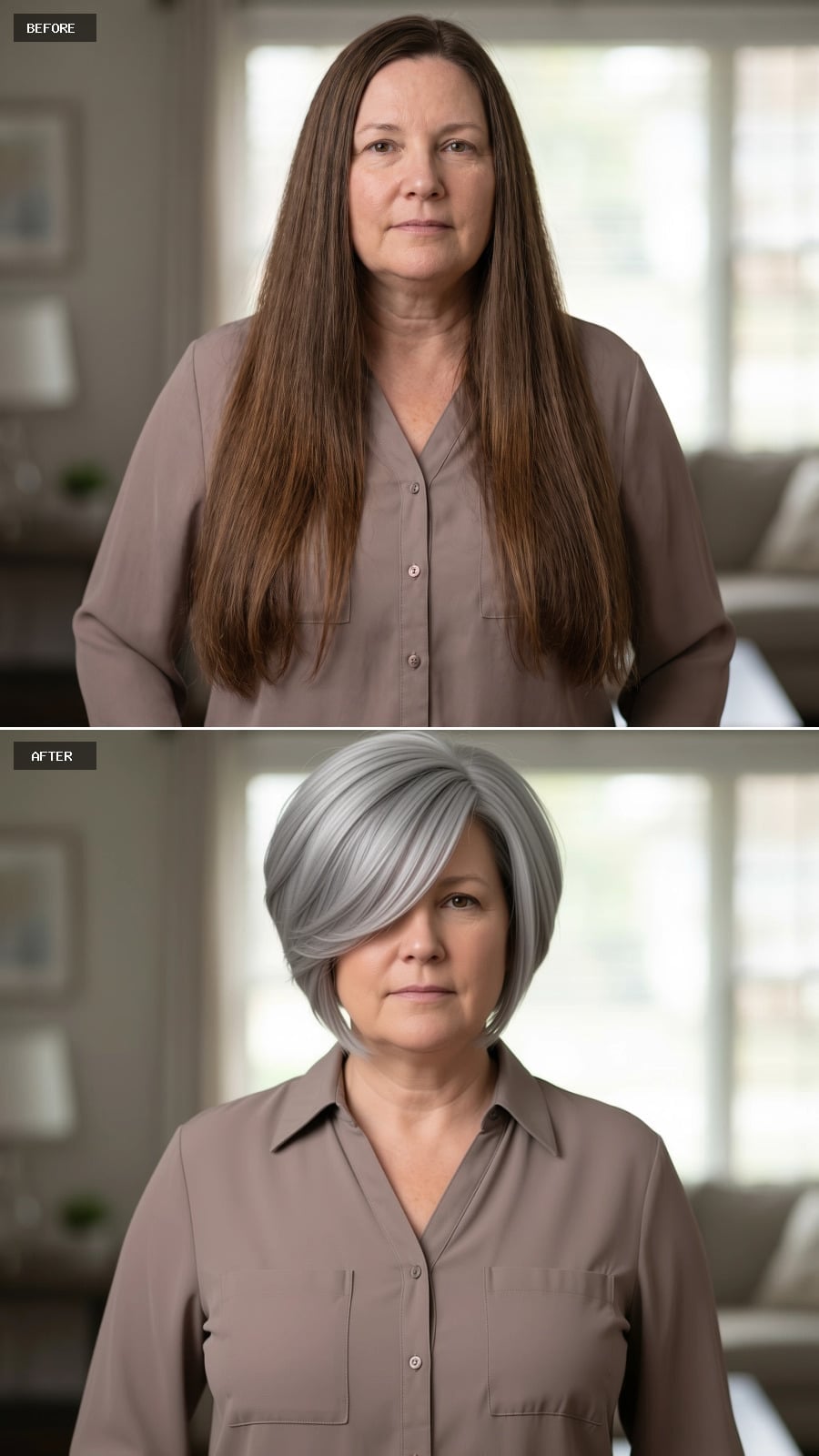
Gray doesn’t have to mean soft, wispy, or apologetic. This bob drops just below the jaw in front, sweeps decisively to one side, and then gets much tighter through the nape.
That back view matters even from the front because it changes how much neck is visible and how lightly the whole haircut sits on the shoulders. Longer layers angle toward the chin instead of ending in one even ring around the face.
The transformation isn’t coming from a miracle “slimming” haircut. It’s coming from proportion: less bulk at the back, more movement through the front, more neck showing underneath. Short hair didn’t make the face rounder. It gave the entire silhouette somewhere new to go.