❤️ Would you like to save this?
Shoulder-length hair was not the crime here. Indifference was. Six years with the same length, the same center of gravity, the same ends quietly surrendering somewhere near the shoulders — eventually even perfectly healthy hair can start behaving like office carpeting. Present. Functional. Nobody is writing home about it.
These 29 before-and-afters take a much less polite approach. Some lose several inches. Others barely move the perimeter and instead change the part, fringe, color, weight, or texture. There are silver bobs, blunt bangs, unapologetic plum, strategic blonde, waves with actual acreage, and enough side sweeps to prove that moving three inches of hair can occasionally do more than removing six.
The point is not that 53 requires shorter hair. It requires hair that looks chosen. These cuts have opinions.
FYI, thanks to AI imagery software, we’re able to create very specific fashion and hairstyle examples to illustrate the points being made. In some cases, imagery is exaggerated to hammer home the point. Also, assume links that take you off the site are affiliate links such as links to Amazon. this means we may earn a commission if you buy something.
29. The Jaw-Length Sweep That Finally Gave the Cut a Direction
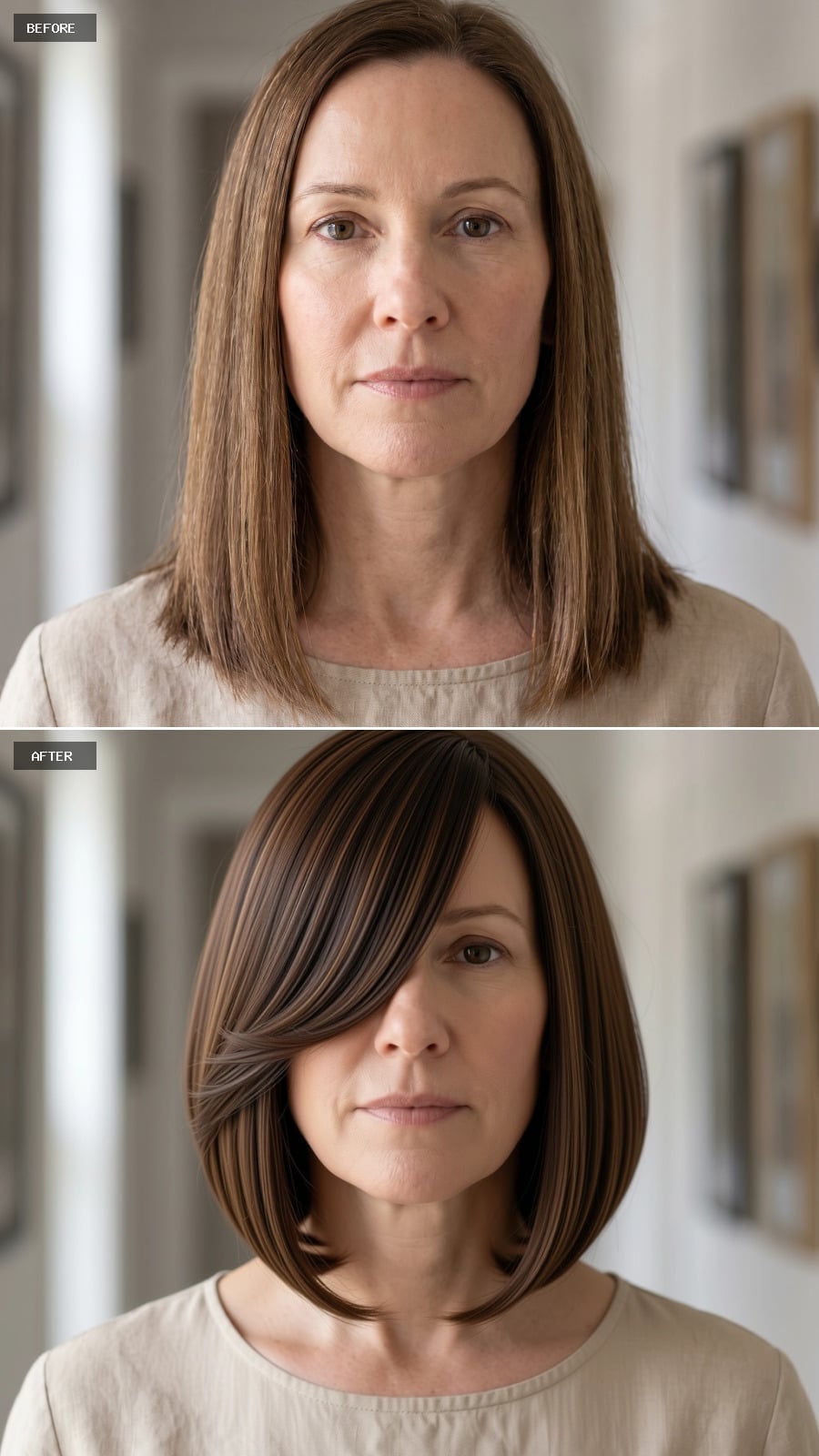
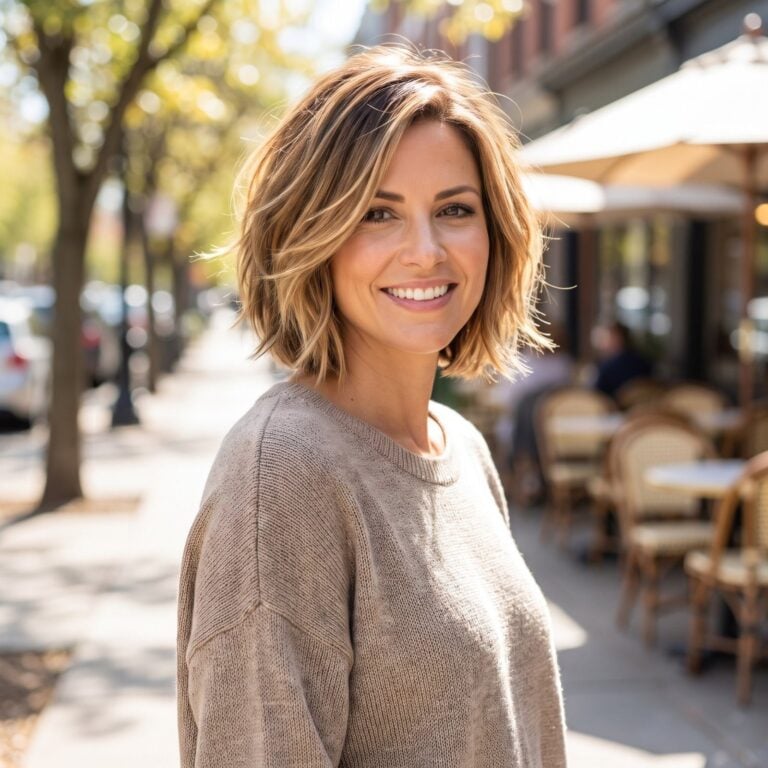
The bob lands at the jaw, but the real change begins several inches higher. A deep side part sends the front section across the forehead, breaking the symmetry of the old shoulder-length cut and giving the entire silhouette a stronger diagonal.
Warm chestnut and bronze tones keep the surface from reading as one flat block of brown. The ends curve inward instead of hanging straight, while controlled lift at the crown keeps the shape from collapsing around the face. Nothing radical happened here. Everything looks more considered.
Our readers lean the same way: in a poll on partings, 88% picked a side part over a middle one.
28. Silver, Center-Parted, and Sharp Enough to Skip the Styling Tricks
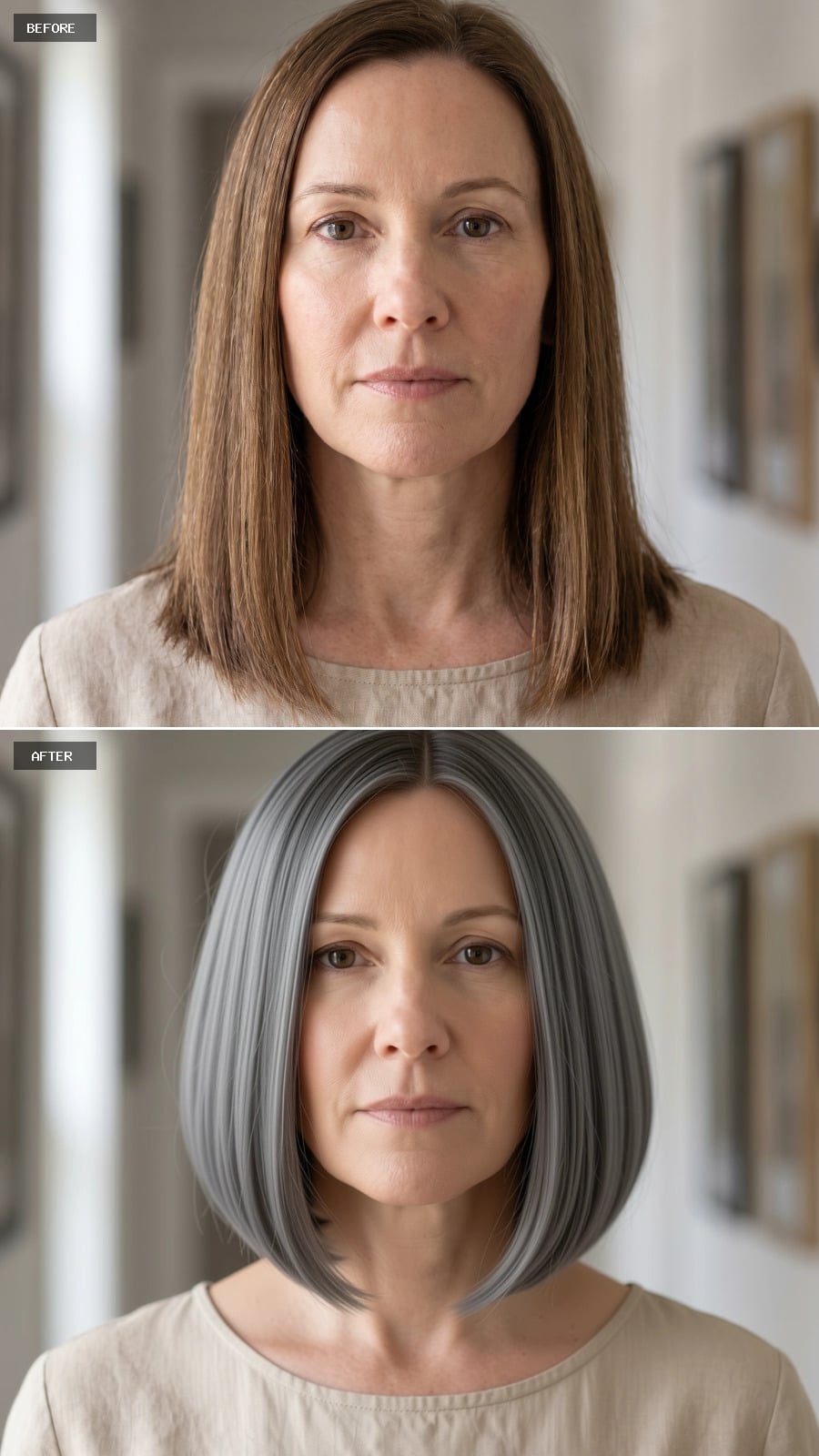
Slate and pearl tones run through a bob that stops cleanly at the jaw. No dramatic side sweep, no big curl pattern, no attempt to soften every edge. The precision is the appeal.
A center part reinforces that symmetry and lets the strong hemline carry the shape. The silver reads metallic rather than faded, giving the cut enough contrast to feel deliberate instead of tentative.
Color Note: Silver hair can shift dramatically depending on whether the tone leans pearl, steel, violet, beige, or white. Here the cooler slate cast works with the blunt geometry of the bob, making the color feel like part of the design rather than something the cut is trying to disguise.
27. Caramel Ribbons Turned a Safe Bob Into Something With Nerve
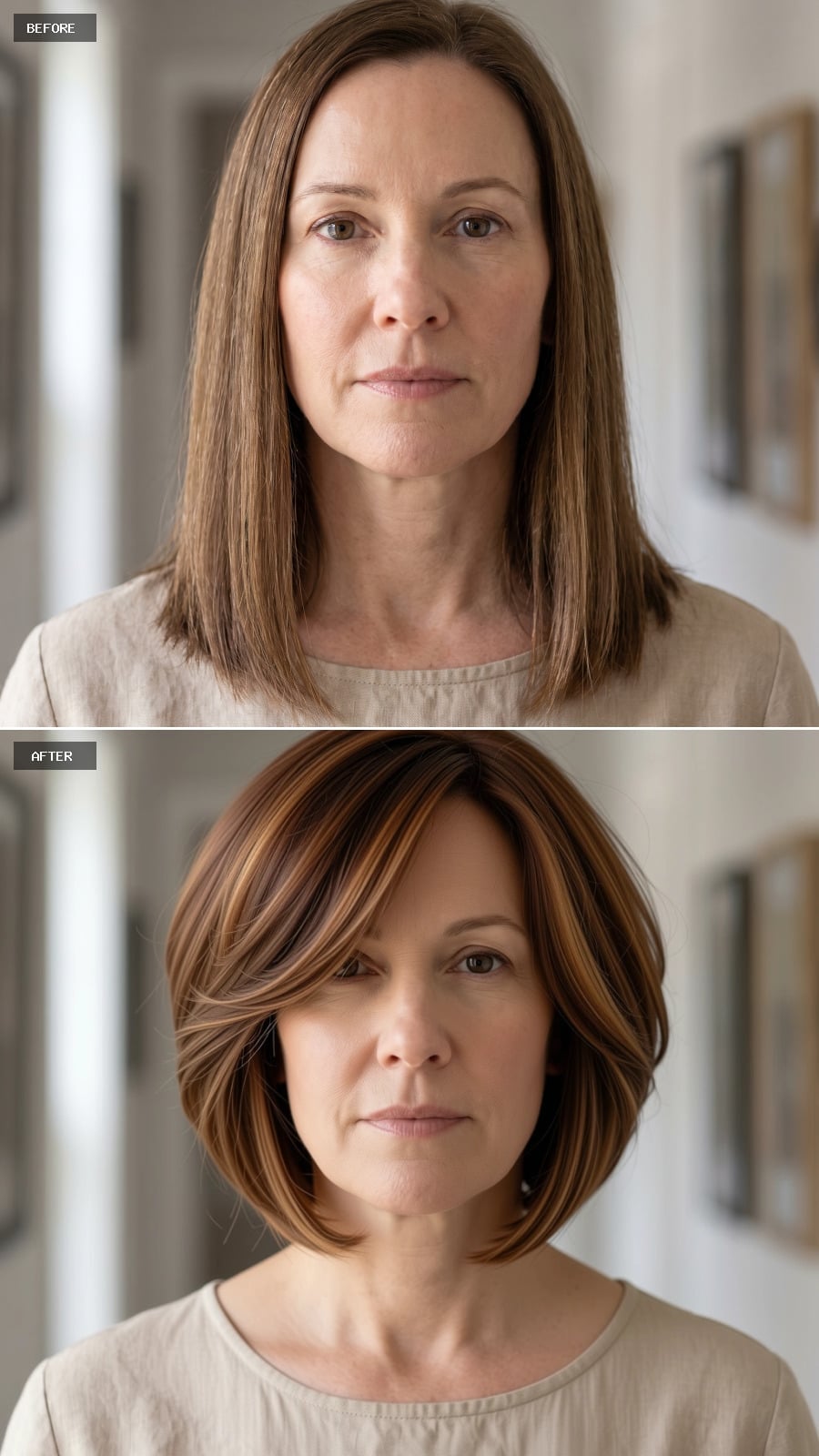
This chin-length bob angles slightly longer toward the front, giving the jaw a cleaner outline without forcing the cut into anything severe.
The color is deliberately broad rather than whisper-thin: caramel and amber pieces move through the brunette base in visible sections, following the shape instead of disappearing into it. Add modest crown volume and suddenly the bob has movement, depth, and considerably less interest in behaving.
What Our Readers Say
- In our reader poll on bob length, shoulder, chin and jaw finished close enough to call it a split, so there is no single right place for a bob to stop.
- When ThreadCurve readers loved a hairstyle and tapped a reason, overall style and cut shape came out on top, with looking younger close behind.
From ThreadCurve reader polls and votes.
26. Blunt Bangs Put a Hard Stop at the Brows
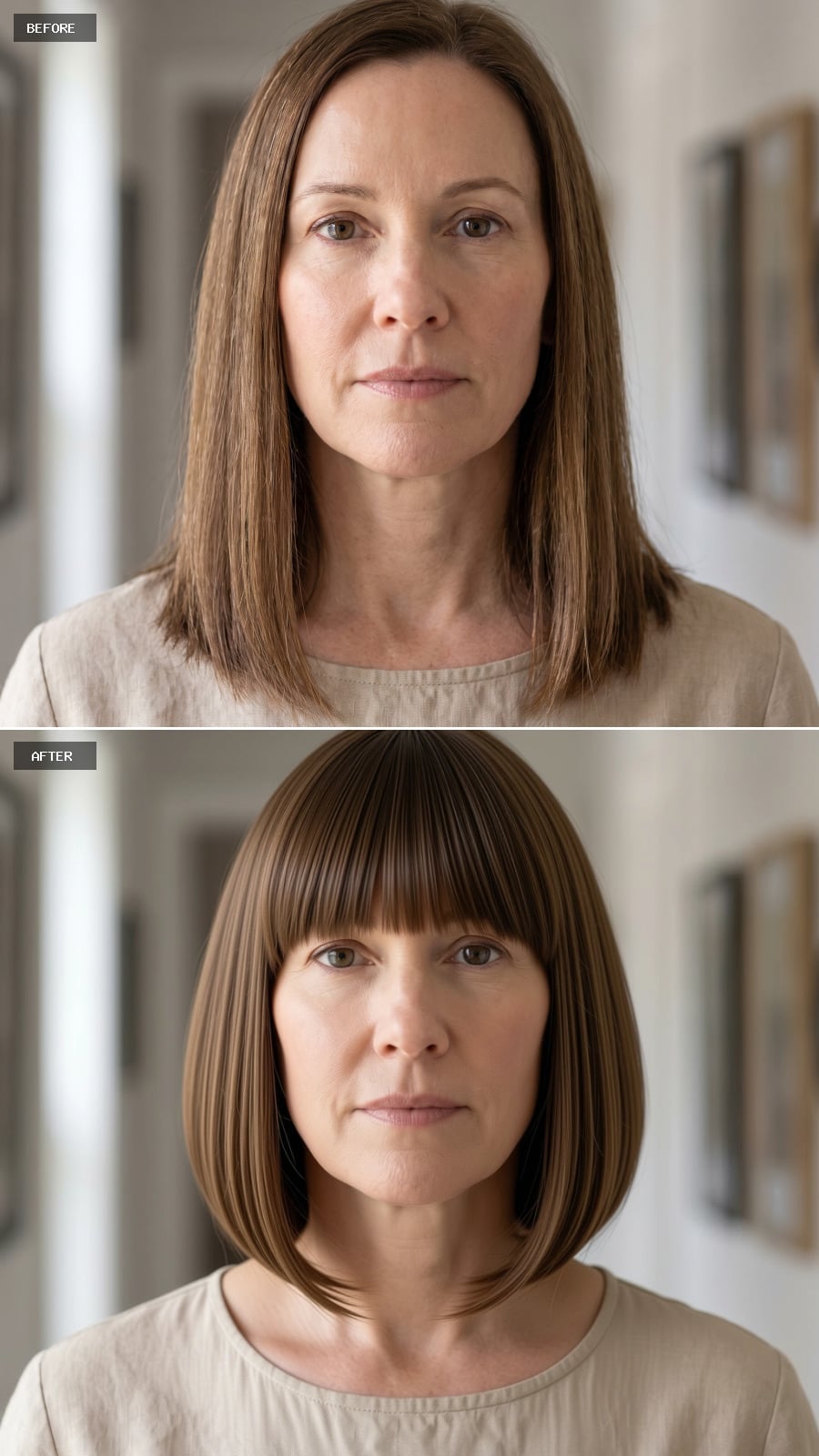
The fringe changes the proportions before the bob gets a chance to. Full bangs land just above the brows, creating a clean upper boundary and making the eyes the center of the composition.
Below, the rounded bob swings inward at the jaw. That curve keeps the blunt fringe from making the whole silhouette too square, while the natural medium-brown color lets the shape provide all the drama it needs.
25. Soft Waves Gave Shoulder Length a Reason to Stay
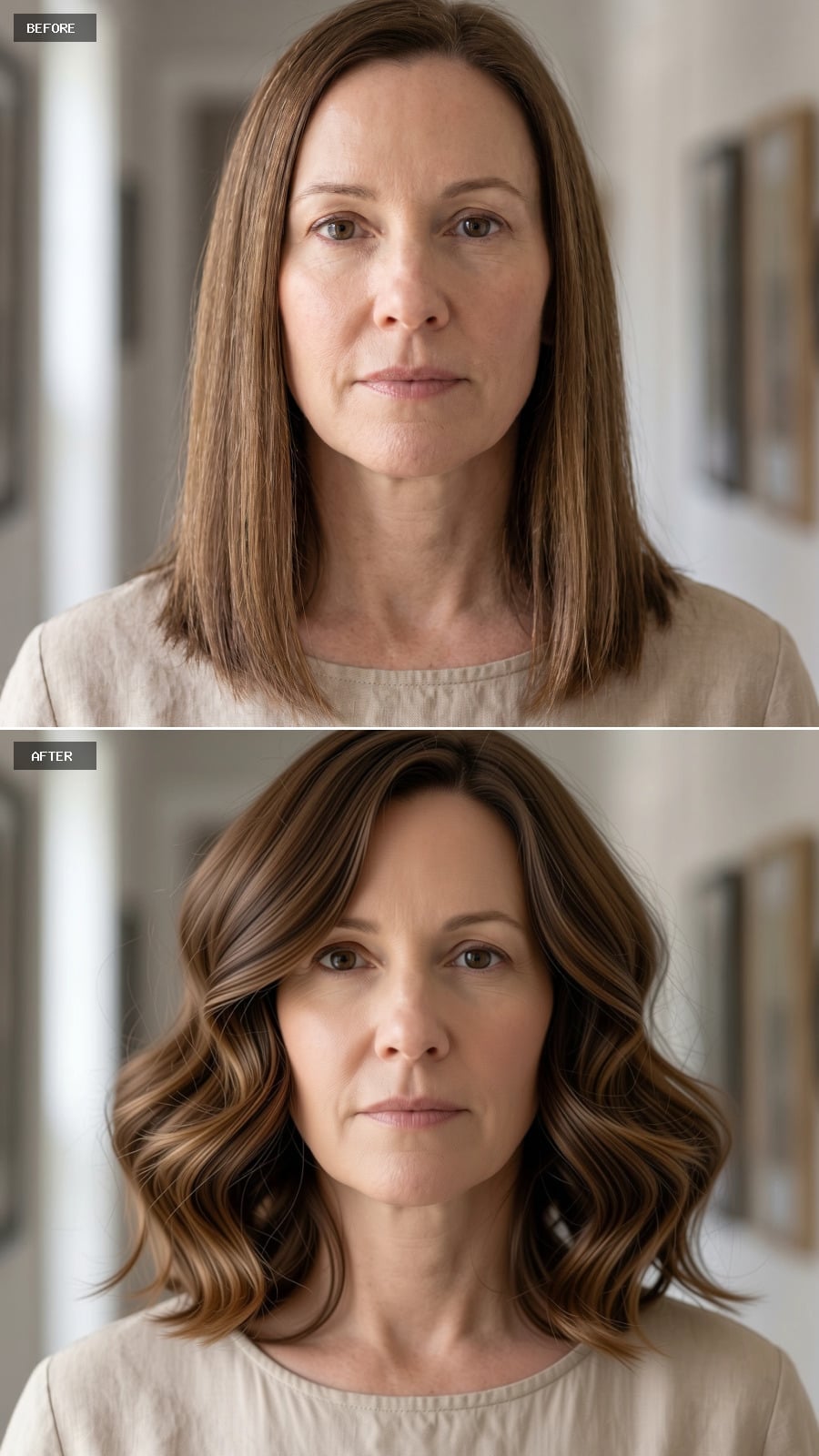
Not every transformation requires sacrificing length to the salon floor.
Here, loose barrel waves spread the volume sideways instead of letting the hair hang vertically beside the face. Caramel pieces moving through a warm chestnut base reinforce that movement, catching light on the bends rather than creating another stripey highlight story.
The result is still shoulder length. It simply stopped behaving like a curtain.
24. Plum Changed the Mood Before the Scissors Even Finished
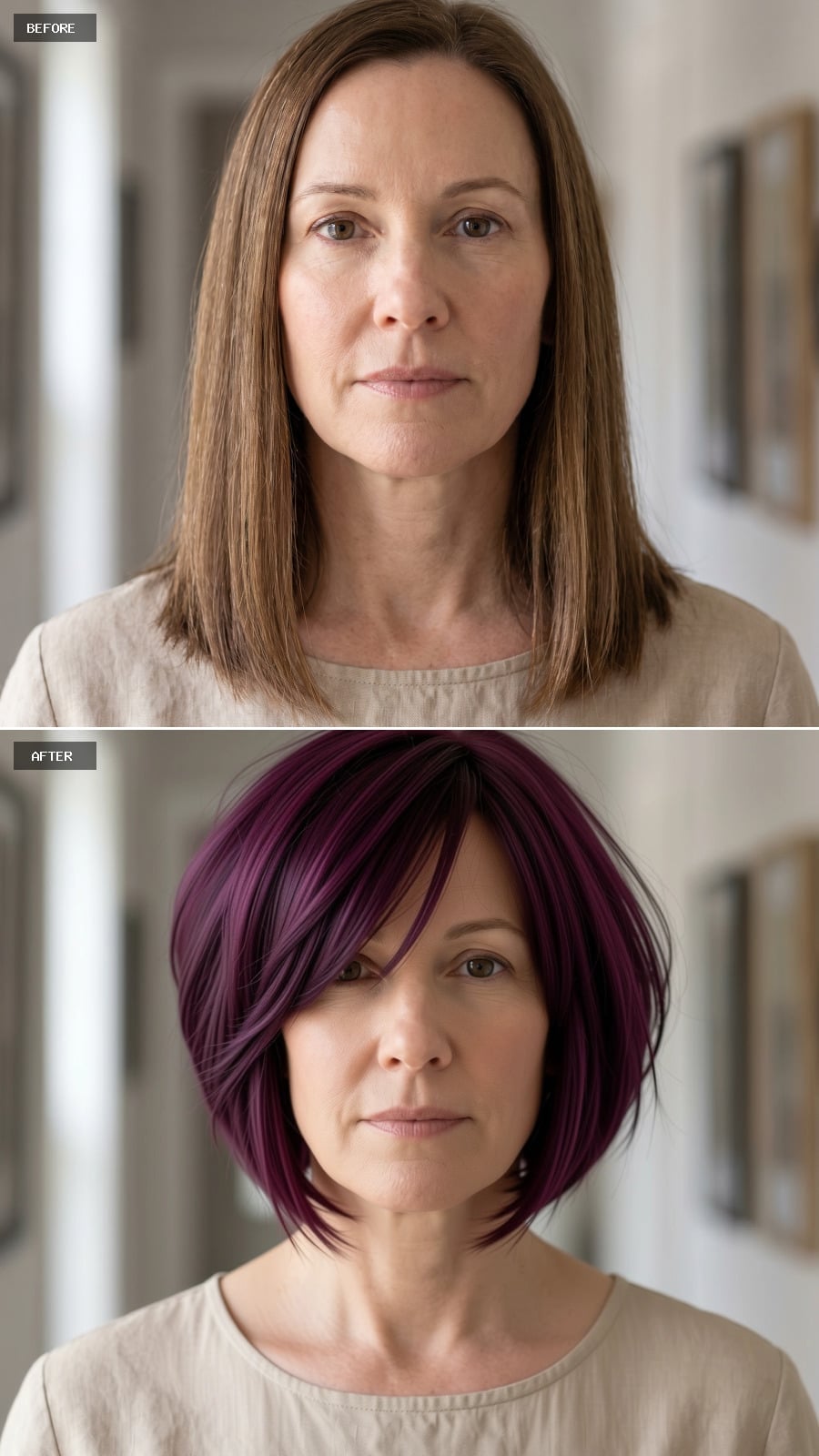
There is nothing apologetic about this color. The bob is close at the nape and wider toward the jaw, while a long side fringe throws the balance slightly off-center.
Then comes the plum-aubergine color, dark enough to turn nearly black away from direct light but saturated enough to reveal itself as soon as the surface catches it. The haircut is polished. The color makes sure nobody mistakes polished for cautious.
23. The Espresso Blunt Bob Went Straight for the Jaw
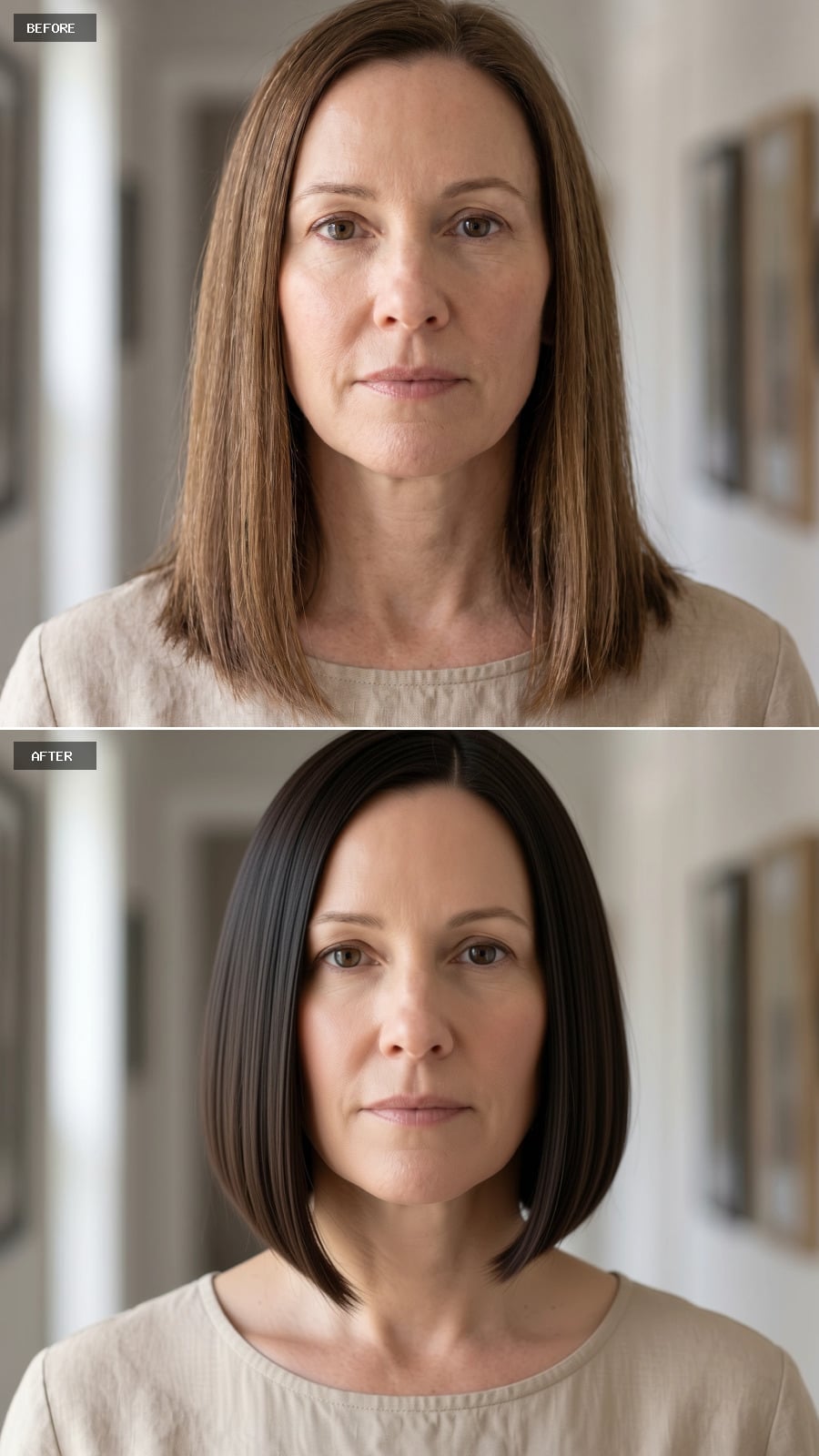
Cut to chin length and taken to a deep espresso brown, this bob gets its authority from the perimeter. The line is clean, the center part is uncomplicated, and the lack of layers makes the shape impossible to miss.
The darker color increases the contrast between hair and skin, while the blunt ends place a strong horizontal line beside the jaw. It is not trying to look airy, tousled, or accidentally charming. That refusal is half the appeal.
Why It Works: Darker hair can create stronger contrast around the face, while a blunt perimeter gives the eye a clear line to follow. The effect depends on coloring, face shape, and placement, but here the combination makes the cut look especially crisp.
22. Blonde at the Front, Brown Behind, and the Light Lands Exactly Where It Should
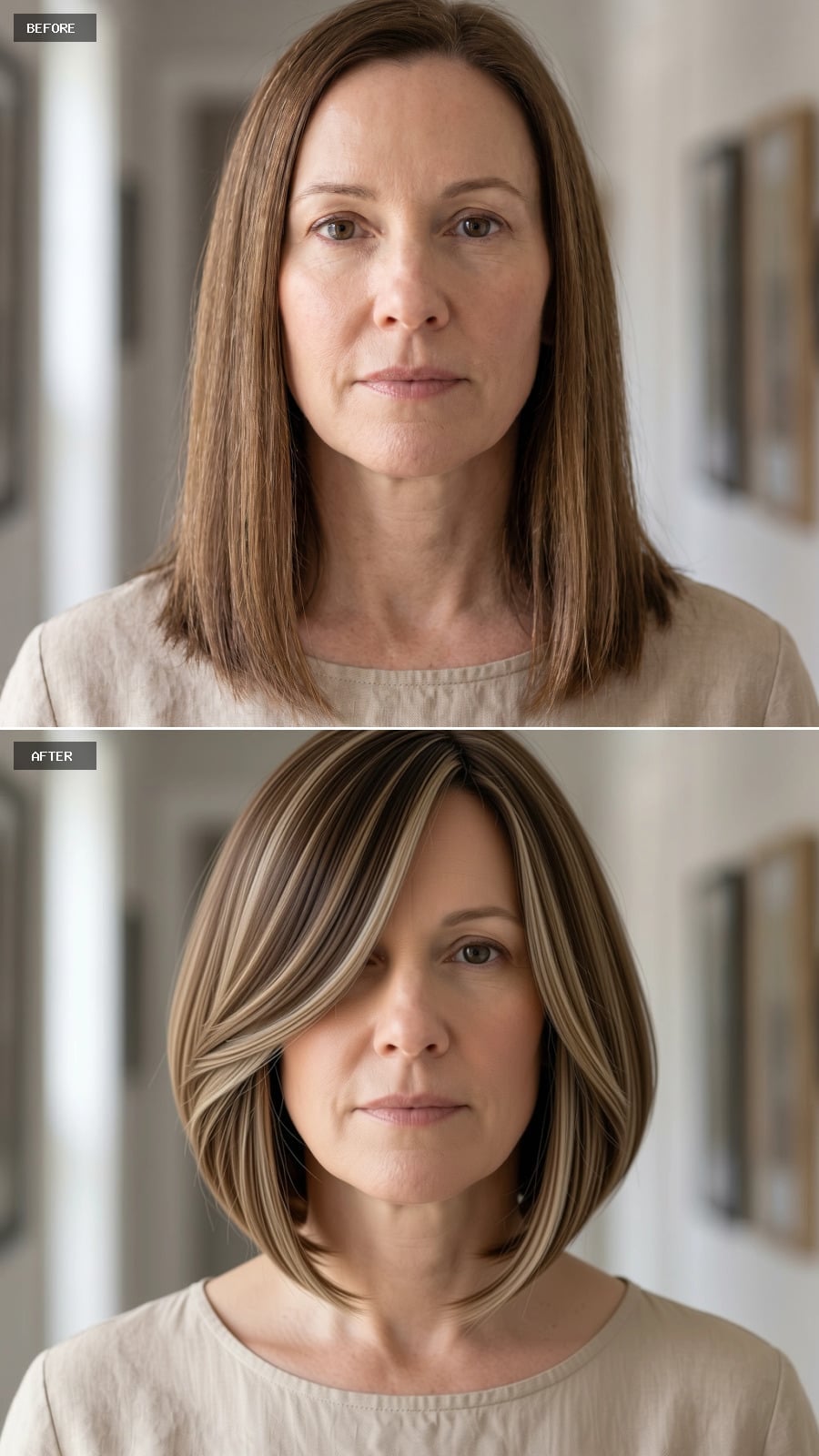
The rounded bob falls just below the jaw and curves inward with enough weight to look full rather than fluffy.
The real visual shift comes from the lighter front pieces. Blonde is concentrated nearest the face and gradually disappears into the warmer brunette base behind it, putting brightness exactly where the haircut turns toward the cheekbones.
- Rounded ends keep the perimeter looking substantial
- Lighter front sections bring brightness toward the face without bleaching the entire head
- A just-below-jaw length gives the bob room to curve instead of stopping abruptly at the chin
21. Slate and Silver Took the Bob Somewhere Cooler
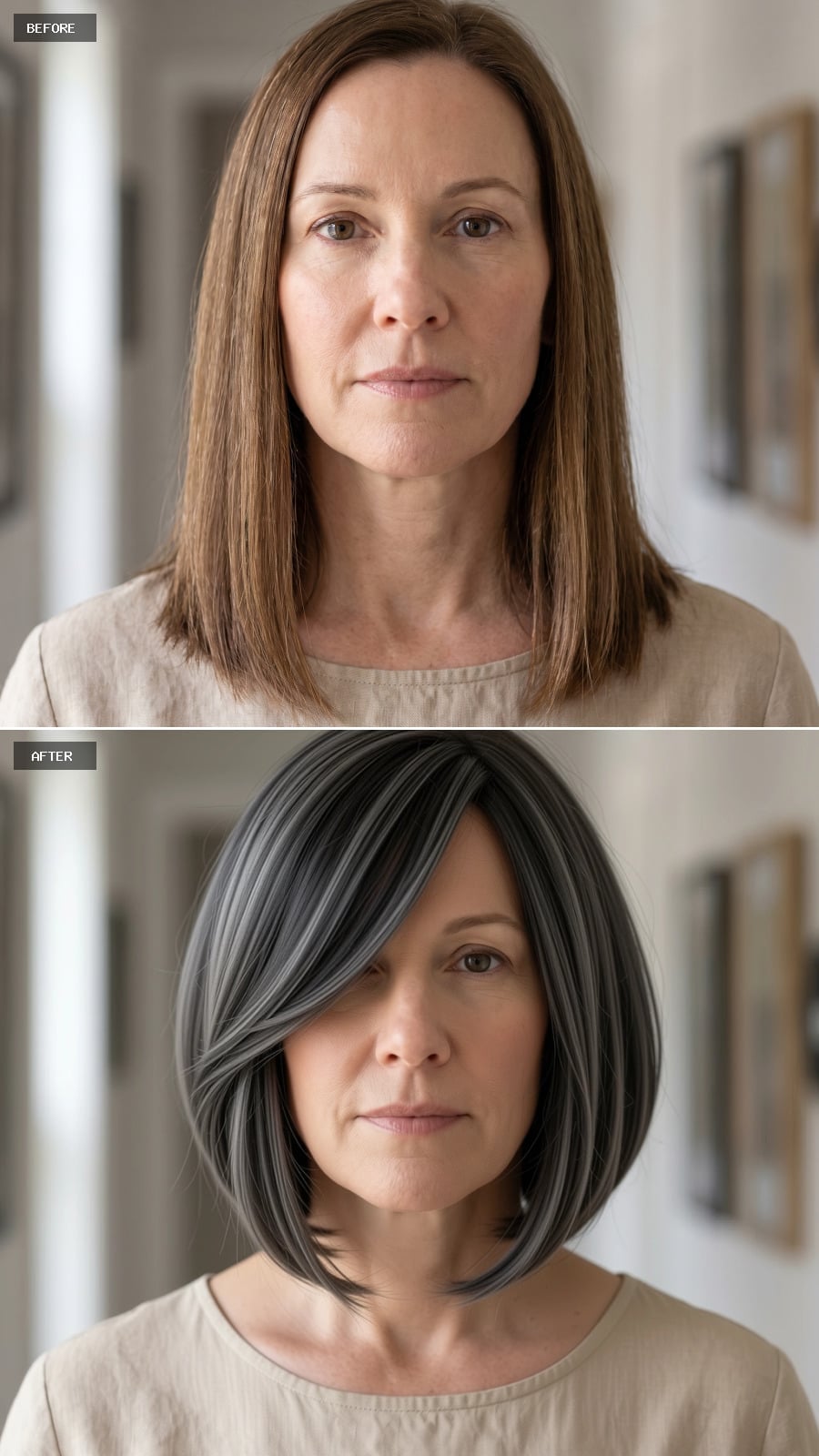
Deep slate runs through the base with lighter silver streaks breaking the surface, giving the familiar jaw-length bob a colder, more graphic quality.
The side fringe moves across the forehead rather than sitting flat against it, but the color is what separates this one from the warmer brunette versions. There is almost a metallic finish to it — less “covering gray,” more choosing a palette.
Age-Forward: Gray does not have to mean pale. Slate, pewter, charcoal, and silver can create very different levels of contrast, and the most flattering direction depends more on individual coloring than on age. This version deliberately chooses depth.
20. A Wavy Bob and Full Fringe Put the Focus Right Through the Middle
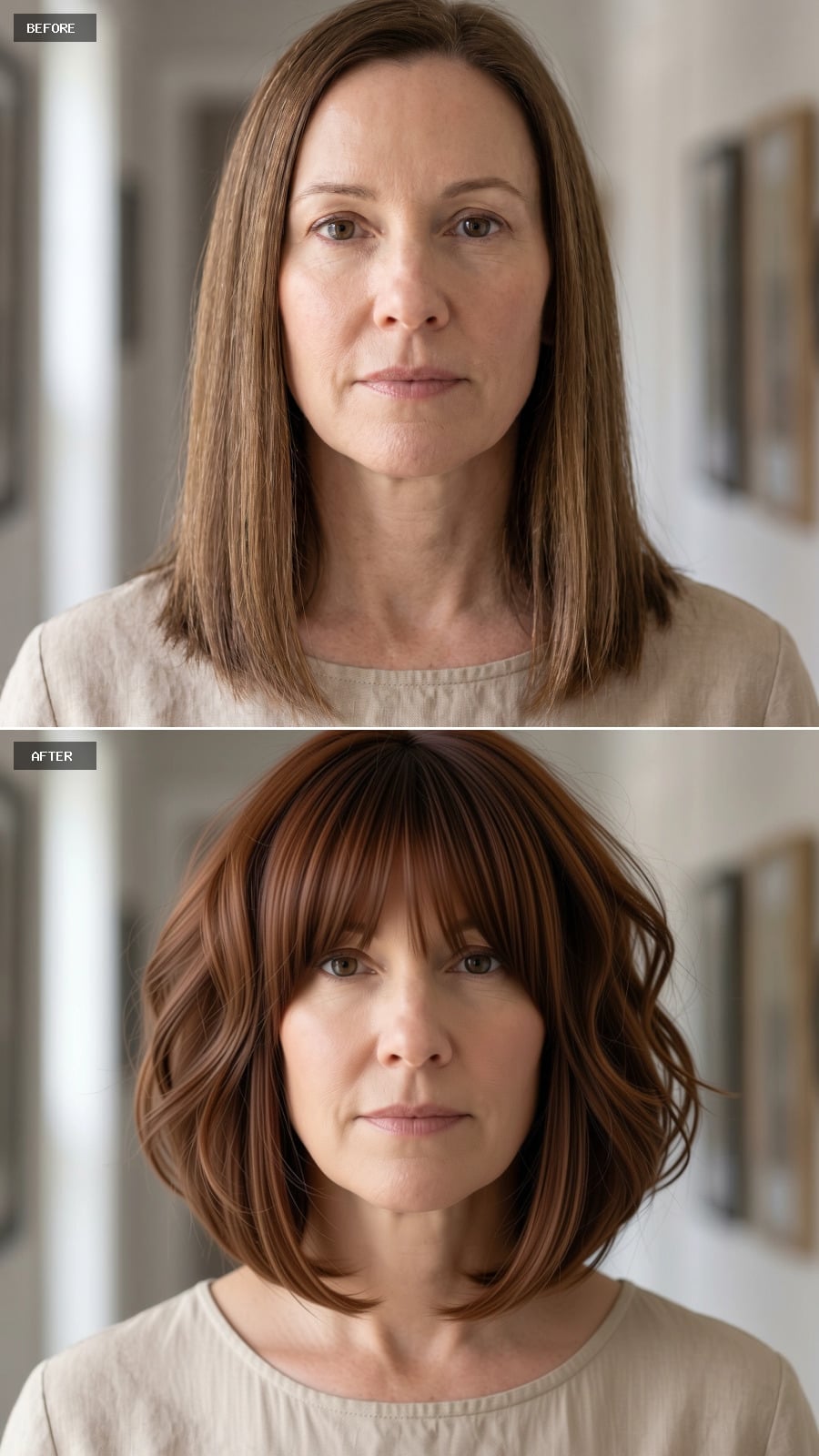
The fringe lands across the forehead and immediately concentrates attention around the eyes. Below it, the bob stops just past the jaw and kicks outward instead of curling obediently underneath.
That outward movement matters because it gives the silhouette width and energy without requiring extra length. A deeper chestnut tone adds visual density, but the shape is the memorable part: compact at the top, animated at the ends.
19. The Collarbone Bob Kept the Length and Lost the Drift
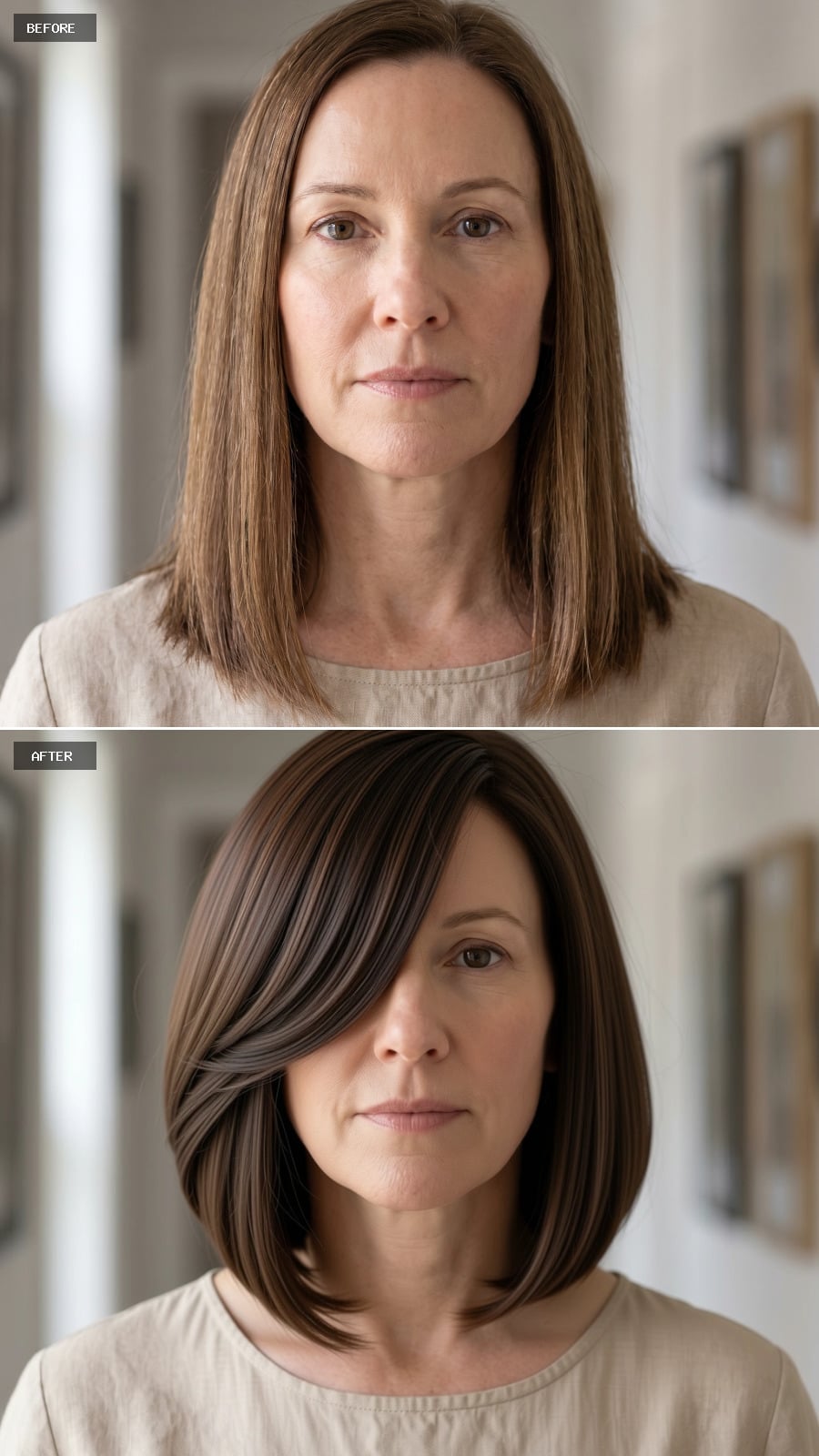
This one proves the solution was never simply “cut it short.” The bob still grazes the collarbone, but the perimeter is blunt enough to give the length a destination.
A deep side part sends more weight across one side of the forehead, while the richer brunette tone prevents the long surface from looking flat. The old hair hung. This version drapes.
18. Silver Plus Blunt Bangs Turned Softness Into Precision
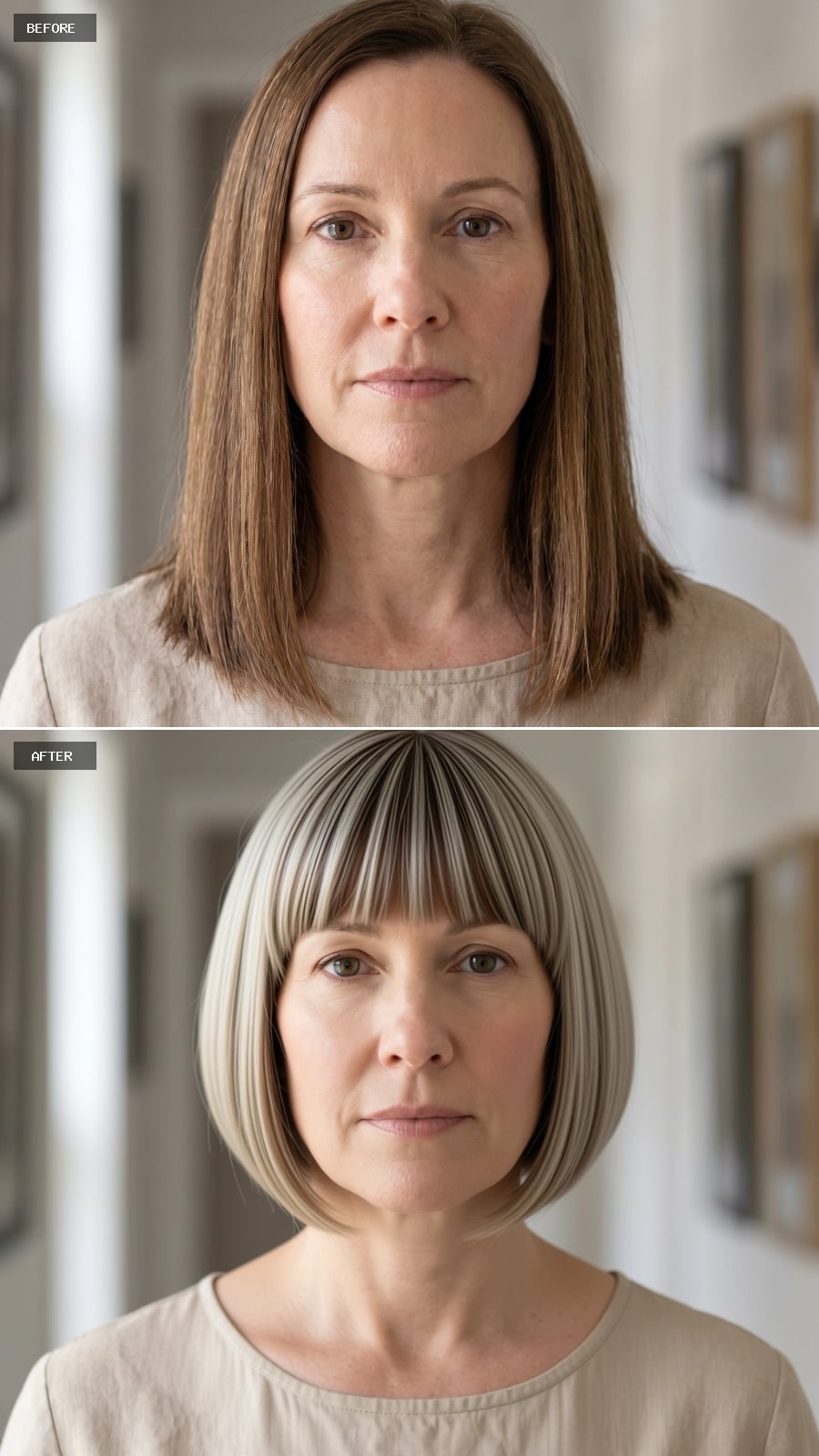
Silver is only half the story. The jaw-length bob curves gently under, while a full fringe cuts straight across the brow with almost ruler-level confidence.
That horizontal line makes the forehead appear shorter and moves attention immediately toward the eyes. Cool ash keeps the color crisp rather than creamy, which suits a haircut built from such decisive edges.
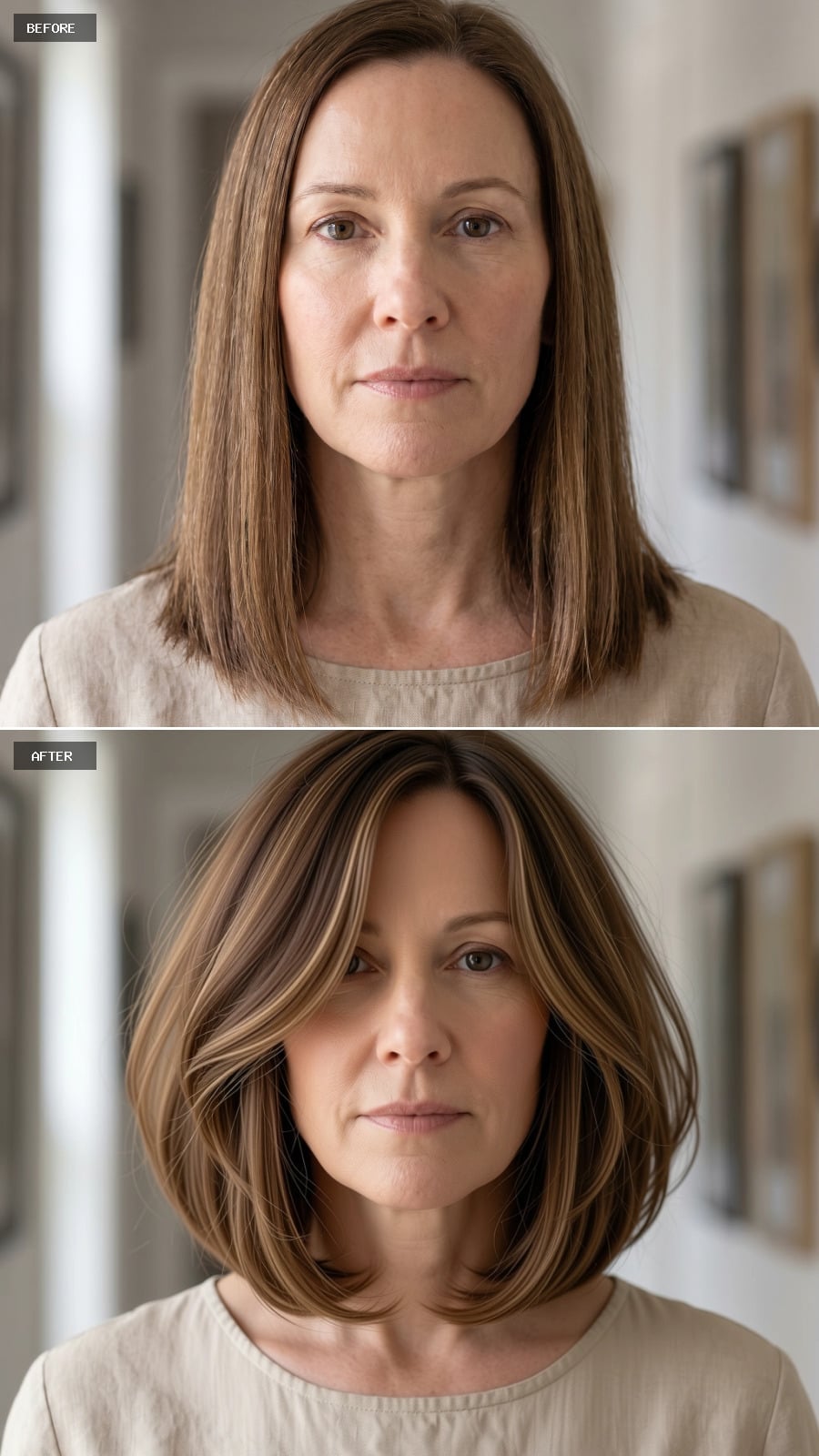
17. Chunkier Highlights Made This Bob Look Less Polite
❤️ Would you like to save this?
Caramel and blonde sections travel through a chin-length bob in visible ribbons rather than disappearing into the brunette base.
The ends curve under, but softer pieces near the front break the outline enough to keep the bob moving. It is warmer, brighter, and a little less interested in seamless blending than the more conservative highlighted versions — which is precisely why it has more character.
16. The Midnight Bob Turned Asymmetry Into the Main Event
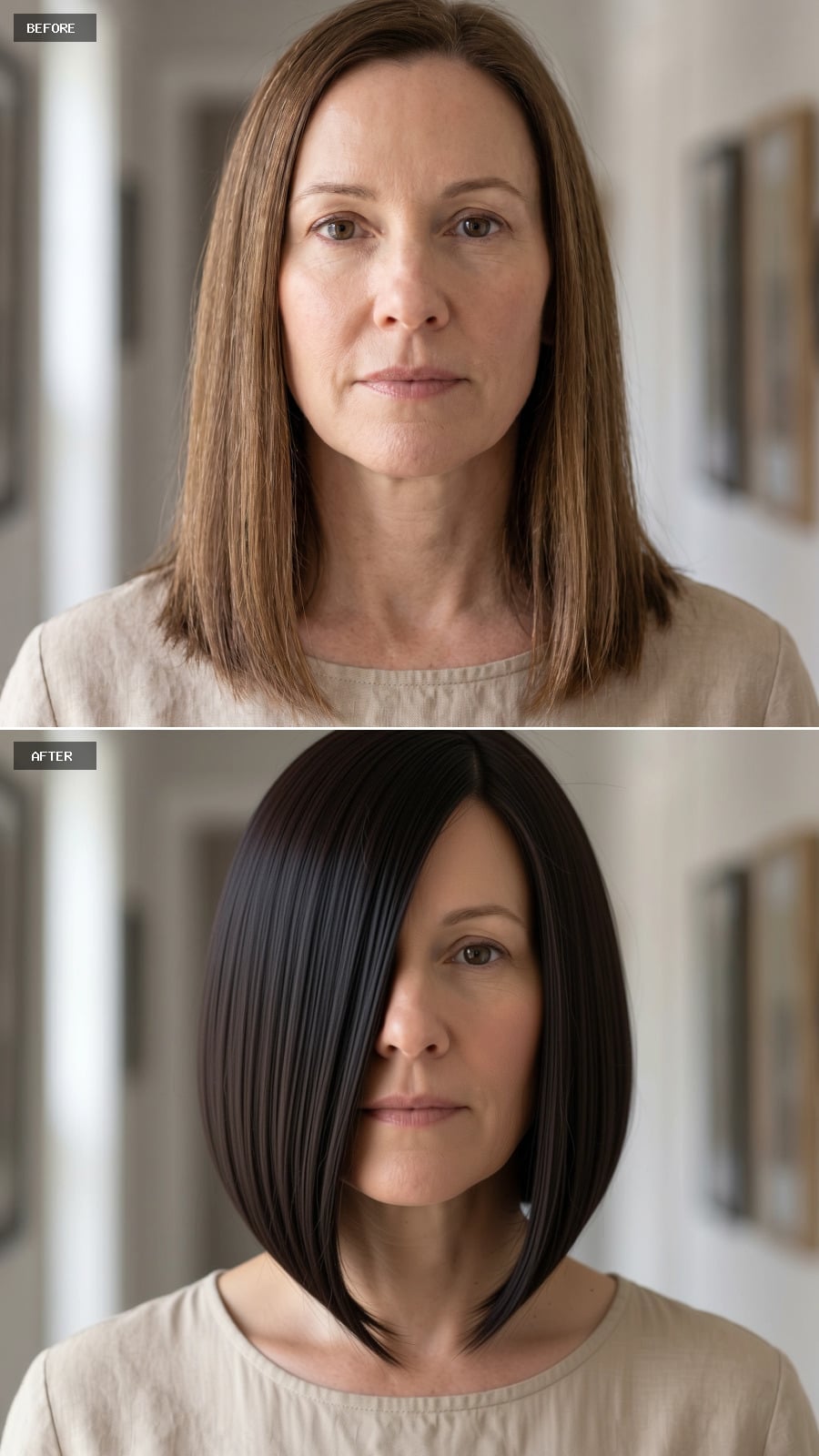
Near-black brown gives this cut a continuous, glossy surface with no highlights to interrupt the shape.
One side sits near the collarbone while the front angles longer, and the sweep crosses enough of the forehead to partially cover one eye. That imbalance creates the interest. Instead of framing both sides equally and calling the job finished, the cut deliberately lets one side dominate.
15. Honey Blonde Gave the Rounded Bob More Depth Than One Flat Color Could
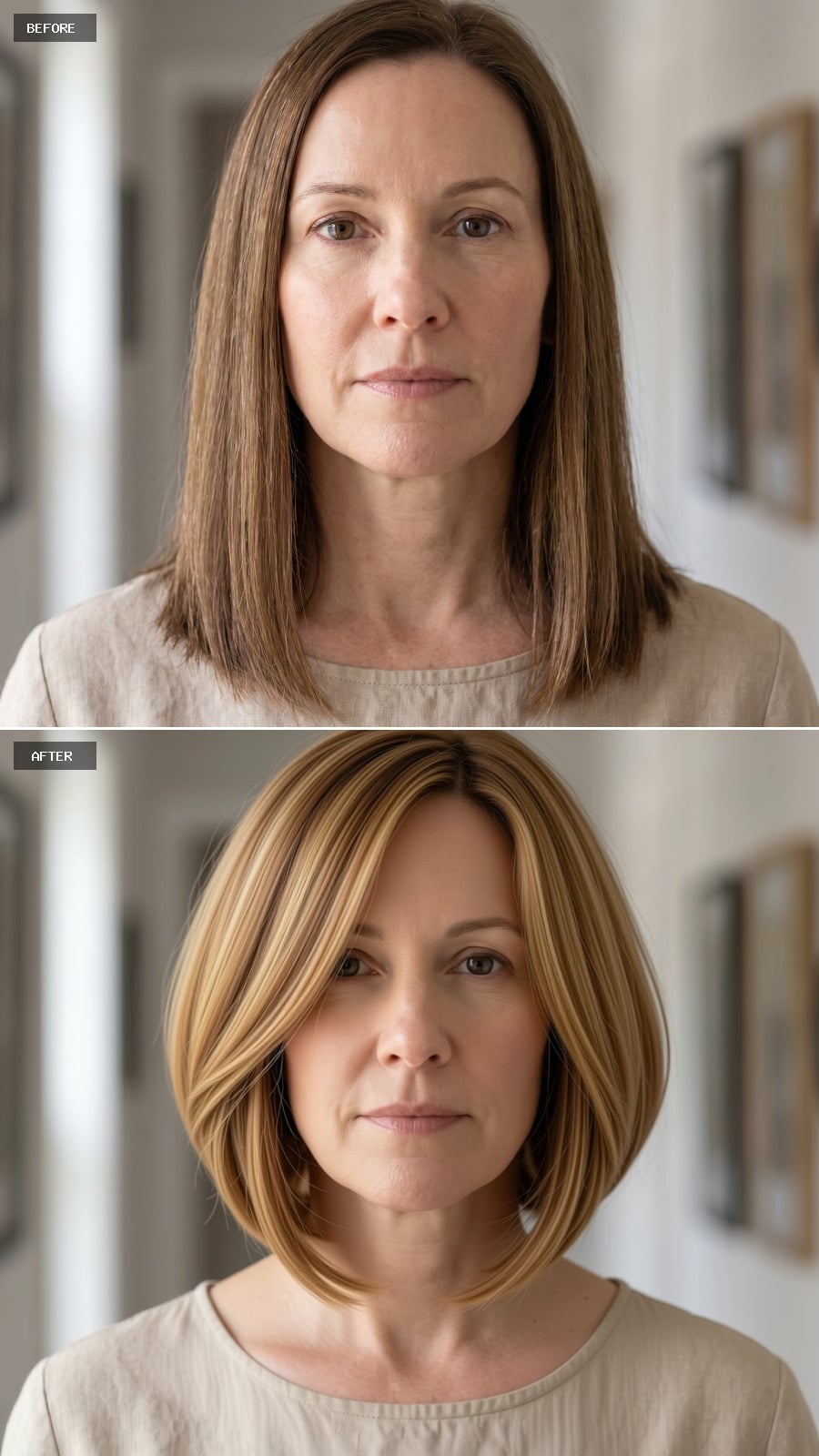
Honey blonde shifts toward warmer gold through the ends, giving the surface enough tonal variation to keep the rounded shape from looking solid.
The bob curves inward at the jaw with most of its fullness sitting around cheek level. It is a softer proposition than the espresso or silver versions, but the perimeter still has enough discipline to keep “soft” from becoming “vague.”
14. Full Bangs and a Cool Brunette Bob Built a Frame With Actual Edges
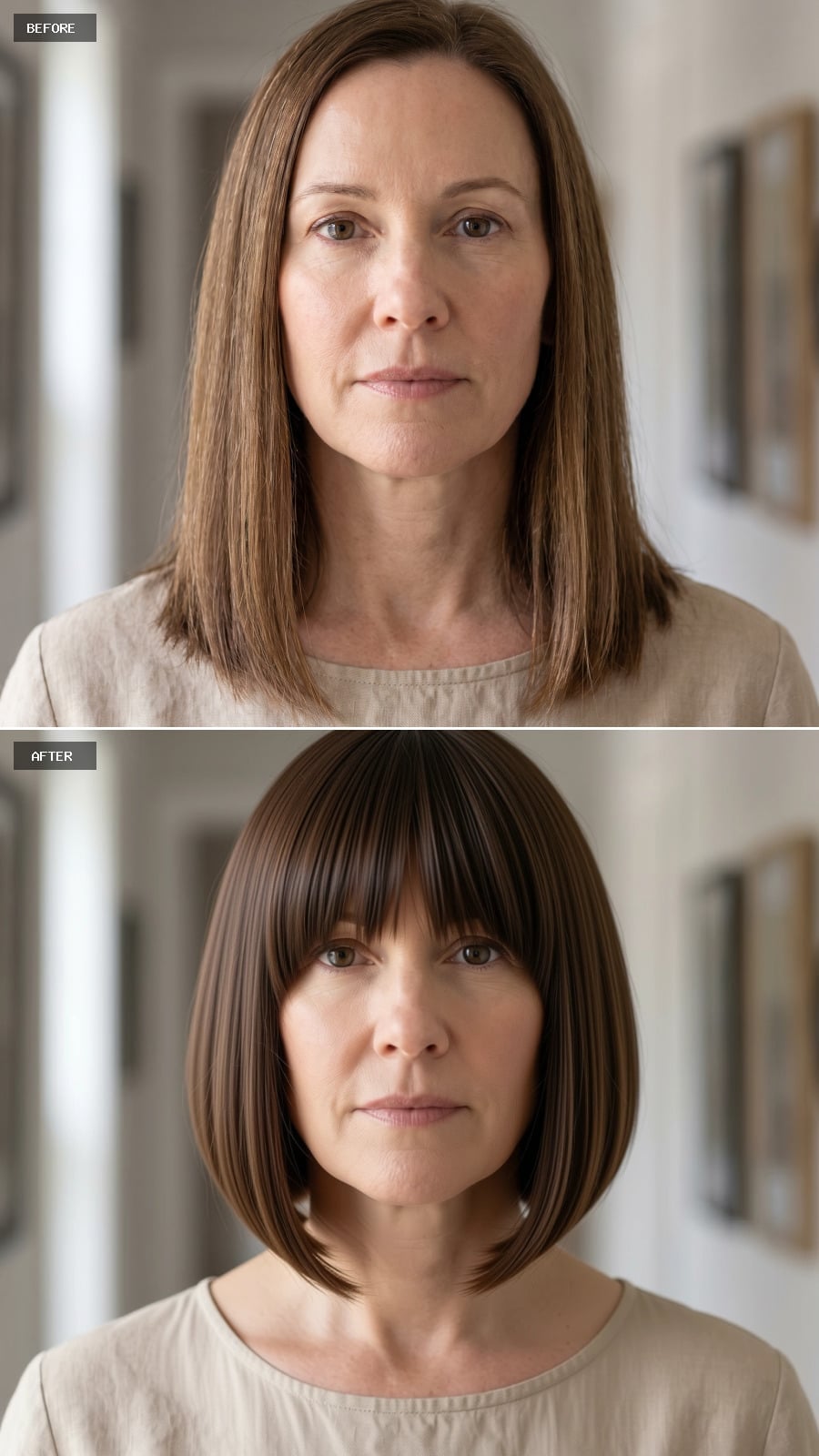
A blunt chin-length perimeter combines with a dense fringe landing above the brows, creating a compact frame around the face.
The cool brunette color is slightly deeper than the before, which makes the eyes stand out more strongly against the darker surround. This is not the cut for somebody hoping no one notices she went to the salon.
13. Dark Plum and a Hard Side Sweep Changed the Temperature Completely
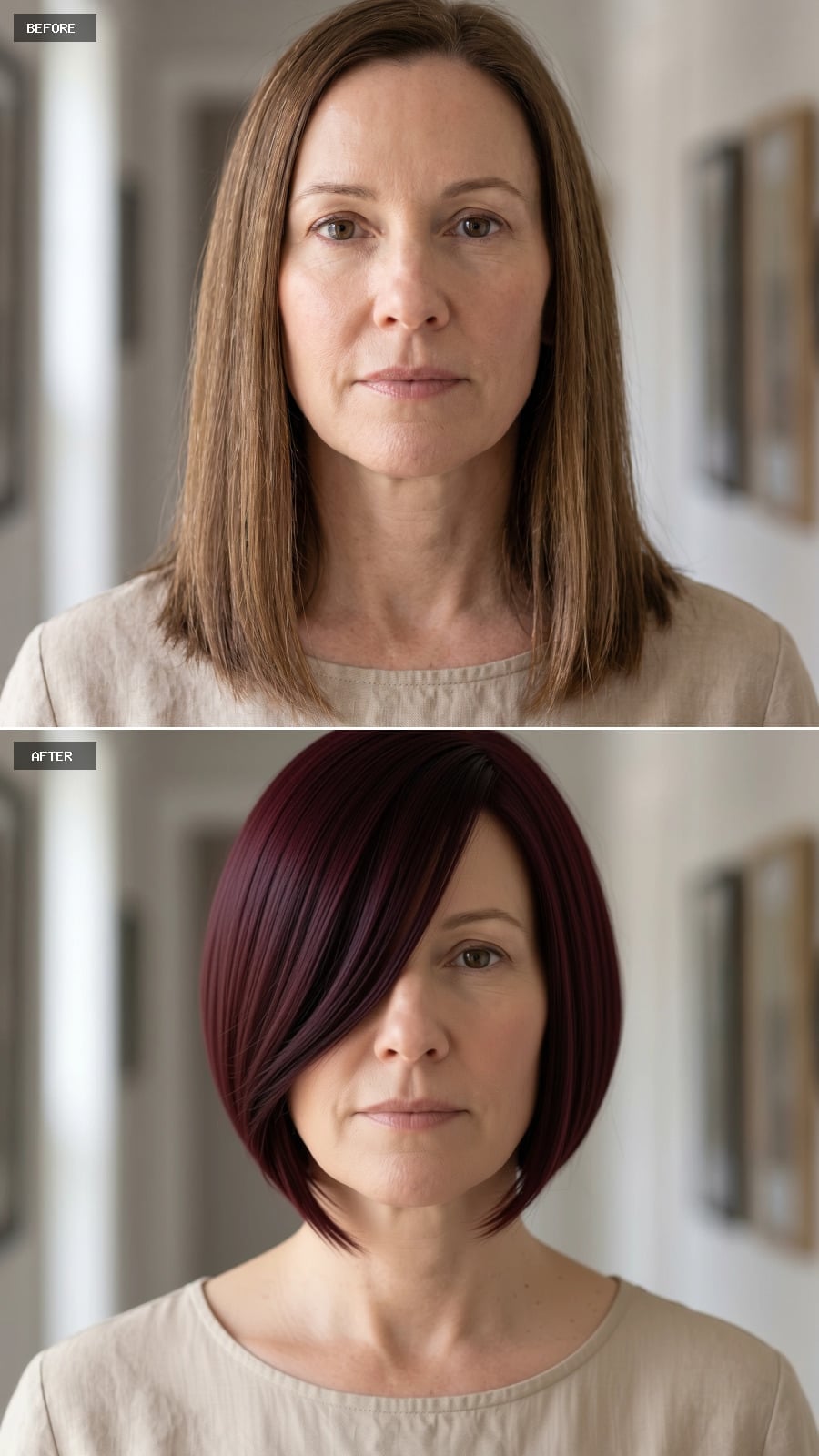
A blunt bob grazing the jaw gets a far less predictable treatment in deep burgundy-plum, nearly black at the roots and visibly richer wherever the light catches it.
The aggressive side sweep pushes most of the volume across the forehead, creating a pronounced imbalance between the two sides. Against a neutral outfit, the color gets nowhere to hide. Fortunately, hiding was clearly not the assignment.
12. Caramel, Swept Bangs, and a Bob With More Movement Than Its Length Suggests
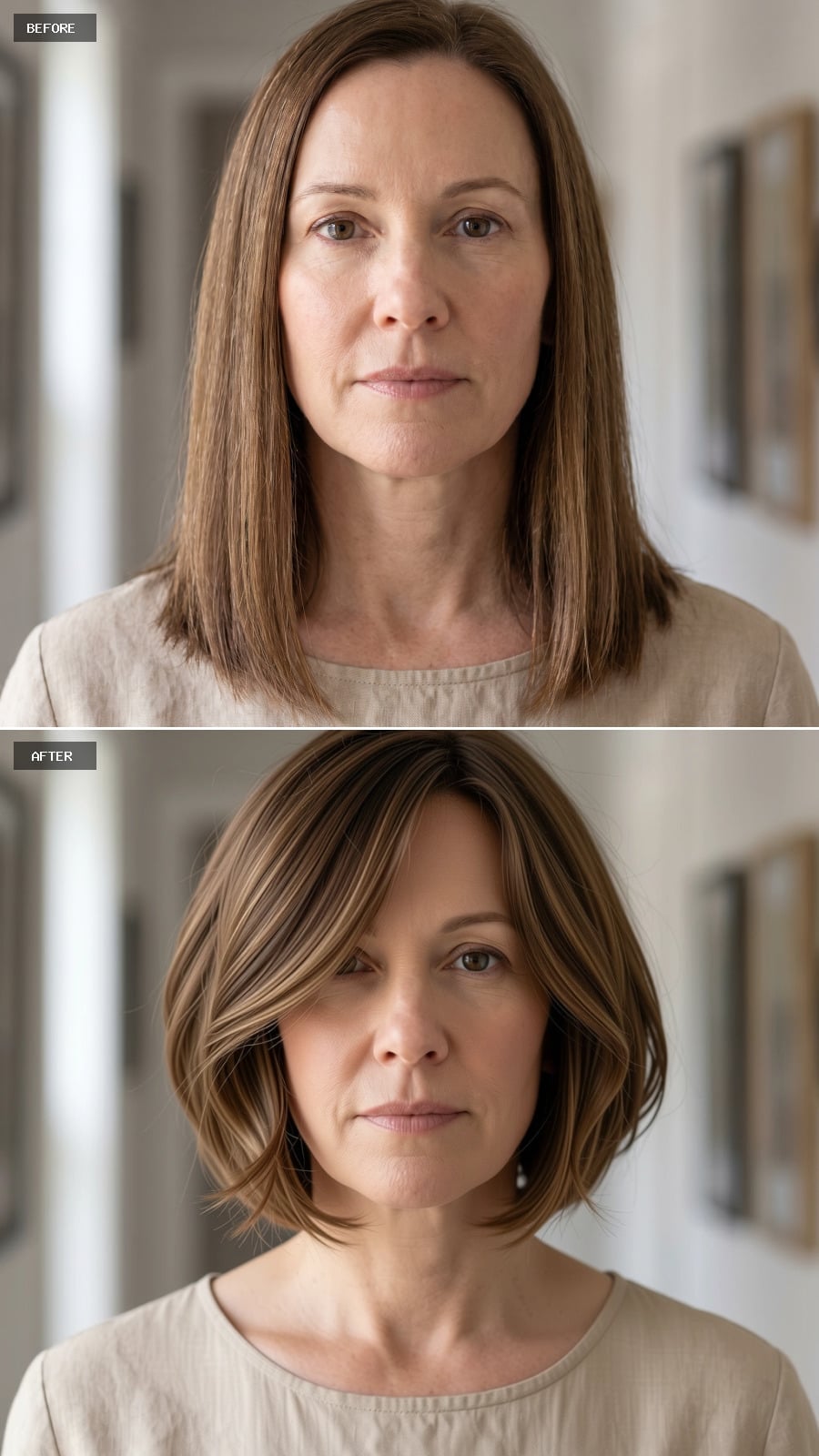
Warm caramel sections travel through a chin-length bob while the fringe crosses the forehead in one long diagonal.
The two moves reinforce each other: color creates breaks in the surface, and the sweep prevents the front from forming one static wall of hair. It is still a classic bob underneath. The styling simply stopped treating “classic” as a synonym for harmless.
11. Blonde With Darker Roots Keeps the Side-Part Bob From Floating Away
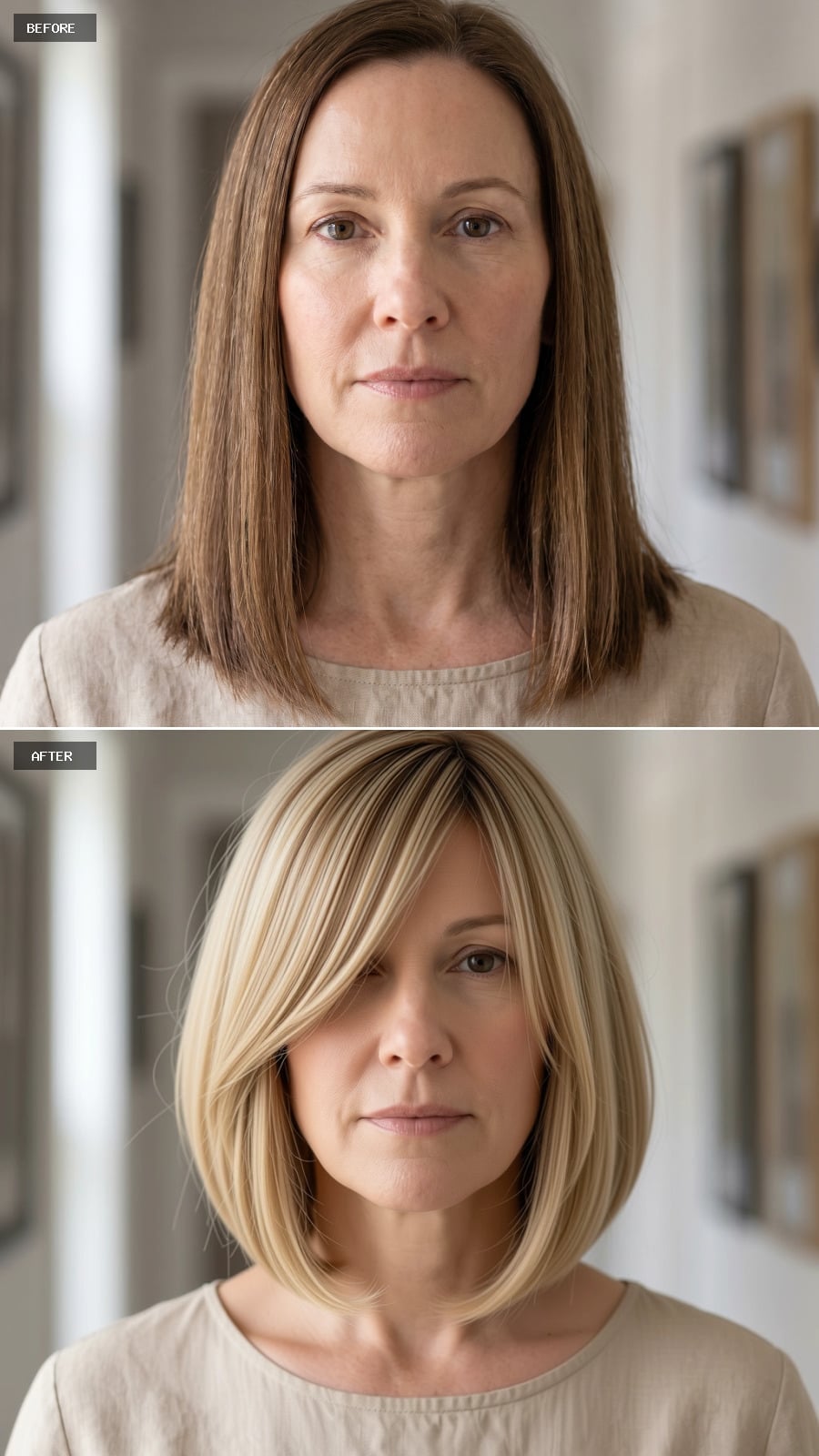
The blunt bob sits just below the jaw, but the blonde is not one uninterrupted sheet of pale color. Darker roots and lighter panels through the middle give the cut enough depth to preserve its shape.
A side part shifts the balance away from the center and keeps the front moving diagonally across the face. The lighter color softens the overall contrast; the blunt perimeter makes sure the haircut itself stays definite.
10. Another Blunt Fringe, This Time With a Warmer and Rounder Finish
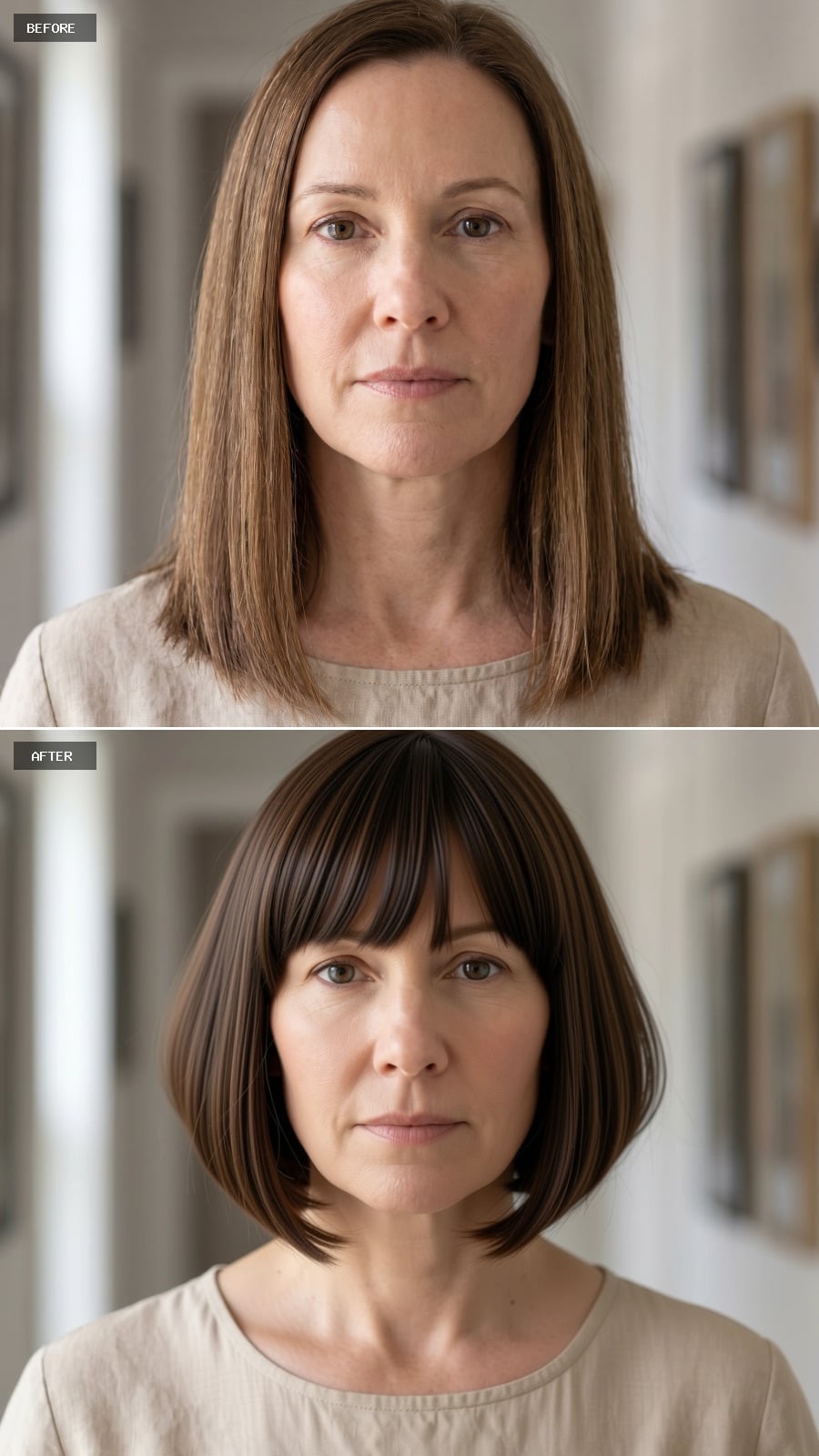
Dark brown hair stops squarely at the jaw while a full fringe lands just above the brows. On paper, that sounds close to several other cuts here. The difference is in the softer warmth of the color and the slightly less rounded finish through the sides.
The cut creates strong boundaries above and below the face without relying on highlights, waves, or an exaggerated part. There is nowhere for the geometry to hide, which is exactly why it works.
9. A Chestnut Side Sweep Gives the Rounded Bob More Air
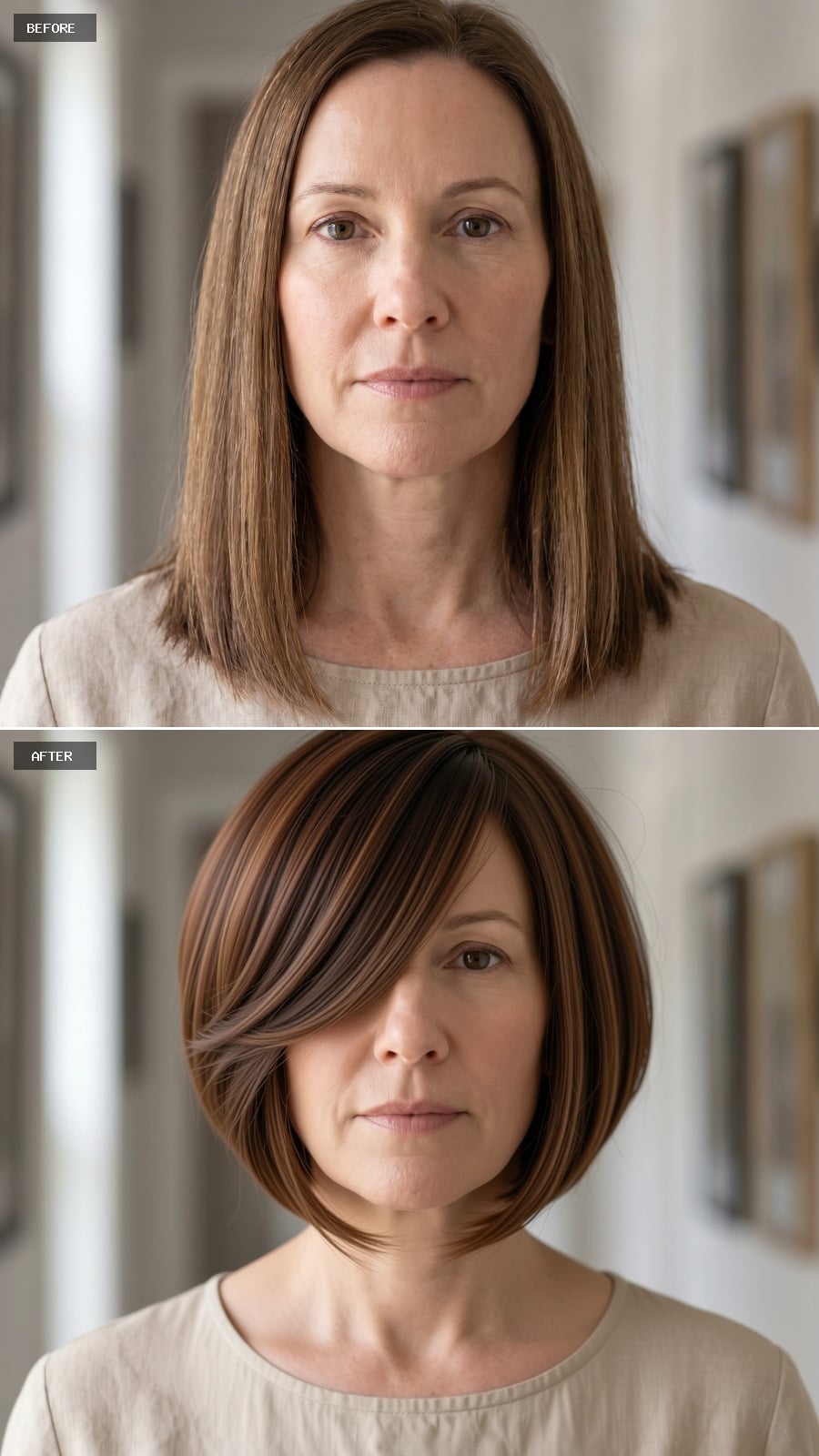
The bob sits just below the jaw with a rounded perimeter, but a deep side part prevents the shape from becoming too symmetrical.
Chestnut, caramel, and honey tones follow the curve of the cut instead of appearing randomly scattered through it. More brightness sits where the hair bends toward the face, giving the color placement a sense of direction.
Polished, yes. Predictable, not quite.
8. Almost-Black Hair and Blunt Bangs Make the Eyes the Entire Point
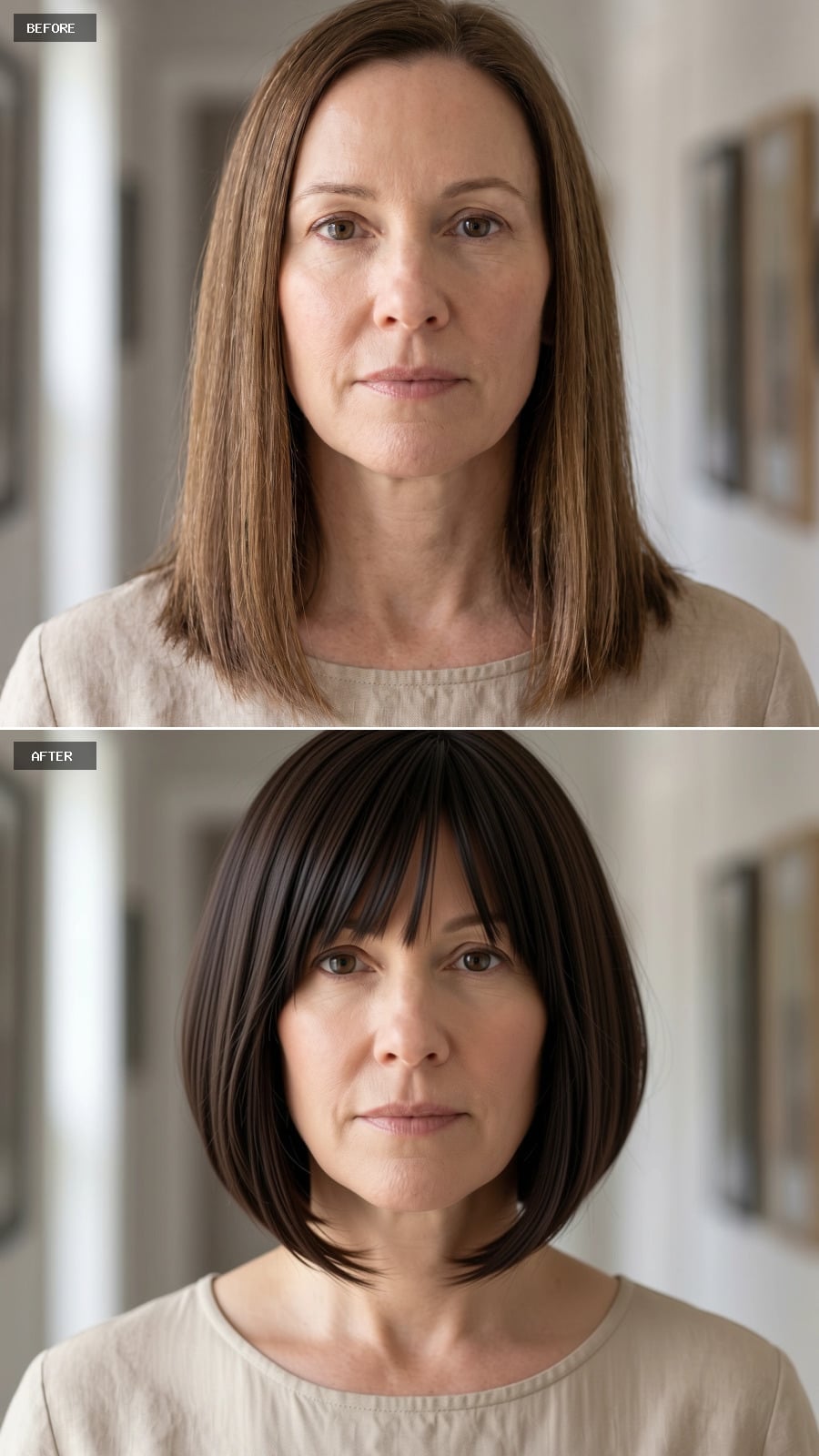
The jaw-length bob forms a clean arc while the fringe drops straight across the forehead with no feathering and no attempt at a side sweep.
Taking the color close to espresso heightens the contrast around the face and puts the eyes between two very strong lines: fringe above, bob below. Subtlety was available. This cut declined.
7. Bold Ribbon Highlights Put the Color on Equal Footing With the Cut
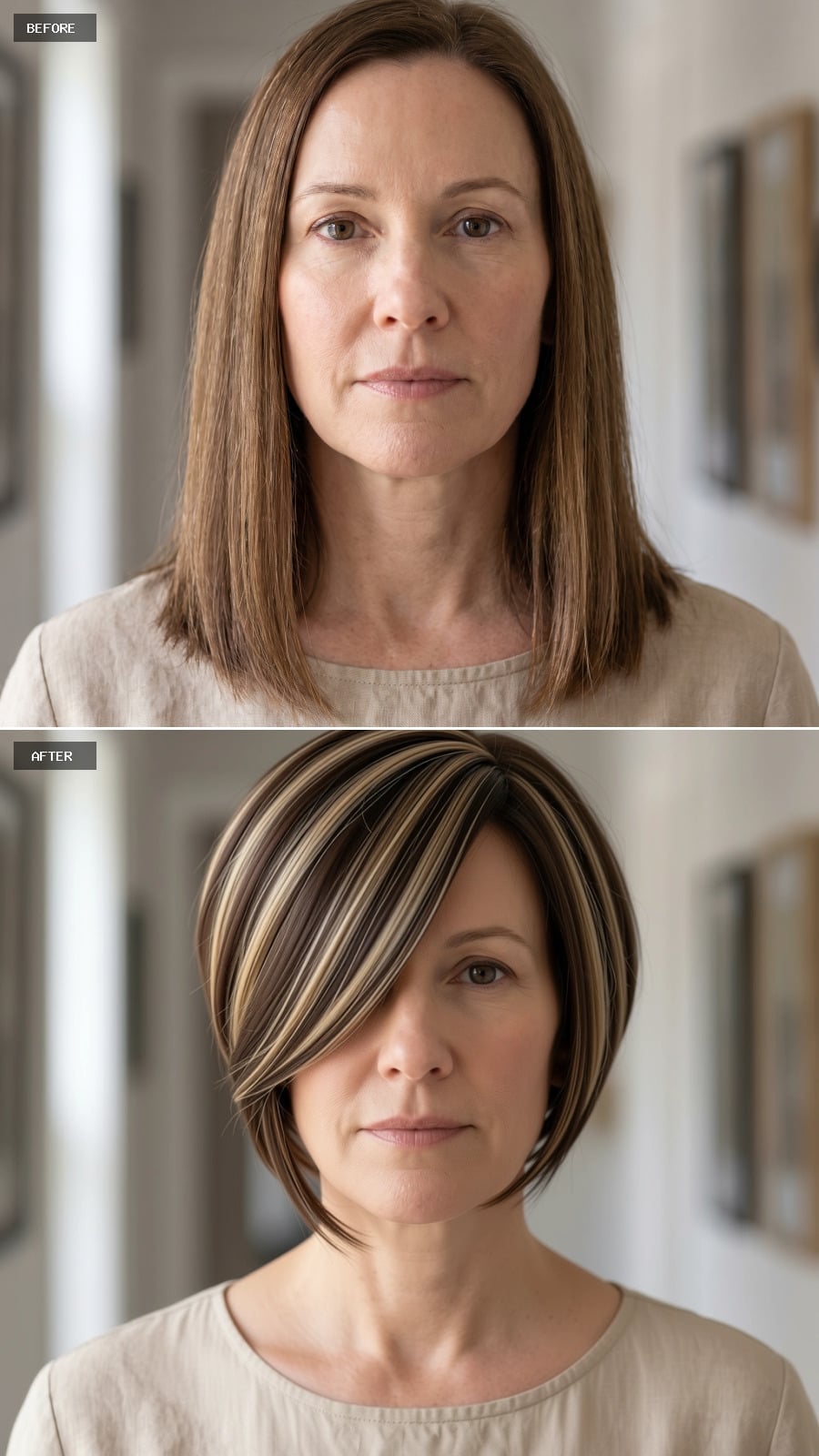
Caramel and wheat ribbons run visibly through the dark base instead of dissolving into micro-highlights.
The bob itself stops at the jaw and curves under, while a side fringe breaks the front line. The contrast is intentionally obvious. This is dimension you can see from across the room, not something requiring a colorist to explain it under three different salon lights.
Dimensional brunette colour tends to land well with ThreadCurve readers, earning more hearts than the other images in the same articles.
6. A Shorter Chestnut Bob Proves the Smallest Shift Can Be Enough
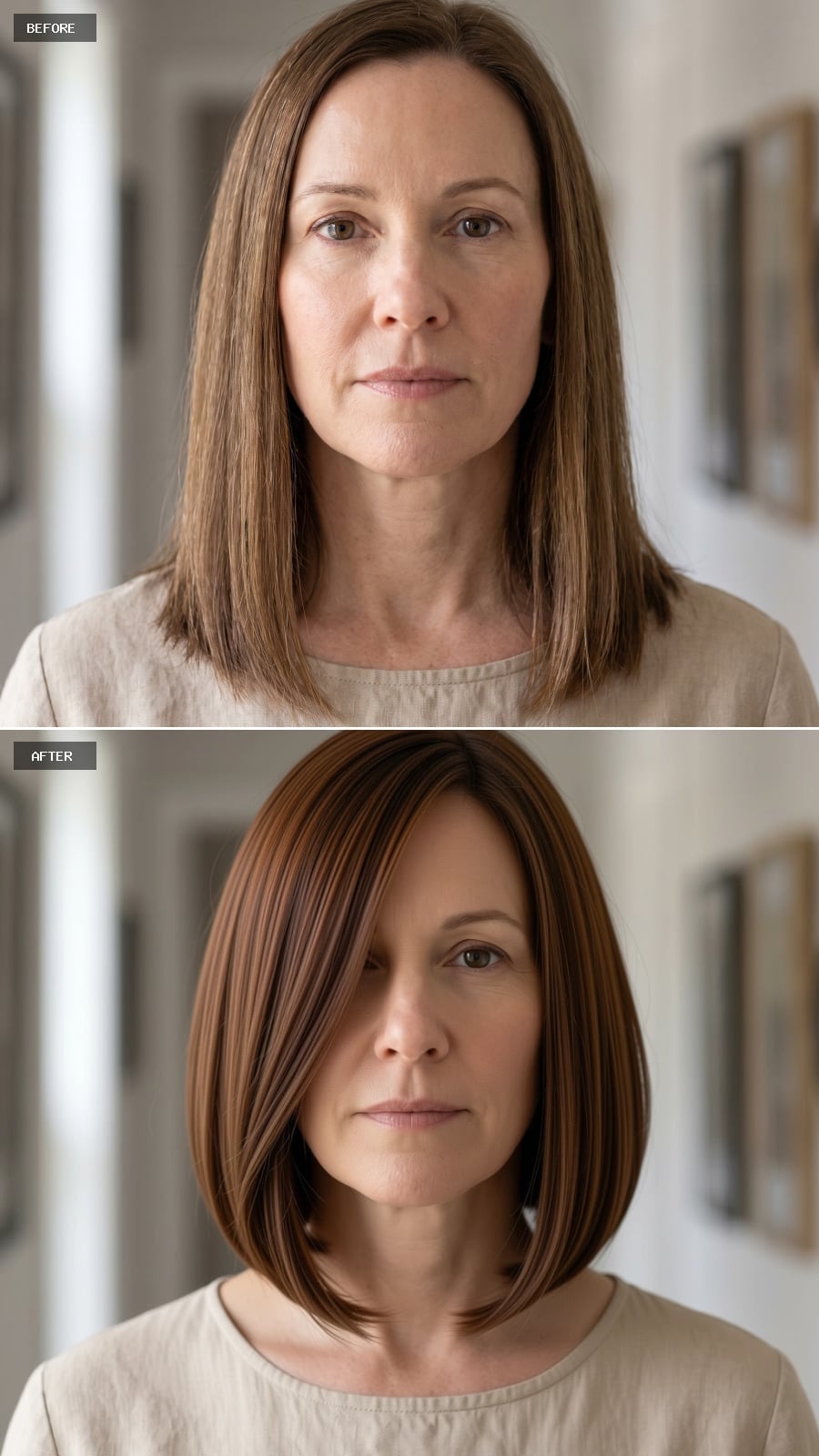
This is one of the quieter transformations. The bob stops at the jaw, the left side sweeps across the forehead, and the ends turn gently inward.
A warmer chestnut replaces the flatter previous tone, giving the surface more depth without announcing a full color overhaul. Not every before-and-after needs pyrotechnics. Sometimes the haircut simply needed to stop three inches sooner and pick a side.
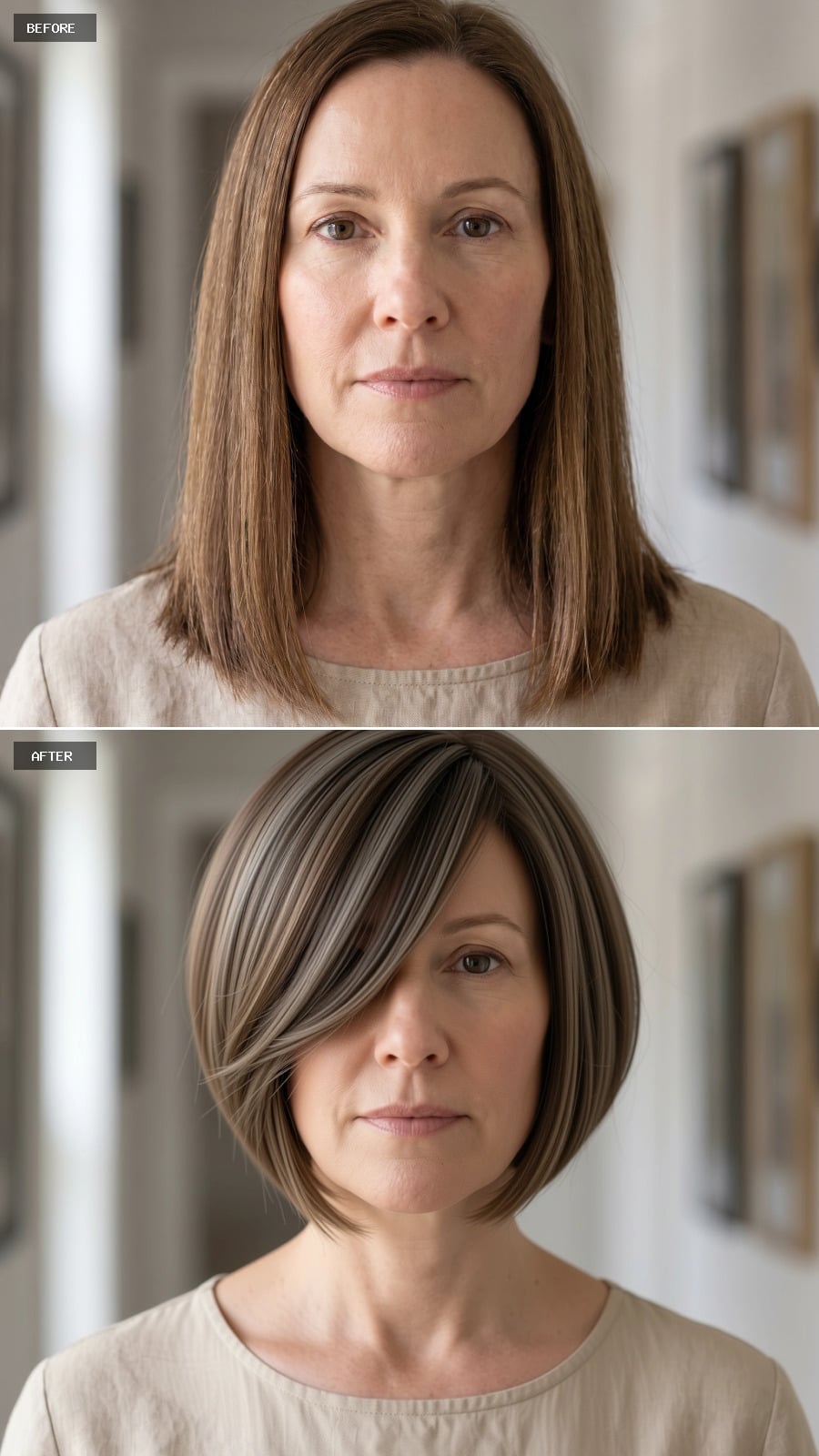
5. A Side-Swept Fringe and Silver-Touched Brunette Find the Middle Ground
❤️ Would you like to save this?
Cooler gray-touched highlights move through the crown and sides while the chin-length bob curves gently inward.
The fringe travels diagonally across the forehead, but unlike the more dramatic one-eye-covered versions, it stays open enough to keep the face visible. Volume sits mainly through the sides, giving the cut balance without building unnecessary height.
This one feels less like reinvention and more like editing — which can be just as effective.
4. Dark Bangs, Rounded Ends, and Absolutely No Need for a Side Part
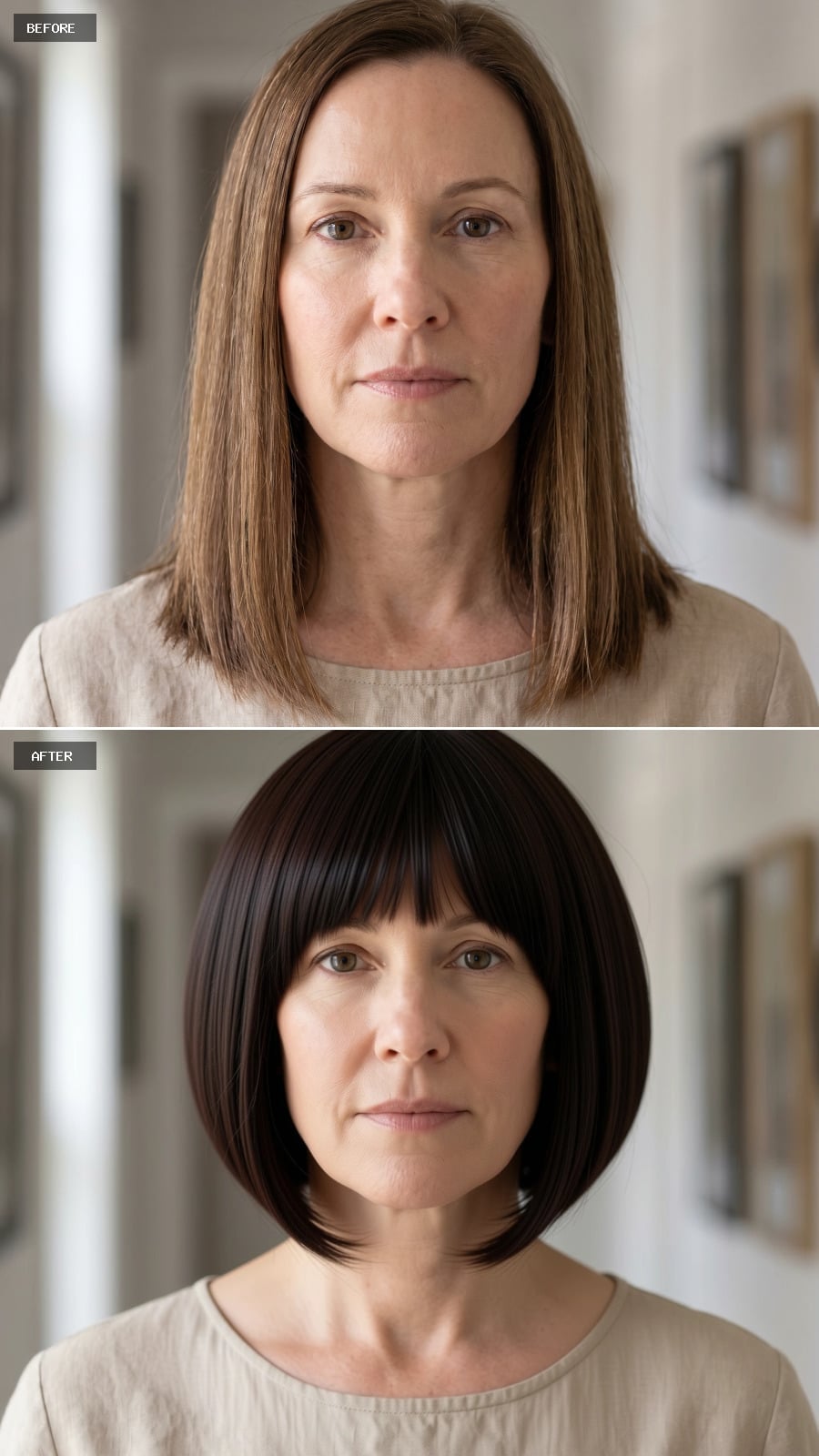
A full fringe lands cleanly above the brows while the nearly black bob swings inward at the jaw.
The warmth in the dark brown keeps the color from reading blue-black, and the slight curve through the ends takes some severity out of the straight fringe. Instead of relying on asymmetry, the entire look commits to balance: horizontal bangs, even perimeter, compact silhouette.
After so many swooping diagonals, the refusal to sweep anything anywhere feels almost rebellious.
3. Chocolate Brown, One Side Tucked, and Crown Volume Without the Drama
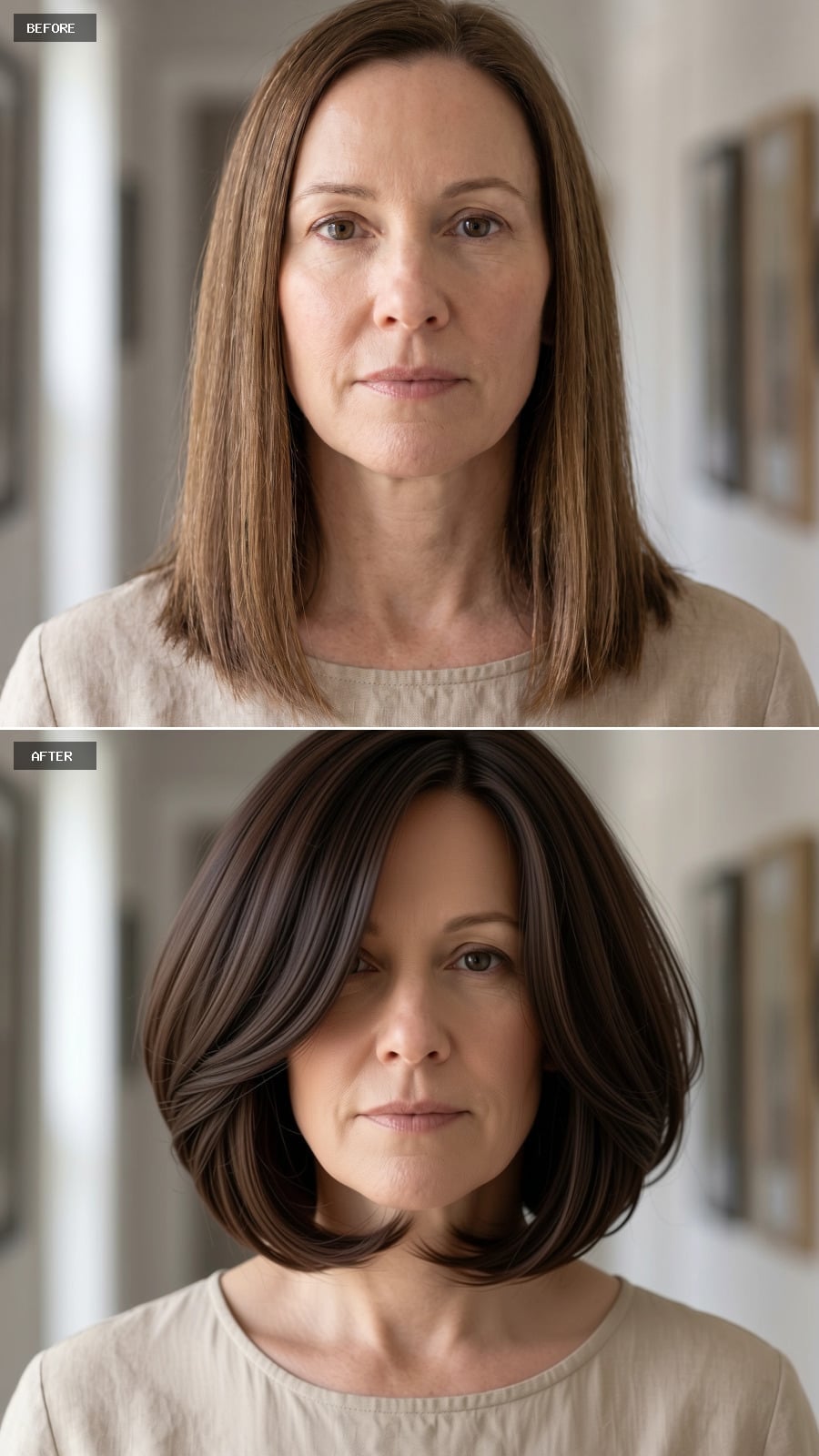
Rich chocolate brown gives this jaw-length bob an almost uninterrupted surface. The side part sends one section across the forehead while the opposite side tucks behind the ear, opening one cheek and closing the other.
Lift at the crown prevents the cut from sitting too close to the head, but it is controlled rather than bouffant. The asymmetry comes from styling, not an aggressively uneven haircut, which makes this one easier to change from day to day.
After all that dark brunette structure, the next version changes the mood without giving up the geometry.
2. A Blonde Side Sweep Takes the Same Bob Into Much Softer Territory
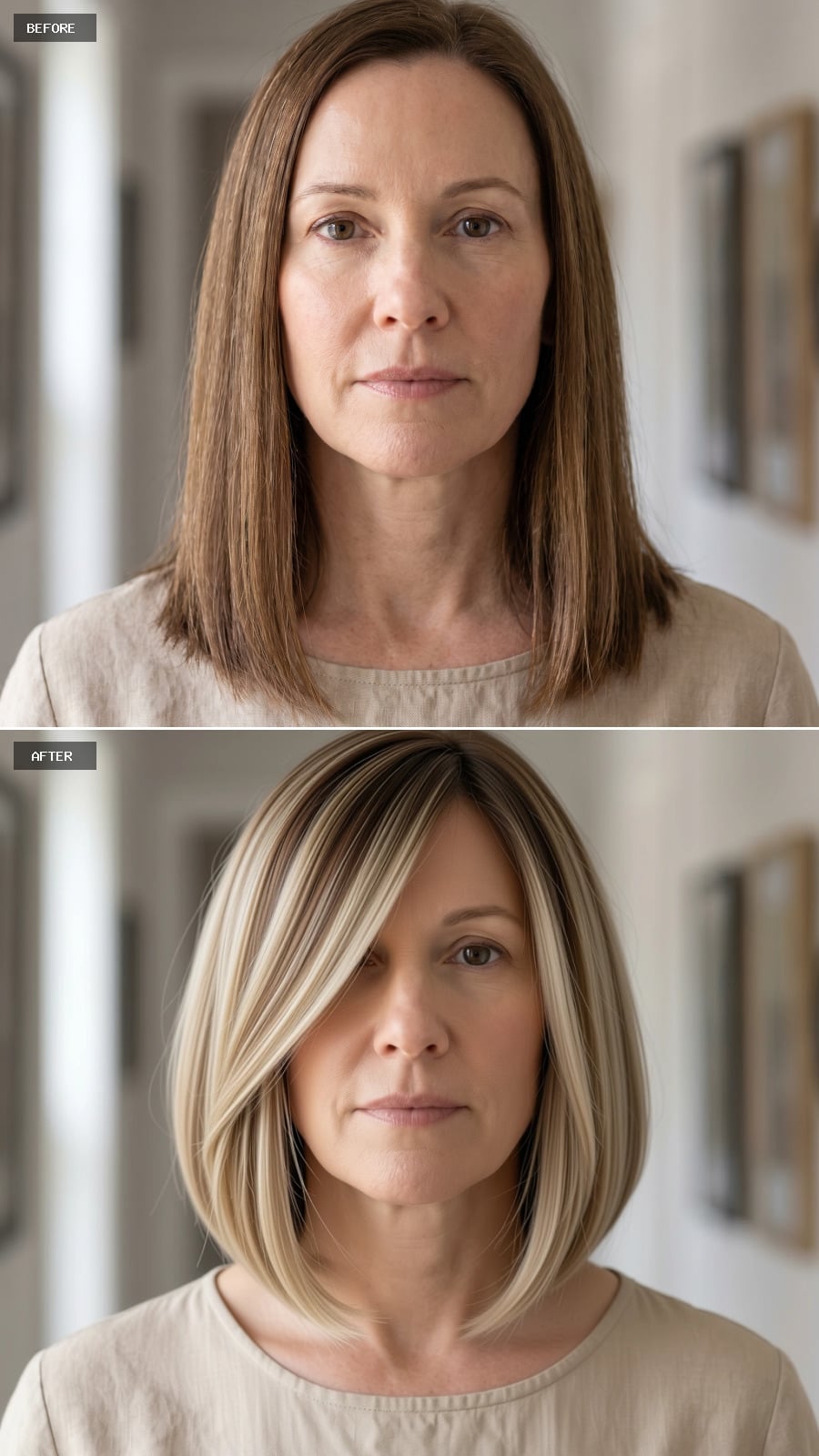
Platinum and ash tones move through a jaw-length bob weighted more heavily to one side.
Compared with the dark brunette versions, the lower contrast makes the outline feel softer even though the haircut itself remains structured. The side sweep keeps the pale surface from lying flat and gives the front enough movement to avoid helmet territory.
1. Blonde Highlights, Loose Layers, and a Finale With Actual Lift
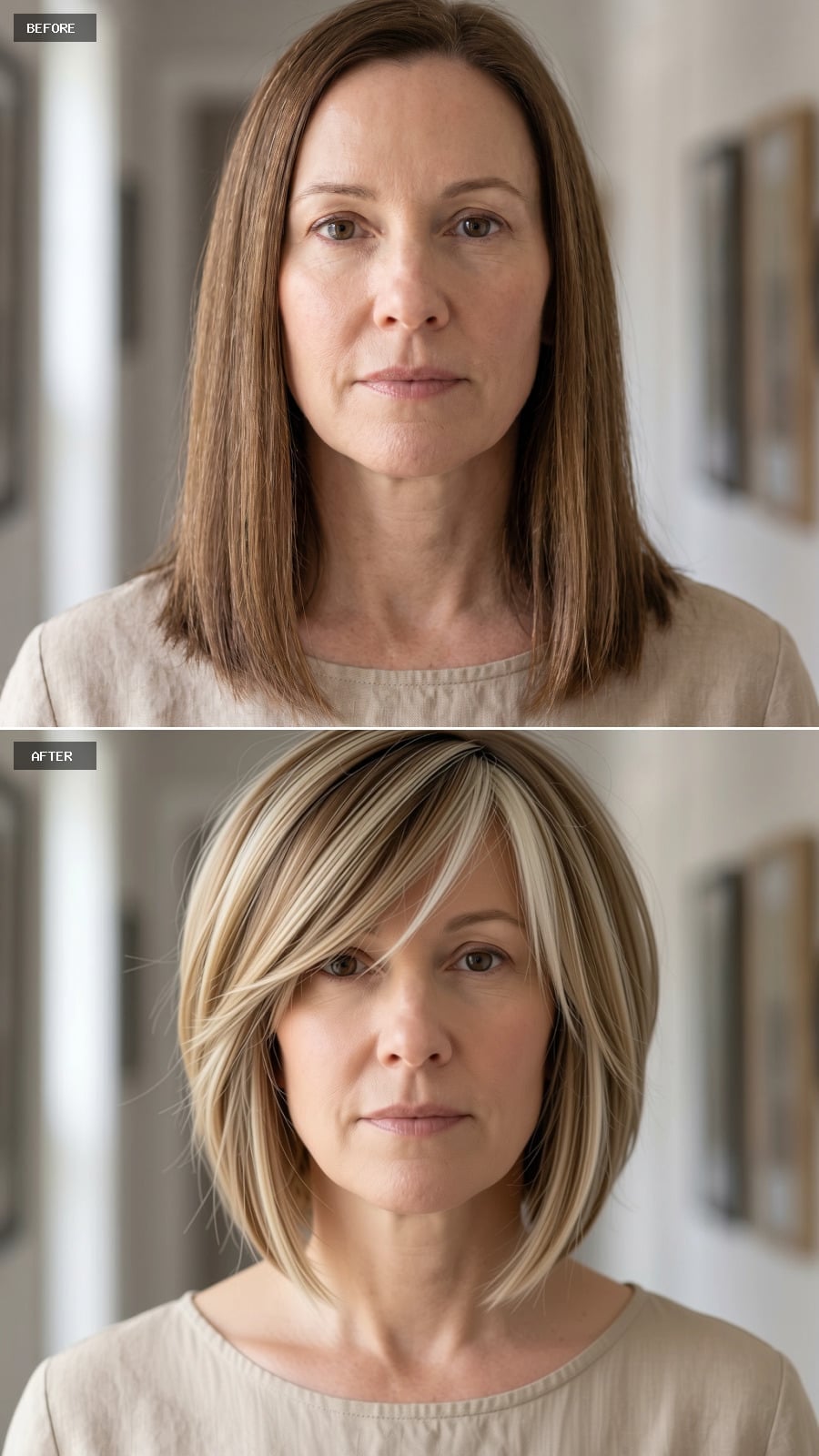
The color is noticeable. The movement is what makes the transformation.
Pale blonde streaks move through a warmer base, but they follow loose layers rather than sitting on one rigid surface. The bob lands at the jaw and a side part pushes most of the volume across to one side, giving the cut lift without turning it stiff.
The crown has air. The ends have movement. The color has contrast. Nothing is trying to disappear politely into the background anymore.
That may be the real lesson running through all 29: the most effective change was rarely “look younger.” It was “make a decision.” Length, bangs, silver, brunette, blonde, waves — almost anything can work once the haircut stops behaving like it was left there by accident.