
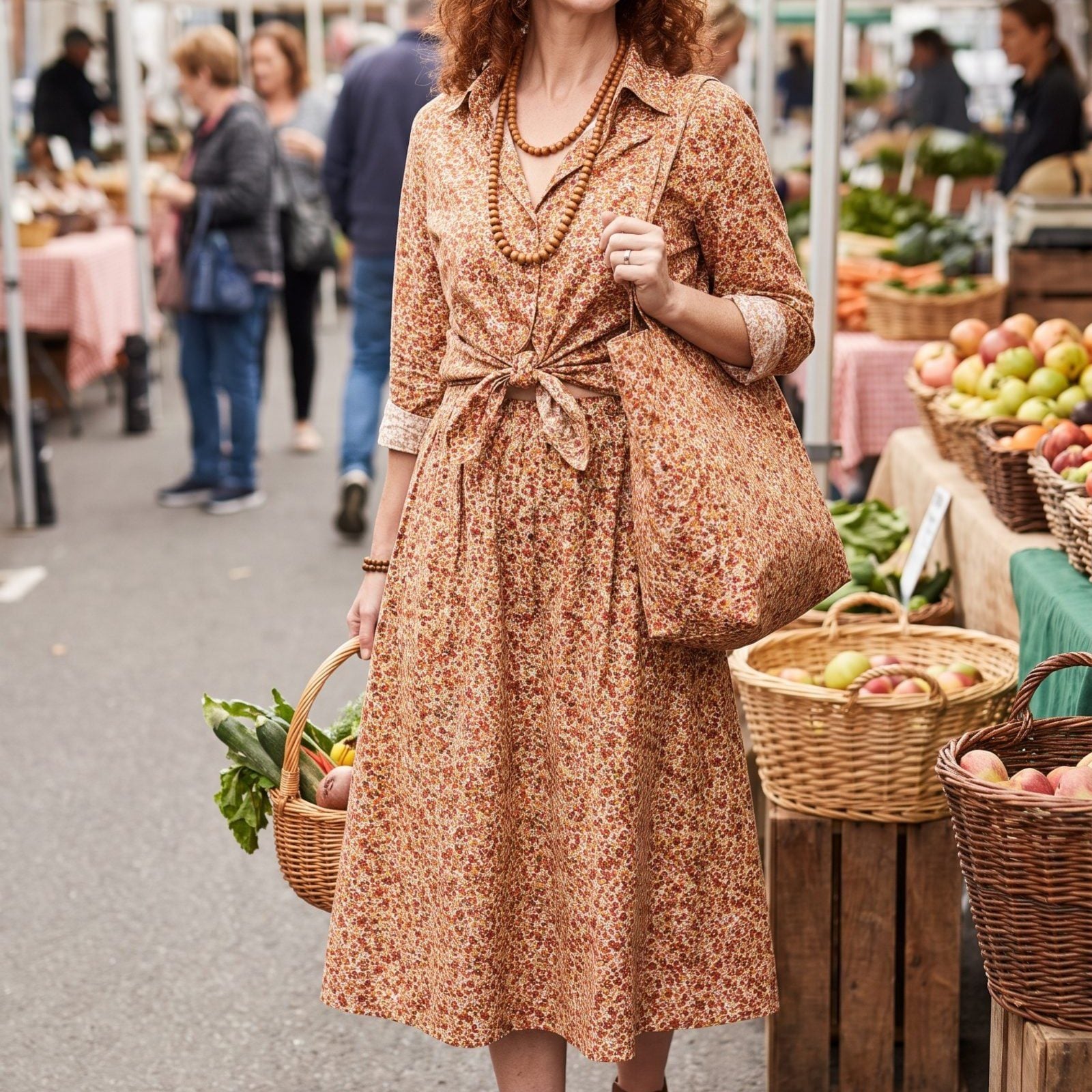
The zipper never quite lay flat. You knew that before you knew anything about construction, before you could name a bias cut or a pinked seam. You just knew the dress at the store hung different than the one you wore to church. A whole generation of girls grew up in clothes that came off a kitchen table instead of a rack. The telltale signs are still there in old photographs, if you know where to look. Here are the ones that give it away, the small handmade fingerprints that meant somebody loved you with a Singer and a pattern envelope.
FYI, thanks to AI imagery software, we’re able to create very specific fashion and hairstyle examples to illustrate the points being made. In some cases, imagery is exaggerated to hammer home the point. Also, assume links that take you off the site are affiliate links such as links to Amazon. this means we may earn a commission if you buy something.
23. The Hem That Was Let Down Twice and Left a Shadow
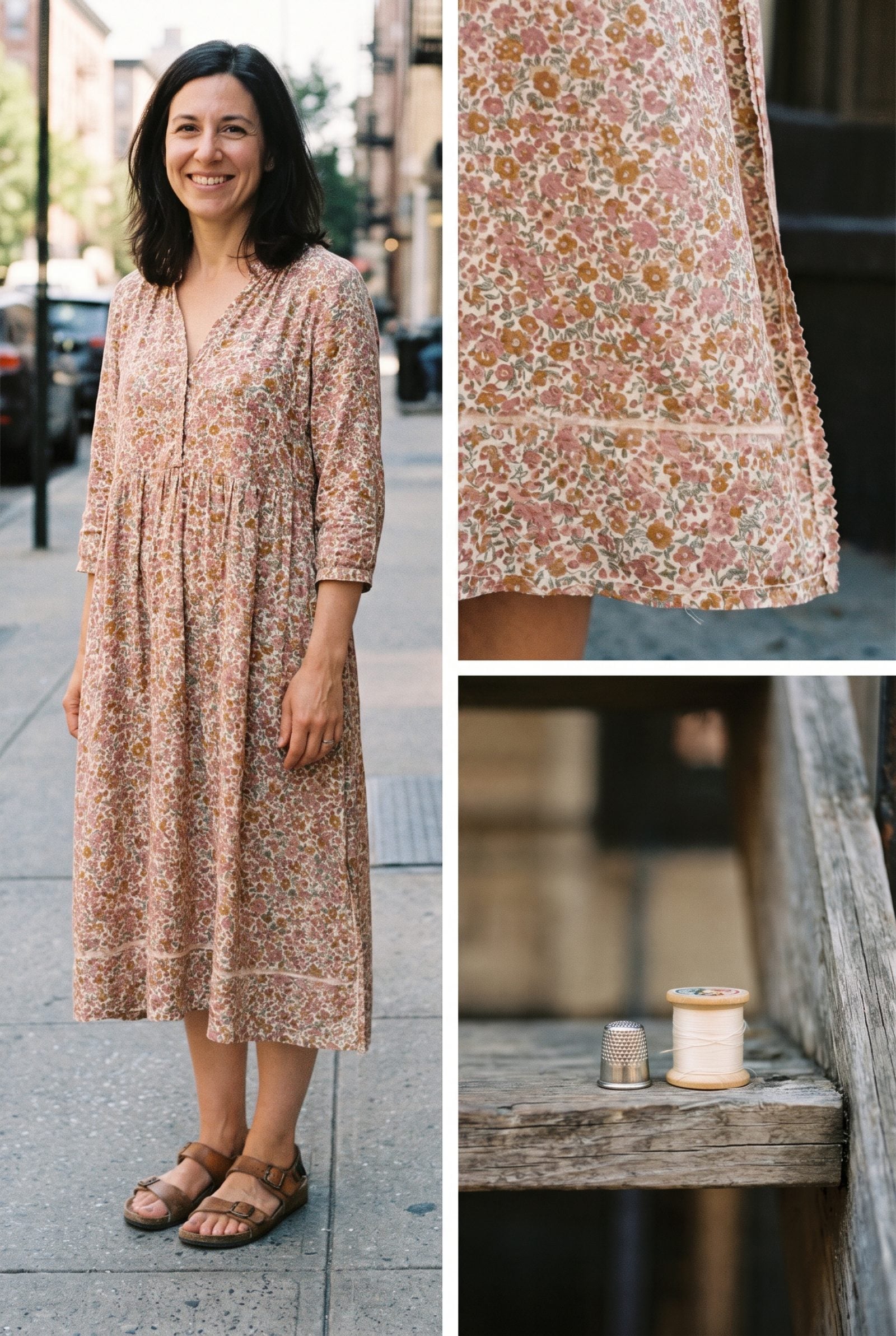
You can read a kid’s growth chart in the skirt of a dress. One faint line across the front, a little lighter than the fabric around it, where the hem came down a size.
Store-bought clothes got replaced when they got short. Homemade ones got lengthened. The thread never matched the original run perfectly, so the let-down sat a shade off, and the sun did the rest over a summer of clotheslines.
That shadow line is proof of intention. Somebody looked at a dress that still had good fabric in it and decided it had another year left. The crease is where the scissors stopped and the patience started.
22. Ric-Rac Trim Running Along a Collar Like a Signature
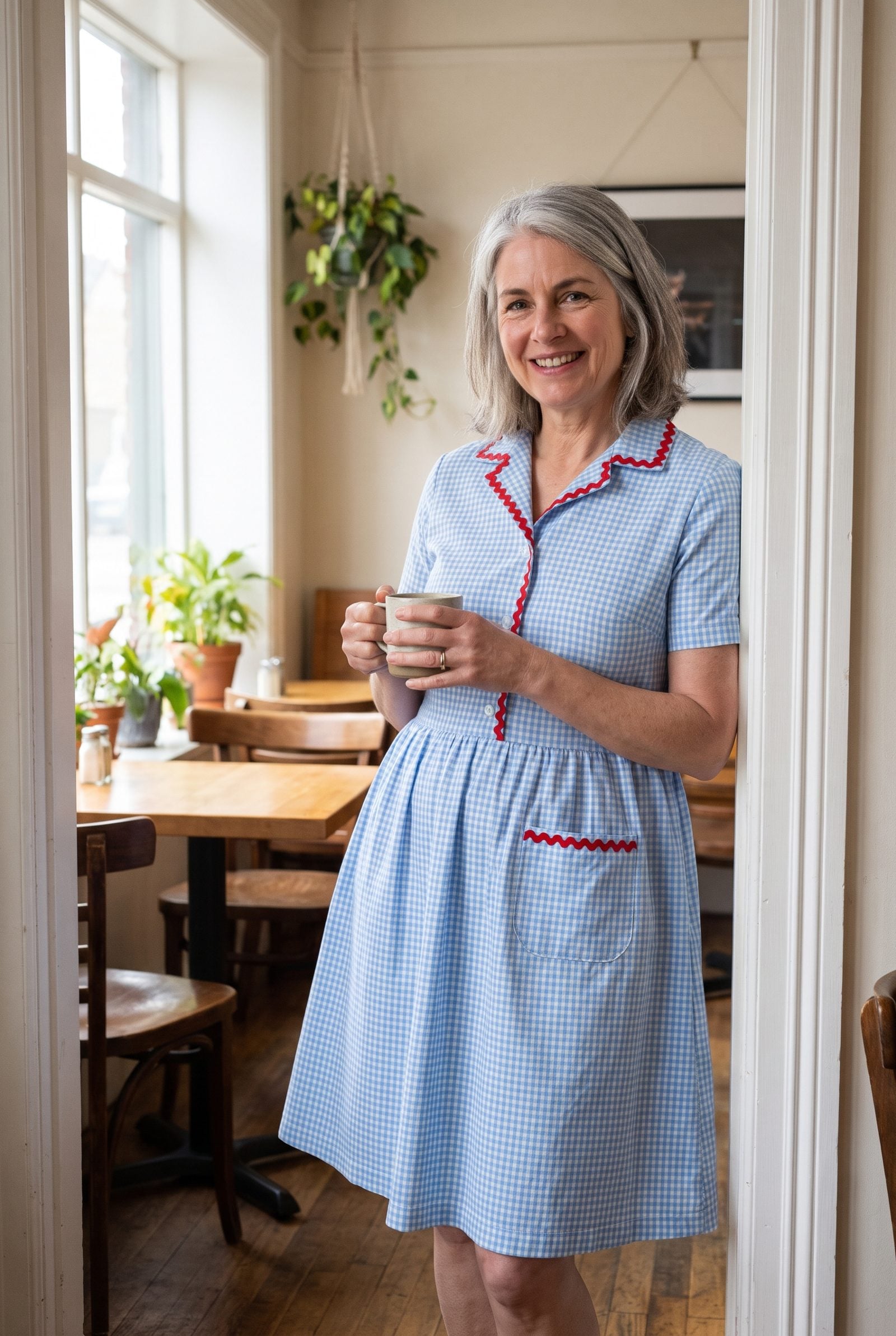
Ric-rac was the tell. That bright zigzag braid, cherry red or sunshine yellow, stitched along a collar and echoed on a patch pocket because there was a card of it left over and why waste it.
Store dresses almost never bothered. It cost time to pin it flat and run it straight, and factories don’t have time. A mother did, usually at night, after the kitchen was done.
The slightly wavering line of stitching down the center of the trim is the fingerprint. Perfect ric-rac looks bought. Ric-rac with one tiny bobble near the shoulder seam was put there by a hand that was tired and did it anyway.
21. The Zipper That Puckers Slightly on One Side
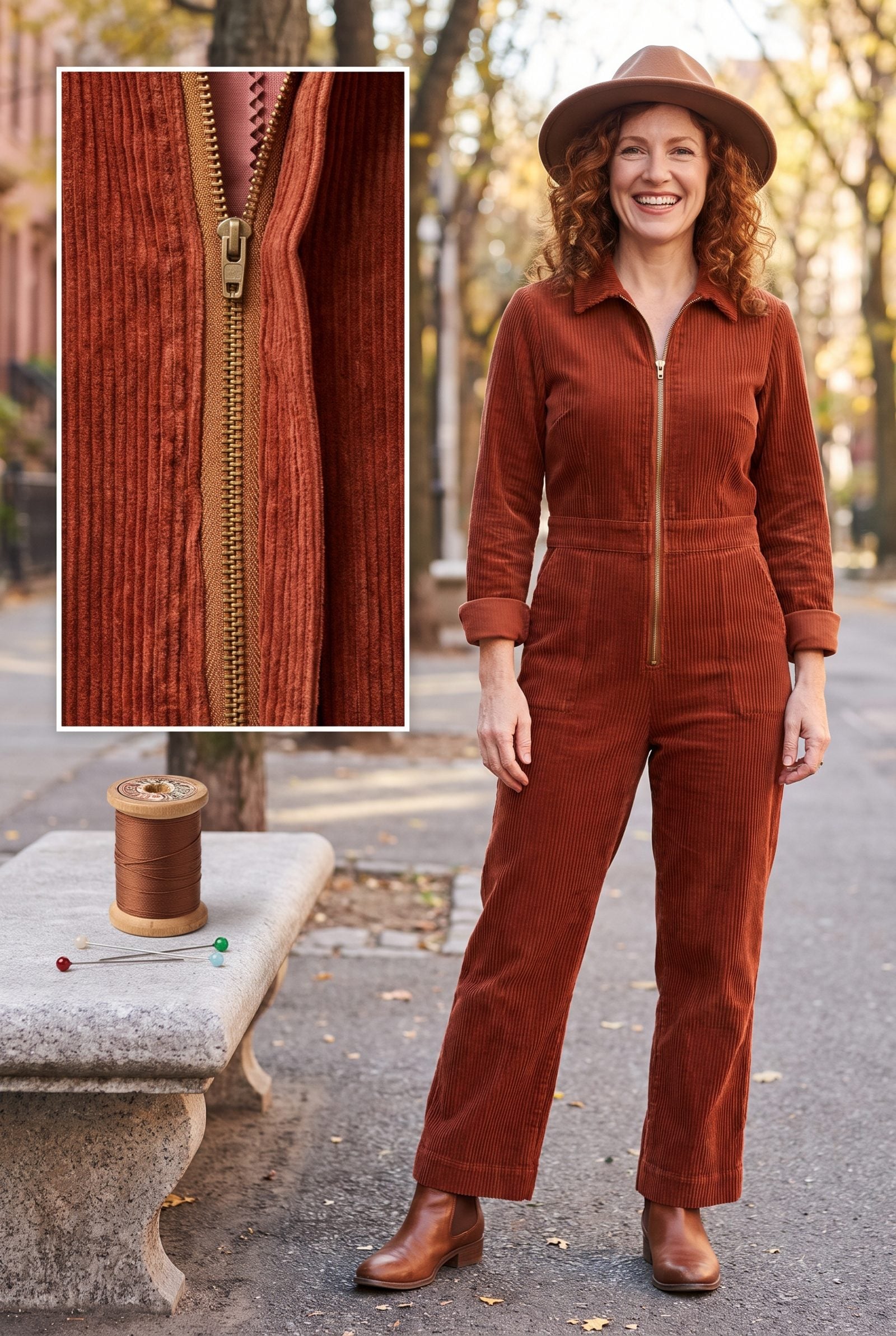
Zippers are where homemade clothes confess. Setting one in by hand without an industrial machine and a zipper foot meant the fabric tugged, and one side of the tape pulled a hair tighter than the other.
You’d see it on the back of a corduroy jumper, a soft ripple running beside the teeth, invisible from across the room and obvious the moment you looked. Nobody was ashamed of it. It was the cost of a dress that fit a real child instead of a mannequin.
That little pucker is honest work. A factory zipper lies flat because a thousand of them ran through the same machine. A hand-set zipper remembers the kitchen table it was fought over.
20. Double-Knit Polyester That Refused to Wrinkle or Die

Some fabric chose practicality over mercy. Double-knit polyester was the workhorse of the decade, spongy and thick, in avocado and gold prints that could survive a nuclear event.
A mother reached for it because it didn’t fray, didn’t wrinkle, and hid a hundred small sewing sins in its bulk. It also never quite breathed, which anyone who wore a polyester jumper on a hot school picture day remembers in their bones.
Those garments got handed down and down and still looked box-fresh in the third kid’s photos. Cotton wore out. Polyester outlived the child who wore it.
19. Matching Dresses Cut From the Same Bolt
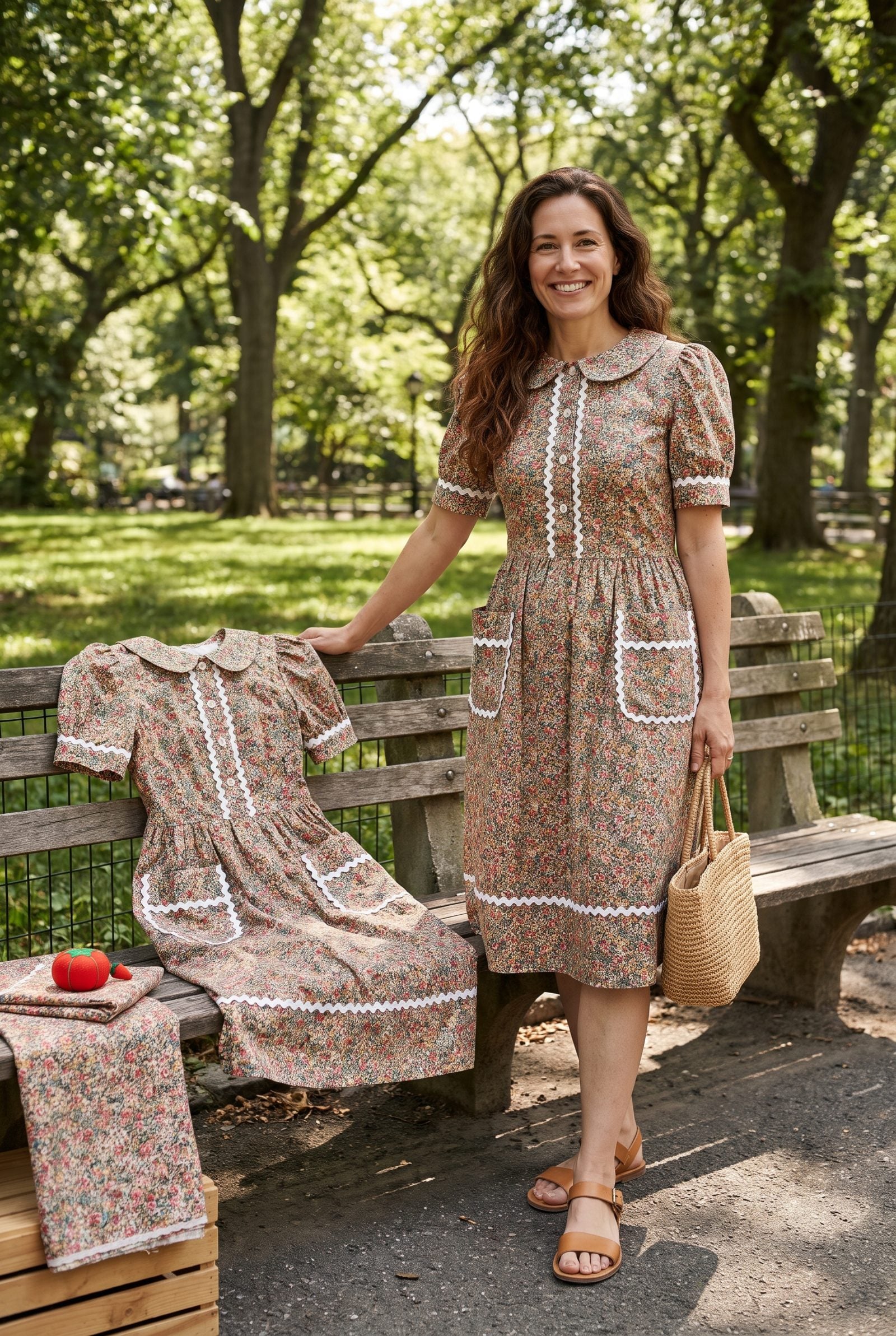
Buy enough of one print and you could sew two dresses as a set. That’s why so many 1970s photos show a woman in one dress with its twin close by, same floral calico, same collar, same white rickrack trim.
It wasn’t a styling choice pulled from a magazine. It was arithmetic. One bolt of fabric, one pattern, two cutting layouts, and an afternoon saved by not starting over.
The result looked coordinated in a way that store racks couldn’t fake. Two dresses in identical prints read as a decision, the kind of thing you only get when one person is holding the scissors for both of them.
18. Matching Dresses Where One Was Clearly Made for a Doll
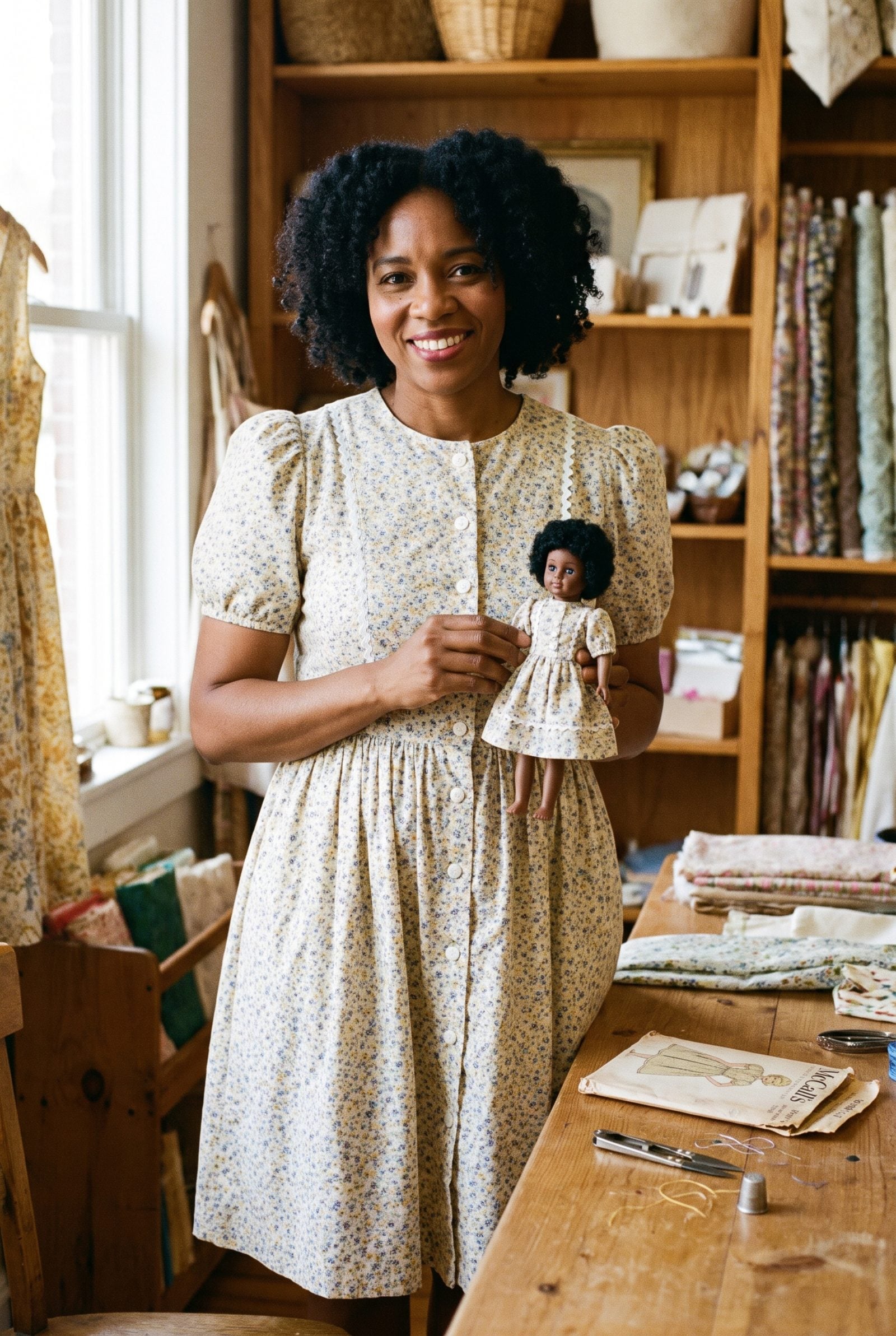
The leftover fabric never went to waste. It became a dress for the doll, cut from the same calico, trimmed with the same ric-rac, sewn at a scale that strained every eye and finger.
This was love doing arithmetic. A yard and a half bought the daughter’s dress, and the scraps that would’ve landed in the bin became a second tiny garment so a doll could match its owner.
No catalog sold that pairing. It only happened in houses where someone sat at a machine past bedtime, deciding the remnant was too good to throw away.
17. Pinked Seam Edges Zigzagging Along the Inside Like Tiny Teeth
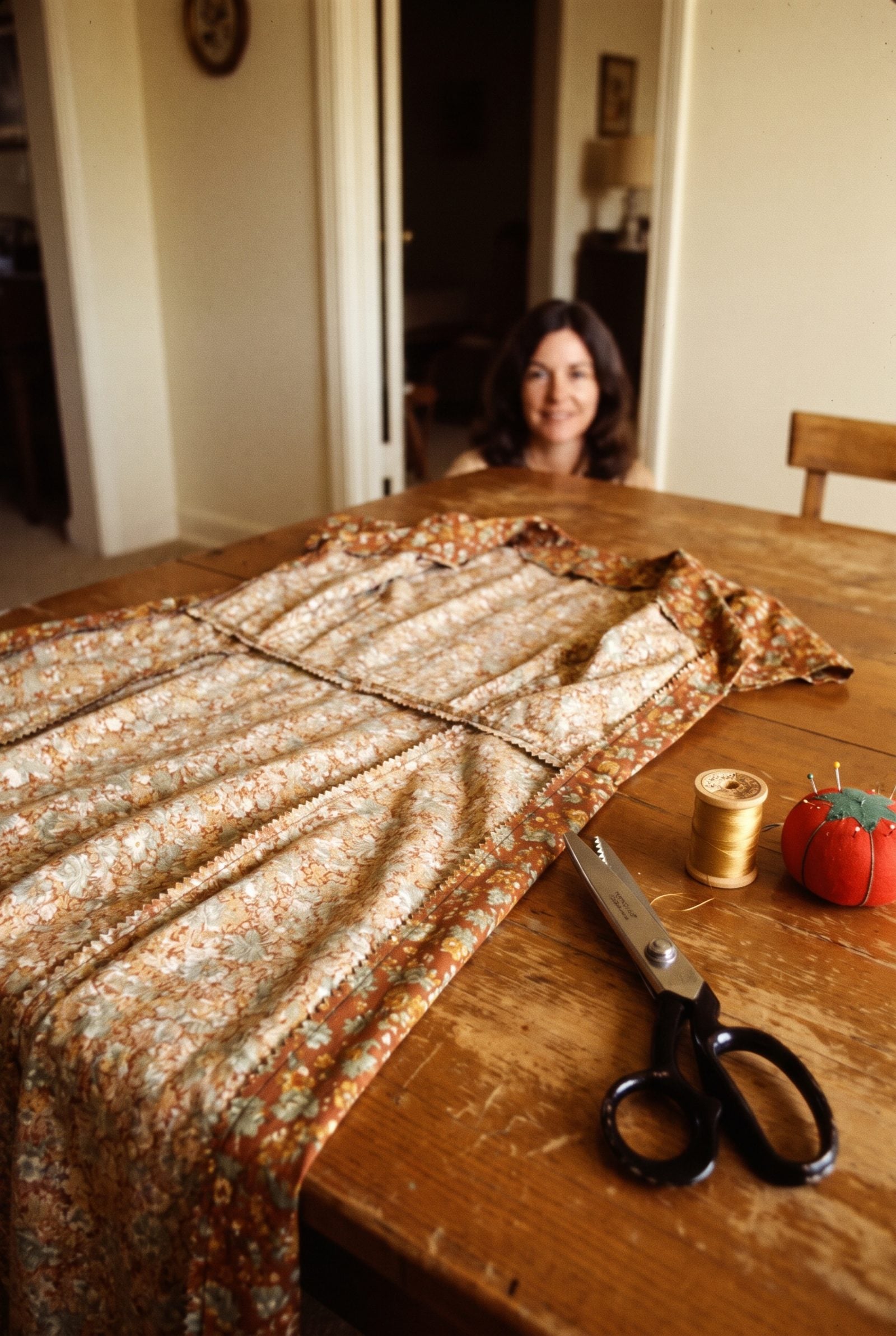
Turn the dress inside out and you knew in a second. Store clothes hid their seams inside a smooth serged finish. Homemade clothes wore their construction on the inside like tiny teeth, every raw edge trimmed with pinking shears into a neat zigzag.
The home sewer rarely owned a serger. Pinking shears were the budget-friendly fix: cut the seam allowance into a sawtooth and the fabric frays far slower. Cheap, fast, and unmistakable.
Run your finger along the inside of any old handmade garment and you’ll feel that little ridged edge, the quiet signature of a kitchen-table workroom.
16. The Lining Cut From an Old Bedsheet You Still Recognize
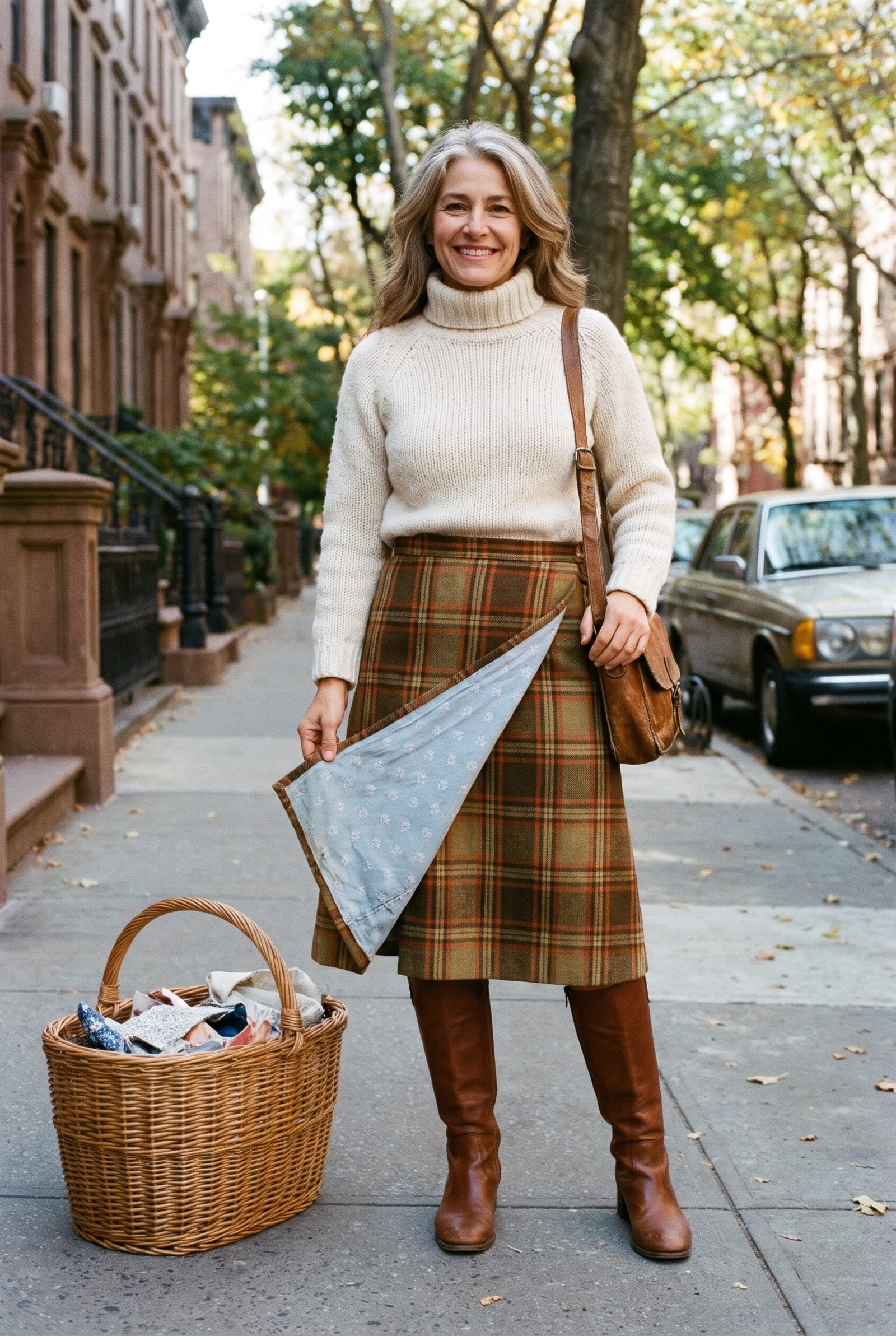
The outside was a smart autumn plaid. Lift the front panel, though, and the lining told a different story: pale blue floral percale hidden inside the plaid, cut from a worn-out bedsheet that once covered a bed in that same house.
Nothing got wasted. A sheet too thin for the bed became a lining tucked neatly behind a clean plaid hem, and the daughter wore the family’s own linens folded inside her skirt.
You recognized the print instantly. Those tiny sprigged flowers had watched over Saturday-morning cartoons before they ended up hidden inside a skirt, revealed only when the panel lifted.
15. The Hem You Could Let Down Three Times Because Someone Planned for You to Grow
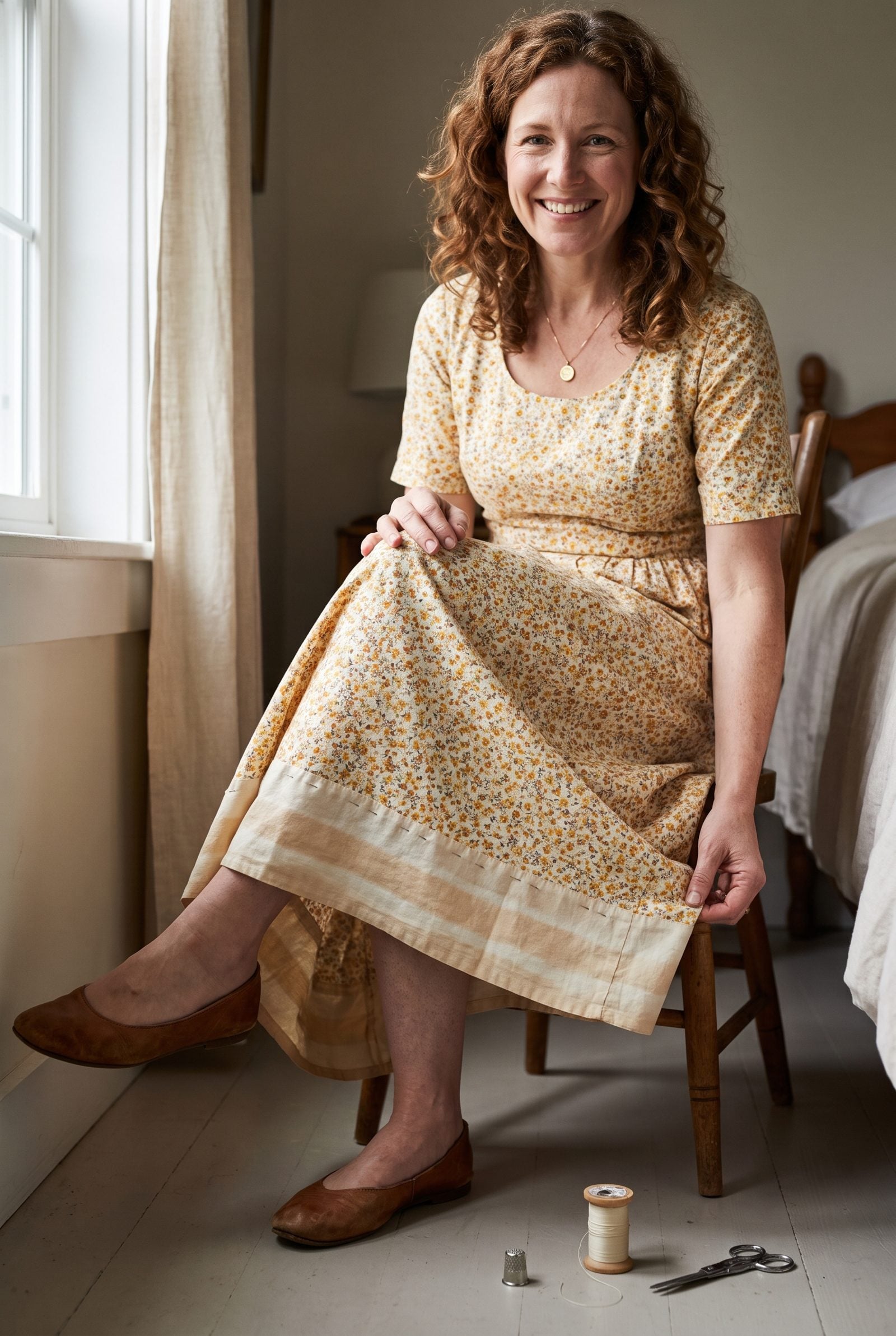
Store-bought dresses had skimpy hems. Barely an inch, turned once and sewn by a machine that didn’t care how fast you grew.
A homemade one was different. It was made to be added to, because someone knew you’d shoot up by spring. When the dress got too short, a wide band of plain tan cloth was stitched on below the flowers and pinned up to be hemmed by hand. You could see exactly where the old dress ended and the new length began, the floral meeting the tan along one long seam.
That tan band was proof of planning. Nobody buys a dress hoping to take it apart in six months. But somebody sewed one that way on purpose.
14. The Rickety Zipper That Waves Just a Little Where the Fabric Caught
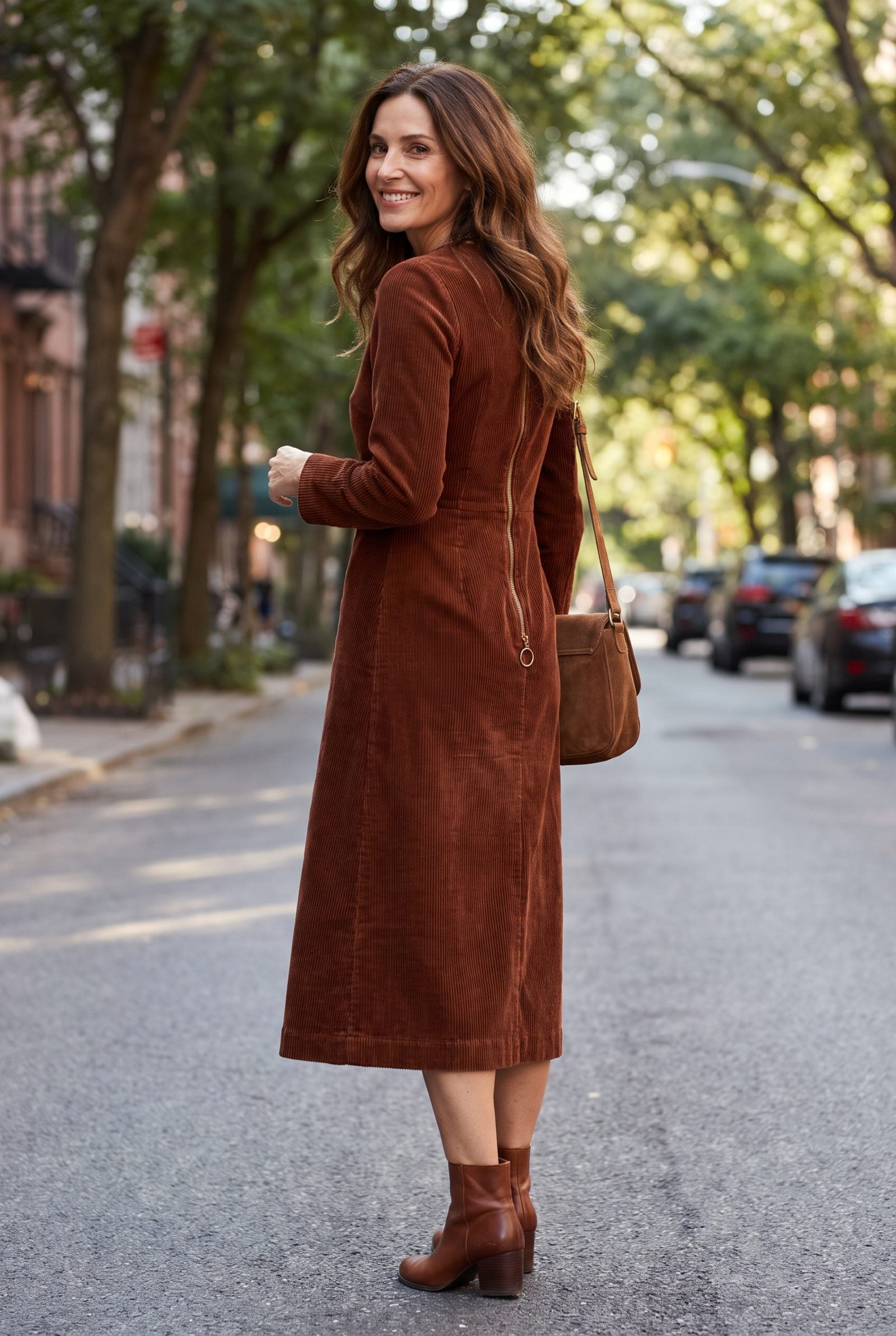
Here’s the tell nobody could hide: the zipper. Setting one in by hand is genuinely hard, and a kitchen-table seamstress fought it every time.
Look close at the back seam and you’ll find it. A gentle wave in the fabric beside the teeth. Topstitching that drifts a hair off straight where the corduroy bunched and the needle slipped. Nothing wrong with it. Just human.
We’ve tried installing an invisible zipper and ended up unpicking it twice before giving up for the night. So we have nothing but respect for a mother who did it under a lamp after dinner, with a kid needing the dress by Sunday.
13. Matching Dresses for Sisters Cut From the Same Bolt of Calico
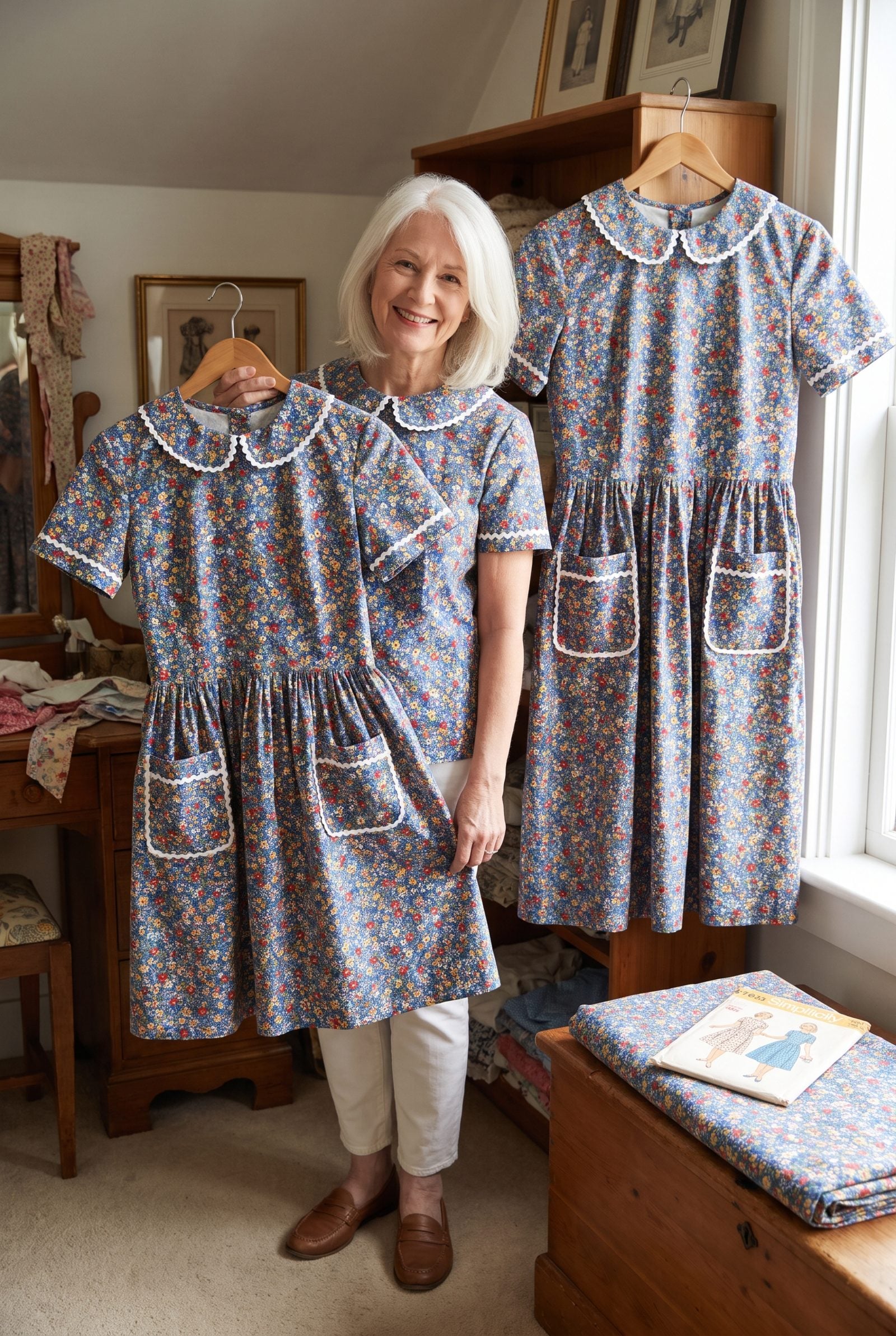
Buy enough of one fabric and suddenly every daughter in the house matched. Sunday photos told the whole story: two or three girls in the same calico, graded up and down by size, same collar, same trim, same everything.
It wasn’t about being cute, though it was. It was math. One bolt of cotton on sale went further than two patterns and two trips to the store. The leftovers became doll clothes or a patch pocket on a third dress months later.
Those matching sets are burned into family albums. You can date a photo by them. And you can spot, instantly, which kid hated wearing the same thing as her little sister.
12. A Price Sticker You Never Saw, Because the Only Receipt Was Fabric Store Change

No tag at the collar. No store name sewn into the back. That absence was its own kind of tell.
The only paper trail was a fabric store receipt and some change rattling in the bottom of a kraft bag. A yard of cotton, a pattern on sale for a few cents during the pattern-company promotions, a card of buttons. That was the whole transaction.
Kids never thought about it. You just wore the dress. Only later did you realize the thing that had no price tag was often the most expensive thing in the closet, paid for in evenings instead of dollars. If you want to understand how much the right handmade wardrobe is worth, start by pricing the hours.
11. Seam Allowances Finished With Pinking Shears Instead of a Serger
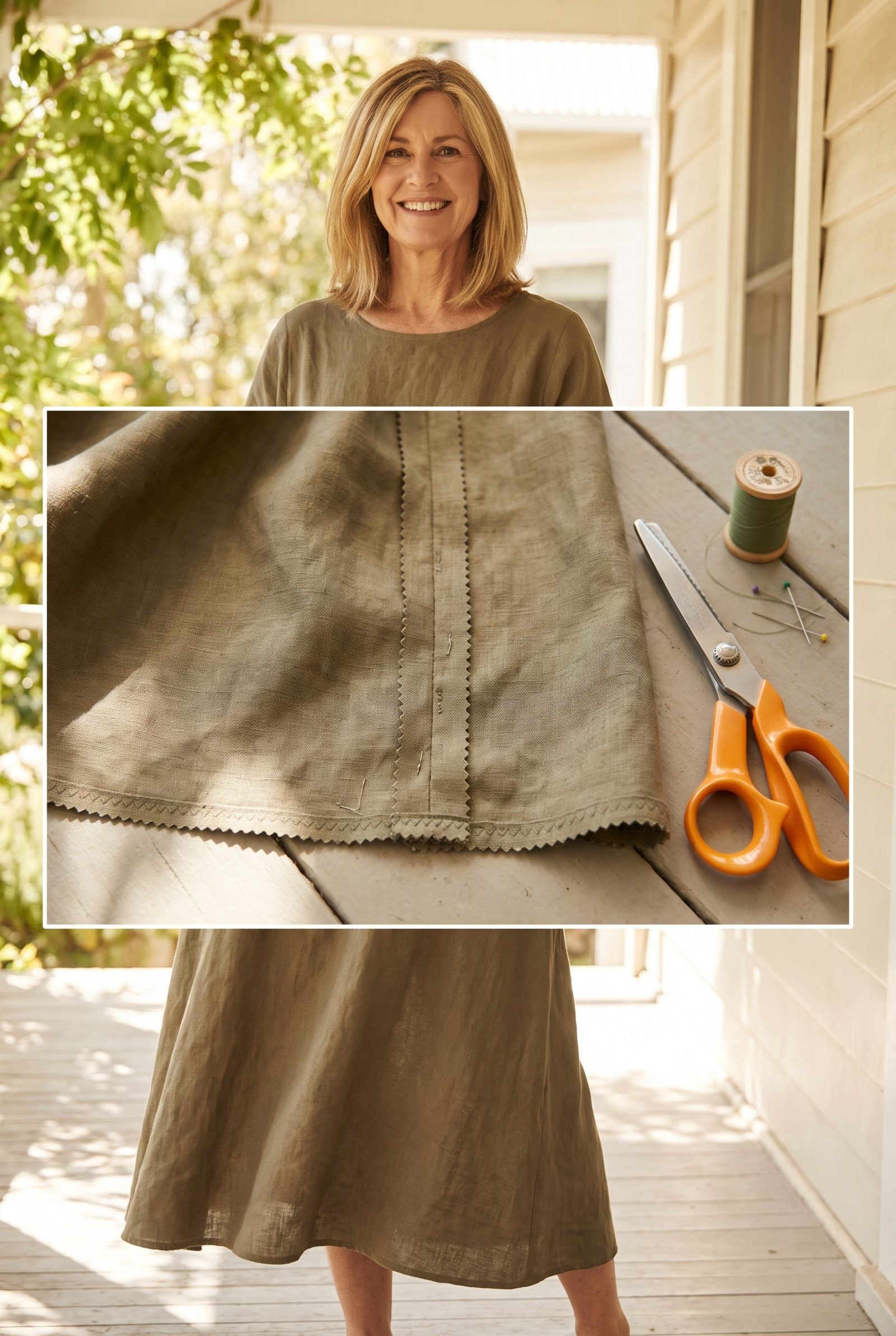
Look down the front of a homemade skirt and the center seam told you everything. No overlocked, factory-finished edge. Instead, a neat zigzag sawtooth, cut with pinking shears so the cotton wouldn’t fray in the wash.
It was the home seamstress’s trick before sergers lived in every house. Snip the allowance with those heavy orange-handled shears and the edge held together for years of play and laundering.
You can feel the difference with your fingers. Factory seams are smooth and sealed. Pinked ones have that soft sawtooth ridge, a little rougher, a lot more personal. A quiet signature tucked inside the seam, where only you would feel it.
As a sewing pattern designer puts it, “Have you noticed that the raw edges of your fabric fray when they’re washed? These specialized scissors have serrated blades that cut the edge of fabric in a series of peaks to help prevent fraying.”
10. The Facings Were Never Interfaced, So the Collar Flopped by Noon
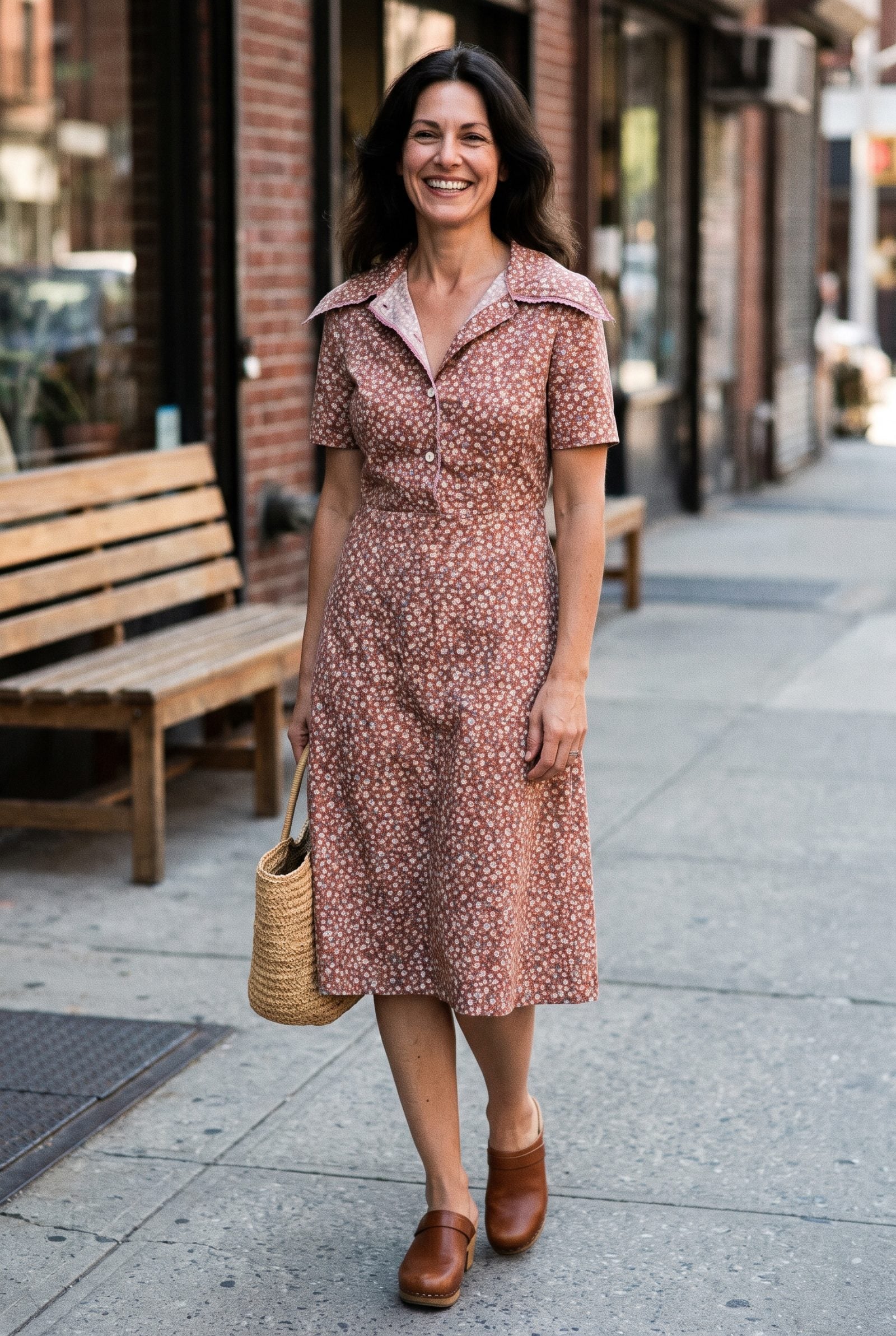
You could set your watch by it. The collar stood up proud at breakfast and lay down defeated by lunch.
Store-bought dresses had interfacing tucked inside the collar and cuffs, that stiff hidden layer that keeps edges sharp. Home sewing often skipped it. Interfacing cost extra, and the pattern instructions made it sound optional when money was tight.
So the collar was just two layers of calico turned under and topstitched. Pretty at first, and usually floppy by afternoon.
9. The Zipper Went In By Hand and You Could See Every Stitch

Machines put zippers in fast and flat. Hands put them in slow and slightly crooked, and that crookedness is the tell.
A hand-picked zipper leaves a faint row of dots down each side of the tape, little prick-stitches that barely show. Done well it looks refined. Done in a hurry before school picture day, it waves a bit, and the fabric puckers where the hand pulled too tight.
We have a soft spot for the hand-picked zipper. It’s the mark of someone who didn’t own a zipper foot or didn’t trust the machine with something that mattered. Either way, it meant time. You don’t hand-stitch a zipper for a kid you’re not thinking about.
8. Snaps and Hooks Replaced the Buttonholes Nobody Had Time to Make
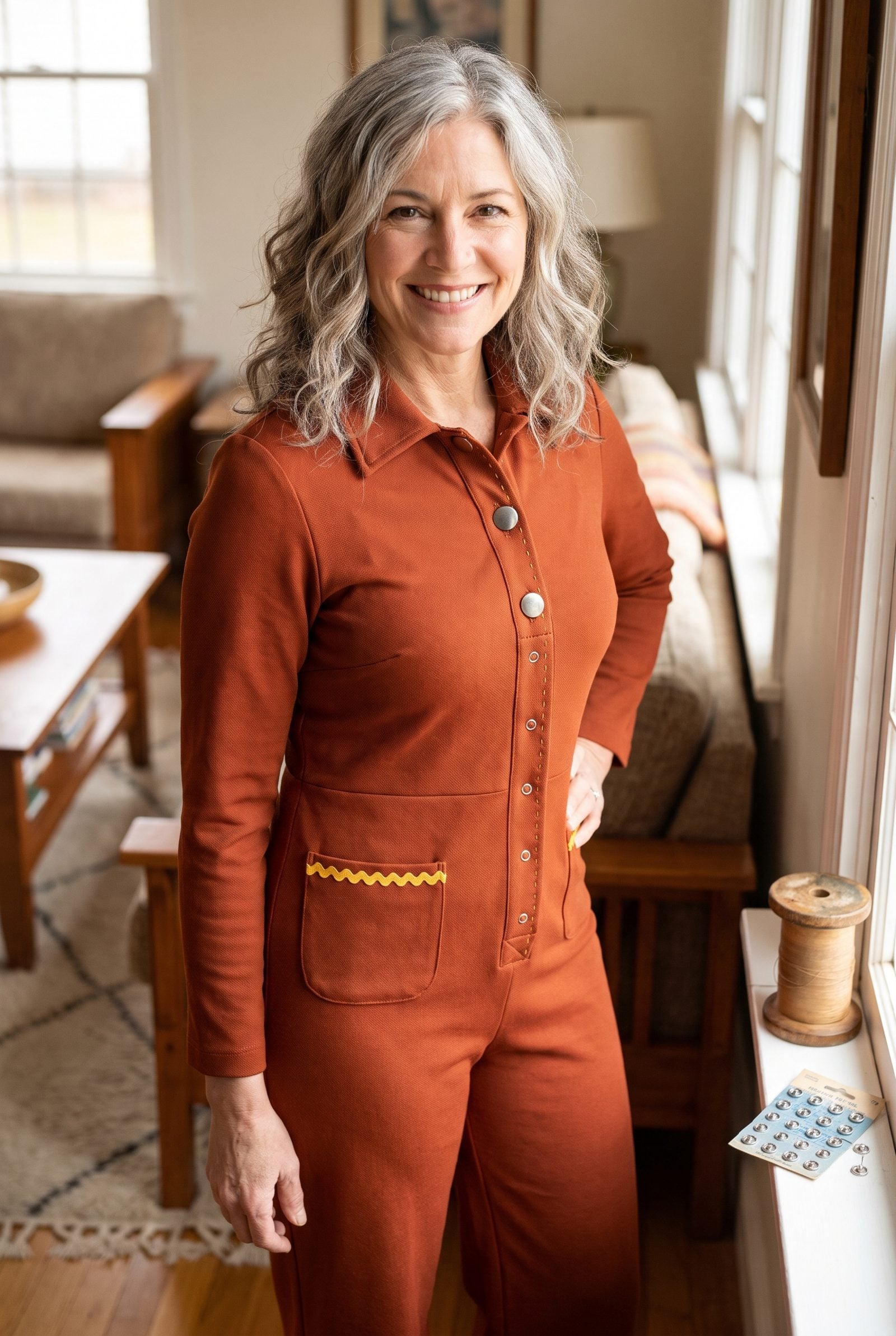
Two decorative buttons sat at the top of the placket, doing absolutely nothing. Below them, a neat row of snaps did the real work right out in the open.
Buttonholes are the part of sewing that separates the patient from the rest of us. Every one has to be measured, cut open and finished without unraveling the whole front. One slip and you’ve cut a hole in finished fabric. So a couple of fake buttons went up top for show, and the rest of the placket simply snapped shut.
7. The Print Repeated on Three Different Garments in Your Closet
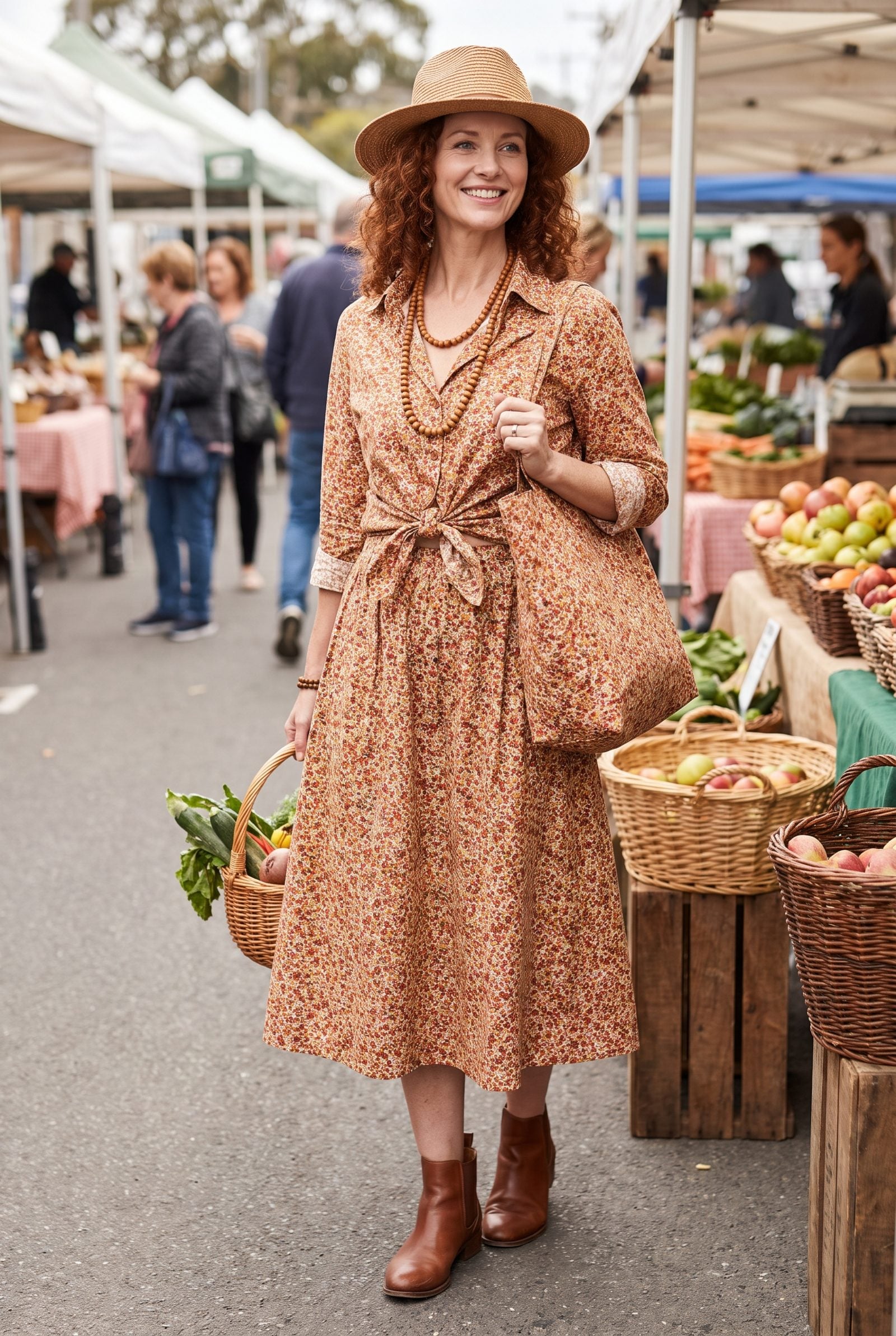
Fabric came by the yard, and nobody bought a single yard. You bought enough, and enough always meant leftovers.
So the same gingham that became a sundress also turned into shorts, and the scraps became a drawstring bag or a doll’s dress or a headband. A whole summer could run on one bolt of yellow check.
Flip through old family photos and you’ll see it, the same print orbiting a child across three outfits. Store-bought clothes never did that. Matching sets like that are a signature of one person buying fabric in bulk and cutting until it ran out.
6. The Facing Peeked Out and Flashed a Totally Different Fabric
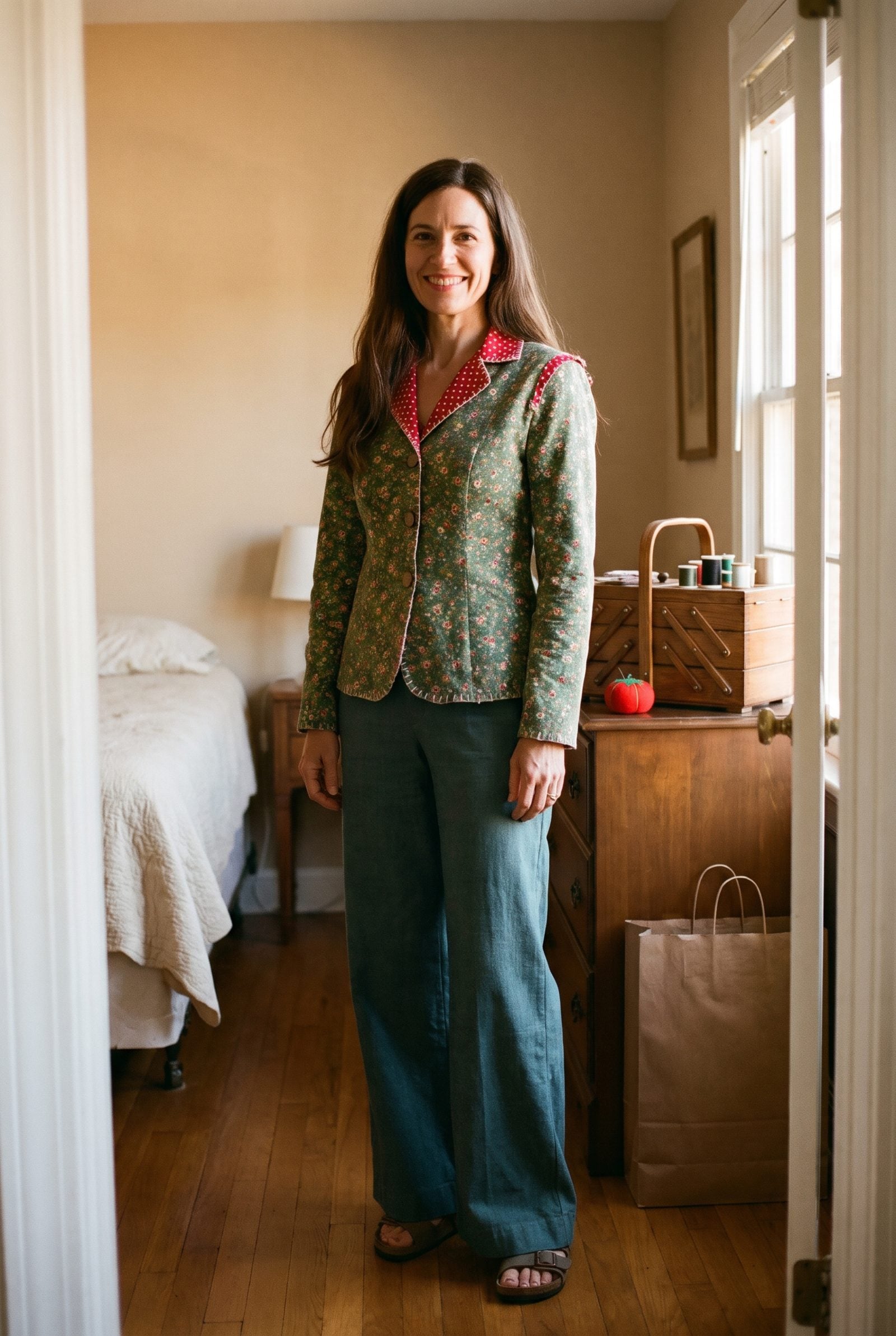
Lean in to hug someone and the neckline would flip, and there it was: a flash of completely unrelated fabric where the facing turned.
Facings sit on the inside, so nobody saw them unless the garment moved. That made them the perfect place to burn through the scrap bin. A green floral dress might hide a red polka-dot facing, or a bit of leftover shirting, or whatever was long enough to cut around the neck.
Factory clothes faced everything in the same fabric, because they had the whole bolt. A mismatched facing means someone was cutting from what they had, not from what they bought. Honestly, those surprise prints are my favorite part of any old handmade dress. A little secret stitched where only you would find it.
5. The Easter Dress That Arrived Finished at 11 p.m. the Night Before
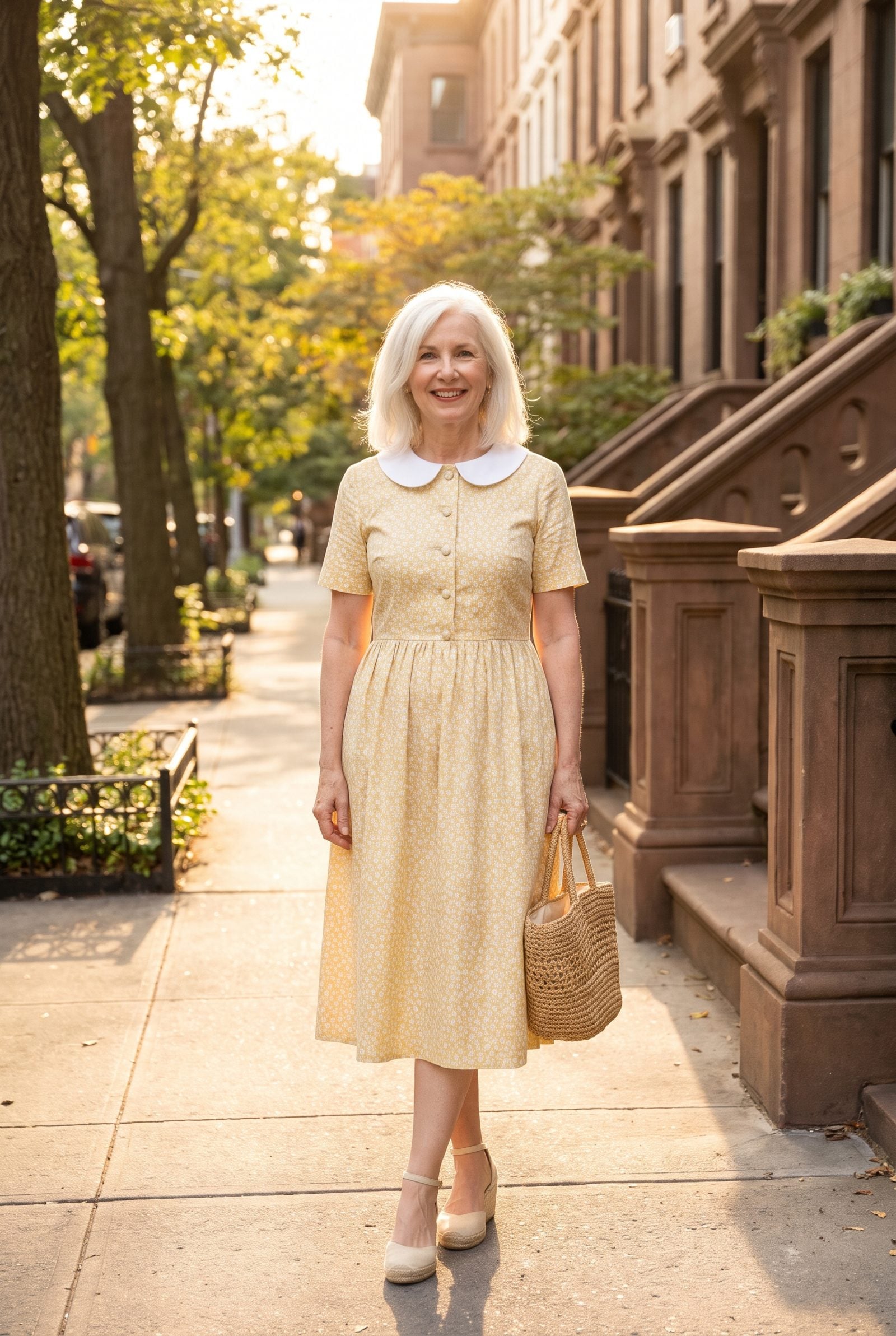
You knew the dress was coming because the machine ran late. The hum carried down the hall long after bedtime, steady, then stopping, then starting again.
By morning it hung on the closet door, pressed and finished, smelling faintly of hot iron and cotton. Store-bought dresses never arrived at 11 p.m. the night before. They arrived in a bag with a receipt.
This one arrived warm, practically. Easter, Christmas pageant, first day of school. The big days always came with a homemade dress because the pattern had been bought weeks earlier and the fabric stashed, and the sewing happened in the only quiet the house ever got.
4. Matching Dresses for You and a Doll, Cut From the Same Leftover Yard
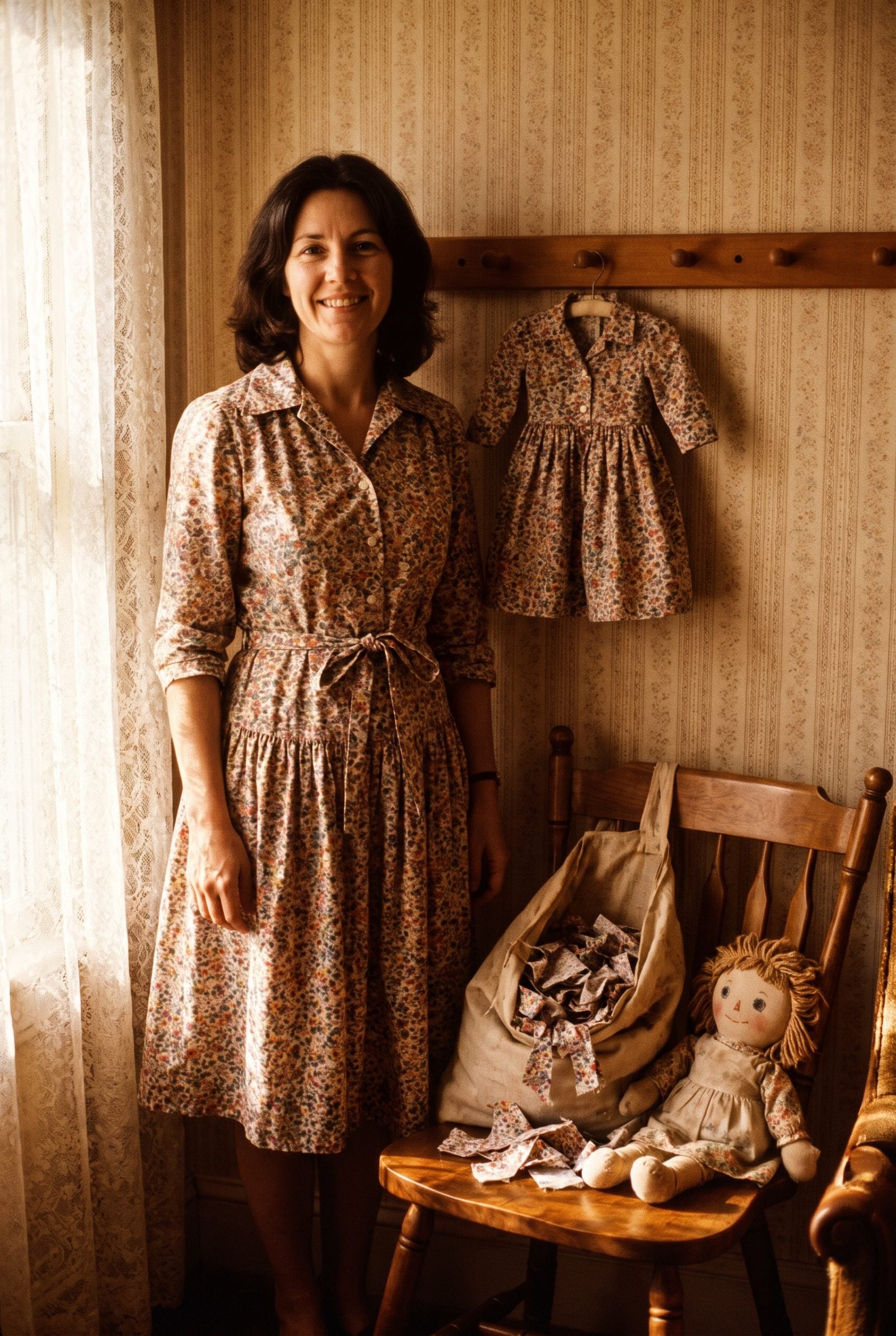
There was always a little dress made to match the big one. Doll-sized, cut from the yard that was left after the real one was done.
Nothing got thrown out if it could become something. The leftover floral became a doll dress, a bonnet, a drawstring bag for marbles. Matching mother-and-daughter was one thing. Matching daughter-and-doll was the sign a sewer hated waste and loved you in roughly equal measure.
3. Seams You Could Read Like a Map on the Inside
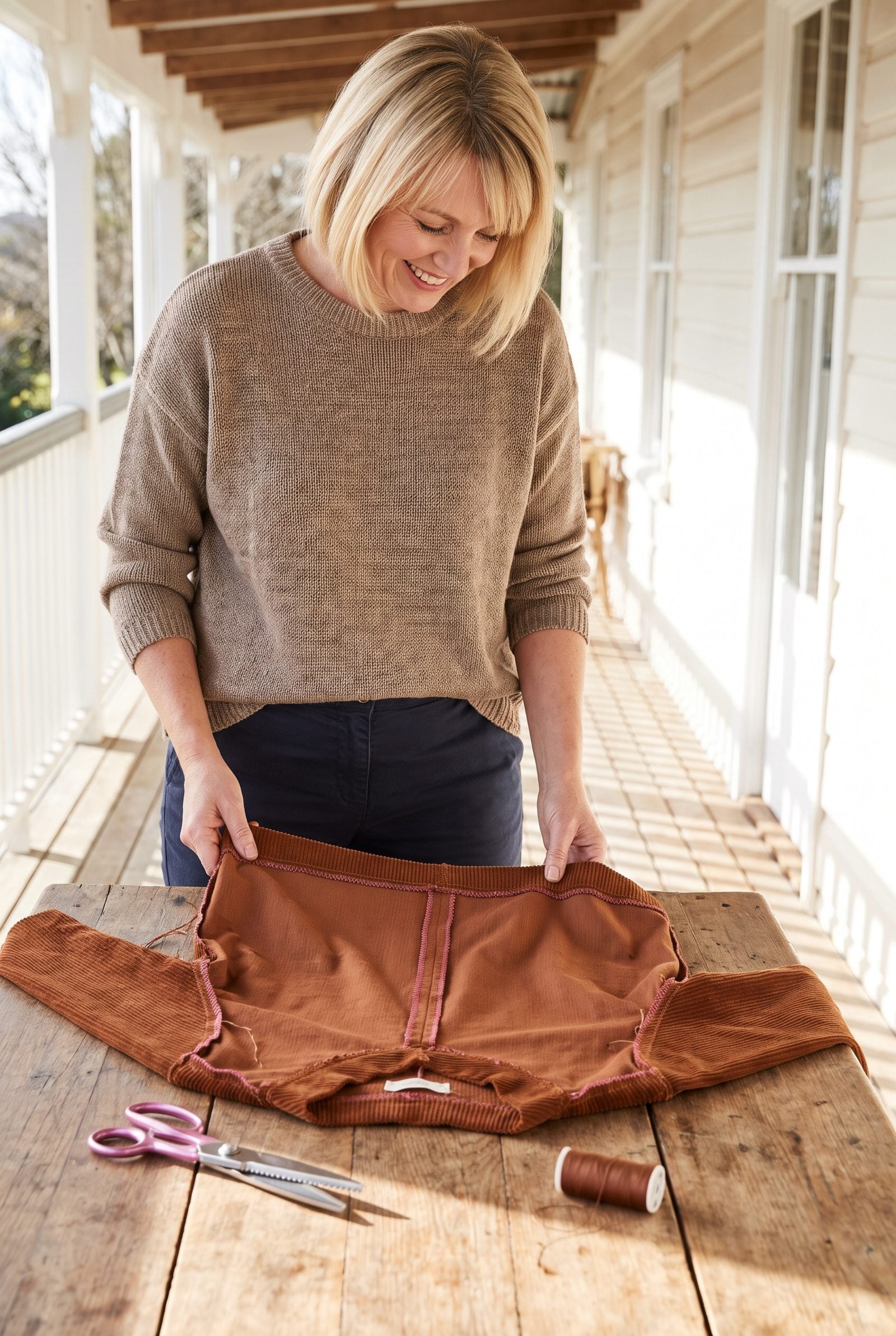
Turn a homemade dress inside out and the whole story was there. Seams pinked into a zigzag so the fabric wouldn’t fray. A hem turned and stitched by hand along the edge. A facing stitched down neat, a couple of thread tails still hanging loose.
Store clothes had serged edges too, that same tight overlocked finish. But the inside of a handmade piece still read completely differently, every seam a decision somebody made with their hands.
I turn old pieces inside out first now, honestly. The front tells you the taste. The back tells you the skill. And the inside of a 1970s homemade dress usually tells you somebody had plenty of both.
2. The Smell of the Fabric Store on a Saturday, Carried Home in a Paper Sack
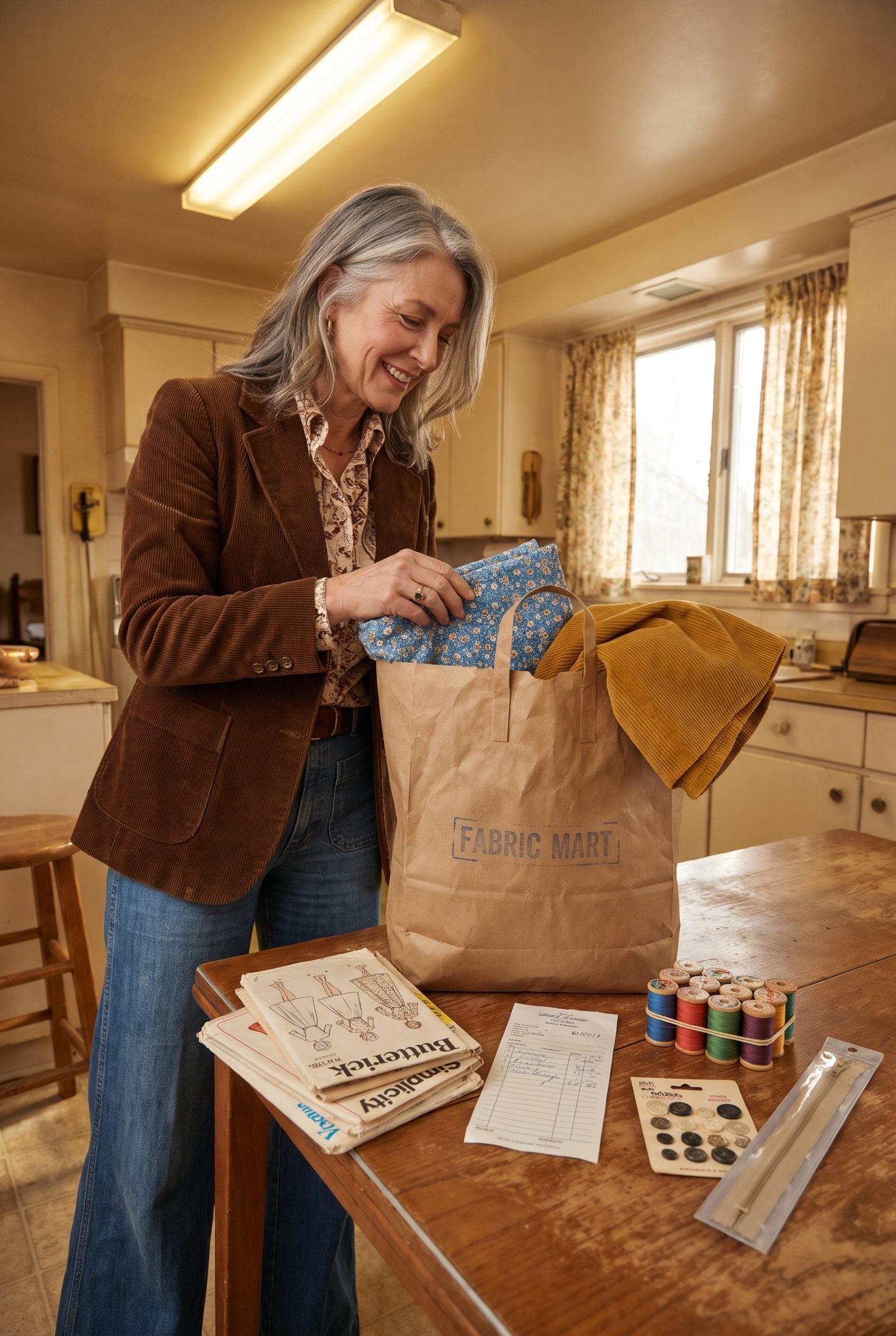
You can almost smell it now. New cotton, sizing, the dusty-warm air of a fabric store on a Saturday morning, bolts stacked to the ceiling and a cutting table worn smooth in the middle.
The haul came home in a plain brown paper sack. Yardage folded on top, a pattern envelope or two, a card of buttons, a zipper, thread wound to match. That bag sat on the table for a few days before anything happened to it, the whole next outfit waiting inside.
Buying a finished dress took ten minutes. This took planning, a bus ride, a budget, and the particular patience of someone who could look at flat fabric and see a child in it. The same instinct lives on in anyone who can walk into a shop and know which wardrobe is worth building piece by piece.
1. The Zipper Went In Slightly Crooked and Nobody Ever Fixed It
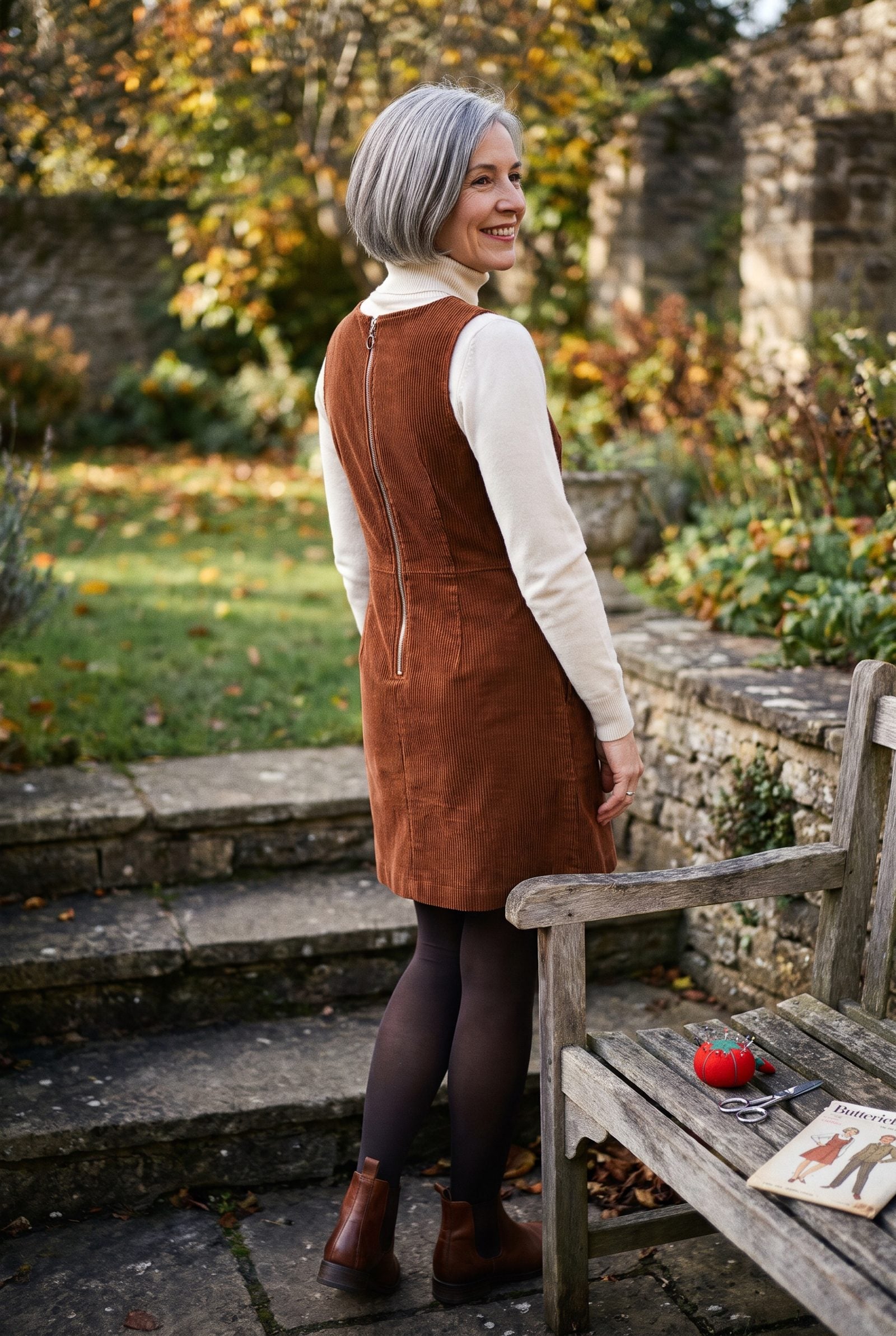
Turn the garment around and there it is. The back zipper, set in by hand, sitting a whisker off true. A small pucker at the top. Topstitching that wobbles for a stitch or two before it finds its line again.
Zippers were the part everyone dreaded. Machine-made clothes hid theirs behind perfect plackets. A home sewer wrestled a metal zip into place at the kitchen table at night, got it ninety percent right, decided ninety percent was plenty, and moved on.
Nobody ever went back to fix it. That crooked zipper got worn to a hundred birthdays. It still lay flat enough. It still did the job.
Perfect was never the goal. Done by Sunday was the goal.