❤️ Would you like to save this?
Skinny jeans did not suddenly stop working at 50. What changed was everything around them. A narrow leg is brutally honest about proportion: give it the right jacket, sweater, shoe or hemline and the whole outfit snaps into focus; pile the wrong volume above it and the jeans take the blame for a problem they did not create.
That is where these 37 looks get useful. Some are carrying an unmistakable early-2010s timestamp. Others are only an inch, a tuck or a shoe away from looking sharp again. The recurring question is not whether skinny jeans are “in” or “out.” It is whether the rest of the outfit gives that slim line something intelligent to work with.
Watch the proportions change as the gallery moves from tunics and blazers to boots, belts, puffers, scarves and the occasional blouse trying to host four trends at once. The smallest corrections often do the most work. Keep the jeans. Fix the argument happening around them.
FYI, thanks to AI imagery software, we’re able to create very specific fashion and hairstyle examples to illustrate the points being made. In some cases, imagery is exaggerated to hammer home the point. Also, assume links that take you off the site are affiliate links such as links to Amazon. this means we may earn a commission if you buy something.
37. The Long Shapeless Tunic That Hangs to Mid-Thigh

The tunic is soft, the color is right, and it swallows your entire midsection like a curtain. Length is the culprit. A top hanging to mid-thigh over skinny jeans stacks all the visual weight up top and leaves two thin lines dangling underneath, so the eye reads heavy-over-narrow instead of a real shape.
Shorten the read. A top ending at the hip bone or just below lets the jeans do their job. Love the tunic? Half-tuck the front into the jeans waistband so there’s one point where your waist declares itself. That single tuck brings the whole silhouette back.
36. Every Piece Shouting: When Six Statements Cancel Each Other Out
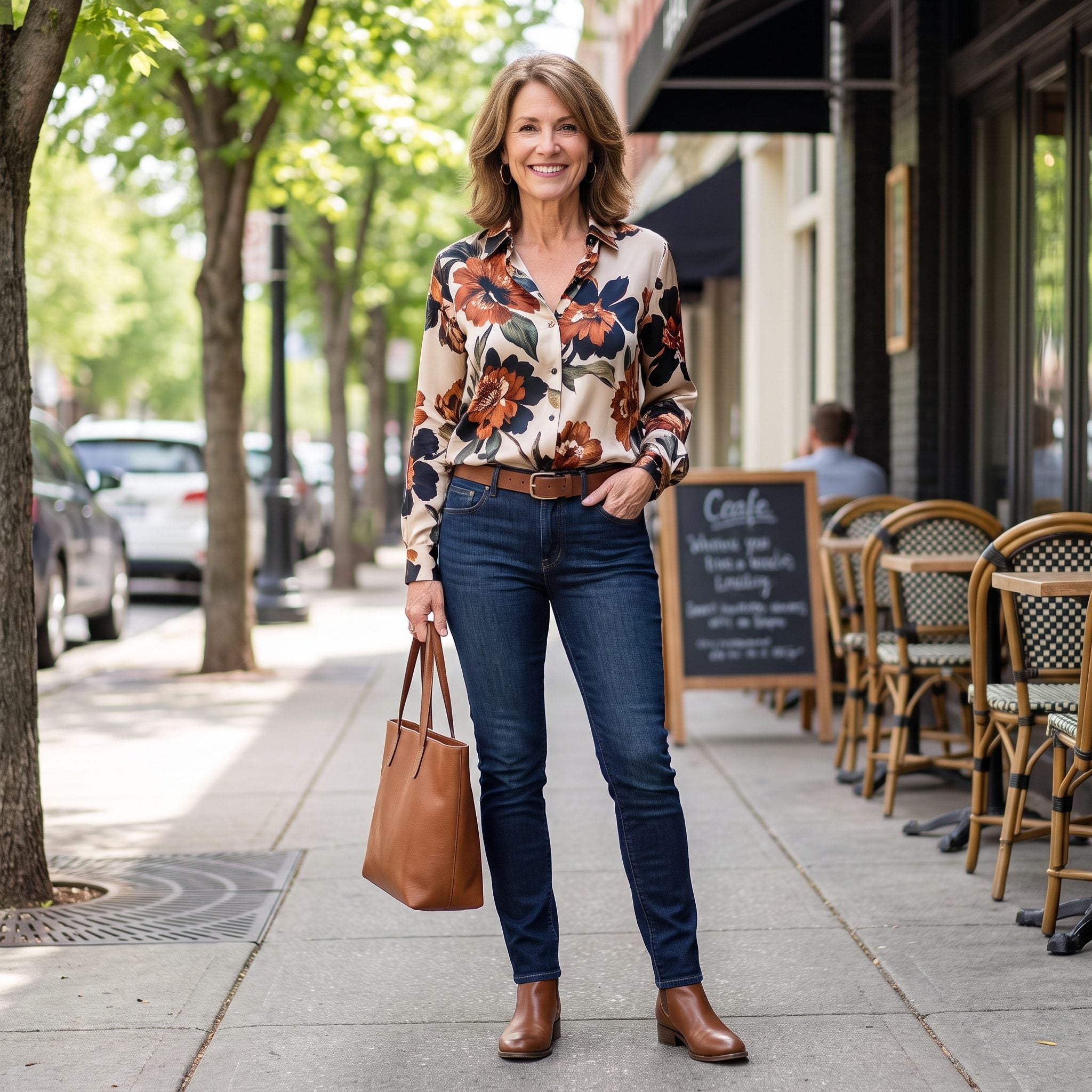
Rhinestone jeans, a patterned blouse, a big necklace, a wide belt, a printed bag, studded boots. Any one of these could lead an outfit. Together they’re holding a shouting match, and nobody wins because your eye can’t decide where to land.
Maximalism works when it has a hierarchy. This has none. Six focal points means zero focal points, and the whole thing lands louder than the sum of its perfectly good parts.
Pick one hero. Keep the studded boots or the statement necklace, then quiet everything else so it can actually speak. There are plenty of ways to build layered accessory outfits that feel rich instead of frantic, and they all begin the same way — choose one thing to be the star.
If prints feel risky, you’re in good company: 80% of our readers say they rarely wear them, so one patterned piece per outfit is usually plenty.
35. The Oversized Blazer Swallowing a Small Frame

Oversized tailoring can look terrific, but on a petite frame it can turn into a tent with lapels. The shoulders drop, the sleeves eat the hands, and the knee-length hem consumes most of the visible leg. When every dimension goes oversized at once, the woman disappears before the tailoring gets a chance to look deliberate.
Scale the exaggeration instead. A dropped shoulder can work beautifully. So can extra length. So can a roomy body. Let one or two of those ideas lead rather than asking all three to compete at full volume.
Oversized is a proportion, not an accident. Pick the dimension that goes big and let the rest give it some discipline.
34. A Satin Wrap Blouse Undone by Rubber Flip-Flops

The blouse says dinner reservation. The flip-flops say taking the recycling out. That gap is the whole problem, and it lives at floor level where you’d least expect it to sink a look.
Satin catches light. Gold jewelry catches light. Then the eye travels down and lands on flat rubber. Suddenly the most casual piece in the outfit is setting the tone for everything above it.
The fix costs nothing in comfort: a leather thong sandal, a low metallic slide, an espadrille flat. Something open and easy can absolutely work with satin. It just needs enough finish to look like part of the same conversation.
What Our Readers Say
- In our reader polls, jeans were the clear favourite for everyday bottoms, picked by 60% of readers over trousers and leggings.
- Asked about jeans hems, 72% of ThreadCurve readers chose full length, well ahead of cropped or cuffed styles.
From ThreadCurve reader polls and votes.
33. The Waterfall Cardigan Formula

You know this one. The draped waterfall cardigan over skinny jeans became a defining early-2010s formula, and those two cascading front panels still carry the timestamp. Nothing is inherently wrong with the cardigan. The problem is how instantly recognizable the entire combination has become.
Change the formula rather than declaring war on the piece. Try a straight-edge cardigan worn open, a shorter version that gives the waist more room to register, or a longer clean-lined knit without the cascading front. Same ease, less time capsule.
32. Low-Rise Skinny Jeans and a Short Top Shrinking the Leg Line

The waistband sits low, the top stops right at it, and the whole middle of the outfit stretches horizontally. What gets visually compressed is the leg. The rise pulls the apparent waist toward the hip just as the short top calls attention to exactly where that line begins.
A mid- or higher rise can shift the balance upward and give more visual length back to the leg. Keep the short top if you like. The useful adjustment is finding a rise that works with your own torso-to-leg proportions rather than assuming one waistband position suits everybody.
31. Skinny Jeans Peeking Out From a Puffer Coat That Hits the Ankle
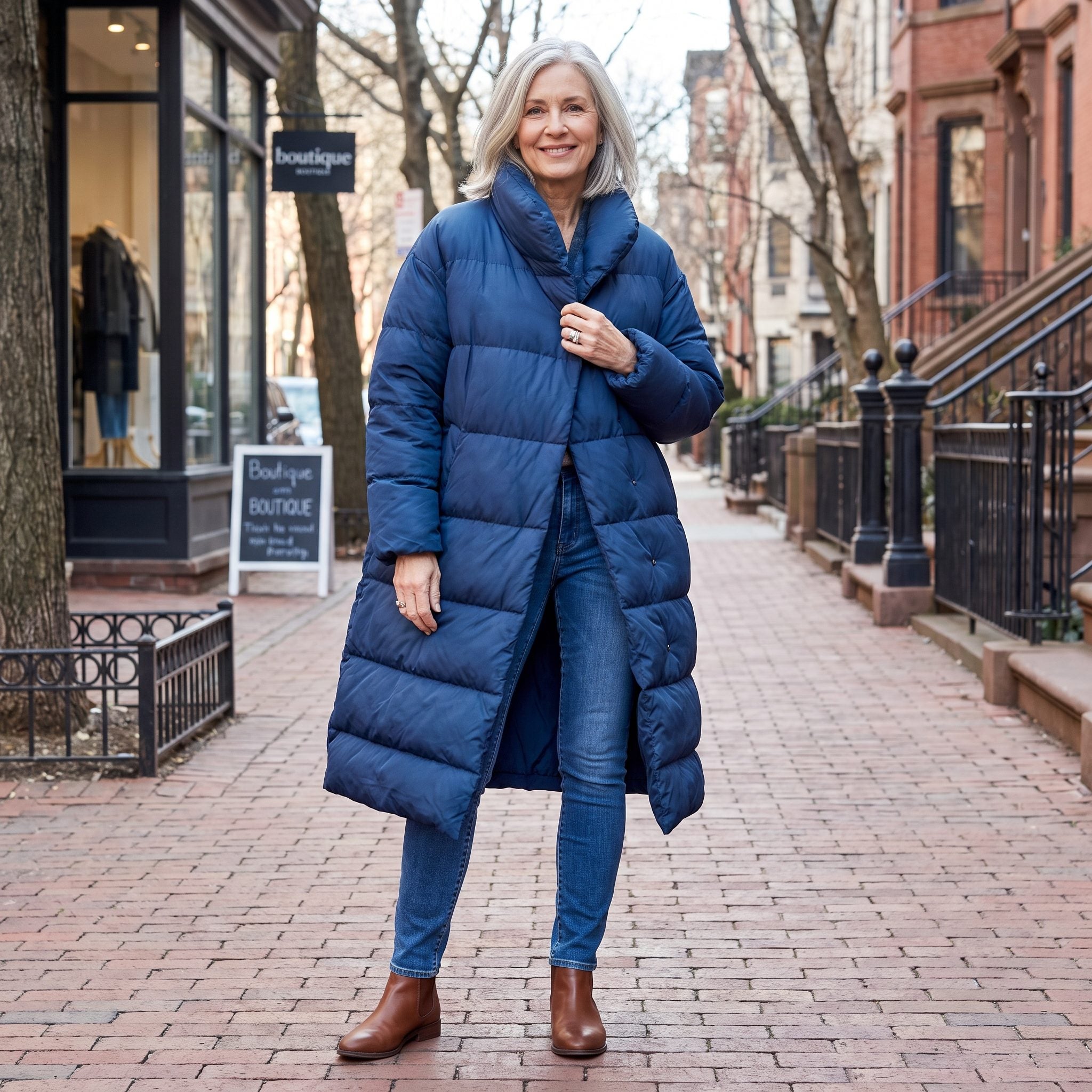
The math doesn’t work if the jeans are supposed to matter. A floor-grazing puffer becomes a wide quilted column with two slivers of denim escaping at the ankle. The coat is now the silhouette; the skinny jeans are barely participating.
There is nothing inherently wrong with a long puffer over skinny jeans. If you want the denim line to register, however, a shorter blue puffer coat reveals more of it. If you want the ankle-length coat to lead, let it lead and stop expecting the jeans underneath to supply the proportion.
When ThreadCurve readers picked a coat, only 10% chose a puffer, with wool, leather and trench styles all ranking well ahead of it.
30. The Pronounced Peplum With the Timestamp

The peplum defines the waist beautifully, then turns sharply outward into a stiff shelf over the hips. Against a very narrow jean, that pronounced flare becomes the entire silhouette — and a very recognizable early-2010s one at that.
Keep the jewel tone. Keep the waist. Lose the hard architectural flare. A softer peplum that skims rather than juts can preserve the shape, or a fitted top with a partial tuck can create definition without reproducing the old formula. That color is already doing plenty of work.
29. Delicate Ballet Flats Drowning Under an Oversized Blouse

Top-heavy, bottom-vanishing. The blouse carries volume down toward mid-thigh, then the leg tapers into a barely visible flat. Almost all the visual weight sits above the hips, while the bottom of the outfit seems to fade away.
Give the foot some presence. A pointed flat with a visible toe box, a low block heel or a sleek loafer with enough contrast to register can anchor the base. The blouse can stay big. The shoe just needs enough structure to answer all that fabric above it.
28. The Tiny Tight Blazer From 2011

You know this formula because it was everywhere: the nipped, hip-length blazer buttoned over skinny jeans, standard-issue office style circa 2011. The jacket is short, close and sharply fitted, which gives the whole outfit a very specific timestamp.
Go longer or easier through the body. A blazer that reaches lower on the hip with a more relaxed line immediately changes the conversation around the same jeans. Same navy. Same denim. Far less loyalty to one particular decade.
27. Skinny Jeans With a Scarf Hanging Nearly to the Knee
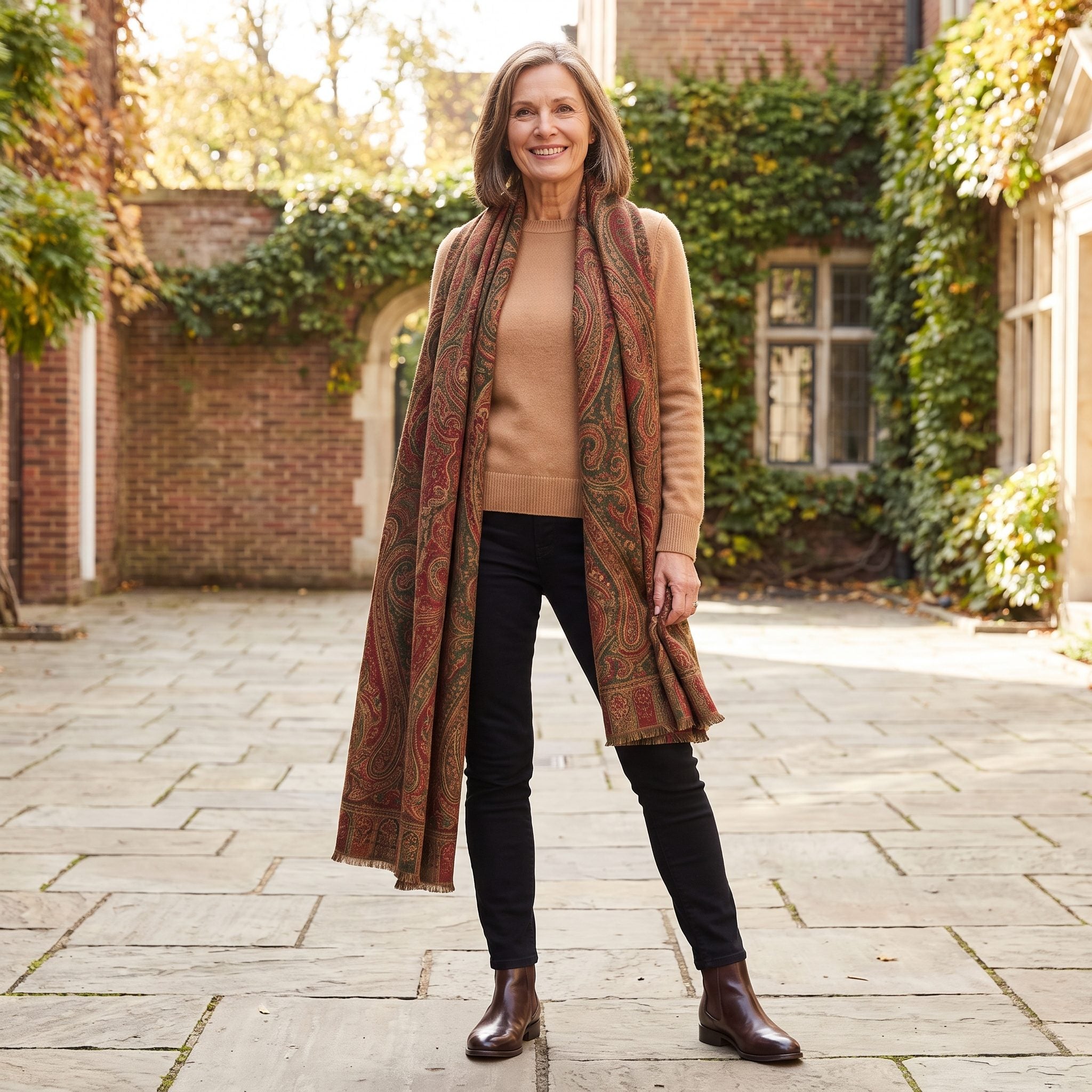
Everything else here is clean — fitted camel sweater, slim black jeans, polished boots. Then the scarf drops in two heavy panels almost to the knee and drags the composition toward the floor.
A scarf this long wants movement. Wrap it, knot it or throw one end over a shoulder rather than letting both sides hang dead straight. Looping it once at the neck brings the ends higher and lets the camel sweater reappear as part of the outfit instead of becoming scenery behind the scarf.
26. The Poncho That Swallows the Waist
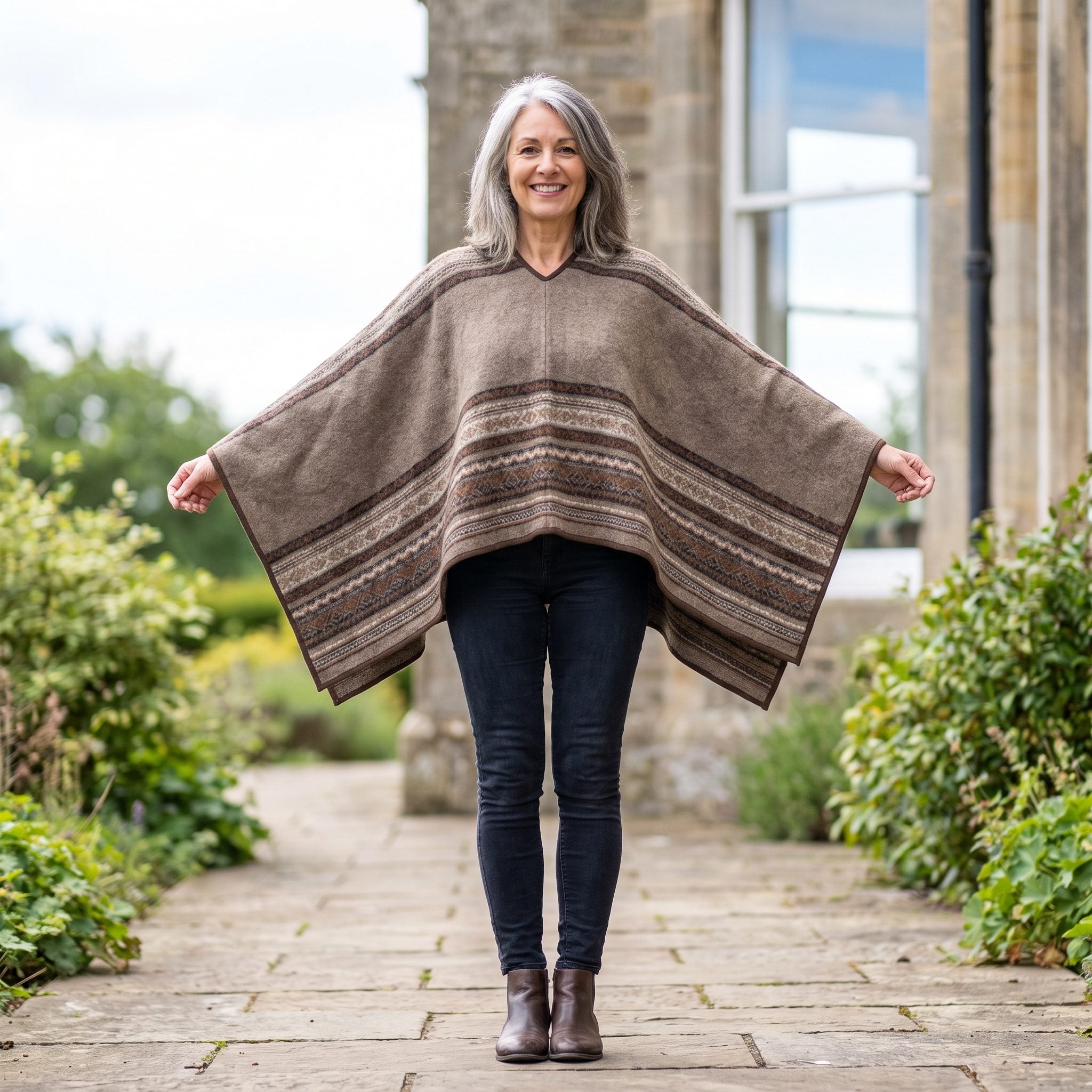
A poncho spreads wide across the shoulders while the skinny jeans narrow hard below it. That extreme change in scale is the story: broad upper volume, two very slim legs, almost nothing connecting the two.
Ponchos need some kind of anchor when the bottom is this narrow. Pull one side back over a shoulder, introduce asymmetry, or choose a version whose drape gives the body a little more definition. The camel color and loafers are already calm. The silhouette needs the same discipline.
25. Skinny Jeans Turned Fully Corporate With Pumps and a Tucked Blouse

❤️ Would you like to save this?
Every piece is pulling toward the boardroom: rigid tucked blouse, thin belt, patent pumps, structured tote. The jeans are the only casual thing left, and they lose the argument. The whole outfit reads like slacks that forgot to become slacks.
Keep one formal element and relax another. Swap the patent pump for a soft suede loafer or low ankle boot. Loosen the blouse. Lose the belt. Trade the hard tote for a softer bag. Skinny jeans bring ease to the equation. Give them something nearby that speaks the same language.
24. The Sharkbite Hem Hanging in Points
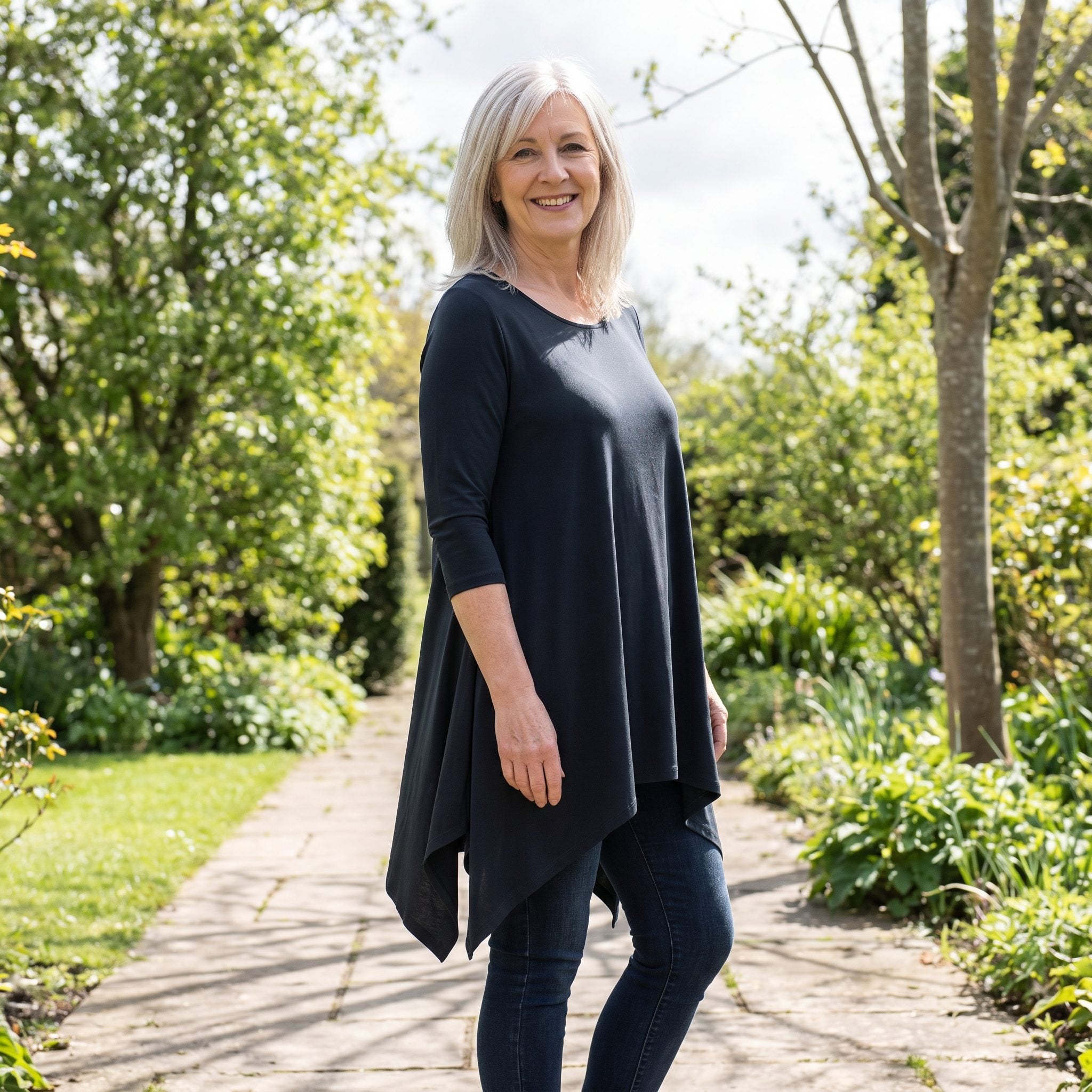
Those pointed hems dropping down each side turn the lower edge of the top into the main event. Instead of one clean transition into the narrow jeans, the eye gets two dangling diagonals that make the outfit busier exactly where it could use some calm.
Keep the relaxed fit and pattern. Swap the sharkbite edge for a straight or softly curved hem so the top finishes with one deliberate line. The skinny jeans already provide plenty of shape underneath. The hem does not need to draw arrows around it.
23. Extreme High-Rise Jeans With a Tiny Tucked Top Squashing the Torso
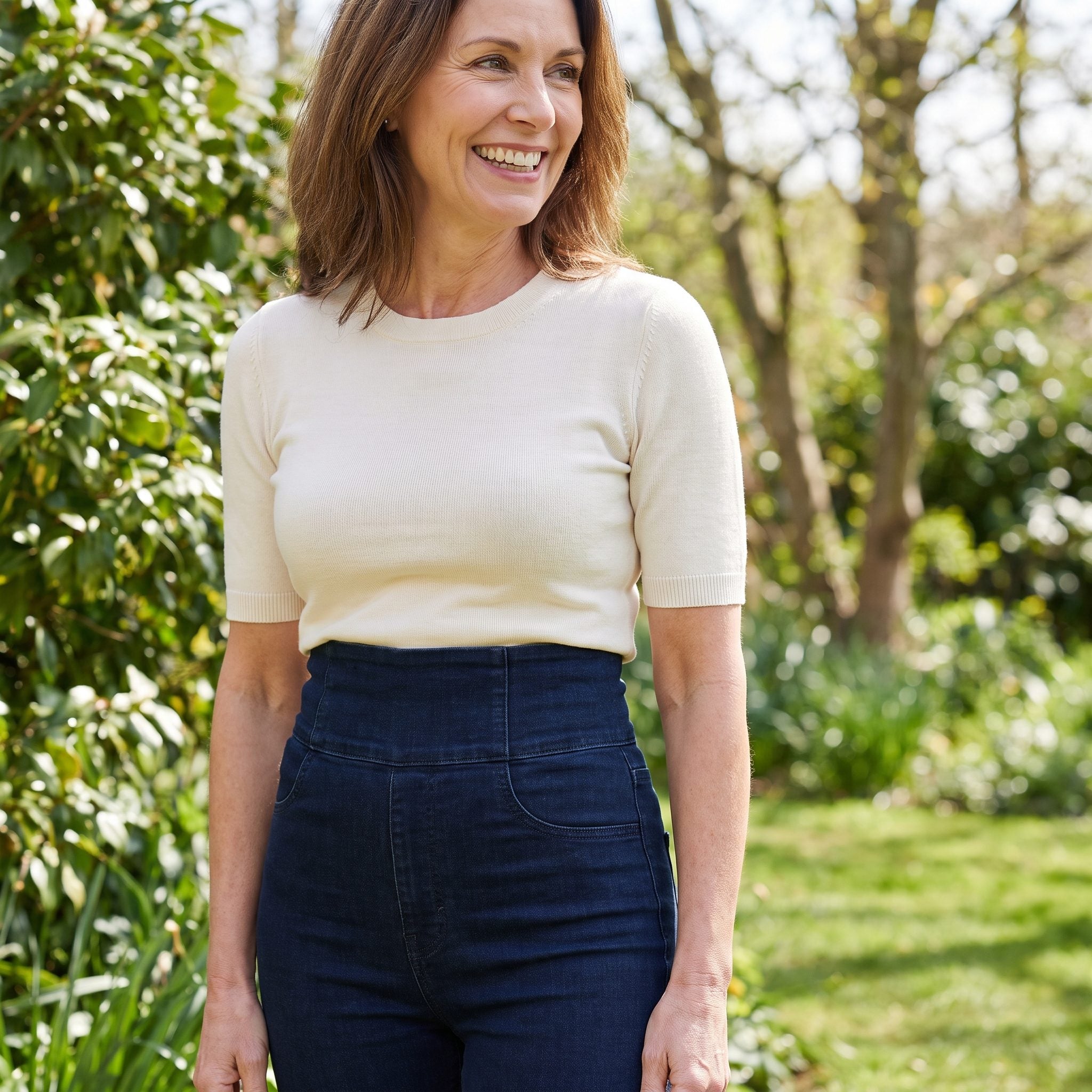
This is the low-rise mistake flipped. The waistband climbs high, the short knit disappears into it, and suddenly only a narrow band of top remains between waist and shoulders. The leg looks long, but the torso pays for every inch.
A loose half-tuck can let a little fabric relax over the waistband and give the upper body more breathing room. A slightly longer top can do the same. High-rise jeans can be terrific; the useful question is whether that particular rise balances the person wearing them rather than how high a waistband can possibly go.
22. Skinny Jeans With a Puffer Vest Piled Over a Bulky Hoodie
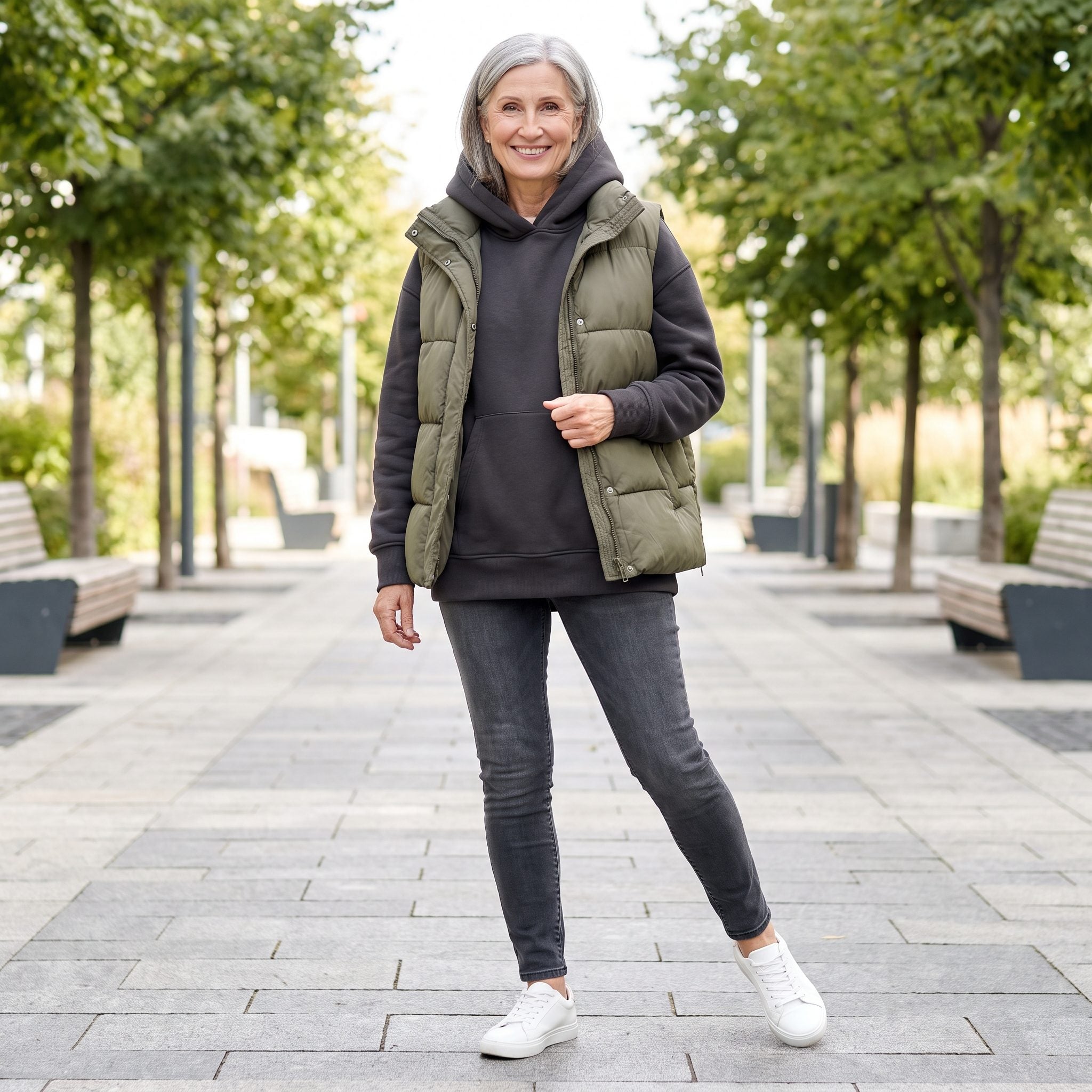
Two thick layers on top, two narrow legs below. The hoodie supplies volume and the padded vest adds another shell over it, so the torso keeps expanding while the jeans keep tapering.
Pick which layer gets to be bulky. A slimmer hoodie under the vest keeps the warmth without doubling the volume; a fitted long-sleeve under a puffier vest does the same. Keep the athleisure ease. Just give one layer permission to sit closer to the body.
21. The Boxy Blouse Ending Right at the Widest Hip

The rust color is warm and the blouse is a good one, but that stiff straight hem lands at a visually prominent point and draws a hard horizontal line across the outfit. Boxy cut plus rigid hem creates width before the skinny jeans immediately pull everything narrow again.
A front tuck breaks the line and gives the waist a place to register. A softer curved hem can do much the same thing without a tuck. Fabric matters too: something with a little drape falls rather than projecting straight outward.
20. Skinny Jeans Tucked Into Tall Riding Boots Under a Long Tunic

The pieces arrive as a set: long tunic, scarf, skinny jeans disappearing into cognac riding boots. The combination is so strongly associated with early-2010s casual dressing that the era becomes part of the outfit before any single piece gets considered on its own.
The easiest update is to break the set. Shorten the top or give the waist more definition. Switch the tall boot for a lower cognac ankle boot so more denim remains visible. Or keep the riding boots and simplify what happens above them.
19. Skinny Jeans With a Ruffled Blouse Doing Far Too Much

Bow, ruffles, gathered shoulders, balloon sleeves. That’s four decorative events happening above a clean pair of skinny jeans, and each one is asking to be noticed first.
The problem isn’t that skinny jeans require a plain top. The problem is hierarchy. Keep the bow and simplify the sleeves, or keep the balloon sleeves and smooth out the front. Those burgundy pointed flats already understand restraint. The blouse could borrow some.
18. The High-Low Tunic Still Trying to Balance the Silhouette
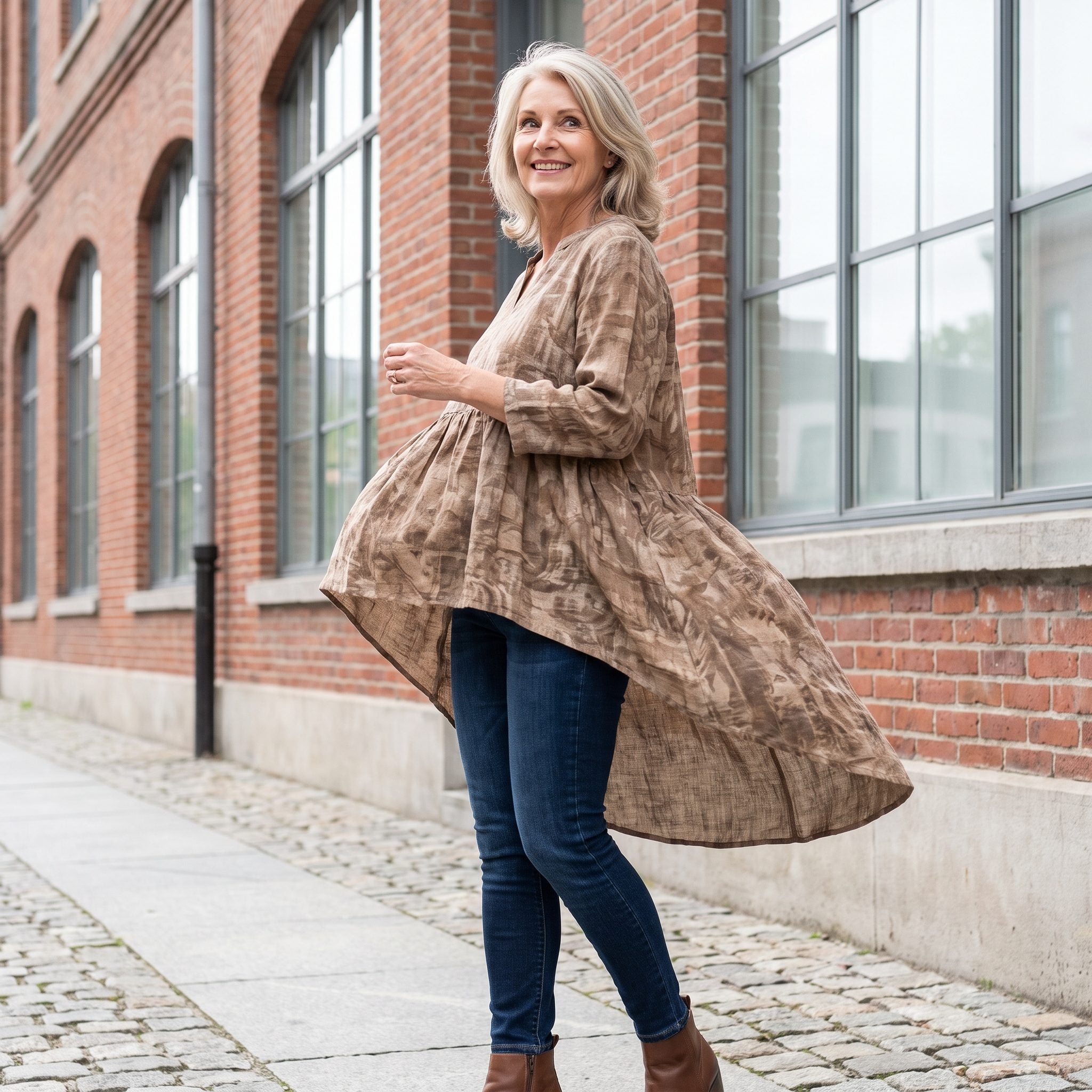
The high-low hem was meant to solve two problems at once: show more leg in front, add coverage in back. Instead, that dramatic dip creates two competing lengths and gives the top a very recognizable mid-2010s signature.
Plum color, good. Soft jersey, good. The exaggerated hem is doing the dating. A straighter or more gently curved edge would keep the relaxed ease while giving the skinny jeans a calmer line to emerge from underneath.
17. An Oversized Statement Belt Bullying a Simple Outfit
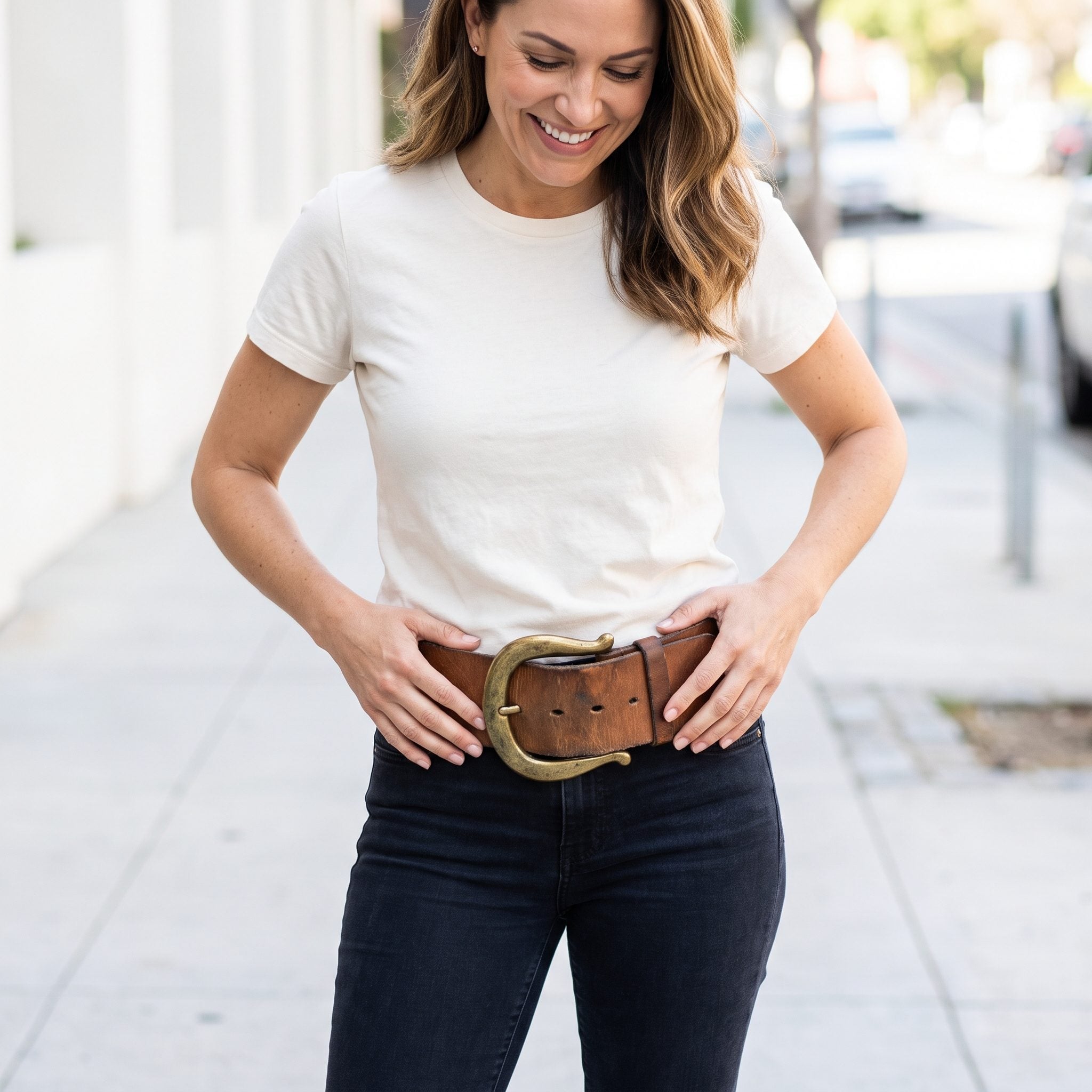
Everything else here is quiet, and then a four-inch tan belt with a saddle-sized buckle crashes the party. The outfit was built for restraint. The belt didn’t get the memo.
A wide, high-contrast belt creates a powerful horizontal interruption and turns the middle of the body into the focal point. That can be terrific when the outfit is designed around it. Here, the rest of the look wants to be one clean dark column.
A slimmer belt closer to the jeans in tone would preserve more of that vertical line. Save the giant buckle for an outfit prepared to let it lead.
16. Skinny Jeans Buried Under a Huge Cowl-Neck Sweater
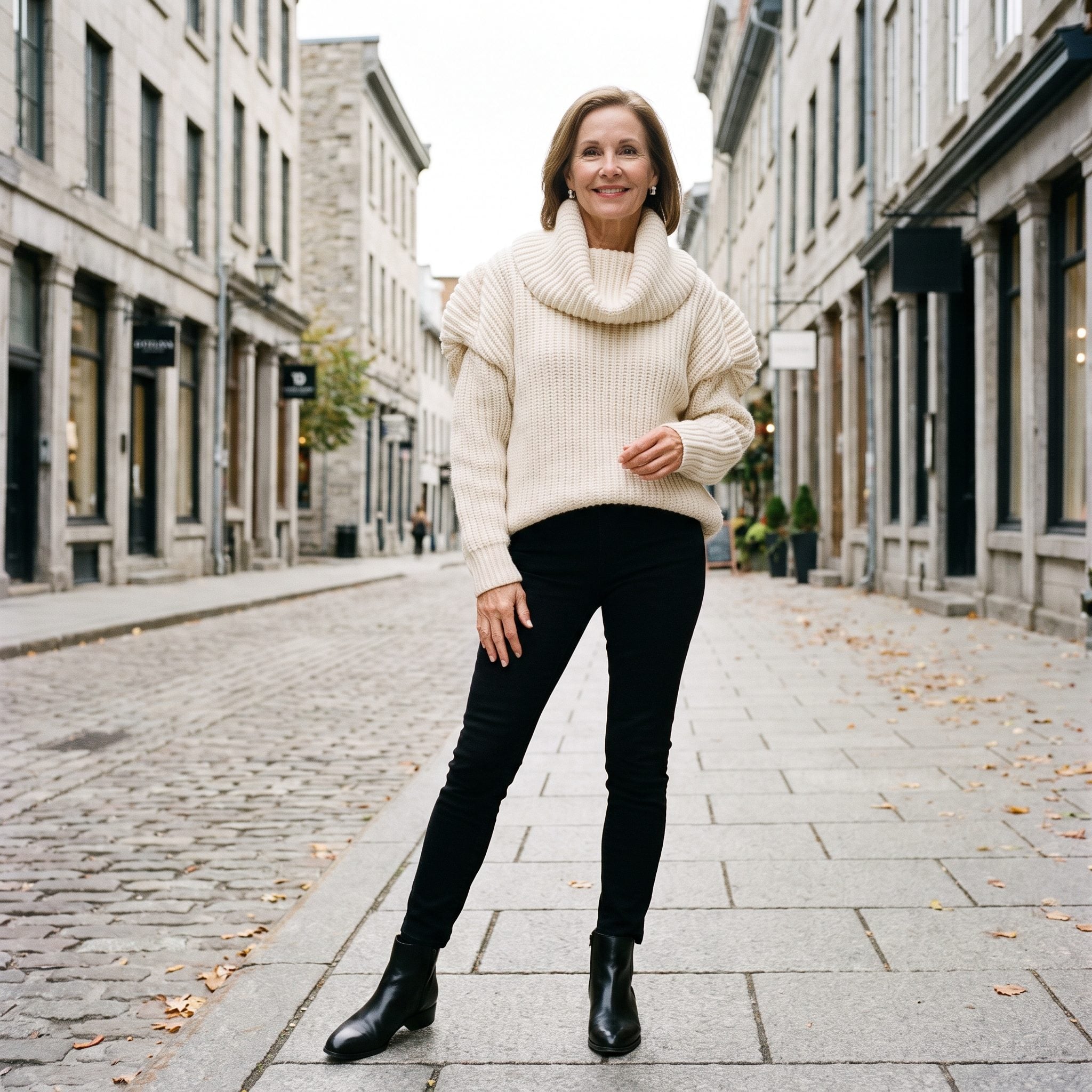
That thick cowl piles fabric around the neck, shoulders and chest while the jeans taper hard below. The result isn’t simply “oversized top, skinny bottom.” The volume is concentrated at the highest point of the outfit, which makes everything beneath it look even narrower.
A finer-gauge turtleneck would keep the cozy vertical neck without building a mountain around it. Or keep the chunky knit and look for one with a cleaner neckline and less mass at the shoulder. The jeans don’t need the top to be tight. They just need the volume to have some architecture.
15. The Cold-Shoulder Top Stuck in a Trend Cycle

The jeans fit cleanly. The sandals work. The shoulder cutouts are what pin the outfit to a specific trend cycle. Cold-shoulder tops have such a recognizable construction that the cutout often arrives before the color, drape or rest of the design gets a chance to register.
The teal is lovely and the fluid fabric deserves to stay. A clean boat neck, asymmetric neckline or softly draped shoulder can create interest in the same area without reproducing the unmistakable cold-shoulder template.
14. The Skinny That Sags at the Seat
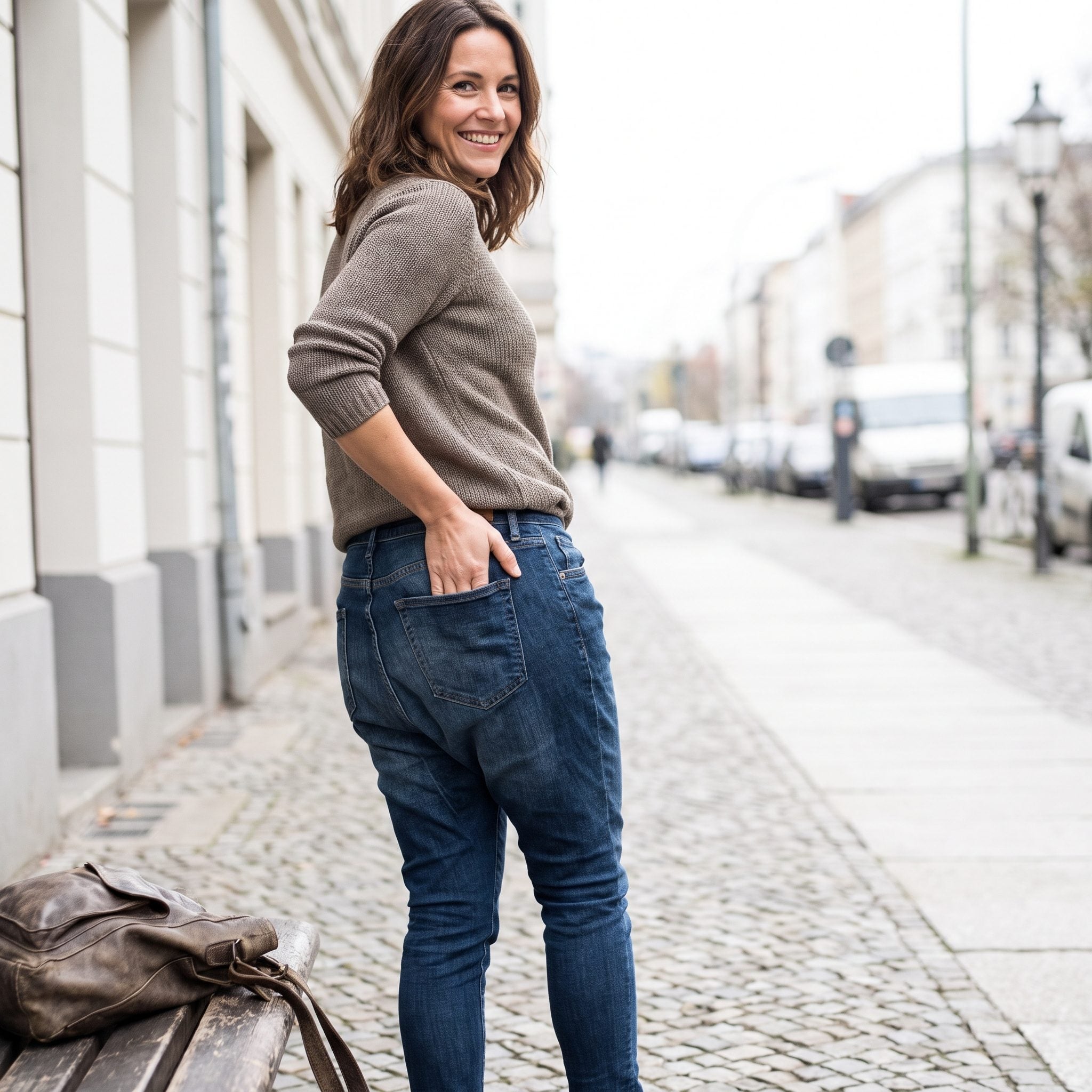
Skinny jeans lose their entire argument when excess fabric pools through the seat and upper thigh. The cut depends on a clean, close line; once that line collapses into folds, the jeans start behaving like a different silhouette altogether.
Sizing up can cause the problem, but so can the wrong rise, poor stretch recovery or a seat-and-thigh shape that simply doesn’t match the wearer. Going down a size is not automatically the answer.
Look for a pair that skims cleanly through the seat and thigh without pulling or sagging. The tucked burgundy knit already gives the outfit a crisp waist. The denim should continue that clean line below it.
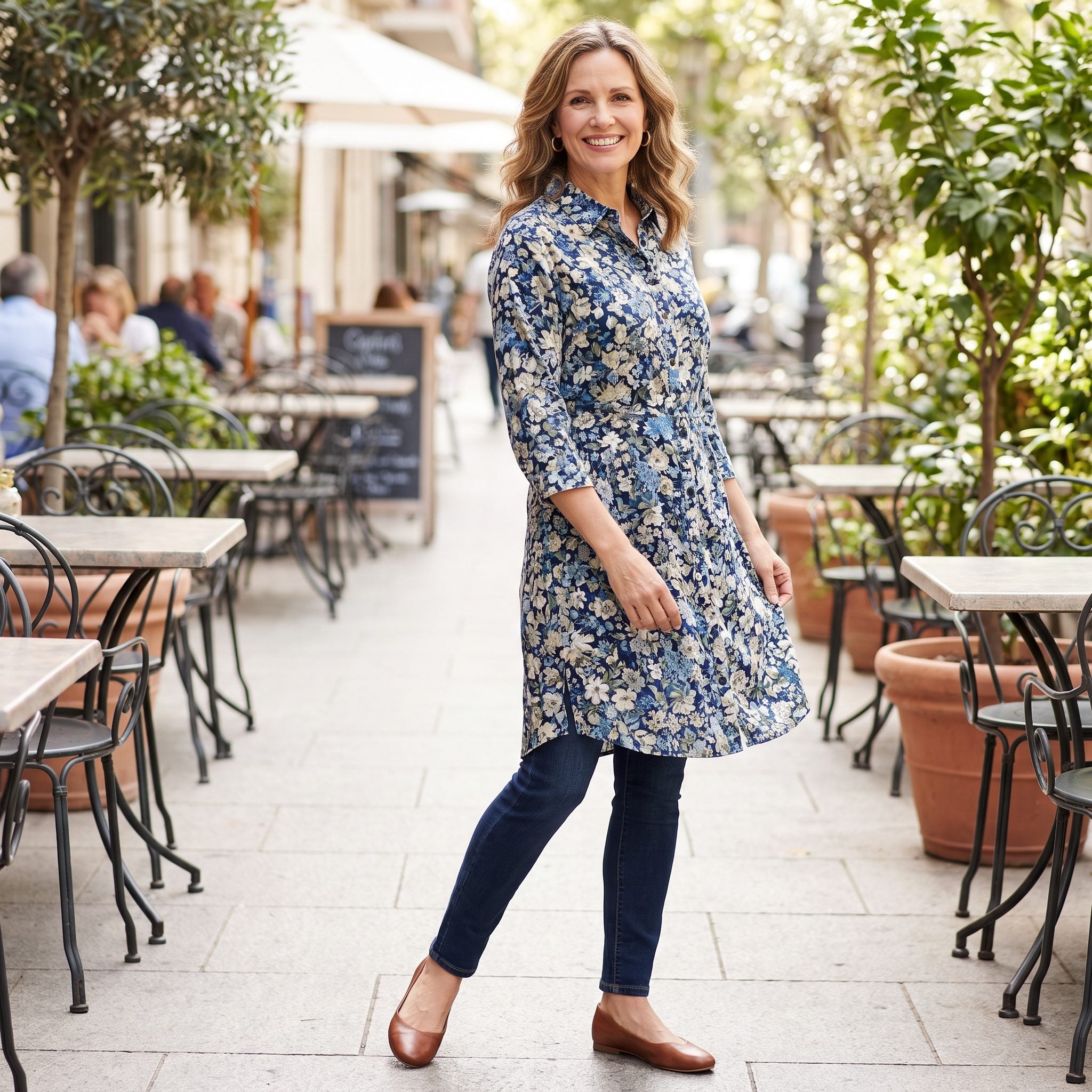
13. Skinny Jeans With a Whole Shirt Dress Layered Over Them
❤️ Would you like to save this?
A full shirt dress buttoned over jeans stacks two complete silhouettes on the same body. The dress wants to read as an A-line. The jeans want to read as a narrow column. Neither gets enough room to finish the sentence.
Open the lower buttons so the dress becomes a moving outer layer, or loosen the neckline and treat it more like a long tunic. Fully closed, the combination can look less like layering and more like two finished outfits occupying the same space.
12. The Cropped Jacket Cutting the Torso Too Short

The leather is good and the jacket is a keeper, but the crop creates an abrupt transition into a very long narrow leg. Nothing is wrong with either piece in isolation; the proportions simply need a better handshake.
Let the jacket sit open over a slightly longer layer, or pair it with a rise that makes the short jacket feel connected to the waistband rather than stranded above it. The black leather jacket stays. The relationship underneath gets adjusted.
11. The Extra-Long Vest Taking Over the Outfit
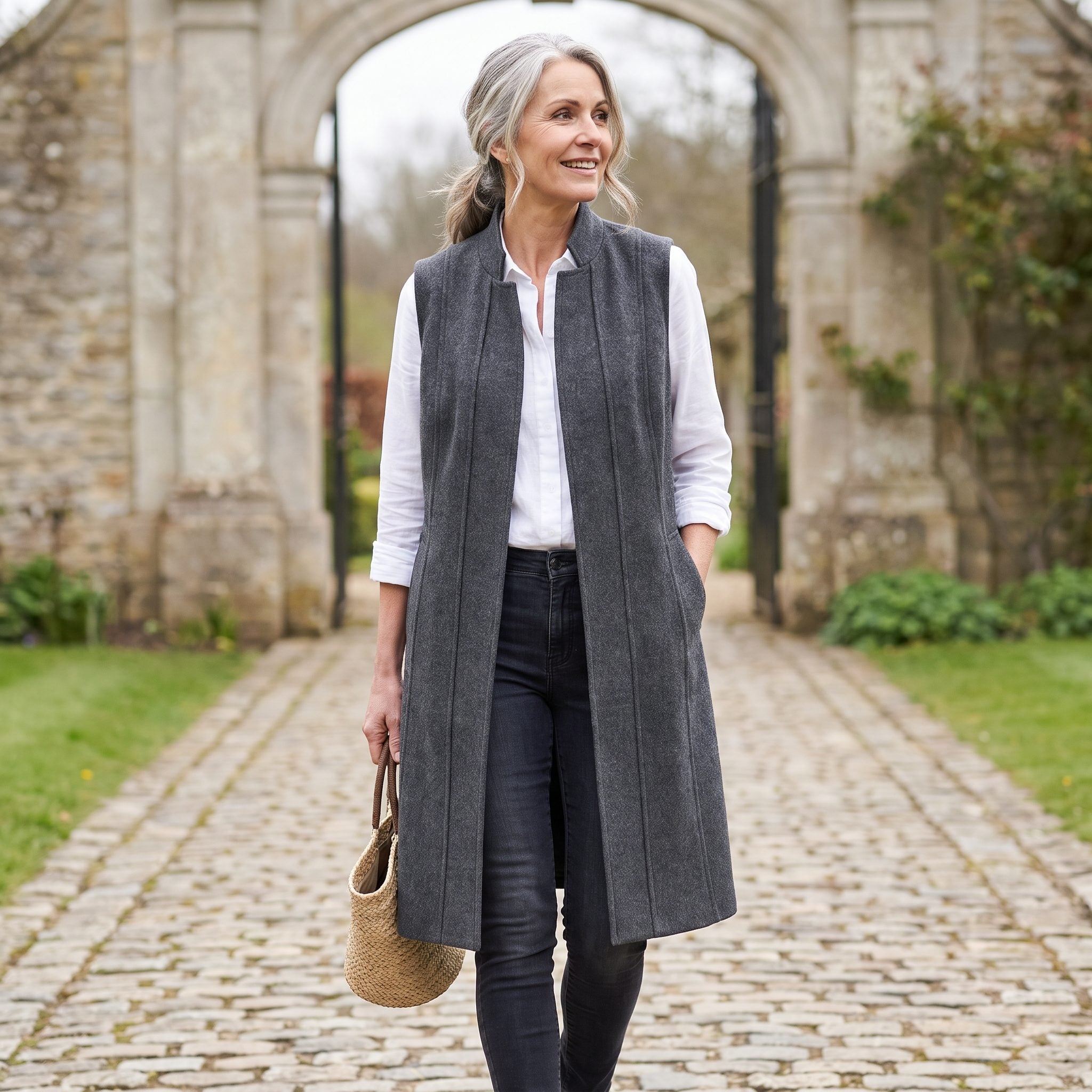
A long sleeveless vest can create a terrific vertical line. Here, though, the nearly knee-length panels become so dominant that only a narrow section of skinny jean remains visible below. The vest stops framing the outfit and starts becoming the outfit.
White crewneck and pointed flats are already working. A somewhat shorter vest would expose more leg; a long one can still work when the layers and shoes around it are scaled to support that length. The problem isn’t length itself. It’s how much of the composition one piece gets to occupy.
10. The Shapeless Sweatshirt With Zero Intention
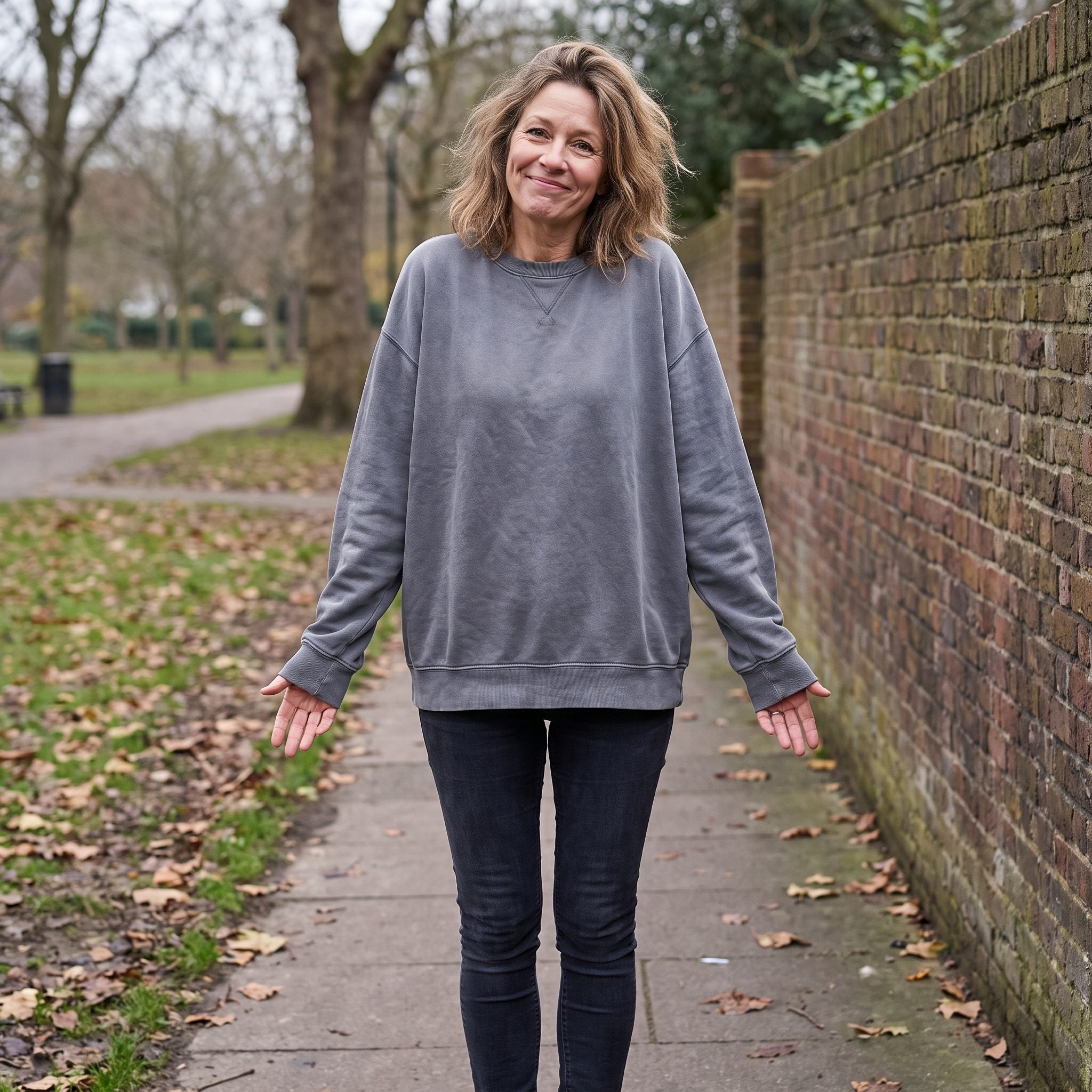
A big soft sweatshirt over skinny jeans can look sharp. This one doesn’t because nothing interrupts the drape. It hangs off the shoulders, past the waist and over the hips in one continuous block. The sneakers are clean and the jeans are good, but the top just gives up.
Add one move. Front-tuck the hem, push the sleeves to the forearm, or choose a version that skims a little closer through the body. That’s the difference between casual and accidental: one visible decision.
9. Skinny Jeans, a Knee-Length Straight Blazer, and Flat Shoes

The blazer runs straight toward the knee with very little shaping, leaving only a narrow section of skinny jean visible below. Add a visually light flat and the bottom of the outfit has almost no counterweight to the long block above.
A heel is one possible correction, not a requirement. Opening the blazer, choosing a more shaped cut, shortening the jacket or using a shoe with more visual presence can all rebalance the same pieces. The camel blazer can stay. The proportions around it need more conversation.
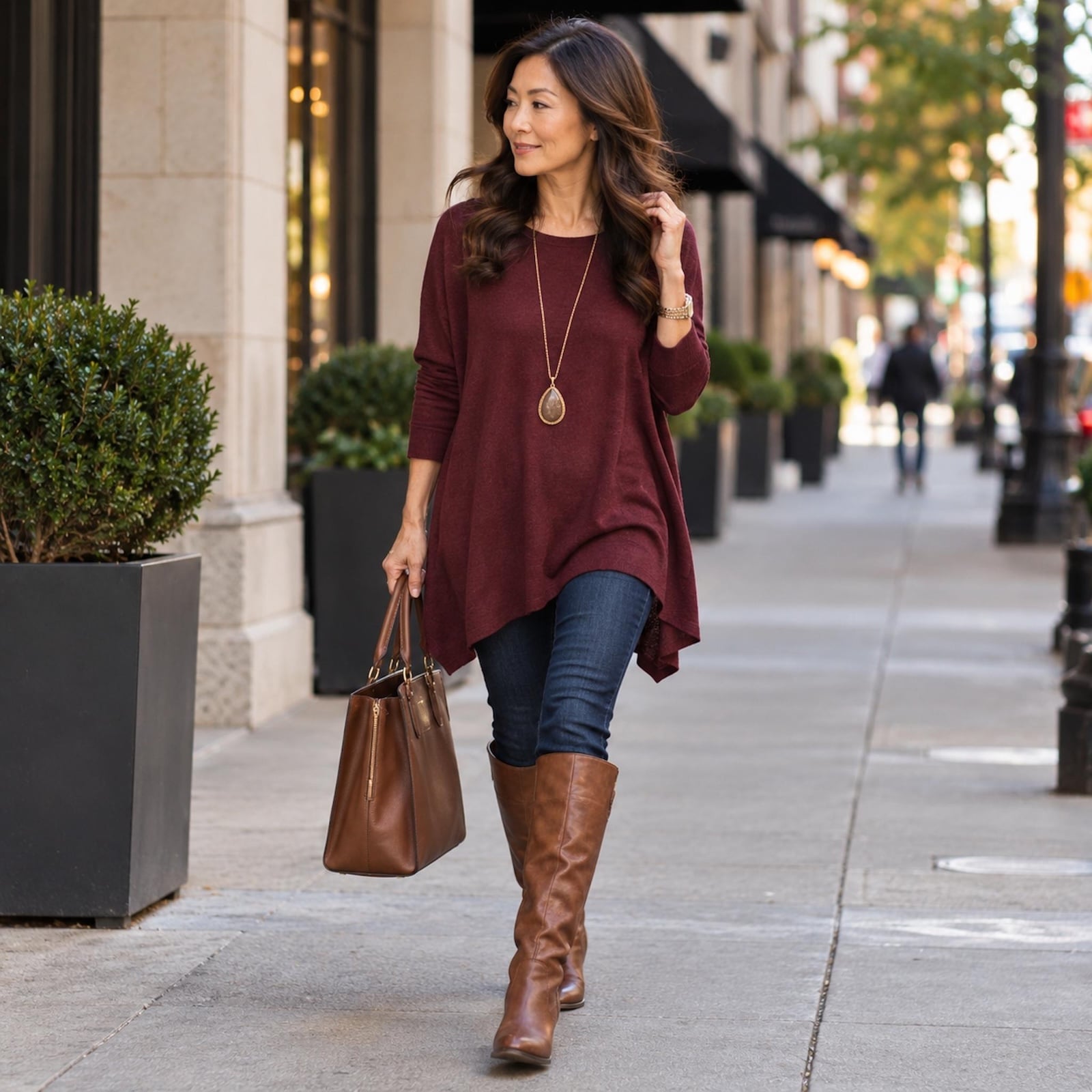
8. The Tunic-and-Long-Pendant Formula on Repeat
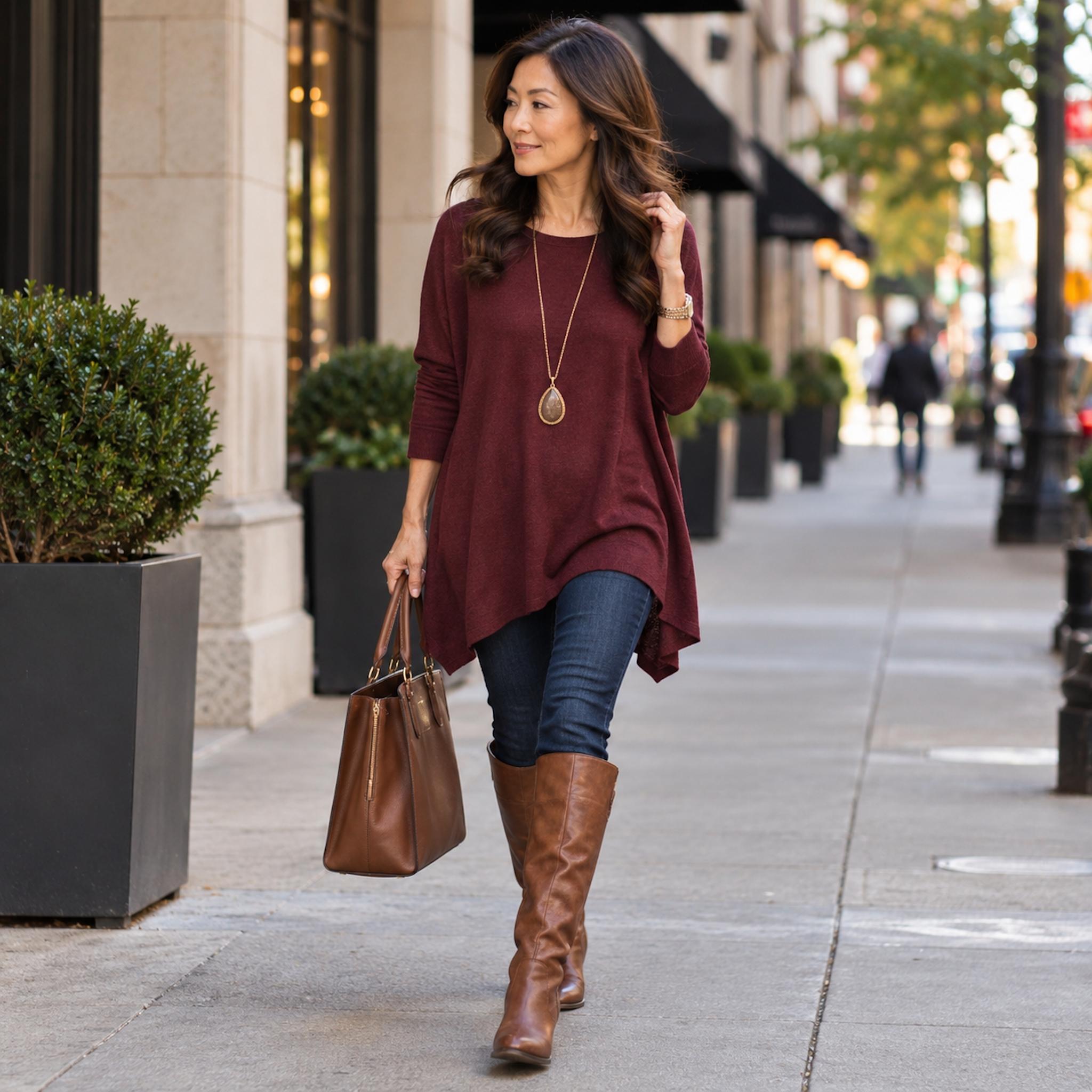
Long draped tunic, extra-long pendant, skinny jeans and tall leather boots: none of the pieces is a problem on its own. Together, though, they recreate a styling formula that became so familiar in the 2010s that the eye recognizes the era before it notices the individual pieces. The long top and pendant reinforce the same downward line while the boots close off much of the denim below.
The burgundy is rich, the boots have presence, and the jeans fit cleanly. The update is subtraction. Shorten the tunic toward the hip, trade the long pendant for a necklace that sits higher on the chest, or keep the tunic and switch to a lower boot that lets more of the denim line show. One change is enough to break the formula without throwing away the pieces that still work.
7. The Bulky Sweater That Ends Right at the Hip
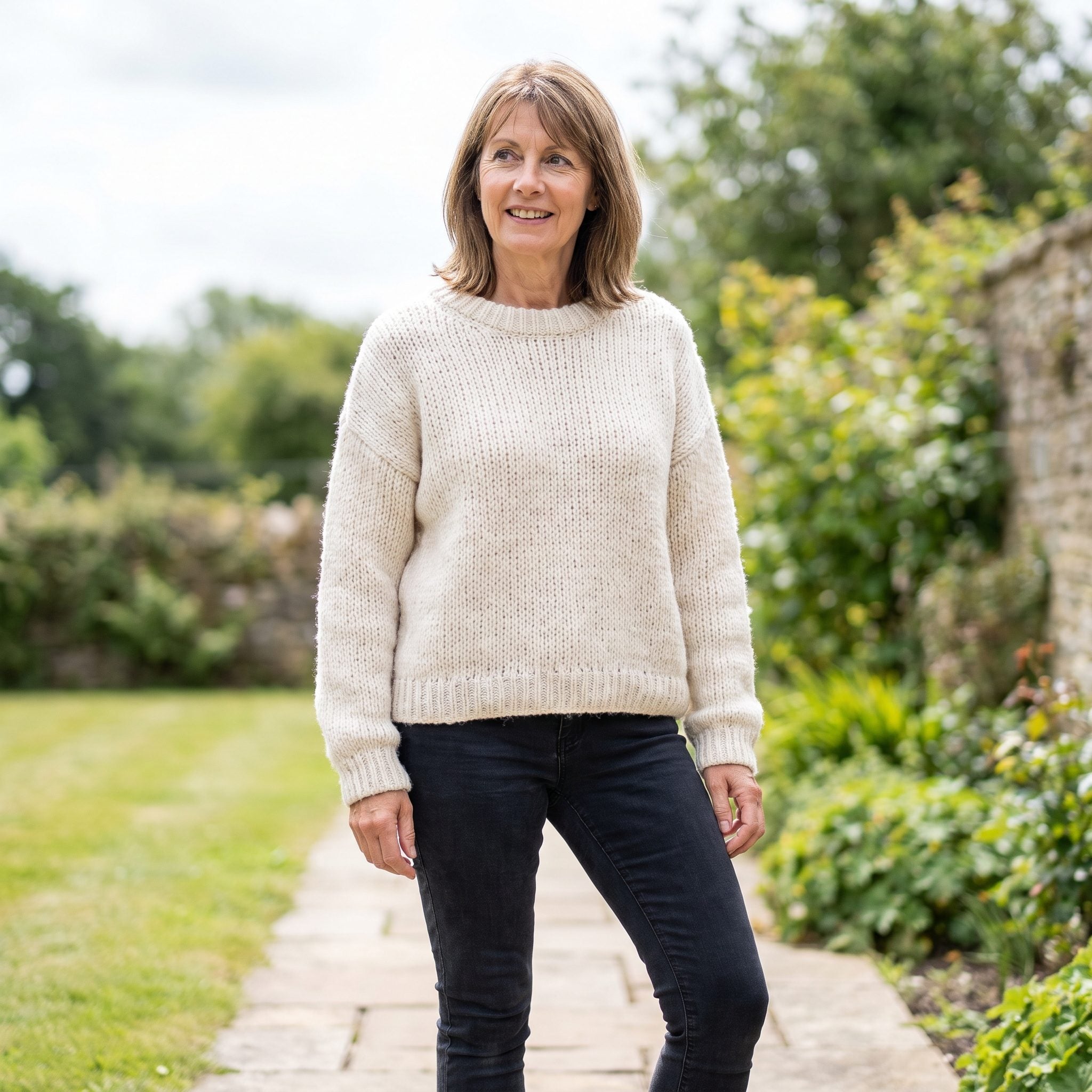
A chunky knit with a rigid hem creates a heavy horizontal block immediately above very narrow jeans. The problem isn’t the sweater’s volume by itself; it’s the abrupt change from substantial knit to slim denim at exactly one hard line.
Keep the sweater. Change where or how that line happens. A loose front tuck breaks the block and introduces some shape. A slightly longer knit with a softer hem can clear the hip instead. Same cozy volume, less geometry fighting underneath it.
6. Skinny Jeans With a Long Top and Cropped Cardigan Fighting for the Waistline
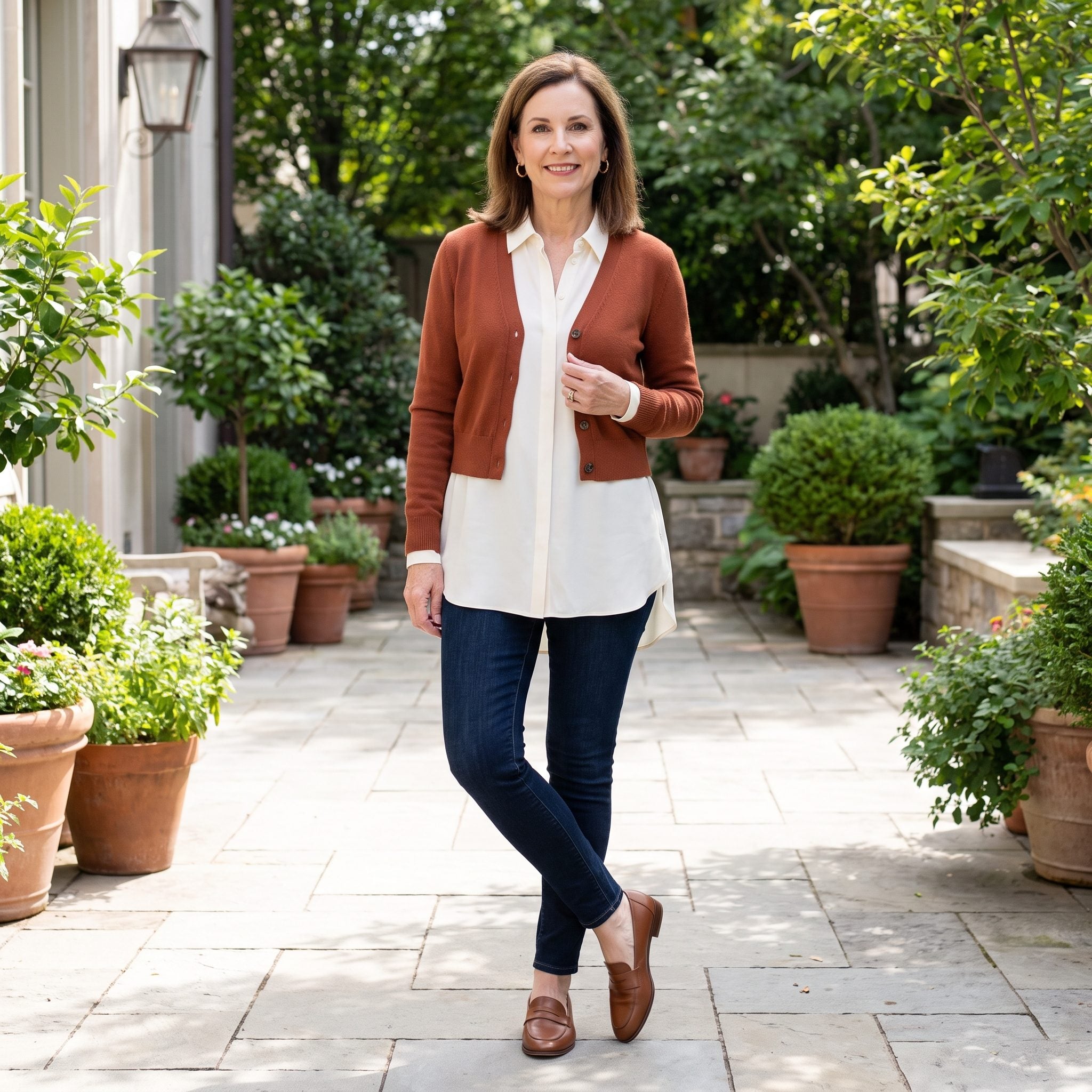
Two hemlines compete for attention. The long blouse hangs past the hips while the cardigan stops high, slicing the upper body into stacked horizontal bands before the skinny jeans even begin.
Bring the lengths into a more deliberate relationship. The cardigan can drop closer to the blouse hem, the blouse can shorten, or the difference can become dramatic enough to look intentional rather than accidental. The rust cardigan is worth keeping. The layers just need to stop arguing about where the outfit ends.
5. Long Layer Over Longer Layer Over Skinny Jeans
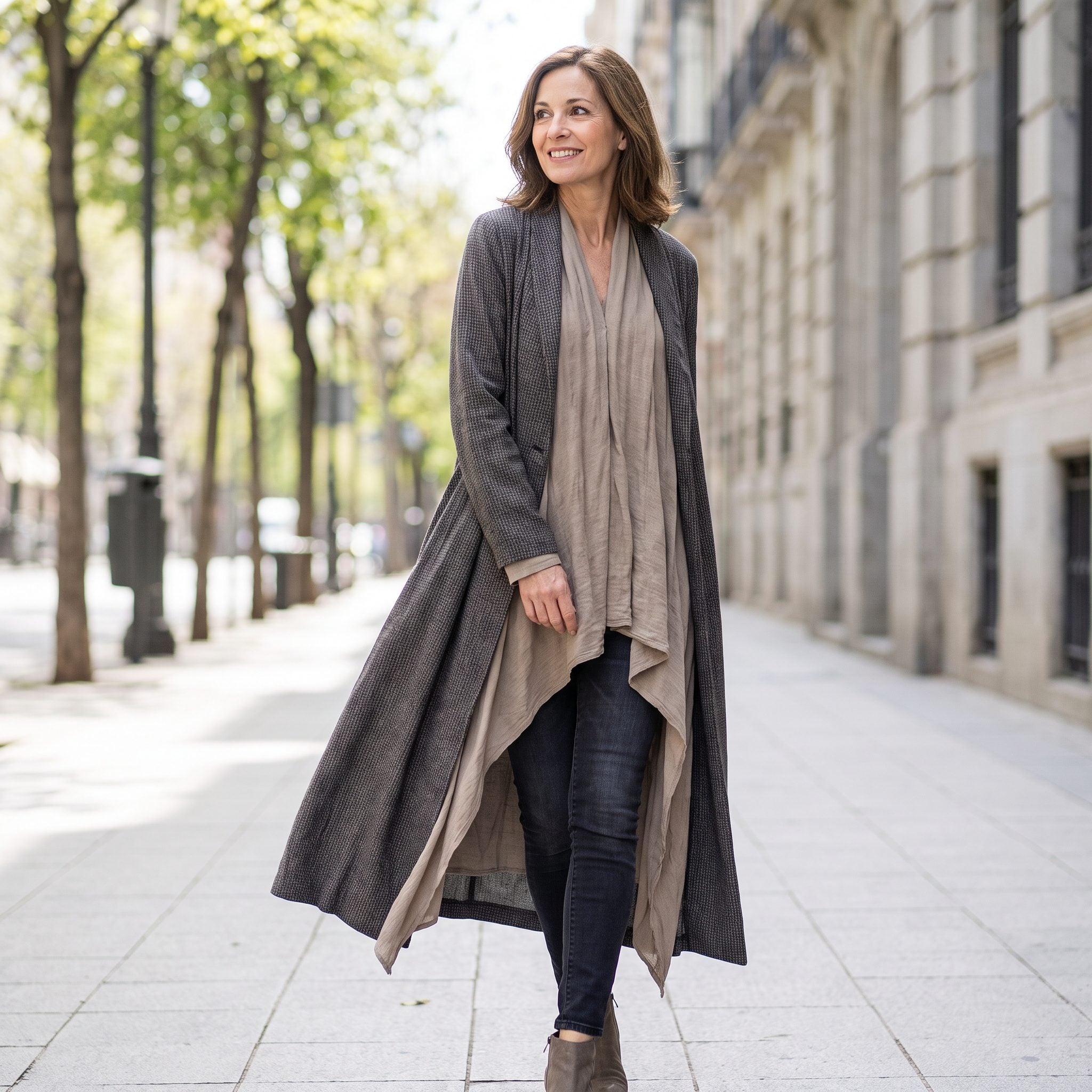
Two long layers stacked over skinny jeans turn the upper body into a series of vertical curtains with a narrow strip of leg emerging below. Each piece can work alone. Together, the hip-length top and knee-length cardigan ask the upper half to carry almost all the fabric.
Let one layer be long and give the other a shorter stopping point. Keep the sweeping burgundy cardigan, for example, and put something cleaner and shorter underneath. Now the long layer frames the body rather than burying another long layer inside itself.
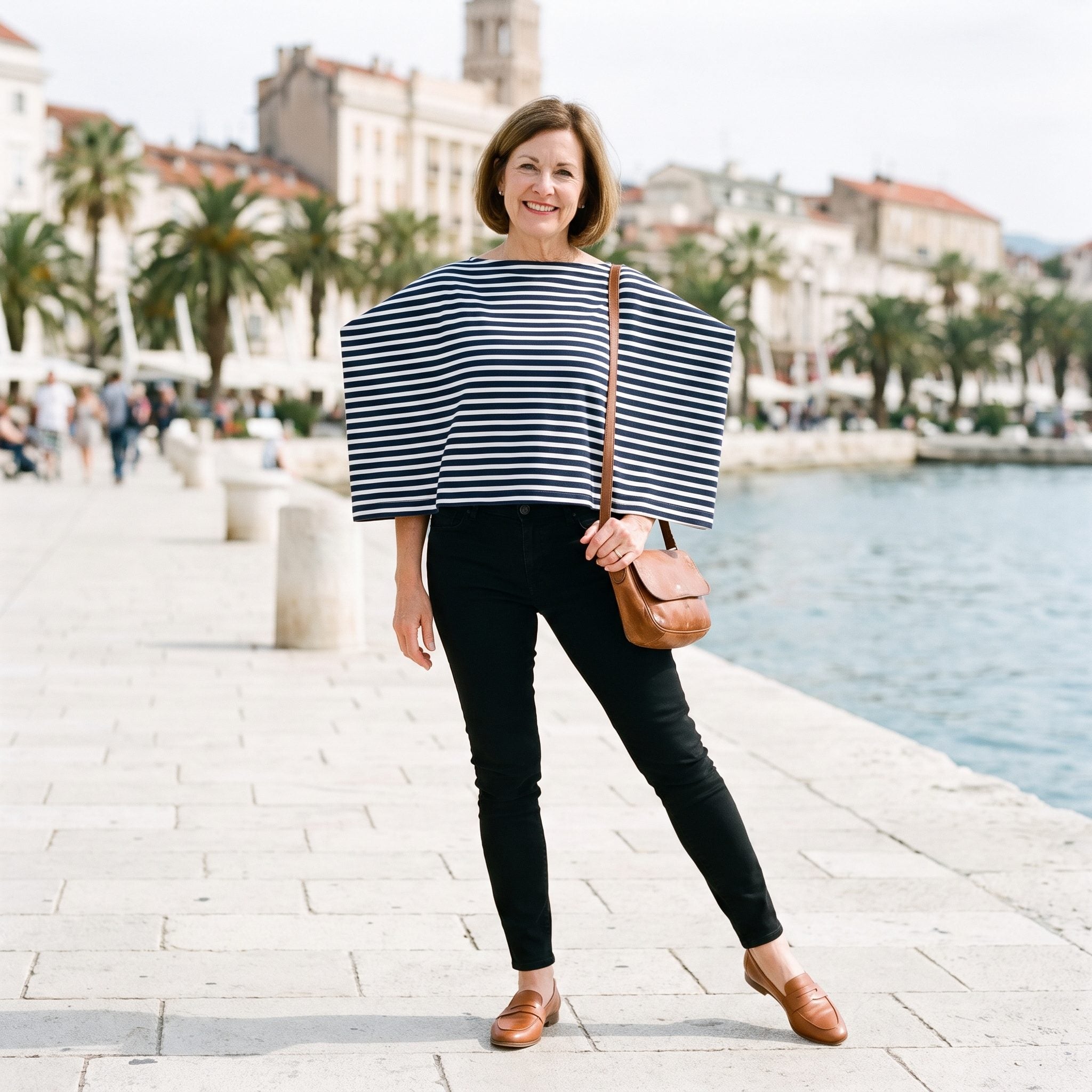
4. Skinny Jeans Under a Boxy Boatneck That Widens the Upper Line
❤️ Would you like to save this?
The wide boatneck and stiff boxy cut create a strong horizontal shape across the upper body. Against pin-thin jeans, that width becomes even more pronounced. Top and bottom are speaking two very different geometric languages.
A softer boatneck in a finer knit would keep the graceful neckline while letting the fabric fall closer to the body. Keep the stripe if you love it. Those cognac loafers and the small bag are already nicely controlled. The top simply needs less architectural width.
3. Skinny Jeans With an Oversized Dolman-Sleeve Sweater

Batwing sleeves fan outward, the torso hangs loose, then everything narrows abruptly at the hip before the jeans take over. The sweater’s drama is all width; the jeans’ drama is all narrowness. The transition between them is where the outfit loses its nerve.
A small front tuck can give the sweater an anchor without flattening its drape. Keep the sides and back loose so the dolman shape remains visible, but let one point at the front connect the volume above to the slim line below. The green dolman sweater can keep its swagger. It just needs a landing point.
2. Everything Equally Tight, Top and Bottom
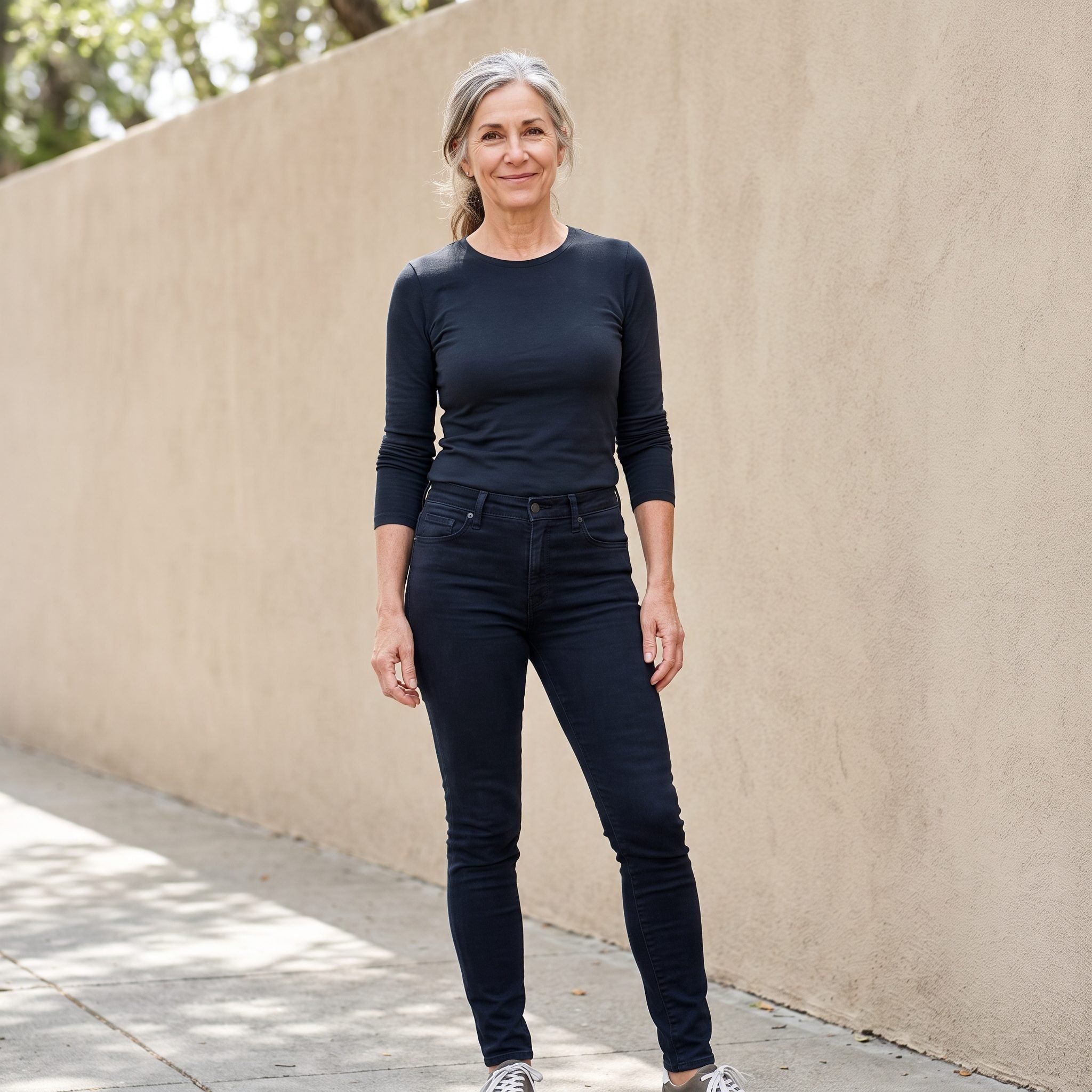
Skinny on the bottom, skinny on the top, and the outfit has nowhere to breathe. When both halves cling equally, there is very little contrast for the eye to catch, so the whole thing flattens into one continuous fitted line.
Keep the jeans. Trade the tight knit for something that skims rather than grips — a soft cotton shirt, a fine sweater, a fluid blouse. The burgundy stays, the tuck stays, but now there’s enough ease above the waist to make the narrow leg feel deliberate instead of automatic.
1. Skinny Jeans Sliced Up by Too Many Horizontal Breaks

Count the horizontal lines: belt, color-block seam, sweater hem, cuff, ankle strap. The eye barely gets moving before another line tells it to stop. Skinny jeans offer one of the cleanest vertical shapes in a wardrobe, and this outfit keeps putting roadblocks across it.
Remove a few, not everything. Skip the cuff. Trade the ankle strap for a cleaner flat. Let the belt sit closer to the jeans in color instead of cutting across them. Suddenly the vertical line gets room to run again, and the outfit looks calmer without becoming boring.