
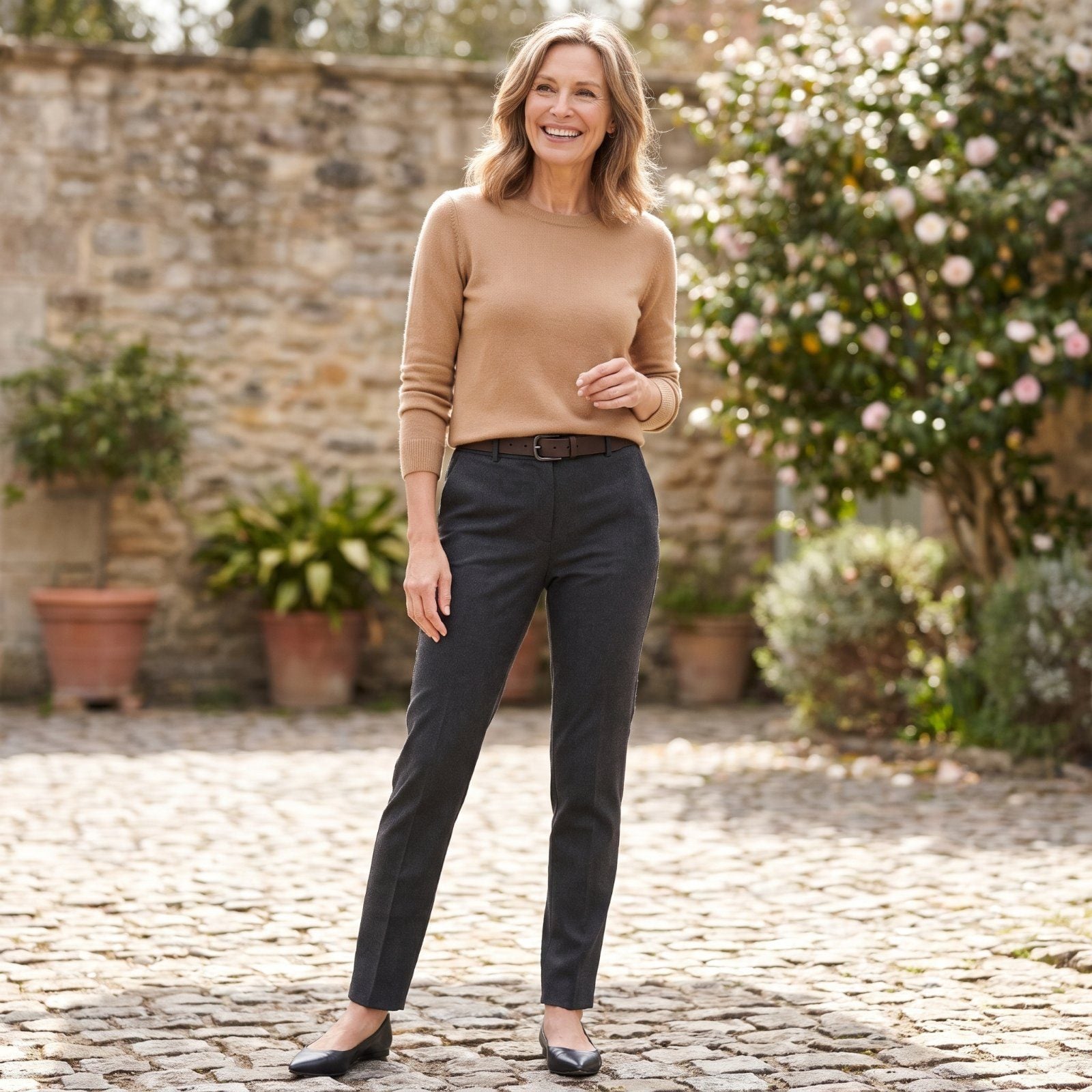
Slim-fit pants are the most forgiving thing in your closet right up until they aren’t. One wrong rise, a calf fitted like a tourniquet, a hem puddling at the ankle — and a pair that should lengthen the leg does the opposite. The gap between looking taller and looking boxy usually comes down to half an inch of fabric landing in the right spot. The fixes below are quiet and specific. Most of them cost nothing. Here’s where slim-fit goes sideways, and what to actually do about it.
FYI, thanks to AI imagery software, we’re able to create very specific fashion and hairstyle examples to illustrate the points being made. In some cases, imagery is exaggerated to hammer home the point. Also, assume links that take you off the site are affiliate links such as links to Amazon. this means we may earn a commission if you buy something.
42. Sizing Down to Make Slim-Fit Pants Look “Slimmer”
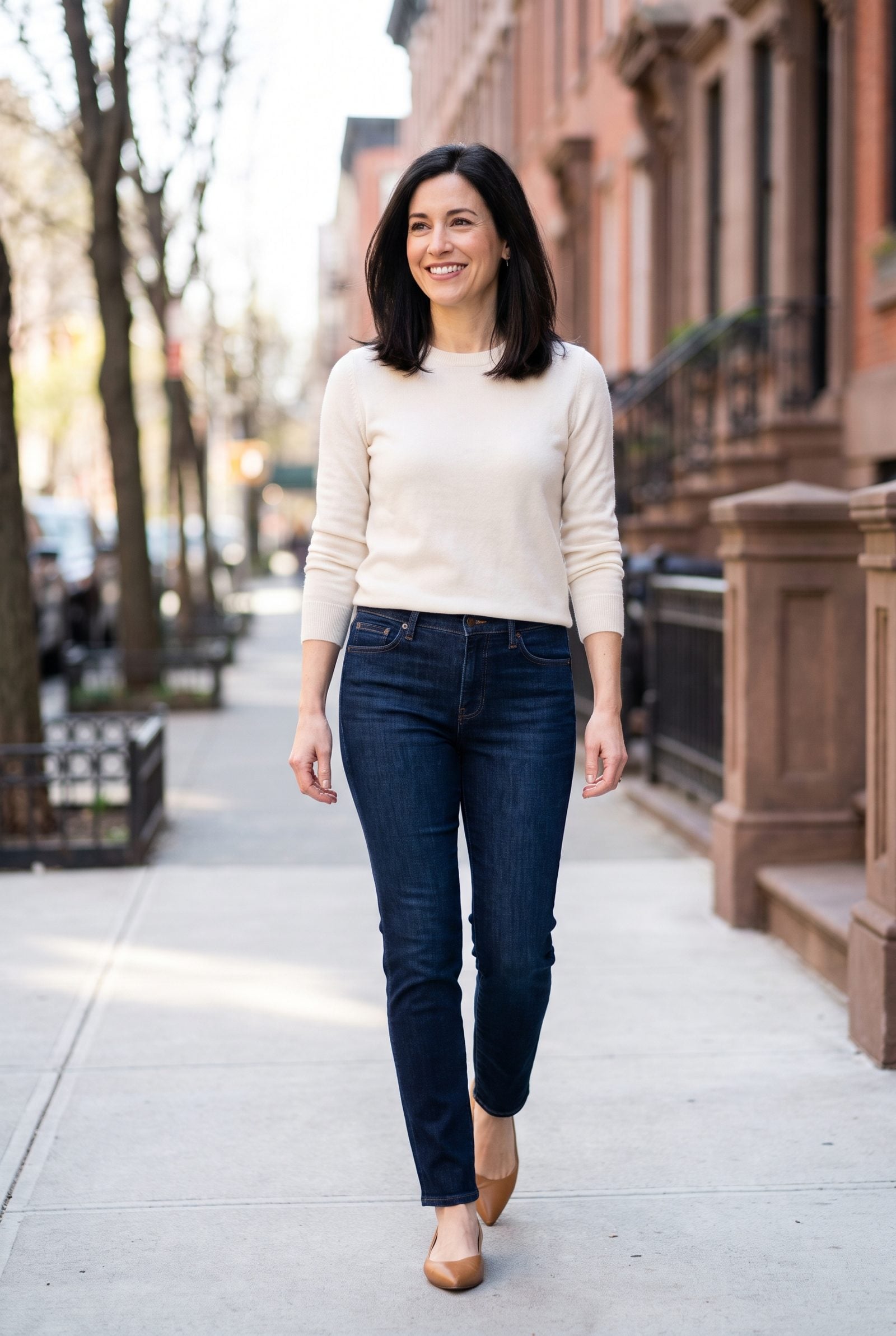
Going down a size to look slimmer is the oldest trick in the book, and it backfires faster than any of them. When slim-fit fabric has to stretch just to close, it pulls into horizontal lines across the thigh and hip — and horizontal lines are the one thing that reads as width. Your eye follows them straight across your widest point.
Buy your real size and let the cut do the slimming. A slim-fit pant is already tapered; it doesn’t need help from compression. The smooth vertical drape of correctly-sized indigo slim jeans lengthens the leg far better than a size you spend all day fighting.
What Our Readers Say
- Asked which everyday bottoms they would buy, 58% of ThreadCurve readers picked jeans, 29% chose trousers and just 12% went for leggings.
From ThreadCurve reader polls and votes.
41. Choosing a Rise That Sits Too Low
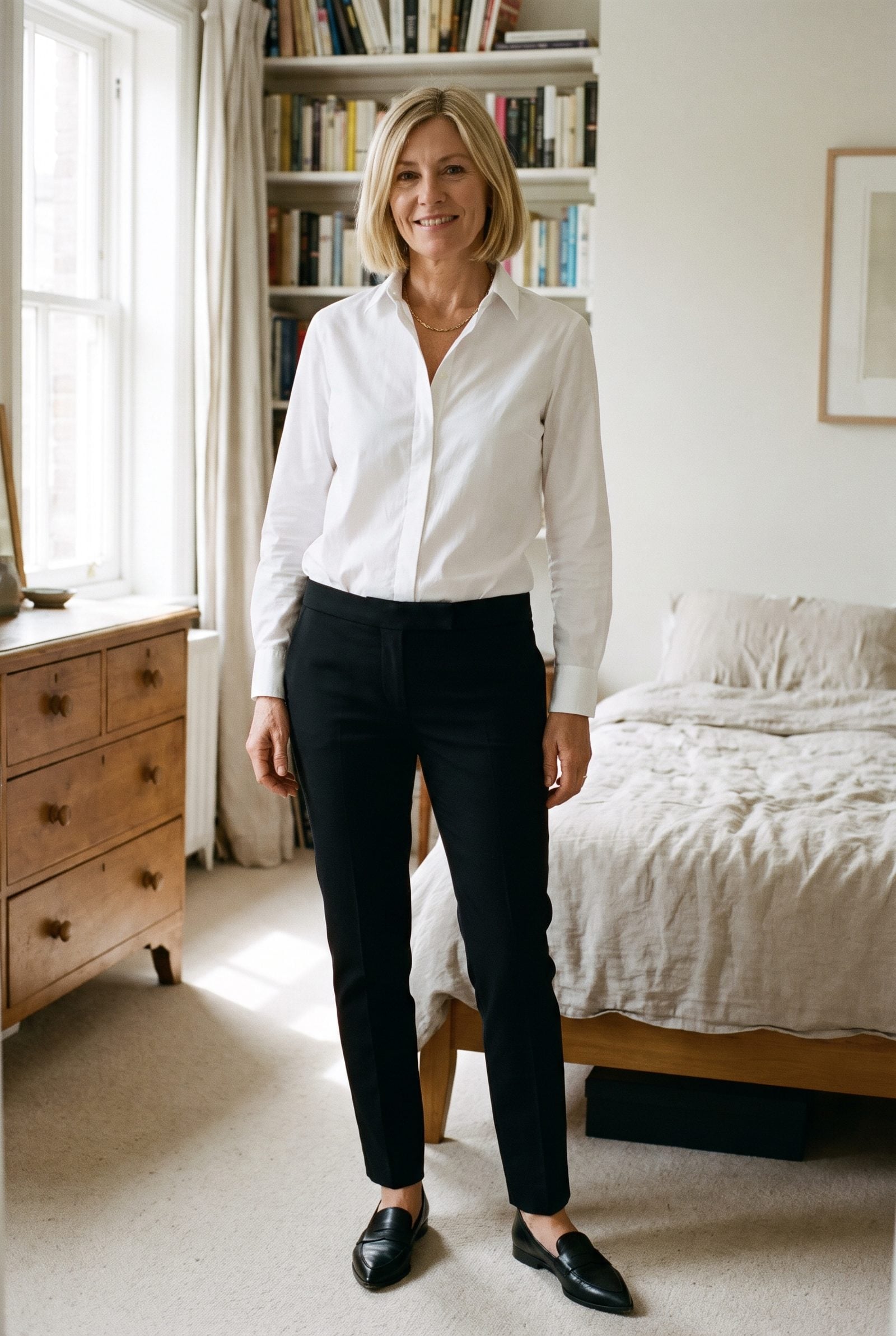
A rise below the natural waist shortens the leg from the top down. It drops the visual starting point of your legs onto your hip, cutting the longest part of your body in half right where you least want it cut. On a slim-fit pant this is especially unkind, because the taper has nowhere to begin.
Aim for a rise that lands at or just above the belly button. That single inch of extra height resets where the leg “begins” and hands you length you weren’t born with. Mid-to-high is the quiet workhorse — the kind of detail a good wardrobe is built on: proportion, not trend.
40. Letting an Ultra-High Rise Swallow the Torso
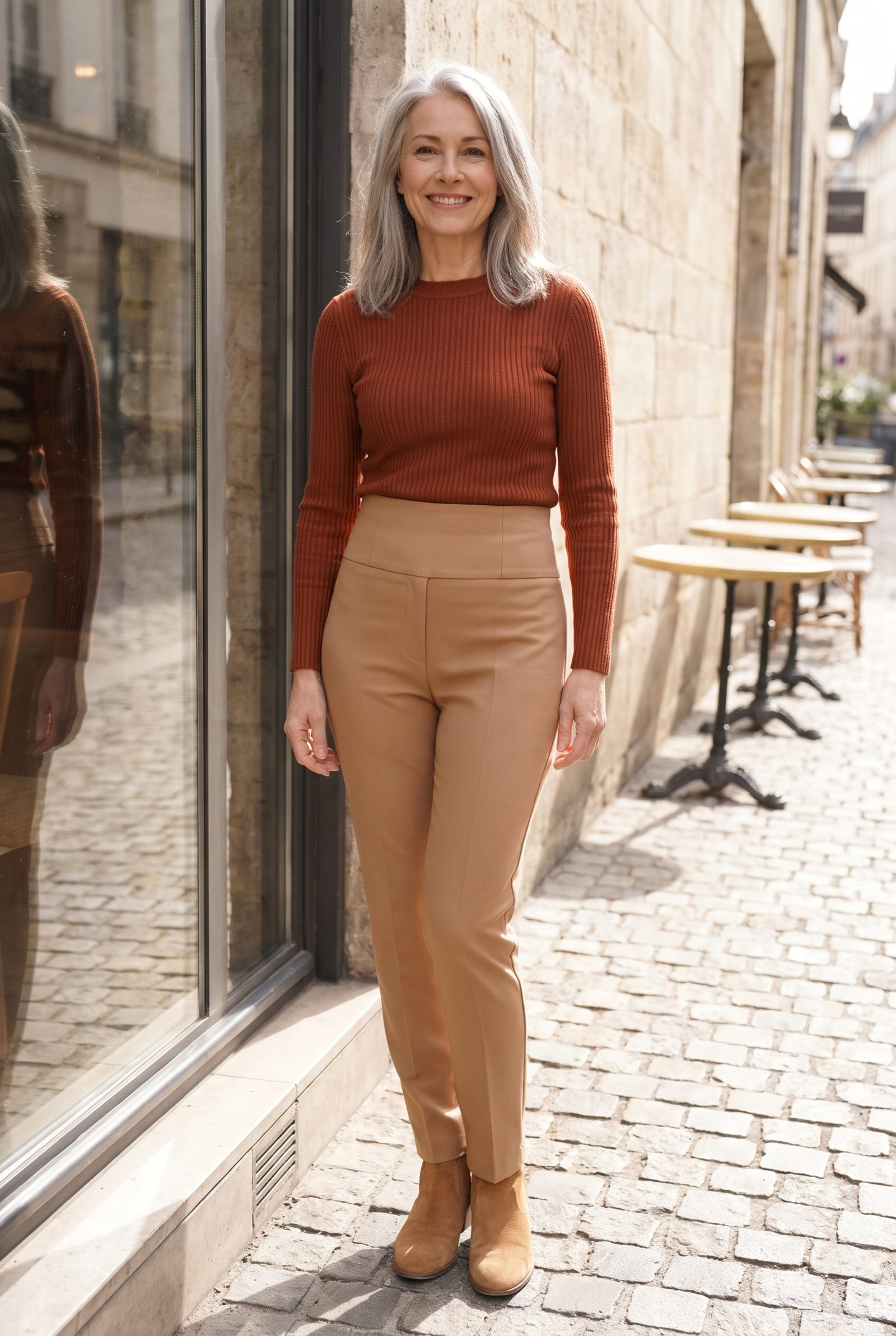
The high-rise fix has a limit, and plenty of pants sail right past it. A waistband that climbs to the lower ribs crushes the torso into a short stub and pushes soft midsection fabric up where you can see it. Congratulations, you’ve traded one proportion problem for a fresh one.
The sweet spot sits at the natural waist, the narrowest part of your middle, usually about an inch above the belly button — high enough to lengthen the leg, low enough to leave the torso room to breathe. If a tucked top bunches at the band, the rise has gone too far.
Our readers lean the same way: in a poll asking which they would buy, 55% chose mid rise and 45% went for high rise.
39. Wearing a Waistband That Digs In

A waistband that digs in does more than make you uncomfortable. It pushes a soft ridge of flesh and fabric up over the top, and that little roll becomes the widest horizontal line on your whole silhouette. A waistband that lies flat and smooth, with no indentation and no roll, lets a fitted top fall cleanly over it. That’s the look to aim for instead of a day spent tugging.
The band should sit flush with no indentation and no spillover. Look for a slightly stretched or contoured waistband that curves with your body instead of cutting straight across it. Comfort here isn’t a compromise — it’s what stands between you and a smooth line.
38. Cinching a Gaping Waist Until the Fabric Bunches
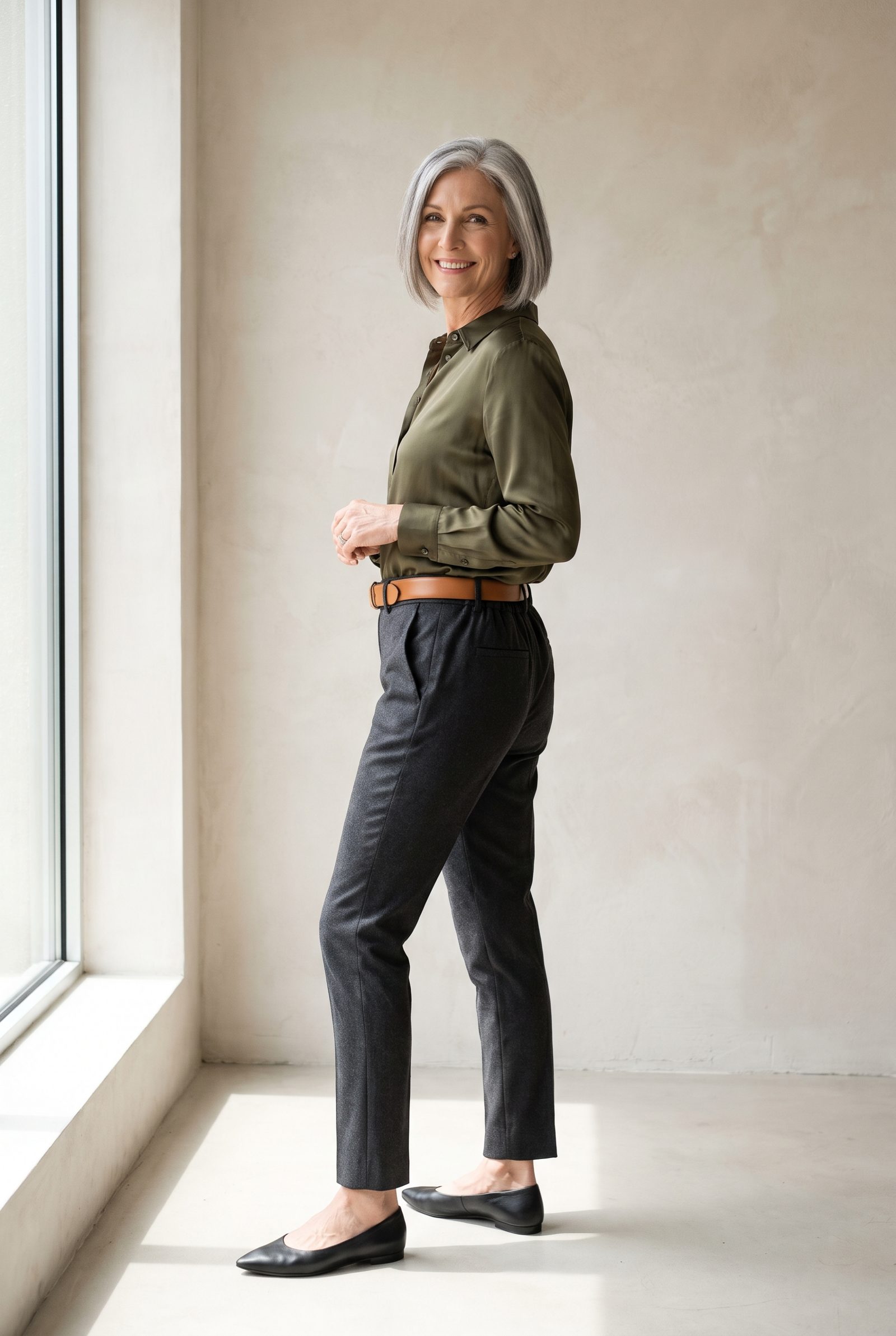
You know the gap. The waistband fits your hips but stands away from your lower back, so you cinch a belt and pull it tight — and now the excess gathers into accordion folds at the center back, adding bulk exactly where you wanted the pant to lie flat.
A belt covers the symptom. The pant is the actual fix. Look for a curved or slightly stretched waistband that follows the dip of your lower back, or have a tailor take in the center-back seam by an inch or two. One of the cheapest alterations there is, and it changes how the whole pant reads.
37. Ignoring Horizontal Pull Lines Across the Thighs

Those faint ripples fanning across the front thigh? That’s the fabric telling you it’s stretched too thin right there. Even when the waist and calf fit fine, a too-snug thigh broadcasts width and interrupts the clean vertical line you’re chasing.
Stand sideways in the fitting room and watch for lines that pull across rather than hang down. If they’re there, size up and let a tailor nip the waist. A thigh with a little ease drapes smooth and skims — and skimming is what actually narrows the leg.
36. Letting the Calves Fit Like Compression Leggings
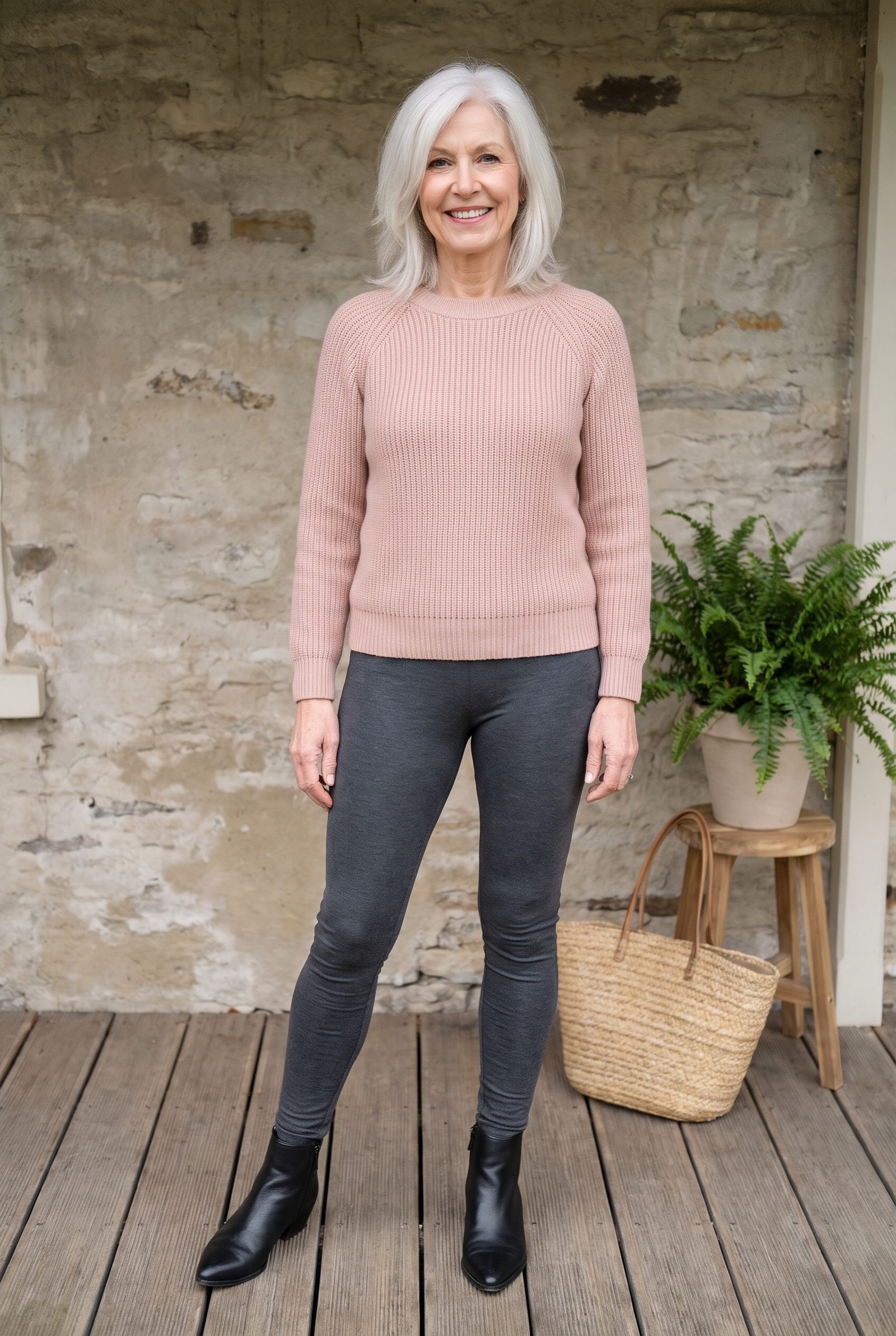
When the hem clings to the calf like a second skin, the pant stops reading as trousers and starts reading as leggings that forgot their dress. The cling traces every curve of the lower leg all the way down to the ankle, so even a clean hem above the boot can’t stop the whole leg from looking shorter and wider.
Slim-fit should taper, not shrink-wrap. You want a lower leg that follows the calf with a sliver of air and ends in a clean line at the ankle. If the fabric molds to your shin, either the opening’s too narrow or the fabric’s too stretchy. A straighter taper looks leaner than a tight one every single time.
35. Accepting a Loose, Collapsed Seat
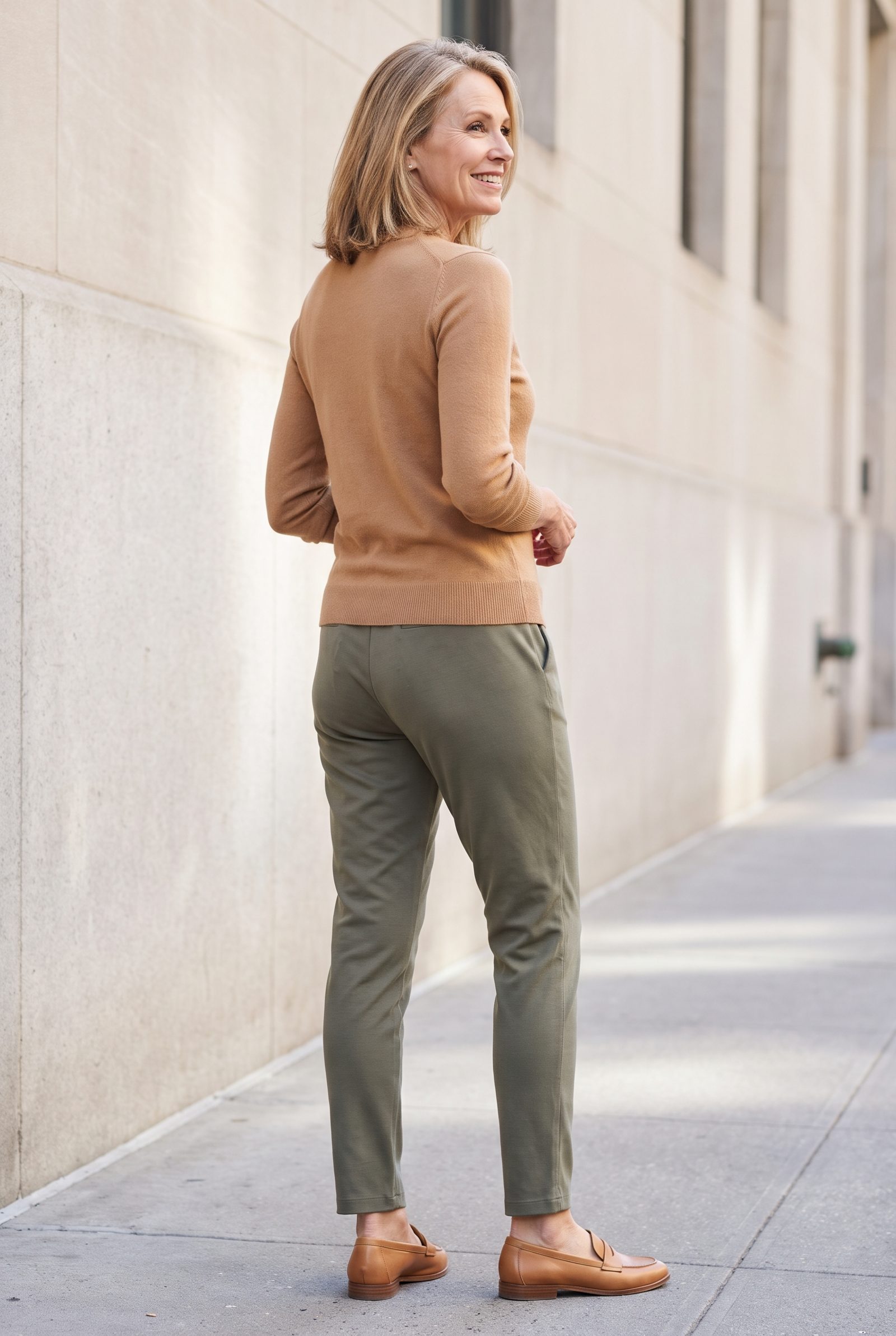
A collapsed seat is the sneaky one. You can’t see it in the front mirror. Walk away, though, and a loose seat sags under the backside in soft folds, dropping the hemline and quietly stealing an inch or two of leg length you never agreed to give up.
Check the back view before you commit. The seat should follow your shape with a smooth curve and no pooling underneath. If it sags, the rise or the seat seam needs taking in — a tailor can lift it so the leg reads long and clean from behind as well as the front.
34. Wearing a Dropped, Sagging Crotch

A crotch that hangs low drags the whole leg down with it. The fold lands an inch or two below where your legs actually start, and your brain reads the leg as beginning there — shorter, wider. It also creates a small hammock of fabric at the top of the thigh that nobody has ever asked for.
The crotch seam should sit close and high with no droop. If a pair you love sags there, a tailor can shorten the rise. Trickier than most alterations, yes, but worth it on a pant you’ll wear for years. A clean crotch line is half of what makes trousers look expensive.
33. Ignoring Side Seams That Bow Toward the Front
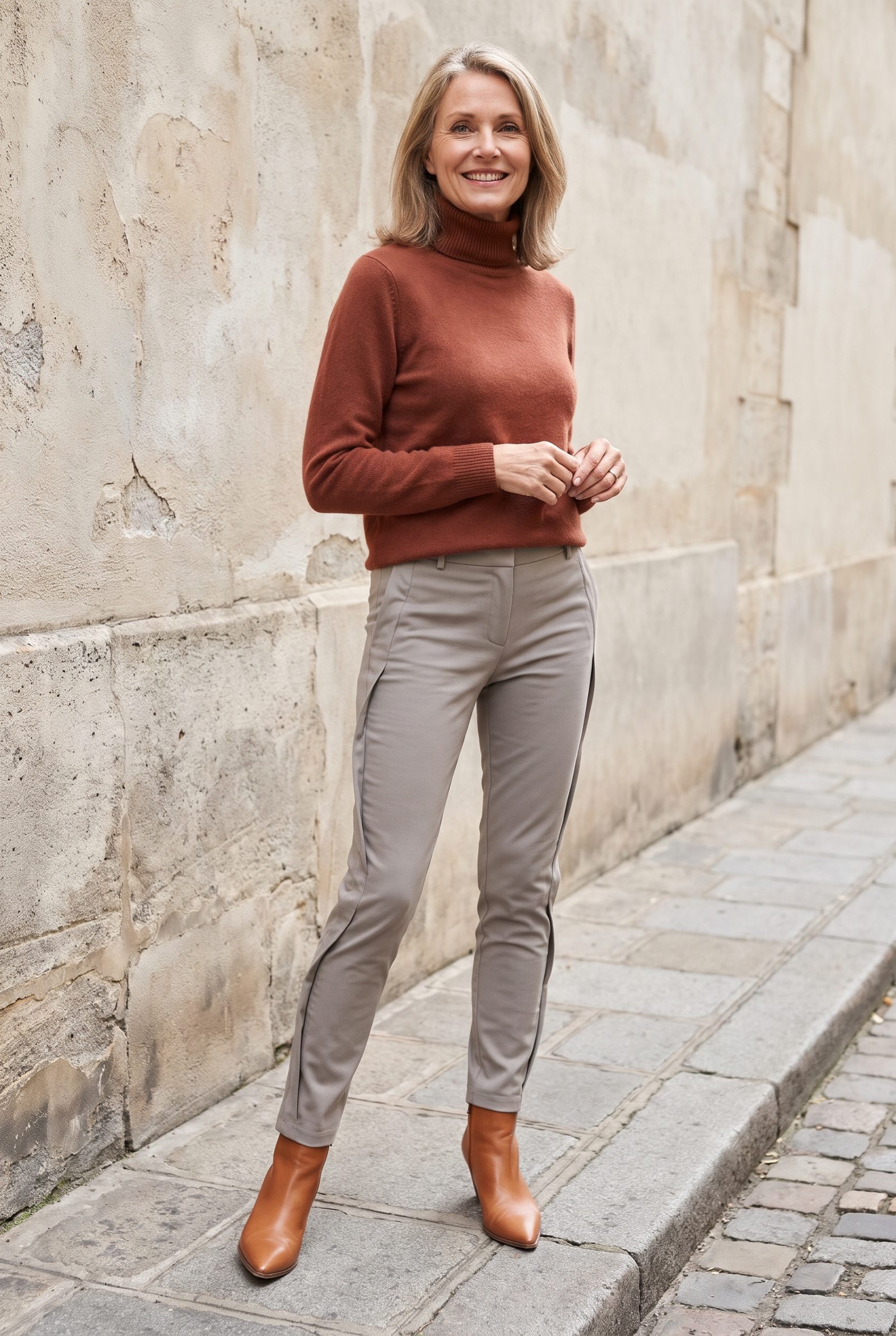
Side seams are supposed to run dead straight down the outer leg. When they spiral and bow toward the front, the whole pant looks like it’s wrapping your leg at an angle — widening the silhouette and giving everything a slightly off, restless quality you can feel even if you can’t name it.
Stand in front of the mirror and trace the side seam with your eye. It should drop like a plumb line. A twisting seam usually means the grain is off or the cut was cheap, and no tailor fully rescues it. Put those back on the rack. A seam that hangs straight is the one that makes your leg look long, and a straight line is the whole foundation of how good style is built.
32. Wearing Slim Pants With Bagged-Out Knees
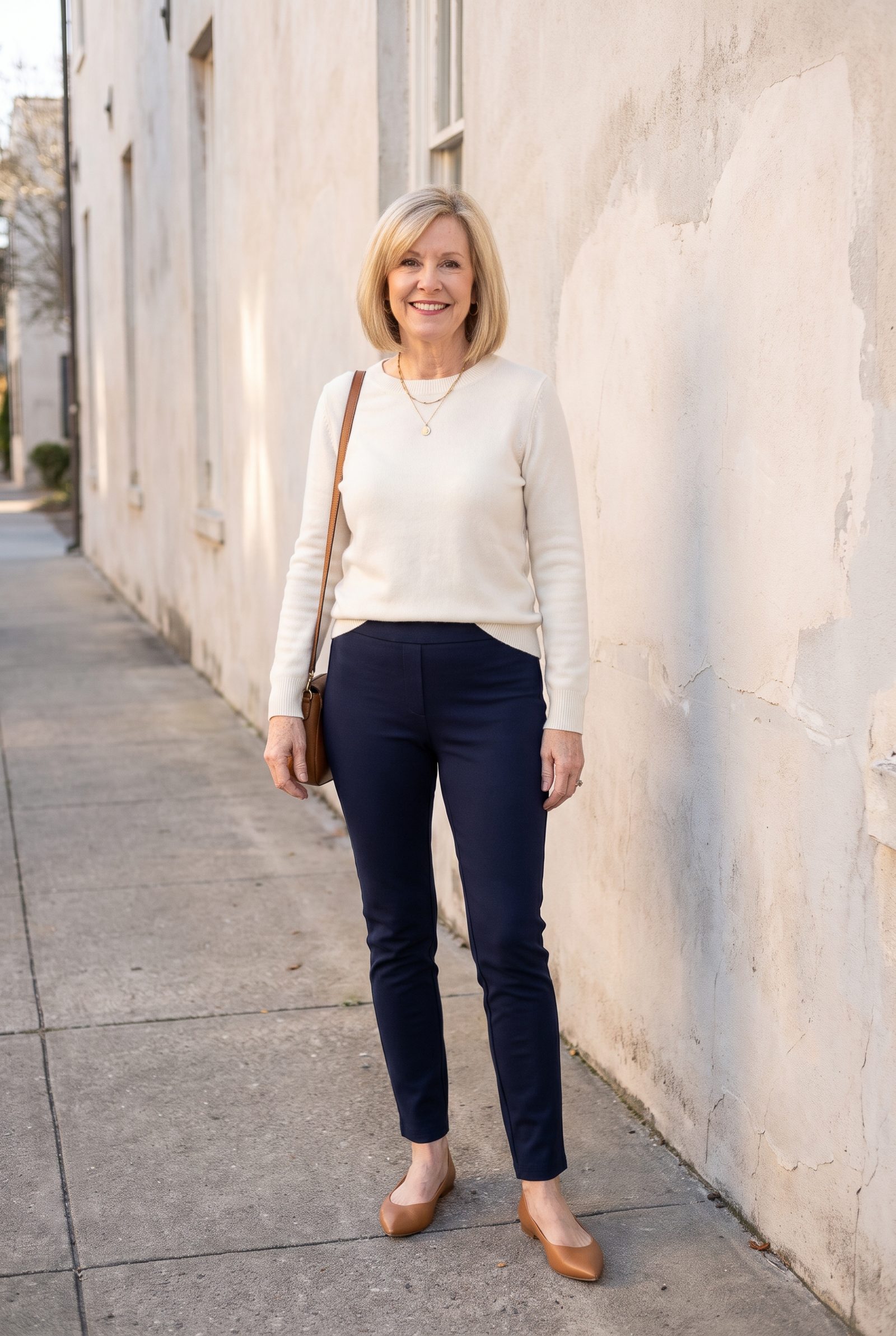
You bought them because they skimmed the leg. Then the knees start bubbling into two small balloons that read as width right where you want a clean straight line. When knees bag out, stretchy ponte and cheap jersey are the usual culprits — once the elastane gives up, the pant stops tracing your leg and starts tracing the air around it.
The fix is fabric with recovery. A ponte with a real nylon-and-spandex blend bounces back. Steam them inside out, hang them by the hem, and retire any pair that stays baggy after a wash. A clean knee line does more for leg length than any heel ever will.
31. Choosing Front Pleats on an Otherwise Slim Leg
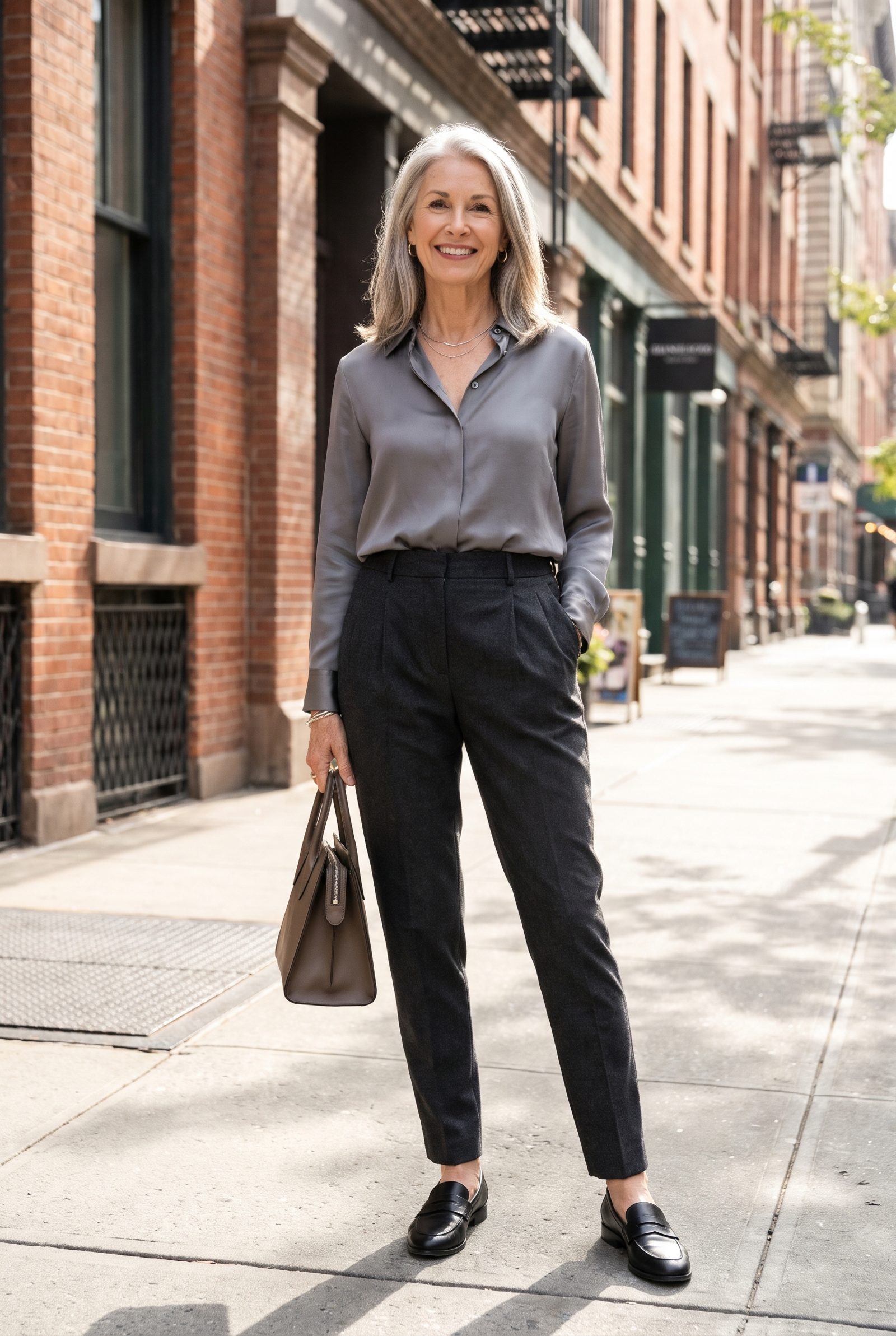
Pleats belong on a full, relaxed trouser where they have somewhere to go. Pin them onto a slim leg and they just sit there straining open, piling fabric across the front of the hip. Because the leg below is narrow, the extra volume up top looks like it wandered in from a different pair of pants entirely.
Go flat-front when the leg is slim. Save the pleats for your wide-leg and barrel shapes, where the drape actually earns its keep. A smooth front panel keeps the eye moving down instead of parking it at your widest point.
30. Adding a Paperbag Waist to a Close-Fitting Leg
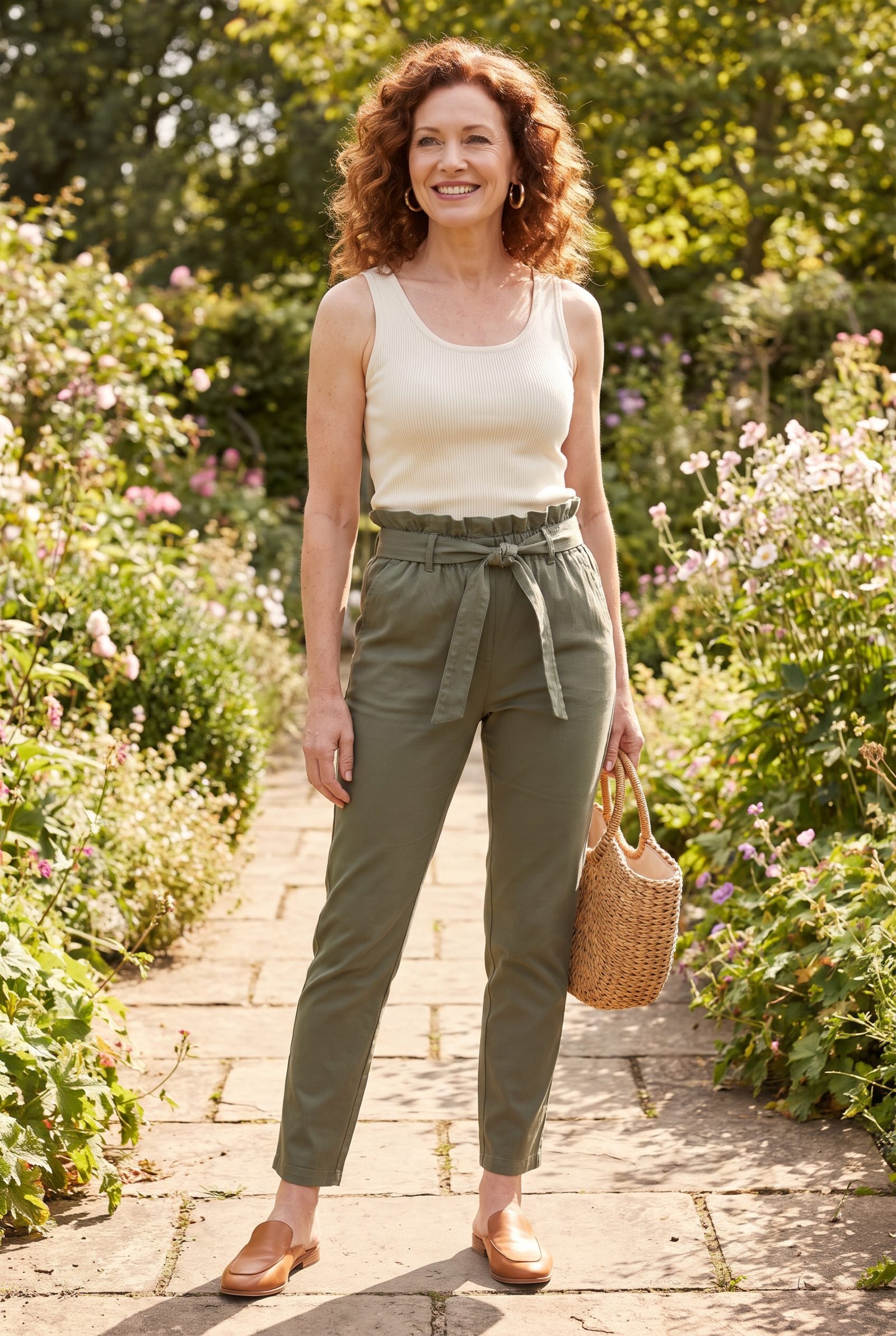
The paperbag waist is a lovely thing on a relaxed trouser. On a close-fitting leg it works against you. All that gathered fabric blooms out at the midsection, and the ruffle of a waistband lands precisely where most of us would rather not add bulk.
Love the detail? Then let the whole leg carry the relaxed story. Pair a paperbag waist with a wider, fluid leg so the volume reads as intentional from head to toe. With a slim leg, choose a flat waistband and a belt you can actually see. For more on how one deliberate piece can anchor a look, our take on how style is built is worth a read.
29. Ignoring Slash Pockets That Flare Open
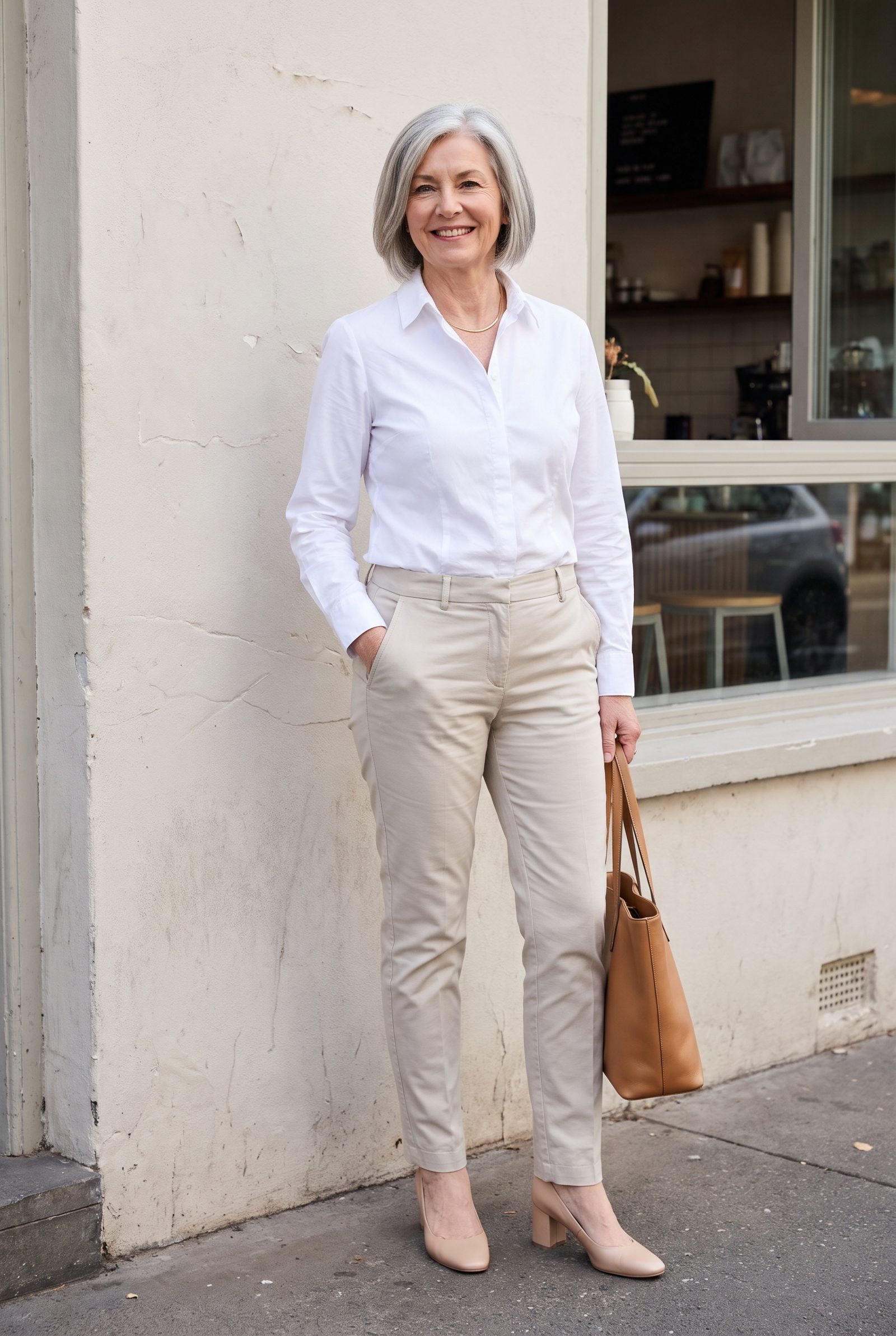
Here’s a quiet one almost nobody checks for: slash pockets that gape. When the pocket mouth pulls open across the hip, it draws two little arrows outward, exactly where you want the line to stay smooth. The pant can fit everywhere else and still look wider because of this.
Two options. Have a tailor stitch the pocket openings shut, or skip the problem and buy pants with a flat front and no side pockets at all. Run your hands over the hip in the mirror. If the pocket flares there, it’ll flare all day.
28. Adding Cargo Pockets at the Outer Thigh
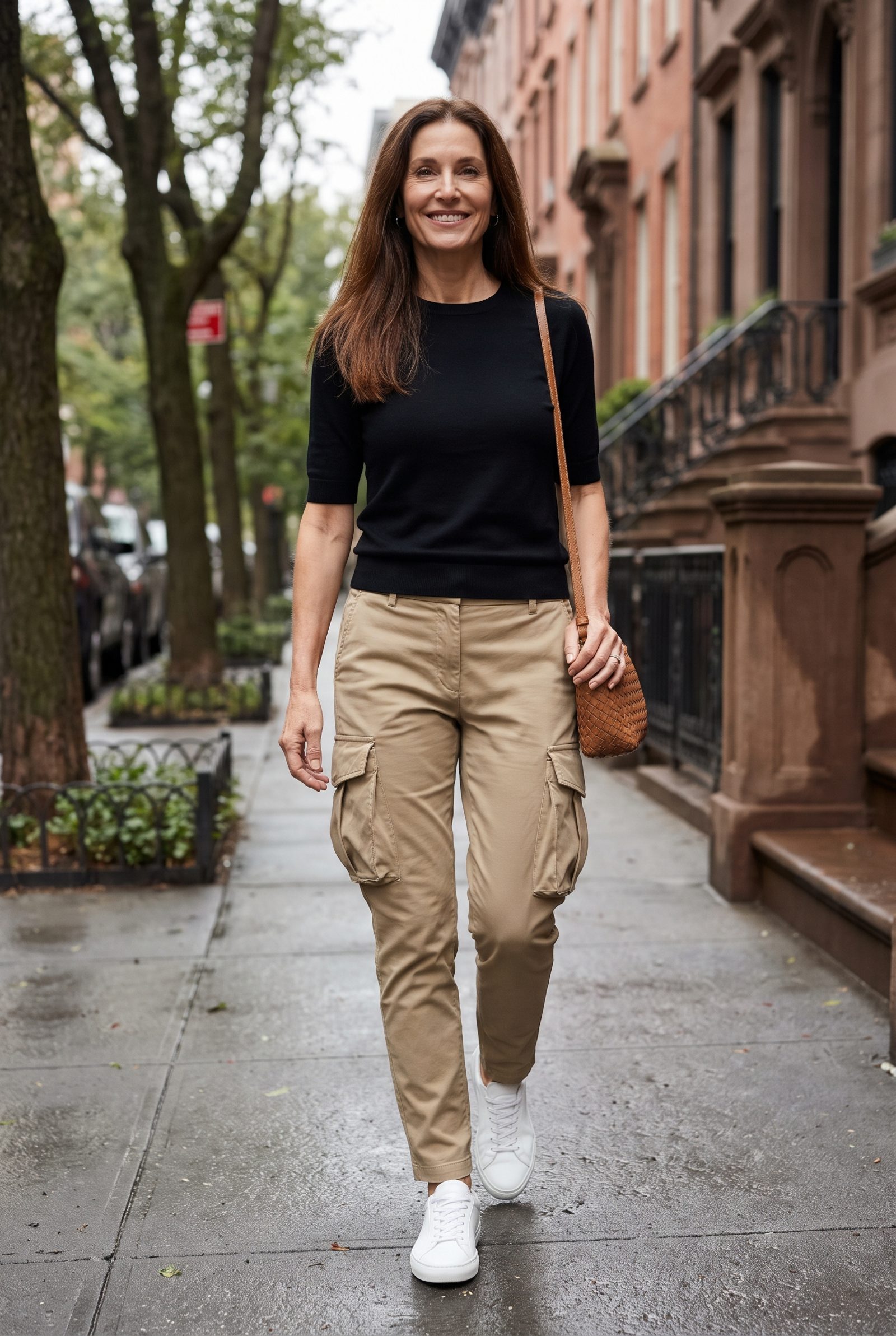
Cargo pants came roaring back, and the slim versions are genuinely good. The trap is the pocket placement. Patch a flapped pocket onto the outer thigh and you’ve bolted three dimensions of fabric onto the exact spot the eye reads as your widest point. On a slim leg, that bulk has nowhere to hide.
Hunt for cargo styles where the pocket sits lower, toward the knee, or lies flatter against the leg without a boxy flap. The utility detail can stay — it just needs to sit below the thigh, not on it.
27. Choosing Back Pockets That Sit Too Low
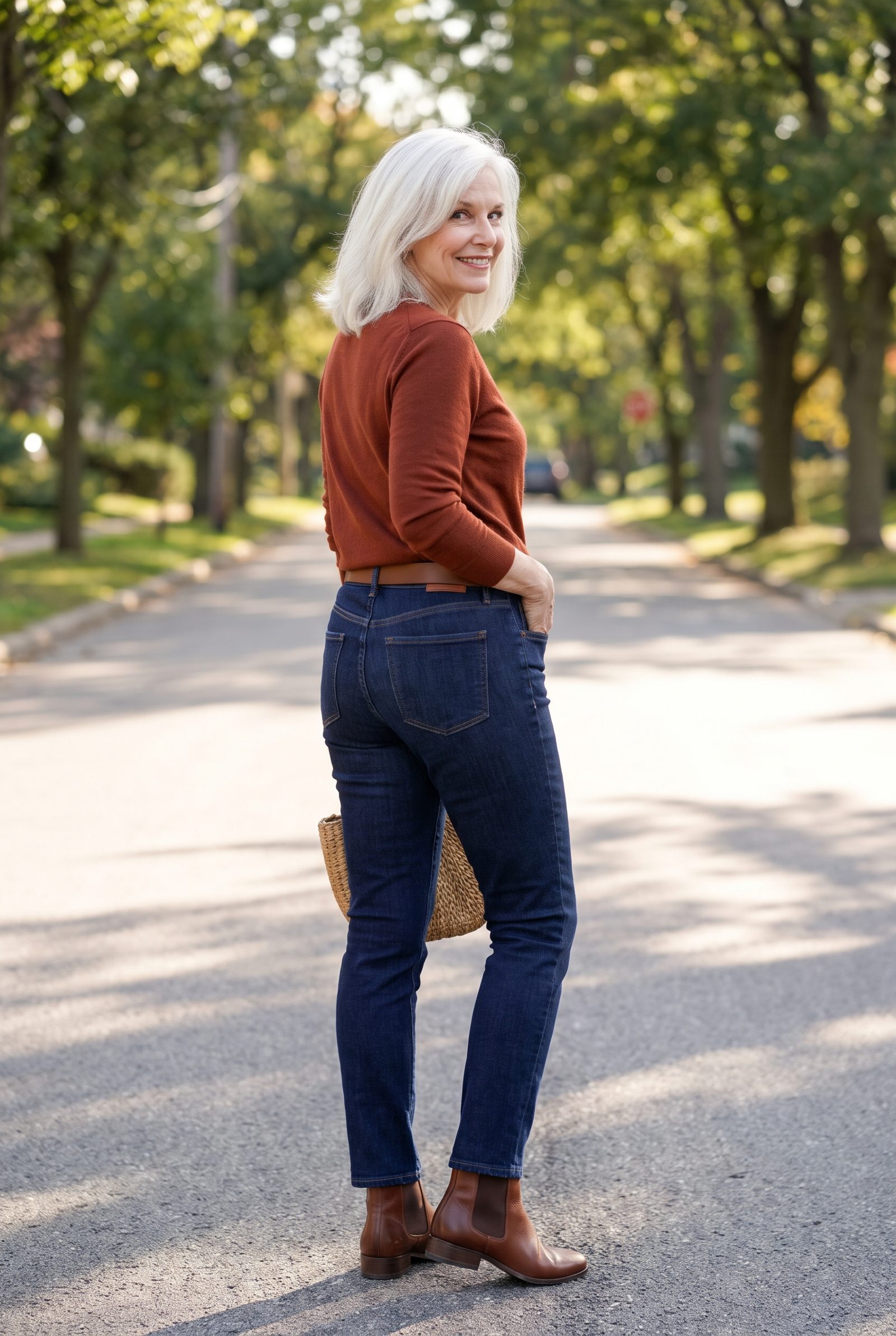
Back pockets are a measuring stick for the seat, and most of us never clock where ours actually land. Set them too low and too far apart, and they drag the visual line of your backside down, which shortens the leg above and widens the read below.
What you want: pockets that sit higher on the seat, closer together, moderate in size. That placement lifts the eye and lengthens the leg underneath. So try jeans on from the back, not just the front. The right pocket position can add inches of apparent leg without a single alteration.
26. Choosing Thin Fabric That Clings to Every Line
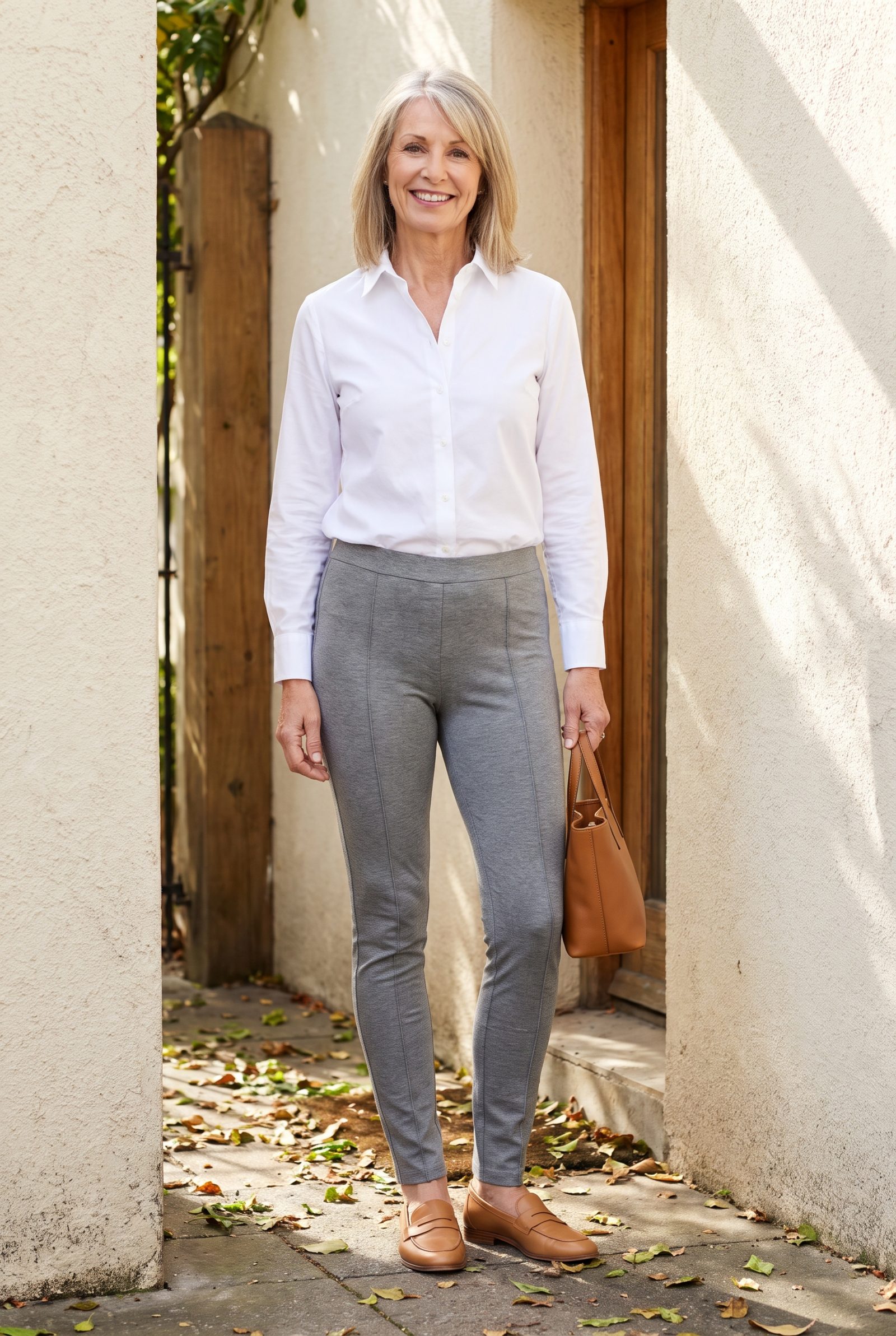
Thin, cling-prone fabric tells on everything — every seam, every line of the leg, every ripple shows through, and the pant stops skimming and starts gripping. Clinging reads as width because the fabric follows the body instead of falling past it.
Reach for structure instead. A wool crepe, a dense ponte, a cotton with a bit of weight and twill in the weave holds its own shape and glides over yours. The pant should touch the leg and keep moving. That small gap of structured fabric is what makes a slim pant look slim instead of poured on.
25. Wearing Shiny Sateen That Highlights Width

Sheen is sneaky. A sateen finish catches light along the roundest part of the leg, and wherever light hits, the eye reads volume. The pant can be perfectly cut and still look fuller purely because it’s glossy at the thigh.
Save the shine for a looser silhouette or an evening palazzo, where the drape and the gleam work together. For a slim everyday leg, go matte. Matte absorbs light instead of bouncing it, so the eye reads the actual line of the pant rather than the reflection running down it.
24. Choosing Horizontal Stripes Across the Legs
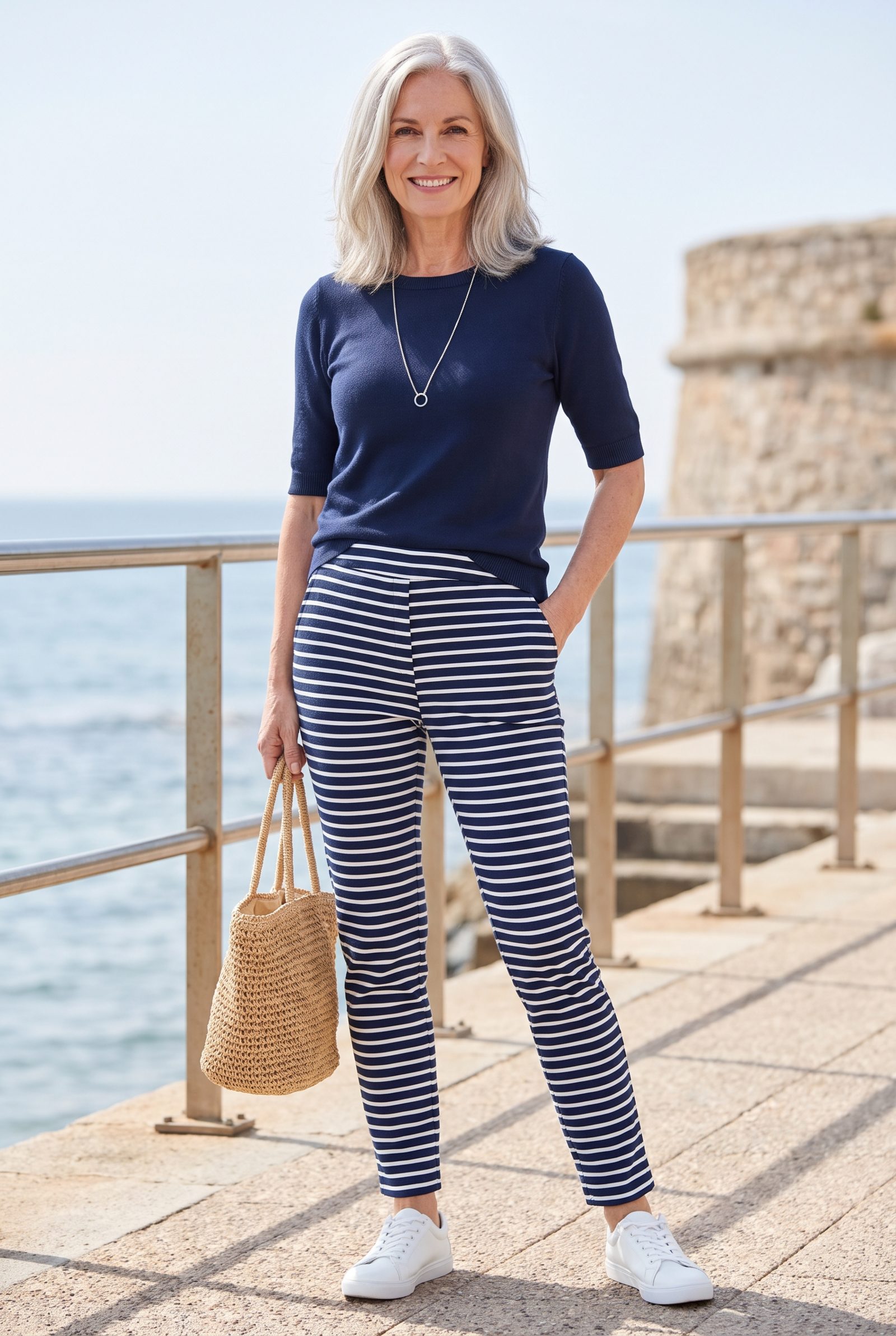
The oldest rule in the book still holds. Lines that run across the leg pull your eye side to side, and side to side reads as wider and shorter. On a slim pant — where you’ve already committed to a narrow line — a horizontal stripe fights the whole plan.
So flip the direction. A fine vertical stripe, a pinstripe, or a subtle ribbed texture running up the leg stretches the eye top to bottom and lengthens everything. If you love pattern on your bottom half, keep it vertical and keep it small. Let the stripes do the elongating for you.
23. Wearing Pale Pants With Visible Pocket Bags
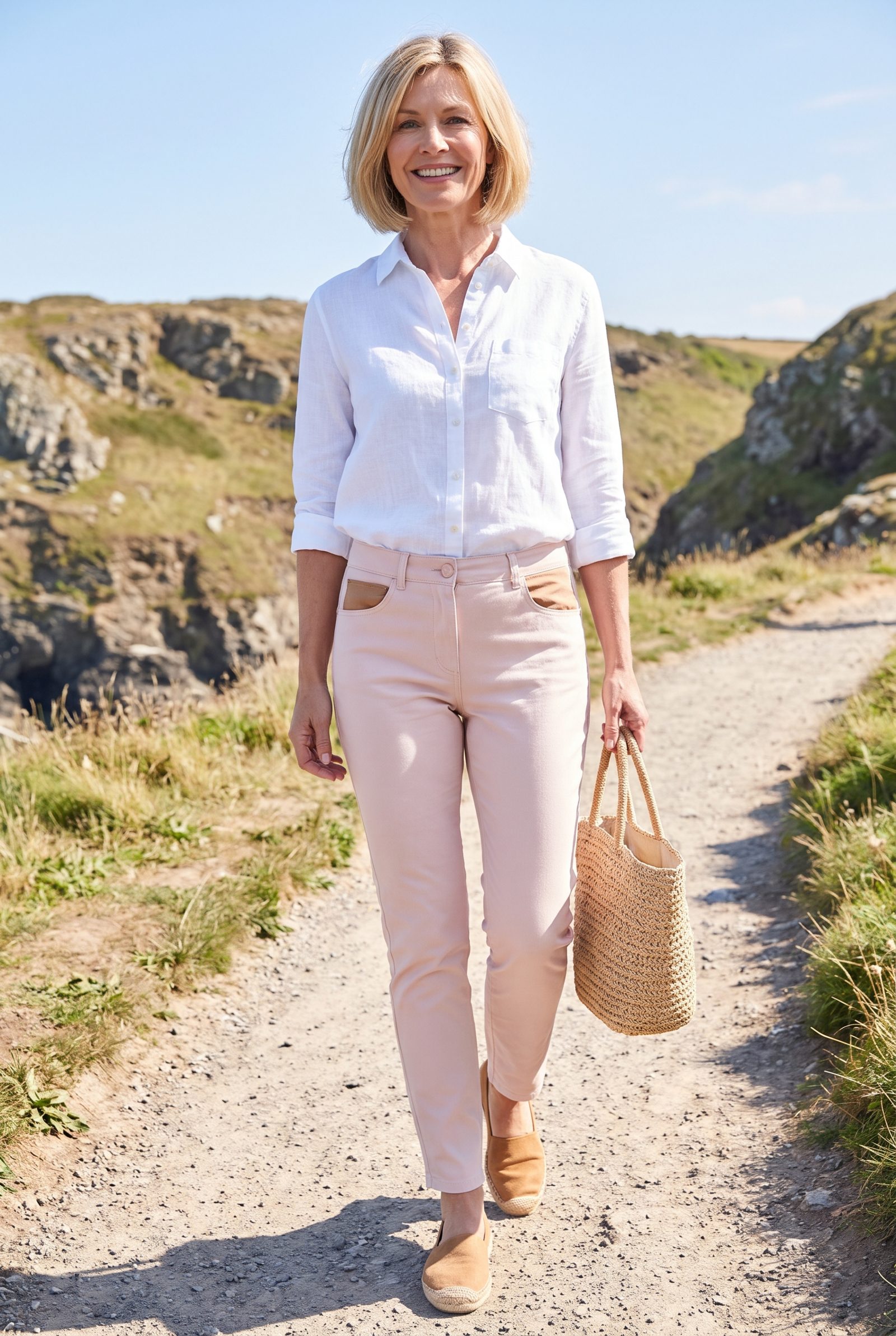
Pale pants are a summer joy until the sun turns them semi-transparent and the pocket bags announce themselves. Those darker rectangles of lining ghost through the front of the hip, drawing two shadowed blocks across your widest curve and conjuring bulk out of thin air.
Two moves solve it. Buy pale pants with the pocket bags cut from the same light fabric as the pant, or go seamless flat-front with no front pockets at all. In a pinch, swap the dark liner for nude. And hold any pale pair up to a window before you buy — if you can see the pockets, so can everyone else.
22. Choosing Whiskering Across the Upper Thighs

Those pale creased fans across the upper thigh look like nothing on the hanger. On the body, they draw two bright horizontal arcs exactly where you least want the eye to linger, because light bounces off faded fabric and faded fabric reads as wider.
Go for a clean, even wash with no contrast creasing through the thigh. A flat indigo or a soft black runs the eye straight down the leg instead of pulling it sideways. Love a bit of character in your denim? Keep the fading low, near the knee, where it lengthens rather than widens.
21. Adding Bright Contrast Panels at the Hips
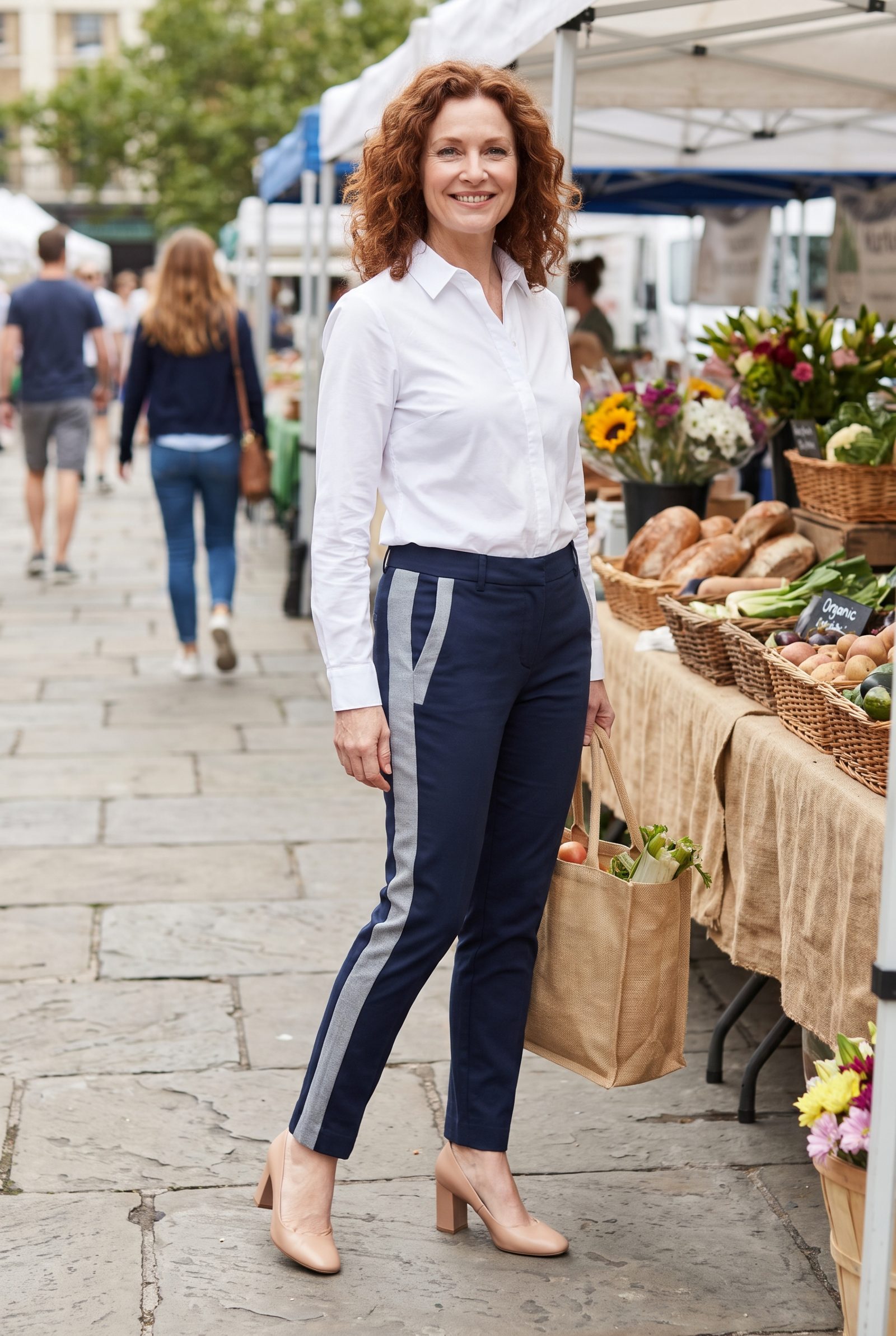
Contrast panels at the hip were sold to you as slimming. They do the opposite. A lighter stripe over the widest part of the hip acts like a spotlight, and anything lit up looks bigger.
Want a side detail? Make it a darker seam than the main fabric, or skip it. A true one-tone trouser in wool crepe or a structured ponte keeps the hip line quiet and lets the leg do the talking. Save the sporty contrast stripe for the gym, where nobody is measuring your silhouette against a sidewalk.
20. Placing Distressing Across the Widest Part of the Leg
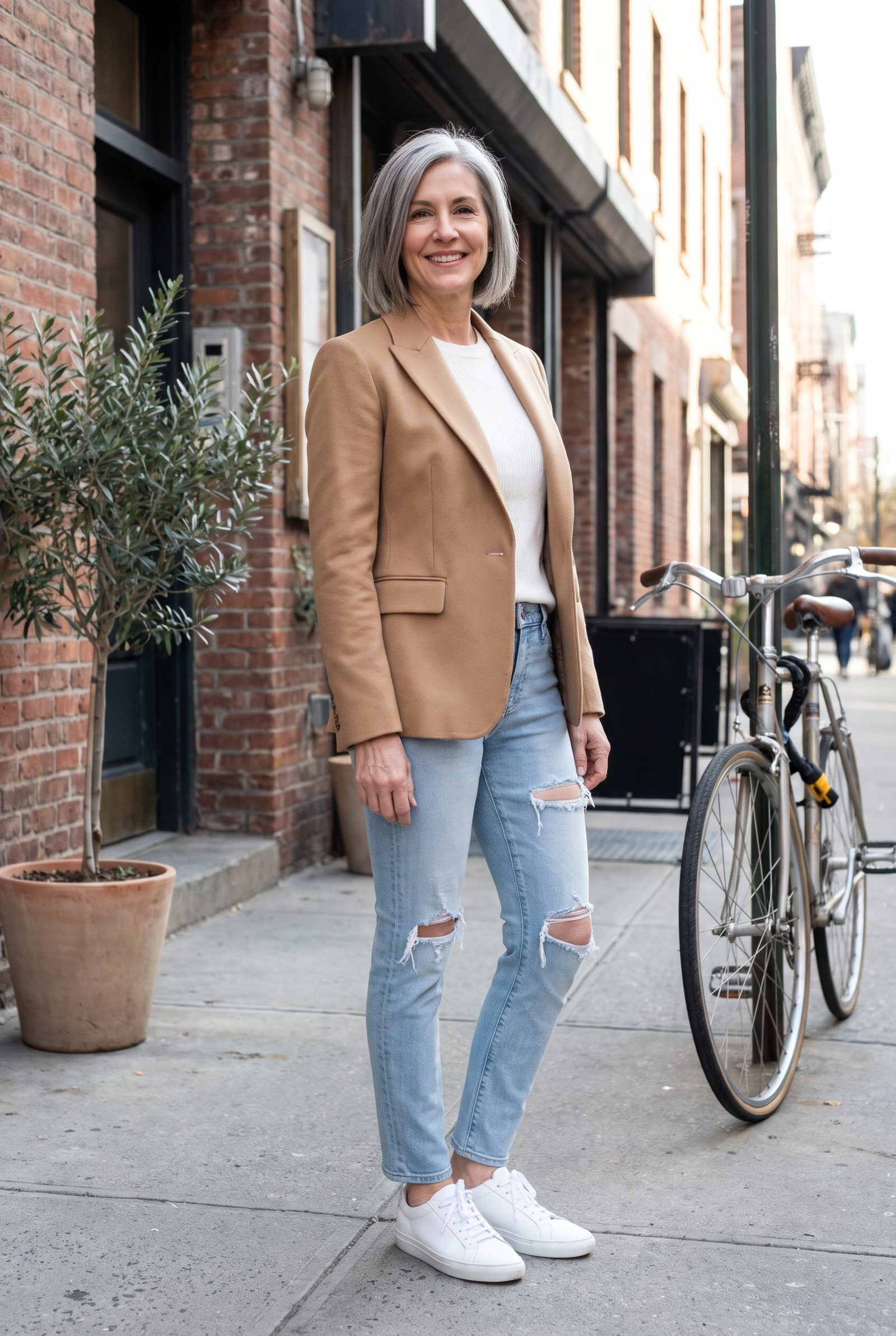
Horizontal rips across the thigh cut the leg in half at its roundest point. Every frayed edge is a little horizontal line, and horizontal lines add width wherever they land.
Choose distressing that runs vertically, or sits low near the ankle, if you want it at all. A soft, barely-there abrasion reads as texture. A torn-open horizontal gash reads as a stop sign halfway down your leg.
19. Wearing Light Pants With a Dark Top Cut Straight Across
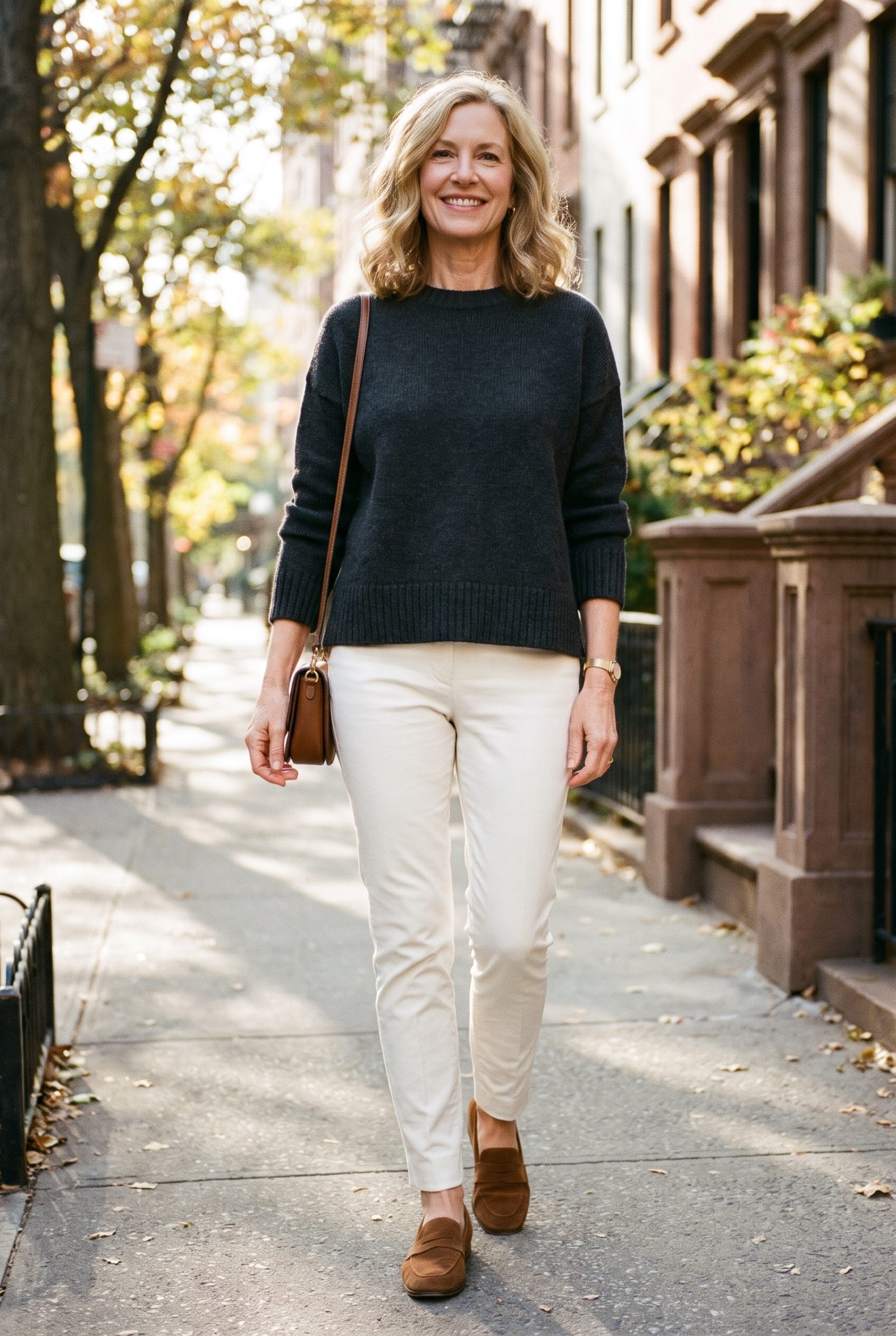
Light pants, dark top, and a blunt straight hem landing right at the hip. That contrast line sits at your widest point, and the pale trousers below make everything above look heavier by comparison.
Two fixes, pick either. Tuck the front hem so the line breaks and the waist shows, or choose a top that ends a few inches lower with a curved or side-slit hem that softens the cutoff. A half-tuck is a small wardrobe change that does a lot, breaking that horizontal and handing you back a waist.
18. Letting Extra Inseam Stack Above the Shoes
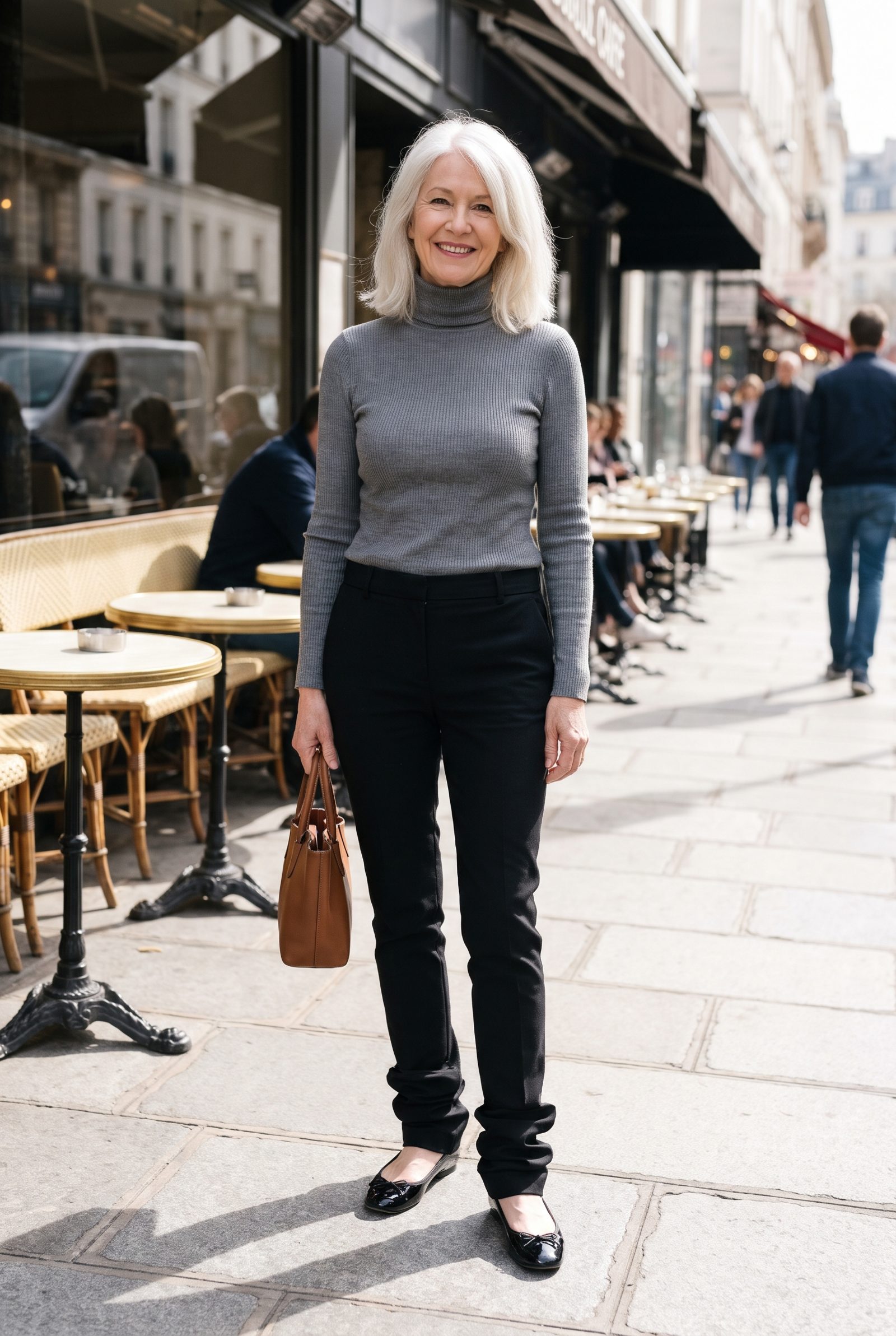
That bunching at the ankle, where two or three folds of fabric stack over the shoe, chops visible length off your leg. Every horizontal crease is a tiny line, and they pile up right where you want a clean exit.
Get slim pants hemmed to graze the top of the shoe or sit a clean inch above it at the ankle bone. A tailor charges less than lunch, and honestly it is the single highest-return fix in this whole list. A crisp hem over a nude or tonal shoe makes the leg look longer than the tape measure says it is.
17. Choosing Ankle Openings That Flare Sideways
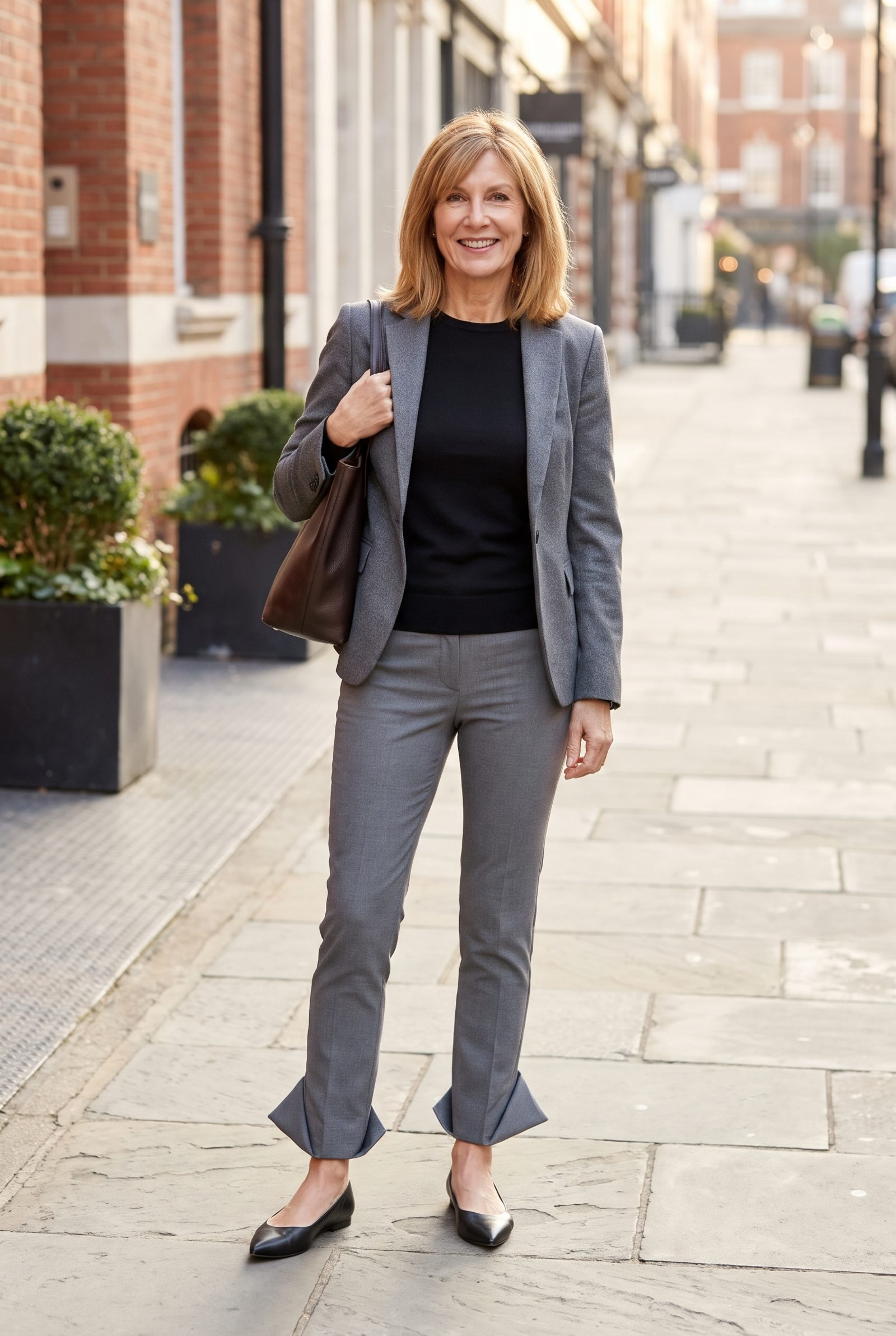
Slim through the leg, then a sudden stiff kick-out at the ankle. That sideways flare adds visual width at the very bottom and, worse, snaps the clean vertical line you built all the way down.
You want the opening to fall straight toward the shoe, or taper slightly inward. A trouser that narrows to meet the shoe keeps the whole line uninterrupted and reads taller. And if the fabric is wagging outward on its own? It is cut wrong or pressed wrong, and no shoe will rescue it.
16. Wearing a Hem So Tight It Creates a Carrot Shape
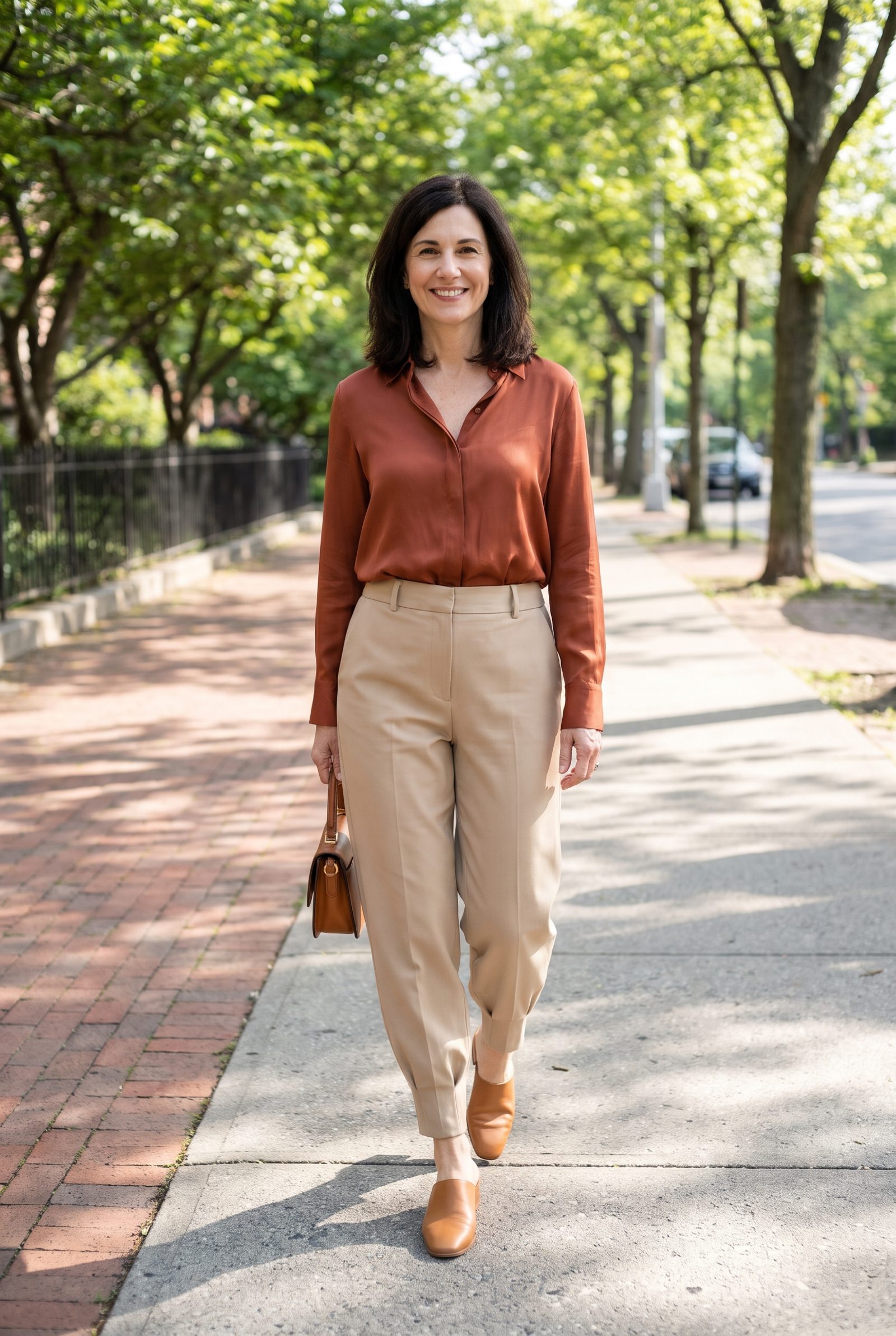
When the ankle grips tight while the thigh stays full, you get the carrot shape: wide up top, pinched at the bottom. The contrast between the two exaggerates the fullness above, and the whole leg reads top-heavy.
Balance the taper. Either bring the hip and thigh in to match the slim ankle, or let the ankle relax so the line flows evenly from top to bottom. The leg should narrow gradually, never snap shut at the end like a drawstring bag. Gradual is what reads long.
15. Rolling Thick, Multi-Layer Cuffs
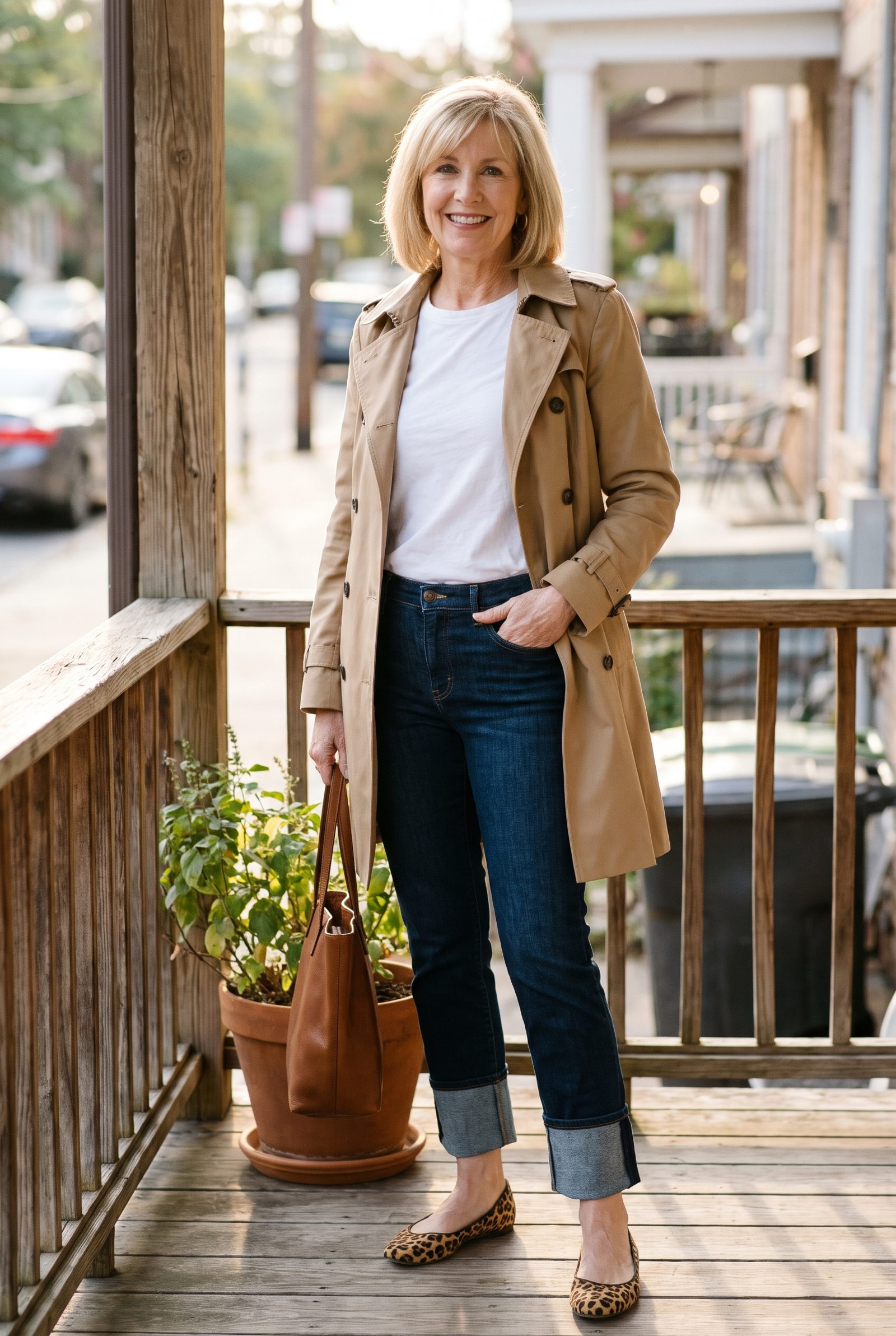
A fat triple-rolled cuff builds a band of bulk right at the ankle, the one spot where you want your leg looking its slimmest. Three folds of denim stack up and add width exactly where a clean line would have thinned you.
Do one slim single fold, half an inch to an inch, pressed flat. Or skip the roll entirely and get the hem shortened properly. A single turn-up reads as intentional; a thick wad reads as fabric you did not know what to do with. Pair with a chic hat and the eye travels up, away from the ankles.
14. Pairing Dark Pants With Stark White Shoes
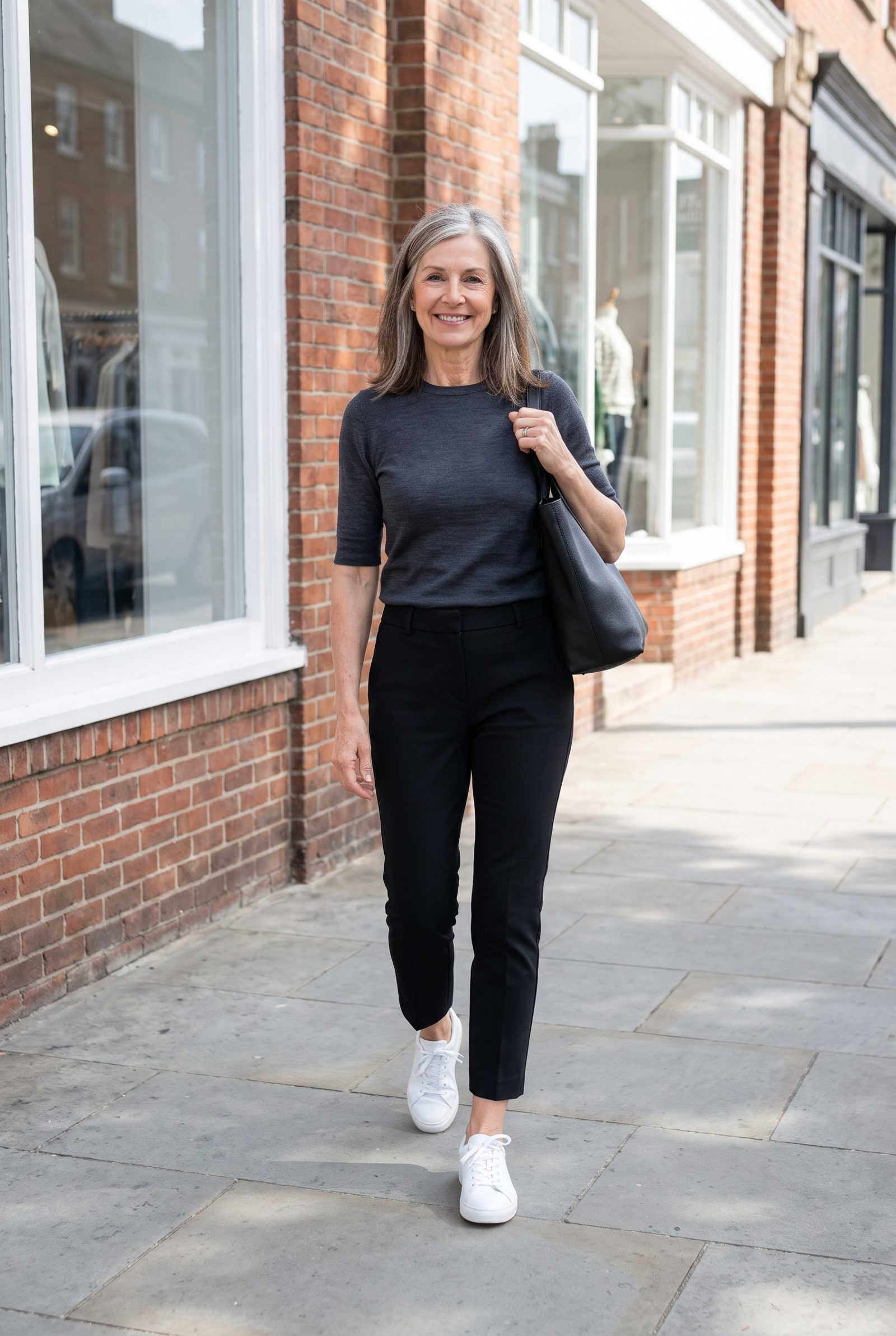
Dark trousers running into bright white shoes slam a hard stop right at the ankle. That contrast break shortens the leg, because the eye reads the dark column, hits the bright shoe, and halts.
Match the shoe to the hem, or close to it. A black trouser over a black or charcoal shoe extends the leg line all the way to the floor. Want sneakers? Reach for a soft off-white, bone, or grey that blurs the transition instead of cutting it. Going bare-ankle? A shoe near your skin tone pulls the same lengthening trick. It holds across your whole wardrobe: continuity reads tall, contrast at the extremities reads short.
13. Adding a Thick Ankle Strap to Your Shoes
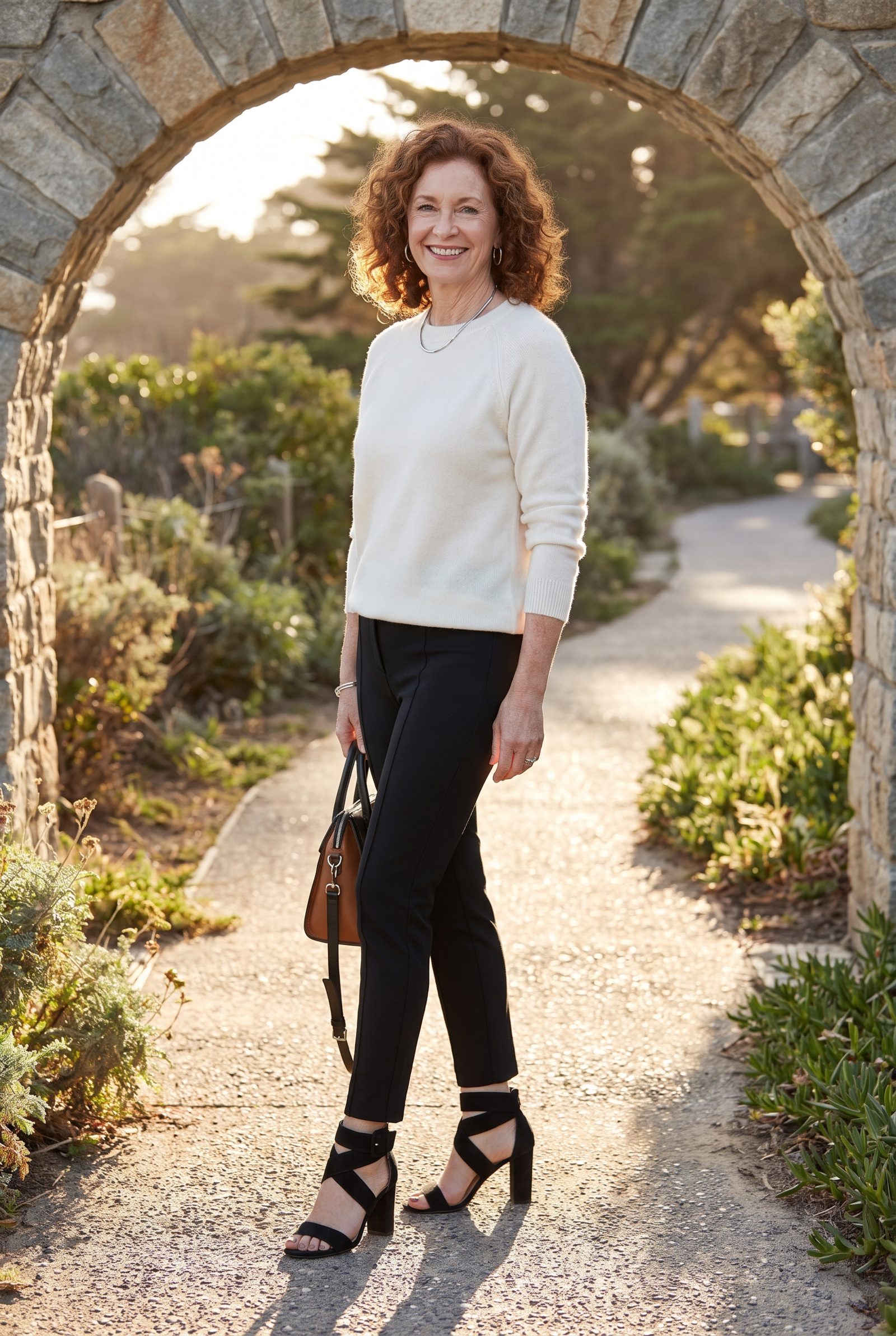
That wide strap circling your ankle acts like a tourniquet for your whole leg line. It chops the eye right where you most want length to flow unbroken, so the leg reads shorter and the calf reads wider by contrast.
Go thin, go strapless, or reach for a pointed mule that leaves the ankle open. You want the slim pant running straight into bare skin or a shoe that keeps the vertical going. Your leg needs an exit ramp, not a speed bump.
12. Wearing High-Vamp Flats That Swallow the Instep
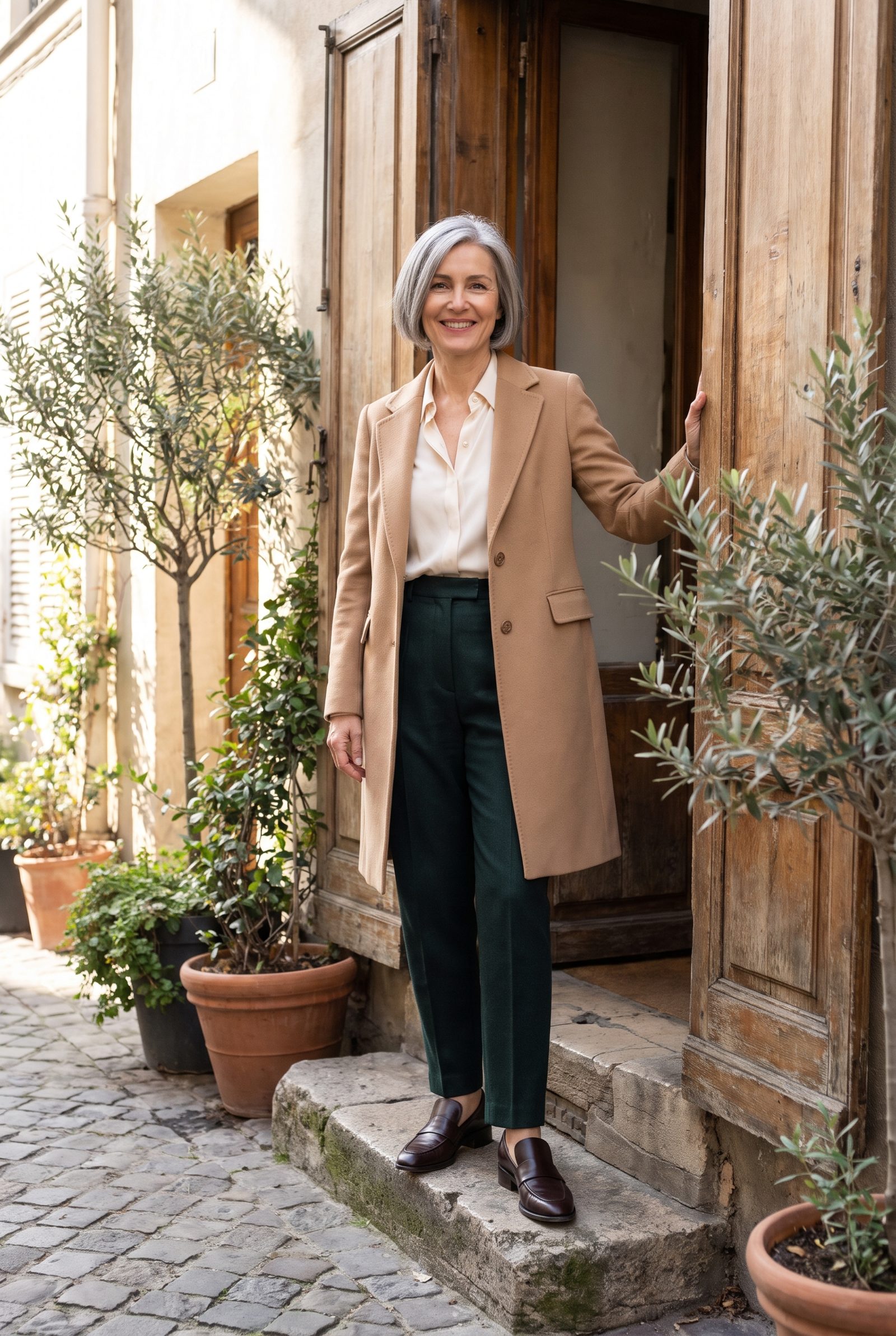
A shoe that rides up high over the top of your foot does to your leg what a crew-neck does to a short neck. It eats the visible length of foot and cuts the leg off early, stacking your ankle and your shoe into one blunt block.
Choose a low-cut vamp that dips toward the toes and shows a little toe cleavage. That sliver of visible foot adds inches of apparent leg without touching your actual height, and a pointed toe stretches the effect even further.
11. Pairing Slim Pants With Bulky Dad Sneakers

Slim pants taper your leg to a fine point, and then a wide, high-volume sneaker lands at the bottom like a cinderblock. That contrast makes the foot look enormous and the leg above it spindly and short. Nobody’s goal.
Want sneakers with slim pants? Go lower-profile. A slim leather trainer in a tonal color, a classic court shoe, a sleek white sneaker with a thin sole — any of these keeps the proportion honest. Save the dad sneaker for wide-leg and straight cuts that can hold their own against that much shoe.
Sneakers aren’t the enemy, just the bulky ones: asked which daily shoes they would buy, 61% of our readers picked sneakers over flats or a low heel.
10. Letting Pants Bunch on Top of Ankle Boots

Extra length folding into an accordion right above the boot creates a visible band of bulk at your narrowest point. That horizontal stack widens the ankle and shortens the leg, and it reads as unfinished even when everything else is sharp.
Hem slim pants to hit cleanly at the top of the boot shaft, or choose a cropped length that stops an inch above it. If a pant is too long for ankle boots, it was never cut for ankle boots. Tuck a slim hem neatly inside a taller boot instead.
9. Leaving a Strip of Bare Skin Between Hem and Boot

That little window of bare ankle between a cropped hem and a boot sounds breezy in theory. In practice it chops your leg into three segments — pant, skin, boot — and every break reads as a horizontal line that stalls the eye on a slim pant.
Close the gap. Hem the pant to meet the top of the boot, or bridge the space with a boot that reaches higher up the leg. If you want ankle showing, show it with a low shoe and no boot at all. Context matters more than exposure.
8. Wearing an Untucked Top That Lands at the Widest Hip Point
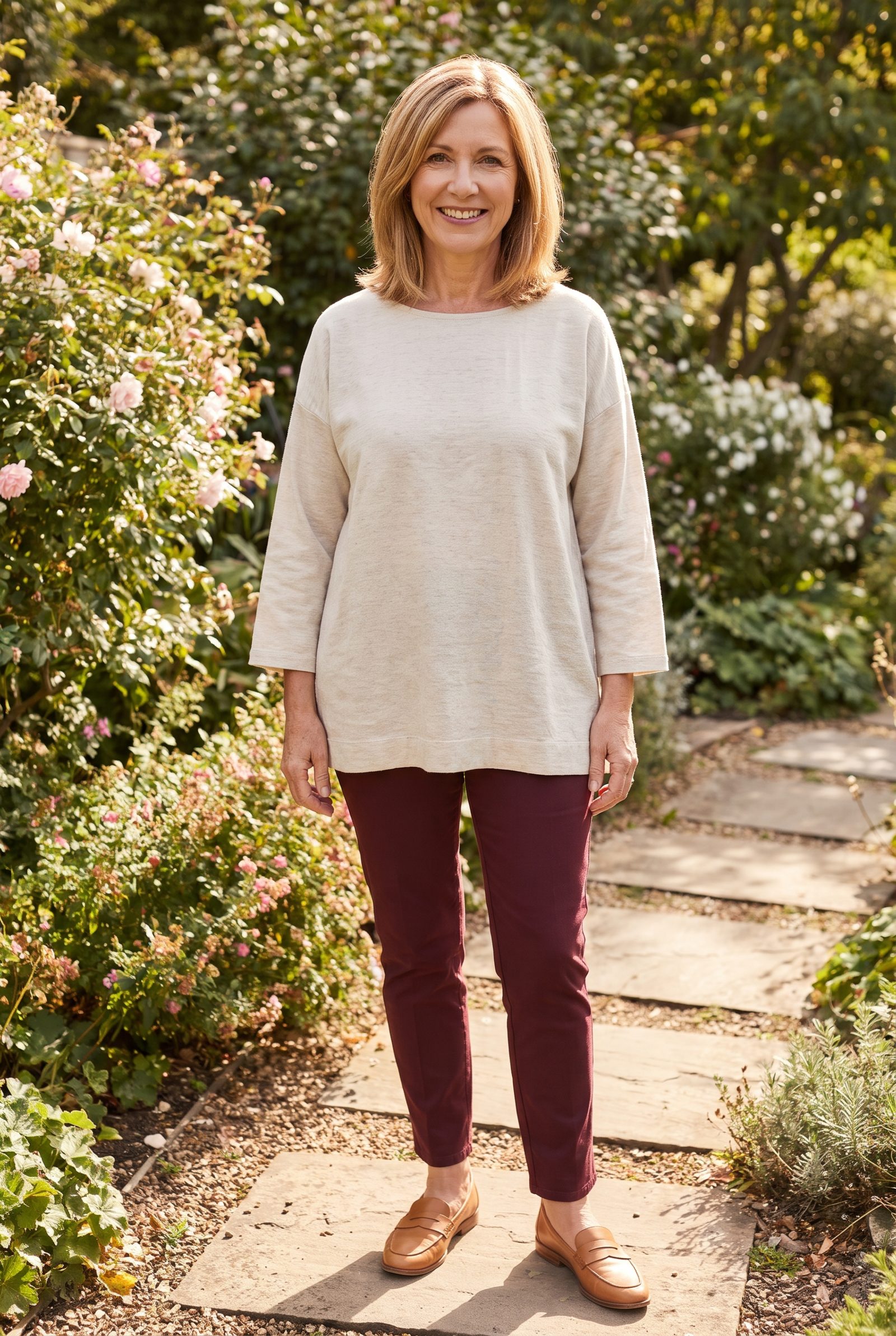
A top that stops dead at the widest part of your hips plants a horizontal hemline at the exact spot you want the eye to glide past. So the hip becomes the headline, and the slim leg below it looks shorter than it is.
Move the hemline. Tops that end at the high hip or well below the fullest curve both read better. A front half-tuck works too, breaking that blunt line and marking a higher waist. You want the leg to start higher, not lower.
7. Stuffing a Bulky Sweater Into the Waistband

Tuck a thick cable knit all the way into slim trousers and you build a padded doughnut of fabric around your middle. All that volume has nowhere to go, so it pushes out at the waist and hip — widening the very spot a slim pant is trying to streamline.
Switch to the French tuck: tuck only the front few inches and let the rest fall loose. Or choose a finer-gauge merino that tucks flat. Bulky knits were made to skim the waistband, not live inside it.
6. Adding a Peplum That Flares Over the Hips
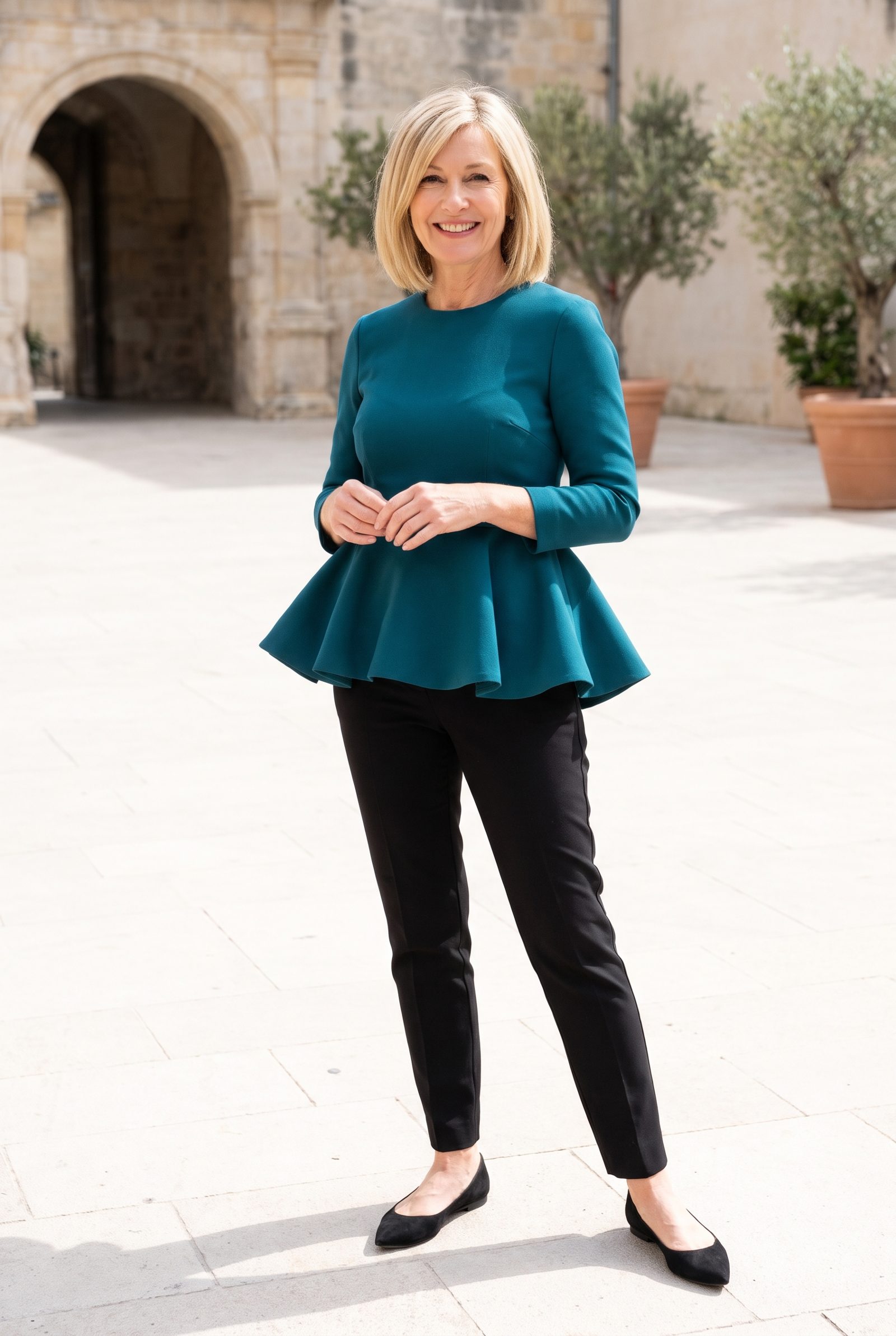
The peplum does exactly what it’s built to do. It projects fabric outward at the hip, and over slim pants that flare adds width right where you were counting on the slim cut to narrow you, dropping a hard horizontal at the hipline.
Want shape at the waist? Reach for a top with a gentle nip and a straight or softly curved hem instead of a built-out flounce. A longline jacket that skims past the hip does far more for the leg line. Peplums fight slim pants, and the pants lose.
5. Ending a Blazer at the Fullest Part of the Hips

A blazer hem that lands square on your widest hip point draws a bold horizontal across the broadest part of you. The jacket stops the eye there, flattens the leg below, and makes a slim trouser look stubby from the hip down.
Choose a blazer that ends above the hip, cropped near the waist, or runs longer and finishes a few inches below the fullest curve. Both lengths let the leg read uninterrupted. The one hem to avoid is the one that frames the hip like a picture.
4. Adding a Wide, High-Contrast Belt
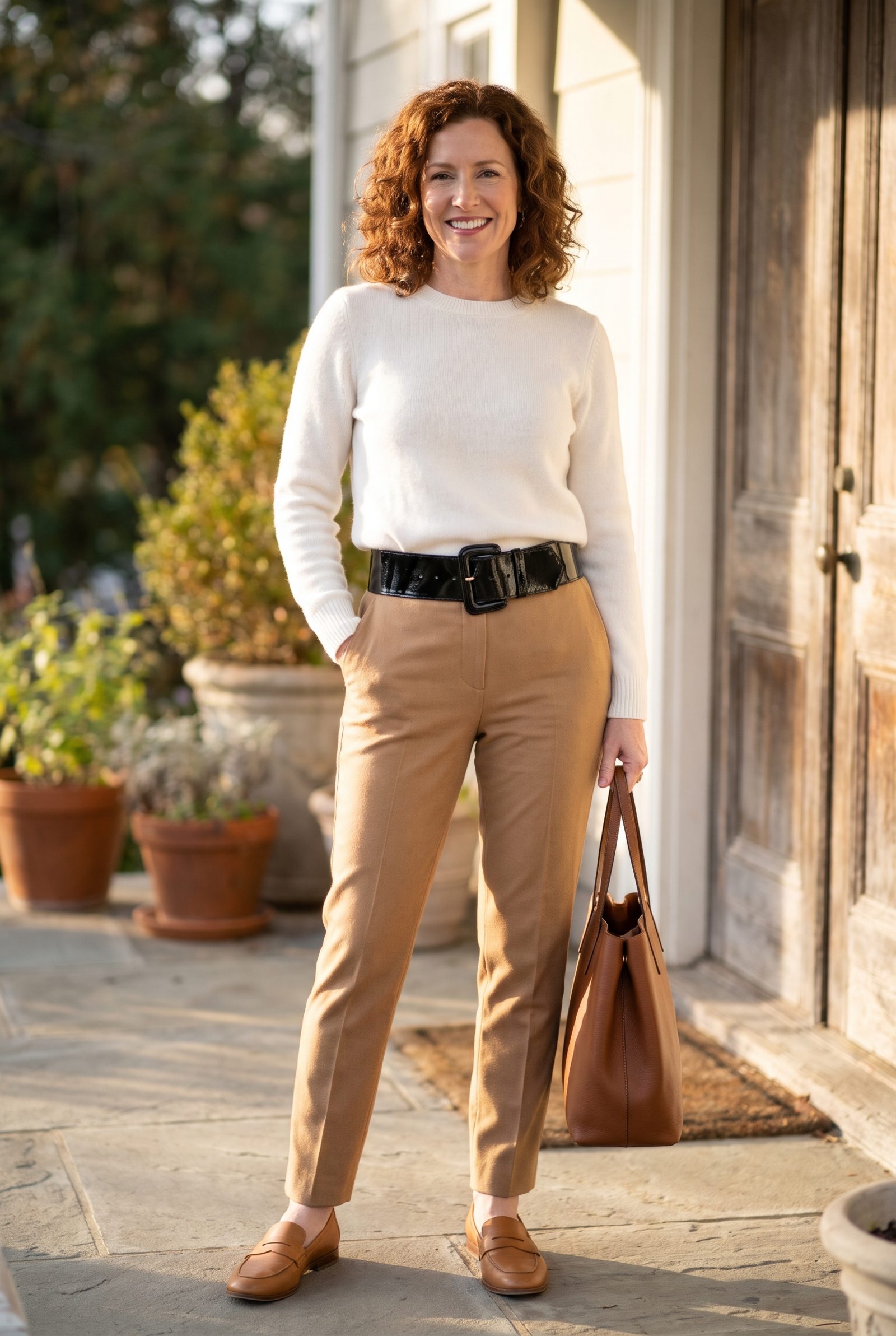
A wide belt in a color that shouts against your pants slaps a thick horizontal band across your midsection. Worn low, it drags the waistline down too, shortening the torso and the leg at once. The contrast makes the belt the loudest thing in the outfit, and loud lands wide.
Tone the belt to your pants or top so it reads as part of the line rather than a stripe. A slimmer belt worn at the true waist pulls the eye up and marks a higher start for the legs. Want a statement belt? Keep the contrast soft and the placement high.
3. Wearing a Belt Low Across the Hips
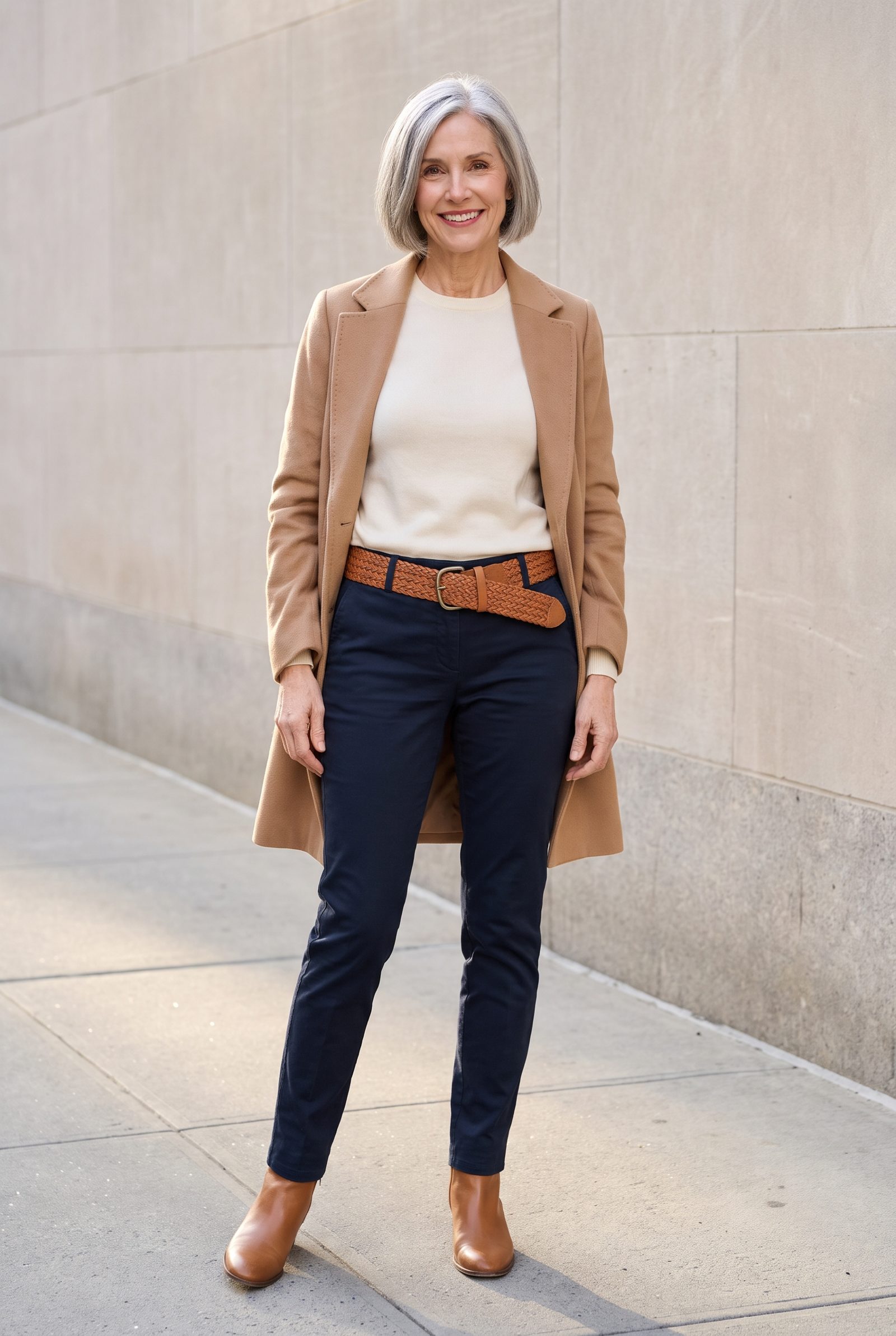
You buckle the belt where the loops are, and those loops sit a few inches below your natural waist. Easy mistake. The belt lands at the widest point of your hips and draws a hard horizontal line right there.
That line cuts your leg short and broadcasts width exactly where slim-fit pants already cling. The eye stops dead at the belt. Everything below it reads shorter than it is.
So move the belt up. Find your natural waist — the narrowest point just above the hip bone — and sit the belt there instead. If the loops fight you, skip the belt entirely and let a high-rise waistband do the work. A tan leather belt at the true waist lifts the whole line and hands you back a couple of inches of leg.
2. Placing a Large Crossbody Bag at the Outer Hip
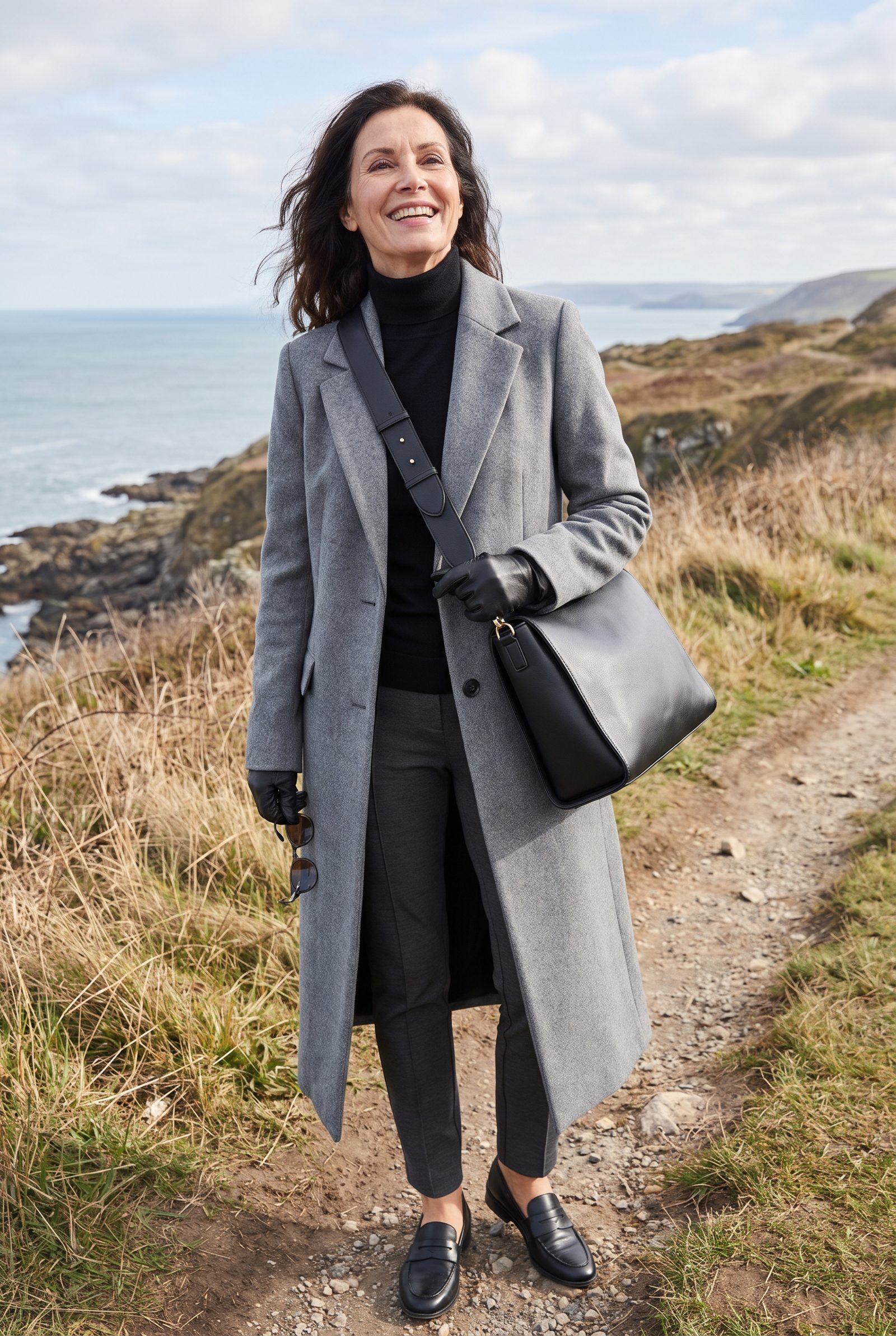
The crossbody felt practical — hands free, strap across the chest, bag swinging at your side. The trouble is where it lands.
A big bag parked at the outer hip piles visible bulk right where slim trousers already hug close, so you read wider through the hips and the bag’s bottom edge carves a second horizontal break that chops the leg below it.
Shorten the strap so the bag rides higher, nearer the waist, or carry it at the front where it slims rather than widens. Better still, swap to a small structured crossbody bag that tucks against your torso instead of fanning out across the hip. Scale matters more than you’d guess.
1. Letting a Long Tunic Reduce the Visible Leg Line
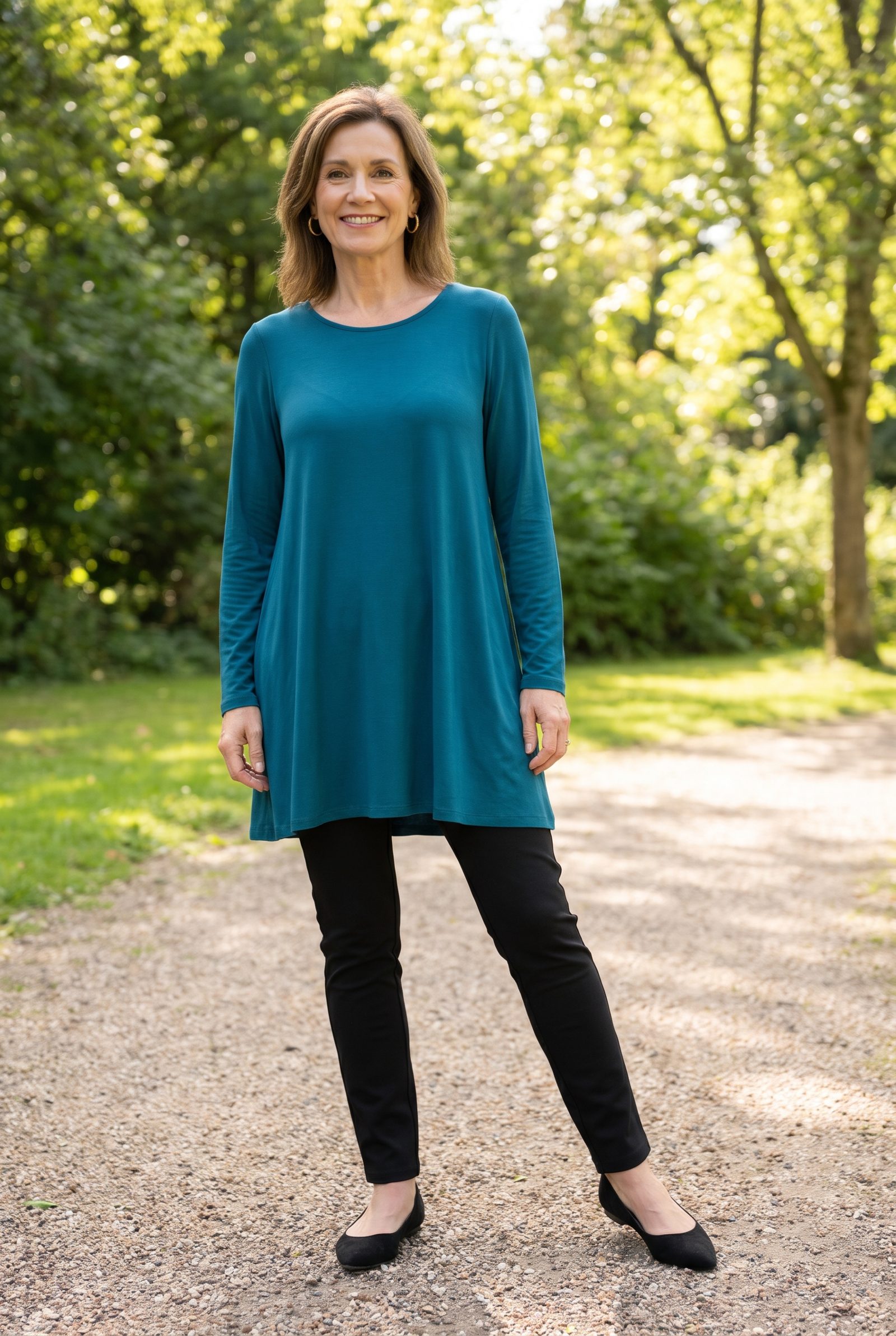
The long tunic earns its keep for coverage and comfort, and plenty of us grab one on the days we just want ease. Fair enough. But watch where the hem lands, because that’s the whole game.
Drop a tunic to mid-thigh over slim pants and you’ve hidden the upper half of your leg. Only the calf shows below a long block of fabric, so the eye reads a stubby vertical. And the slim pant that was supposed to elongate you? It’s doing absolutely nothing, since most of it never sees daylight.
Pick a tunic that stops high on the hip, or do a loose front tuck to bare the hip-to-knee line. A hip-length tunic top keeps the comfort and gives the leg back its full run. Still love the longer cut? Split it at the front with a single tuck and the vertical line reappears.