❤️ Would you like to save this?
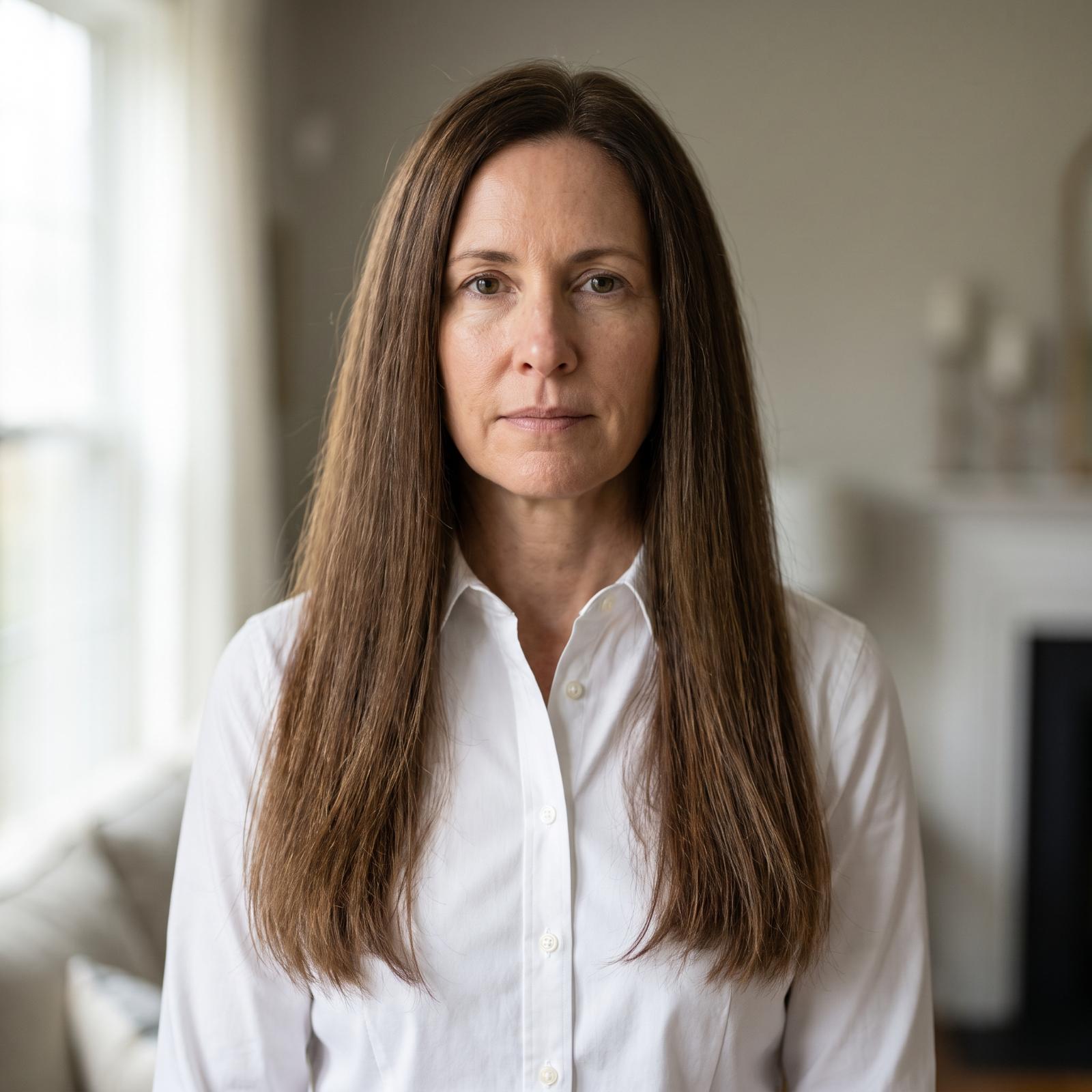
Long hair and a leaner-looking silhouette aren’t opposing goals. At 49, the point wasn’t to surrender length just because somebody decided shorter hair was automatically more flattering. It was to see what happened when the part, fringe, layers, color, and placement of volume changed while the length stayed.
None of these cuts physically changes a body, and there isn’t one magic rule that works on every face. What they can change is visual emphasis: where the hair opens around the cheekbones, how heavily it falls beside the shoulders, whether the eye catches a sweeping fringe or a solid wall of hair, and whether the ends move or simply hang.
These 31 before-and-afters take different routes to the same goal. Some rely on bangs. Others use taper, waves, gray blending, deep color, brighter pieces around the face, or a cleaner part. The interesting part is how many ways long hair can change shape without disappearing.
FYI, thanks to AI imagery software, we’re able to create very specific fashion and hairstyle examples to illustrate the points being made. In some cases, imagery is exaggerated to hammer home the point. Also, assume links that take you off the site are affiliate links such as links to Amazon. this means we may earn a commission if you buy something.
31. Voluminous Waves at 49 Gave Long Hair a Lighter, More Lifted Shape
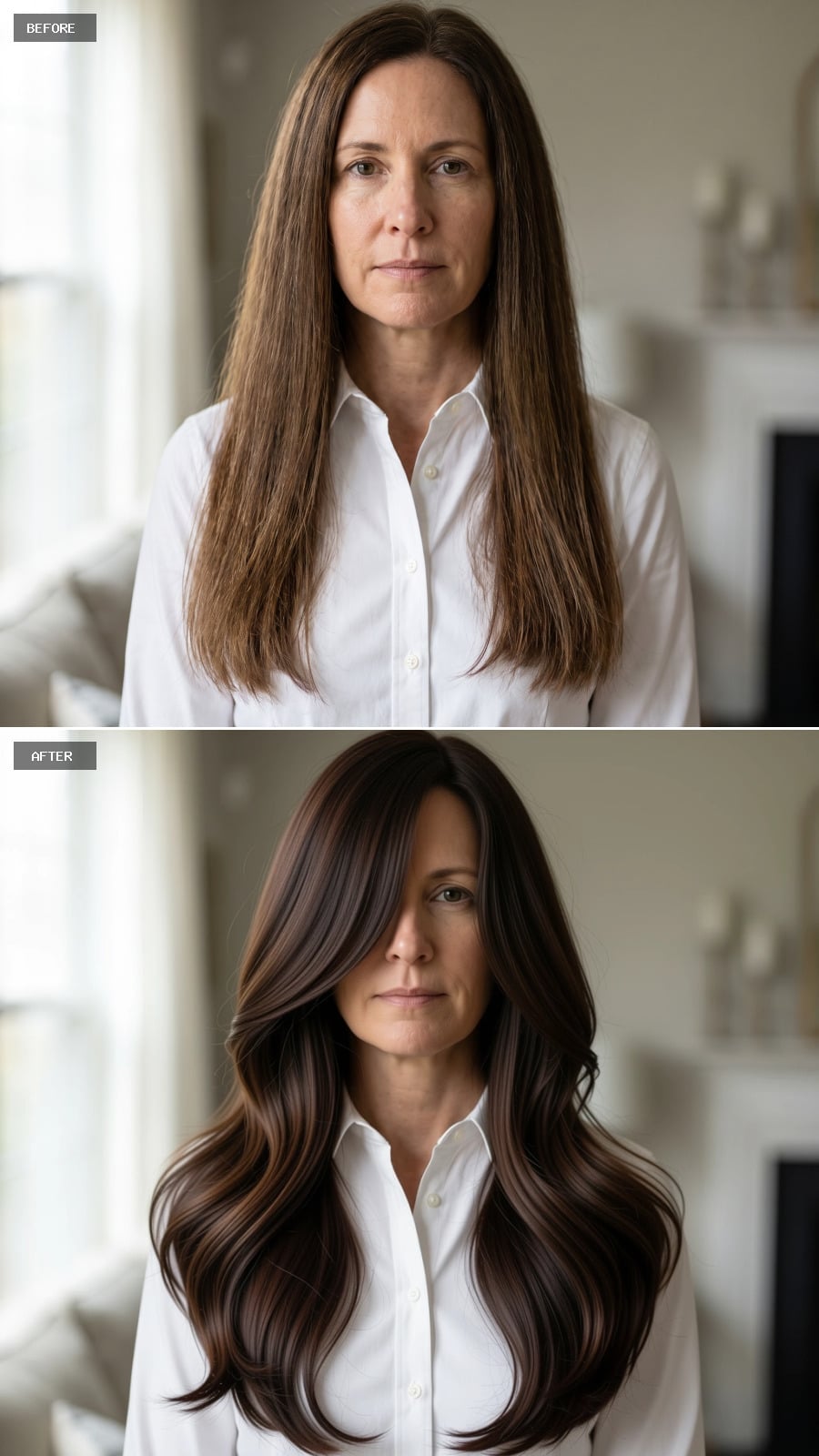
Dark chocolate waves broken up with caramel ribbons immediately make the length feel less solid. The hair rises gently around the crown before falling through broad bends, so the eye registers movement instead of one uninterrupted curtain from scalp to chest.
Side-swept layers open the face on a diagonal, while the ends stay full enough to preserve the drama of long hair. Nothing has been sacrificed. The length simply has more architecture.
30. Blunt Bangs Changed the Proportions Without Touching the Length
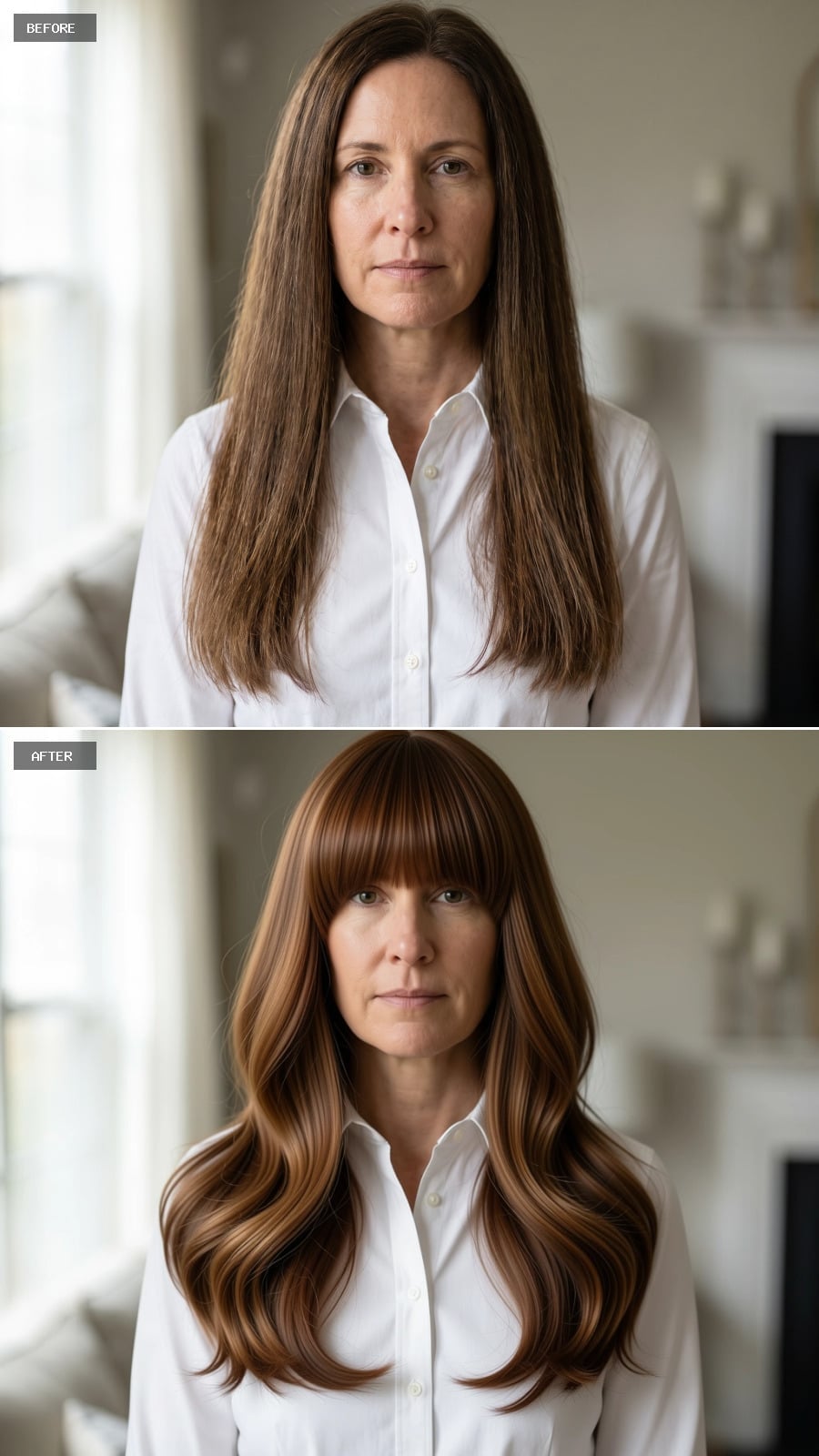
A full fringe creates a strong horizontal frame across the forehead, immediately shifting attention toward the eyes. That’s a completely different strategy from using height or a deep side part to create a longer line.
Below it, caramel-ribboned brunette waves curve away from the face and then back toward the body. The point isn’t that bangs magically make a face slimmer. They reorganize the composition, giving the long hair a defined starting point instead of allowing the entire style to read as one vertical mass.
29. Salt-and-Pepper Layers Made the Silver the Most Interesting Part
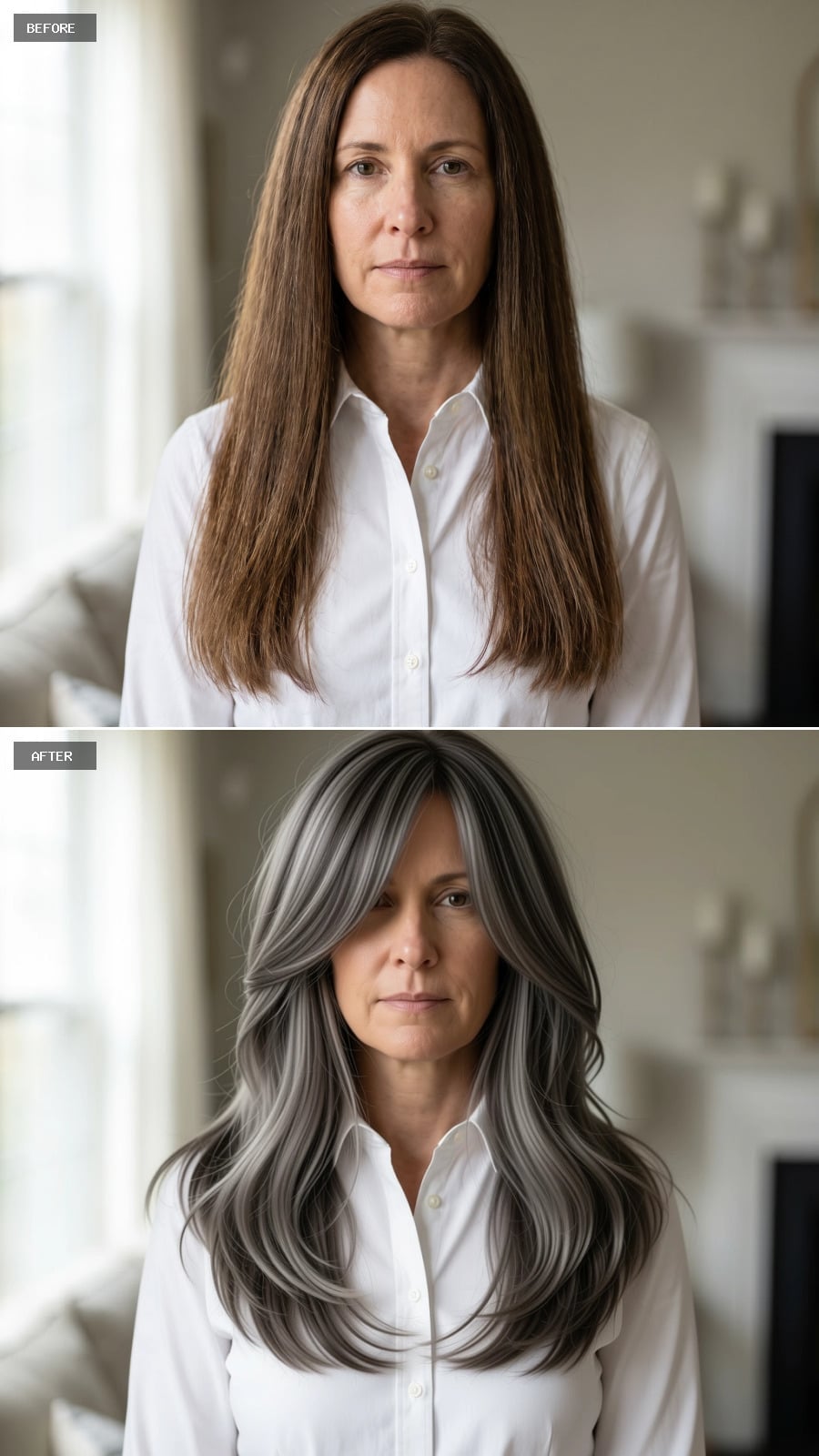
Gray, charcoal, and nearly white strands are allowed to separate visibly rather than being blended into one anonymous tone. The brightest pieces sweep back from the face, making the natural variation in the color part of the cut.
Loose layers keep all that length moving below the shoulders. Instead of treating gray as something the style has to disguise, this one builds the entire look around it.
28. Deep Red and a Side Sweep Put the Diagonal Line in Charge
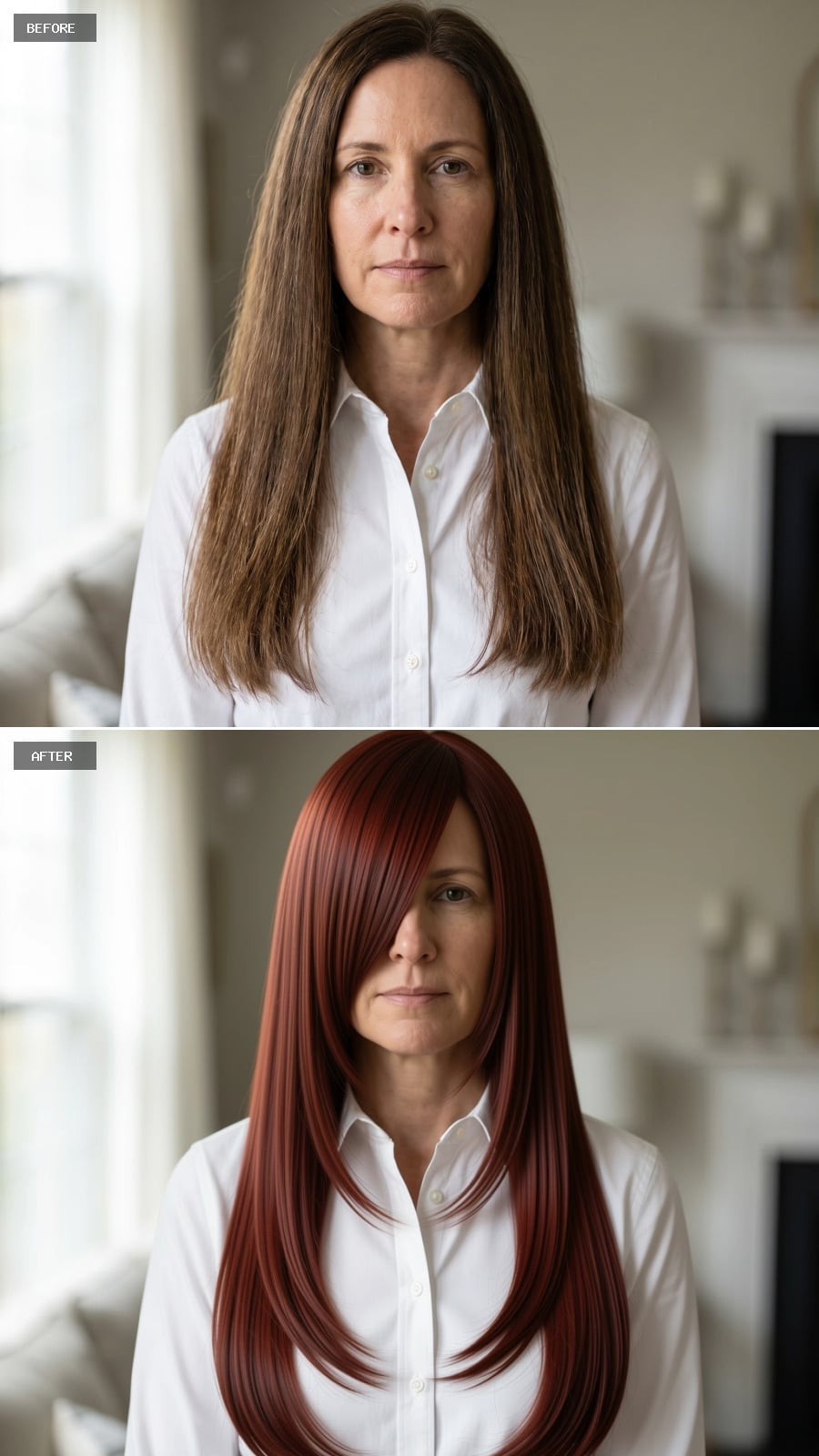
The saturated auburn-red gets attention first, but the side sweep is doing the more interesting structural work. Hair travels diagonally across the forehead before dropping into long, relatively sleek layers below the collarbone.
That asymmetry breaks up the straight up-and-down outline of very long hair. The rich mahogany-crimson color makes the result even more graphic without needing additional highlight patterns competing for attention.
27. Dark Roots Made Blonde Balayage Feel Longer, Not Heavier
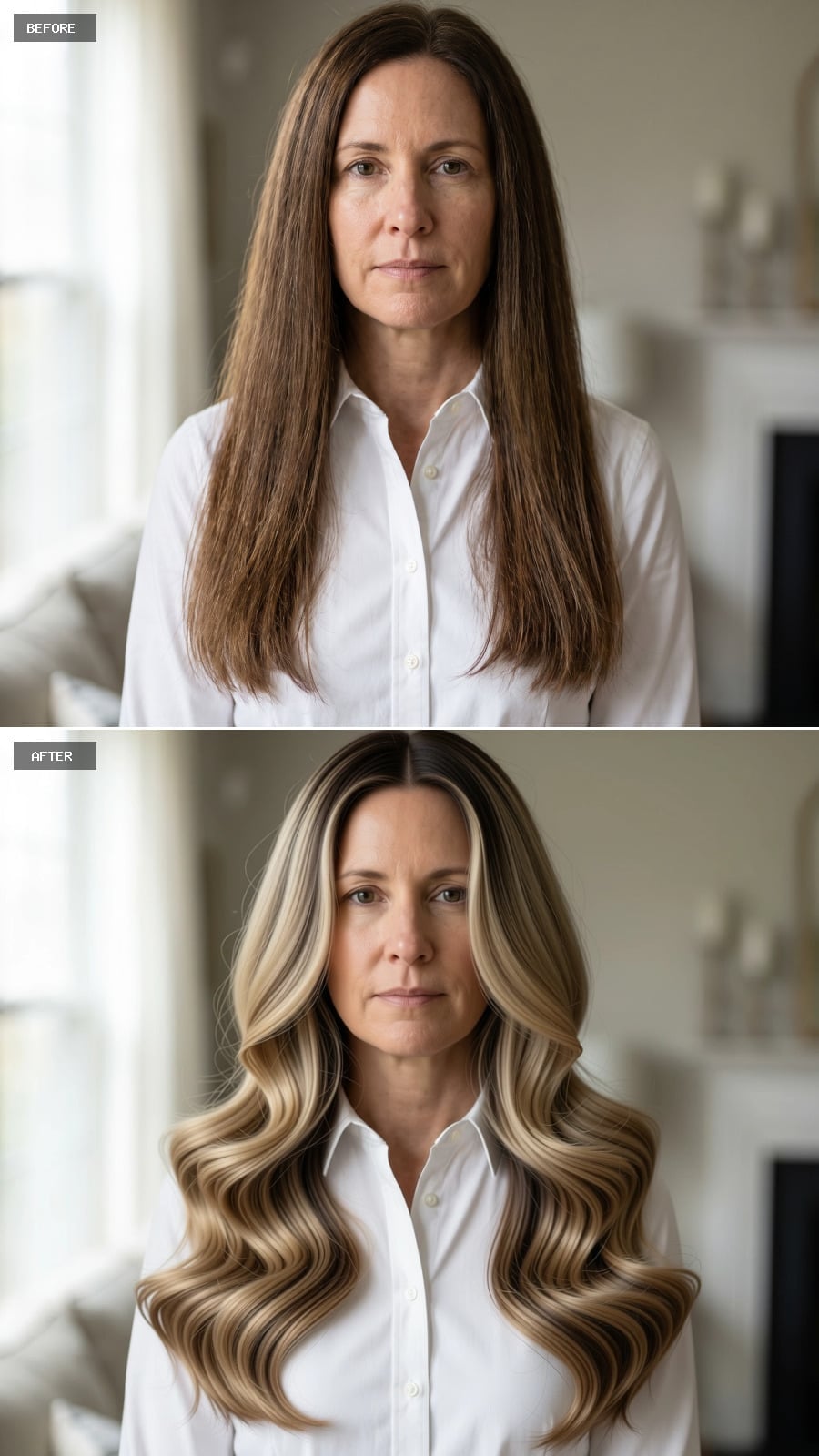
Deep brunette at the roots gradually gives way to sandy blonde through the lengths, creating an obvious progression from dark to light rather than one flat color from scalp to ends.
Loose waves follow the same direction. They begin softly and expand lower down, keeping the upper section relatively controlled while allowing the length to feel full. The darker root also makes the blonde look less uniform and considerably more dimensional.
26. A Center Part Made Rich Brunette Hair Look Sharper
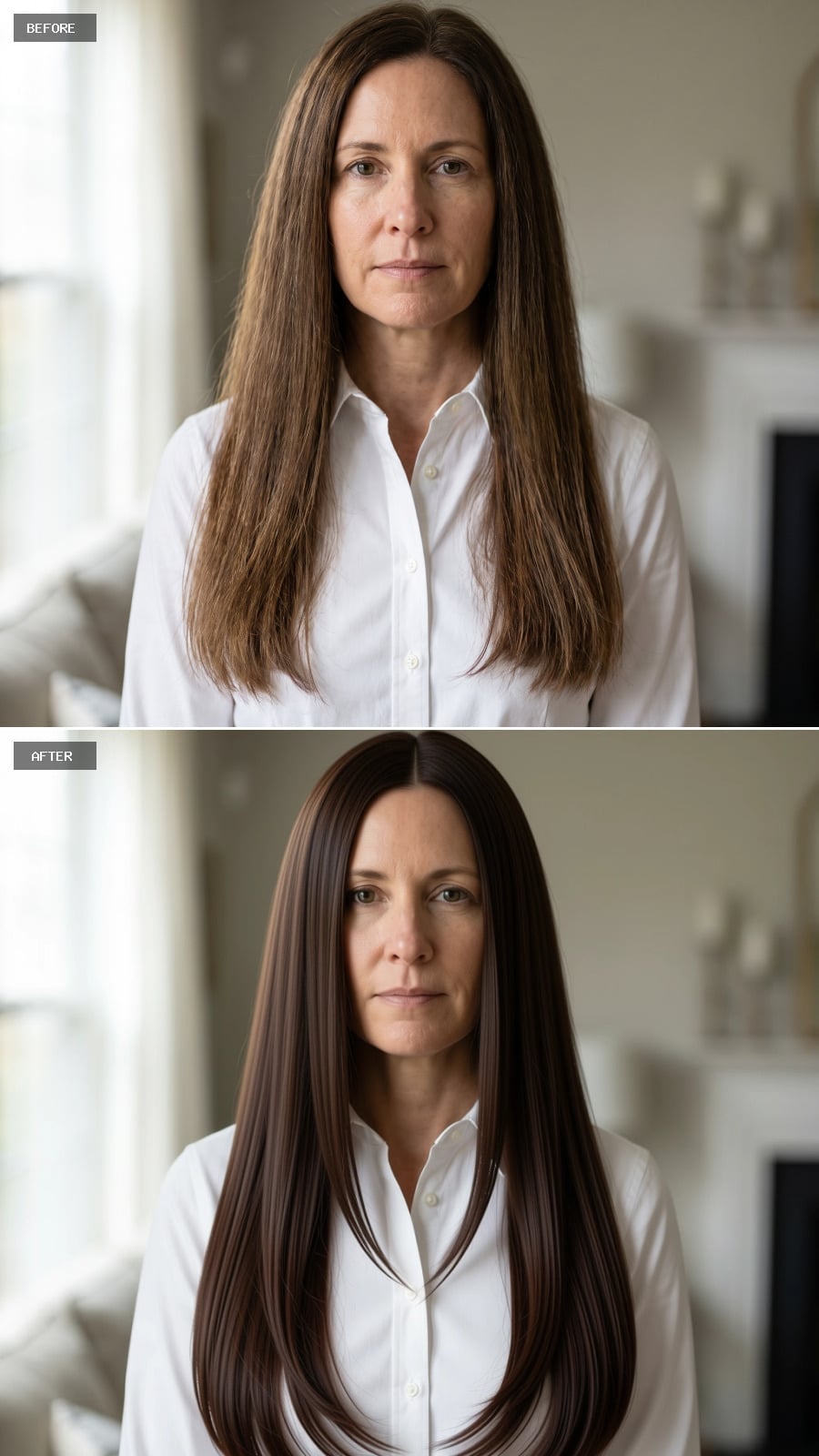
After several soft, sweeping shapes, this one gets its impact from precision. A center part creates a clean axis through glossy chocolate-brown hair, while the smoother upper section keeps the silhouette close to the head.
Subtle lighter ribbons appear through the mid-lengths without interrupting that strong dark base. The ends retain enough weight to look intentional rather than wispy. Sleek doesn’t have to mean flat.
25. Dark Plum Turned Long Waves Into One Dramatic Shape
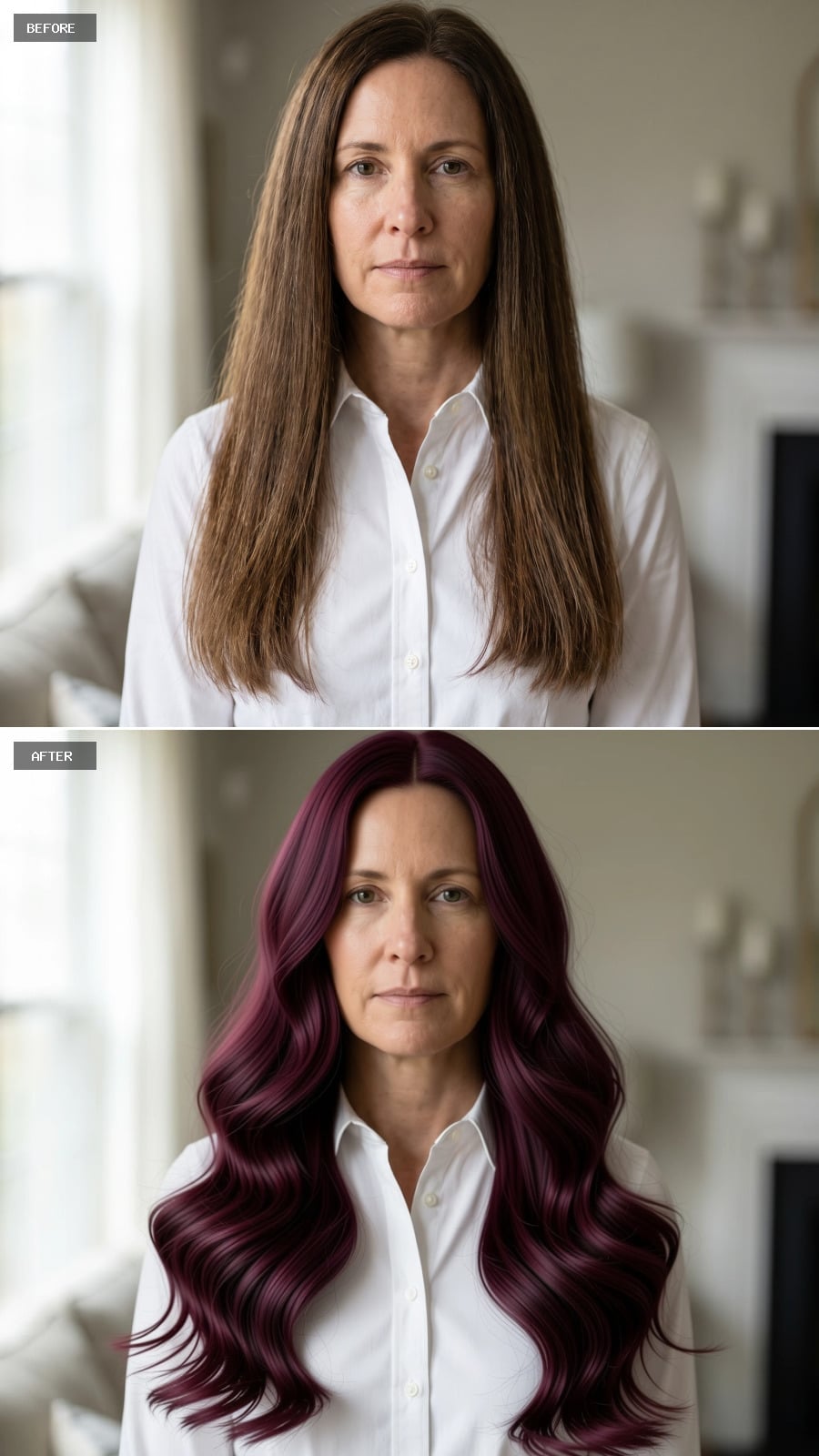
This time there are no bright ribbons directing the eye through the hair. Burgundy-plum runs from root to tip, letting the entire style read as one saturated mass.
The movement comes from large waves that stack through the length and bend inward before opening again near the ends. A side part keeps the top from becoming too symmetrical. The result is unapologetically dramatic without needing another inch cut away.
24. Copper Highlights and Curtain Bangs Opened Up the Front
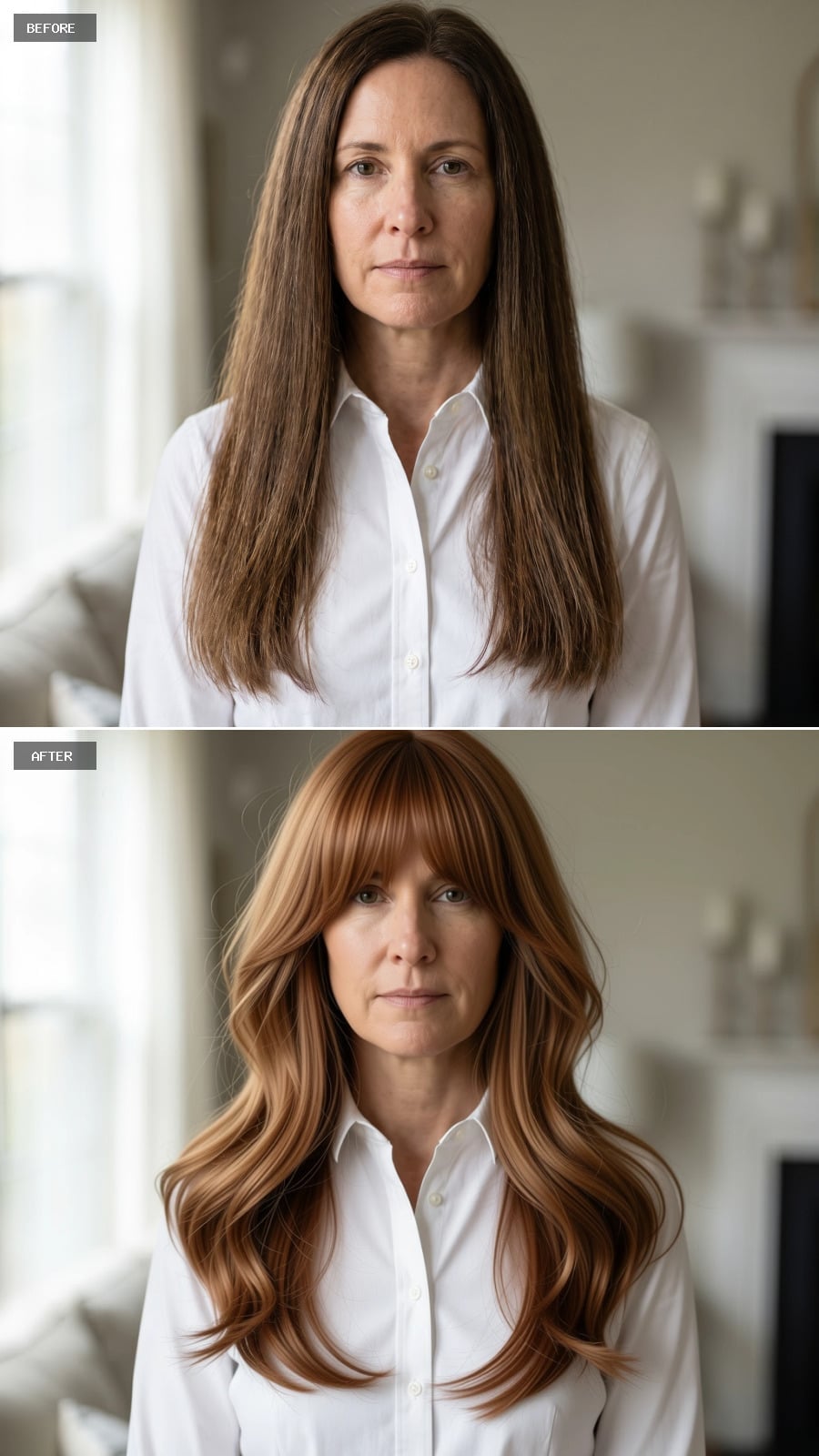
Warm auburn and caramel immediately brighten the style, but the curtain bangs are what distinguish it from the other long-wave looks. They split around the center and sweep outward, creating an open frame rather than a solid fringe across the forehead.
The larger waves begin lower through the length, allowing the copper variation to show itself without building unnecessary fullness right at the roots. This is long hair with movement, not long hair trying to occupy every available inch of space.
23. Soft Blonde Layers Made Volume Look Deliberate
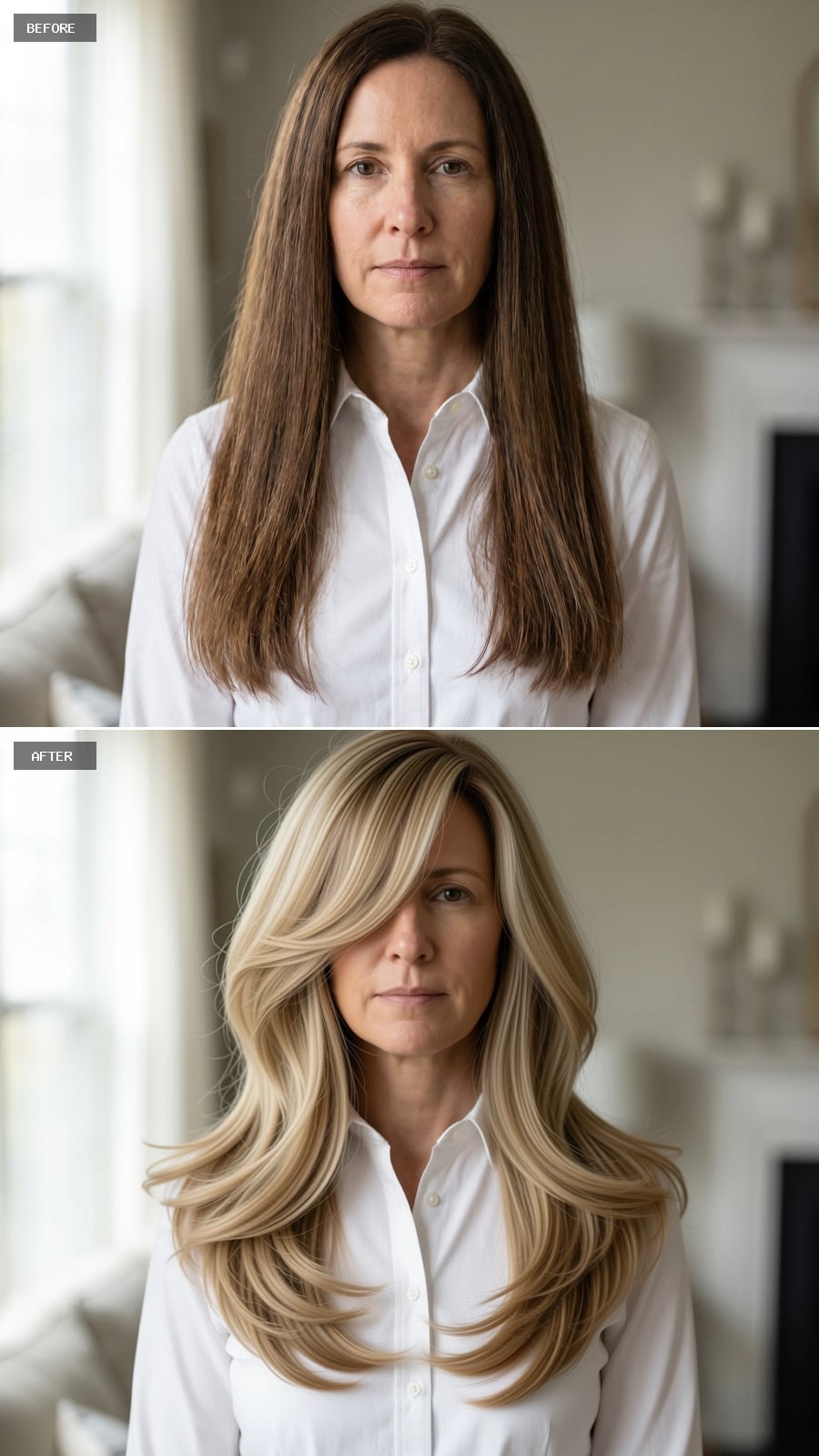
Long cascading layers separate the blonde into visible tiers instead of letting every strand finish at roughly the same place. Lighter sections around the face bring attention to the cut while deeper blonde underneath prevents the color from becoming one pale sheet.
The effect is generous rather than restrained: plenty of hair, plenty of movement, but with enough variation in length that all that volume has a structure.
22. Silver and Charcoal Waves Let Contrast Replace Conventional Highlights
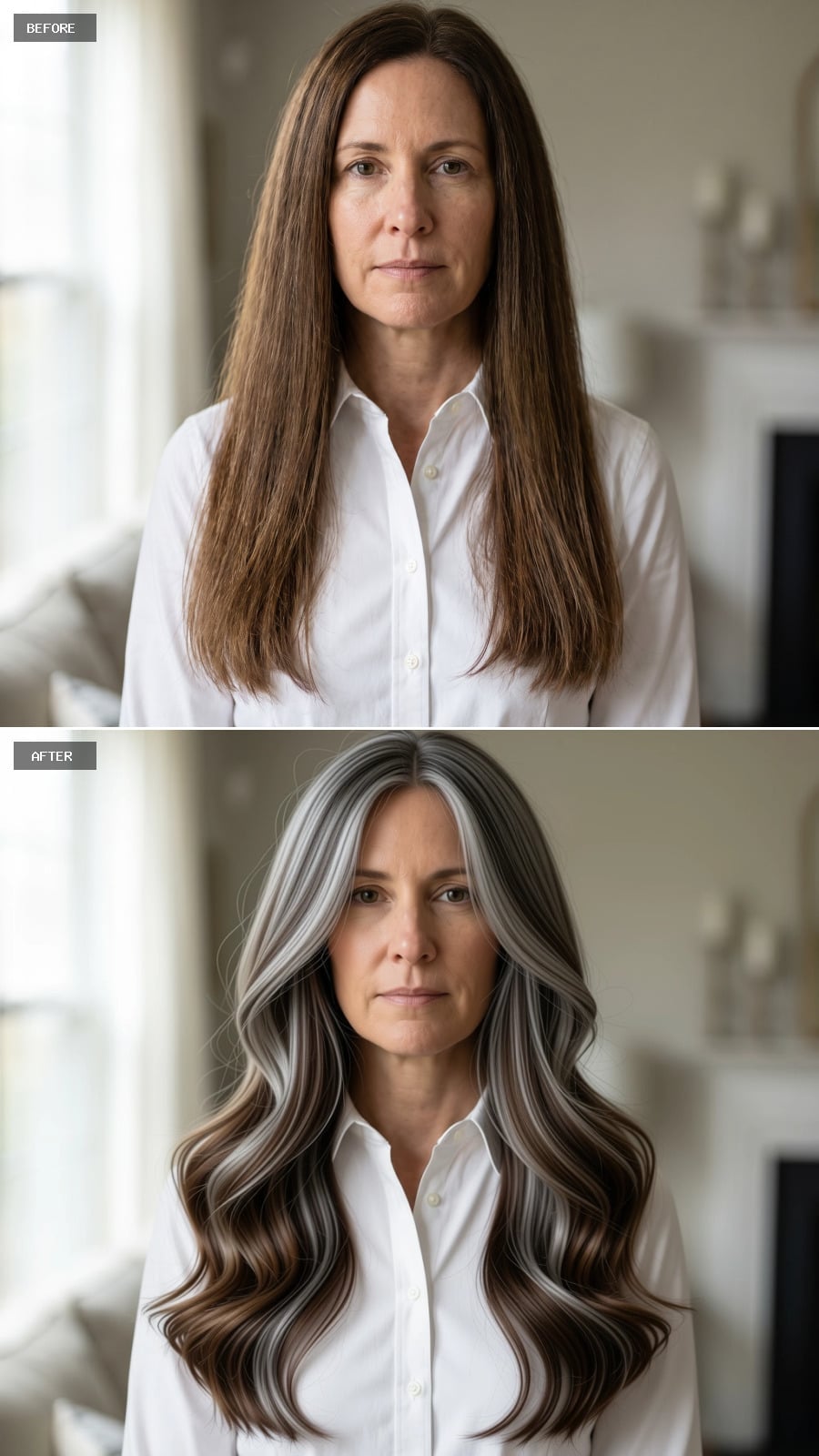
Thick silver and charcoal sections move through the dark base with enough contrast to be seen from a distance. The lightest pieces sit near the face, while darker hair remains visible underneath.
The waves begin lower, allowing the top to stay relatively smooth before the movement develops through the chest-length hair. It’s a useful reminder that gray blending doesn’t have to mean tiny, nearly invisible strands.
21. Espresso Layers Gave Dark Hair Shape Without Relying on Highlights
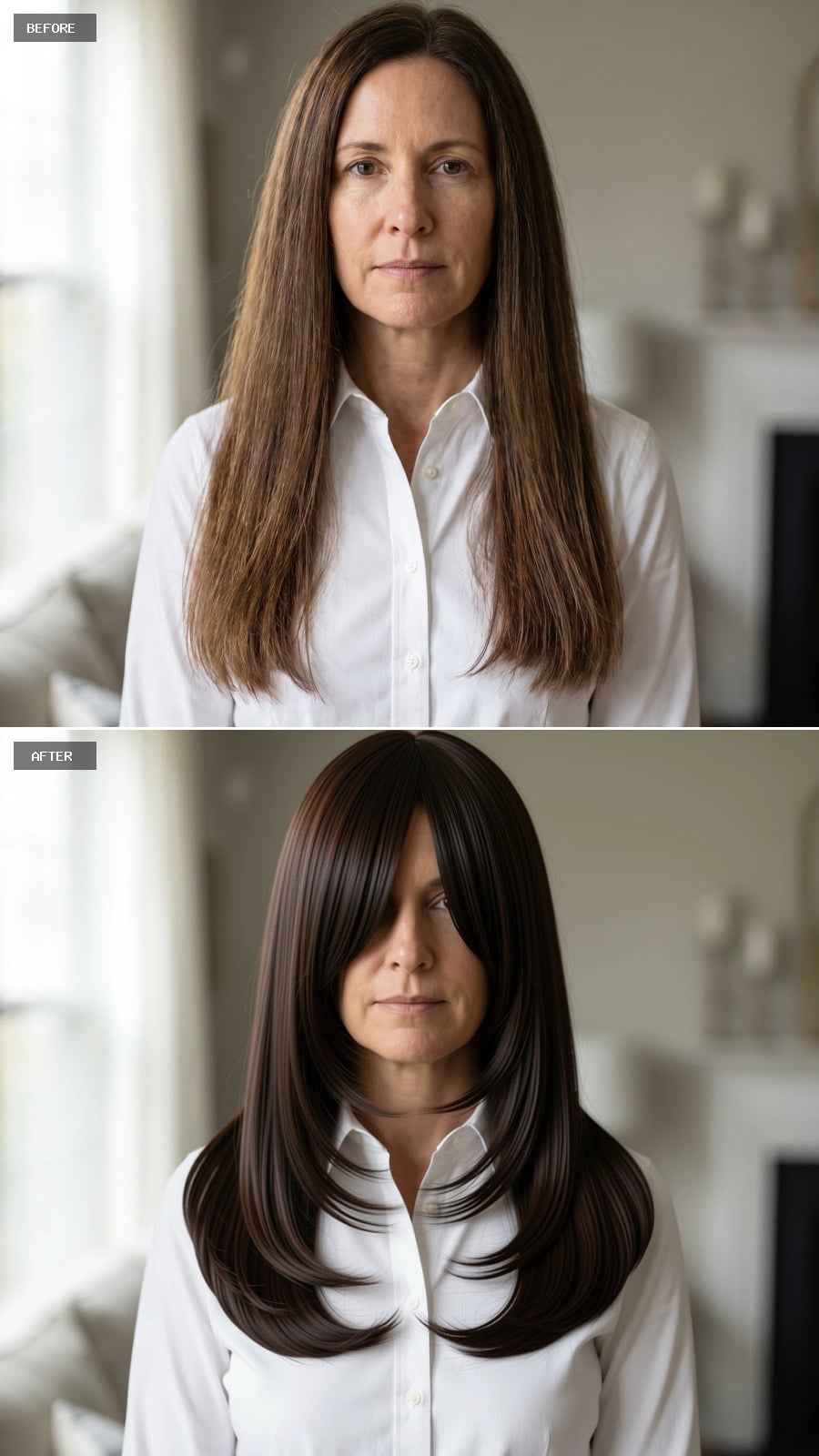
Deep espresso stays glossy and largely monochromatic, so the cut has nowhere to hide. Face-framing layers sweep through the front and continue into longer sections across the shoulders and chest.
A long side fringe crosses part of the forehead, breaking the symmetry at the top. The layers themselves create enough changes in surface and direction that bright color isn’t necessary to explain where the shape begins and ends.
20. Copper Waves and Feathered Bangs Went Softer Around the Face
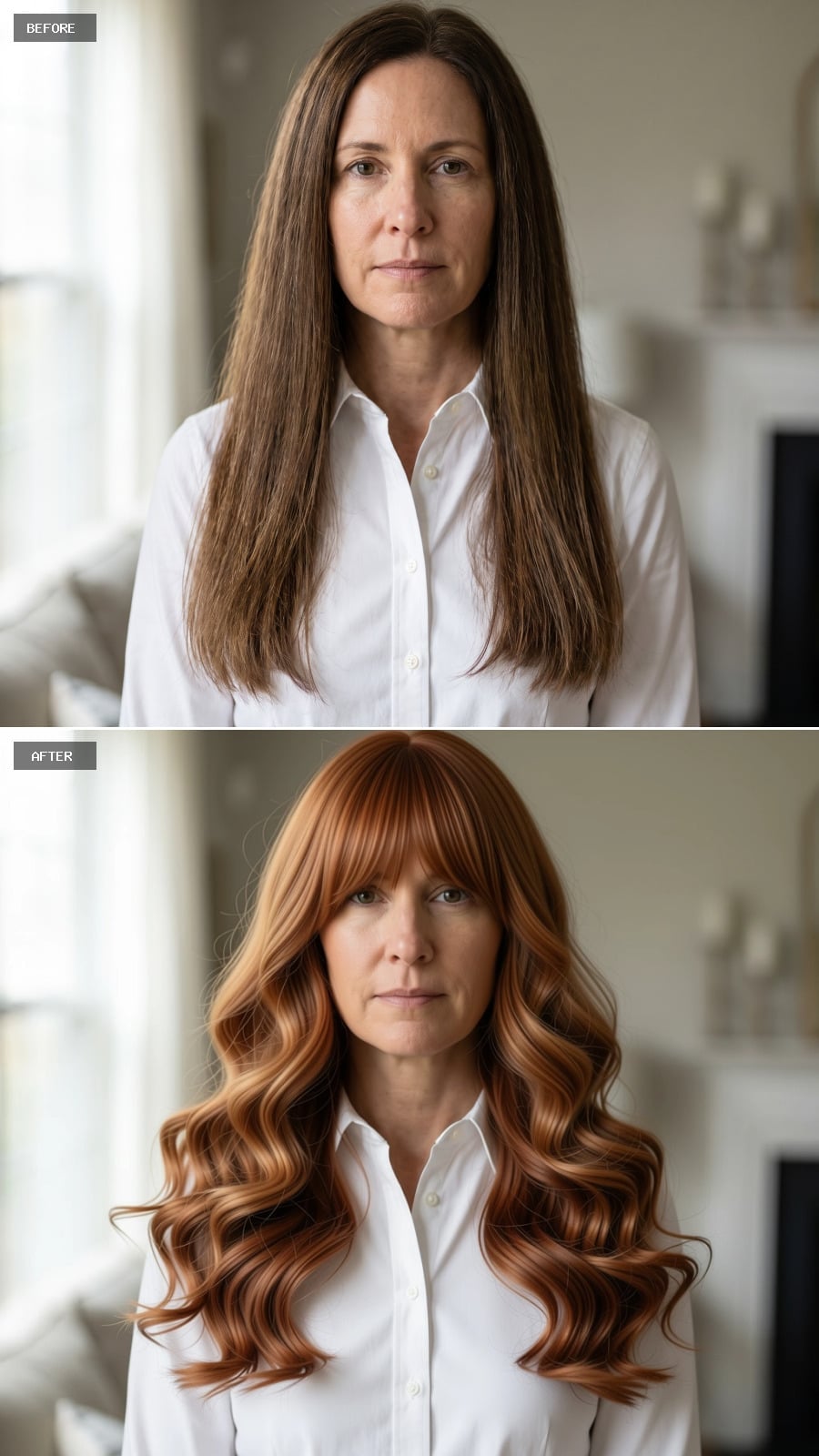
Auburn gradually warms toward copper and caramel through the lower lengths, giving the hair an almost sunlit transition from root to end.
The fringe sits across the forehead but has a softer edge than a heavy blunt bang. Below it, the waves widen through the middle and then curve back toward the body. The interest comes from that combination of soft fringe and large-scale movement rather than from extreme volume at the crown.
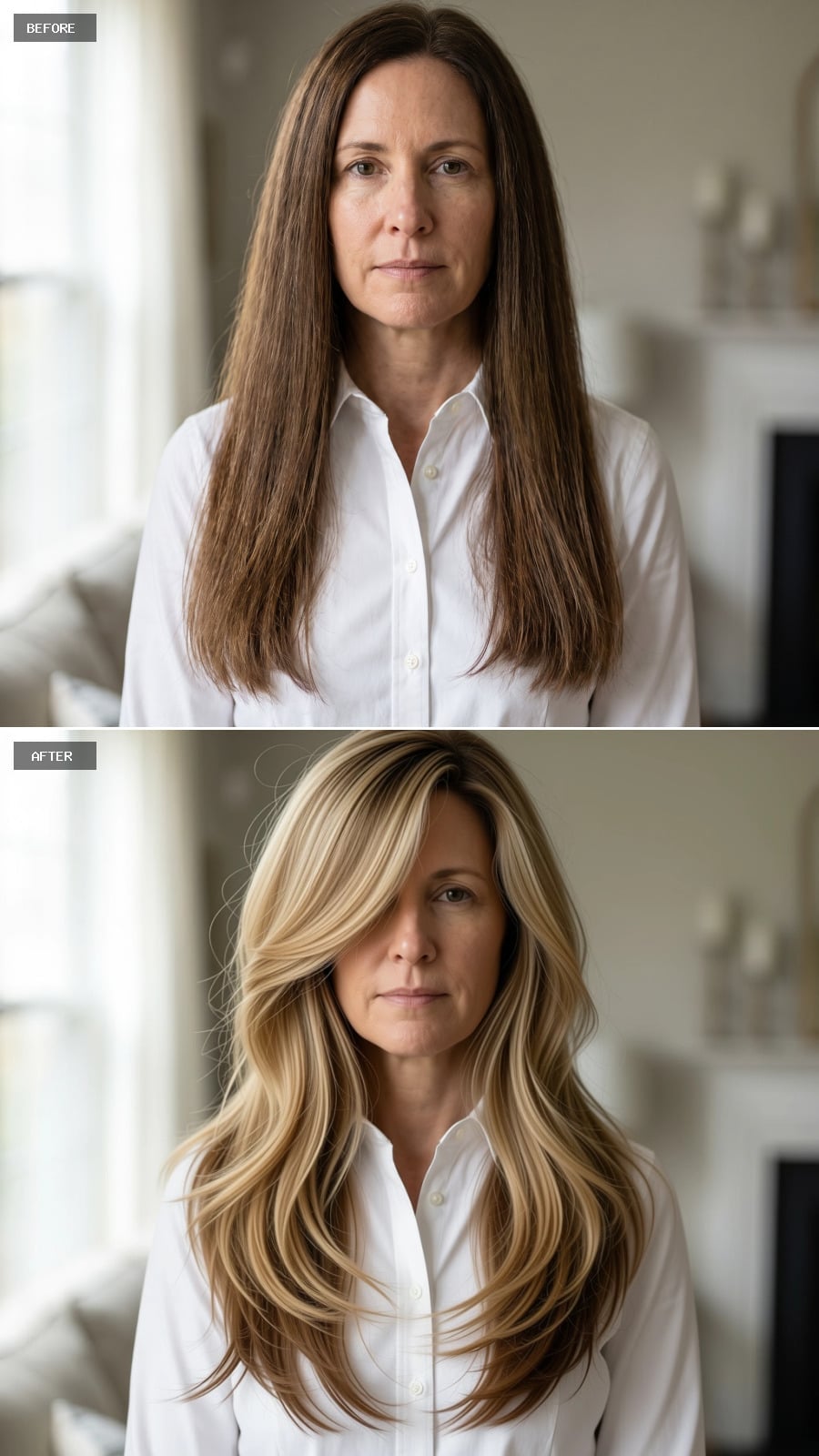
19. Voluminous Blonde Layers Made the Cheekbone Pieces Count
❤️ Would you like to save this?
Sandy blonde mixes with brighter ribbons near the face while a deeper honey-brown base remains visible underneath. That contrast makes the individual layers easy to see.
The shortest pieces sweep forward near the cheekbones before blending into longer hair below. Instead of asking the entire style to create one enormous wave, the cut uses several lengths to keep the front active and the lower section flowing.
18. Burgundy Waves Curved In Instead of Fanning Out
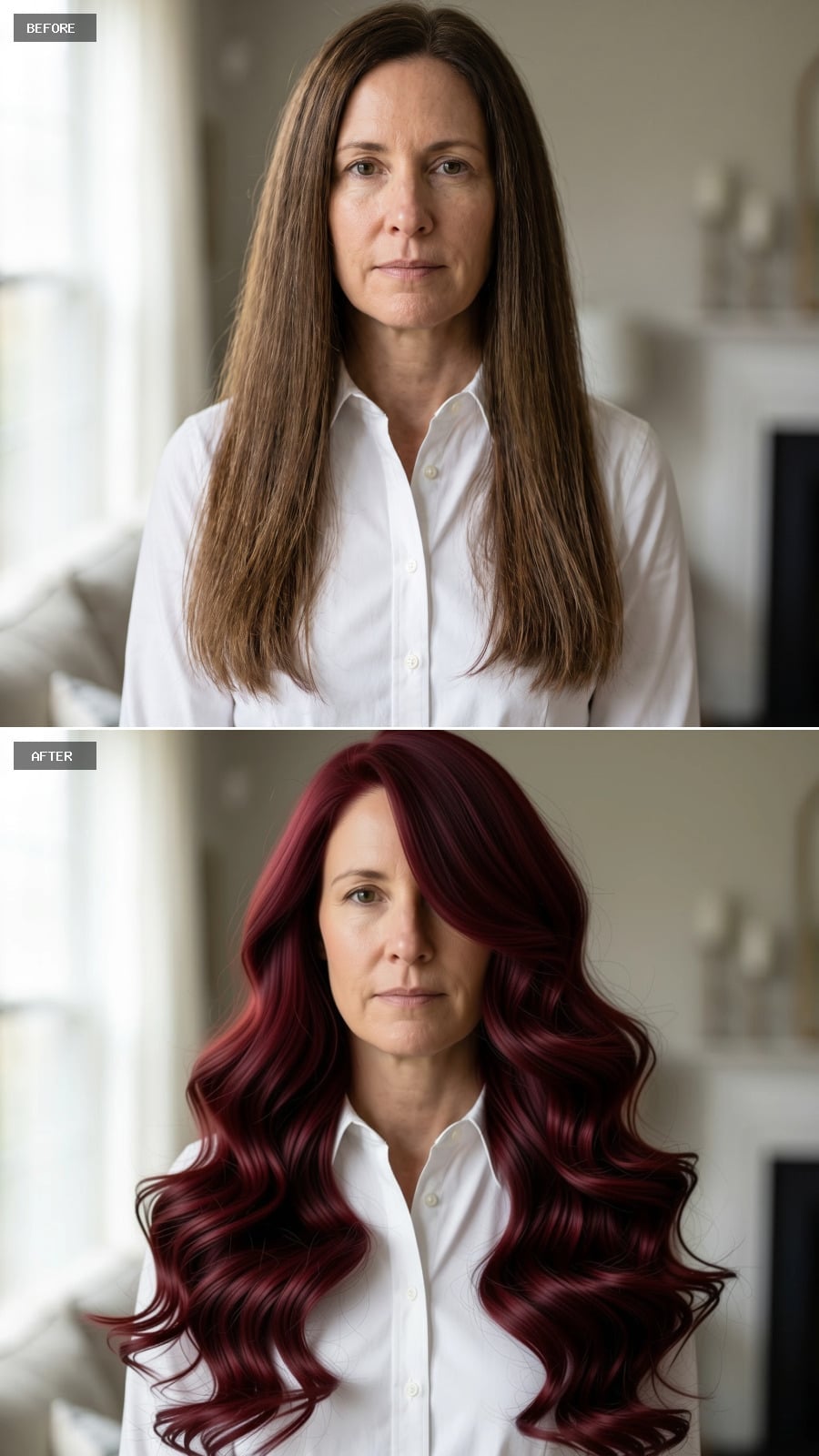
Deep burgundy immediately separates this look from the parade of caramel and blonde balayage. Violet undertones make the darker roots look especially rich, while the mid-lengths catch enough light to show the wave pattern.
The important shape happens at the ends. Instead of spreading straight outward, the large bends turn back toward the body, containing all that volume within a more controlled outline.
17. Curtain Bangs and Caramel Ribbons Broke Up a Dark Brunette Base
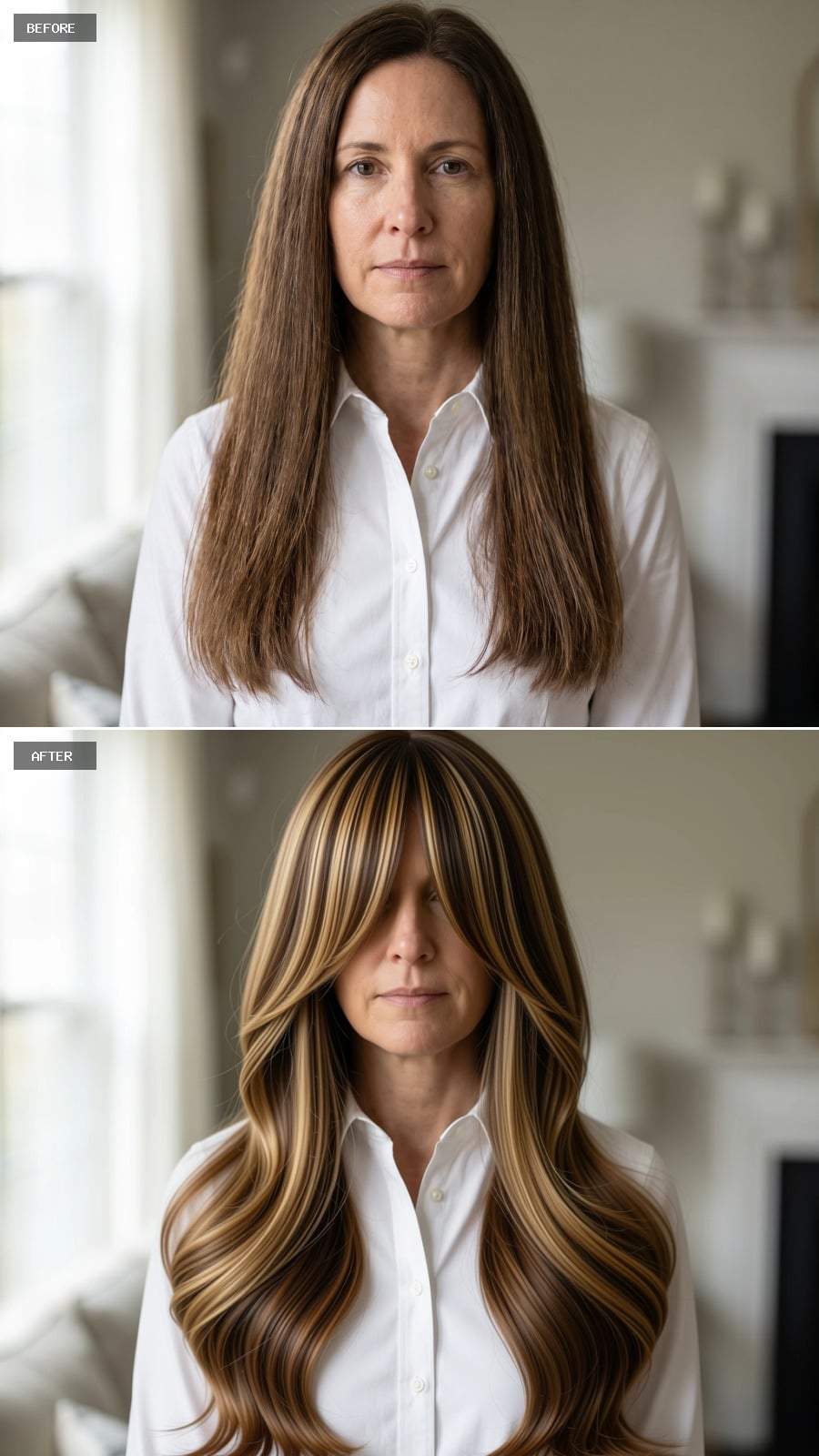
Here, the fringe and the color are working together. Curtain bangs open around the face while honey and golden pieces begin nearby and continue through the mid-lengths.
Because the roots stay dark, the brighter pieces don’t turn the top of the head into one solid halo of blonde. Long layers start around the cheekbones and continue downward, giving the lighter sections several different surfaces to move across.
16. Balayage and Soft Curls Made the Length Feel Airier
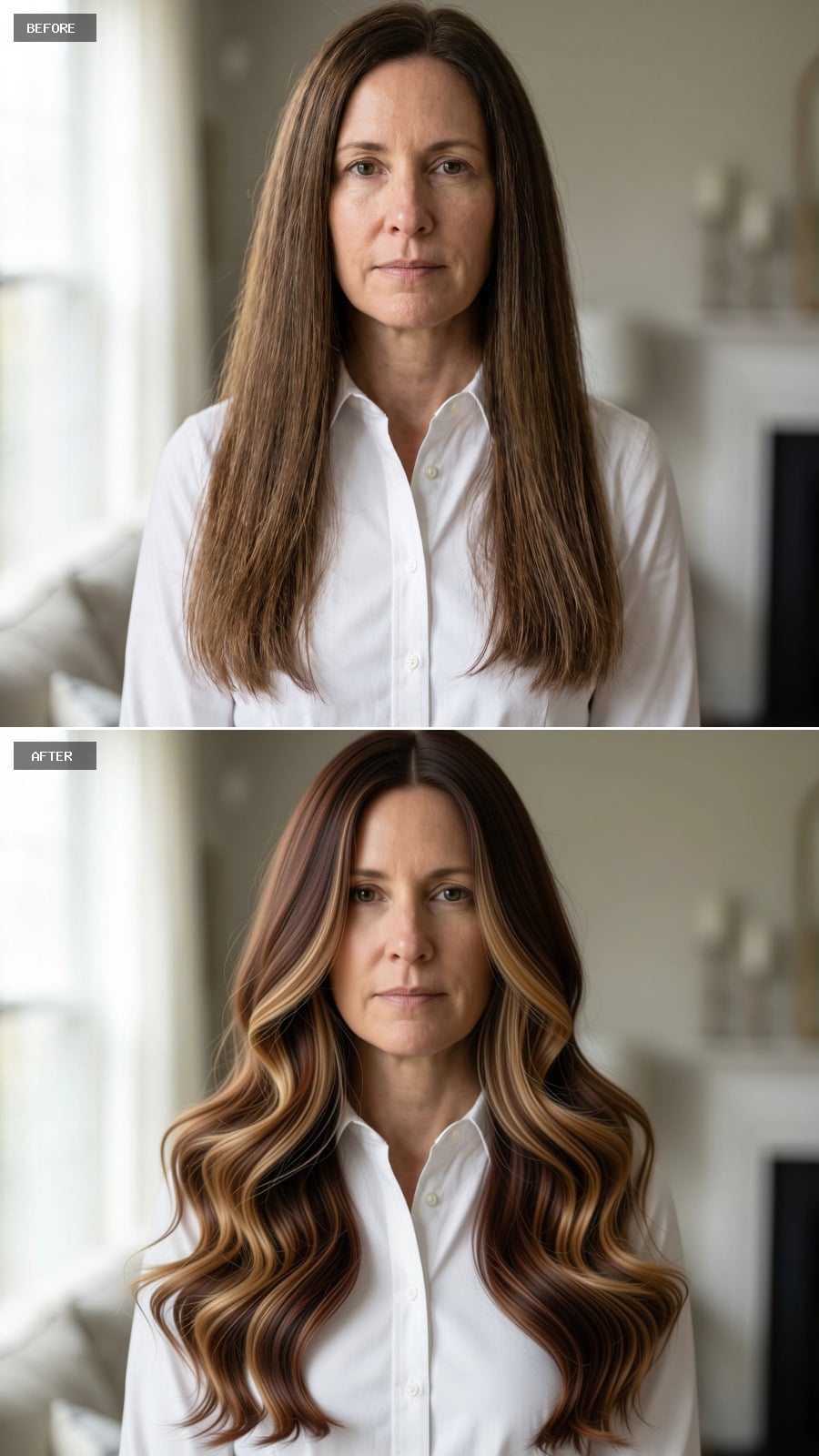
Caramel and honey emerge gradually from the dark brown base instead of beginning in obvious stripes near the scalp. Around the face, those lighter sections become more visible and give the curls additional depth.
The curl pattern is the main difference here. Rather than a series of shallow bends, these sections roll into fuller curves before loosening toward the ends, making the length look buoyant instead of dense.
Color Note: Face-framing balayage can brighten the area around the complexion without requiring the entire head to go lighter. The exact placement should follow the cut, natural color, and the amount of contrast you actually want rather than one universal measurement from the hairline.
15. Long Brown Hair Got More Structure From Fringe and Inward Waves
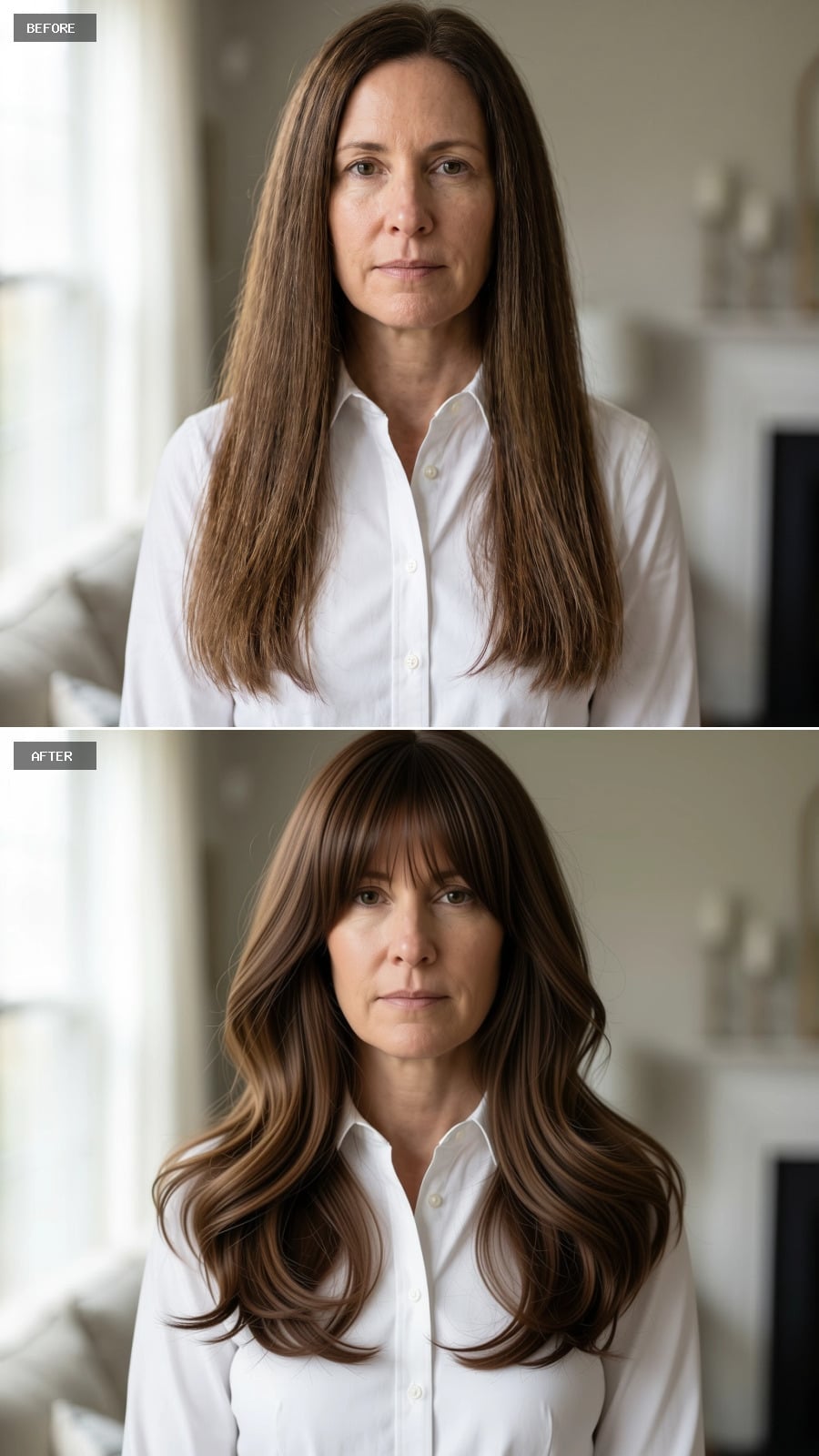
A full fringe gives the front a defined edge before the rest of the hair falls into long layers. Warmer ribbons through the mid-lengths keep the brunette from reading as one dense block.
The ends curl inward instead of spreading straight across the shoulders. That change of direction is enough to make the lower half of the style look shaped rather than simply long.
14. Blonde Waves Used Taper Instead of a Blunt Perimeter
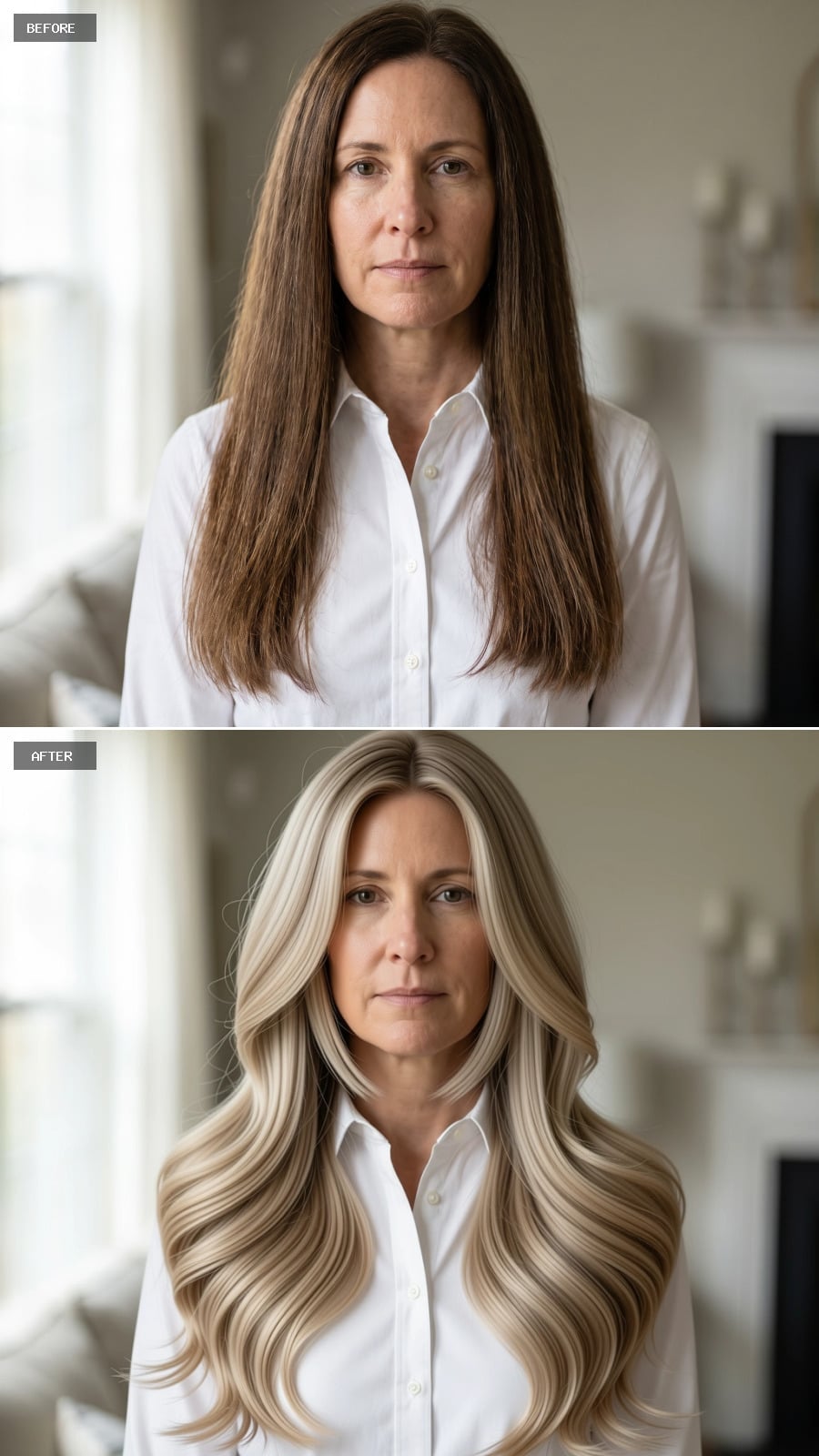
Loose blonde waves carry plenty of volume through the middle, but the ends don’t finish as one thick horizontal shelf. They narrow gradually, which gives the length a lighter perimeter.
Cooler blonde near the roots becomes brighter through the lengths, with the palest sections around the face. Cut and color are doing different jobs: the taper controls the outline while the tonal variation keeps the surface from looking flat.
13. Creamy Blonde S-Waves Created Movement Without Giant Curls
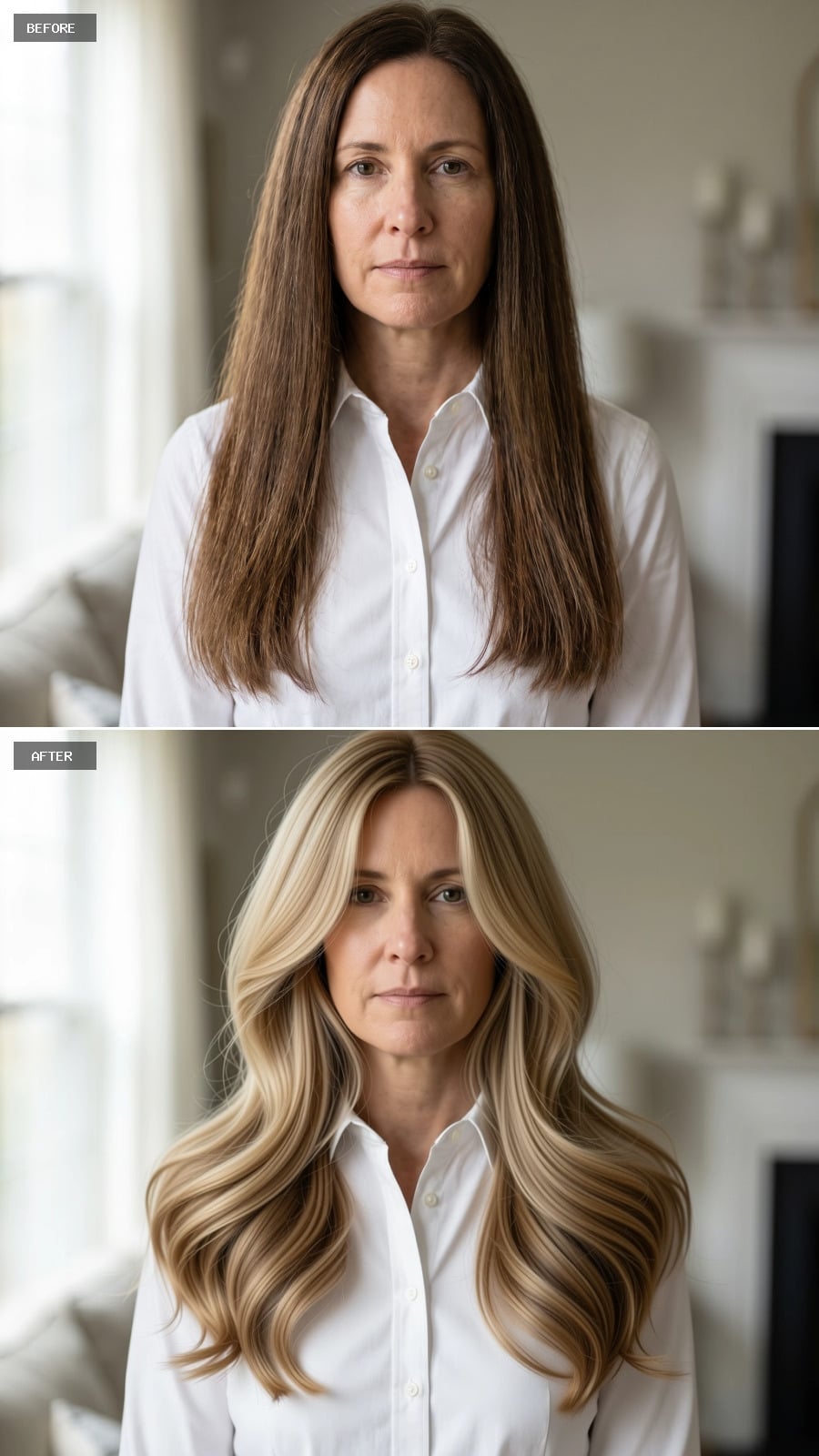
Cool creamy sections frame the face before blending into deeper blonde farther back. The color is noticeable, but it isn’t the only reason the style looks different.
The waves form elongated S-shapes instead of round curls. They bend through the length, open slightly past the collarbone, and keep the hair in motion without producing a wide triangular silhouette.
12. Auburn Bangs and Layered Ends Made Long Hair Feel Finished
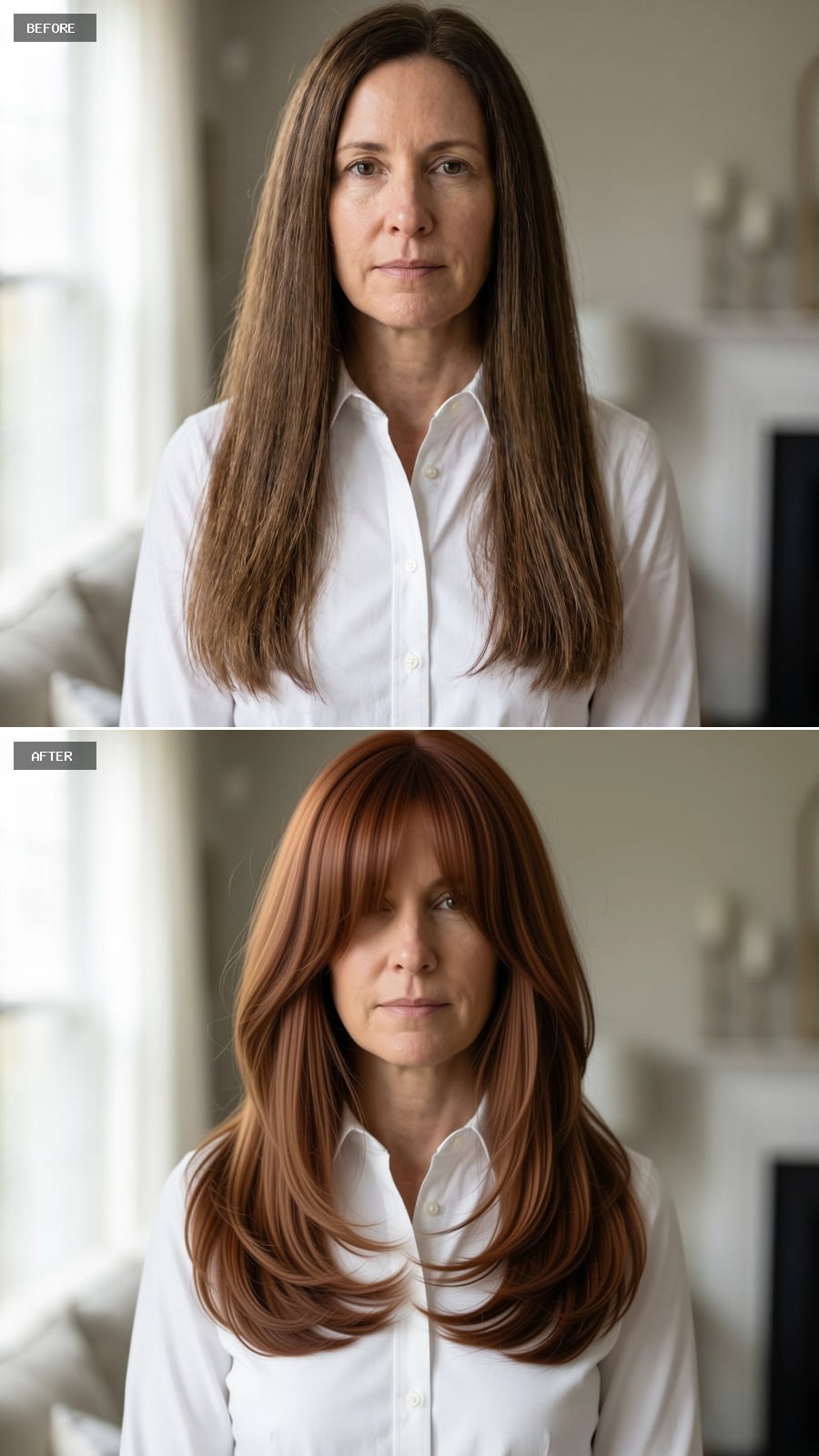
Warm auburn deepens at the roots and brightens toward copper through the mid-lengths, giving the color enough variation to reveal the movement in the cut.
The fringe sits just above the brows, while layers begin farther down and fan away from the chin before curving inward toward the ends. Keeping long hair doesn’t require accepting flatness; it requires deciding what the length is actually supposed to do.
11. Caramel Highlights Put the Movement in the Lower Half
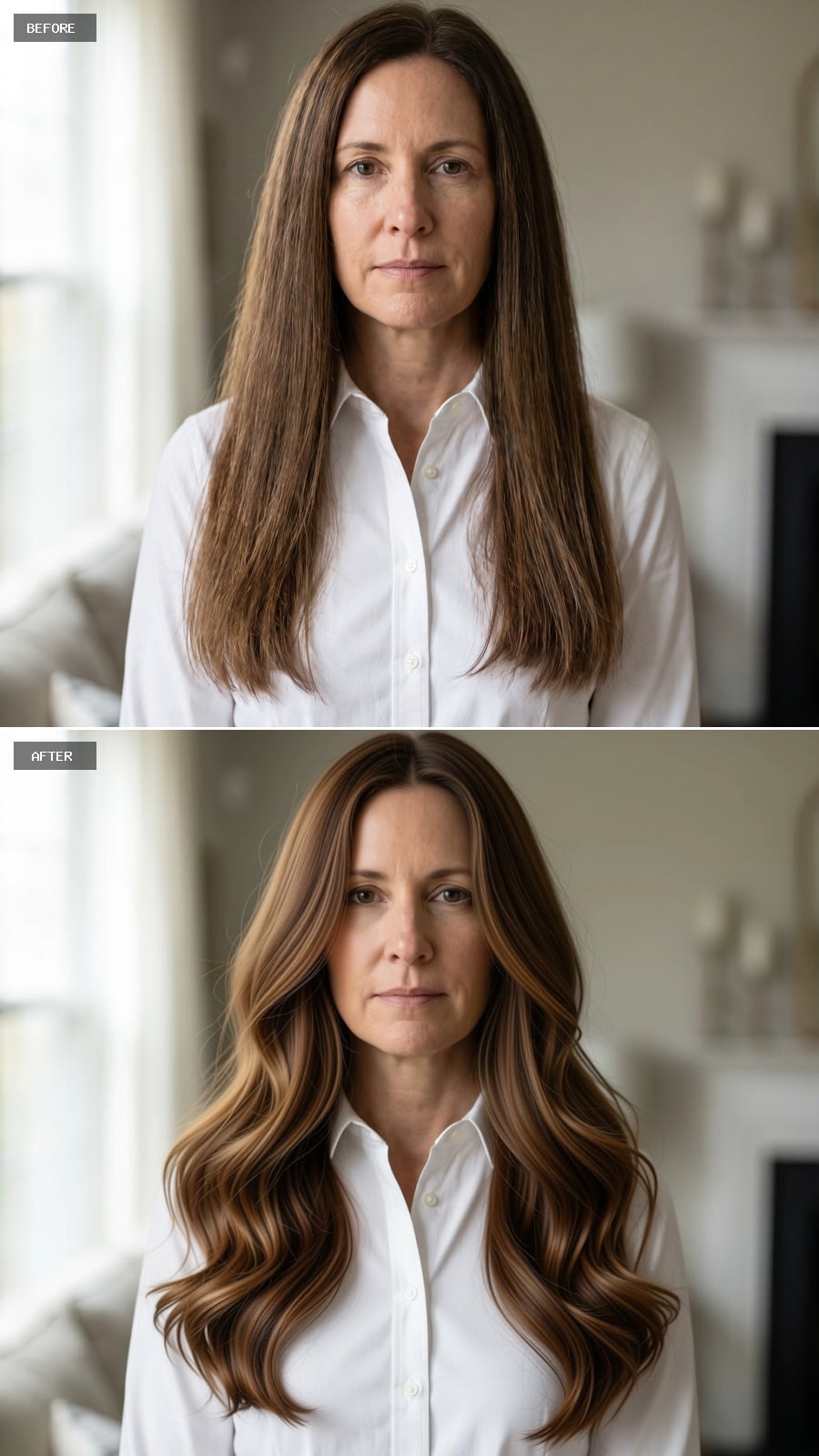
The top stays relatively controlled while broad waves begin through the mid-lengths. That keeps the movement concentrated where the hair has enough length to show it.
Caramel strands sit over a medium-brown base, becoming brightest around the face. The result feels fuller through the ends without needing a huge amount of root lift.
10. Staggered Blonde Waves Kept the Texture From Looking Too Perfect
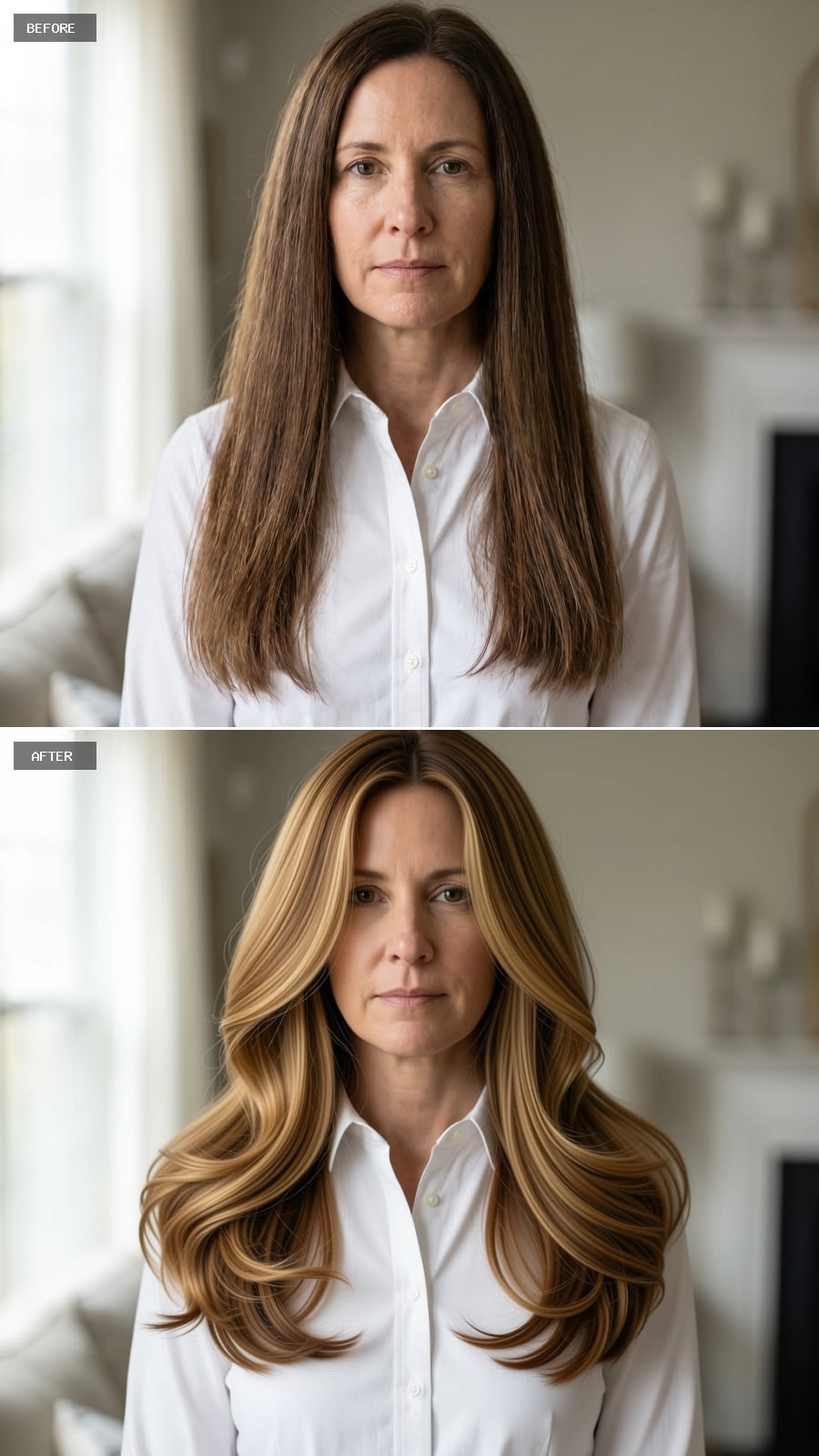
Instead of every section bending at the same height, these blonde waves begin and end at slightly different points. That stagger is what keeps the style from turning into a row of identical curls.
Brighter pieces gather around the face while deeper blonde remains underneath. The visual interest comes from variation: different tones, different bends, and enough irregularity that the volume looks soft instead of engineered.
9. Caramel Ribbons Made the Layers Easier to Read
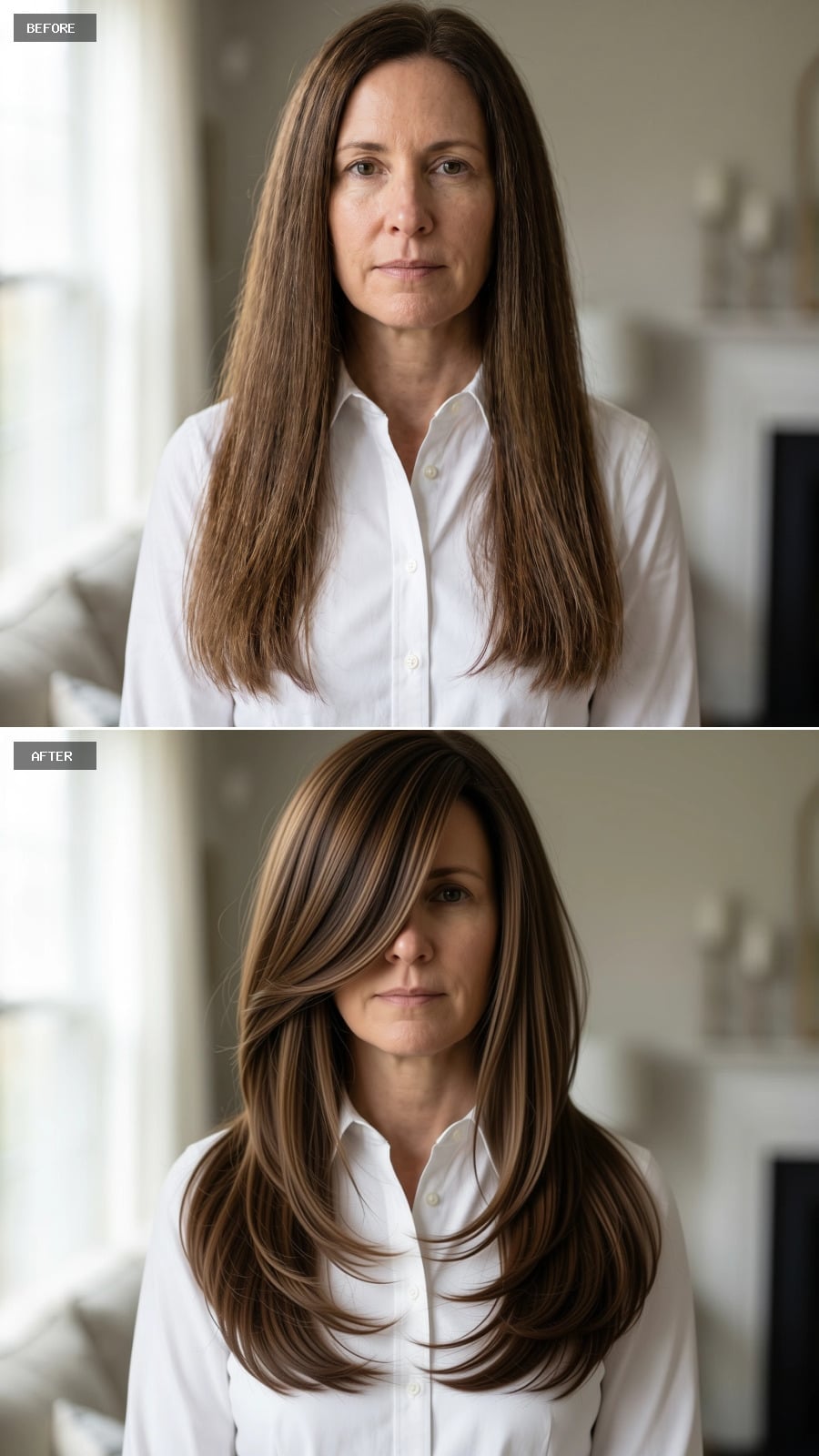
Long layers break up what could otherwise be a heavy brunette perimeter. Caramel ribbons travel through those sections vertically, showing exactly where one layer separates from another.
A side-swept front section adds asymmetry without becoming full fringe, while the lower layers taper through the collarbone and chest. The hair stays long, but the outline no longer depends on length alone.
How to Wear It: A round brush can emphasize separation between long layers without turning the roots into the highest-volume part of the style. Finish the ends with only enough smoothing product to define the shape; too much can collapse the movement the cut was designed to create.
8. Going Blonde Made the Side-Swept Fringe Impossible to Miss
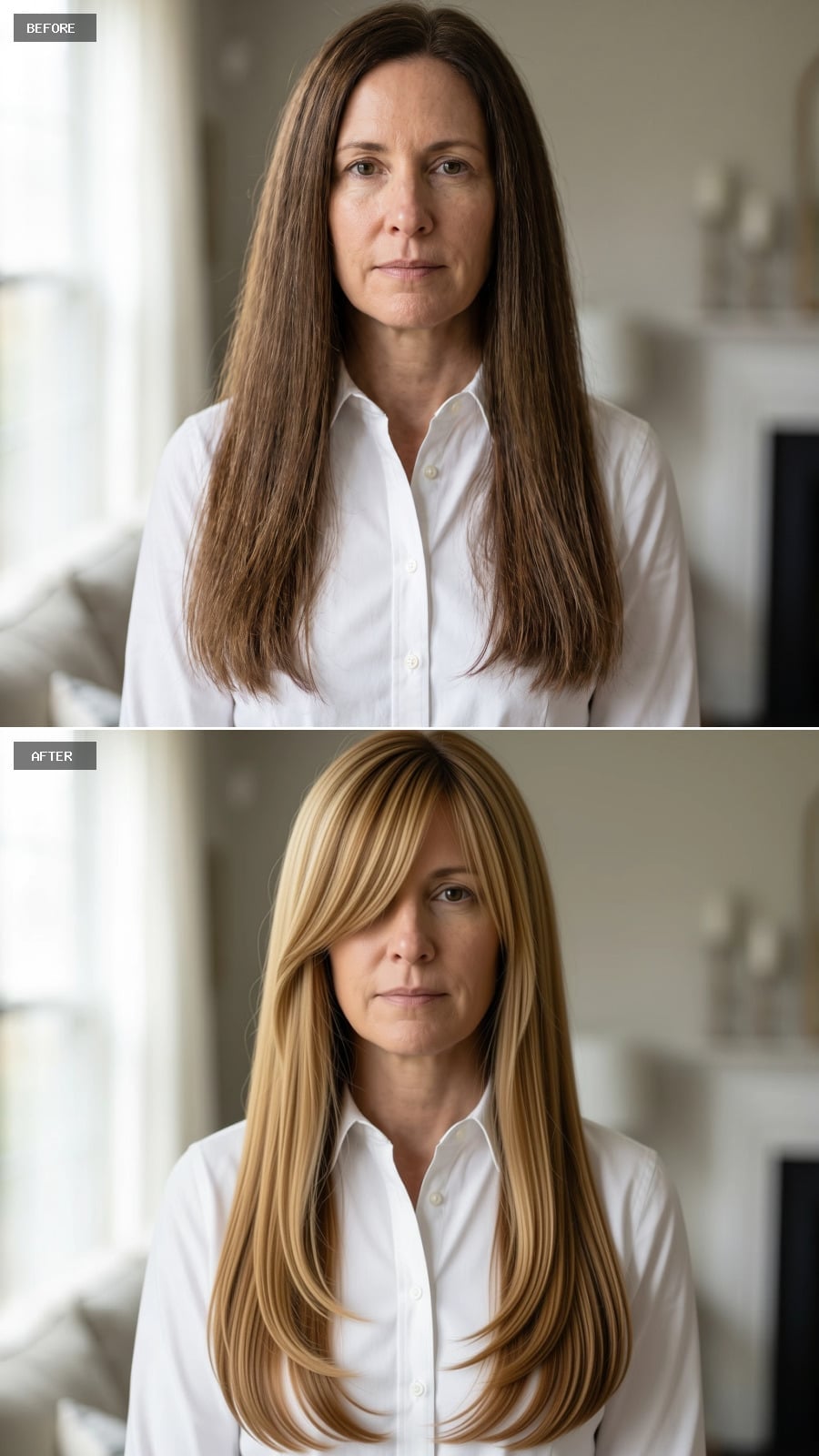
Warm golden blonde makes the front layers considerably more visible than they would be in a dark single-process color. The lightest sections sit closest to the face, while deeper blonde underneath keeps the result dimensional.
A side-swept fringe changes the line across the forehead without removing length from the rest of the style. Farther down, slightly varied layer lengths break up the wall-of-hair effect and let the ends move independently.
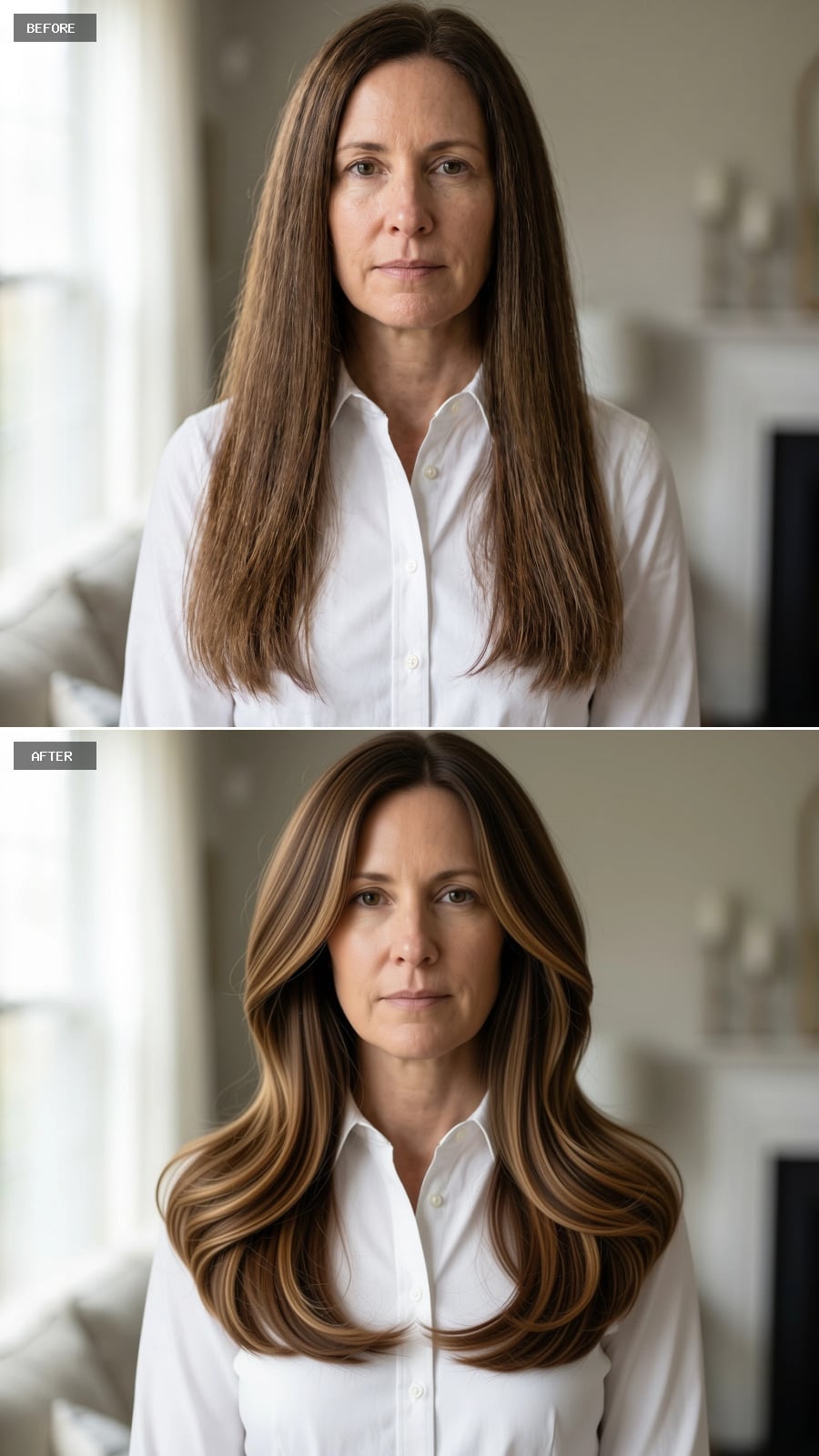
7. Big Balayage Waves Used Contour Instead of Sheer Width
❤️ Would you like to save this?
Caramel highlights sit closest to the face before deepening through the rest of the brunette base. That contrast gives the front more definition without requiring a drastically lighter overall color.
The waves are broad, but their outline matters more than their size. They round through the mid-lengths and tuck back toward the body near the ends instead of simply expanding wider and wider.
6. A Rounded Layer Pattern Changed the Shape of Blonde-Brunette Hair
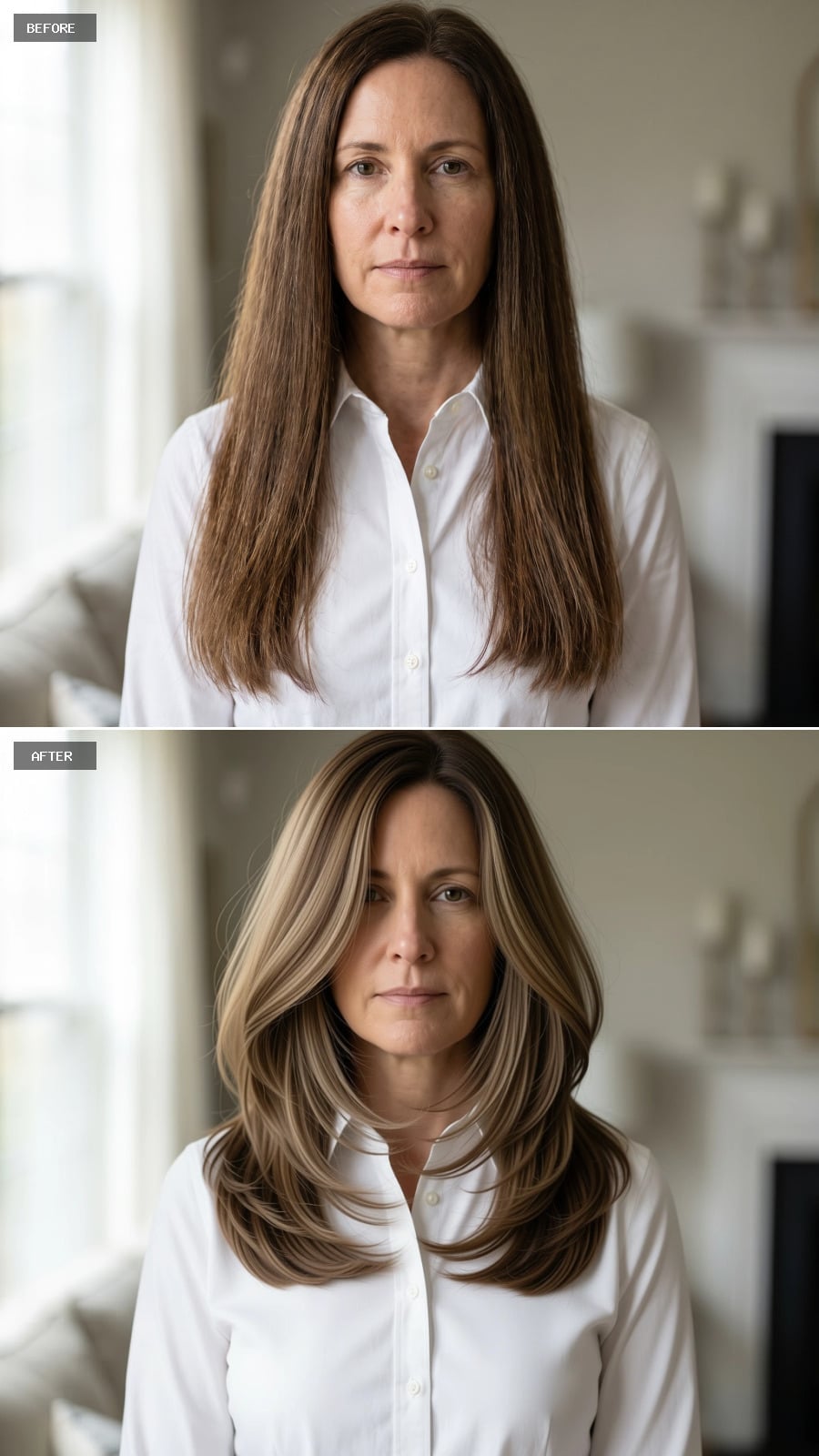
Wheat and blonde tones move through the brunette base, but the real distinction is the rounded sweep of the layers. Shorter pieces sit around the face before blending into longer sections toward the collarbone.
The flicked ends keep the perimeter animated instead of heavy. Highlights make that movement easier to see; they don’t have to pretend to be the reason the shape exists.
5. Cascading Balayage Put the Brightest Color Near the Ends
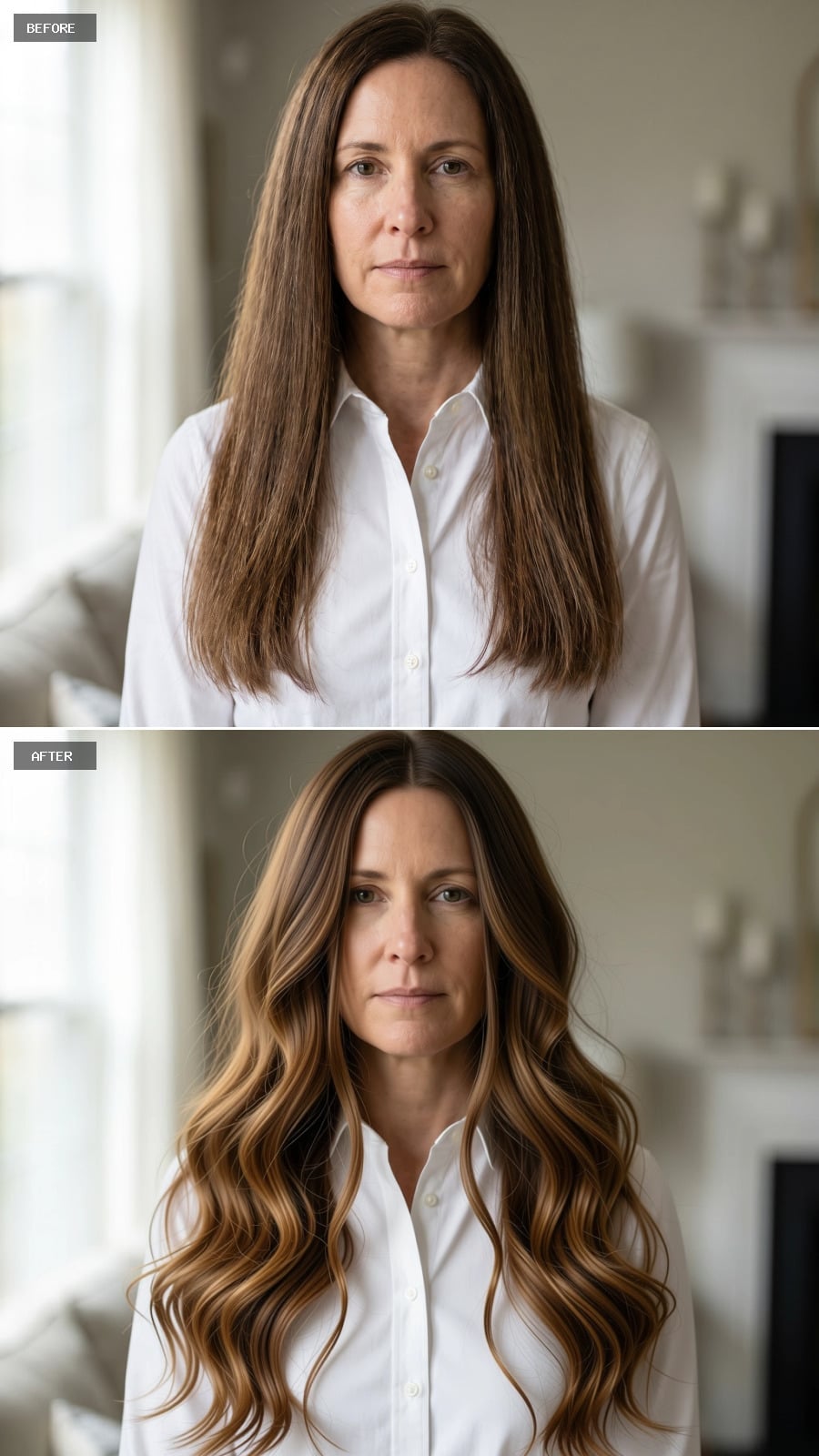
Chestnut and caramel brighten progressively through the lower lengths, giving the ends more visual separation than the darker upper section.
The waves cascade rather than stack into one huge volume point. Each bend feeds into the next, making the hair look less like a single long sheet and more like several moving sections sharing the same length.
4. Wide Highlight Ribbons Made Big Hair Look Intentional
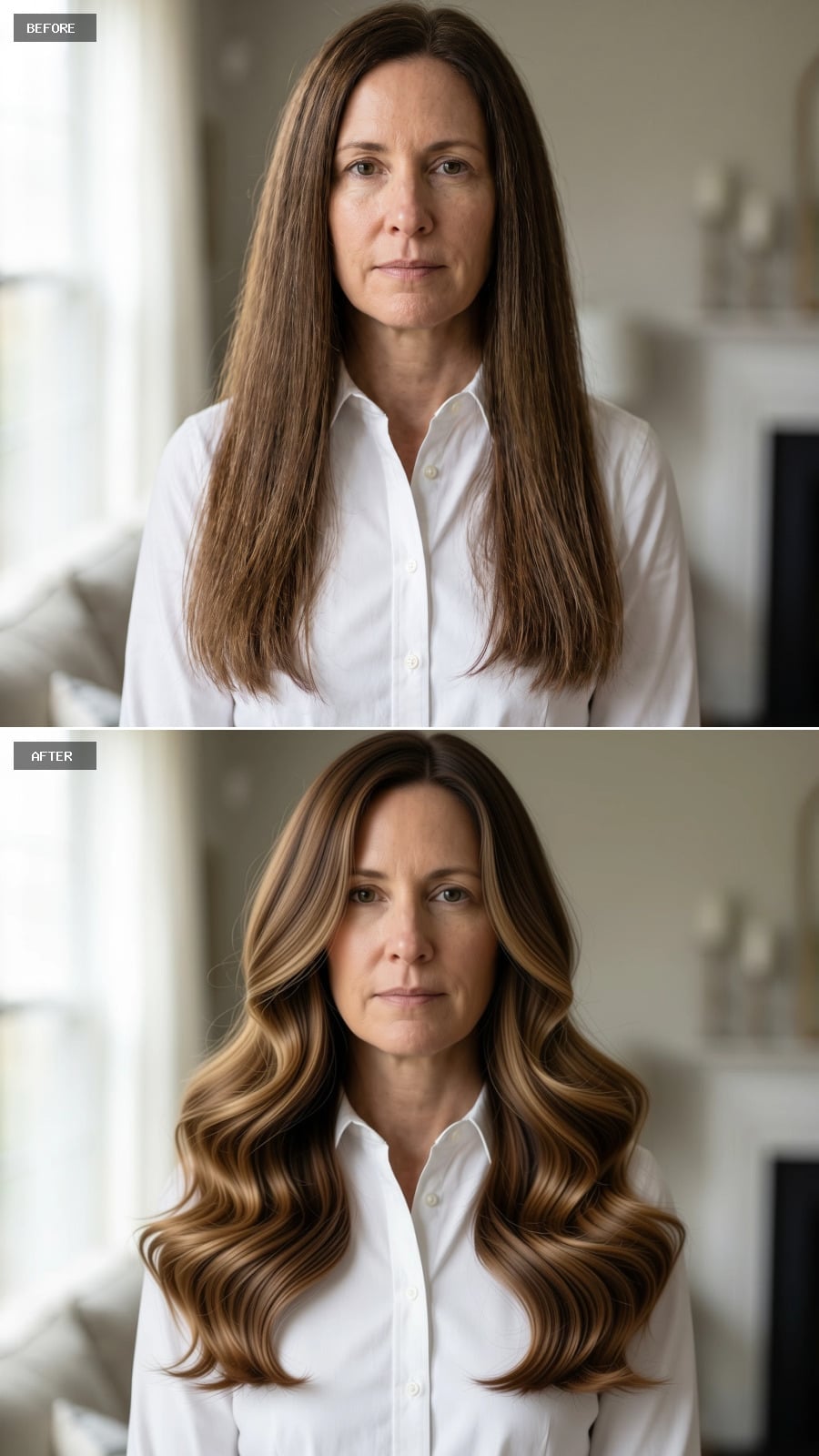
This one isn’t afraid of volume. Caramel and golden sections run broadly through the dark base, making the bends visible even from a distance.
The waves expand through the cheek and shoulder area before narrowing slightly toward the ends. Face-framing honey pieces keep all that dark hair from closing around the face.
Try This: Broader highlight sections create stronger visible contrast than very fine ribbons. If the goal is to emphasize movement, the color placement should follow the wave pattern and haircut rather than being treated as a separate decision.
3. Chestnut-to-Bronze Balayage Warmed Up the Body Waves
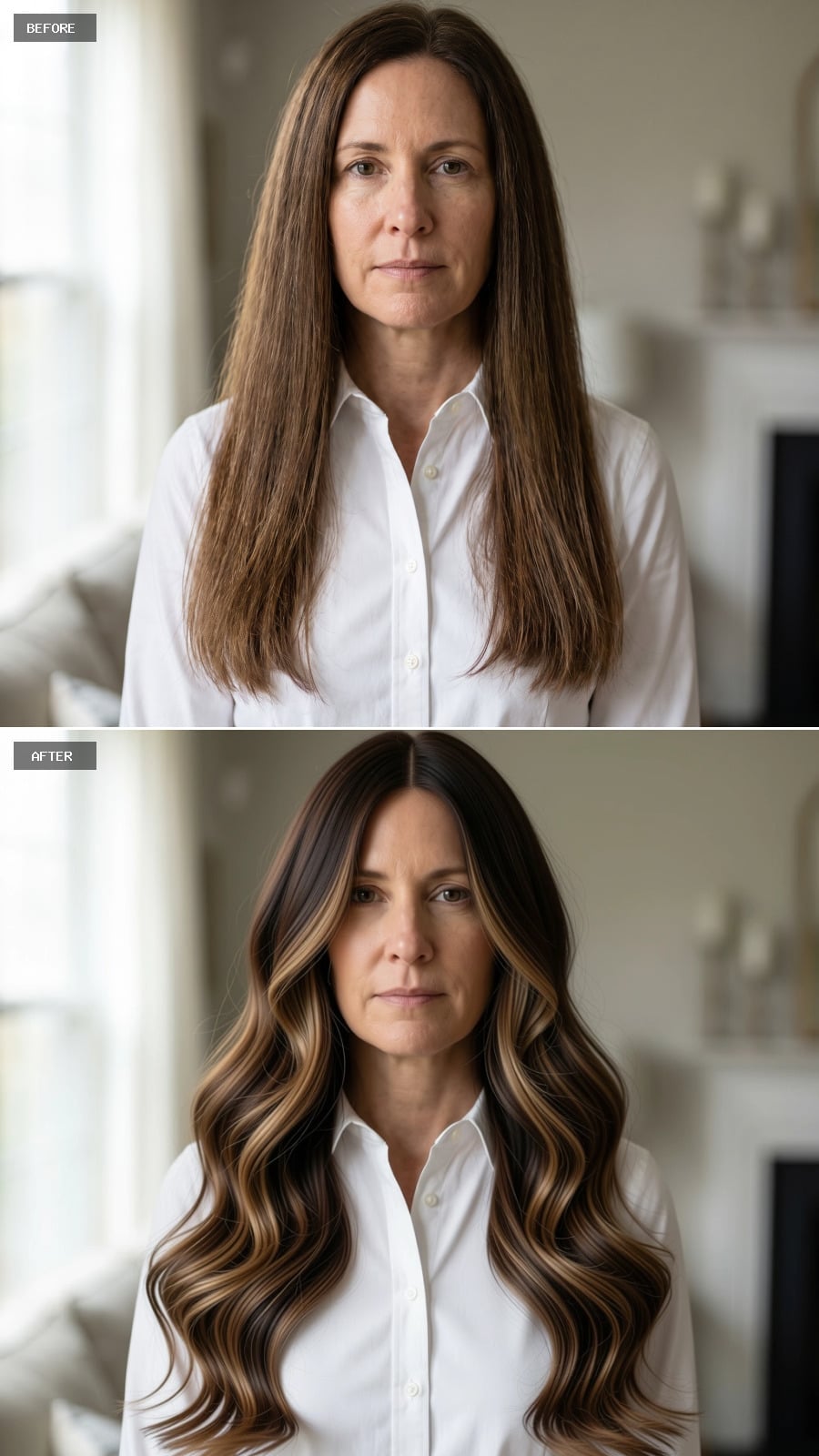
Warm chestnut and bronze pieces move through a dark brown base without ever turning the hair fully blonde. That narrower color range gives the style depth while keeping the overall impression brunette.
Body waves begin around the middle rather than right at the scalp. They open as they fall, providing movement through the longest section while the upper hair remains comparatively sleek.
2. Caramel Ends Let the Roots Stay Dark and Quiet
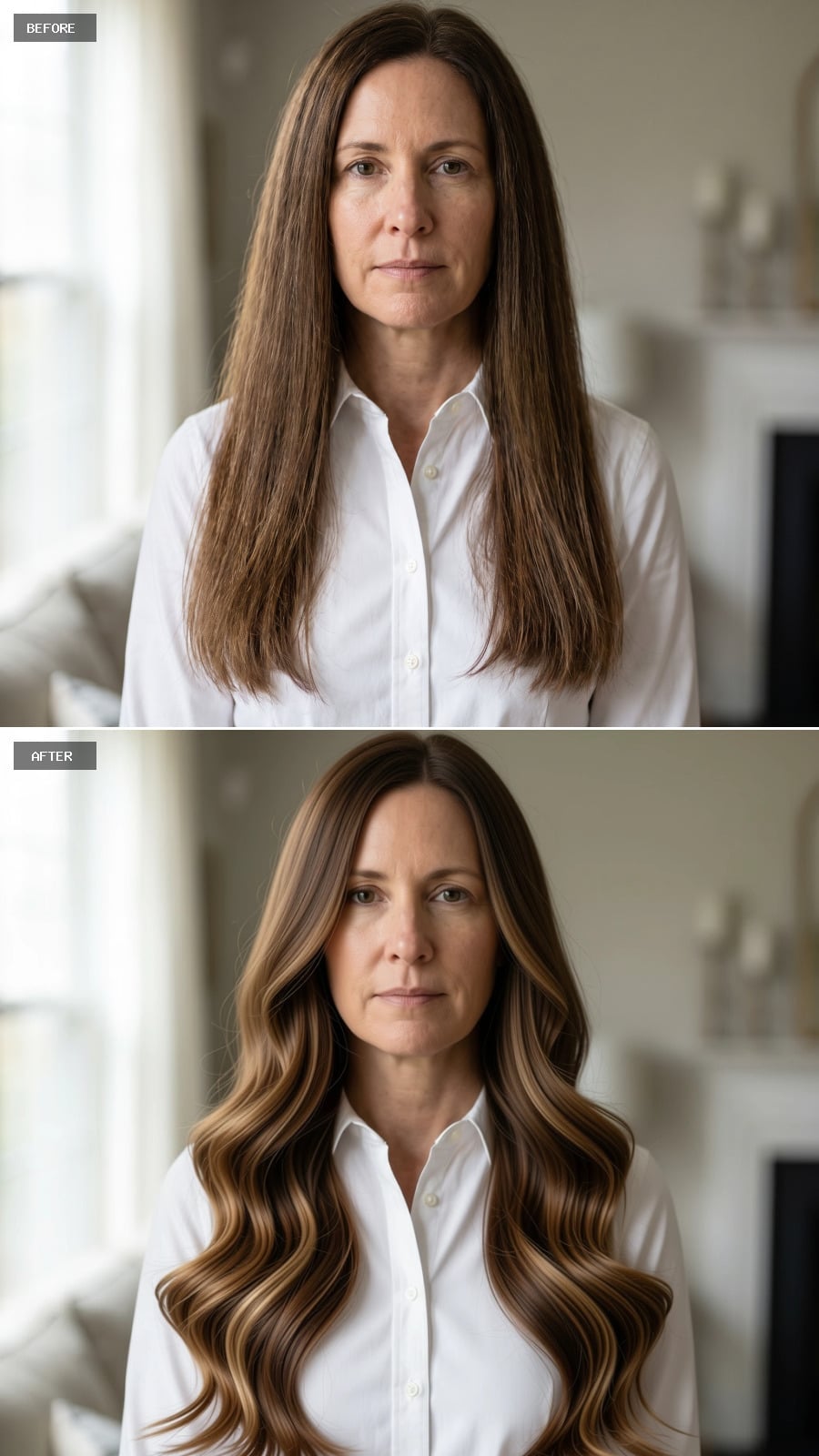
Here the balayage waits until farther down the shaft to become obvious. The darker roots and upper lengths stay visually calm while caramel becomes progressively brighter toward the ends.
That creates a different effect from face-framing brightness at the scalp. The eye notices the movement and color through the lower hair, where the body waves have enough space to spread before tapering again.
1. Gray Balayage Finished the Series by Making Long Silver Hair the Point
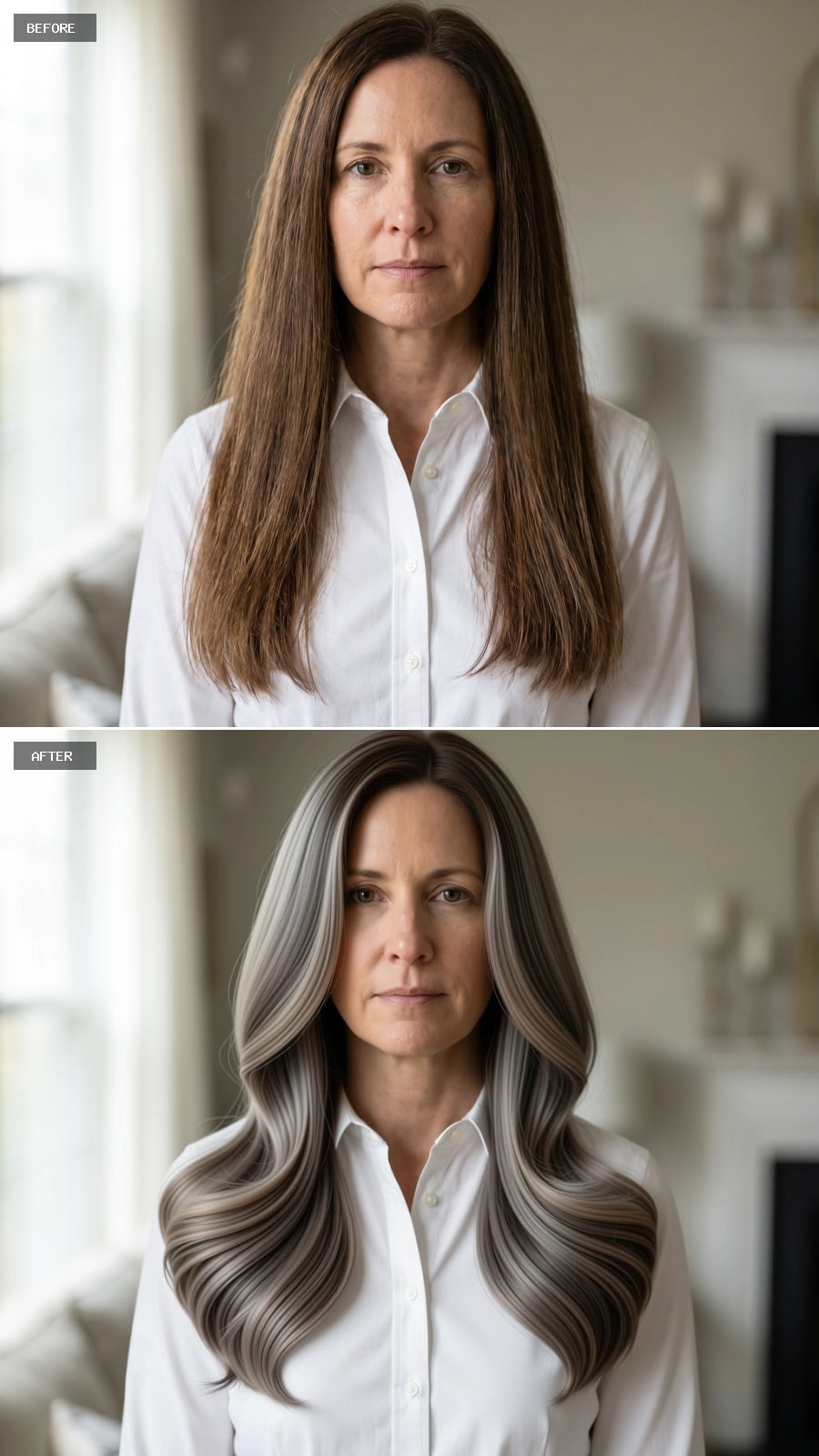
Broad gray and silver sections move through the darker base instead of trying to disguise every transition between the two. The tonal variation makes the large waves visible from root to end without turning the result stripey.
The widest movement happens through the lower half, where the hair has room to curve outward before settling back toward the body. There is still plenty of length, plenty of volume, and plenty of gray.
Which is a fitting place to end. Looking more balanced never required making the hair smaller, younger, or shorter. It required giving all that length a shape worth keeping.