
❤️ Would you like to save this?
The silk blouse you love but never wear because washing it is a whole production. That necklace clasp that defeats you at 7am. The skirt that rides up the second you stand. None of this is a personality flaw. These are fixable problems, and most of the fixes take a needle, a cobbler, or a five-dollar gadget from a drawer somewhere. The best wardrobe upgrades after 40 are the ones nobody can see — they live inside the seams, under the heels, behind the collar. Below are the ones worth knowing, starting with the tricks experienced dressers swear by and almost nobody bothers to mention.
FYI, thanks to AI imagery software, we’re able to create very specific fashion and hairstyle examples to illustrate the points being made. In some cases, imagery is exaggerated to hammer home the point. Also, assume links that take you off the site are affiliate links such as links to Amazon. this means we may earn a commission if you buy something.
32. Add Removable Dress Shields to Hard-to-Wash Tops

The silk blouse you avoid because dry cleaning costs more than the blouse did. Dress shields solve it. These quilted crescent pads snap in at the underarm seams, catch everything, and pop out for a rinse while the garment stays untouched between real cleanings.
Protect the fabric that can’t be washed easily and suddenly the thing becomes wearable on a Tuesday instead of a special occasion. A well-cut dress you actually reach for beats a pristine one hanging there unworn.
31. Sew Small Weights Into Skirt and Dress Hems
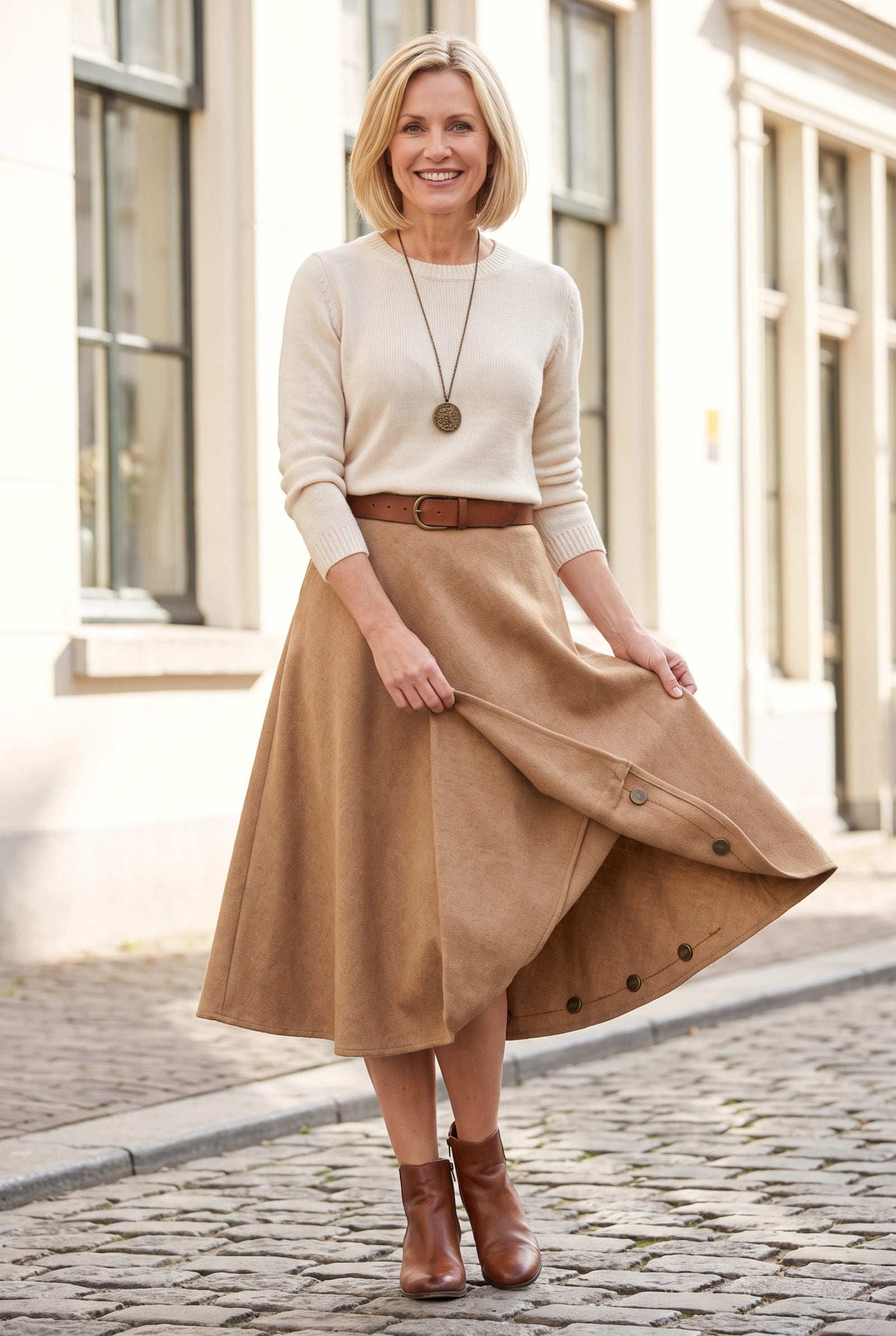
Lightweight skirts have a mind of their own. A breeze, a revolving door, a flight of stairs, and suddenly you’re the main event. Tiny drapery weights — the flat coin kind curtain-makers use, sewn into the hem — fix this for good.
They pull the fabric straight down so it hangs the way the designer intended, not the way the wind decides. The drape improves, the swing settles, and you stop doing that one-handed hem-press every time you stand near a vent.
30. Sew Bra-Strap Keeper Snaps Into Slippery Shoulder Seams
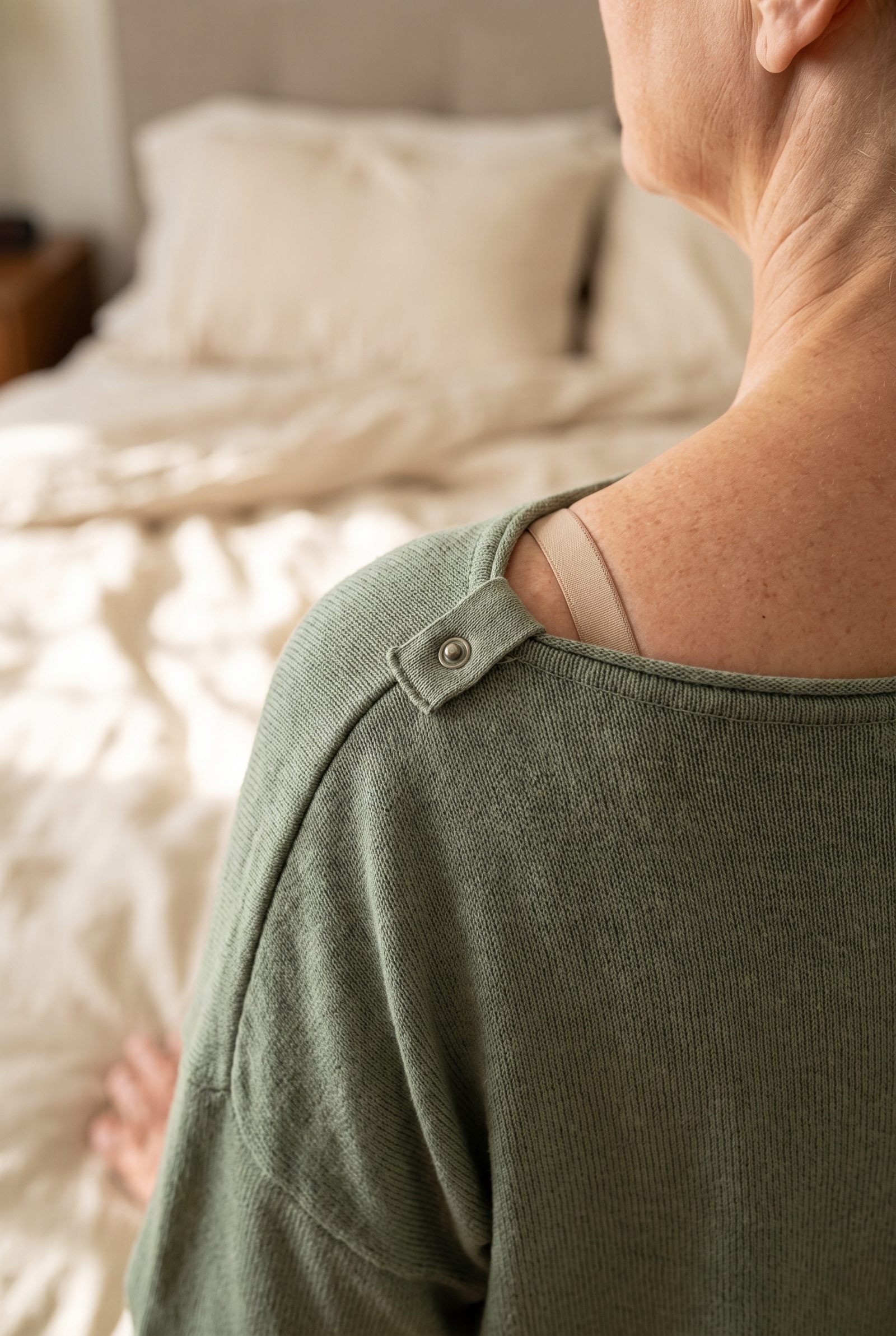
Wide-necked knit tops and bra straps have been at war since the invention of the wide neckline. The peekaboo strap. The constant shrug to tuck it back. A half-day of low-grade fidgeting.
A small fabric tab with a snap sewn inside the shirt’s shoulder seam ends all of it. The strap clips in, stays put, and your neckline sits exactly where you left it this morning. One snap, one stitch line, and the back-of-the-mind nagging goes quiet.
29. Have a Cobbler Add Rubber Half-Soles Before Leather Soles Wear
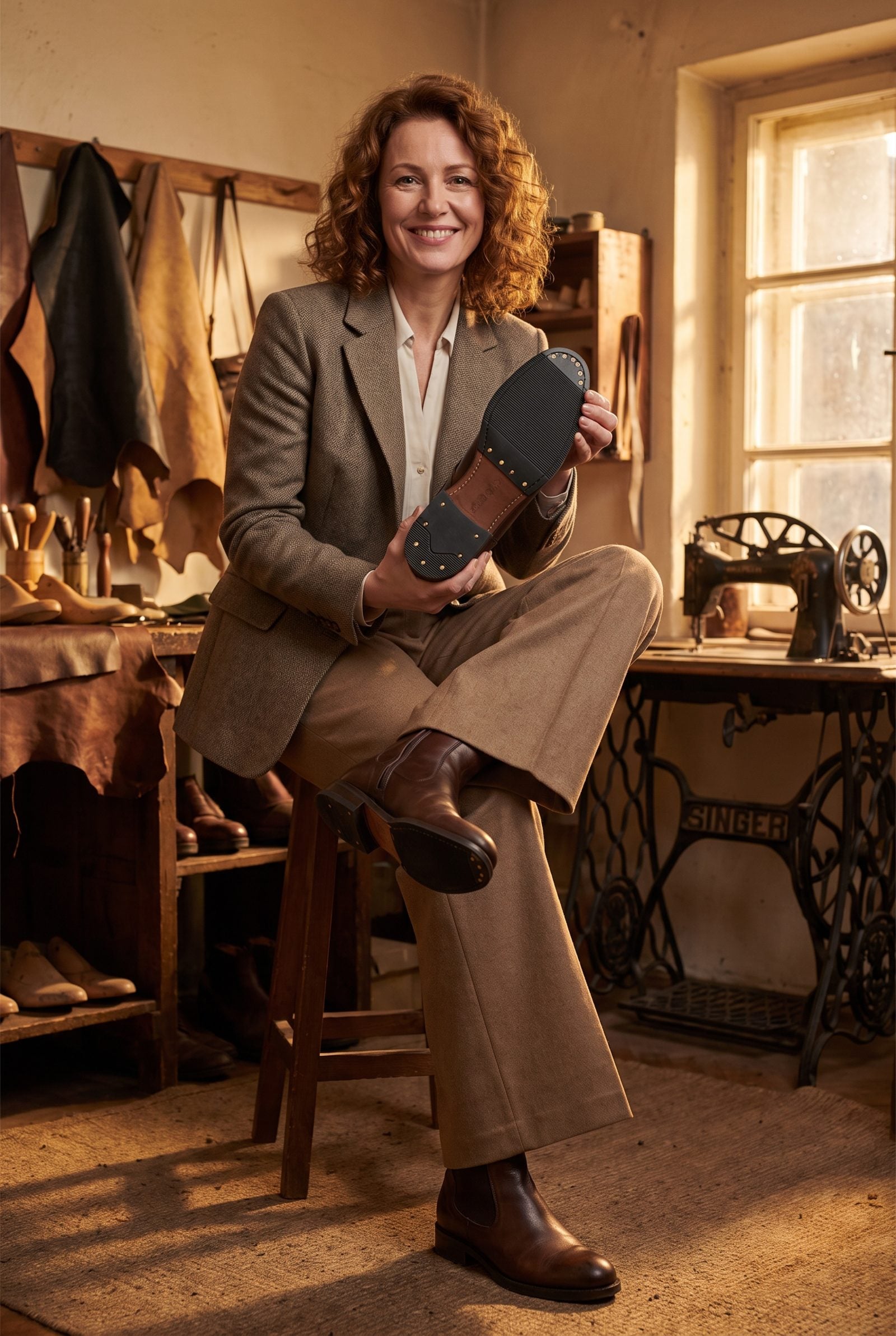
Do this the week you buy the shoe, not the week it starts to wear. A cobbler bonds a thin rubber half-sole to the front of a leather bottom — the part that takes the beating — before any damage happens.
What you get: traction on wet marble, a cushion against pavement, and leather soles that last years longer. Slick leather bottoms are elegant and genuinely treacherous on a rainy curb. Fix it before it becomes a fall.
28. Keep Hidden Button Extenders for Fluctuating Waistlines

Waistlines move. Day to day, meal to meal, season to season. A button extender — a little elastic loop with a button on each end — buys you an inch or two without a single alteration.
Tuck a few in your travel bag, your desk drawer, a coat pocket. The waistband that pinched by 4pm forgives you instead. No gaping, no digging, no deciding between comfort and the trousers you actually wanted to wear that morning.
27. Convert Fiddly Necklace Clasps to Magnetic Closures

Tiny spring-ring clasps are designed by people who have never once tried to fasten one behind their own neck. The dropped necklace, the contorted arms, the giving up and wearing nothing at all.
A jeweler swaps the clasp for a magnetic one in minutes. The two ends find each other and snap shut on their own. A delicate gold chain necklace goes from frustrating to fifteen-second, and you wear it three times as often.
26. Add Discreet Pull Tabs to Tiny Back Zippers
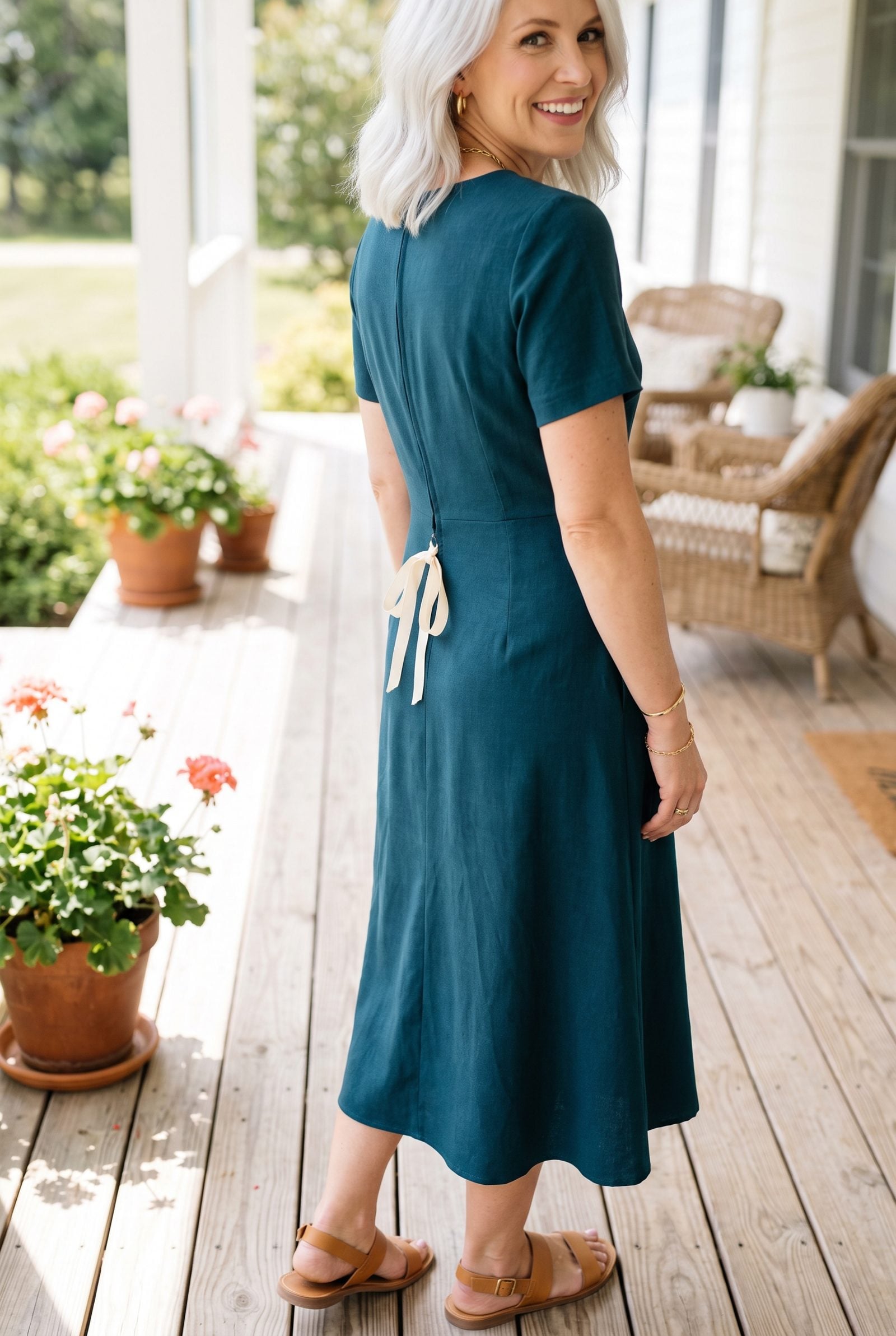
You cannot pinch what you cannot reach. And that micro-zipper parked at the center of your back is the sworn enemy of independent dressing.
Tie a short cream ribbon through the zipper pull, and suddenly there’s something to grab. No partner summoned, no doorframe used as leverage, no waiting around. The dress you’d been saving for days someone’s around becomes a dress for any ordinary day.
25. Replace Hard Trouser Buttons With Flat Hook-and-Bar Closures

That thick button pressing into your stomach every time you sit down? There’s a better closure, and tailors have been quietly using it on fine trousers for a century.
A flat clasp, fronted by a slim silver plate on the outside of the waistband, lies flat against you. Nothing digs in, the plate looks neat with a tucked-in blouse, and the waistband closes clean with no bulge. It also holds under tension better than a button straining against a few threads. You feel the difference the moment you sit down to a long dinner.
24. Add Snap-On Modesty Panels to Low Necklines

The wrap blouse that gapes the second you lean forward. The V-neck that reads lower in the mirror than it did in the store. You love the top. You just don’t love the surveillance.
A snap-in modesty panel, lace or matching fabric, clips into the inner seams and fills the gap. Lean, reach, present, bend over the desk — it all stays covered. You keep the neckline you bought and skip the camisole-under-everything routine entirely. Full coverage, zero bulk.
23. Use Adhesive Silicone Grips Inside Sliding Shoe Heels
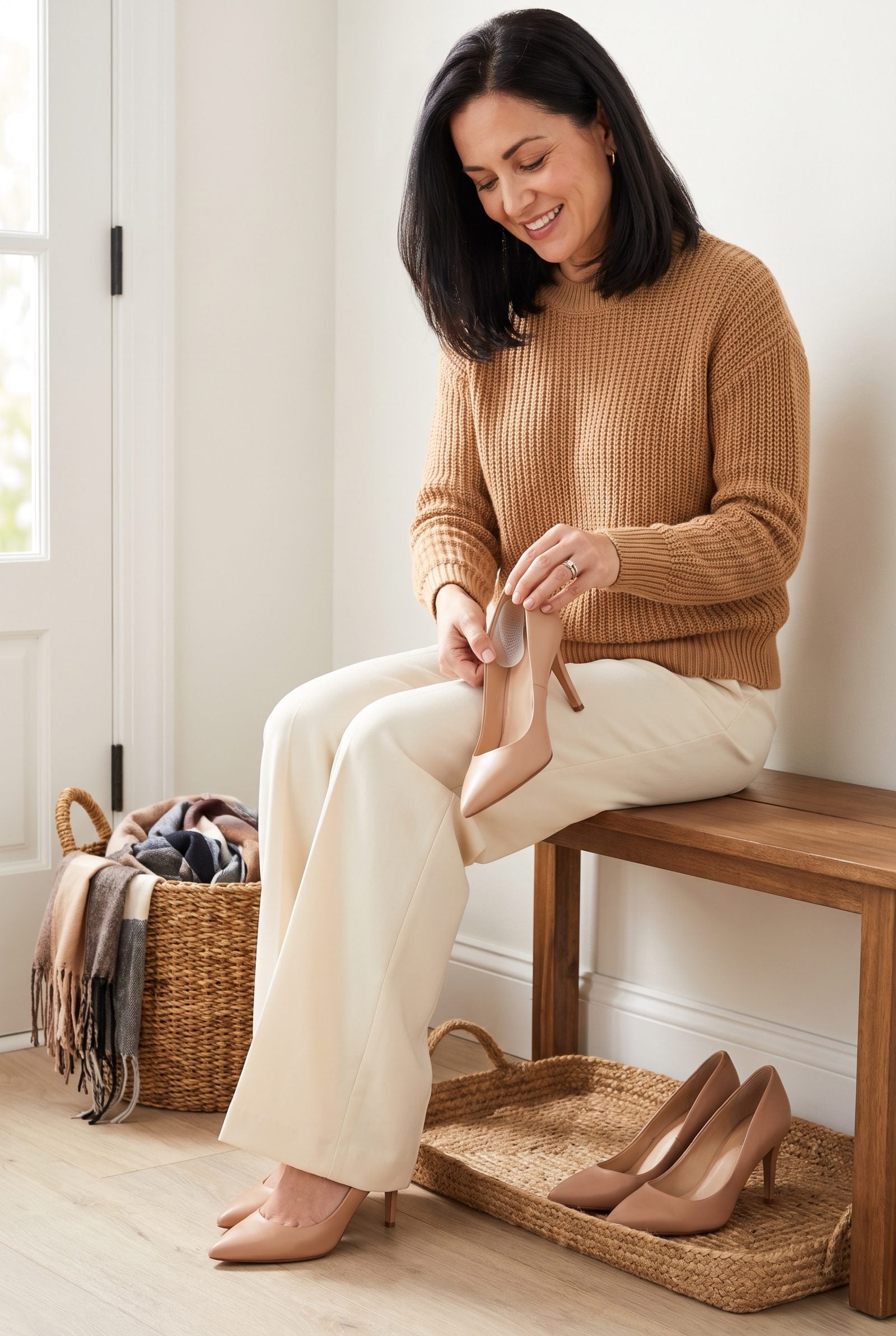
The shoe fits in the store and slips with every step on day two. Heel slippage is why so many gorgeous shoes end up buried at the back of the closet.
A thin silicone grip pad stuck inside the heel cup grabs the back of your foot and stops the slide. No more clenching your toes to keep the thing on, no more blisters from the rub. The pair you wanted to love becomes the pair you can actually walk across a parking lot in — and comfort, not looks, is what keeps a shoe in rotation. This buys it for pennies.
22. Open the Factory Stitching on Real Pockets
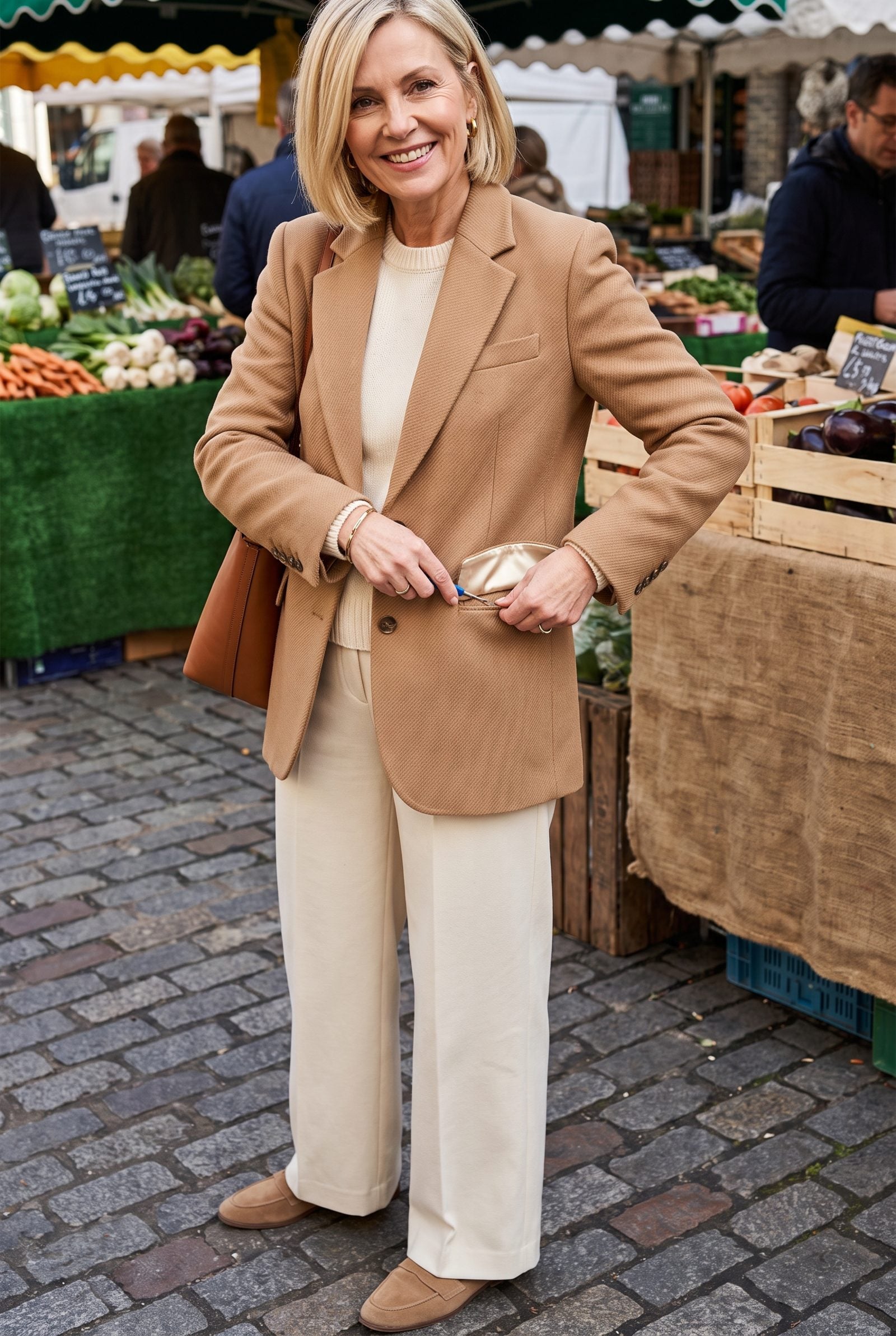
Those front pockets on a new blazer or dress that stay stubbornly flat were never meant to stay shut. Manufacturers tack them closed with a loose basting stitch so the garment hangs clean on the rack and ships without sagging.
Slide a seam ripper under the thread and work it along the opening. The panel may gape open for a moment, showing its satin lining and leaving a dangling end of thread. That looks alarming but isn’t damage. Trim the loose ends, smooth the flap back down, and you get usable depth back. Hands have somewhere to go, and the line of the hip softens instead of pulling. A pocket you can actually use changes how you stand in a coat — a strange amount of leverage from thirty seconds of work.
21. Remove Scratchy Labels and Photograph the Care Instructions

That label at the back of the neck that saws at your skin all day is pure friction, and it earns nothing. Cut it out. The itch stops.
Before it goes in the bin, photograph the care symbols and keep the shot in an album on your phone. Now the washing instructions live where you actually make the decision — standing over the machine with a questionable silk blouse in hand — rather than printed on a scrap you already threw away.
20. Keep Reading Glasses Beside Clothing Care Labels
❤️ Would you like to save this?
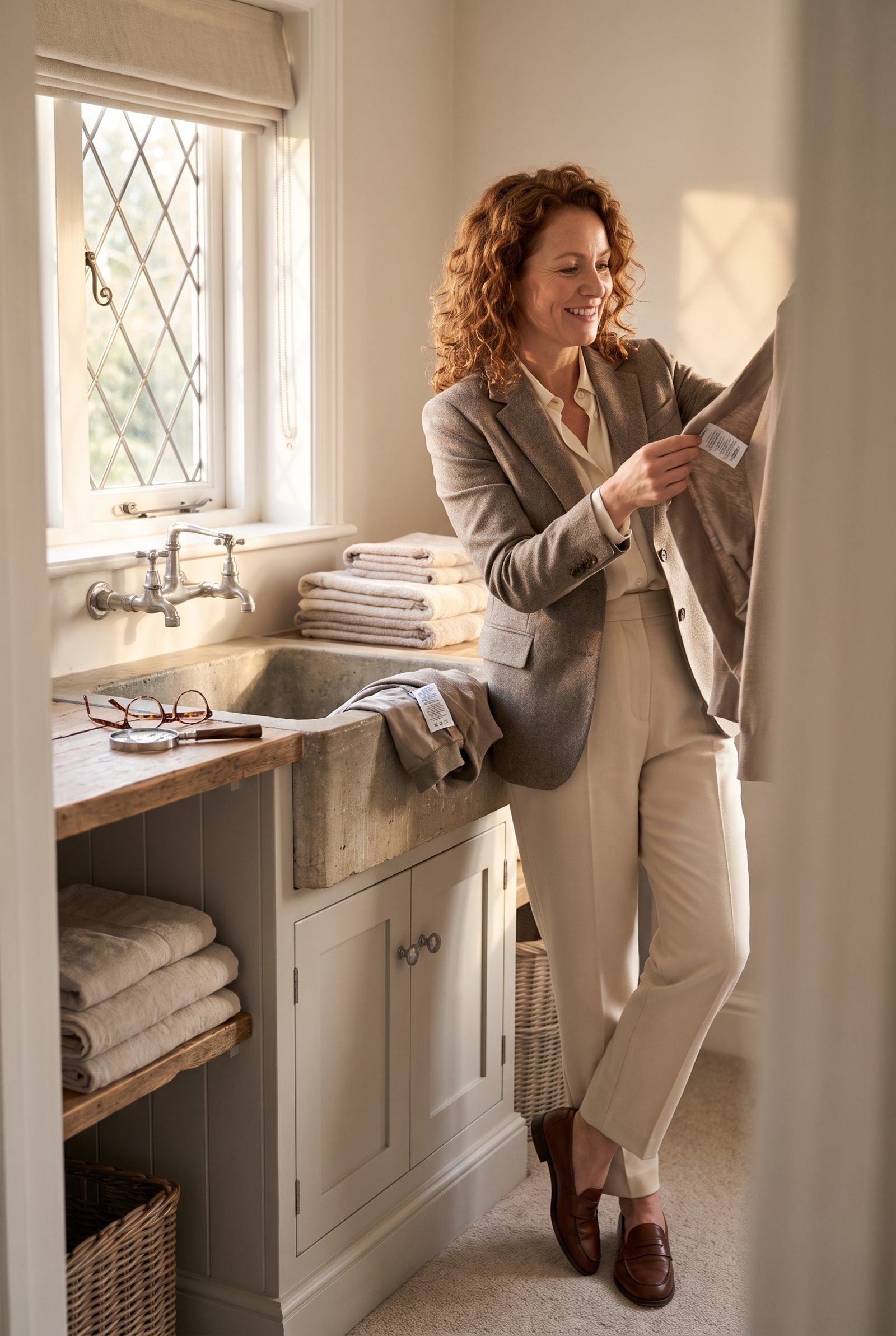
Care labels have been shrinking for years while the symbols multiplied. Nobody over 40 is reading that six-point font across a dim laundry room without help. Squint instead, and you guess wrong, and the guess leads to a felted cashmere the size of a doll’s cardigan.
A cheap pair of readers parked permanently near the machine solves it. Not the good pair from your handbag — a dedicated, slightly battered pair that lives in the laundry space and never leaves. One decision, made once, that spares a lot of ruined knitwear.
19. Keep Anti-Chafe Shorts With Dresses Rather Than in the Underwear Drawer
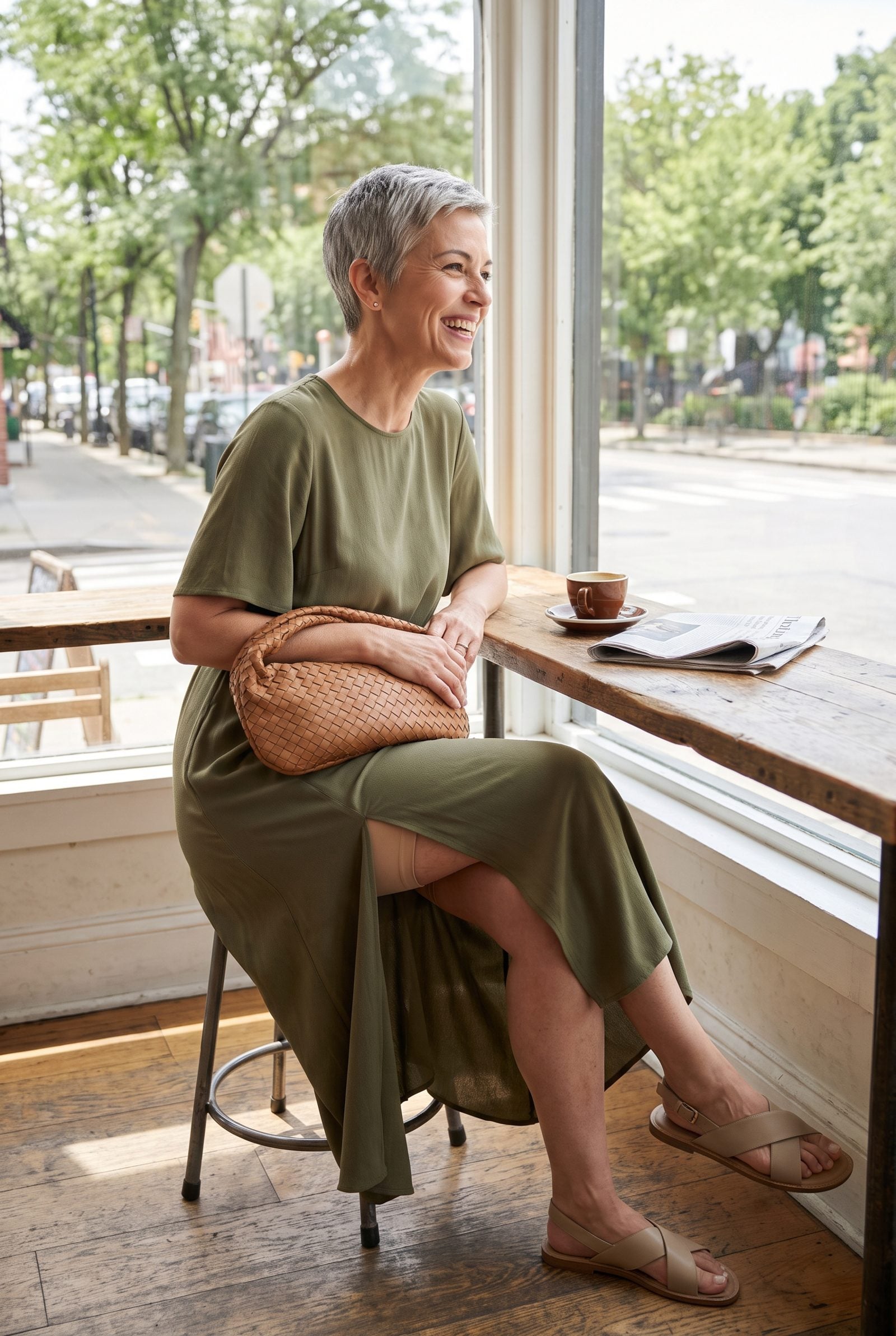
The thigh chafe that ambushes you in July has an easy fix, and the fix only fails because the shorts live in the wrong drawer.
Hang a pair of anti-chafe shorts on the same hanger as each dress they belong under. Reach for the dress, and the shorts come with it. No last-minute hunt through the underwear drawer, no stepping out in a floaty olive crepe and remembering the problem two blocks from home when it’s already too late.
18. Give Every Coat a Pair of Gloves in Its Pockets

The gloves that match a coat should live in that coat’s pocket from the day the weather turns. Not in a basket by the door. And definitely not in the drawer with twelve odd singles and no pair.
So pair the burgundy leather gloves with the grey overcoat, the fingerless knits with the parka, and leave them there all season. You grab the coat, the right gloves are already waiting, and the annual archaeological dig through the glove drawer never happens.
17. Use Cedar Blocks Inside Wool Coat Pockets
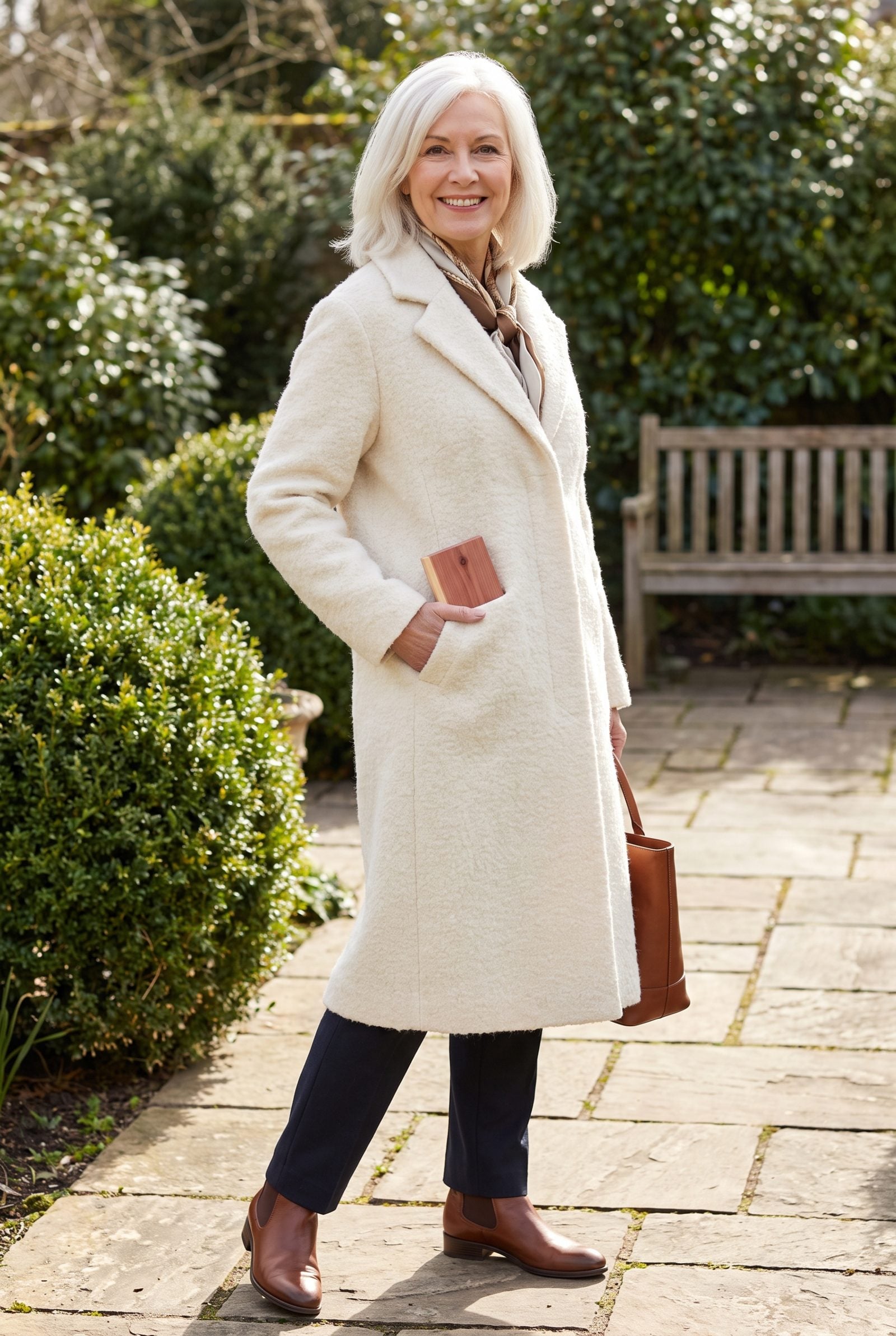
Moths don’t go after your wool only because it’s dirty. They go after it because it’s wool, and because a stored coat hangs untouched for months, giving them an undisturbed place to work.
A cedar block dropped in each pocket does two jobs: it discourages the moths, and it keeps the stored coat smelling of wood instead of basement. Sand the block lightly once a season when the scent fades, and it keeps working for years.
16. Clip Separate Mesh Wash Bags Directly to the Hamper
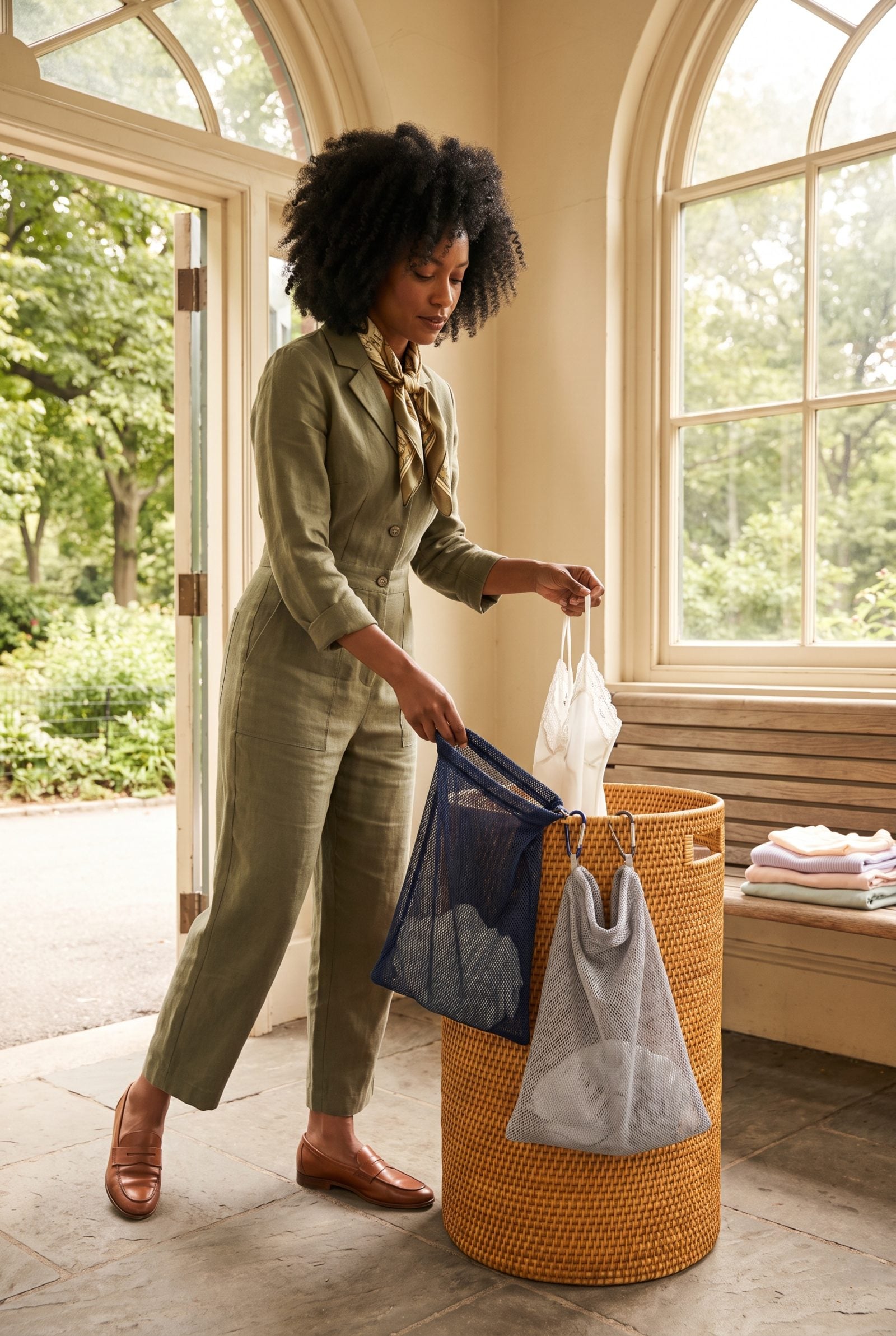
Delicates get destroyed in the gap between taking them off and remembering they were delicate. You strip off the fine-gauge knit, toss it in the hamper, and a week later it comes out of the machine looking like it lost a fight.
Clip a mesh bag or two to the hamper rim and sort at the moment of undressing. The lace camisole goes straight into the bag it will wash in — no separate pile to maintain, no decision to make twice. The bag travels to the machine already loaded, and the delicate comes out the way it went in.
15. Create a Separate Rail for Clothes That Can Be Worn Again
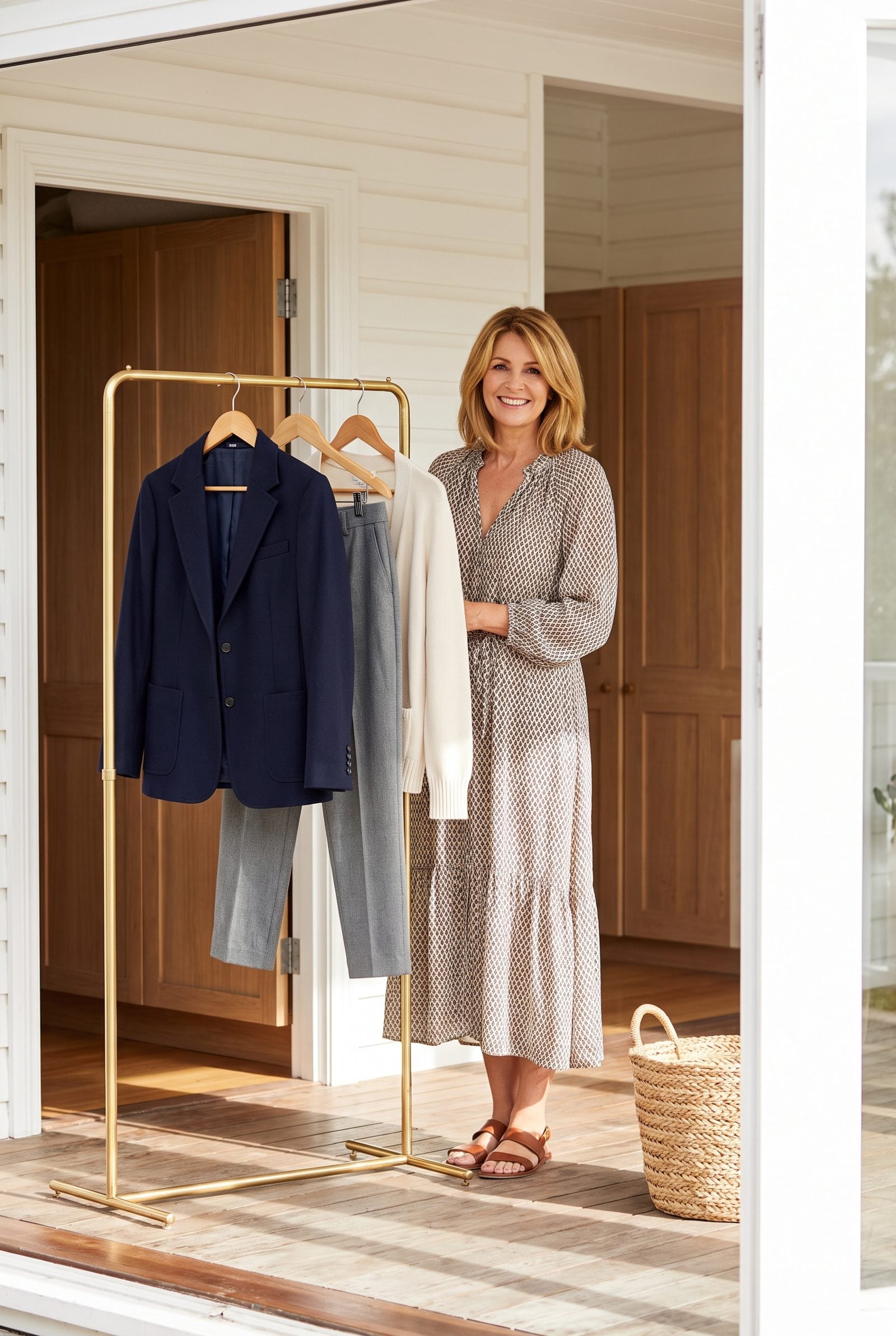
The chair knows. Everyone has the chair — the one buried under clothes that aren’t dirty but aren’t quite ready to go back in the wardrobe either. So they live on the chair, and the chair stops being a chair.
A small dedicated rail for worn-once pieces ends the limbo. The blazer that got two hours of wear, the trousers with life left, the cardigan you’ll reach for tomorrow. They hang in the open, air out properly, and stay in view so they get worn again instead of forgotten under a pile.
14. Store Occasion Outfits With a Photo of Every Needed Accessory
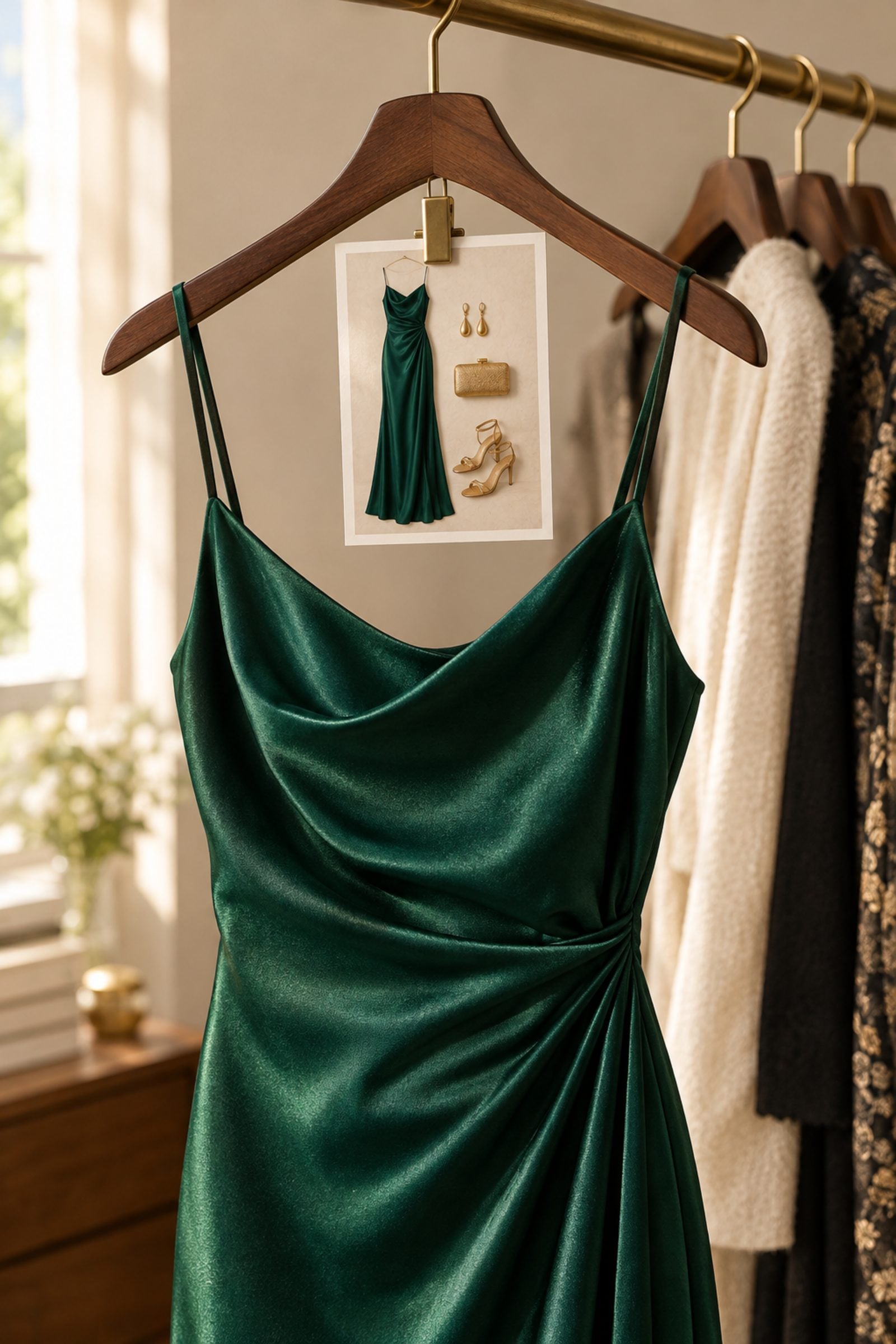
You bought the emerald silk, found the exact earrings and the clutch that worked, assembled the whole thing once for a wedding — and then your memory of how it all fit together evaporated by the next event.
Clip a photo of the complete look to the hanger. Earrings, bag, shoes, the lot. Next time the invitation lands, there’s no standing in front of the wardrobe at seven in the morning trying to reverse-engineer a decision you already solved. The work is done. You just copy it.
13. Keep Current Body and Garment Measurements on the Phone

Bodies shift after 40, and the measurements you half-remember from a decade ago are doing you no favors in a fitting room or at a tailor’s counter.
Keep a current note on your phone: bust, waist, hip, inseam, plus the finished measurements of the clothes that fit best. The jacket shoulder you love, the trouser rise that works. Shopping online stops being a gamble, a tailor gets exact numbers without a tape-measure hunt, and buying secondhand — where there are no returns — becomes something you can actually trust.
Update it twice a year. The number on the label matters far less than whether the thing fits the body you have now.
12. Install a Retractable Valet Rod for Tomorrow’s Outfit
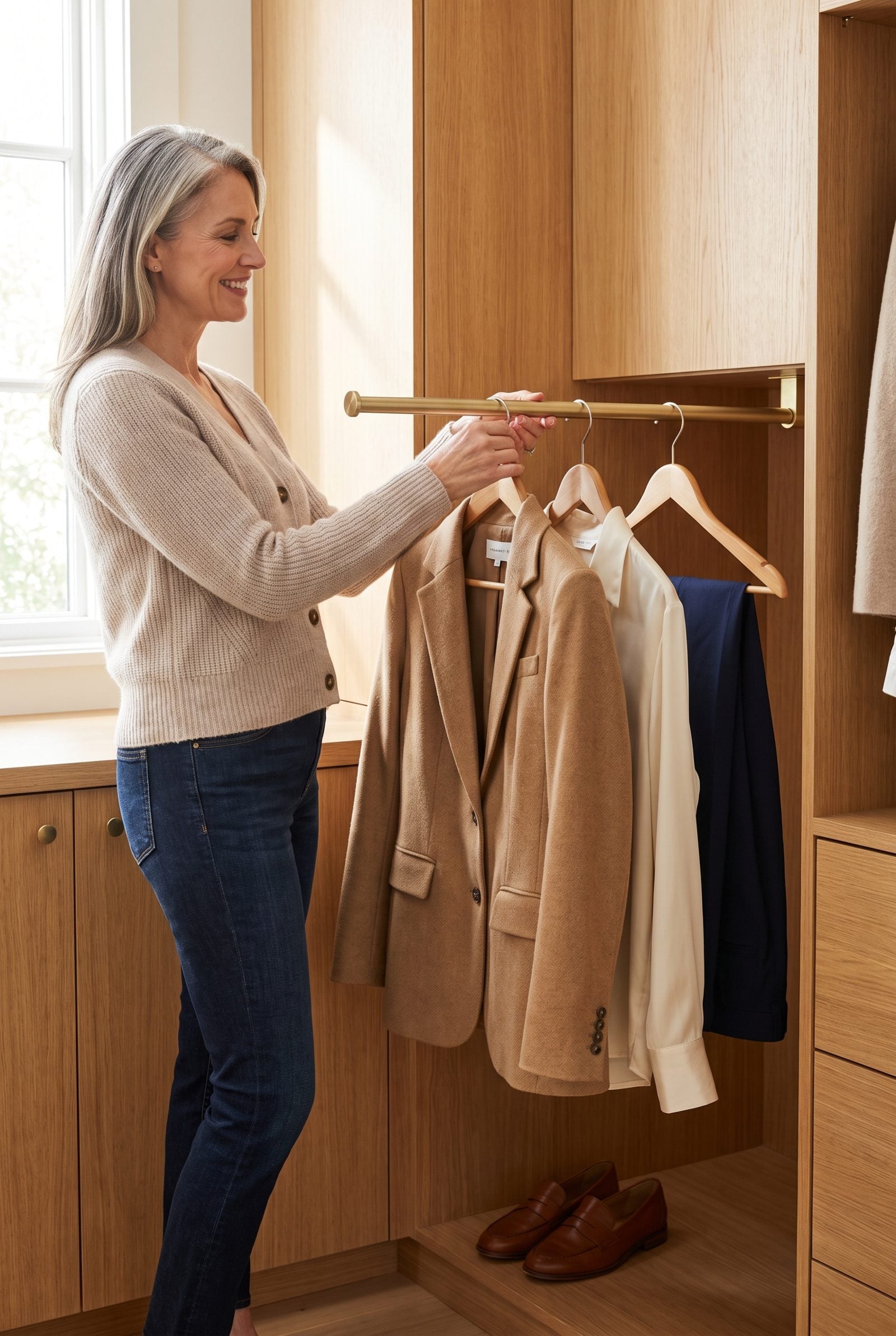
Most dressing frustration happens before coffee, when the brain is still negotiating with the day. A retractable valet rod moves that decision to the night before, when there’s actually room to think it through.
It folds flat against the wall when you don’t need it, so it steals no closet space. Hang the whole outfit on it the evening prior, loafers underneath, and morning becomes a matter of putting things on rather than inventing them. The real lever here isn’t the rod. It’s the shift in when you make the choice.
11. Place a Small Dressing Stool Beside Shoes and Socks

Balancing on one foot to pull on a boot stopped being charming somewhere around the second decade of adulthood. A low stool parked right beside the shoe rack solves a problem nobody likes to admit they have.
Sitting down to deal with socks and laces is faster, steadier, and spares your lower back a daily argument. Get one with a firm seat around eighteen inches high, so standing back up is easy. And an oatmeal boucle stool reads as furniture, not a mobility aid, which matters more than it probably should.
10. Move Everyday Clothes Between Shoulder and Hip Height

Your most-reached-for pieces usually end up in the worst spots, on the top shelf that demands a chair or the bottom drawer that demands a squat.
Reorganize by frequency, not category. Daily clothes belong in the band between your shoulders and hips, the range where nothing has to crane or crouch. The holiday sweater and the suitcase? Up high where they belong. This one remap of real estate shaves a surprising amount of daily strain, and you’ll notice it within a week.
9. Use Open Dividers Instead of Stacking T-Shirts
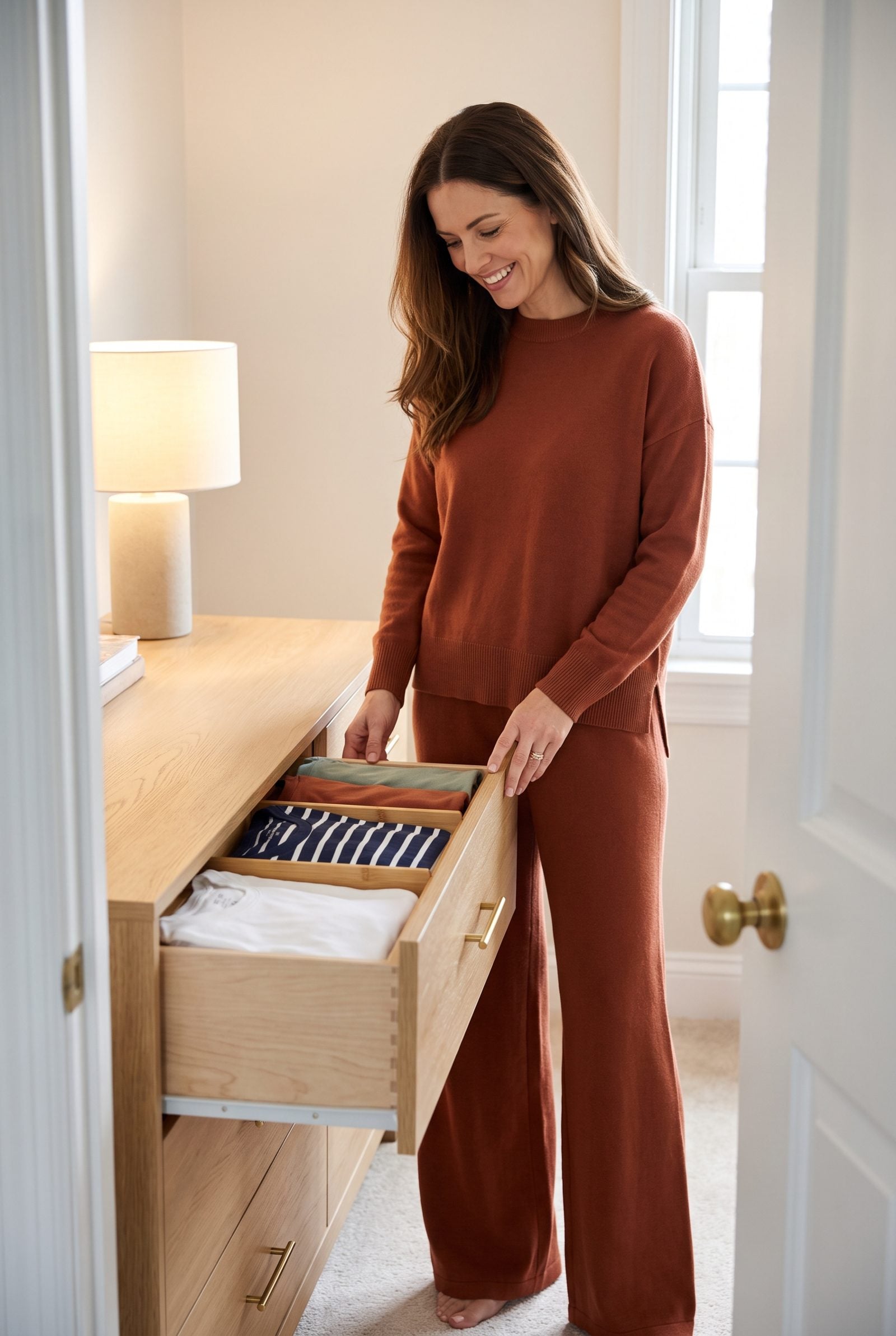
Stacked shirts are a lie you tell yourself. You wear the top three and ignore the rest until laundry day reshuffles the deck.
Fold your tops flat, one per compartment, with dividers keeping each in its own lane instead of piled on top of one another, and every single one is visible the moment the drawer opens. No archaeology, no pulling the bottom shirt and toppling the pile. You actually wear what you own, which is, after all, the reason you bought it.
8. Keep a Deodorant-Mark Removal Sponge Near the Mirror

❤️ Would you like to save this?
You’re dressed, you reach for the black jacket draped over your chair, and there it is: a chalky white smudge streaked down the front. Changing the whole outfit over it feels like defeat.
A dry foam removal sponge wipes those marks off in two or three passes, no water, no hunting for a lint roller. Stash it by the mirror where you spot the damage, and a wardrobe crisis becomes a three-second fix. Small tool, outsized rescue.
7. Add a Sweater Comb to the Dressing Area

A good sweater doesn’t die from wear. It dies from looking worn, those little pills that collect under the arms and along the cuffs until the whole thing reads as tired.
A sweater comb shaves them off in a few strokes and gives a knit years back. Keep it close, small enough to drop in your tote, not buried in some laundry drawer, and run it over anything merino or cashmere before you pull it on, even if that’s on the sidewalk. That’s the gap between owning nice knits and owning nice knits that stay nice.
6. Air-Dry Anything That Depends on Elastic for Its Fit
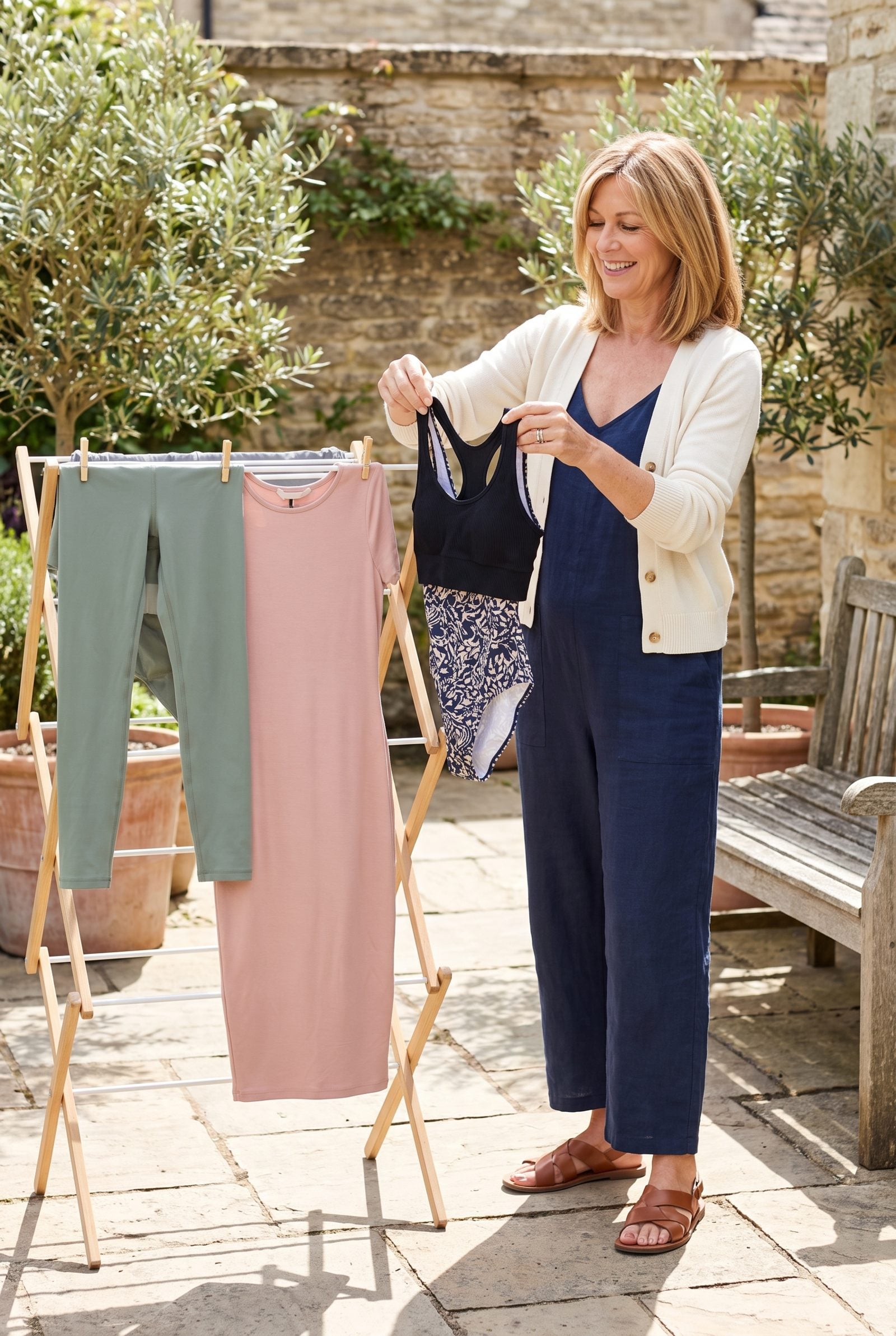
Heat is what kills elastic, not time. The dryer’s tumble bakes the stretch right out of waistbands, leggings, and anything shaped to hug a body.
Air-dry whatever depends on give and it keeps the fit it had on day one. A swimsuit, a jersey dress, the good leggings, all of them last far longer off the hot cycle. Lay flat or hang away from direct heat. The payoff? Clothes that still fit in month eight the way they fit in week one.
5. Hem Different Trousers for Flats, Sneakers, and Heels
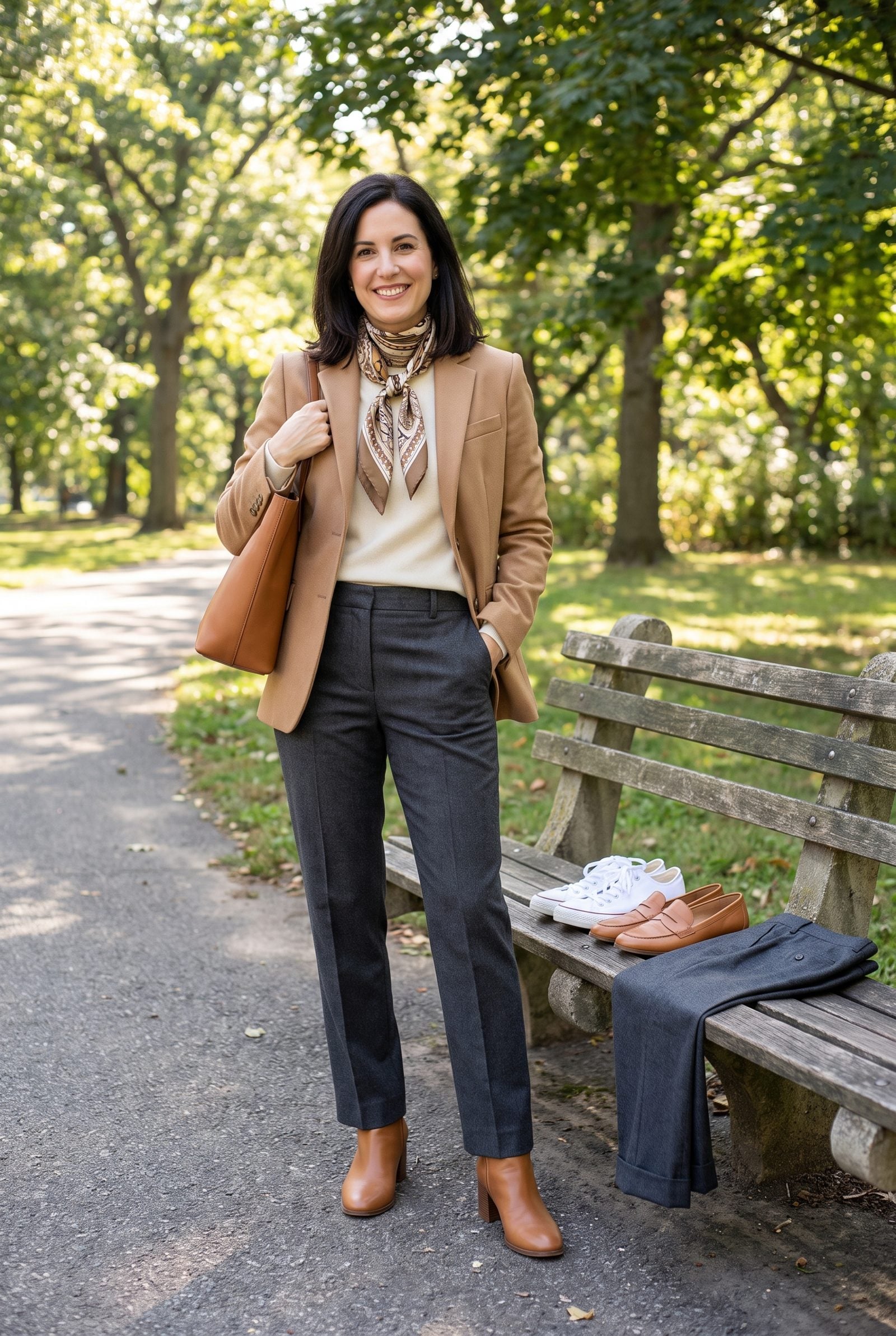
One hem length cannot serve three shoe heights. Pretending it can is exactly why so many trousers either puddle on the floor or flap around the ankle.
The fix sounds extravagant and isn’t: have the same style hemmed three ways, for flats, for sneakers, for heels. Each pair then lands exactly right every time, no bunching, no awkward float above the shoe. A proper break might be the most expensive-looking detail available to anyone, and it costs the price of a hem.
A proper hem is the cheapest luxury in a wardrobe. It reads as money and costs almost none.
4. Buy Multiples Only After a Full-Day Wear Test
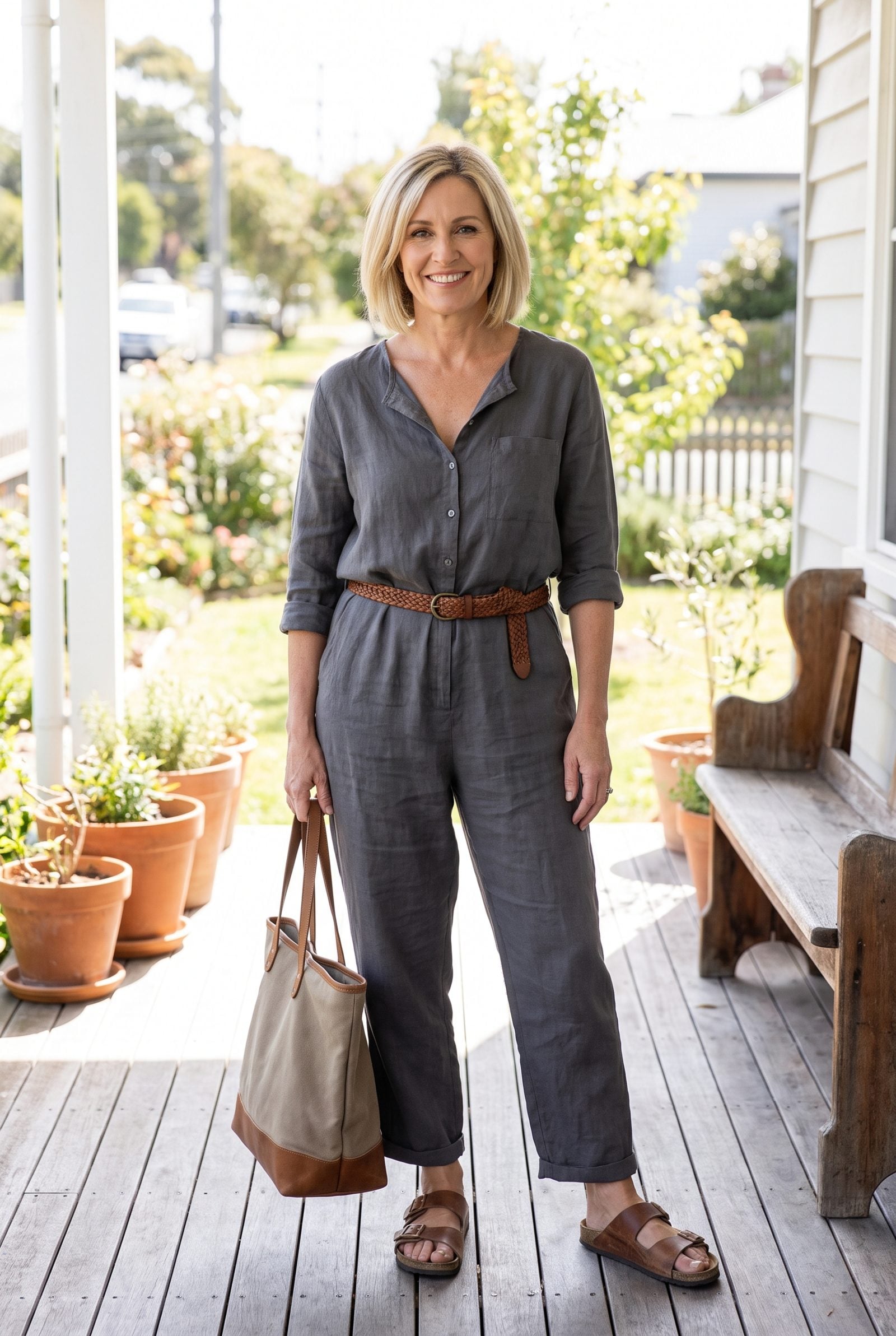
It feels perfect in the fitting room. Then eight hours later the seams dig, the neckline gapes when you lean forward, and the fabric clings exactly where it shouldn’t.
Wear a new piece for a full day before you buy it in three colors. A morning test tells you nothing. A whole day of sitting, reaching, and real life tells you everything, and only the pieces that survive it earn a reorder. It’s the one reliable way to build a athleisure wardrobe you actually wear instead of a closet stuffed with near-misses.
3. Retire Clothes That Need Constant Tugging or Readjustment

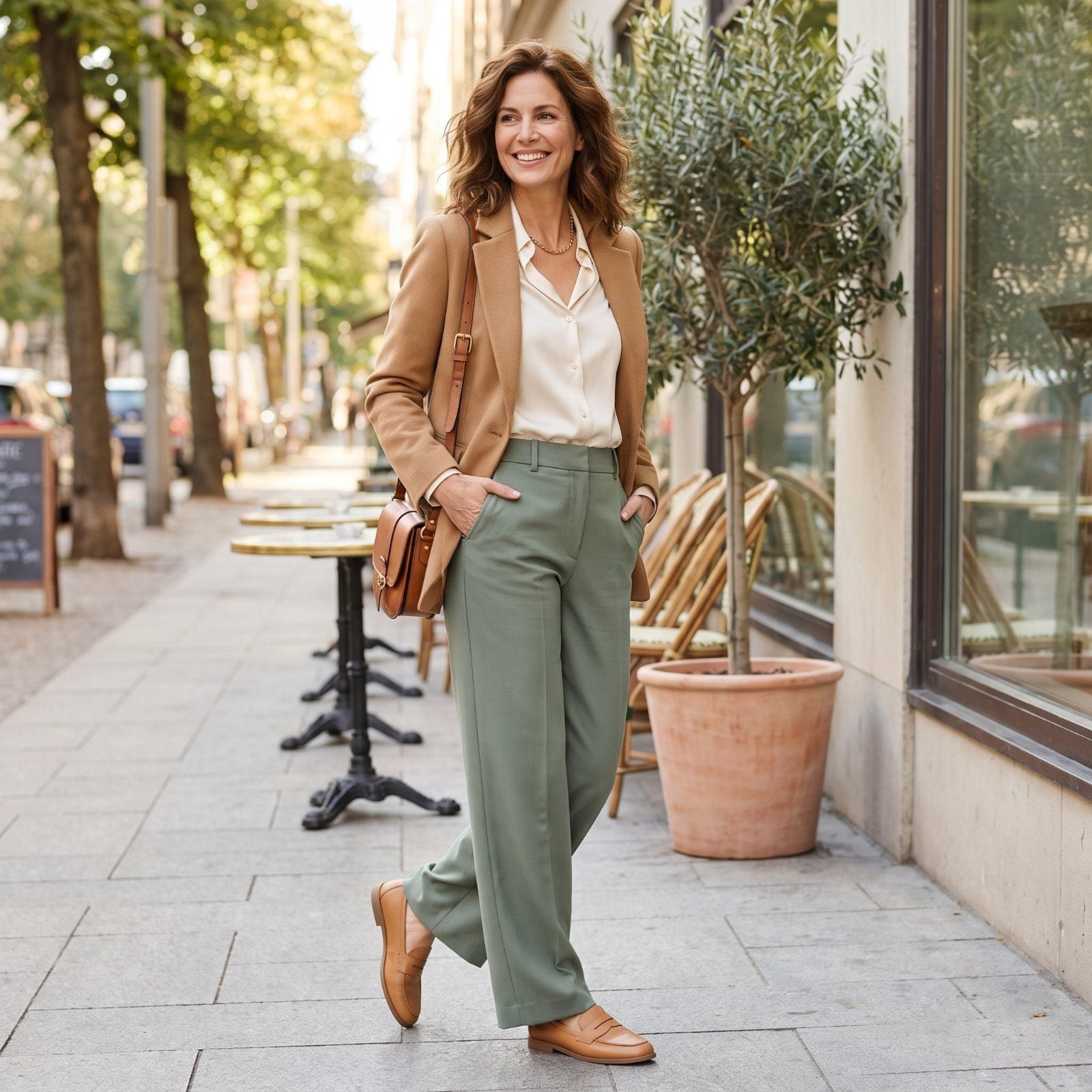
That silk blouse tucked into wide-leg camel trousers does one thing the rest of your closet should learn from: it stays put. No hiking, no smoothing, no checking the mirror every ten minutes.
Any garment that demands constant management isn’t earning its real estate. The waistband that rolls, the neckline that slips, the hem that rides up, let them go. What’s left is clothing you can forget you’re wearing, which is comfort in its truest form. An androgynous dress that sits right in hour one sits right in hour twelve.
2. Swap Narrow Toe Boxes for Foot-Shaped Shoes
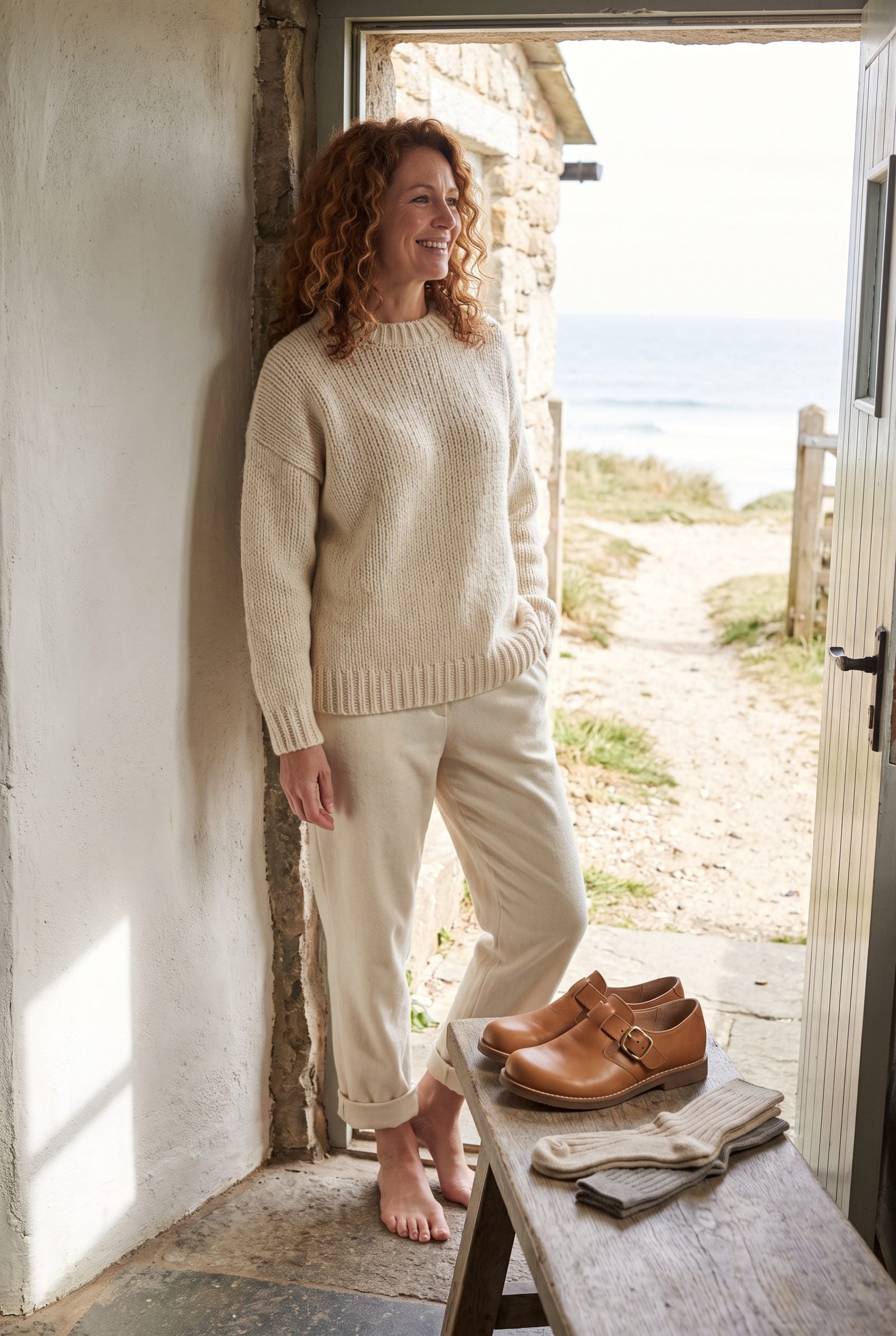
Feet spread as the years add up. That’s just what happens, and jamming a wider foot into a tapered pump built for a twenty-year-old arch is how you end up limping by three o’clock.
Foot-shaped shoes follow the actual outline of a foot — widest at the toes, not the ball. The payoff lands fast: better balance, toes that splay the way they were built to, and long walks that stop feeling like a negotiation. Look for a tan leather foot-shaped shoe with a bendy sole, plus a brass buckle flat for the days that need a little polish.
1. Remove Aspirational-Size Clothes From the Everyday Wardrobe

Every closet has them. The jeans two sizes down, the fitted dress from a version of your life that isn’t this one anymore. They hang there as a daily little jab reminding you that you’re supposed to be someone else.
So pull them out. Not forever, maybe — just out of the rail you reach into half-asleep at 7am. A wardrobe stocked with clothes that fit the body you actually have is the fastest route to getting dressed without that small flinch. Clothes that fit read as confidence. Clothes that pinch read as apology, and trust me, everyone can tell the difference.