❤️ Would you like to save this?
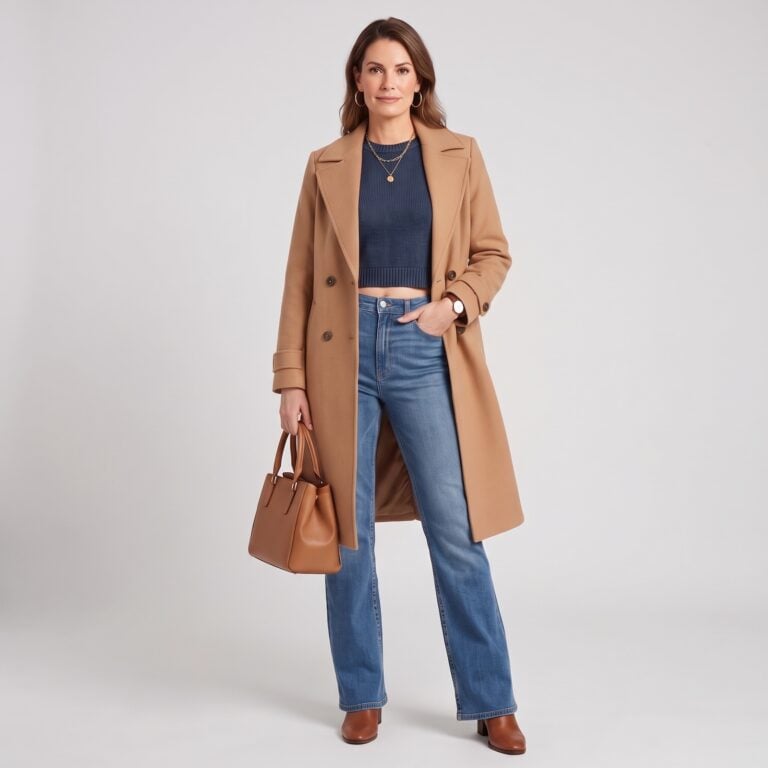
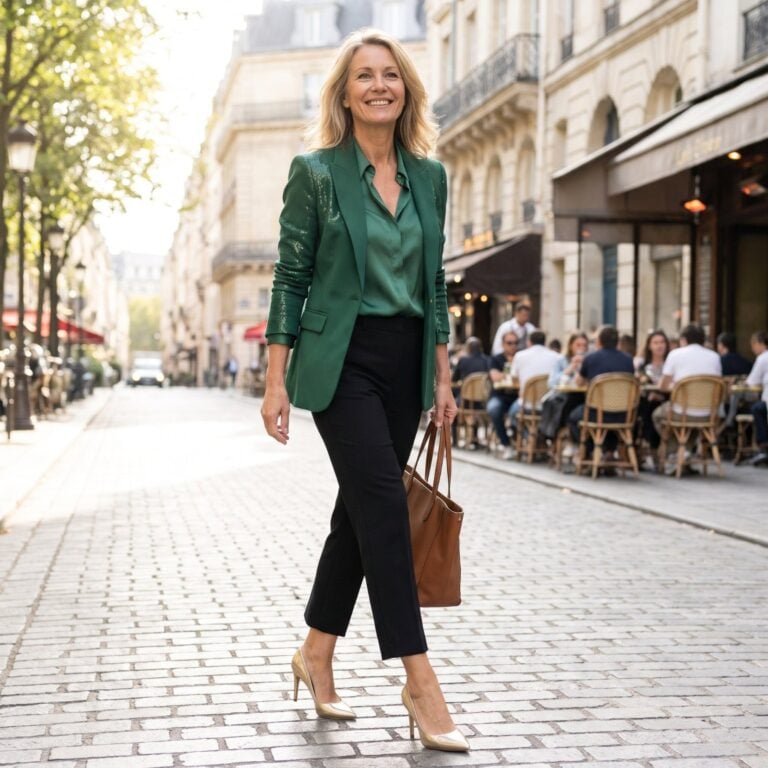
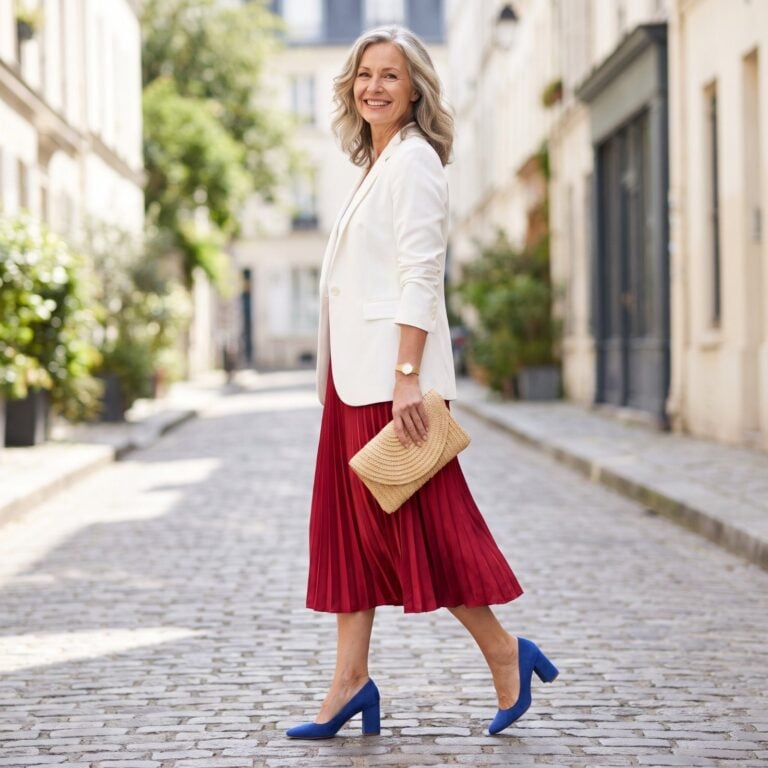
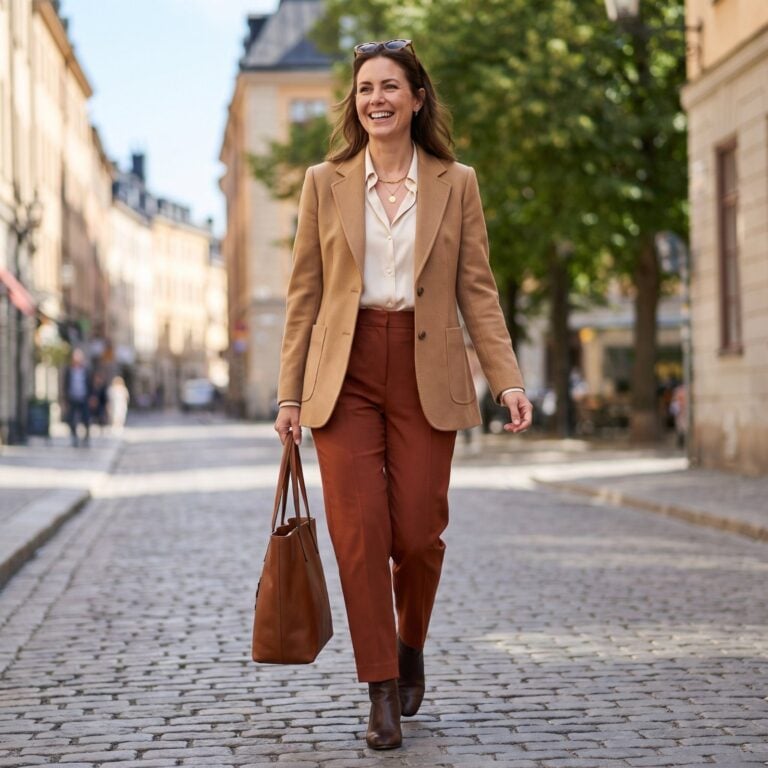
The expensive-looking outfit is often hiding in plain sight. It is the woman at the coffee counter in a washed-many-times knit, sale-rack trousers, and sneakers that have never met a luxury boutique — yet somehow every line lands cleanly, every color seems deliberate, and nothing is begging to be fixed. The difference is rarely a logo. More often it is an inch of sleeve, the exact point where a jacket stops, a trouser hem that finally meets the right shoe, or a cheap plastic button quietly betraying an otherwise excellent cardigan.
These 37 tricks live in that delicious gap between owning clothes and knowing what to do with them. Some require a tailor. Some need a steamer, a lint roller, a seam ripper, or five undistracted minutes in front of a mirror. Most cost almost nothing. What they have in common is precision: proportion where there was bulk, finish where there was fuss, repetition where there was randomness, and restraint at the exact moment an outfit is tempted to add one more thing. The clothes do not suddenly become expensive. They simply stop giving away every shortcut.
FYI, thanks to AI imagery software, we’re able to create very specific fashion and hairstyle examples to illustrate the points being made. In some cases, imagery is exaggerated to hammer home the point. Also, assume links that take you off the site are affiliate links such as links to Amazon. this means we may earn a commission if you buy something.
37. Choose the Jacket Length to Work With the Bottom Half
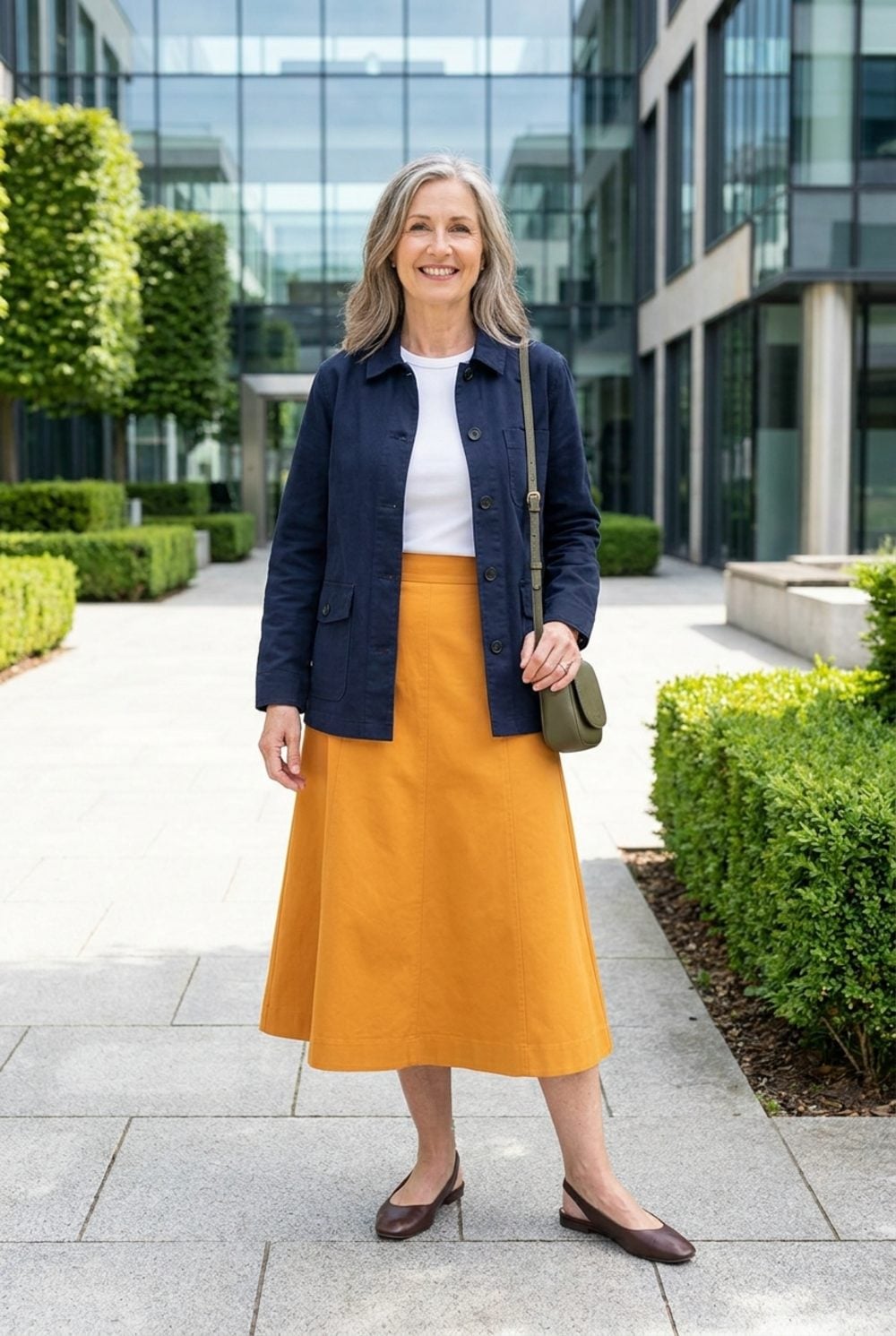
Jacket length is one of those decisions people make accidentally, then wonder why the proportions feel wrong. The hem is not merely where the manufacturer stopped sewing. It becomes a horizontal line across the body, so where it lands matters.
The navy utility jacket finishes close to the waist of the saffron A-line skirt, leaving the skirt free to flare instead of interrupting it halfway down the hip. That saffron gets the drama; the navy provides the frame.
36. Depill and Lint-Roll Until the Fabric Looks Cared For
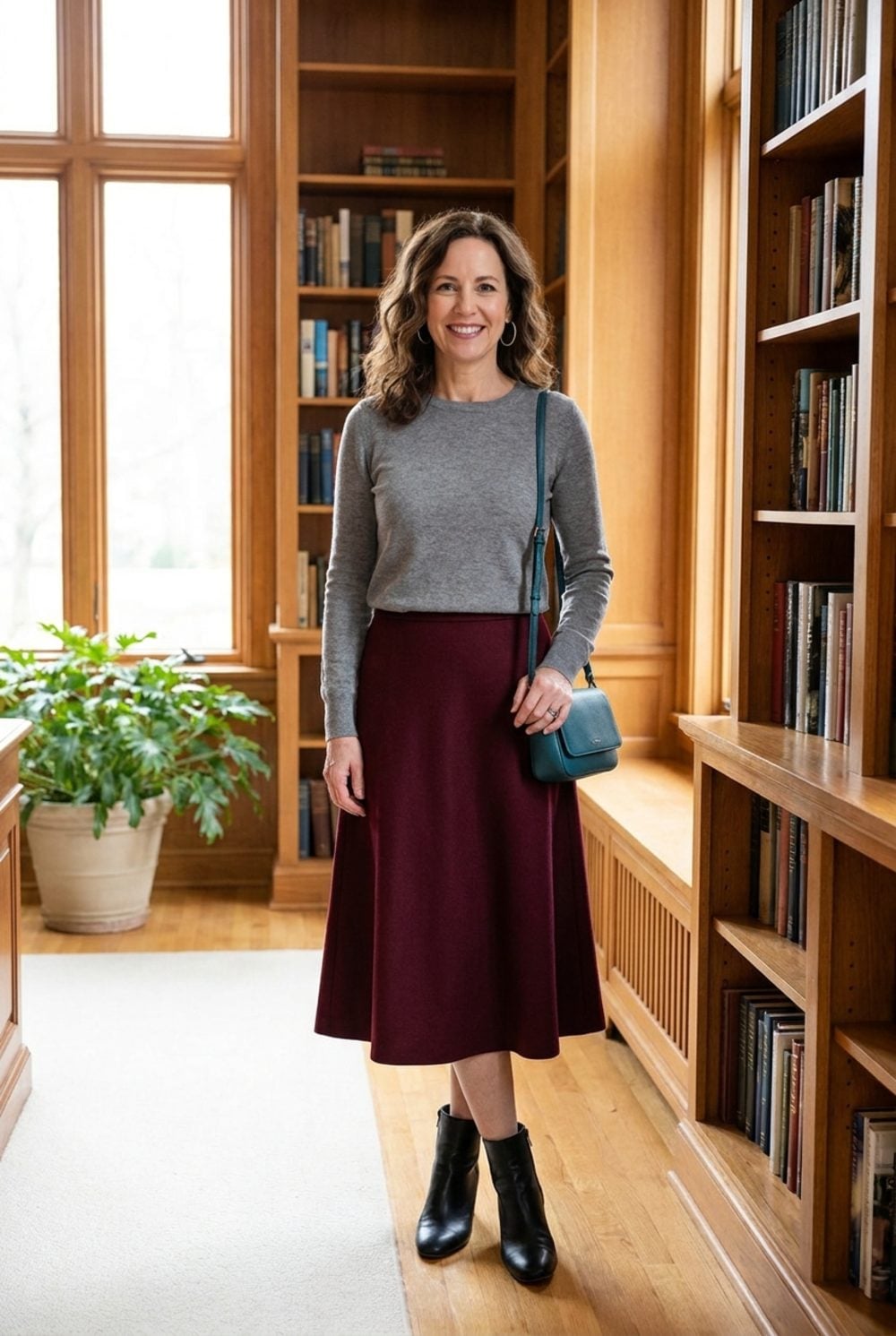
A sweater can have perfect color, flattering shape, and years left in it while a crop of fuzz balls quietly tells a different story. Pills collect at cuffs, under arms, and anywhere fabric rubs against itself. Lint performs its own little sabotage.
Run a depiller over the heather-gray knit sweater, clean the surface, and suddenly the wine A-line skirt has a much better companion. Maintenance is not glamorous. Neither is brushing your teeth, and nobody argues with that.
35. Nail the Shoulder Fit Before Worrying About Anything Else
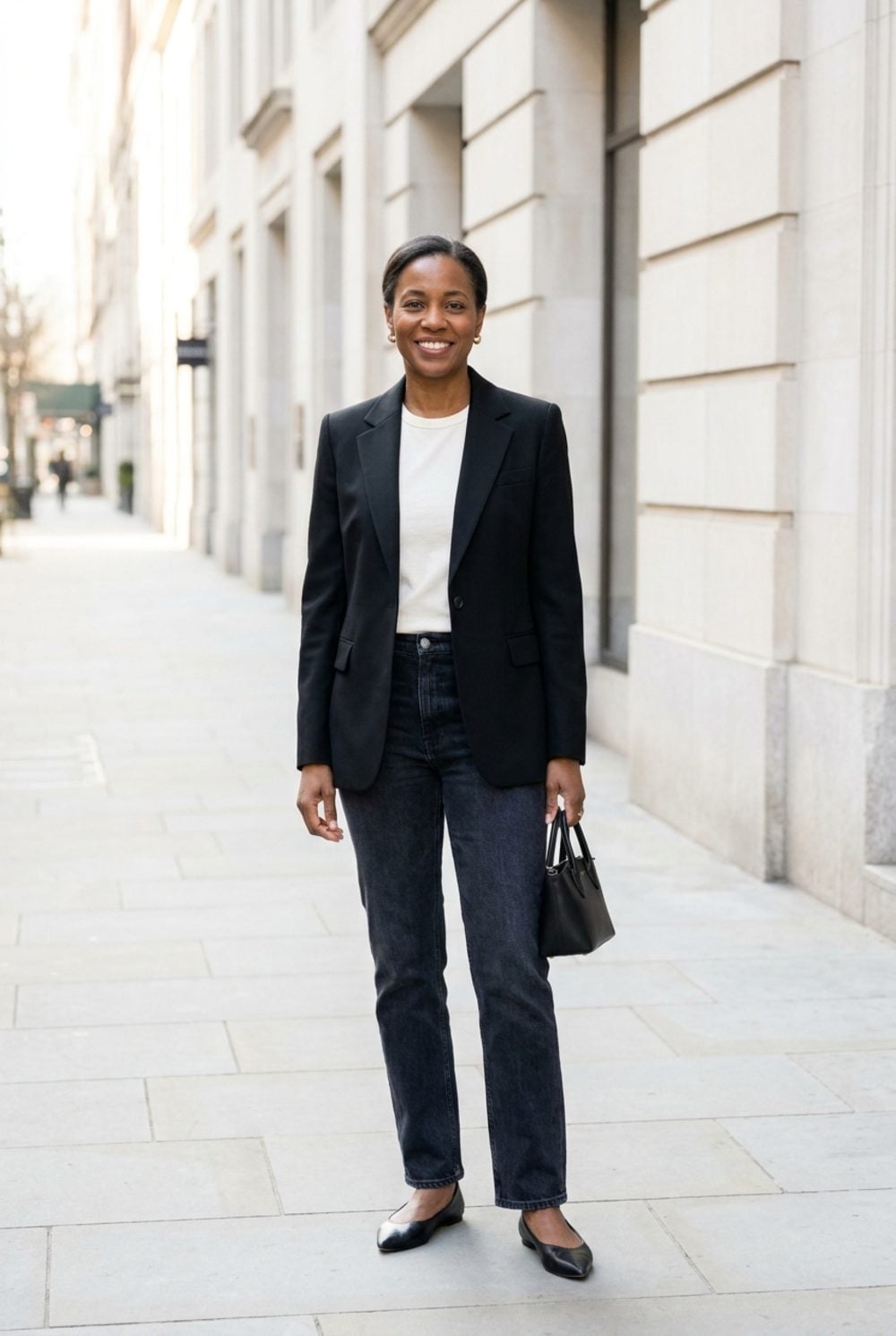
A blazer can forgive a slightly loose waist. Shoulders are less charitable. When the seam lands cleanly and the sleeve head sits smoothly, the jacket looks as though it belongs to the person wearing it rather than somebody approximately the same size.
The ivory crewneck tee and dark-wash straight jeans deliberately stay simple. The black blazer gets to supply the precision.
34. Build the Outfit Around One Tonal Color Family
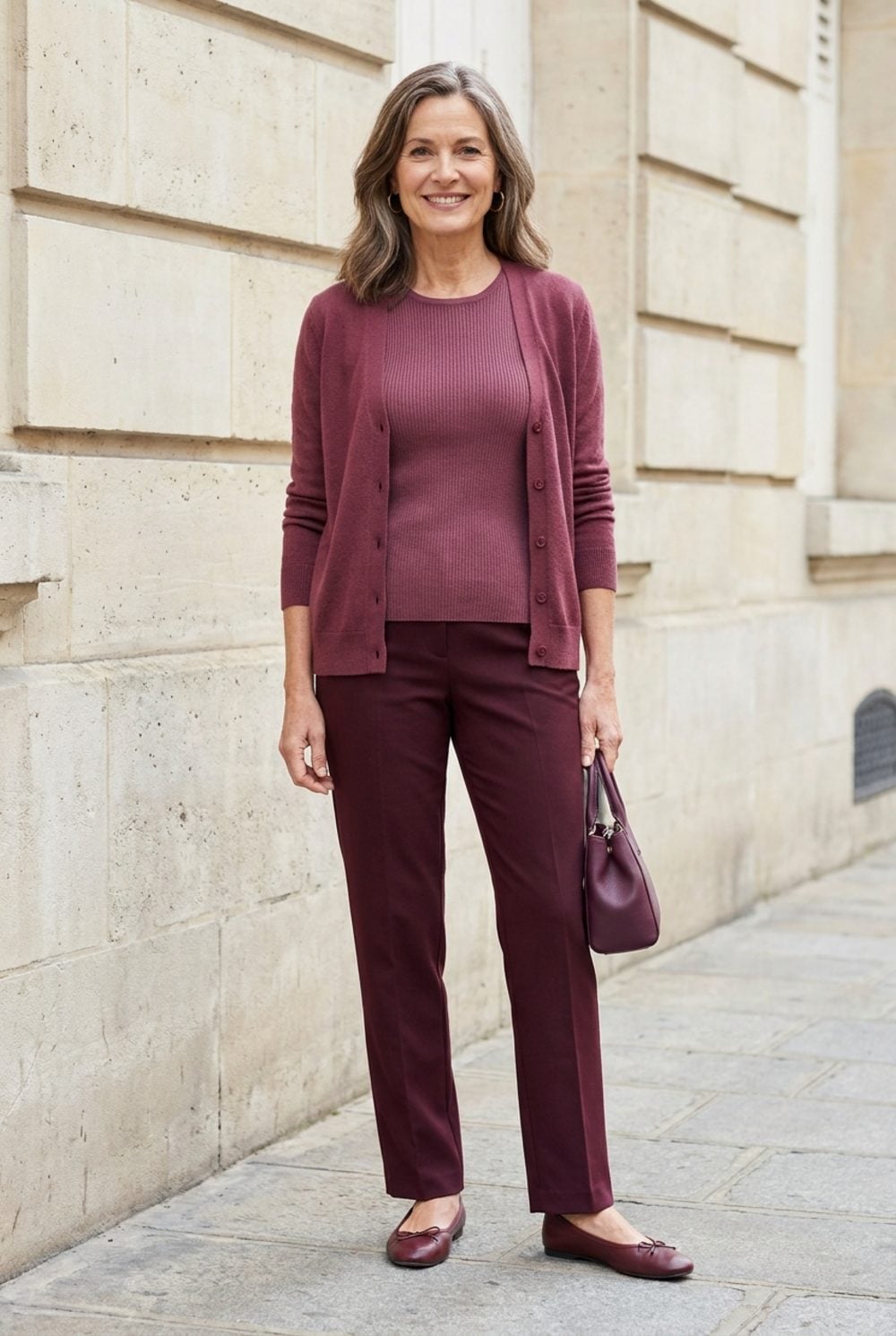
Berry, wine, plum, burgundy — close enough to belong together, different enough to keep the outfit from looking like a uniform. Tonal dressing gets interesting when the shades stop trying to match perfectly.
The outfit gains another layer from texture: a softer knit against matte trousers, the burgundy cardigan beside the plum handbag. Nothing shouts for attention because everything already knows which family reunion it came to.
33. Hide an Unattractive Elastic Waistband

Comfortable pull-on trousers are one of civilization’s better inventions. Their exposed elastic waistbands are sometimes less persuasive.
Here the rust knit skims past the elastic while a narrow brown belt gives the waist a cleaner finish. Nobody needs to believe the trousers are bespoke. The point is simply not to make the utilitarian bit the first detail anyone notices.
32. Swap Flimsy Buttons for Ones That Suit the Garment
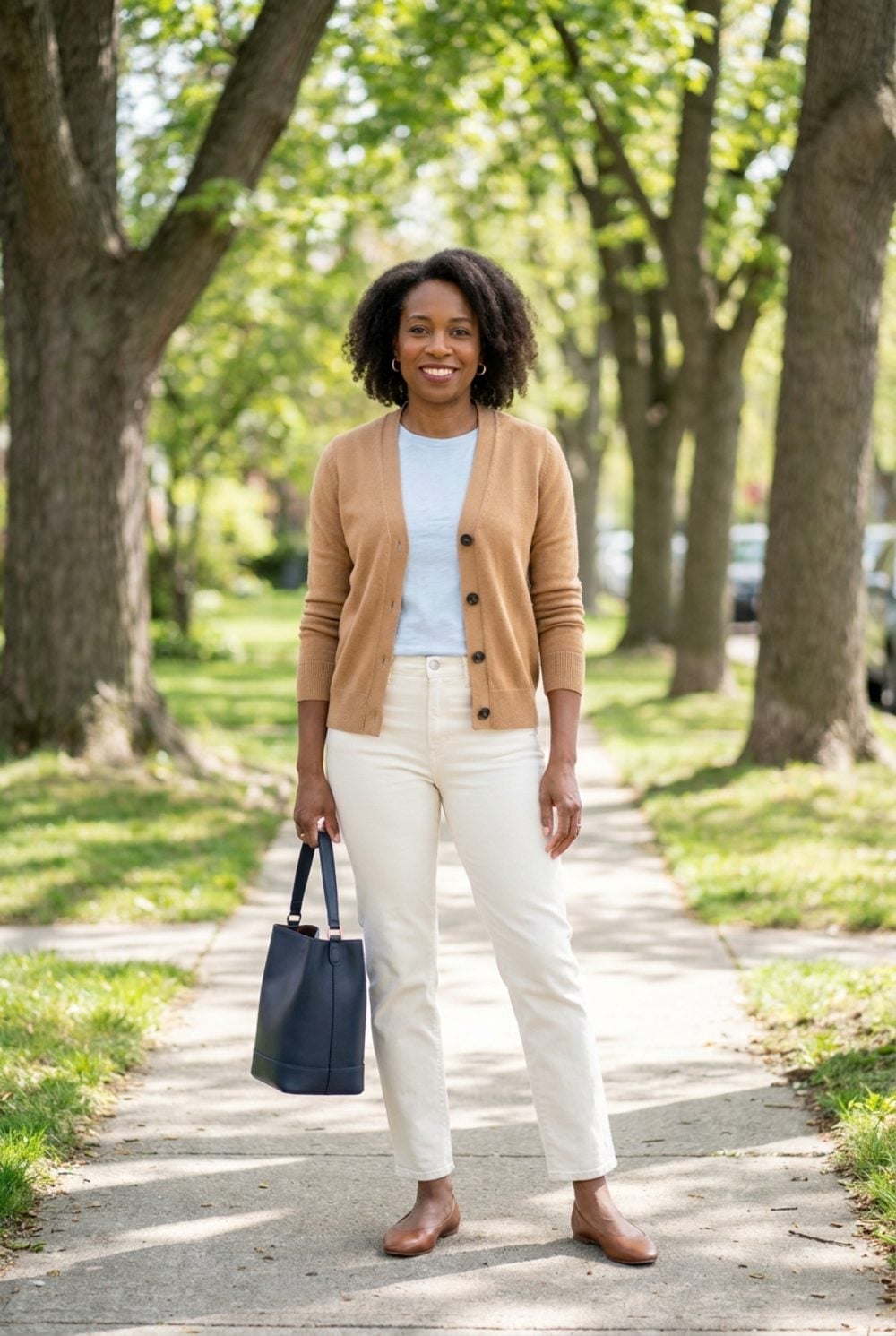
A good cardigan can be betrayed by tiny glossy plastic discs that seem to have wandered over from a craft kit. Fortunately, buttons are among the easiest details to replace.
Matte horn-look buttons give the camel cardigan more visual weight without pretending to be antique or precious. The deep-navy bucket bag keeps things current. Twenty minutes of sewing can change the face of a garment more than another shopping trip.
31. Create a Clean Full Tuck
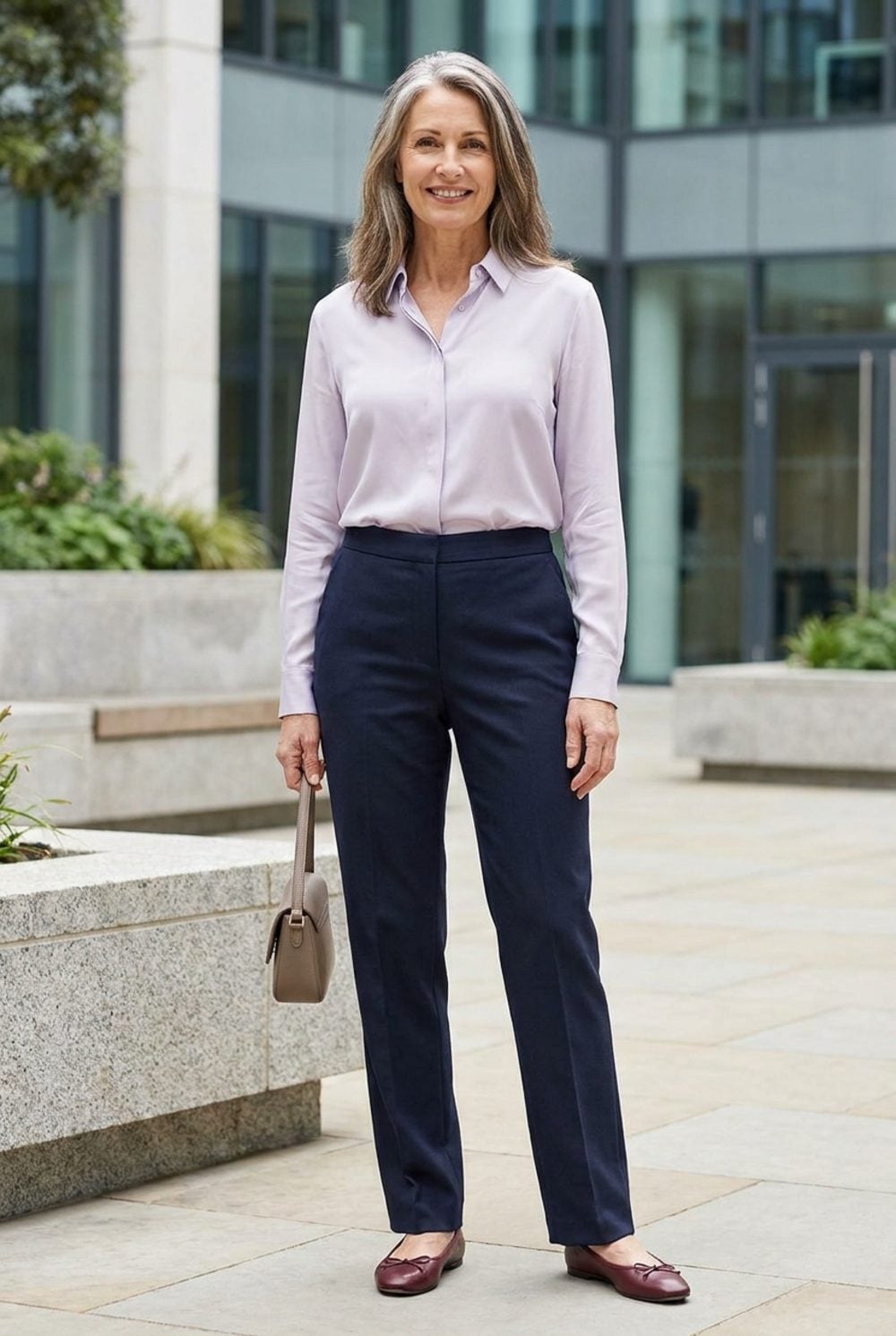
A full tuck works best when it looks deliberate rather than as though the blouse lost a wrestling match with the waistband. The enemy is not fabric. It is fabric concentrated in all the wrong places.
The lilac blouse sits smoothly around the navy trousers without large bunches at the hips or a balloon of fabric at the back. High-rise trousers place the dividing line higher on the body, which can make the leg portion of the silhouette appear longer.
30. Mix Textures Within a Restrained Palette
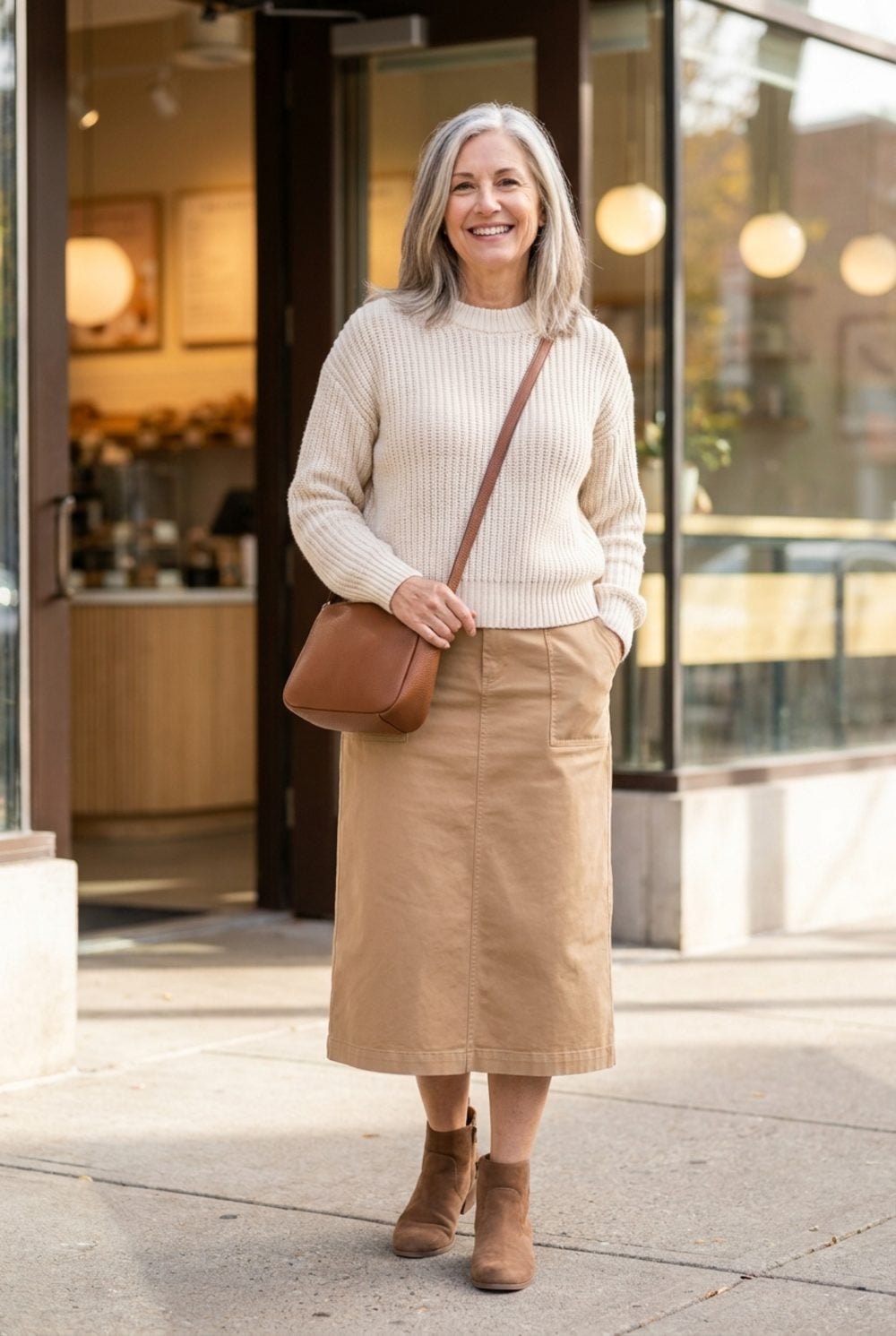
Three calm colors, four completely different surfaces. Ribbed knit. Smooth twill. Matte suede. Pebbled leather. The palette behaves itself while the textures throw the party.
The cream sweater catches light along every rib, the tan skirt stays flatter and smoother, and the suede boots soften everything at the bottom. This is how beige avoids becoming a hotel lobby, a fate from which more beige outfits deserve rescue.
29. Adjust Overlong Sleeves to Finish Cleanly at the Wrist
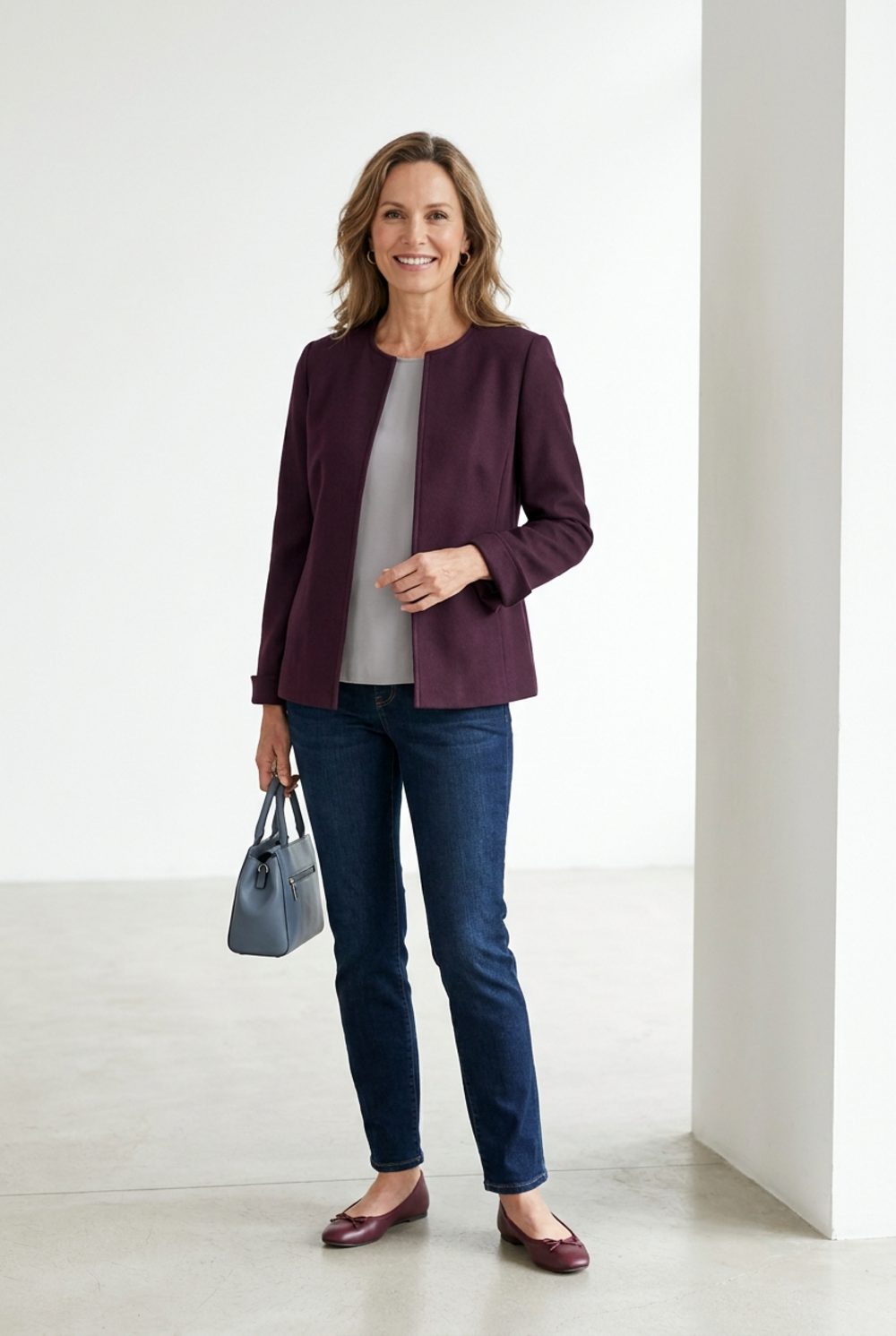
Sleeves pooling over the hands can make a fitted jacket look borrowed. A cleaner finish around the wrist lets the hand emerge properly and gives the garment a sharper ending.
The deep-plum collarless jacket sits over dark indigo denim while the burgundy ballet flats echo the jacket without copying it. Nothing needs to perform a circus trick. The proportions are already handling the room.
28. Repeat a Color in Two Separate Places
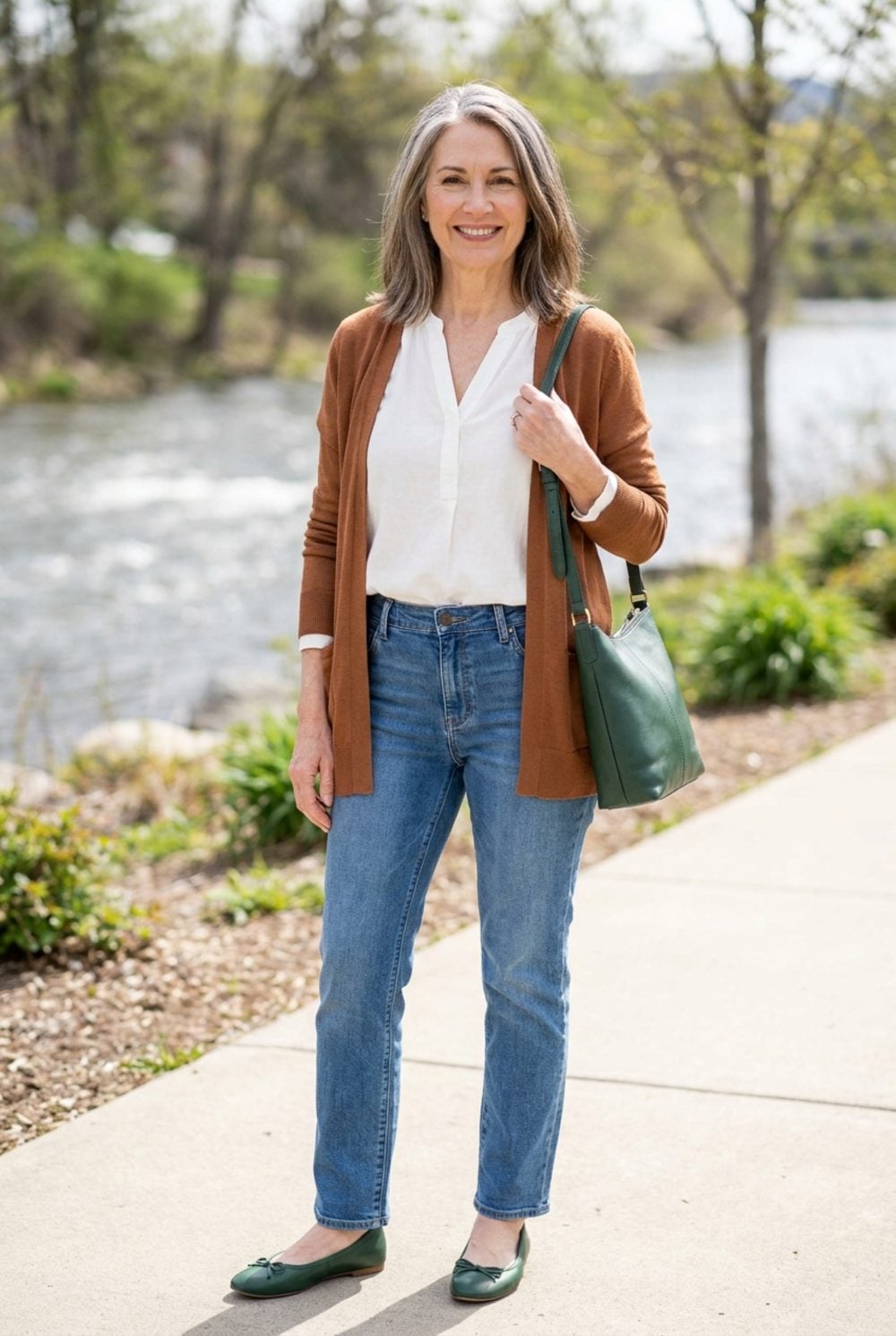
Green shoes. Green bag. Suddenly the repetition feels like a plan rather than coincidence.
Everything between those points can relax: soft-white blouse, medium-wash denim, cinnamon cardigan. The green flats and green bag quietly connect opposite ends of the outfit without requiring a necklace, scarf, belt, and ceremonial matching hat.
27. Hem the Trousers for the Shoes You Actually Wear
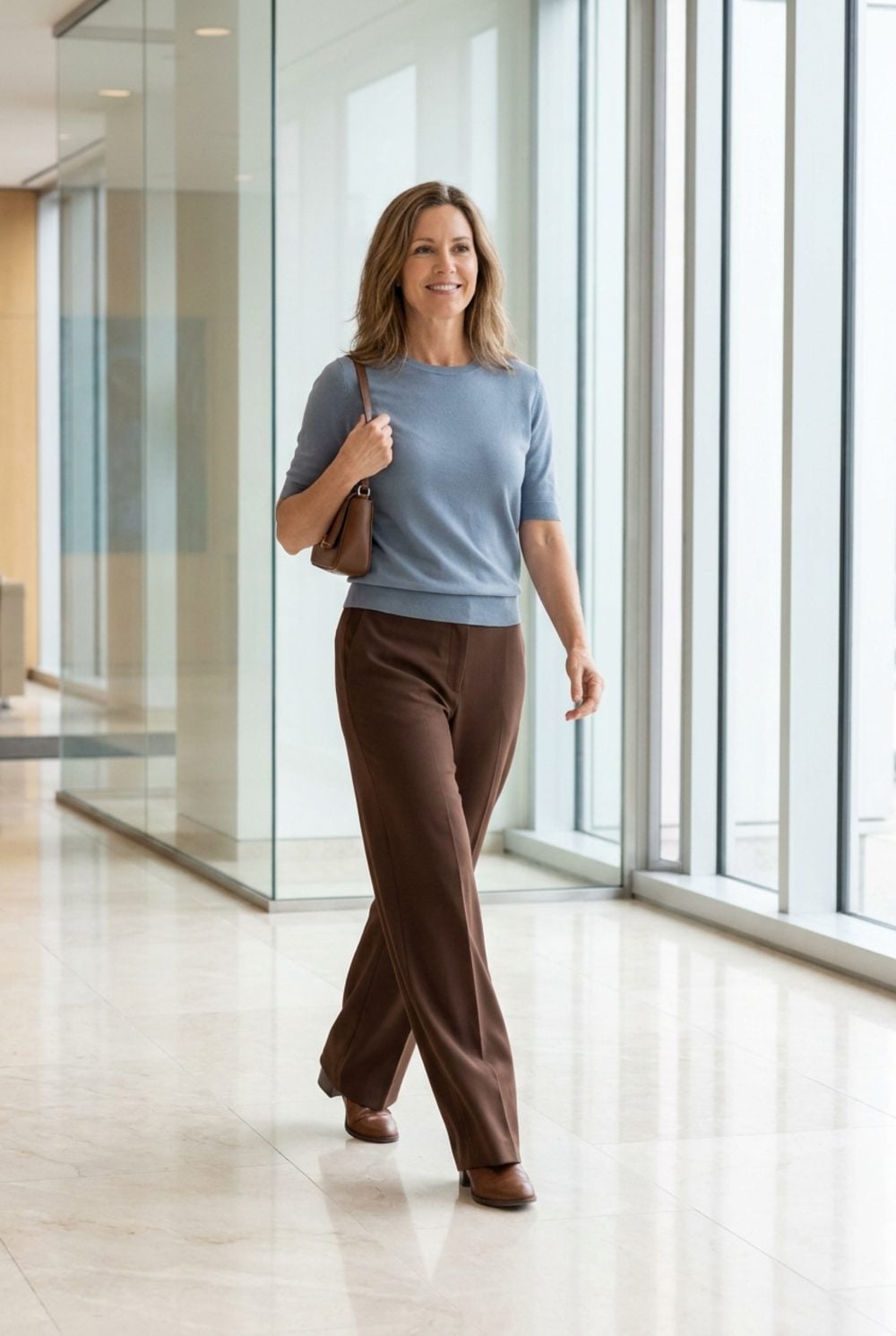
Trouser length changes with width, fabric, and footwear, so there is no holy measurement handed down from the tailoring gods. There is, however, a very obvious difference between a deliberate break and several inches of fabric collapsing around the ankle.
These chocolate wide-legs fall long and clean over the shoe without building a fabric traffic jam at the floor. Tucking the powder-blue knit top keeps the waist visible and lets the full length of the trousers become the point.
26. Use a Structured Third Piece
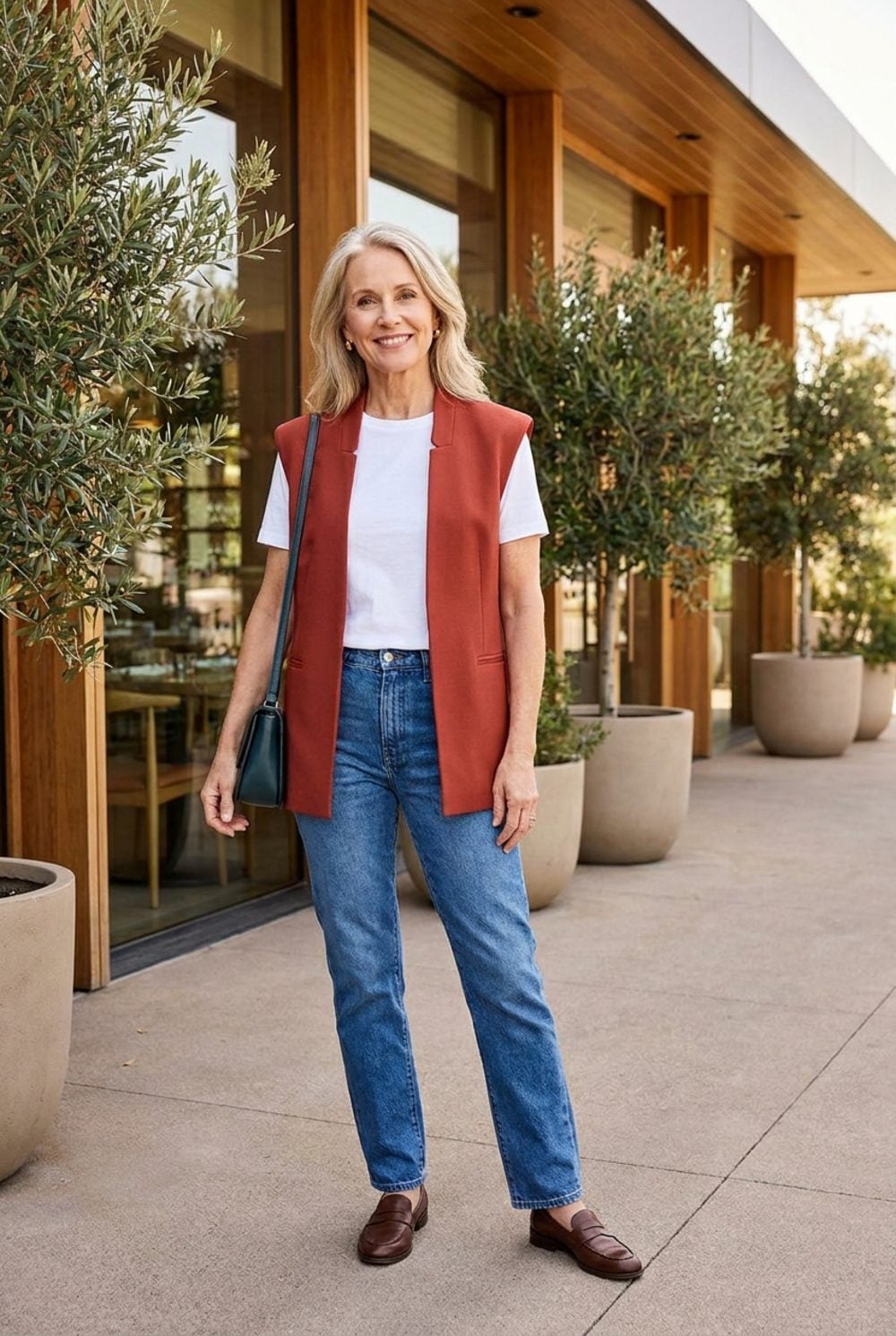
A tee and jeans is a Tuesday. Add the brick-red vest and suddenly Tuesday appears to have reservations.
The brick-red structured vest adds firm vertical edges and a defined shoulder to two deliberately ordinary basics. That contrast is the entire reason the layer works. Keep the foundation simple enough for the vest to remain the decision.
25. Steam the Whole Outfit Before You Leave
❤️ Would you like to save this?
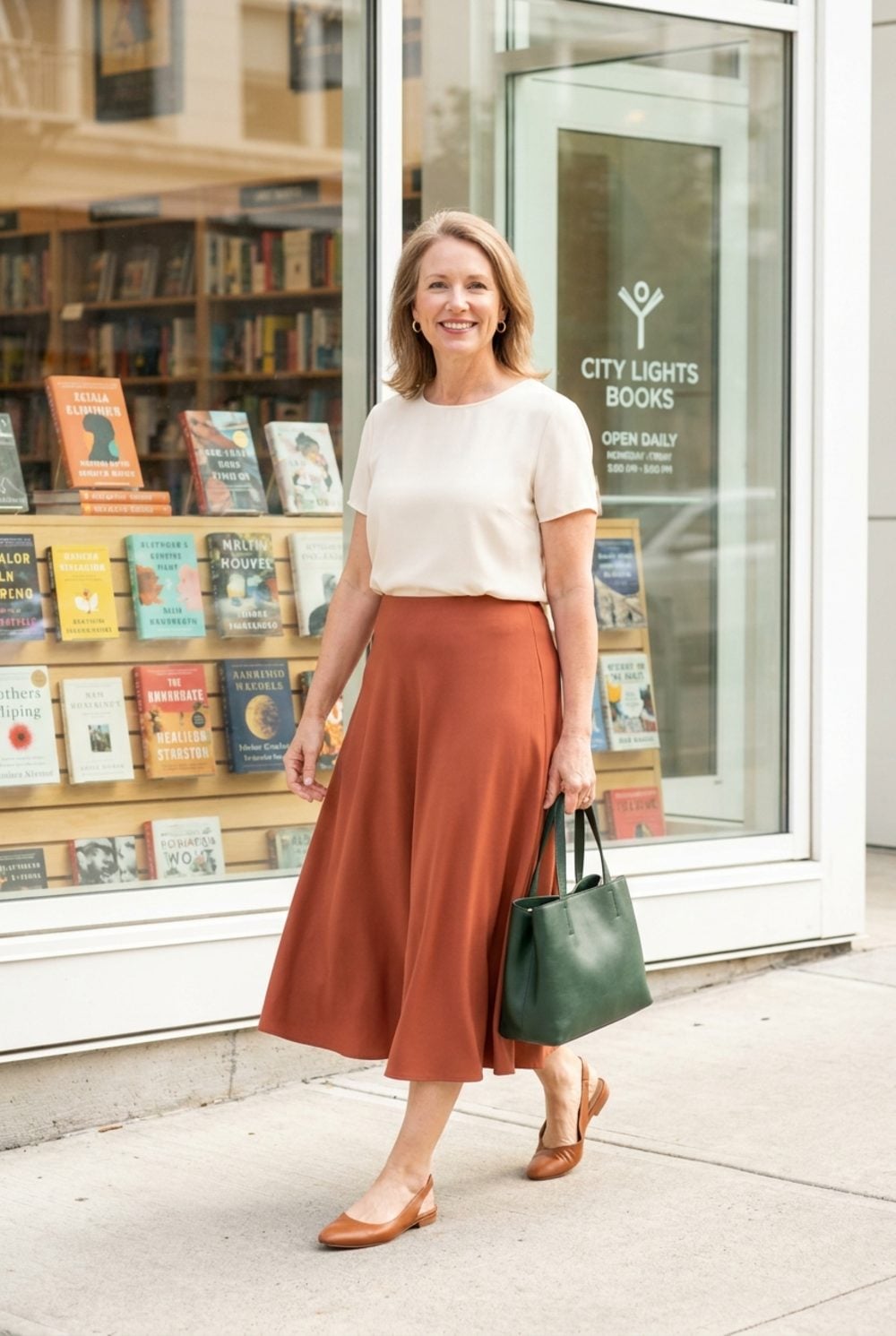
Wrinkles can make perfectly good fabric look as though it spent the night under a car seat. Steam restores drape, softens packing creases, and lets the actual cut of the garment show up for work.
The terracotta midi skirt gains far more from hanging smoothly than it would from another accessory. Same skirt, same cotton, five minutes less chaos.
24. Use One Rich Neutral as the Foundation
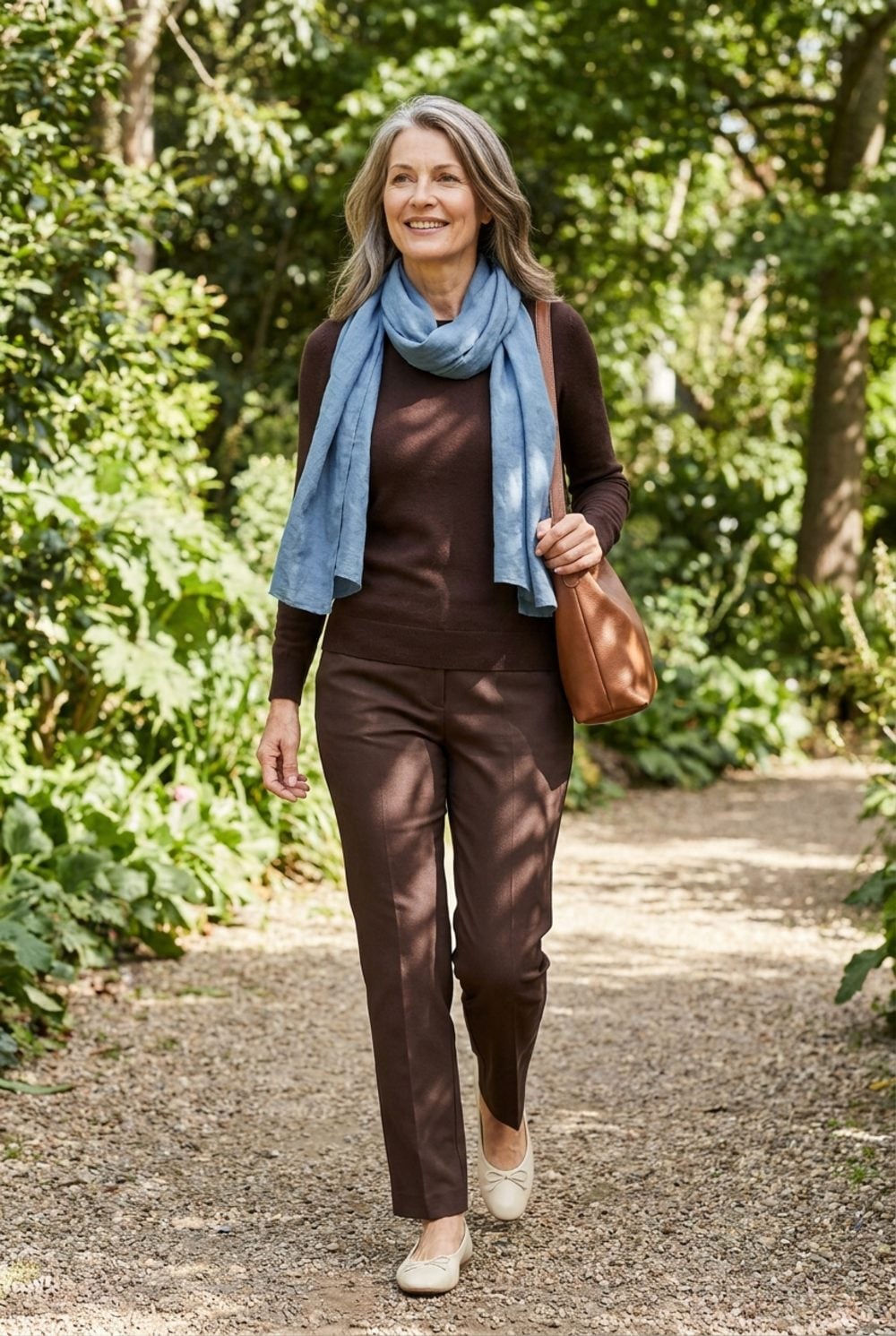
Chocolate brown gives this outfit depth without leaning on black as the automatic answer. Knit, trousers, and cognac accessories stay in neighboring warm territory, creating a foundation that feels substantial rather than severe.
The sky-blue scarf is what prevents all that brown from becoming ponderous. One cool note wakes up the warmth, while the cognac bag remains close enough to brown to belong without disappearing into it.
23. Define a Shapeless Waist With Hidden Pinning
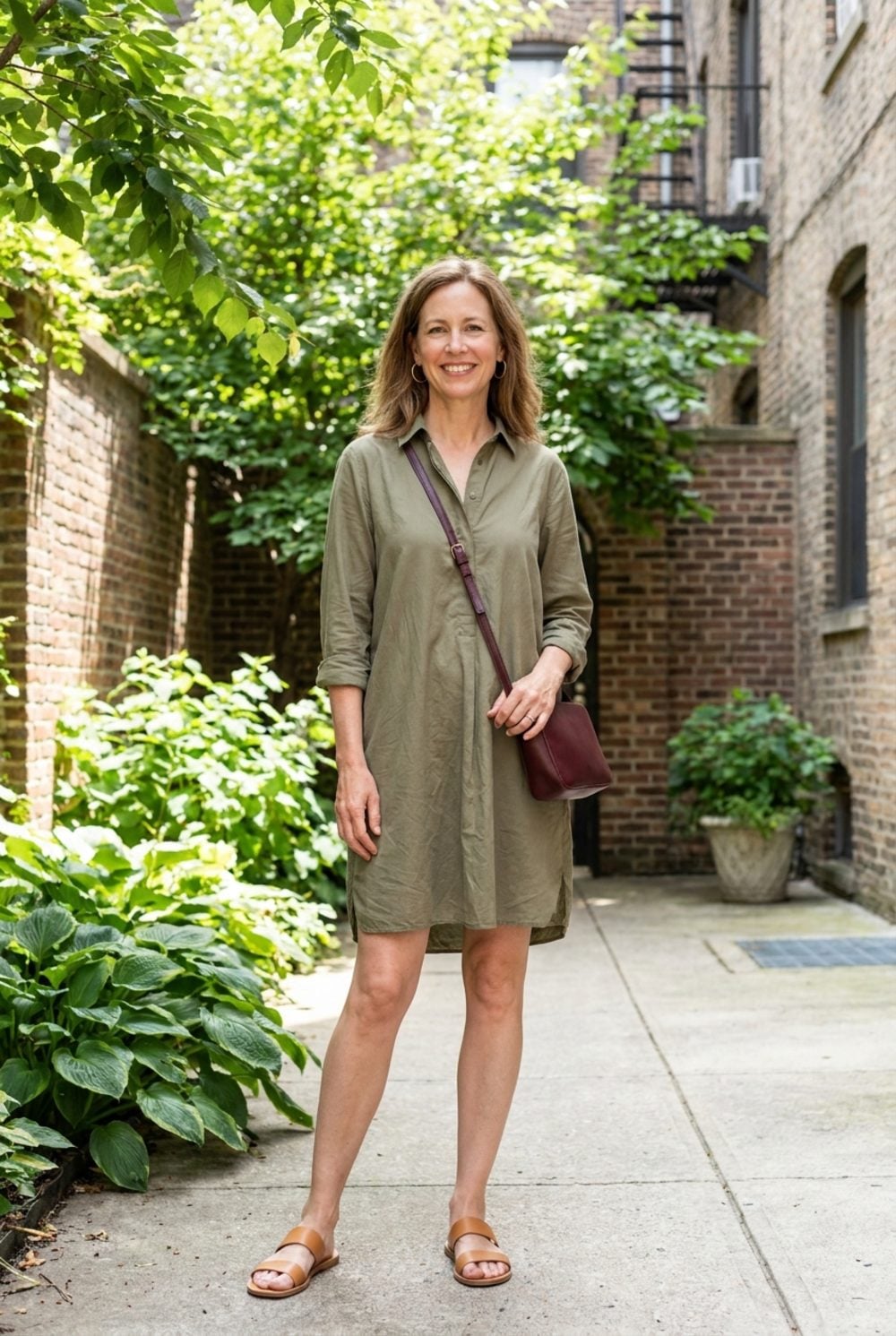
A shirt dress can have exactly the right color and exactly the wrong amount of fabric through the middle. When a belt would change the character of the dress, discreet shaping from the back can be the subtler solution.
From the front, the olive remains relaxed and easy. The olive shirt dress simply gains definition while the dark-red crossbody bag gives the subdued palette one concentrated shot of color.
22. Choose Sleek Shoes When the Outfit Already Has Enough Going On
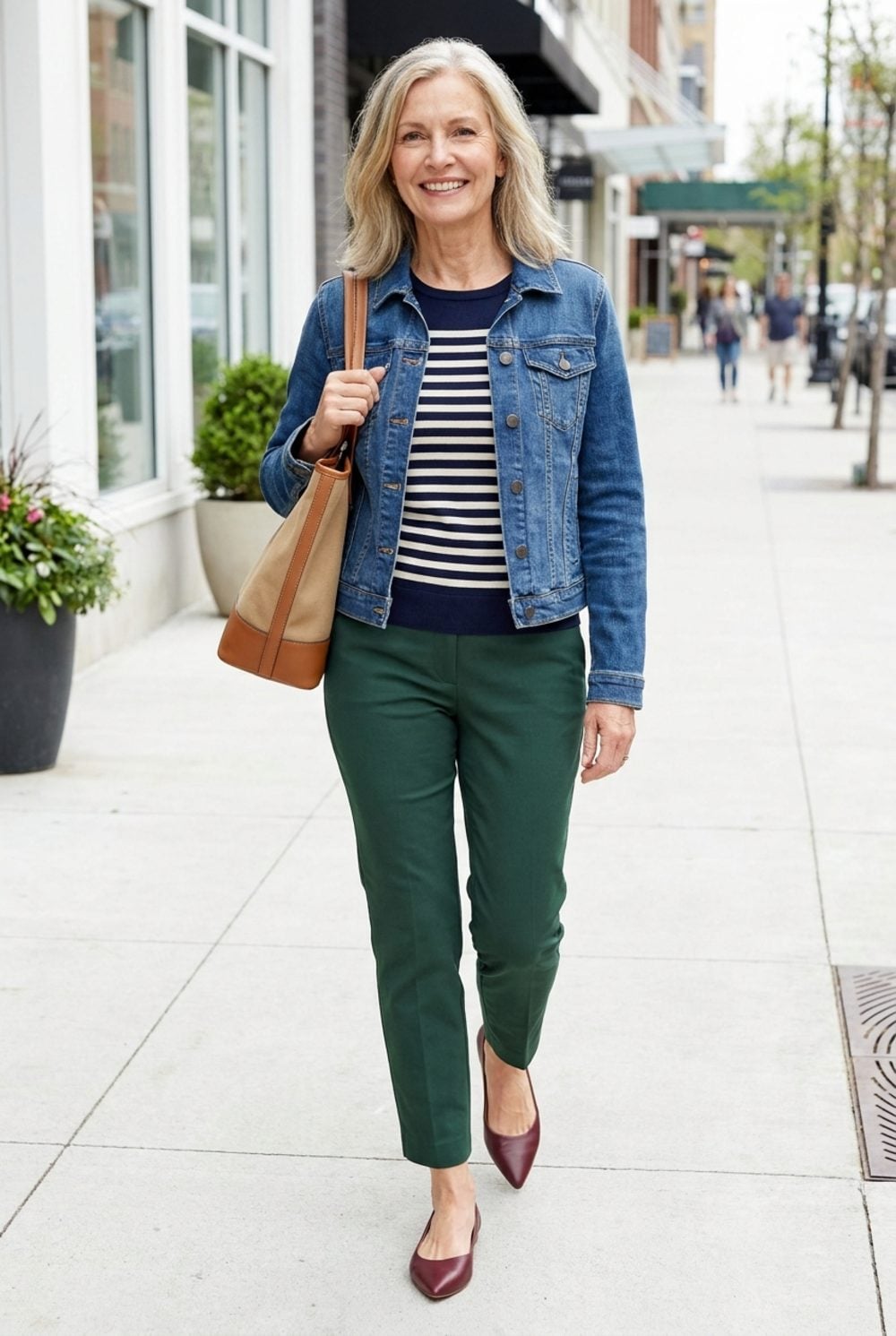
An inexpensive shoe has fewer opportunities to betray itself when the design is clean. That does not mean embellishment is inherently cheap; it means every buckle, contrast stitch, crystal, zipper, and strap becomes another detail that has to be executed well.
The burgundy pointed flats sharpen the striped knit and forest-green trousers with one clean shape and almost no hardware. The foot gets a strong ending without another subplot.
21. Press the Collars, Cuffs, Lapels, and Hems
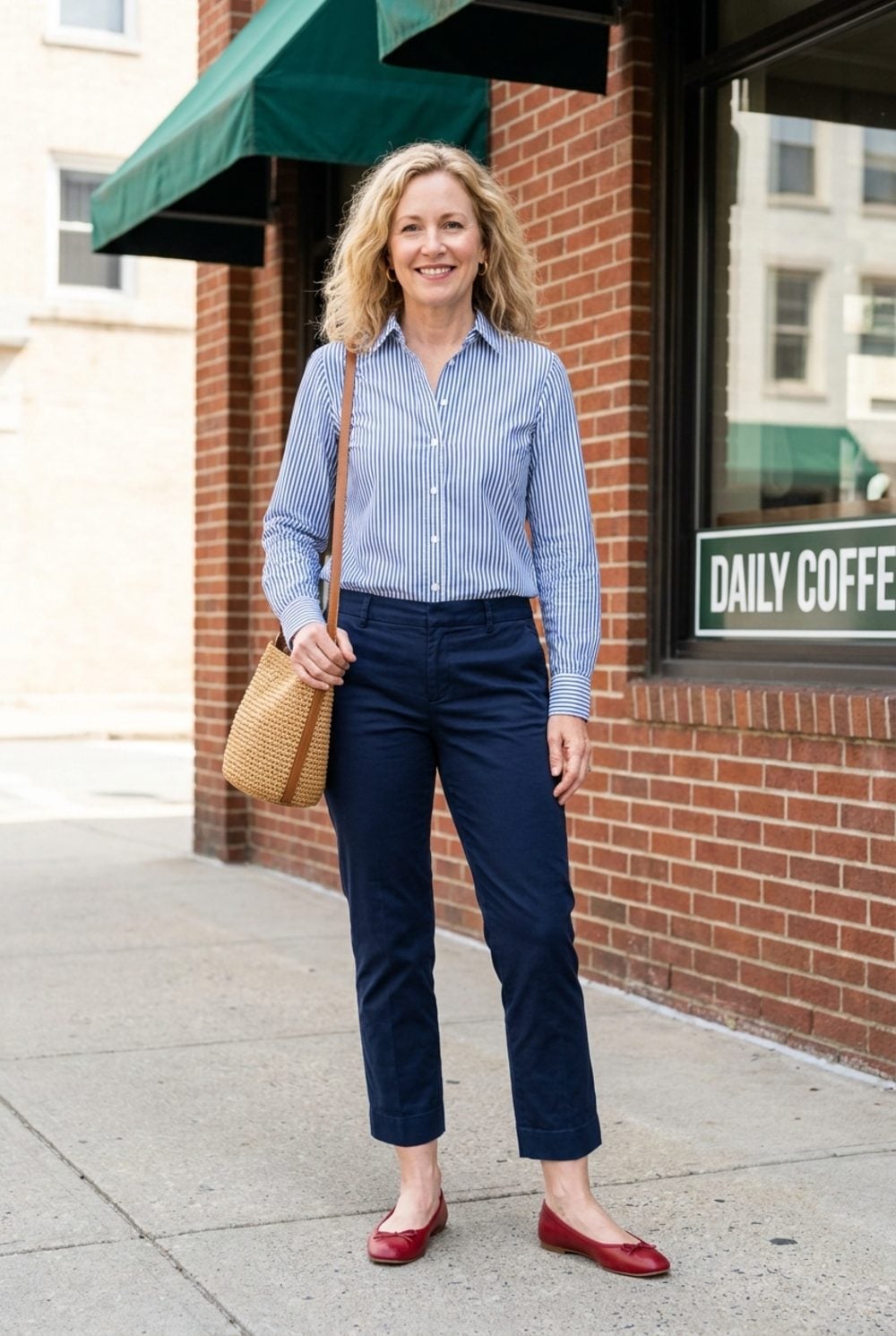
Steaming takes care of broad wrinkles. Pressing handles the architecture: collar, cuff, placket, lapel, hem. Those are the edges that tell a shirt whether it is going to stand up straight or spend the day looking vaguely exhausted.
The striped cotton button-down benefits from crisp lines, while the cherry-red flats supply the only real mischief. Smooth the field with steam; sharpen the important edges with an iron.
20. Use a Precise Partial Tuck
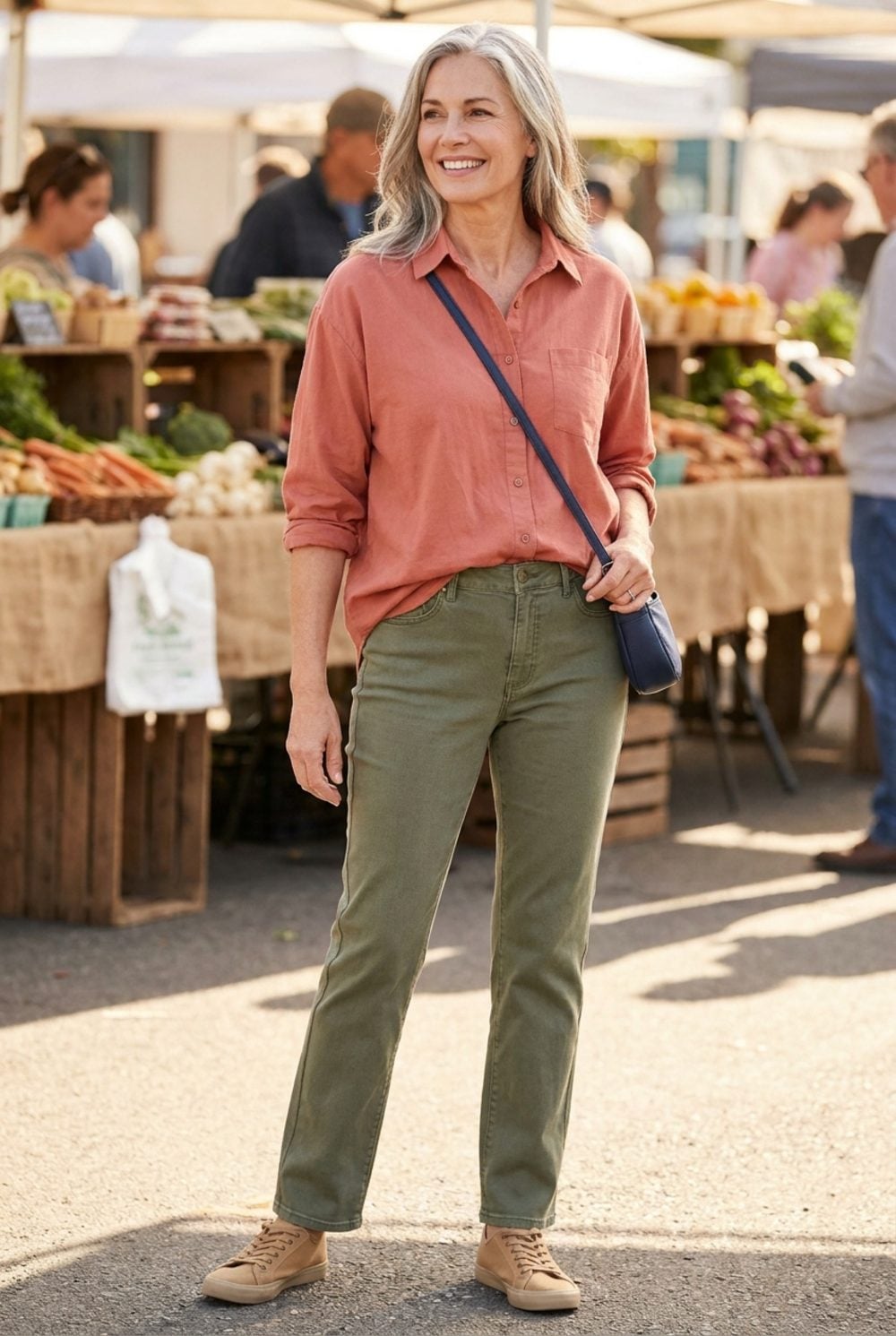
A partial tuck is useful when you want evidence of a waist without sentencing the entire shirt to life inside your trousers. One clean section goes in. Everything else gets parole.
The coral shirt and olive jeans already have a considered color relationship; the tuck simply introduces asymmetry and reveals enough waistband to establish proportion. The danger is looking accidental, so give the tucked section a definite beginning and end.
19. Choose a Structured Bag When the Clothes Are Soft
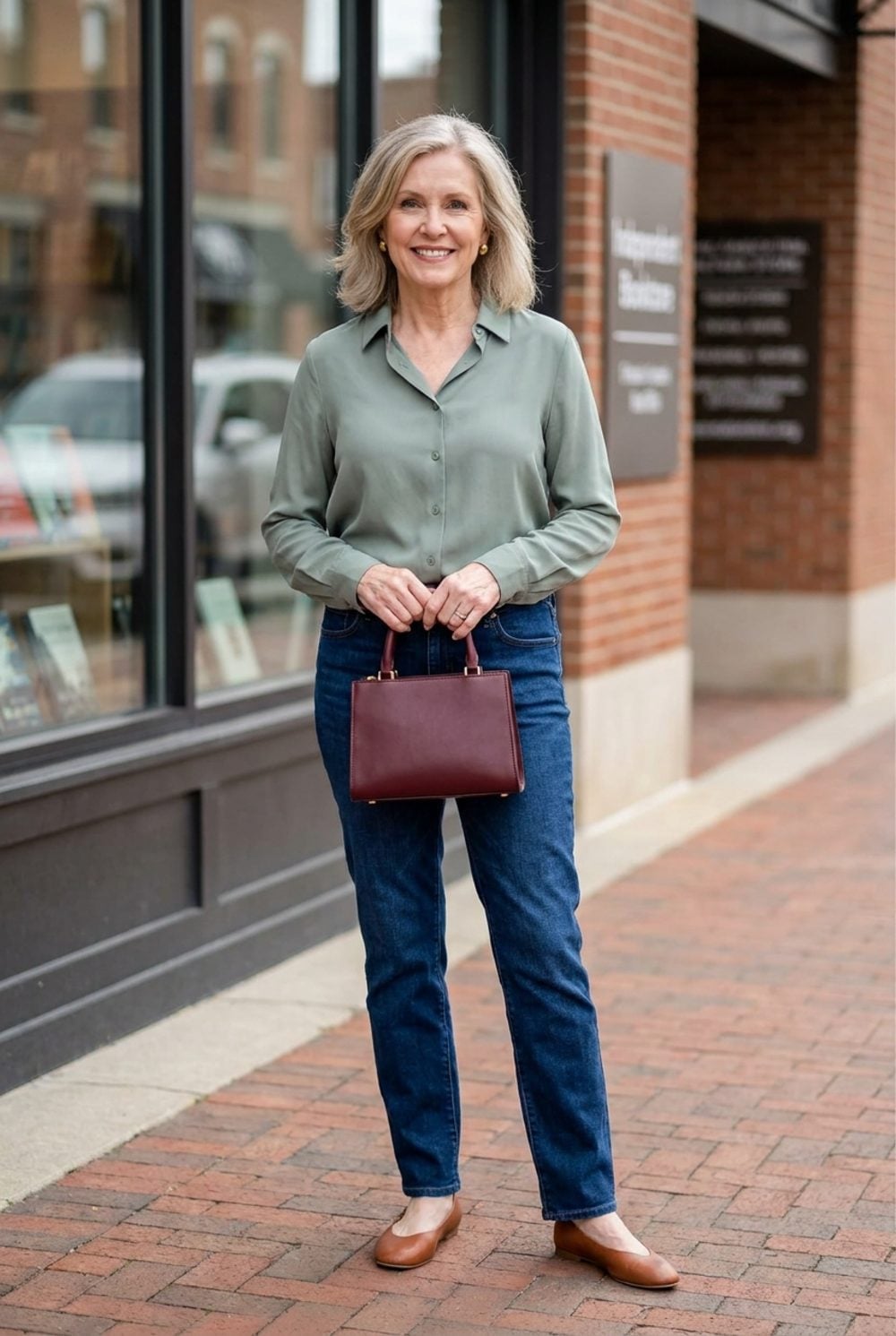
The burgundy bag is the adult in the room. Jeans, a soft blouse, and easy flats can relax because one compact shape is holding its corners.
That does not mean slouchy bags are inherently inexpensive — some of the most luxurious bags ever made are intentionally soft. The distinction is between purposeful softness and a bag collapsing because its construction cannot support itself. Here the burgundy structured handbag gives sage and cinnamon a crisp counterpoint without logos or jangling hardware.
18. Cut Every Loose Thread and Release the Temporary Stitching
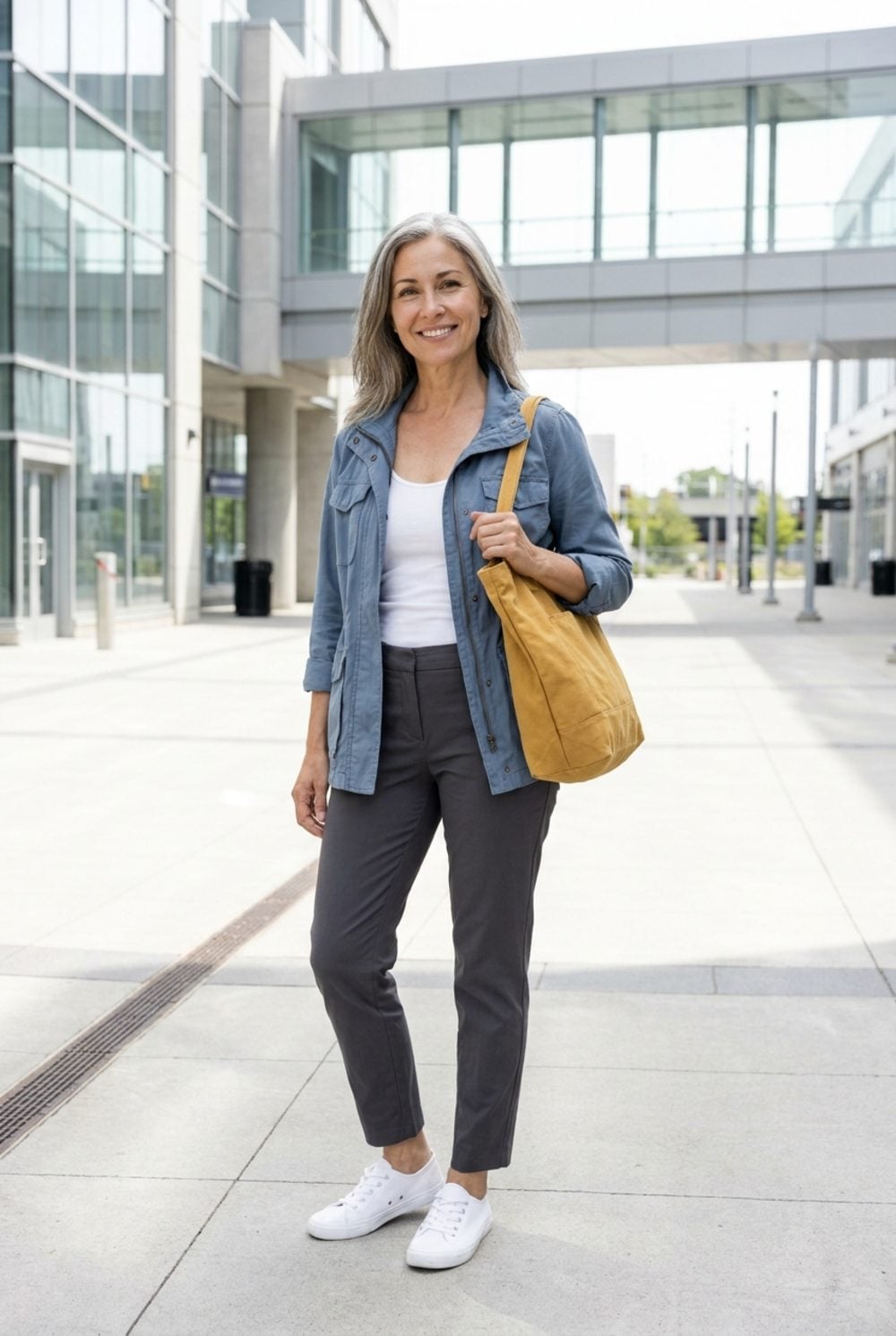
The X holding a coat vent shut is not decorative. Neither are temporary stitches across pockets or a stray thread trailing from a cuff like evidence from a crime scene.
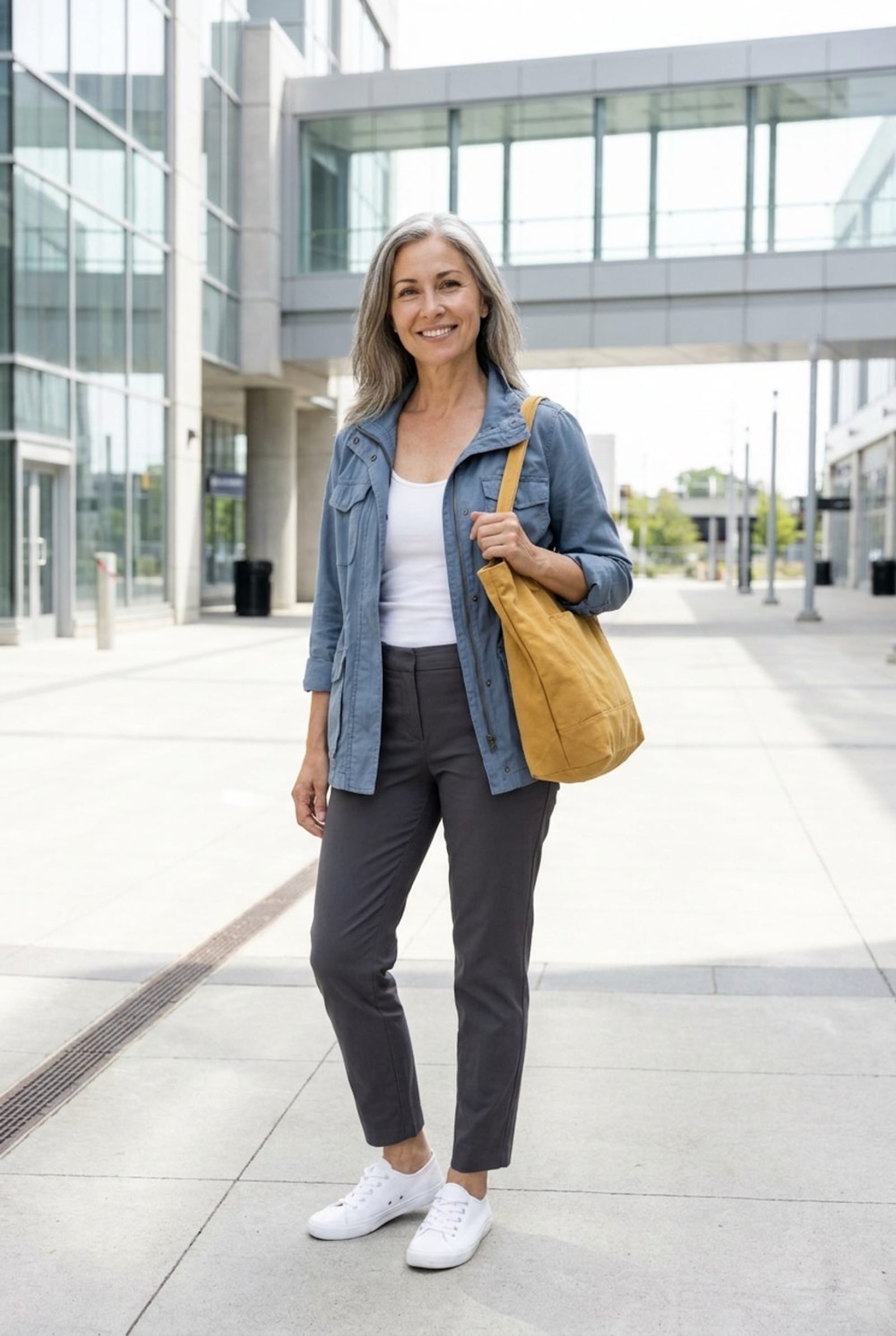
Release the vent so the dusty-blue jacket can fall as intended, open any pockets designed to be opened, and trim loose threads carefully. The mustard tote can keep things casual; the jacket no longer needs to look unfinished.
17. Limit the Palette When You Want the Shapes to Do the Talking
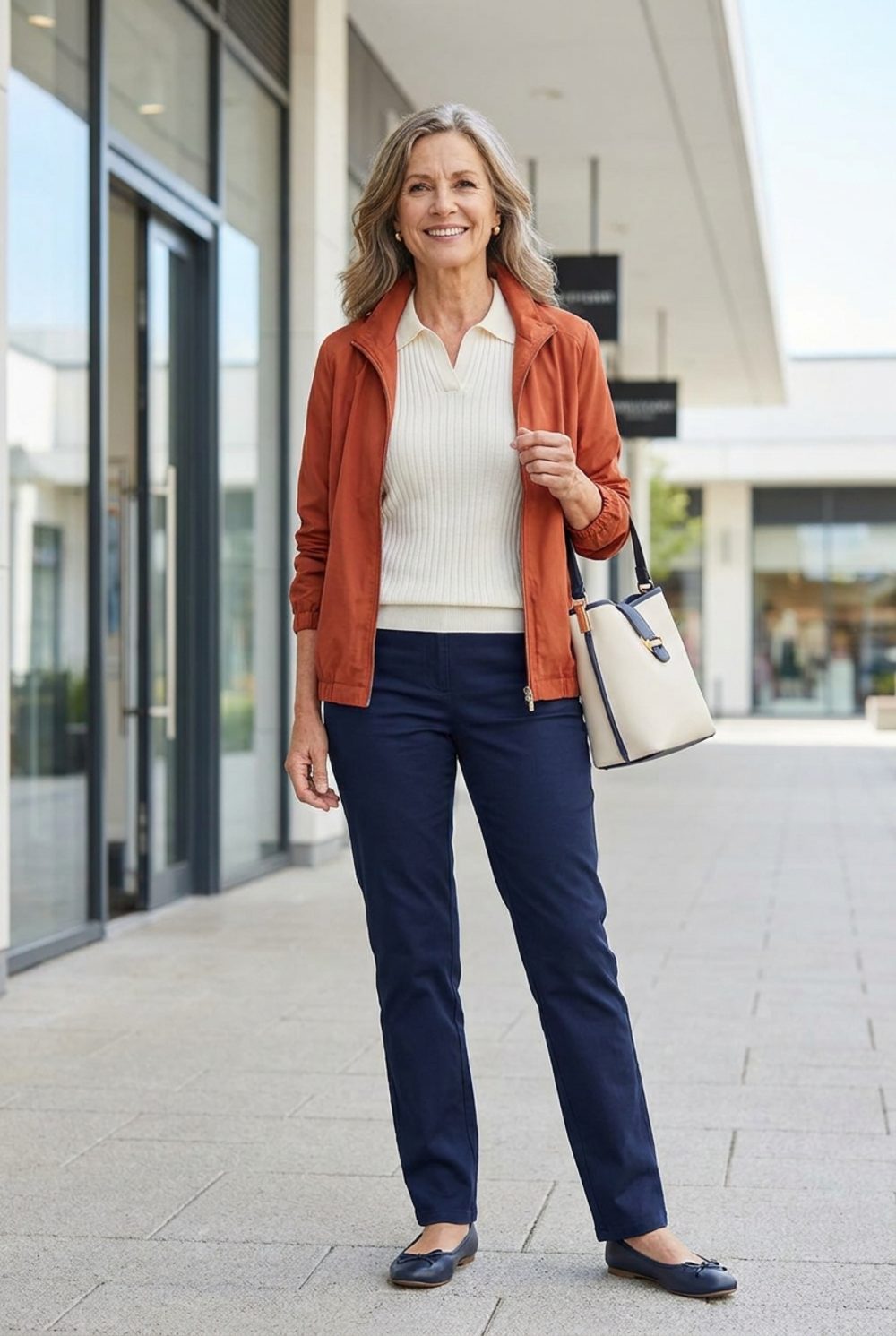
Navy grounds it. Ivory calms it. Burnt orange lights the match. Three colors are enough for this outfit because the shapes and proportions already have plenty to say.
There is no universal law forbidding a fourth or fifth shade. The useful lesson is simpler: when inexpensive pieces come from different stores and different seasons, a controlled palette can make them feel related. Here the burnt-orange jacket gets to be the single warm jolt against two calmer colors.
16. Push or Cuff Sleeves to Expose the Wrist
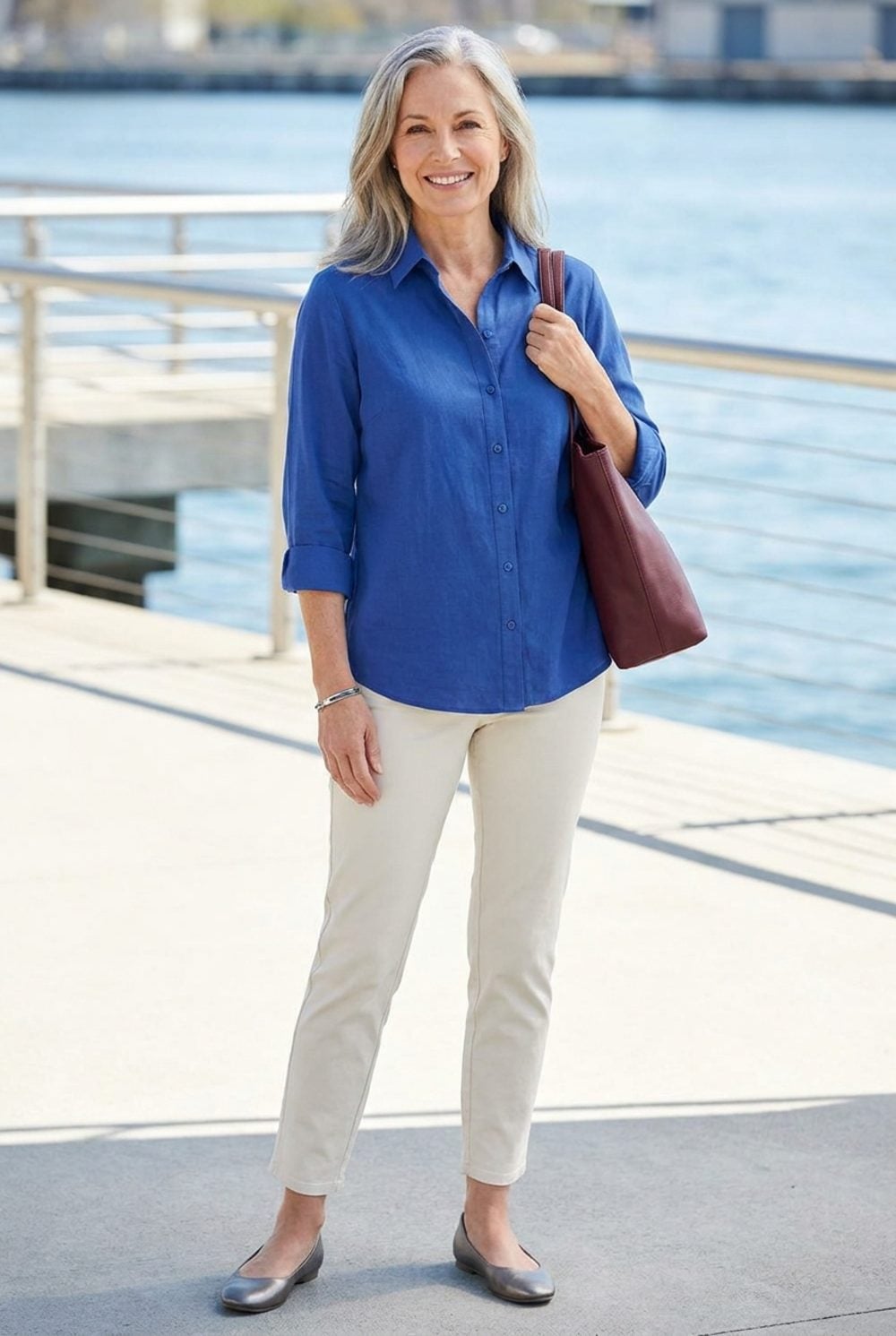
An oversized shirt worn completely long can carry a lot of fabric from shoulder to fingertip. Push the sleeves to the forearm and suddenly there is skin, shape, and a clean break in all that volume.
The cobalt shirt stays relaxed while the exposed wrist keeps the silhouette lighter. A thin gold bracelet emphasizes the newly visible forearm, while ecru trousers and a burgundy tote keep the rest grounded.
15. Use Fashion Tape to Control Necklines and Gaps
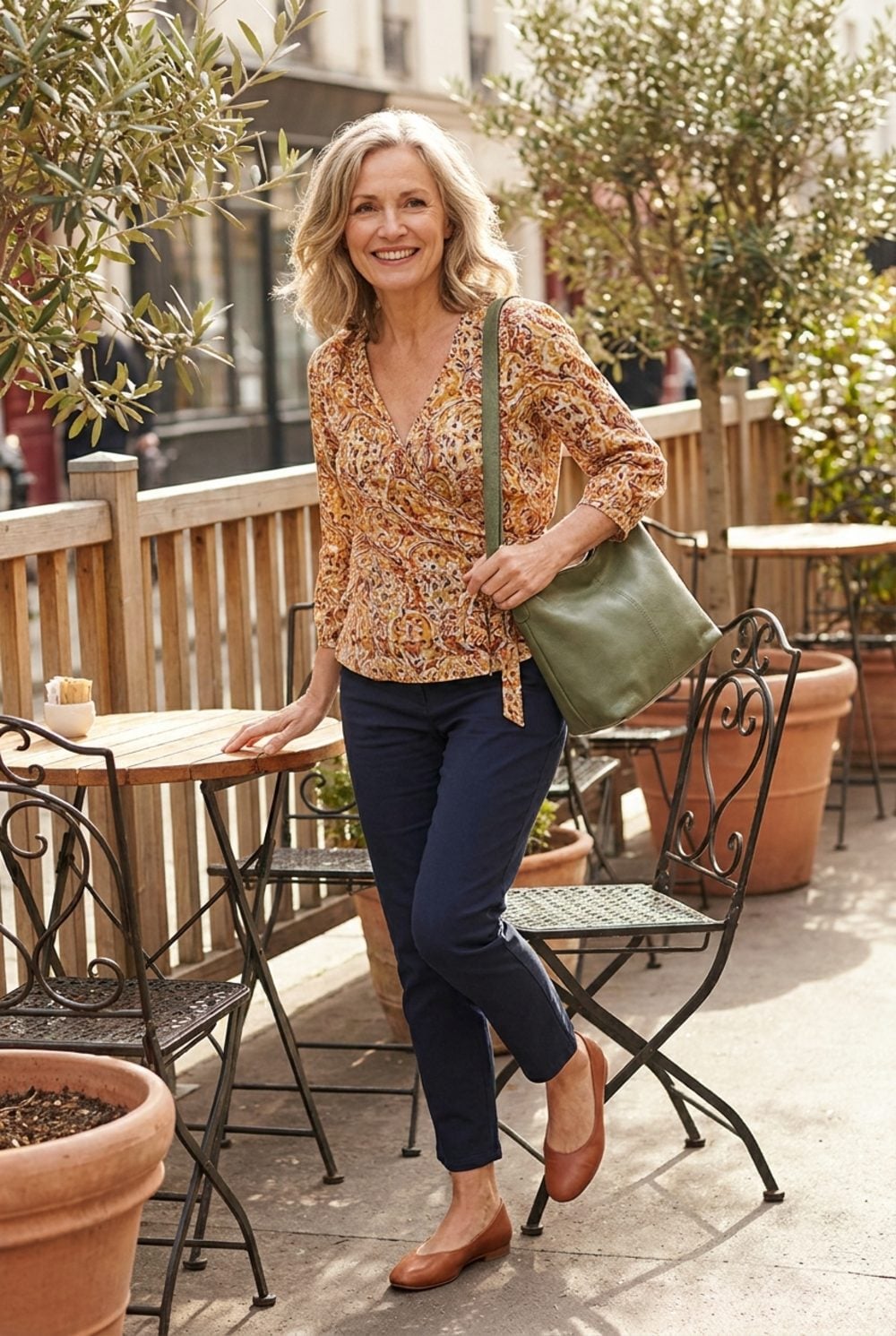
Wrap blouses have an uncanny instinct for opening precisely when you stop paying attention. Fashion tape exists because gravity has never respected a dress code.
Used discreetly and according to the product directions, it can keep the printed wrap blouse lying smoothly without an exposed safety pin or an unwanted camisole chopping through the neckline. The deep-navy ankle trousers calm the print below. The cleverest intervention is the one nobody sees.
14. Pick Fabric for Drape and Surface, Not a Simple Matte-versus-Shiny Rule
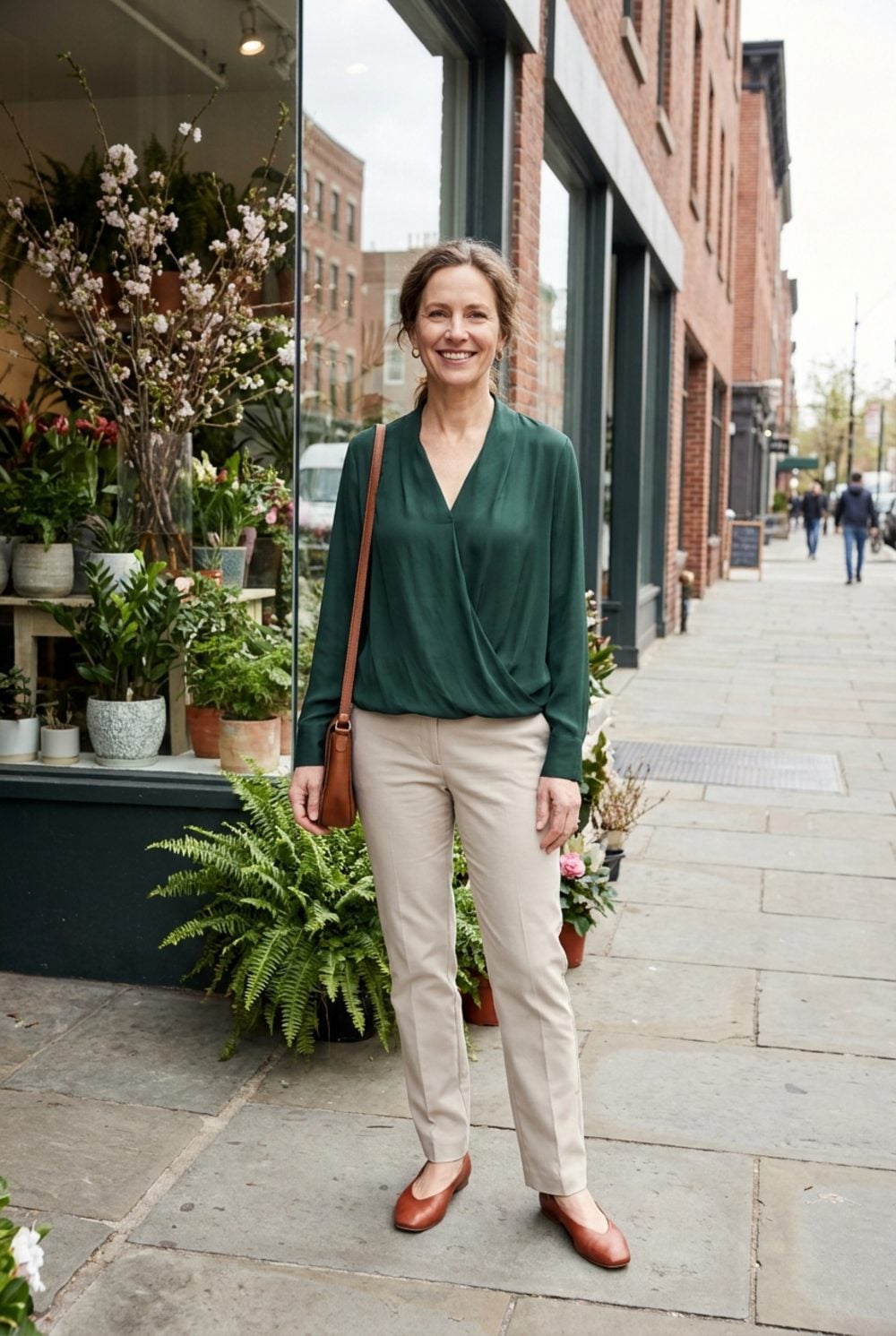
Cheap-looking shine is usually not about shine itself. Silk satin can gleam beautifully; so can velvet, polished cotton, and excellent technical fabrics. The problem is a surface that looks thin, plasticky, overly reflective, or badly matched to the garment.
The dark-emerald draped blouse succeeds because the fabric has enough body and opacity to fall cleanly without looking stiff. Against the stone straight trousers, the soft surface gives the color depth rather than glare.
13. Wear the Outer Layer Open to Create a Longer Front Line
❤️ Would you like to save this?
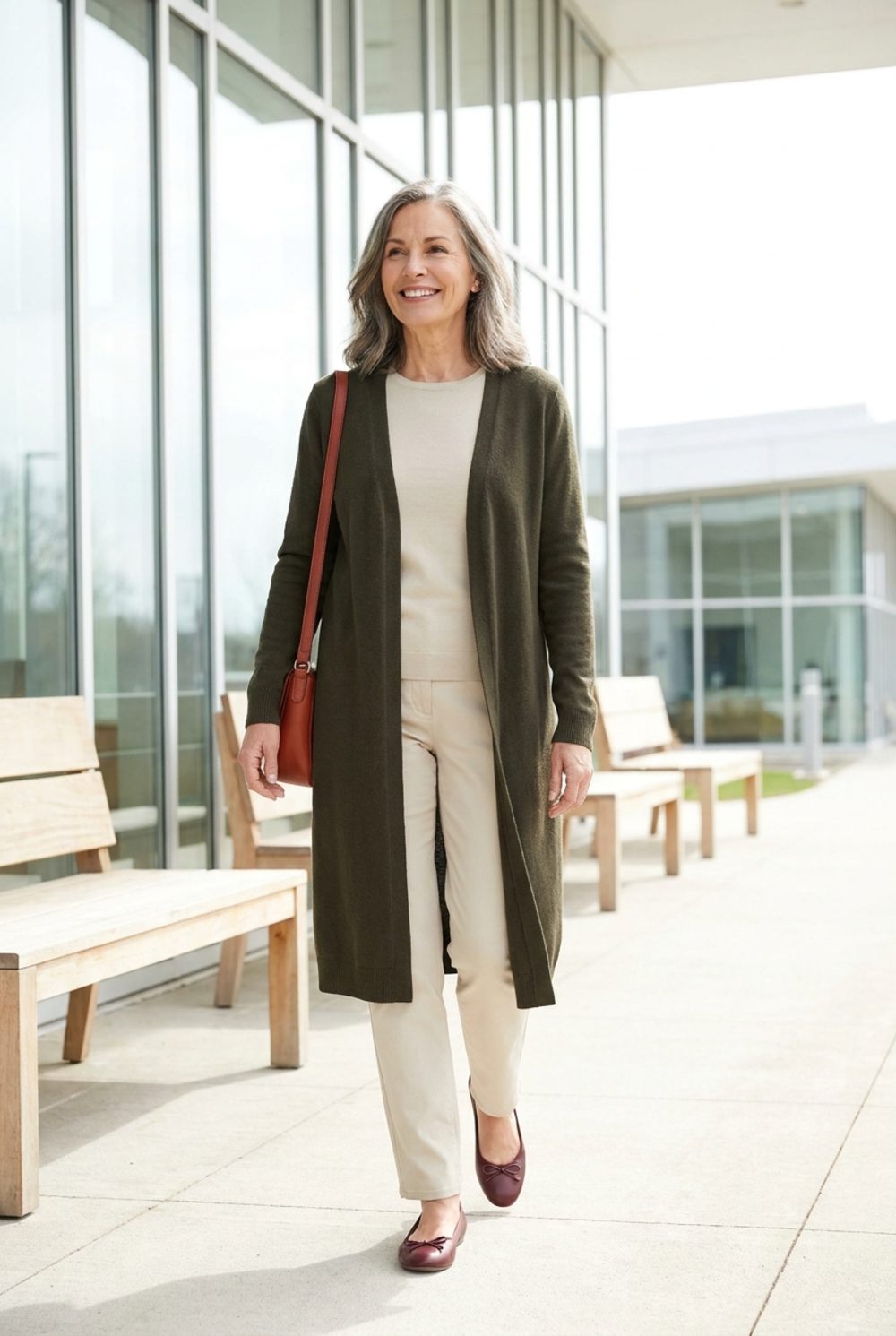
Leave the long olive cardigan open and its two front edges create clean vertical boundaries around the lighter center.
The cream base becomes a continuous column while the rust bag interrupts all those subdued shades with one warm note. Nobody changed shape between breakfast and lunch. The cardigan simply changed the geometry around the clothes underneath.
12. Make the Shoes Look Immaculate
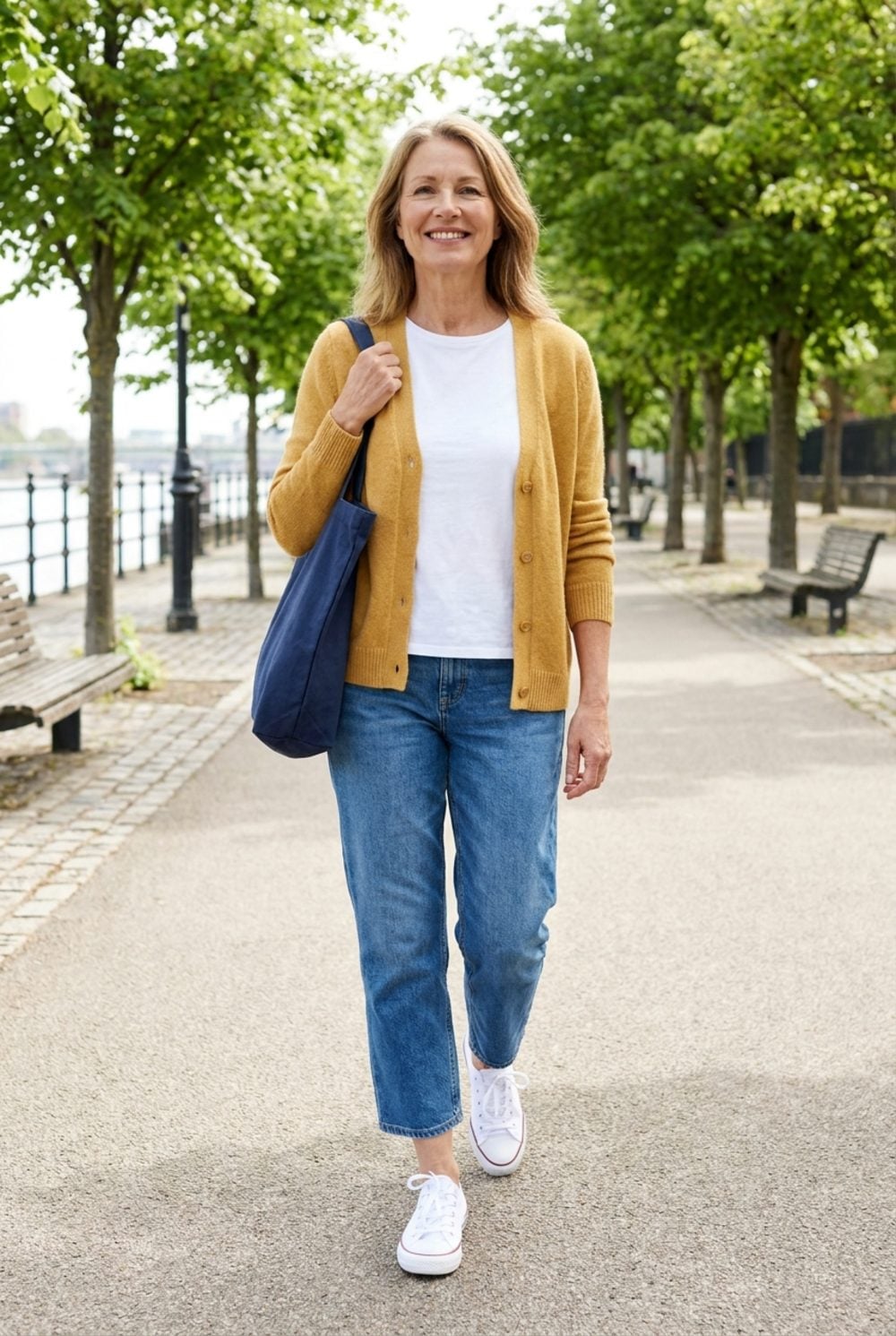
White sneakers do not need to look fresh from the box. They do benefit from not looking as though they recently escaped a muddy parking lot.
The white low-profile sneakers have clean laces, tidy midsoles, and no gray film creeping over the toes. Against cropped jeans and the mustard cardigan, that little bit of maintenance makes the casual outfit feel looked after rather than forgotten.
11. Place a Belt Where It Improves the Proportion
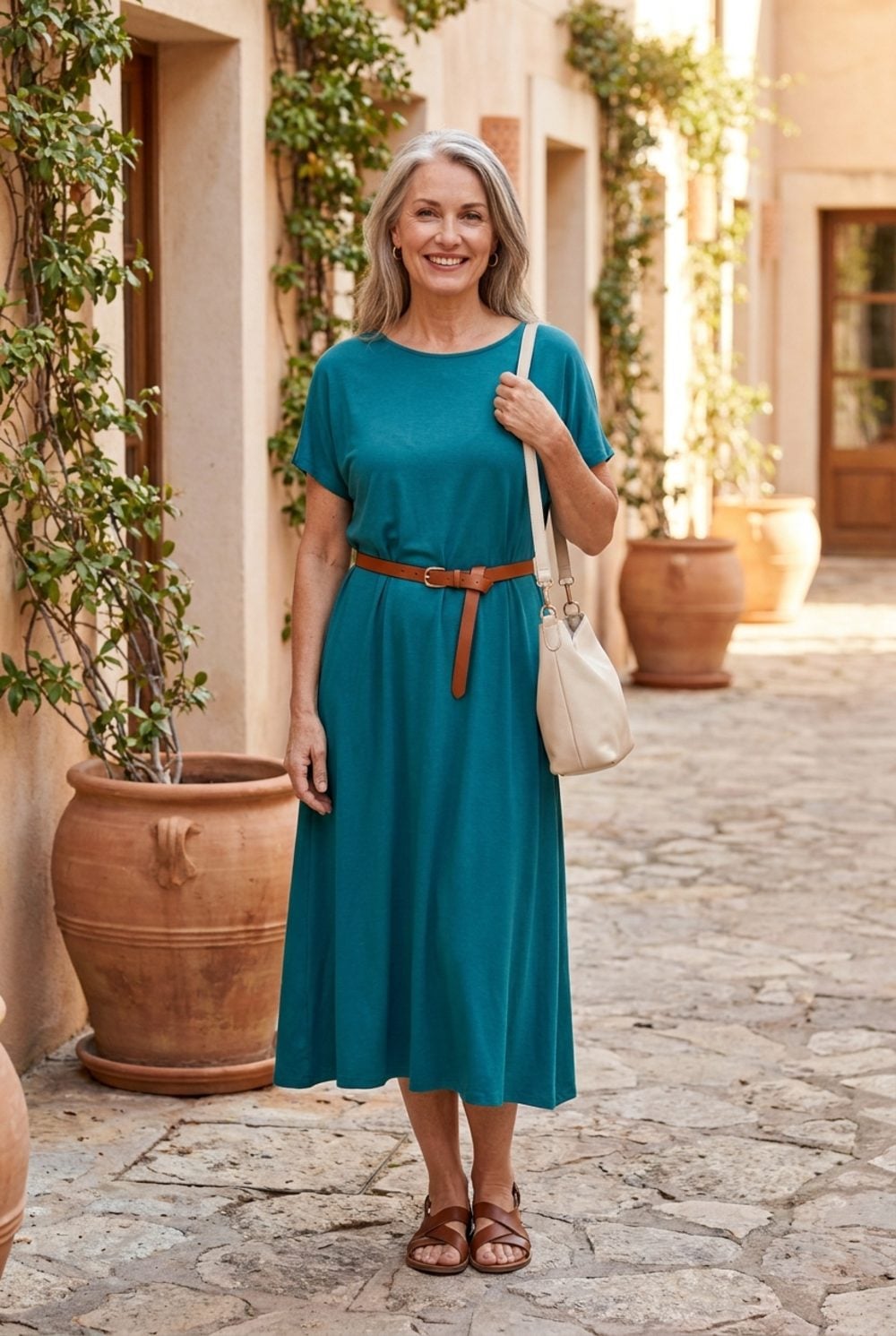
A dress seam is a manufacturing decision, not a personal commandment. The belt does not have to sit there simply because the sewing machine once did.
On this teal midi, shifting the cognac belt slightly changes the relationship between bodice and skirt while leaving the fabric relaxed above and below. Different torsos want different placements, so experiment rather than obeying the first seam you encounter.
10. Make the Neckline Frame the Face Cleanly
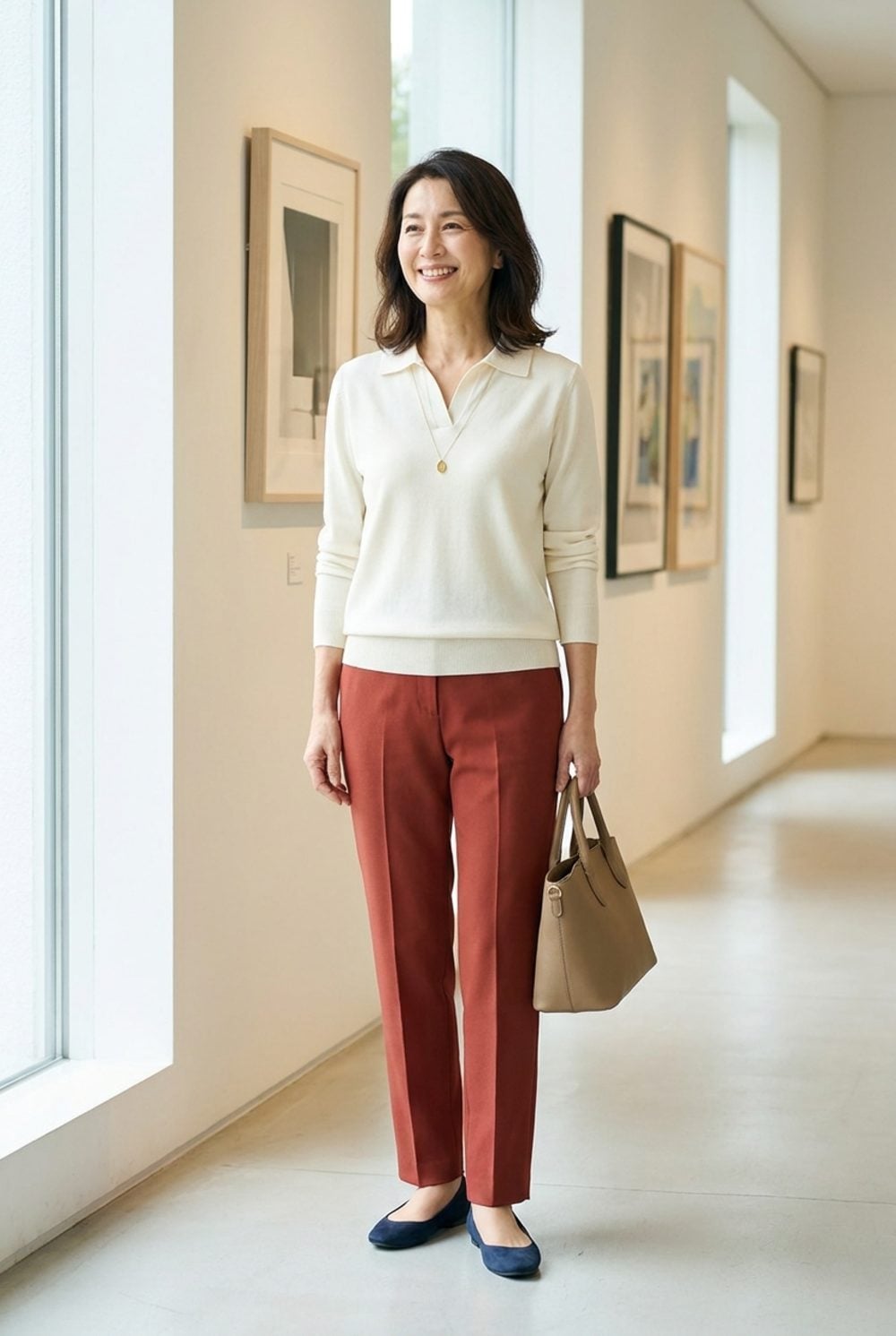
The neckline frames the most expensive thing you own, which is your face. Let it twist, collapse, or bunch awkwardly and the disturbance sits exactly where people are already looking.
Here the ivory open-collar knit lies flat around the collarbone while a small pendant lands neatly in the opening. That same soft beige outfit logic continues through the top, with brick-red trousers preventing the palette from becoming too polite.
9. Use Shoe Color to Continue the Trouser Line
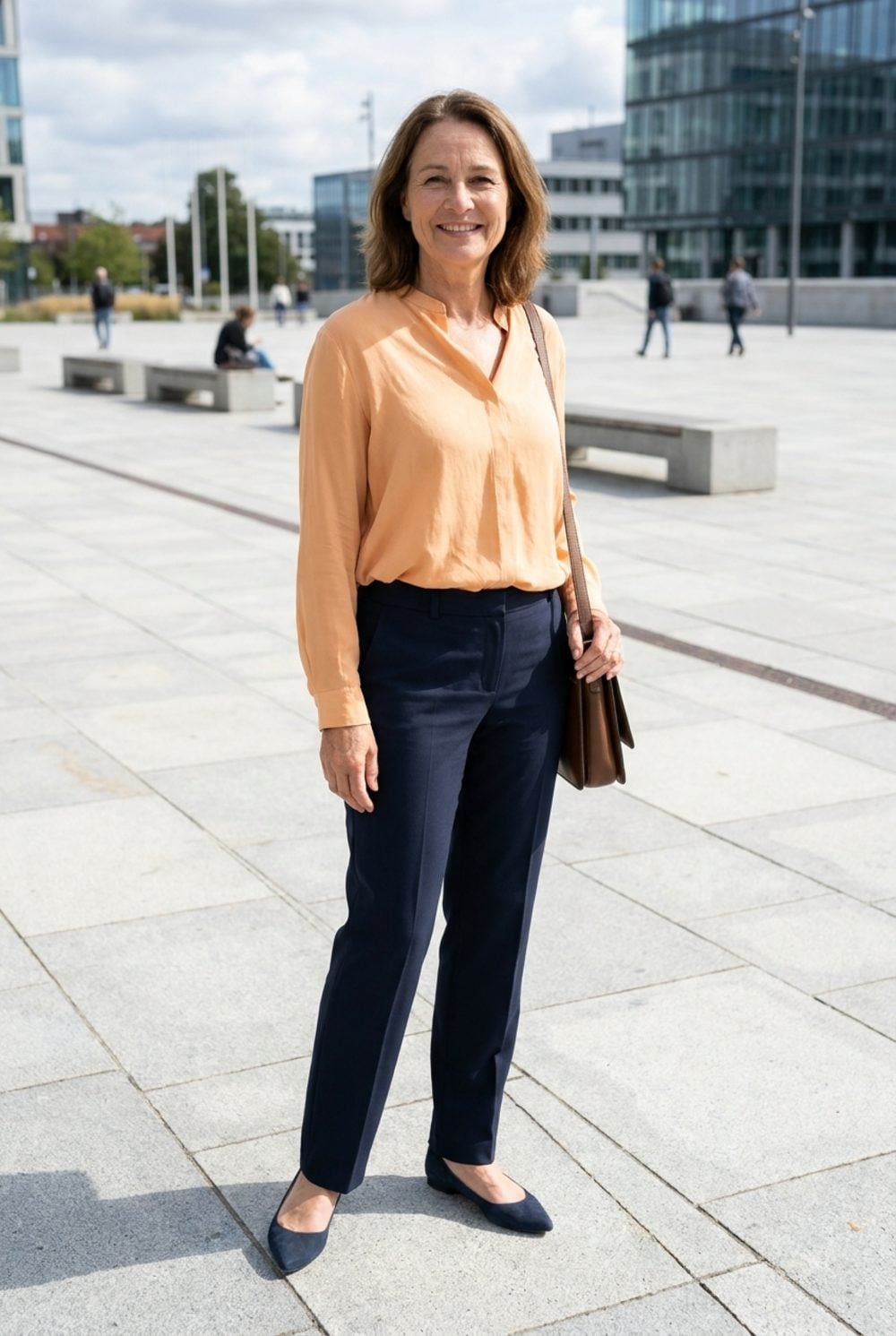
Look at what happens at the ankle. Navy trousers meet navy flats with very little color interruption, so the lower half keeps moving in one direction instead of stopping abruptly at the shoe.
The apricot blouse softens the top while the navy pointed flats continue the dark trouser color. A tan shoulder bag adds one warm neutral away from the leg line.
8. Balance One Relaxed Piece With One Cleaner Piece
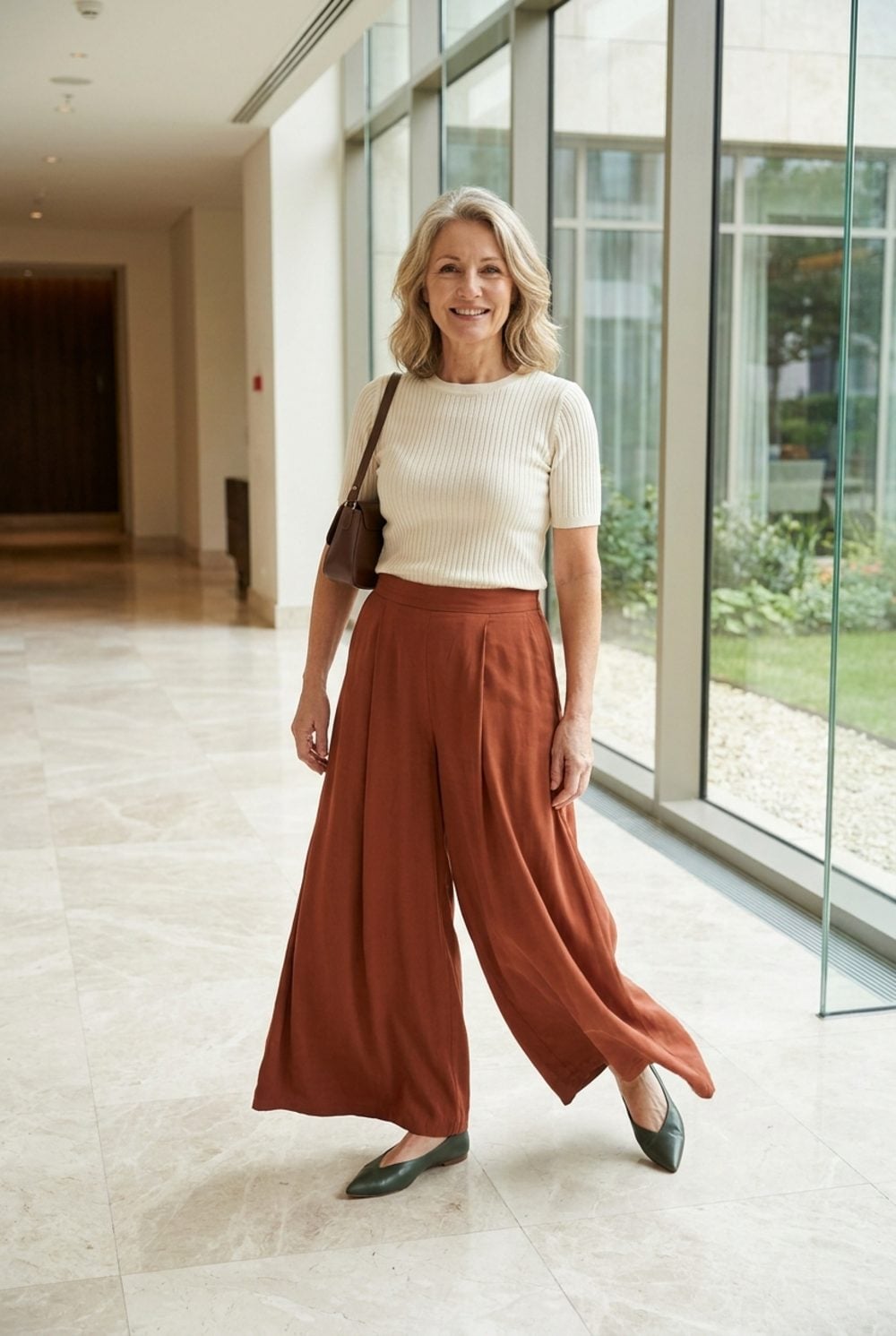
The rust wide-leg trousers get all the movement — sweep, fold, volume — while the cream ribbed knit stays closer to the body.
That contrast gives the silhouette definition without requiring everything to be fitted. One relaxed piece against one cleaner piece is simply one useful formula among many, but it is especially good when the outfit contains a lot of fabric.
7. Keep Underlayers Completely Invisible When the Dress Calls for It
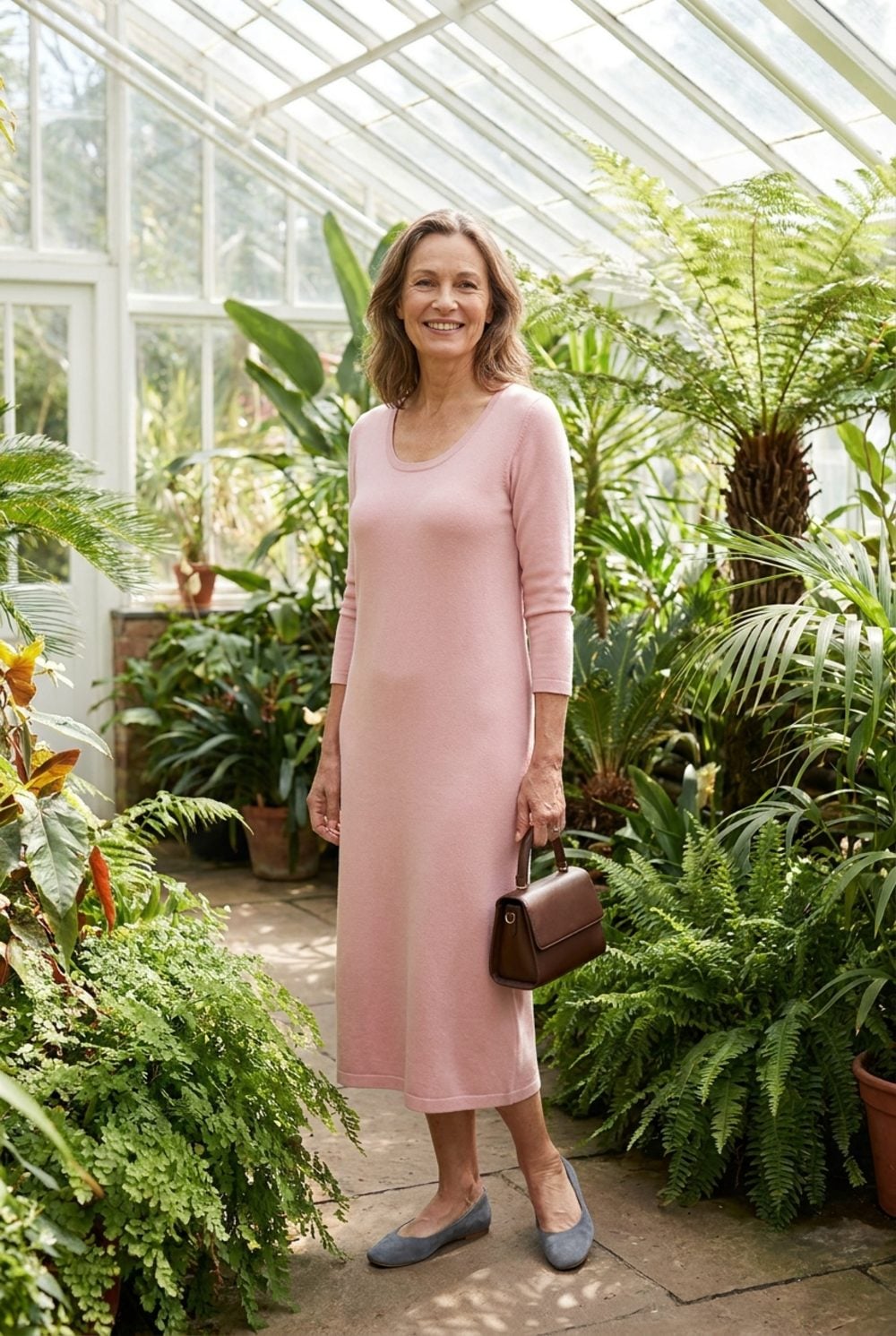
A knit dress can be beautifully cut and still lose its clean surface to a bra seam, strap, camisole edge, or underwear line showing through in exactly the wrong place.
The soft-pink knit midi dress hangs smoothly because the foundation pieces are not competing with it. This is not about pretending underwear does not exist. It is about choosing the version that works with the fabric on top.
6. Use a Scarf as a Controlled Accent
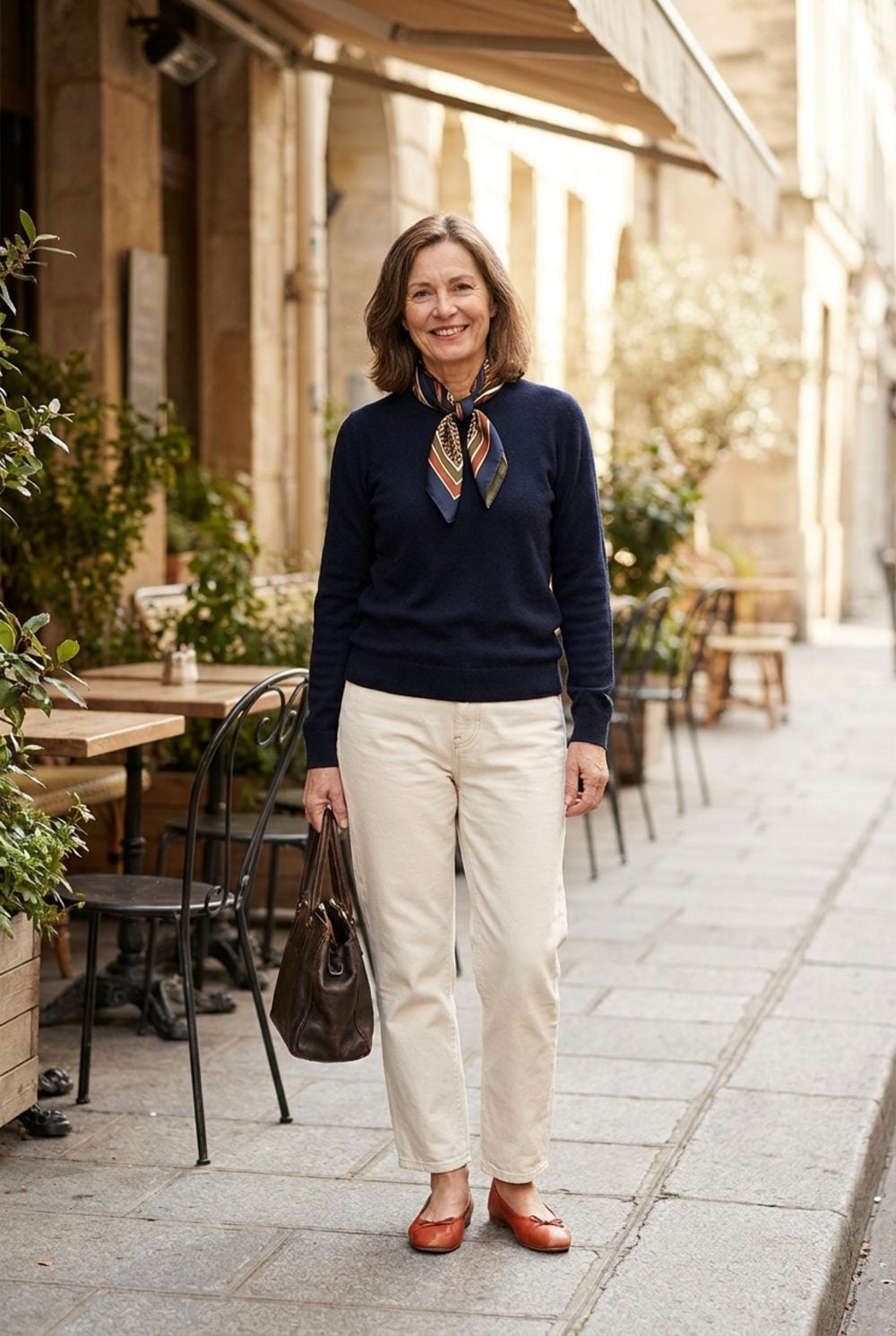
The scarf is doing color coordination in miniature. Navy sweater, cream jeans, rust shoes — then one patterned square at the throat containing enough of those shades to make their relationship look deliberate.
Keep the knot compact and the fabric controlled. The navy crewneck sweater and rust ballet flats establish the two ends of the palette; the scarf simply introduces them formally.
5. Control Oversized Volume With Proportion
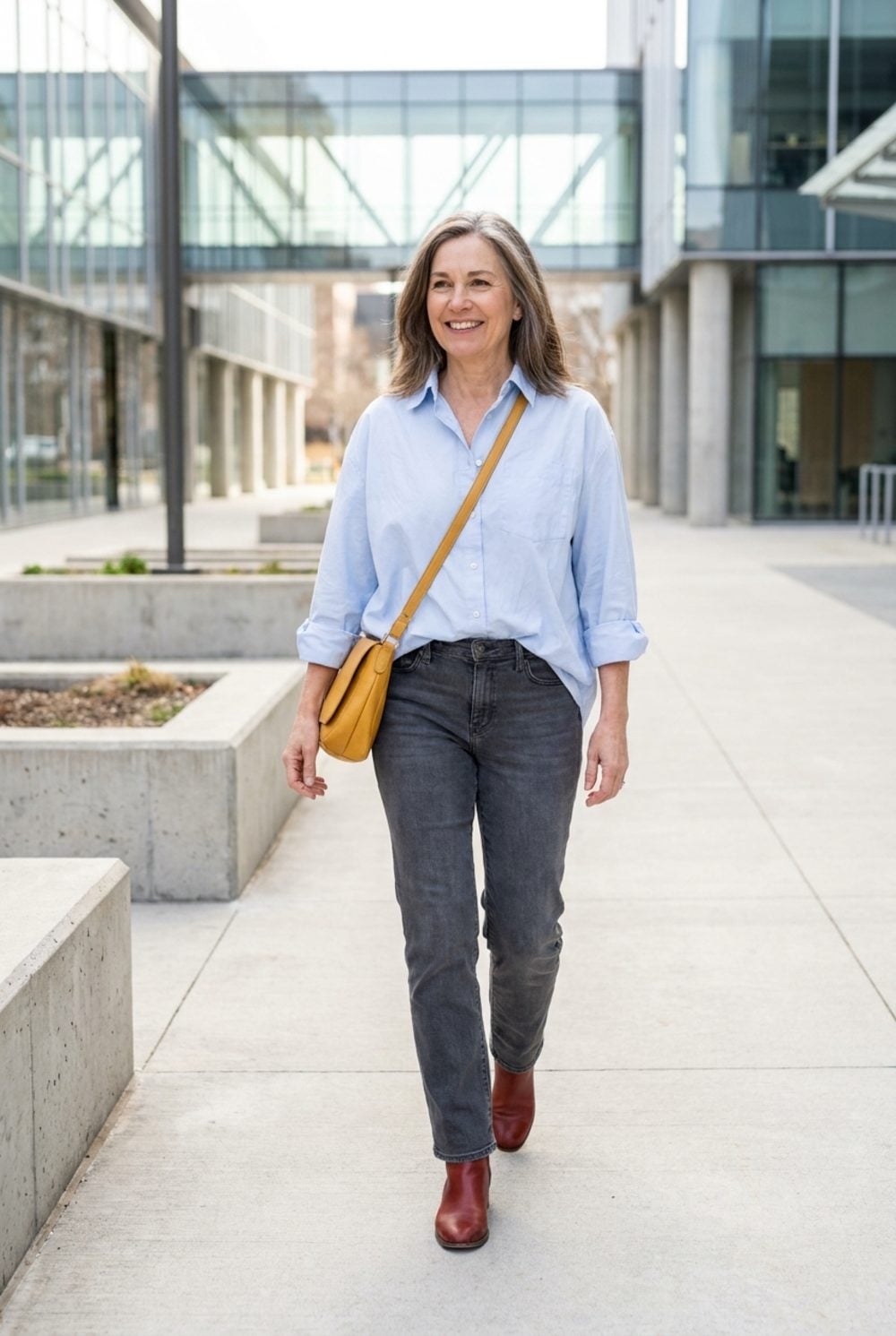
An oversized shirt can look deliberate or like laundry day won. The difference here comes from several small interventions rather than one heroic styling trick.
The pale-blue poplin shirt gets a front tuck, pushed sleeves, and an open neckline. The charcoal slim jeans provide a narrower base, while the mustard crossbody cuts through all that cool blue-gray with warmth. This is the earlier volume lesson flipped: generous above, leaner below.
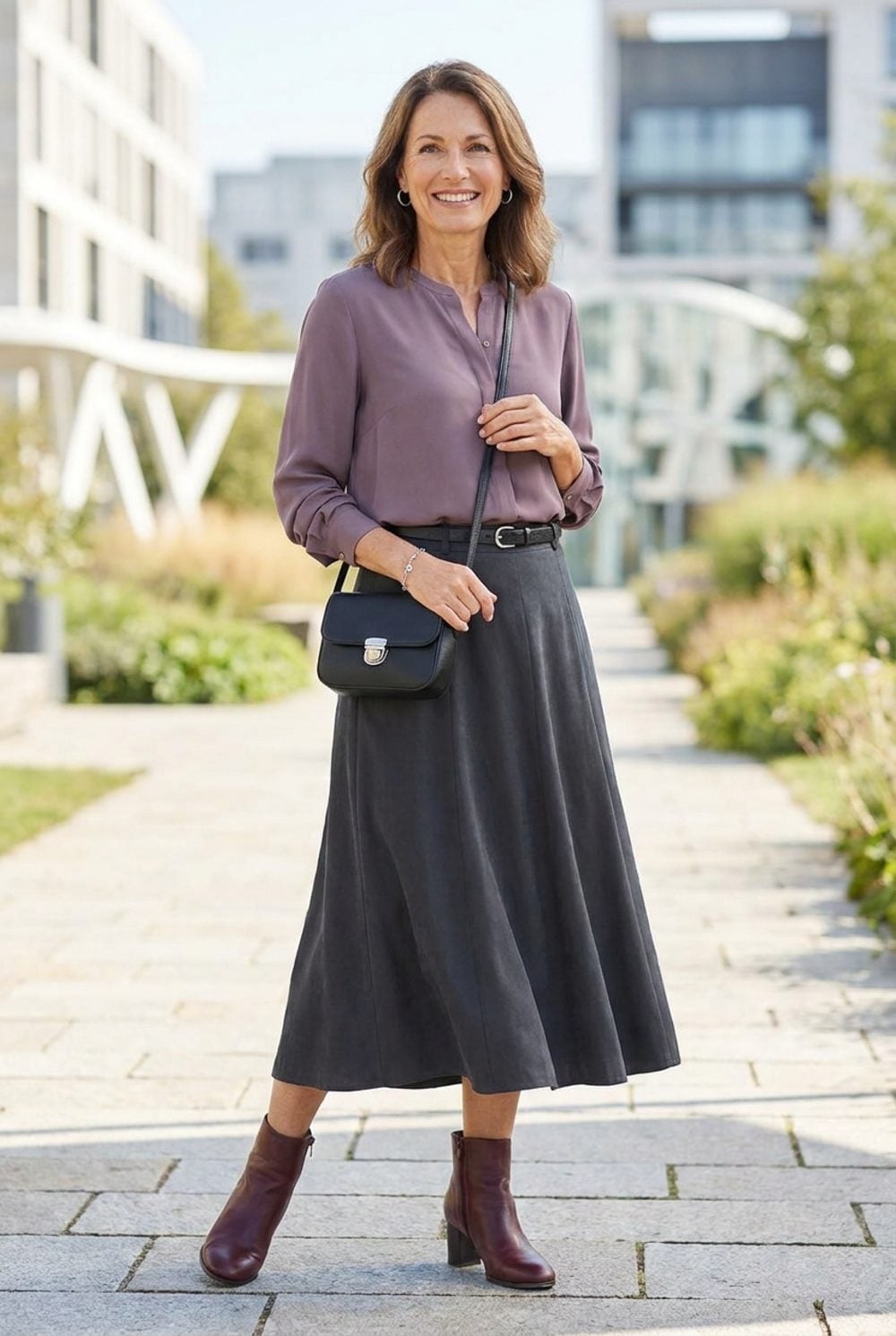
4. Coordinate Metal Finishes When You Want Extra Cohesion
❤️ Would you like to save this?
Mixing metals is not a fashion crime. Done deliberately, silver and gold can look terrific together. But when an outfit already contains several small pieces of hardware, repeating one metal family is an easy way to reduce visual noise.
Here silver appears in the silver hoop earrings, bracelet, belt buckle, and black crossbody bag clasp. None has to match perfectly. The repetition is enough, leaving dusty purple, charcoal, and dark-red boots to handle the color.
3. Use One Intentional Jewelry Focal Point
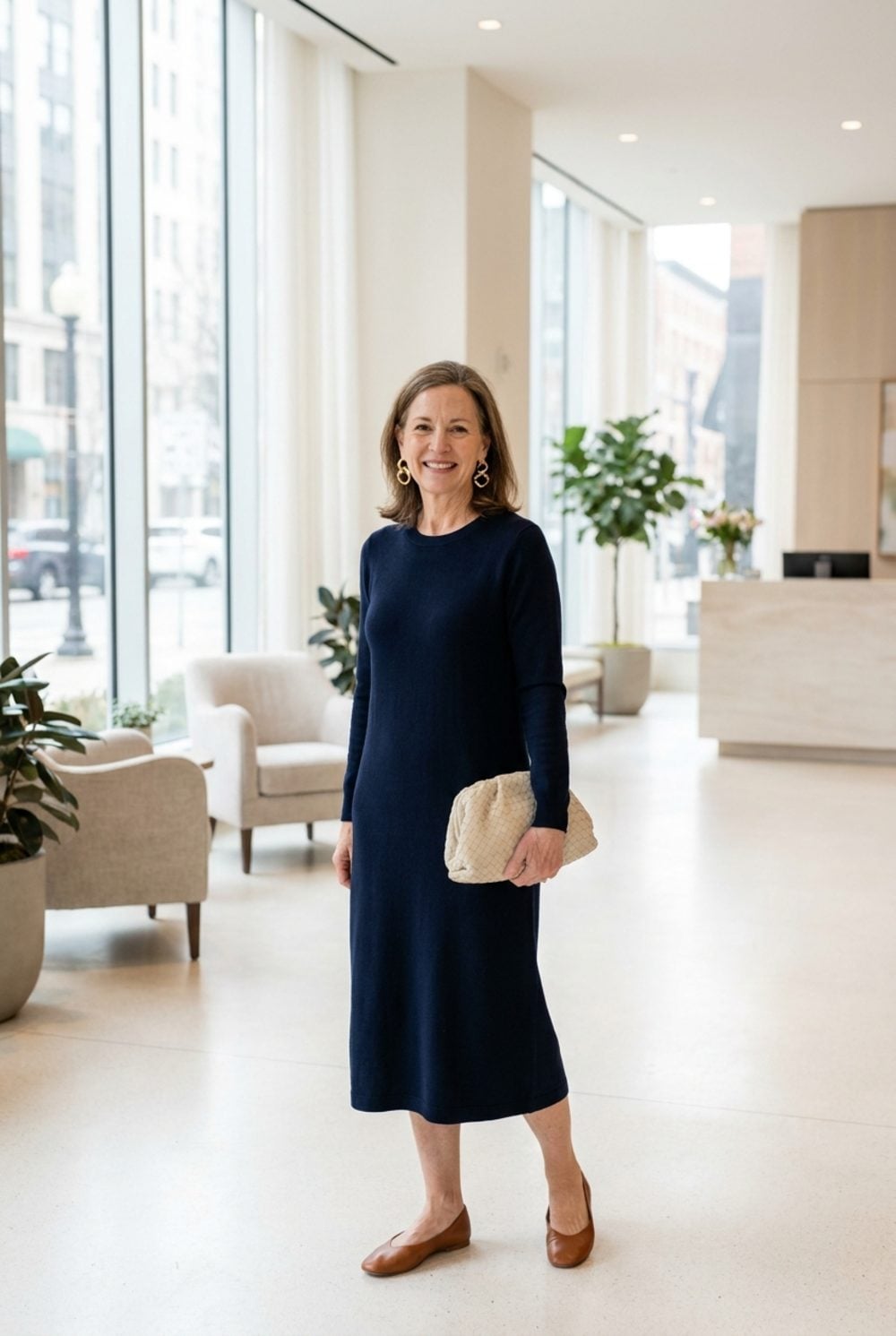
Some outfits want a necklace stack and an armful of bracelets. This one wants one excellent pair of earrings and everybody else to take the afternoon off.
The midnight-blue dress gives the sculptural gold earrings an uninterrupted backdrop. Cognac flats and a cream clutch bag keep the warmth moving elsewhere without creating another focal point. Restraint works here because the earrings have enough presence to justify it.
2. Remove One Accessory When the Outfit Is Already Finished
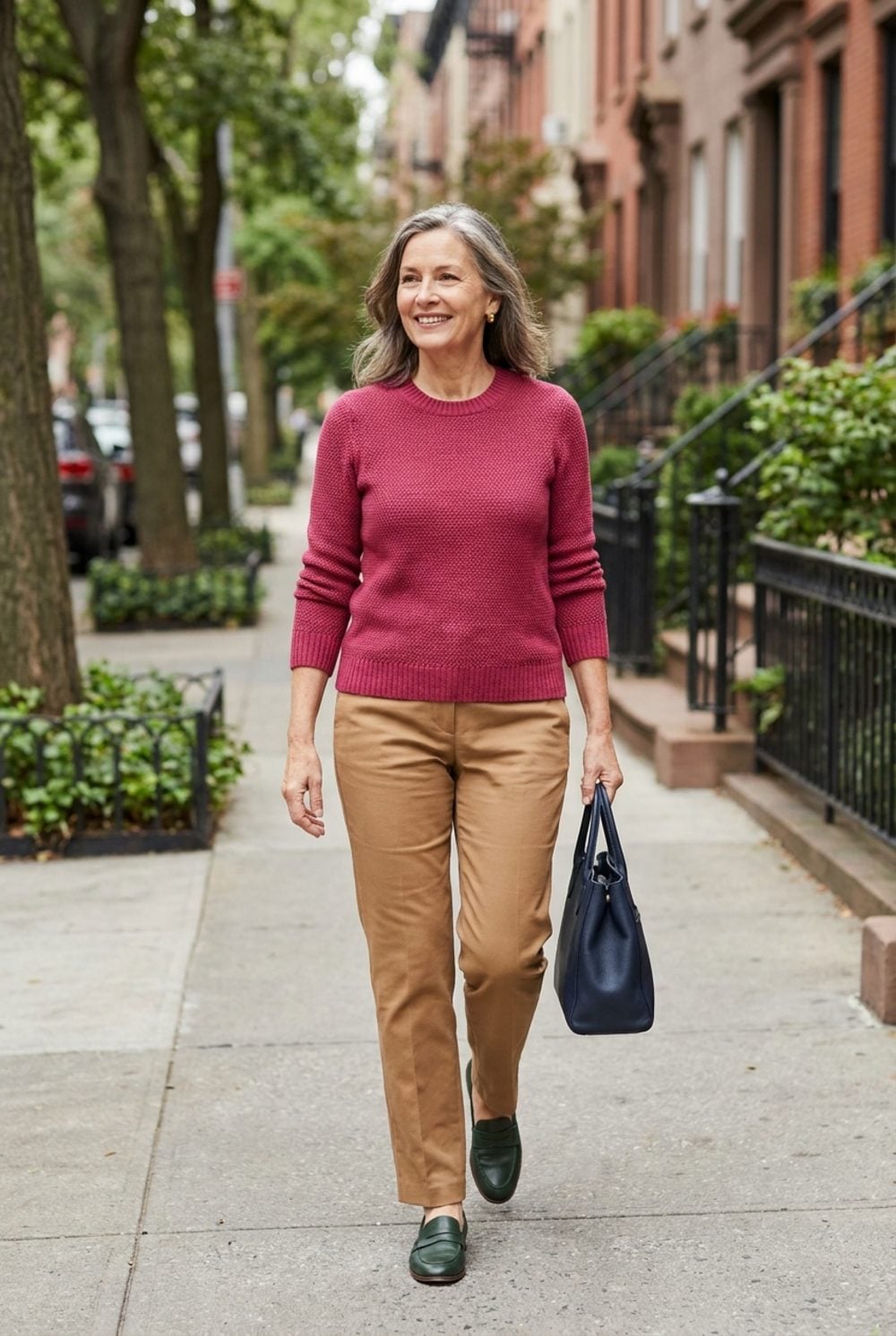
Coco Chanel supposedly advised taking one thing off before leaving the house. Whether she actually said it or not, the idea survives because sometimes the last accessory is simply the first unnecessary one.
Raspberry sweater, camel trousers, dark-green loafers, navy bag, small studs — there is already enough happening. The saturated raspberry crewneck sweater against camel has presence, while the dark green loafers provide an unexpected grounding color. Another necklace or scarf would not necessarily ruin it. It just would not improve it.
1. Perfect the Proportions Before Adding Anything Else
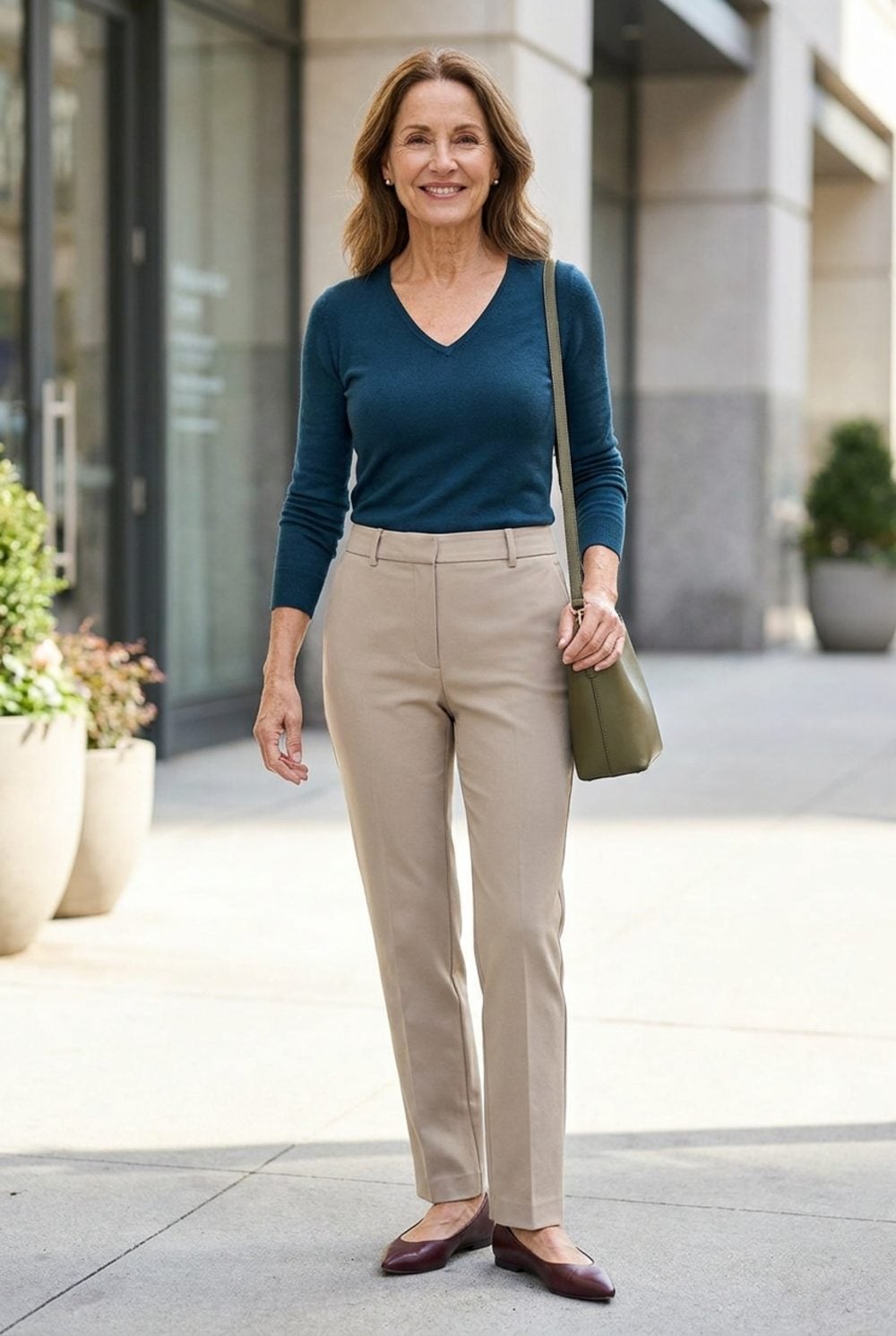
Here is the part nobody can buy in a logo. Nothing spectacular is happening, yet nothing is fighting anything else. Shoulder, neckline, waist, trouser length, shoe, bag — every ending arrives where it should, so there is no single mistake demanding rescue by a statement necklace.
The petrol blue V-neck top frames the face and meets the high-rise waist cleanly. The stone straight trousers fall neatly toward dark-cherry flats. The olive bag contributes one earthy counterpoint. Tiny studs finish the job and then have the good manners to stop.
That is the expensive-looking secret stripped of all mystique. It is not necessarily cashmere, a recognizable handbag, or the little gold name on the temple of a pair of sunglasses. It is fit, maintenance, proportion, color, and enough restraint to let those things register. Cheap clothes can still look cheap. Expensive clothes can look dreadful. The price tag gets a vote. It does not get the final word.