
❤️ Would you like to save this?
Here’s what nobody tells you about winter dressing: warmth and bulk are two different problems. You can shiver inside a giant puffer and stay toasty in something that skims your frame. It comes down to technique, not thickness. What follows are 42 ways to trap heat against your body while keeping the silhouette clean — thin layers doing the work of thick ones, hidden pieces nobody sees but everybody would envy. And no, none of this involves looking like you got dressed in the dark during a power outage.
FYI, thanks to AI imagery software, we’re able to create very specific fashion and hairstyle examples to illustrate the points being made. In some cases, imagery is exaggerated to hammer home the point. Also, assume links that take you off the site are affiliate links such as links to Amazon. this means we may earn a commission if you buy something.
42. Swap One Chunky Sweater for Two Fine Merino Layers
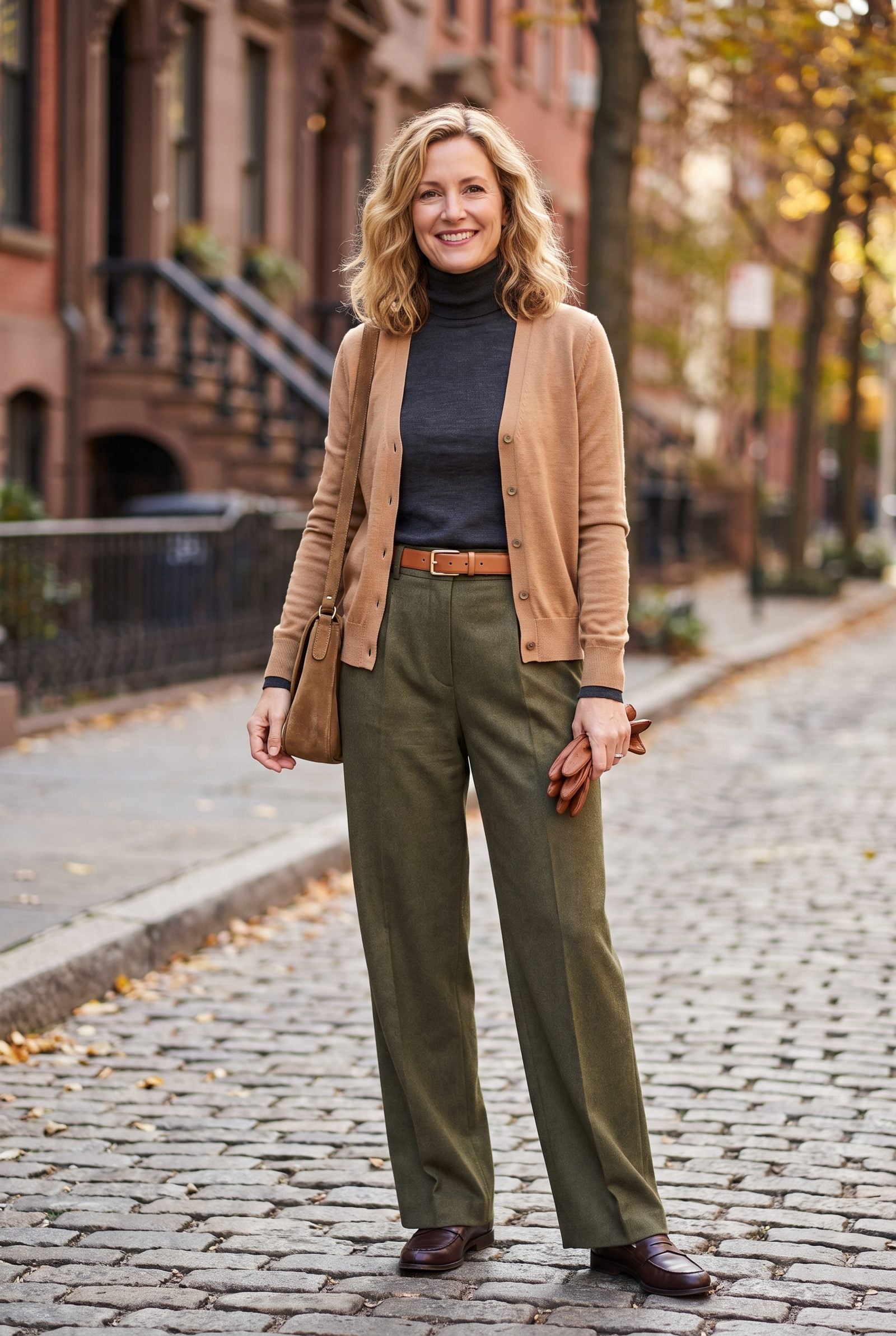
One bulky sweater traps heat in a single lumpy layer. Two fine merino layers trap it twice — once in the air pocket between them — and they lie flat against you instead of adding visible volume.
The styling win is the exposed inner collar. A thin sliver of a contrasting oatmeal merino crewneck peeking above a camel V-neck reads as deliberate rather than accidental, and the contrast between two matte wools of different weights gives the outfit a depth a single sweater never could.
41. Start With a Fitted Merino Base Layer

A fitted merino base is the foundation everything else sits on, and probably the single most useful winter purchase you can make. It hugs the body, wicks moisture, and adds real warmth without a millimeter of visible bulk.
Here the charcoal merino base peeks out at the wrist — that’s the detail worth stealing. A pushed-up sleeve revealing a contrasting cuff turns a practical layer into a styling choice, and because the base lies perfectly flat, the whole outfit reads as one clean column.
40. Slip a Silk Camisole Under a Fine-Knit Sweater
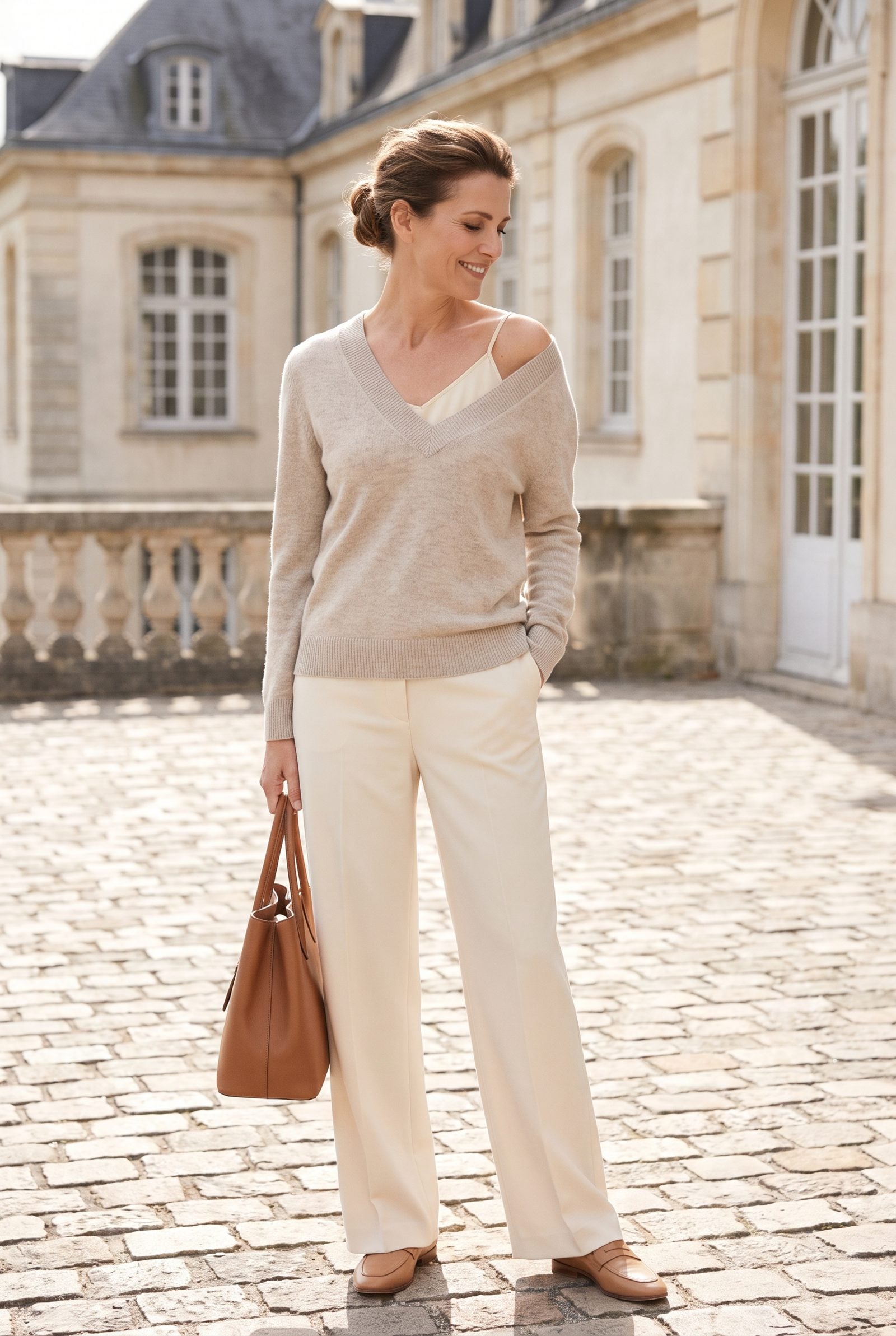
Silk against skin does two jobs at once. It warms you (silk is a surprising insulator) and it stops a knit from clinging or itching, so your sweater drapes cleaner.
The hero here is the sliver of champagne silk camisole at the neckline. Its liquid sheen against the matte dove-grey knit is the kind of contrast that makes an outfit look considered, and a silk layer glides under everything else so nothing bunches.
39. Hide a Thermal Bodysuit Under Tailored Trousers

A thermal bodysuit is the trick tailored trousers were waiting for. It warms your core and stays tucked without the bulk, the bunching, or the untuck-at-the-worst-moment drama of a separate base top.
Because a taupe thermal bodysuit ends in a brief, there’s no fabric to gather at the waistband of the charcoal tailored trousers, and the line from waist to ankle stays smooth. That smoothness is the whole reason tailored trousers look expensive — and most people wreck it with a lumpy base layer.
38. Wear Heat-Retaining Tights Under a Midi Skirt
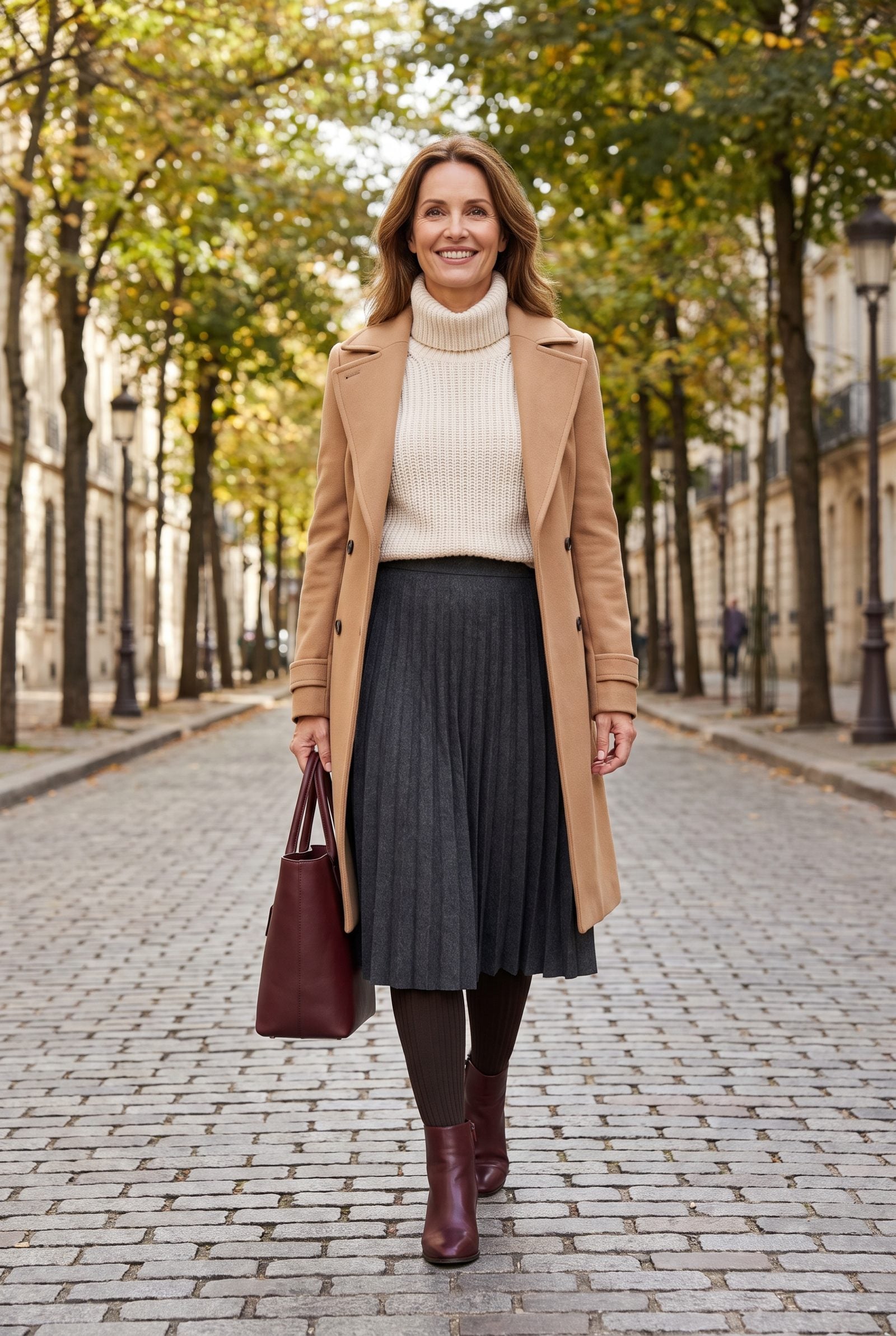
A midi skirt in January sounds like a cold-leg sentence. Fleece-lined opaque tights fix that completely, and the good ones run so slim nobody can tell they’re lined.
These charcoal fleece-lined tights do more than warm you. Matched close in tone to the knee-high boots, they draw one long dark line from hem to heel that lengthens the leg and lets the rust skirt float as the focal point. Tonal continuity between tights and boots is the oldest trick for making a midi look leggy instead of stumpy.
37. Pull Wool Footless Tights On Under Your Jeans
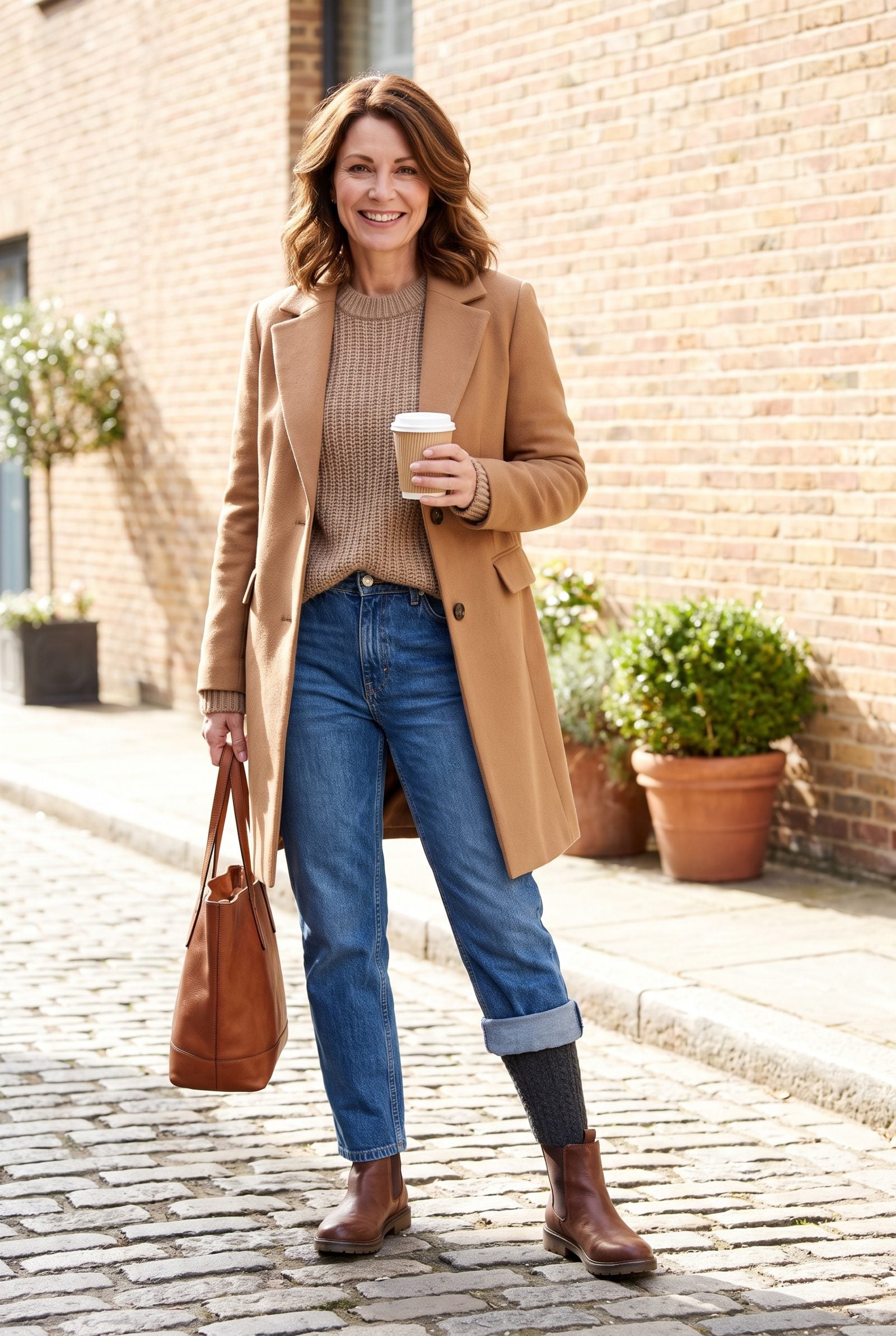
Jeans alone are basically denim air conditioning. Slide a pair of wool footless tights underneath and that changes overnight — footless meaning no awkward bunching inside your boots.
I resisted this one for years because it sounded fussy. It isn’t. The tights stay invisible except for a dark sliver at the rolled ankle, which honestly looks intentional against the indigo denim. You stay warm on a windy platform and nobody’s any the wiser.
36. Add Insulated Shorts Beneath a Flowing Winter Dress
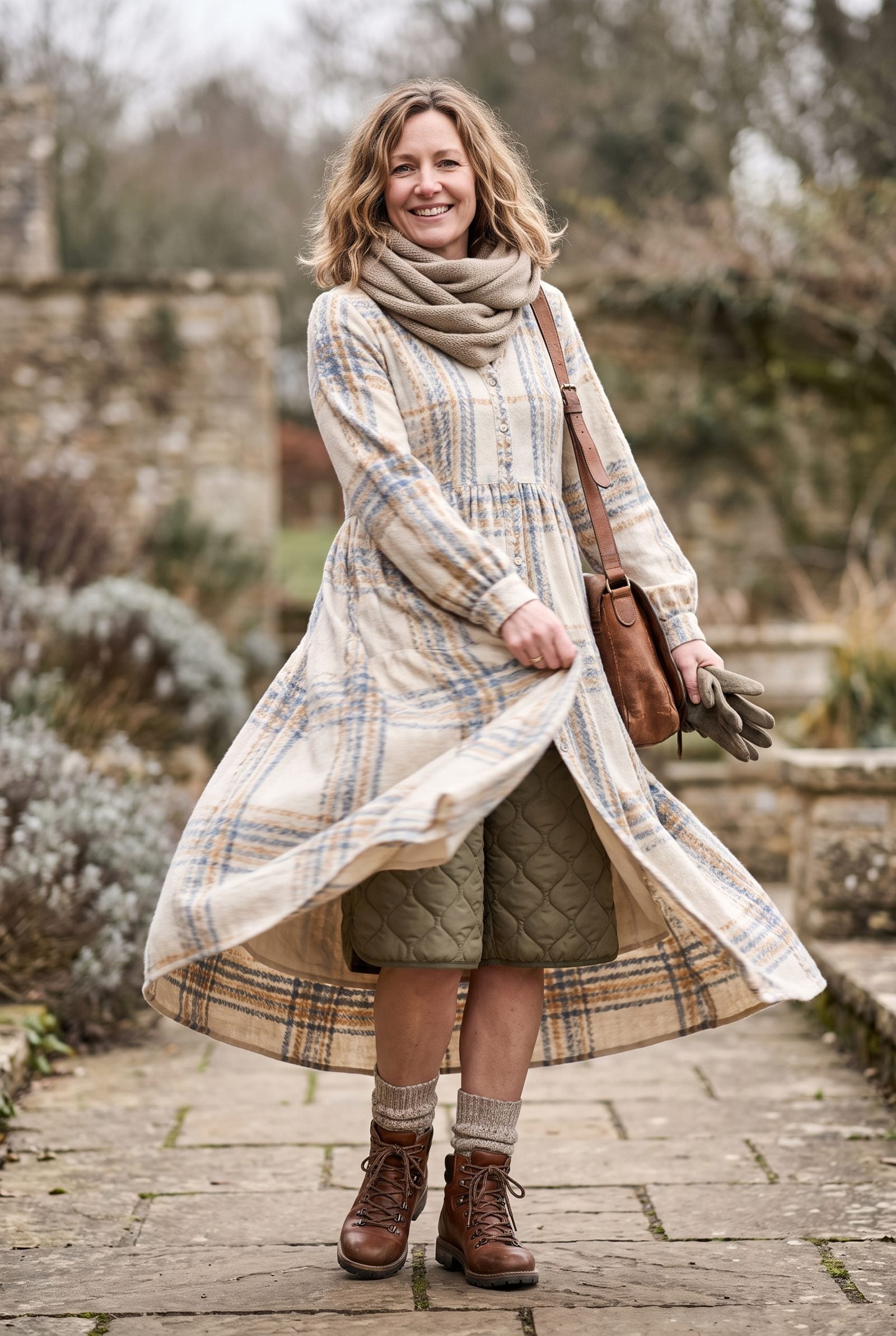
A floaty winter dress is lovely until a gust reminds you it’s still December. Slim insulated shorts underneath warm the part a dress leaves exposed, and they stop thighs from chafing under tights too.
The move is pairing thermal insulated shorts with opaque tights so you get warmth top and bottom while the teal wool jersey dress keeps all its drape. Nothing stiffens. The dress still flows; your legs just stop registering the cold.
35. Layer Thin Sock Liners Inside Your Wool Socks
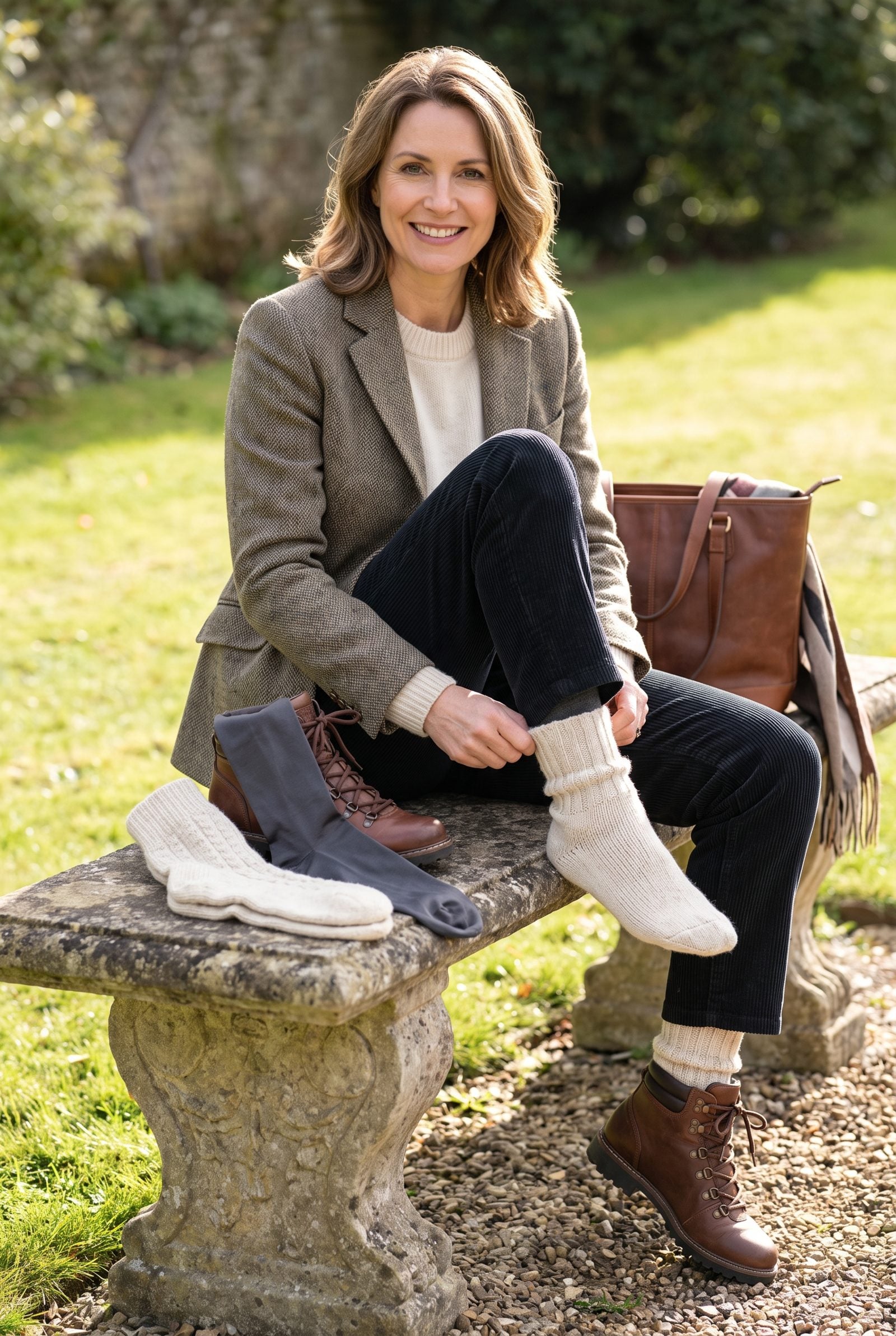
Cold feet end an outing faster than anything else. A thin liner inside a wool sock applies the two-layer principle to your feet, and it’s the difference between warm and numb by noon.
A silk or synthetic oatmeal sock liner wicks moisture off your skin while the cream cable wool socks hold the heat. Dry feet are warm feet. Folded over a lace-up boot with the liner just peeking, it becomes a detail instead of a secret.
34. Tuck Knee-High Socks Under Tall Boots

Knee-high socks under tall boots add a warm wool layer right where your leg meets cold leather, and they shut down the dreaded boot-shaft draft entirely.
Folded gently over the top of chestnut riding boots, the oatmeal knee-high socks break up the boot’s expanse with a soft ribbed cuff — a small texture moment that keeps a tall boot from reading as a solid dark block. Warmth plus a styling detail, from one cheap sock. My favorite kind of win.
33. Slip a Fine Ribbed Turtleneck Under a Button-Down Shirt
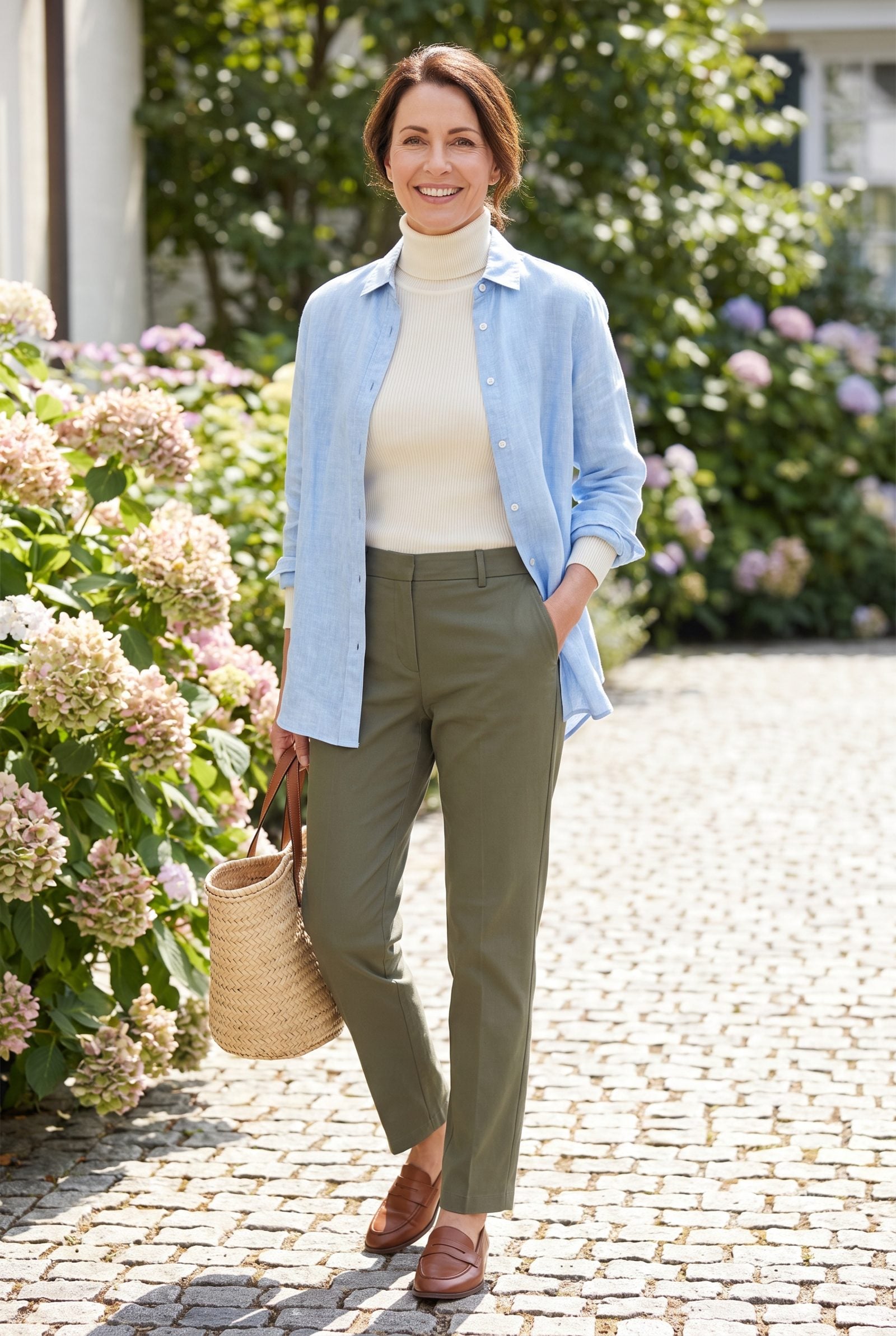
A fine ribbed turtleneck under a button-down is the layering move that works for the office and looks sharp doing it. The turtleneck adds a warm second skin while the shirt adds structure on top.
Leave the white button-down open at the collar, roll the cuffs, and the black ribbed turtleneck peeks through at both points — sculptural rather than bundled. Matte ribbed knit against crisp cotton poplin is a texture pairing that never gets old.
32. Swap Bulky Flannel for a Brushed Cotton Shirt

Flannel earns its reputation and then ruins your silhouette. All that loft piles bulk onto the shoulders and belly, the two places where volume does you no favors, while brushed cotton hands you the same warmed-up softness at a fraction of the thickness.
The quiet driver here is texture over mass. A fine heather grey brushed shirt drapes close, so the charcoal roll-neck underneath does the actual insulating without anyone spotting a lump. You stay warm. The line stays long.
31. Layer a Cashmere Shell Under Its Matching Cardigan

One color, two weights of the same fiber, and suddenly you look pulled together without trying. A fine cashmere shell paired with its matching cardigan is the warmest trick that reads as the most relaxed.
Tonal continuity carries it. Because the shell and cardigan share an exact shade, your eye travels straight up the body with nothing to interrupt it, and the whole frame stretches. The sleeveless layer traps heat at the core while the open cardigan adds insulation only where you want it. Push the sleeves up and you get a hit of wrist, the one place a little bare skin keeps things from going stuffy.
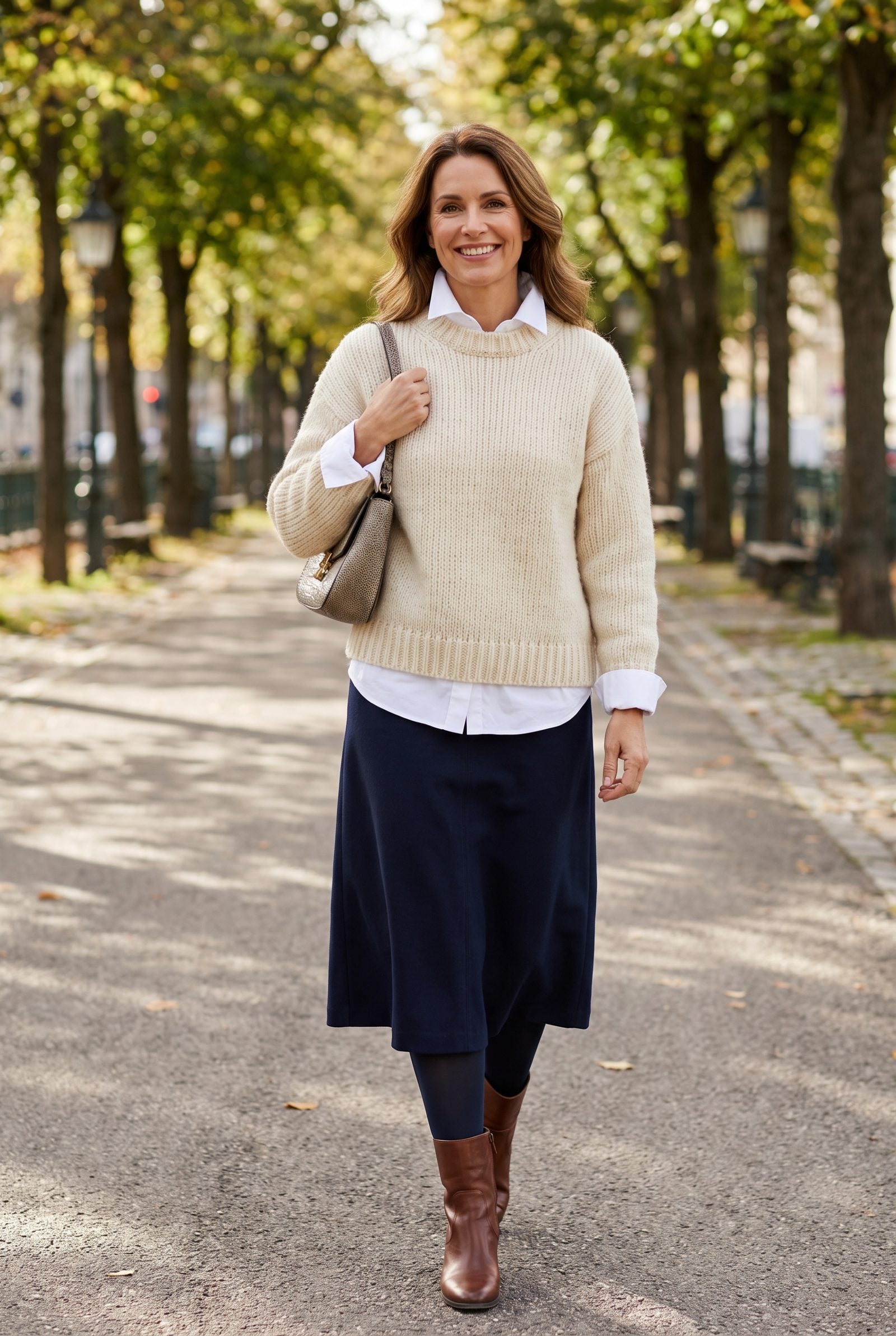
30. Slip a Crisp Poplin Shirt Beneath a Crewneck Knit
❤️ Would you like to save this?
White collar and cuffs peeking from a navy crewneck is an old trick for a reason. It frames the face, lays a clean line of contrast across the chest, and makes a plain sweater look like a decision.
Poplin is the smart base precisely because it’s thin and smooth, lying flat under the knit instead of bunching, so you get the polish of a collar with none of the bulk. And the shirt’s structure stops the sweater from going slouchy, which is what nudges a cozy jumper into meeting-room territory.
29. Pull a Half-Zip Knit Over a Fitted Base Layer
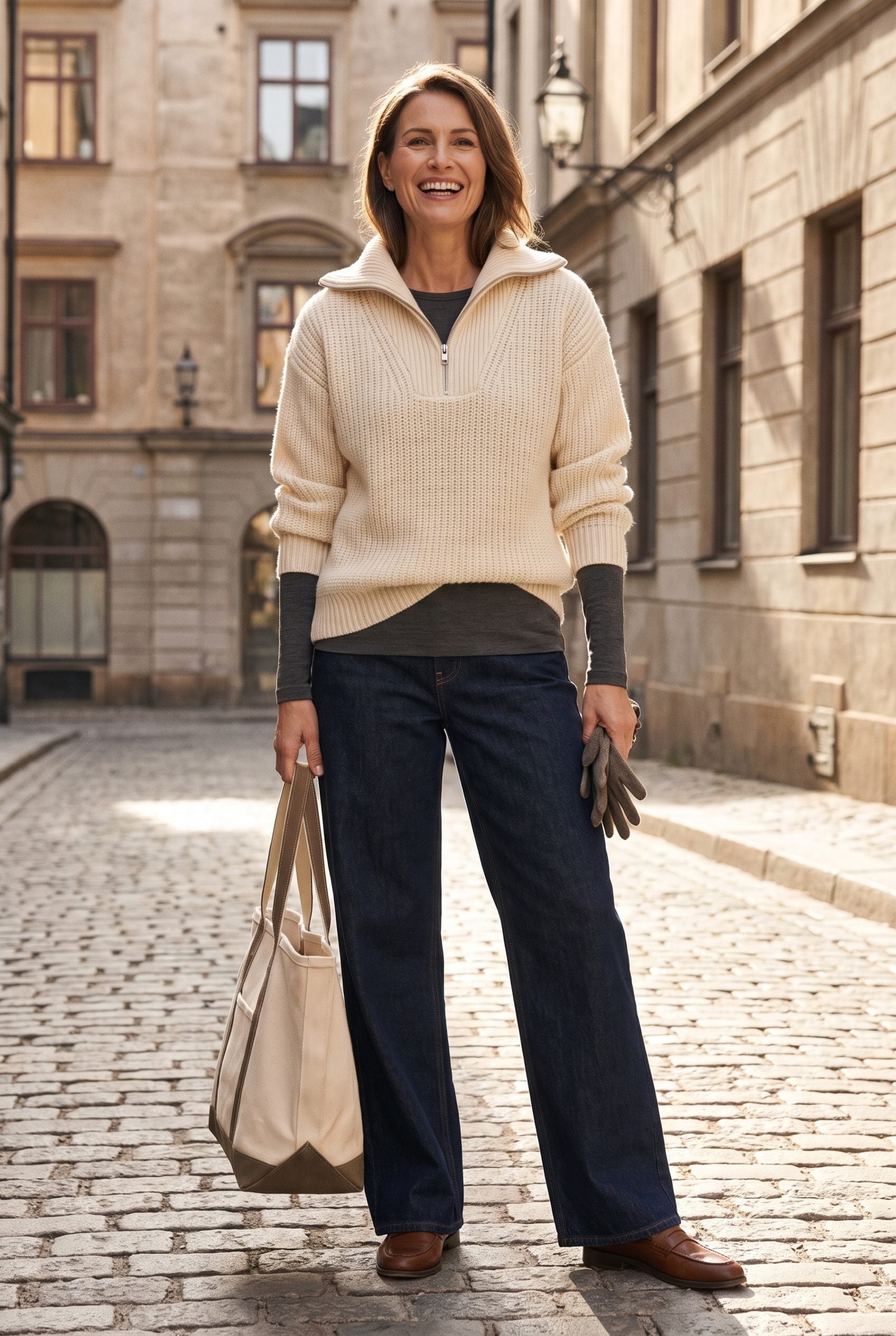
The half-zip quietly earns its spot among the best winter layering pieces because it lets you run your own thermostat. Zip it up against the cold outside, drop it once you’re warm indoors, and the neckline shifts with you.
A fitted base layer makes it work. Because the camel knit sits over something slim, there’s no bulk to fight, and the open zip reveals a sliver of black turtleneck for a two-tone neckline that pulls the eye upward. Restraint is the whole point here — a sporty shape, styled with grown-up discipline.
28. Fasten a Waistcoat Over a Blouse, Then Add the Jacket
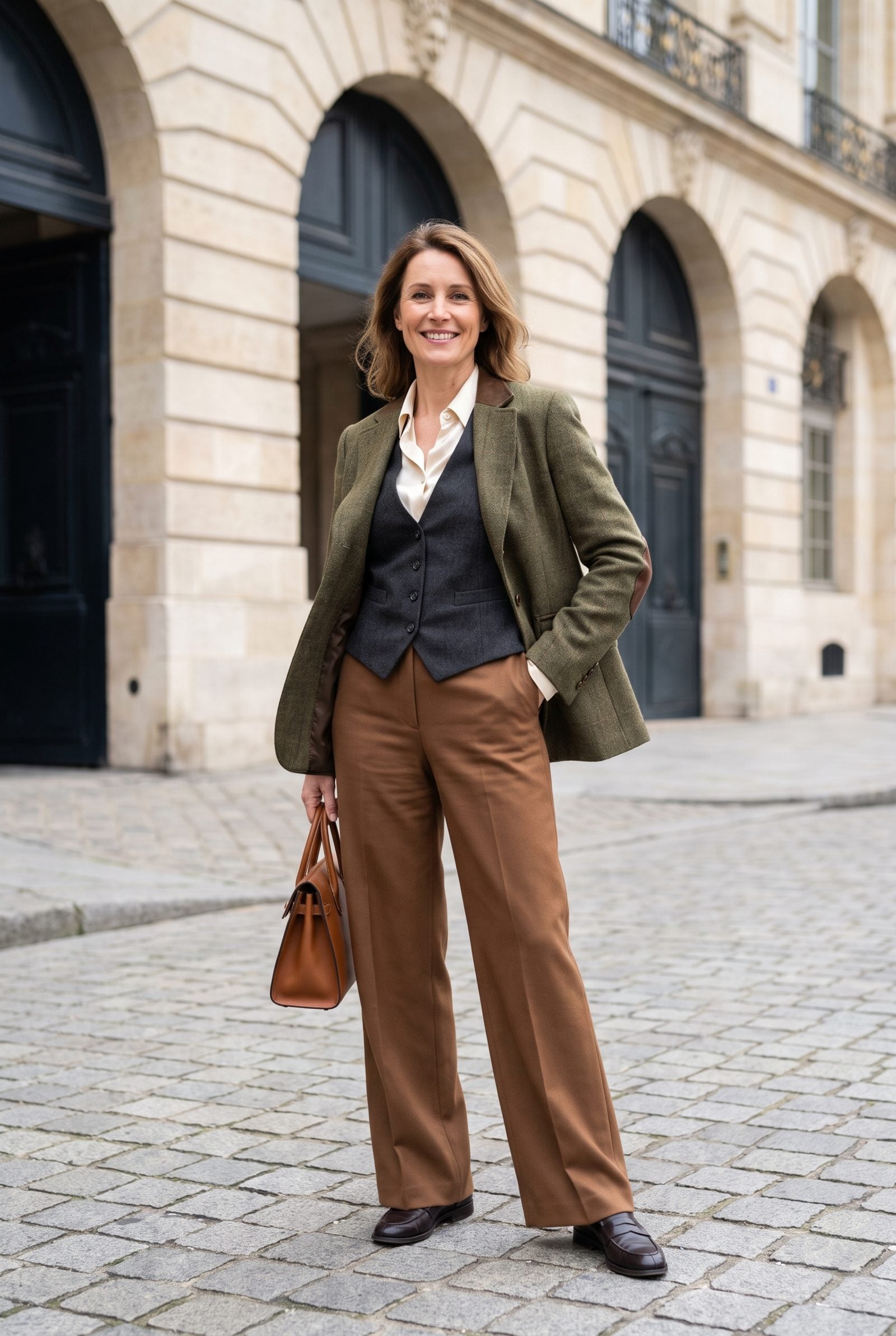
A waistcoat is the most underrated warm layer in a woman’s wardrobe. It insulates the core exactly where you feel the cold most, adds nothing to the arms, and gives you a structured line through the middle that no sweater can match.
Here the three-piece logic does real work. Silk blouse, buttoned waistcoat, open blazer — each fine enough to sit flat under the next, building depth in tight tailored layers. The result reads as intentional power dressing, and the body registers it that way too. There’s a reason this kind of tailoring makes you stand a little straighter.
27. Layer a Long-Sleeve Polo Beneath a Sleeveless Dress
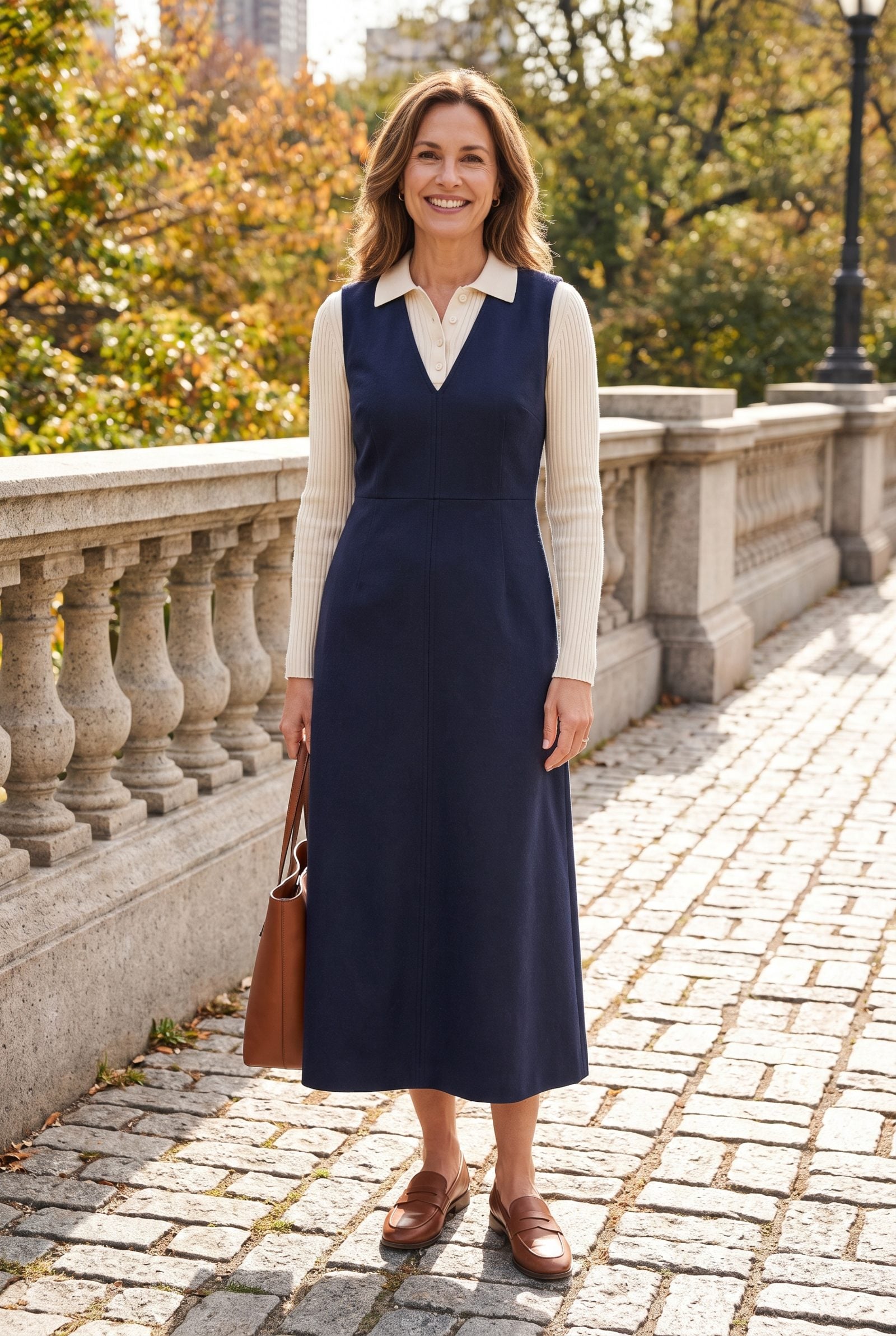
A sleeveless dress in January sounds like a mistake until you slide a long-sleeve polo underneath. Now the dress has sleeves, a collar, and a reason to exist in the cold.
Green against camel drives the whole look. A fine ribbed polo frames the collar and cuffs in jewel tone, while the pinafore shape layers cleanly over it without a wrinkle. You get the structure of a dress and the warmth of a knit in one streamlined column.
26. Wear a Fitted Cardigan Backward as a High-Neck Layer
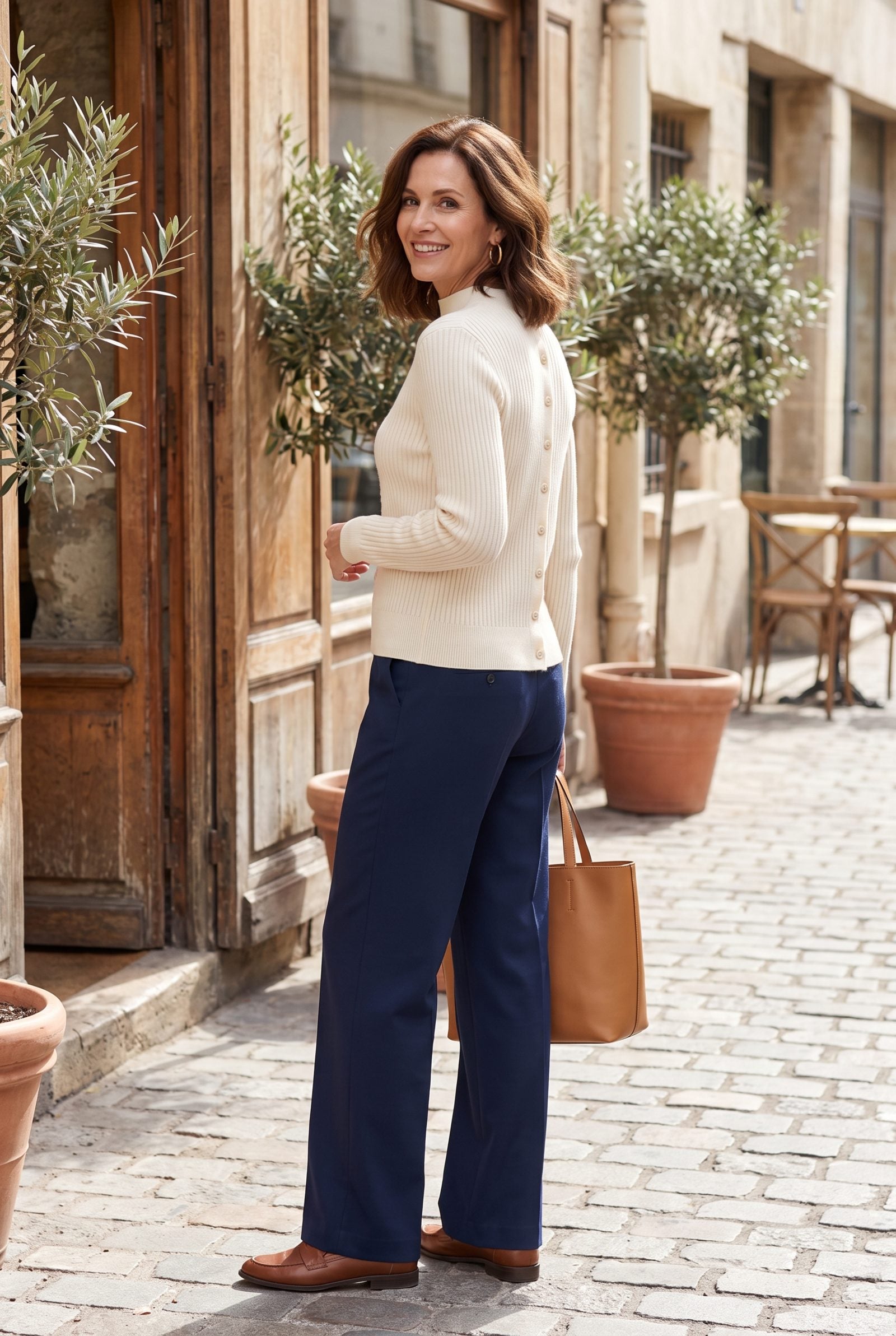
Here’s one worth stealing. Turn a fitted cardigan around so the button placket runs down your back, and the front becomes a smooth high crew neckline with no seam in sight.
Why bother? A backward cardigan sits closer and flatter than most crewnecks, with none of the gaping that pullovers get at the shoulder. The front reads clean and modern, the hidden back buttons hold it fitted exactly where you want, and under an open coat the smoothness looks completely intentional. A bit of quiet sleight of hand that hands you a new piece from something already in your drawer.
25. Trap Warm Air With a Thermal Tank Over Your Base Top
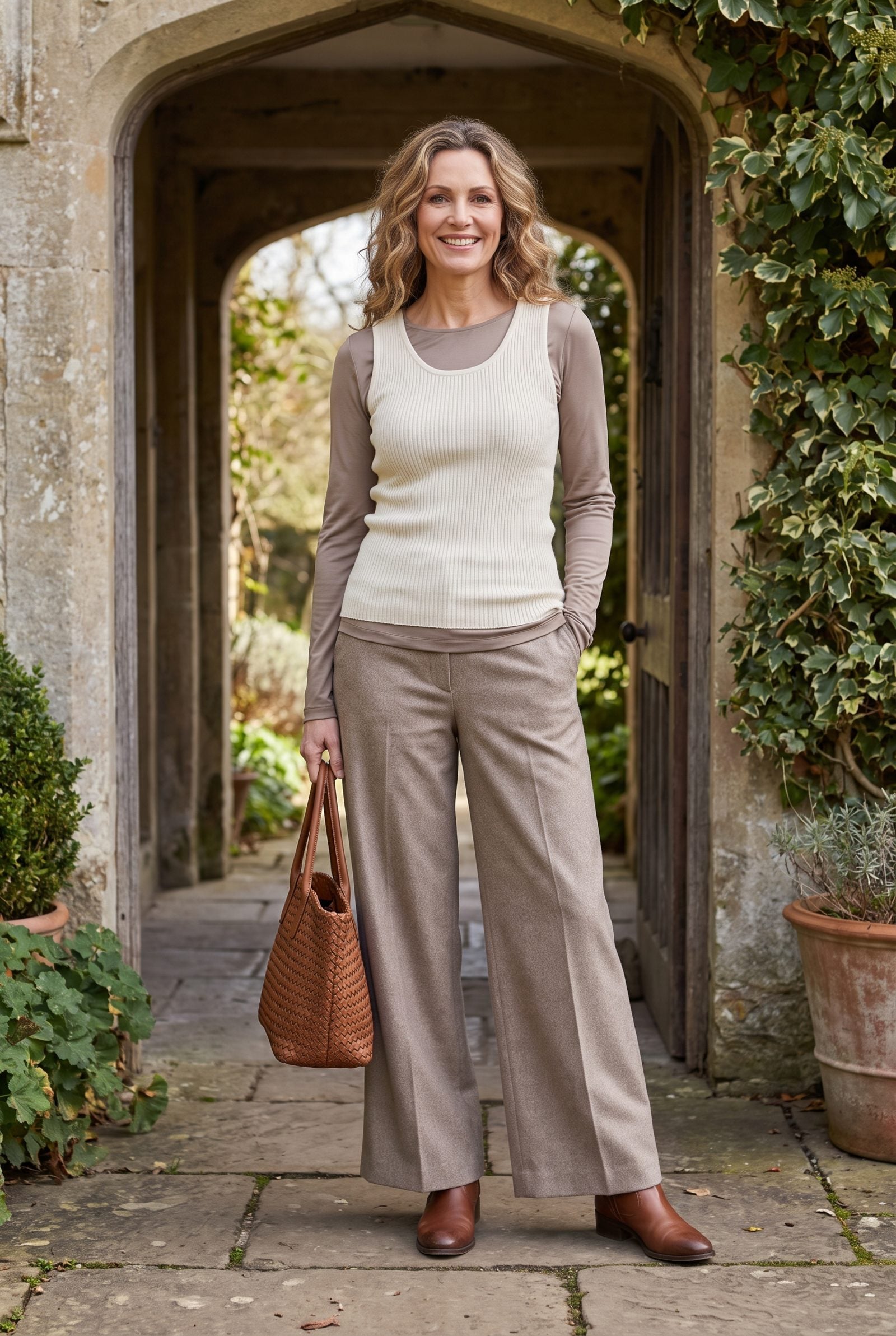
The thermal tank is the layer nobody talks about and everybody should own. Worn over a thin base top, it creates a pocket of warm air against the torso, which is the whole principle behind why layering beats a single thick jumper.
Styled as a visible layer rather than a hidden one, the charcoal ribbed tank over a cream sleeve gives you a sporty, considered shape with real thermal payoff. Both pieces are fine-knit, so the look stays lean under the open wrap coat. Warmth from physics, not from bulk.
24. Tuck the Innermost Layer Firmly Into High-Rise Pants

Tucking matters more than almost any other layering move. Pin your innermost layer firmly into a high-rise waistband and warm air stays trapped against your body instead of fleeing up your back the second a breeze finds you.
It also defines the waist, which is where the shape comes from. A burgundy roll-neck tucked into black high-rise trousers draws a clean line across the midsection, so even with an open cardigan thrown on top, the proportion reads as deliberate rather than slouchy. Warmth and silhouette, from one small decision.
23. Layer a Sweater Over a Dress With a Hidden Belt Tuck
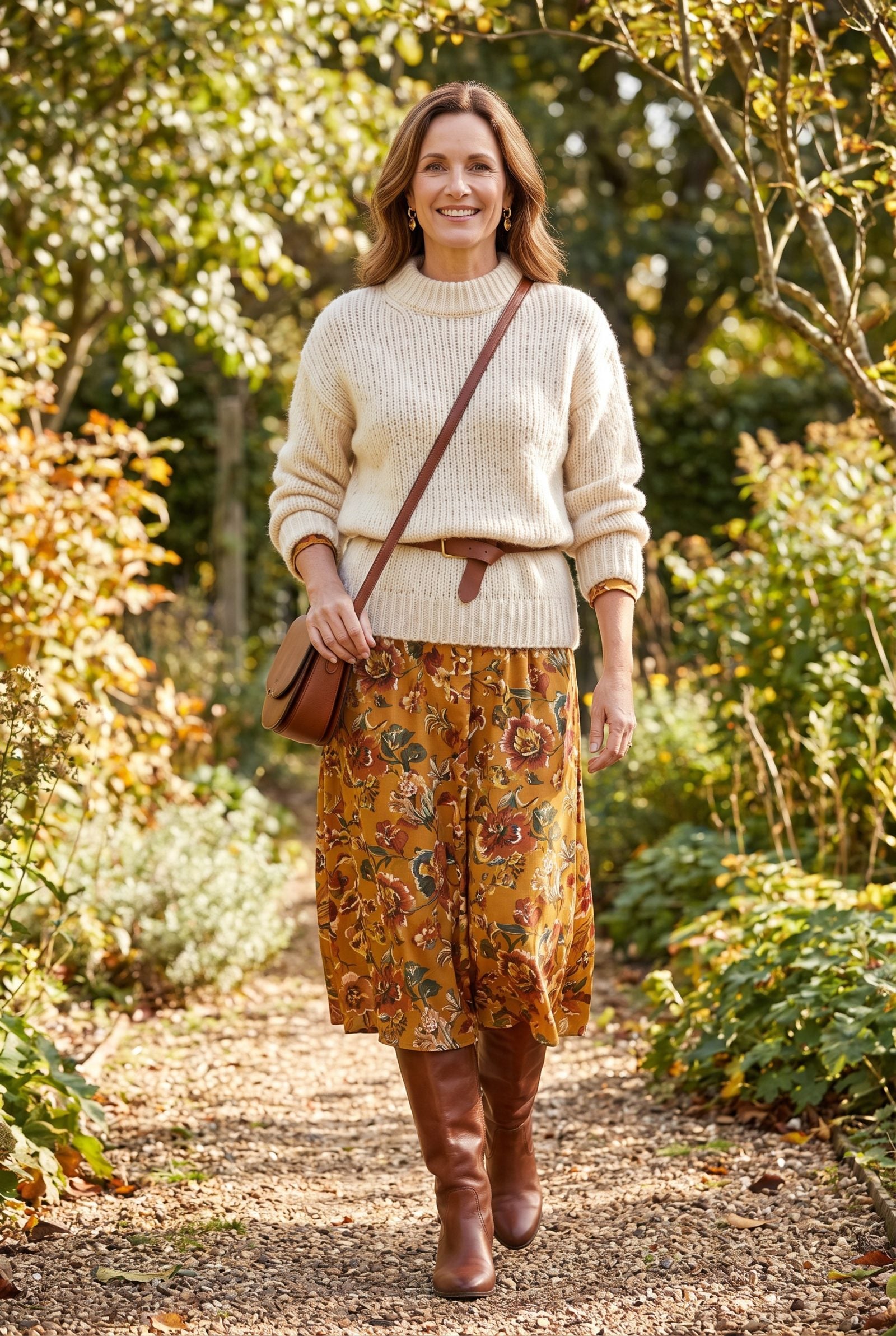
A sweater thrown over a dress is cozy but shapeless. Add a thin belt on top and the whole thing snaps into focus.
The belt tells the entire story. Cinched over a rust merino sweater at the natural waist, it carves a line where the layers would otherwise swallow you, and it lets the forest-green dress hem fall below as its own detail. Two full layers of warmth, read as an hourglass instead of a sack. The hidden bonus? The belt also holds the sweater in place so it doesn’t ride up all day — which, as anyone who has worn a sweater over a dress knows, is the real problem to solve.
22. Layer a Knit Dress Over a Thermal Top and Leggings
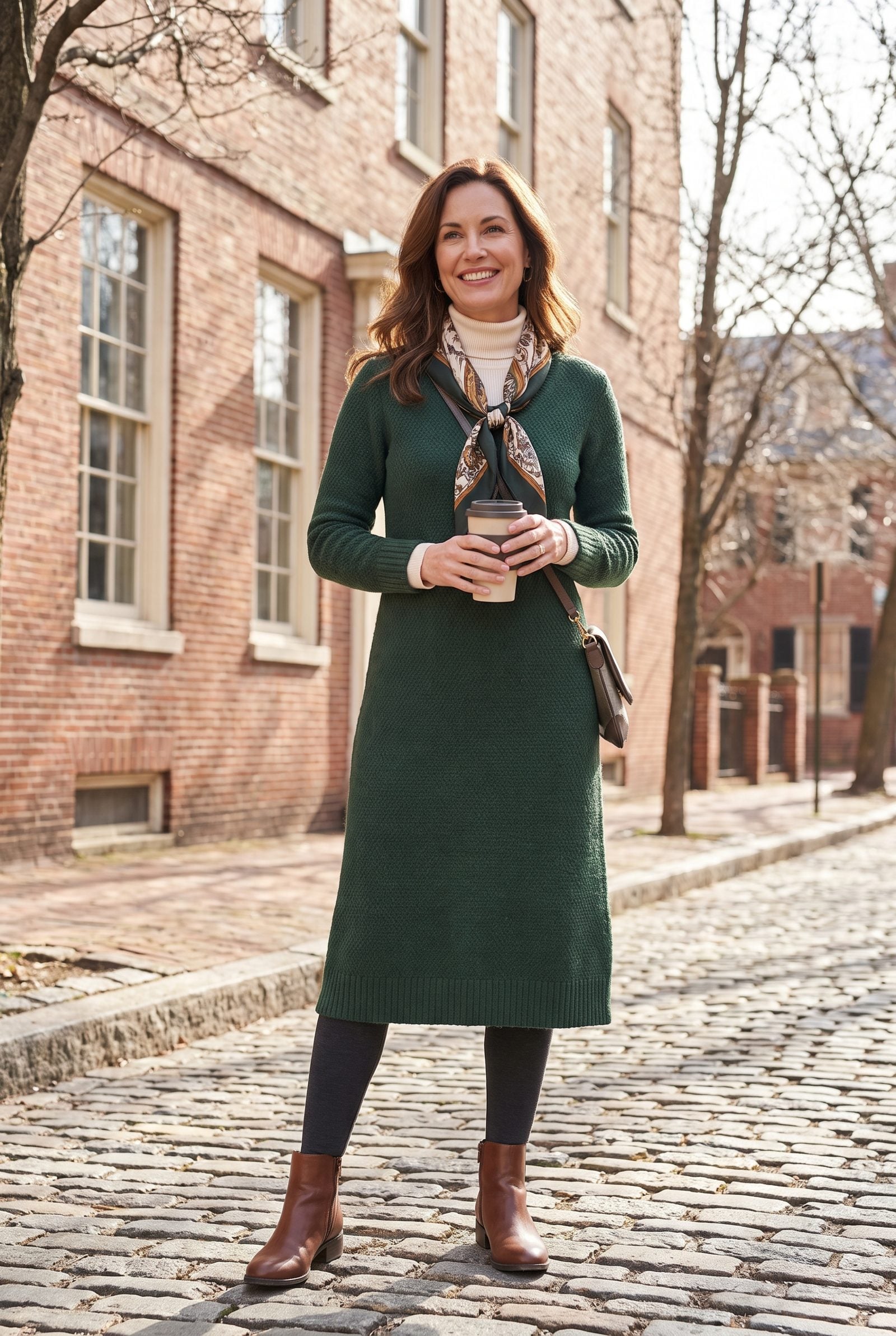
The thermal is invisible and doing all the work. A slim merino base under a ribbed knit dress adds a trapped layer of warm air without a single visible inch. That’s the whole trick of winter dressing: heat lives between layers, not inside bulk.
The dark leggings and tall boots build one long column from hem to toe, which keeps the eye moving down instead of parking at the waist. Push the thermal cuff out past the dress sleeve on purpose. That little slice of contrast fabric reads as intention, not accident.
21. Sandwich a Satin Slip Dress Between a Base Layer and a Cardigan
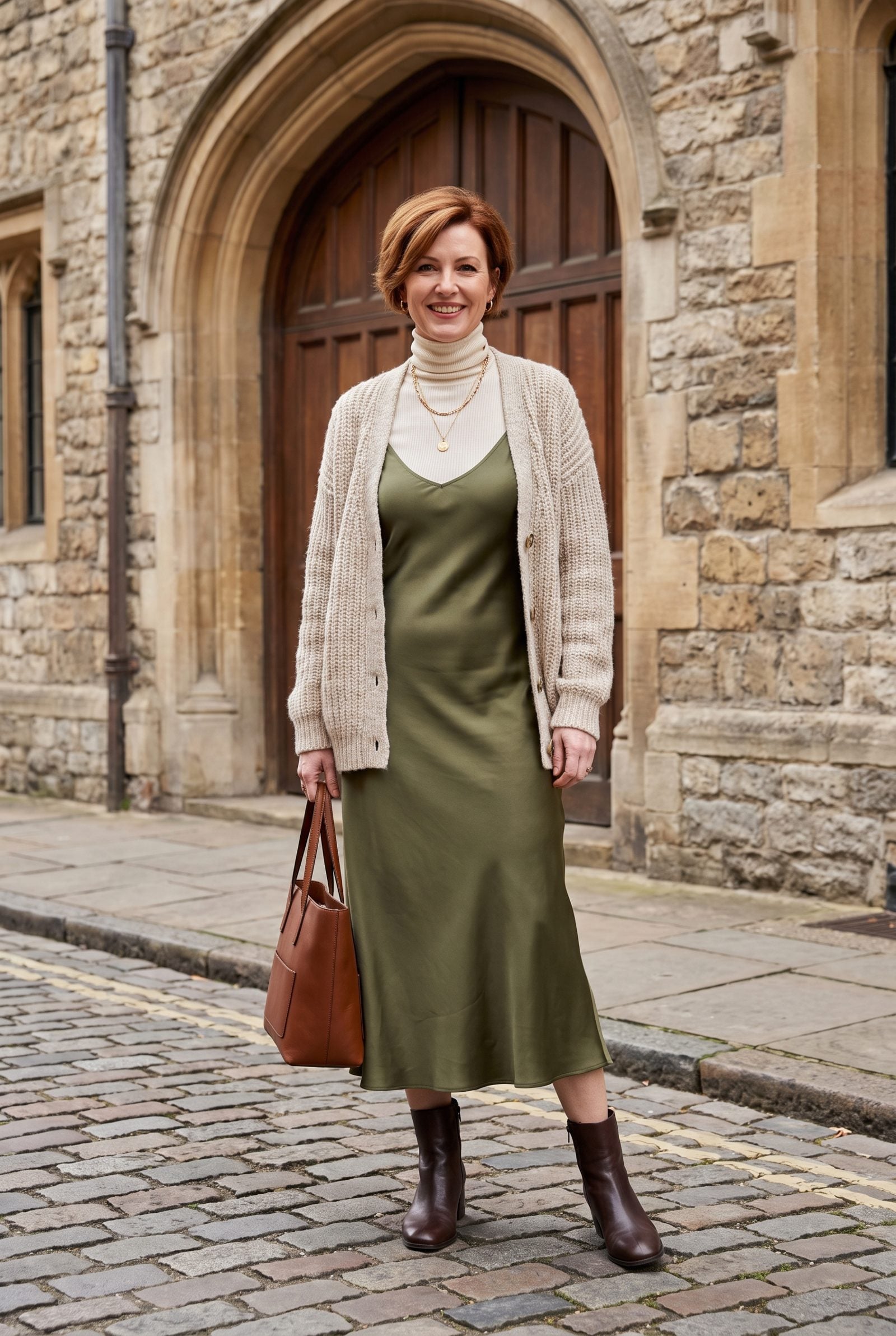
A summer slip dress has no business being warm, which is exactly why this works. Slide a fitted long-sleeve base underneath and the bias-cut satin stops being a July piece and becomes a January one. The base adds warmth and softens the straps, which most of us past 40 would rather not leave bare in the cold anyway.
The matte wool cardigan on top does two jobs. It traps heat, and it kills the shine overload. Satin against matte knit is the texture clash that makes the whole thing look deliberate instead of like you got dressed in the dark.
20. Button a Thin Down Vest Under a Blazer
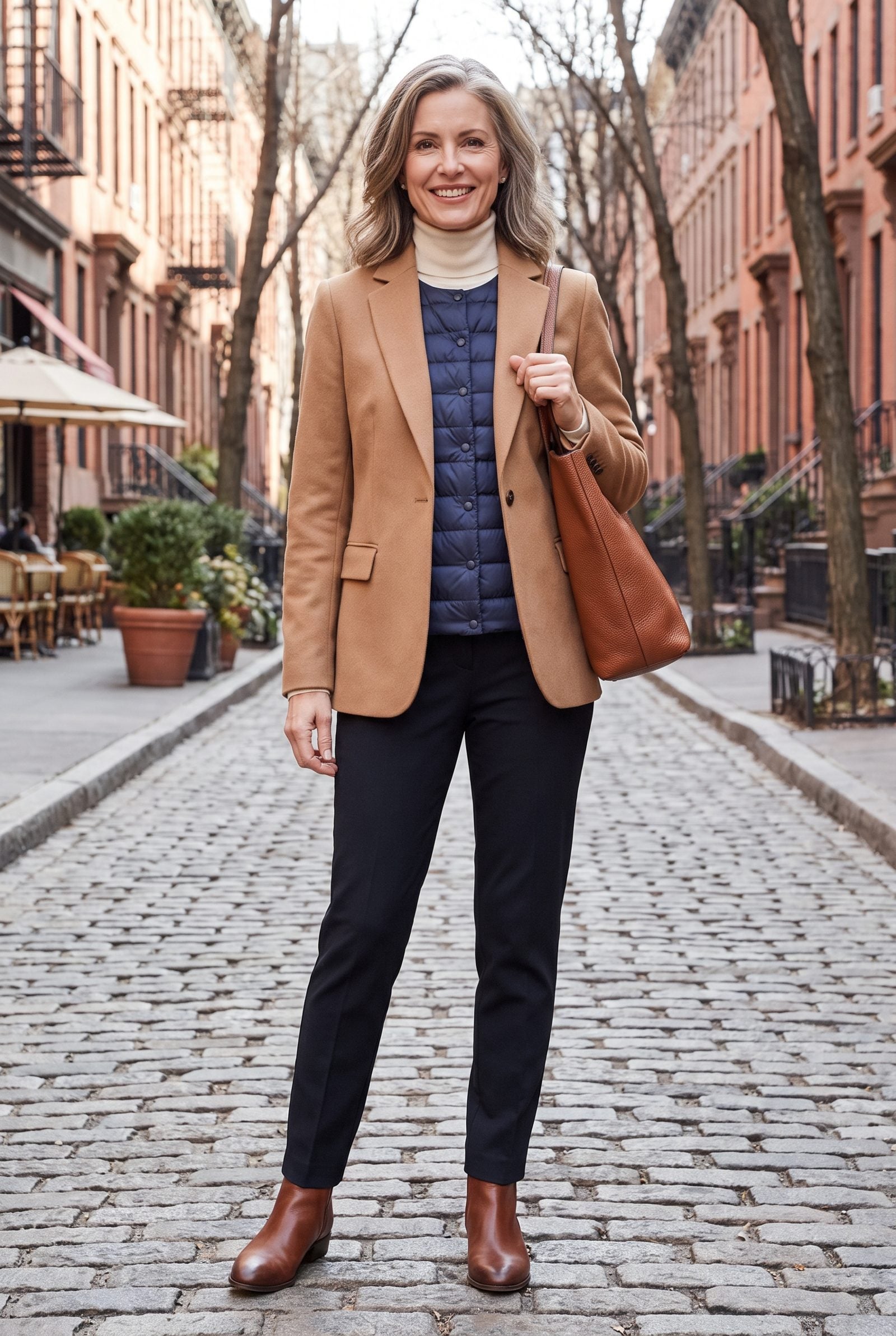
Your core is the part that actually needs heat, and a thin down vest warms it without touching your arms. That’s why it slides under a blazer so well. Shoulders and sleeves stay sharp and tailored while your torso gets puffer treatment.
Pick a vest cut close through the chest with flat quilting, nothing that puffs past the blazer lapels. The turtleneck fills the neckline gap and reads polished. Office-warm, no coat required for the walk from car to lobby.
19. Wear a Packable Down Jacket Beneath an Oversized Overcoat
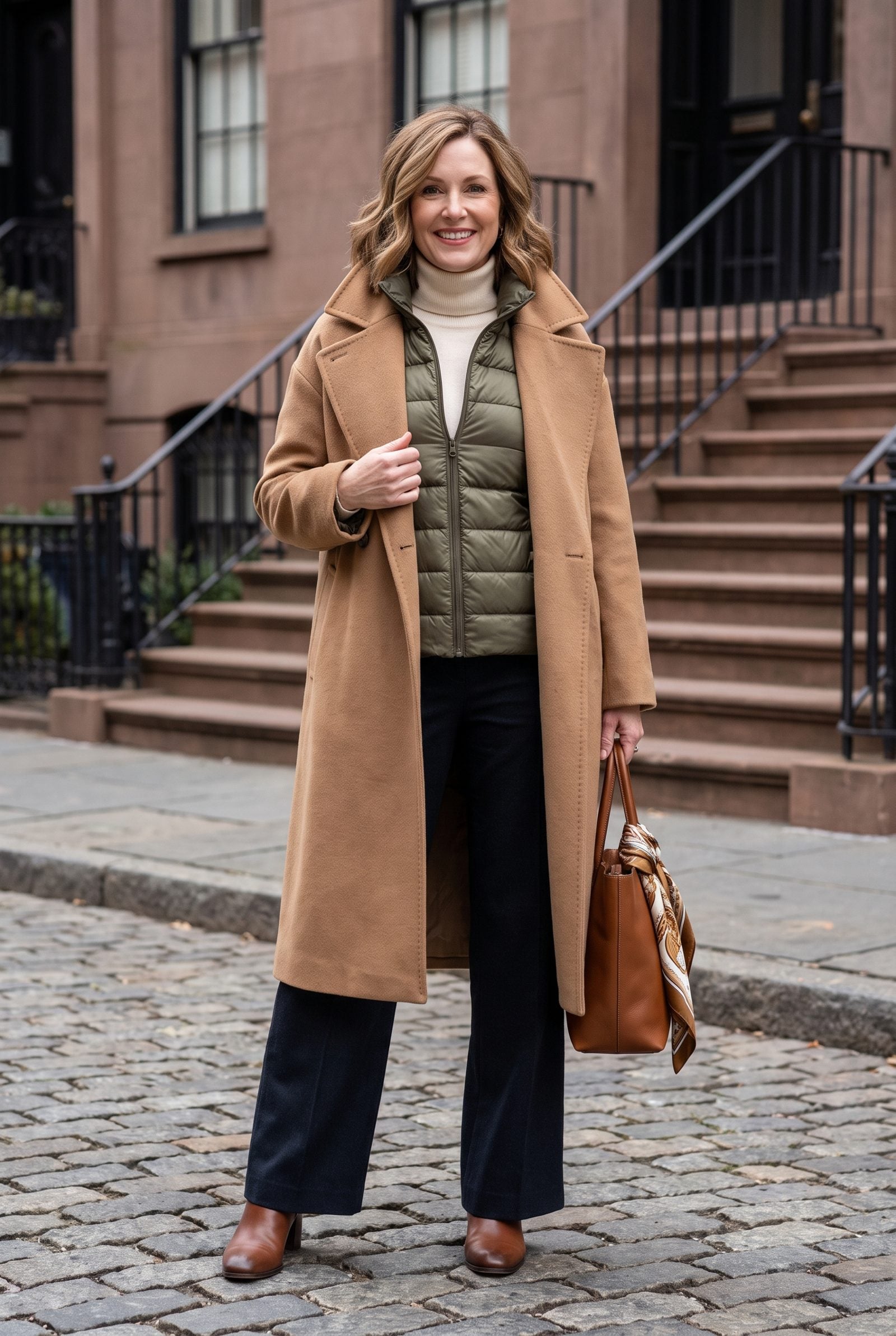
Two coats, zero bulk, because the oversized overcoat was built for exactly this. The relaxed cut of a camel overcoat leaves room for a packable down jacket to live underneath without a single pull or strain at the seams.
The packable layer earns its spot by compressing down to nothing while still blocking wind like a proper puffer. Keep both pieces in the same tonal family, matte black down under matte camel wool, and the layering looks like depth rather than clutter. Sneakers drag the whole thing back from formal. Cold commute, pulled-together arrival.
18. Wear a Cardigan as the Middle Layer Under a Trench

❤️ Would you like to save this?
A trench is a spring coat pretending it can handle January, and a cardigan is how you call its bluff. Slide a chunky cable knit underneath and the thin cotton shell suddenly has insulating backup it never had alone.
The belt is the genius move. Cinch the trench over the cardigan and you pull two soft, roomy layers into one defined waist, which stops the whole thing from reading like a shapeless heap. Let the cardigan cuffs stick out past the trench sleeves. That exposed knit tells everyone the layering was the plan.
17. Slip a Thin Hoodie Beneath a Structured Coat
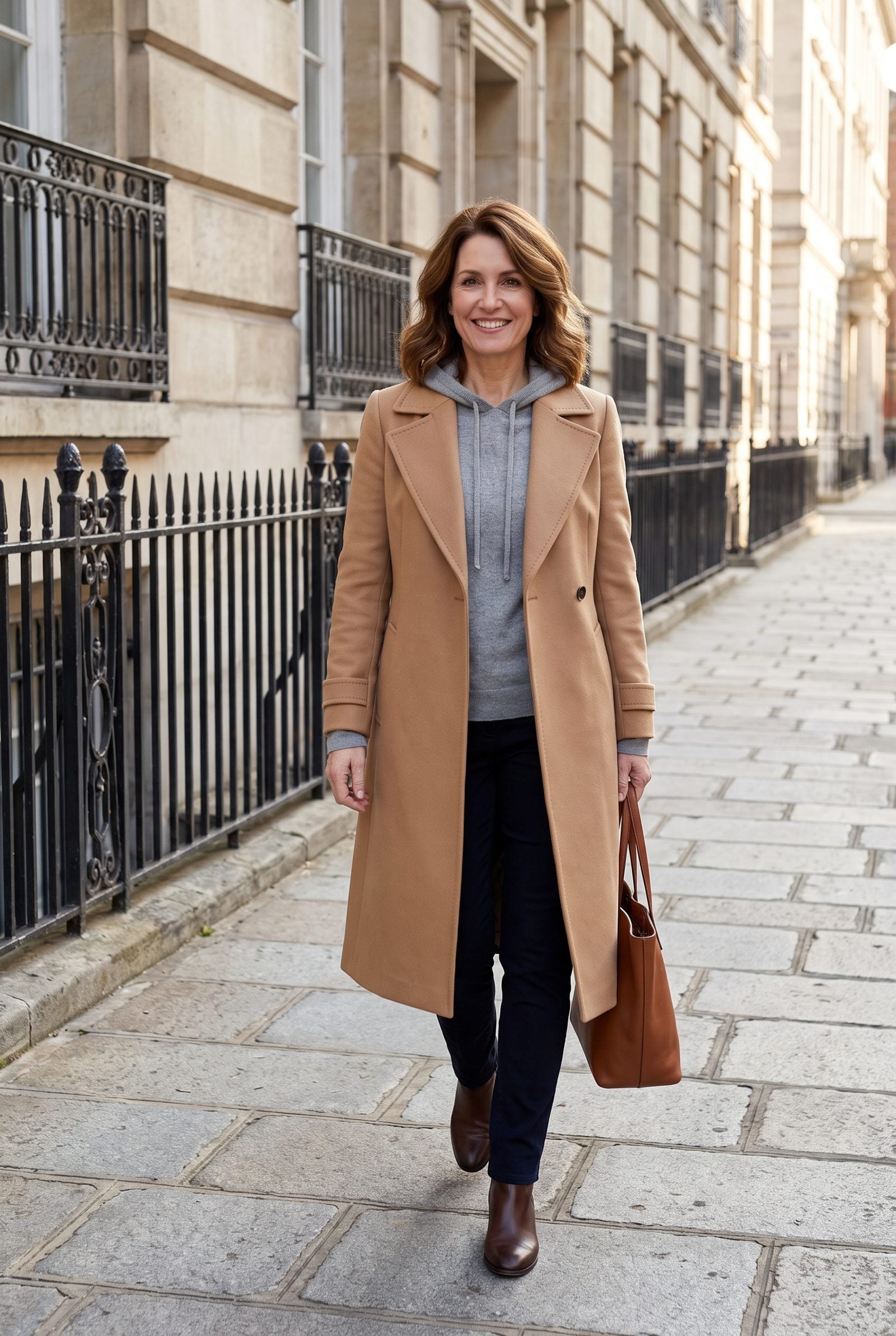
The hoodie-under-tailoring move used to read as teenager. Done right, it reads as the most comfortable person in the room who still bothered to wear a real coat.
Keep the hoodie thin, in heather grey or cream, and let the structured navy coat do all the shaping. Soft cotton against sharp wool makes both pieces look more interesting. Wear the hood out over the collar for the casual version, or tuck it flat for something closer to business. The drawstrings peeking out at the open front keep it honest either way.
16. Zip a Slim Track Jacket Under a Tailored Overcoat
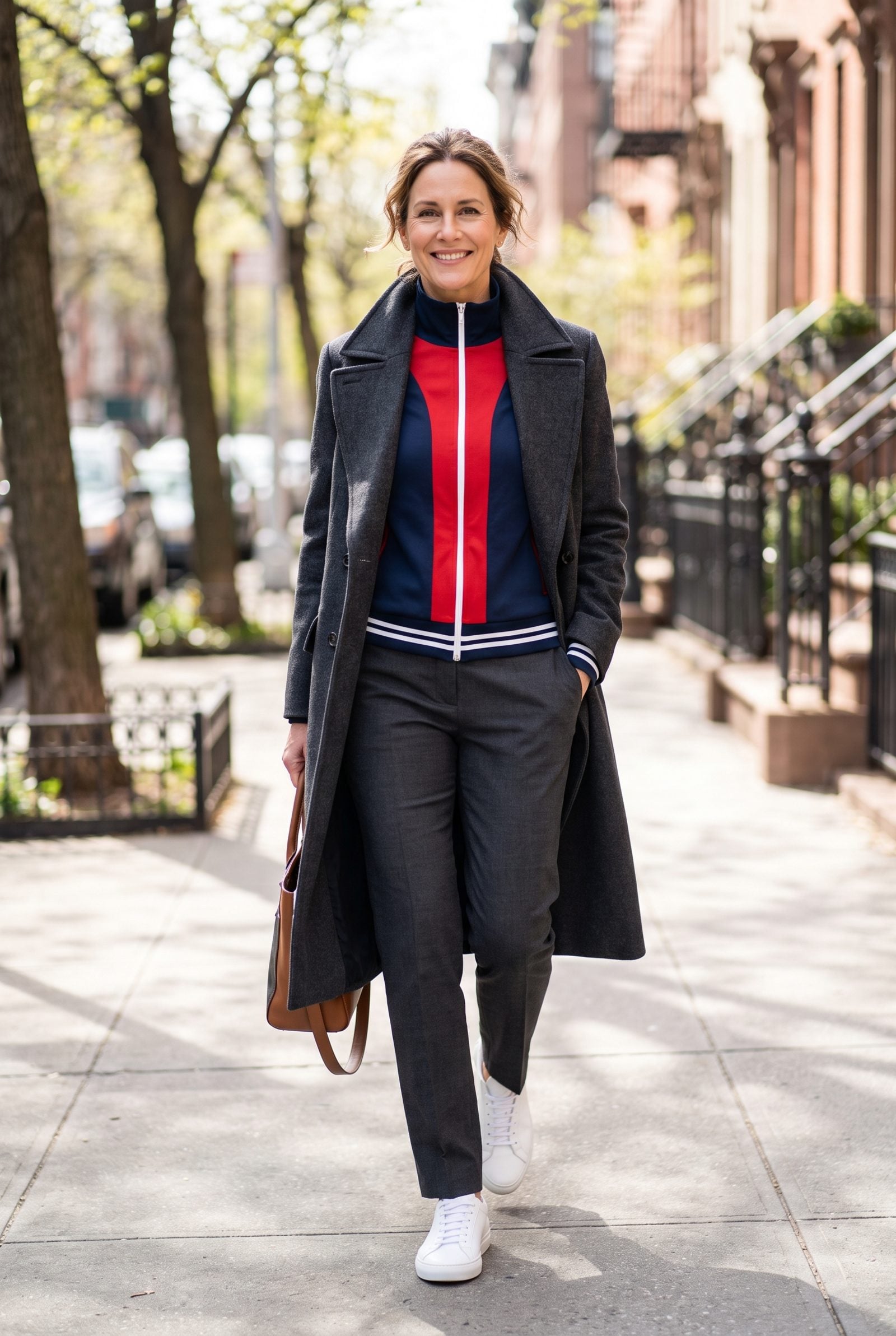
Sporty meets tailored, and the friction between them carries the look. A slim track jacket under a tailored overcoat makes both pieces read sharper, because each one does something the other can’t.
Zip the track jacket to the collarbone. That high collar gives you a second neckline above the coat’s lapels, blocks wind, and adds a note of visual interest, while the thin nylon traps heat without bulk. Keep everything else monochrome, black trousers, black sneakers, so the one athletic stripe stays the only departure. Quietly warm, quietly modern.
15. Add a Lightweight Fleece Beneath a Waxed Jacket
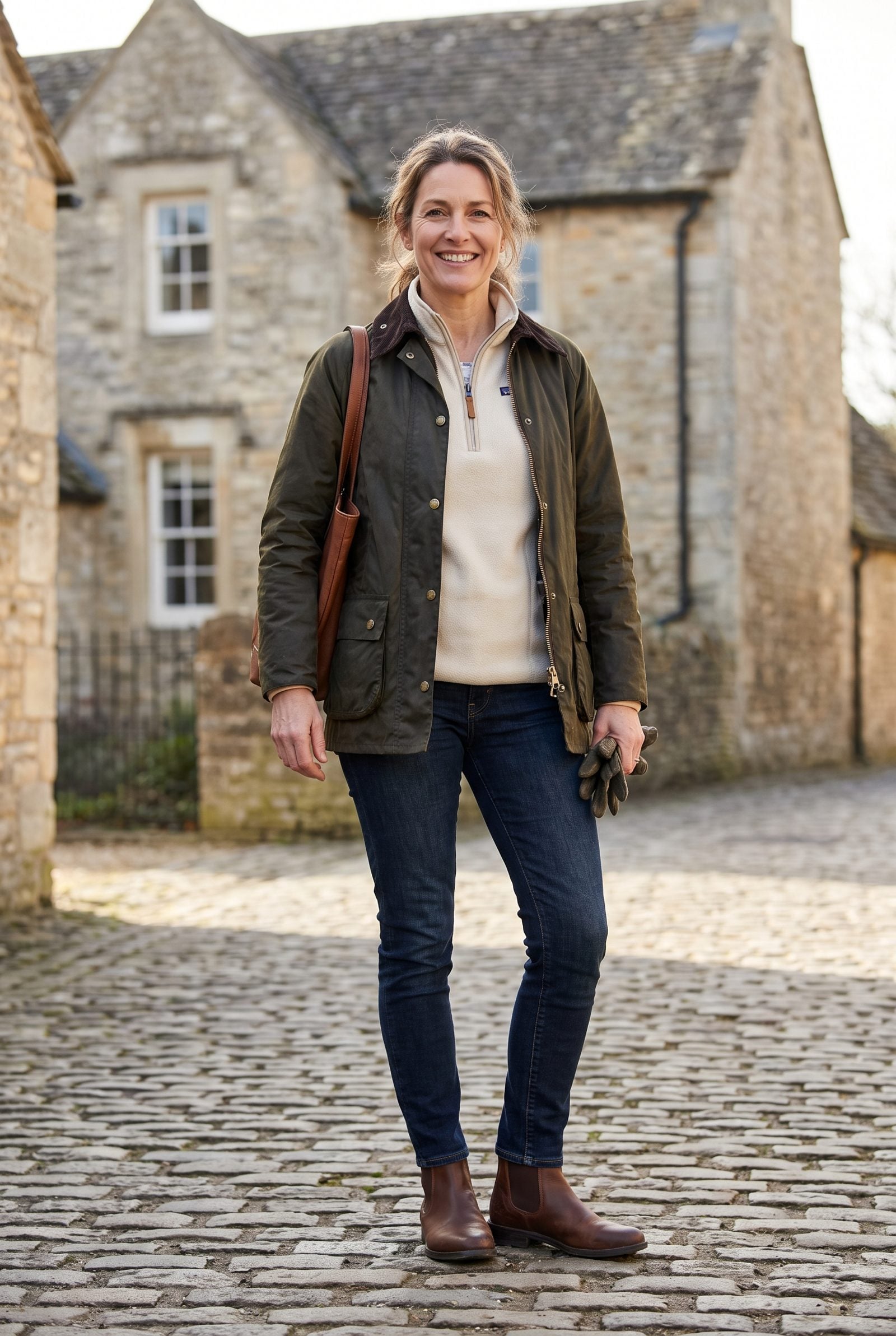
Waxed cotton blocks wind and rain brilliantly and holds almost no heat on its own, which is where the fleece earns its keep. A thin quarter-zip underneath adds the warm trapped layer the waxed jacket can’t provide, and it packs down enough to shed indoors.
Keep the fleece tonal with the jacket, olive on olive, and the layering looks like a considered country uniform rather than mismatched outdoor gear. The Breton stripe underneath breaks up all that solid green. Frozen dog walk, farmers’ market run, whatever drags you outside before the light comes up fully, and you still look like you chose the outfit.
14. Use a Denim Jacket as an Insulating Mid-Layer
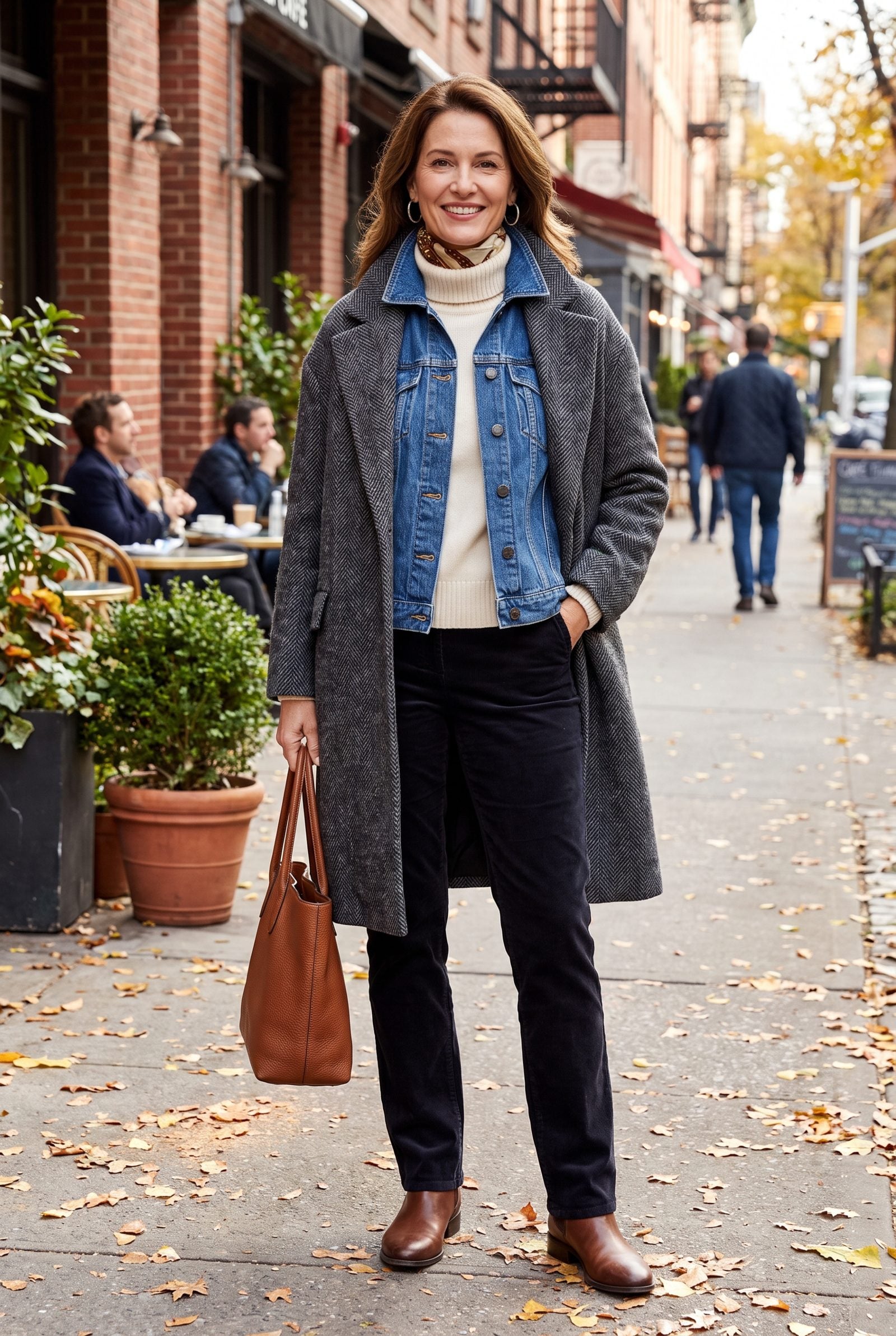
Denim as a mid-layer is an old cold-weather trick that stopped getting credit. The woven cotton blocks wind and adds a structured warm layer, and buttoned up under a coat, nobody’s thinking “spring jacket.”
Three textures carry this. Crisp denim, plush teddy coat, ribbed knit turtleneck, each one completely different under the hand, which is why the outfit has depth instead of flatness. Go lighter denim against darker jeans so the jacket reads as a deliberate mid-wash moment, not a double-denim accident. The teddy coat on top keeps the whole thing soft.
13. Put a Blazer Beneath a Relaxed Wrap Coat
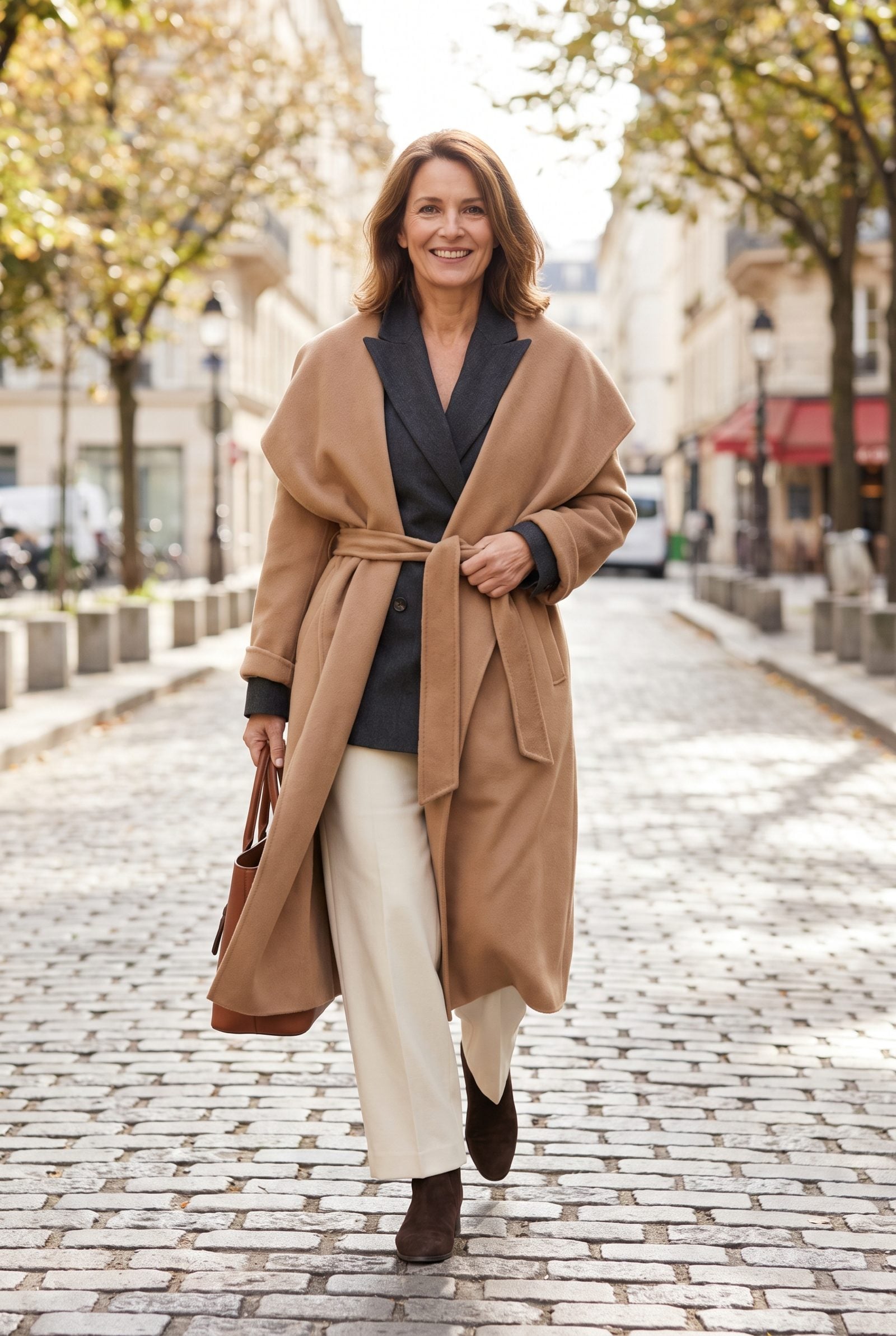
A relaxed wrap coat drapes and flows, a blazer holds a sharp line, and layering one under the other gives you both at once. The structure underneath stops the soft coat from reading as a bathrobe, and the fluid coat stops the blazer from reading as a boardroom.
The self-belt pulls it together. Tie the wrap coat over the blazer and you define a waist through two layers while trapping warmth against your core. Push the blazer cuffs out past the coat sleeves so the tailoring announces itself. Wide-leg trousers below keep the silhouette long and fluid. Save this one for the cold-weather day that demands you look fully in charge.
12. Add a Boiled-Wool Vest Over a Fitted Knit
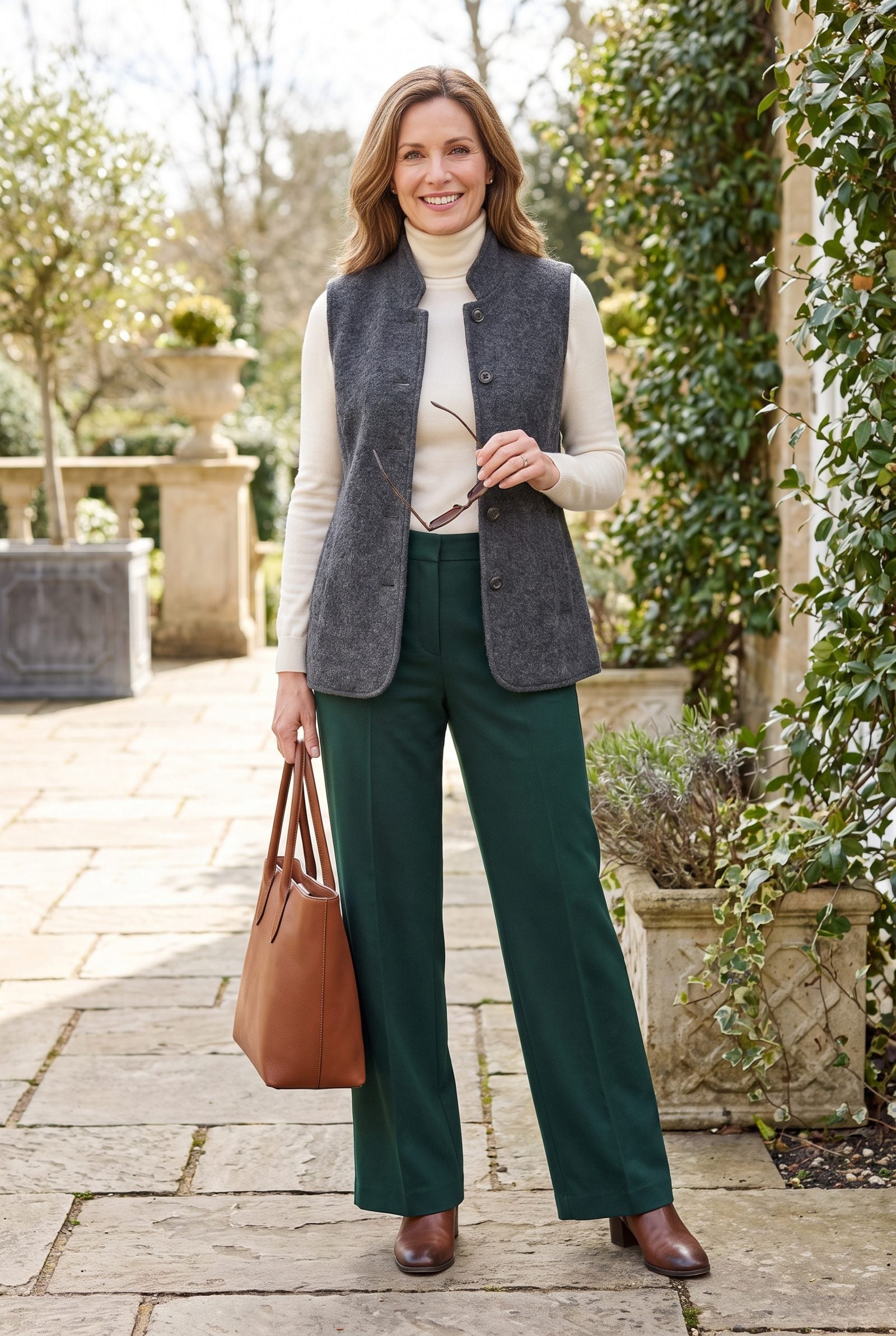
The vest is the quiet workhorse here. Boiled wool traps heat across your core without the bulk of a sweater, and since it leaves your arms in a slim knit, the whole shape stays lean. That’s the whole trick with winter layering: pile the volume where you actually feel the cold and keep the limbs streamlined.
Forest green over charcoal is a restrained contrast, and the camel trousers warm the thing up. One texture story, three tones, zero puff.
11. Use a Windproof Shell Beneath a Decorative Coat
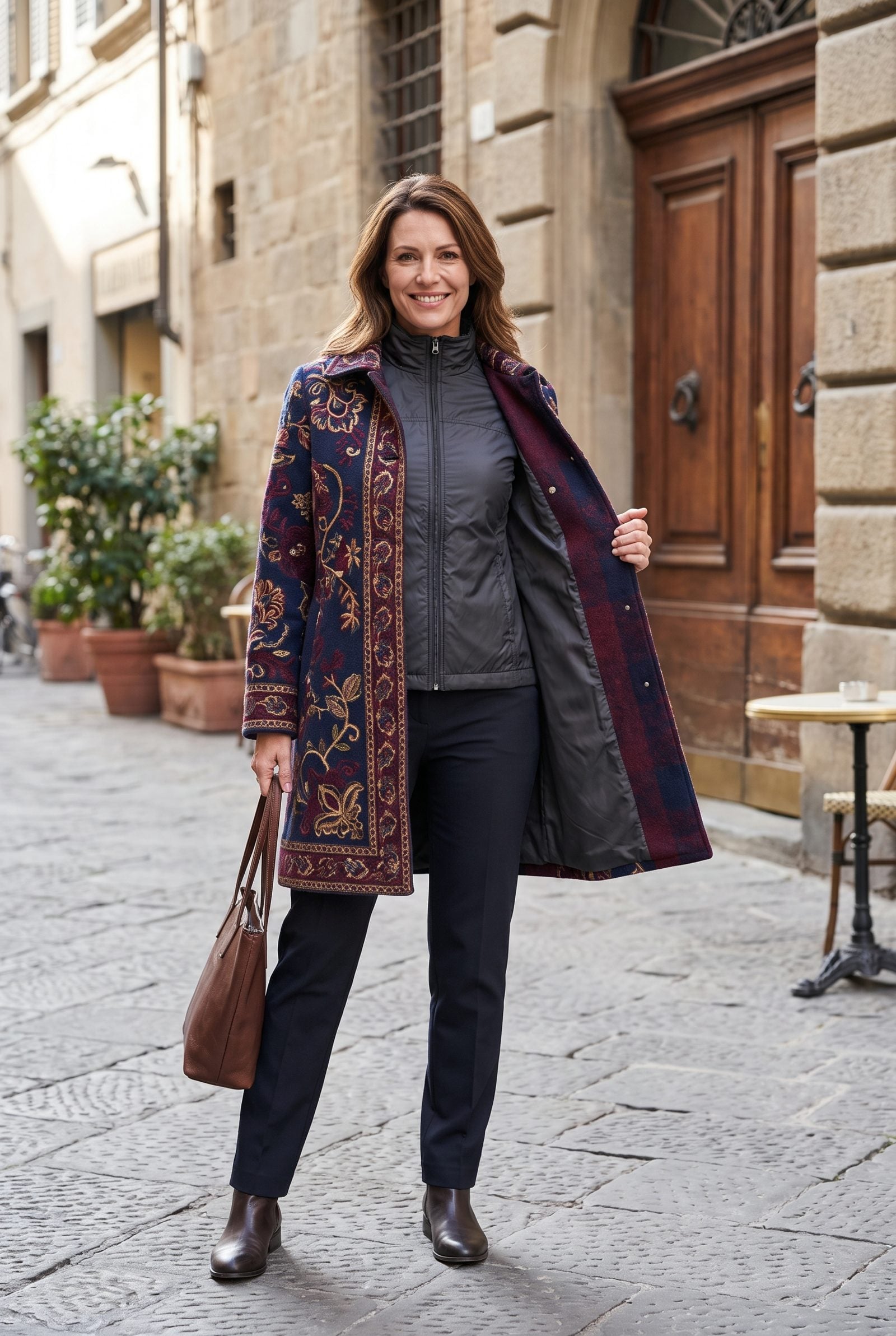
Pretty coats are rarely built to block wind. A thin technical shell fixes that and changes nothing about how your outerwear looks. Worn under a decorative wool coat, the shell handles the cold air while the coat handles the eye.
Here the matte-black shell disappears against the dark jeans, so the rust herringbone gets to carry the whole look. You stay sealed against the wind, and nobody clocks that two layers are doing the work.
10. Wear a Cape Over a Fitted Jacket Instead of a Thick Sweater
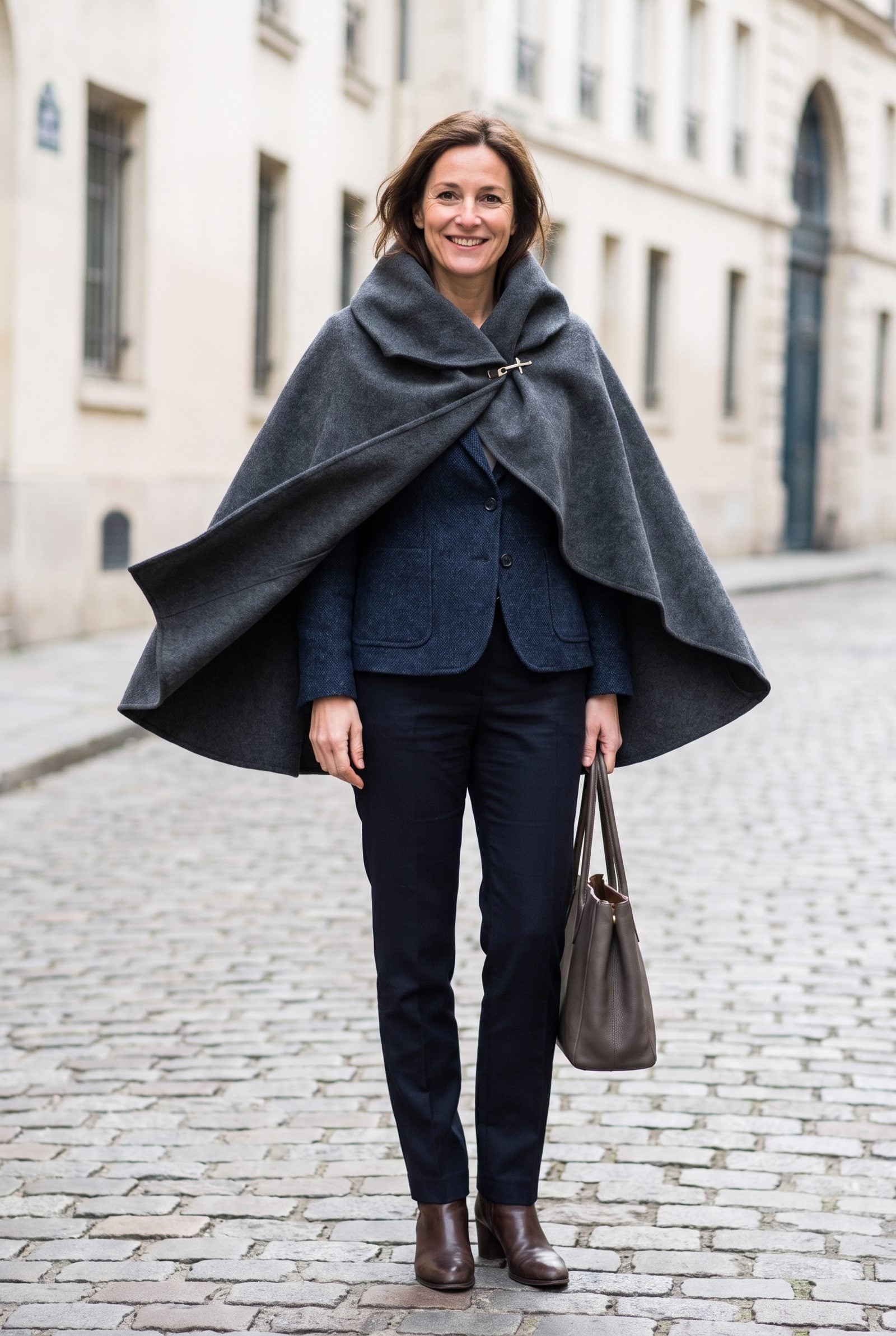
A cape gives you an insulating outer layer without the arm bulk a chunky sweater drags along. Over a fitted jacket it reads as deliberate, almost formal, and the waist definition underneath keeps it from looking like a blanket with ambitions.
Camel against black is what makes it click. That warm neutral stops a severe palette from going cold, and the cape’s clean drape does more for your posture than any knit could. This is the look that announces you planned your morning.
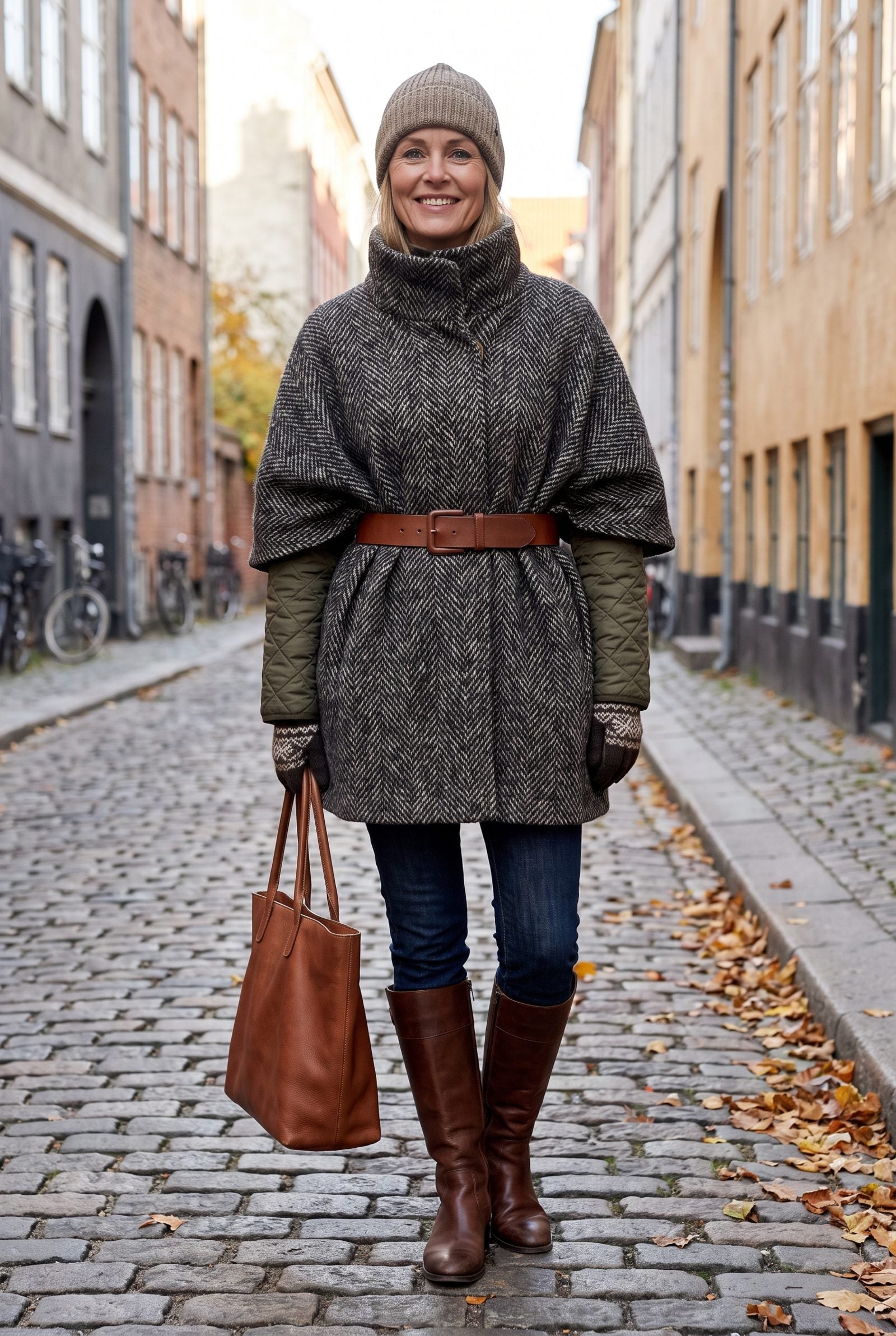
9. Belt a Poncho to Stop Heat From Escaping
❤️ Would you like to save this?
An unbelted poncho is a chimney. Warm air rises straight up and out through the open sides, and you stand there wondering why you’re cold in all that wool. One wide belt at the waist closes those gaps and turns a shapeless shape into something with a figure.
The cognac belt against dove grey pulls double duty, sealing the heat in and drawing a clear waistline across all that soft volume. Suddenly the poncho has structure instead of just square footage.
8. Seal Coat Cuffs With Long Cashmere Wrist Warmers
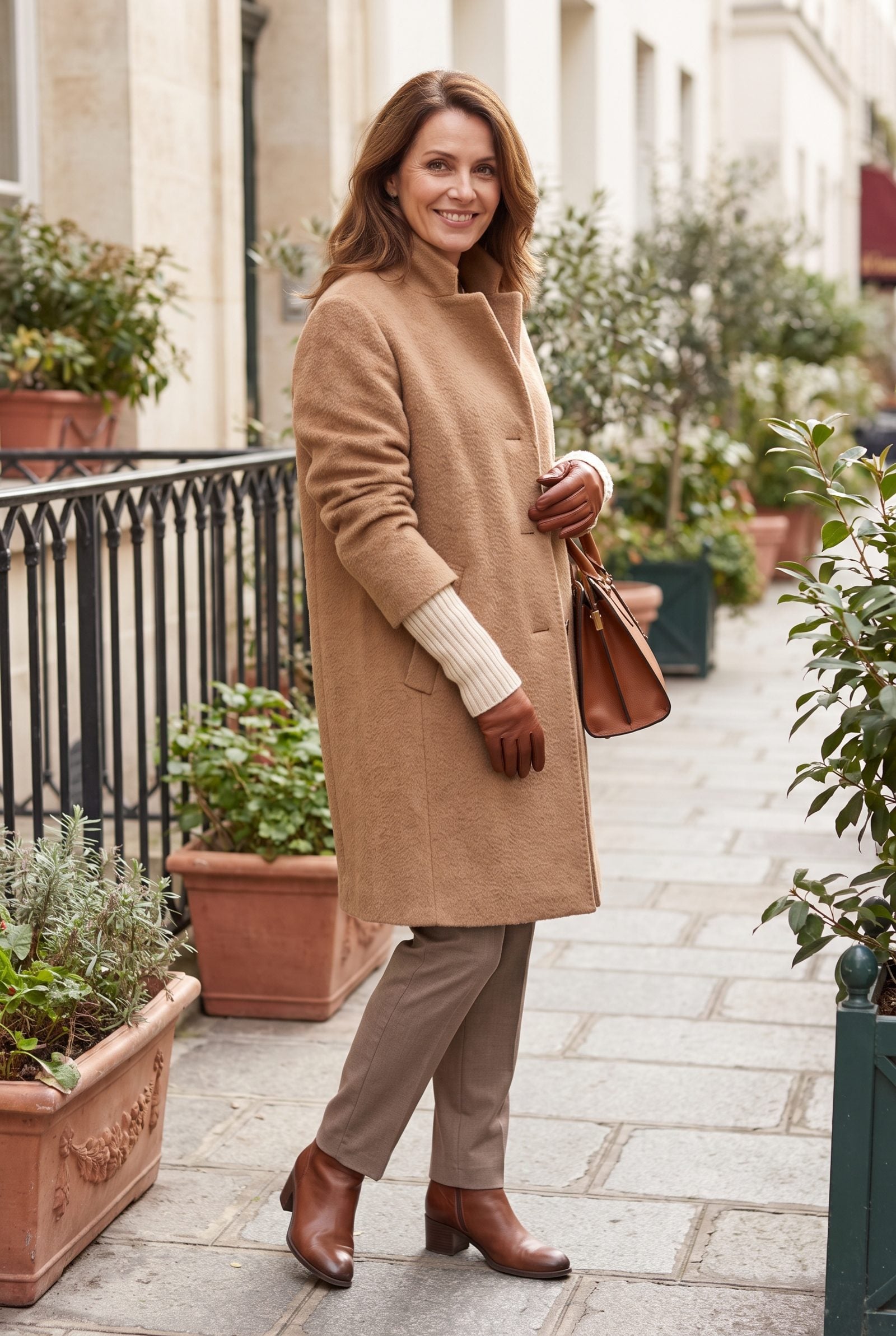
Cold sneaks in at the wrists, that forgotten gap between cuff and glove. Long cashmere wrist warmers bridge it, and when you let them peek past the coat sleeve, a practical fix becomes a layering detail.
Oatmeal cashmere against the camel coat is a near-tonal move, so it reads as texture rather than accessory. Small, warm, and far smarter than it looks.
7. Wear Slim Gloves Beneath Oversized Mittens
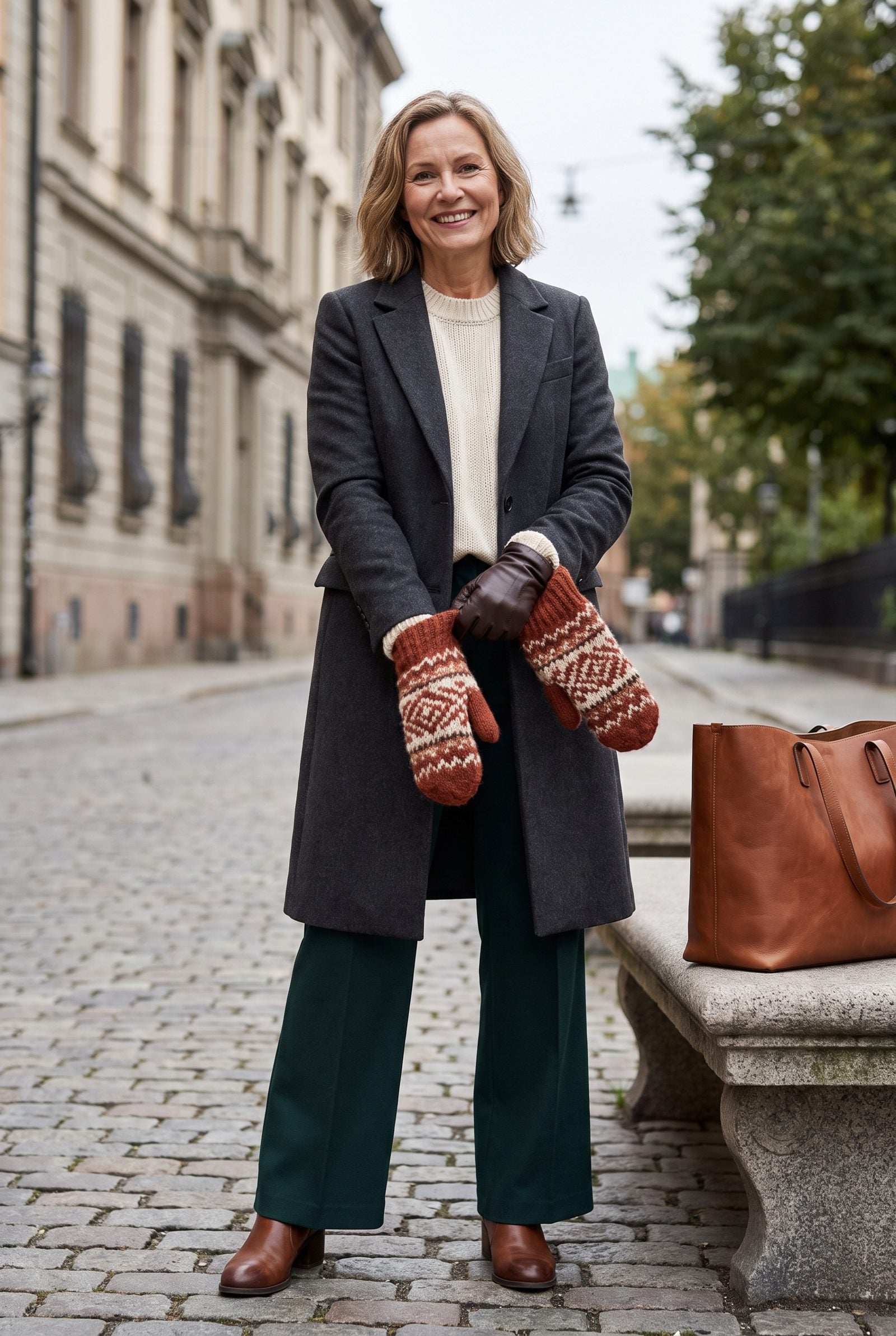
Two hand layers beat one thick pair every time. Slim leather gloves trap a warm air pocket, the oversized mittens seal it in, and you can shuck the mittens the second you need to dig out your keys.
Here the glossy black glove peeking from the matte charcoal mitten is a texture contrast most people walk right past. It keeps the whole gesture looking intentional instead of desperate.
6. Fill an Open Neckline With a Silk Neck Scarf

A V-neck knit looks great and sends a draft straight down your chest. Knot a silk neck scarf into that opening and it closes the gap while adding the only pattern in the outfit.
Silk warms faster against skin than you’d expect, and the rust-ochre-teal print does color work a plain neutral base never could. When a look feels too quiet, this is the finishing touch I reach for.
5. Tuck a Blanket Scarf Inside the Coat Instead of Wrapping It Outside
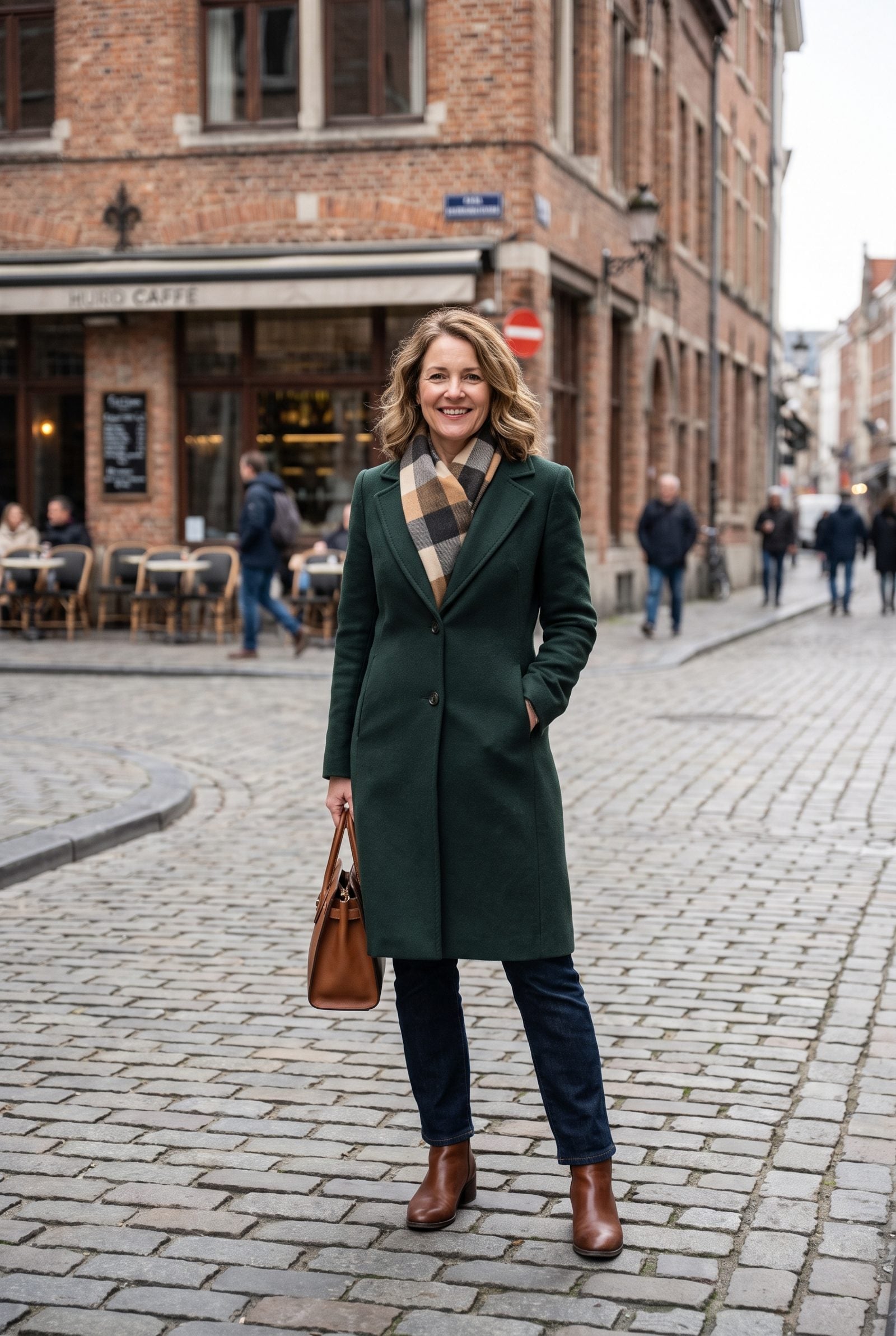
Everyone wraps the blanket scarf on the outside, where the wind gets right under it. Tuck it down inside the coat and button over it instead. Now it works like a built-in chest panel, holding heat against your core where it counts.
The plaid grey-cream-burgundy still peeks from the open collar, giving you cozy texture at the neckline, except now it stops advertising how cold you are. Clean coat line outside, serious insulation inside. I switched to this years ago and never looked back.
4. Use a Dickey to Warm the Neckline Without Another Full Sweater
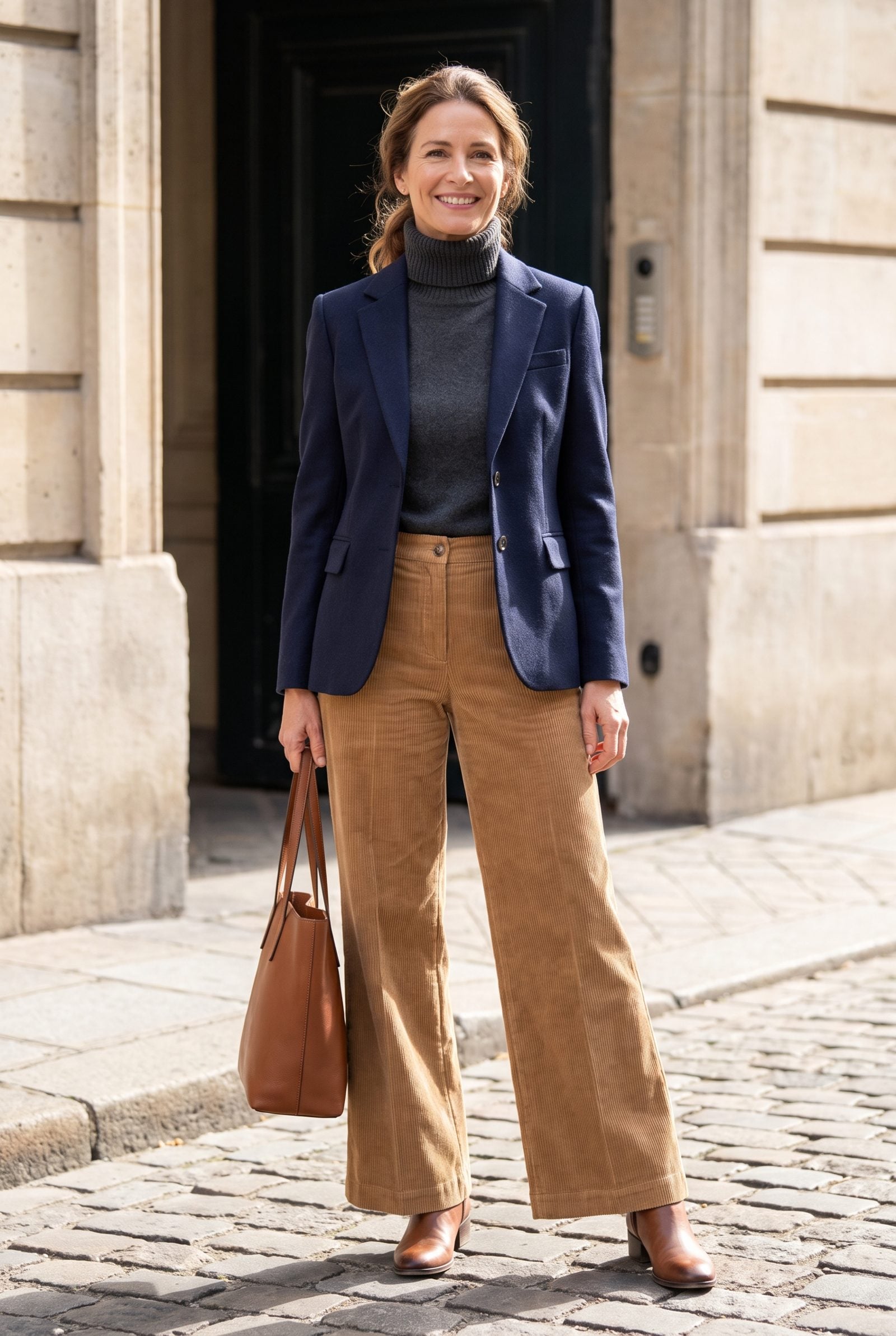
A dickey is the honest cheat code. You get the warm high neckline of a turtleneck without the fabric trapped under your arms or bunching at the waist, and under a fitted blazer the slim profile stays completely intact.
Cream against a black blazer is clean and a little sharp. Nobody notices there’s no full sweater under there, just the warmth exactly where your neck wants it.
3. Slip a Thin Balaclava Under Your Coat Hood
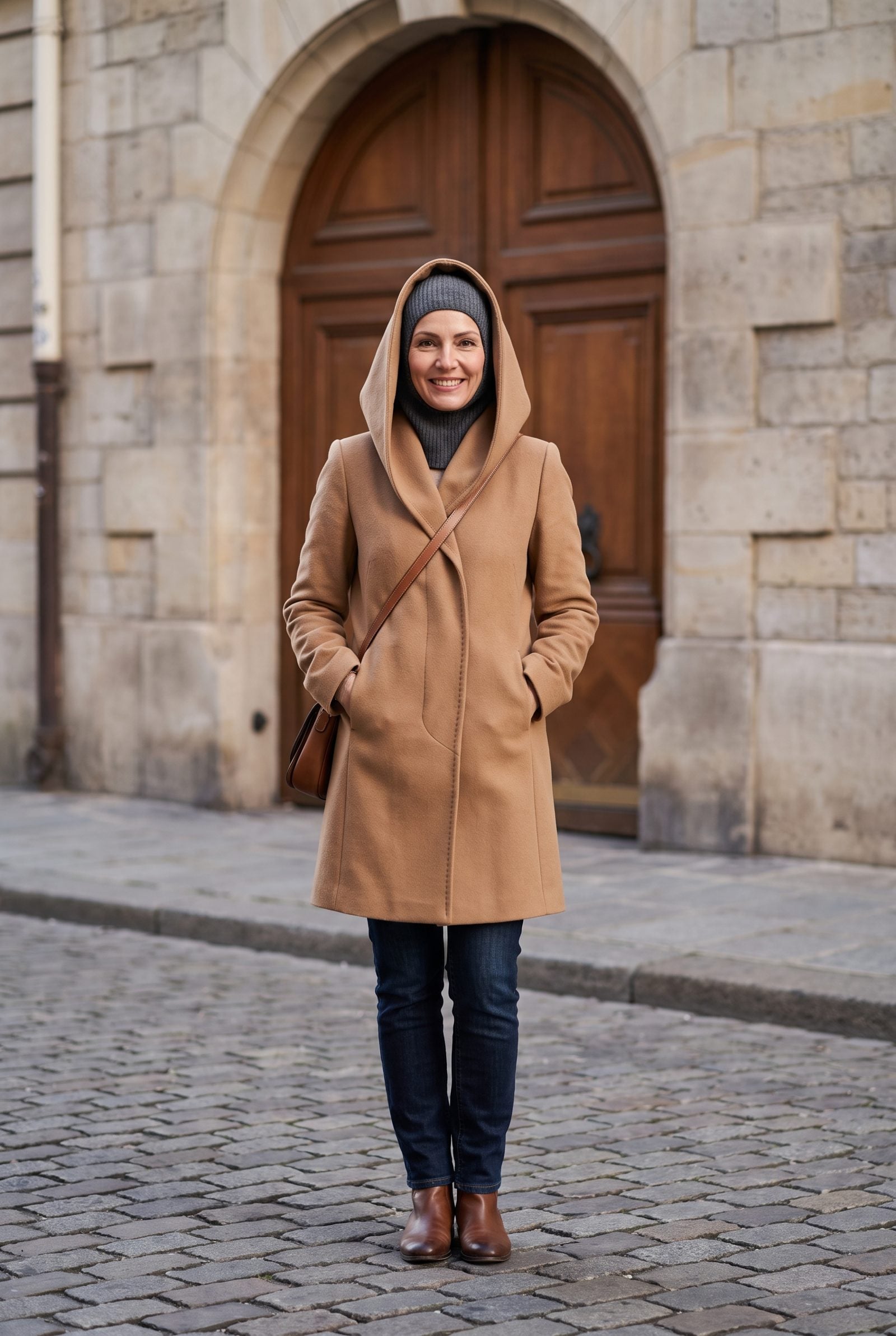
The balaclava solves a problem scarves can’t. Heat escapes fastest from your head and neck, and when you cram a bulky hood over loose hair it just flattens your whole look. A fine merino balaclava in charcoal sits flat against the skin, seals the gap at your collar, then vanishes under a lifted hood. No bulk. No helmet-head. No cold draft sliding down your spine.
Keep it thin. Fine-gauge wool, not fleece — that’s the whole game. Done right, it reads as a sleek under-layer instead of ski gear, which is what lets it live under a tailored camel wool coat without wrecking the line.
2. Add a Quilted Scarf That Doubles as Chest Insulation
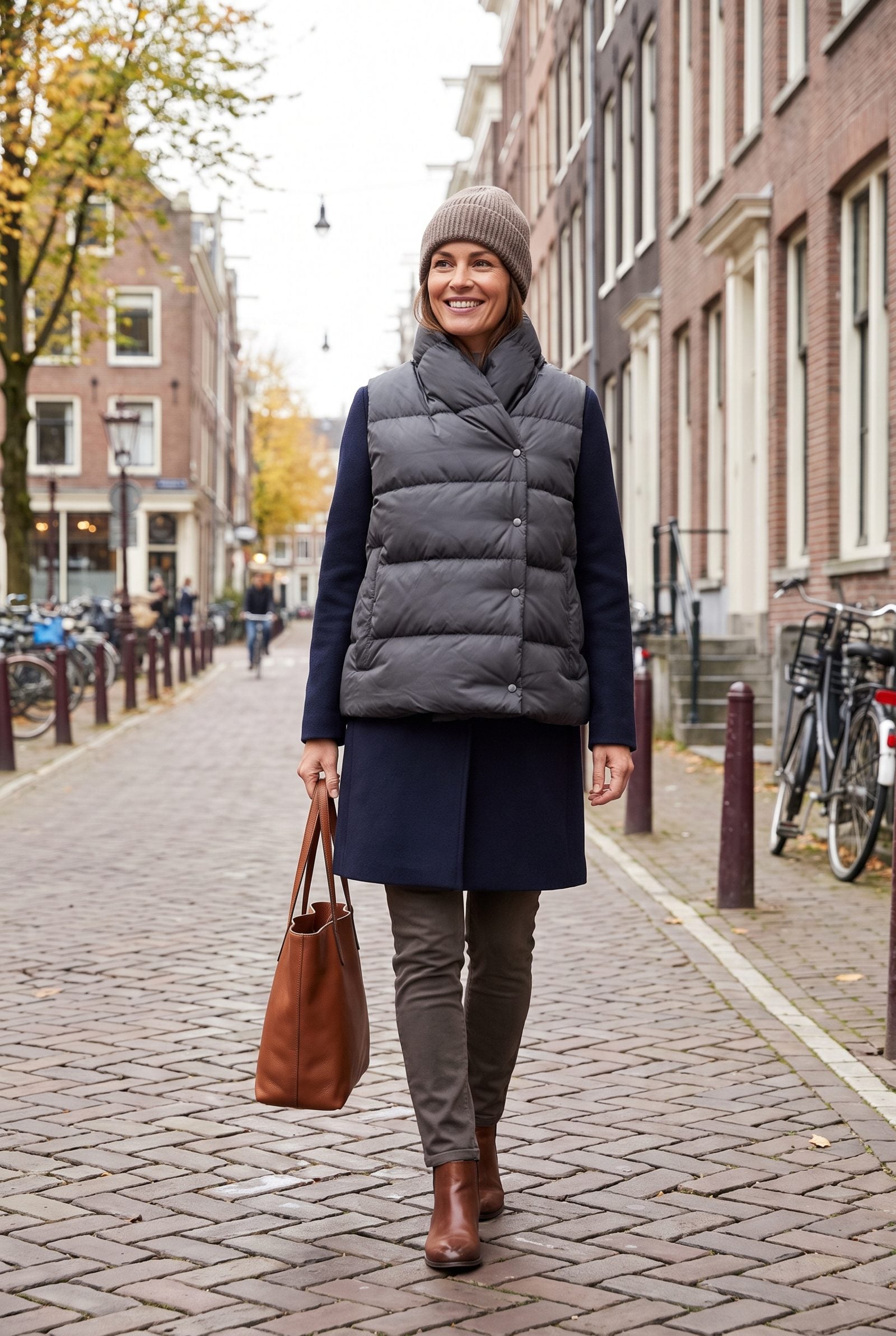
A quilted scarf is secretly a vest, and honestly nobody tells you that. Lay it flat across your chest instead of winding it around your neck a dozen times, tuck the ends into an open coat front, and you’ve insulated the exact zone where thin knits give up on you. All the warmth of a puffer with none of the marshmallow silhouette.
Here the oatmeal-against-navy does the heavy lifting — a pale matte quilt breaking up all that dark coat wool, so the layer looks like a styling decision rather than a panic about the forecast. Leave the coat open. Let the scarf anchor the whole thing.
1. Tuck Thin Leather Gloves Under Ribbed Coat Cuffs

Thin leather gloves are the warmth upgrade nobody talks about. Unlined cognac leather blocks wind far better than a bare hand, and tucking the glove cuff under a ribbed coat cuff closes that wrist gap where cold gets in every single time.
The detail that makes it look expensive is leather sheen sliding under matte ribbed knit — two textures, one clean handoff at the wrist. Same logic as tucking in a shirt: shape without bulk. And it photographs like you planned your whole morning around it, which, let’s be real, you did not.