
❤️ Would you like to save this?
A midi dress and tall boots should be the easiest win in a cold-weather wardrobe. Then you catch your reflection and something’s off. Usually it’s the two inches nobody thinks about: that strip of leg, the bulge, the collision where hem meets boot shaft. That gap decides everything, lengthening your leg or chopping it in half. Below are the exact mistakes that sabotage an otherwise sharp outfit, each one a well-dressed woman who held onto one habit a beat too long.
FYI, thanks to AI imagery software, we’re able to create very specific fashion and hairstyle examples to illustrate the points being made. In some cases, imagery is exaggerated to hammer home the point. Also, assume links that take you off the site are affiliate links such as links to Amazon. this means we may earn a commission if you buy something.
32. Floral Midi Ending Two Inches Above Slouchy Boot Shafts
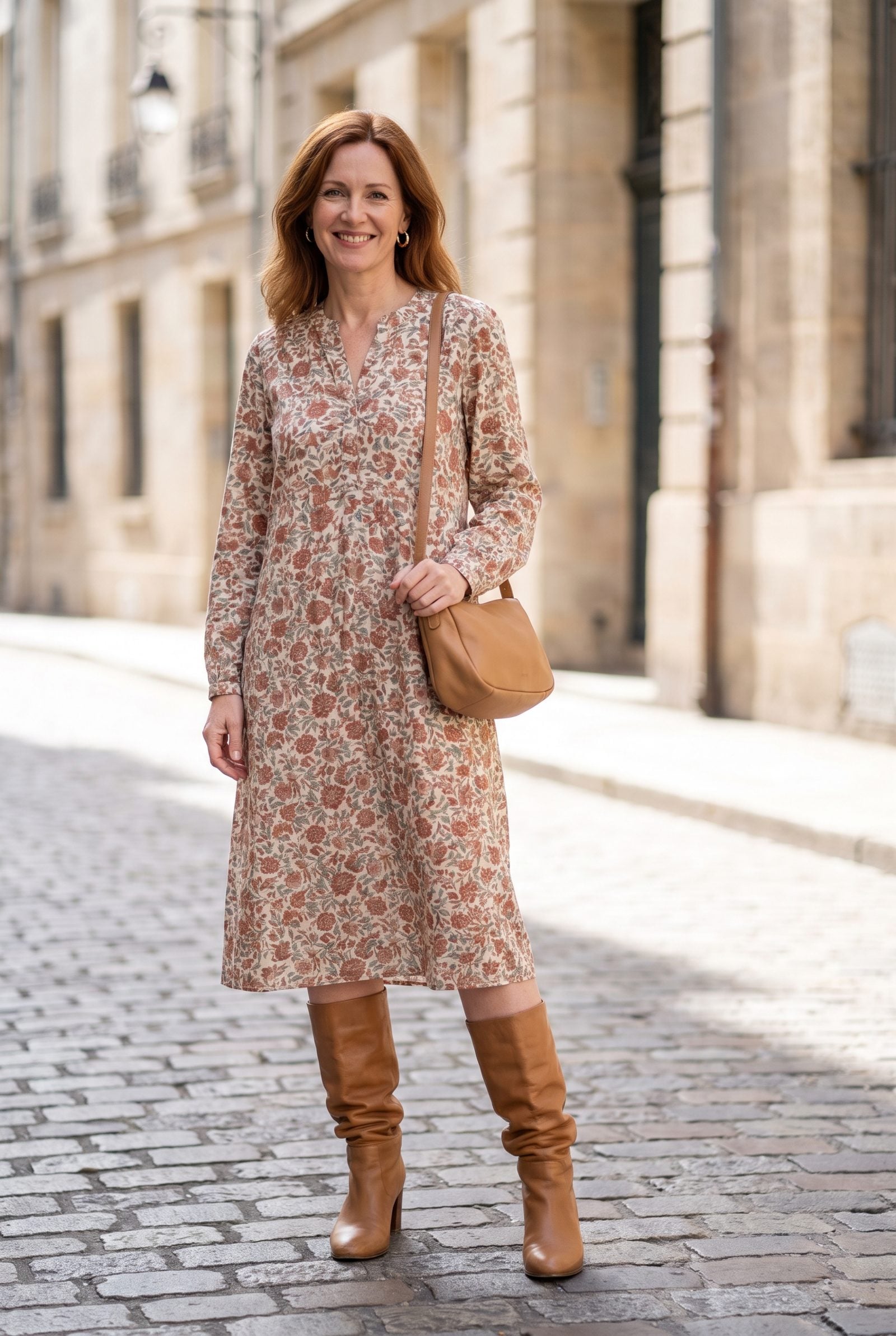
The dress is right and the boots are right, but the two inches between them undo both. That bare strip of leg above a slouchy shaft acts like a horizontal cut across the leg, shortening it exactly where you want length.
Slouchy boots already break the line by pooling at the ankle. Add a hem floating above the shaft and you’ve stacked two disruptions on top of each other. Drop the hem to overlap the boot top by an inch, or swap to a sleeker shaft, and the whole leg reads as one continuous line.
31. Pleated Midi Overlapping Wide Boot Shafts in a Bulky Ridge

Volume on volume never ends well at the ankle. A pleated dress already carries fabric, so when those pleats spill over a wide boot rim, they pile into a ridge that widens the calf and kills the drape.
Pair pleats with a slim, close-fitting shaft so the fabric falls past the leather cleanly. Or hem the dress to clear the boot top entirely. Either way you want the pleats to fall, not collect. The black riding boots aren’t the problem. Their width is.
30. High-Low Midi Creating Mismatched Gaps Above Each Boot
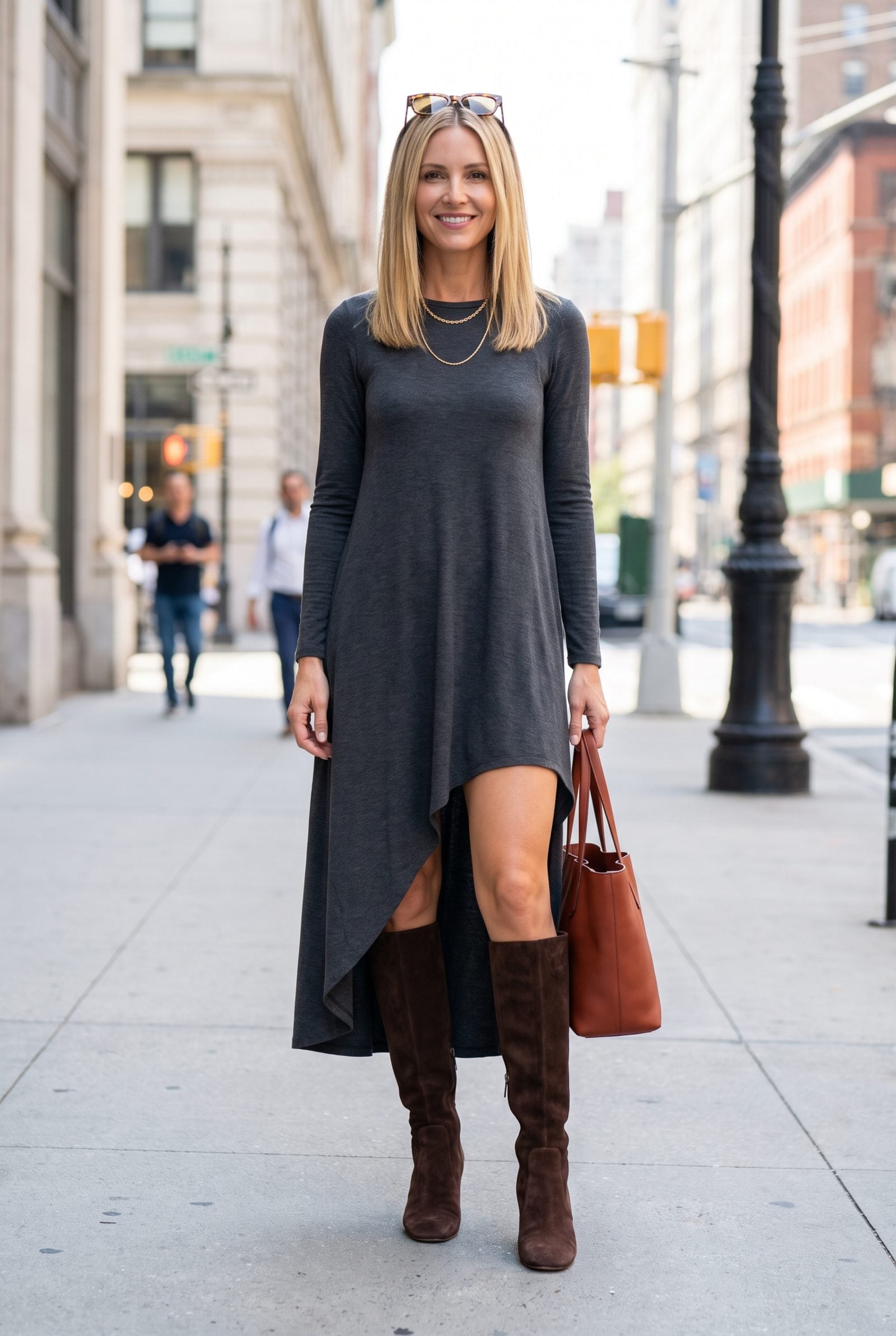
High-low hems have a job in flat sandals. With tall boots they turn against you. The uneven hem creates two different gaps, a wide one on the short side, almost none on the long side, and the asymmetry reads as accidental rather than intentional.
Your eye keeps trying to reconcile the two heights and never can. Love the movement of a high-low? Wear it with ankle boots where the shaft sits below both hem points, and save the tall boots for a level hem.
29. Dark Midi and Dark Boots Divided by a Pale Strip of Leg
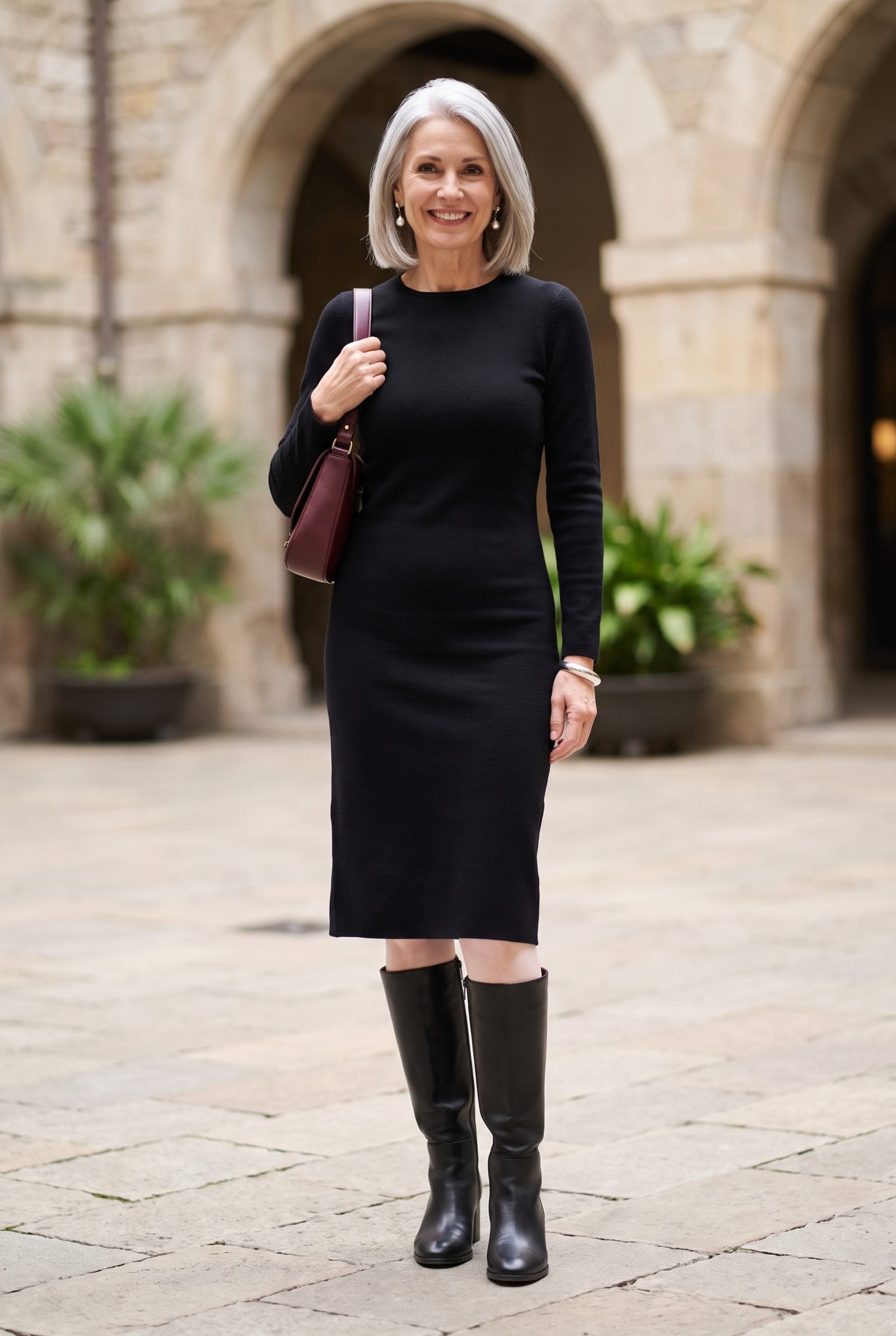
Tonal dressing lives or dies on continuity. An all-black column of dress and boot looks expensive and long, right up until a pale band of skin cuts straight through the middle of it.
That bright interruption becomes the loudest thing in the frame precisely because everything around it is dark. Close the gap with opaque black tights, or drop the hem to meet the boot. The black knee boots deserve an unbroken run of black above them.
I got this wrong for years, convinced bare leg looked “lighter.” It doesn’t. It looks chopped.
28. Calf-Length Dress With Over-the-Knee Boots Bulging Underneath
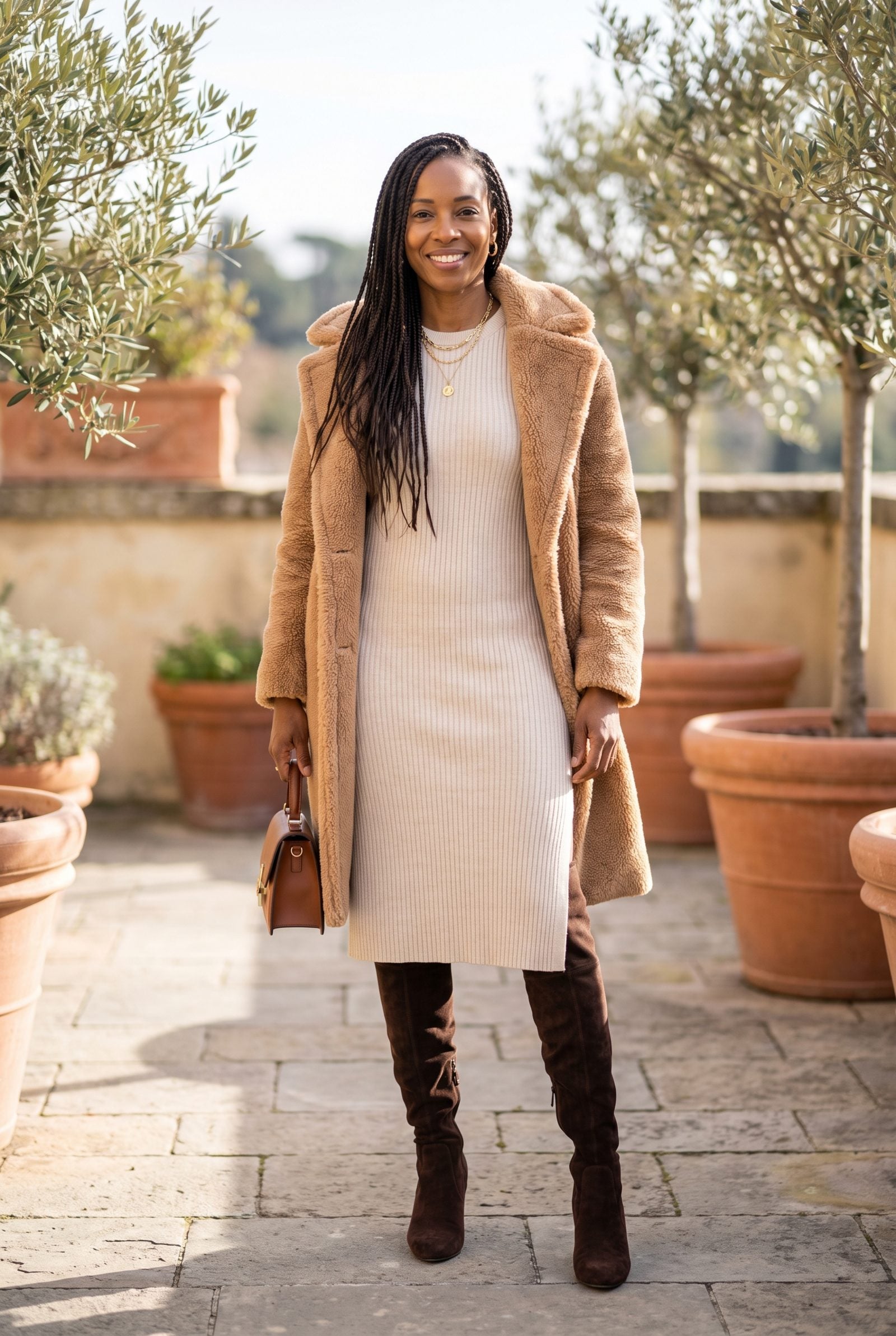
Over-the-knee boots need bare thigh or a short hem to show their point. Trap them under a calf-length dress and the shaft has nowhere to go, so it bulges against the fabric right at the hemline.
Now you’ve got a lump where you wanted a line. Over-the-knee boots belong with hems that stop above the knee so the shaft reads on purpose. With a calf-length knit, go for a boot that ends below the knee and let the two pieces meet without a fight.
27. Front-Slit Midi Framing an Awkward Patch of Knee

A front slit is meant to flash movement, a length of leg as you walk. Combine it with a tall boot and the slit stops short at the boot rim, so instead of a long reveal you get a small isolated window of knee.
That framed patch draws the eye to the one spot you weren’t trying to feature. Slits and tall boots want opposite things. Pair the slit with a heel or ankle boot where the leg has room to show, and keep tall boots for a closed hem.
26. Knee Boots Sliding Down to Two Different Heights
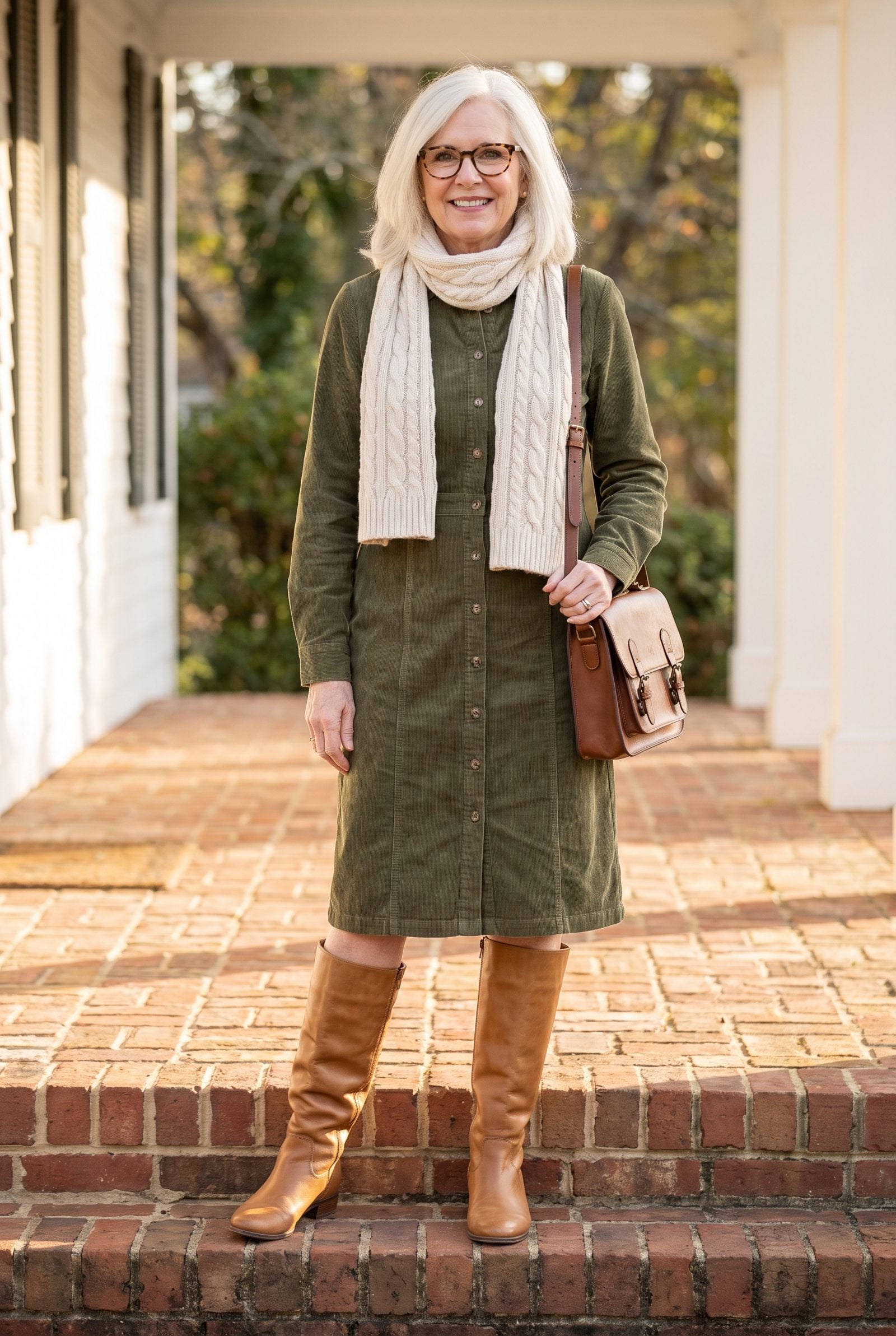
This one isn’t about the dress at all. It’s the boots betraying you mid-day. Soft, unstructured shafts slide down at different rates, and by lunch one boot sits at the knee while the other has crept to the mid-calf.
Suddenly your legs look uneven when they aren’t. Boots with a bit of structure in the shaft, or a discreet elastic gusset, hold their height. And if your favorite pair slips? Boot clips exist for exactly this. Nobody notices the clip. Everybody notices two mismatched boot tops.
What Our Readers Say
- Asked which heel height they would actually wear, 52% of ThreadCurve readers picked flat and 37% low, with only 9% choosing high.
- In our reader polls on prints people would actually wear, about half chose solid, while floral was picked by 19%.
From ThreadCurve reader polls and votes.
25. Slim Knit Midi With Extra-Wide Equestrian Boot Openings
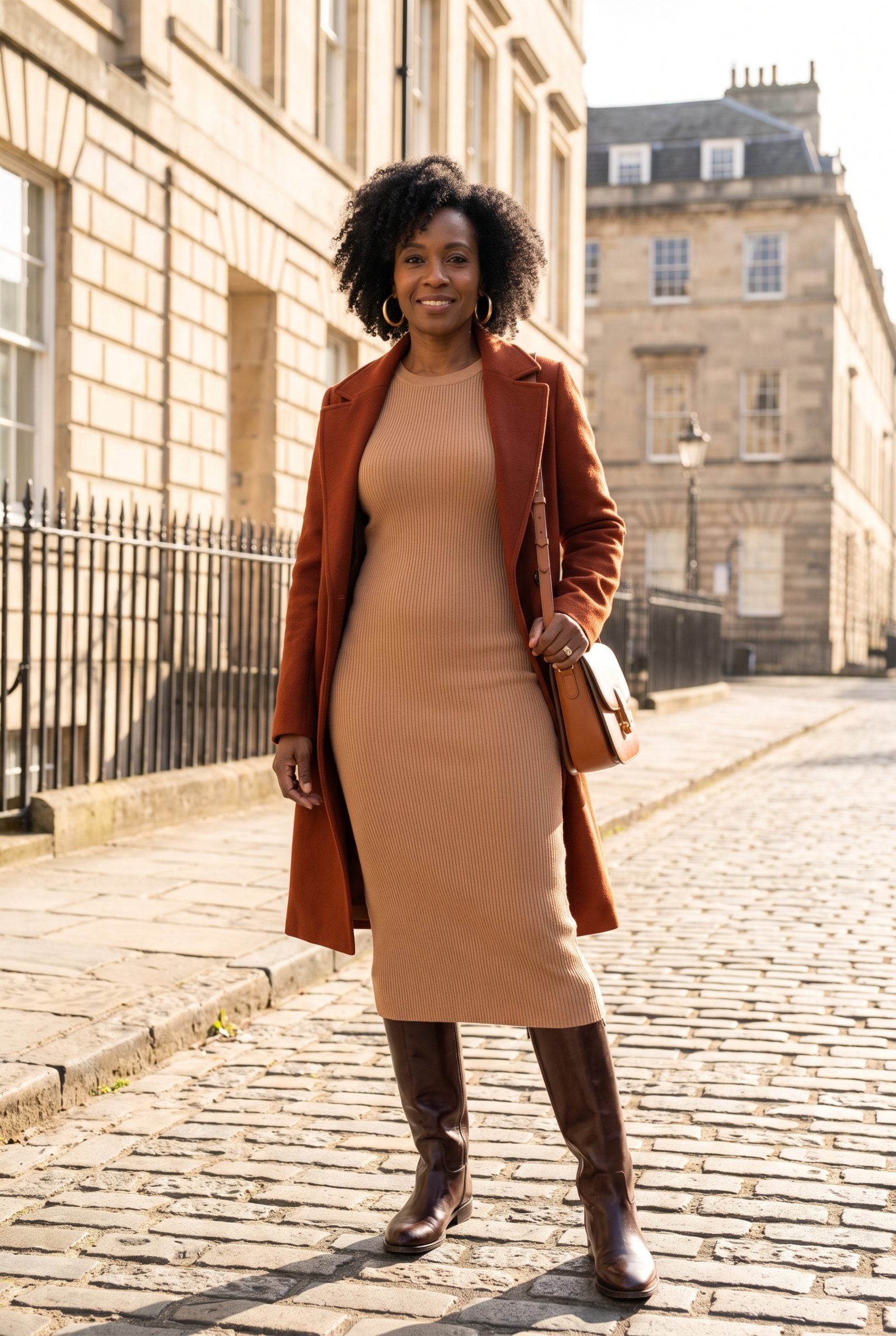
A slim knit dress builds a narrow column all the way down. Then wide equestrian boots crash the party, gapping open around the calf and breaking the clean line the knit worked to create.
The scale mismatch is the culprit: fitted above, roomy below. Match a slim knit with a fitted shaft so the two continue each other, or tuck into a boot with a snug top. The midi length only works when the boot picks up where the fabric stops, not when air fills the difference.
24. Sheer-Hem Midi Ending Over an Opaque Boot Rim

Sheer fabric wants light and air behind it. Drape it over a solid opaque boot and the transparency has nothing to show but leather, so the boot line stamps through the chiffon like a shadow.
That floating, weightless quality, the whole reason to wear a sheer hem, dies against the hard rim underneath. Let the sheer fall over bare leg or a fine tight, and keep the boot below the hemline. Delicate fabric needs something delicate to hover against.
23. Tulip-Hem Midi Creating a Diamond-Shaped Knee Gap
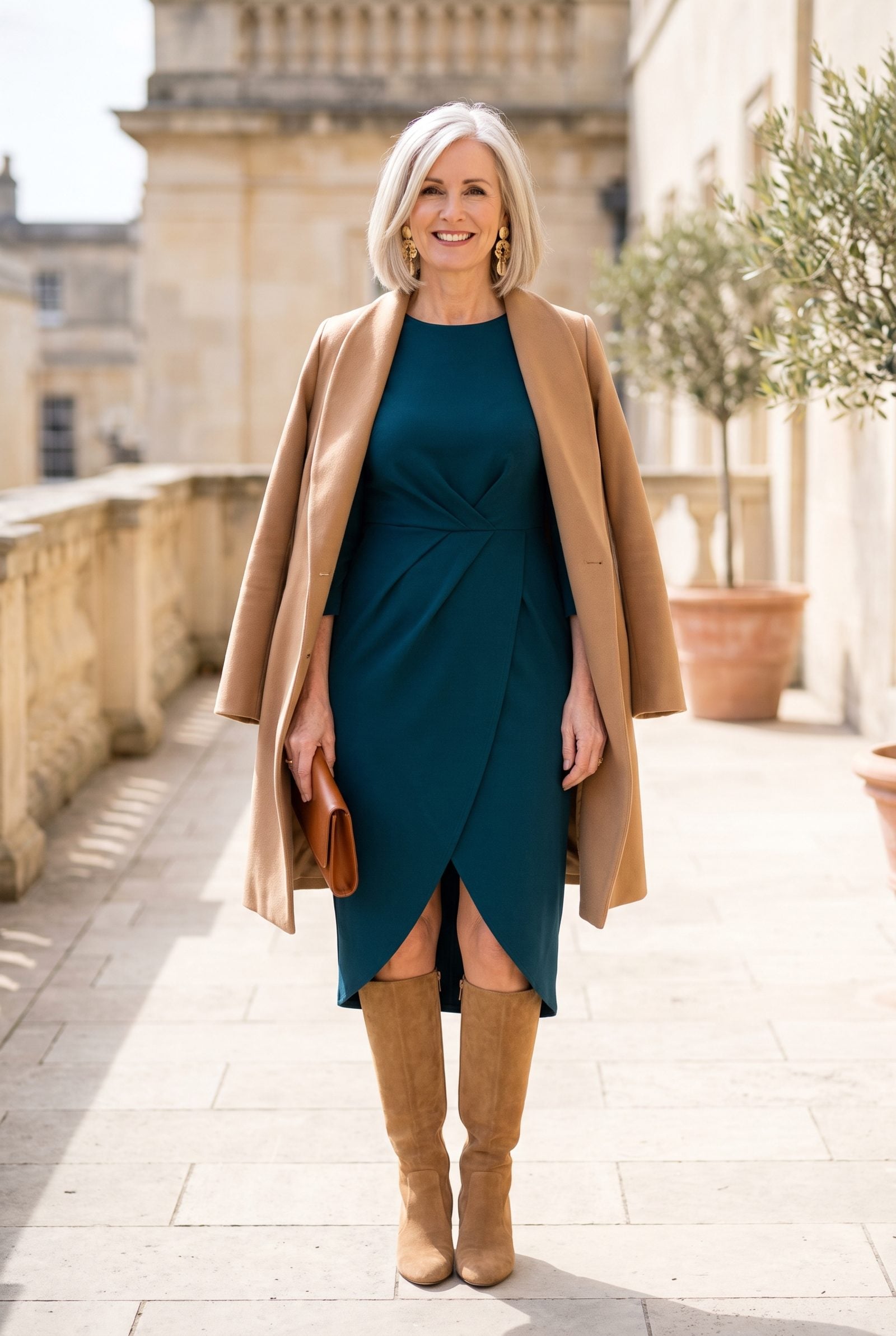
Tulip hems are built to curve and overlap, and that petal shape looks lovely with heels where the leg extends freely. Add tall boots and the overlap parts into a diamond-shaped window of bare skin sitting right above the boot rim.
Your eye locks onto that geometric gap because it’s the only hard shape in a soft, draped outfit. A curved hem asks for an open leg line beneath it, not a boot cutting across the shape. Give the tulip a heel and let the petals do what they were cut to do.
22. Shirtdress Hem Cutting Across the Top Edge of Riding Boots
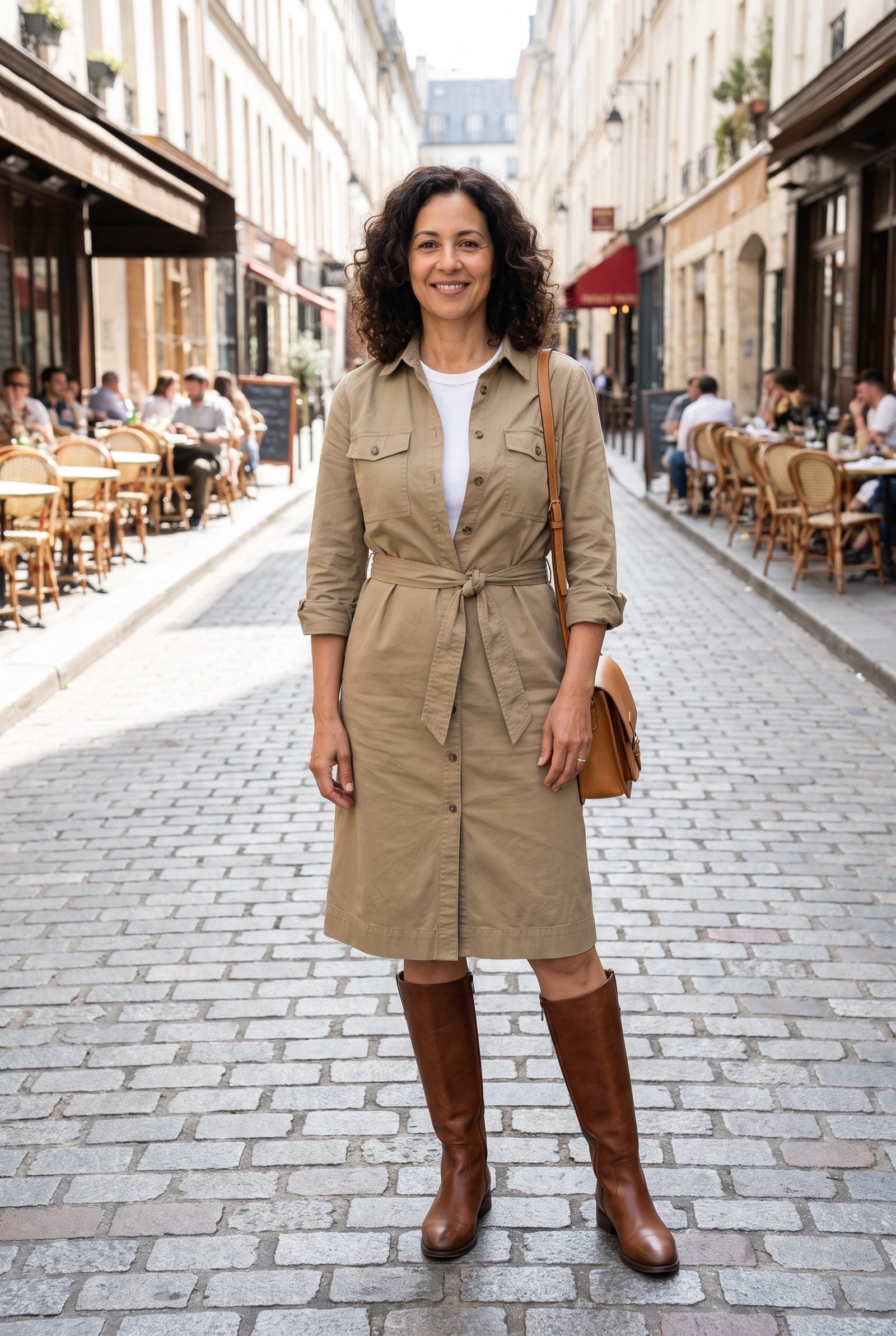
The hem and the boot top are shaking hands at the exact same height, and that’s the whole problem. When two strong horizontals land on the same line, your eye reads one thick band across the widest part of the leg. Nothing moves, nothing lengthens.
Drop the hem two inches lower so it overlaps the boot, or shorten it above the knee so there’s air between the two lines. The dress itself is lovely, and the khaki shirtdress paired with brown riding boots is a classic combination. They just need to stop touching.
21. Ribbed Midi With a Four-Inch Gap Above Flat Riding Boots

That sliver of bare shin between the knit hem and the boot leather is the quiet outfit killer. Bare skin at the narrowest, most awkward part of the calf breaks the leg into segments and pulls the eye straight to the gap.
Two fixes. Add an opaque tight in a shade near the boot so the gap disappears into a continuous dark line. Or trade the flat riding boot for a taller shaft that closes the distance. Either way, the rust ribbed midi deserves better than a peekaboo shin.
20. Printed Midi With Contrasting Socks Peeking Over the Boots

❤️ Would you like to save this?
Cream socks folding over dark suede introduce a third horizontal right where you least want one. Sock cuff, boot top, hem: three stacked bands across the calf, each a different color, each fighting for attention.
Socks over tall boots can work, but they need to hide, not announce. Match the sock to the boot and the line vanishes. Here the light cuff against dark suede does the opposite, chopping the leg into stripes. The androgynous dress print is pulling enough weight already, honestly.
19. Boot Shafts Warping the Lower Half of a Jersey Midi
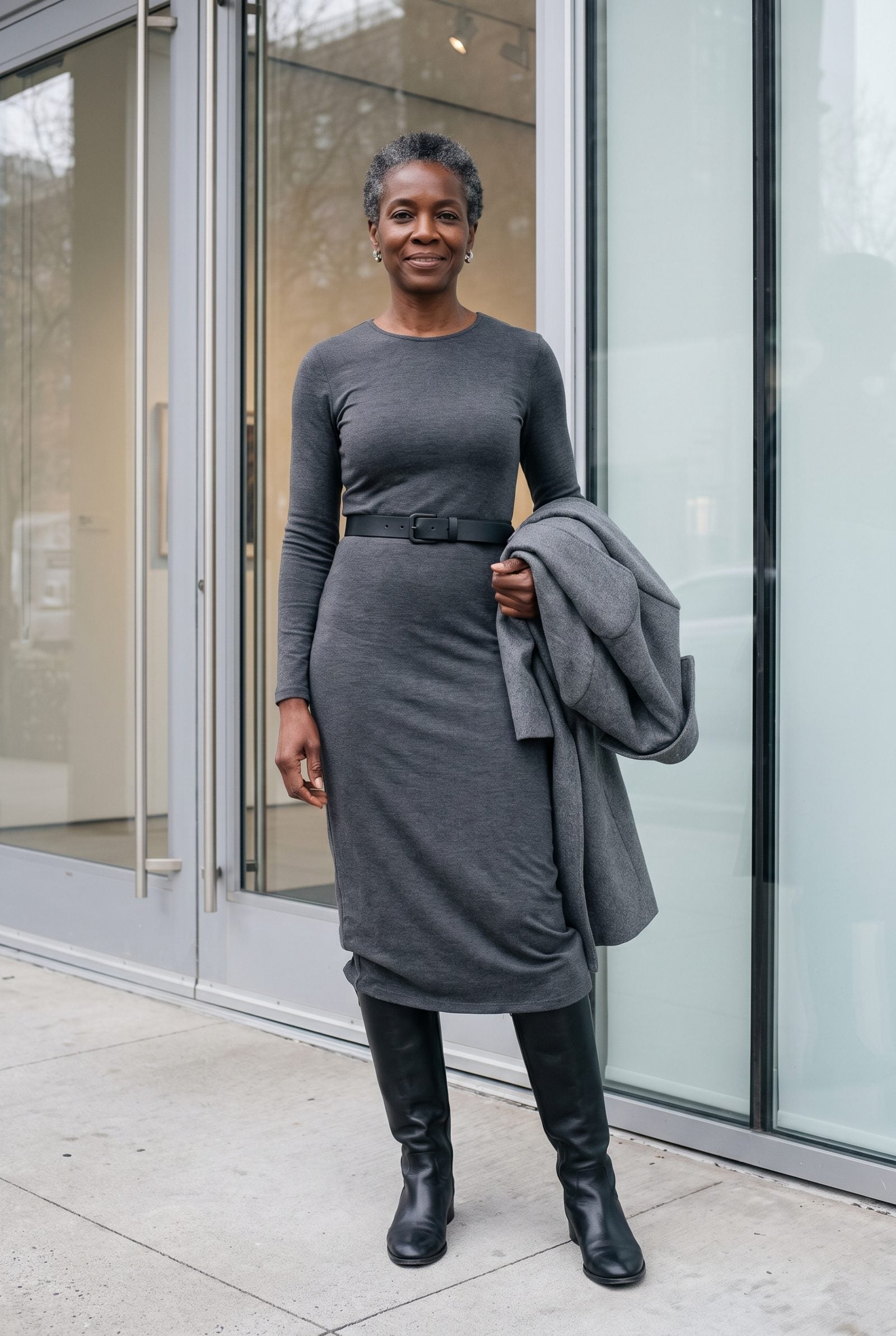
Here’s the fabric problem nobody warns you about. Soft jersey wants to fall straight and pool, but a rigid boot shaft pushes back, and where the two meet the hem bunches and flares outward, so the clean column of the athleisure dress warps into a lumpy bell at the calf.
The fix is length. A jersey midi needs to fall well past the boot top, or sit above it entirely, so the fabric never has to negotiate with the leather. Draping soft over stiff at the exact meeting point is a fight the jersey always loses.
18. Sweater Dress Ending Exactly Where Slouch Boots Collapse
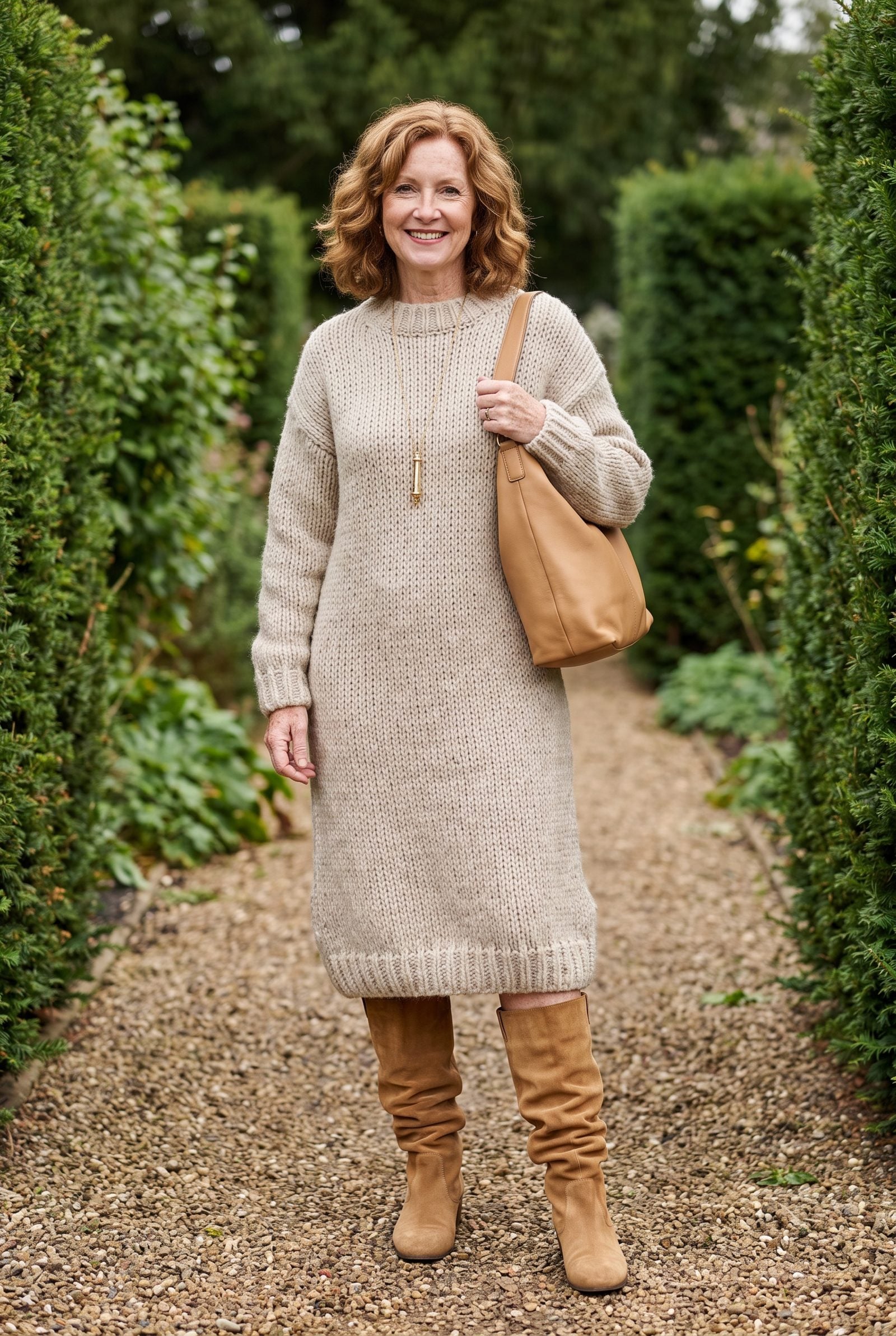
Two soft, bulky things meeting at one point equals visual mush. The loose knit hem lands right in the slouched folds of the boot, and suddenly the lower leg is one shapeless crumple zone with no line, no structure, nowhere for the eye to rest.
Slouch boots already have volume built in. Pair them with a hem that stops well above the fold or falls cleanly below it, so the collapse reads as intentional texture rather than accidental pileup. The oatmeal sweater dress is gorgeous up top. It just deserves a cleaner landing.
17. Tiered Midi Ending at the Widest Part of the Calf
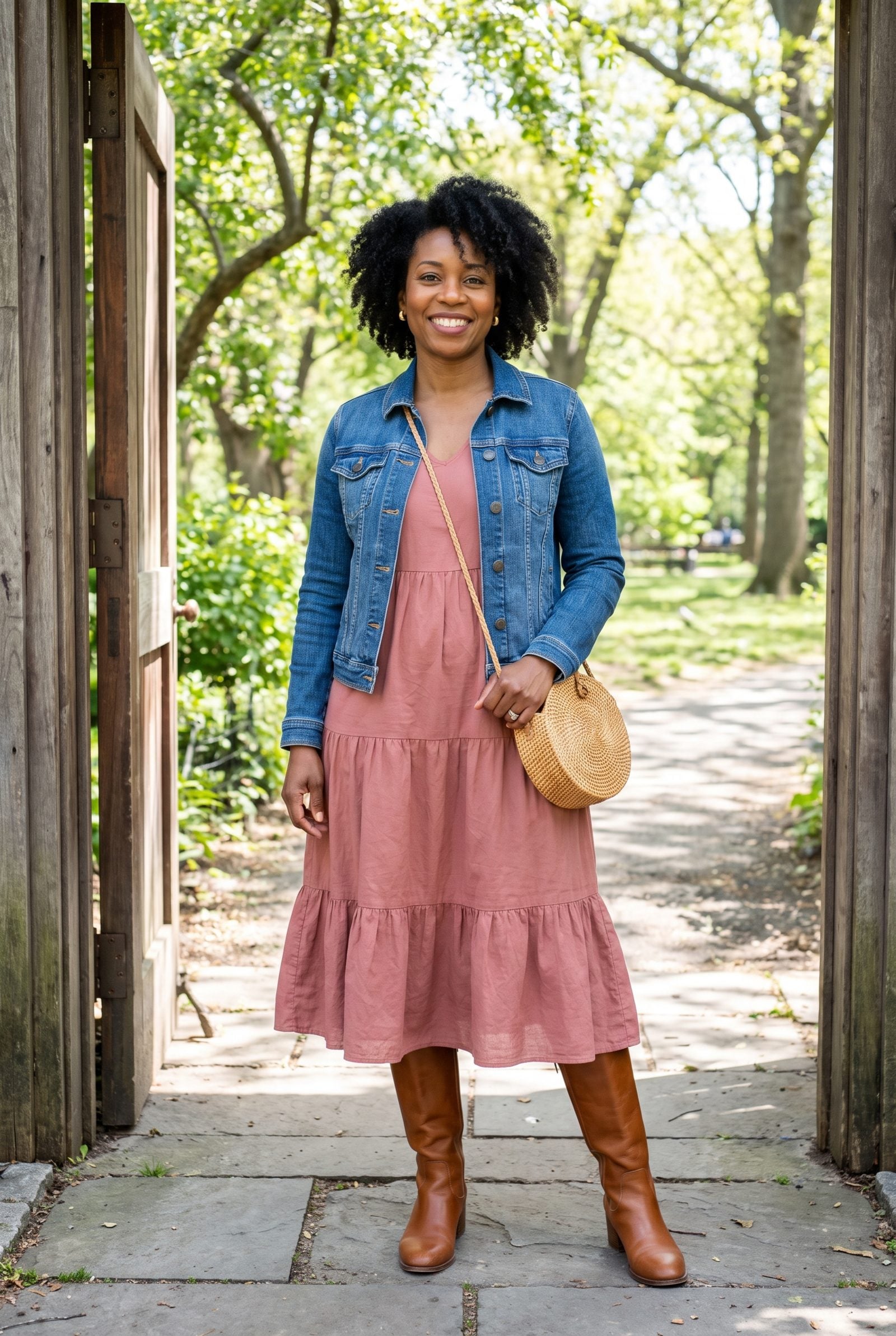
The bottom tier flares out right where the calf is fullest, and volume plus width in the same spot doubles down instead of balancing. Ruffle adds fabric, calf adds curve, boot adds bulk, all on one horizontal line.
Tiered midis look best when the hem drops to the ankle, past the calf’s widest point, so the flare lands where the leg is already tapering. Push it up to mid-calf and the midi works against you.
16. Curvy Figure Cut Horizontally by Hem, Skin Gap, and Boot Top
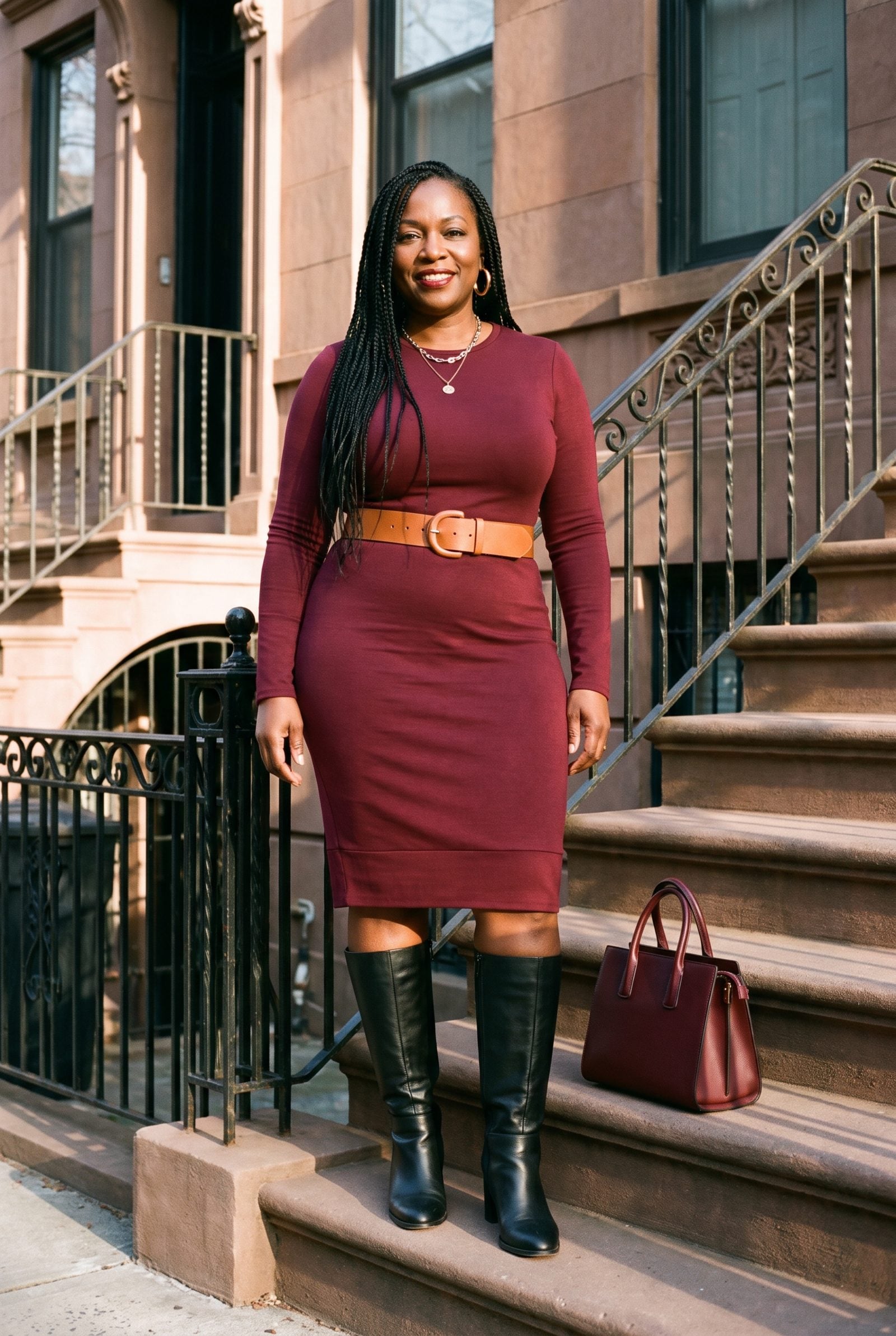
On a full hourglass figure, the top half of this outfit is doing everything right. The waist is defined, the hip is celebrated, the belt earns its keep. Then the lower leg gets chopped into three horizontal bands: hem, skin, boot top. Every one of those lines widens the calf and interrupts the beautiful vertical the curves set up.
The answer isn’t to hide. It’s to connect. A matching opaque tight, or a boot that meets the hem, turns three broken lines into one long column, and the eye travels the whole leg without a single hitch. Curves want continuity below the knee, not commentary.
15. Petite Frame Overwhelmed by a Low Midi and High Boot Shafts
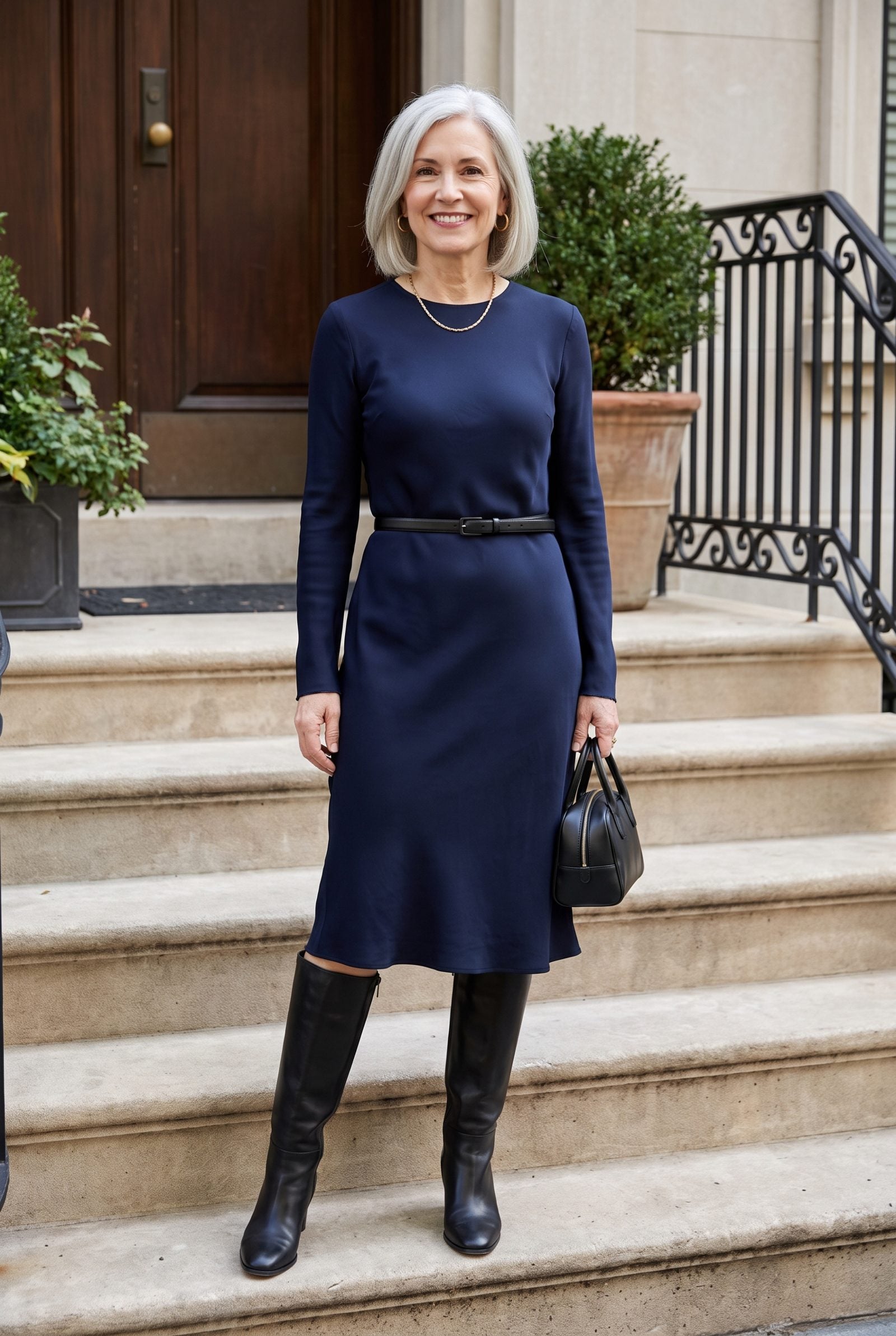
On a petite frame, this is a proportion problem, not a piece problem. A low hem eats vertical inches from the top, tall boot shafts eat them from the bottom, and the small leg window trapped between makes an already short leg read even shorter.
Petite bodies want less crowding below the knee. Raise the hem to just below the knee, drop the boot shaft to mid-calf, give the leg room to breathe. The navy midi is a keeper. The math around the calf just needs adjusting.
14. Long Midi and Tall Boots Creating a Heavy Unbroken Column

Tonal dressing can go beautifully wrong. Here the brown midi and brown boots blend into one long stretch of dark wool and leather, so much of a single heavy tone with no break that the lower body reads as a solid block. No waist, no light, nothing to interrupt the mass.
Monochrome needs internal texture or a break to breathe. A belt to mark the waist. A lighter boot to draw a horizon line. Or a hem gap to let daylight through. Solid dark from waist to floor flattens even a well-cut dress, and the chocolate wool midi wants one moment of contrast to come alive.
13. Full Cotton Midi Ballooning Over Narrow Knee-High Boots
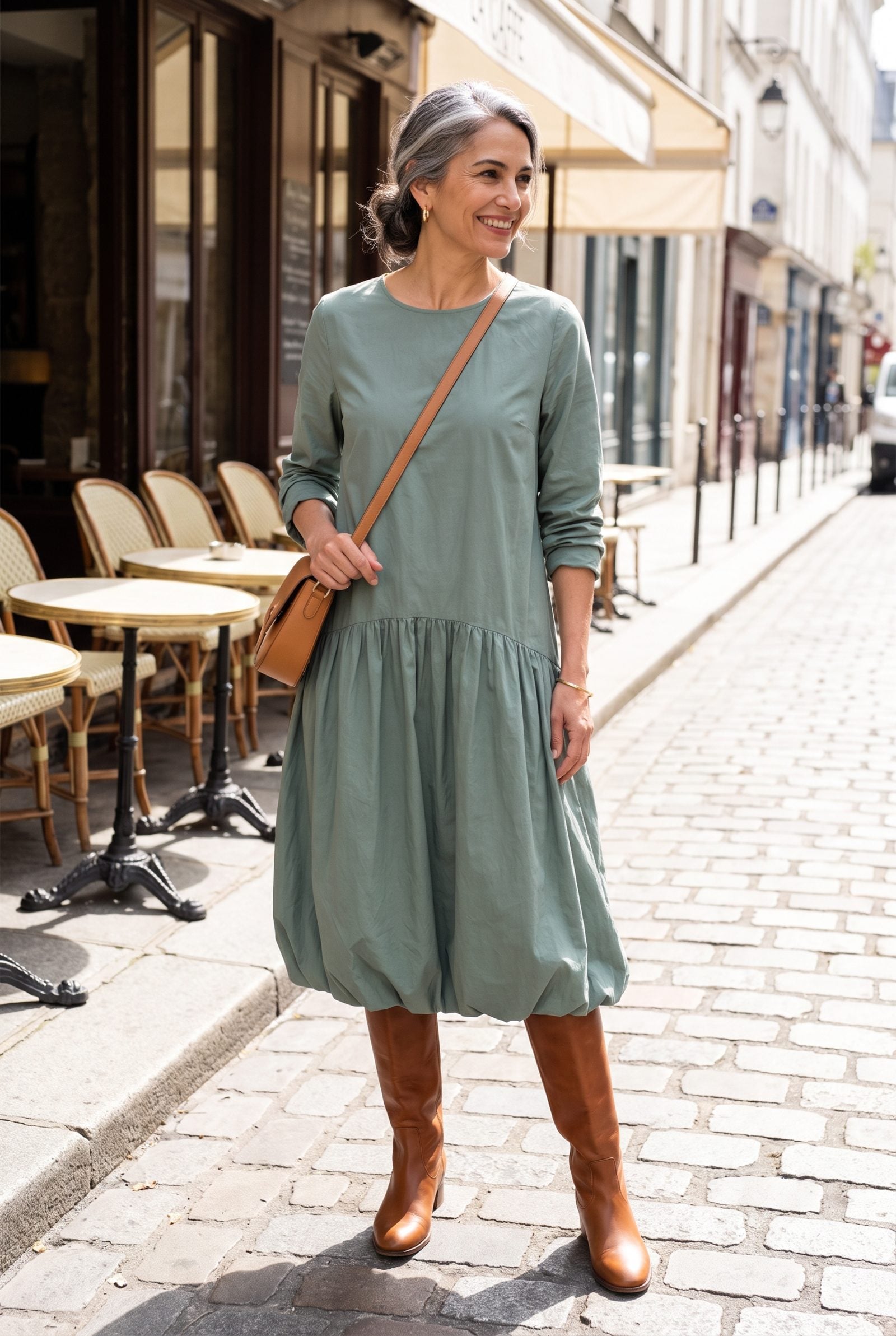
The volume is the whole problem. A full cotton midi wants a shoe with equal presence, and a narrow knee-high boot gives it nothing to push back against, so the fabric balloons out while the boot stays skinny and you get a pinch below the knee that reads like the dress is deflating into the leather.
Match the proportions. Pair that much volume with a boot that has some shaft width, or swap to an ankle boot and let the leg breathe. When the widths fight, the eye lands on the fight instead of the dress.
12. A-Line Midi Hiding All but the Toes of Tall Boots

You bought tall boots for the shaft. The A-line midi swallows all of it and leaves you with what looks like ankle boots peeking out. Money spent, silhouette wasted.
The hem hits at mid-shin, the widest point of the flare, and the boot foot barely clears it. Is she in tall boots or short ones? Nobody can tell, and that ambiguity flattens the whole line. Shorten the hem to sit just above the boot top, or pick a boot you actually want covered. Half-committing to a tall boot is worse than not wearing it.
Not everyone is ready to give up the shape: when our readers were asked which skirt they would buy, 72% chose A-line over pencil or pleated.
11. Bias-Cut Midi Catching on Pull-On Boot Tabs
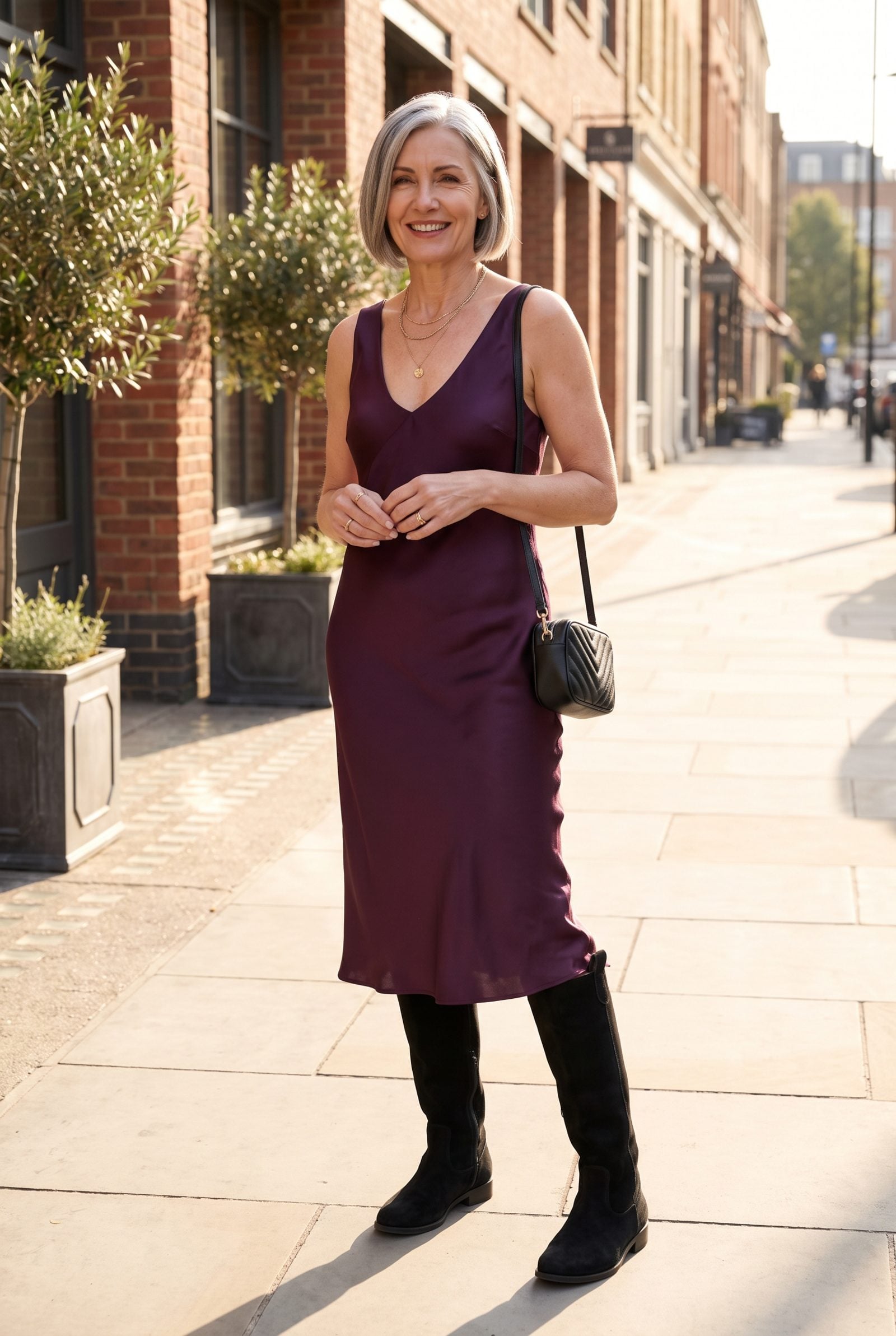
Bias-cut silk has one job, which is to fall clean and unbroken, and pull-on boot tabs are little hooks waiting to ruin it. The hem catches, puckers, and now a liquid dress has two lumps at the back of the calf undoing everything the cut was doing.
Tuck the tabs inside the shaft before you leave, or choose a boot with a smooth top edge. Small mechanical annoyance, outsized visual cost. I’ve walked out the door with a snagging hem more than once and regretted it in every single photo.
10. Button-Front Midi Gaping Exactly Above the Boot Tops
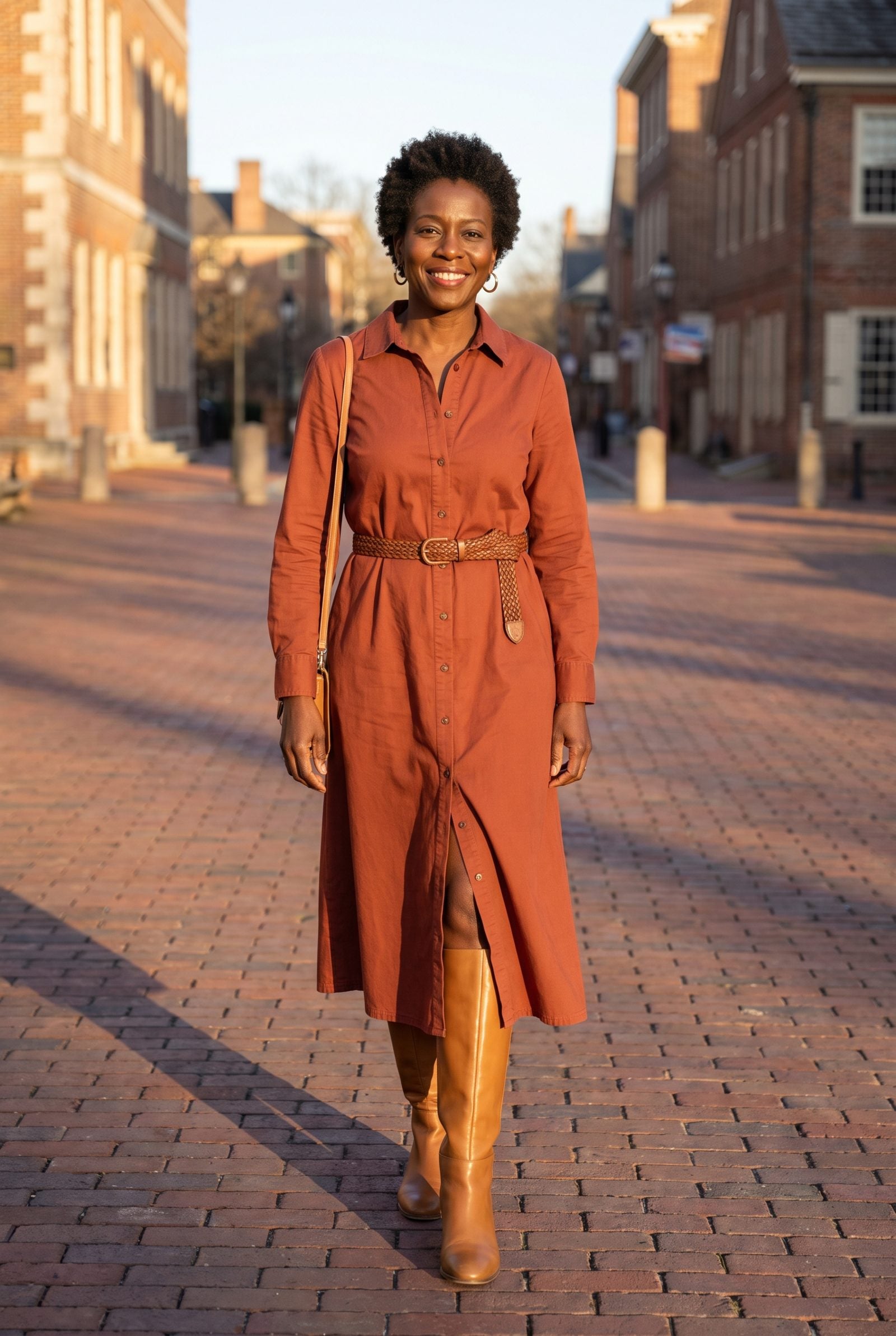
A button-front midi comes with a built-in trap. The lower placket gaps when you walk, and if that gap lands right above the boot top, you get a stray sliver of skin exactly where the eye is already hunting for the hem-to-boot transition.
The rest of the look is clean, which is precisely what makes one open button so loud. Add a hidden snap between the buttons on the lower placket, or wear the boot shaft high enough to close the window. On a shirtdress, that’s the whole gap between deliberate and accidental.
9. Belted Midi With Hem and Boot Tops Both Hitting Wide Points
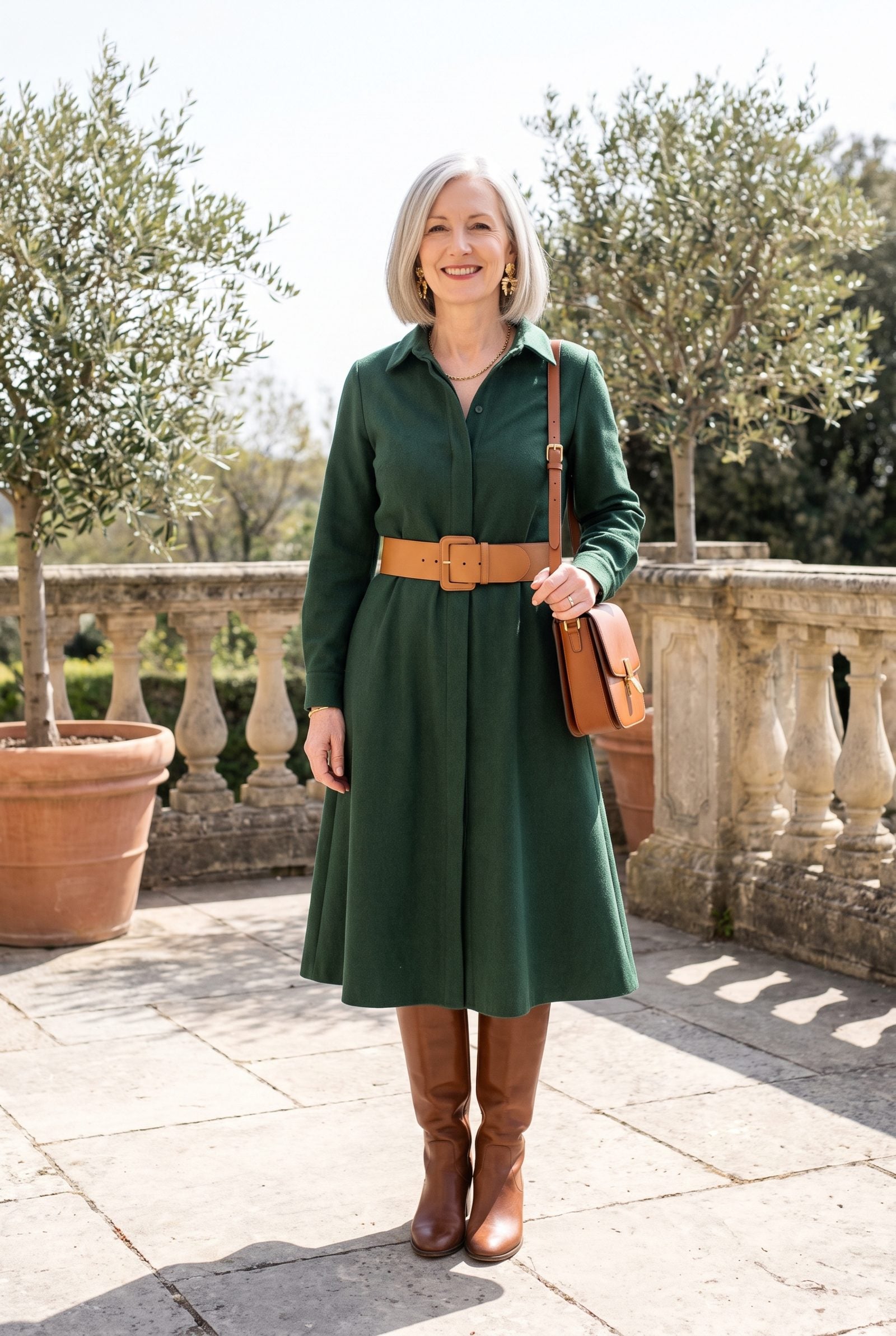
The belt does beautiful work at the waist. Then the styling gives it all away down below: the hem hits the widest part of the calf, the boot top hits the widest part just above it, and two thick horizontal lines stack up right where you least want them.
A defined waist earns you a long, clean line beneath it. Undo that with mismatched wide points and the belt’s payoff cancels out. Raise the boot to land on a slim spot, or drop the hem past the calf swell. One wide line is a statement. Two is a traffic jam.
8. Light Midi and Cream Boots Separated by Black Tights

❤️ Would you like to save this?
Ivory dress, cream boots, then a slab of black tights slicing between them. The tights were probably a warmth call. Visually, they chop a soft, light column clean in half with the darkest color in the whole outfit, and they do it right at the leg.
Match the tights to the boot or the dress. A cream or nude opaque keeps the pale column unbroken and lets the boots read as an extension of the leg. Leave black as the only dark note sitting in the calf gap and it becomes the loudest thing in a quiet outfit, for all the wrong reasons.
7. Patterned Tights Turning a Small Gap Into the Outfit’s Focal Point
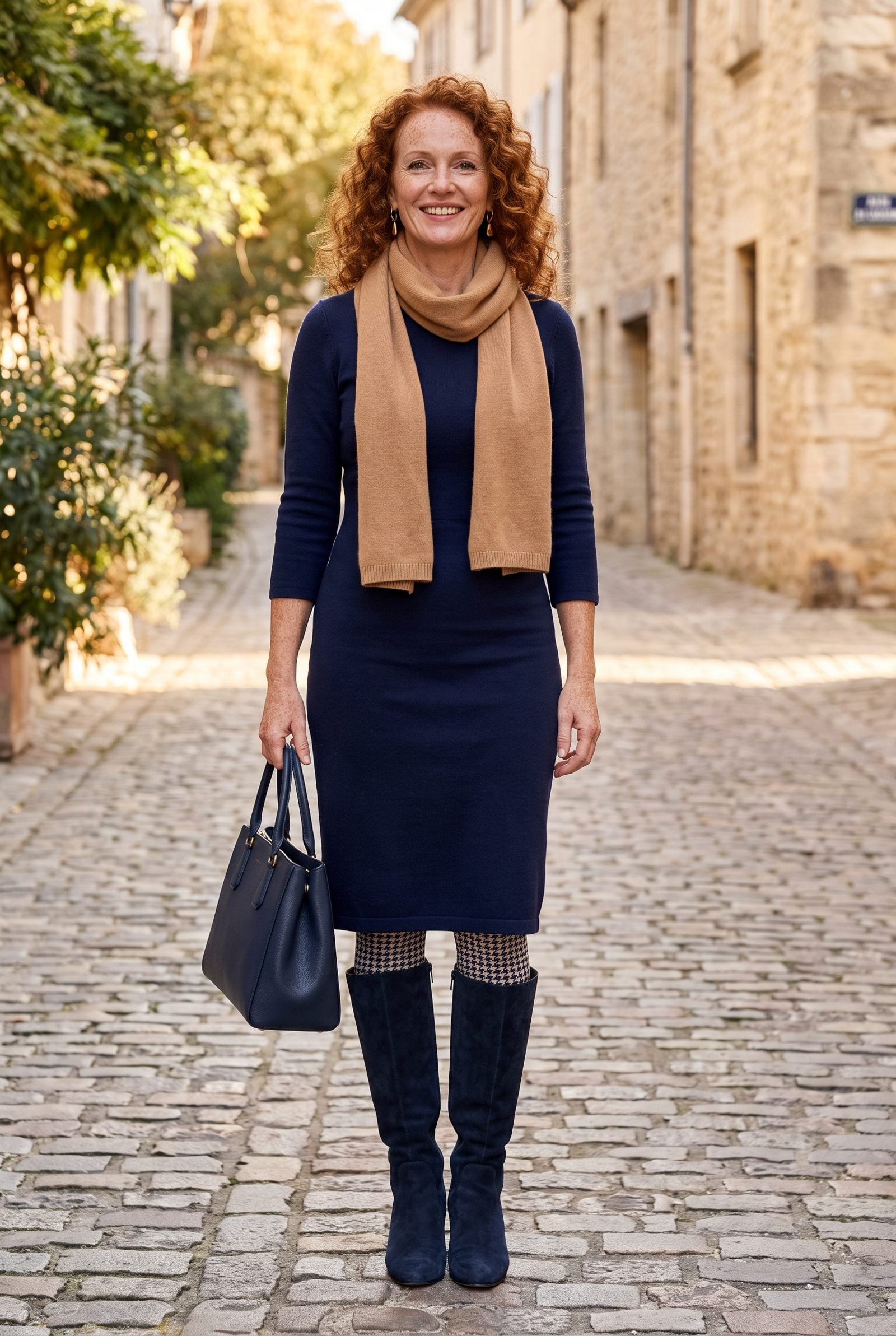
A patterned tight is a lovely idea right up until the only place it shows is a two-inch gap at the calf. Then the busiest element in the outfit gets compressed into the smallest window, and every eye goes straight to it.
Pattern wants room to be read. Give it a bare-leg boot or a shorter hem so the tight becomes a real feature instead of a sliver. Confined to the gap, houndstooth stops looking like a design choice and starts looking like a mistake you didn’t catch on the way out.
6. Midi Dress With Knee Boots and Leg Warmers Stuffed Into the Gap

The instinct is right: cold gap, add warmth. But stuffing a chunky ribbed leg warmer into the exact spot you wanted to keep clean gives you a bunched roll of oatmeal knit at the calf, padding out the leg right where it’s narrowest to the eye.
Leg warmers absolutely can work over a midi. They just need to layer smoothly under the boot shaft or run down over the boot on purpose, not bunch in the middle. As shown here, the warmest piece is also the bulkiest, and it lands smack in the sightline. Pull them fully into the boot, or wear them long over the top. Bunched in the gap, they read like an afterthought, which is exactly what they were.
5. The Cropped Jacket That Puts a Spotlight on the Skirt-to-Boot Gap
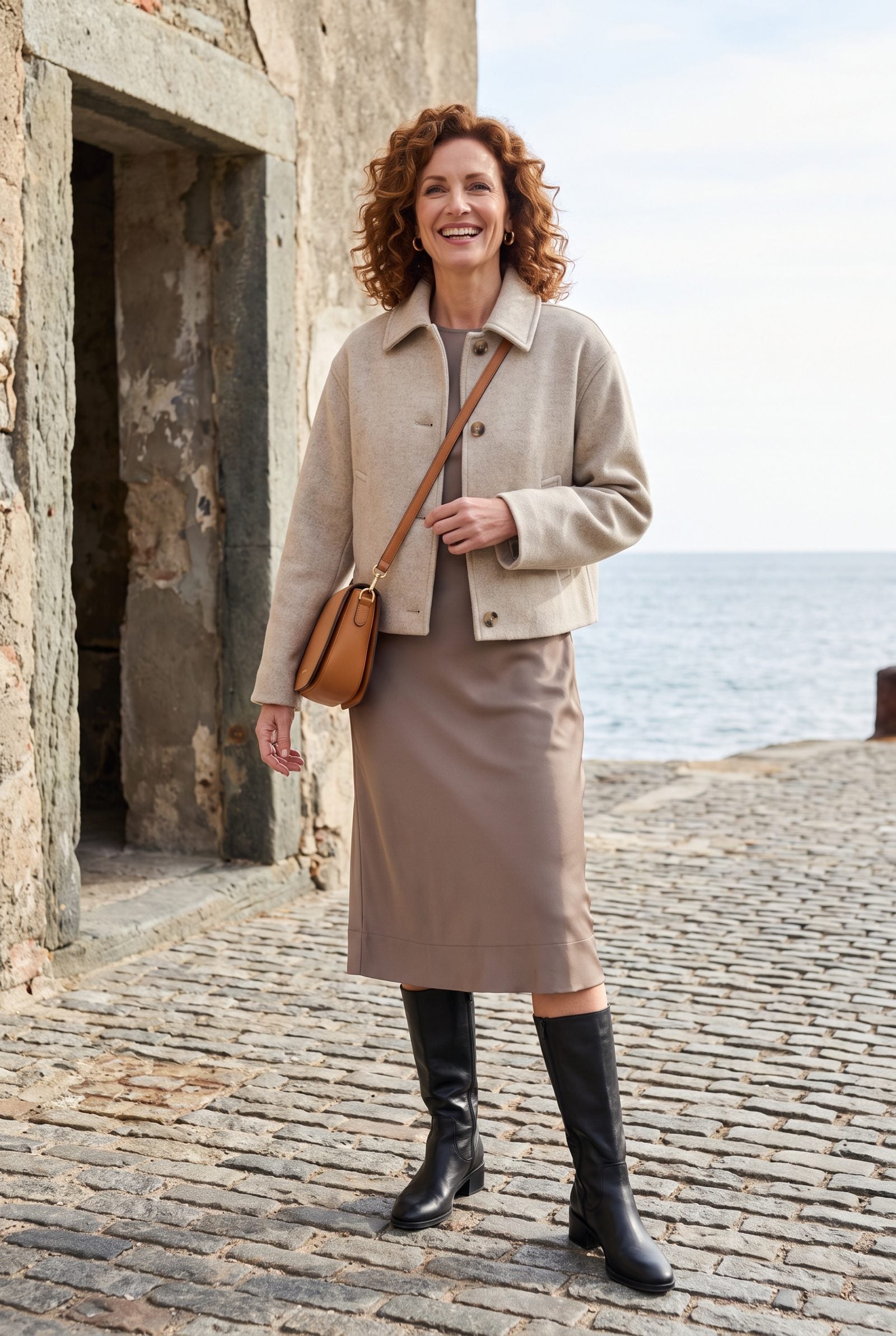
A cropped jacket cuts you in half at the waist, and then the eye keeps traveling until it lands on the bare shin between hem and boot — which means that empty band is now the loudest thing you’re wearing.
The fix is height. Pull the boots up closer to the hem to close the gap, or reach for a longer jacket that doesn’t slice the torso and hand all the attention to your calves. The dress and boots are both good here. It’s the proportions that keep fighting each other.
4. The Puffer That Lands in No-Man’s-Land Between Hem and Boot

A puffer is generous with volume, which is exactly why its length matters so much. Stop it between the dress hem and the boot tops and you get three horizontal lines stacked inside a single foot of fabric: coat edge, dress sliver, boot top. The eye hunts for a vertical and never finds one.
Go shorter than the dress or longer than the boots. Land in the middle and all you’re advertising are the seams.
Puffers aren’t a reader favourite anyway: in our coat poll they came last at 10%, well behind wool at 38%.
3. When the Long Cardigan and the Midi Hem End at the Exact Same Spot
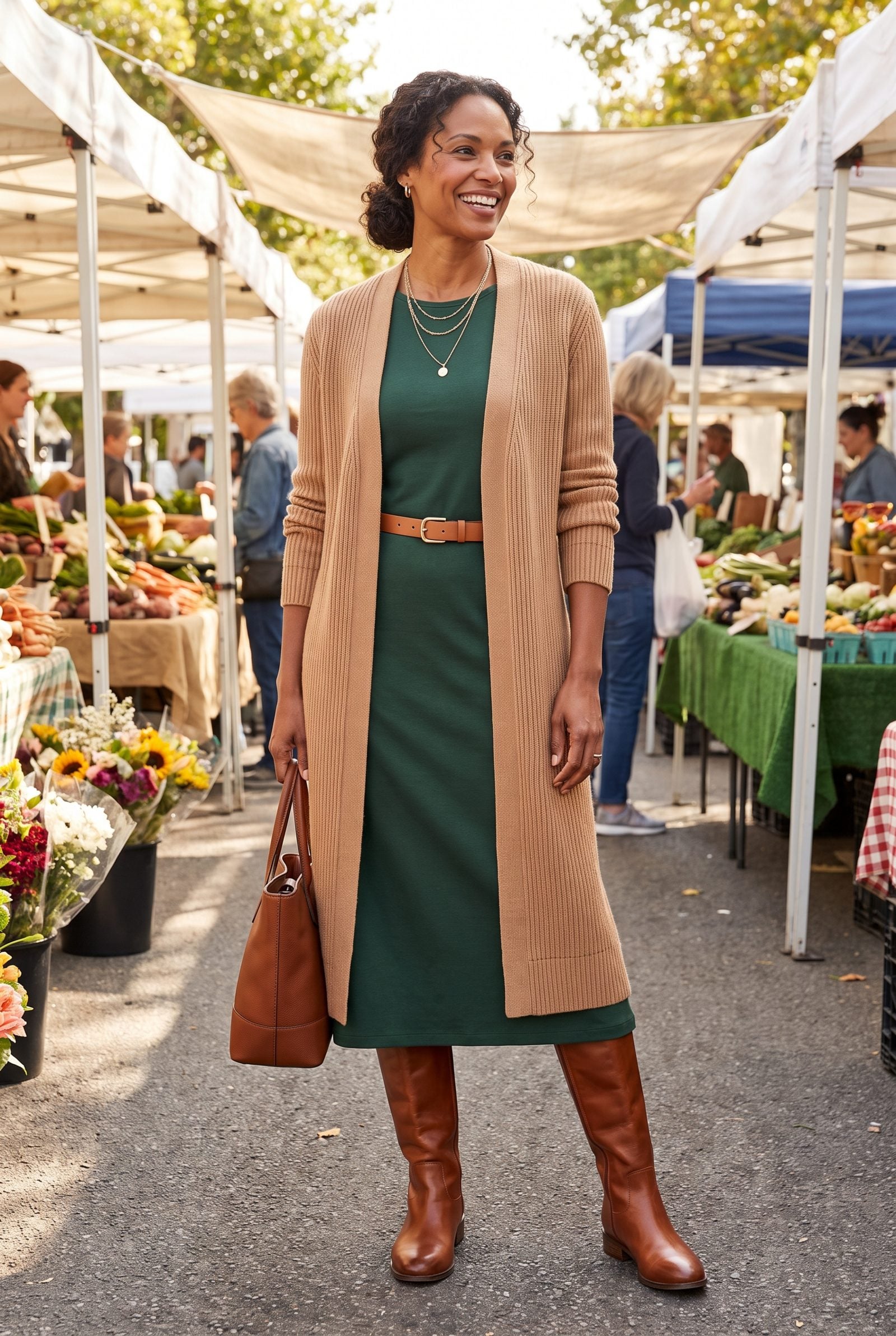
Two hems landing on the exact same line is a quiet mistake that reads as heaviness. Your eye wants one clean edge and instead gets a doubled, blurred one that widens the calf and cuts the leg short.
So stagger them. A cardigan that runs longer than the dress, or noticeably shorter, gives you layered depth instead of a stacked wall. Both pieces earn their place — the cardigan just needs to stop at a different address, the same logic that keeps a good midi from cutting you at the widest point.
2. The Lace Hem That Gets Tangled Up in Western Boot Stitching

Two busy patterns meeting at the same point is a texture traffic jam. The scalloped lace and the tooled Western stitching are both gorgeous on their own. Stack them and they cancel out, turning your calf into a smudge of competing detail.
One loud element, one quiet partner. A plain leather boot lets the lace speak; a smooth-hem dress lets the boots do their thing. Give the eye somewhere to rest, honestly.
1. The Long Coat That Buries the Dress and Frames a Random Sliver of Knee

A coat this length erases the dress entirely, then leaves one odd window of bare knee floating between coat and boot. Nothing anchors it. There’s no visible hem to explain the gap, so the leg just looks interrupted.
Two ways out: let a real length of dress show below the coat, or wear boots that climb up to meet the coat hem and shut the window completely. The camel coat is a keeper. It simply needs the dress in on the conversation instead of hiding out like a rumor.