
❤️ Would you like to save this?
Fine hair can look perfectly respectable in the mirror and then arrive in a photograph having apparently misplaced half its volume. Lighting removes shadows. Long ends pull downward. A center part suddenly looks wider than it did five minutes ago. What felt soft and subtle in person can become one flat shape the instant somebody raises a phone.
These 26 transformations attack that problem from very different directions. Some strengthen the perimeter so the hair stops dissolving at the ends. Others move volume toward the crown, shorten the silhouette, introduce a fringe, separate layers with carefully placed color or let natural texture create the movement. The point is not that every woman needs curls, highlights or a bob. It is that small changes in where the weight, contrast and movement sit can alter the entire shape.
The most interesting transformations are not always the biggest. A blunt jaw line can do more than another inch of root lift. A darker base can make lighter pieces suddenly visible. Curtain bangs can redirect the front without sacrificing length. And sometimes the answer really is to cut off enough hair that the shape stops being dragged toward the floor.
There is plenty of variety here: blunt bobs, pixies, curtain fringe, copper waves, rich brunette color, layered crops and full curls. What they share is a refusal to let fine, flat hair simply hang there and hope the lighting is kind.
FYI, thanks to AI imagery software, we’re able to create very specific fashion and hairstyle examples to illustrate the points being made. In some cases, imagery is exaggerated to hammer home the point. Also, assume links that take you off the site are affiliate links such as links to Amazon. this means we may earn a commission if you buy something.
26. A Blunt Bob Gives Fine Hair the Strong Edge It Was Missing

This transformation starts with geometry rather than volume. The bob stops around the chin in one strong, slightly angled perimeter, so the ends gather into a visible edge instead of thinning gradually into the shoulders.
A side part prevents the silhouette from becoming too perfectly symmetrical, while the smooth finish lets the cut itself remain the point. Fine hair does not always need more movement. Sometimes it needs a boundary.
25. Copper Waves Turn Light Into Part of the Hairstyle
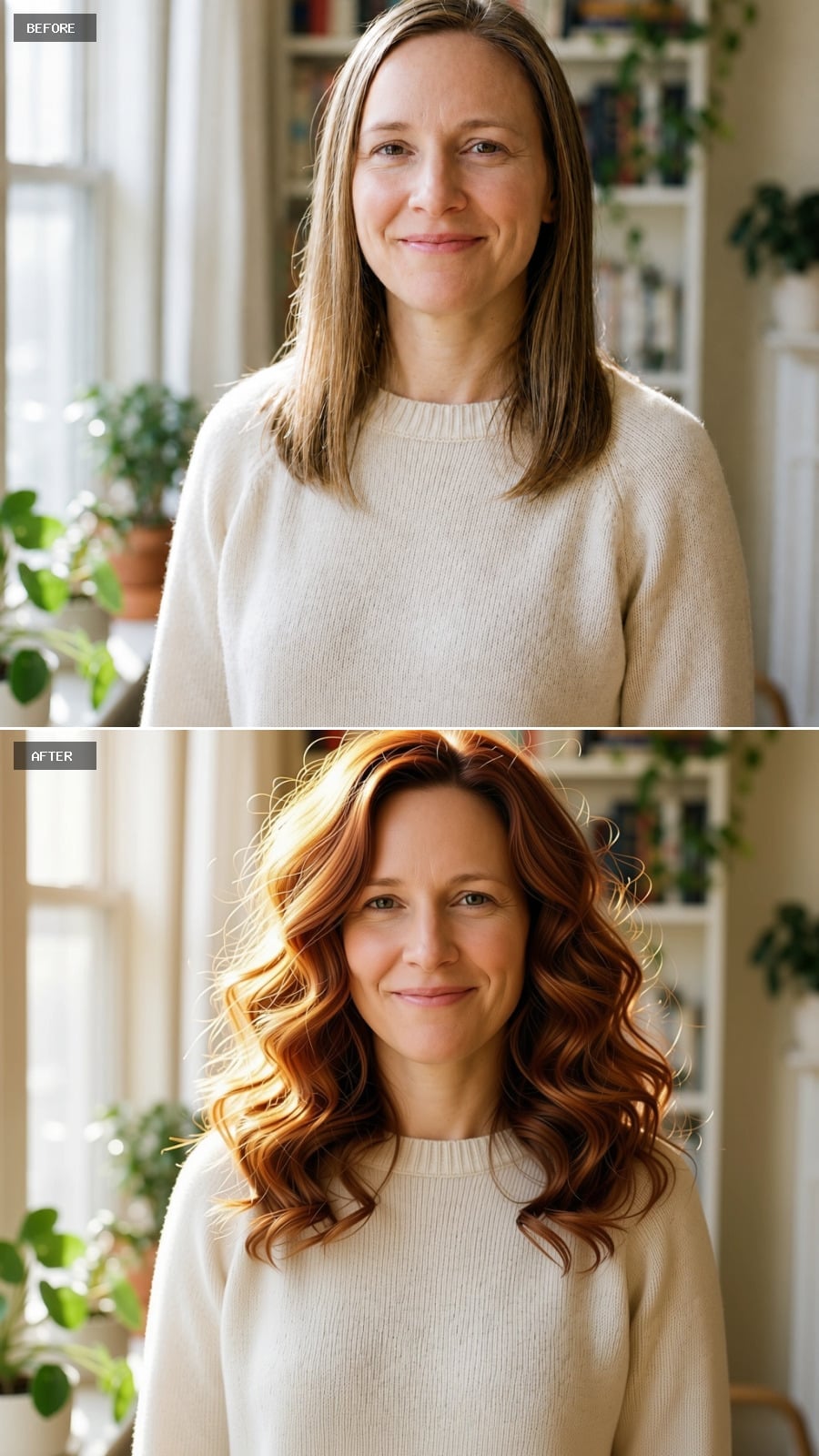
Rich auburn immediately changes the surface of the hair, especially once the color moves from deeper copper near the root toward brighter amber through the bends. Every wave presents the light at a slightly different angle, so the color refuses to sit in one flat block.
The crown stays lifted without becoming bouffant, and the waves open gradually through the lower half instead of turning into identical curls. That irregularity is useful. It makes the hair look alive rather than set.
24. A Short Auburn Pixie Moves the Volume Where Fine Hair Can Actually Use It
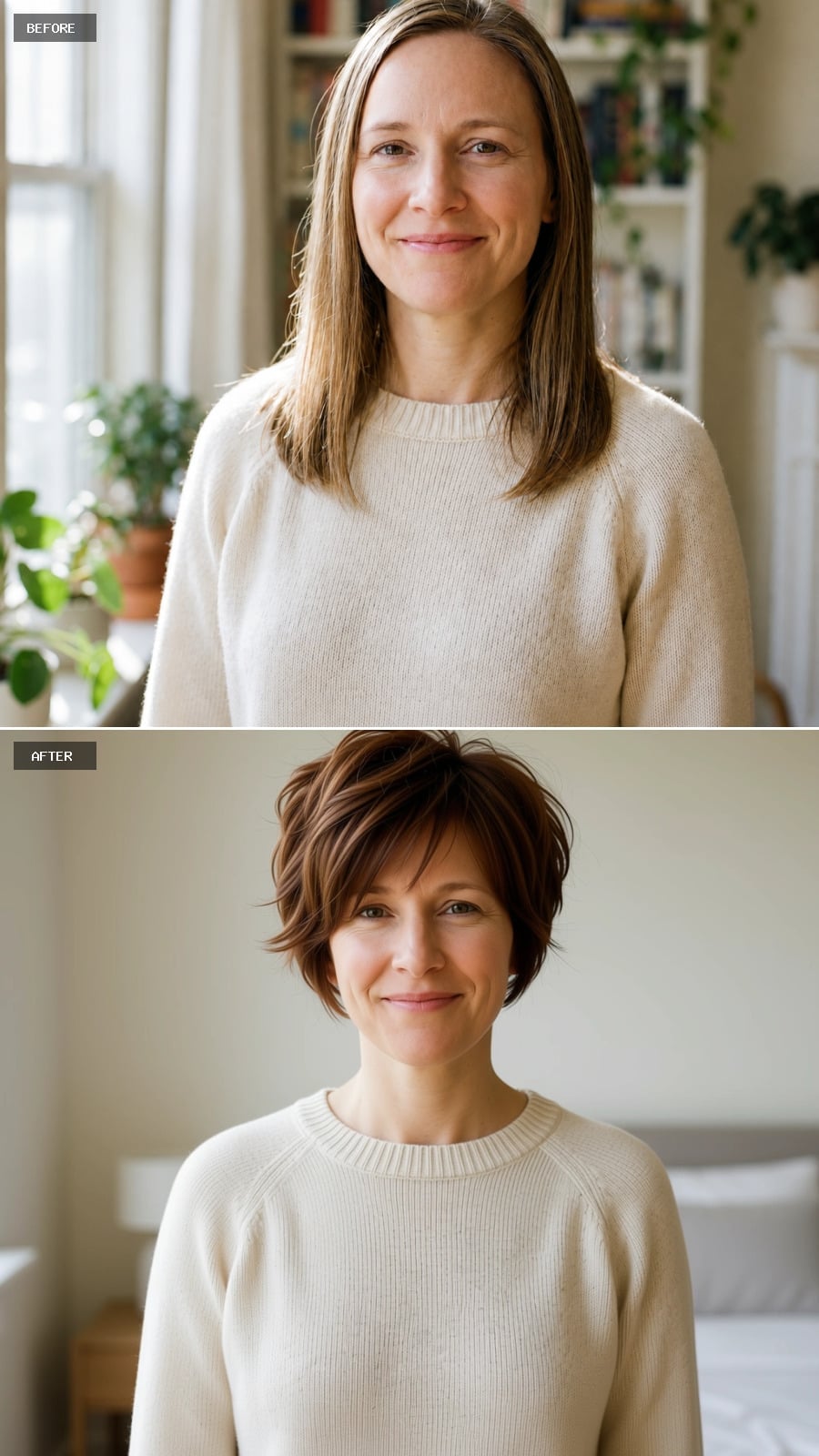
Length is not helping here, so the transformation stops carrying it. The sides and back come in close while longer pieces remain through the crown and fringe, concentrating the available density where it can create shape.
The auburn is deepest near the roots and warmer through the ends, which separates the short layers without turning them stripey. The result is compact but not severe: enough length to sweep, enough structure to keep the crown from collapsing.
23. Face-Framing Balayage Gives Long Waves Somewhere to Begin
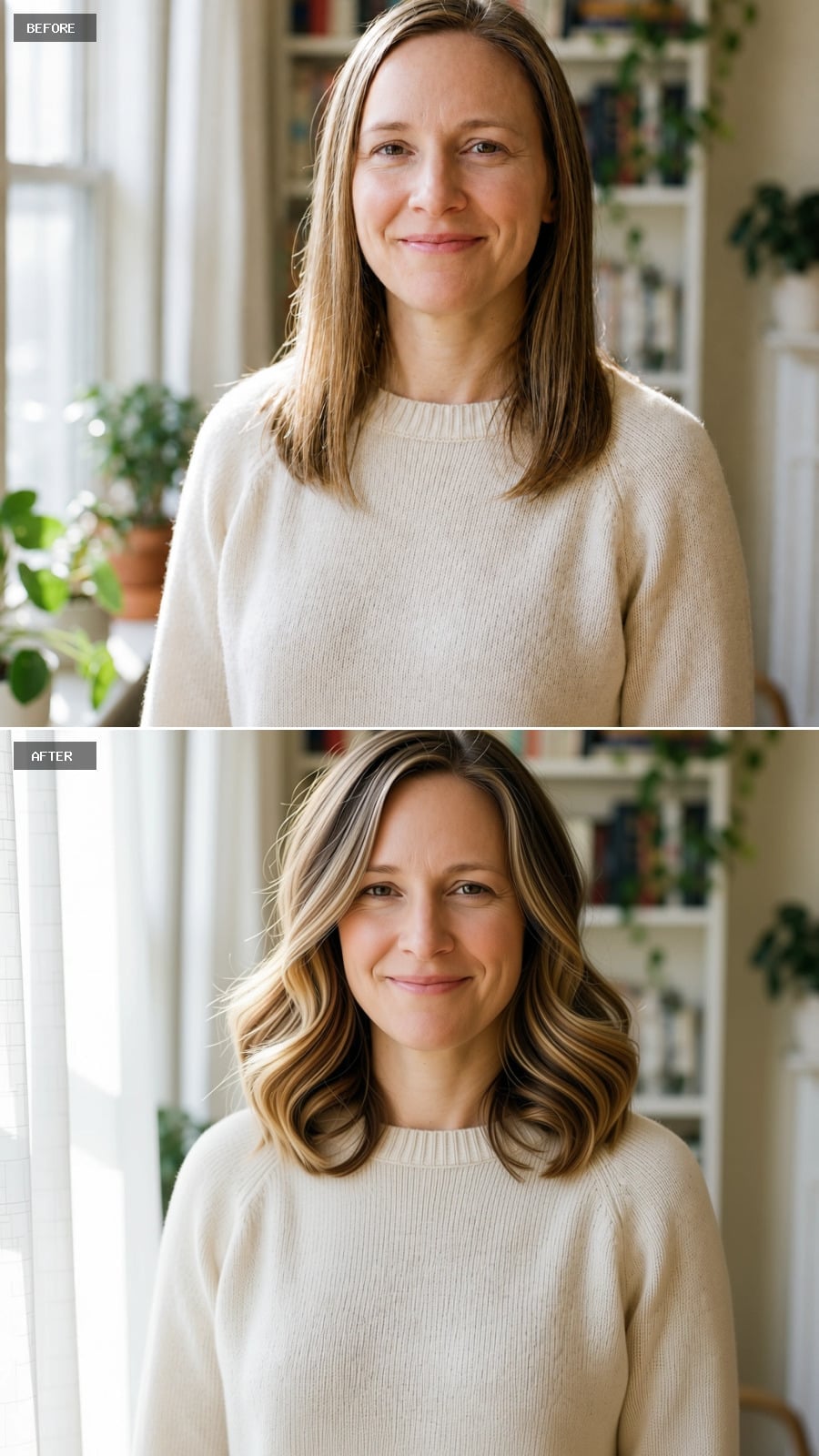
The biggest change here is not simply lighter hair. The brighter pieces begin around the face and continue through the mid-lengths, so the contrast appears before the eye ever reaches the ends.
Loose waves then separate those light and dark sections into individual ribbons. At collarbone length, there is still enough hair for movement without so much length that the entire shape is pulled downward.
Why the Placement Matters
Face-framing highlights are most visible when they are deliberately brighter than the surrounding hair. Colorists sometimes use the term “money piece” for a stronger version of this idea, but the effect can be subtle too. The important part here is that the lightness begins near the face instead of waiting until the last few inches.
22. A Burgundy Bob and Full Fringe Replace Softness With Precision

Nothing about this transformation is trying to disappear politely. The bob stops just beyond the jaw, the fringe cuts straight across the forehead and the burgundy sits somewhere between dark cherry and plum.
That combination creates two very clear horizontal lines: one at the brows and another at the ends. Fine hair often gets treated as though every edge must be softened. This one proves that a stronger perimeter can be the more interesting choice.
21. Highlights Placed Through the Middle Stop Long Hair From Becoming One Solid Shape
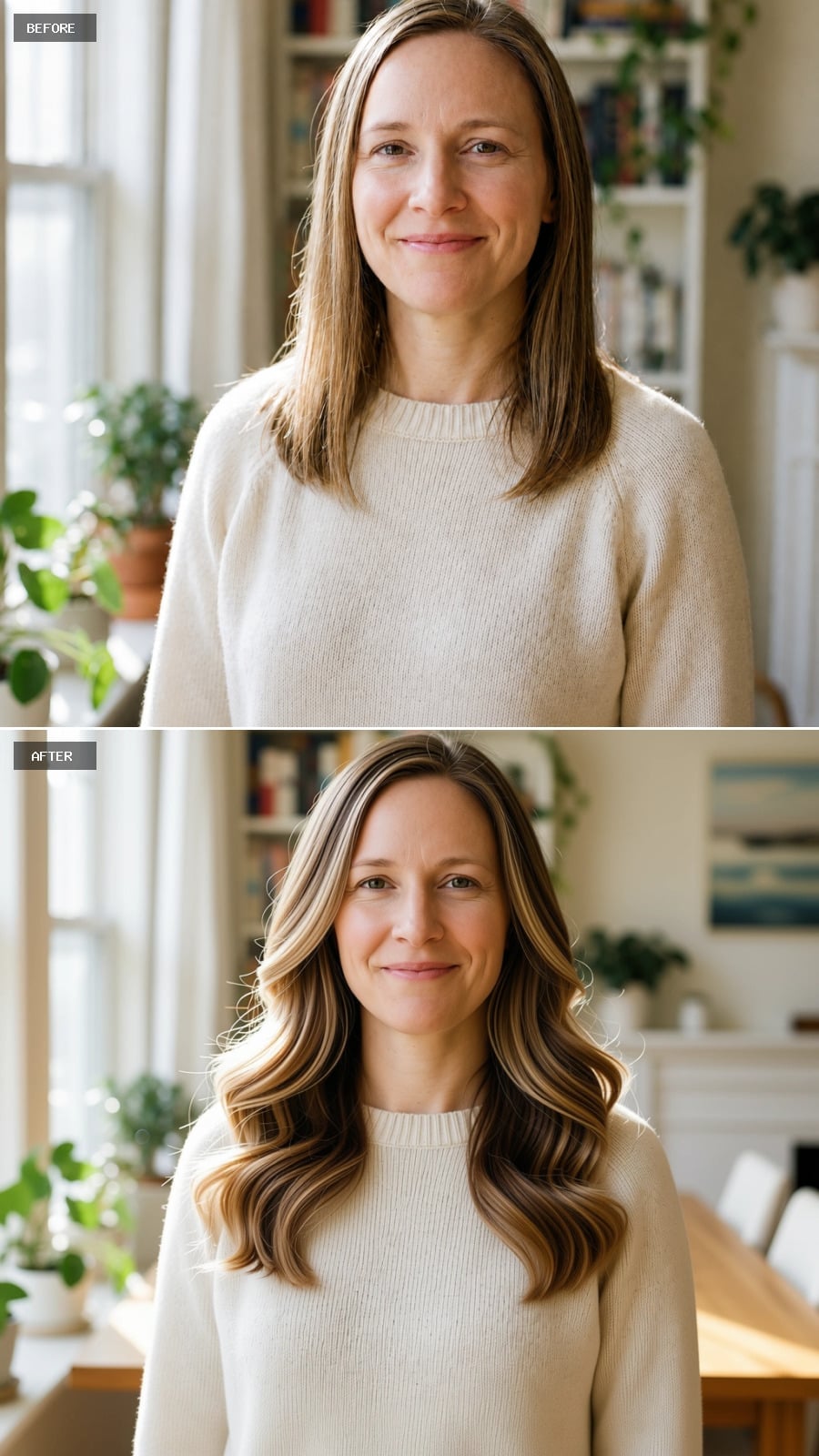
The useful move here happens between the roots and the ends. Longer layers stay relatively dark near the scalp, then pick up lighter pieces through the mid-lengths where the waves begin to separate.
That placement prevents the lower half from turning into one continuous brown mass. Crown volume helps, but the color variation is what lets individual sections remain visible even when the overall silhouette stays long.
20. Full Curls Give Fine Hair More Surface, Shadow, and Movement
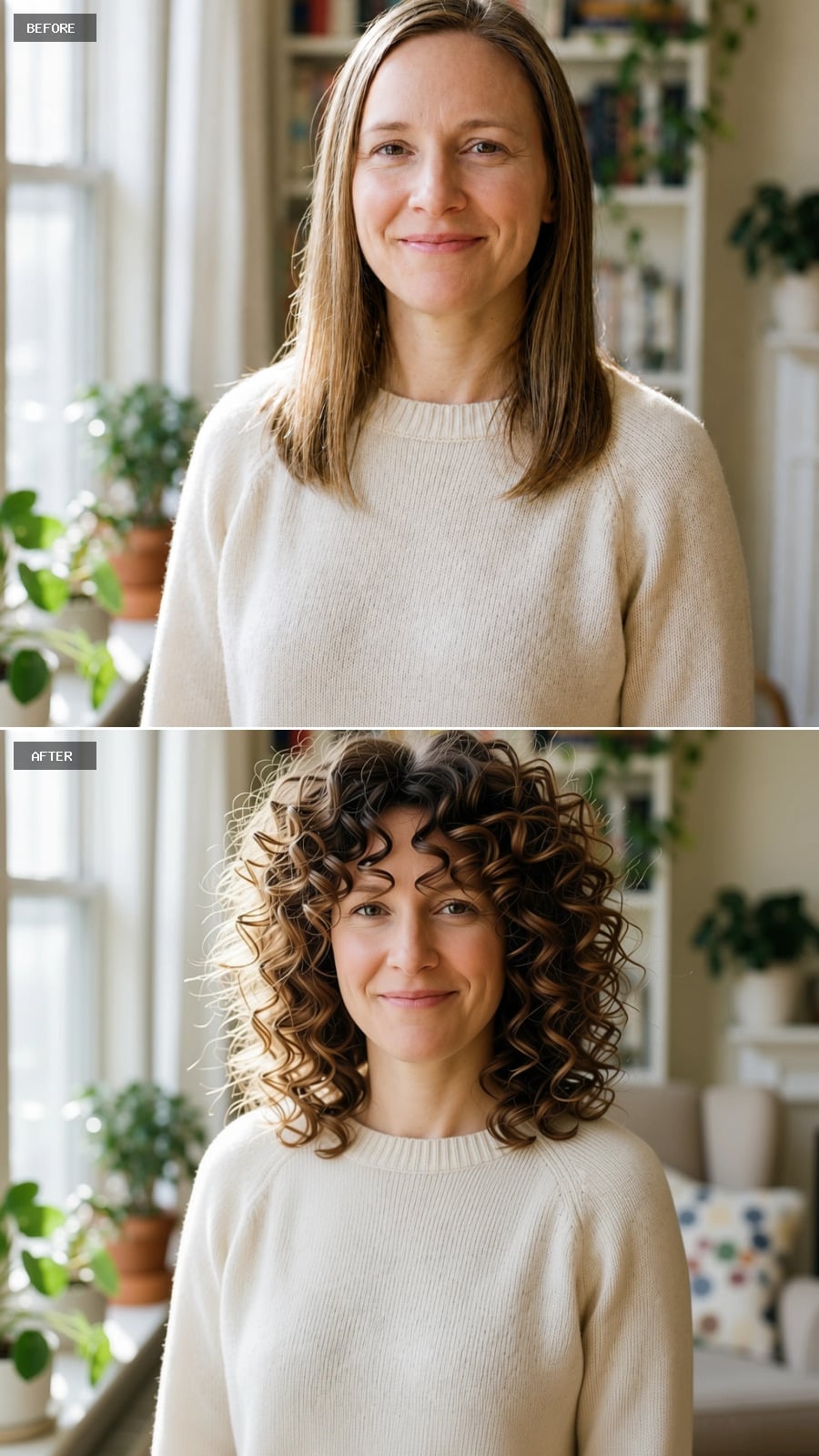
Ringlets change the architecture completely. Instead of one smooth outer surface, the hair breaks into curves, recesses and highlights from root to end.
The brunette base stays rich while caramel threads through selected curls, helping the texture remain visible rather than blending into one dark mass. Soft fringe keeps the volume connected to the face instead of turning the hair into a separate shape around it.
Texture Note: Waves and curls can create visible highlights and shadows because different sections face the light differently. Straight hair can be equally dimensional, but it usually depends more heavily on cut, movement, color placement and lighting.
19. Shorter Layers Put the Fullness Back at the Bottom

This bob stops around the chin with enough weight left through the ends to keep the perimeter looking substantial. The point is not to layer everything into wisps; it is to redistribute the shape without sacrificing the bottom edge.
Warm caramel and wheat-toned pieces interrupt the brunette just enough to show the movement. The cut remains the foundation. The color simply makes that structure easier to see.
18. Curtain Bangs Pull the Shape Forward Without Sacrificing the Length
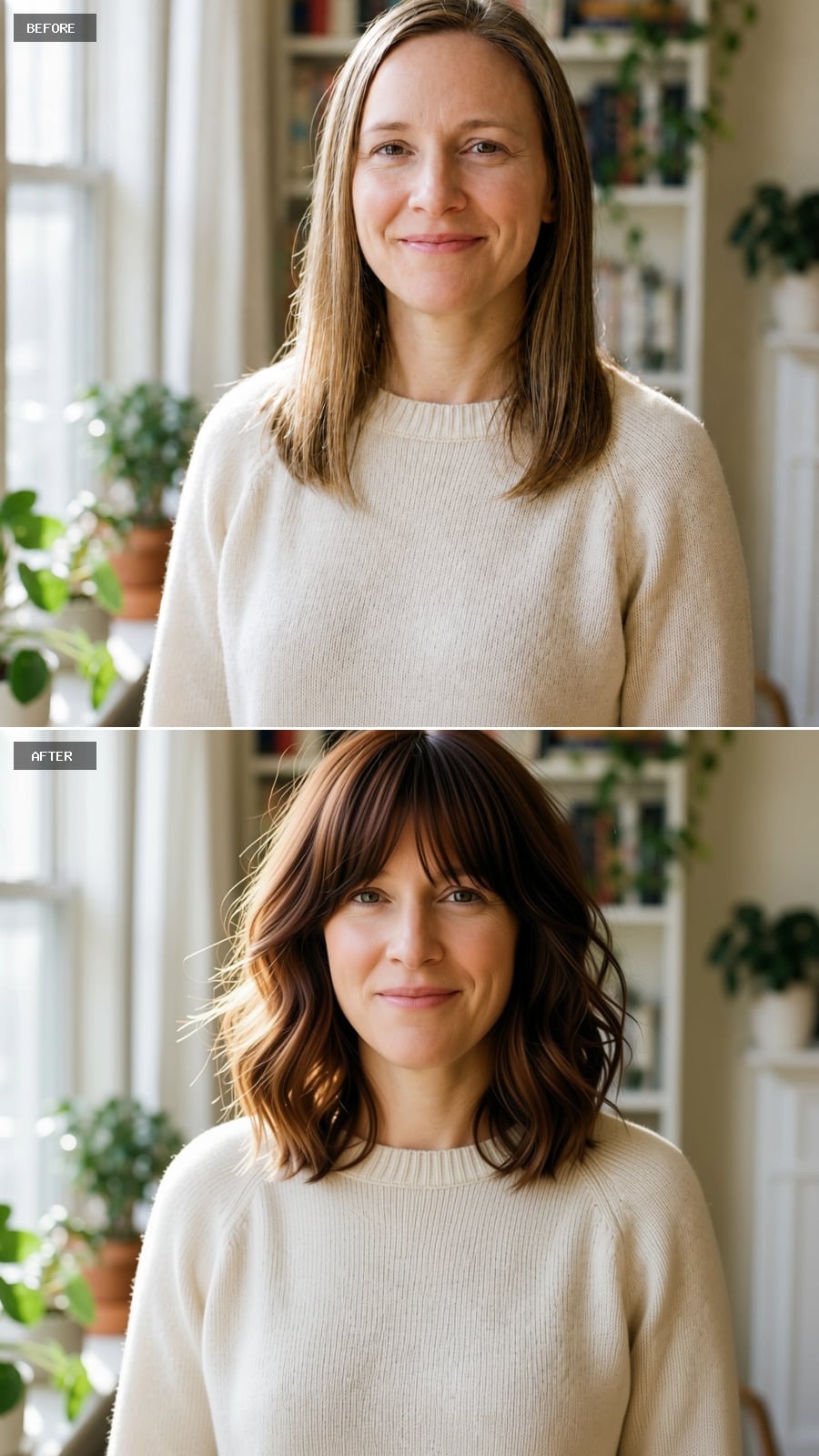
For anyone reluctant to lose much length, this is the more strategic intervention. Curtain bangs part softly through the center and sweep outward, creating shorter pieces around the face while the rest remains past the collarbone.
Dark roots melt into warmer caramel ends, and loose bends begin below the cheekbones rather than at the scalp. The front now has movement of its own instead of simply joining two long sections on either side of the face.
17. Deep Plum Makes a Clean Bob Feel Even Sharper
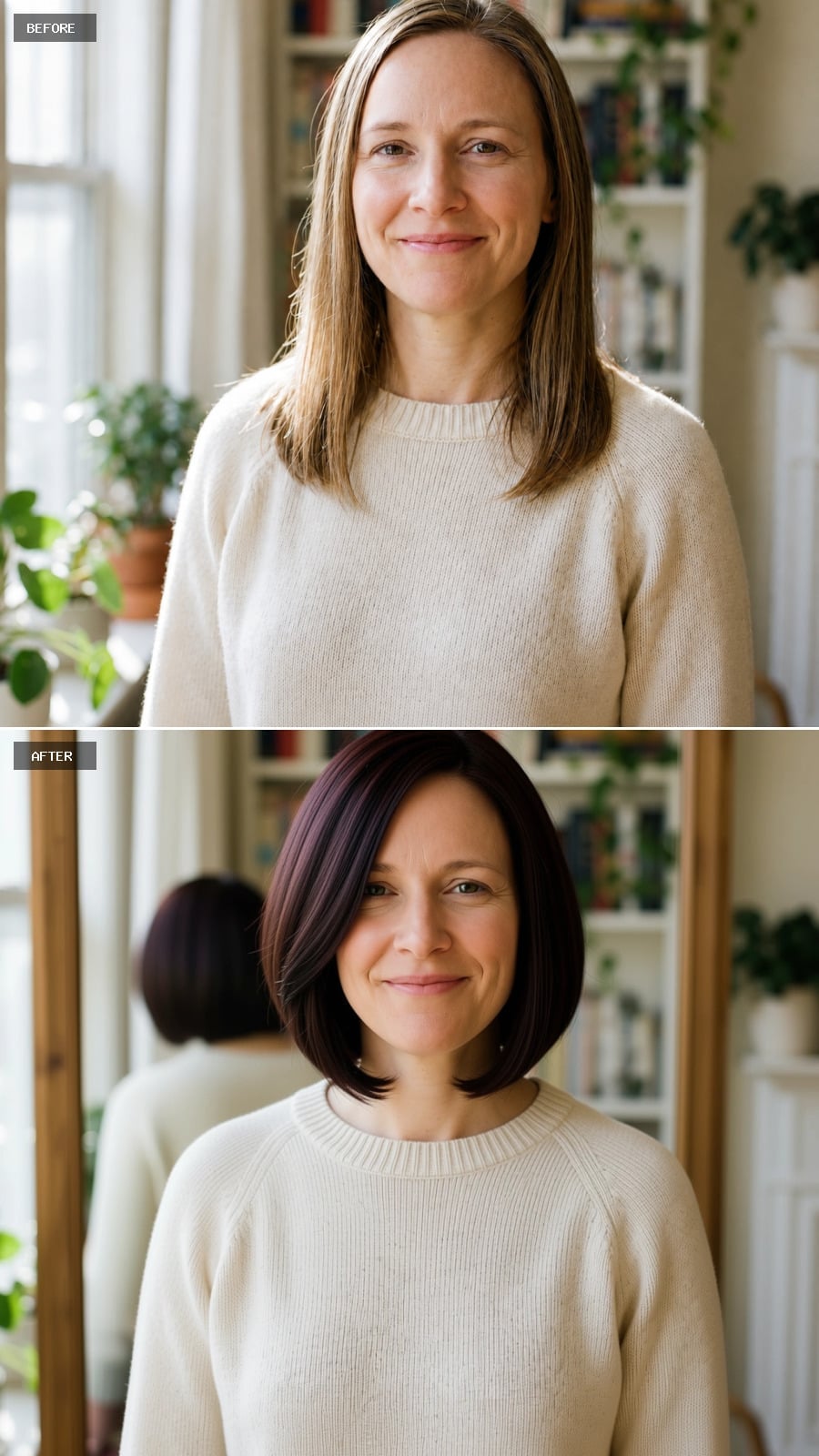
The color looks nearly black in the deepest areas, then reveals cooler plum tones where the surface catches more light. That gives a relatively simple bob far more variation than a uniform dark brown would in this particular lighting.
The perimeter stays blunt around the jaw while subtle internal movement keeps the ends from becoming helmet-like. This is the darker, sleeker cousin of the burgundy fringe cut: less graphic at the forehead, more concentrated at the jaw.
16. Big Brunette Waves Shift the Width Away From the Scalp
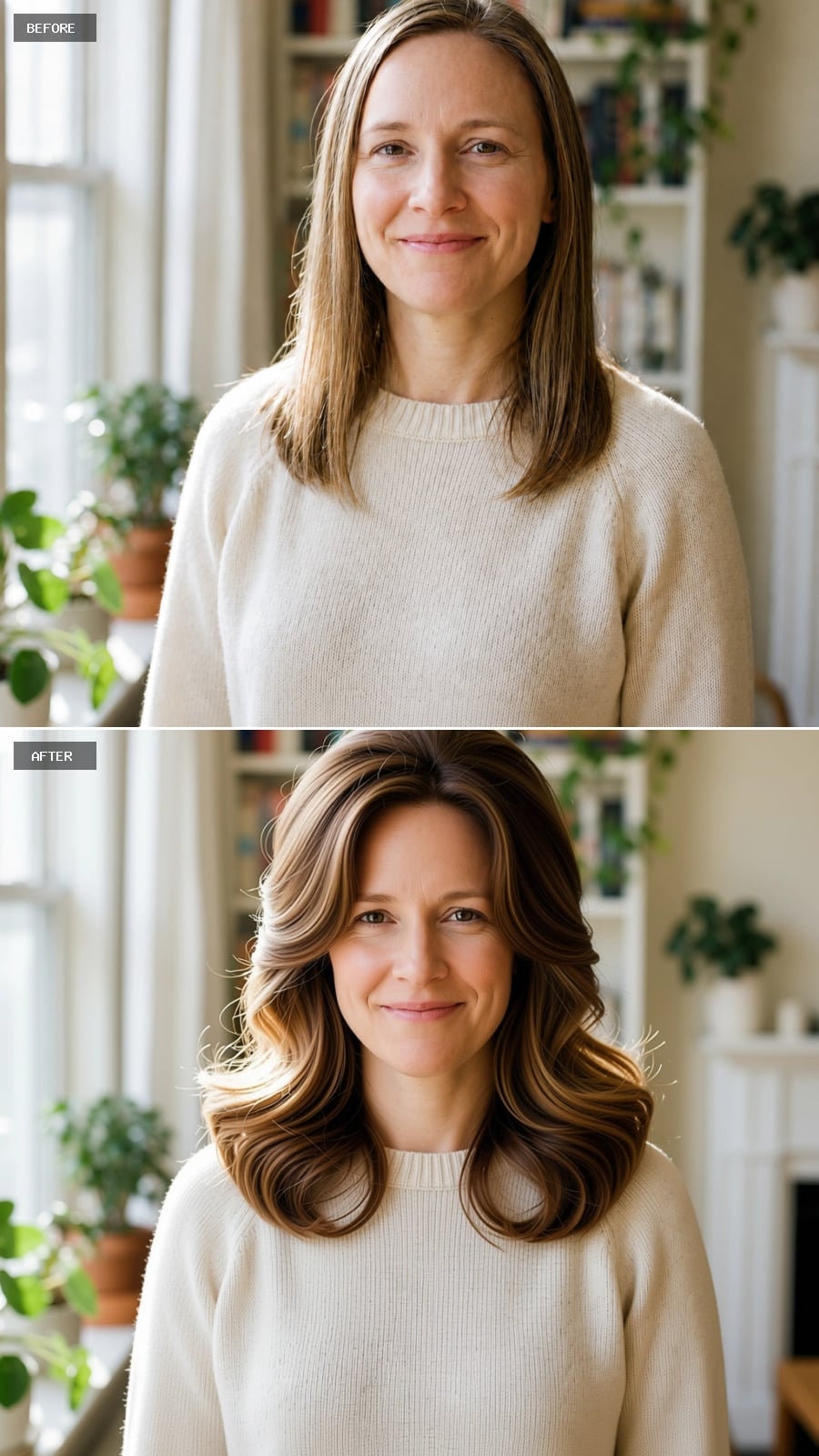
Instead of chasing height straight upward, this transformation builds fullness through the mid-lengths. Rounded waves broaden the silhouette beside the cheeks and shoulders, giving long hair a much more deliberate outline.
The brunette root stays deeper while caramel and soft blonde appear farther down, separating the waves as they widen. This is volume by expansion rather than teasing.
15. A Pixie Bob Uses Layer Separation Instead of Overall Length
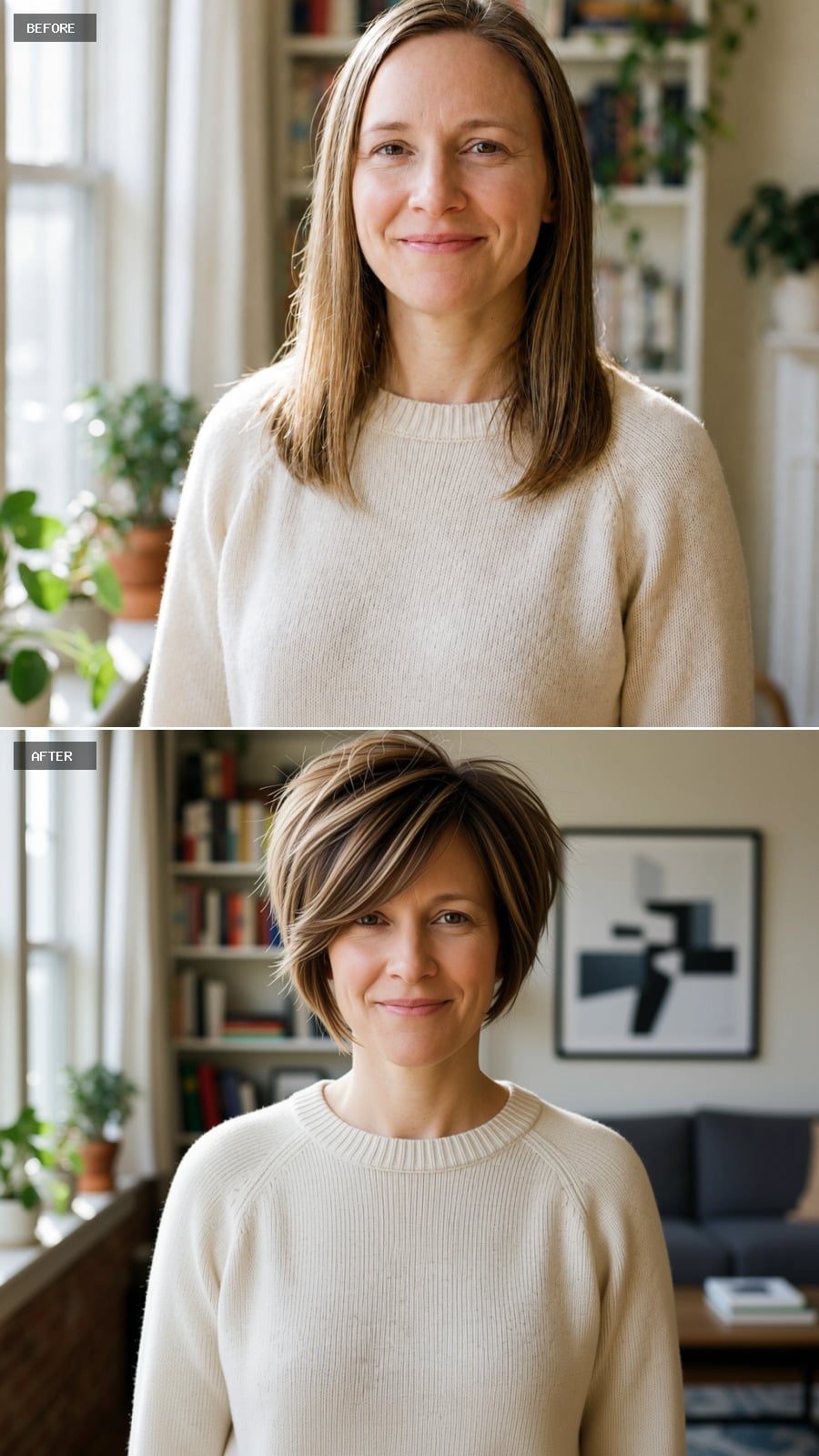
The longer top and shorter lower layers give this pixie-bob a shape that changes from crown to neckline instead of dropping in one continuous curtain.
Brighter caramel and warm blonde pieces are concentrated through selected layers, especially near the face. They are not there simply to make the hair lighter. Their job is to separate one piece from the next so the layered construction remains visible.
The strongest highlights here are doing the same job as the cut: separating the layers instead of merely changing the color.
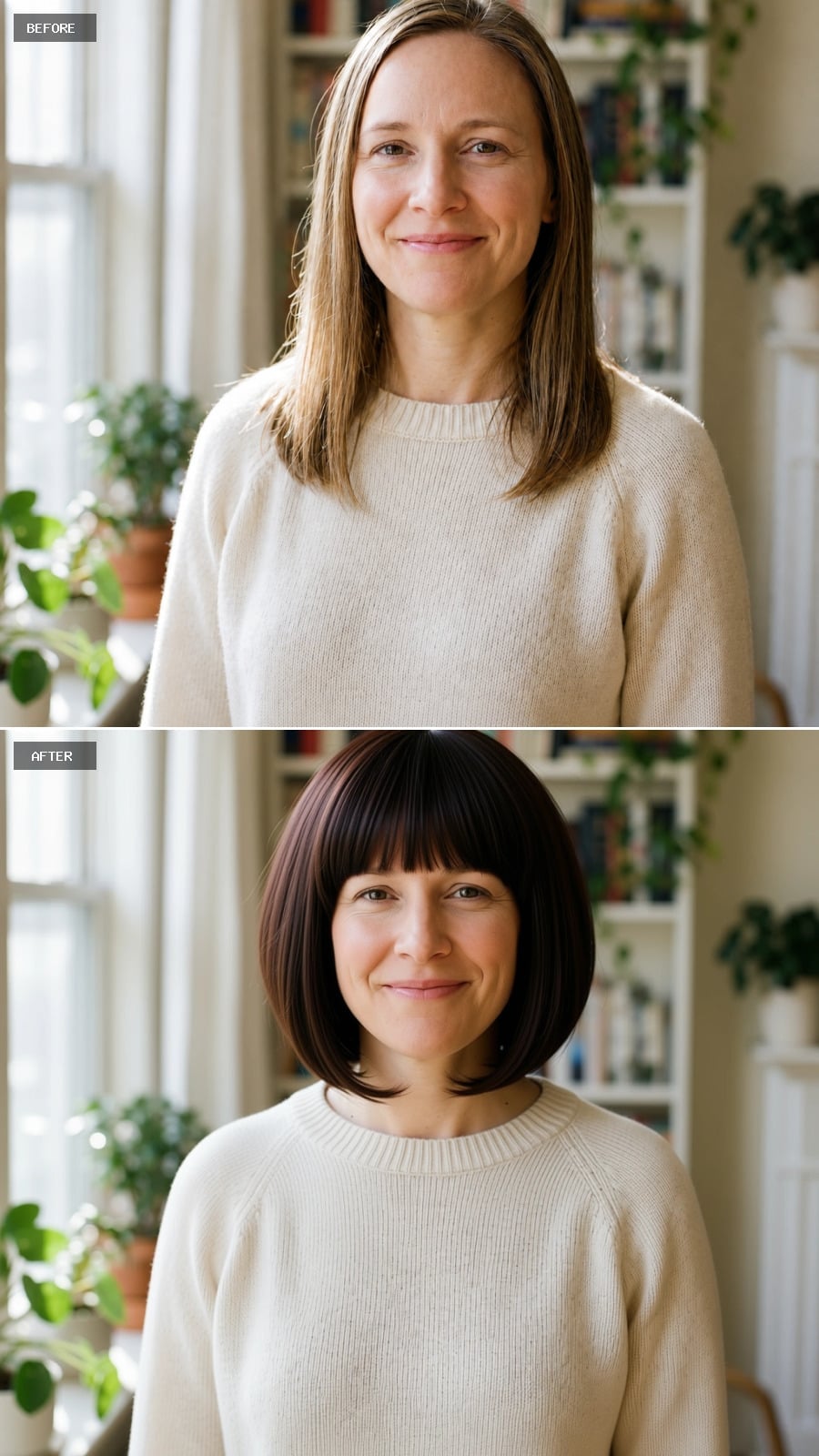
14. A Dark Bob With Blunt Bangs Makes the Silhouette the Main Event
❤️ Would you like to save this?
The fringe cuts straight across the forehead while the bob finishes close to the jaw, giving the hairstyle two unmistakable edges. Deep brunette color keeps those lines visually solid instead of breaking them into a dozen lighter pieces.
There is very little decorative distraction here. No elaborate wave pattern, no long gradient of highlights. The density comes from the cut looking compact and deliberate.
Contrast Note: Dark hair against a pale sweater creates a strong boundary around the hairstyle in this image. Clothing, background and lighting can all affect how clearly a haircut separates from the rest of a photograph.
13. Dark Chocolate Waves Keep the Fullness Close to the Face
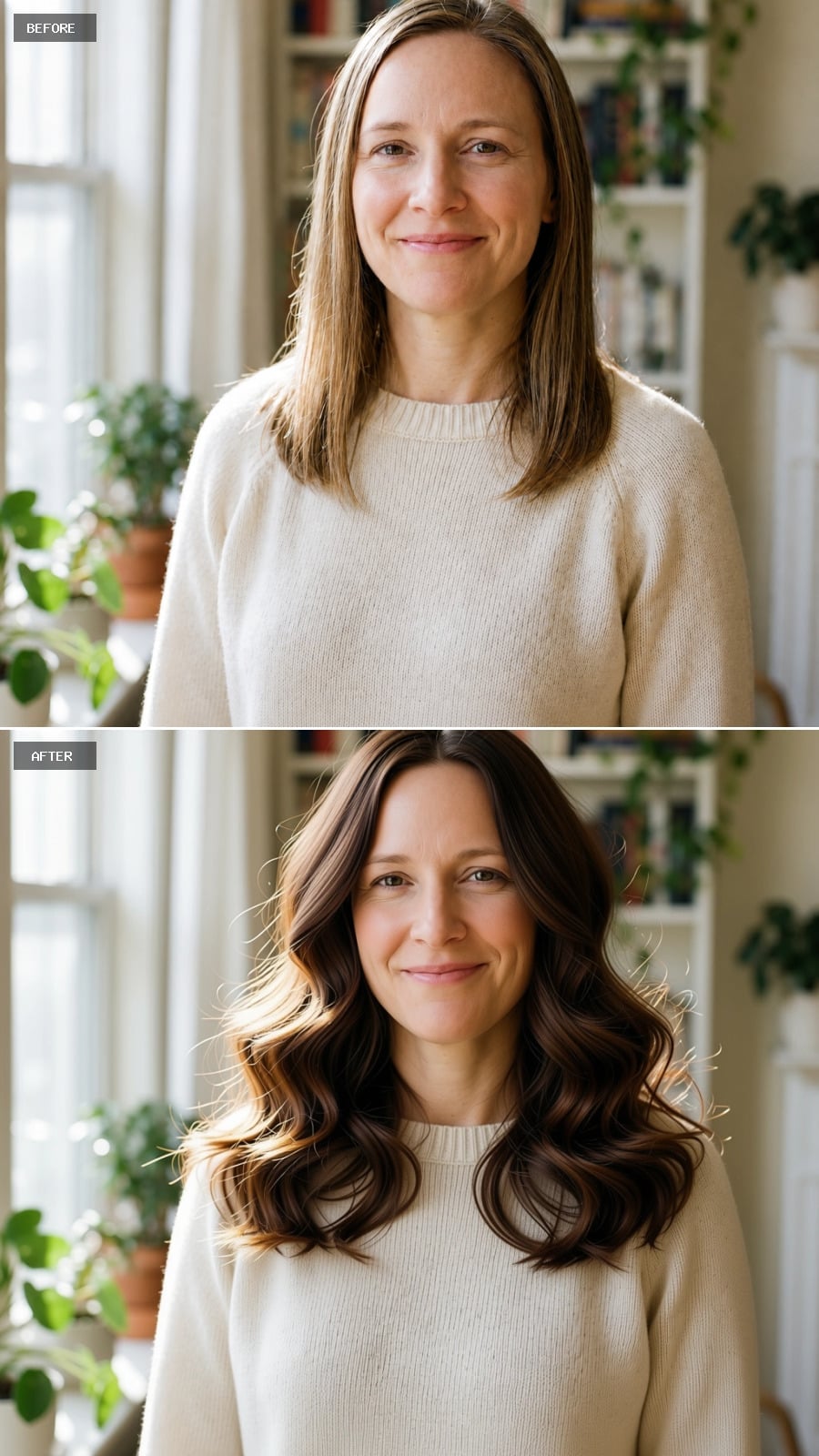
Here the length stays around the shoulders, but the shape stops behaving like long hair. Loose waves begin high enough to create width beside the face instead of waiting until the very ends.
The chocolate brunette remains dominant, with warmer caramel appearing sparingly below. That keeps the look rich rather than heavily highlighted while still giving the waves enough variation to remain distinct.
12. Layers Around the Face Give the Highlights Somewhere Useful to Go
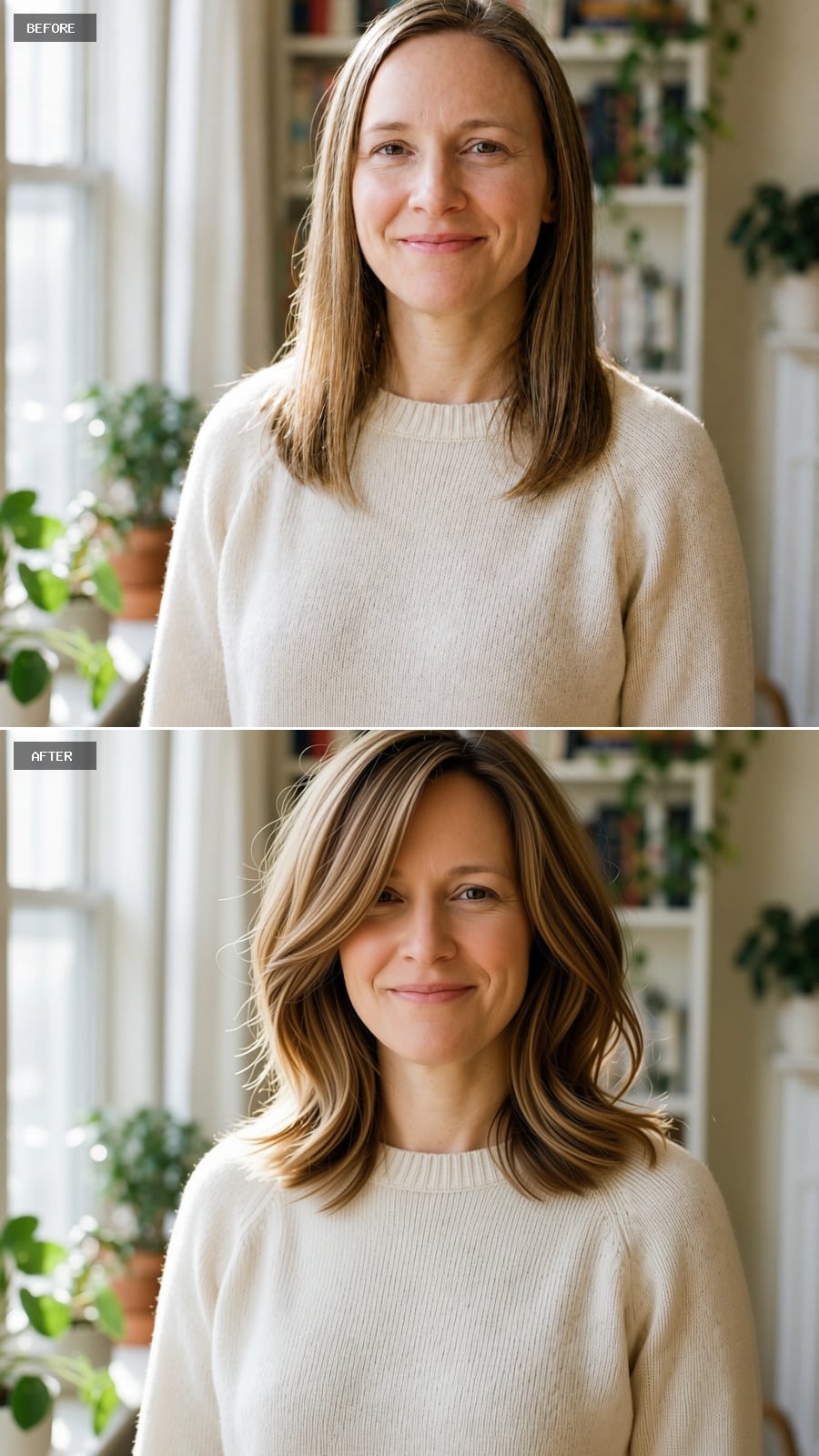
This transformation works because the cut and color arrive at the same places. Shoulder-length layers step in around the face, and the lighter pieces follow those sections rather than being scattered uniformly from root to end.
The result is not simply brighter hair. It is a more legible layered shape, with the contrast concentrated where the cut changes direction.
11. A Rounded Chocolate Bob Keeps the Ends Looking Deliberately Full
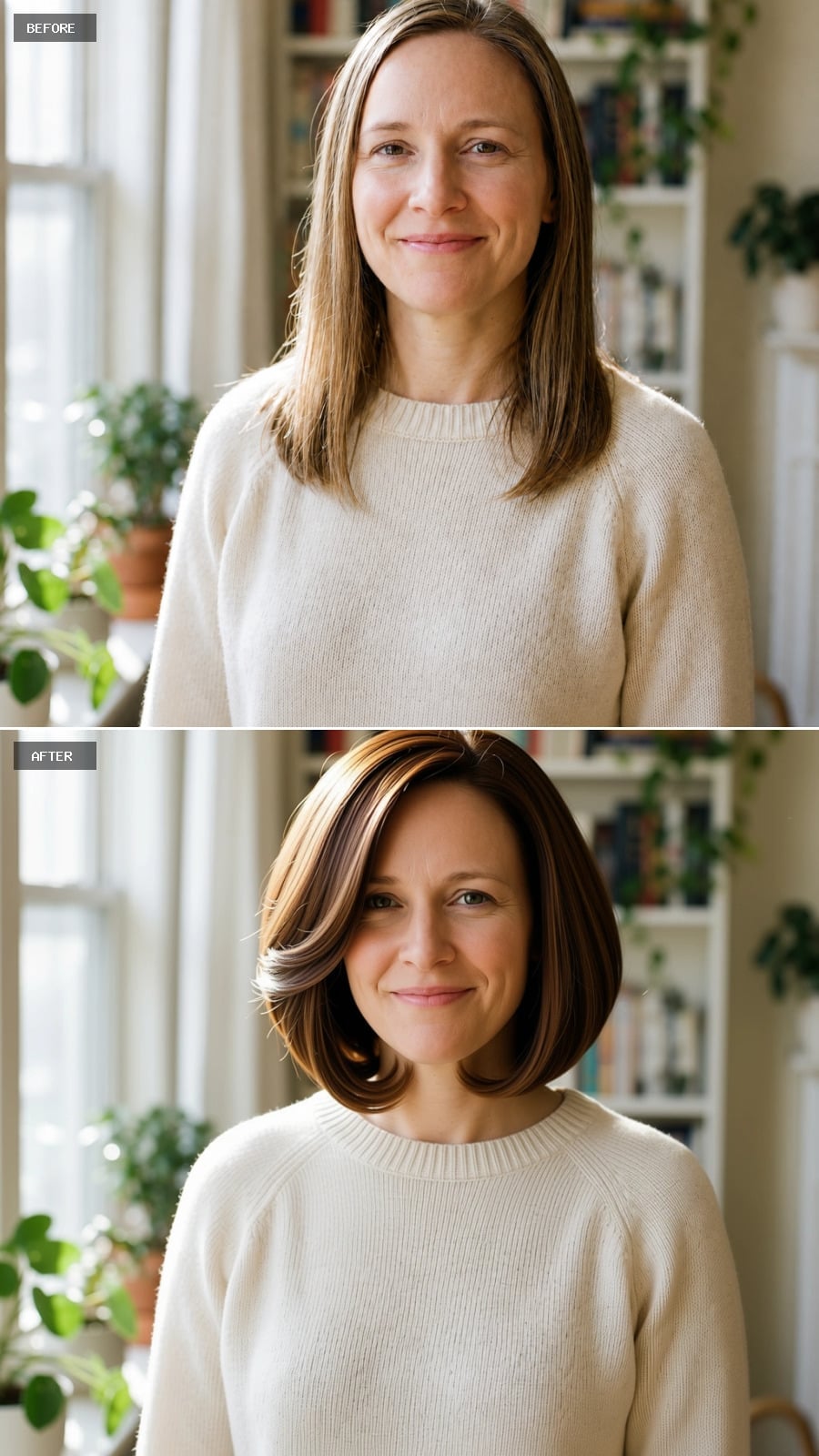
This bob curves inward around the jaw rather than breaking into obvious layers. That rounded perimeter keeps most of the visual density at the ends, which is useful when the goal is to make fine hair look substantial rather than feathered.
Caramel highlights sit inside the brunette instead of replacing it. They add movement through the surface while the dark base preserves the solid outline underneath.
10. Bangs and Long Waves Divide the Hair Into a Front and a Back Story
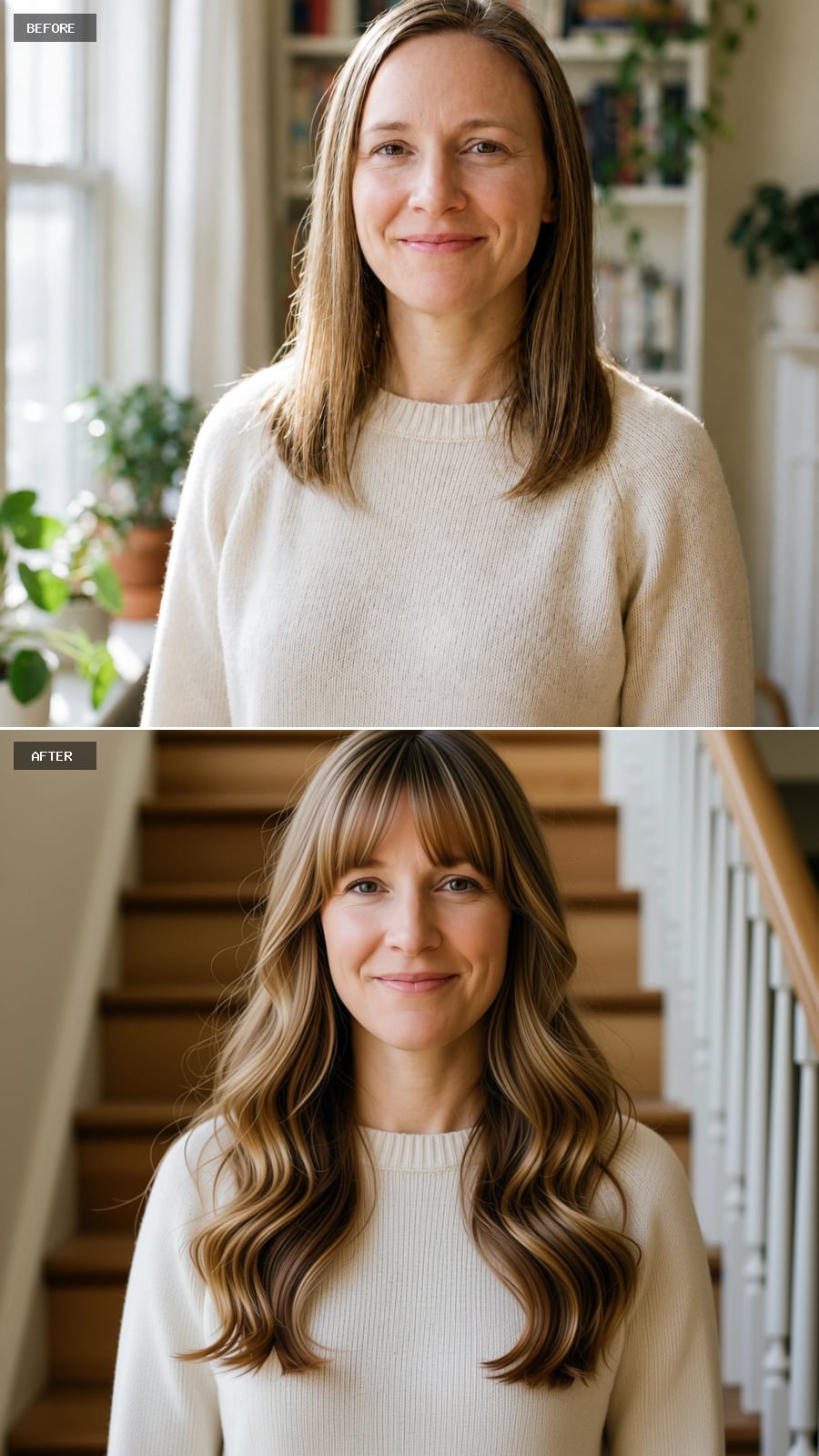
The shorter fringe gives the front of the hairstyle its own structure before the longer waves take over. That separation matters because long hair can otherwise become two uninterrupted curtains falling from a center part.
Highlights are concentrated farther down rather than beginning heavily at the root, leaving the crown relatively quiet while the mid-lengths become progressively lighter and more active.
9. A Jaw-Length Wavy Bob Builds Movement Into a Compact Shape

This one goes shorter without going blunt. The jaw-length perimeter stays visible, but soft waves break it into irregular sections so the cut feels less severe.
Rich brunette deepens near the root and lifts slightly through the ends. The variation is subtle, which is important here; the waves provide most of the movement while the color simply supports them.
8. Blonde Through the Ends Makes Every Loose Bend More Visible
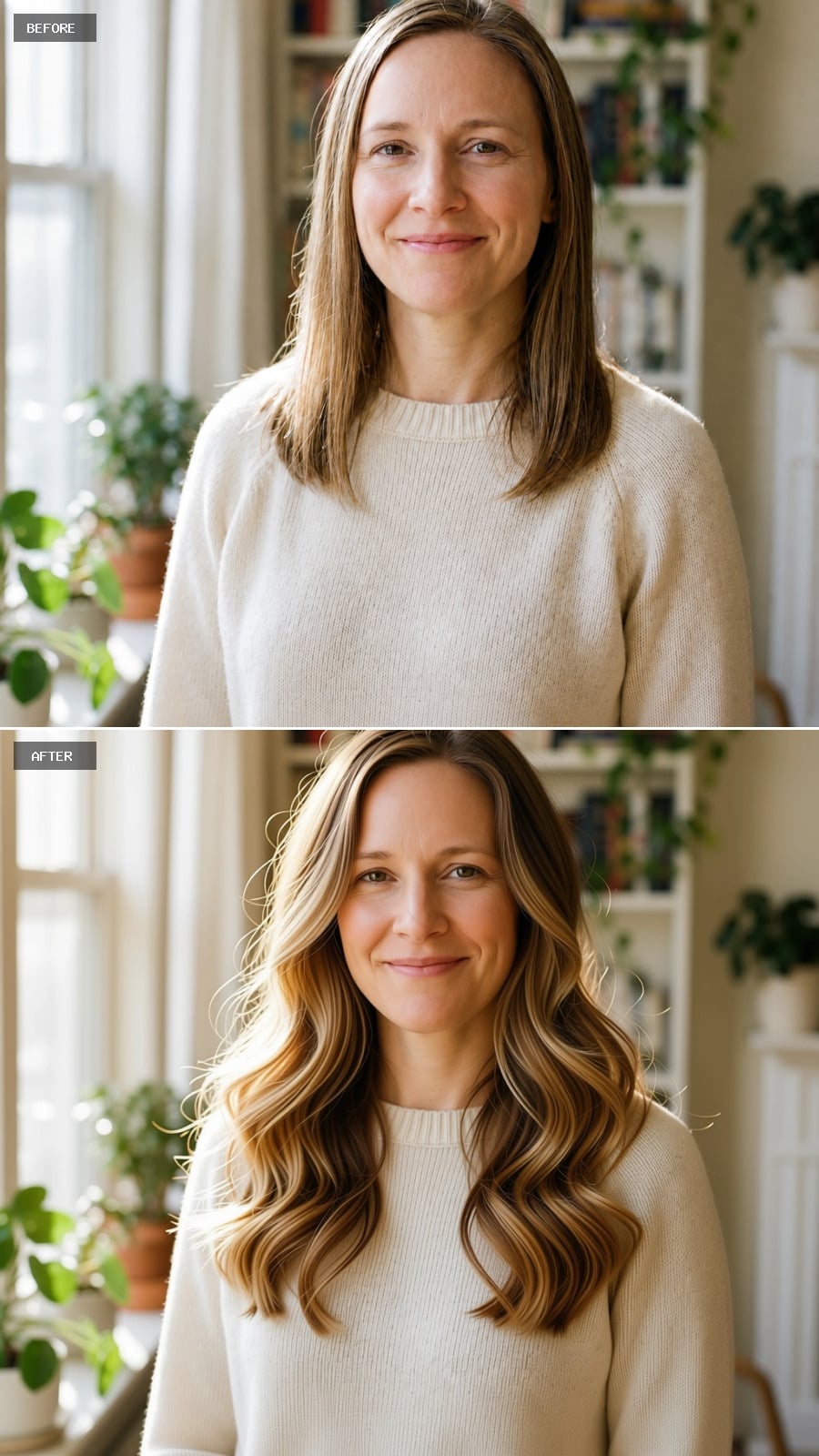
The shape stays long enough to brush the collarbone, but darker roots gradually open into caramel and warm blonde through the lower half. That gradient makes the bends increasingly visible as they move away from the scalp.
The waves themselves stay loose and uneven rather than forming matching curls. That keeps the highlighted ends from turning into a perfectly styled block.
7. Warm Brunette Highlights Give Curtain Bangs More Separation
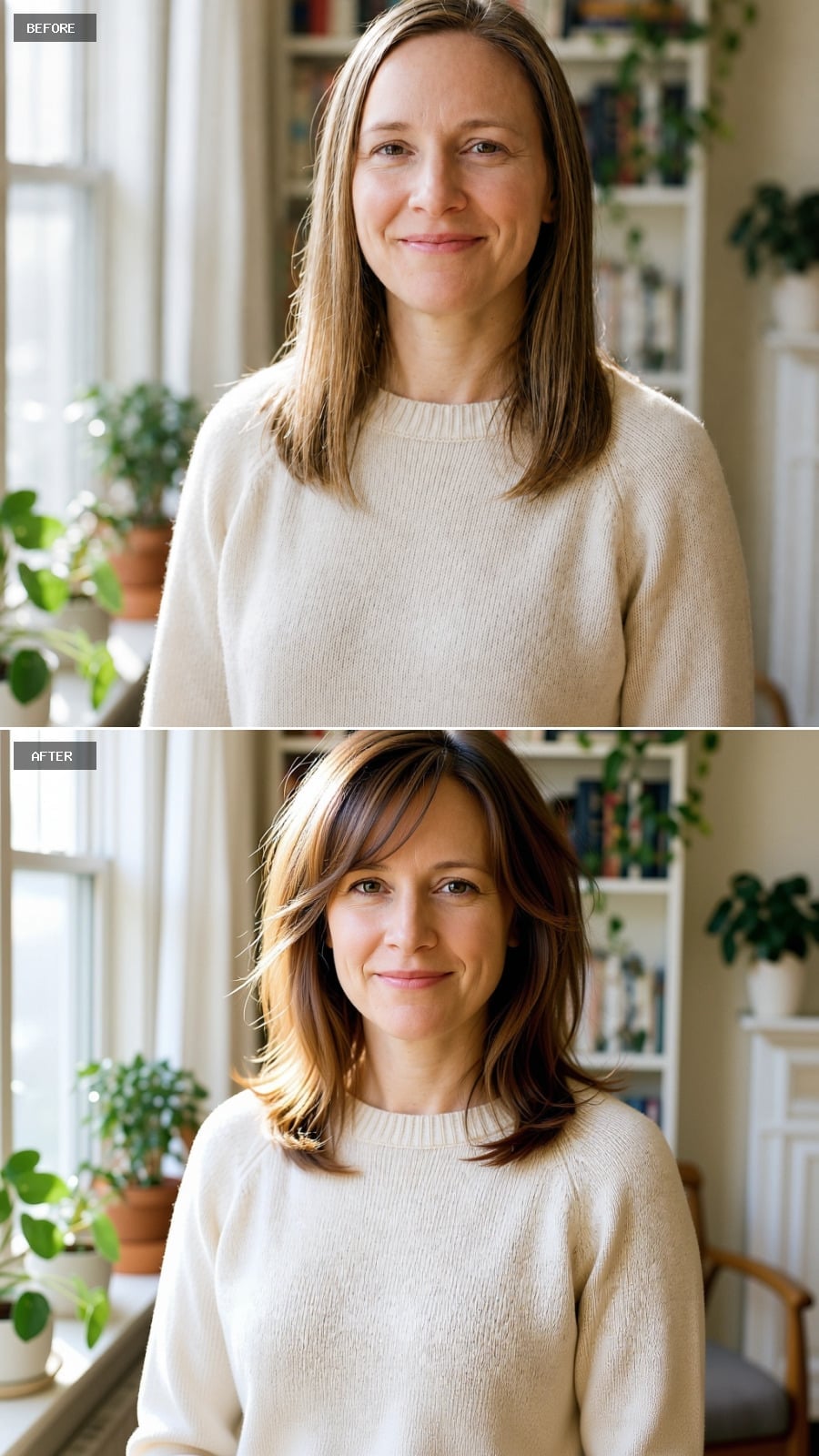
This version of curtain fringe is less about dramatic length change and more about contrast. Copper-toned highlights run through a dark brunette base, making the shorter front pieces easier to distinguish from the hair behind them.
The bangs open around the forehead instead of dropping straight down, which creates a softer frame without requiring a full fringe. It is a relatively small intervention compared with the bobs and pixies, but that is precisely the point.
6. Short Brunette Waves Concentrate the Shape Above the Shoulders
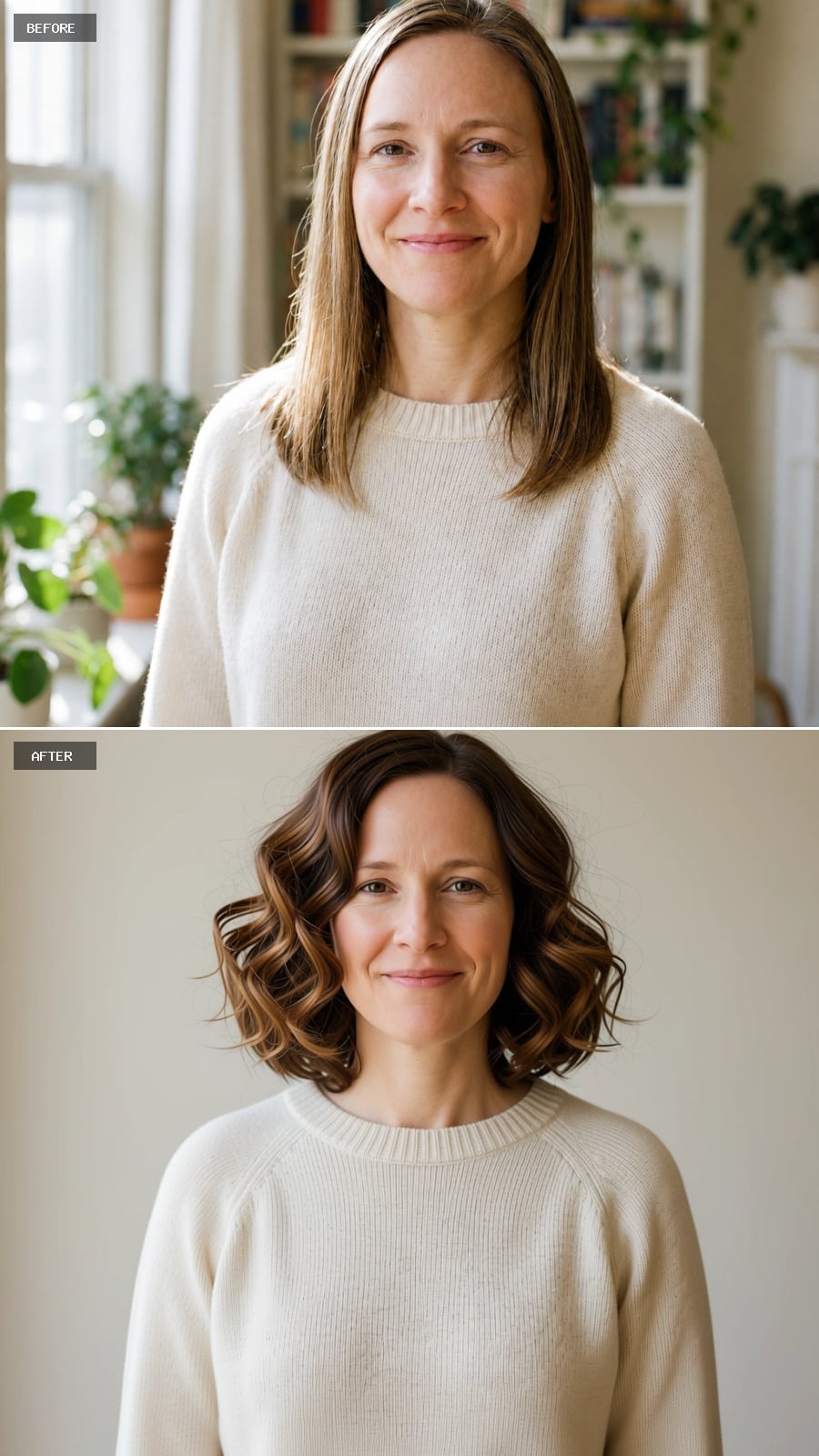
Caramel-highlighted waves stop around the jaw rather than continuing into the shoulders, keeping the entire silhouette close to the face.
The bends are more defined than in the softer wavy bobs elsewhere in the gallery, creating distinct sections rather than one rounded surface. The shorter length also prevents the lower half from pulling those waves straighter as the day goes on.
5. Caramel Through the Mid-Lengths Makes Shoulder-Length Hair Feel Less Heavy
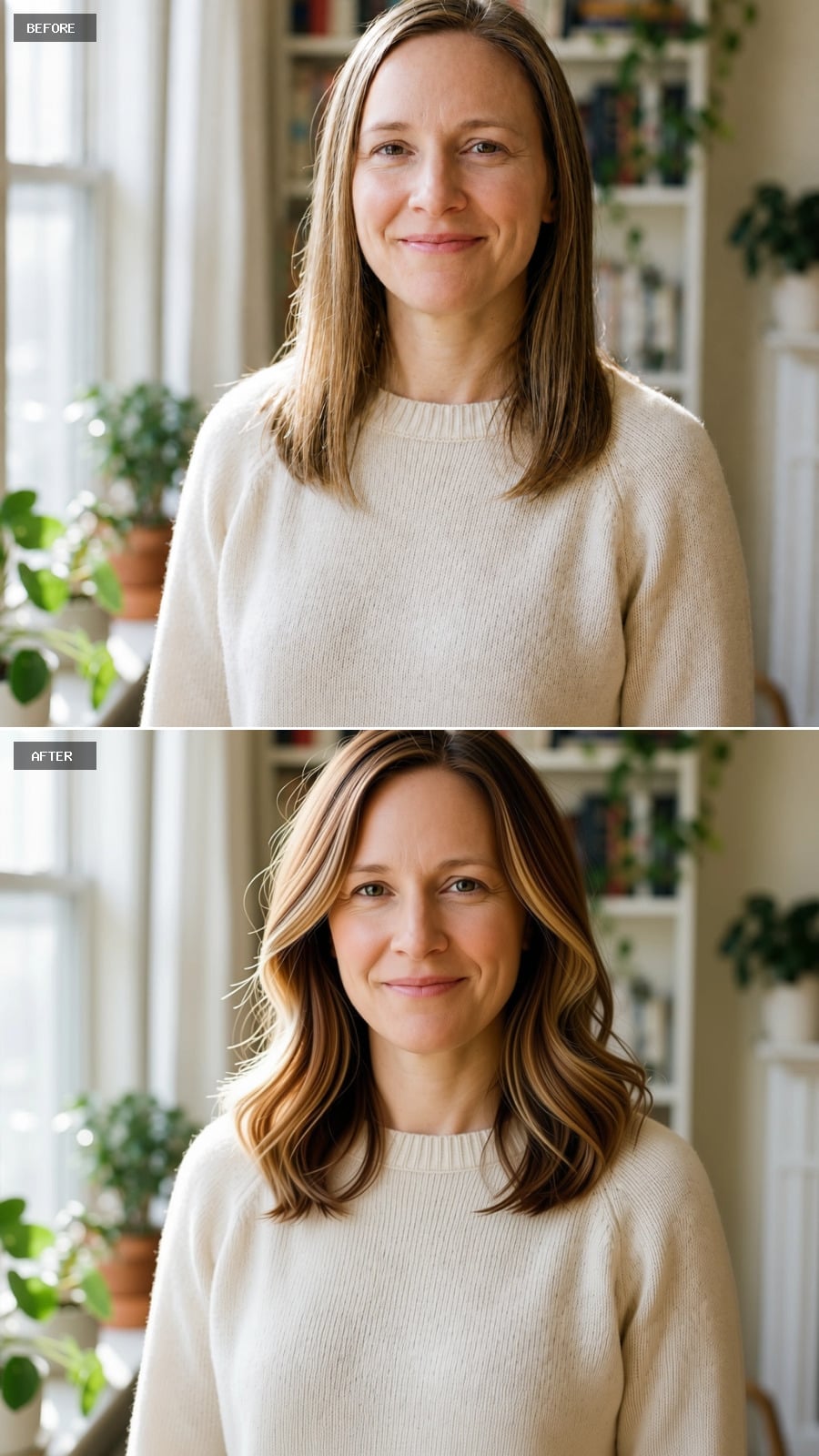
This is not the biggest silhouette change in the gallery, but the color placement earns its place. Darker roots stay intact while caramel and gold emerge through the mid-lengths, preventing the shoulder-length shape from becoming one continuous dark block.
The waves widen toward the ends, placing fullness lower than the crown-heavy transformations. That gives the cut a softer, more triangular silhouette without letting it collapse flat.
4. A Side-Swept Brunette Bob Moves the Weight Off the Center Line

The jaw-length bob is familiar by now, but the part changes the balance. Sweeping the front to one side gives the crown an asymmetrical lift and stops the hairstyle from dividing evenly down the middle.
Subtle warmth through the brunette prevents the dark color from feeling inert, while a light wave keeps the perimeter from becoming too rigid. This is less about adding more hair than redirecting the hair already there.
3. Warm Highlights at the Crown Keep the Top From Looking Like an Empty Zone

Here the useful change happens higher than in most of the balayage looks. Soft caramel pieces begin through the brunette before the hair reaches the shoulders, while gentle crown lift prevents the top from sitting completely flat.
The collarbone length stays familiar and wearable. Rather than reinventing the whole haircut, this transformation concentrates attention on the area fine hair often struggles to hold: the upper half.
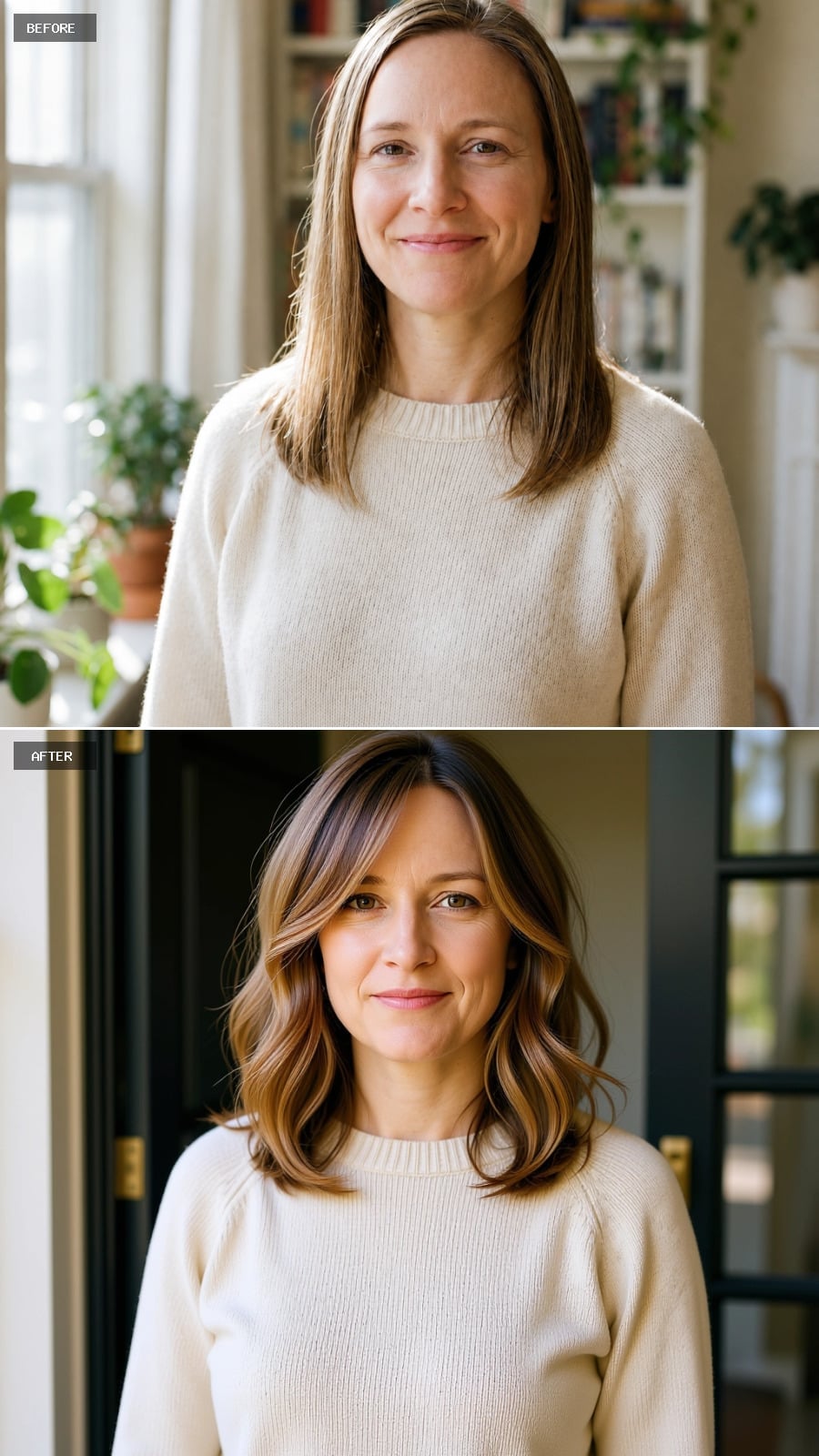
2. Outward-Turning Ends Give Curtain Bangs a Wider Silhouette
❤️ Would you like to save this?
The curtain bangs are only part of the change. What separates this version is the way the lower sections turn outward, creating width around the jaw and shoulders instead of curling inward toward the neck.
Caramel highlights follow those bends through the mid-lengths and ends, making the outward movement easier to see. The result is broader and airier than the straighter curtain-bang versions earlier in the gallery.
The important change is not simply more volume. It is moving that volume outward instead of letting everything fall straight down.
1. Natural-Looking Curls Finish the Gallery by Changing the Entire Geometry
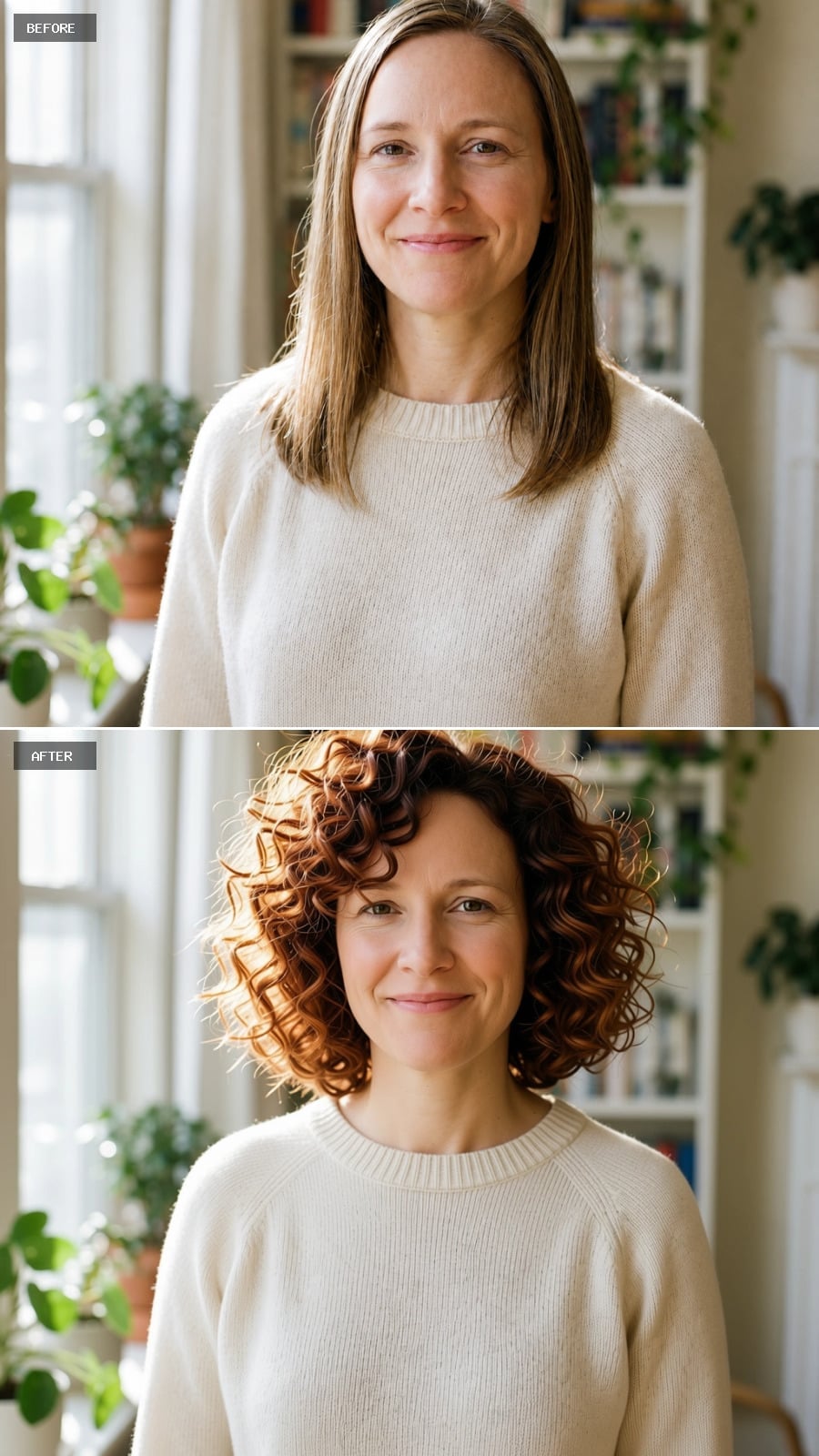
The last transformation stops trying to make straight hair behave like fuller straight hair. Auburn ringlets create a completely different silhouette, with volume through the crown, width beyond the jaw and individual curls breaking the outer edge into dozens of moving pieces.
The color deepens at the root and warms toward copper through the ends, giving the curl pattern additional separation without turning every ringlet into a highlight. Bob length keeps all that texture close enough to the face that the shape remains controlled.
It is a useful place to finish because it makes the larger point of the gallery clear. Fine hair does not have one correct solution. Sometimes the answer is a stronger perimeter. Sometimes it is shorter layers, strategic color or a different part. And sometimes the biggest change comes from allowing texture to become the architecture instead of trying to smooth it away.