
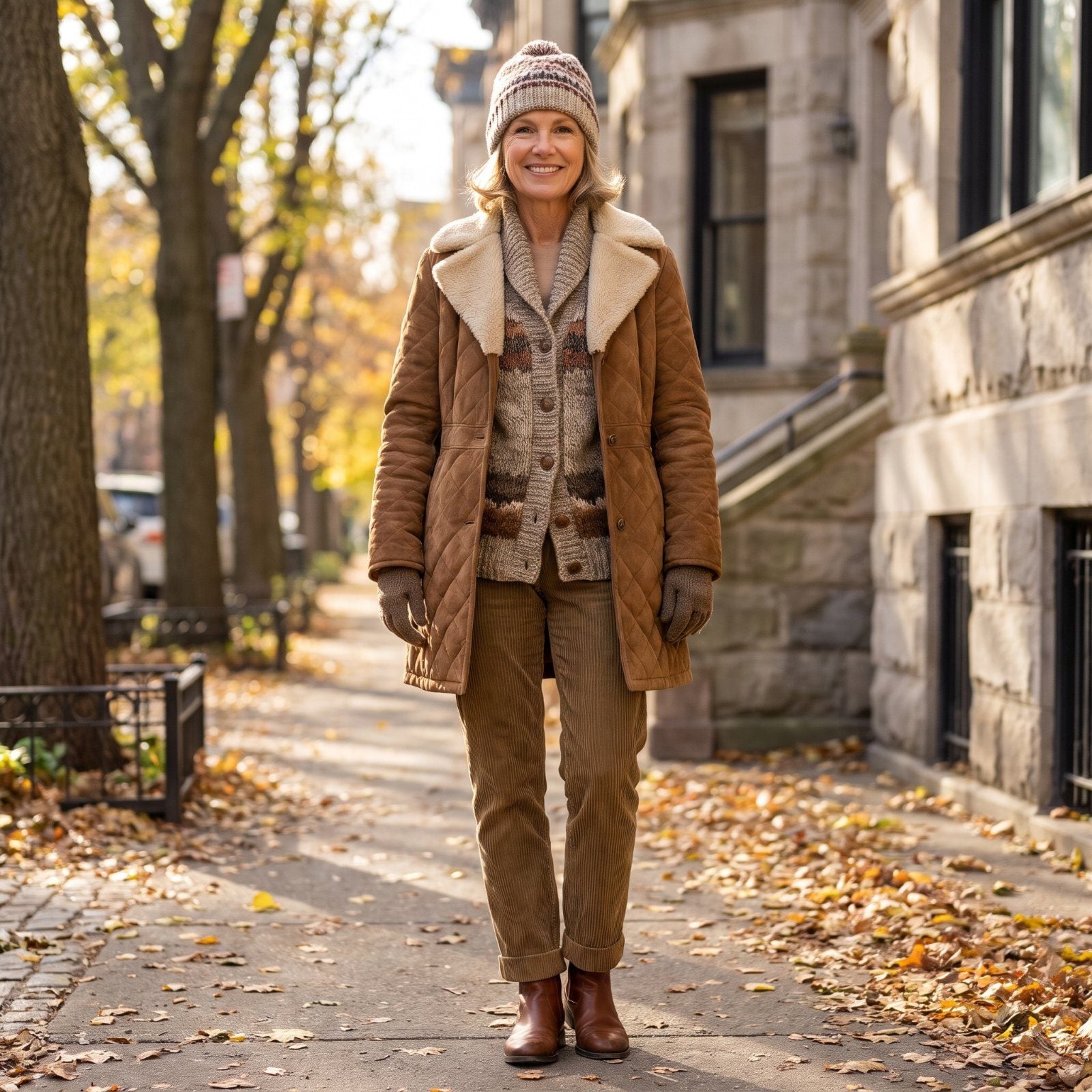
The 1970s smelled like heating oil and wet wool mittens drying on a radiator. We wore sweaters indoors, not for the look but because the hallway got cold enough some mornings to see your breath. An oil embargo had made warmth expensive, and suddenly every household in America was doing math on the thermostat.
What follows is a cold-weather survival kit built from flannel, felt, plastic film, and sheer stubbornness. Some of it you did without thinking. Some of it you forgot you ever did.
FYI, thanks to AI imagery software, we’re able to create very specific fashion and hairstyle examples to illustrate the points being made. In some cases, imagery is exaggerated to hammer home the point. Also, assume links that take you off the site are affiliate links such as links to Amazon. this means we may earn a commission if you buy something.
46. The White House Asked Americans to Set Thermostats to 65 by Day and 55 at Night
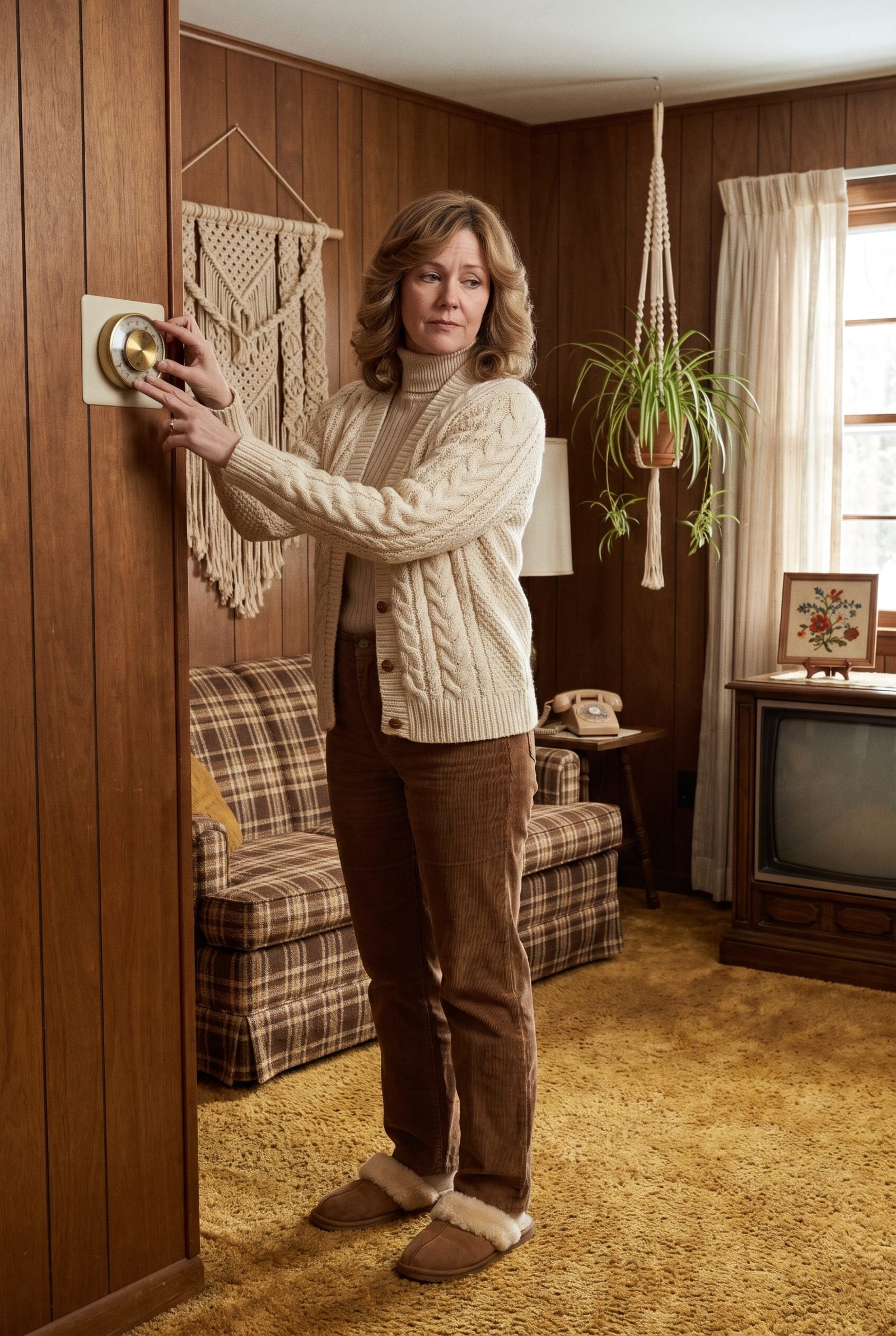
Back in the 1970s, someone in the family was always the thermostat enforcer. You’d nudge the dial up two degrees and get caught within the hour, because the government had asked households to hold daytime heat at 65 and drop it to 55 overnight, and plenty of homes took that as gospel.
Back then you wore a sweater to watch television and socks to bed. Sixty-five sounds almost reasonable now — until you remember that 55 at night meant getting dressed under the covers before your feet hit the floor.
45. Oil-Heat Bills Turned Watching the Thermostat Into a Household Ritual
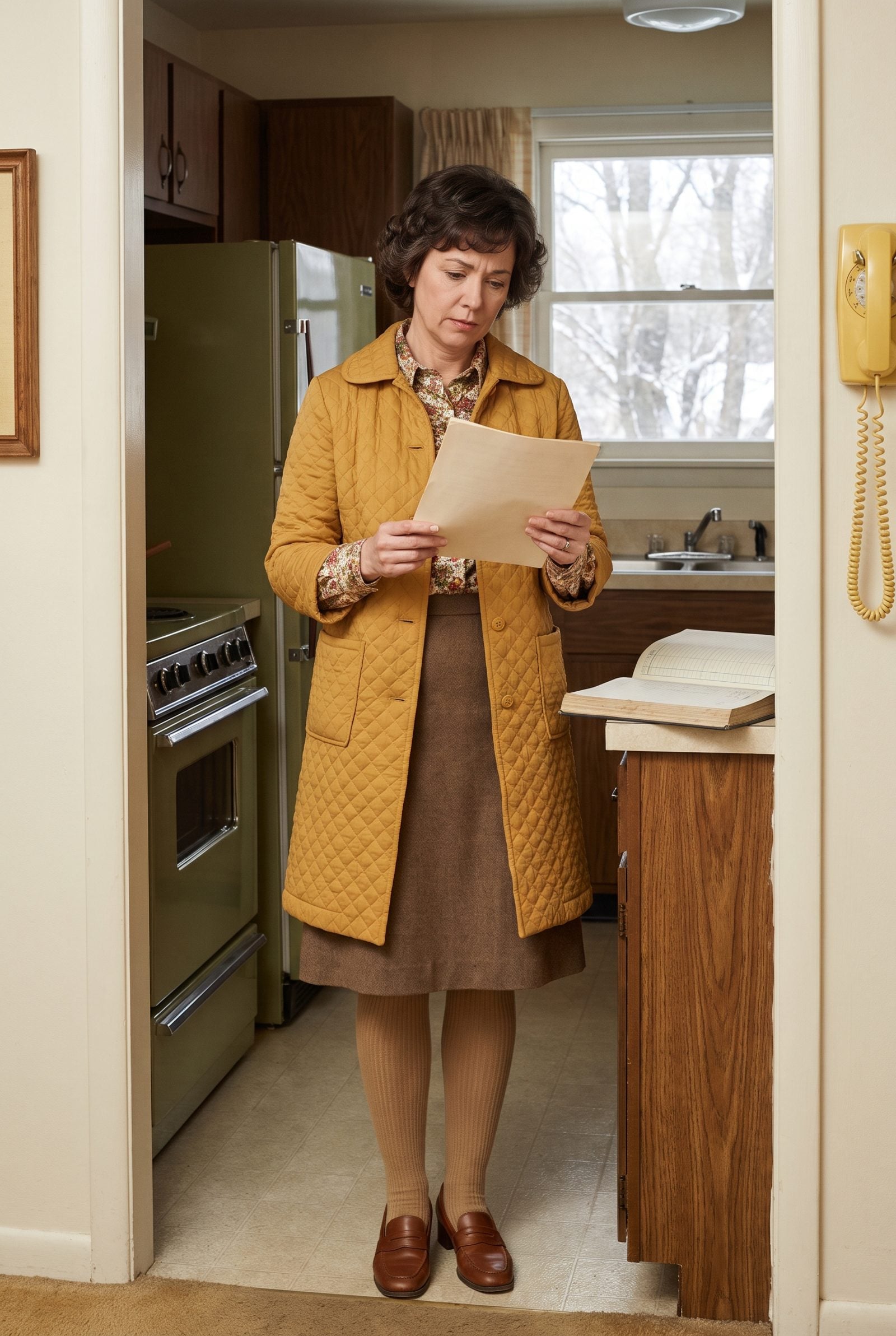
The oil truck pulling into the driveway meant one thing: the bill was coming. Families watched the thermostat like a stovetop, because every degree had a dollar attached to it.
You learned to read the little float gauge on the basement tank, and you learned the phrase “we’re not heating the whole neighborhood” by age six. Warmth stopped being invisible. It became a line item everyone in the house negotiated.
44. Many Families Slept in Bedrooms That Were Barely Heated
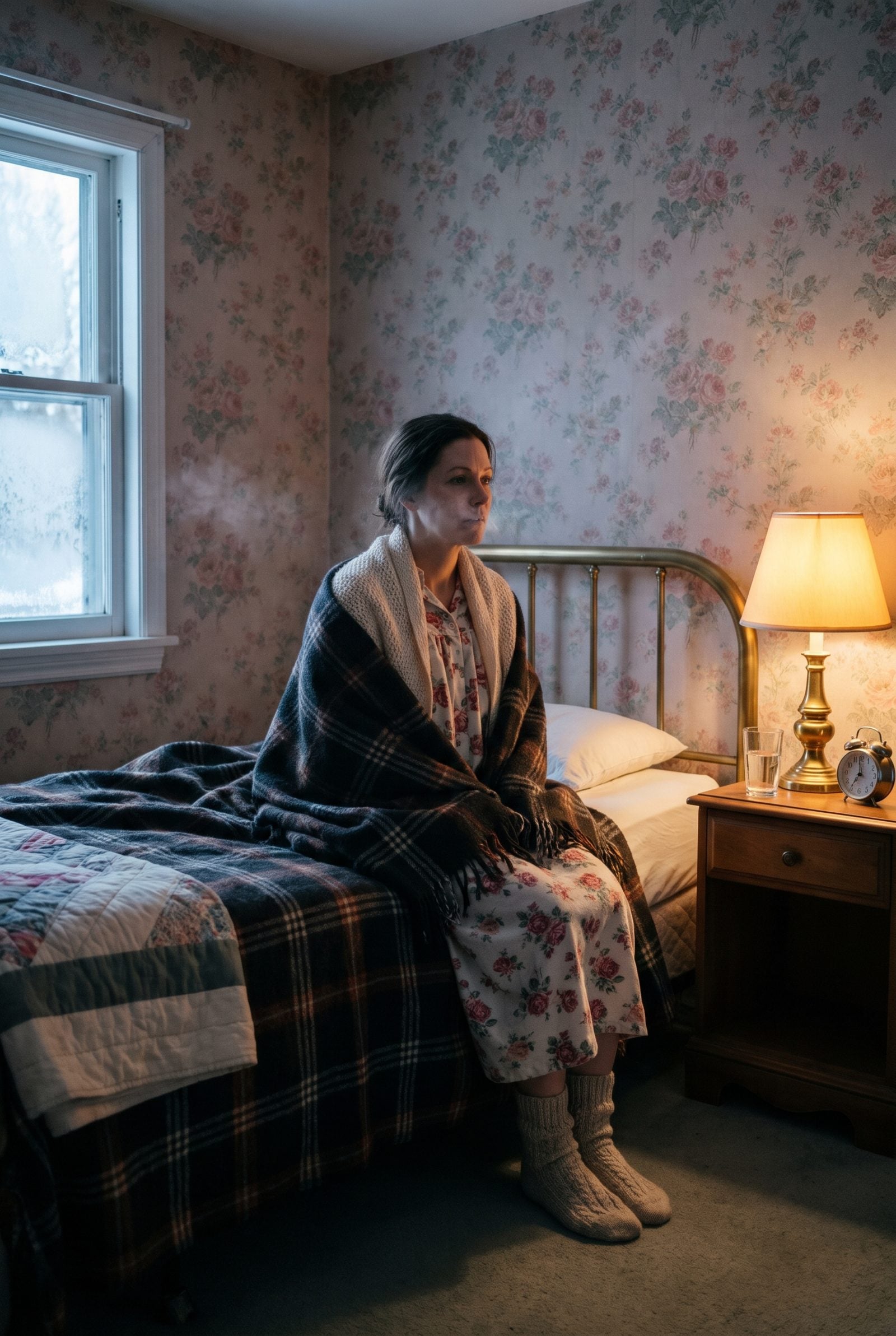
Upstairs was always colder. Heat rises, sure, but not when the registers up there were half-closed to save oil. You slept under a pile of blankets so heavy that turning over felt like a workout.
Flannel sheets, a wool blanket, maybe a hot water bottle wrapped in a pillowcase at your feet. The trick was getting undressed fast and diving under before the cold found you.
43. Unused Rooms Were Closed Off for the Entire Winter
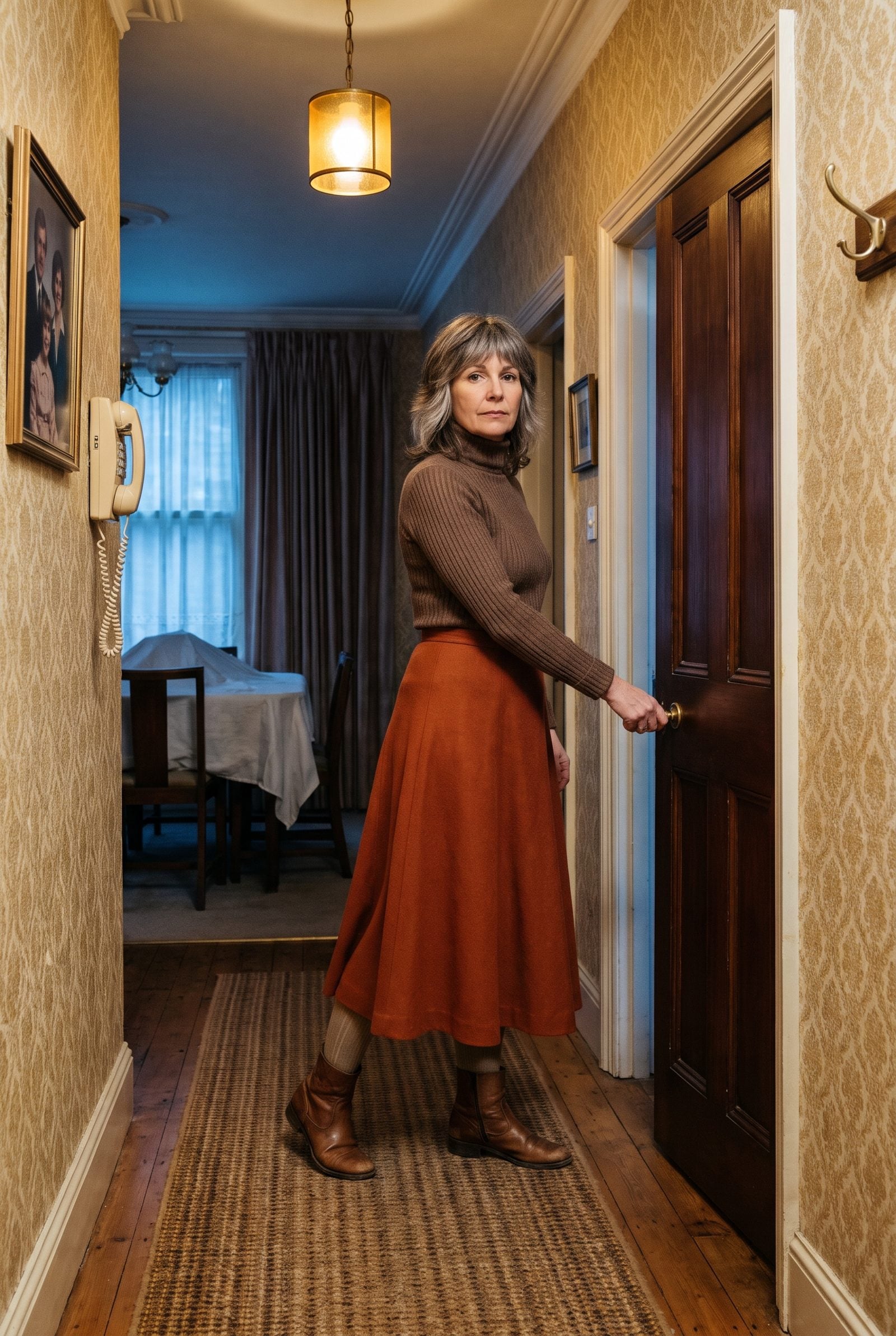
Every house had a room nobody used until spring — the formal dining room, the guest bedroom, the sun porch. You shut the door, closed the vent, and forgot it existed until the weather turned.
Walking into one of those sealed-off rooms in January felt like stepping into a different climate. The cold hit you right at the threshold. Kids loved it as a dare; everyone else treated the closed door as the rule, not the exception.
42. Homemade Draft Snakes Guarded the Bottoms of Doors
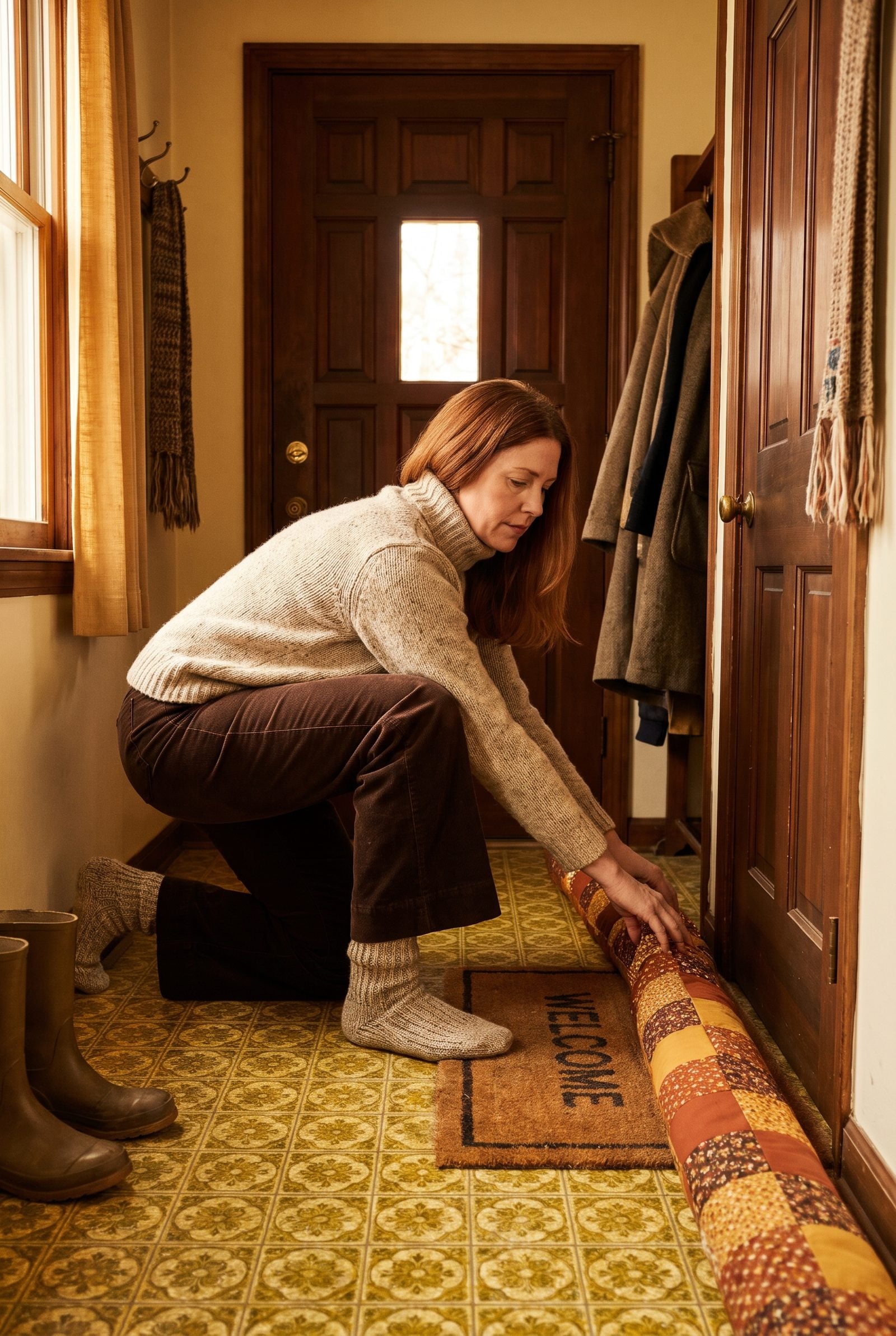
You sewed one from old fabric scraps and filled it with dried beans or sand — a fat fabric tube that lay across the threshold and blocked the draft creeping under the door. Grandma probably had three.
They usually matched nothing in the room, a riot of calico leftovers from some other project. But they worked. You could feel the difference the second one was in place, that thin cold ribbon of air finally stopped.
41. Rope Caulk Was Pressed Around Leaky Window Frames Every Fall
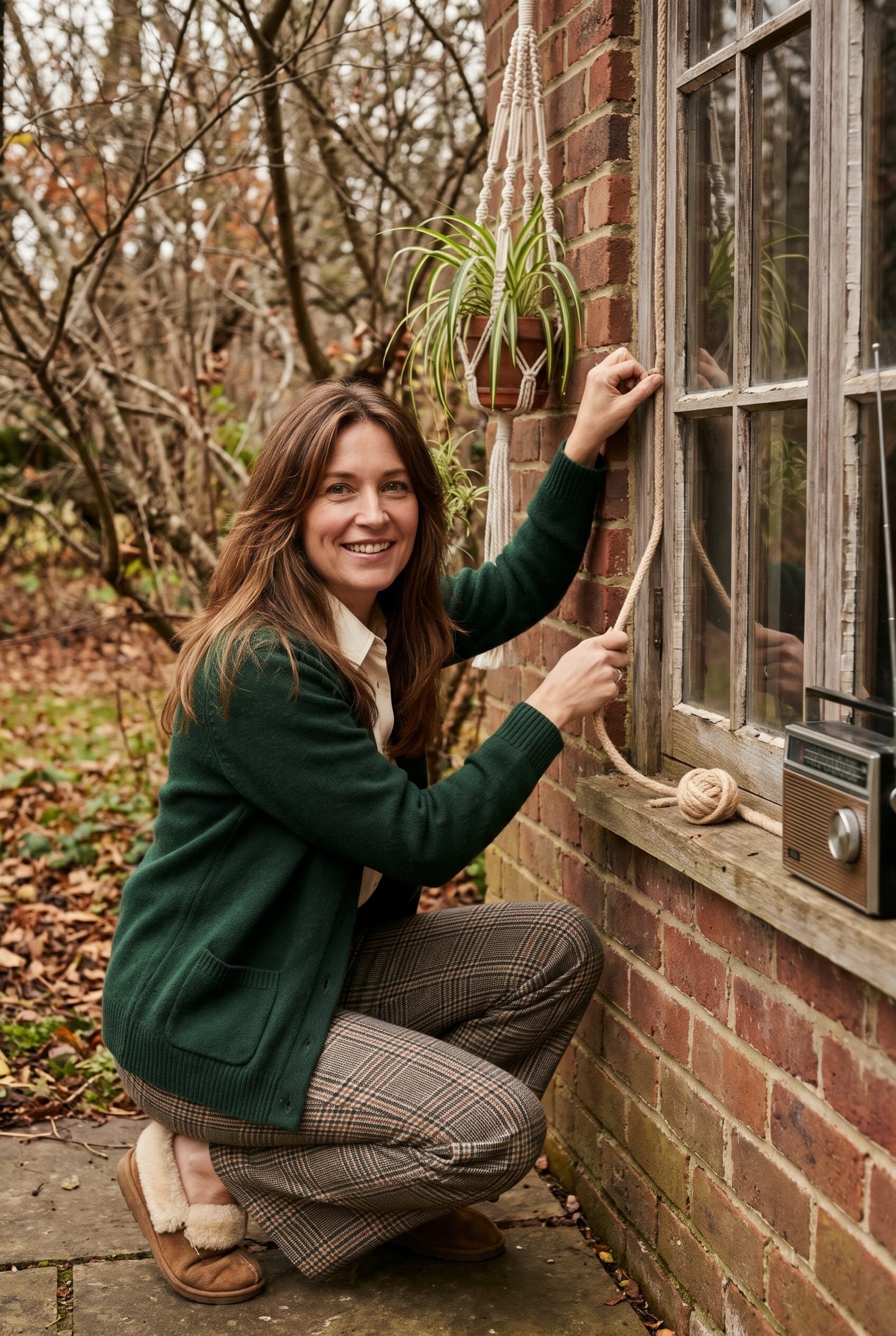
Every autumn, out came the rope caulk — that thick braided cord you unwound from a ball and ran along the frames of old single-pane windows. It stayed soft, so you could lift it off again in spring and the window would still open.
Your hands did all the work. You guided it down every seam where cold air whistled through, and by the time you finished one window your fingers smelled faintly of linseed.
Describing the rope caulk he presses into clients’ old windows each winter, a historic restoration contractor says “When the weather warms up in the spring, simply peel it away and throw it in the trash. For under $5 you have almost completely sealed an old window.”
40. Heavy Storm Windows Had to Be Installed Before Winter
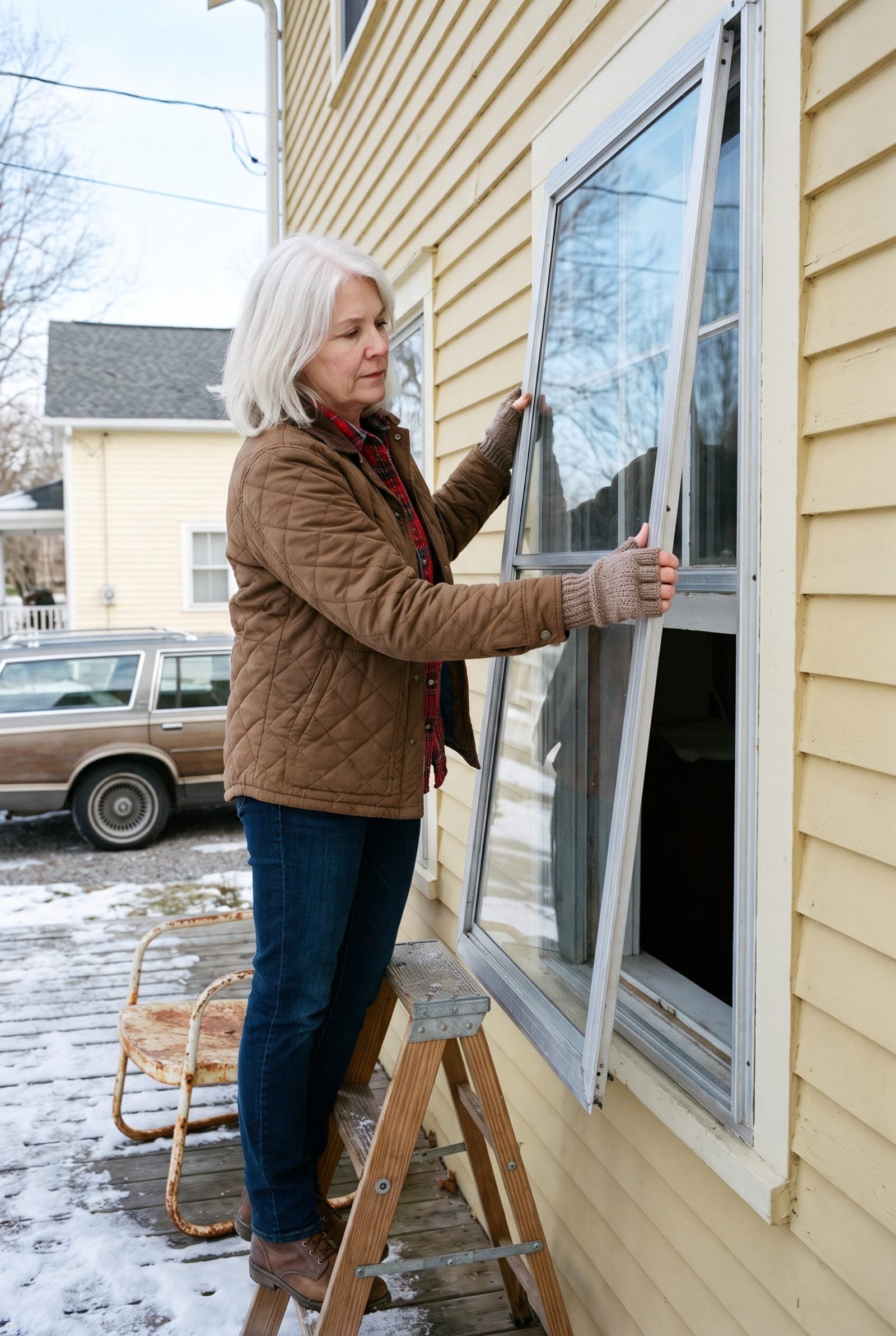
Storm windows were a seasonal chore nobody looked forward to. The heavy outer panes lived in the garage all summer, leaning against a wall, and come October somebody had to haul them up a ladder and wrestle each one into its track.
They weren’t light. They weren’t easy. But that second layer of glass made the difference between a window that frosted over and one that held, and you knew winter had officially arrived when the storms went up.
39. Clear Plastic Window Film Was Shrunk Tight With a Hair Dryer
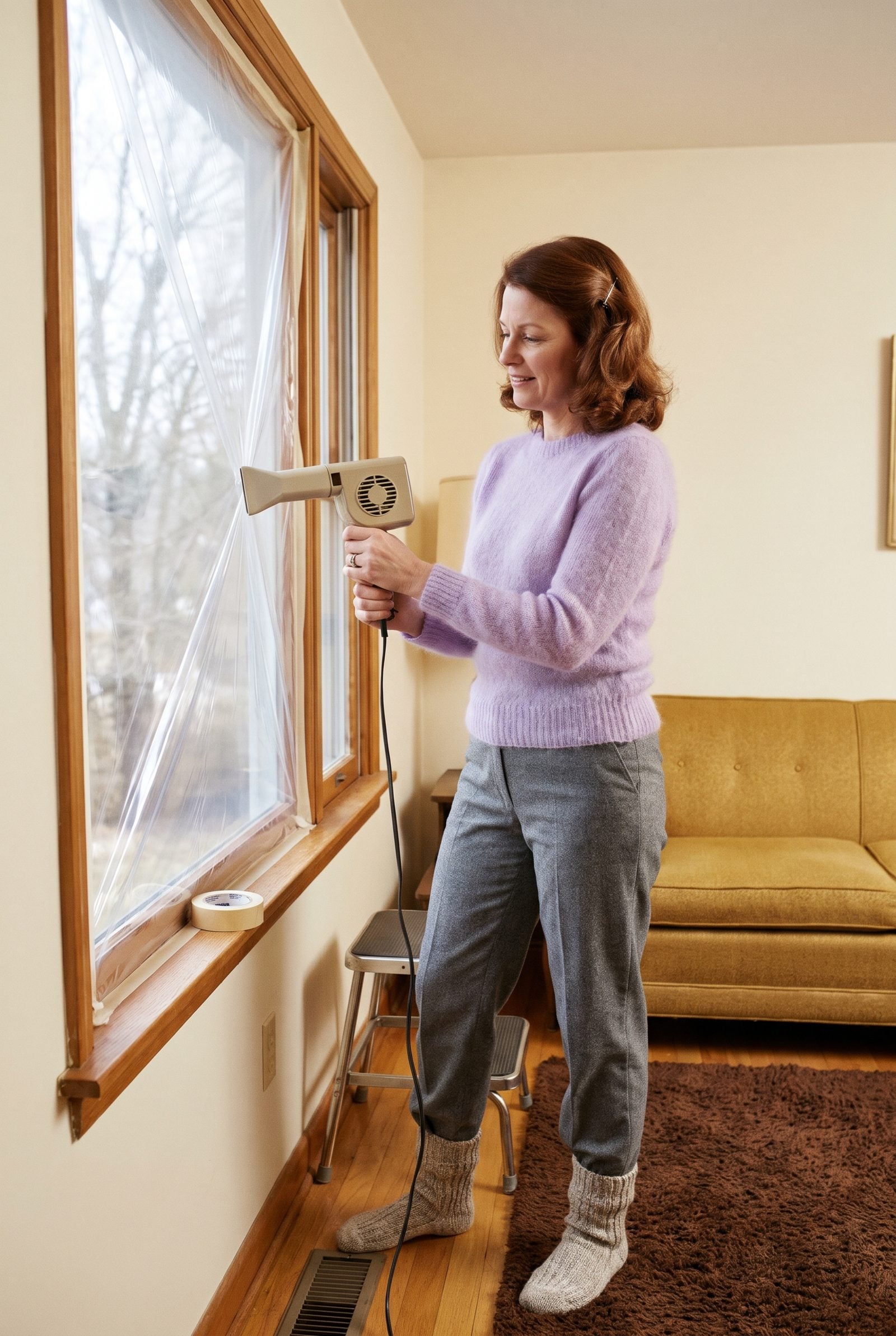
This one felt like magic the first time you saw it. You taped a loose, baggy sheet of clear plastic over the inside of a window, ran a hair dryer across it, and the whole thing pulled drum-tight and nearly invisible.
The plastic trembled a little when the wind hit the glass behind it. You could see the trees through it, slightly wavy. Not pretty up close — but it sealed the room against the draft until the first warm week of spring.
38. Heavy Drapes Were Closed as Soon as the Sun Went Down

The moment the light outside went blue, somebody got up and pulled the drapes. Not for privacy. For warmth. Those heavy lined curtains were a wall of fabric between the cold glass and the room.
Thick harvest-gold or avocado, floor-length and dense, they trapped a layer of still air against the window. The house felt instantly cozier the second they closed, the evening sealing itself in behind the fabric.
37. Frost on the Inside of a Bedroom Window Wasn’t Unusual
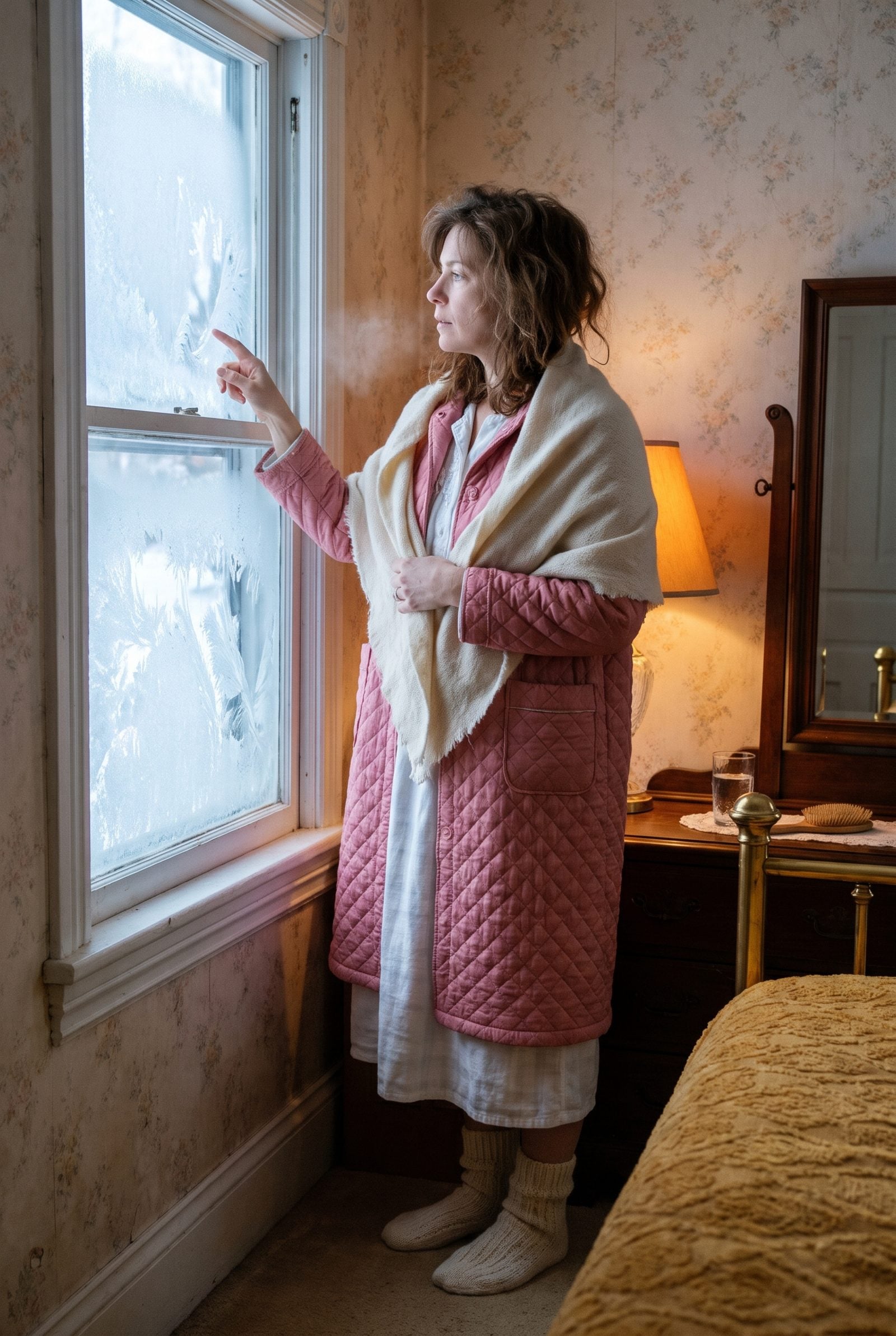
You woke up and the window had grown ferns overnight — delicate white frost spreading across the inside of the glass in feathery patterns. Not the outside. The inside.
It meant the bedroom had dropped below freezing against the single-pane glass while you slept. You’d scratch your name into it with a fingernail, watch it melt into beads, then dash to get dressed before your courage failed. That frost tells you how cold these houses really got, and how much we took it in stride.
Explaining why frost forms on the inside of window glass, a self-build and renovation expert says “Given that cooler air holds less water than warmer air, the cooler the internal temperature of your home, the more likely condensation is to form on glass panes.”
36. Aluminum Foil Behind a Radiator Was Supposed to Reflect Heat
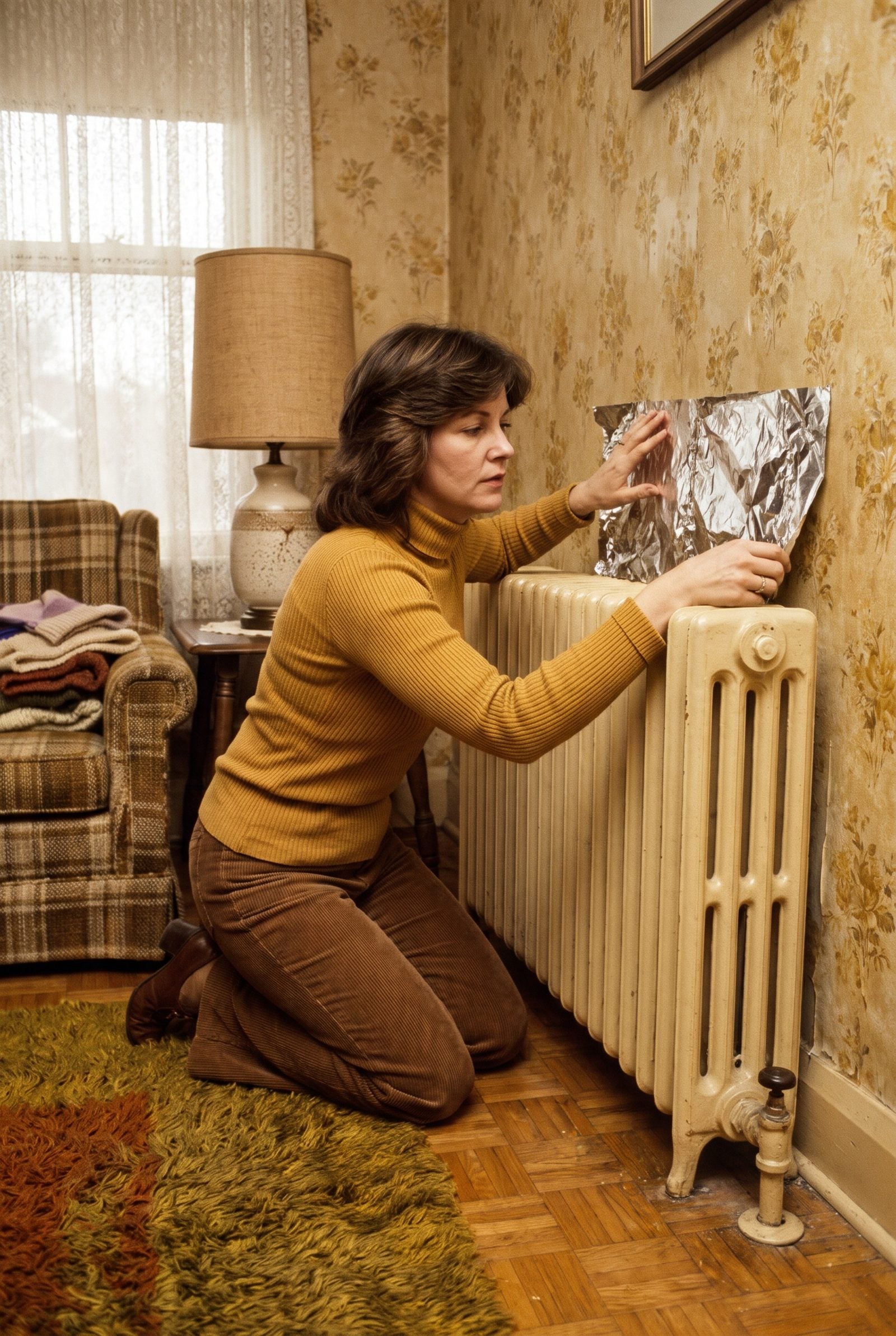
Everyone knew someone who swore by it. You tore off a length of foil, shiny side out, and wedged it behind the radiator, convinced the heat would bounce back into the room instead of soaking into the cold outer wall. The logic felt almost scientific, which is exactly why it caught on.
The foil crinkled every time the radiator ticked and expanded, and by spring it had usually slumped halfway down the wall. But in a decade of climbing fuel bills, any trick that cost pennies felt like a small victory worth repeating.
Arguing that homemade radiator reflectors really do send heat back into the room, a longtime steam-heating expert advises “A simple way is to tape or glue aluminum foil to sheets of cardboard and then tack it to the wall behind the radiator.”
35. The Floor Register Became the Most Coveted Spot in the House
You still remember planting yourself directly over the furnace register. The warmest square foot in the entire house, and siblings fought over it with the seriousness of a border dispute.
Standing on the metal grate too long left a waffle pattern pressed into your socks. Nobody cared. The register was where you got dressed on frigid mornings, where the dog claimed a spot, where you lingered until the furnace cycled off and the heat drained away.
34. The Energy Crisis Helped Bring Wood-Burning Stoves Back
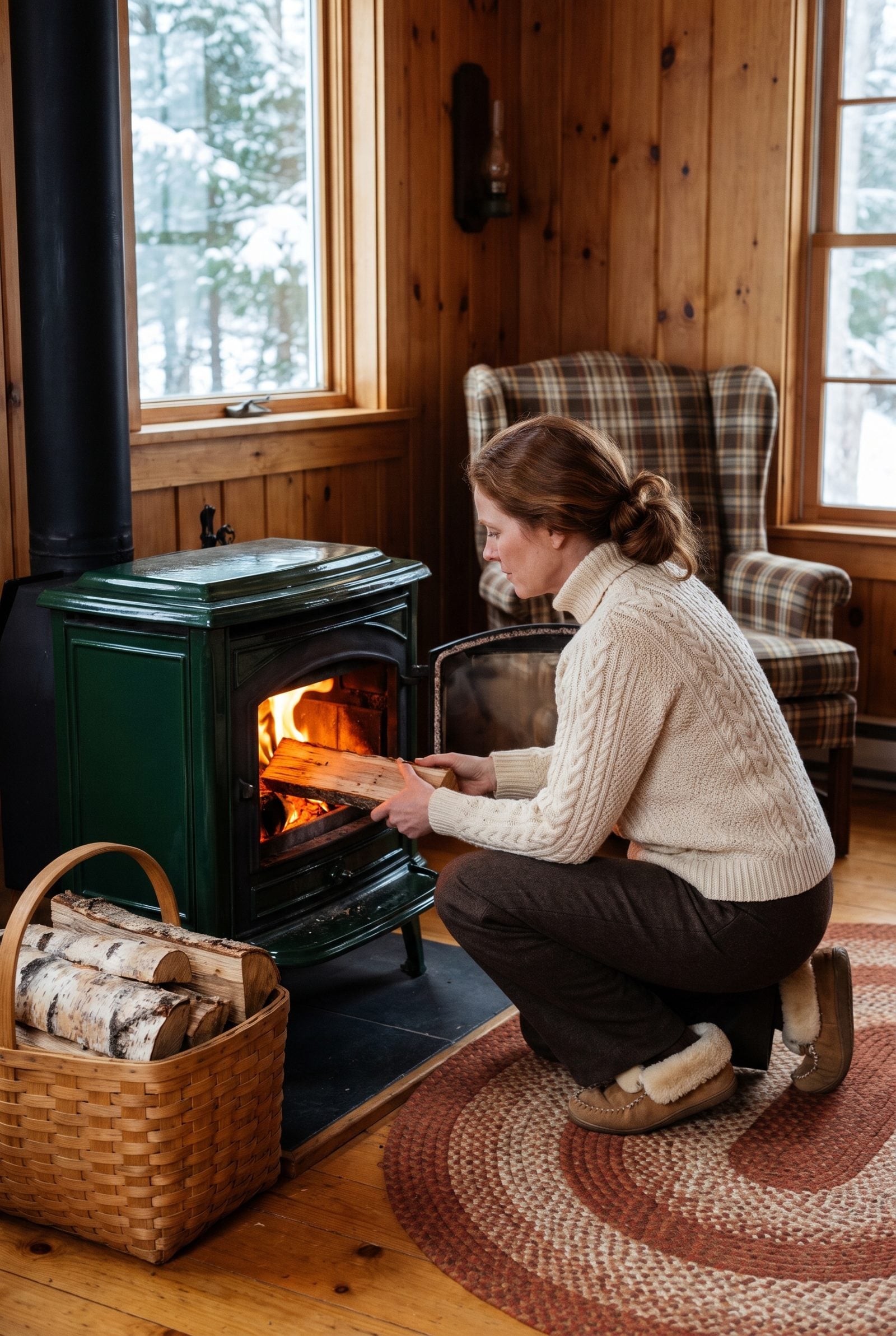
When oil prices shot up, the wood-burning stove walked right back into American living rooms. Cast iron that had sat forgotten in barns suddenly looked like the smartest investment a household could make, and catalog companies could barely keep them in stock.
The ritual was its own warmth. Splitting kindling, feeding the firebox, adjusting the damper until the room held a steady heat no radiator ever matched. You learned which logs burned slow and which spat sparks. That faint woodsmoke clung to sweaters and became, for a lot of families, the smell of the whole decade.
Looking back at the history of the wood stove, a fireplace and stove retailer notes “The 1970s energy crisis caused a huge surge in popularity for wood stoves.”
33. Some Households Still Shoveled Coal Into Basement Furnaces
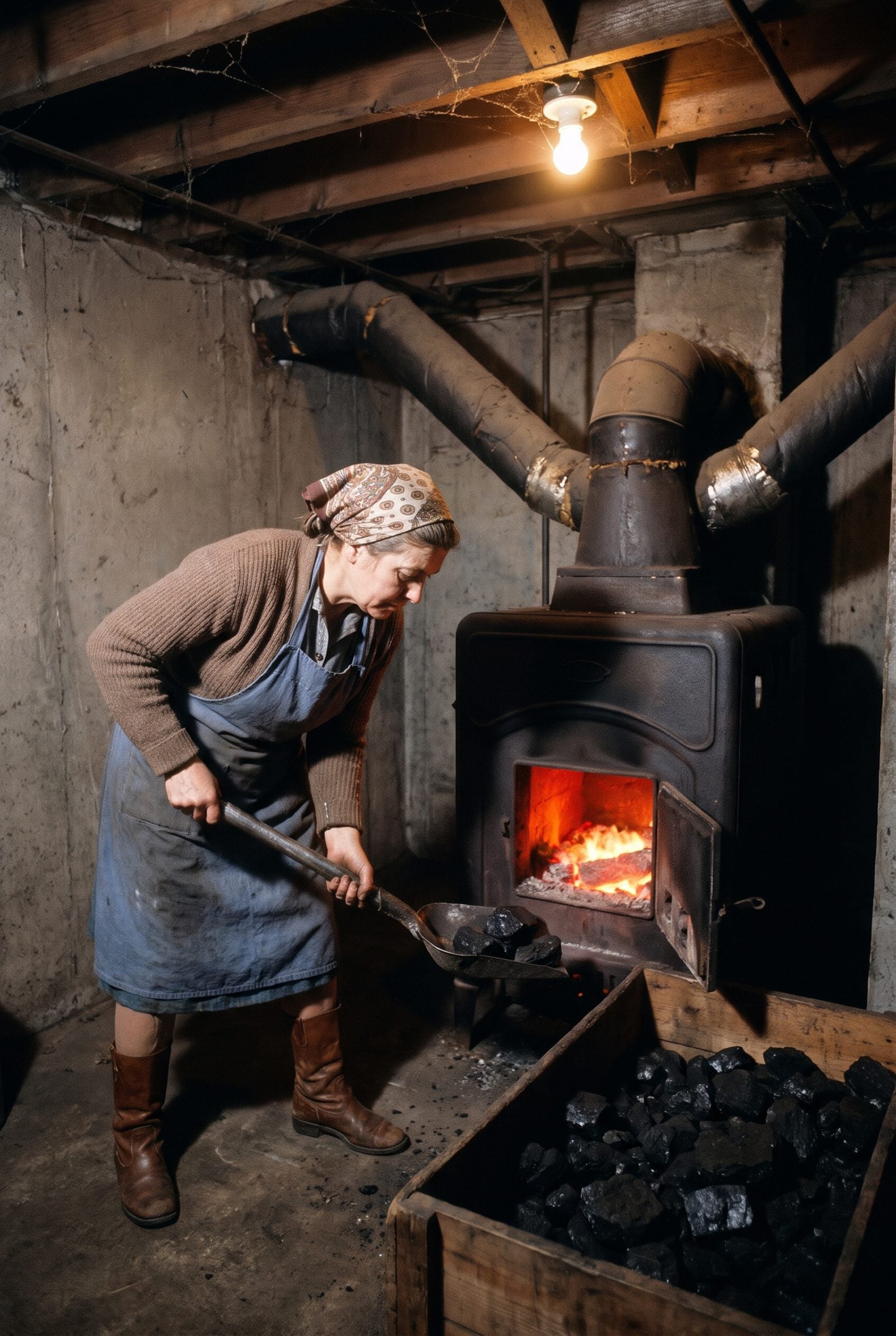
Not every house had moved on. In older neighborhoods, the morning still began with a trip to the basement, a shovel, and a coal bin that left black dust on everything it touched. You banked the fire at night and stoked it before dawn so the radiators upstairs would clank to life.
Coal heat was heavy, physical work that nobody romanticized at the time. The grit got under fingernails and into the laundry. But it threw a deep, steady warmth, and there was a quiet pride in keeping that furnace fed all winter long.
32. A Working Fireplace Was Treated as a Practical Heat Source
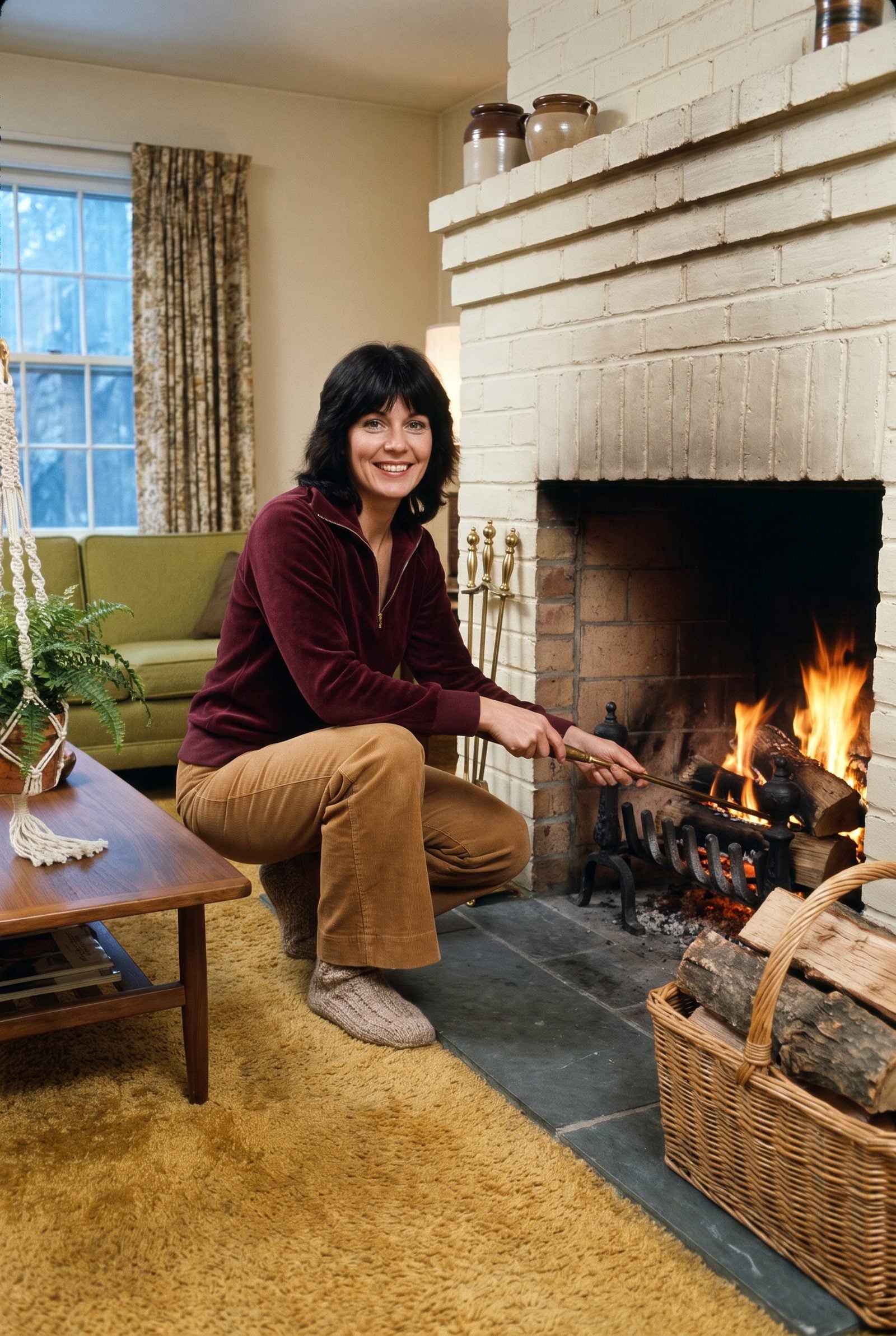
The fireplace wasn’t a decorative afterthought or a backdrop for holiday photos. It earned its keep. Families settled into the living room and let a good oak fire carry them through the evening, gathering close enough to feel the heat on their shins.
You picked up the craft without ever calling it one. Stacking logs with air between them, keeping the flue open, knowing when to add a split and when to let it burn down. That crackle and the woodsmoke made the whole living room feel like it was holding its breath against the cold settling outside the window.
31. Portable Kerosene Heaters Warmed One Room at a Time
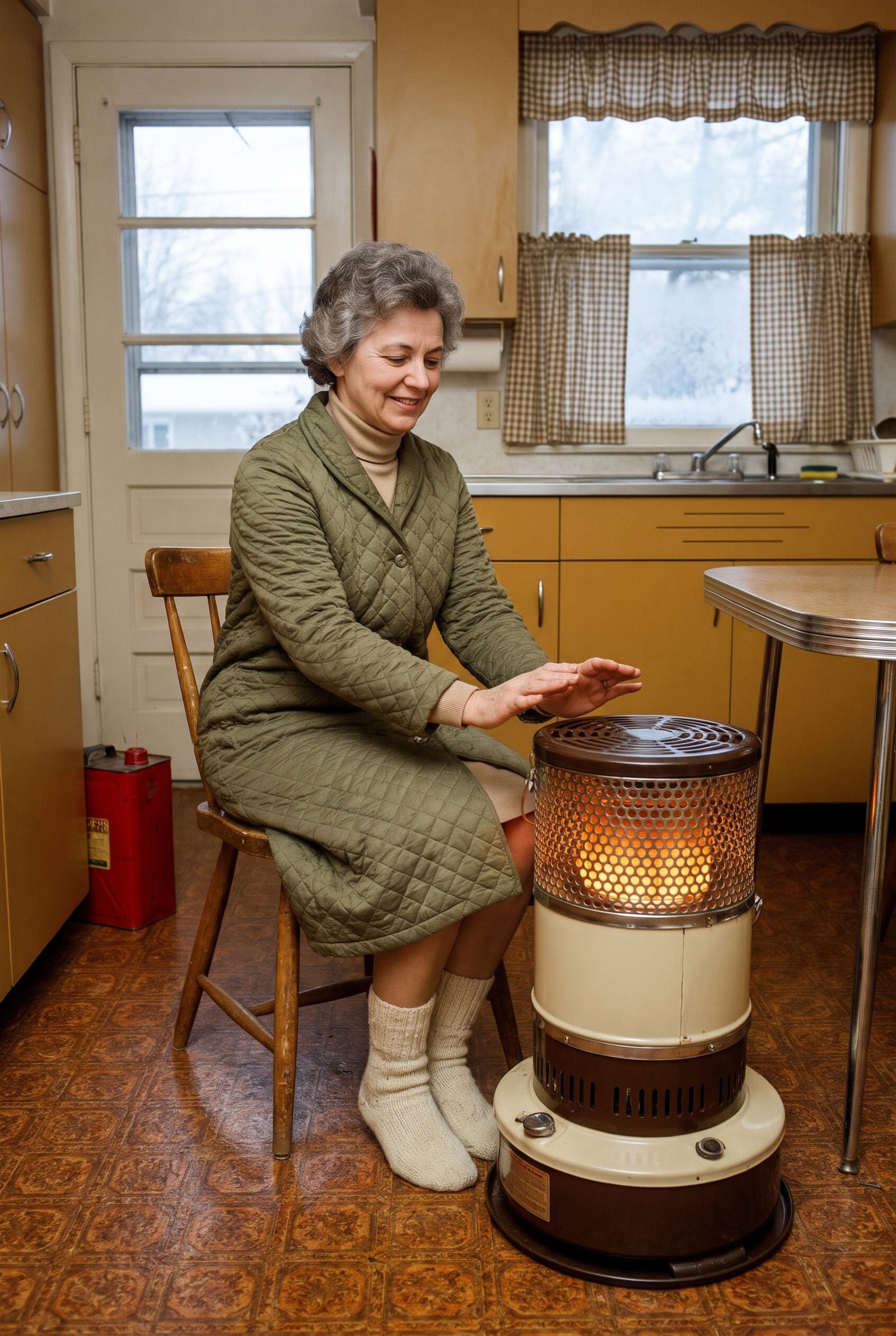
You dragged it into whatever room the family actually lived in and shut the door on the rest of the house. The kerosene heater glowed orange through its metal cage and threw out a surprising amount of heat for its size, along with a distinct smell that meant winter had arrived.
Filling it was a careful business. The red can, the funnel, the whiff of fumes that lingered. You cracked a window and nobody questioned it. One warm room felt like plenty when the hallway was cold enough to see your breath.
30. Electric Space Heaters Glowed With Exposed Heating Coils
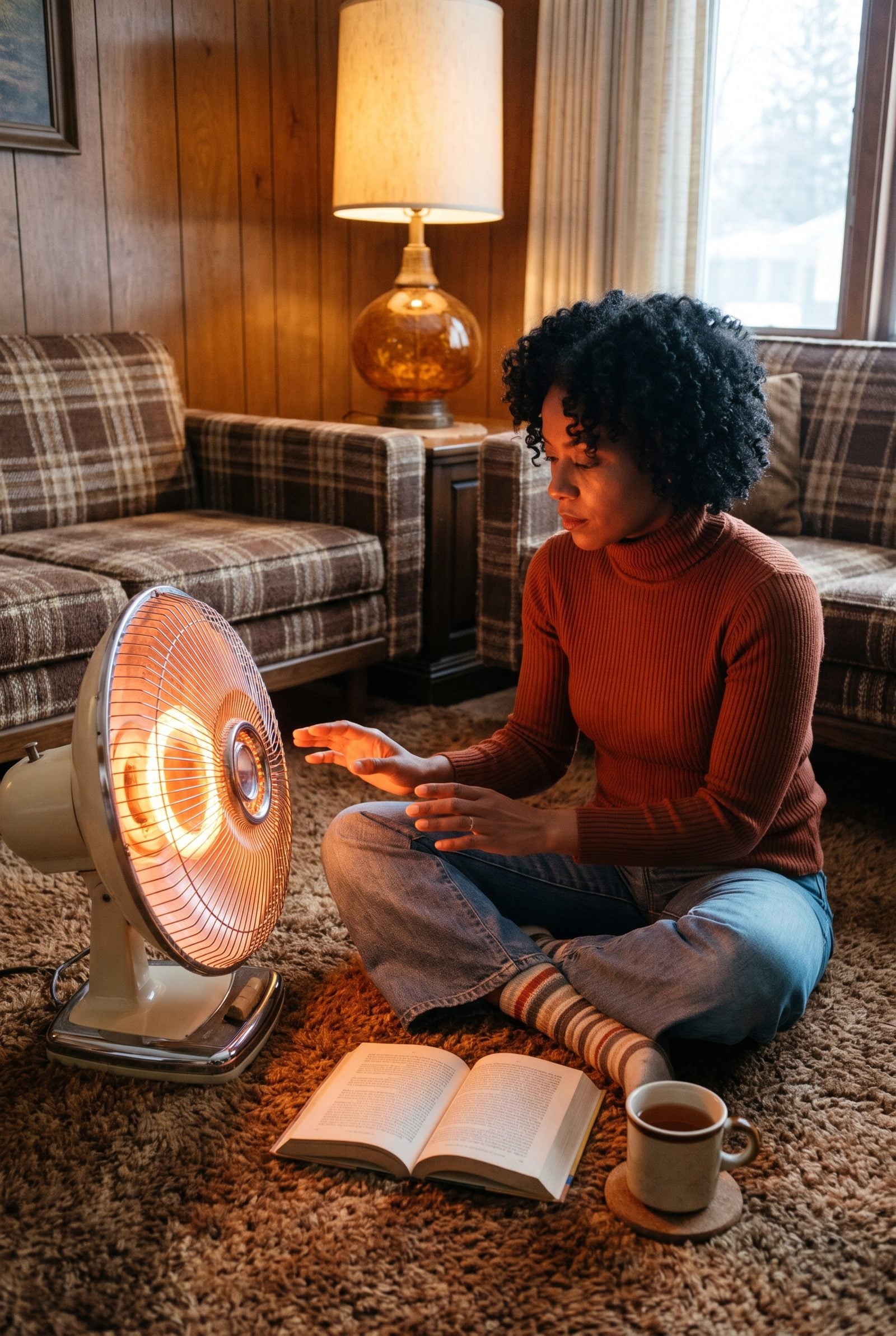
The coils went from dark to bright orange in seconds, and you parked yourself right in front of it like a cat. Those parabolic chrome models with the exposed element threw heat in a narrow, almost scorching beam, and you learned the exact distance that felt toasty without singeing your shins.
Safety was more of a suggestion back then. No tip-over switches, no cool-touch casing, just glowing metal behind a thin wire guard. You never, ever draped a sock over it to dry. Everyone learned that lesson exactly once.
29. Families Left the Oven Door Open After Baking to Release the Heat
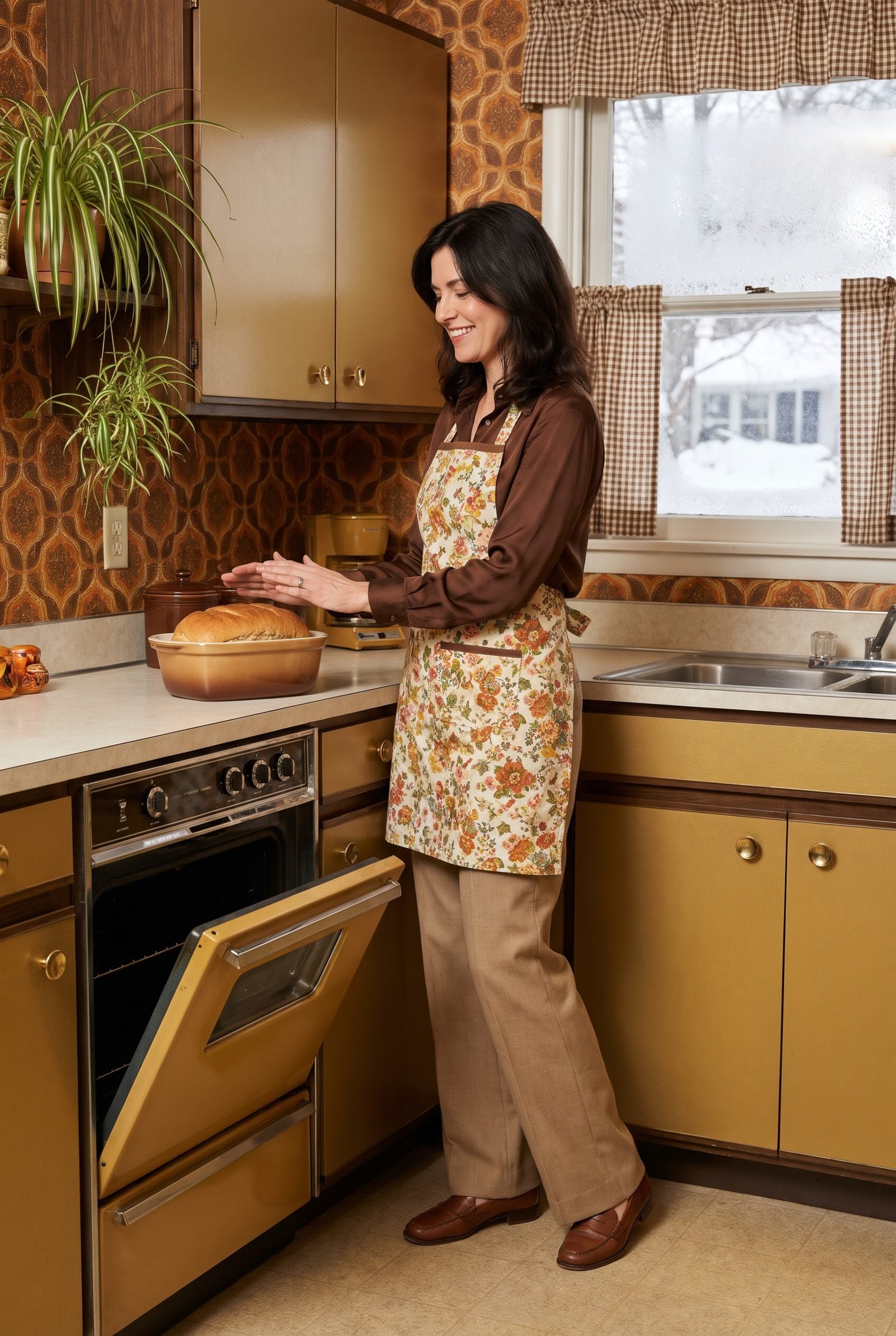
The baking was done, but the heat was too good to waste. You cracked the oven door and let all that warmth roll out into the kitchen, and for an hour the room smelled like bread and stayed the coziest spot in the house.
Nobody thought twice about it. The kitchen pulled double duty as the warm room, and gathering there after dinner felt natural when the rest of the house had gone cold. A little free heat, already paid for, drifting out of the oven while you washed up.
28. Hot-Water Bottles Warmed Beds Before Anyone Climbed In
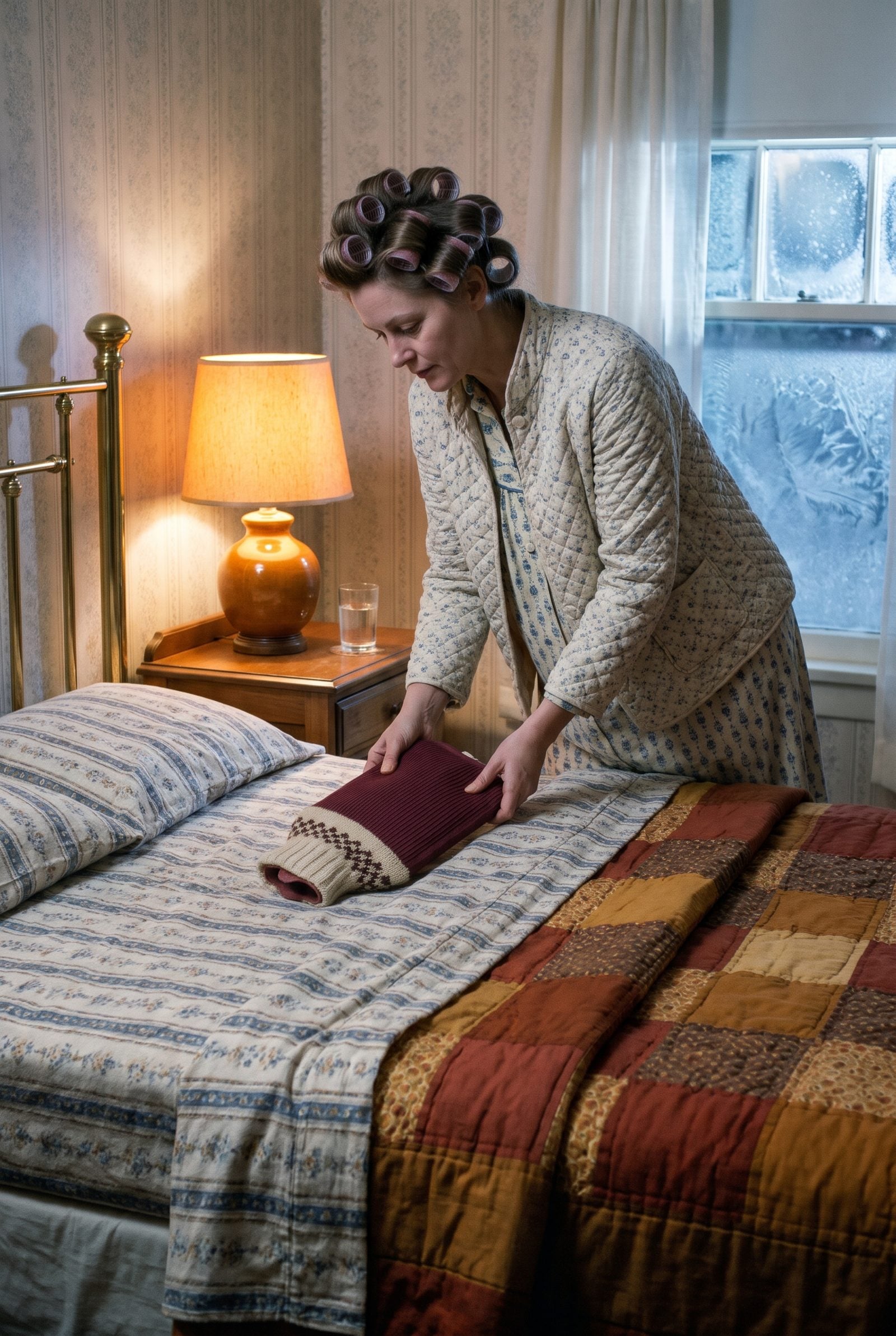
You filled a hot-water bottle, buttoned it into its knitted cover, and laid it in the bed a good while before bedtime so the sheets wouldn’t shock you cold. By the time you climbed in, the warmth had spread right through the bed.
The best covers were knitted wool, often made by hand, because bare rubber against your toes was no treat. You wrapped up in your quilted dressing gown and smoothed the bottle down on the sheet beside the pillow, under the glow of the bedside lamp, while frost feathered the window. Come lights-out your hair was set in curlers and your feet were toasty under the patchwork quilt, a small comfort that got you through the coldest days of the year.
27. Electric Blankets With Simple Dial Controls and Almost No Safety Features
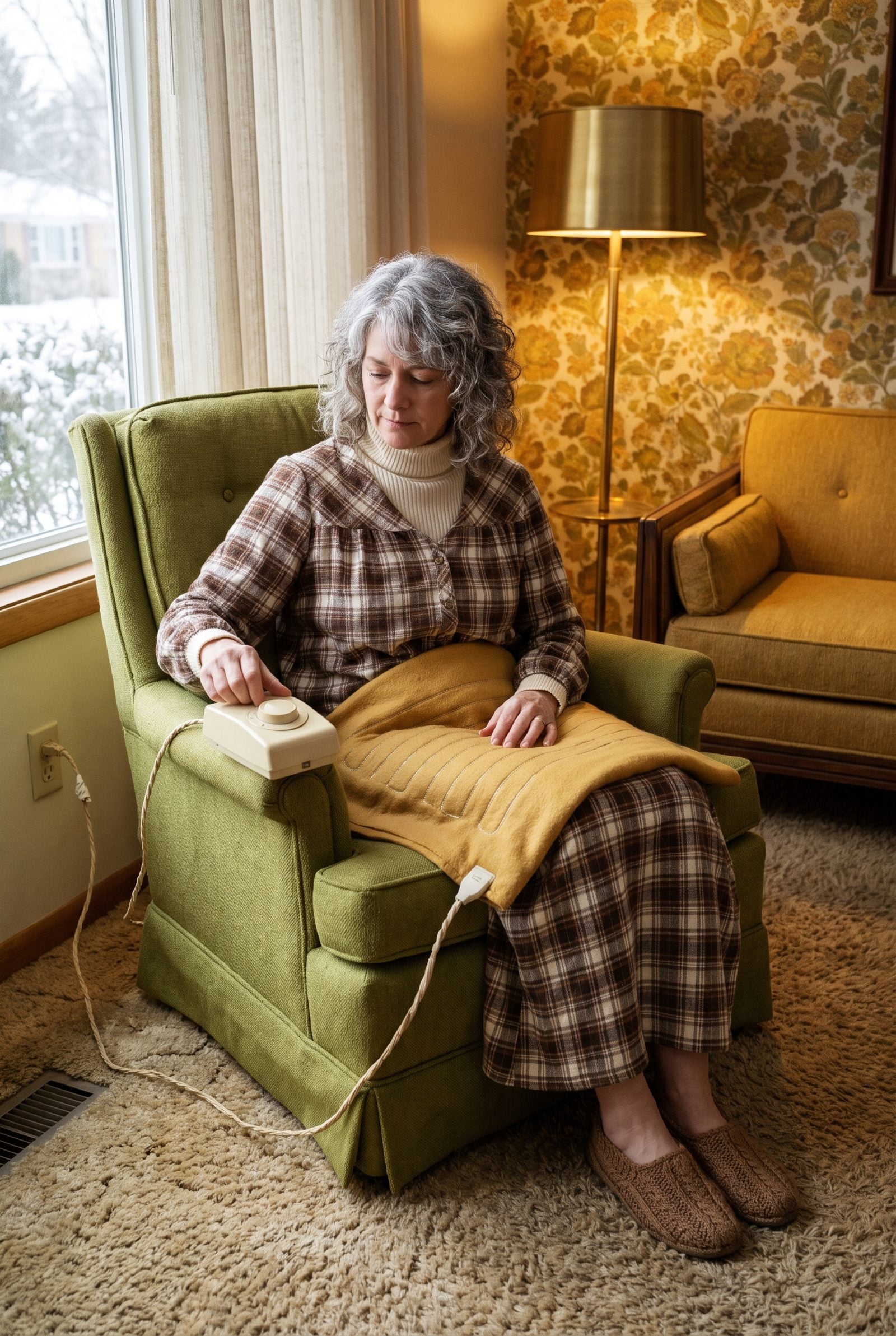
The dial went to ten and you trusted it completely. One setting, one worn cloth cord, and a plastic control box that got faintly warm in your hand — nobody thought twice about leaving it on all night.
These were the gold or pale-blue acrylic kind, the ones where you could feel the heating wires if you ran your palm flat across the weave. You pre-heated the bed before climbing in, then turned it down once your feet thawed. That first minute under a warmed blanket in a drafty house is a specific comfort central heating never quite replaced.
26. Flannel Sheets Came Out the Same Week the Clocks Fell Back
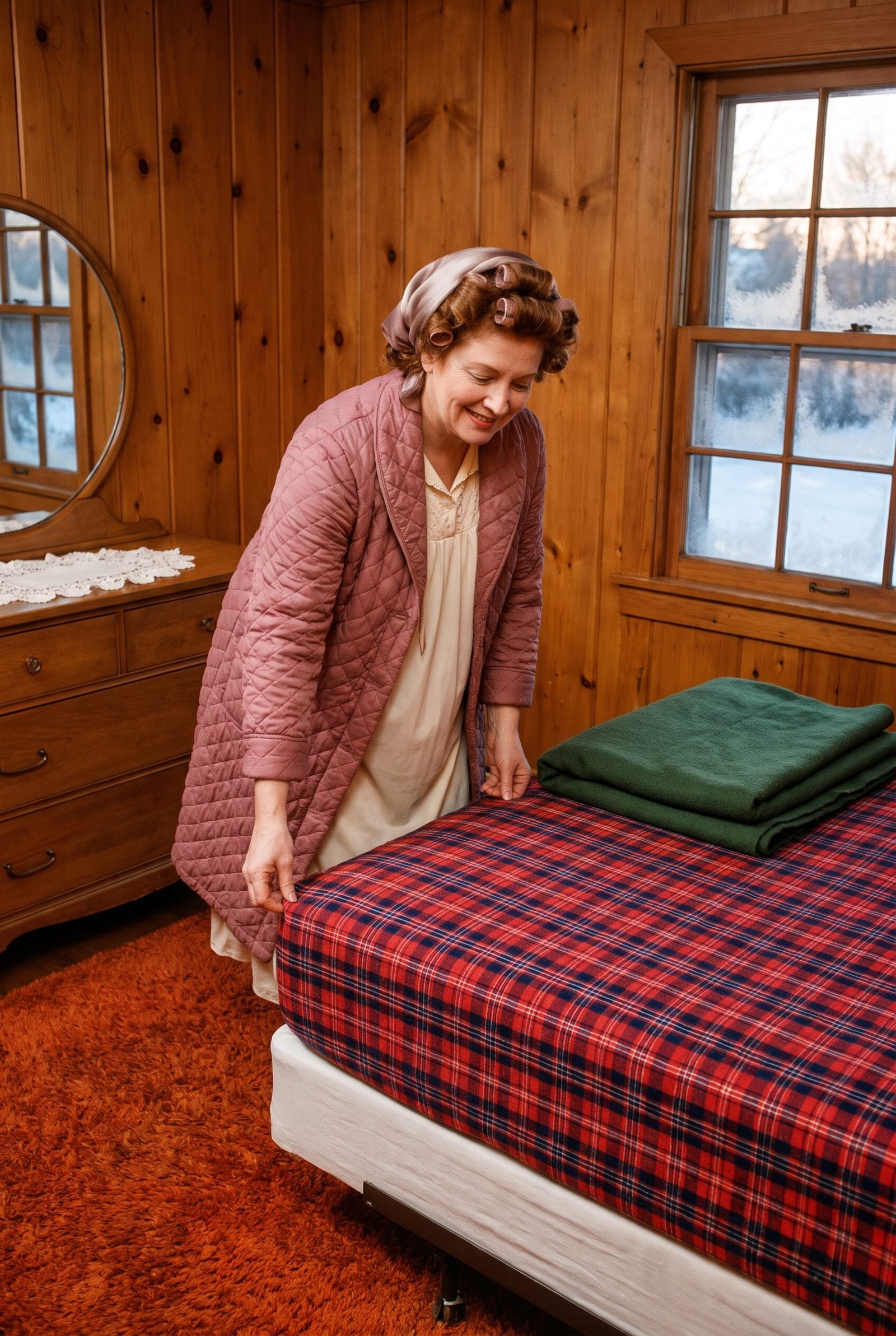
You knew winter had officially started when the flannel sheets came out of the cedar chest. The percale went away, and the soft brushed cotton came out smelling faintly of the drawer it had lived in all summer.
Tartan check was the standard print — red and navy, usually, or a muted green plaid. Climbing into flannel on the first truly cold night meant you didn’t flinch when your skin hit the sheet. For a few months, the bed stopped being a cold place you braced for.
25. Heavy Wool Blankets That Weighed You Down Instead of Floating Over You
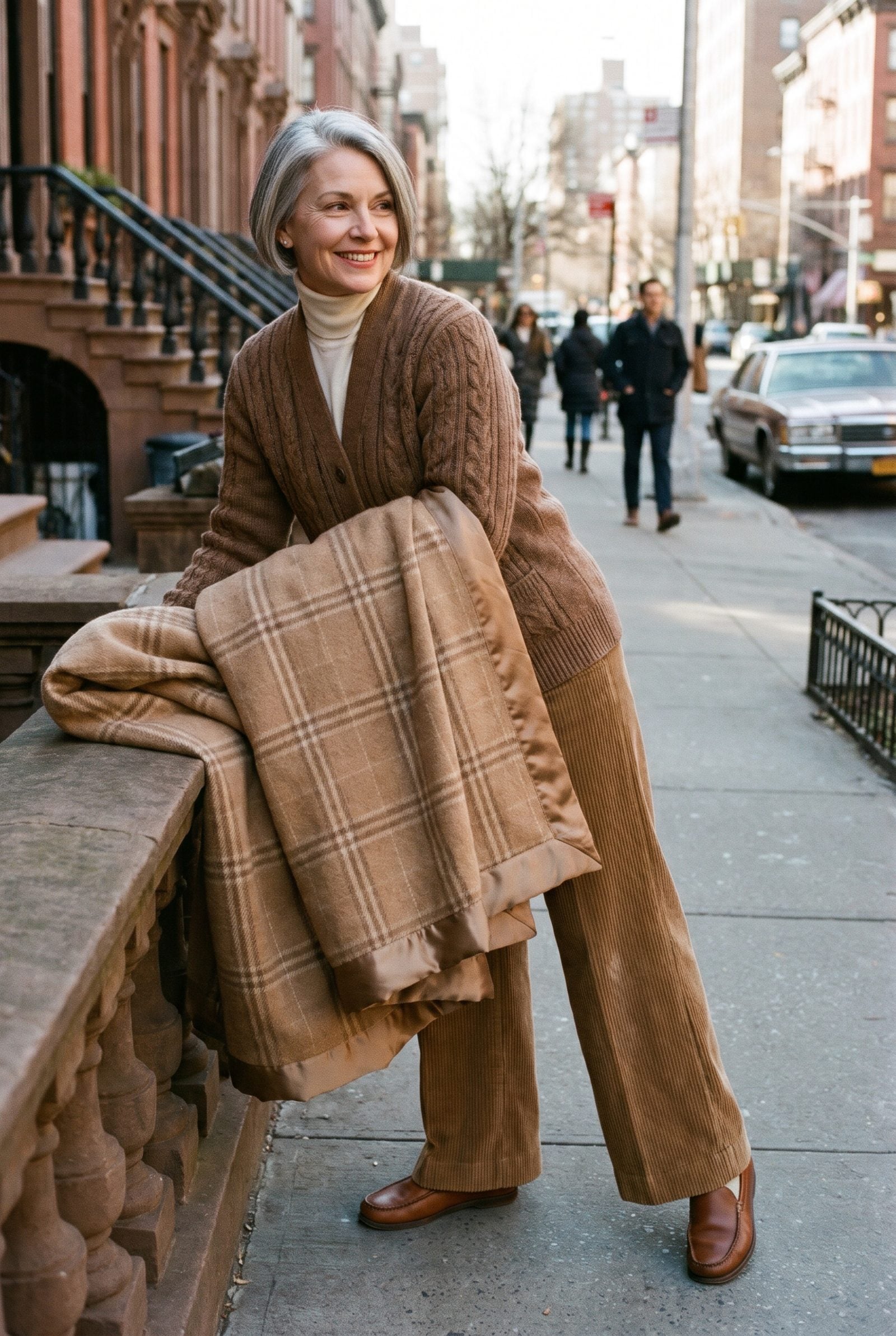
These blankets had heft. A good wool blanket pinned you to the mattress, and that weight was the whole appeal — decades before anyone sold the idea back to us with a fancy name.
Usually camel or grey, often with satin binding sewn along the top edge that went slippery-smooth with age. They scratched a little against bare skin, so you kept a sheet between you and the wool. They lasted decades, got passed down, and smelled faintly of mothballs every October when they reappeared.
24. Handmade Quilts and Crocheted Afghans Piled Three Deep
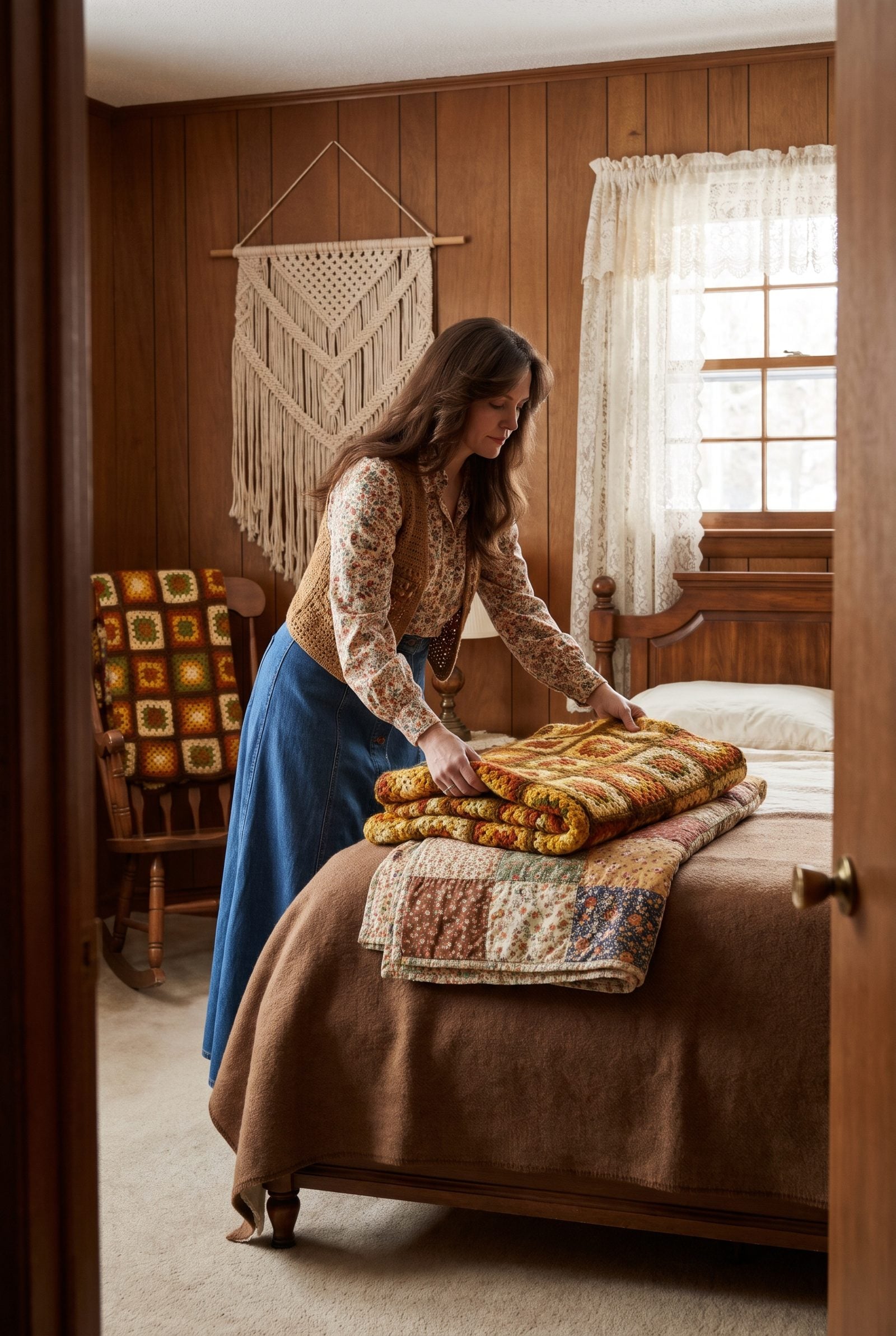
Somebody’s hands made these, and you knew whose. The granny-square afghan in gold, rust, and avocado. The quilt stitched from dress scraps you half-recognized. They piled up at the foot of the bed until getting under all of them felt like being tucked in by the whole family at once.
Every house had an afghan draped over a chair, ready to grab. The colors were loud, the yarn was acrylic and scratchy, and none of that mattered — these were the warmest thing in the house and the most loved, which was rarely a coincidence.
23. Thick Bed Socks Pulled On Before You Ever Got Under the Covers
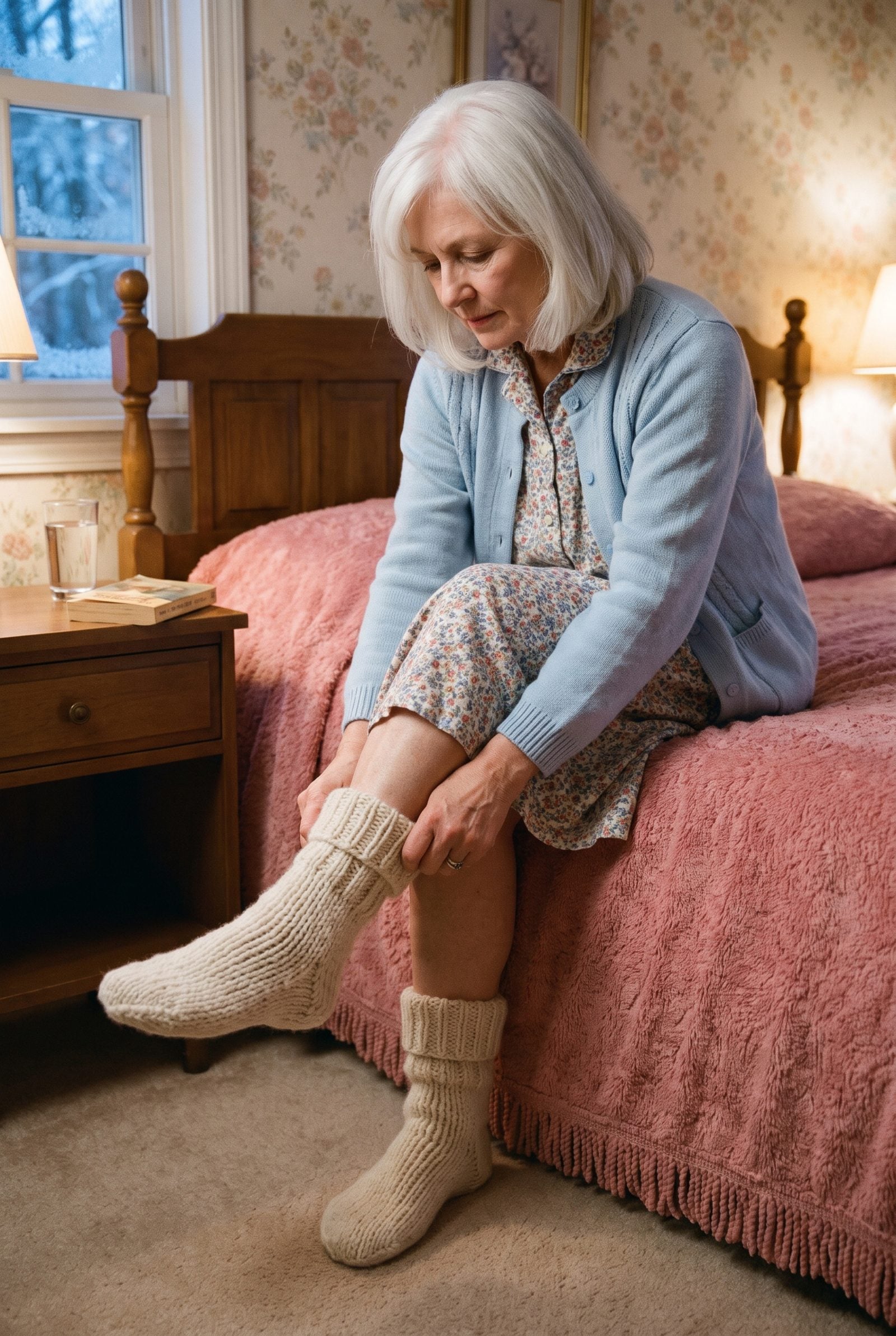
Cold feet could ruin a whole night’s sleep, so you put the socks on before you got in. Thick wool ones, usually hand-knit, with a ribbed cuff you folded down over the ankle.
They were the last thing on, and often the first thing kicked off at 2am when your feet finally warmed up. If you grew up in a cold bedroom you remember the exact ritual of it — socks, nightgown, and under the covers before the heat left your body.
22. The Quilted Robe That Went On Over Pajamas at the Breakfast Table
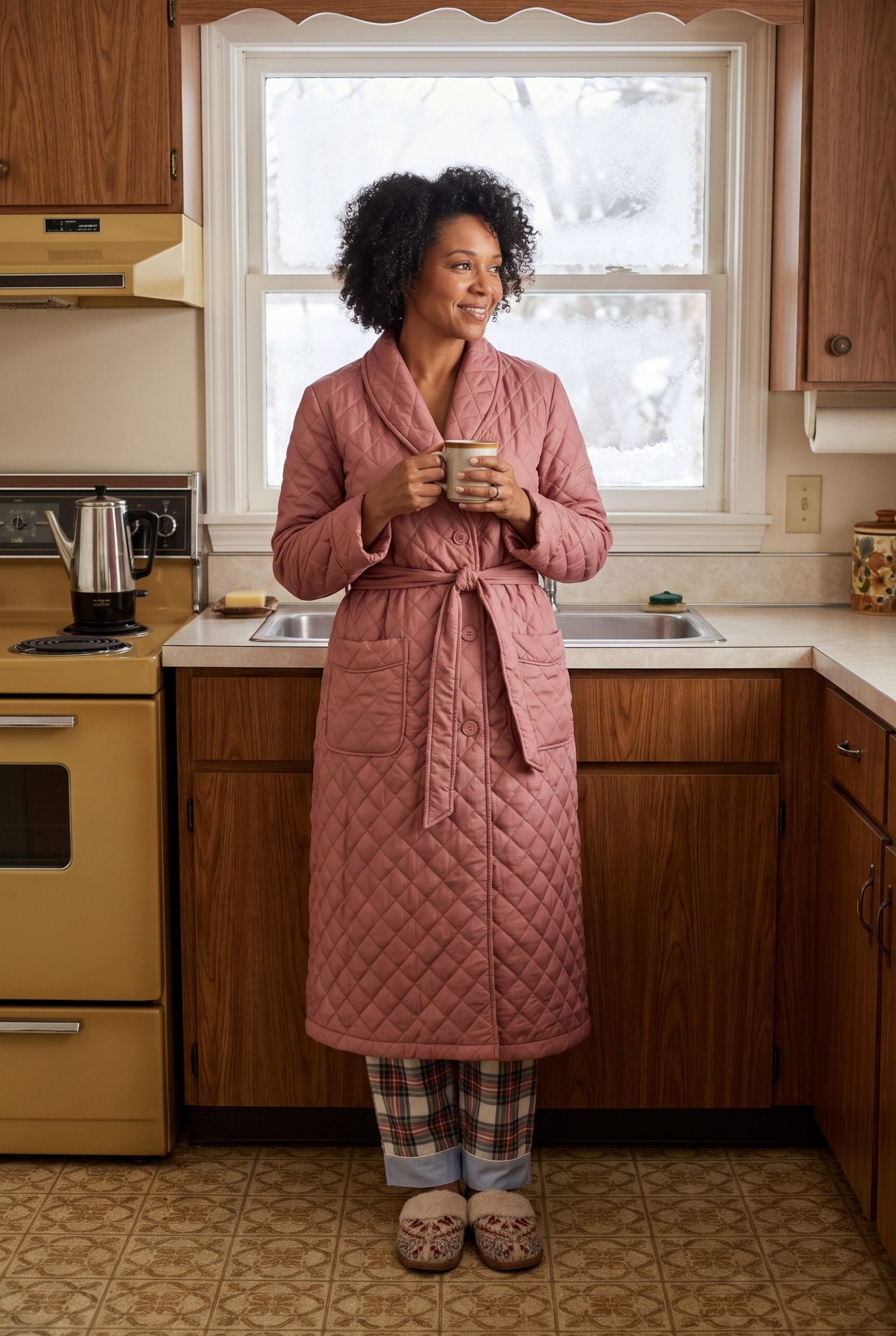
Breakfast happened in the robe. Quilted nylon, usually rose or powder blue, with a diamond-stitched shine and a tie belt that never stayed knotted. It went on over the pajamas, not instead of them, because the house hadn’t warmed up yet and wouldn’t for an hour.
The shawl collar framed the face and the length hit mid-calf, long enough to keep your legs out of the draft. This was the uniform of cold mornings, worn until the heat finally caught up with the kitchen — comfort as armor against a house that took its time waking up.
21. Waffle-Knit Thermal Underwear as a Hidden Base Layer
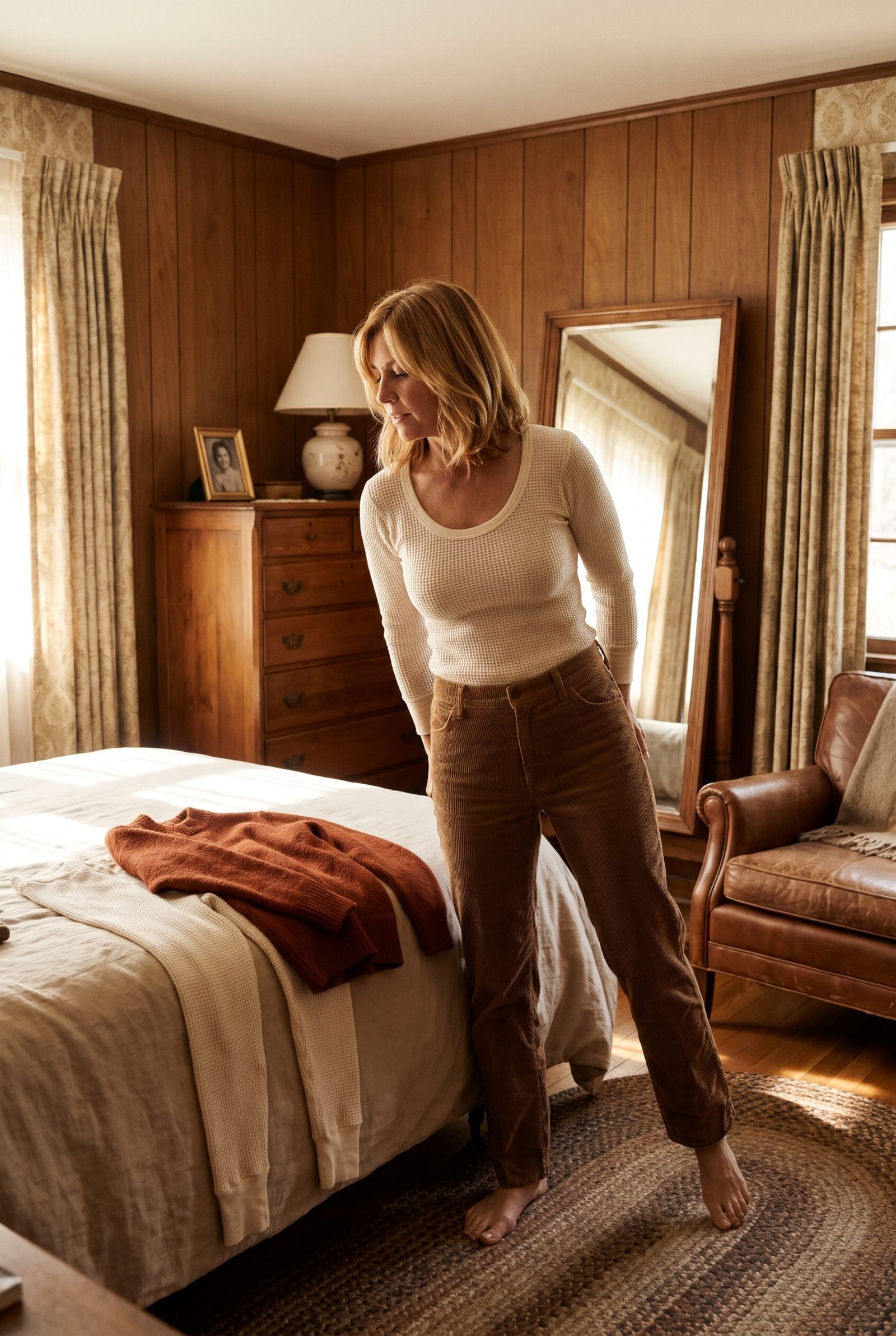
The secret weapon that started every outfit. Cream waffle-knit thermals, that honeycomb cotton weave, went on first thing, before the rust corduroys and the sweater waiting on the bed.
The long-sleeved top sat snug against the skin, trapping a layer of warm air in all those tiny pockets. It looked neat enough on its own, and once the sweater went over it you still knew it was there, and that quiet confidence got you through a cold office or a colder church. By evening the waffle texture had left faint marks on your skin — proof you’d dressed for the weather properly.
20. Pantyhose Worn Under Slacks for an Invisible Extra Layer
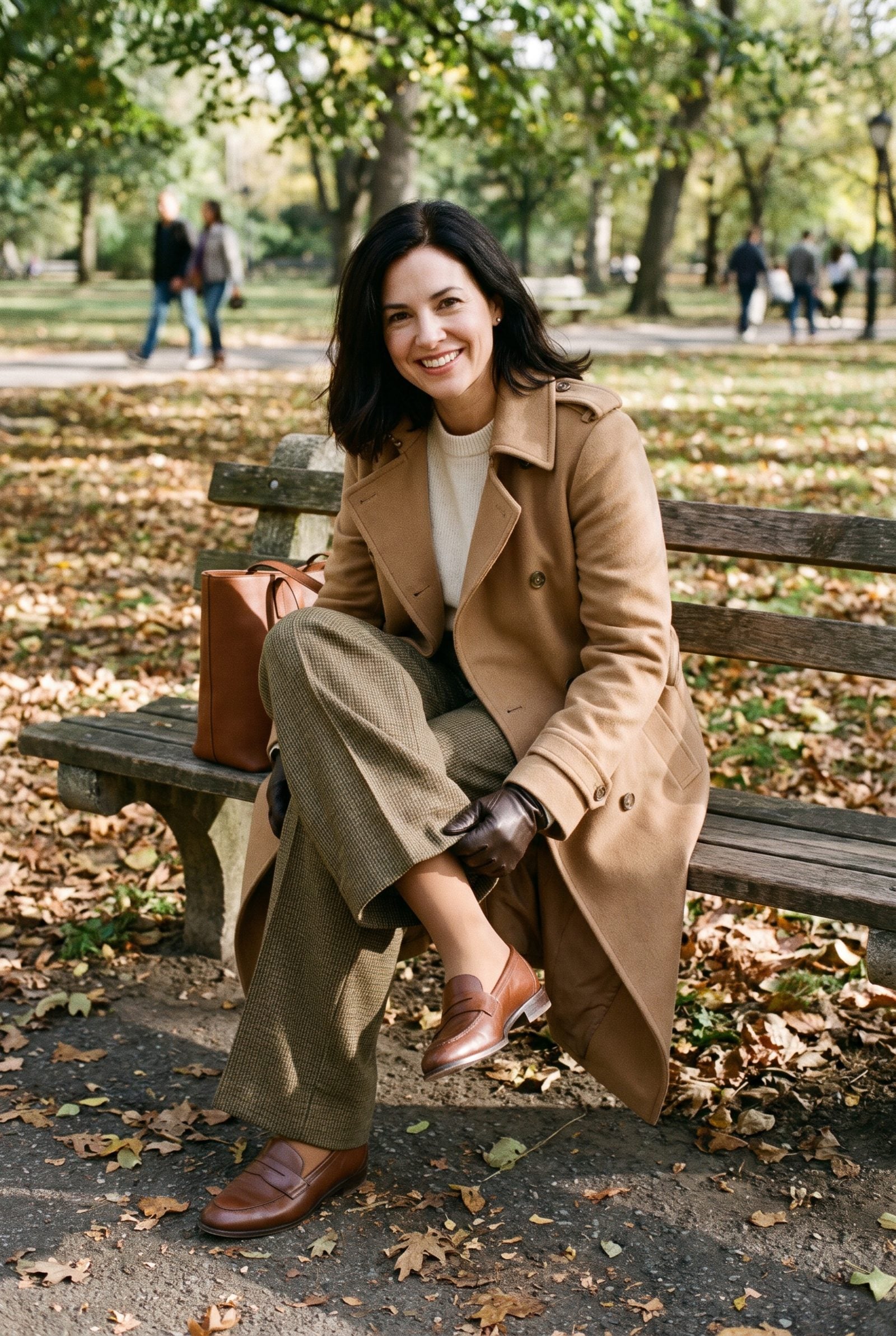
Under the slacks, always. A pair of sheer nude pantyhose went on first — invisible, but adding just enough warmth to make wide-leg wool trousers bearable on a cold commute.
Fussy? Sure, by today’s standards. But it made sense. Stockings cut the draft at the ankle and kept everything in place, and you’d never have admitted to anyone you were wearing them under your pants. That was part of the quiet competence of getting dressed in winter back then.
19. Opaque Tights That Made Winter Skirts Survivable

The skirt was non-negotiable, so the tights did the heavy lifting. Thick opaque ones in burgundy, forest, or plain black turned a winter skirt from an ordeal into something you could actually wear out the door.
Matched to a turtleneck and tucked under a wool A-line, these were the reason skirts stayed in rotation past October. Color commitment mattered — a deep burgundy pulled the whole look together where sheer hose never could. Warmth and polish in one pull.
18. The Turtleneck as Indoor Cold-Weather Armor
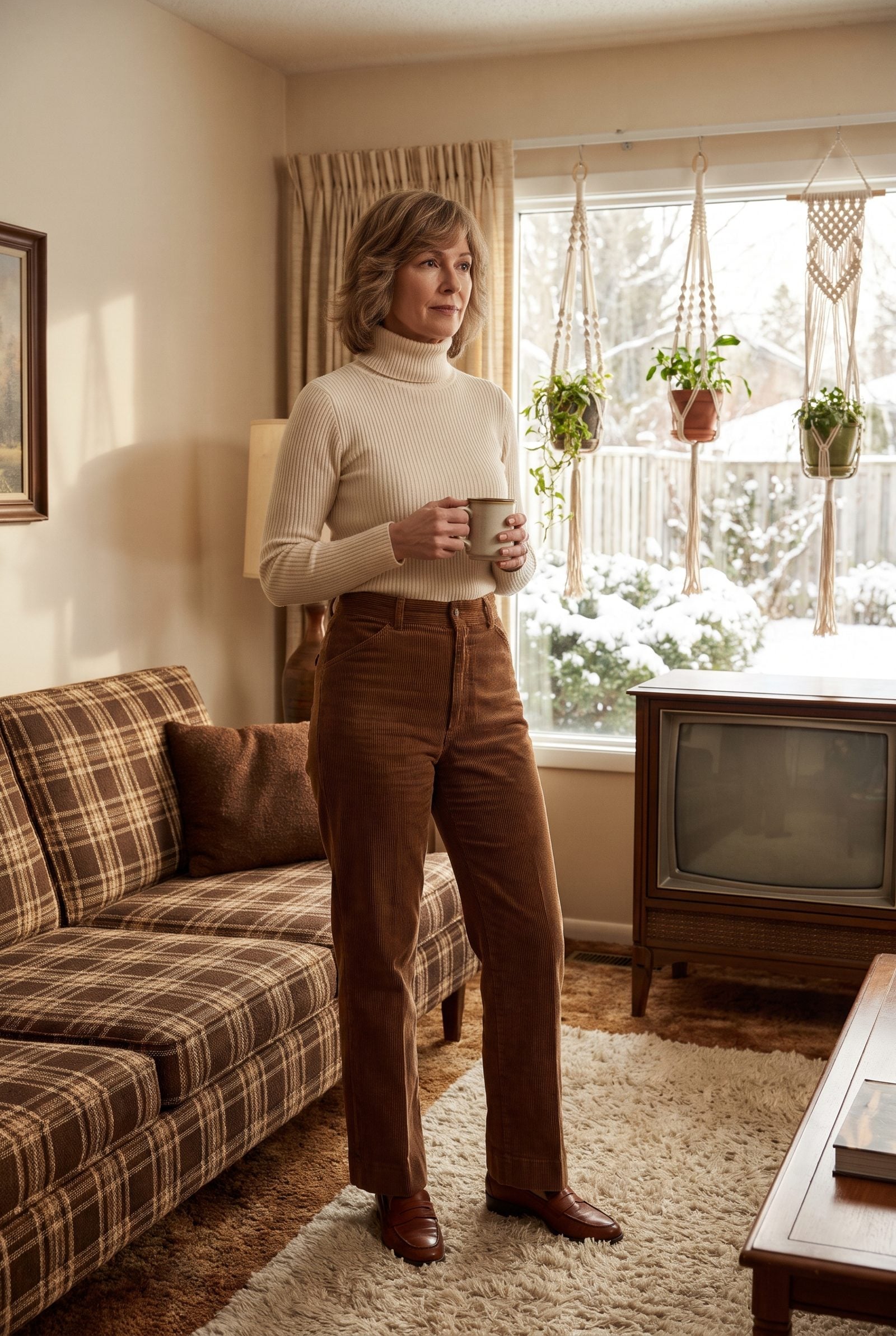
Before anyone layered strategically, there was the turtleneck — worn all day, every cold day. Cream, camel, rust, folded twice at the neck, and doing more to keep you warm than the thermostat you kept turned low to save money.
It worked alone or under a cardigan, tucked into cords or a skirt, and that high collar sealed off the one gap a sweater couldn’t reach. The fine-ribbed knit against the jaw became the feeling of being dressed for the season. A turtleneck said you were settled in for winter and not going anywhere cold. And that folded collar framing the face? Still one of the most quietly self-assured things you can put on.
17. A Cardigan Stayed Within Reach in Chilly Living Rooms
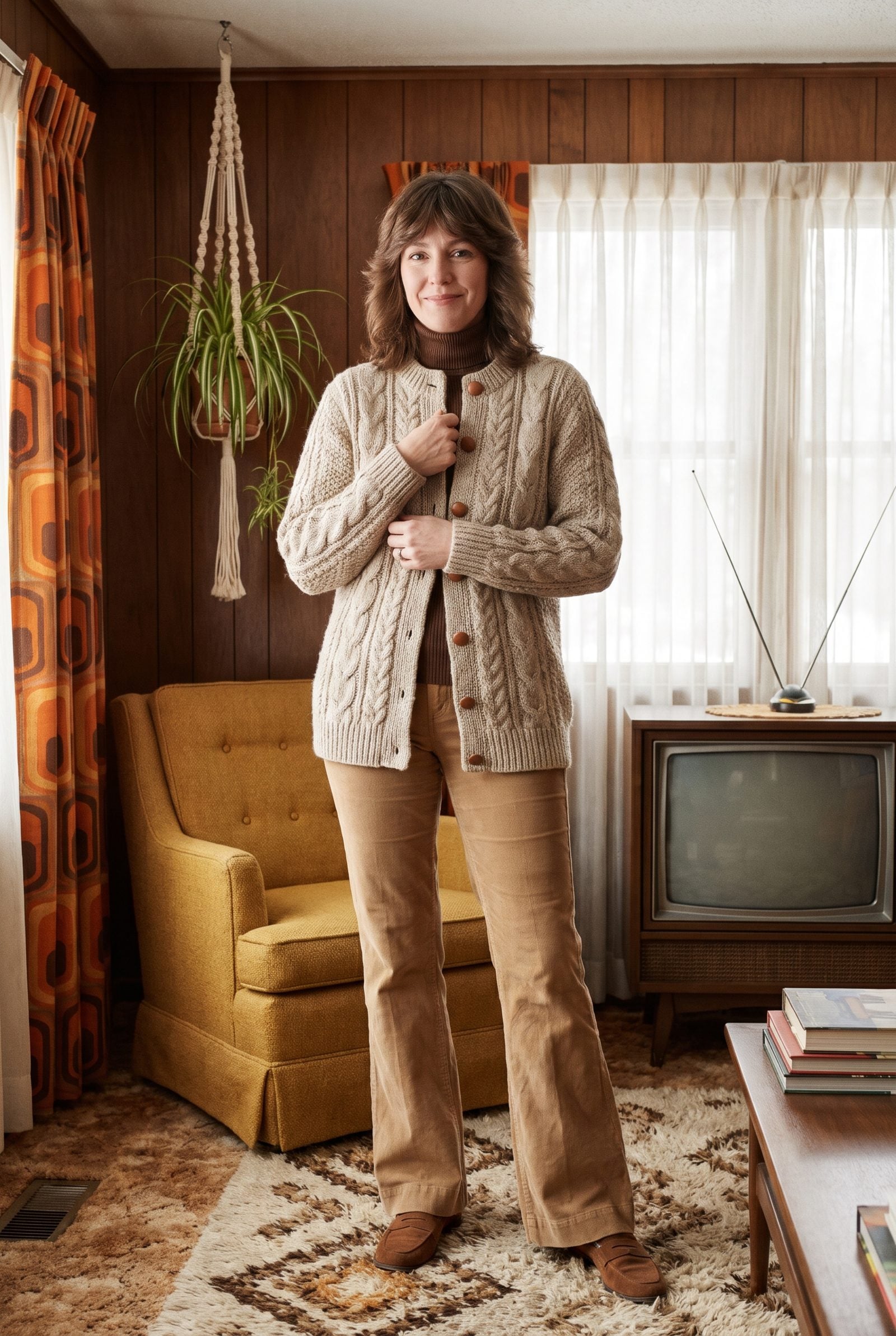
Every chilly living room had one draped over the arm of a chair, waiting. Families nudged the thermostat down to save on heating, and the oatmeal cable-knit cardigan became the thing you reached for without thinking twice.
Practicality wearing a comfort disguise. A hip-length chunky knit over a turtleneck let you add a layer the second the room went cold, no outfit change required. And the details sold it: leather buttons, deep pockets, sleeves long enough to pull down over your hands.
16. Real-Wool Pullovers Stayed Warm Even When They Felt Unbearably Scratchy
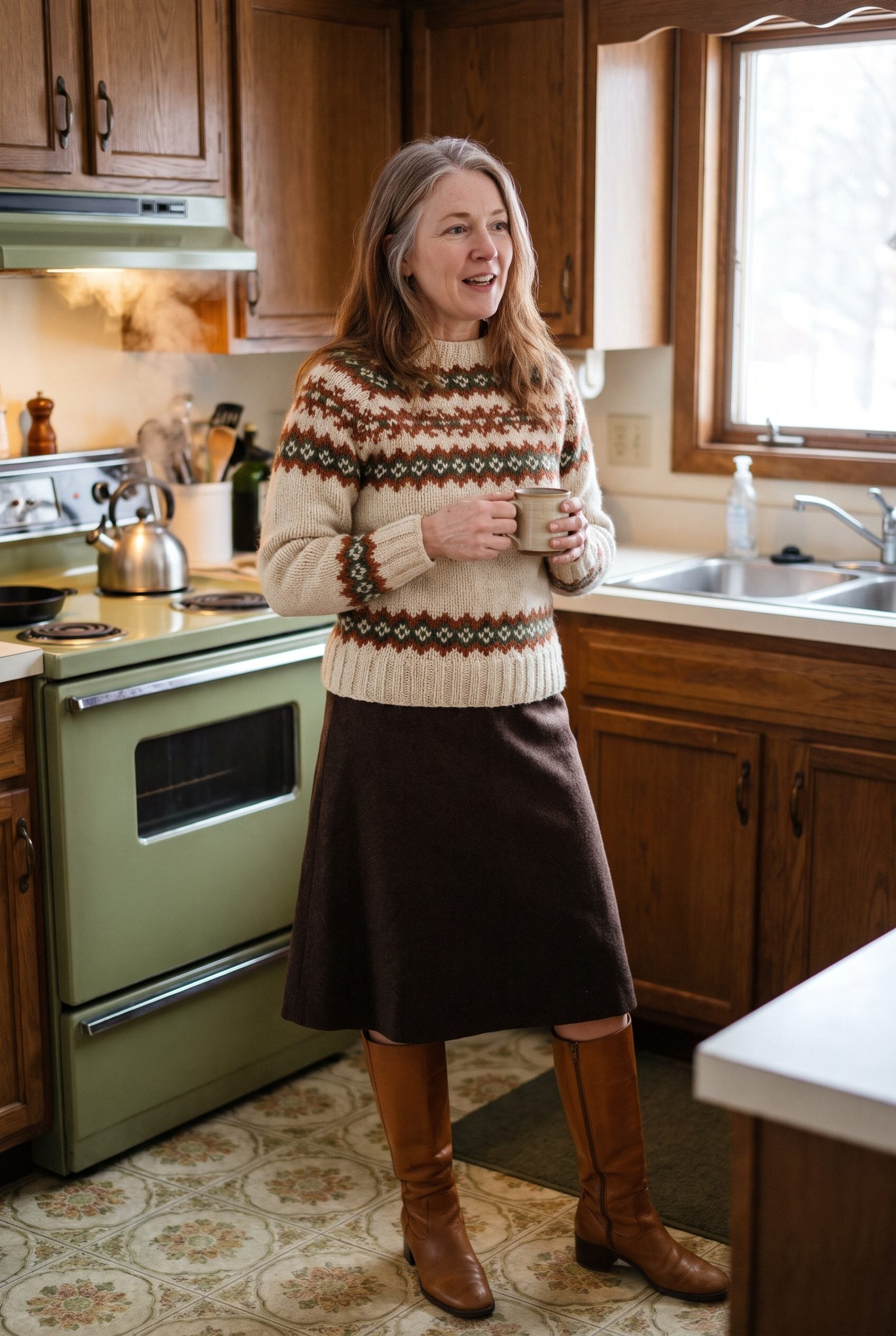
You remember the itch. Real wool against bare arms felt like a punishment, so you learned to slip a cotton tee underneath or roll a turtleneck up to your chin, because the scratch was the tax you paid for actual warmth.
Fair Isle bands, Aran cables, ski-lodge motifs knit across the chest. These sweaters held heat the way nothing synthetic could, and the texture play between a dense wool pullover and a smooth wool skirt gave the whole look real substance. They lasted years. They smelled faintly of lanolin when they got damp. Honestly, I still think a properly heavy wool sweater beats half the thin knits sold now.
15. Quilted Insulated Vests Added Warmth Without Bulky Sleeves
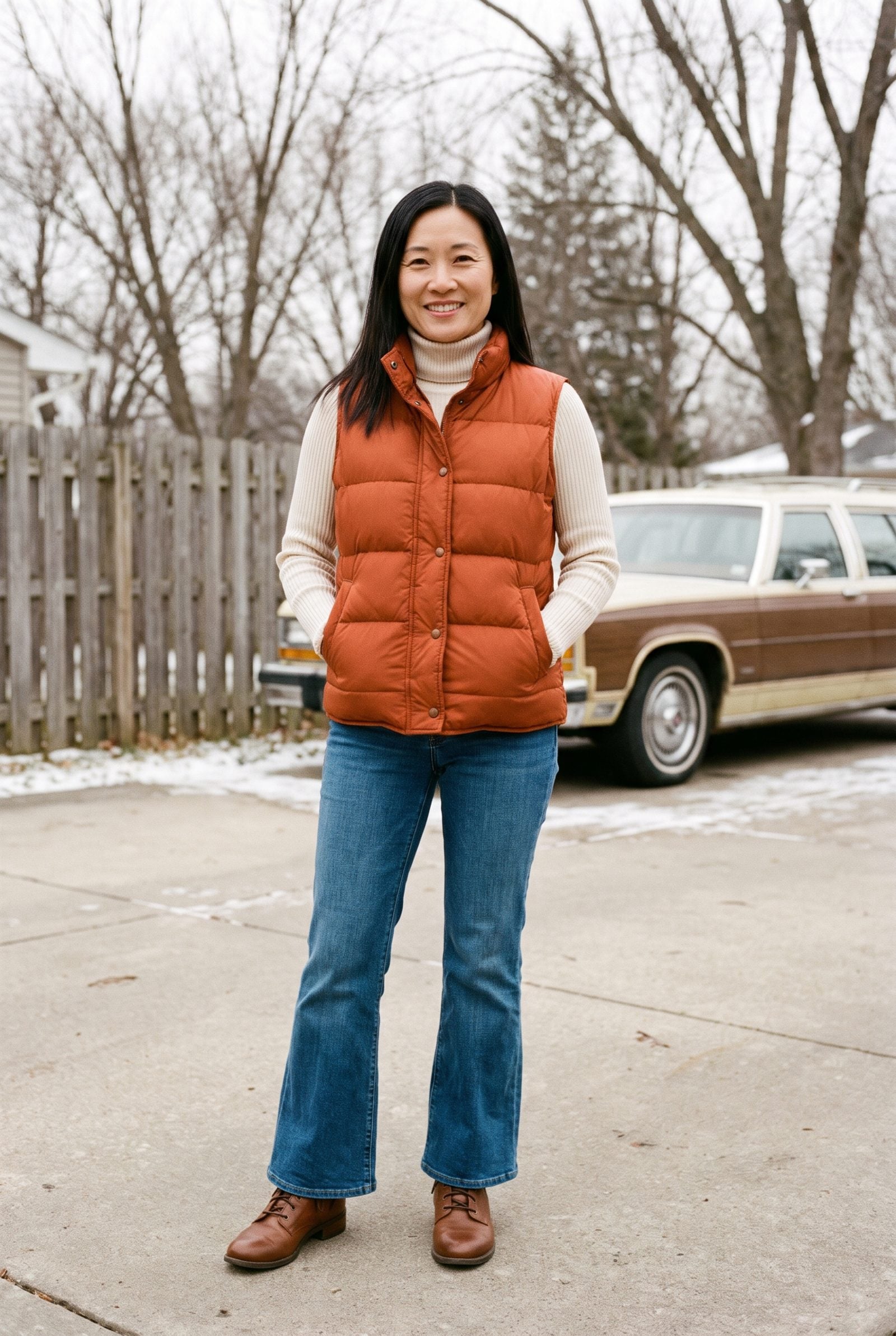
The sleeveless logic was genius, and nobody said so out loud. A quilted vest kept your core warm while your arms stayed free to do dishes, wrangle kids, dig through a closet. No bulk at the shoulders, so you could still fit a coat over it when you headed out.
Channel-quilted nylon in rust, navy or forest green, snapping up the front over a turtleneck. It worked because the puff sat only at the torso, keeping everything trim where it mattered.
14. Down-Filled Puffer Jackets Became Practical Everyday Outerwear
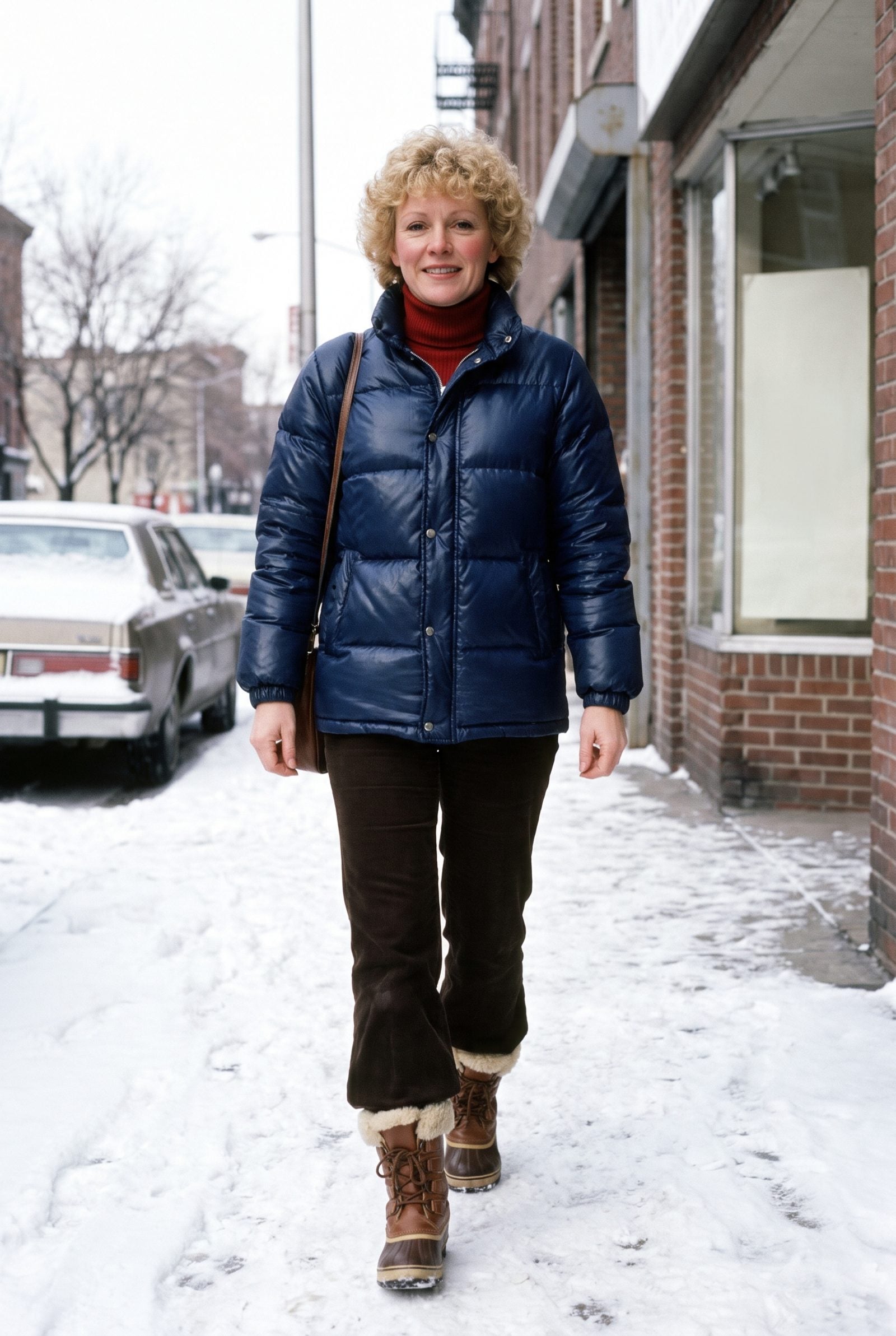
Down stopped being just for mountaineers somewhere in this decade, and suddenly the puffer was everywhere on ordinary streets. The baffled channels trapped loft and body heat, and the whole thing weighed almost nothing. You could stuff it into a car and forget it was there.
Glossy nylon in navy or forest green, the quilted channels running horizontal across the body. Here, function did the talking. Pair a puffer with a bright turtleneck and snow boots and you announced you had somewhere to be and the weather wasn’t going to stop you.
13. Shearling Coats Combined Suede Exteriors With Fleece-Lined Interiors
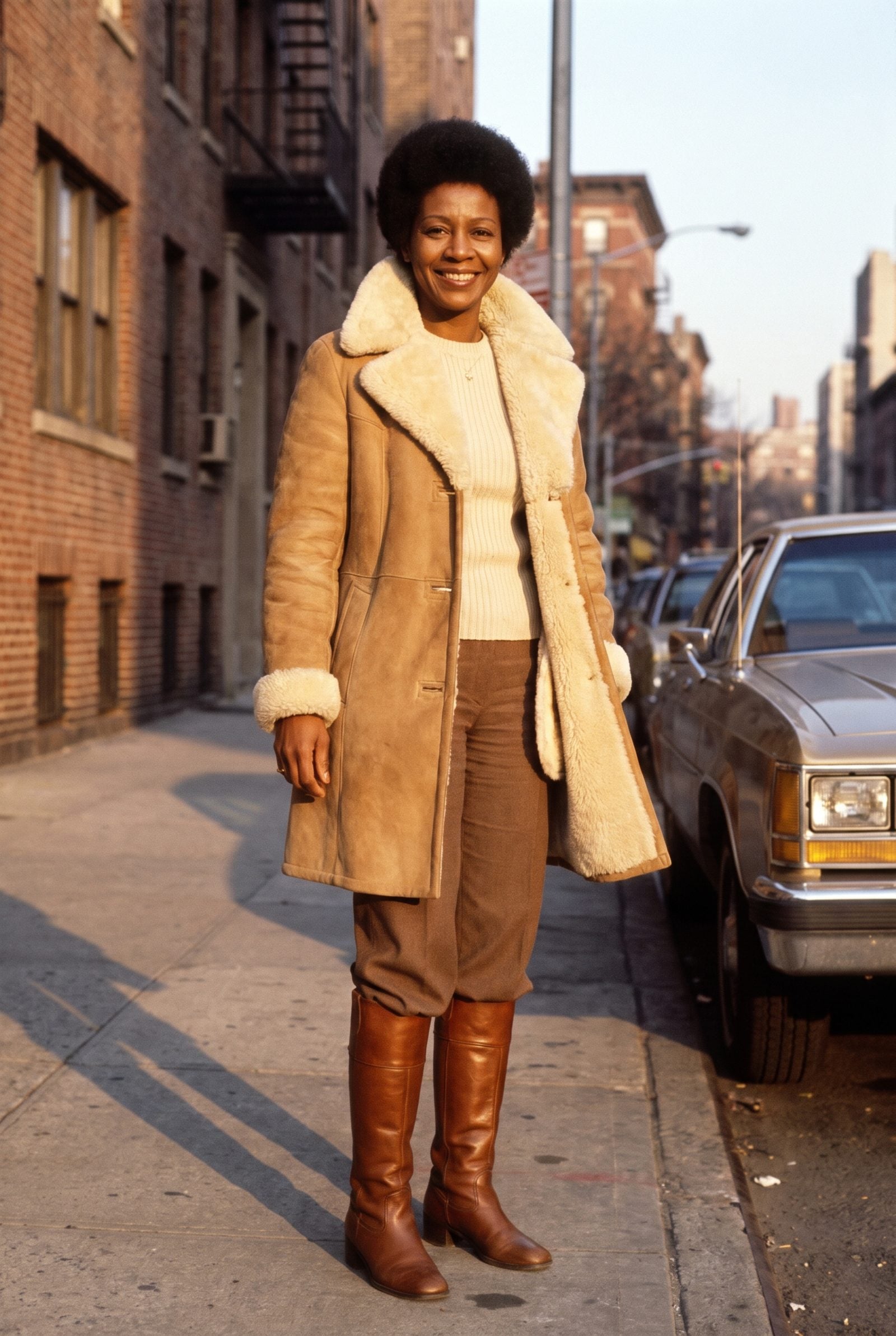
Pure luxury that earned its keep. Suede outside, dense wool fleece turned in against your body, and that shearling collar you flipped up against the wind. These coats were heavy, warm as a radiator, and they got better looking as the suede softened with age.
The contrast did all the work: matte suede exterior, plush fleece spilling out at the cuffs and collar. Left open over a cream sweater, it showed off the interior and read as quietly expensive. This was the coat you saved for, then wore for fifteen winters.
12. Faux-Fur Coats Offered Dramatic Warmth Without the Real-Fur Price

Drama you could actually afford. Faux fur gave you the sweep and warmth of the real thing without the department-store sticker or the ethical knot, and it came in leopard, fox, even wild dyed colors nobody’s grandmother ever wore.
The coat was the entire outfit. Over a plain black turtleneck and flares, a plush full-length faux fur turned a Tuesday into an occasion. A coat this bold genuinely changes how you walk into a room.
11. Full-Length Maxi Coats Protected Far More Than Hip-Length Jackets
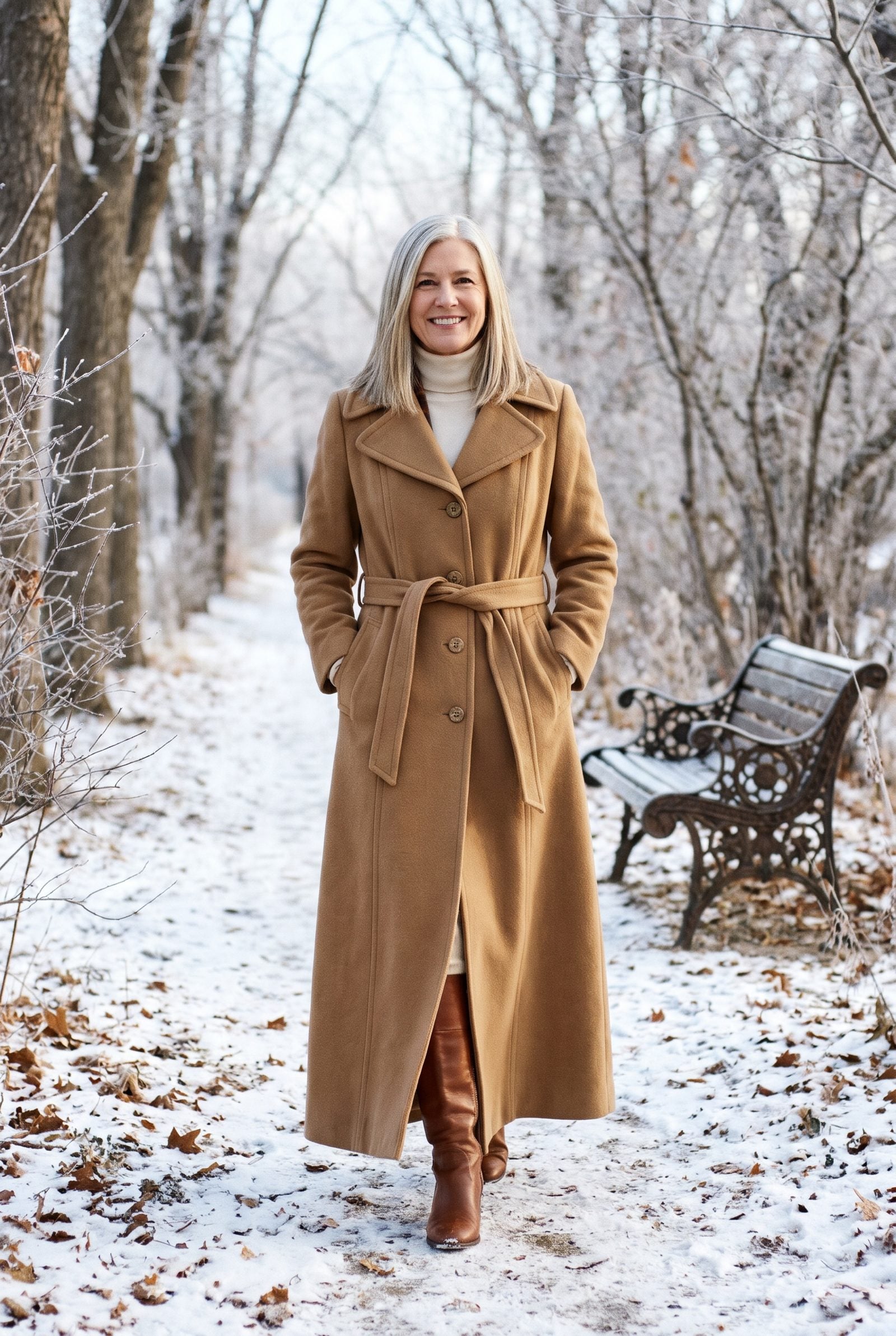
Length was the whole point. A maxi coat didn’t stop at your hips and leave your thighs to freeze. It ran nearly to the ankle, blocking wind up the full column of your body, and the belted waist held the heat in while handing you a shape.
Camel wool, single-breasted, that long uninterrupted line doing the heavy lifting. The camel wool maxi coat was elegance at its most patient, a single clean column that made everything underneath look deliberate.
10. Hand-Knitted Hats, Scarves and Mittens Were Everyday Winter Gear
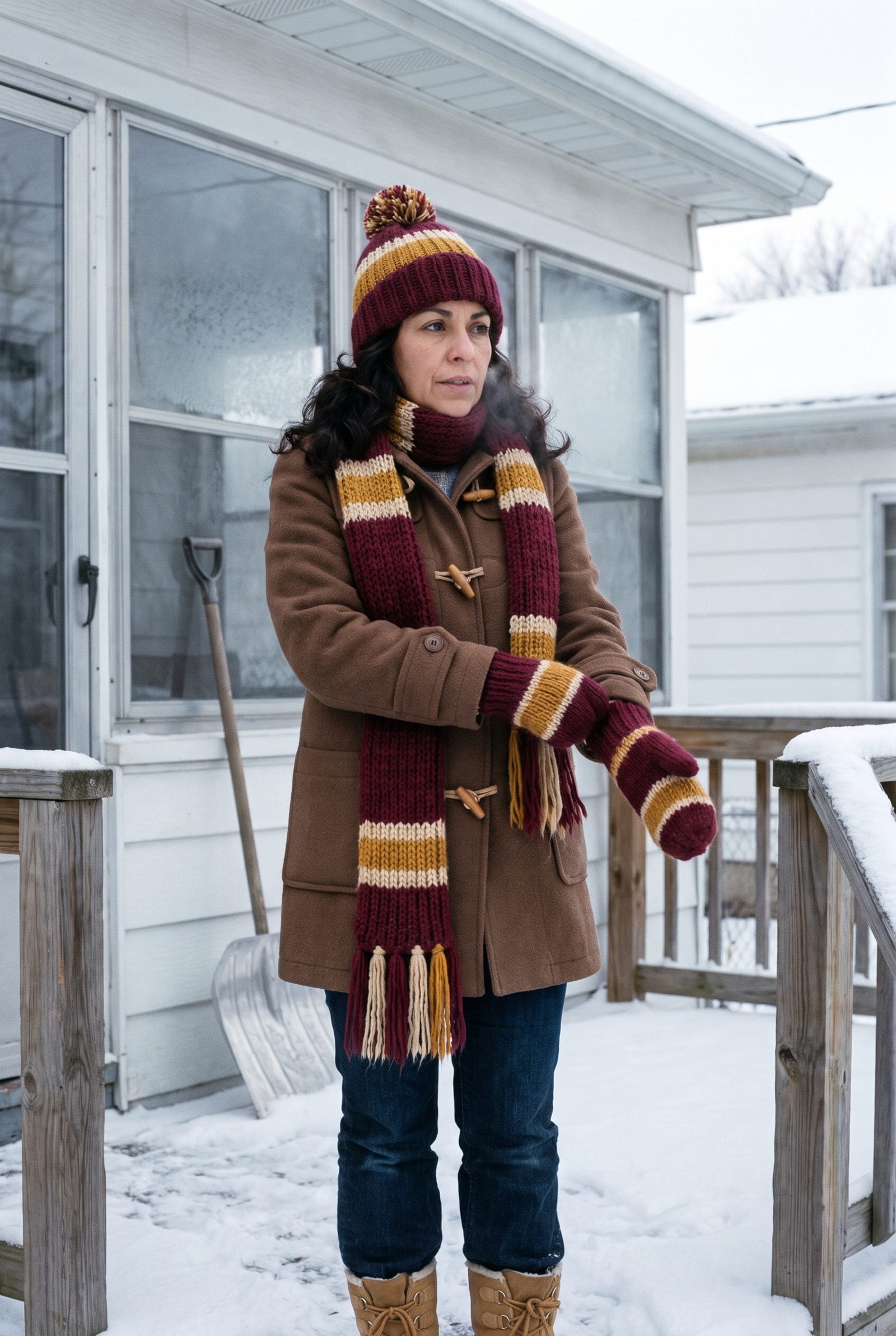
Somebody’s mother or aunt made these, and you knew it from the slightly uneven stitches and the fact that the whole set matched. A pom-pom hat, a scarf long enough to wrap twice, mittens on a string threaded through your coat sleeves so you couldn’t lose one.
Burgundy and mustard stripes, cream flecks, the kind of homemade knit that smelled like the cedar drawer it lived in all summer. Handmade wool carries a warmth store-bought gear never quite matched, and not just the physical kind.
9. Headscarves Tied Beneath the Chin Blocked Wind Before Hoods Became Standard
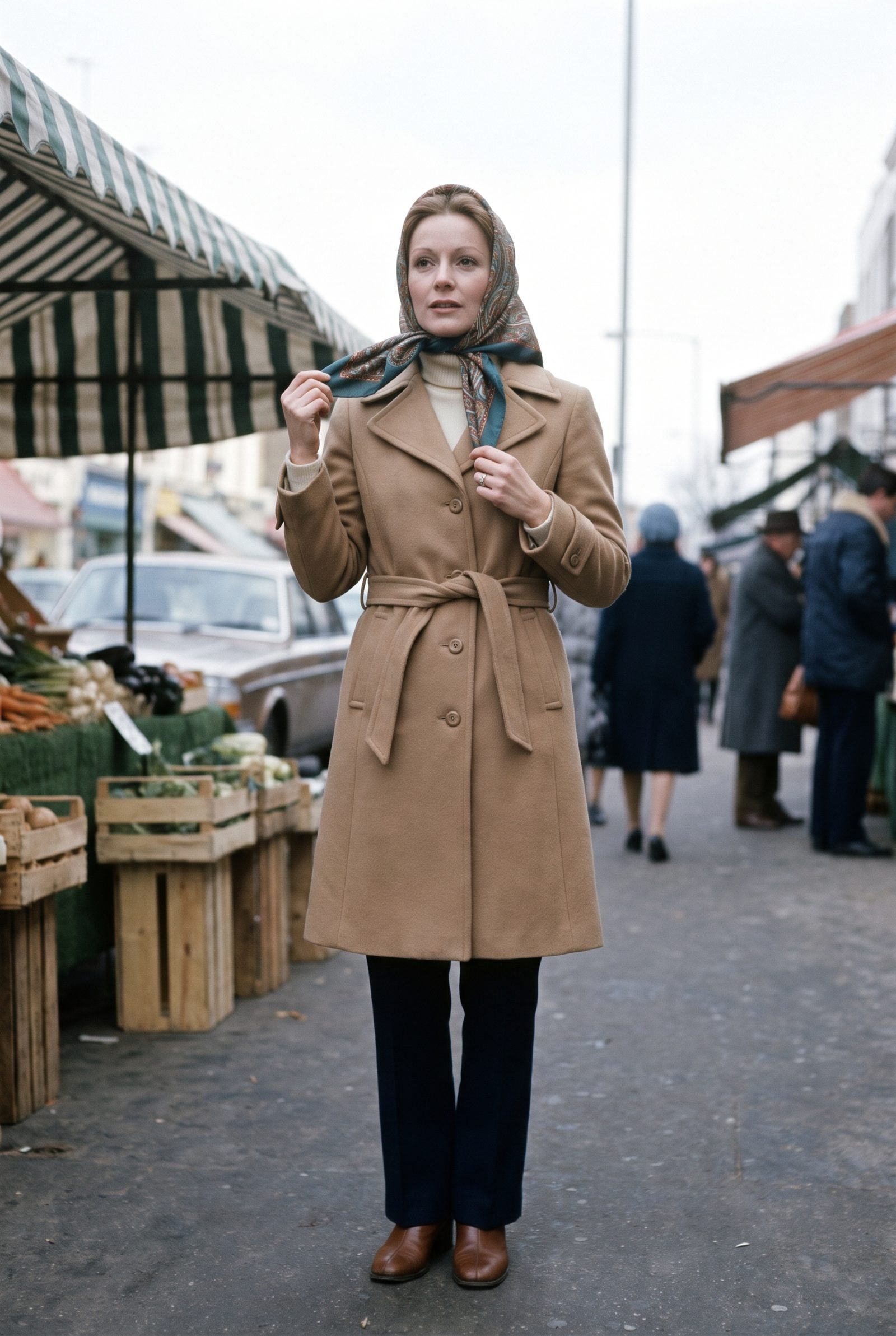
Before every coat came with a hood, you reached for a square of silk or wool, folded it into a triangle, and tied it under your chin. One move, and it kept your set hair intact while taking the wind off your ears.
Paisley prints, polka dots, folded kerchief-style and knotted neat. The headscarf framed the whole face and pulled a windy-day outfit together. Queen Elizabeth wore one, and so did your neighbor, which tells you everything about how democratic this little piece was.
8. One-Piece Snowmobile Suits Kept Out Wind and Blowing Snow
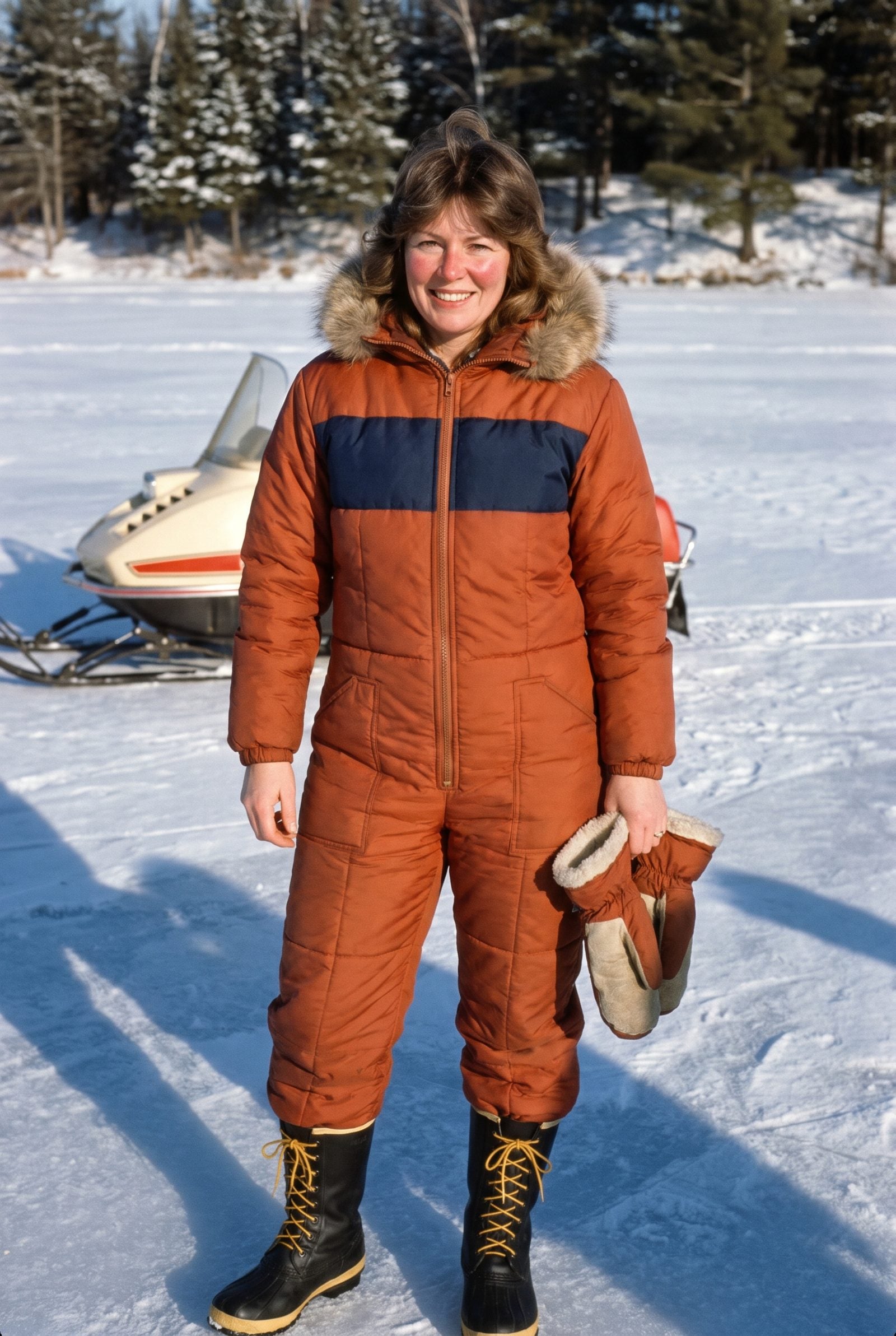
Snowmobiling was booming across the snow belt, and the one-piece suit that came with it soon showed up on kids at the bus stop and on adults shoveling the driveway. Slick nylon shell, a long zipper from crotch to chin, insulation all the way through, and no gap at the waist for snow to sneak in.
Getting into one took effort, and getting out of one to use the bathroom took planning. But once you were zipped up, wind went right past you and you could lie in a snowbank for an hour. Plenty of them came in loud colors with racing stripes down the legs, which made them easy to spot across a white field.
7. Puffy Moon Boots Turned Space-Age Styling Into Winter Insulation
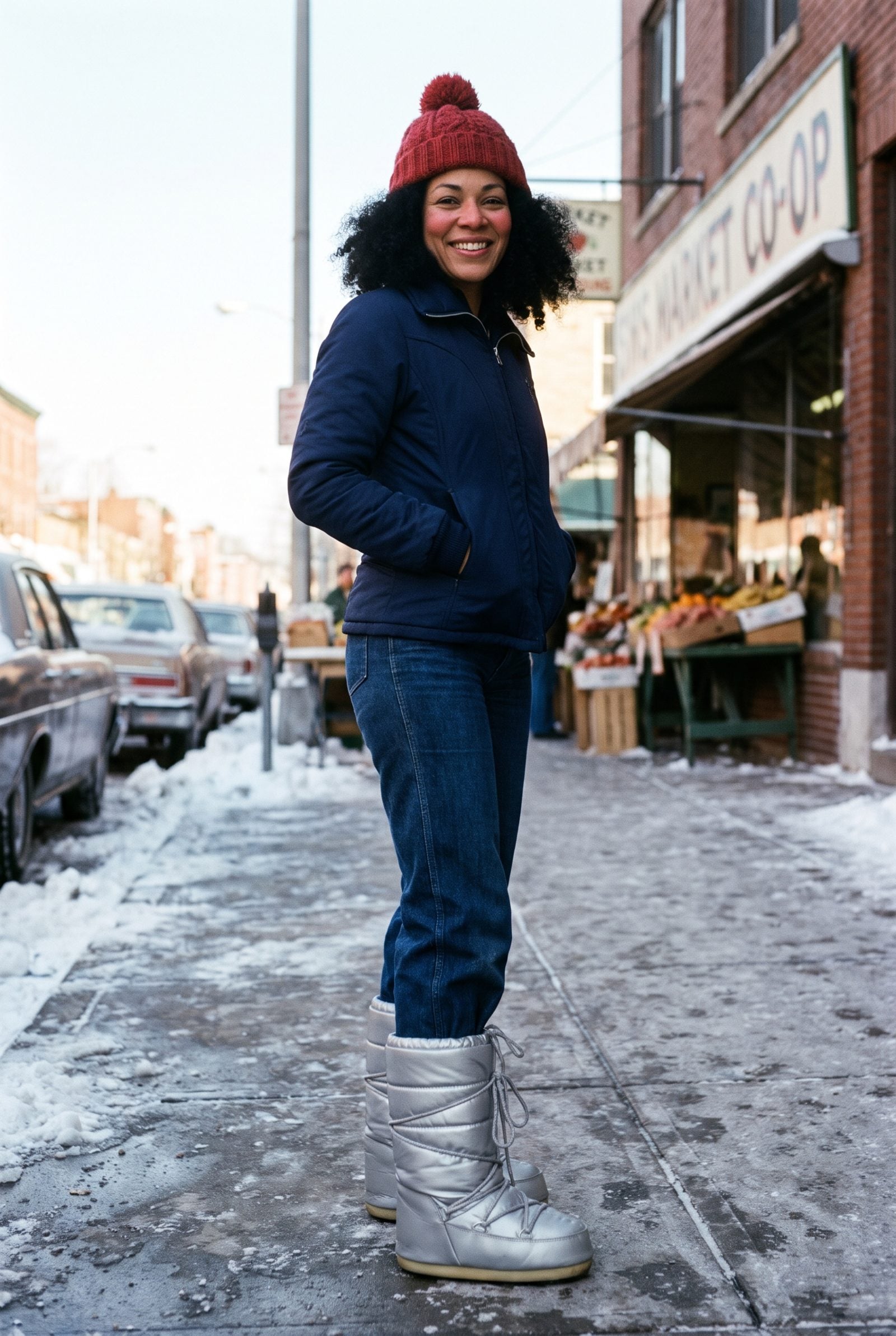
Nothing said the 1970s quite like walking around on what looked like a pair of oversized marshmallows. Moon Boots were tall, padded, and shiny, with a chunky sole and a shape that fit either foot. They looked like something an astronaut had left behind, and that was exactly the appeal.
Underneath the novelty was real insulation. All that padding trapped warm air around your feet and lower legs, which made them a favorite for sledding, ski lodges, and long waits at the bus stop. You clomped rather than walked, but your toes stayed warm.
6. Bread Bags Worn Over Socks Kept Feet Dry Inside Leaky Boots
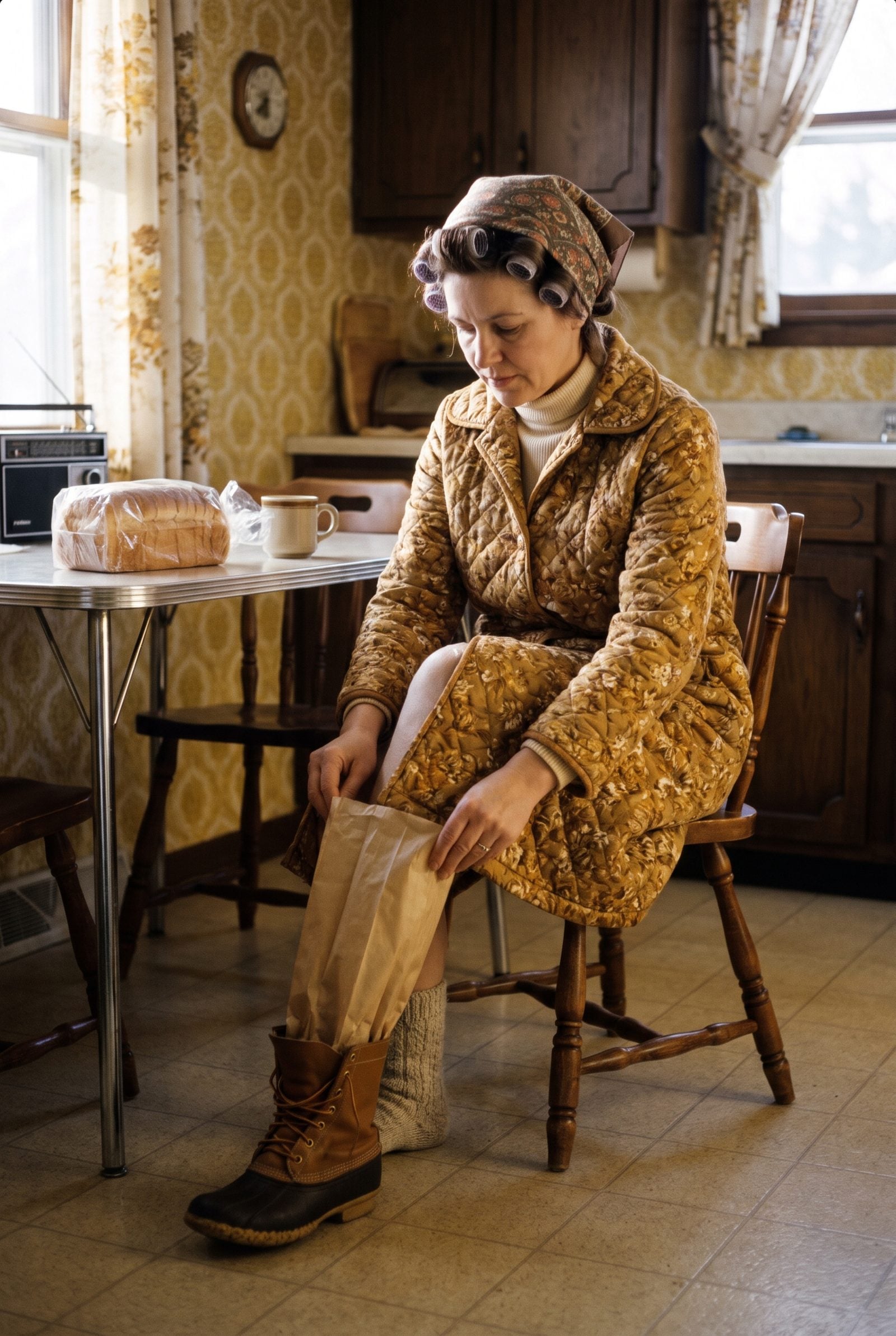
If your boots leaked, and hand-me-down boots often did, the solution was sitting in the kitchen. A plastic bread bag pulled over each sock before the boot went on. The twist tie was optional. The crinkling sound was not.
It worked better than it had any right to. The plastic kept slush from soaking your socks, so your feet stayed dry even if they got a little sweaty. Nobody bragged about it, and you hoped no one would see the bread bag peeking out of your boot. Ask around, though, and a surprising number of people grew up doing exactly the same thing.
5. Most Cars Had No Heated Seats or Heated Steering Wheels
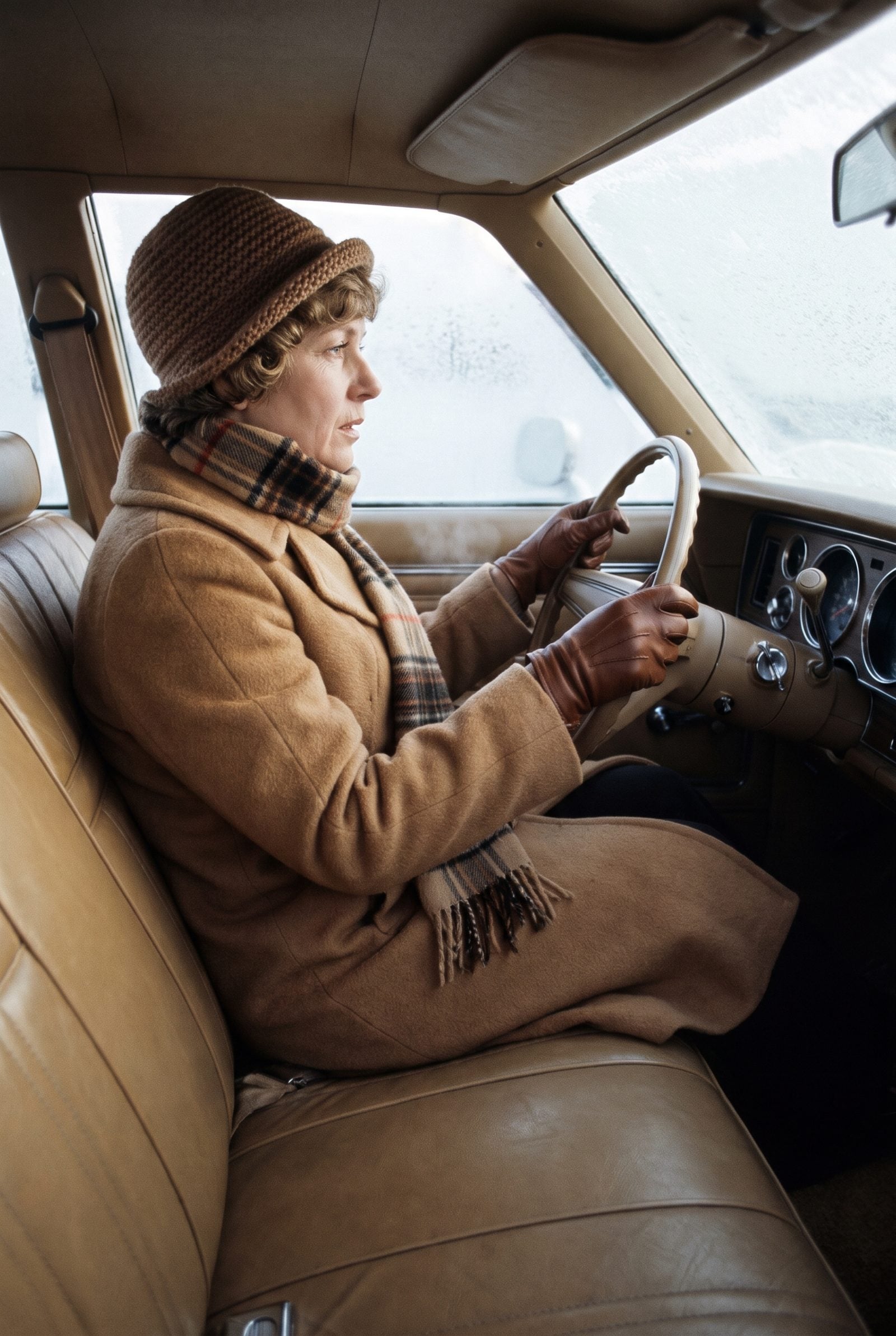
Climbing into a car on a January morning meant sitting down on a seat that was as cold as the air outside. Vinyl seats were the worst, stiff and icy and loud when you shifted your weight. You perched on the edge, tucked your hands under your thighs, and waited for things to improve.
A warmed seat or steering wheel wasn’t something most drivers had ever seen. You gripped a frozen wheel through your gloves or a pair of driving mittens, and some people kept a cushion or an old blanket folded on the seat just to put a layer between themselves and the cold.
4. The Car Heater Produced Little Warmth Until the Engine Finally Heated Up
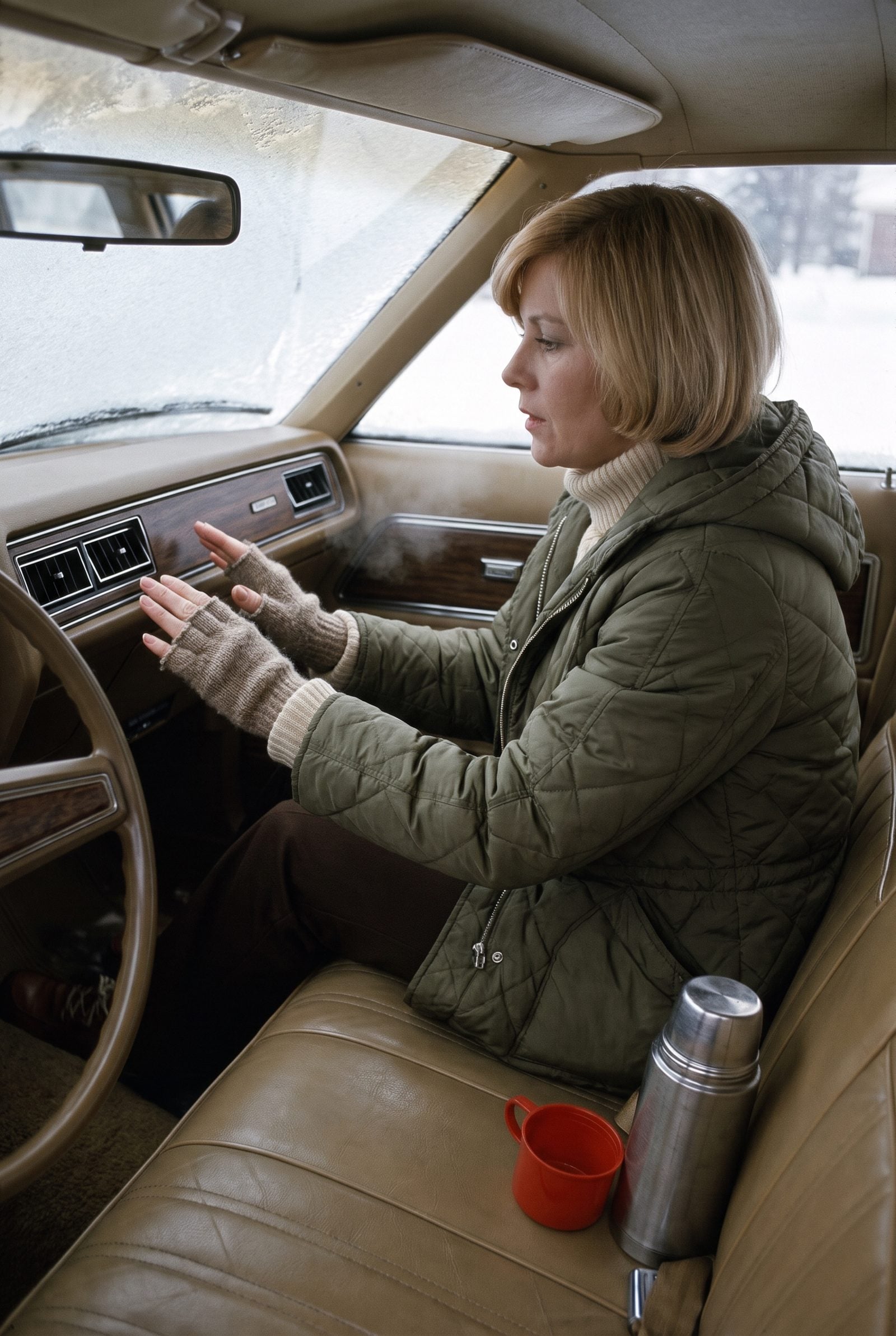
Every car heater worked on the same principle: it borrowed heat from the engine’s coolant. That meant a stone-cold engine produced stone-cold air, and turning the fan to high only blew it at you faster. You learned to leave the fan off for the first few minutes and just wait.
On short trips, the heater sometimes didn’t fully kick in until you were pulling into the parking lot. Plenty of people went out early to start the car and let it idle in the driveway while they finished their coffee, so the cabin would be bearable by the time everyone piled in.
Explaining why a car’s vents blow cold air, a Colorado auto repair shop says “Your heater has no heating element of its own. It borrows heat from the engine’s coolant, so most heater problems are really cooling system problems.”
3. A Hand Scraper and Slow Defroster Were the Only Answers to an Icy Windshield
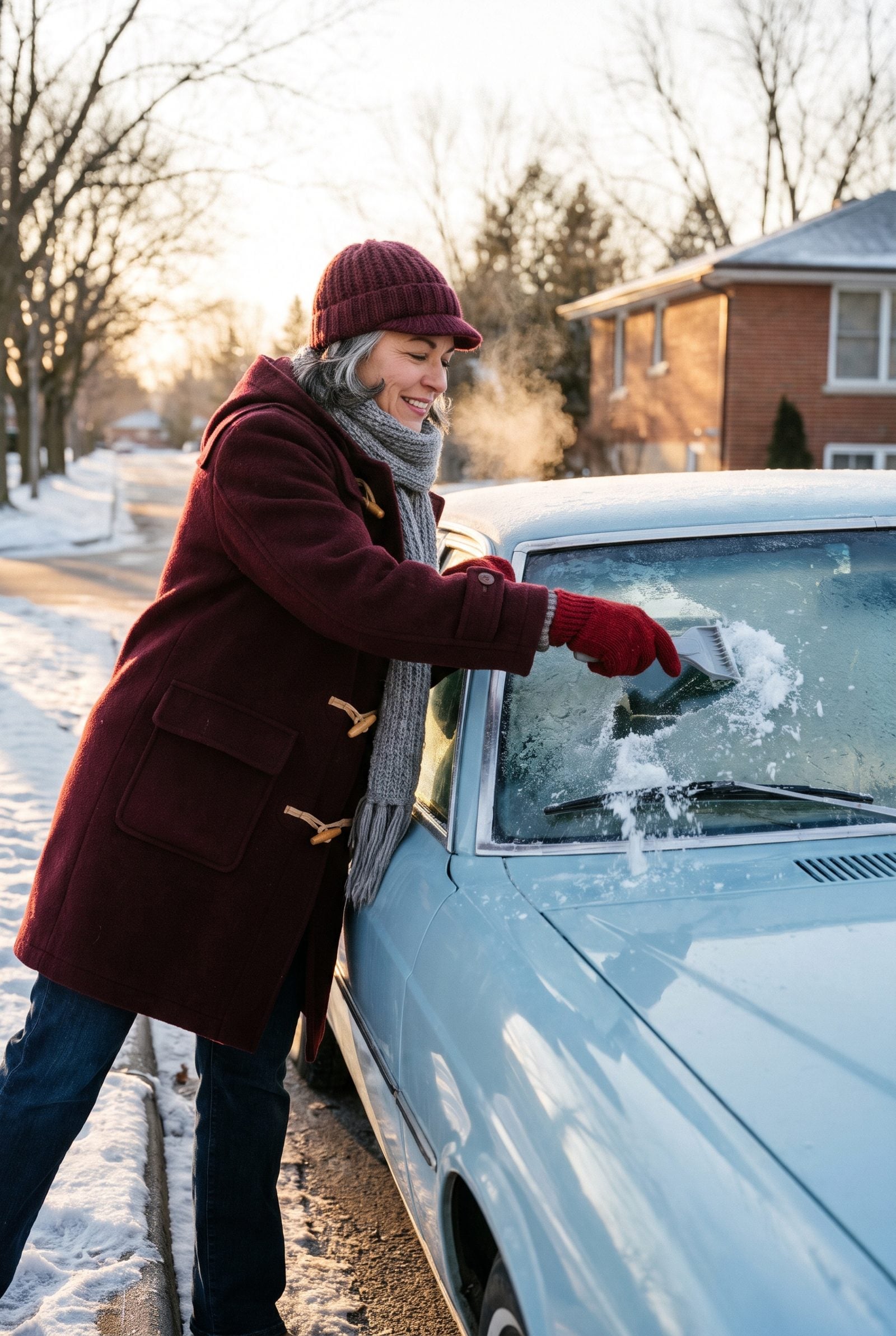
Frost on the windshield meant a few minutes outside with a plastic scraper, chipping and scraping while your breath fogged the glass you had just cleared. When ice got thick, you hacked at it, and in a pinch a spatula or the edge of a cassette case filled in for a scraper that had gone missing.
The defroster helped, eventually. But since it relied on the same slow-warming heater, the clear patch at the bottom of the windshield grew an inch at a time. Many drivers set off peering through a small porthole of clear glass, hunched forward over the wheel, waiting for the rest to melt.
2. A Heavy Blanket in the Trunk Was Essential Winter Emergency Equipment
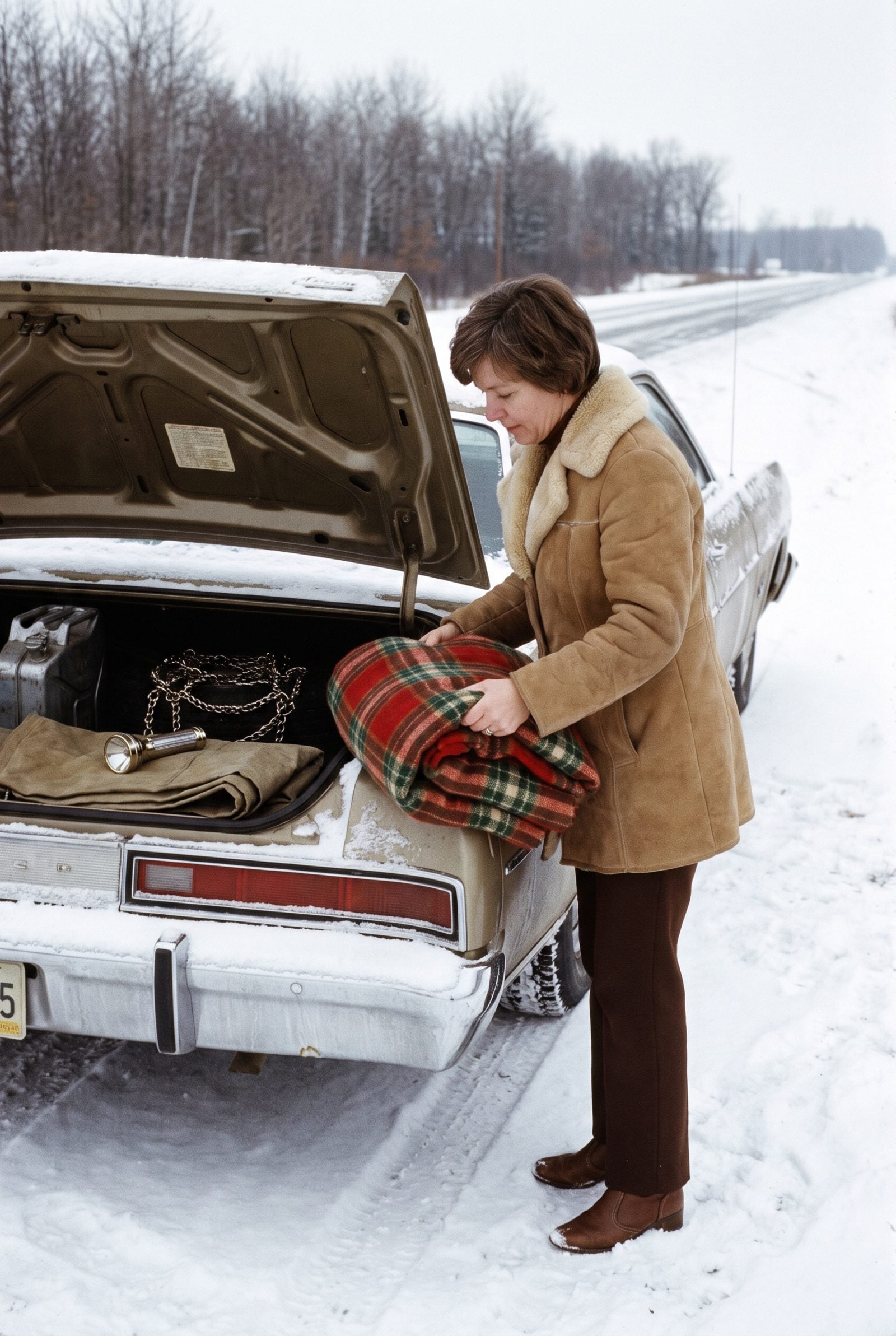
Ask anyone who drove through a northern winter and they’ll tell you what was in the trunk. A heavy wool blanket or an old quilt, often alongside a bag of sand or kitty litter for traction, a shovel, and sometimes a candle in a coffee can. It wasn’t paranoia. It was common sense.
With no cell phones and long stretches of empty road, sliding into a ditch could mean a long, cold wait for help. That blanket also got pressed into service for chilly football games and for kids in the back seat on long drives, but its real job was to keep you warm if the worst happened.
1. Plug-In Engine Block Heaters Helped Cars Start on Bitterly Cold Mornings
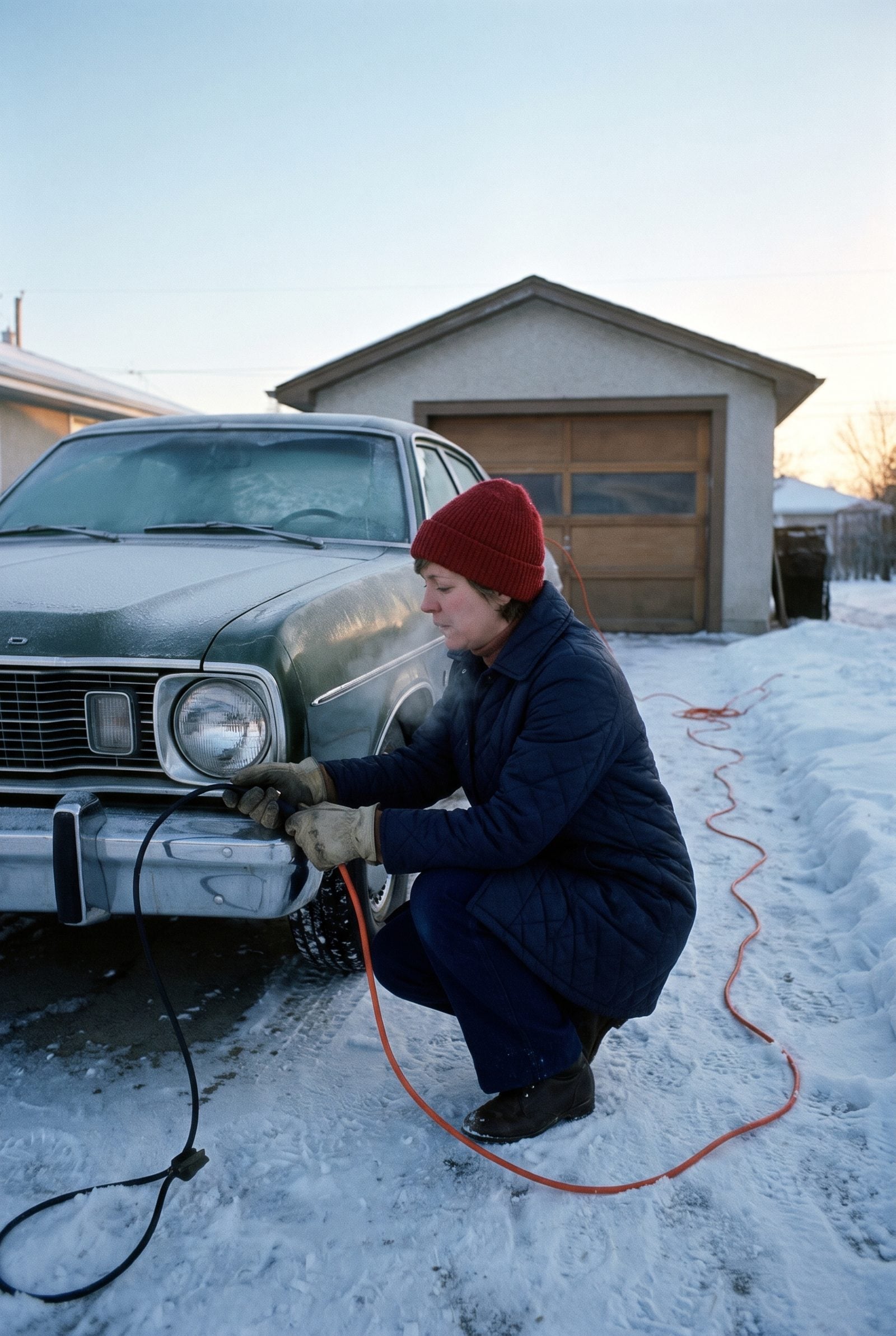
In the coldest parts of the country, a car parked outside overnight needed help just to turn over. The answer was a block heater, a small electric element that kept the engine and its fluids warm, with a plug hanging out through the front grille.
You ran an extension cord from the house to the car before bed and unplugged it in the morning, hoping you remembered before pulling out of the driveway. In places with truly brutal winters, parking lots at workplaces and motels had rows of outlets for exactly this purpose. Seeing those cords snaking across the snow was simply part of the landscape.
In a guide for trainee technicians, a Canadian auto mechanic school explains “Depending on its design, an engine block heater warms engine coolant or another part of the engine before startup, helping the engine start more readily in very cold conditions.”