
❤️ Would you like to save this?
The chop always looks liberating in the photo. What nobody shows you is the morning three weeks later, standing in front of the mirror, fighting a cowlick with a round brush you don’t know how to use. Short hair is a commitment dressed up as a whim. It can be the best decision you make this year, or the one you regret every single morning until it grows back out. The difference comes down to what you knew walking into the salon. Here’s what the people holding the scissors want you to understand before you say cut it off.
FYI, thanks to AI imagery software, we’re able to create very specific fashion and hairstyle examples to illustrate the points being made. In some cases, imagery is exaggerated to hammer home the point. Also, assume links that take you off the site are affiliate links such as links to Amazon. this means we may earn a commission if you buy something.
20. Your Face Shape Decides More Than Any Pinterest Board

The pixie that looks clean and structured on an oval face can crowd a round one until it reads like a helmet. Face shape is the quiet math under every great short cut, and no reference photo overrides it.
A good stylist reads your jaw, your forehead, your cheekbones before they touch the scissors. Longer at the crown stretches a round face. A side fringe breaks up a long one. The cut works with what you already have.
19. Walk In With Pictures, Not Just Words

“Short but not too short” means something different in every head it lands in. Plenty of clients have asked for a bob and gotten what they considered a crew cut, both parties certain they’d understood each other perfectly.
Bring three to five photos. Include angles, the back especially. And bring a picture of something you hate too, because knowing what to avoid is as useful as knowing what to chase.
18. Your Hair Texture Writes Half the Rules

Fine, coarse, wavy, wiry. Your texture decides whether a cut falls sleek or stands up on its own. A blunt bob that swings on straight hair will flip and fray on wavy hair the second humidity hits.
Tell your stylist how your hair actually behaves, not how it looks after an hour of blow-drying. The honest version is the one they need.
17. Cowlicks and Growth Patterns Have Opinions Too

That patch at your crown that sticks up no matter what? It’s been plotting against your hairstyle your whole life, and short hair hands it a bigger stage.
Growth patterns, cowlicks, a stubborn part that won’t switch sides — these dictate what lies flat and what refuses to. A smart stylist cuts with them instead of pretending they aren’t there, so you’re not wrestling your own head every morning.
16. Short Hair Is a Maintenance Relationship

A pixie looks sharp for a few weeks. Then it starts creeping into mullet territory at the nape, and nobody warns you ahead of time.
Short cuts live and die by their shape, and shape grows out long before length ever shows. Plan on a trim every month or so, which is more often than any long layered cut ever demanded of you.
15. Fine Hair Finally Gets to Look Full

Here’s the happy secret: fine hair is often better short than long. Length drags thin hair down and exposes every sparse patch. Cut it, and suddenly it stands up and holds a body it never had before.
Layers and a little texture at the crown trick the eye into reading fullness. If your hair has gone wispy over the years, going short might be the most generous thing you ever do for it.
14. Thick Hair Needs Layers Hiding on the Inside

Cut thick hair short without thinning it from the inside and you get a triangle. Dense at the bottom, flat on top, every mother’s warning about the “mushroom” made real.
Internal layering pulls out bulk where it collects without touching the outer shape. The surface stays clean and the weight disappears. Ask specifically about it, because not every stylist volunteers the technique, and the difference is night and day.
13. Curly Hair Shrinks. More Than You’re Picturing

The length you see wet is not the length you’ll get dry. Curly hair can spring up a couple of inches once it’s cut, and more than one person has walked out stunned by how much shorter it suddenly reads.
You want a stylist who cuts curly hair dry, or at least accounts for the shrinkage. Tell them your curl pattern. If they shrug, find someone else.
12. Growing It Back Is the Long Part

Everyone underestimates the grow-out. That awkward middle stage — too long to be a pixie, too short to tuck — can drag across the better part of a year.
A sage silk headband and a stash of claw clips make the in-between livable, and so does a scheduled trim to shape it as it grows. Go in knowing the chop is quick and the return is slow.
11. Short Doesn’t Always Mean Less Styling
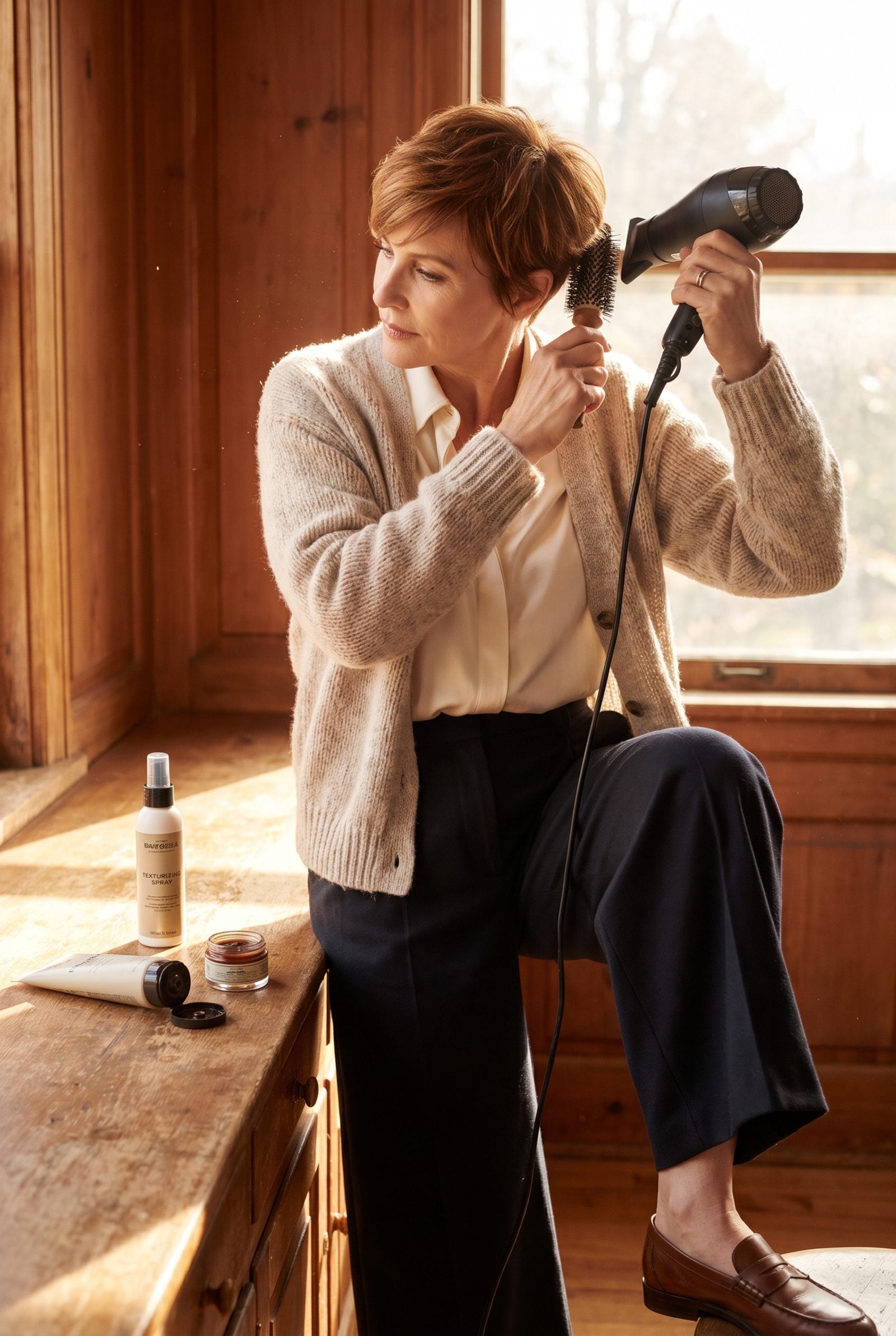
The myth that short hair is low-maintenance has launched a thousand regrets. Yes, you use less shampoo. No, you don’t necessarily save time.
Short cuts show every lump and wrong direction, so they often need daily coaxing with product and heat to sit right. A long ponytail asks nothing on a bad day. A pixie with a mind of its own wants ten minutes and a bit of paste.
Ask your stylist to walk you through the morning routine before you commit. If it sounds like more effort than you’re willing to give, better to know that while your hair’s still attached.
10. A Good Blow-Dry Technique Becomes Essential
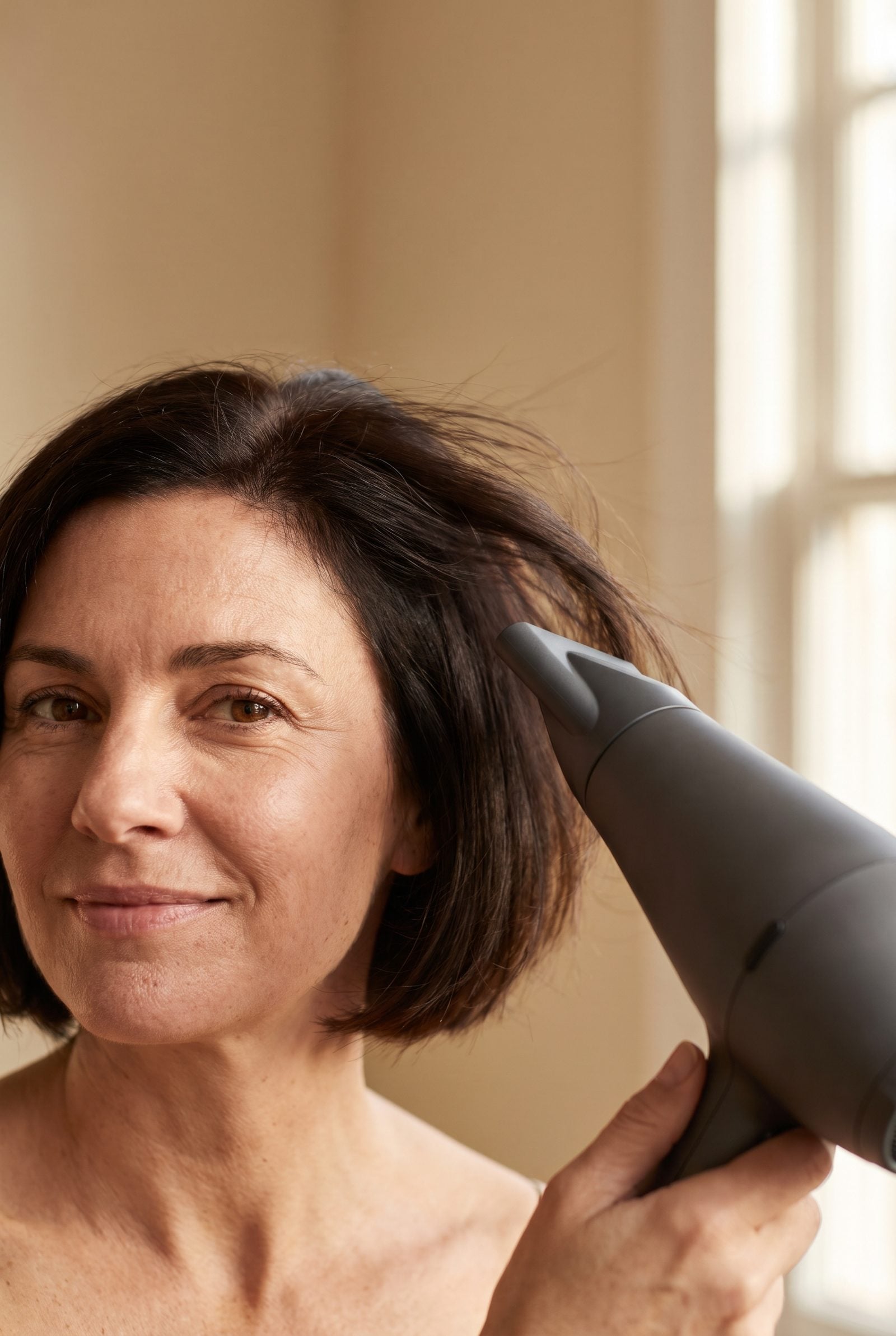
With long hair you can air-dry and nobody’s the wiser. Short hair punishes air-drying with a shape you never asked for — usually flat on one side and flipping out on the other.
The blow-dry is where a short cut earns its keep. Point the nozzle down the hair shaft to smooth, up and under to lift. That’s the whole game, and once it clicks you’ll wonder why you fought it.
9. Round-Brush Skills Pay Off With Short Styles

A round brush is what separates a good short cut from a great one. It builds body at the root and bends the ends where you want them, which is exactly what short styles live or die by.
Plenty of people fight the thing for years. It feels fiddly, arms get tired, and it seems to have a grudge. Then they size down to a smaller barrel and suddenly it makes sense. Match the barrel to your length, not to whatever brush is already in your drawer.
8. Product Changes Are Part of the Deal

❤️ Would you like to save this?
Your old conditioner-and-pray approach doesn’t work on short hair. Volume products, texture sprays, matte clays — the stuff you ignored for decades suddenly earns its spot on the shelf.
Budget for a texturizing salt spray and a light matte clay. A little goes a long way, which is the only reason your wallet survives this transition.
7. Volume at the Crown Makes or Breaks the Look

Flat at the crown reads tired, no matter how good the cut or the outfit is. A little lift up top reads intentional and awake, and it’s what makes the whole look read fresh rather than slept-on.
The fix is laughably simple. Flip your head upside down for the last minute of drying, or lift sections at the root with your brush and shoot heat straight at the base.
6. A Pixie Demands Regular Neckline Cleanups
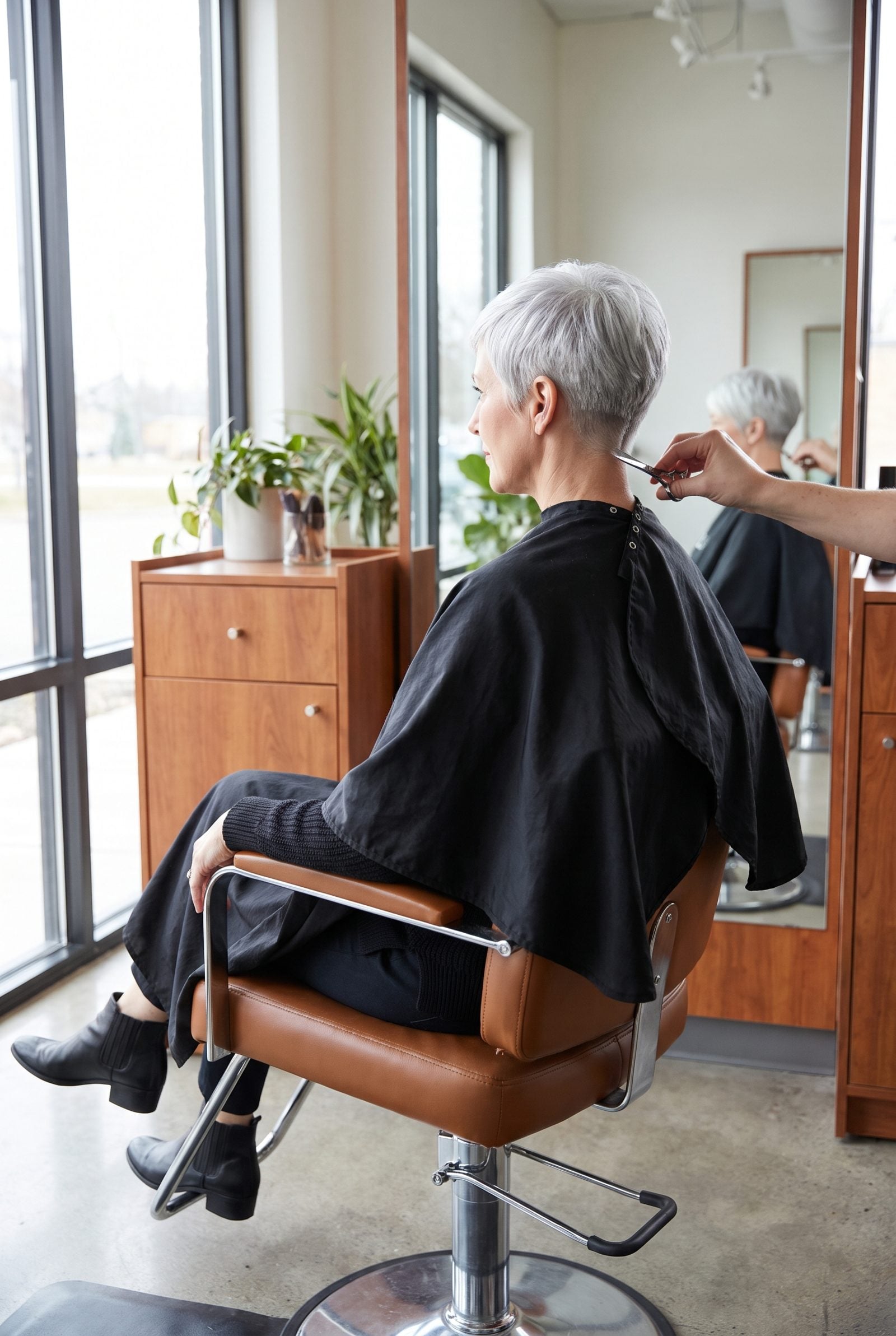
A pixie is the most freeing cut and the highest-maintenance one, which feels like a contradiction until you hit week four. Length barely grows anywhere you notice except the nape and around the ears, where it goes shaggy fast.
Plan on a cleanup every four to five weeks. Longer than that and the shape blurs into something you didn’t sign up for.
5. A Bob Sits Differently Depending on Your Jaw

The bob isn’t one haircut, it’s a dozen, and where it lands against your jaw changes everything. A blunt line at a strong jaw emphasizes the angle. Go a touch longer and softer and it rounds things off instead. Chin-grazing on a round face can shorten; a longer sweep lengthens.
Bring a photo, sure. But let your stylist adjust the length to your actual face. The bob on the model was cut for the model’s jaw, not yours.
The bob on the model was cut for the model’s jaw, not yours.
4. Short Hair Reveals Your Natural Hairline

Your hairline has been hiding under length for years. Cut it all off and there it is — cowlicks, uneven edges, a widow’s peak you forgot you had.
That’s not a problem, it’s information. A good stylist works with your hairline, cutting the fringe or the part to follow how your hair actually grows. Fighting your own cowlick every morning is a losing battle, and sometimes the smartest move is to let it win.
3. Gray Regrowth Shows Faster With Shorter Lengths

If you color, do the math before you chop. That regrowth line that took weeks to show on long hair turns up almost immediately on short, because there’s simply less length to distract from the root.
You’ve got two honest paths. Tighten the color schedule, or treat the short cut as your chance to grow out the gray — the awkward phase ends faster when there’s less length to grow through. Short hair might be the easiest on-ramp to silver there is.
2. Scalp and Ear Exposure Changes Your Accessory Choices

Cut the length and your ears step into the spotlight — the best news earrings ever got. Statement studs and sculptural hoops that used to drown under long hair now read loud and on purpose.
Two things shift along with it. Sun hits your scalp and ears directly, so a beach hat and SPF on the part line stop being optional in summer. And scarves wrap differently with nothing to tuck them into. A straw sun hat and a good pair of gold statement earrings are the first two things I’d buy the week after the chop.
1. Talk About the Maintenance Budget Before You Commit

Long curls look low-maintenance and are more expensive per year. Nobody warns you about that trade.
A sleek, straight cut holds its shape a little longer between trims. A full head of long curls starts losing its definition within weeks. The ends dry out first, then the shape collapses, and suddenly the curls that made you feel sharp make you feel shaggy instead. That means specialist curl cuts and treatments far more often than you are used to, and the chair adds up.
So ask the stylist flat out how often this specific shape needs a touch-up, and do the math out loud before you commit. A cut you love but cannot afford to keep up is a cut that looks good for a few weeks and frustrating for the rest. Plenty of people fall hard for a shape and resent the upkeep by month two.