
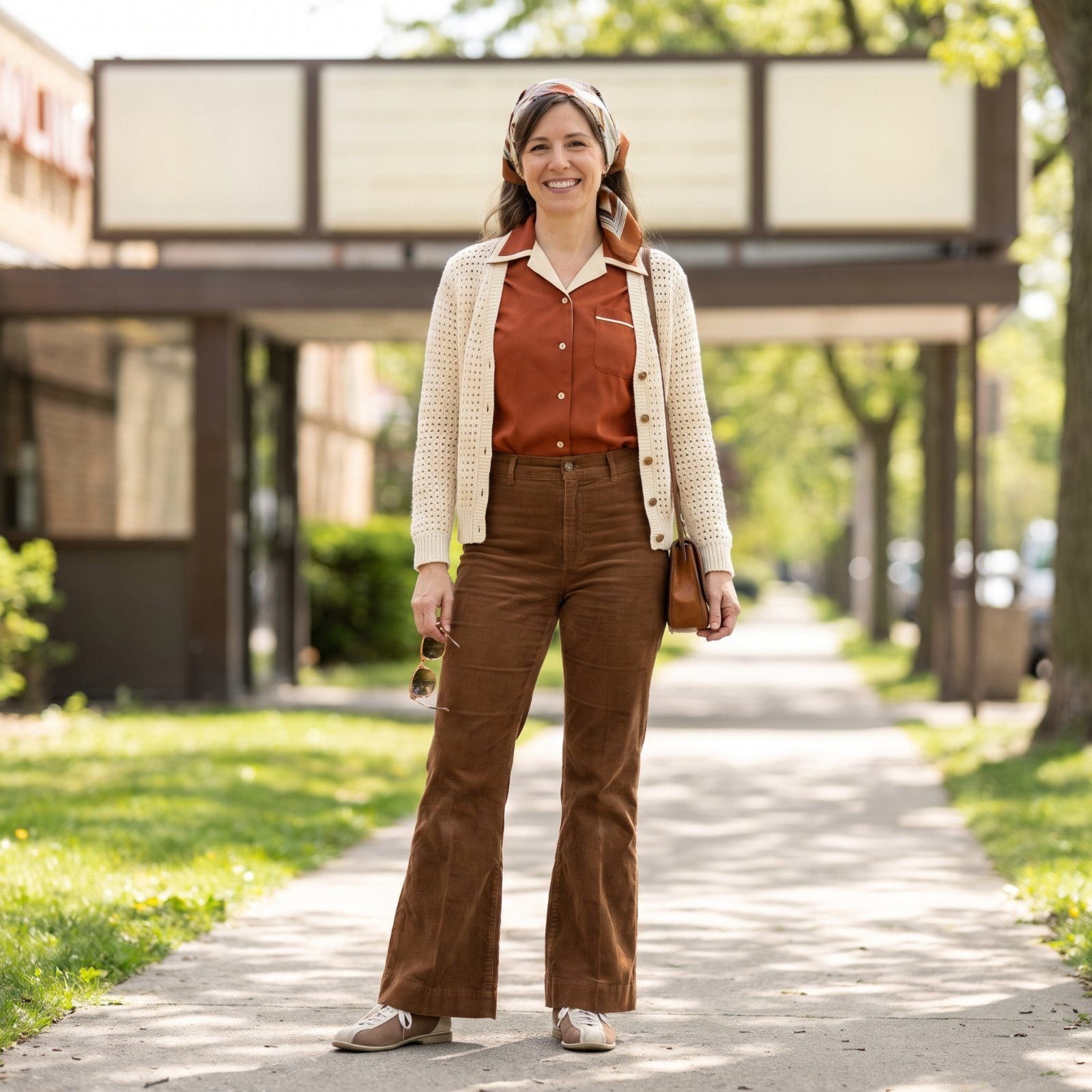
The smell of lane oil and cheap beer, the slap of a ball on polished wood, the thunk of pins somewhere down the alley while a transistor radio played Fleetwood Mac behind the shoe counter. League night had a dress code nobody wrote down, but everybody followed it.
You showed up ready to be seen. Polyester that didn’t wrinkle, collars you could spot from the next lane over, hair set that afternoon and sprayed stiff by seven. These pieces ran that bowling alley carpet for a whole decade.
FYI, thanks to AI imagery software, we’re able to create very specific fashion and hairstyle examples to illustrate the points being made. In some cases, imagery is exaggerated to hammer home the point. Also, assume links that take you off the site are affiliate links such as links to Amazon. this means we may earn a commission if you buy something.
32. A Chain-Stitched Team Bowling Shirt With Her Name Over the Pocket
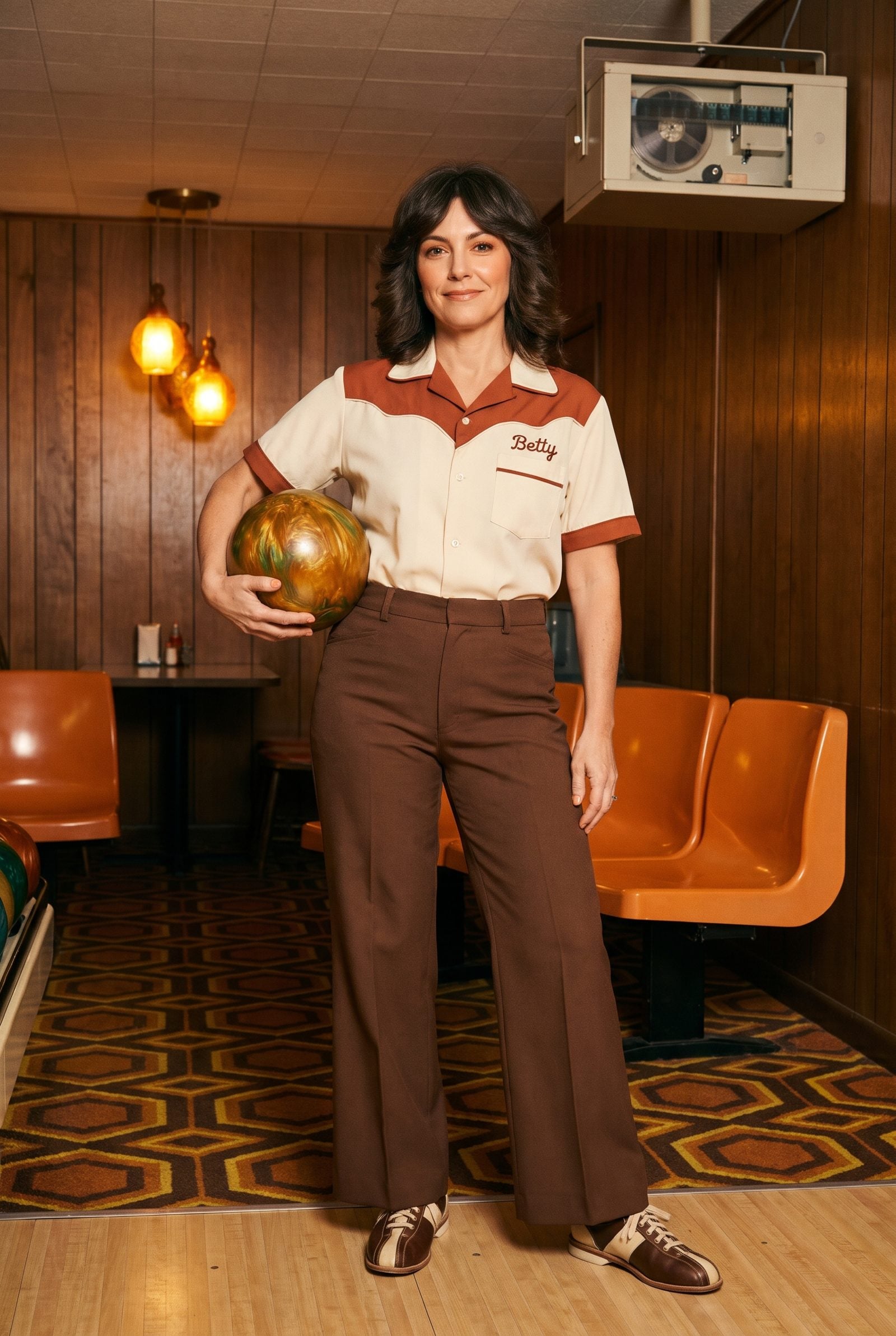
The name over the pocket did more than identify you. It said you belonged to something, you showed up every Thursday, you had a slot on the roster that was yours. That looping chain-stitch script, usually done in-house at the pro shop, carried the whole message.
The polyester cut ran boxy and short-sleeved, built to let your arm swing free on the approach. Cream bodies with rust or teal yokes, contrast piping on the collar, the team name arched big across the back. You wore it proud and you wore it ironed.
31. Two-Tone Rental Bowling Shoes
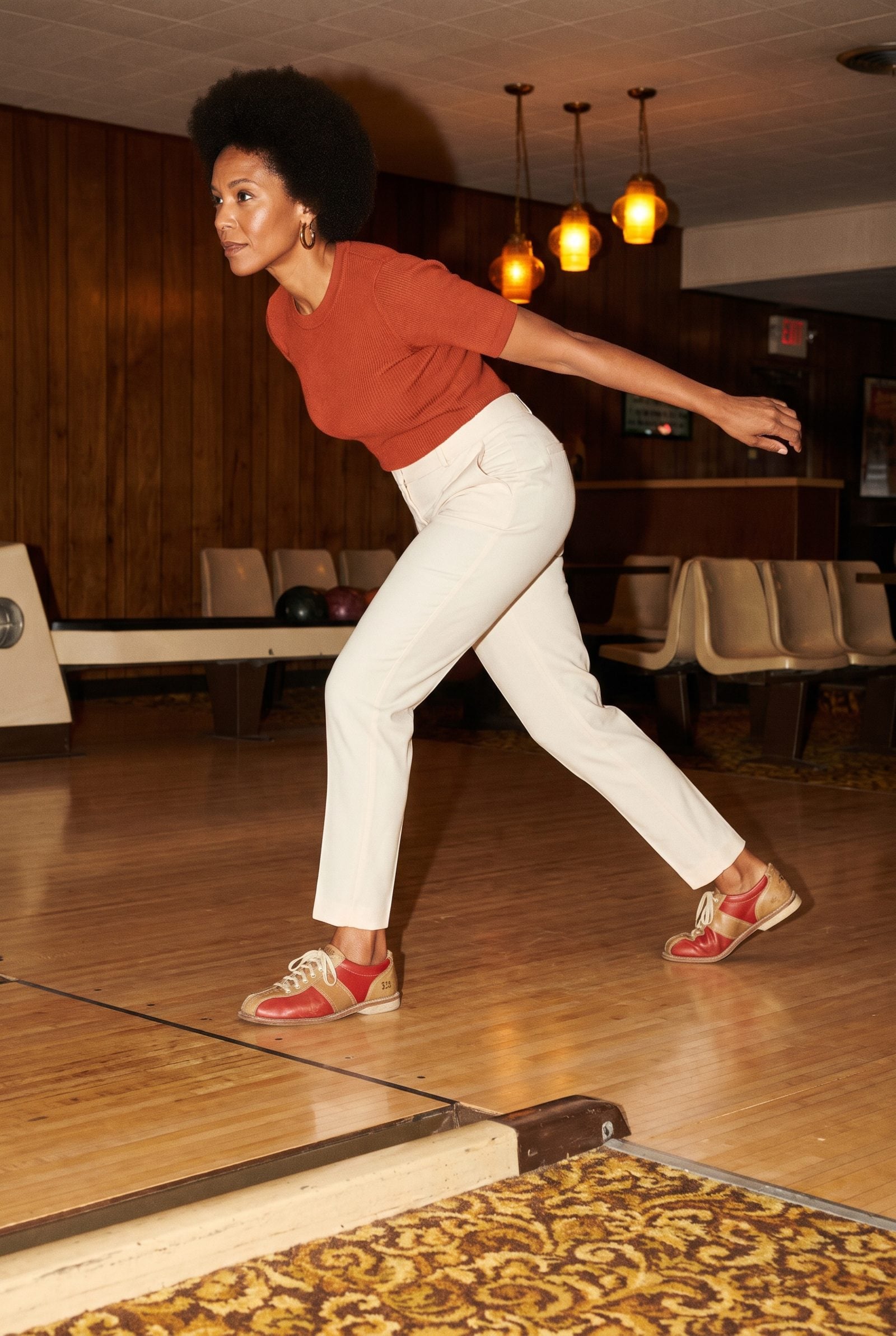
Red and tan, blue and cream, the number stamped right on the heel in gold so the counter guy could track them. You handed over your own shoes, got a Lysol-scented pair in return, and nobody thought twice about it.
The suede sole was the trick. It let you slide into the foul line instead of stopping dead and pitching forward. Clunky, flat, honest. For one night a week they were the only shoes that mattered, and half the fun was how little they cared about looking good.
Explaining why house shoes feel so slick on the approach, a sports gear retailer that outfits athletes notes “Rental shoes are built to survive, not to perform. Both soles slide, because the house cannot know which hand you throw with.”
30. A Bowling Ball Bag Matched to Her Team Shirt
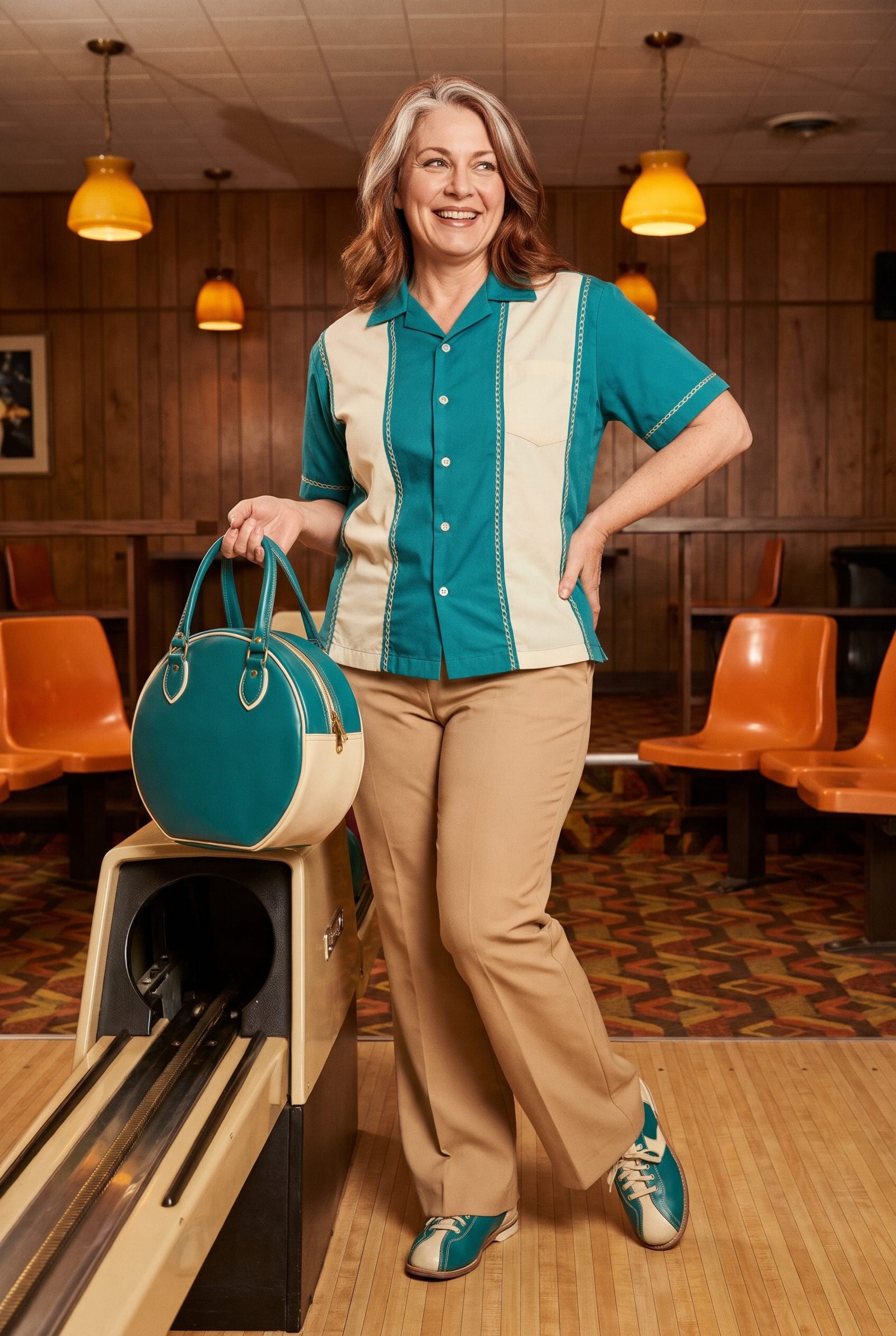
The bag was the flex. A hard-sided vinyl round-bottom carrier, usually teal or burgundy or mustard, chosen to echo the team shirt so you walked in coordinated head to toe. Matching your bag to your shirt was the decade’s idea of a full look, and it read loud and clear.
Twin handles, a brass zipper, a little weight that thumped against your leg on the walk from the parking lot. The handbag details on a good one, the piping, the padded lining, told everyone you took this seriously. Inside sat your own ball, drilled to your fingers, never touched by a stranger.
29. A Polyester Pantsuit
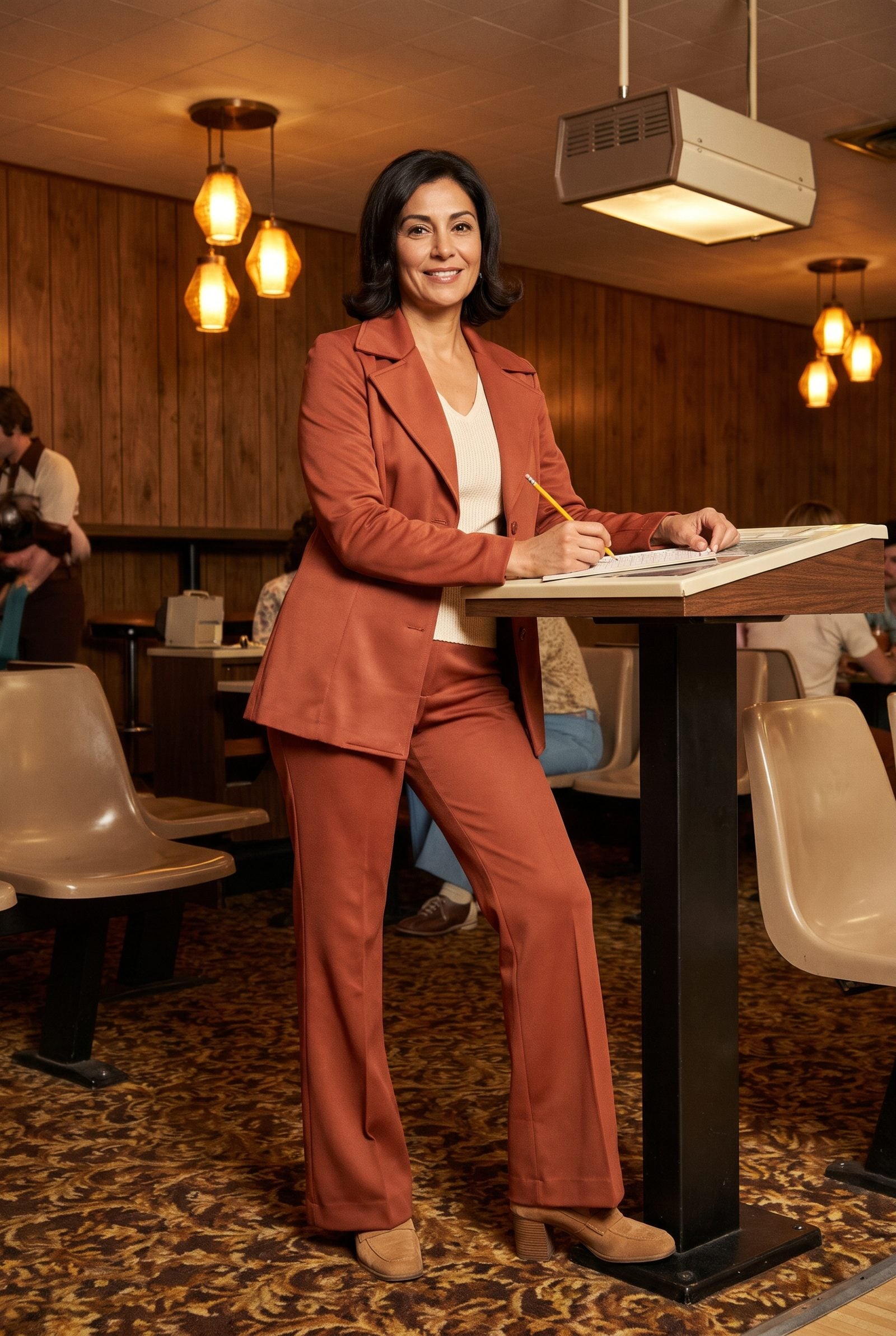
Not everyone bowled in the team shirt. Plenty of women showed up in a full matching polyester pantsuit, wide lapels, flared leg, a jacket that moved when they did. The suit said she came from somewhere and might be going somewhere after.
Burnt sienna, forest green, a muted plaid. The genius was the fabric. Polyester didn’t wrinkle in the car, didn’t bind at the shoulder on the backswing, and held a crease through a whole night of frames. One color top to bottom made her look pulled together without trying, which is exactly the kind of quiet confidence a good suit still buys. Wardrobe is half intention, and this one intended to be noticed.
28. A Shiny Dagger-Collar Shirt
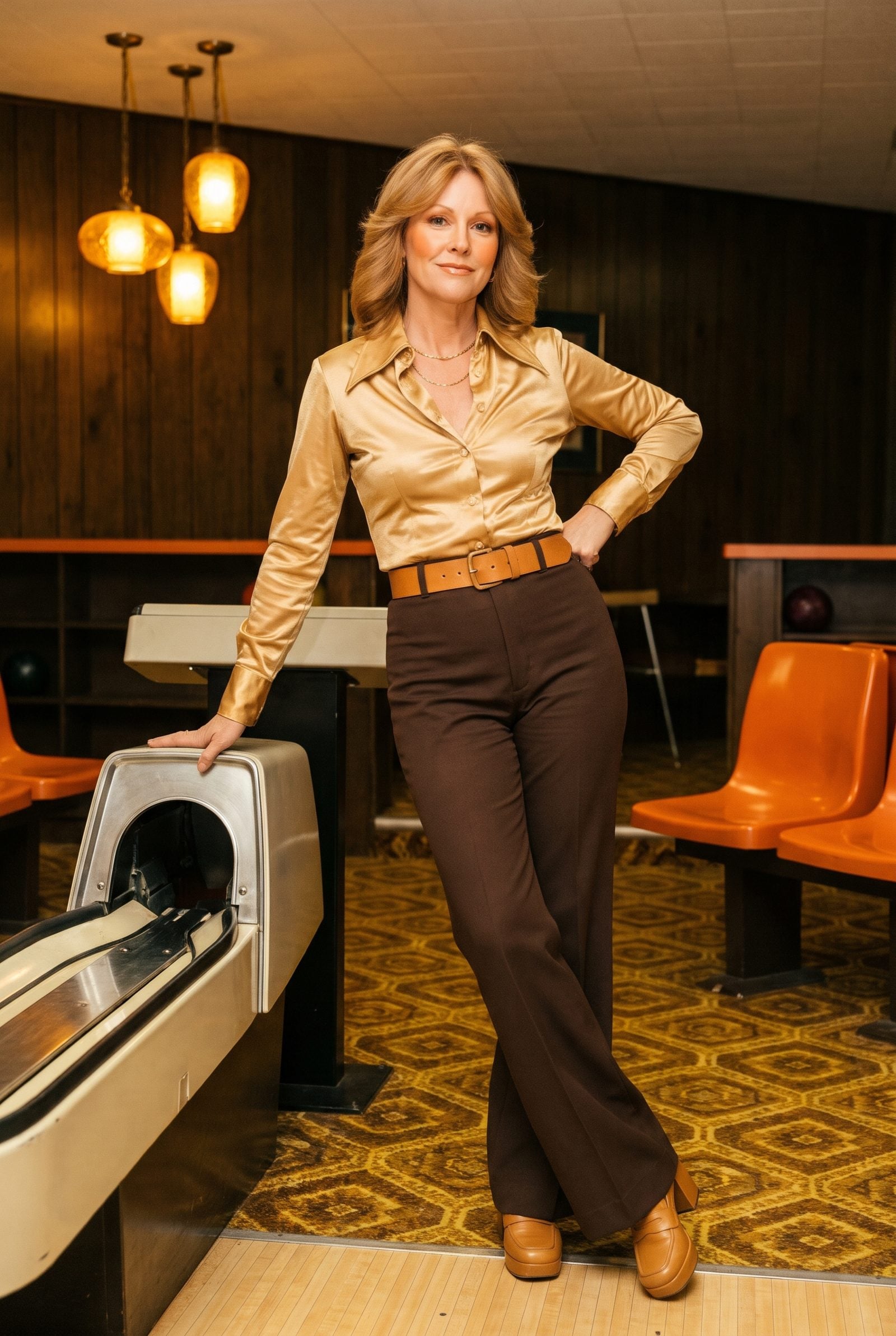
The collar did the talking. Those long dagger points spread halfway across the chest, worn open at the throat so the gold chain could peek out, on a shirt with just enough satin sheen to catch the amber pendant lights.
Gold, deep burgundy, a swirl of warm earth tones, all in a slinky polyester that moved like liquid. Tucked into high-waisted flares, left unbuttoned one past where your mother would approve. This was the shirt you wore when league night was really about what came after league night.
27. A Loud Geometric-Print Top
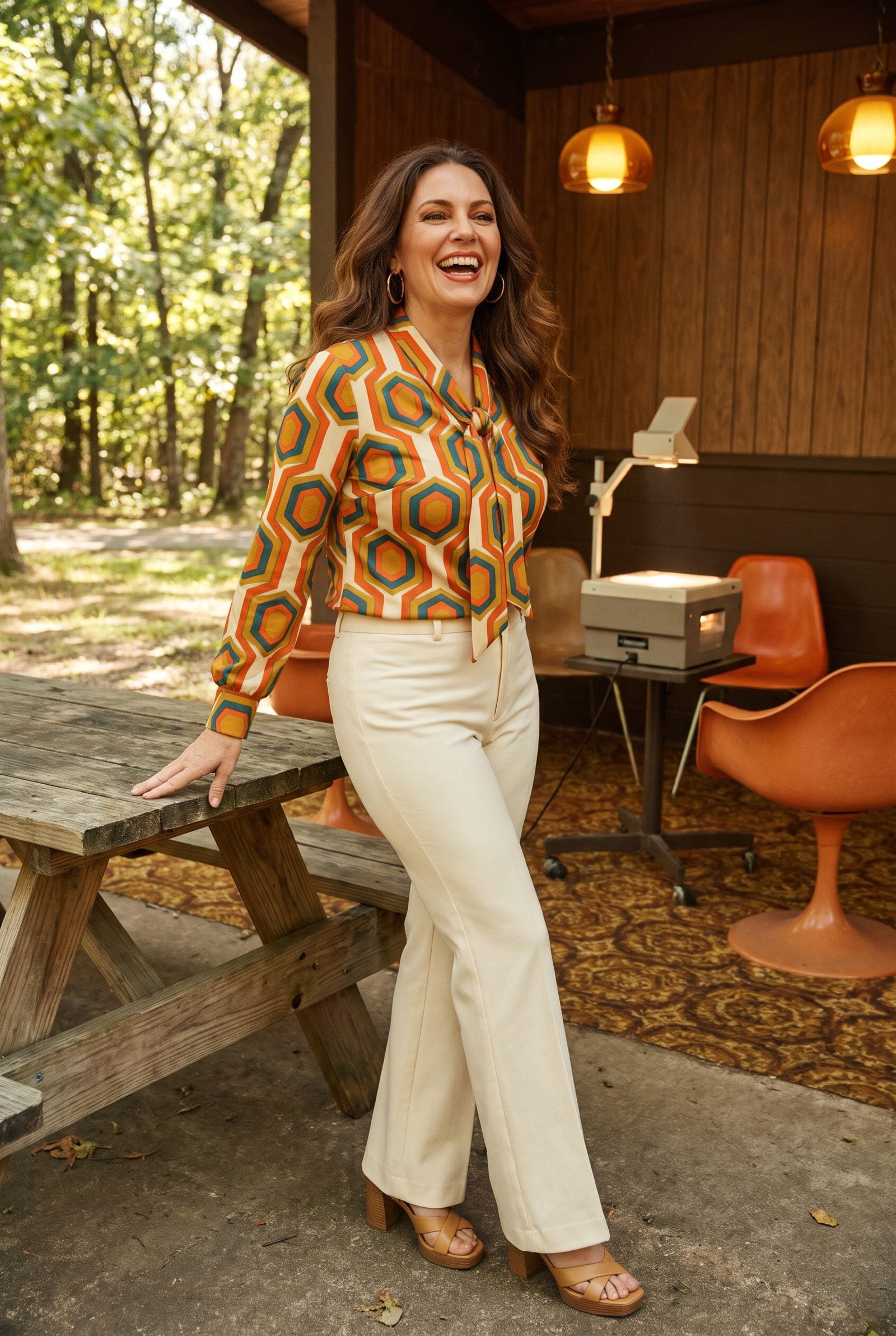
Most outfits whisper. This one hollered, and it committed hard. Interlocking shapes in orange, mustard, teal, and cream, an op-art print loud enough to spot from the next pair of lanes.
The print carried everything. Slick polyester with a tie neck or a soft cowl, tucked into plain flares so the top never had to compete with anything. You didn’t accessorize it. You let it do all the work and stepped out of its way.
26. A Mock-Neck Knit Shell
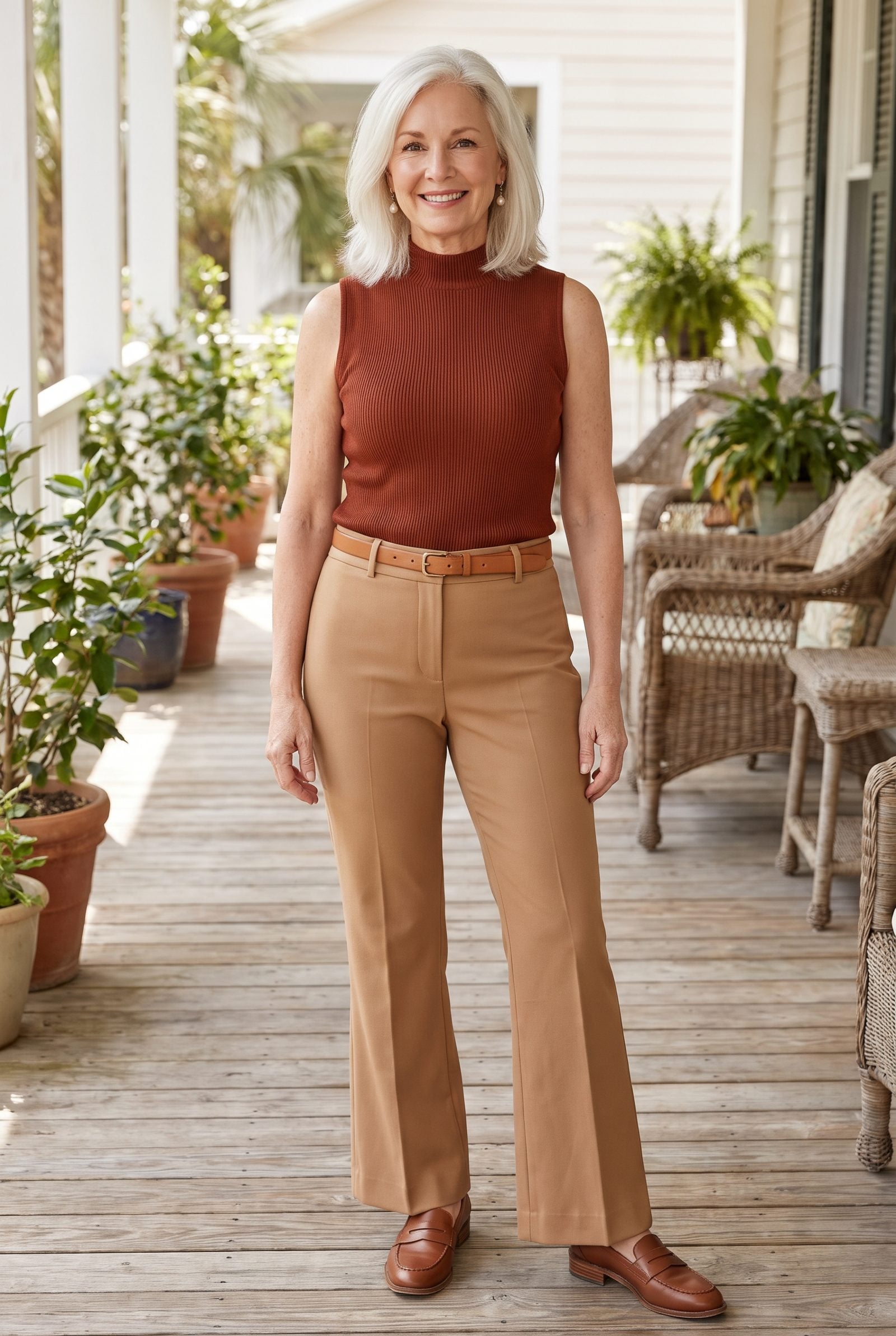
The sleeveless mock-neck shell was the practical woman’s pick. Close-fitting acrylic knit in rust or forest or cream, cut to free the arms for the swing while still looking deliberate. No sleeves to ride up, no collar to fuss with.
It layered under a vest or a cardigan when the alley ran cold, then stood alone under the lights once the game heated up. Tucked into high-waisted flares, it drew a clean vertical line that read tidy and capable. The kind of piece that never shouted and never had to.
25. A Crocheted Granny-Square Vest
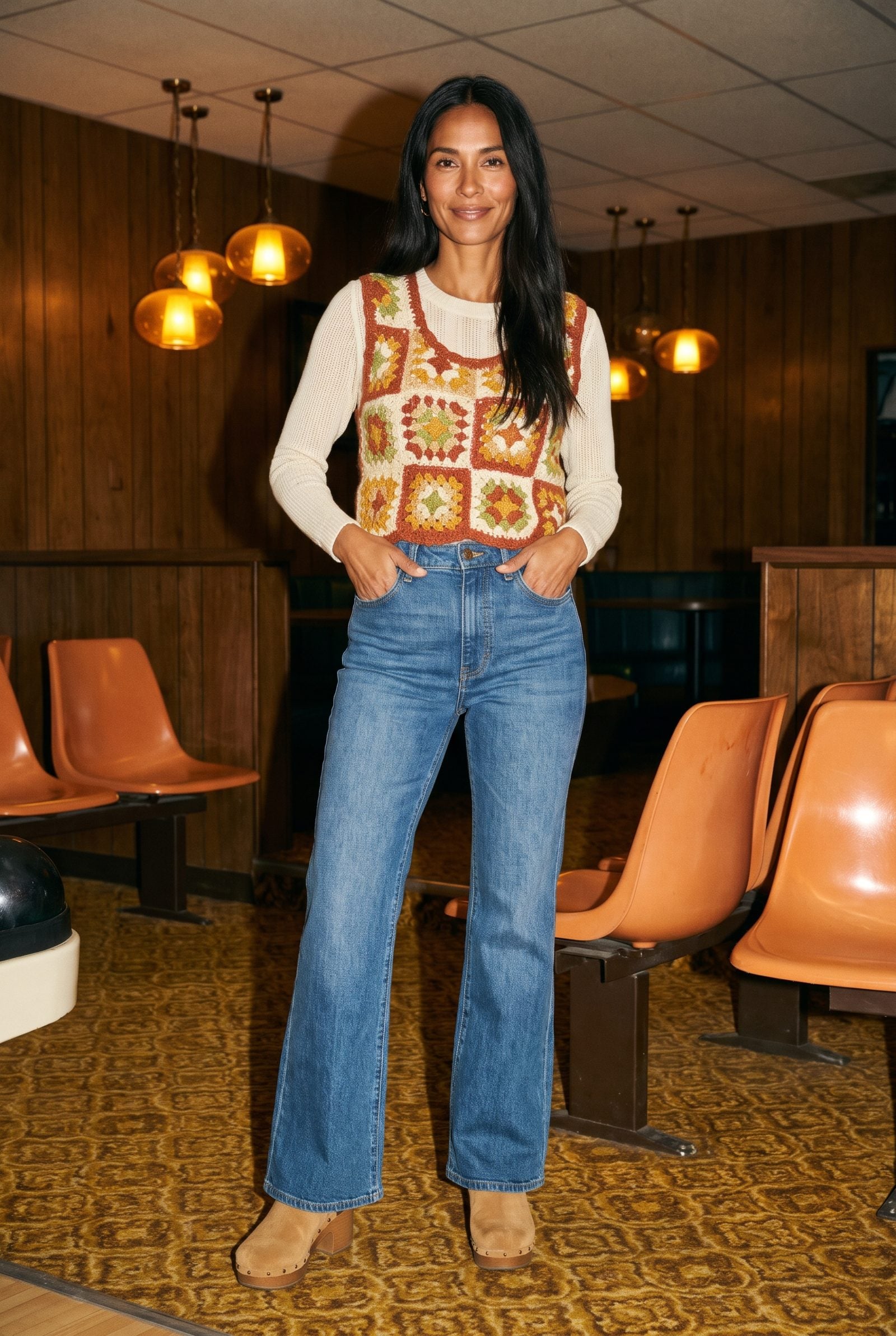
Somebody’s aunt made it, or you made it yourself over a few winter evenings. The granny-square vest was handcraft worn proud, patchwork hexagons and squares in rust, mustard, cream, and avocado, hooked square by square and sewn together.
Thrown over a plain knit top and worn with high-waisted denim details that caught the light, it layered warmth without weight. The texture was the whole story. Against smooth polyester and flat denim, that nubby crochet introduced the one bit of handmade softness in a room full of machine-made shine.
24. A Belted Shirtwaist Dress
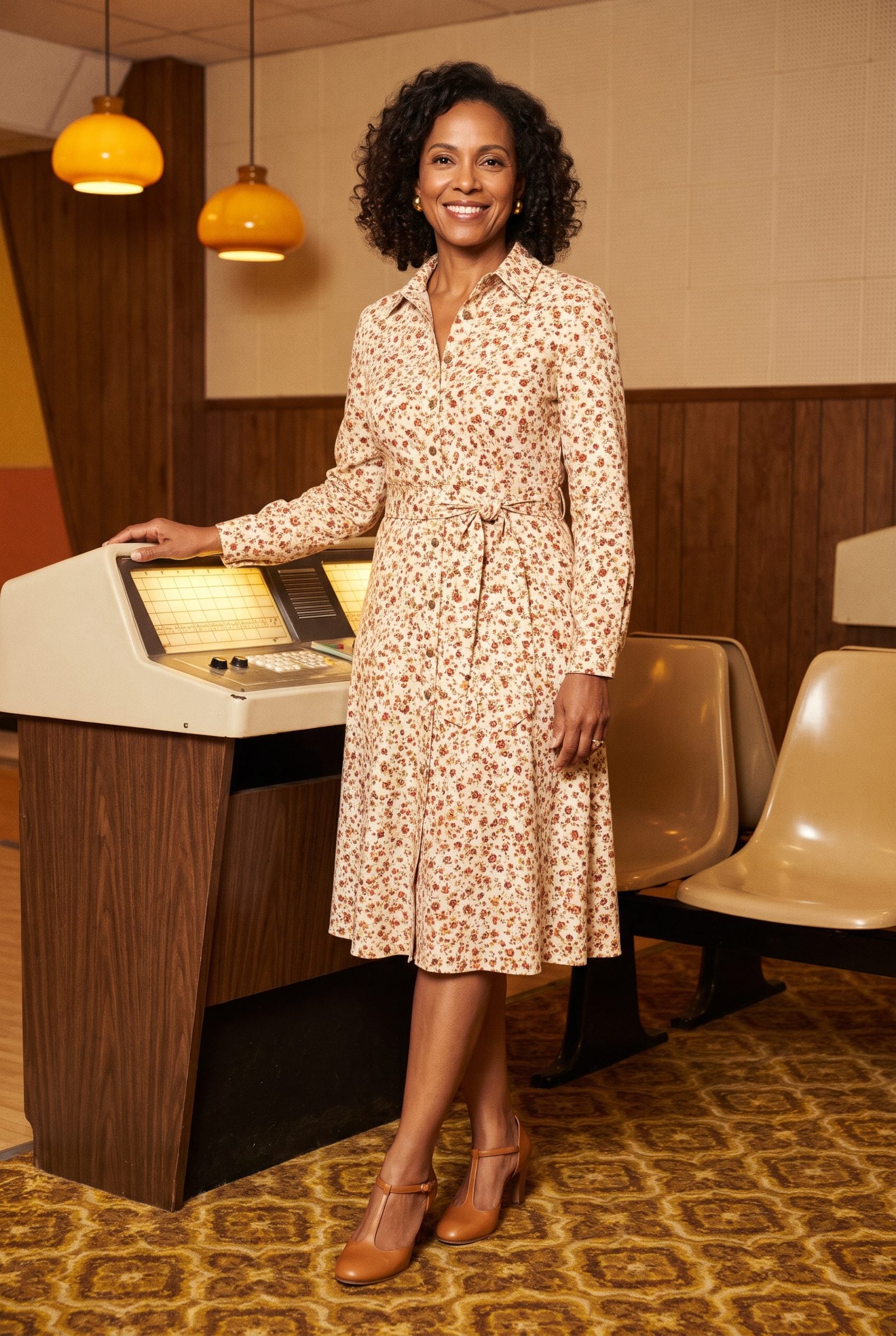
Some women didn’t change out of their day dress, and the belted shirtwaist was built for exactly that double duty. Collar, button front, self-tie belt pulling in the waist, a skirt with enough swing to move but enough structure to behave.
Small autumnal florals, soft plaids, a muted geometric on cream. The belt ran the show, carving an hourglass out of an otherwise simple silhouette and giving the eye a place to land. She walked in from errands or work, cinched the belt a notch, and was ready for the lanes without a second thought. Proof that style is often just a dress that works twice.
23. A Sleeveless Jumpsuit With a Wide Belt
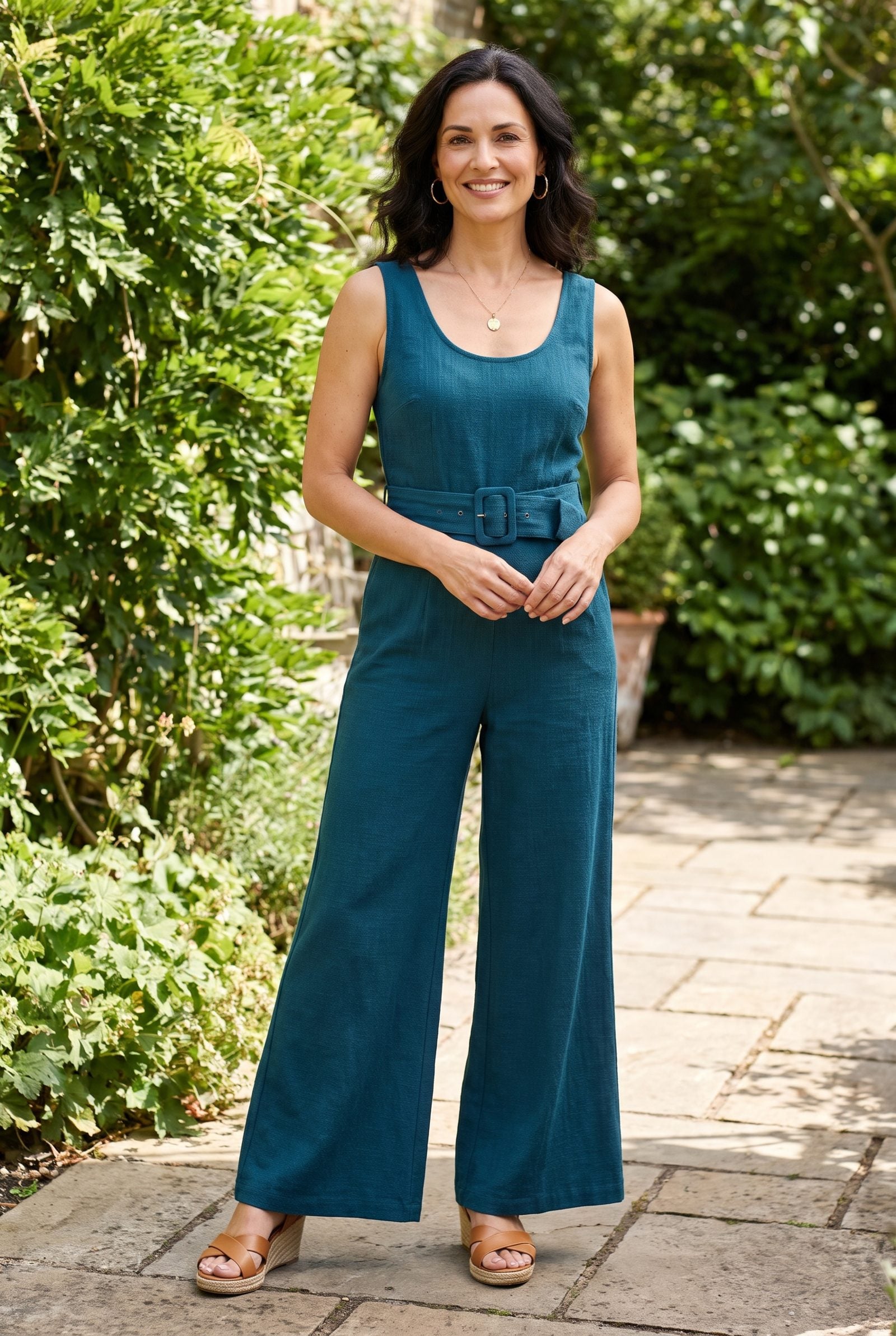
The jumpsuit was the showstopper of the evening, and everybody knew it the second she walked in. One piece of deep teal polyester, sleeveless, scoop-necked, with a wide self-belt doing the heavy lifting at the waist and a flared leg that swept the carpet.
That belt made the whole thing. Without it, a jumpsuit reads as a sack. Cinched hard at the natural waist, it split the silhouette into a clean top and a long sweeping bottom, the proportional play that made this look land. Cork platform shoes added height and let the wide leg pool just right at the ankle. She bowled in it, danced in it after, and stole the night in it.
22. Plaid Bell-Bottoms That Flared Right Over the Lane Shoes
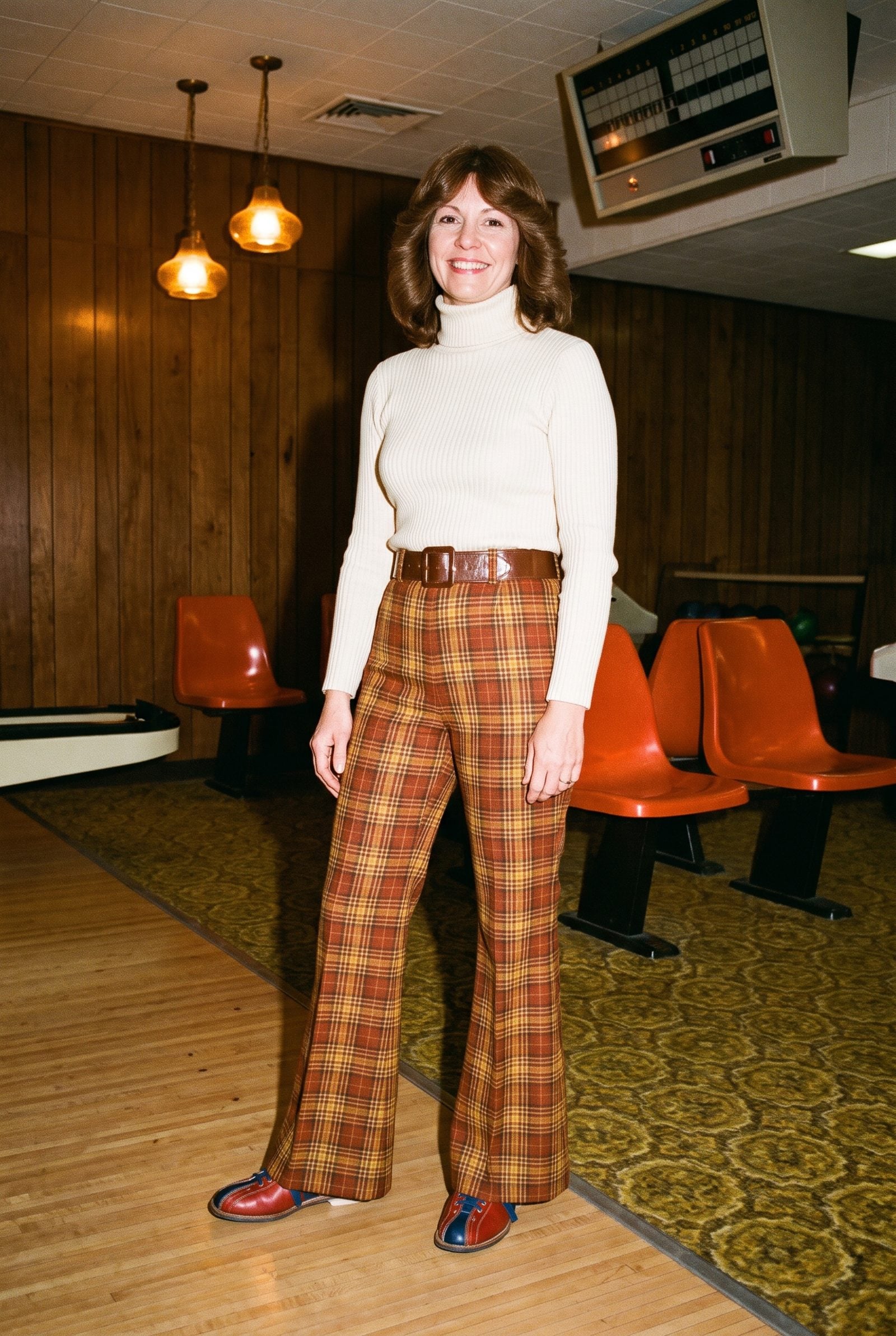
The flare did the real work here. Those plaid bell-bottoms swung wide enough to brush the ball return, and that exaggerated line turned a league night into an occasion. High waist, snug through the hip, then all that polyester opening up below the knee — it lengthened the whole leg before you’d thrown a single strike.
Rust, mustard, and brown read as a single warm field from across the room, which is why the plaid never looked busy. You paired it with a tucked turtleneck and a belt wide as your palm, because tucking was the law.
21. Double-Knit Pull-On Pants With the Crease Sewn In
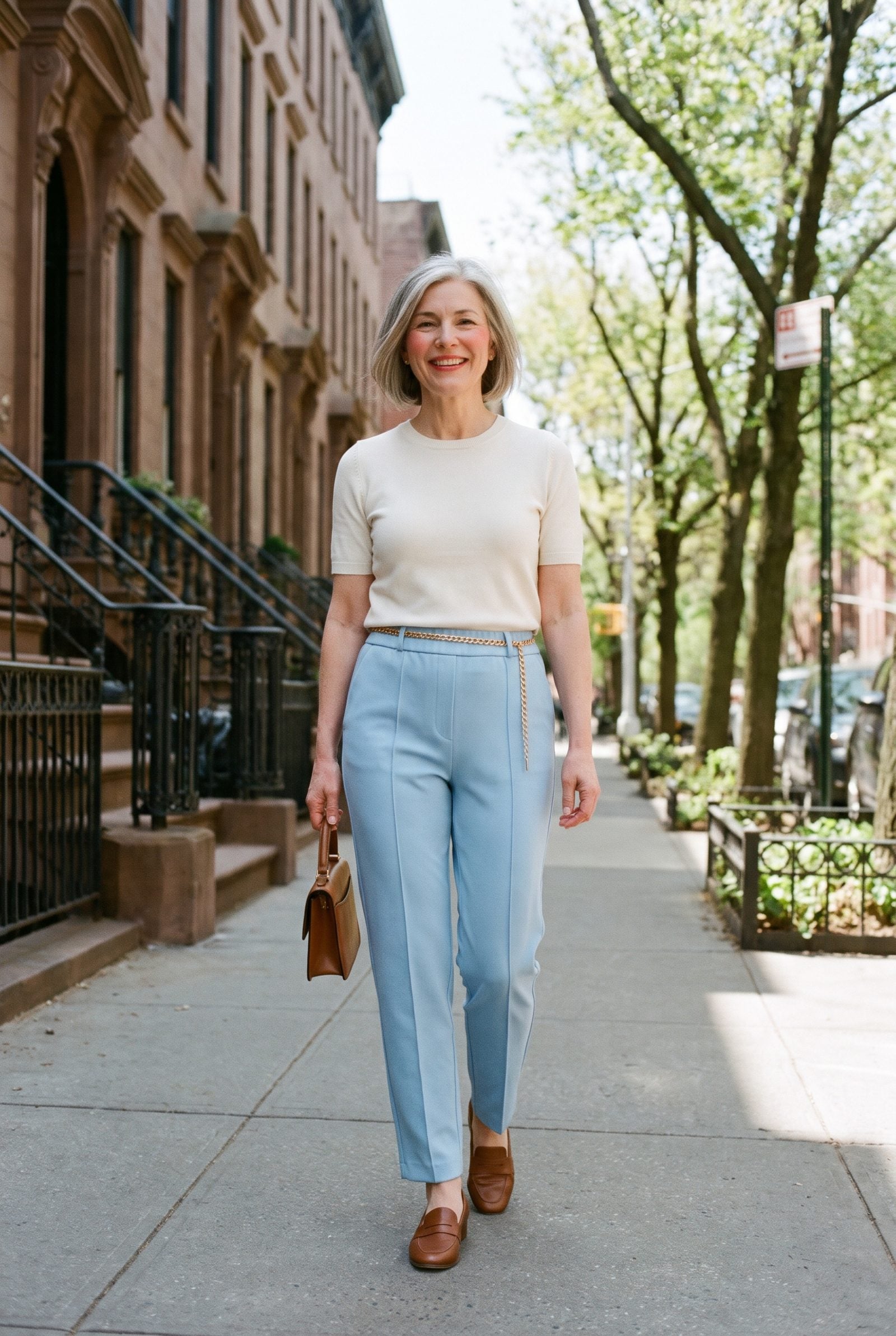
No zipper, no button, just an elastic waist and a crease pressed in forever at the factory. Double-knit pull-on pants were the uniform of women who had places to be and no patience for fuss. The polyester held its shape through a potluck, a late shift, and three games without a wrinkle.
Comfort disguised as polish — that’s the whole trick. That sewn-in crease signaled you’d tried, even when the waistband underneath was doing all the mercy. Powder blue, a tucked knit shell, a thin chain at the waist, and you were ready to roll a 180.
20. A Patchwork Denim Skirt Stitched Together Like a Quilt
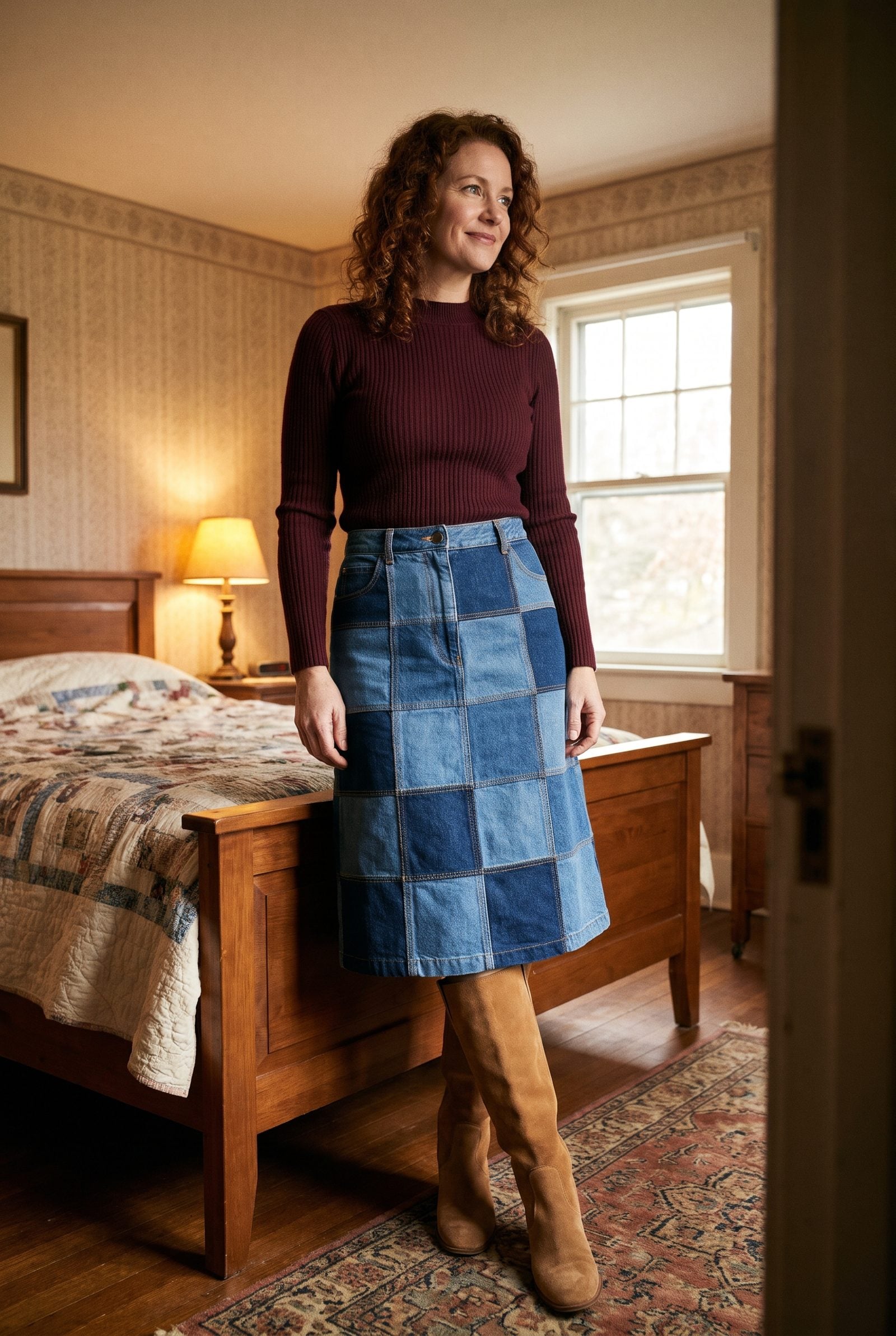
Every panel a different wash, chain-stitched together so the seams showed on purpose. The patchwork denim skirt was craft and fashion holding hands, and half of them were made at a kitchen table from worn-out jeans nobody wanted to throw out.
What made it work was the honesty of those mismatched blues reading as one textured neutral. Pair it with a ribbed burgundy sweater and tall suede boots and the denim details did the talking. You wore this when you wanted everyone to know you’d made it yourself.
19. The Knee-Length Corduroy Skirt in That Deep Autumn Rust
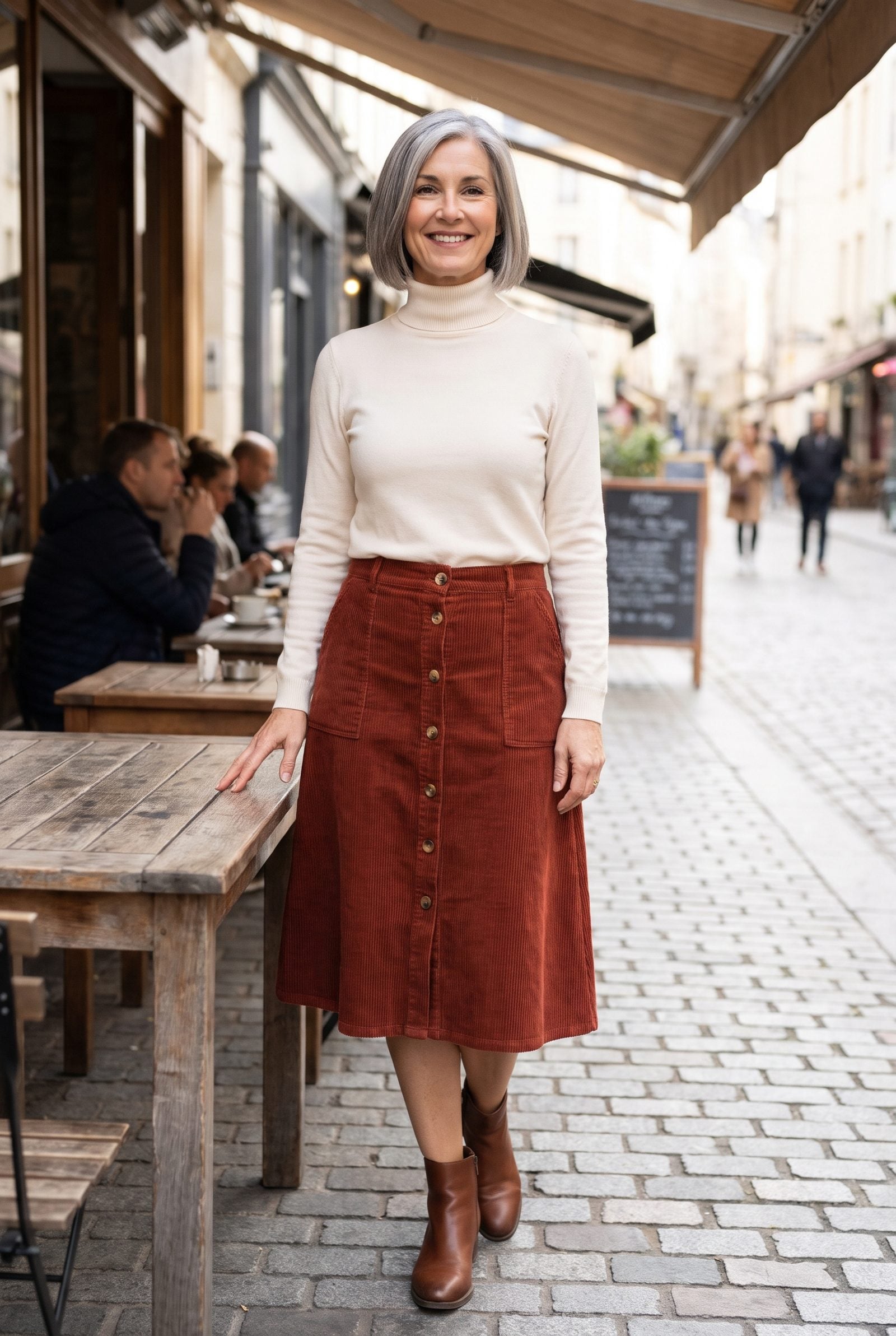
Run your hand down those wales and you could feel the whole decade. The corduroy skirt in deep rust was the sensible cousin of the patchwork — A-line, knee-length, with wooden buttons marching down the front. It had weight to it, the kind that swung properly when you walked up to the line.
Texture ran this one. Corduroy’s ribbed matte surface against a smooth acrylic turtleneck gave the outfit dimension without a single pattern in play. Rust and cream, a touch of brown boot, and you looked pulled together without trying to out-flare anyone’s bell-bottoms.
18. A Bold Floral Day Dress Loud Enough to See From the Snack Bar
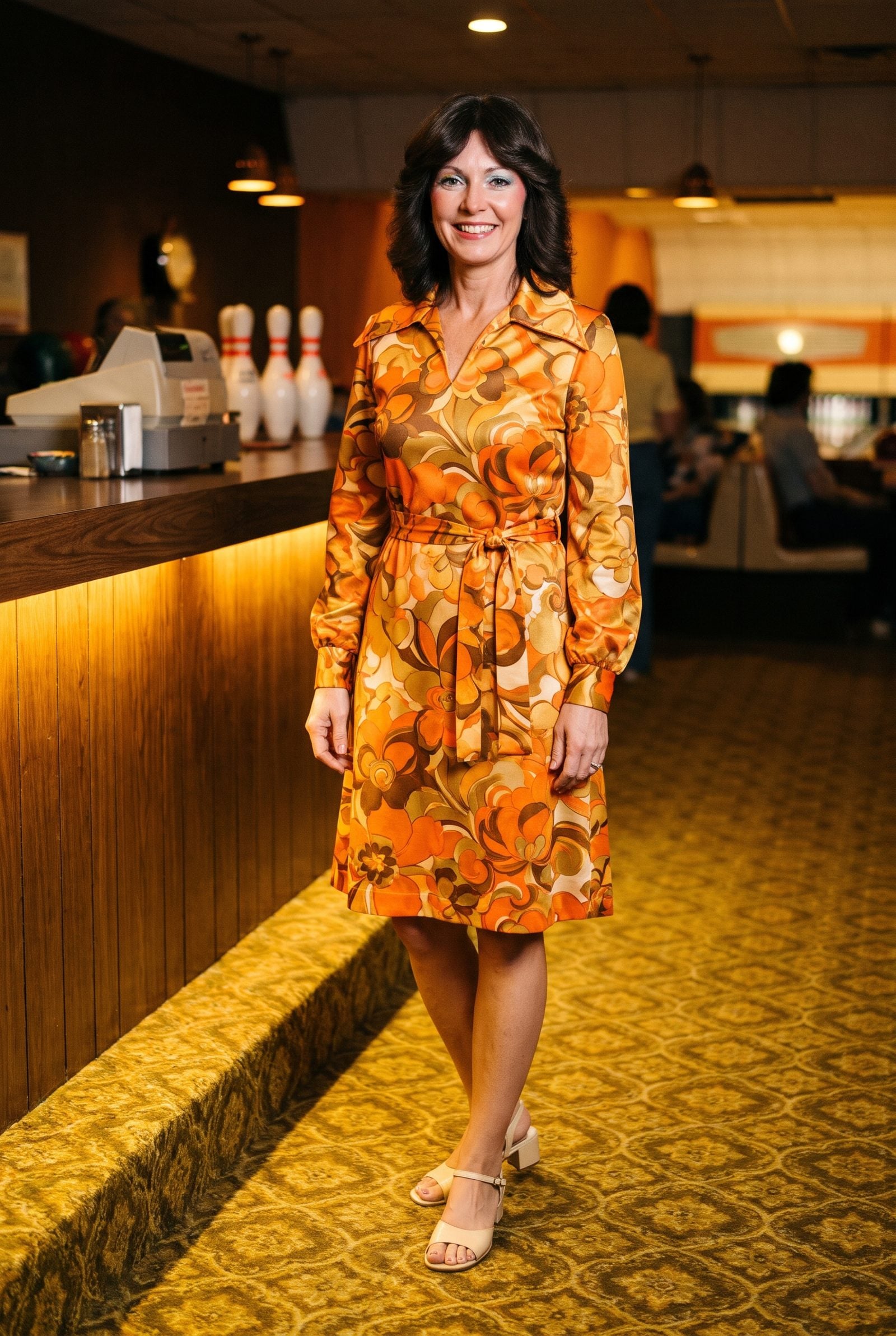
You could spot her from the snack bar, and that was the point. The bold floral day dress went all in on oversized orange-and-gold blooms across a polyester knit, with a pointed collar wide enough to land a plane on and a self-tie belt pulling it all to the waist.
The print carried everything. When the florals are that big and that warm, you don’t add another pattern or color — you let the dress be the whole event. Belt tied, sleeves long, hem skimming the knee. Dressing this loud at bowling night was a quiet kind of confidence.
17. A Cropped Acrylic Cardigan You Could Button One-Handed
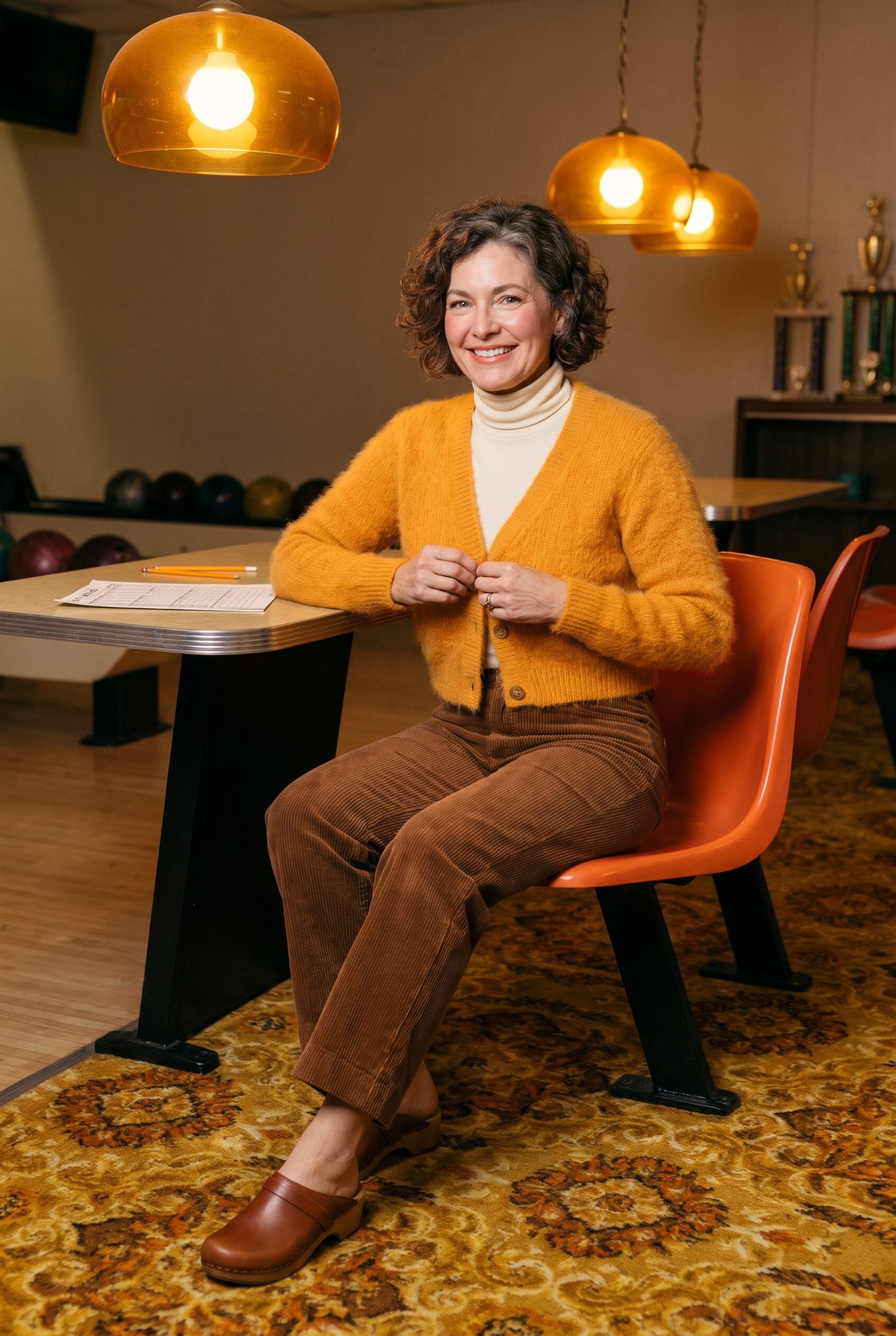
Marigold and fuzzy, hitting right at the natural waist. The cropped acrylic cardigan was the throw-on-top of bowling nights, warm enough for the draft by the door and short enough that it never fought with your high-waisted trousers.
Its real job was proportion. Ending the knit at the waistline kept the leg looking long underneath, so the cardigan added coziness without shortening you. Wood-toned buttons, ribbed cuffs, a cream turtleneck peeking out at the neck. Acrylic back then was practically a personality trait.
16. A Fringed Suede Vest That Swayed Every Time You Threw
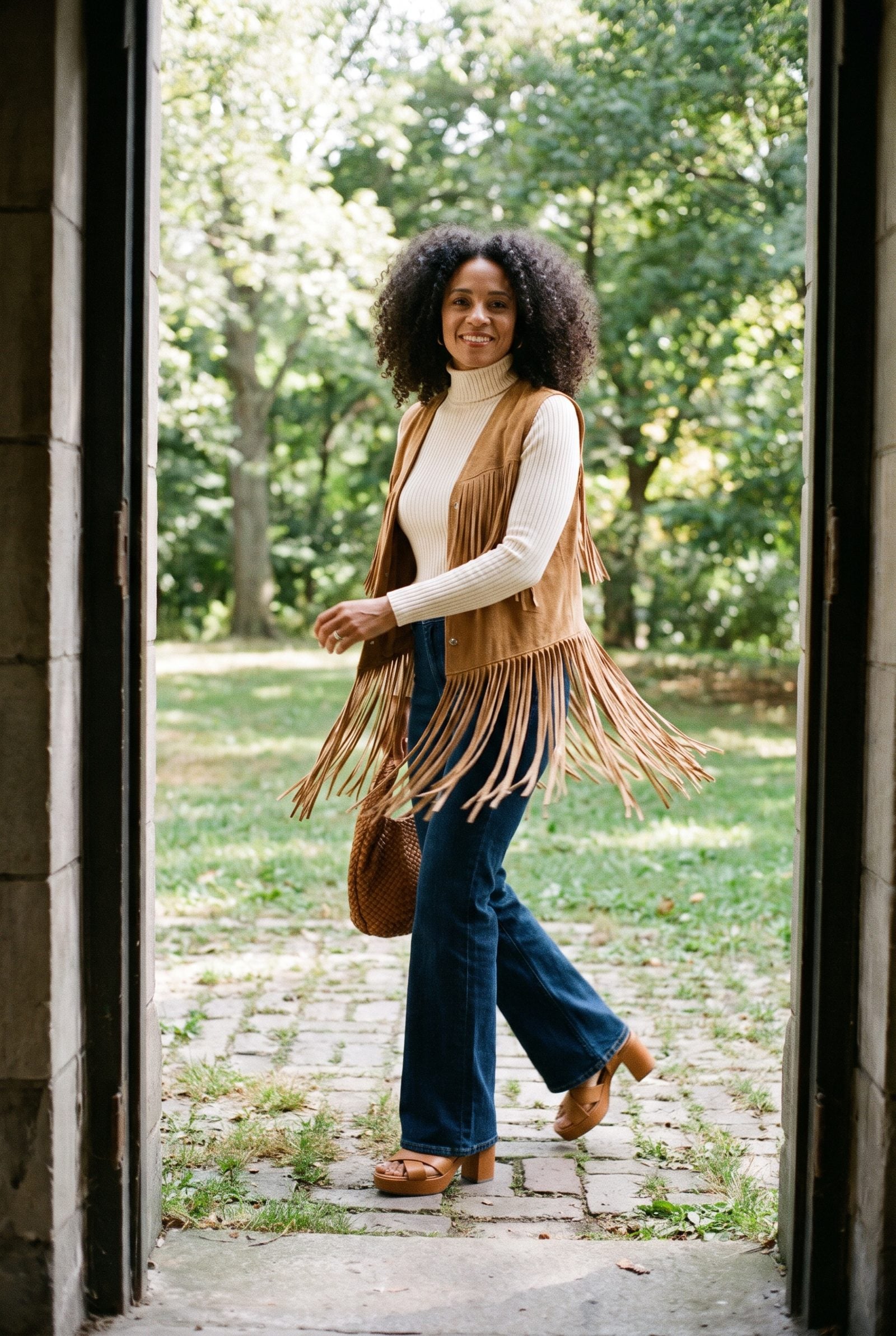
The fringe moved when you did, and nobody who owned one of these threw a ball without being a little aware of that. A tan suede vest, worn open over a turtleneck, with fringe long enough to sway at the hem. Frontier energy on a Tuesday night.
On its own the jeans-and-turtleneck underneath is plain. Add the suede and the fringe and suddenly there’s movement and texture and a touch of the outlaw. The soft matte nap against smooth denim is the quiet contrast holding it together.
15. A Faux-Leather Car Coat for the Walk In From the Lot
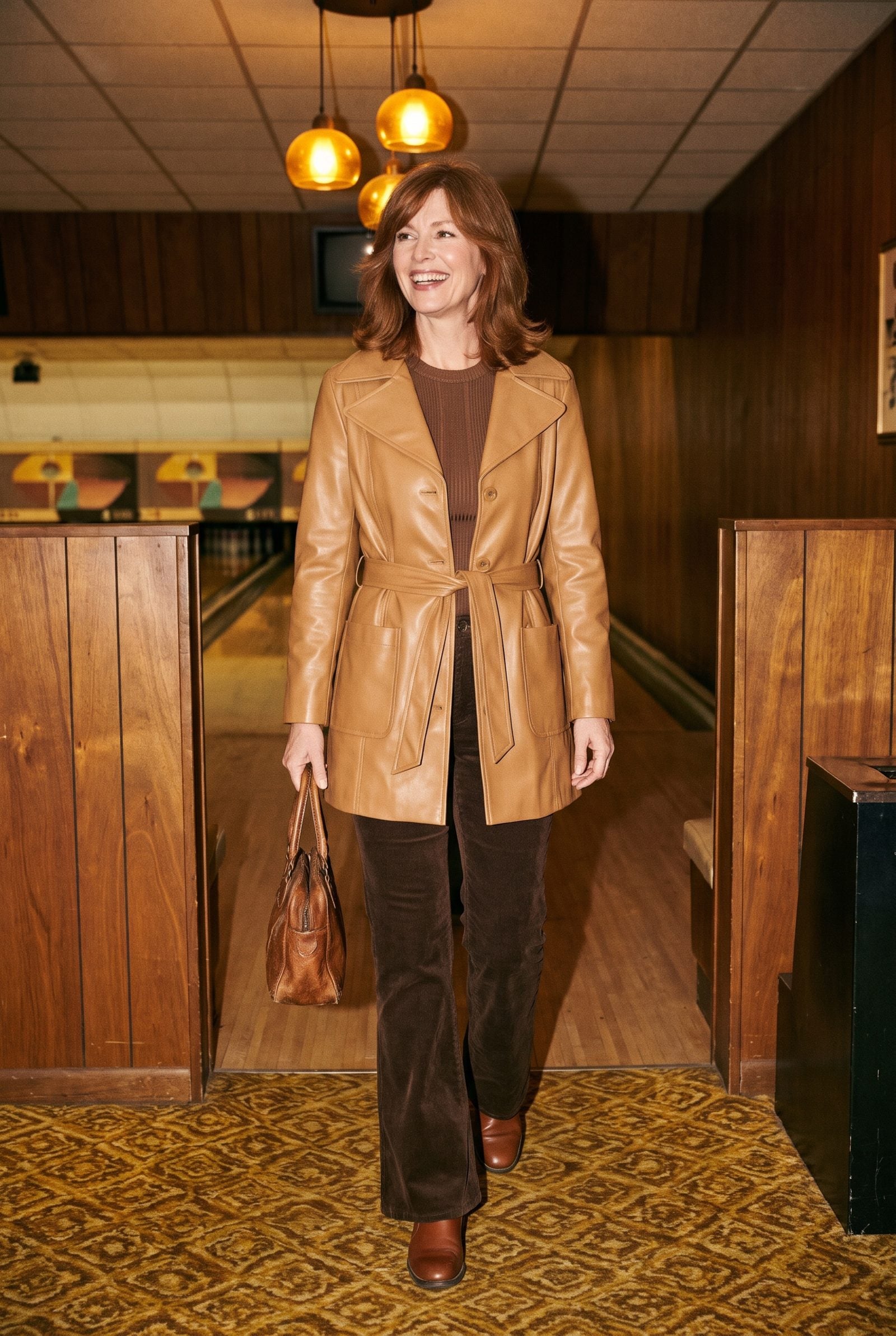
It squeaked a little when you sat down and it never once pretended to be real leather, and that was fine. The faux-leather car coat in camel got you from the parking lot to the lanes, belted at the waist with a collar wide enough to flip up against the cold.
Structure drove it. That vinyl sheen and the defined belt gave the outfit a backbone the soft knits underneath couldn’t. A good coat with shoes that matched its warm tone made the walk in look intentional, hip-length and hitting just past the seat of the car.
14. A Quilted Nylon Jacket That Rustled With Every Step
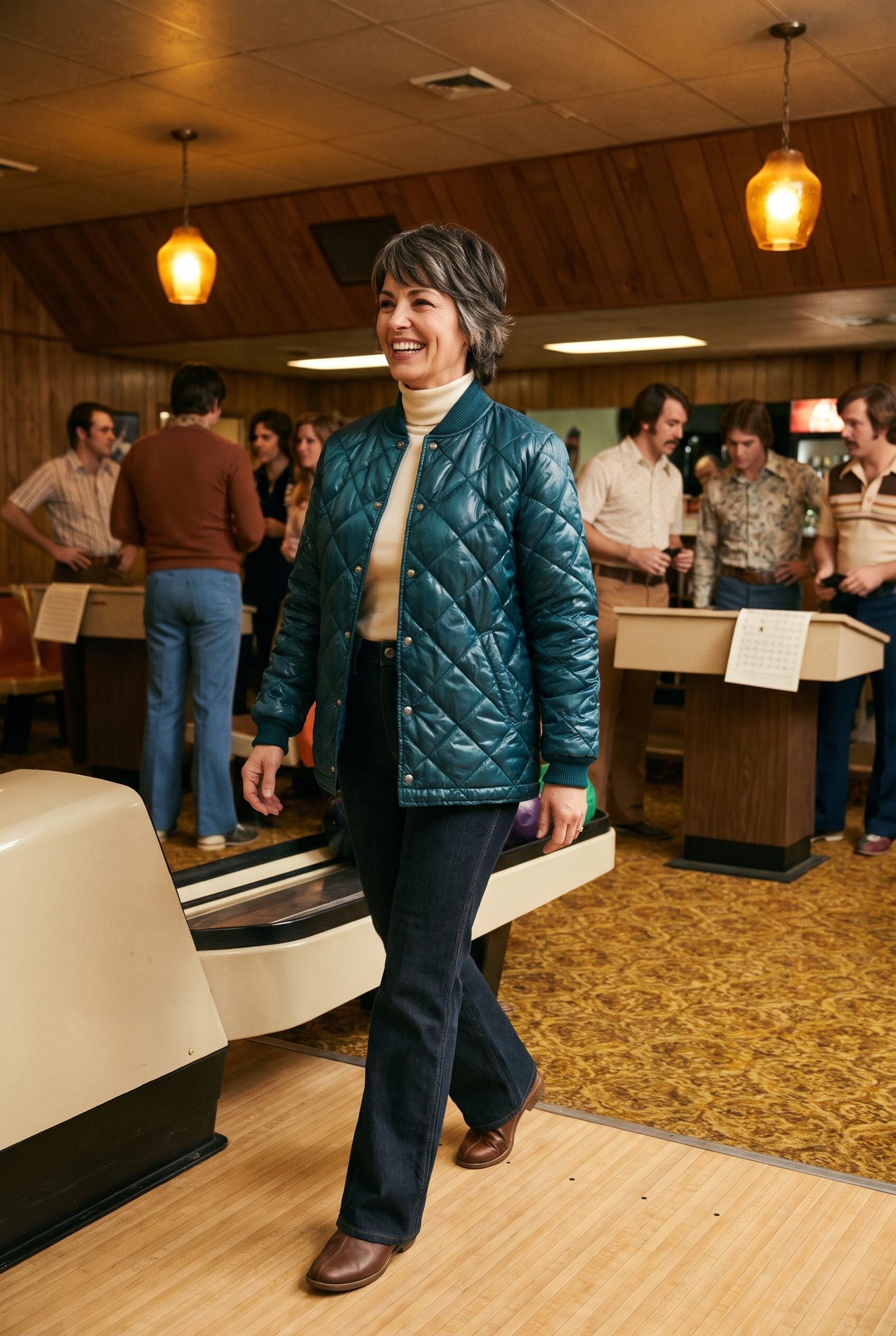
You heard it before you saw it. The quilted nylon jacket rustled with every step, channel-stitched into those neat diamonds, snapping up the front against the evening chill. Deep teal was the color you wanted — bright enough to hold its own against the patterned carpet.
Texture contrast kept it from reading sporty-dull. Glossy quilted nylon over a soft matte turtleneck, the shine against the knit, with denim pulling it toward casual. A practical layer with an actual point of view. It packed down to nothing in your tote and warmed up in seconds.
13. A Macramé Belt With Wooden Beads Knotted by Hand
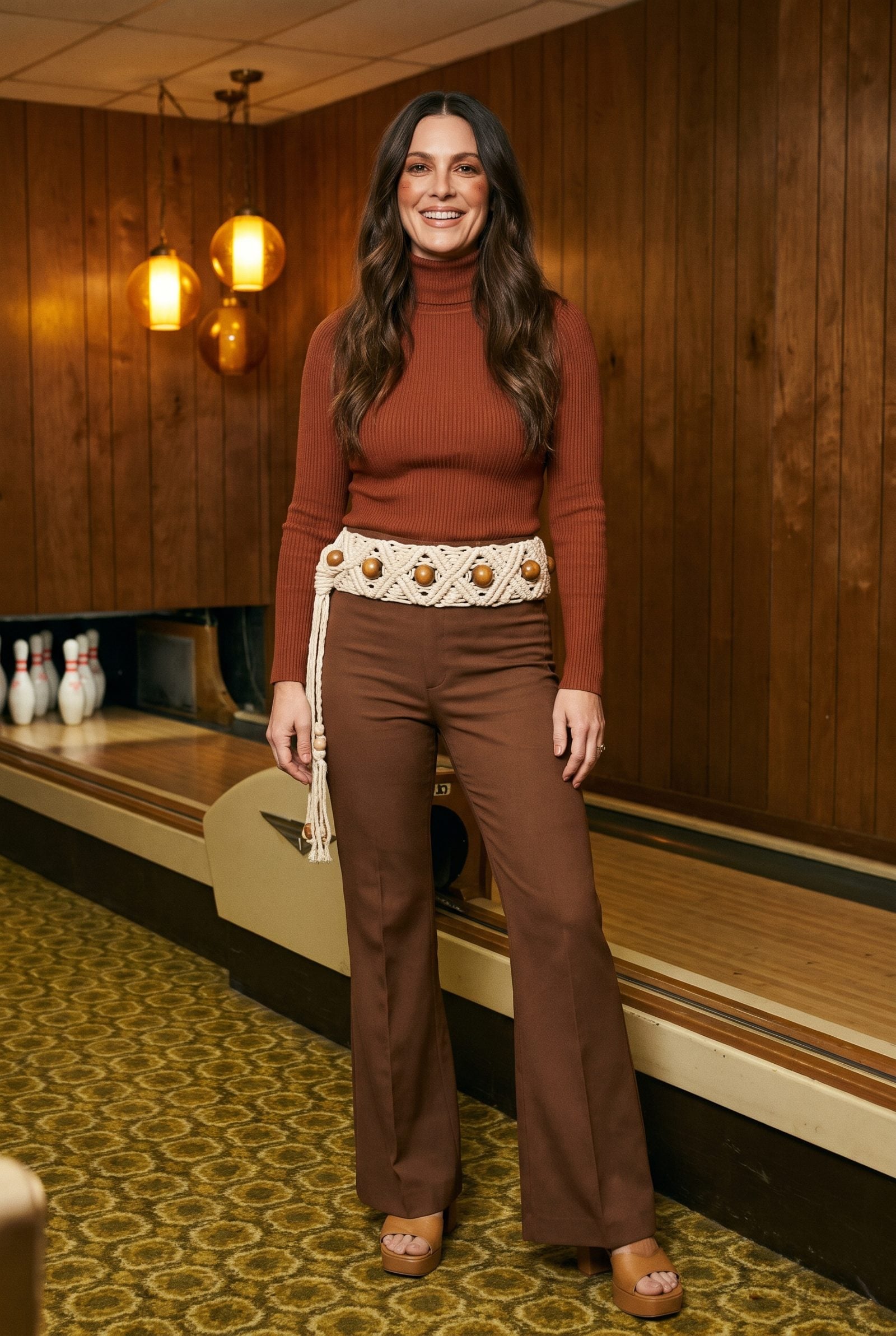
Hand-knotted cotton cord with wooden beads the size of marbles, knotted high at the natural waist. The macramé belt told everyone you were a person who made things, or at least knew someone at the craft fair who did.
It put texture right at the waist, where the eye naturally lands. Against smooth flared trousers and a fitted ribbed turtleneck, the knotted cord and warm wood read as handmade warmth. A small accessory choice, really — but belts like this carried a whole philosophy. Nothing on this list said I bowl in my own style quite so loudly.
12. Enamel Flower Earrings
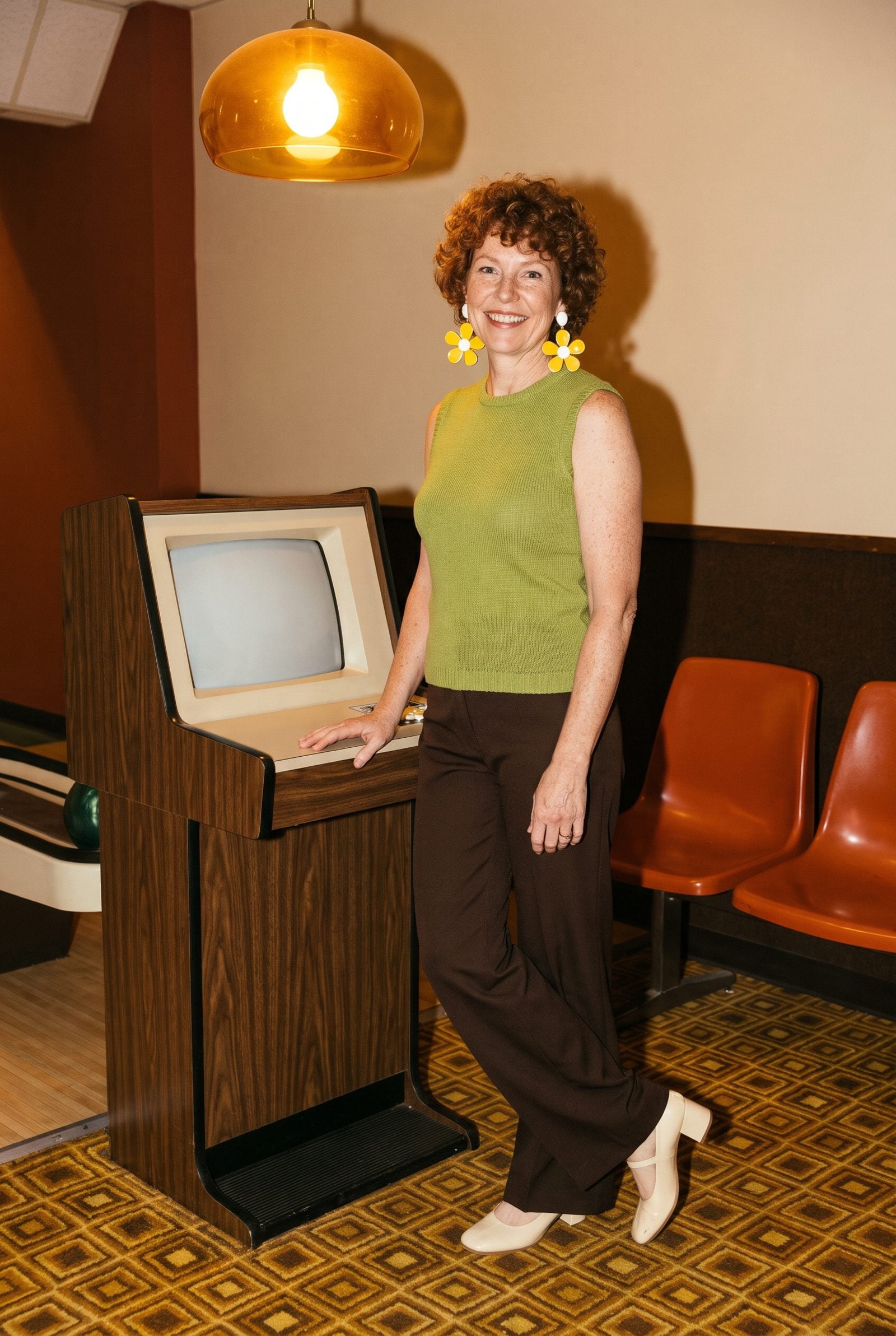
Clip-on, always. The little clips pinched by the third frame, but you’d rather ache than go bare-lobed. Enamel daisies the size of a silver dollar, glossy yellow petals with a white center, bobbing every time you leaned in for your approach.
They were the one playful note in an outfit built from sensible knits. Pair bright enamel against an avocado shell and the earrings run the whole show. Small piece, big job.
11. A Silk Scarf Knotted at the Neck
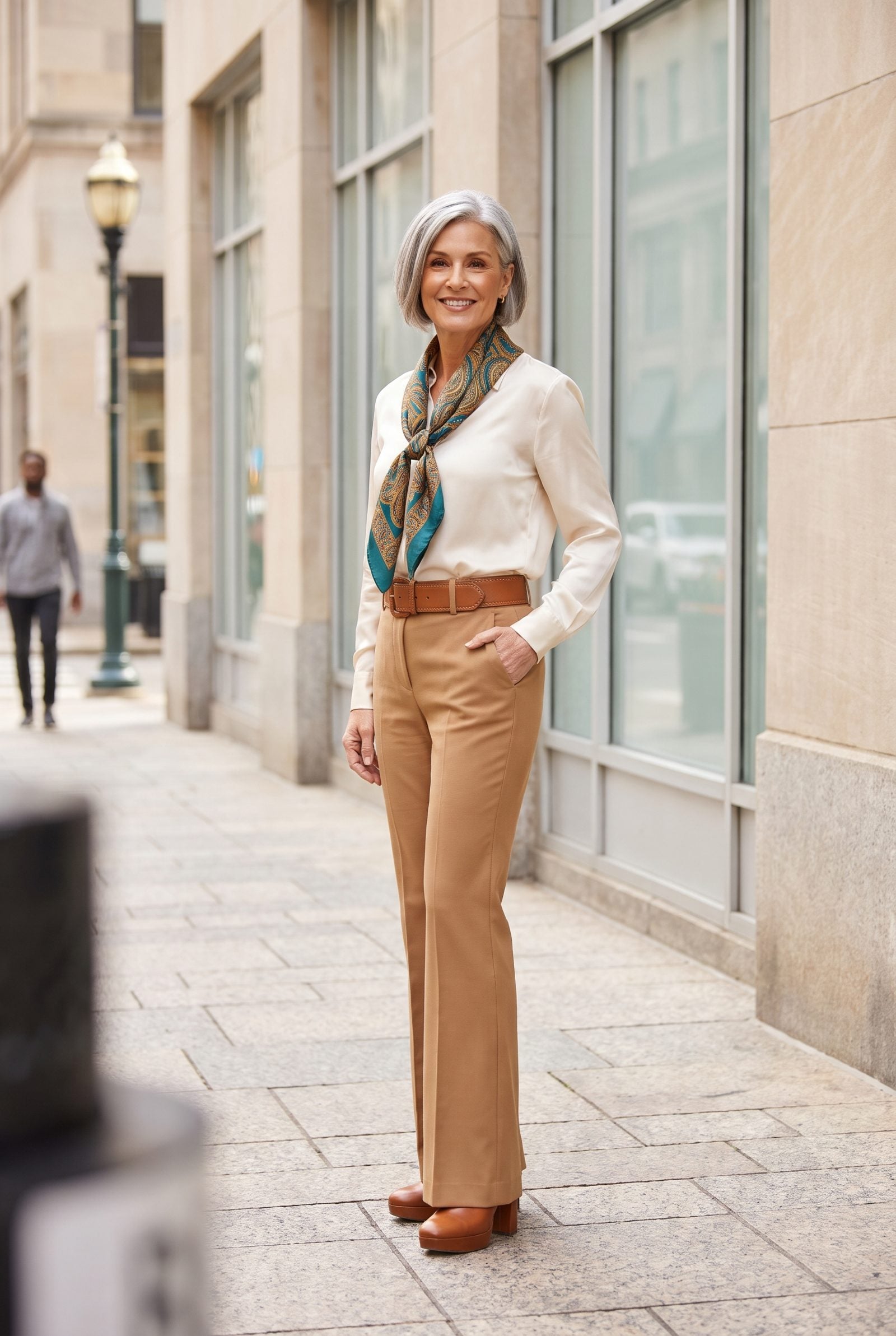
A square of real silk, folded corner to corner into a band and knotted low at mid-chest, its long tails hanging loose over the blouse down to the waist. It said you’d thought about the evening. League night or not, you weren’t showing up looking like you rolled out of the laundry.
The paisley did the heavy lifting — teal and rust and gold against a plain cream blouse, one pattern at the neck and everything else quiet, so the eye went straight to your face. Women knew that trick instinctively.
10. A Patchwork Leather Purse
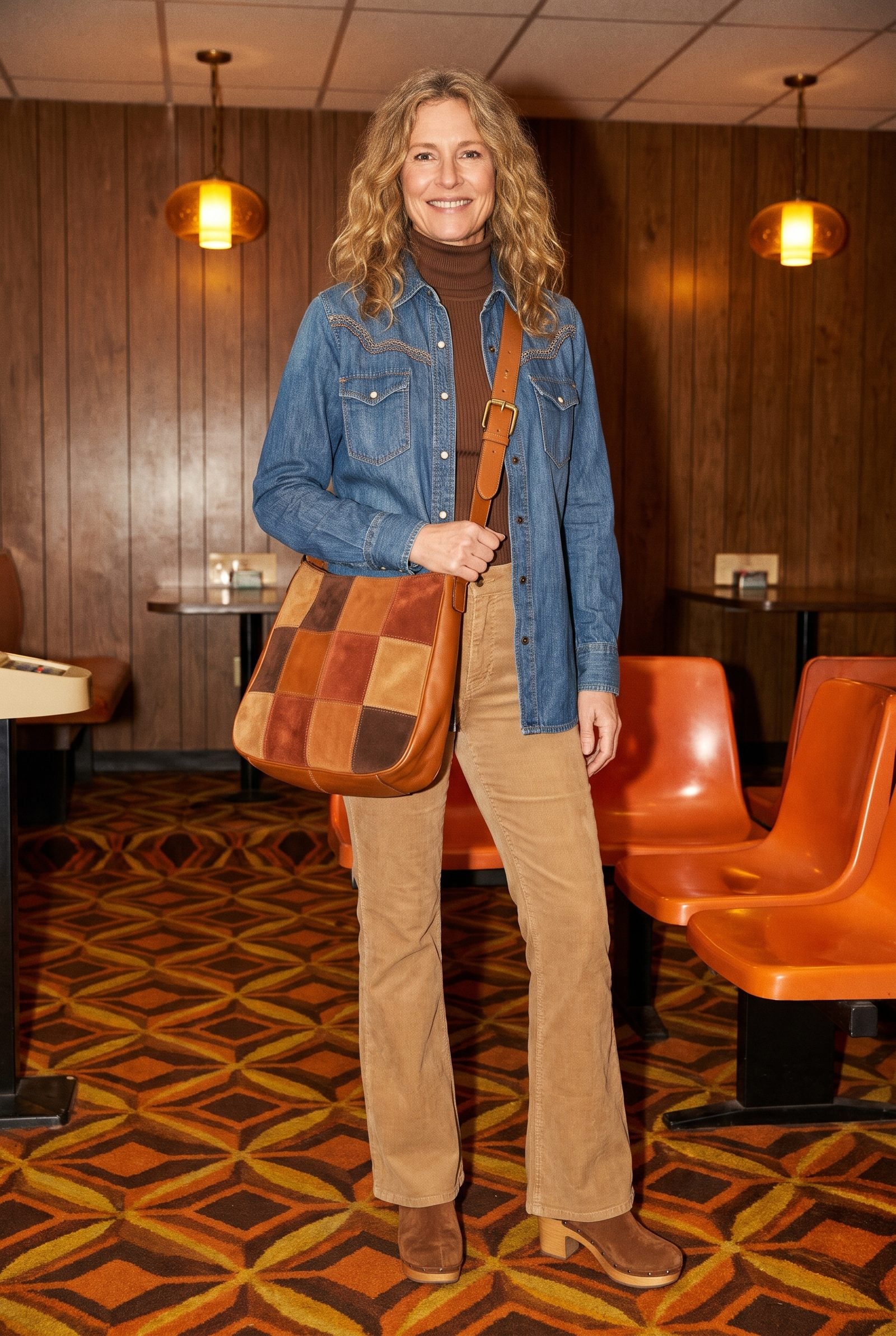
Squares of leather and suede stitched into one bag, tan, rust, and chocolate patches repeating across the grid. It held your rosin bag, your lipstick, and a half-roll of butter rum Life Savers, and the strap was long enough to wear across the body so your hands stayed free for the ball.
The patchwork made every brown in your outfit belong together — tan corduroy, cognac clogs, russet turtleneck, all of it gathered up and justified by that one bag of mixed suede patches and leather. A unifying object, basically, carried on your shoulder.
9. Knee-High Striped Tube Socks
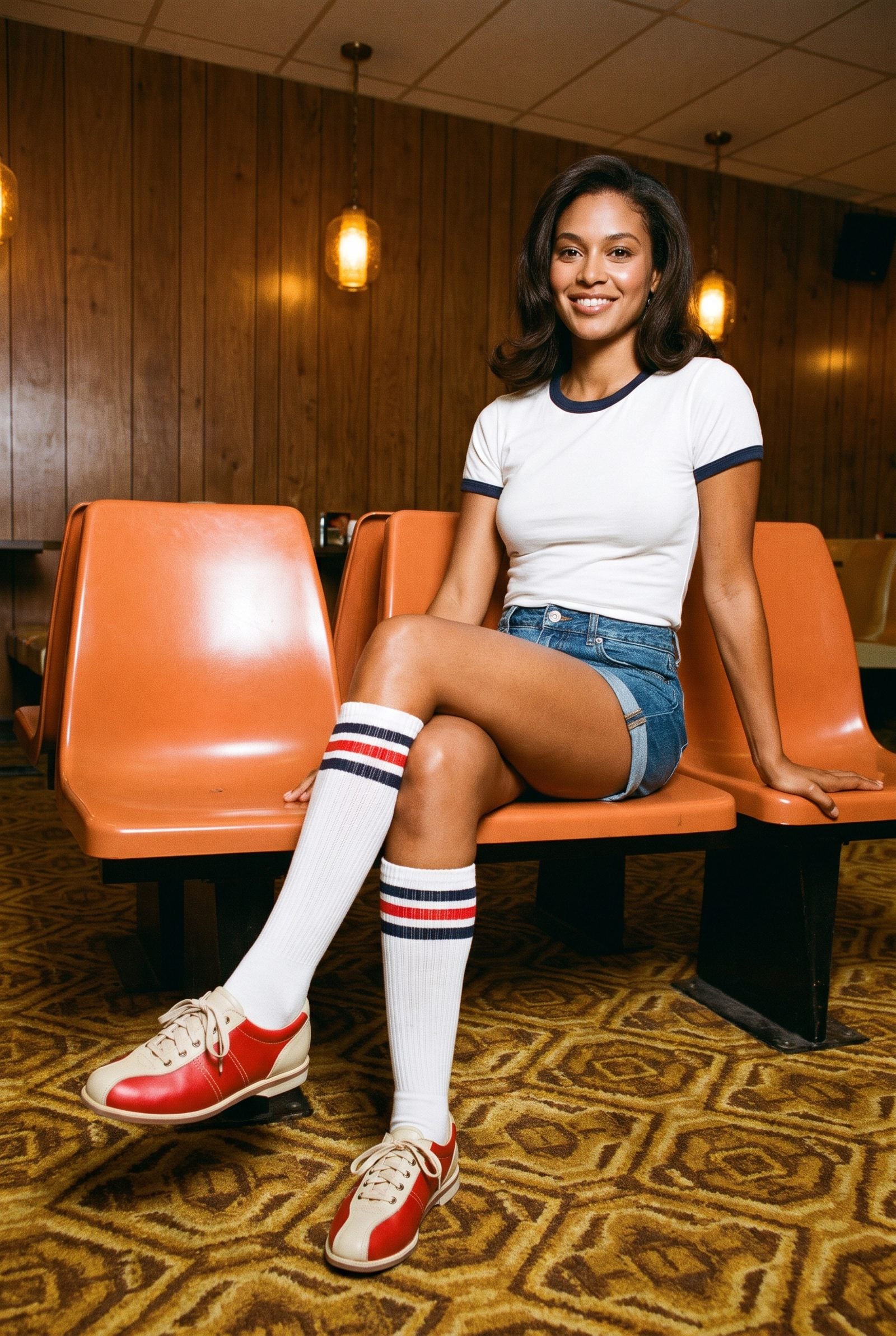
Pulled all the way up to just below the knee, the triple stripe at the top band in your team colors if you were lucky. Red and navy on white cotton, thick and a little itchy, bunched slightly at the ankle by the second game.
They turned a plain pair of denim shorts into something that looked like it belonged on a lane, the stripe at the knee breaking the leg line and adding the only sporty note the outfit needs. Honestly? They were the most comfortable thing about the whole evening.
8. Sheer Suntan Pantyhose
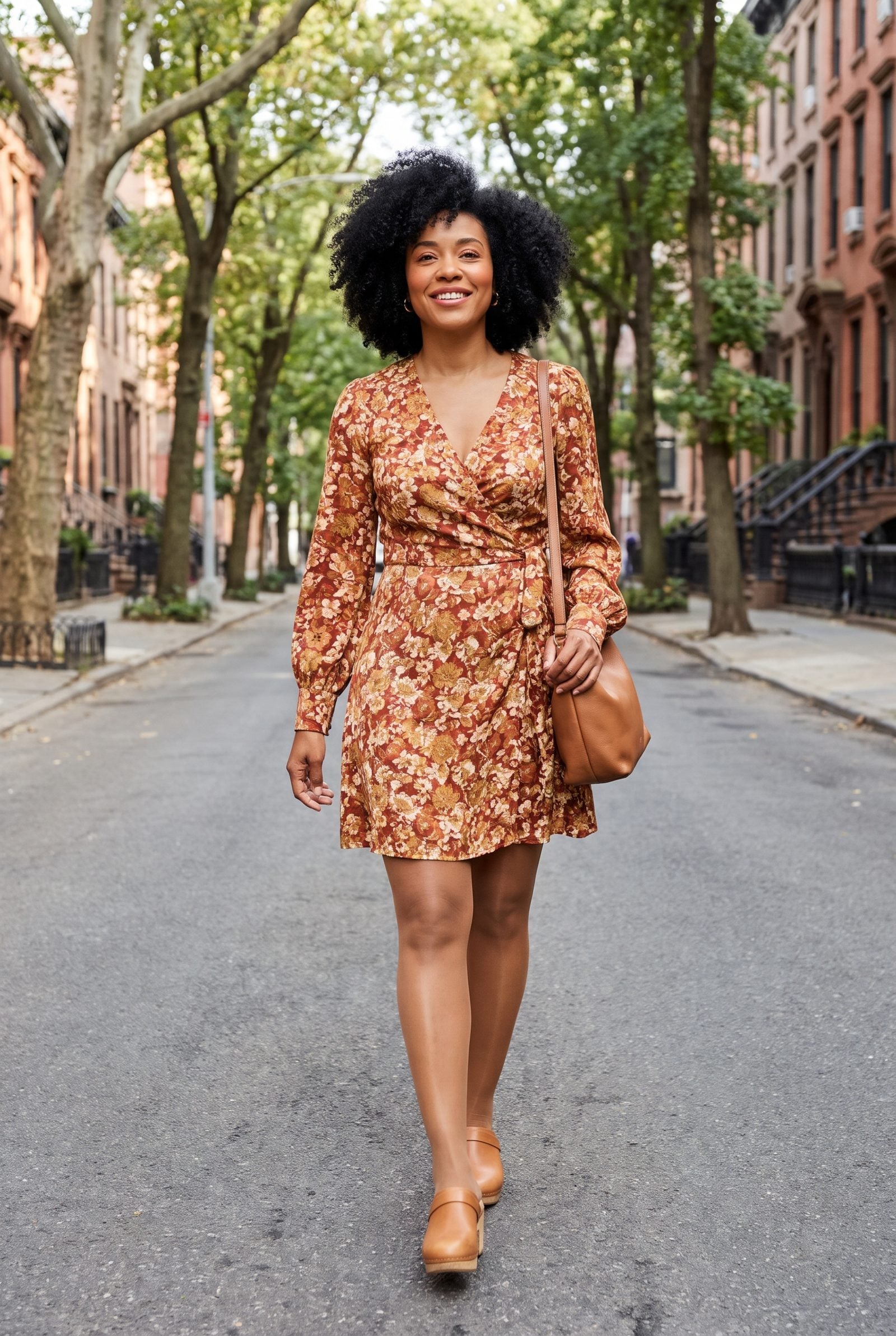
Suntan, never nude, never navy. That warm golden sheen that made your legs look like you’d spent a week somewhere better than a bowling alley. You kept a spare pair in the car because a snagged toe could end an evening, and the control-top waistband sat right under the ribs.
Under a wrap dress the pantyhose smoothed everything into one continuous warm line from hem to clog, legs and dress reading as a single polished intention. Pulling them on was a ritual plenty of women still remember in their fingertips.
7. Wooden-Heeled Clogs
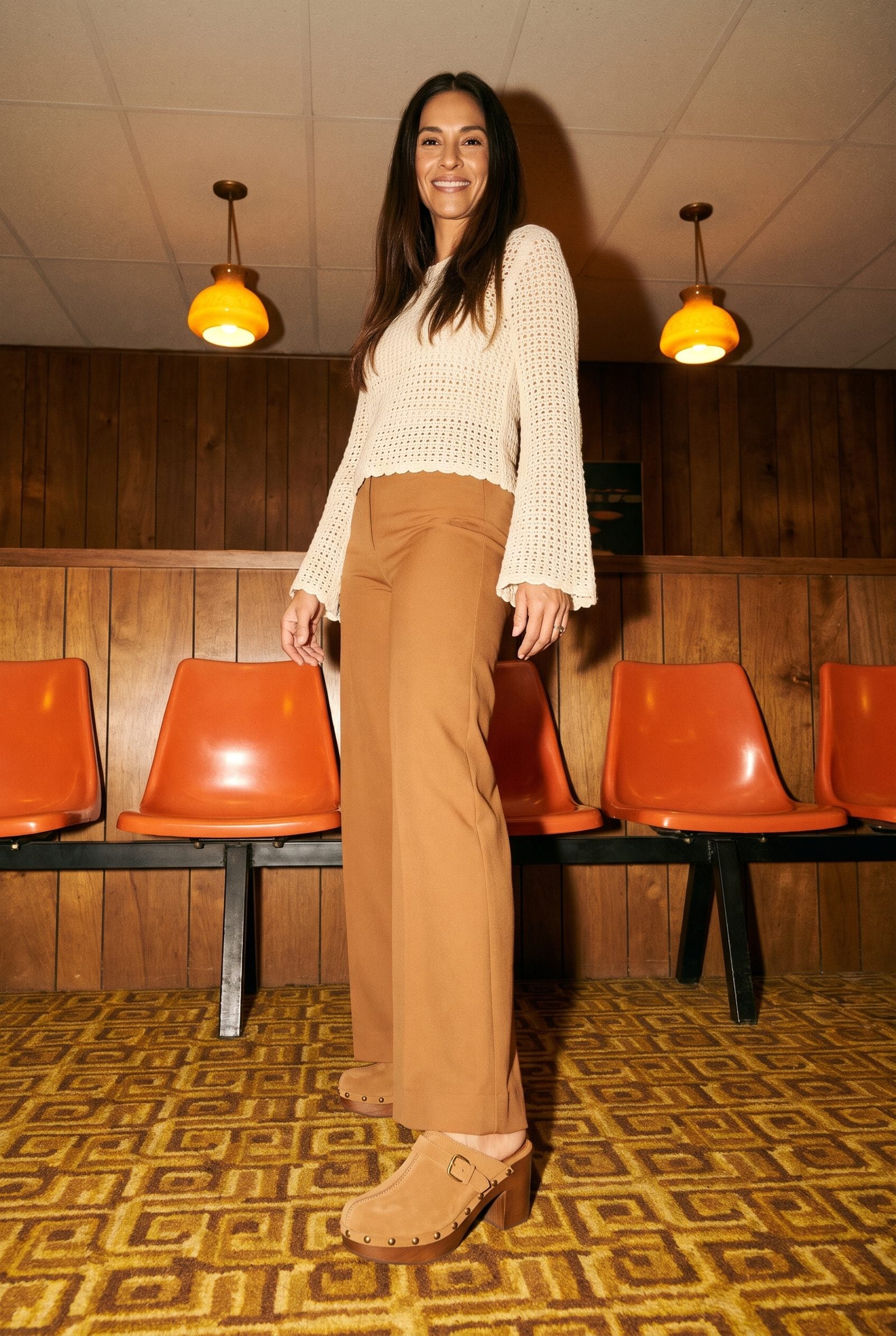
That soft wooden thud on loud geometric carpet, one easy stride after another, past the orange plastic seats, so the whole wood-paneled lounge knew you’d arrived. Suntan suede across the vamp, a brass stud or two, and a wooden heel that gave you two inches without the wobble of a stiletto.
The clog ran the whole look. Caramel trousers broke right at the chunky heel, and suddenly the outfit had height and attitude it never had in flats. These were the ancestors of every platform shoes moment that came after, and they earned the lineage.
6. A Brushed-Bouffant Hairdo
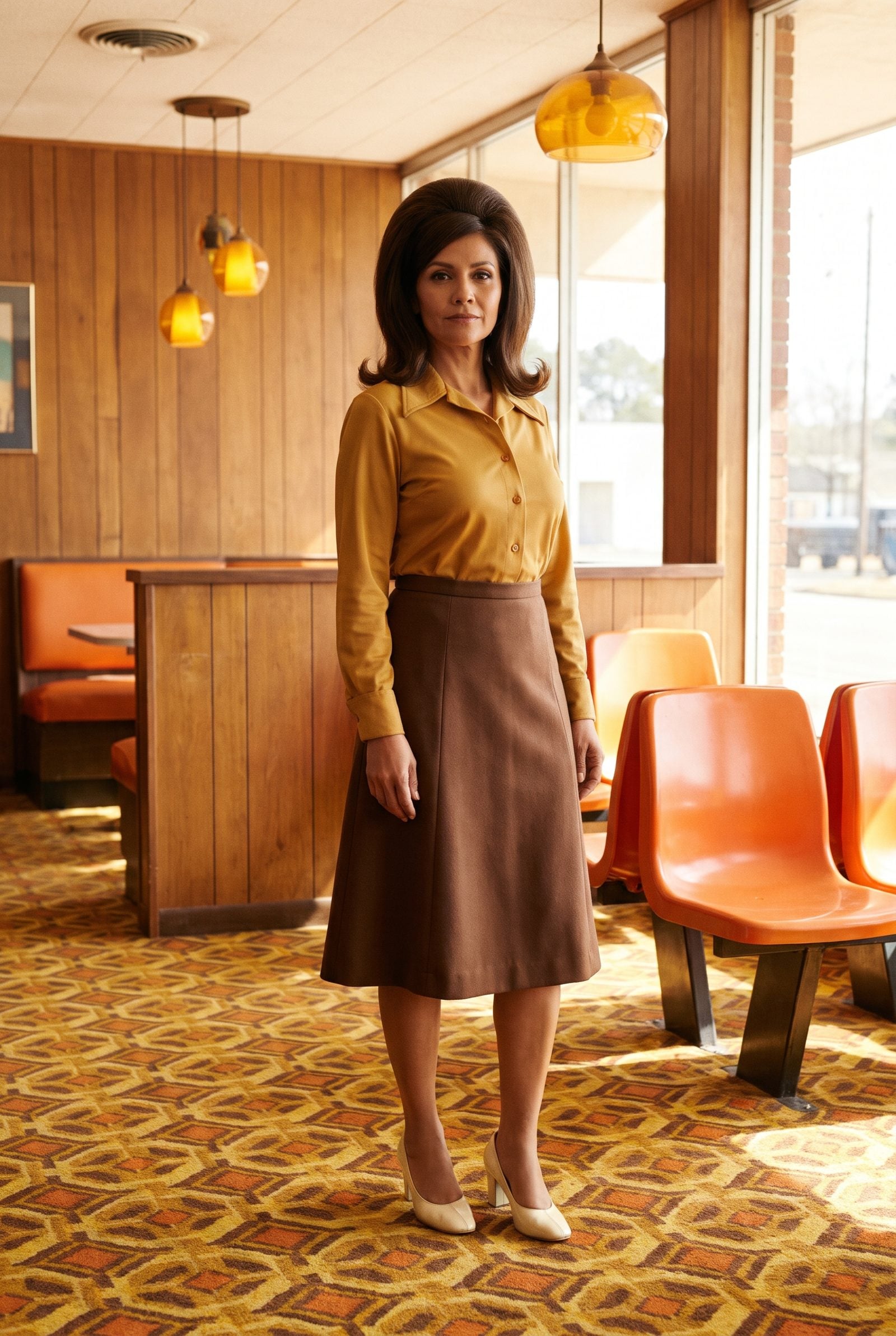
Teased at the crown with a rat-tail comb, smoothed over the top, held in place with enough hairspray to survive a draft off the ball return. You set it that afternoon on rollers and moved carefully after. The whole point was height — a soft rounded dome that made you look dressed from the neck up.
A real bouffant was a commitment nobody made casually. It said the evening mattered to you, and it framed the face the way a good collar frames a neck, drawing everything upward and open.
Walking through how the bouffant was built, a freelance vintage hair stylist explains “Big rollers were popular in the 60s and used to set the hair (the process of leaving it in rollers to give it shape) to create some extra height and bounce”
5. A Printed Headscarf Over Setting Curls
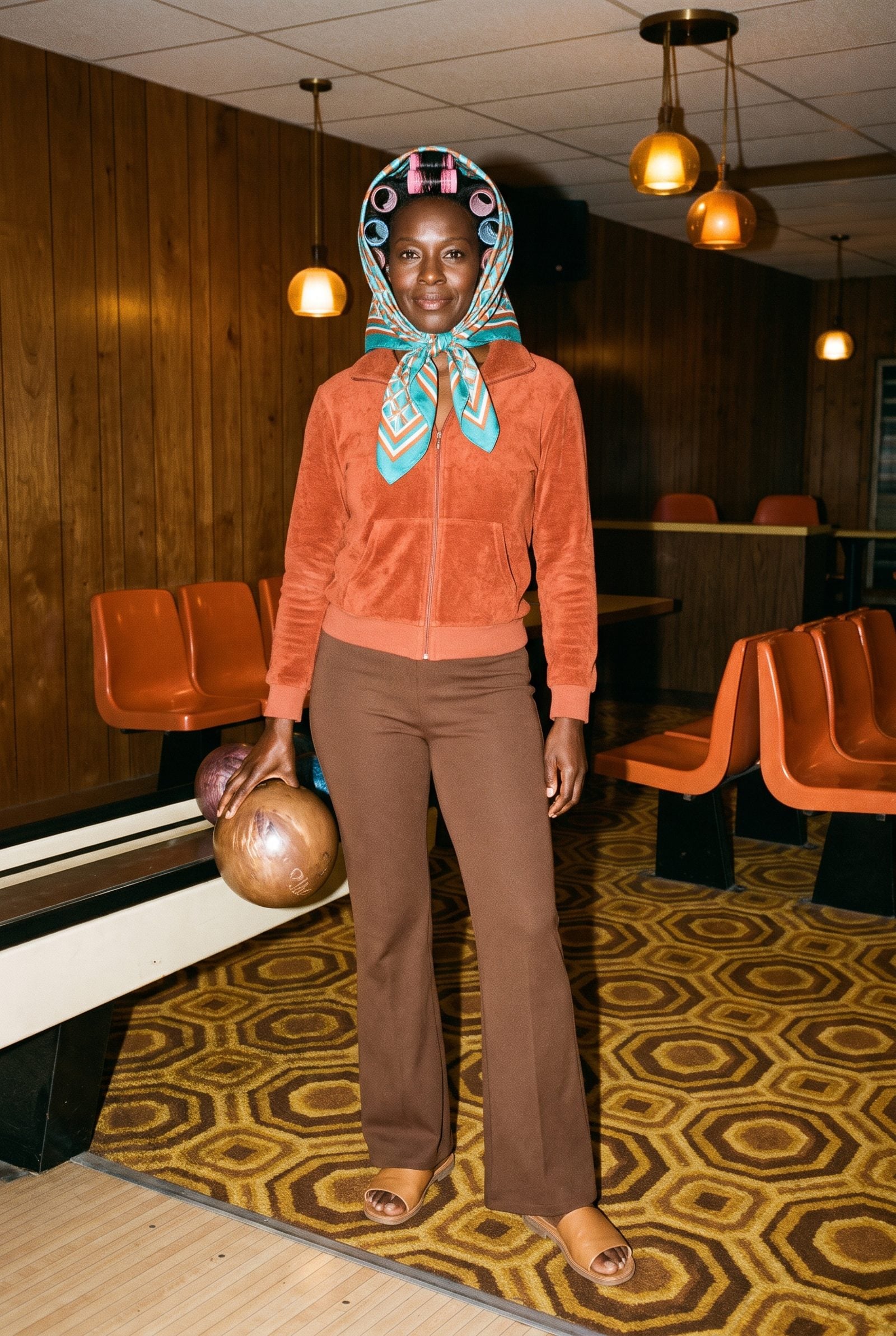
Curlers underneath, scarf over the top, knotted snug under the chin. You’d set your hair for after — the real event later that night — and bowled two games with the rollers peeking out from under a geometric print. Everyone did it. Nobody mentioned it.
The scarf turned a practical situation into something that looked chosen: turquoise and orange wrapped close to the head, the rest of the outfit relaxed, your face and a ring of pink and blue rollers on display. There was something generous about it, really. You were already getting ready for someone else while you knocked down pins.
4. Frosted Blue Eye Shadow
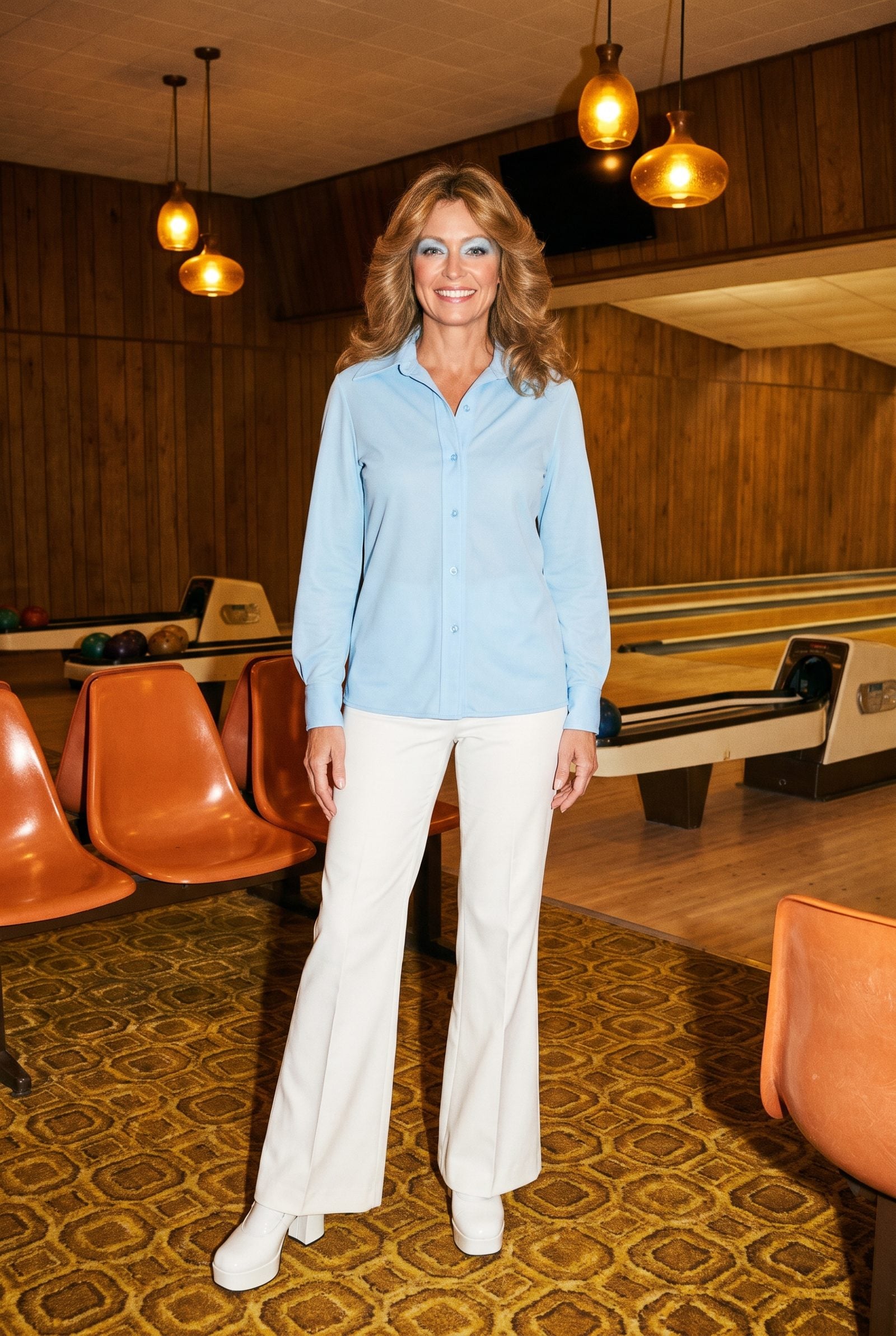
Swept from lash line to brow bone, that pearly sky-blue with a shimmer you could see across the lane. You applied it with the little sponge wand that came in the compact, pressed it on thick, and didn’t apologize for a thing.
It was the loudest part of the whole look, and it was meant to be — frosted blue against a powder-blue shirt, color answering color, your eyes the first thing anyone noticed. Fifty years later we spend a fortune trying to recreate a fraction of that confidence. We had it in a drawer for pocket change, and we wore it to go bowling.
Looking back at the decade’s signature blue shadow, a senior makeup artist says “It’s bold and a real pop of color that looks stunning dressed up or dressed down”
3. Coral Cream Lipstick, Reapplied Between Frames
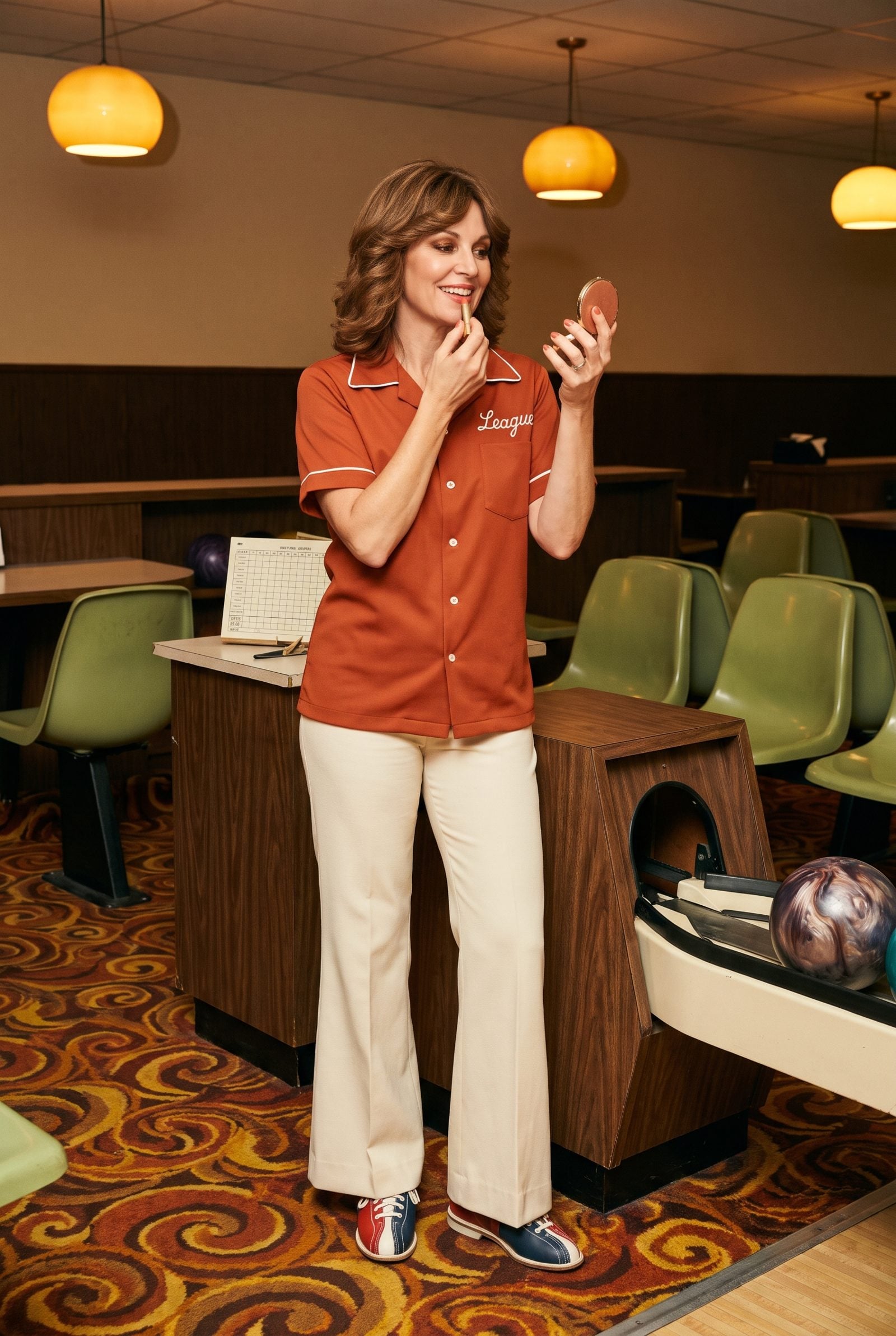
The coral did the talking. Not red, which felt like too much for a Tuesday, and not the frosted pink everyone’s mother wore. Coral landed right in the middle — warm enough to read as effort, soft enough to survive three games and a basket of onion rings.
Everyone kept a tube in the bowling bag’s side pocket, next to the rosin. You’d reapply between frames, catching your reflection in the ball return chrome because the restroom mirror was a walk nobody wanted to make. Cream formula, never matte. It caught the amber light and made your whole face look like you’d meant to show up.
2. A Mood Ring That Turned Black Right When You Needed a Spare
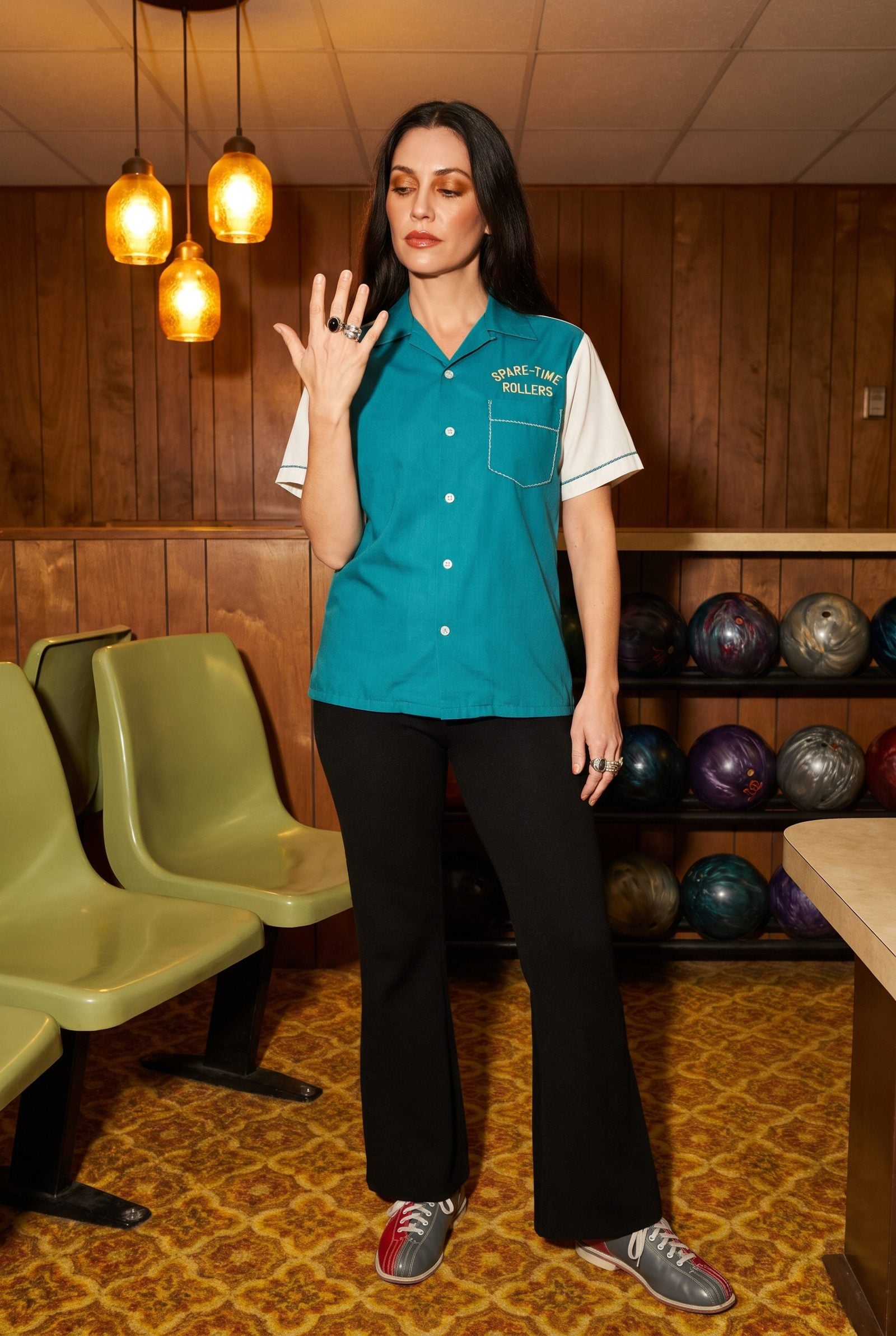
The ring never told the truth, and that was the fun of it. Supposedly blue meant calm and black meant stressed, but mostly it tracked how cold your hands were. Didn’t matter. You checked it between frames like it knew something you didn’t.
Bought at the mall kiosk, right next to the fake turquoise and the airbrushed belt buckles. It left a faint green ring around your finger and you wore it anyway, stacked with whatever thin bands you’d collected over the years. When your ball slid into the gutter, you’d glance down and announce the stone had gone murky — which always got a laugh from the women on the next lane over, who knew exactly what you were doing.
Explaining what is really going on inside the stone, a chemistry magazine reporter writes “In mood rings, the temperature of your hand—not your mood—heats up or cools down the liquid crystals and changes the spacing between the crystal layers.”
1. A Slim Cigarette Case Tucked Beside the Chalk
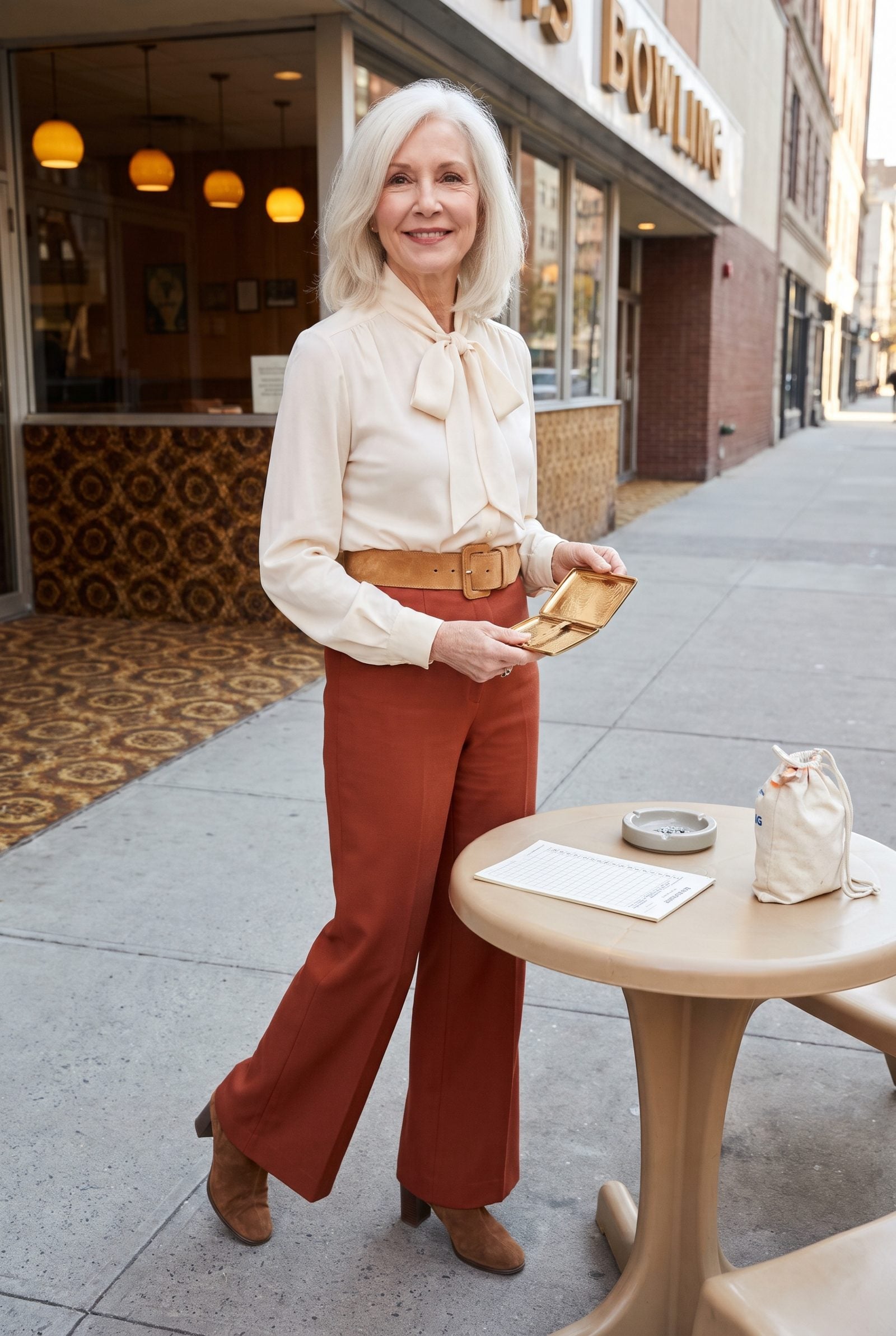
The case was prettier than the cigarettes it held. Engraved gold-tone, or mother-of-pearl inlay, it snapped shut with a click every woman at the table recognized. You set it on the molded plastic seat beside your handbag, where it caught the amber light like a small piece of jewelry.
Bowling nights were social nights, and the case belonged to the ritual. You’d offer one down the lane, somebody’s lighter came out, and the whole exchange read as grown-up and unhurried — proof you weren’t in a rush and you weren’t alone. For most women the case outlasted the habit entirely. It ended up in a drawer holding buttons and spare keys, still clicking shut just as cleanly as it did in 1974.