
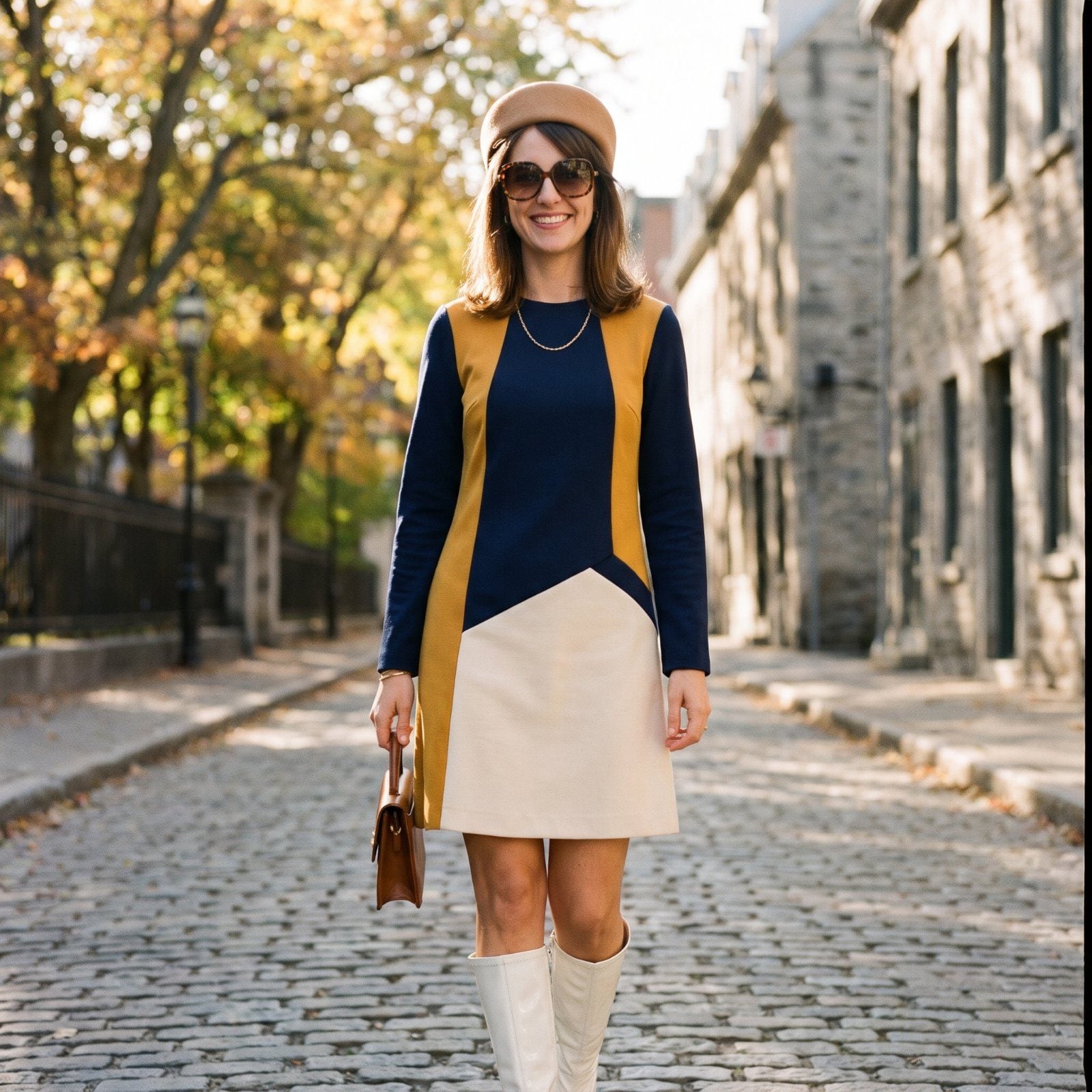
The 1960s didn’t ask permission. It cropped the hemline, squared the shoulder, painted boots white, then dared you to look away. What’s wild is how little of it actually left. You’re wearing half of it right now and calling it modern — the shift dress in your rotation, the flared jean you swore was a 2020s invention, the boxy jacket with no collar. None of these pieces ever really retired. They just changed their shoes and waited for you to notice.
FYI, thanks to AI imagery software, we’re able to create very specific fashion and hairstyle examples to illustrate the points being made. In some cases, imagery is exaggerated to hammer home the point. Also, assume links that take you off the site are affiliate links such as links to Amazon. this means we may earn a commission if you buy something.
33. A-Line Mini Skirts That Never Really Grew Up
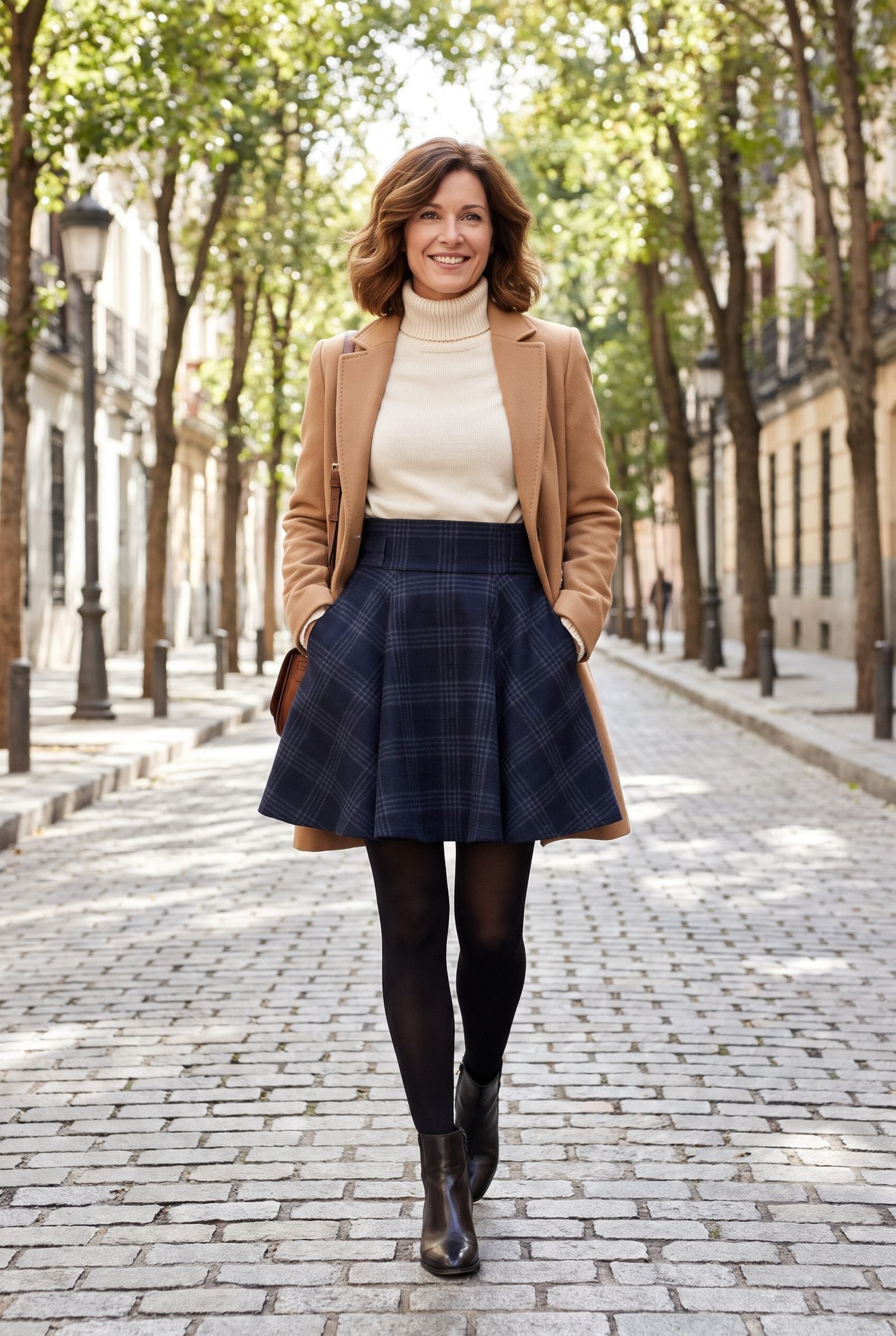
The waist is where this entire look earns its keep. That sharp flare from a nipped waist is pure 1960s geometry, and it still does the hardest work in fashion: defining shape without clinging. Mary Quant gets the credit for pushing the hem up, but the A-line shape is why it reads deliberate rather than dated.
The modern move is navy plaid wool over a tucked turtleneck. Swap the old mini proportions for a slightly longer rise and suddenly you’ve got something wearable to actual places. The flare balances a fitted top, the twill holds its structure, and nothing about it looks like a costume.
32. White Go-Go Boots, Back From the Dance Floor
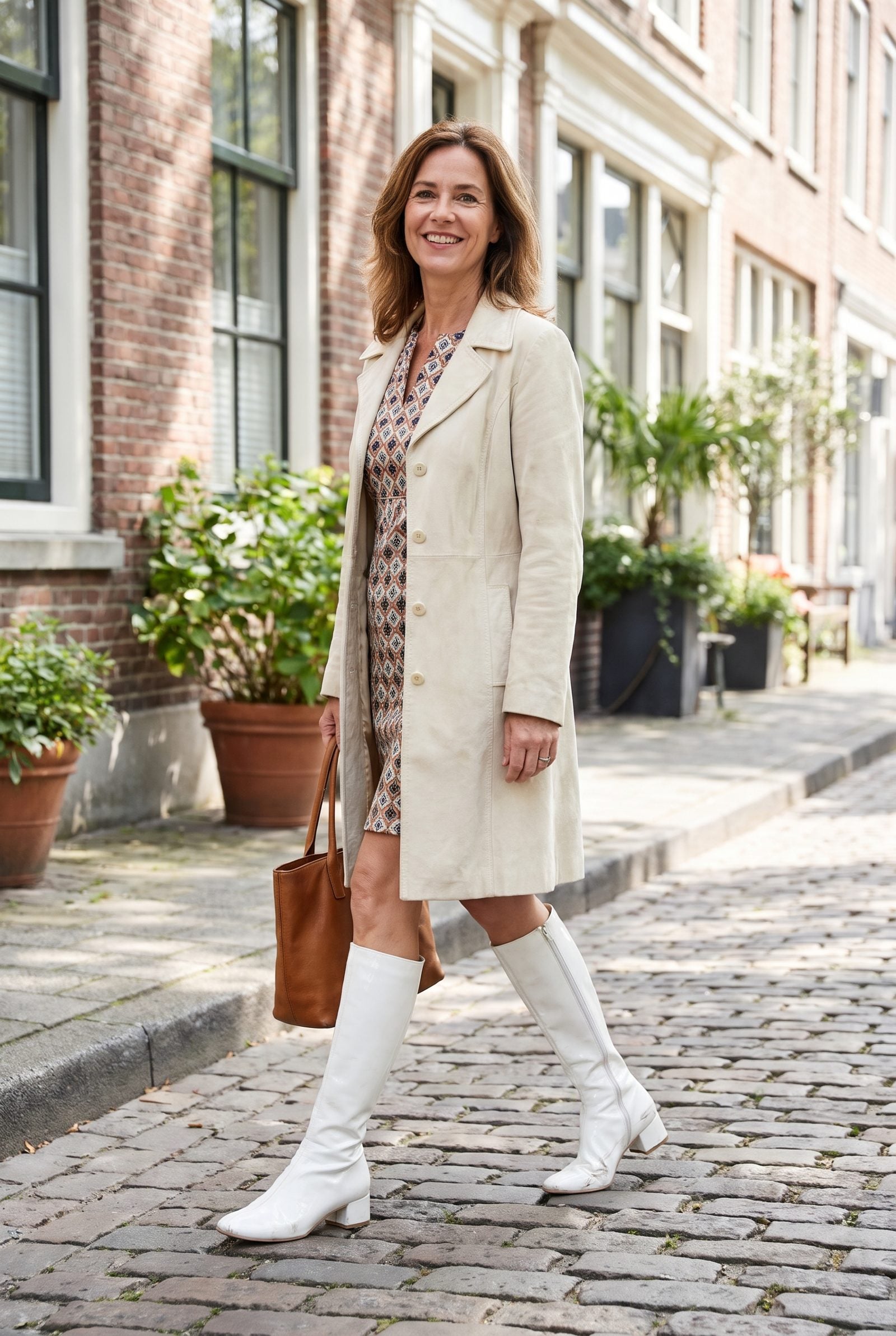
The boot is doing everything here. Strip it off and this is a casual shift dress. Add it back and the whole look swings into 1965 Nancy Sinatra territory — updated, not dressed-up-as.
White go-go boots peaked when André Courrèges put them on his runway and every teenager suddenly needed a pair. Today’s version keeps the square toe and block heel but drops the vinyl shine a notch, so it reads as leather instead of plastic. Paired with a short printed dress, that bright white against a dark geometric print is what drives the whole thing. Stylists keep pulling these back out for a reason. A white boot photographs like confidence.
31. Shift Dresses You Can Pull On Without Thinking
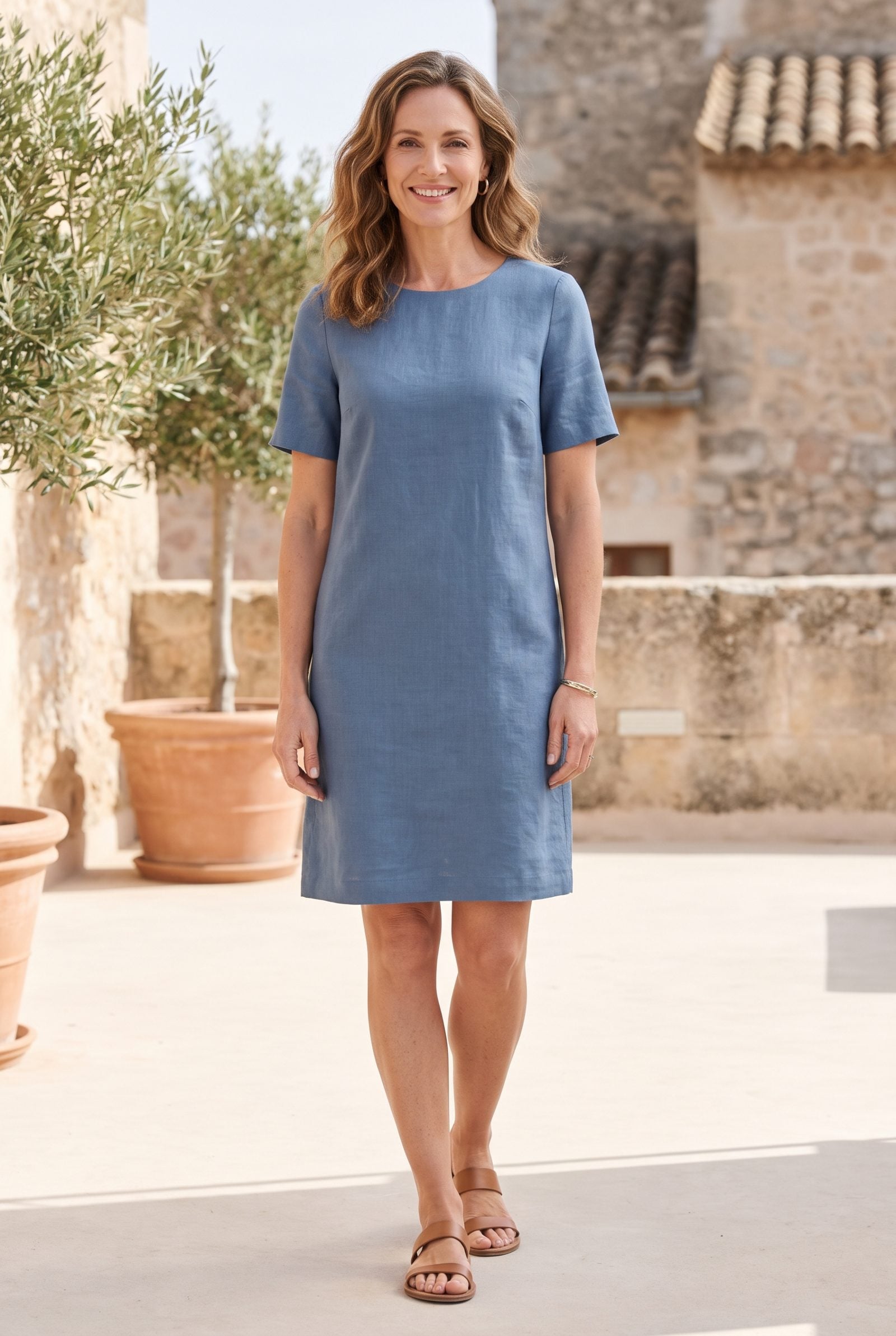
One seam, one straight line, zero fuss. The shift dress is the 1960s gift that keeps getting re-bought every spring under a new name. It hangs from the shoulders, skims instead of clings, and asks nothing of you on a day when you have no energy left to negotiate with a waistband.
The dusty blue version works because the color does the talking while the cut stays quiet. That’s the whole genius of the shape — a blank canvas that reads intentional. Jackie Kennedy made it a daytime uniform, and it survived for a simple reason: it flatters by skimming, not by squeezing.
30. Bell-Bottom Jeans That Outlived Every Trend Cycle
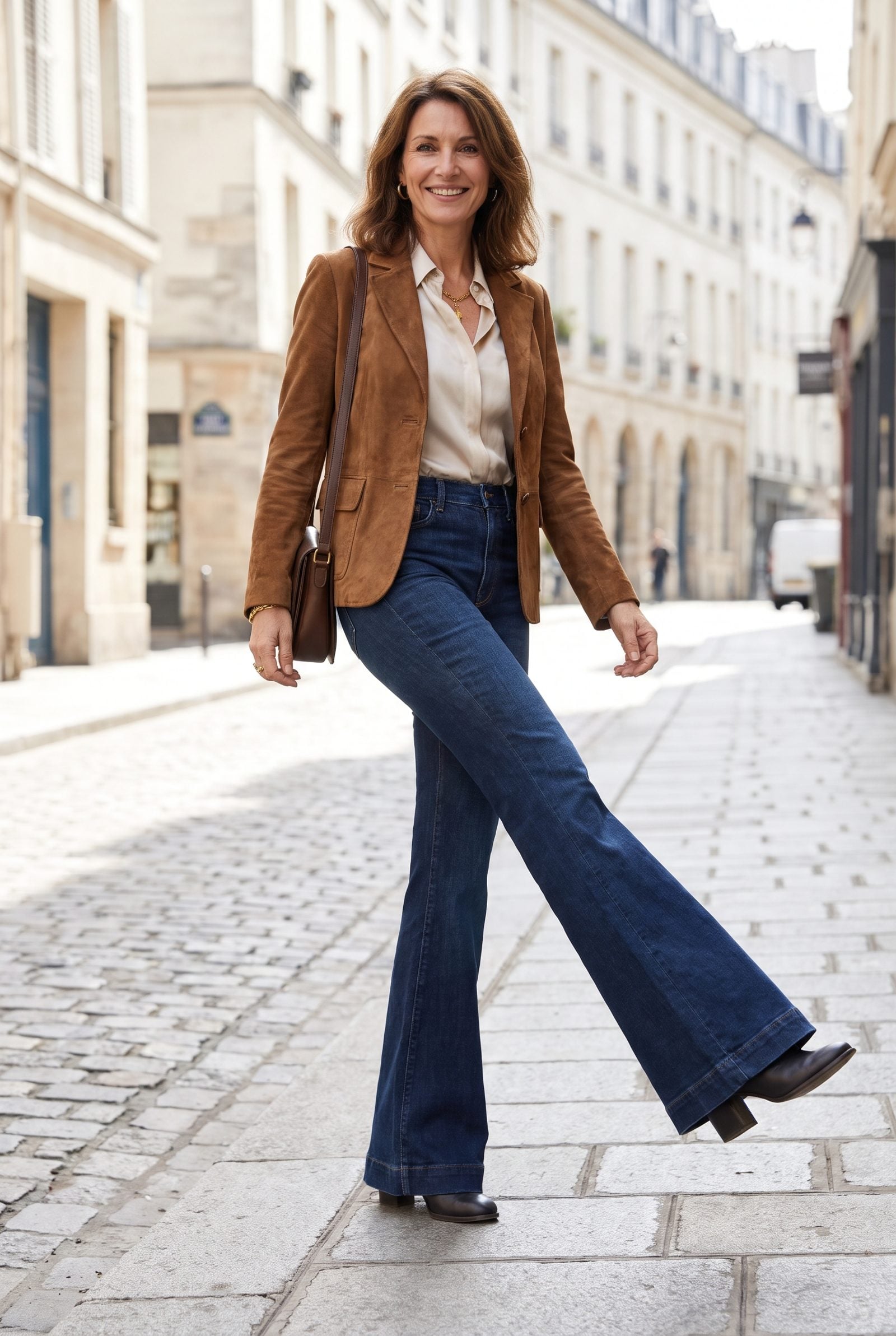
You swore the flare was a recent thing. It wasn’t. Bell-bottoms rolled out of the 1960s counterculture and never fully left — they just kept shrinking and widening on a loop every decade since.
What holds this together is proportion. A dramatic flare from the knee needs a fitted or tucked top to balance the volume below, or you lose the waist entirely, and the platform underneath keeps the line long and clean. Tucking matters for exactly that. For more on reading your denim details correctly, the rise and the flare point do most of the heavy lifting on whether a bell-bottom looks current or stuck in time.
29. Mod Color-Block Dresses With That Piet Mondrian Nerve
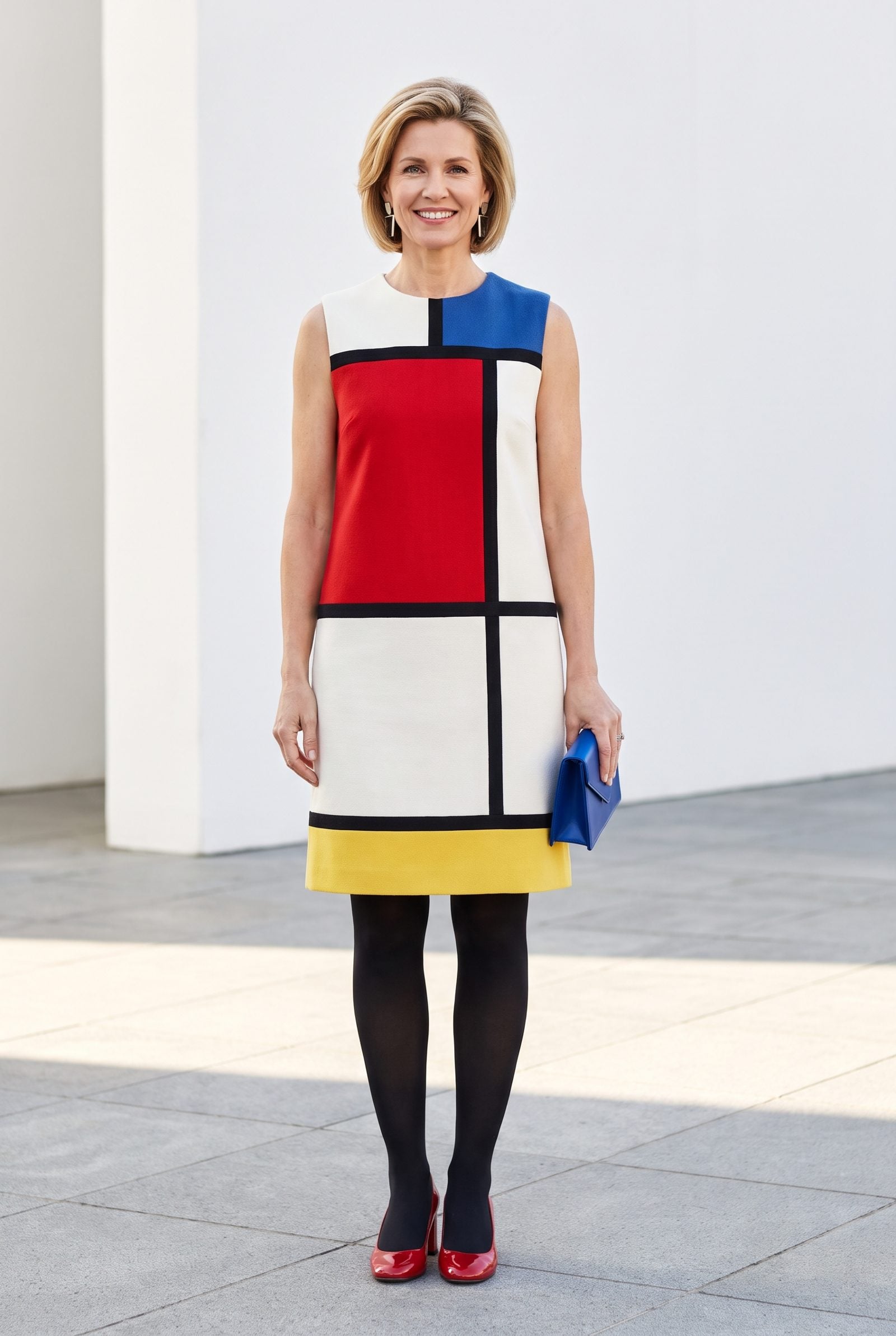
Yves Saint Laurent built an entire 1965 collection around Piet Mondrian, and fashion never stopped borrowing the idea. Bold blocks of pure color separated by hard black lines, worn as a dress, remain one of the most graphic statements you can make without a single accessory.
It works now because of restraint in the color count. Three or four saturated panels, clean divisions, nothing fussy. The red, cobalt and mustard against white looks like deliberate art because it is. Wear it with a glossy red pump that echoes the main panel and let the dress carry the whole conversation.
28. Pillbox Hats and the Jackie Effect
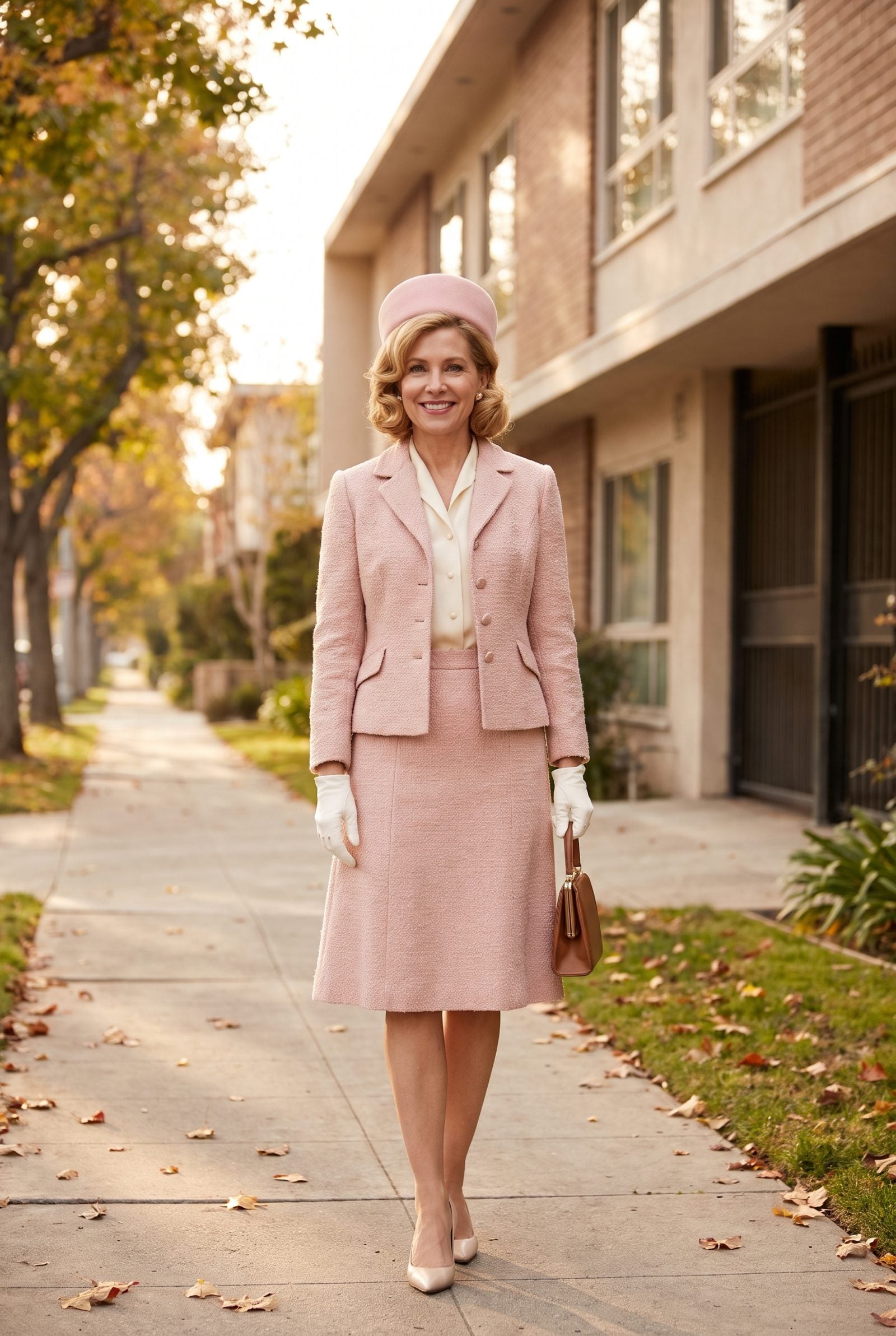
No hat in history got a bigger PR campaign than the pillbox. Jackie Kennedy wore one to the 1961 inauguration and a nation went looking for the same small round felt topper. It sat high on the crown, defied gravity, and somehow made every woman look like she had somewhere important to be.
The modern take drops the formality. A camel pillbox over a sleek chignon, worn with a boxy jacket, reads as considered rather than costume. If you want a wider look at a chic hat that rewards a confident wearer, the pillbox is the original lesson in posture. You have to wear it like you mean it.
27. Boxy Collarless Jackets With a Chanel Spine
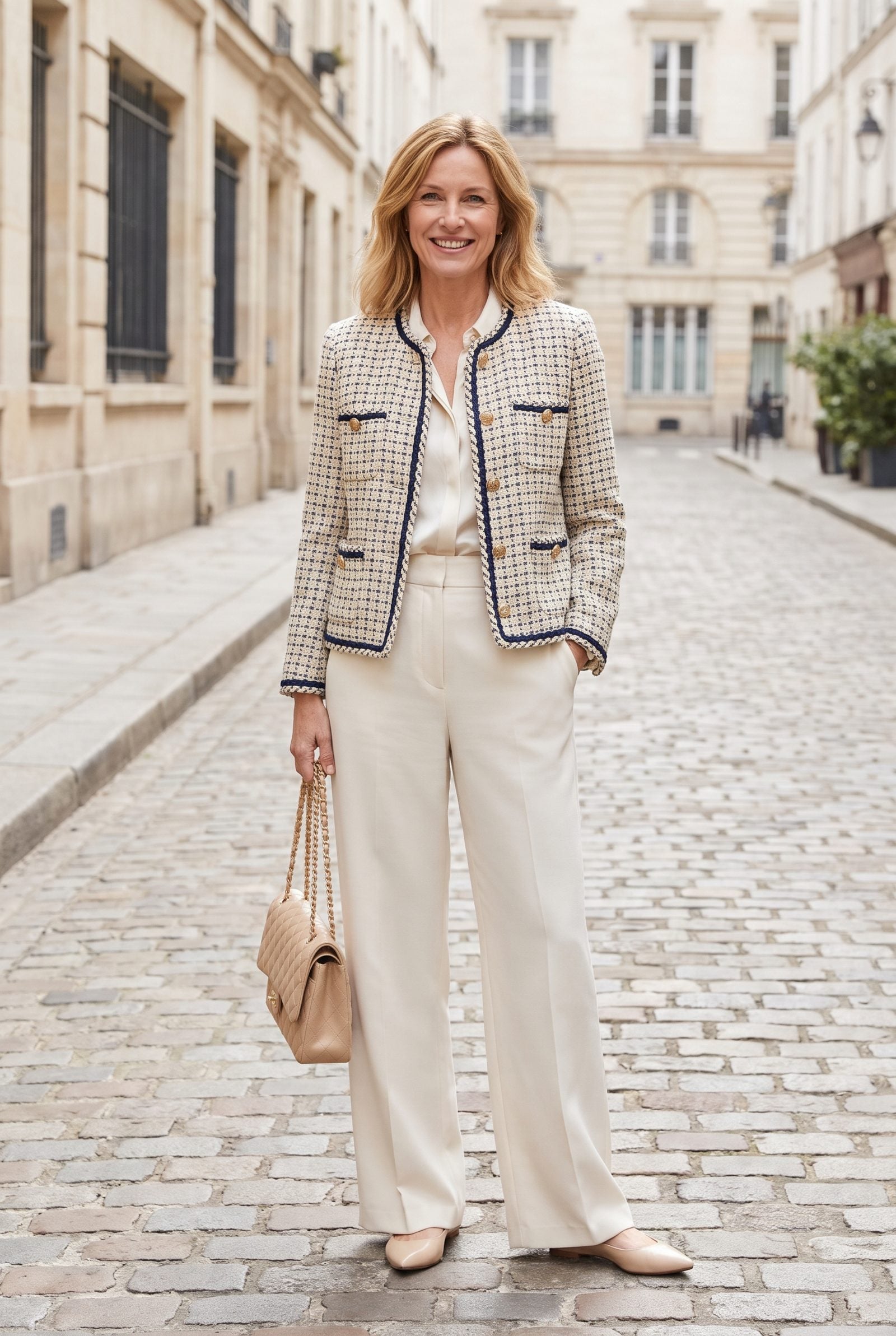
Coco Chanel never put a collar on her jacket, and sixty years later you still don’t need one. The boxy collarless cut sits square at the shoulders, falls clean at the hip, and frames the neckline instead of fighting it.
What drives the styling here is texture against sleekness. Cream tweed with navy trim and gold buttons, worn open over a silky ivory blouse and wide-leg cream trousers, builds a casual-formal tension that keeps both pieces interesting. The jacket brings structure, the trousers bring line. This silhouette never goes out of print for a reason. It gives you authority without armor, and a collarless neckline is quietly kinder to a shorter neck than a lapel ever was.
26. Trapeze Dresses, the Original Easy Silhouette
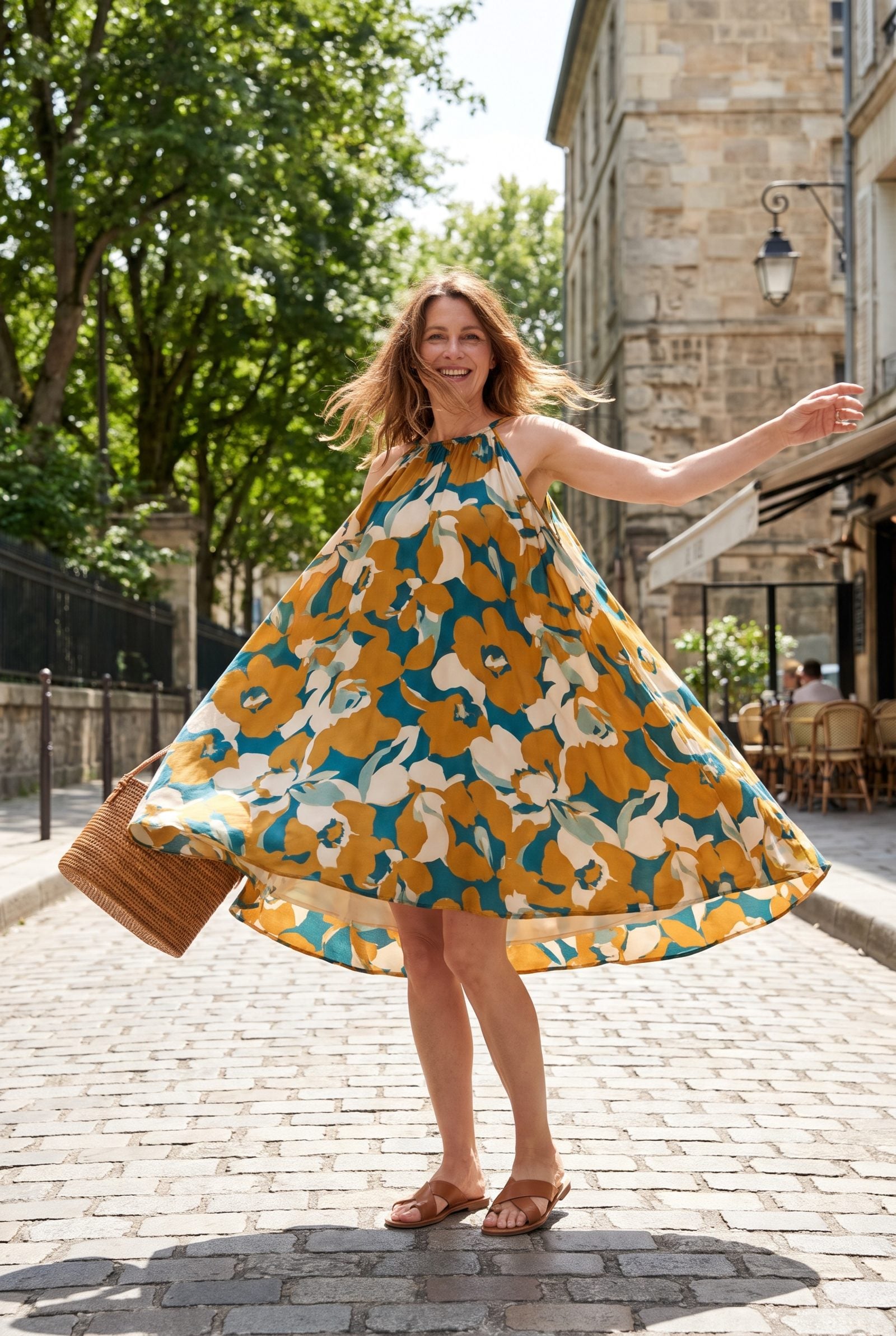
Narrow at the shoulder, wide at the hem, swinging the whole way down. The trapeze dress was Yves Saint Laurent’s 1958 debut idea for Dior, and the 1960s ran with it hard.
It works now because of the proportional play. All the volume lives at the bottom while the top stays close, so the silhouette reads as deliberate movement rather than a tent. In a big mustard, teal and cream floral print with a sleeveless halter neck, it feels like the easiest thing you could pull on in July and still look like you decided something. The dress does the drama so you don’t have to.
25. Patent Mary Jane Shoes With a Grown-Up Sheen
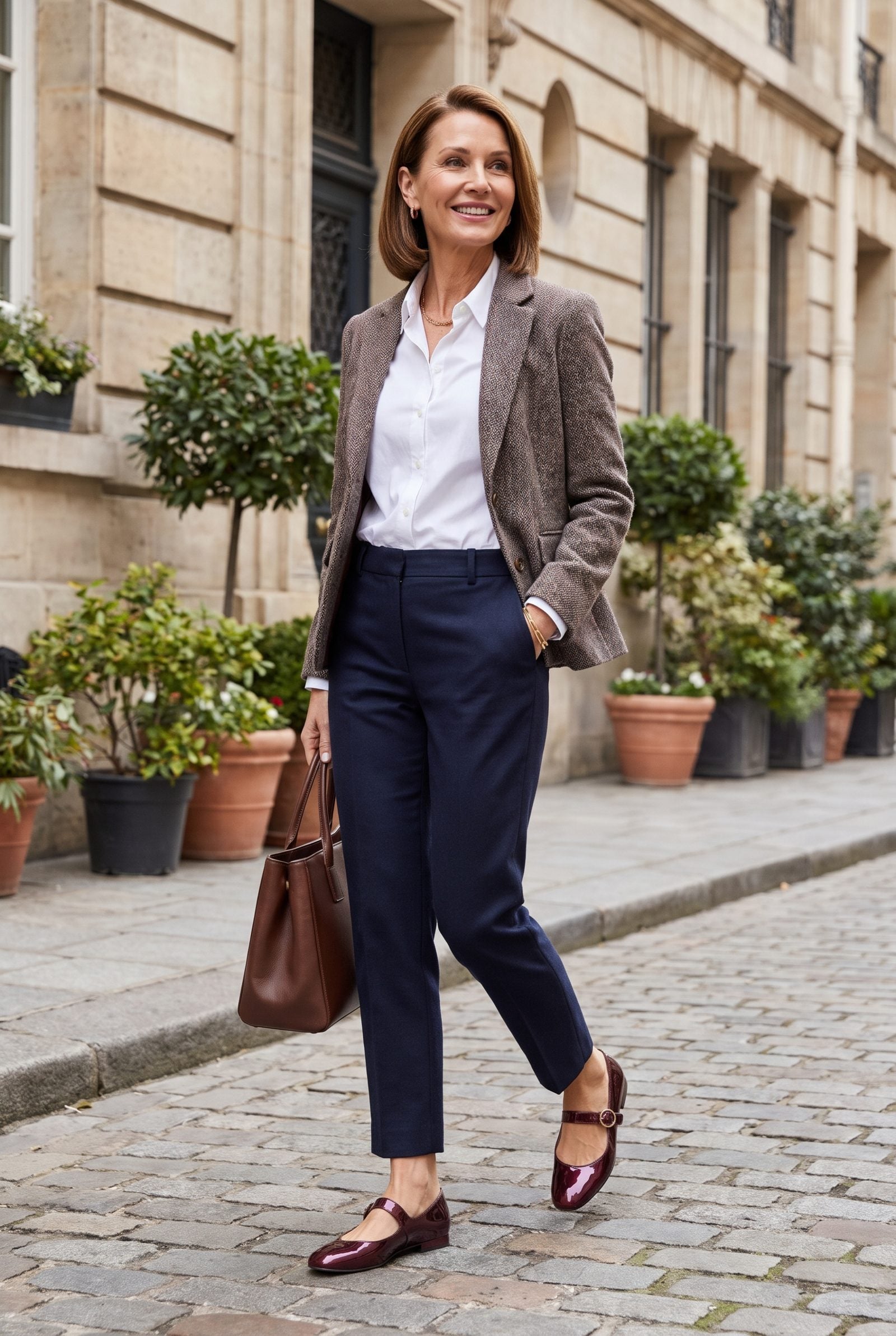
You wore these to church at six. Now they’re the most adult shoe in your closet. The patent Mary Jane — that single strap and glossy finish — went from schoolgirl to 1960s mod staple to something you can genuinely style in grown-up outfits.
The move is cropping the trouser to let the strap and the shine show. Patent leather catches light the way matte leather never will, so the shoe becomes the finishing detail that lifts a plain white shirt and navy trousers out of ordinary. One strap, a little gloss, done.
Asked how to style the shoe now, a footwear brand CEO says “Mary Janes are one of those shoes that transform completely depending on what you wear with them.”
24. Capri Pants That Audrey Hepburn Never Took Off
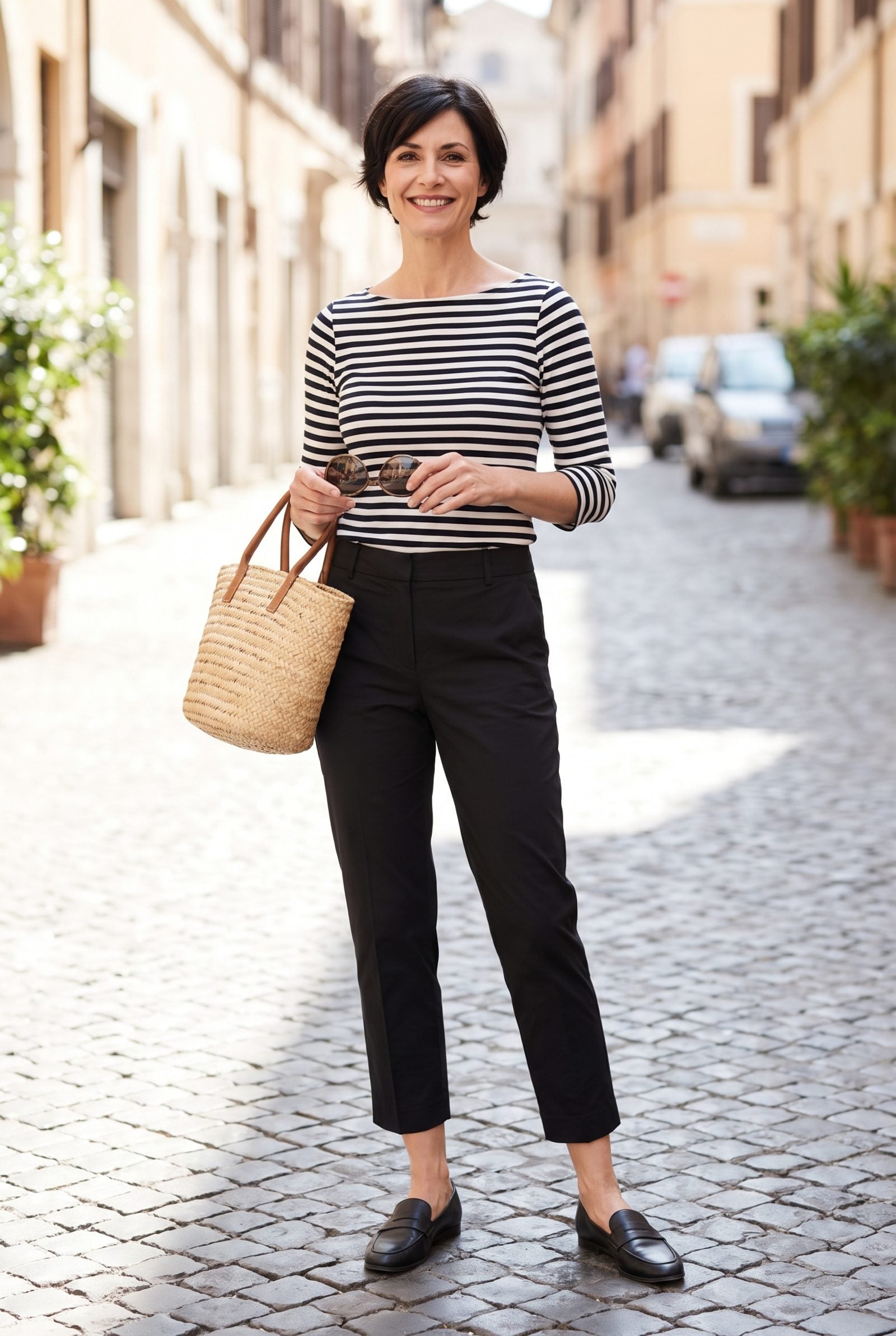
Audrey Hepburn wore capris in 1957 and sealed their fate forever. The cropped, slim-cut trouser ending at mid-calf became shorthand for a certain kind of pulled-together ease, and it has not loosened its grip since.
The whole look rides on the line. A slim capri with a fitted boat-neck top and a flat shoe keeps the silhouette long and clean, which is why it photographs as elegant rather than dated. The crop point matters more than anything else here. Hit it at the narrowest part of the calf and the leg reads long. Hit it wrong and you fight it all day.
This is the most forgiving warm-weather trouser a woman over 40 can own, and it has been quietly outlasting every wide-leg and skinny cycle for sixty years. Some shapes just know what they’re doing.
Pointing to capris turning up in upcoming fall collections, an age-diversity fashion advocate says “It seems to me that the trend is not a one-season hit”
23. Pussy-Bow Blouses, Still Doing Their Quiet Power Move
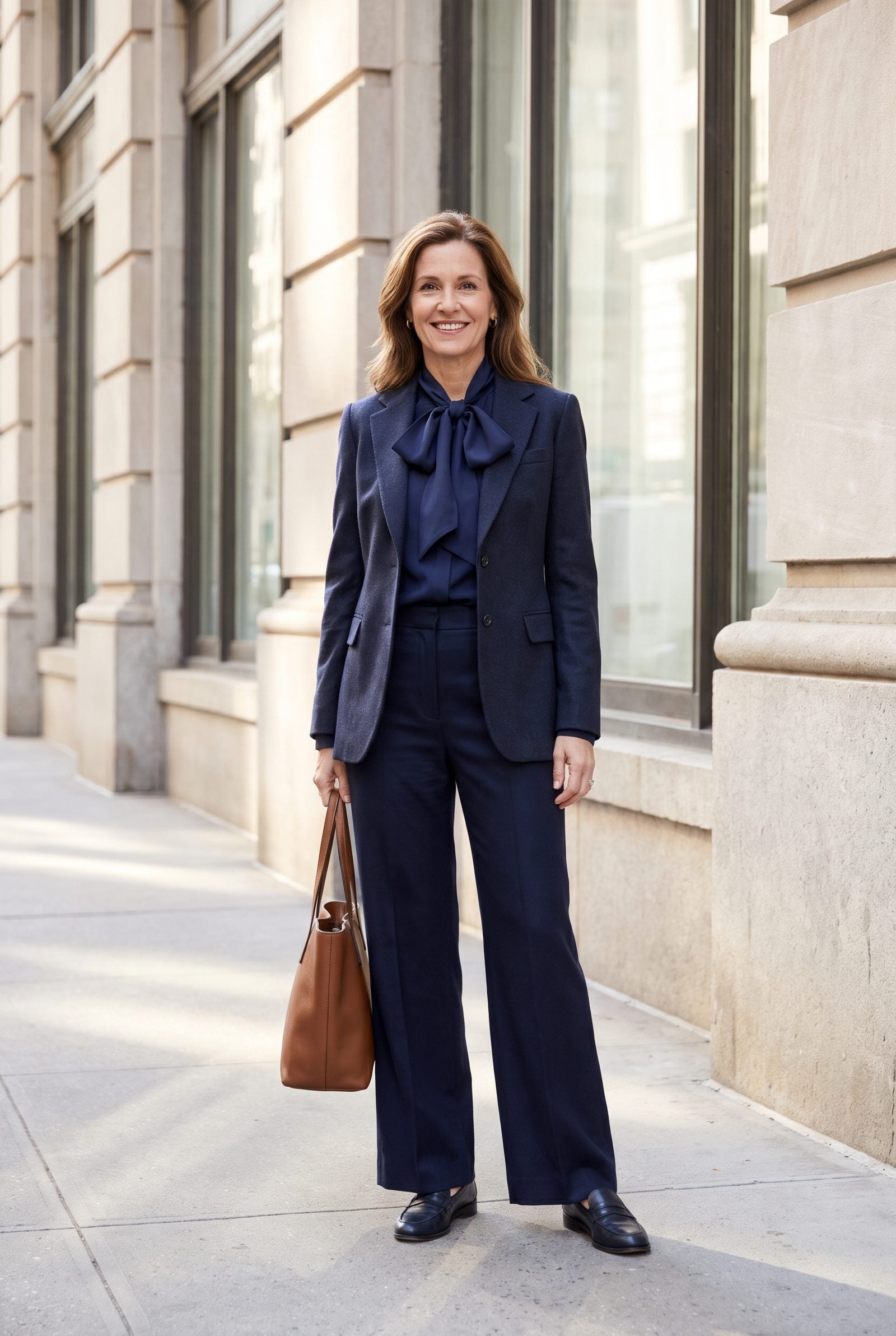
The bow does the talking. A pussy-bow blouse was the 1960s answer to looking authoritative without looking stiff, and it still pulls that exact trick. Tie it loose and you read approachable; cinch it tight and you read like you run the meeting.
What makes this one work now is the trouser. High-waisted navy wool, in the same shade as the blouse, grounds all that fluid silk, so the blouse stays feminine without tipping into fussy. Call it tonal dressing — liquid silk and structured wool in one unbroken navy, each making the other look more deliberate.
22. Ribbed Turtlenecks, The Mod Staple We Never Retired
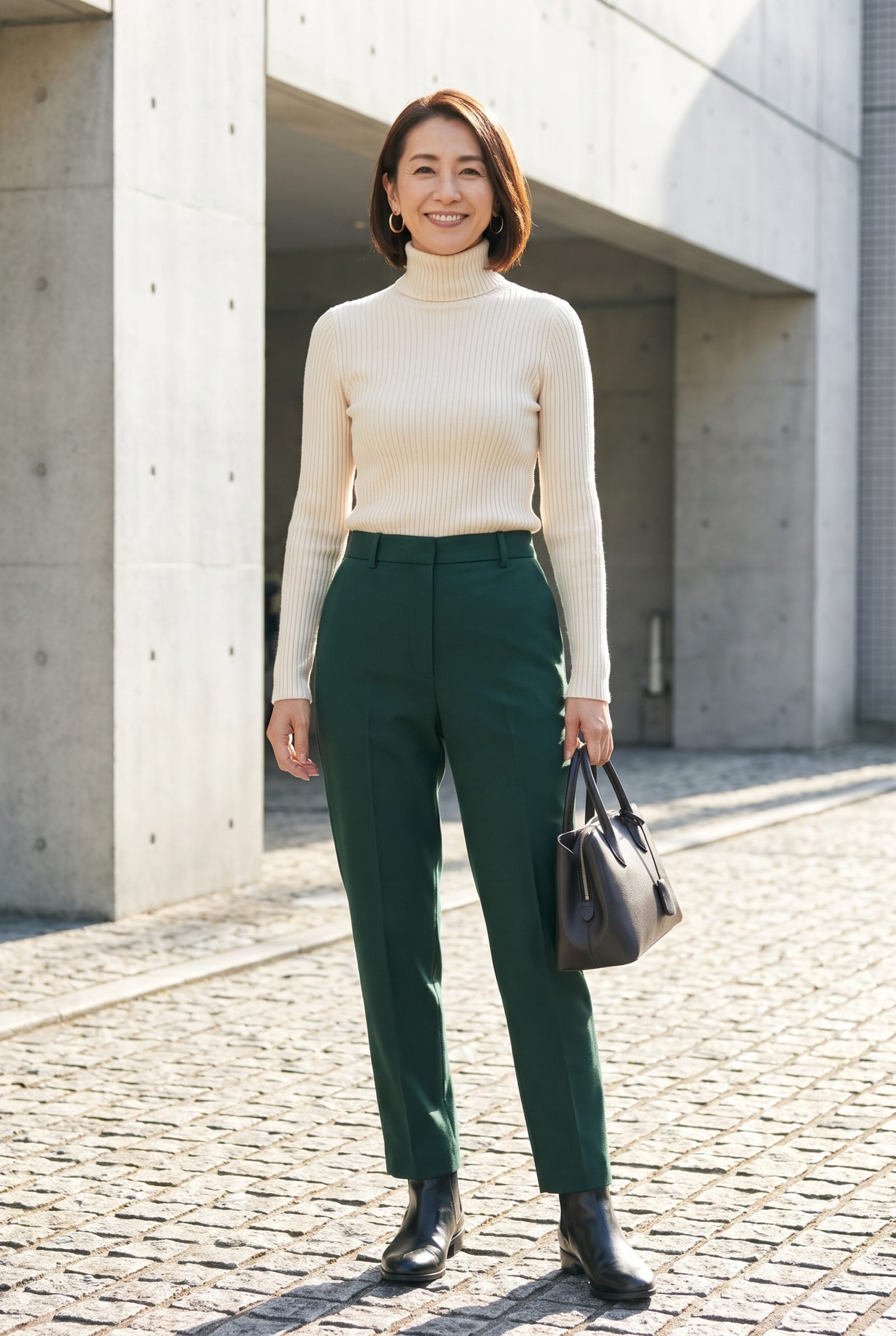
One color, close to the body, done in a fabric with ribs that catch the light. That is the whole trick of a ribbed turtleneck, and it has not needed updating since the Mod girls wore them under pinafores.
Proportion is the engine here. Fitted knit up top, tucked into high-waisted green tailored trousers below, legs stretched long by a pressed crease and flat ankle boots. It’s a shape built on clean lines: narrow where she’s narrow, defined at the waist, straight where she wants length.
21. Cropped Cardigans, Back From Twiggy’s Closet
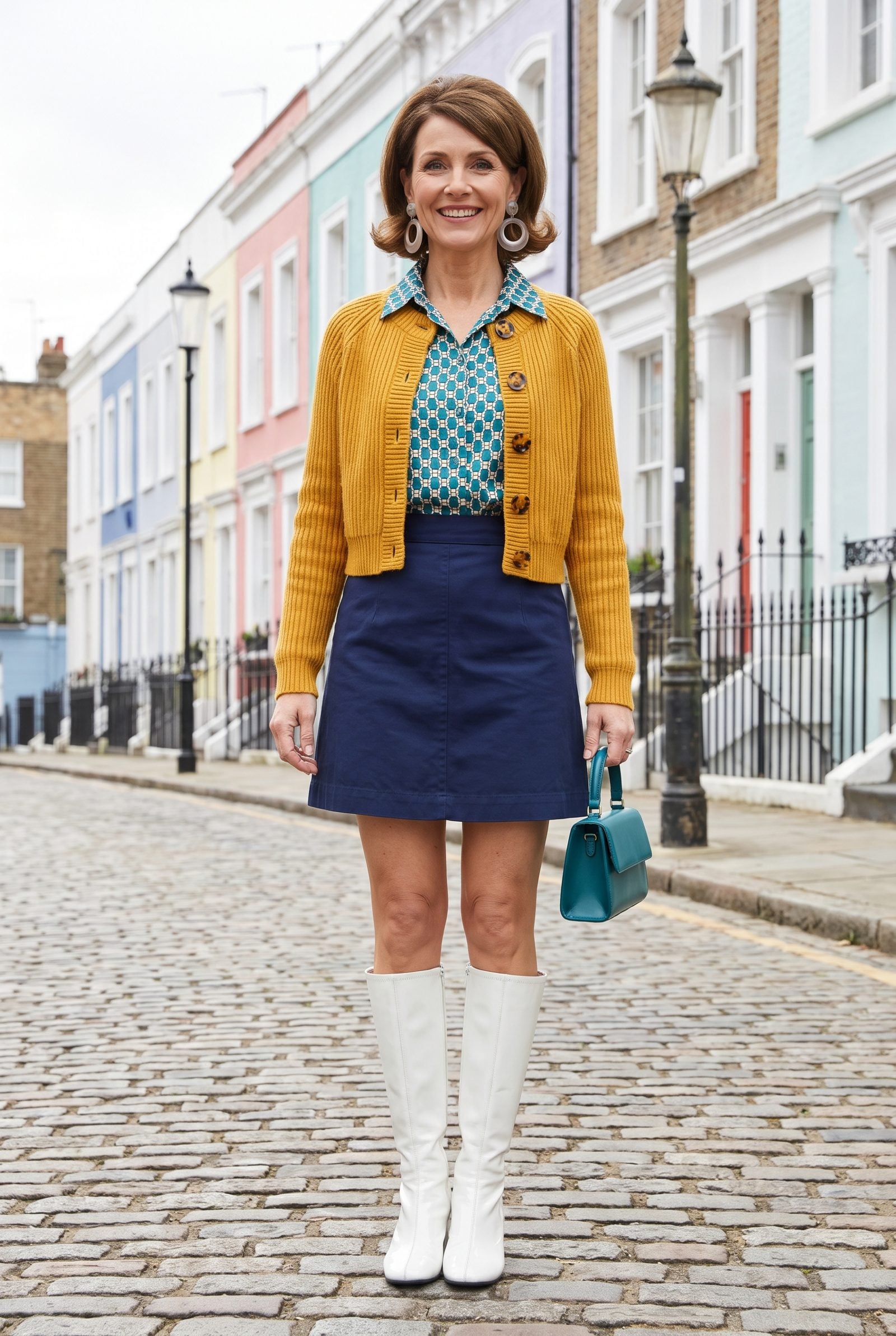
The cropped cardigan ended at the waist on purpose. Back in the 60s it was how you showed off a high waistline without a single inch of midriff showing, and that logic holds today. Wear it open over a collared printed blouse and let the shirt’s pattern peek through the front.
Here the hero is the proportion play. A cropped knit above a high-waisted A-line mini skirt pulls the eye straight to the smallest part of the torso, then white knee-high boots carry the line down long and easy. Mustard against teal and navy keeps it bold, so the colour gets to be as loud as the shape.
20. Paisley Tunics, The Swirl That Keeps Coming Back
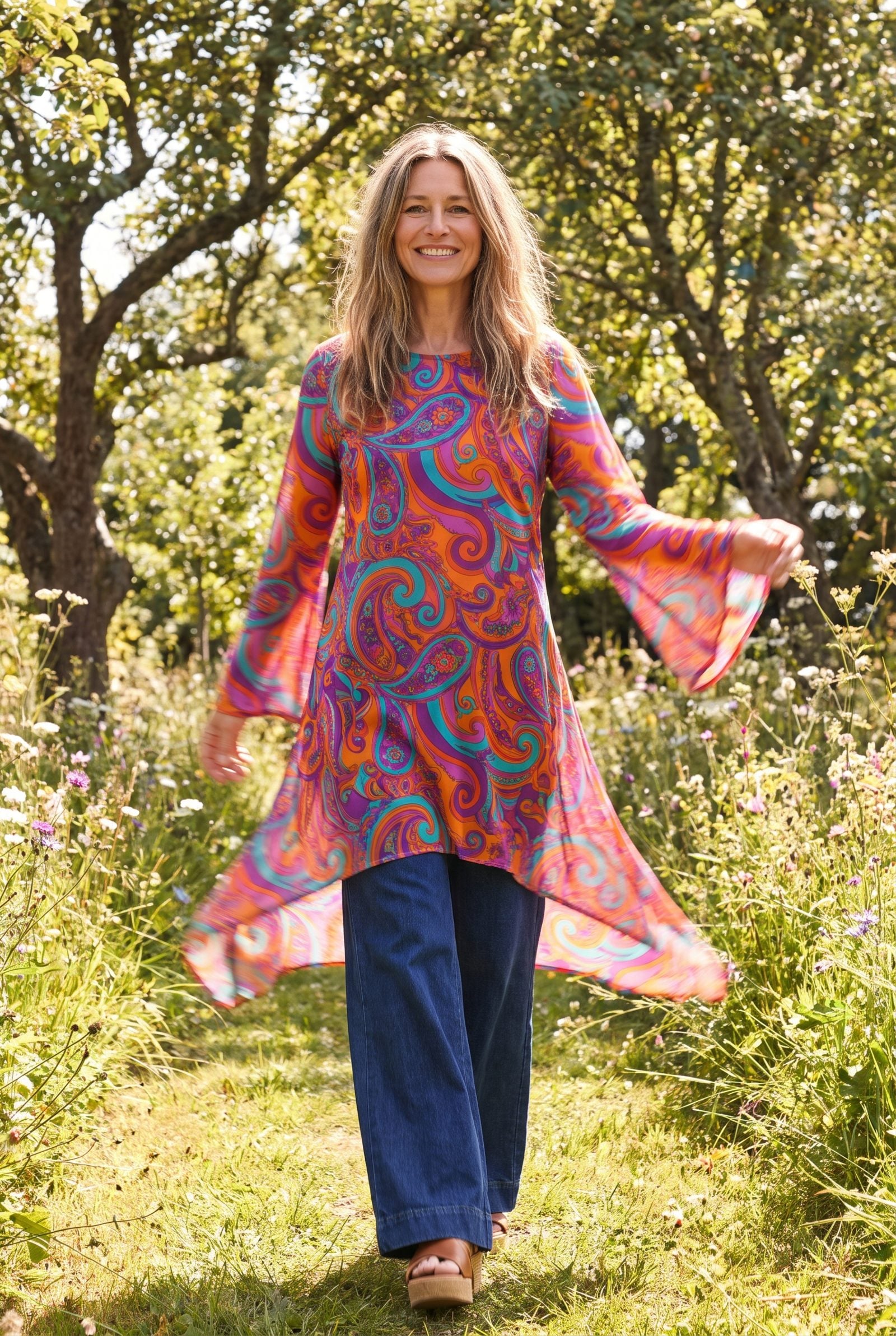
Paisley is a print with a pulse. All those swirling teardrops seem to move even when you stand still, which is exactly why a paisley tunic never looks flat. The 60s wore it loose and flowing; the modern move is to ground it with something simple and solid below.
Wide-leg indigo jeans are the whole reason this works. They anchor the volume of a bell-sleeved tunic so the print reads rich instead of chaotic — swing of the tunic against the long, column-like line of the wide-leg jean, movement against stillness.
19. Embroidered Peasant Blouses, Folk Romance Revisited
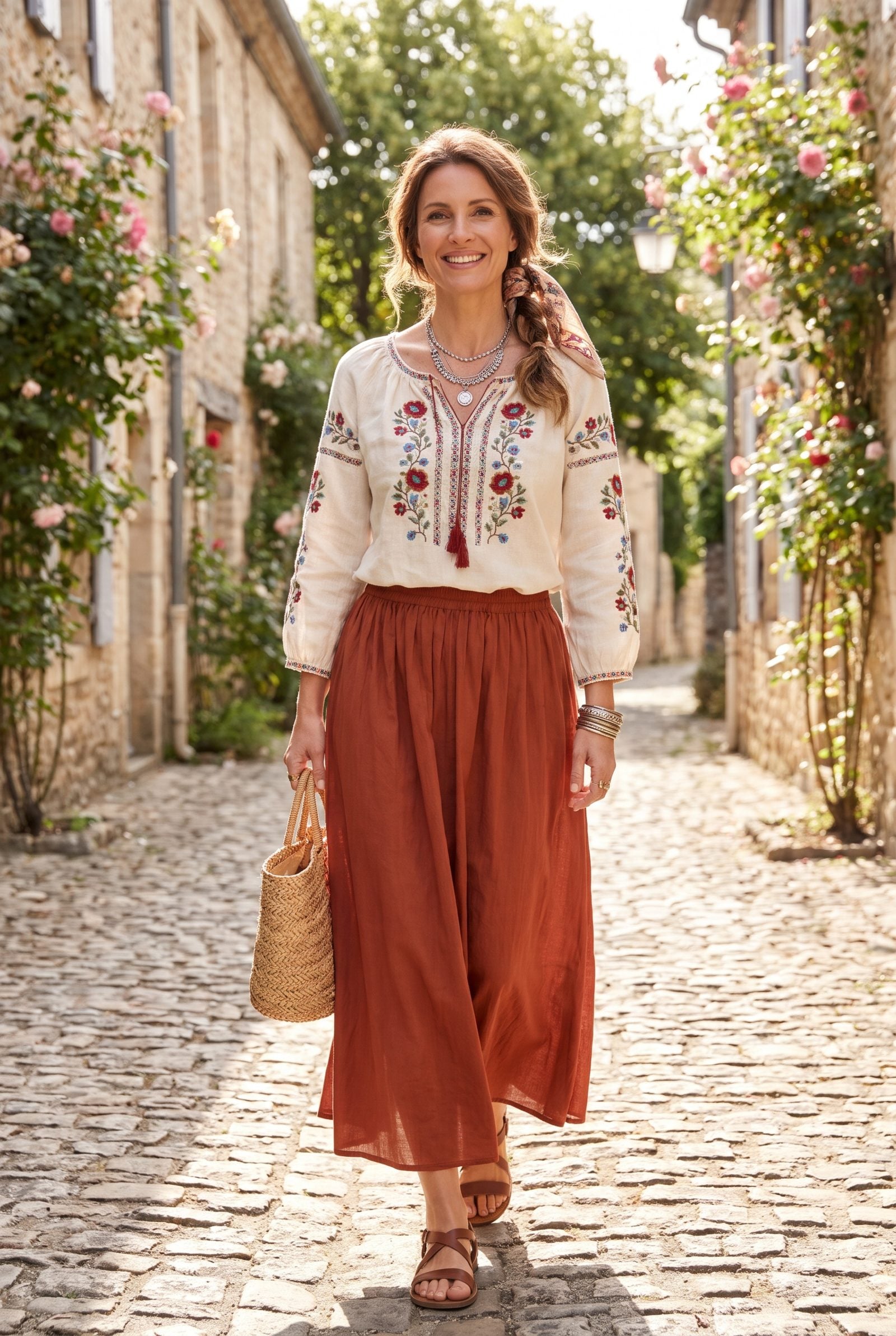
Hand-embroidered flowers on soft white cotton, a split neckline finished with a tassel tie. The peasant blouse was folk romance stitched into fabric, and nobody has improved on it since.
Collected layering is the styling logic now. One embroidered piece, with jewellery to echo it. A rust-colored flowing maxi skirt keeps the blouse from drifting into costume, and its elastic waistband gives the billowy top a waist to answer to. Layered silver necklaces with a coin pendant, a patterned hair scarf, stacked bangles and a few rings pick up the embroidery’s folk spirit — honestly, it all hangs together.
Worn with a skirt this simple, the blouse carries the whole look.
18. Crocheted Vests, The Granny-Square Comeback
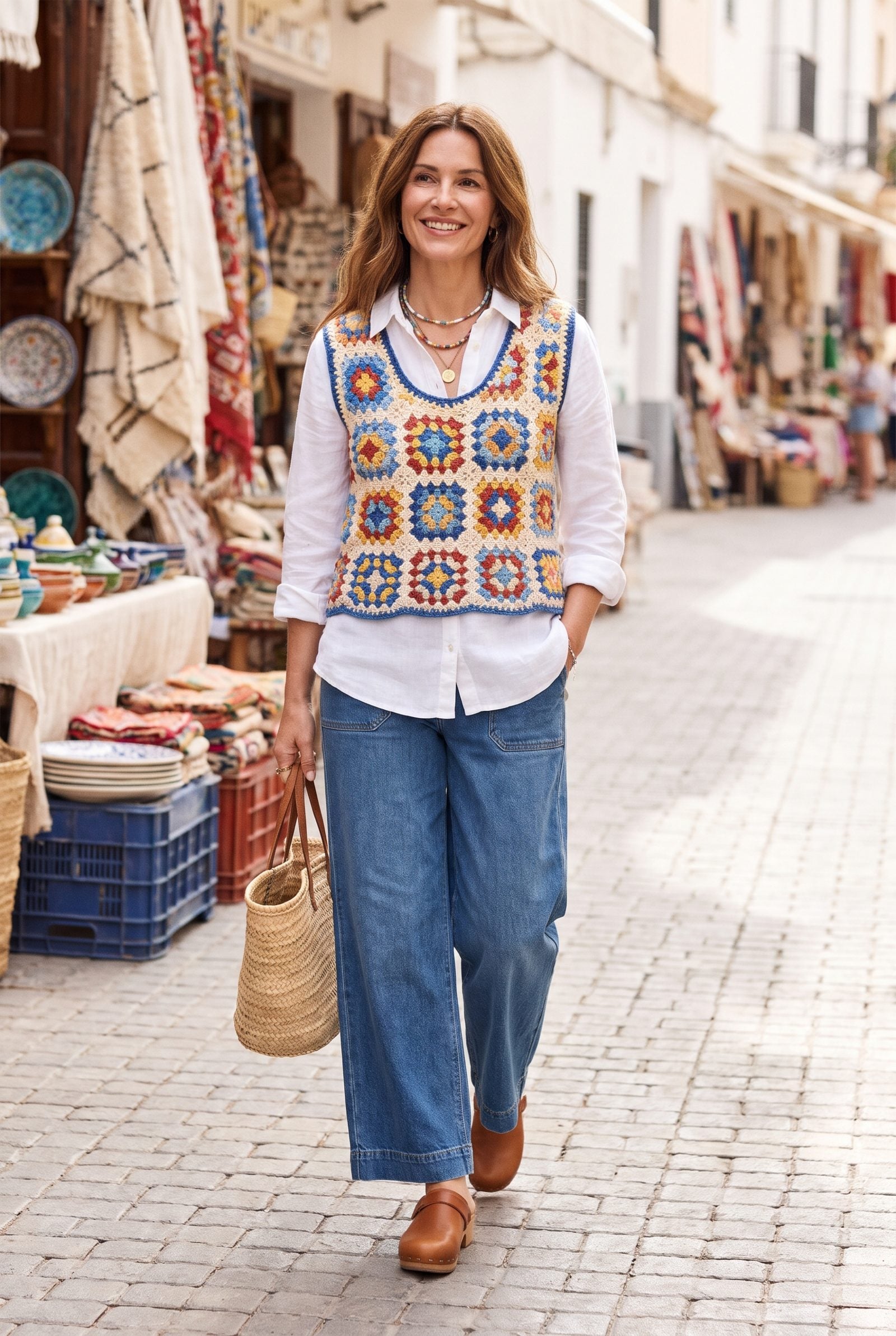
A crocheted vest shows skin without showing much. That open loopy texture lets a layer underneath peek through, which is precisely how it stayed interesting from the 60s commune years to now.
Pulled on over a long-sleeved white button-up shirt, the vest becomes the texture story. Granny squares worked in red, yellow, royal blue and light blue on a cream ground against wide-leg medium-wash denim below keep it grounded rather than nostalgic. And the open weave does its own quiet work — depth without weight, so the whole look stays light for warm weather.
17. Fringed Suede Jackets, The Fringe That Moves With You
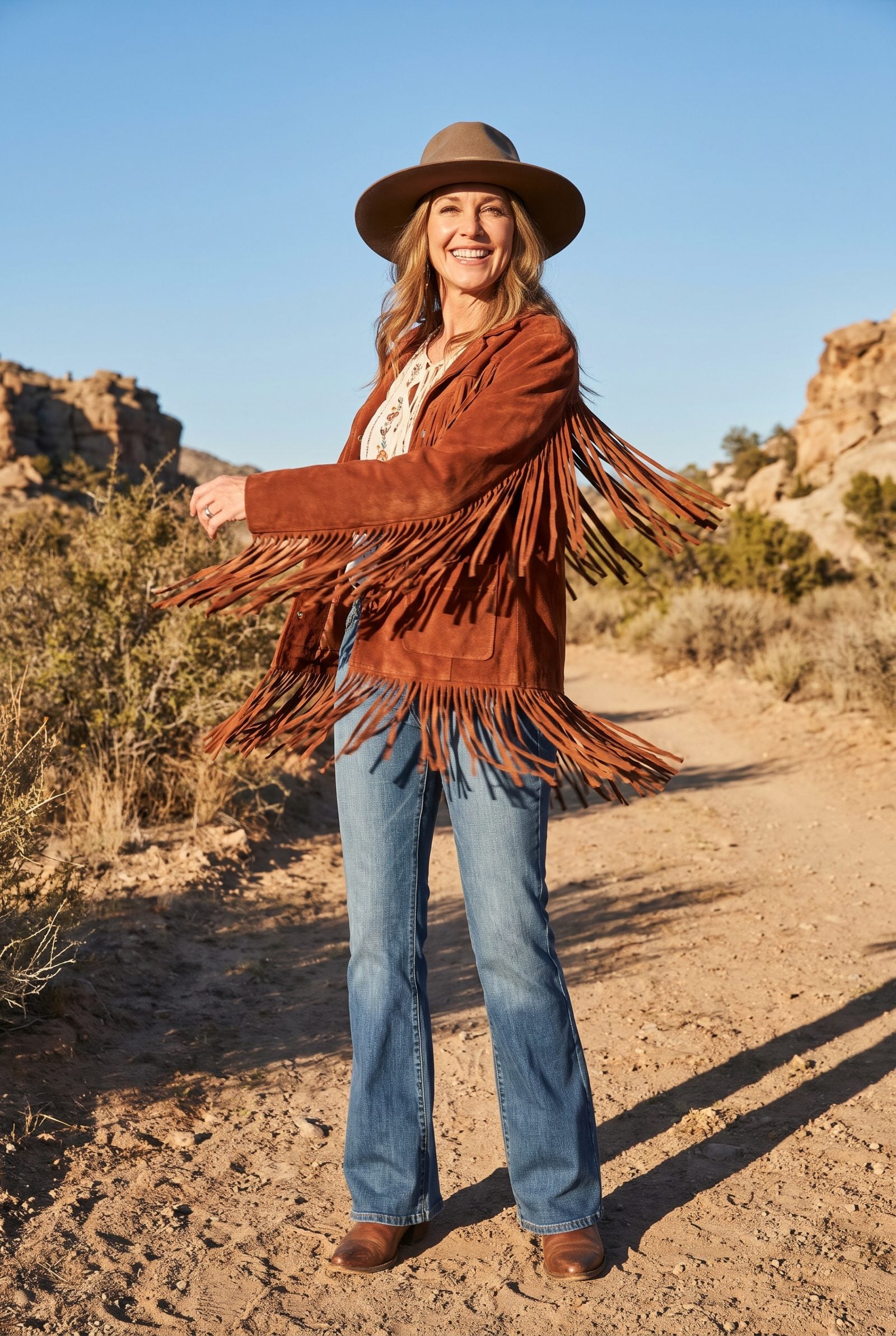
Fringe is motion you can wear. A fringed suede jacket turns every step and shoulder-shrug into something cinematic, which is why it jumped from 60s folk-rock stages straight into regular closets.
The trick to keeping it current? Let the jacket be the only loud thing. A softly embroidered cream peasant blouse, medium-wash bootcut jeans, nothing competing. When you walk, the fringe swings, and suddenly a simple outfit has choreography. A wide-brim felt hat and brown leather boots nod to the heritage without turning it into a costume.
Her first rule for wearing fringe without overdoing it, from a Texas boutique owner: “Let fringe be the detail, not the whole outfit.”
16. Leopard-Print Coats, The Spot That Never Blinks
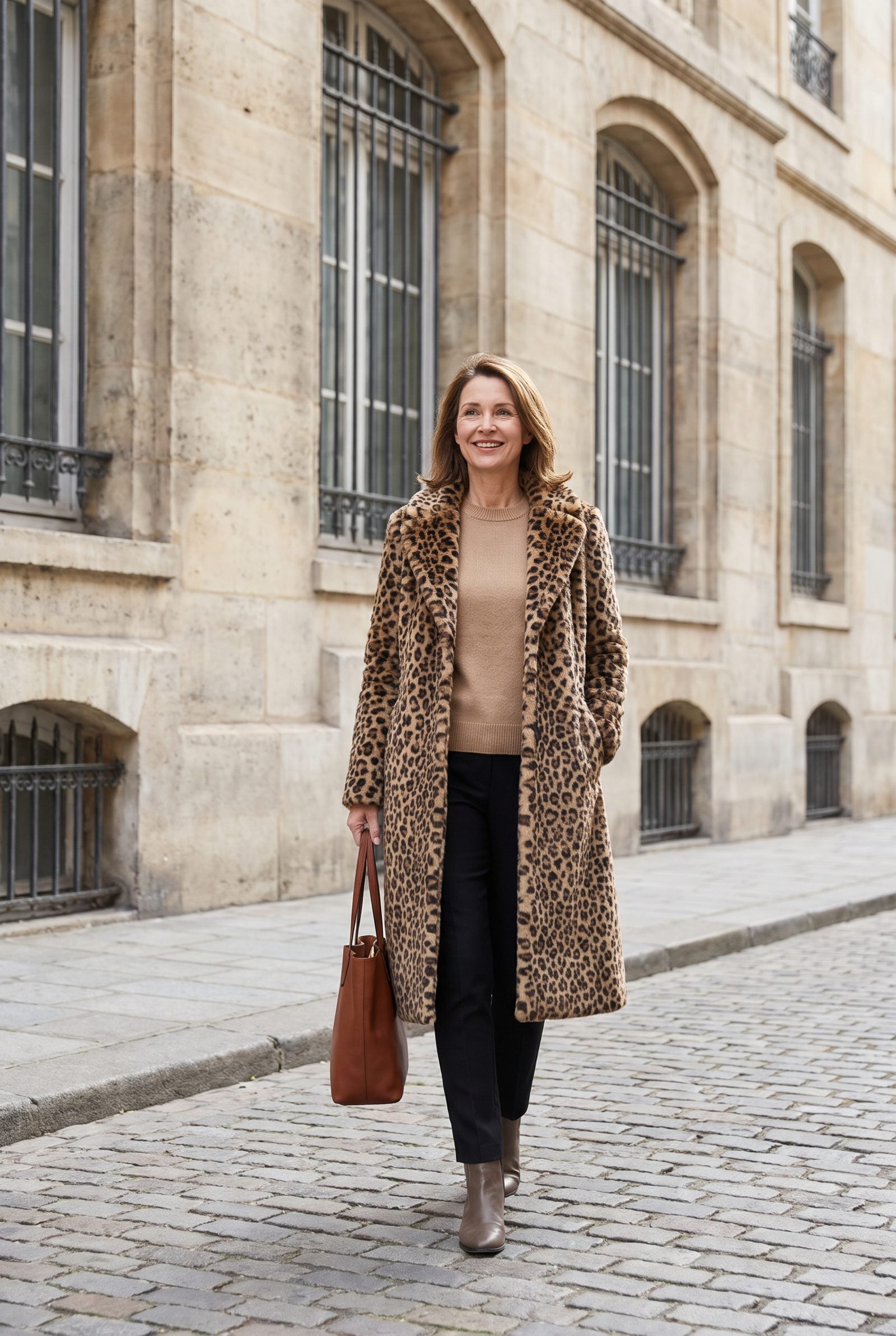
Leopard has always behaved like a neutral that forgot to be quiet. In the 60s it was glamour-with-an-edge, and the rules for wearing it well have not changed: let the print lead, keep everything else quiet.
A camel-and-black base under an open leopard coat is the entire strategy. The black trousers and camel knit recede so the coat gets the stage, and wearing it open lets that swingy print fall in a long, easy line. One cognac leather tote is the only other voice in the room.
A print this confident is doing enclothed-cognition work. Put it on and you stand up straighter, which is half the point.
Explaining why a leopard coat she styled reads as a neutral rather than a statement, a fashion Substack writer says “The brown, tan and black in the print tie naturally into the black cardigan, leather bag, black shoes and silver jewellery, and the faded denim keeps the whole outfit grounded.”
15. Vinyl Raincoats, The Space-Age Shine Returns
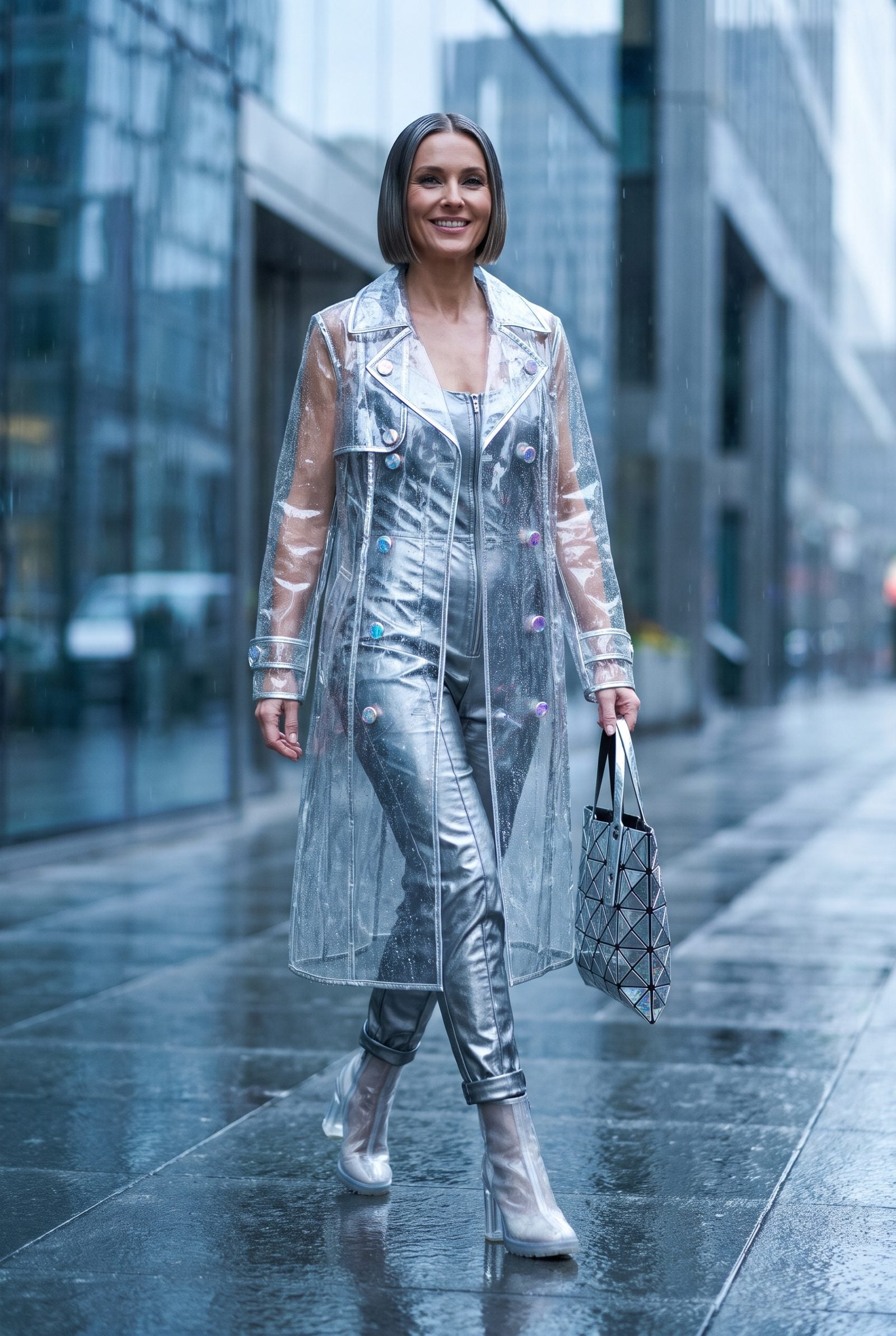
Clear vinyl, high shine, a little bit space-age. The vinyl raincoat was Courrèges-era futurism, and the modern version keeps that glossy optimism while finally making it something you would actually wear.
Let the jumpsuit show through — that’s the whole move. A silver metallic zip-front jumpsuit underneath turns the coat into a frame rather than a cover-up. Shine on top, more shine beneath, so both get noticed. Weird how plastic looks this good, but here we are.
14. Matching Skirt Suits, The Jackie-O Power Pairing
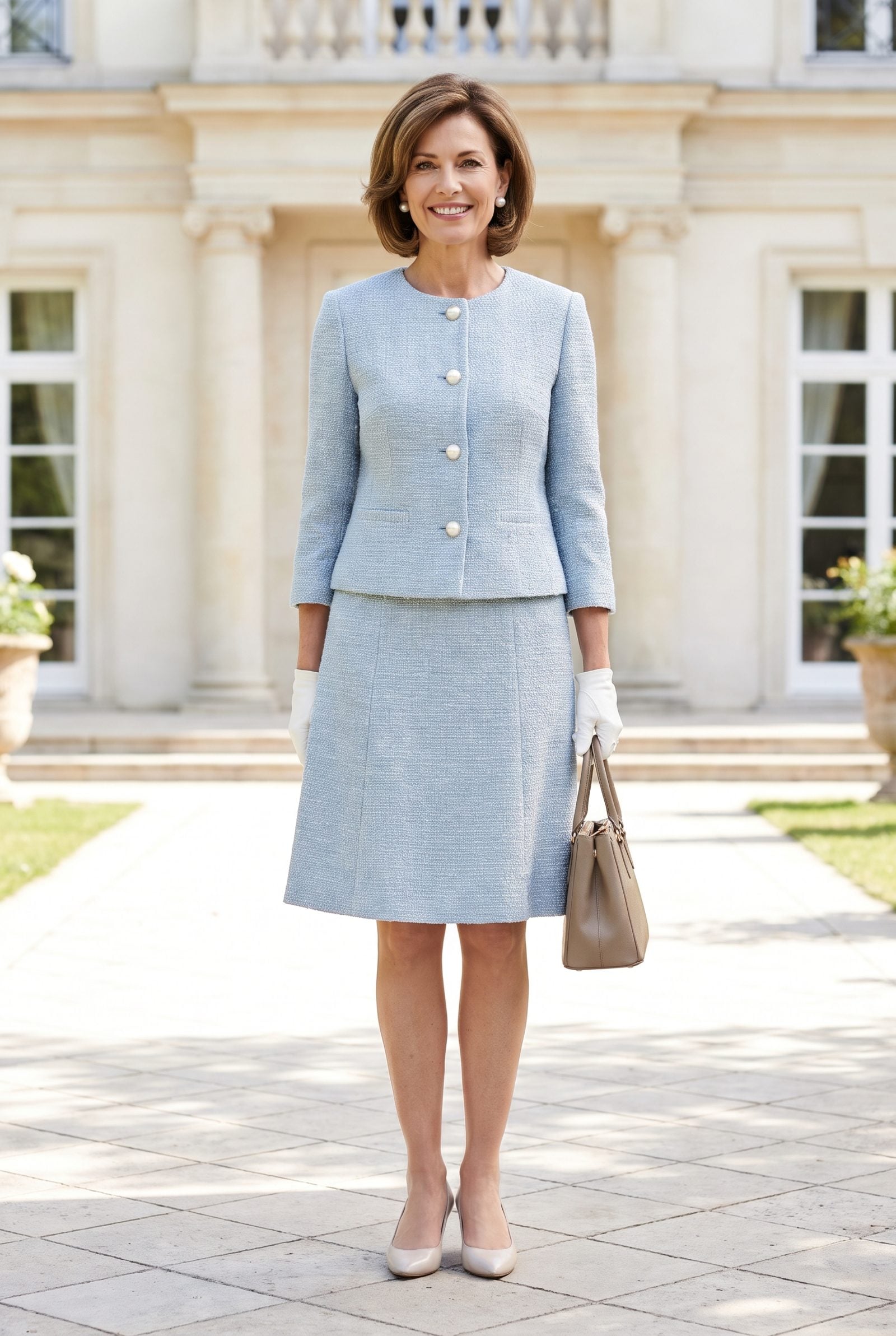
A jacket and skirt cut from the same cloth, worn together on purpose. The matching skirt suit was the uniform of a certain kind of unbothered elegance, and it reads just as decisive now.
What holds it together is the bouclé. That nubby, slightly textured weave is what keeps a powder-blue two-piece from looking flat or costumey, pulling depth from a single fabric. The handbag details matter here too — a structured top-handle bag is the finishing note that signals the suit is a choice, not a uniform.
Wearing a head-to-toe matched set telegraphs control and intention before you say a word. That is the quiet power of dressing in one deliberate idea.
13. Metallic Party Dresses That Caught the Light Like a Disco Ball Before Disco
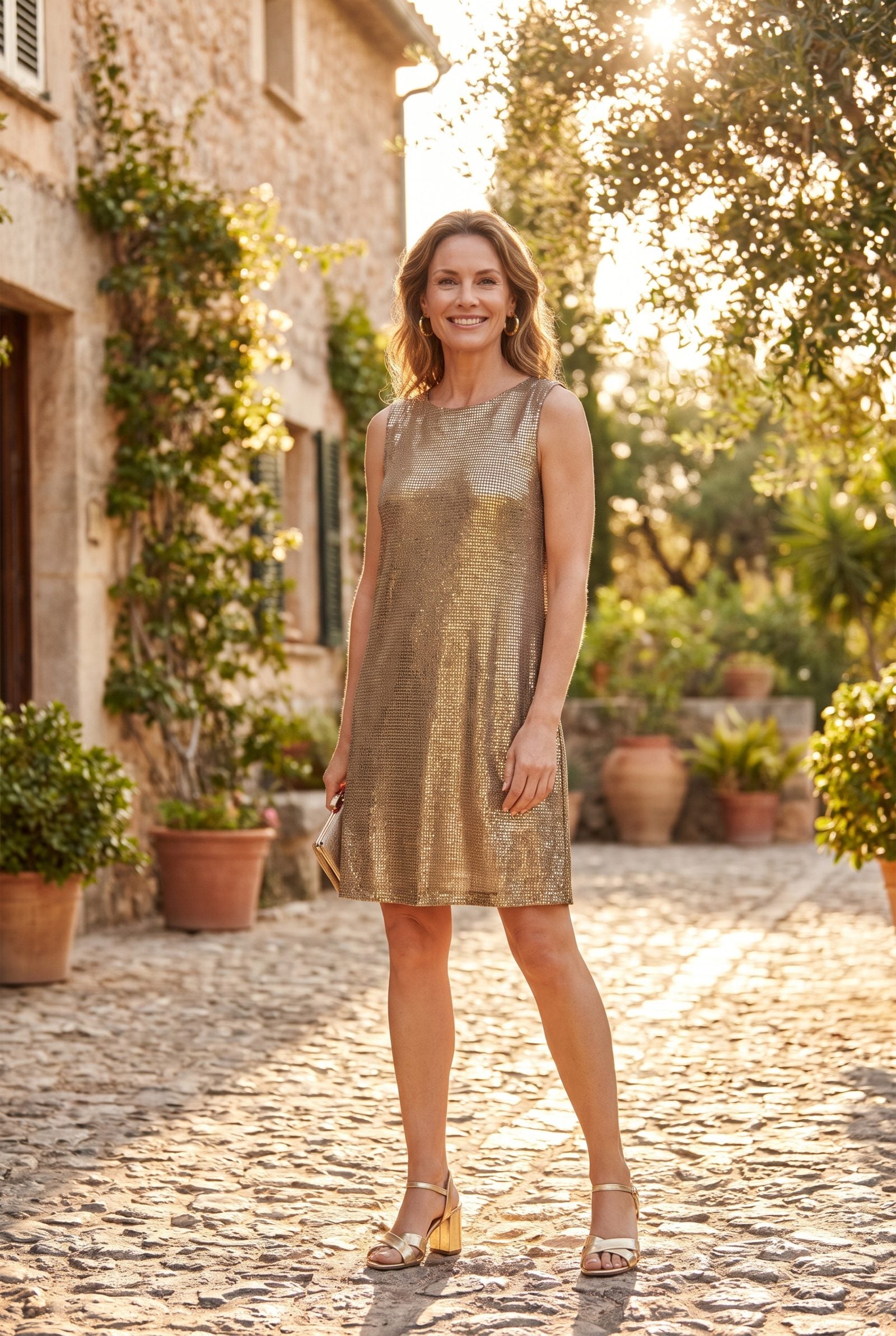
The gold lamé shift was the 1960s answer to a Saturday night, worn to cocktail parties where everyone stood a little straighter. Back then the metallic fabrics scratched and the darts sat stiff. The shimmer did its job under a chandelier anyway.
Today the revival works because the cut relaxed. A lined gold metallic shift dress skims instead of grips, and the metallic finish reads as considered rather than costume. One surface, one shine, nothing competing with it — that single color commitment is what makes the whole thing hold together.
12. Empire-Waist Maxi Dresses With That Floating, Grecian Line
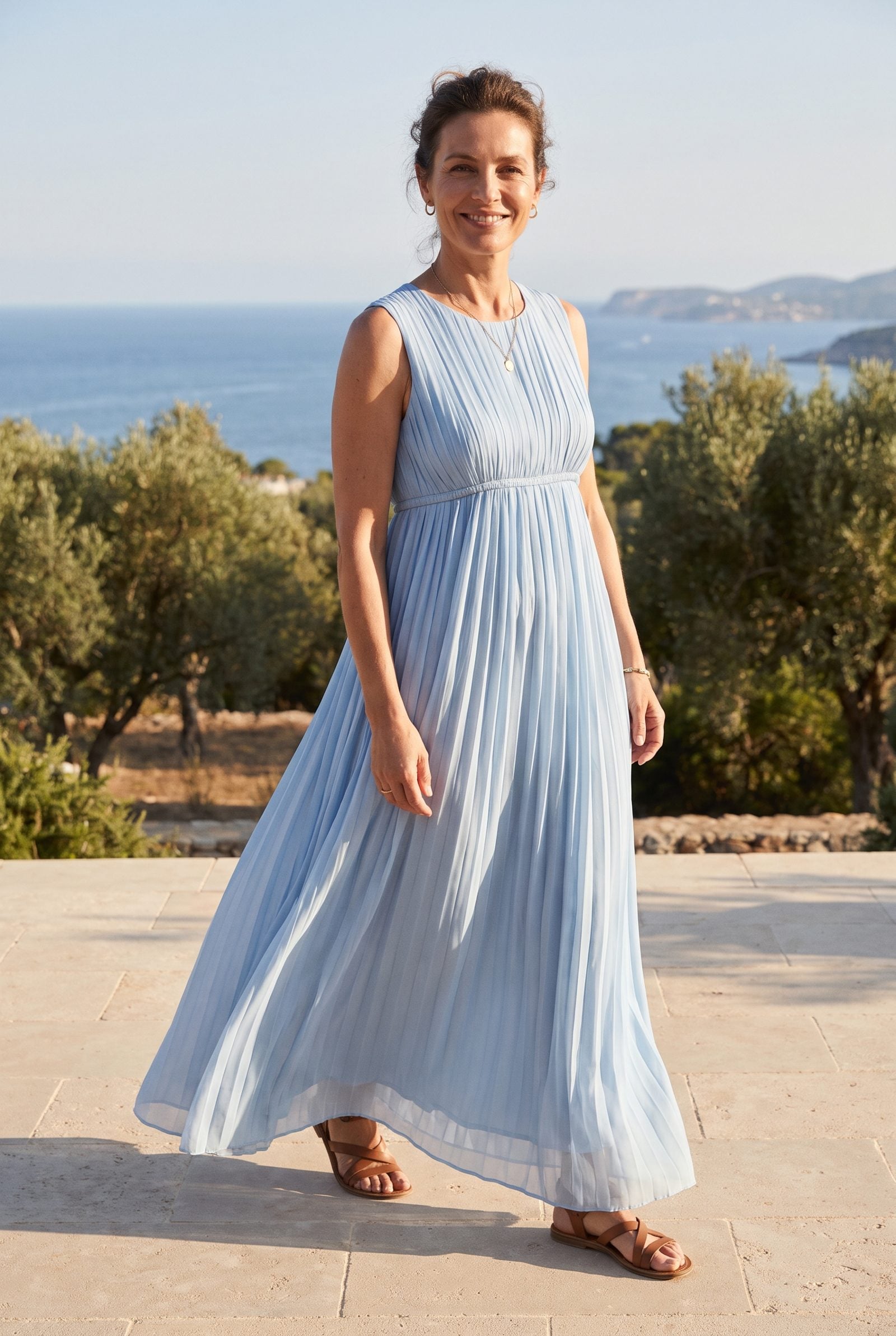
The silhouette doing all the work is that raised seam under the bust, which elongates the whole body into one unbroken column. 1960s designers borrowed it from Greek statuary and never looked back.
The pale sky-blue chiffon reads soft and airy, like sea breeze, and the slim corded band at the ribcage adds just enough structure to keep the drape from going shapeless. On a woman over 50, this cut carries real authority. It asks nothing of the waist and gives everything to the line.
11. Babydoll Dresses Short Enough to Make Your Mother Nervous
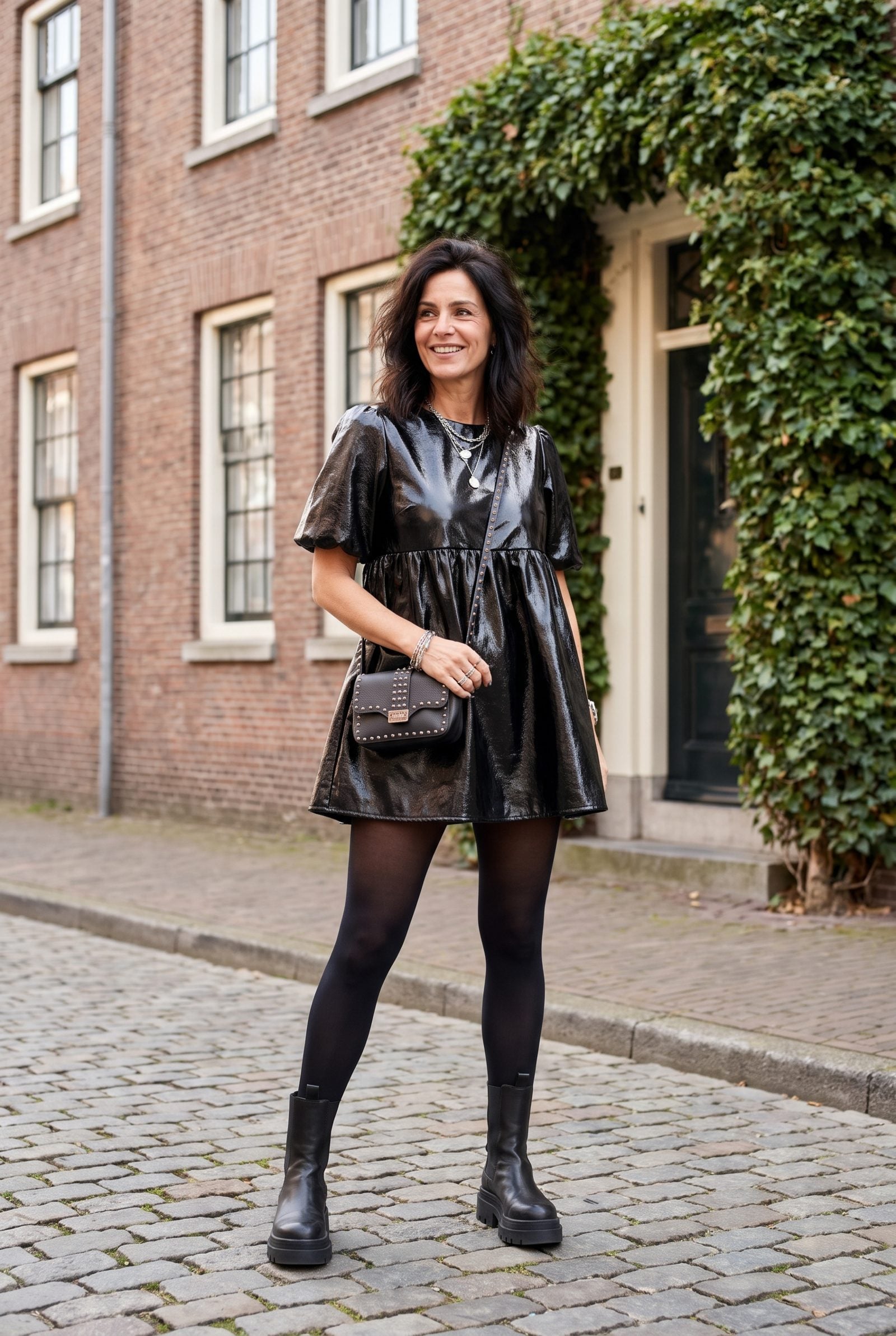
The babydoll was pure rebellion in a gathered skirt. Twiggy wore it, the mod crowd adopted it, and suddenly every teenager wanted a dress that stopped mid-thigh with a collar that looked innocent.
Modernizing it comes down to proportion and coverage. Opaque tights and a low block heel ground the volume so the full skirt reads deliberate instead of girlish, and the high yoke seam keeps the fabric swinging away from the body. Worn now, with grey in the room and nothing to prove, it flips the whole reference on its head.
10. Courrèges-Style Space-Age Separates in Crisp White and Hard Angles
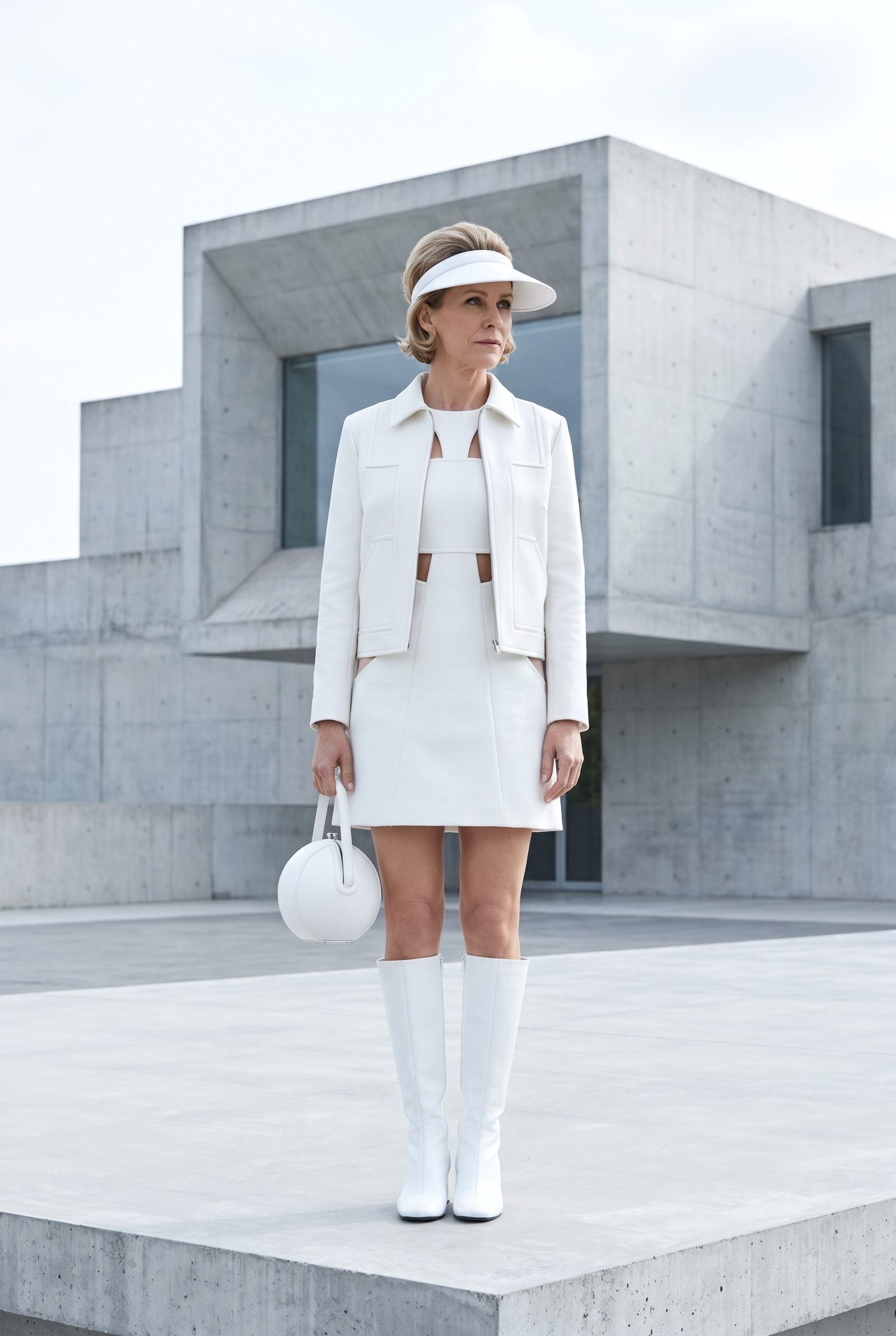
One texture, one geometry, everything cut at a right angle. That discipline is why these separates felt like the future in 1965 and still feel modern now.
André Courrèges built his space-age vision out of crisp white gabardine, clean zips, and boots with smooth rounded toes. The revival lives in restraint. A boxy white crop jacket over an A-line mini keeps every line hard and intentional, and the white cutout top underneath keeps all that optimism in one clean, wearable tone. Swap the go-go boots for a white ankle boot and you have a working outfit instead of a Halloween reference.
9. Pucci-Inspired Swirl Prints That Looked Like Melted Stained Glass
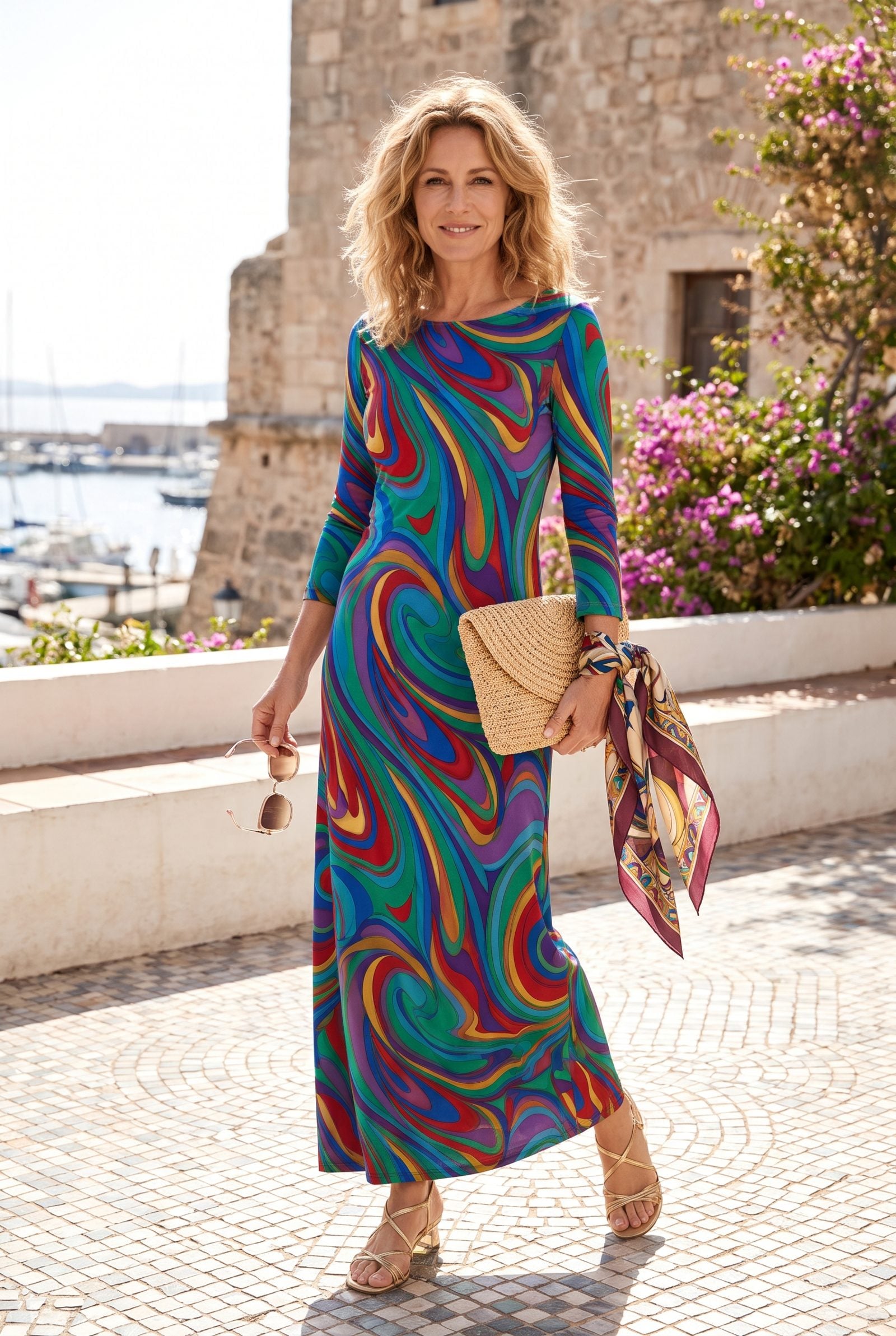
Emilio Pucci printed on silk jersey so fine it packed into a handbag, and the jet-set crowd never traveled without one. The swirls looked like melted stained glass — fuchsia and turquoise and gold running into each other.
Here the print is the whole outfit, so everything else goes quiet. A column cut lets the pattern move uninterrupted, and gold accessories pick up a single thread of color without shouting over it. With golden-blonde waves, that riot reads as confidence. A woman who wears vivid swirl at 55 has made a decision, and everyone in the room knows it.
8. Op Art Black-and-White Prints That Vibrated Right Off the Fabric
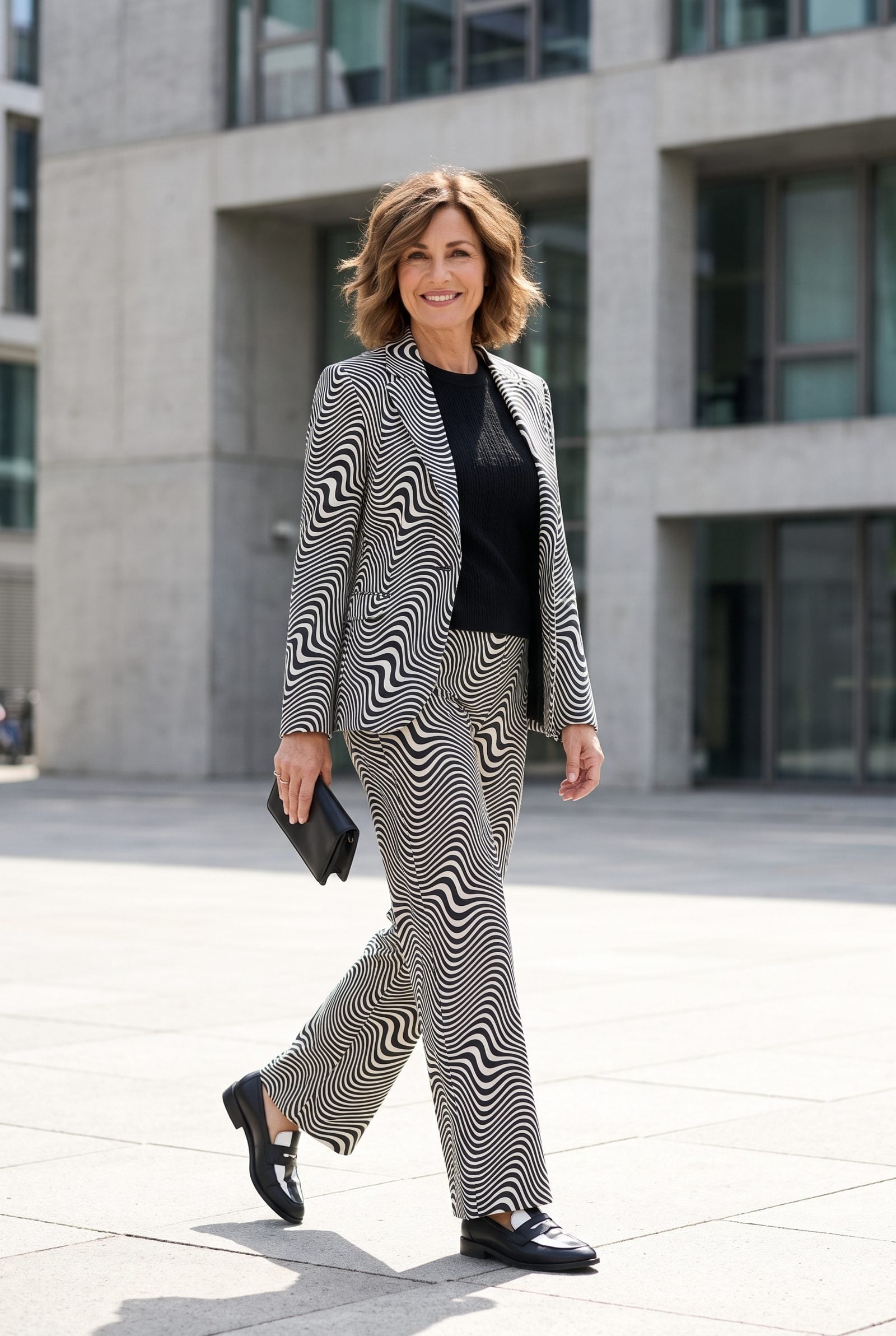
Bridget Riley never meant for her paintings to end up on clothes, but 1966 had other ideas. Op art jumped from gallery walls to fabric, and suddenly women were wearing optical illusions that seemed to pulse when you stared too long.
The print does the talking. So the modern version keeps the silhouette simple and the accessories minimal — a black-and-white wavy-print blazer and wide-leg trouser suit over a plain black knit top, finished with a slim black clutch and two-tone penny loafers, letting the pattern vibrate without competition. High contrast is everything. Soften the black against the white and the whole effect collapses.
7. Daisy Floral Prints That Turned Every Dress Into a Meadow
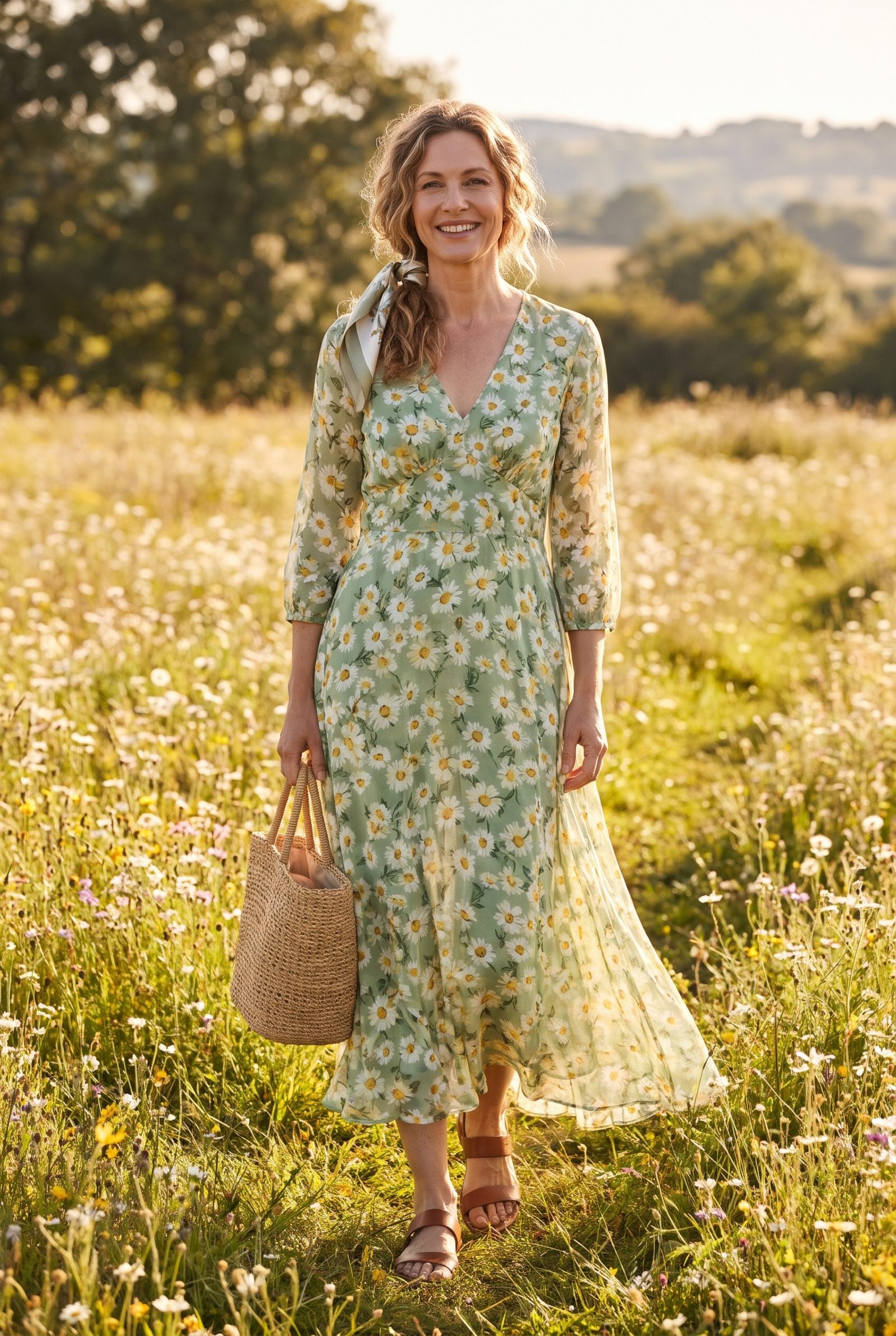
Daisies were everywhere by 1967 — on dresses, on vinyl boots, pasted onto cheeks at festivals. The flower became shorthand for a whole mood, and a daisy-print dress put you squarely on the right side of the decade.
The daisy print midi dress works now because the scale stayed small and the ground color does the heavy lifting. Sage green underneath keeps the print fresh rather than twee. Tan leather and straw accessories pull it toward now, and the whole thing just reads as ease. Add a hat for real sun and you have summer solved.
6. Silk Headscarves Knotted Under the Chin Like You Had Somewhere to Be
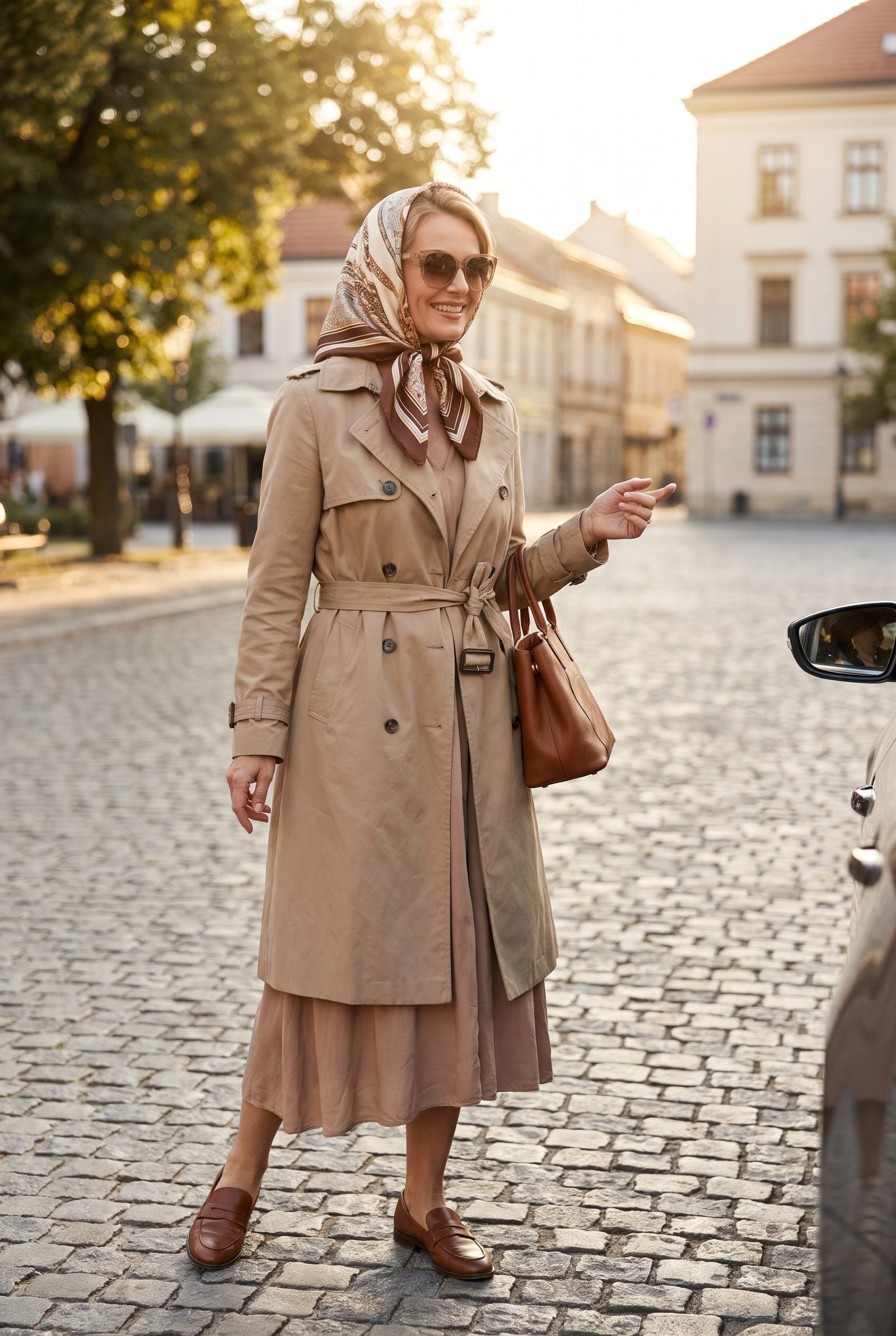
Grace Kelly made it look like effortless glamour, and every woman with a convertible — or the dream of one — tied a silk square under her chin. It kept your hair in place and signaled that you were going somewhere worth driving to.
The scarf is the finishing detail that reframes the whole look. A geometric silk square knotted at the chin over a belted tan trench and a blush midi dress turns an ordinary outfit into something with a point of view, and the print pulls the cream, tan and brown across the body without a single matching piece. On a breezy day, when a stiff chic hat would only fight the wind, the silk scarf wins every time.
5. Oversized Round Sunglasses Big Enough to Hide Behind
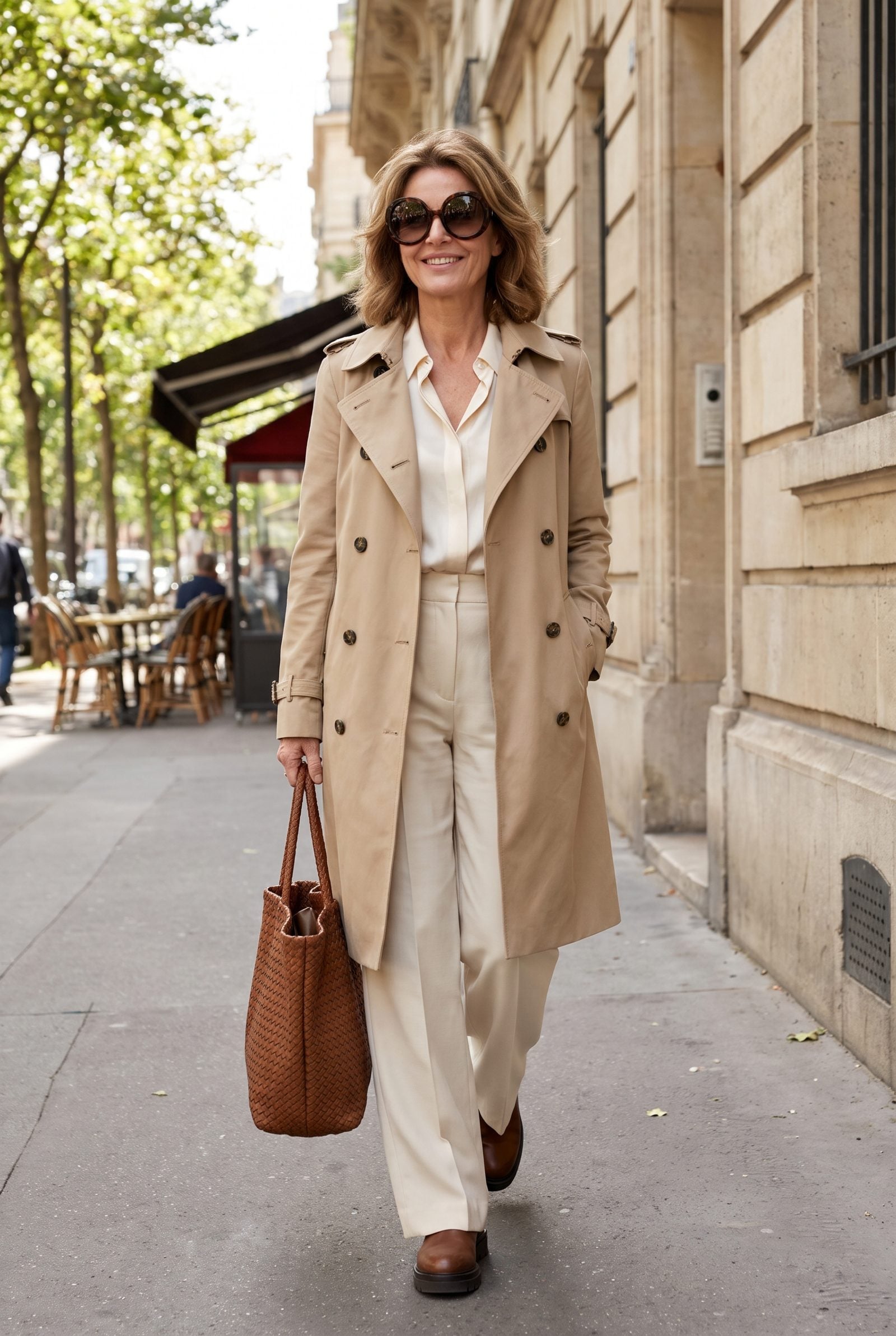
The bigger the better, that was the rule. Oversized round sunglasses arrived with the mod explosion and never fully left, because a frame that covers half your face does something no other accessory can — it hands you privacy and presence in the same move.
These are what carry the look. Take them off and the beige trench, cream blouse and wide-leg cream trousers are just a nice, polished city outfit. Put them back and the whole thing tips into intentional cool. Tortoiseshell keeps the frames warm rather than stark, which plays better against skin than hard black. Honestly, this is one of the rare 1960s details that needs no updating at all — it slots straight into a modern minimalist look. The scale was right the first time.
4. Structured Top-Handle Bags That Still Sit on the Table Like They Own It
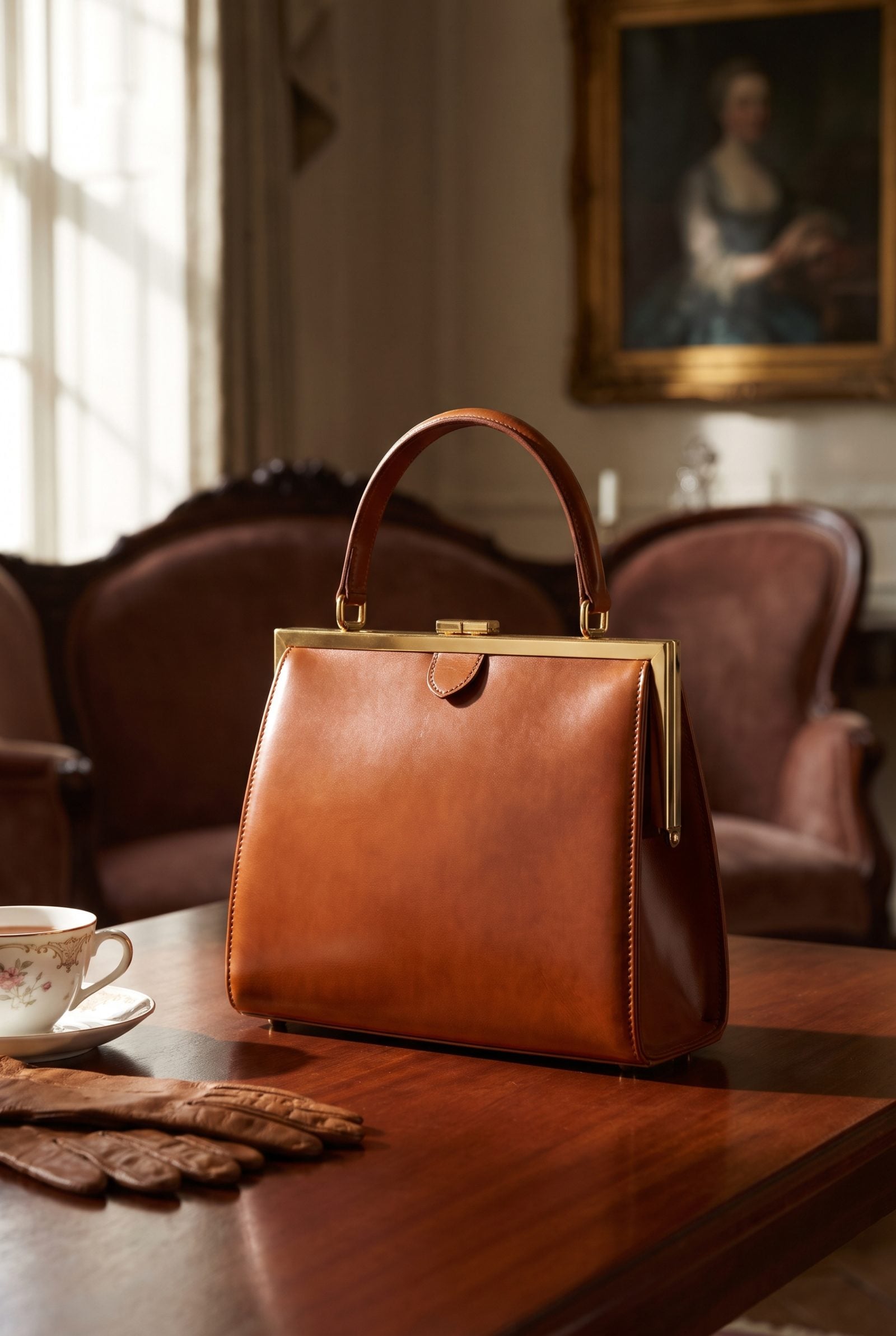
The lady who carried a structured top-handle bag in 1963 wasn’t carrying groceries in it. She carried a lipstick, a folded letter, and the full weight of her own composure. That rigid little box, held by the handle instead of slung over a shoulder, was the original posture corrector.
Cognac leather against tan suede gloves is what makes this look run. One is soft and napped, the other glossy and polished, and the bag’s gold frame adds the only real shine in an otherwise warm brown palette. That’s why the whole thing reads deliberate instead of drab.
Modern versions survive because the shape never apologized for itself. A boxy top-handle in cognac leather tells everyone you planned your day. Skip the crossbody for once.
3. Chunky Gold Hoops That Catch on Every Collar You Own
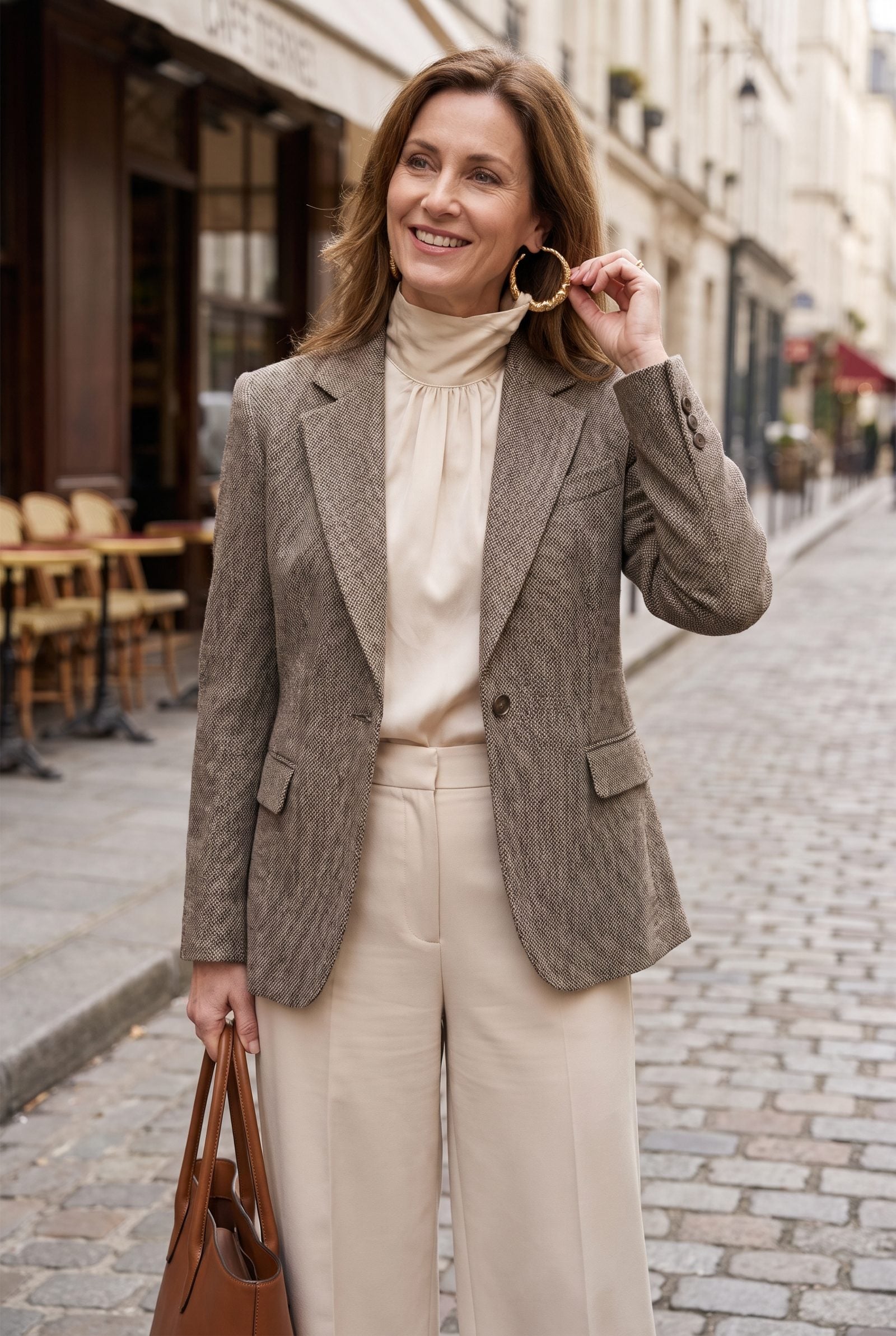
You remember the snag. A big gold hoop caught on the collar of every high-neck blouse you pulled over your head, so you learned to take them off first or pay for it.
The hoop carries this whole outfit. A brown tweed blazer and cream trousers is a quiet pairing on its own — close to invisible, honestly. Add the chunky gold near the face and suddenly the neutrals have somewhere to look, a flash of warmth that pulls the eye up to where you actually want it. These chunky gold hoops glow against the cream satin high-neck blouse and pick up the cognac of the leather tote, tying the whole look together.
Why’d they come back? Because big jewelry near the face does something flattering no necklace manages. It softens the jaw, draws light up, and reads as confidence rather than fuss.
2. Patterned Tights That Turn a Plain Dress Into a Whole Decision
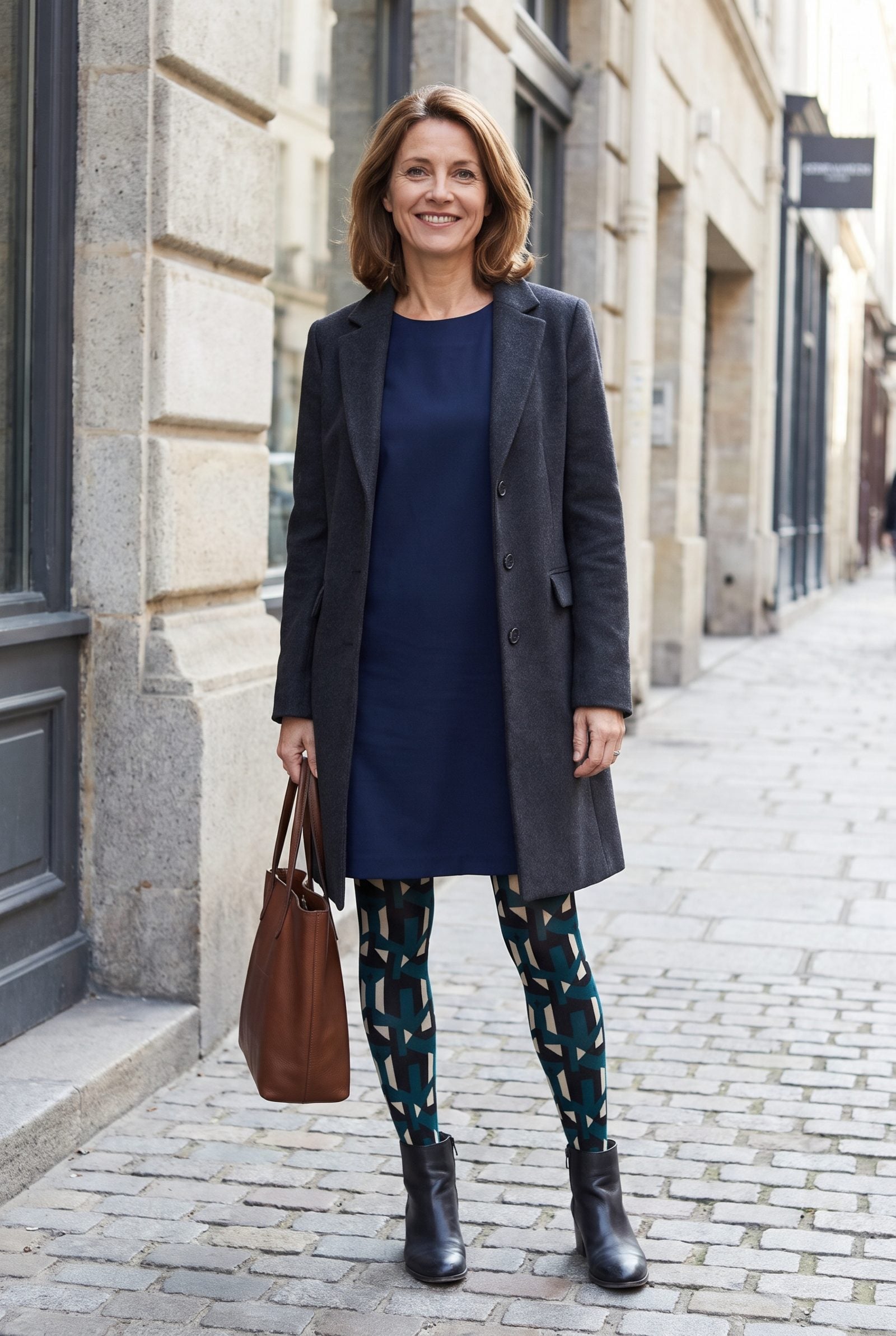
A plain shift dress plus patterned tights was the cheat code of 1966. You owned the navy dress already. The tights did the talking.
Here the teal, black and cream geometric tights are the loudest thing in the frame, and that’s the point. The navy shift keeps it simple up top so the legs can carry the pattern without the whole look tipping into costume. Call it a proportional handoff — quiet dress, busy legs, black heeled ankle boots to ground everything.
They work now for the same reason they worked then. Patterned tights make a short dress feel intentional rather than underdressed, and they let you wear a hemline you’d otherwise talk yourself out of by breakfast.
1. Graphic Winged Eyeliner That Takes Three Tries and Is Worth It
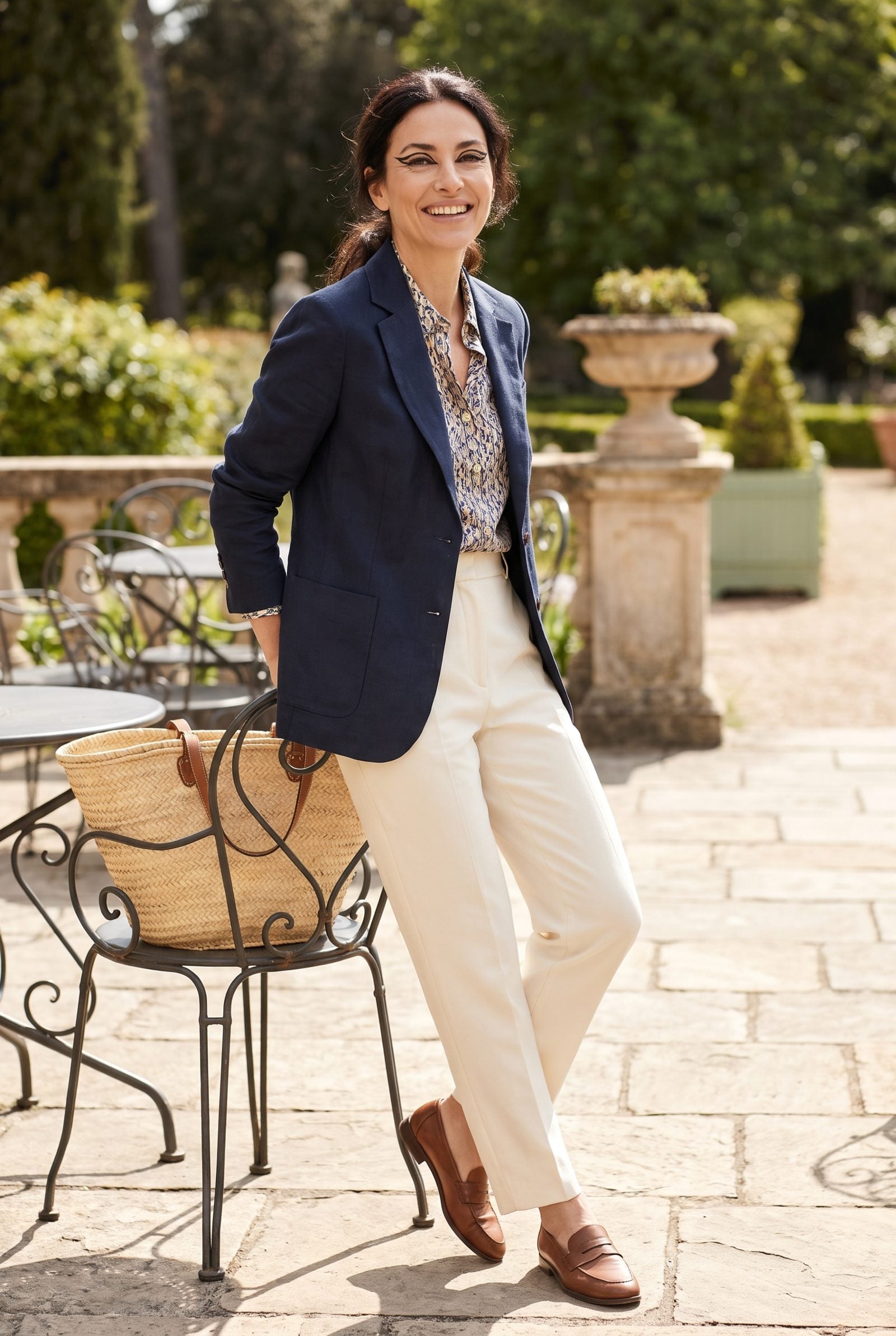
Three cotton swabs and a steady breath. That’s what a proper 1960s wing cost you, and the first two attempts went straight in the bin.
Winged liner isn’t an outfit, but it behaves like one. Against a navy blazer thrown over a cream-and-navy patterned blouse, with cream trousers and brown loafers, the graphic line holds its own as the sharpest piece of punctuation in the whole look. Hair goes back in a low ponytail and the lip stays soft so the eye reads as deliberate — the same trick the mod girls pulled with their sparse brows and pale mouths.
It never really left. And the version now is kinder to the hands: felt-tip liners mean you draw the flick in one stroke instead of coaxing it out of a tiny pot with a wet brush that dries out the second you need it. The effect lands the same, though. Wide-awake, a little defiant, unmistakably on purpose.