❤️ Would you like to save this?
A stylist clocks a bad collar before the hello is finished. Not the color. Not the label, not whether the shoes match the bag. The collar — the way it rolls away from the back of the neck like it’s trying to leave the building. These are the small structural tells that separate a jacket that fits from one that merely covers you, and here’s the thing: most have nothing to do with taste. They’re physics. Fabric answers to the body underneath it, and when the answer comes back crooked, a trained eye reads it in a blink. Here is what that eye is reading.
FYI, thanks to AI imagery software, we’re able to create very specific fashion and hairstyle examples to illustrate the points being made. In some cases, imagery is exaggerated to hammer home the point. Also, assume links that take you off the site are affiliate links such as links to Amazon. this means we may earn a commission if you buy something.
48. A Back-Neck Roll Beneath a Jacket Collar
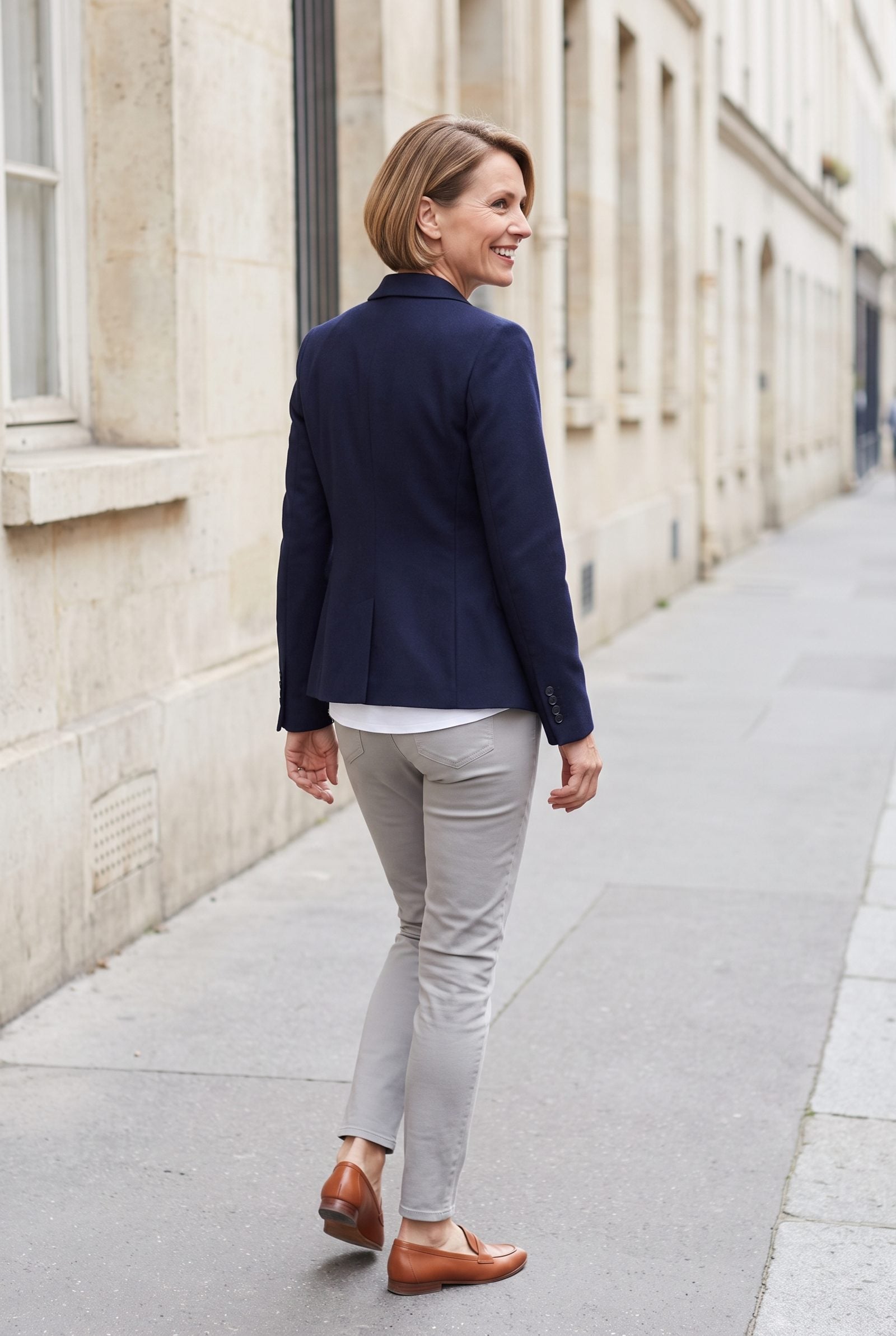
That little horizontal ridge of fabric sitting just under the collar is the first thing a stylist checks, because a jacket that fits never does it. The collar should kiss the back of the neck and stay put. When it rolls away and leaves a gap, the shoulders are wrong for the body — and no amount of good fabric fixes that.
Here the navy wool blazer lies flat against the nape, which is why the whole shoulder line reads clean and intentional. The flat cognac loafer keeps the look grounded and easy to walk in without undercutting the tailoring.
Tip: when trying on a jacket, turn your back to the mirror. If you can slide two fingers behind the collar, you need a tailor to bring it up.
47. Sleeves Rotating Into Spiraled Wrinkles
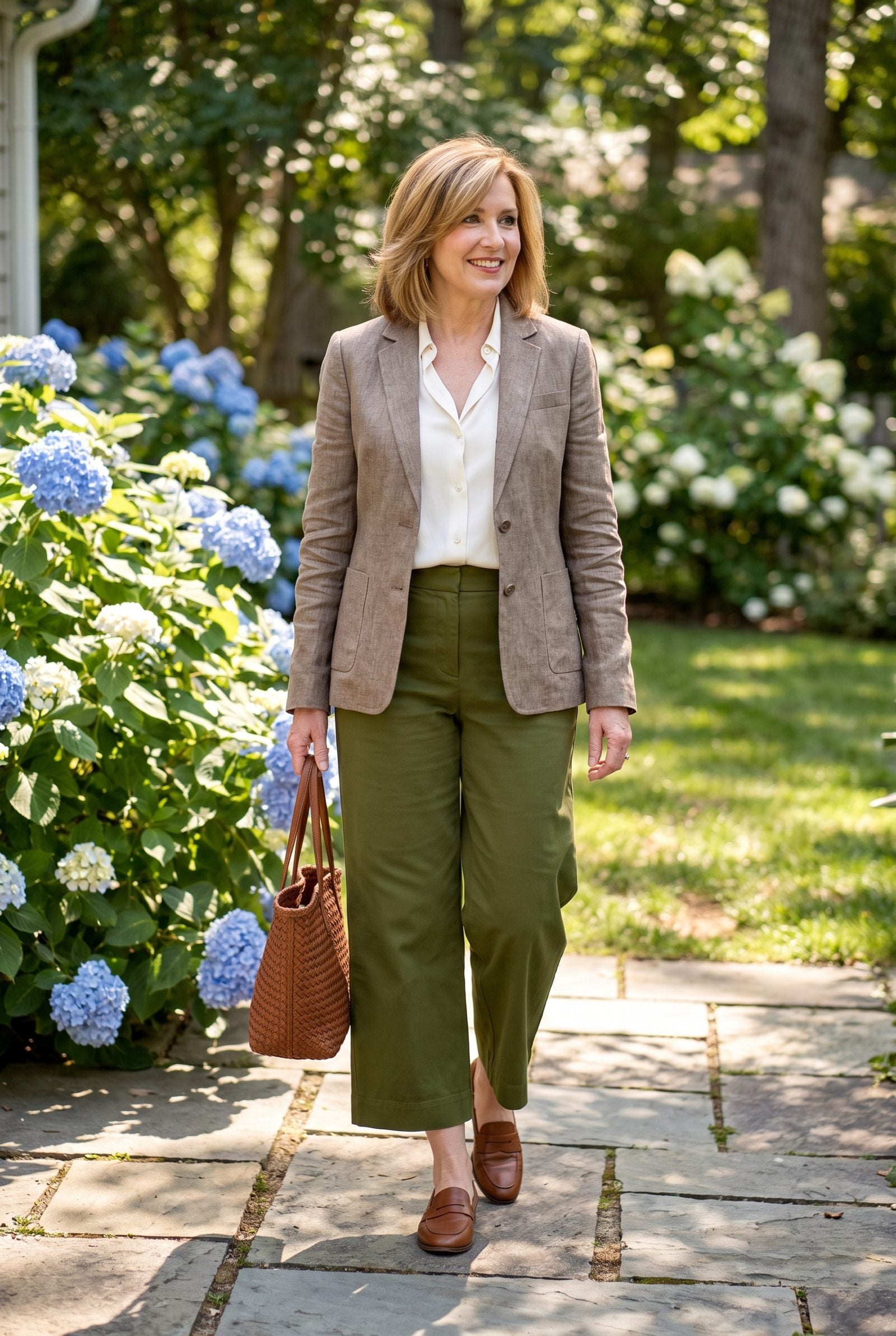
A sleeve that spirals — wrinkles winding around the arm like a candy cane — means it was set into the armhole at the wrong angle. Your arm hangs forward. The sleeve was built to hang straight. They disagree, and the fabric shows you the whole argument in a twist of diagonal creases nobody asked for.
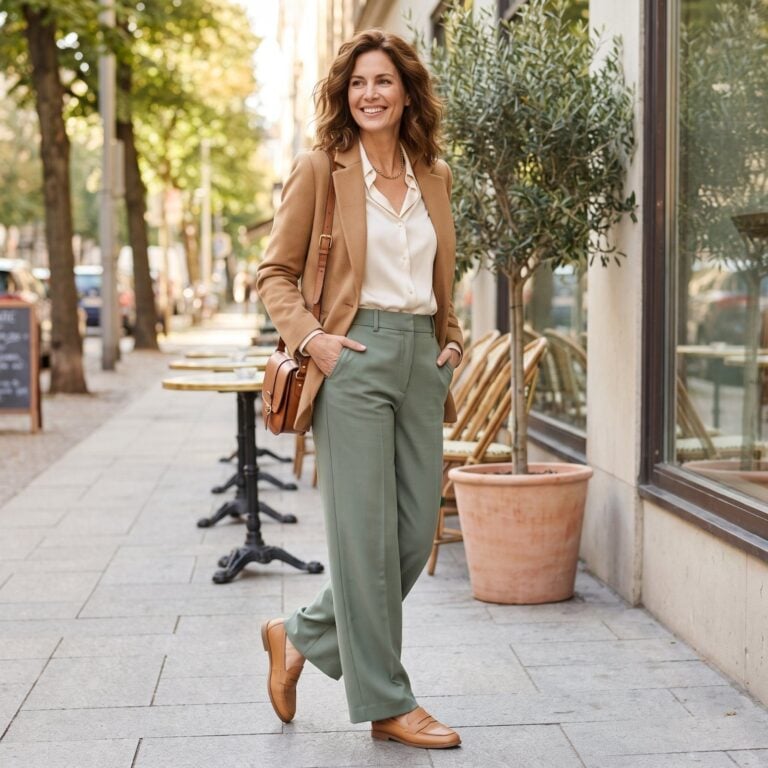
On this look the camel blazer sleeve falls clean from shoulder to cuff, letting the structured line do its job instead of fighting the arm. The brown leather penny loafers keep the proportion grounded, so the eye moves easily from the cream blouse and blazer down to the olive trousers.
46. A Jacket Vent Kicking Out Instead of Lying Flat

The vent should lie shut and flat, like a closed book. When the back kicks out and flares away from the body, the jacket is too tight through the hips and the fabric pushes outward to find the room it needs.
A stylist reads this from across a crowded room, no closer inspection required. And the fix is rarely the vent itself — it’s the hip. The charcoal blazer here shows the problem: its back panel juts stiffly out over the hips instead of lying flat, a sign the body needs more space before the vent ever has to work.
Tip: button the jacket, sit, stand. If the vent crept open and stayed open, size up or let out the seat.
45. Twisted Side Seams Revealing Off-Grain Fabric
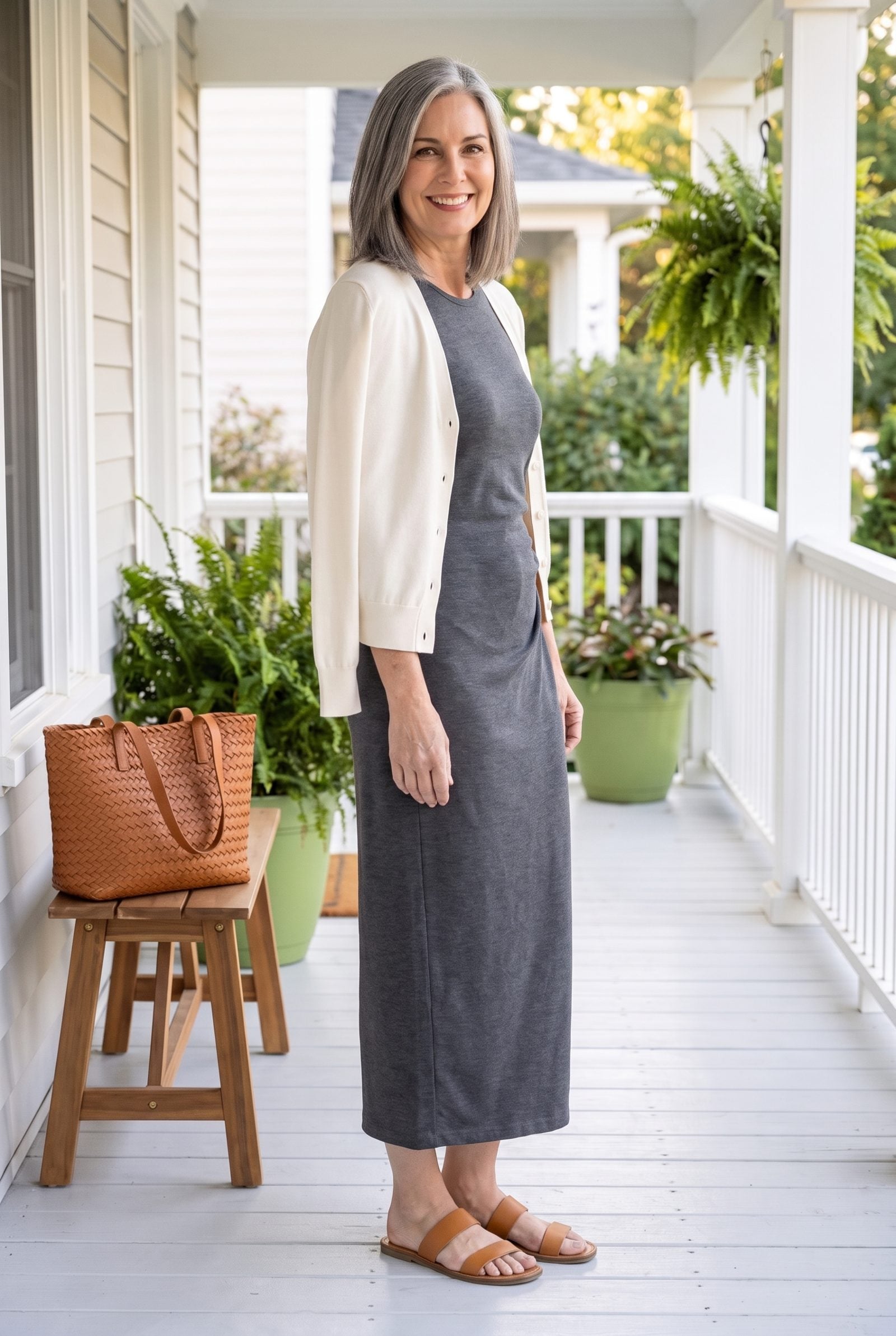
Look at the side seam. It should fall dead straight, a plumb line from underarm to hem. When it spirals toward the front or back, the fabric was cut off-grain, and the garment will twist on the body no matter how many times you yank it level. You can tug all day. It wins.
This one sits square, which is exactly why the charcoal-gray column reads calm and long. The flat tan sandal lets the line run all the way to the ground without a heel chopping the silhouette in half.
44. Horizontal Fly Wrinkles Across the Front Rise
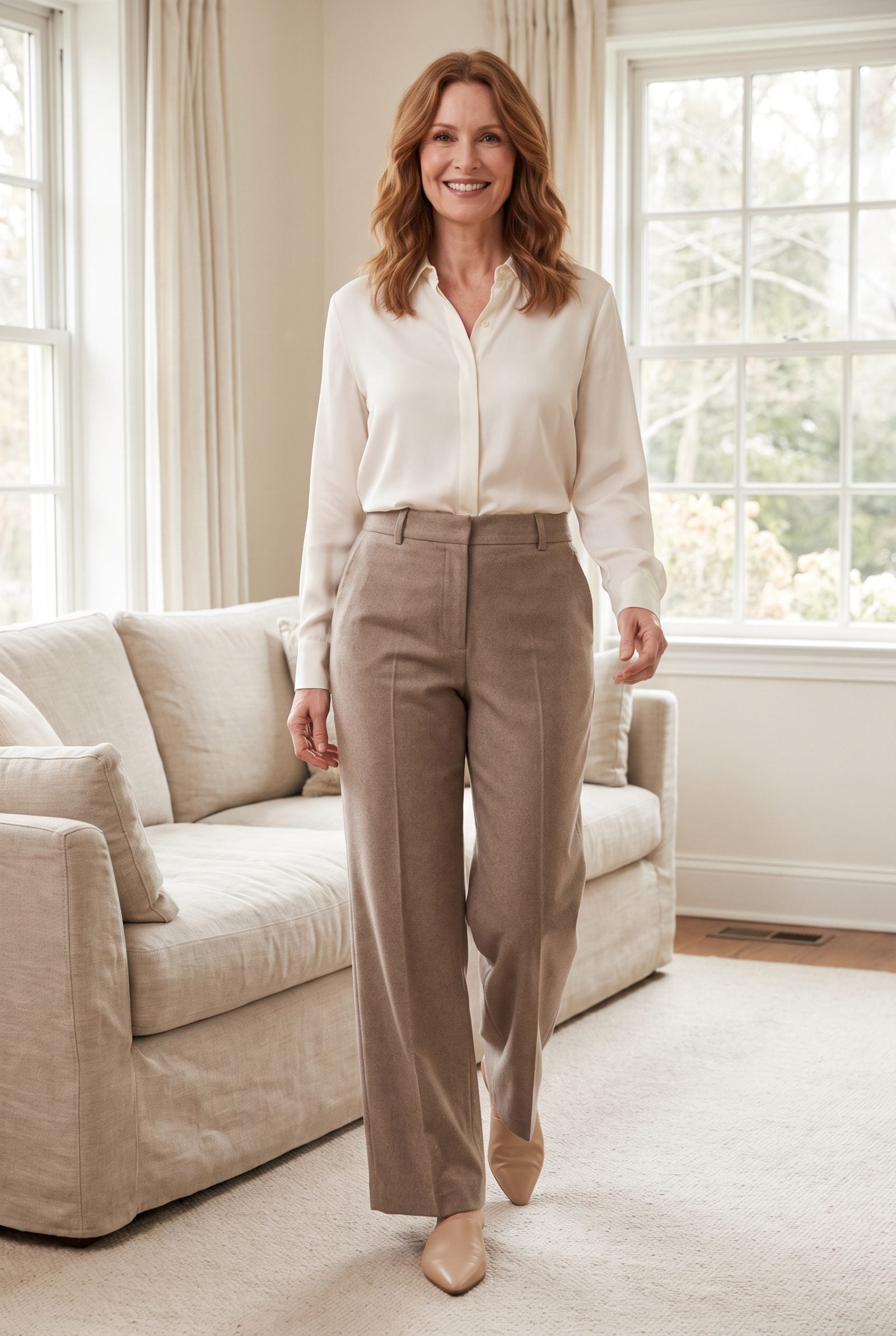
Those smile-shaped horizontal wrinkles stacking across the front of trousers are the rise fighting the body. Usually it means the rise is too short, so the fabric strains sideways hunting for length it doesn’t have.
The high-rise taupe trousers here sit flat because the rise actually reaches the natural waist, giving the fabric somewhere to go. Paired with the flat pointed mule, the look stays long and uncluttered from waist to toe.
Tip: if trousers wrinkle horizontally the second you sit, the rise is too low for you. A higher rise solves more fit problems than most people expect.
43. Bust Darts Pointing Somewhere Other Than the Bust Apex
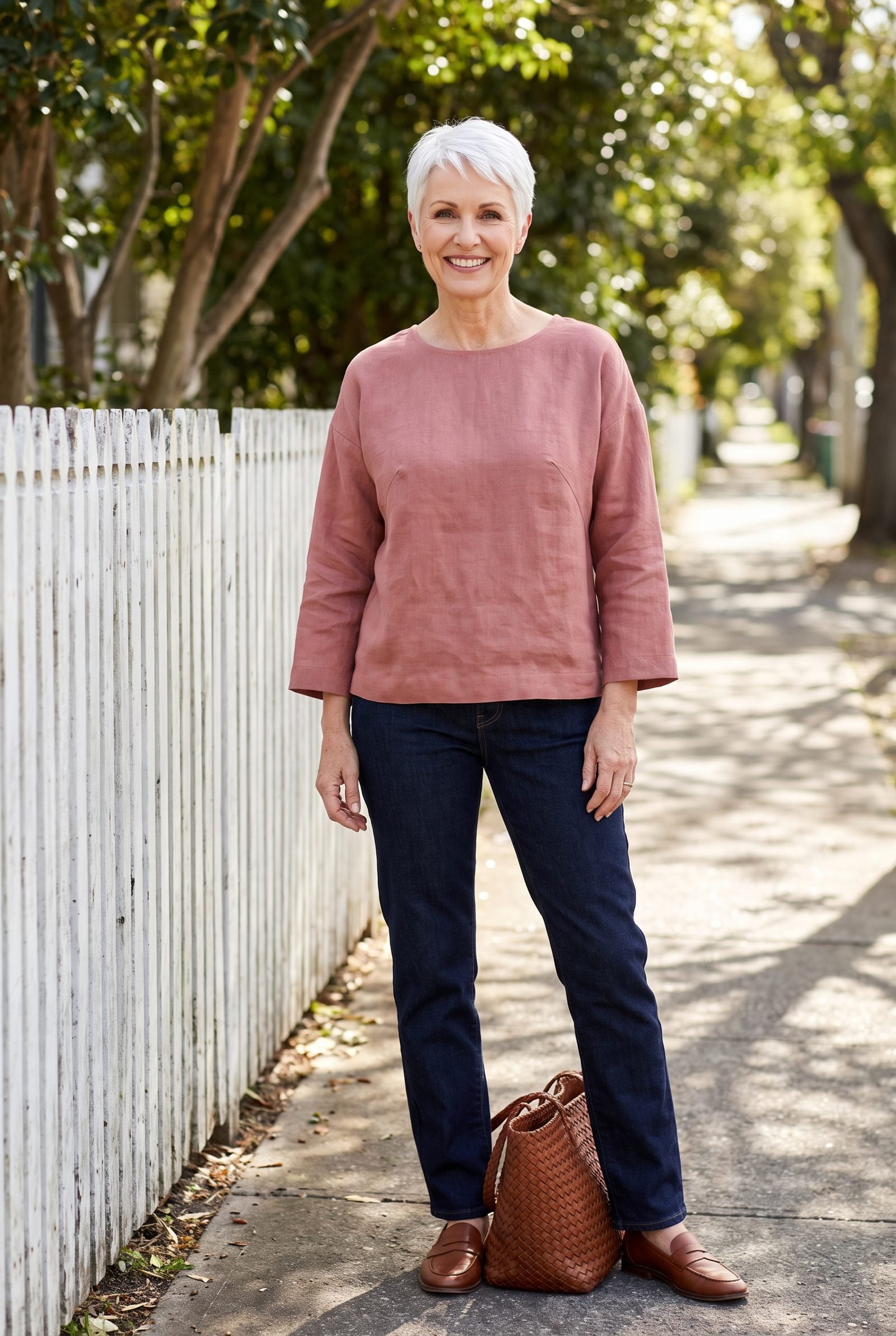
A dart should point at the fullest part of the bust and stop just short of it. Aim it too high, too low, or off to the side and the fabric puckers or pulls, and suddenly the whole bodice sits askew. Such a tiny detail. It controls everything above the waist.
Here the dusty-rose linen top has darts landing where they should, so the bodice shapes to the body cleanly instead of bagging or straining. The flat loafer keeps the dark navy jeans reading sleek rather than fussy.
42. Diagonal Drag Lines Pointing to a Fit Problem

Drag lines are the arrows of tailoring. Any diagonal wrinkle radiating out from a single point tells you exactly where the garment is too tight, because fabric pulls toward whatever is straining against it. A stylist follows the line back to its source the way you’d follow smoke to a fire.
This navy jacket shows exactly that: diagonal lines fan out from the single button, a sign the jacket is too tight at the waist. That strained front sits over camel trousers and undercuts the brown penny loafers, so a polished outfit reads as a fit compromise.
Tip: photograph yourself head-on in anything structured. Diagonal lines show up in a picture far more honestly than in a mirror.
41. Pockets Flaring Open at the Hips
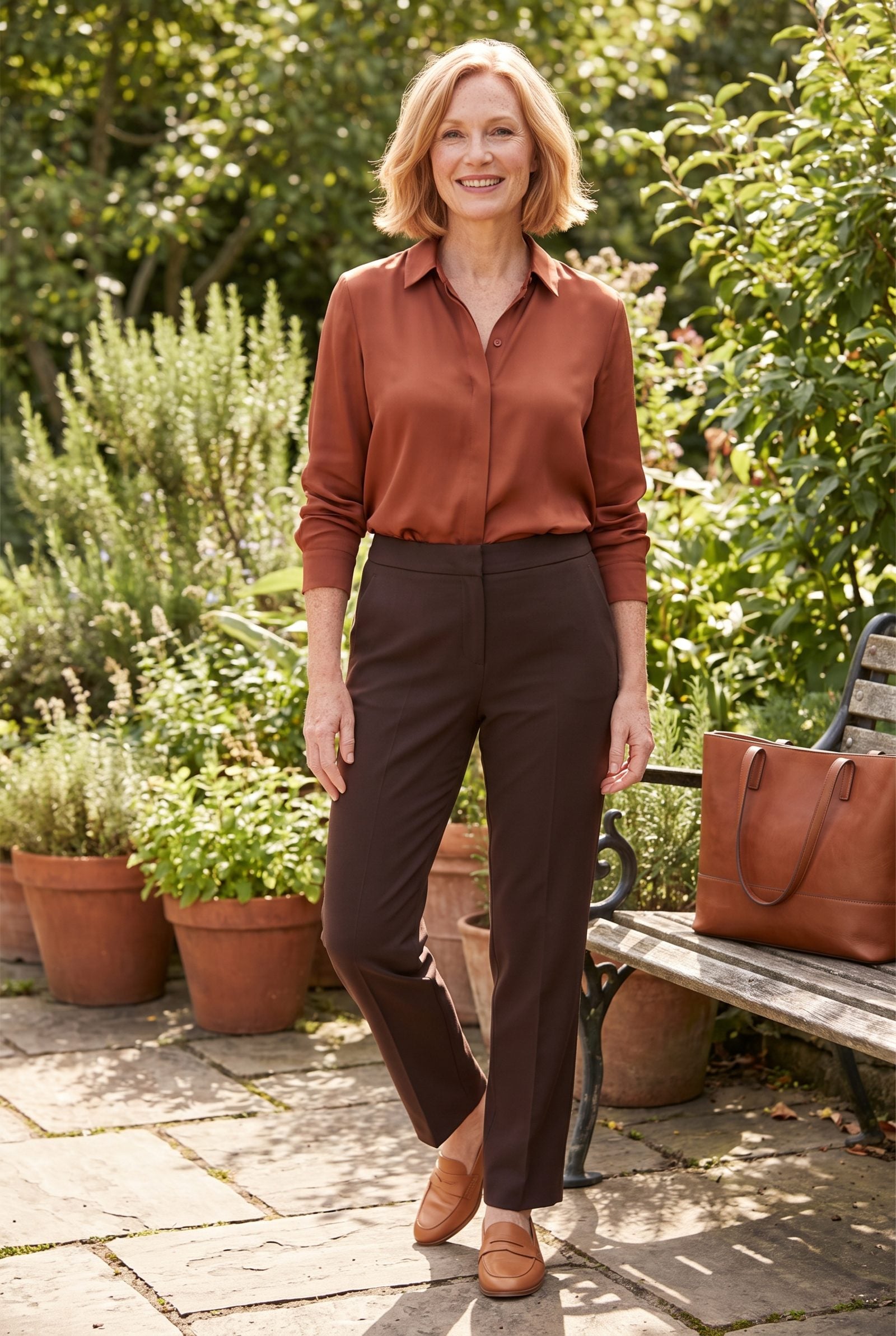
Side pockets that yawn open at the hip are a dead giveaway that trousers run too snug through the seat and thigh. The pocket is the weakest seam, so it surrenders first, gapping to release the tension.
These chocolate-brown trousers keep their pockets shut and flat, which reads as deliberate tailoring rather than a size squeezed into. The flat tan penny loafer keeps the leg line unbroken so the clean hip gets to be the story.
40. A Pressed Trouser Crease That Wanders Off-Center
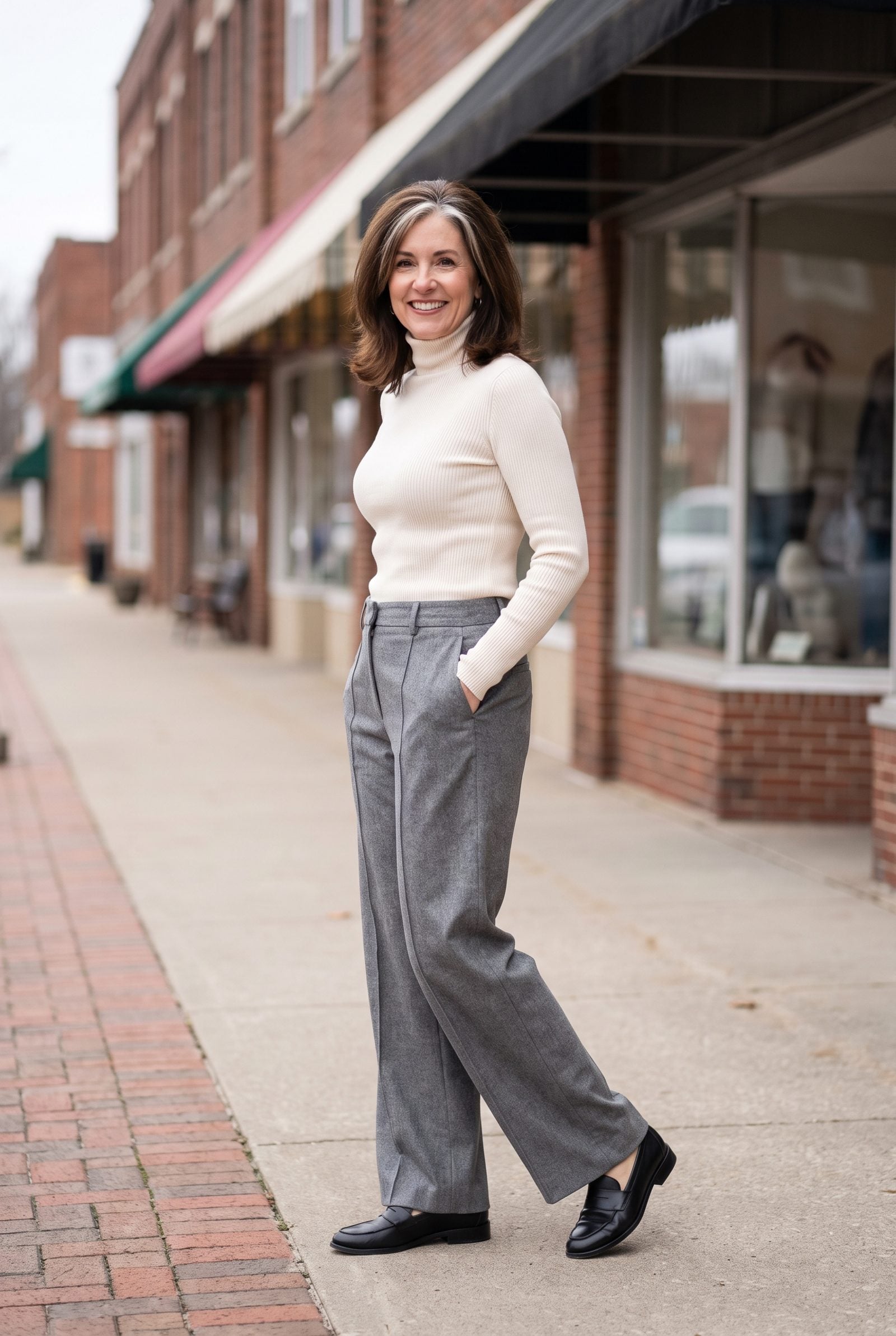
A crease is a line of intent. Run it dead center from hip to hem and it lengthens the leg while signaling that someone cared. Let it drift off to one side, or split into two faint ghost creases, and you’ve announced either a lazy press or trousers hanging wrong on the hip.
The grey wool trousers here carry one knife-sharp centred crease per leg, and that single line does more for the proportion than any accessory could. Flat black loafers let it run uninterrupted to the floor.
39. A Hemline Tilting From Front to Back
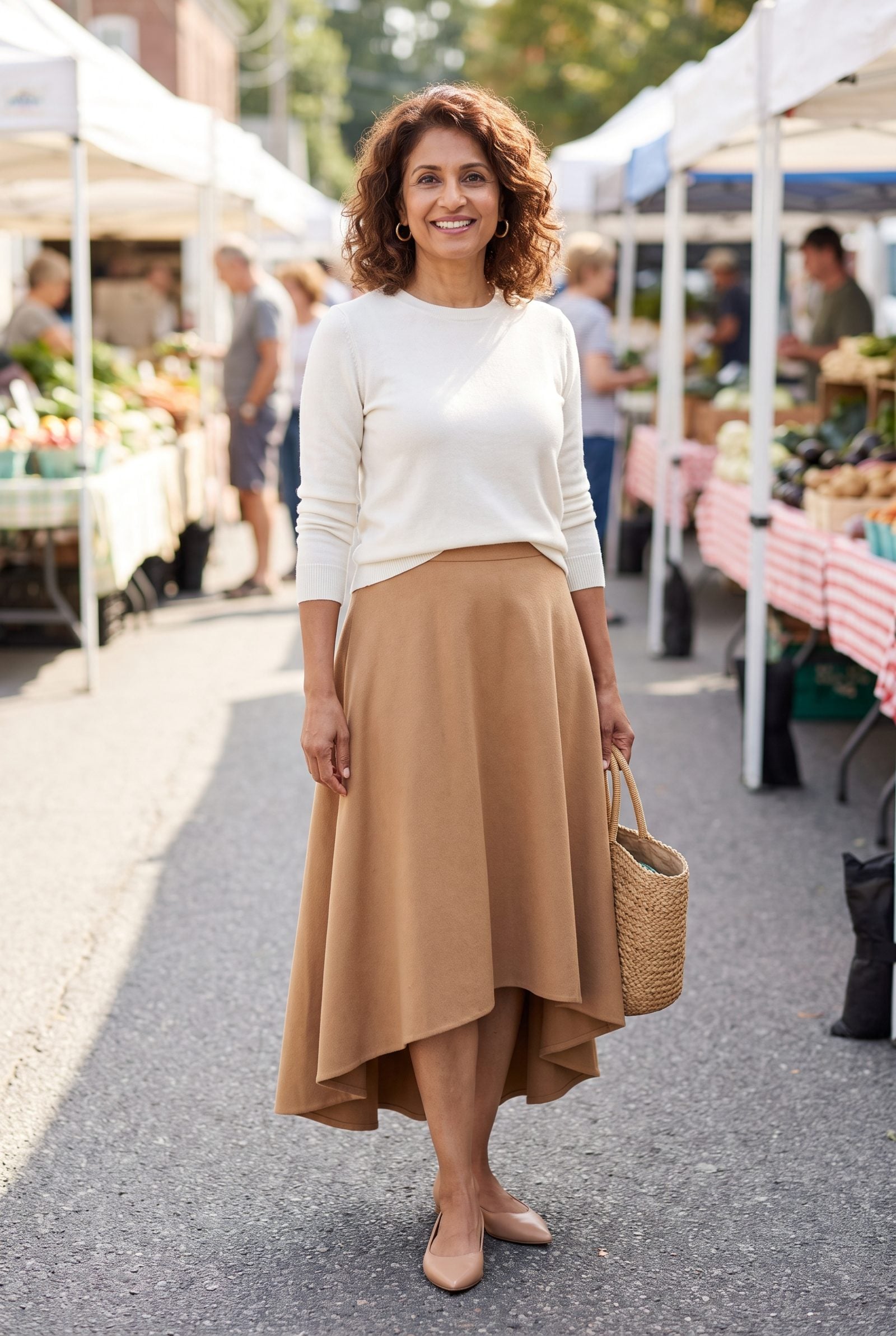
A hem that rides up in front and dips in back is the first thing a trained eye catches. It tells you the skirt is sitting wrong at the hip, not hanging as cut. Here the camel wool skirt has a deliberately cut high-low hem. It sits shorter in front, dips longer behind and slants diagonally from side to side. That is exactly the tilt to watch for, so on a skirt like this make sure the angle reads as intentional design rather than a skirt being pulled off-level.
The nude leather flats do quiet proportion work, keeping the eye traveling cleanly from the angled hem to a bare ankle so nothing interrupts the line. Keep the hem at or just below the knee, and check it in a three-way mirror before you commit.
38. An Armhole Cutting Into the Front of the Shoulder
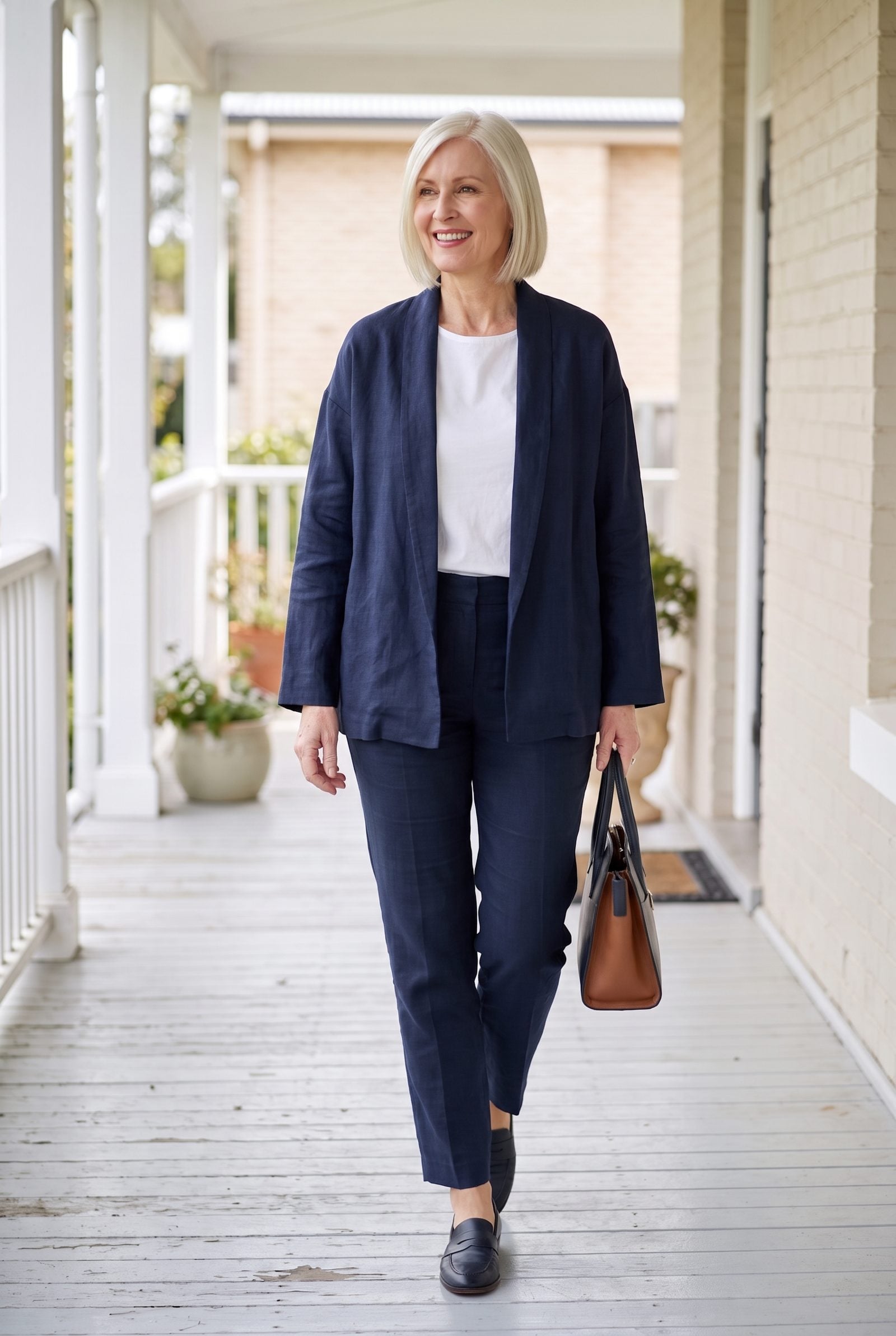
An armhole that bites into the front of the shoulder is a dead giveaway that the top was cut too small through the chest, and it shows the moment the wearer reaches for anything. This long-sleeved navy linen blazer, worn over a white top, sits where it should, the sleeve set cleanly into the shoulder without pinching or pulling, the arm swinging free.
Pair that navy linen blazer with matching slim trousers and you build a clean vertical. Because the armhole lets the arm actually move, the whole look stays easy instead of armored. Buy for the shoulder first. Everything below it can be taken in.
37. A Gaping Waistband at the Back
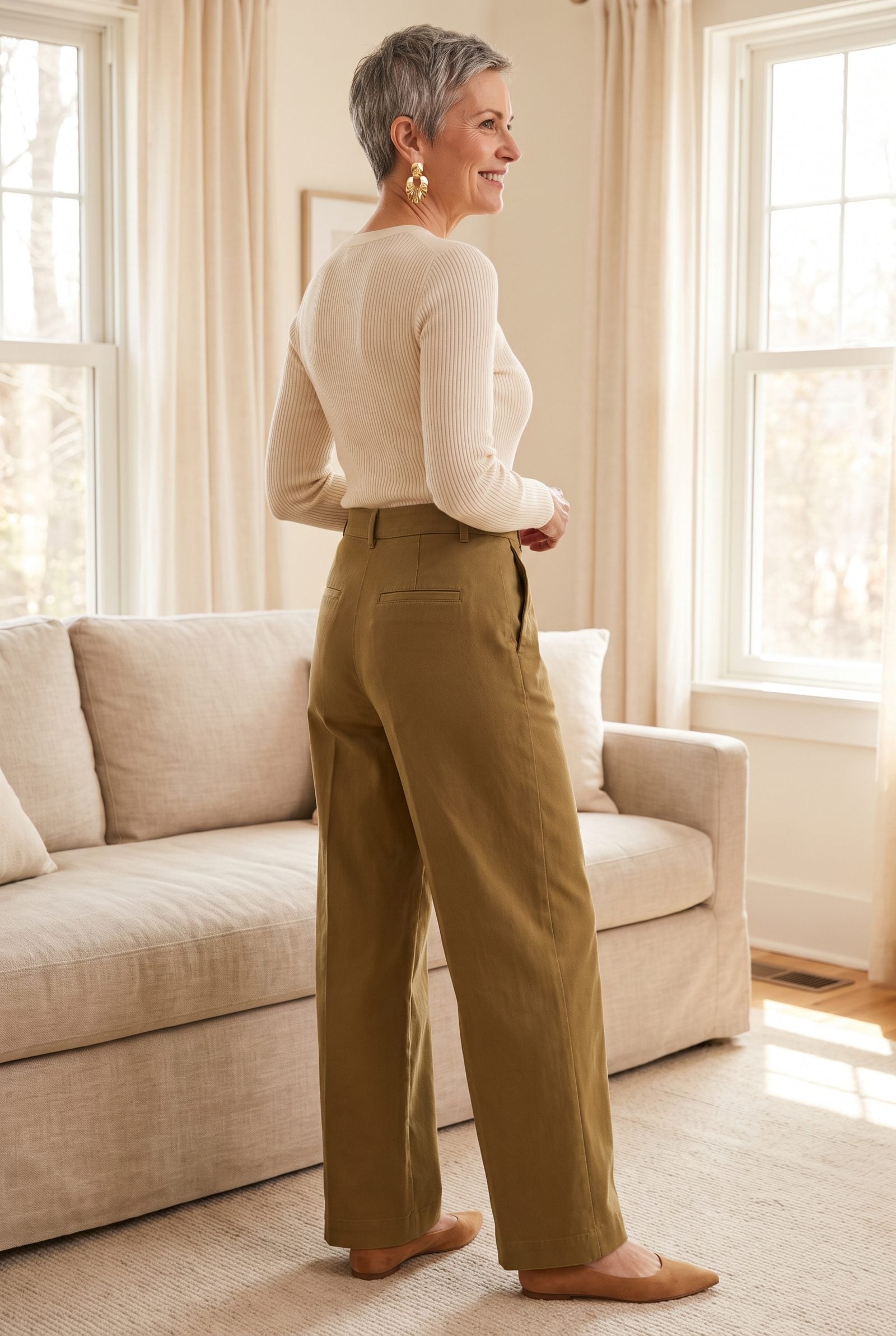
That triangle of space yawning open at the back of a waistband quietly undoes an otherwise sharp pair of trousers. It says the rise and the body never quite agreed. These olive twill trousers lie flush against the small of the back, so the line stays unbroken from waist to hem.
Tan suede flats ground the proportion without adding bulk at the ankle, which lets the wide leg do its lengthening work. Love the trousers but hate the gap? A tailor can take a wedge out of the center-back seam in about ten minutes.
36. Set-In Shoulder Seams Sitting Beyond the Shoulder Bone
❤️ Would you like to save this?
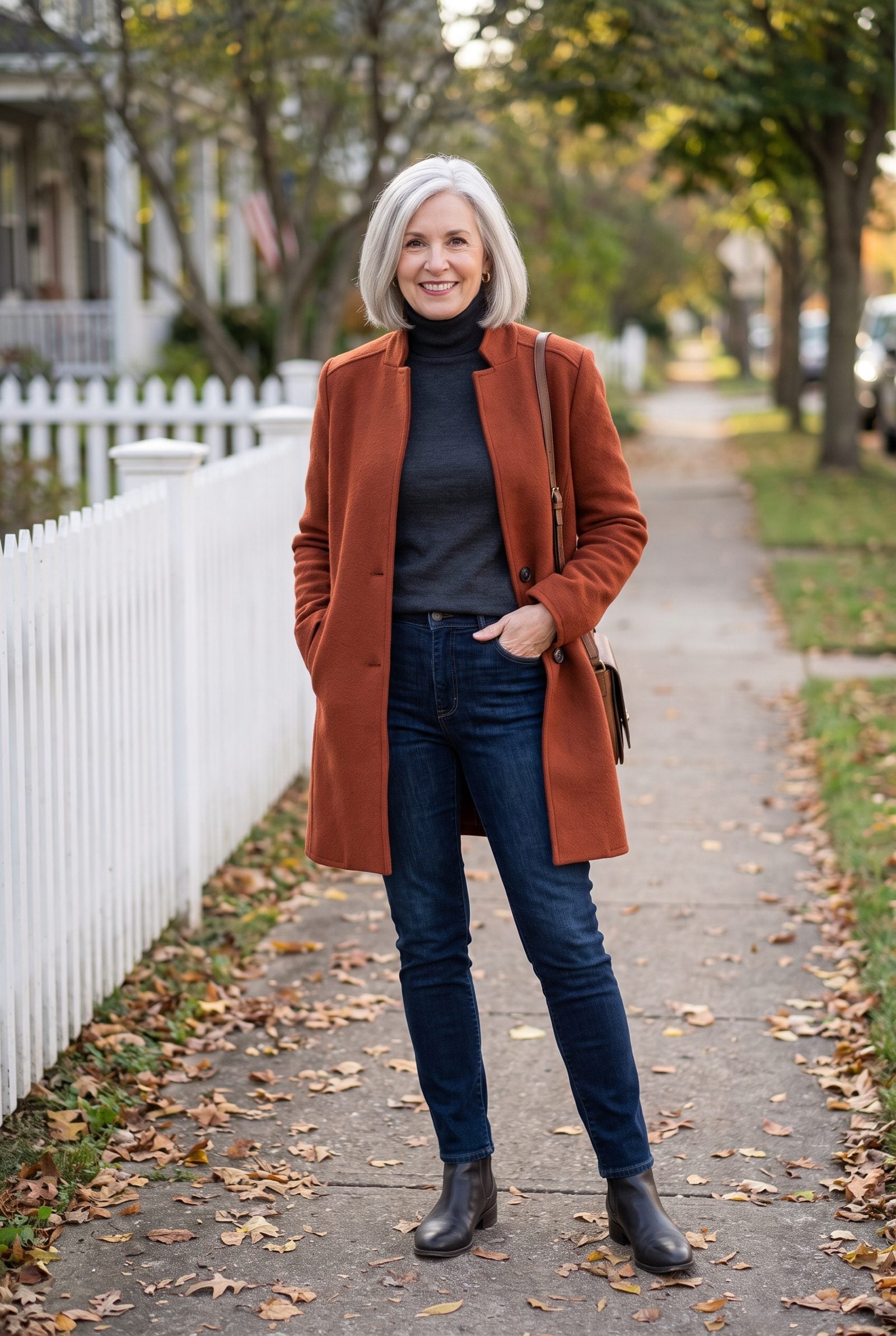
Where the shoulder seam lands is one of the first details a stylist checks on a tailored piece. Drop it past the shoulder bone and the garment starts wearing the person. This rust wool coat sets its seam right at the bone, so the structure reads as architecture instead of hand-me-down.
The rust wool coat over a lean charcoal turtleneck sets up a clean inverted-triangle shape — broad and crisp at the shoulder, narrowing down through slim denim. Ankle boots close the line without chopping it short.
35. A Trouser Hem Fighting the Shoe Vamp

The gap between hem and shoe is a conversation, and most people let it mumble. When a trouser hem crashes into the vamp of the shoe, it pools fabric at the ankle and lops inches off the leg. These ink-blue trousers stop just above a penny loafer, leaving a clean sliver of ankle that reads as deliberate.
The black penny loafer keeps a low profile so the eye runs straight off the hem onto skin and keeps going. For a cropped straight leg, aim for the hem to end at the top of the ankle bone, no sock showing.
34. A Trouser Rise Fighting the Wearer’s Natural Waist
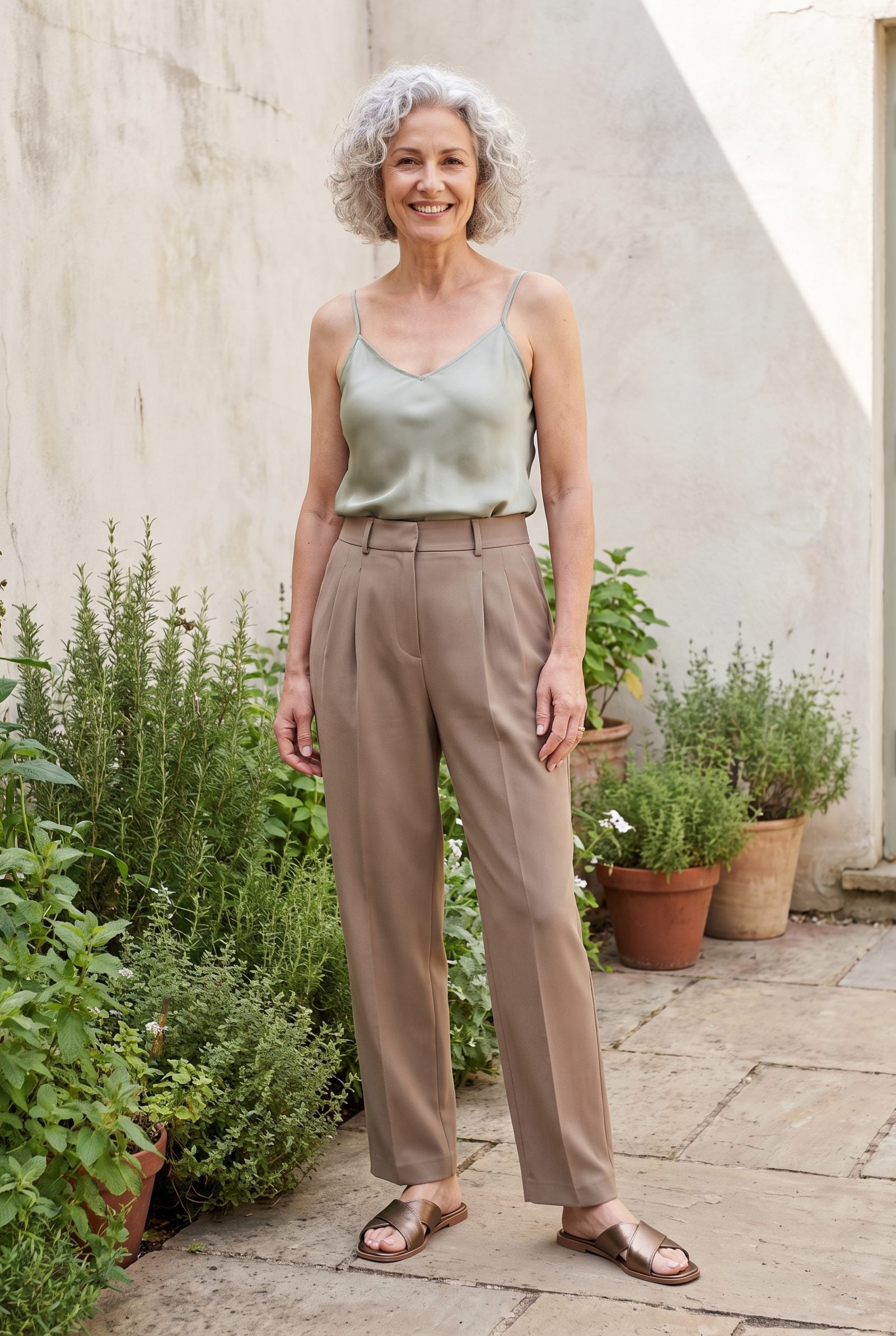
A rise that sits in the wrong place telegraphs discomfort before the wearer says a word. Too low and the torso looks thick through the middle. Too high and everything bunches. Here the taupe pleated trousers land exactly at the natural waist, the point where the torso actually narrows, and the whole proportion resets.
The bronze flat slides keep the ground line simple so the defined waist gets all the attention. Finding your natural waist is easy: bend sideways, and the crease that forms is where the rise wants to sit.
33. A Dress Waistline Sitting Above or Below the Natural Waist
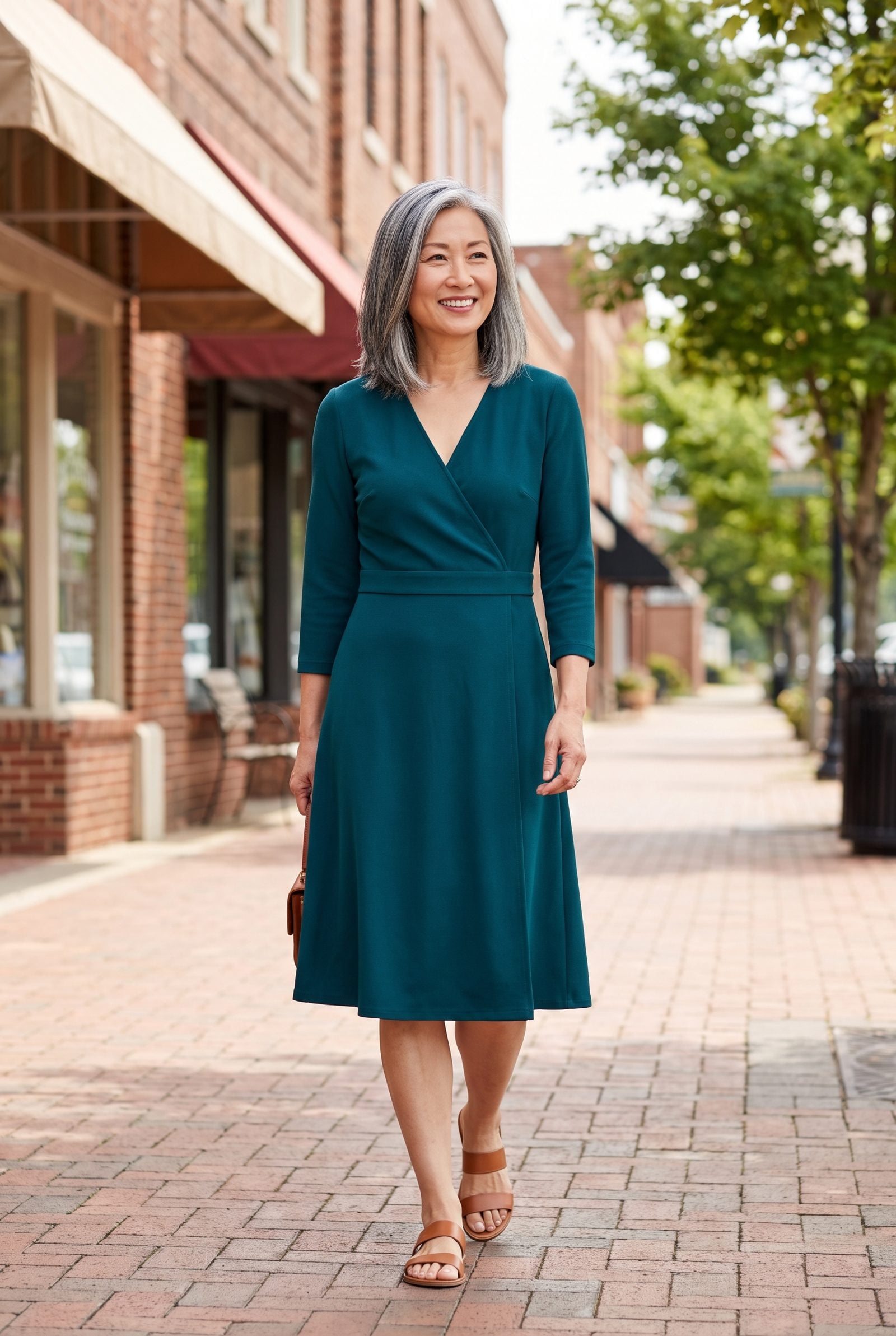
A dress lives or dies at the waist seam. Set it even an inch off the natural waist and the proportions go muddy, cutting the torso short or dragging the hips long.
This teal wrap dress places its seam right at the narrowest point, and the skirt releases into a clean A-line from there. The hourglass read owes everything to one correctly placed line of stitching. Cognac flat sandals warm the cool teal and keep the look earthbound rather than dressy, so the dress works for far more than the occasion it seems dressed for.
32. The Top Ending at the Widest Part of the Torso
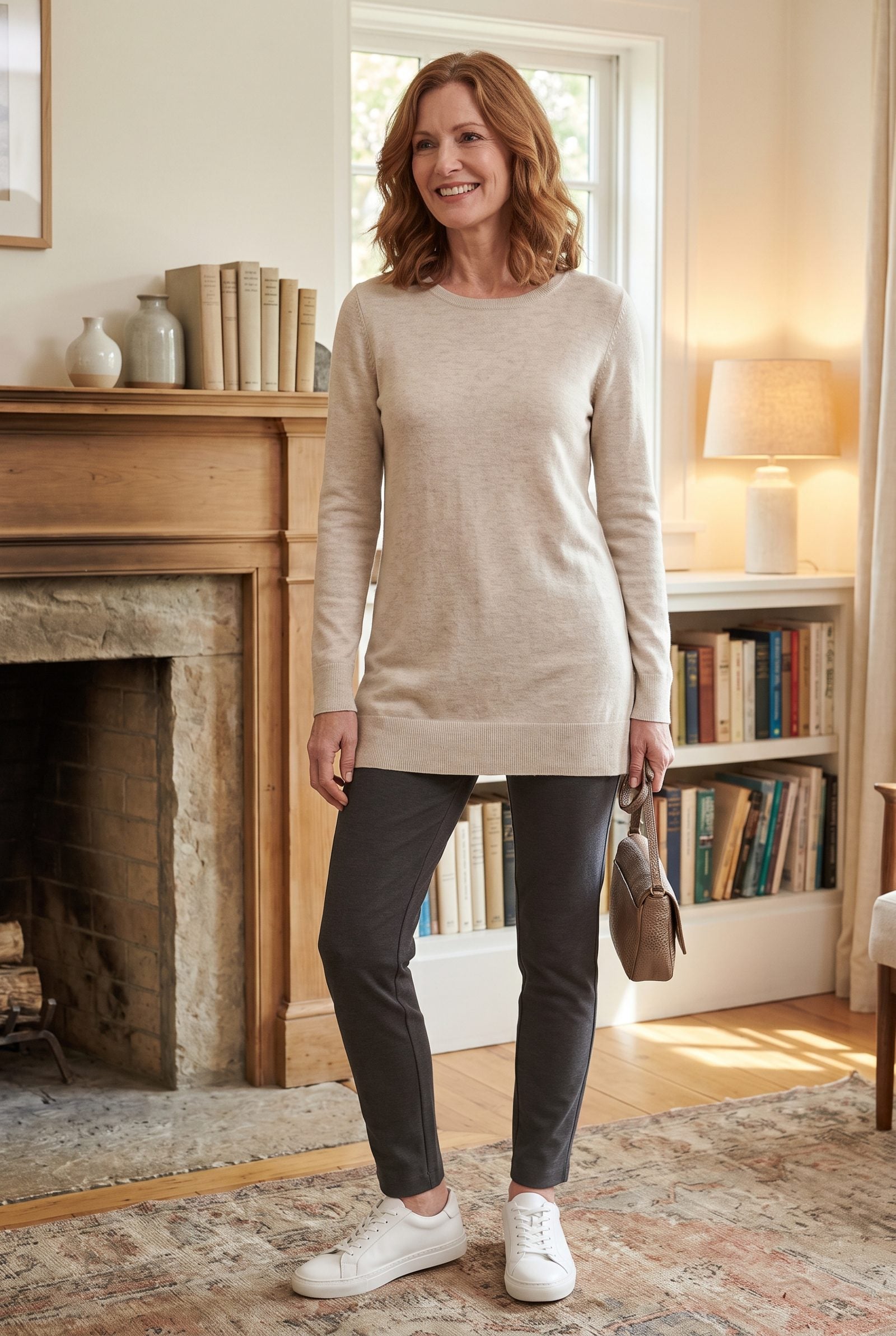
Where a top ends is where the eye stops, and if it stops at the widest part of the torso, that is the width it records. This oatmeal longline knit slides past that point entirely, ending at mid-thigh over slim trousers, so the eye reads a long vertical instead of a hard horizontal.
Crisp white leather sneakers keep the long line casual and light on its feet. The rule to remember: a top hem wants to land either above or below your fullest point, never right on it.
31. A Jacket Hem Dividing the Body Awkwardly
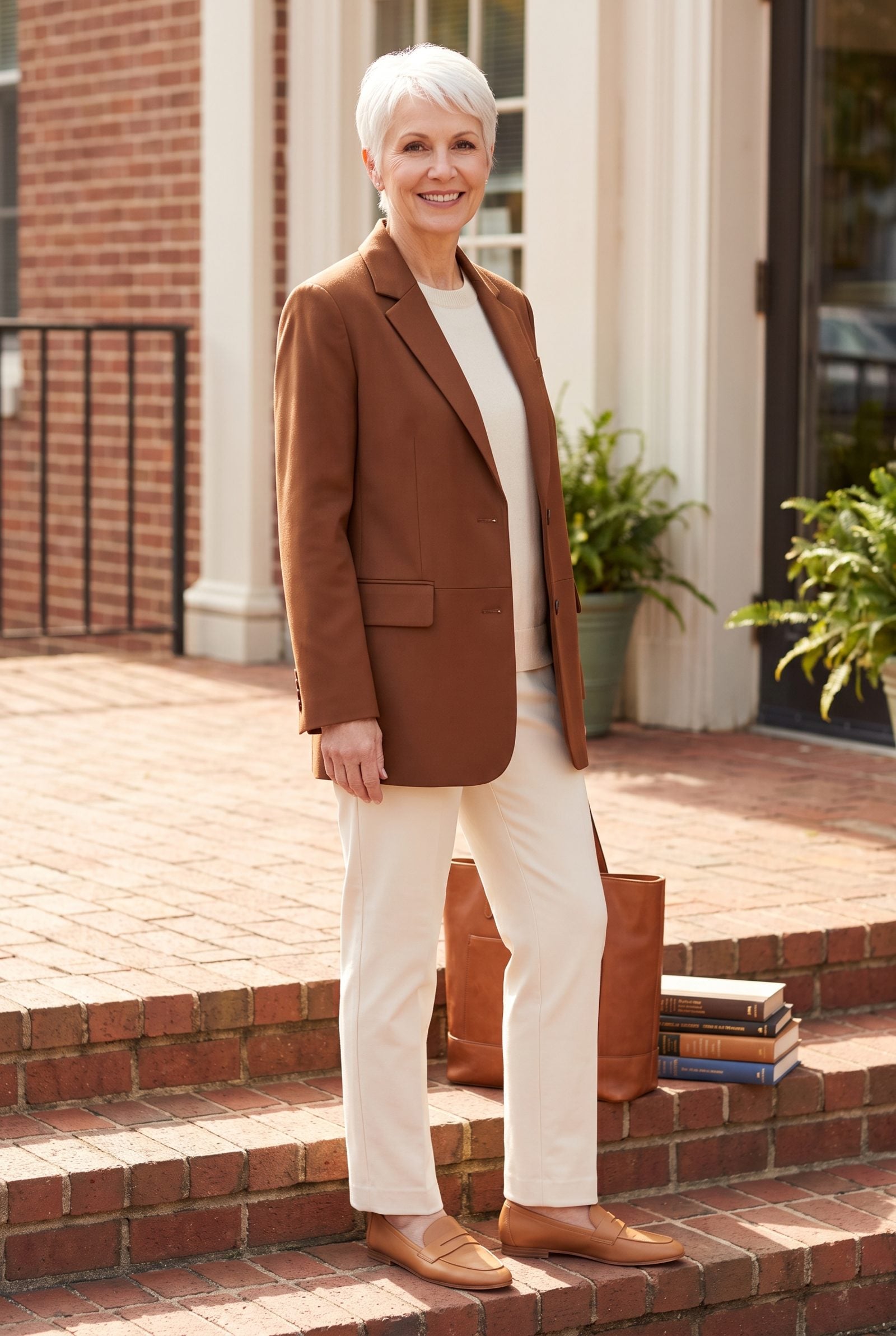
The blazer hem is quietly deciding your whole proportion, and most jackets get it wrong by accident. End it at the widest hip and the body splits into two stacked boxes. This chestnut blazer stops just past the hip bone, at a point that lengthens the leg line and keeps the torso balanced.
Tan loafers and cream trousers extend one tonal column below the jacket, so nothing fights the line the hem established. If a jacket cuts you oddly, a tailor can often shorten the hem by an inch and reset the whole read.
30. A Lapel Too Wide or Narrow for the Overall Silhouette

Lapel width is the detail nobody consciously registers and everybody feels. Too narrow and a coat looks mean. Too wide and it tips into costume. This forest green coat runs a medium peak lapel scaled to the frame — broad enough to balance the shoulder, restrained enough to look modern.
Flat black loafers and straight trousers keep the base lean so the coat’s upper half carries the look. When trying on tailoring, hold the lapel against your palm. If it spans wildly more or less than your hand, the proportion is off for most bodies.
29. A Shirt Collar Out of Scale With the Wearer’s Face
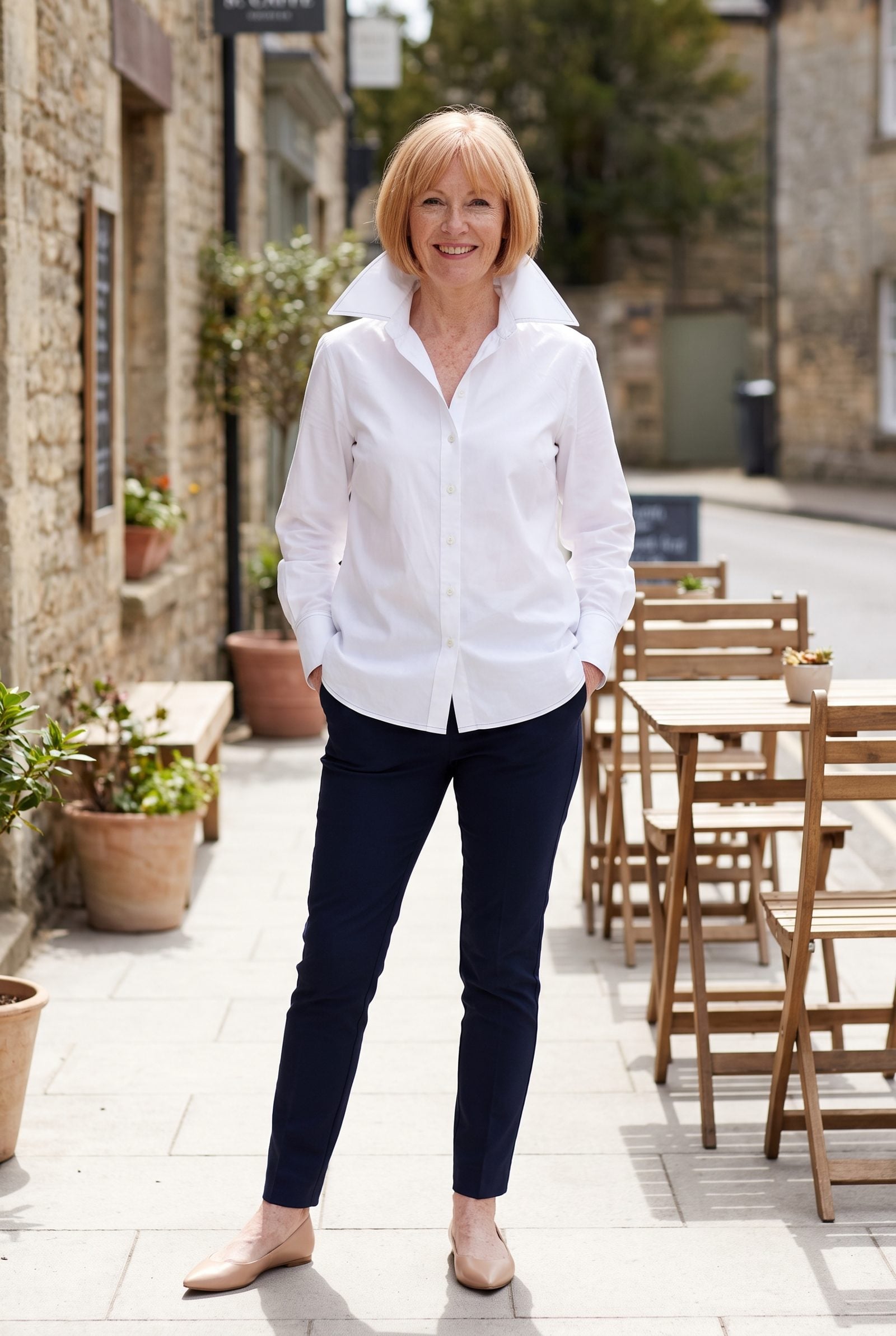
A collar sets the frame for the face, so when the points run too wide or too long, the face ends up looking smaller than it is. Stylists clock this in the first second. The fix is scale — a collar that mirrors the size of the features sitting above it.
Those nude pointed flats keep the lower half clean so attention stays up top, right where the proportion problem lives. A slimmer collar would read instantly polished rather than borrowed from someone with a much bigger head.
Styling tip: match collar width to roughly the width of your jaw, and leave the top button undone to soften the line.
28. A Neckline Shape Working Against the Jawline
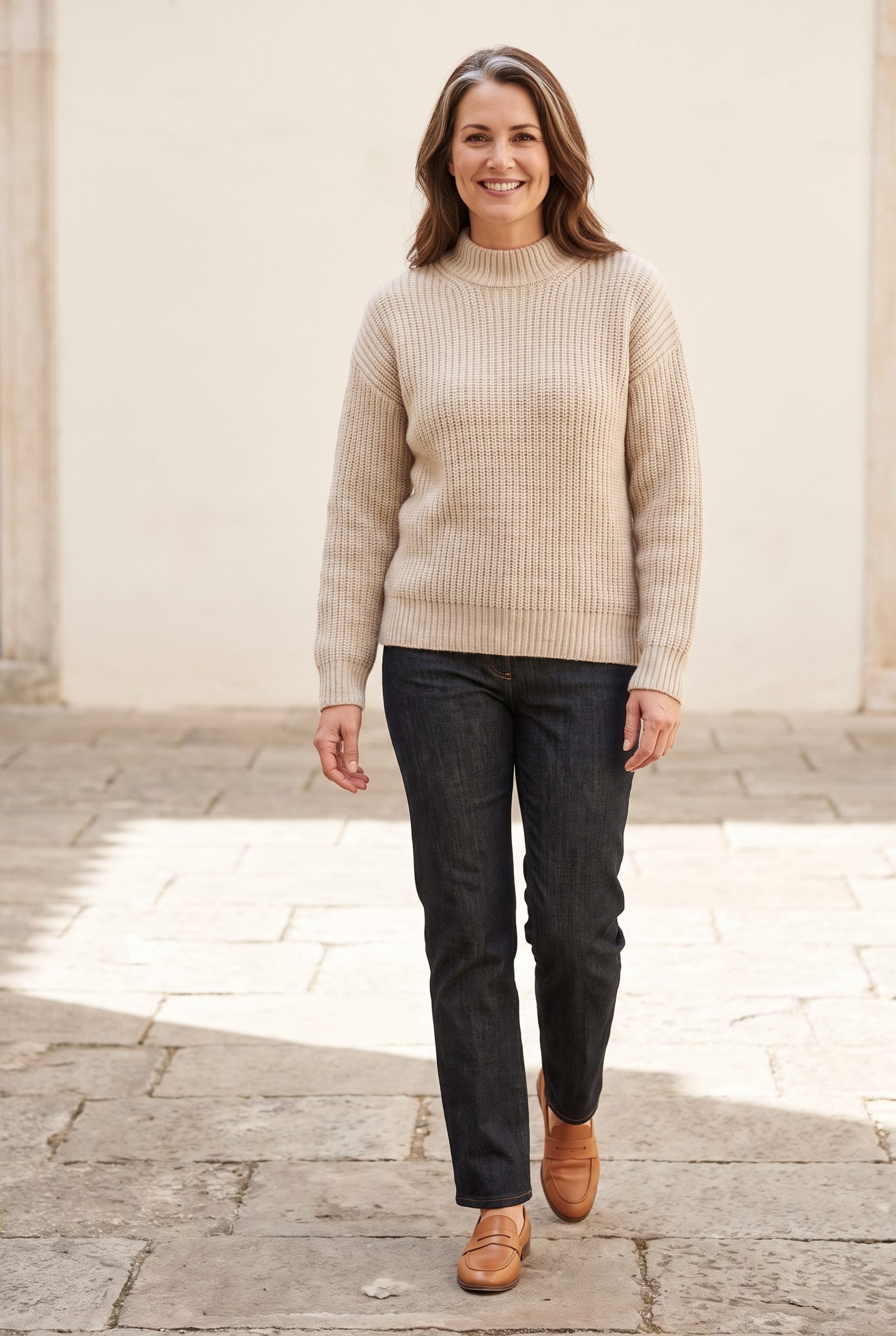
Round neckline, round jaw, and suddenly the lower face loses its edges. A neckline either argues with the jaw or agrees with it, and agreement is exactly what reads tired here.
A V or a soft scoop would have cut a diagonal against the curve and given the jawline somewhere to point. Lovely fabric, that oatmeal knit. Shame about the shape.
Styling tip: pair a rounded face with an open V or a notch neck, and save crew necks for angular jaws that can take the matching curve.
27. A Belt That Is the Wrong Width for Its Loops
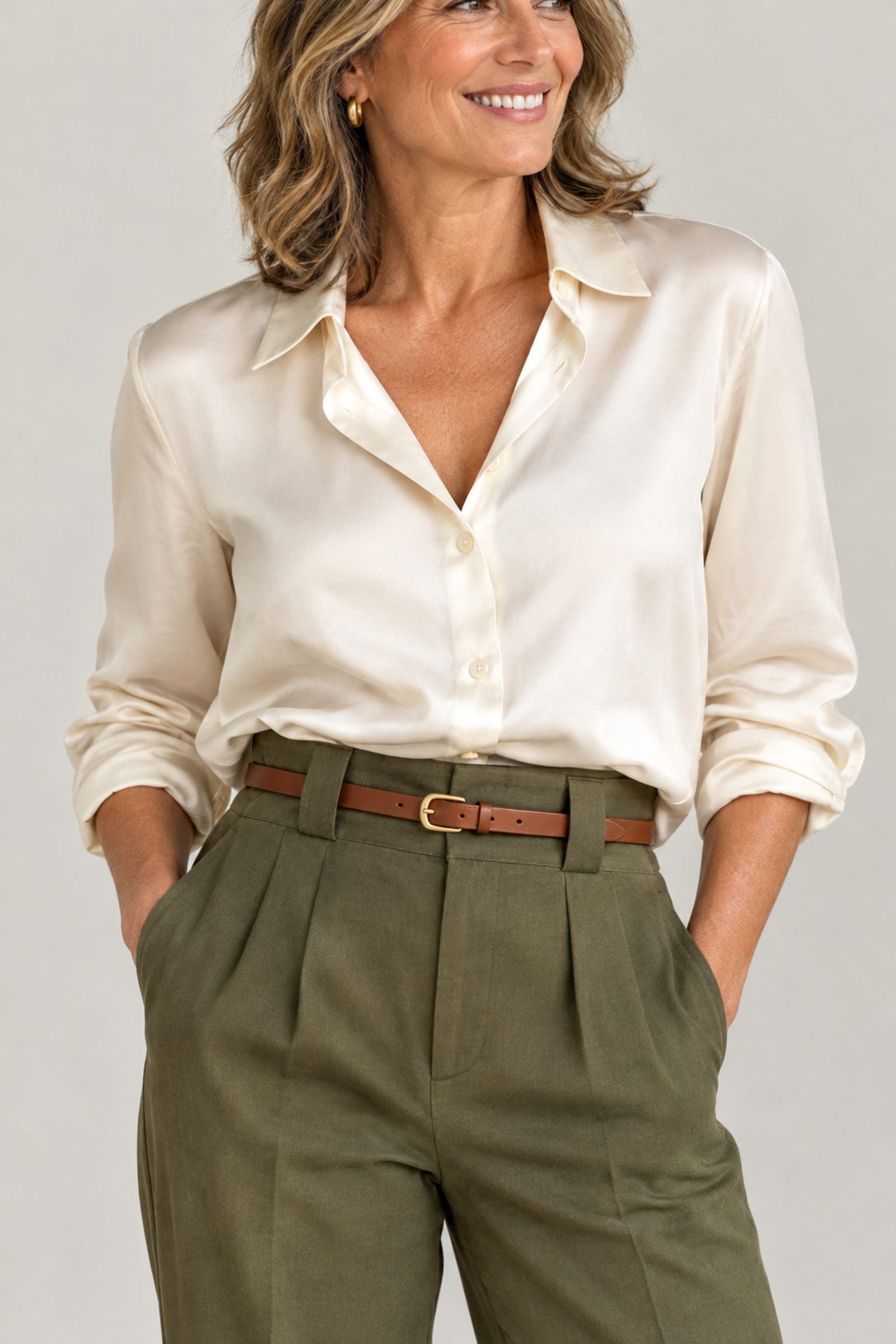
The loop was built for an inch and a half of leather, and this narrow cognac belt is barely half that. It sits in there like a pencil rattling around a toilet-roll tube, sliding and twisting all day long; a strap that filled the loop would stay put.
Stylists spot slack loops before they spot the belt itself. Width is a fit question, not just a style one. A cognac leather belt cut to fill the loop, unlike this one, would lock the waist and sharpen the tucked-in cream blouse instead of fighting it.
Styling tip: measure a loop before you buy, and keep a wide and a narrow belt so your trousers get the one they were made for.
26. A Necklace Colliding With the Neckline
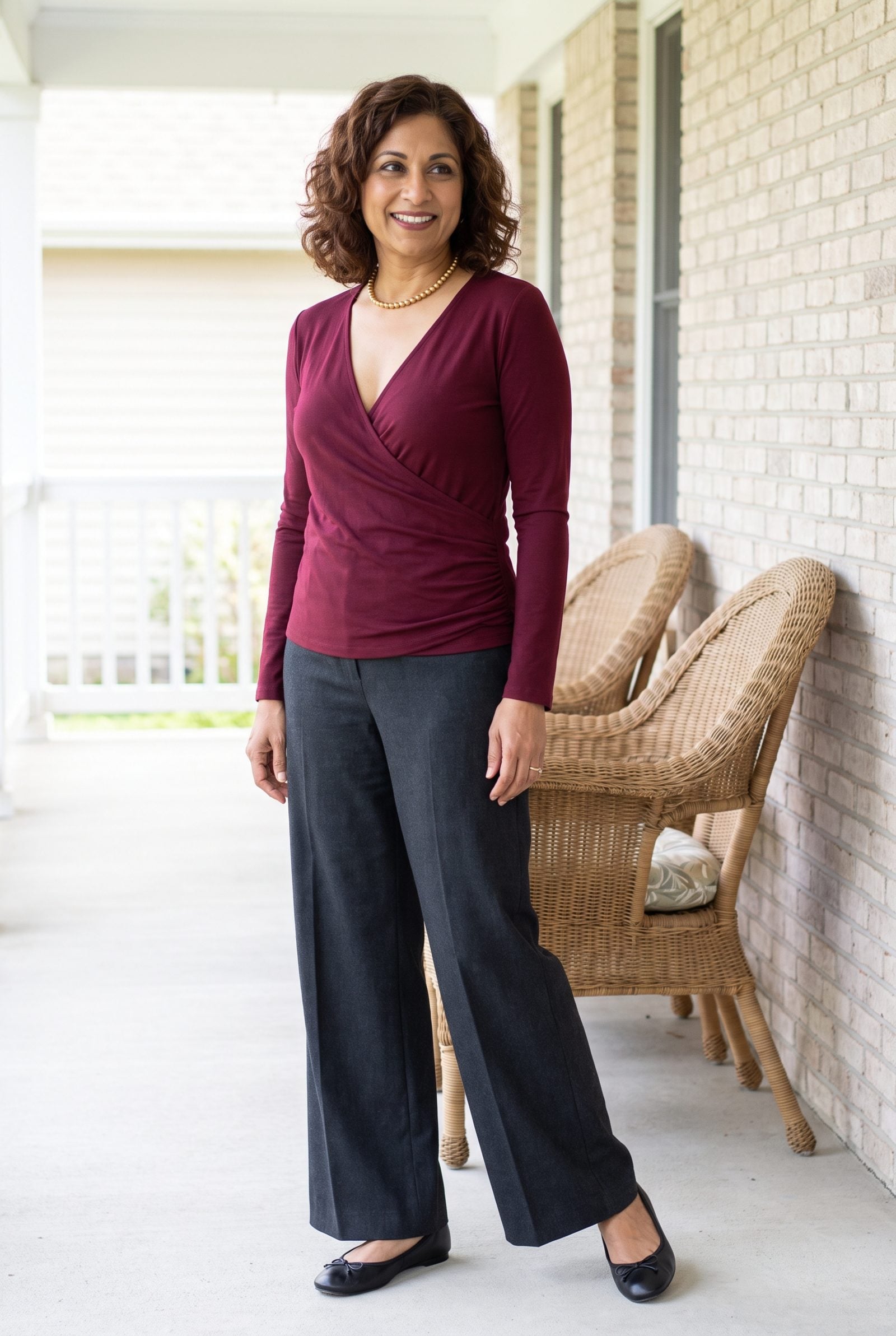
A deep V wants a pendant that drops into it, not a choker sitting at the collarbone like a fence. The necklace and the neckline are reaching for the same patch of skin, and neither one wins.
Length is the whole game. A longer chain hanging inside the V would follow the line down and stretch the torso instead of chopping it in half. Strong piece, that burgundy wrap — the jewelry just needs to get out of its way.
Styling tip: match necklace drop to neckline depth. High necks take long chains; open necks take a pendant that sits an inch above the lowest point.
25. A Crossbody Bag Hanging at the Widest Part of the Hip
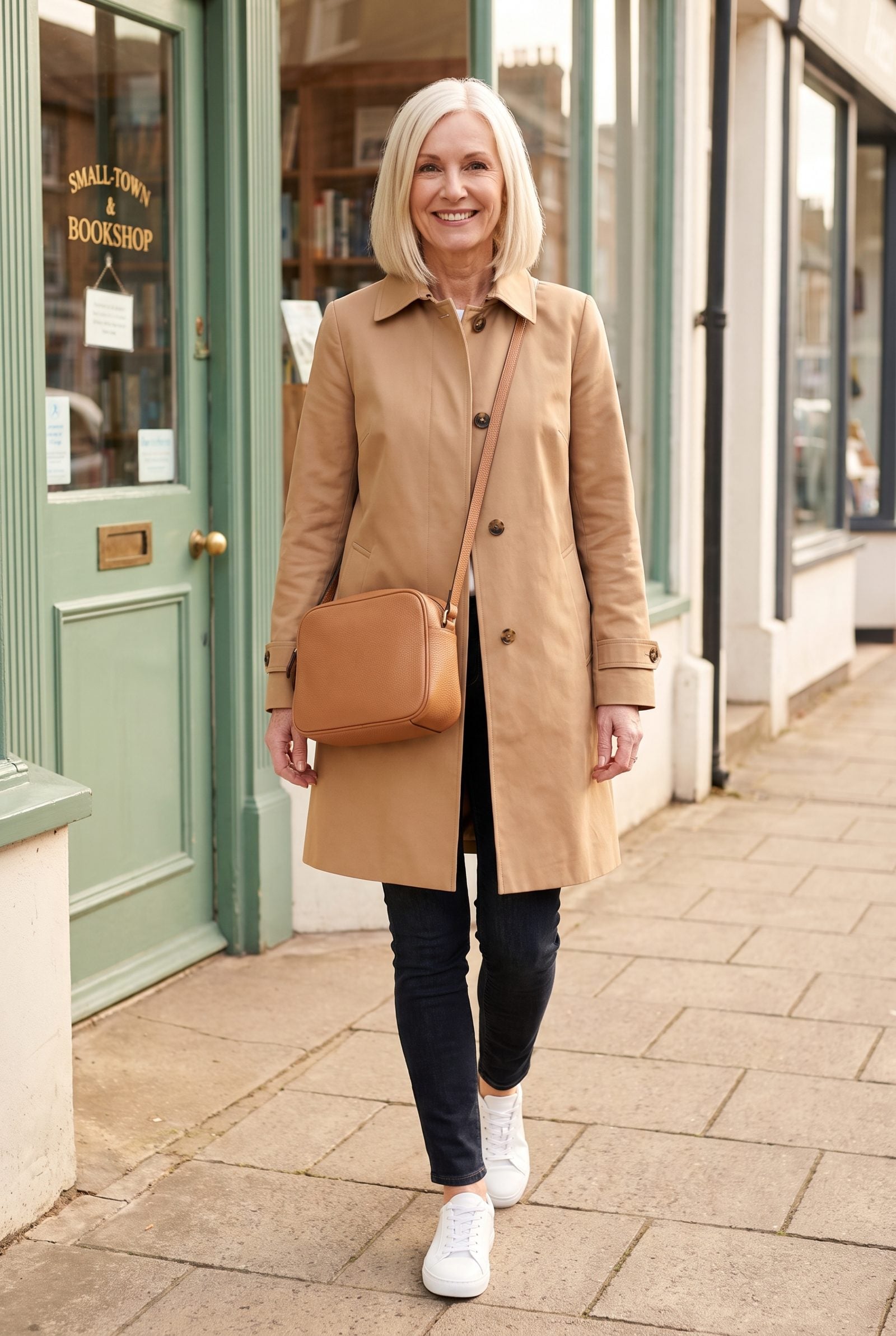
The bag is a spotlight, and right now it’s shining on the hip. Leave a crossbody strap long and the pouch drops to the fullest curve, widening the silhouette exactly where nobody wants more width.
Shorten the strap so the bag rides at the waist or just above, and the eye reads a longer leg and a defined middle. The beige outfit underneath is already working. Strap length is the only thing undoing it.
Styling tip: set the bag to land within a hand’s width of your natural waist, never down at the hip pocket.
24. Different Blacks Revealing Conflicting Undertones

❤️ Would you like to save this?
Black is never just black, and daylight is where the lie shows. One piece has gone warm and brownish from washing, another sits cool and blue-black, and side by side they look like an accident rather than a plan.
Stylists check blacks under daylight, not bedroom light, because that’s where undertones split apart. A deliberate black outfit keeps its depths in the same temperature family, or breaks them up on purpose with texture.
Styling tip: build all-black from pieces that share one undertone, or add a hard texture shift so the eye reads the contrast as a choice.
23. Fabric Weights That Work Against Each Other

A heavy wool cardigan sitting on top of a whisper-thin chiffon skirt looks like the top half and the bottom half dressed for different seasons. The dense knit just crushes the float beneath it.
Weight wants a partner near its own class. Swap the chiffon for a skirt with some body, or the heavy knit for a finer one, and the two halves finally start speaking the same language.
22. One Shiny Piece Pulling Focus From Everything Else
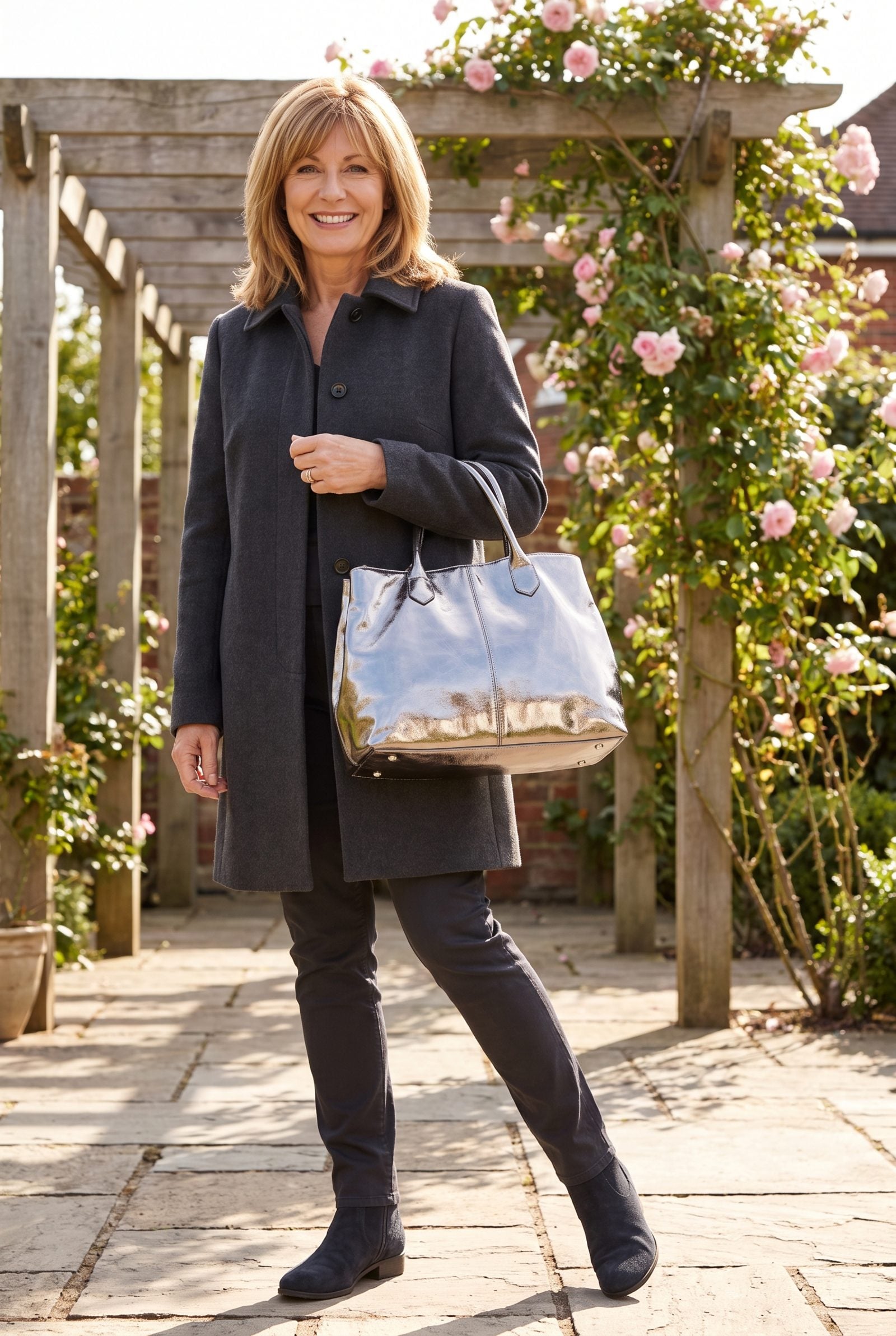
Everything is soft and matte, and then there’s a mirror-finish bag throwing light in every direction. The eye goes straight to the shine and refuses to leave. That’s not a bag anymore. It’s a headline.
One high-shine piece against an all-matte outfit works only when you actually want that piece to run the show. If it isn’t the story you’re telling, it shouldn’t be the one yelling.
Styling tip: either repeat the shine somewhere small — a shoe, an earring — or swap the bag for a matte finish so nothing hijacks the look.
21. The Outfit’s Contrast Level Overpowering the Wearer
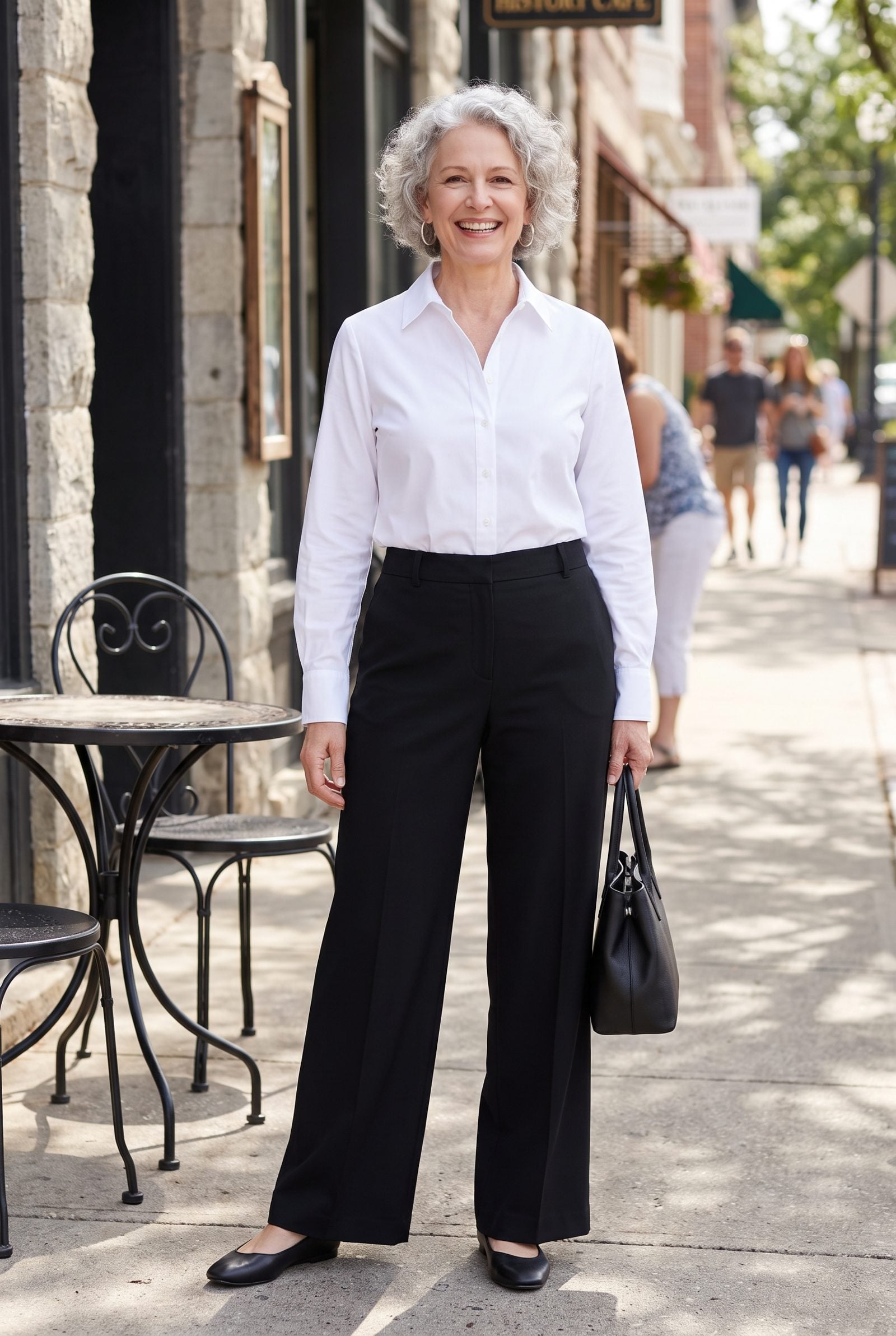
Stark white against jet black is a lot of drama for a face with gentle, blended coloring. The clothes are louder than the person wearing them, and the outfit ends up doing the wearing.
People read best when the contrast in their clothes echoes the contrast in their own features. Bold coloring can carry black and white. Softer coloring glows in tones that sit closer together — camel and cream, say, or navy and grey.
Styling tip: hold two garments beside your face. If the gap between them is sharper than the gap between your hair and skin, soften one of them.
20. Colors Near the Face Making the Complexion Look Tired

A muddy yellow-green right under the chin can cast a grey, washed look onto even great skin. The color throws its undertone upward and the face catches it.
Here’s the fastest test a stylist runs: hold the garment to the face and watch whether the skin brightens or dulls. Everything below the collarbone can be any color you like. It’s those eight inches near the face that either light you up or drain you dry.
Styling tip: if a shade dulls your skin, keep it as a skirt, a trouser, or a bag, and let a kinder tone sit near your face.
19. Pattern Scale Competing With the Wearer’s Frame
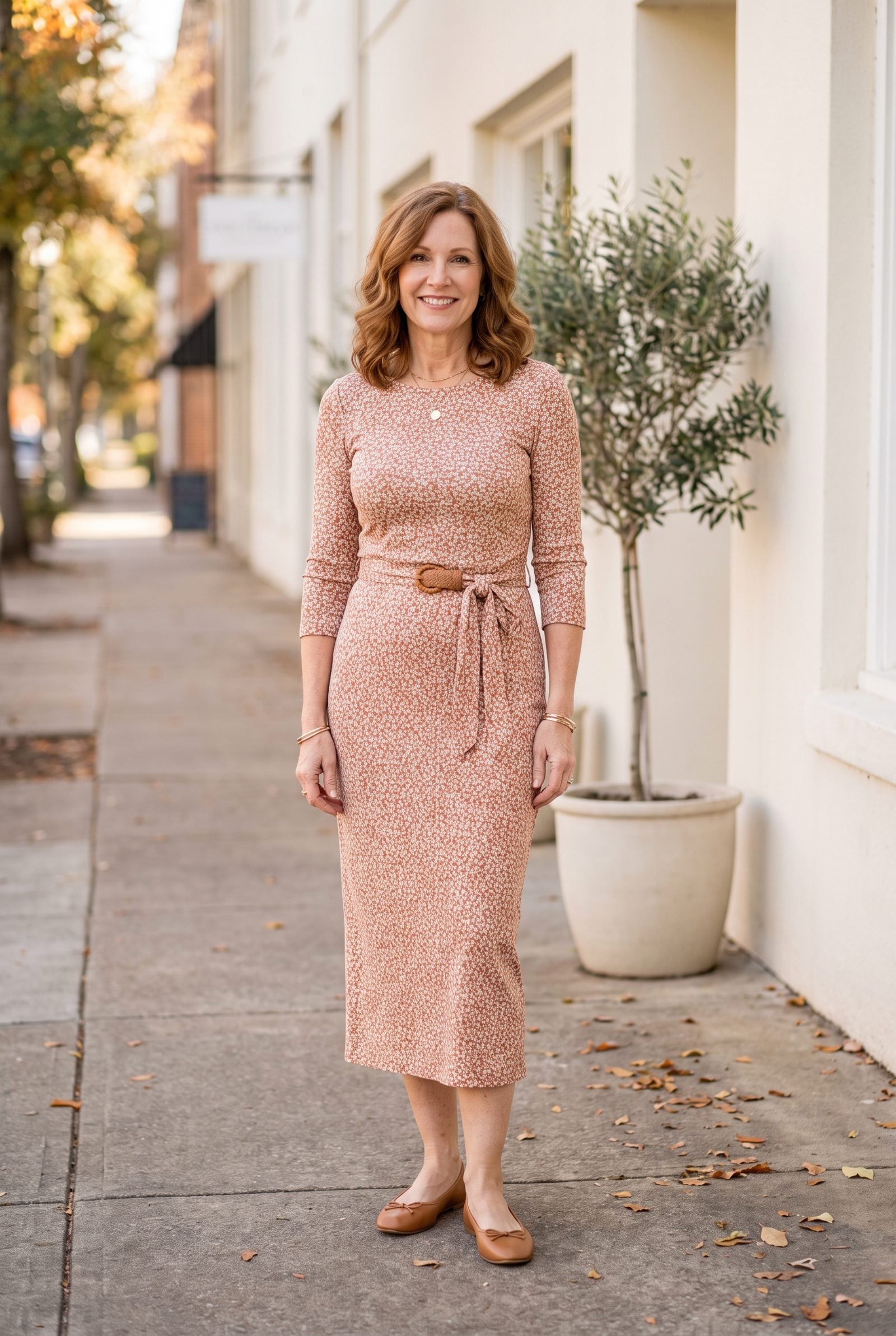
Scale is one of the first things a stylist clocks, often before color or cut. A giant palm print swallows a small frame whole, and suddenly the print is wearing the person instead of the other way around. Here the opposite happens: a tiny terracotta floral reads as warm texture from across the street, and the body stays the subject.
The flat tan ballet shoe grounds the whole thing, no heel drama fighting the dress. Match the belt leather to the shoe leather and your eye travels top to toe without a snag.
18. Checks and Stripes Failing to Match at Major Seams
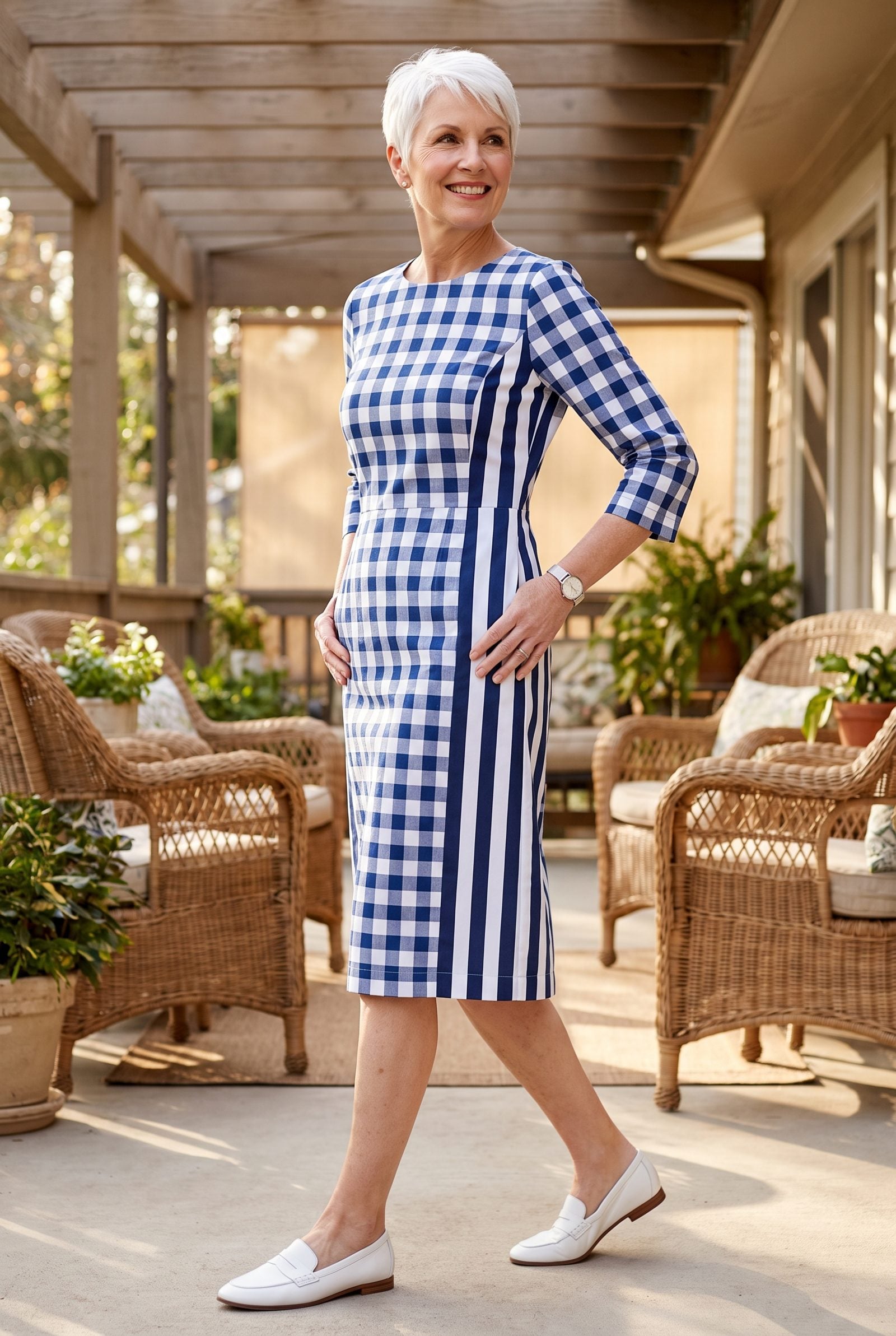
Here is where cheap tailoring confesses itself. When a check or stripe hits a seam and the lines don’t line up, the garment looks like it was thrown together in a rush — even when everything else about it is lovely. A well-cut gingham shirt matches across the side seam, horizontals running unbroken around the body.
You may not be able to name the flaw. But your eye registers the disorder instantly and files the piece under cheap. Check the seams in the fitting room, not on the sidewalk. The flat white loafer stops the sharp cotton from tipping into stiff office formality.
17. A Print Repeat Creating an Accidental Focal Point
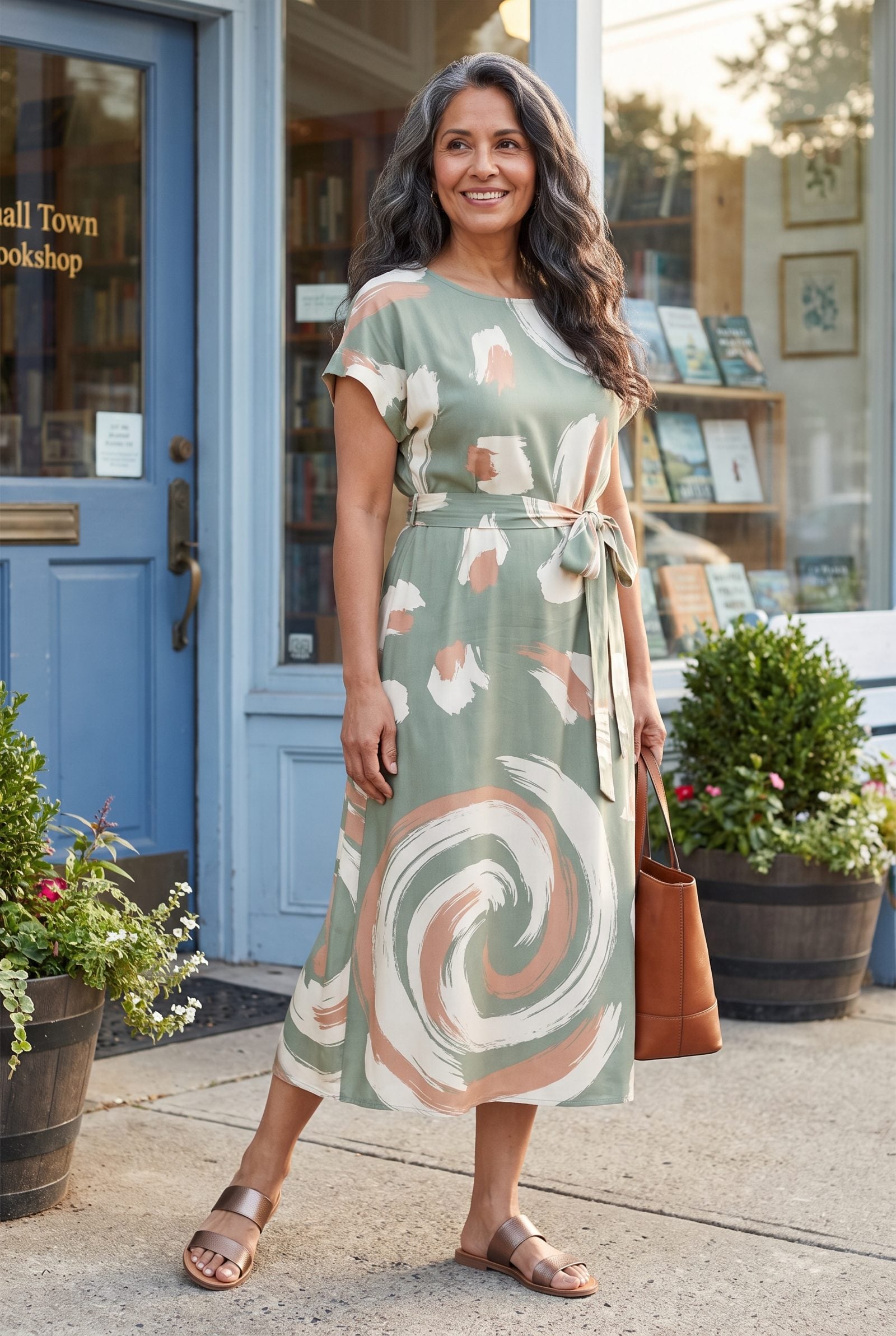
A large print has a will of its own. Let one bold motif settle on the bust or dead center of the hip and that’s now the loudest point in the room, whether you wanted it there or not. Good placement keeps the big shapes drifting off to the sides, so the fabric moves as one continuous field.
Flat bronze sandals pick up nothing and compete with nothing, which lets the dress breathe. Try a bold print on, then step back from the mirror. Where does your eye land first?
16. Underlayers Creating Bulk at the Waistband
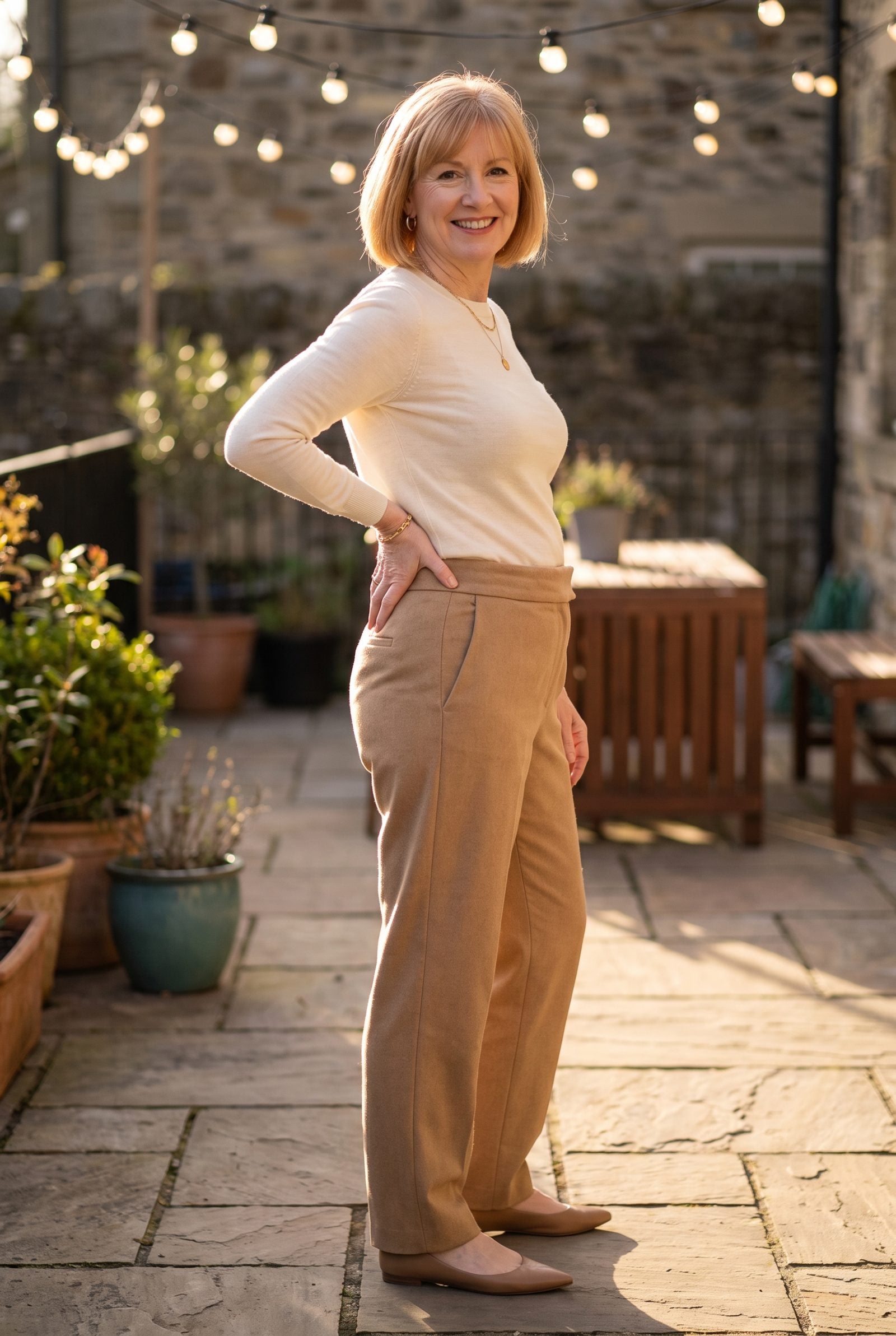
The half-tuck gets all the glory. The real culprit is quieter: a bulky waistband where a shirt, a cami, and a thermal all pile up at the same inch of your middle. From the front it reads as width that isn’t yours.
Thin, smooth underlayers and a single clean tuck fix it in seconds. The flat nude pointed flat lengthens the leg here, so the eye keeps traveling down rather than parking at the waist.
15. Visible Bra Lines Changing the Garment’s Drape
❤️ Would you like to save this?
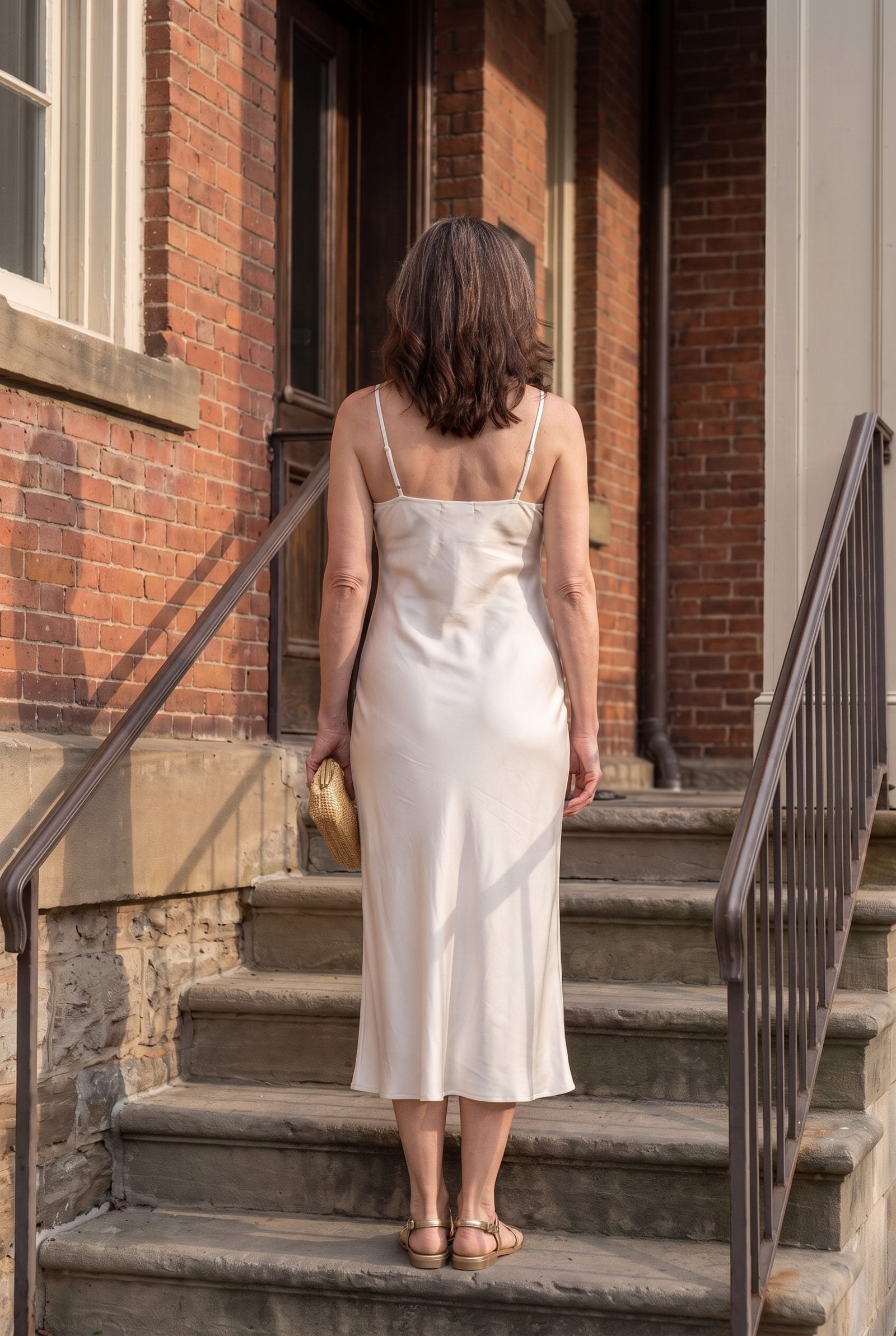
A bias-cut dress is meant to pour down the body in one line. The second a bra band cuts a horizontal across your back, that line breaks and the whole liquid effect collapses into a lumpy map of your underwear.
Stylists carry adhesive cups and low-back solutions for precisely this. With a fluid silk slip like this one, the right support disappears and the drape does its job. Metallic gold strappy flat sandals keep the look soft and elongated, extending the dress’s single line rather than interrupting it.
14. Undergarment Straps Interrupting the Neckline
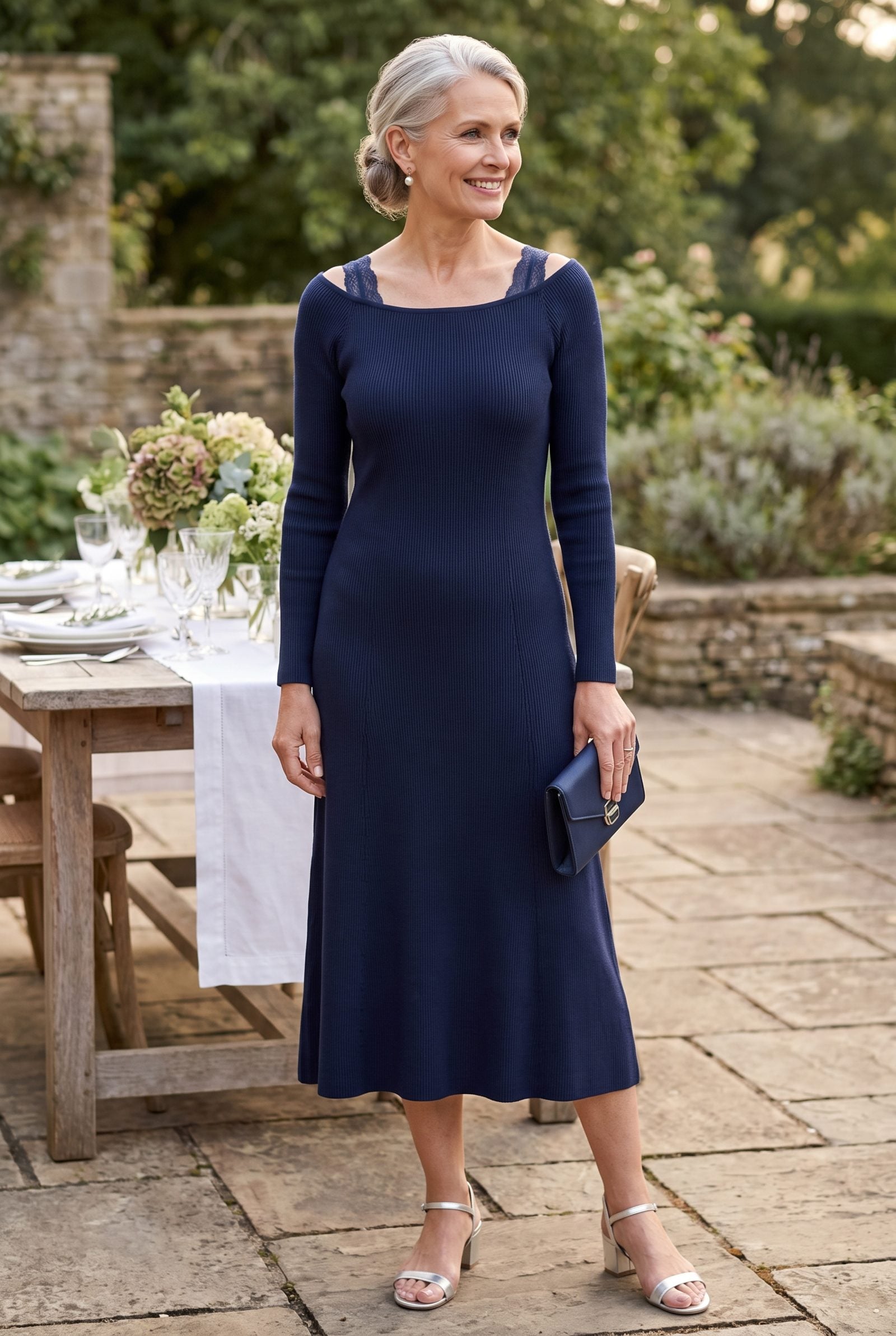
Boat necks and wide shoulders are gifts until a stray strap sabotages them. A navy lace strap sliding into view pulls your eye straight off the clean line of the collarbone and announces that the outfit wasn’t quite finished. A stylist’s kit always has a strapless or convertible option waiting.
This navy outfit should frame the face beautifully, but the neckline is interrupted by straps on both shoulders, and they pull attention away from it. Match the strap color to your skin, not the top, and it genuinely vanishes.
13. Pocket Contents Distorting the Silhouette
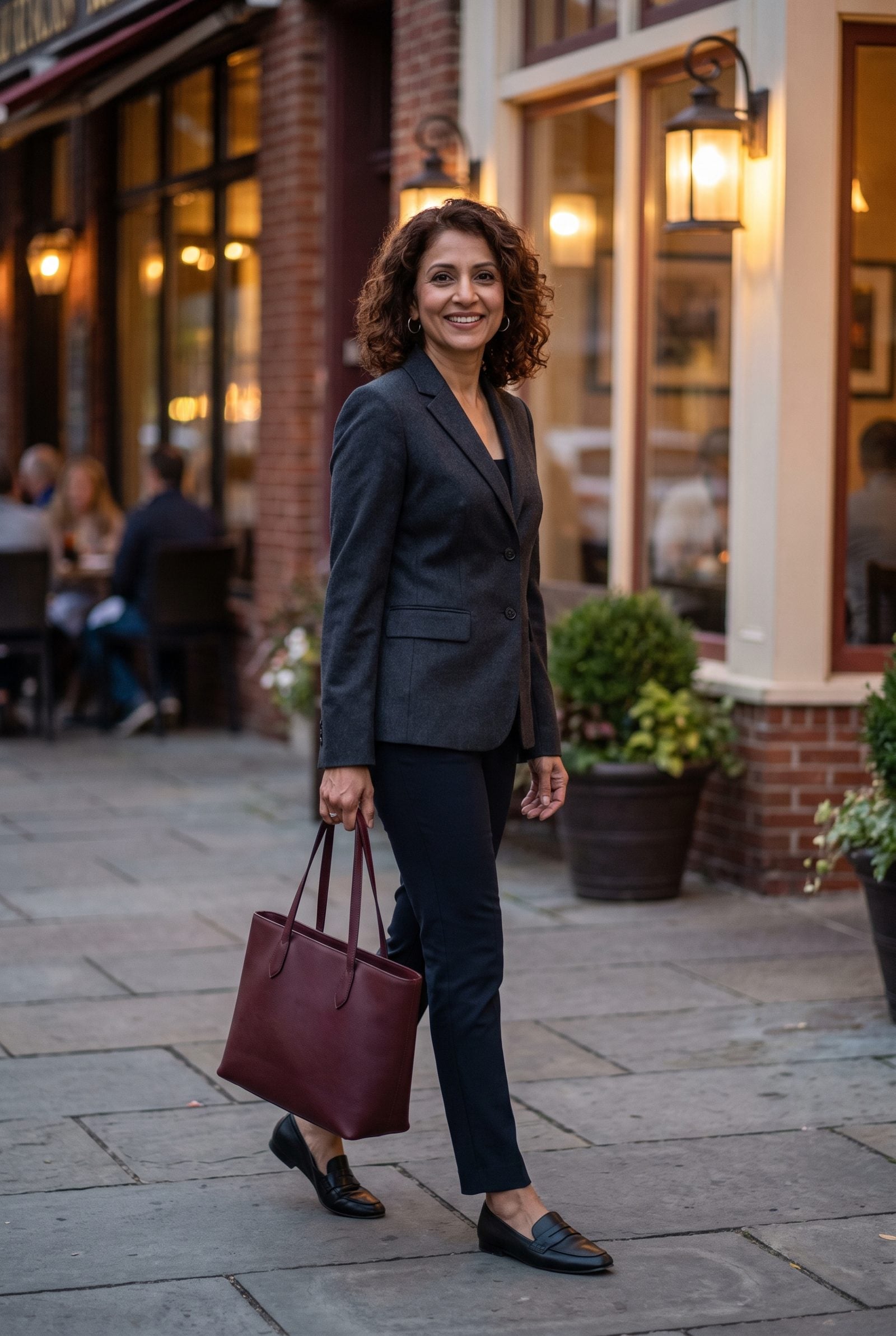
Nothing wrecks a sharp jacket faster than a phone, keys, and a wallet crammed into the pockets. The tailoring you paid real money for now bulges at the hip, and that clean vertical line the jacket was cut to deliver? Gone.
Move everything into the tote. The burgundy leather tote carries the weight so the jacket stays flat and narrow, finishing uninterrupted at the hip over flat black penny loafers.
12. Static Cling Pulling a Skirt or Dress Off-Line

A skirt clinging to the backs of your legs reads as tighter, shorter, and more awkward than the garment actually is. Static drags the hem off its line, and a graceful pleated drape suddenly looks like it’s grabbing at you — the single most annoying wardrobe betrayal, if you ask me.
Anti-static spray and a cedar hanger live in every stylist’s reach. With the pleats falling free, this plum accordion-pleated skirt holds its fluid drape and those vertical lines do their lengthening work. Burgundy suede pointed flats anchor the look and carry the long, lean line unbroken to the floor.
11. Fabric Turning Transparent in Daylight
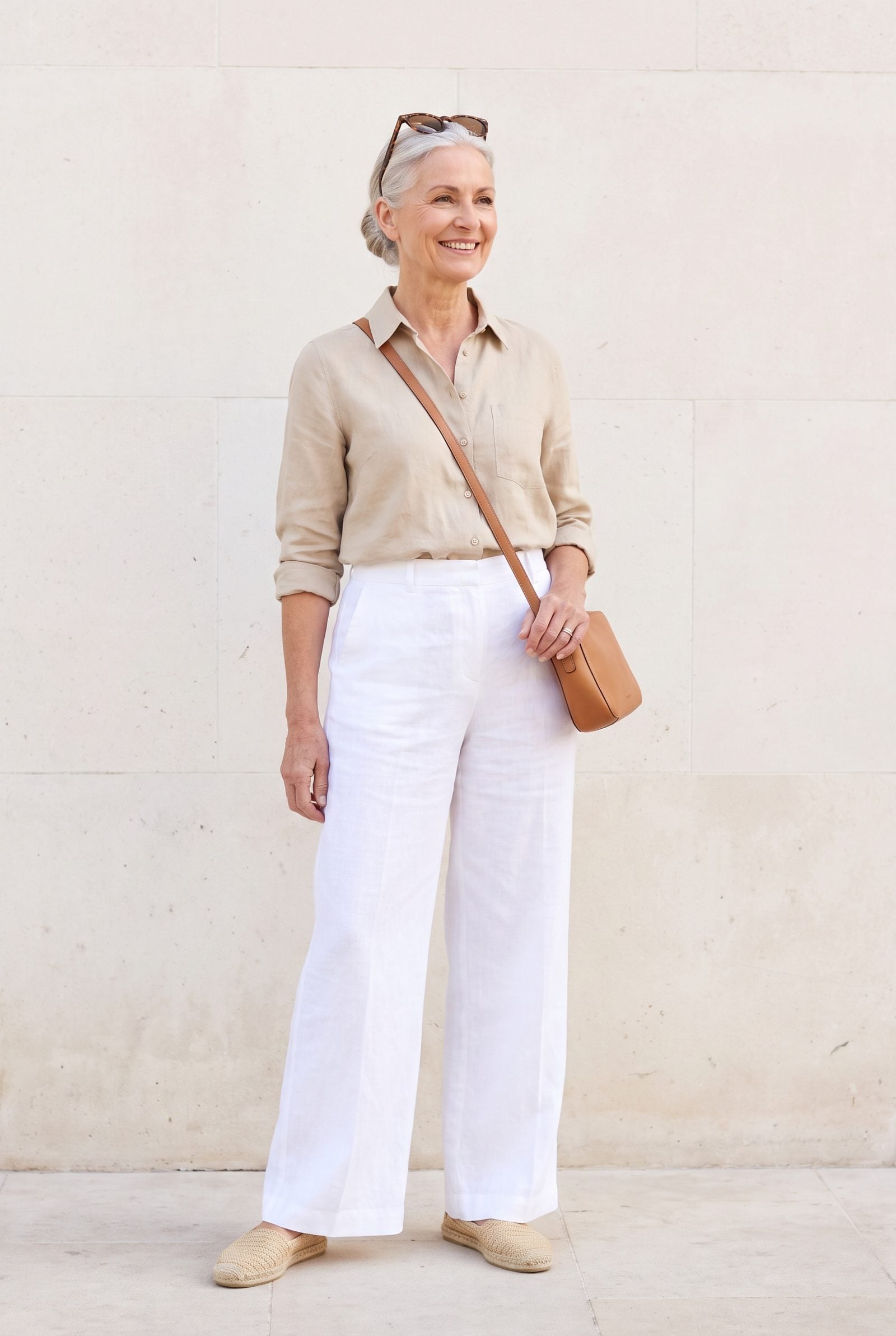
White trousers that looked solid under shop lighting can go sheer the instant you step into real sun. Daylight is the honest test, and it catches out far more pale fabrics than anyone admits.
Hold the piece up to a bright window before you buy, or slip a seamless nude short underneath. These white wide-leg linen trousers stay opaque where it counts, and the rolled sleeves of the beige linen shirt read as deliberate, so the look comes across the way it should. The woven natural espadrille keeps it all polished without a clunky shoe dragging the leg down.
10. Wrinkles Concentrated Across the Lap or Seat

Deep creases bunched across the lap and seat tell everyone you’ve been sitting, and they age an otherwise sharp trouser by a decade. It’s the thing a stylist smooths first before a shot, and the easiest to head off entirely.
Pick a fabric with a little recovery, hang the trousers overnight, then stand up and shake them out before you head out the door. Smooth across the seat, a sharp front crease, flat navy loafers below — the look stays deliberate from the first hour to the last.
9. Stretched Knees and Elbows That Never Snap Back
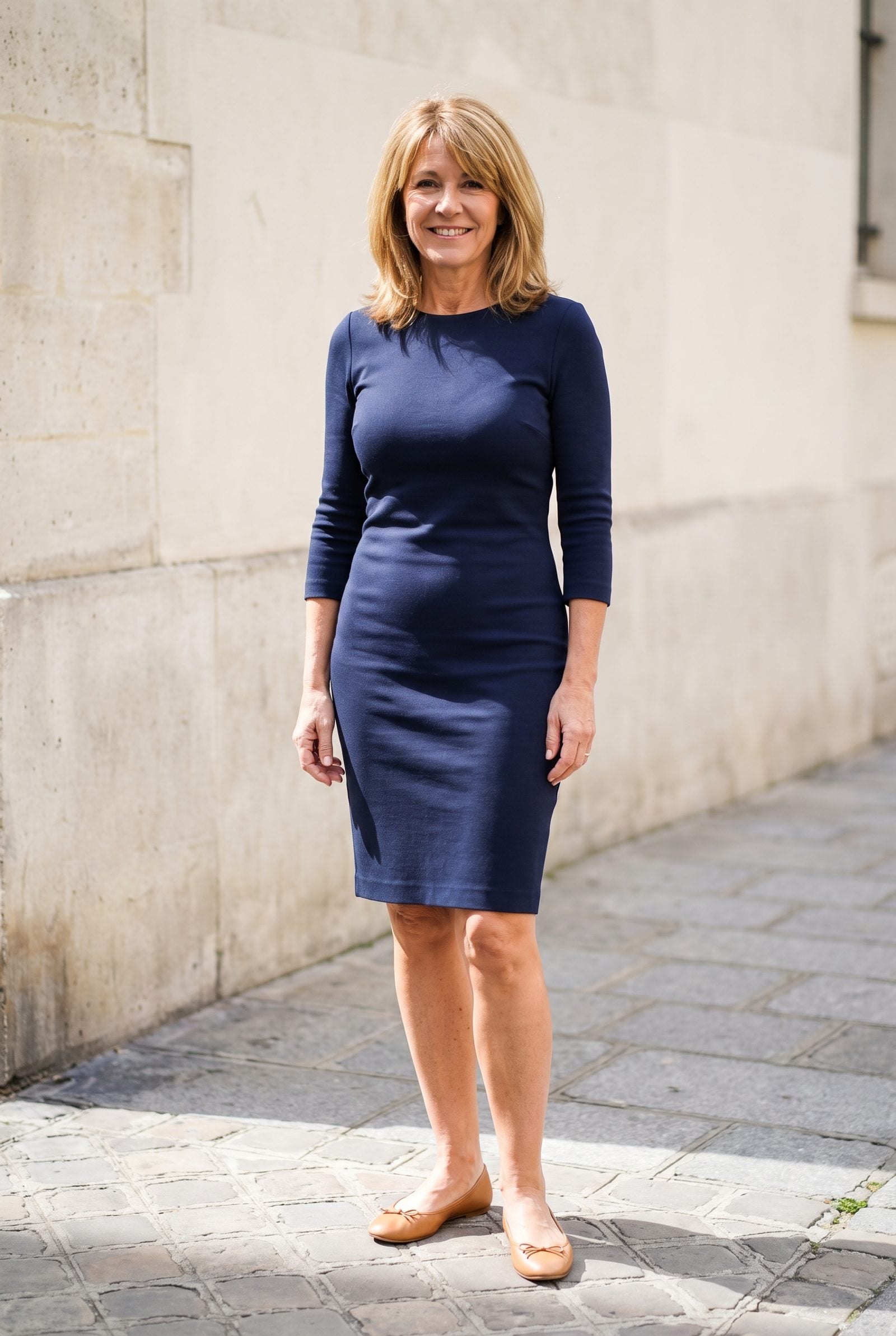
A knit that bags at the knee reads as tired before the woman wearing it says a word. The fabric stops holding its shape and starts telling a story you never asked it to tell, and stylists clock it first because it quietly undoes everything else in the outfit.
Here the camel leather ballet flats keep the proportion light and the line long, which is what a soft-knit dress needs. Swap a sagging knit for a ponte that recovers and the whole silhouette firms right up.
8. Pilling Where the Bag and Arm Keep Rubbing
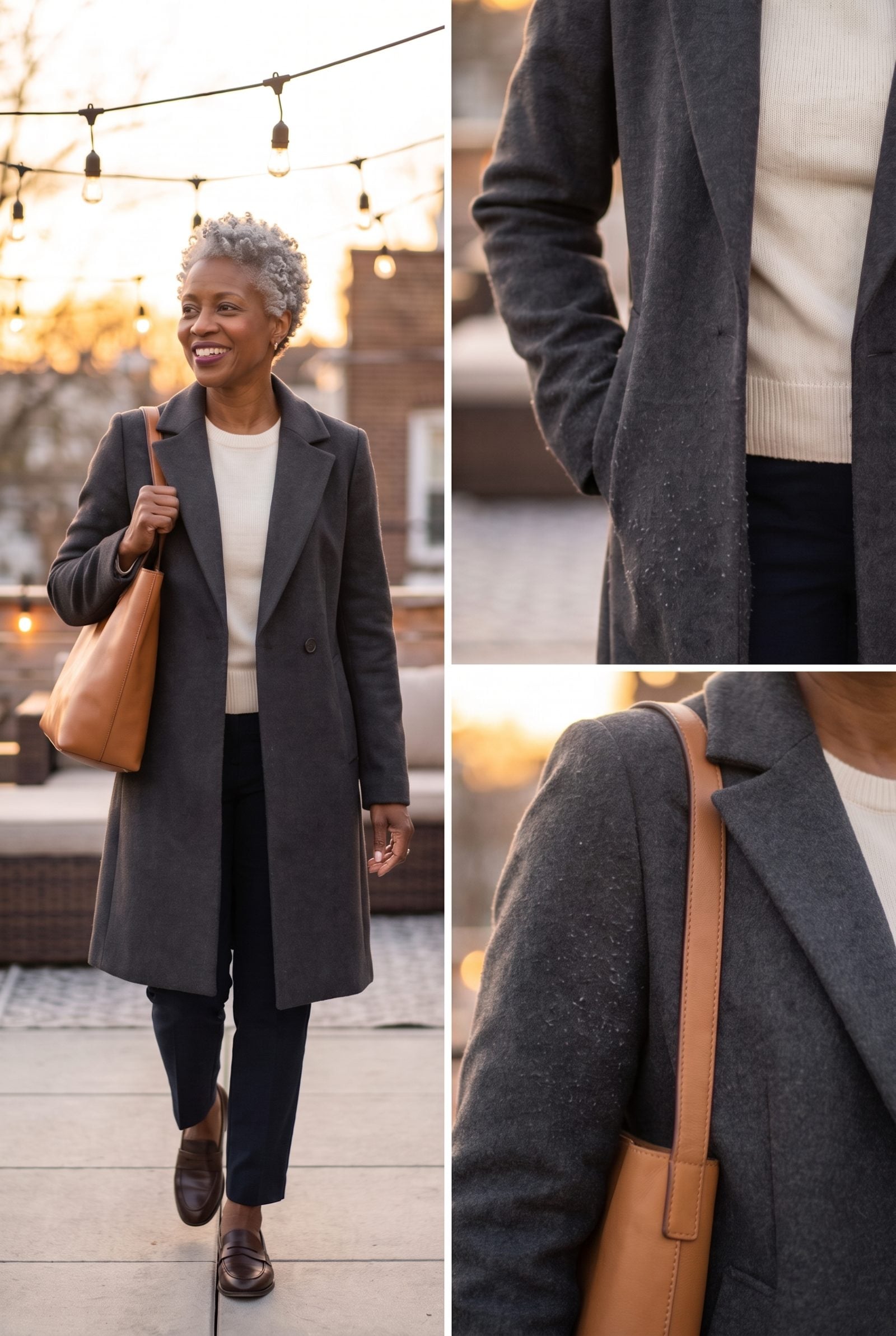
Pilling gathers exactly where life rubs — the hip where the bag swings, the inner arm, the seam under the strap. It isn’t the mark of a cheap coat. It’s the mark of a loved one.
A tan leather tote on one shoulder against a charcoal wool coat looks sharp right up until the friction zone fuzzes over. A cheap fabric shaver fixes that in two minutes flat, and the coat goes back to looking like you meant it.
7. Lint and Pet Hair Glowing Against the Dark
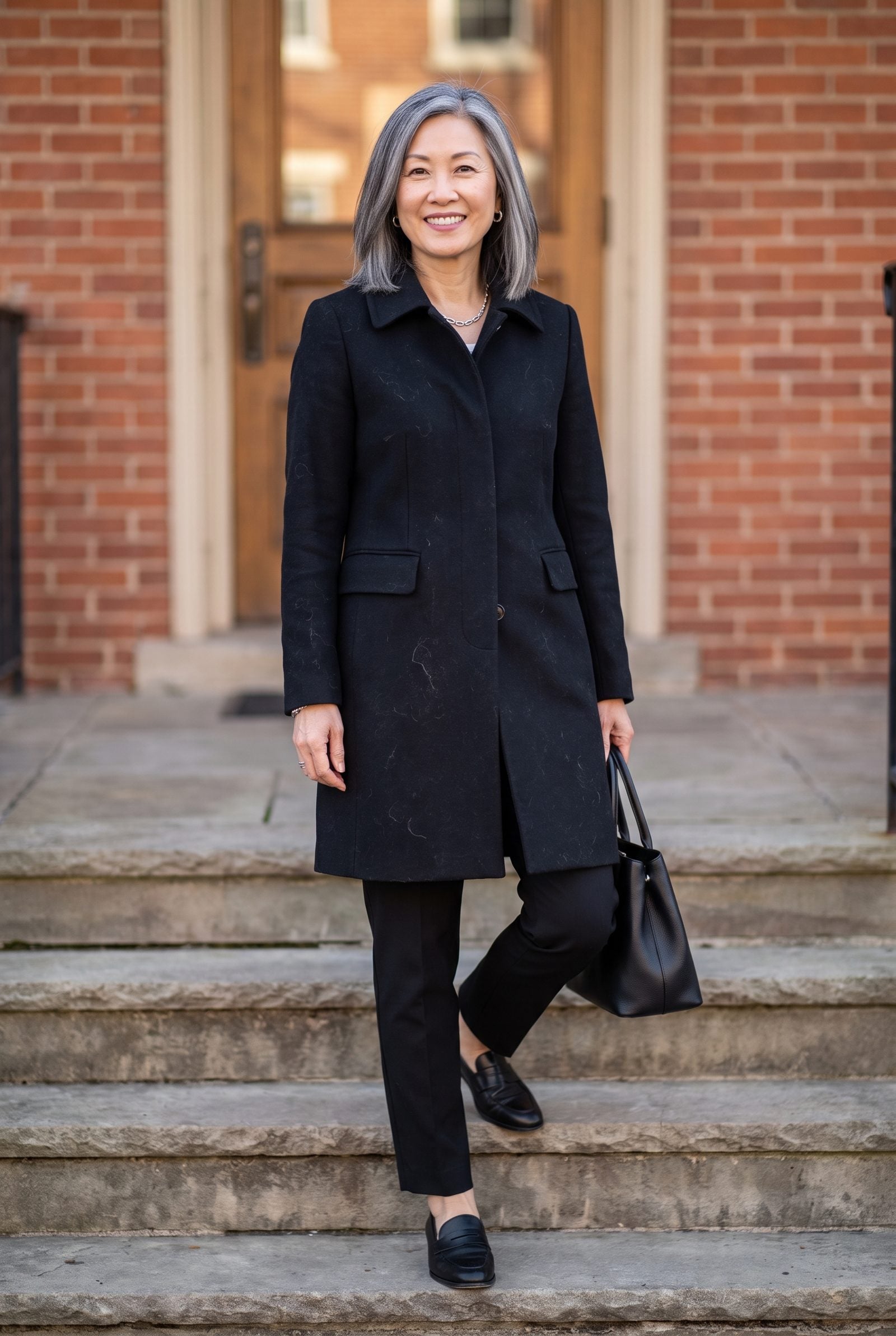
Black hides a lot. Lint is not on the list.
Every stray fiber and pale pet hair throws itself forward against a black outfit, and the eye finds all of it before it ever finds the cut of the coat. A smooth black wool coat with black leather loafers makes a clean column — so keep a lint roller by the door and run it before you leave.
6. A Skirt Hem That Lands at the Widest Point
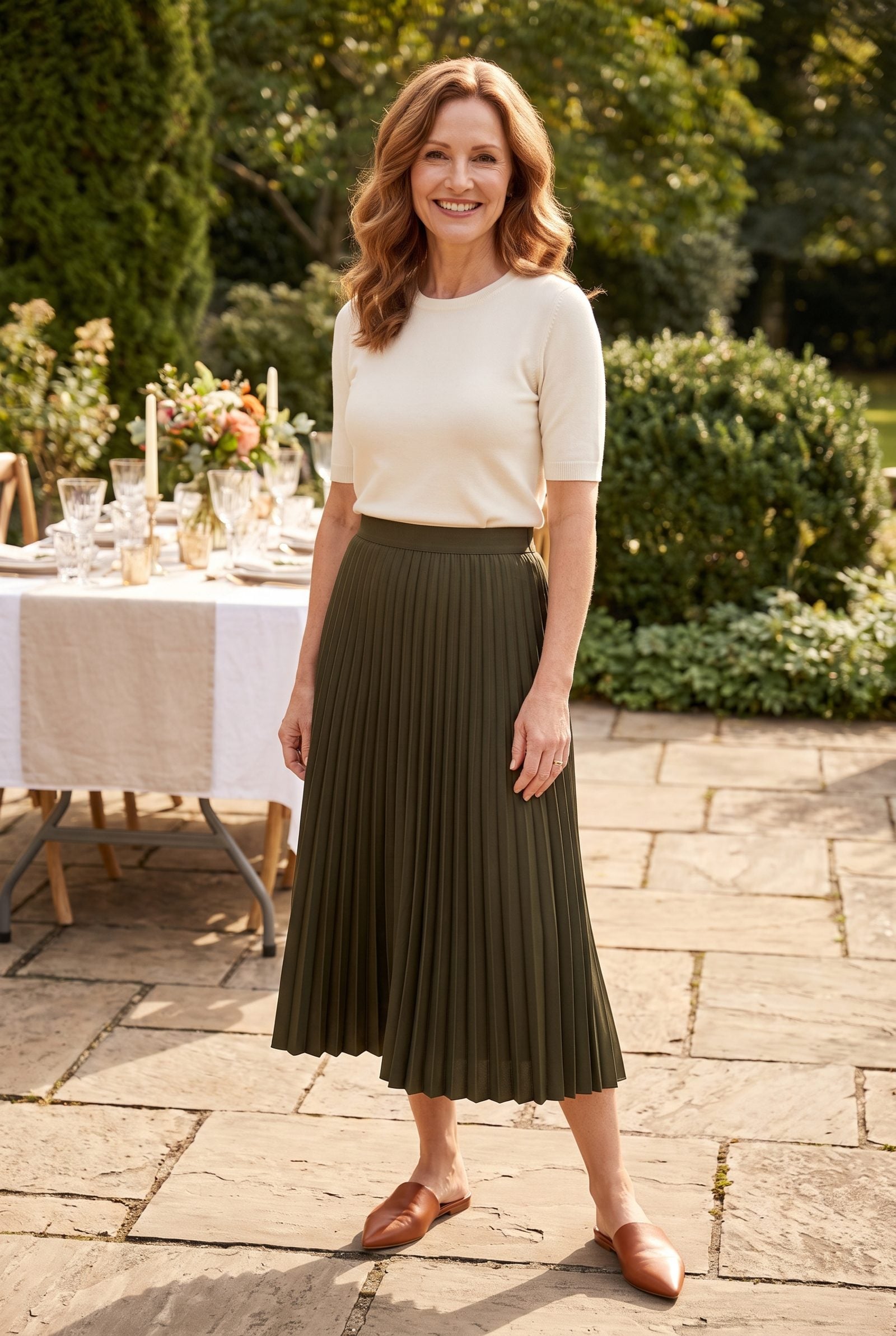
Hem placement is the most overlooked decision in the whole closet, and a few inches up or down changes the entire read of the leg.
This olive pleated midi lands just below the fullest part of the calf — the spot that elongates instead of chopping you off. The cognac pointed leather slides carry the line past the hem, finishing the leg rather than stopping it short.
5. The Sock Gap That Snaps the Trouser Line
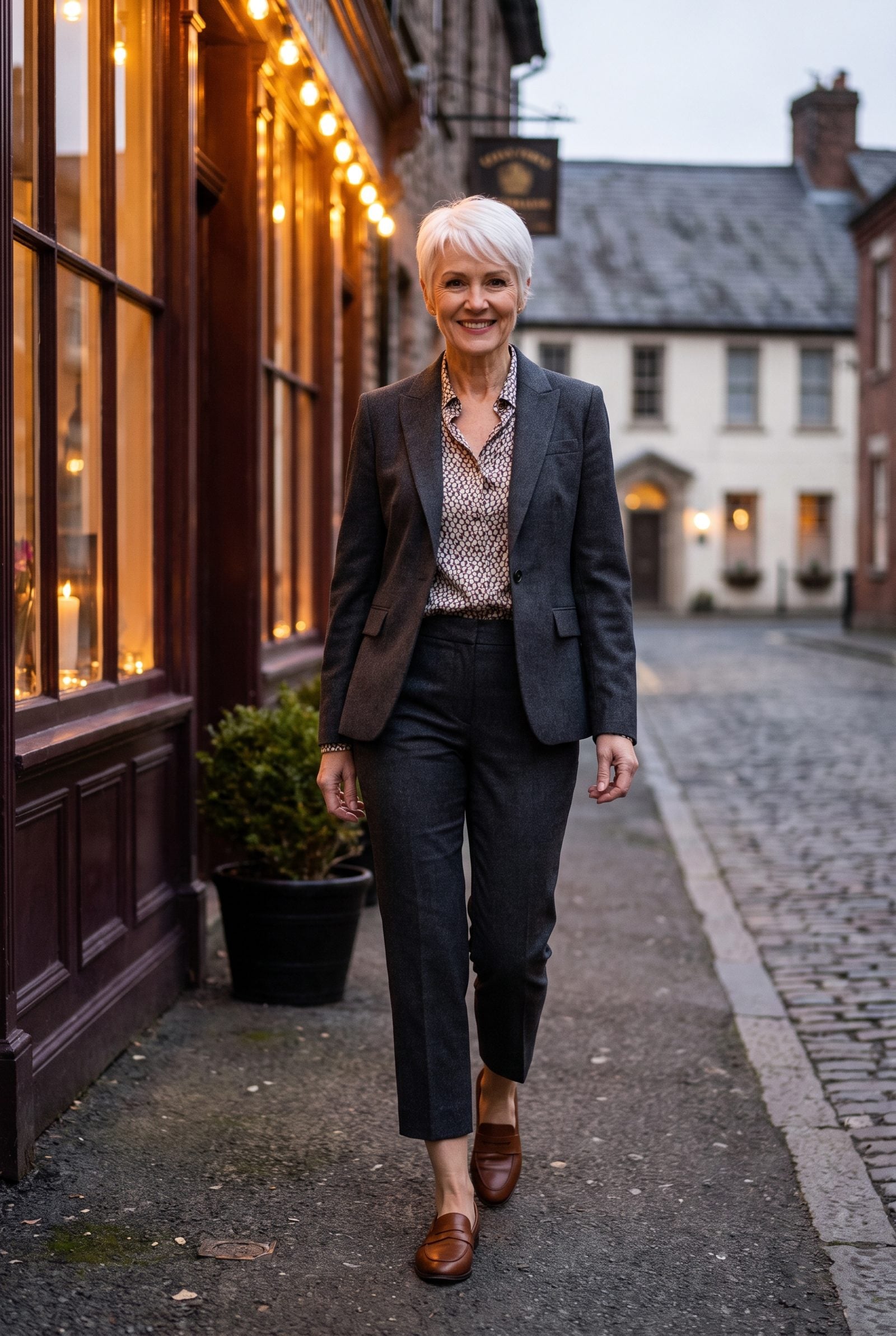
A flash of pale ankle between trouser and shoe breaks a line that should run clean from hip to toe. The eye stops dead at the gap, and the whole leg looks shorter for it.
With these slim navy wool trousers and low brown loafers, you’ve got two fixes: a longer trouser that meets the shoe, or a sock in a color close to the trousers. One beat of continuity and the leg reads long again.
4. Footwear Too Heavy for the Hemline It Sits Under
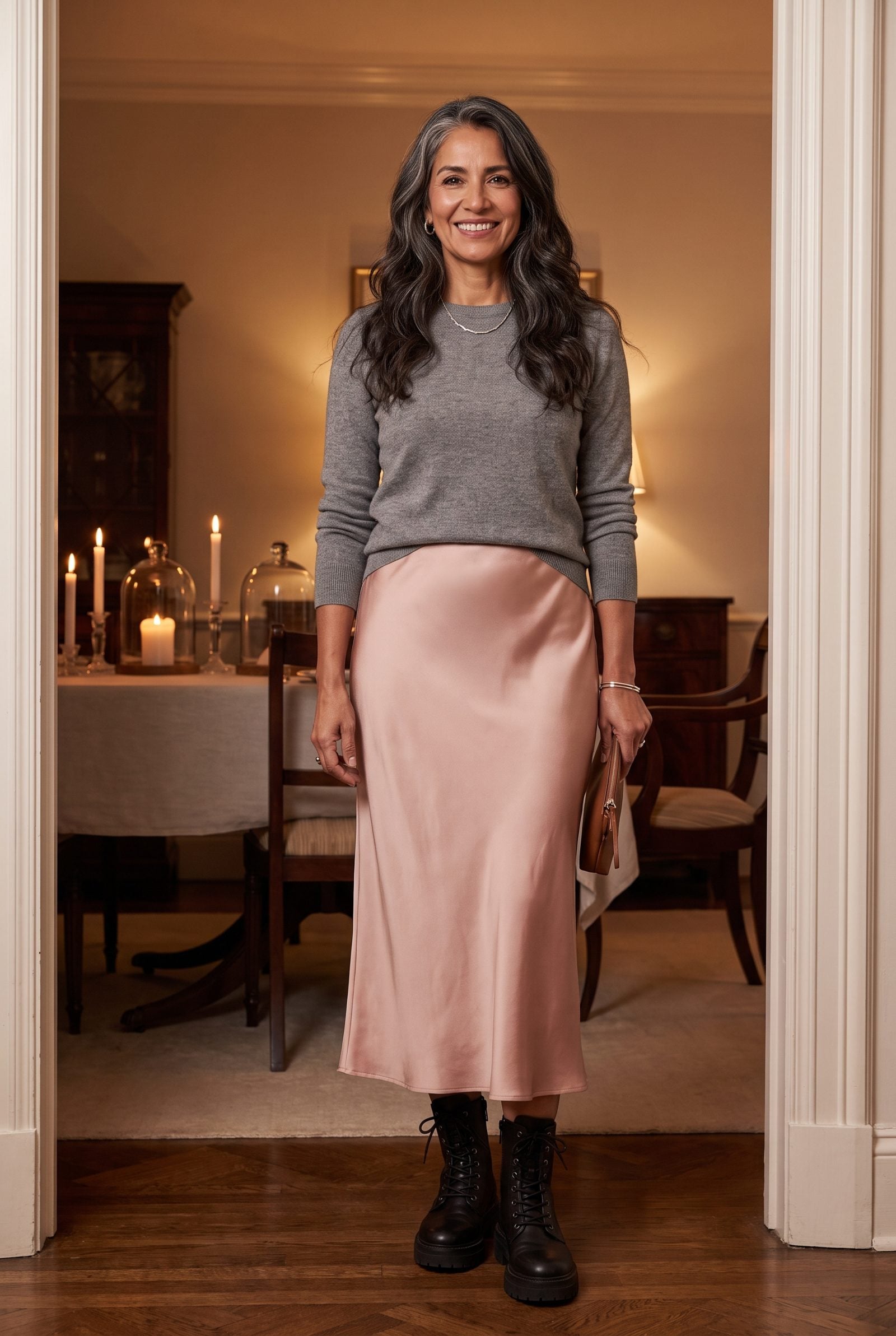
Weight has to agree with weight. A delicate blush outfit in fluid silk asks for a shoe that doesn’t stomp all over it.
The chunky black lace-up lug-sole combat boots overpower the lightness of the silk slip skirt, so the two fight for top billing. With boots this heavy under that skirt, the bottom half suddenly outweighs everything above it. The hem tells you how substantial the shoe should be — listen to it.
3. A Toe Shape Arguing With the Silhouette
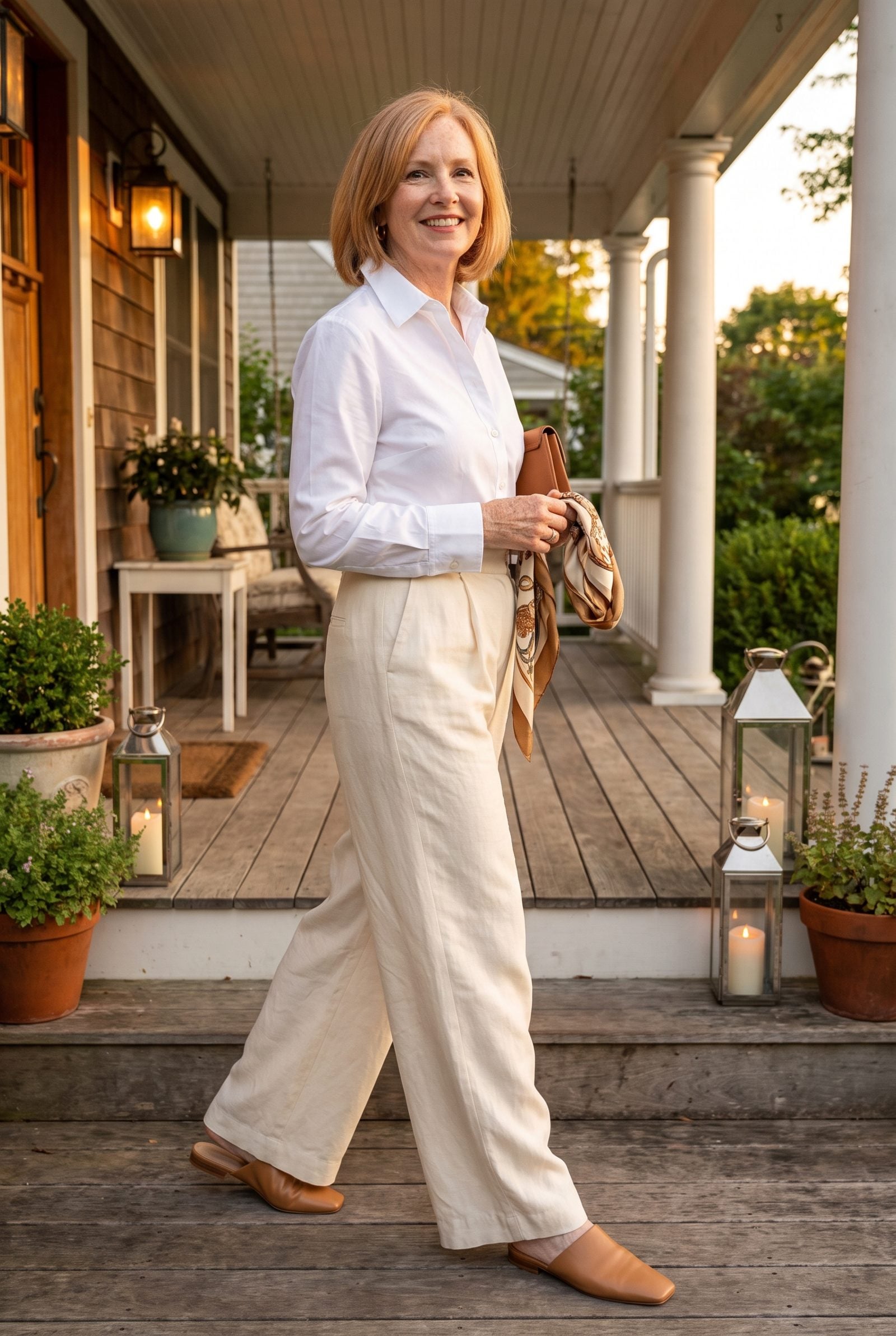
A toe shape is punctuation. It either agrees with the rest of the sentence or it fights it.
Here the square-toe tan mules echo the clean lines of the wide-leg linen trousers, so the whole look speaks one language. A rounded, soft toe under a sharp tailored silhouette reads as a mismatch — even when both pieces are perfectly good on their own.
2. Scuffed Shoes Quietly Sabotaging Sharp Clothing

You can wear the best-cut trousers in the building and still lose the whole room to a pair of scuffed toes. The eye travels down, finds the damage, and revises its opinion on the spot.
Shoes are the one piece people assume reveals how you treat everything else. A two-minute polish on these tan leather pumps protects all the good work the rest of the outfit is doing.
1. Eyeglass Frames Cutting Across the Brow Line

Frames that ride up over the brow erase it, and a face without a visible brow line loses its whole structure. Stylists check this before they look at anything on the body.
These warm tortoiseshell acetate frames have thick top rims that sit at or over the brow line, so the brows disappear behind them and the face loses that framing line. Your frames are the one accessory you wear with every single outfit — which is why they earn the fuss.