
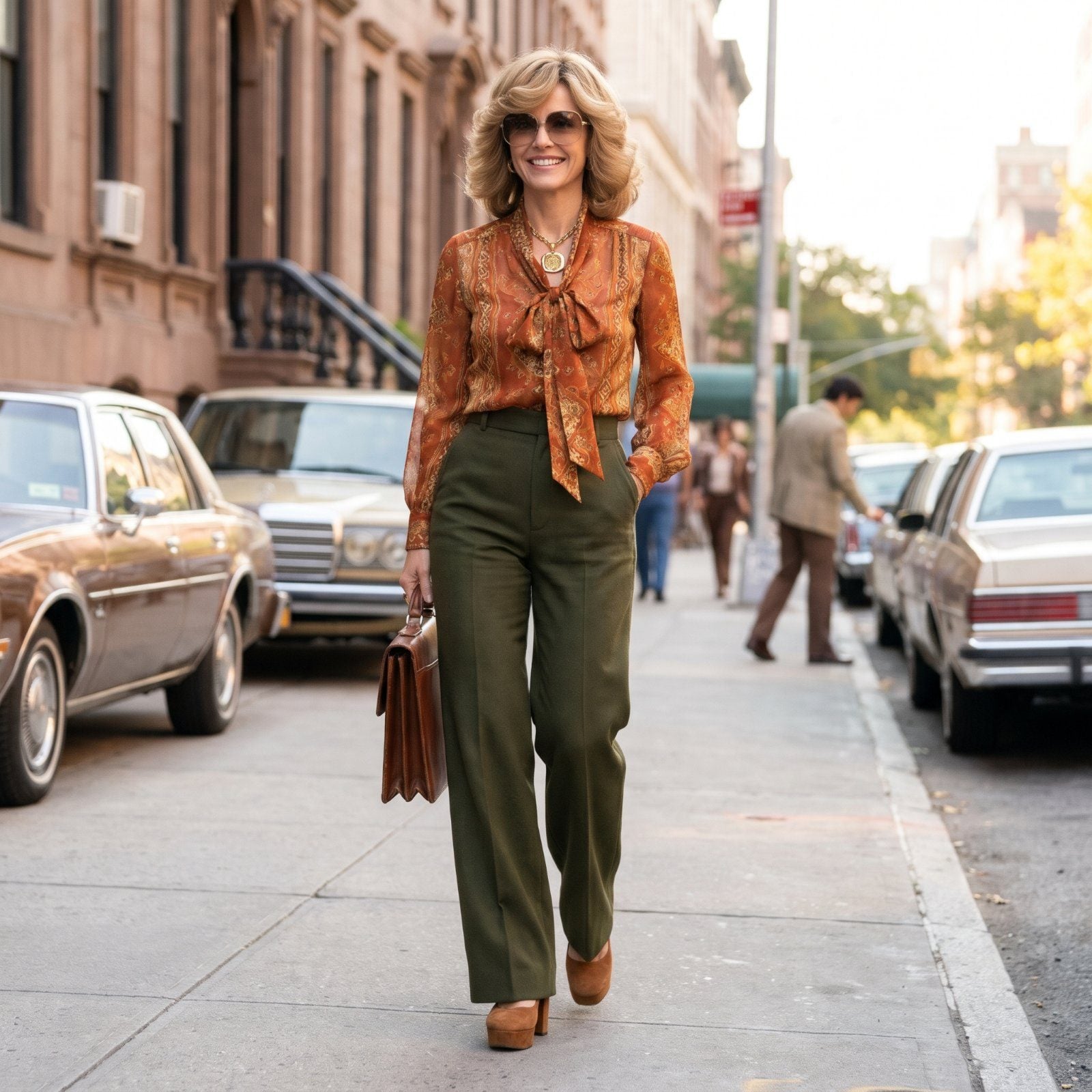
The hum of fluorescent tubes. The clack of an electric typewriter. And somewhere over the filing cabinets, the smell of fresh carbon paper tangled up with someone’s Charlie perfume. The 1970s office was a whole world, and what people wore to it (or were ordered to wear) could stop a modern HR department cold. Some of these looks were a woman’s own confident choice. Others got handed out by employers with rules no company would survive writing down today. The ones below live right on that line.
FYI, thanks to AI imagery software, we’re able to create very specific fashion and hairstyle examples to illustrate the points being made. In some cases, imagery is exaggerated to hammer home the point. Also, assume links that take you off the site are affiliate links such as links to Amazon. this means we may earn a commission if you buy something.
33. The Company-Issued Micro-Mini Receptionist Uniform
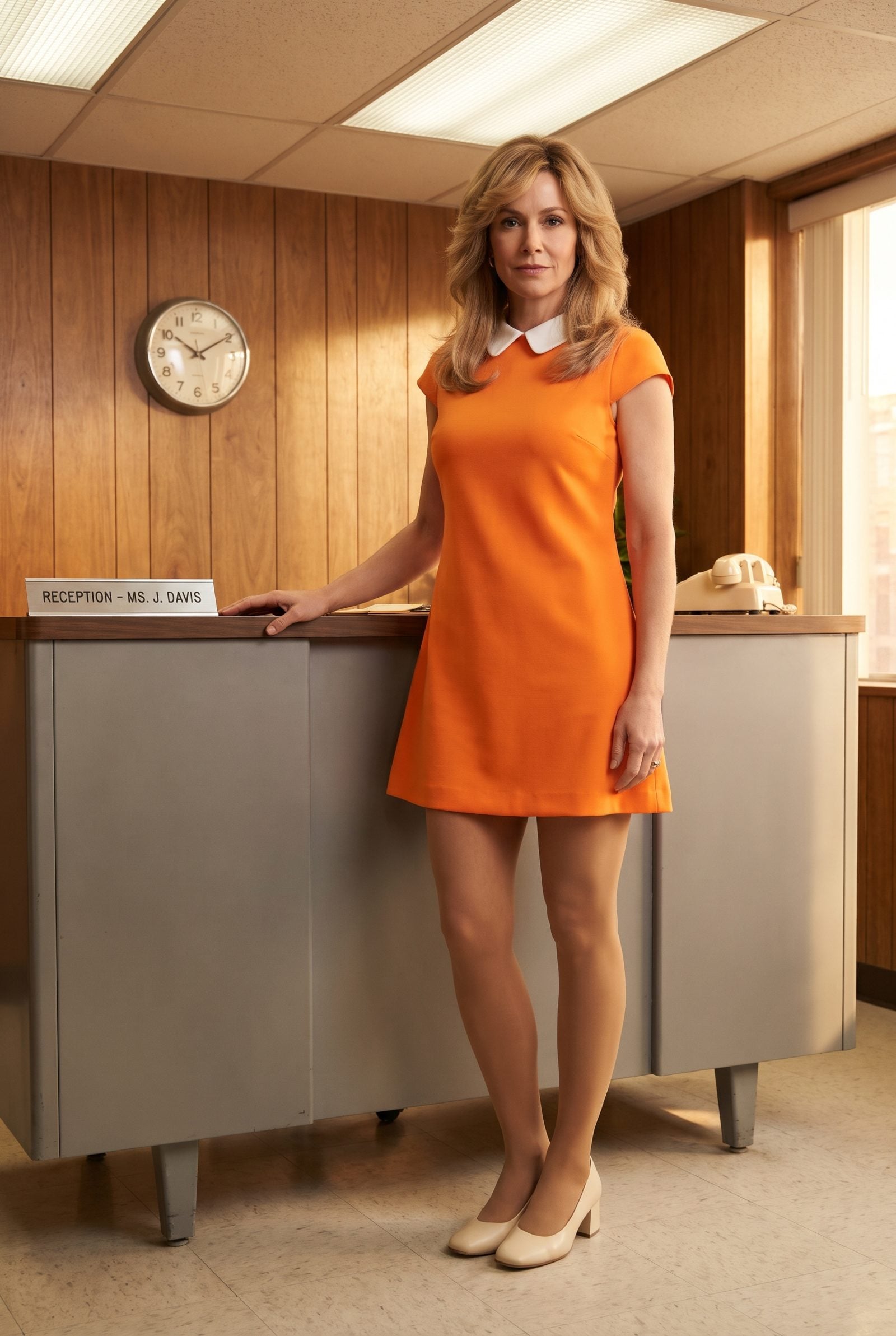
Someone in management decided the front desk needed a “look,” and that look meant a hemline a dress code today would never touch. The uniform was the company’s handwriting on a woman’s body: bright polyester, a crisp collar, and a skirt measured in inches from the waist down.
The styling is pure corporate signaling. That Peter Pan collar reads wholesome, the tangerine reads welcoming, and the hem does the work nobody wanted to admit to. This was almost never her choice. It showed up in a garment bag with her name on it.
32. The Hot-Pants Suit With a Matching Vest
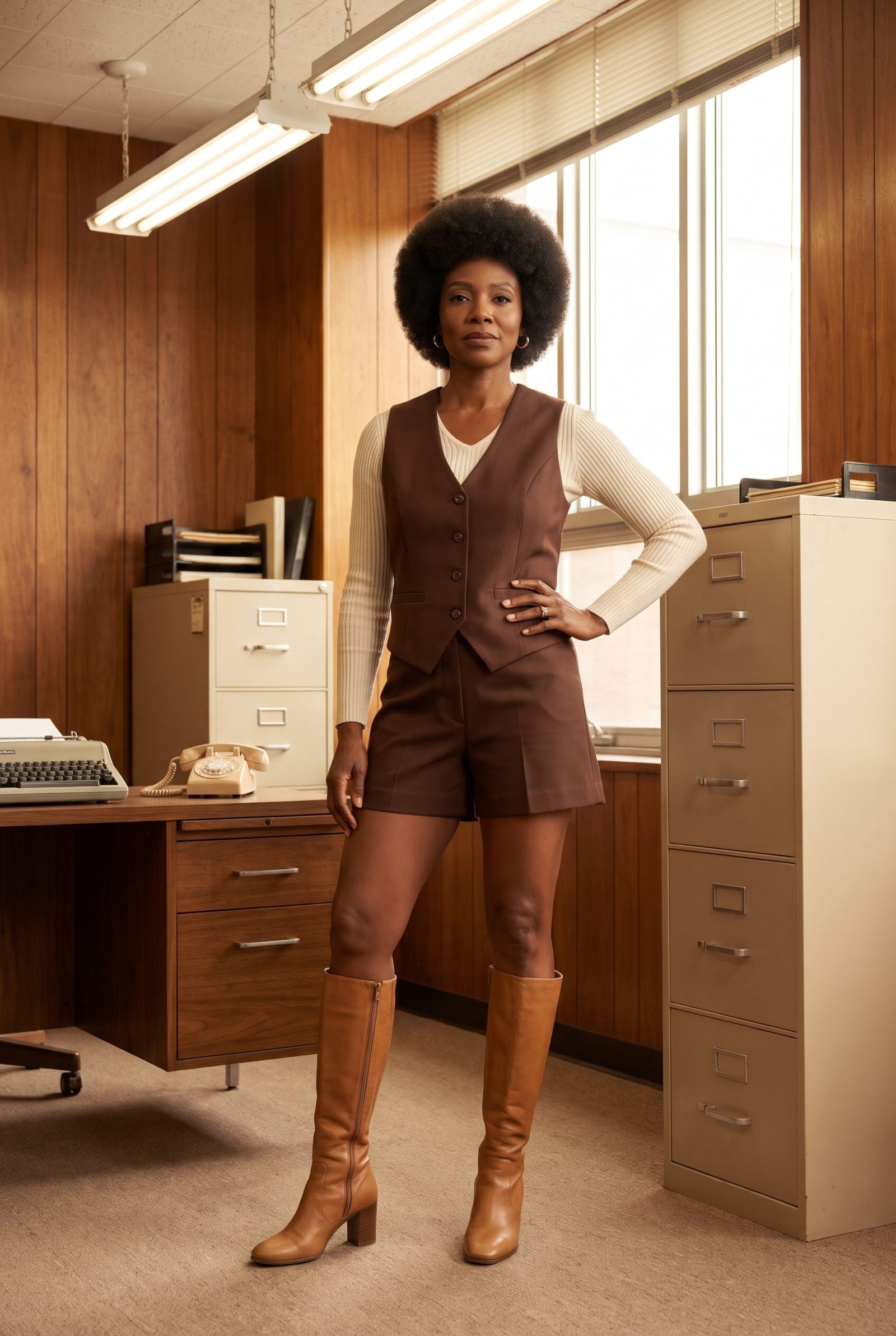
The matching vest is what pushed this from daring to deliberate. A woman wearing hot pants with a coordinating waistcoat wasn’t caught out. She was dressed on purpose, head to thigh in one tailored idea.
The real trick is the proportion. That vest pulls the eye up and gives the shorts a suited frame instead of leaving them to fend for themselves, and paired with knee-high boots, the leg becomes the whole silhouette. Boardrooms argued about it loudly, which tells you it was working.
31. The Paper-Thin Chiffon Blouse Without a Camisole
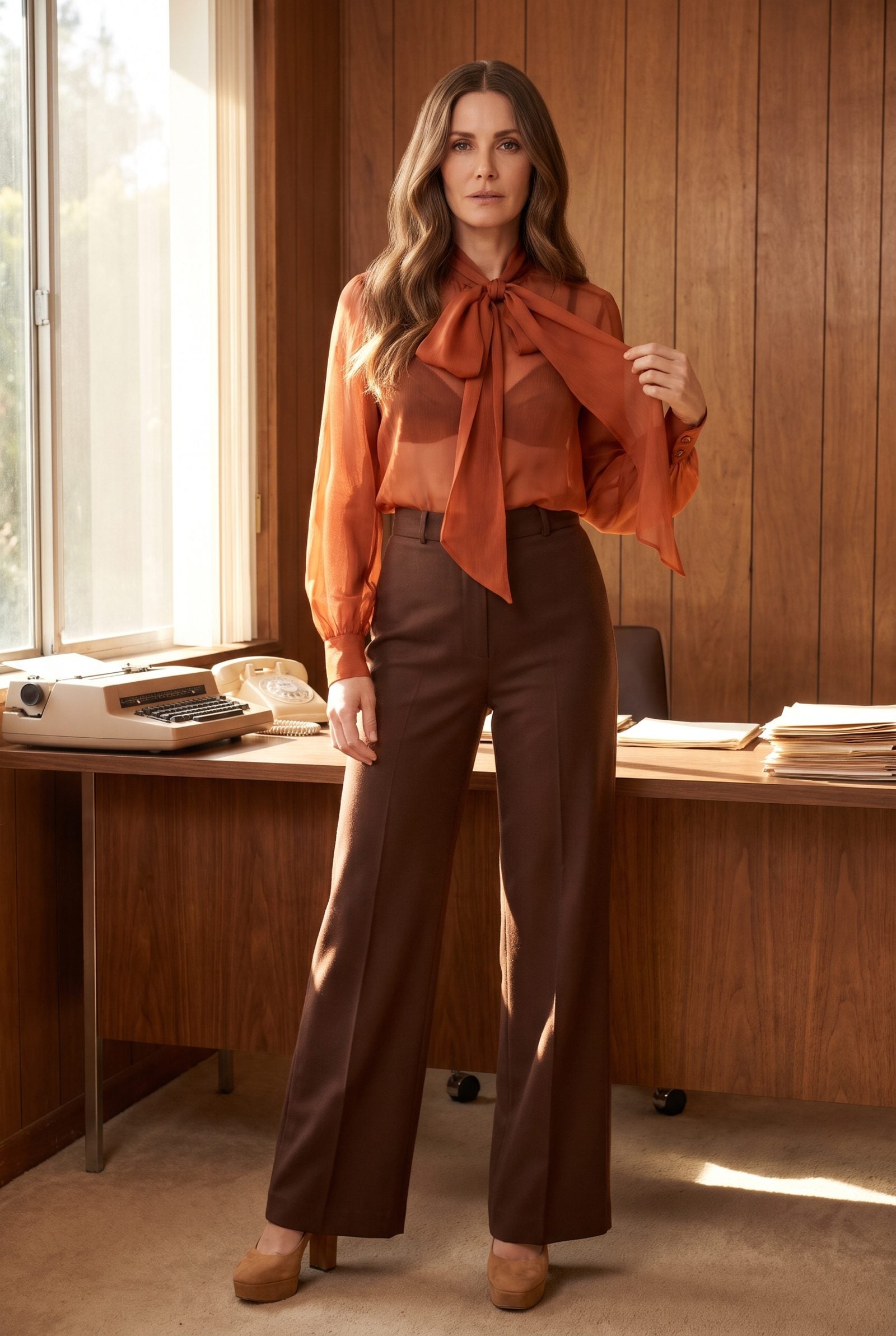
Chiffon this thin held nothing back, and the camisole modern instincts would reach for simply wasn’t part of the plan. Light went straight through it. That was rather the point.
Up at the throat, the pussy-bow does quiet contradictory work — prim and proper, while everything below it stays candid. That tension is why the blouse reads as confident instead of careless. Tucked into high-waisted trousers, it kept its dignity from the waist down and spent all its nerve above.
30. The Braless Ribbed Sweater Look
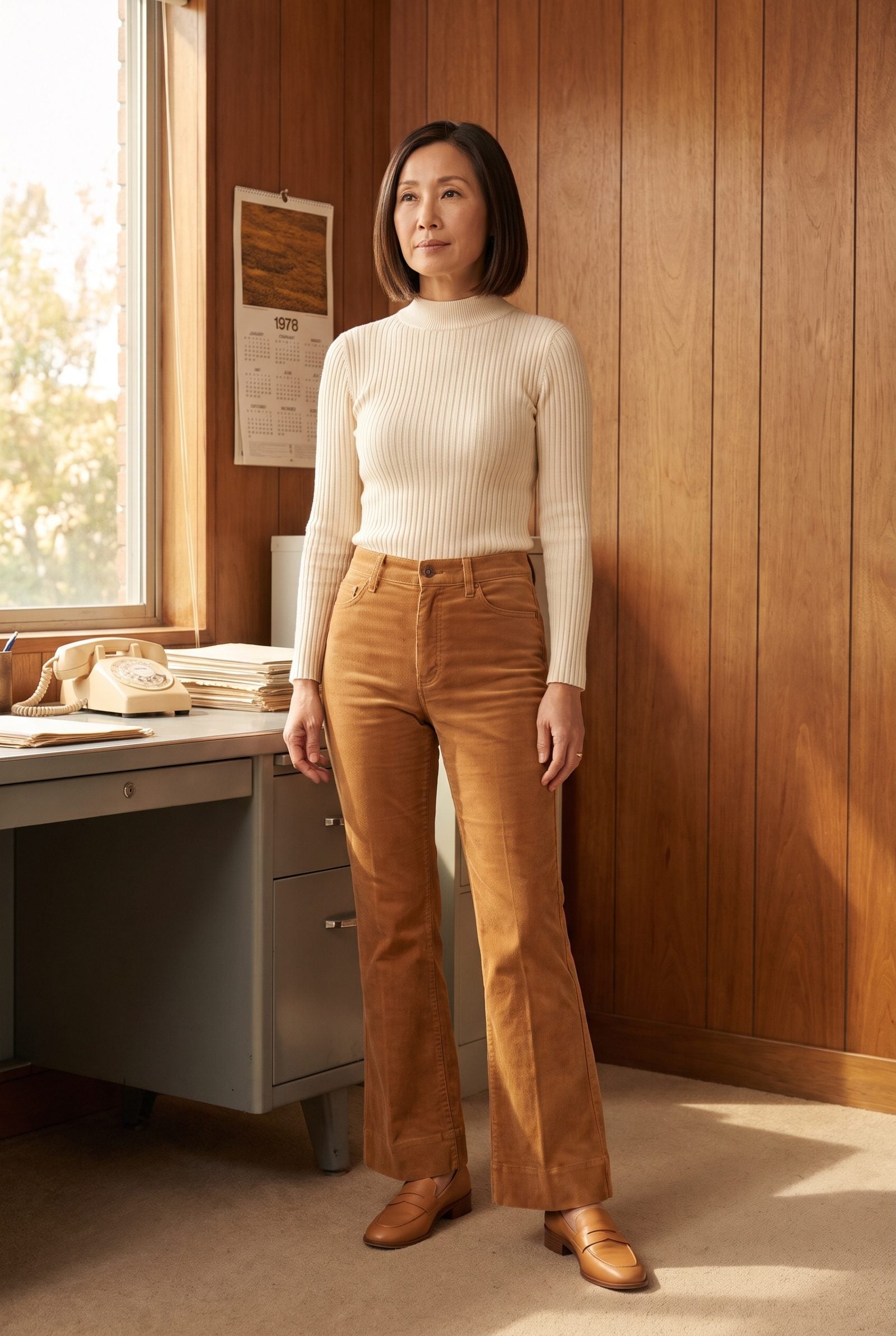
The ribbing did the talking. A fine-gauge sweater that clung, no bra beneath it, and suddenly you had the decade’s quiet rebellion against a foundation garment women had worn without question for generations.
What holds it together is restraint everywhere else: high neck, long sleeves, trousers up to the natural waist. The sweater is the only loud choice in an otherwise buttoned-up outfit, which is exactly why it registers. Freedom, framed by modesty.
29. The Plunging Jersey Wrap Dress
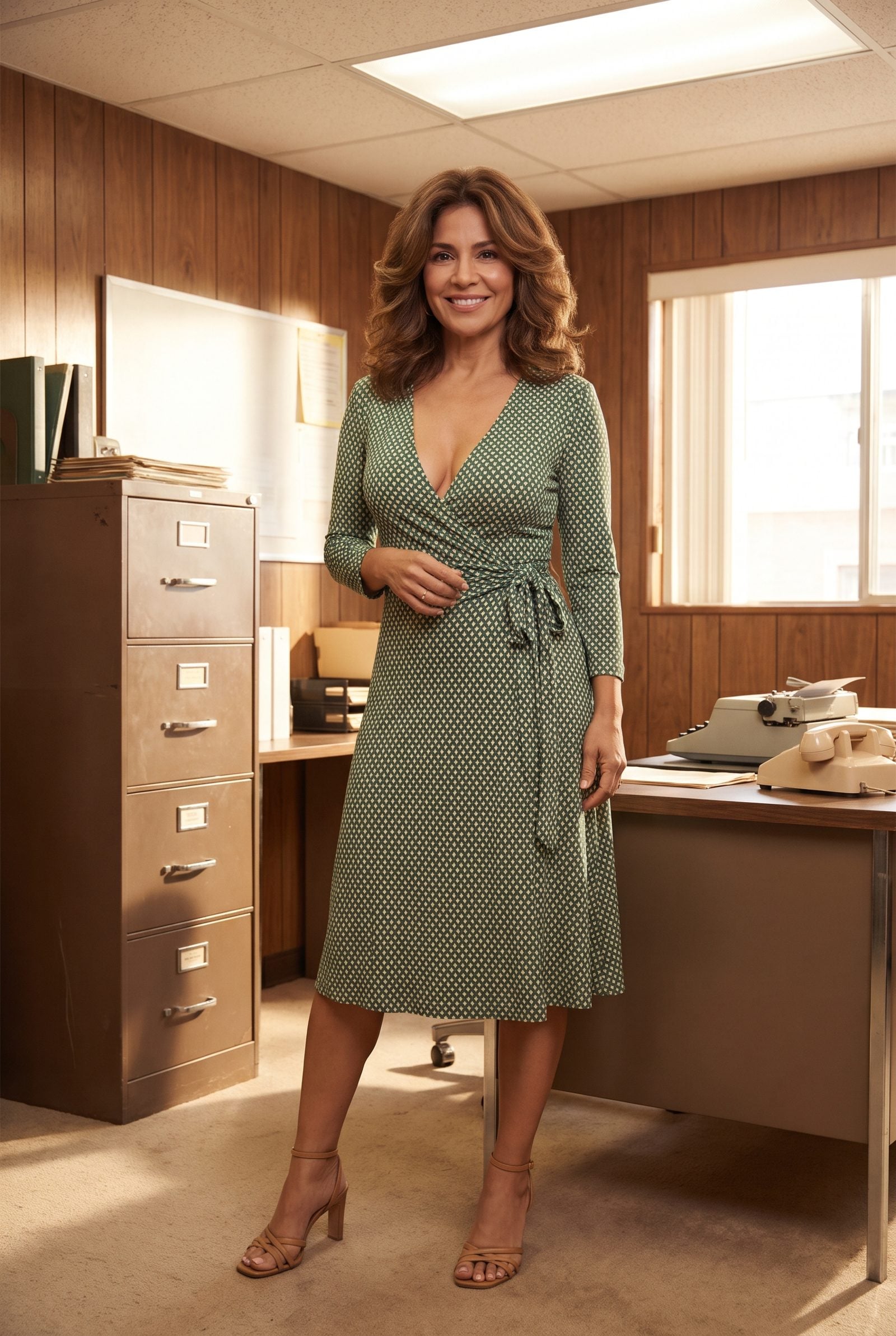
The genius of the jersey wrap was that it fit every body by design and plunged on every body by default. One tie, one piece of fabric, and a neckline that went wherever gravity sent it.
It all runs on that diagonal wrap. It carves a waist, lengthens the torso, and draws a long V down the chest that no dress code of the era quite knew how to legislate. It flattered by sculpting rather than covering. A woman could run a department in it and still make the breakroom go quiet.
28. The Backless Halter-Neck Office Dress
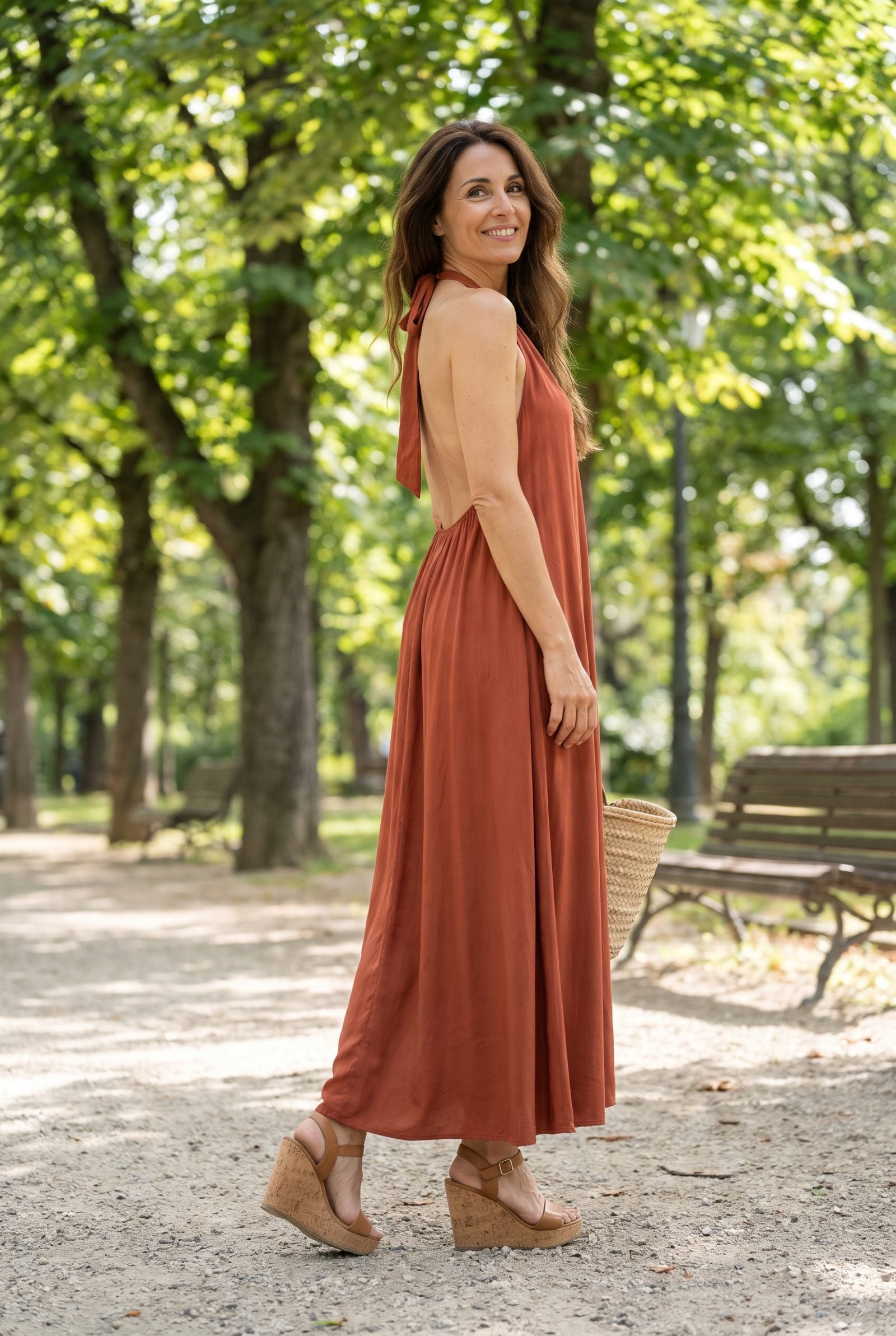
From the front, a perfectly presentable work dress. From behind, bare skin all the way to the small of the back, which made the walk to the copy machine an event.
The halter tie holds the whole thing up. It frees the back entirely while keeping the neckline high, so the look guards a secret rather than announcing one, and the long flared skirt balances all that daring with real coverage below. A dress built on surprise.
27. The Crochet Top With Nothing Underneath
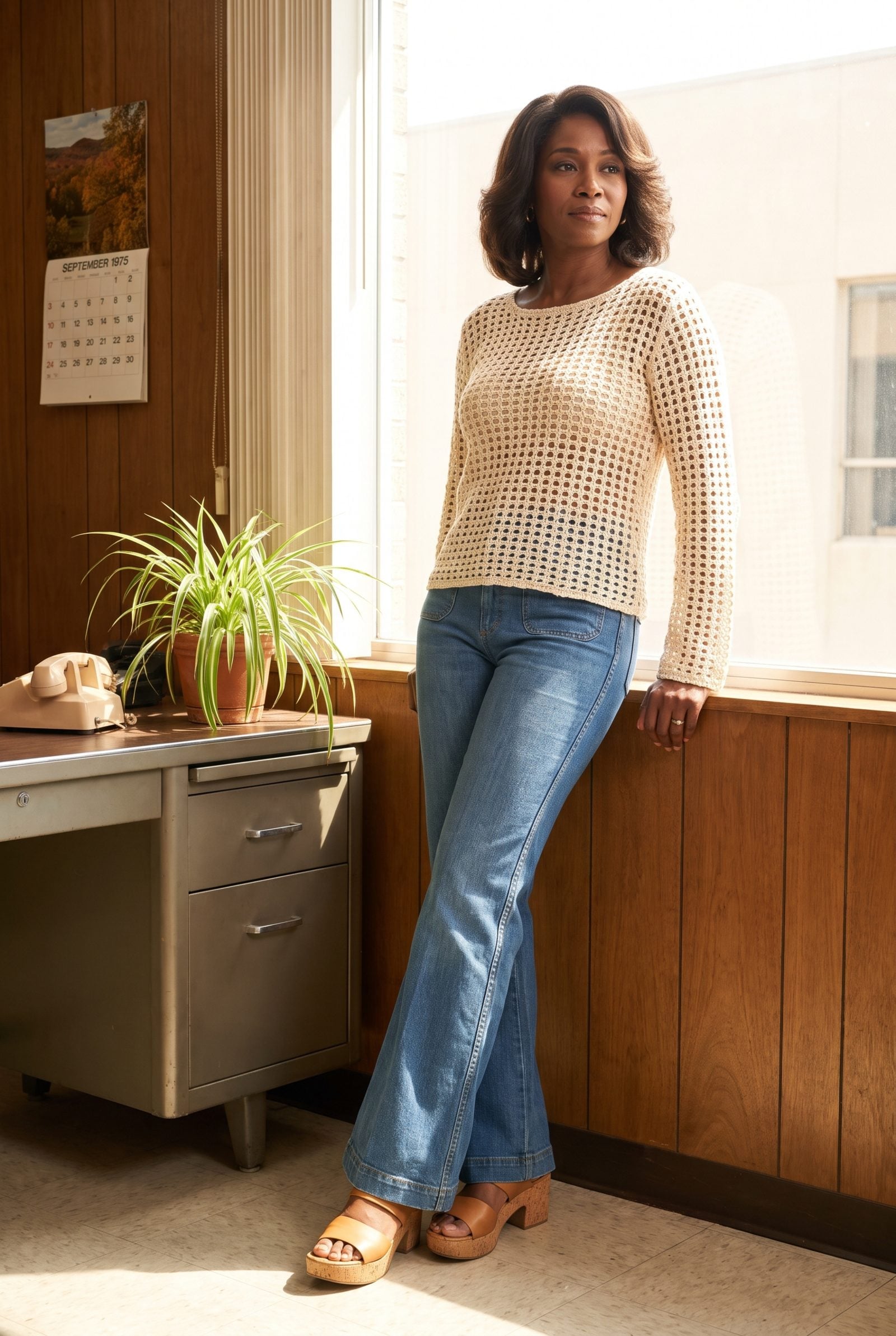
Crochet was the boho idea that wandered in from the weekend and never left. An open-weave top with daylight coming through the gaps and no slip beneath it turned the whole garment into a question of where exactly you were standing.
Texture carries all of it. That handmade stitch reads warm and artisanal, which softens what would otherwise be a very bold reveal, and against solid high-waisted denim the top gets to be the single unexpected piece shouldering all the risk.
26. The Disco Shirt Unbuttoned to the Sternum
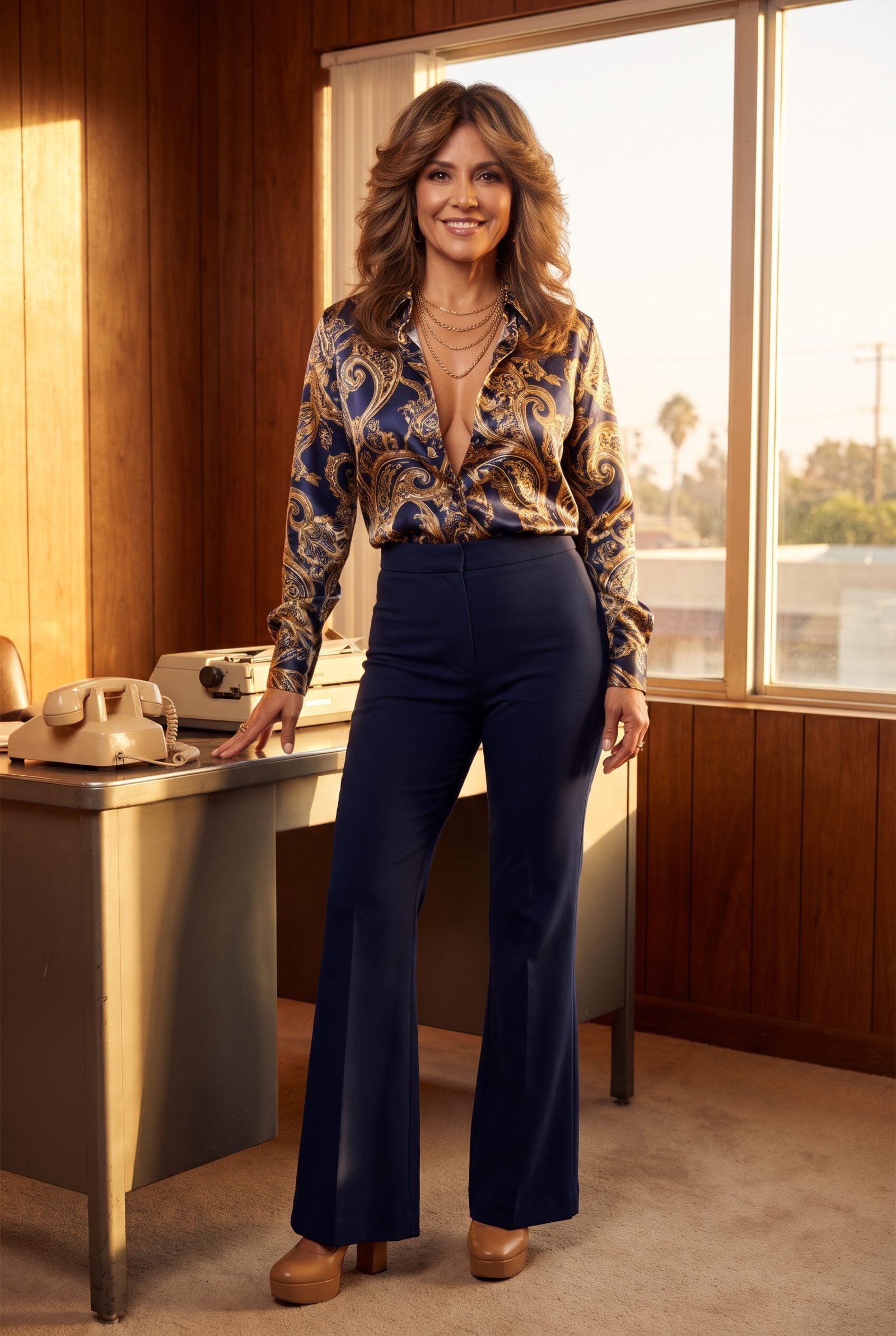
This was the shirt that said the workday was ending and the night was starting, often while the time clock still read 4:30. Slippery satin, a collar you could land a plane on, and buttons that gave up somewhere around the sternum.
The shine leads. Satin grabs light and movement, so the look flickers as she crosses the room with gold chains glinting in the gap. It reads as someone with a plan for after work, worn with just enough shirt still buttoned to survive the elevator.
25. The Skin-Tight Zip-Front Catsuit
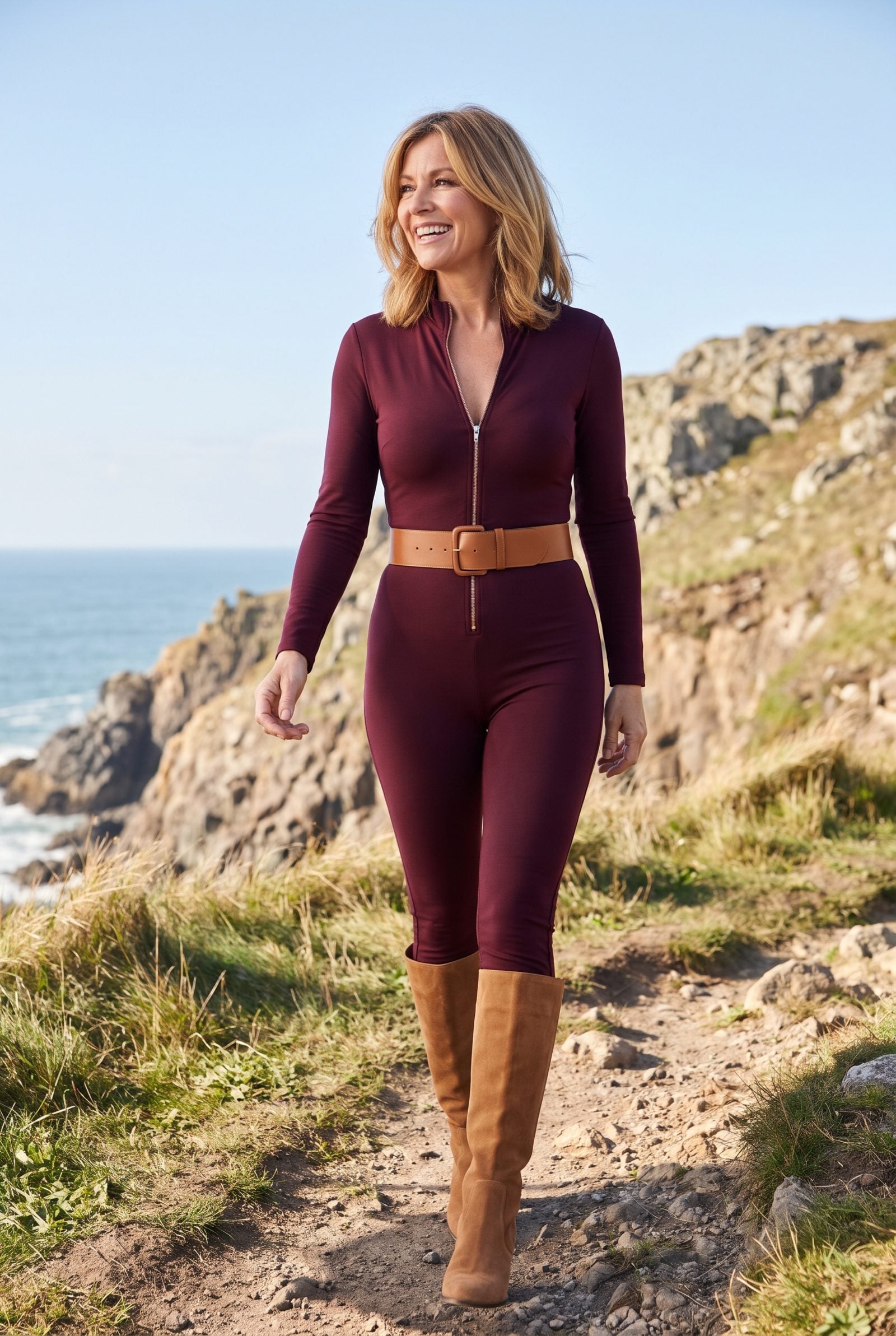
One piece, one zipper, nowhere to hide. The catsuit poured a woman into a single column of stretch jersey and then handed her a zip pull as the only styling decision left to make.
The belt does the quiet heavy lifting. Without it, the catsuit is one long unbroken line; with it, the waist gets defined and the silhouette gains structure instead of just cling. As for the zipper everyone noticed? Parked wherever the wearer felt bold enough to leave it.
24. The Translucent White Pantsuit
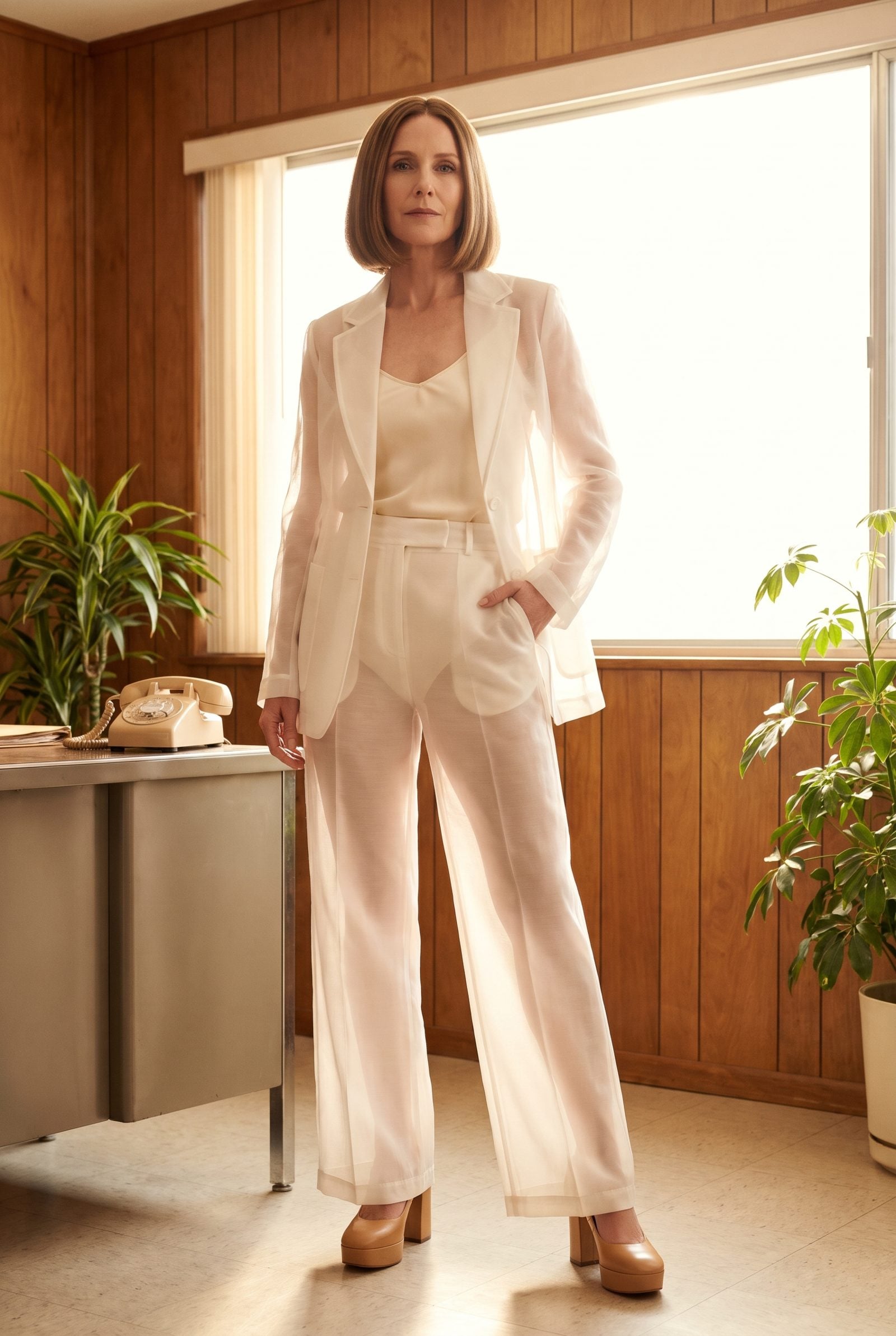
White suiting looks like power until the window light hits it. A lightweight white pantsuit held its authority beautifully in the hallway and then surrendered every secret the moment someone walked past a sunny window.
Here the suit’s structure is at war with its own fabric. The tailored blazer and wide-leg trousers say boardroom, the translucence says something else entirely, and backlighting decided which one won on any given afternoon. A camisole beneath the jacket was the only thing standing between confidence and a very candid Tuesday.
23. The Low-Rise Hip-Hugger Trousers
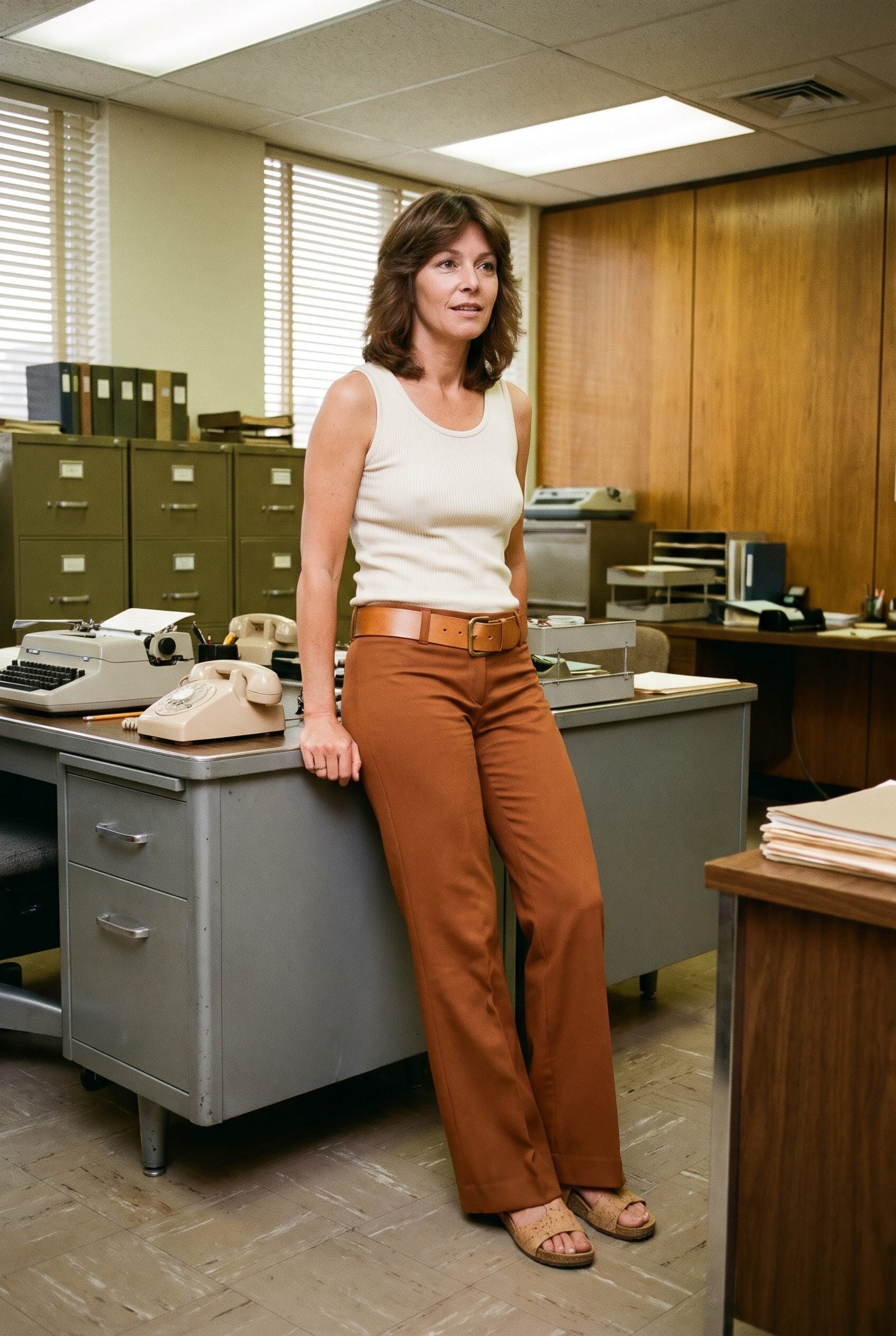
The waistband sat two inches below where a modern pair would land, which meant every time you reached across the desk for the stapler, a strip of back announced itself to the whole typing pool.
And yet the styling logic held up beautifully. A fitted rib-knit shell tucked into that low waist drew one unbroken line from ribcage to flare, while the hip-slung belt pulled the eye down instead of cinching the middle. Cropped top, elongated leg, waist deliberately ignored — that’s the whole trick.
These date outfits borrowed heavily from the same hip-first shape. HR would have words now. In 1973 it just meant you owned the floor.
What Our Readers Say
- Asked which daily go-to they would buy today, 59% of ThreadCurve readers picked jeans, 30% chose trousers and just 11% went for a dress.
From ThreadCurve reader polls and votes.
22. The Wrap Skirt Held Closed by One Tie
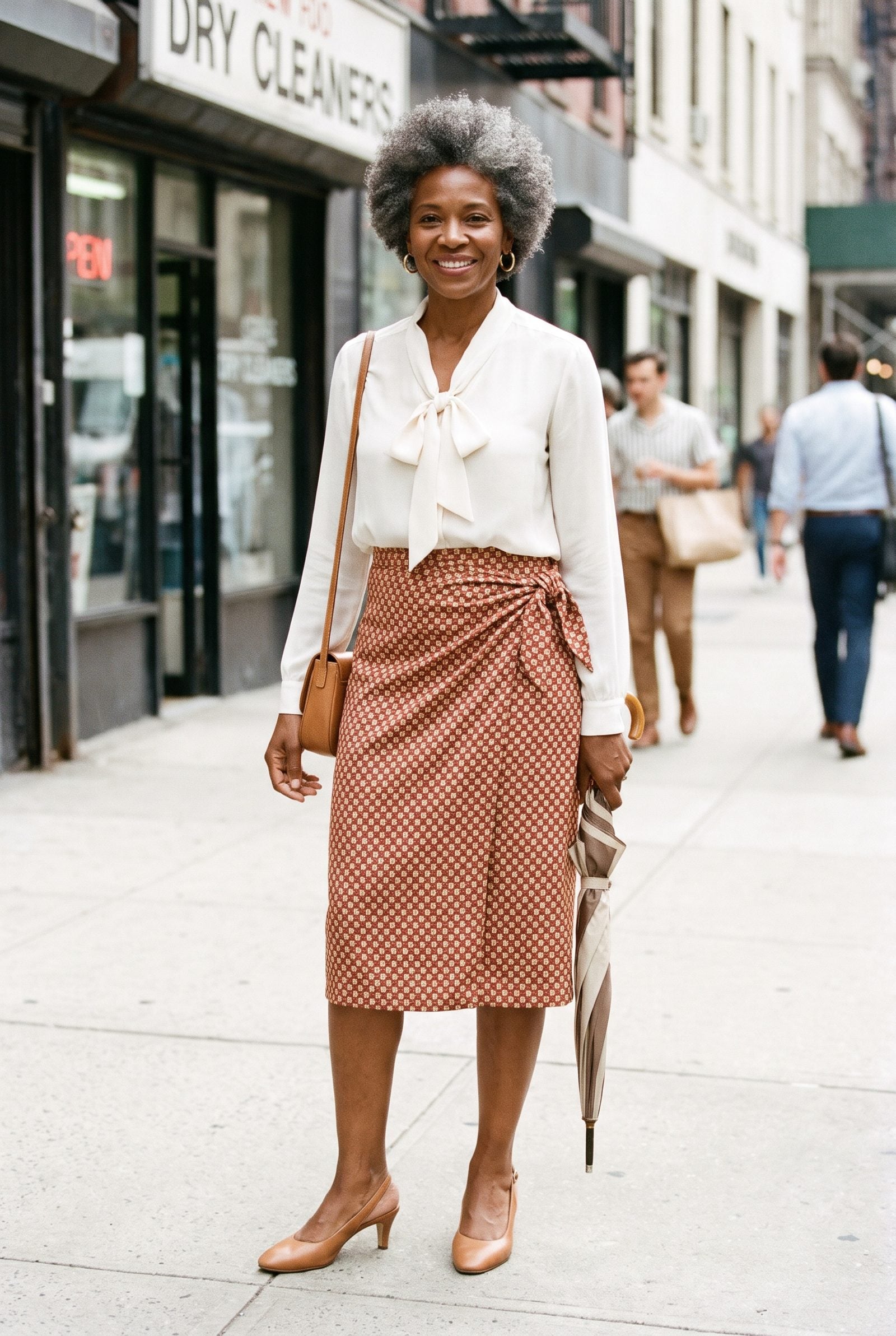
One knot. That was the entire closure system between you and a very public moment by the water cooler.
Everyone who wore one developed the same reflex — a quick left-hand press to the hip whenever a door swung open or a draft slipped through. The appeal was that fluid polyester crossover, the way it skimmed and moved, and the tie let you fuss with the drape on a bad morning. Pairing it with a tucked pussy-bow blouse set the softness up top against the clean wrap line below. Smart look. Nerve-wracking plumbing.
21. The Bare-Skin Leather Vest Look
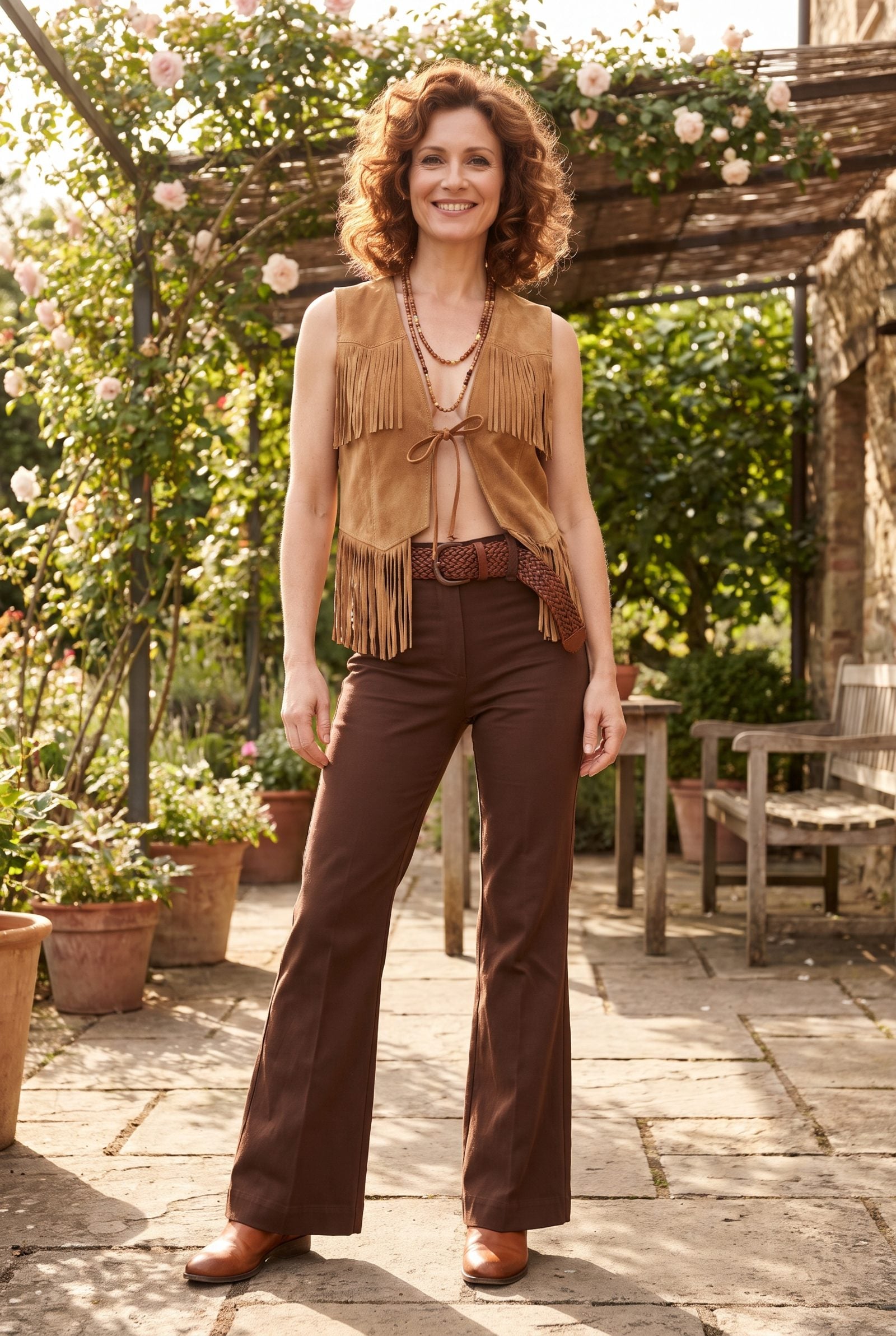
A suede vest laced over nothing underneath. That was the look, and it walked into offices with full confidence sometime around 1975.
The fringe did the talking — every movement sent the tan suede swaying, which turned a stationary desk job into something with motion built in. A vest designed to be the only thing on top quietly reframes an entire wardrobe from clerical to counterculture. Layered beads filled the open neckline and softened all that bare skin.
Modern HR would faint. The woman wearing it knew exactly what she was doing, and the style is still borrowed today, just with a camisole underneath.
20. The Extra-Wide Bell Sleeves Beside Office Equipment
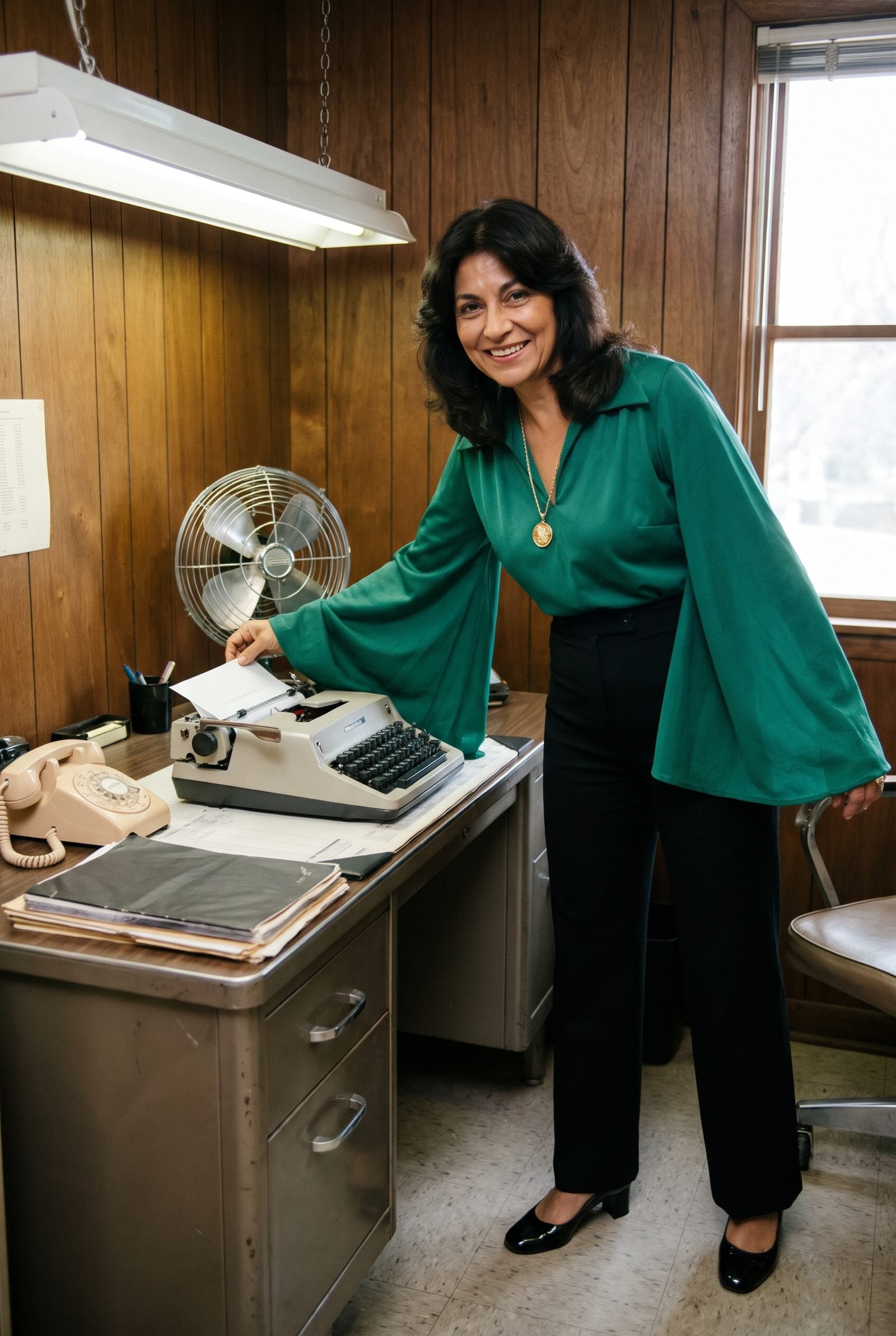
The sleeve flared from the elbow into a cascade of polyester wide enough to dust a filing cabinet on the way past. Beautiful on a dance floor. Less ideal hovering over a typewriter carriage and a spinning desk fan.
What made the bell sleeve work was contrast. All that volume up top demanded something lean below, which is why these lived on high-waisted trousers and slim skirts — narrow waist, exploding forearm, the eye pulled straight to the gesture of the hands.
Emerald liquid polyester caught the fluorescent light and threw it around the room. You felt expansive in these. You also learned to roll your chair back before answering the phone.
19. The Floor-Length Scarf Near Fans and Shredders
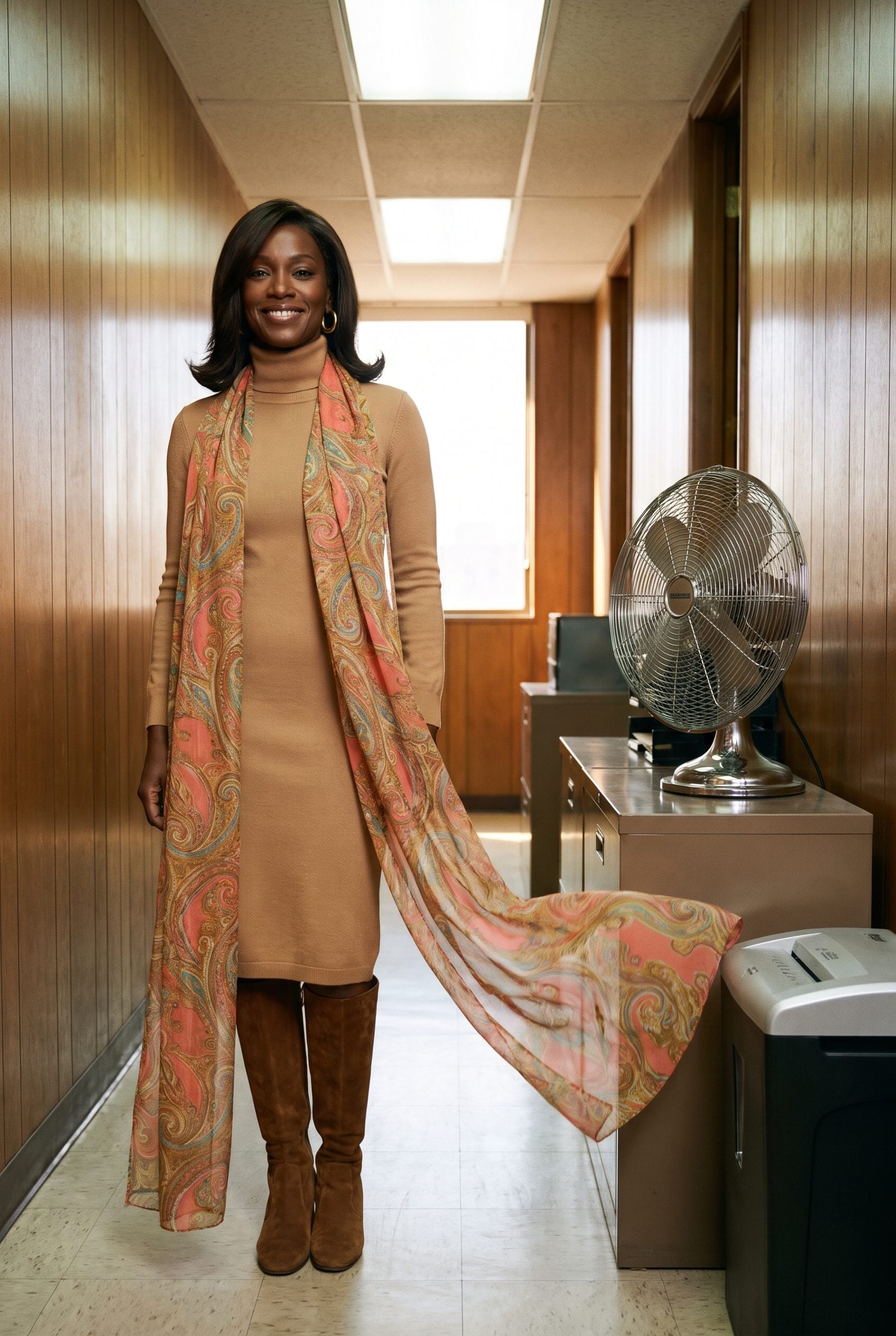
A scarf that reached the floor announced leisure and flair, both ends trailing like you had nowhere to be in a hurry. Then it drifted toward the oscillating fan.
Every woman who wore one knew that small cold jolt of fabric catching air near machinery. The chiffon paisley floated gorgeously, which was precisely the problem.
Styling-wise, though, it earned its keep. Against a plain camel turtleneck dress, that swirl of coral and teal was the only color story going, carrying the whole outfit on one long ribbon of silk. A lovely accessory and a cautionary tale wrapped in the same square of chiffon.
18. The Ankle-Sweeping Maxi Dress Caught in Chair Casters
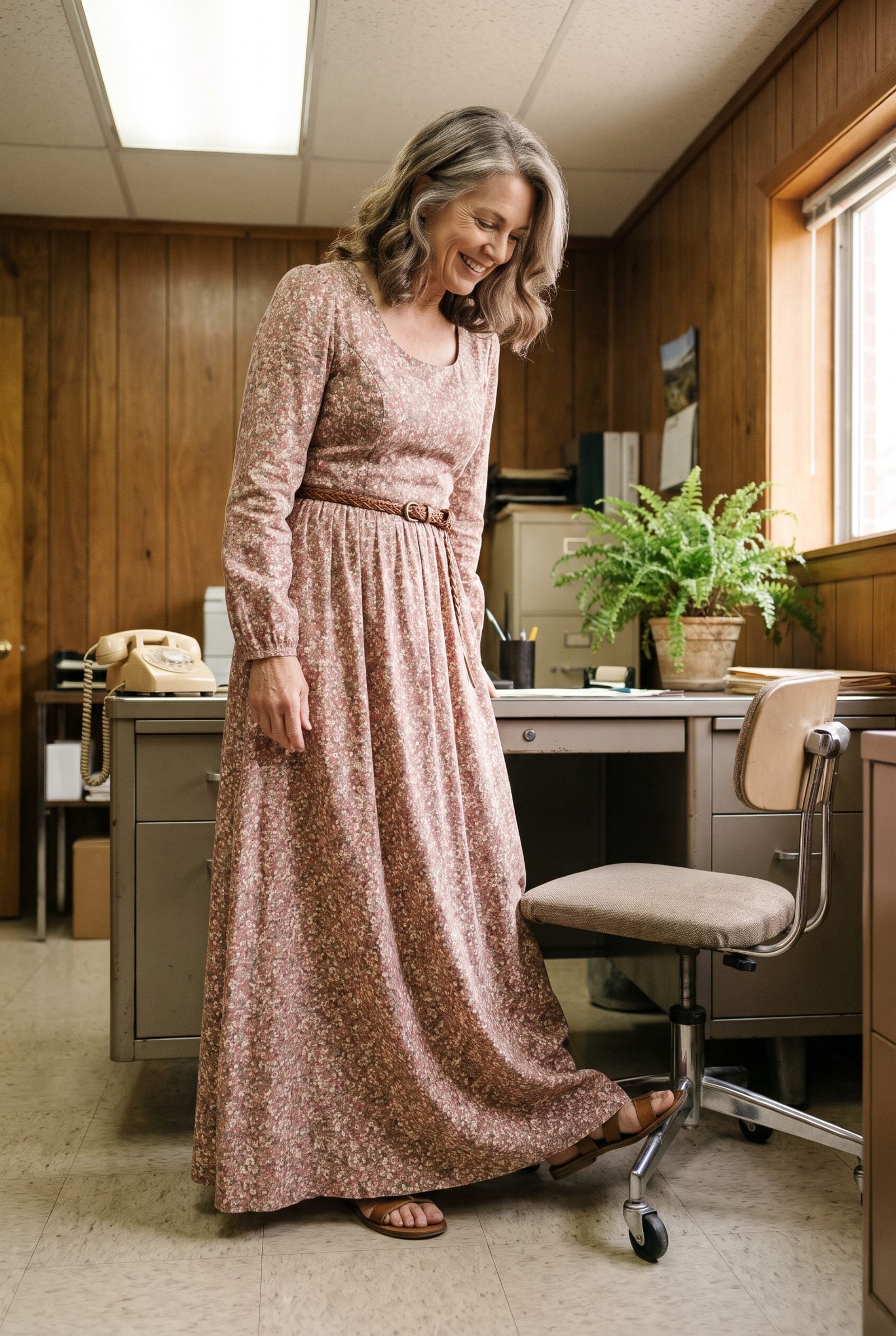
The hem brushed the linoleum, which felt romantic right up until you rolled your chair back and found the floral calico wound around a caster wheel.
Still, the dress did real work. A fitted bodice and a thin braided belt gave the floor-length skirt a defined waist, so all that fabric read as graceful rather than shapeless — one long vertical column from shoulder to ankle, still one of the most elongating lines a woman can wear.
Dusty rose and sage in a tiny calico print kept it soft without tipping into twee. You learned to gather the skirt before sitting, the way you learn anything you love enough to keep wearing.
Today our readers lean shorter: in one of our reader polls, 54% picked a knee-length dress and only 18% went for a maxi.
17. The White Patent Go-Go Boots
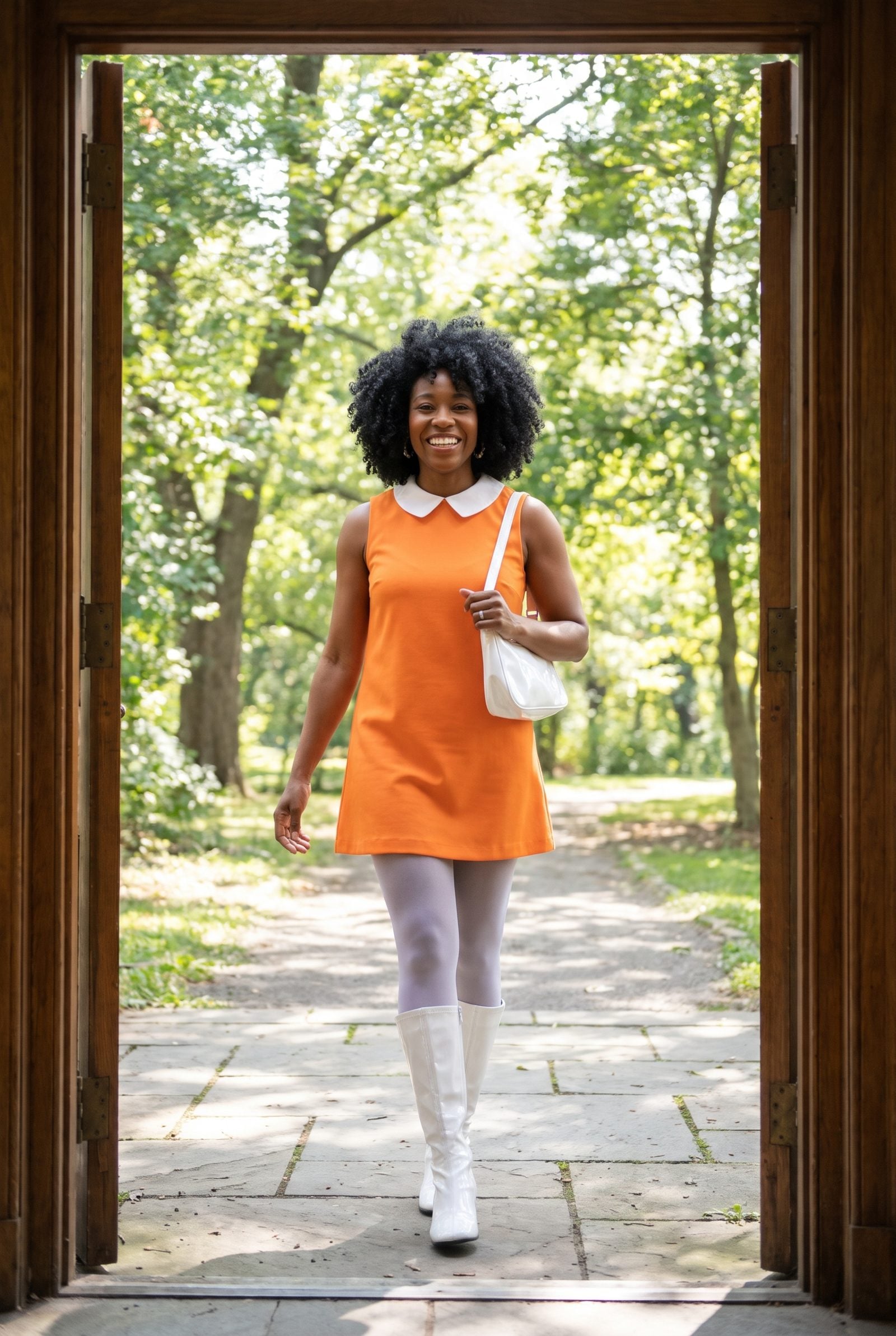
White patent boots to the mid-calf, gleaming in dappled sunlight like they had somewhere better to be than the office.
The boot carried everything. Strip it away and the tangerine shift dress is a pleasant mod moment; put it back and the whole outfit turns deliberate, graphic, almost sculptural from the knee down.
They clicked on flagstones. They scuffed if you looked at them wrong. Nobody cared, because the gloss of that patent against opaque pale lavender tights was the whole reason you got dressed that morning.
16. The Five-Inch Platform Shoes
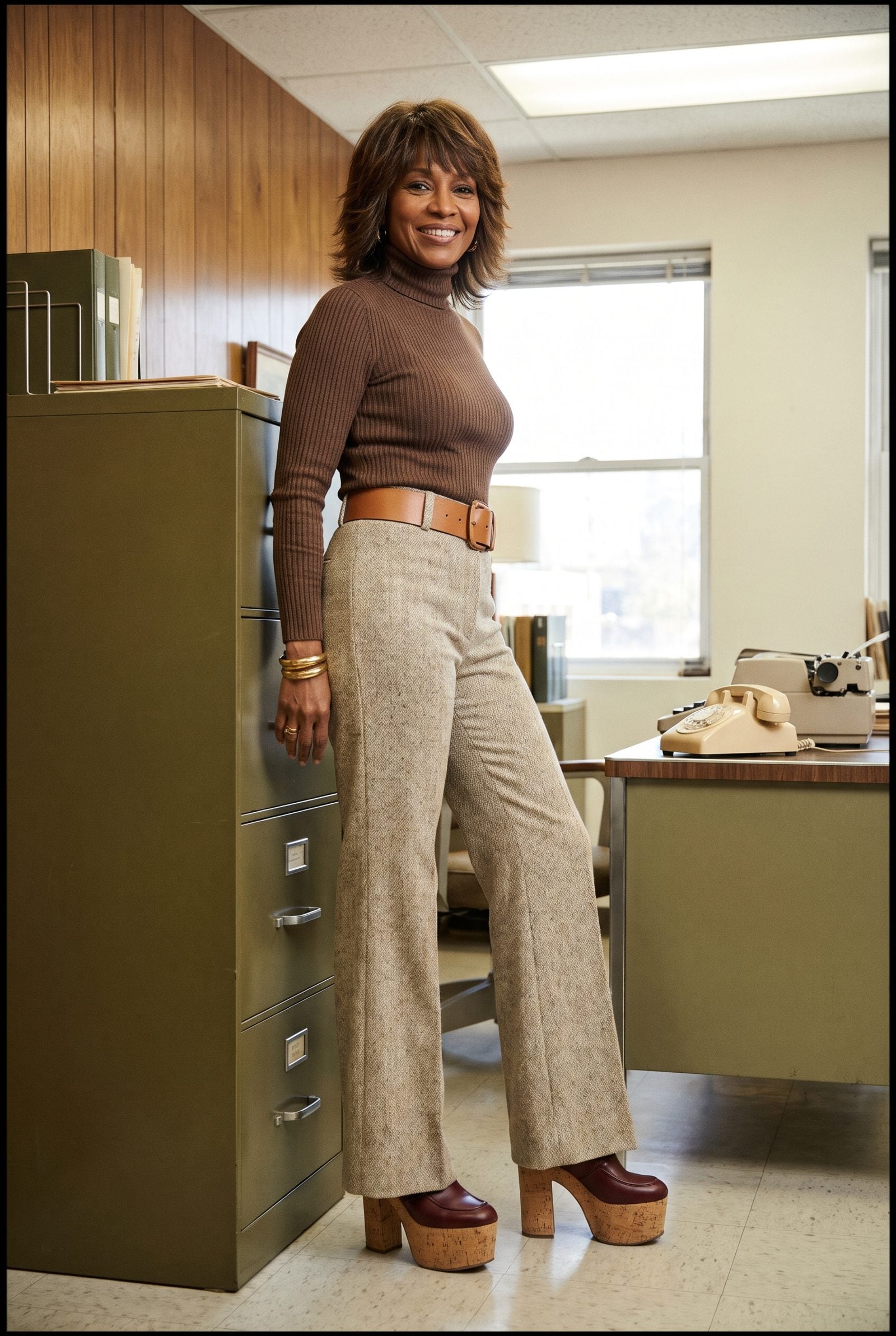
Five inches of cork and stacked leather, and you walked into work on them like it was nothing.
The genius was the trouser. Wide-leg flares stopped just above the shoe, leaving the whole platform and heel on show so nobody missed the height. The line ran the whole length of the leg — long and swinging, right down to where the cork took over. Burgundy leather on chunky cork block heels, worn with oatmeal tweed, gave the palette a grounded, earthy feel. Your ankles learned balance the hard way, usually on the stairs.
15. The Needle-Thin Stilettos Required by the Dress Code
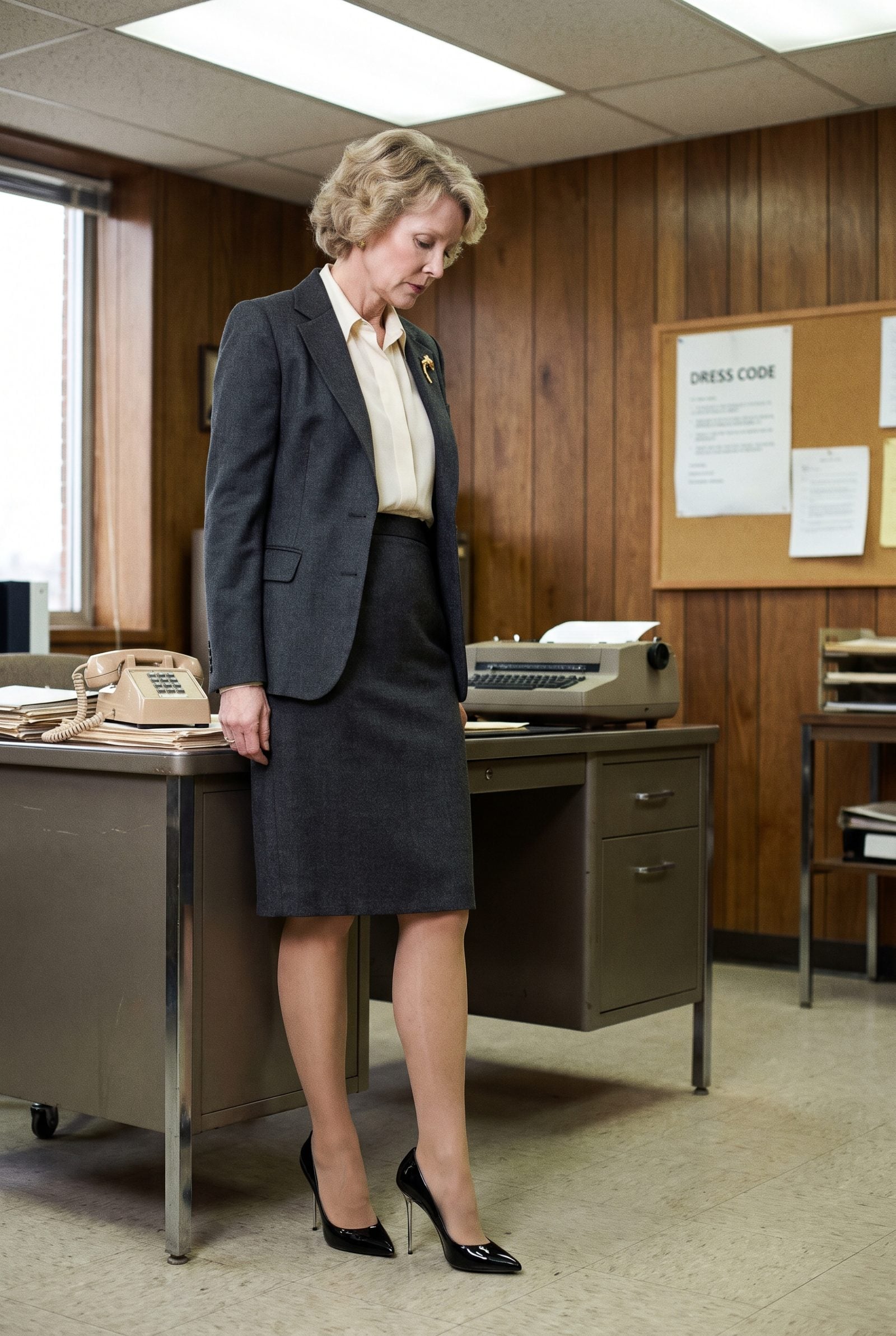
This one wasn’t a choice. The dress code spelled it out — thin heel, high heel, no exceptions, regardless of what your feet thought by three in the afternoon.
Here’s the line worth drawing. The go-go boots and the platforms were women reaching for something; the needle stiletto, mandated in a memo on the bulletin board, was something reaching for women. Same sharp heel, opposite story.
The suit itself was sharp — a slim charcoal pencil silhouette, ivory blouse, a single gold brooch handling all the finishing. A genuinely good look, which makes the compulsory footwear sting a little more.
Given a free choice today, 61% of ThreadCurve readers would buy sneakers as their daily shoes, while only 16% would choose a low heel.
14. The Chain Belt With Long Dangling Links
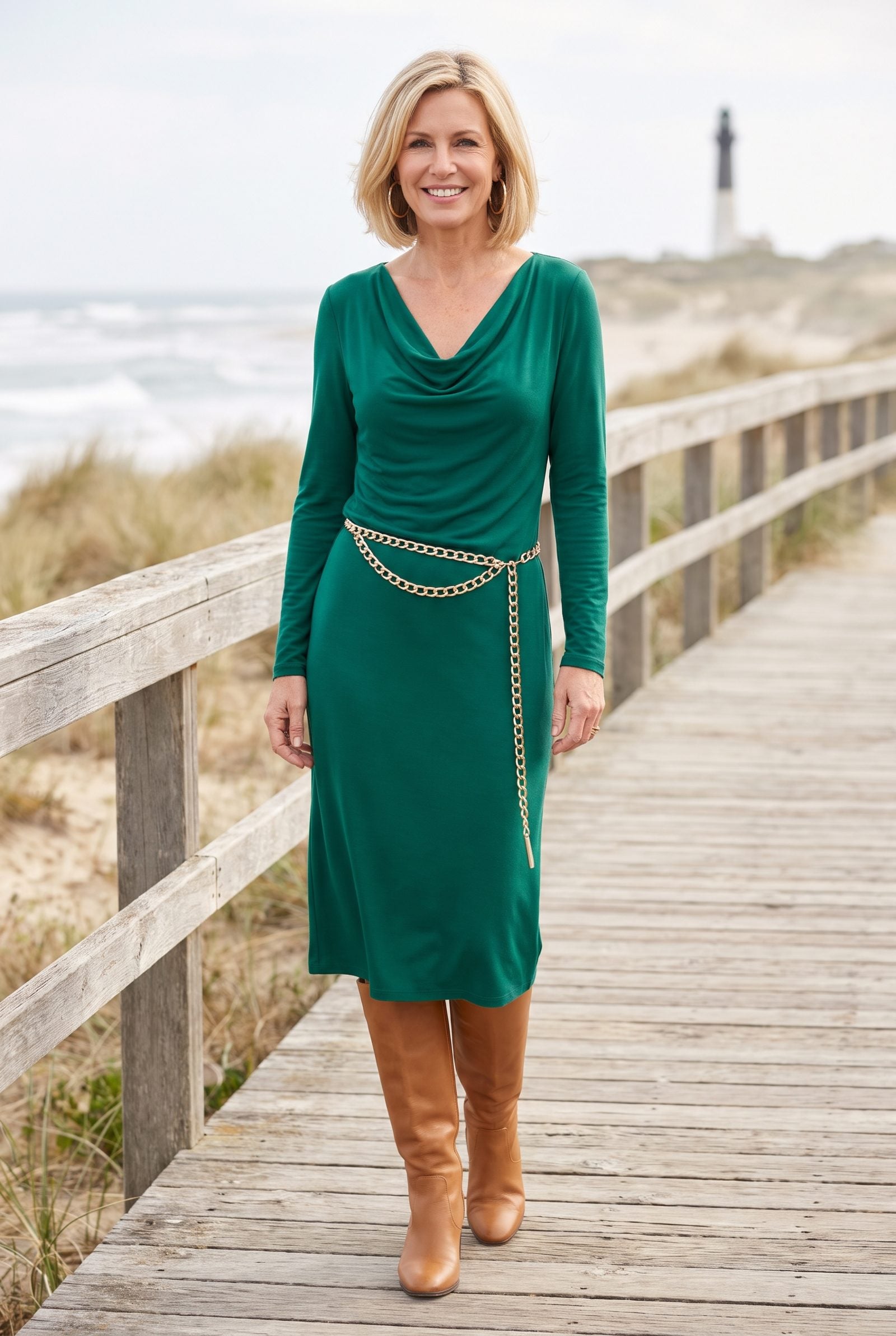
A gold chain slung low on the hips with a length left to dangle, swinging against your thigh as you crossed the room. It jingled faintly when you walked — glamorous or distracting, depending on who you asked.
The belt was the only hardware in an otherwise fluid look. A draped jersey midi dress in jewel green moves soft and liquid, so that cool metal chain cut across it gave the eye something firm to land on. Polished gold against draped knit, nothing subtle about it.
It caught on drawer pulls. It snagged chair arms. The wardrobe is still better for that bit of metallic nerve.
13. The Shoulder-Dusting Chandelier Earrings
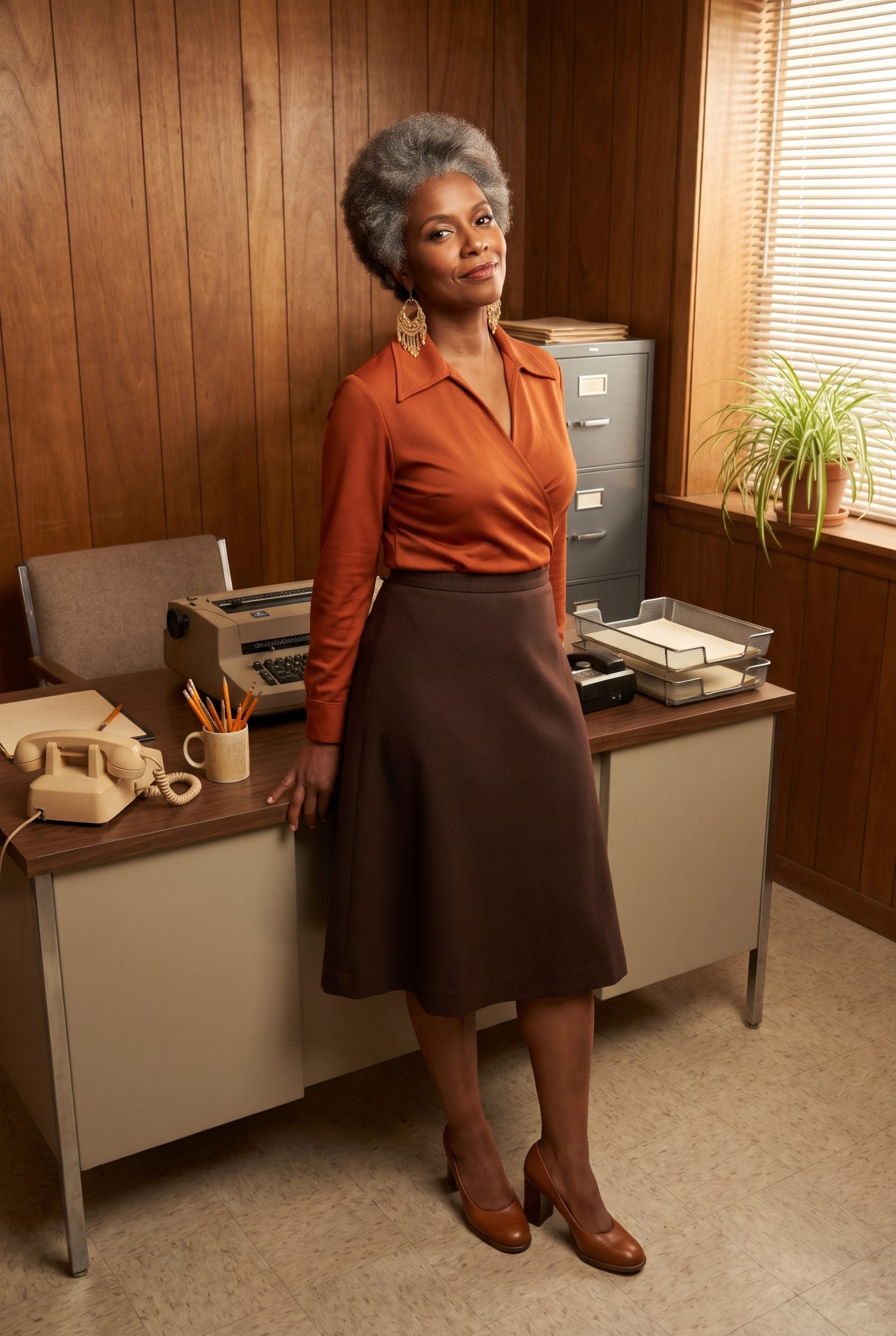
The earrings arrived before the person did. Gold, tiered, swinging like small windchimes every time you turned to grab a ringing phone. You felt them more than you saw them — that gentle tap against your jaw all afternoon.
The styling logic is deliberate imbalance. A plain polyester blouse and a straight skirt go quiet so the earrings can do all the talking, and one bold metallic element against matte neutrals is why the whole look reads as intentional rather than busy.
12. The Waist-Length Pendant Necklace
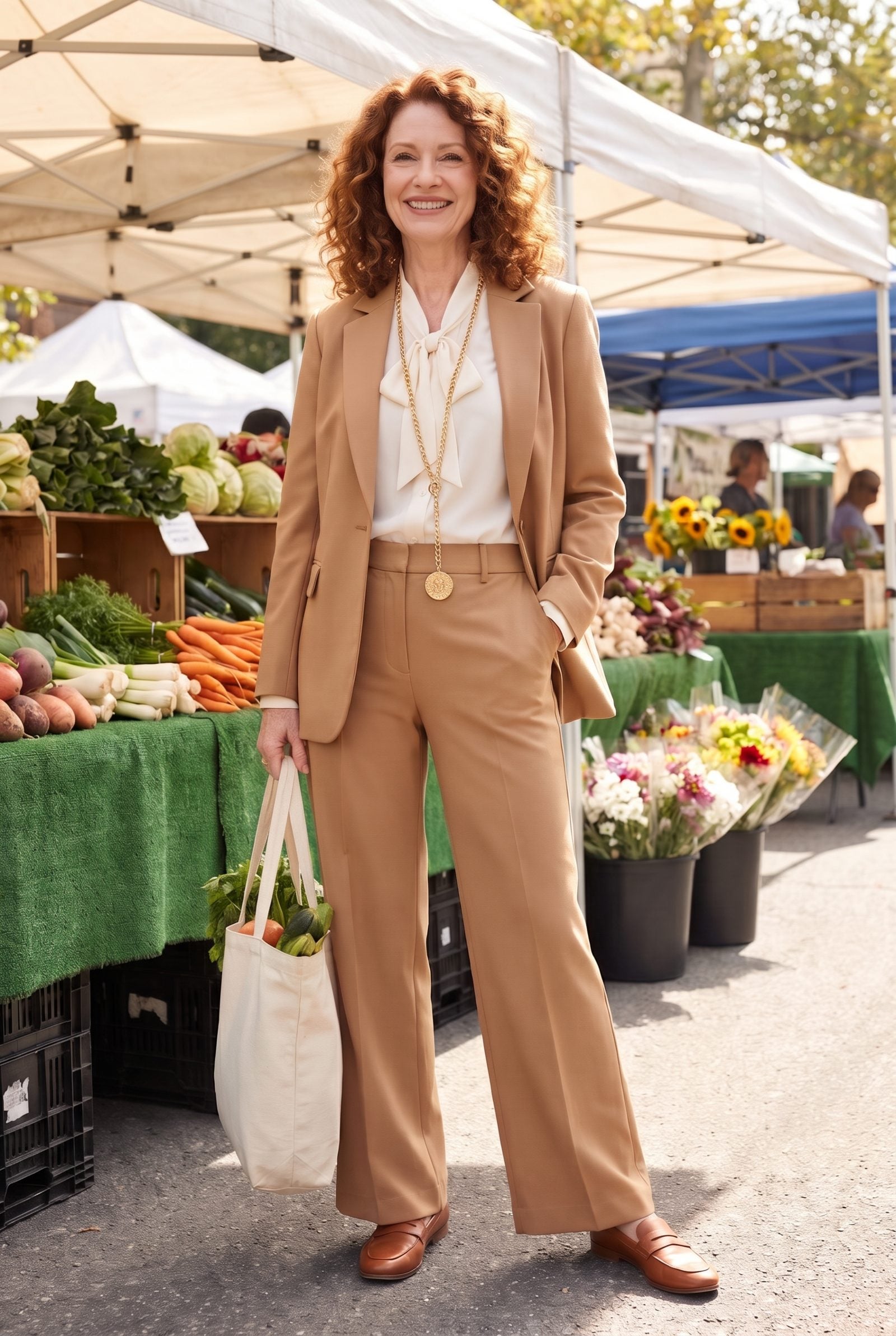
Long enough to catch in a typewriter carriage. Long enough to dunk in your coffee if you leaned too far forward. The pendant that swung all the way down to the waist refused to know its place, and we loved it for exactly that.
Length is everything here. A pendant that stops at the collarbone whispers, while one that drops all the way to the waist pulls the eye down the whole figure and stretches the line of a blouse — which is why it worked so well over flowing chiffon and wide lapels.
11. The Mandatory Nude Pantyhose
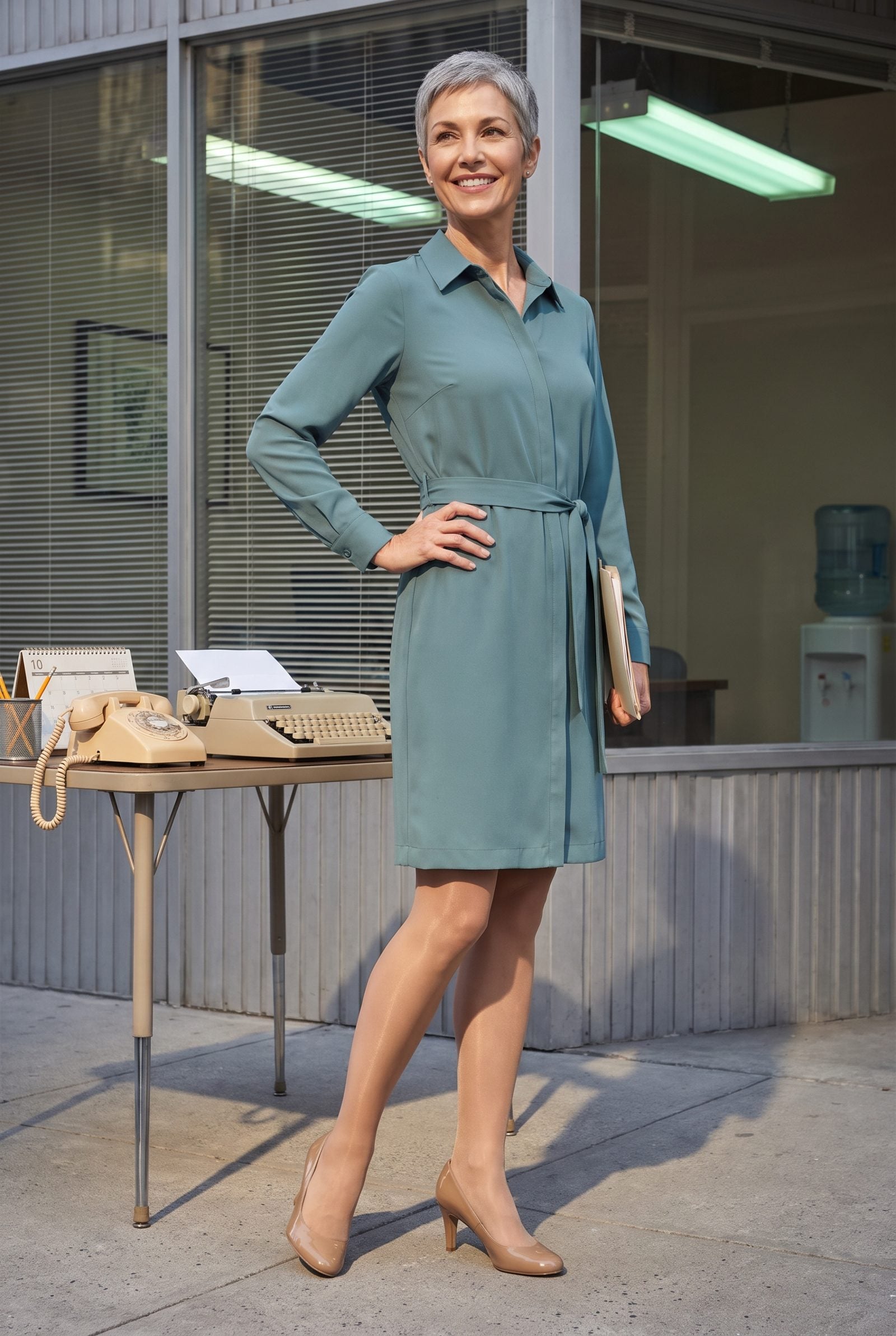
Bare legs were a fireable offense in plenty of offices, no matter the temperature. So the nude pantyhose lived in a desk drawer, usually a spare pair still sealed in its plastic egg, because a run by 2pm was a genuine workplace crisis.
This wasn’t about choice. Management wanted every pair of legs smoothed and sheer and identical, which is where the line between personal style and employer control started to dissolve.
10. The Garter Belt and Stockings Beneath a Mini Skirt
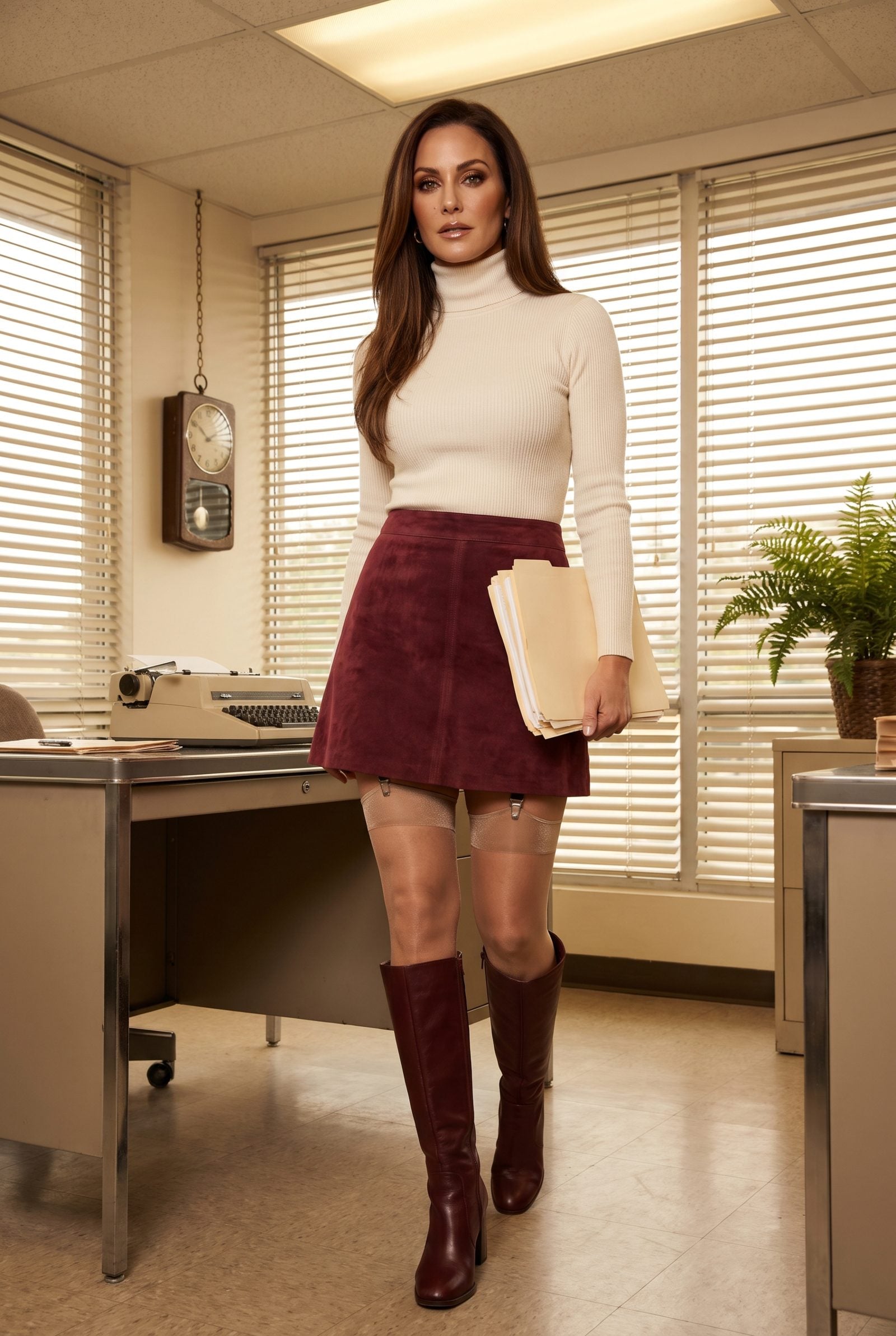
Tights existed. Plenty of women skipped them for the garter belt anyway, which meant the hem of a mini skirt and the top of a stocking were negotiating a very narrow truce all day long.
The tension is the whole design. A short suede skirt against the vertical line of the stocking seam, matte nap playing off sheen — that contrast is what kept the look from sliding into costume and let it land as deliberate instead.
9. The Company-Expected Girdle Under a Fitted Dress
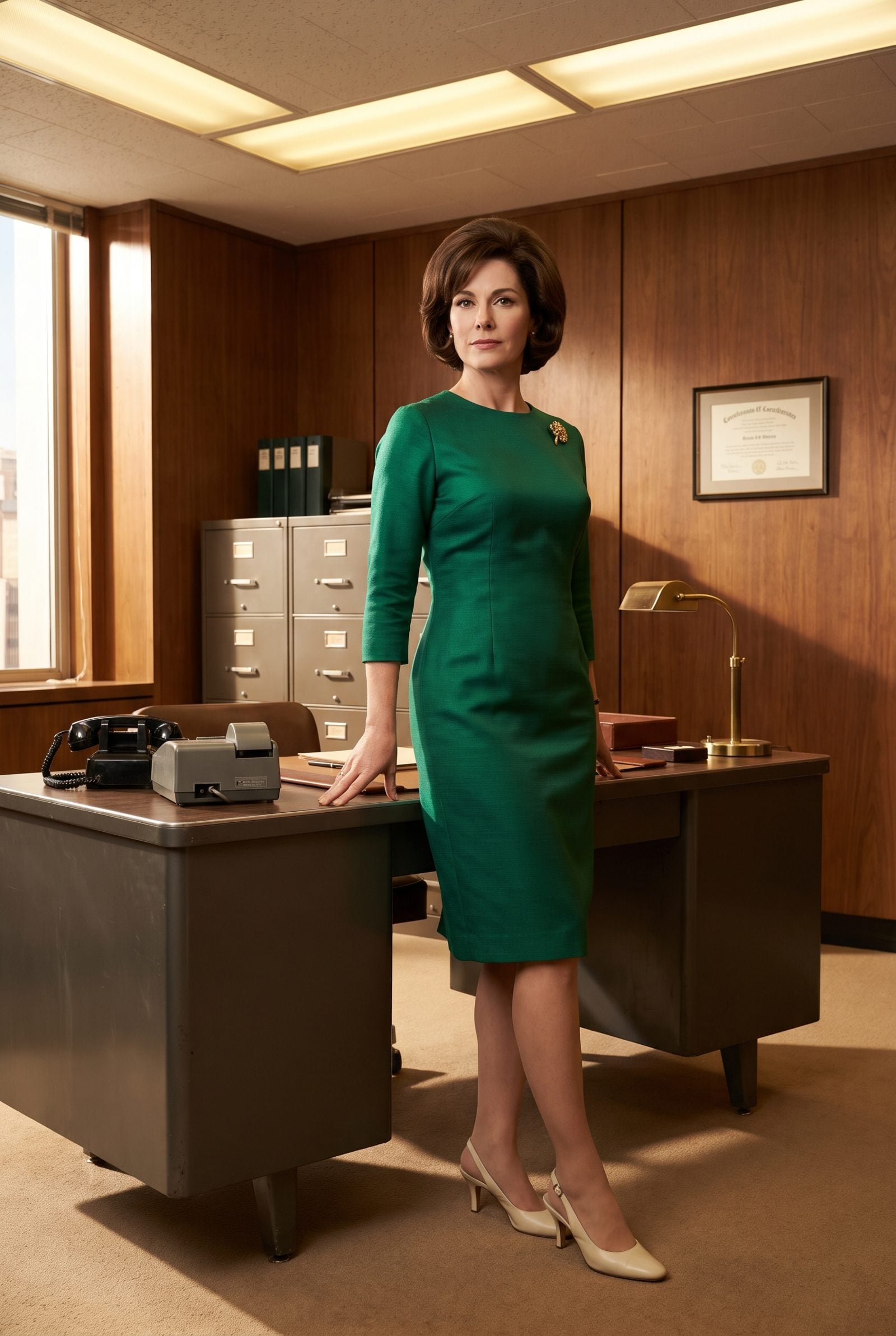
The dress looked smooth because something underneath was doing hard labor all day. The girdle was armor you couldn’t see, pulling and flattening under a fitted sheath, and in a lot of offices it was less a choice than an unspoken dress-code expectation.
The whole look rides on that unbroken line. Polyester this fitted shows every seam and ripple, so everything depended on the smoothing layer beneath it — strip it away and the silhouette collapses.
Smooth on the outside, scaffolding on the inside. That was the deal.
Worth remembering how much of the era’s crisp office polish was built on foundations nobody was allowed to mention. The effect was employer-approved. The discomfort stayed private.
8. The Full-Face Makeup Requirement for Receptionists
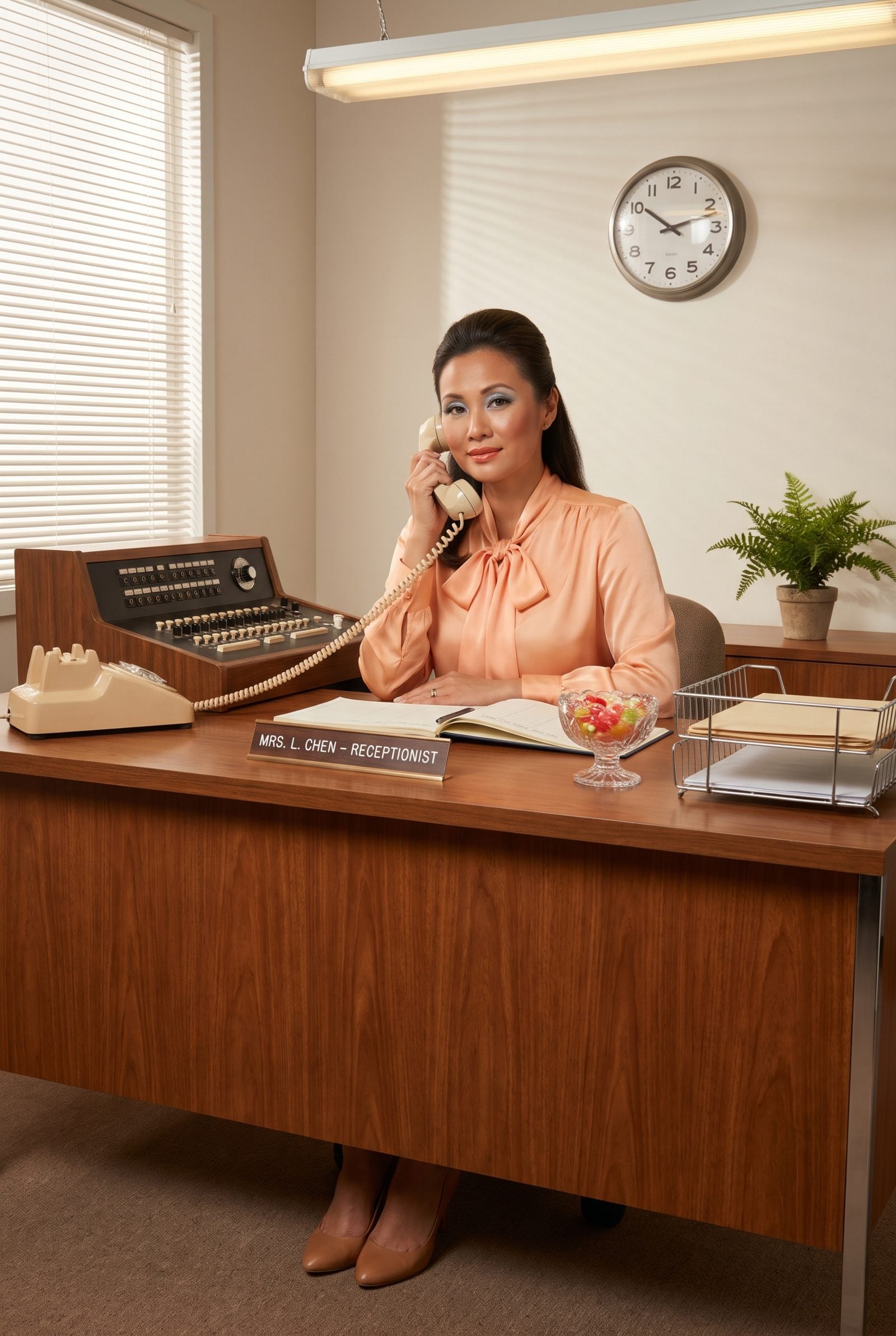
The first face at the door had to be done. Fully done. Frosted lid, lined eye, lash, blush, lip — the whole production, often before 8am, and often because the job description quietly demanded it rather than because you felt like it that morning.
Call it enclothed cognition applied to a face. The makeup worked as uniform, a signal to every visitor that the company was buttoned up, and the labor of performing it daily landed squarely on the women at the front desk.
7. The Wig Used to Conceal a Natural Afro
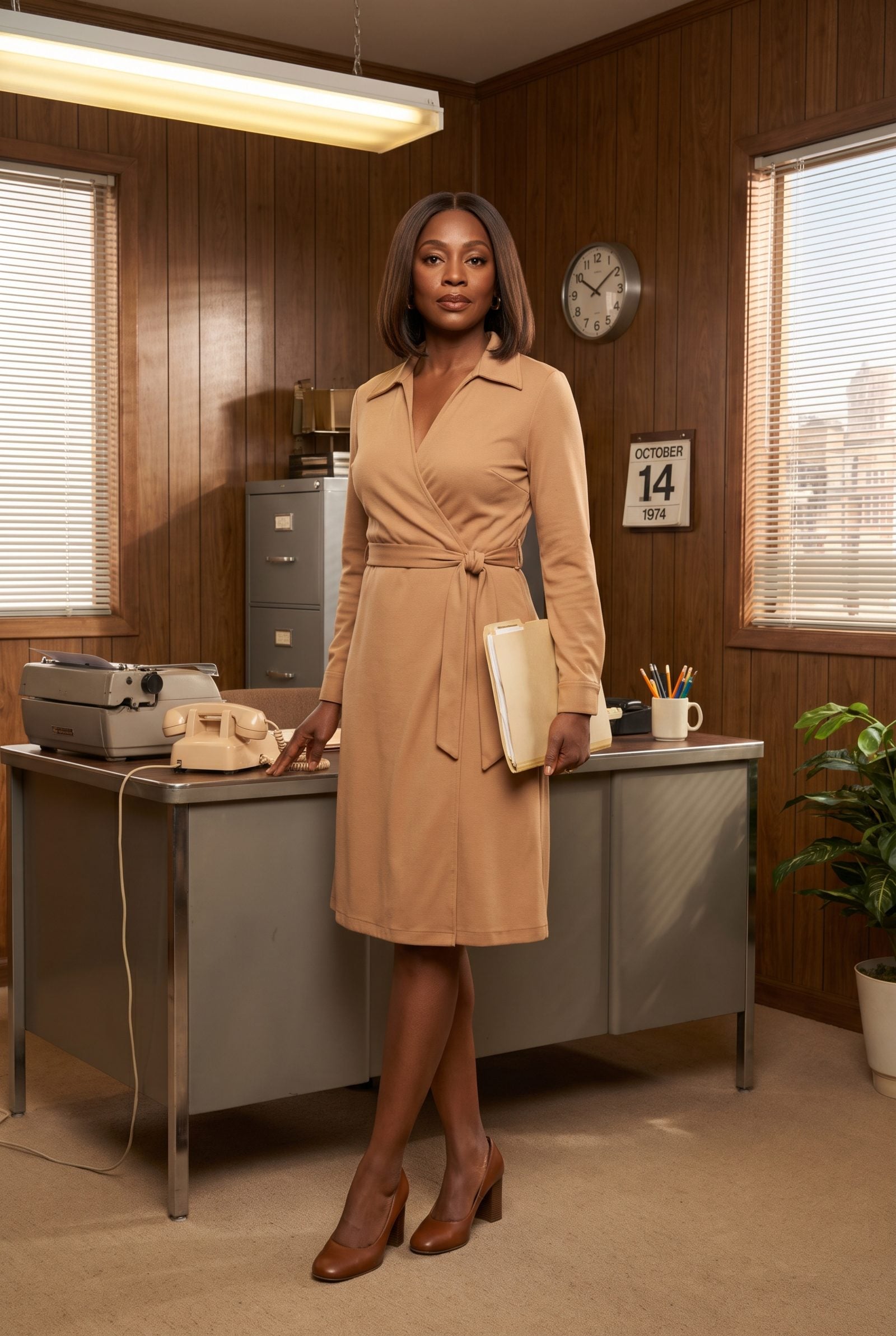
Many Black women kept a straightened wig at the ready — not out of preference, but because a manager might read an afro as unprofessional. The wig was the quiet workaround nobody should have had to make.
The irony lives in the styling. A soft camel wrap dress and gold jewelry would have framed a natural afro beautifully. Instead the wig existed to satisfy a grooming standard that had nothing to do with the woman’s own taste and everything to do with other people’s bias.
6. The Waist-Length Loose Hair Beside Office Machinery
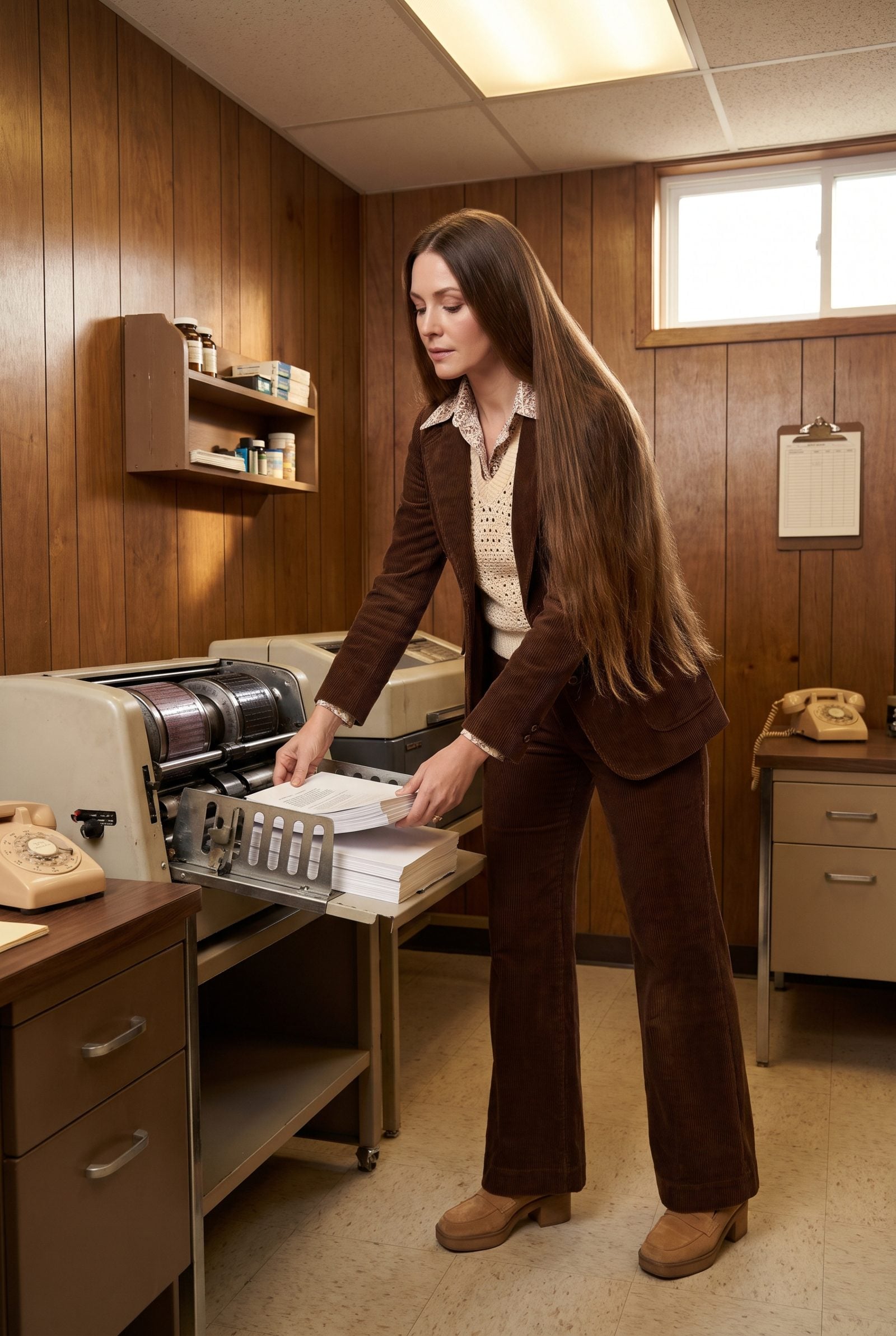
Hair to the waist, parted dead center, worn loose right beside a mimeograph with real moving parts. Nobody tied it back. The look was the point, and that ironing-board-flat shine took serious work the night before.
The hair itself does all the lifting. Set against a chocolate corduroy suit and a crochet vest, that sweep of length becomes the longest line in the whole outfit, pulling everything downward and soft. It read as freedom, even when the setting was anything but.
Today that ironing-board look has less pull: in our Hot or Not matchups, pictures with straight hair won 35% of their head-to-head matchups, against 47% expected.
5. The Typewriter-Defying Extra-Long Acrylic Nails
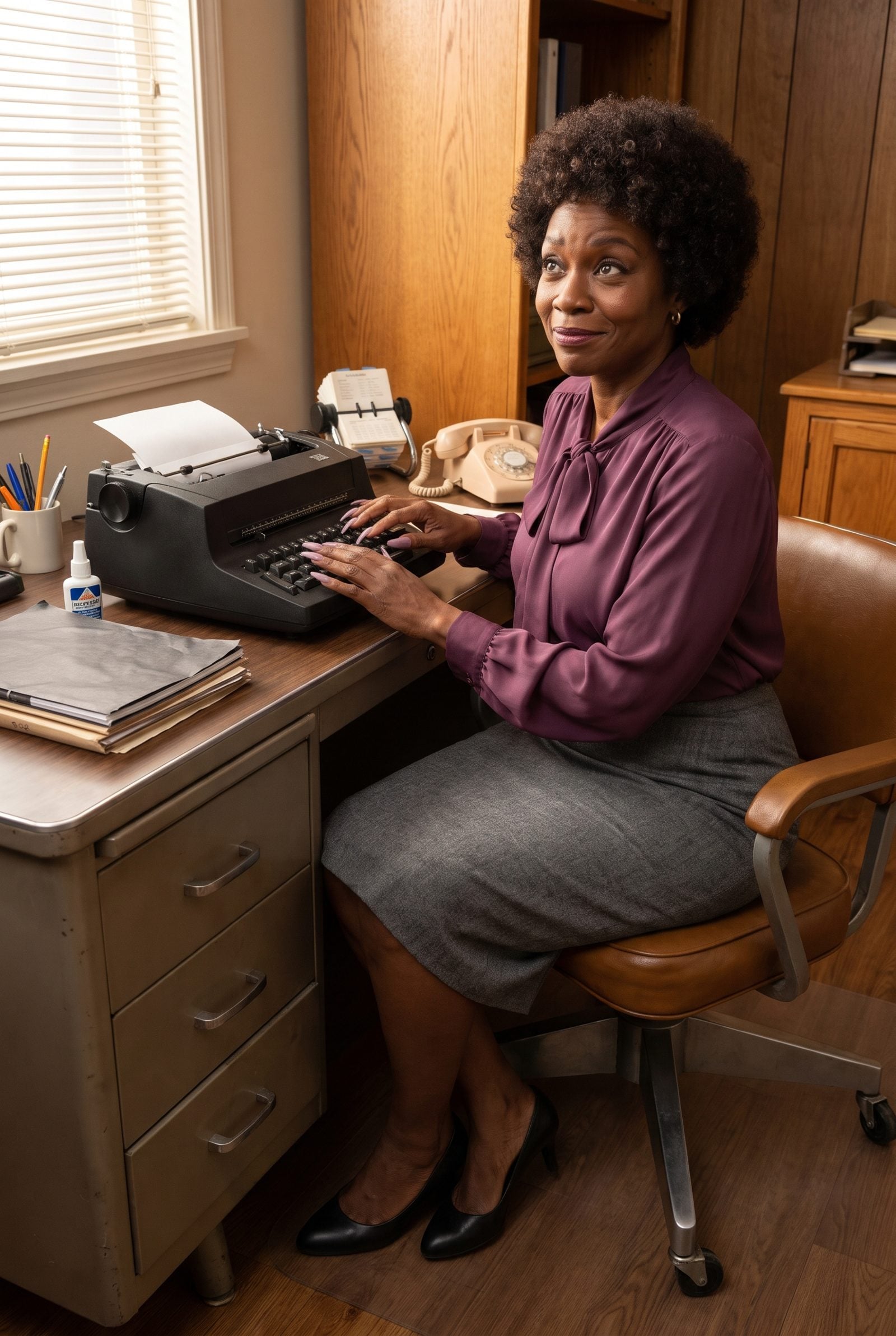
You could hear her typing before you saw her — that extra click-click of acrylic hitting the keys underneath the actual keystrokes. The nails were long, oval, frosted, and functionally at war with a Selectric all day.
That nail was the finishing detail that reframed an otherwise sensible plum blouse and gray skirt into something with attitude. It announced that the woman behind the desk had a life and a personality the job was not going to sand down.
4. The Lapel Covered in Political Campaign Buttons
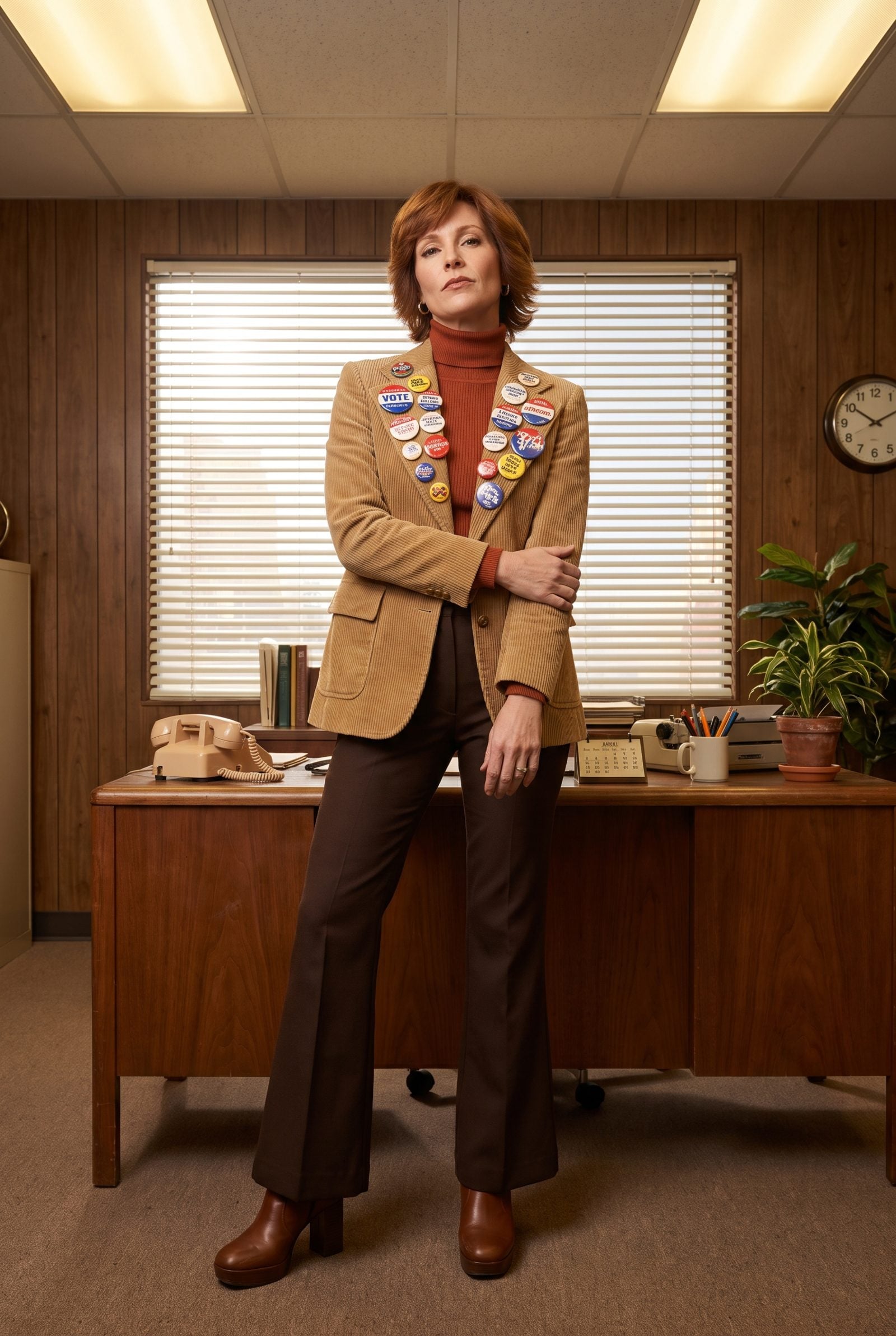
A whole political argument pinned to one lapel. A bold red, white and blue VOTE button, candidate pins, a jumble of slogans — all crowded onto a corduroy blazer and worn straight into a meeting where nobody had asked for your opinion.
The buttons carry the entire outfit. Without them this is a sensible earth-toned suit and little more. With them, it declares where you stood, turning a quiet look into something with a point of view and a bit of nerve.
3. The Union Badge That Management Wanted Removed
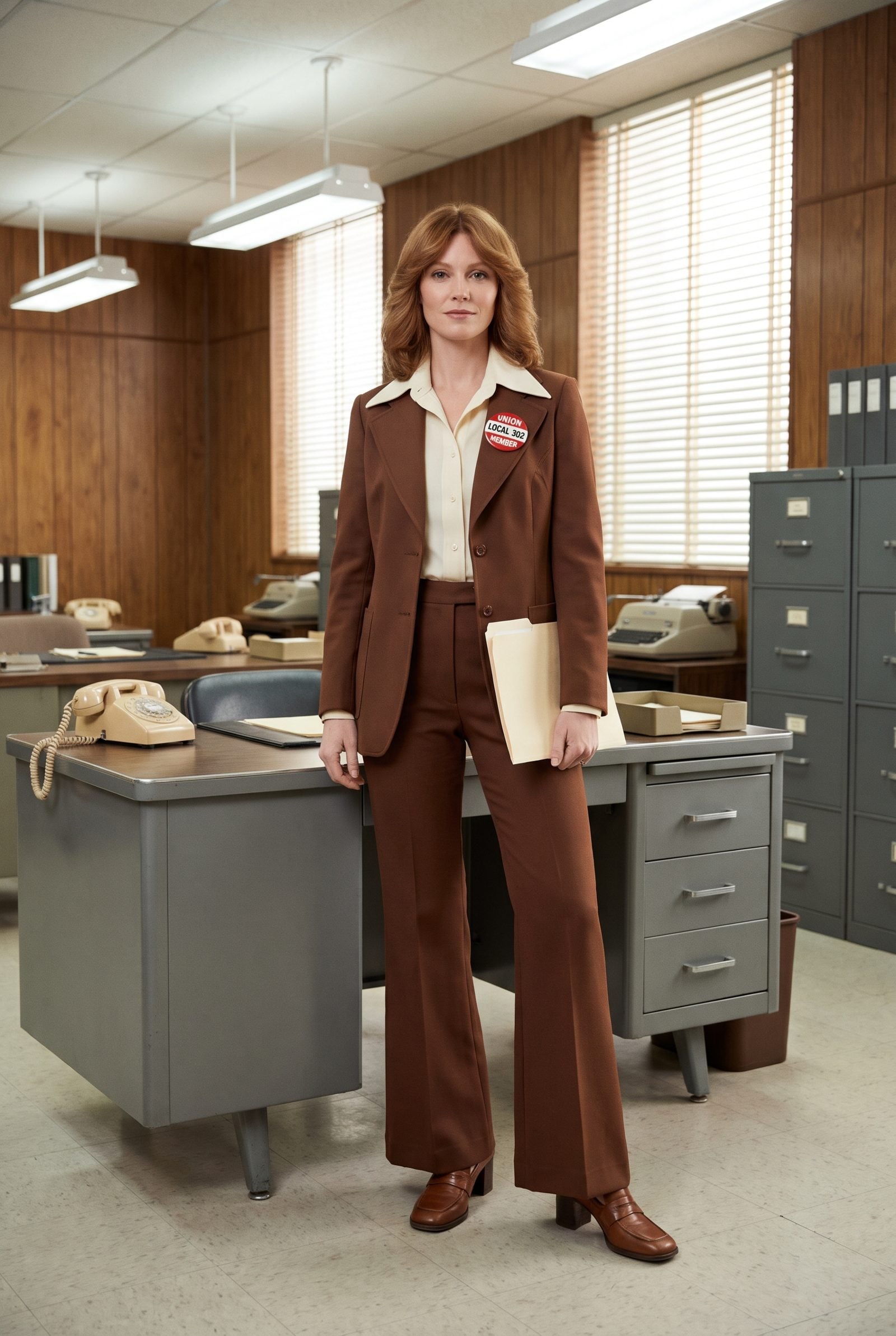
The whole outfit reads quiet except for one red circle on the lapel, and that’s exactly the point. The brown polyester suit is pure camouflage, deliberate blandness, while the enamel union button is the single loud word in an otherwise mumbled sentence.
Management hated these. One pin the size of a quarter, and suddenly a memo went around about “maintaining a neutral professional appearance.” Everyone knew what neutral meant. Take it off.
2. The Cannabis-Leaf Necklace Worn Under the Blouse
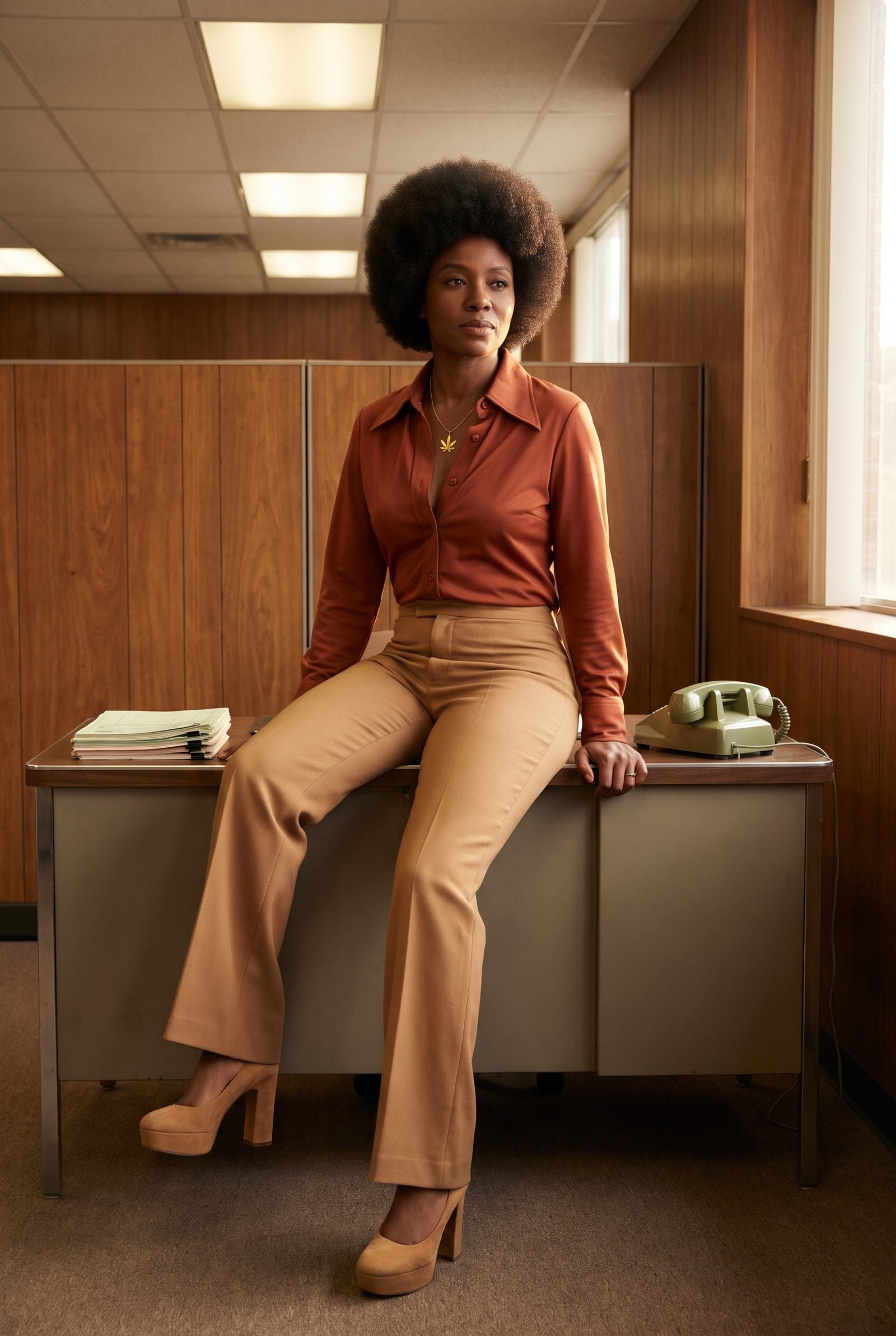
Small gold pendant, thin chain, a shape nobody at the office was supposed to recognize. Half the appeal came from how it hid in plain sight against the open collar of a rust polyester blouse.
The styling logic here is subtraction — one delicate gold accent against warm earth tones, nothing else competing for your eye. The leaf does all the talking, and it talks only to the people who get it.
A quiet signal that the woman wearing it had a whole life outside the filing cabinets. And that was the real luxury in a 1970s office: personality you could tuck back under your blouse before the supervisor walked by.
1. The Maternity Smock Used to Hide a Pregnancy
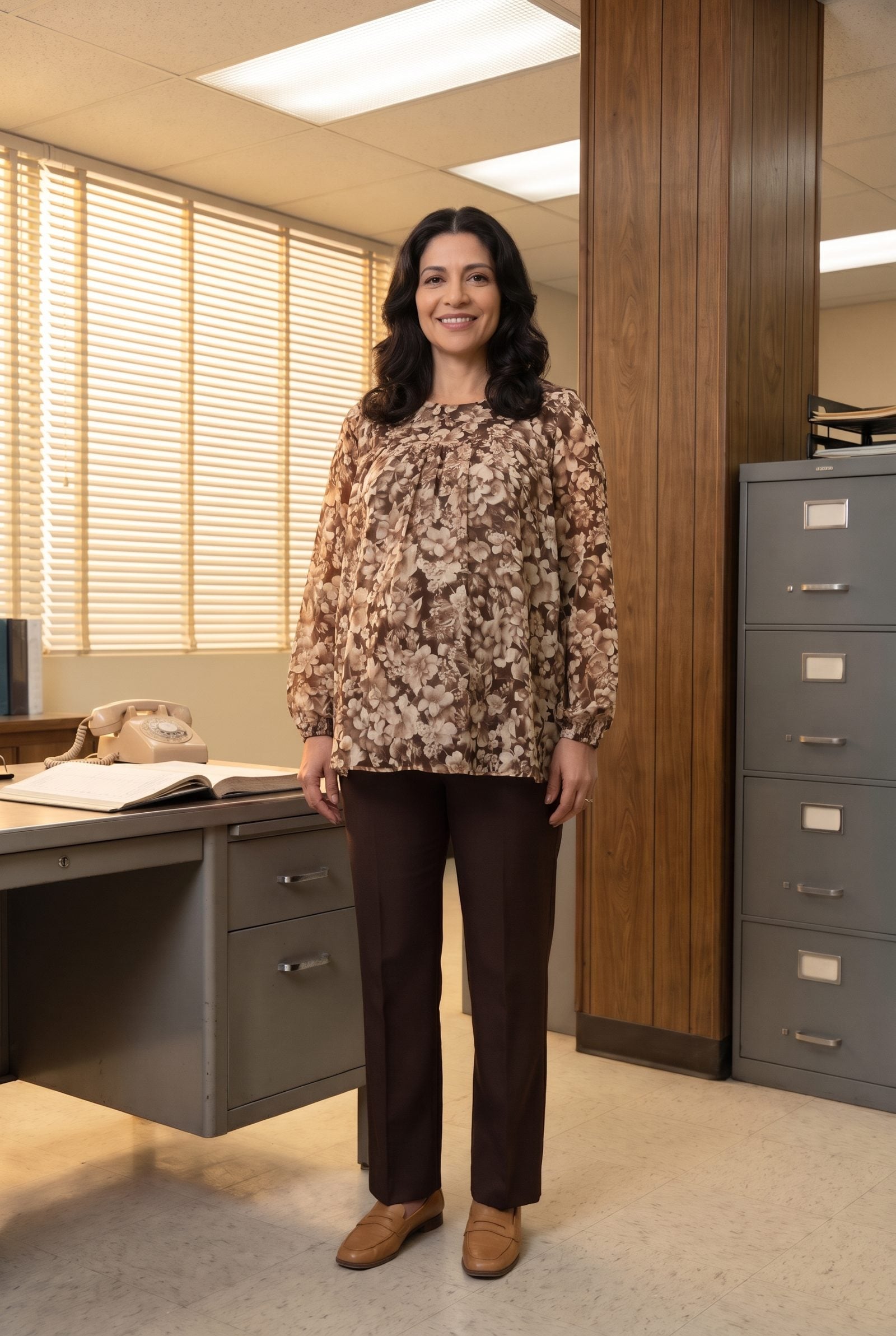
The silhouette tells the whole story. A high yoke, a loose A-line fall, a smock cut to skim the body rather than follow it, with floral chiffon keeping it soft and the volume keeping it vague. That vagueness was the job.
Women once wore these to buy time. Before the Pregnancy Discrimination Act, a visible pregnancy could end your paycheck, so the smock pulled double duty — comfortable and concealing at once. Paired with brown trousers and tan loafers, it reads as relaxed and easy. Back then, it was a quiet act of self-protection.