
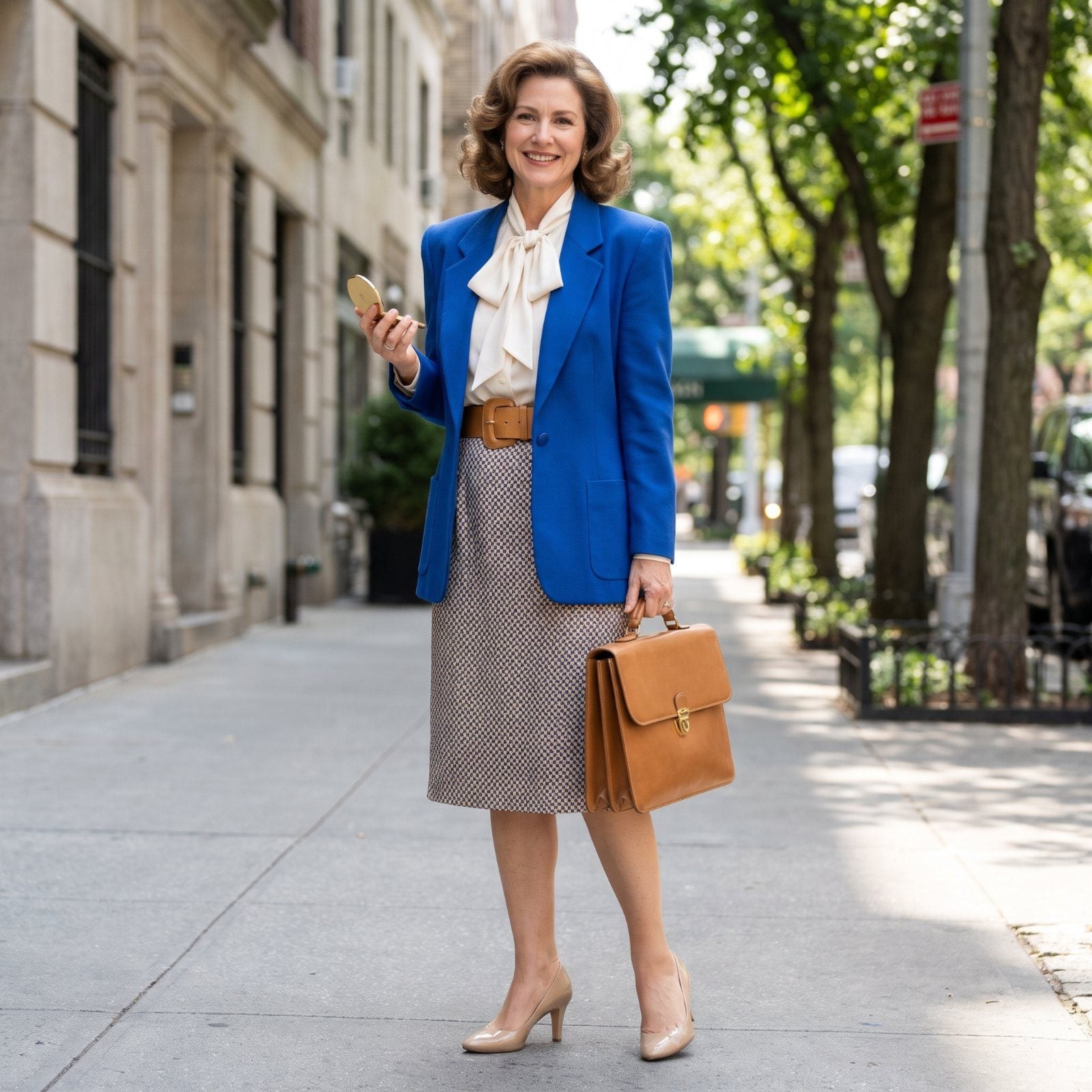
The smell of hairspray in the elevator. The clack of pumps across a marble lobby. And shoulder pads so structural they practically had opinions of their own. Getting dressed for a job interview in the 1980s meant arming yourself for battle, and we did it with real conviction.
What read as professional ambition then would send a modern recruiter’s eyebrow to the ceiling now. The looks below were worn with a straight spine and zero apology. Honestly, some of them deserve a second look.
FYI, thanks to AI imagery software, we’re able to create very specific fashion and hairstyle examples to illustrate the points being made. In some cases, imagery is exaggerated to hammer home the point. Also, assume links that take you off the site are affiliate links such as links to Amazon. this means we may earn a commission if you buy something.
44. The Power Suit With Linebacker Shoulder Pads
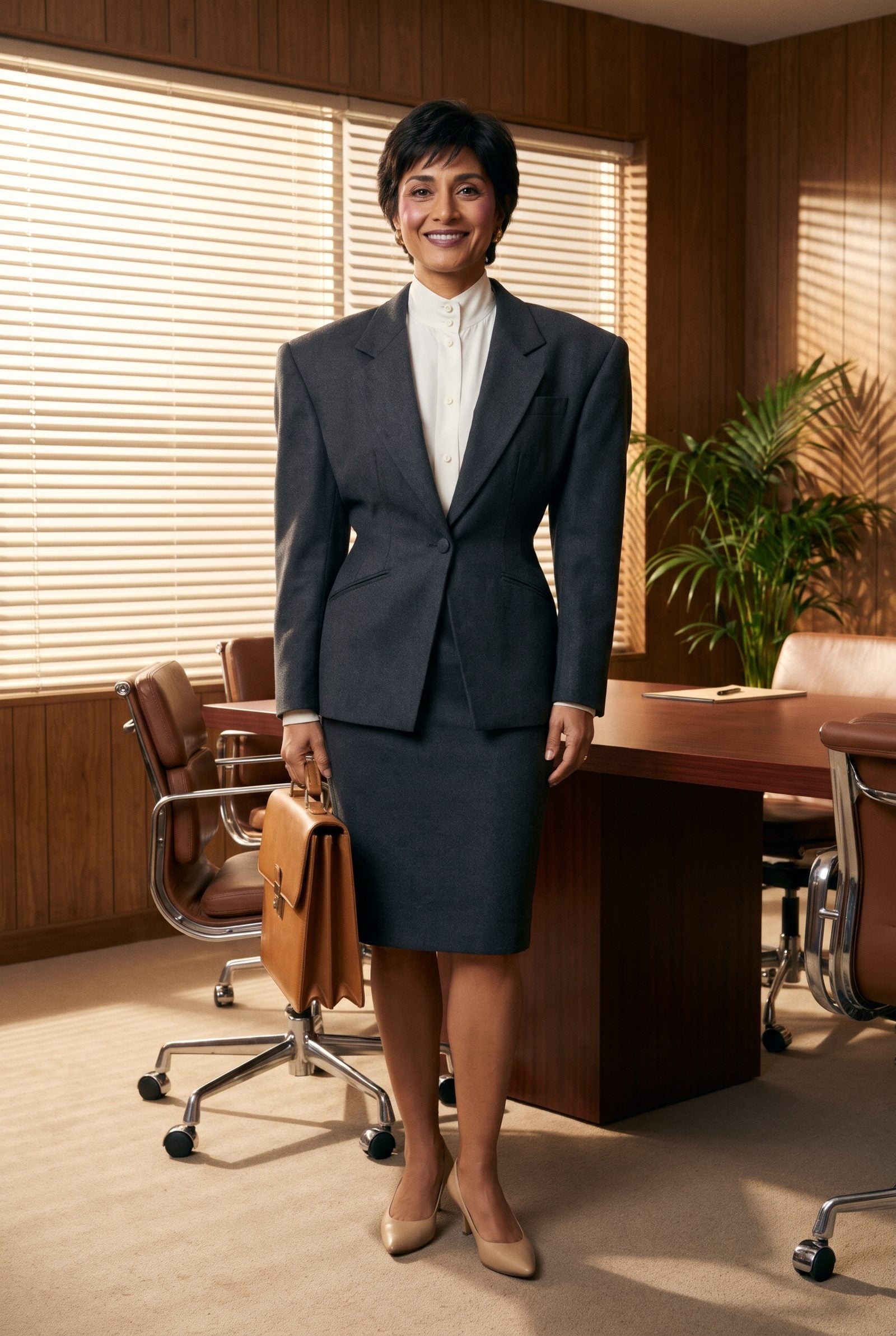
The shoulders arrived in the room three seconds before you did, and that was exactly the idea. A power suit with pads this engineered wasn’t about looking good once you’d sat down. It was about filling the doorway so the interviewer clocked your presence before your credentials.
What drives it is the proportional play: those linebacker shoulders set against a cinched waist built an inverted triangle that read as pure authority. Pair it with a charcoal wool blazer and a white silk blouse and you had armor with a lapel.
What Our Readers Say
- Asked whether they wear a jacket with every outfit, ThreadCurve readers split almost evenly, 52% yes and 48% rarely, so the daily blazer is now a coin toss.
- When our readers were asked which daily shoes they would buy, sneakers took 61% of the vote, while low heels got just 16%.
From ThreadCurve reader polls and votes.
43. The Head-to-Toe Electric-Blue Interview Outfit
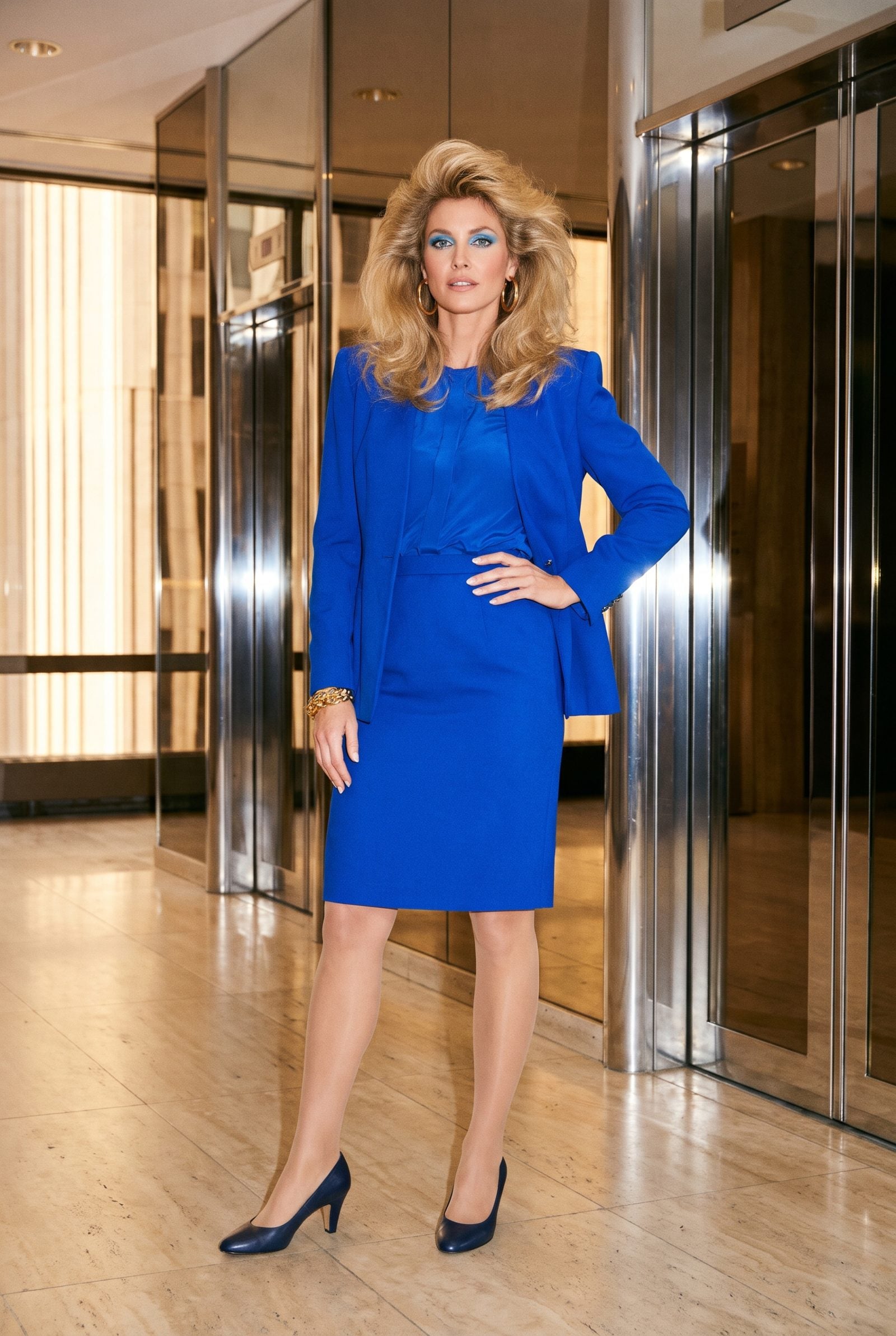
One color, floor to collar, in a blue you could spot from the parking lot. This wasn’t shyness, and it wasn’t an accident. Committing to a single saturated hue announced that you were memorable before you’d said a word.
Color commitment is the whole strategy. A monochrome electric-blue build reads as decisive and bold, which is precisely the signal an ambitious candidate wanted to send. Today’s HR room, trained on muted neutrals, might blink. But there was real courage in walking in wearing a shade that loud.
42. The Leather Skirt Suit
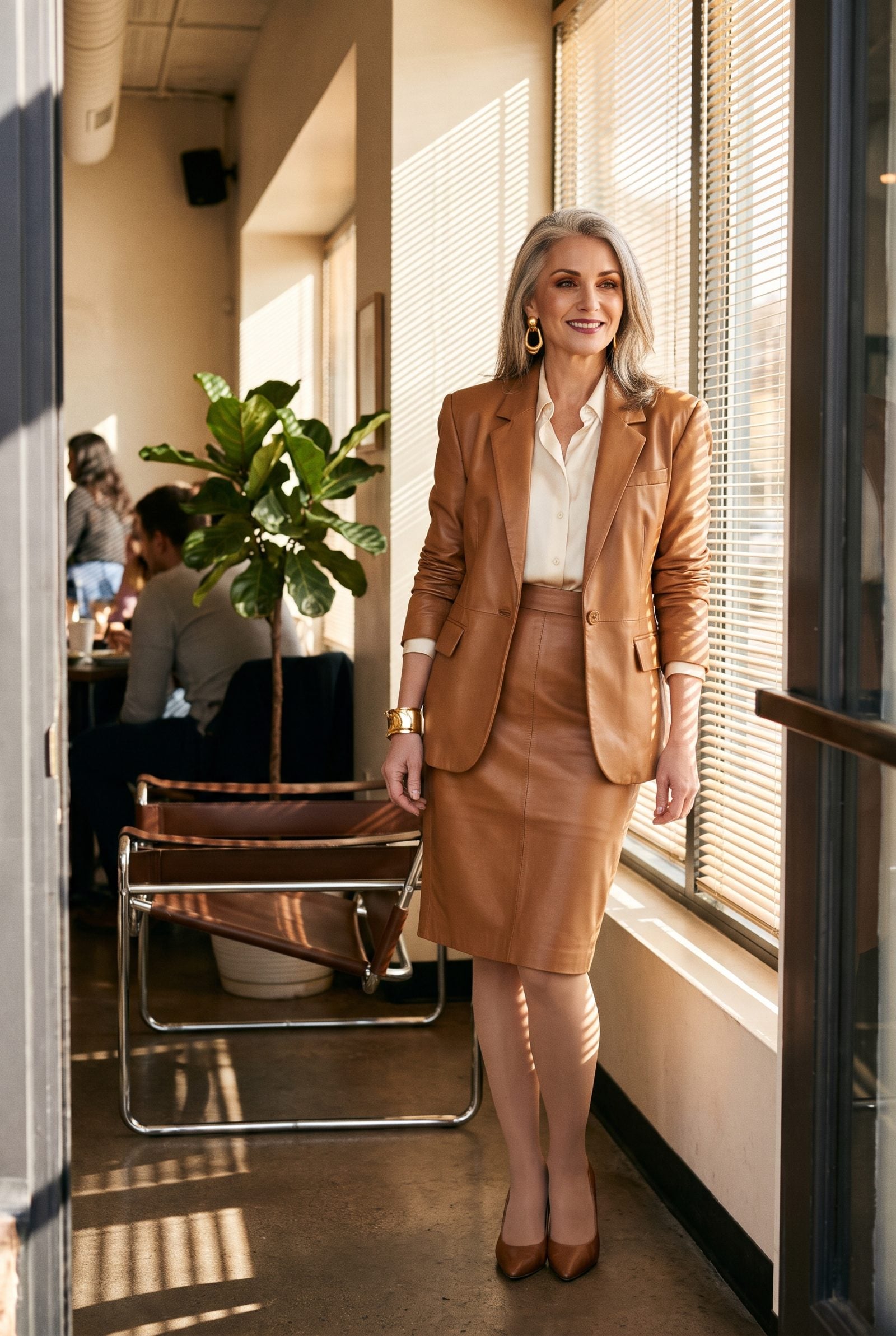
Leather. For an interview. The nerve of it still makes me grin.
What made the look work was the tailoring. Cut as a proper skirt suit with a structured blazer, the leather read as expensive and modern rather than rebellious, and the texture contrast did the heavy lifting — supple cognac leather against a matte cream silk shell softened the edge just enough to pass as professional.
A tan leather blazer telegraphed that you had money, taste, and absolutely no intention of blending into the beige. Try that today and someone in compliance reaches for a policy binder.
41. The Miniskirt Suit Paired With Pantyhose
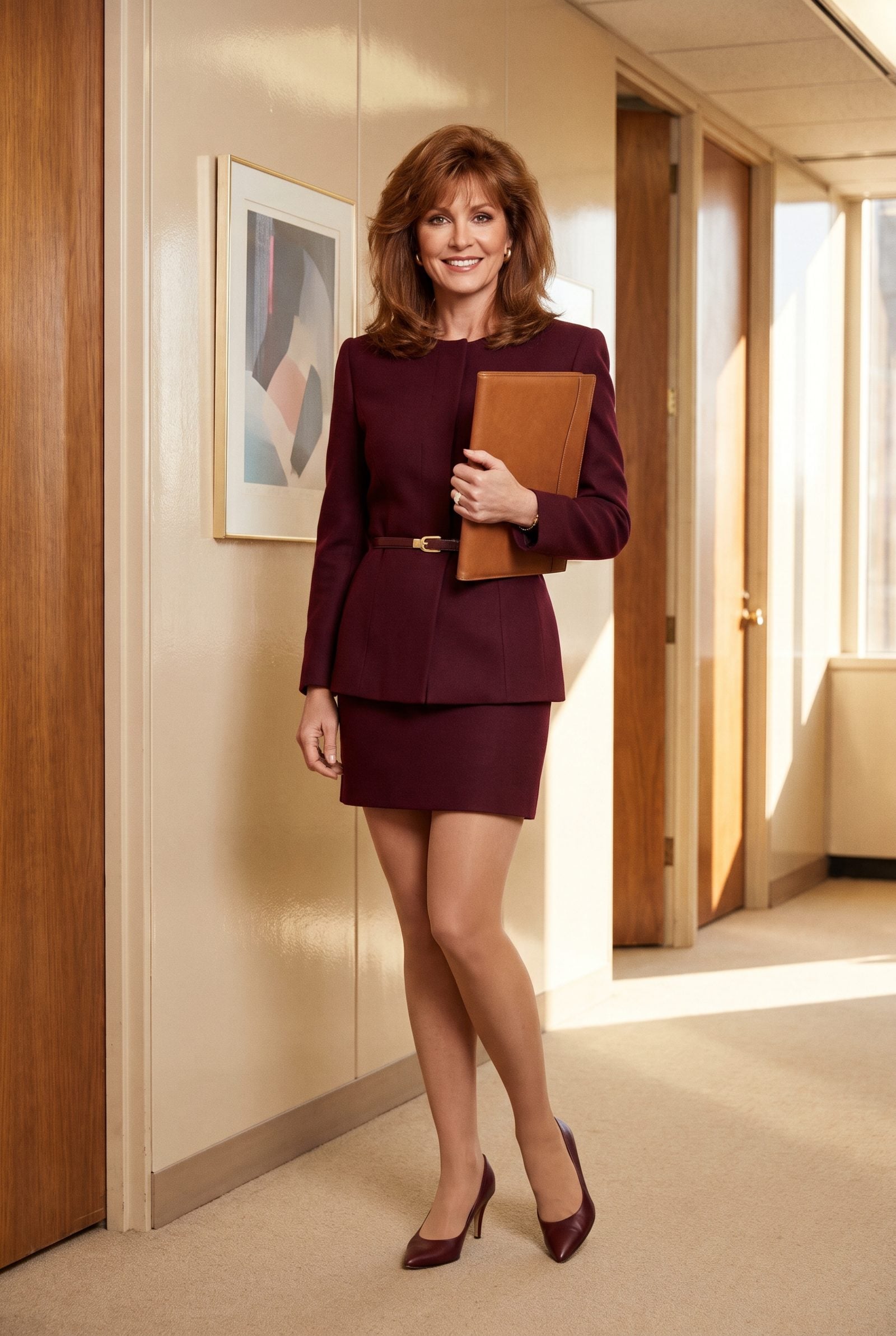
Hemline well above the knee, sheer hose, and a blazer that meant business up top. The combination said serious-but-current, which was the exact tightrope ambitious women walked.
The proportional logic was smart. A short skirt balanced by a strong-shouldered jacket kept the eye climbing toward the face and the authority, not drifting down to the leg. The pantyhose were non-negotiable — the finishing detail that turned a short skirt from casual into corporate. A modern interviewer would quietly file this one under “dress code conversation.”
40. The Jacket Cinched With an Extra-Wide Belt
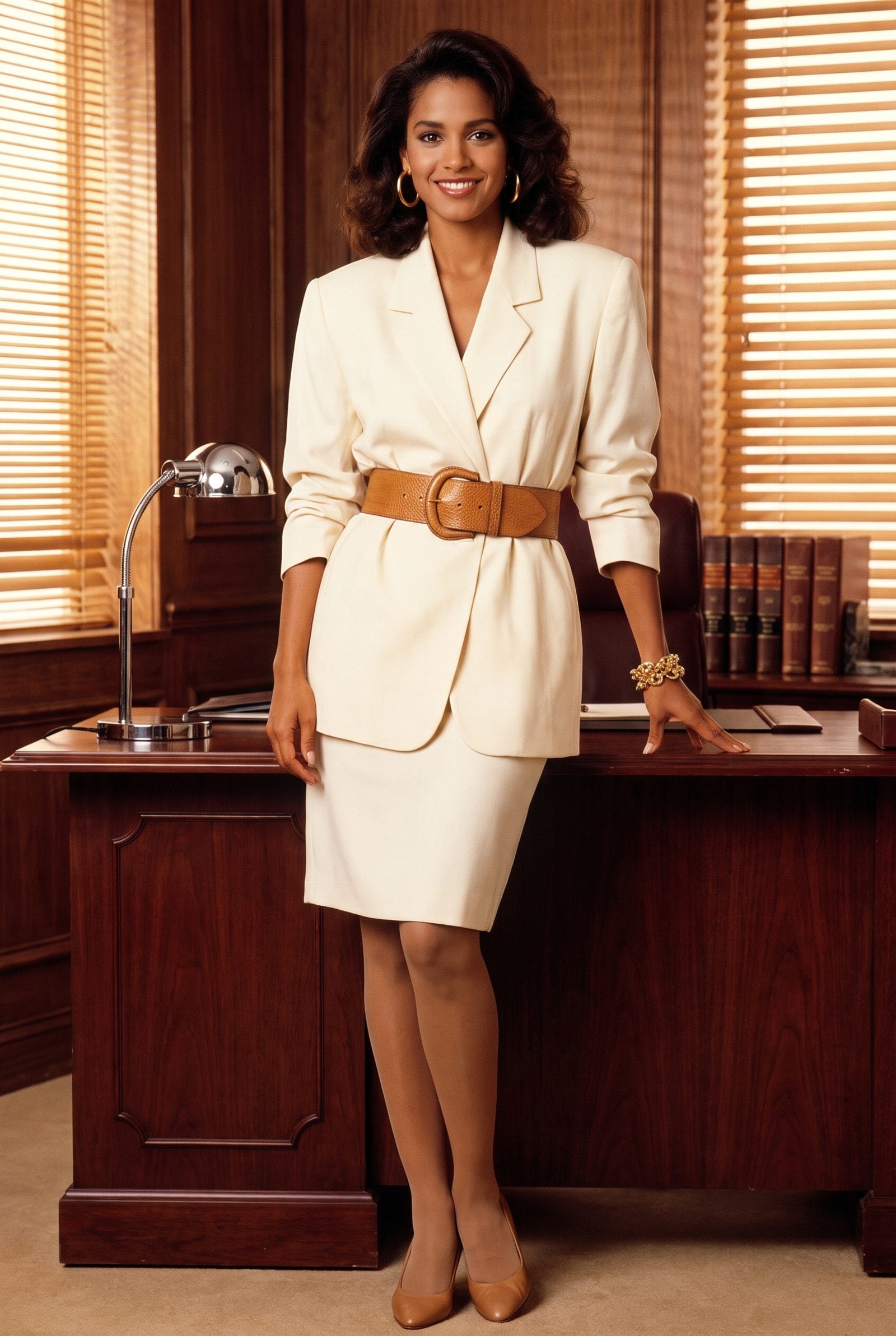
The belt did something sneaky and brilliant. Take a roomy, shoulder-heavy blazer, cinch it hard at the middle with a four-inch leather band, and suddenly you had an hourglass where the jacket alone had given you a box.
The wide belt was the unexpected piece that reframed everything. It introduced waist definition into a silhouette built on sheer volume, and that single move changed the whole read from drowning-in-fabric to deliberately-shaped. Among the many outfit styles that defined the decade, this one was the quiet lesson in proportion.
39. The High-Waisted Tapered Trousers With Deep Pleats
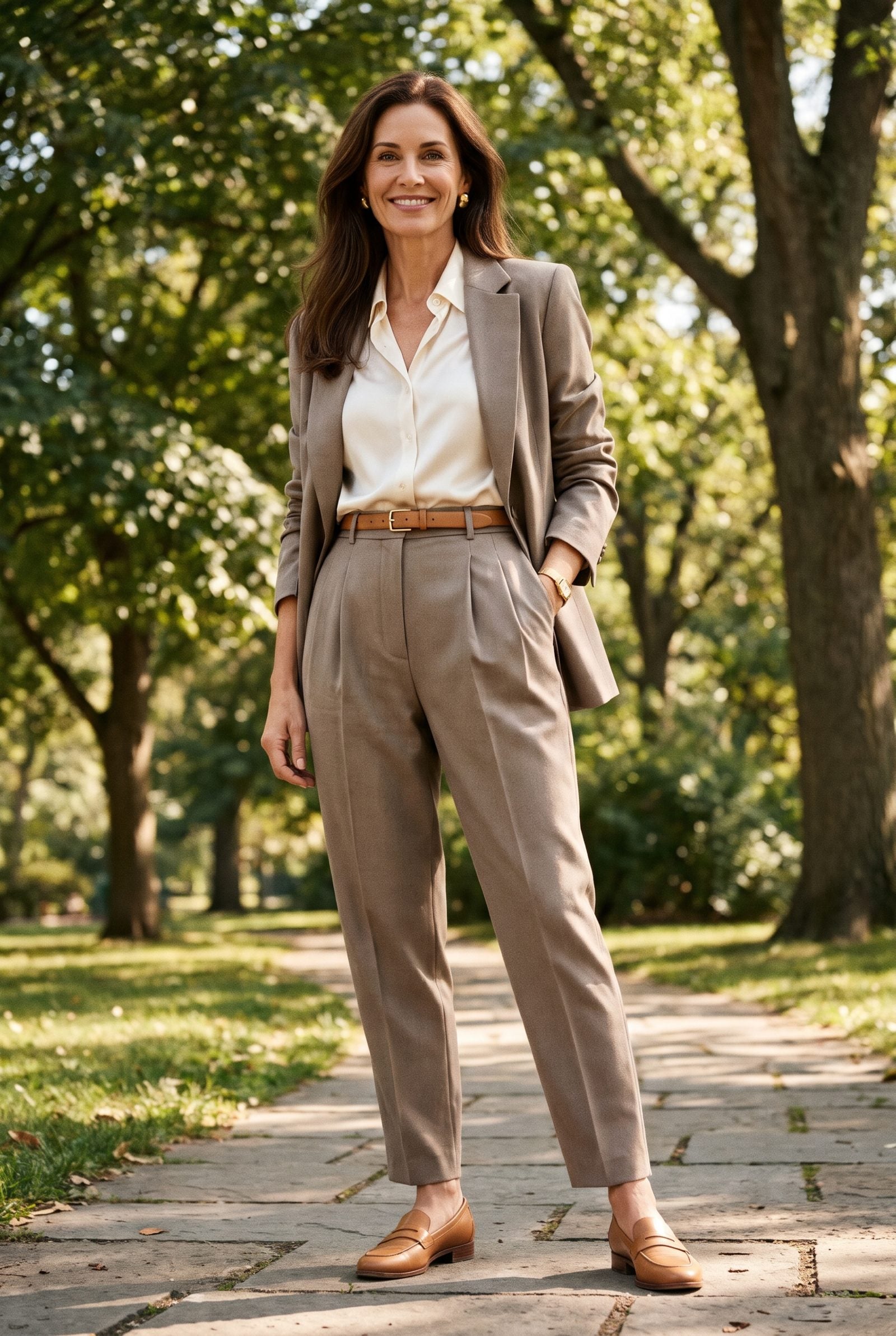
The waistband sat somewhere near the ribs, and the pleats fanned out like curtains over the hip. These trousers took up space, and they wanted you to know it.
Here’s where the shaping does the talking. The high waist elongated the leg dramatically, the deep pleats added volume through the hip, and the tapered ankle pulled it all back to a clean finish — a column built from the waist down. Tuck a soft ivory blouse into that high line and the eye stays on the long vertical, which is exactly why the proportion worked instead of swallowing the frame.
38. The Stirrup Pants Tucked Into Pumps
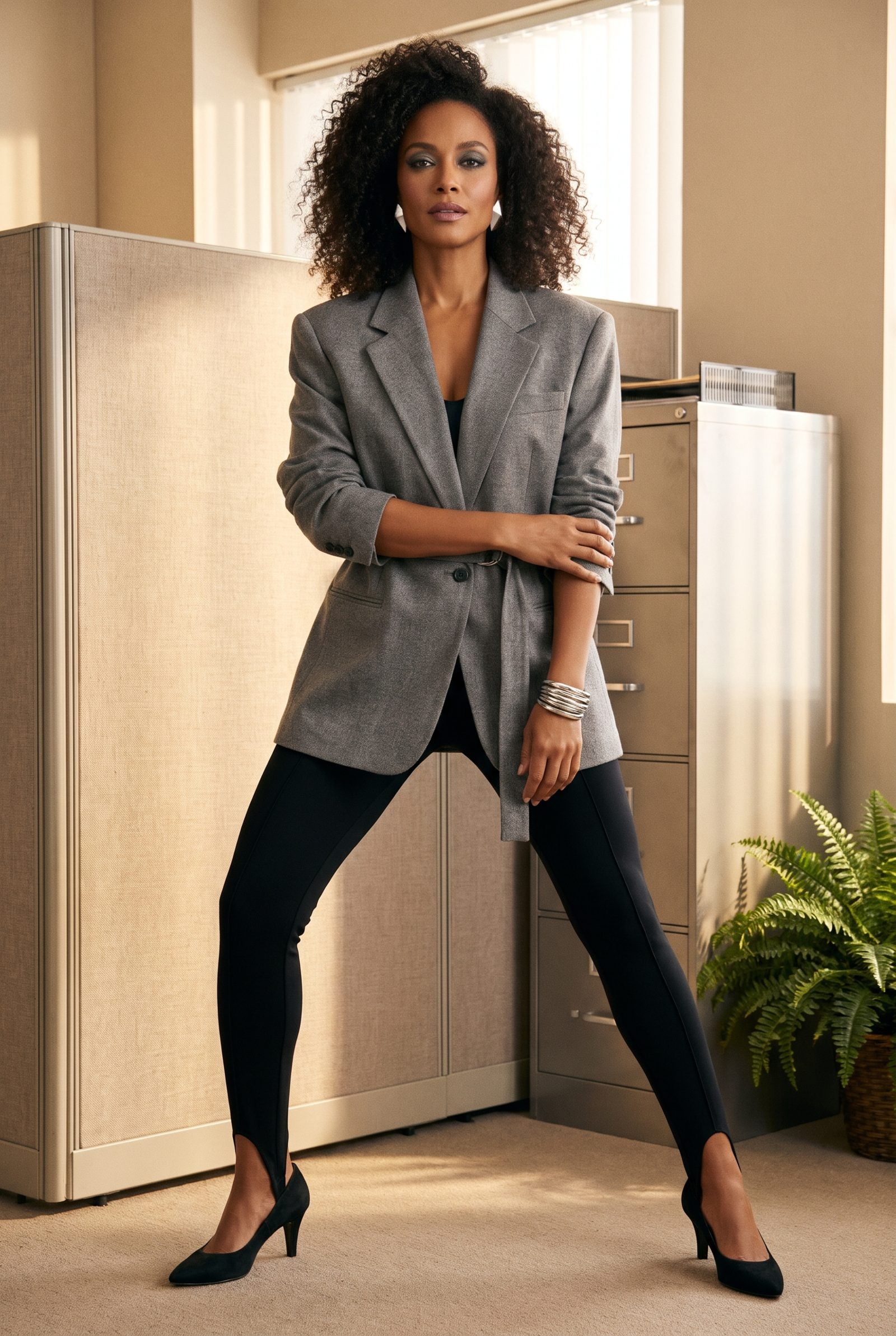
The little strap looped under the arch of the foot, locking the pant to a smooth line so nothing bunched. We thought it was the height of polish. I will defend the stirrup to this day, honestly.
The styling driver was the long, lean line. Tucking stirrup pants into pumps erased the ankle break entirely, running one unbroken sweep from hip to heel, and balanced against a longer tunic blazer up top it was all about verticality. Walk into an interview in these now and you’d earn a very confused stare over the reading glasses.
As a personal stylist puts it, “Black sling-back pumps effectively showcase the stirrup detailing of the pants.”
37. The Flowing Culottes Styled as Suit Trousers
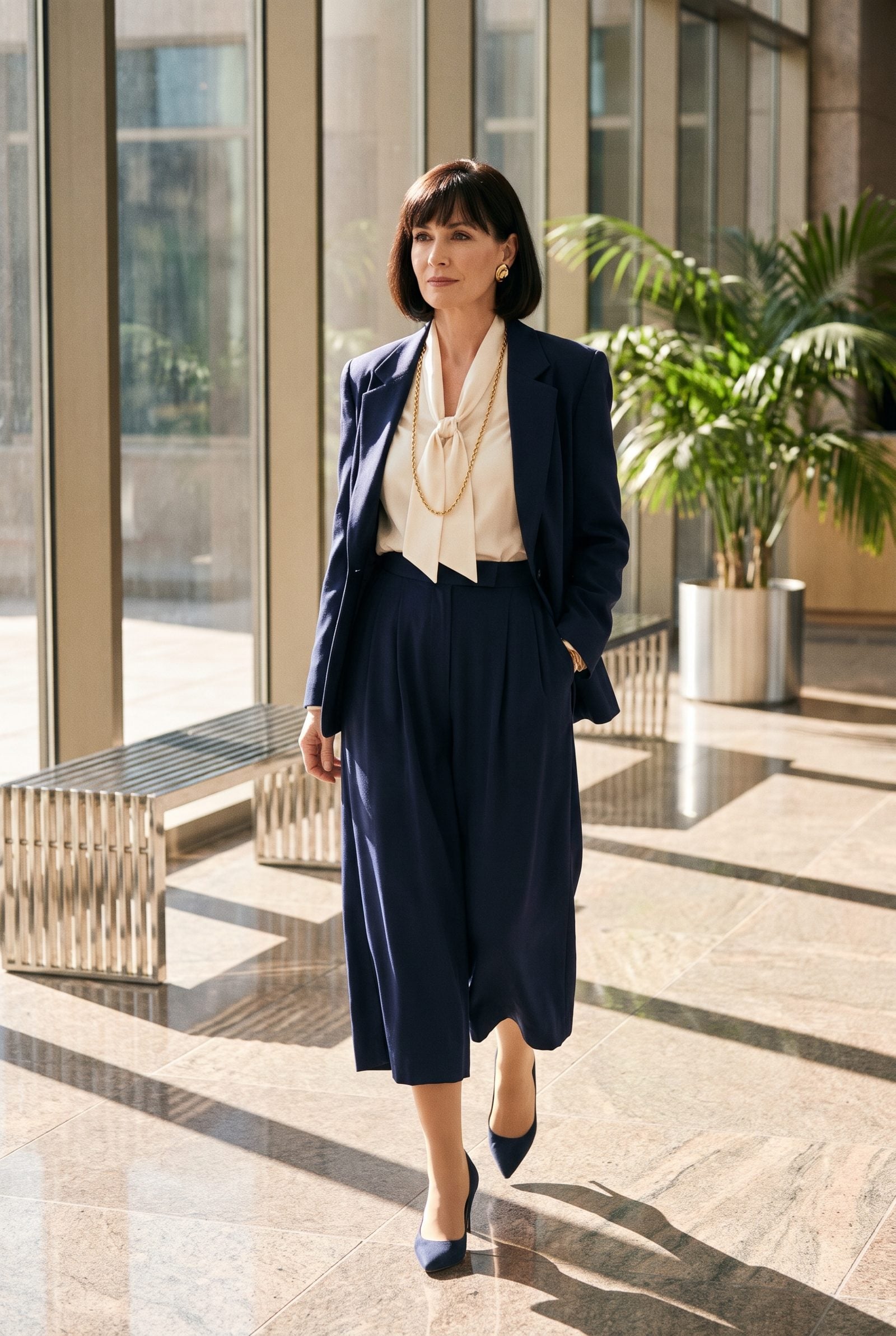
From the front they read as a skirt. In motion, the split revealed the trick. Culottes let women honor a skirts-only dress code while actually wearing something they could sit, stride, and command a room in.
The genius was fluidity against structure. Wide, swishing navy culottes under a sharp-shouldered blazer created a conversation between soft movement and hard tailoring, and that tension made both pieces more interesting. Styled this way, culottes functioned as suit trousers that happened to flutter — a loophole dressed as elegance.
36. The Suspenders Worn Over a Button-Down Shirt
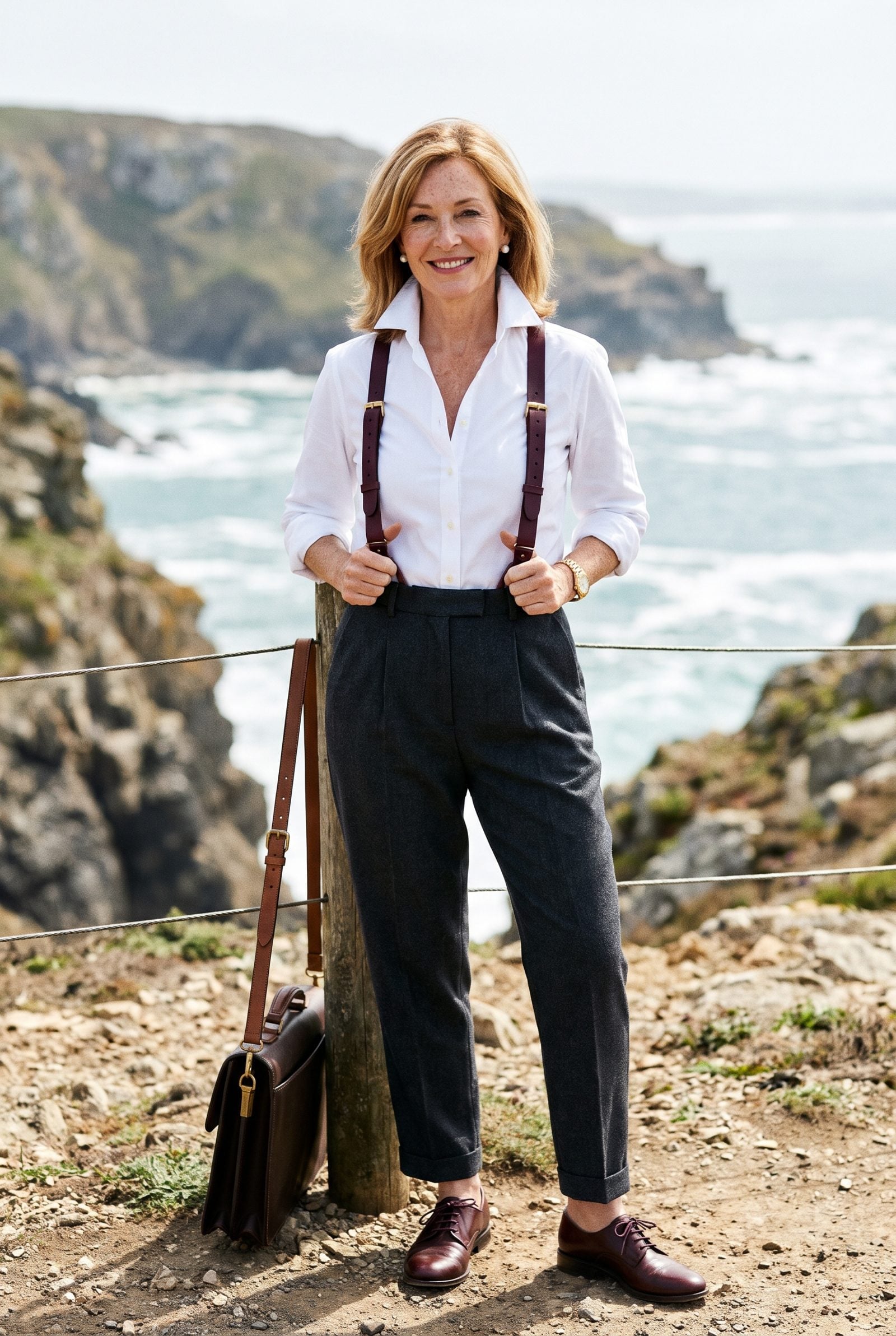
Both hands hooked into the suspenders, briefcase propped at her feet, a look lifted straight from a Wall Street trading floor. Suspenders over a crisp button-down borrowed menswear’s confidence and handed it to women who wanted to be taken seriously.
And the braces carried the whole look. Burgundy leather against a white shirt introduced the only real color and the entire attitude at once, turning a plain shirt-and-trouser combo into a declaration about ambition. It signaled someone who understood the game and intended to win it.
35. The Giant Pussy-Bow Blouse
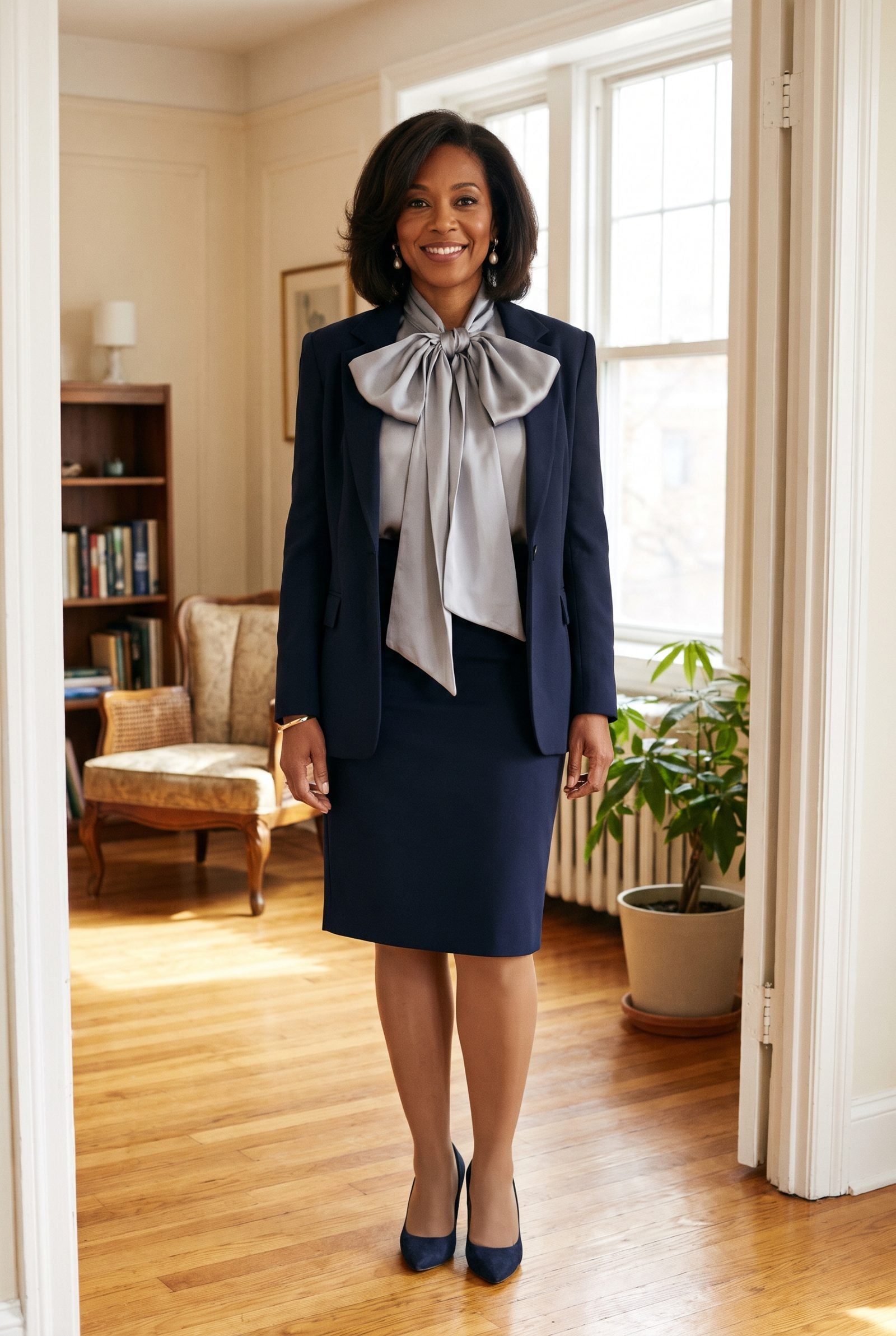
The bow was the size of a small bouquet, and that was the point. A pussy-bow blouse tied a soft, overtly feminine flourish right under the chin, directly in the sightline of whoever you were trying to impress.
The bow is the hero. It pulled every eye up to the face and framed it, which is exactly why candidates reached for it. There’s a reason it endured as the uniform of women breaking into male-dominated offices — it managed to look polished and quietly immovable at the same time.
A dove-grey silk pussy-bow blouse under a navy blazer was the thinking woman’s power move, and I’d argue it still holds up better than almost anything else on this list.
34. The Batwing-Sleeve Blouse Under a Blazer
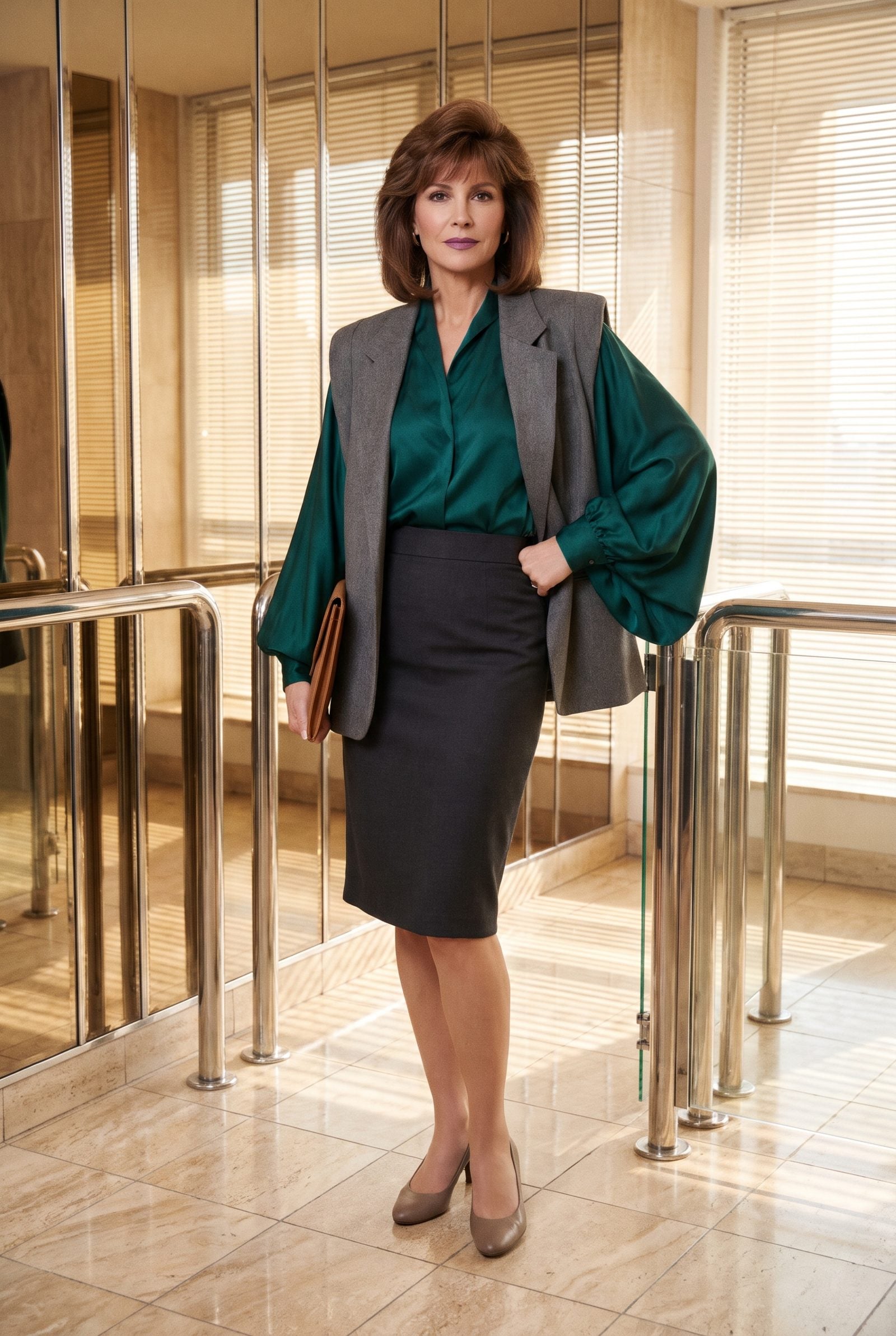
The sleeve was the whole point. You bought the blouse one size loose so the batwing pooled dramatically when you crossed your arms at the conference table, and the blazer did absolutely nothing to contain it. That tension between the structured shoulder and the liquid cascading sleeve is exactly why the look read as powerful rather than fussy.
The real driver is the proportional play — rigid tailoring up top, fabric that moves like water below. It said you took the job seriously but refused to vanish into it. A modern HR panel would quietly wonder where your arms went.
33. The Metallic Lamé Top Peeking Out of a Suit
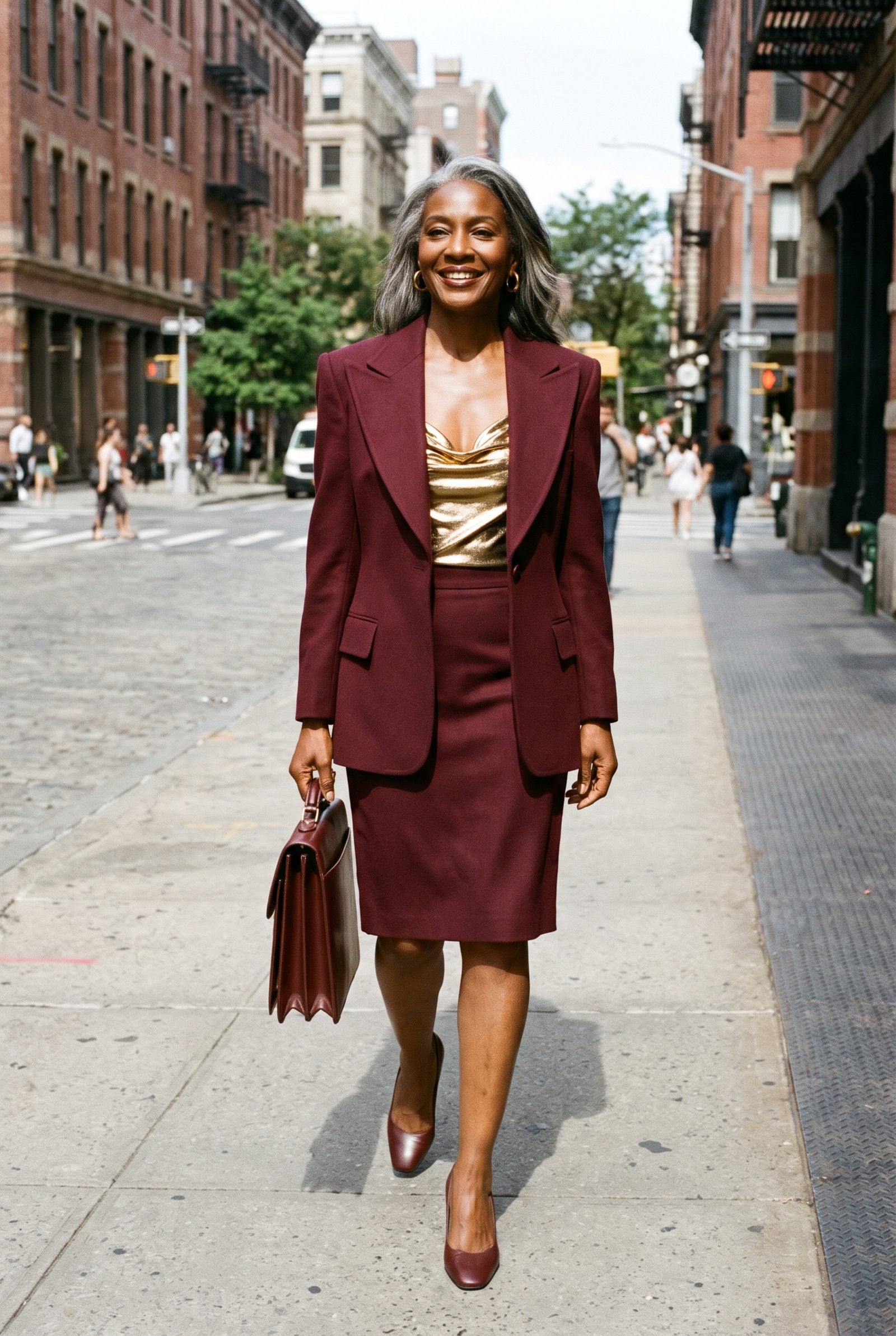
Shimmer at nine in the morning. The lamé top was a cocktail-hour piece drafted into daytime duty, worn under the suit so a sliver of metal flashed every time you reached for a pen. Nobody thought it was too much — it was confidence you could see from across the room.
Texture contrast does the heavy lifting here: matte wool suiting against a surface that behaves like foil. One caught the light, the other swallowed it, and your eye kept bouncing between them. These outfit styles relied on the suit staying sober so the shine could play. A modern interview would read it as a wardrobe malfunction. We read it as arrival.
32. The Animal-Print Blouse Treated as a Neutral
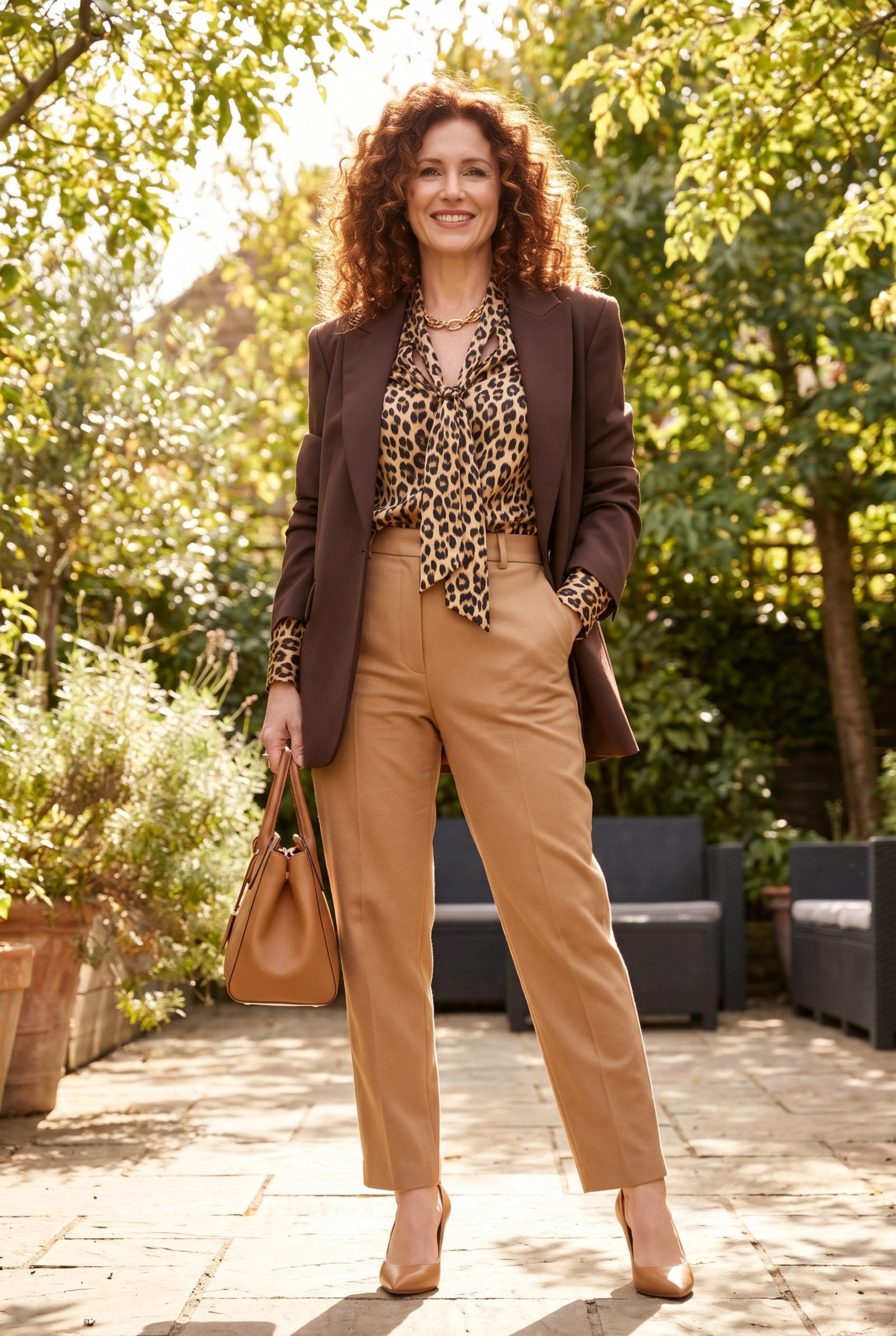
Leopard was a neutral and everybody knew it. The print turned up under blazers the way a white shirt does now, paired with camel and brown as if it were the most sober thing in the closet. That pussy-bow at the throat kept it anchored to the boardroom instead of the nightclub.
What holds the look together is color discipline. The leopard lives entirely in the brown family, so it reads as a tonal build rather than a shout. The print brings movement, the solid camel trousers bring calm, the chocolate blazer frames both. Walk into an interview in leopard today and someone updates a file. Back then it just meant you understood pattern.
Today, ThreadCurve readers are less convinced: outfit images with animal patterns got hearts 34% of the time, compared with 50% for the other images in the same articles.
31. The Neon Color-Blocked Blouse
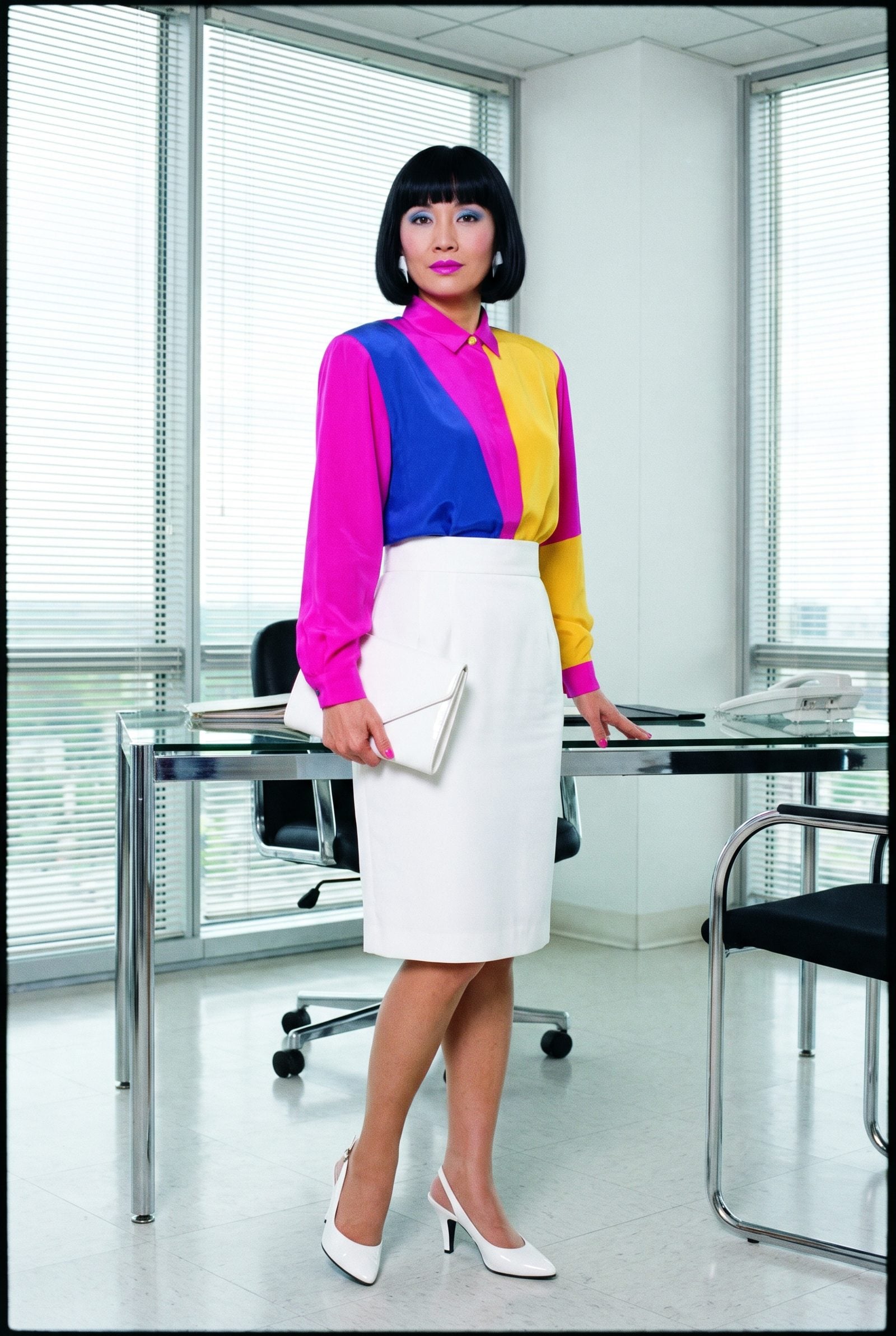
You wore the blouse that could be seen from the parking lot. Panels of fuchsia, cobalt, and yellow stitched into one top, a Memphis-design poster worn as clothing. It was a job interview, and you showed up looking like a sunrise.
What makes it fly is the color commitment paired with white pieces that refuse to compete. White pencil skirt, white clutch, white slingbacks, and the blouse carries every ounce of the energy. Clean canvas, loud centerpiece.
30. The Sequined Shell Under a Business Jacket
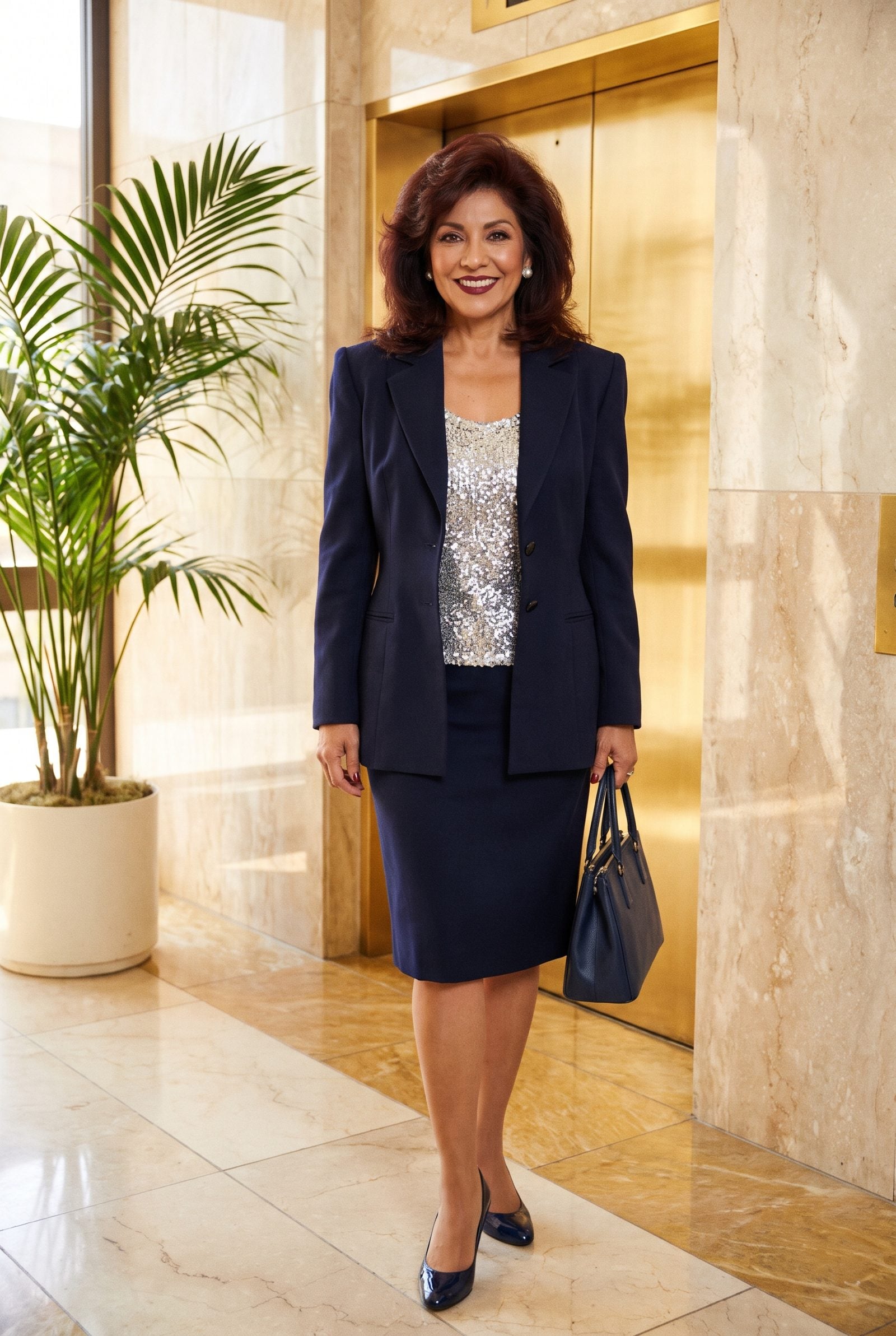
The sequins stayed on under the jacket all day. You didn’t change for the evening because the evening came to you, and the shell did double duty between the morning interview and the dinner it might lead to. Every gesture sent a little light skittering across the ceiling.
Here’s why it holds: the navy blazer is so sober, so buttoned, that it earns the shimmer the moment you open it. The surprise piece reframes everything around it. A fully sequined torso would read as a costume, but a sequined sliver framed by tailoring reads as range. Modern HR would assume you came straight from a wedding.
29. The Lace Camisole Beneath an Open Blazer
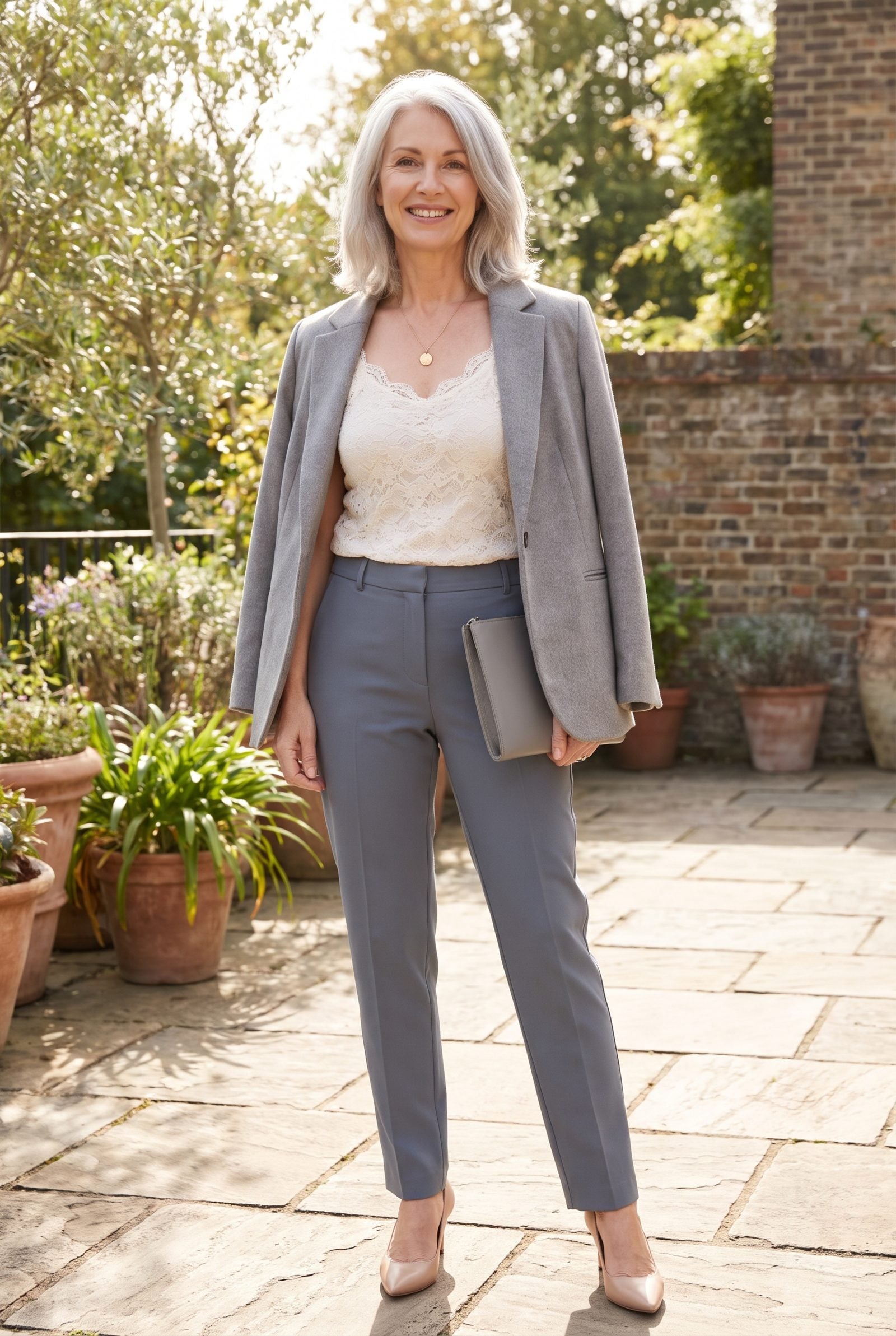
Lingerie as daywear, and nobody blinked. The lace camisole slipped under a blazer and became an entirely professional top the second you buttoned the jacket halfway. It was soft where the suit was severe, and the softness was the whole idea.
What carries it is the texture conversation — structured wool against something delicate and semi-sheer. The grey suit supplies the authority, the cream lace supplies the human underneath it. One sentence of warmth inside a lot of tailoring. Try wearing visible lace to an interview now and watch a recruiter decide how to phrase an email.
28. The White Pumps Worn With Every Possible Suit
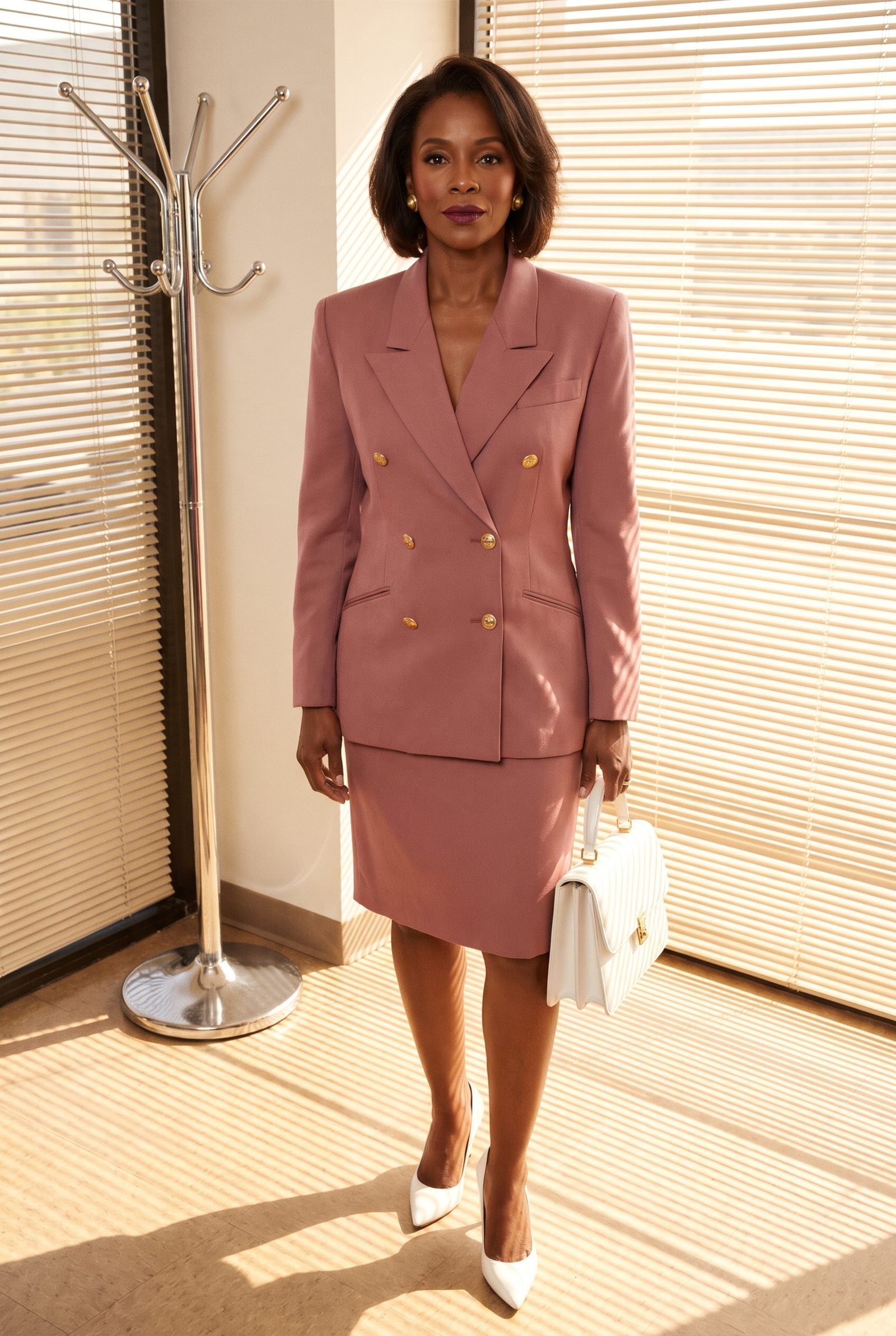
White pumps went with everything, which is to say they went with nothing and we wore them anyway. Navy suit? White pumps. Burgundy? White pumps. That old rule about no white after Labor Day evaporated the second a woman needed one pair of shoes to carry an entire work wardrobe.
The white shoe does all the talking. Remove it and the rose suit recedes to the point of invisibility; add it back and the whole thing snaps to attention. A bright base note grounds a soft palette and keeps it from going pastel-sweet. Walk into an interview in white leather pumps today and someone assumes bridal.
27. The Dyed-to-Match Shoes and Handbag
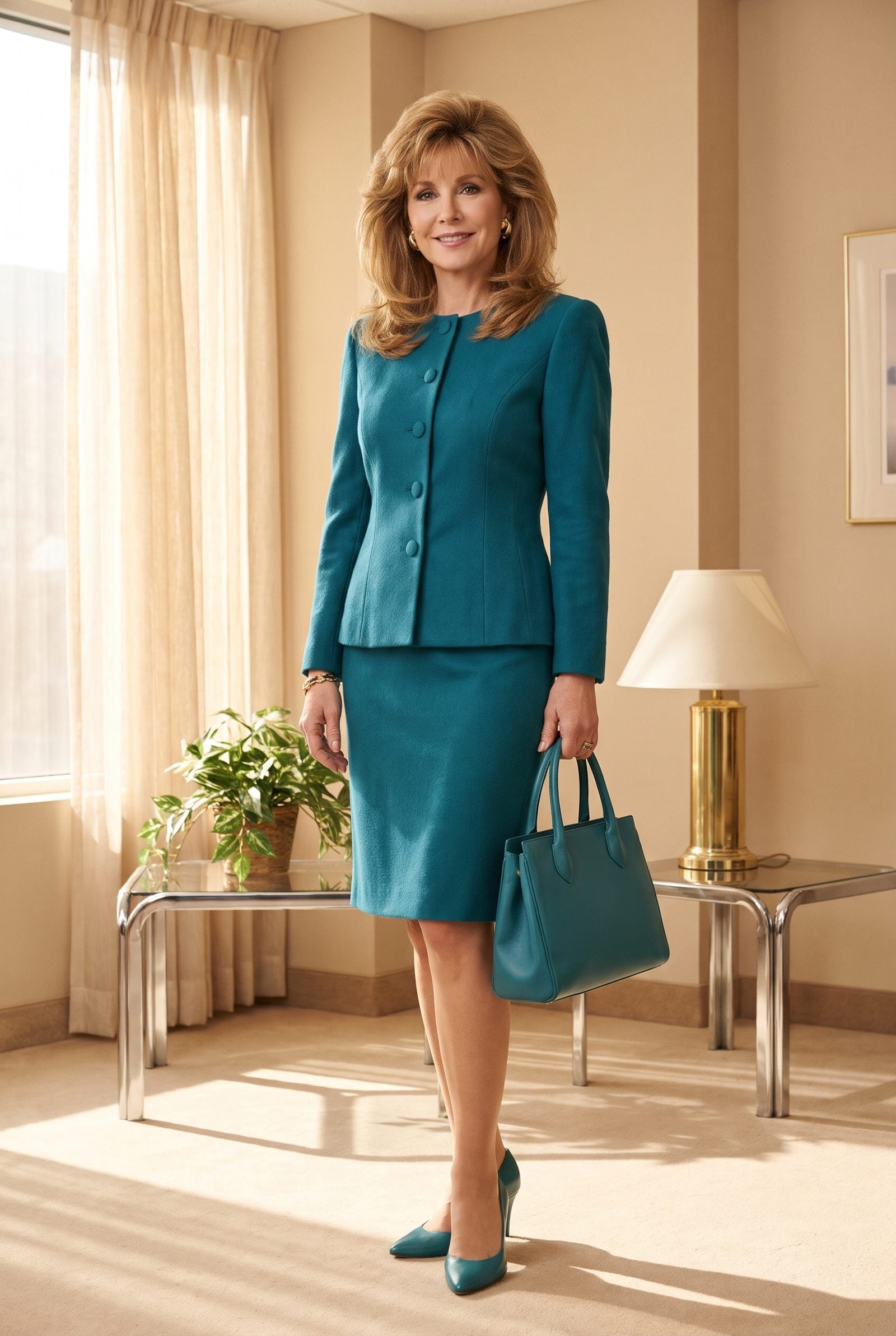
The shoes matched the bag, the bag matched the suit, and the suit matched your lipstick if you were truly committed. Dyed-to-match was the gold standard of putting yourself together, a signal that nothing in your life was left to chance, interview included.
This is coordination at its most literal: one hue, three pieces, head to toe. The monochrome build reads as deliberate and controlled, which is precisely the message. We did it with retro ring sets too, matching stone to outfit. A modern panel would find the precision almost unsettling.
26. The Slouchy Leather Boots Under a Work Skirt
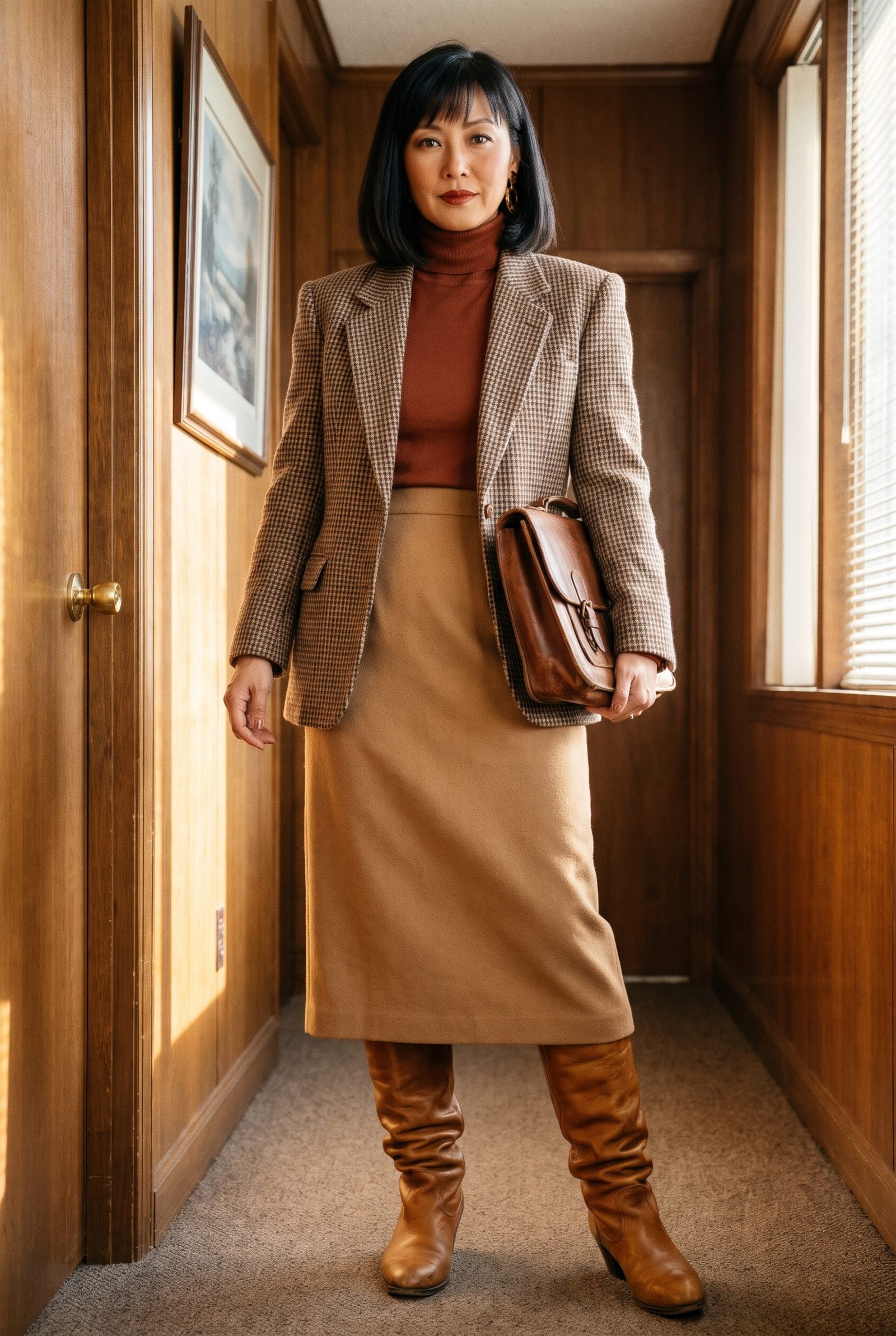
Boots that puddled at the ankle, worn to the office under a skirt, and considered perfectly appropriate. The slouch was on purpose. You wanted that soft, lived-in bunch of leather — the look of boots you’d owned long enough to break in properly.
Texture runs the show: soft slouchy leather against the crisp structure of a tweed blazer and the clean line of a wool skirt. The boots bring an ease that keeps the tailoring from reading stiff. This is one of the more durable skirt styles from the decade, and honestly one we’d still wear. A modern HR eyebrow might raise at interview boots. Ours stayed firmly down.
25. The Jet-Black Pantyhose Worn With a Light Suit
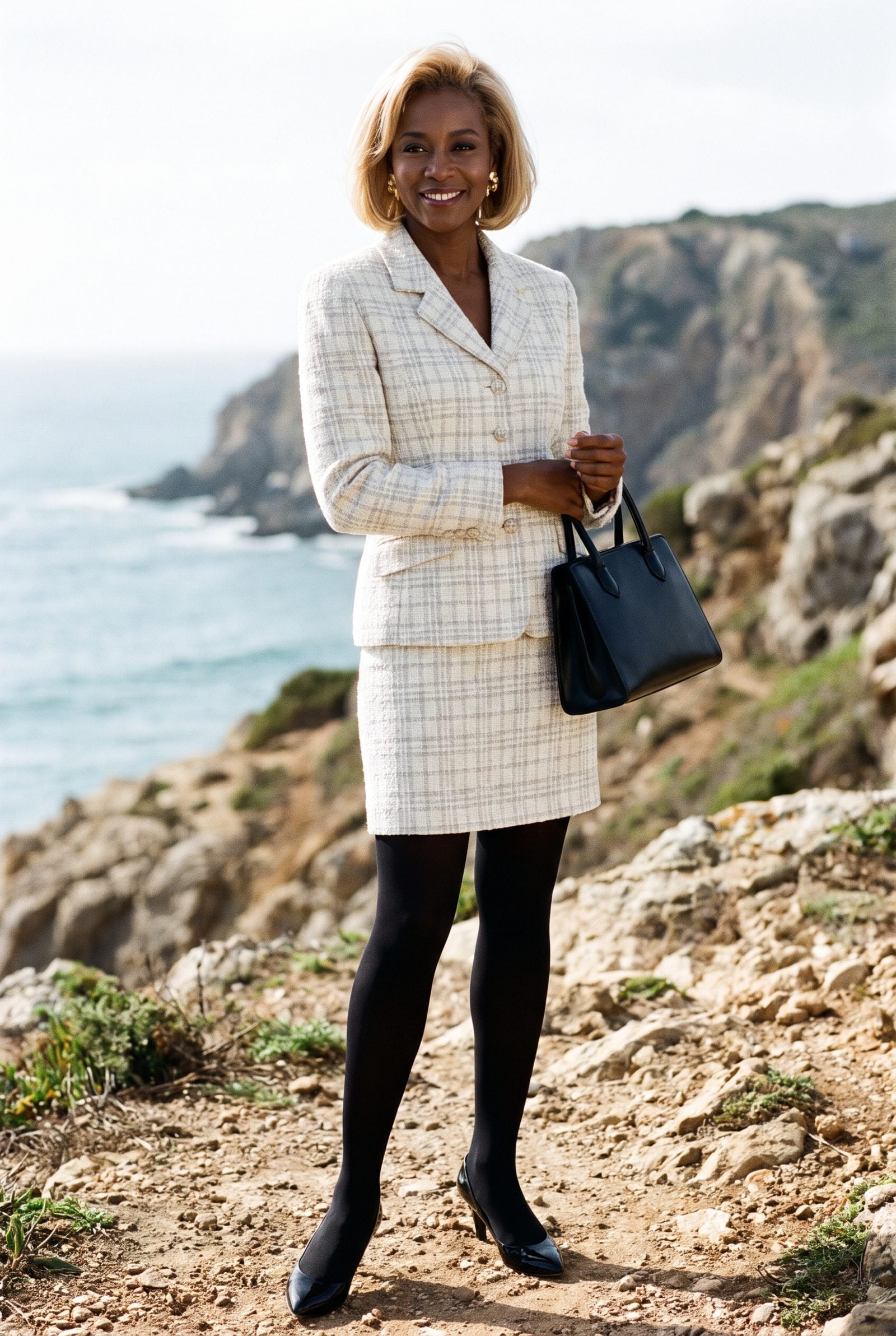
Black opaque tights with a cream suit, and we thought it looked sharp because it did. The high contrast cut the figure cleanly in two — dark legs grounding a pale suit — and it felt modern in a way nude hose never could.
The whole thing turns on that proportional break. Light up top, hard black below, a deliberate line at the hem that makes the eye stop and register the decision. It reads as edge inside a conservative frame, which was the entire ambition. A hiring manager now would clock it as a fashion statement in a room that didn’t ask for one. We’d argue the room was better for it.
24. The Patterned Tights Beneath a Conservative Skirt
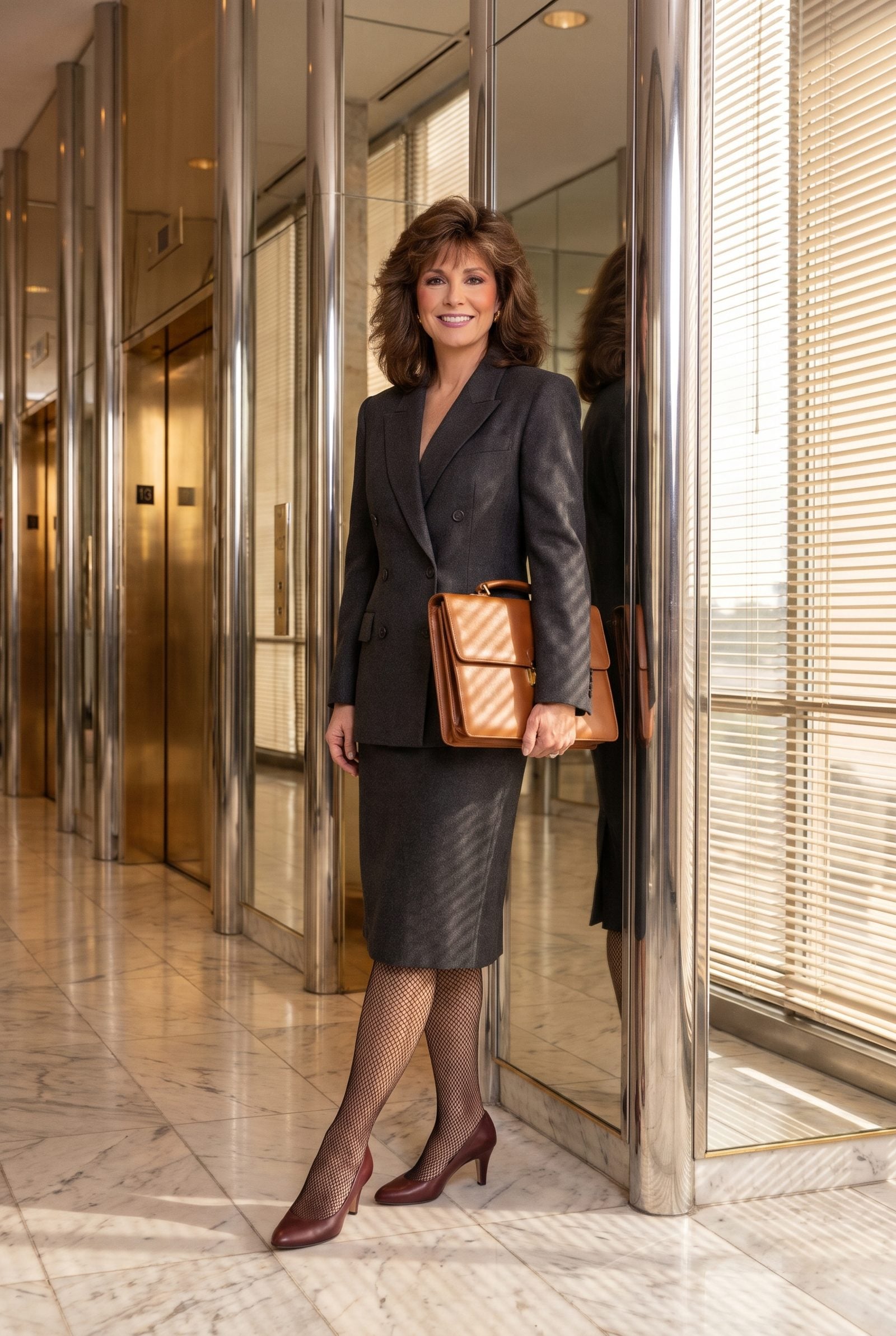
The skirt said board meeting. The tights said something else entirely, a diamond weave or fine fishnet peeking out between hem and pump like a wink nobody at the interview acknowledged out loud.
The styling logic actually held together. A conservative silhouette up top earned you the right to let the legs misbehave a little, and the texture broke up what would otherwise have been a flat column of gray. It read as a woman who knew the rules well enough to bend one on purpose.
23. The Visible Knee-High Nylons Under Trousers
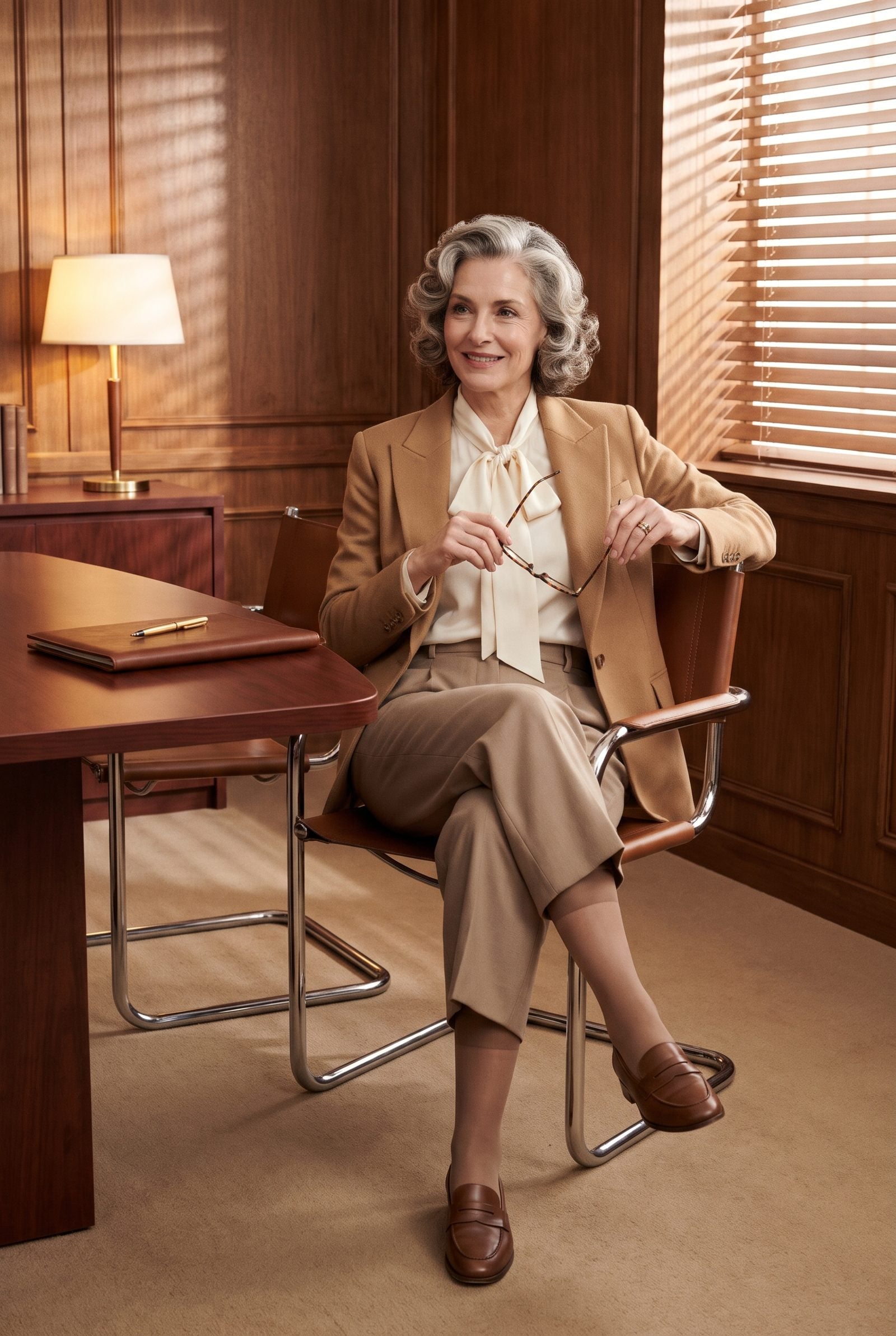
You sat, you crossed your legs, and there it was: the telltale elastic band of a knee-high nylon catching the light above the ankle. Everyone had a drawer full of these, cheaper than full pantyhose and meant to stay hidden under trousers.
Except trousers in 1985 rode higher and cropped shorter, so the reveal happened constantly. The camel blazer and pussy-bow blouse carried the serious work, which is exactly why the nylon gap felt forgiving. A modern HR rep would clock it in a heartbeat. Back then? Just how a practical woman got dressed.
22. The Long Silk Scarf Knotted Into a Bow
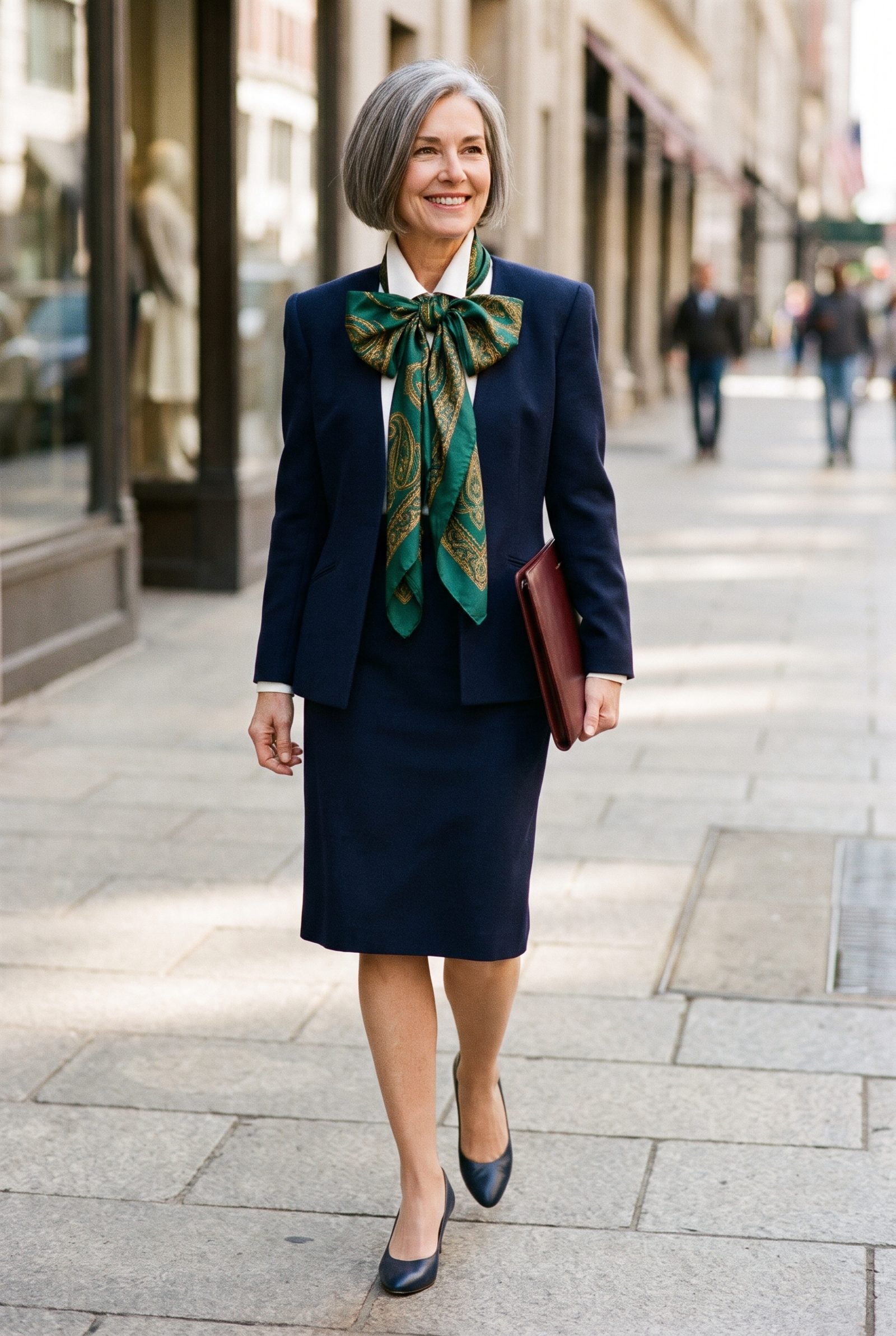
The scarf was the detail that signaled you meant business. A long rectangle of jewel-toned silk, wound once and tied into a floppy bow at the throat, worn to fill the gap of an open-collar blouse under a boxy jacket.
It did real styling work. The soft silk took the edge off the rigid shoulder pads, and the color injection broke up an otherwise sober navy field. This was the boardroom’s answer to a perfect chic hat: the one accessory that said you’d read the memo about looking polished and had opinions about it.
21. The Multiple Strands of Faux Pearls
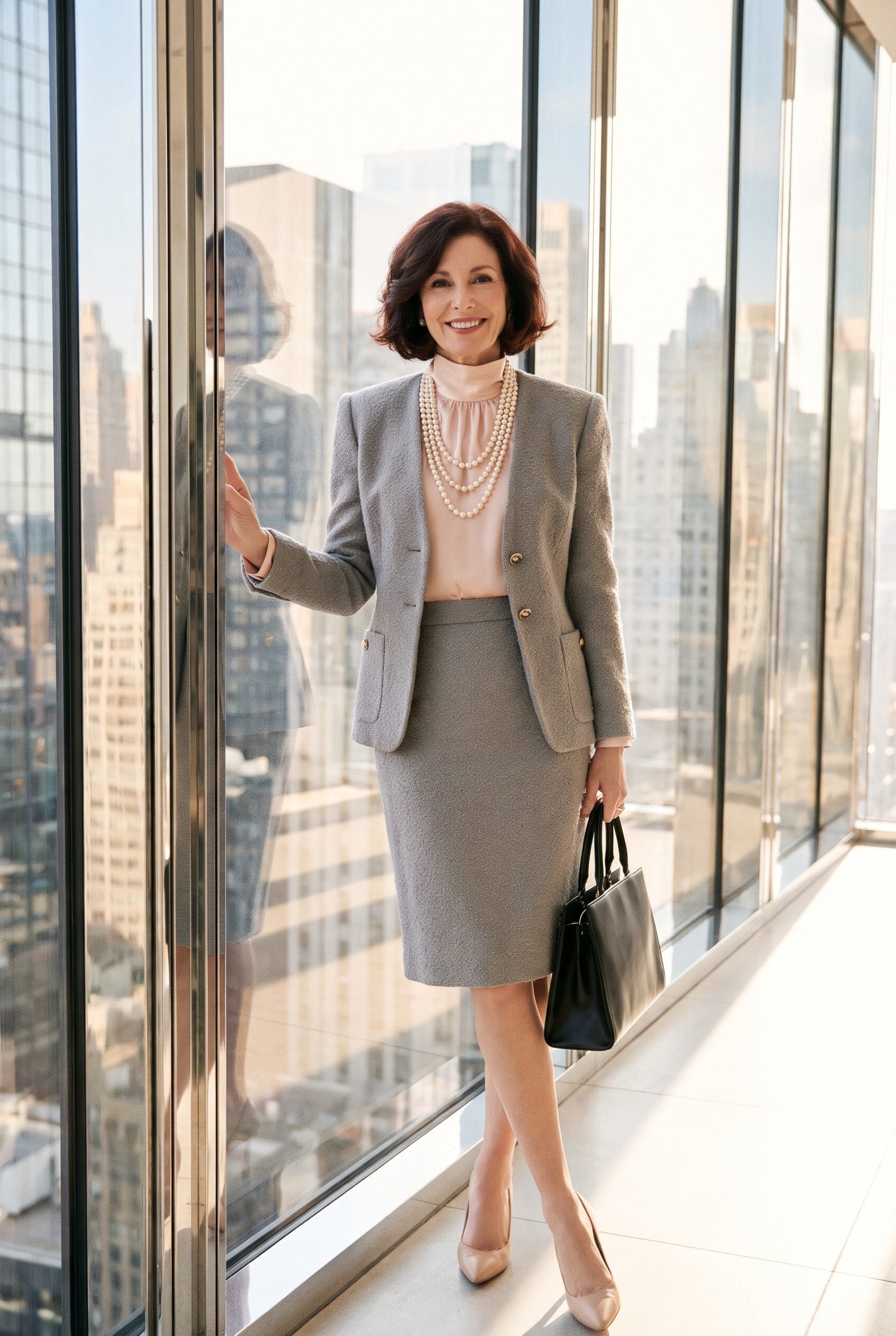
One strand said refined. Three strands said you were serious about the promotion. Layered faux pearls, graduated or all one size, worn in tiers over a high-collared blouse, were interview shorthand for gravitas you could pick up cheap at the costume jewelry counter.
The pearls against the nubby boucle created a texture contrast that read as expensive even when nothing was, and that was the whole trick. A modern panel might raise an eyebrow at the sheer volume. In 1986, more pearls just meant more intent.
20. The Huge Gold Clip-On Earrings
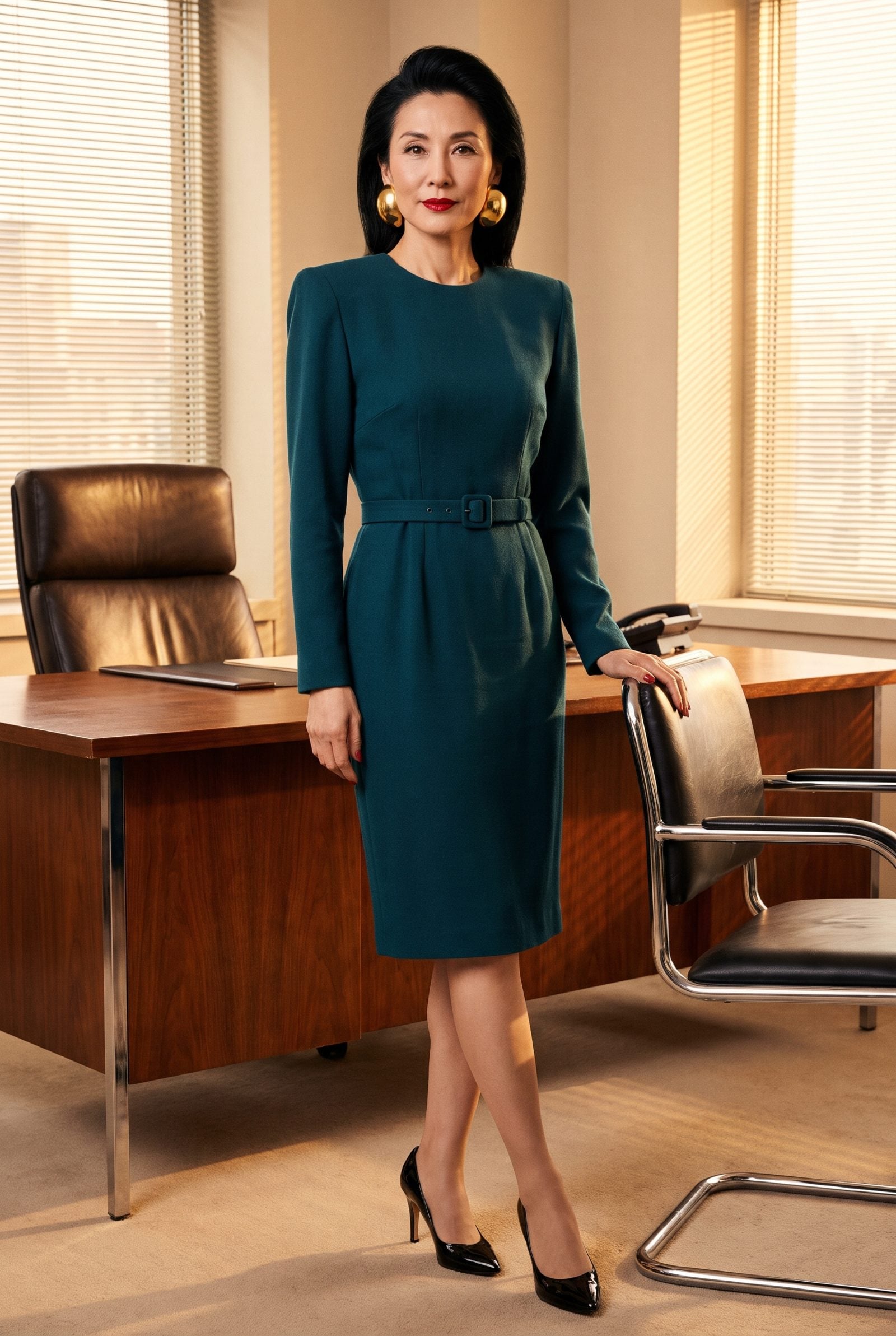
These were doorknobs. Gold domes, discs, or shell shapes big enough to see from across a parking lot, clipped on tight enough to leave a mark you rubbed out on the drive home. No pierced ears required, which made the clip-on democratic that way.
Worn with hair swept back so nothing competed, they reframed the entire face and turned a plain crepe dress into an event. They caught light every time you nodded, which during an interview was often. And I’ll say it plainly: nothing announced a confident woman faster than a pair of these flashing under fluorescent office light.
19. The Oversized Enamel Brooch on a Lapel
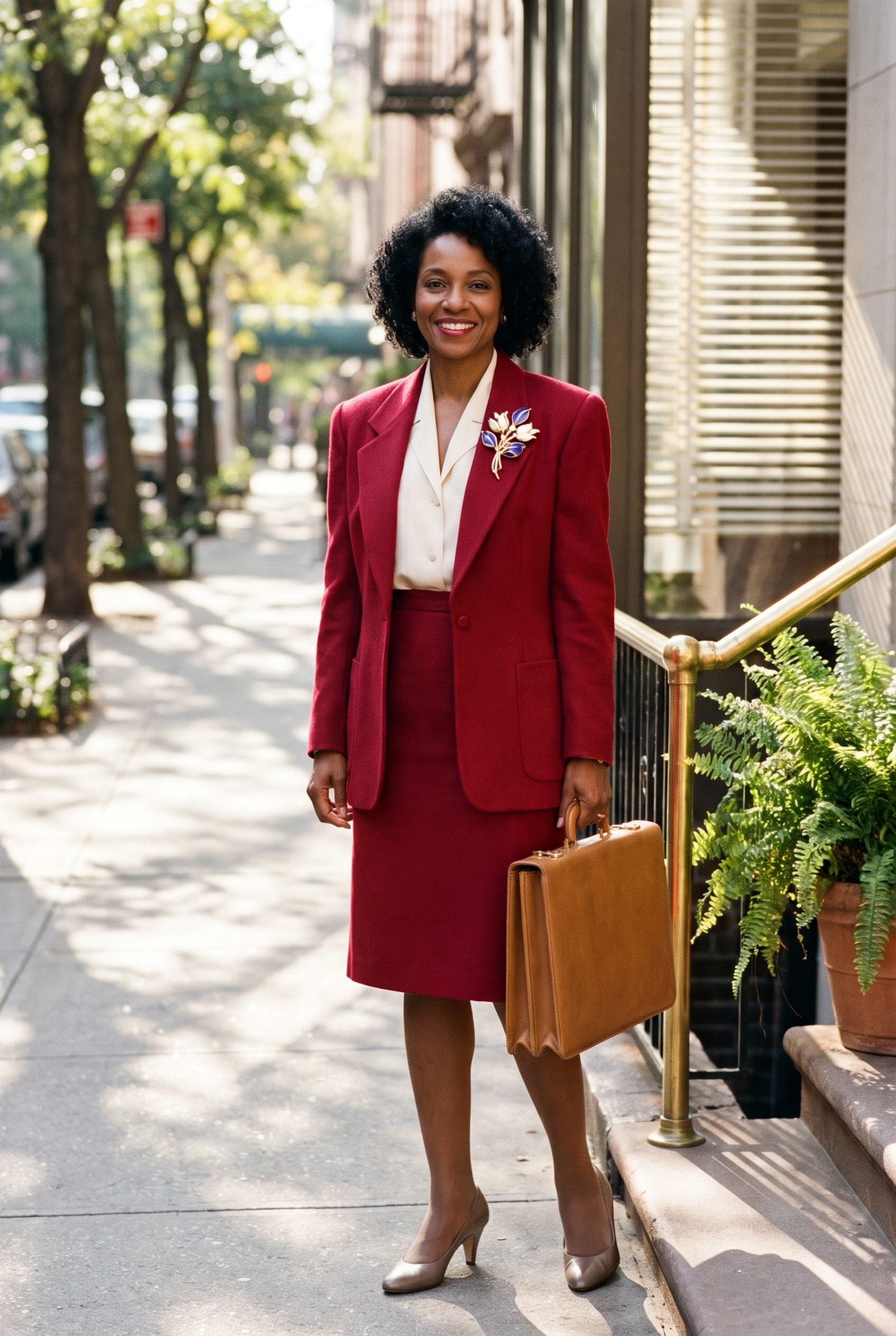
The brooch anchored the whole lapel. A palm-sized enamel spray, a jeweled bug, an abstract gold swoosh studded with rhinestones, pinned high on the shoulder of a strong-shouldered blazer where nobody could miss it.
It reframed a basic suit. The cobalt and gold enamel against cranberry wool gave the eye somewhere bright to land, and it signaled a woman with personality who still color-coordinated. The catch? These things snagged on every cardigan you owned and left tiny pulls in silk blouses. Nobody cared one bit.
18. The Stack of Noisy Gold Bangles
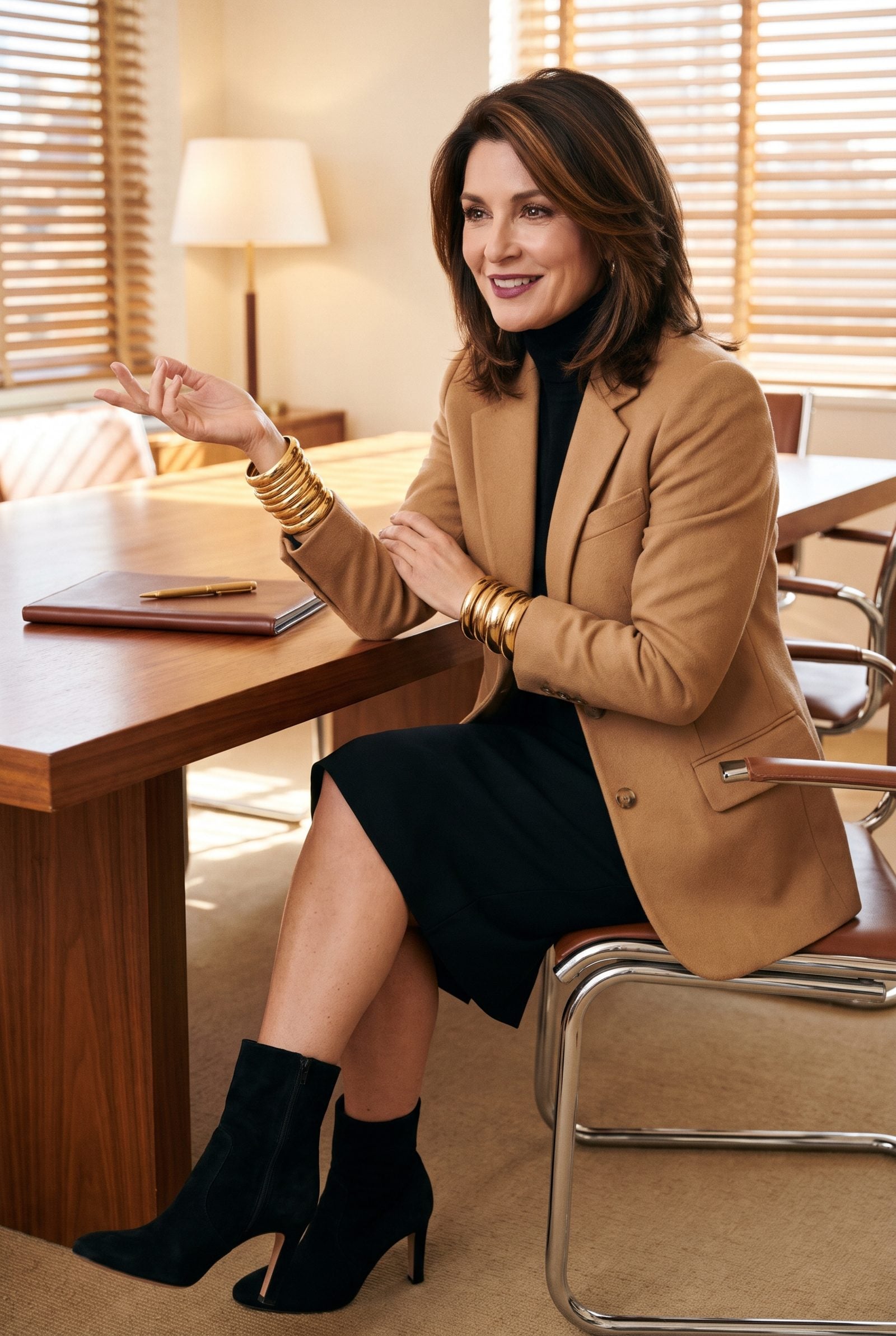
You heard this interview before you saw it. A forearm stacked with gold bangles announced every handshake and page turn with a soft metallic clatter, and the sound was part of the point.
Against the quiet camel blazer and black turtleneck, the gold stack was the single bright note warming up an otherwise severe palette. There was a real downside, though. You learned to still your hand during the serious questions so the jangling didn’t drown out your answer about the five-year plan.
17. The Oversized Plastic Nameplate Necklace
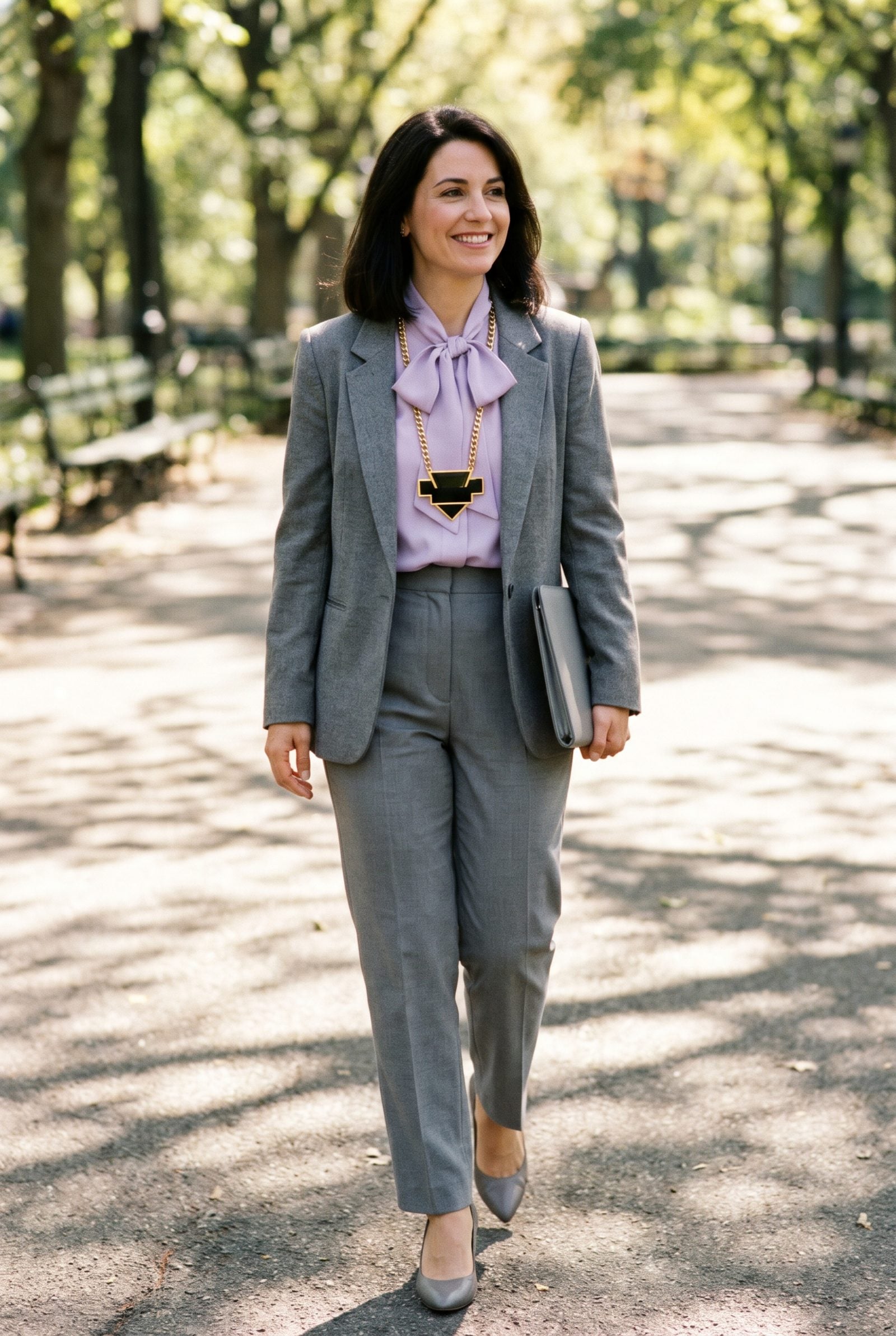
Big, bold, and plastic. The nameplate necklace landed heavy on the chest, a chunky acrylic pendant on a gold chain that swung when you leaned forward to shake a hand. Geometric, glossy, impossible to ignore.
It introduced the only hard graphic element into an otherwise soft lavender-and-gray outfit, and that contrast is why it worked. Light, cheap, and deliberately loud, it signaled a woman who wanted to be remembered. You can trace a straight line from these to today’s layered name chains, though subtlety wasn’t anyone’s goal then.
16. The Enormous Plastic Eyeglass Frames
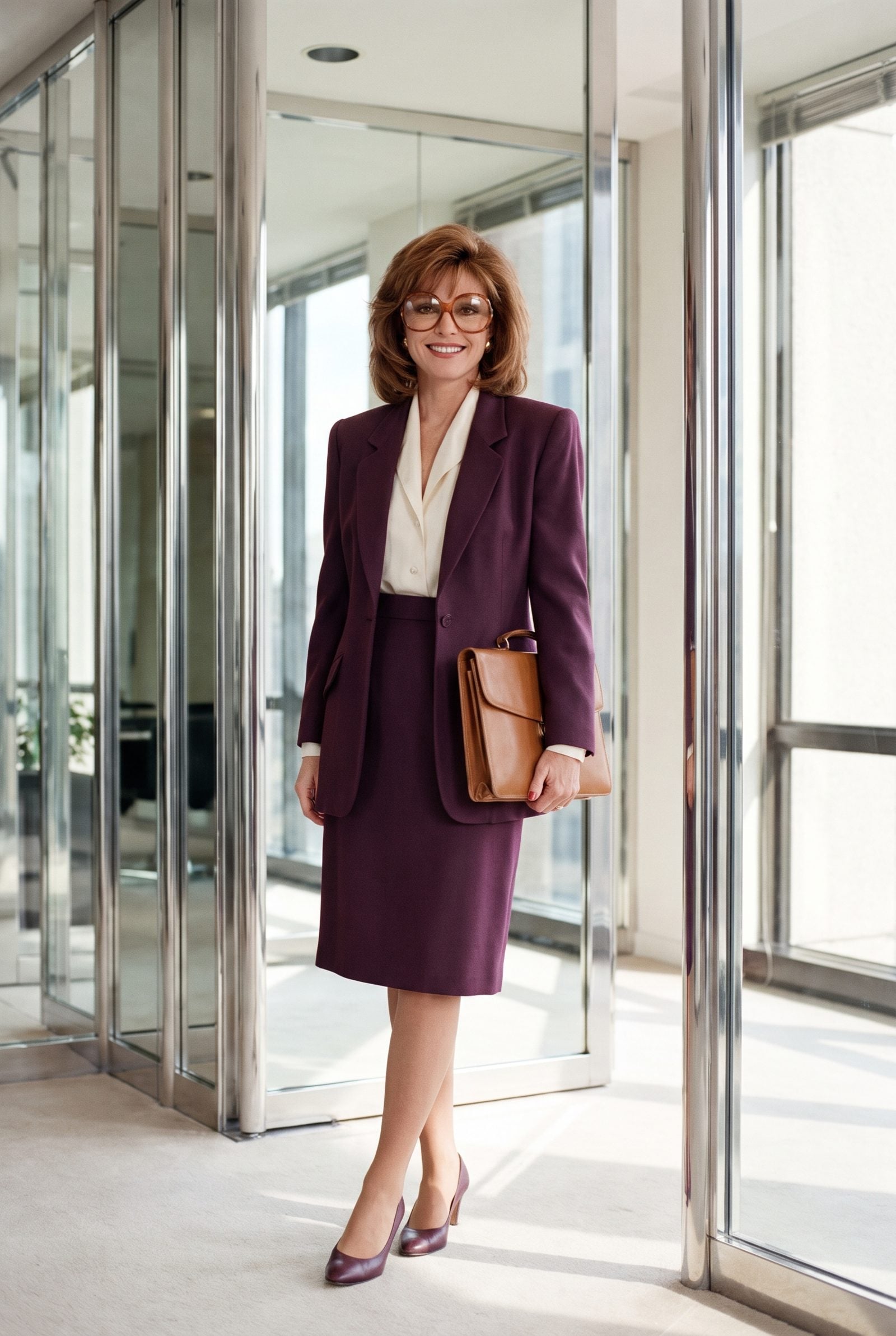
The frames were the size of windshields. Rounded plastic in tortoiseshell or black or candy red, oversized enough to cover half the face from brow to cheekbone, because bigger was unquestionably better.
Against the tailored plum suit, they became a facial feature in their own right, a bold horizontal line that balanced the strong shoulders and turned a prescription into a personality. A woman who wore these to an interview wasn’t hiding behind them. She was arriving in them.
15. The Lightly Tinted Prescription Glasses
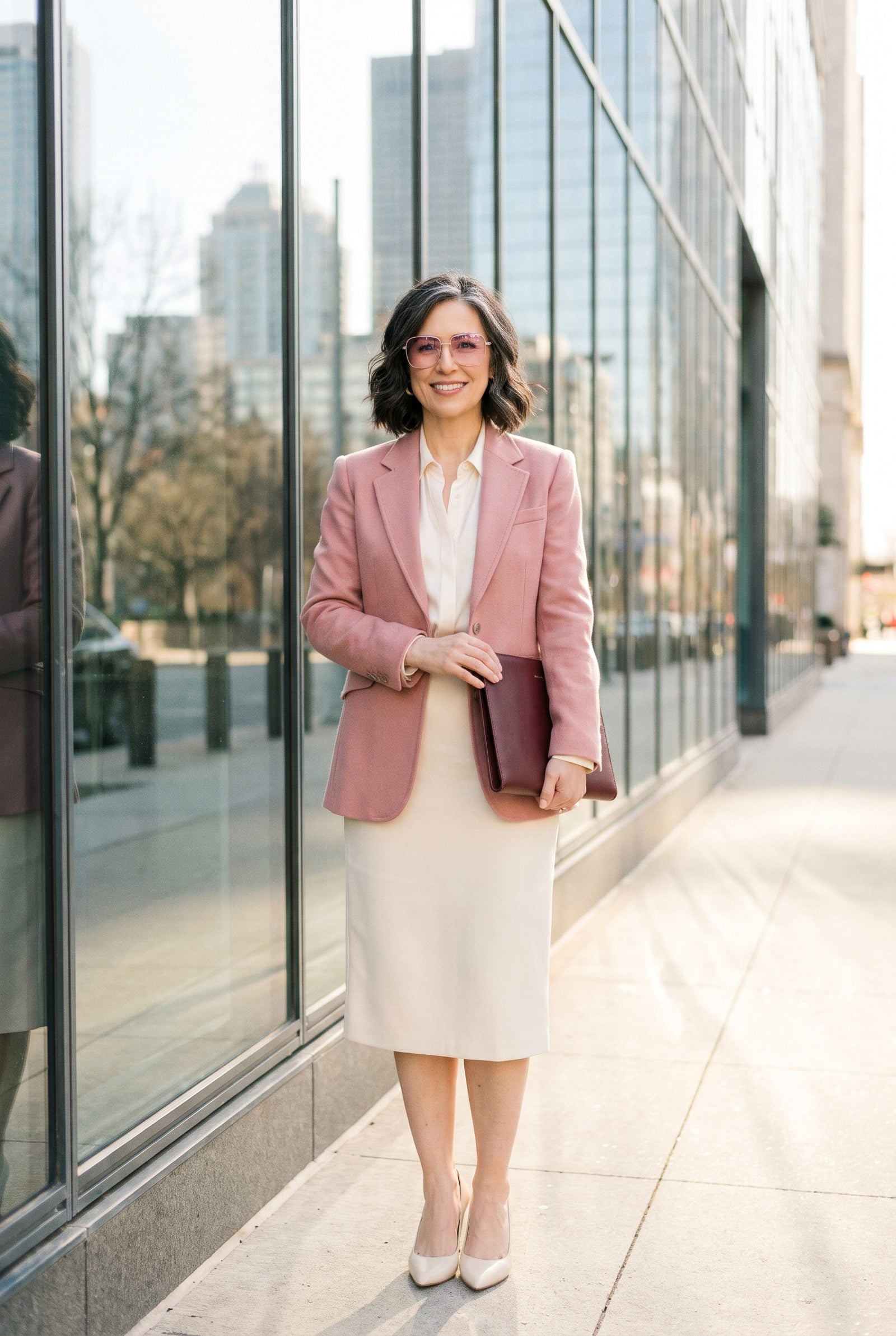
The lenses carried a wash of color, a rose or amber or faint smoke gradient that darkened toward the top, worn indoors through the entire interview. Not sunglasses exactly. Just glasses with an attitude about light.
Gold wire frames and a soft tint against a rose wool blazer kept the look warm and tonal, which is why it read as polished rather than evasive. There was a certain softness to being seen through a faint pink haze. A modern HR department would politely ask you to take them off. In 1986, that gentle tint was simply how a considered woman finished her face.
14. The Towering Hairsprayed Power Bouffant
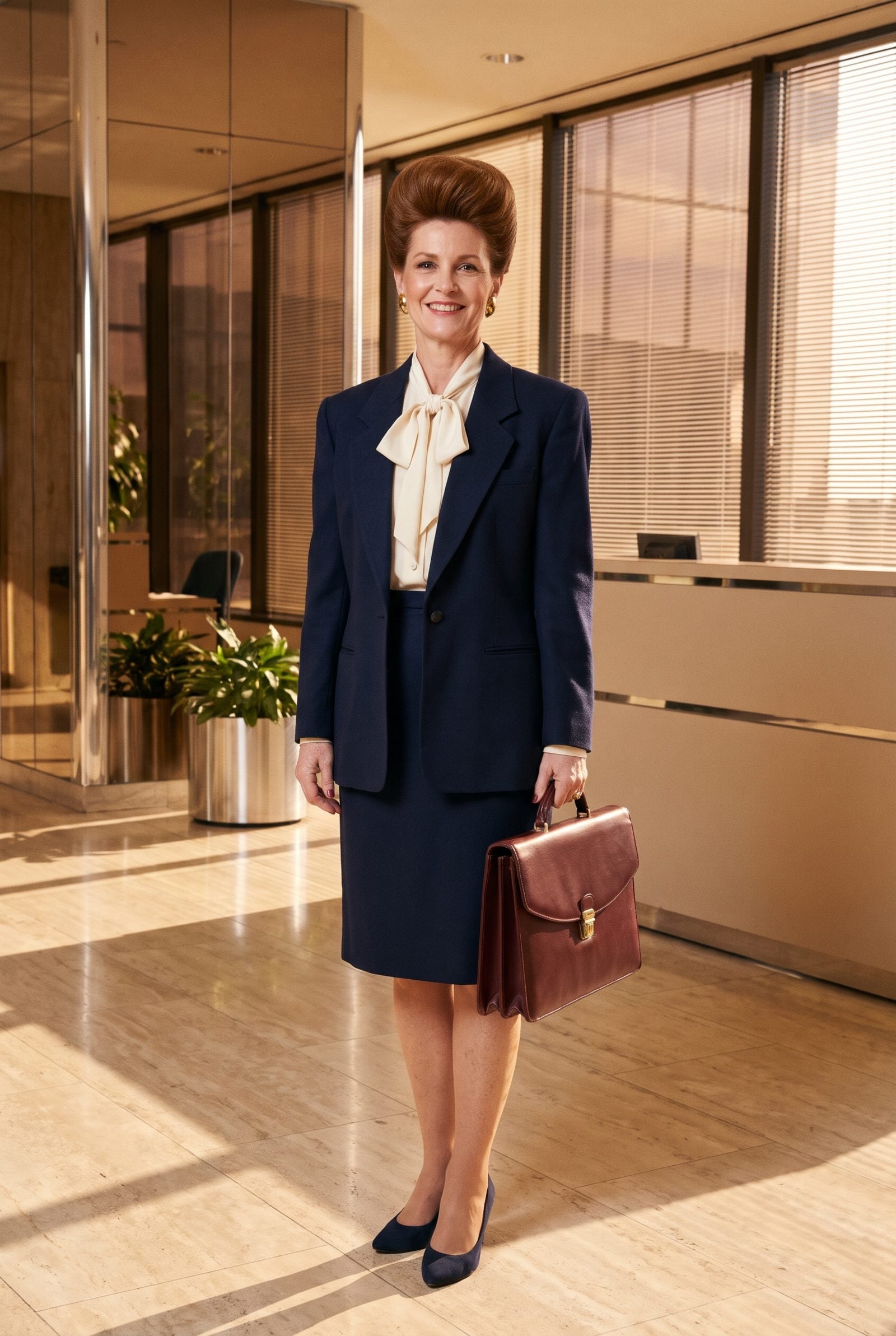
Height was the whole point. The bigger the hair sat above the forehead, the more you looked like someone who ran the department rather than filed for it. We backcombed at the roots, flipped the head upside down, and sprayed until the strands refused to budge for the rest of the day.
Paired with the padded-shoulder suit, the bouffant finished a silhouette that read as pure authority — broad up top, nipped at the waist, nothing apologetic about it. The lacquer held through handshakes, elevators, a full afternoon of questions.
13. The Tight Spiral Perm With Maximum Volume
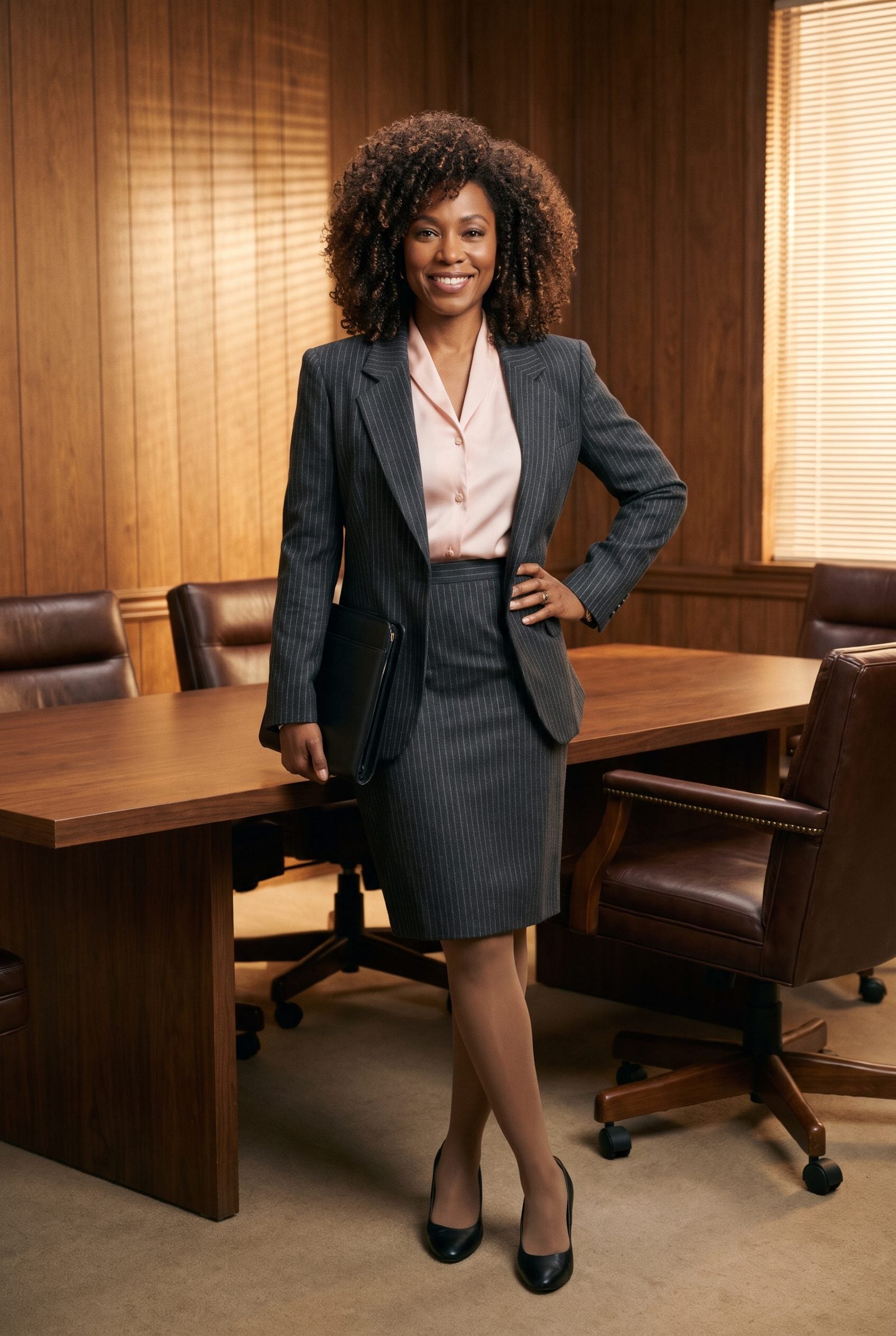
You booked the salon a full week before the interview so the curl had time to relax from aggressively new to merely abundant. The spiral perm gave you volume no blow-dryer could fake, a cloud of tight coils that bounced when you nodded through the questions.
It read as effort, which was the signal. Nobody walked into a hiring manager’s office with flat hair in 1984. The perm said you took yourself seriously, and the smell of the solution clinging to your scarf for days afterward? Simply the cost of looking the part.
Looking back at the decade’s big hair, a hairdresser perming since 1991 explains that “Softness was out and structured, standing volume was in — and a chemical perm was the only way to defy gravity at that scale for more than an evening.”
12. The Crimped Hair Brushed Into a Halo
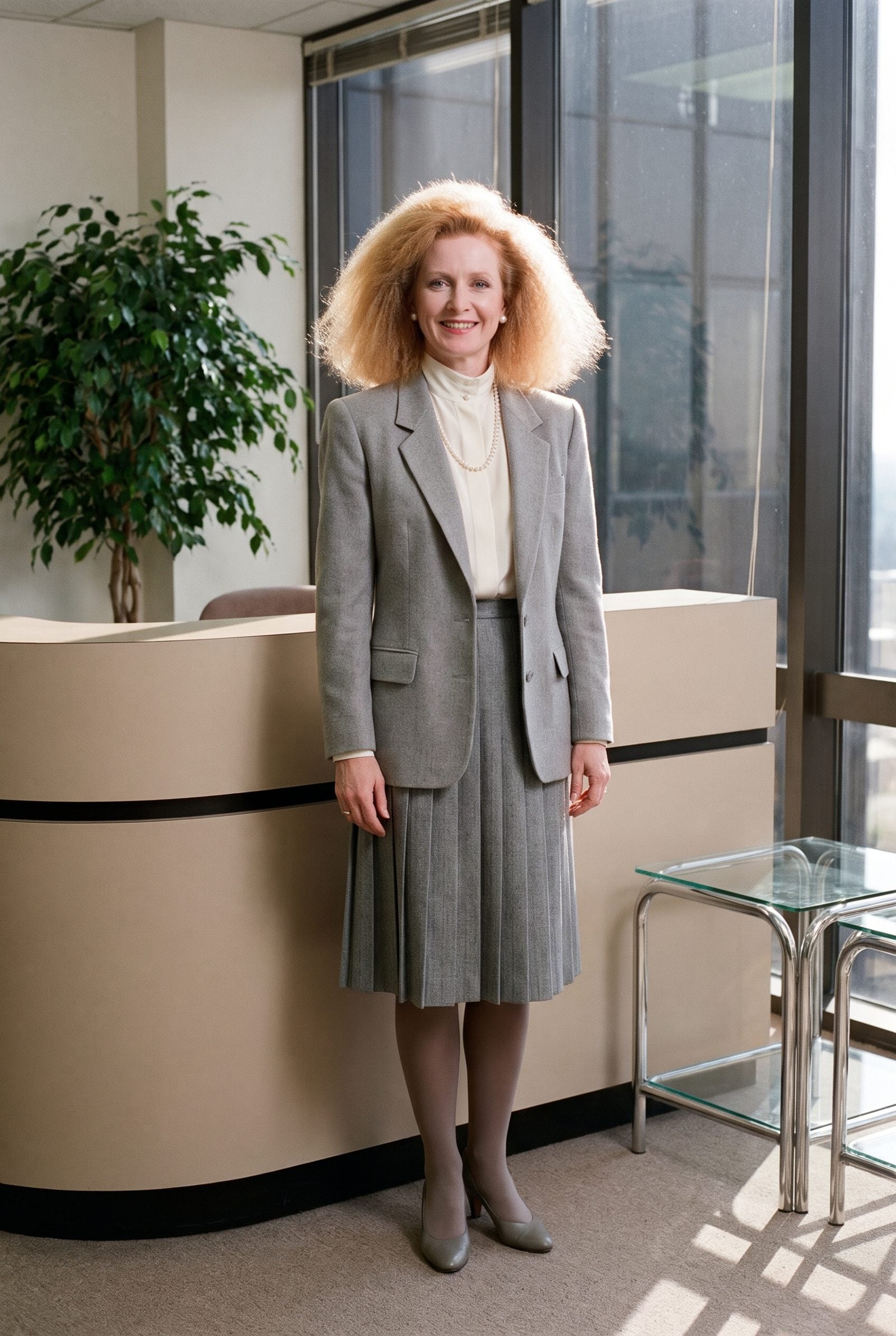
The crimping iron came out the night before, section by patient section, until every strand carried that tiny zigzag ripple. Then you brushed it all out and let it balloon into a textured halo that practically doubled the width of your head.
Volume as confidence — a soft cloud that caught the light and made you impossible to overlook across a reception desk. It softened the hard lines of the outfit styles we leaned on back then, dropping a little romance onto all those padded shoulders.
11. The Asymmetrical New-Wave Haircut
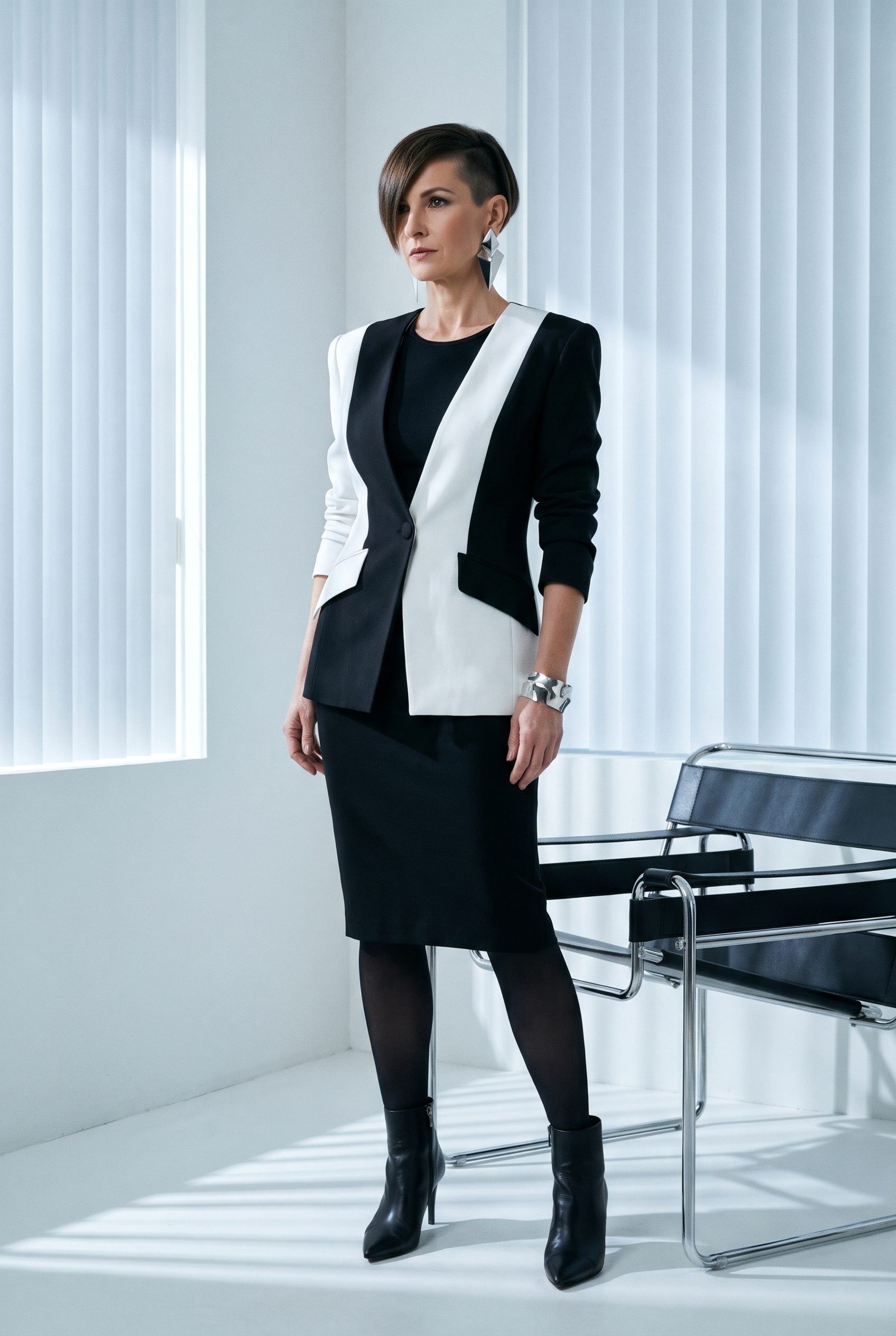
Long on one side, shorn nearly to the scalp on the other, the whole thing swept into a dramatic diagonal. This cut said something before you opened your mouth, which is exactly why some of us wore it into interviews at ad agencies and record labels.
It telegraphed that you watched the right music videos and read the right magazines. The androgynous hairstyle walked a line between creative and corporate, and in the right room it opened doors a safe trim never could.
10. The Banana Clip Holding a Cascade of Curls
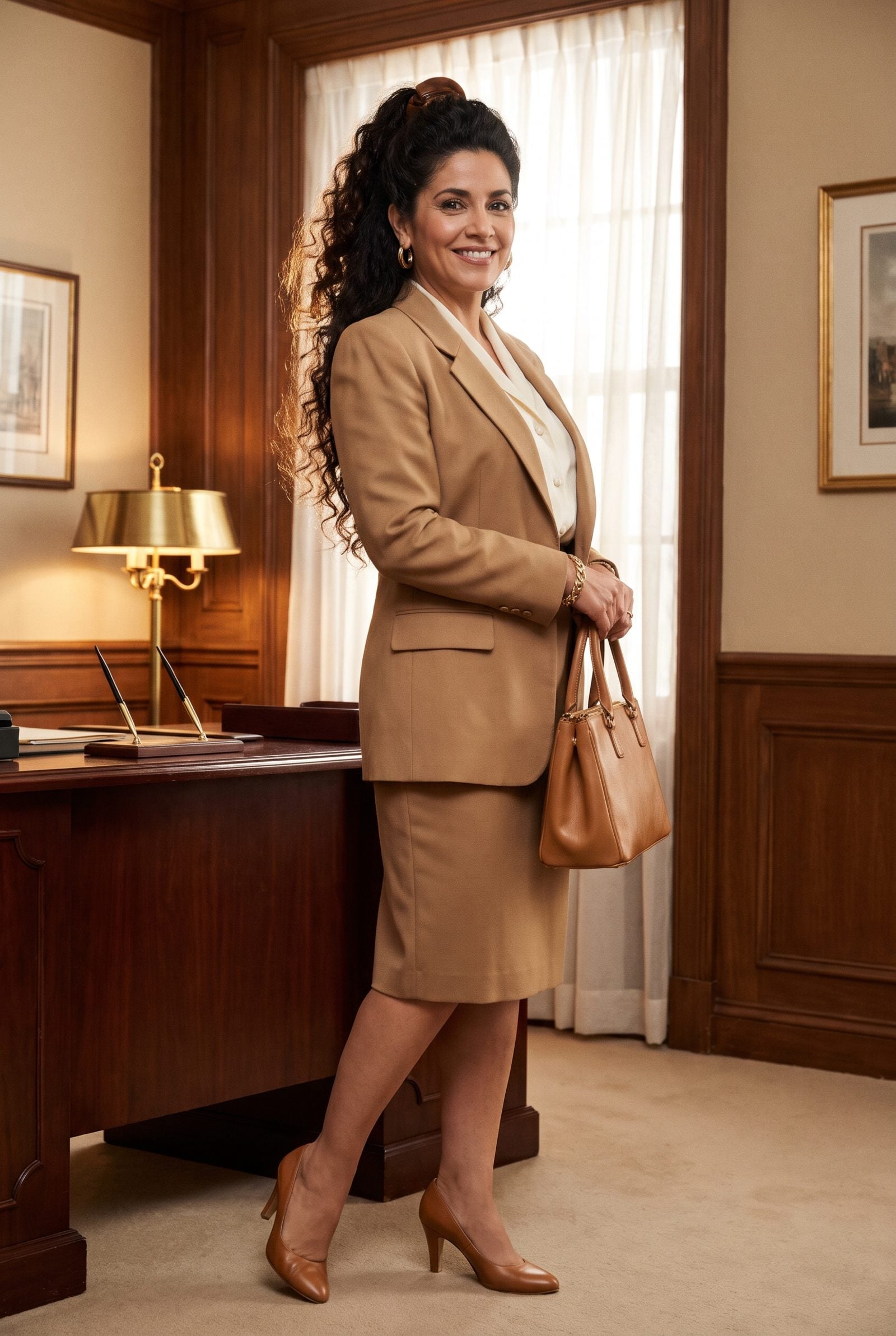
The banana clip was a small miracle of leverage. You gathered everything at the back, snapped the curved comb shut, and suddenly a full head of curls stood tall and corralled, defying gravity through sheer tension.
It looked deliberate without looking like you’d spent an hour on it — the dream before a 9 a.m. interview. All those curls tumbling out the top gave movement to an otherwise buttoned-up look, softening the camel suit and reading as effortlessly pulled together.
The clip still has fans: asked which hair accessory they would buy, 48% of our readers chose a clip and 43% a headband.
9. The Giant Bow Barrette at the Back of the Head
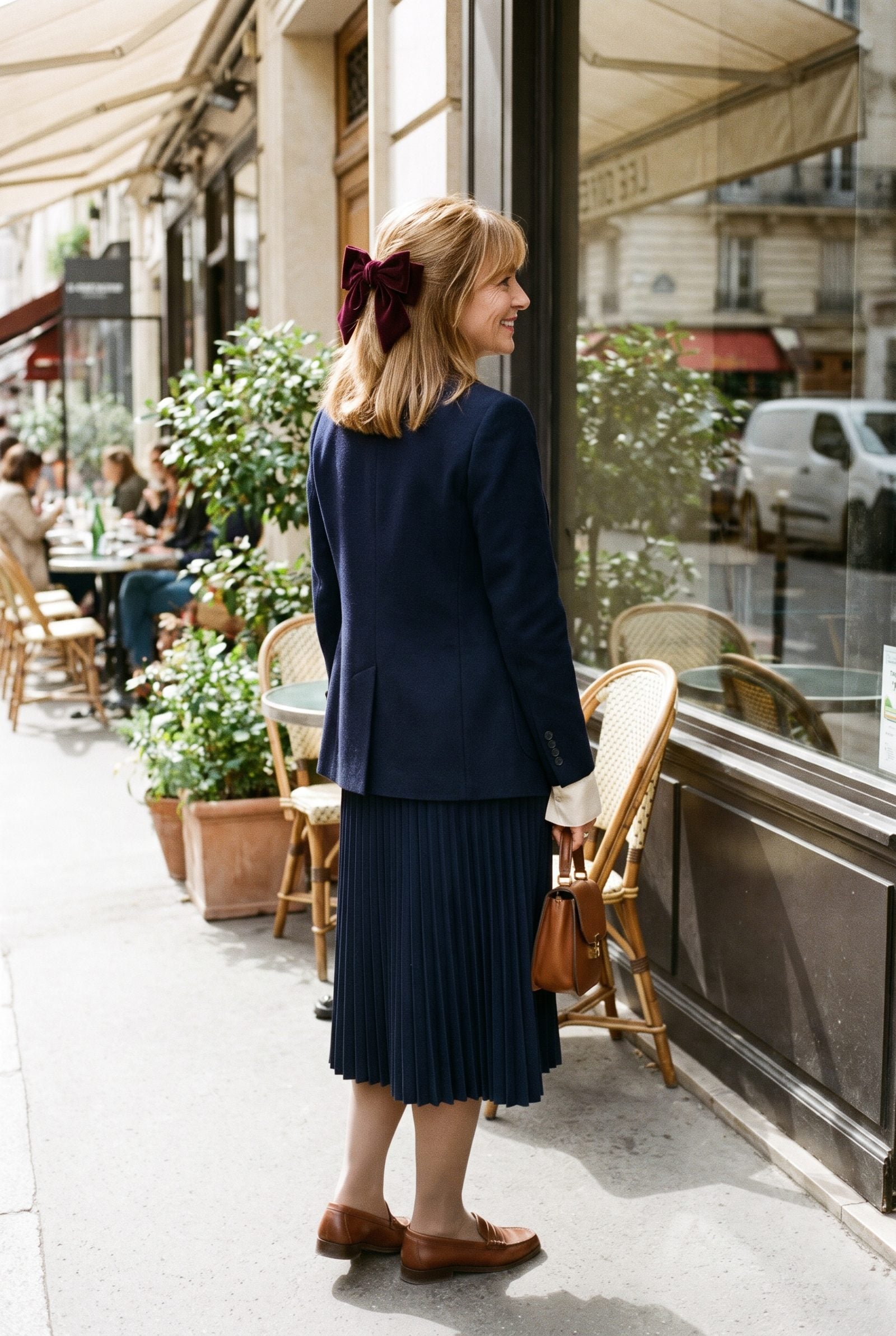
Enormous, velvety, clipped off to the side behind the ear — the bow barrette added polish to a serious suit without a single hair out of place. The bigger the bow, the more intentional the whole look appeared.
It was the accessory that managed to say feminine and competent in the same breath, a soft counterweight to all that structured tailoring. We pinned them in deep jewel tones to match the suit, and the matte velvet looked rich every time you turned your head toward the interviewer.
8. The Electric-Blue Eyeshadow Swept to the Brows
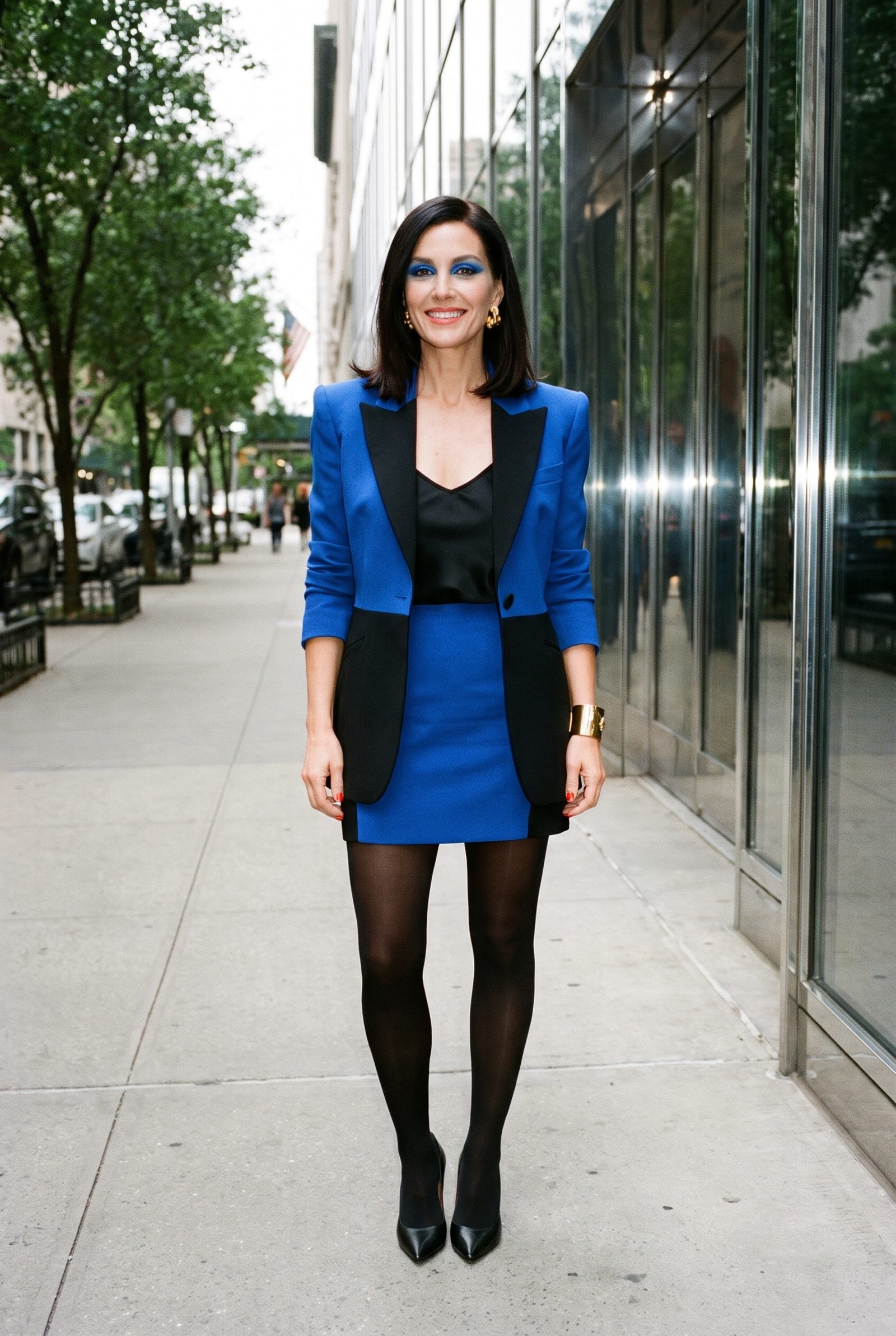
From lash line to brow bone, in a blue so saturated it practically hummed. The electric lid was a full commitment, applied with a sponge-tip wand straight from the drugstore palette and blended out toward the temples until it shouted.
It matched your suit, your pumps, sometimes your mascara, because coordination was the entire philosophy. Nobody whispered about toning it down for the office. A bold eye meant you were awake, ready, and had no plans to blend into the furniture.
7. The Hard Diagonal Stripe of Raspberry Blush
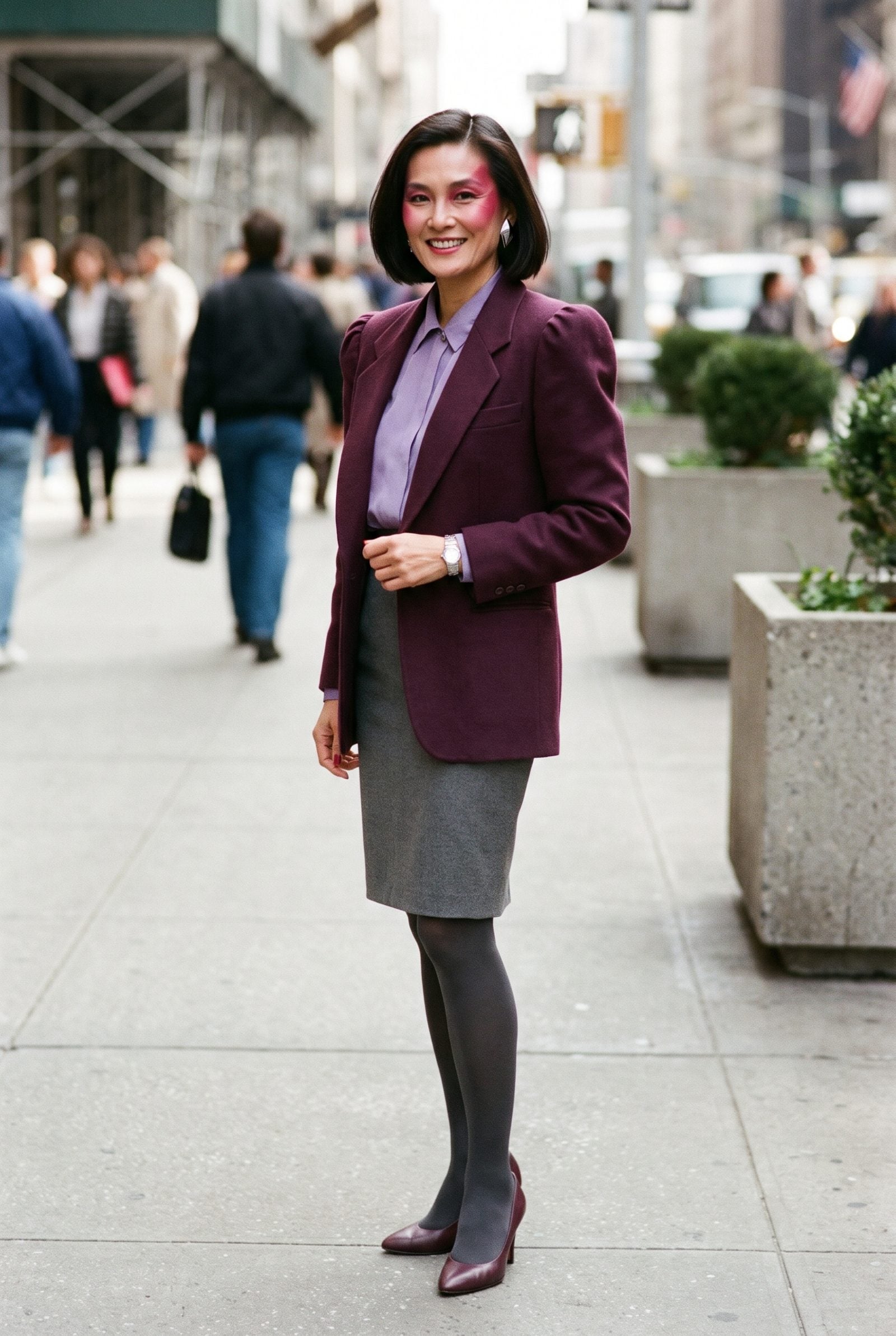
Not a soft wash on the apples. A hard diagonal stripe of raspberry swept from the cheekbone up toward the temple. We used the little brush that came in the compact, and we pressed hard.
The point was definition. That bold block of colour made your face look dramatic, which felt sophisticated and grown-up in a way a natural flush never managed. Interview makeup was supposed to be visible across a conference table, and this patch made sure of it.
6. The Frosted Pink Lipstick
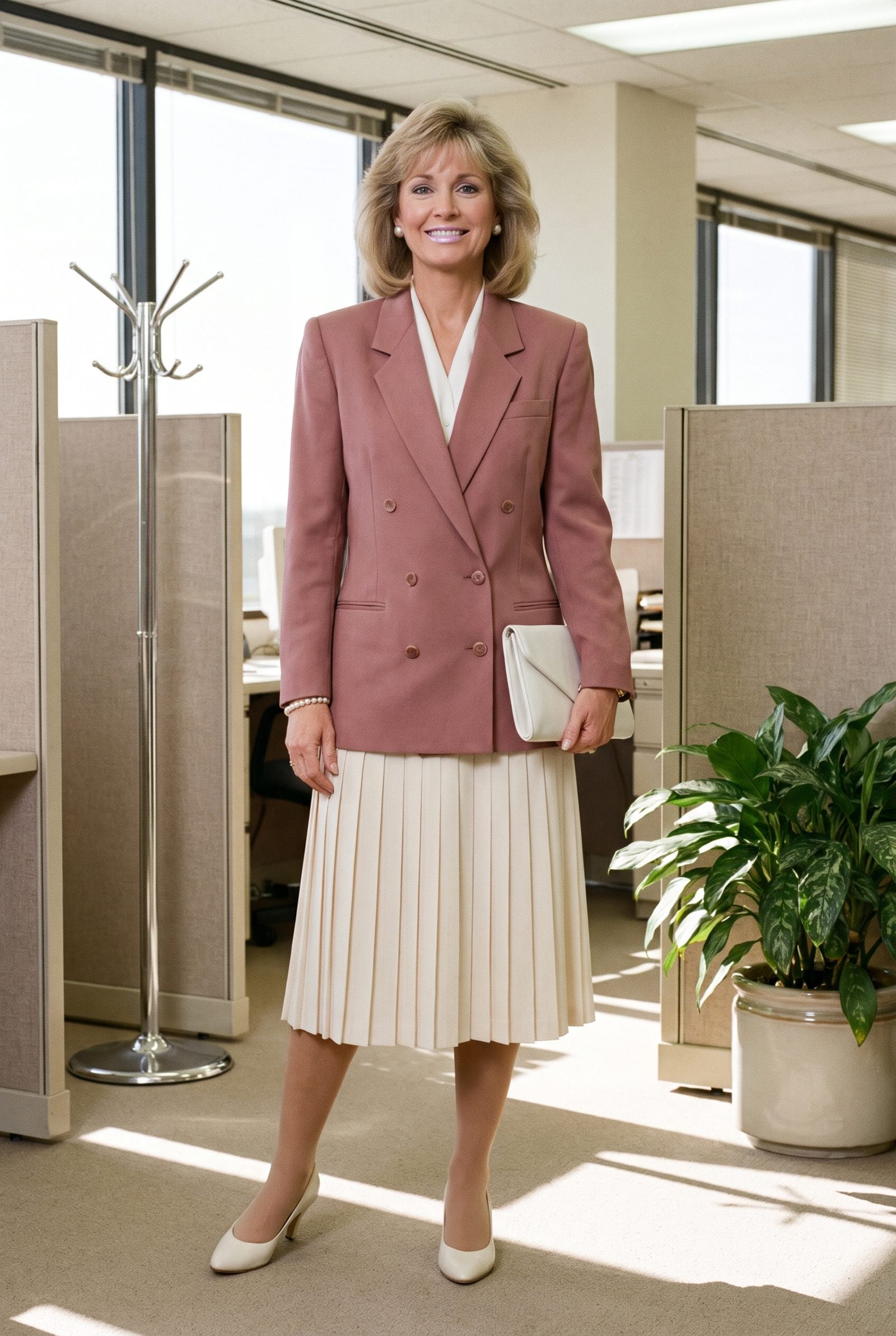
That pearly, almost-white pink that caught the light and iced the whole mouth over. We wore it over a darker liner, or over nothing at all, in shades with names like Pink Frost and Icy Petal.
It read as feminine and polished, the respectable cousin of the bolder lips. You could reapply in the elevator mirror on the way up and feel entirely put-together. The frost sat lighter than today’s matte formulas, which made the whole face look softer under fluorescent office lighting.
5. The Brightly Colored Mascara
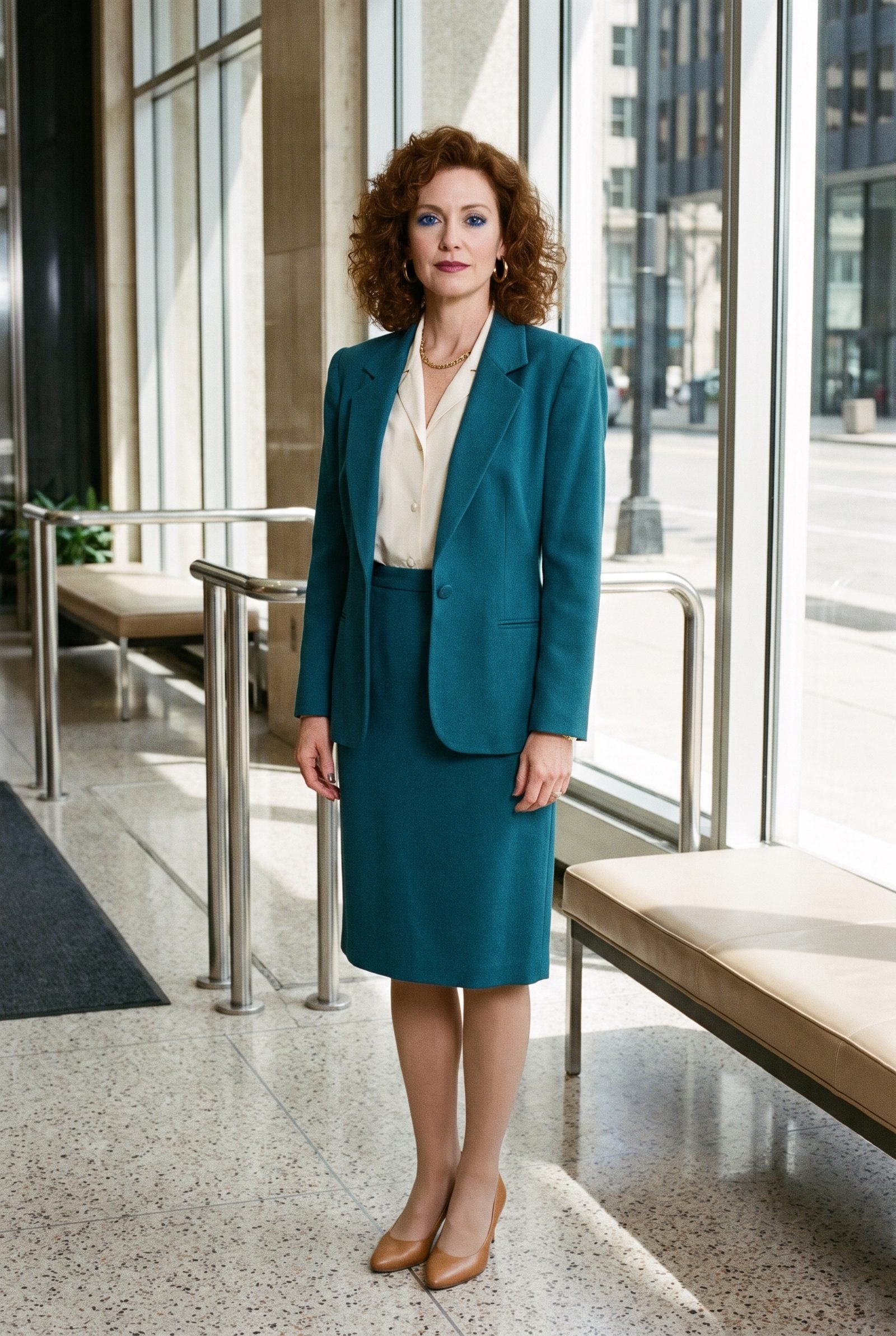
Navy was practically a neutral, but plenty of us reached for cobalt, emerald, even violet on the lashes and called it a day. Colored mascara was the small rebellion you could wear to a buttoned-up interview and still look intentional.
A flash of color that only showed itself when you blinked — a little surprise for whoever was asking about your five-year plan. Blue in particular made the whites of the eyes look brighter, which is exactly why it keeps circling back every few years.
4. The Long Square-Tipped Acrylic Nails That Clicked Across Every Keyboard
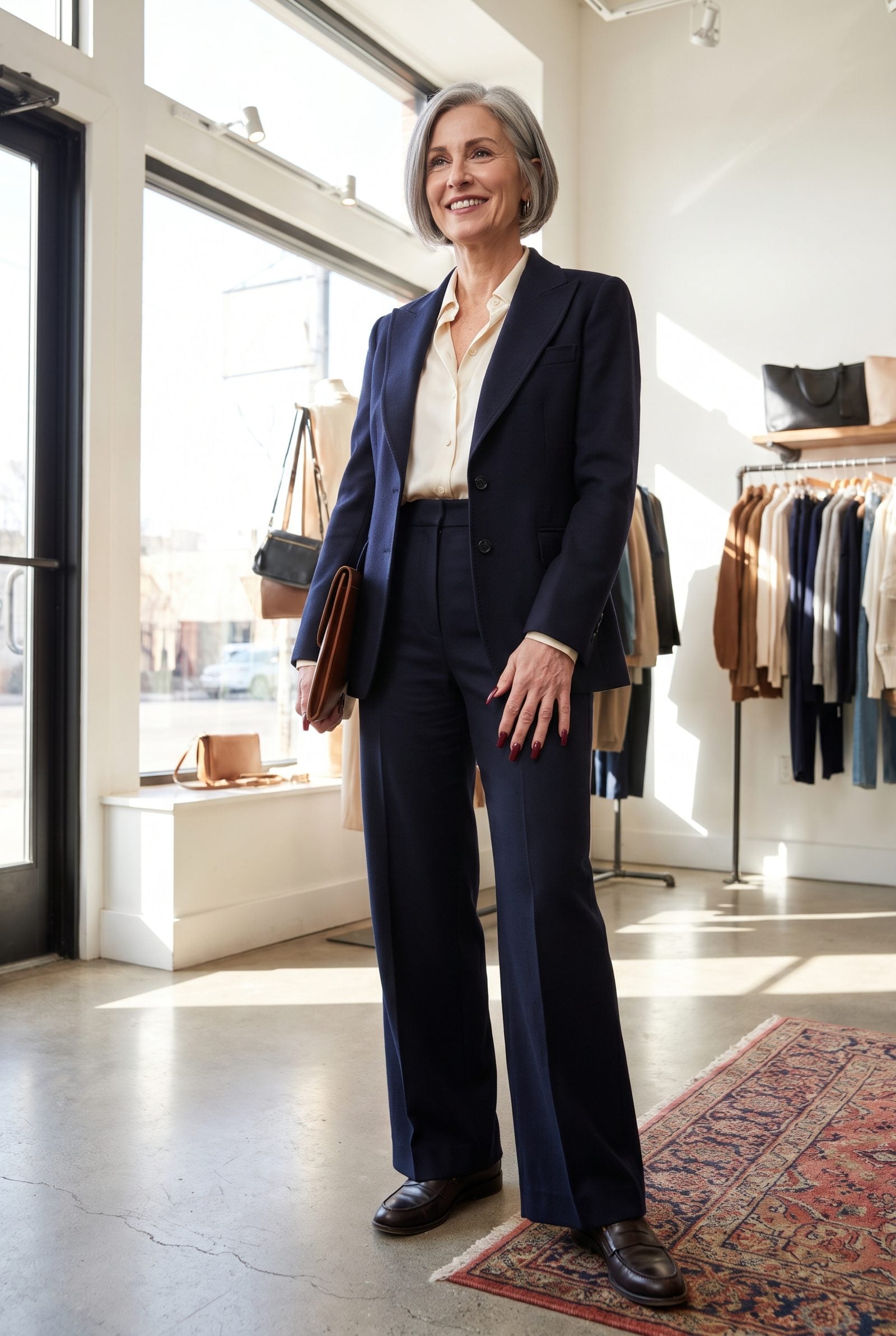
You could hear a candidate before you saw her. The nails came first, clicking across the reception desk like punctuation, each one a square-tipped quarter-inch of lacquer in oxblood or frosted pink.
These were a quiet flex. Long acrylics said you had time, money, and a standing Thursday appointment at the salon. They also meant you dialed a rotary phone with a pencil and typed around them, which nobody considered a problem. Pair them with a structured blazer and the burgundy pumps and the whole hand became part of the outfit — a finishing detail that reframed a firm handshake into an event.
3. The Heavy Cloud of Designer Perfume You Could Smell From the Elevator
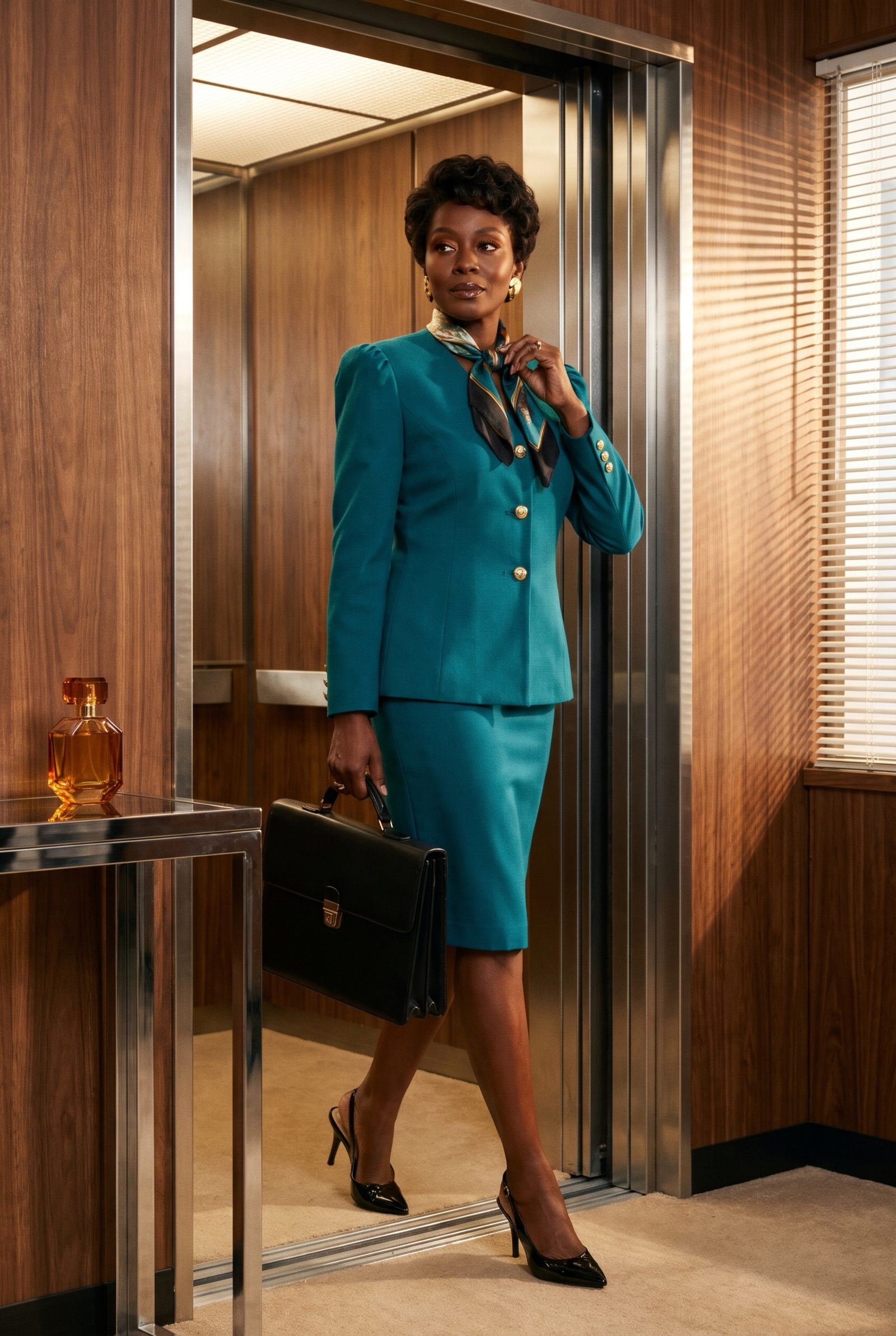
The fragrance arrived before the résumé did. Giorgio, Poison, Opium — worn not as a whisper but as a statement that filled the conference room and lingered an hour after you left.
A spritz was polite. Six was ambition. Heavy perfume read as presence, and presence got you remembered in a stack of interviews. It cut through the teal suit the way a loud accent cuts through a quiet room, deliberate and impossible to ignore. Enclothed cognition in liquid form, really: you smelled expensive, so you walked in believing you belonged.
Today an HR coordinator would be drafting a scent-free-workplace memo before you reached the parking garage.
2. The Walkman Headphones Worn Right Into the Lobby
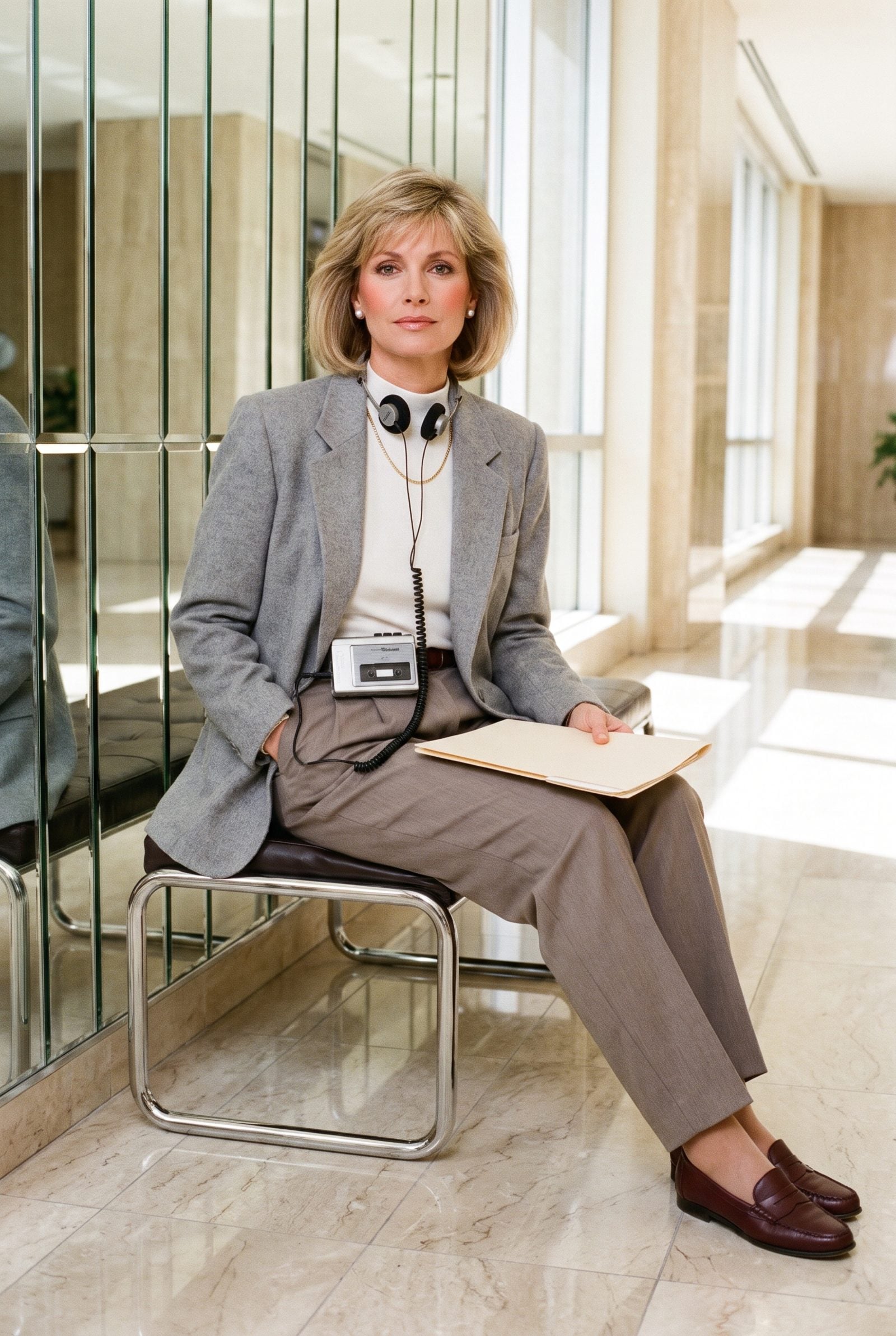
You’d hype yourself up on the walk over — a little Whitney, a little Tina — the foam headphones still around your neck when you signed in at the front desk because taking them off felt like giving up your edge.
The Walkman clipped to the waistband was practically an accessory, part armor and part ritual. Against the grey blazer and the burgundy loafers it read as a woman who arrived on her own frequency. Nobody blinked. The receptionist probably had a Walkman in her desk drawer too.
1. The Cigarette Case Placed Beside the Résumé on the Desk
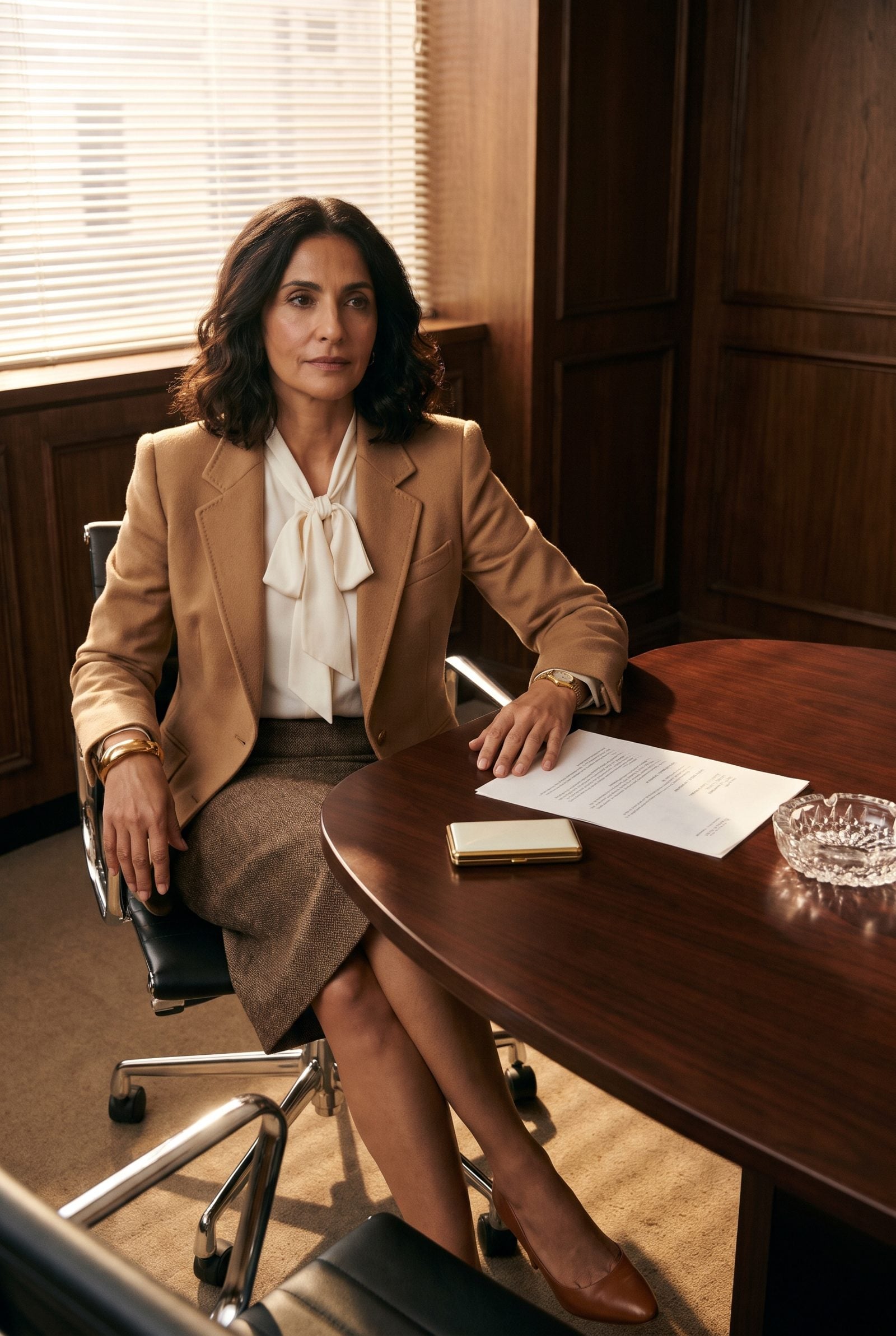
Picture the desk mid-interview. The typed résumé, the crystal ashtray sitting clean and empty, and beside it the slim enamel cigarette case set down like a business card.
Lighting up across from your future boss wasn’t rude. It was collegial. The case itself was styling — a lacquered or gold-tone object that matched the camel blazer and the bangle, catching the window light. It said composed, grown, in control of the room.
The camel-and-chestnut palette did the quiet work, warm neutrals layered so the gold of the case became the one point of shine. A modern HR department would have the fire alarm and the building code in hand before you flicked the lighter.