
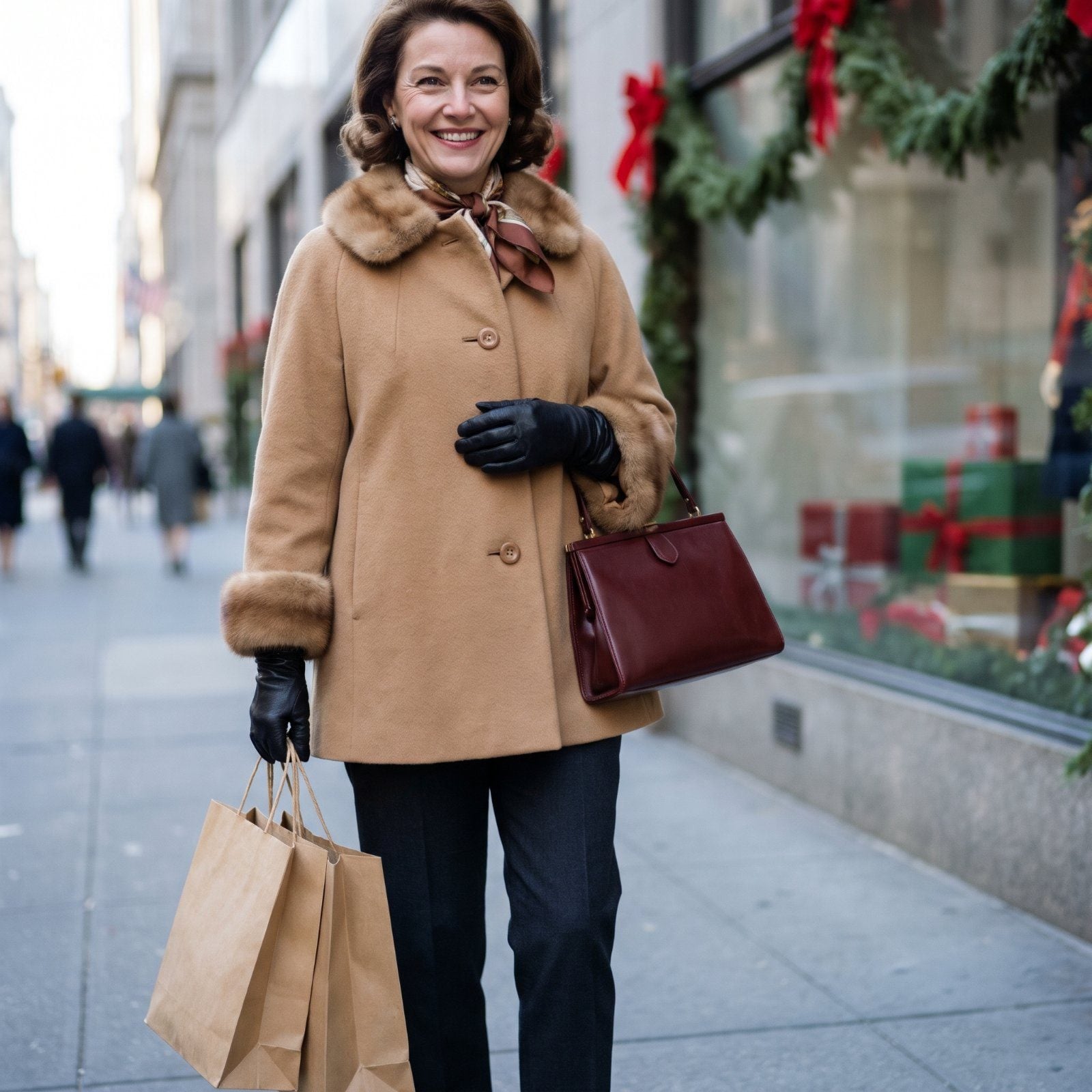
The crosswalk light changes and a wave of wool coats steps off the curb, every one of them cinched, buttoned, and ready for a full afternoon of parcels. Downtown at Christmas meant dressing with intention. Nobody ran errands in sweatpants. You pulled on hosiery, found your good gloves, and walked past department-store windows dressed exactly like the women arranged inside them. These were the coats, suits, and dresses that carried women through crowded sidewalks and revolving doors with their lipstick intact.
FYI, thanks to AI imagery software, we’re able to create very specific fashion and hairstyle examples to illustrate the points being made. In some cases, imagery is exaggerated to hammer home the point. Also, assume links that take you off the site are affiliate links such as links to Amazon. this means we may earn a commission if you buy something.
28. A Fur-Trimmed Swing Coat
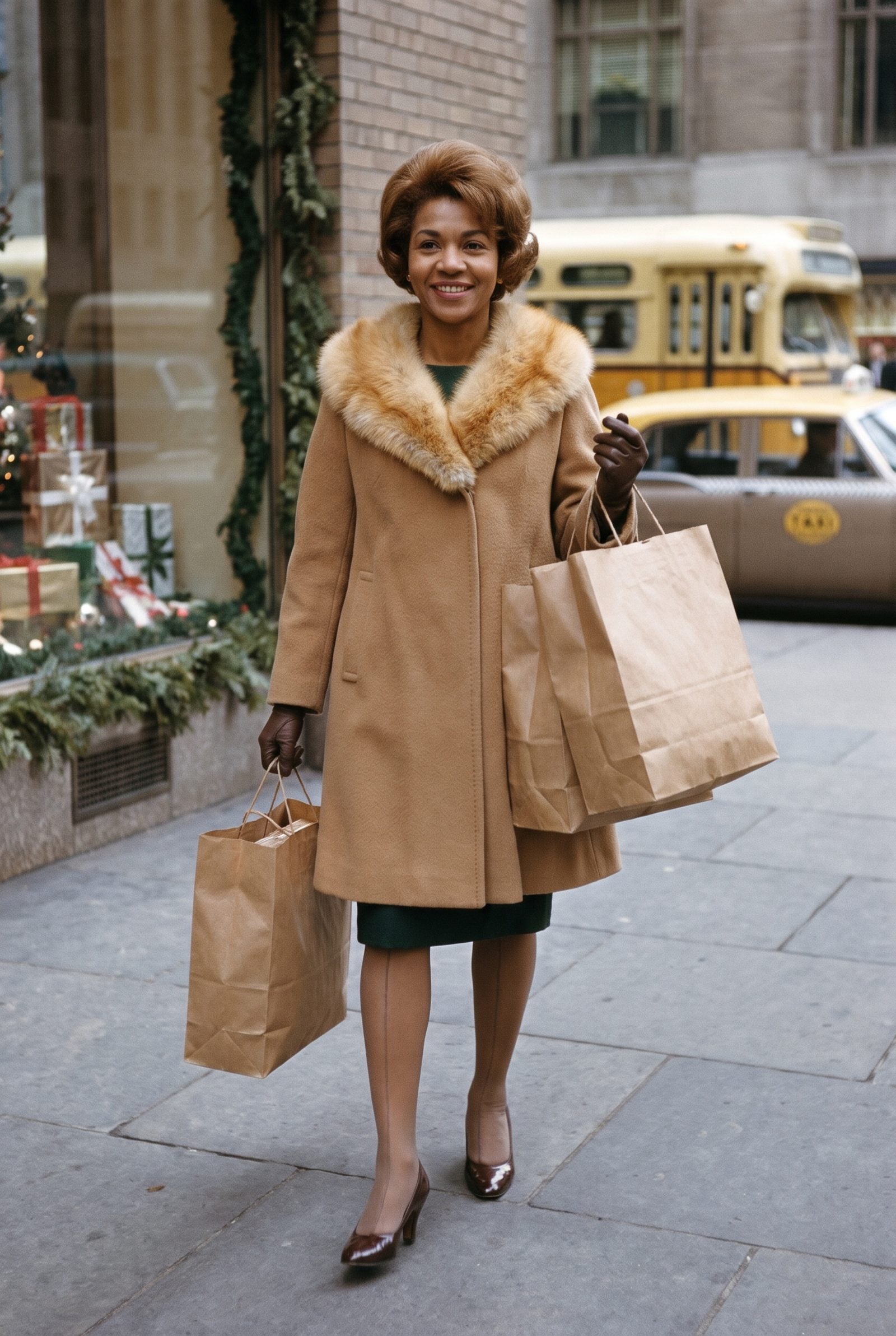
The swing cut is the whole argument here. A coat that flares from the shoulder lets a woman move fast through a crowded store without the fabric fighting her, and the camel wool swing coat reads generous without reading shapeless. The fur collar does the rich-texture work, framing the face so everything above the shoulders stays the focus.
Camel against honey fur is a tonal build, warm layered on warm, which is why it looks expensive even when it was bought on layaway. You wore this to feel pulled together for a full afternoon of parcels, and it delivered.
27. A Wool Princess Coat With Bracelet-Length Sleeves
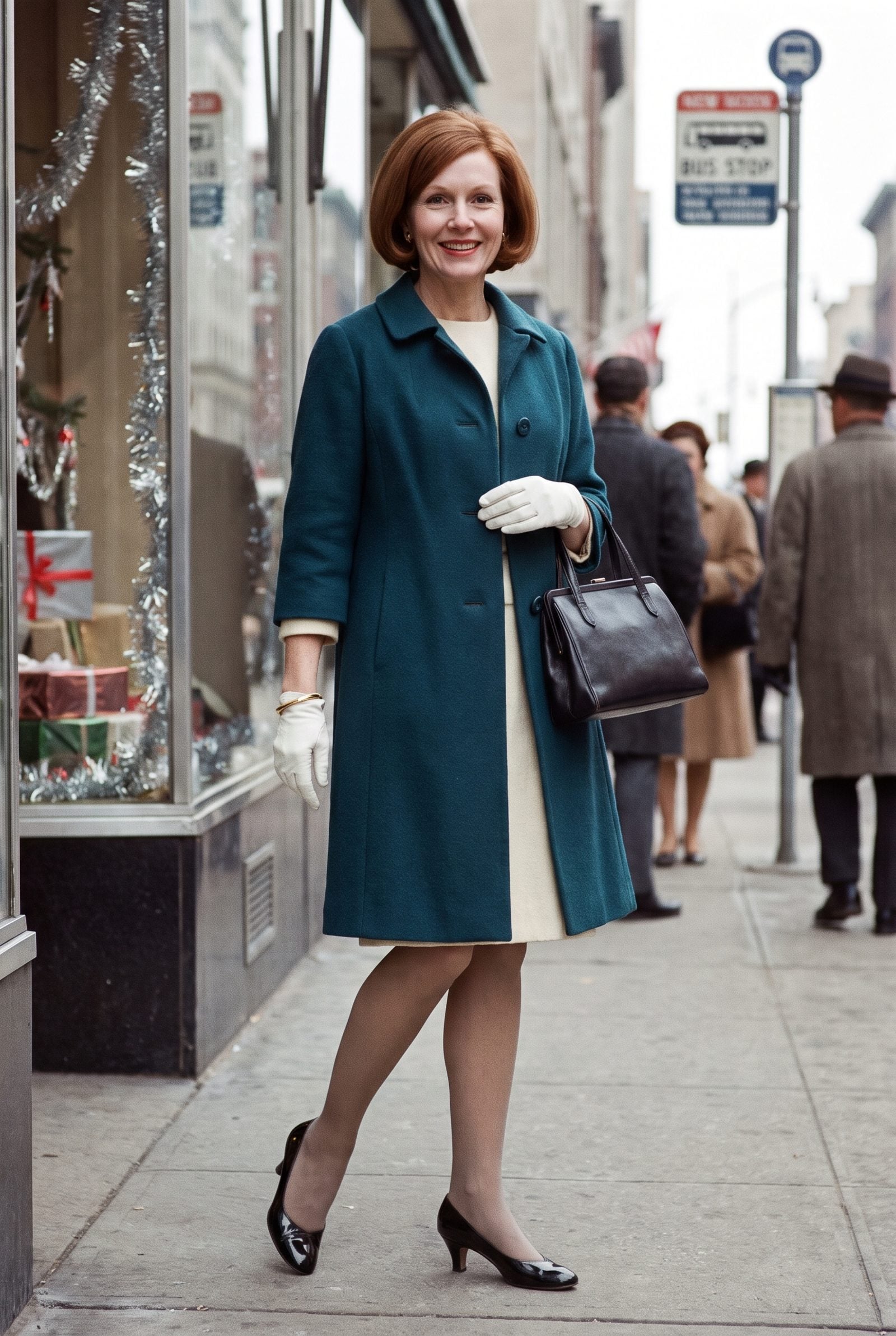
Princess seaming is the engine of this coat. Those vertical panels running shoulder to hem skip the waist seam entirely, so the shape is carved by the cut itself, close through the body and flared below. On a teal wool princess coat that precision looks tailored even when it came off a crowded rack.
Now the bracelet-length sleeve, that was the clever bit. It stopped short of the wrist to show off gloves and a bangle, and it kept cuffs out of the way when you were counting change at the register. One detail, two jobs.
As a sewing pattern designer explains, “Princess seams are curved, vertical seams down a garment that create smooth lines which flow over the bust and/or hips.”
26. A Matching Coat-and-Dress Ensemble
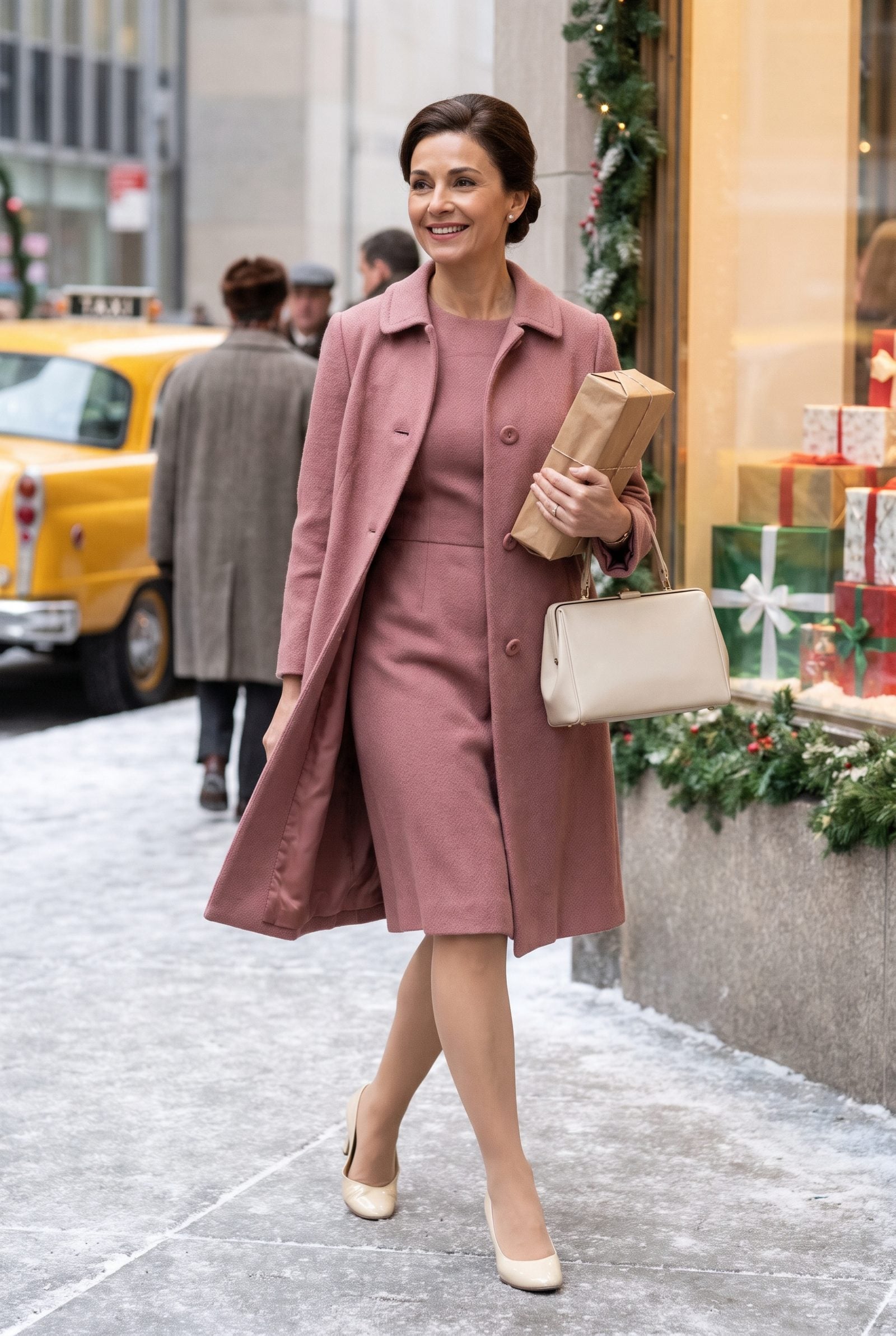
Matching the coat to the dress underneath was a genuine flex. You walked in dressed in one color story head to toe, shed the coat at lunch, and the dress carried the look without missing a beat. Two pieces, one fabric, zero guesswork about whether anything coordinated.
The dusty rose keeps it from reading severe the way a matched navy set might. It’s a soft commitment to a single tone, which is exactly why it looks considered rather than careful.
What Our Readers Say
- Department stores still have their fans: asked how they like to shop, 63% of ThreadCurve readers said in store, against 37% online.
- Dressing up for errands is a harder sell today, since nearly two out of three of our readers say comfort comes first when asked to choose between comfort and polish.
From ThreadCurve reader polls and votes.
25. A Tartan Plaid Winter Coat
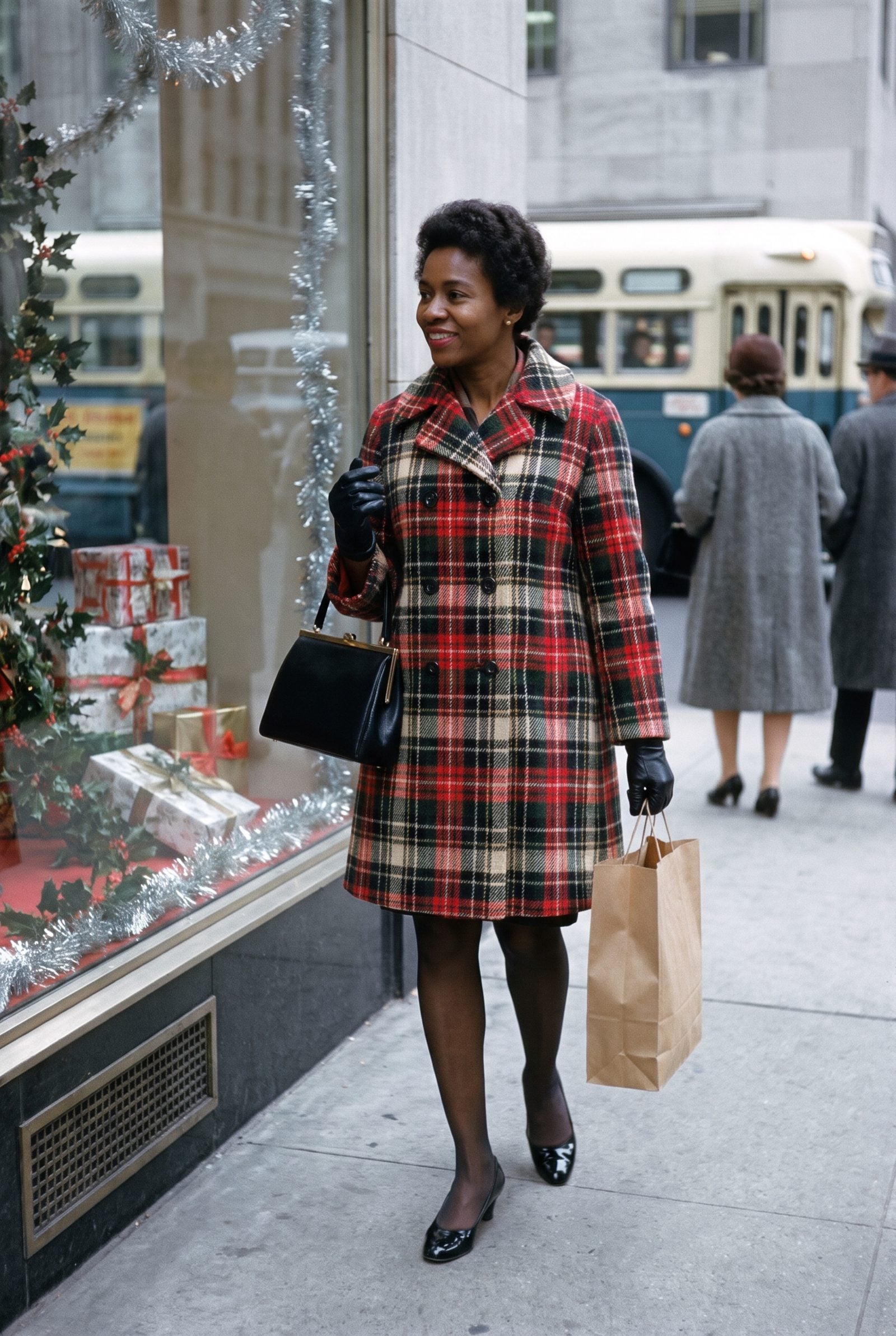
The plaid is doing all the talking. A red and green tartan coat needs almost nothing else, which is why everything under it stayed quiet: dark stockings, black pumps, a plain handbag. The pattern is the event, and the solid accessories step aside to let it run.
Tartan at Christmas was never subtle, and that was exactly the appeal. You could spot a woman in a good plaid coat halfway down the block, and in a crowd of camel and gray it was a cheerful kind of visibility. Call it dopamine dressing before anyone had the phrase for it.
24. A Cropped Jacket With a Mink Collar
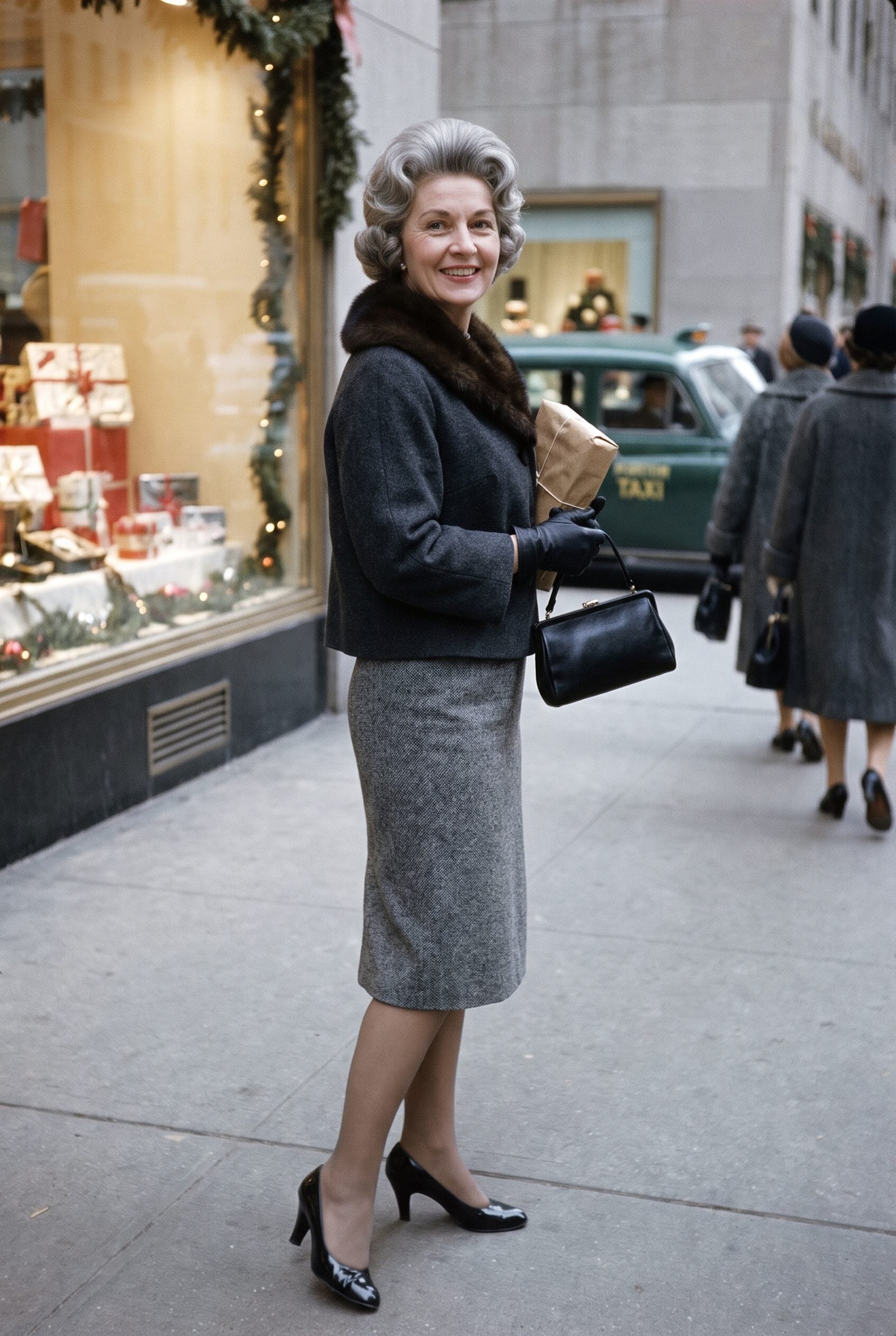
The mink collar reframes the entire jacket. Strip it away and you have a plain charcoal bouclé crop. Add it back and the whole thing suddenly reads like something you saved up for, that single plush texture glowing against the matte wool.
Cropping the jacket at the high hip made the pencil skirt beneath do the lengthening, a proportional trade that kept the silhouette long without the jacket swallowing it. A sharp holiday look that moved easily from shopping to a late lunch.
23. A Vinyl Raincoat Over Her Shopping Outfit
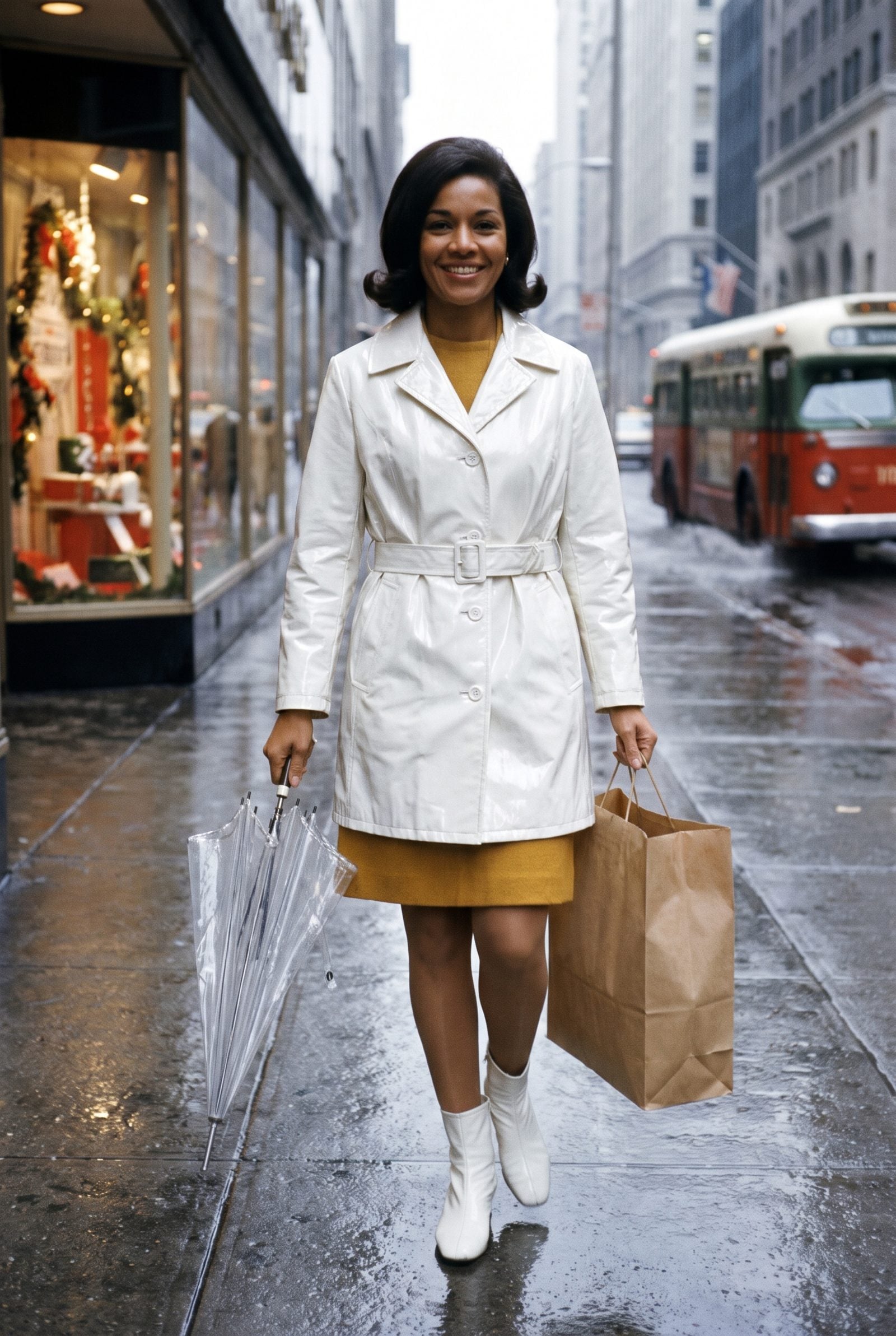
Shine over matte, that’s the entire trick. A glossy white vinyl raincoat thrown over a wool dress turned a practical necessity into the main event, the slick surface catching every store window and traffic light. Armor against the weather that happened to look deliberate.
Buttoned and belted shut, it still let the mustard dress peek out at the collar and below the hem, so the outfit never vanished under a shell. The vinyl was the mod signal, the dress the warmth, and together they made rainy shopping days feel like a plan instead of a problem.
22. A Boxy Chanel-Style Skirt Suit
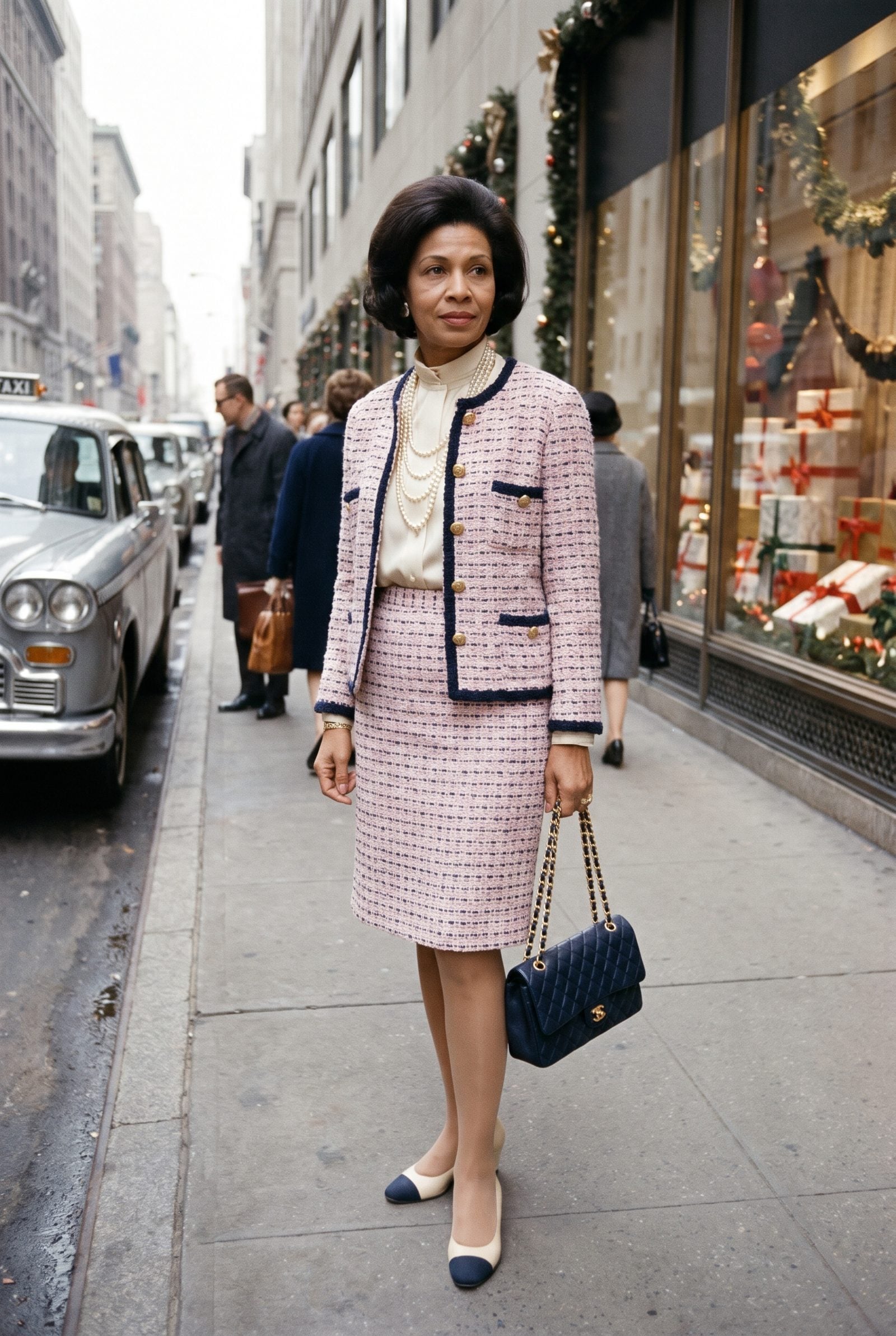
The contrast trim is what makes this suit. Navy braid outlining a pale pink bouclé jacket draws the eye along every edge, turning a simple boxy shape into something crisp and tailored-looking. The collarless cut leaves the neckline clean for a pearl strand or two.
Boxy was the point, not a compromise. That straight jacket skimming the body let the slim skirt handle the shape below, a clean column that looked polished standing at a counter or sitting over coffee. Quiet-money dressing that never needed to prove a thing.
21. A Jumper Dress Over a Turtleneck
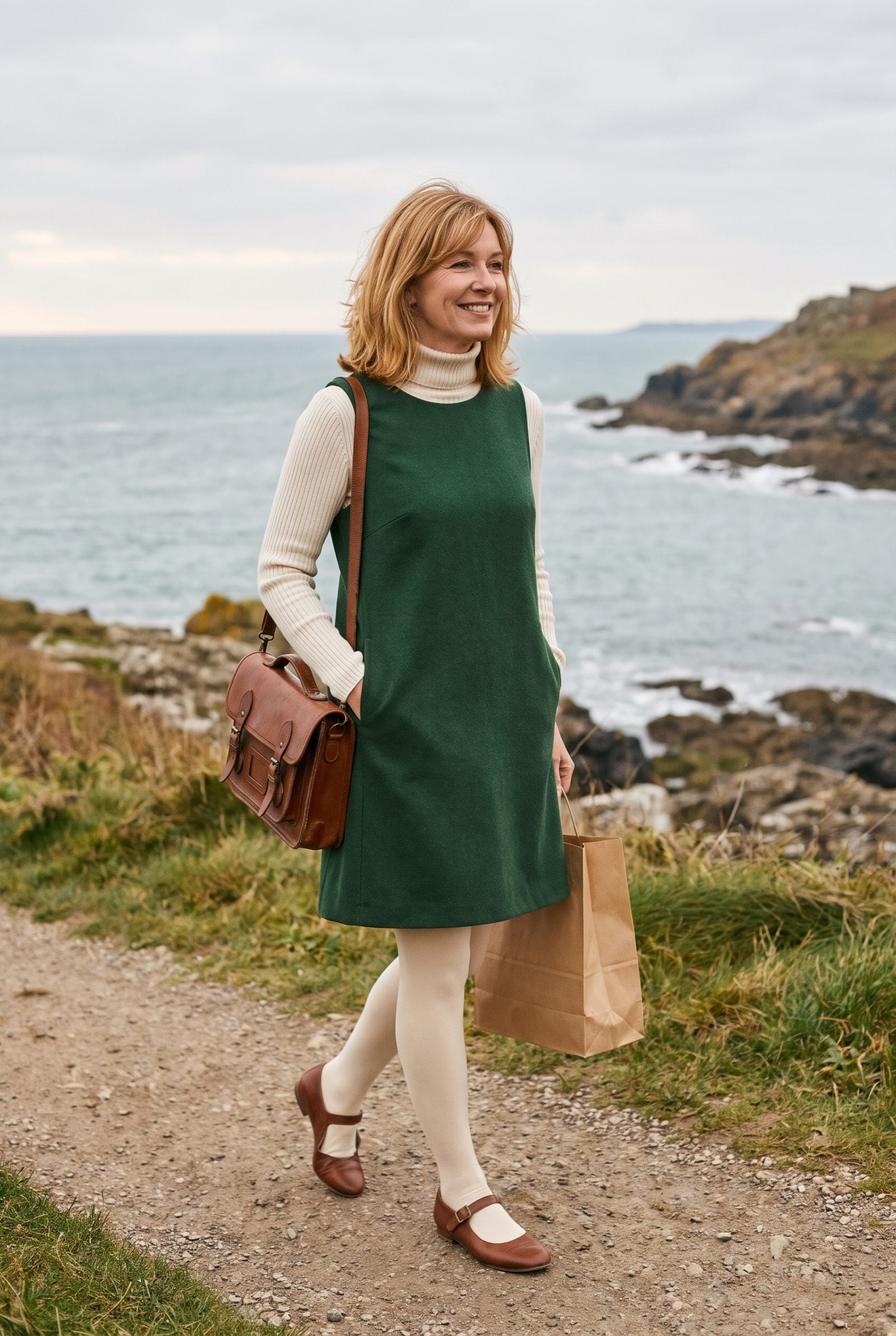
Layering is the whole idea. A sleeveless forest green jumper dress over a cream turtleneck gave warmth where you needed it and a clean A-line where you wanted it. The sweater handled the cold, the dress handled the shape.
Cream against forest green is a crisp contrast, bright knit framing deep wool, and the matched cream tights pulled the eye straight down to the flat shoes. Younger-leaning and easy to move in, this was the outfit for covering real ground on a busy shopping afternoon.
20. A Plaid A-Line Skirt With a Coordinated Twinset
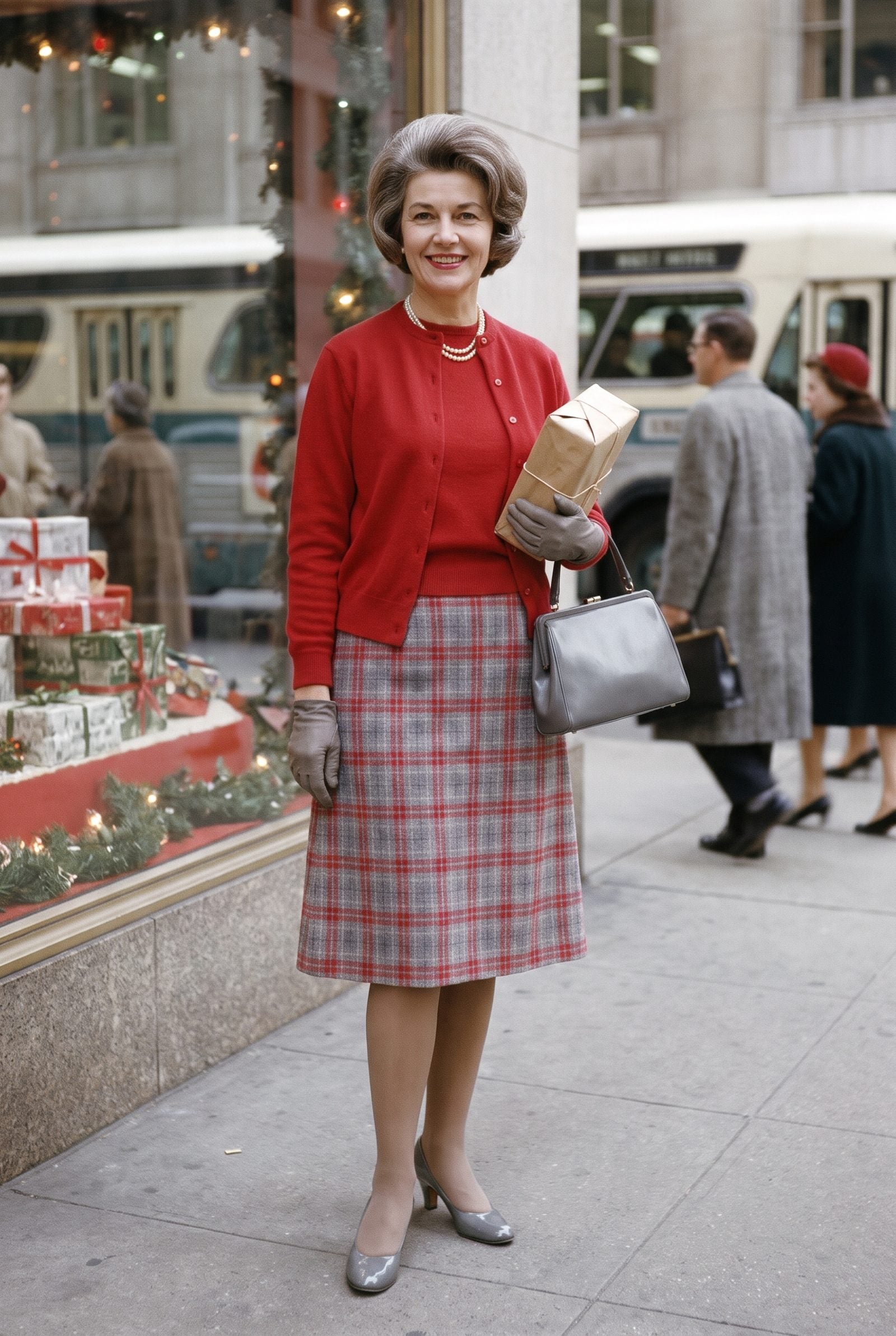
The twinset and the skirt plaid pull the same red thread, and that shared color ties a potentially busy outfit into one calm statement. The cardigan picks up the dominant tone in the plaid, so the pattern reads as the anchor rather than the clash.
An A-line skirt gives the look its movement, swinging with every step while the fitted twinset keeps the top half trim. Pearls at the throat are the old-reliable finish, the last small sign that this was a woman who got dressed on purpose and walked downtown ready for the whole afternoon.
19. A Pussy-Bow Blouse Tucked Into a Full Skirt
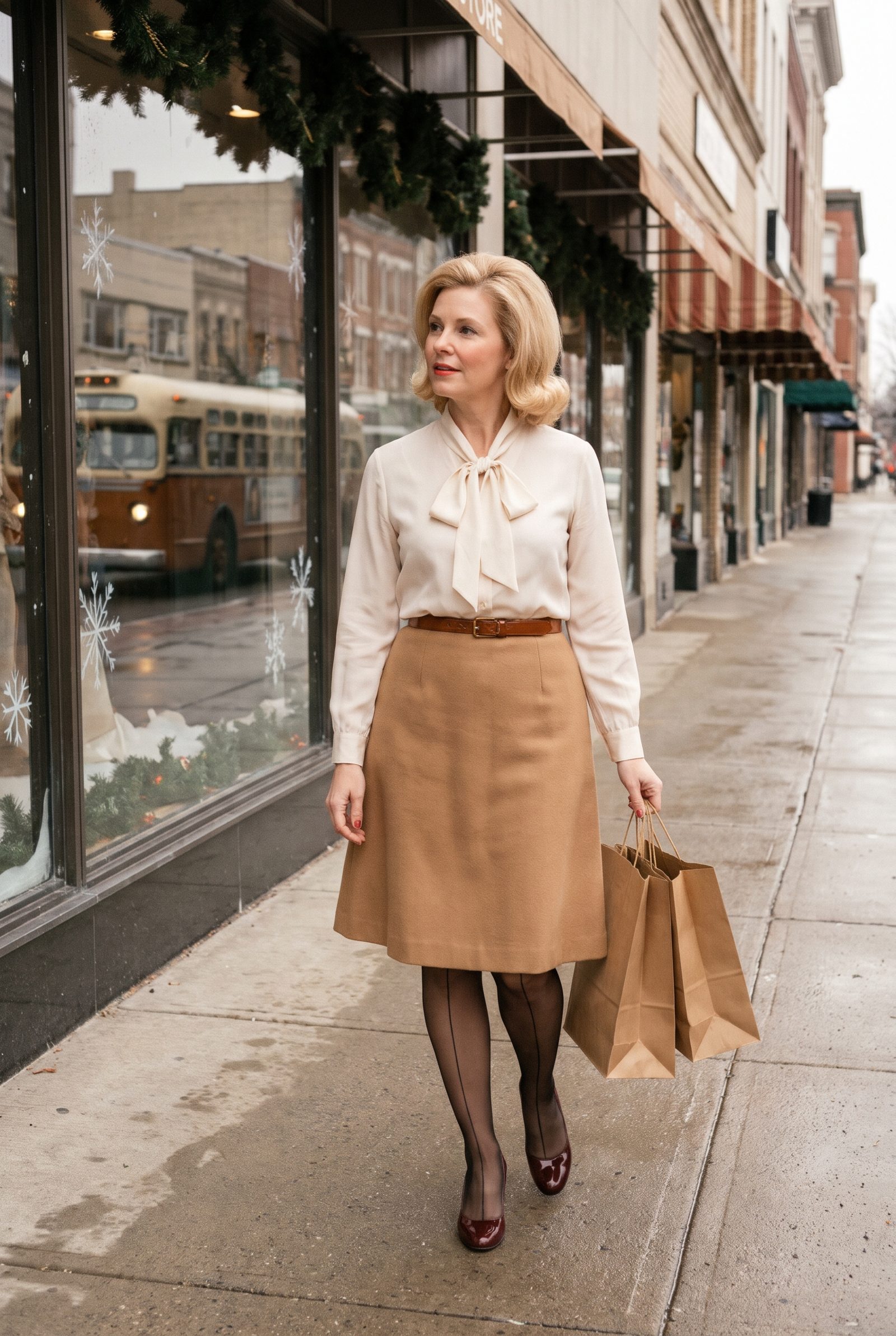
The bow is the whole argument. A pussy-bow at the throat pulls your eye straight up, which is exactly where you want it when the rest of the outfit is quiet wool and good manners. Tucked into a full skirt, the blouse makes a clean waist break that hands the silhouette its hourglass logic.
We wore these for the kind of errand that still counted as an occasion. Soft silk against the cold, a belt doing the shaping, patent court shoes clicking on department-store marble. The look said you had somewhere to be and intended to look like it.
18. A Holiday Sweater With Beaded Decoration
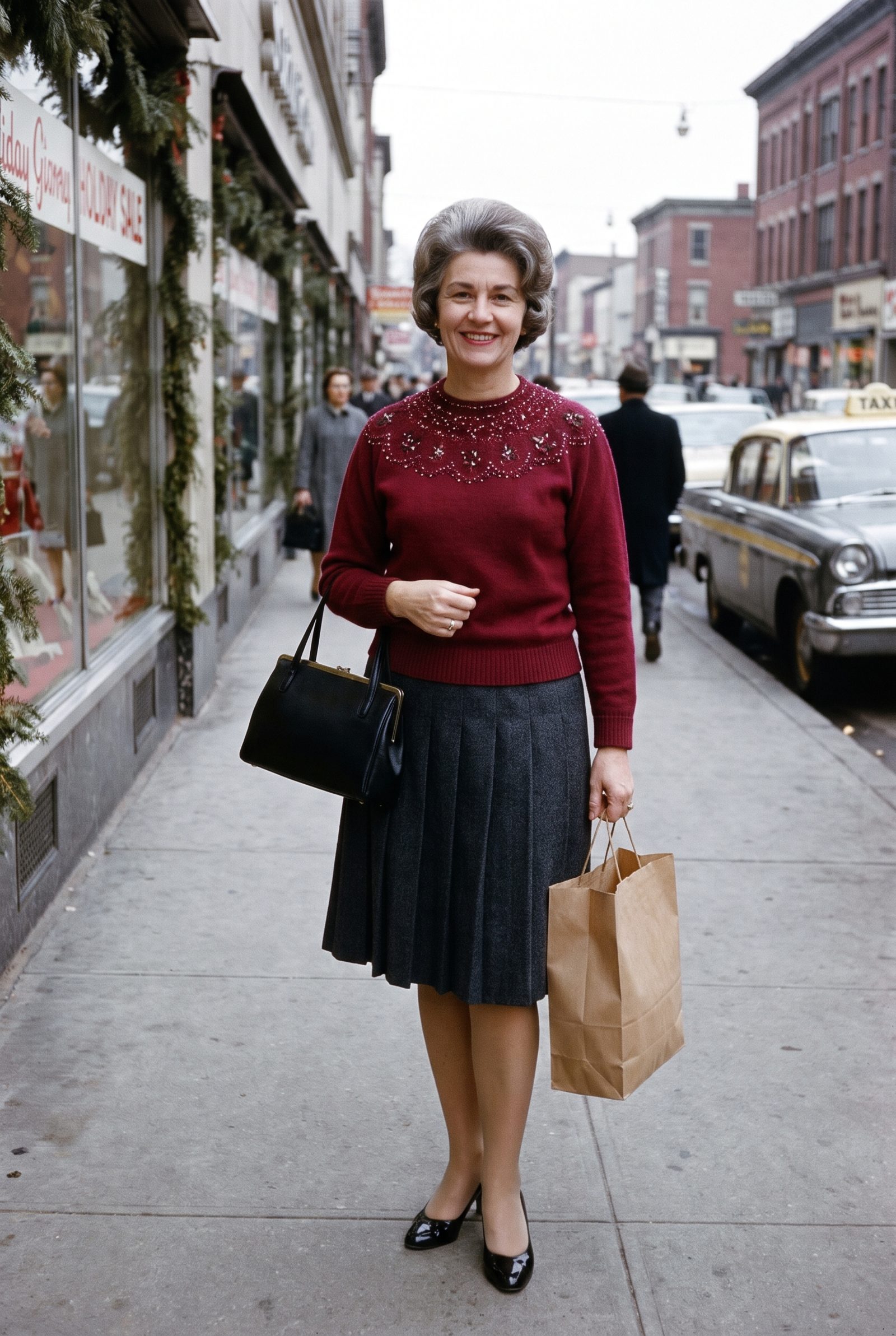
Every closet had one. The beaded holiday sweater came out exactly once a year, and the glass beads snagged on every other fine knit you owned, which is how you knew it was the special one.
What made it work was restraint. The beading clustered at the shoulders and neckline, nowhere else, so the decoration read as jewelry rather than costume. Worn untucked over a pleated skirt, its ribbed hem resting at the waistband, it kept the proportion ladylike instead of sliding into novelty territory. There’s something to be said for a garment that shimmers only when the light hits it right.
17. A Head-to-Toe Monochrome Knit Outfit
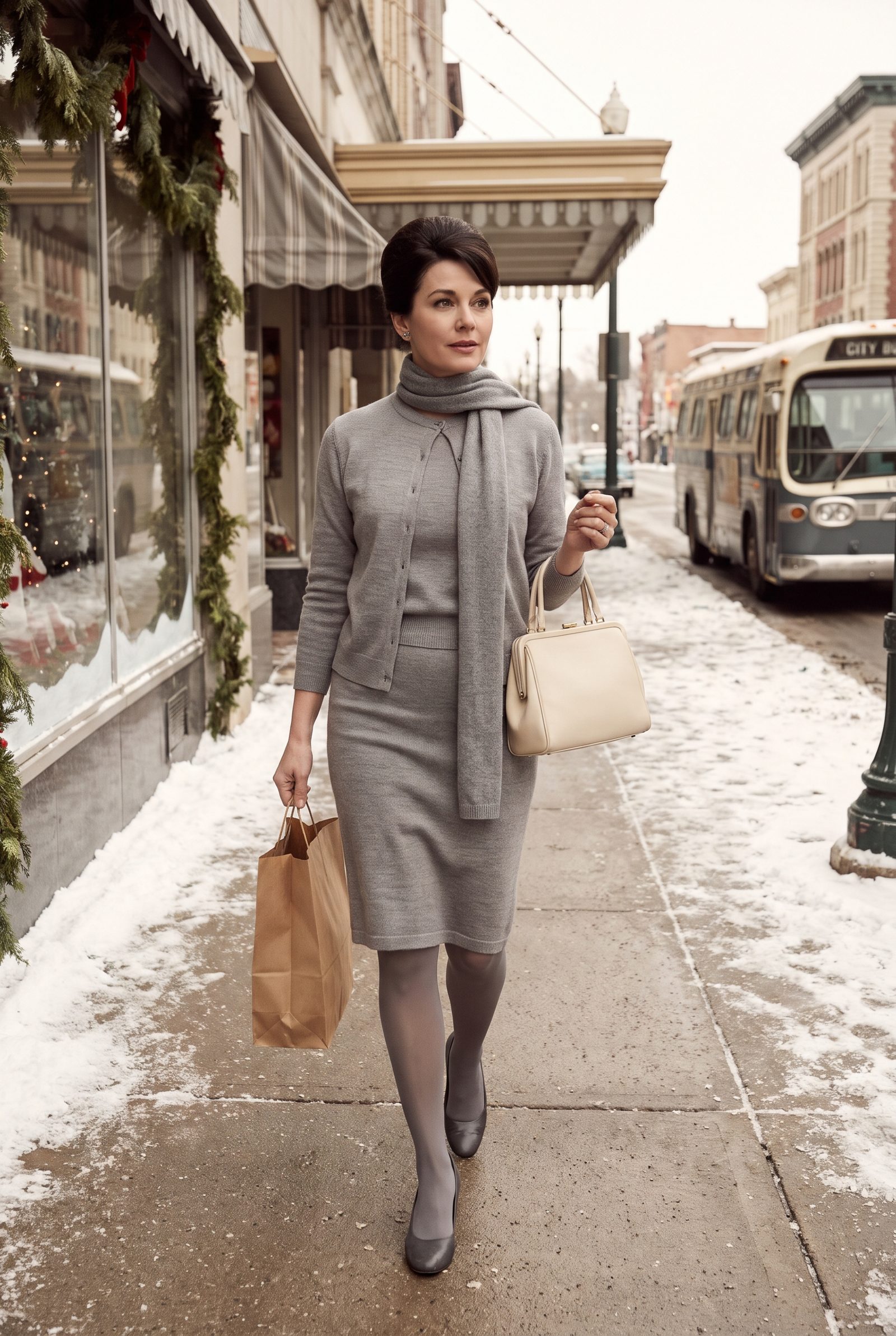
One color, several textures of knit, and suddenly a modest outfit looks deliberate. The dove-grey twinset over a matching knit skirt builds a soft vertical column that elongates the whole figure, no belt required.
Tonal dressing was a quiet flex. It read as money and confidence precisely because nothing clashed and nothing shouted. Stick to one family and the fine-gauge wool carries you, each piece slightly different in weave so the eye never gets bored.
16. Slim Cigarette Pants With a Long Tunic
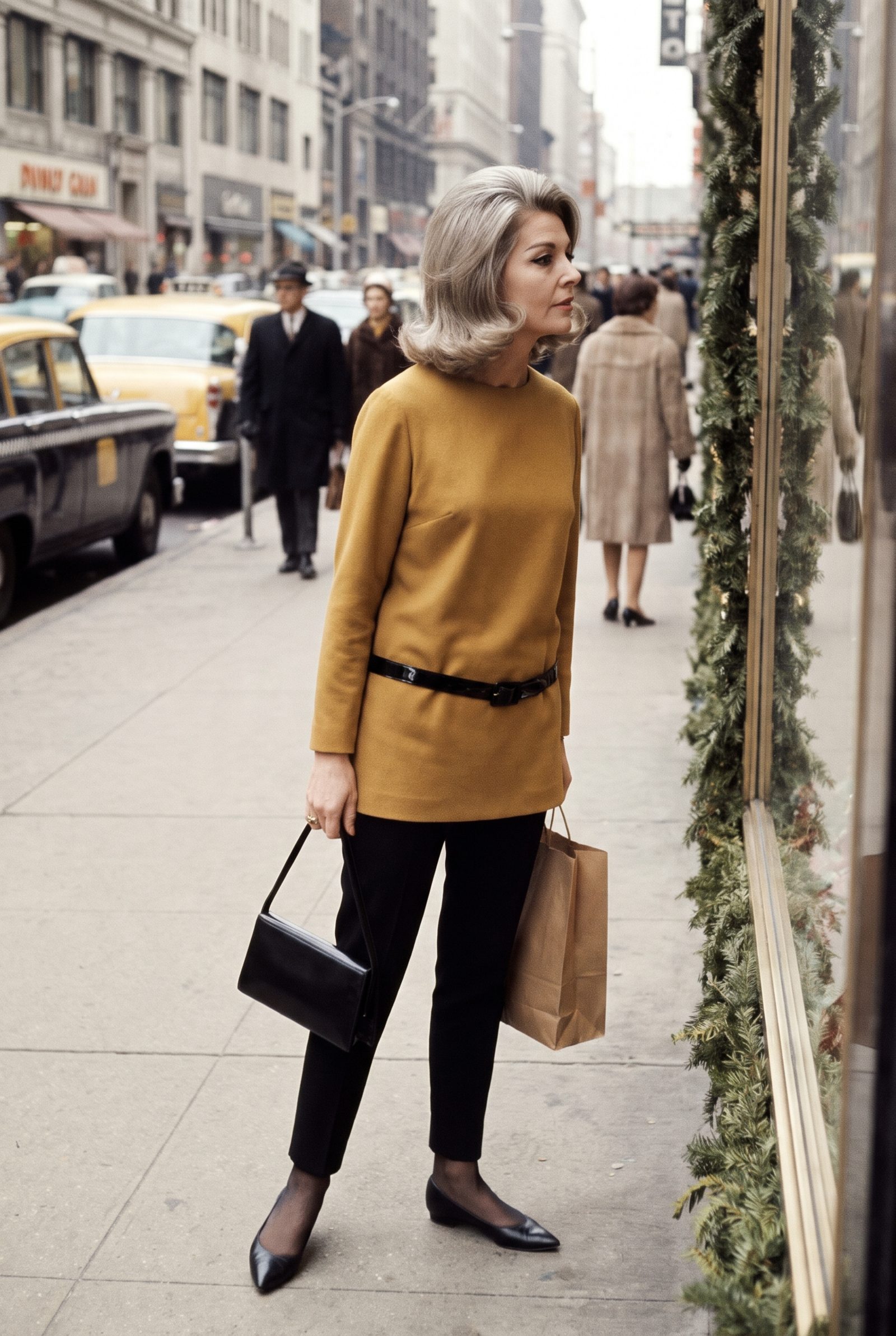
Proportion is the entire story. A long tunic over slim cigarette pants plays volume on top against a lean, cropped leg, and that length-over-slim ratio is what makes the look modern rather than fussy.
This was the outfit for a woman who wanted to move fast through a crowded department store without snagging a skirt on a display table. The ankle-crop showed a sliver of leg into a pointed flat, city-sharp. Mustard bouclé against black wool gave it warmth without a single ruffle.
15. A Headscarf Tied Under the Chin
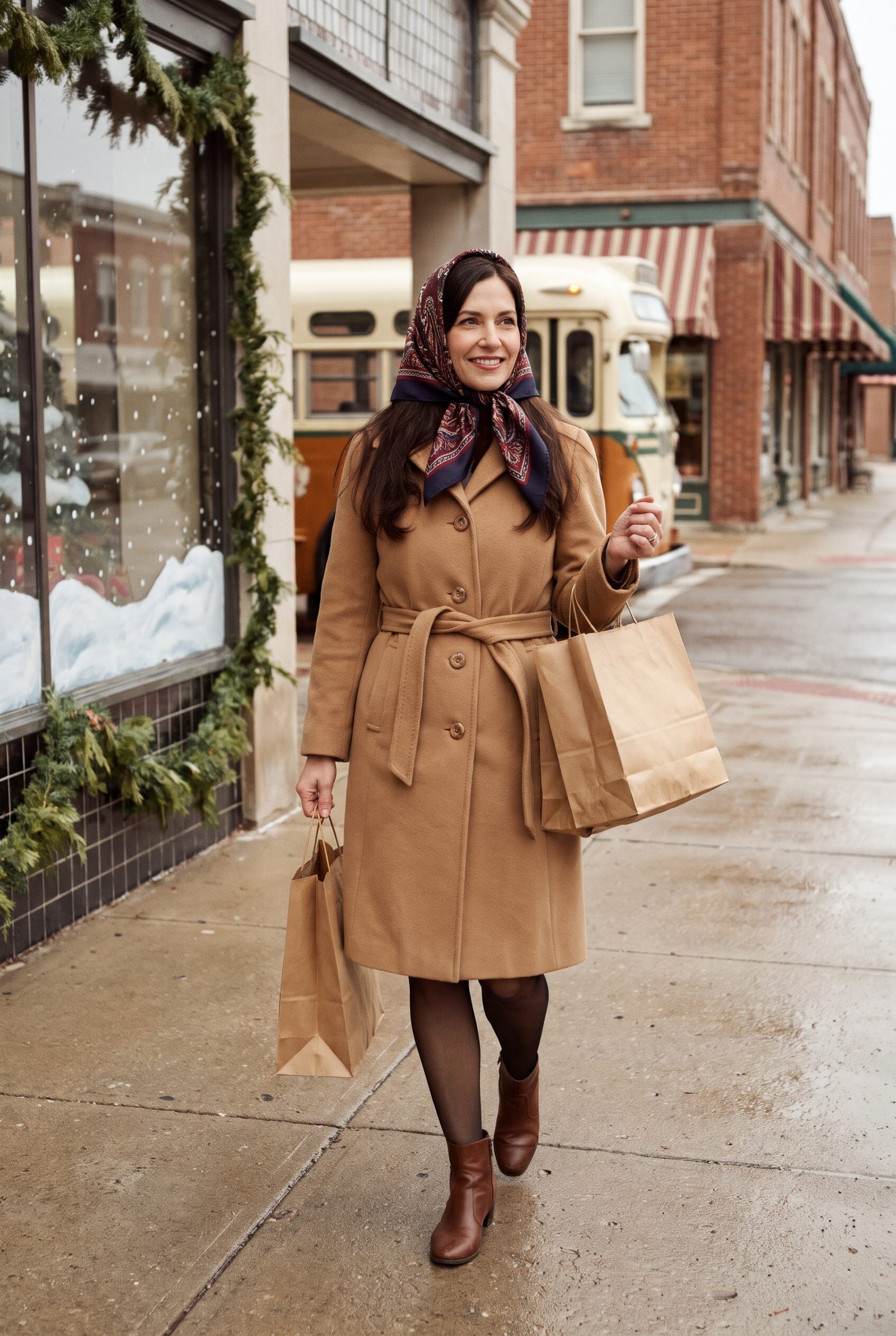
Practical, pretty, and over in four seconds. The headscarf tied under the chin kept a set hairdo intact against wind and damp, which mattered when you had a full day of shopping ahead and a bouffant to protect.
The print did the heavy lifting. A paisley silk scarf against a plain camel coat was often the only pattern in the whole outfit, so it worked like a framed painting at the collarbone and face. Every grandmother in every memory is wearing one. That’s no accident.
14. A Structured Pillbox Hat
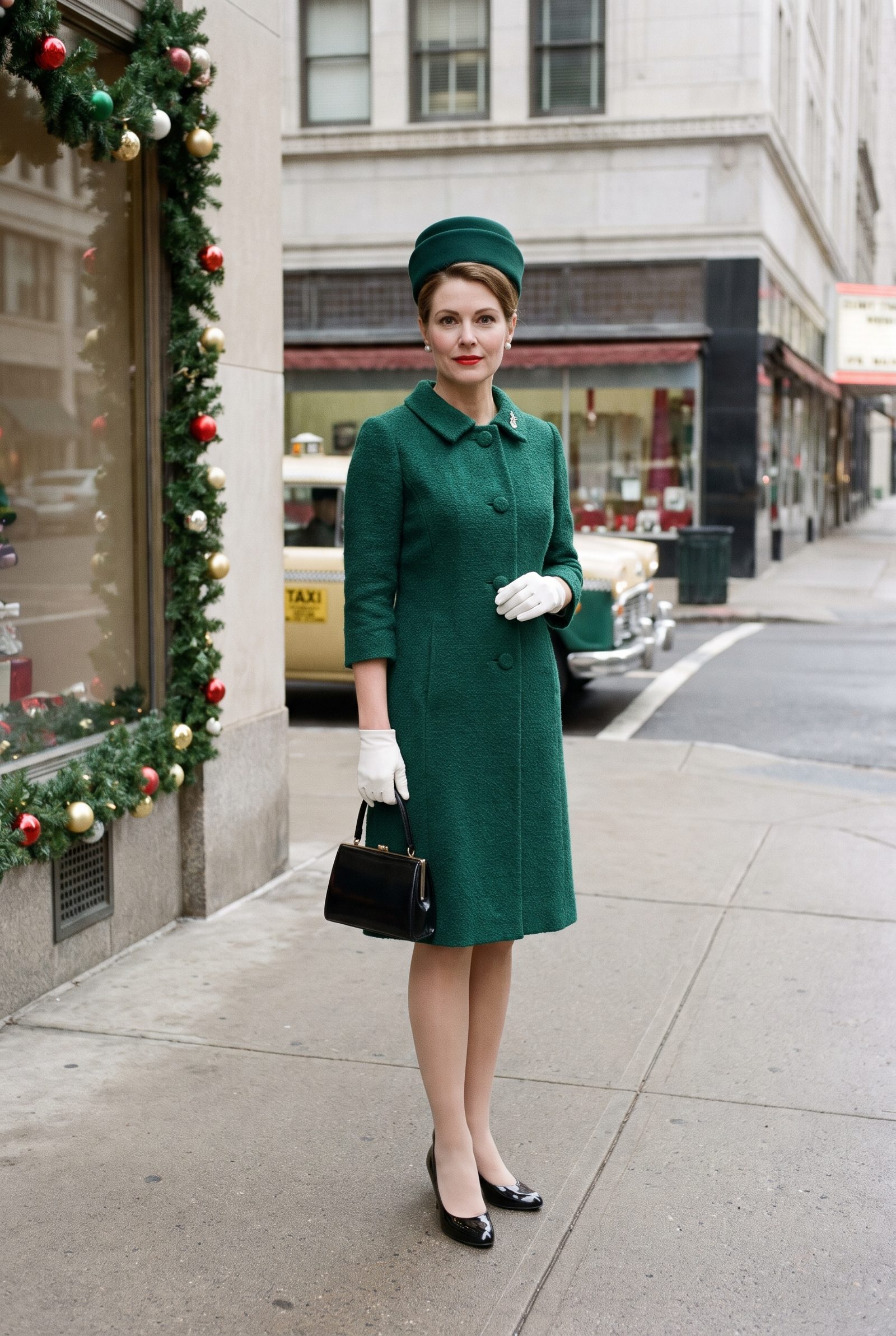
The pillbox sat back on the head, perched rather than pulled down, and that single angle was the difference between looking put-together and looking like you were hiding from the weather.
It owed everything to one woman in the White House, and the whole country followed. Matched to an emerald coat dress, the hat finished the outfit the way a full stop finishes a sentence. Structured wool felt held its shape all day — no small thing when you spent hours ducking in and out of overheated stores.
13. A Fur Cossack Hat
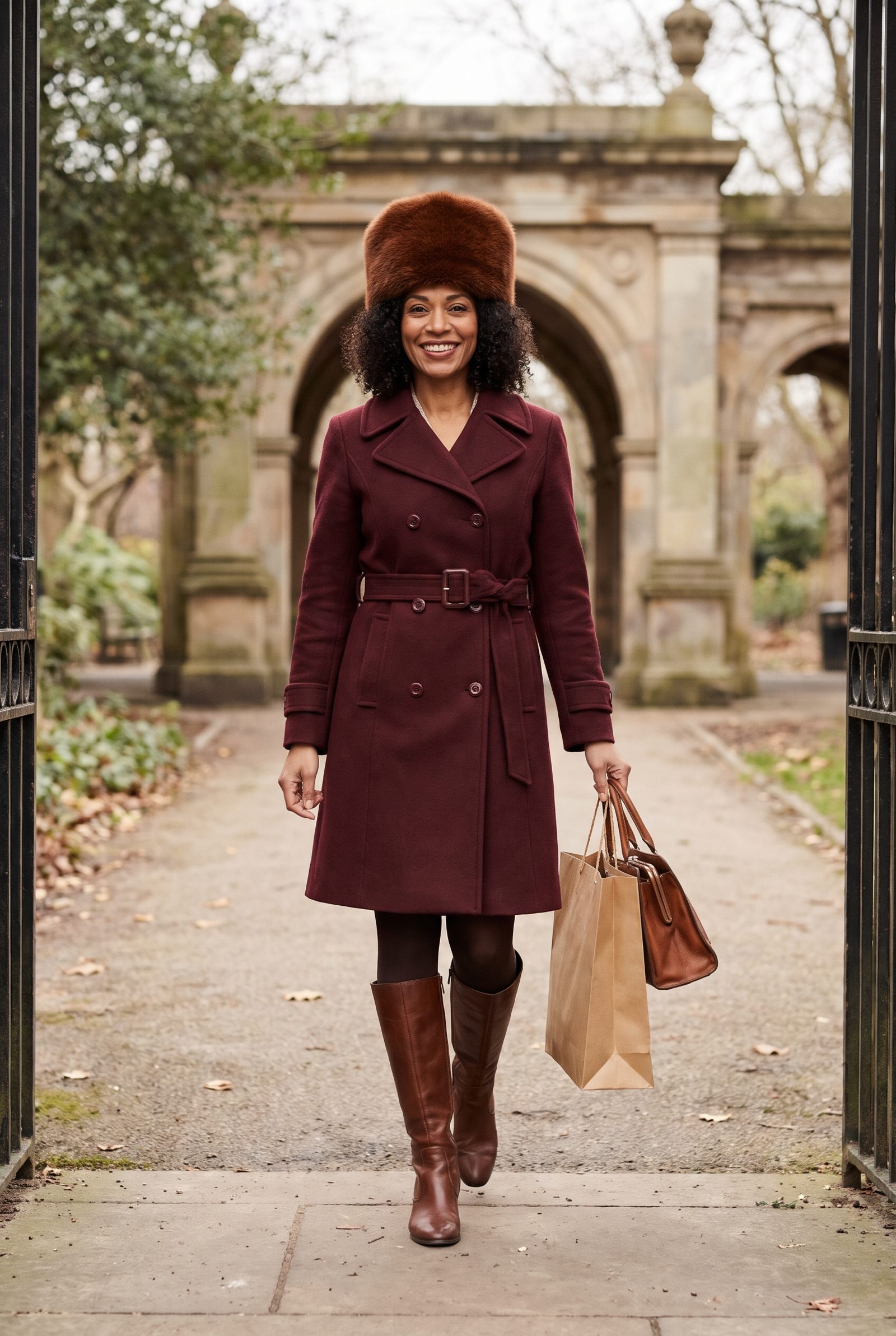
Height. That’s what the Cossack hat gave you. The tall fur column stretched the silhouette upward and turned a plain winter coat into something out of a Russian novel.
It arrived with the Doctor Zhivago wave in ’65, and everyone who saw the film wanted one by Christmas. Worn over a belted burgundy coat, the fur against smooth wool carried the whole look — soft against structured, warm against the grey city behind it. You felt dramatic in it. You were supposed to.
12. A Bouffant That Survived a Hat-Free Shopping Trip
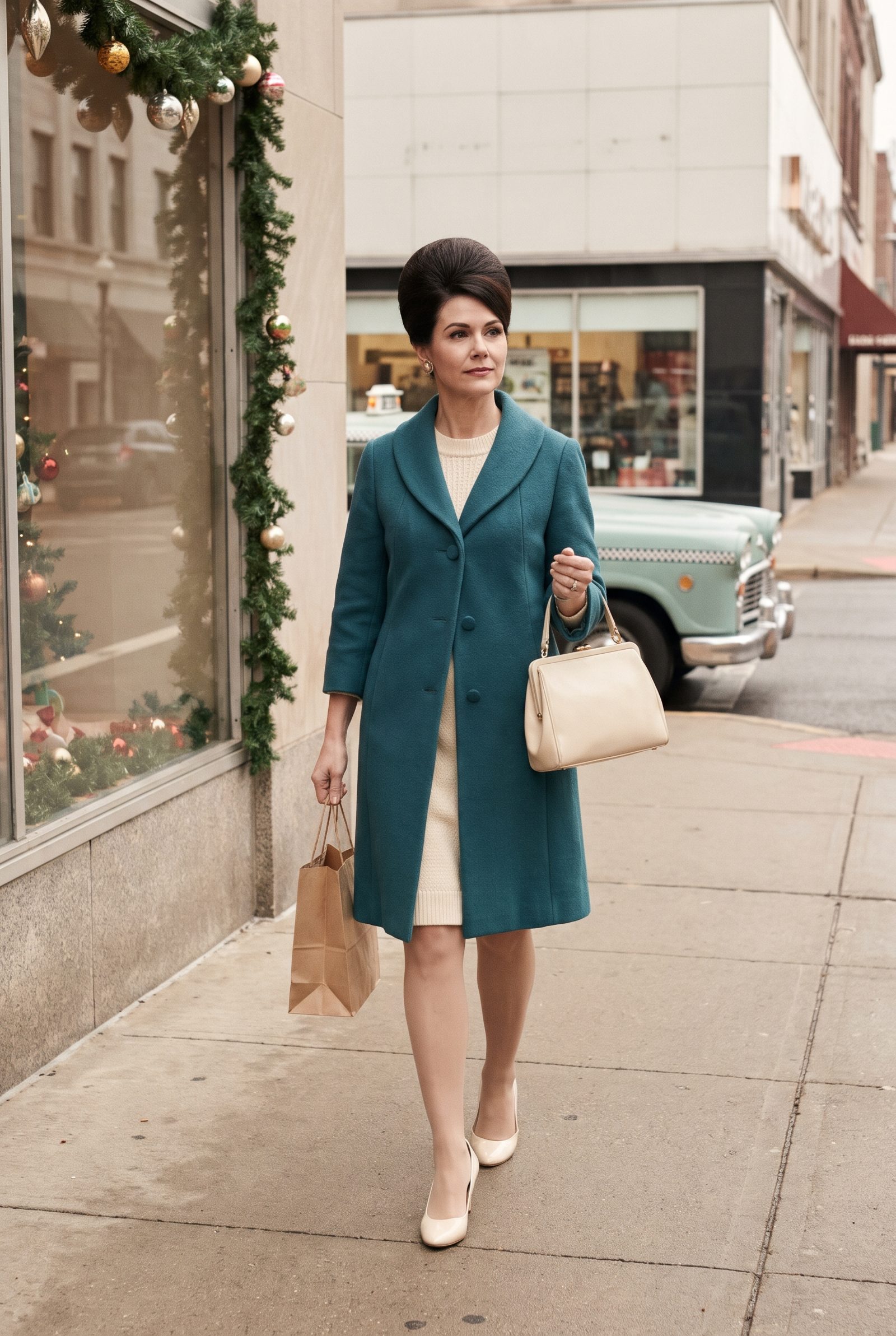
Going hatless was a statement, and the statement was this: I have a standing appointment with my hairdresser and I am not wasting it.
The bouffant was its own structure — teased at the crown, smoothed at the sides, held by enough lacquer to withstand a revolving door and a crowded elevator. Pair it with a clean teal coat and the hair becomes the ornament, which is why the outfit stayed so simple. You protected that set like it owed you money. In fairness, it did take an afternoon and a small fortune to build.
11. A Matching Hat-and-Glove Set
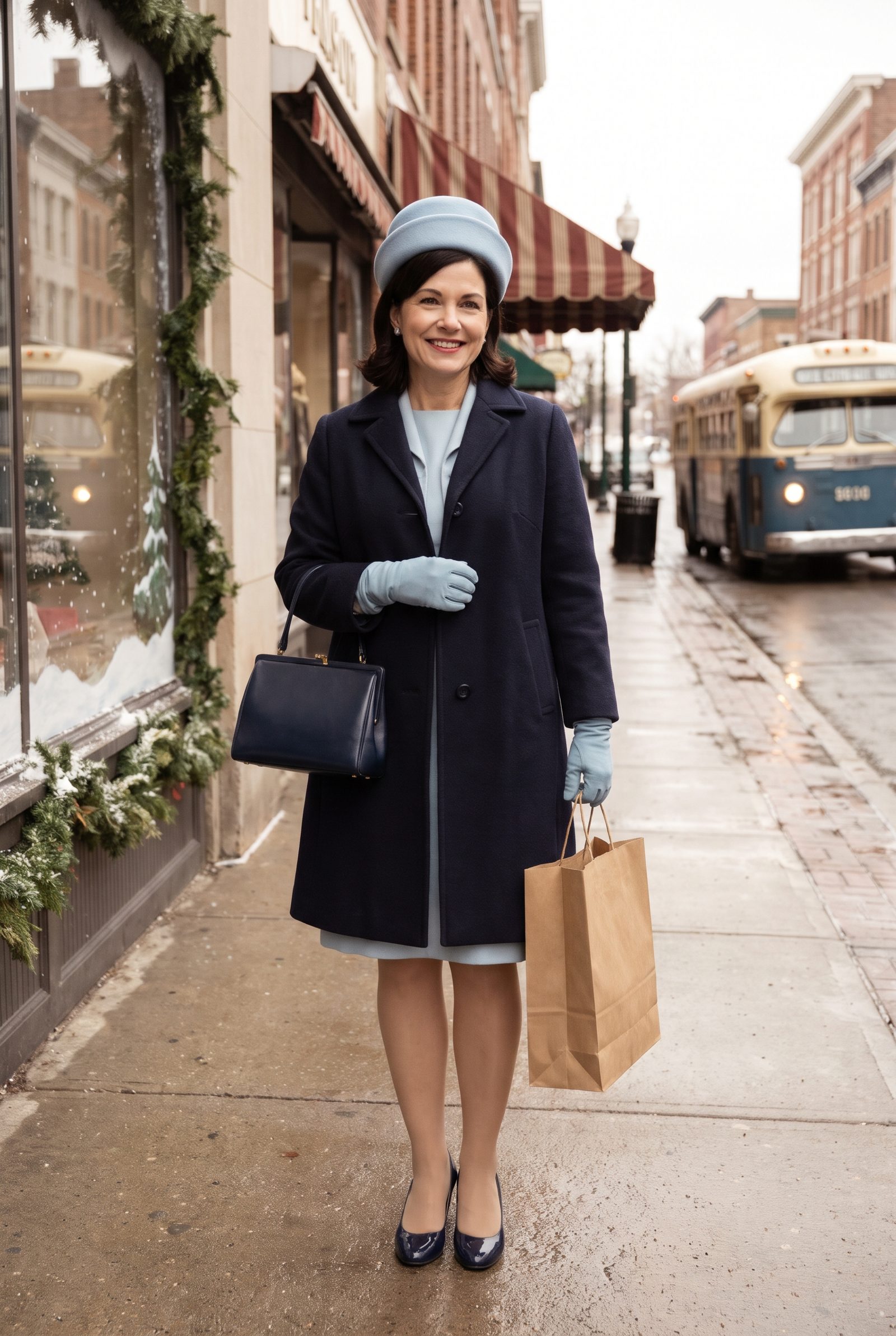
The match was the message. Hat and gloves in the same powder blue told anyone paying attention that the whole outfit had been planned days ahead, not thrown together at the door.
Coordination worked as a small act of discipline. The matched pieces bracketed the figure, top and hands, and pulled a navy coat into a scheme it couldn’t have managed alone. Done well, it was the difference between dressed and simply covered.
10. Long Gloves Under Bracelet-Sleeve Coats
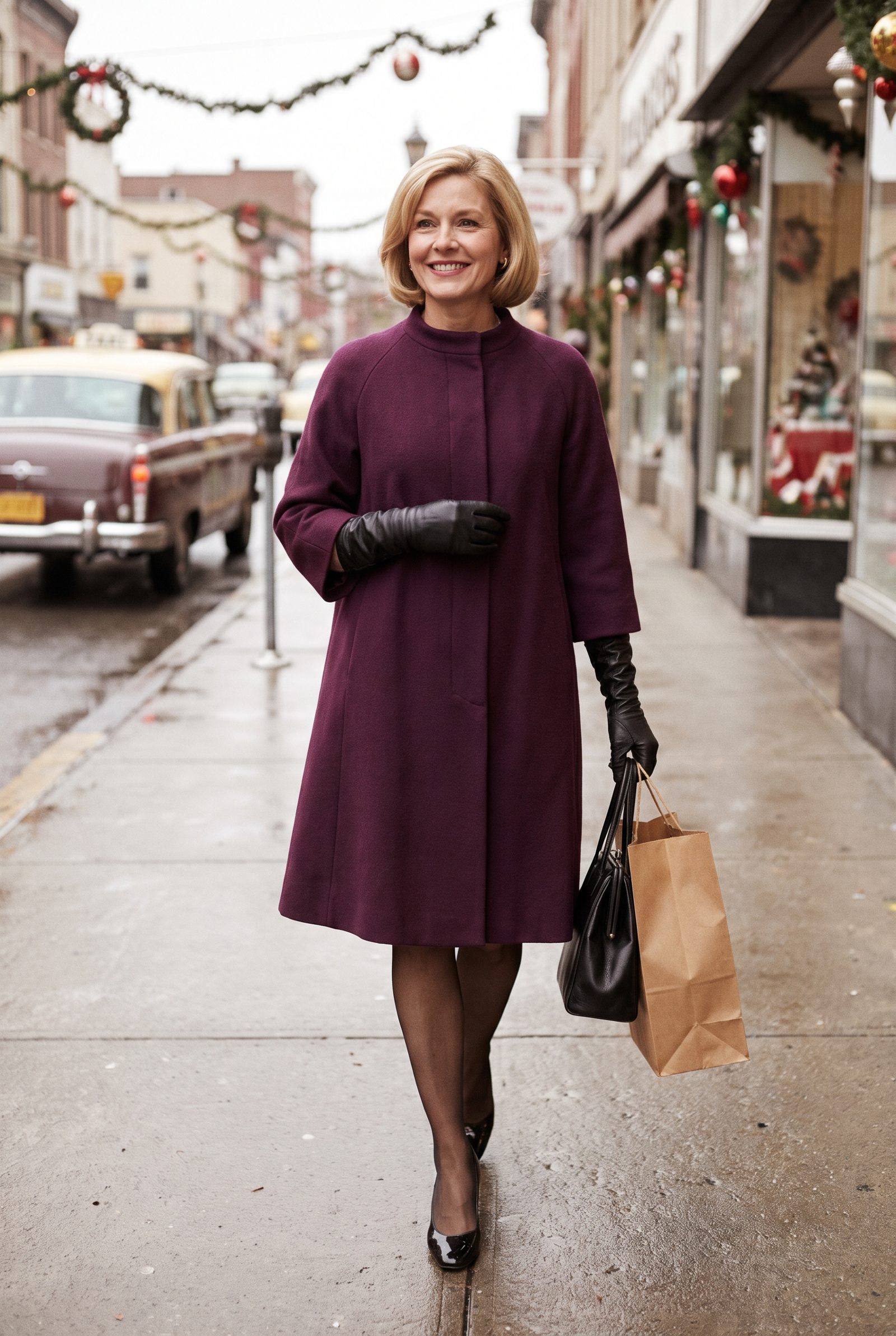
The bracelet sleeve existed for exactly this reason. A three-quarter coat sleeve stops short on purpose, and the long glove rises up to fill the gap, so the forearm becomes a deliberate stripe of smooth black leather against wool.
It was clever and it was warm, which rarely happens at once. The shortened sleeve kept the coat looking light and modern instead of heavy, and the glove picked up the slack against a cold wind. The play of plum wool and black leather at the wrist did more styling work than any brooch could. This is the detail we miss most, honestly. Nobody finishes a sleeve on purpose anymore.
The bracelet sleeve still holds its own: when our readers were asked which top they would buy, wrist length and bracelet length came out a dead split at 40% each.
9. A Fur Muff Worn With a Dressy Coat
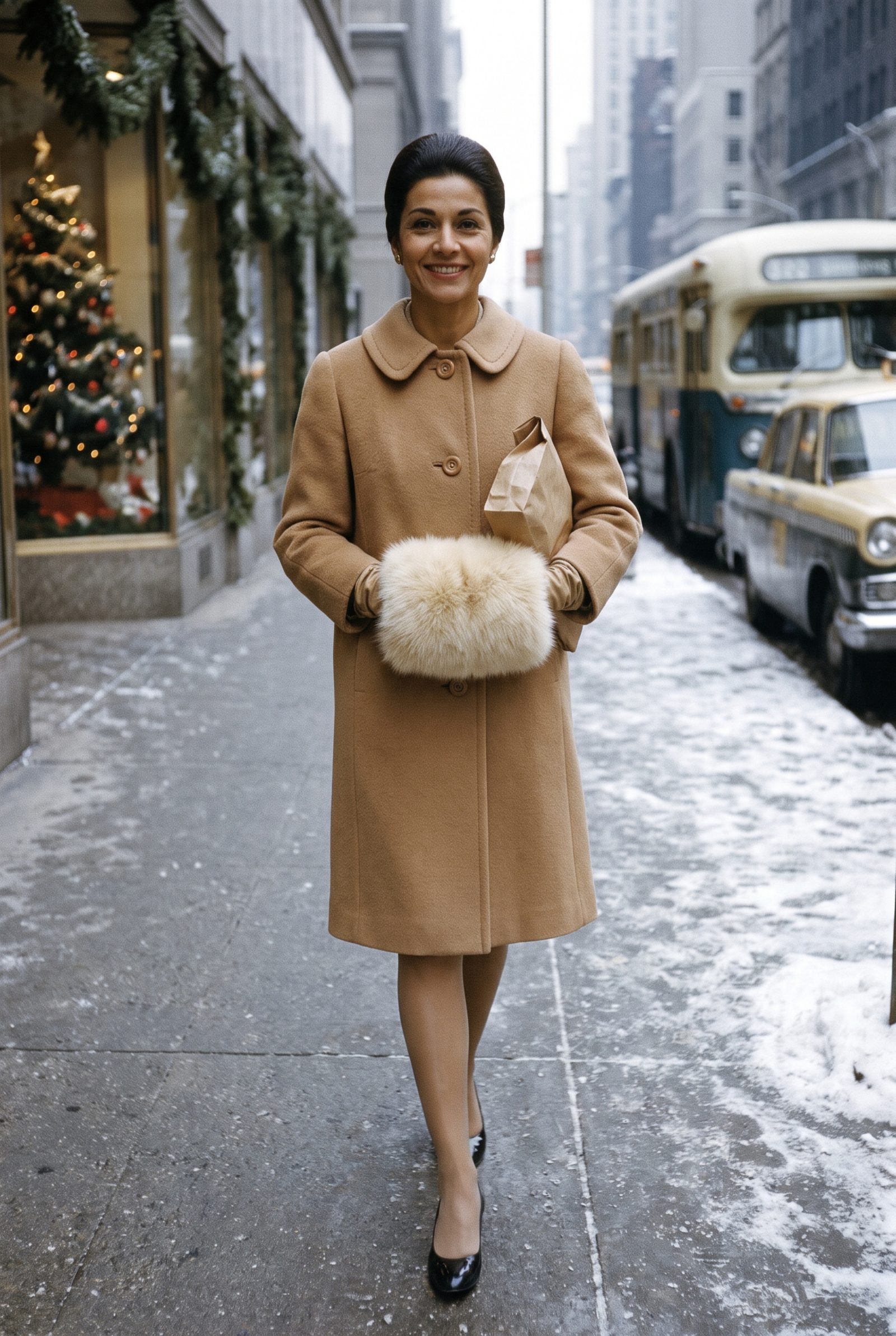
The muff did two jobs at once, which is why it survived as long as it did. It kept your hands warm when gloves gave up, and it gave you something to do with them while you waited for the crosstown bus in the cold.
Against a fitted camel coat, the cream fox fur reads as pure softness breaking up a hard, buttoned-up silhouette. That texture contrast is the whole look. Wool holds the line, fur blurs it, and your hands stay hidden and warm in the middle of the frame.
8. A Silk Scarf Tucked Into the Coat Collar
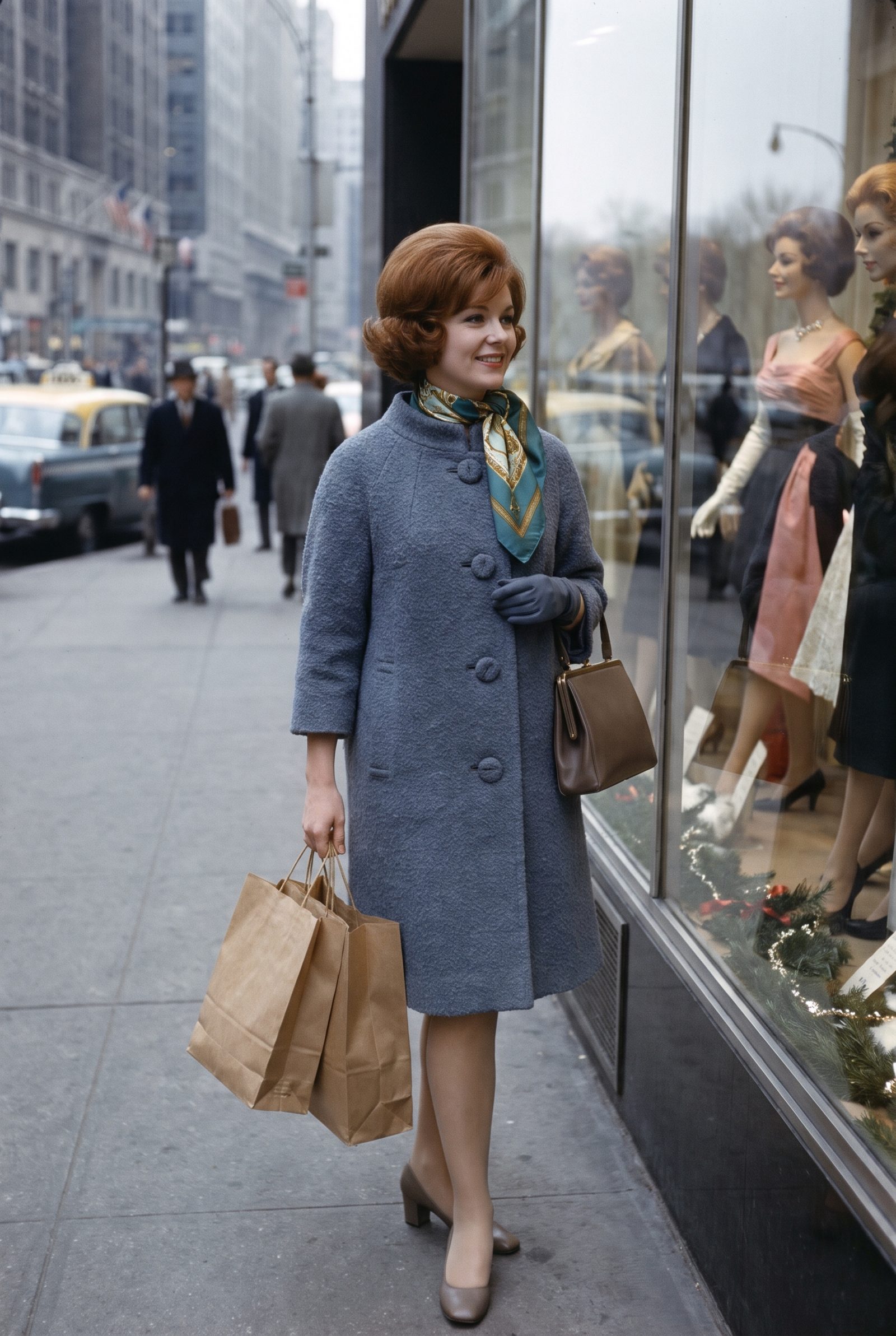
Before scarves became an afterthought, they were the first thing you reached for on a cold morning. Folded into a triangle, tucked up under the collar, knotted loose at the throat. The print peeking out of a plain coat told everyone you’d thought about it.
Color is what this comes down to. A slate-blue coat on its own is just weather protection, but add teal and gold silk at the neck and suddenly the whole thing has a point of view. One square of printed silk doing the work of an entire holiday look.
7. A Pearl Choker Over a Jewel Neckline
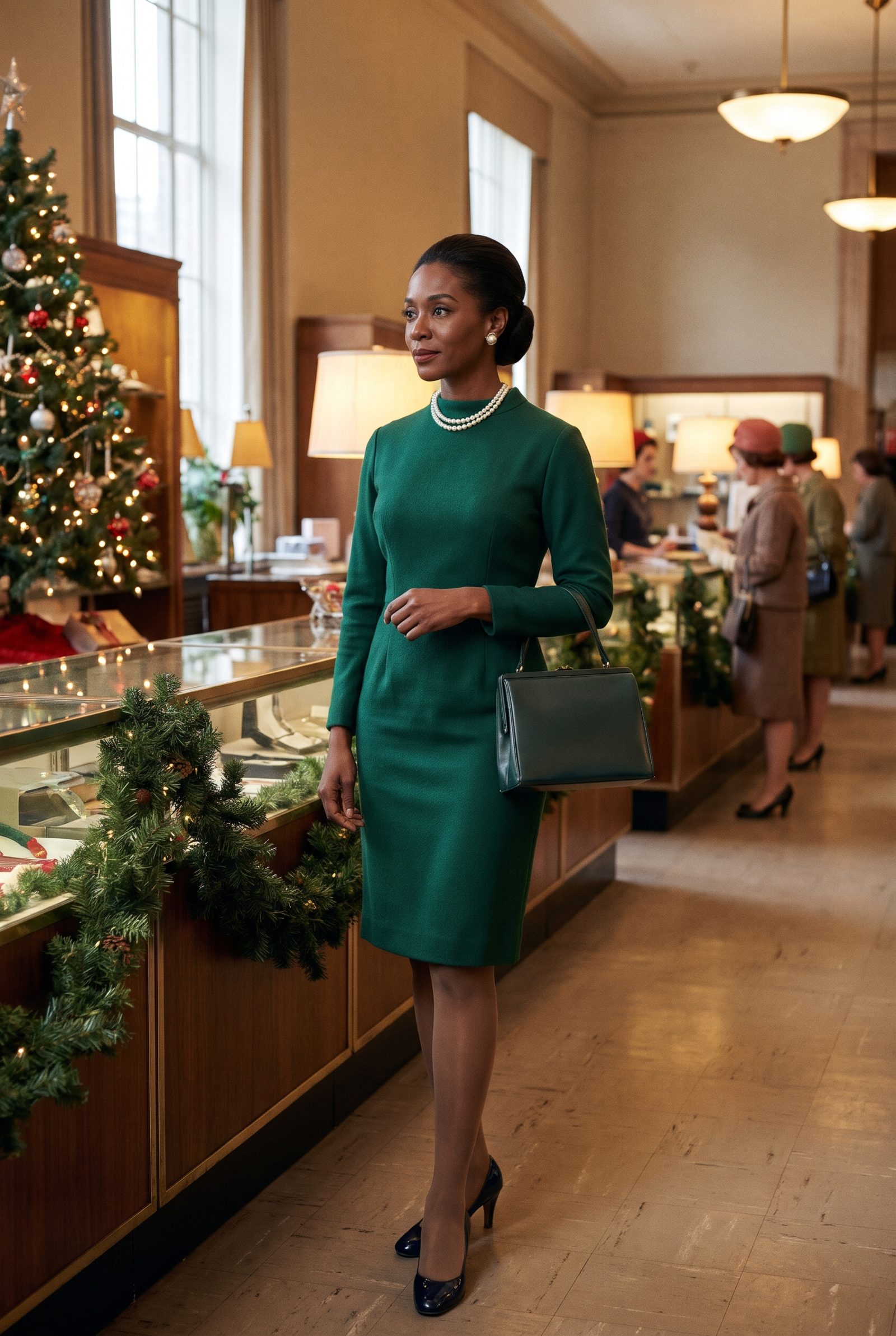
A round jewel neckline sits at the base of the throat in clean, unbroken fabric, and that smooth line was practically an invitation. The pearl choker sat just above the neckline, catching light every time you turned your head at the glove counter.
Restraint runs this one. A double strand of pearls against a solid emerald wool dress, nothing competing. Length matters too. Sitting high and snug, the choker lengthens the neck and keeps the eye up, which is exactly where you want it on a woman who knows her own mind.
6. A Christmas Brooch Pinned to a Coat Lapel
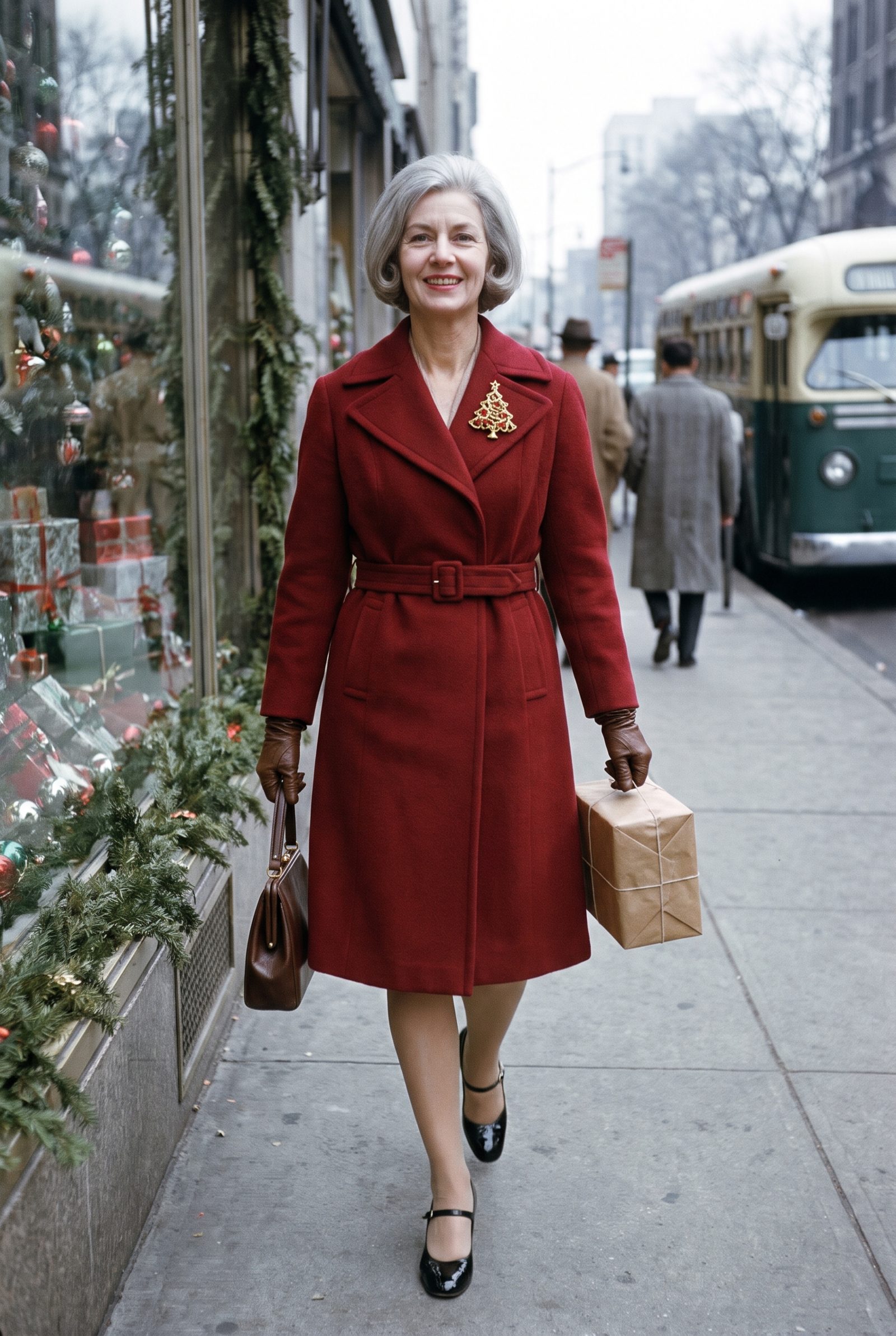
You pulled it out of the same tissue-lined box every December, the little gold tree with the red and green stones that always snagged on your coat lining coming off the hanger. It was the one piece of jewelry that announced the season before you said a word.
Pinned high on a red wool lapel, the brooch is the finishing detail that turns a warm coat into a December coat. The sparkle lands where people look first, right near the face, and gold against deep red reads festive without tipping into costume.
Writing about the era’s holiday pins, a vintage collectibles dealer notes “Jewelry companies designed Christmas tree and other holiday pins for wearing on one’s outer coat.”
5. A Structured Top-Handle Handbag
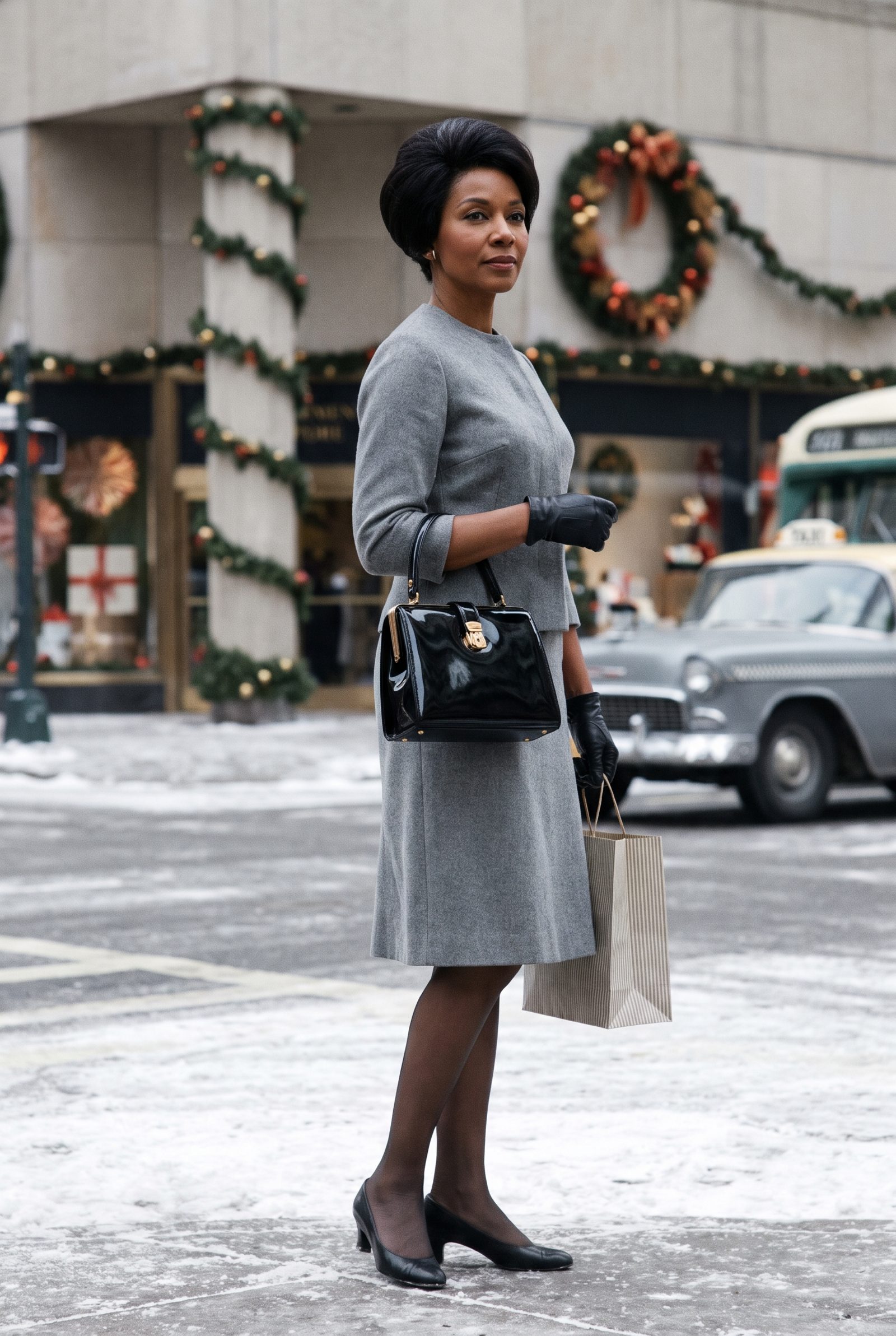
The top-handle bag kept its shape no matter how you treated it, which was the whole appeal. You snapped the gold clasp shut, hung it in the crook of your arm, and it sat there like it was holding court.
Black patent against a grey wool coat is matte and shine doing a quiet negotiation. The coat drinks the light, the bag throws it back, and that one spot of gleam against all that wool keeps the outfit from going flat. The short rolled handle forces a specific posture too, forearm bent, bag high and close, a carry that reads composed on sight.
4. A Clear Plastic Handbag Rain Cover
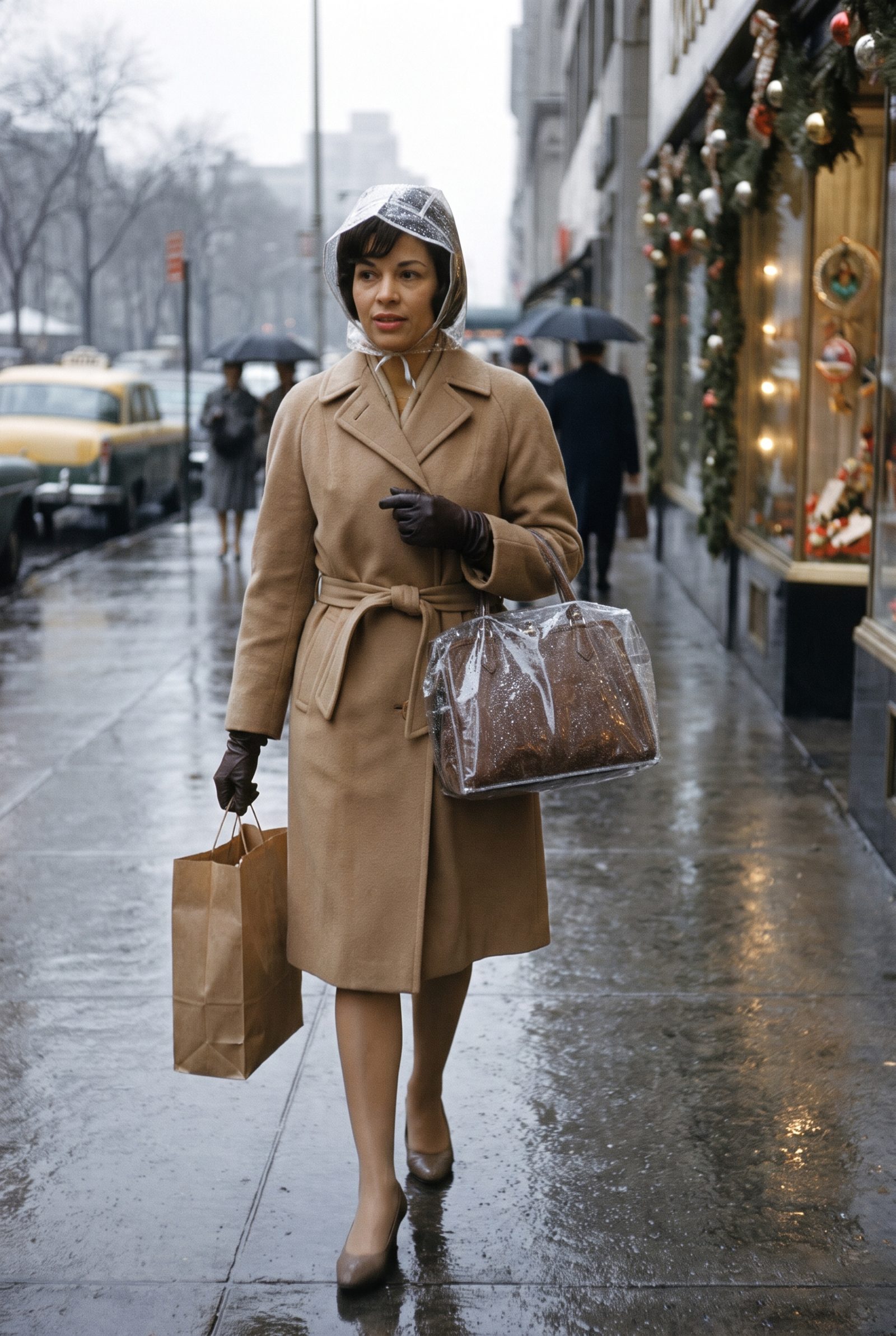
Here’s one nobody talks about. The clear plastic cover that slipped over your good handbag the second the sky turned. It had its own little drawstring or snap, and you kept it folded flat in the bottom of the bag it was meant to protect.
Practicality was its own kind of polish back then. You weren’t going to let December sleet ruin the leather bag you’d saved for, so you zipped it into clear vinyl and kept walking, water beading right off, the bag inside staying pristine.
3. Patent-Leather Mary Jane Shoes
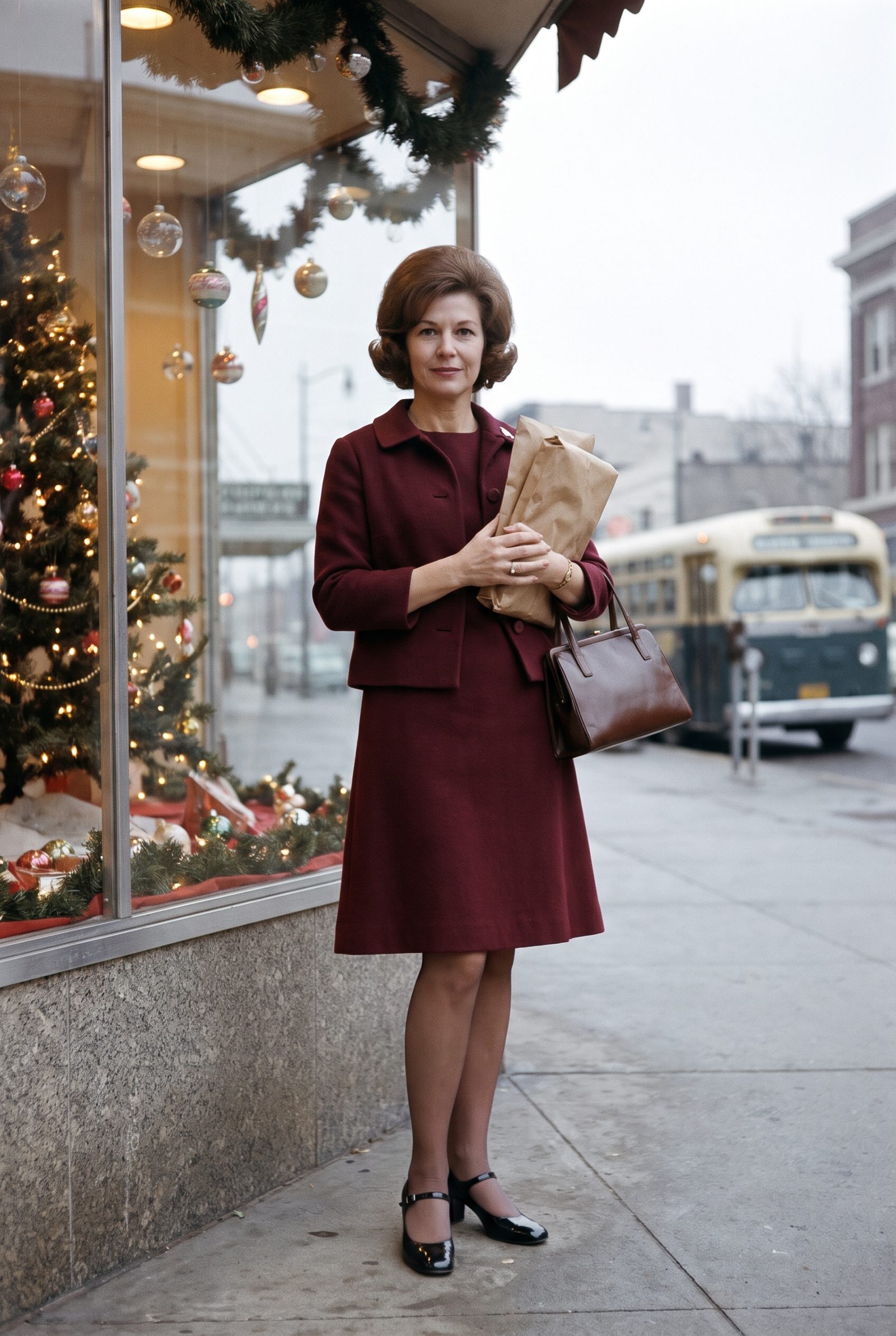
The single strap across the instep, the round toe, the patent that caught every streetlight. Mary Janes weren’t just for little girls in the 1960s. Grown women wore them polished to a mirror and clicked across terrazzo department-store floors in them all December long.
Watch the patent shine against sheer nude stockings. Matte legs, glossy shoe, and a block heel low enough to actually walk a city in. The strap is what makes them read deliberate rather than plain, drawing a line across the foot that keeps the eye moving down to the floor.
Sidewalks sound different now: in our reader polls, about half picked sneakers as their daily shoe, and only 20% went for a low heel.
2. Nude Nylon Stockings Worn in Freezing Weather
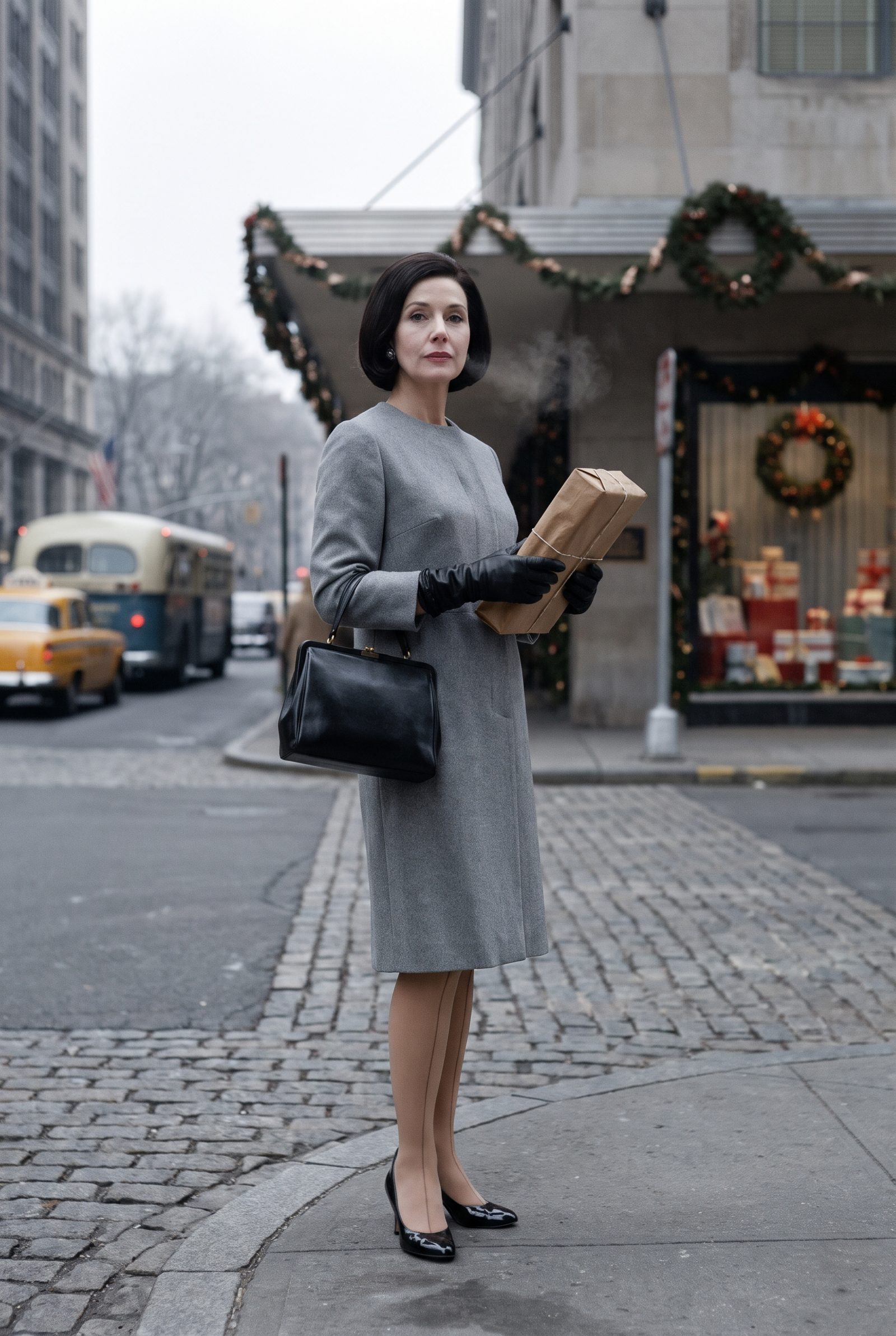
Sheer nylon and a knee-length hem in December, because that was the rule and the rule didn’t care about the temperature. Not a scrap of warmth, every leg on the sidewalk the same faint nude. You powered through on principle and a quick dash between the bus and the revolving door.
The seamed stocking against a tailored grey coat-dress makes a column of continuity. Grey up top, nude leg, dark shoe, the eye travels the whole length without a break, and the body reads longer for it. Froze half to death, looked composed doing it. A fair trade, apparently, and one we kept making for years.
1. A Longline Girdle Under a Fitted Dress
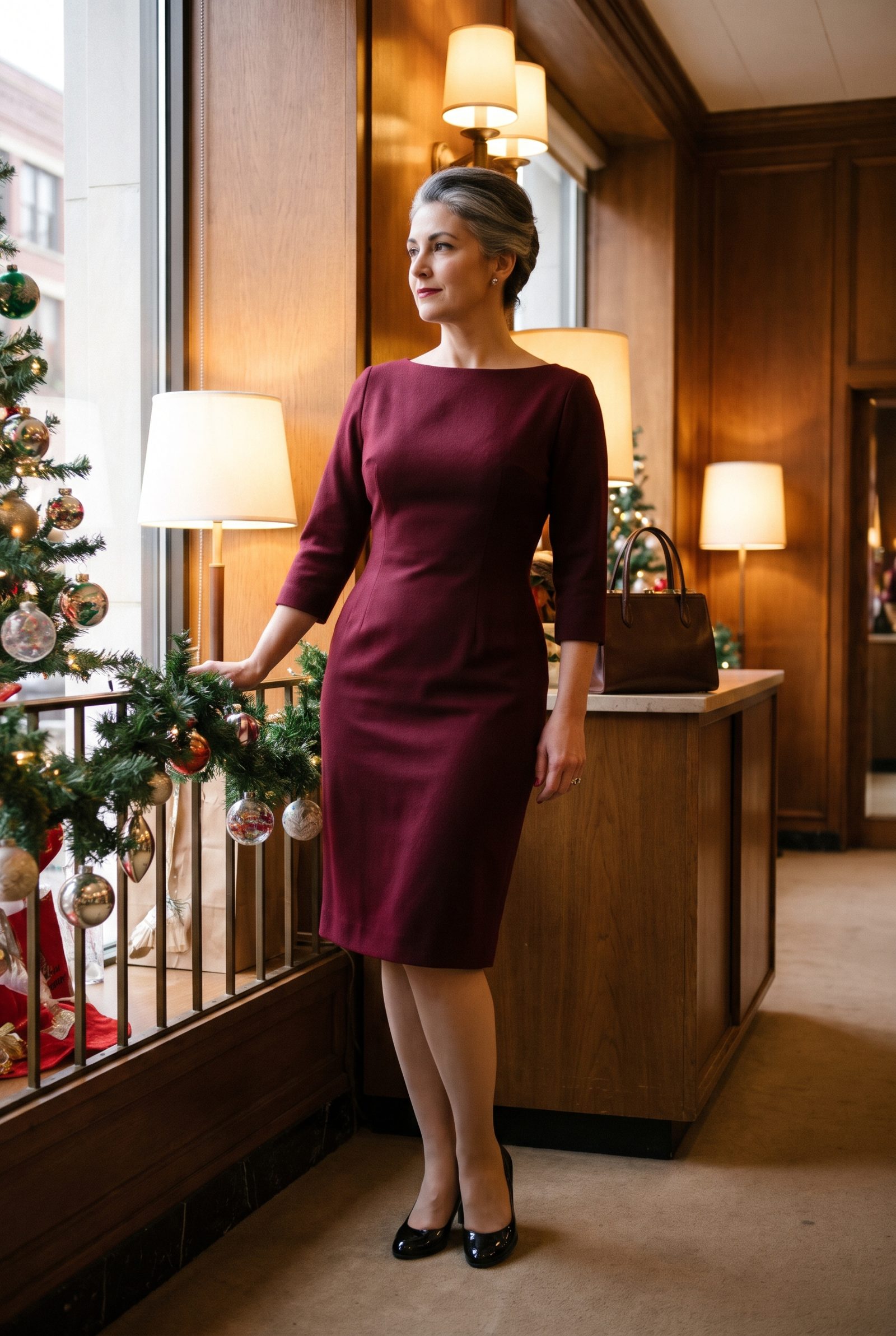
You couldn’t see it, but it ran the whole show. The longline girdle started under the bust and went well past the hip, and it was why a fitted wool sheath fell in one unbroken line from shoulder to hem. Every smooth silhouette on that sidewalk had a bit of structural scaffolding underneath.
The dress gets the credit, but the foundation is the real driver here. That clean, uninterrupted line over the hips is what made a 1960s sheath read as sculpted rather than merely worn. It also enforced a posture. You stood straighter because the garment wouldn’t let you slouch, and that upright carriage put a certain assurance into the whole style conversation long before anyone named it enclothed cognition.