
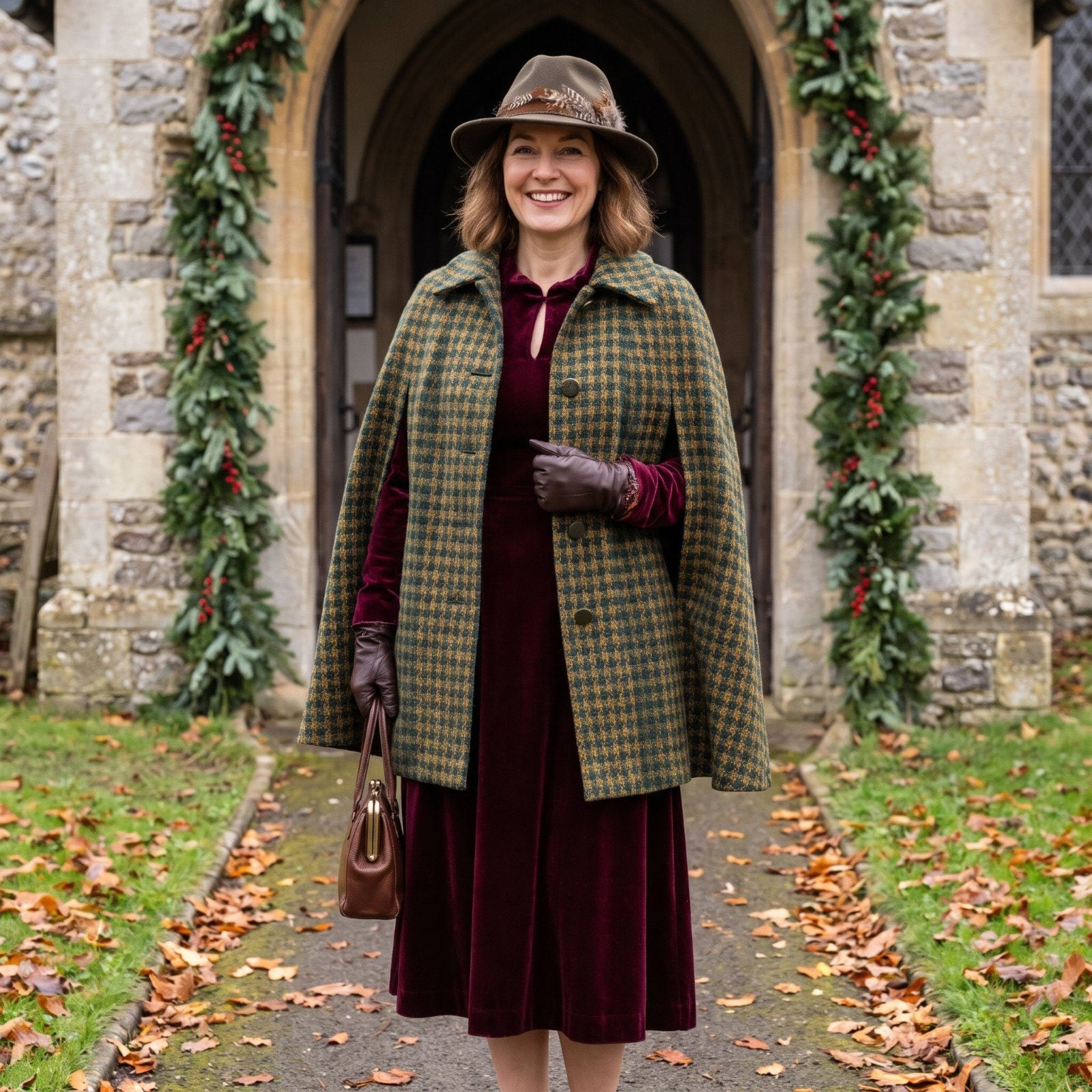
Cold vinyl seats in a station wagon. The hiss of radiators against stained glass, and a coat buttoned to the throat because the sanctuary never warmed up until the second hymn. Christmas Eve service in the 1970s had its own dress code, unwritten but understood by every woman reaching for her good things.
The pieces below came out once a year, maybe twice, smelling faintly of the cedar closet. You dressed up because the night asked you to. See how many of these you remember hanging in your mother’s closet, or your own.
FYI, thanks to AI imagery software, we’re able to create very specific fashion and hairstyle examples to illustrate the points being made. In some cases, imagery is exaggerated to hammer home the point. Also, assume links that take you off the site are affiliate links such as links to Amazon. this means we may earn a commission if you buy something.
38. A Black Lace Chapel Veil

You kept one folded in your handbag, just in case. The black lace chapel veil was less an accessory than a rule, pinned on at the church door the way you’d tuck in a child’s shirt. The mantilla came from Spain by way of your grandmother, or from the five-and-dime in a little plastic sleeve.
What the veil did, quietly, was change your posture. Lace over the hair signaled you were in a different room now, one that asked for a lower voice. After the Second Vatican Council loosened the rule, many women stopped. The ones who kept wearing it did so because it felt like home.
Writing about pre-Vatican II custom, a religion researcher who interviewed veiling Catholic women notes “After marriage, women would switch to black chapel veils, serving of an external symbol of their union.”
37. A Dacron Double-Knit Shirtwaist Dress
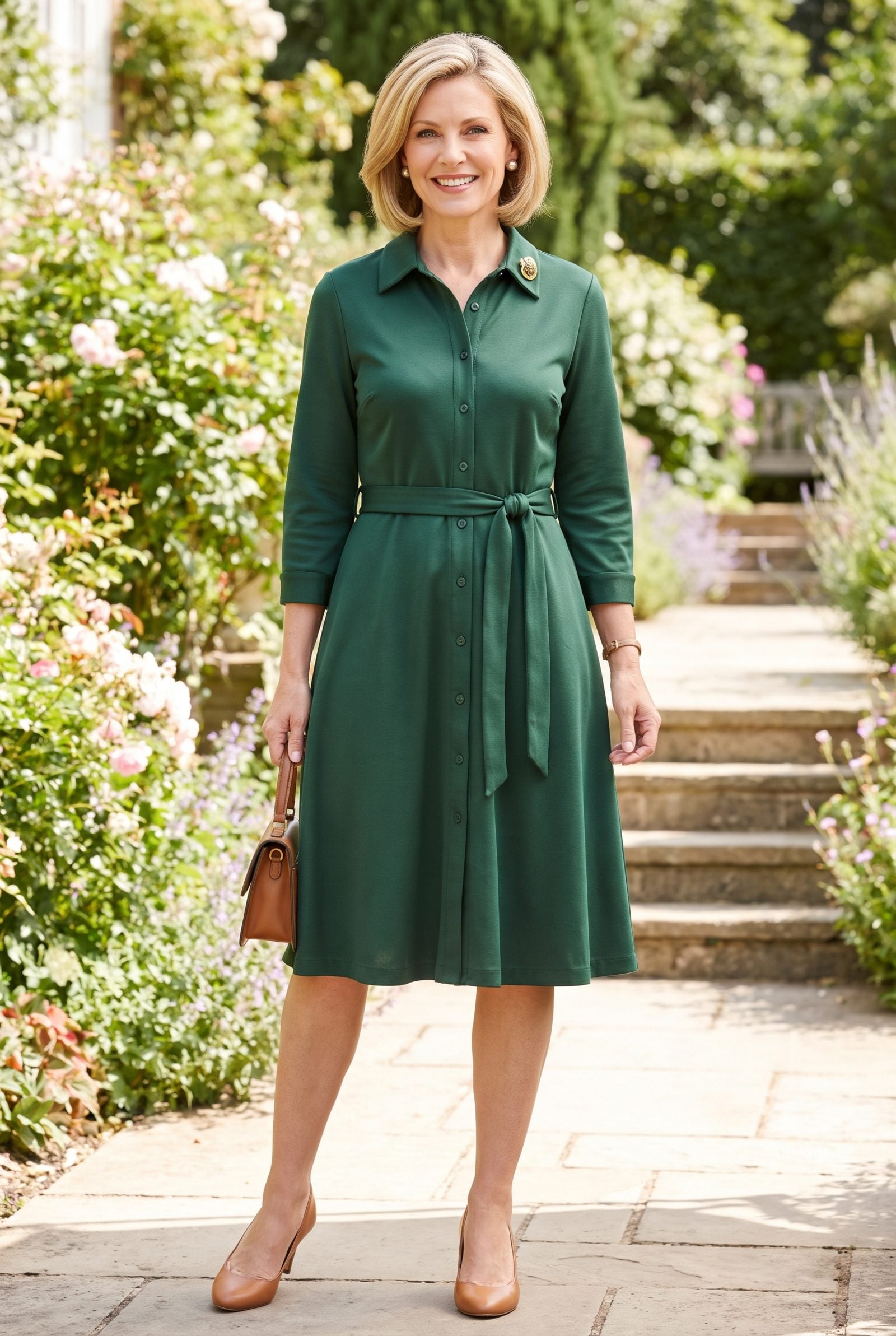
The shirtwaist in Dacron double-knit was the workhorse of the Christmas Eve wardrobe, self-belted at the waist with a button front and a skirt that swished just enough. The waist definition carved a clear silhouette out of a fabric that could easily have read boxy.
You could sit, stand, kneel, and carpool in it without a single wrinkle, and that was the whole appeal. Double-knit polyester had one job and never let you down. A gold brooch at the collar, and you were done. These days the same lines turn up in a forest green shirtwaist dress, minus the static cling.
What Our Readers Say
- Some instincts never left: asked whether they follow trends or stay classic, 87% of ThreadCurve readers today said they stay classic.
From ThreadCurve reader polls and votes.
36. A Velvet Empire-Waist Maxi Dress
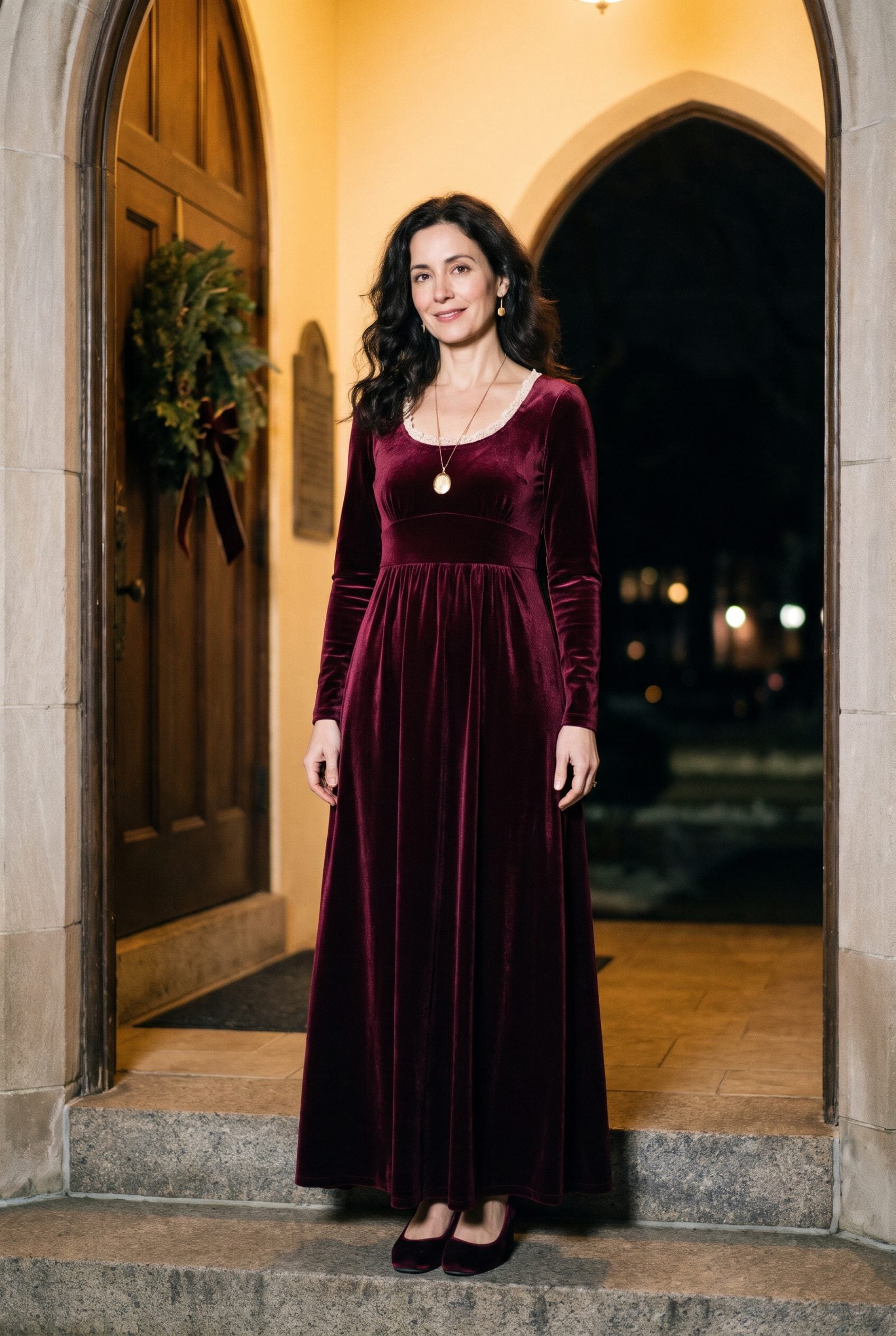
The velvet empire-waist maxi was the dress you felt like somebody in. A high seam under the bust, then a long column of fabric to the floor, with the nap catching every bit of candlelight. That empire line did the work, lifting the eye and letting the skirt fall uninterrupted.
Deep burgundy, hunter green, or that oxblood everyone called wine. There was a reverence to pulling it over your head once a year, the velvet whispering against your slip. For something with the same romance now, a romantic coat layered over a long dress carries the same feeling.
35. A Clear Plastic Rain Bonnet
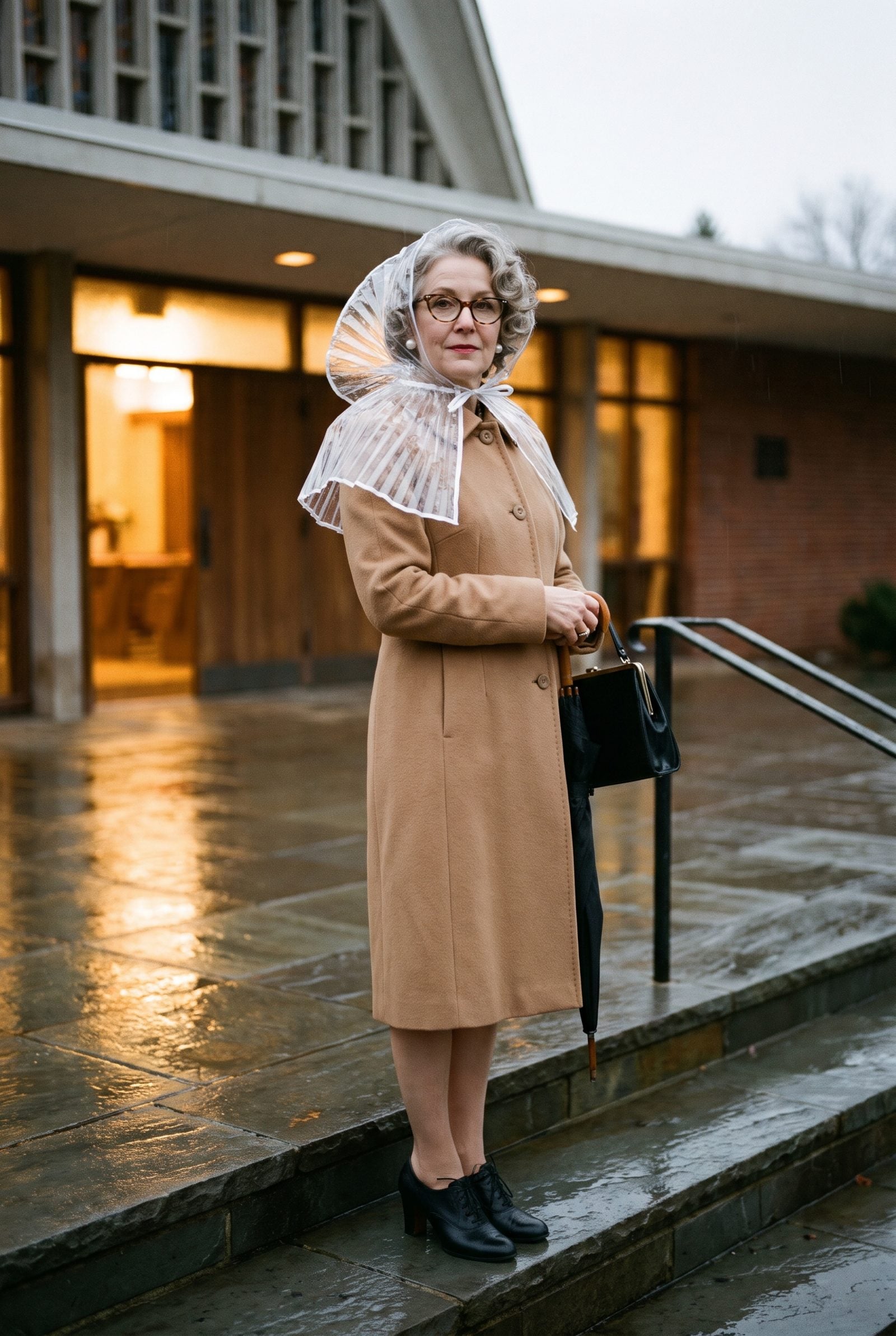
Not glamorous. Essential. The clear plastic rain bonnet lived folded into a tiny square at the bottom of every handbag, pulled out the second a drizzle threatened your set. Accordion-pleated, tied under the chin, and see-through, so it never quite hid the fact you were wearing it.
It was all about the hair underneath. You spent Saturday at the salon getting that set, and no Christmas Eve sleet was going to flatten it before the pews. Vanity and practicality in one crinkly package.
34. A Metallic Brocade A-Line Dress
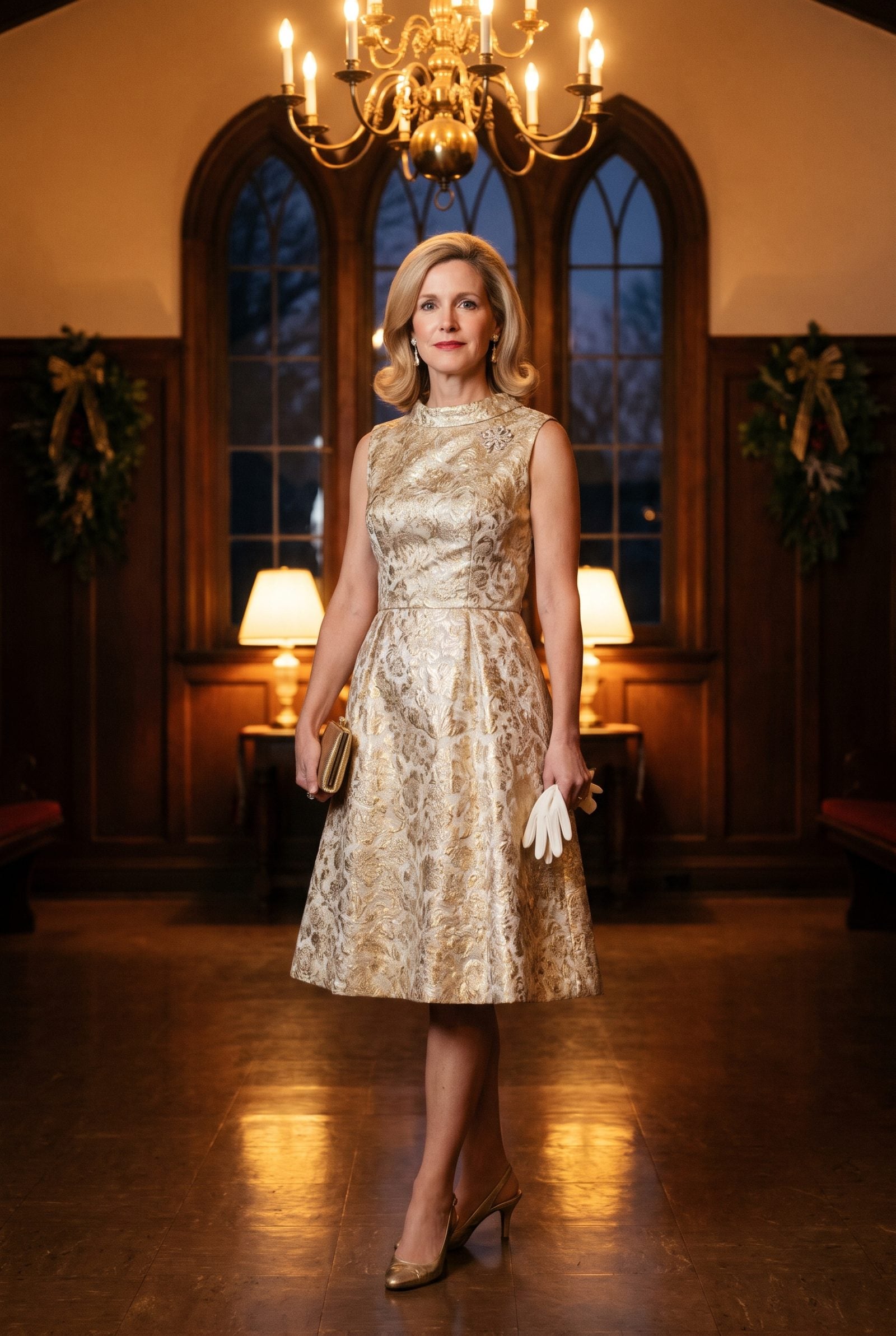
One texture decision made this dress. Metallic brocade, woven through with gold threads, turned a simple A-line into something that caught every chandelier in the sanctuary. The structured bodice and flared skirt kept it from tipping into costume, and it read as an occasion dress, which is exactly what Christmas Eve was.
You saved this one for the services with the full choir and the midnight bells. White gloves, a crystal brooch, the faint scent of hairspray. It said, without a word, that you knew this night mattered.
33. A Feather-Trimmed Felt Toque
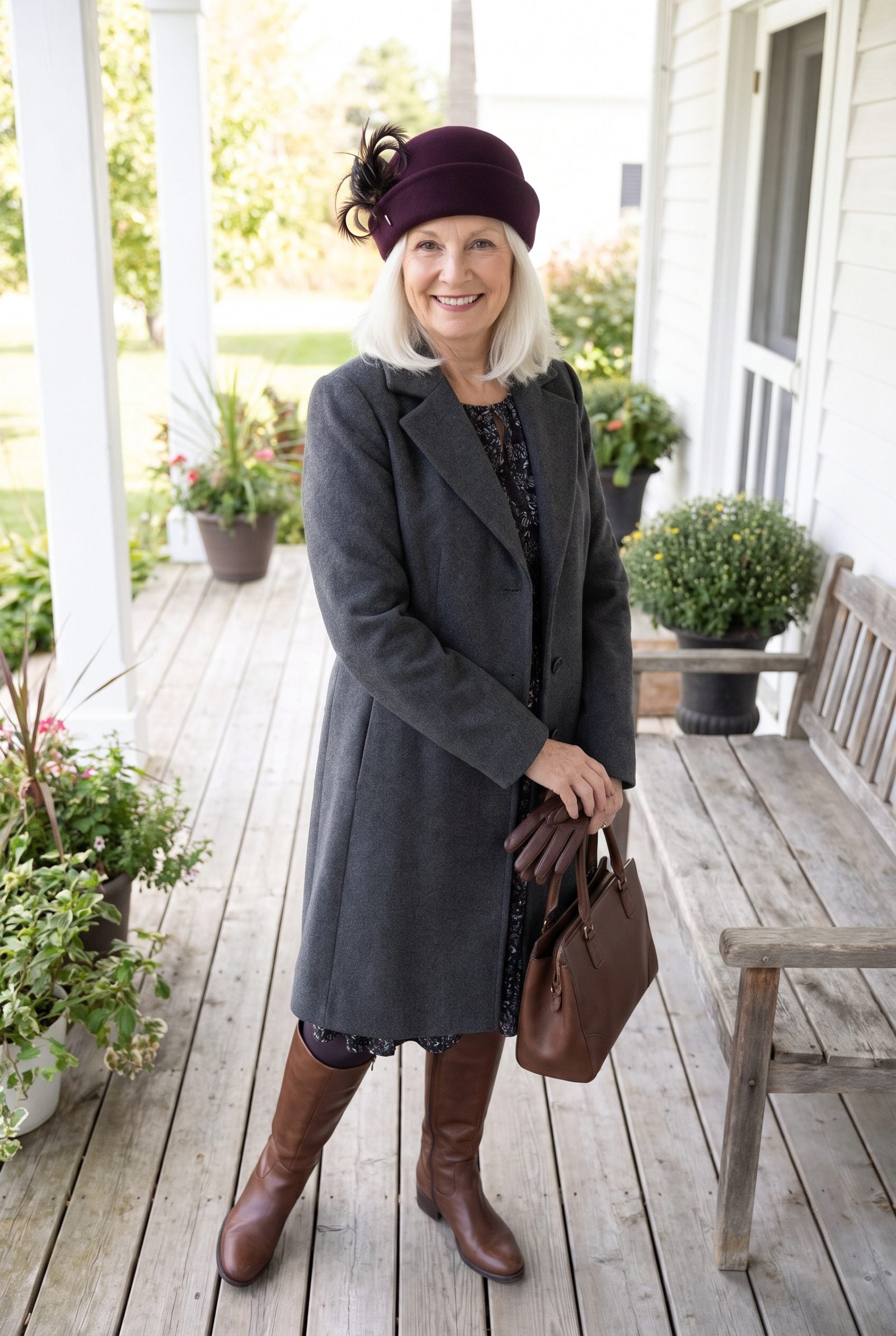
The felt toque belonged to the older generation in the pews, the grandmothers and great-aunts who still believed a lady wore a hat to church. Close-fitting, brimless, with a small spray of dyed feathers tucked to one side like a secret.
Plum, teal, or deep forest green. The feather was the finishing touch that told you she’d thought about this, chosen it to sit just so against her gray set. Younger women had abandoned the hat by then. She hadn’t, and she looked all the better for her conviction.
32. A Sleeveless Jumper Dress Over a Turtleneck
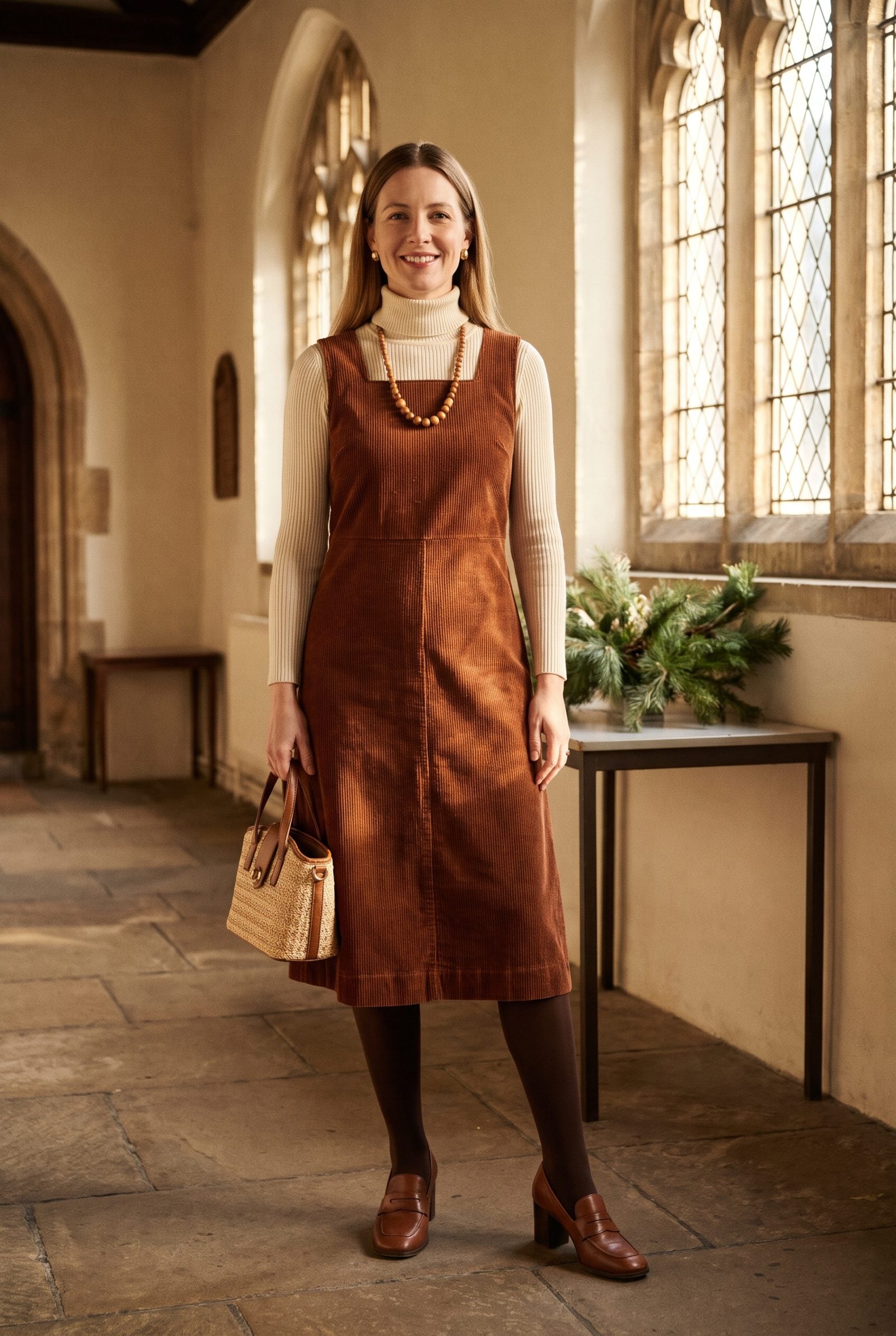
The layering did the work. A sleeveless jumper dress over a ribbed turtleneck gave you two textures and real warmth, which mattered in a drafty church. The corduroy jumper’s square neckline framed the turtleneck cleanly, so the layers read as a decision rather than an accident.
Rust over cream, forest over oatmeal — the pairings leaned warm and earthy. This was the younger, easier end of the Christmas Eve dress code, the look for a woman who wanted to be comfortable kneeling and still look put together. Brown loafers, a wooden bead necklace, and you were set.
31. A Coordinating Knit Skirt Suit

Dignity in two matching pieces. A textured knit jacket, matching skirt, and a silk pussy-bow blouse underneath that softened the whole affair. Committing to a single tone top to bottom gave the outfit a long unbroken line, something deliberate and grown.
Camel, dove gray, powder blue for the daring. This was the uniform of a woman who ran the altar guild or taught the Sunday class, and she wore it with the authority of someone who belonged there. Throw a party coat over it for the walk to the car and she was ready for the cold.
30. A Polyester Pantsuit With Flared Trousers
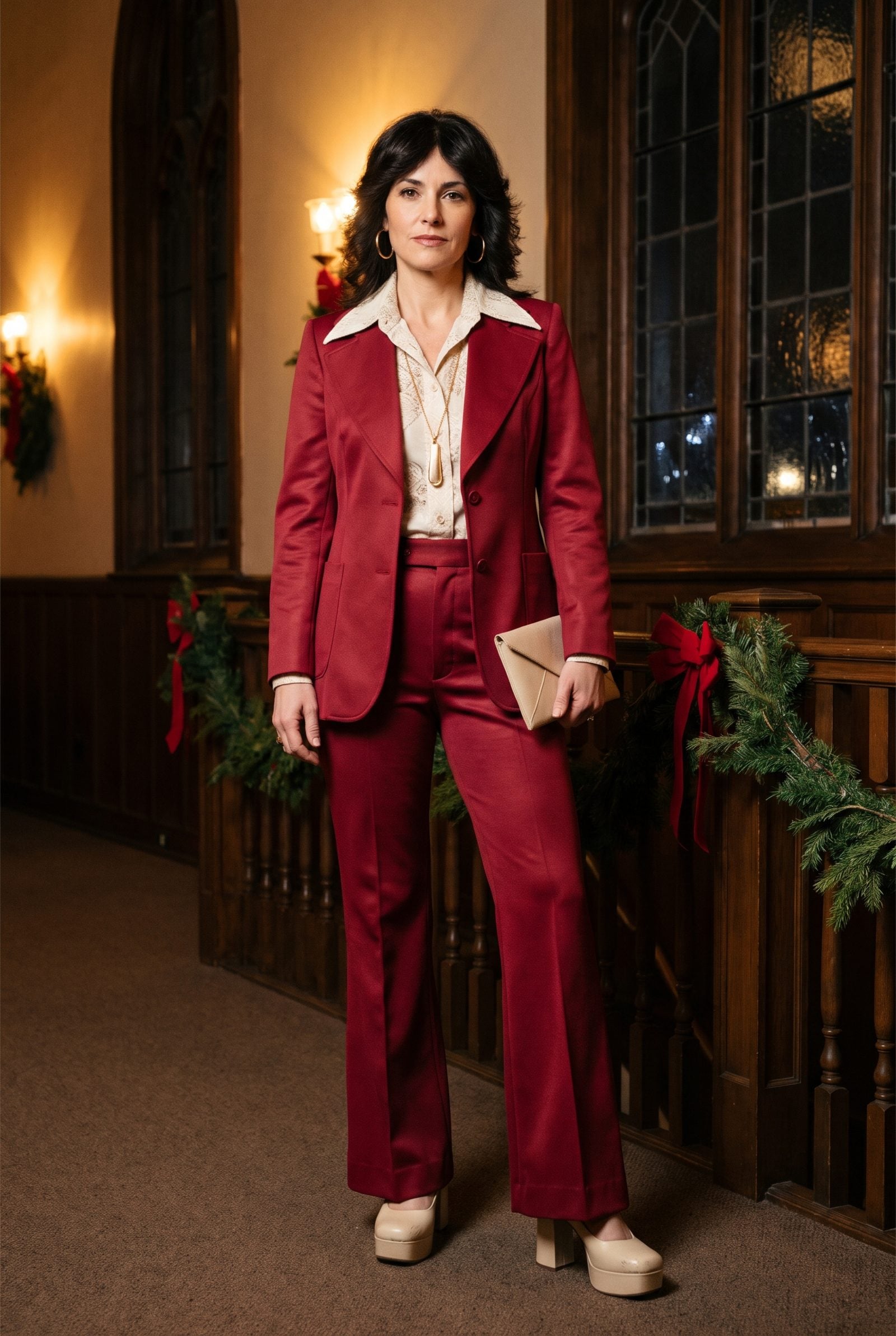
By mid-decade the pantsuit walked into the sanctuary and dared anyone to say a word. Fitted jacket with wide lapels, high-waisted flared trousers breaking right over the platform heel. The flare led the whole look, pulling a long clean line from waist to floor that landed as polished rather than casual.
Cranberry, powder blue, or crisp cream. A patterned blouse collar worn out over the lapels, gold hoops, and a quiet sense that the rules had changed. For many women, that first Christmas Eve in trousers felt like a small act of nerve.
The pantsuit’s descendant is now the everyday office choice: in our reader polls, 57% picked blazer and trousers for workwear, well ahead of a knit and skirt or a dress.
29. A Chiffon Scarf Tied Under the Chin
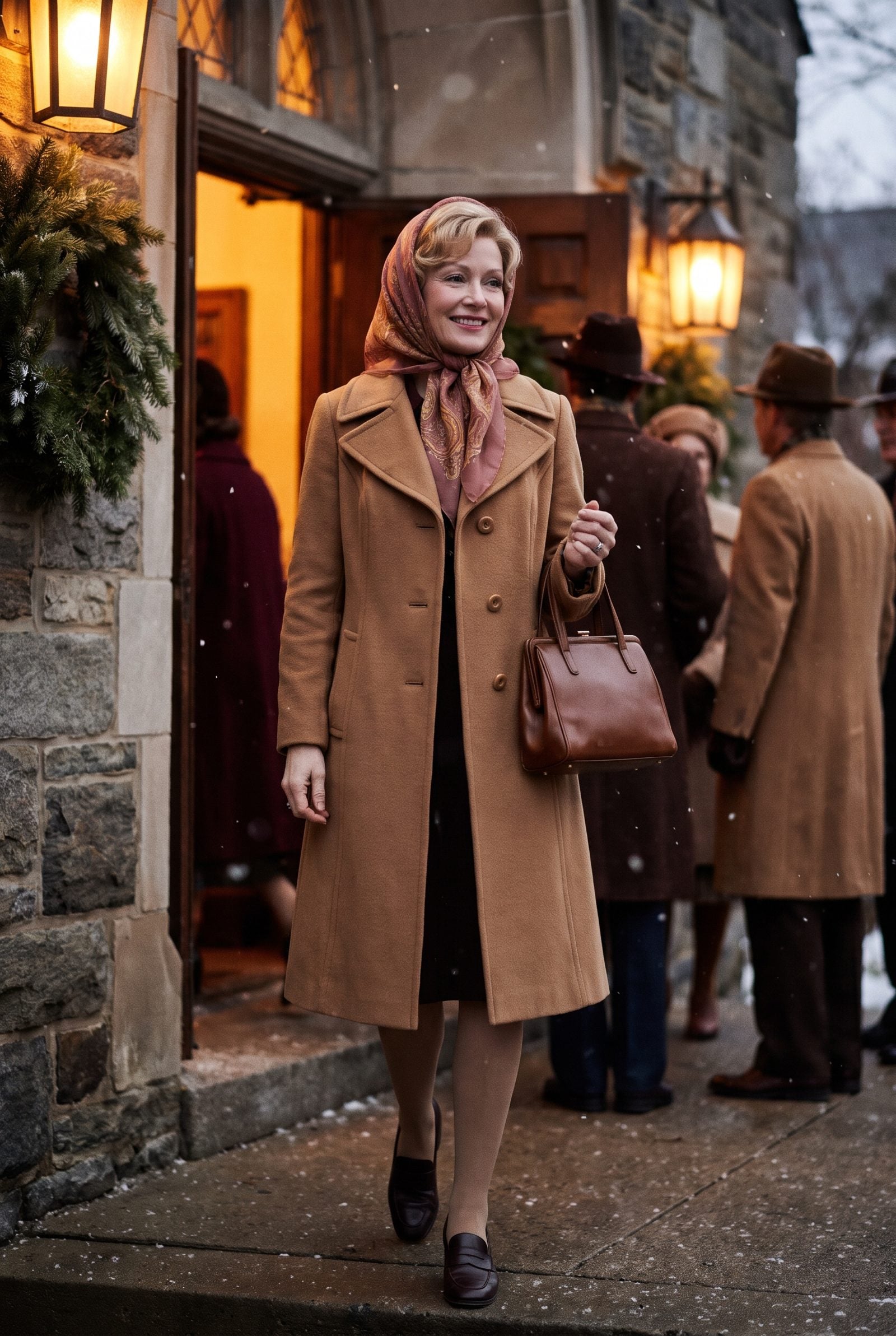
You folded it into a triangle on the kitchen table first, smoothing the sheer chiffon flat before the mirror even came into it. The under-the-chin knot was the whole point. It kept your set hair from collapsing on a breezy walk from the car to the church door, and it looked like you meant it.
The patterns ran to paisley and soft florals, often in dusty rose or that particular gold the decade couldn’t get enough of. Grandmothers wore them, young mothers wore them, teenage girls dragged along by both. On Christmas Eve, on the church steps, a row of women in printed chiffon looked like a flower stall that had learned to walk.
28. A Pussy-Bow Blouse

The bow did everything. A plain blouse buttoned to the throat says church; the same blouse with a wide pussy-bow tied soft and slightly off-center says you got dressed on purpose, and you had time this year.
Cream silk was the Christmas Eve favorite, worn under a skirt suit jacket so the bow spilled out at the collar. You retied it in the vestibule because the first attempt always went limp by the car. A party coat went over the whole thing for the walk in, and then you unwrapped the bow again once the pew was warm. Softness right at the face reads as approachable, which is exactly the signal a church pew asks for.
27. A Metallic Lamé Shell Under a Jacket

One flash of gold under a sober jacket, and the whole outfit tipped from Sunday to Christmas Eve. The lamé shell was the quiet trick of the decade — sleeveless, cut clean, tucked into a dark skirt, doing absolutely nothing until the jacket fell open under the chandelier.
Then it caught the light. Metallic against matte wool is the whole mechanism of this look, one texture doing all the work while everything around it stays restrained. You could sit through a long service looking completely proper, then shrug the jacket back at the coffee hour and suddenly you were dressed for a party.
26. A Detachable Lace Dickey Collar
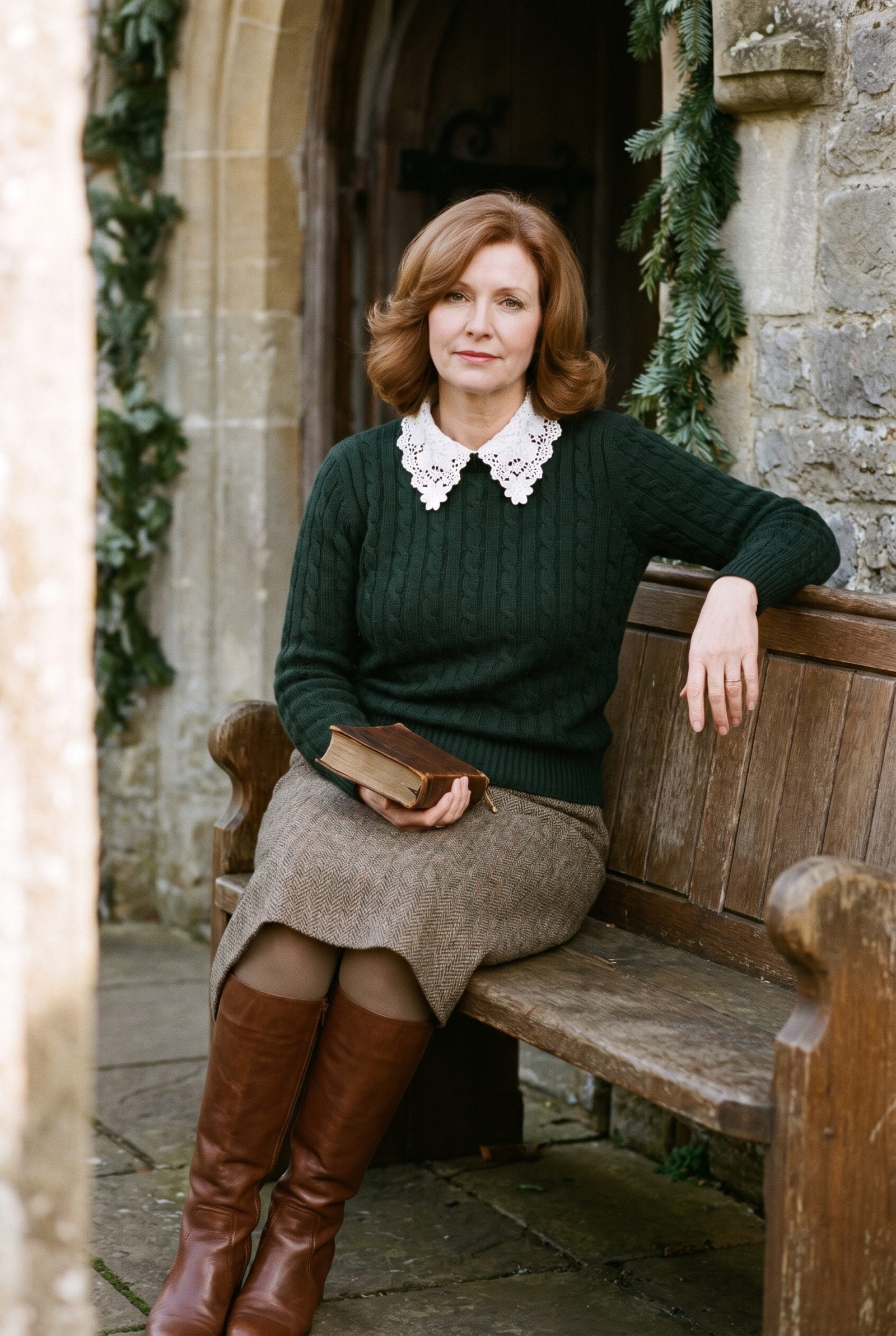
Half a blouse. That is what a dickey was, and nobody pretended otherwise — a lace collar on a little bib that snapped or buttoned at the back, slipped under a plain sweater so the illusion of a full blouse sat exactly where it showed.
White lace against a dark green sweater on Christmas Eve was the move. It cost almost nothing, and it dressed up a sweater you already owned. The lace sits right at the throat where the eye lands first, and crisp white near the face brightens everything above it. Practical, a little bit of a cheat, genuinely pretty. I’ve always had a soft spot for a solution that smart.
25. A Sequined Evening Cardigan
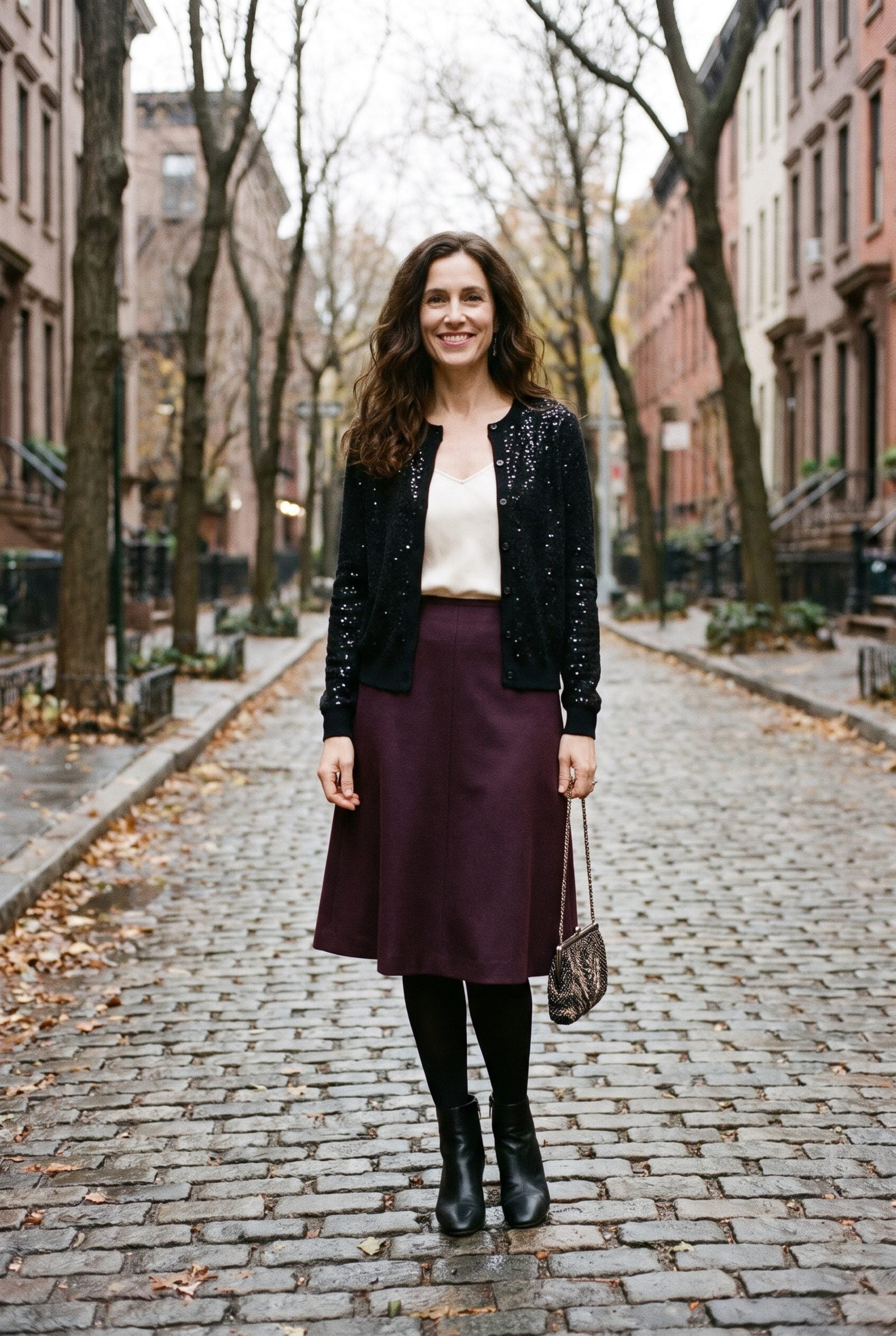
The sequins snagged on every other thing you owned, and you wore it anyway. The evening cardigan was the practical woman’s answer to a party dress — warm enough for a drafty sanctuary, dressy enough for Christmas Eve, and it buttoned right over the blouse you already had on.
Black beaded or sequined knits led the pack, worn over a cream shell with a quiet skirt. The shimmer did the heavy lifting while the rest stayed calm. You folded it carefully back into tissue paper afterward, because it only came out twice a year and it had to last.
24. A Cape Coat With Arm Slits
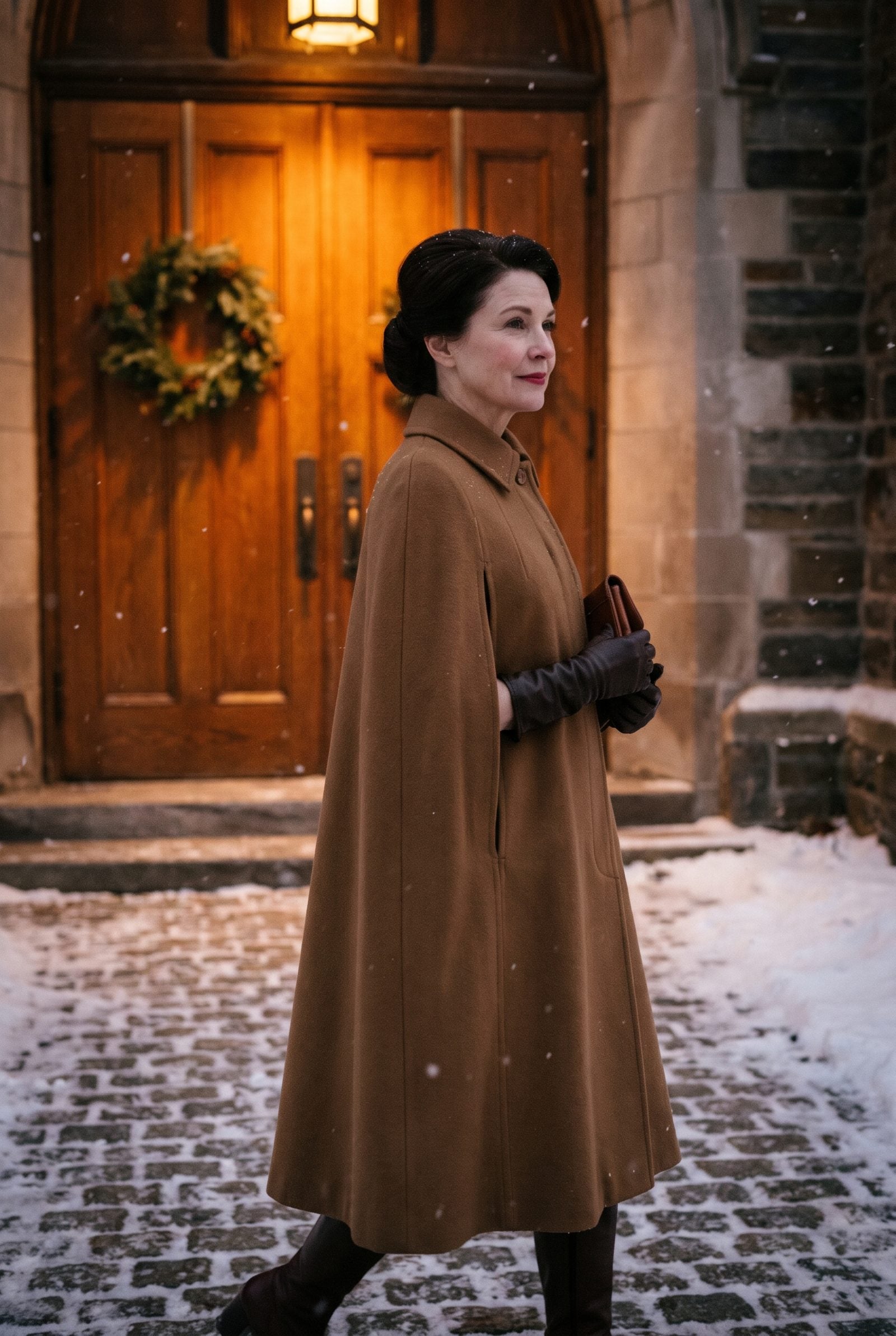
Your hands came out through slits in the sides, and the rest of you swept. The cape coat was pure drama with a practical catch — it kept you warm, let your arms work, and moved like weather when you walked up the church steps.
Deep camel or charcoal wool, high collar, hem to the knee. The silhouette carries the whole thing, that clean sweeping line no fitted coat can touch. Want to understand why the shape matters so much? A good formal cape lives or dies on proportion. On a 1970s Christmas Eve, under the porch light, it looked like something out of a carol.
23. A Quilted Satin Evening Coat
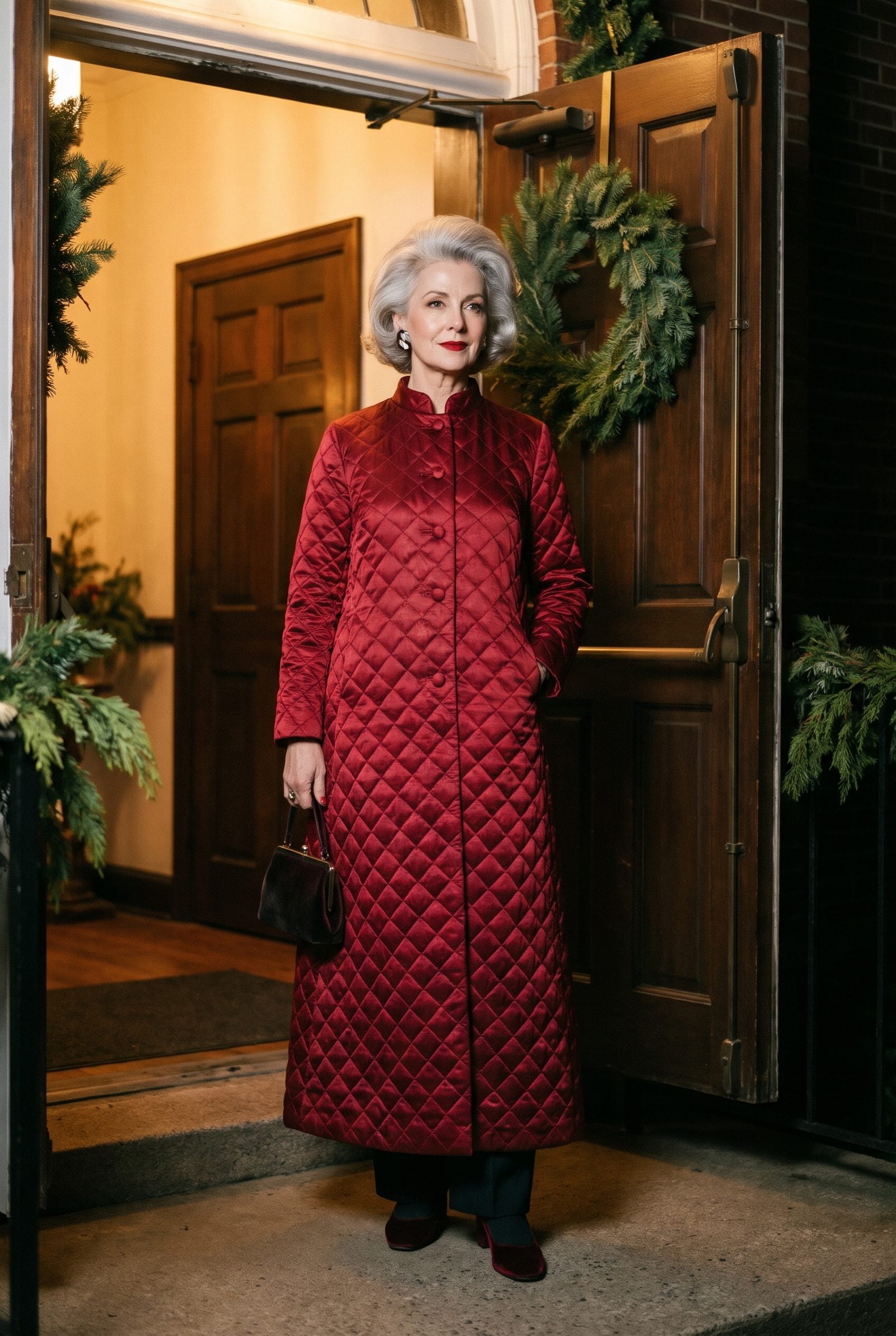
It whispered when you moved. The quilted satin evening coat was the full occasion piece, the one that came out of the back of the closet smelling faintly of the sachet you’d kept with it all year.
Ruby, emerald, or a deep gold, ankle-length, with diamond quilting that held just enough gleam to catch the vestibule light. You wore it over your best dark trousers and kept it on through the opening hymn, because taking it off felt like ending the entrance too soon. A proper retro coat like this one did more for a Christmas Eve than anything underneath ever could. Honestly, half the congregation came to see what everyone was wearing, and nobody admitted it.
22. A Faux Persian Lamb Coat
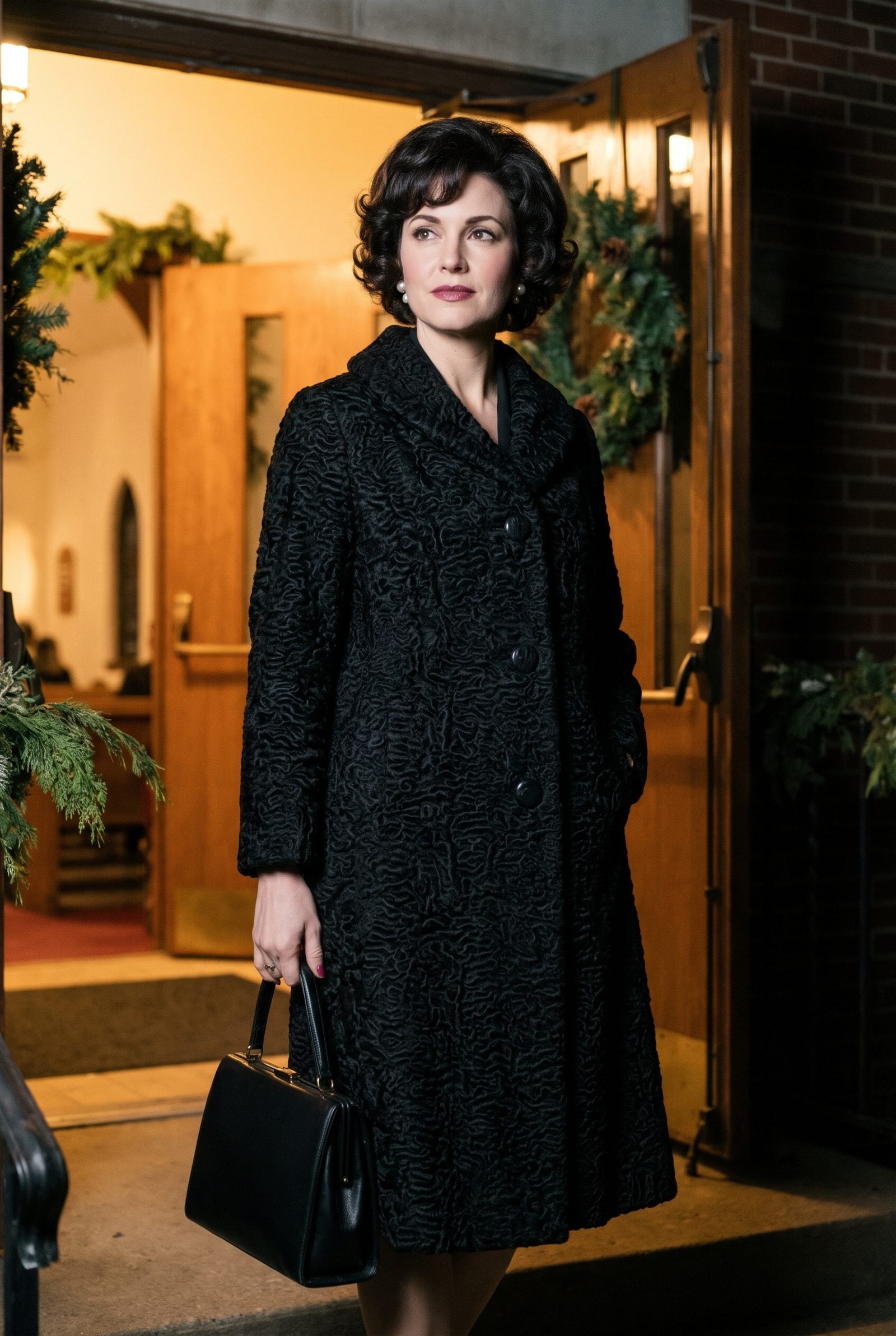
Those tight little curls. You could spot a Persian lamb coat from across the parking lot by the texture alone, that dense astrakhan curl that looked like nothing else on a cold night.
The faux versions got good in the 1970s, which meant a woman could have the look without the budget or the second thoughts. Black was the Christmas Eve standard, cut to the knee with a shawl collar. Here the surface does all the talking — a coat that reads rich because of its texture rather than its color. You hung it carefully so the curls kept their shape. It was the kind of coat that got passed down.
21. White Wrist-Length Dress Gloves
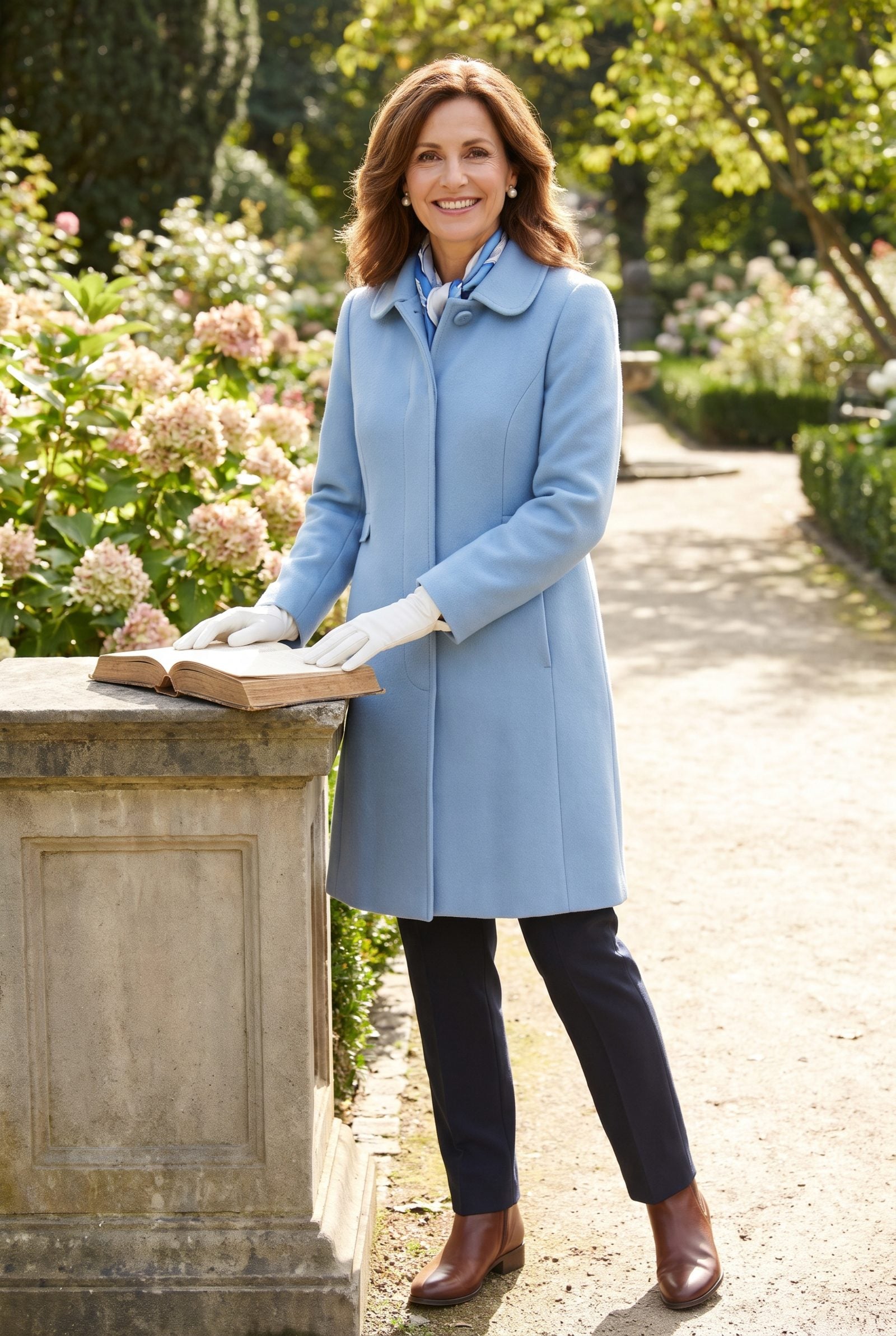
You held the old book like it was fine china. White gloves changed the way a woman carried herself, made every gesture a little more deliberate, and that was most of the point.
Wrist-length cotton or soft nylon, buttoned at the side, kept crisp and bright for exactly these occasions. By the 1970s they were already fading from everyday wear, which is what made them feel special on Christmas Eve. Pulling them on in the car was the signal that this was not a regular outing. You took them off to shake hands with friends in the vestibule, then slid them right back on.
20. A Fur Muff for Warming Both Hands
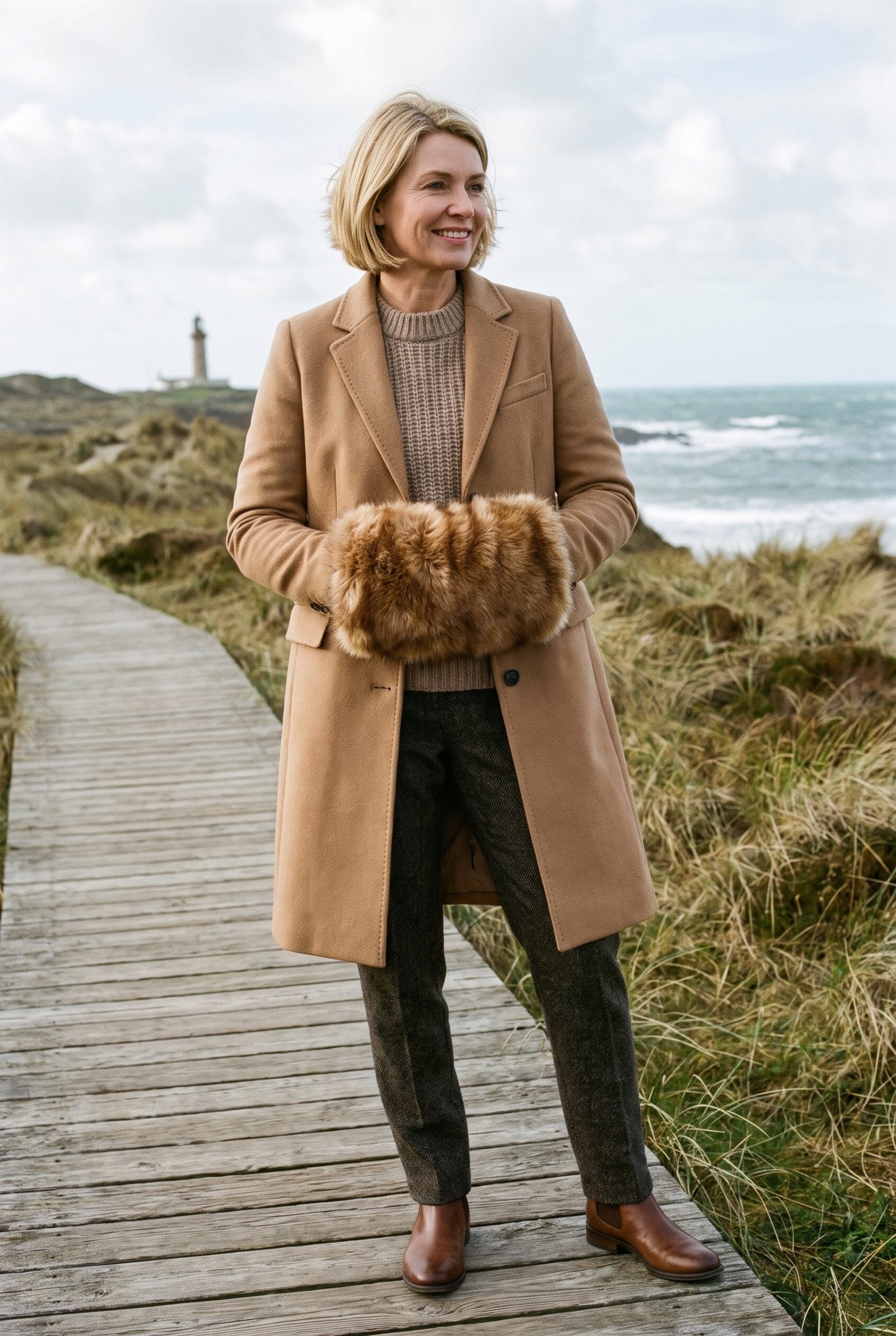
Both hands disappeared into it, and for the walk from the car you felt like a character from an older, colder century. The muff was the most romantic thing a woman carried on Christmas Eve — a soft fur tube with nothing practical to recommend it except that it worked.
Warm brown faux fur was common by the 1970s, sometimes with a little zip pocket inside for a handkerchief or a few coins for the collection plate. It was already a touch old-fashioned then, which is precisely why it suited a candlelit midnight service. You held it against your coat, your breath showing in the cold, part of a picture that had been repeating itself for a hundred Christmas Eves.
19. The Patent-Leather Frame Handbag That Snapped Shut Like a Secret
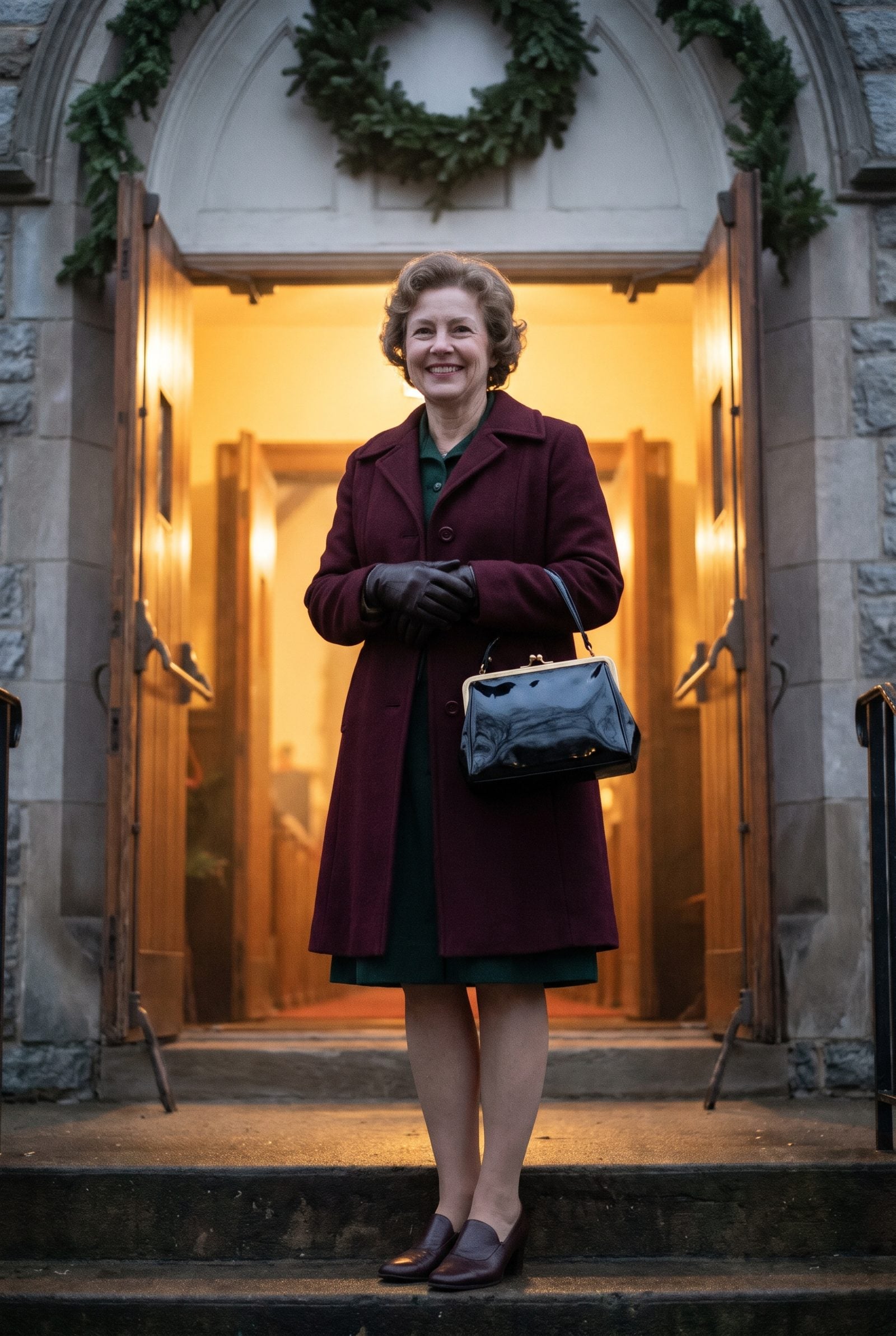
That hard clack of the clasp closing — every woman in the pew knew it. The patent-leather frame handbag was the one you only carried to church, weddings, and funerals, kept wrapped in tissue the rest of the year so the shine never dulled.
The gloss does everything. Against a matte wool coat, that liquid black patent catches every candle and every bulb over the church door, so a small structured bag ends up reading as the most finished thing you’re wearing. Inside: a folded handkerchief, a few dollars for the collection plate, lipstick in a gold tube. That was the whole inventory.
18. The Tapestry Handbag With the Brass Clasp Grandmother Swore By
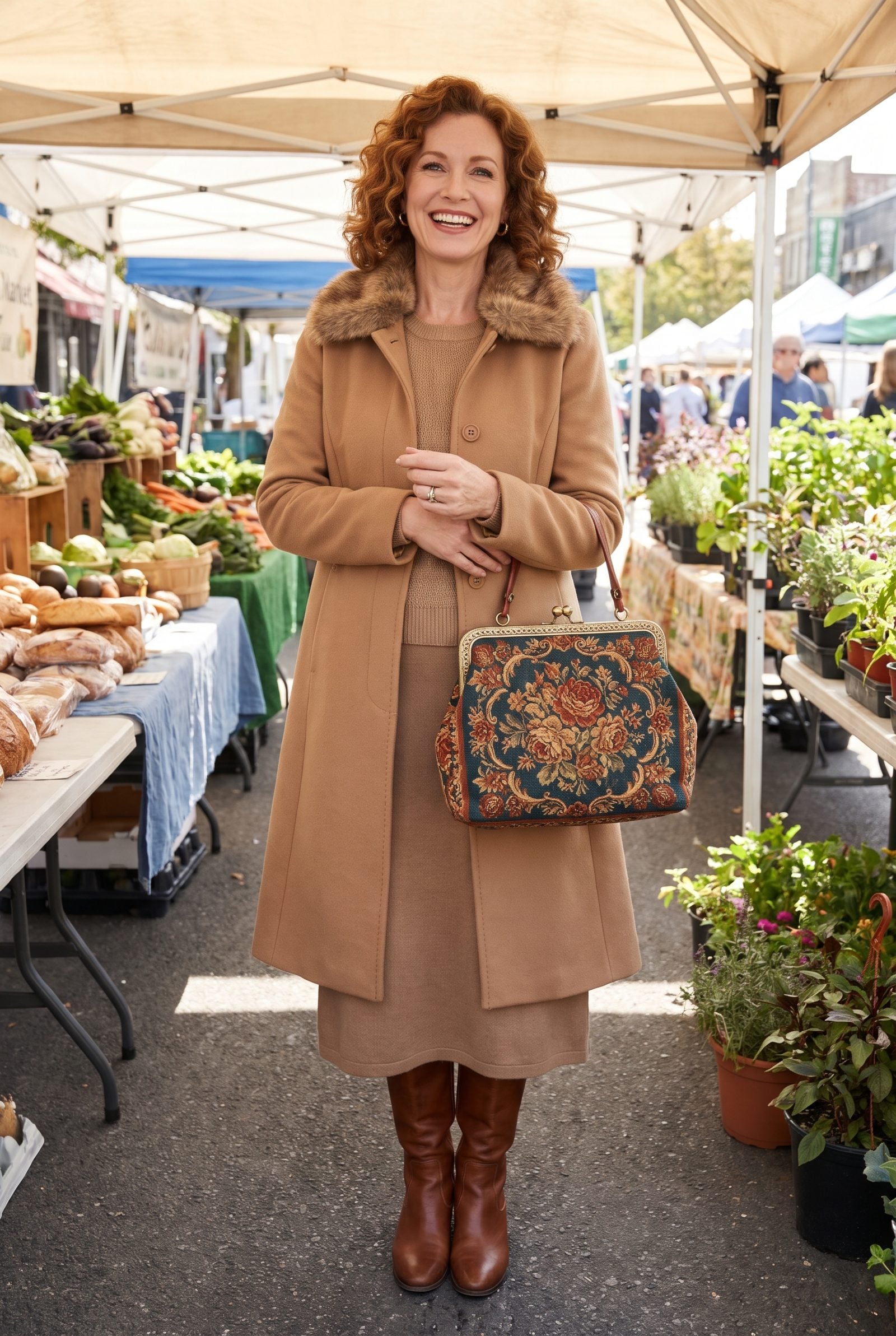
Woven roses and a clasp that opened with a satisfying brass click. The tapestry handbag was softer than patent leather and somehow more personal, each one patterned in rust, gold, and teal florals that looked like they’d been pulled off a Victorian settee.
Here the texture carries the weight. Against a smooth wool coat, that nubby woven surface gives you depth you can read from across the sanctuary. And the bags got handed down. The brass frame developed a warm patina from decades of hands clicking it open and shut during the sermon — your grandmother’s thumbprint, basically, worn into the metal.
17. The Fresh Carnation Corsage Pinned On at the Door

Someone always had a box of them at the church door — carnations trembling in cellophane, each with a pearl-headed pin stabbed through green floral tape. You pinned it high on the shoulder and spent the whole service smelling clove and spice every time you turned your head.
A corsage is one living thing in an outfit built entirely from fabric, a single bold red note against velvet or wool. Holly, a bit of baby’s breath. It announced that tonight mattered without anybody saying so. And the petals browned a little by midnight, and you pressed it flat in the hymnal anyway, because of course you did.
16. The Rhinestone Christmas-Tree Brooch That Snagged Every Cardigan
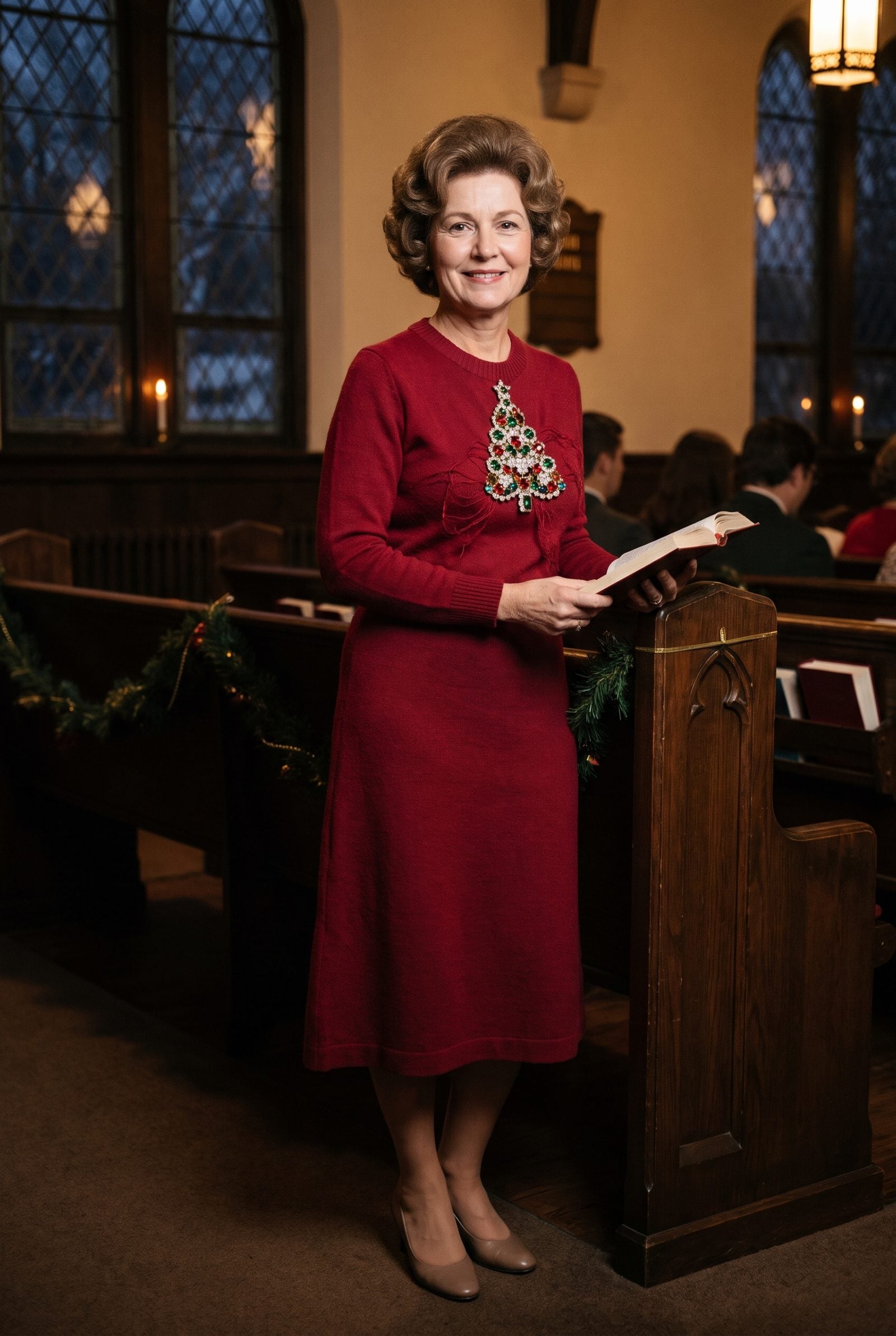
The one that caught every loose thread on every cardigan you owned. It came out the day after Thanksgiving and stayed pinned somewhere until Epiphany — tiered crystals set in gold-tone metal, usually with a star at the top and a few colored stones standing in for ornaments.
One sparkling thing against a flat knit, and that’s the trick of it. It gave a plain cranberry dress a reason to exist on December 24th. Half the fun was whether the green stones actually matched the red ones or whether the whole contraption had tipped over into glorious, unapologetic gaudiness.
15. The Sweater Guard With Jeweled Clips Nobody Explains Anymore
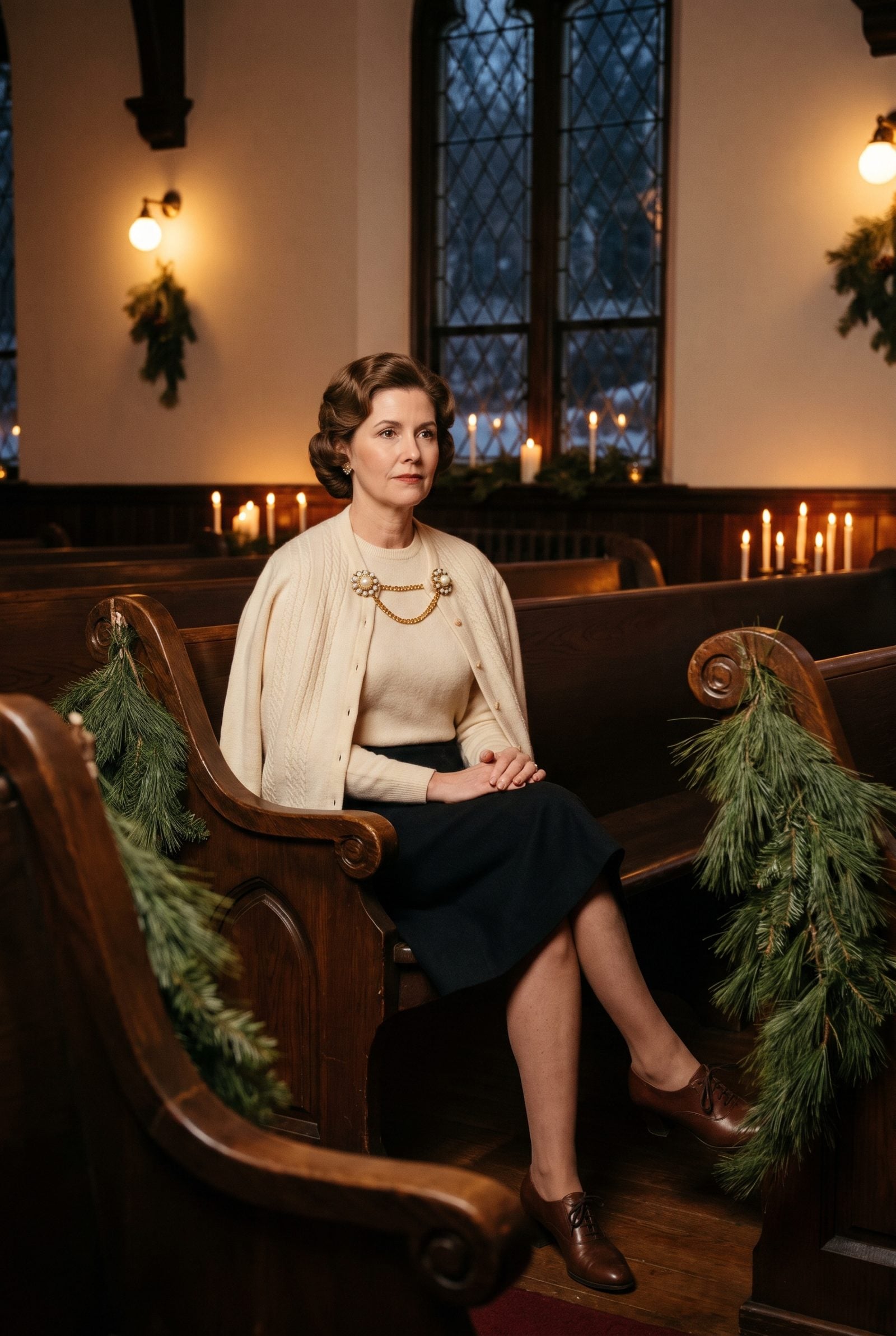
Ask anyone under forty what a sweater guard is and watch the blank stare. Two ornamental clips joined by a short gold chain, they gripped the front edges of a cardigan worn over the shoulders so it never slid off while you knelt or stood for the carols.
Practical and pretty at once. The clips often held faux pearls or little rhinestones, so the chain lay across your collarbone like a necklace that happened to be doing a job. Cold stone church, Christmas Eve, the cardigan stayed put and your hands stayed free for the hymnal. Clever little thing, honestly.
In a history of the accessory, one jewelry retailer explains “Similar in function to sweater clips, sweater guards were designed to prevent cardigans or sweaters from slipping off the shoulders.”
14. The Aurora Borealis Crystal Necklace That Threw Rainbows
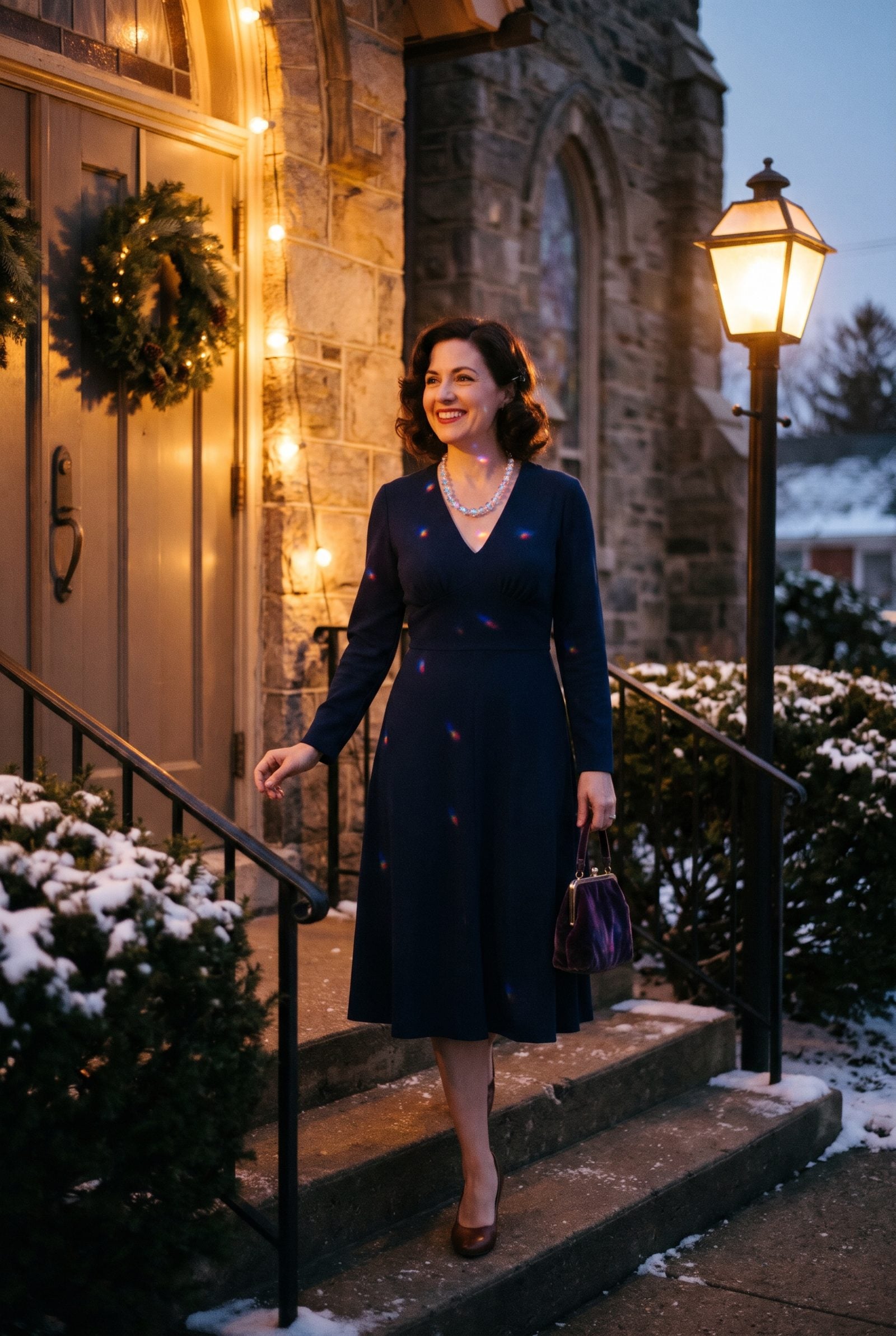
Turn your head and the whole necklace threw little rainbows. Aurora borealis crystals had that oil-slick iridescence — a coating that flashed pink, blue, and gold depending on which candle you faced — and on Christmas Eve they practically put on a show.
Against a dark crepe dress, that shimmer is everything. The dress stays quiet so the necklace can talk. They usually came in matching sets with clip earrings, and the strand sat high on the throat, catching every flicker off the altar.
Describing aurora borealis rhinestones, a vintage jewelry blogger writes “Most AB stones are clear with that signature rainbow coating, but you can find them in other colors, such as red, blue, green, and more.”
13. The Pendant Watch Worn as a Necklace

Half jewelry, half timekeeper, and you snuck a glance at it during the longer sermons. The pendant watch hung from a long gold chain, its round case engraved or filigreed, swinging gently against a charcoal tweed dress as you walked up for communion.
Put a watch where everyone expects a locket and suddenly the whole neckline reads as deliberate — a little eccentric, the mark of a woman who liked a jewel that also held down a job. Most had a cover that snapped open. Winding it before the service was its own small ritual, the kind of thing you did without thinking about why you loved it.
12. Rhinestone Cluster Clip-On Earrings That Pinched by the Second Hymn

You slid them on in the car and by the second hymn your earlobes were throbbing, and you wore them anyway because nothing caught the candlelight quite like they did. Rhinestone cluster clip-ons were a dense burst of clear crystals, worn back before pierced ears were common on women of a certain generation.
They framed the face and pulled light up toward the eyes — exactly what you want in a dim sanctuary. You’d loosen the screw-back a quarter turn during the reading, then tighten it again for the processional. A small ongoing negotiation between vanity and pain.
11. The Rhinestone Eyeglass Chain That Doubled as Jewelry

A practical thing turned ornamental. The rhinestone eyeglass chain kept reading glasses from vanishing into the depths of a handbag, looped behind the neck so they rested on the chest, ready the second the small print in the hymnal demanded them.
And the sparkle made it jewelry. When the glasses came off for the singing, the chain just sat there glittering, a necklace that had somehow misplaced its pendant. Grandmothers owned a whole drawer of them — one for every outfit, naturally.
10. Reinforced-Toe Nylon Stockings You Checked for Runs in the Car
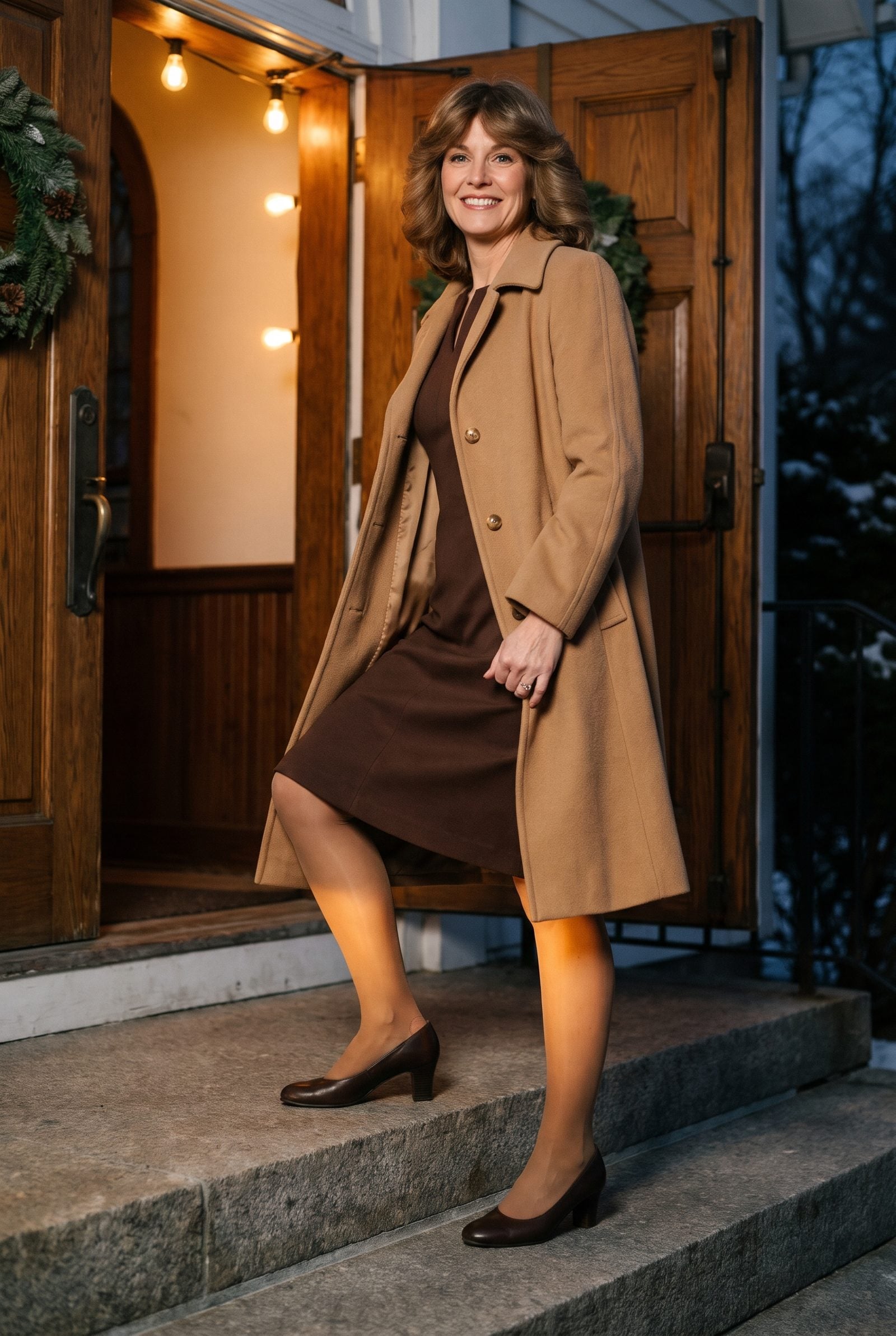
You twisted your ankle around in the passenger seat to check the back of your calf, because a run meant trouble and there was no fixing it once it started. Reinforced-toe nylons had a darker patch knit into the toe and heel for durability, barely visible above a good pair of pumps.
This was the foundation the whole outfit stood on, literally. Bare legs were unthinkable for church in December, and a smooth sheer line from hem to heel was the quiet signal that you’d dressed with care. A bottle of clear nail polish lived in the glove box, standing by to stop a run mid-service.
9. A Metal-Clasp Garter Belt That Dug In Through the Whole Sermon
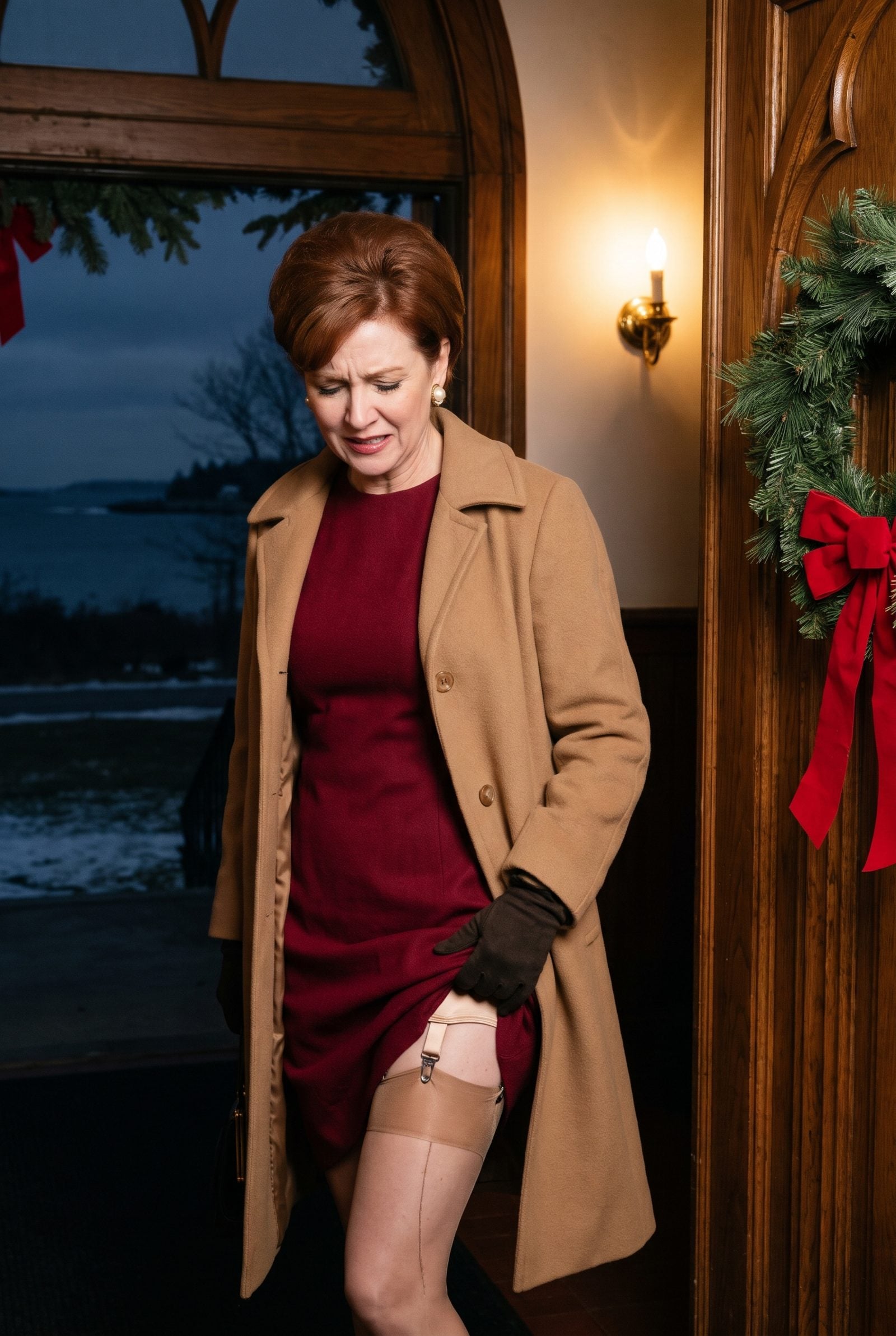
You felt it the second you sat down. Four little metal clasps pressing into the backs of your thighs through two verses of Silent Night, and you learned to sit very still so the cold hardware wouldn’t shift.
The garter belt was the quiet engine under everything. Pantyhose had arrived, but for the good dress a nude satin belt with adjustable slides held your seamed stockings taut from waist to thigh. You bought it at the department store foundations counter — the one with the little fitting room and the saleswoman who knew your size without asking.
8. A Firm-Control Girdle Under the Good Dress
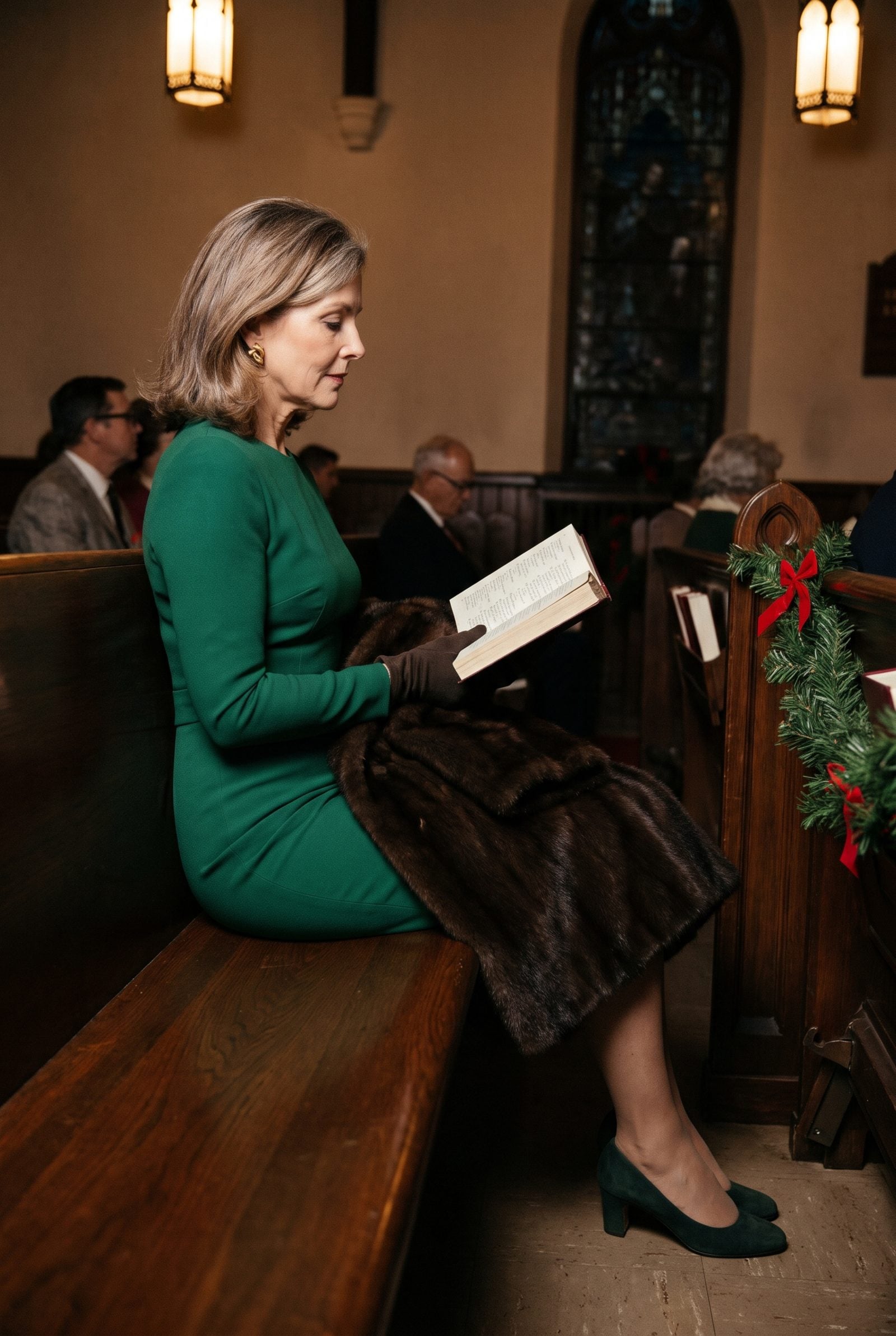
One long zip up the side and you were a different shape. The firm-control girdle — Playtex, usually, or Warner’s — turned the good crepe dress into a clean column with no lumps telegraphing through the fabric.
The control garment was the real style driver here, not the dress. It smoothed the waist-to-hip line so the frock hung the way the catalog promised, and it held you upright through a long service whether you liked it or not. You breathed in halves. You sat with intention. And when you peeled it off at home that night, the relief was its own small holiday.
There’s a reason women of a certain era still stand so straight. The girdle trained posture before anyone called it core work.
Few would sign up for that today: in our reader polls, 63% of ThreadCurve readers said they put comfort first, against 37% who put polish first.
7. A Longline Bra That Reached Past Your Waist
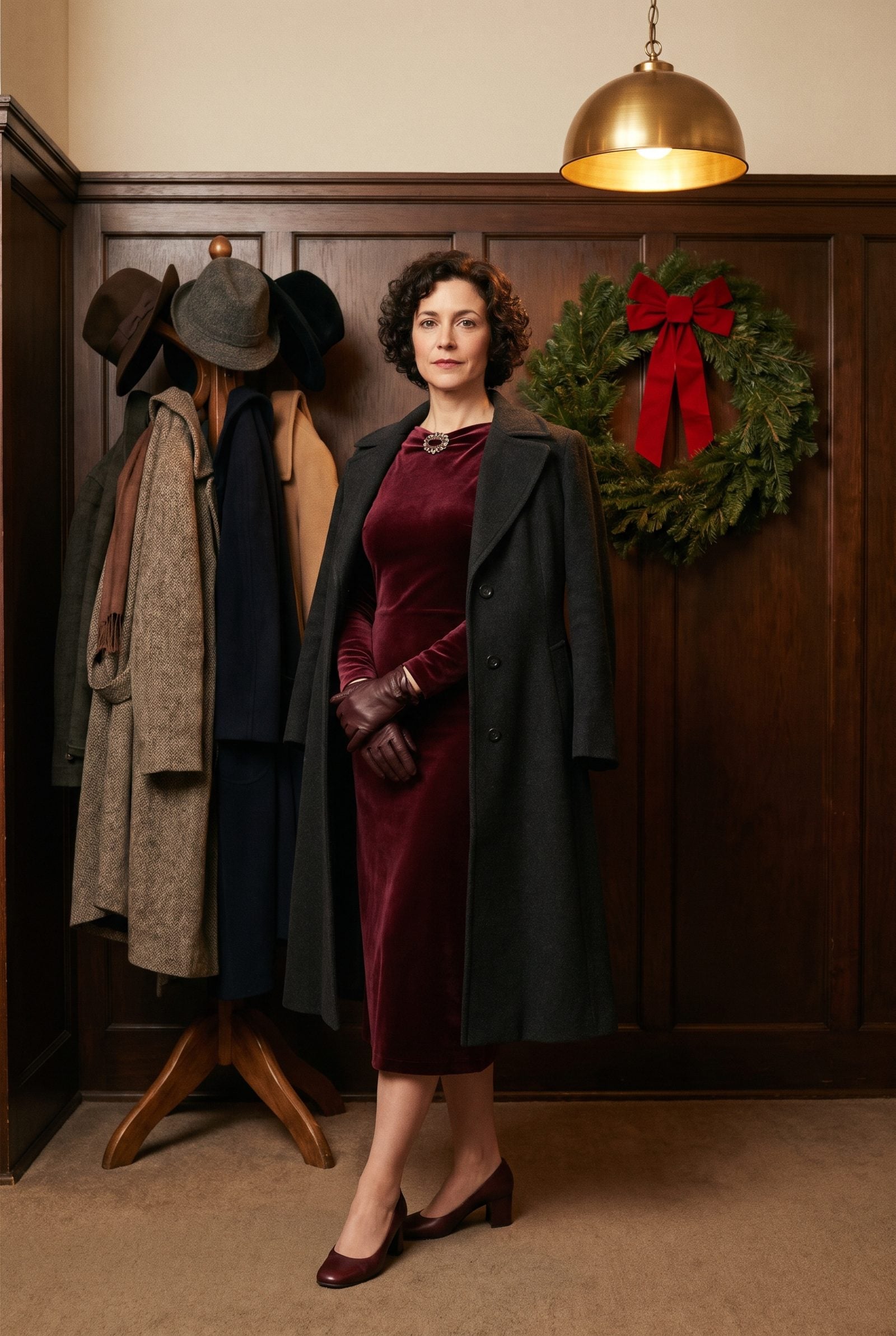
It hooked up the back in a long line of eyes and clasps, reaching from bust to below the ribs, which meant your velvet dress lay smooth as a tablecloth across the front.
The longline bra did double duty: lift up top, control through the midriff, no seam showing where an ordinary bra would have stopped short. You wore it with strapless gowns and fitted bodices, anything that needed a clean uninterrupted line. Reaching those back hooks? A two-armed yoga pose nobody had invented a word for yet.
6. A Nylon Tricot Full Slip That Hissed When You Walked
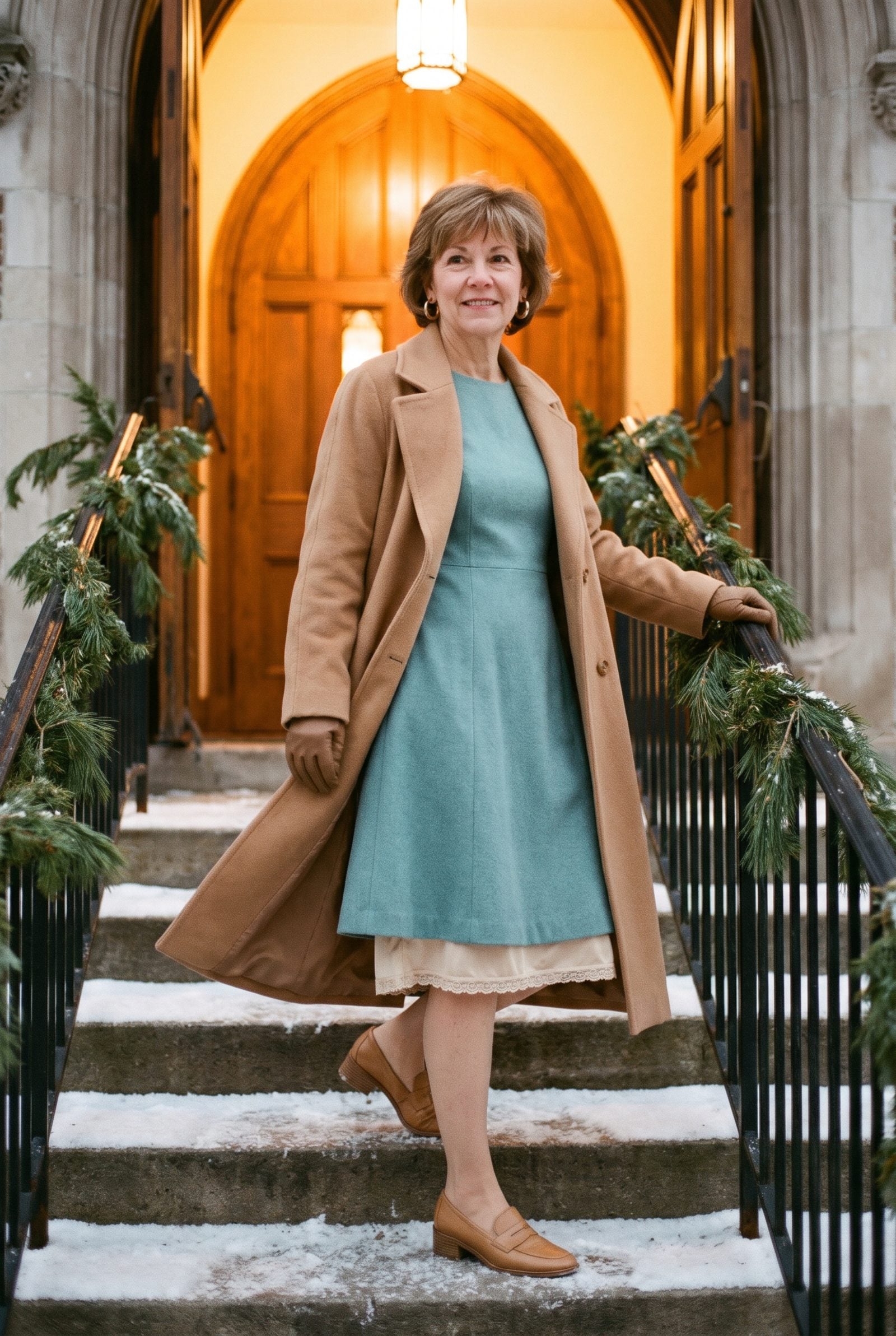
That soft hiss of nylon against nylon as you crossed the vestibule, two slip layers whispering with every step. You knew the sound before you knew the word for it.
The full slip kept your wool dress from clinging to your stockings and gave the skirt a smooth glide. Champagne or white, trimmed with a little nylon lace at the bust and hem, bought at the dime store counter. It also doubled as a static-cling buffer, which, in a dry heated church in December, was no small gift.
Making the case for slips, a longtime fashion blogger says “A slip gives your dress a smooth surface to glide over, so clingy fabrics stop grabbing at you and skirts fall the way they should.”
5. Low-Heeled Lace-Up Granny Boots in Soft Leather
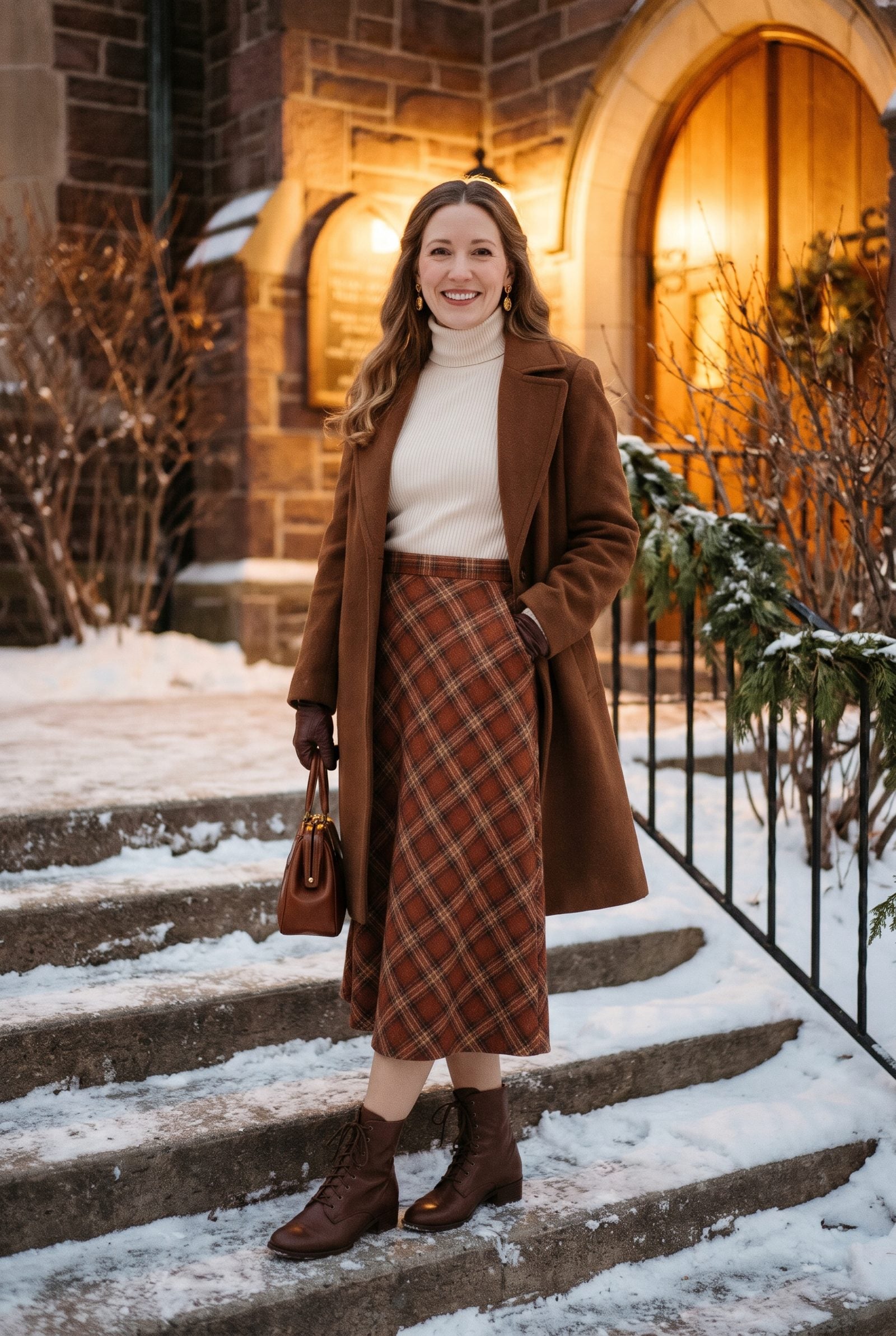
The boot made the whole outfit look decided. Lace it up those little eyelets, settle into the low Cuban heel, and a plaid midi skirt went from ordinary to going-somewhere-on-purpose.
Granny boots gave you something sturdy for icy December steps without clunking like galoshes. Soft cocoa leather, a modest stacked heel you could actually stand in for a candlelight service, and that Victorian-revival laced front that fit the romantic mood of the decade. You can trace the same silhouette through today’s romantic coat styling, the one that leans bookish and soft. These boots were its grandmother.
They’re the one period shoe I’d happily wear right now, and I say that having owned some genuinely questionable footwear.
4. Rhinestone Shoe Clips That Snagged Every Stocking

A plain black pump, two little clips of paste rhinestones at the vamp, and suddenly your everyday shoes read like evening. That was the magic of shoe clips, and the menace of them too.
Those prongs snagged on every stocking you owned on the way out the door. One clip always loosened mid-service and you’d fish for it under the pew. Worth it. They turned one pair of shoes into three looks, which mattered when the clothing budget was real.
Explaining why shoe clips were once so common, a vintage jewelry dealer asks “Can you just imagine yourself having one pair of black pumps and creating a totally new look every time by switching the shoe clip?”
3. Fur-Trimmed Rubber Overshoes You Slipped Off at the Door
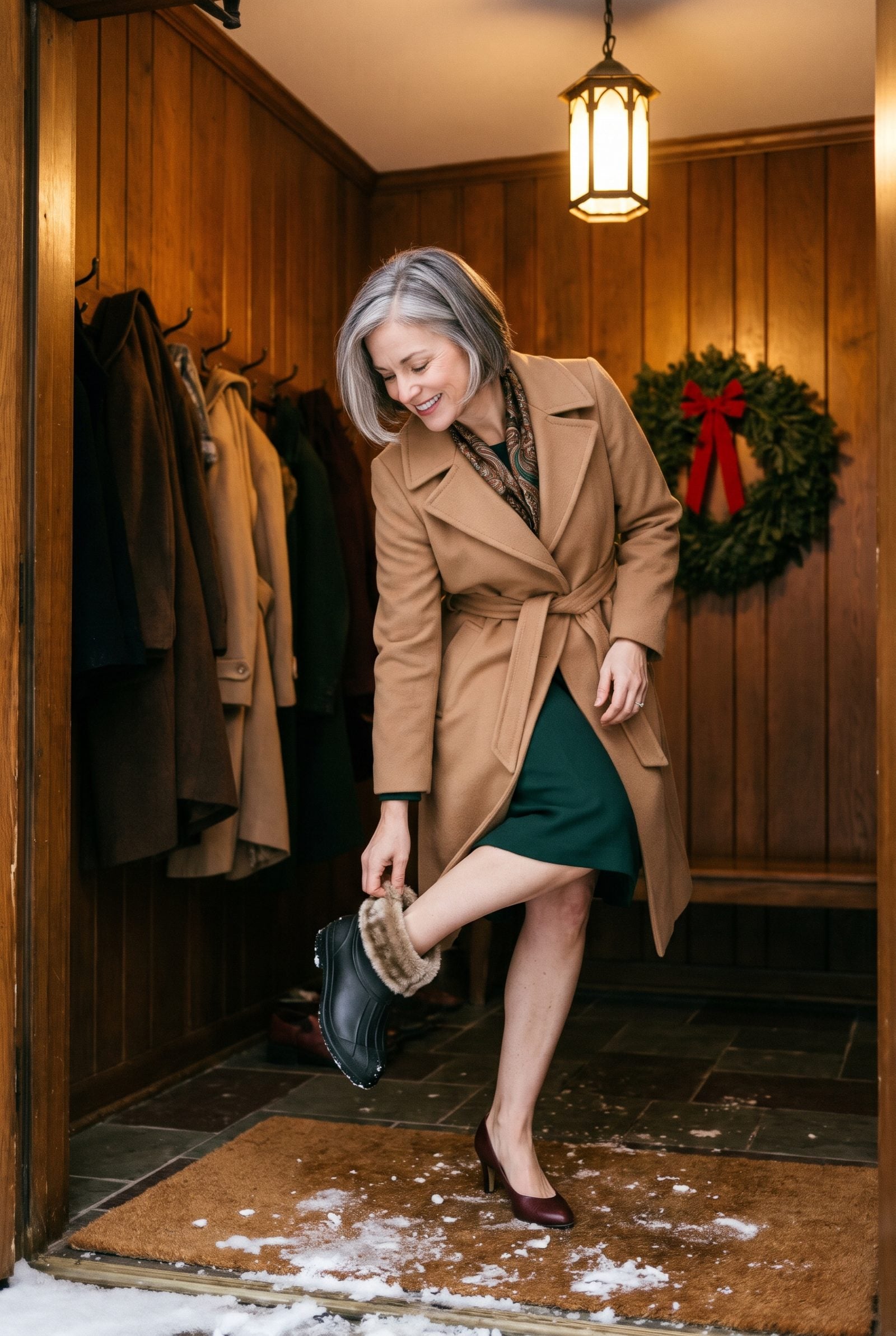
The sound of them peeling off in the vestibule, that wet rubber suction, and the plush fur cuff just above the ankle gone damp from snow. You wore your good shoes inside and your ankle-high rubber boots for the trek there, then pulled the boots off at the door like everyone else, balancing on the snowy coir doormat in one burgundy pump while you tugged at the last boot.
Fur-cuffed rubber boots solved the great winter dressing problem: how do you arrive at church with dry, clean pumps when there’s a parking lot of slush between you and the door? Practical, a touch glamorous with that fur cuff, and gone by the time you reached the pew.
2. A Satin Choir Robe With a Pleated Yoke
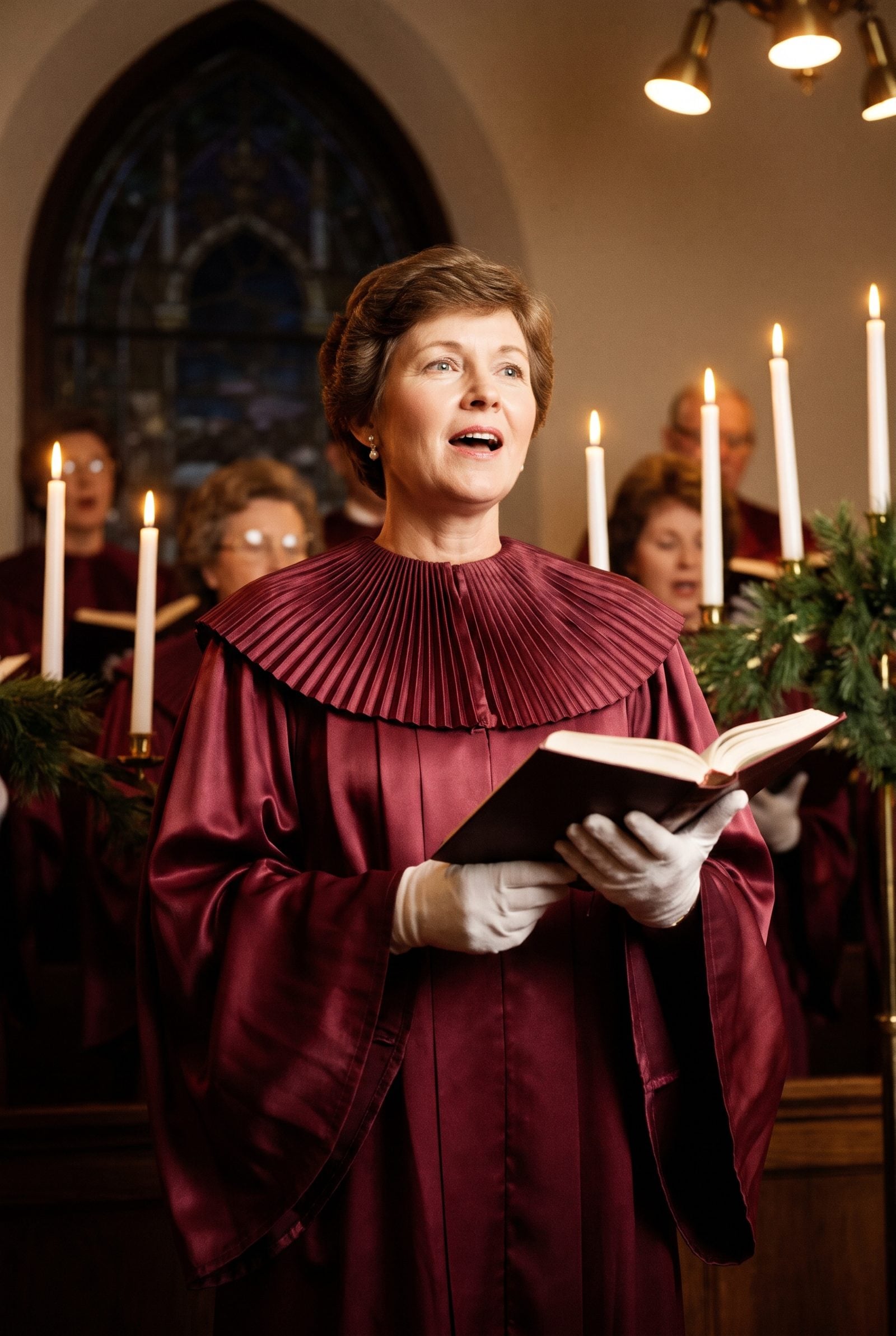
The pleated yoke carried the whole thing. Row on row of knife pleats across the shoulders, so when the choir rose for the first carol the satin caught every candle in the room.
If you sang, the robe was its own occasion. You zipped it over your good dress, slid your arms into the bell sleeves, and for one night your ordinary self disappeared into a wall of wine-colored satin and sound. The pleats held their shape because someone pressed them every Advent, and that someone was often you.
1. A Handbag With a Clear Lucite Handle
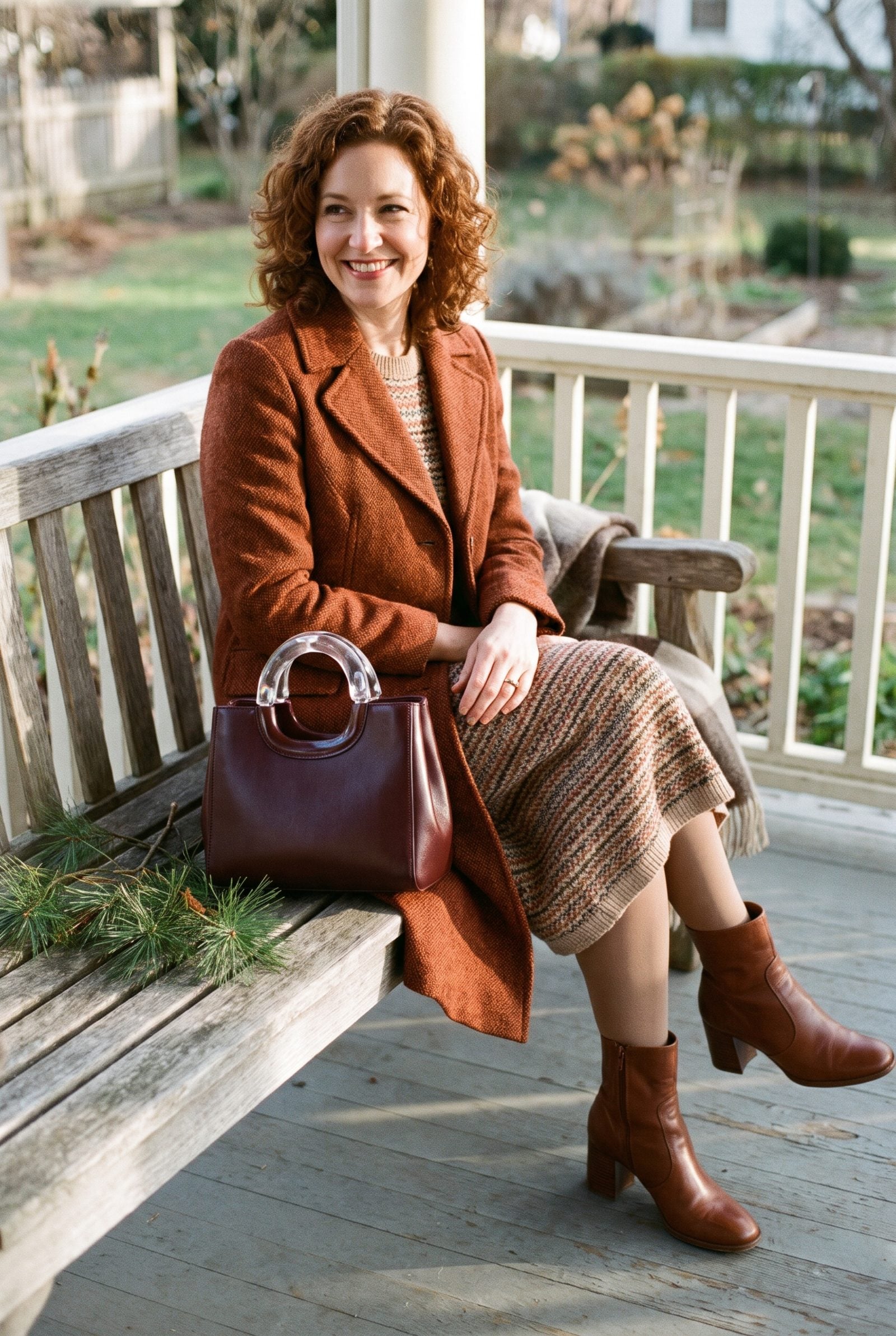
The handle did all the talking. A sculptural arc of clear Lucite curving up from a structured leather bag, catching the candlelight like something carved from ice.
You set it on the pew beside you on Christmas Eve, bare hands resting on your knee, your coat buttoned on, the transparent handle quietly announcing you’d dressed with care today. These bags carried almost nothing — a hankie, a few dollars, a tube of frosted lipstick — and that was fine. The bag wasn’t for hauling. It was the one glamorous note you got to strike while you sat in the pew.
Somewhere there’s a closet shelf still holding one of these, the Lucite gone a little amber with age, and it would stop you cold to see it.