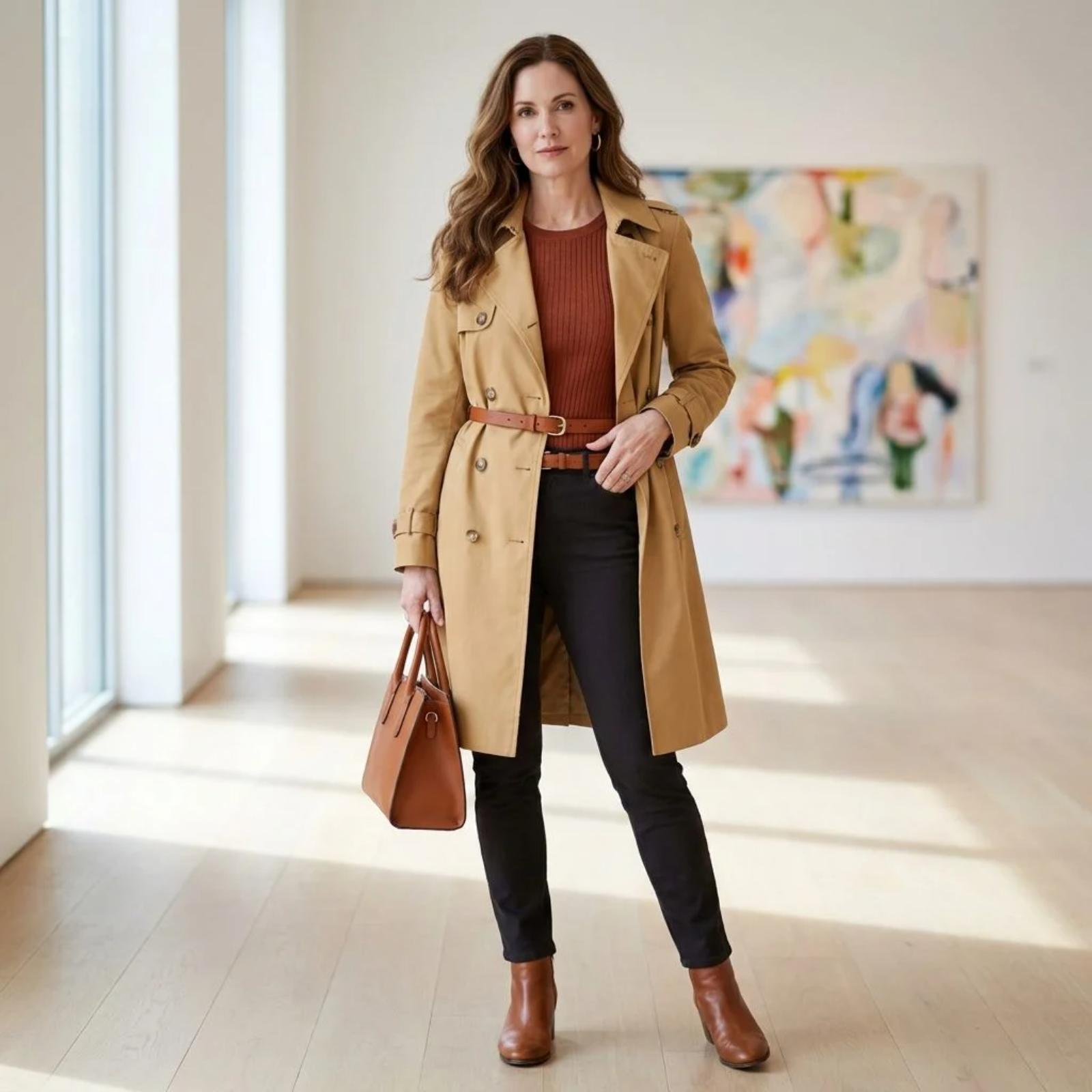
❤️ Would you like to save this?
Your trench isn’t the problem. The belt tied in a limp knot, the sleeves puddling past your wrists, the wrinkles from six months folded in a closet — that’s the problem. A good trench is one of the few coats that can look better with age, but only when the details around it are doing their jobs. Below are 26 small adjustments that can take the same coat from forgotten-in-the-closet to deliberately kept for a decade.
FYI, thanks to AI imagery software, we’re able to create very specific fashion and hairstyle examples to illustrate the points being made. In some cases, imagery is exaggerated to hammer home the point. Also, assume links that take you off the site are affiliate links such as links to Amazon. this means we may earn a commission if you buy something.
26. Wear It With Bare Ankles and Sculptural Heels
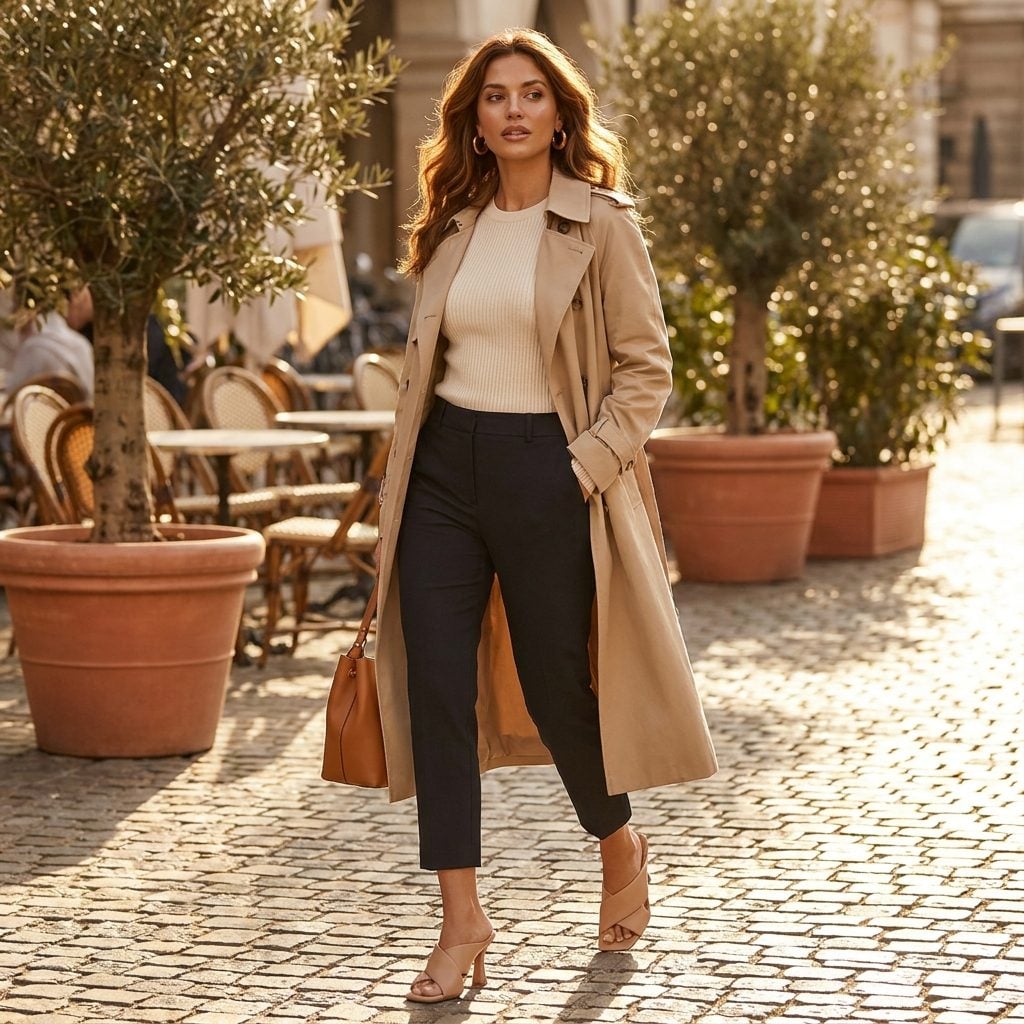
A flash of ankle underneath a long trench gives the coat somewhere to stop. Instead of fabric running uninterrupted from shoulder to shoe, that small break exposes skin and keeps the lower half of the outfit from feeling heavy.
The sculptural nude mules take it a step further. A shaped heel adds one sharp, modern detail while cropped trousers leave enough space around the shoe for it to register. The trench stays long; the outfit doesn’t feel swallowed by it.
25. Push the Sleeves Up and Let a Wide Gold Cuff Show

Pushing up the sleeves changes the proportions of a trench immediately. Leave them hanging past the wrist and the coat can feel oversized; expose the forearm and suddenly there’s shape between shoulder and hand.
A wide brushed-gold cuff gives that exposed space a reason to exist. The pale gabardine, bare skin, and warm metal create three distinct surfaces without adding another color.
24. Replace the Self-Belt With a Substantial Cognac Leather Belt
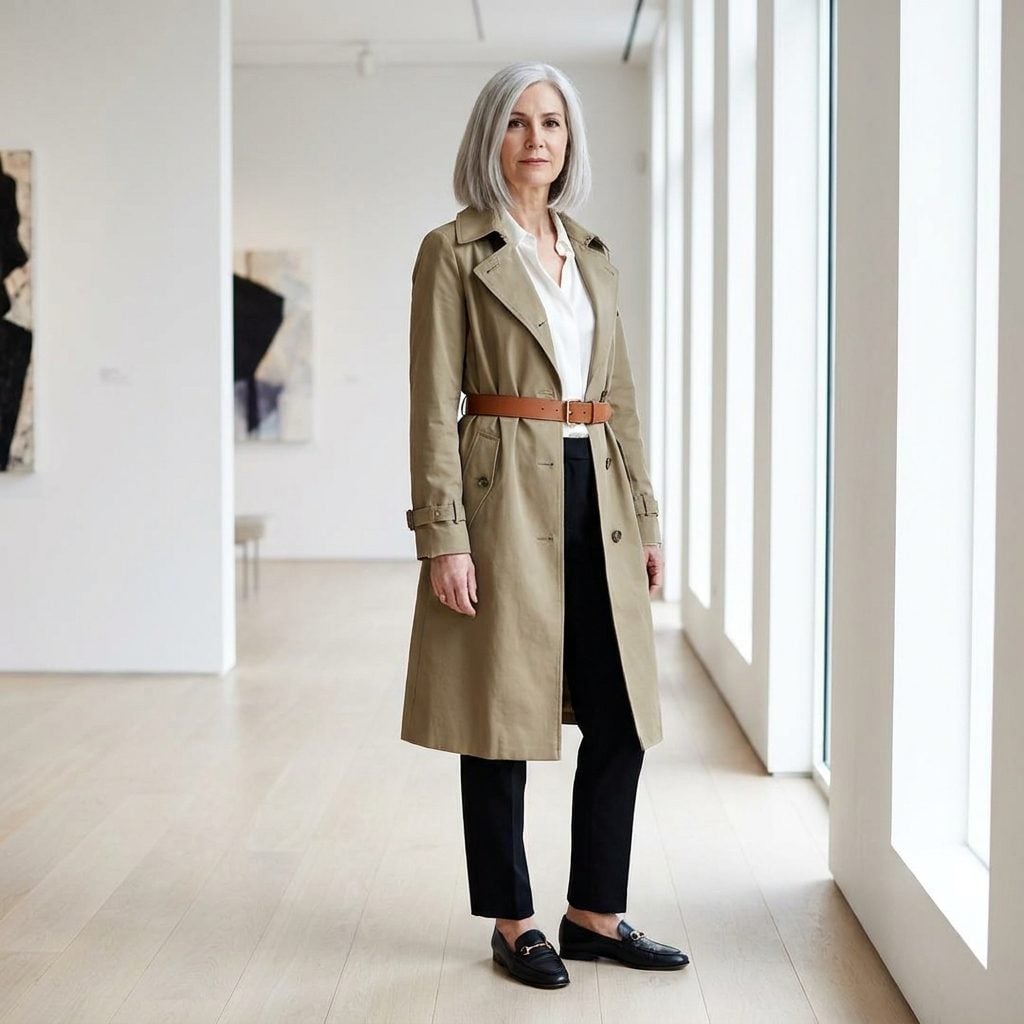
A self-fabric trench belt keeps the coat traditional, but changing it can completely alter the mood. If the original belt is thin, permanently wrinkled, or simply isn’t giving the coat enough definition, take it out for the day.
A substantial cognac leather belt with a brass buckle introduces weight and contrast at the waist. The leather looks particularly good against soft beige or stone gabardine because the two materials are clearly different rather than pretending to match.
23. Add a Structured Bag in Warm Cognac Leather

A beige trench gives almost any bag a neutral background, which makes shape matter more than usual. A cognac top-handle bag adds both color and architecture.
The firm sides and defined handle echo the coat’s lapels and shoulder structure without matching them literally. Warm brown also has enough contrast against khaki or beige to stand apart while still belonging to the same earthy palette.
22. Let a Chunky Ribbed Turtleneck Rise Above the Collar
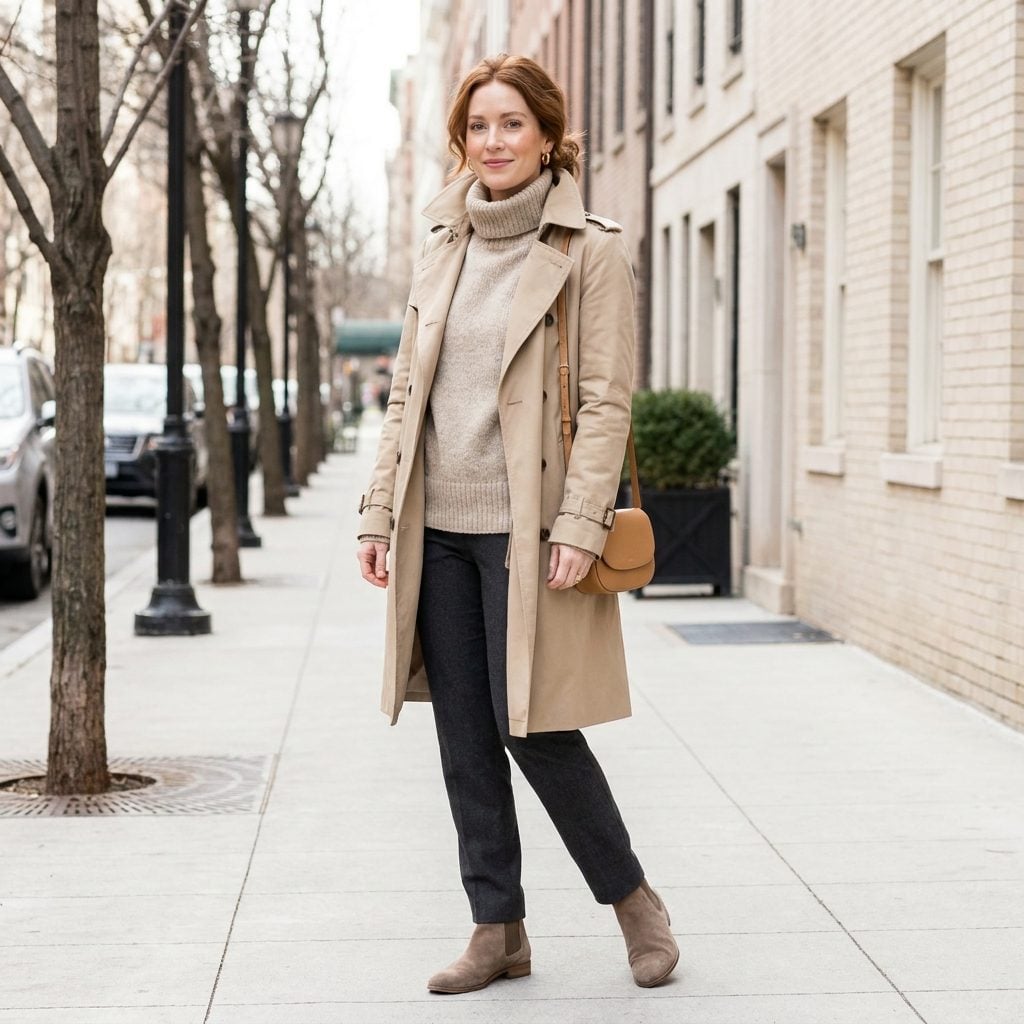
Let an oatmeal ribbed turtleneck rise above the trench collar and suddenly the entire neckline has more depth. Soft knit against crisp gabardine gives the eye something to separate even when the colors are nearly identical.
The higher knit also fills the open space around the neck and frames the face without another accessory. It’s one of those cold-weather combinations that looks considered even when everything involved is fundamentally practical.
21. Steam Out the Storage Wrinkles Before You Style Anything
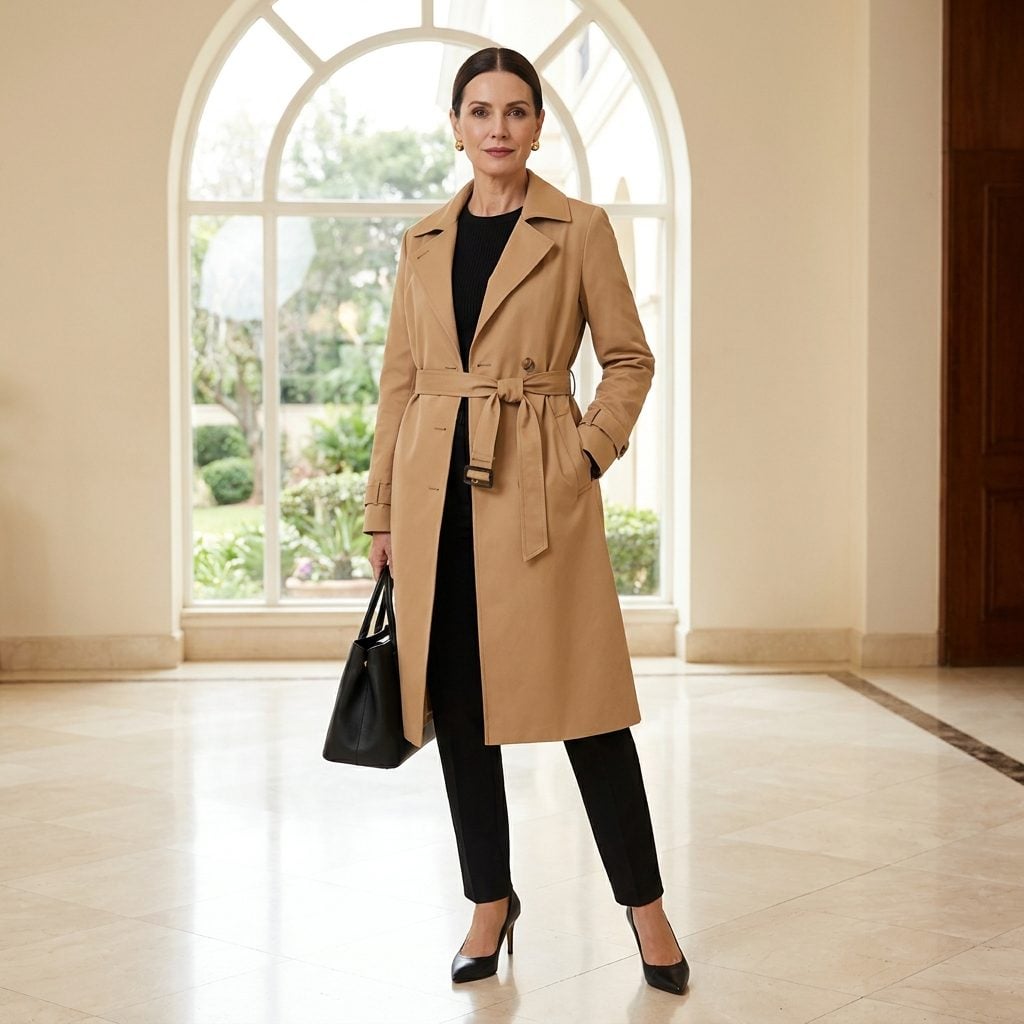
The least glamorous adjustment may make the biggest difference. A trench covered in hard storage creases looks tired regardless of its label; clean lapels and an even back panel let the actual cut of the coat show.
Before worrying about jewelry or shoes, deal with the collar, sleeves, lapels, belt, and the broad panel across the back. The same advice applies to almost any coat: presentation can do more than another accessory ever will.
20. Turn the Collar Up and Let One Corner Fall

A flat collar keeps a trench traditional. Turning it up changes the outline around the face immediately.
Raise it at the back, then let one front corner relax instead of arranging both sides with military precision. That slight asymmetry makes the collar feel less staged and gives the neckline a stronger vertical shape.
Old classic Hollywood images are full of coats, collars, scarves, and lapels being used this way: not simply as outerwear, but as framing devices around the face. A fine black rollneck underneath makes the pale collar stand out even more.
19. Use a Slim Tonal Leather Belt When You Want Less Contrast
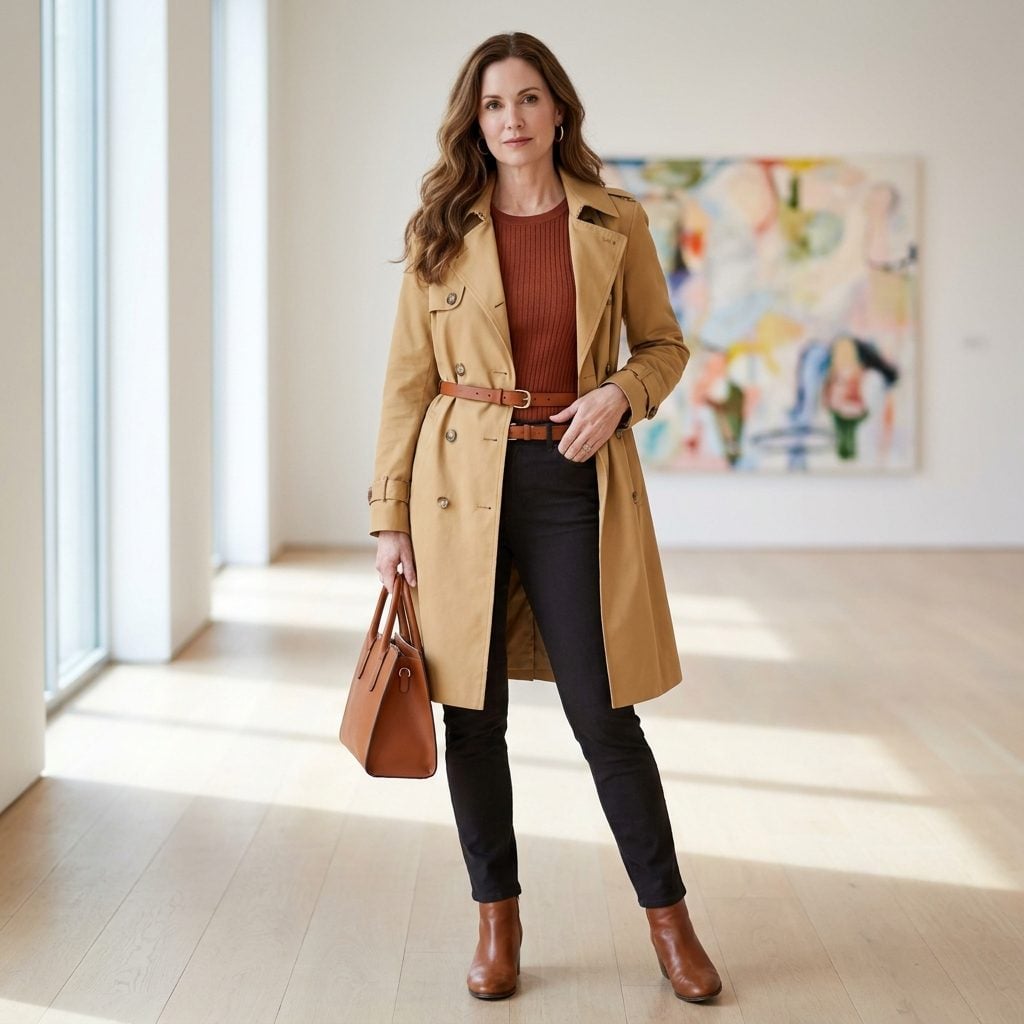
The earlier cognac belt creates obvious contrast. This version does the opposite.
Thread a slim leather belt through the loops in a shade close to the trench itself. Honey, camel, tan, or soft caramel can define the waist without drawing a dark horizontal line across the coat.
A narrow cognac leather belt can work especially well when the coat is already warm beige. The change is subtle: more texture at the waist, but almost no disruption to the color.
18. Build a Cream Column Underneath the Coat
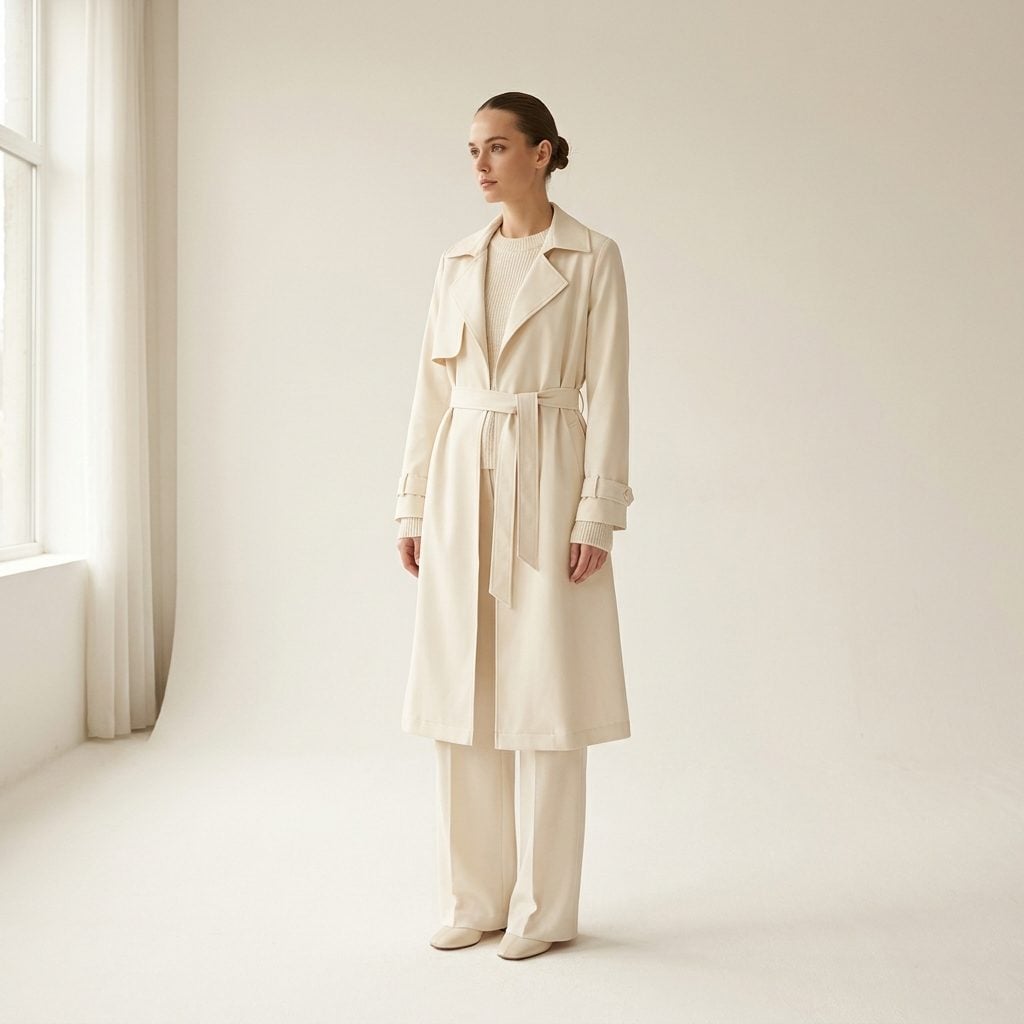
Instead of making the trench carry the entire outfit, give it a calm backdrop. Cream sweater, cream trousers, ivory shoes, camel coat: close relatives rather than exact matches.
Because the colors aren’t competing, differences in cut and material become easier to notice. A ribbed knit beside smooth trousers and gabardine has more depth than four identical beige surfaces ever could.
Oversized tortoiseshell sunglasses are enough contrast to keep the palette from becoming anonymous.
17. Wear It Open With the Belt Tied Behind Your Back
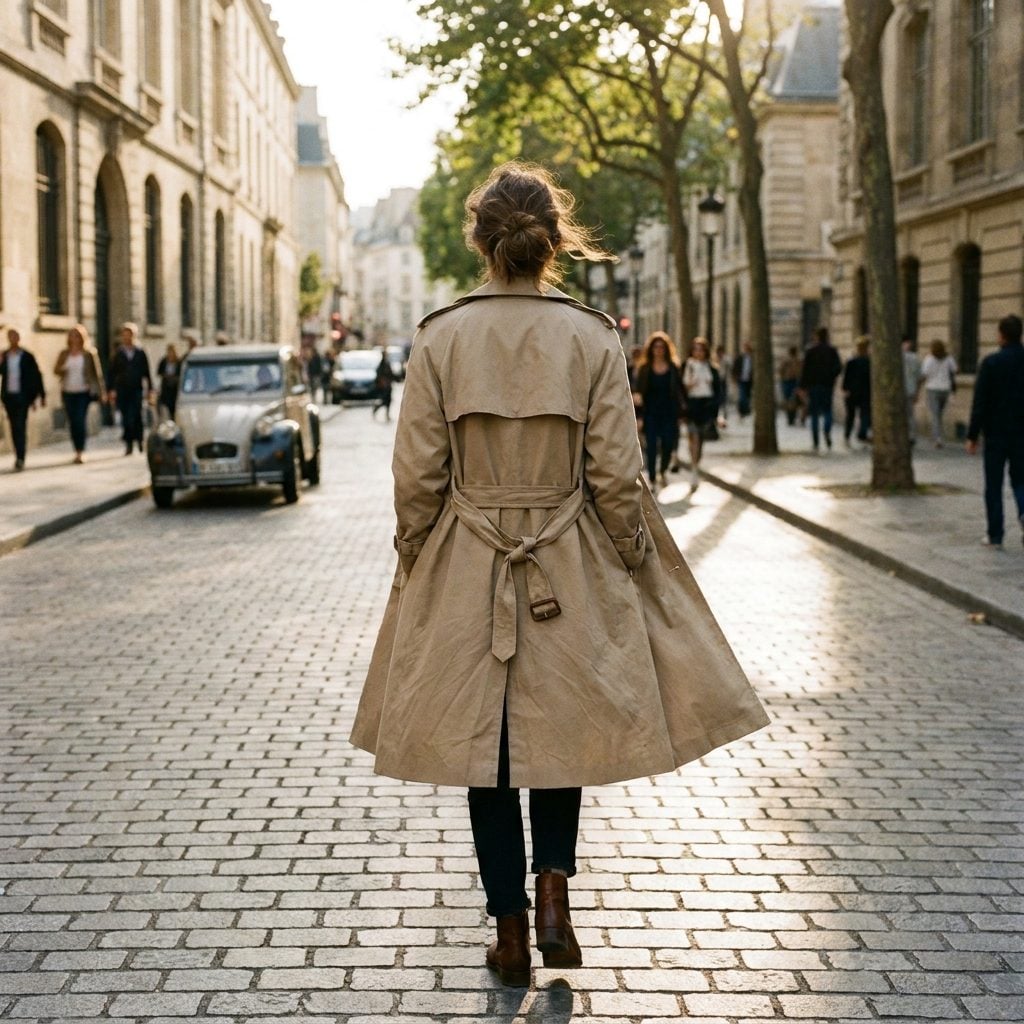
Tying the belt behind the coat solves two problems at once: the loose ends disappear, and the front stays open without losing all definition through the waist.
The coat then becomes a frame around whatever is underneath. A white midi dress gets a clean vertical border, while layered gold necklaces sit exactly where the open lapels direct the eye.
The result feels relaxed because nothing at the front needs adjusting every five minutes.
16. Add an Ivory Silk Scarf at the Neck

An ivory silk scarf brings softness to the hardest part of a trench: the collar and lapels. It catches light near the face while introducing a surface that moves differently from the coat itself.
Keep the knot loose enough that the scarf still looks like fabric rather than neckwear issued with a uniform. Camel, ivory, cream, and beige can sit comfortably together when each material has its own finish.
15. Make the Tall Boots the Focus Under a Knit Dress
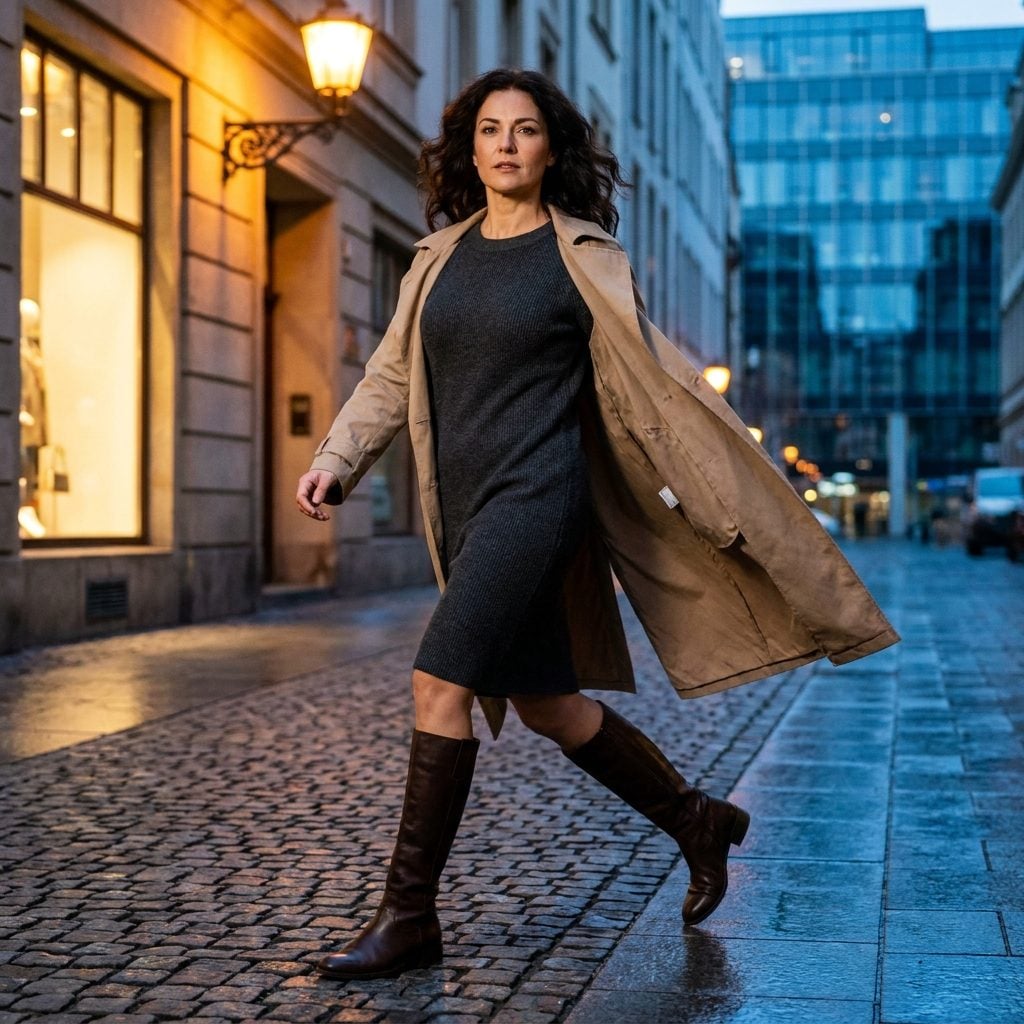
Here the boots do more of the work than the dress. Knee-high brown leather emerging below a dark knit dress creates a strong block of warm color underneath the trench.
The fitted dress keeps the center of the outfit narrow while the coat adds volume around it. The important detail is where the dress hem, boot shaft, and trench hem meet; those three lengths should look related rather than accidentally stacked.
A small flash of gold at the ears is enough. The boots already have the floor.
14. Use Black and White Underneath for a Sharper Contrast

❤️ Would you like to save this?
A crisp white blouse and black trousers give a beige trench something completely different from all the soft neutral combinations: hard contrast.
The top-handle bag reinforces the tailored side of the outfit. Its clean shape sits comfortably beside the blouse, trouser crease, and coat lapel without needing to match any of them exactly.
Nude heels keep another dark block from appearing at the bottom, so the black trousers remain the strongest line in the outfit.
13. Put Delicate Gold Jewelry Against an All-Black Base
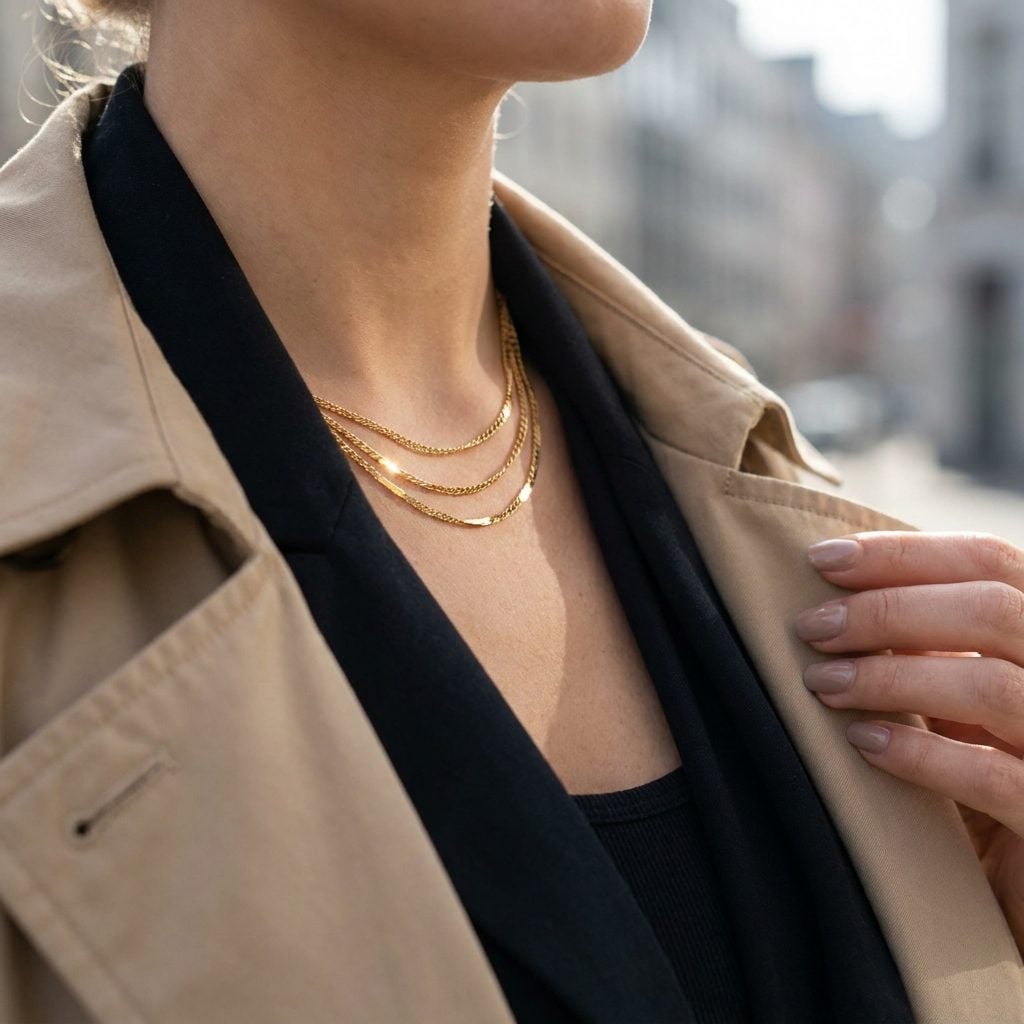
All black gives small jewelry nowhere to hide. Thin chains, narrow bracelets, and compact hoops show clearly without becoming the main event.
The warm metal also connects naturally with a camel trench and brown bag, creating a few repeated warm points across an otherwise dark base. Instead of one oversized statement piece, several small pieces let the contrast build gradually.
12. Use Pearls to Change the Mood of an Ivory Ribbed Dress
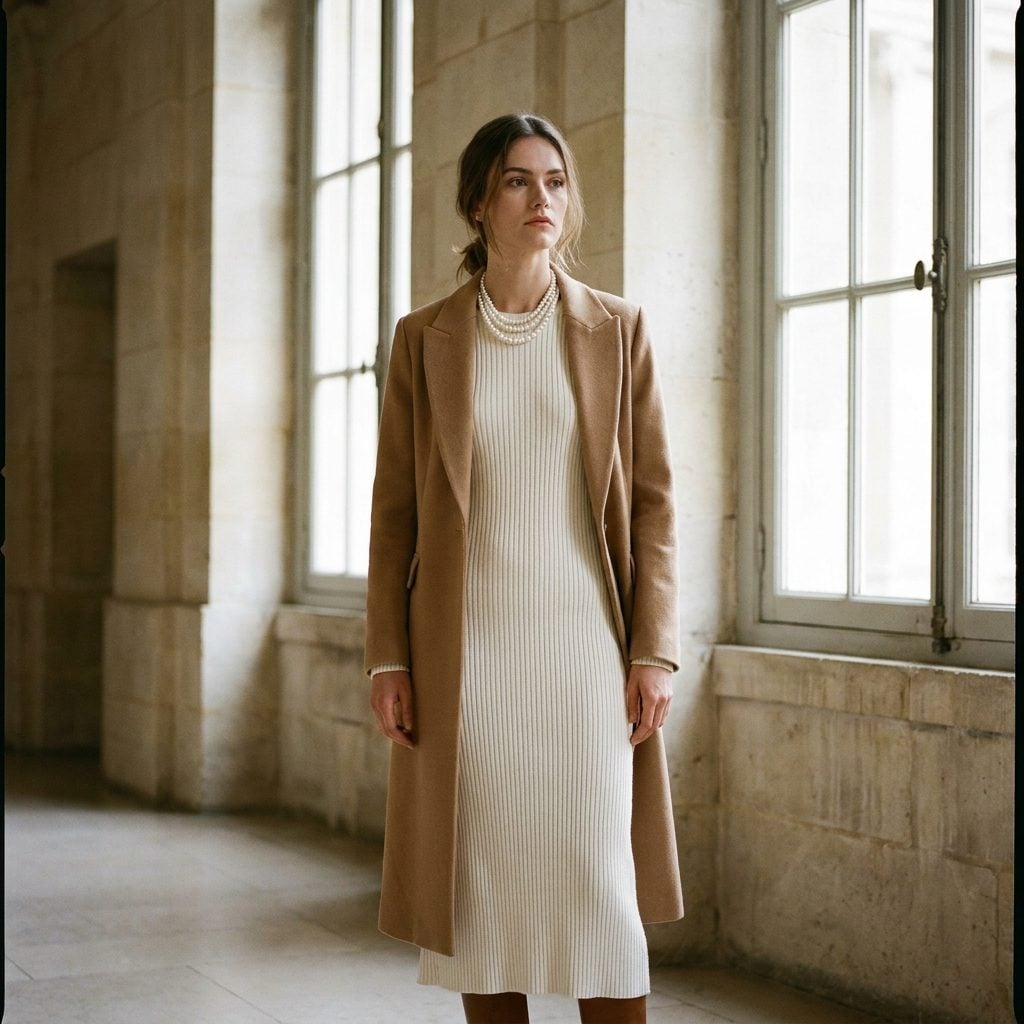
An ivory ribbed midi beneath a camel trench already has plenty of vertical texture. Pearls shift the mood without interrupting that softness.
They can look traditional, modern, formal, or deliberately offbeat depending on their size and how they’re worn. Here, paired with loose hair and a cream leather handbag, they reinforce the quiet palette rather than turning the outfit prim.
11. Add Oversized Sunglasses and Pull the Hair Back
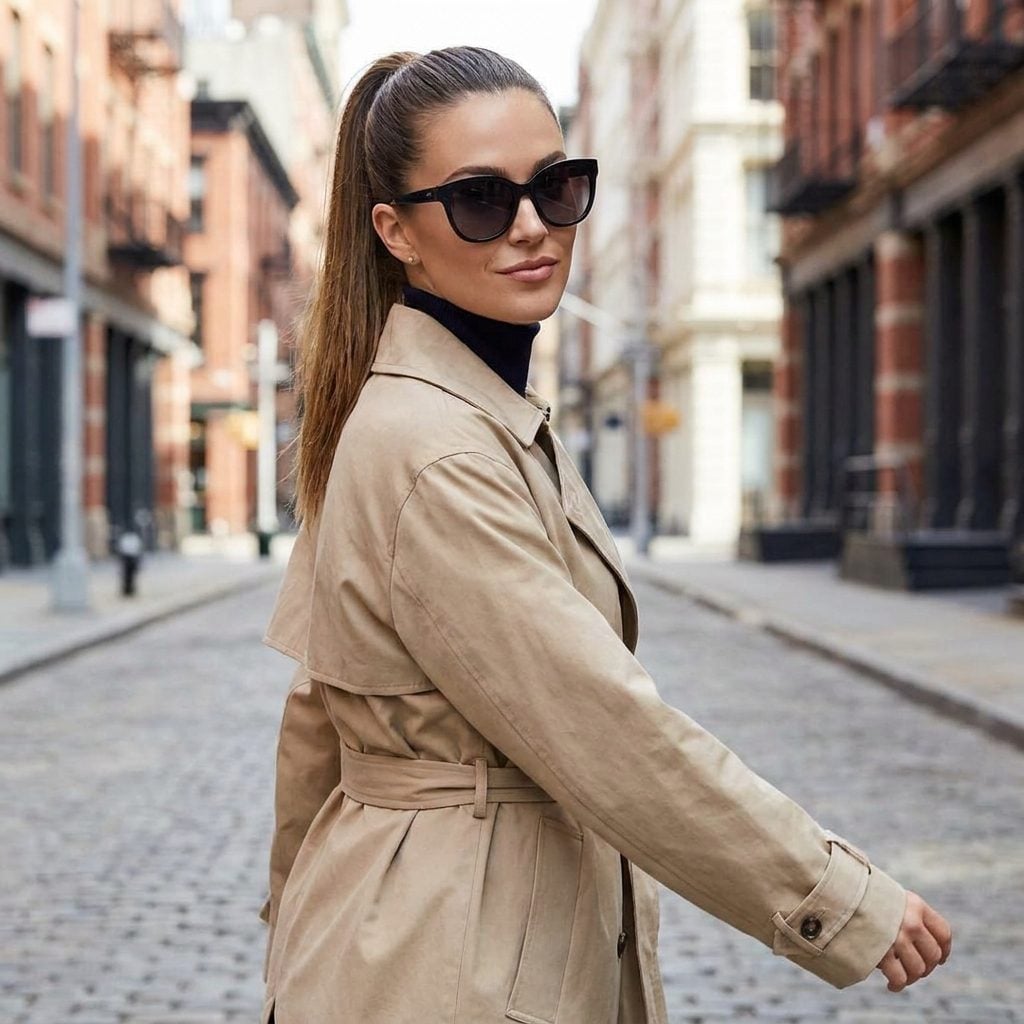
Two small changes can sharpen a loose trench quickly: oversized dark sunglasses and hair pulled cleanly away from the face.
The frames add one graphic element against all the soft beige, while the ponytail keeps the neckline and collar visible. That contrast between a relaxed coat and controlled grooming is what keeps the outfit from drifting into weekend-errand territory.
10. Make Texture, Not Color, the Point of a Neutral Outfit
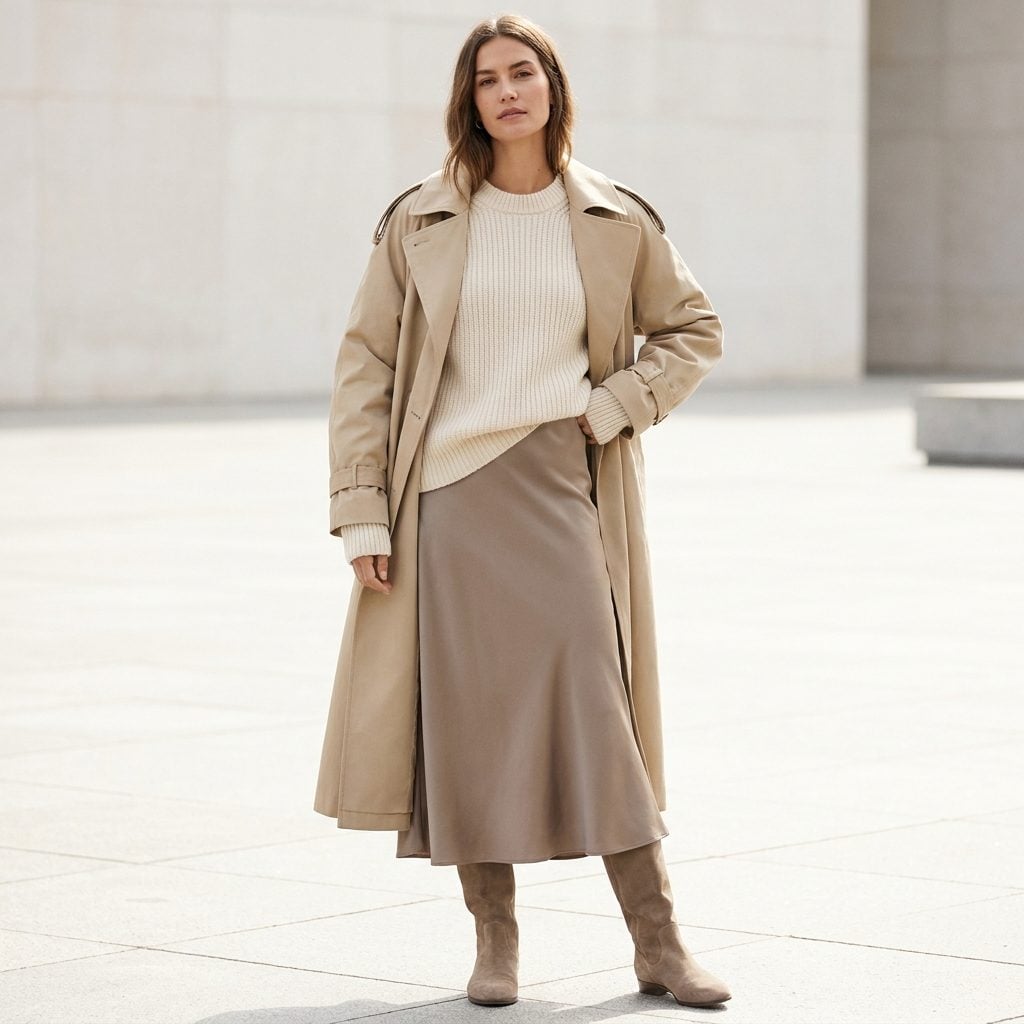
Cashmere, cotton drill, suede, and smooth leather can all live between cream and taupe and still look completely different.
That’s the distinction here. The earlier cream column was about keeping the color quiet; this version is about letting texture carry the outfit. A fuzzy knit catches light differently from brushed suede, and both behave differently beside crisp trench fabric.
Flatten all those surfaces into one identical beige material and the outfit loses most of its depth. Keep the textures distinct and the narrow palette becomes the advantage.
9. Adjust the Hem When the Length Is Fighting the Rest of the Outfit
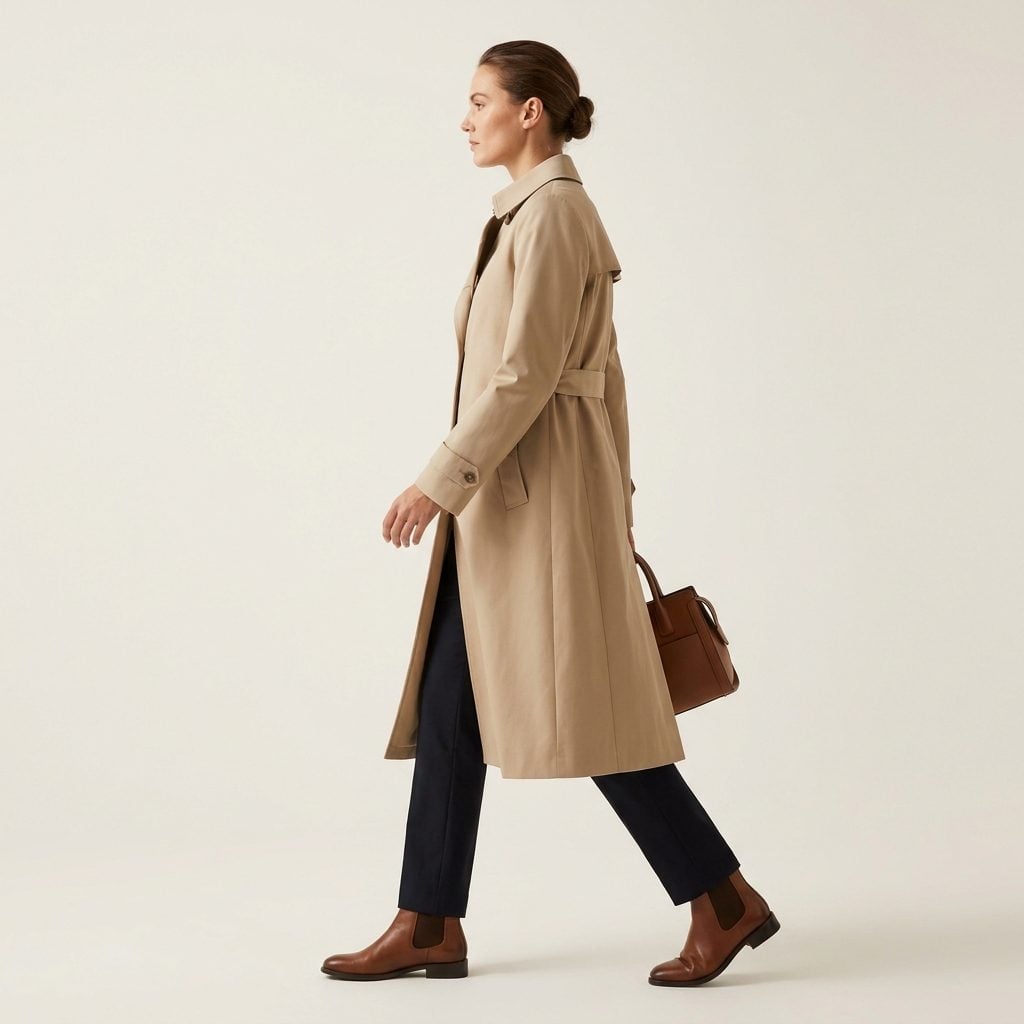
Trench length changes dramatically from body to body. A coat designed to hit one woman at mid-calf may land at an awkward point on someone shorter or taller.
If the hem consistently collides with your boots, skirts, or trouser proportions, tailoring can make more sense than buying another coat. Mid-calf is particularly useful when you want enough length for drama but still want tall boots to remain visible.
With a cream knit dress and tan knee-high boots underneath, even a small gap between the dress and boot can keep all that fabric from turning into one uninterrupted tube.
8. Refresh the Fabric Before Trying to Rescue It With Accessories
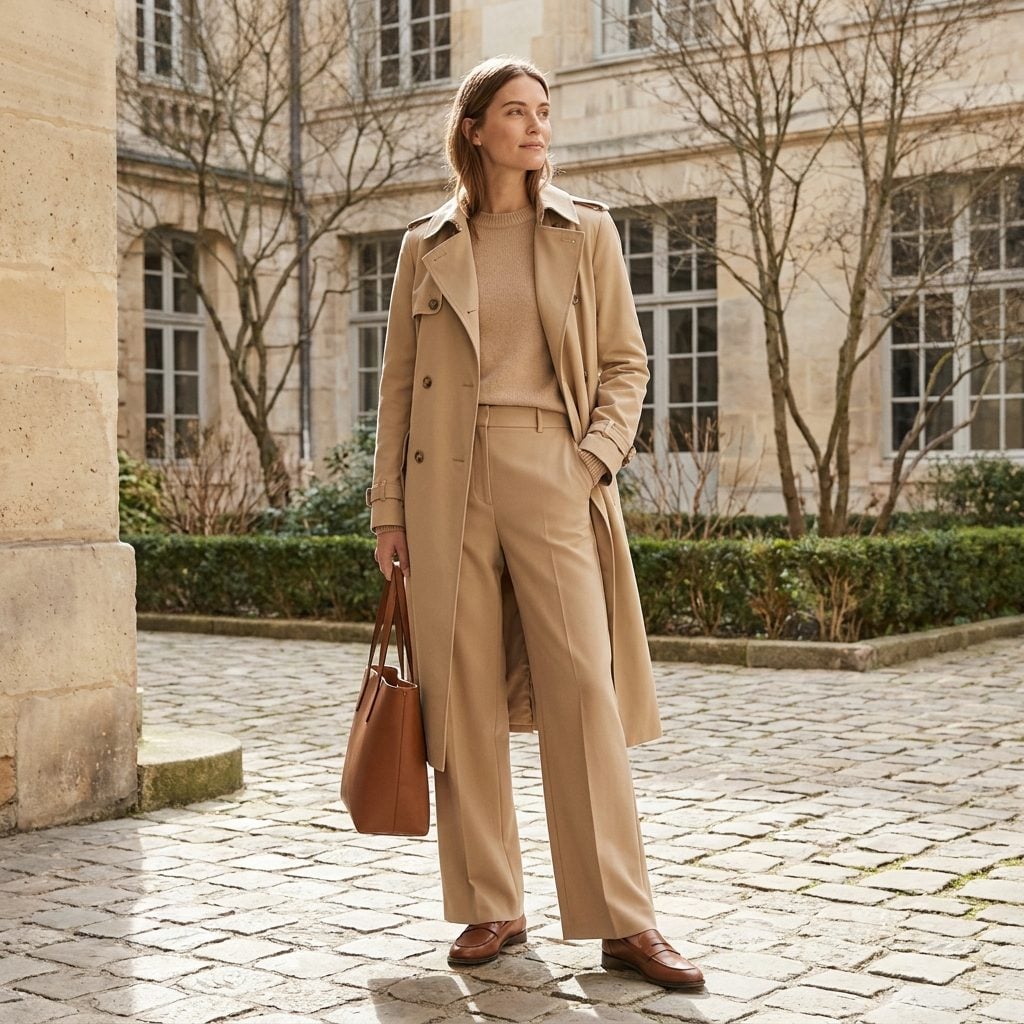
A grubby collar, dingy cuffs, flattened fabric, and a belt that has spent months twisted in storage can make a perfectly good trench look finished before its time.
Start with the care label. Clean the coat using the method its fabric and construction require, then press or steam it only if the manufacturer permits. Once the surface is fresh again, the color and tailoring have a chance to do what they were designed to do.
The tonal beige outfit underneath works here because it doesn’t distract from the refreshed coat. Beige knit, beige trousers, caramel suede heels — the coat gets to be the sharpest object in the picture.
7. Introduce One Deep Color Through the Bag
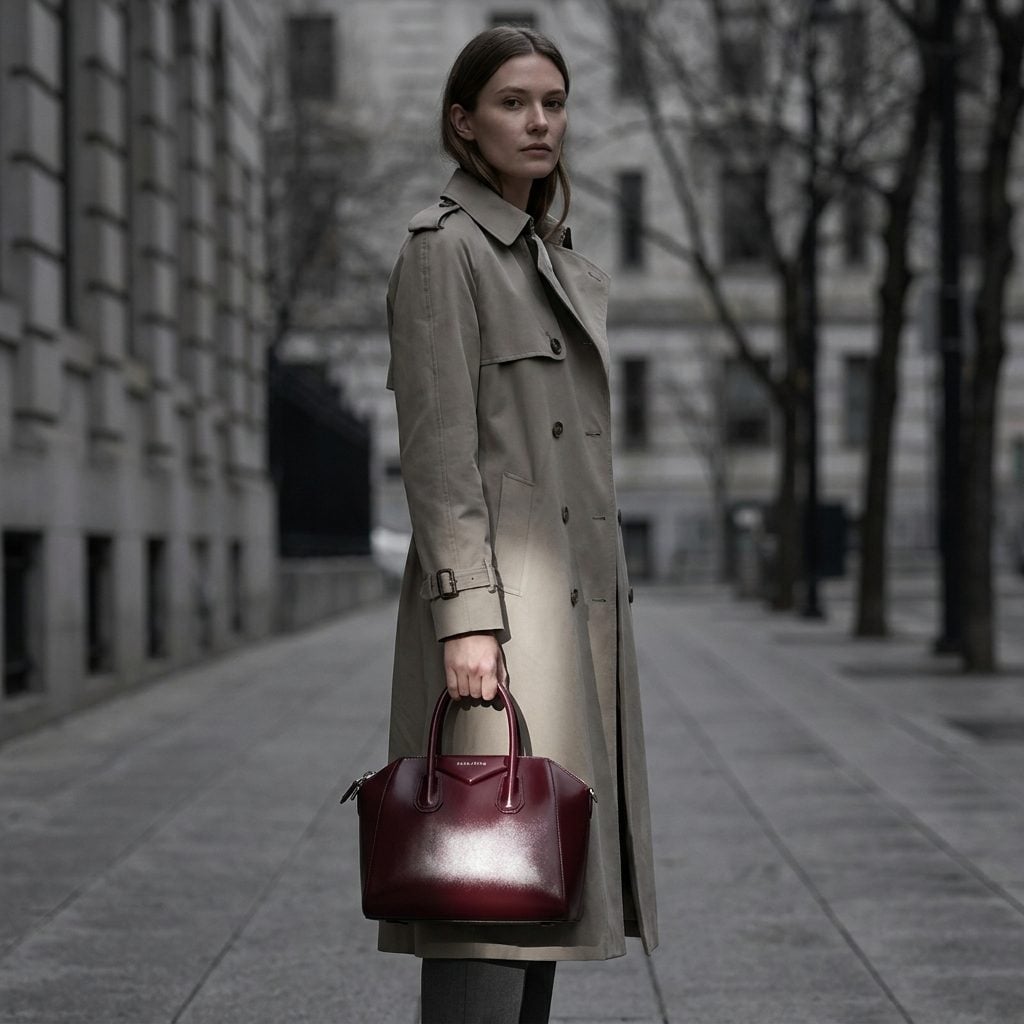
Against a quiet beige trench, one saturated color can reorganize the entire outfit. Burgundy works particularly well because it’s deep enough to stand beside black without disappearing and warm enough to sit comfortably beside camel.
Everything else stays simple: cream sweater, black trousers, black pumps. The burgundy crossbody becomes the one deliberate interruption.
6. Let Wide-Leg Trousers Continue the Coat’s Long Vertical Line
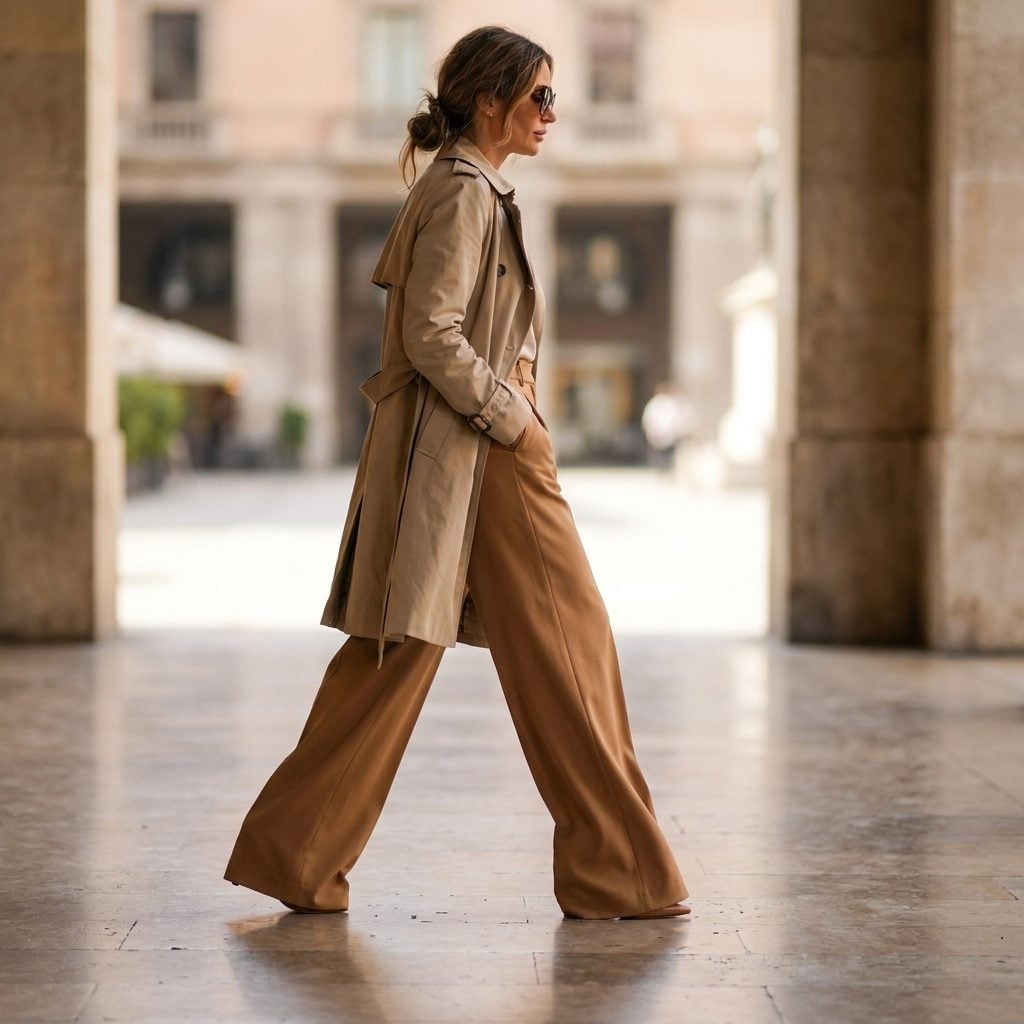
Wide-leg camel trousers can extend the long vertical shape already created by a trench. Keep the trousers and coat within the same warm family and there is less interruption around the hip and thigh.
The silk blouse adds a lighter fabric between two more structured pieces. That contrast is important: crisp coat, fluid blouse, trousers with enough weight to fall cleanly.
The wide-leg trousers need good fit more than a high price tag. If they pull across the hip or collapse at the hem, no fabric label will save them.
5. Use a Fitted Knit Dress as the Cleanest Possible Base
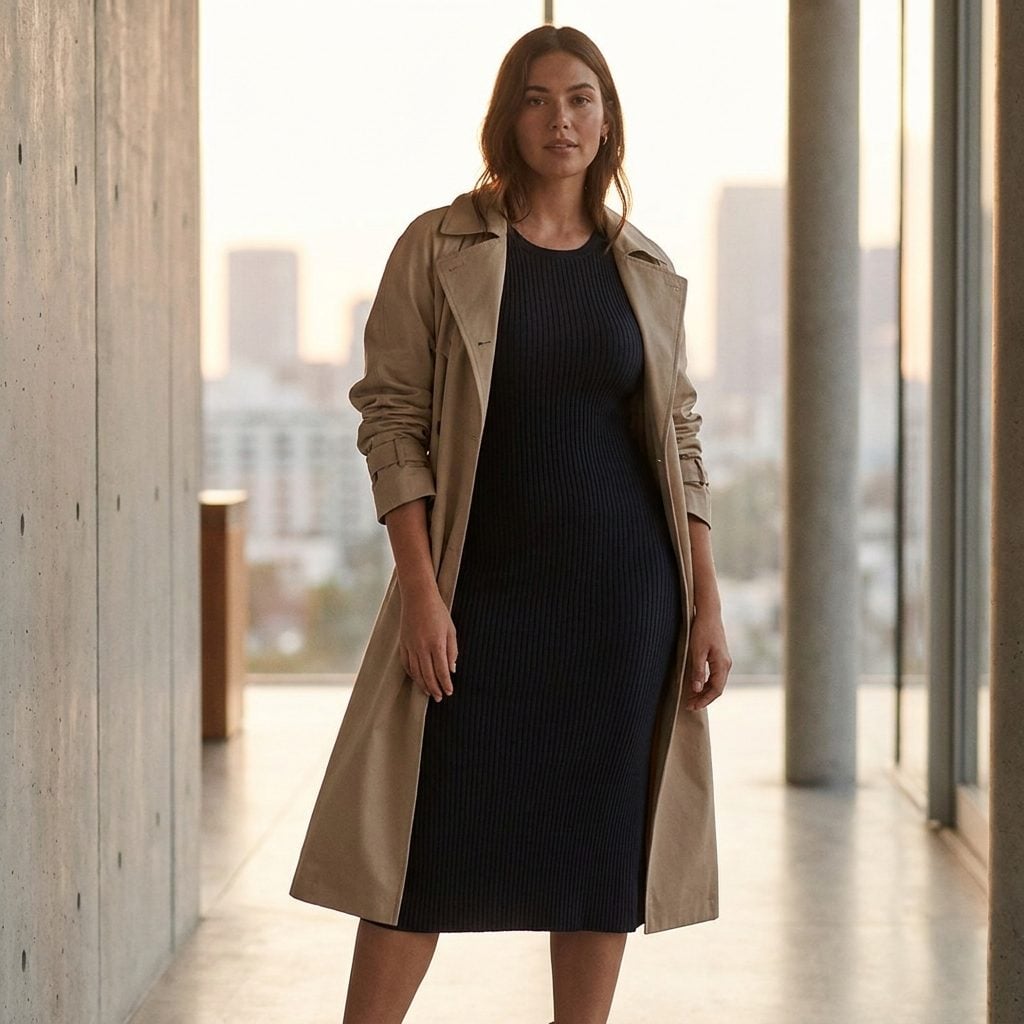
The earlier knit-dress look was built around tall boots. This one is about what happens above them: a close-fitting base gives an open trench a simple shape to frame.
The dress follows the body while the coat hangs away from it, creating definition without needing the belt at all. Keep the jewelry fine and the hair polished so the clean base stays visible instead of disappearing beneath accessories.
4. Tie the Original Belt in a Loose Front Knot
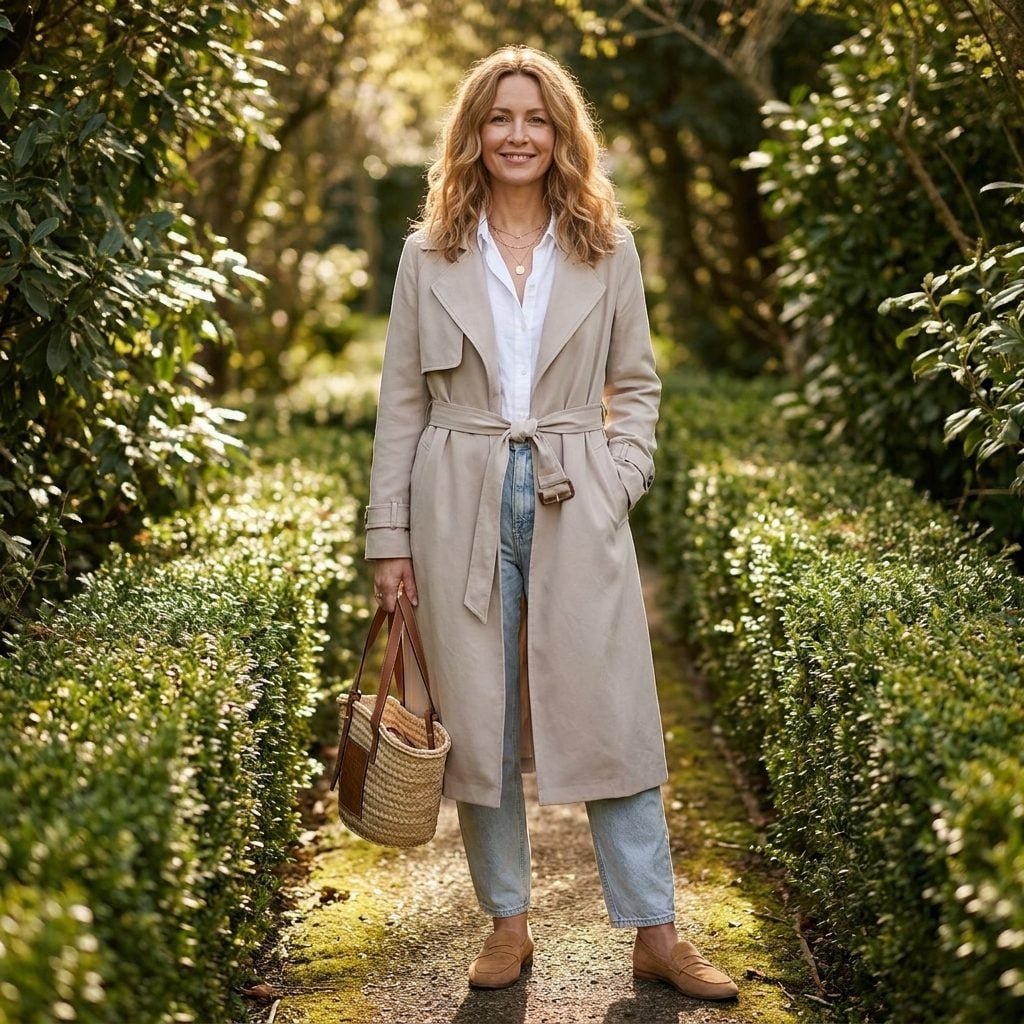
The buckle isn’t wrong. Sometimes you simply want the belt to behave less formally.
A soft front knot adds dimension at the waist and lets the ends fall naturally instead of lining everything up through the buckle. That slightly undone effect works particularly well when the rest of the outfit is already neat.
The trick is keeping the knot loose enough to look relaxed but secure enough that you’re not retying it on every block.
3. Match the Shoes to the Neutral Base to Keep the Lower Half Unbroken
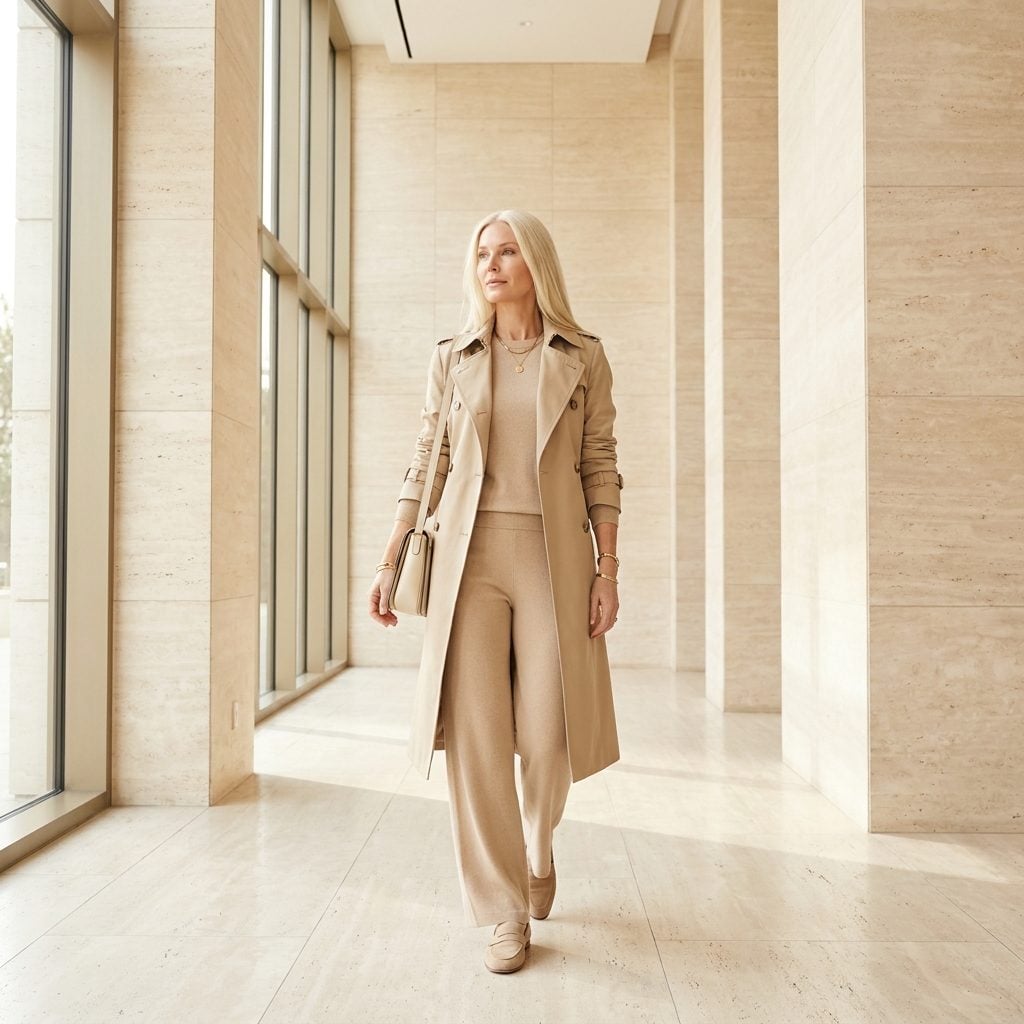
This is the most literal tonal look in the gallery: trench, knit, trousers, and shoes all sitting within the same beige family.
What distinguishes it from the earlier neutral outfits is the shoe. Instead of ending the column with black, burgundy, or another contrasting color, the footwear continues the palette all the way to the floor.
It also removes one obvious color break at the ankle, keeping the lower half visually continuous.
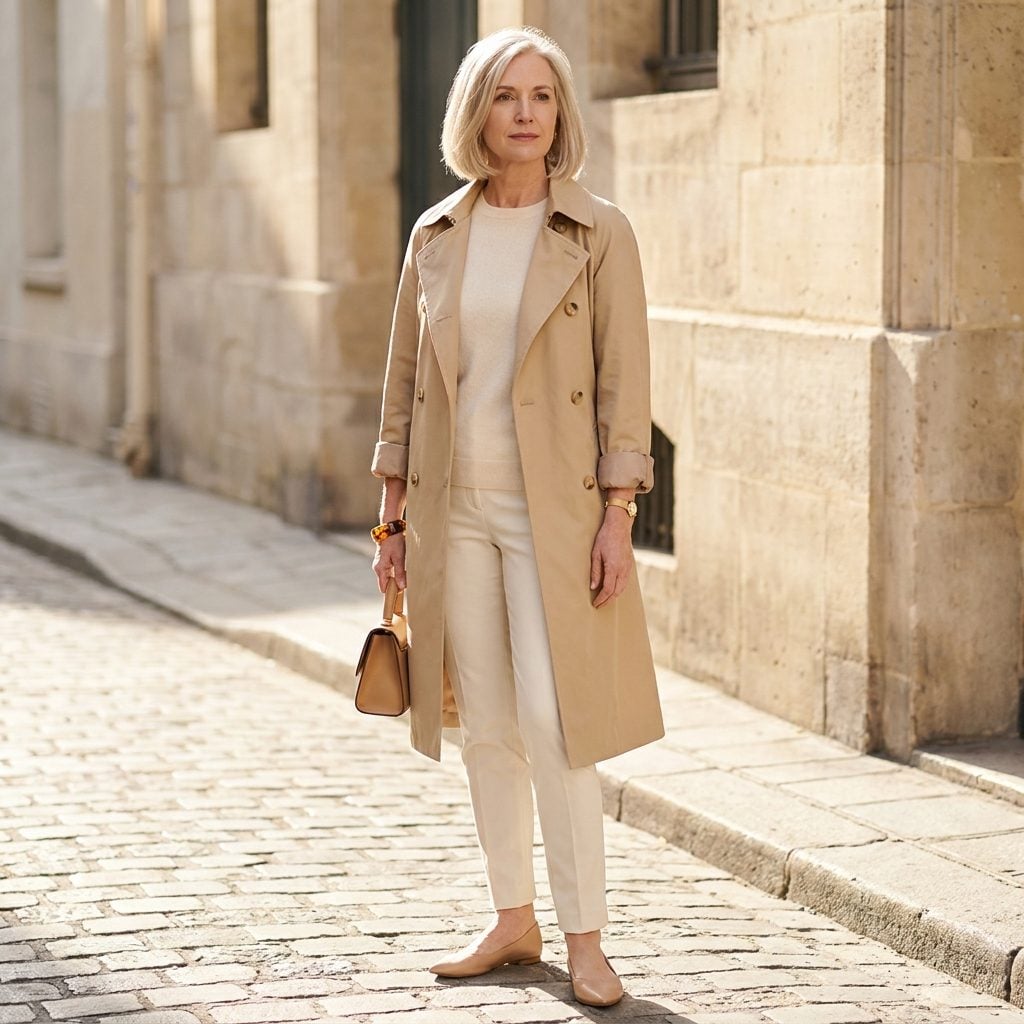
2. Roll the Sleeves Into a Clean Two-Fold Cuff
❤️ Would you like to save this?
The earlier sleeve treatment was loose and pushed up around a gold cuff. This one is much more precise.
Turn the sleeve back in two broad folds so the cuff becomes a deliberate horizontal band around the forearm. If the lining has a tonal check or contrasting weave, letting a narrow strip show can add another detail without bringing in a new accessory.
Slide a slim gold watch just above the fold and leave the rest alone.
1. Wear It Cape-Style When You Want the Coat to Become the Gesture
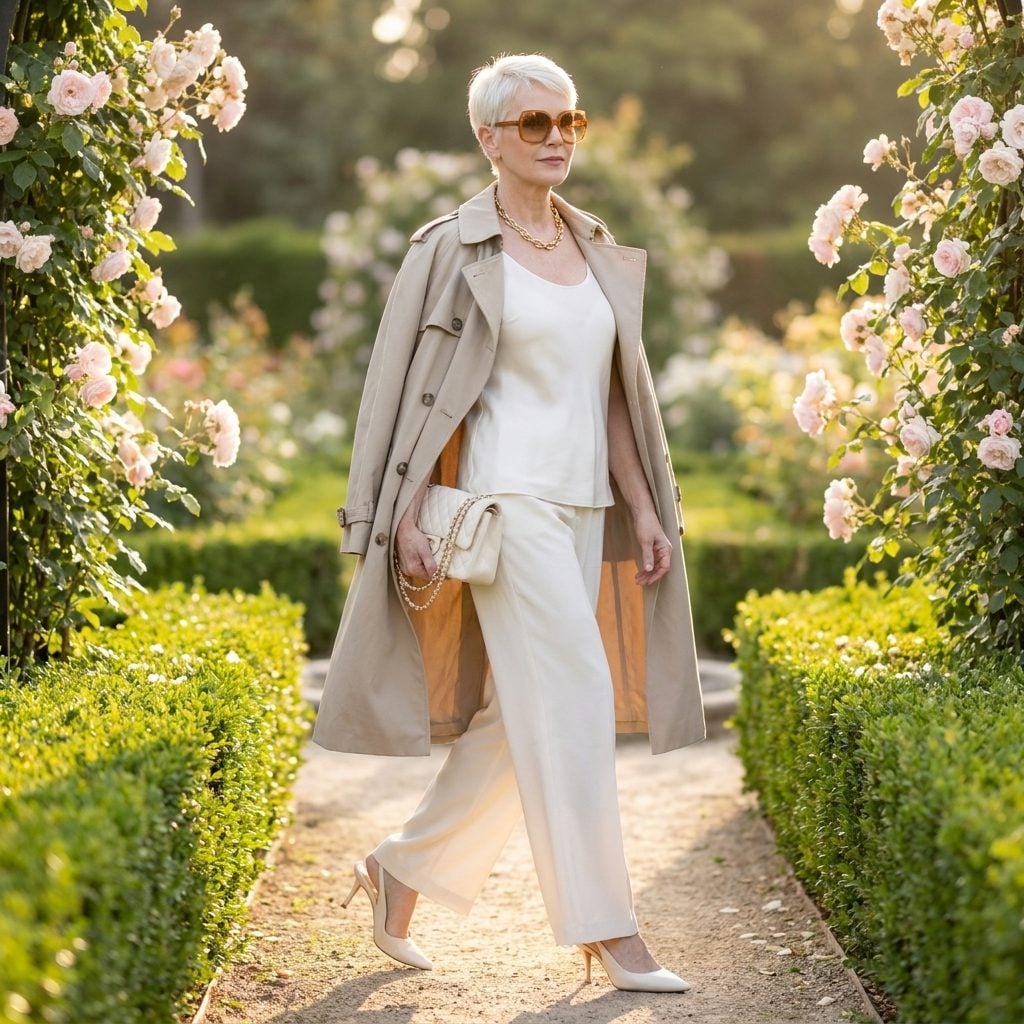
The shoulder drape is pure theater, which is exactly why it works.
Slip your arms out and let the coat rest across the shoulders, open over whatever you’re wearing underneath. For a few minutes, the trench stops functioning primarily as outerwear and becomes part of the silhouette.
A tonal ivory outfit underneath keeps the effect clean because there isn’t a hard color break competing with the stone-colored frame around it.
Save this coat move for an arrival, a dinner entrance, or a photograph rather than actual rain and wind. Ten minutes of drama, then put your arms back in like a normal person.