

❤️ Would you like to save this?
A wool sweater goes into a closet in January looking expensive. It comes out in October with a sag at the shoulders no amount of steaming will fix. The hanger did that, and so did the fold, the zipper, the dry heat, and the slow drag of gravity on a bias seam. Good clothes rarely fail because the fabric gave up on you. They fail because of how they were stored. The tricks below come from archivists and tailors, the people who keep delicate things alive for decades. Most take minutes.
FYI, thanks to AI imagery software, we’re able to create very specific fashion and hairstyle examples to illustrate the points being made. In some cases, imagery is exaggerated to hammer home the point. Also, assume links that take you off the site are affiliate links such as links to Amazon. this means we may earn a commission if you buy something.
45. Build Acid-Free Tissue Bolsters Inside Deep Folds
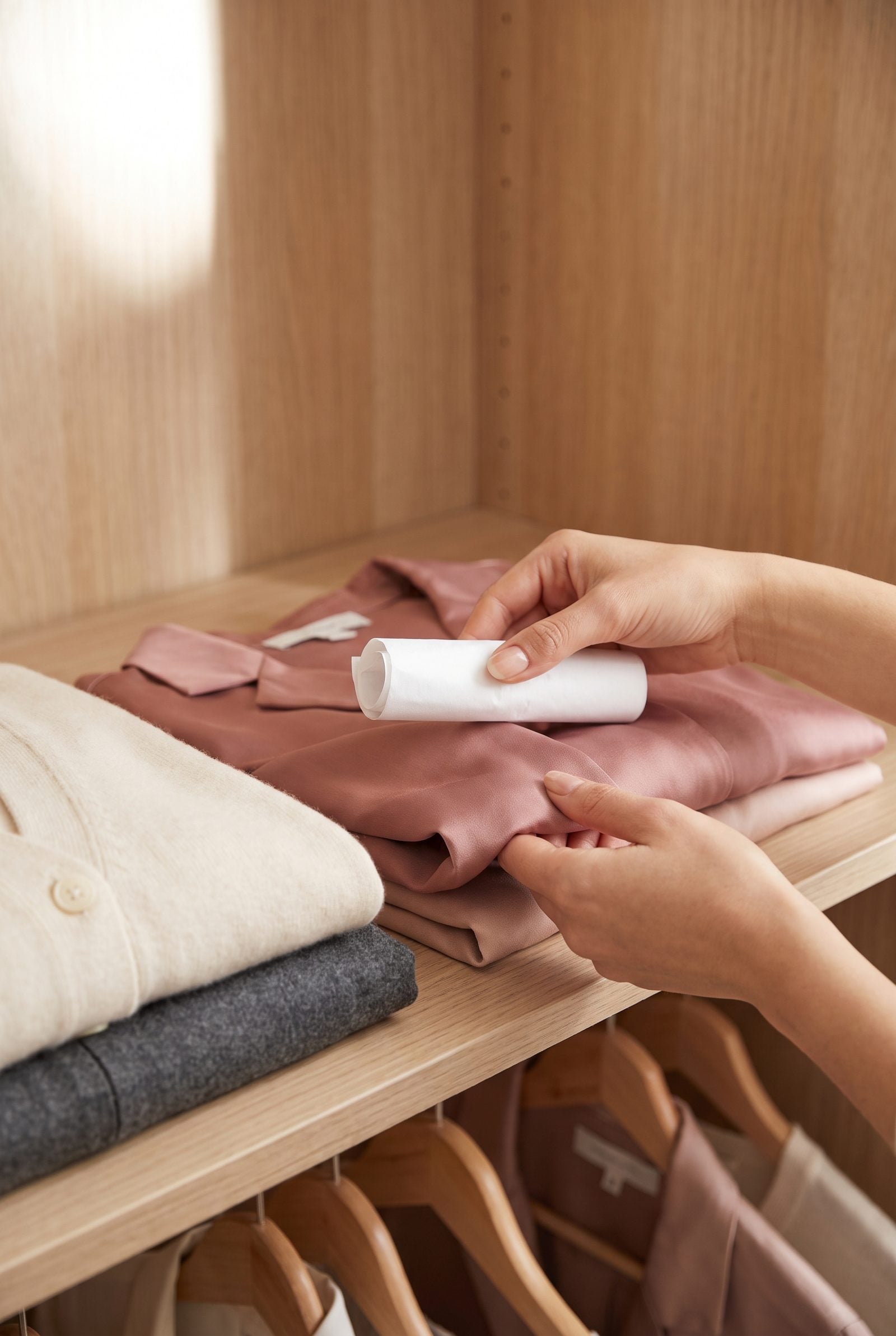
A fold is a crease waiting to become a tear. Where fabric bends sharply over itself, the fibers on the outer edge stretch while the inner ones compress, and over months that stress line becomes permanent damage. Archivists solve it with a loose bolster of acid-free tissue tucked inside the fold, so it curves rather than creasing.
Roll the tissue into a soft log, not a tight one, and lay it in the valley of each fold. Silk, satin, anything with a sheen benefits most, since hard creases catch light and announce themselves across a room. Why acid-free? Regular tissue goes yellow and migrates that acidity straight into your fabric.
44. Move Fold Lines Every Season to Prevent Fiber Breakage
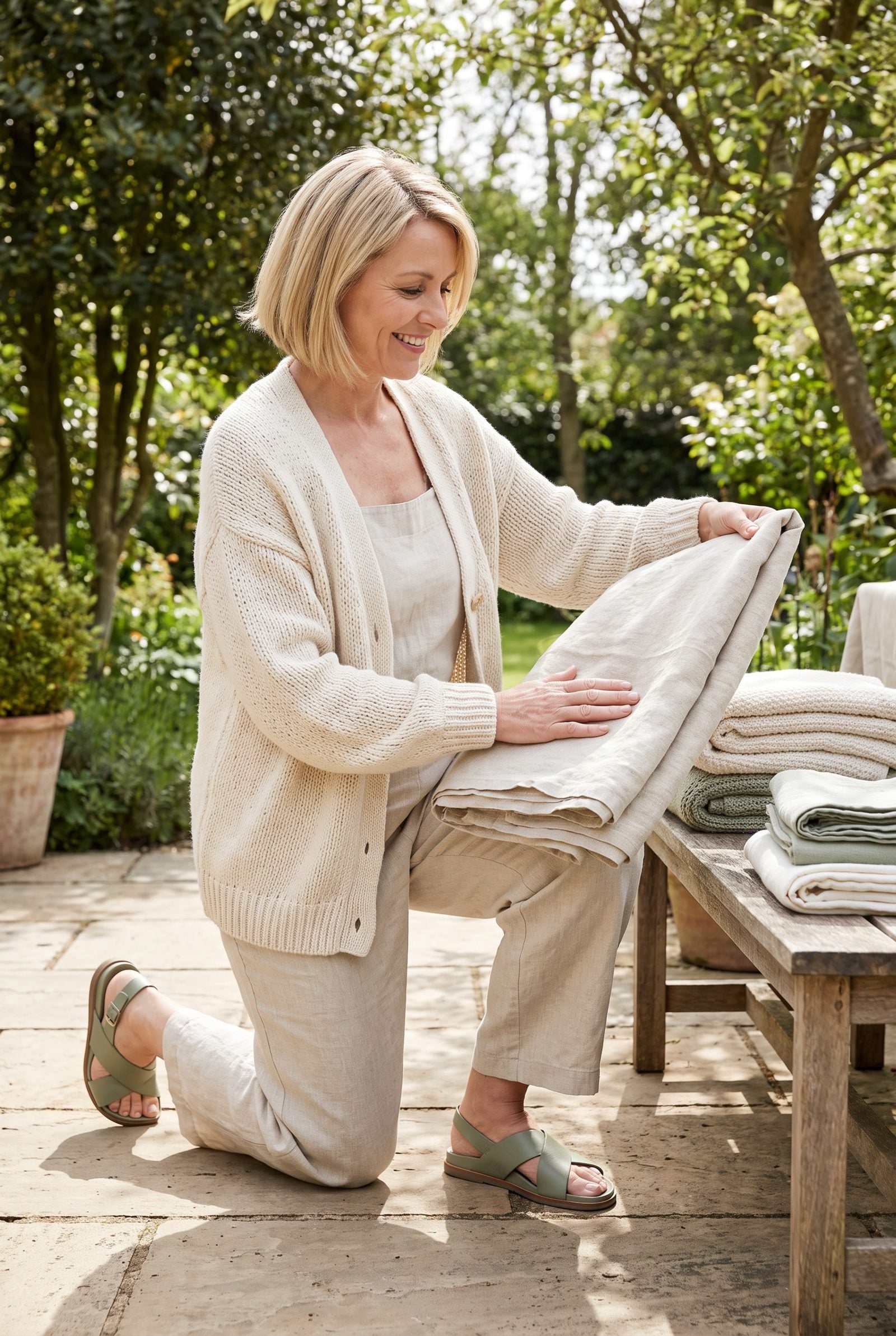
Clothes that sit folded the same way for a year develop a permanent scar along the crease. Table linens show it worst. Heavy knits aren’t far behind, and the threads along that line simply stop coming back.
So every time you rotate your seasonal wardrobe, refold along a different axis. Turn a once-vertical fold into a horizontal one, or just shift it an inch. The whole idea is to never let one thread line take all the strain year after year.
Costs nothing, ten seconds an item. It’s one of the cheapest tricks around for keeping a wool blanket or a linen dress out of the donation pile a decade early.
43. Sandwich Beaded Clothes Between Pieces of Washed Muslin
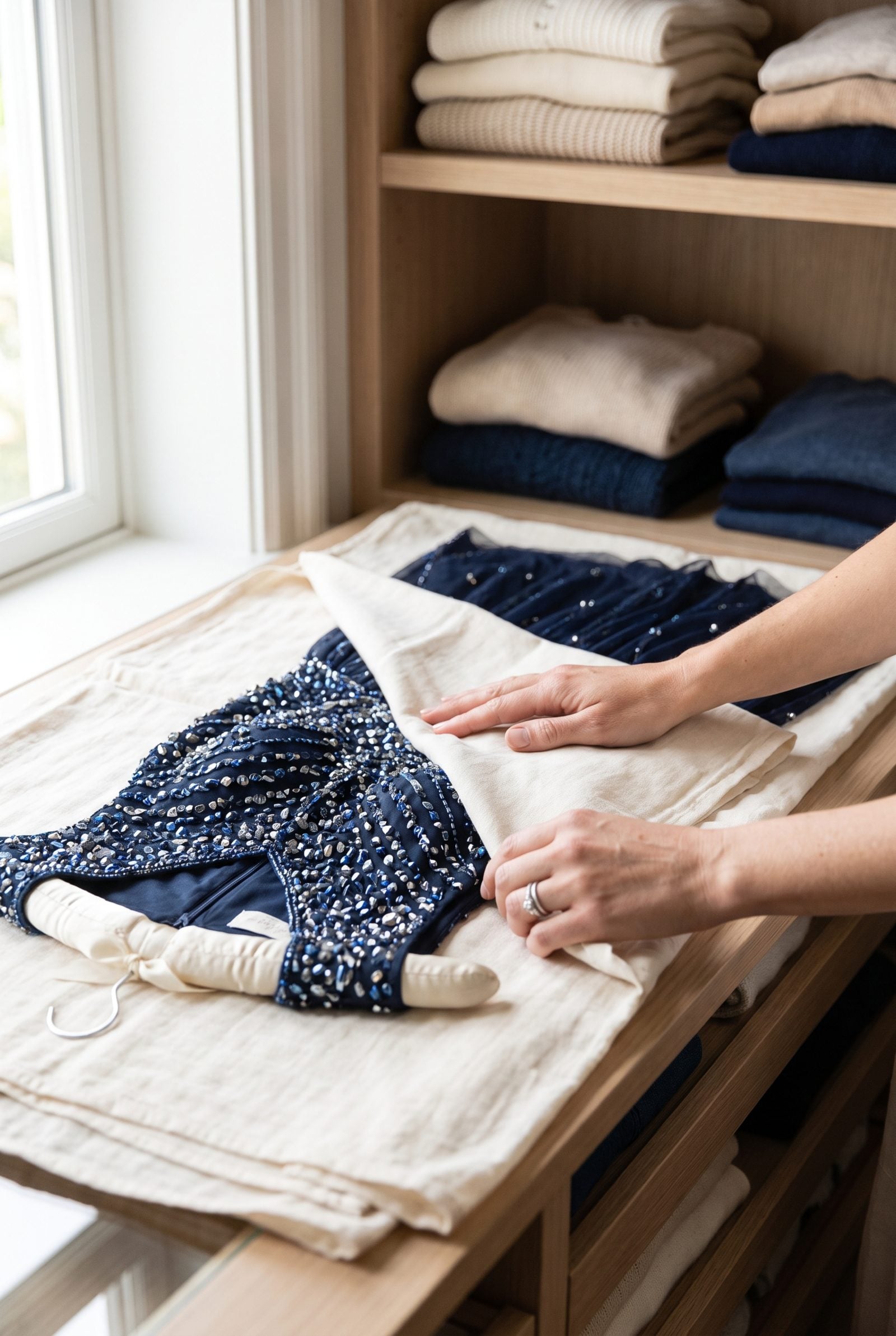
Beads and sequins are tiny weapons when stored carelessly. Left to rub against another garment, they snag threads, scratch adjacent fabric, and work their own stitching loose. Store two beaded pieces together and they’ll slowly chew each other apart.
Lay each embellished piece between sheets of washed muslin before folding or boxing it. The muslin cushions the beadwork and keeps the hard surfaces from catching on anything. Wash it first to strip out any sizing or finishing chemicals that could transfer onto the fabric.
This is exactly how museums store vintage gowns. If a navy beaded dress has survived long enough to become an heirloom, muslin is usually the quiet reason.
42. Slip Cotton Stockinette Over Exposed Zipper Pulls

Metal zipper pulls are the silent vandals of a folded stack. Every time you shift the pile, that hard little tab drags across the fabric beneath it, pulling threads and leaving tiny scuffs that add up to a worn patch.
Slip a short tube of cotton stockinette, the stretchy knit tubing used in casting, over each exposed pull. It sheathes the metal so the tab glides instead of snagging, and a length of soft cotton sock works in a pinch. Costume departments do this on garments that get handled constantly. The kind of fix you only wish you’d known about years ago.
41. Roll Scarves Around Archival Tubes Instead of Folding Them
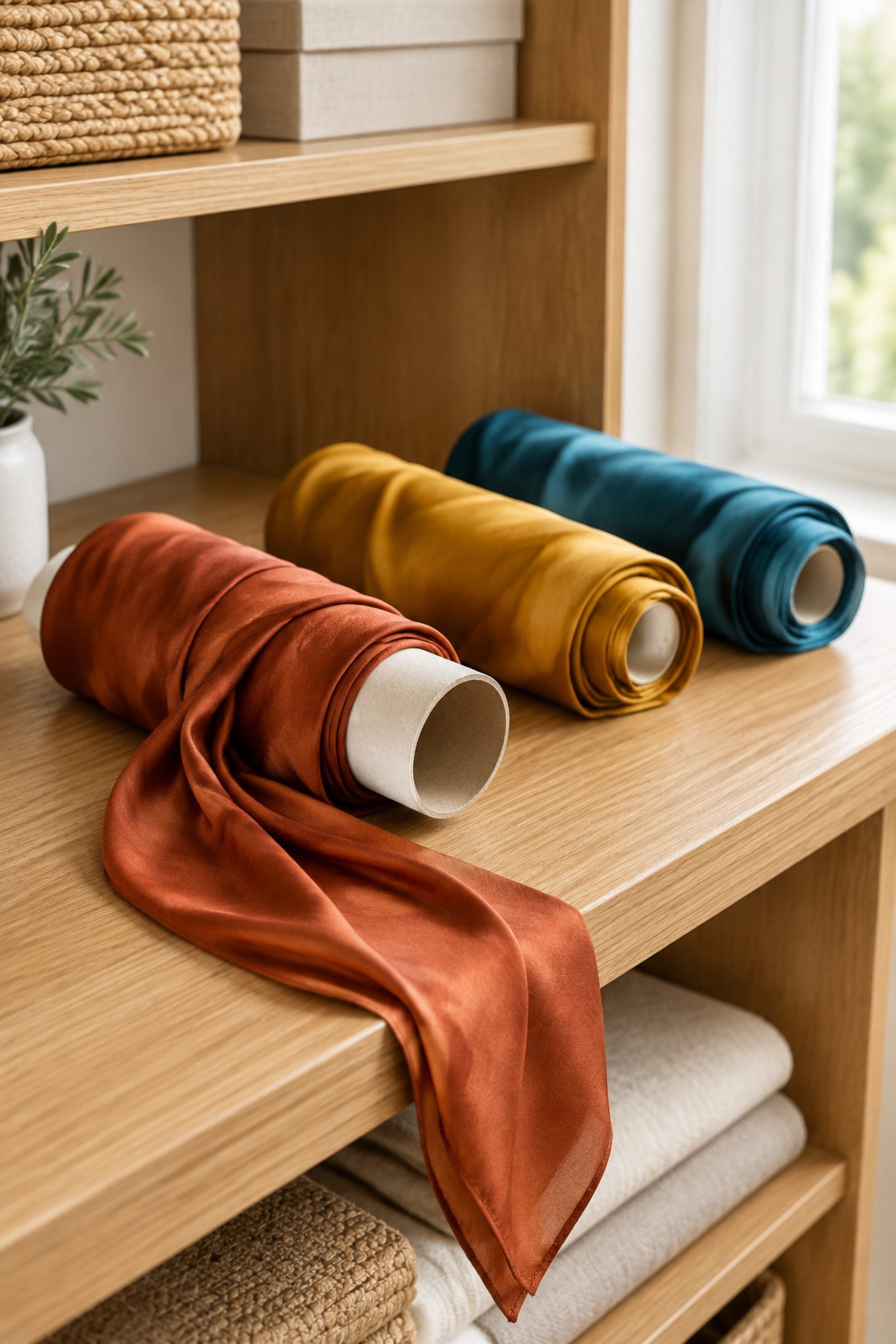
Fold a silk scarf and you build in creases that need steaming out every single time. Worse, those permanent fold lines eventually weaken and fade along the edges, right where light and air hit them most.
Roll each scarf around an archival cardboard tube instead. Wind the fabric smoothly so it lies in one long gentle curve with no sharp bends. A rust silk scarf that’s bunched and scrunched onto its tube with a loose end hanging off, by contrast, will still pick up wrinkles, so take a moment to smooth each layer as you roll.
Line the tube in acid-free tissue first for the delicate pieces. For anything hand-painted or vintage, this one method can double how long it lasts.
40. Store Bias-Cut Dresses Flat So Gravity Cannot Distort Them

A bias cut hangs beautifully on a body and terribly on a hanger. Because the fabric runs diagonal to the grain, it stretches under its own weight, and a dress left on a hook for months will grow longer, droop at the hem, and warp through the hips.
Lay bias pieces flat. A drawer, a shelf, a box, anywhere the weight distributes evenly and no single section pulls downward. Tuck tissue between the folds so the silk doesn’t stick to itself.
Same goes for a champagne slip dress, most 1930s gowns, and anything that moves like water the moment you put it on. Gravity is patient. Don’t give it a year to work.
39. Fold Heavy Knits Around a Board for Even Support
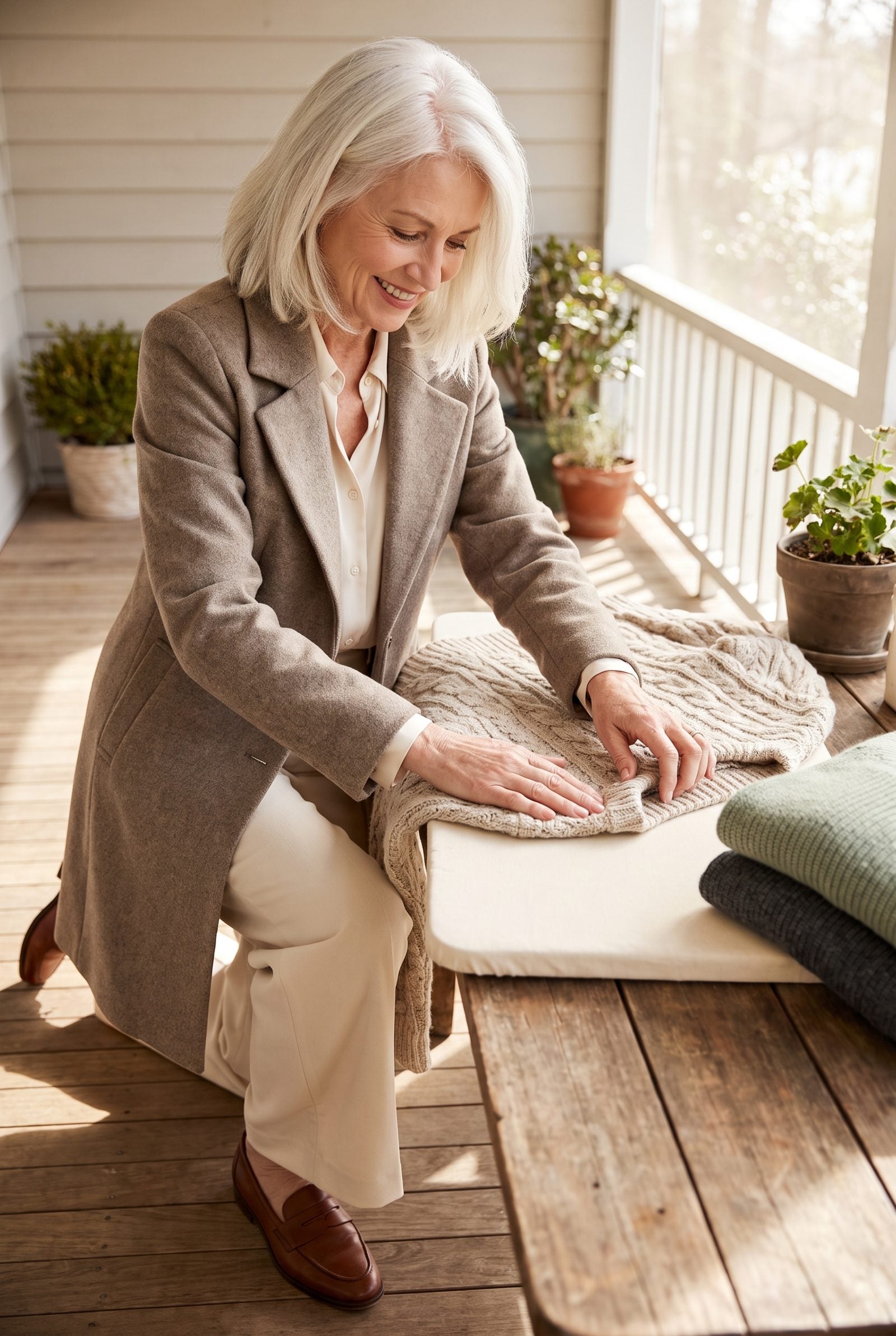
Hang a heavy knit and the whole thing sags toward the floor, stretching the shoulders into points and dragging the body out of shape. Knits have to be folded. But a loose fold lets the stack lean and the edges crumple.
Fold each heavy sweater around a thin cotton-covered board, the kind retail folders use. The board gives the knit a flat, even spine so the stack stays square and nothing crushes underneath. Your sweaters come out looking shop-folded instead of shoved in a drawer, and an oatmeal cable-knit sweater holds its shape for years.
38. Use Internal Hanging Loops to Support Heavy Dresses
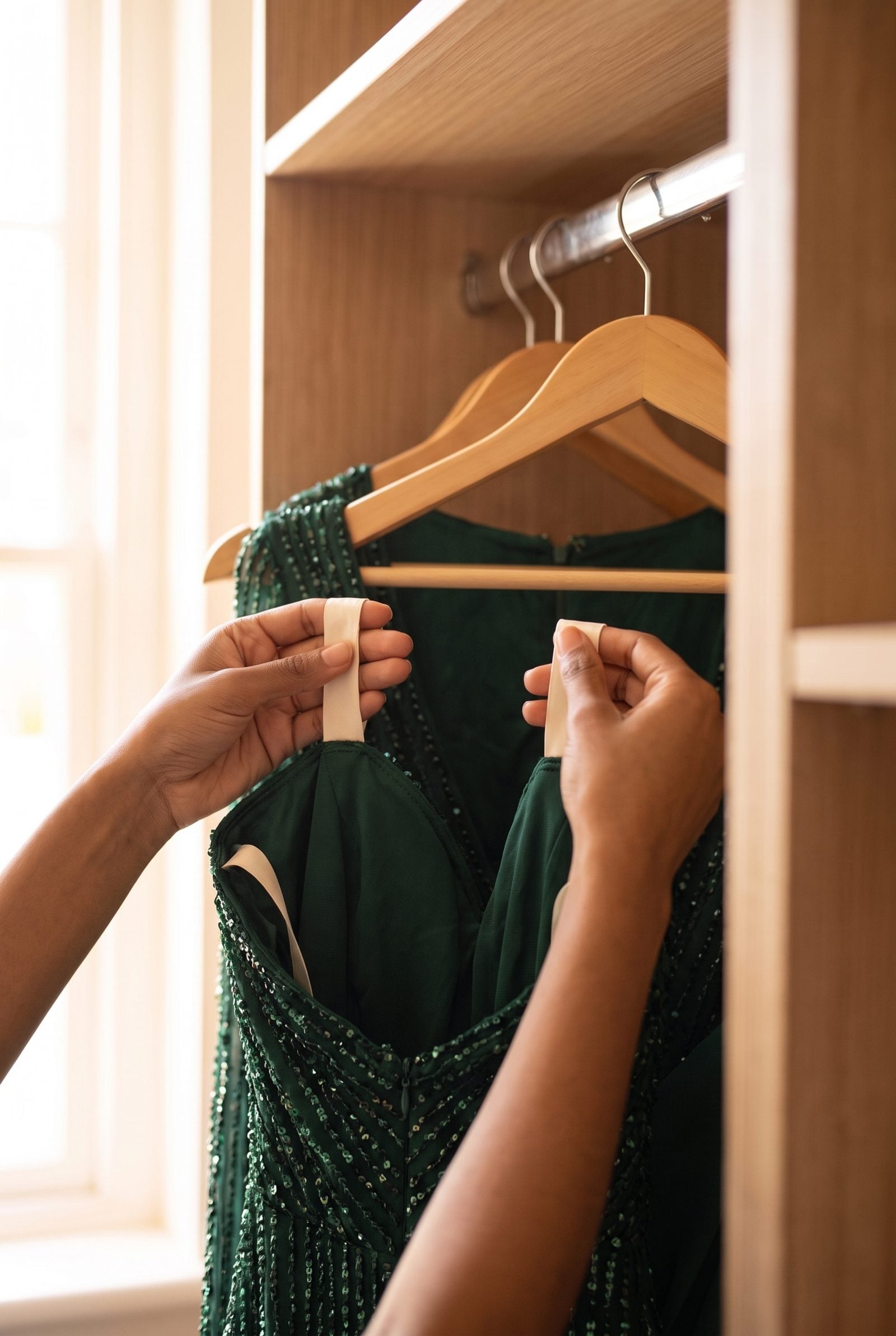
Those thin ribbon loops sewn inside the upper bodice of many dresses are not decoration, and most people snip them out thinking they’re stray threads. Big mistake. They carry the dress’s weight from sturdy seams near the neckline and shoulders, instead of letting delicate shoulder fabric do all the heavy lifting.
Loop them over the bottom crossbar of the hanger. Now a heavy beaded or embroidered gown hangs from the crossbar with the loops sharing the load, so the shoulders carry far less strain. An emerald sequined dress keeps its shoulder shape for decades.
37. Place Felt Pads Beneath Skirt-Hanger Clips
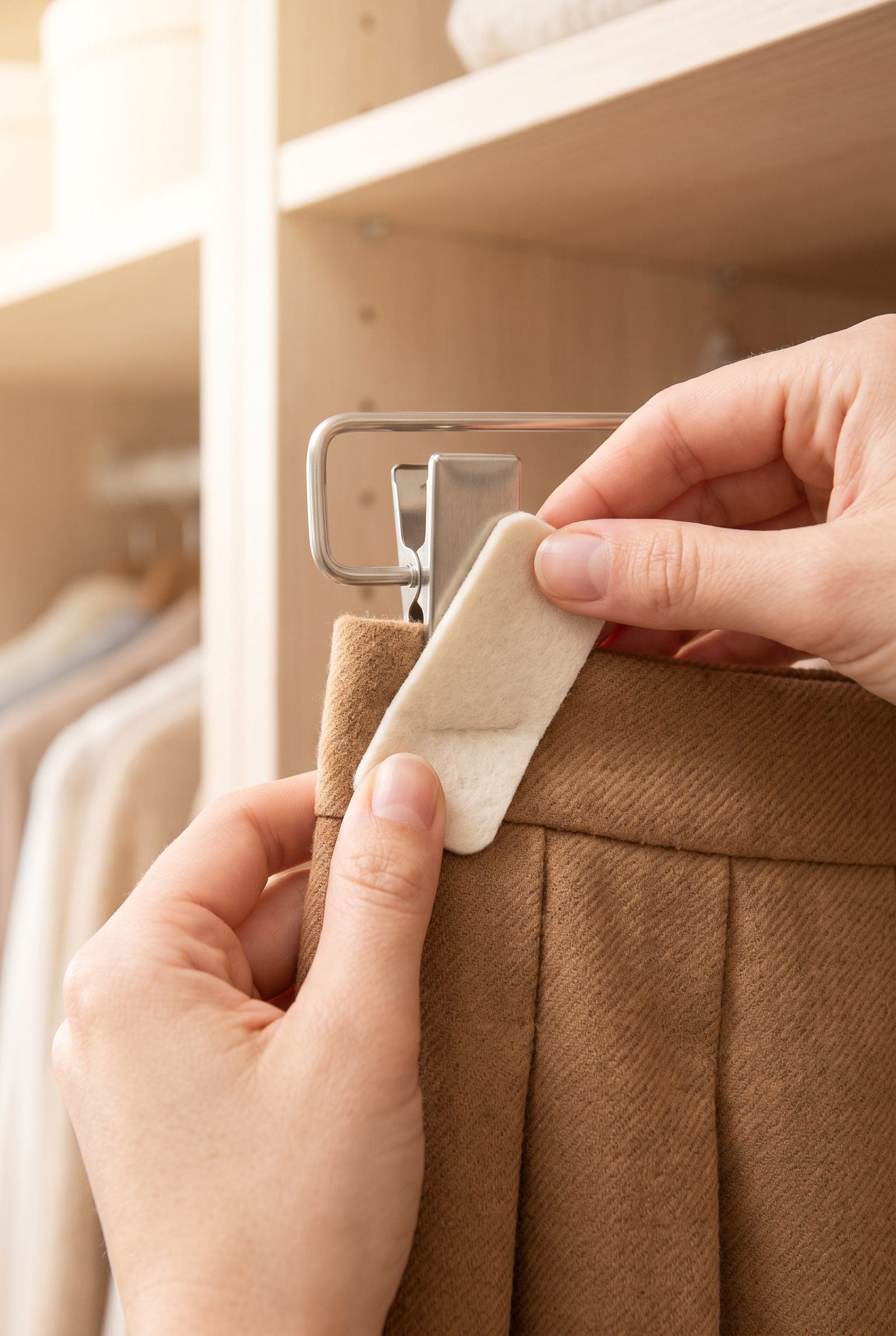
Clip hangers leave teeth marks. The metal jaws bite into a waistband and leave two little dents that never quite smooth out, and on delicate fabric they can crush the weave entirely.
Slip a scrap of felt between the clip and the fabric. The padding spreads the pressure so the grip holds without marking. Folded tissue works too, though felt is reusable and stays put. A pleated camel wool skirt stored this way comes off the hanger ready to wear, pleats falling cleanly from the waist.
Thirty seconds, and it saves you from a waistband dimple that shows under every top you tuck in.
36. Wrap Sharp Hooks and Eyes in Small Tissue Flaps

Sharp little hardware is a wrecking crew you never see coming. Every time you open the closet door, a row of hooks and eyes on a silk gown swings against the garment beside it, and those metal teeth snag threads in the dark where you’ll never catch them until the damage is done.
So fold a square of acid-free tissue over them before the piece goes on the rail. The paper takes the friction instead of the fabric. Costs almost nothing, takes ten seconds.
35. Store Elastic Waistbands Completely Unstretched

Elastic has a memory, and it’s not a kind one. Hang a pull-on trouser by the waistband or clip it taut on a hanger, and the fibers inside that casing hold the stretch long after the piece comes down. Then one day the waist just gives up on you.
Fold them flat instead. No clips, no pegs, no tension — the band rests in its natural shape and keeps its snap for years longer than it has any right to.
34. Remove Belts From Dresses Before Hanging Them

A belt left threaded through a hanging dress pulls down on one spot for months on end. The weight drags the shoulder seam out of true and prints a permanent dent where the buckle rests against the fabric.
Pull it out before the dress goes on the rail. Then coil it loose in a drawer rather than buckling it tight, because buckling cracks leather at the fold. The dress hangs straight, the belt keeps its shape, nothing warps against anything.
33. Release Buttoned Cuffs and Collars During Storage

❤️ Would you like to save this?
Buttoned-up collars and cuffs sound tidy. They aren’t. A fastened cuff holds the fabric under slight tension across the placket, and over months that strain sets a crease no iron fully lifts, while a tight collar holds a stiff ring around the neck.
Undo them before the piece goes away. The fabric relaxes into its natural line and the fibers rest without stress, so the shirt comes out looking lived-in rather than stressed-out.
32. Button Tailored Jackets at Their Main Closure

A tailored jacket is built around its front. Hang it open on a narrow hanger and the fronts splay, the lapels roll outward, and the whole chest loses the shape a tailor worked into it.
Fasten the main button — the top one on a two-button, the middle on a three. The front panels sit closed, the shoulders keep their line, and the jacket holds its posture between wearings instead of slumping into a shapeless drape.
31. Separate Dark Raw Denim From Pale Fabrics

Raw indigo denim bleeds. Not in a disaster — slowly, wherever it leans against whatever hangs beside it. Press that stiff dark leg against an ivory silk shirt for a season and you’ll find a faint blue ghost on the pale fabric that never fully washes out.
Give it its own zone. A slim divider, or just an empty hanger of air between it and your pale pieces, keeps the dye where it belongs. These jeans want to touch pale fabric the way a wet umbrella wants your coat. Keep them apart.
30. Keep Metallic-Knit Clothing Away From Delicate Fabrics

Those glinting threads that make a lurex sweater catch the light? Tiny strands of coated wire or stiff film. Up close, each one is a small abrasive edge. Hang that sweater against a chiffon blouse or a silk slip and it saws at the delicate weave every time the rail shifts.
Bag the metallic piece on its own, or at least park it at the end of the rail away from anything fine. The sparkle stays gorgeous and your silks stay un-snagged.
29. Prevent Leather and Faux Leather From Touching Each Other
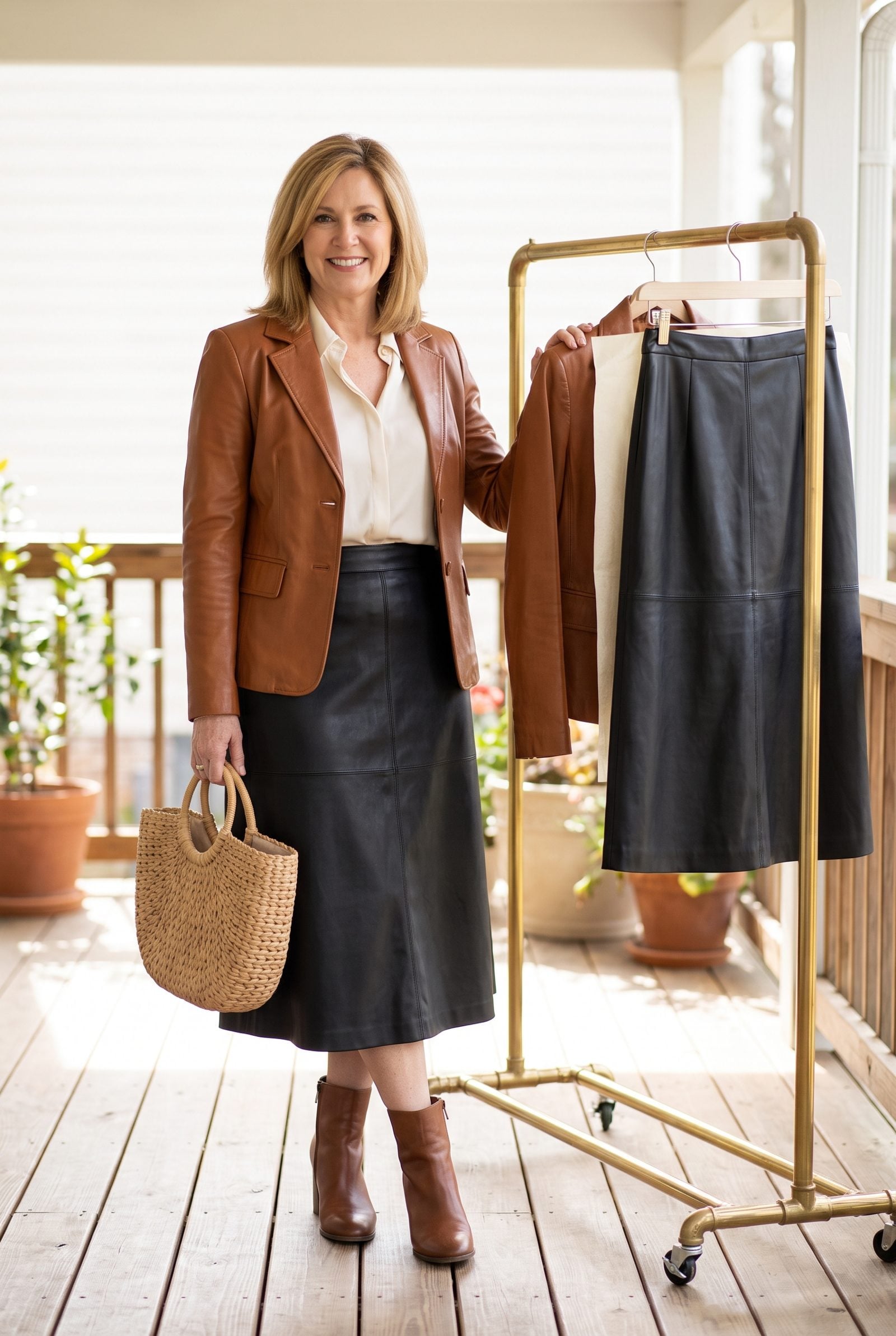
Nobody warns you about this one. Real leather and faux leather, pressed together over time, can fuse. The plasticizers in the synthetic migrate, soften, and bond to the surface beside them, and eventually you’re peeling two pieces apart with a sticky mark left on both.
Keep them from touching. A sheet of acid-free tissue between them, or simply a few inches of air, stops the chemistry before it starts. Both finishes stay clean and unmarked.
28. Use a Freeze-Thaw-Freeze Cycle for Moth-Suspect Wool
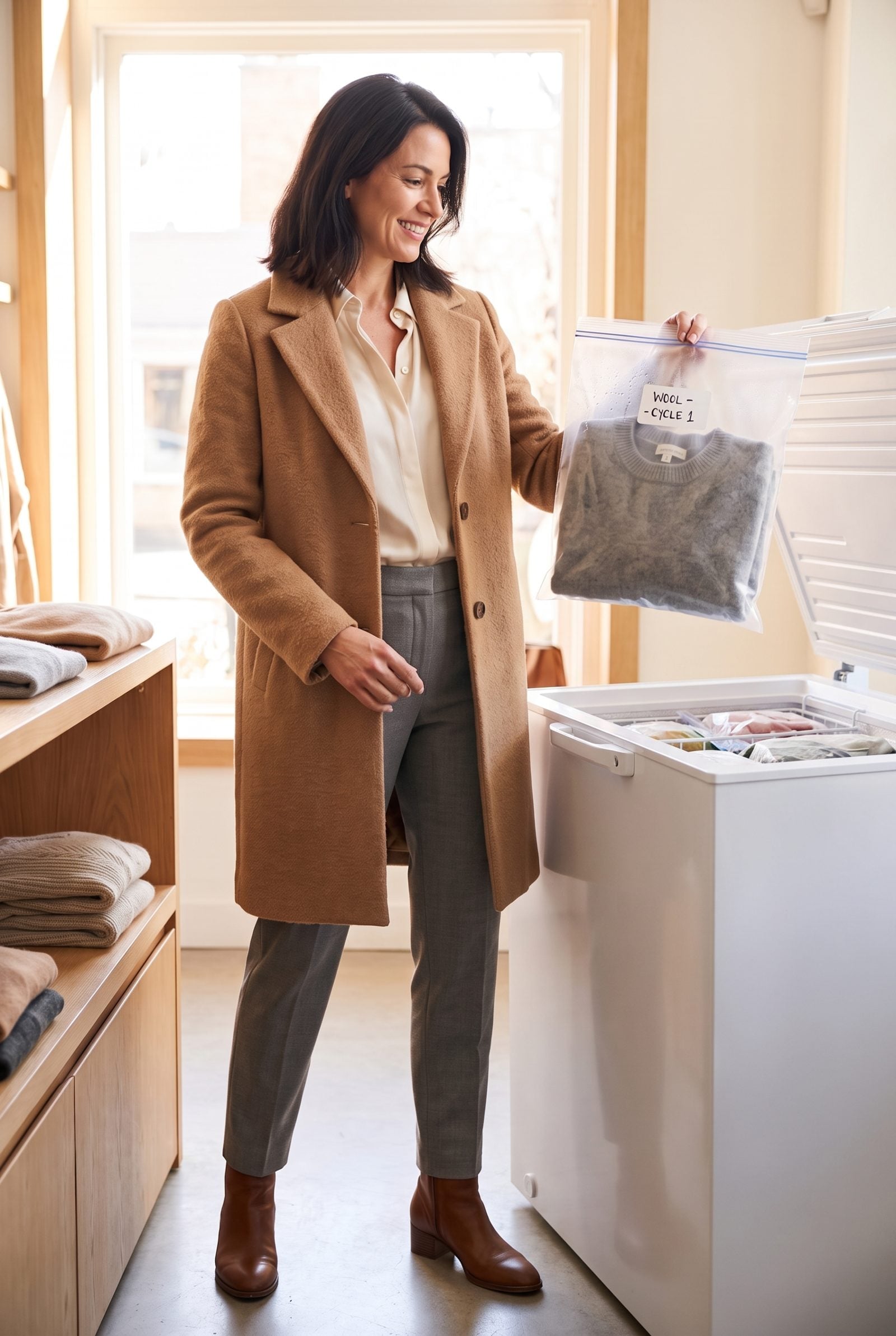
Suspect a sweater has guests? Moth eggs and larvae shrug off a single cold snap — one freeze sends them dormant, then they wake up hungry the moment things warm up again.
Seal the wool in a zip bag, press the air out, and freeze it hard for a few days. Pull it to room temperature for a day, which coaxes any survivors back into active stages, then freeze it again. The second cold finishes what the first started.
27. Use Pheromone Traps to Detect Clothes Moths Early

By the time you spot a hole, the moths have been dining for weeks. The adults you glimpse fluttering out of a drawer aren’t the ones doing damage — their larvae are, tucked deep in the folds where you can’t see them.
A sticky pheromone trap lures the males long before you’d ever notice them. Tuck one beside the camel wool coat and chunky grey knit you save for breezy clifftop walks, and check it monthly while they wait in storage between outings. Catch two or three and you know it’s time to act, back when the problem is small and solvable rather than a drawer full of sieve-fabric sweaters.
26. Quarantine Secondhand Clothing Before It Joins the Closet

That estate-sale cashmere smells like somebody’s attic for a reason. Secondhand pieces can carry moth eggs, carpet-beetle larvae, or the odd mildew spore, and the fastest way to infest a whole wardrobe is to slide one unwashed find straight onto the rail.
Keep new arrivals apart for a week or two. Seal them in a clear breathable garment bag or a bin, somewhere you can watch them, then launder or dry-clean first where the fabric allows. For wool and knits that can’t be washed, a freeze-thaw-freeze cycle in a sealed bag deals with any eggs.
25. Sand Your Cedar Blocks Back to Life
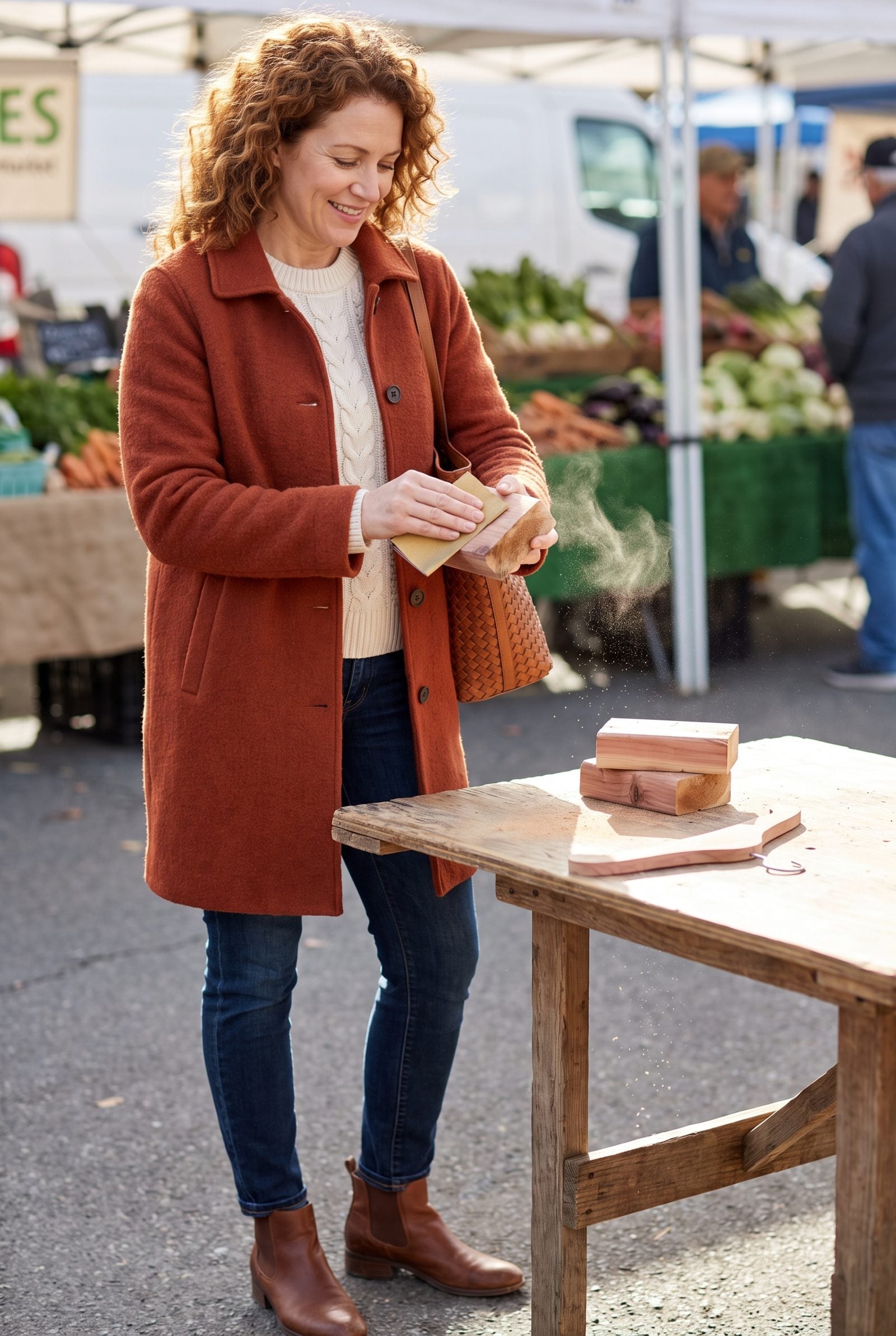
Cedar doesn’t stop working for good. Its surface oxidizes and seals off the aroma that does the deterring. Most people toss the blocks and buy new ones — you don’t have to.
Give each block a quick pass with fine-grit sandpaper every few months. You’re stripping away the dulled outer layer and opening fresh grain underneath, which releases that sharp cedar scent again. Thirty seconds per block. The dust alone will tell you it worked.
One thing to remember, though: cedar repels, it doesn’t exterminate. It discourages adult moths from settling. It won’t save a sweater that already has larvae chewing through it, which is exactly why the brushing and freezing steps matter too.
24. Brush Wool Before the Moths Find the Crumbs

Clothes moths aren’t actually interested in your wool. They’re after the invisible banquet living in it: skin flakes, hair oils, food traces, sweat residue. The fiber is collateral damage.
A soft natural-bristle horsehair garment brush drawn down each wool piece before it goes away lifts that debris out of the weave, and it catches early-stage eggs before they hatch into the real problem. Do it after the final wear of the season, not before the first.
23. Vacuum the Crevices Where Larvae Actually Live
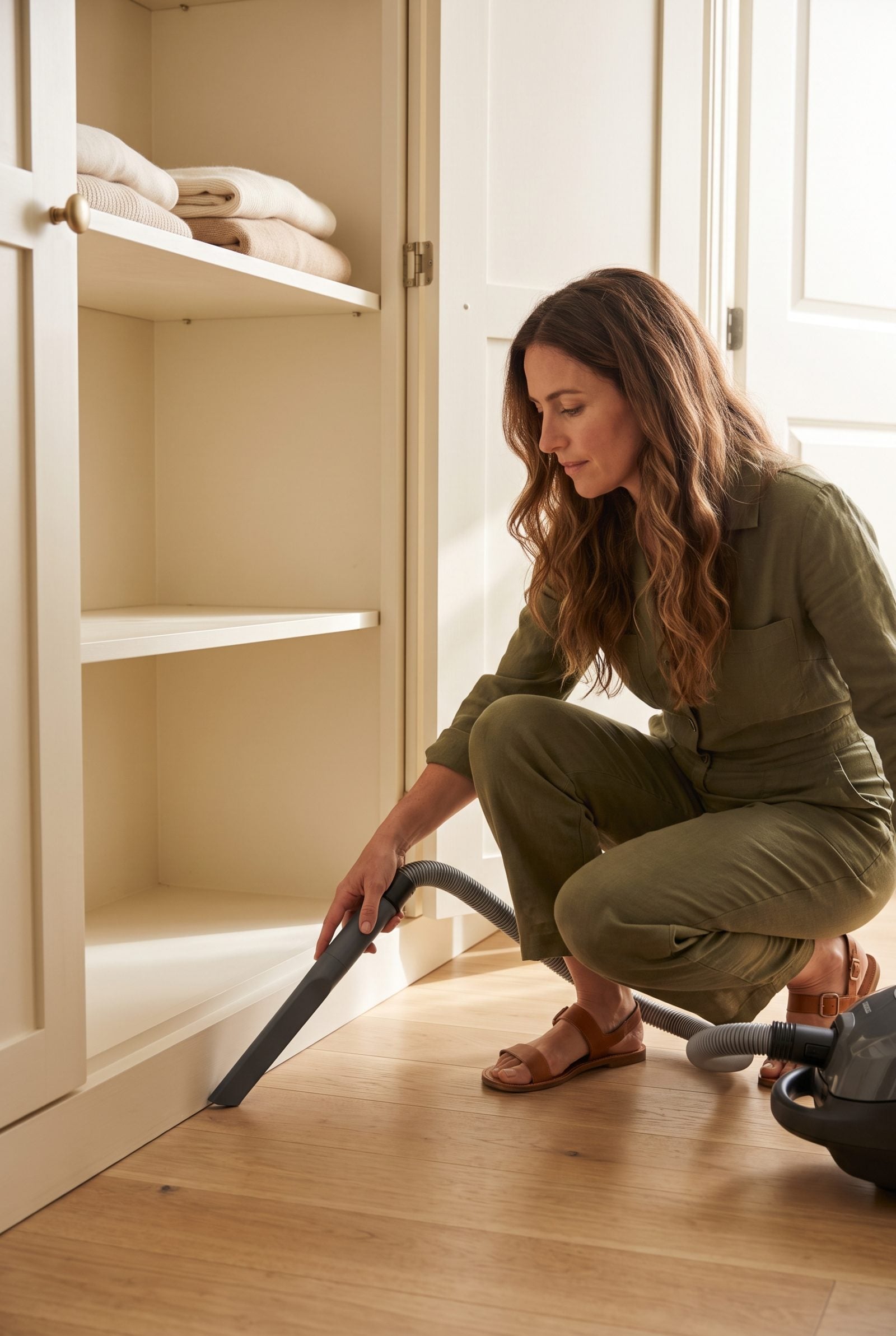
The damage happens in the corners you never look at. Larvae don’t hang out on the sweater you wear — they retreat into floor cracks, shelf seams, the fuzzy gap behind the baseboard, and feed on lint and shed fibers there.
A crevice vacuum attachment is the cheapest pest control you own. Run it along every floor edge, into shelf corners, and across the back of hanging rails once a season. Empty the canister or bin the bag straight away, outside, so nothing crawls back.
It’s easy to forget that spotless-looking shelves mean nothing if the seams underneath are a larvae nursery.
22. Hang a Humidity Meter and Actually Read It
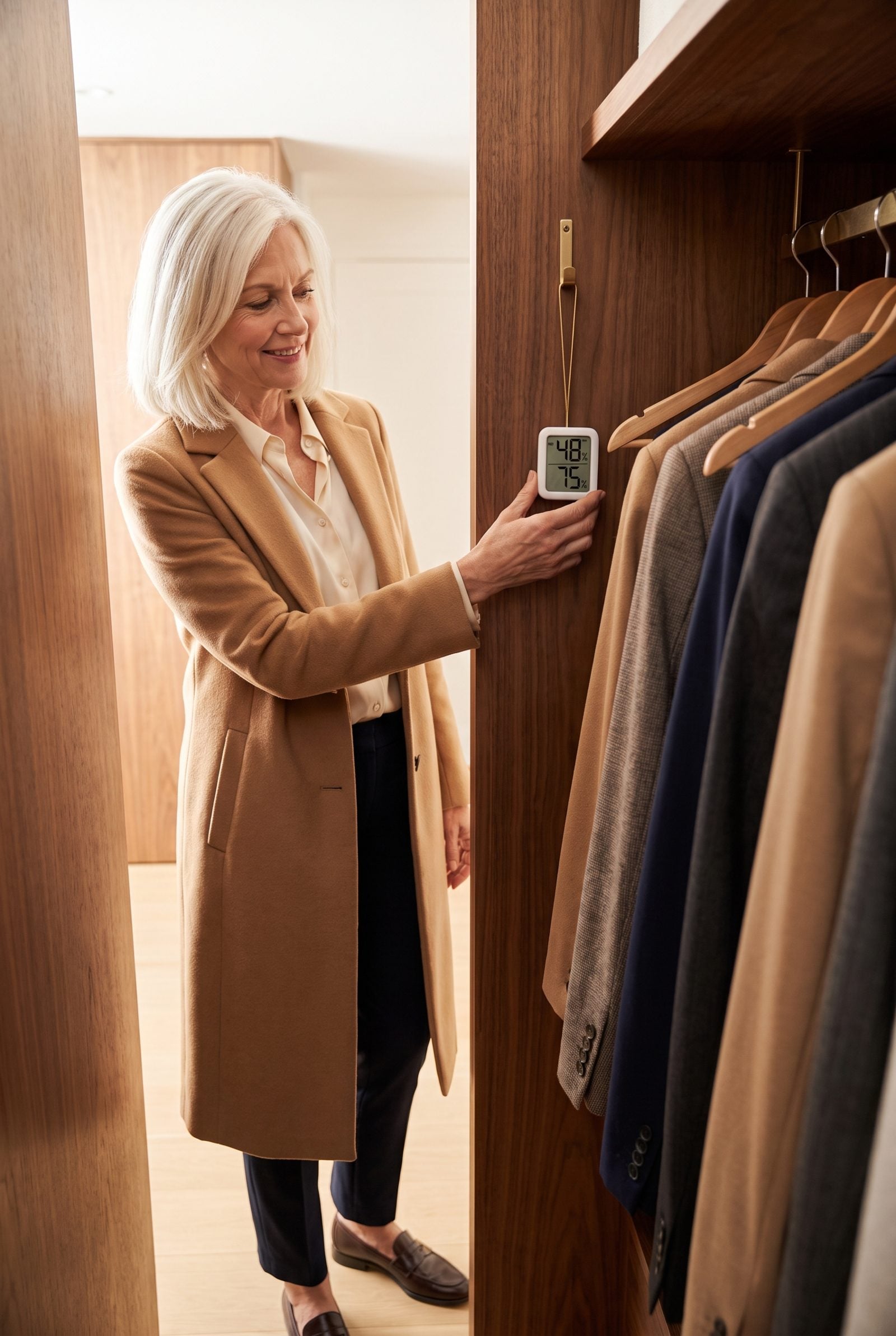
Mildew, mustiness, and that creeping stale smell all trace back to one number you can’t feel reliably by hand: relative humidity. Push past roughly 60 percent and you’re in mold territory. Go too dry and natural fibers can grow brittle over time.
A cheap digital hygrometer hung inside the closet turns guesswork into a reading. If yours shows a figure like 75 percent, that’s well into mold territory and time to act. Aim for the 40 to 55 percent range. If the number climbs, crack a door, add a dehumidifier, or move boxes off a damp exterior wall before anything takes hold.
21. Let Indicating Silica Packets Do the Watching
❤️ Would you like to save this?
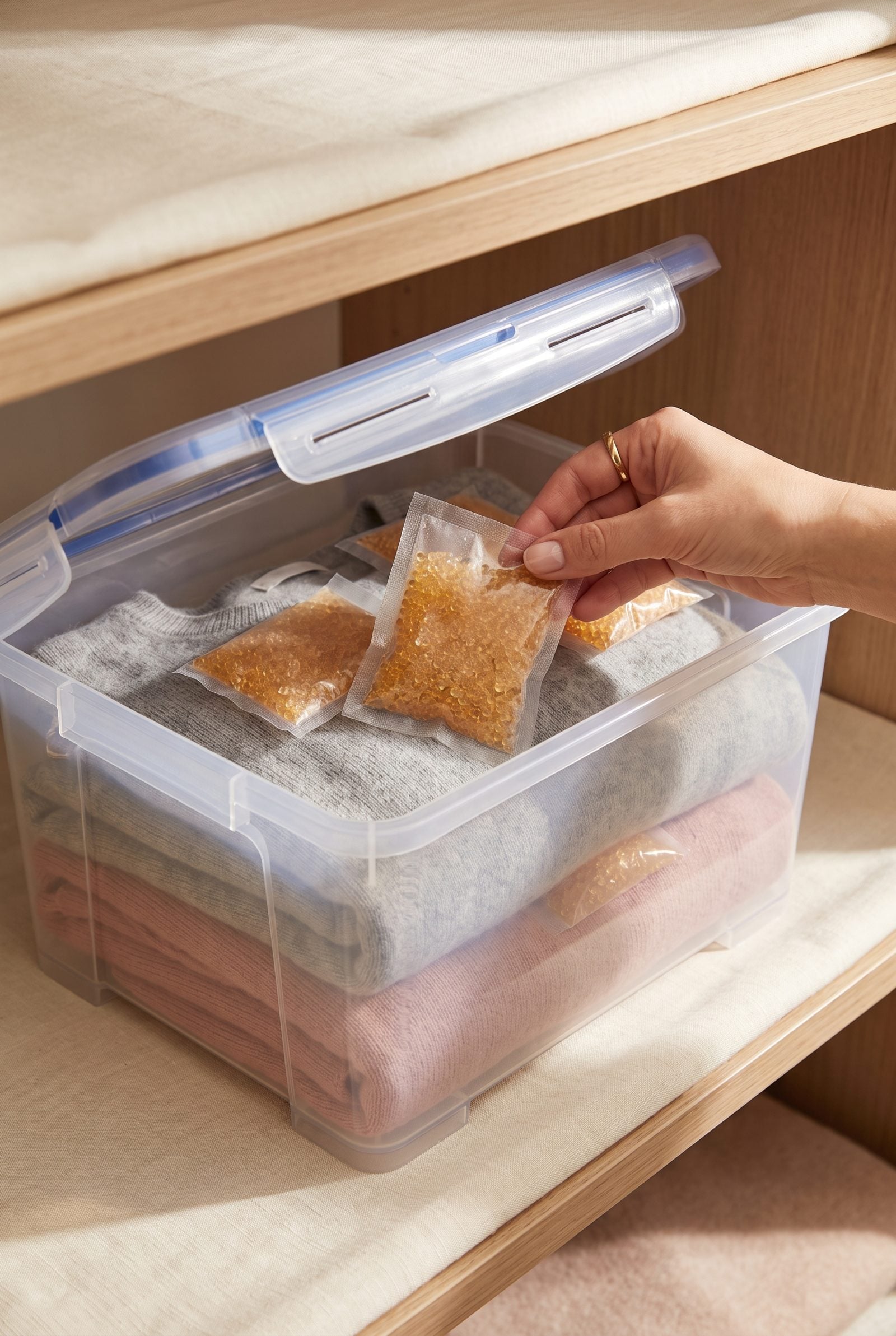
Those little packets that come with new shoes get thrown away. They shouldn’t. Indicating silica gel is a humidity sponge with a tell — the beads shift color (often orange to green, or blue to pink) when they’re saturated and need drying out.
Tuck a few into any small sealed bin holding cashmere, silk, or leather goods. They pull moisture out of that enclosed air, which is exactly where mildew would otherwise bloom unseen. When the color changes, warm them in a low oven to reset and reuse.
Reusable, visual, nearly free. Hard to argue with.
20. Pull Garments Off the Exterior Wall

Exterior walls sweat. They sit against outdoor temperature swings, and condensation forms where warm indoor air meets the cold surface. Any garment pressed flat against that wall is drinking in moisture it can’t release — which is how the back of a beloved coat quietly spots with mildew.
So give clothes an air gap. Pull the rail forward a few inches, or slide boxes away from the back wall so air can circulate behind them. Fibers need to breathe, and a pressed-flat sleeve against cold plaster has nowhere for its moisture to go.
19. Lift Every Storage Box Off the Floor
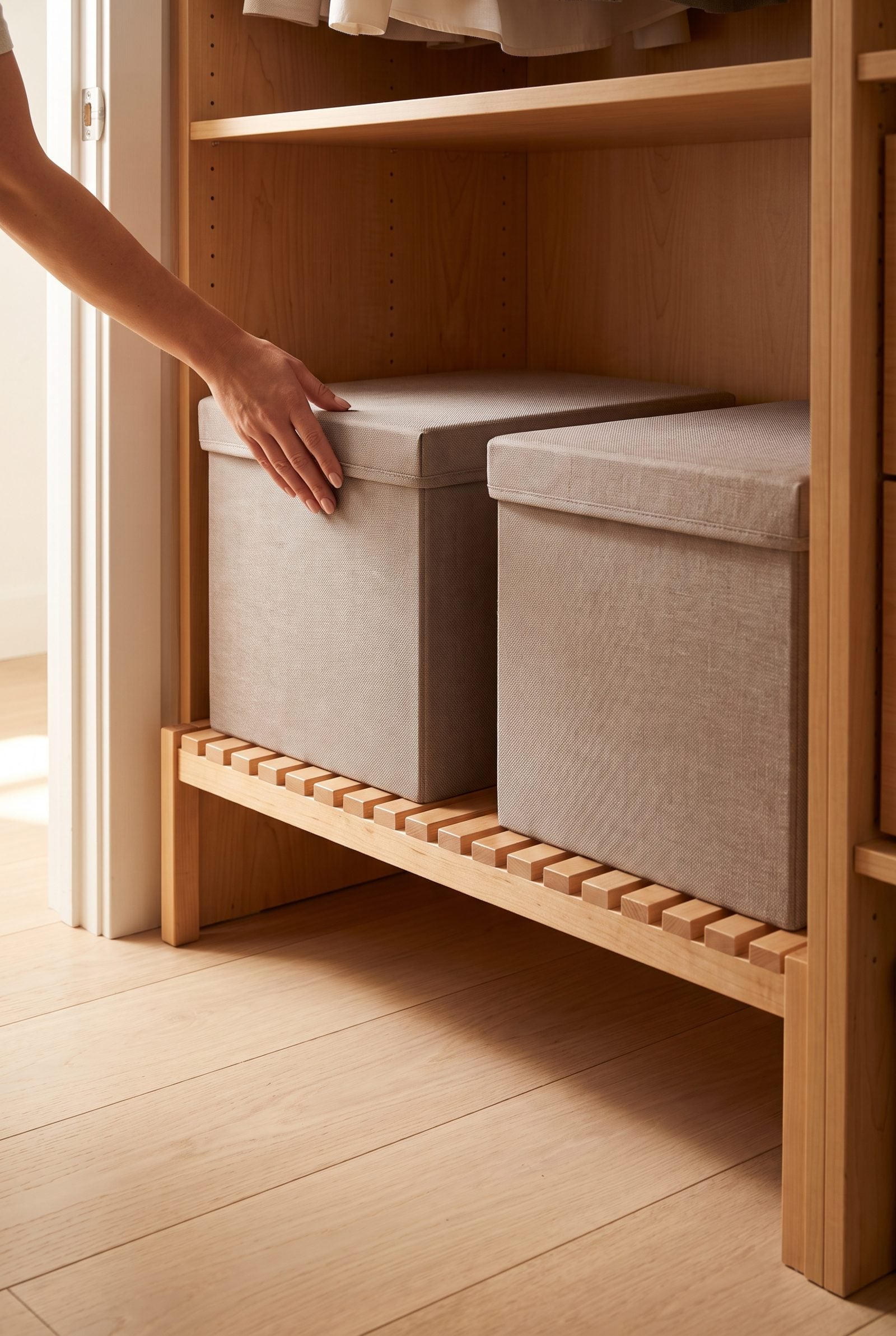
Floor-level is the danger zone. It’s where spills pool, where damp seeps up from a slab or basement, and where a surprise leak claims the box resting directly on it. Linens and off-season knits stored flat on the floor are first in line for water damage, and the first spot pests investigate.
Raise everything a few inches. A slatted riser, a low shelf, a couple of wooden slats — anything that creates airflow underneath and buys you a buffer against ground moisture.
18. Kill Odors With Charcoal, Not Perfume

Air fresheners and scented sachets don’t remove odor. They stack a second smell on top of the first and hope you stop noticing. Activated charcoal actually traps the molecules, pulling mustiness, damp, and staleness out of the air instead of masking them.
Set a small linen pouch of activated charcoal deodorizer on a shelf and let it work. No fragrance means nothing transfers onto delicate silks or pale fabrics that scented products can discolor over time. Set the pouch in the sun every month or so to recharge it.
Fragrance-free is also kinder to anyone sensitive to perfumes, and your clothes come out smelling like nothing at all. Which, for stored clothing, is the goal.
17. Leave a Finger-Width Gap Between Hangers

A crammed rail is a slow destroyer. Garments wedged tight rub against each other with every pull, and that constant friction thins delicate weaves, pills knits, and wears shine spots into dark fabrics along the edges where they press. Packed tight, they also can’t dry out between wears.
Leave roughly a finger’s width between hangers. Air moves, fibers breathe, nothing abrades its neighbor. The side benefit: you can see what you own, so you stop re-buying the blouse you forgot was buried in there.
16. Cover Rough Shelves With Smooth Washed Cotton

A rough wooden shelf looks harmless until you lift a sweater off it and spot a faint snag running across the hem. Even sanded wood has a tooth to it, and that tooth catches delicate knits every time you slide a stack in or out.
A smooth washed cotton cloth laid over the shelf fixes it, giving a stack of folded sweaters a barrier so nothing drags against rough grain or splintered edges. Washed cotton, not treated or starched. You want something breathable that won’t trap moisture against the fibers.
15. Line Wicker Baskets Before They Touch Clothing
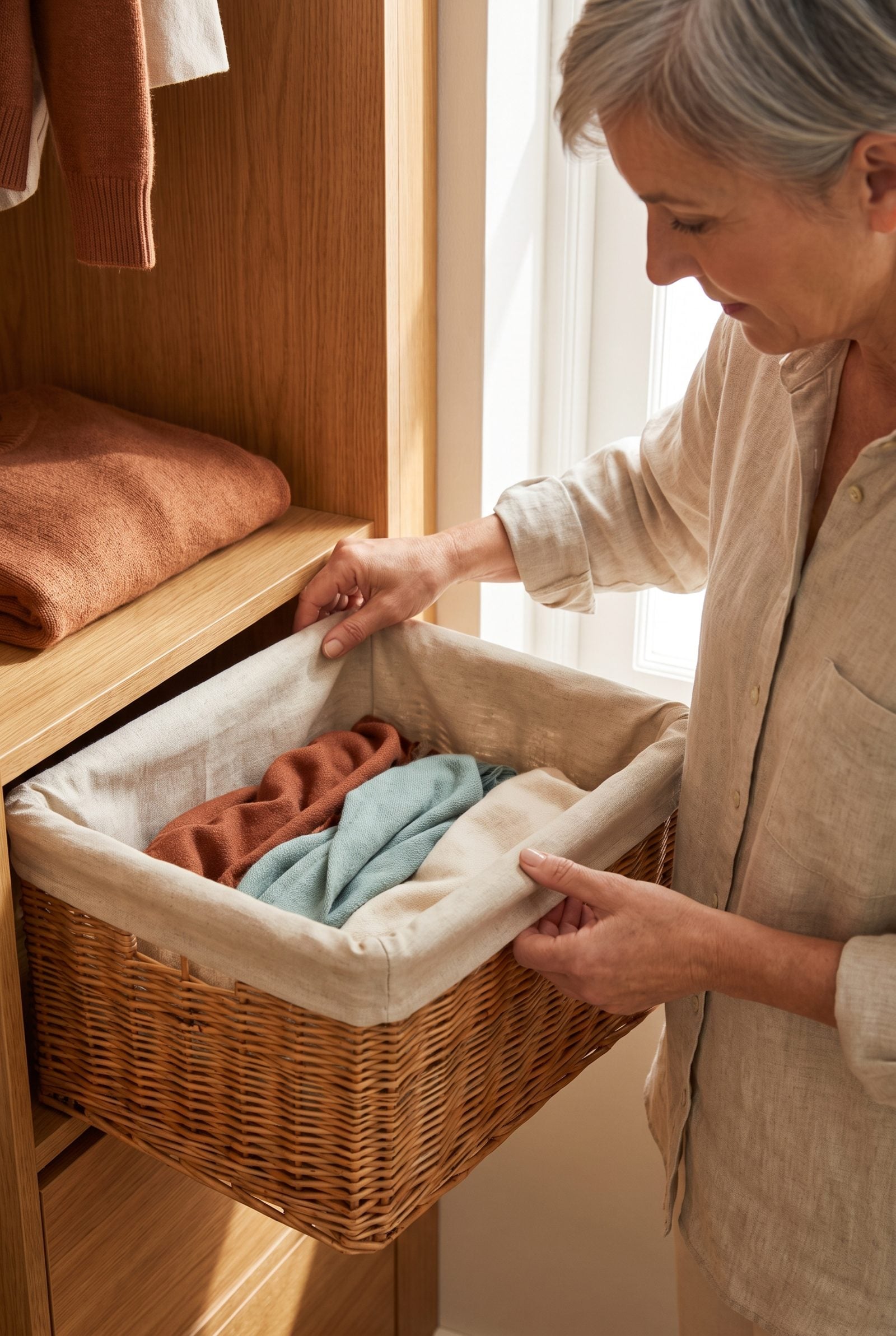
Wicker and rattan look great holding folded tees and scarves. They’re also tiny abrasion machines. Those woven fibers have cut ends that poke inward, and over months they fray the exact pieces you tucked away to keep safe.
Line the basket with washed linen or cotton before anything soft goes in, draping it so the fabric covers the rim where arms and hands brush past. Now the basket does its job, the clothes stay off the rough weave, and you still get to keep the pretty basket instead of hiding everything in plastic bins. A small thing that spares you pilled cotton and pulled threads you can’t account for later.
14. Replace Dry-Cleaning Plastic With Washed Cotton Garment Bags
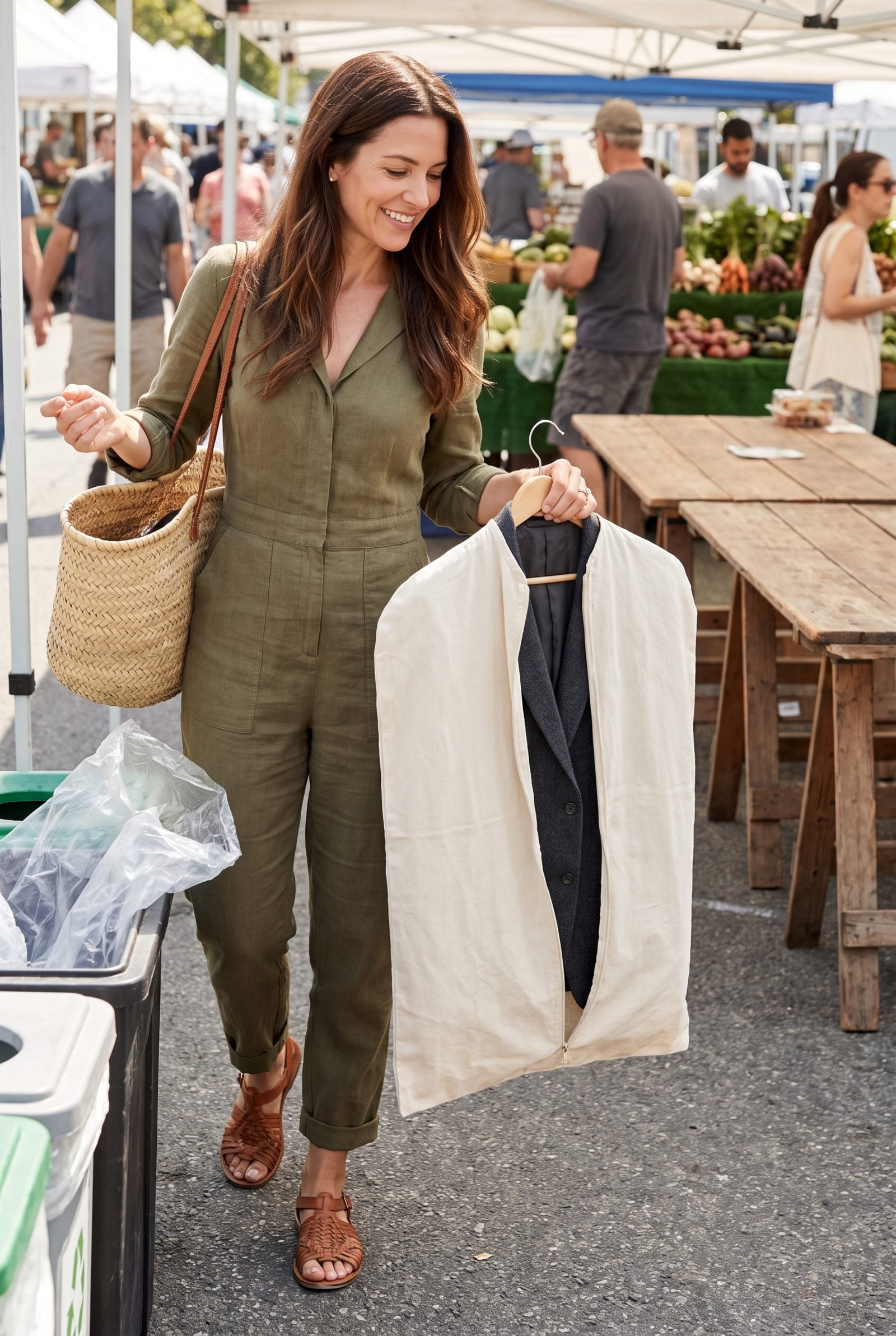
That filmy plastic from the dry cleaner does the opposite of protecting your clothes. It seals in leftover cleaning chemicals, traps humidity against the fabric, and over time it can yellow light colors and leave silk smelling faintly sour.
Swap it for a washed cotton garment bag. Cotton breathes, so moisture moves out instead of sitting against the shoulders of your best blazer, and dust stays off while the fibers keep exchanging air the way natural fibers need to.
13. Replace Ordinary Cardboard With Archival Clothing Boxes
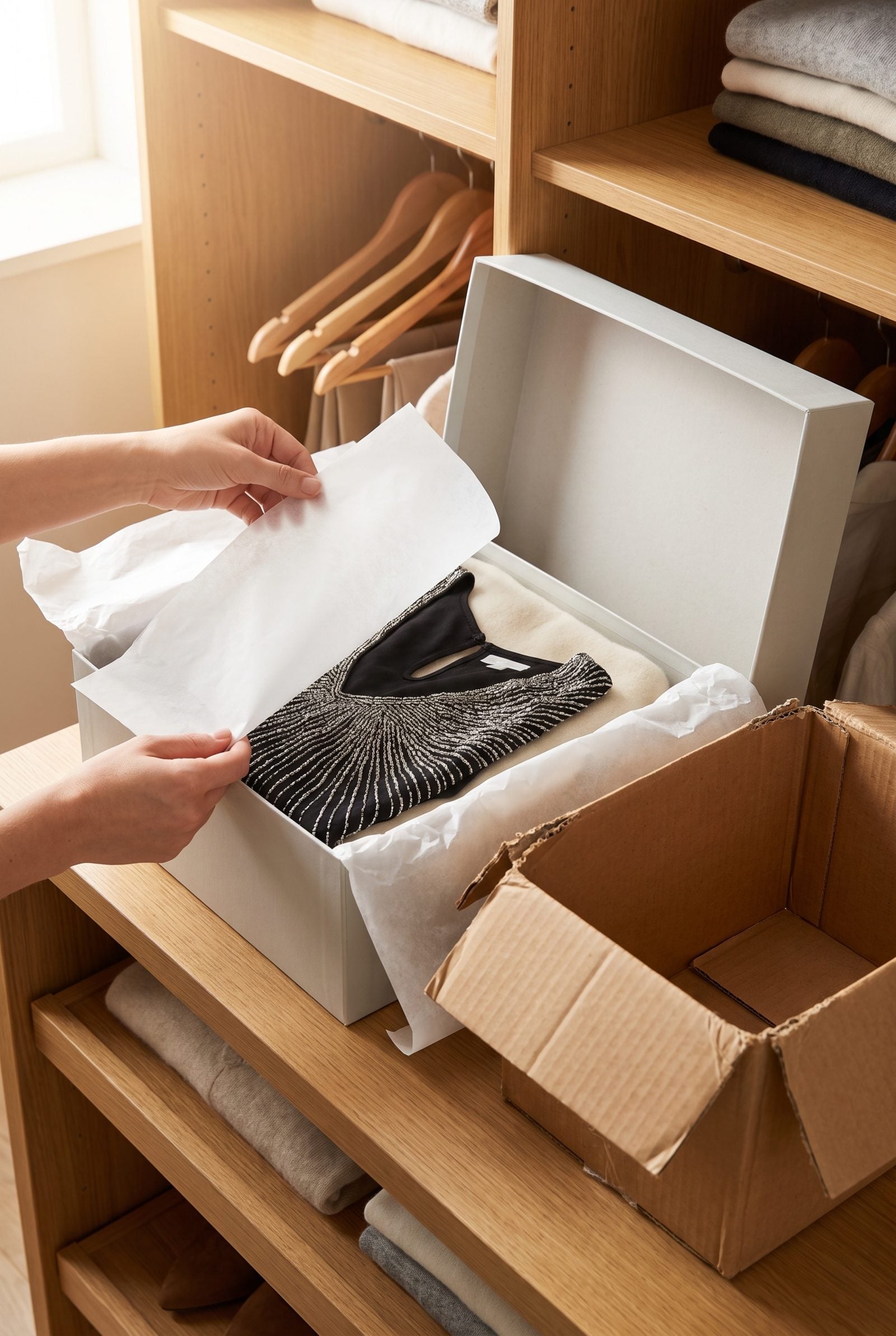
Regular cardboard is quietly acidic. Over a few seasons it off-gasses and leaves brown spotting, called foxing, on whatever folded wool or silk is pressed against it. So the beaded top you boxed up for safekeeping ends up stained by the box itself.
Archival boxes are made acid-free and lignin-free, so nothing leaches into the fabric. Pair one with acid-free tissue between the folds and you’re storing textiles the way museums do, decades without discoloration. For anything you’re keeping long term, a wedding dress, an heirloom knit, a beaded occasion piece, that’s the line between storage and slow ruin.
12. Choose Garment Bags Long Enough to Prevent Bunched Hems
❤️ Would you like to save this?
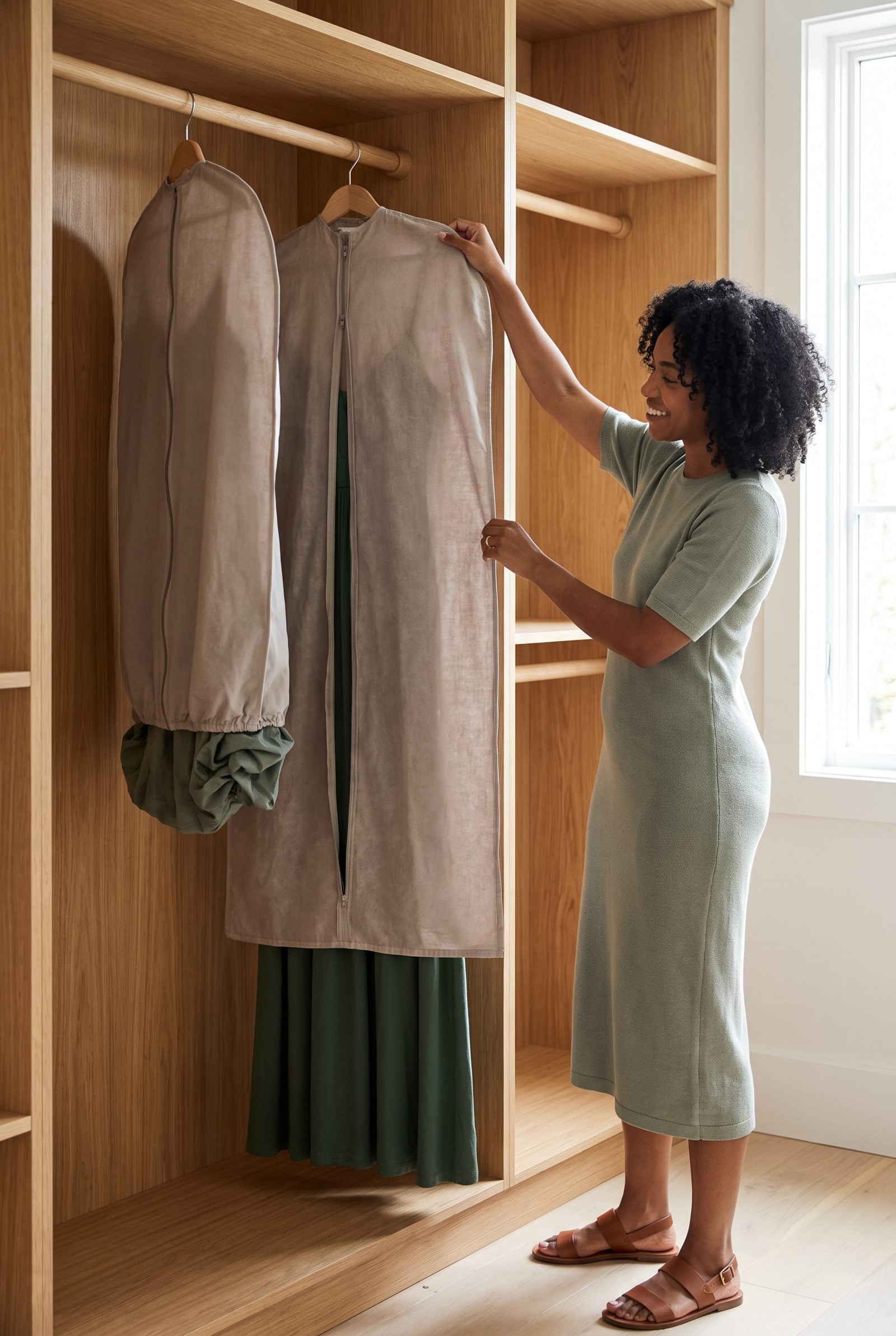
Here’s the mistake almost nobody catches: a garment bag two inches too short. The dress fits inside fine, but the hem folds up and presses against the closed bottom, and a season later there’s a permanent crumple set into the fabric right where everyone looks.
Measure before you buy. A gown or maxi needs a bag that lets the hem hang completely free, ideally an open-bottom style, and the same goes for coats and long cardigans. Gravity keeps fabric straight only when nothing’s crushing the bottom edge. Small fix. It spares you from ironing out creases that were never meant to be there.
11. Give Heavy Coats Wide, Rounded Wooden Hangers

A wool coat on a thin wire hanger is a coat slowly being warped out of shape. The narrow edge digs into the shoulder, stretching the fabric into little peaks and distorting the one part of a coat you can’t tailor back.
Wide wooden hangers with rounded, curved shoulders carry the weight across a broad surface instead of a single pressure point. Heavy coats and structured jackets need them most, because the heavier the garment, the harder gravity pulls down on whatever holds it. The shoulders stay true, the line stays sharp, and your good coat still looks like a good coat in year five.
10. Hang Trousers From Their Cuffs to Reduce Set-In Creases
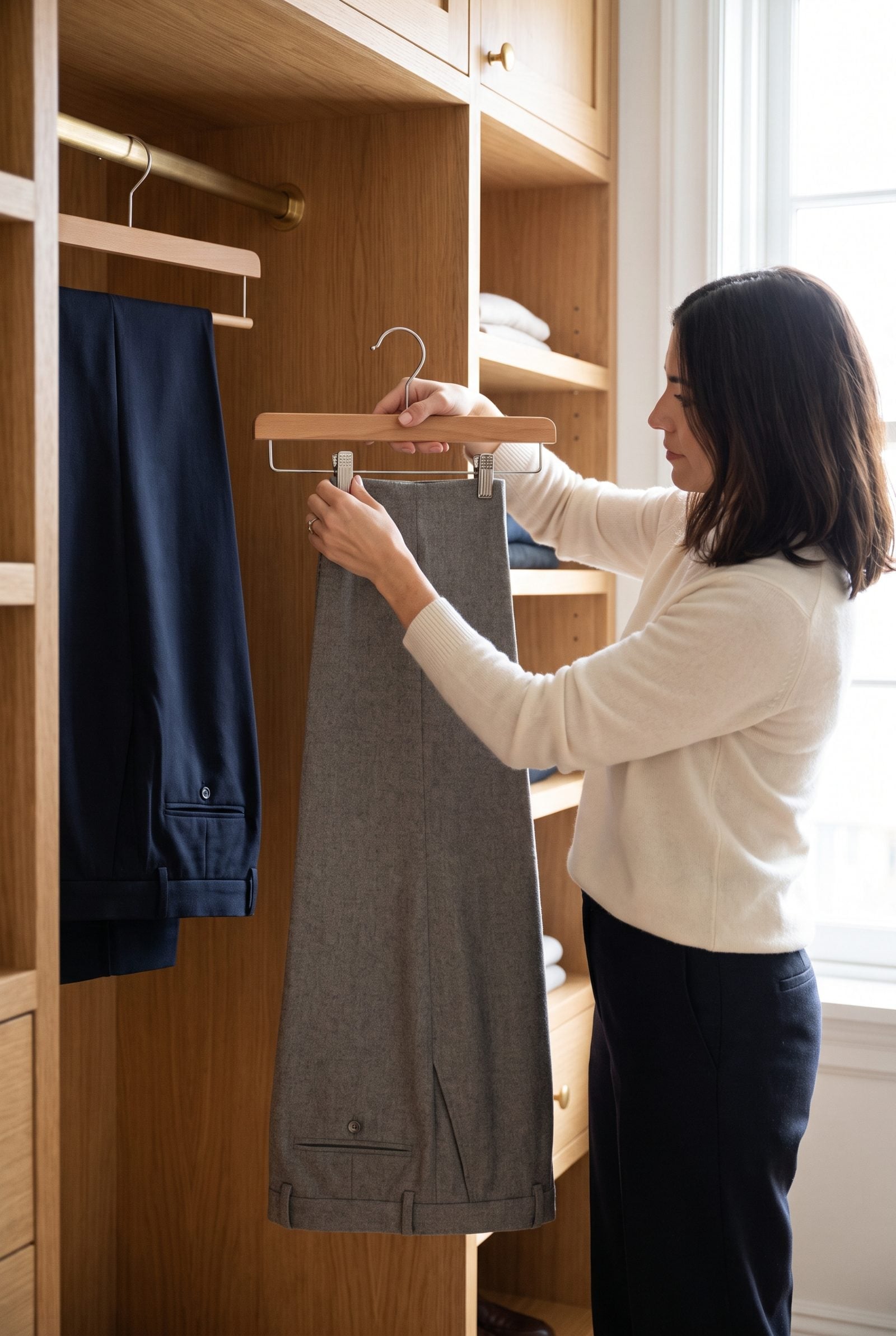
Fold trousers over a bar hanger and you build a crease exactly where you don’t want one, a hard horizontal line across the knee that no amount of steaming fully convinces to leave.
Hang them upside down instead. Clip the cuffs so the legs drop full length with the waistband hanging low, and gravity does the pressing for you, pulling wrinkles out of the fabric overnight while leaving the only crease you actually want, the vertical one down the front, right where a tailor put it. Works beautifully for wool, linen, and anything that holds a line. Fewer ironing emergencies before coffee.
9. Secure Slippery Straps With Fabric Hanger Loops

You know the sound. Something slides off its hanger in the night, and come morning your best silk cami is crumpled on the closet floor collecting dust and a fresh set of wrinkles.
Fabric strap loops, small velvet or ribbon loops near the hanger shoulders, catch those slippery straps and hold them put. Camisoles, slip dresses, anything with thin satin or bias-cut straps stays hung instead of pooling where it collects grime and gets stepped on. Cheap to add. And it stops the slow abrasion that happens every single time a delicate piece hits the ground and gets picked back up.
8. Clip a Visible Repair Tag to Every Stained Garment
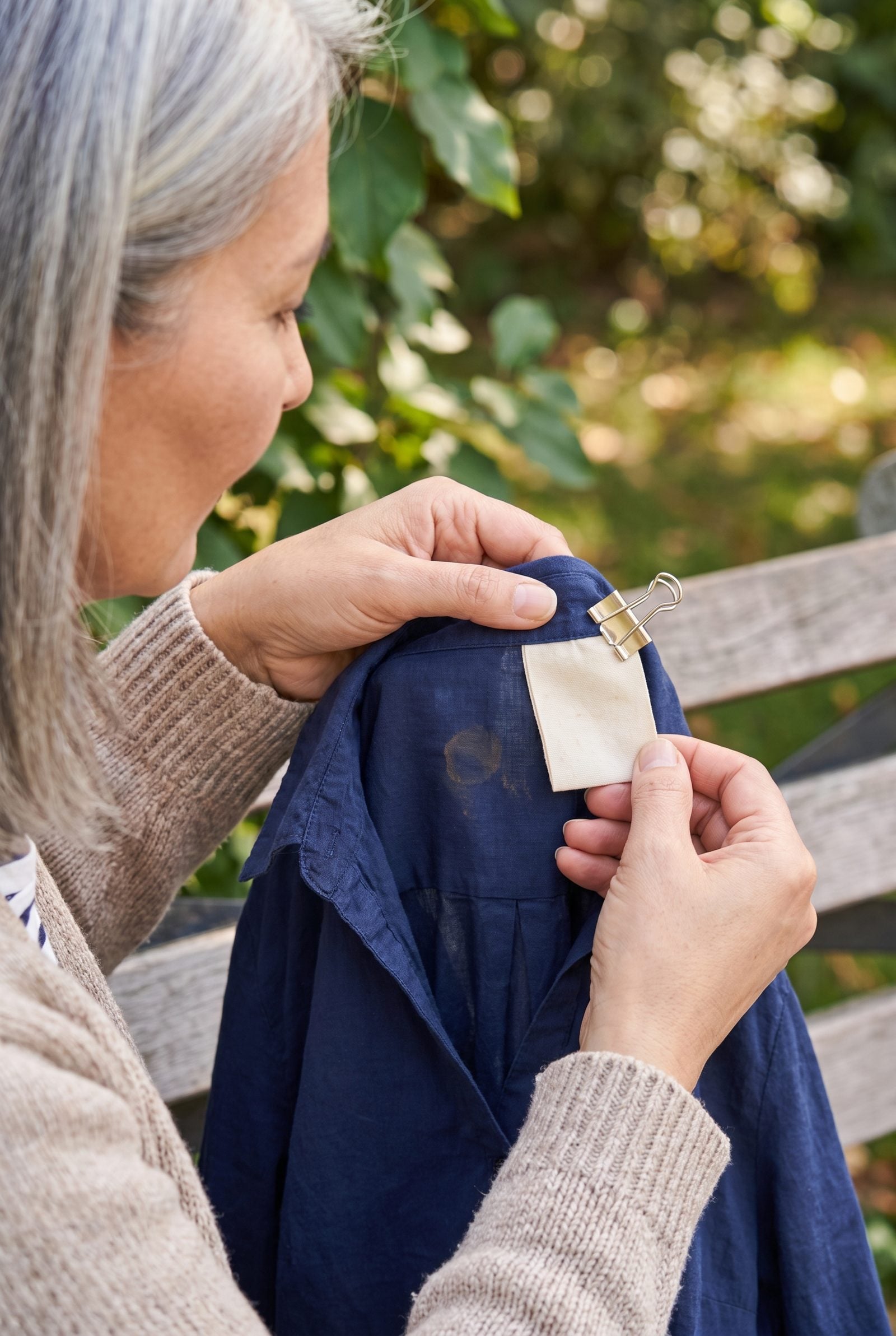
A stain you forgot about is a stain that sets. You wear something, notice a splash of wine or a grease dot, hang it back up meaning to deal with it, and three months later it’s permanent because heat and time did their work while you weren’t looking.
So clip a visible tag to anything that needs attention before it goes back on the rail. A bright little marker that says don’t wear, treat me keeps a flagged piece on the rail. It’s the untagged ones, like a blouse with a dark blotch you never marked, that you absentmindedly pull on and then heat-set at the next wash.
7. Store Spare Buttons in Labeled Envelopes Near Their Garments
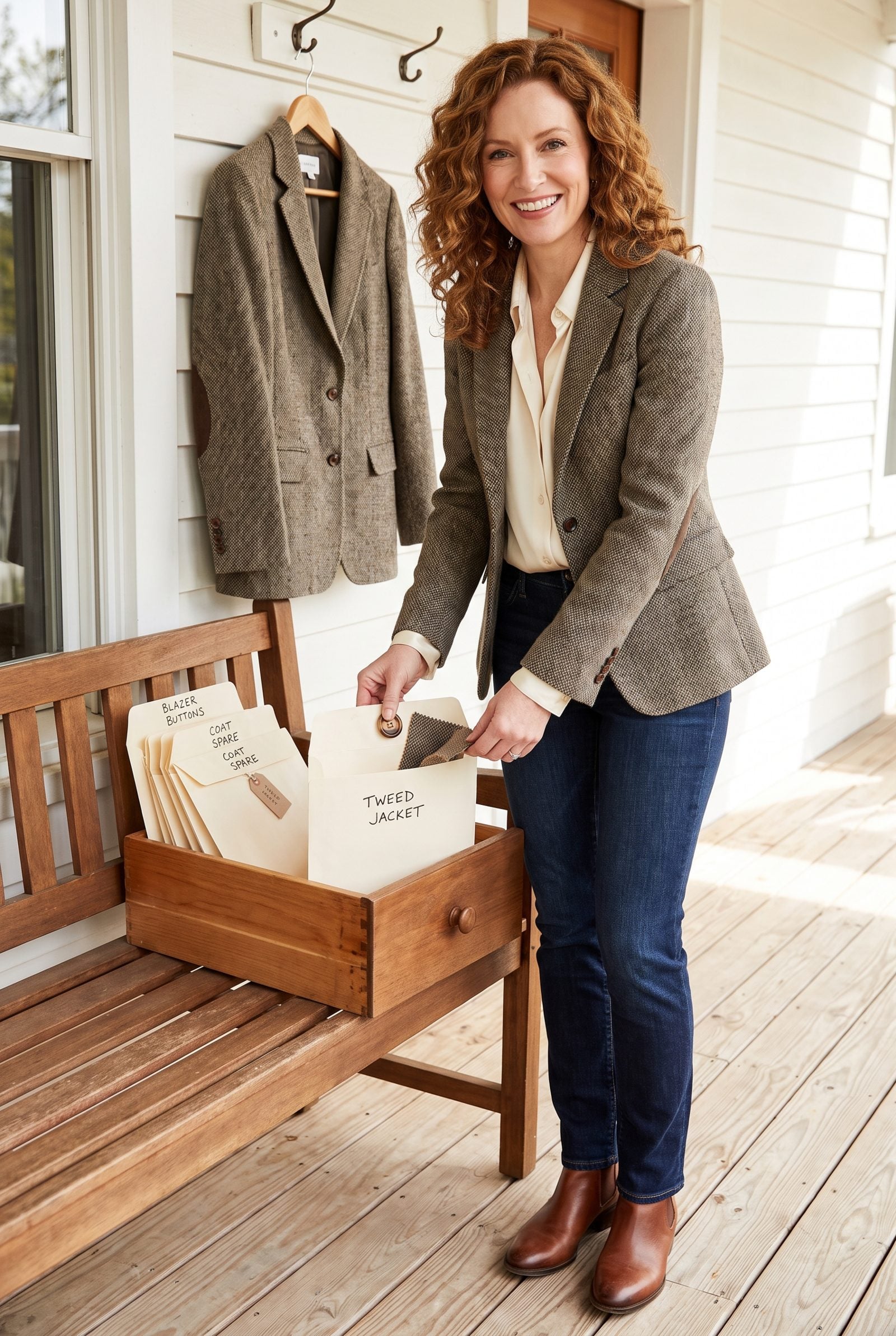
Every good garment arrives with a spare button sewn into a seam or tucked in a little bag, and every one of us loses it almost immediately. Then a button pops one day and you’re off hunting for a close-enough match that never quite matches.
Keep spares in labeled paper envelopes stored near the clothes they belong to. Paper over plastic here, because plastic can trap moisture and leave metal buttons tarnished or spotted. Tuck a tiny swatch of the fabric in alongside the buttons so you know at a glance what goes where. One popped button turns into a five-minute fix instead of a reason to retire a jacket you still love.
6. Keep Zipper Wax in the Closet for Sticking Metal Teeth

A stuck zipper is how good garments get retired early. You yank it, the fabric bunches, a tooth bends, and the whole closure is suddenly dead. A small bar of zipper wax parked on a closet shelf heads all that off.
Run the wax down the metal teeth of coats, boots, and heavy bags a couple of times a season so the pull glides instead of catching. Beeswax or a dedicated zipper bar both work. A white candle does in a pinch, though it can leave residue on pale fabric.
5. Use a Fabric Shaver Only on Raised Pills, Not the Whole Surface
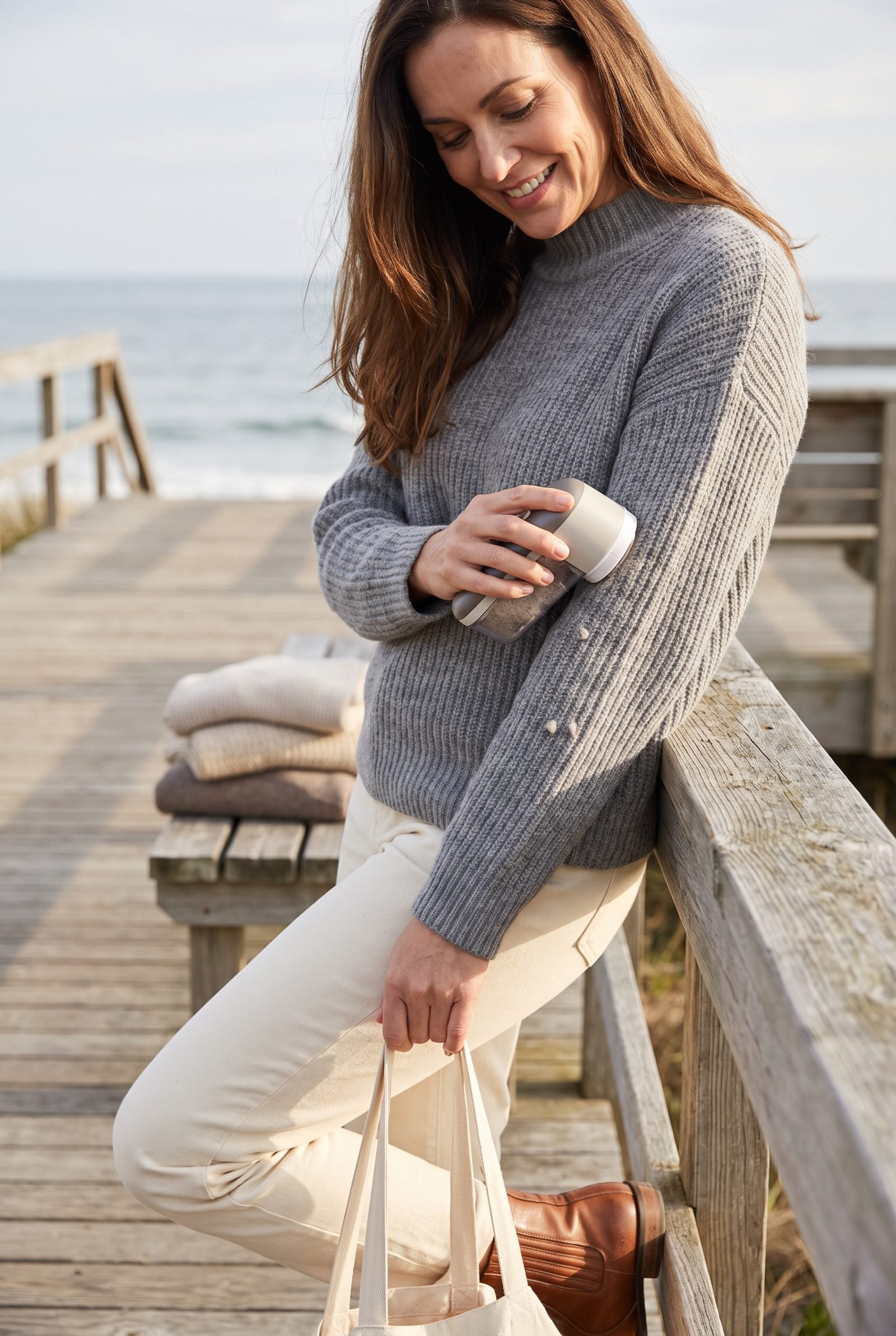
Most people drag a fabric shaver across an entire sweater like they’re mowing a lawn. That’s exactly how you thin the knit and put a hole in a sleeve.
Be targeted instead. Pills form where friction happens: inner arms, the sides where a bag rubs, the cuffs. Shave only those raised spots, keep the shaver flat, and let the guard do its job. The flat areas never needed attention. Go after them anyway and you strip healthy fiber, leaving a weak, see-through patch that no amount of careful folding will hide. Treat the spots alone and a good merino looks new for years rather than months.
4. Steam Storage Creases Out Instead of Repeatedly Pressing Them
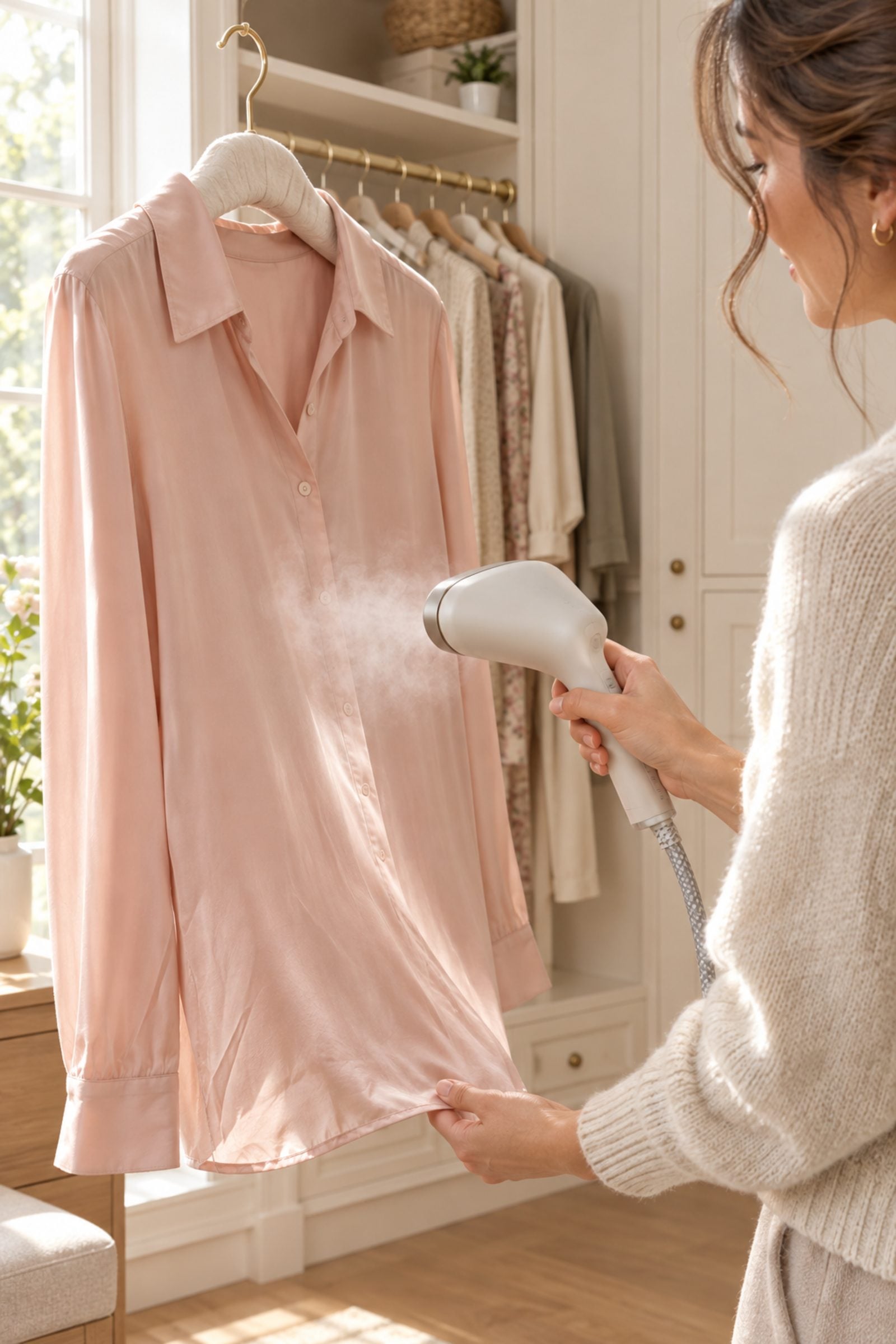
Every time an iron presses a crease, it bakes it deeper into the weave. Do it enough times along the same fold and the fibers wear thin right there. That’s why old trousers crack at the knee and shirts give out at the collar.
Steam does the reverse. It relaxes the fibers and lets the crease fall out without compressing a thing. Hang the piece, run the steamer a few inches away, and the storage folds drop. Silk, wool, and anything with a delicate finish love it. A steamer also freshens a garment between wears so you launder less often, which spares the fabric on its own.
3. Keep a Stain-Blotting Kit Beside the Laundry Hamper
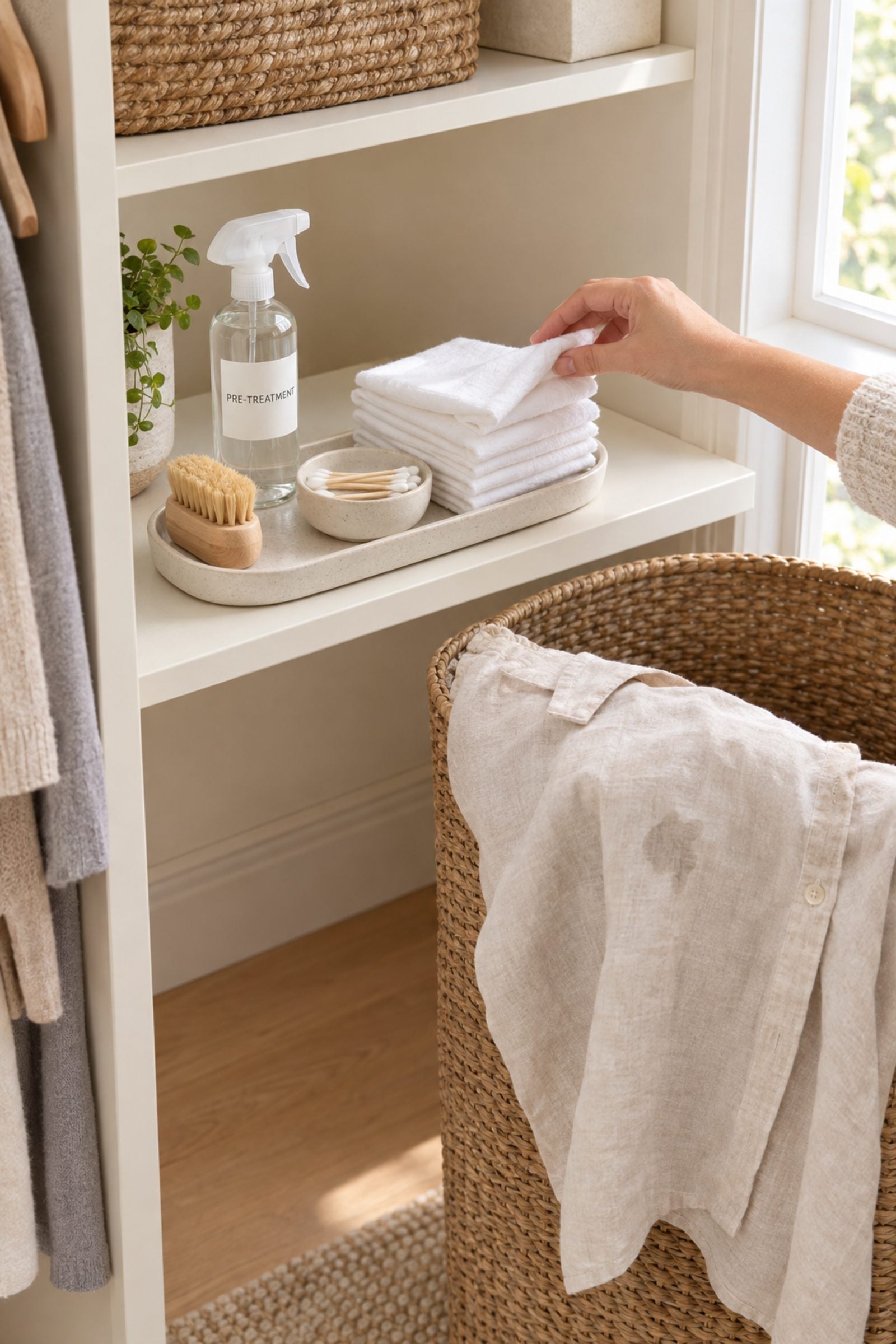
A stain is a race, and you lose it in the time it takes to walk to the kitchen for supplies. The spill sets, oxidizes, and by the time you treat it properly the mark won’t budge.
Keep a small kit right where clothes come off. A few white cotton cloths, a gentle pre-treatment spray, cotton swabs for precision. Blot, never rub. Rubbing shoves the stain deeper and roughs up the fibers, which is how you wind up with a faded, fuzzy patch even after the color lifts.
Speed decides it. A tomato spot caught in thirty seconds comes out, while the same spot discovered the next morning is grounds for tossing the shirt.
2. Move Perfume and Hairspray Away From Hanging Clothes

Spritzing perfume while you’re dressed in front of the closet feels efficient. It’s also how silk gets those faint yellow halos and how dark fabrics develop dull, bleached patches you can’t account for.
Perfume and hairspray carry alcohol and oils that discolor fibers and break down finishes. The mist drifts, lands on whatever is hanging nearby, and does its slow work. You notice months later.
Scent your skin first, let it dry, then dress. Park the bottles on a dresser or vanity across the room, never on a shelf inside the closet. Pearls hate this stuff too, so give any jewelry the same wide berth.
1. Wrap Handbag Hardware Before Storing It Near Clothing
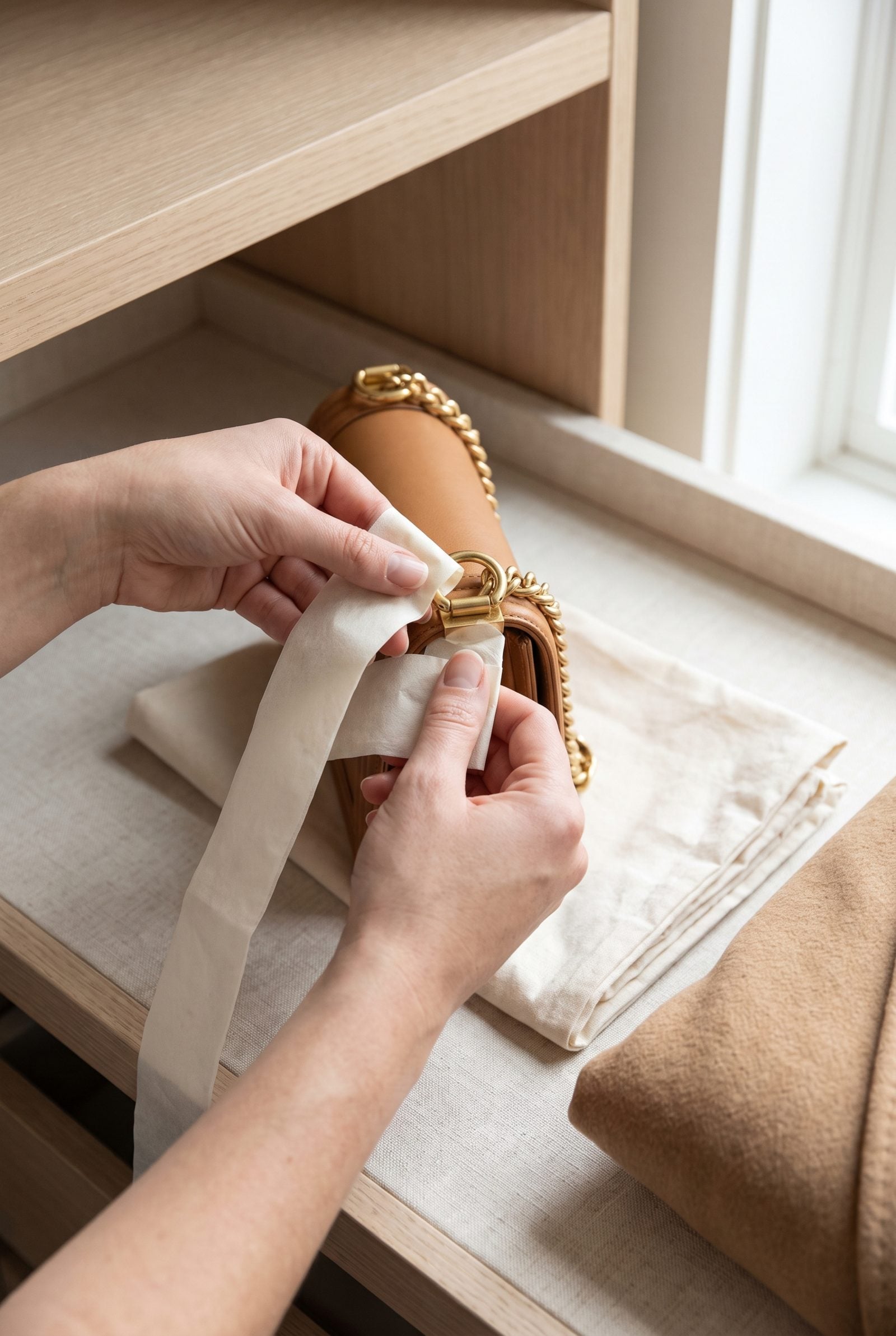
Handbag hardware is the quiet vandal of a closet. A metal buckle or chain strap leaning against a hanging dress will snag the weave, leave pulls, and press permanent shiny dents into delicate fabric. Zippers do it too.
So wrap the buckles, chains, and clasps in acid-free tissue before the bag goes into its dust cover. The tissue cushions the metal so nothing hard touches cloth, and it stops the hardware from scratching the bag’s own leather as it sits. Stuff the bag lightly with tissue while you’re at it to hold its shape. A soft dust bag over everything blocks the light that fades leather.