
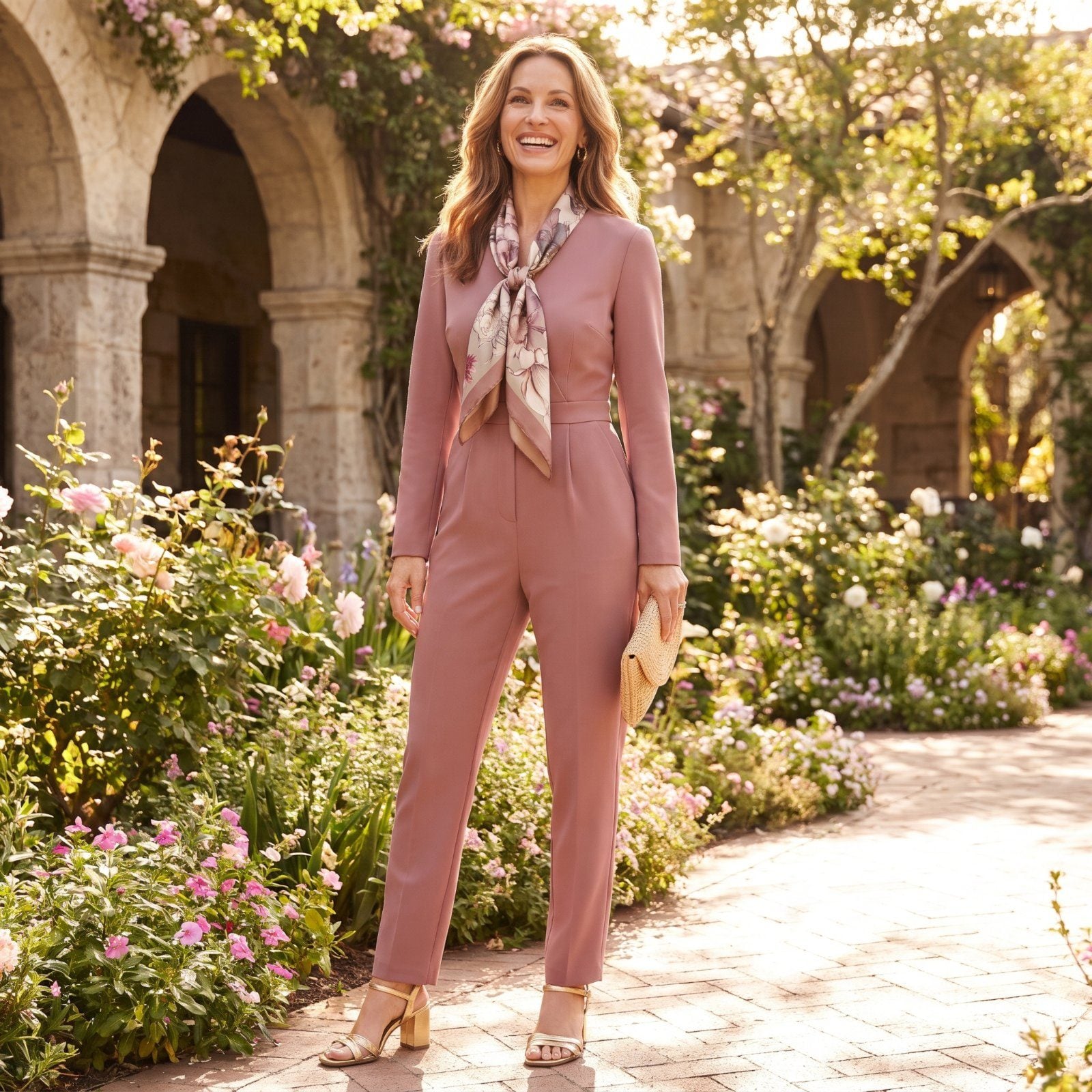
A guest once wore cream to a garden ceremony, swearing it was “technically champagne.” The photos disagreed. Dress codes on invitations read like polite suggestions, but they carry rules nobody prints and everybody judges. The gap between what the card says and what the couple actually expects? That’s where good intentions go sideways. We pulled together the quiet laws of wedding guest dressing — the ones protecting your comfort, the couple’s day, and your reputation in the group photos. Read them before you shop, not after you’ve been seated next to someone’s judgmental aunt.
FYI, thanks to AI imagery software, we’re able to create very specific fashion and hairstyle examples to illustrate the points being made. In some cases, imagery is exaggerated to hammer home the point. Also, assume links that take you off the site are affiliate links such as links to Amazon. this means we may earn a commission if you buy something.
43. Treat the Stated Dress Code as a Requirement, Not a Vibe
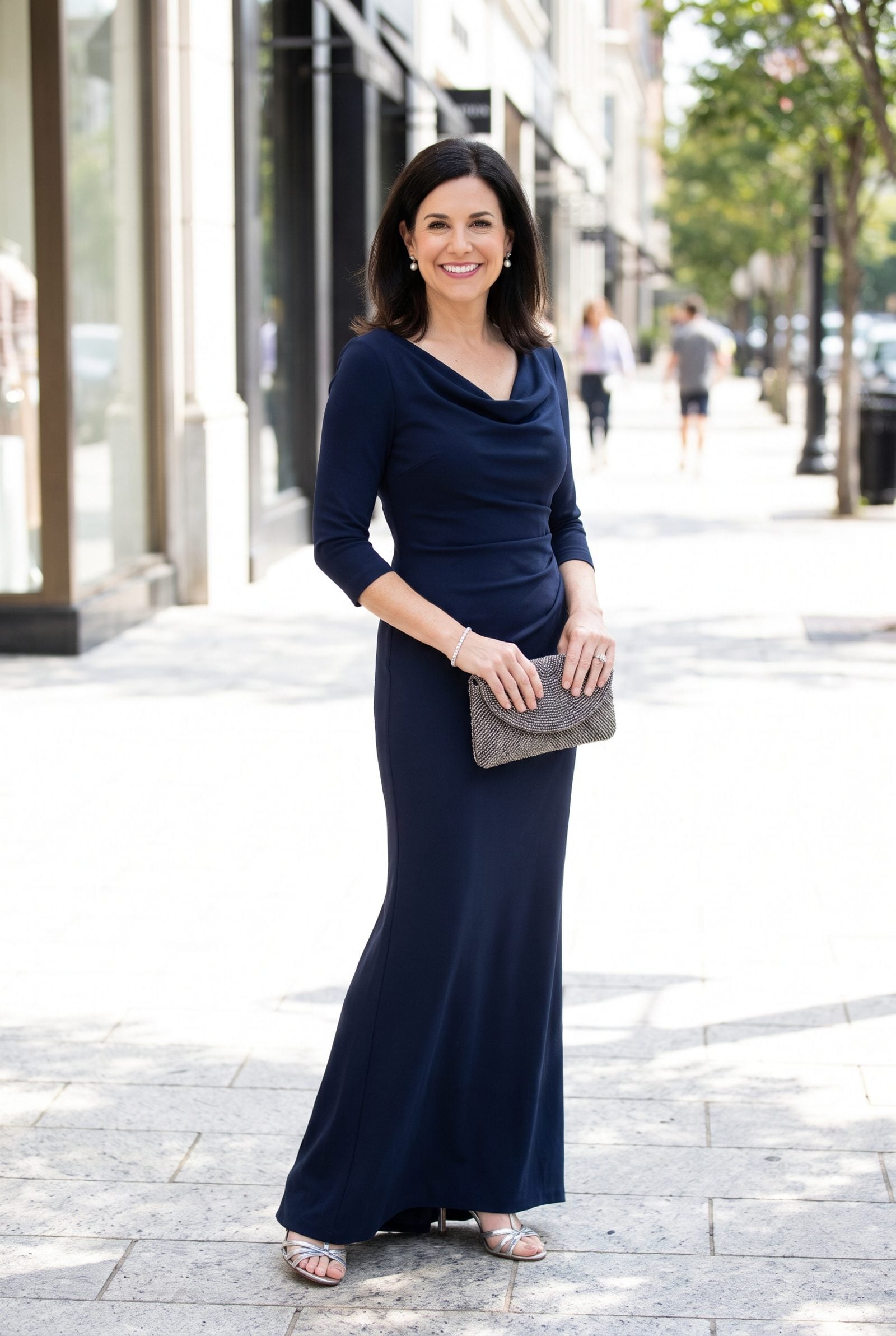
Black-tie means black-tie. When the card specifies a dress code, it’s telling you the formality the couple built their entire day around — the venue, the flowers, the band. A floor-length navy crepe gown reads as respect for that choice.
The draped cowl and three-quarter sleeves keep it dignified rather than flashy, and the matte fabric photographs beautifully without competing with anyone. Match the room’s register and you disappear into the celebration in the best possible way.
Asked what a black-tie invitation really means, a wedding publication editor says “There is little room for interpretation. Traditionally a black tie wedding takes place after 5:30 p.m., necessitating evening attire like a tuxedo or long gown.”
42. Check the Wedding Website Before You Commit to Anything
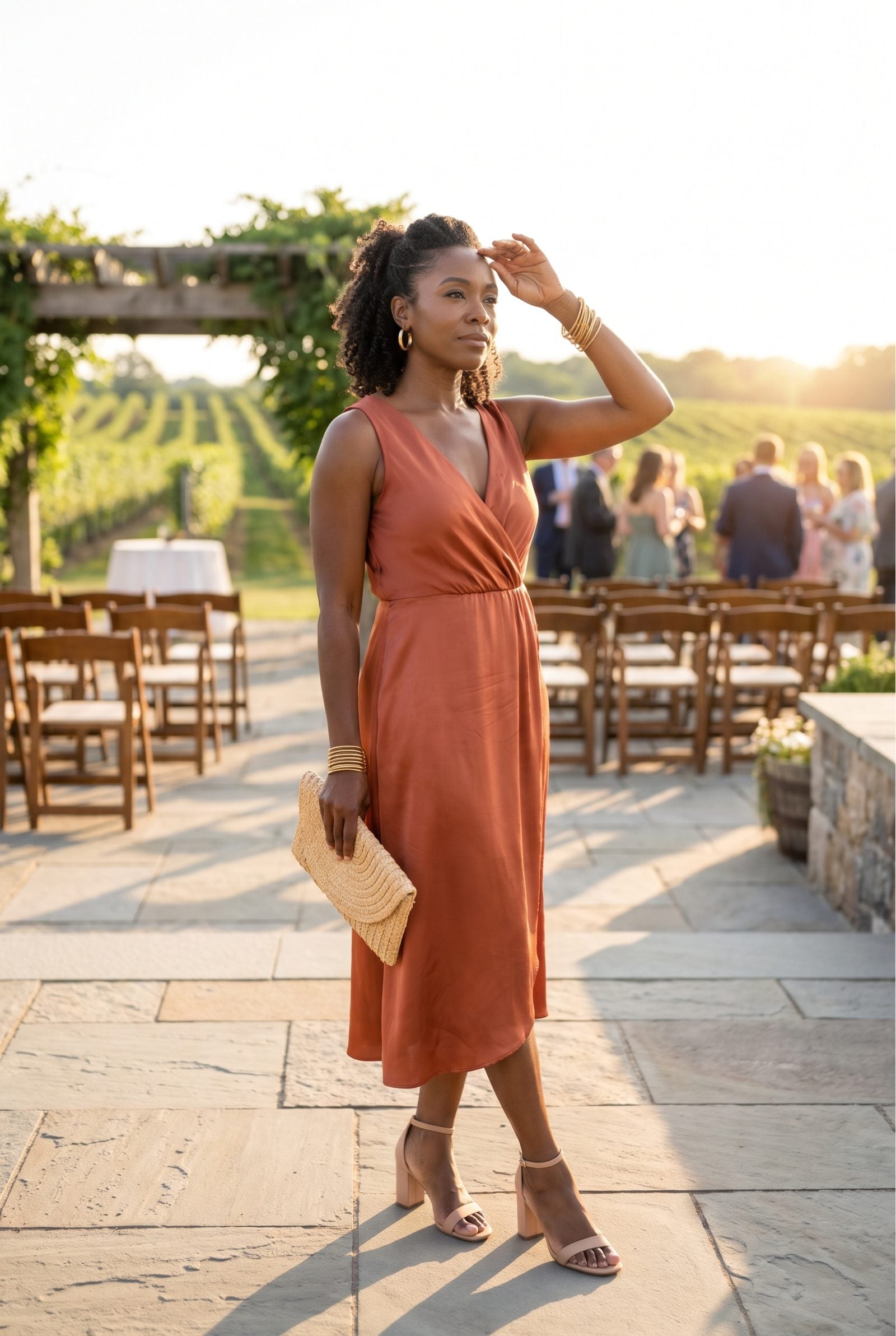
Couples update their wedding websites constantly, and the attire note is usually the last thing finalized. A “cocktail” invitation can quietly become “garden formal, flat shoes recommended” two weeks out, which changes everything from your hemline to your heel height.
This terracotta satin midi works because the surplice neckline and gathered waist read dressy without locking you into a formality you might need to adjust. Check the site the week before. It takes four minutes and saves you a full outfit reversal.
41. Ask the Designated Contact When the Wording Leaves You Guessing
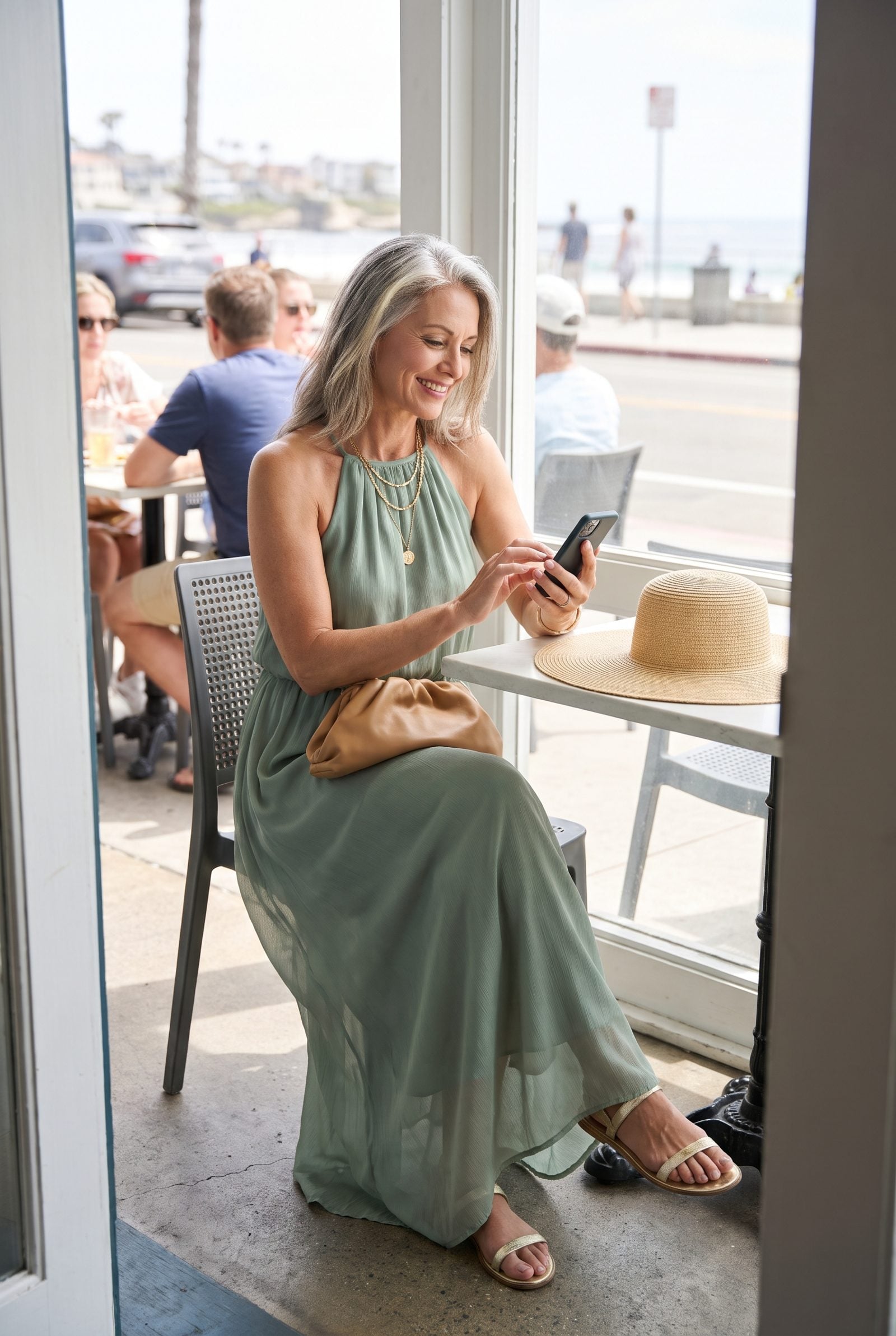
“Festive attire” means nothing and everything. Vague wording is not an invitation to guess and hope. The couple names a contact for a reason, and asking a direct question signals that you care enough to get it right.
This sage chiffon maxi answers the beach-wedding puzzle with a halter neck, a handkerchief hem that catches the wind, and flat metallic sandals that survive sand. One text to the right person turns anxiety into a decision you can shop with confidence.
40. Dress Slightly Up Rather Than Noticeably Down
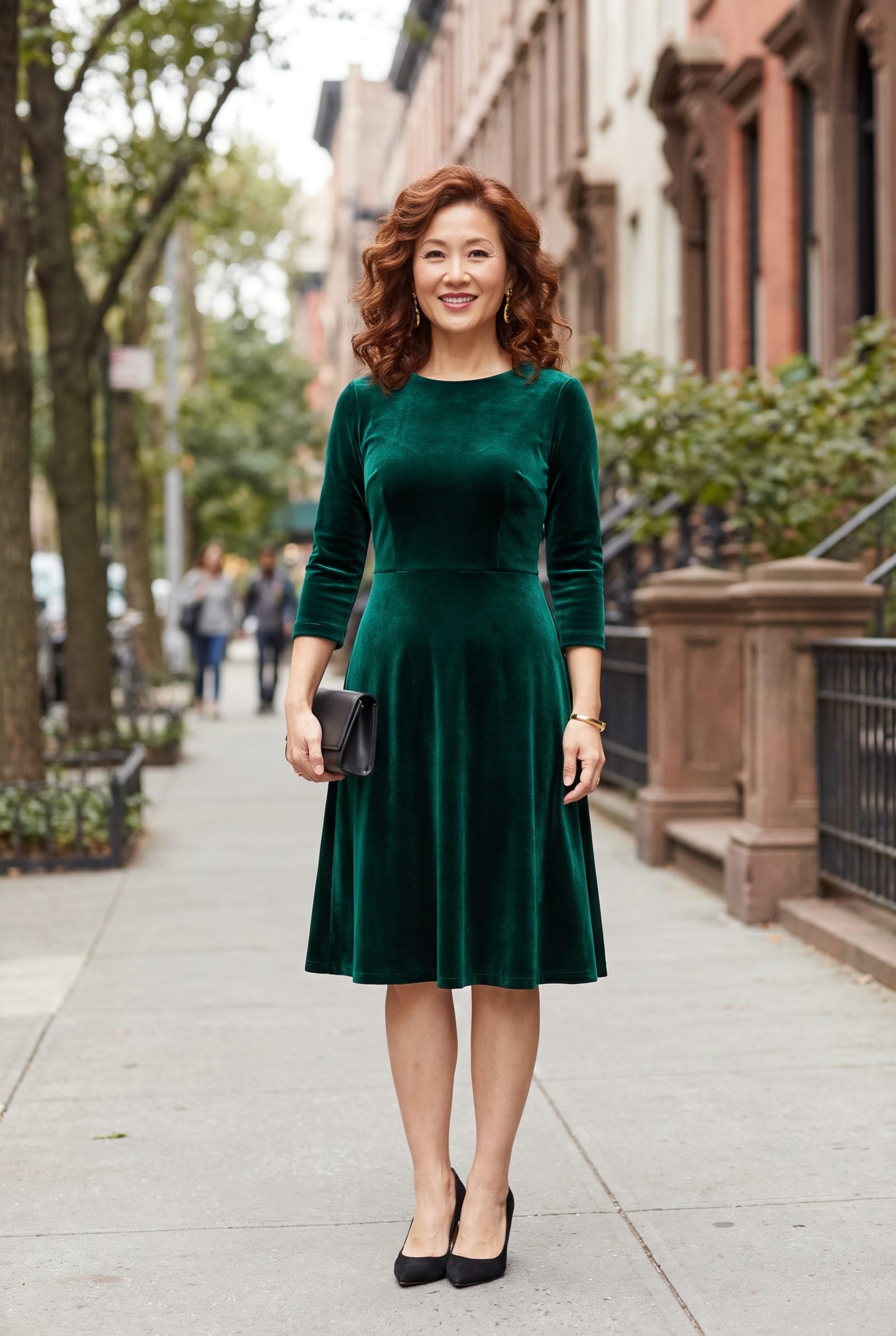
When in doubt, aim half a notch above the code. Nobody has ever been embarrassed for looking a touch too put-together at a wedding. The opposite happens constantly.
This emerald velvet cocktail dress is the move. The jewel tone reads festive, the velvet adds weight and occasion, and the A-line skirt keeps it comfortable through dinner. Err toward looking like you made an effort, because the photos last forever — and “I was comfortable” is cold comfort when you see them.
39. Read the Venue as Context, Not a Loophole
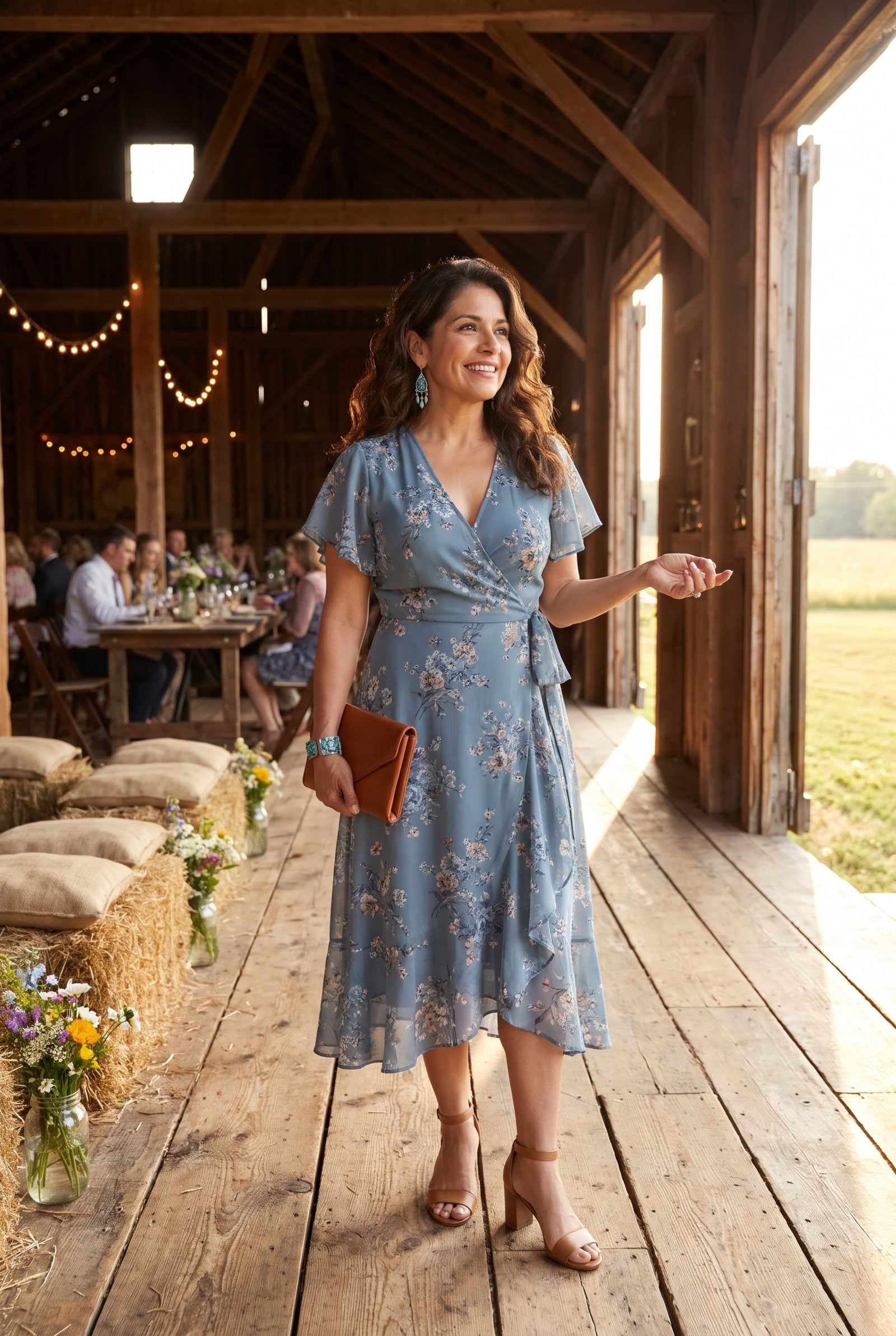
A barn wedding does not cancel the dress code. The venue tells you about texture and footwear, not whether you can downgrade from the stated formality. A field setting means block heels instead of stilettos, not jeans instead of a dress.
This dusty-blue georgette wrap dress gets it exactly right: the midi length and flutter sleeves suit the rustic warmth, and the tan block heels won’t sink into plank floors. Let the venue guide your fabrics and your shoes. Let the invitation guide your formality.
38. Avoid White, Ivory, Cream and Anything That Photographs as Bridal
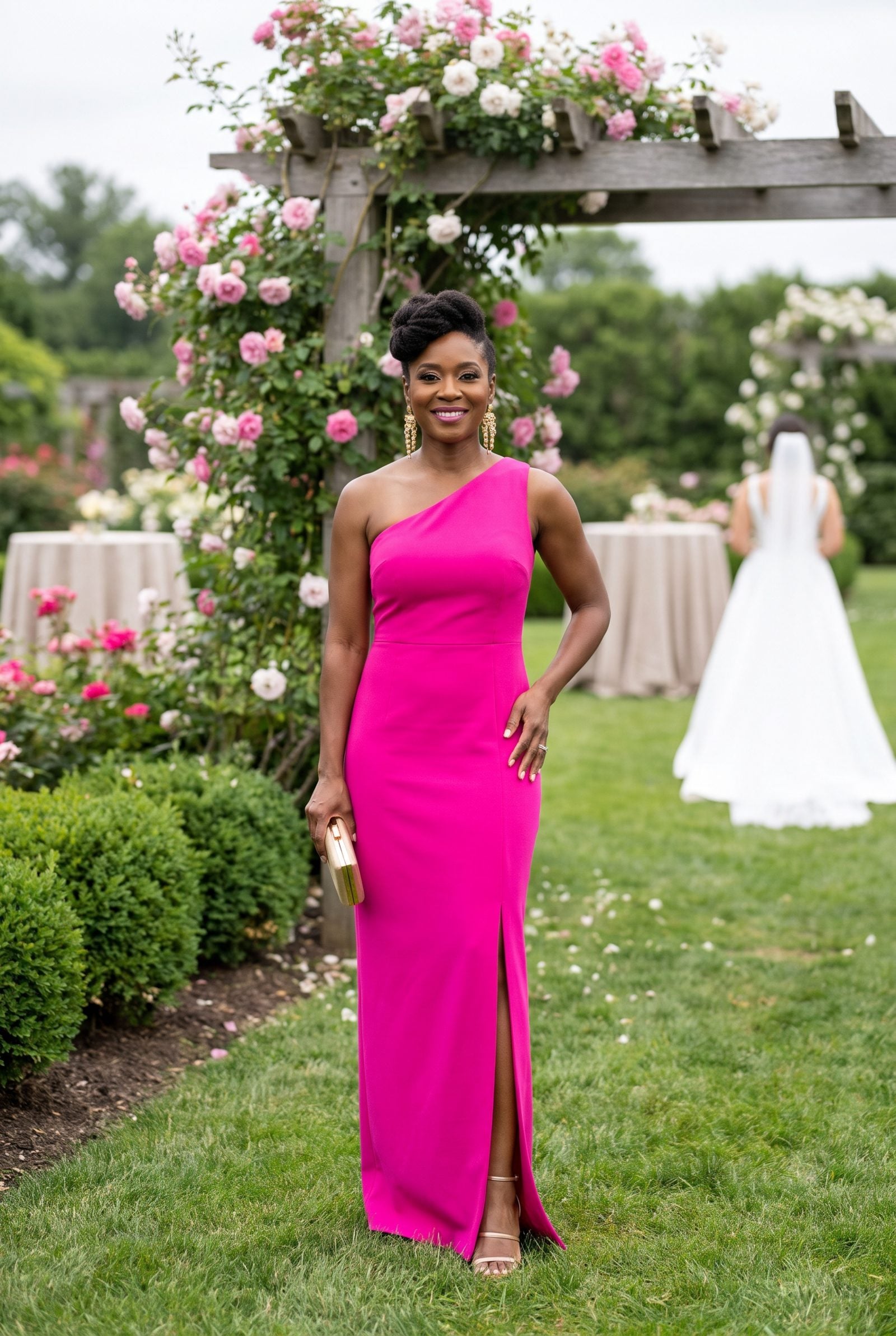
The white-dress rule is the one that ends friendships, so take it seriously. It isn’t just full-on bridal gowns. Pale ivory, blush that reads cream in flash photography, and anything that goes ghostly under venue lighting all count.
The fix is easy and more fun anyway. Go saturated. This fuchsia column gown in matte crepe commits to color so hard that nobody could mistake the wearer for anyone but a guest having a great night. The one-shoulder neckline and clean lines do the work without a hint of ambiguity.
37. Skip Silhouettes That Read Like a Wedding Gown
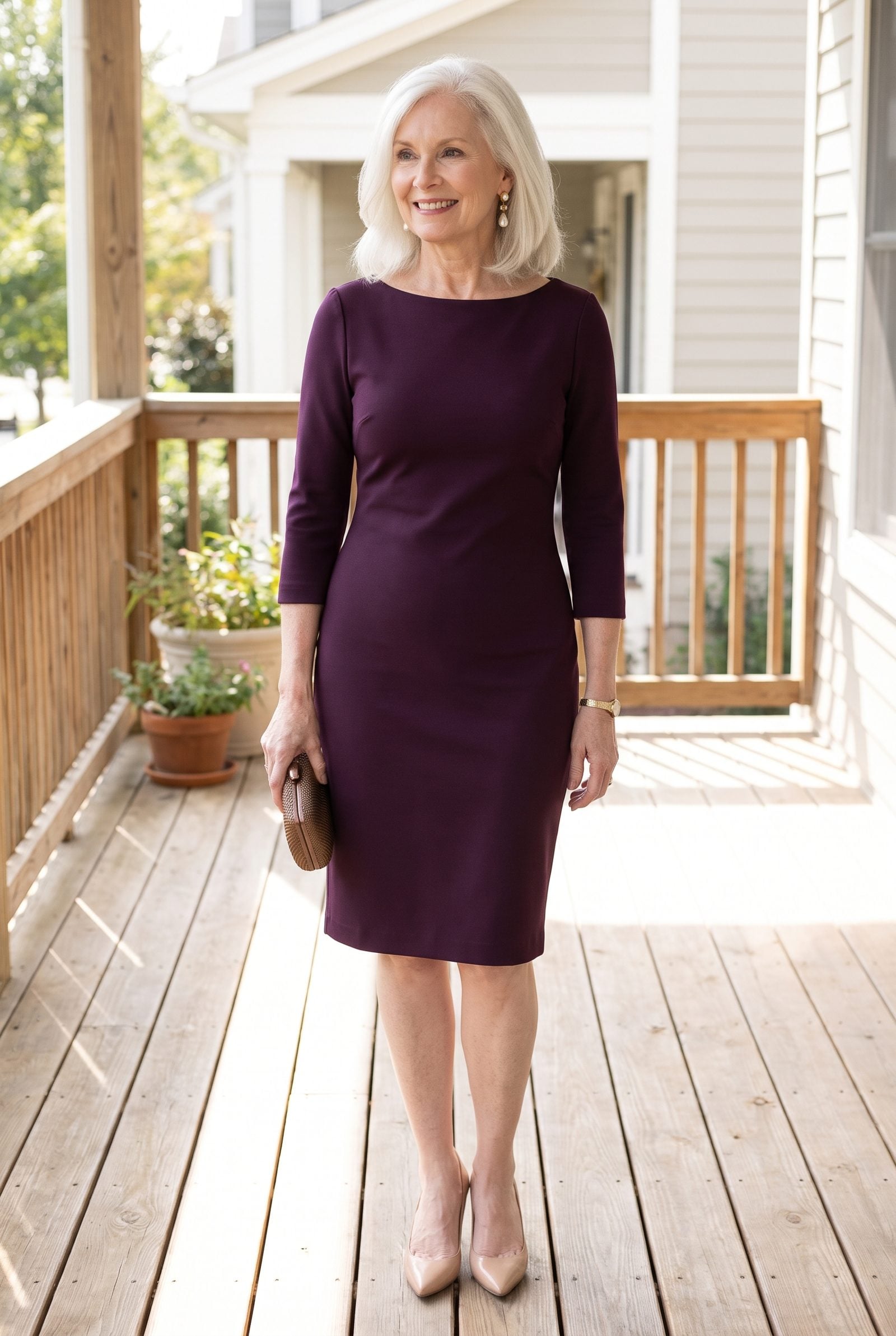
Color is not the only trap. A full ballgown skirt, a cathedral train, heavy beaded lace, a strapless sweetheart bodice — these read bridal even in navy or burgundy. The shape talks before the color does.
This plum ponte sheath goes the opposite direction, with a clean bateau neckline and a tailored knee-length cut that never flirts with gown territory. Structure over volume is your guide here. When the silhouette is controlled and modern, nobody looks twice for the wrong reasons.
36. Avoid the Bridesmaid Color or Looking Like Unassigned Help
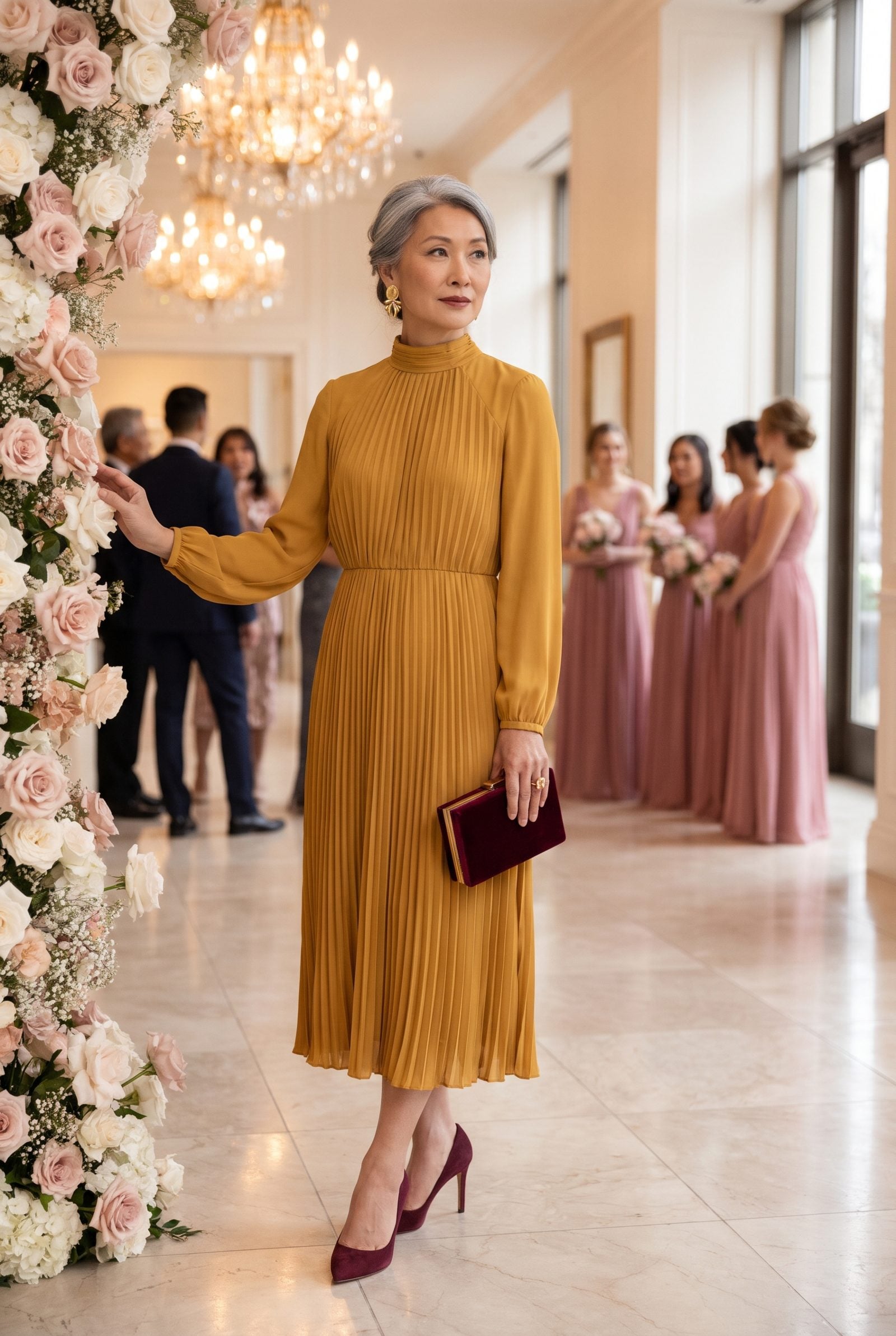
If the wedding party wears dusty rose, that is the one color you leave at home. Nobody wants to spend the reception getting handed empty glasses because they blend into the attendants. And it happens.
Same goes for plain matching basics that read as catering uniform — a black vest, a white blouse combo, anything too utilitarian. This mustard-gold pleated midi solves both problems at once: the warm, unexpected tone separates you from any bridesmaid palette, and the pleats and burgundy accessories mark you clearly as a guest who chose her own look.
35. Wear Black Unless the Couple or Culture Says Otherwise
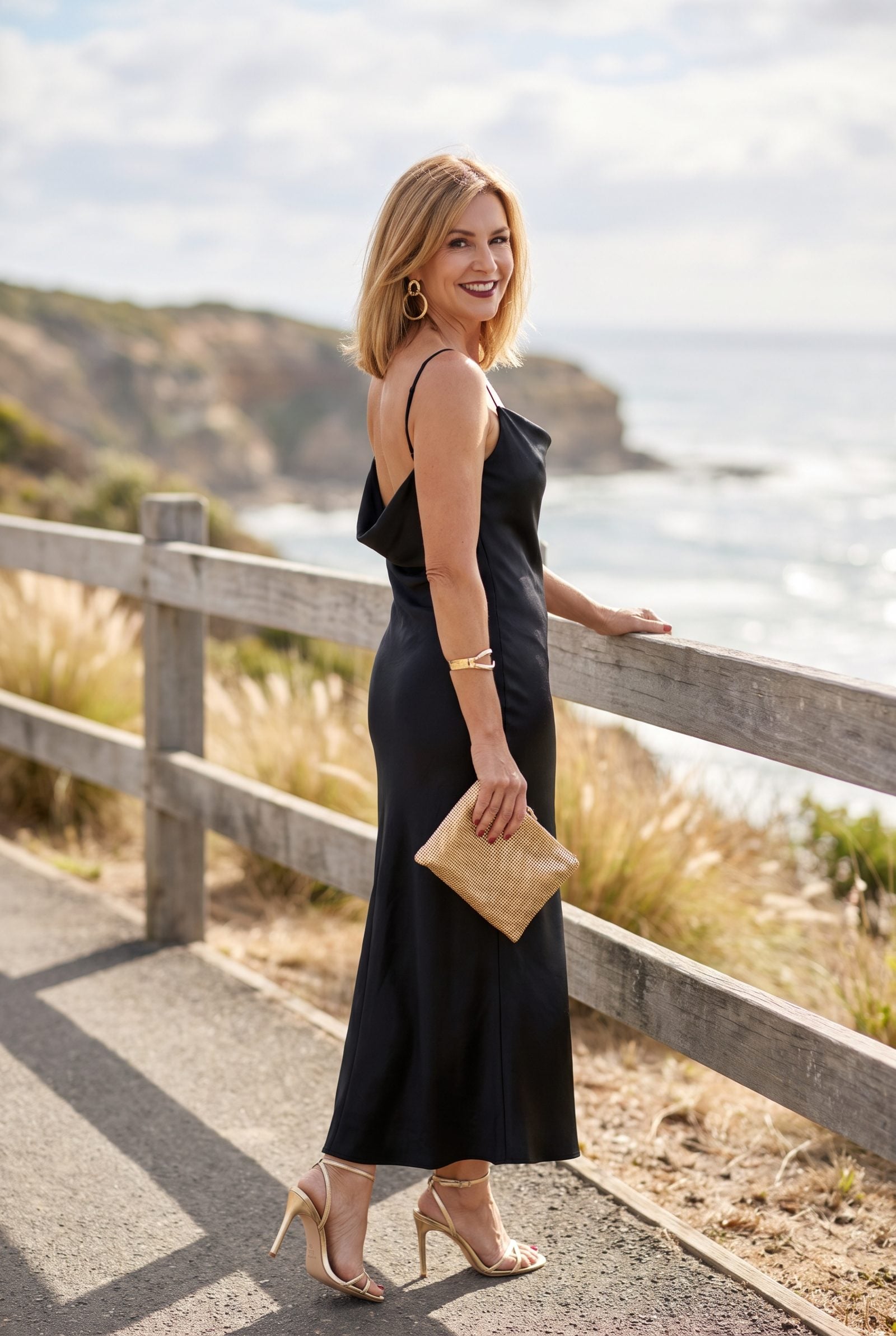
Black at a wedding stopped being taboo a long time ago, and honestly, thank goodness. For an evening formal event, a black satin slip gown is one of the surest things you can wear — provided nothing about the couple’s culture or request rules it out.
The bias cut and cowl back keep it soft and celebratory rather than funereal. Warm it up with a red lip and gold accessories and the black becomes a backdrop for you, not a somber statement. Check first for cultural context, then wear it without apology.
34. Research Local Customs and Colors That Carry Meaning
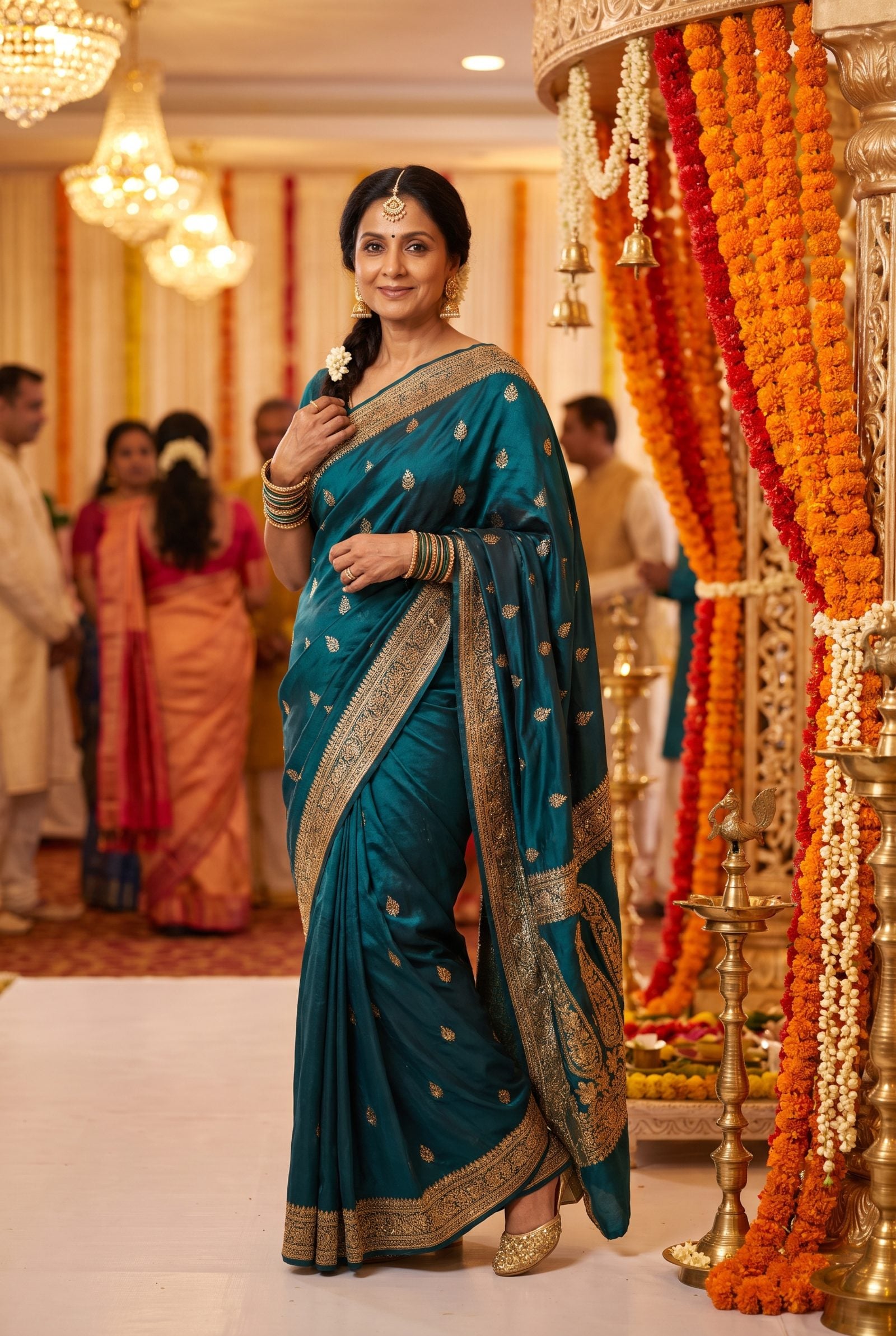
Colors mean different things in different rooms. Red is celebratory and lucky at many South Asian and Chinese weddings and discouraged at others, while white signals mourning in parts of East Asia. Showing up in a color that reads wrong is a mistake no amount of good tailoring fixes.
Do five minutes of research, or ask the contact, before you shop. This teal silk saree with a gold zari border respects the setting while letting the wearer bring real presence. Getting the cultural read right is the deepest form of respect you can pay a couple on their day, and they will remember it.
33. Wear Heritage Dress Only With a Genuine Connection or an Invitation
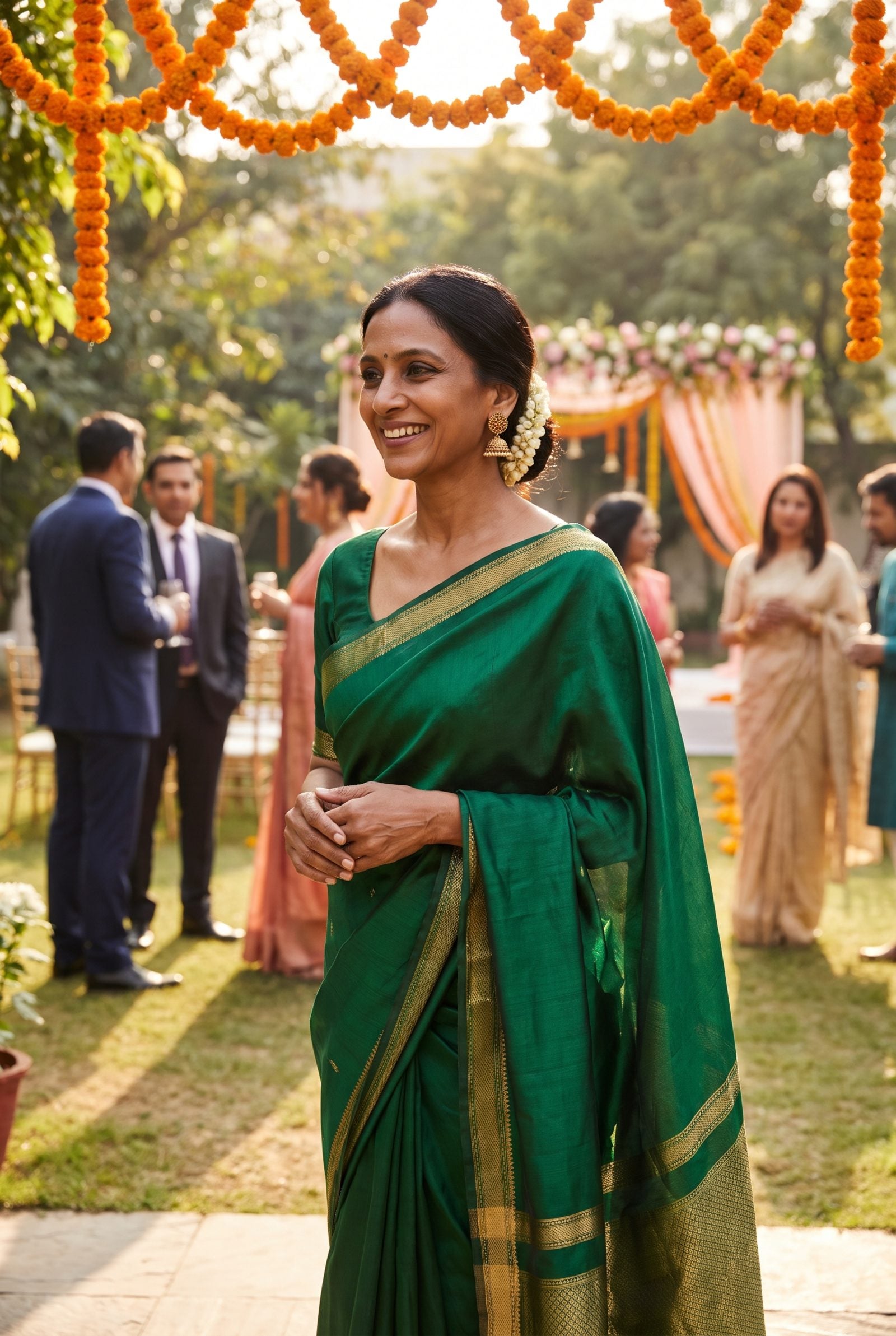
Heritage dress carries meaning that belongs to the people it comes from. If a couple invites you to honor their culture through your clothing, that’s an open door — walk through it with care and a little homework. Without that connection or invitation, borrowing someone’s traditional garment reads as costume rather than respect.
The saree works here when the wearer has the standing to wear it. Emerald silk against gold zari does the real styling work: liquid texture against metallic shine, and honestly, nothing else is needed.
32. Interpret the Theme Without Turning Your Outfit Into a Costume
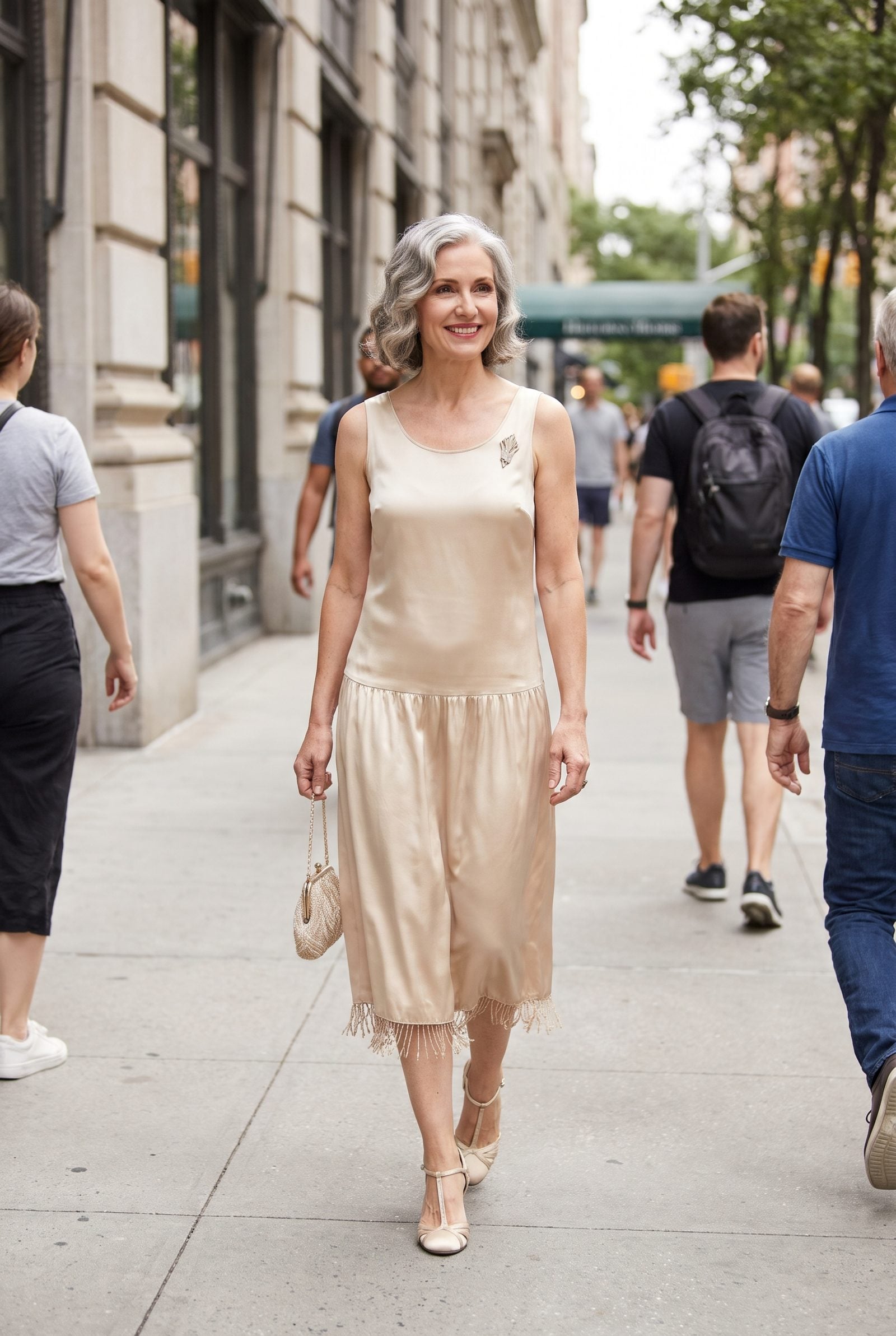
There’s a line between honoring a theme and showing up in a rental, and it’s thinner than people think. A Gatsby wedding doesn’t want a feather headband and a cigarette holder. It wants a drop-waist silhouette, a whisper of beading, finger waves done with a light hand.
The deep gold silk and that single geometric brooch handle the era just fine. One restrained period detail reads as clever. Five of them read as a Halloween aisle.
31. Use the Full Formal-to-Cocktail Range for Black Tie Optional
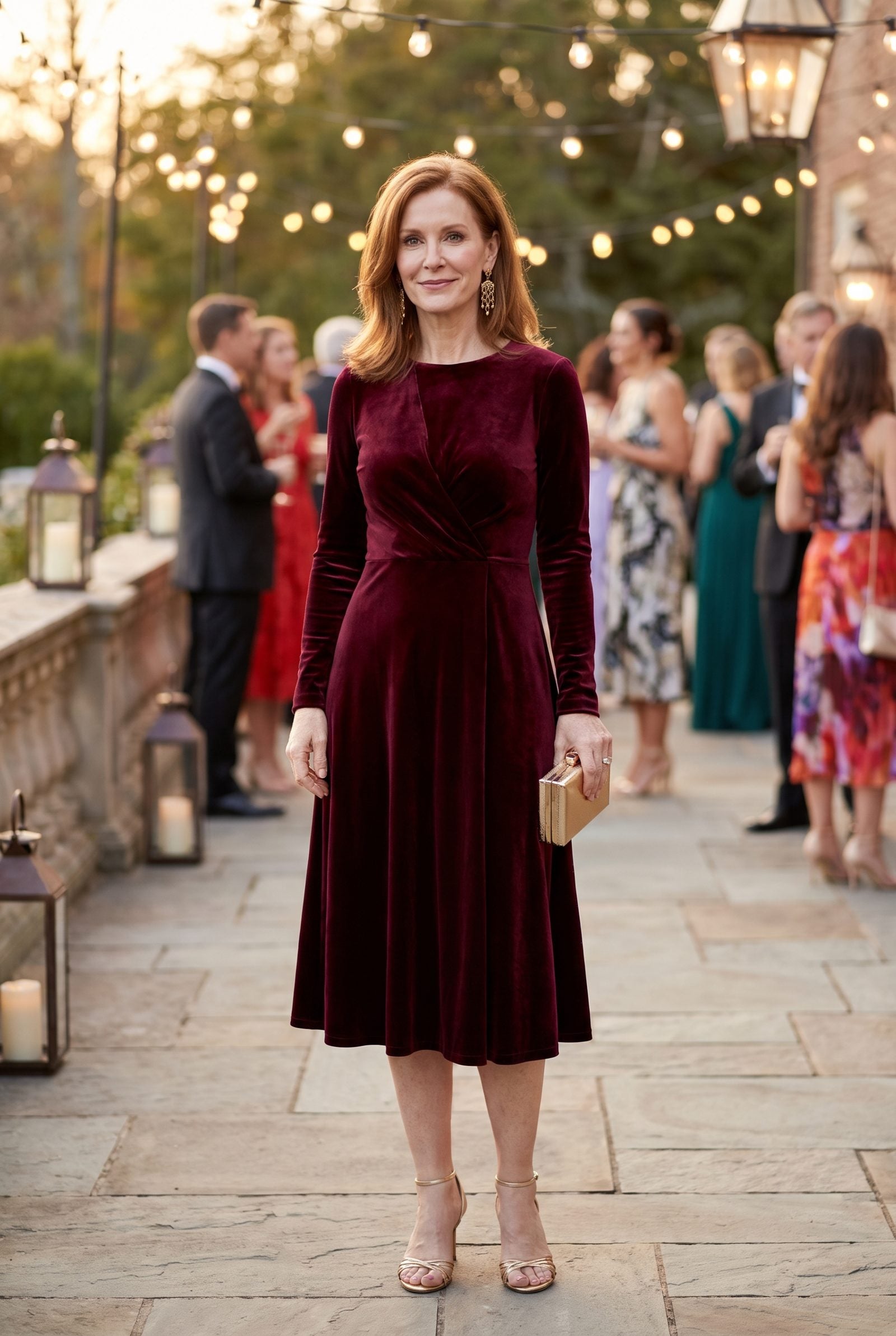
Black tie optional is permission, not a trap. Go full gown or land on a serious cocktail dress — both answer the invitation correctly, and the range is yours to use.
Burgundy velvet is the smart middle ground. The texture carries a formality a plain midi would miss, deep and light-catching, while the A-line skirt keeps it easy to move in across a terrace. Gold against that wine tone is warm, flattering, and it photographs beautifully by lantern light.
30. Choose a Polished Gown, Midi or Suit for Formal Attire
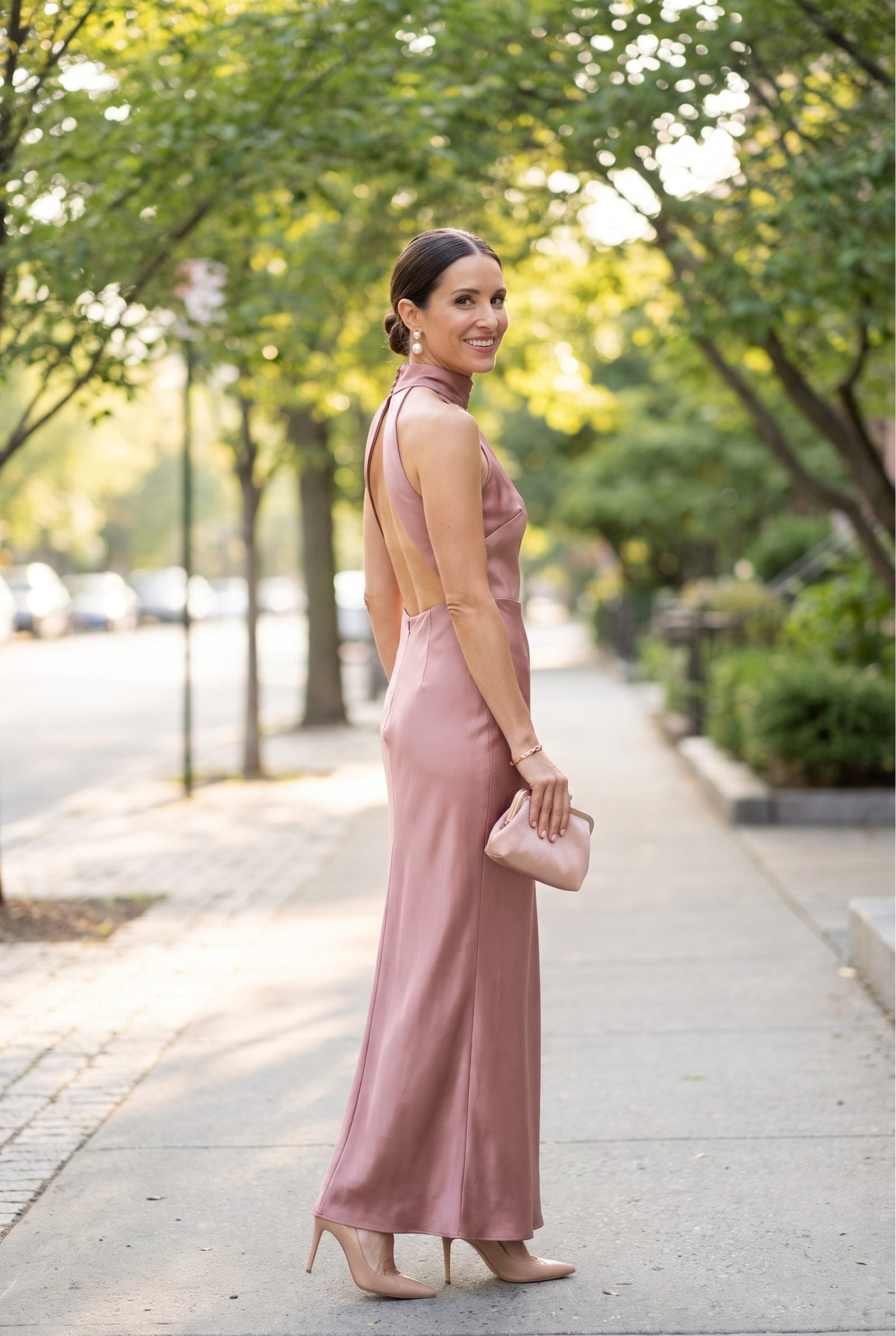
Formal gives you room. A gown, a refined midi, or a sharply tailored suit all land in bounds, and the word to hold onto is polished. Nothing casual sneaks in under this code.
The dusty rose satin column does its heavy lifting through restraint — one clean line from shoulder to floor, broken only by an open back that keeps the front demure and the exit memorable.
29. Keep Cocktail Attire Dressy, Refined and Reception-Ready
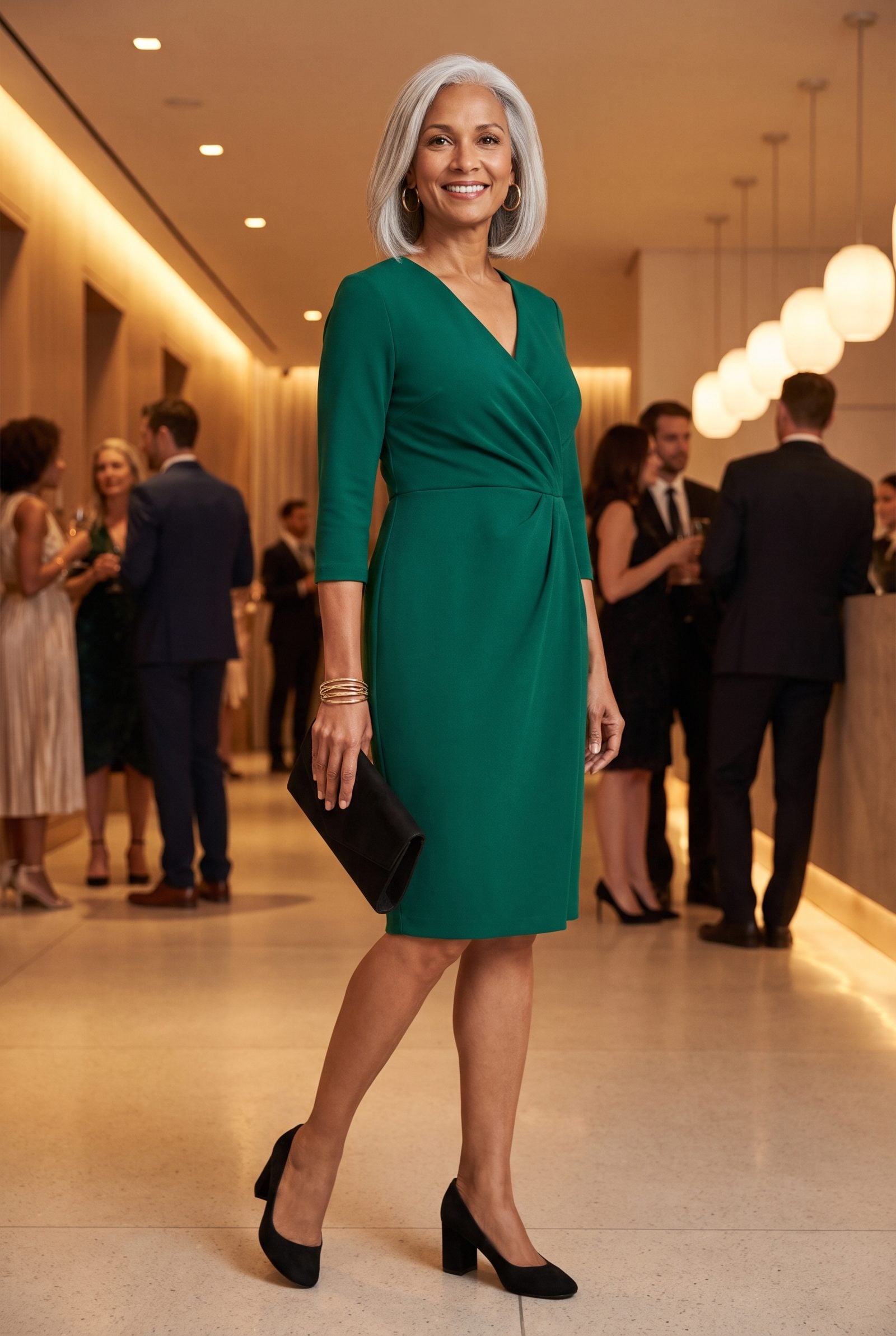
Cocktail is the most misread code at the whole wedding. It isn’t a sundress and it isn’t a ballgown — it’s knee-length to midi, genuinely dressy, built for standing with a drink and dancing later.
The emerald crepe wrap dress nails it. Matte texture keeps it grown-up, the wrap defines the waist, and the block heel means you last past the first dance. Jewel tones on a confident silver bob? A pairing we’ll defend all day.
28. Make Semi-Formal Outfits More Elevated Than Office Clothes
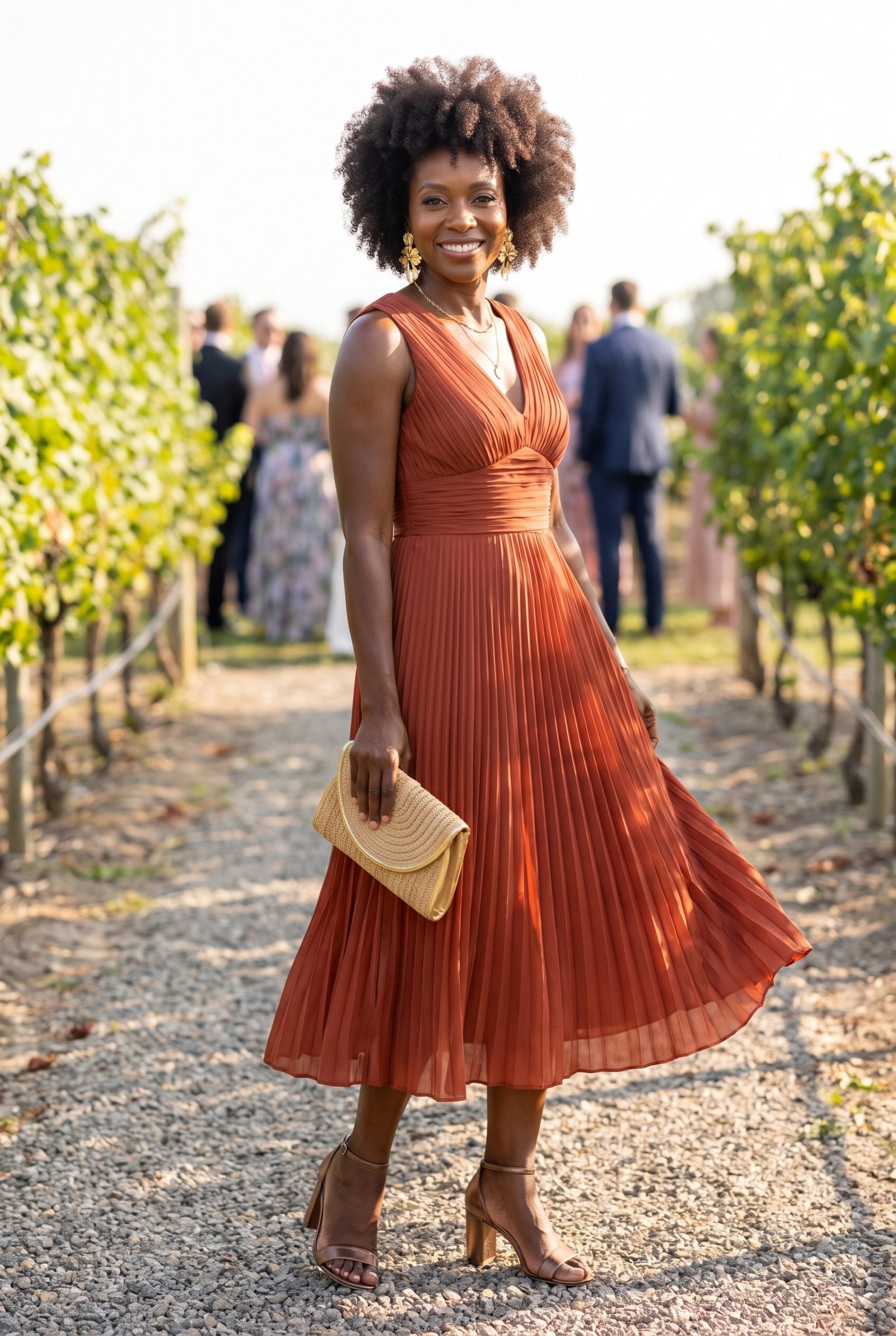
Semi-formal is where guests get lazy and pull the same dress they wear to quarterly reviews. Push past office territory. A little more shine, a little more movement, jewelry that would feel loud at a desk.
Terracotta pleats do exactly that. The vertical pleating adds motion a stiff sheath never could, and the warm earthy tone against gold reads celebratory rather than corporate.
27. Treat Dressy Casual as Polished, Not Everyday Casual
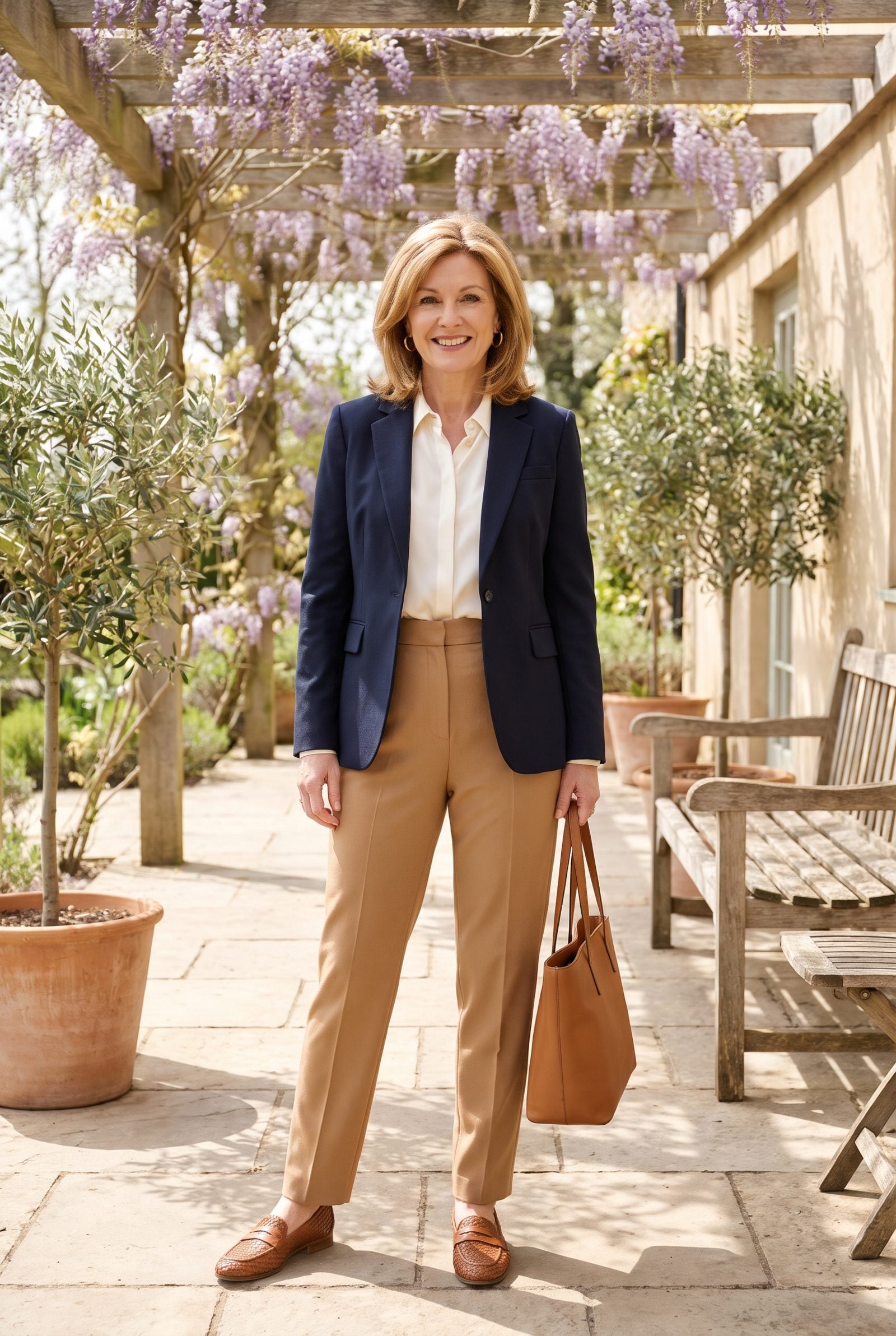
Dressy casual is a tightrope — relaxed enough to feel at ease, polished enough that nobody mistakes you for the caterer’s cousin who wandered in. A soft-tailored blazer over a silky blouse and relaxed trousers threads it cleanly.
The navy blazer works because its clean lapels and single button give structure while the cream blouse and camel trousers keep things easy. Woven penny loafers and a tan leather tote keep the whole thing above a backyard-barbecue read.
26. Do Not Read Casual as Distressed Jeans and a Tee
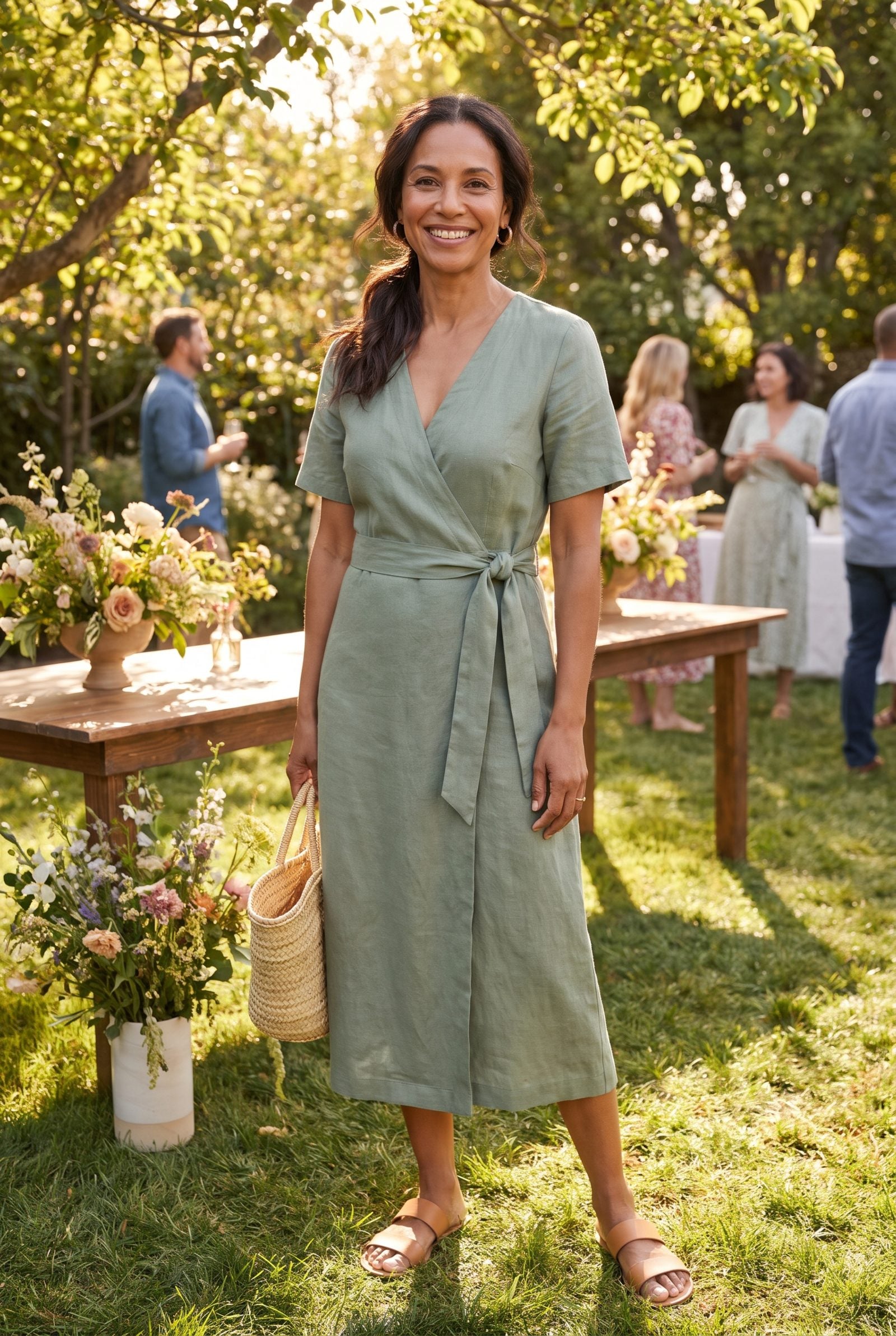
Casual at a wedding still means wedding. Distressed jeans and a graphic tee tell the couple you didn’t take their day seriously, and that message lands whether you meant it or not.
A sage linen wrap dress reads casual the right way. The self-tie waist shapes it, the mid-calf length keeps it easy, and flat tan slide sandals plus a straw tote say summer afternoon, not grocery run. Enough thought to show respect, enough ease to sit on the grass.
25. Remember That Beach Formal Is Not a Swimsuit Cover-Up
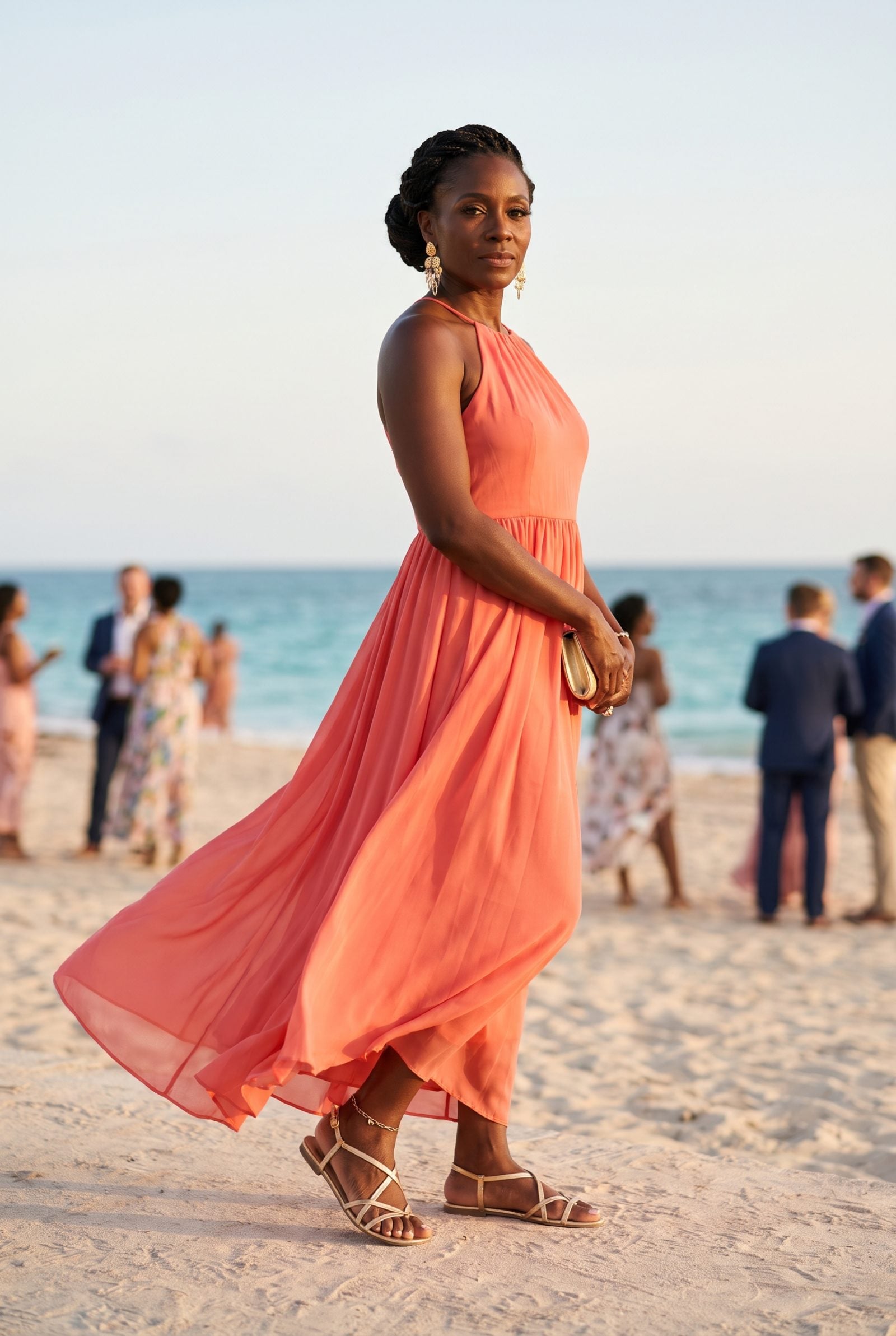
Beach formal confuses everyone. People either overdress in stilettos that sink into sand or underdress in something that belongs poolside. The answer sits between: formal fabrics, beach-smart choices.
The coral halter maxi dress gets it right on every count. That flowing chiffon skirt handles ocean wind with grace instead of fighting it, flat gold sandals stay steady on sand, and the halter neckline keeps the look dressed for a ceremony rather than a swim. Coral against turquoise is the kind of color pairing that makes photographs sing.
24. Choose Lighter Fabrics by Day and Save Stronger Sparkle for Evening
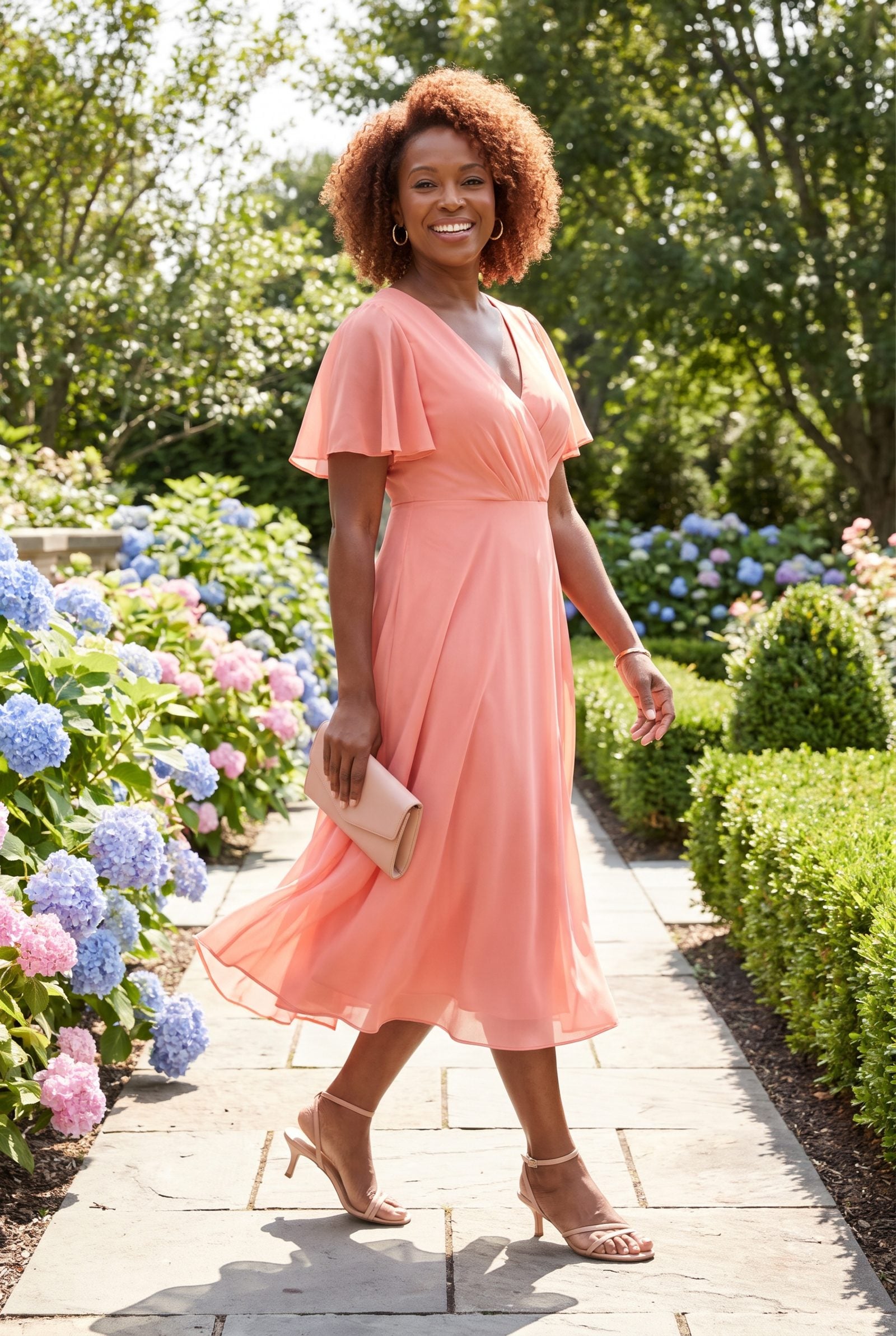
Coral chiffon in full daylight does exactly what heavy sequins cannot. It moves, it breathes, and it reflects the sun softly instead of flashing like a disco ball at two in the afternoon.
The matte flutter-sleeve dress and nude kitten heels keep everything feather-light. Daytime weddings reward restraint in fabric. Beading looks confused under the sun and gorgeous under string lights, so hold it back until after sunset.
23. Dress for the Actual Forecast, Not the Wedding Mood Board
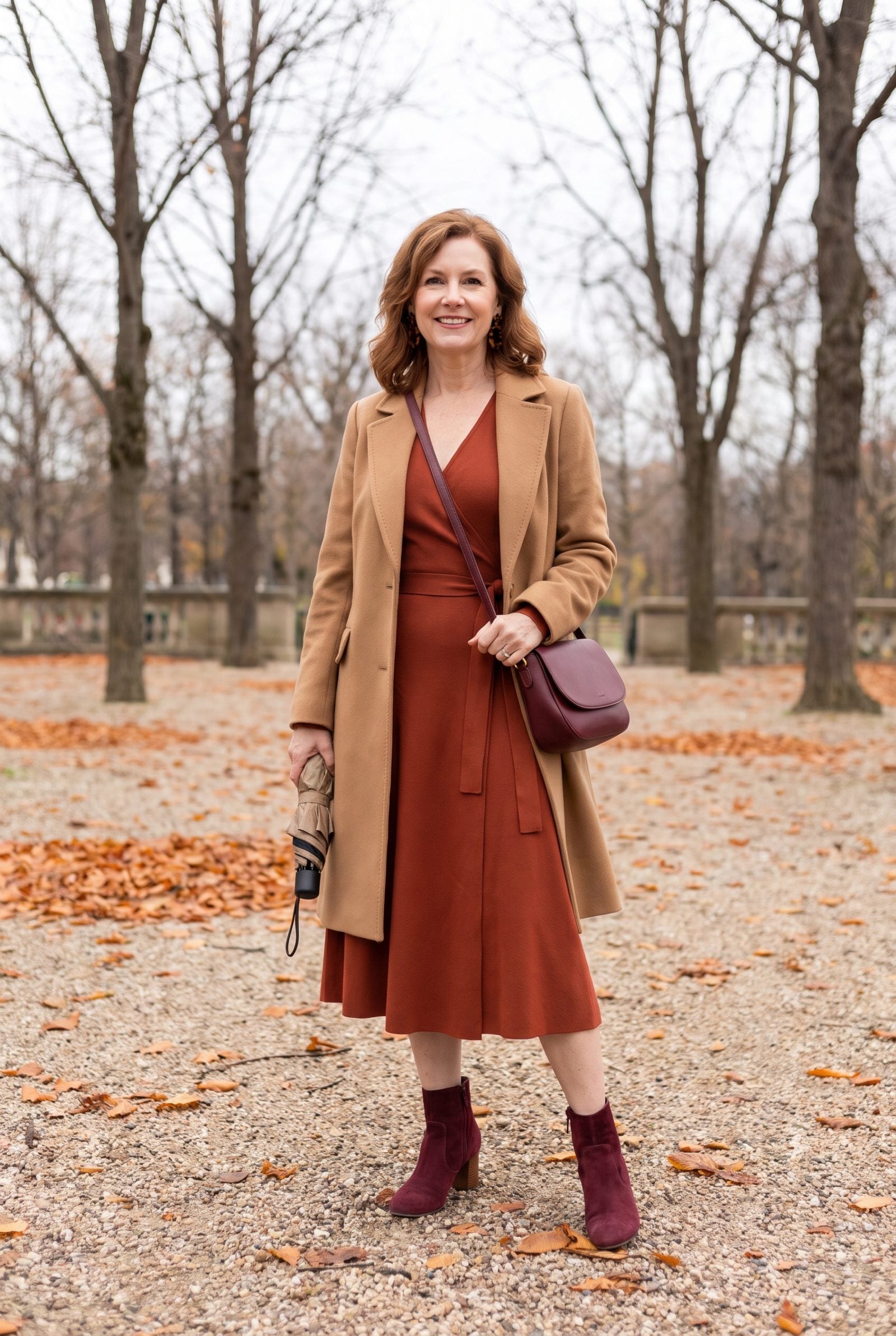
Here’s where people get burned. The mood board says floaty garden dress; the forecast says forty degrees and drizzle. Guess which one wins? The weather. Always the weather.
This rust ponte wrap dress layered under an open camel wool coat is built for the real conditions, with burgundy suede ankle boots that handle gravel and cold without complaint. We’ve shivered through enough outdoor ceremonies in optimistic sandals to know better now. The coat reads as part of the outfit styles you planned, not a panic layer you grabbed on the way out.
22. Plan for Temperature Changes Between the Ceremony and Reception
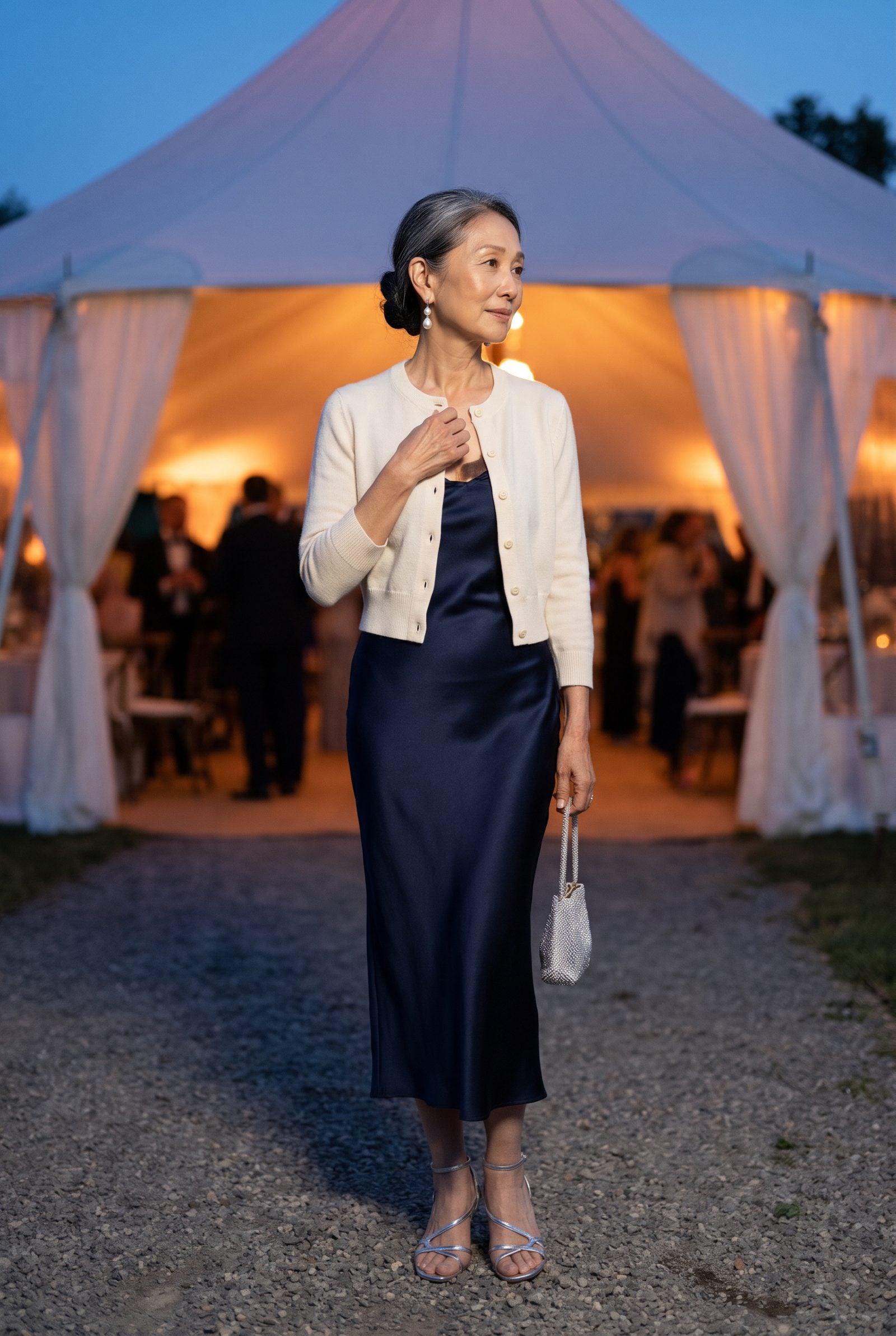
The cream bolero over navy satin is the unsung hero of any wedding that opens in sunshine and closes in night air. Ceremonies run warm. Then the sun drops, the AC kicks in, and the reception runs cold.
A bias slip dress alone is lovely at four and a gamble at nine. The knit layer solves that without wrecking the dress’s line. Pick a cover you actually like wearing, not an afterthought, and you’ll stay comfortable through the whole arc of the night.
21. Make the Coat or Jacket Look Like Part of the Outfit
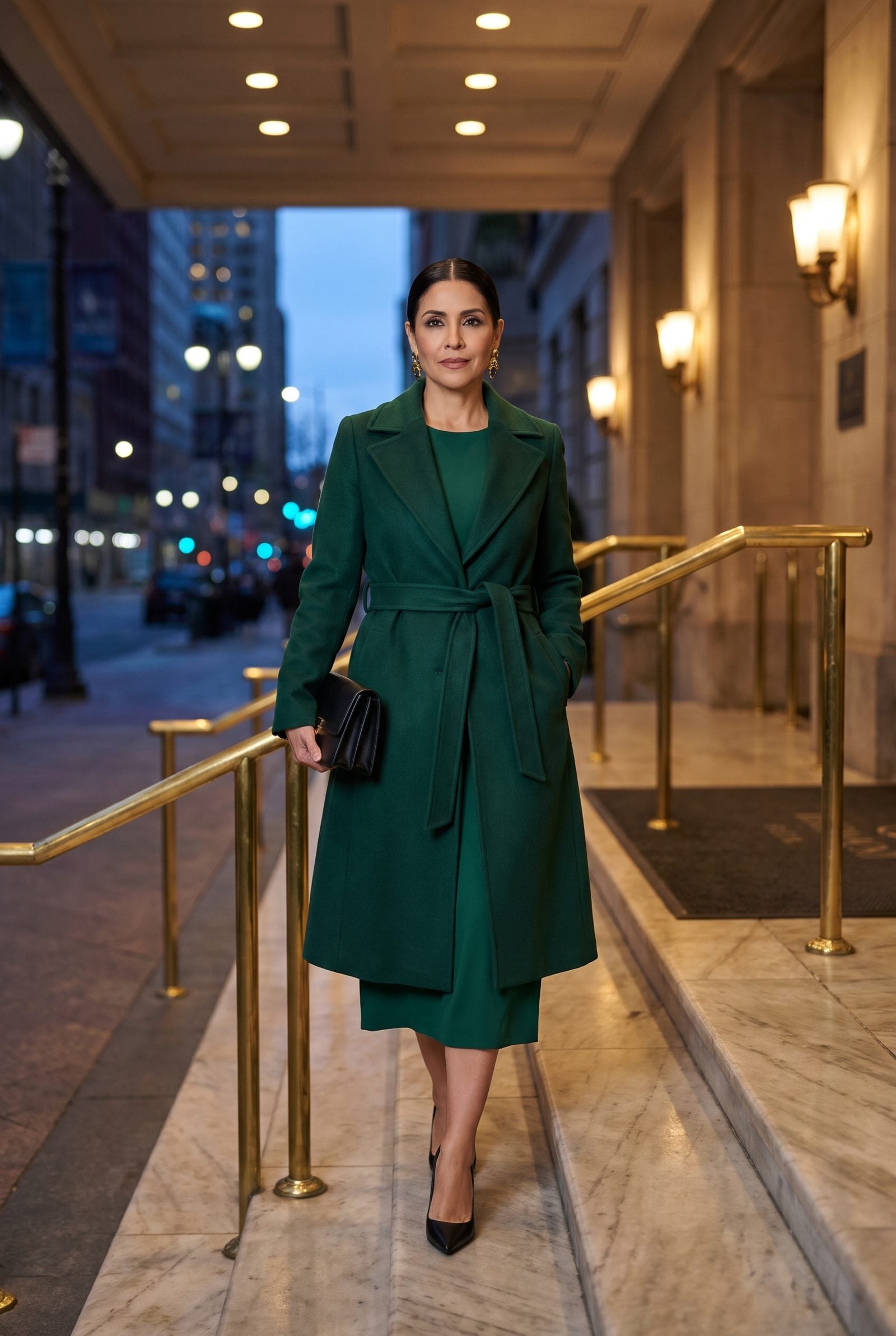
One color, head to toe, and the coat stops being outerwear. That emerald belted wool over a matching midi reads as a deliberate column, which is why the look reads finished the second you walk in instead of scrambling to shed a layer at coat check.
The belt is doing the most work. It gives the coat a waist, a shape, an opinion. A good emerald wool coat treated as part of the ensemble carries you through the cold entrance and the photos, with no sad puffer lurking in the background. Winter weddings are where most guests give up and grab the ski jacket. This is the better answer.
20. Check House-of-Worship Modesty Rules and Carry a Wrap if Needed
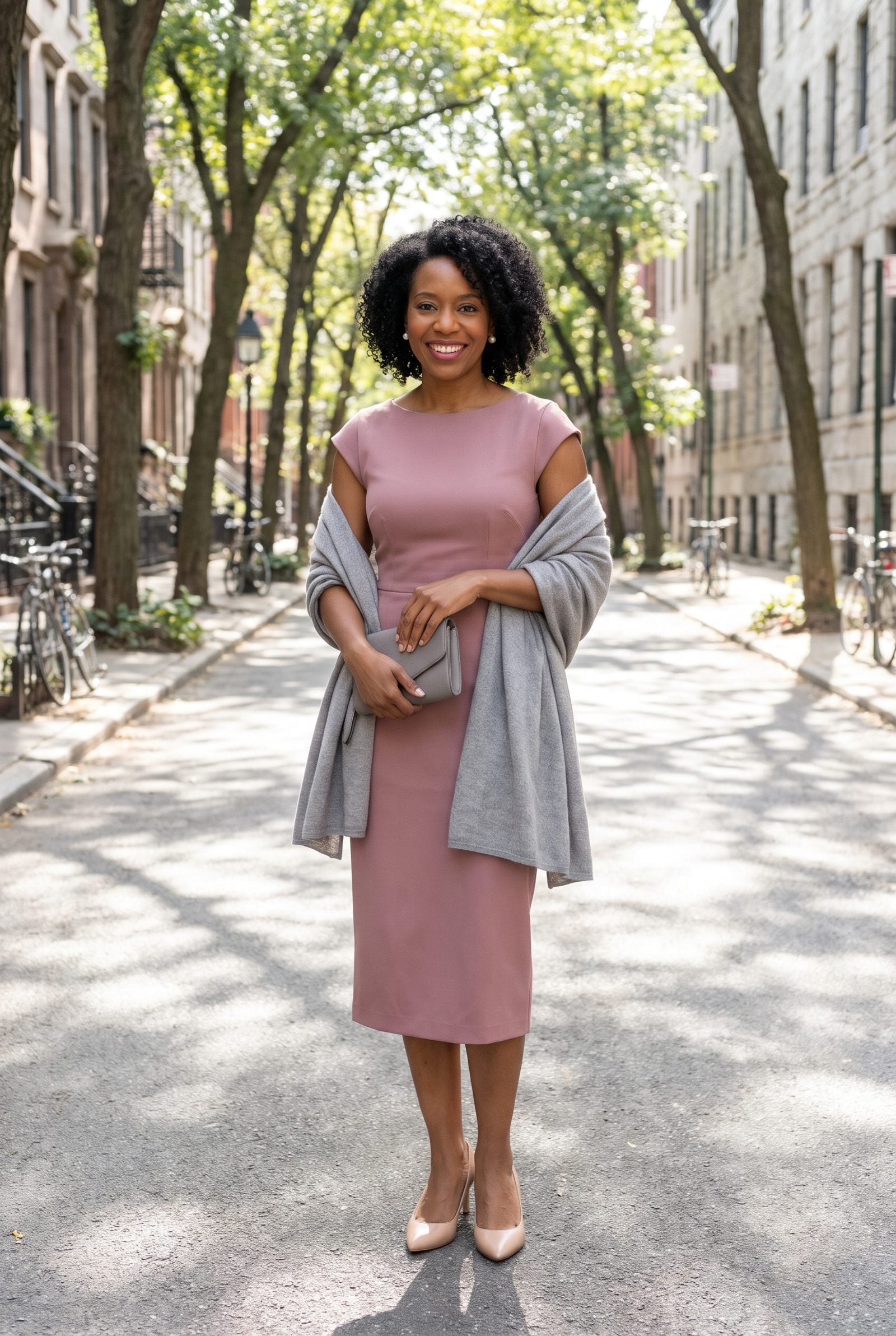
Cap sleeves plus a grey cashmere wrap, and you’re covered for the strictest sanctuary without looking like you dressed for a different event. Plenty of houses of worship want shoulders covered, knees reached, backs kept private.
The dusty rose sheath already respects the length. The wrap handles the shoulders on command, then comes off for the reception. Carrying a cover is the single easiest way to dodge that quiet moment where an usher presses a shawl into your hands at the door. Know the rule, bring the fabric, move on.
19. Follow the Venue’s Custom for Religious Head Coverings
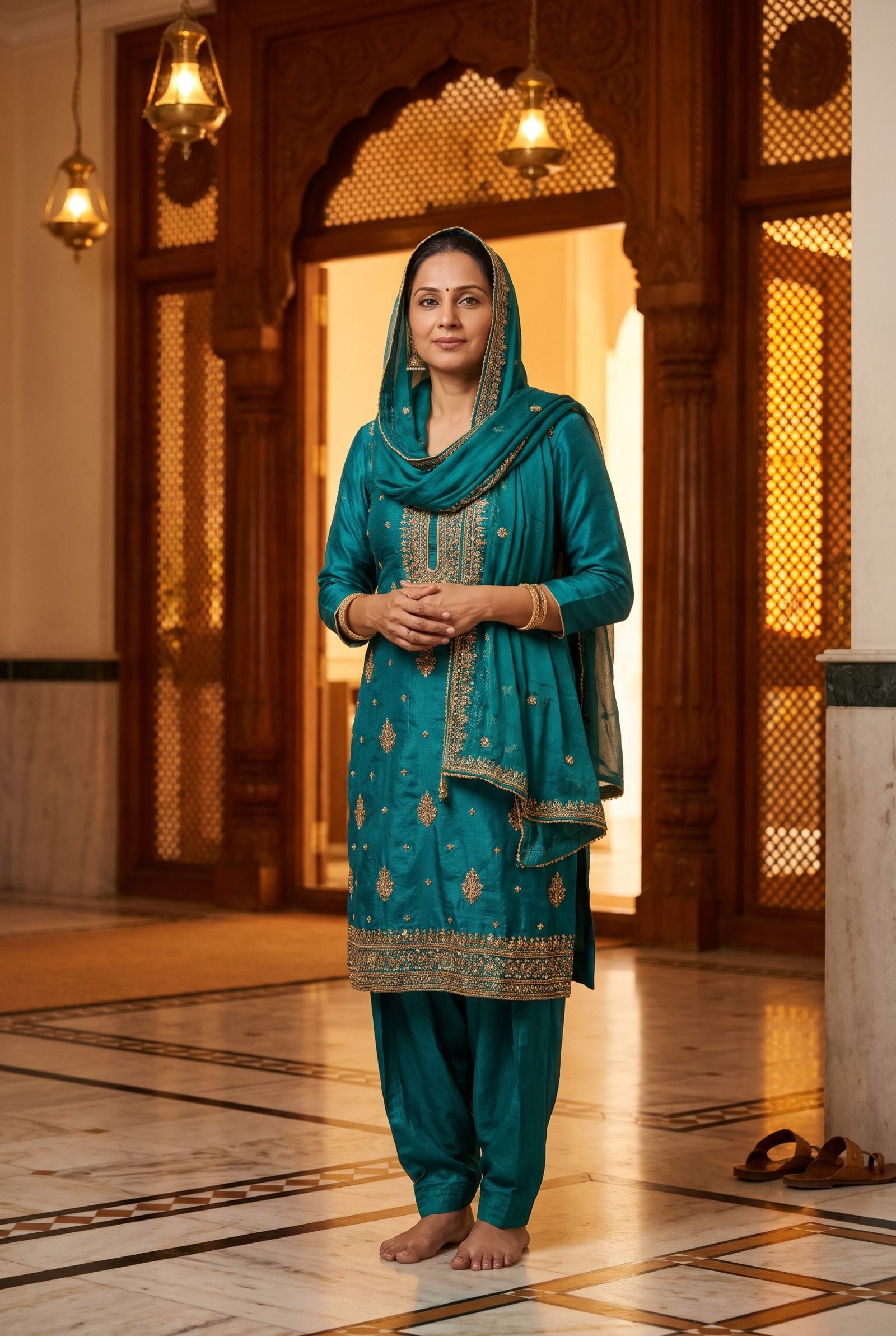
The dupatta over the head isn’t decoration. It’s the requirement. Certain venues ask every guest to cover their head, and a guest who shows up already knowing this reads as gracious rather than caught off guard.
This teal and gold salwar kameez carries its own covering built in, which is the elegant version of the rule. No scarf in your outfit? A simple one tucked in your bag does the whole job.
18. Keep Hats Small Enough That Guests Behind You Can See
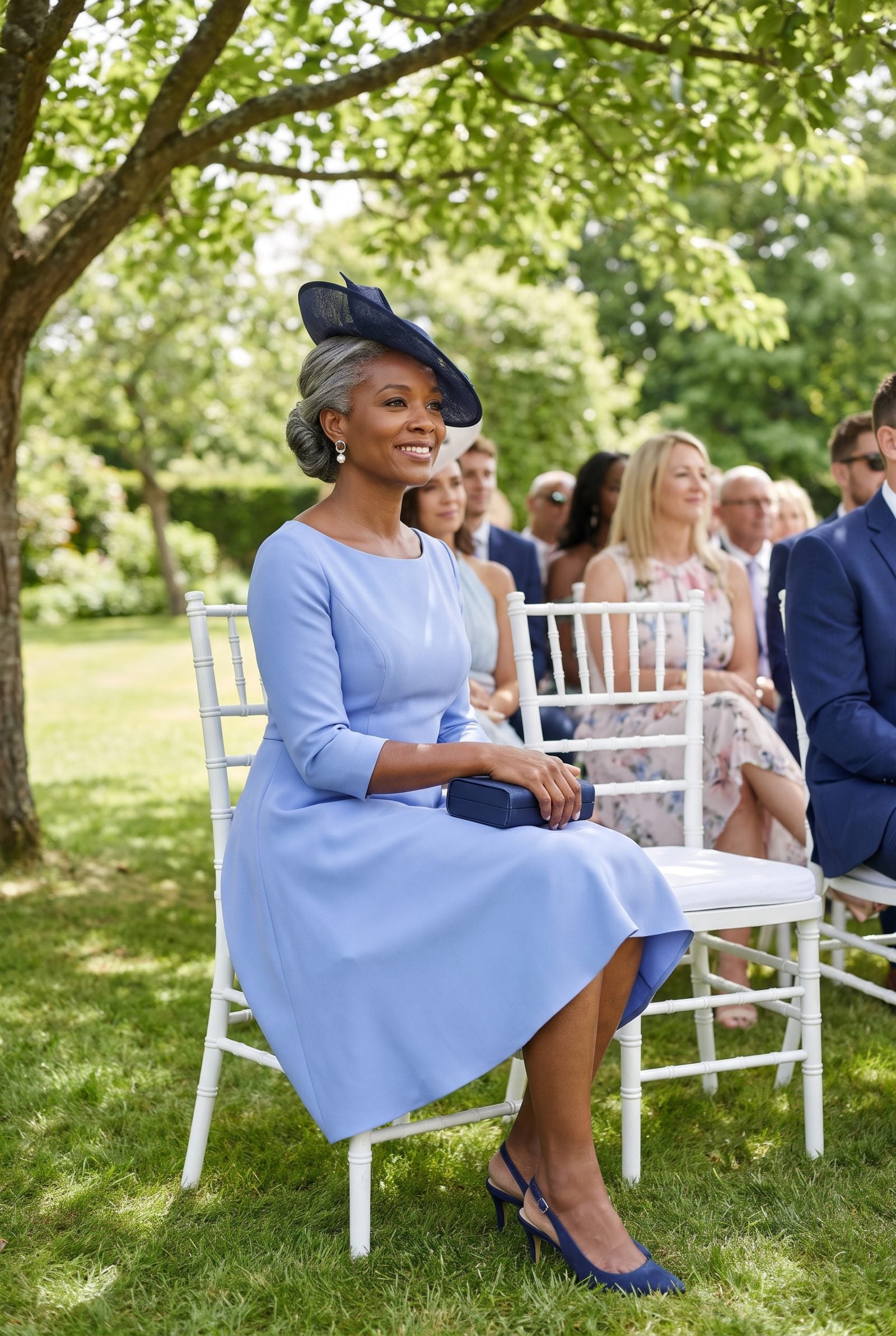
The compact navy percher sits tilted and tidy, a genuine kindness to everyone in the row behind you. Few things sour your reputation at a wedding faster than a wide-brim hat that turns the person behind you into a hostage.
A smaller hat, or a percher pinned at an angle, photographs beautifully and blocks nobody’s sightline. The periwinkle crepe dress gives it something to play against. Good headwear and good manners can coexist, whatever the garden-party crowd insists.
17. Avoid Veils, Bridal Fascinators and Unrequested Floral Crowns
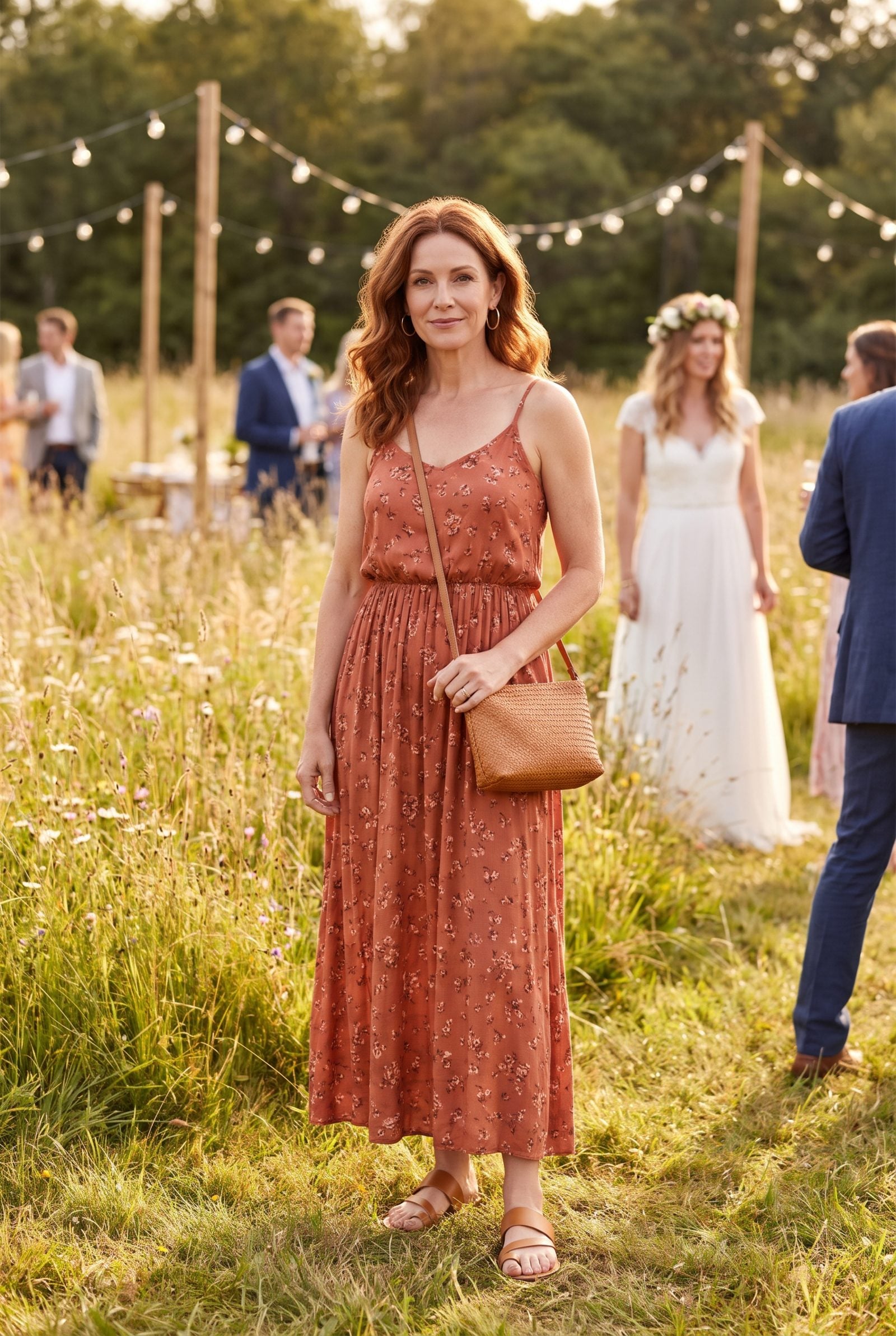
No crown, no veil, no white fascinator, and that restraint is the entire styling decision. The boho meadow setting practically dares guests to pile on florals, but any headpiece that drifts into bridal territory steals focus that was never yours to take.
This terracotta floral maxi sits firmly in guest lane. Loose waves, simple gold hoops, nothing on the head. Exactly one person gets the flower crown today, and the dress code is clear on who. Everyone else keeps the hair simple and lets the bride be the one in bloom.
16. Balance Plunging Necklines, High Slits and Dramatic Cutouts
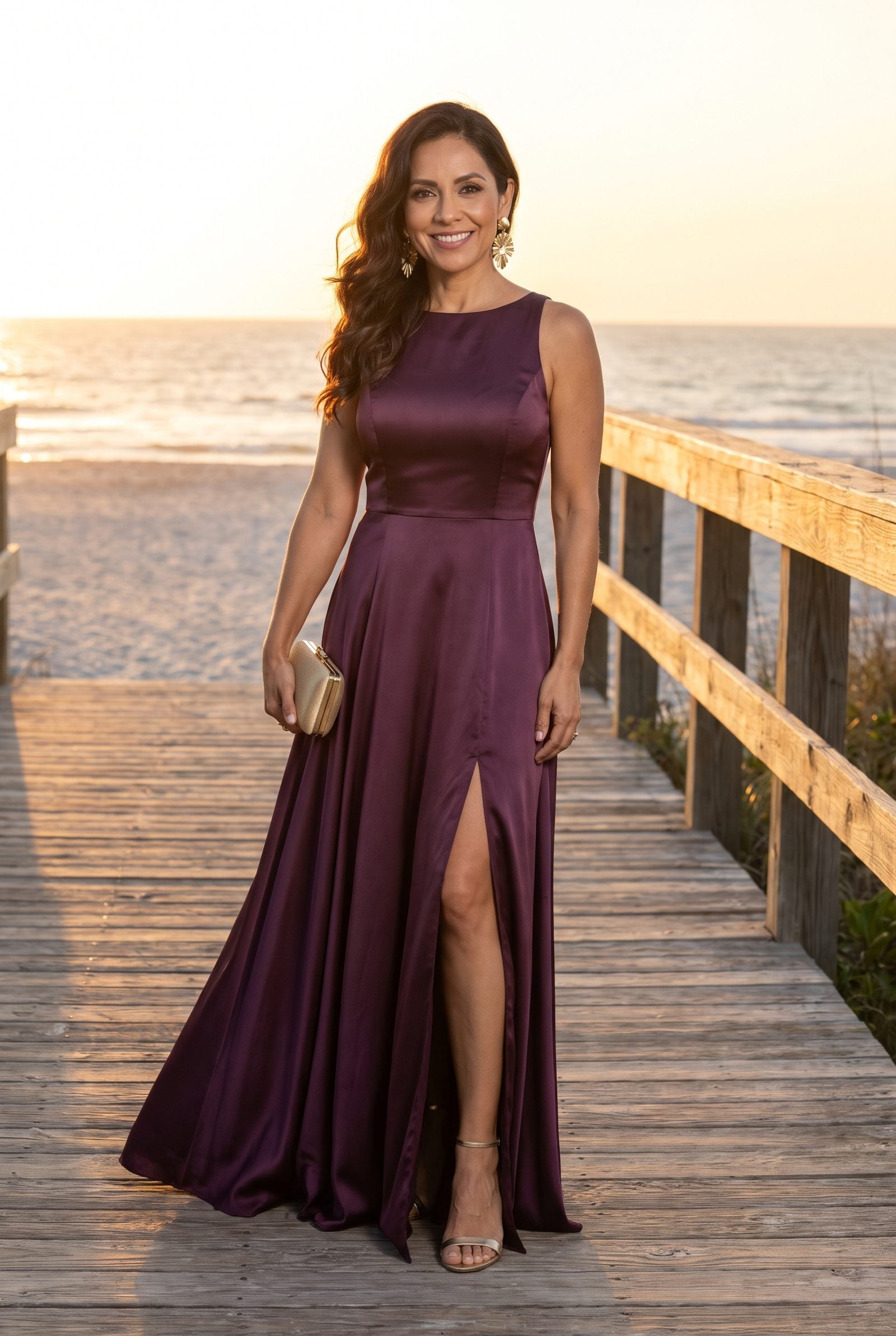
One dramatic element, everything else turned down. That’s the rule this plum gown obeys to perfection. The thigh-high slit gets to be the whole conversation precisely because the neckline stays high and the back stays covered.
Stack a plunge, a slit, and a cutout onto the same dress and you read as competing with the bride instead of celebrating her. Pick your one bold move and let it breathe. The slit does all the talking here, so you walk through the night looking deliberate rather than desperate for a glance.
15. Add Proper Lining Beneath Sheer Fabrics
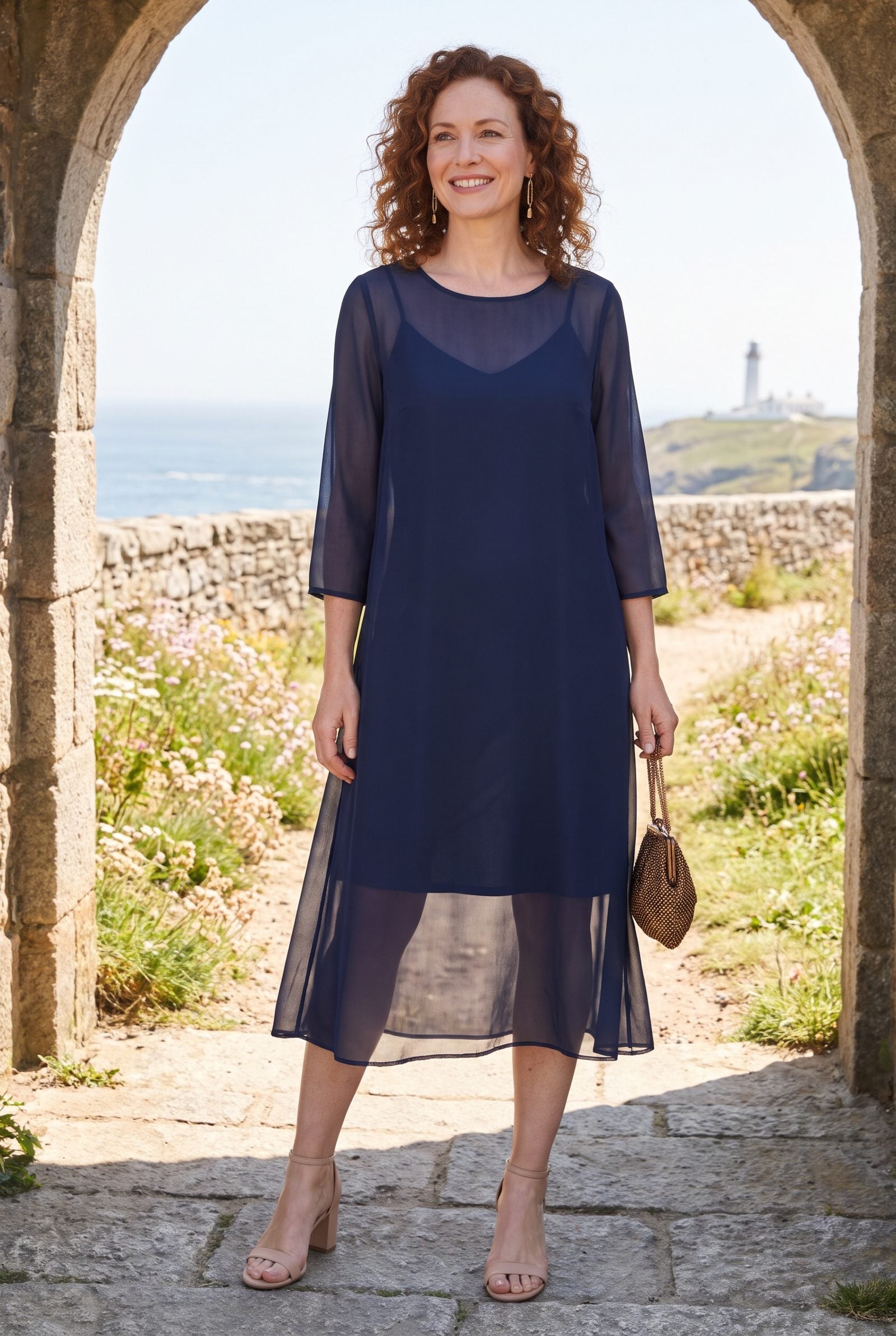
Sheer only works when the layer beneath it is deliberate. The navy chiffon here reads as intentional because the matching slip ends exactly where you want the eye to stop, letting the hem float translucent without turning the whole dress into a confession.
Opaque lining under sheer overlay creates a depth a solid dress never manages, and that quiet contrast does the heavy lifting. People notice movement, not skin.
14. Test Cutouts While Sitting as Well as Standing
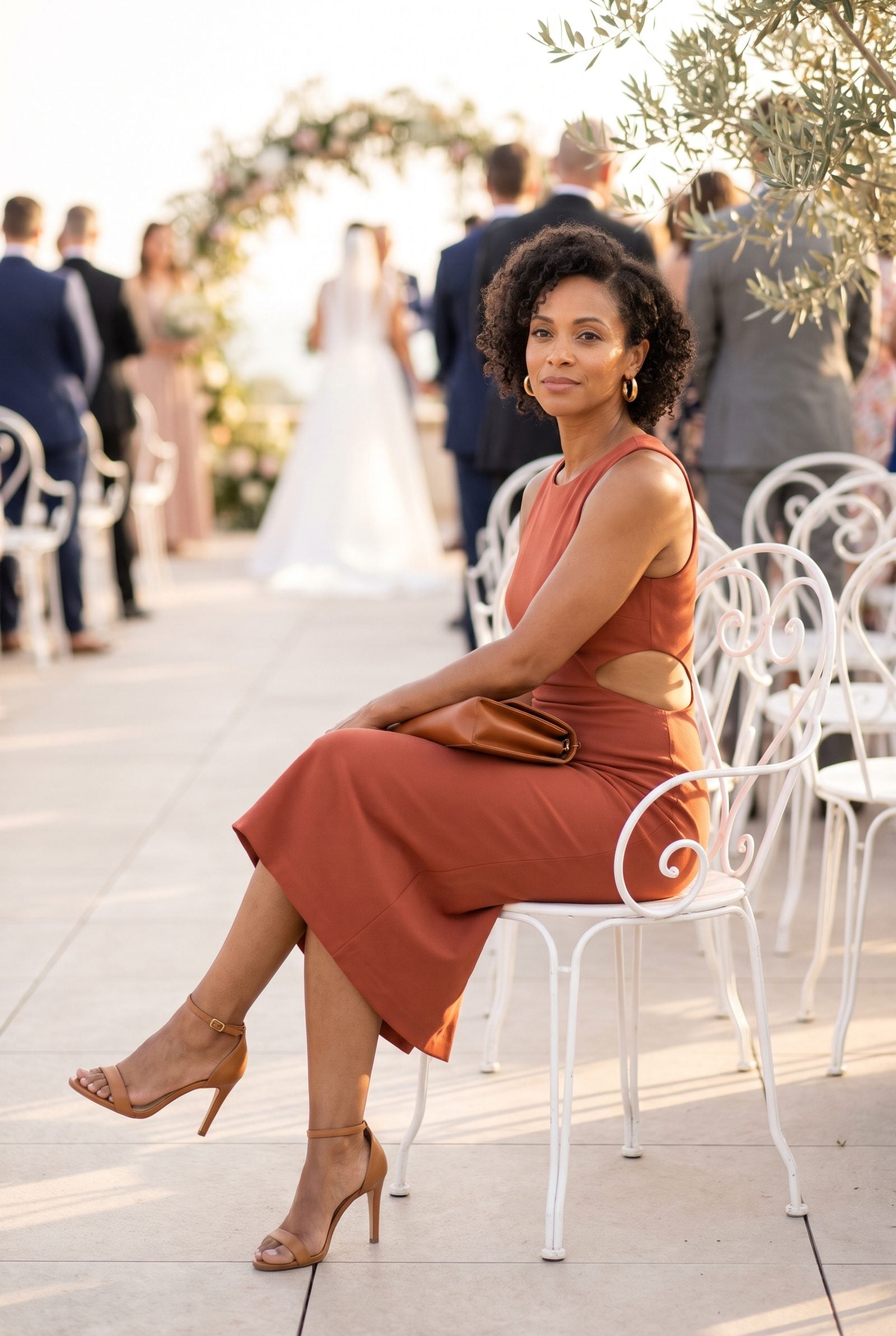
A cutout that looks sculptural standing can turn into a gaping problem the second you fold into a chair. This terracotta crepe passes both tests, the side opening staying smooth and closed through a full ceremony.
One clean negative space does all the work, which lets the rest of the dress stay plain. That restraint is why it reads as considered rather than flashy.
13. Choose Hems and Trains That Work for Stairs, Chairs and Dancing
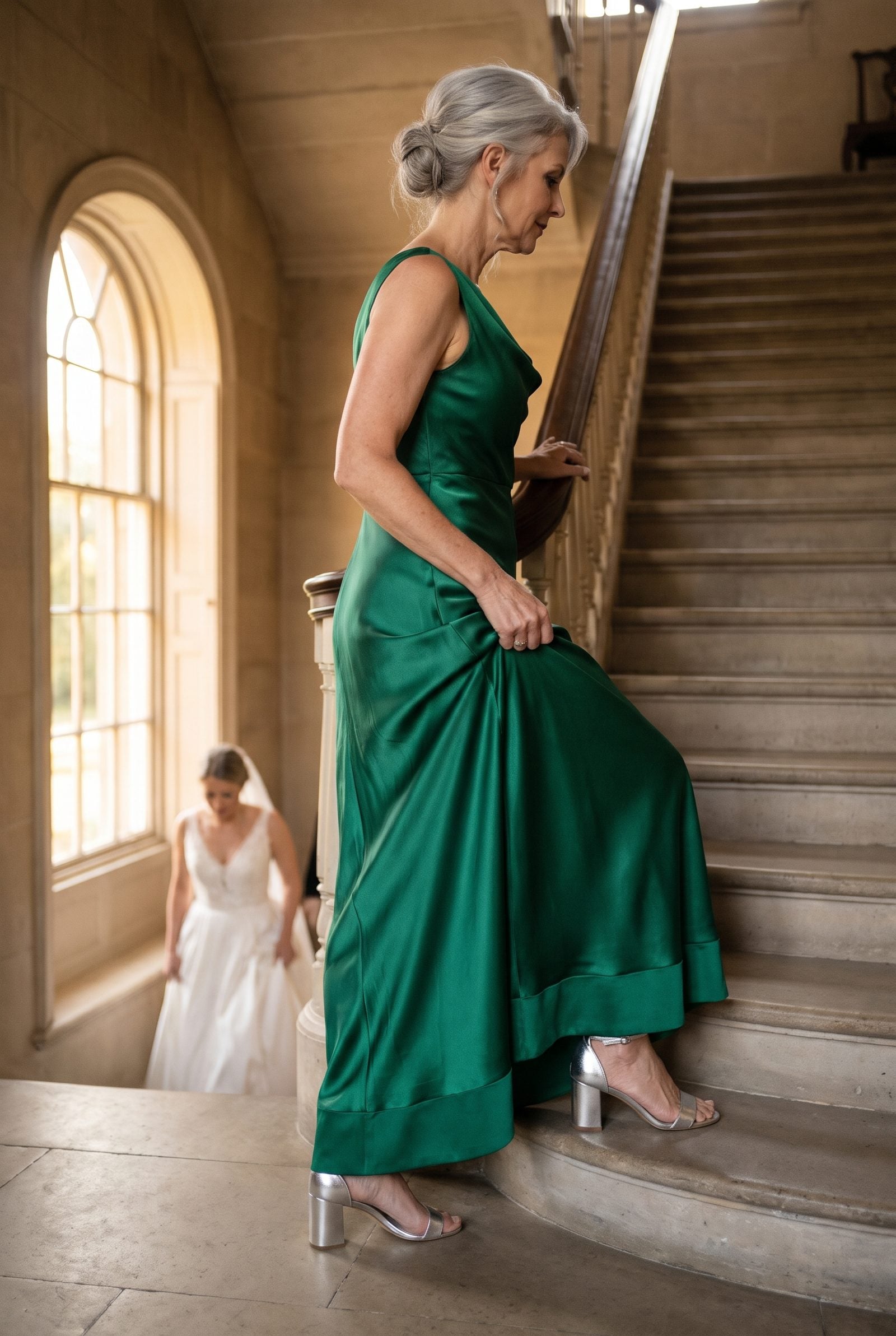
A hem that clears the step is everything. This emerald satin skims the floor without a train, and a simple lift of the skirt in one hand clears each step, so stairs, a reception line, and an actual dance floor all stay open to you instead of becoming hazards you have to navigate.
Length drives the style. A floor-grazing gown without a dragging train keeps the drama and drops the liability. For evening weddings, these sit closer to party outfits than daytime frocks, so the satin’s sheen earns its place under reception lighting.
12. Tailor the Outfit Instead of Relying on an Expensive Label
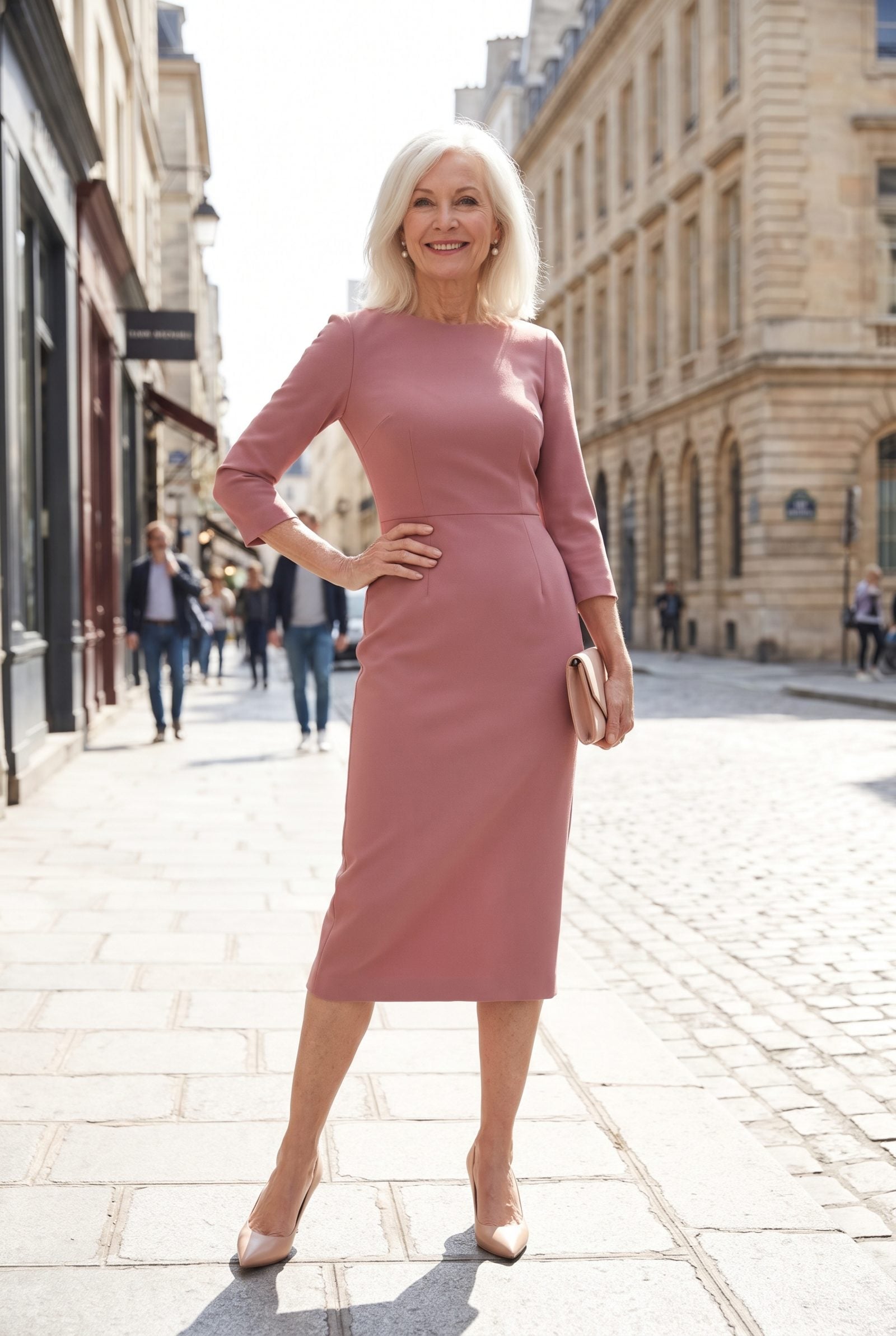
A moderately priced dress that fits exactly beats a designer one that almost does. Every time. This dusty-rose crepe looks expensive because the waist was taken in and the hem set at the right point, not because of a label nobody can see anyway.
Fit is the only thing the eye actually registers from across a room. A clean shoulder seam and a defined waist communicate care. The price tag? It communicates nothing.
11. Steam or Press Every Visible Garment Before Leaving
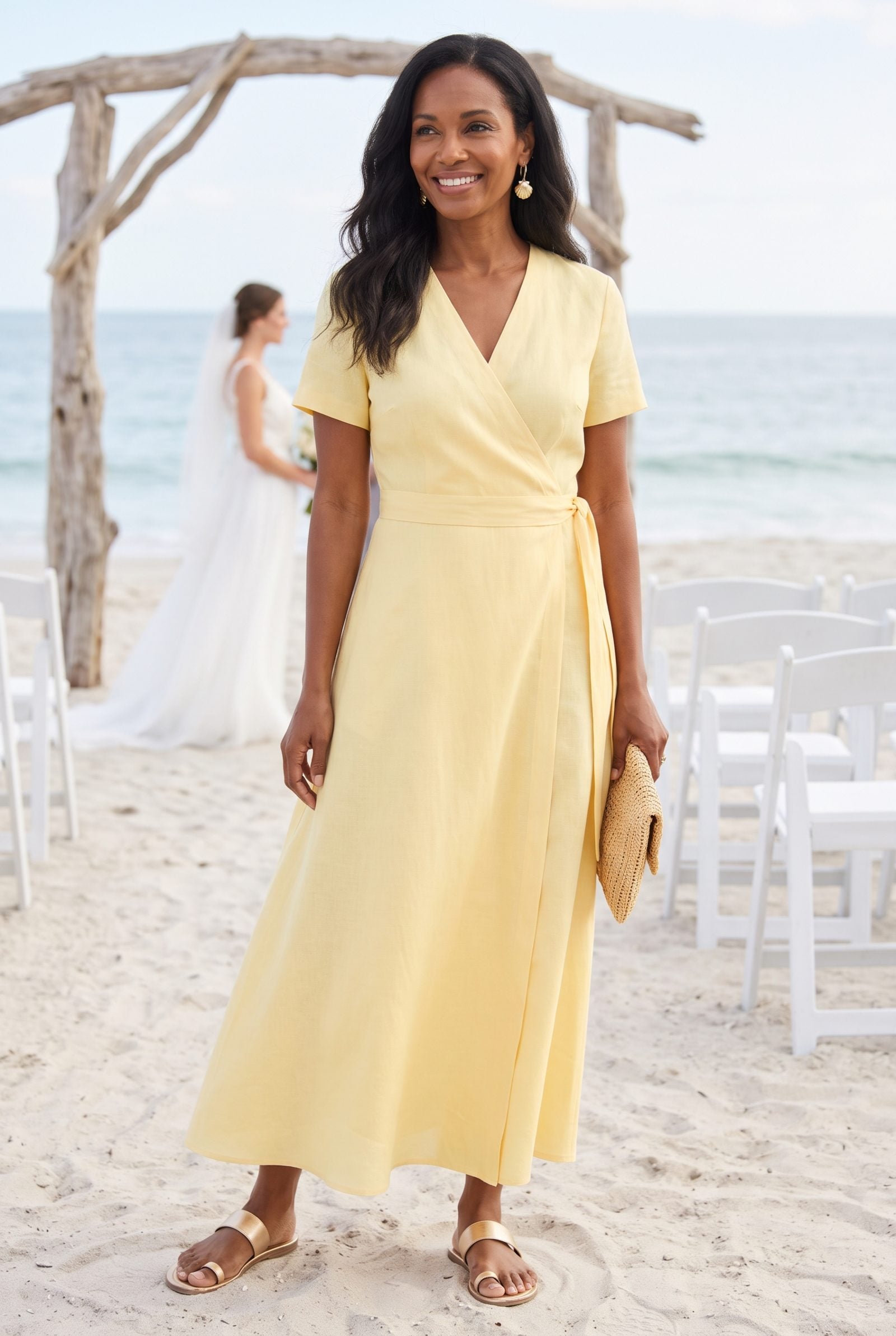
Linen is the honesty test. This buttercream wrap dress looks considered because it was steamed, and a steamed linen dress says you planned your day. A wrinkled one says you found it on the back seat.
The pressing outperforms any accessory. Smooth fabric catches light cleanly and keeps its drape, which is the reason this simple wrap shape reads as deliberate rather than casual.
10. Keep Bras, Shapewear and Slip Lines Concealed
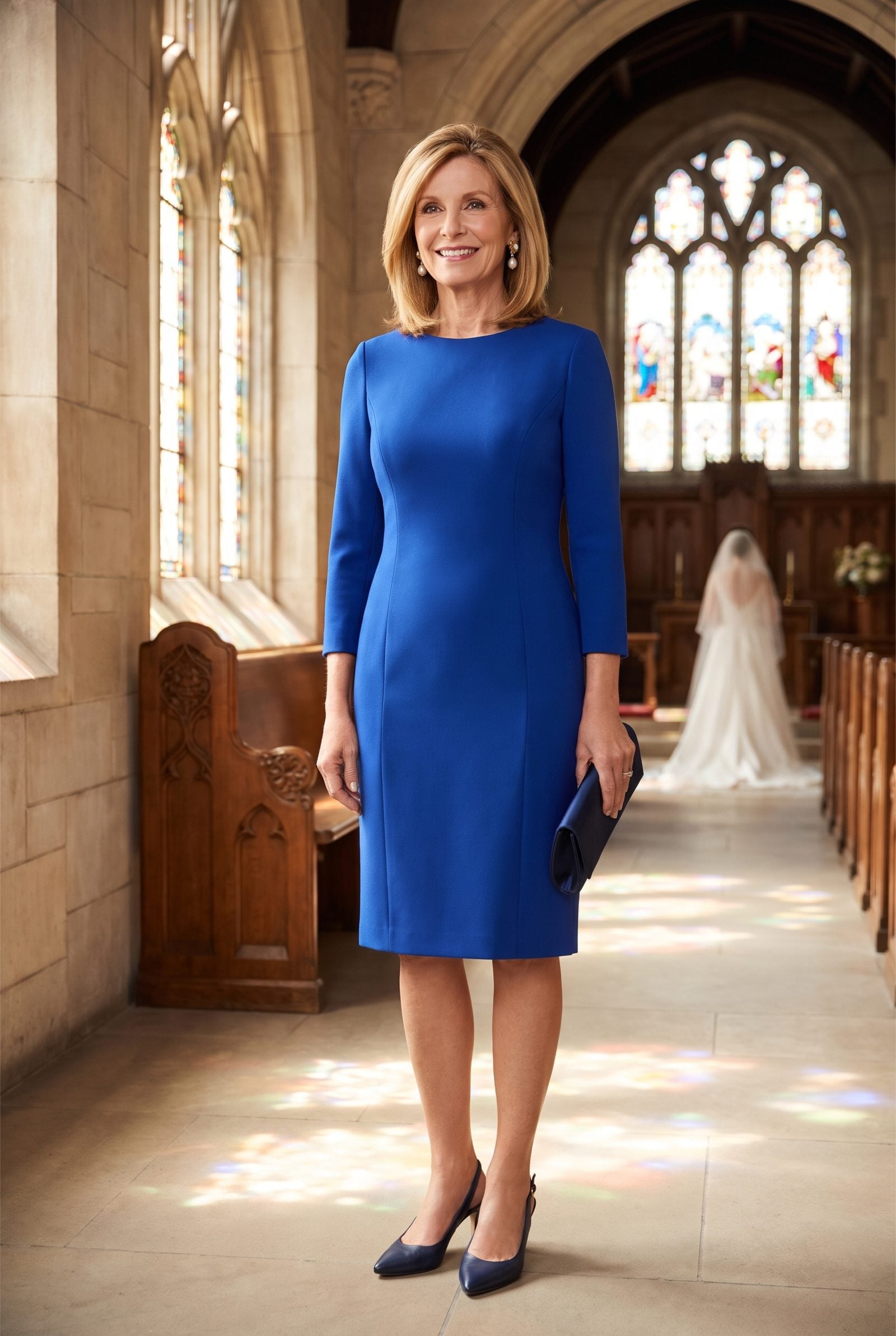
The cleanest silhouette in the room is usually the one hiding the most hidden support. This cobalt-blue sheath holds a smooth line because the foundation underneath it does its job and then vanishes.
A visible bra strap or a slip edge drags the eye straight to the seam and off the dress entirely. The support should hold you without announcing itself.
9. Scale Sequins and Metallics to the Wedding’s Formality
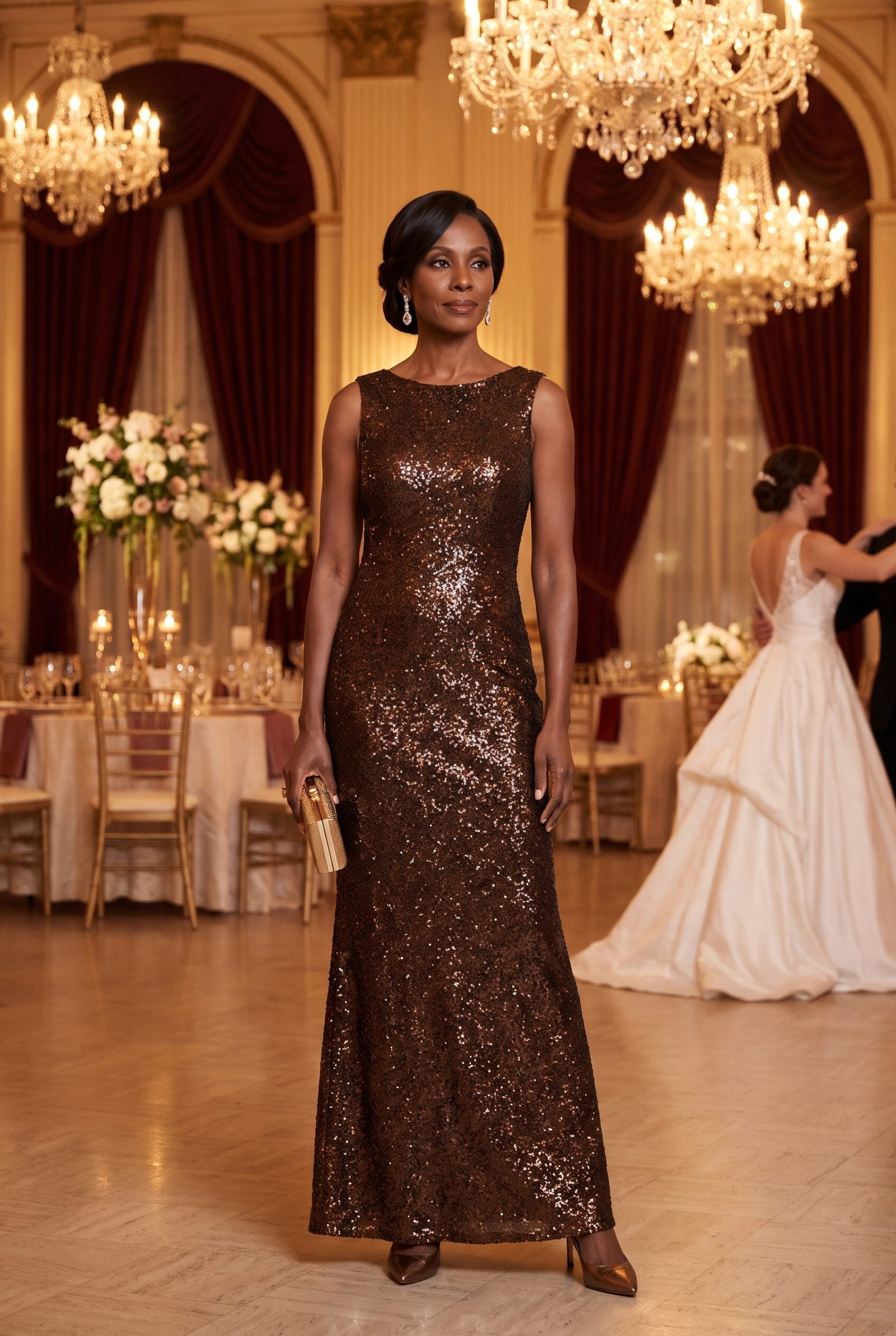
Sequins are a volume dial, not an on-off switch. A black-tie ballroom can take a full-length bronze sequined gown like this one, where chandelier light turns the whole thing into controlled shimmer.
The room sets the ceiling. A backyard afternoon handles a sequined clutch or a metallic heel and nothing more. Match the shine to the setting and it looks right; mismatch it and the same gown reads as a costume. Call it a holiday outfit level of sparkle, which is to say, saved for when the venue actually asks for it.
8. Treat Dressy Jumpsuits and Tailored Pantsuits as Valid Formalwear
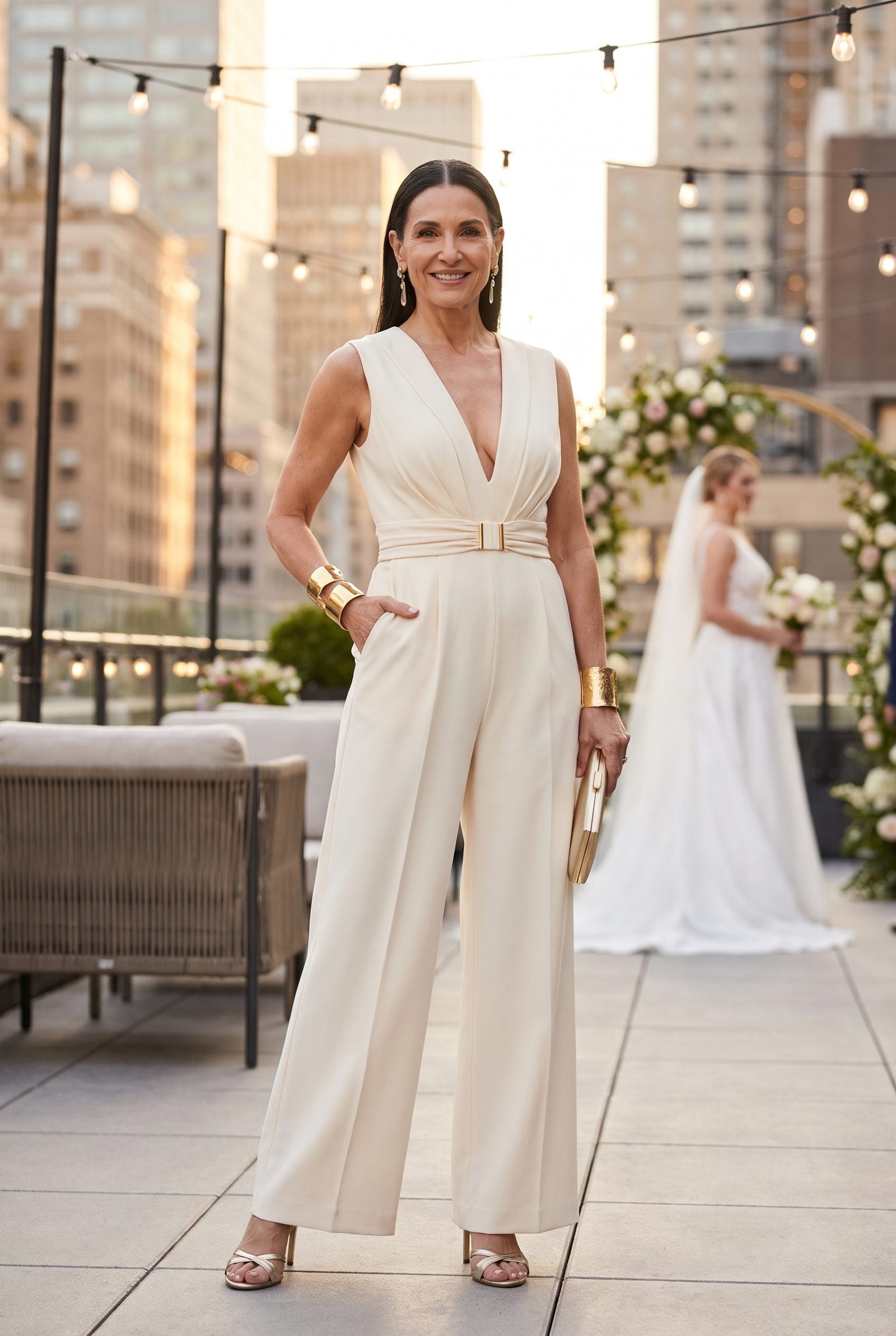
A tailored jumpsuit is formalwear, full stop. This wide-leg cobalt version with a defined waist holds its own against any gown in the room, and the column line stretches the whole frame upward.
A strong wide leg balanced by a nipped waist and a clean V neckline does the trick. Trousers at a wedding signal a woman who knows exactly what she’s doing and sees no reason to debate it.
7. Match Your Shoes to Grass, Gravel, Sand or Stone
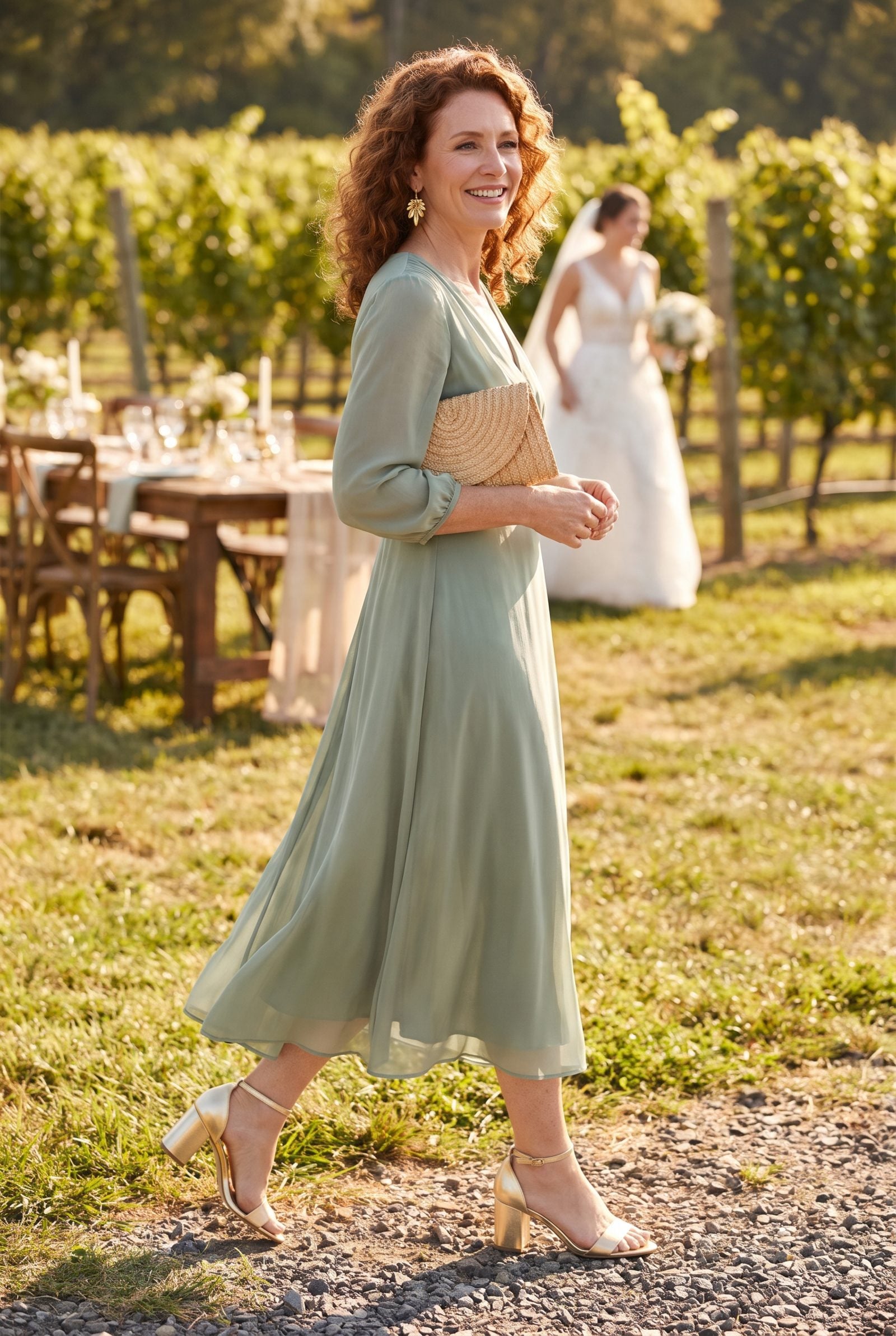
The venue picks your shoe, not your mood board. Grass and gravel punish a stiletto, which is why this vineyard look pairs a sage chiffon midi with a gold block heel wide enough to stay on top of soft ground.
Honestly, the shoe is the smartest decision in the whole outfit. A stable heel keeps you upright and present instead of teetering and apologizing, and the gold picks up the warm light bouncing off the vines.
6. Break In New Shoes Before the Wedding Day
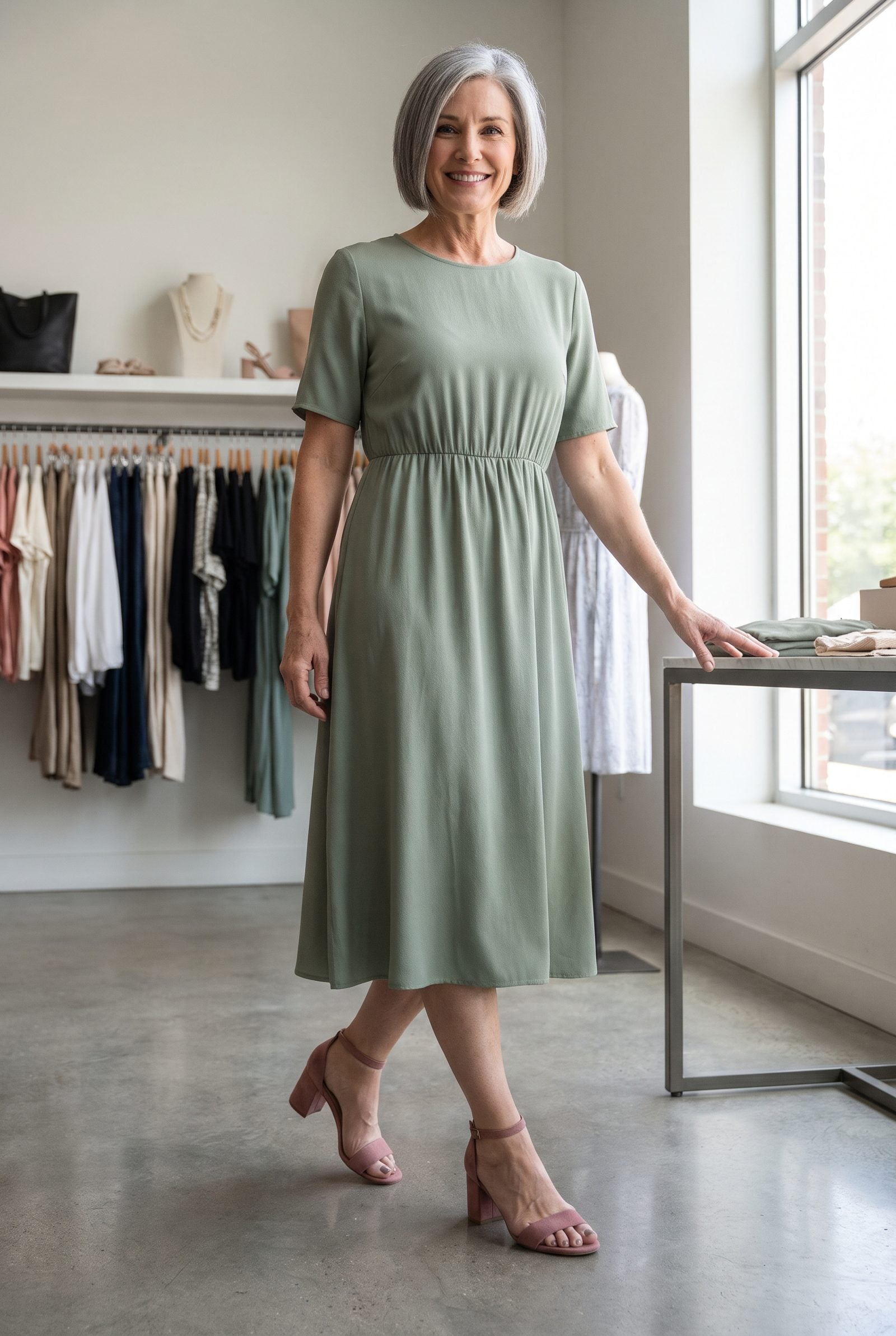
Comfort is the whole game, and nobody wins it on a wedding day in shoes fresh from the box. A block heel in dusty rose suede, already walked in and softened at the toe, lets you stand through a long ceremony and still dance later without wincing. That lived-in ease reads as confidence rather than fuss — which, honestly, is half the battle at any wedding where you’re on your feet for six hours straight.
The styling logic is quiet but real. A sturdy heel against the fluid sage crepe anchors everything, so the dress can move while your feet stay planted.
5. Pack Elegant Backup Flats Instead of Going Barefoot or Wearing Gym Shoes
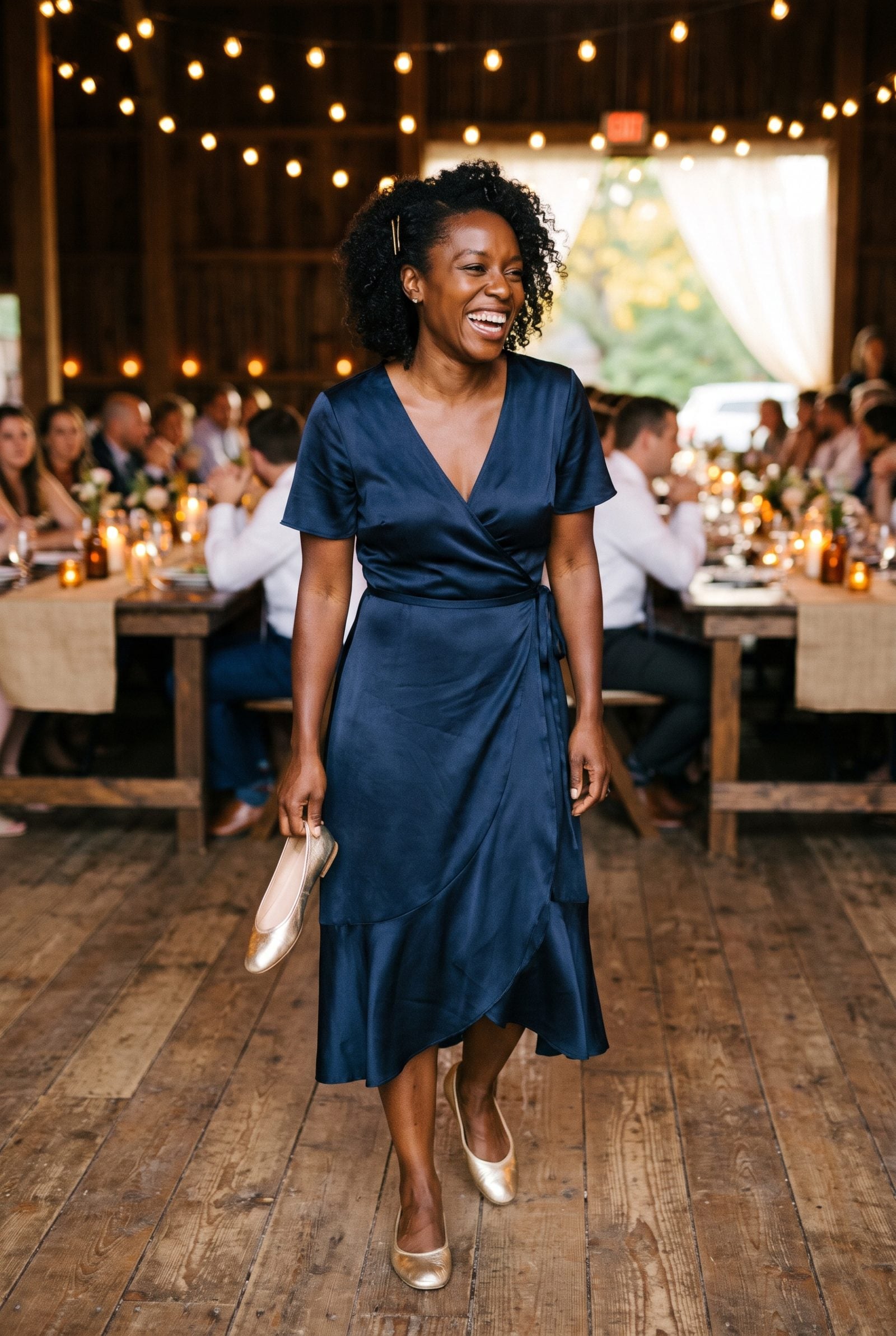
The gold ballet flat does the heavy lifting here. Keep a slim pair tucked in your bag, and the moment your heels give out becomes a decision instead of a surrender.
Barefoot on a reception floor looks like you gave up, and sneakers under a satin dress look like you forgot where you were going. A spare slim metallic flat, held in your hand as you cross the room, keeps the navy wrap dress intact from ceremony to last song. These carry the same party outfits energy that actually respects your feet.
4. Carry a Small Bag Instead of an Oversized Work Tote
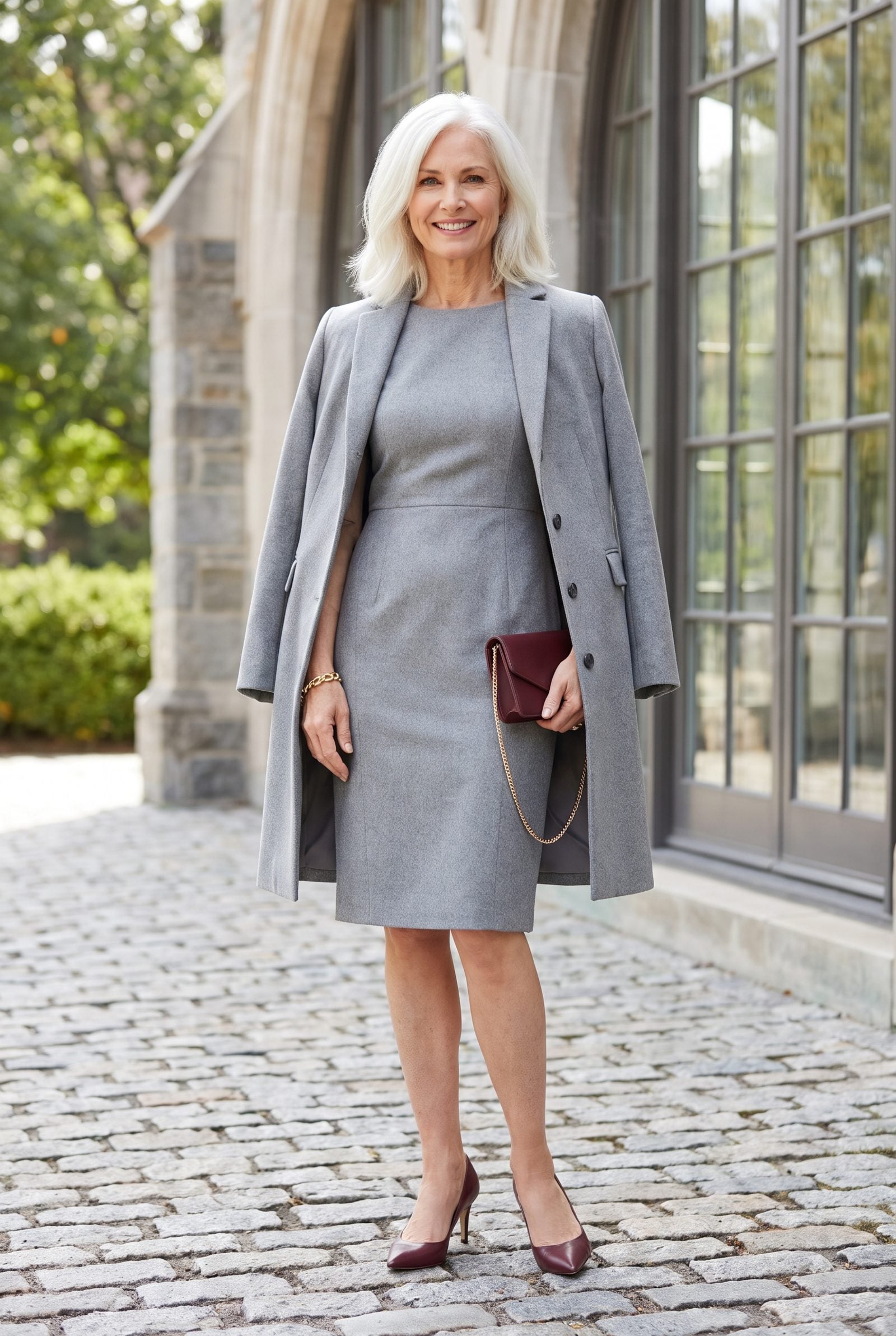
Scale is the entire story. A small oxblood clutch against a clean grey wool coat draped over a grey sheath dress reads polished, because the bag matches the occasion instead of fighting it.
Drag a canvas work tote into a reception and the proportion collapses — suddenly you look mid-commute, not mid-celebration. A structured oxblood leather clutch bag with a slim gold chain strap holds the three things you actually need: phone, lipstick, a folded tissue for the vows. Leave the rest in the car.
3. Remove Sunglasses for the Ceremony and Formal Photographs
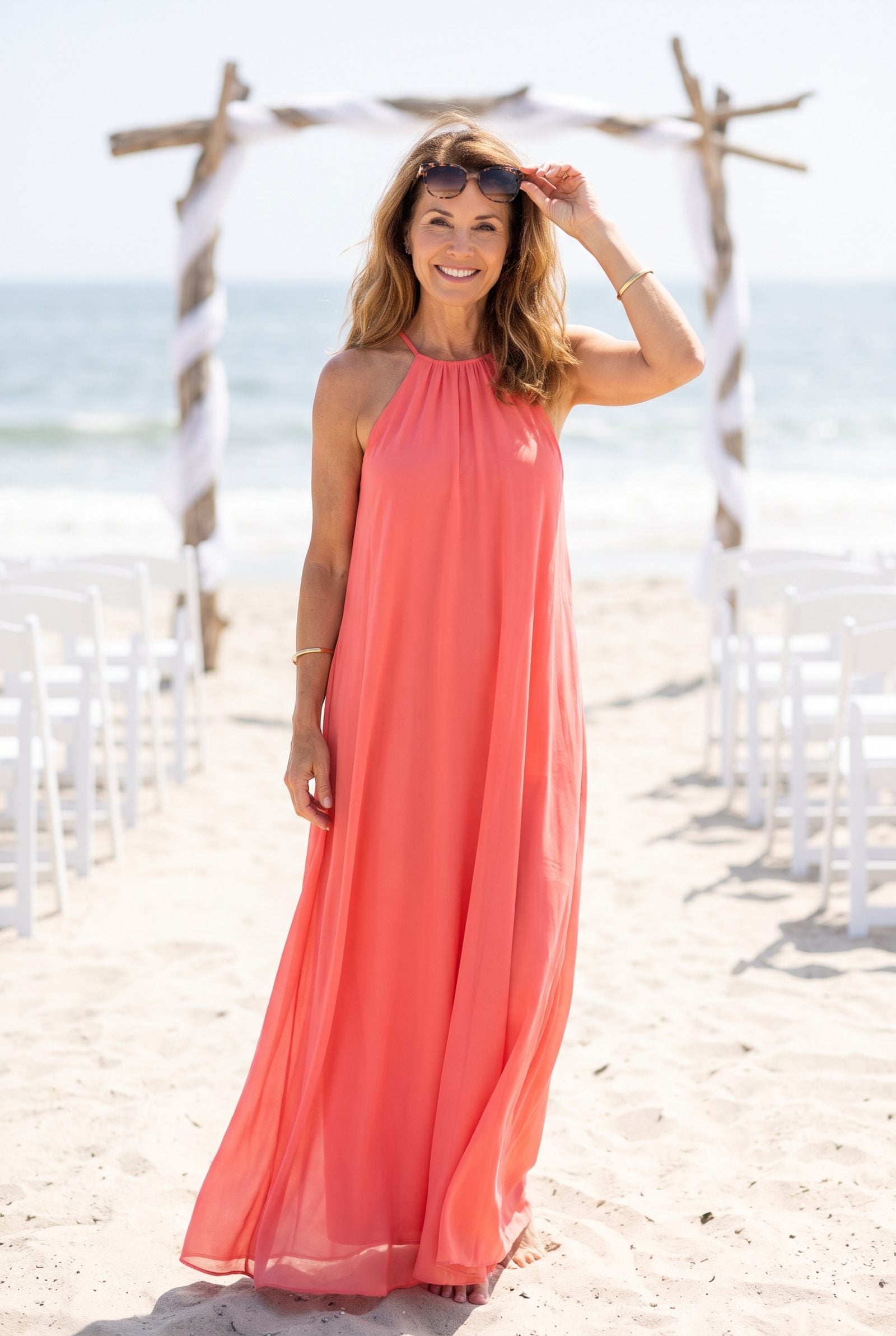
Eyes are the connection, and a lens between you and the couple quietly cuts it. During the vows, during the group shots, the sunglasses come up off your face and into your hand.
There’s a practical reason too. Photographers chasing even light hate a row of mirrored lenses — you become the dark blank in an otherwise warm frame. Hold the tortoiseshell pair and let the coral chiffon and your actual face carry the picture.
In a blog post written for couples, one wedding photographer says the ceremony and speeches are the key moments when people will want to see your eyes instead of your sunglasses.
2. Wear Fragrance Lightly Around Seated Guests
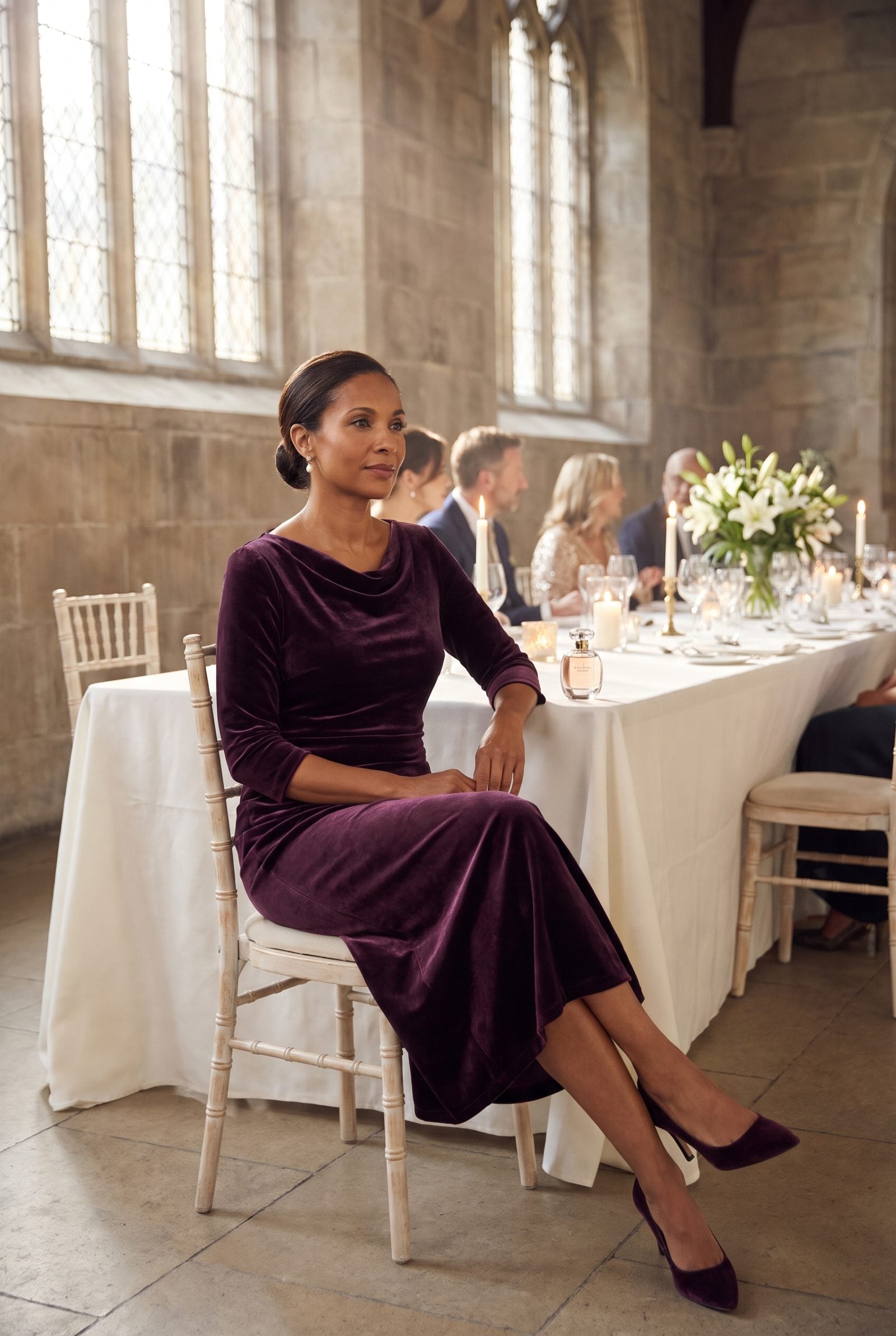
Plum velvet at a long table is a close-quarters outfit, and close quarters change the fragrance math. One spritz, pulse points only, applied before you dress. That’s plenty.
Heavy scent fills a seated room fast. At a packed reception table, the guest two seats over is breathing your perfume through dinner whether they want to or not, and someone always has a sensitivity. Light touch, genuine warmth.
1. Do Not Ask the Bride for Last-Minute Outfit Approval
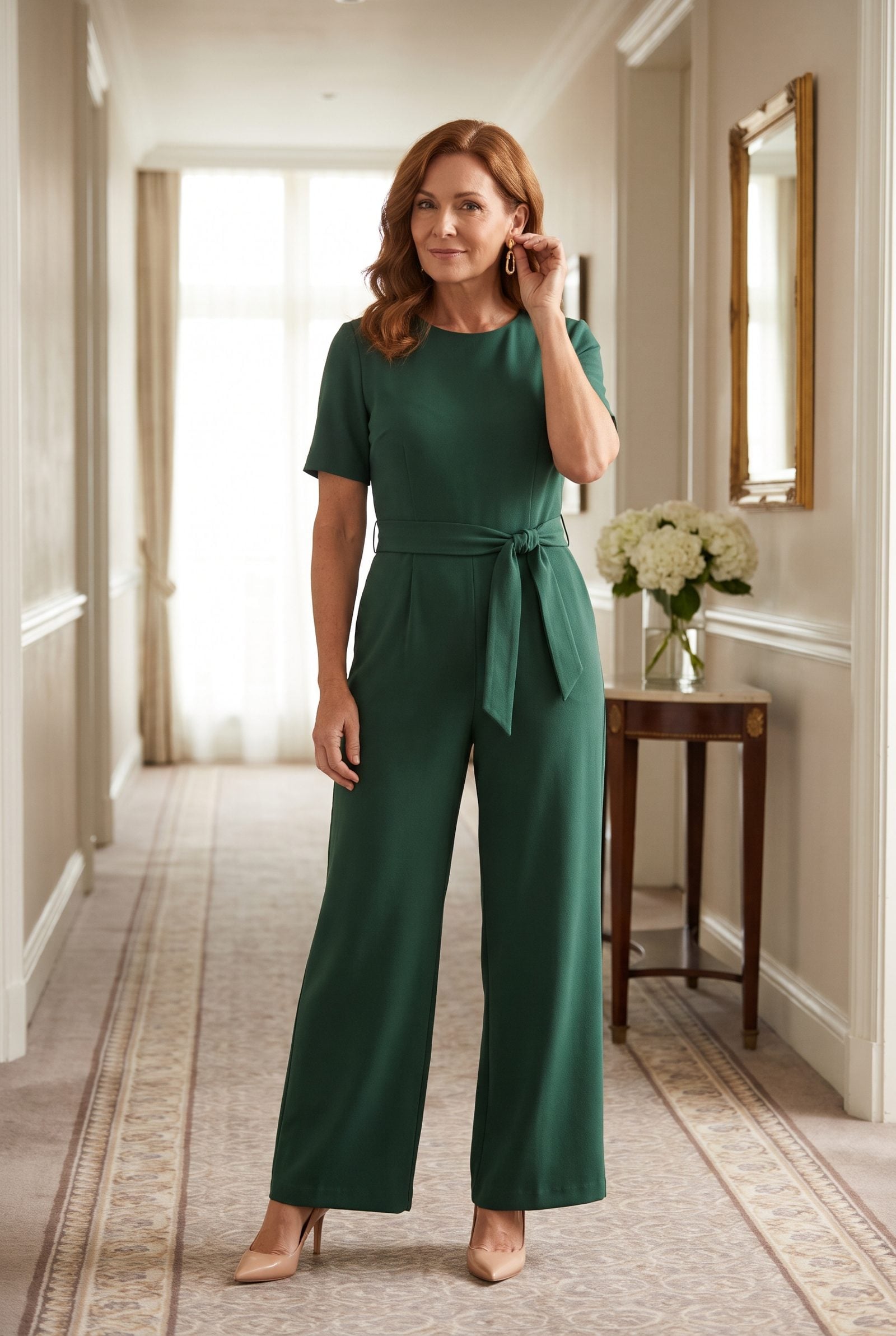
Confidence is the actual rule here, worn as a forest-green crepe jumpsuit that needs no permission slip. The wide leg and self-tie waist give you a column silhouette that stands on its own.
Texting the bride a mirror selfie the morning of, asking if your dress is okay, hands her a call she has no room left to make. She’s got a schedule, a hundred people and her own nerves. Trust the outfit styles you already chose. If you had doubts, last week was the time to sort them.