

Before the online shopping cart, there was the dog-eared page. The Christmas catalogs from Sears, JCPenney and Montgomery Ward arrived carrying an extraordinary proposition: somewhere between the electric blankets and the children’s bicycles lay an entirely different wardrobe. Burgundy velvet for the Christmas party, satin pajamas with the luxurious sheen of department store windows, snow boots that looked as though they belonged on another planet. All available by mail.
The seventies and eighties were gloriously different decades for American fashion. The former embraced earthy suede, sweeping caftans, enormous collars and the spectacular possibilities of polyester. The latter turned up the volume on practically everything: shoulders, earrings, color, Christmas sweaters. Even the pajamas looked dressed for a party.
Polyester promised liberation from the ironing board, shoulder pads supplied instant authority, and a satin dressing gown could turn breakfast into an entrance. These period-inspired fashions capture the full theater of December during the golden age of mail-order shopping, from the first snowfall to the last cocktail party. The Christmas catalog sold clothes, certainly. Its most seductive merchandise was possibility.
FYI, thanks to AI imagery software, we’re able to create very specific fashion and hairstyle examples to illustrate the points being made. In some cases, imagery is exaggerated to hammer home the point. Also, assume links that take you off the site are affiliate links such as links to Amazon. this means we may earn a commission if you buy something.
37. The Forest-Green Felt Ornament Cardigan
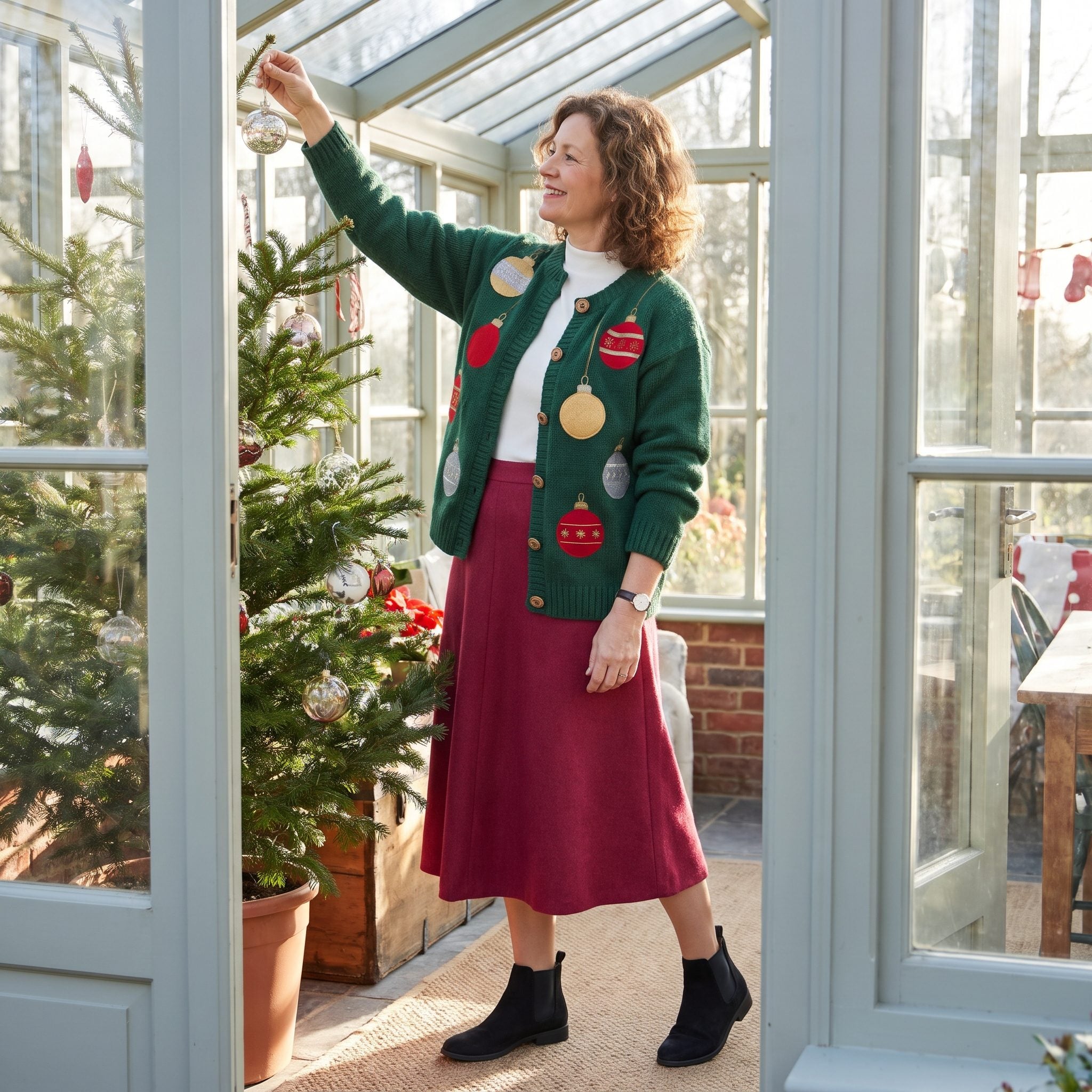
Before Christmas sweaters became the subject of ironic office parties, they were largely a sincere expression of seasonal enthusiasm. Raised felt ornaments, enormous decorative buttons and a generous forest-green knit gave this cardigan all the festive ambition of a fully decorated mantelpiece.
The white mock-neck and berry wool skirt keep the outfit from becoming an extension of the Christmas tree. A forest-green Christmas cardigan belongs to a marvelous chapter of American fashion when a garment could have an exceptionally short annual engagement and still earn its place in the wardrobe. December had its own dress code.
36. The Burgundy Velvet Dress and Its Regency Neckline
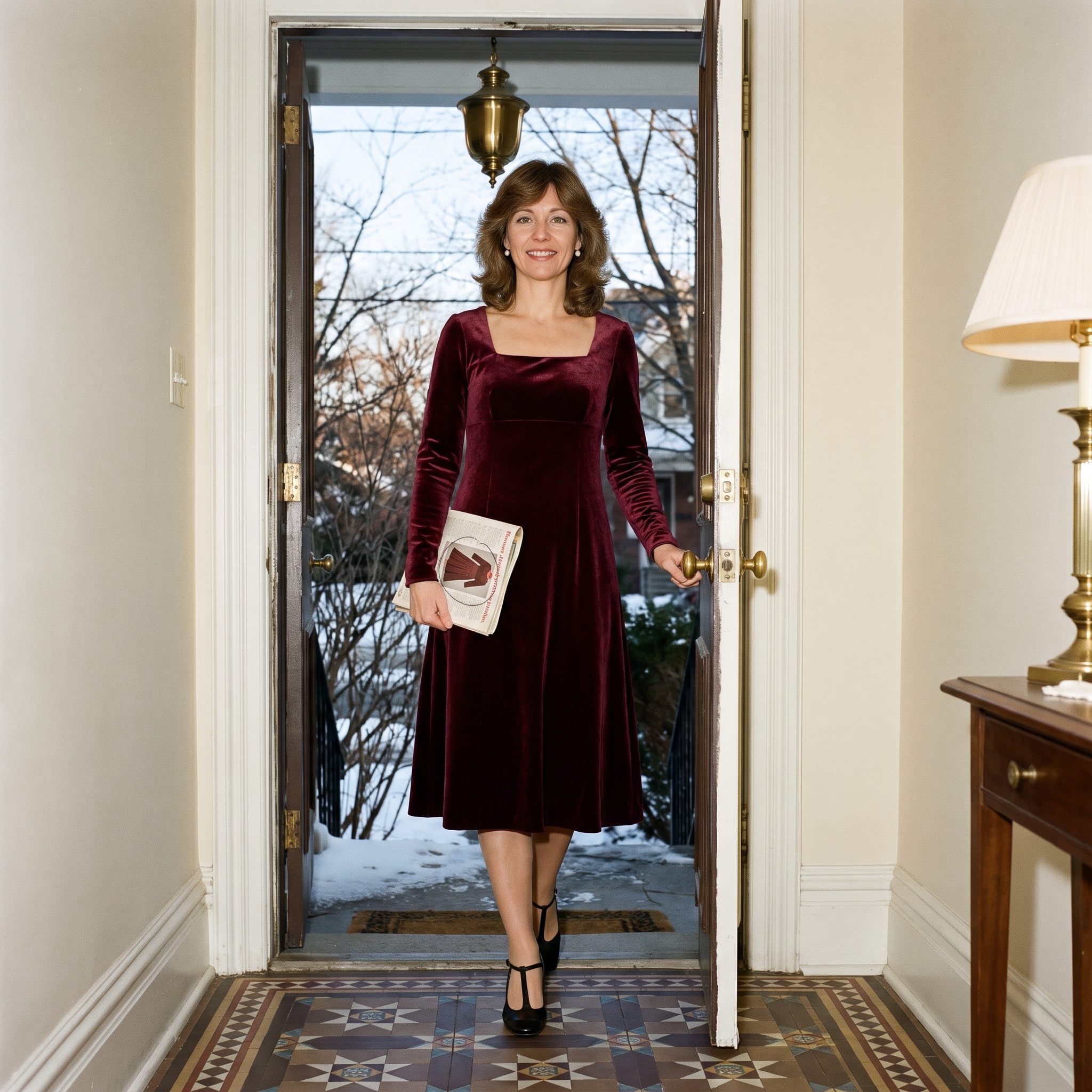
Early-seventies fashion had a remarkable appetite for the past. Burgundy velvet, an empire waist and a square neckline owe more to a Regency portrait than to the disco floor that would dominate the latter part of the decade.
The raised waist allows the skirt to fall freely, while the square neckline gives all that sumptuous fabric a crisp architectural edge. A burgundy velvet midi dress requires remarkably little assistance from jewelry or accessories. Velvet has already announced the occasion before the first necklace comes out of its box.
35. The Lace-Up Boots Built for Slush
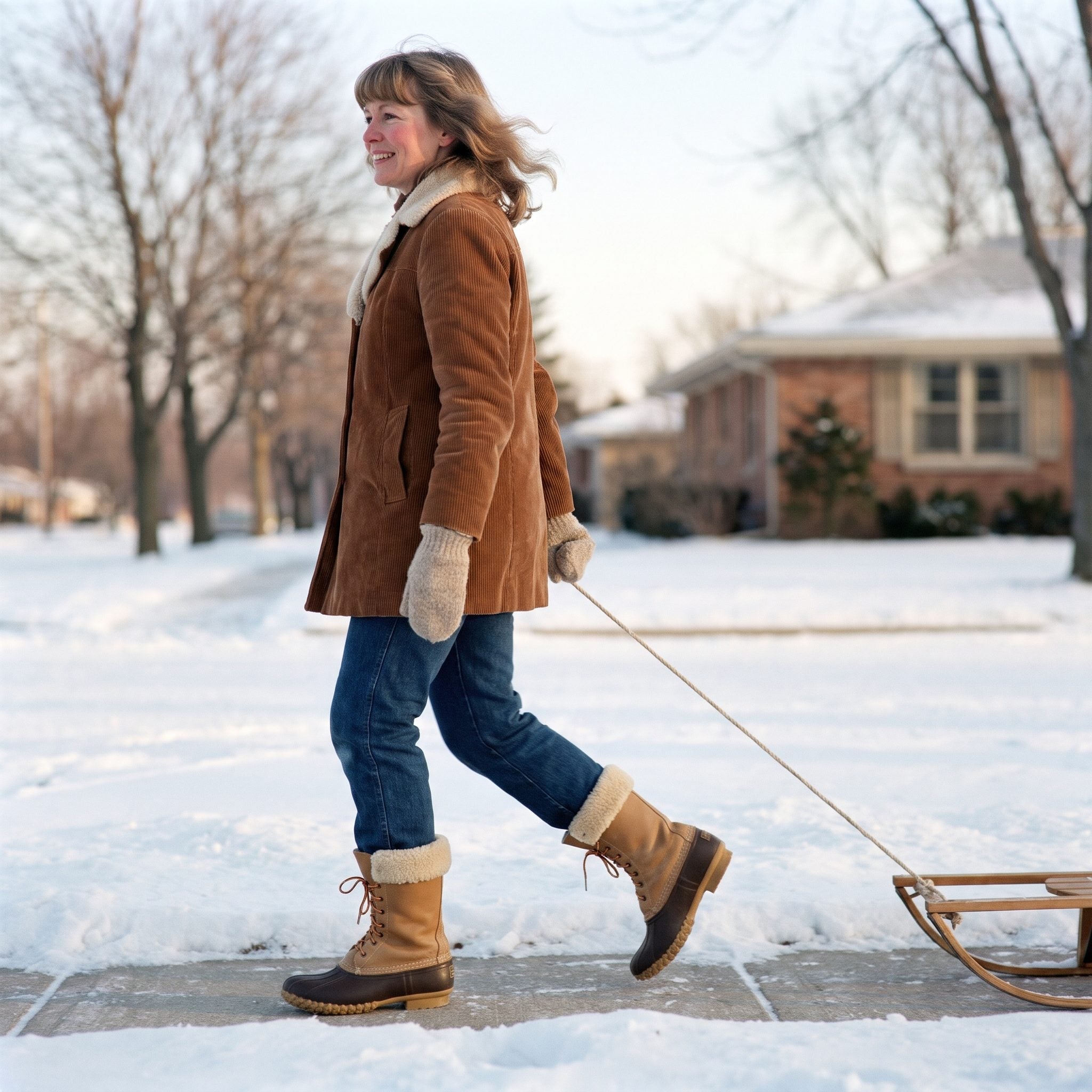
Not every coveted Christmas gift shimmered under a chandelier. Tan uppers, dark rubber bottoms, substantial laces and a thick fleece cuff made these winter boots a welcome antidote to the elegant impracticalities elsewhere in the catalog.
A sturdy lace-up shearling boot fits naturally into the seventies wardrobe of corduroy, denim and substantial wool coats. The rubber lower offers protection from wet snow, while the soft cuff brings a little country-lodge charm to an otherwise utilitarian piece of footwear. Glamour was optional. Getting through February with dry feet was the larger ambition.
34. The Hammered Gold Pendant That Transformed a Turtleneck
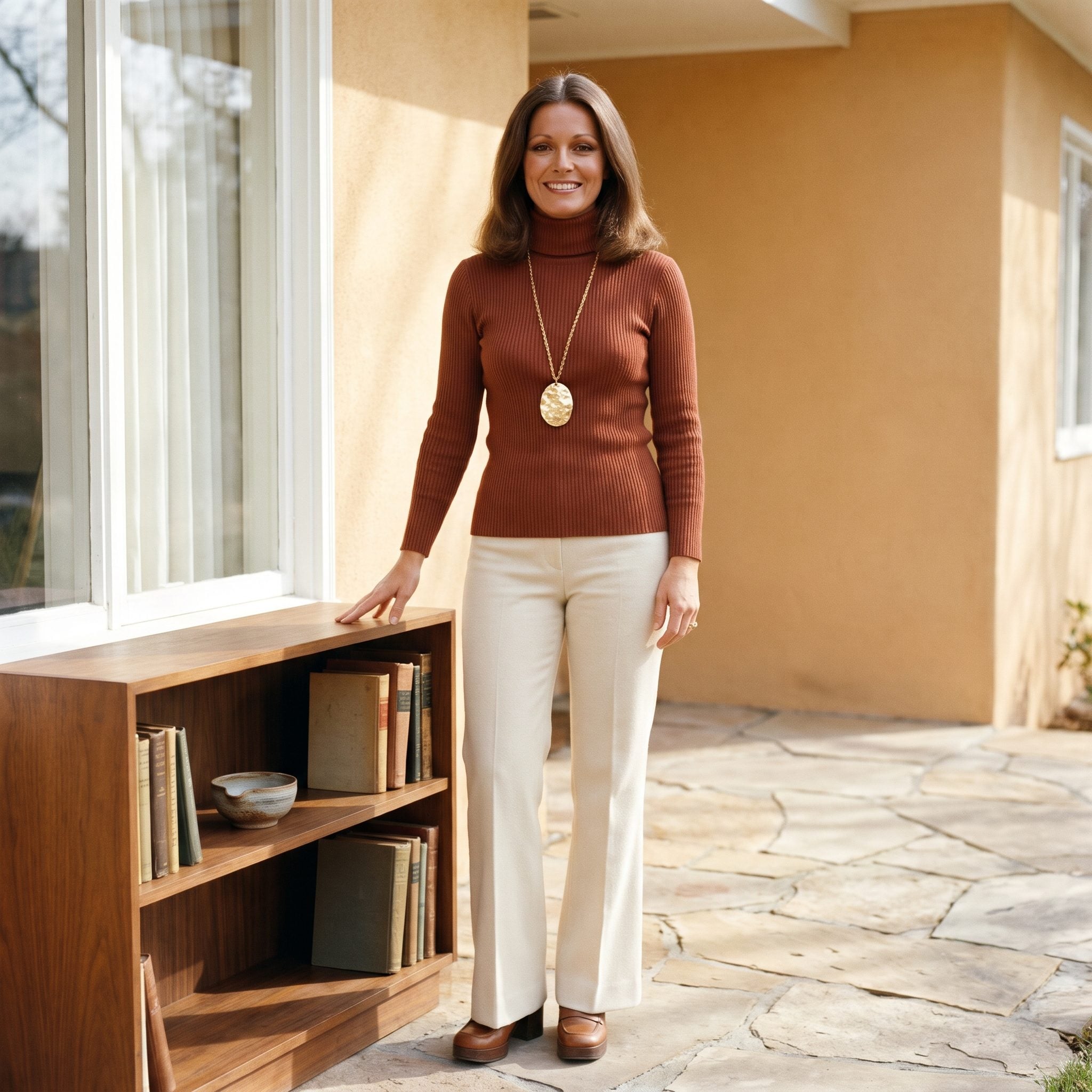
The seventies gave necklaces room to travel. Long chains complemented high necklines, tunics and flowing separates, bringing a splash of metallic ornament well below the collarbone.
The hammered oval pendant scatters light across its uneven surface, introducing a handcrafted quality to the precision of a ribbed turtleneck. The effect is less formal than polished gold and more interesting than an entirely smooth medallion.
A hammered gold pendant also had an obvious advantage as a catalog gift: no complicated negotiations with dress sizes, waist measurements or sleeve lengths. A small box could make an impressive difference to an entire winter wardrobe.
33. The Wide-Lapel Velvet Dinner Jacket That Rewrote the Dress Code

The dinner jacket borrowed the authority of a man’s formal wardrobe and dispensed with the assumption that evening glamour required a dress. Midnight-blue velvet, sweeping lapels and a shaped waist give this interpretation a distinctly seventies swagger.
A silver lamé shell brings nightclub sparkle beneath the jacket, while high-waisted ivory tuxedo pants provide an unexpected flash of brightness. The outfit has three excellent fabrics and no interest in making them behave alike.
This approach to personal style offered a sophisticated alternative to the conventional Christmas party dress. The growth of fashionable evening separates also meant that a statement jacket could earn its keep across several outfits rather than one December engagement.
32. The Sage Double-Knit Leisure Set

Polyester double-knit was one of the great practical champions of seventies fashion. Resistant to wrinkling and generally easy to care for, the fabric offered an appealing proposition to anyone less than enthusiastic about spending Sunday evening at the ironing board.
A zip-front sage top and matching pants represent the quieter side of the decade’s leisurewear. The muted green belongs naturally alongside avocado, harvest gold and the other colors that migrated so successfully between seventies interiors and wardrobes.
An ivory ribbed tank breaks up the matching pieces without disturbing their easygoing character. Long before contemporary matching sets became a fixture of the casual wardrobe, catalog retailers understood the appeal of selling an entire outfit without requiring customers to assemble one.
31. The Red Snowflake Skating Sweater

Cherry red, white geometric bands and a substantial zip collar belong to the visual language of vintage winter sportswear. Nordic-inspired motifs gave sweaters an association with snow-covered mountains, skating rinks and ski resorts, even when their destination was the local shopping mall.
Ivory corduroy pants and white figure skates extend the palette, allowing the red sweater to dominate against the winter landscape. The look has all the festive color of Christmas without requiring a single decorative reindeer.
That distinction made snowflake sweaters a more versatile seasonal gift than explicitly Christmas-themed knits. Their decorative appeal survived the removal of the tree.
30. The Brocade Vest and Palazzo Pants for the Supper Club
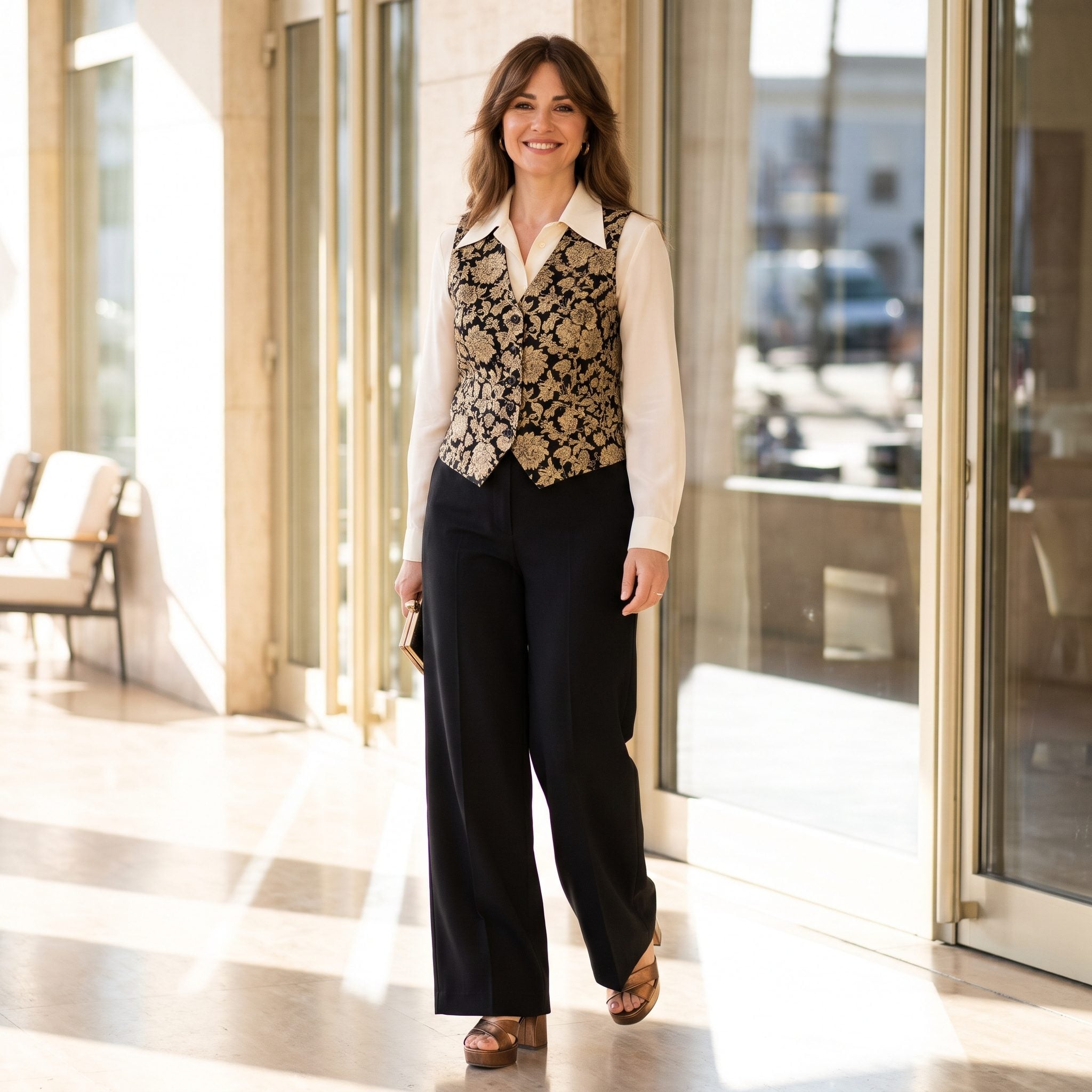
Black-and-gold brocade could deliver an extraordinary amount of evening glamour without a single applied sequin. Its ornamental weave brought the richness of formal textiles to the familiar shape of a fitted vest, a garment otherwise associated with much less extravagant occasions.
An ivory pointed-collar blouse supplies a crisp foundation, while wide palazzo pants give the outfit the sweeping movement that made seventies eveningwear so distinctive.
Bronze platform sandals complete the effect. The beauty of this kind of statement-piece styling was its adaptability: the brocade vest could transform an existing blouse and pair of pants into something altogether more ambitious.
29. The Peach Satin Robe With Quilted Cuffs
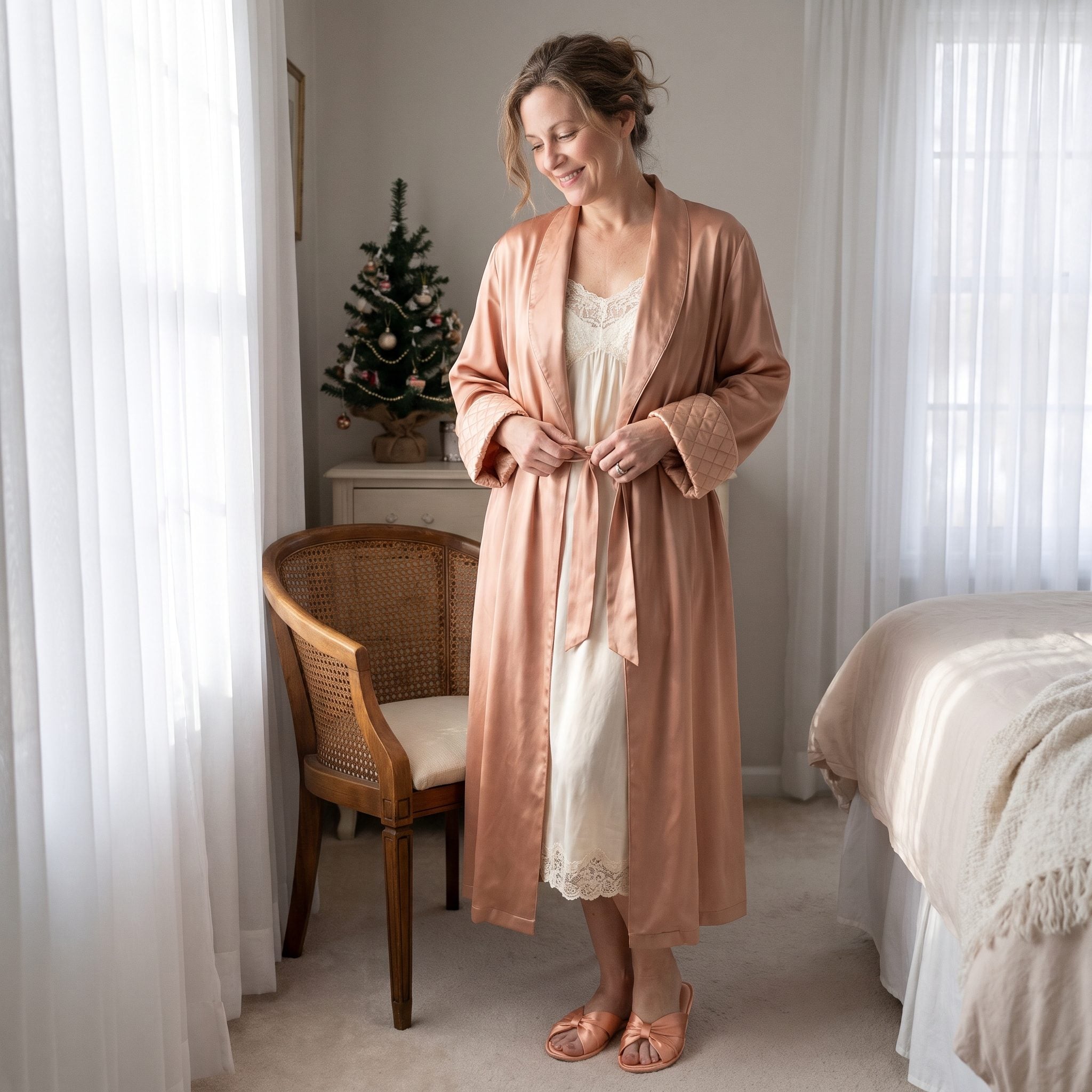
Christmas catalog lingerie photography elevated the dressing gown to something approaching a cinematic costume. Peach satin, scalloped lace and quilted cuffs suggest a garment whose ambitions extended well beyond answering the door for the morning newspaper.
The quilting gives the cuffs a sculpted appearance, interrupting the smooth satin with a finely stitched pattern. Lace at the neckline adds a delicate third texture, making the outfit interesting even within its limited palette.
Where tailored pajamas borrowed their details from menswear, robes like this belonged to a more romantic tradition of domestic fashion. The distinction was clear: one promised a comfortable morning, the other promised a rather glamorous entrance to breakfast.
28. The Raspberry Dress Coat With the Velvet Collar
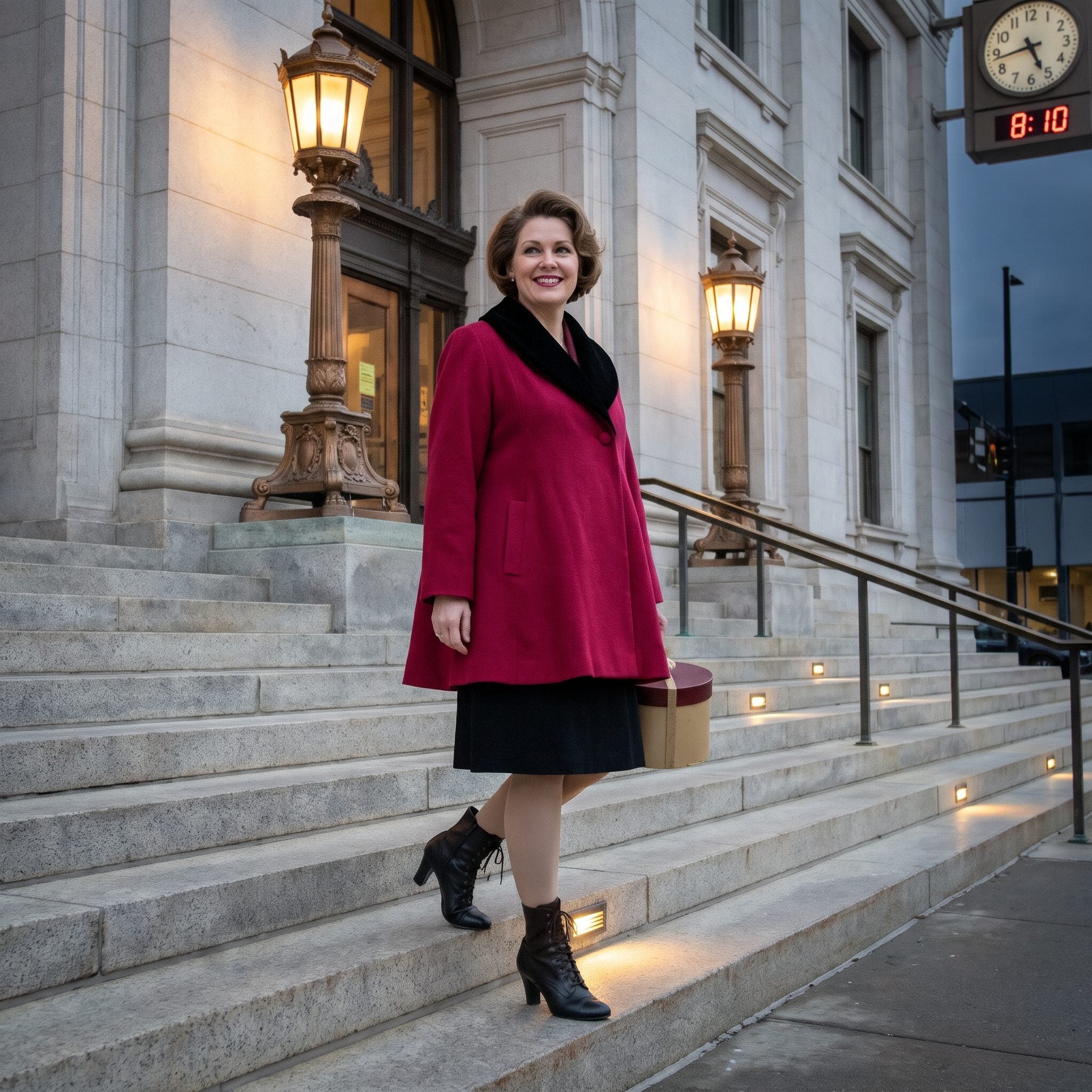
Raspberry was a glorious interruption to the winter parade of camel, charcoal and black. On a generously cut swing coat, the color acquires enough scale to become the entire fashion statement.
The black velvet collar frames the face and brings a touch of eveningwear into the practical business of staying warm. Its plush finish gives the coat depth without introducing elaborate ornament.
A raspberry wool swing coat remains an appealing addition to a cold-weather wardrobe. The flared cut accommodates winter layers and party dresses alike. A coat this exuberant makes the question of what lies underneath less urgent.
27. The Teal Color-Blocked Warm-Up Suit
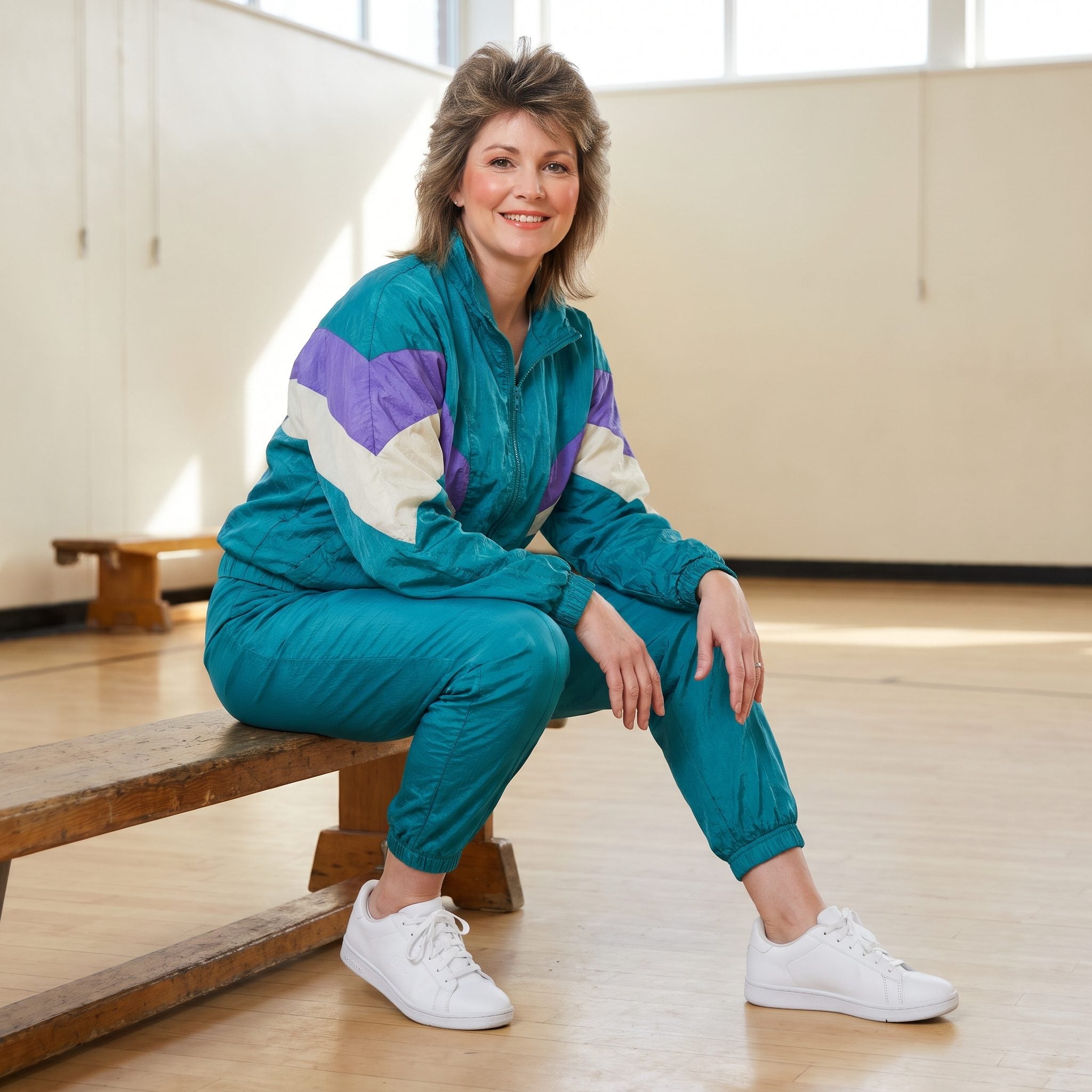
Few garments announce the eighties as efficiently as a shiny nylon warm-up suit. Teal, violet and ivory collide across the torso in angular panels, turning ordinary athletic clothing into a mobile exercise in graphic design.
The lightweight shell, elasticized cuffs and zip-front closure reflect the garment’s sporting origins. Its extraordinary colors belong to a decade when exercise itself became a fashion opportunity, complete with elaborate wardrobes and celebrity workout videos.
A teal color-block track jacket is an unmistakable ancestor of contemporary athleisure. Sportswear had become attractive enough to occupy a place on the Christmas list regardless of the recipient’s enthusiasm for jogging.
26. The Ruby-Red Statement Bracelet
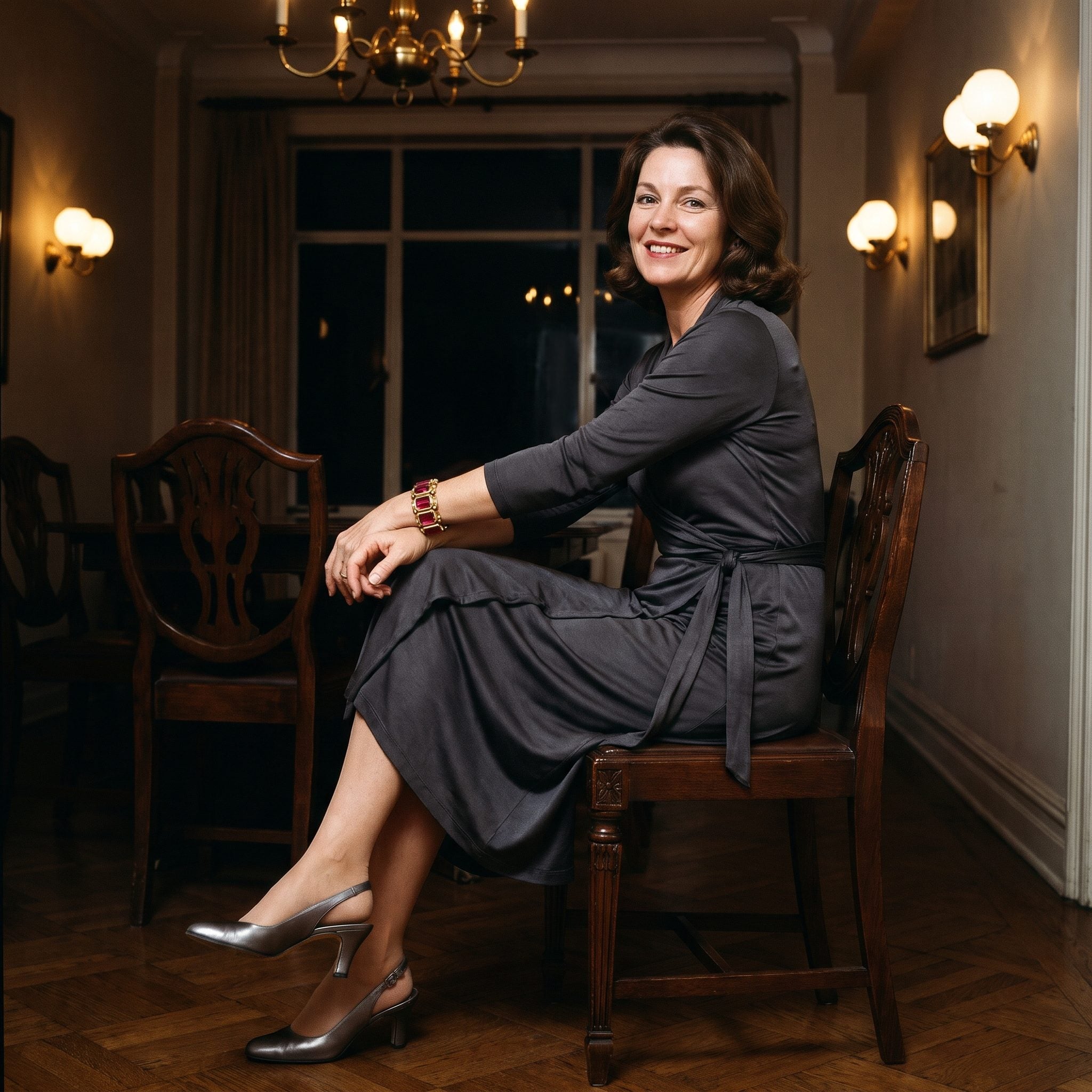
A broad bracelet set with rectangular ruby-colored stones brings the decorative ambitions of the jewelry counter to the Christmas dinner table. The repeated settings give the piece a satisfying rhythm, and its generous proportions reflect an era when accessories were becoming increasingly difficult to overlook.
Charcoal jersey provides a splendidly understated backdrop. The soft fall of the fabric makes the bracelet’s hard geometry and saturated red all the more conspicuous.
Paired with a charcoal wrap dress, the bracelet illustrates one of the pleasures of catalog jewelry shopping. The smallest package beneath the tree could contain the most dramatic element of an evening outfit.
25. The Camel Cape and Tartan Kilt
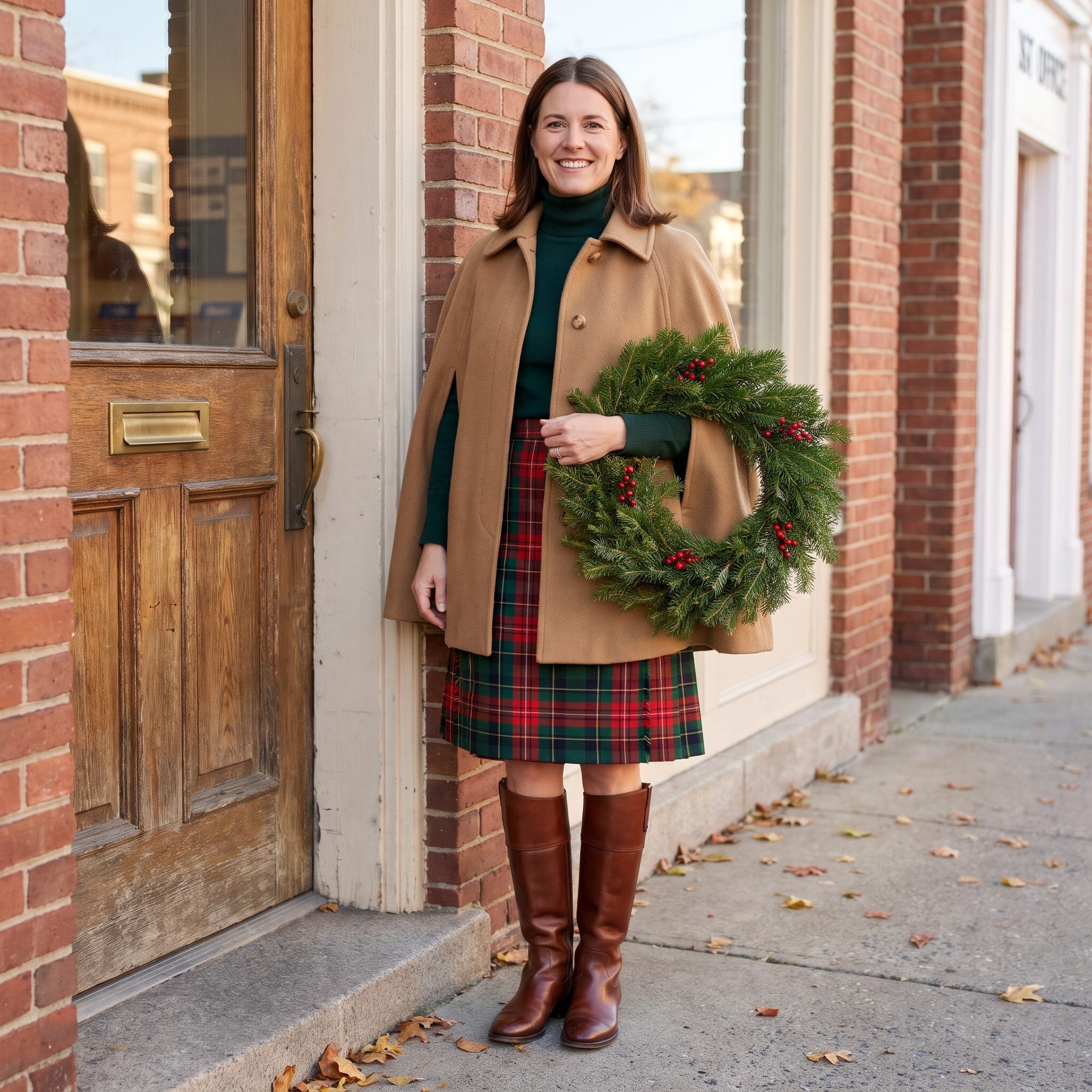
A coat follows the body. A cape has other ideas. Without conventional fitted sleeves, camel wool falls from the shoulders in sweeping folds, giving even an ordinary winter outfit a rather magnificent sense of movement.
Red tartan supplies the pattern beneath it, with overlapping fabric, pleats and a leather buckle referencing traditional kilt styling. A bottle-green turtleneck and brown riding boots complete the outfit’s country-inspired aesthetic.
This was the more traditional side of seventies cold-weather fashion, a world away from the metallic surfaces and synthetic brilliance of disco clothing. Both could coexist in the same decade’s department store without either looking remotely out of place.
24. The Champagne Satin Pajamas With Chocolate Piping
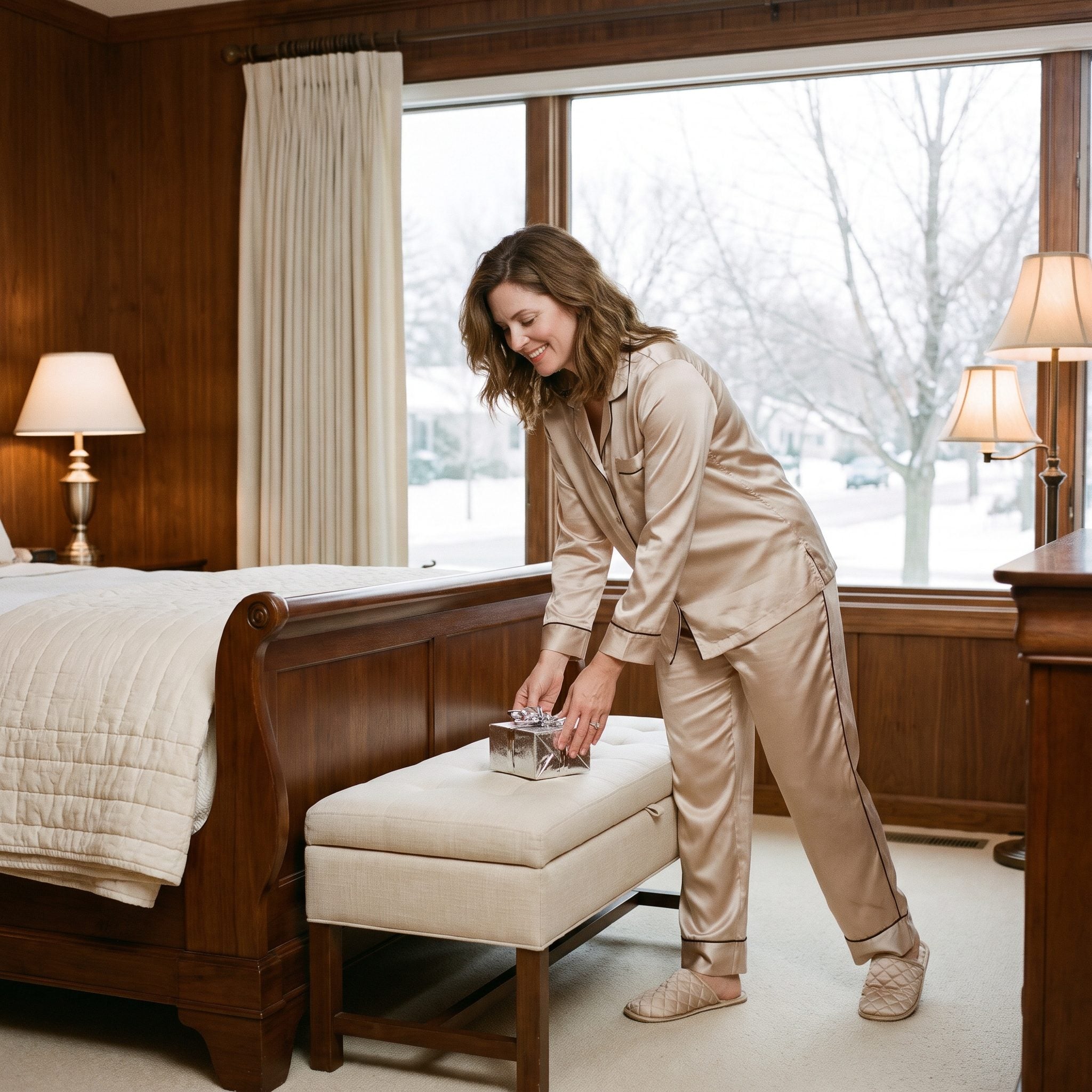
Champagne satin and chocolate piping bring the precision of a well-tailored suit to the business of doing very little. The dark edging traces the collar, placket and cuffs, giving a loose garment a remarkably finished appearance.
Where lace and embroidery supplied the ornament on more romantic nightwear, these pajamas relied on clean lines and the luminous quality of satin. The restraint is what makes them look expensive.
A set of champagne satin pajamas had obvious appeal in the Christmas gift department. Two coordinated pieces, a luxurious-looking fabric and the reassuring possibility of spending an entire morning without getting properly dressed.
23. The Scarlet Velvet Dress With the Draped Hip
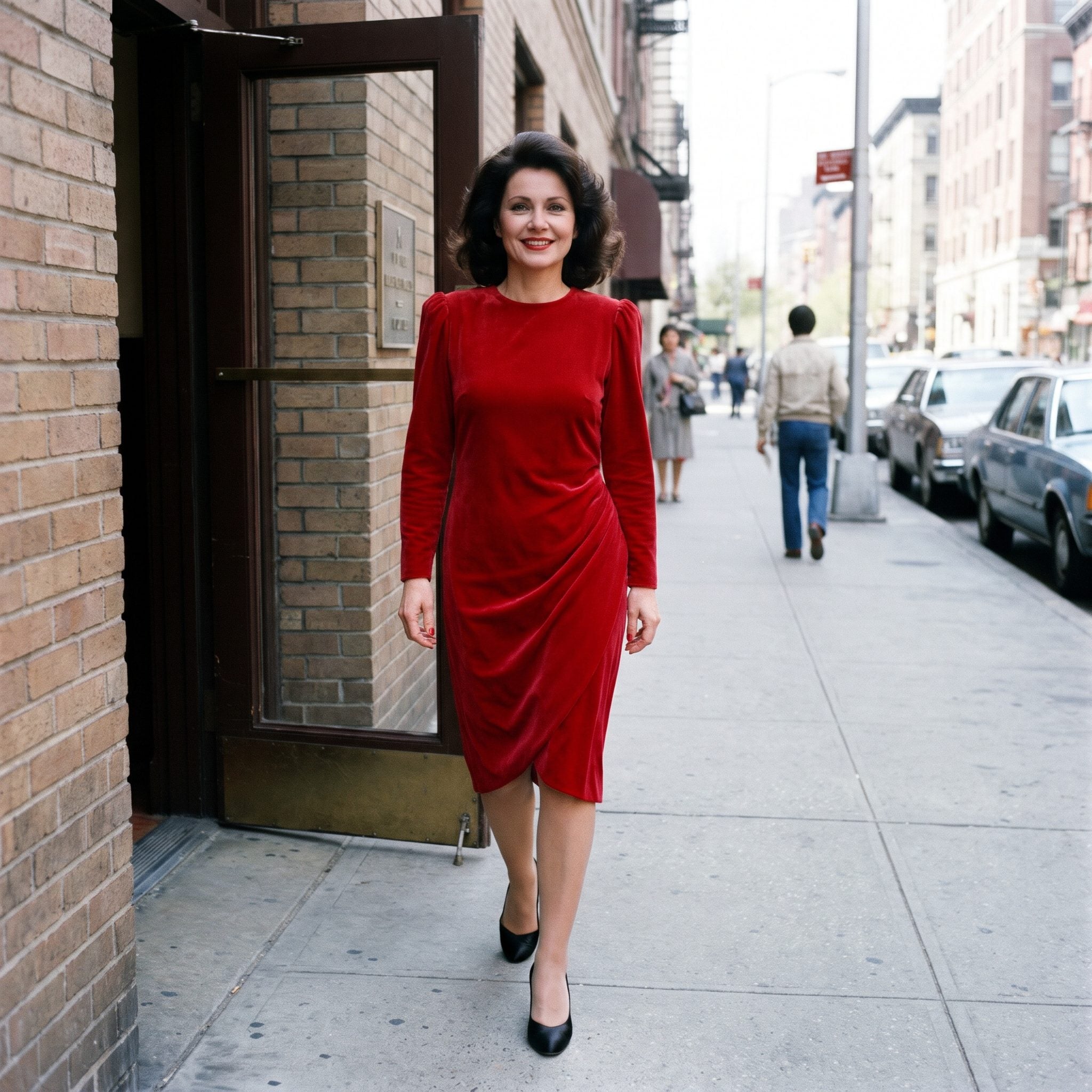
Compare this scarlet dress with the romantic velvet fashions of the early seventies and the passage of a decade becomes immediately apparent. The raised waist has disappeared, the shoulders have acquired authority, and the fabric has been persuaded into a dramatic sweep across the hip.
The diagonal drape changes how light falls across the velvet’s pile, creating deep shadows and brighter flashes of scarlet across the folds. Padded shoulders supply the framework above, while the gathered hip answers with an entirely different kind of volume.
Black satin pumps finish an outfit that needs little additional decoration. The eighties Christmas party dress could accomplish quite enough through the strategic rearrangement of fabric and a determination not to disappear into the background.
22. The Fair Isle-Style Cardigan and Tobacco Suede Skirt
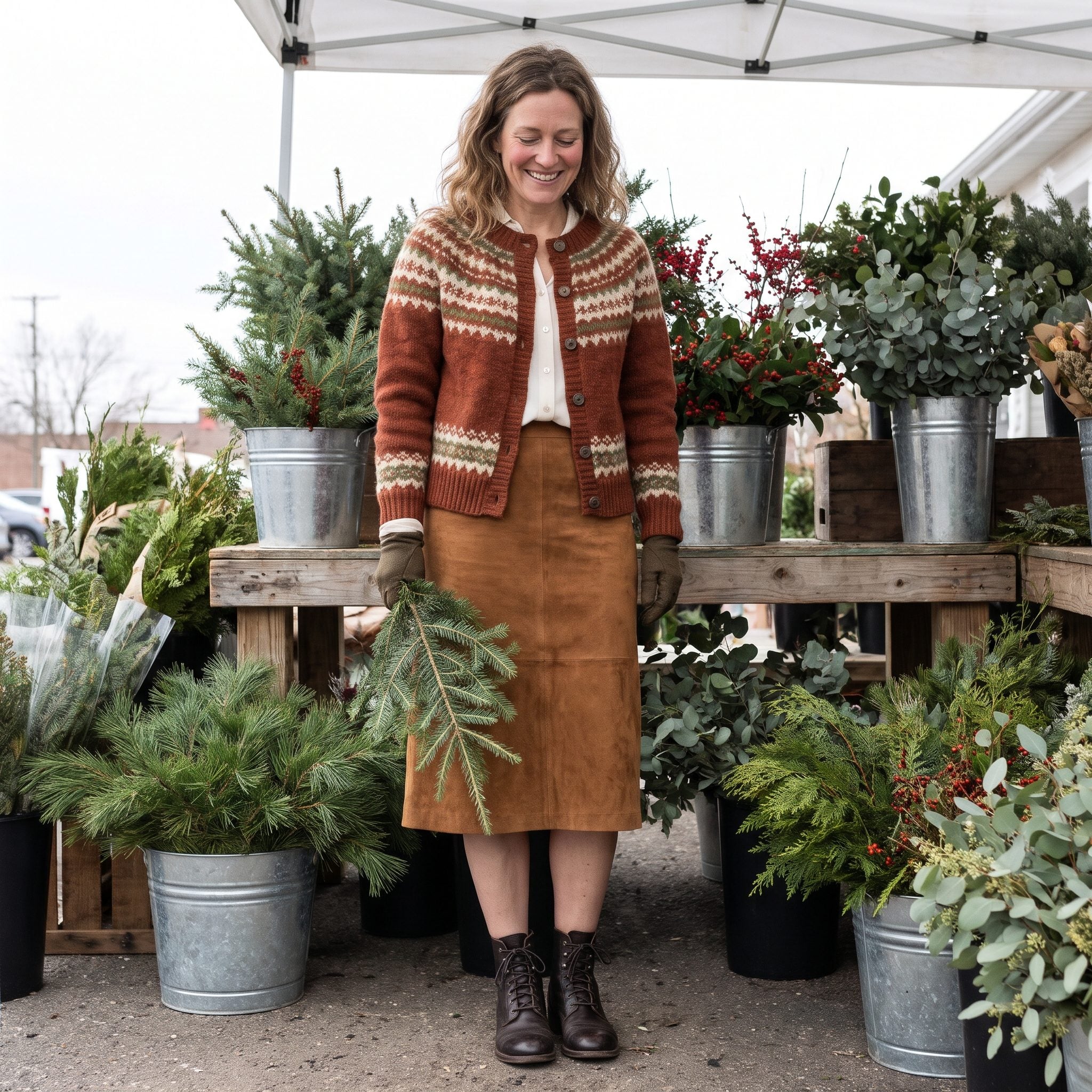
Rust, cream and moss capture the seventies palette in a single patterned yoke. The cardigan draws on traditional knitting motifs, concentrating its intricate bands around the shoulders and leaving the rest of the garment comparatively quiet.
A tobacco suede skirt brings another favorite material of the decade into the outfit. Its soft, matte finish sits comfortably beneath the textured knit, while an ivory blouse and dark lace-up boots round out the earthy palette.
Neither garment requires a Christmas motif to make an appealing seasonal gift. The appeal is more lasting: traditional-looking textiles, practical separates and the particular warmth of colors borrowed from the natural world.
21. The Plum Moon Boots and Silver Ski Jacket
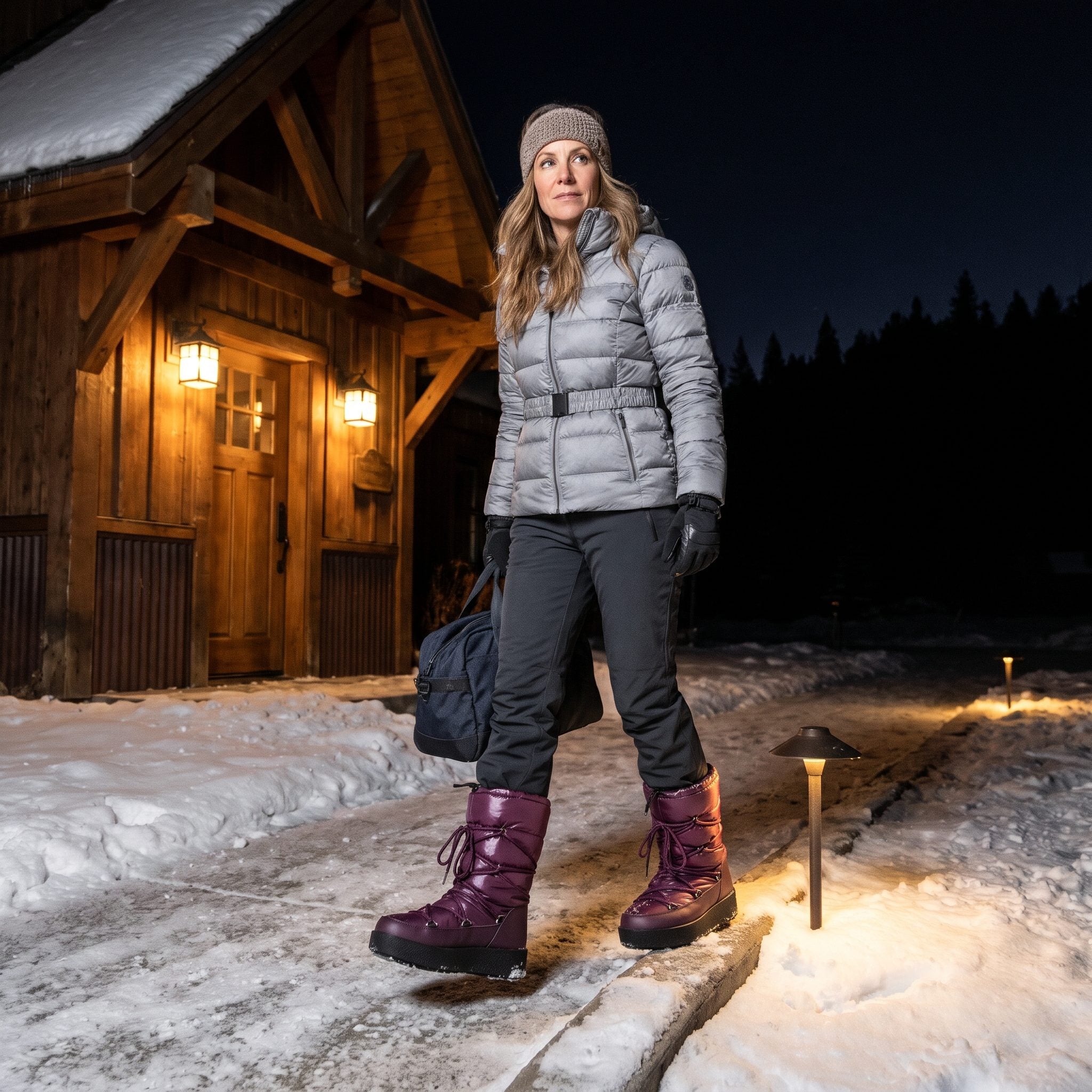
Some winter boots aimed for elegance. Moon Boots approached the matter from the opposite direction, embracing enormous proportions, conspicuous lacing and a shape that looked gloriously indifferent to the conventions of footwear.
Plum nylon lends the boots a fashionable character, especially alongside slim charcoal ski pants and a belted silver puffer jacket. The contrast between the narrow leg and oversized foot makes the entire outfit look like a stylish byproduct of the space race.
A pair of plum moon boots represented a rather entertaining departure from the practical winter footwear associated with Christmas gift shopping. By the time space-age design reached the ski lodge, it had acquired a much more adventurous color palette.
20. The Crystal Bow Brooch on White Mohair
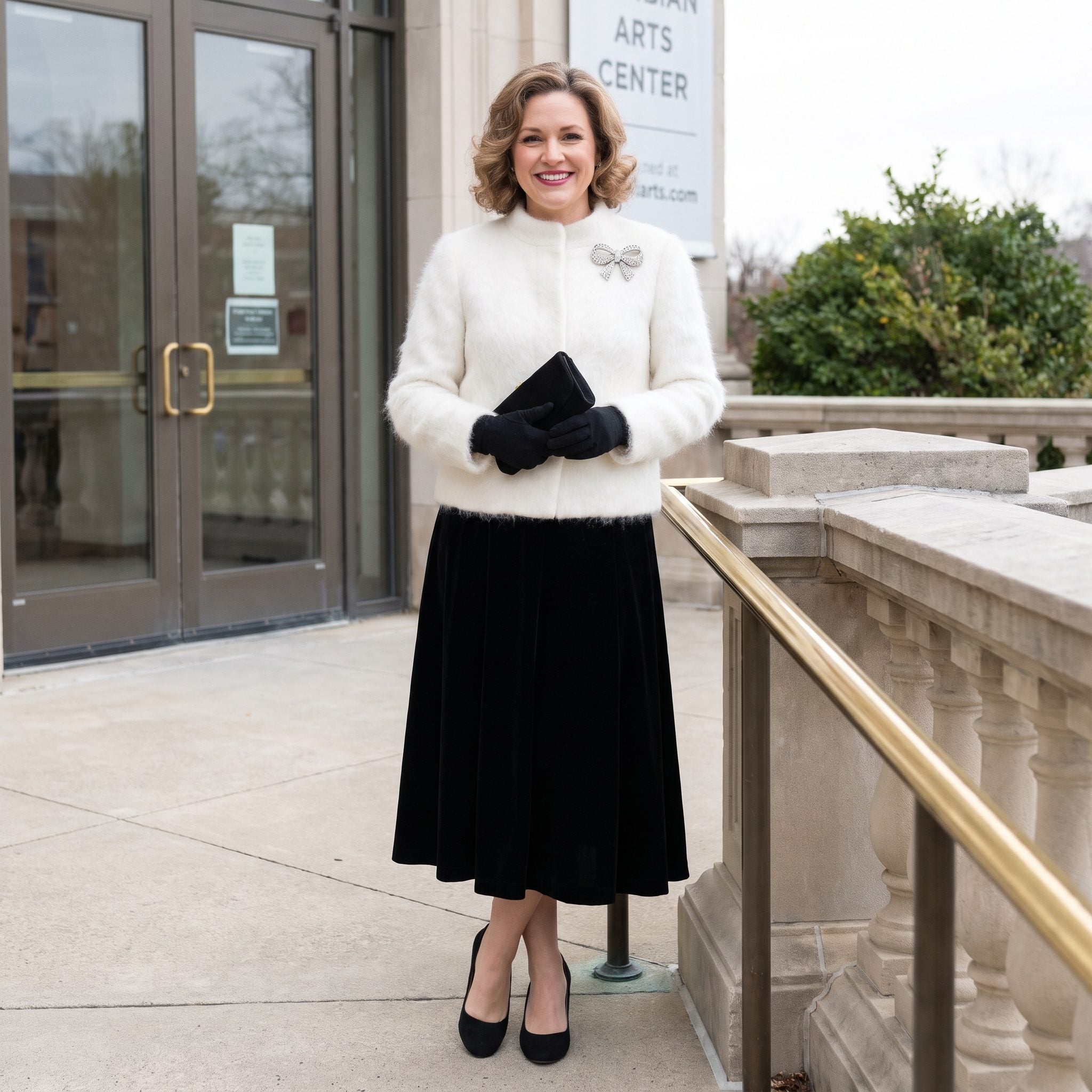
The brooch offered one of the more economical routes to Christmas party glamour. An elaborate piece of costume jewelry could introduce a festive character to an existing jacket without requiring the purchase of another outfit.
Fuzzy white mohair and dark velvet create two distinctly different textile surfaces. The faceted crystal bow brooch cuts through all that softness with sharply defined edges and concentrated sparkle.
Placed off center near the collarbone, the bow interrupts the symmetry of the jacket. Its shape carries a subtle suggestion of Christmas gift wrapping without turning the wearer into the gift itself.
19. The Printed Hostess Caftan
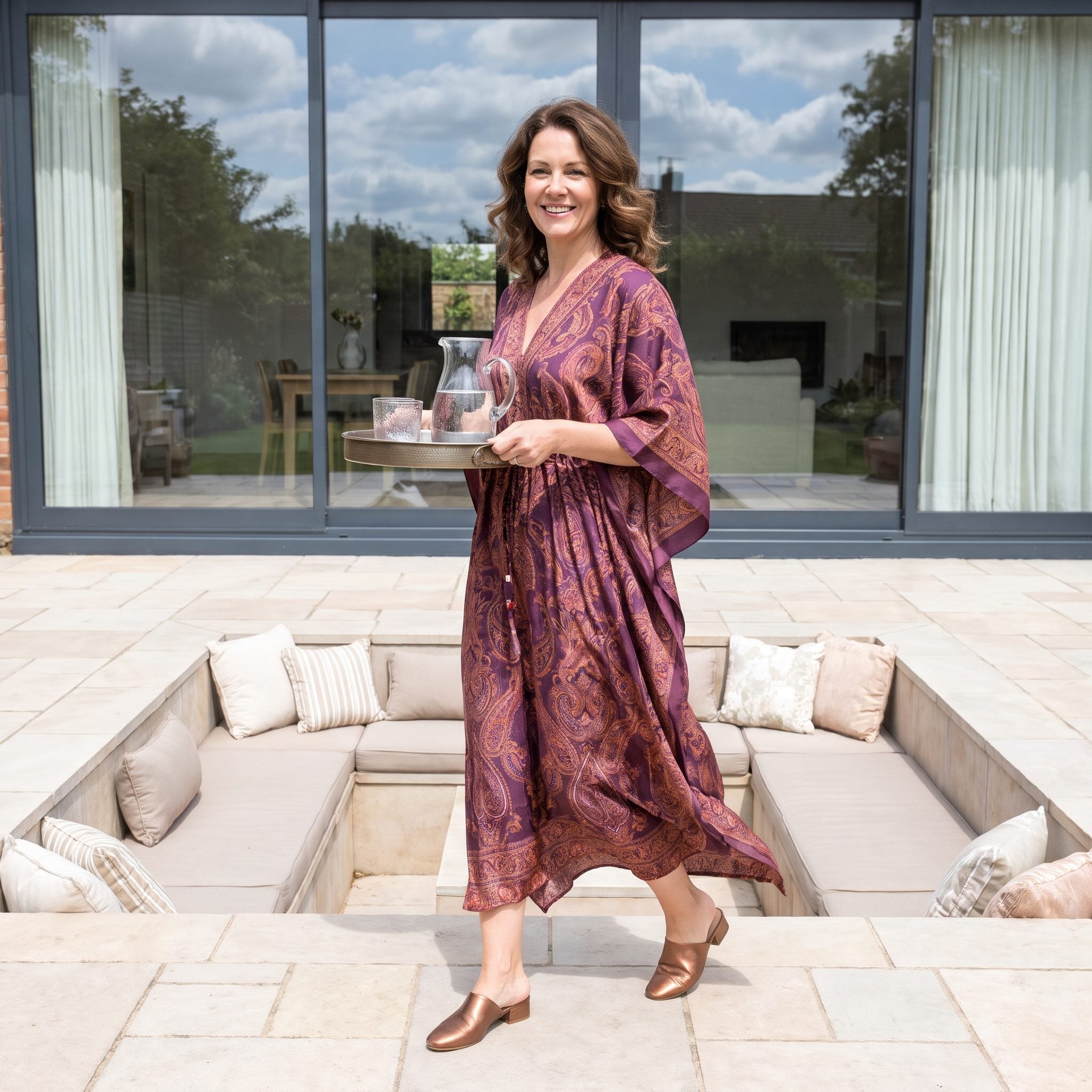
The hostess caftan had an ingenious answer to the problem of dressing elegantly while entertaining at home: abandon the fitted waist altogether. Generously cut and capable of carrying spectacular prints, the garment offered the drama of an evening gown with far fewer restrictions.
Plum and copper ornament sweeps from the band collar to the floor. Broad sleeves extend the pattern into another dimension, while bronze mules pick up the warmer accents in the fabric.
A printed caftan represents the more glamorous possibilities of seventies domestic fashion. Few garments could move so convincingly between the living room, the dining table and the cocktail party without requiring a change of clothes.
18. The Oversized Reindeer Sweater

A reindeer the size of a dinner plate makes a fairly persuasive case for the eighties’ approach to Christmas knitwear. Dropped shoulders, generous sleeves and an oversized body supplied the acreage required for such enthusiastic decoration.
Stone-colored corduroy pants and burgundy loafers keep the lower half of the outfit firmly within the conventions of everyday dressing. The enormous reindeer becomes more conspicuous for having such sensible company.
The original appeal of these sweaters was frequently much less ironic than their modern reputation suggests. Bright, cheerful and unapologetically seasonal, they made an obvious addition to the Christmas gift pages. The reindeer required neither explanation nor apology.
17. The Ice-Blue Satin Bow Blouse

The bow blouse became an elegant negotiator between the sharper tailoring of eighties business clothing and the decorative traditions of women’s fashion. Beneath a structured jacket, its sweeping necktie supplied an alternative to the conventional shirt collar.
Ice-blue satin brings a little luminosity to a graphite wool pencil skirt, while gathered cuffs add volume without disturbing the disciplined lines of the outfit. The blouse has enough detail to stand independently of a jacket.
As part of the growing market for women’s professional fashion, dressy blouses also made practical Christmas gifts. A different blouse could give an established business suit an entirely new character at a fraction of the cost of replacing the suit.
16. The Tall White Quilted Snow Boots

Quilted nylon brought the padded appearance of ski jackets to winter footwear. These tall white pull-on boots dispense with the rugged leather aesthetic of traditional snow boots in favor of something altogether sleeker and more recreational.
Diamond stitching breaks up the broad white shafts, while dark soles provide a graphic foundation. A red jacket and navy stretch pants establish the uncomplicated blocks of color familiar to vintage ski fashion.
Unlike Moon Boots, whose exaggerated proportions were central to their identity, this style takes a more streamlined approach to insulated footwear. Brilliant against fresh snow, white nylon nevertheless demands a degree of optimism in the company of roadside slush.
15. The Silver Mesh Disco Clutch
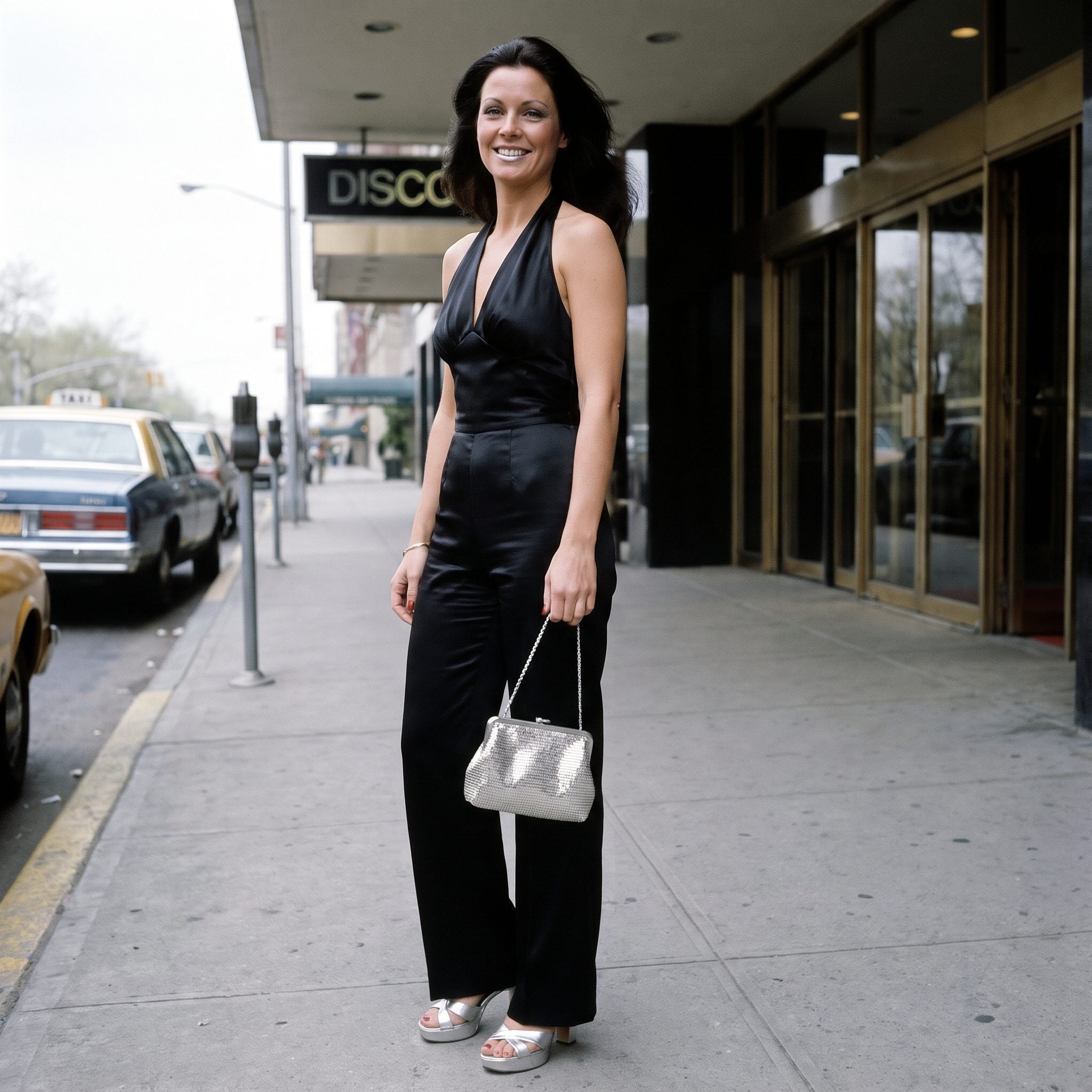
A lipstick, a folded five-dollar bill and a coat check ticket: the compact evening clutch had modest storage ambitions. Its decorative ambitions, on the other hand, were considerable.
Silver mesh behaves almost like a metallic fabric, producing a succession of tiny reflections as its surface moves. Against black satin, the bag offers concentrated sparkle, echoed by matching platform sandals at the other end of the outfit.
Metal-mesh handbags have a history extending well before the disco era, although seventies eveningwear provided an exceptionally welcoming environment for their return. As Christmas gifts, they occupied the attractive territory between practical accessories and costume jewelry.
14. The Honey Velour Leisure Set
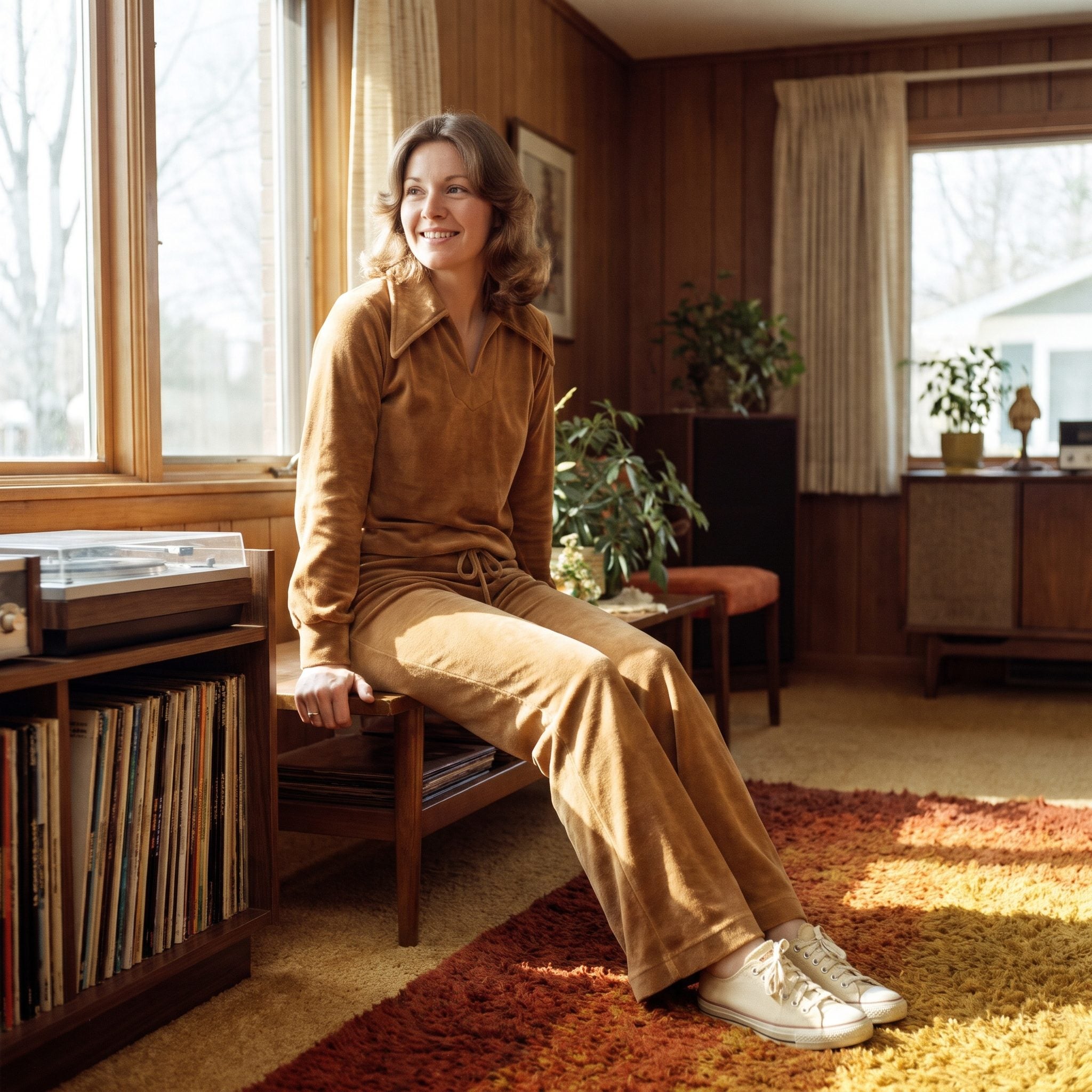
Velour was the seventies’ answer to a fascinating question: how glamorous could a woman look while doing absolutely nothing? Its soft pile offered something of velvet’s richness without the formality of an evening dress.
Honey-brown gives this matching set a wonderfully period-specific warmth. The extra-wide pointed collar is practically a date stamp, while the directional nap gives the uninterrupted color a range of subtle variations.
Cream canvas tennis shoes keep the outfit within the territory of everyday leisurewear. As a foundation for the relaxed casual wardrobe, the matching velour set anticipated a fashion formula that would return repeatedly in subsequent decades. The catalog’s promise was comfort without a complete surrender of glamour.
13. The Cobalt Wrap Skirt With the Oversized Brass Buckle
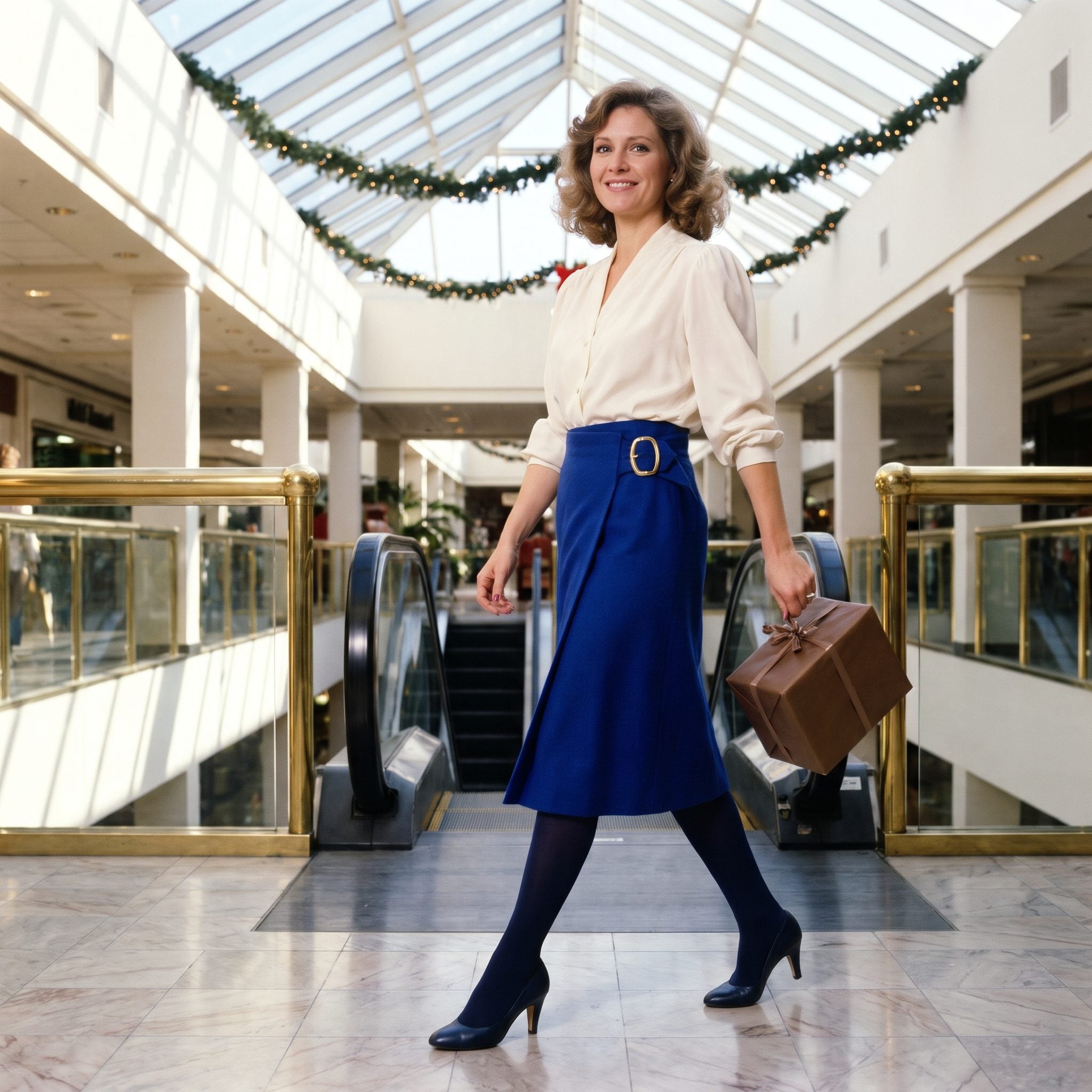
Cobalt wool and a brass buckle roughly the size of a coaster capture two of the eighties’ most recognizable enthusiasms: saturated color and hardware with ambitions well beyond fastening a garment.
The overlapping wrap front directs attention toward the enormous buckle. A cream puff-sleeve blouse supplies another unmistakable period detail, while navy tights and coordinated pumps carry the cooler colors below the hem.
Separates like these offered considerable possibilities for catalog shopping. A dramatic skirt could enliven an entire collection of conventional blouses and knitwear. The buckle also illustrates the decade’s ability to turn even the most mundane piece of clothing hardware into something approaching costume jewelry.
12. The Pale Blue Satin Pajama Shorts

Christmas sleepwear did not always come with a substantial helping of fleece. Pale blue satin, a loose short-sleeved top and generously cut shorts offered a lighter alternative to full-length pajamas and heavy winter robes.
An embroidered lily on the pocket adds a small flourish without resorting to an elaborate print. The fabric supplies the shine; the embroidery gives the set its individuality.
White terrycloth slippers bring a more practical texture to the outfit. Where the dramatic peignoir belonged to an elaborate vision of domestic glamour, these pajamas offered an altogether simpler luxury: freedom of movement and the cool feel of smooth fabric.
11. The Butterscotch Shearling Coat
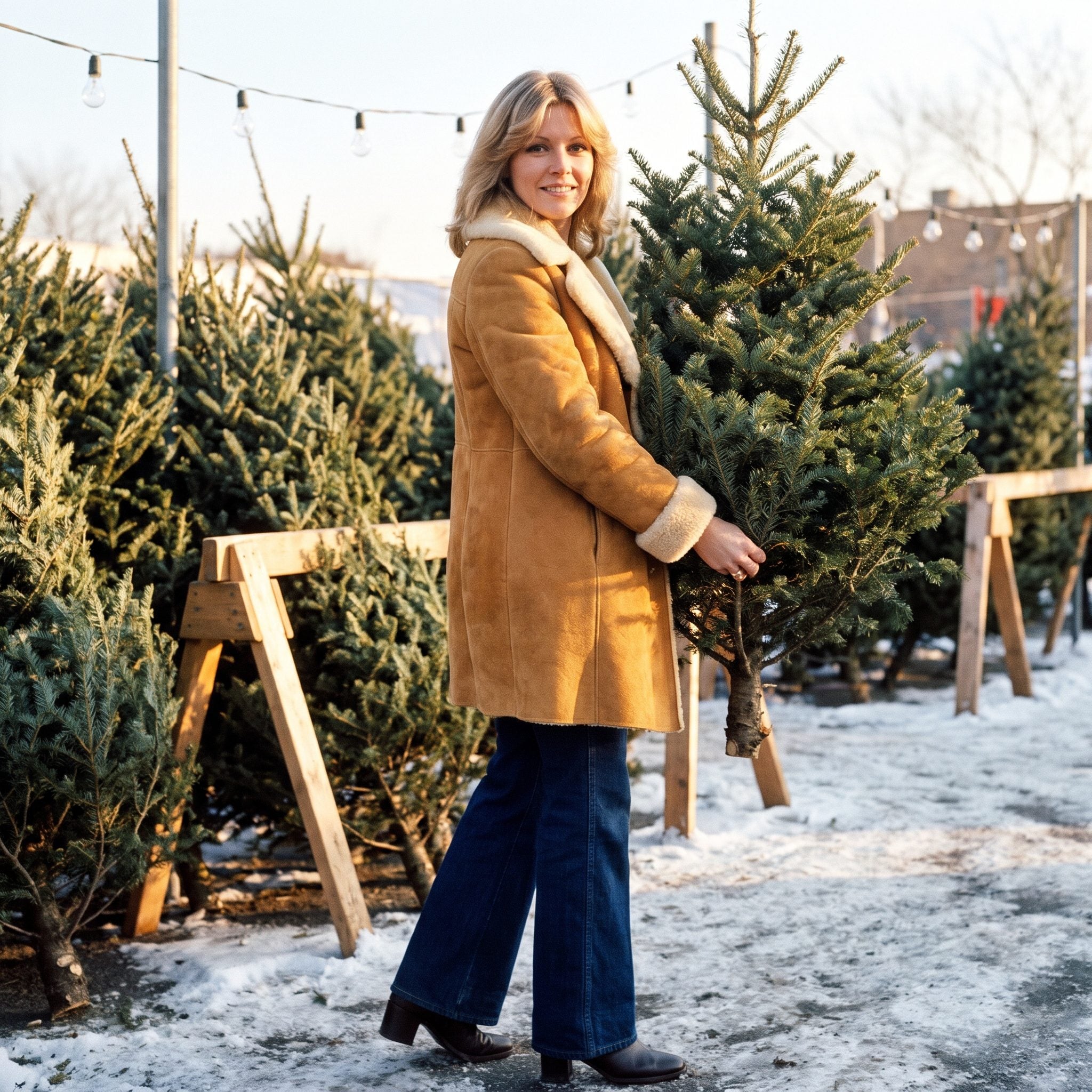
Butterscotch shearling belonged to the heavy artillery of seventies winter fashion. Broad fleece lapels and turned cuffs exposed the softer interior surface, transforming a practical insulating material into the coat’s principal decoration.
Indigo flared jeans bring the decade’s distinctive denim proportions beneath all that substantial outerwear. Stacked-heel boots extend the warm brown palette without competing with the coat’s abundant texture.
Genuine shearling represented a much more substantial purchase than an ordinary sweater or pair of pajamas, while synthetic alternatives offered a similar appearance at lower prices. Few Christmas catalog garments conveyed the idea of a major winter wardrobe investment quite so visibly.
10. The Emerald Satin Pajamas by the Christmas Tree
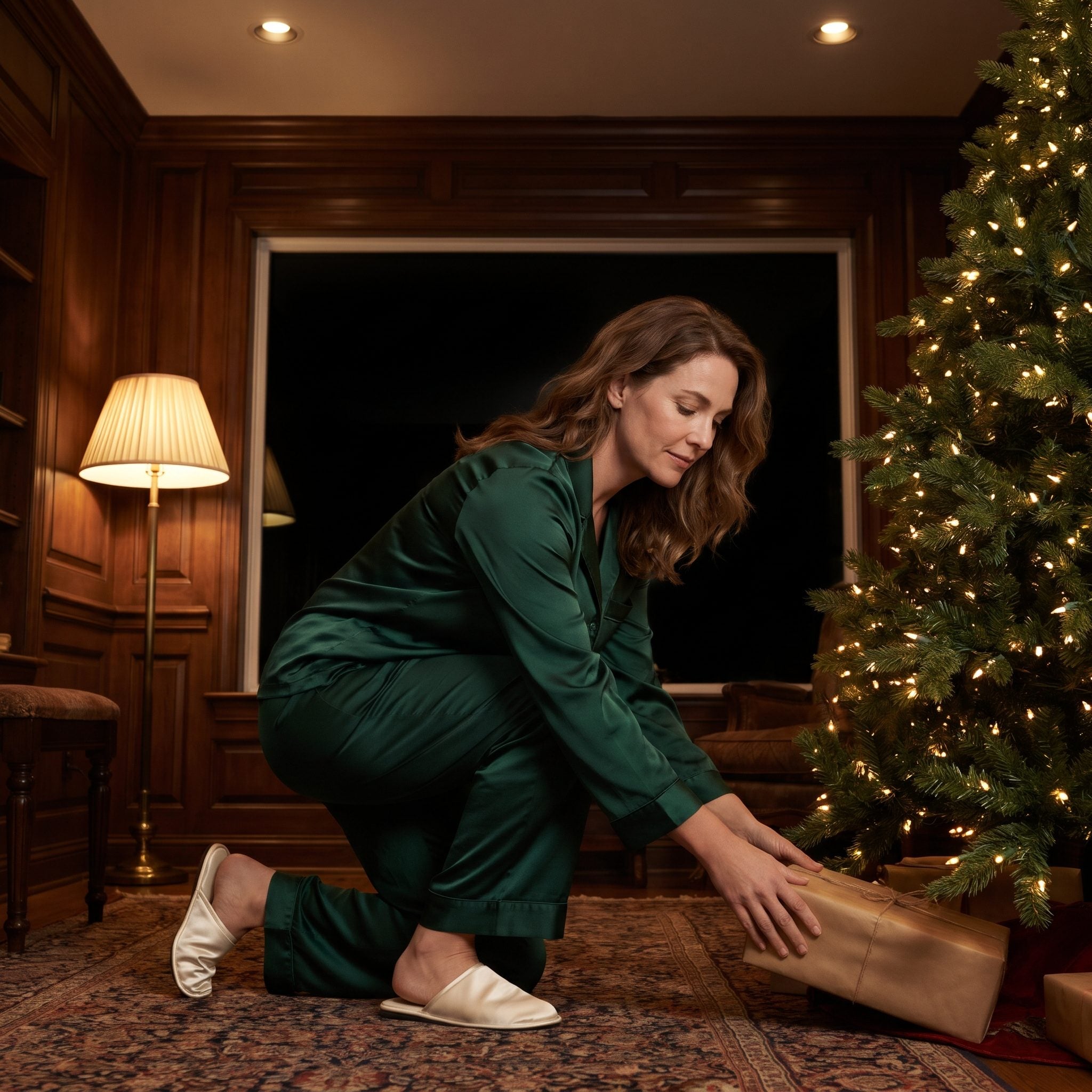
Emerald satin accomplishes something fairly remarkable here: a set of pajamas looks as though it has received an invitation to the Christmas party. The deep jewel tone provides the festive character without embroidered holly, snowflakes or novelty graphics.
A notched collar and straight-cut pants borrow their shapes from conventional menswear. Rendered in fluid satin, those disciplined lines acquire an entirely different character, particularly under warm evening lighting.
Where champagne pajamas suggest understated luxury, emerald belongs to the more theatrical end of the lingerie department. The same basic garment could take on a different personality through the simple expedient of changing its color.
9. The Black Satin Column Skirt With the Fuchsia Taffeta Bow
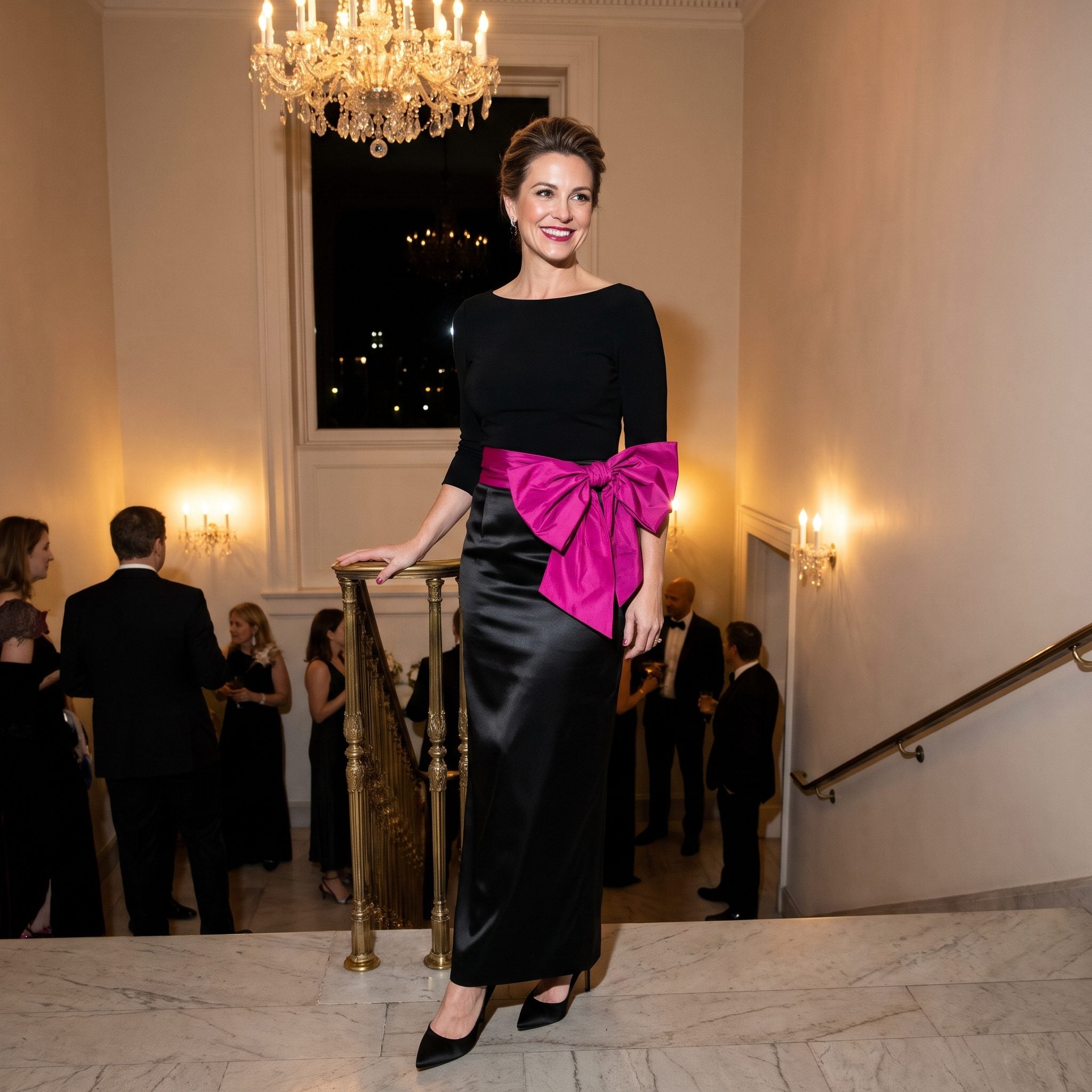
The eighties’ approach to eveningwear could turn something as familiar as a bow into a piece of textile architecture. The enormous fuchsia bow at the hip extends well beyond the narrow outline of the black column skirt.
Crisp taffeta holds the sweeping loops in place, while black satin provides the fluid vertical line beneath them. The tension between the two fabrics gives the outfit its sculptural quality.
Asymmetry, oversized embellishment and emphatic color were natural companions in eighties party fashion. A skirt like this hardly needed additional ornament. The bow had already delivered the entire speech.
8. The Holly Sweater and Forest-Green Corduroy Skirt
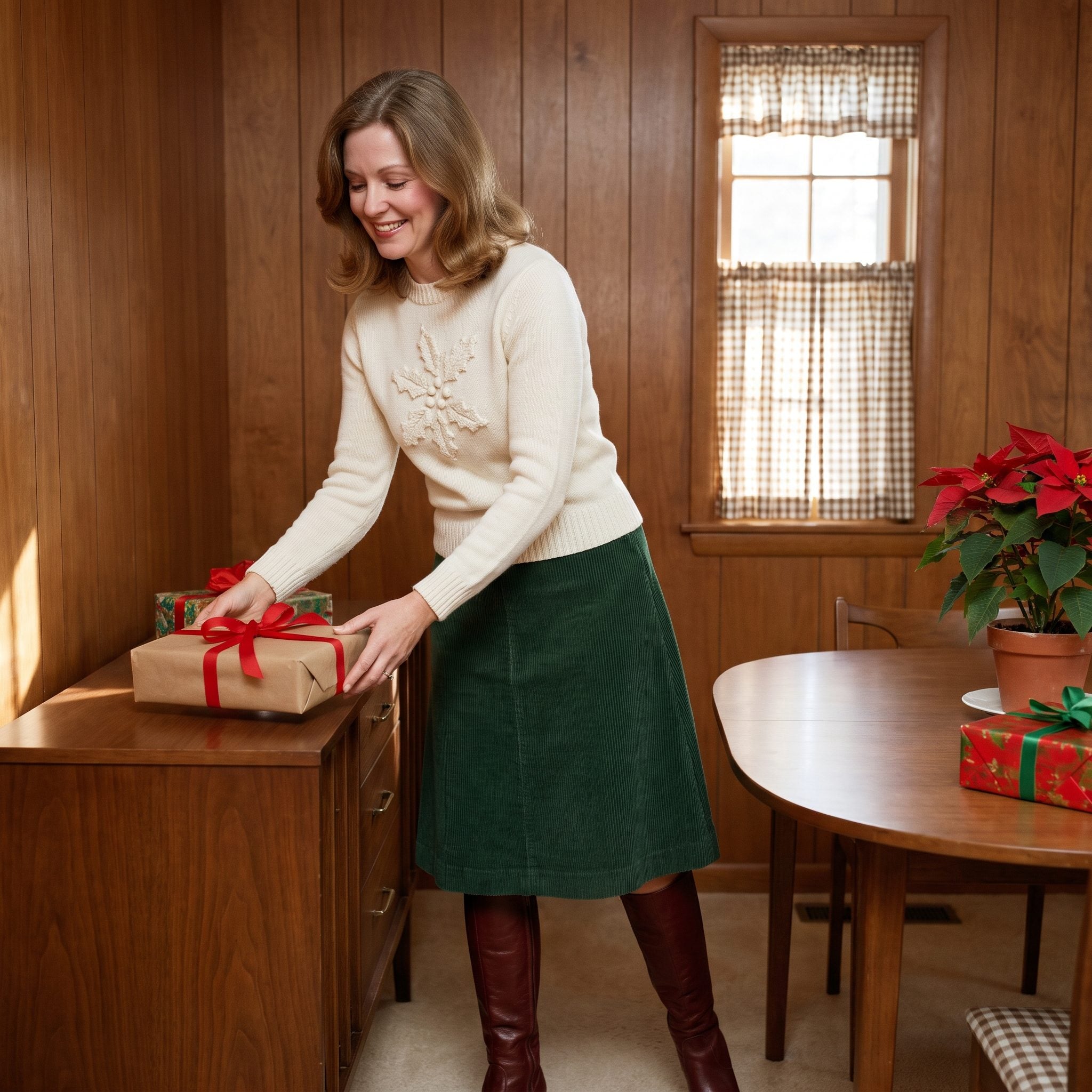
Not every Christmas sweater needed to compete with the tree for attention. A carefully placed spray of holly supplied a more restrained seasonal reference, with the traditional red-and-green palette doing most of the festive work.
Ivory knit above a forest-green corduroy A-line skirt brings together two familiar winter textures. Oxblood boots pick up the red berries, extending a small embroidered detail into the rest of the outfit.
The look represents a quieter chapter of holiday dressing, when a conventional skirt and sweater could acquire a Christmas identity through one modest piece of decoration.
7. The Sculptural Gold Clip-On Earrings
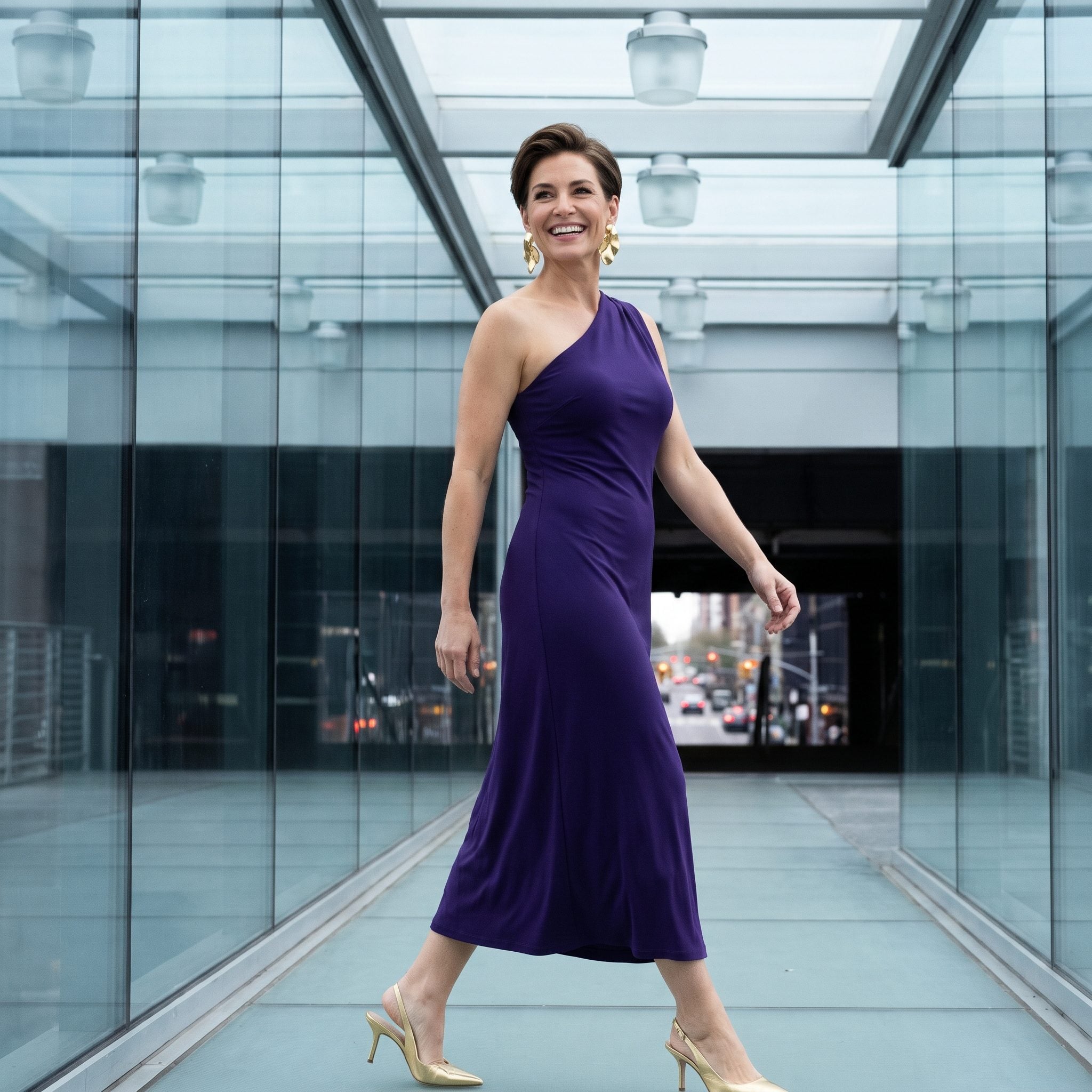
The eighties gave jewelry permission to occupy serious real estate. Oversized earrings competed successfully with enormous hairstyles, expansive shoulder lines and the more adventurous necklines of evening dresses.
These sculptural gold forms supply a dramatic metallic finish against a violet one-shoulder dress. Their irregular contours complement the asymmetry of the neckline without requiring a necklace to complete the outfit.
A pair of sculptural gold clip-on earrings made a suitably glamorous Christmas gift. Their generous proportions also came with a practical consideration: the larger and heavier the earrings, the more consequential the engineering of the clip.
6. The Lavender Cable Knit and Stirrup Pants

Stirrup pants had a clever mechanical advantage over ordinary tapered pants: the loops beneath the feet kept the fabric from riding up around the ankles. The construction had practical sporting precedents before becoming one of the more recognizable features of eighties casual fashion.
An oversized lavender cable knit sweater supplies the generous proportions above. The raised cables give the pastel yarn depth, creating an effective contrast to the smooth, narrow line of the gray pants.
The combination anticipated a formula still familiar in the modern casual wardrobe: an enormous sweater and slim stretch pants. Christmas catalogs offered both components decades before the latest generation of athleisure brands.
5. The Crimson Satin Robe and Matching Gown
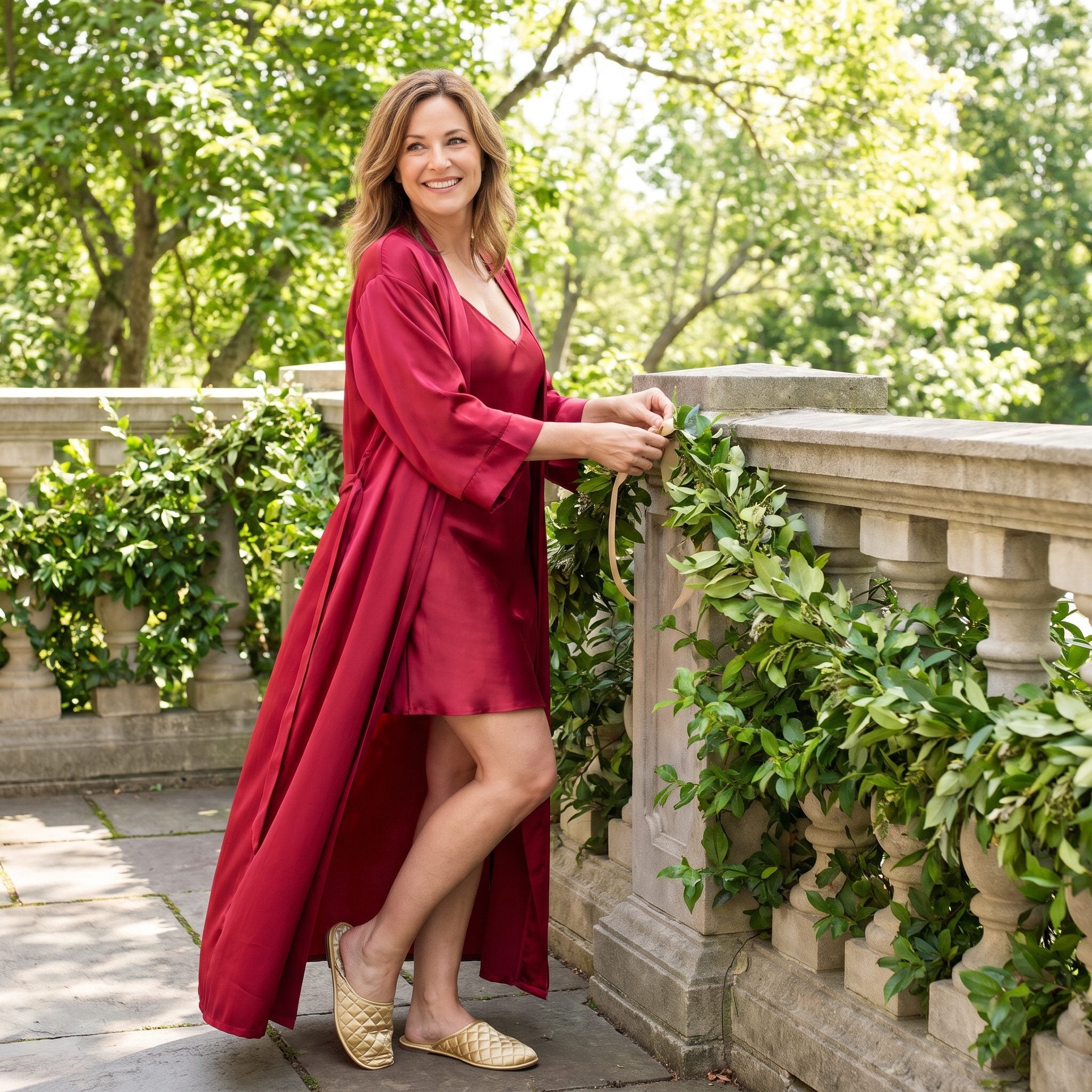
The matching robe-and-gown set brought the ambition of formal eveningwear to the lingerie pages. Crimson satin extends from the shoulders to the floor in one uninterrupted field of color, suggesting that domestic clothing need not be any less theatrical than a party dress.
The robe’s folds, overlapping panels and sash produce a succession of dark and bright reds across the fabric. Quilted gold slippers supply the finishing flourish, taking the ensemble another step away from ordinary nightwear.
Where a practical pajama set promised comfort, the peignoir offered something more extravagant. Its coordinated pieces made a natural Christmas gift for an era when the catalog could sell an entire vision of domestic glamour in a single photograph.
4. The Three-Strand Pearls and Emerald Sheath
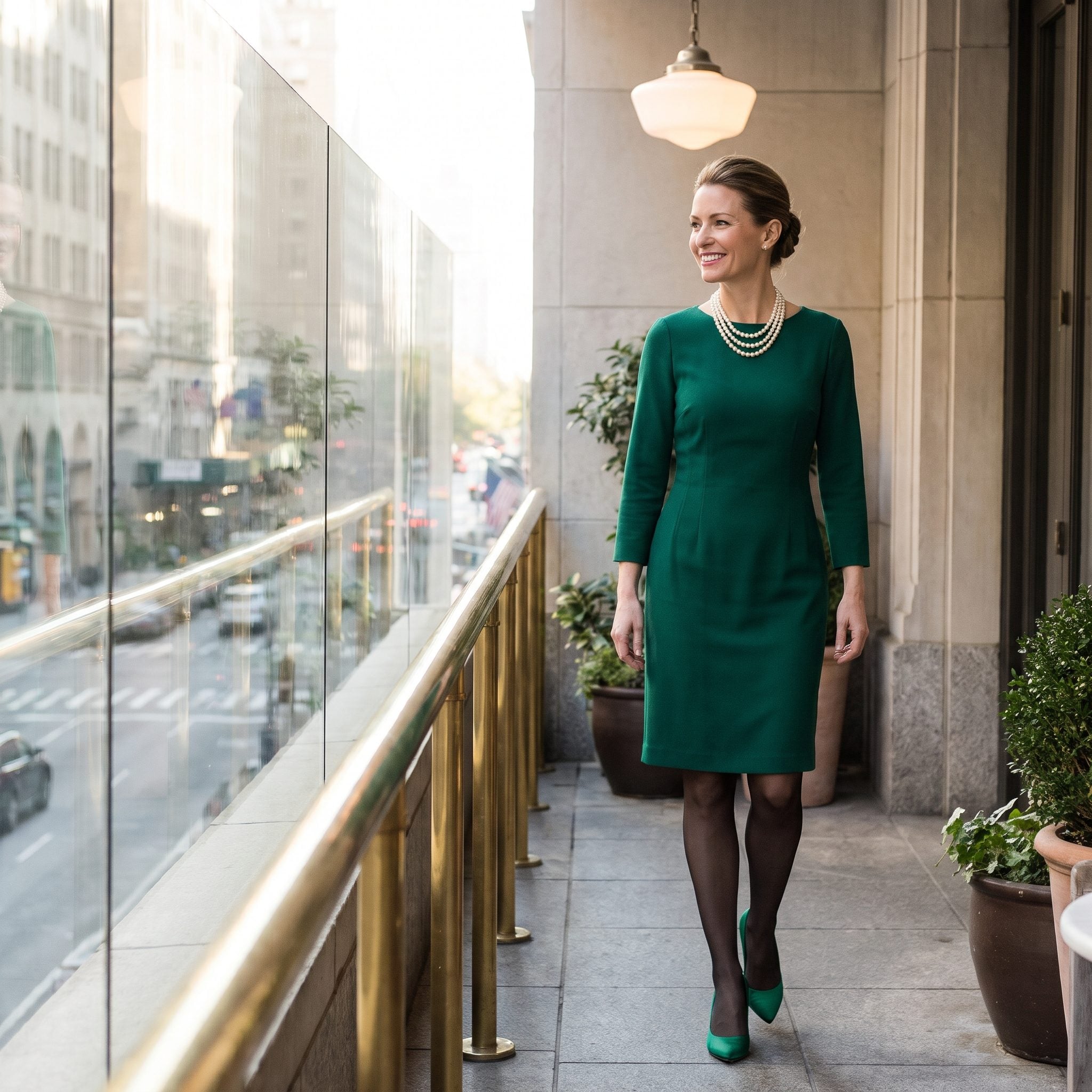
Amid the metallic excesses of disco and the enormous accessories of the eighties, pearls remained a dependable ambassador for conventional elegance. Three closely arranged strands offered enough decorative presence to hold their own against the more adventurous jewelry of the period.
An emerald crepe sheath provides a clean vertical line beneath the necklace, reinforced by matching satin pumps. The boat neckline leaves space for the three curved rows to sit comfortably above the dress.
Imitation pearls made this kind of polished evening glamour available beyond the fine jewelry counter. The look required neither enormous embellishments nor expensive precious stones to convey the formality of a special Christmas occasion.
3. The Winter-White Knit Set on Christmas Morning

The open Christmas catalog beside this winter-white ensemble captures one of the great advantages of mail-order fashion: the complete outfit arrived on the page before it arrived in the parcel. Coordinated separates reduced some of the uncertainty involved in buying clothing without the benefit of a fitting room.
The pale knit exchanges conventional Christmas reds and greens for a quieter palette. Ribbing creates depth across the ivory surface, while dolman sleeves give the top its easy, expansive shape.
Dusty-pink suede moccasins supply a delicate note of color. The outfit occupies that appealing territory between pajamas and proper daywear, polished enough for Christmas morning photographs without suggesting an imminent departure for the office. Catalog fashion understood the value of selling that middle ground.
2. The Oxblood Boots With Turned-Down Cuffs
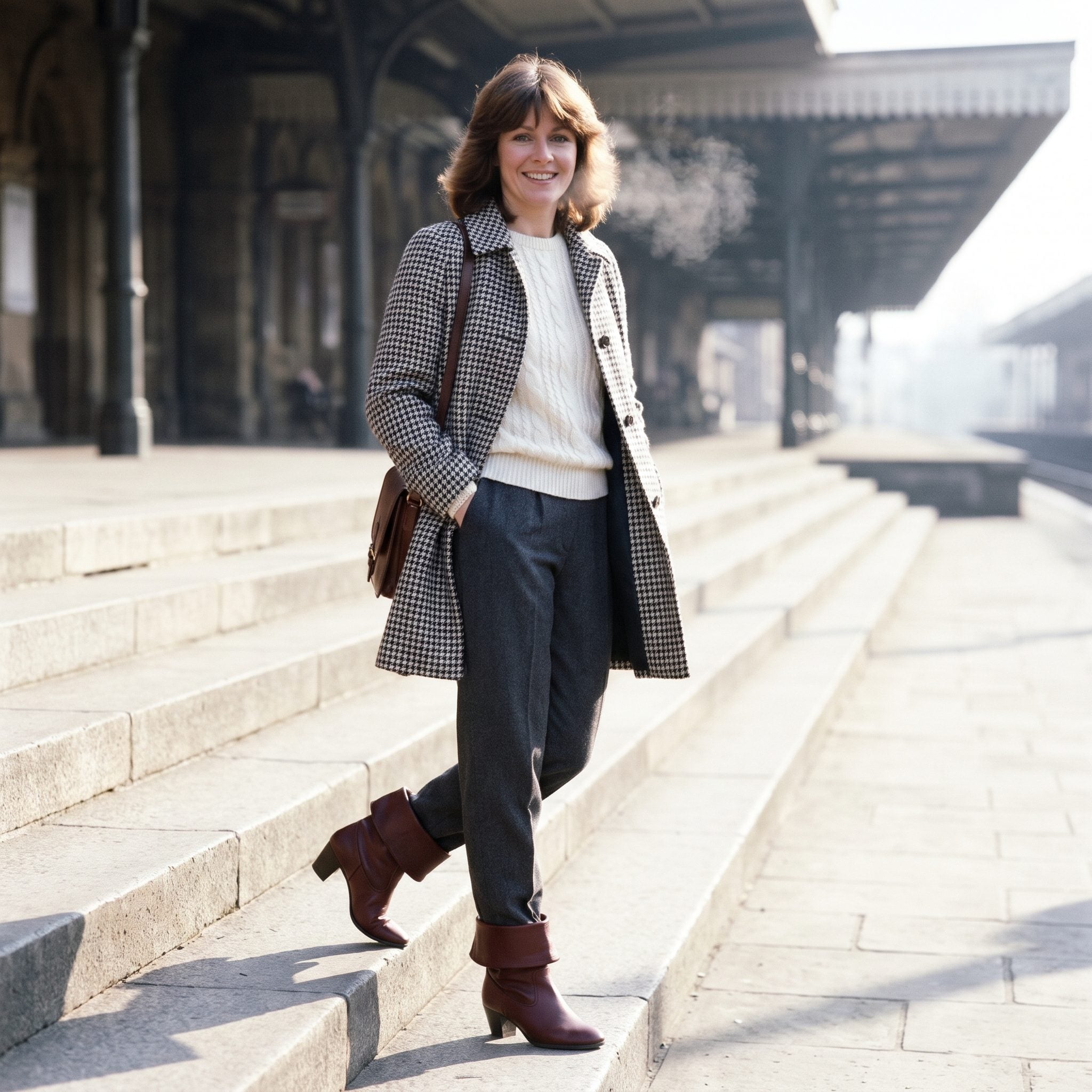
The turned-down leather cuff gives these oxblood boots their personality. The detail belongs to a period when decorative buckles, folded shafts and overlapping leather panels could make footwear as expressive as the clothing above it.
Cropped charcoal pants leave the cuff visible, while an ivory cable knit and houndstooth coat bring additional texture and pattern into the outfit. A low stacked heel keeps the profile relatively modest.
Unlike practical snow boots, these were intended primarily for dressier winter occasions. The appeal of such footwear in the Christmas catalog was its capacity to refresh an existing wardrobe from the ground up. A new pair of boots could give familiar coats and sweaters an entirely different character.
1. The Black Velvet Dress With the White Portrait Collar

The white portrait collar represents one of the more elegant forms of eighties theatricality. Sweeping outward across the shoulders, its expansive shape supplies all the drama that other dresses sought through enormous sleeves, sequins and oversized jewelry.
Black velvet provides a dark foundation against which the crisp white fabric acquires an almost graphic clarity. Patent pumps add a third finish, introducing concentrated reflections beneath the subdued richness of the velvet.
The arrangement captures the enduring appeal of formal style built around one extraordinary detail. No elaborate print, no seasonal motif, no avalanche of accessories. The collar alone delivers the drama. Of all the promises contained in those Christmas catalogs, the possibility of looking magnificent in a single, beautifully conceived dress was perhaps the most enduring.