❤️ Would you like to save this?
December dressing once came with a little ceremony. Satin appeared where cotton usually lived. Velvet caught the low light. Shoes changed, jewelry moved closer to the face, and seemingly minor details — a covered button, a jeweled clasp, a strip of lace — announced that an ordinary evening had officially ended.
Somewhere along the way, much of that vocabulary got edited out. Holiday dressing became easier, cleaner, more casual, and often a little less interesting. The loss was not really about formality. It was about detail: those small decisions that could turn a black dress, a plain pump, or a simple knit into something unmistakably meant for nighttime.
These 36 details make the case for bringing some of that thinking back. Not as costume, and certainly not as nostalgia for nostalgia’s sake. The strongest examples work because they understand proportion, placement, texture, and restraint. One polished satin lapel can outperform a necklace. One velvet ribbon can sharpen an entire color story. One jeweled buckle at the toe can make everything above it seem more deliberate.
The old lesson was simple: evening style did not need more of everything. It needed one or two things chosen so well that the rest of the outfit could afford to stay quiet.
FYI, thanks to AI imagery software, we’re able to create very specific fashion and hairstyle examples to illustrate the points being made. In some cases, imagery is exaggerated to hammer home the point. Also, assume links that take you off the site are affiliate links such as links to Amazon. this means we may earn a commission if you buy something.
36. The Satin Peak-Lapel Tuxedo Jacket

The satin lapel is the entire reason this works. Remove that glossy edge and the piece becomes a very good black blazer. Keep it, and the jacket announces evening before a single piece of jewelry enters the conversation.
Matte wool against liquid satin gives the tailoring its tension. Worn open over a silk camisole, the jacket frames the torso instead of closing it down, while slim trousers keep the line uninterrupted. Yves Saint Laurent’s Le Smoking arrived in 1966, and the idea still has nerve because the contrast between masculine tailoring and evening sheen never really went stale.
35. The Sculptural Back Bow You Only See on the Turn
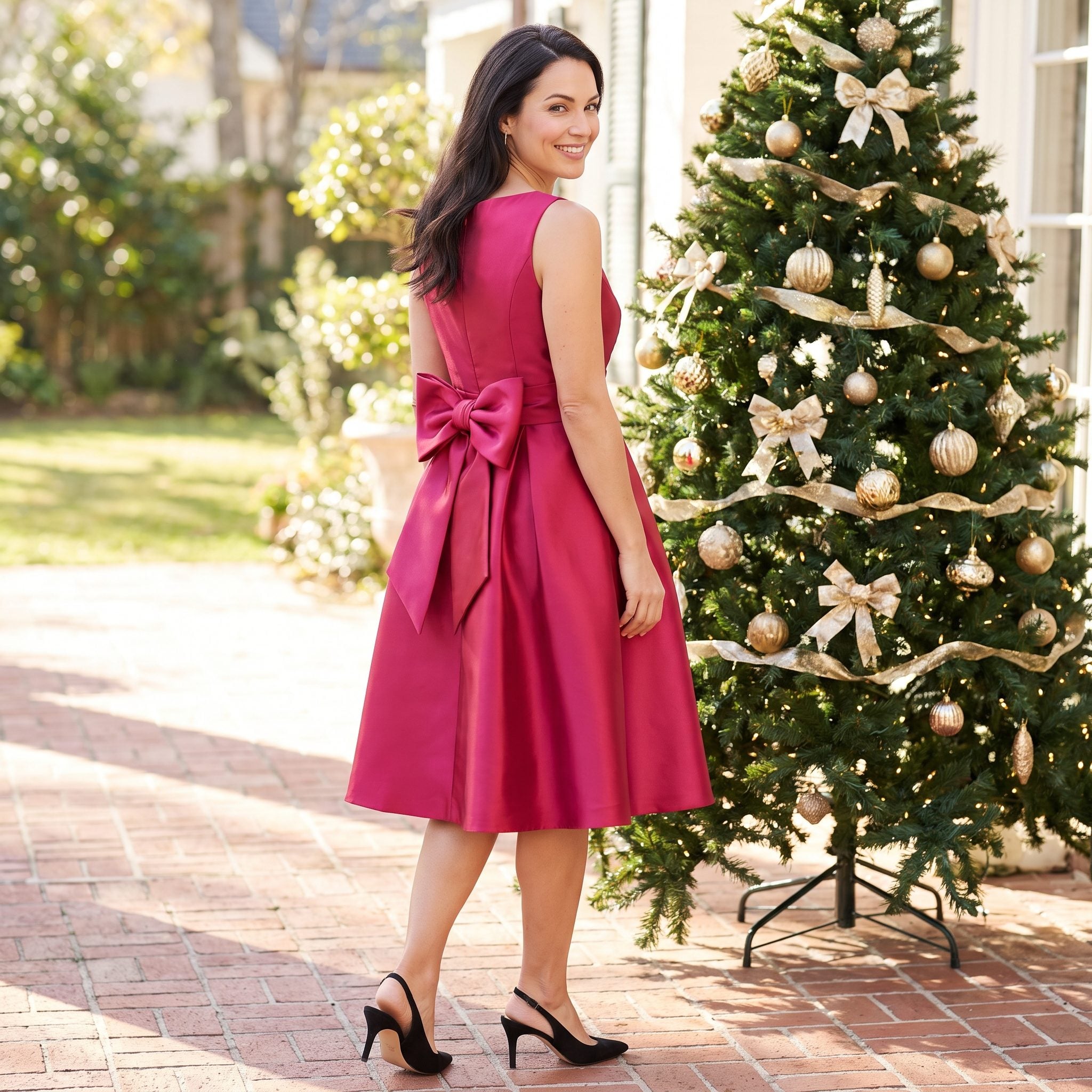
The front of this raspberry dress is clean, almost severe. Then the angle changes and a single satin bow appears at the back waist, giving all the ornament to the part of the dress most people usually forget to design.
That restraint is what keeps the bow from sliding into costume. The plain front lets the back carry the drama, while the exaggerated scale nods to 1980s partywear without dragging the entire silhouette into the decade. Dressing for the exit as carefully as the entrance is a clever bit of design.
34. Long Dress Gloves, Back When Hands Dressed Up Too
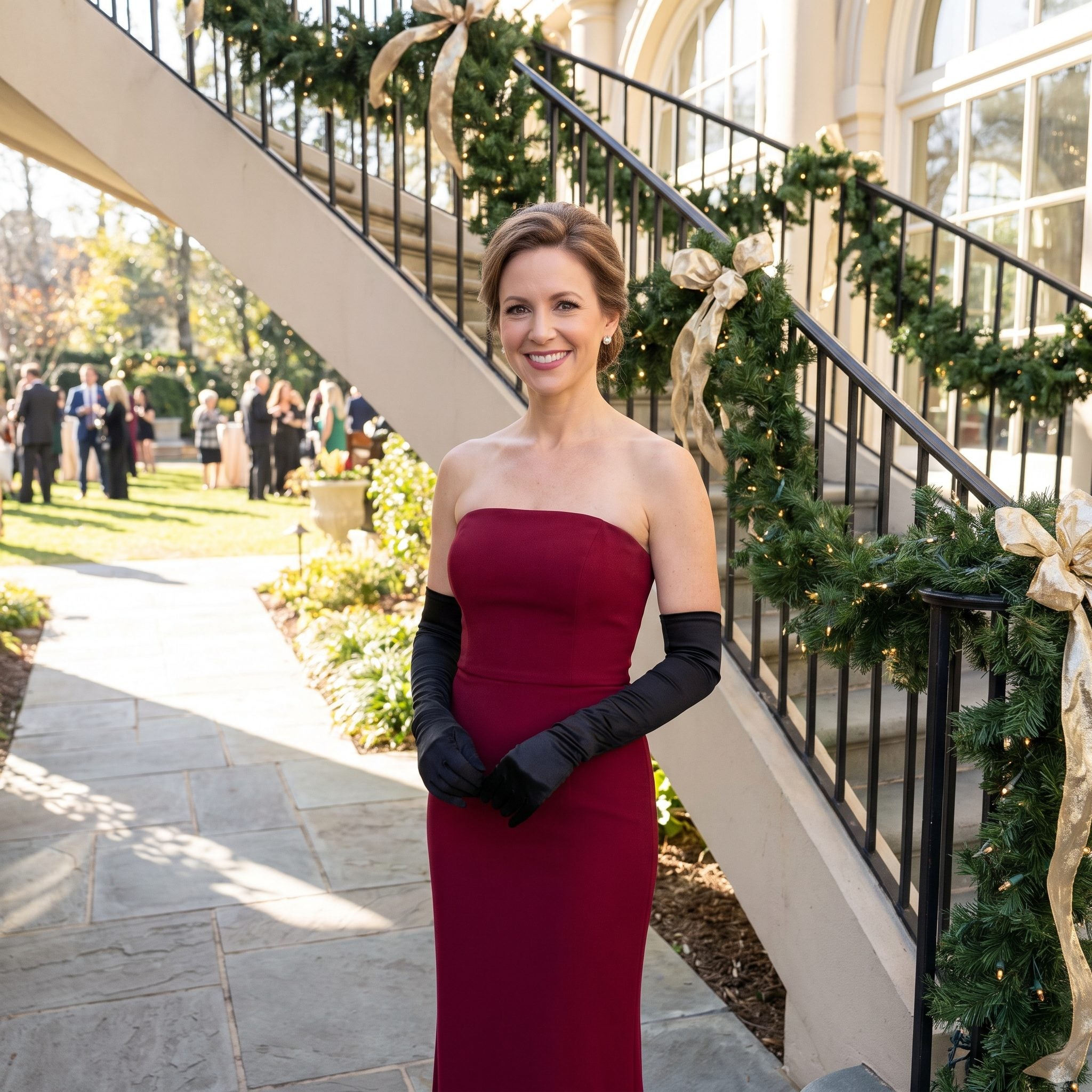
One garnet column gown and a pair of black satin gloves, and suddenly the hands become part of the composition instead of an afterthought. The gloves lengthen the dark line from fingertip to upper arm and make a simple strapless silhouette feel unmistakably ceremonial.
The modern move is everything that does not compete with them. Small studs, sleek heels, clean neckline. Satin against bare shoulder supplies enough contrast on its own. The result feels controlled rather than overdressed.
33. The Crisp Taffeta Skirt You Can Almost Hear
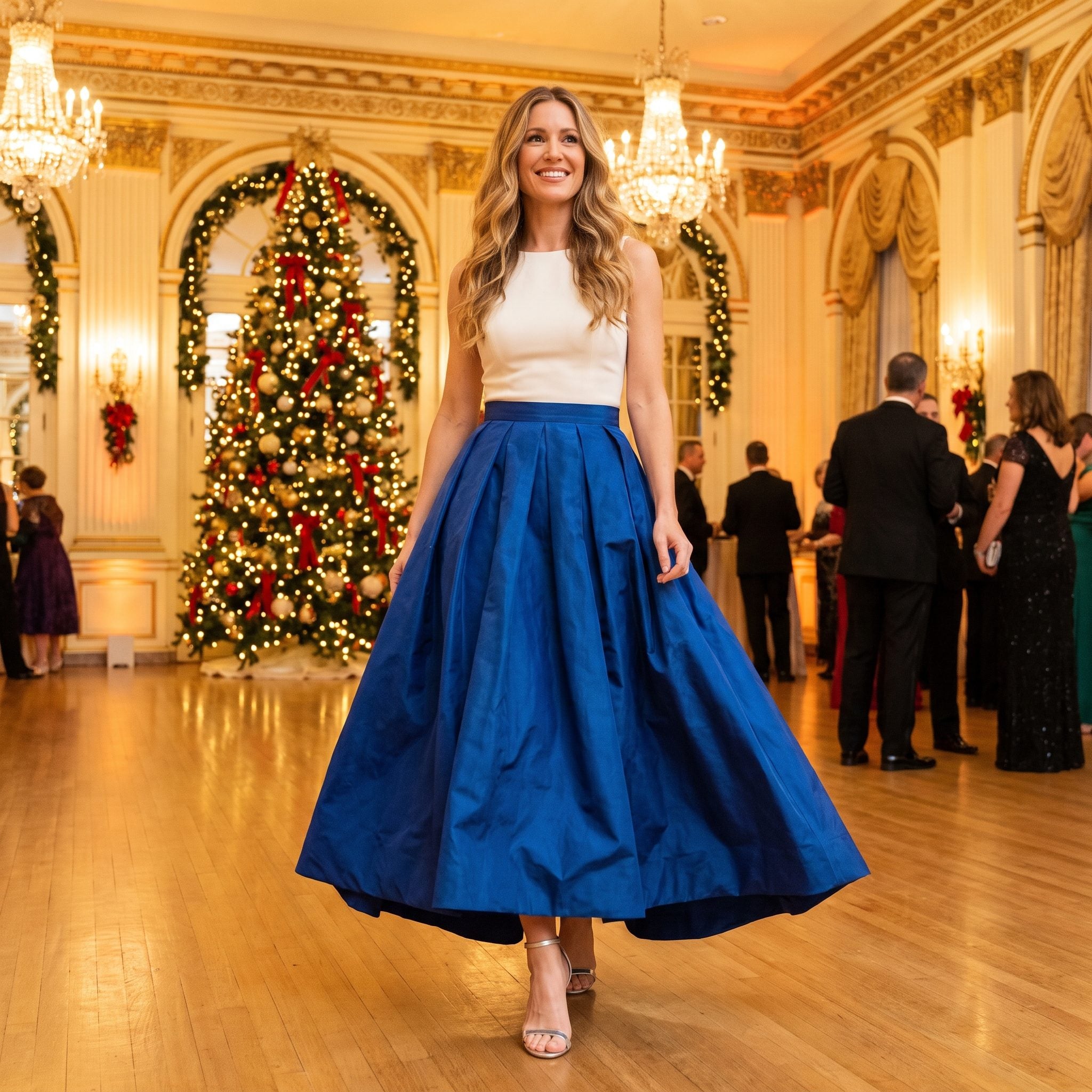
Taffeta has a sound as recognizable as its sheen: that dry, papery rustle that arrives half a second before the skirt does. Here, sapphire fabric creates its own architecture through deep folds and enough stiffness to hold volume without burying the body under layers of structure.
A plain tucked top wisely refuses to interfere. Silver heels pick up the surface shine at floor level, while the fullness stays concentrated below the waist. The skirt creates the silhouette; everything else simply clears the way.
32. The Decorative Collar That Did All the Talking
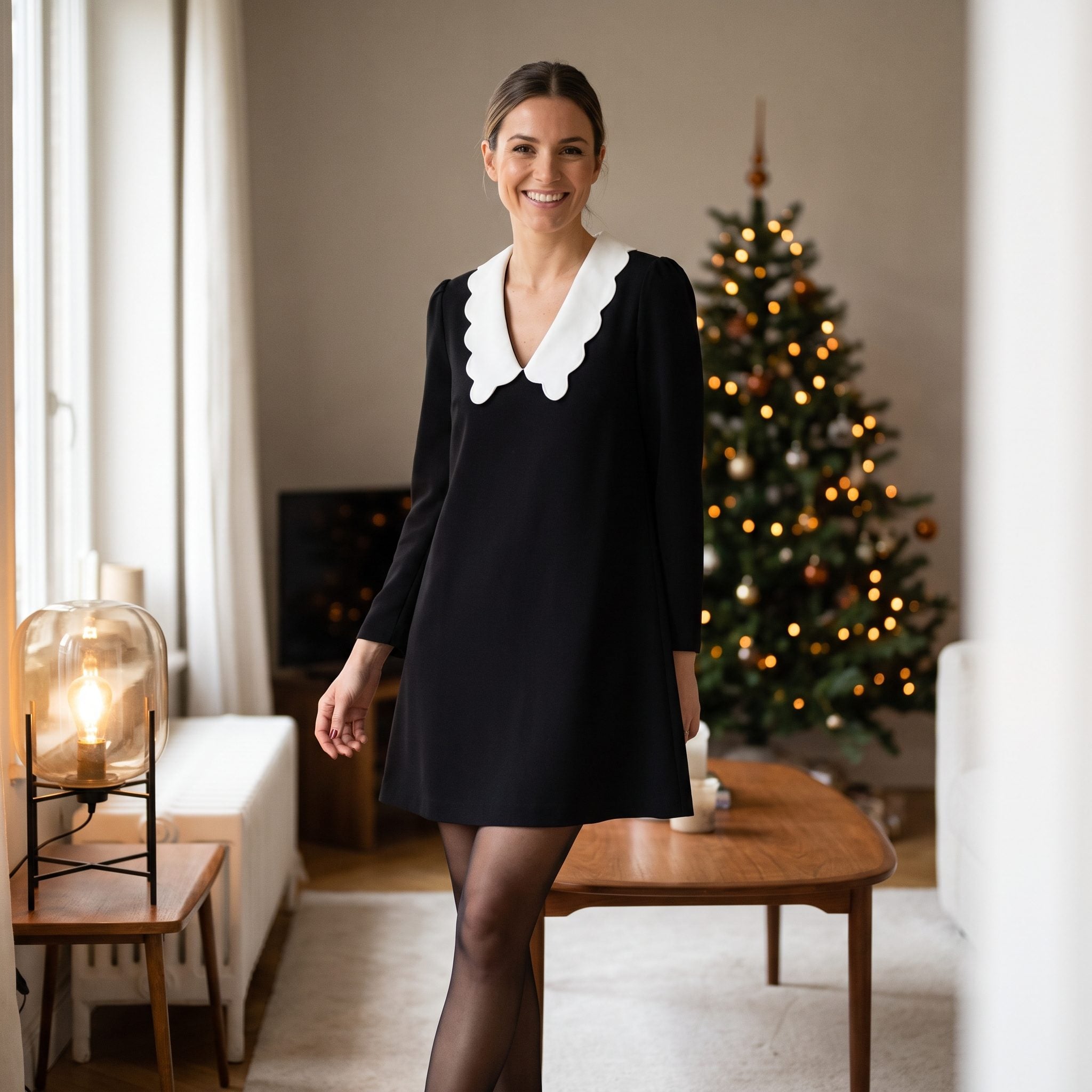
The collar is the outfit. Everything else can stay plain because that scalloped ivory edge at the throat draws the eye directly toward the face, giving a quiet black dress one precise point of emphasis.
Swept-back hair leaves the collar fully exposed, which matters. Hide even part of that shape and the composition loses its strongest line. One structured detail against an otherwise spare silhouette is enough.
31. The Formal Hostess Ensemble Built for Moving Through a Room
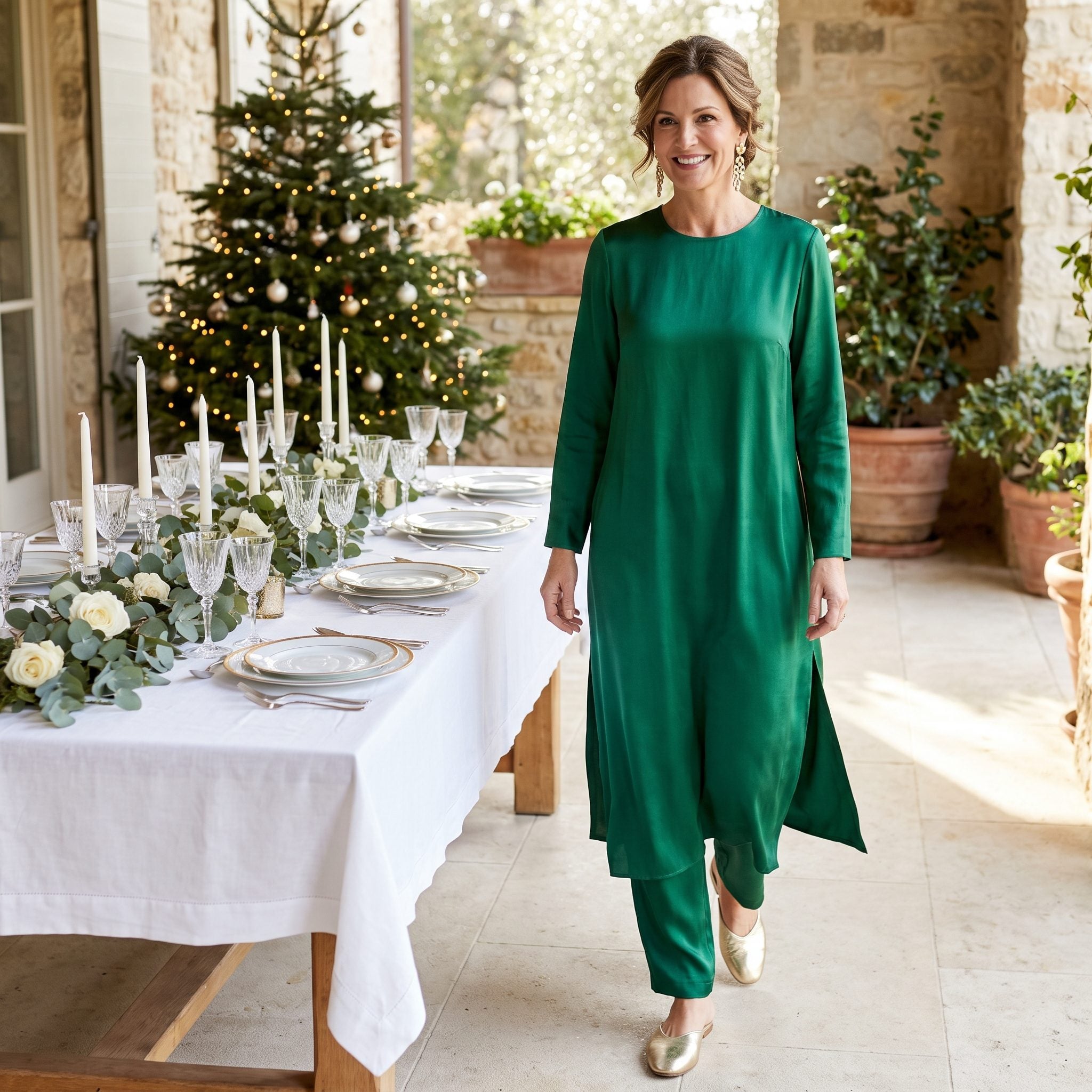
A floor-length emerald tunic over matching silk trousers revives a familiar hostess look from the late 1960s and 1970s: enough sweep to feel ceremonial, but with none of the rigid structure of a full evening gown.
The side openings make the design. They reveal the trousers, break up the long column of color, and give the tunic movement instead of bulk. Monochrome emerald keeps the silhouette continuous, while gold slippers provide one warm interruption at the floor.
30. The Beaded Clasp Bag Small Enough to Hold Almost Nothing
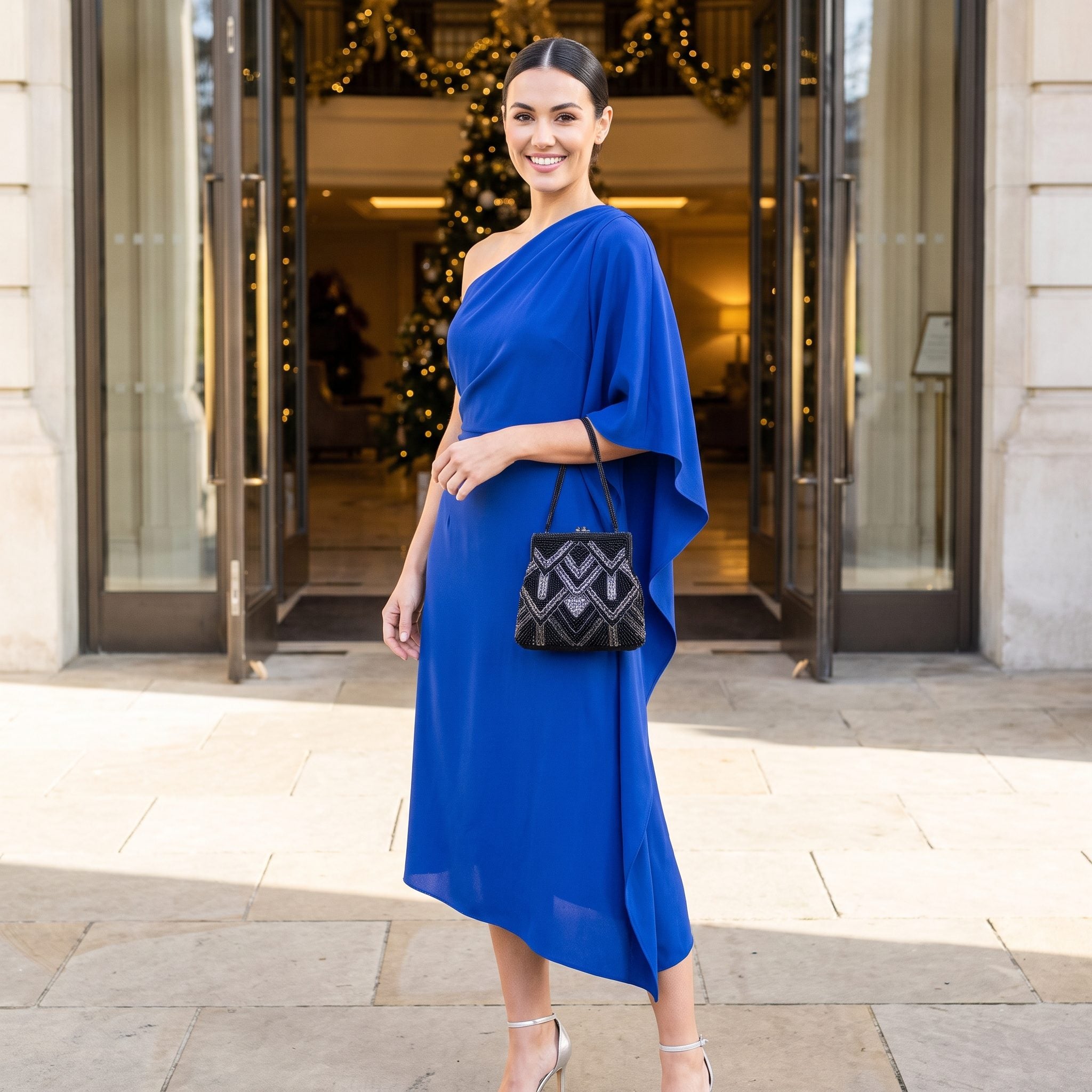
The bag does everything the cobalt dress refuses to. The dress is smooth, saturated, and uninterrupted; the clasp bag answers with dense black beadwork and tiny shifts of reflected light.
That scale difference is the point. One broad field of color meets one intricate object at the hip. Evening bags this small were never about carrying much more than a few essentials. Their usefulness was secondary to the fact that they behaved almost like jewelry with a hinge.
29. The Velvet Evening Jacket Worn Open and Easy
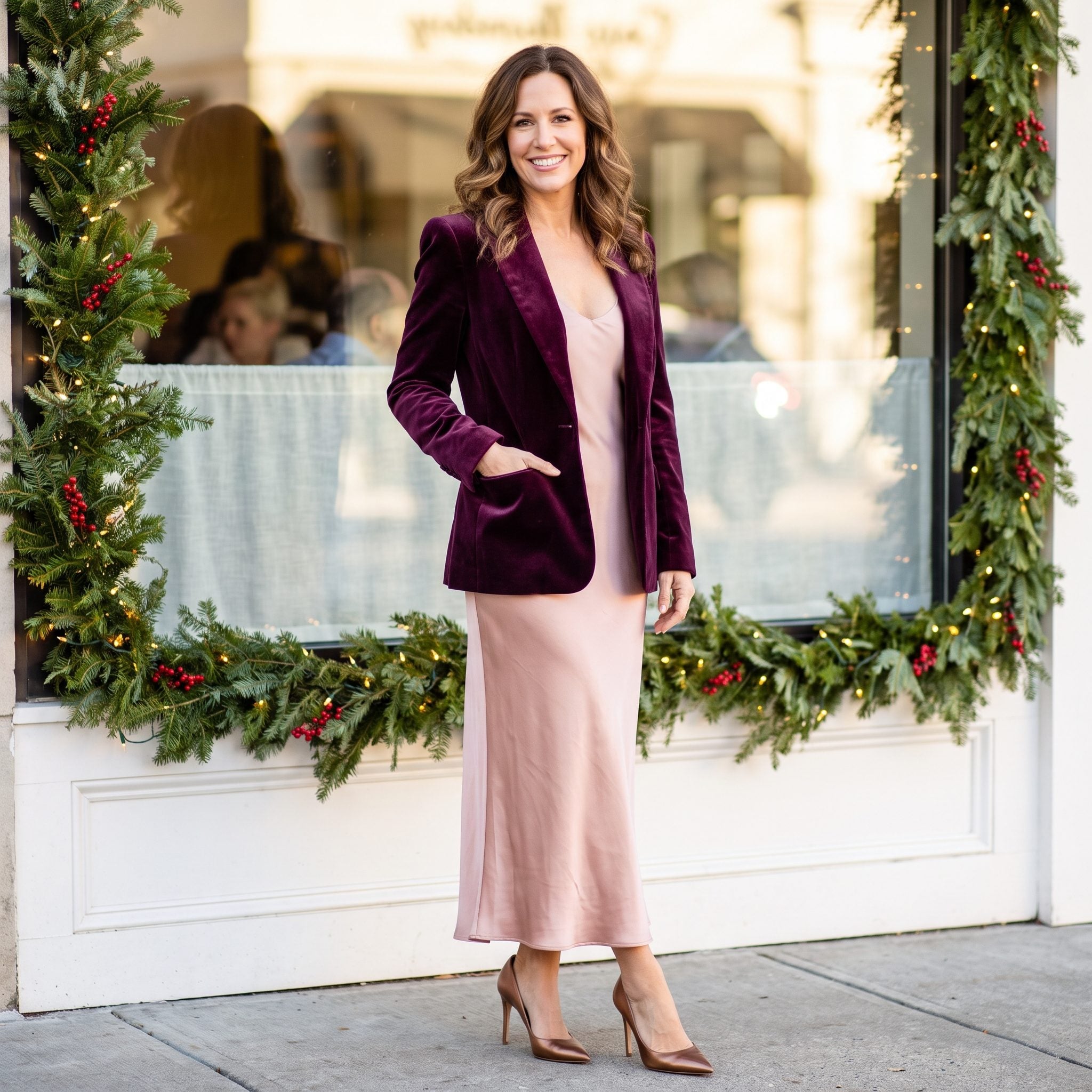
Structured plum velvet over a liquid blush slip sets up the kind of texture contrast that makes both materials look richer. One absorbs light; the other lets it slide straight across the surface.
Leaving the jacket open matters just as much as the fabric. The vertical break keeps the tailoring relaxed and exposes enough satin to stop the velvet from becoming heavy. Bronze heels stay in the same warm family without trying to match either piece exactly.
28. The Black Watch Tartan Evening Skirt
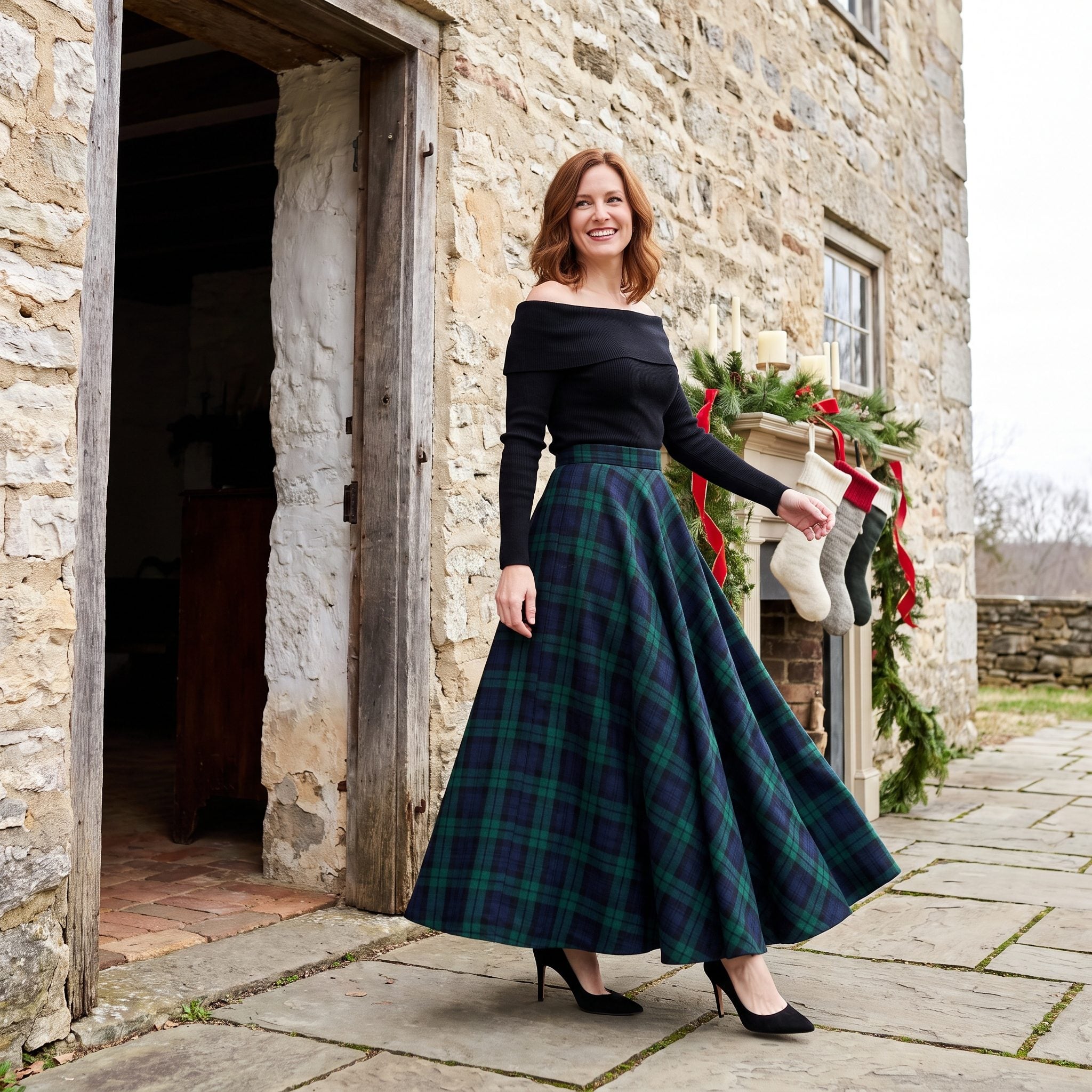
Black Watch tartan has the unusual ability to look substantial before any embellishment enters the picture. Enlarged into a floor-length skirt, the dark green-and-navy check provides pattern, volume, and enough visual history to make the piece feel dressed for December almost automatically.
The fitted off-shoulder knit is exactly the right counterweight. A clean neckline and exposed shoulder quiet all that pattern and fullness below. One side carries the visual information; the other gives it somewhere to breathe.
27. The Jeweled Shoe Buckle
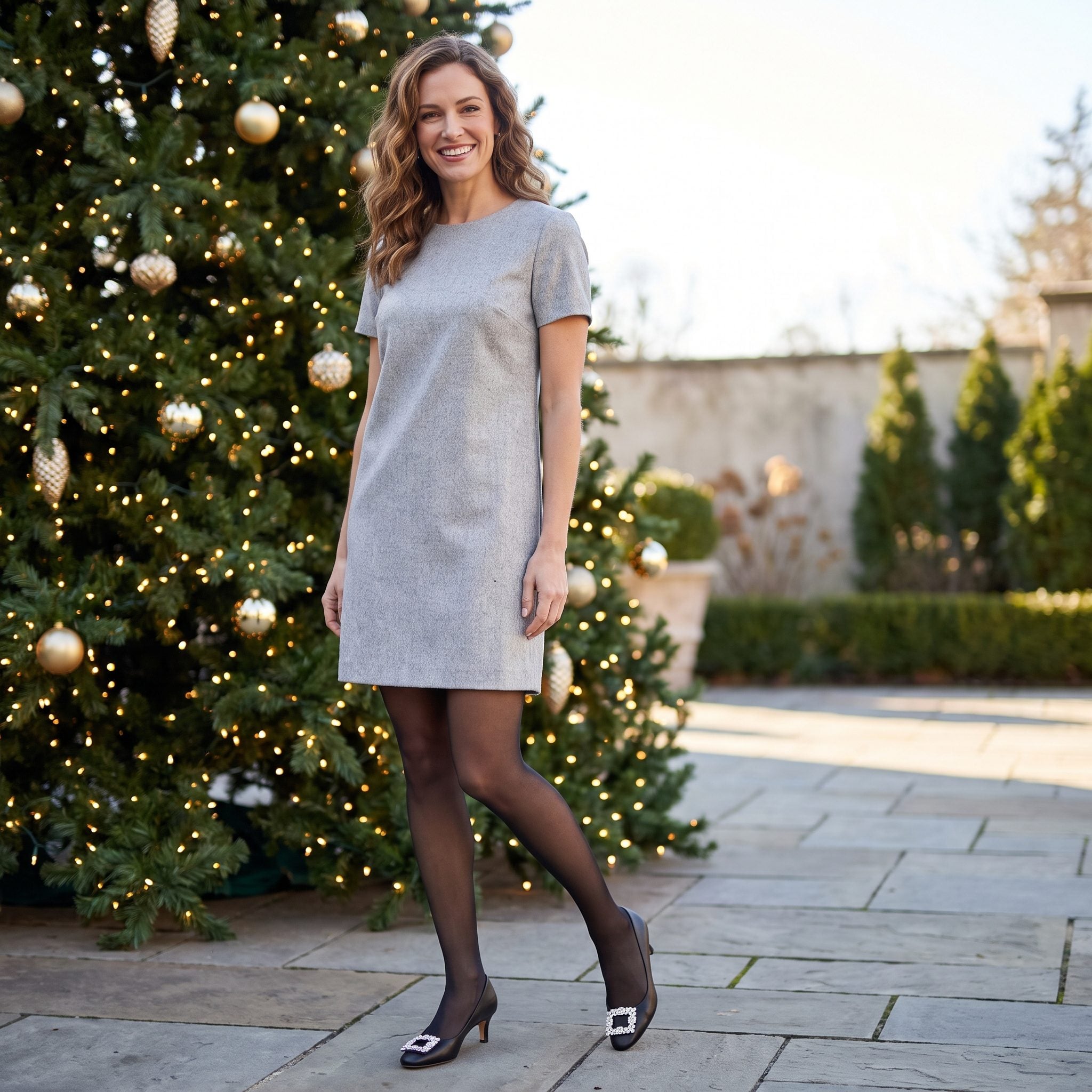
A square crystal buckle can do more for a plain pump than another piece of jewelry can do above the waist. Against a gray shift and black tights, the small hit of reflected light at the toe becomes the only ornament in the entire look.
That placement is what makes the idea interesting. The sparkle sits at floor level, far from the face, so the eye travels through the whole outfit before finding it.
26. The Evening Cape, Abbreviated
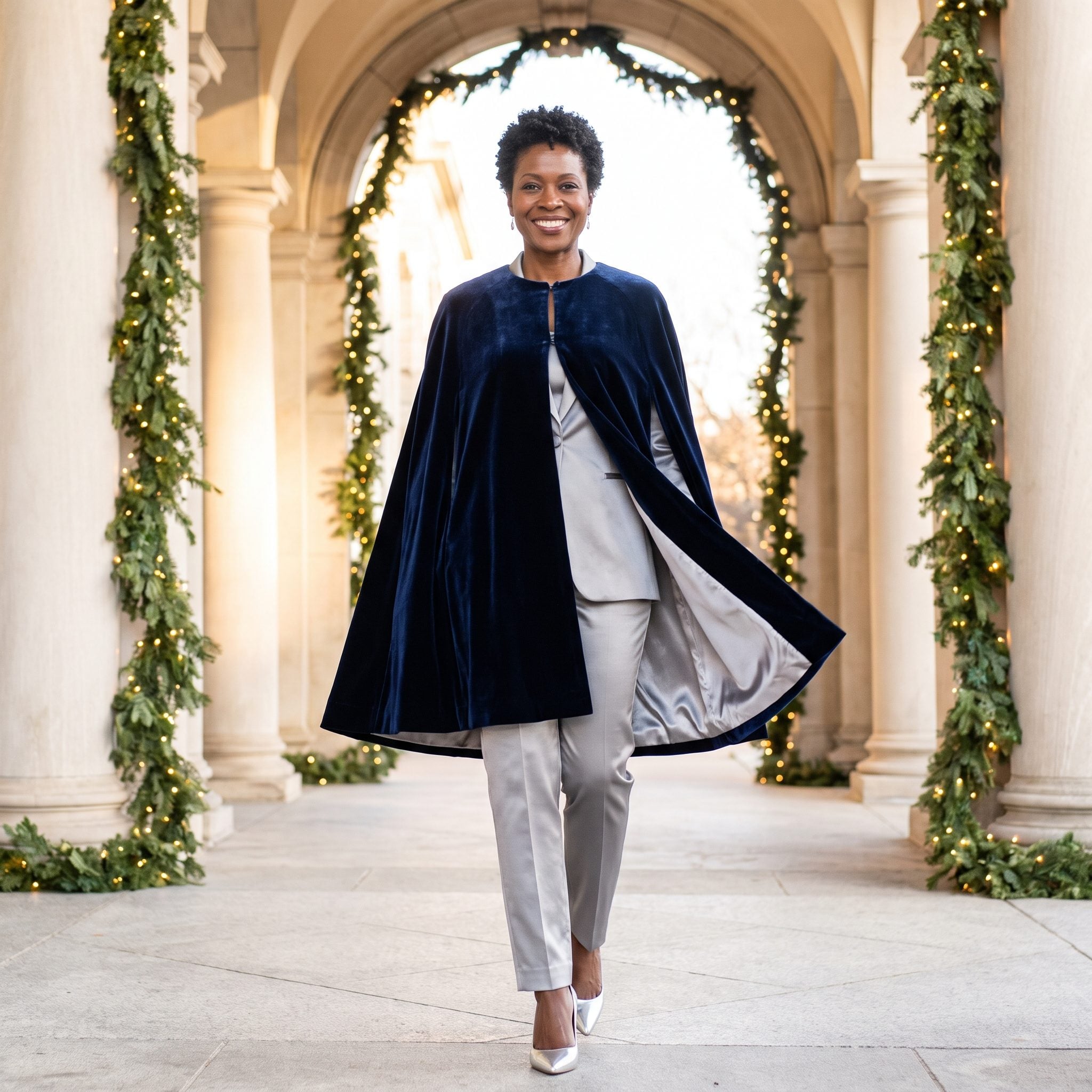
The shortened cape keeps the sweep of traditional eveningwear without letting the fabric swallow the body. Cut just past the elbow, it behaves more like a sculptural layer than outerwear.
The lining is what binds the look together. Midnight blue outside, silver-gray satin inside, then the same silver-gray repeated in the trouser set beneath. Every time the cape opens, the interior color connects directly to the outfit underneath.
25. A Beaded Shell Top That Only Needed Good Light
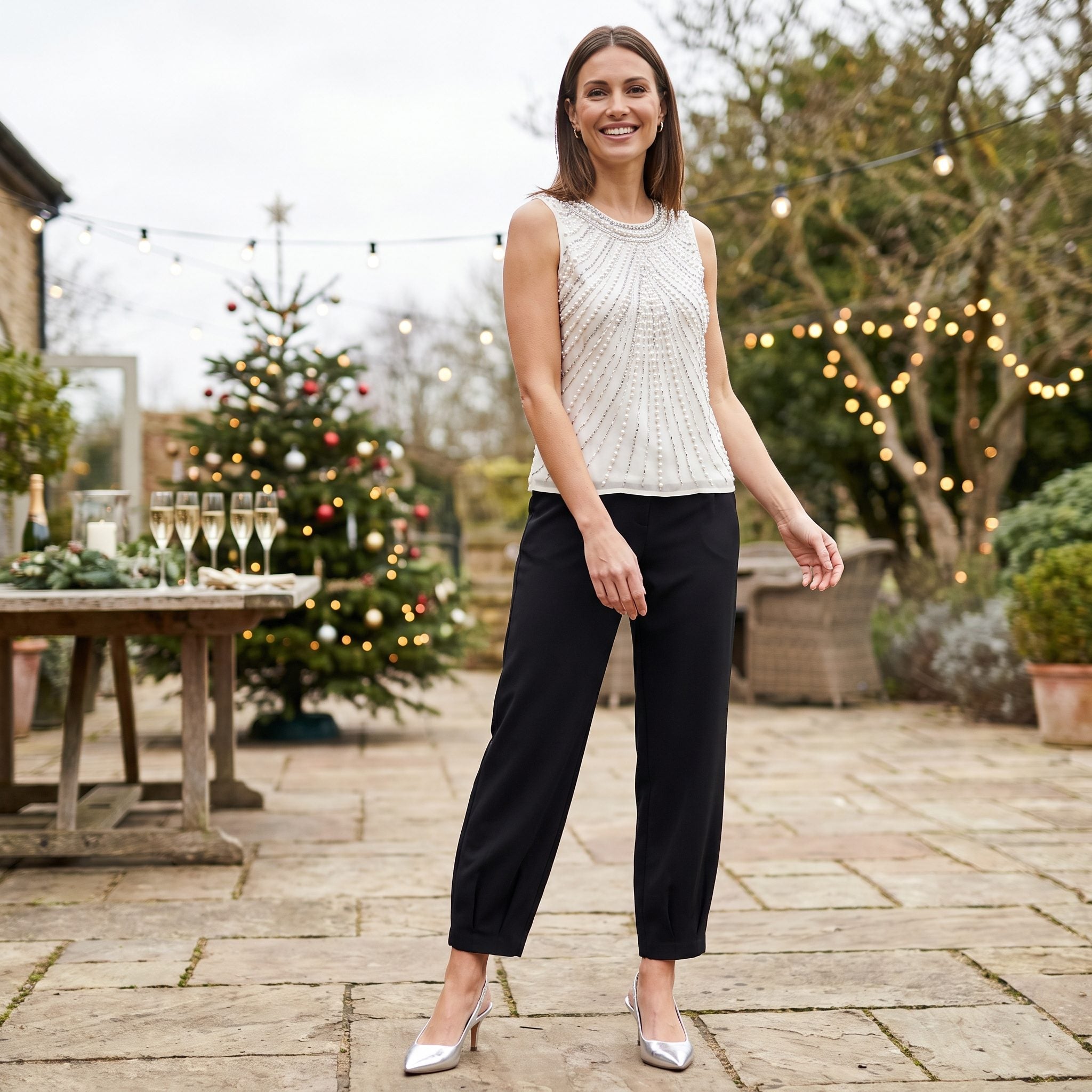
A pearl-and-silver shell against black barrel trousers concentrates almost all the surface interest above the waist. The beadwork catches changing light while the trousers stay matte, architectural, and deliberately plain.
Relaxed arms leave the embroidered path across the bodice uninterrupted, which makes the pattern easier to read. The modern trouser shape also gives all that mid-century sparkle something current to push against.
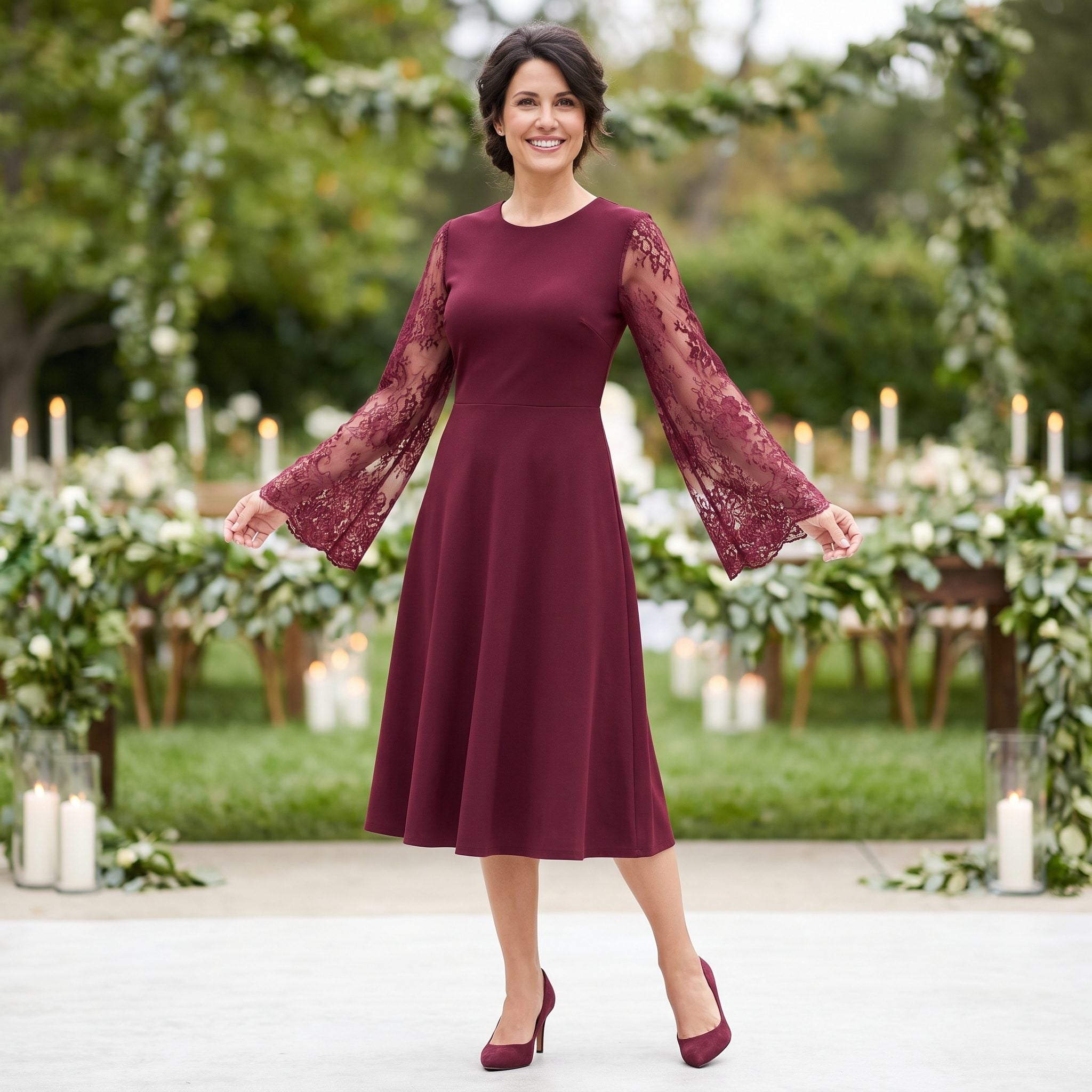
24. The Lace Sleeve
❤️ Would you like to save this?
Lace sleeves finish an evening look without asking the whole dress to become ornate. The burgundy bodice stays solid and matte, while the arms shift into sheer floral work that changes character whenever light passes through it.
That opaque-to-transparent transition supplies the interest. The lace gives visual coverage without making the dress heavy, and the contrast between dense body and delicate sleeve feels far more considered than adding another wrap over the top.
23. The Formal Cummerbund
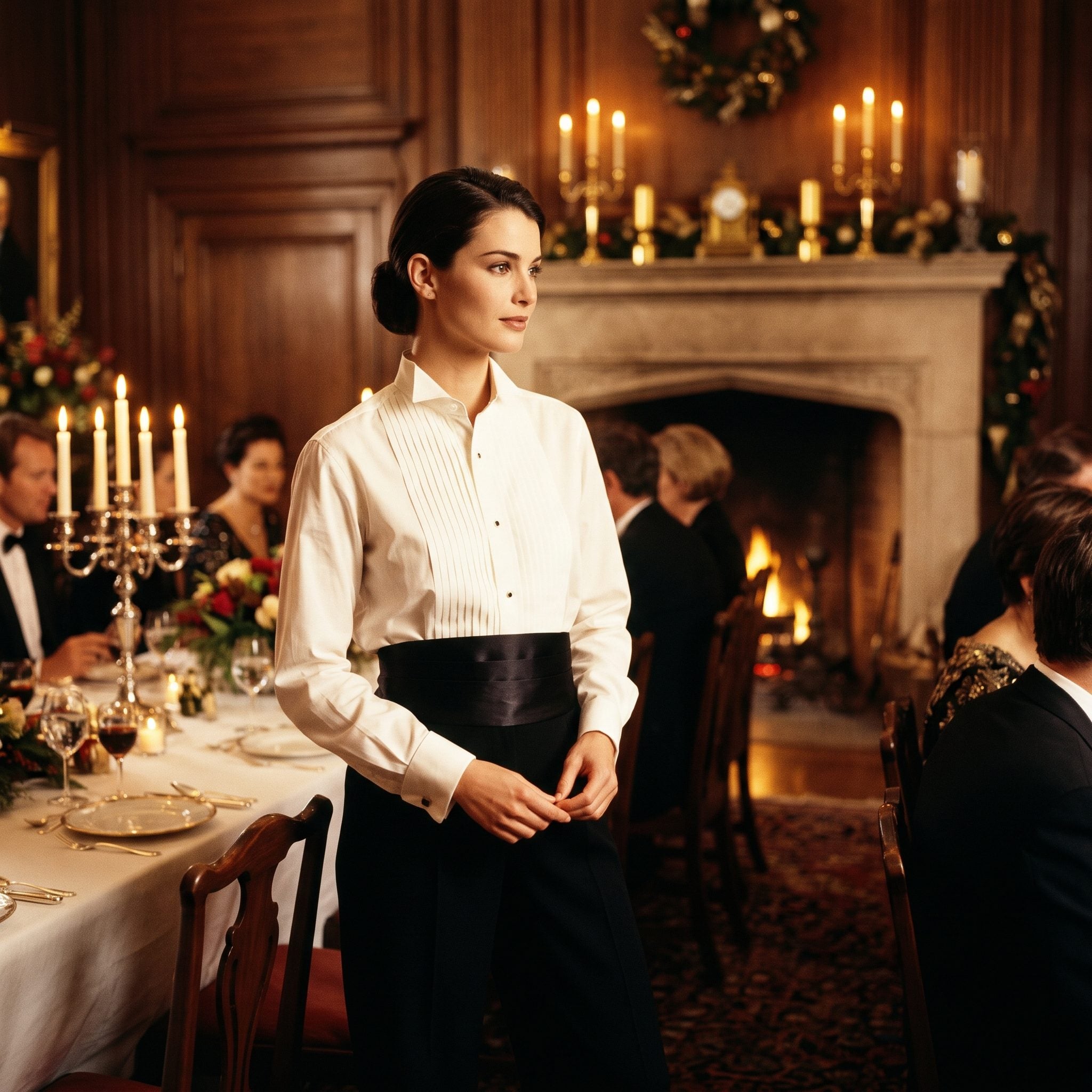
The cummerbund closes the visual gap between ivory shirt and black trousers with one broad horizontal band of silk. Without it, the pieces read as separates. With it, the waist becomes the point that locks the outfit together.
The satin also introduces the only controlled shine between matte fabric above and below. Patent pumps echo that finish at the floor, giving the look two small reflective surfaces rather than ornament everywhere.
22. The Velvet Hair Ribbon Nobody Thinks to Wear Anymore
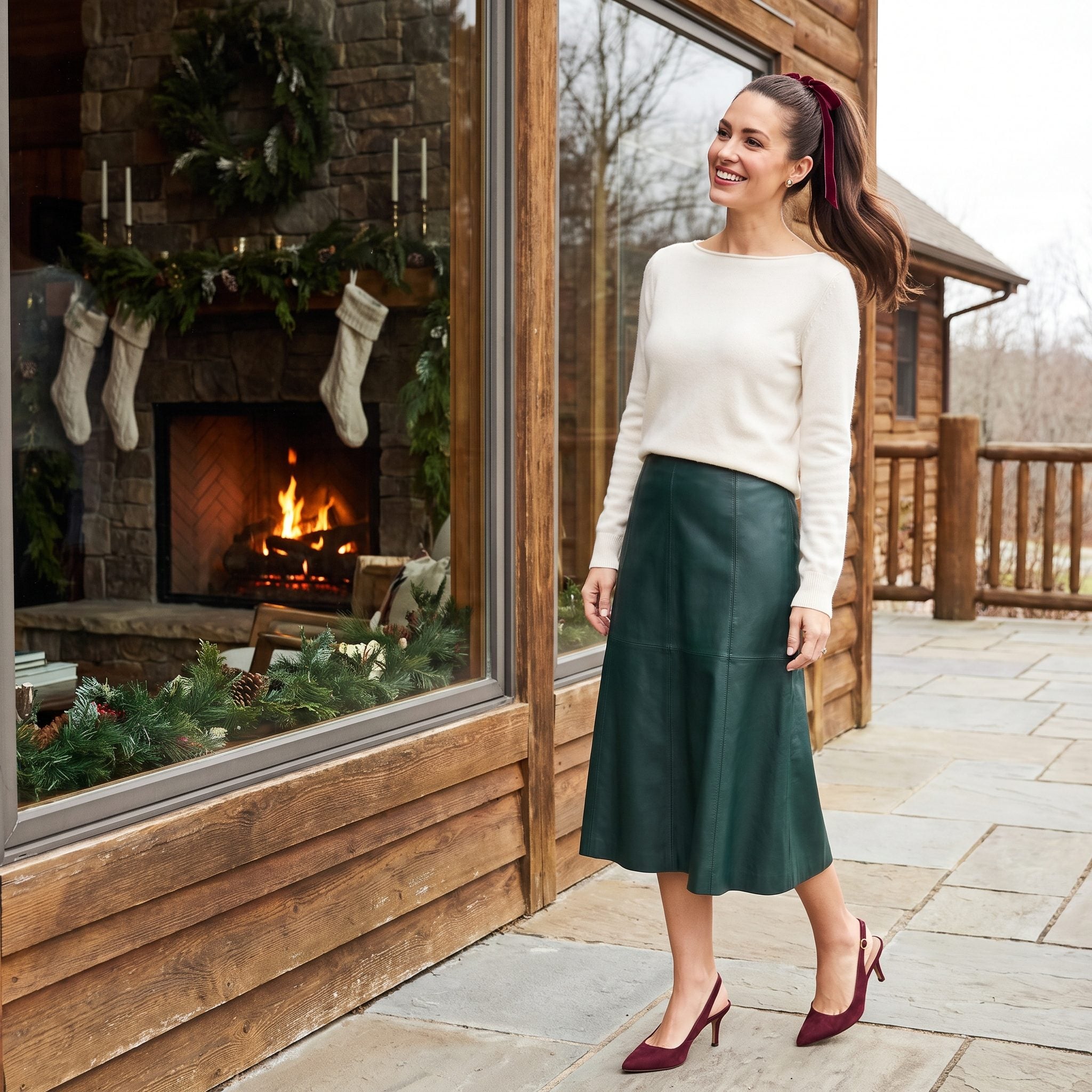
A velvet ribbon tied around a high ponytail may be the smallest detail in the gallery, but scale is part of its charm. Against cashmere and leather, the soft nap introduces just enough texture to make the hair feel deliberately included in the outfit.
Burgundy velvet repeats the burgundy slingbacks, so the color appears at opposite ends of the silhouette. The trailing ribbon adds movement without becoming another piece of jewelry. The result is tiny in scale but visible across the whole silhouette.
21. The Brocade Party Skirt Woven to Work the Low Light
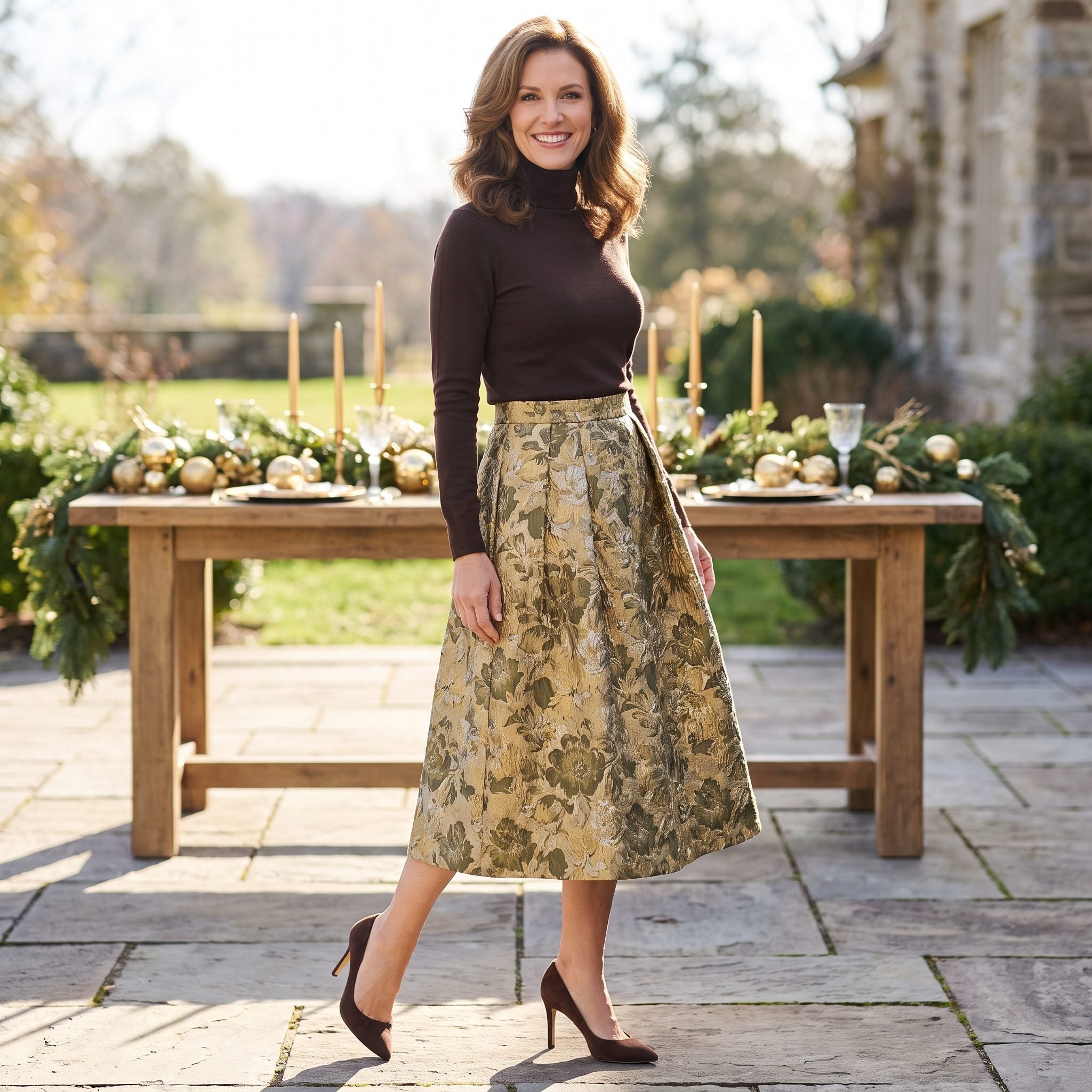
Gold-and-olive brocade earns its place in an evening setting because metallic threads react so differently to low, warm light. The floral pattern seems flatter in daylight and more dimensional once those woven highlights begin to catch.
A fitted espresso turtleneck gives all that richness a severe counterpoint. Dark suede pumps stay equally quiet. The skirt gets pattern, sheen, and volume; everything around it is edited down accordingly.
20. The Coordinated Skirt Suit in Powder Blue
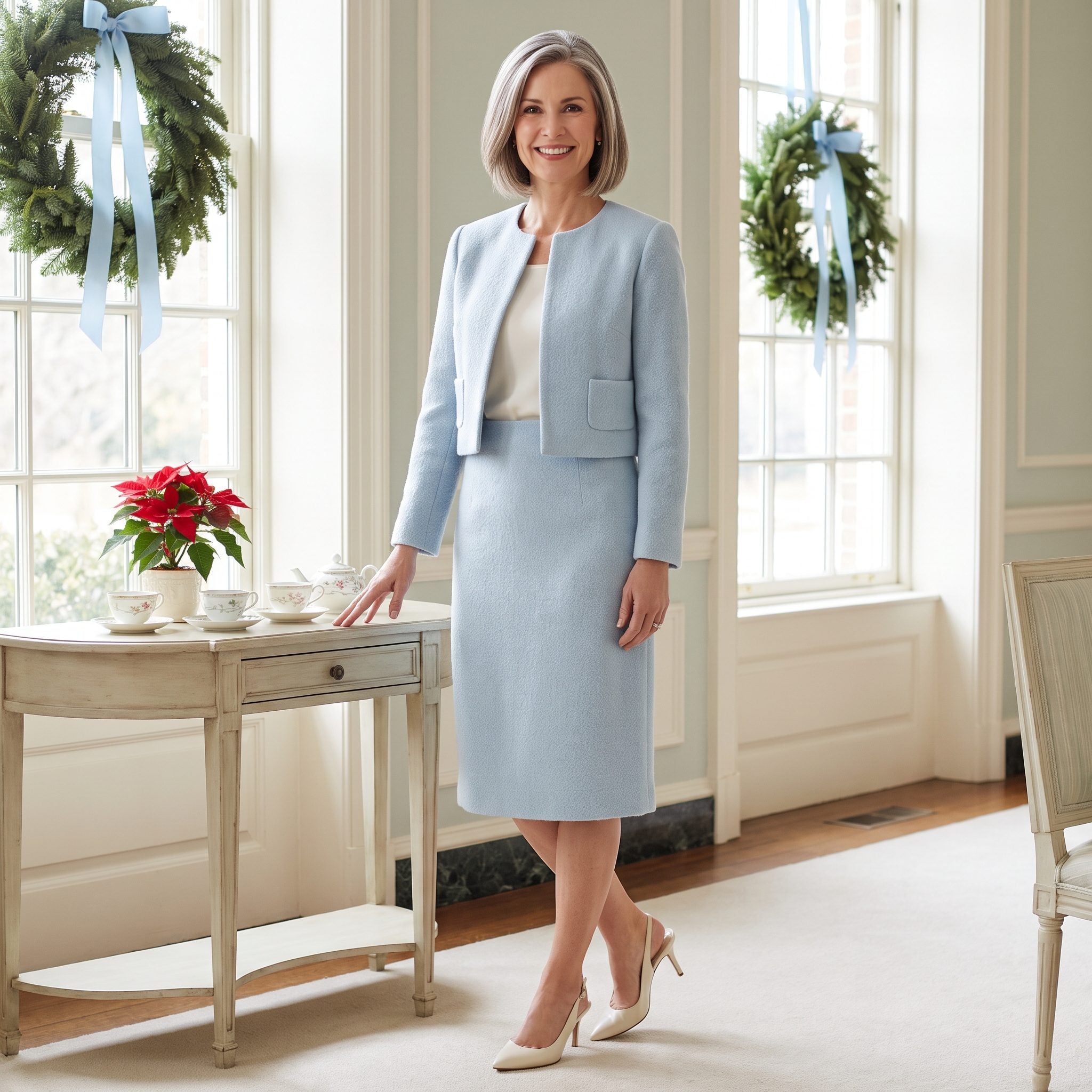
A matching jacket and skirt can make simplicity feel unusually deliberate. Powder-blue textured wool, clean tailoring, and almost no ornament turn repetition itself into the styling device.
Leaving the jacket open prevents the set from becoming too closed and formal. The ivory silk shell introduces a narrow vertical break, while cream slingbacks continue the pale palette without creating a second focal point.
19. The Chandelier Earring That Did the Work of a Necklace
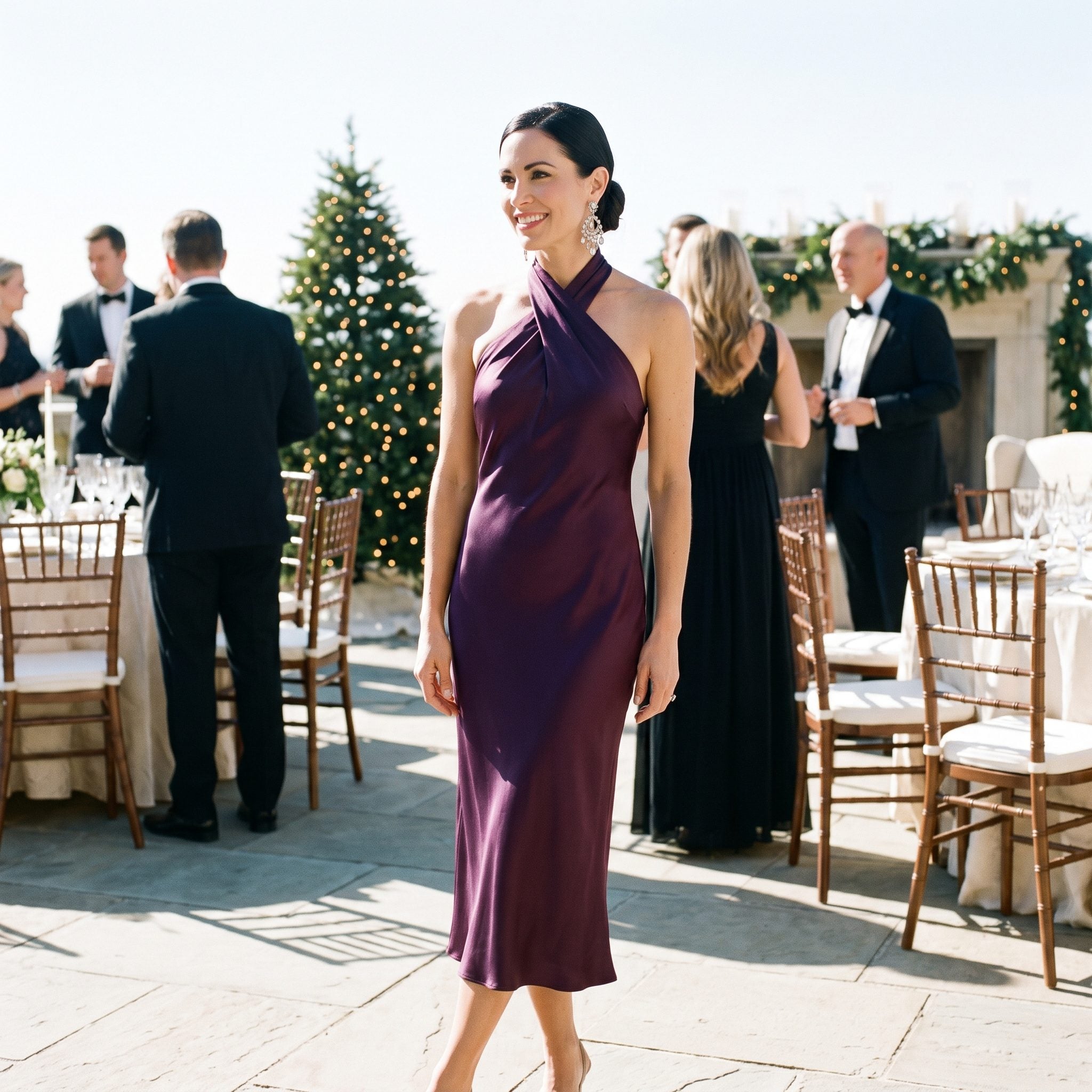
A halter neckline leaves the throat and upper chest completely clear, which gives chandelier earrings exactly the space they need. Crystal tiers move beside the face while the deep-plum dress remains comparatively still.
Motion against stillness is the real contrast. The dress drapes and gathers at the waist; the earrings swing. A low updo keeps the ears exposed rather than competing with the jewelry, while pewter strappy heels echo the cooler metallic notes without matching the plum fabric.
18. The Contrasting Satin Cuff on Velvet
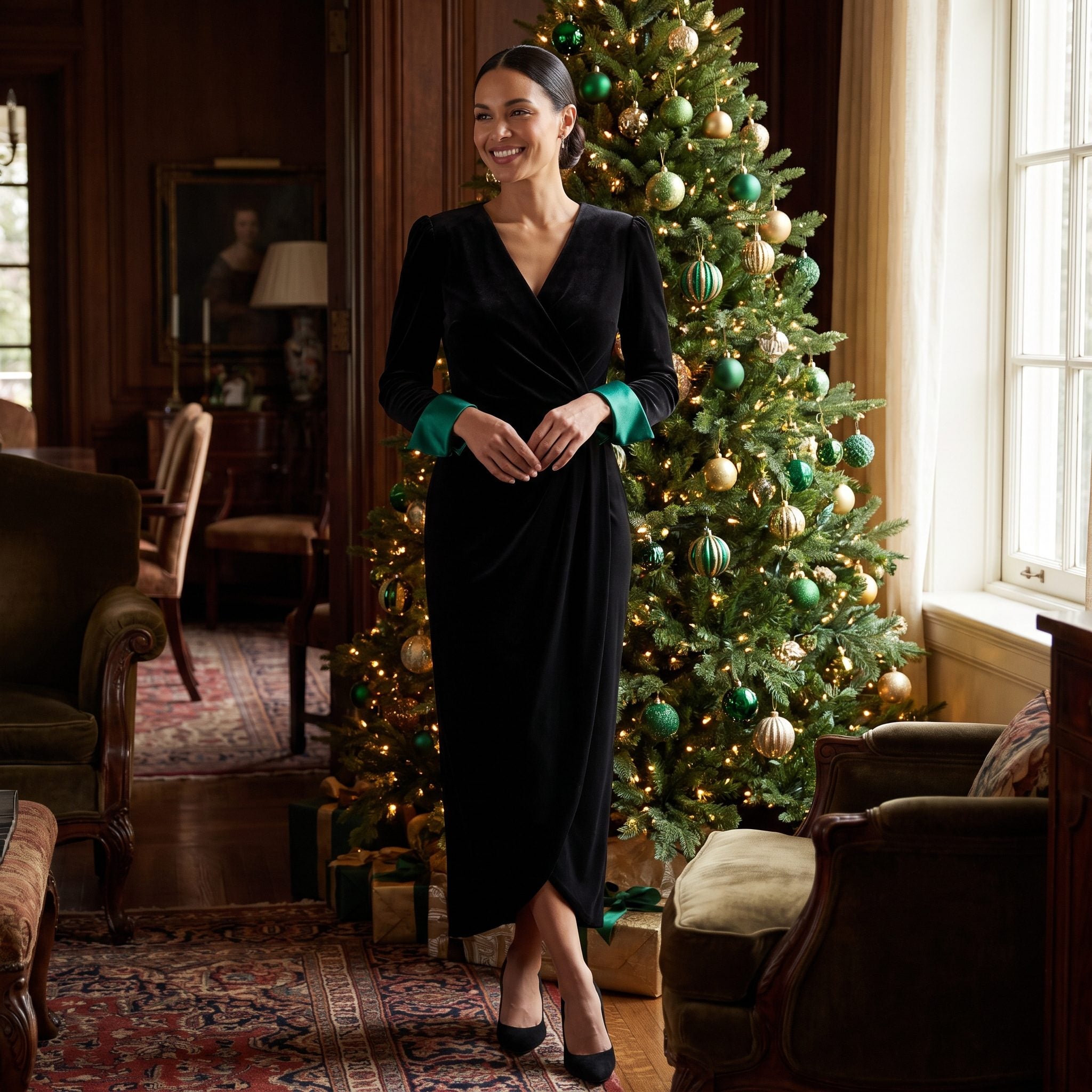
Matte against shine, black against emerald, soft against slick. Broad satin turn-back cuffs bring both the only color and the only reflective surface to an otherwise black velvet dress.
The wrap shape keeps the body quiet enough for those cuffs to register from across the room. Velvet absorbs light; satin throws it back. Concentrating the contrast at the wrists turns an ordinary sleeve ending into the most memorable part of the garment.
17. The Silk Pussy Bow Blouse
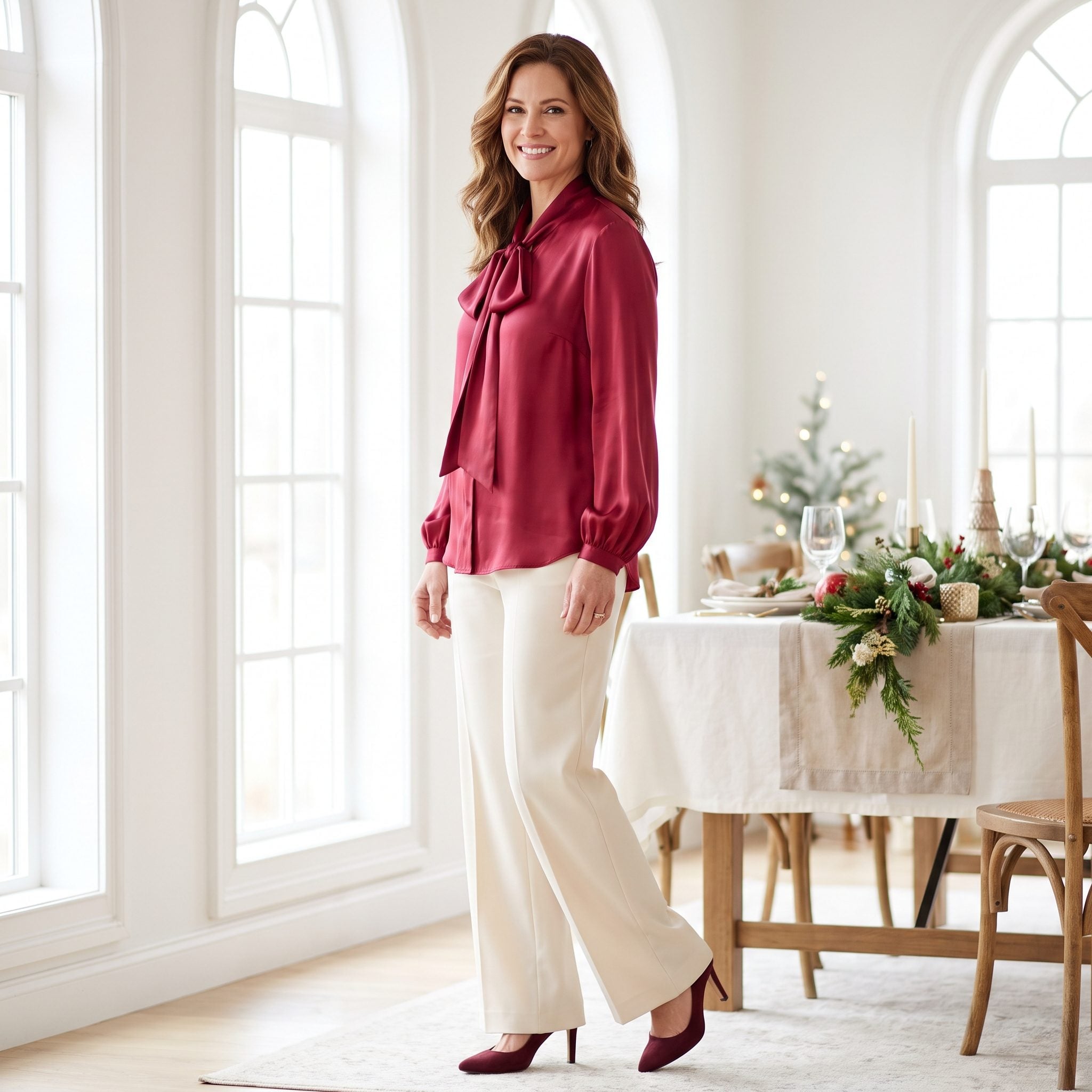
The modern version of a pussy bow works best when the knot stays soft rather than rigid. Cranberry silk falls into loose ties at the neckline, giving the blouse movement instead of the corporate neatness the style can sometimes acquire.
Cream trousers cool down the red and leave the bow as the focal point without requiring jewelry. Fluid sleeves help too. The blouse delivers much of the ceremony of a dress while keeping the outfit firmly in separates.
16. The Jeweled Hair Comb Tucked Into a Low Chignon
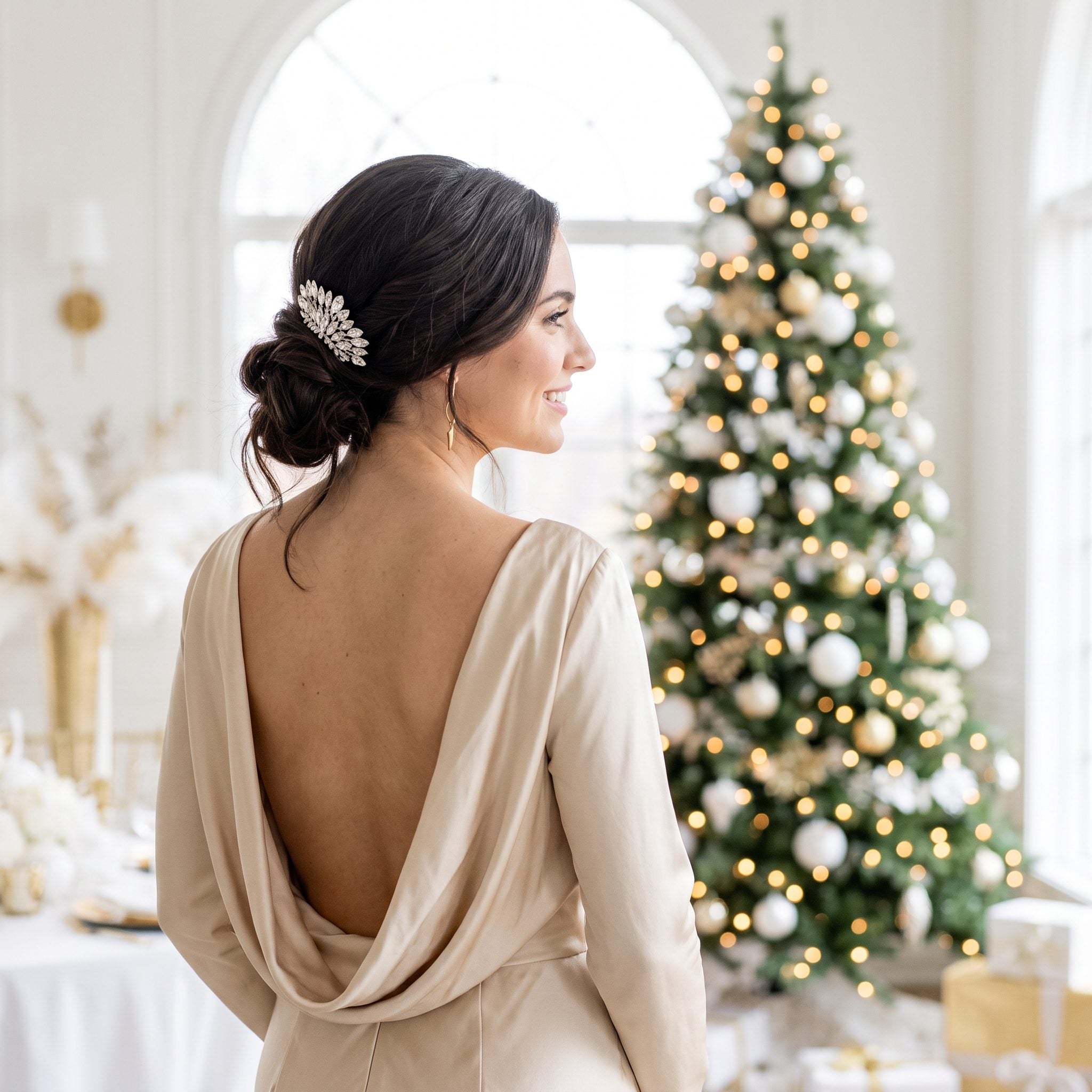
A single crystal comb tucked into a low chignon puts the sparkle somewhere evening dressing now often forgets to look. Instead of adding another necklace at the collarbone, the light moves upward into the hair.
1930s evening styling often treated hair ornaments as part of the jewelry scheme, particularly with bare necklines and draped backs. Keeping the hair soft rather than lacquered into place stops the comb from feeling like costume.
15. The Dressy Twinset With the Cardigan Left Open
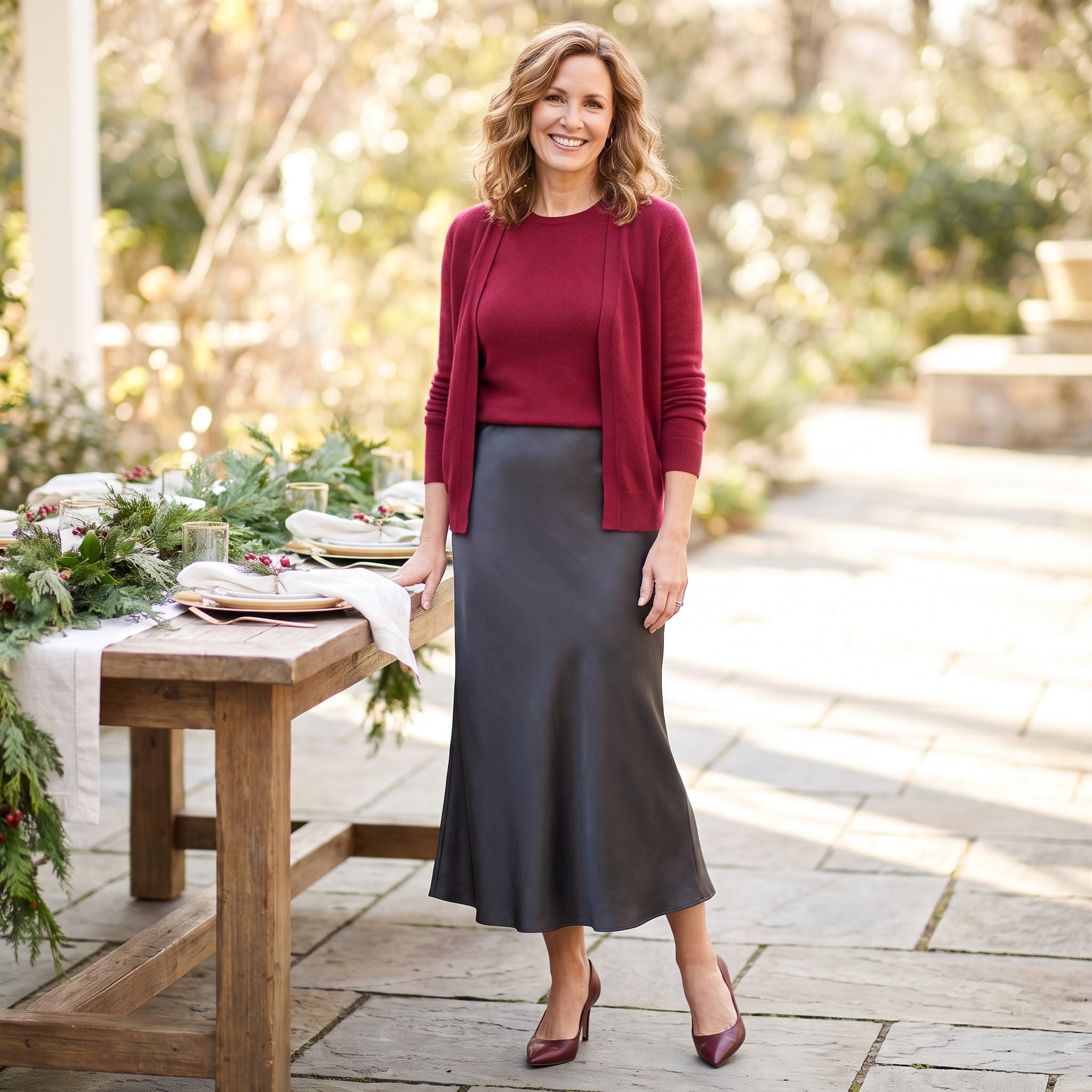
A twinset may sound prim until cranberry cashmere meets a bias-cut satin skirt. The interest comes from the difference in behavior: the knit holds close and matte while the skirt moves and catches light below.
Leaving the cardigan open introduces two vertical lines through the torso and keeps the upper half from becoming boxy. The softly fitted shell underneath defines the waist without requiring any rigid structure.
14. The Satin Rosette at the Shoulder
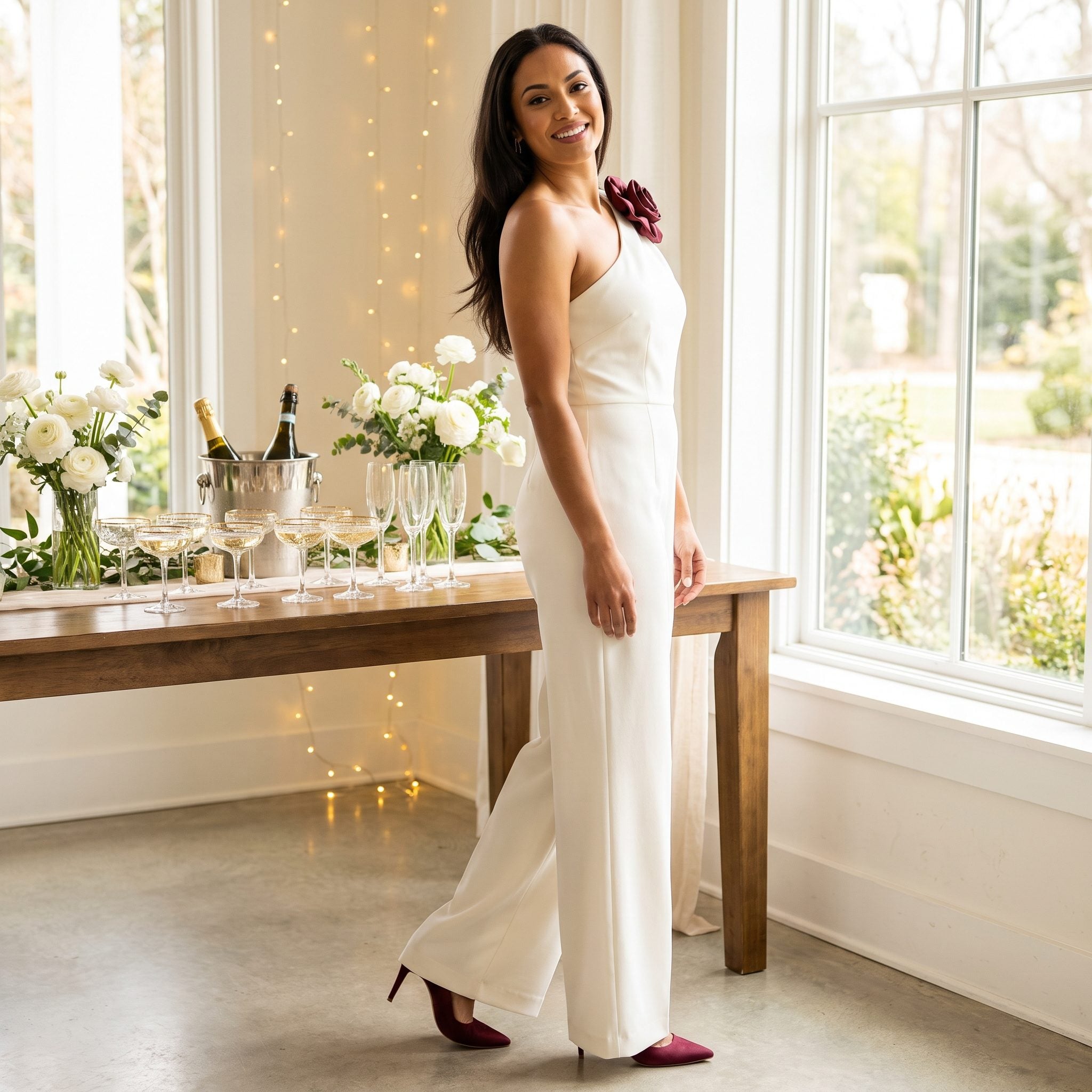
A fabric flower can turn dated quickly. Give it one shoulder, one color contrast, and no competition, though, and it becomes architectural. The ivory crepe jumpsuit stays smooth and almost severe so the burgundy rosette can provide the only flourish.
Fabric flowers were everywhere in 1980s eveningwear; the update is restraint. One rosette, one bare shoulder, then burgundy heels repeating the color at the floor. Keeping the connection to those two points makes it sharp rather than decorative.
13. The Fringed Silk Shawl Across the Shoulders
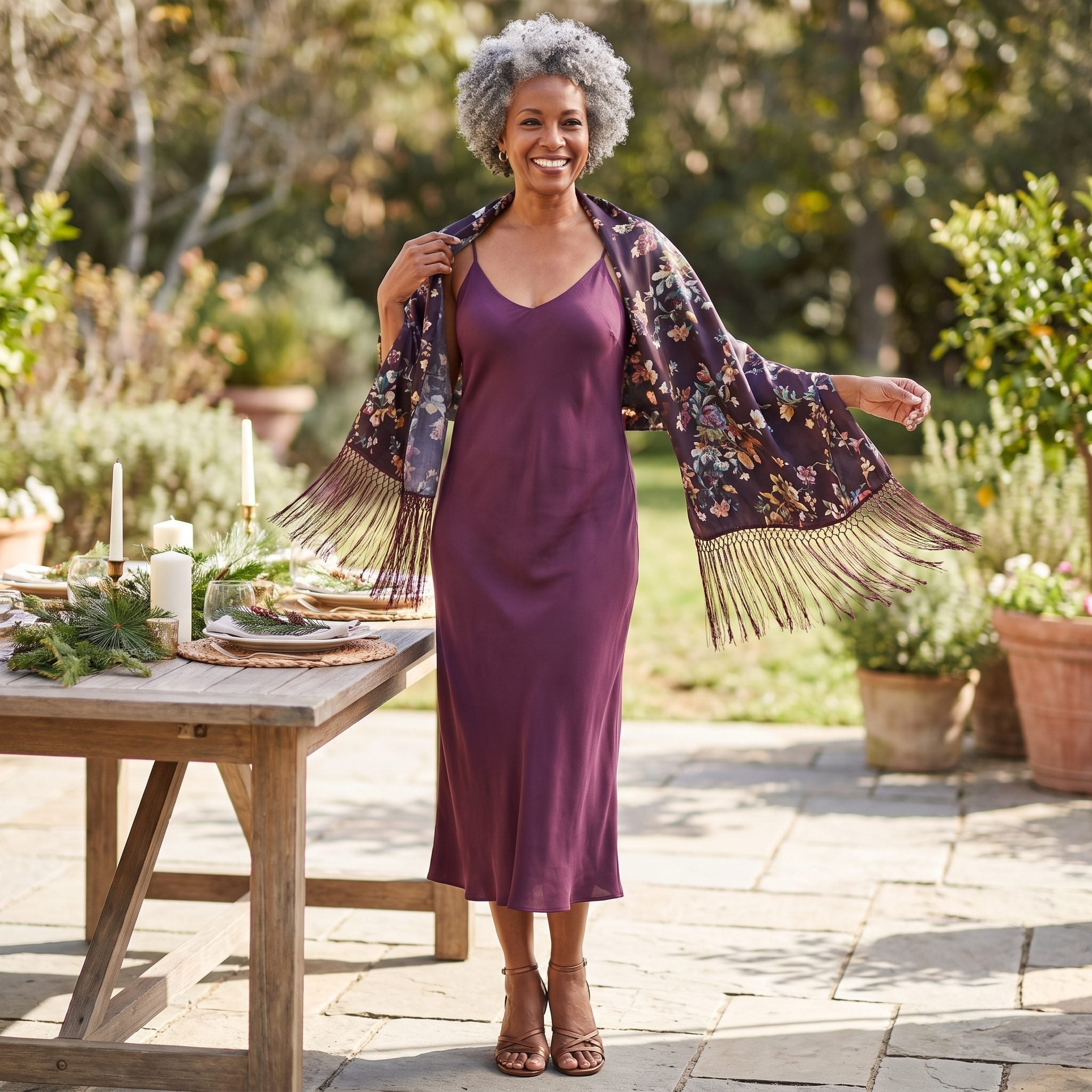
A plain plum slip gives a patterned silk shawl all the negative space it needs. Color, movement, and pattern live in one draped piece, while the fringe keeps the surface active every time the fabric shifts.
Evening shawls became especially glamorous in the early twentieth century, when embroidery and long fringe turned wraps into focal pieces rather than purely practical layers. Draped loosely over a bias-cut slip, this one revives the effect without requiring the rest of the outfit to become period-specific.
12. The Sculptural Party Sleeve That Needs No Jewelry
❤️ Would you like to save this?
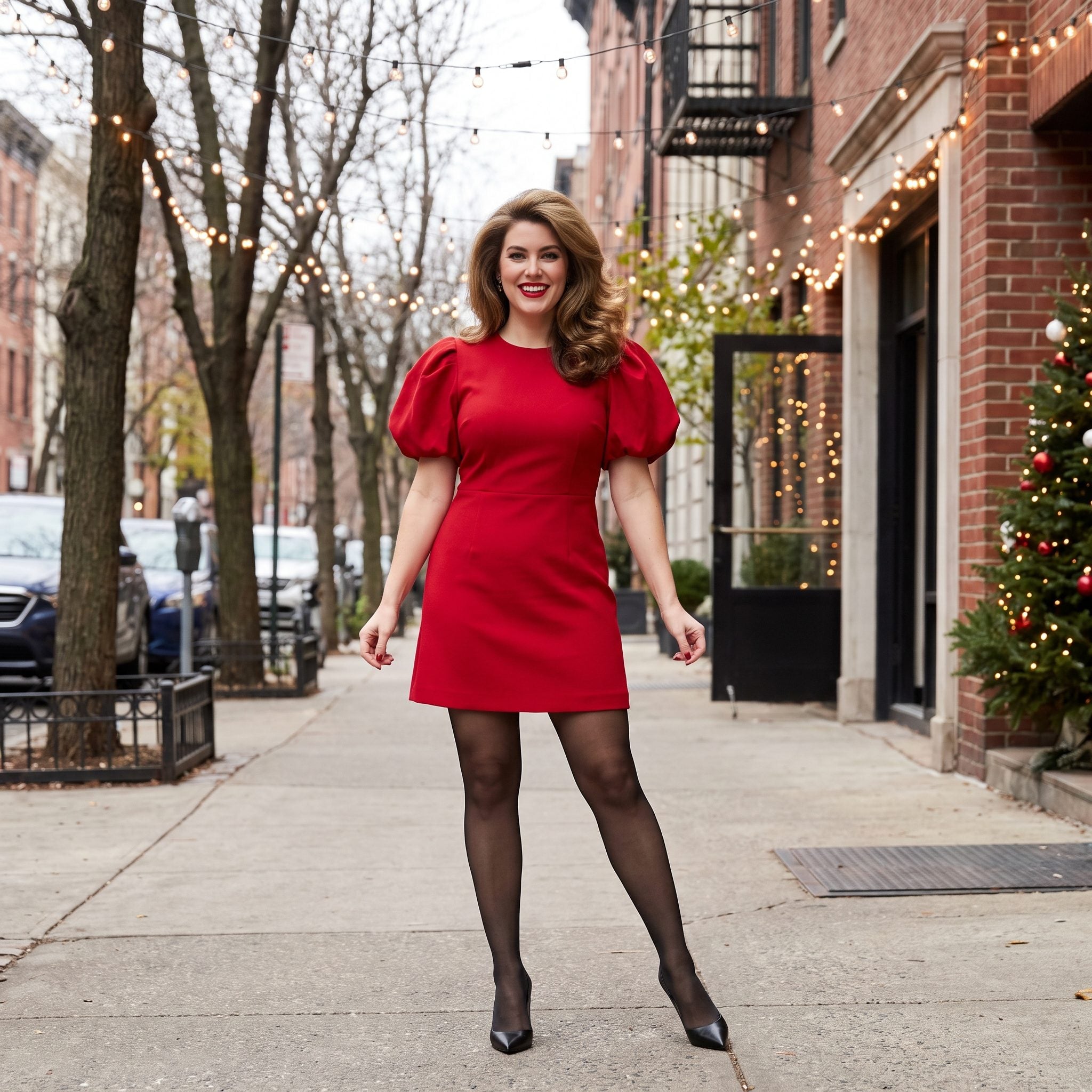
The sleeve changes everything. On a plain red shift, controlled volume at the shoulder turns silhouette into ornament and makes jewelry almost unnecessary.
Cherry-red crepe, a defined waist, sheer black tights. The shoulders carry enough shape that a necklace would only crowd the upper half. This is 1980s logic at its best: exaggerate one line and keep the rest of the dress disciplined.
11. The Embroidered Evening Coat
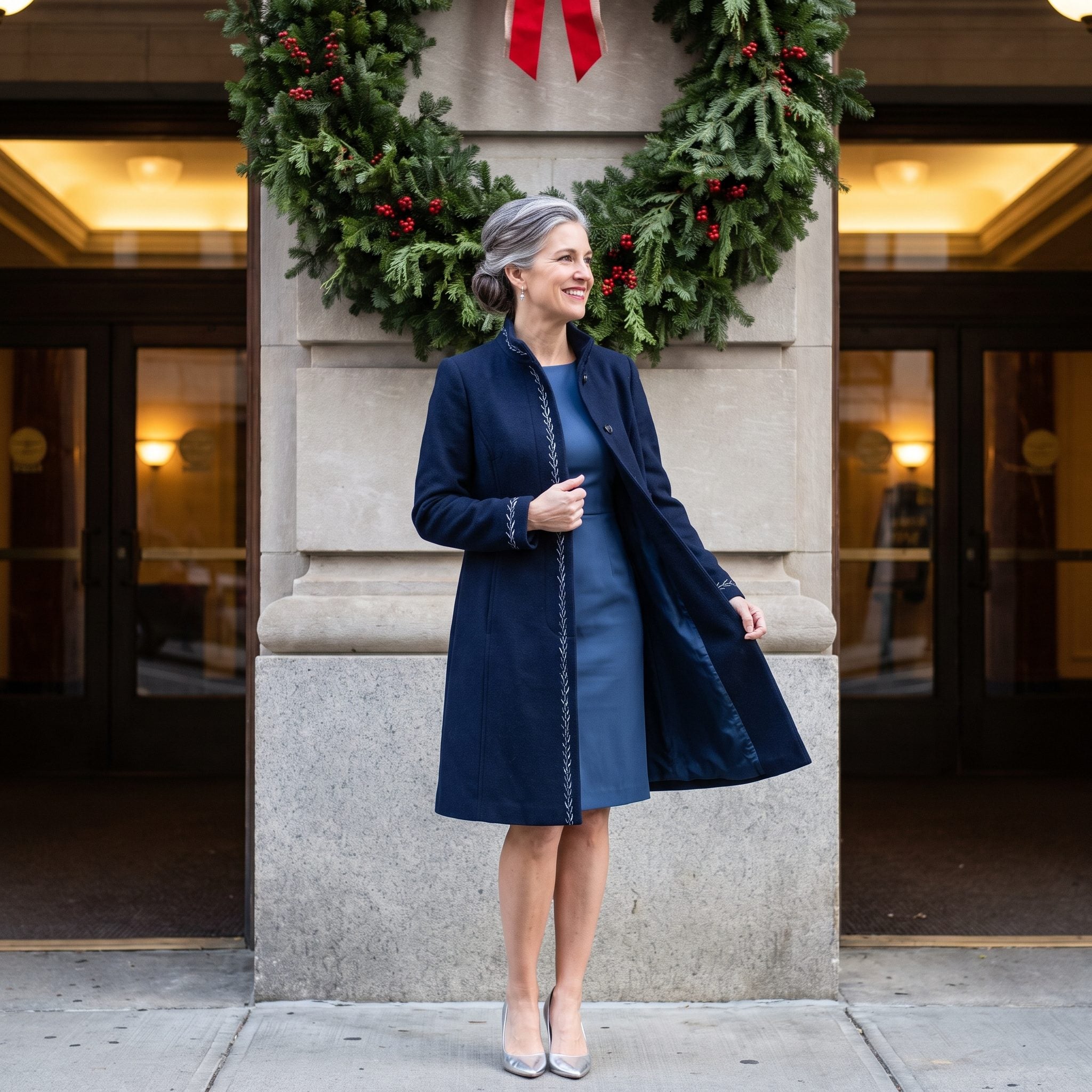
An embroidered evening coat can function as far more than something worn between the car and the door. With silver thread tracing the edges and cuffs, this midnight-blue version becomes part of the outfit itself.
The embroidery works because it does not cover every inch. Dark wool still dominates, while the metallic line appears only at the boundaries. Worn open over a matching blue dress, the coat creates two depths of the same color rather than a stack of competing shades.
10. The Jeweled Belt Clasp at the Waist
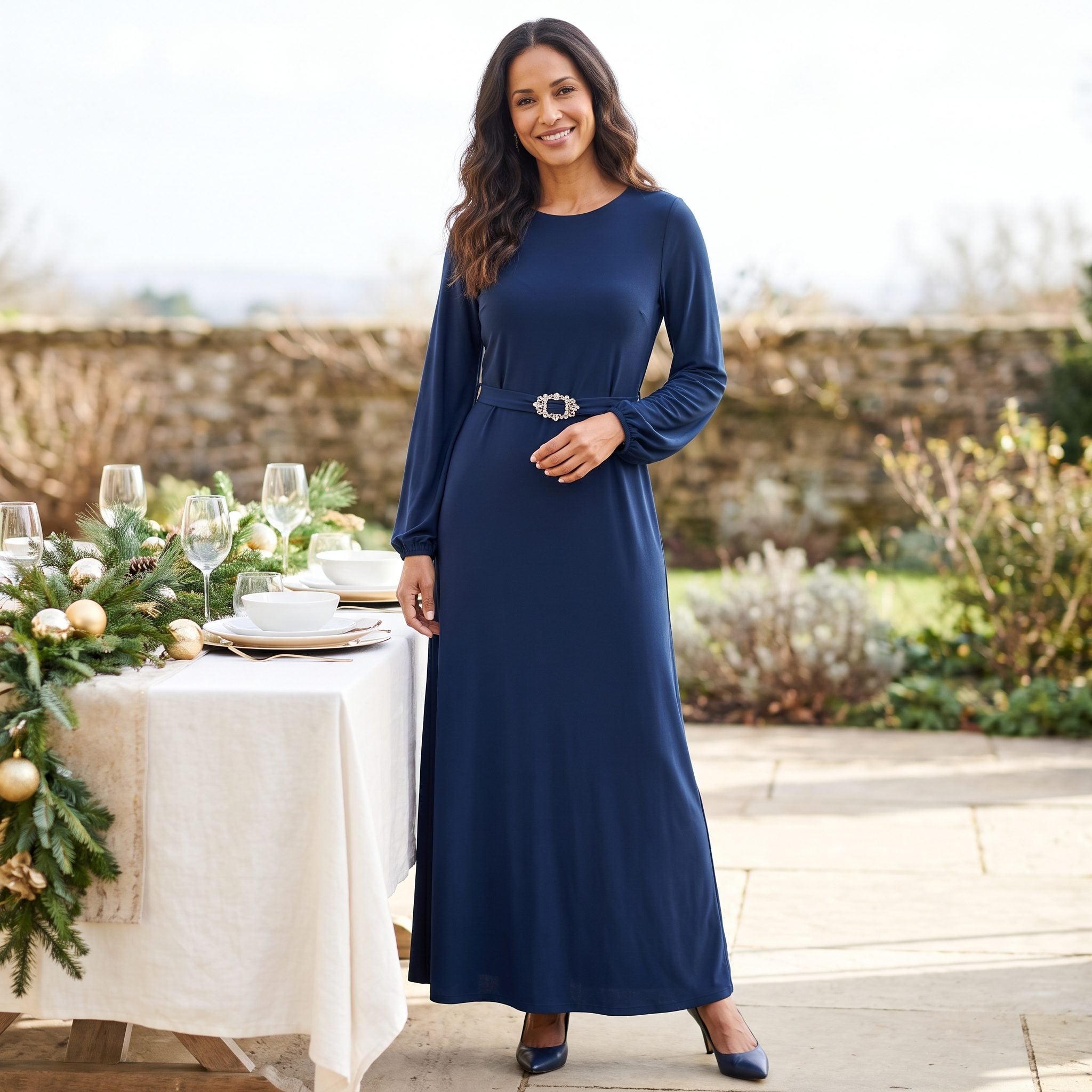
The dress is dark and fluid enough to let one crystal clasp control the entire center. Set at the waist, it gathers the ornament into a structural point rather than scattering sparkle across the bodice.
That concentrated-jewel approach appeared frequently in interwar eveningwear, where buckles, clasps, and brooch-like closures could define the waist while doubling as decoration. Here, the long jersey drape stays uninterrupted above and below it.
9. The Metallic Knit That Caught the Candlelight
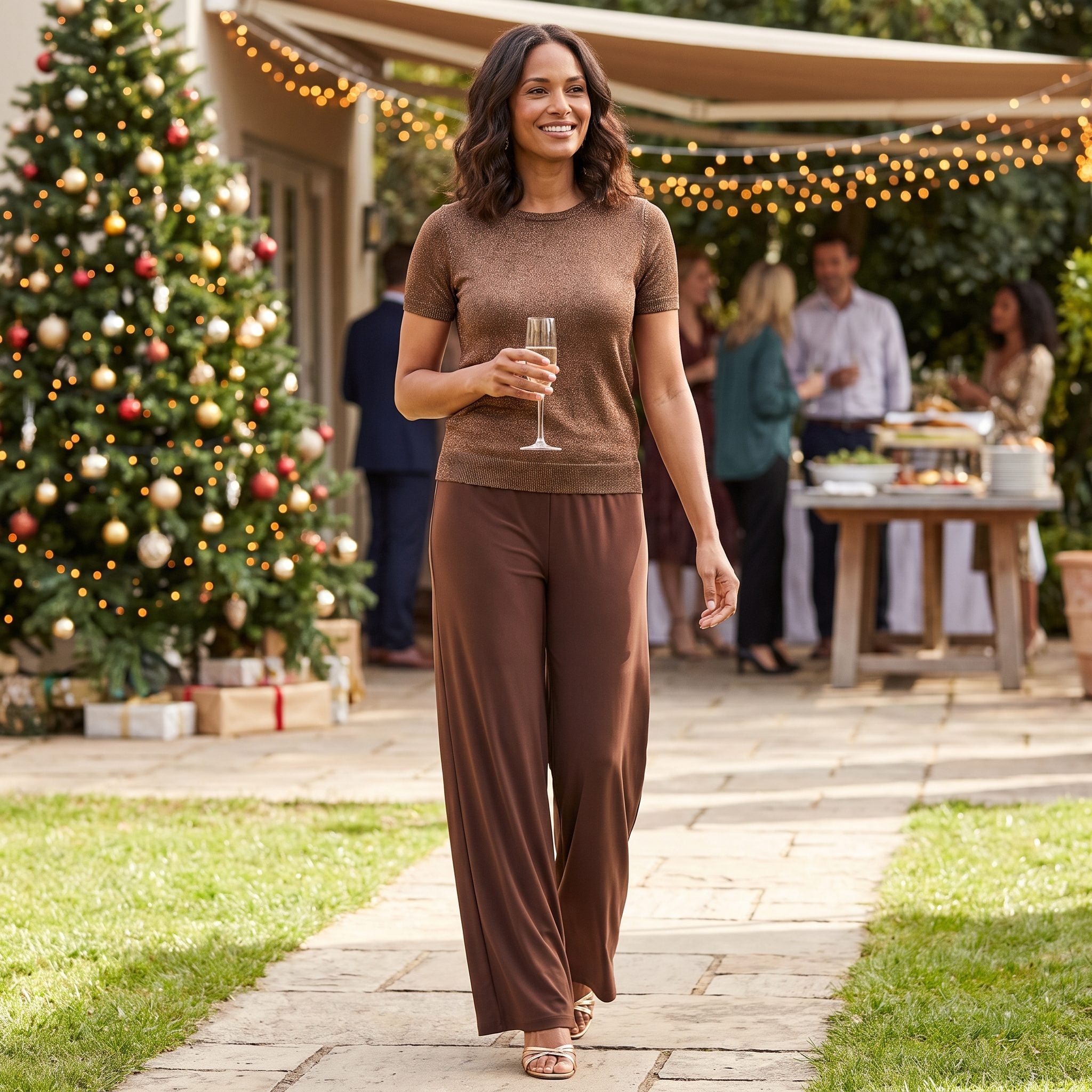
A bronze metallic knit can look loud in isolation. Against matte chocolate palazzos, it becomes much more controlled: light catches above the waist and disappears into the softer drape below.
Short sleeves and a relaxed shape keep the shimmer from feeling like full disco revival, while gold sandals repeat the warmer metallic note at the floor. Metallic yarns became a major part of party dressing through the mid-century decades and into the 1970s, but the basic contrast still works because shine always becomes clearer beside something matte.
8. The Velvet Bolero
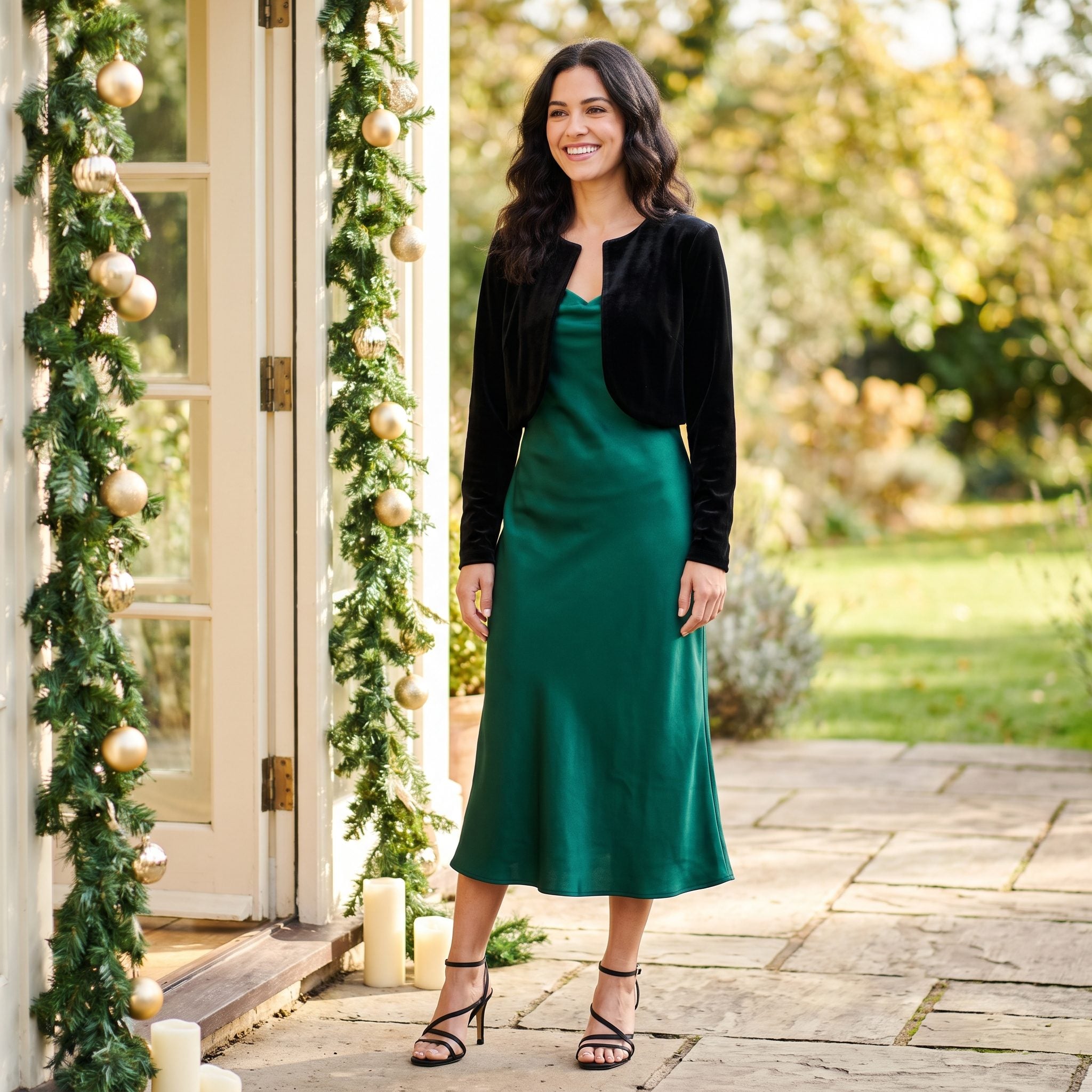
The bolero covers the shoulders without hiding the dress. Its high, cropped shape stops well above the waist, making it one of the few evening layers that adds fabric without erasing the silhouette underneath.
Black velvet over emerald satin is pure material contrast: matte depth against liquid shine. The cropped proportion matters more than the color. A longer jacket would break the flow of the satin; this one frames it.
7. The Single-Strand Pearl Choker
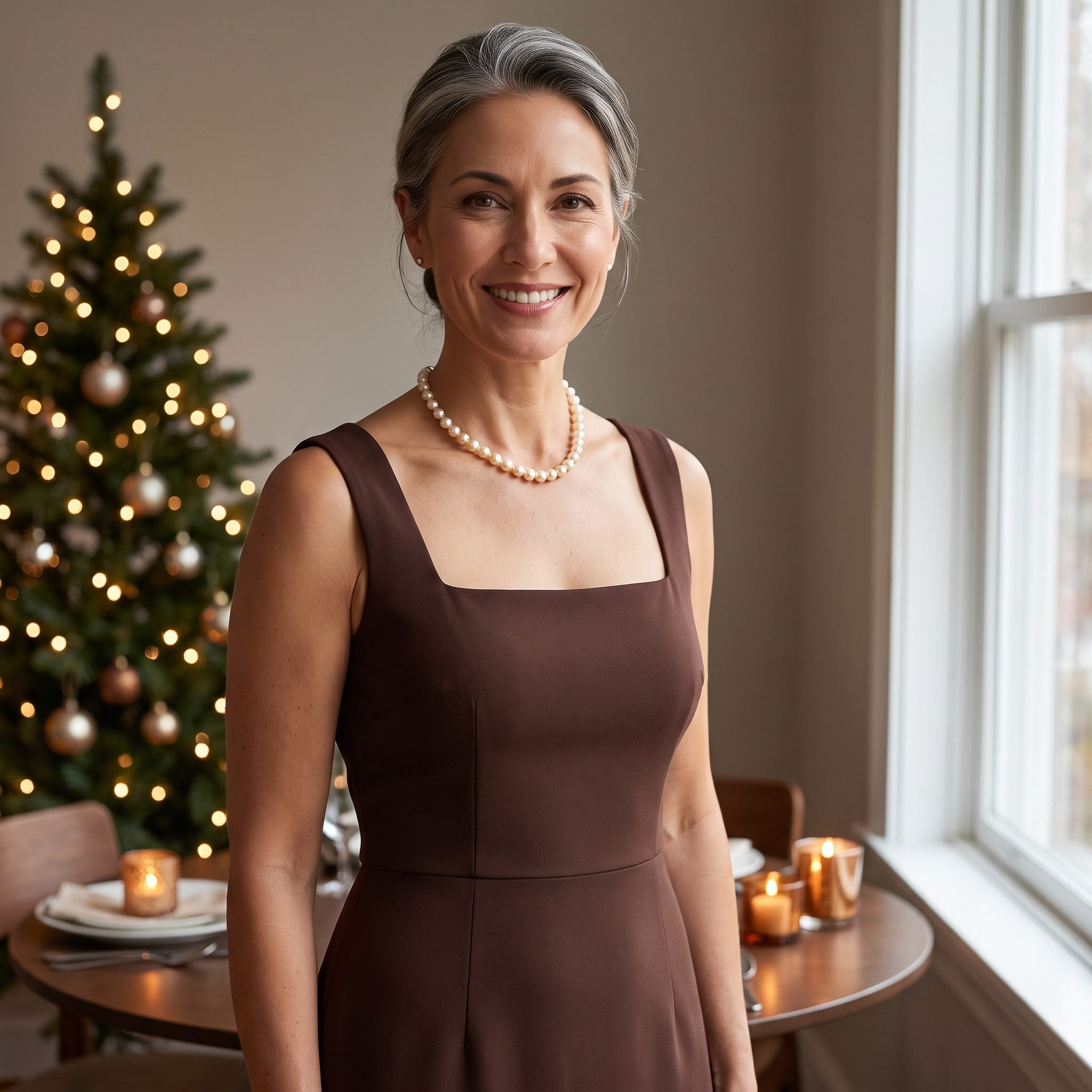
One strand is enough. The pearl choker sits high against the throat, placing a small band of luster directly above the square neckline instead of scattering shine across earrings, bracelets, and brooches.
Matte chocolate crepe gives the pearls the perfect quiet background. The square neck repeats the necklace’s horizontal emphasis and frames it cleanly, so the jewelry feels integrated with the dress rather than added afterward.
6. The Paired Dress Clips Where a Necklace Should Be

Two crystal clips placed at the corners of a square neckline create structure where a necklace would usually hang. Instead of introducing another curved chain, the sparkle becomes part of the garment’s geometry.
Deep-teal crepe gives the clips a quiet background, and the symmetrical placement pulls attention outward toward the shoulders rather than downward. Dress clips were a major jewelry idea of the 1930s, worn singly or in pairs on necklines, lapels, hats, and belts.
5. The Fabric-Covered Buttons Running Down the Front
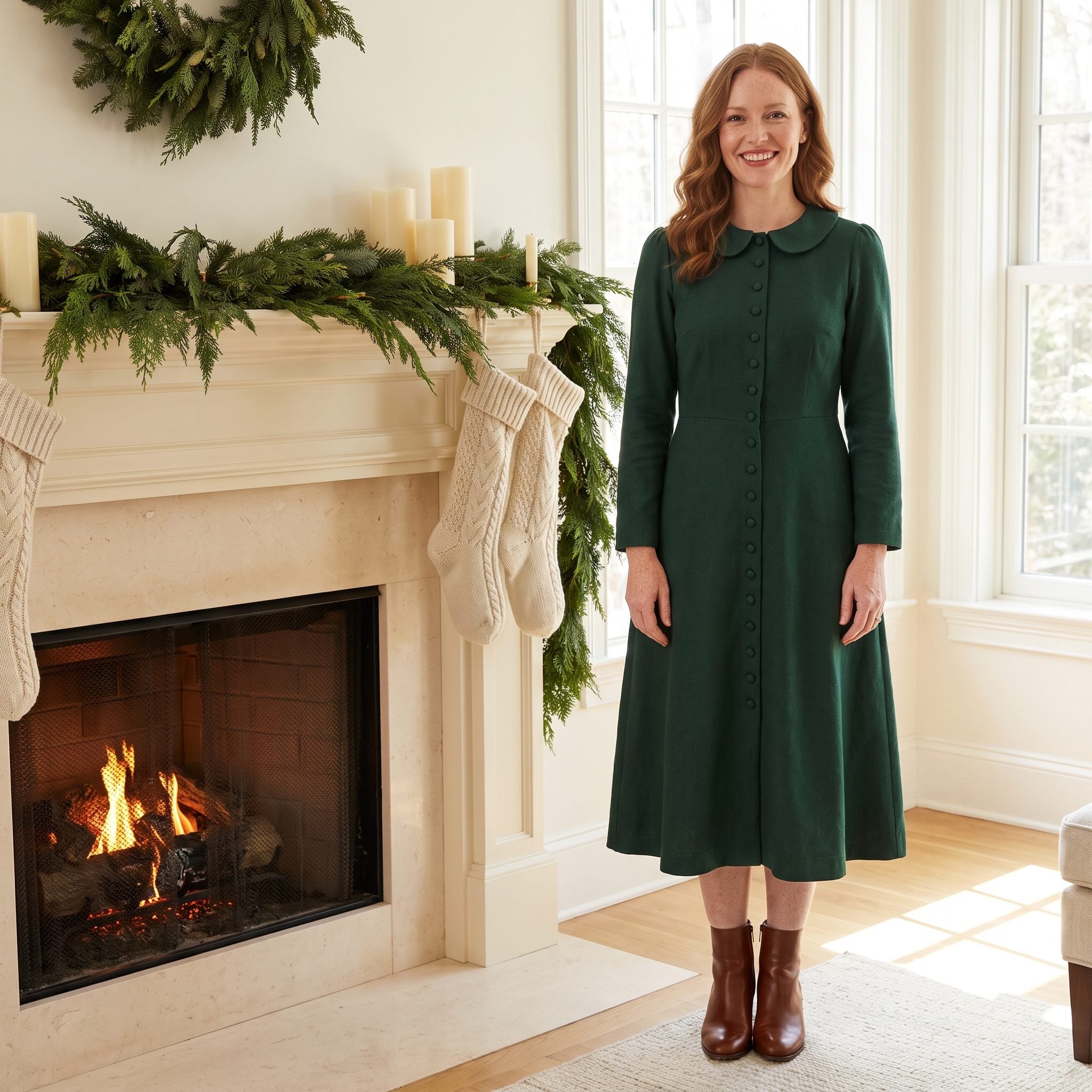
Covered buttons are the detail most people notice only when a garment does not have them. On this deep-green dress, the buttons disappear into the same fabric and create a narrow line of raised texture instead of a contrasting row of hardware.
Soft shoulders, narrow sleeves, and the long button line lean toward 1940s tailoring without becoming a literal reproduction. Polished ankle boots pull the look forward, while the matched buttons preserve one uninterrupted vertical sweep.
4. The Embellished Evening Flat You Saved for December
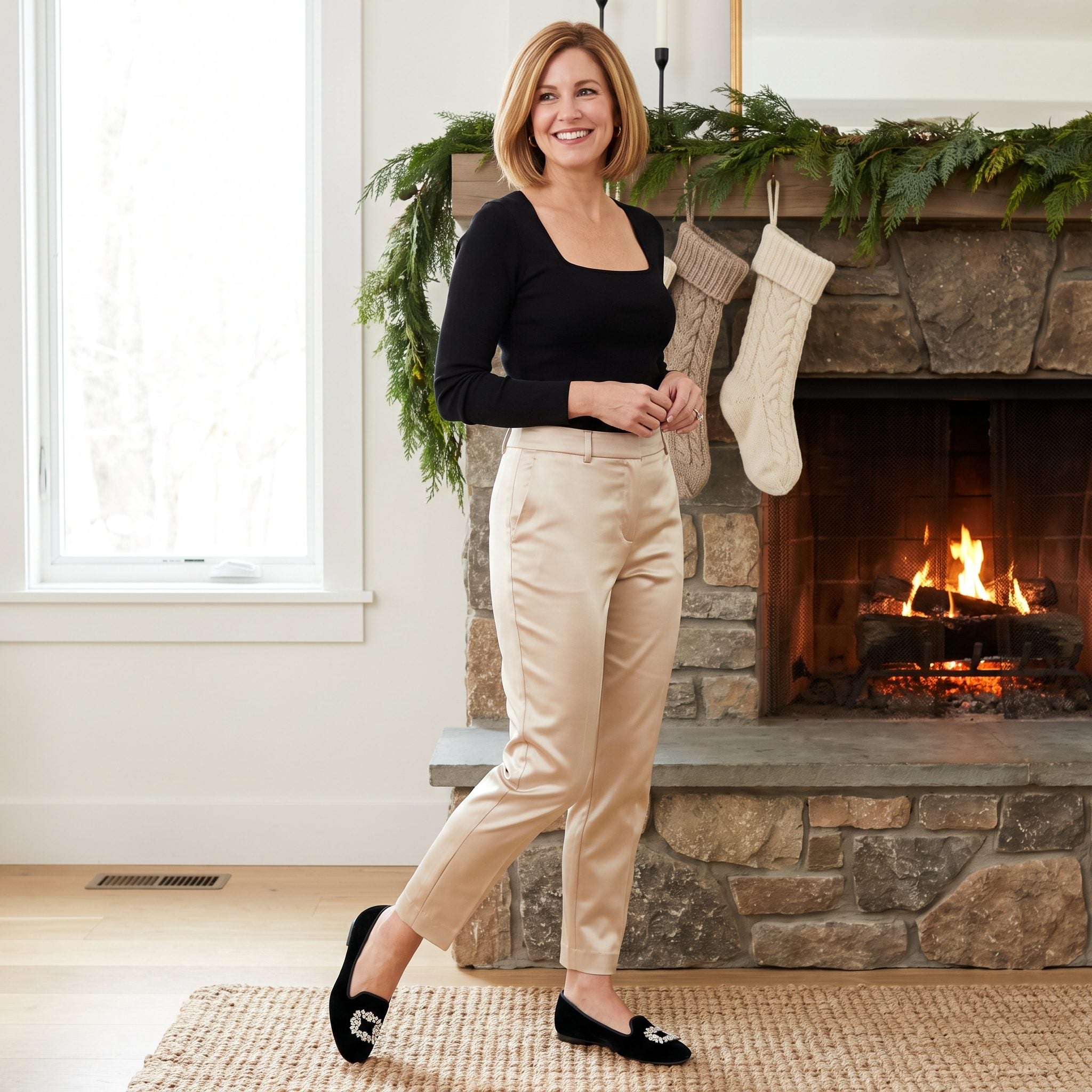
The black velvet flat occupies a useful space between an everyday shoe and a formal heel. Small jeweled motifs bring enough reflected light to make the shoe feel intentional beneath champagne satin and black.
Heels would push the outfit toward full formality. Flats pull it back just enough while keeping the occasion intact. The embellishment matters because it gives the lower silhouette a point of polish instead of allowing comfort to look accidental.
3. The Evening Waistcoat Worn Like It Meant Something
❤️ Would you like to save this?
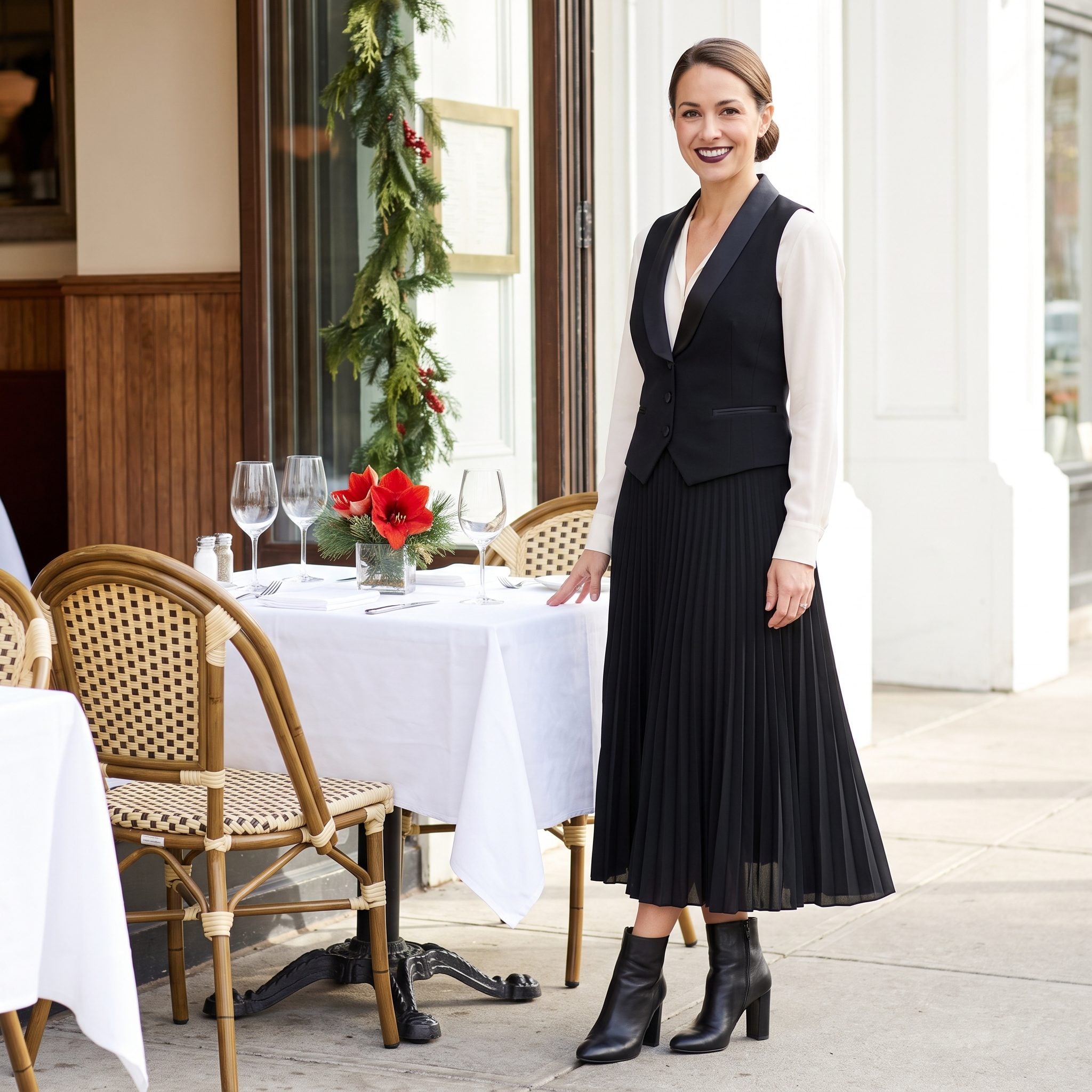
A satin-edged black waistcoat over an ivory blouse creates a firm, tailored upper half before the pleated midi skirt takes over below. Hard top, soft bottom: the contrast in structure is more important than the menswear reference.
Tailored separates became a powerful part of 1970s dressing precisely because they allowed this kind of construction. The blouse prevents the black from becoming severe, while ankle boots keep the pleated skirt from drifting into conventional occasionwear.
2. The Scalloped Lace Hem Peeking Below the Cardigan
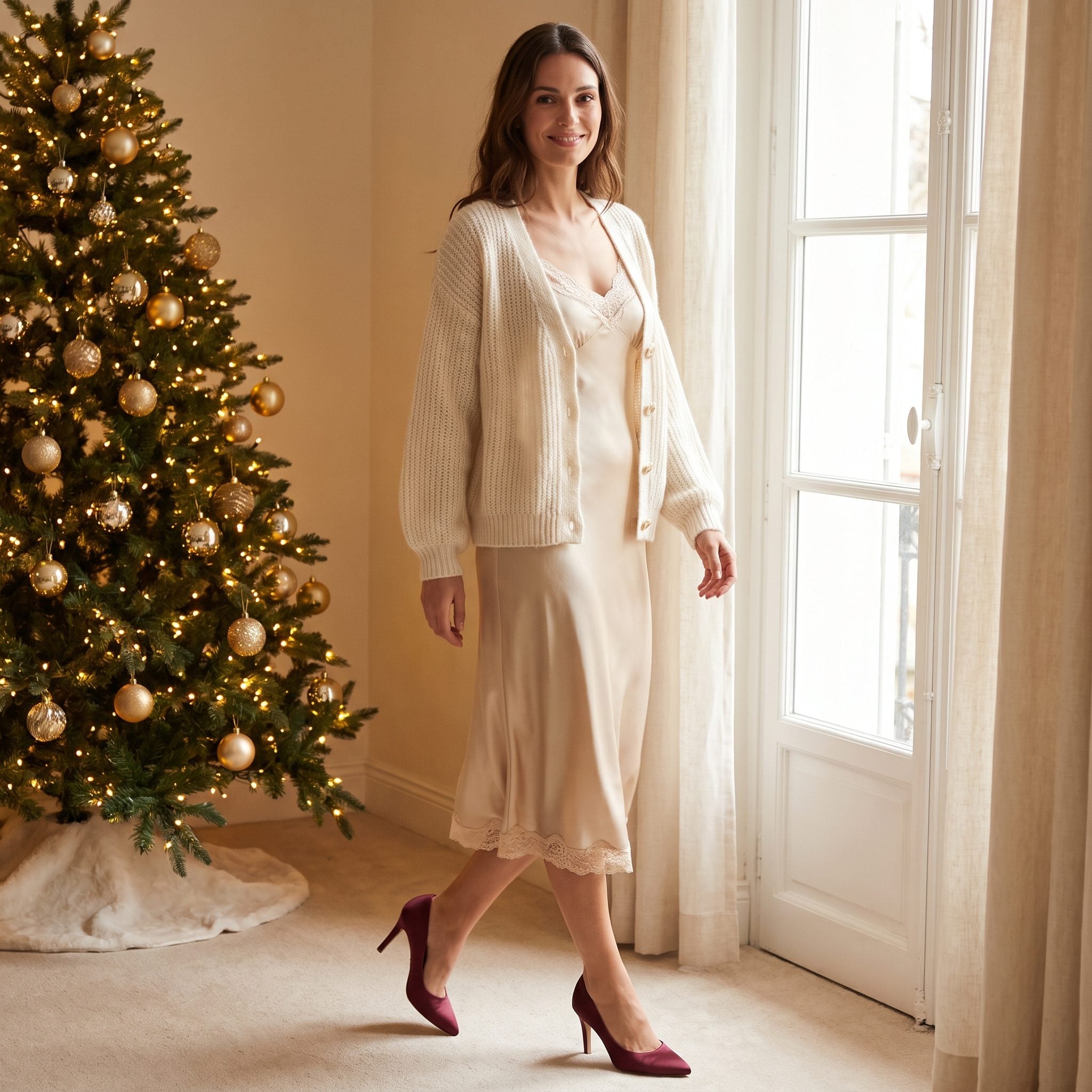
The important detail is only half an inch wide. A champagne slip falls to a scalloped lace edge, and that narrow band of transparency gives the dress a more finished ending than a plain satin hem ever could.
The cardigan changes the register completely. Layered over the slip, it interrupts the obvious glamour and introduces the ease that made 1990s lingerie dressing so effective. A champagne silk slip dress with burgundy heels keeps the palette warm while letting the lace remain the smallest — and smartest — detail.
1. The Lamé Sash Tied Loose and Left to Fall
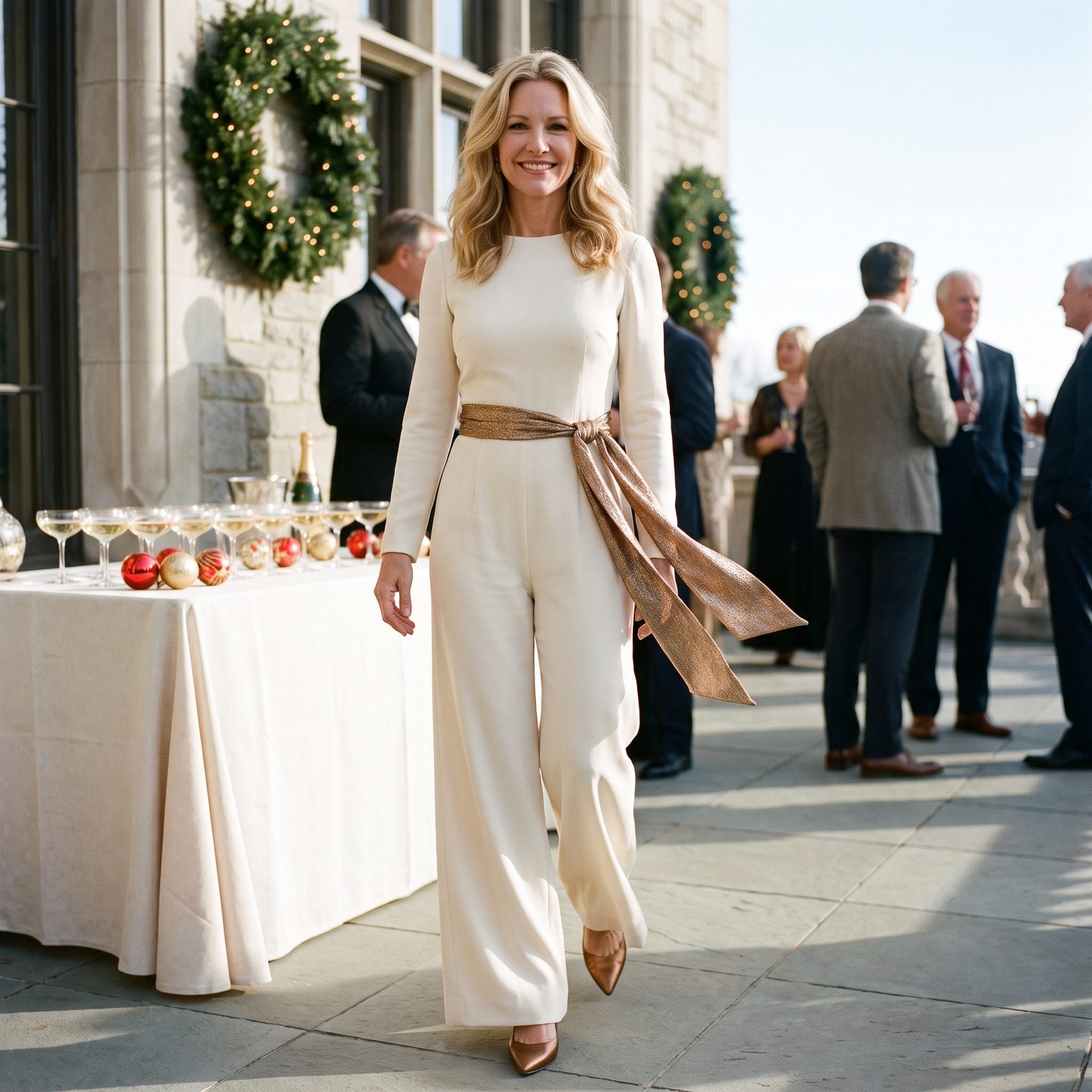
One metallic accent against a field of cream is enough to transform the entire silhouette. The bronze sash crosses the waist cleanly, then drops from one hip in two long ends instead of resolving into a tidy centered bow.
That asymmetry is what gives the look ease. A perfectly symmetrical knot would make the sash decorative; letting the lamé fall off-center turns it into part of the movement of the jumpsuit. The bronze lamé sash and bronze pointed heels repeat the metallic note at waist and floor while the cream fabric stays completely matte.