
ThreadCurve readers have been voting on vintage fashion: a heart or a thumbs-down under every photo, from 1950s grocery-store outfits to 1990s office wear, prom dresses, wedding gowns and 1980s maternity smocks. We’ve pulled it into one report: 50,318 votes from 9,014 readers on 1,262 photos, the reasons readers gave, and 3,512 poll answers.
The 1950s won
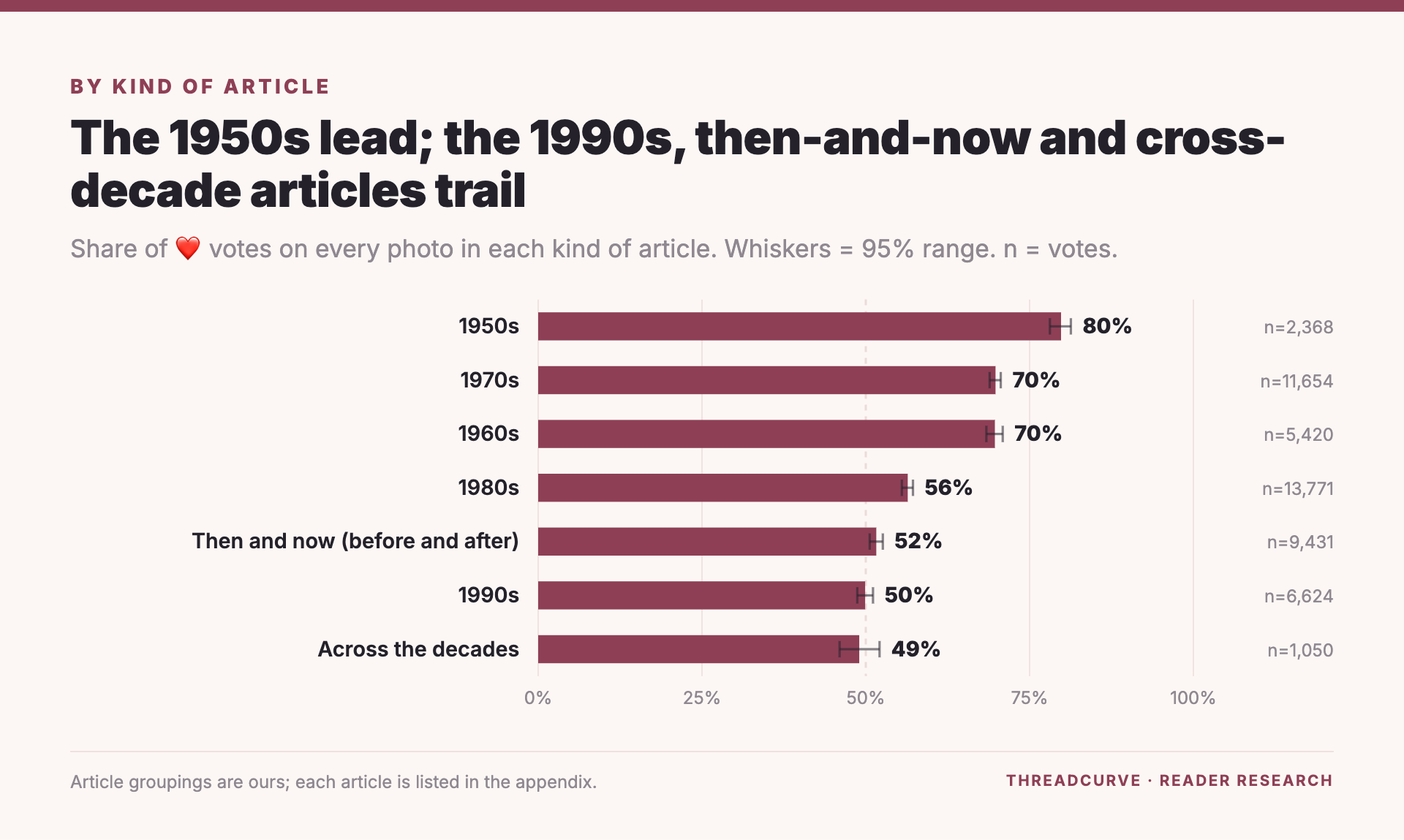
Photos in our 1950s articles drew 80% hearts. The 1960s (70%) and 1970s (70%) were level, the 1980s drew 56% and the 1990s 50%. Then-and-now articles, where each vintage look sits beside a modern one, drew 52%. The 1950s and 1990s results come from 2 articles each, so treat the order as a direction.
Knee length is the hemline readers love
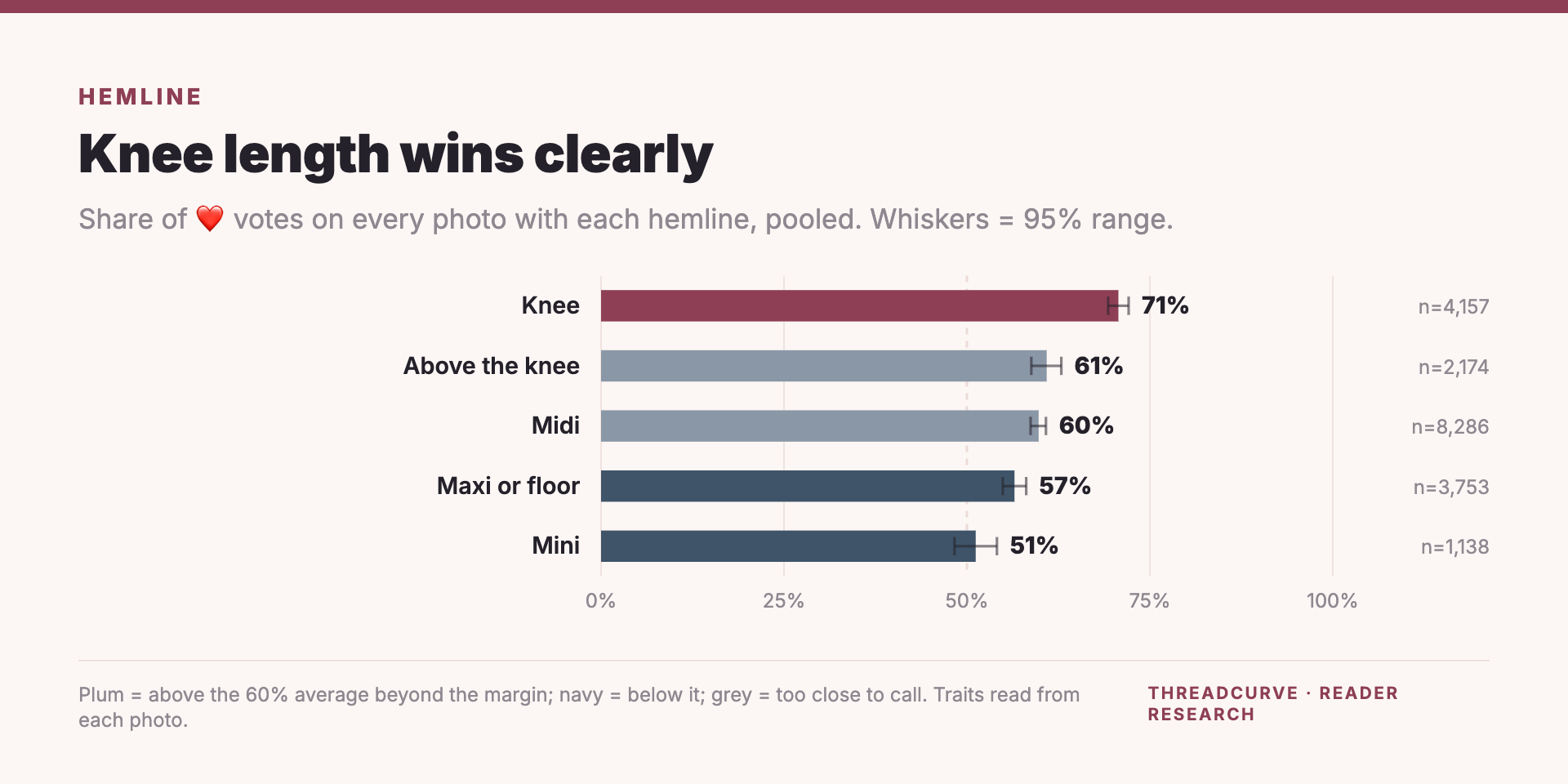
Knee-length looks drew 71%, ahead of every other hemline; above the knee drew 61%, midi 60%, maxi 57% and mini 51%. Fitted and A-line shapes beat relaxed and straight ones, and in our polls 54% pick a knee-length dress.
Office wear trailed casual and evening looks
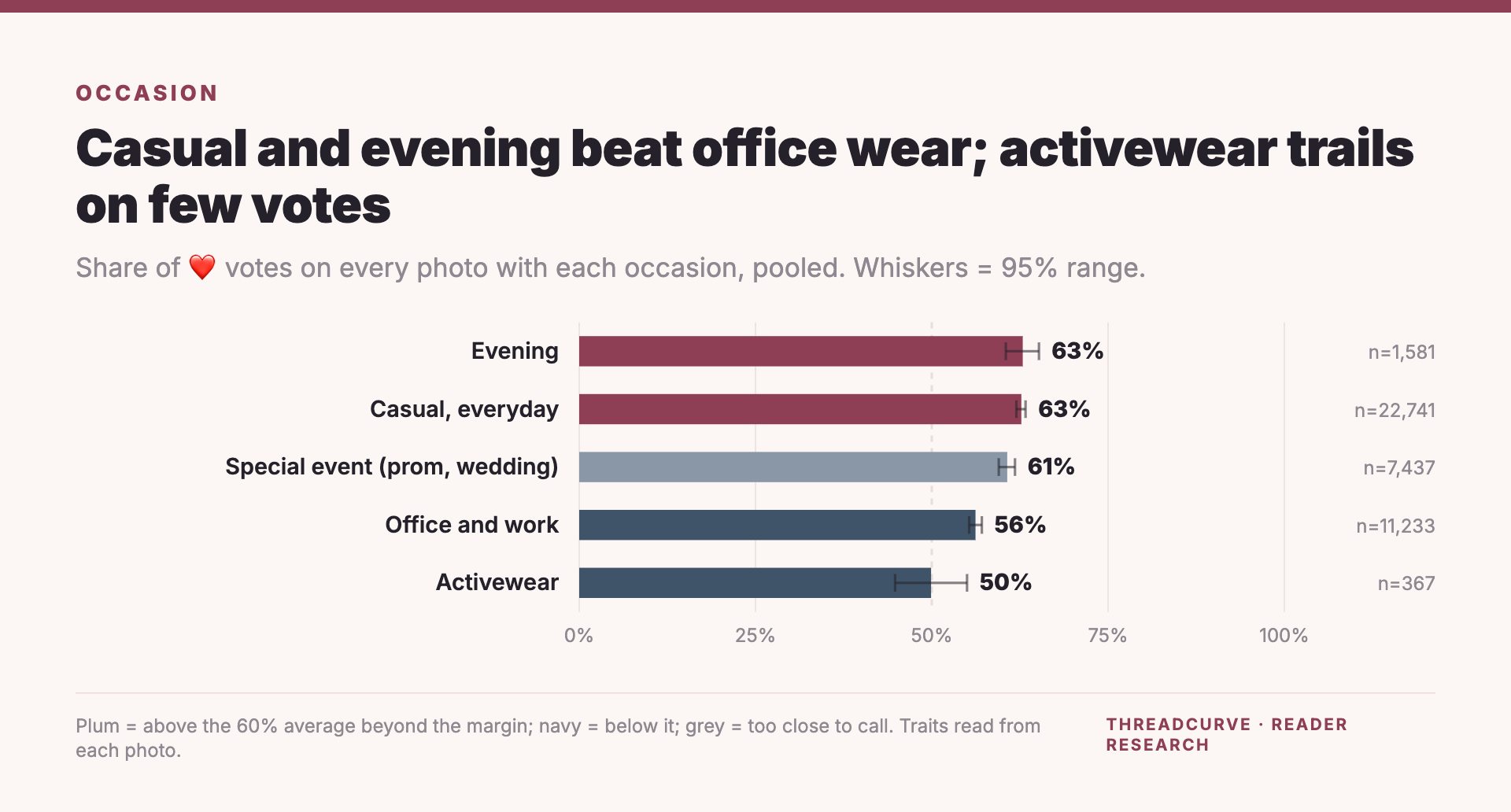
Casual looks drew 63% and evening looks 63%; office and work looks 56%. Many of the least-loved photos had exaggerated details: oversized bows and veils, wide belts, cocoon coats and low-rise office trousers. And retro is an accent for most readers: in our polls, 66% pick a timeless style as their era and 21% a retro revival.
The full report
The Vintage Fashion Report pools the photos by decade, style, occasion, garment, silhouette, hemline, fabric, print and colour, ranks the most- and least-loved looks, and adds why readers voted the way they did and 10 polls. It includes the full dataset.
Get the full report at StatwrenHow we did this
- Readers tapped a heart or a thumbs-down under each photo in 41 of our vintage-fashion articles between Aug 30, 2026 and Nov 17, 2026. One vote per reader per photo.
- Votes are anonymous: no names, emails or accounts. Readers were reacting to photos, not the garments in hand.
- Percentages are the share of hearts. Traits such as style and occasion were read from each photo; article groupings are ours.
- More on how we collect reader data: How our reader data works.