❤️ Would you like to save this?
The best thrift finds hide in plain sight. A rayon dress wedged between polyester prom gowns, a coat so sculptural it looks like it wandered off a museum mannequin. Flip the collar, read the label, and suddenly that four-dollar hanger becomes a name collectors chase at auction. The sewn-in tags below are the ones worth memorizing before your next rummage. Learn them and the racks stop being a wall of fabric. They turn into a map with a few X marks nobody else can read.
FYI, thanks to AI imagery software, we’re able to create very specific fashion and hairstyle examples to illustrate the points being made. In some cases, imagery is exaggerated to hammer home the point. Also, assume links that take you off the site are affiliate links such as links to Amazon. this means we may earn a commission if you buy something.
49. Paganne by Gene Berk, Graphic Jersey Dresses With Prints Placed Around the Body

Most people walk right past Paganne because the fabric reads as cheap polyester at a glance. Flip it inside out, read the label, look again. Gene Berk engineered these prints to land in specific places on the body, so a bold stripe or a swirl of op-art shapes breaks exactly where the hip or shoulder sits. No accident there. That’s placement printing, and it’s half the reason collectors hunt these down.
The jersey moves like liquid, forgives everything, and travels without a wrinkle. One hero print doing all the talking means the rest stays bare: gold hoops, flat bronze leather slides, nothing competing.
48. Mr. Dino, Vivid Engineered Prints That Define 1960s Resort Style
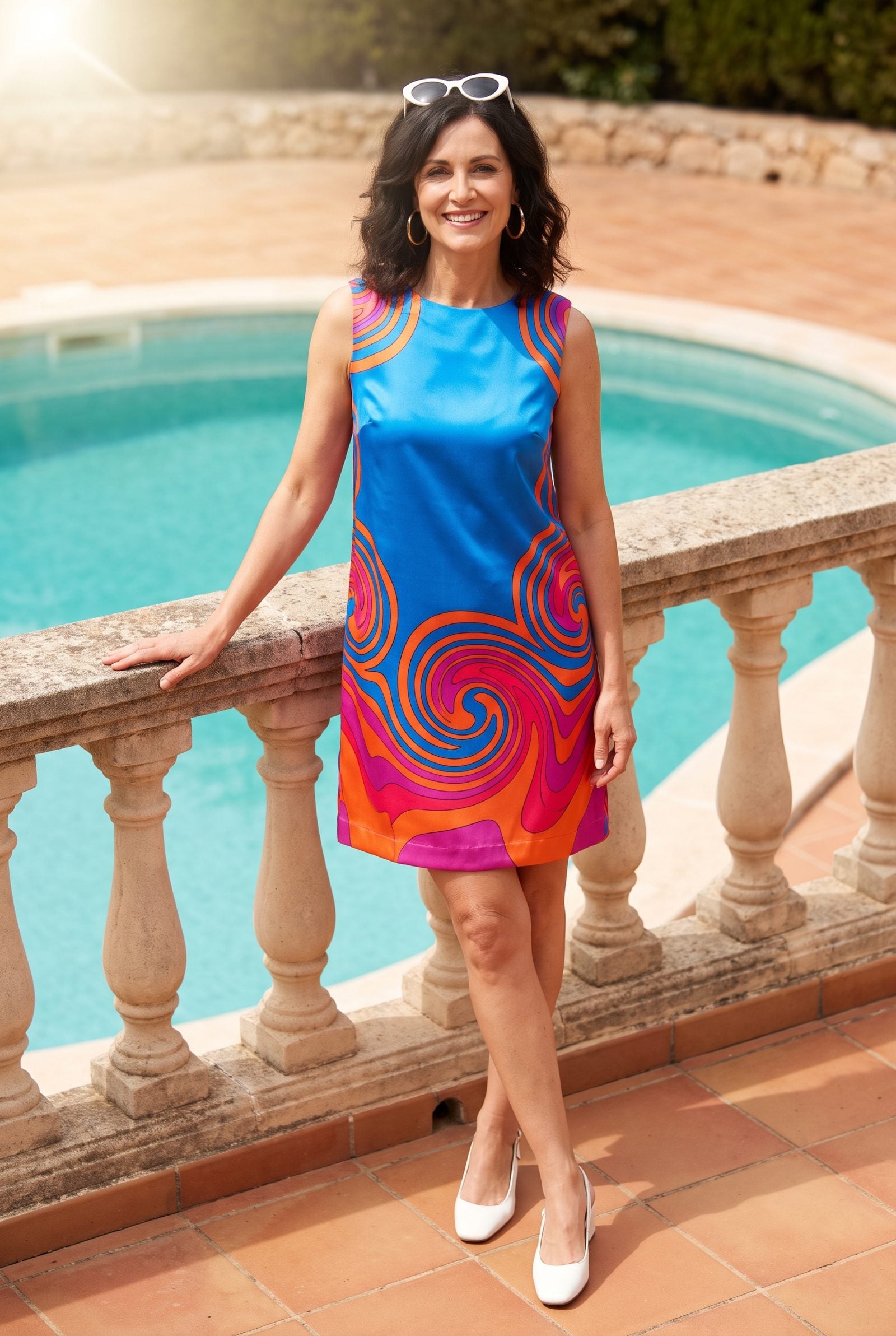
Mr. Dino made the kind of print that stops you mid-reach. Scrolls, borders, kaleidoscope swirls, all placed so the boldest color pools at the hem or frames the neckline. These were the jet-set resort dresses of the 1960s, worn poolside in Palm Springs and on cruise decks where showing up mattered.
The color commitment is the whole engine. A single one of these dresses holds a handful of saturated shades, and because they’re all cranked to the same intensity, the eye reads it as rich rather than loud. Keep accessories white and gold. A vintage accessory or two is all it needs.
47. Lilli Ann, Sculptural Midcentury Coats With Dramatic Collars
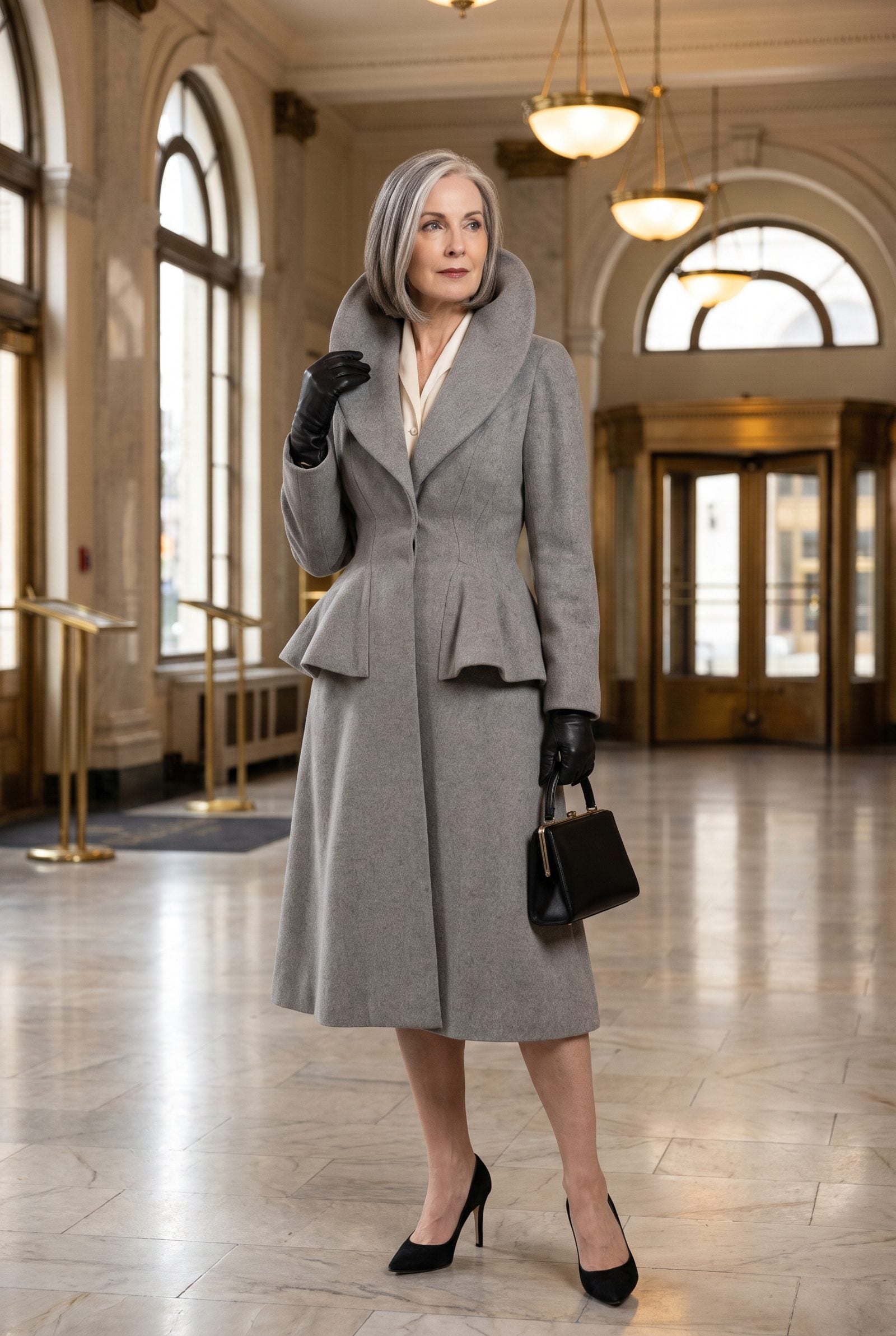
Lilli Ann coats are built like architecture. The San Francisco house went heavy on the parts other makers skimped on: the collar, the shoulder line, the sweep of a back pleat. You can spot one across a crowded rack because the silhouette holds its shape even on a sagging wire hanger.
The collar leads every time. These portrait collars rise and curl around the face so it frames you like a photograph, which is the entire point. A Lilli Ann worn over bare legs, simple black pumps and a cream silk blouse does all the work. No second statement required.
46. Suzy Perette, Paris-Inspired Party Dresses With Coveted 1950s Silhouettes
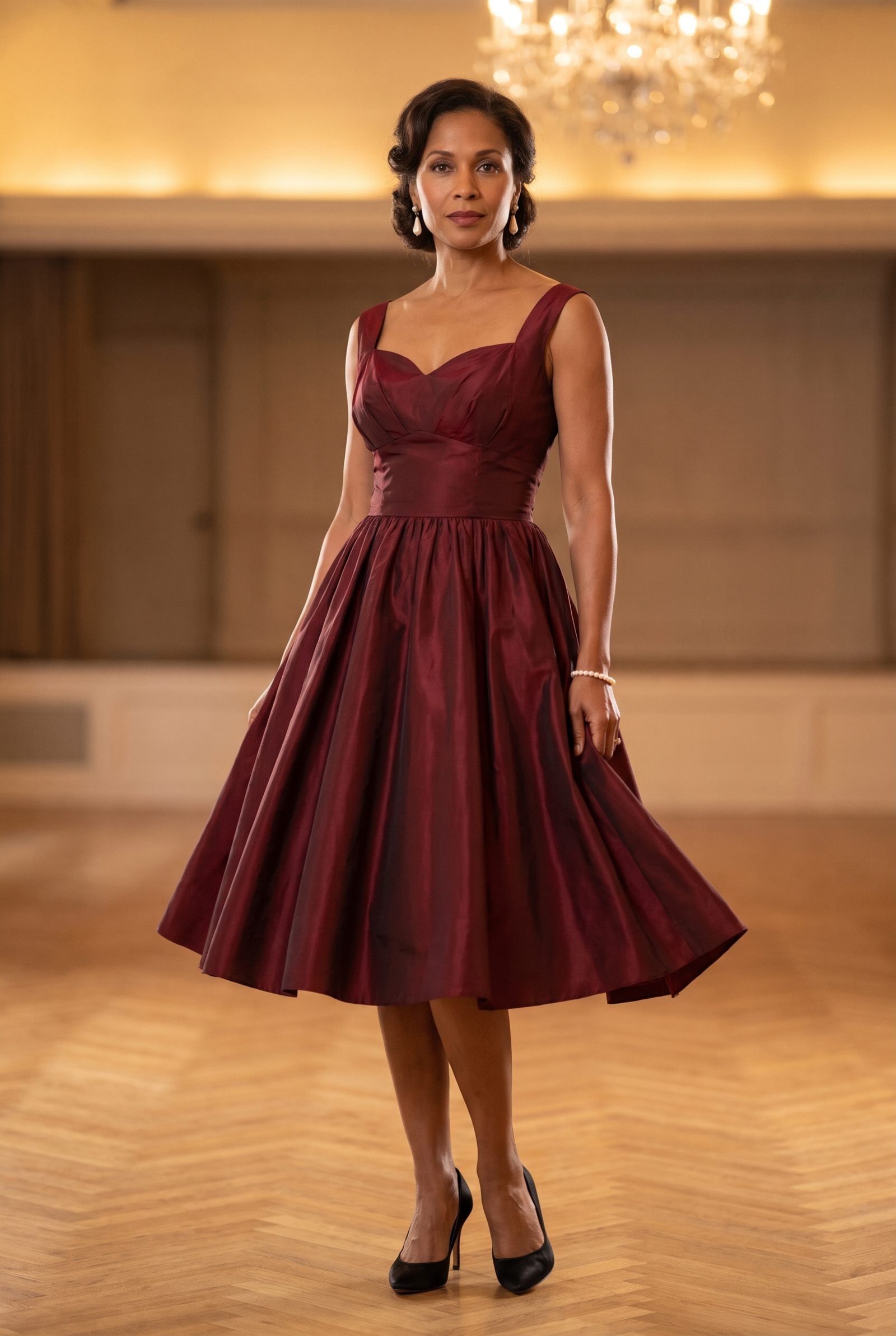
Suzy Perette built its reputation on borrowing Paris and selling it to America. These were French couture silhouettes made accessible, which means a thrifted one gives you a Dior-adjacent shape for the price of a sandwich.
What makes it sing is pure silhouette. A tiny defined waist, a full structured skirt, a bodice that holds its line against the body. Change the waist and you change how the whole figure reads, and because the skirt handles the volume, the top stays close and clean. Pearls, satin heels, done. Wear one to a wedding and you’ll be the woman three people ask about.
45. Harvey Berin by Karen Stark, Structured Occasion Dresses With Couture-Level Details
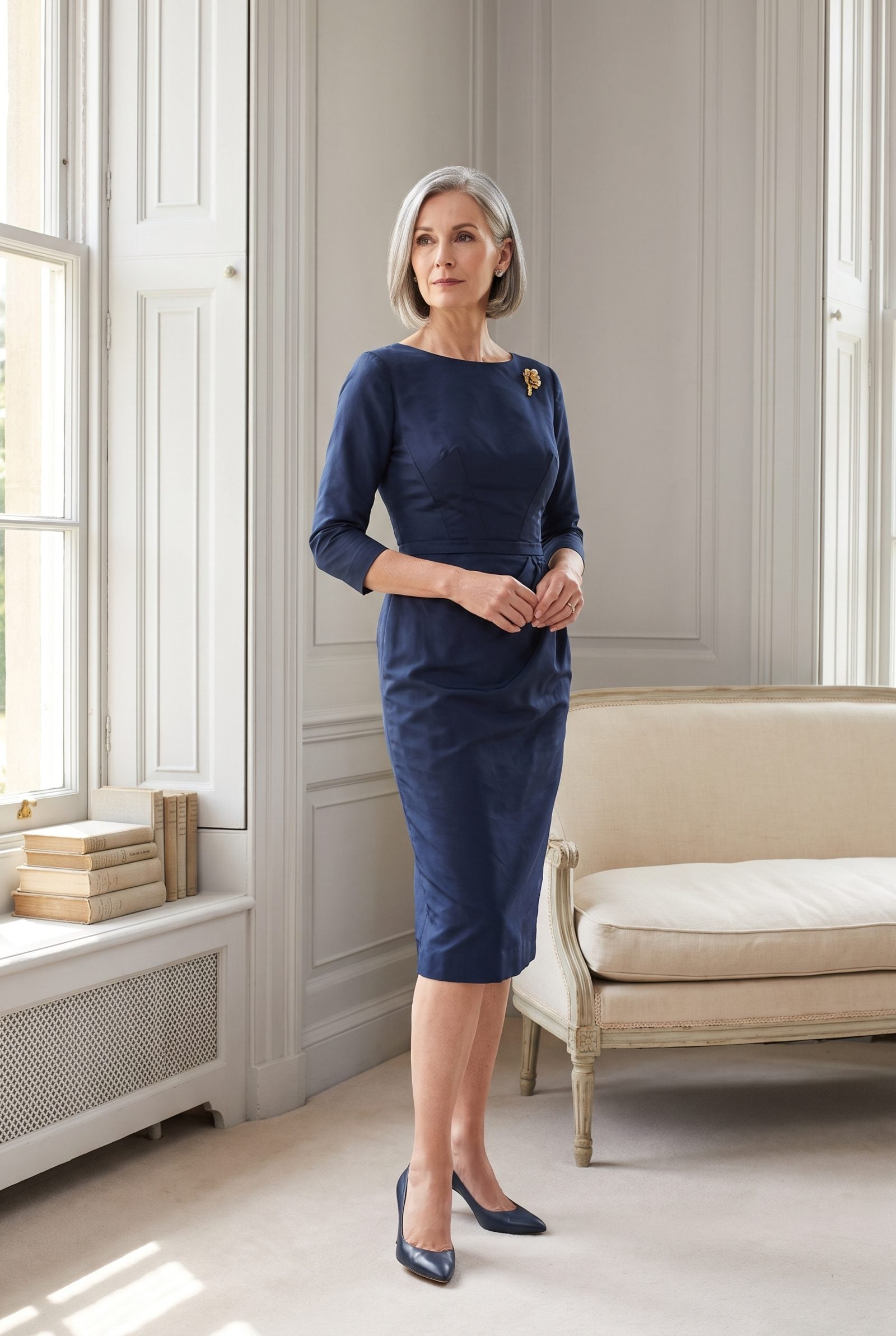
Turn a Harvey Berin inside out and you understand why collectors care. Karen Stark finished these dresses the way the couture houses did, boned bodices, hand-tacked facings, seaming that curves with the body instead of fighting it. The construction is the collectible part.
Restraint runs the styling. A dress this well-made needs nothing added, so one gold brooch at the shoulder and nothing else reads as deliberate rather than underdone. Navy silk faille over a clean navy pump, and the whole look whispers old money without a single logo.
44. Ceil Chapman, Draped Cocktail Dresses With Complex, Figure-Shaping Bodices
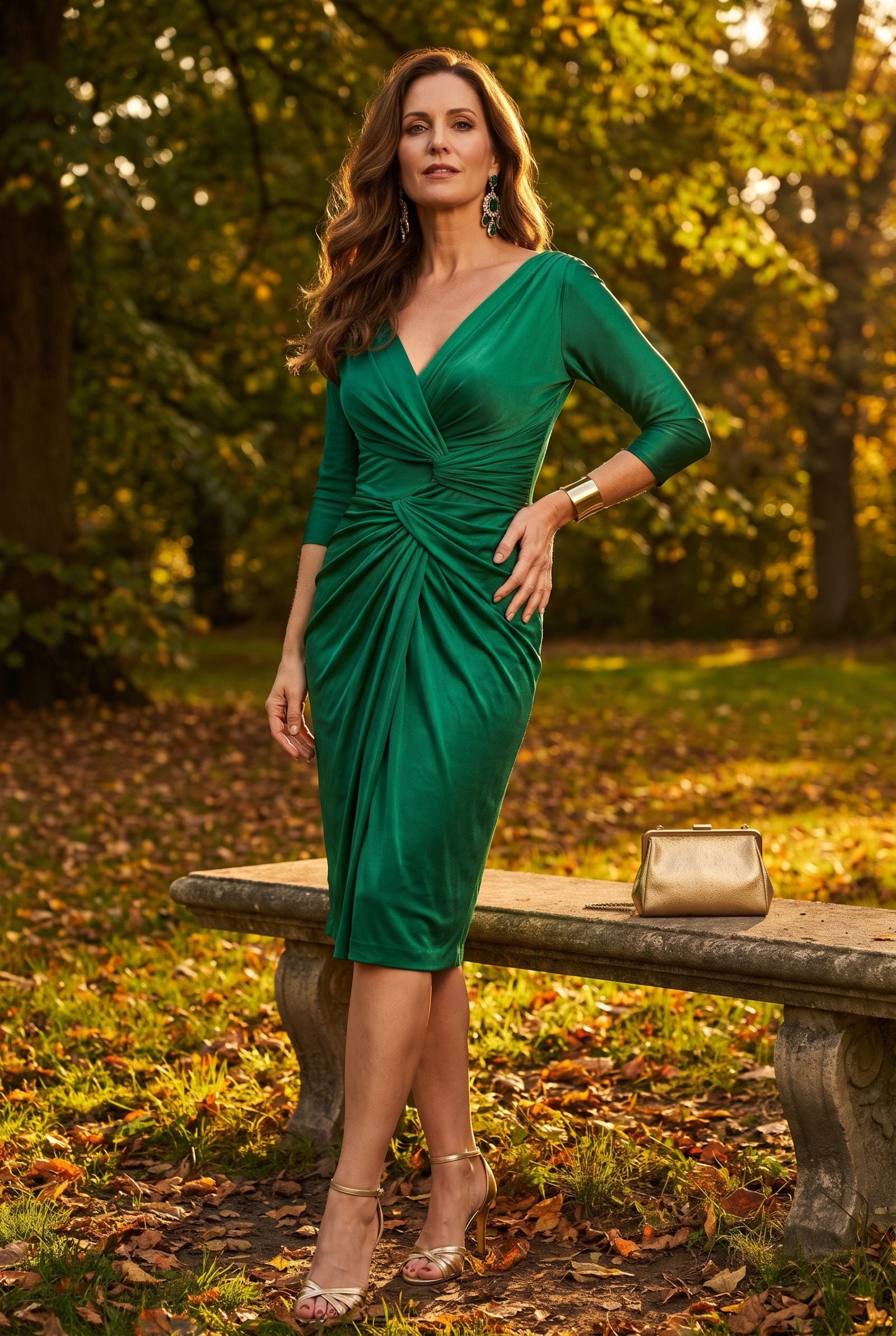
Ceil Chapman dresses look simple on the hanger and completely different on the body. The genius is in the draping, panels of silk jersey twisted and gathered across the bodice so the fabric does the shaping instead of boning or darts. Marilyn Monroe wore the label. That alone explains the auction climb.
Texture is the whole story here. Soft silk jersey gathered against itself catches light in folds, so the dress looks expensive even under bad lounge lighting. One of these needs nothing but gold at the ears and wrist. The vintage label alone is a flex among people who know.
43. Alfred Shaheen, Collectible Hawaiian Prints and Carefully Constructed Sundresses
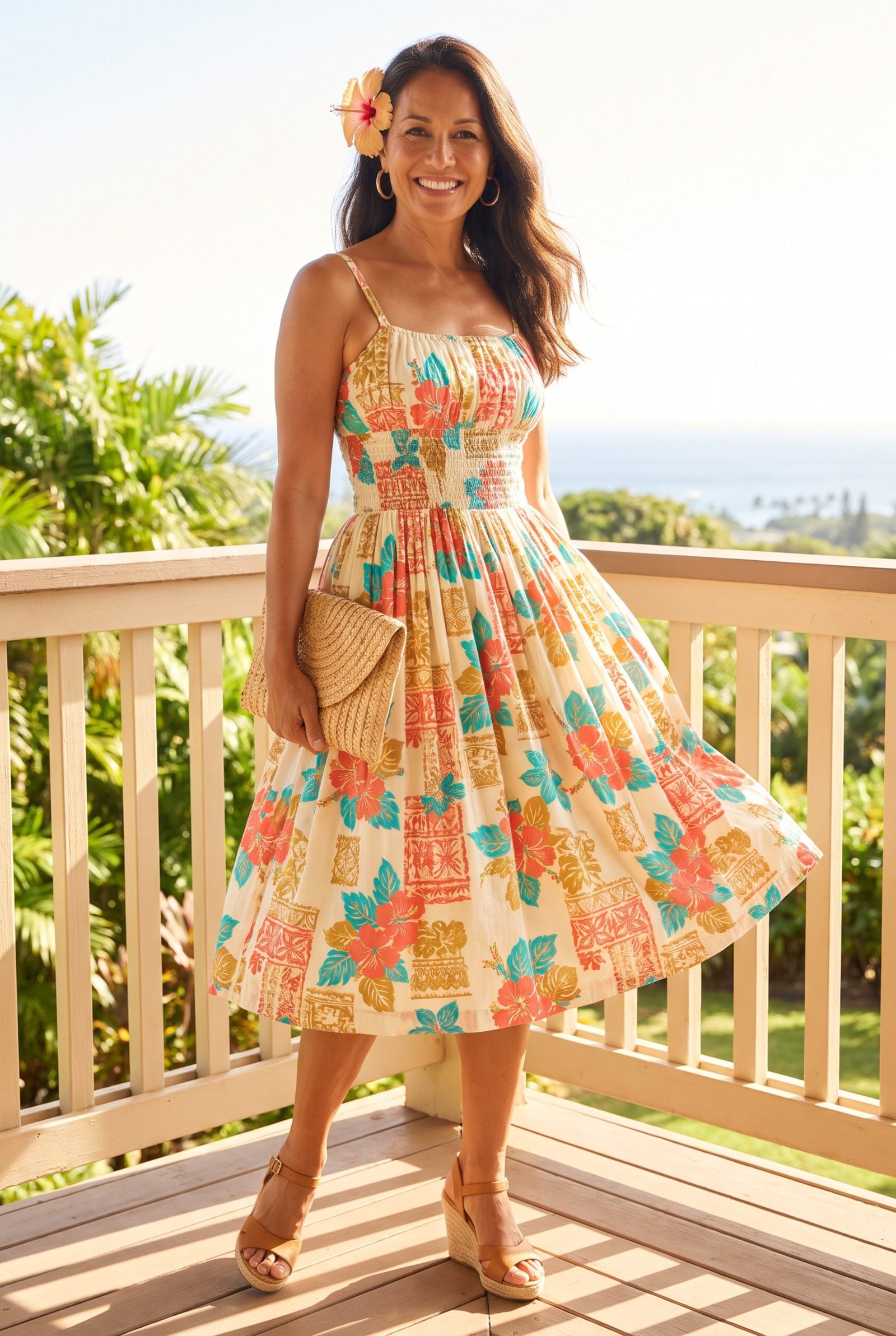
Alfred Shaheen didn’t just sell Hawaiian prints. He made them from scratch, designing the patterns, hand-screening the fabric, constructing the dresses in Hawaii. That full control is why a Shaheen sundress feels miles from the cheap tourist version. The shirring is neat, the skirt is properly full, the print is original art.
Color carries the look. Coral, turquoise, and gold at matching saturation on a cream ground reads tropical without tipping into costume. Add a raffia clutch, tan wedges, and let the print breathe.
42. Young Edwardian by Arpeja, Romantic 1970s Dresses With Prairie and Victorian Details
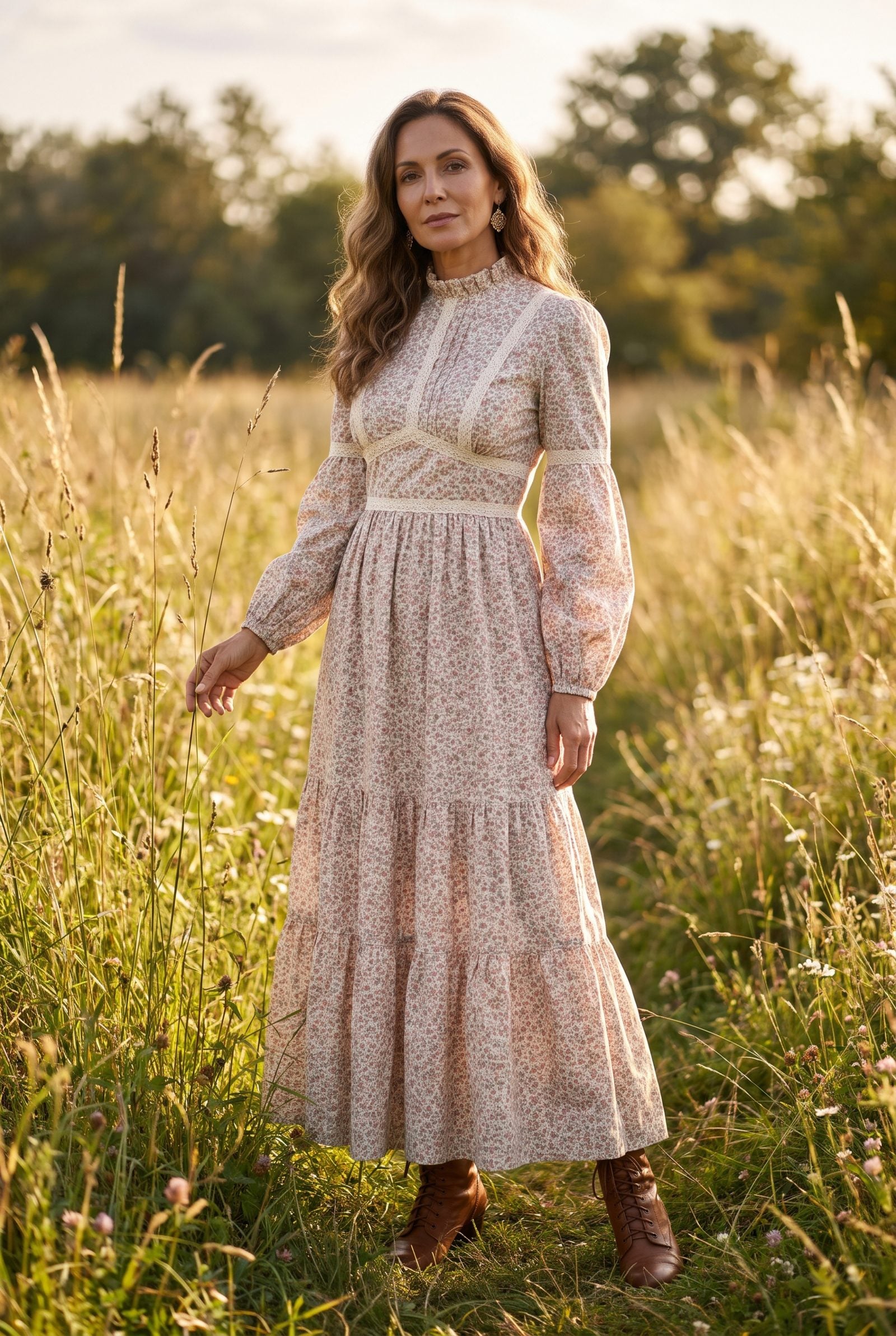
Young Edwardian captured the exact romance the 1970s went wild for: high ruffled necks, lace trim, tiered skirts, sleeves gathered at the cuff. The label leaned Victorian and prairie at once, and the ditsy florals still feel wearable instead of twee.
The finishing is the draw. A ruffled yoke, a fabric-covered button, lace at the cuff, these small touches separate a Young Edwardian from the dozen plain cotton maxis crowding it on the rack. Pair one with lace-up ankle boots and skip the matchy approach. Let the dress stay the only soft thing in the look.
41. Lanz Originals, Austrian-Inspired Dresses, Cotton Prints, and Full Skirts
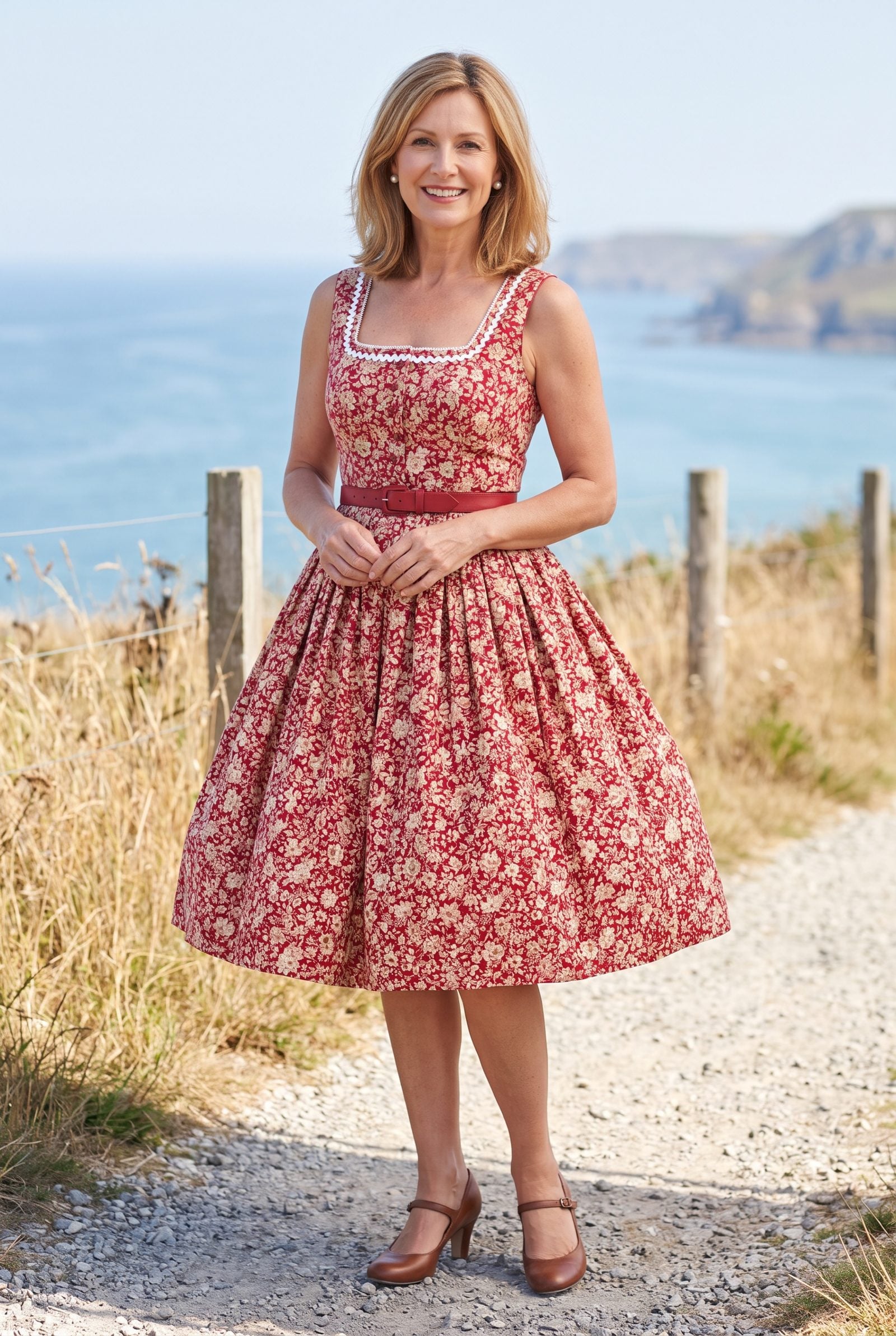
Lanz Originals brought Austrian folk charm to American closets, dirndl-style bodices, crisp cotton prints, rickrack trim, and skirts full enough to twirl. The detailing is distinctly European, which makes a Lanz instantly recognizable once you’ve handled one.
A contrast vintage belt at the waist is the move that makes the whole thing read intentional rather than folksy. Red leather against a red-and-cream print ties the bodice to the skirt so the eye travels cleanly. These wash well and hold up for decades. And they cost almost nothing at the thrift, because few shoppers recognize the name.
40. Anne Fogarty, Full-Skirted Dresses From a Defining Midcentury Designer
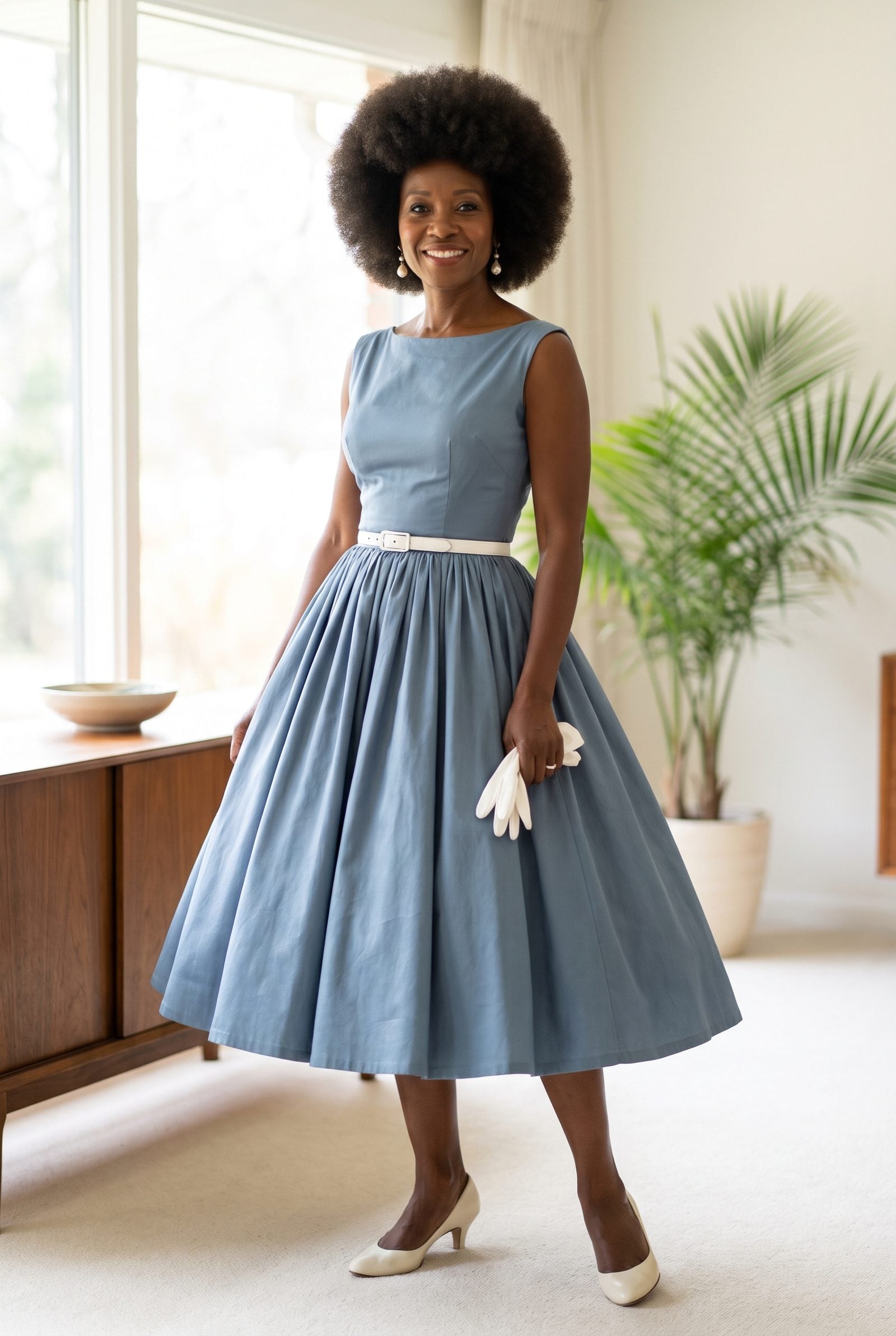
Anne Fogarty built her name on one idea done exceptionally well: the full skirt over a tiny waist. She championed the “paper doll” silhouette of the 1950s, and a surviving Fogarty dress is a lesson in how dramatic proportion used to be. The skirt runs wider than you expect, supported by crinoline, built to move.
Proportion is the point. A nipped waist against that much skirt volume reframes the whole body and pulls the eye to the smallest spot. There’s a confidence in wearing this much shape, and the dress says it for you. Keep the top half simple, add gloves if you’re feeling it, and let the silhouette do what it was designed to do.
39. Tina Leser: Textile-Rich Resortwear Pulled From the World’s Design Traditions
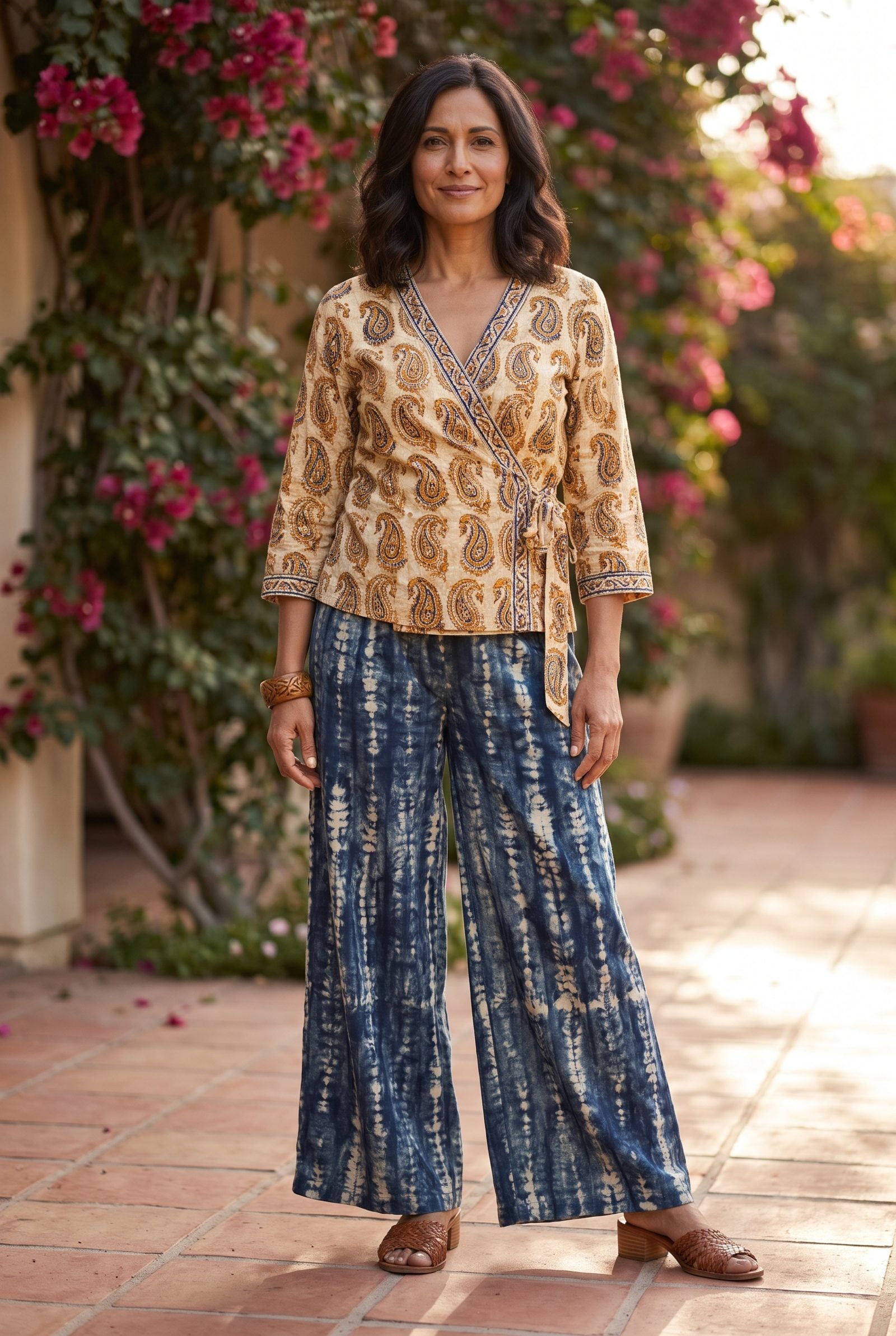
Tina Leser traveled, and she brought the fabric home with her. Hand-blocked Indian cotton, Japanese prints, Hawaiian motifs — she wove them into resortwear that looked nothing like the buttoned-up American closet of its day. This was the 1940s, and she was already pulling from design traditions most of her peers had never seen in person. The results were loose, saturated, built for heat and sun and lounging. Wrap-front tops, palazzo trousers, batik on cream. Collectors prize her pieces now because the prints were genuinely sourced, not faked up in a New York studio from a reference book. If you ever spot a Leser caftan or a pair of her wide printed trousers at a vintage fair, the slub of the cotton gives it away before the label does.
38. Carolyn Schnurer: Playful Resort Separates and Printed Cotton That Still Feels Young
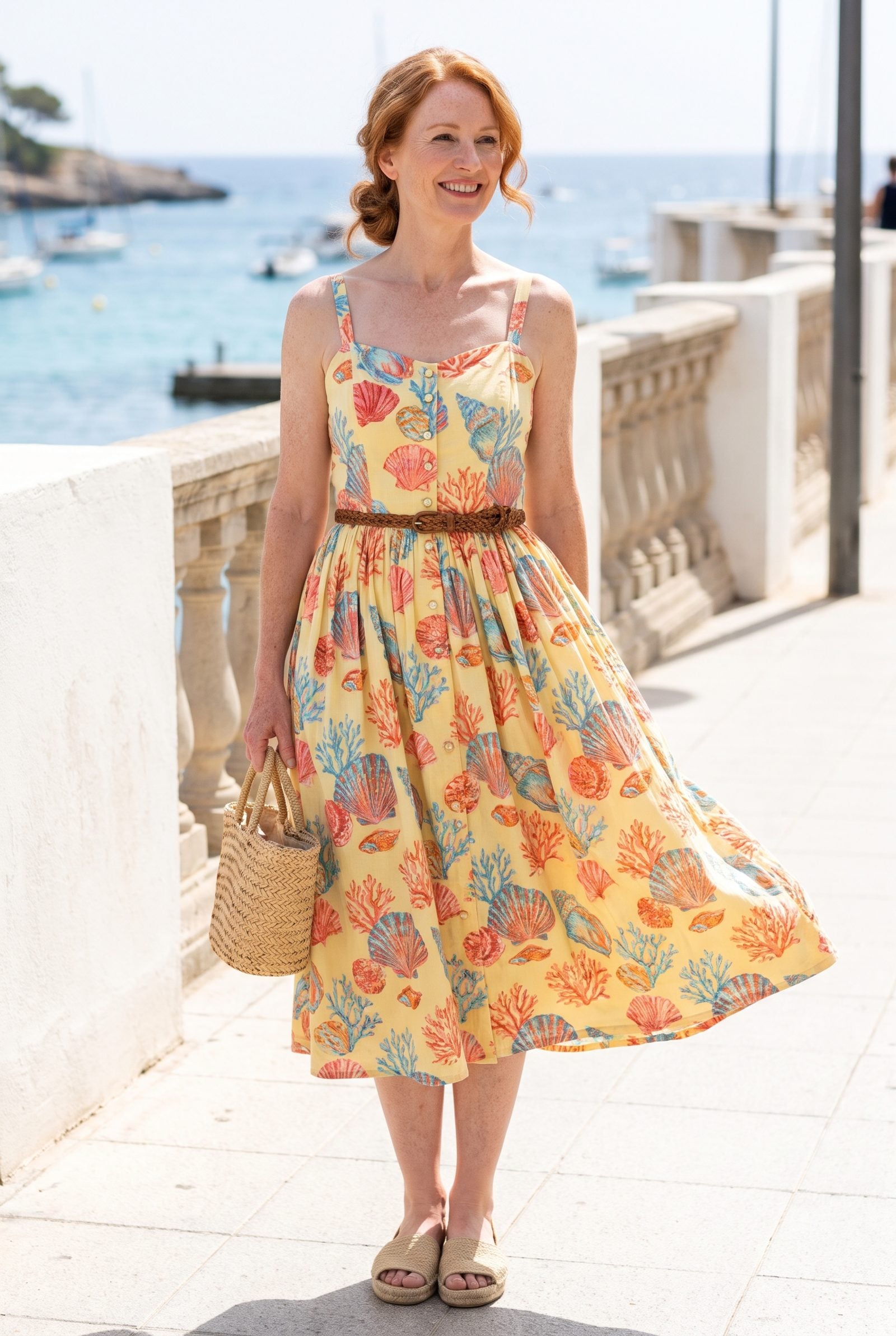
Some vintage reads as costume the second you put it on. Schnurer doesn’t. Her 1950s resort separates and printed sundresses have a lightness that refuses to age — seashell prints on buttery yellow, fitted bodices over gathered skirts, the kind of thing you’d actually wear to a cookout without feeling like you’re in a theme. She borrowed prints and silhouettes from her travels too, folding in details she’d picked up abroad and translating them into cheerful, wearable cotton. The craftsmanship holds up: tiny self-covered buttons down the bodice, crisp weaves that have survived seventy years of someone’s attic. That’s the thing about her work. It was built to be fun and it still is.
37. Malcolm Starr: Embellished Caftans and Eveningwear That Walk Into a Room First
❤️ Would you like to save this?
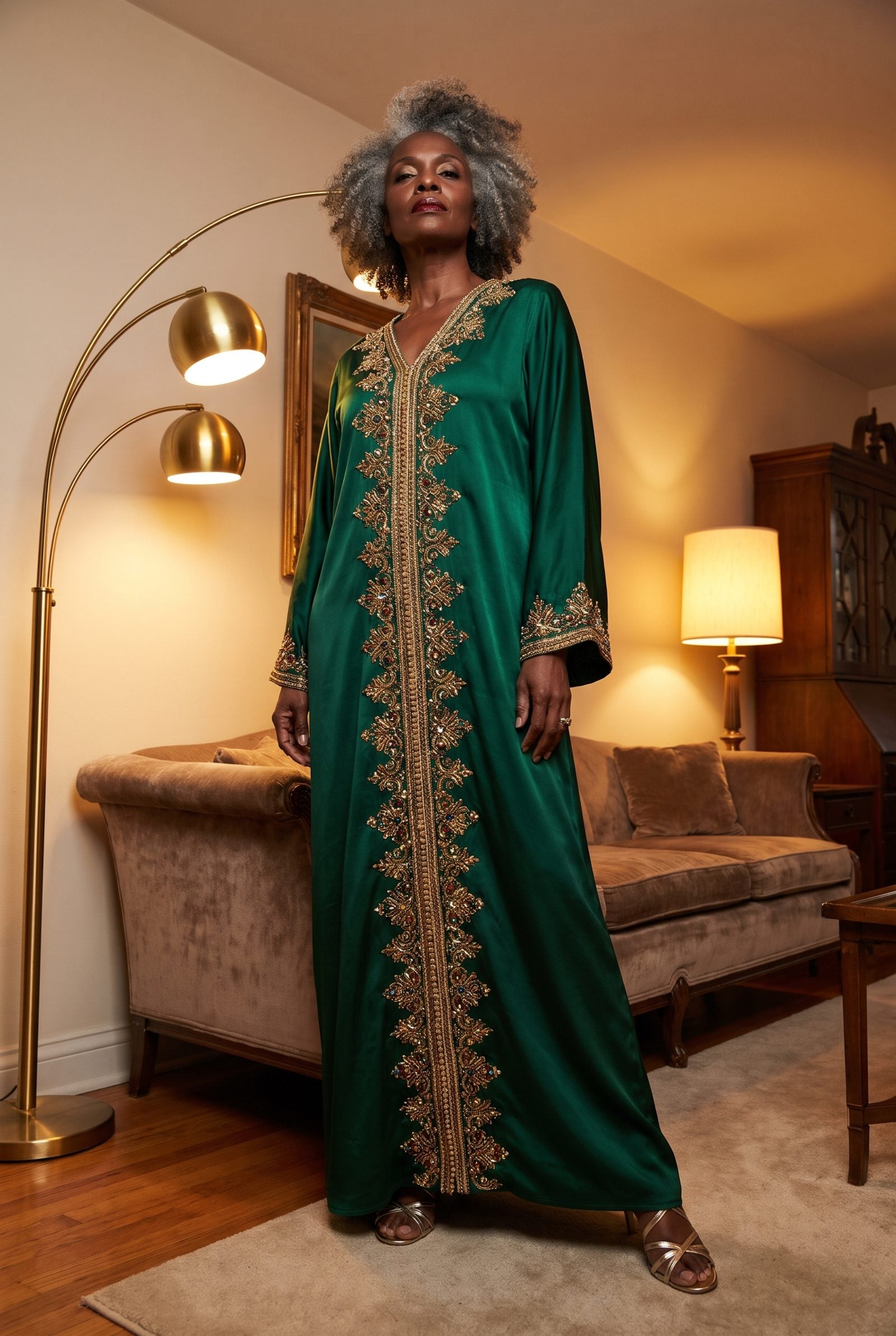
A Malcolm Starr caftan arrives before you do. That’s not a complaint — it’s the entire point of the thing. Deep emerald silk falling in fluid columns, beaded and sequined embroidery running down the center front and across the cuffs in gold and jewel tones, all of it done by hand. Starr made eveningwear through the 1960s and 70s for women who wanted drama without squeezing into something. These pieces gave you ease and spectacle at once, which is harder to pull off than it sounds. The beadwork is what collectors chase now. You can feel the weight of it, the hours that went into each panel, and no machine ever quite replicated that density of hand-applied glitter catching lamplight across a room.
36. Claire McCardell for Townley: The American Sportswear Hanging in Actual Museums

Claire McCardell basically invented the way American women dress for real life, and museums have the receipts — the Met has held her work for decades. She designed for Townley through the 1940s and 50s, and her obsession was function: deep pockets long before womenswear bothered with them, wrap dresses you could adjust yourself, wool jersey that moved. The spaghetti-tie belt is her signature, the thing you knot twice and forget about. What makes a McCardell piece worth hunting is that none of it has dated. A natural wool jersey wrap with raglan sleeves and that casual oatmeal drape would read as quietly expensive in any loft today. She wasn’t making fashion, exactly. She was making clothes that worked, and the working is why they lasted.
35. Bonnie Cashin for Sills: Outerwear With Hardware That Changed How Coats Close
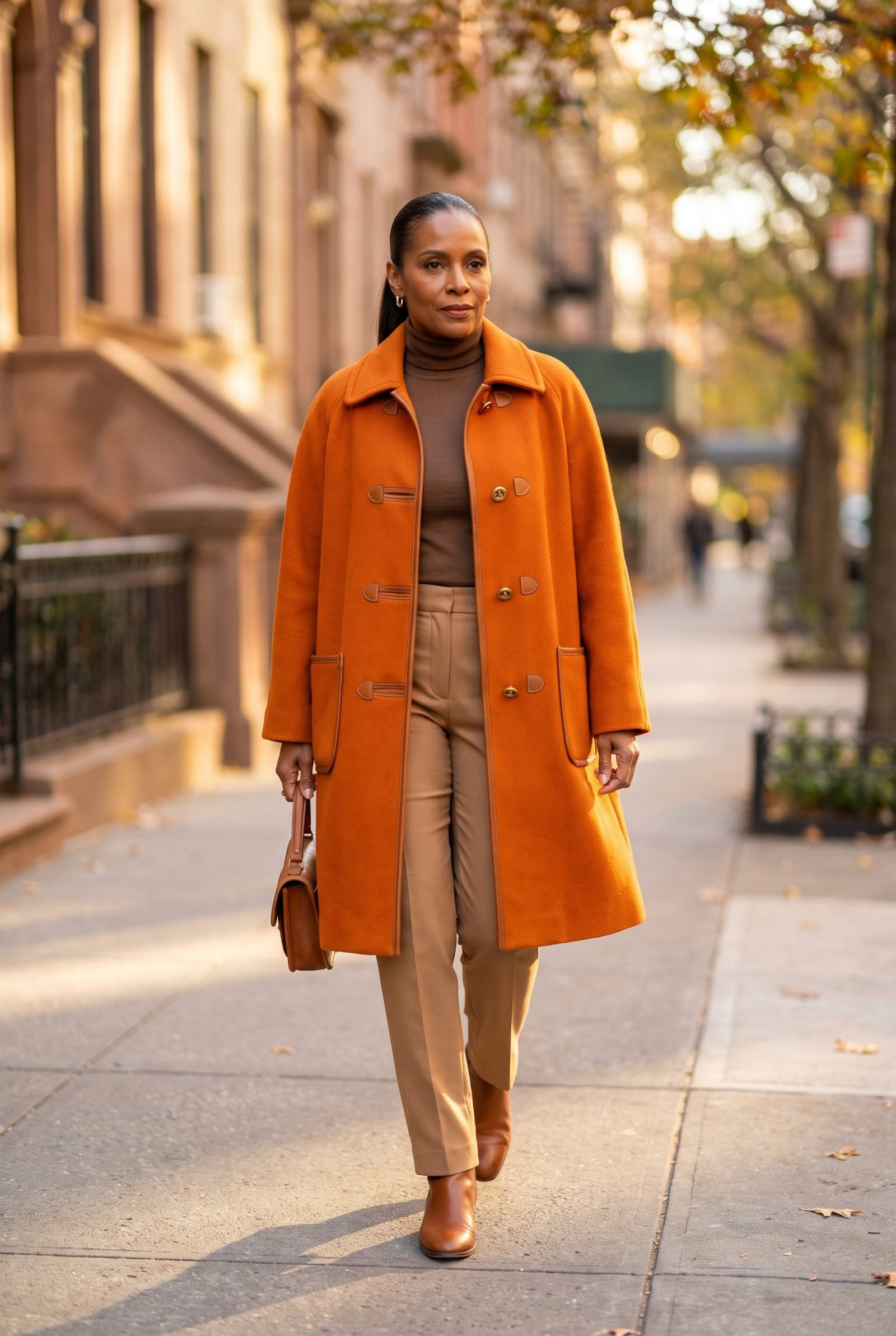
You know a Bonnie Cashin coat by its hardware. Those industrial brass turn-locks — she lifted them straight off the latches used on convertible car tops, and once you’ve seen one you can’t unsee them on every designer bag that copied the idea later. Working with Sills, Cashin built outerwear around leather binding, patch pockets, and boiled wool in colors like pumpkin and cognac. Practical, layered, made to be lived in. Her whole philosophy was clothing as a kit, pieces that worked together and let you move. The turn-lock closure alone cemented her influence; look at how many coats and totes still close that exact way. A Cashin for Sills piece in good shape is a genuine find, hardware intact and all.
34. Hattie Carnegie: Dresses, Suits, and Costume Jewelry From a House That Trained Everyone
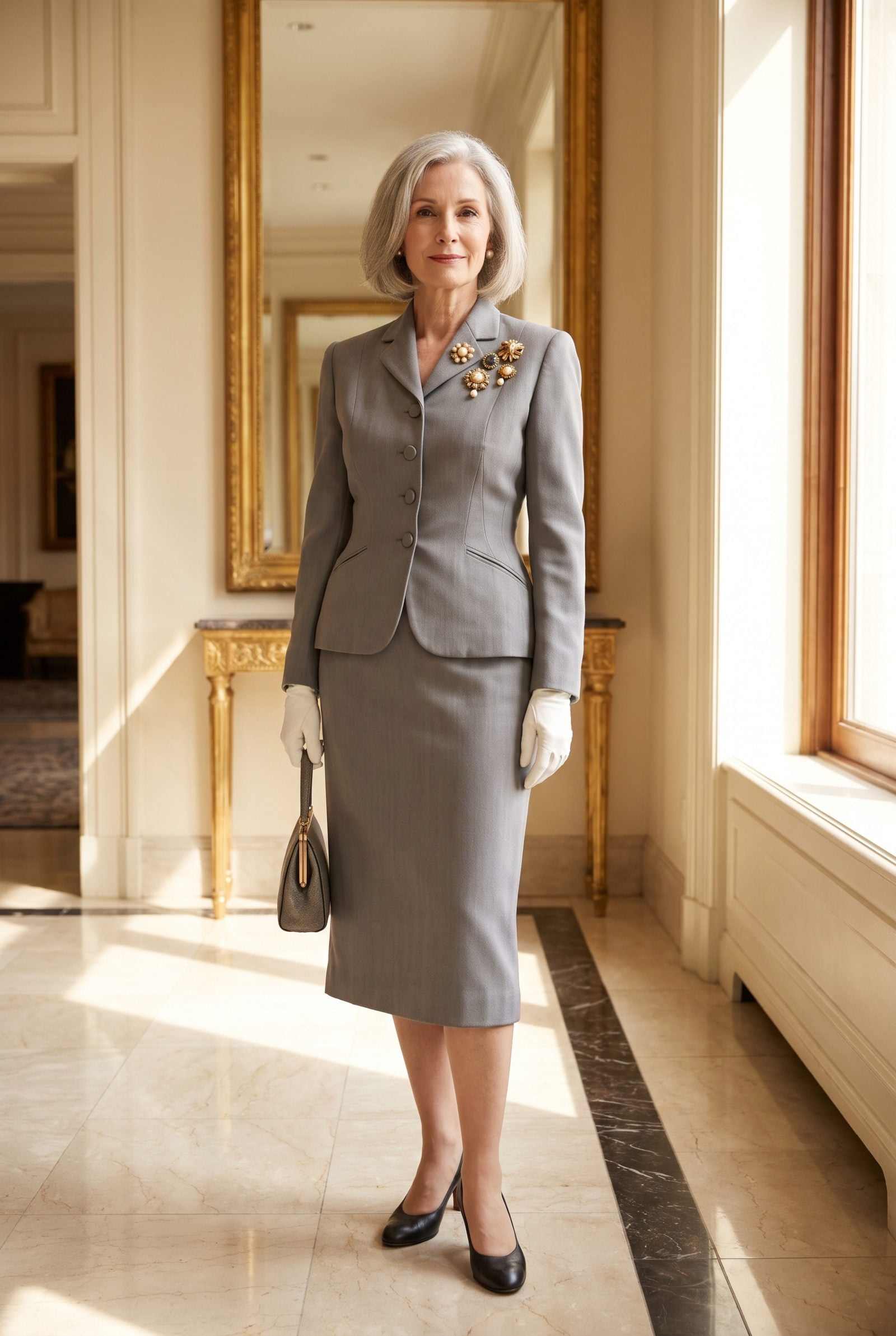
Hattie Carnegie never actually designed a dress. She couldn’t sew. What she could do was run a house that turned out impeccable suits, dresses, and costume jewelry while training half the names that would define American fashion — Norell, McCardell, Galanos all passed through her orbit. Her own clothes carried the look of the 1940s: nipped waists, structured shoulders, dove grey gabardine cut with real precision. The costume jewelry is what turns up most often now, gold-tone brooches clustered with faux pearls and colored glass, and it’s good enough that it holds value on its own. Think of the Carnegie name less as a single designer and more as a finishing school with a storefront. If you find a piece, you’re holding a sliver of the whole mid-century lineage.
33. Norman Norell: Sequined Eveningwear and Tailoring Collectors Chase to This Day
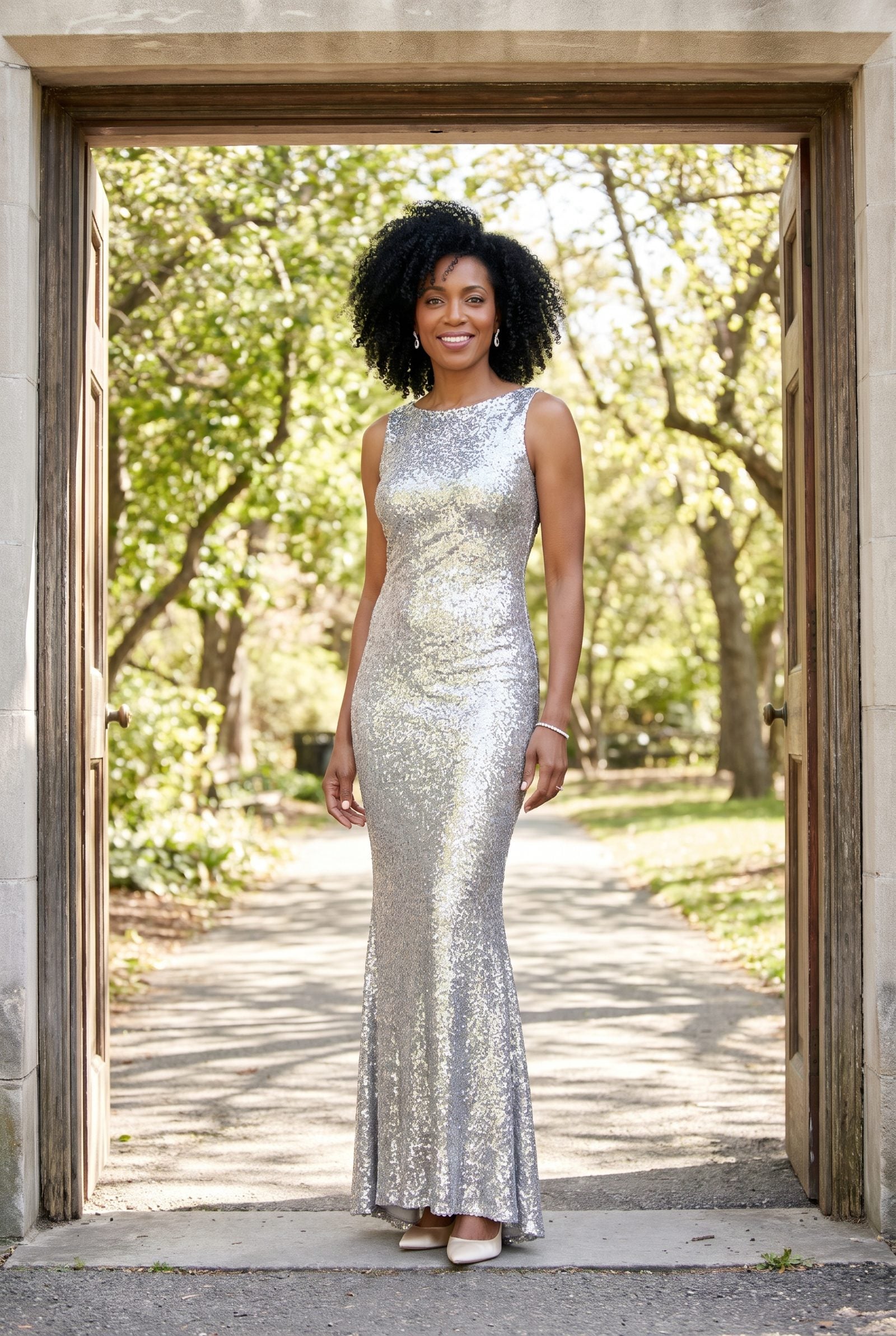
Norell’s sequined mermaid gowns are the pieces collectors still chase hardest. Hand-sewn silver sequins over silk jersey, a sleeveless column that skims the body to the ankle and scatters light from every angle — people called them fish-scale dresses, and the nickname stuck because that’s exactly what they do. But the sequins are only half his story. Norell was a tailor first, and his coats and suits have a cut so clean they read as modern against almost anything in a shop today. He trained under Hattie Carnegie, then built a reputation for making American eveningwear that could stand beside Paris couture without apologizing. The construction is why prices stay high. Every sequin is attached by hand, and you can see the labor the moment the light hits.
32. Galanos: Hand-Finished Evening Dresses With Couture-Caliber Guts Inside
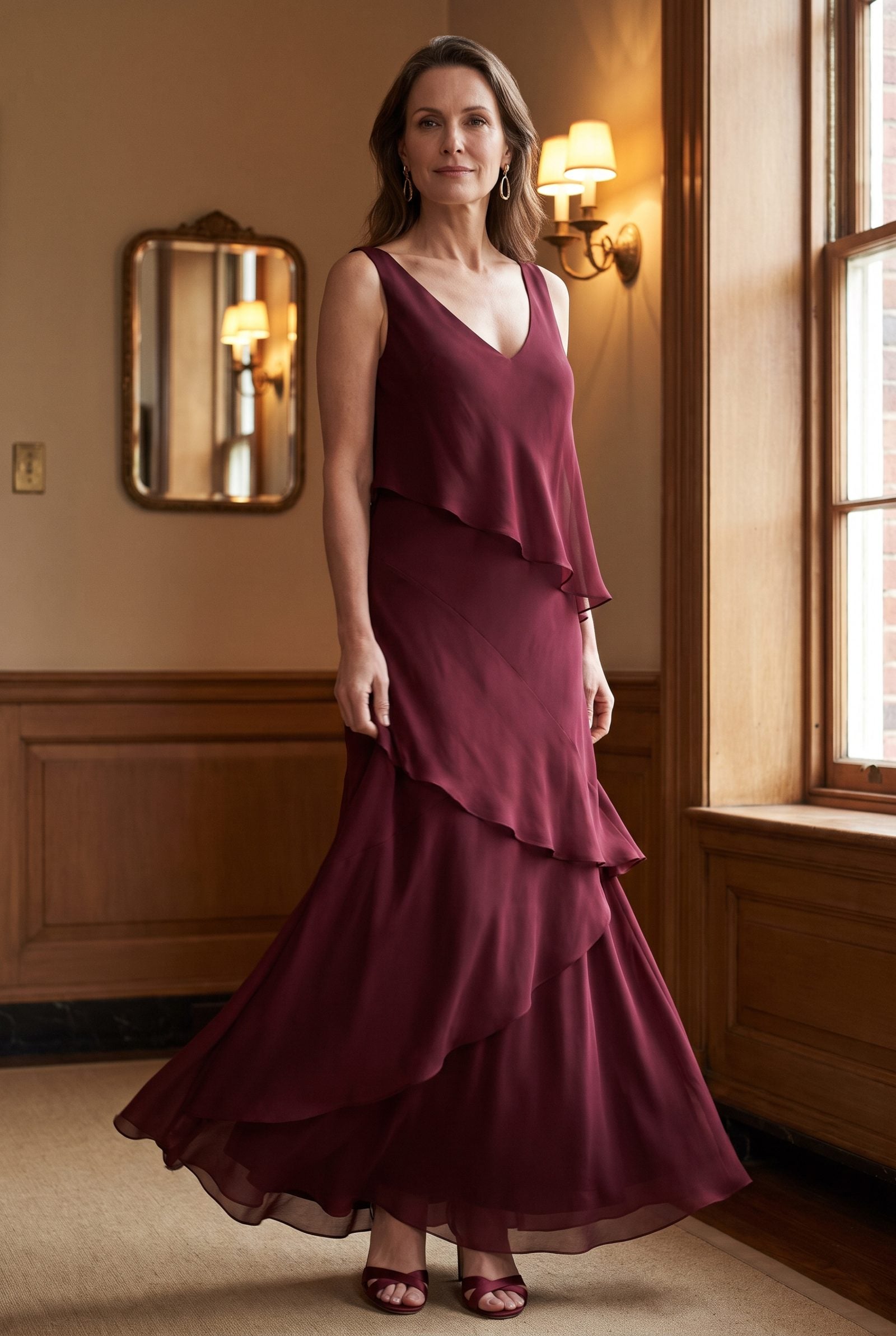
James Galanos built his dresses like couture, inside and out. The outside is bias-cut burgundy chiffon that floats and clings as you move, a softly draped neckline, a hem rolled by hand. The inside is where the real story hides — seams finished with a care nobody was ever meant to see, construction that let the chiffon hang flawlessly through the bodice without a single bit of strain. He worked on the West Coast, away from the New York machine, and he refused to compromise on any of it, which is partly why a Galanos gown cost what a Paris dress cost. Collectors who turn one inside out tend to go quiet. The guts are the whole argument. That’s the part the photographs can never quite show you.
31. Rudi Gernreich: Experimental Sixties and Seventies Pieces That Rewrote the Rules
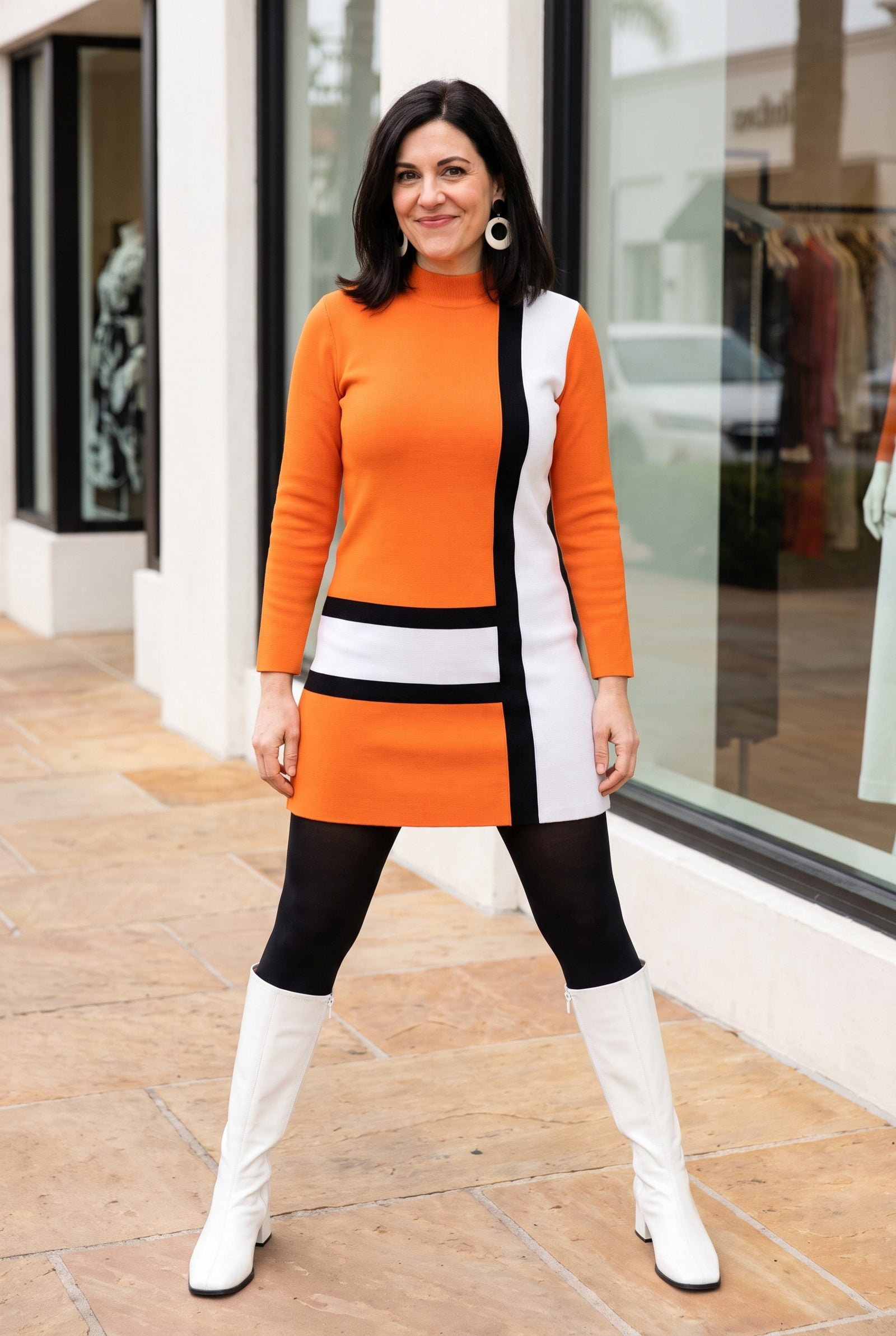
Gernreich wanted to blow the whole thing up, and he mostly did. He’s remembered for the topless monokini, sure, but that headline undersells a career spent questioning what clothes were even for. His color-blocked knit minis — bold geometric panels of tangerine, white, and black, mock necks, clean A-line cuts — look like they walked out of a design manifesto, because in a way they did. He paired them with go-go boots and opaque tights and dared you to call it too much. Gernreich thought about bodies and freedom and the politics of what we put on them, decades before anyone else was framing fashion that way. His pieces are scarce and genuinely collectible. Owning one feels less like wearing vintage and more like holding onto an argument someone was brave enough to make out loud.
30. Stephen Burrows: Color-Blocked Jersey and the Lettuce Edge You’d Know Anywhere
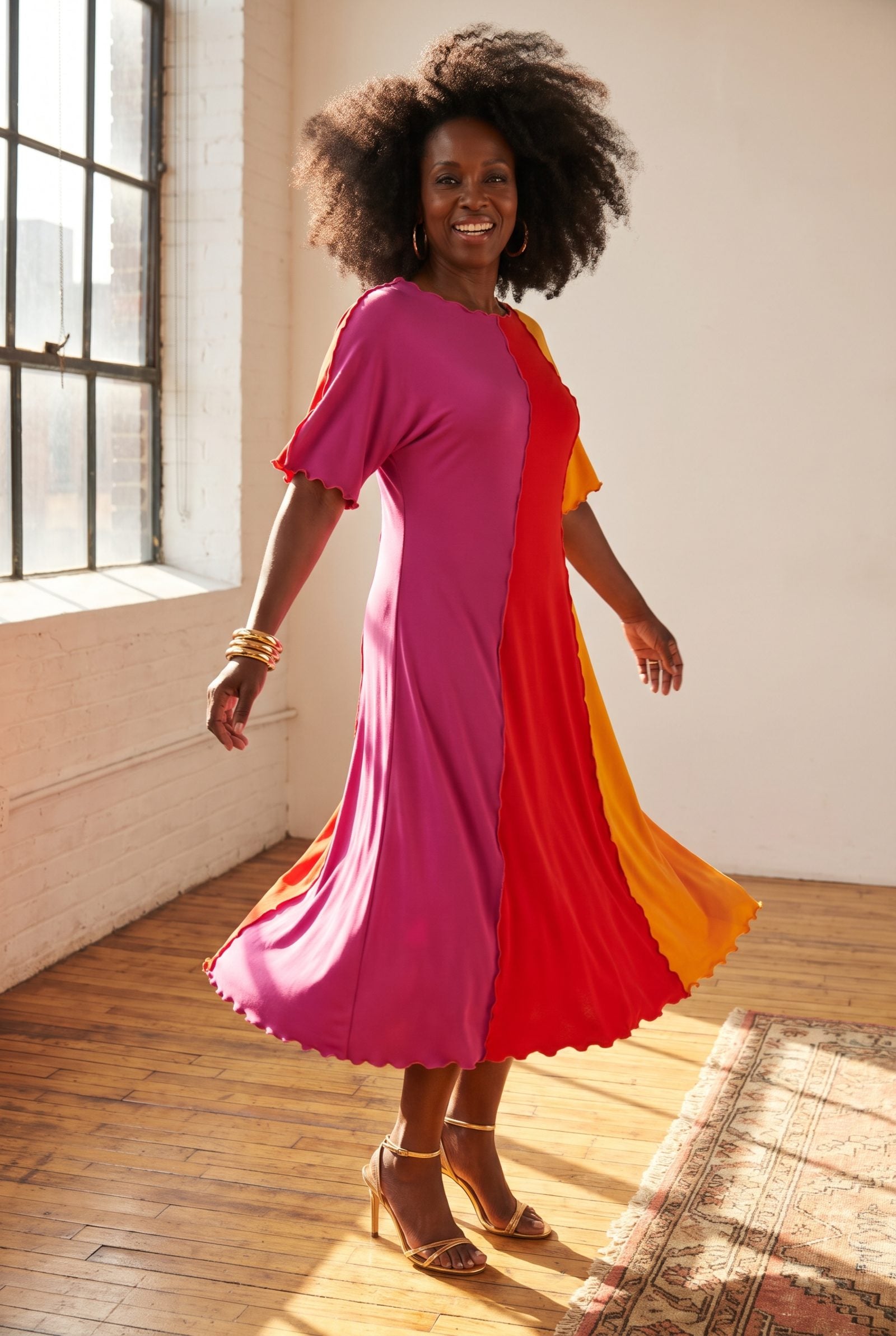
The lettuce edge gives it away every time. That rippling, fluttering finish along a neckline or hem — Burrows made it his, and you can spot one of his pieces across a crowded room because of it. He worked in matte jersey, color-blocking fuchsia against scarlet against amber, cutting dresses that clung and swirled and moved like they were part of the dancing. Which they often were; he dressed the Studio 54 crowd and was one of the first Black American designers to break into the top tier of New York fashion, showing in Versailles in 1973 alongside the French greats. His jersey had joy built into it. You can’t stand still in a Burrows dress — the fabric won’t let you, and honestly, why would you want to.
29. WilliWear by Willi Smith, Energetic 1980s Sportswear With Art and Streetwear Connections
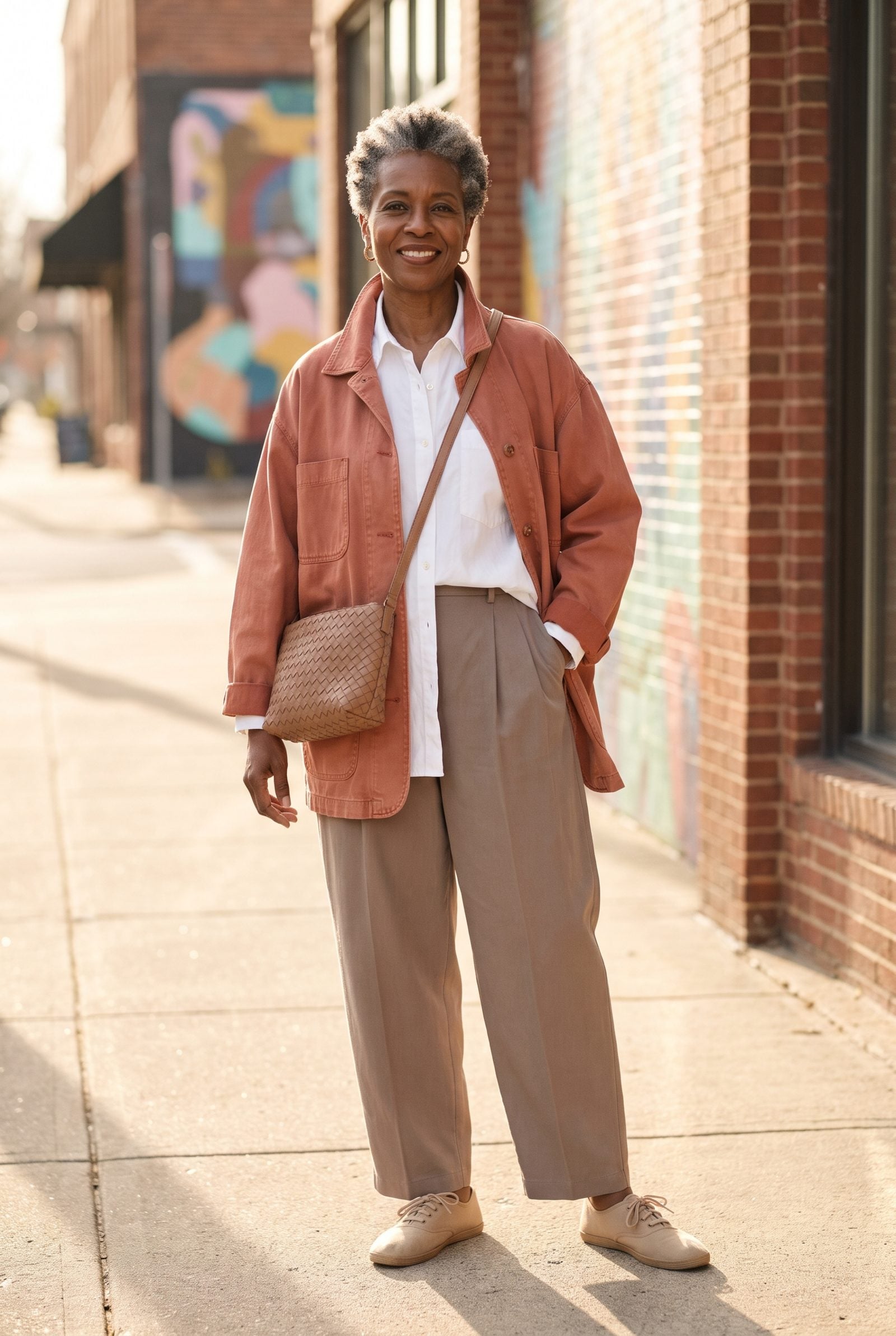
Willi Smith built clothes for the street before the fashion world would admit the street mattered. His WilliWear label launched in 1976 and roared through the 1980s, mixing oversized cotton separates with collaborations across art, architecture, and performance. That cross-pollination is exactly what makes a rack find worth grabbing.
The terracotta jacket is the engine of the look. Its dropped shoulder and roomy sleeve set a relaxed proportion that the pleated trousers echo, and loose over loose should read sloppy — it doesn’t, because the washed cotton holds just enough body.
Check the sewn label. Smith was one of the most commercially successful Black designers of his generation, and his pieces carry that history. For resale, condition and an intact interior tag do most of the work.
28. Koos Van Den Akker, Collage-Like Patchwork Garments That Turn Textiles Into Art
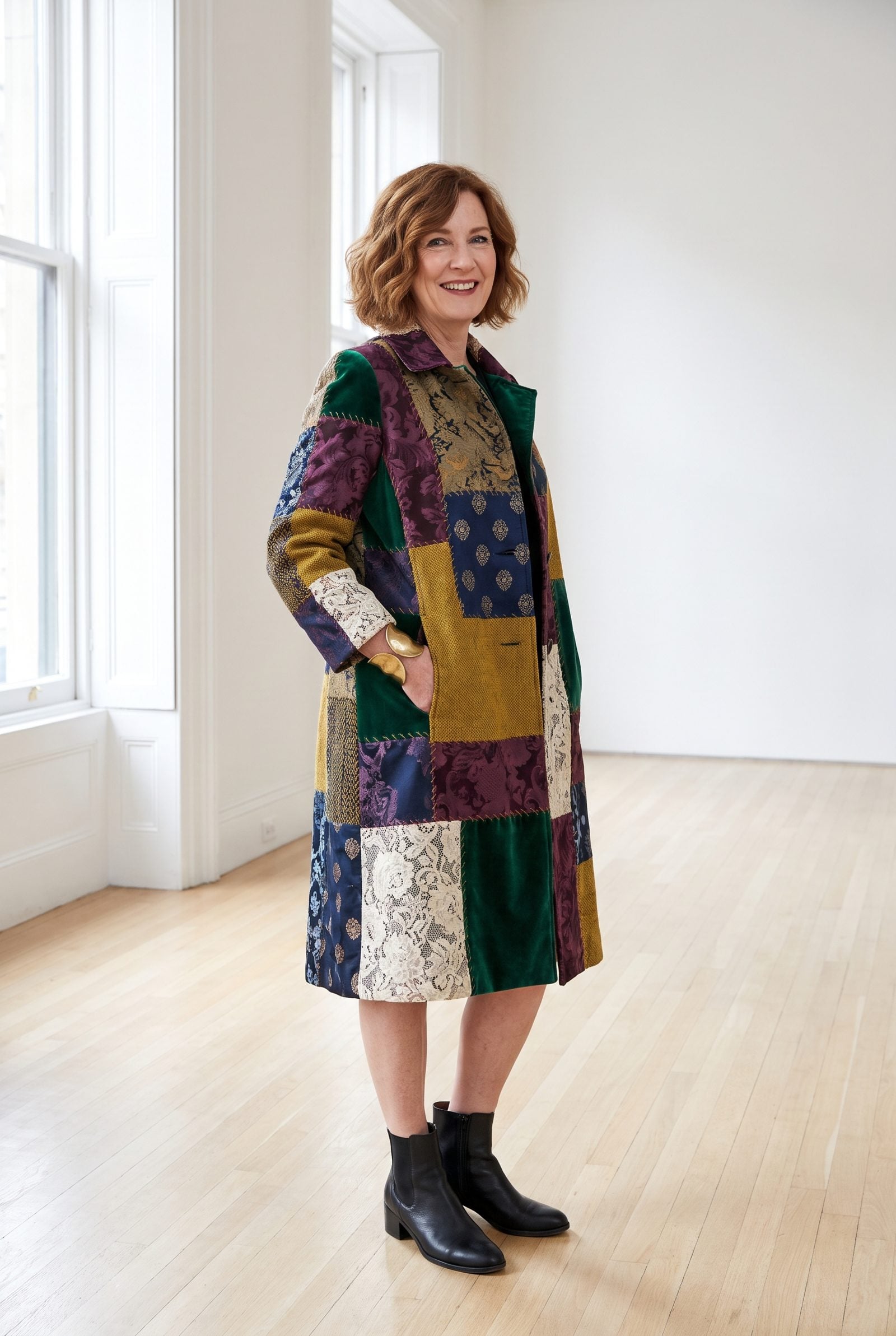
No two Koos Van Den Akker pieces are alike, and that’s the whole appeal. He layered cotton prints, lace, and appliqué into coats and dresses that looked like someone had taken scissors to a textile museum and reassembled the scraps with love.
The coat does everything. Styled over a plain black dress with bare legs and black ankle boots, the patchwork gets to be the entire conversation while the dark base keeps it from tipping into costume — which is the trick with any loud piece.
On the resale side, his hand-finished vintage coats have devoted collectors. Look for intact appliqué, no lifting edges, and the signature label. A pristine Koos collage coat rarely sits on a thrift rack for long.
27. Norma Kamali and OMO Norma Kamali, Transformative Jersey, Sweatshirt, and Parachute-Fabric Designs
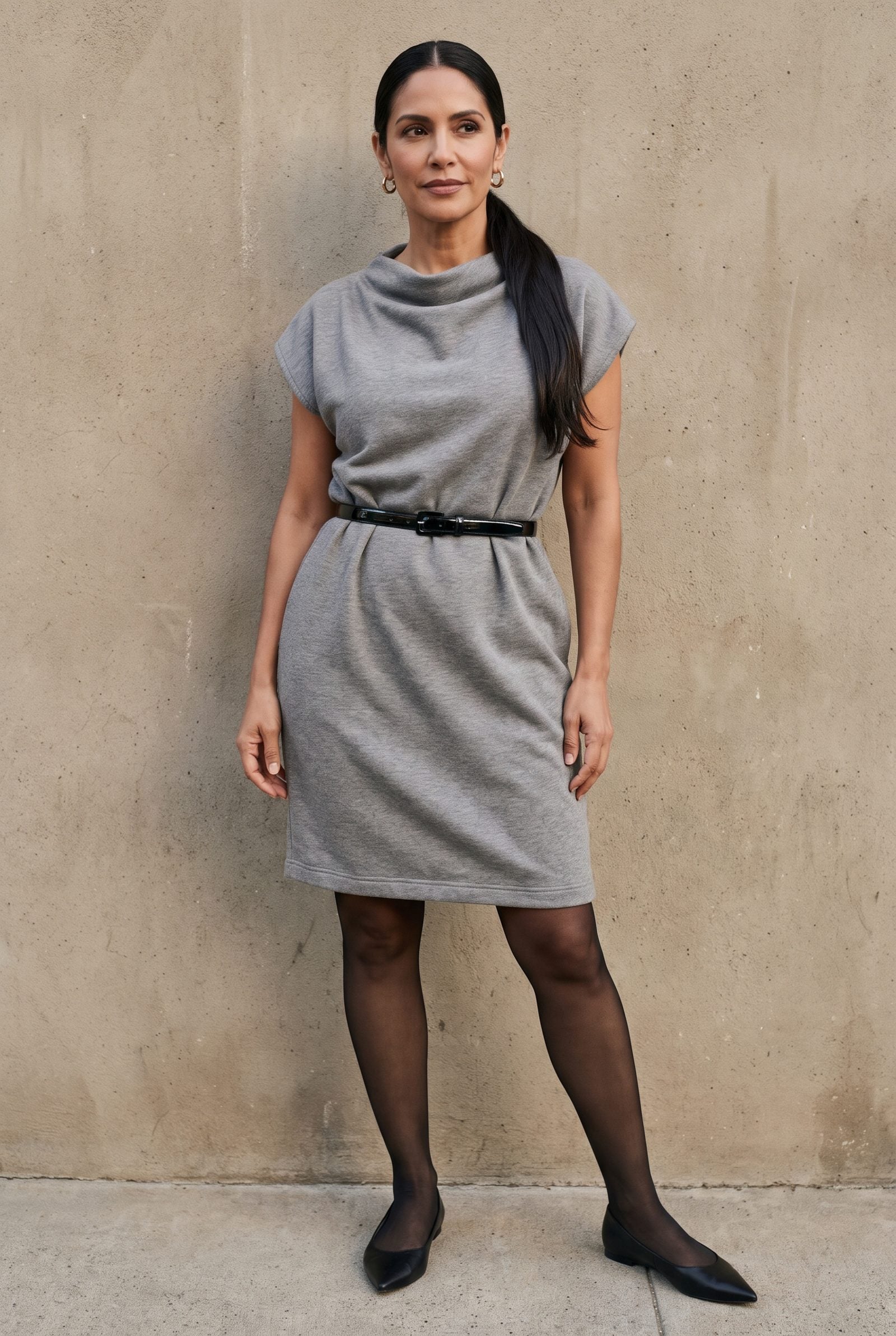
Norma Kamali made sweatshirt fleece into eveningwear and nobody argued. Her jersey and parachute-fabric designs from the late 1970s and 1980s still look current, which is the rarest thing a grey fleece dress can pull off.
The waist belt is the single decision doing the most work. Fleece wants to read lazy. Cinch it, and the soft drape suddenly has structure, the cowl neck earns its volume, and the whole thing moves from gym to dinner in one move.
Her OMO (On My Own) label is the one collectors chase. The jersey pieces drape beautifully decades on, and well-kept examples hold value because the design language never dated.
26. Jean Muir, Fluid Jersey Dresses With Meticulous Seaming and Movement
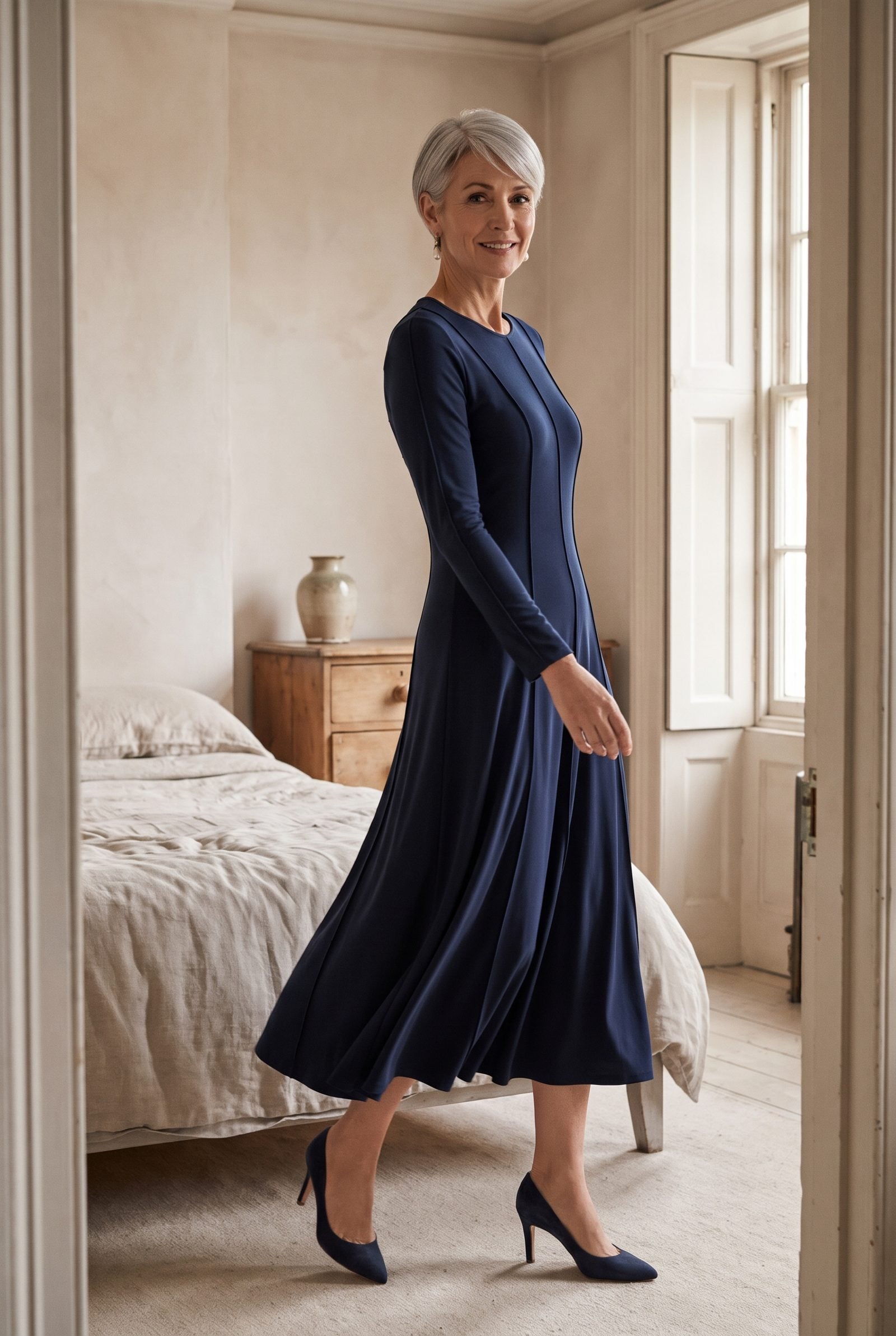
Jean Muir obsessed over seams. Her matte jersey dresses were cut so the fabric moved like water, every dart and panel placed to follow the body rather than fight it. Pick one up and the weight alone tells you it’s serious business.
The navy dress works because the color stays quiet and lets the construction talk. No print, no hardware, no distraction. Just a hem that swings and a seam line that falls exactly where it should.
Muir’s craftsmanship made her a collector’s name. Intact jersey, no pulls, that understated label — those are what separate a treasure from a passable find.
25. Ossie Clark, Bias-Cut Dresses and Romantic Prints From 1970s London
❤️ Would you like to save this?
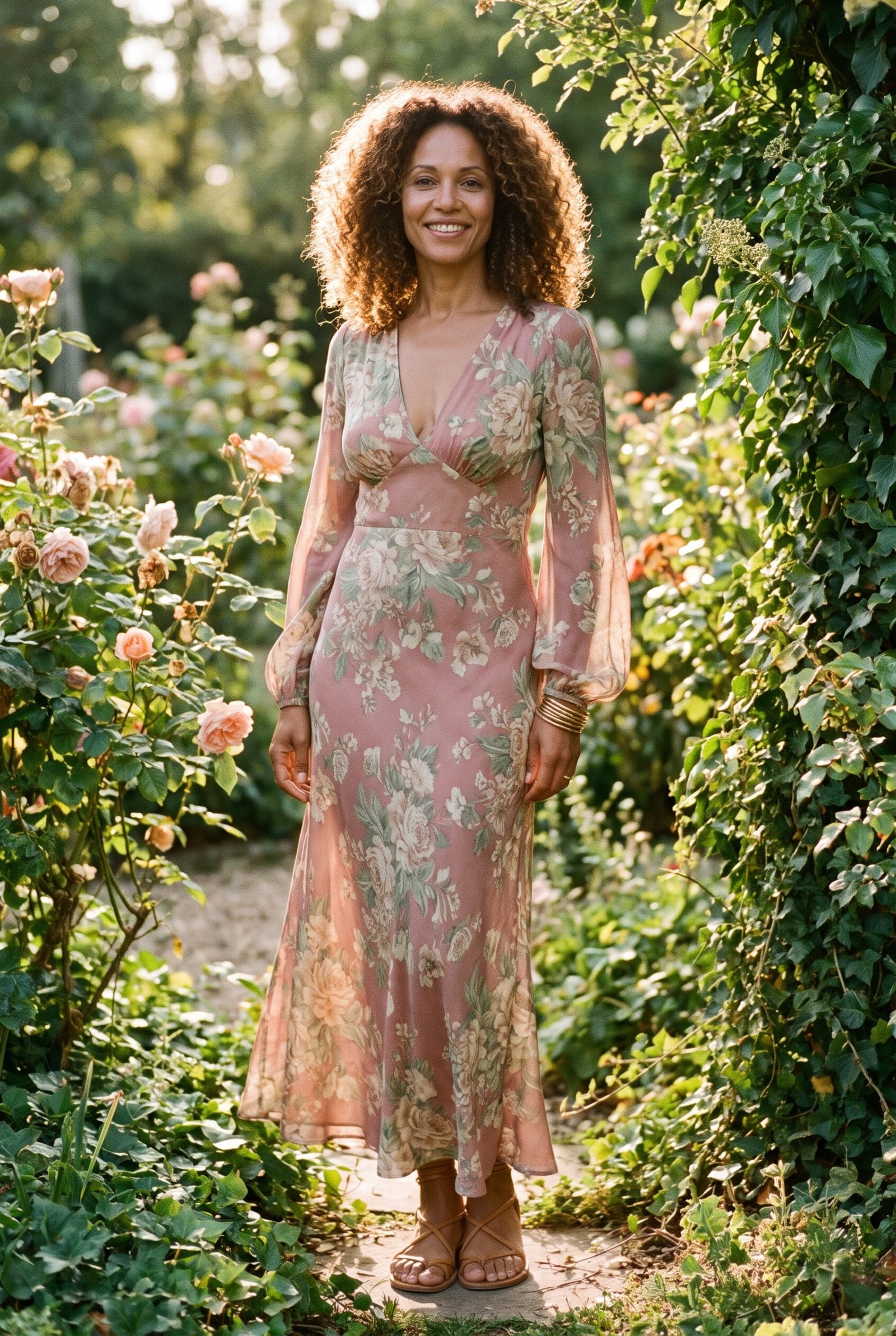
An Ossie Clark dress hangs differently than anything mass-produced. The bias cut means the crepe skims and twists with the body, and his collaborations with print designer Celia Birtwell gave those dresses the dusty-floral prints that defined a London moment.
Here the print and the bias work together. Cut on the grain, this fabric would hang flat. Cut on the bias, it moves — and a floral that could read as sweet instead reads grown-up and a little sensual.
These are among the most coveted names on the resale market. Original Ossie Clark pieces, especially the Birtwell prints, command real money, and condition of the delicate crepe is everything.
24. Biba, Darkly Romantic British Fashion With Distinctive Art Deco Styling
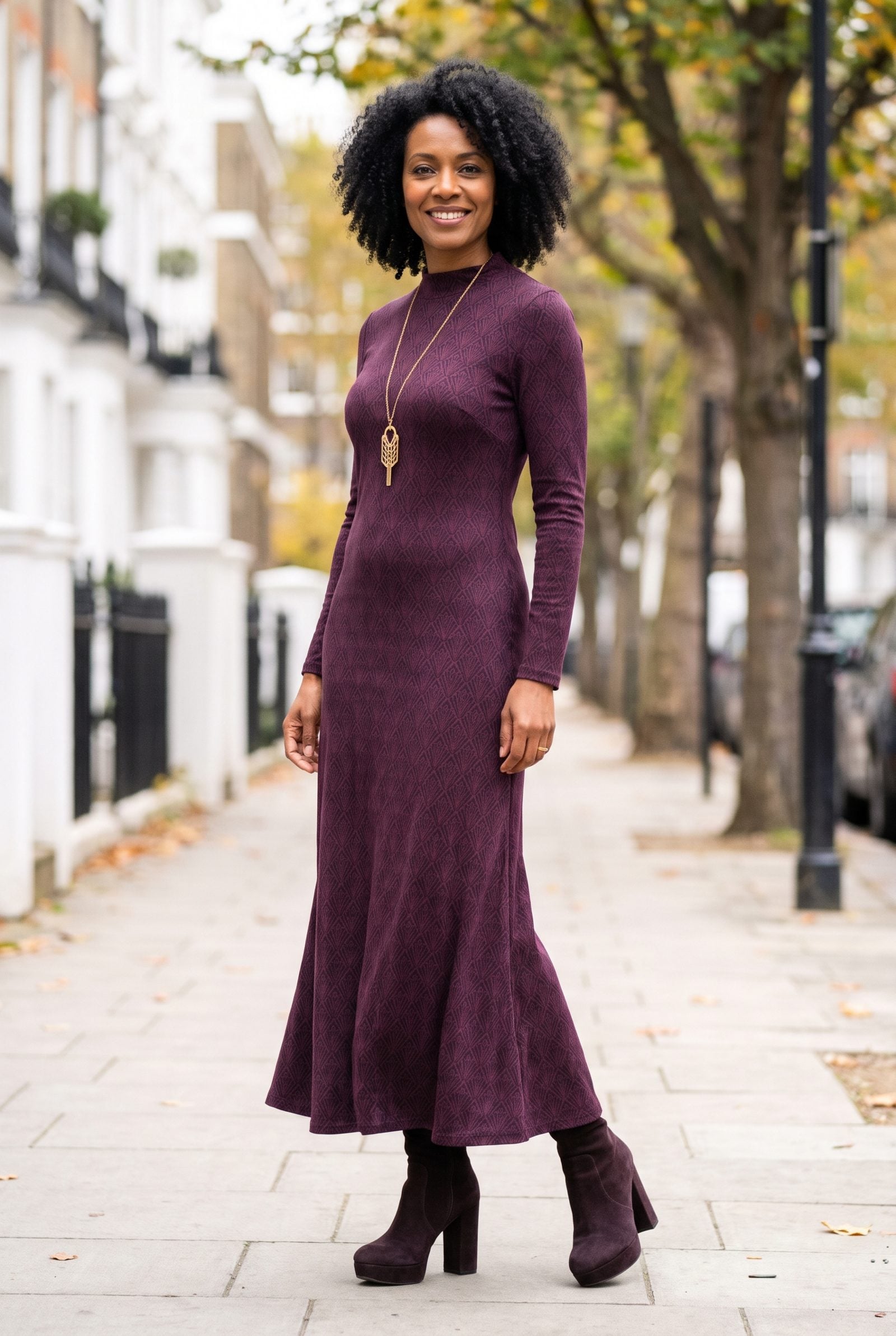
Biba sold a whole mood. Dusky plums, aubergines, antique golds, and Art Deco lines that made 1970s Kensington feel like a film set — the store itself was a destination, dim and decadent, and the clothes carried that atmosphere home.
The deep plum maxi is a color commitment. One shade, head to toe, in a smoky tone most brands avoid, and that restraint gives the look its old-Hollywood weight.
Original Biba is highly collectible, partly because the label existed in its heyday for only a decade. Hunt for the distinctive black-and-gold logo label. Spot it, and you’ve got a piece of fashion history.
23. Zandra Rhodes, Hand-Drawn Prints, Pleating, and Dramatic Textile Treatments
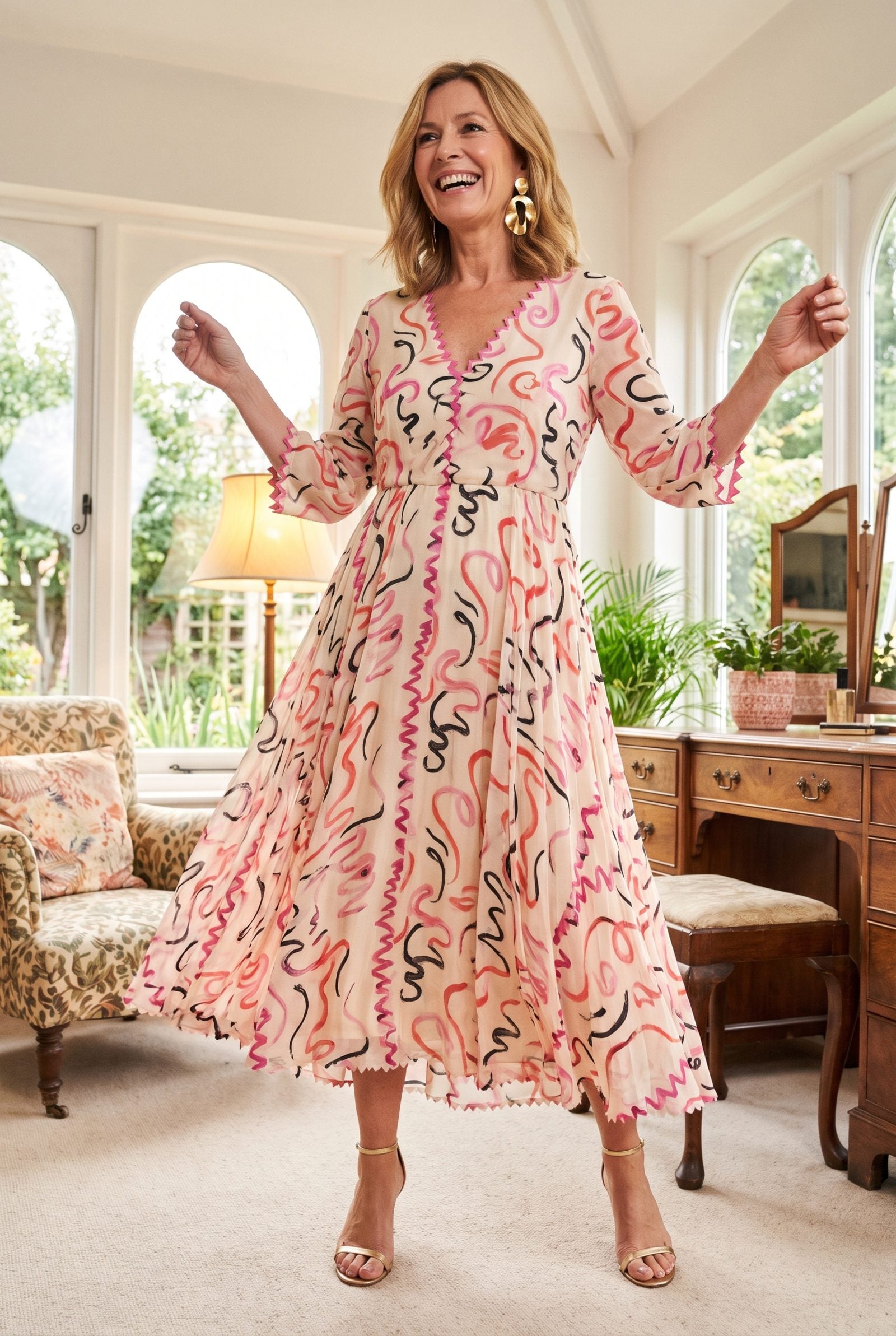
Zandra Rhodes drew her prints by hand, and you can tell. Her silk chiffons carry squiggles, lipstick marks, and lightning bolts turned into textile, then finished with her signature pinked zigzag edges and soft pleating that lifts on the move.
The print is unmissable, so everything else goes simple. Gold heels, bold earrings, nothing competing. When a garment shouts this loud, the styling job is just to get out of its way.
Her chiffons are fragile, so check for pulls and seam stress. A clean example with the label intact is a collector’s prize.
22. Thea Porter, Bohemian Caftans and Dresses Made From Sumptuous Mixed Textiles
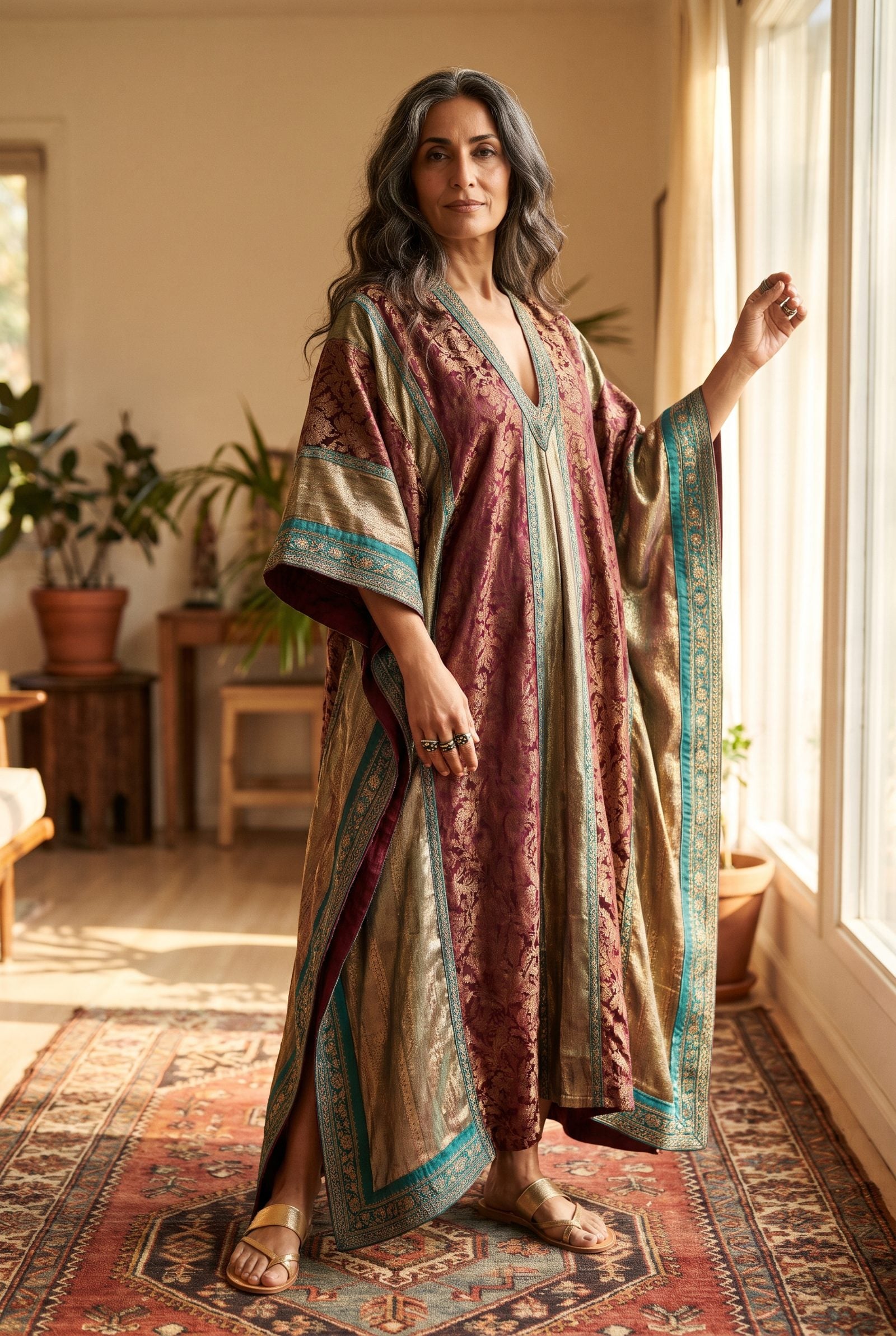
Thea Porter made caftans that felt like heirlooms the day you bought them. She sourced antique brocades, metallic-threaded silks, and embroidered borders from across the Middle East and Europe, then combined them into pieces that drape like royal robes.
The texture mix is the whole story. Brocade against smooth silk against embroidery means the eye never gets bored, and the caftan’s loose shape lets every fabric have its moment.
Her mixed-textile pieces are serious collector territory. The materials alone are often irreplaceable, and an original with good embroidery and an intact label is a find most thrifters never make. Handle gently, check the seams.
21. Mary Quant, Youth-Driven British Designs That Capture the Mod Era
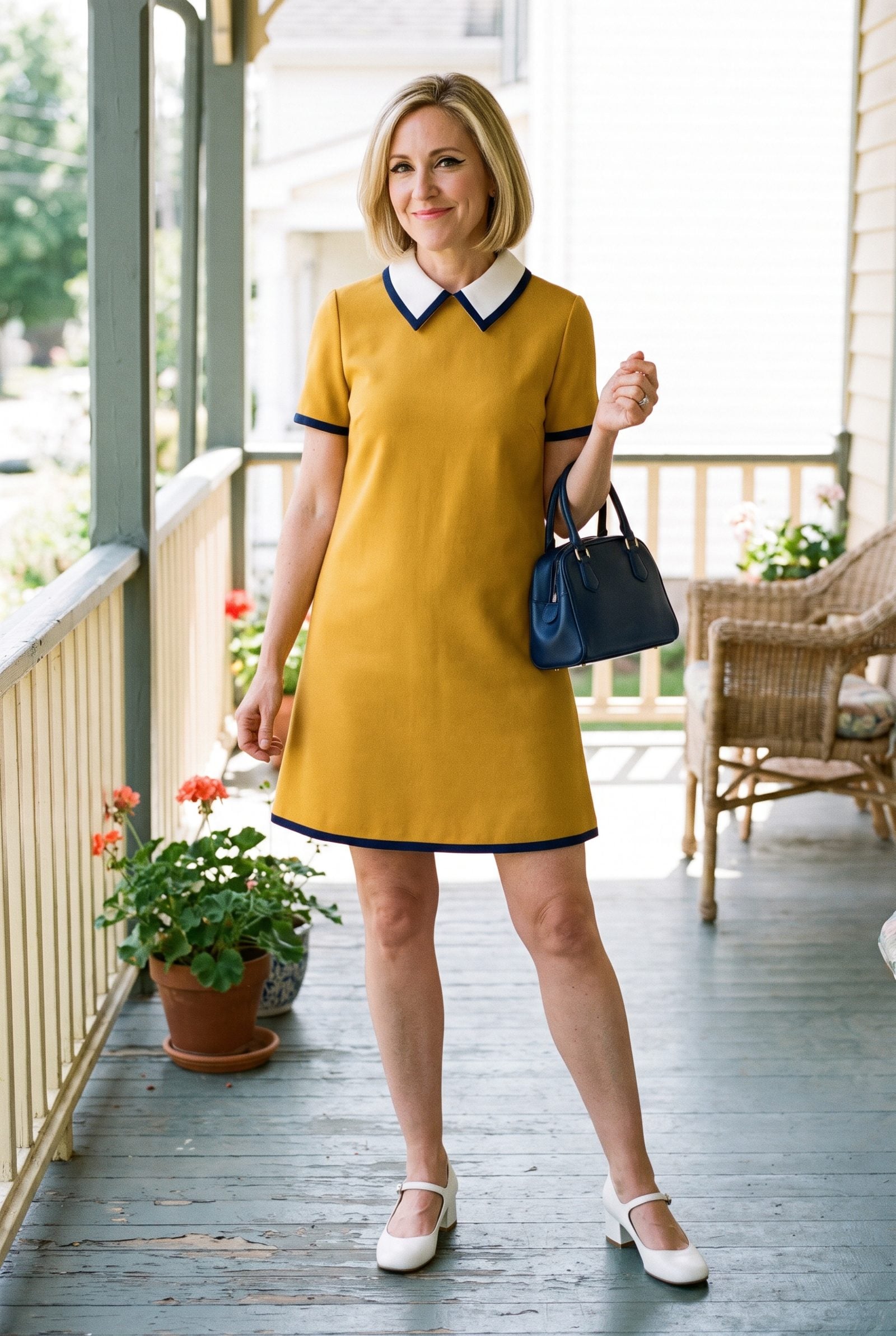
Mary Quant gave the 1960s its uniform. The mod shift, the A-line mini, the crisp collar — all built for young women who wanted to move and have fun doing it. Her clothes were cheerful and sharp at once.
The silhouette does everything. A clean A-line in a single confident color, above the knee, with a contrast collar for punctuation. Nothing fussy, and that graphic simplicity is why mod still looks fresh.
Look for her daisy-logo label. Authentic Quant pieces from the era have real collectibility, and the designs read modern rather than costume. A well-kept mustard shift like this earns its keep.
20. Courrèges, Space-Age Separates With Crisp Geometry and Graphic Color

Courrèges looked at 1964 and dressed it for the moon. Crisp white gabardine, flat go-go boots, graphic color blocking, and seams so precise the garments stood up on their own. The future, tailored.
The geometry leads. Every line is deliberate, the orange hem band placed exactly where it balances the silhouette. No softness anywhere — and that hard precision is the point.
Original Courrèges is a blue-chip vintage name. The construction was exacting, so authentic pieces hold their shape decades on, and the Paris label carries real resale weight.
19. Emilio Pucci, Signed Swirling Prints in Silk Jersey and Lightweight Cotton
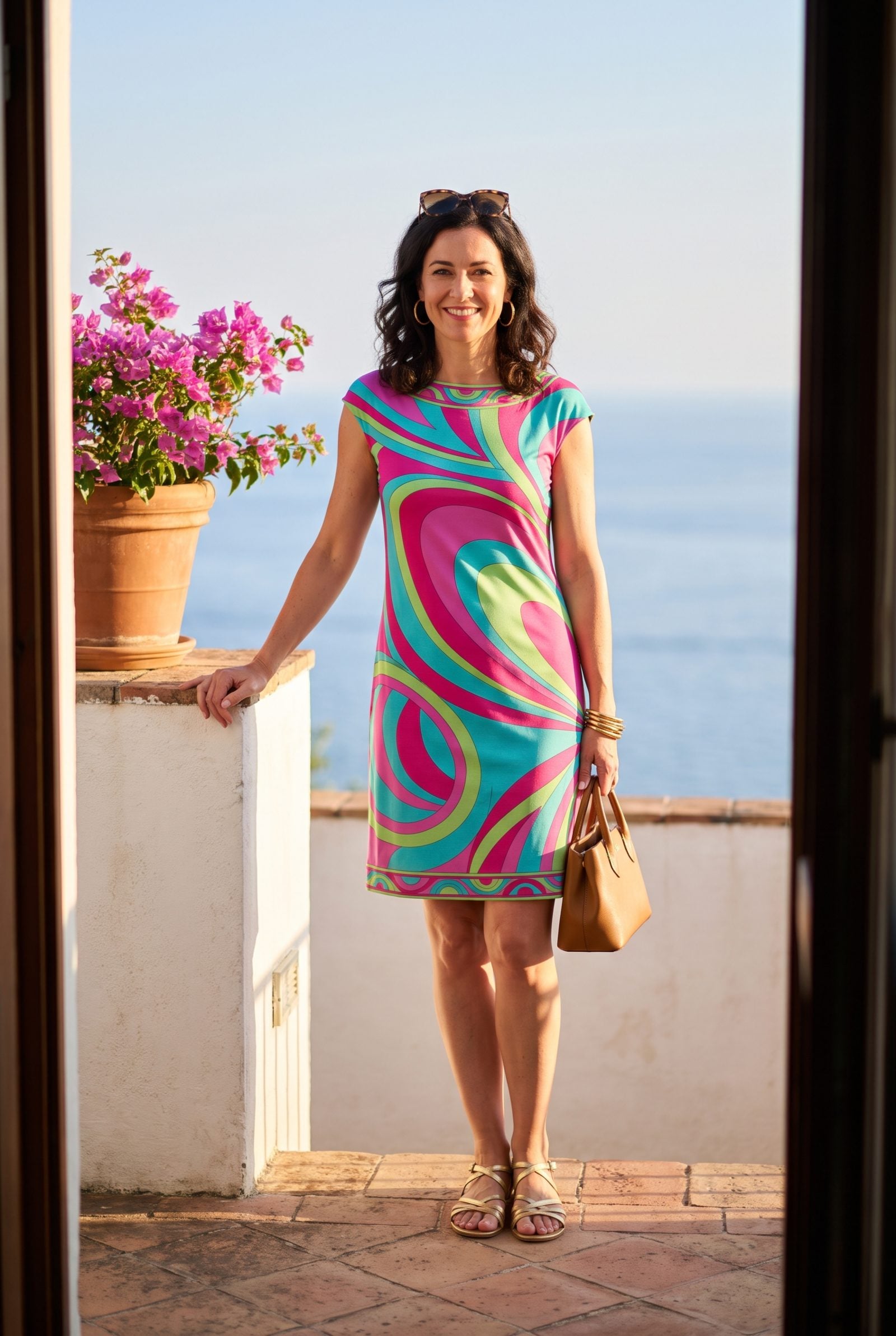
Flip the hem of a Pucci and hunt for the tiny Emilio woven right into the print. Forgers miss it. That little scrawl, repeated across the swirling color blocks, separates a thrift find worth pocket change from one worth four figures.
The silk jersey is the tell — it moves like water and refuses to wrinkle, which is why flight attendants and movie stars both loved it. No genuine print ever repeats a color section exactly, and the fuchsia-and-turquoise pairings feel almost electric against skin.
These pieces reward anyone willing to dig. Grab a loud silk scarf, a lightweight tunic, anything with that liquid drape, and check the label against the vintage resale listings before you blink.
18. Missoni, Recognizable Italian Knitwear With Complex Color and Pattern

You can spot a Missoni knit across a crowded room before you read a single label — those flame-stitch zigzags, the space-dyed yarns that fade one color into the next, the way no two stripes land exactly the same shade. Nobody else has ever matched it.
The craftsmanship is what you’re paying for. A genuine Missoni cardigan is knit, not printed, so the color lives inside the yarn itself. Hold it to the light and the pattern reads the same on both sides. Mass-market copies can’t fake that depth.
Earlier pieces from the 1970s carry a woven script label and a weight the newer ones lack. A chevron cardigan or a knit column dress holds its resale value because the technique is nearly impossible to reproduce cheaply.
17. Marimekko, Large-Scale Finnish Prints on Uncomplicated Modern Shapes
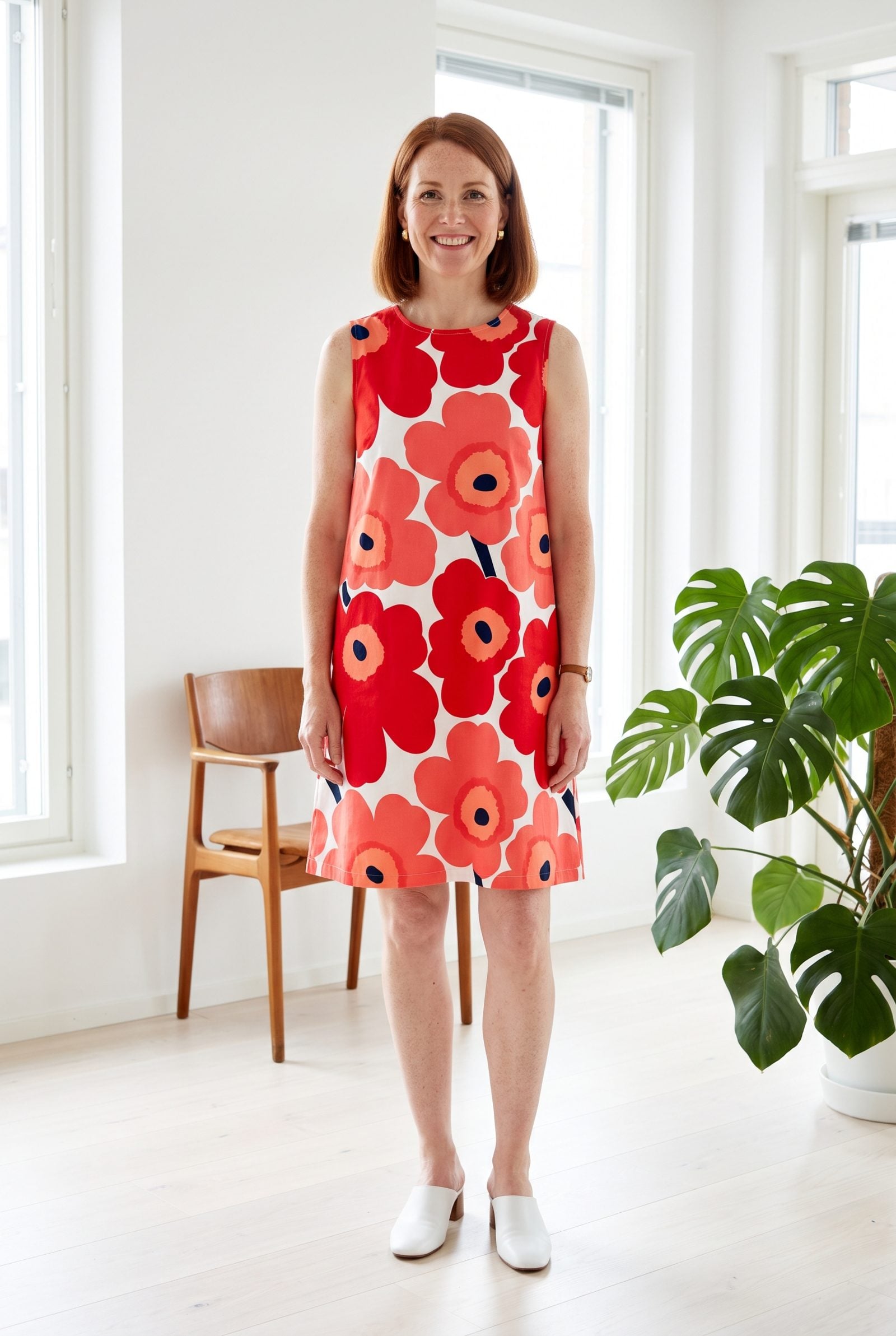
Everyone knows the Unikko poppy, those fat graphic flowers that look like a child drew them with total confidence. Marimekko built an empire on bold scale and simple shapes — a tent dress, a boxy smock, nothing fussy, just the print doing all the talking.
Check the cotton weight and the registered print mark along the selvage. Early dresses are cut clean and roomy, built for moving. The appeal never softened, and collectors chase the discontinued colorways hardest.
16. Fiorucci, Playful Italian Denim and Pop-Graphic Pieces From the Disco Era
❤️ Would you like to save this?
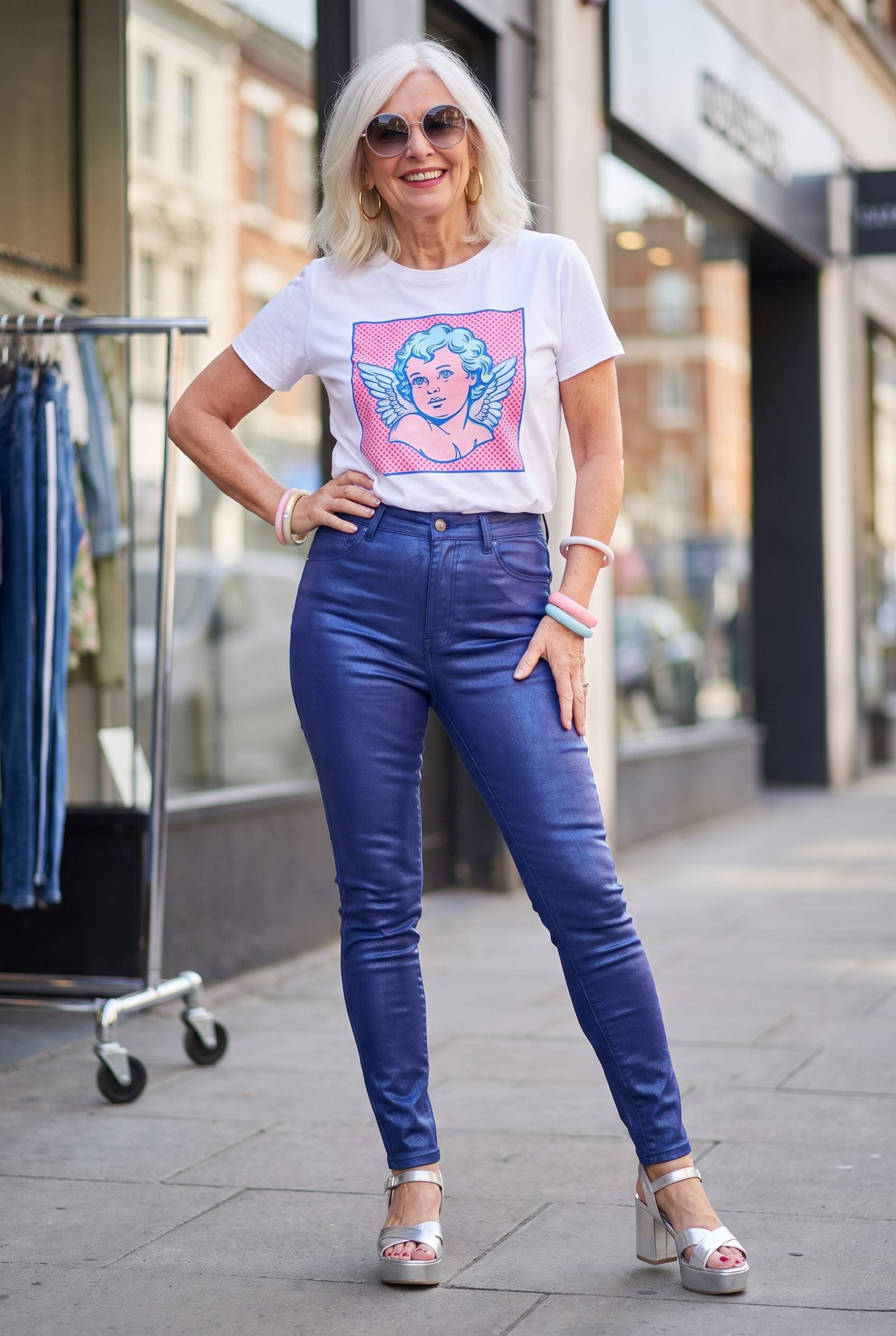
Fiorucci sold fun before fun was a marketing strategy. Those cheeky cherub graphics, the glossy stretch denim that fit like a second skin, the pop-art attitude that made a Milan boutique feel like a nightclub — this was the brand that dressed the disco floor.
The denim is the collector’s grail. Fiorucci was doing high-waisted, body-hugging jeans with a slight sheen decades before everyone else caught up. Genuine pairs carry the angel logo and a distinctive back-pocket stitch, and they resell fast because the cut still looks current.
Grab anything with the winged cherub — a graphic tee, a logo mirror, a pair of those jeans. The playful stuff triggers instant recognition, and the disco-era moment keeps buyers interested.
15. Yves Saint Laurent Rive Gauche, Collectible Ready-to-Wear With Iconic Prints and Tailoring
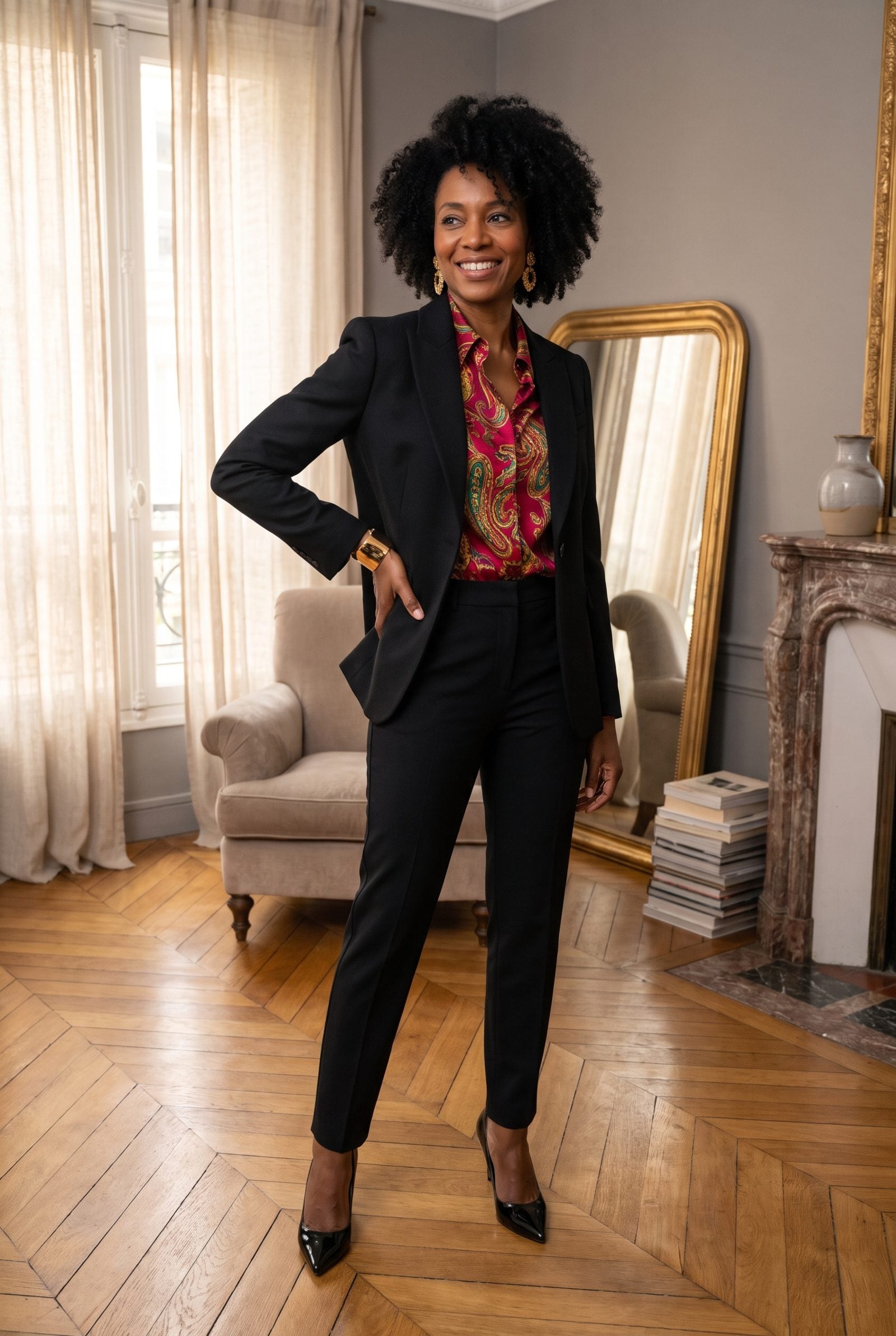
Rive Gauche was ready-to-wear done with couture discipline. The tailoring alone sets it apart: a blazer that holds its shoulder line after forty years, a lapel cut with a precision machines still struggle to copy. This is where the house proved luxury could be worn to work.
Hunt for the iconic prints and the sculpted vintage blazer shapes — the peasant blouses, the safari pieces, the le smoking jackets. Early labels carry a specific font and a serial-numbered tag inside, which serious collectors verify before anything else.
14. Halston, Fluid Ultrasuede, Jersey, and Minimal 1970s Eveningwear
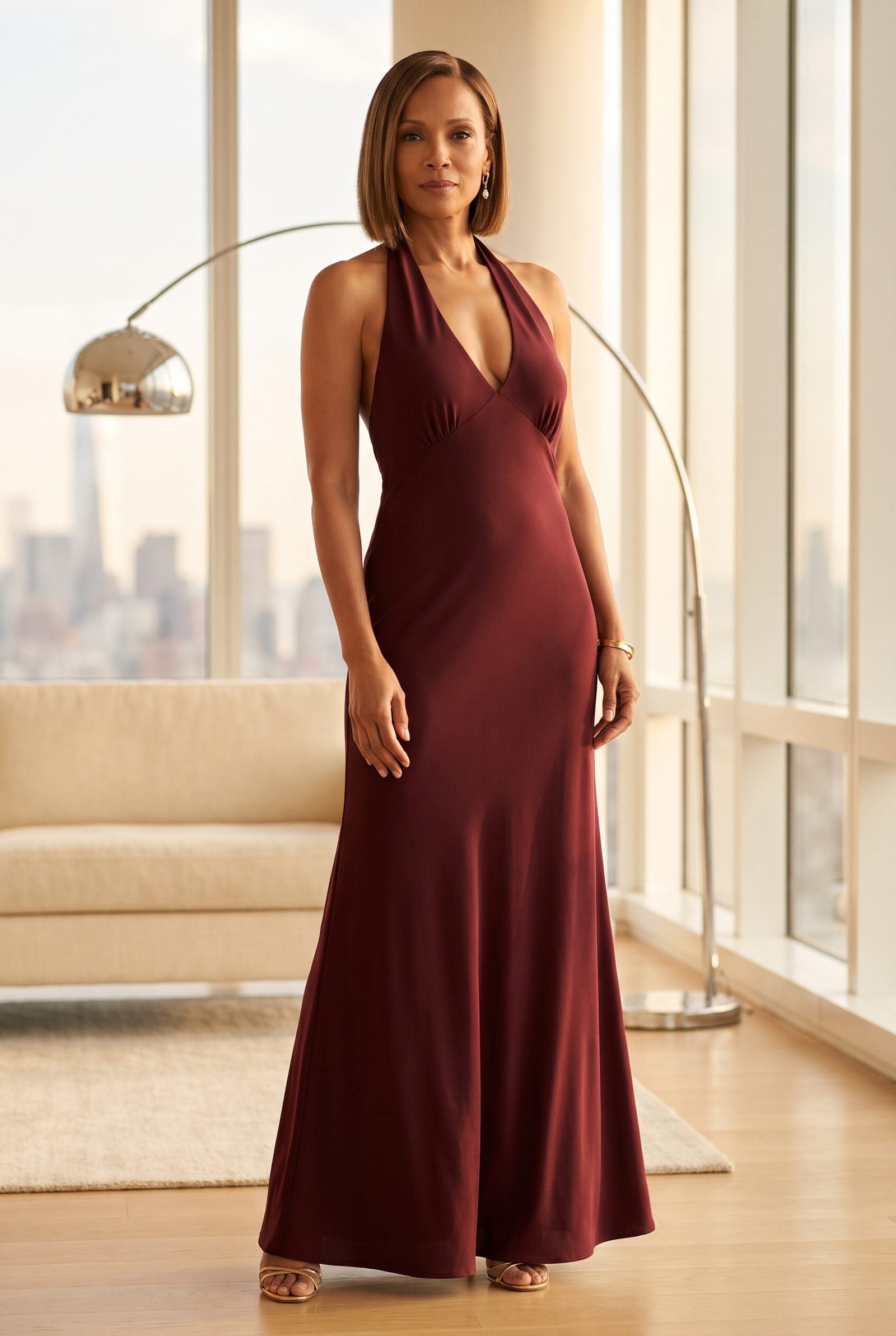
Halston understood that less could cost more. No buttons, no zippers you’d notice, no fuss — just a single length of jersey cut on the bias so it poured off the body. His 1970s eveningwear is minimalism at its most expensive.
Ultrasuede was his other signature, that soft synthetic that draped like suede but washed like cotton. A Halston shirtdress in Ultrasuede is a real collector’s piece, and the halter gowns in matte jersey still sell for serious money.
Check for the clean interior finishing and the typed label. The construction looks simple, which is exactly why it’s so hard to fake. Simplicity leaves nowhere to hide a shortcut.
13. Diane von Furstenberg, Early Printed Jersey Wrap Dresses With Classic Label Details
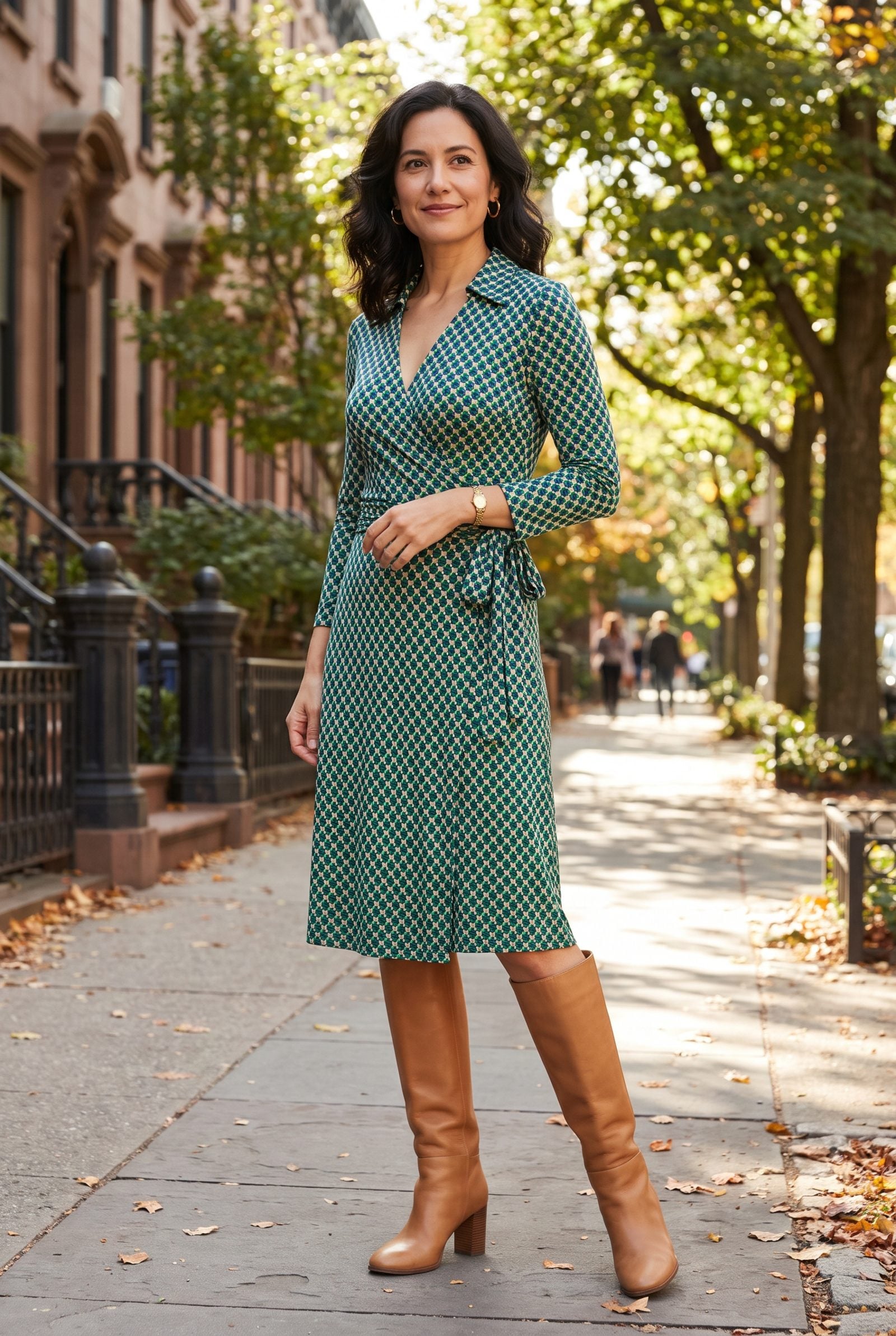
The wrap dress is the most quietly radical garment of the 1970s. One piece of printed jersey, a crossover front, a tie at the waist — and suddenly a woman could get dressed in ten seconds and look pulled together all day. No zip, no fuss, no help required.
The early pieces are the ones worth chasing. Look for the vintage label with the original signature logo and those small-scale geometric or chain-link prints from the first run. The jersey is lightweight and holds its shape through decades of wear.
12. Thierry Mugler, Strong-Shouldered Jackets and Body-Sculpting 1980s Silhouettes

Mugler built clothes like architecture. The shoulders arch out, the waist pulls in to nothing, the hip flares back out, and the whole silhouette hits like a thunderclap. Here’s the 1980s power jacket at its most extreme — and its most collectible.
The construction is closer to engineering than sewing. Internal boning, precise padding, seams that force the fabric into an hourglass whether your body cooperates or not. A genuine Mugler jacket holds its shape on the hanger, standing up on its own.
The resale market treats these like trophies. Look for the woven label and the dramatic peplum shapes. One strong-shouldered jacket reframes everything else you own, and nobody mistakes it for anything else.
11. Azzedine Alaïa, Body-Conscious Knitwear and Precisely Cut Designer Separates

Alaïa cut knitwear the way a tailor cuts a suit. Every seam curves with intention, placed to shape the body rather than just cover it. His stretch dresses from the 1980s are worked to the millimeter, which is why they still look razor-sharp decades on.
They called him the King of Cling, and the body-conscious pieces earned it. A genuine Alaïa holds you in all the right places because the construction does the work — not the fabric straining. That seaming is a signature no copy ever matches.
Hunt for the woven label and those sculptural seam lines. Grail-level finds, these. The craftsmanship keeps resale prices steep, and a single precisely cut piece teaches you what fit actually means.
10. Jean Paul Gaultier, Corsetry, Mesh Prints, and Irreverent Tailoring
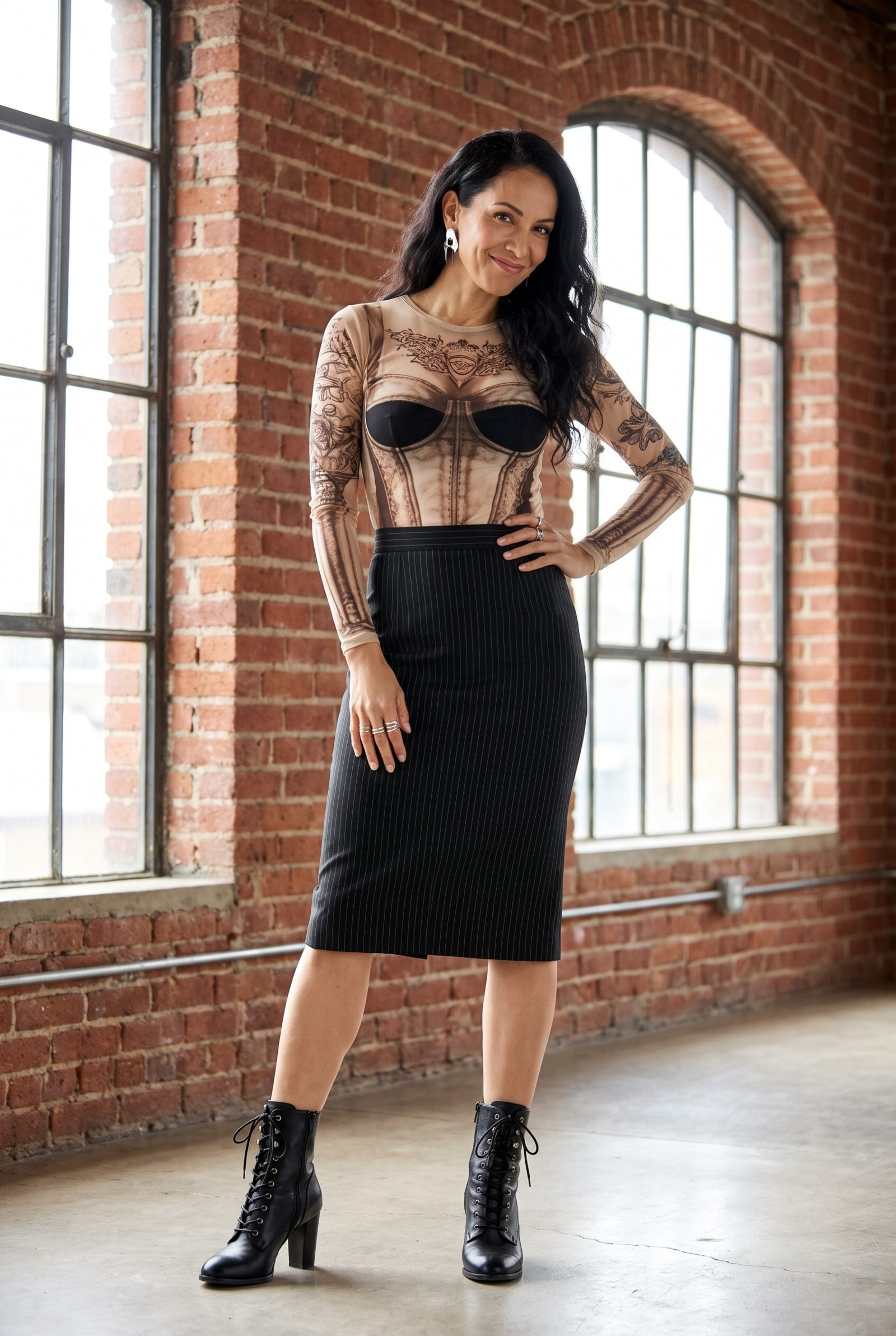
Gaultier made fashion that argued with itself. A tailored jacket with a corset laced over it. A sheer mesh top printed to mimic a tattooed body. Men’s pinstripes cut for a woman’s frame. Nothing he made played by the expected rules, which is exactly why collectors chase it.
Look for the woven label with the distinctive logo and the conceptual prints that made his name — a corset piece, a mesh illusion top, a cleverly subverted blazer. Conversation pieces that happen to hold serious value, and proof that tailoring and mischief can share a seam.
9. Issey Miyake: Pleating, Geometric Construction, and Technical Fabrics Ahead of Their Time
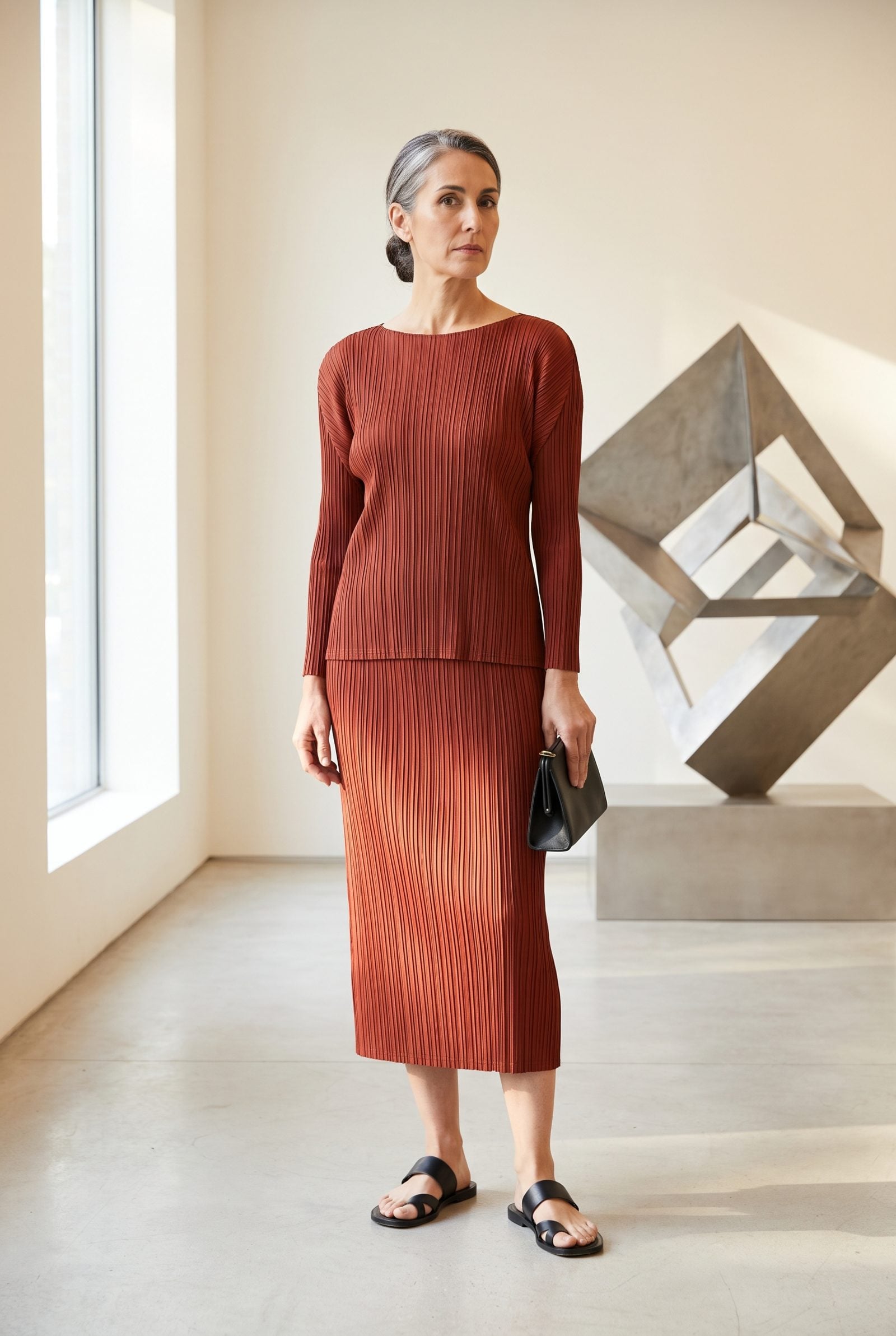
Pick up a piece of Pleats Please and it feels like holding something that hasn’t aged a day since it left the factory. The pleats are permanent, heat-set into polyester so they spring back no matter how brutally you cram them into a suitcase. That’s the craftsmanship you’re paying for secondhand, and the reason these pieces hold value.
The pleat is the engine of the whole look. It moves with the body, skims instead of clings, and does the work of three shaping seams without a single dart. On a thrift rack the fabric gives it away in a second — that dry, papery hand nothing else has.
8. Comme des Garçons: Conceptual Japanese Design That Rewrites What a Garment Can Be
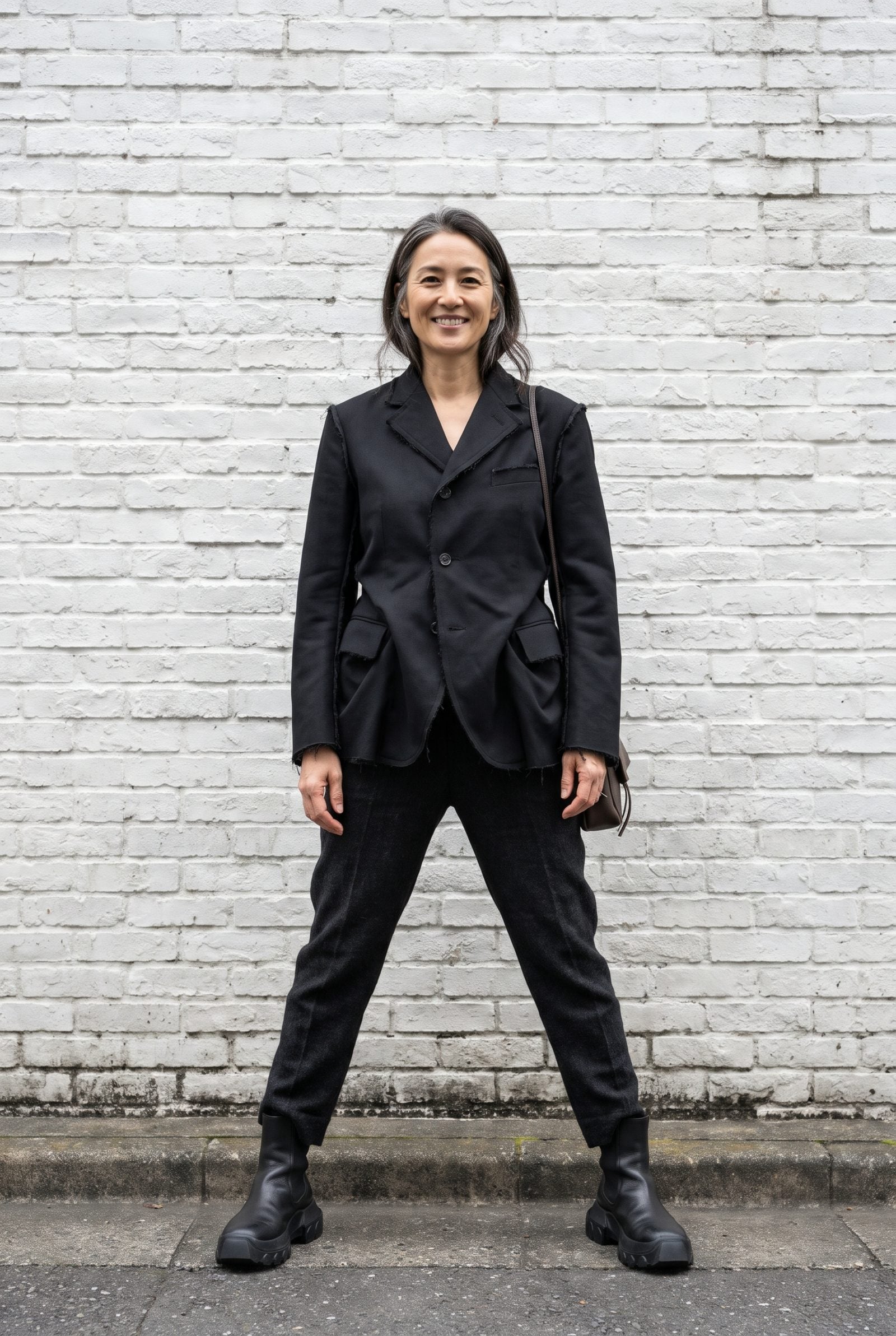
Here’s what most people miss on a thrift rack: a real Comme des Garçons piece looks almost wrong on the hanger. Lopsided. A sleeve too long, a hem that dips, a seam running where no seam should. That wrongness is the entire point, and it’s worth money.
Rei Kawakubo built a label on refusing the body’s symmetry. These jackets don’t flatter in the conventional sense — they reframe. Put one on and the fabric bunches and folds around you like scaffolding rather than tailoring, which is exactly why collectors chase the early CDG and the subversive Play line labels.
The best secondhand finds are the ones that confuse a casual shopper and stop a trained eye cold.
7. St. John: Santana Knit Suits That Survive Everything and Resell for Real Money
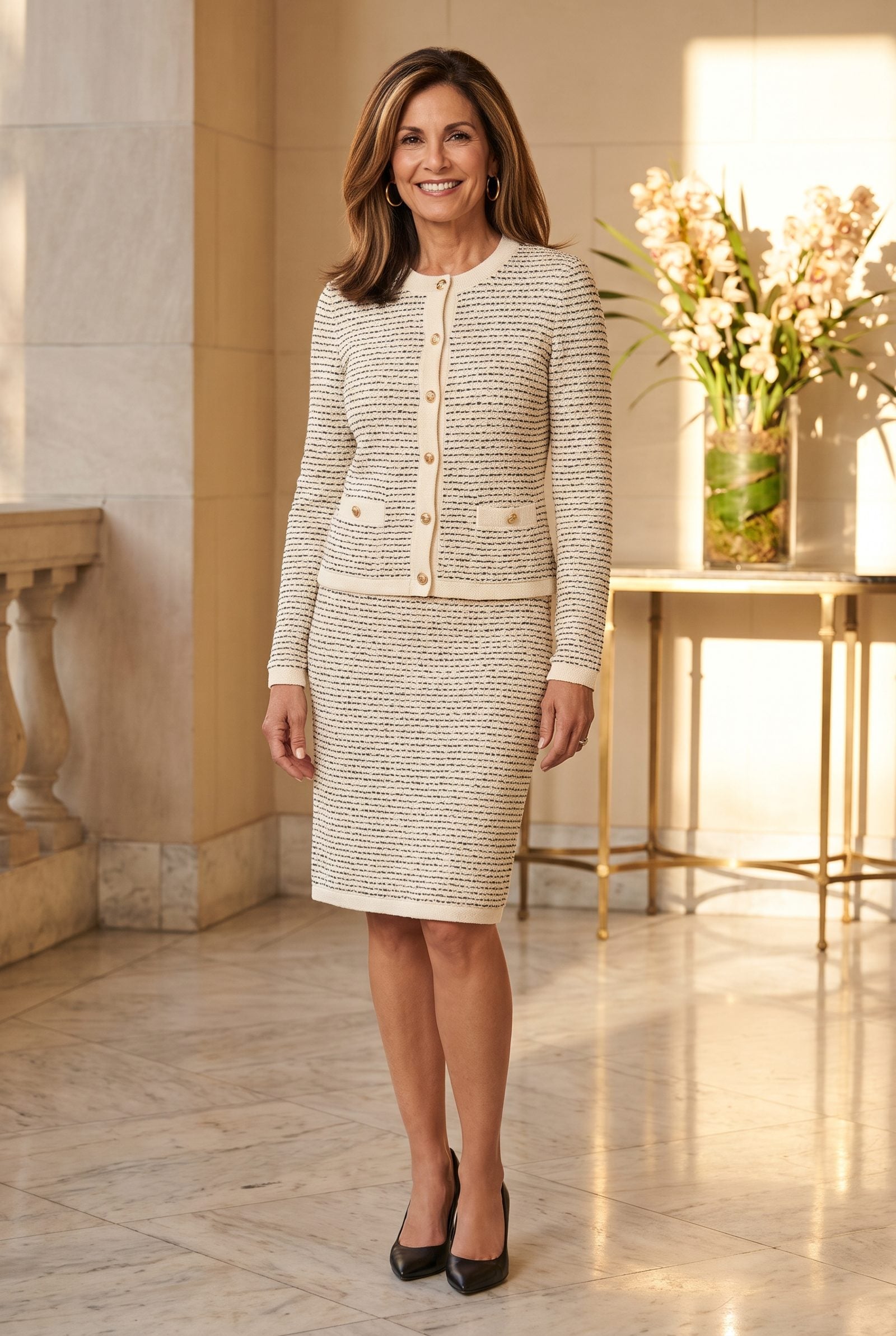
Santana knit doesn’t wrinkle, doesn’t sag, and apparently doesn’t die. That’s the whole secondhand case for St. John. A set from the 1990s turns up at a thrift store looking like it was worn twice, because the fabric flat-out refuses to show wear.
The jacket drives everything. Collarless, gold buttons, cut close through the waist and ribcage so the dense knit defines without squeezing. It reads boardroom and dinner reservation in the same breath. Resellers know this, which is why a complete matched set moves fast and keeps its number.
6. Gunne Sax by Jessica McClintock: Lace, Corset Lacing, and Prairie Romance Done Right
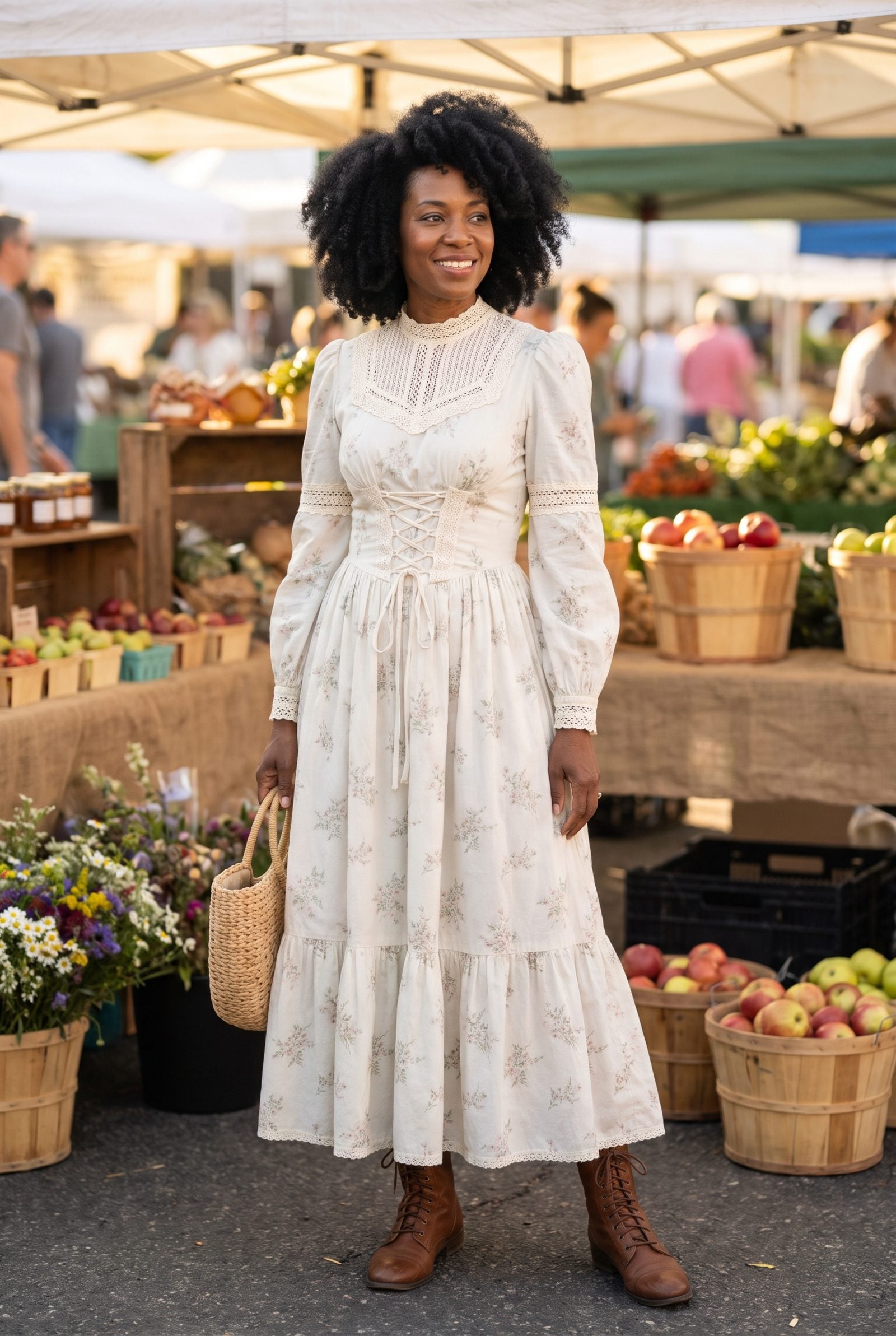
Flip a Gunne Sax dress inside out and the construction tells the story: French seams, covered buttons, lace sewn down by the yard. These weren’t cheap when they sold in the 1970s, and that same workmanship is why they survive as vintage finds worth hunting.
The corset lacing up the front does the heavy lifting. It cinches the waist, structures the bodice, and gives an otherwise soft romantic dress a backbone, while the lace at the collar and cuffs softens it right back. That push-pull between structure and sweetness is the signature. Good luck finding a modern dress that nails it for the same money.
5. Pendleton: American-Made Virgin Wool That Outlasts the Decade It Was Cut In
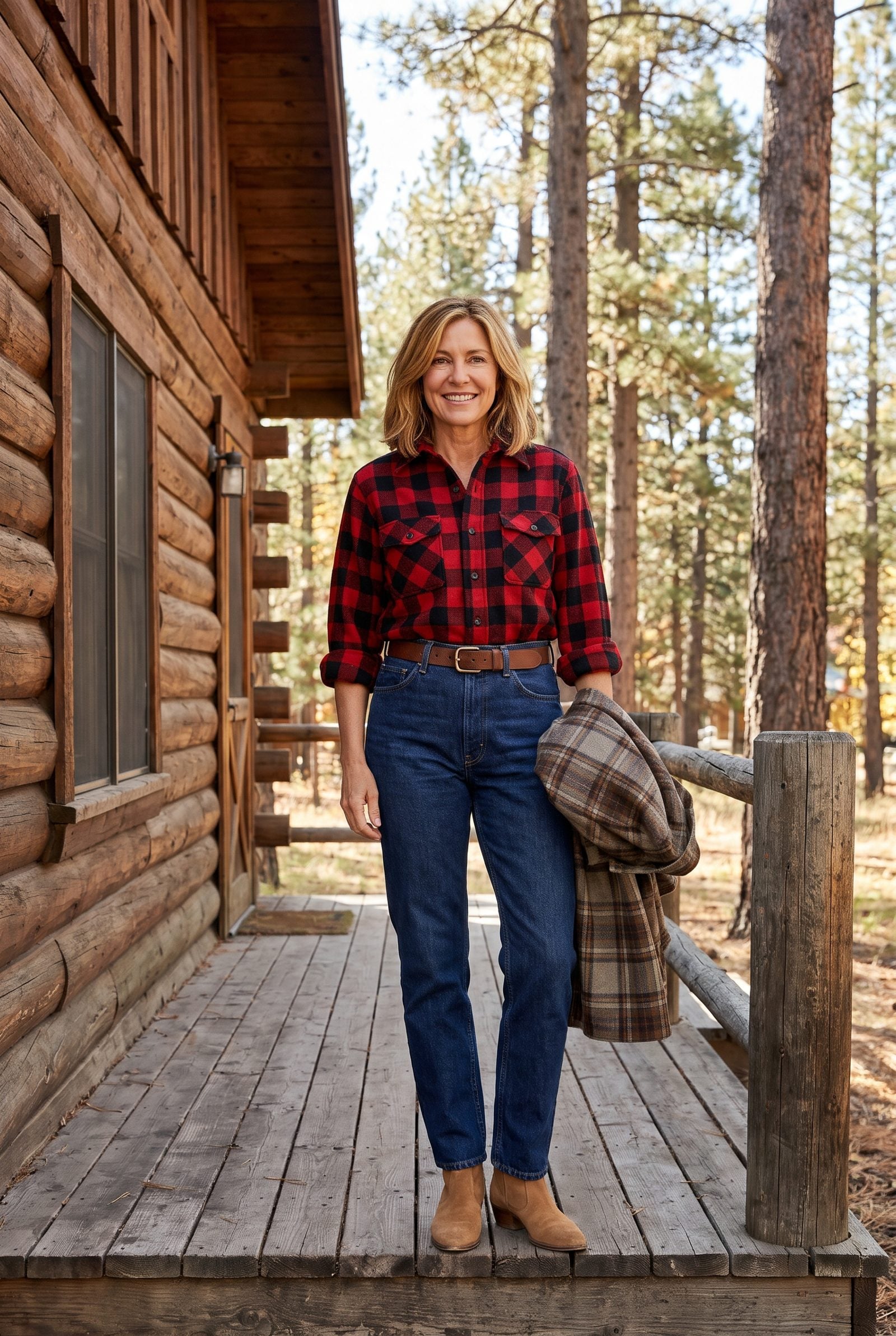
The weight tells you before the label does. A real Pendleton wool shirt has a heft nothing else on the rack matches — dense virgin wool woven in Oregon mills that have been running for over a century. Pick one up and it hangs off your hand like it means it.
Grab the buffalo plaid board shirt on sight. Push the sleeves to the forearm, leave the collar open, tuck it into high-waisted denim. The thick wool holds its shape all day and the plaid does the styling work for you.
Skirts and blankets turn up too, and honestly the wool skirts are badly undervalued secondhand given how well they wear.
4. Levi’s Big E: Pre-1971 Denim You Identify by a Single Capital Letter
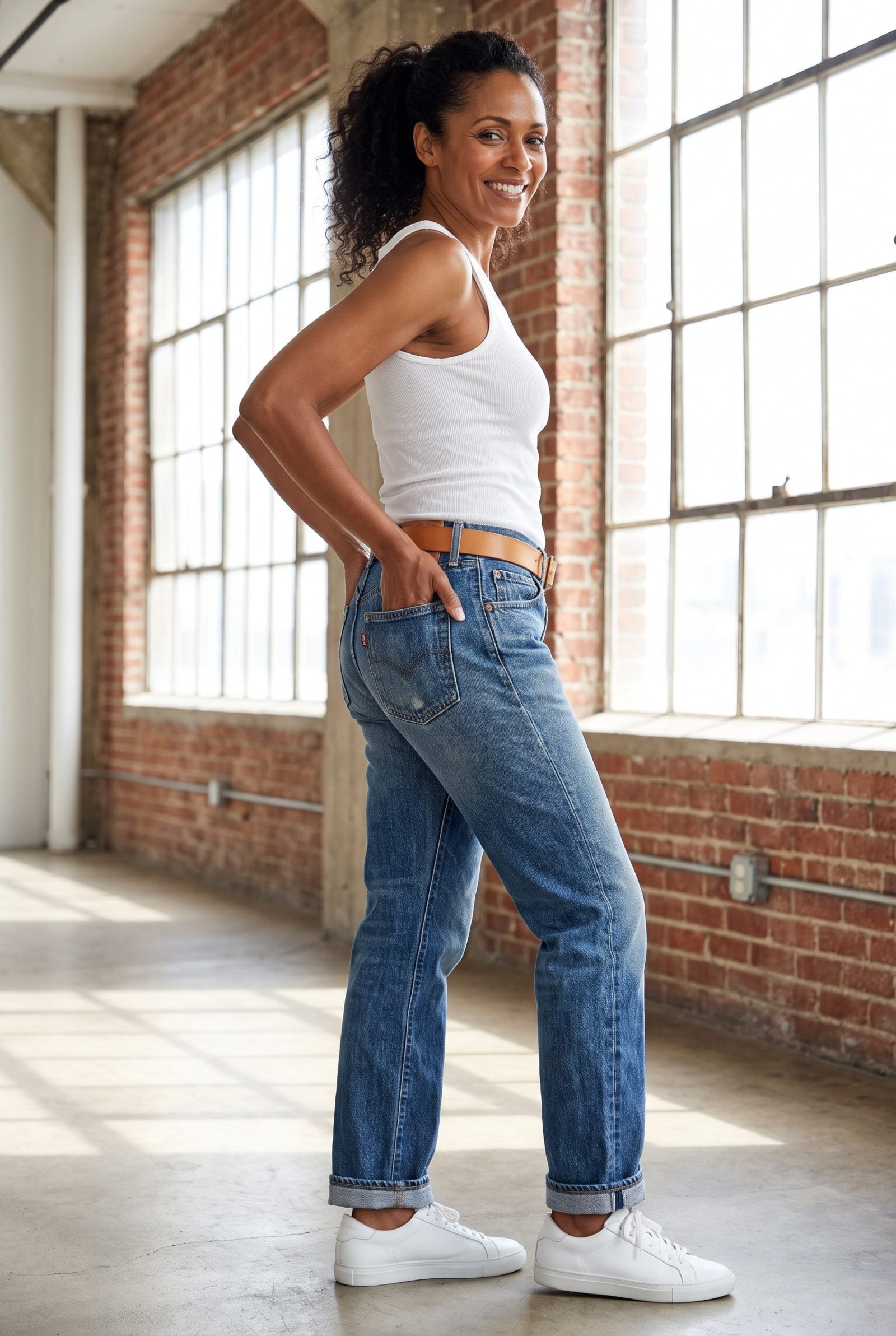
One capital letter separates a good find from a great one. On the little red tab at the back pocket, LEVI’S spelled with a capital E dates the pair to before 1971. That’s the Big E — the single most reliable tell in all of denim thrifting.
These jeans fade the way modern denim is engineered to imitate and never quite manages. Decades of real wear leave whiskering and honeycombs no factory can fake. Styling takes care of itself: cuff once, tuck in something simple, step back. Collectors pay serious money for a clean pair, so check every red tab you see.
3. Champion Reverse Weave: Heavyweight Made-in-USA Sweatshirts Built Not to Shrink
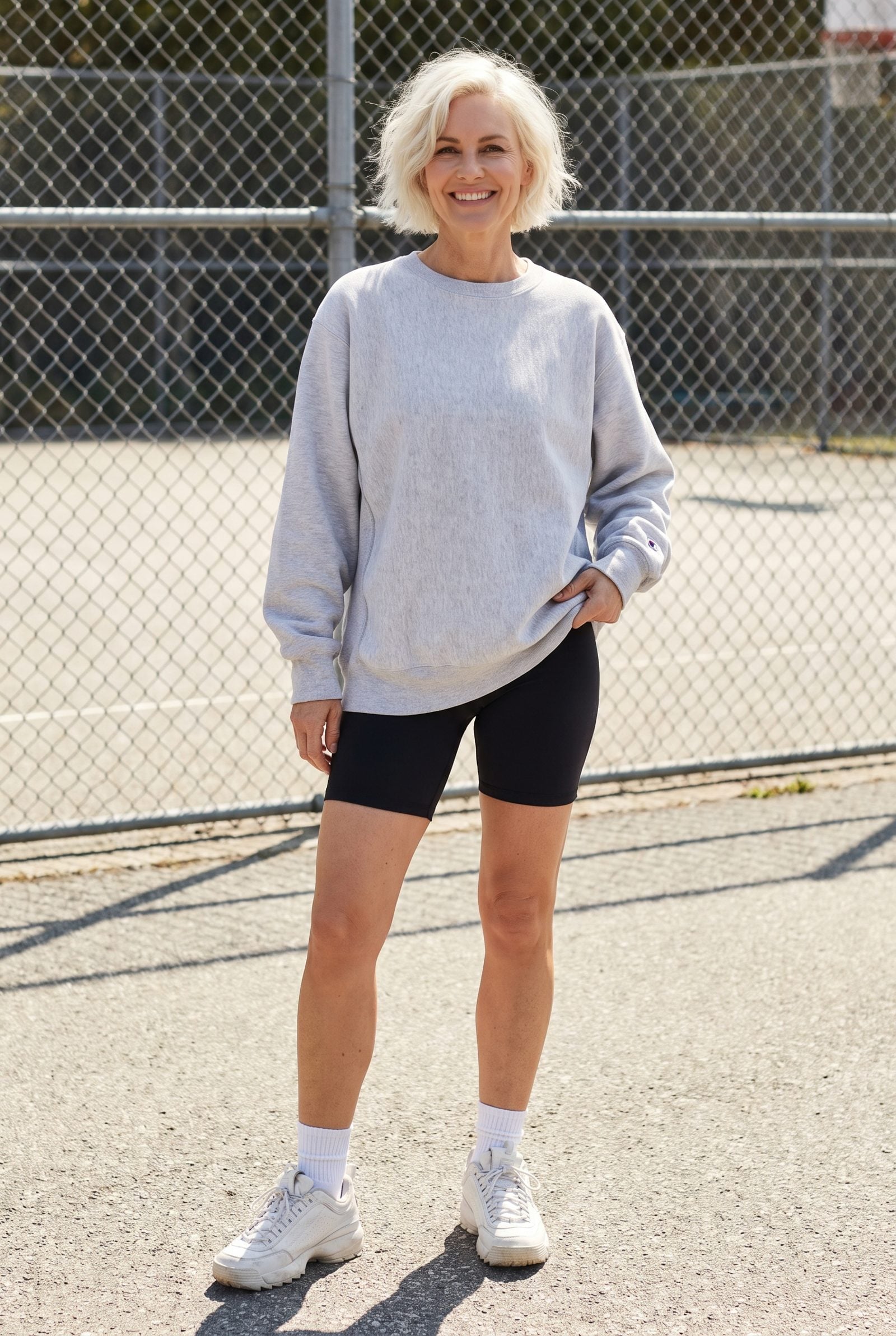
Run your hand down the side of a real Reverse Weave and you feel the ribbed gusset panel — the whole reason the thing exists. Champion cut the fabric crosswise so it wouldn’t shrink vertically, then added those side panels to let it move. Clever construction most people never notice.
Worn oversized over bike shorts and chunky sneakers, a grey crewneck reads deliberately off-duty, the kind of easy that looks accidental and absolutely isn’t. The heavyweight loopback fleece carries the whole thing: soft inside, dense and structured outside.
Made-in-USA tags and older runner-man logos push the resale value up. Check the inner label before you walk away.
2. Patagonia: Early Outdoor Pieces With Collectible Tags and Materials That Refuse to Quit
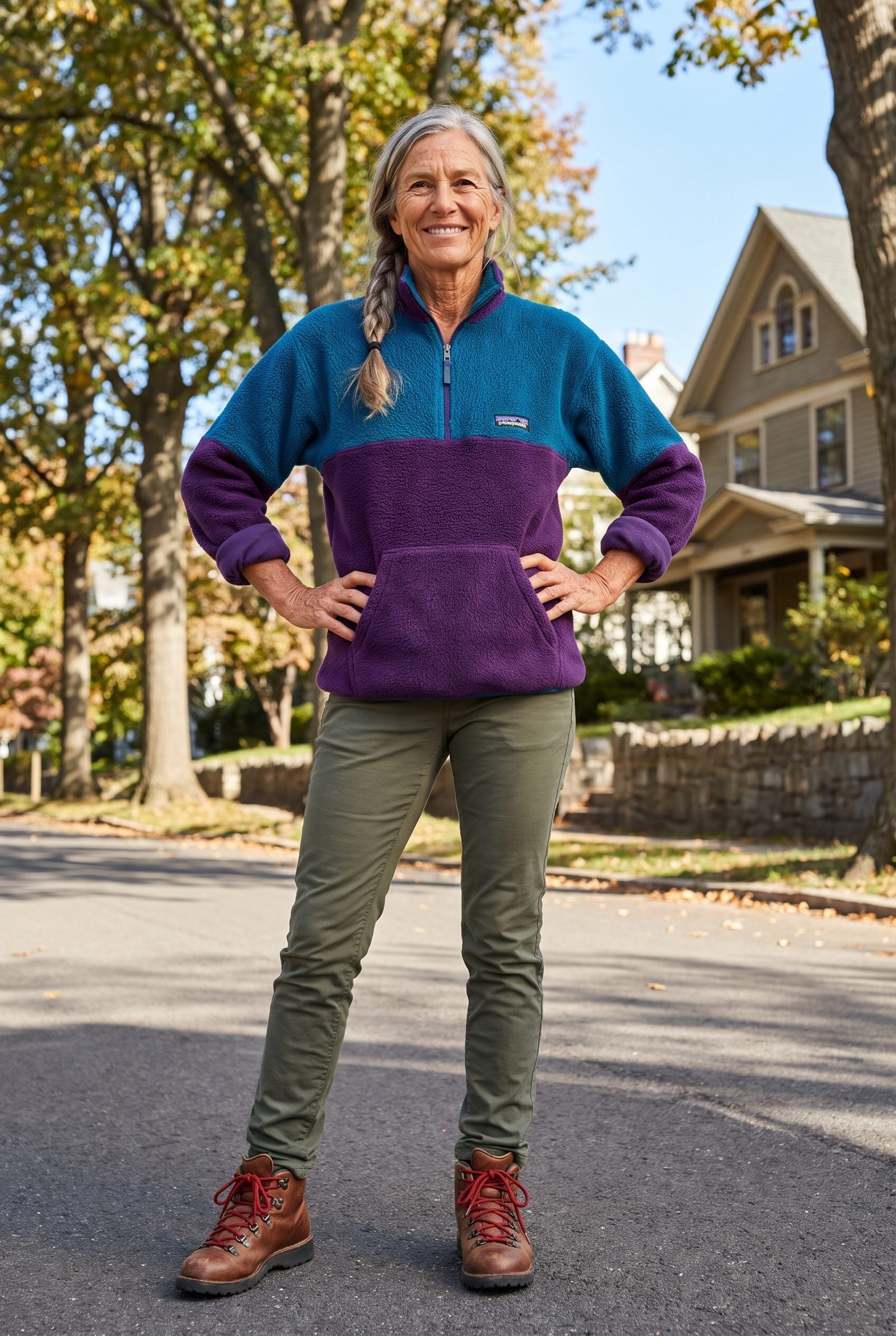
The fleece is the one to spot. Those deep-pile color-blocked pullovers from Patagonia’s earlier decades — teal against purple, pockets stitched flat, zip pulls that still work — turn up at thrift stores because the materials outlast the people who first bought them.
Styling is almost a non-issue. The fleece does the color work, so pair it with quiet olive trousers and let the teal-and-purple carry everything. The real pull here is the tag. Older labels and specific archival colorways command prices that would stun anyone who thinks of this as just a camping brand.
1. The North Face Brown Label: 1970s and 1980s Down Pieces Collectors Hunt by the Tag
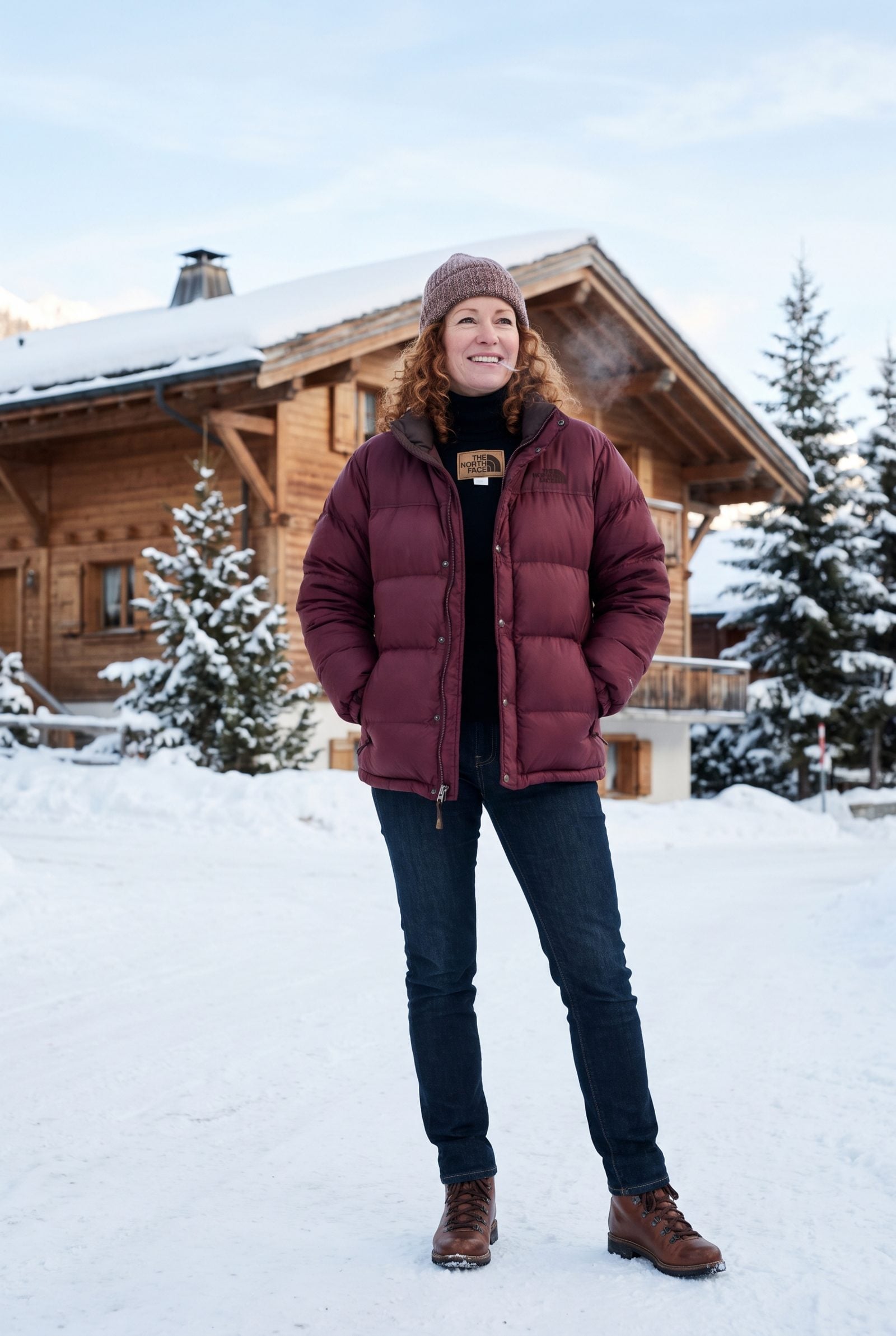
Collectors hunt one thing first: the brown label. The North Face used a brown tag through the late 1970s and into the 1980s, and that small patch turns an ordinary piece into one people travel to buy.
The down pieces are where the value sits. Horizontal baffles, real loft, a burgundy or rust colorway that reads retro without trying. Over dark indigo jeans and leather boots it looks intentional rather than nostalgic, which is the trick with any vintage outerwear.
The tag is the difference between a warm coat and a piece someone has been searching years to find.
Check the baffle stitching and the zipper pulls too. Original hardware matters nearly as much as the label.