
❤️ Would you like to save this?
The best wash-and-wear haircut is not a compromise. It is a piece of design. For women over 60, that often means using length, weight, graduation, fringe, and density more intelligently so the cut carries more of the styling burden itself. A strong perimeter can make fine hair feel deliberate. A few well-placed layers can release movement without sacrificing substance. A side part can shift the balance of the face as effectively as another inch off the ends.
The 35 before-and-afters ahead show how differently that idea can be interpreted. Some cuts sharpen the silhouette; others loosen it. Some use silver as contrast, others rely almost entirely on shape. What ties them together is simple: the less a haircut depends on a dryer, round brush, diffuser, or elaborate finish to look intentional, the more successful the design becomes.
FYI, thanks to AI imagery software, we’re able to create very specific fashion and hairstyle examples to illustrate the points being made. In some cases, imagery is exaggerated to hammer home the point. Also, assume links that take you off the site are affiliate links such as links to Amazon. this means we may earn a commission if you buy something.
35. Silver Bob With Highlights That Actually Do the Work for You
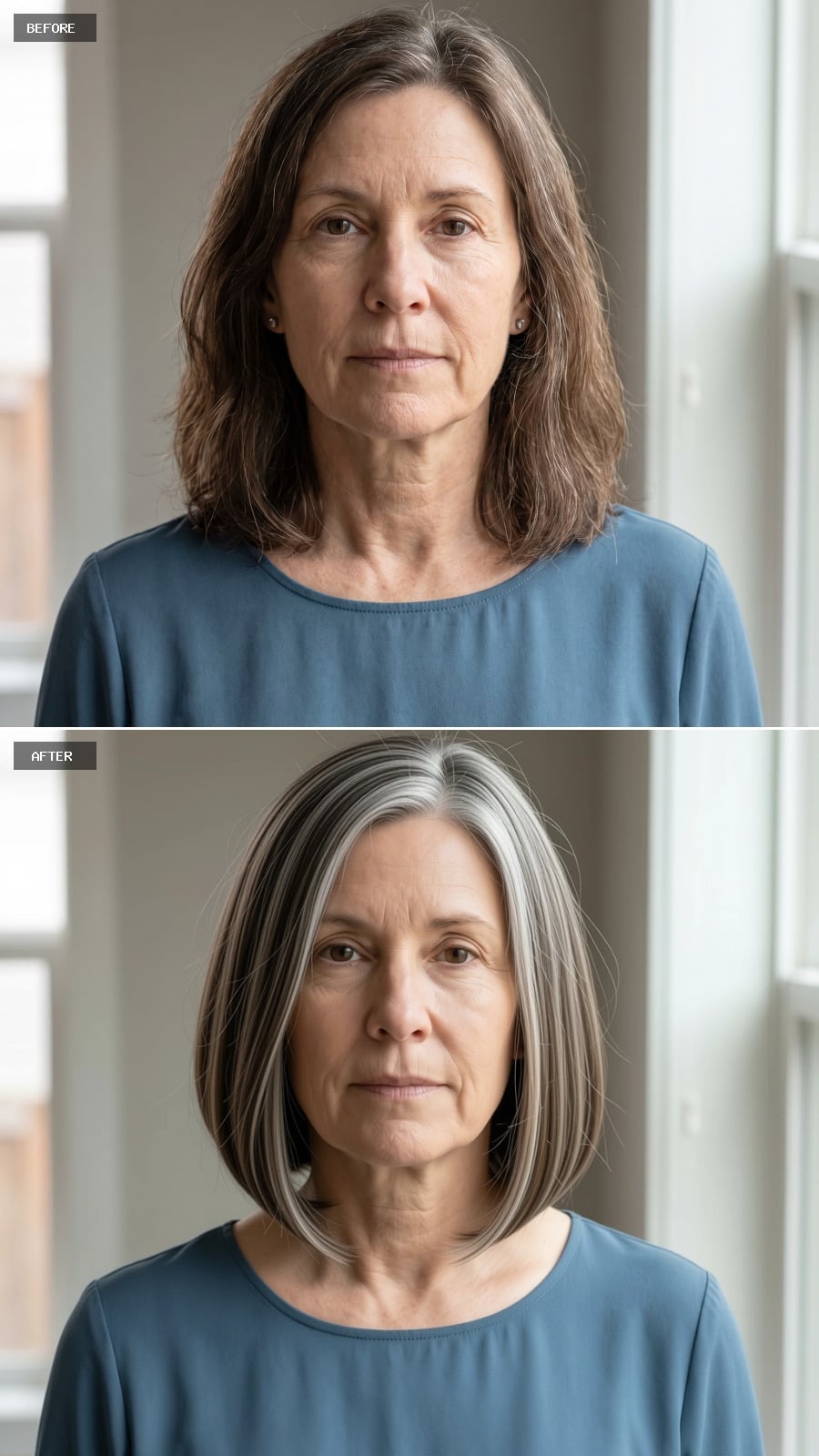
Against the original shoulder-length shape, taking the perimeter all the way to the jaw changes the proportions immediately. The neck opens up, the ends gain authority, and the face is framed by one clean line instead of several softer lengths.
Cool silver and bright white streaks move through deeper ash-gray hair, giving the surface enough contrast that the simple shape never looks flat. On naturally straight or softly wavy hair, that blunt weight line can help the ends settle into a defined silhouette with relatively little coaxing. The color supplies movement; the cut supplies discipline.
34. Slate-and-Silver Pixie With All the Movement Built Into the Cut
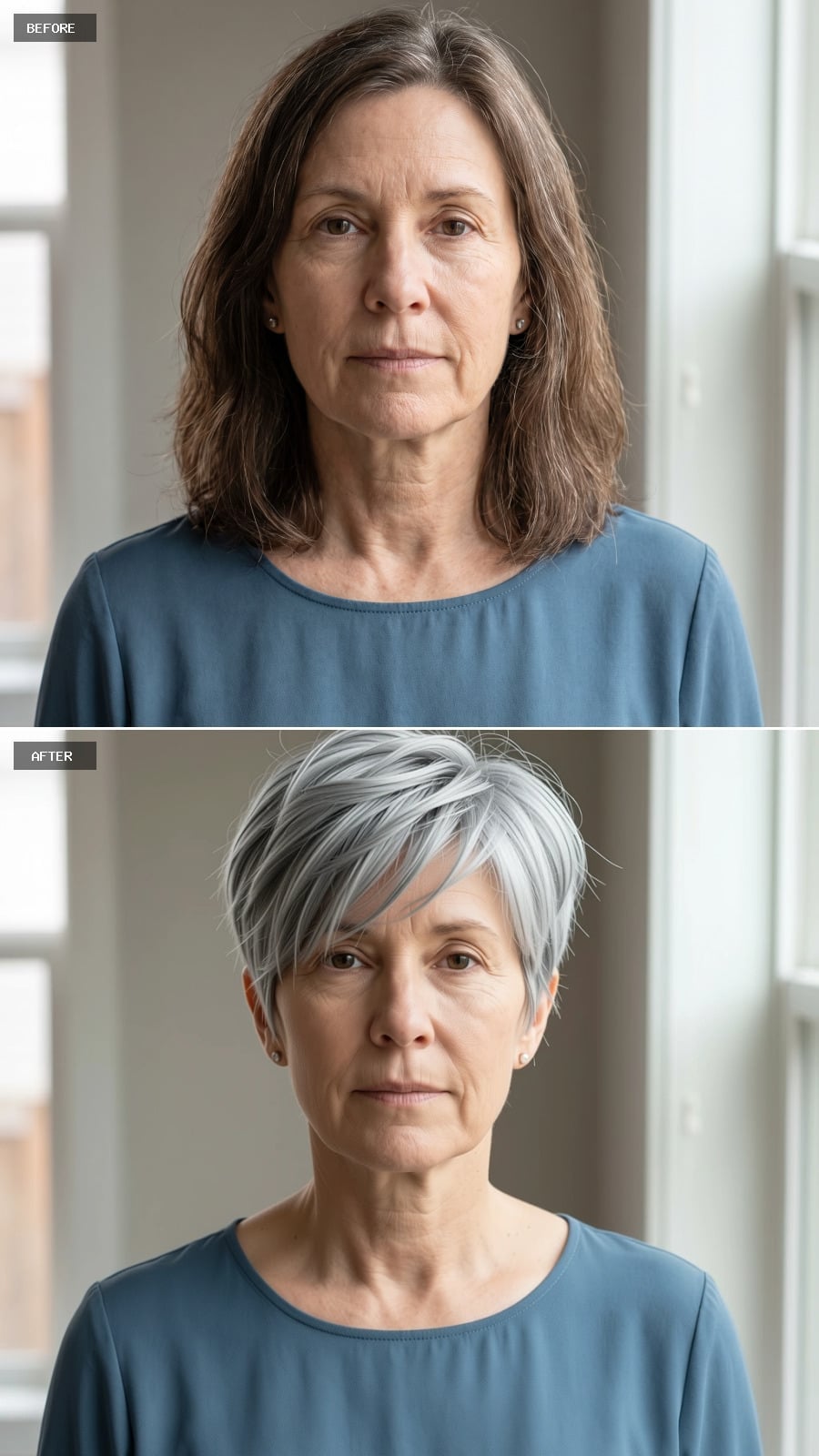
Before the bobs get any ideas about taking over, here is the sharpest reset in the gallery. The shoulder-length Before disappears almost completely, replaced by a cropped shape that puts the eyes, cheekbones, and neck back in charge.
Platinum and silver layers sweep forward through the crown, some falling longer toward the forehead while others lift just enough to keep the silhouette loose. Nothing has been cut into one rigid cap. On fine or medium hair with a cooperative natural texture, that irregularity is an advantage: the cut can look more convincing slightly tousled than meticulously arranged.
Color Note: Strong silver-and-white variation makes short layers easier to read because adjacent pieces catch light differently. The contrast is doing part of the visual work that styling products are often asked to do.
33. Blonde Done Straight and Sleek Is Apparently All the Cut Needs
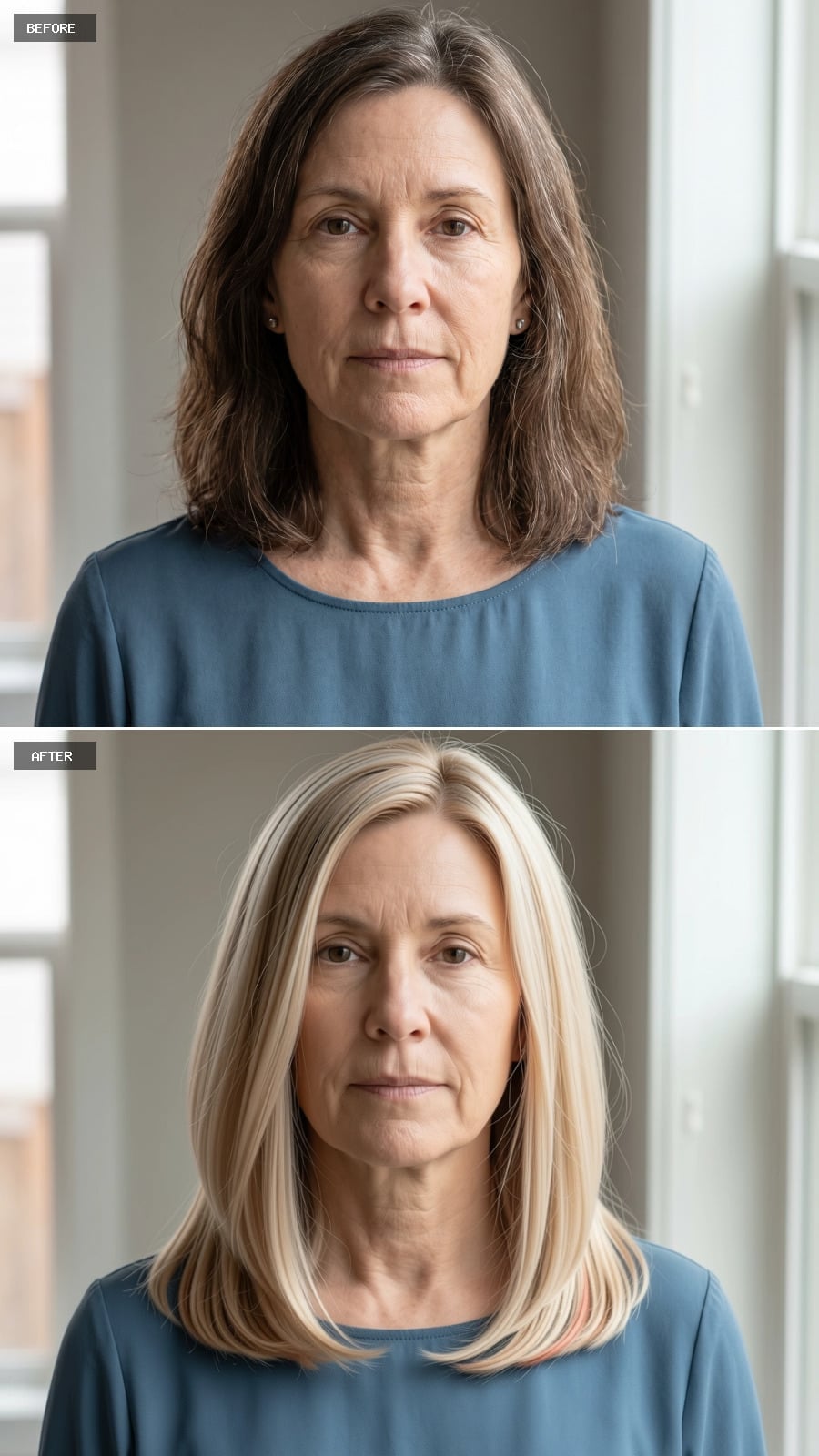
Now keep much of the original length but impose a completely different discipline on it. Blunt ends just past the collarbone and a centered part turn the softer Before into something cleaner, straighter, and more graphic.
The blonde is not one flat shade. Near-white through the crown moves into warmer gold below, giving a very simple silhouette enough tonal variation to stay interesting. For naturally straight hair, this is a strong low-fuss direction precisely because the haircut is not asking the texture to become something it is not.
32. Gray Grows Out Beautifully When the Cut Is Doing Half the Work
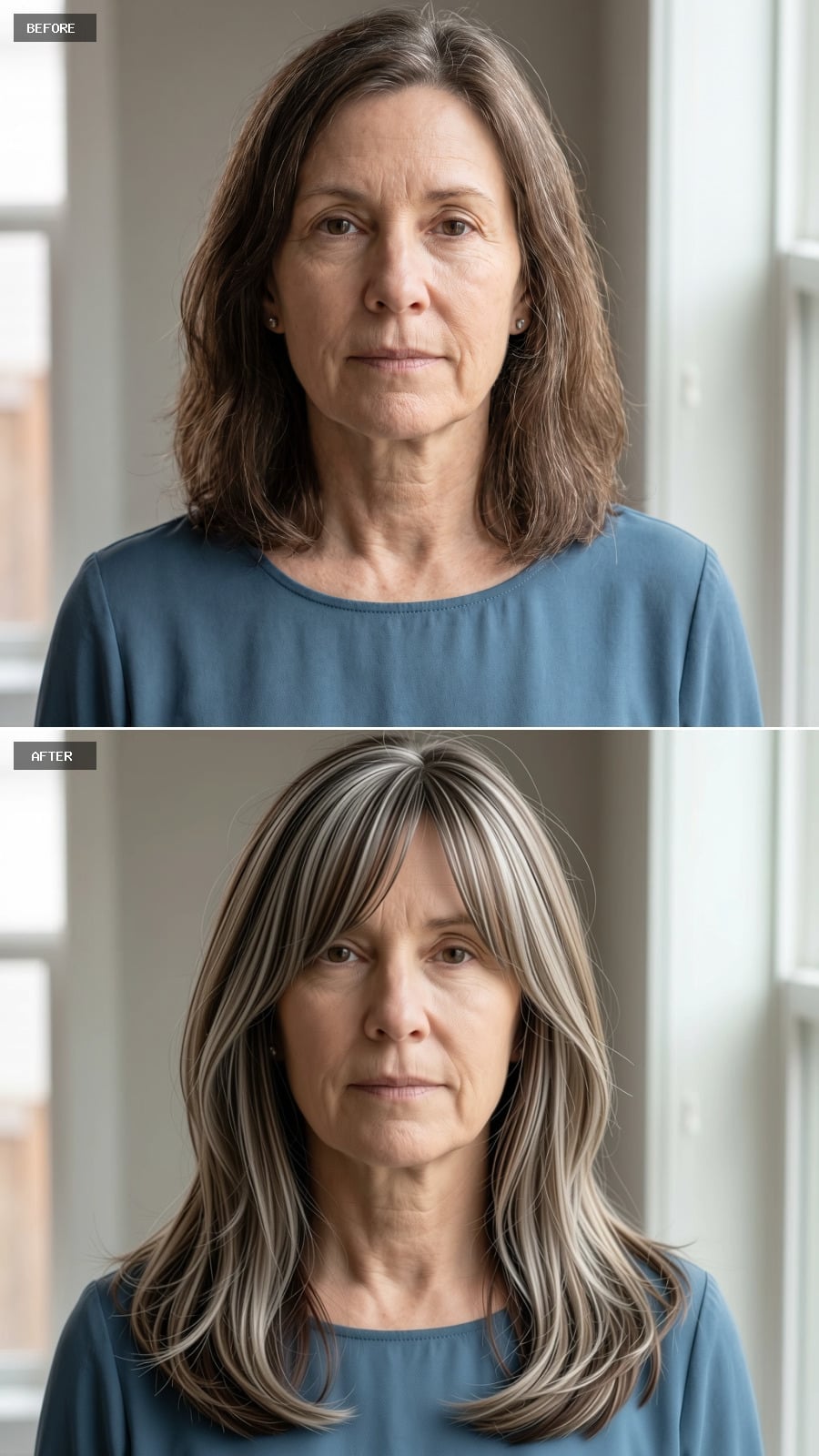
Instead of shortening the Before dramatically, this version preserves length and changes how that length behaves. Long layers and soft curtain fringe pull the eye toward the face while preventing the lower half from becoming one heavy curtain.
Cool ash, warm taupe, and near-white pieces move through the crown and into the face frame, making the gray transition part of the design rather than something waiting to be corrected. For hair with a little natural bend, those staggered lengths can encourage movement without requiring every section to be polished into obedience.
What Our Readers Say
- When we asked ThreadCurve readers about grey, 63% said they would go natural, 22% chose blended grey, and only 15% wanted to keep colouring.
- In our reader polls, layered cuts beat blunt ones by a wide margin, with 72% of voters picking layers.
From ThreadCurve reader polls and votes.
31. Bangs and a Bob With Enough Shape to Leave the Diffuser Alone
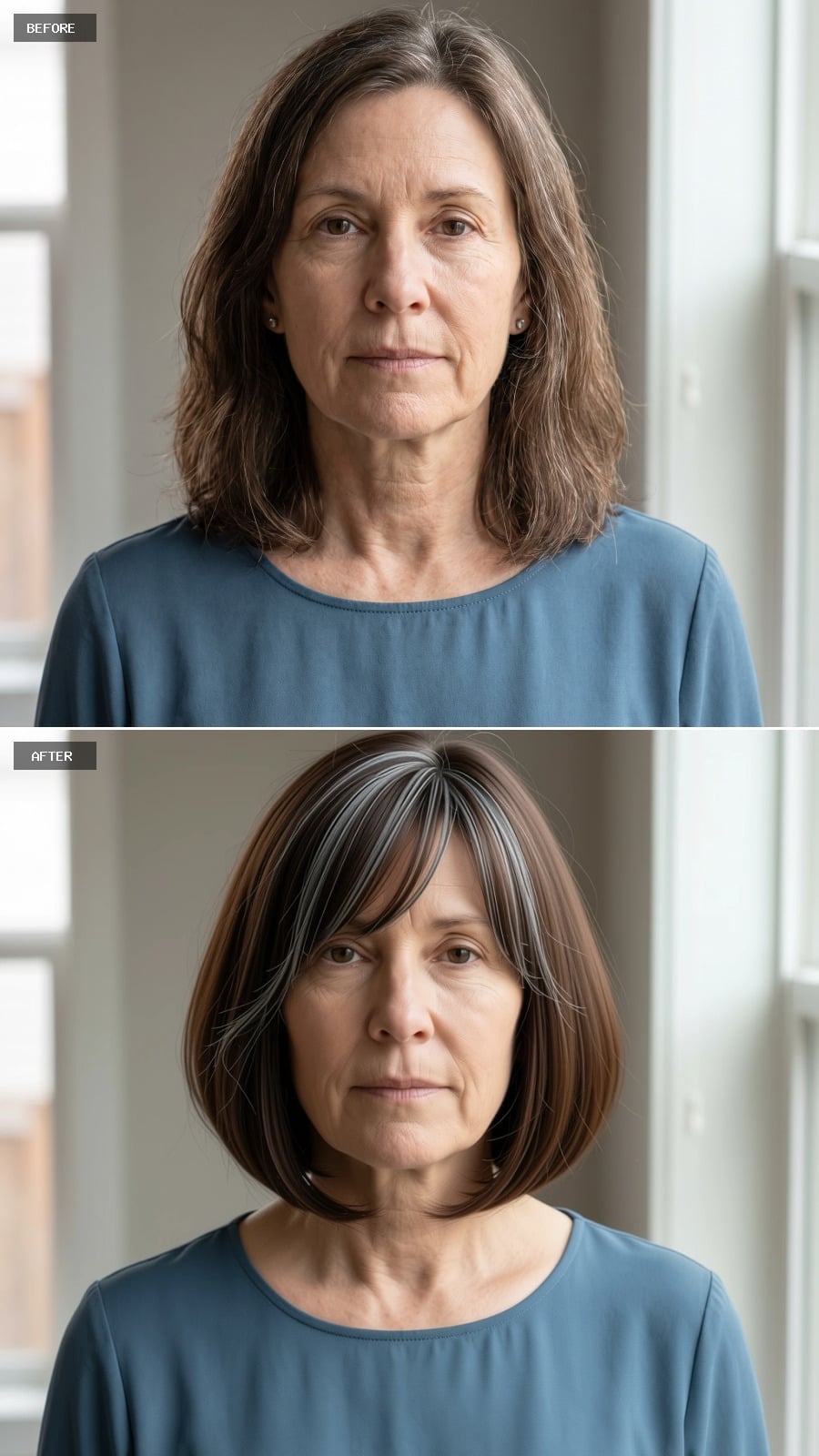
After several silver transformations, the dark brown is almost a visual palate cleanser. The hair comes up to the chin, the neck becomes visible, and side-swept bangs interrupt what could otherwise have been one very solid perimeter.
A few lighter strands near the crown add dimension without turning the haircut into a color story. The appeal is really proportion: compact length, exposed neck, and fringe soft enough to keep the geometry from becoming severe.
30. Salt-and-Pepper Layers That Look Better the Less You Fuss With Them
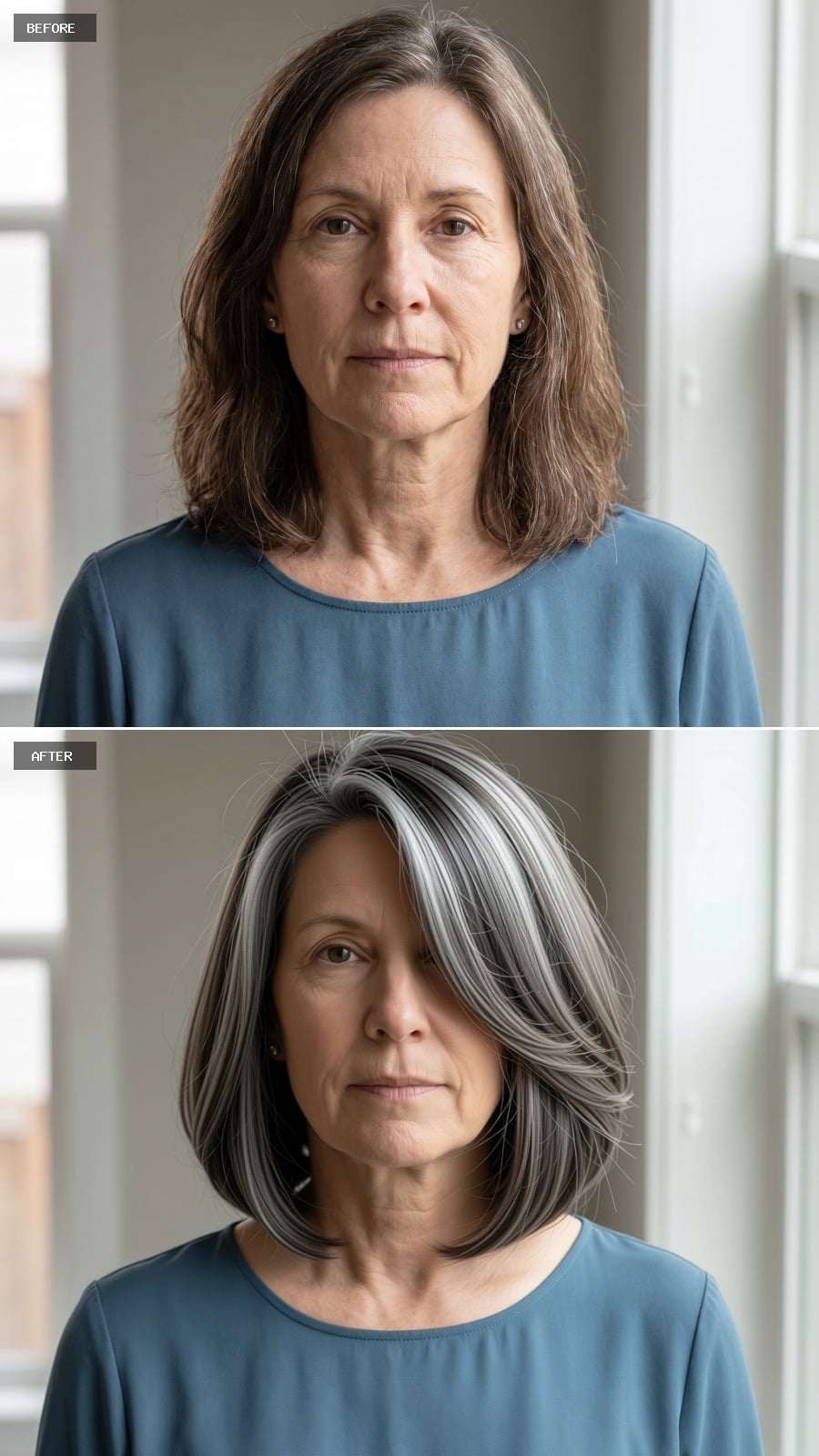
This time the bob is not built around one blunt edge. Graduation shifts some of the weight higher through the back while preserving enough length at the front to sweep toward the jaw.
Silver-white streaks against deeper charcoal make those changes in length easier to see. Because the silhouette is distributed through several layers rather than dependent on one exact perimeter, the grow-out can feel less abrupt on hair with enough density to support the crown.
29. Gray-Streaked Layers That Prove Low-Maintenance Can Still Have Glamour
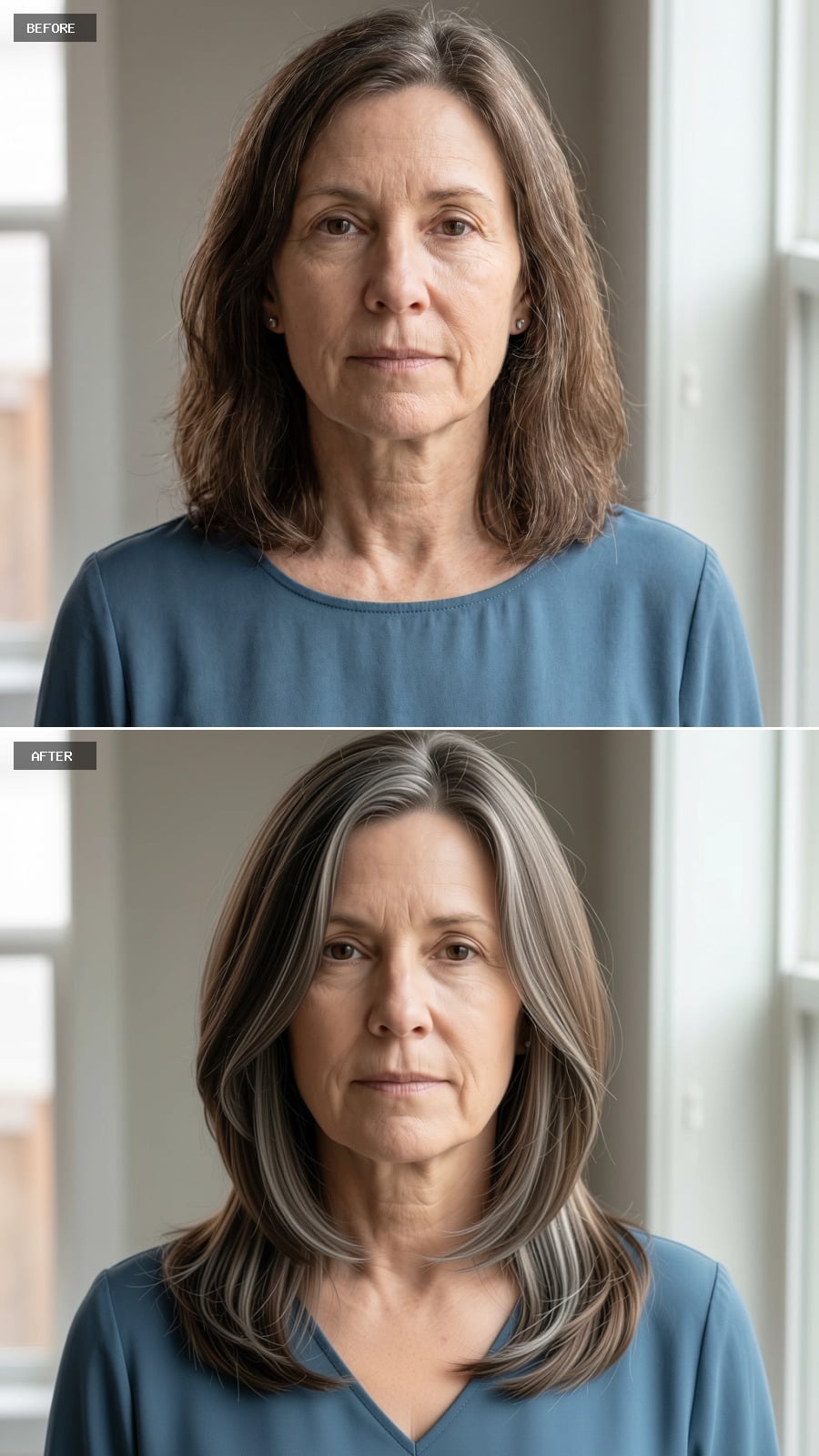
Not every low-maintenance answer has to involve the floor of a salon covered in hair. This one keeps the length and gives it a clearer internal structure instead.
Face-framing layers drop from a center part while gray and white streaks break through deeper brown at the roots. The layers remain long enough to preserve density at the ends, so the haircut moves without dissolving into wisps. It is less about manufacturing volume than giving existing volume somewhere intelligent to go.
28. Blonde Bob With Grown-Out Roots That Still Looks Deliberate
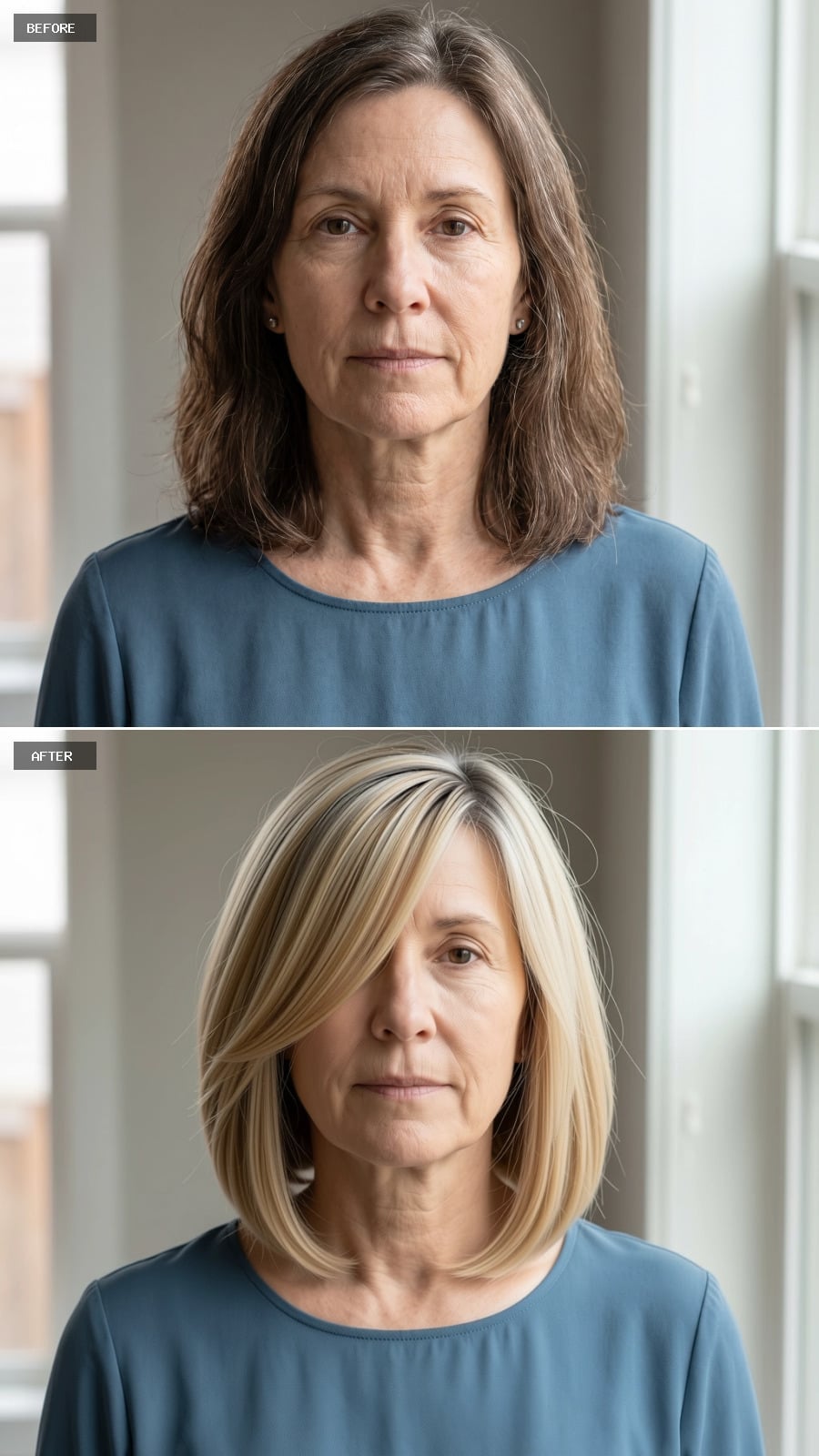
Platinum blonde meets deeper ash at the roots, turning visible regrowth into contrast instead of an emergency appointment. The shape lands around the collarbone with the front sections drawn slightly longer.
That forward pull matters. It keeps the cut from becoming a horizontal block and gives the face a cleaner frame. On straighter hair, the blunt weight line can do much of the shaping while the root-to-end color shift provides the visual activity.
27. Gray-and-White Bangs That Make the Whole Cut Look Intentional
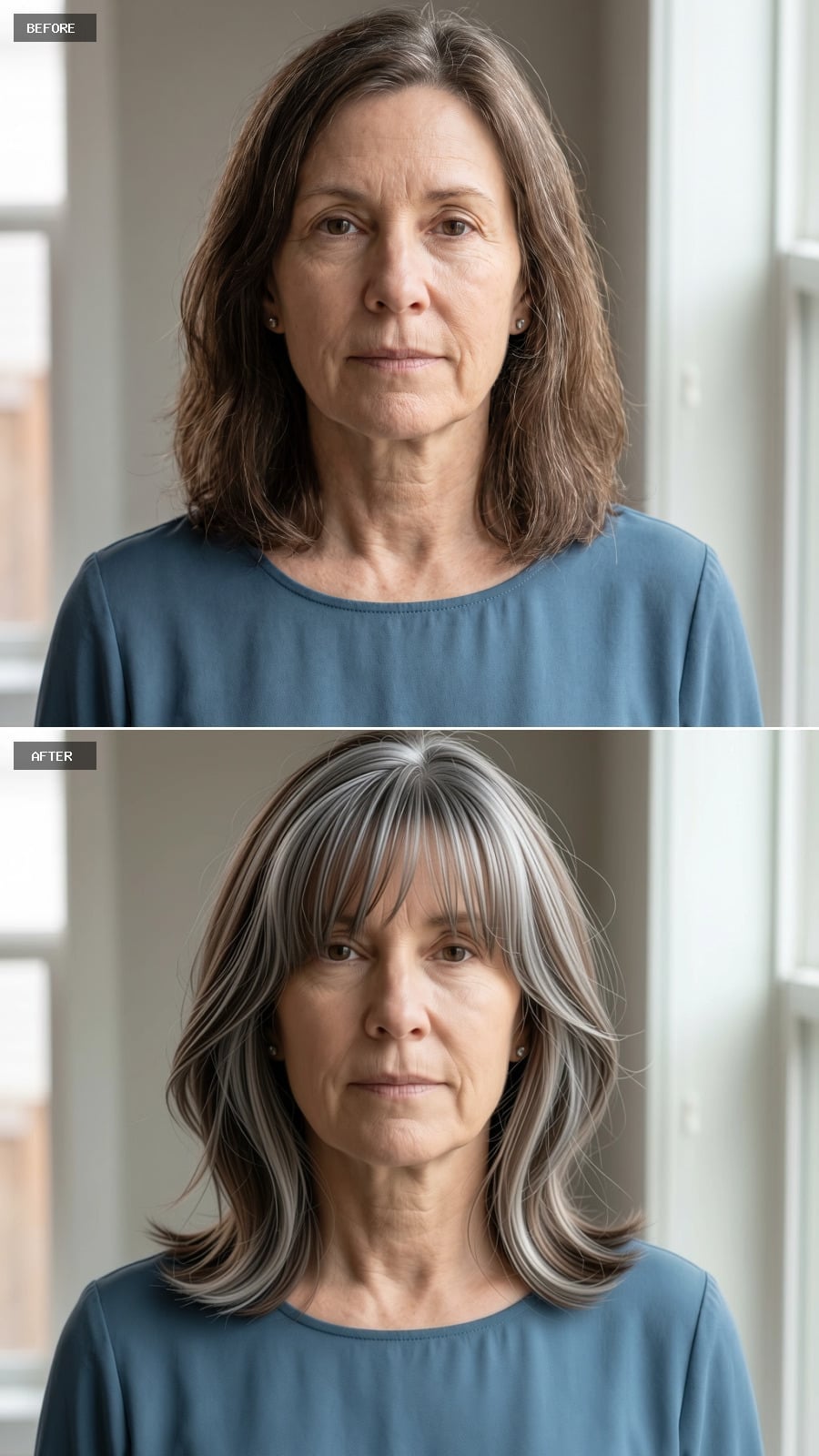
Fringe can change the architecture faster than another inch removed from the back. Here, gray-and-white strands sweep across the forehead and dissolve into longer streaked layers around the face.
The bangs stay long enough to move with the haircut rather than sitting as a separate strip across the brow. That makes them more forgiving than a short, exact fringe that needs to land in precisely the same place every morning.
26. Silver Grown Into the Cut, Not Out of It
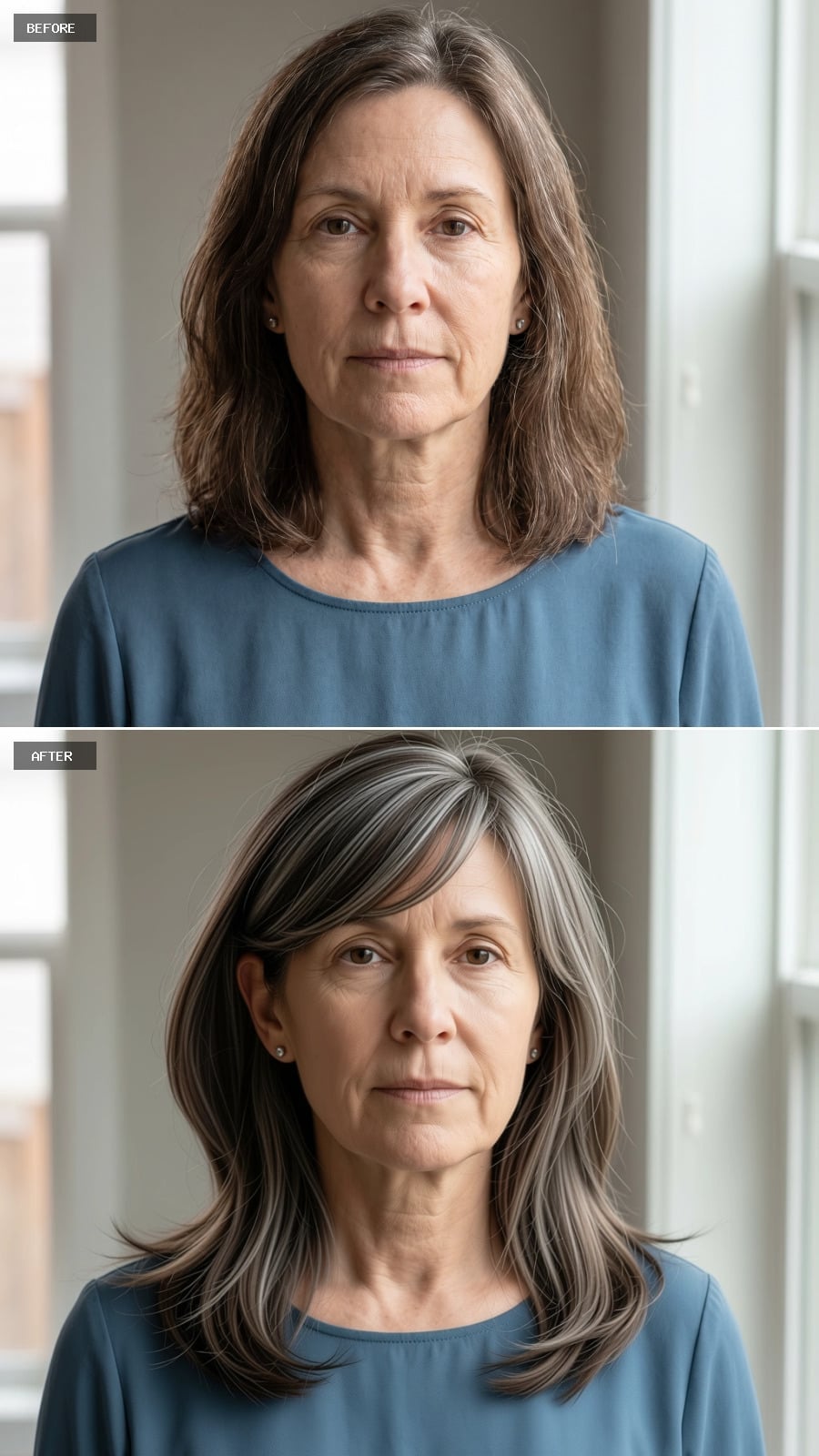
The Before treats gray as incidental. This version makes it part of the composition. The length settles just past the collarbone while long layers move through the body of the hair without stacking into obvious tiers.
The densest silver gathers at the crown and sweeps forward through the part, with darker strands underneath preventing everything from becoming one pale mass. The result is more graphic than blended—and much more interesting for it.
25. Streaked Short Bob With a Side Sweep That Does Not Need Much Encouragement
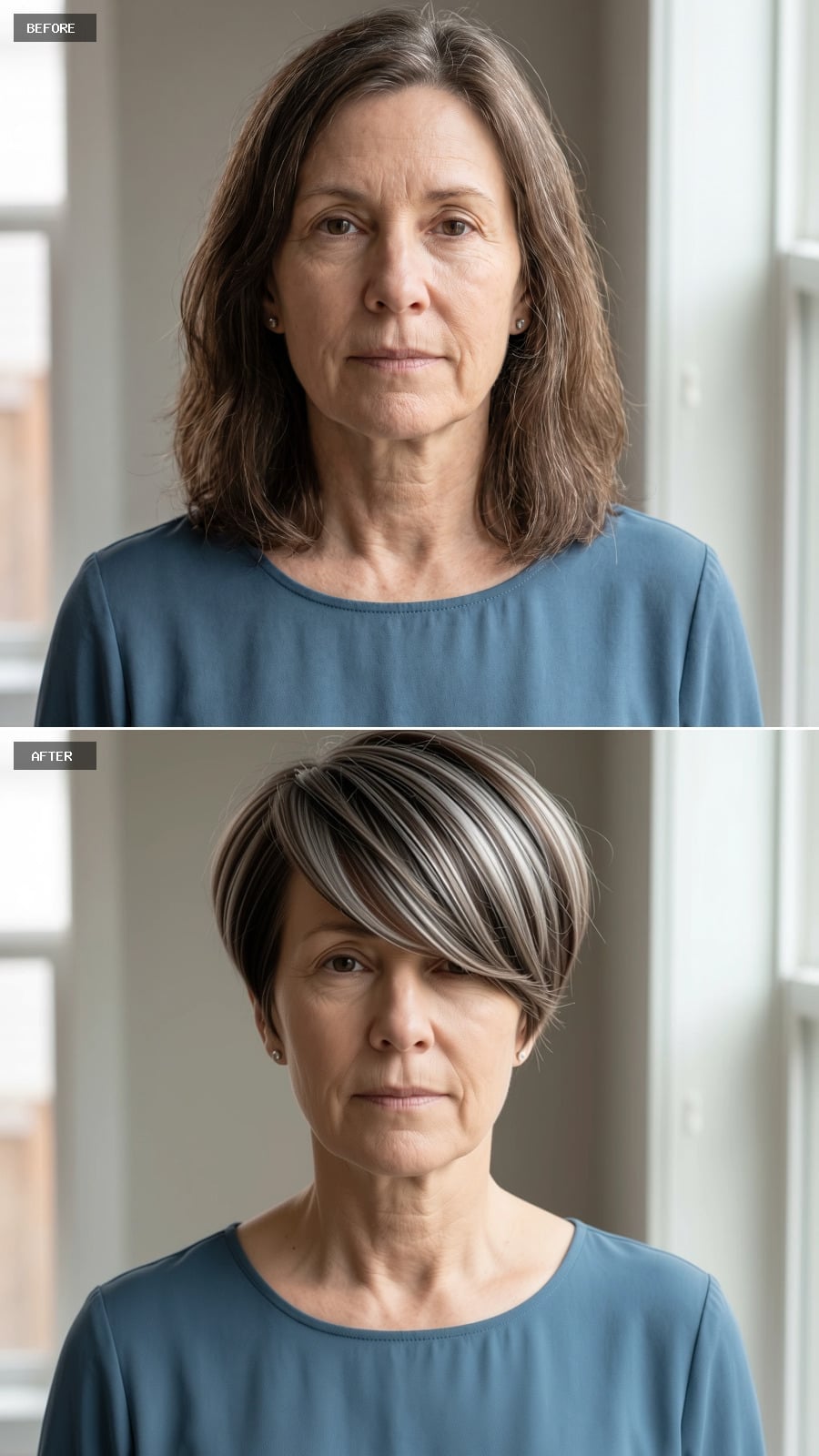
Broad dark-brown and silver-white sections turn this short bob into something much more graphic than conventionally blended gray. The perimeter rises to just past the ear while a generous side sweep moves across the forehead.
Its strength is the economy of the idea: compact shape, one clear part, strong contrast. There is enough rounding to keep the silhouette soft without layering it into visual clutter.
24. Highlights That Grow Out Like They Were Always Meant to Be There
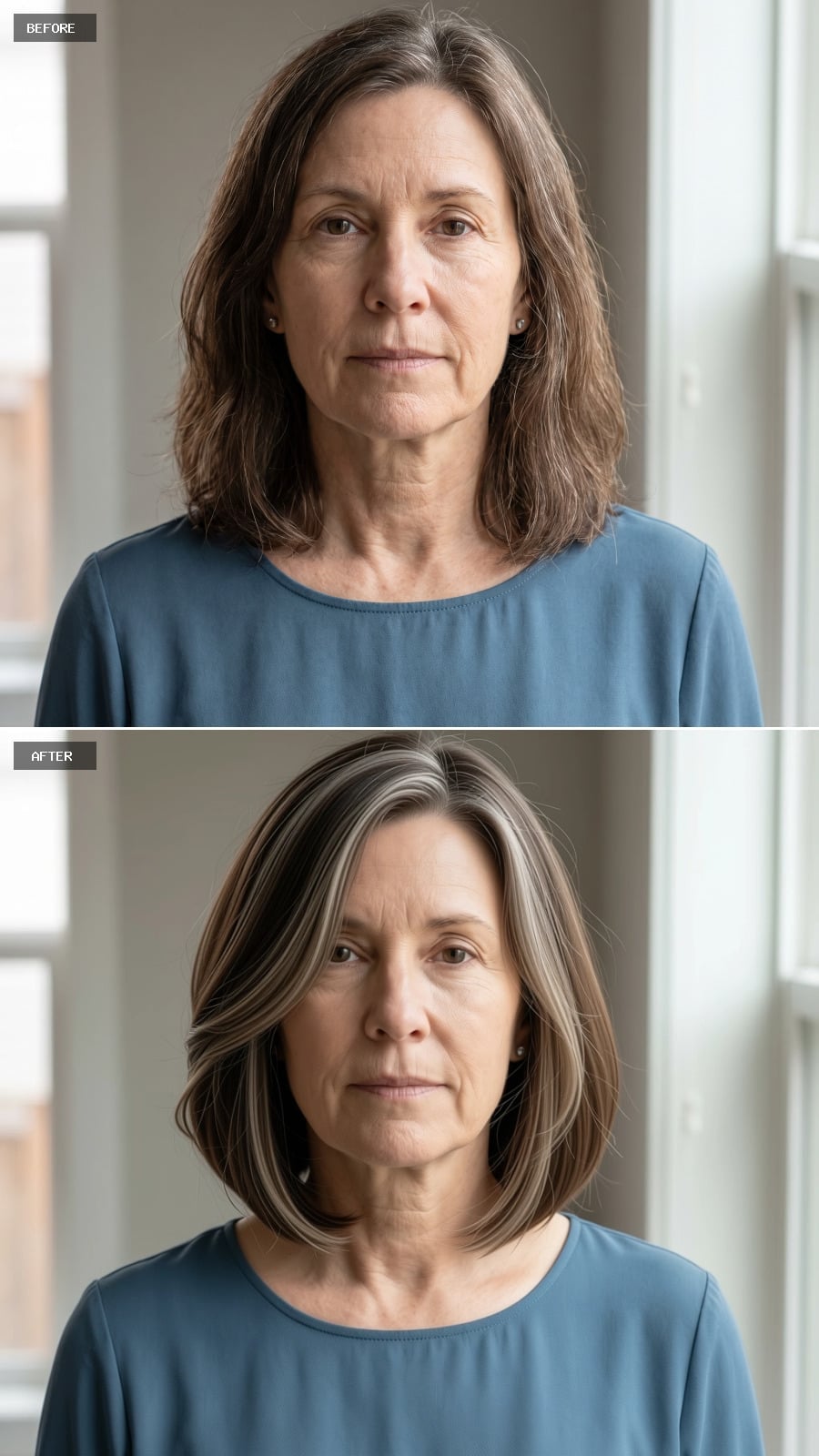
This version stays closer to the original length but cleans up the structure around it. A shoulder-length bob with interior layering gives the ends movement without abandoning the substantial perimeter.
Rich brown roots transition into broad silver-white pieces around the face, with softer gray threaded through the rest. Because the strongest light sections have a clear destination, the color feels placed rather than scattered.
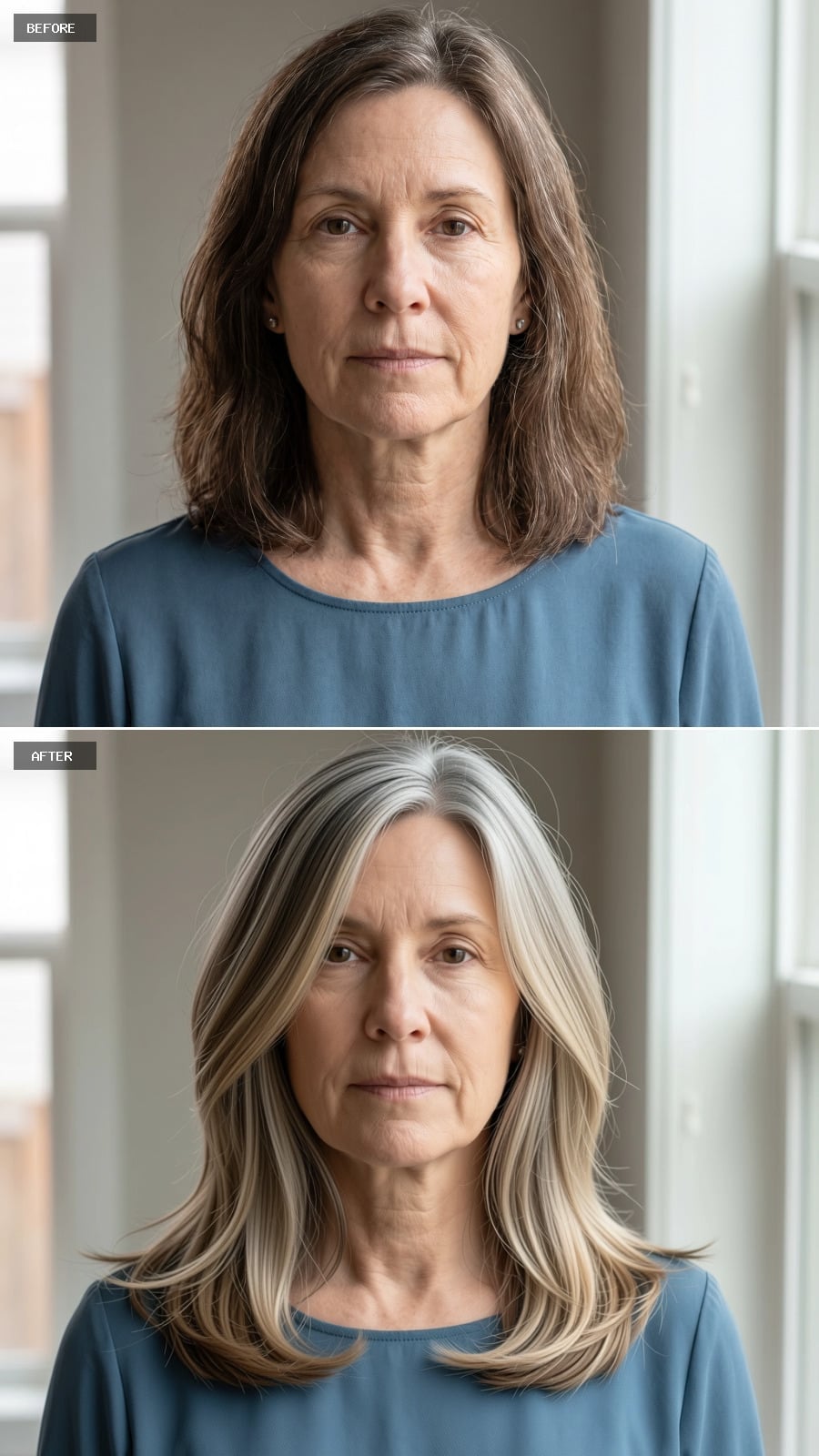
23. Grown-Out Gray With Warm Highlights Worked Into the Length
❤️ Would you like to save this?
Hair just past the shoulders fans slightly at the ends, while gray concentrated around the roots and crown moves into warmer blonde-beige through the mid-lengths.
The long layers keep that transition from forming one obvious horizontal band. Instead, light and dark cross several lengths at once, making the grow-out feel integrated rather than divided into old color and new growth.
Why the Crown Color Matters
The lightest concentration sits close to the crown instead of being hidden beneath darker color. That puts brightness near the face immediately and lets the lower tones provide contrast rather than asking the gray to disappear.
22. Gray-White Bob With Swooped Volume and a Strong Side Shape
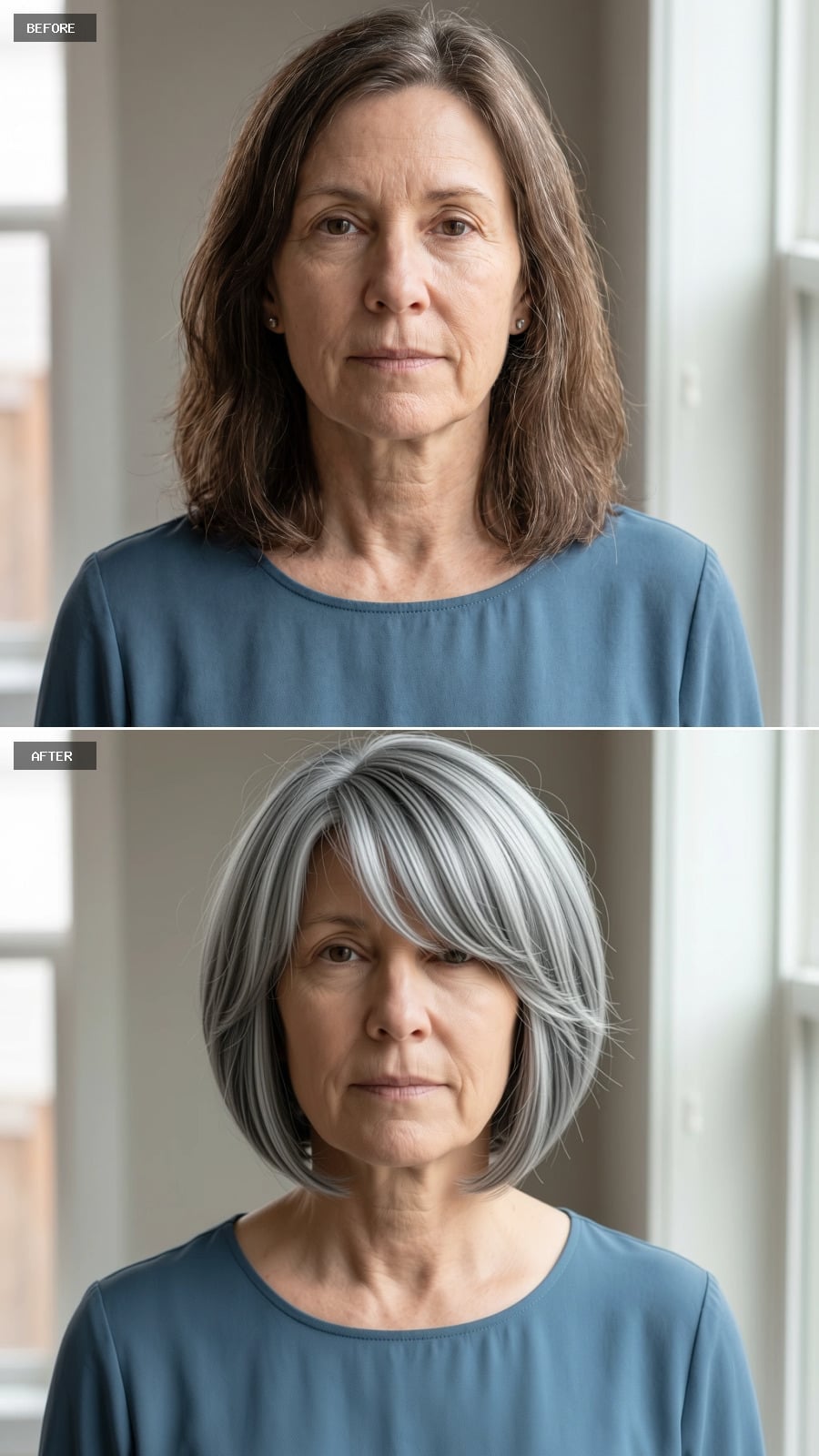
A side-swept crown changes this bob before the color even enters the argument. The heavier section moves across the top while the perimeter stays compact around the jaw, giving the cut lift without turning it into a round shell.
Bright white surface pieces against deeper steel-gray underneath make that volume easier to see. The result feels fuller without becoming too compact or overly set.
21. Straight-Line Bob With Side-Swept Bangs and Almost No Visual Clutter
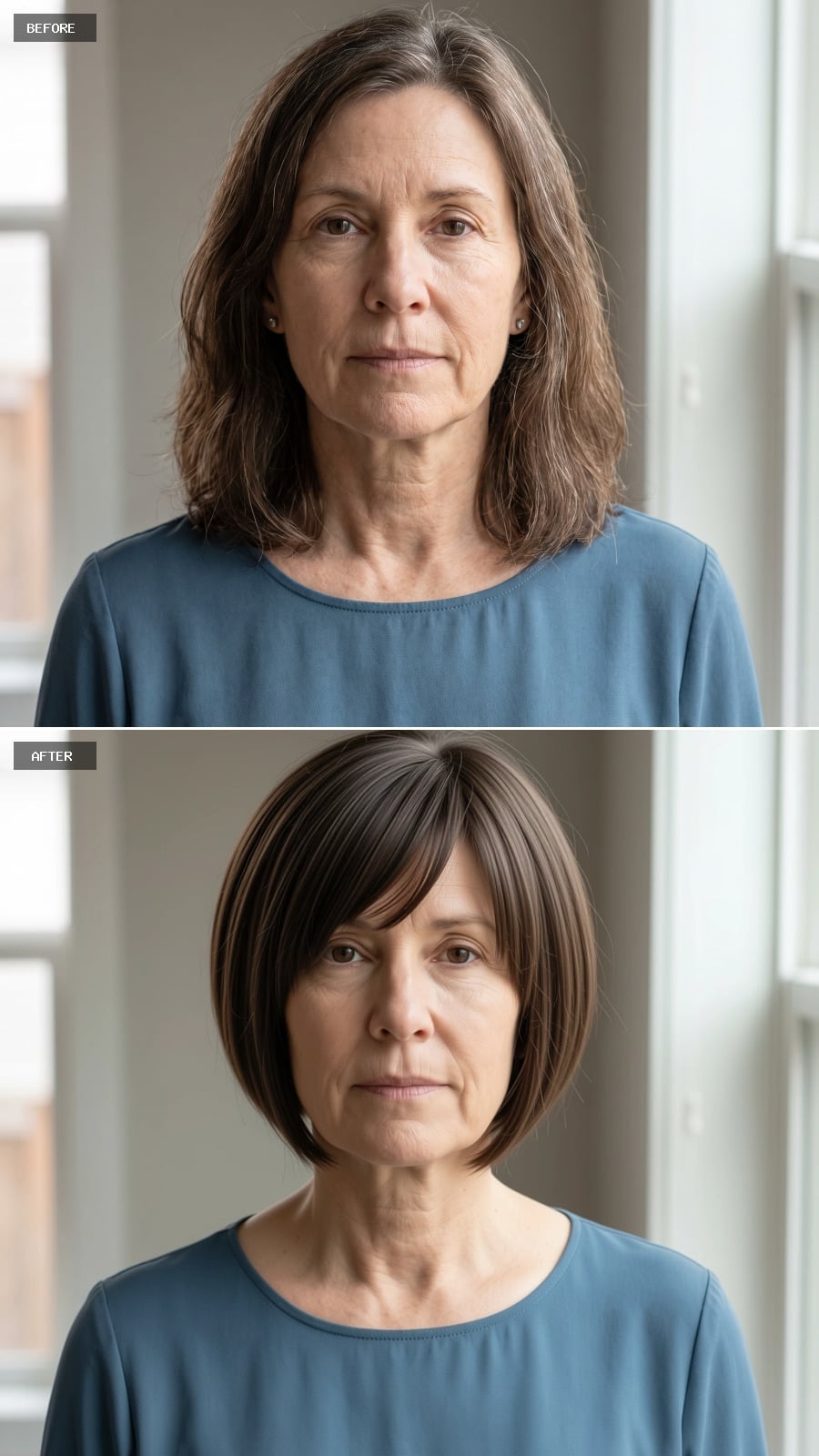
Take away the silver, the layers, and the complicated graduation and the haircut becomes almost diagrammatic. One blunt dark-brown line sits just below the jaw. One long fringe crosses the forehead.
For naturally straight hair, that simplicity can be useful. There are fewer competing lengths, no feathered ends to separate, and no elaborate crown work to maintain. The design is basically one good line plus one good diagonal.
20. Gray-and-White Bob With Natural Texture Left in the Picture
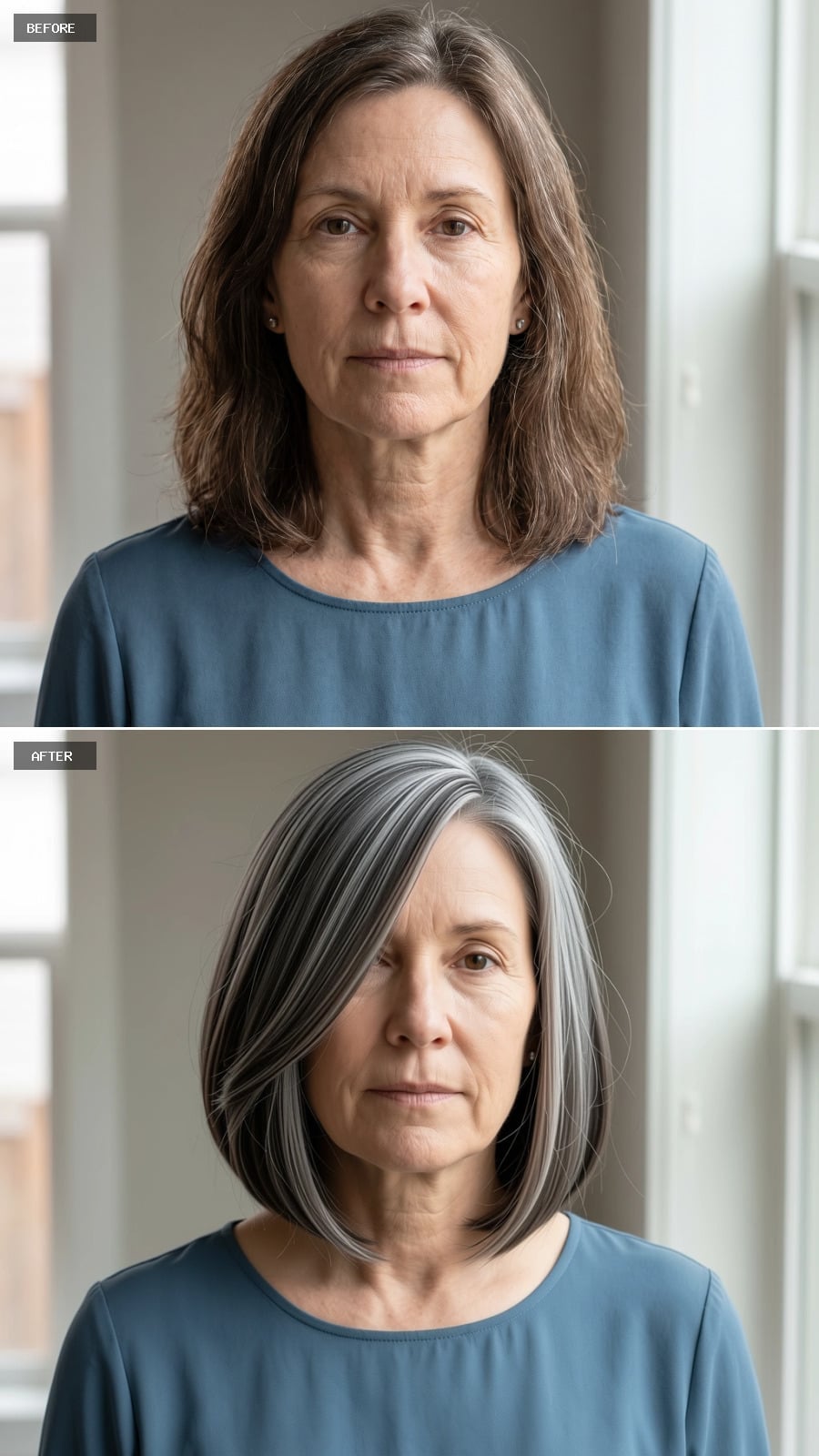
Not every bob needs to be polished into glass. Here, a jaw-skimming shape keeps a little looseness through the surface while white streaks move through gray in irregular bands.
A side part pushes the front diagonally across the forehead, giving natural bend somewhere to go. The slight irregularity is what keeps this from feeling overly coiffed; the haircut makes sense without requiring every strand to agree with its neighbor.
19. Gray-and-White Layers With Enough Length to Keep Moving
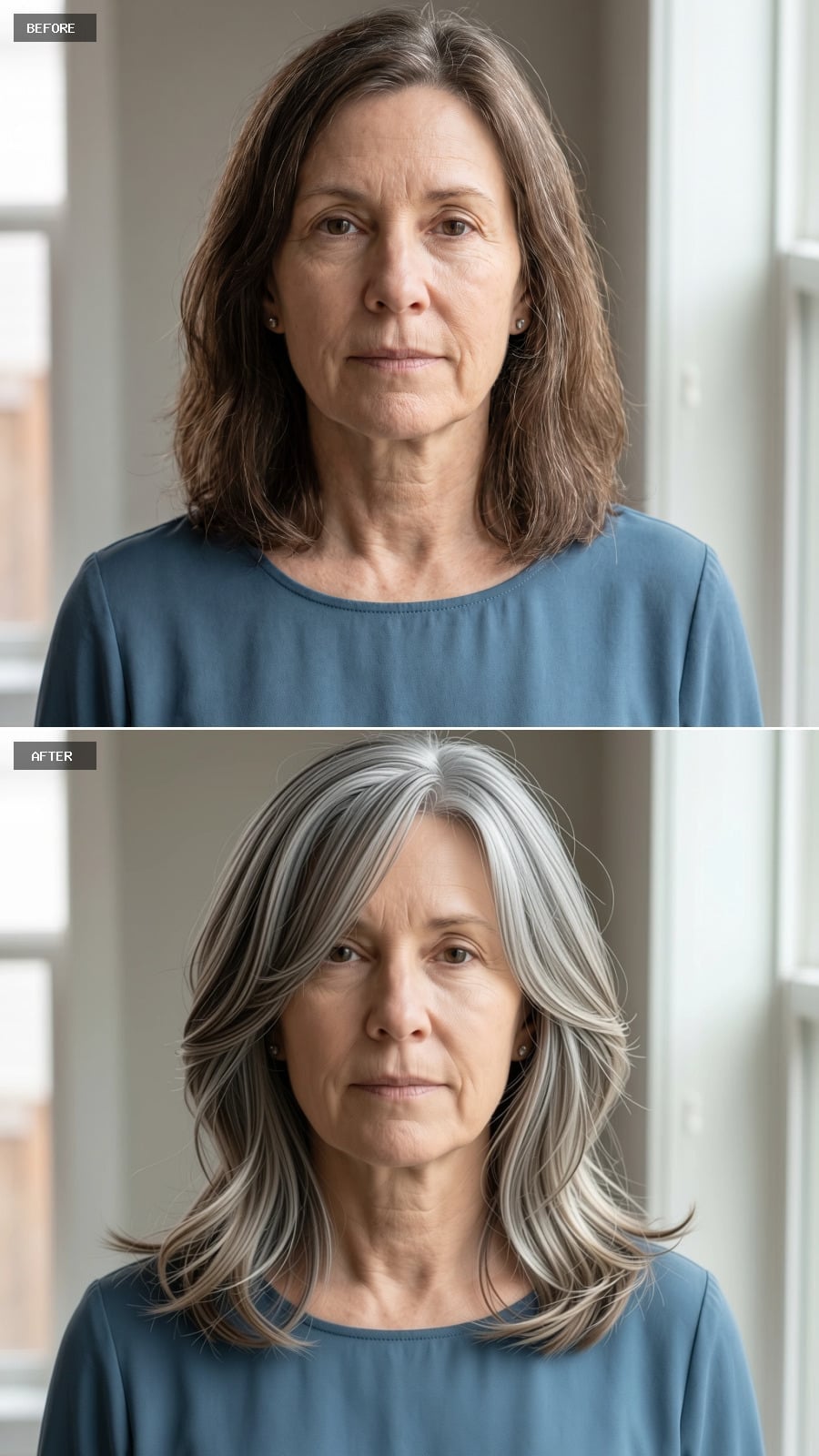
After several compact bobs, the extra length changes the rhythm again. Cool white around the crown moves into deeper gray below while long layers sweep away from the face instead of collapsing toward it.
The ends retain enough weight to keep the haircut substantial. That is the crucial distinction: layering creates movement without automatically sacrificing density.
18. Dark Brown Bob With Silver Streaks Concentrated at the Crown
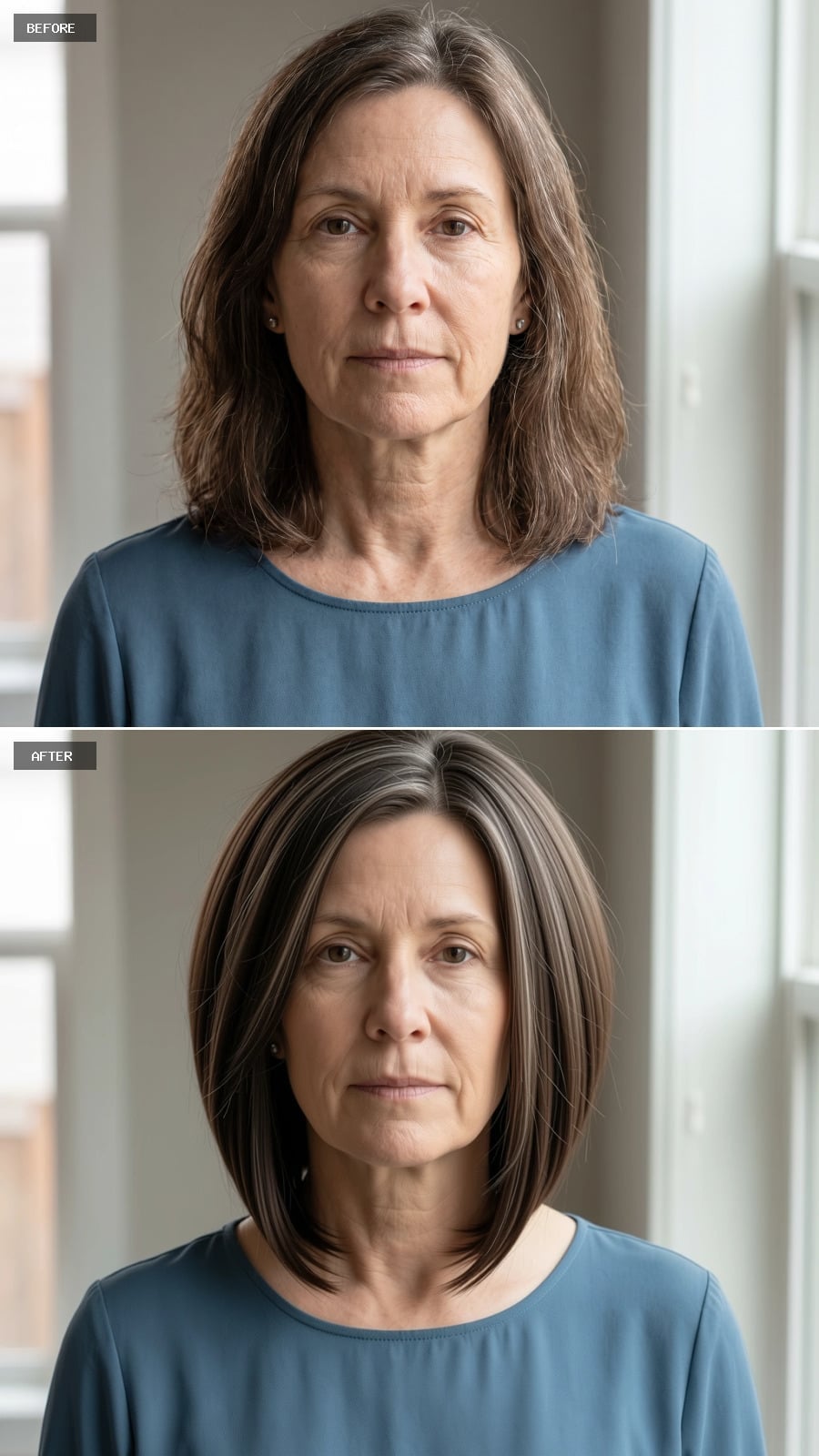
Here the gray is not evenly misted through the hair. It arrives in concentrated sections near the crown, creating a sharper graphic contrast against the dark brown underneath.
The chin-length shape stays deliberately simple, with slightly longer front sections preventing the face from being boxed inside one blunt line. The silver acts almost like a highlight panel, and the haircut is restrained enough to let it.
17. Silver-Streaked Bob With a Longer Front and Strong Face Frame
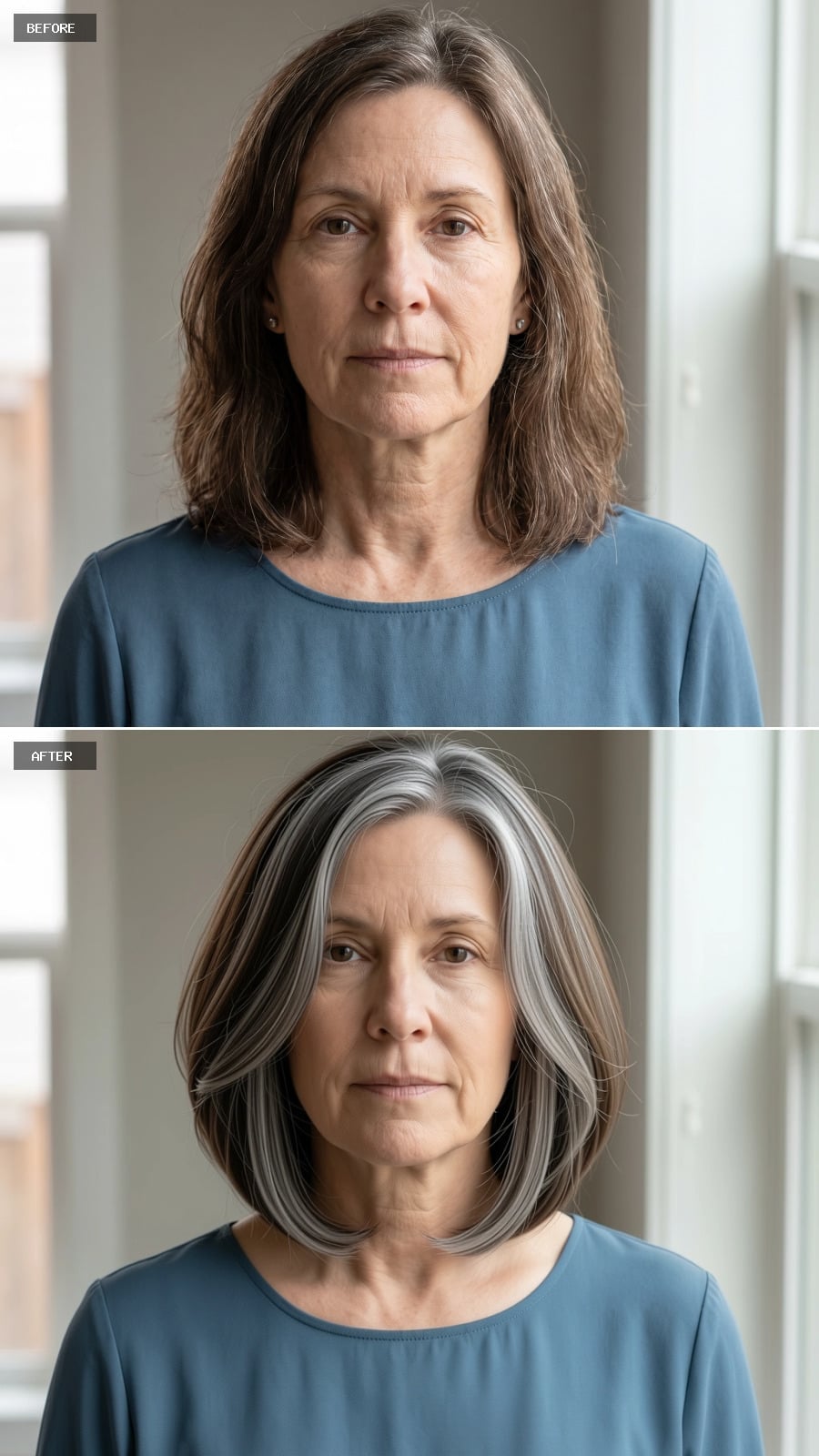
Dark brown near the roots moves toward silver and white through the ends, with the brightest sections concentrated closest to the face. That placement pulls attention inward before the cut itself does anything dramatic.
The perimeter sits just below the jaw, long enough to swing but short enough to remain definite. Slightly extended front pieces give the bob direction without pushing it into a theatrical A-line.
16. Gray-and-White Bob With Soft Jawline Shape and Easy Side Lift
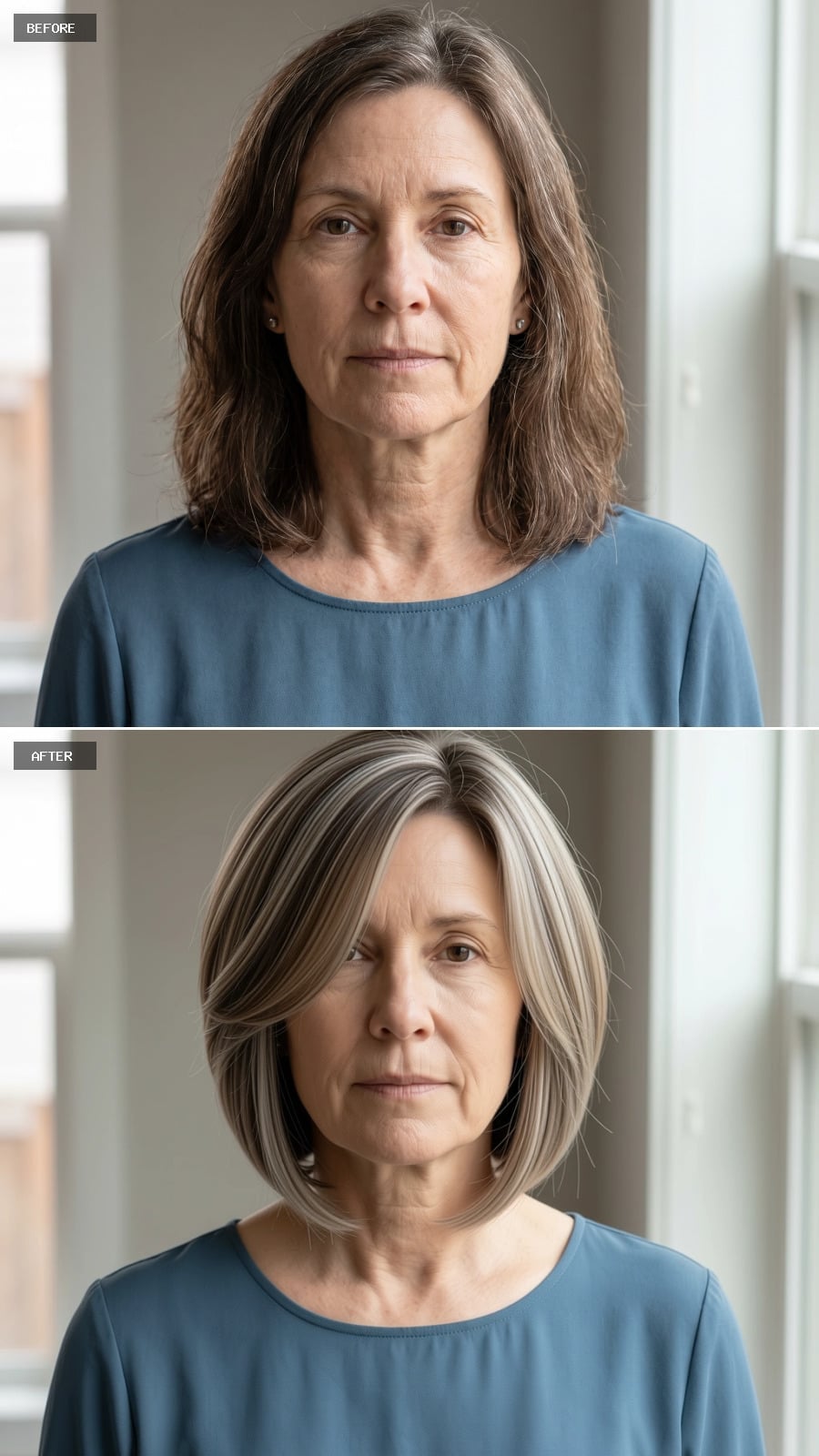
This version is gentler than the sharper angled bobs. The perimeter rounds through the jaw, brighter white panels sit closer to the face, and an off-center part keeps the crown from becoming perfectly symmetrical.
The important issue is proportion, not some universal rule about what length is supposedly flattering after 60. Enough neck remains visible to keep the shape light while enough hair stays around the face to soften the line.
15. Gray-Streaked Bob With a Slight Forward Angle
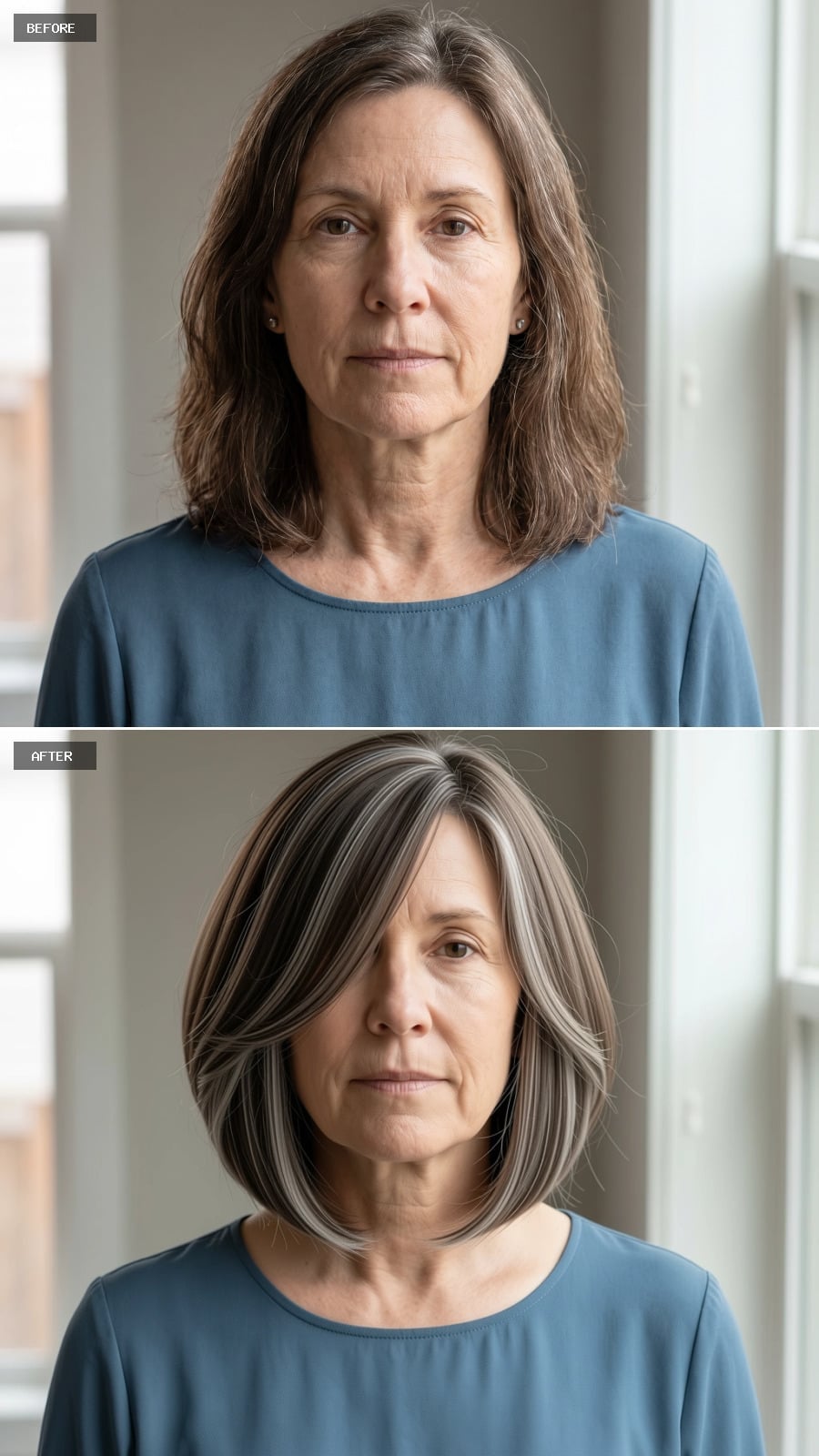
Gray and brown run through this bob in broad streaks while the front panels extend just slightly beyond the back. It is a modest adjustment, but against the unchanged Before the difference in direction is easy to see.
The crown retains some fullness while the jawline stays clean. No exaggerated stack, no aggressive wedge, no need for the haircut to announce its engineering from across the room.
14. Silver Streaks Swept Forward Into a Clean, Blunt Bob
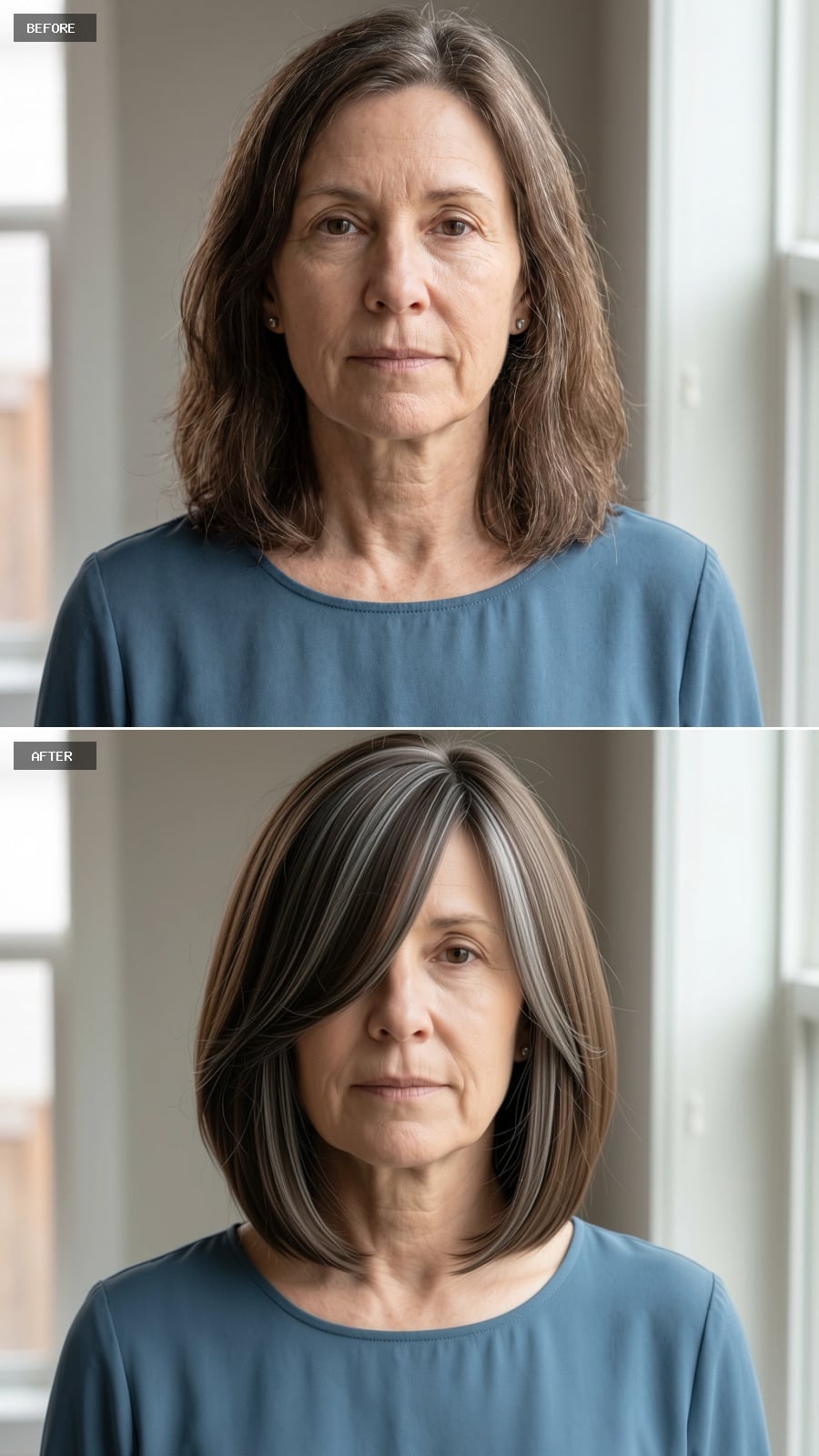
Bold gray-and-brown streaks run from root to tip, giving an otherwise simple jaw-length bob plenty of visual activity.
The perimeter remains blunt while a long fringe sweeps across the forehead. Two clear ideas do nearly everything: one strong horizontal line below, one diagonal above. There is no need to complicate the middle.
Pro Tip: When natural silver arrives in bold sections rather than an even haze, part placement and perimeter shape can help those streaks look deliberate instead of treating them as something that needs to be buried beneath uniform color.
13. Salt-and-Pepper Bob With Swept Volume and a Strong Weight Line
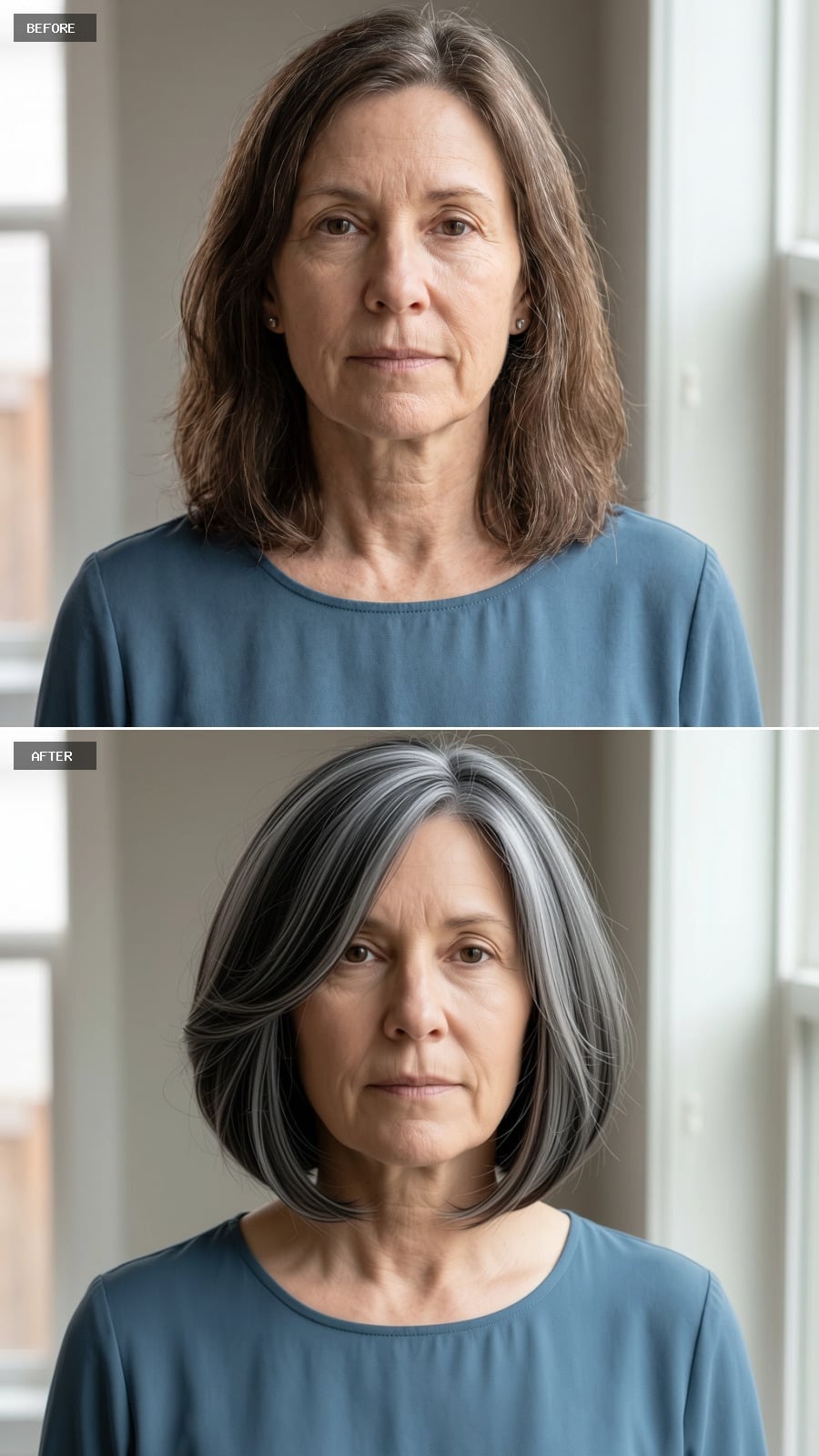
Gray roots move toward brighter white through the crown while the layers fall forward and meet a cleaner, heavier perimeter around the jaw.
That tension between movement above and weight below is what keeps the haircut from becoming fluffy. The top can separate and shift; the bottom still tells you exactly where the design ends.
12. Gray-White Bob With Swept Layers That Give the Shape a Clear Direction
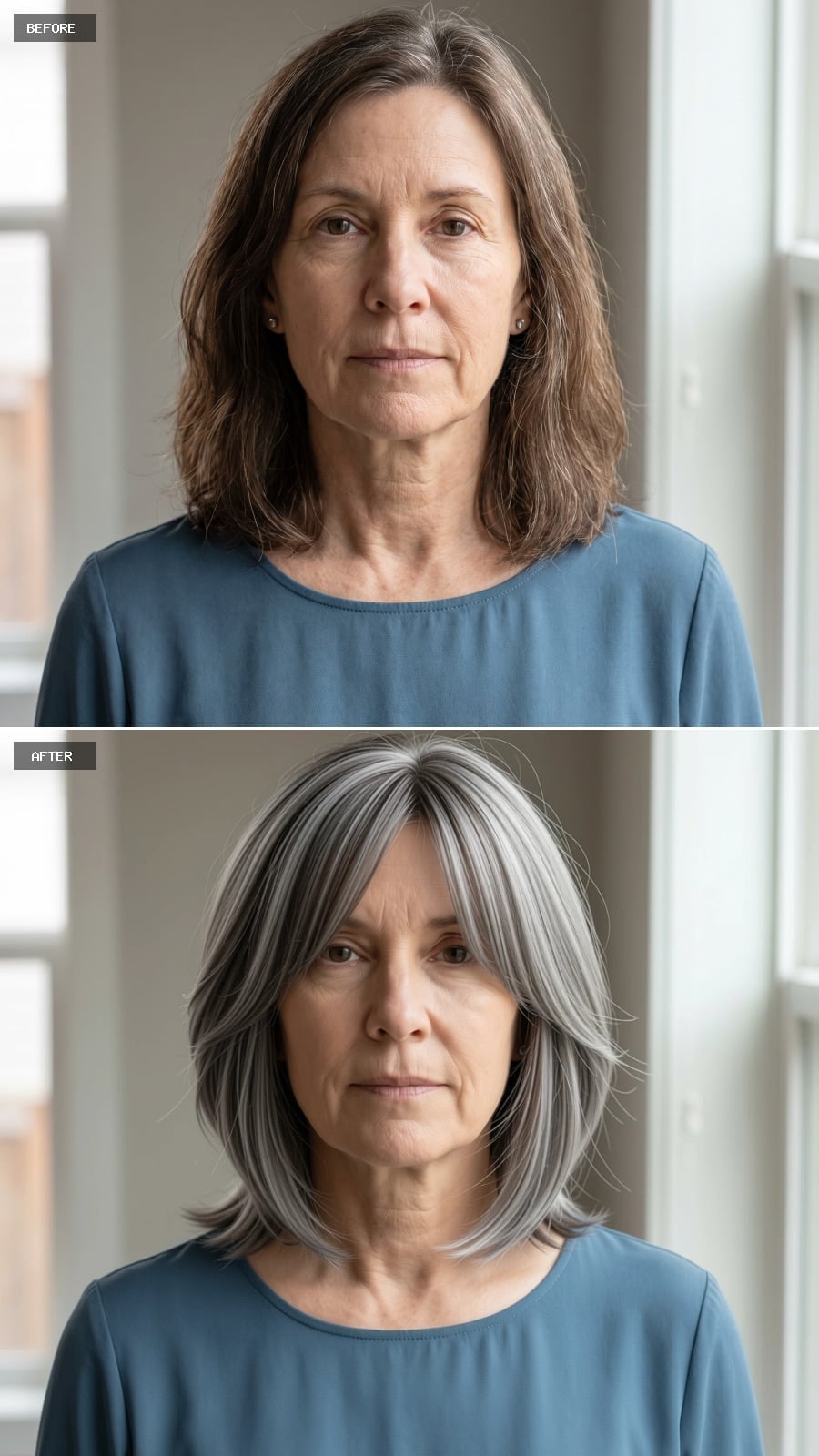
Panels of silver and white travel diagonally across the face in a bob that sits just above the shoulders. The off-center part gives those layers somewhere to go rather than allowing them to hang vertically on both sides.
The movement is mapped into the haircut itself. Color merely makes the different planes easier to see, especially where bright pieces cross the darker gray beneath them.
Cut Note: Long diagonal layers can create movement without removing too much density. That distinction matters on finer hair, where aggressive texturizing may make the ends look thinner rather than easier.
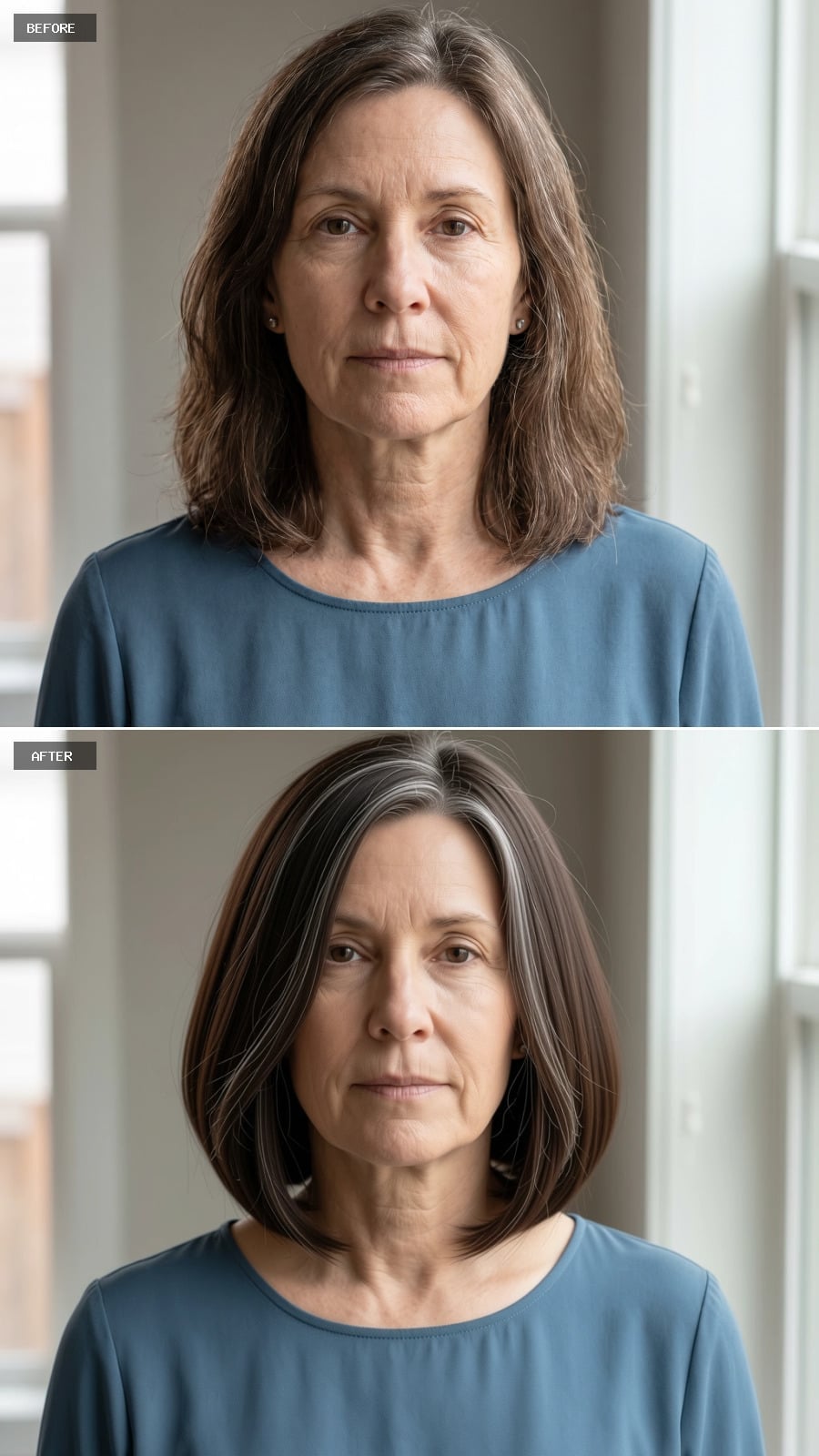
11. Gray Streaks Swept Forward Through a Straighter Bob
❤️ Would you like to save this?
This bob is noticeably straighter and less rounded than several of the others. Bold silver near the crown moves forward through darker brown above a perimeter that stays close to the jaw.
Slightly longer front sections keep the face from disappearing inside one blunt line. The result is controlled without being rigid, a useful direction for straighter hair that does not need extra volume engineered into it.
10. Gray-and-White Bob With a Clean Gradient From Root to End
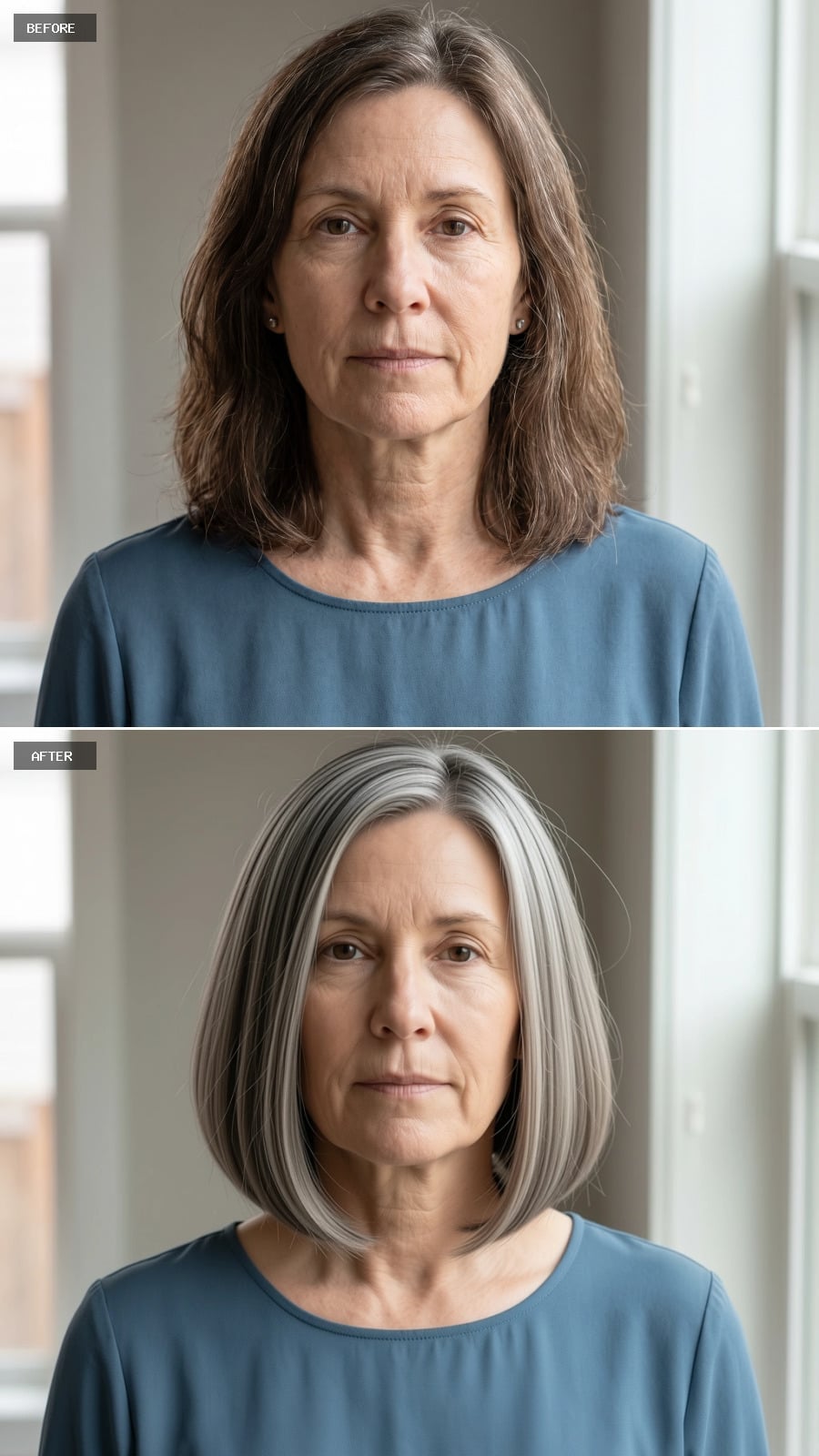
Darker roots travel toward bright white ends, making the color gradient almost as important as the graduation of the haircut. The front reaches the jaw while the sides pull slightly shorter behind it.
Rather than adding obvious choppy texture, the shape stays clean. That leaves the surface calm enough for the root-to-end contrast to become the main source of movement.
9. Grown-Out Gray Streaks With Internal Layers That Keep the Bob From Collapsing
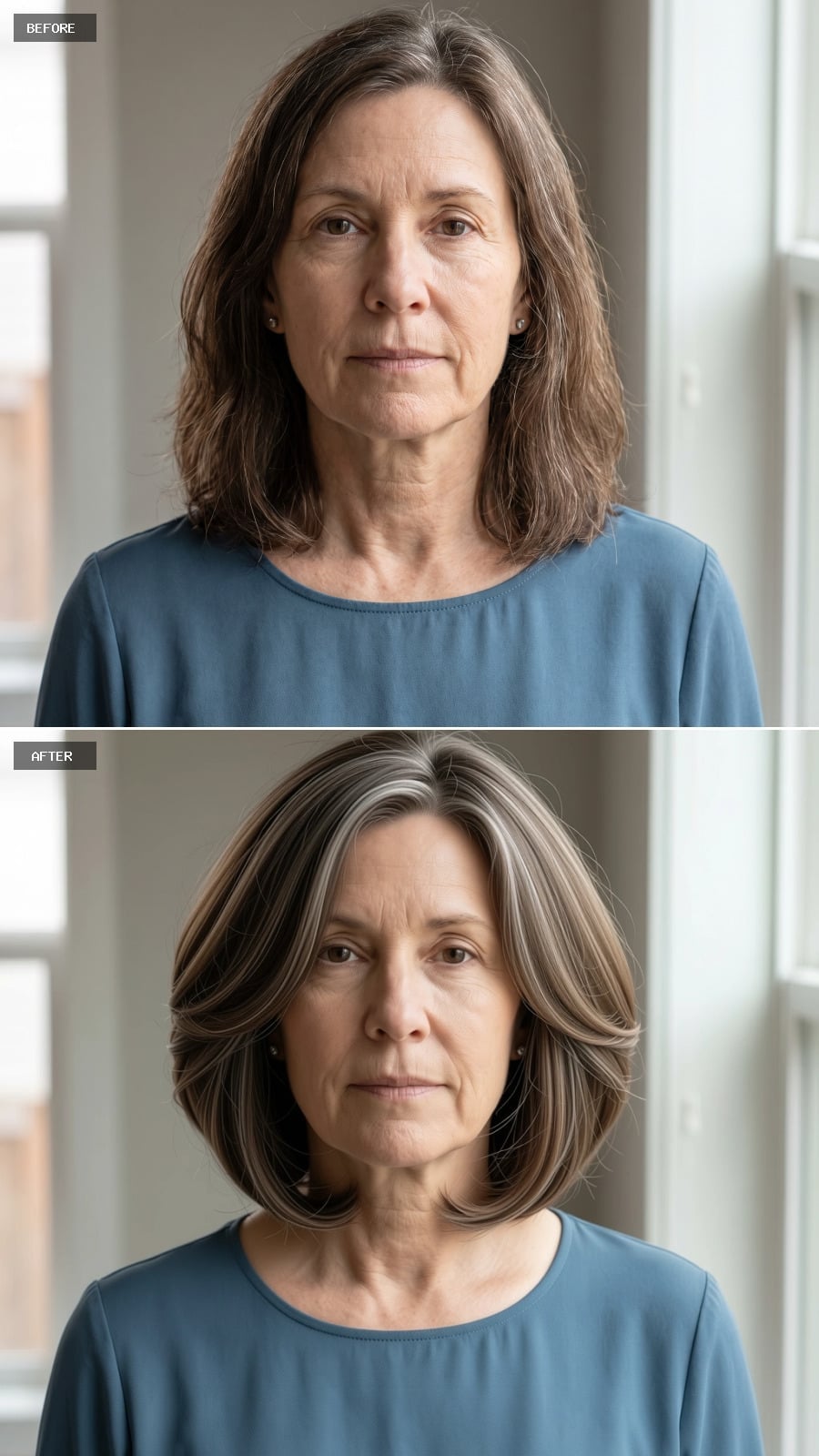
Silvery-white pieces fan through the crown and into a bob landing just below the jaw. Unlike the blunter cuts, this one relies on internal layering to remove some weight without sacrificing a recognizable perimeter.
The edges become softer and the center of the haircut looser. That makes it a useful direction for hair that needs some bulk released but still benefits from a definite overall length.
8. Highlights Cut Into a Bob With Enough Contrast to Stay Interesting
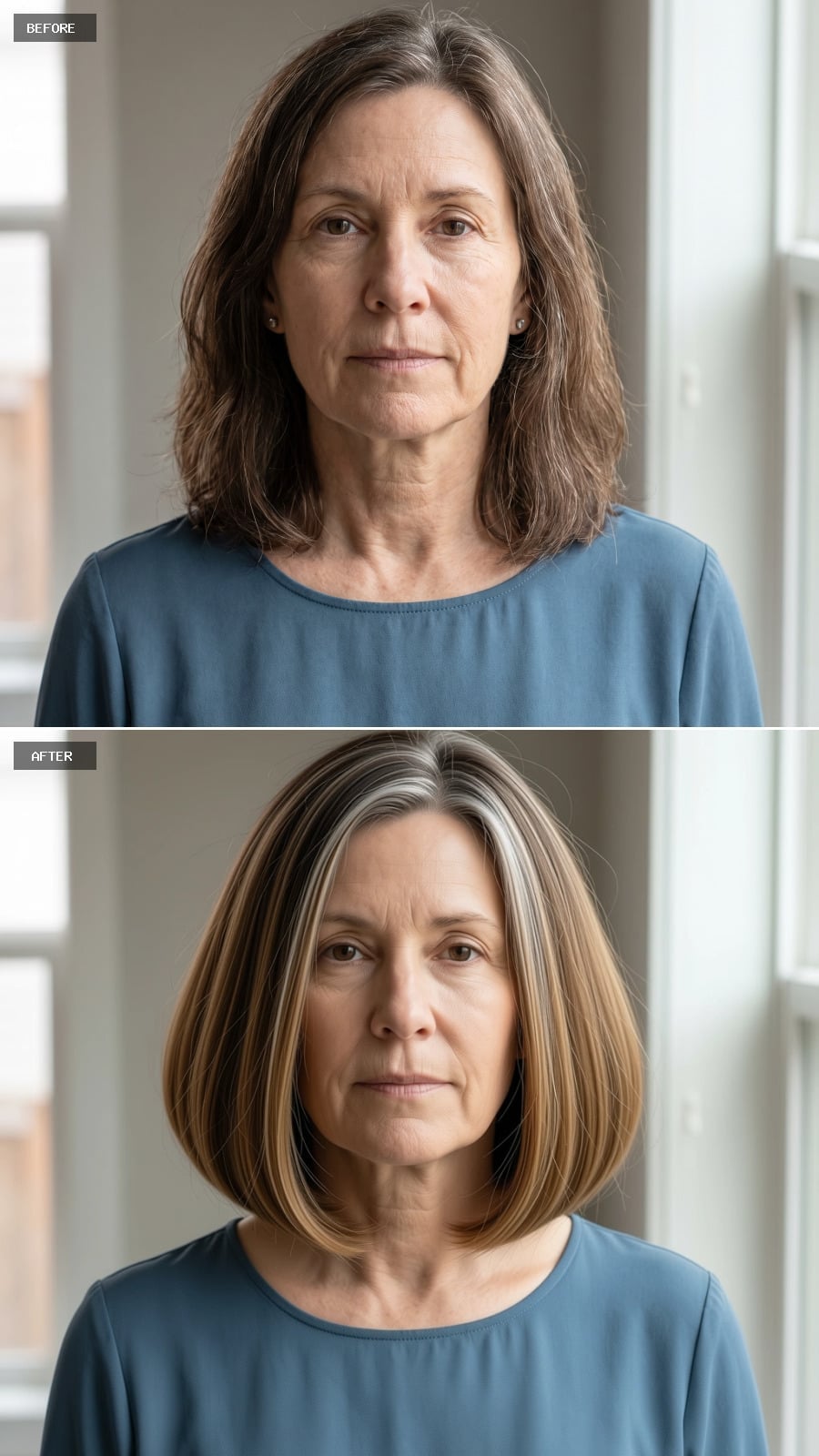
Warm honey blonde sits beside stark white-gray through the crown, giving this chin-length bob one of the more complicated color stories in the gallery.
That is exactly why the perimeter stays simple. One blunt line gives all those tones something stable to sit on. The color can be complicated because the shape is not.
7. Silver Bob Cut Short Enough to Let the Geometry Lead
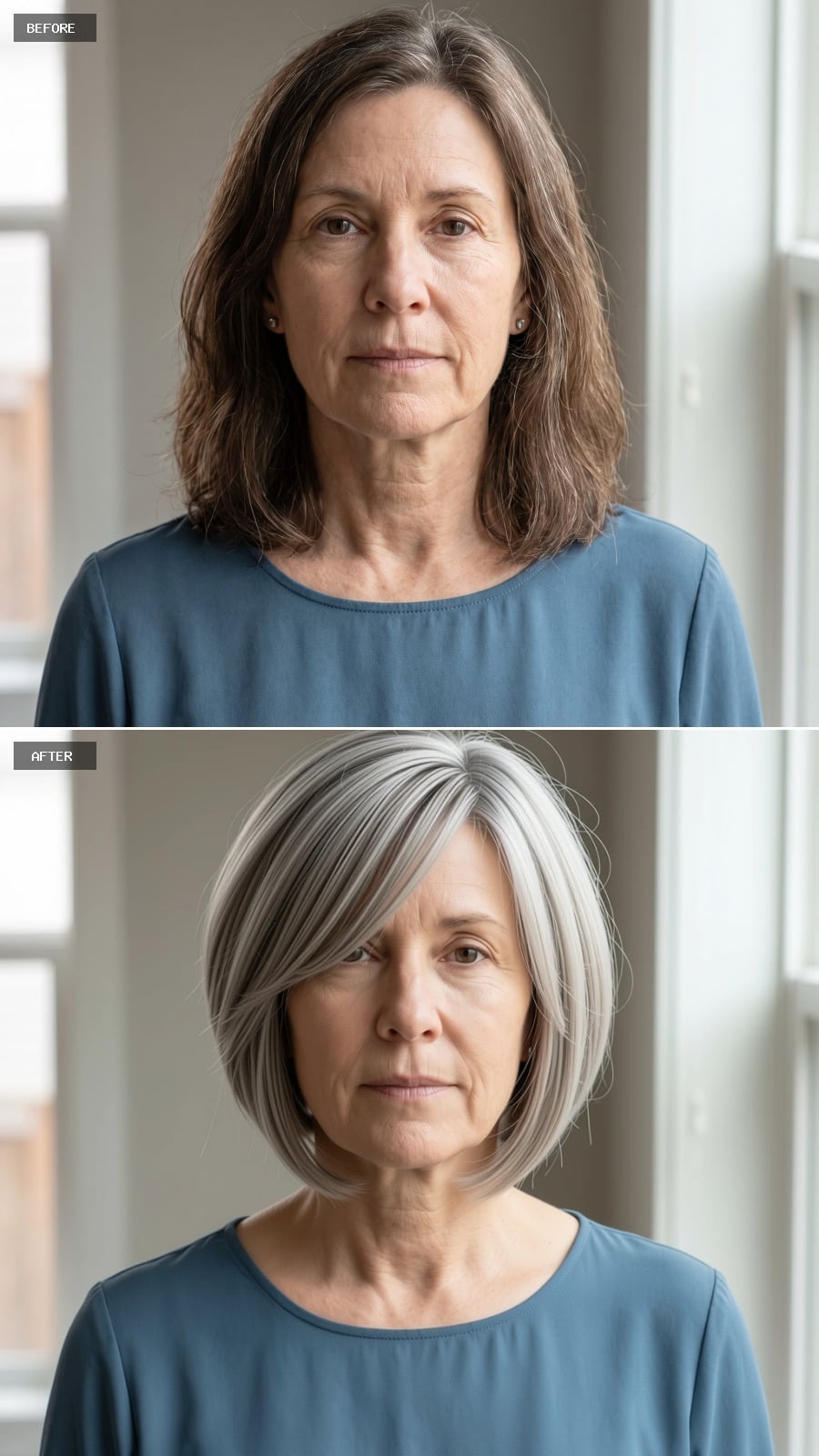
Longer in front and shorter through the back, this silver bob lets the angle provide the drama. Deeper ash near the roots moves toward near-white at the ends, emphasizing the direction without pretending the color created the structure.
This is one of the sharper bobs in the set. The line pushes forward, the neck opens behind it, and the haircut has somewhere definite to go.
6. Blended Highlights Give a Chin-Length Bob a Softer Finish
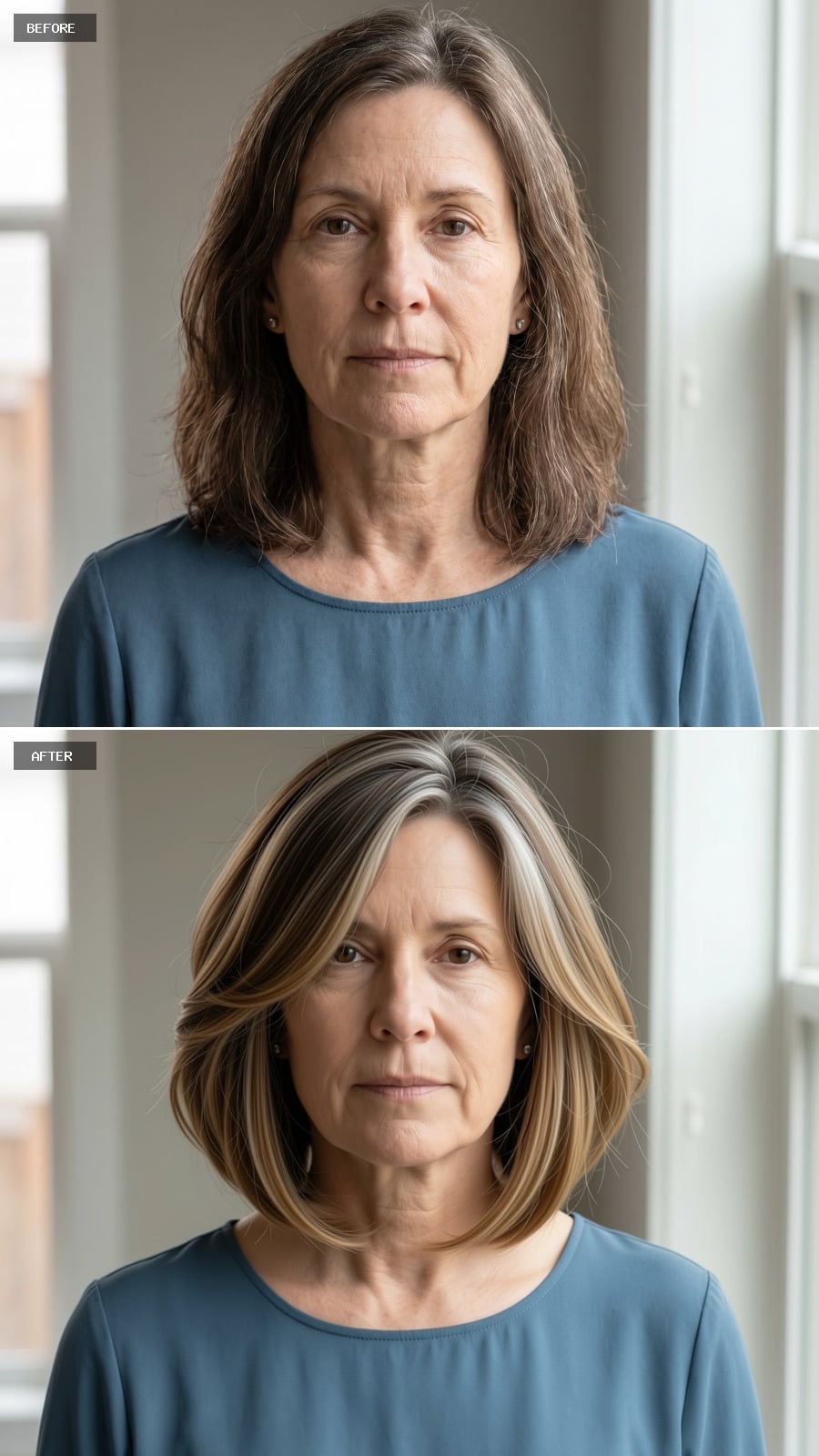
Sandy blonde and warm caramel through darker roots soften the entire picture after so much silver and charcoal. The contrast is gentler, but the haircut itself still has direction.
The front sits slightly longer while the back pulls in closer, giving the bob shape without making the angle aggressive. Not every easy haircut needs to explain itself from across the room.
5. Silver-and-White Bob That Earns Every Inch of Its Jaw-Length Cut
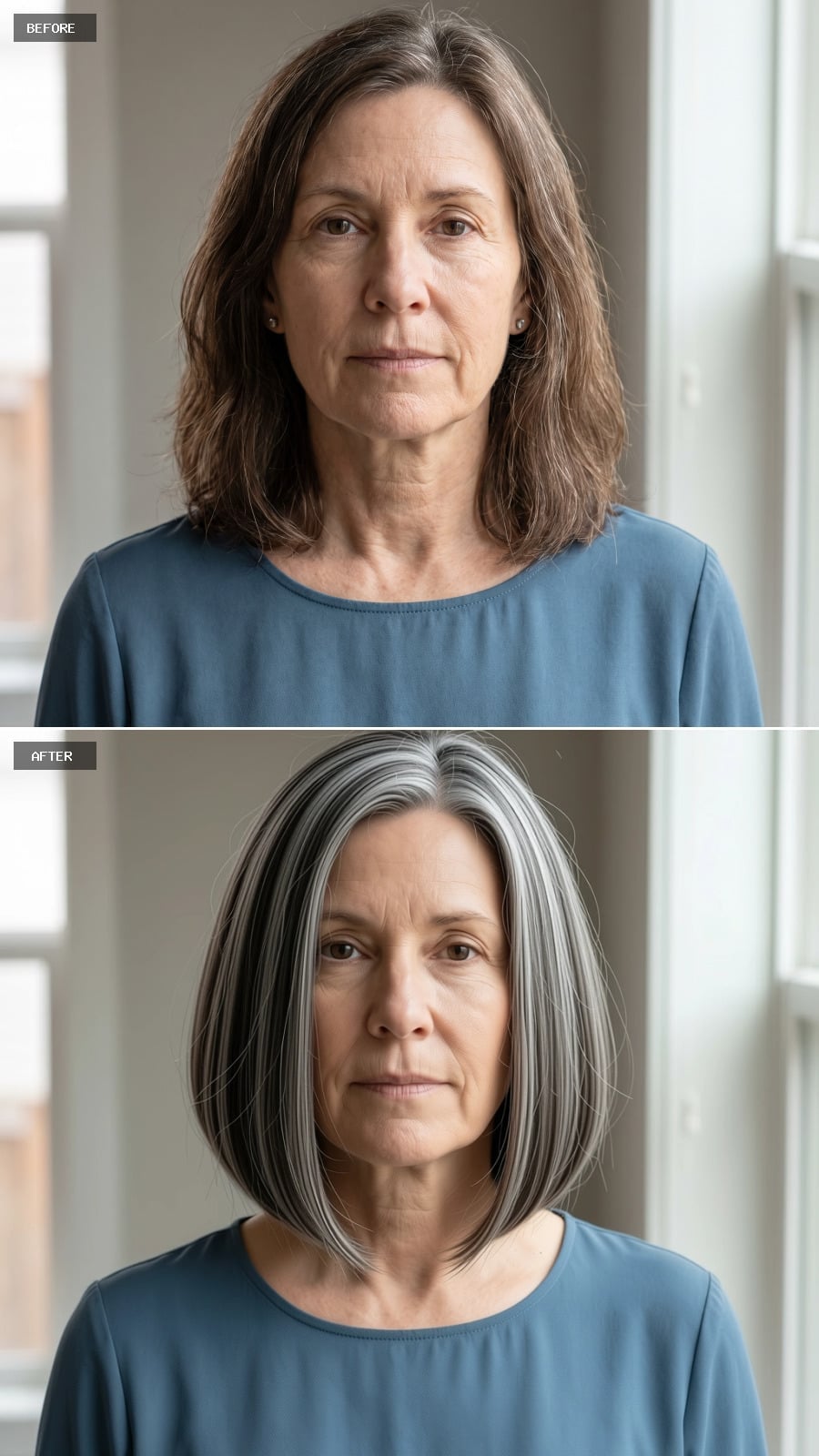
Darker silver at the roots moves into brighter white beside the part, giving this jaw-length bob clear tonal separation without requiring elaborate layering.
The bottom stays blunt but not bulky, with enough softness at the edge to keep the compact shape from becoming rigid. On straighter hair, simplicity can look very deliberate when the line itself is good.
4. Silver-Streaked Bob With Side Bangs and a Little Swing Toward the Chin
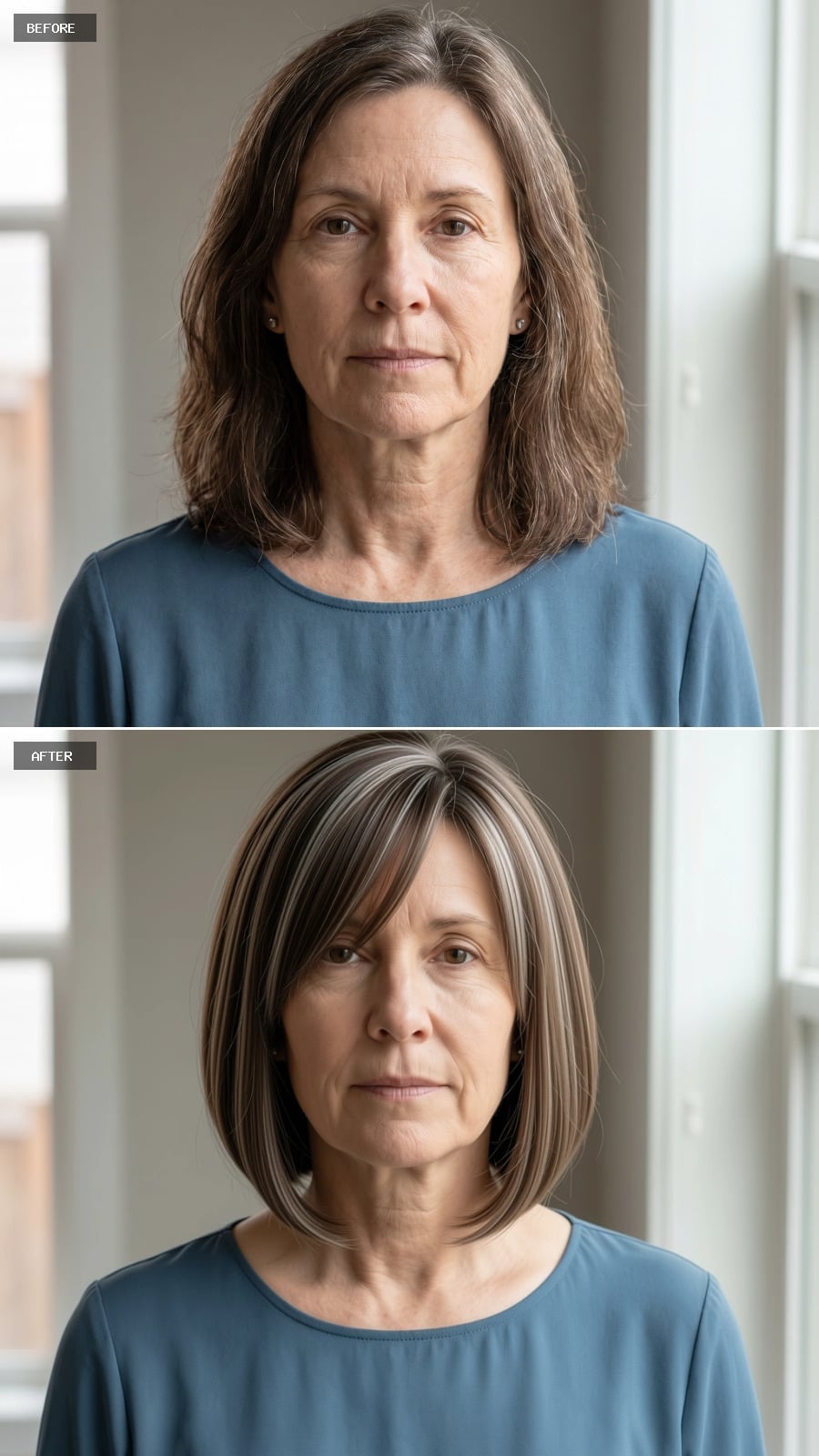
Bold gray and white move through a jaw-length bob while long side bangs sweep toward the brow. The perimeter swings slightly forward instead of sitting as one perfectly horizontal shelf.
That small movement is enough to lighten the shape around the face. The fringe breaks the symmetry as well, which is useful when a blunt bob risks becoming too geometrically perfect.
3. Gray-White Bob With a Side Part That Does the Framing for You
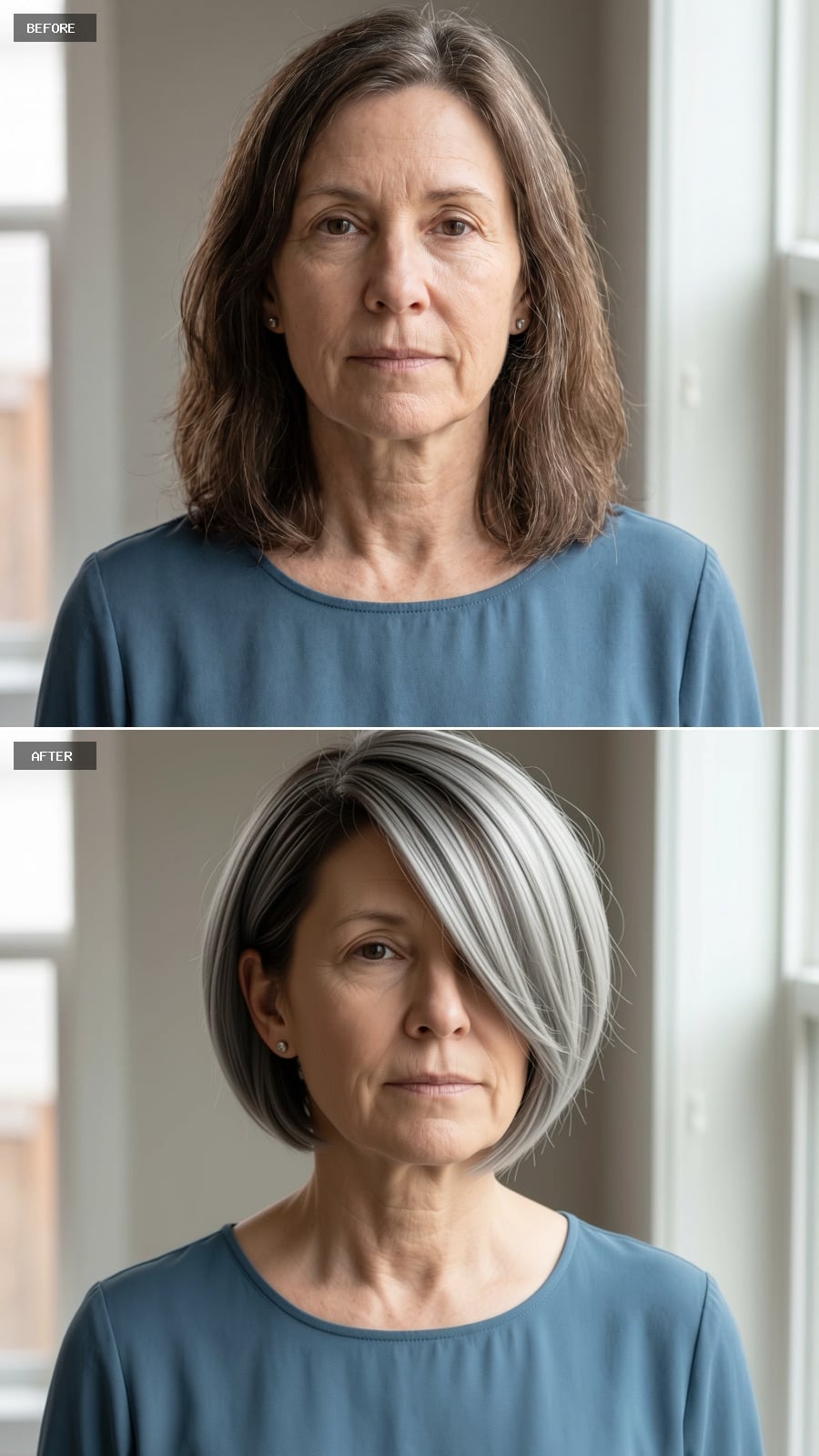
Sometimes the lowest-maintenance design decision is not another layer. It is changing where the hair begins.
A deeper side part pushes the heavier section across the forehead and toward the cheekbone, introducing a diagonal through an otherwise simple jaw-length bob. Cool gray and brighter white vary strand by strand, so the surface retains movement even when the silhouette itself stays restrained.
Our readers agree on this one: in a poll on parts, 88% picked a side part over a middle part.
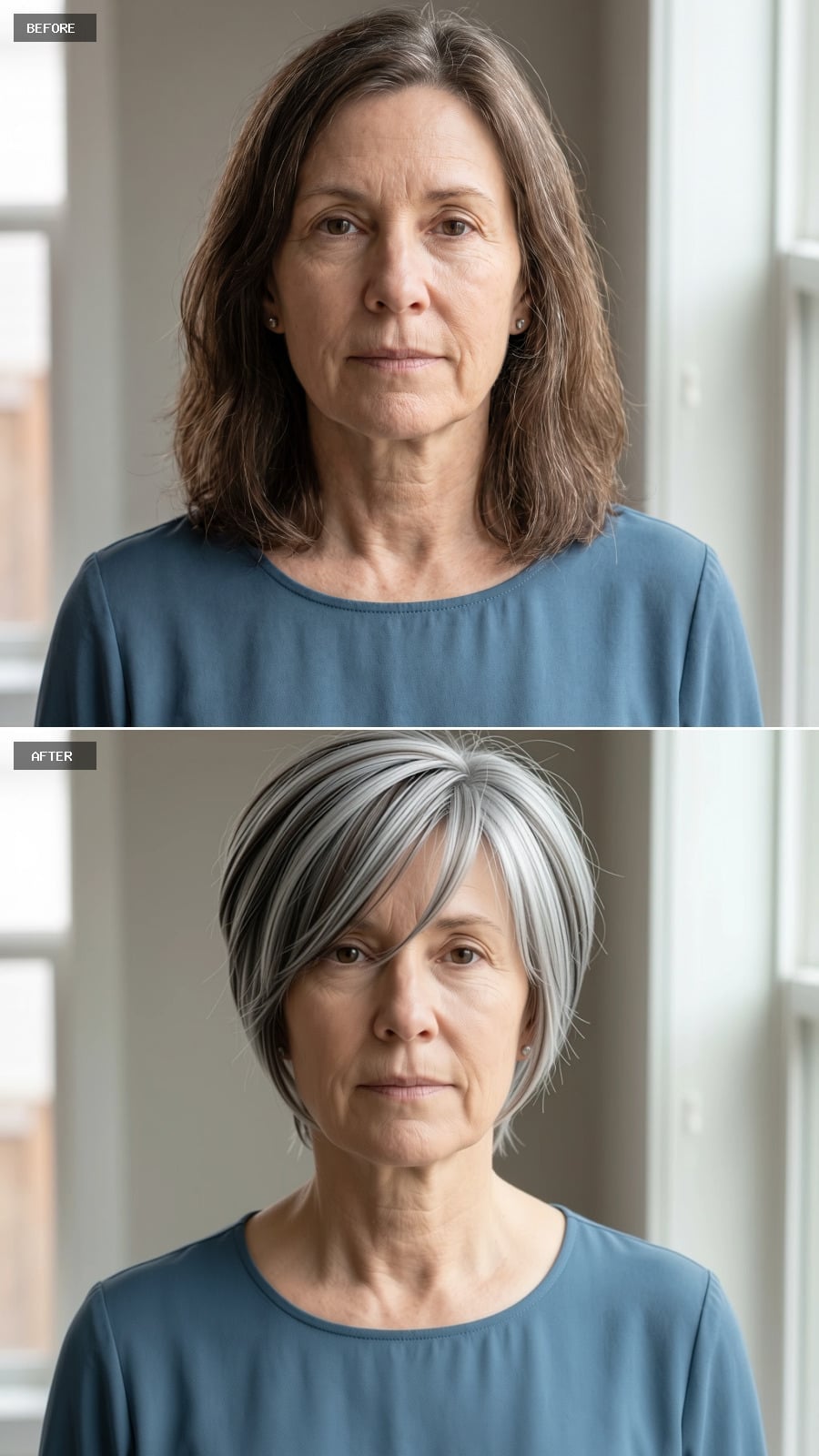
2. Gray-and-White Bob With Swooped Layers and a Little More Drama
❤️ Would you like to save this?
Shorter at the nape and longer through the crown, this bob sends its layers diagonally instead of dropping them in neat horizontal tiers.
Charcoal roots and bright silver-white pieces exaggerate those shifts, while a heavier sweep over one brow gives the short shape a little swagger. Convenient does not have to mean polite.
1. Gray Grown Long Enough to Move, Cut Short Enough to Stay Under Control
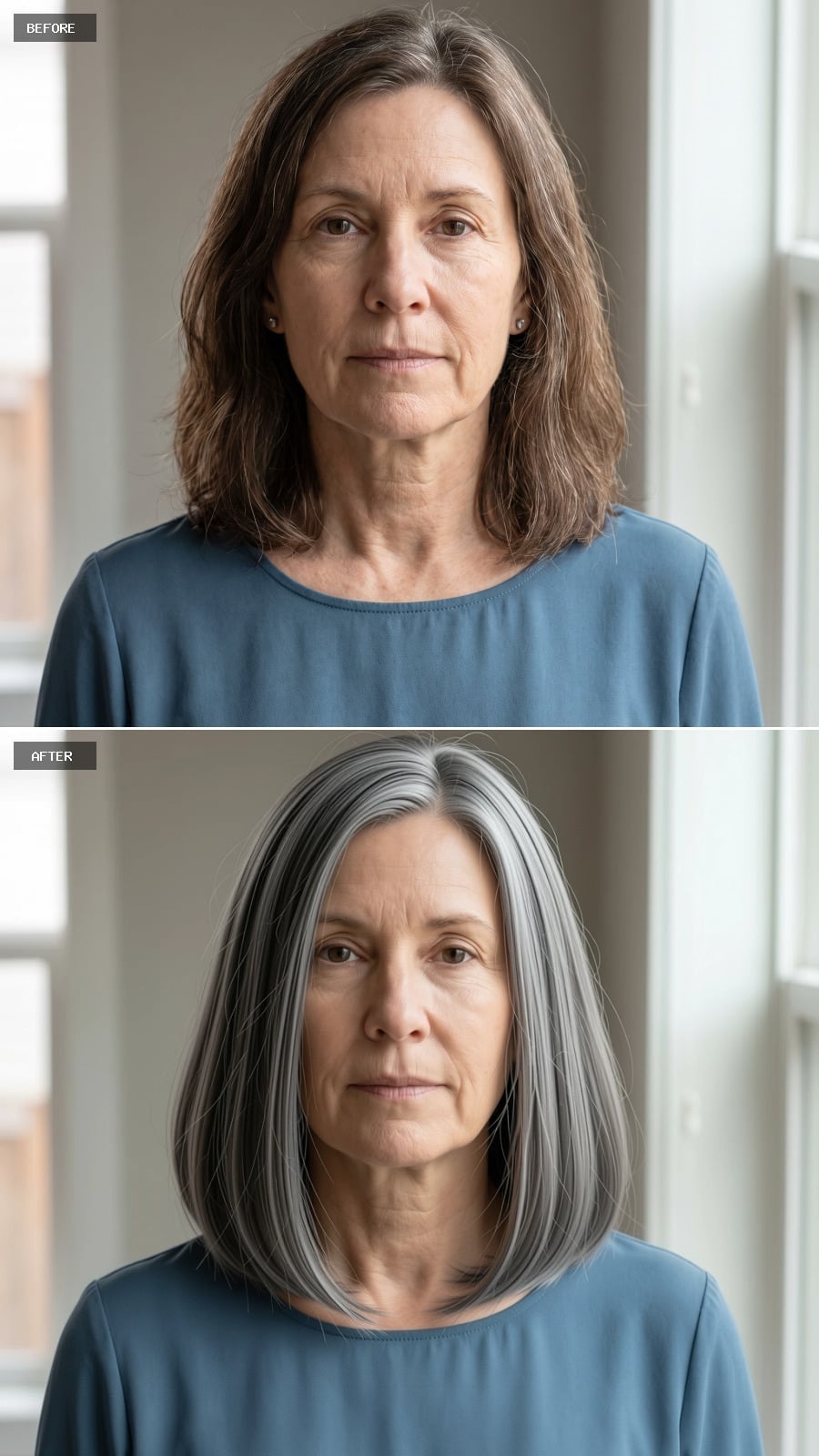
After all those jawlines, the final cut lets the length breathe again. Silver and charcoal strands fall into a blunt-edged lob grazing the collarbone, with enough internal layering to prevent the ends from hanging as one heavy curtain.
This is the middle ground for anyone who does not want a pixie, does not want another short bob, and definitely does not want waist-length hair turning every wash day into a project. The perimeter stays strong, the silver has room to move, and the fixed Before makes the final point especially clear: the woman never changed. The haircut changed how everything around her face was organized.
Lob cuts tend to land well with ThreadCurve readers, earning hearts 70% of the time versus 55% for the other images in the same articles.