❤️ Would you like to save this?
The dress is hanging in your closet with the tags still on. Eight months now. You loved it in the store, and you love the idea of it even now, but you have never once worn it. Nobody tells you this at the register: the way we talk ourselves into clothes that don’t fit runs on the exact same wiring that keeps smart women dating people who don’t fit either. Same hope, same flattering light, same little lies we tell ourselves to avoid admitting we got it wrong. The parallels below are backed by real psychology, and once you spot them in your closet, you’ll start seeing them everywhere else too.
FYI, thanks to AI imagery software, we’re able to create very specific fashion and hairstyle examples to illustrate the points being made. In some cases, imagery is exaggerated to hammer home the point. Also, assume links that take you off the site are affiliate links such as links to Amazon. this means we may earn a commission if you buy something.
15. You Mistake a Flattering Mirror for Genuine Fit
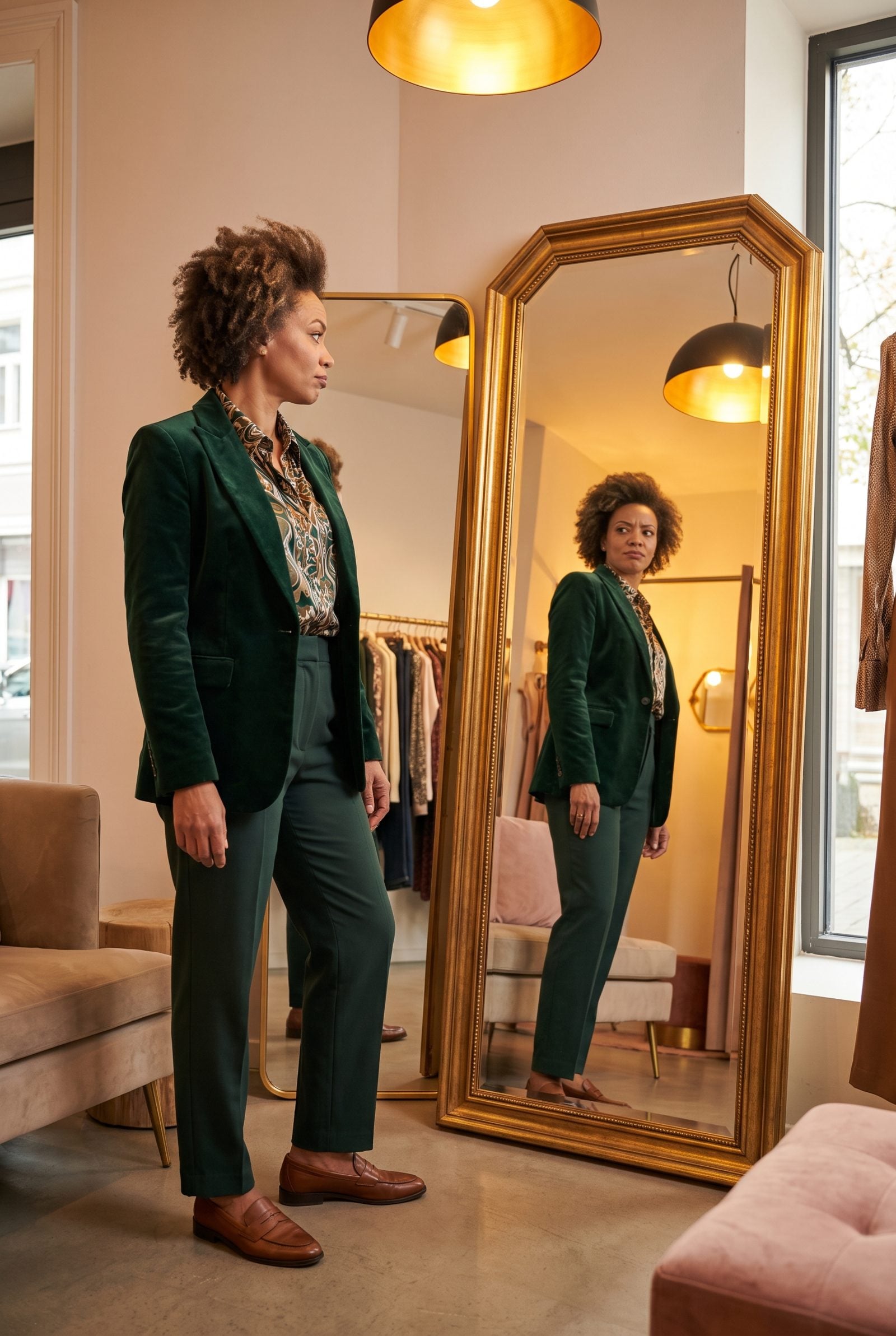
Boutique mirrors are engineered to lie to you. They tilt back a few degrees, the lighting falls from above, and suddenly the green velvet blazer and matching tapered trousers hang like they were cut for your spine. You walk out glowing. Then you wear them at home under honest bathroom light and the magic is just gone.
Same glow that gets mistaken for compatibility on a good first date. Candlelight, a flattering booth, both of you on best behavior. The context is doing the work, not the fit.
Psychologists call this the halo effect. One pleasant impression — the lighting, the charm — bleeds over everything else and we assume the whole package is right. We’re not evaluating the suit. We’re evaluating how we felt standing in front of that mirror.
14. You Ignore Scratchy Fabric Because the Jacket Looks Amazing

The rust tweed blazer gives you shoulders like a cathedral. It also itches at the collar the second it touches your neck. You tell yourself you’ll wear a scarf, you tell yourself your skin will adjust, and neither of those things ever happens.
We do this with people too. The chemistry is loud, so we wave off the small irritations — the way he talks over you, the texture of how it actually feels day to day. We privilege the look over the lived experience.
13. You Believe Uncomfortable Shoes Will Improve With Time
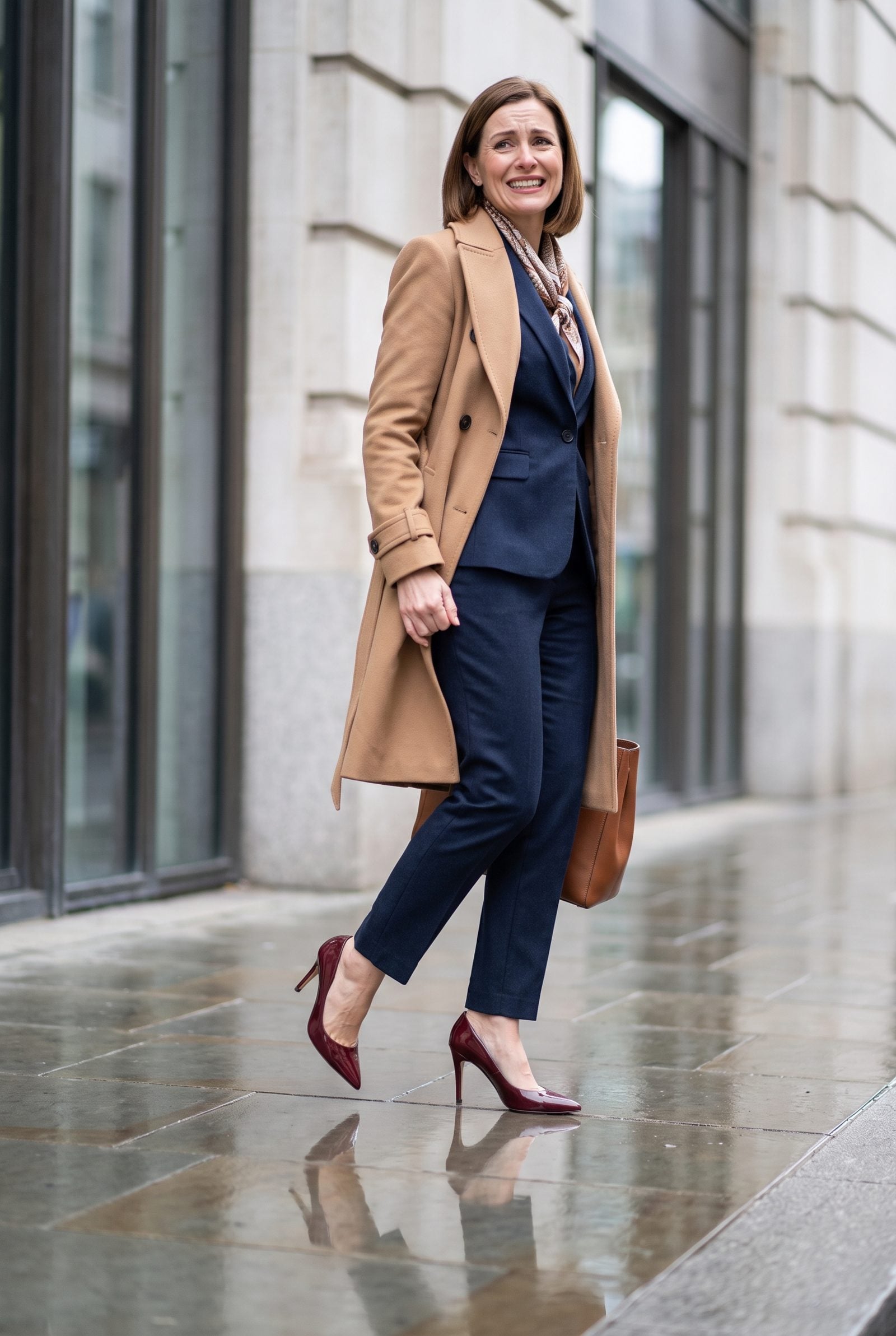
The burgundy pointed pumps pinch at the toe. The salesperson says leather stretches, and you believe it because you want to. You buy them, wear them once to a dinner, and spend the drive home barefoot with the heels riding shotgun.
This is the exact story we tell about a person who isn’t right yet. He’ll change. She’ll come around. It gets easier once we’re past this phase. We fall for potential and treat the present discomfort as a temporary bug rather than a feature.
Researchers call it optimism bias: we commit to a hoped-for future and discount the data right in front of us. Shoes that hurt on day one tend to hurt on day one hundred. So do most things.
12. You Blame Your Body Instead of the Bad Cut

The navy high-waist trousers gape at the back and pull across the front. Your first thought isn’t that the rise is cut wrong — it’s that something is wrong with you. So you keep them. And you feel bad every time you put them on.
This is the most expensive habit on the list, and it rarely stays in the closet. We take a mismatch — wrong cut, wrong person — and absorb it as personal failure. The garment gets to be innocent while you take the blame.
11. You Buy for the Life You Wish You Had

The emerald sequin dress is for the gala you keep meaning to get invited to — the life where you have somewhere glamorous to be every weekend. Your actual closet is knitwear and good jeans. You buy the dress anyway, for her, the woman you imagine becoming.
It’s choosing a partner who fits your fantasy résumé instead of your real Tuesday nights. We date the idea of a person and dress for the idea of a life.
Here’s the hitch. Aspirational buying ignores the single most useful piece of data: how you actually live. The dress you end up wearing is almost never the one you dreamed about — it’s the one that fit the life you already had.
10. A Red Sale Tag Makes Bad Pants Feel Destined

Deep discount. The mustard wide-leg trousers aren’t a color you wear, a cut you need, or a fit you love. But that red tag rewrites the whole story. Suddenly it’s not a bad purchase. It’s a find. It’s fate.
The dating version is staying with someone because the circumstances feel like a sign — you met in an unlikely place, so it must mean something. The discount becomes the whole reason, standing in for actual compatibility.
9. Limited Stock Makes an Ordinary Sweater Suddenly Irresistible
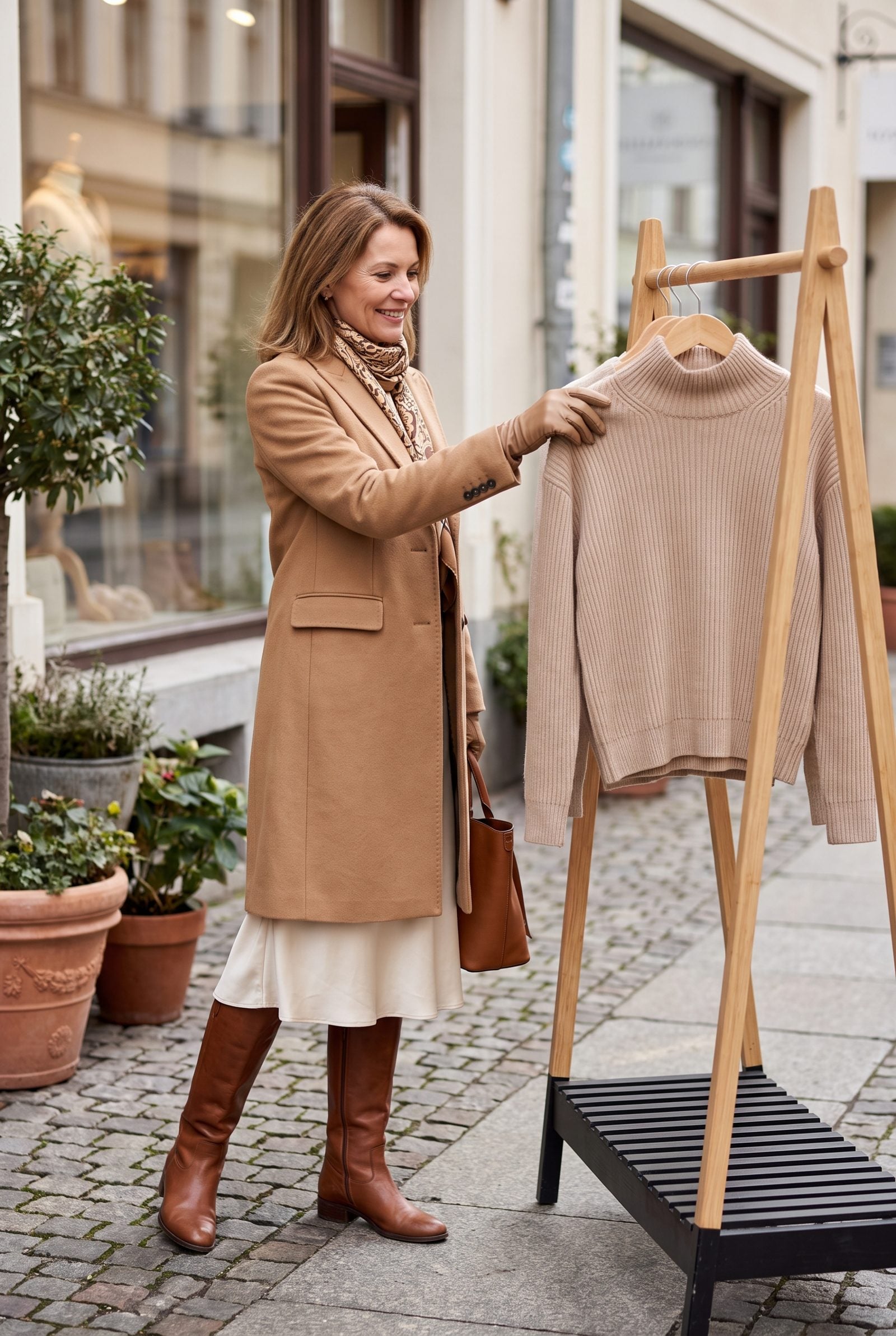
The beige ribbed cashmere sweater is fine. Perfectly fine. You’d have walked right past it on a full rack. But it’s the last one in your size, and now your heart is pounding like you might lose something that matters.
Scarcity does this to people too. The one who keeps you guessing, who might slip away, suddenly feels more valuable than the steady one who actually treats you well. We confuse availability with worth, and we want hardest what we might not get to keep.
Psychologists call it the scarcity principle. Limited supply triggers a loss-aversion panic, and the panic feels exactly like desire. It isn’t. It’s just your brain refusing to lose. An ordinary sweater doesn’t become extraordinary because it’s the last one — it just becomes the last one.
8. You Let the Salesperson’s Attention Sway Your Judgment
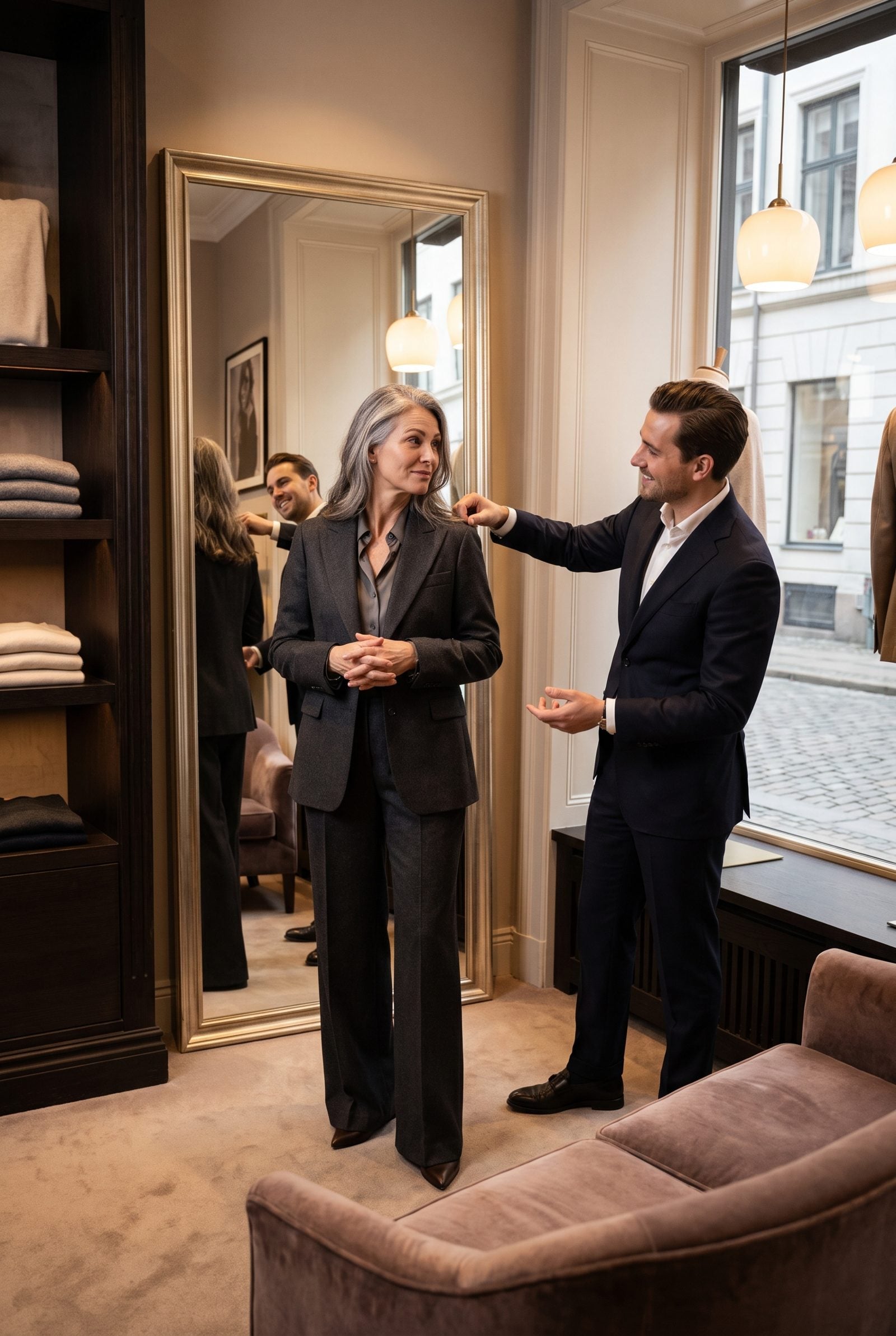
The associate calls it “your color.” He fixes the shoulder seam, steps back, tilts his head like you’ve just made the discovery of the season. The taupe silk blouse under the charcoal suit is nice. The warm attention is nicer, though, and you buy the blouse partly to keep it going.
This is reciprocity, plain and simple. When someone gives us attention and flattery, we feel a pull to give something back — even if the something is a purchase we never planned. Same reason early love-bombing works so well. Lavish focus creates a debt we feel obligated to repay.
The attention is real. The only question is whether the blouse would survive it being gone.
7. You Ask Friends Until Someone Approves the Dress
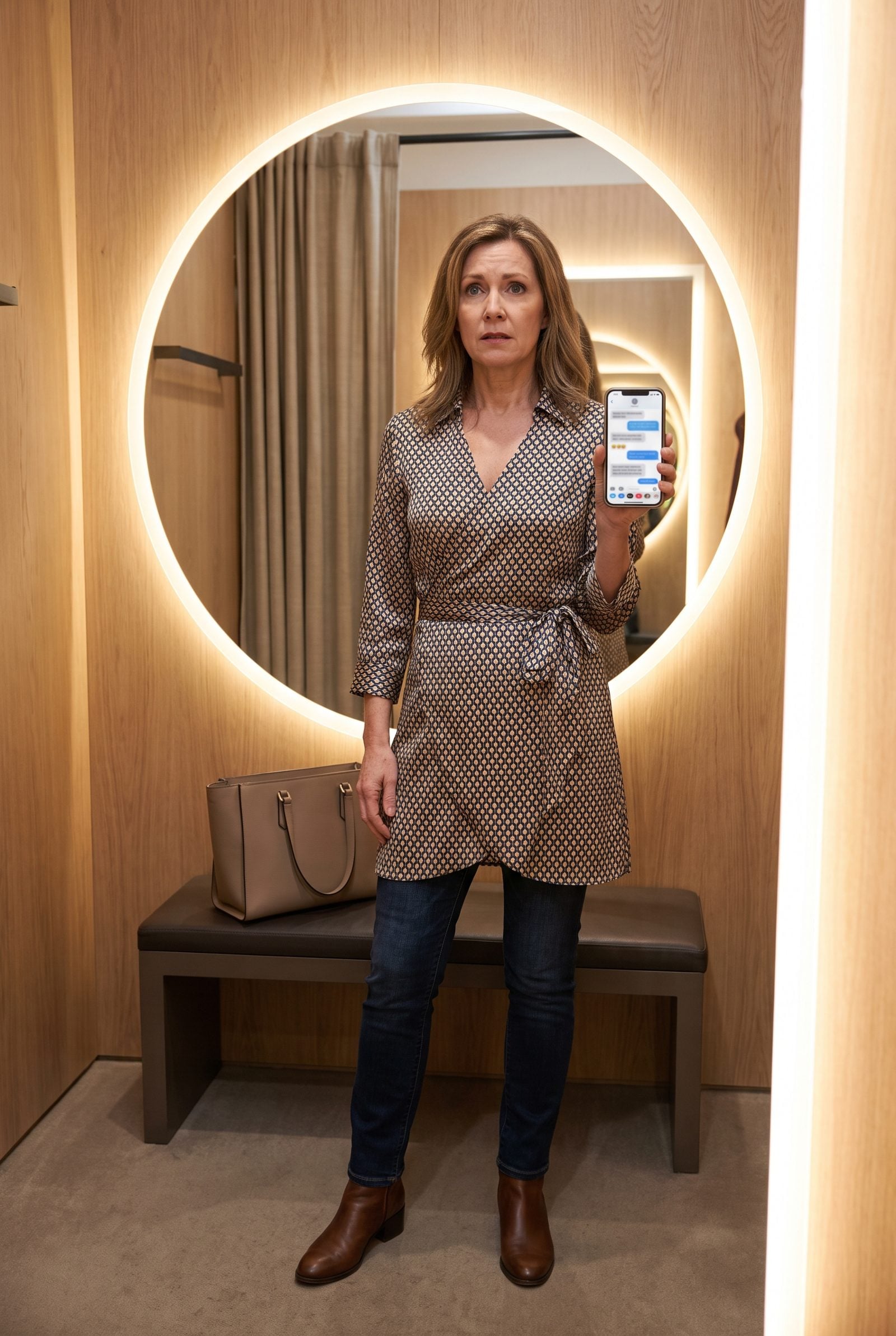
You send the fitting-room photo to one friend. She says it washes you out, so you send it to another. And another. You keep asking until someone finally says “ooh, buy it,” and that’s the verdict you decide to trust. The navy-and-tan geometric wrap tunic comes home on the strength of one yes out of four.
We do this with relationships constantly. We poll the group chat until someone validates the choice we’d already made, then treat that single approval as consensus. The nos get quietly filed away. The yes gets promoted to fact.
6. You Revisit the Same Brand Despite Repeated Disappointment

This brand has disappointed you three times running. The seams pucker, the sizing is a gamble, and that camel wool coat you loved last year pilled by February. And here you are, walking back in anyway, because you remember the one jacket from years ago that fit like a dream.
We give people the same endless benefit of the doubt. One good memory outweighs a whole pile of recent letdowns, and we keep returning to the source of them, half-convinced this time is the exception.
It’s called intermittent reinforcement. The occasional hit keeps us pulling the lever long after the losses outnumber the wins. Slot machines run on it. So do the brands — and the people — who disappoint us just rarely enough to keep us hoping.
5. You Mistake Familiar Silhouettes for the Right Silhouettes
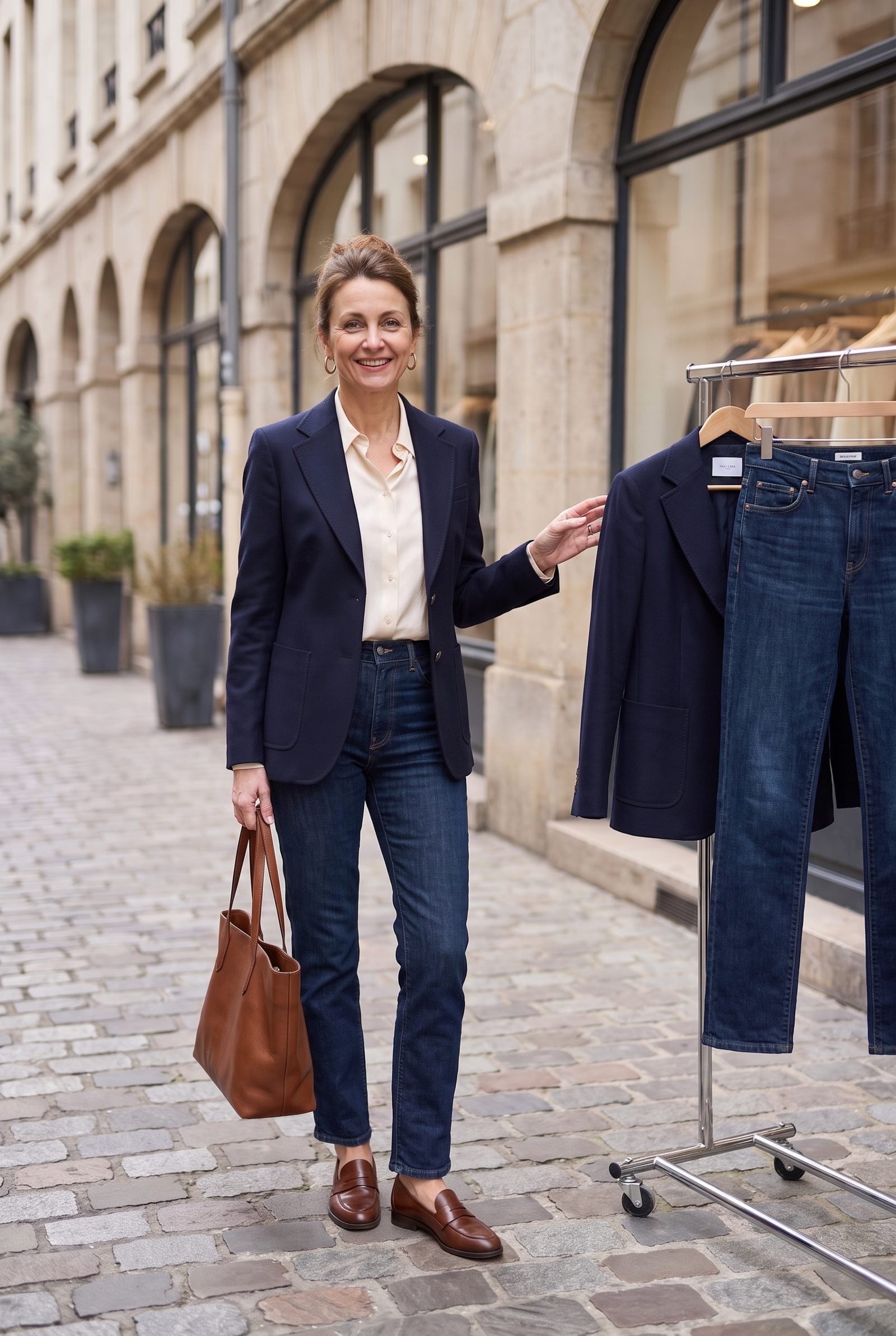
A navy blazer, a cream silk shirt, dark straight-leg jeans, brown penny loafers and a brown leather tote — the same tidy, straight cut you walk out in every time, each piece promising to be the one that finally works. The silhouette is familiar, so your brain reads familiar as flattering — which is a sloppy bit of wiring, if we’re honest.
You date the same person in different fonts, too. Same unavailable type, same slow fade, different name. Familiarity feels like compatibility because your nervous system confuses what it recognizes with what’s good for it. Psychologists call it the mere-exposure effect: we warm to things just because we’ve seen them before, not because they earned a thing.
The navy single-breasted blazer keeps getting re-bought because the shape is a known quantity, not because it does anything for your actual proportions. Break the pattern. Try the silhouette you always skip — the one that scares you a little usually fits better than the one you already own in triplicate.
4. You Keep a Backup Outfit You Don’t Even Like
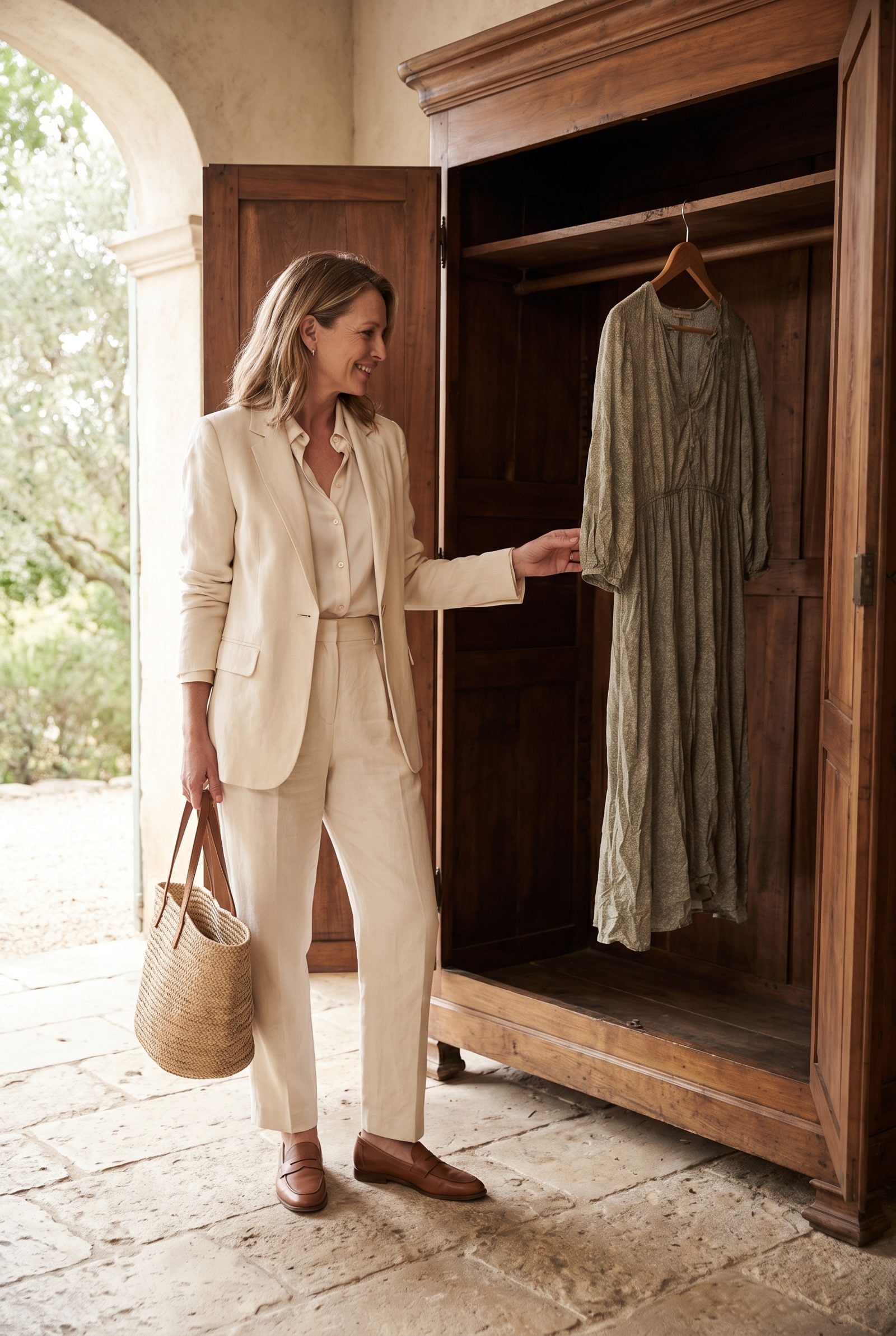
There’s a dress at the end of the rail you’ve never once reached for on purpose. You keep it anyway — in case nothing else works, in case there’s an emergency, in case the good options fail you.
That’s the just-in-case relationship. The person you don’t love but won’t release, kept on the shelf as insurance against being alone. Both run on loss aversion, where the fear of having nothing feels worse than the dullness of keeping something you don’t want. Our brains treat a potential loss as heavier than an equivalent gain, so an unloved backup feels safer than empty space.
The faded floral pleated maxi dress isn’t a safety net. It’s a vote of no confidence in everything else you own. Donate it. The emergency you’re bracing for almost never arrives, and when it does, you’ll reach for something you actually like.
3. You Keep the Dress Because Returning It Feels Like Failure
❤️ Would you like to save this?
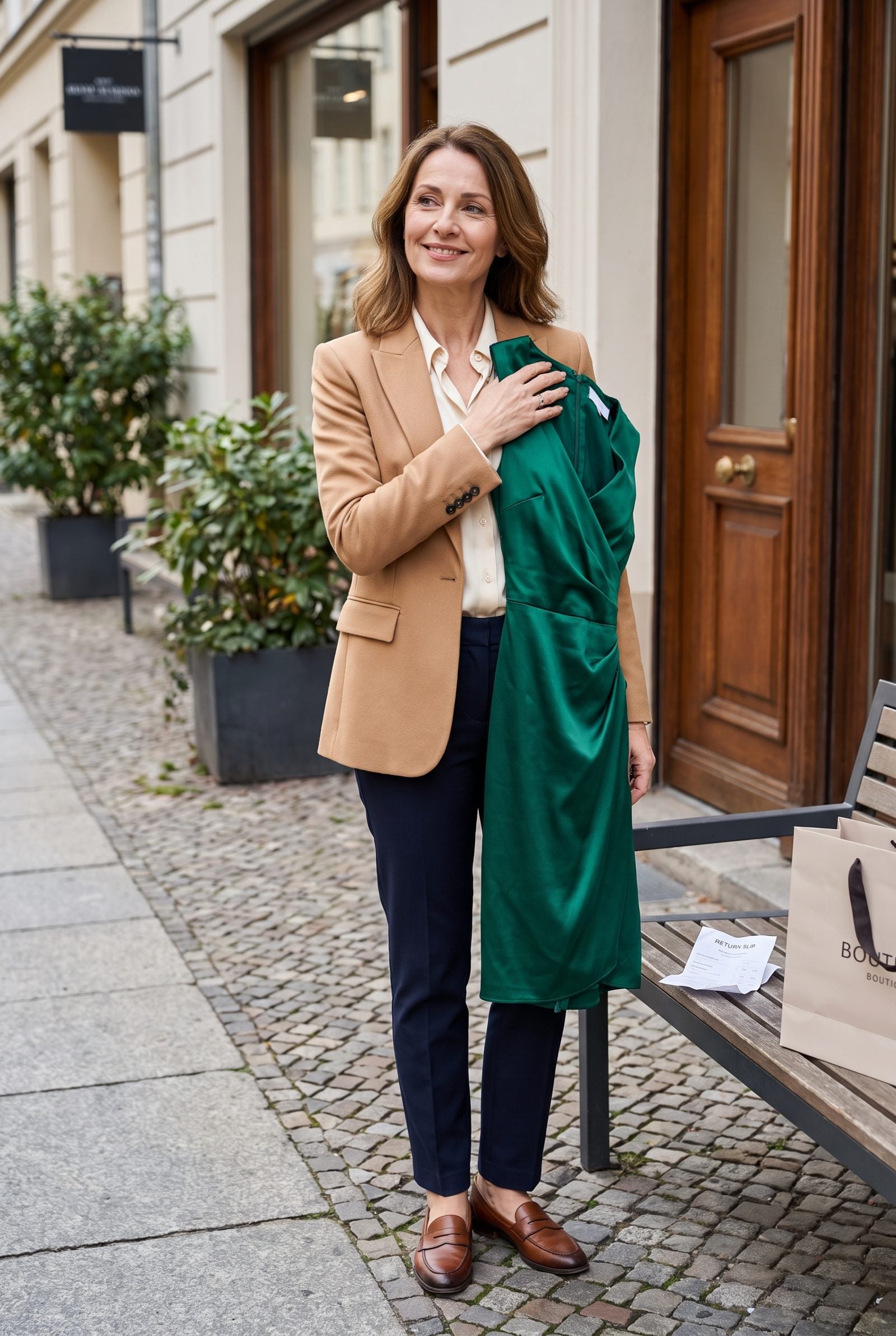
The emerald satin dress doesn’t fit through the shoulders, pulls at the zip, and makes you hold your breath. The return window is wide open. You keep it anyway, because packaging it up feels like admitting you were wrong.
The same engine keeps people in relationships long past their expiry. Leaving reads as failure, as wasted years, as proof you misjudged, so you stay to protect the story rather than the self. Sunk-cost fallacy in a party dress: you’re fixating on what you’ve already spent instead of what you’ll keep spending.
The money is gone whether the dress hangs in your closet or goes back. Keeping it doesn’t recover the loss — it just adds a wince every time you open the wardrobe. And returning something? Not a referendum on your judgment. It’s the one moment your judgment actually showed up.
2. You Spend More on Alterations Than the Coat Deserves
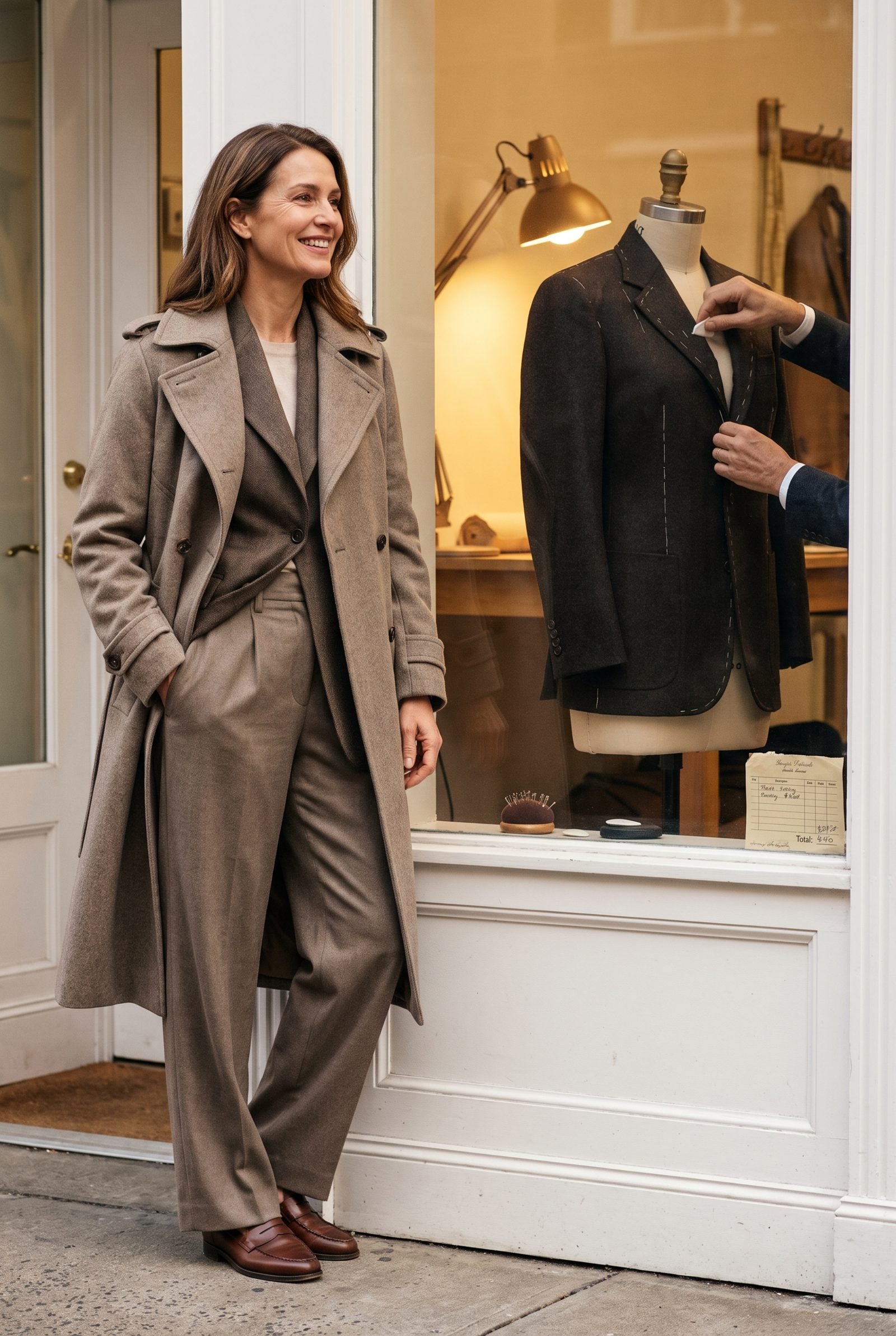
The coat was a fine find until the tailor started pinning. New shoulders. Shortened sleeves. A nipped waist. Add it up and you’ve spent more reshaping it than the coat cost in the first place, and it still isn’t quite right.
People do this with partners constantly — a little therapy here, a hint dropped there, a long quiet project of fixing someone into the person you wanted at the start. The IKEA effect deserves some blame here: the more effort we pour into something, the more we value it, whether or not that effort produced anything worth valuing.
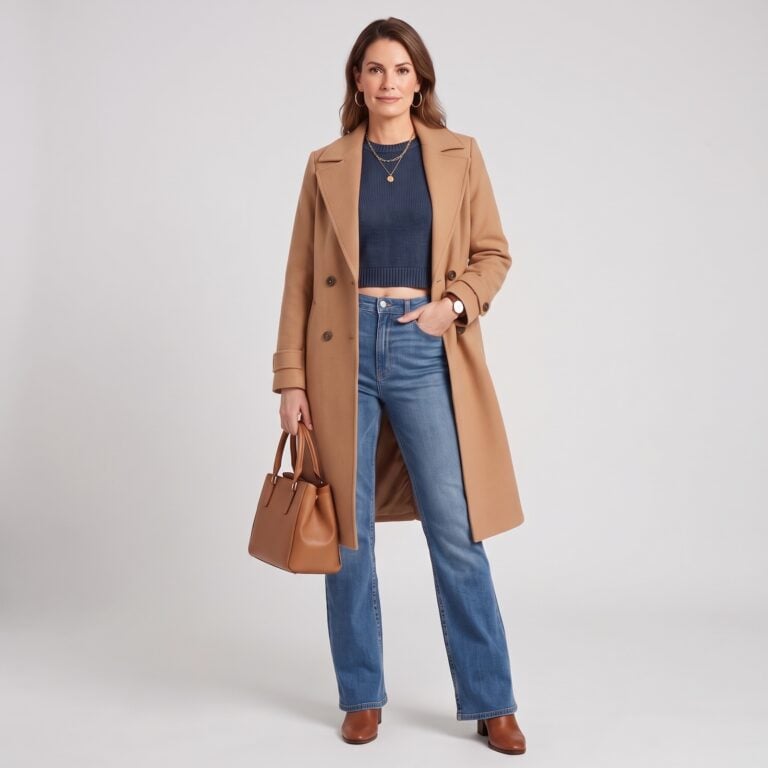
A well-cut camel wool coat needs small nudges. A sleeve, a hem, nothing structural. If it needs rebuilding, it was never yours — it just happened to be hanging in your size. Alterations finish a good piece. They can’t invent one.
1. You Keep Browsing Because the Next Outfit Might Be Perfect

Four tops in hand, all of them good, and your eyes have already drifted to the next rack. There might be something better two aisles over. There’s always a two-aisles-over.
It’s the same restless scroll that keeps someone dating indefinitely while never actually choosing anyone — the apps trained a whole generation to treat people like an infinite rack. Researcher Barry Schwartz called this choice overload: past a certain point, more options don’t satisfy us. They paralyze us and sour whatever we finally pick.
You don’t need the single best top in existence. You need one you’ll reach for on a Thursday without a second thought. Grab the white silk top that already made you smile and close the laptop.