
❤️ Would you like to save this?
Somewhere around the second glass of wine, the idea arrives: everything in the closet has to go. Not some of it. All of it. You stand there at eleven at night holding a cardigan you loved for six years, and suddenly it belongs to a stranger.
That urge is not about the cardigan. It never is. The same wiring that sends a person out to buy a convertible they cannot parallel park sends us to the fitting room with a cart and a point to prove. Style reinvention and the midlife reckoning run on one engine: a disrupted sense of self, a craving for something new, a quiet need to feel in charge of the story again. Below are the overlaps nobody warns you about, and why they make complete sense.
FYI, thanks to AI imagery software, we’re able to create very specific fashion and hairstyle examples to illustrate the points being made. In some cases, imagery is exaggerated to hammer home the point. Also, assume links that take you off the site are affiliate links such as links to Amazon. this means we may earn a commission if you buy something.
20. You Purge Half the Closet After One Bad Birthday

The bags come out at a specific moment, and it’s never a calm Sunday. It’s usually after something stung — a number on a cake, a photo you did not approve, a comment that landed wrong. Suddenly the whole wardrobe is guilty by association and out it goes.
This is the same reflex that makes people quit the job, sell the house, or sign up for a marathon the week after a birthday that felt heavy. Psychologists call it a fresh-start moment. A calendar marker that threatens your sense of self triggers a hard reset so you can feel like a new person by Monday, and clothes happen to be the easiest thing in the room to control. So they take the hit.
Nothing wrong with a purge. Just do it twice. Once to feel the relief, and once a week later with coffee instead of emotion, when you can tell which pieces actually belonged to a self you have outgrown and which ones you tossed because you were mad at a candle.
19. Your Reliable Jeans Suddenly Belong to a Former Life
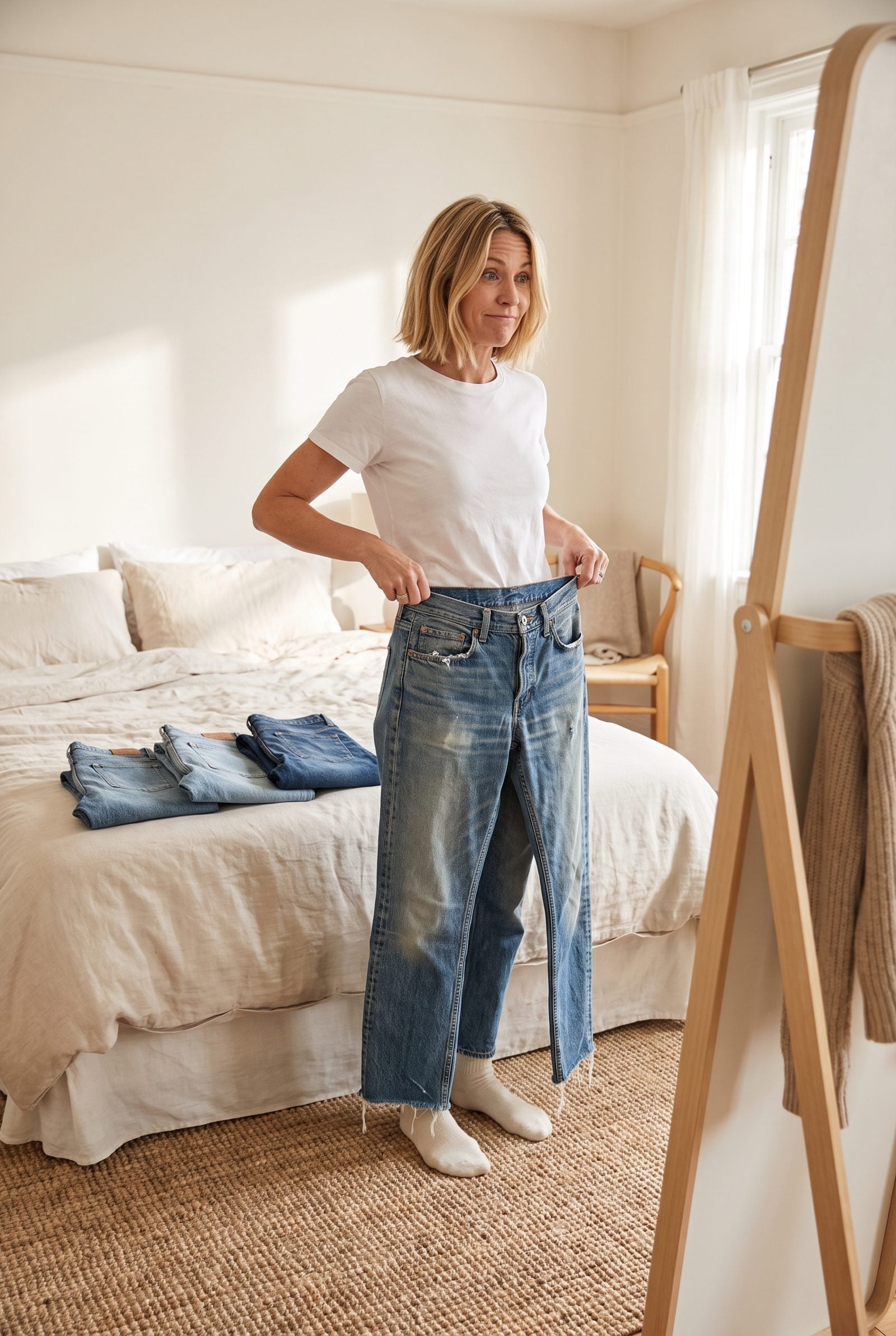
They were your jeans. The pair that worked for everything, that you could grab in the dark and know. Then one morning you pull them on and a quiet voice says: these belong to a different woman.
Nothing changed about the denim. What changed is you — the cut, the wash, the whole attitude of them suddenly reads like someone else. The same thing happens when someone looks around a life they built and feels like a guest in it — the props are familiar and the person wearing them is not, which is unsettling in a way that goes deeper than fit.
Call it identity disruption, plain and simple. Your self-image updated faster than your blue denim did. A fresh straight-leg in a darker wash, worn with a crisp white shirt and a real shoe, can close that gap overnight. Sometimes the answer isn’t a new you. It’s denim that caught up to the you who already arrived.
18. You Blame the Closet When Your Body Feels Unfamiliar

The dress is “doing something weird.” The jacket “shrank.” The pants “must have stretched out.” The clothes get blamed because the clothes cannot argue back, and because the alternative thought is harder to sit with.
Bodies shift, and they do it for women in their forties and fifties in ways nobody fully prepares you for. The mind would often rather renovate the wardrobe than acknowledge the resident. Same move as redoing the kitchen when what you actually want is a different marriage — the project is real, but it’s standing in for the feeling underneath.
Here’s the useful part. A closet that fits the body you have right now is one of the kindest things you can own. Not the body from a photo. This one. When the clothes stop fighting you every morning, the mirror stops feeling like an accusation, and that is worth more than any size on a tag.
17. Every Mirror Check Becomes a Tiny Identity Referendum

You were only walking to the kitchen. But you pass the mirror and stop, and for half a second it is a referendum: Is this working? Am I working? Who is that?
We read our own reflection the way we read a stranger at a party — in a flash, then we grade ourselves on it. During any identity wobble, that glance gets louder. It’s the same compulsion that has a person checking their phone for validation they cannot name, except the mirror is older and crueler and lives in the hallway.
A sharp black blazer over a cream silk camisole changes the grade, and not because it hides anything. Structured shoulders tell your own nervous system you have decided something. Enclothed cognition is real: what you wear quietly rewrites how you carry yourself before you reach the kitchen. Dress for the verdict you want to give yourself.
16. A Dramatic Haircut Feels Like Taking Back Control
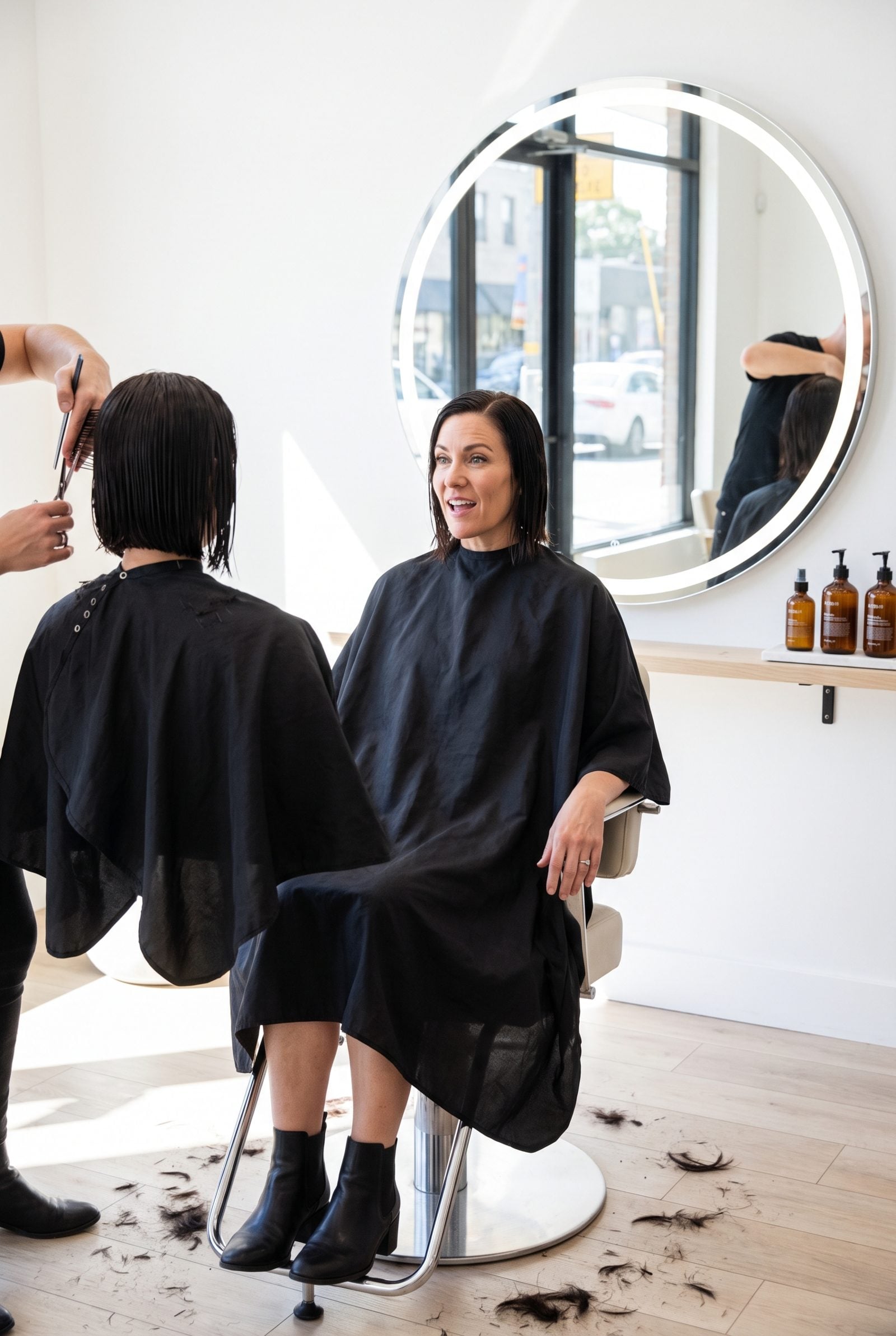
The scissors come out when everything else feels stuck. Can’t fix the schedule, can’t fix the knee, can’t fix the thing you don’t say out loud. But you can walk into a salon and emerge with a blunt bob, and the whole world will notice by lunch.
A big chop is the purest hit of control available on a Tuesday — immediate, visible, entirely yours. It scratches the same itch as the person who repaints the whole house in a weekend because at least that one choice behaved.
A haircut is the fastest way to tell the mirror: I am the one making decisions here.
There is genuine power in it, and the midlife chop deserves defending. Just go to someone who asks what you actually want before they ask what you want to escape. One is a haircut. The other is a crisis wearing a cape.
15. Midnight Moodboards Turn Reinvention Into a Full-Time Hobby

It is 11:40 and you have dozens of images saved to a folder called “new me,” and you are not tired, you are energized, because planning the reinvention feels better than almost anything.
That buzz is novelty-seeking, and the brain rewards the hunt more than the catch. The anticipation of becoming someone new delivers a cleaner hit of dopamine than actually owning the camel coat. It’s why the research phase of any midlife pivot can expand to fill a whole season, and why the plan to move abroad is more fun than the paperwork.
Moodboards are harmless and genuinely clarifying, right up until they become the project instead of the prelude. Give yourself a deadline. Pick three images, buy one real thing, wear it out the door. A reinvention you can only scroll is just a very stylish way of standing still.
14. You Dress Twenty-Five Because That Age Still Feels Like You
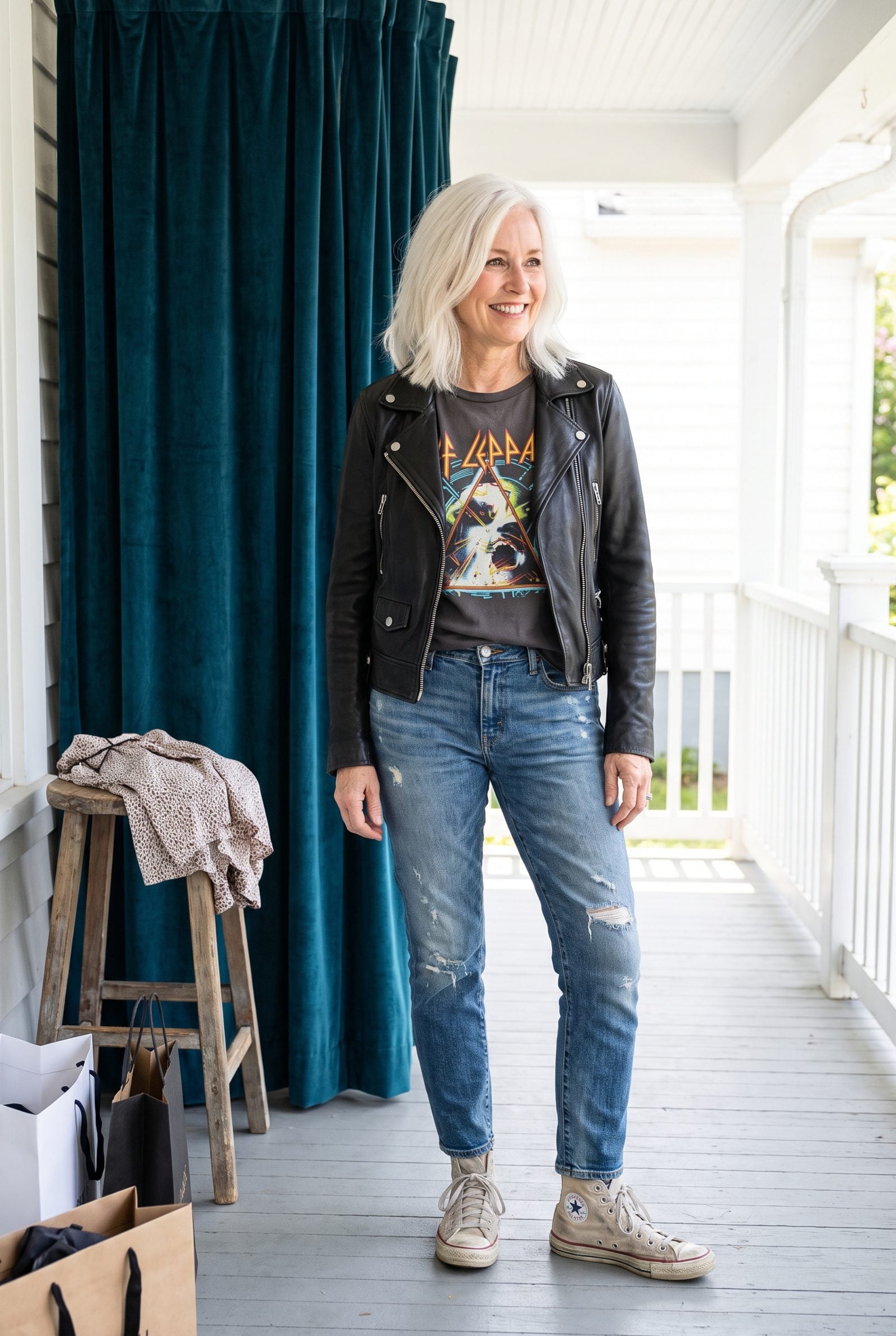
Your reflection says one age and your internal sense of self says another, and the gap is wider than anyone admits. Most people feel younger inside than the calendar claims, so you reach for the clothes that match the age in your head.
Nothing embarrassing about this. The person you feel like wants to be seen. The trouble only starts when dressing twenty-five means copying twenty-five exactly, ripped hems and all, which reads less like confidence and more like negotiating with a timeline.
The move is to keep the energy and update the vocabulary. Want the edge of that era? Take the attitude, not the exact outfit. A leaner silhouette, a tougher boot, a jacket with some swagger, built in fabrics that have grown up with you. You get to be the vital, slightly dangerous self you still are on the inside — just translated into a language your current self speaks fluently.
13. Vintage Band Tees Bring Your Younger Self Back
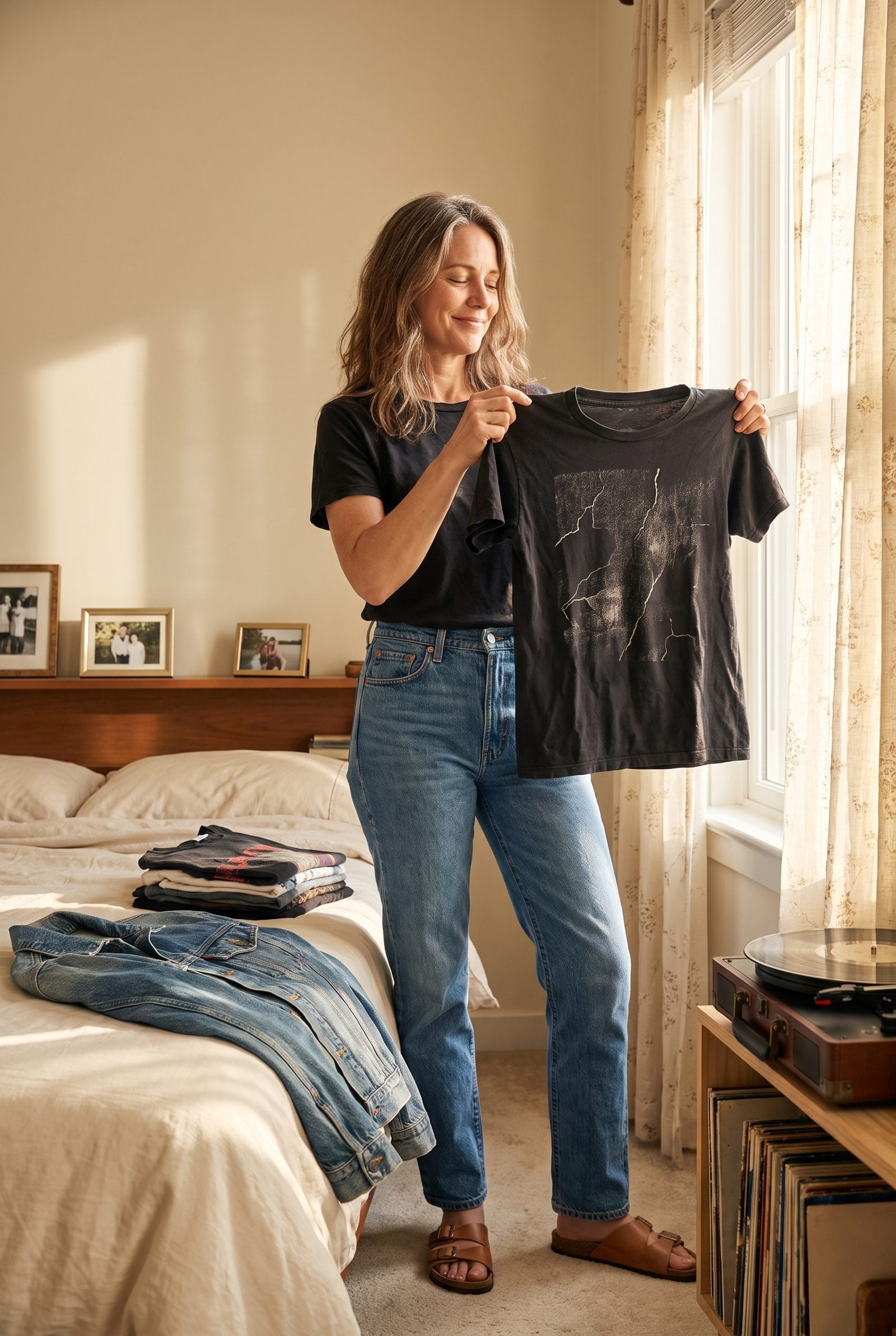
The soft cotton does it before your brain catches up. You hold the old tee and you are nineteen in a parking lot with your whole life ahead and a terrible playlist. That’s nostalgia doing exactly what it is built to do.
Nostalgia isn’t a weakness. It’s a stabilizer. When identity feels shaky, the mind reaches back for proof of who you have always been, and a beloved relic from your younger years is portable evidence that the core is still intact. Same instinct that sends someone to the reunion or back to the hometown diner when the present gets confusing.
Worn with high-waisted jeans and a sharp blazer, that faded tee stops being a costume from the past and becomes a bridge between the two of you — the nineteen-year-old and the woman you are now, agreeing for once. Keep the ones that mean something. Toss the ones you only kept out of habit.
12. You Copy a Stylish Celebrity Who Shares Your Birth Year

She’s your exact age, she looks like she has it entirely figured out, and suddenly you want her wide-leg trousers, her loafers, her whole unbothered air. The appeal isn’t the clothes. It’s the proof.
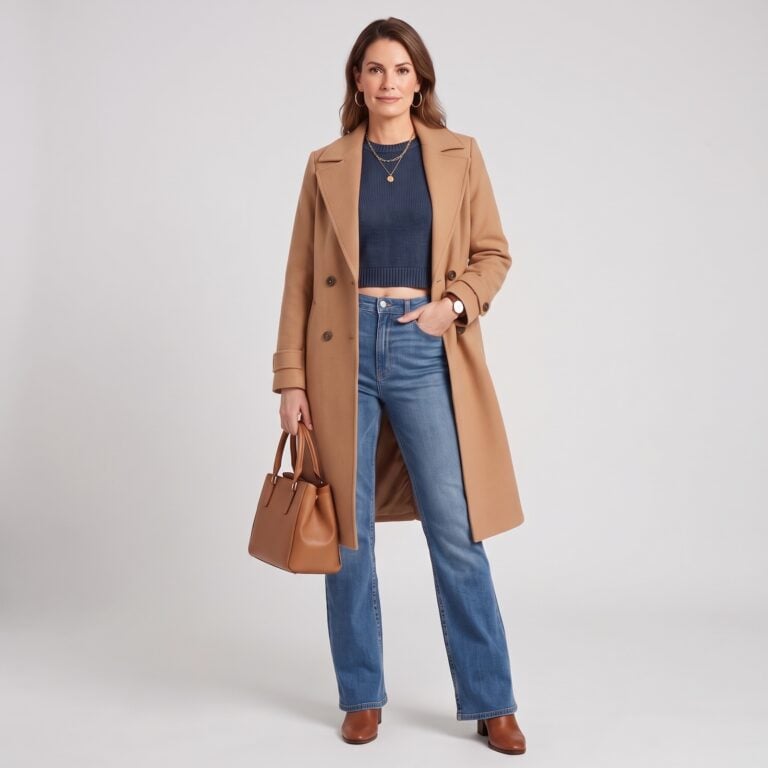
Someone born the same year as you, thriving in public, functions as social evidence that reinvention is allowed at this stage. We lean on people like us to decide what is possible, and a peer who looks assured gives you permission you were waiting for. The camel-and-cream palette works beautifully because it’s calm confidence turned into fabric: nothing shouts, everything is deliberate.
Borrow the formula, not the face. Her camel wool coat and leather loafers are a template, and the point is to translate the signal into your life, your colors, your real schedule. Admiration becomes style the moment you stop impersonating and start adapting.
11. You Buy the Leather Jacket Before Becoming Leather-Jacket You
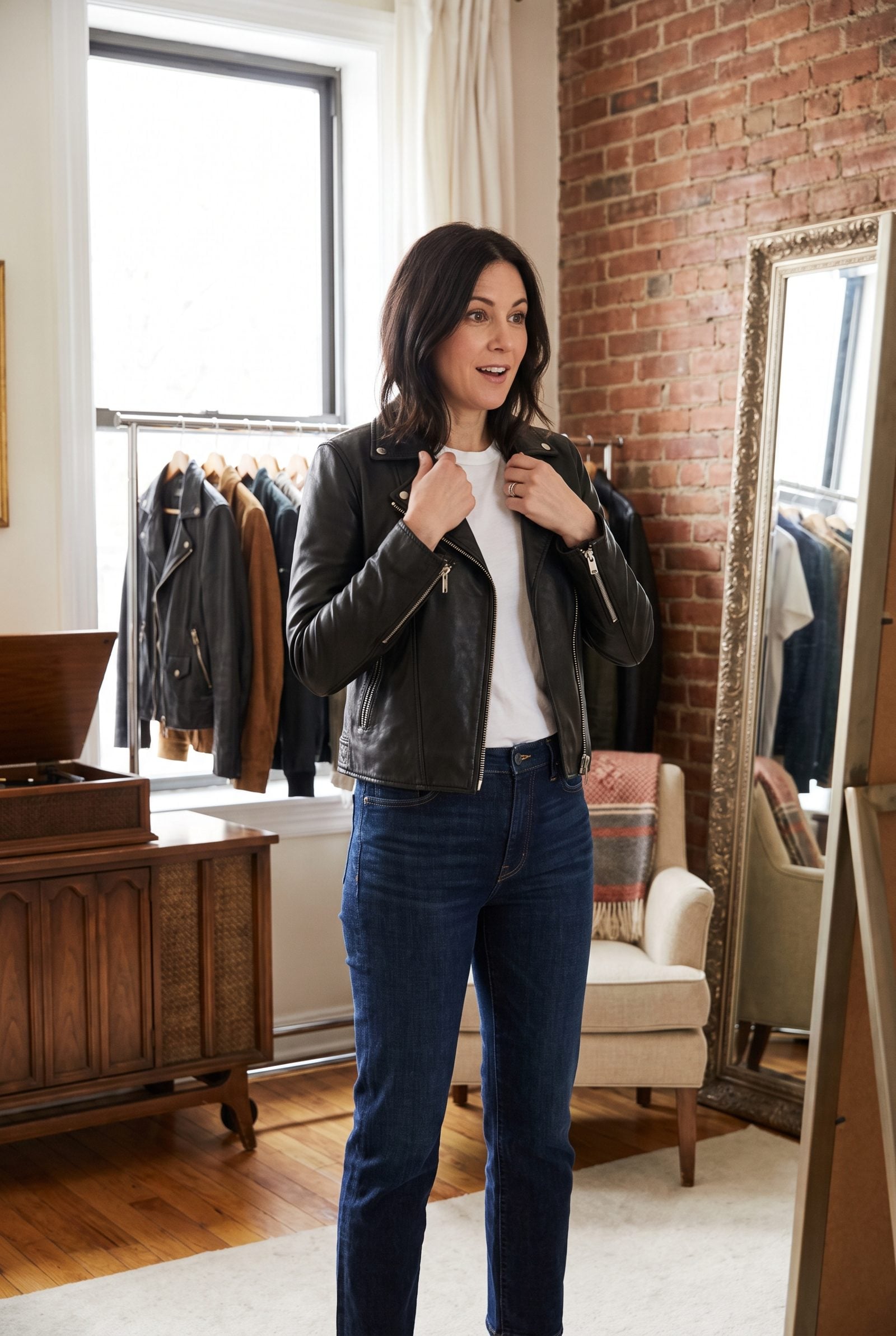
The jacket costs more than you planned and suits a woman who is slightly bolder than the one currently holding her wallet. You buy it anyway. You buy it because of that.
This is identity signaling run forward. Instead of dressing who you are, you dress who you intend to become, and you let the object pull you toward it. The jacket is a down payment on a self — the same logic behind the motorcycle in the garage or the gym membership bought with a clean sense of purpose.
What makes a black leather moto jacket work here is contrast. Thrown over a soft white tee and good jeans, the hardware and the structure do all the talking while everything underneath stays easy. The toughness has somewhere soft to land.
And here’s what nobody tells you: sometimes the costume comes first, and the courage follows it out the door. Buy the jacket. Then go be the person who wears it.
10. Red Boots Replace Sensible Shoes for No Practical Reason
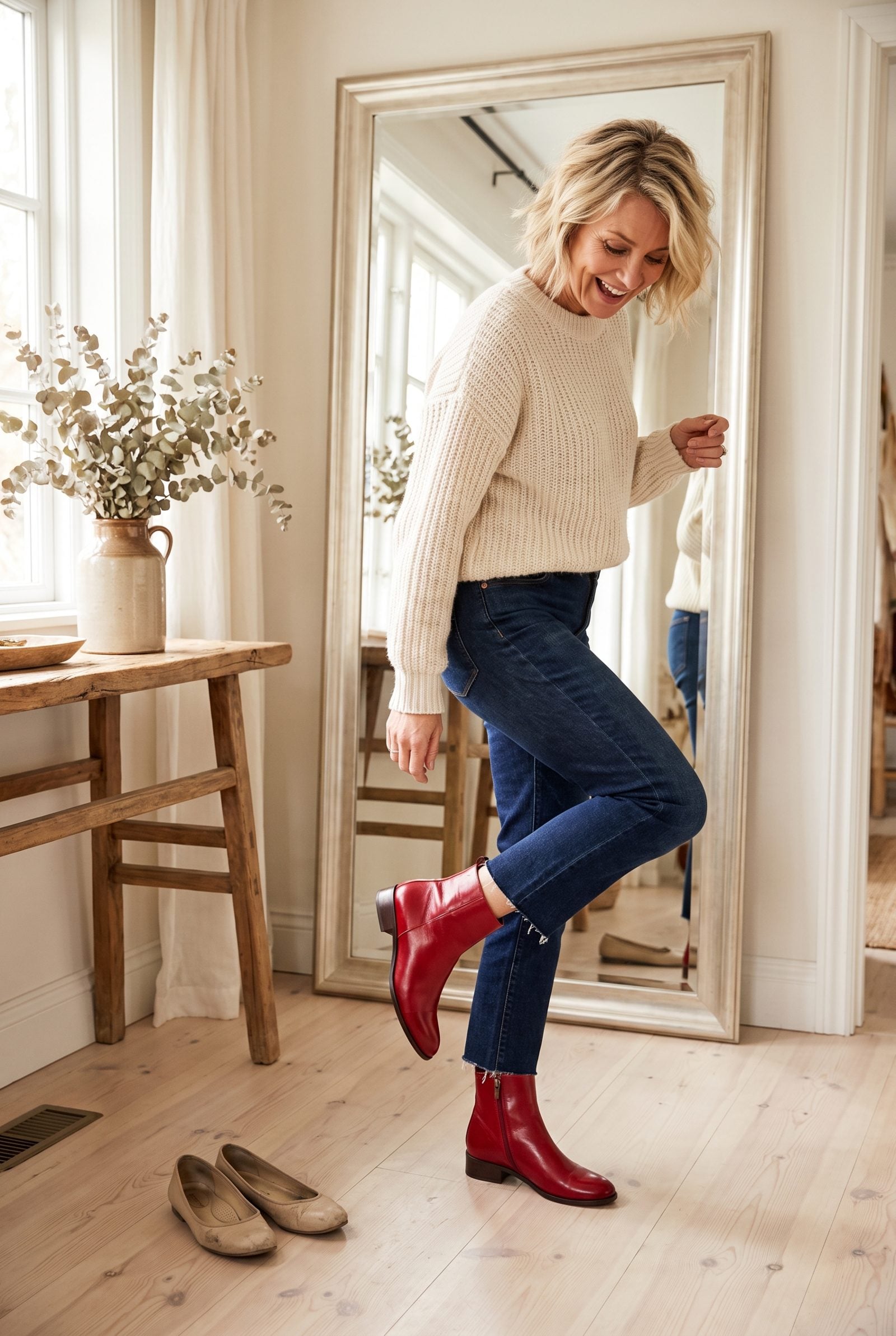
The sensible flats did nothing wrong. They were comfortable, they went with everything, they had years left in them, and yet there they sit by the door while you parade around in red leather ankle boots that serve no purpose except to announce that something has shifted.
Same logic as the midlife sports car. Nobody needs a two-seat convertible for the school run. The purchase isn’t about transport, it’s proof you’re still capable of a decision that is purely yours. The red boot says the same thing in a smaller box.
9. You Test the Wild Outfit Where Nobody Knows You
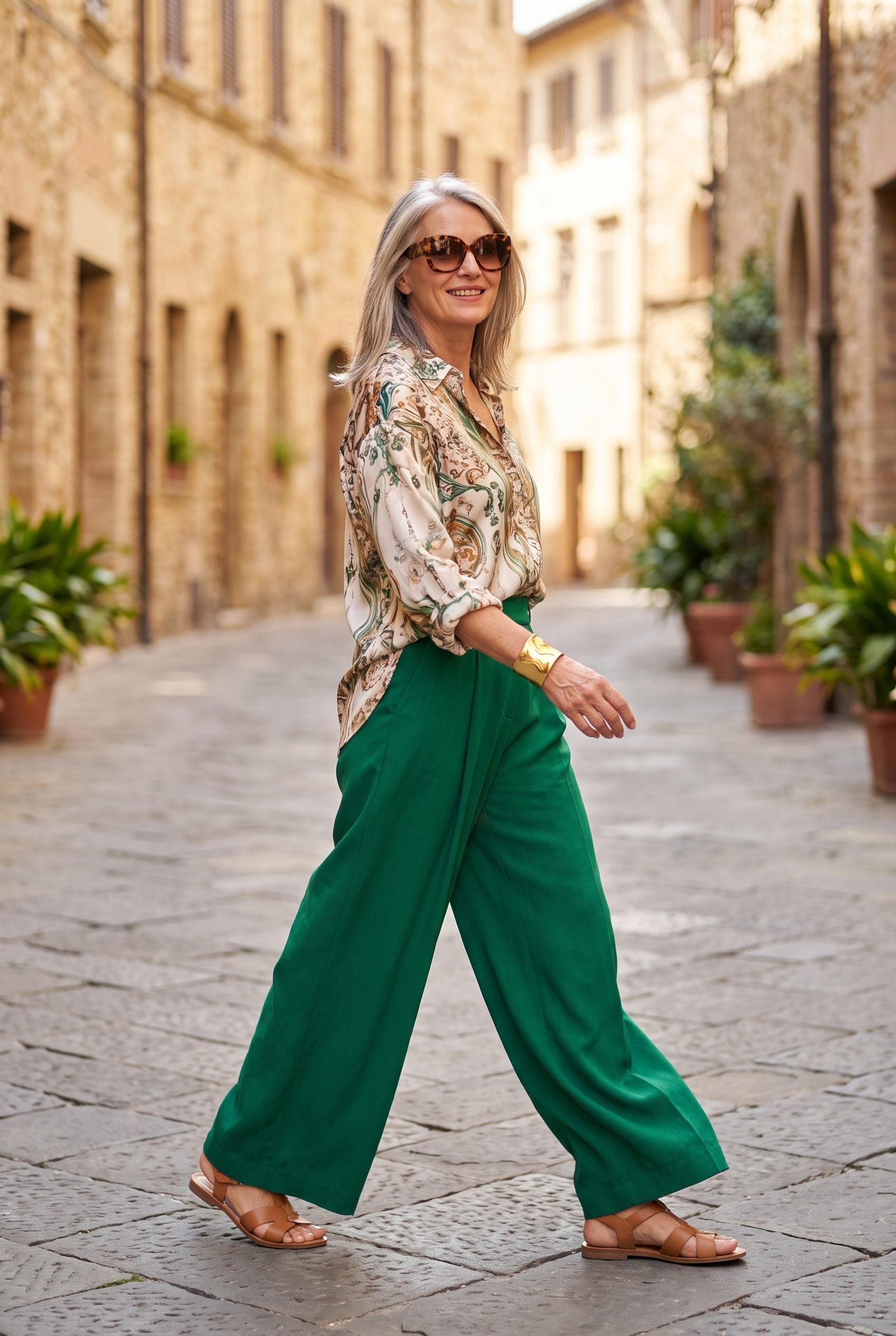
The outfit you’d never risk at the grocery store two blocks from home somehow feels completely safe three hundred miles away, in a town where not a single person knows your name. The emerald wide-leg trousers, the loud silk, the cuff that could double as a weapon. On vacation, you are a braver person.
It mirrors the midlife urge to try a new self on neutral ground: the solo trip, the reunion in a city nobody from your current life attends. Away from your audience, the cost of looking foolish drops to almost nothing.
Psychologists call it the stranger-on-the-train effect. We reveal more, and risk more, where there are no witnesses who’ll hold us to it tomorrow. A new identity always gets its first rehearsal somewhere anonymous.
8. You Retire the Office Uniform Without Retiring the Job
❤️ Would you like to save this?
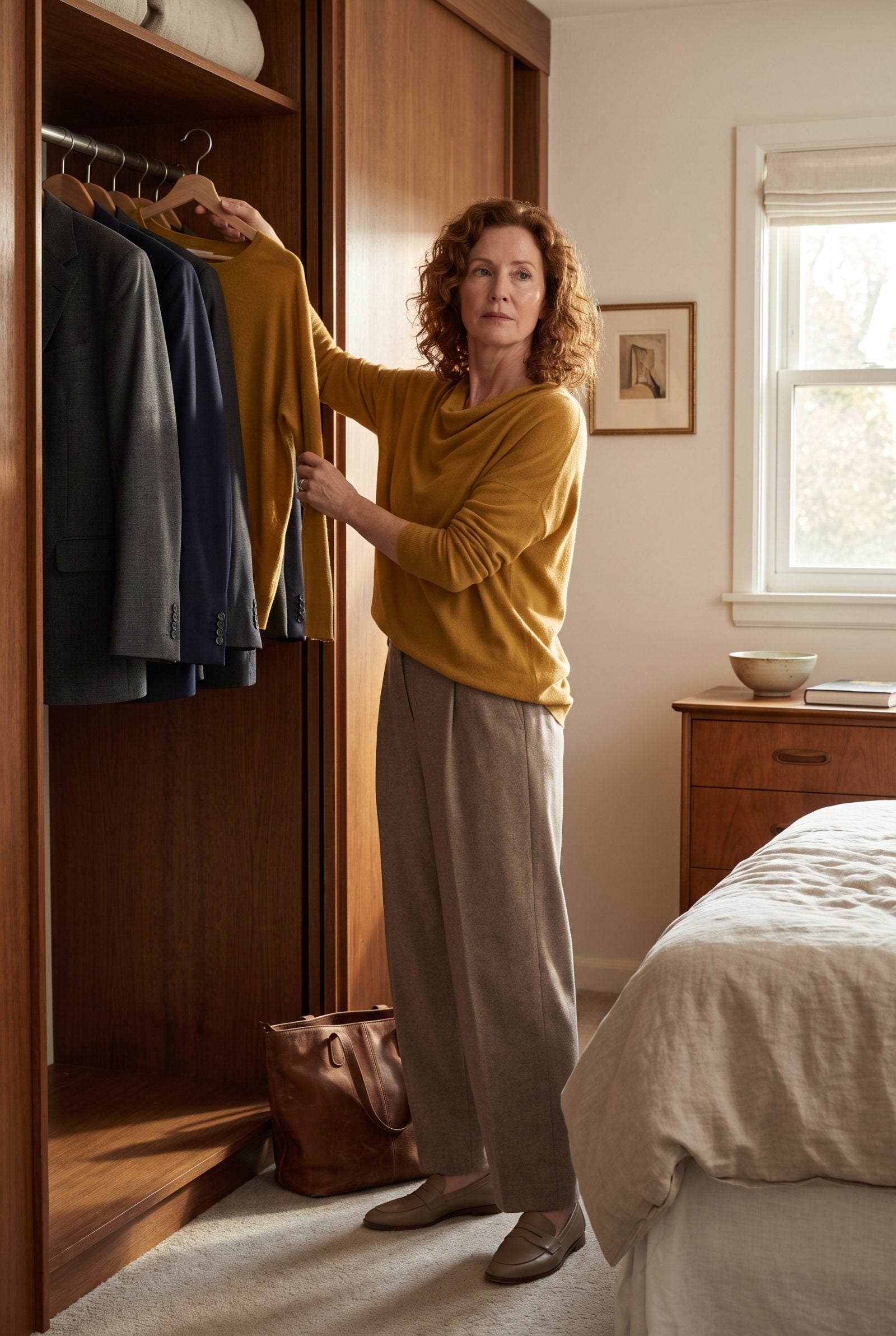
The suits still hang there, navy and gray, shoulders squared, waiting. You haven’t changed jobs. You’ve changed the person who shows up to it. Out come the draped mustard knit and the softer black style pairings that carry authority without the armor.
Think of it as the wardrobe version of staying in the marriage, or the career, but refusing to keep playing the character it assigned you. You renegotiate the role from the inside. Fluid fabric against old structured tailoring is the whole tension made visible, two versions of competence crowded into one closet.
Enclothed cognition is real: what you put on edits how you think and move. Trade the stiff jacket for something that drapes and you’re not dressing down. You’re rewriting the terms of who does this job.
7. You Keep One Ancient Sweater as an Emotional Safety Rail
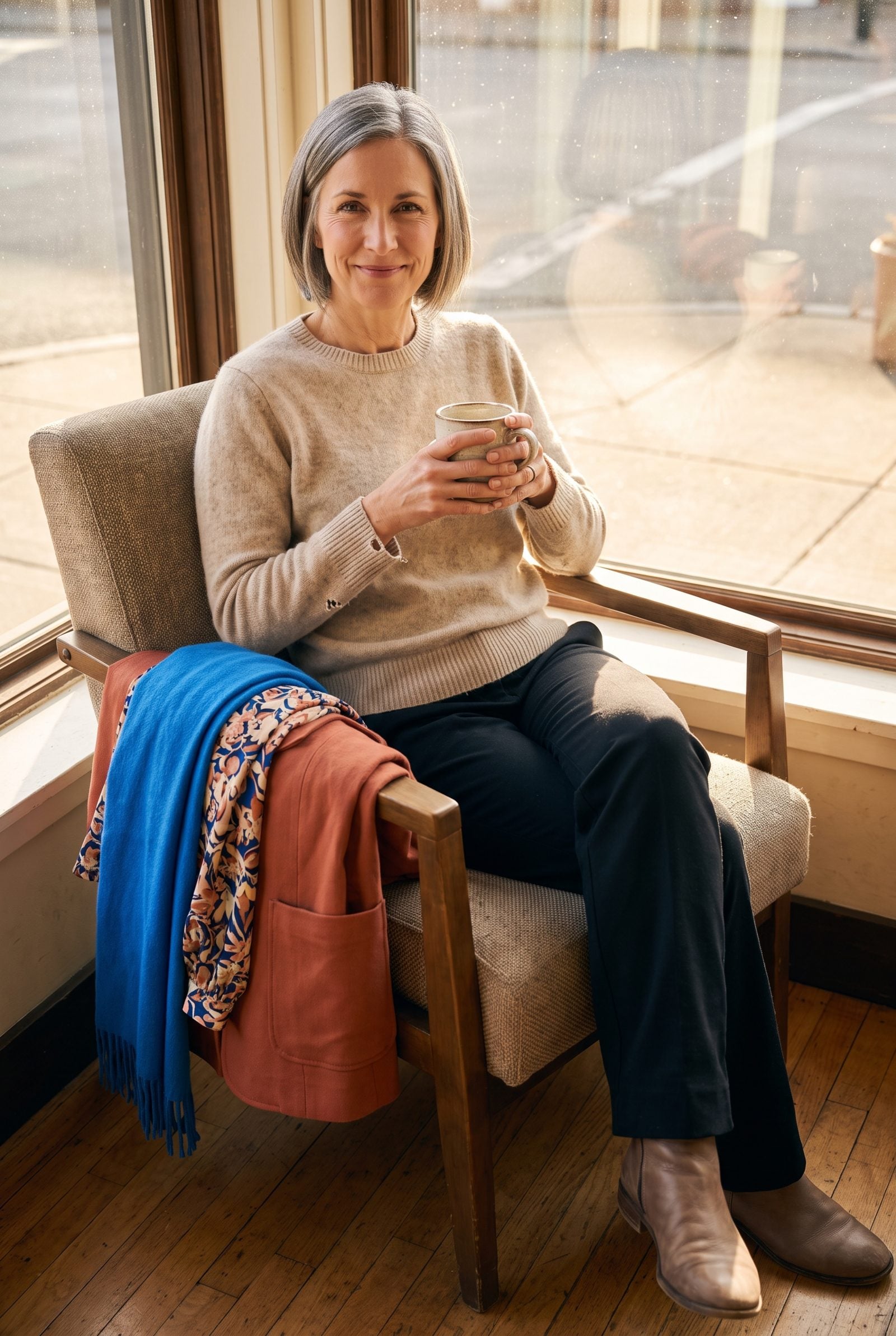
Every bag of new purchases, every bold new silhouette, and still that one gray sweater survives the closet purge. It’s pilled. The cuff is going. You keep it anyway, and on the days the reinvention feels like too much, it’s the first thing you reach for.
It works like the old friend you refuse to lose touch with during a huge life change. When everything else is in flux, one familiar thing lets you be brave about the rest.
You cannot try on a whole new self unless something underneath stays exactly the same.
Nostalgia isn’t weakness here. It’s ballast, a hand on the rail while you walk into unfamiliar territory.
6. You Photograph Every Outfit Like You’re Gathering Evidence

The camel coat goes over the white tee, you raise the phone, and you snap the mirror shot like you’re building a case file. Not for social media, necessarily. For yourself. A visual record that this new person exists and keeps existing.
Same instinct as the midlife habit of journaling, or suddenly needing to photograph every sunset on a trip. You’re documenting a self that still feels unproven, and the camera makes the change official.
5. One Compliment Becomes Proof the New You Is Working
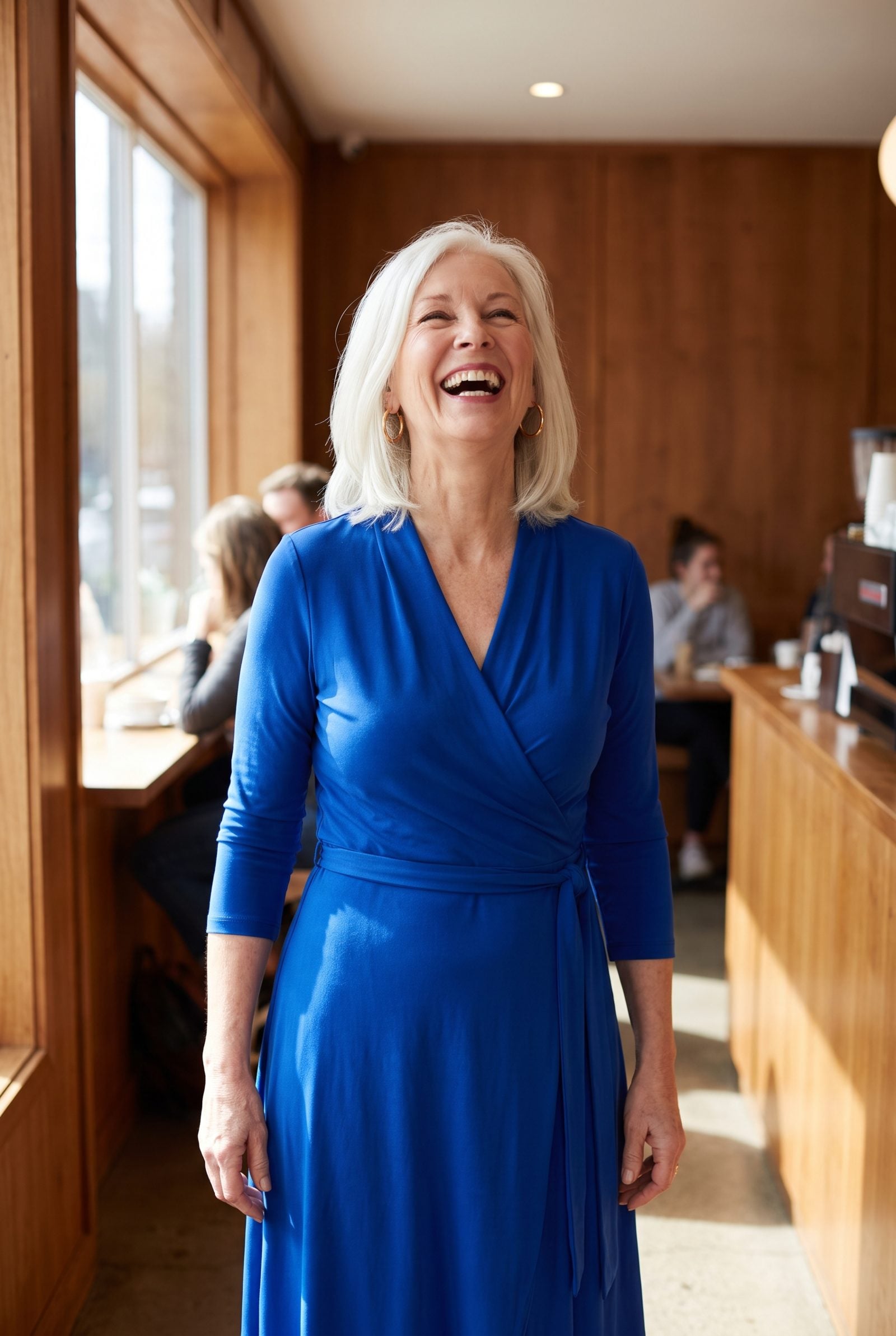
One stranger says that cobalt wrap dress is incredible, and suddenly the entire reinvention is validated. See? It’s working. The whole experiment, justified by a single sentence from someone you will never meet again. One nod from the right stranger and the blue style gamble pays off in full.
Same mechanism as the midlife person who gets one encouraging comment on a new venture and treats it as a mandate from the universe. We weight social feedback wildly in favor of whatever confirms the choice we’ve already made.
Confirmation bias wearing a smile, basically. You went looking for proof, the compliment arrived, and the brain filed it as fact.
4. One Side-Eye Makes You Defend the Outfit Even Harder
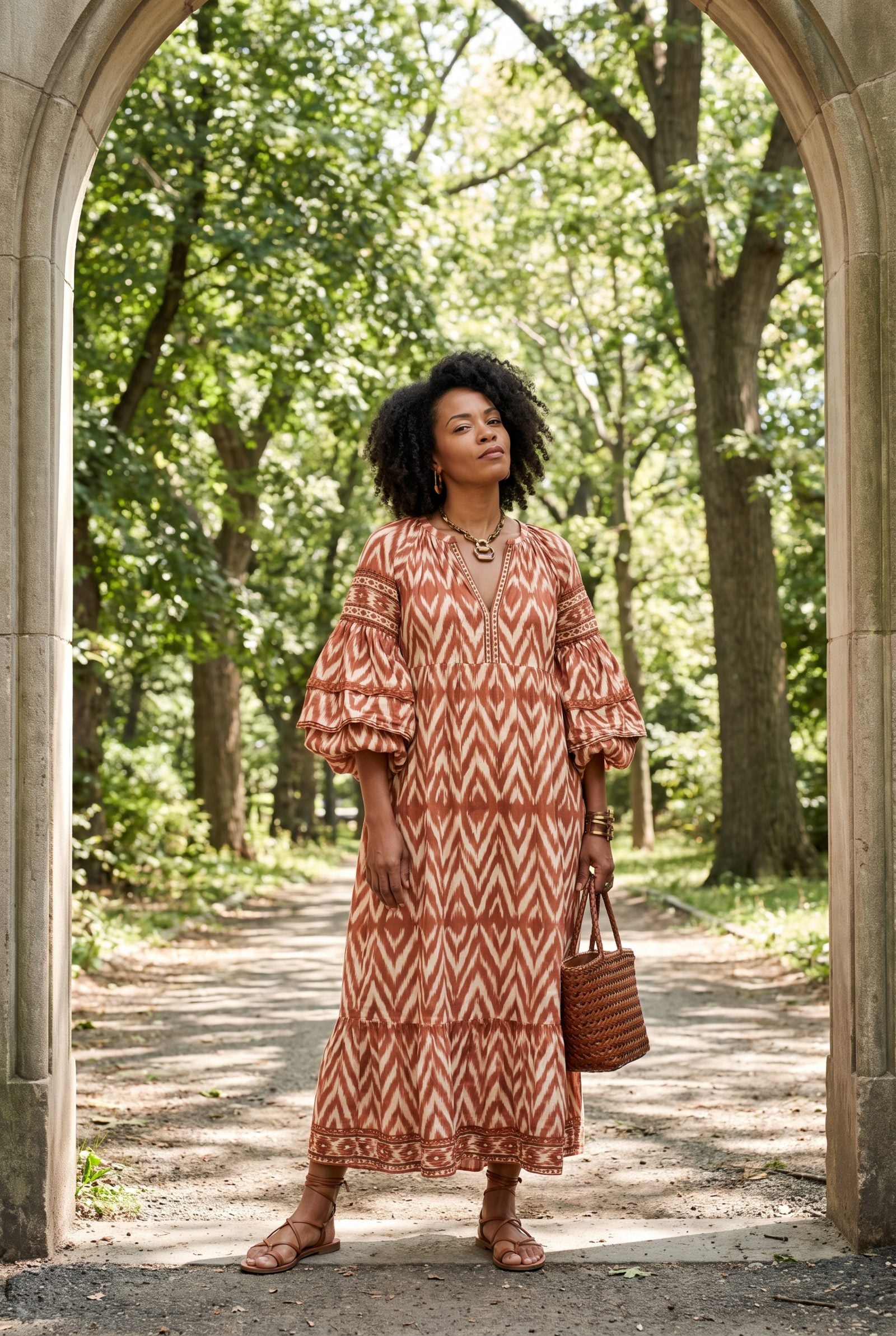
Someone gives the dramatic-sleeve dress a flicker of a side-eye, and instead of retreating, you commit harder. You wear it twice next week. You find the matching earrings. The doubt of one skeptic becomes rocket fuel.
Call it the reinvention cousin of the midlife stubborn streak, where a raised eyebrow from a relative about your big change leaves you more certain, not less. Resistance gets read as a sign you’re onto something.
Psychologists call it reactance. Threaten someone’s freedom to choose, even with a glance, and the choice becomes more precious. The side-eye didn’t shrink the dress. It welded it to you.
3. Your Partner Gets Asked to Approve a Stranger’s Wardrobe
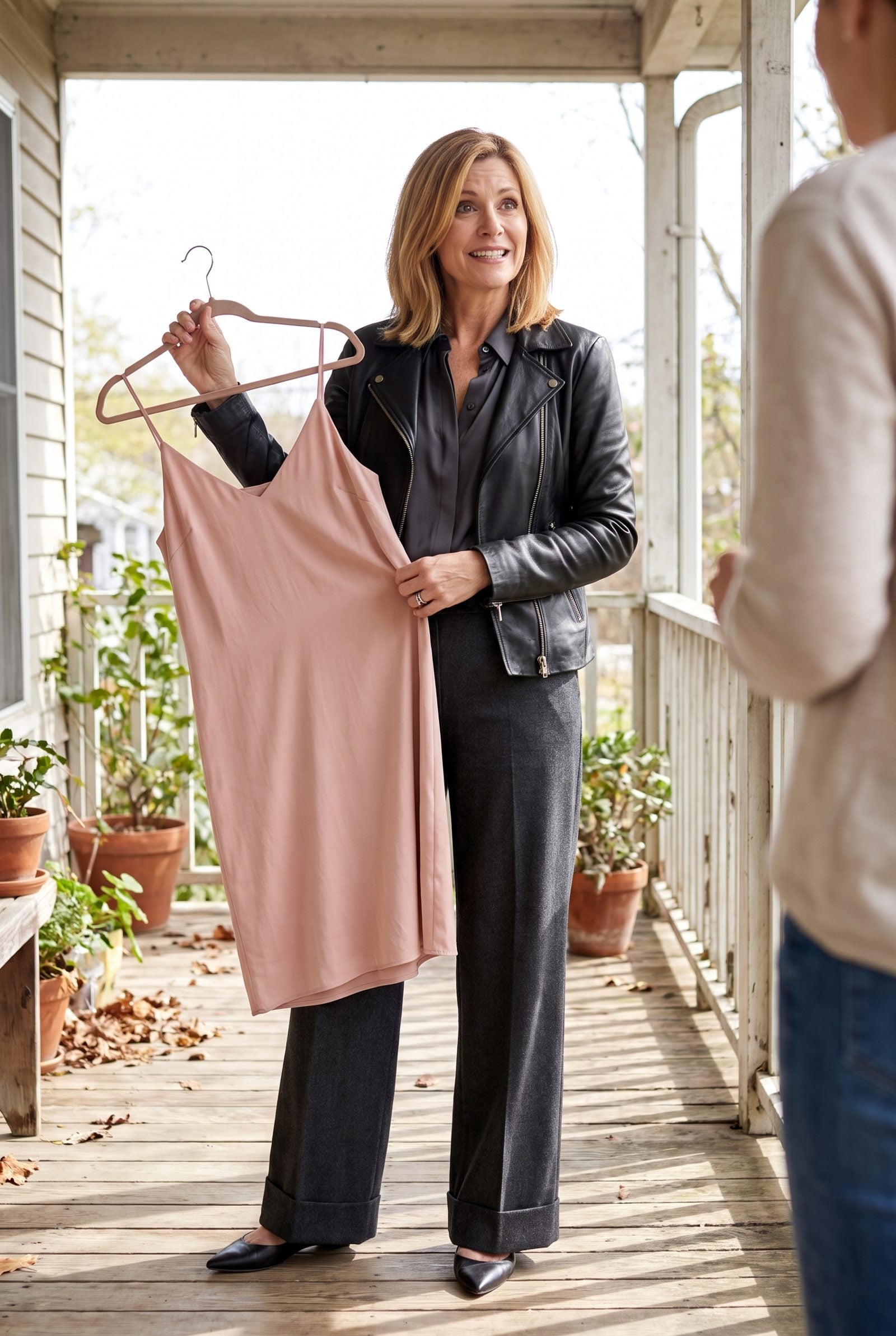
You hold up the blush slip dress with both hands, black leather jacket already on your shoulders, and ask your partner to weigh in, except the person asking isn’t quite the person they married. You’re quietly testing whether the new you still fits inside the old relationship. Soft blush style held up against the hard edge you’re wearing, two possible selves put up for a verdict.
It echoes the midlife moment of floating a big change past the person who knew the old version of you best. You aren’t really asking about the dress. You’re asking whether they’ll come along.
2. The Credit Card Funds a Whole New Personality

One purchase does not reinvent a person. So you buy the stone trench coat, then the boots to go under it, then the bag that matches the boots, and before long the card is funding an entire character rather than a wardrobe.
The spending logic of the midlife overhaul runs the same way, where the motorcycle needs the jacket needs the boots needs the weekend trips to use any of it. Each purchase opens a gap the next purchase promises to fill.
Economists call it the Diderot effect. One new possession that doesn’t match your old life pulls the rest of your life into its orbit, item by item, receipt by receipt.
1. You Hide the Shopping Bags Until Everyone Goes Upstairs

You wait until the house goes quiet upstairs before you bring the bags in from the car. Not because anyone would stop you. Because the reinvention feels private, almost tender, and you’re not ready to explain it or defend it at the kitchen table.
Same secrecy as the midlife person quietly starting therapy, or writing the novel in a notebook nobody is allowed to see. The change is real but fragile, and exposure too early feels like it could kill it.
You hide the bags for the same reason you whisper a wish: say it out loud too soon and it stops being yours.
Becoming someone new is intimate work. The hidden bag is you protecting a self that isn’t quite finished yet.