❤️ Would you like to save this?
You’ve stood in front of a full closet and declared you had nothing to wear. You’ve bought the jacket that promised to fix everything and worn it twice before it went into exile. And that dress you no longer fit? Still hanging there. None of it is about fabric. It’s about the same wiring that runs your heart: the snap judgments, the sunk costs, the way a mirror can owe you a mood it never pays out. We shop for clothes and choose who to love on the same old software. Below are the parallels that will make you laugh in recognition, then make you understand why. Fair warning — you’ll see yourself in at least half of these.
FYI, thanks to AI imagery software, we’re able to create very specific fashion and hairstyle examples to illustrate the points being made. In some cases, imagery is exaggerated to hammer home the point. Also, assume links that take you off the site are affiliate links such as links to Amazon. this means we may earn a commission if you buy something.
18. You Judge the Whole Outfit by the First Jacket
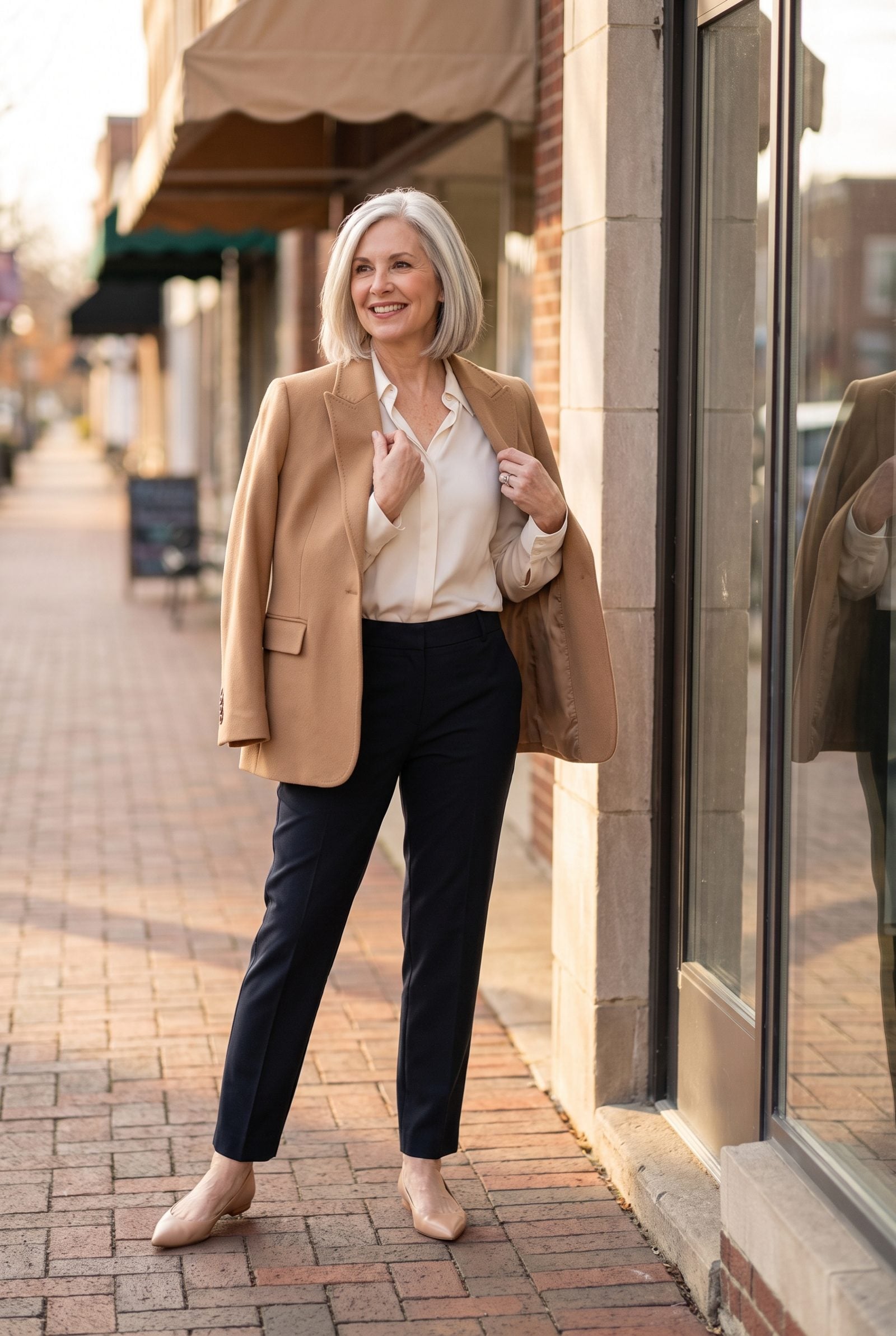
The camel wool blazer is doing all the talking, and that’s exactly the trap. You try it first, it lands, and suddenly every other piece gets graded on a curve. The blouse looks better than it is. The trousers earn a pass they didn’t deserve. One good jacket and the whole look coasts on goodwill it never actually earned.
That’s the halo effect — the same thing that happens on a first date when someone is charming for twenty minutes and you spend three months explaining away the rest. One strong impression tints everything downstream. And the structured shoulder against the fluid silk creates a formal-soft tension that reads as deliberate, which only deepens the spell.
Styling tip: button the blazer once at the waist and push the sleeves to three-quarter length so the jacket frames the look instead of swallowing it.
17. The Right Jeans Feel Different the Second They’re On

You know the pair. Eleven others fit fine, technically — and then you step into the twelfth and your whole body relaxes. The dark indigo high-rise jeans hit at the right spot on the waist, the straight leg lengthens everything below the knee, and you don’t want to take them off. That’s not vanity. That’s recognition.
It’s the same jolt people describe meeting someone and feeling, inexplicably, like they’d known them for years. Psychologists call it processing fluency: when something slots into our template with zero friction, the brain reads that ease as rightness. No tugging, no breathing in, no quiet negotiation in the mirror — just relief. And relief is a dangerously easy thing to confuse with love.
Styling tip: a clean white tee tucked at the front only keeps the waistband as the focal point, which is where great jeans earn their keep.
16. The Last Dress in Your Size Suddenly Looks Perfect
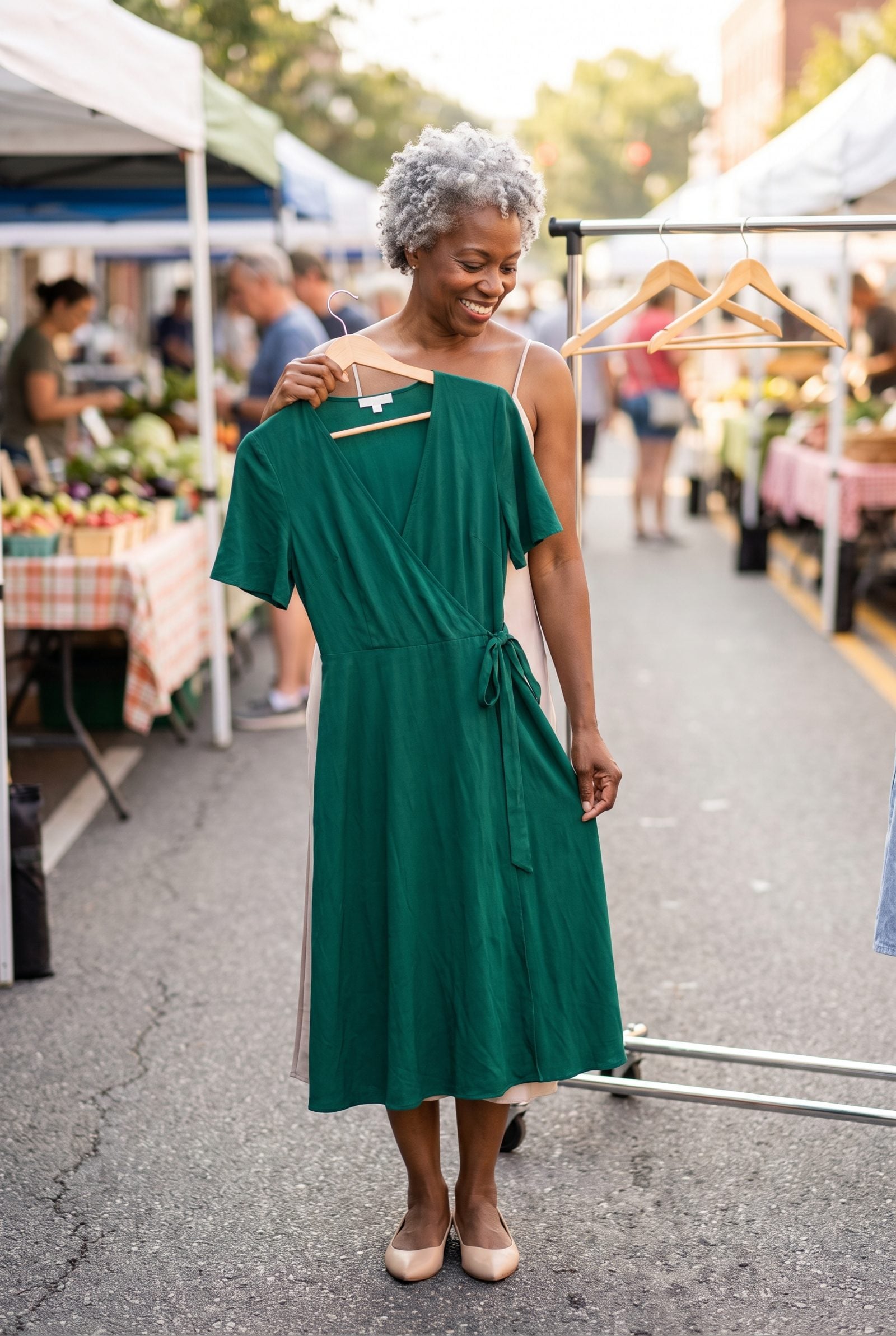
Scarcity is a liar, and a very persuasive one. The emerald green wrap dress you walked past twice turns magnetic the moment you realize it’s the last one in your size. Yes, the wrap silhouette defines the waist and the color reads rich against almost any skin tone — but be honest with yourself. Half of what you’re feeling is the fear of losing it.
This is the oldest move in the book, and dating apps have monetized it completely. Someone about to vanish becomes irresistible. Urgency short-circuits judgment, and you buy (or chase) something you’d have calmly ignored if there were twelve of them on the rail.
Styling tip: a wrap dress wants a defined waist knot and nothing competing at the neckline. Skip the statement necklace and let the V do the work.
15. The Backup Dress Looks Hotter Beside the Wrong One
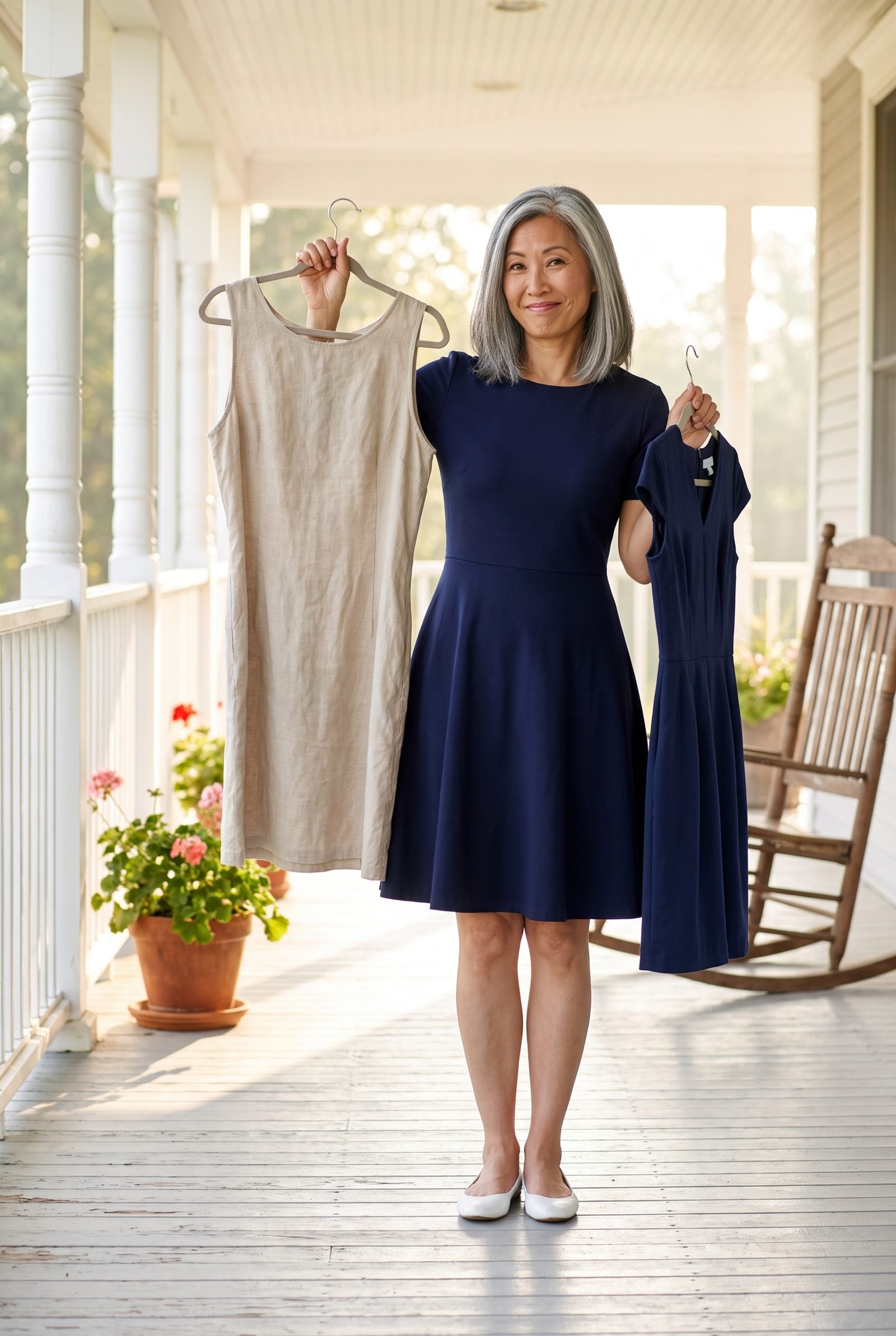
Hold the good dress next to a worse one and the good dress gets even better. The navy fit-and-flare dress was already fine on its own. But put it beside the beige sack that does nothing for your shape, and suddenly the navy’s nipped waist and swinging hem look like a windfall.
That’s the decoy effect, and it’s why you should never shop (or date) by comparison alone. A clearly worse option exists only to make a middle option look like a steal. We don’t judge things on their own merits nearly as often as we think — we judge them against whatever happens to be standing next to them.
The styling lesson hiding inside the psychology: a fit-and-flare flatters because it defines the narrowest point and skims everything else, not because the dress beside it was ugly. Judge it solo in the mirror before you commit.
14. Ten Good Tops Somehow Make Picking One Impossible
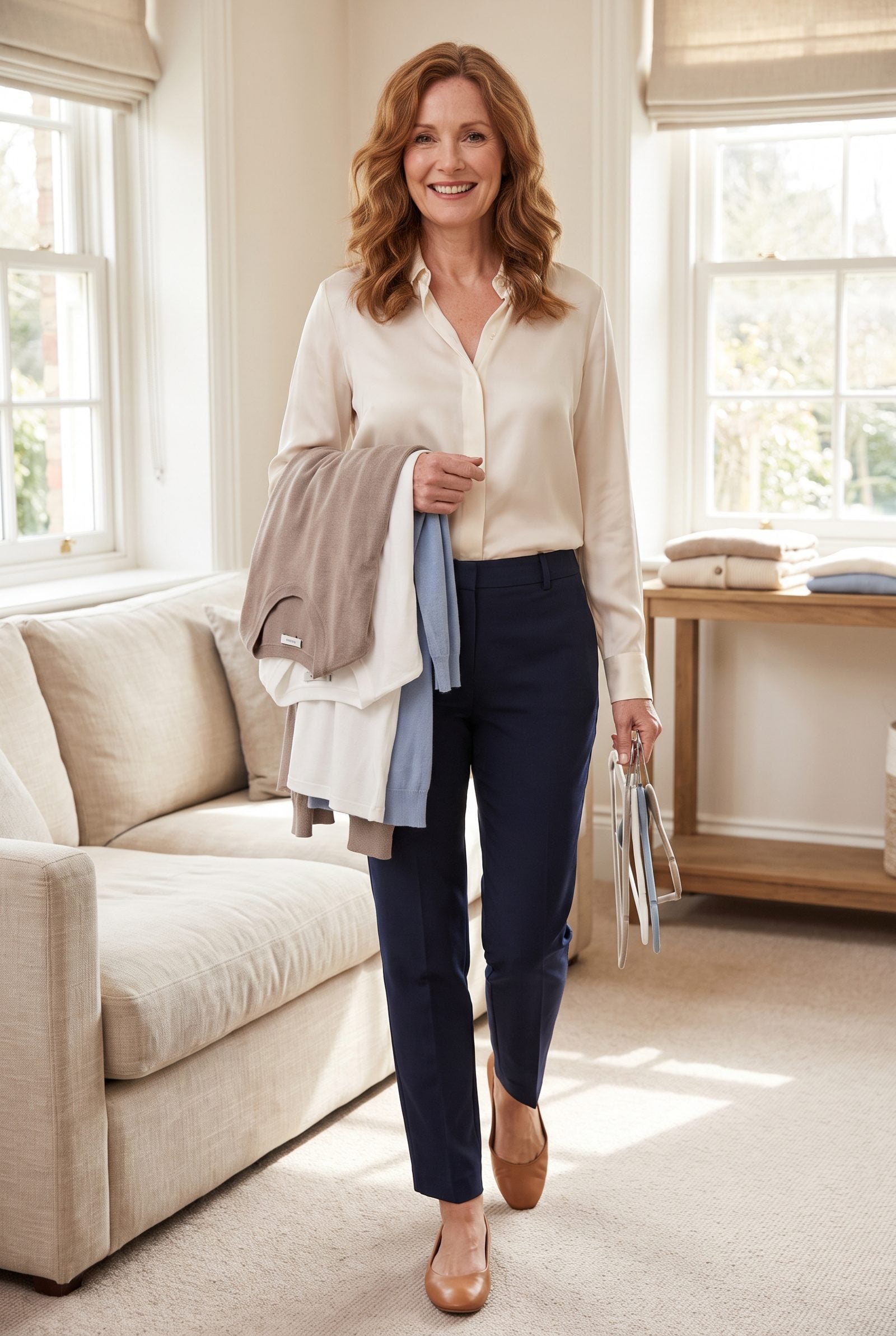
A closet of good options should feel like freedom. It feels like paralysis instead. You own ten tops you genuinely like, and that’s precisely why you’ll stand there for twenty minutes and finally grab the same old black one out of sheer fatigue.
Choice overload is real and well documented. More options means more ways to feel you chose wrong, which makes deciding agony and satisfaction rare. Dating apps turned this into a lifestyle — with profiles scrolling past forever, committing to any single one starts to feel like forfeiting all the others.
Styling tip: build a small uniform of three tops you reach for without thinking — a crisp white shirt, a fine-gauge knit, one soft blouse — and the rest of the closet stops arguing with you every morning.
13. You Change Three Times Chasing What the Mirror Owes You
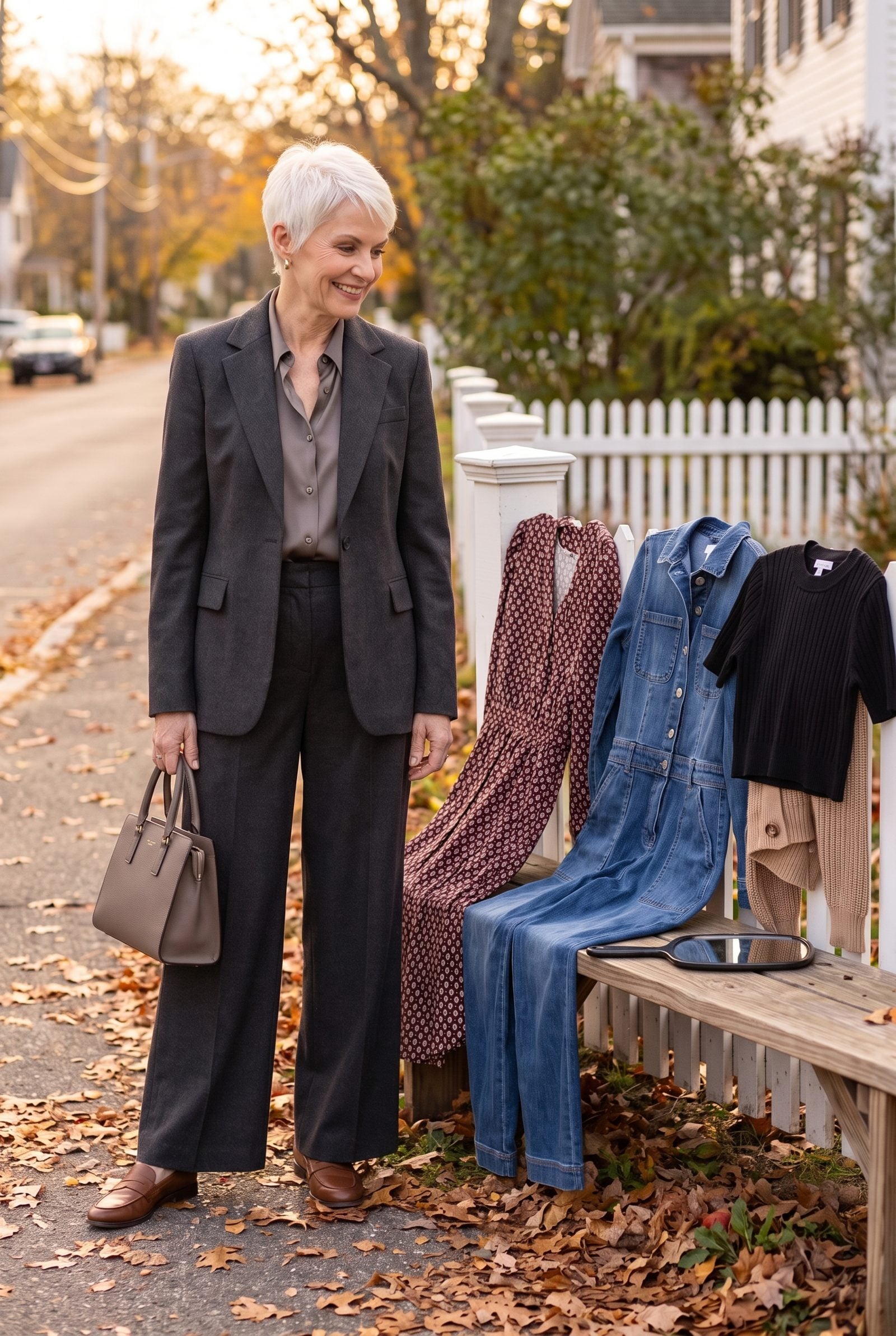
Three outfits draped over the picket fence and bench and still no peace. Nothing was wrong with the first one. You weren’t chasing a better top — you were chasing a feeling the mirror can’t hand over on demand.
We project our inner weather onto the reflection, then blame the clothes when the weather won’t clear. Change into the cropped black short-sleeve knit sweater, and if the mood stays flat, you’ll change again, convinced the next one holds the answer. It’s the same restless loop that keeps people leaving relationships in search of a version of themselves that was never going to arrive via somebody else.
Enclothed cognition actually helps here, if you let it. A neat, cropped short-sleeve sweater in dense ribbed knit makes you stand taller before you’ve decided to, and the posture shifts the mood more reliably than a fourth outfit ever would.
Styling tip: when you catch yourself on the third change, stop. Put on the first outfit, add one strong shoe, and walk away from the mirror. The feeling usually follows you out the door.
12. You Dress for the Life You Hope You’re Having

The ivory trench coat and silk blouse are far more than a grocery run requires, and you know it. You dressed for the life you’re reaching toward — the lunch that might happen, the person you intend to become, the version of the day that beats the one actually on your calendar.
Aspirational dressing is identity signaling aimed inward. We buy the clothes of our hoped-for self the way people fall for partners who represent the life they want rather than the one they have. Sometimes that pull is motivating. Sometimes it’s just an expensive daydream hanging in the closet with the tags still on.
Styling tip: a trench works as the dressy anchor over simple pieces, so keep everything underneath quiet and let the coat carry the ambition.
11. You Pick Clothes That Recognize the Person You Already Are

Now the opposite of chasing a fantasy: the outfit that already knows you. Worn indigo jeans, a charcoal cashmere sweater, brown leather loafers. Nothing about it is a stretch, and that’s the appeal. It fits the woman you actually are on a Tuesday, not the one you perform for a first impression.
Self-verification theory says we’re drawn to what confirms our own sense of self, which is why the most lasting partnerships — and the most worn outfits — are the ones that see us accurately rather than aspirationally. The soft knit against the structured denim gives you easy texture contrast, but the real engine is recognition. You reach for it because it reflects you back without editing a thing.
Styling tip: a loafer gives this kind of comfort outfit a finished edge a sneaker wouldn’t. Leave the ankle bare in warm months, add a fine ribbed sock when it cools.
10. The Designer Label Says Something Before You Say Anything
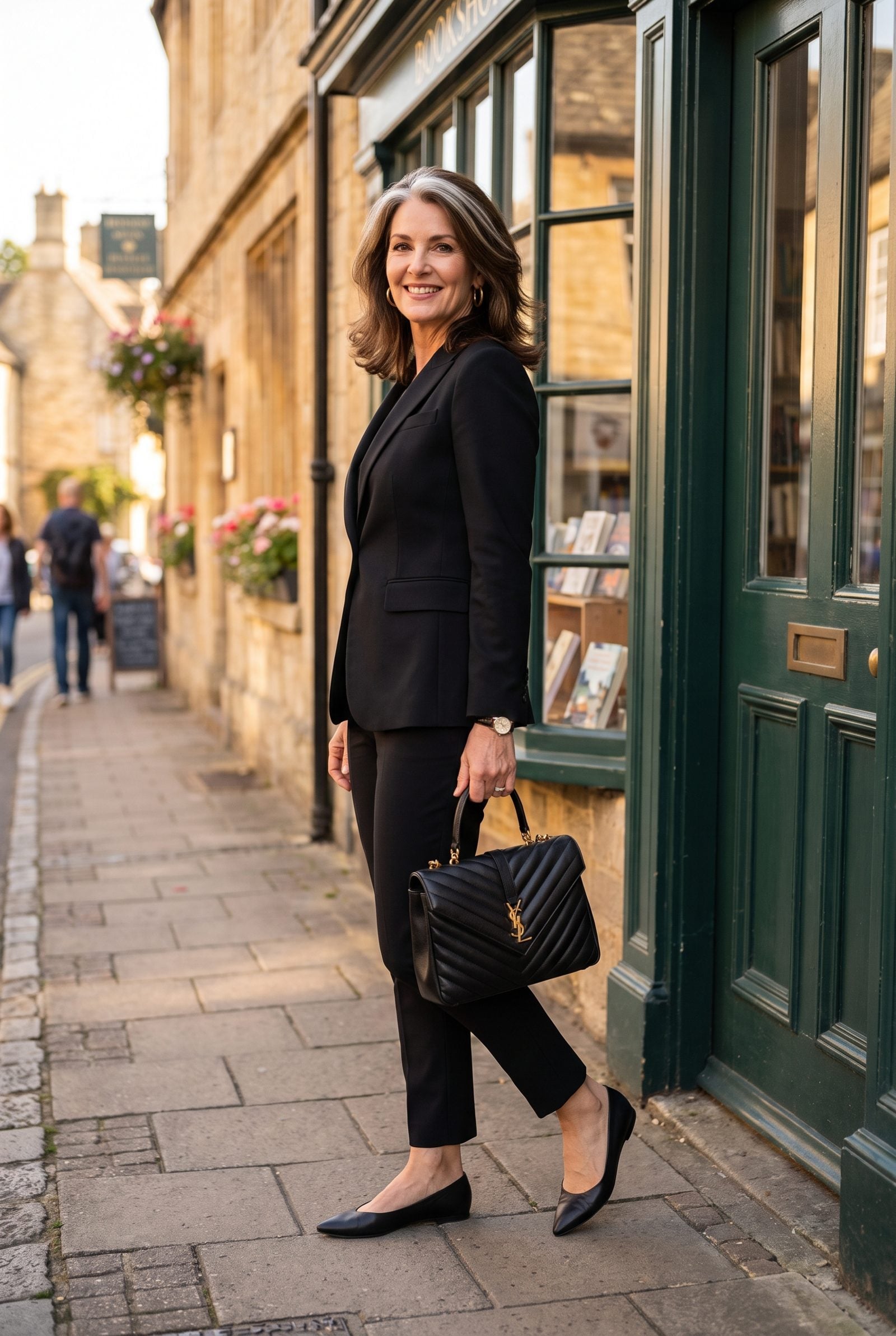
Before you open your mouth, the quilted black leather handbag has already filed a report. The subtle gold hardware and precise stitching broadcast taste and status, and the sharp black suit backs it up. You chose it, consciously or not, to be read a certain way at the door.
Status signaling is as old as clothing, and it runs under partner choice too — the people we’re drawn to often say something flattering about us to the outside world. Costly signaling theory holds that we pay more precisely because the expense is the message. The bag isn’t just a bag. It’s a claim you can carry.
Same caution in both arenas, though. A great signal is not a great relationship, whether it’s an object or a person. Make sure you actually like living with it.
Styling tip: let one structured piece carry the status, then keep everything else understated so the look reads as confidence rather than effort.
9. The Restaurant Decides Whether the Sneakers Make Sense

Those white leather sneakers are right or wrong entirely depending on where you’re walking in them. With slim dark jeans, a silk camisole, and a relaxed blazer, they nail the dress-code read a casual bistro wants. Walk them into a white-tablecloth room and the same shoe suddenly announces you didn’t check the invitation.
Context is everything — the least romantic and most true thing about choosing anyone or anything. The person who’s wonderful in one life stage is wrong in another, not because they changed, but because the setting did. We judge fit against environment constantly, and we forget we’re even doing it.
Styling tip: a half-tucked silk cami under an unstructured blazer keeps a sneaker outfit looking composed rather than thrown together.
8. The Loud Blouse Needs Pants That Let It Be Loud

A blouse with this much personality is the exciting one — the print, the sleeves, the color that announces you from across a room. And like the person who dazzles on a first date, it demands a partner who knows when to shut up so the spark has room to land. Slim black trousers are that partner. They ask for nothing, hold the line, and let the fuchsia do every bit of the talking.
The flat black mule finishes the thought. No competing color, no height drama. Just a clean base that keeps everything grounded so the blouse reads as the event it wants to be.
Style tip: tuck the blouse loosely at the front only, so the sleeves keep their drama without the silhouette swallowing your waist.
7. Your Mother Can Still Veto That Tiny Leather Skirt
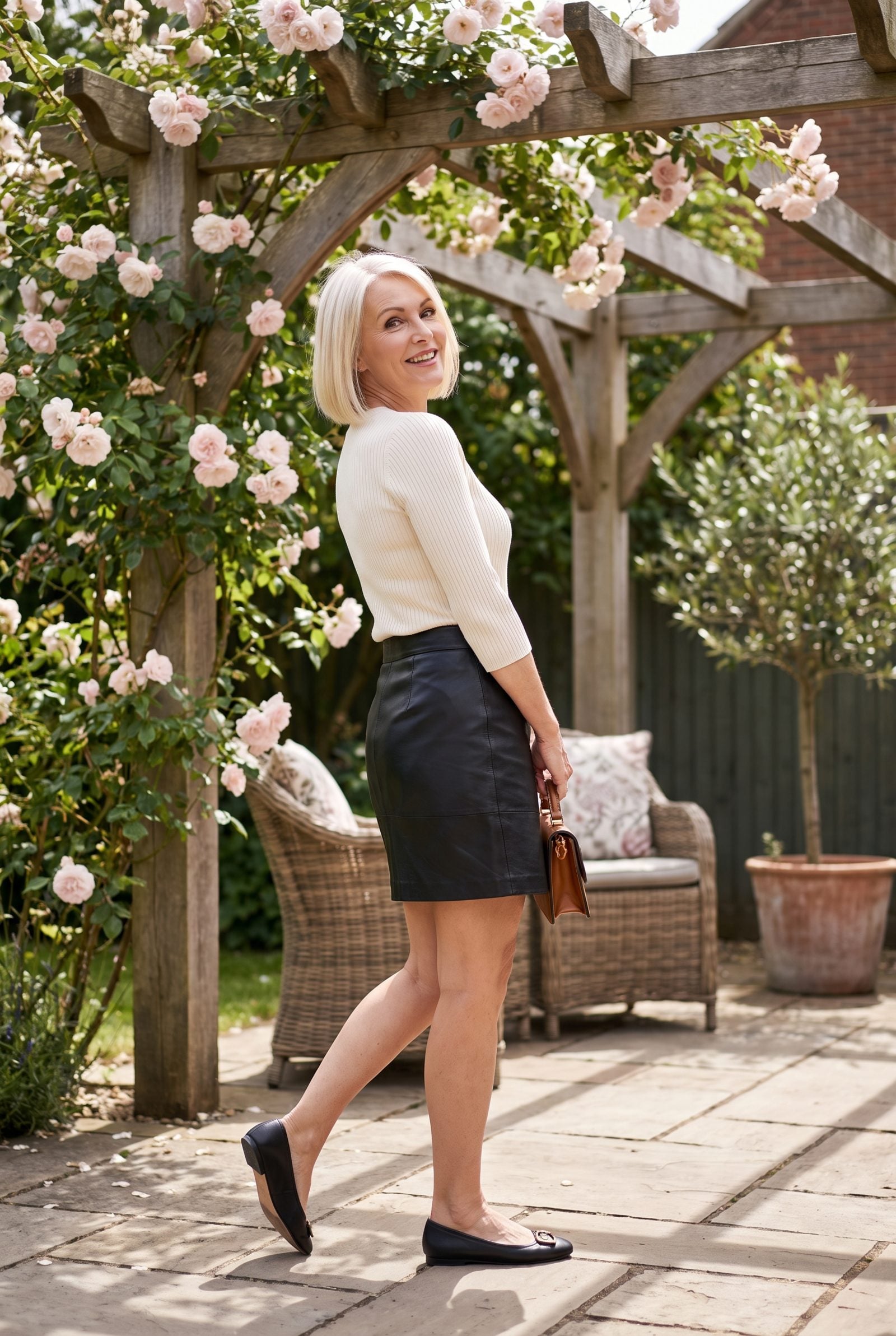
You hold it up in the mirror and a voice that is not yours starts narrating. Too short. What would people think. The skirt is sitting right there, perfectly good leather, and suddenly you are negotiating with a committee that disbanded decades ago.
That same voice pipes up when you bring home someone new — approval you stopped technically needing but never fully stopped wanting. The cream knit tucked in and the flat ballet shoe are the compromise that quiets the committee. They add softness and restraint, so the skirt reads as intentional rather than a dare.
The flat is doing emotional work here, not just styling work. A heel would turn this into a declaration; the ballet flat turns it into an outfit you actually leave the house in. Style tip: keep the top fitted and tucked so the proportion stays deliberate, and skip the fishnets unless you genuinely do not care what anyone thinks.
6. A Returnable Dress Is Easier to Take Home
❤️ Would you like to save this?
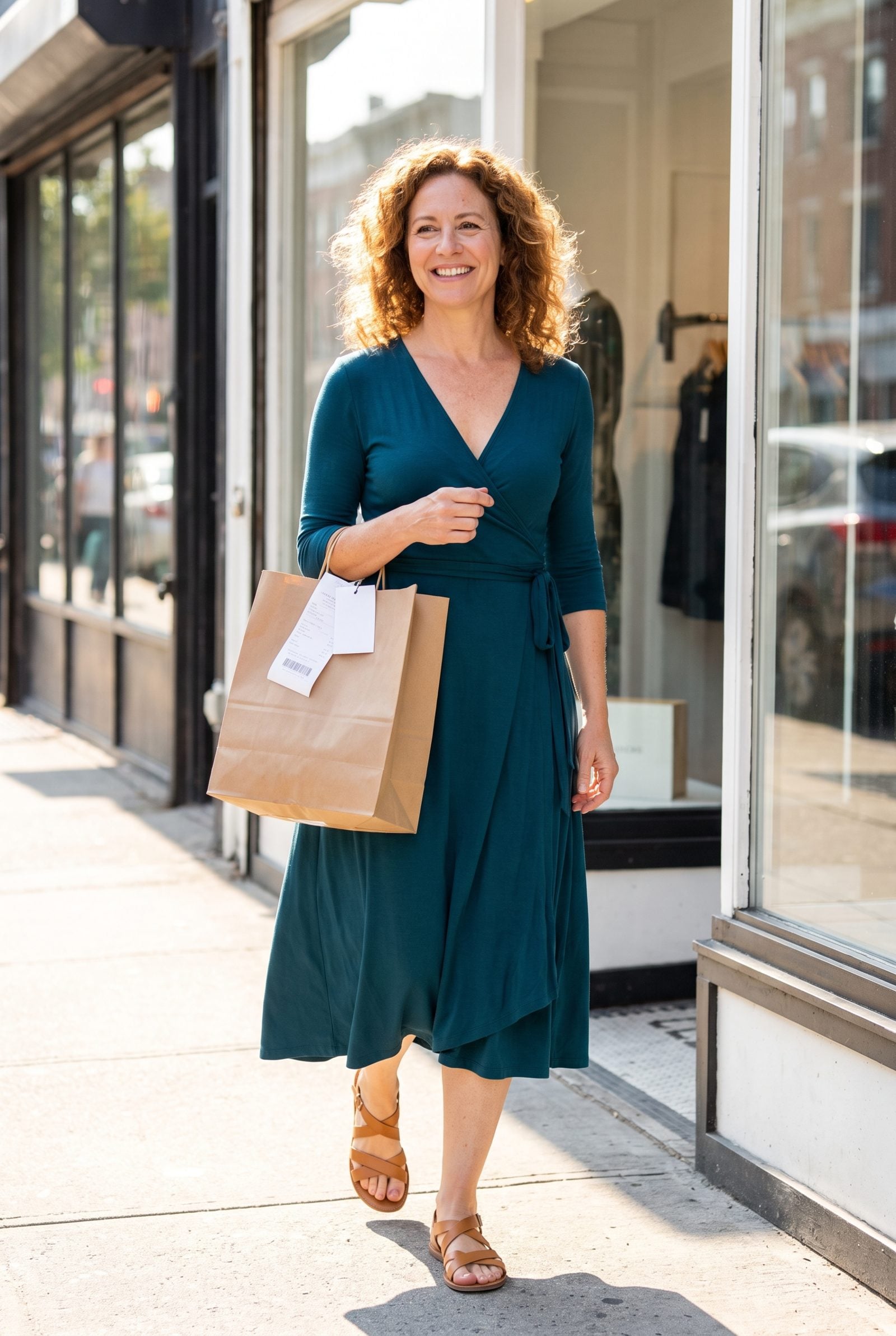
You say yes to the dress faster when you know you can say no later. Free returns do something sneaky to the brain. They lower the stakes of commitment, so you walk it to the register without the usual agonizing.
It is the exact relief of a low-pressure first date — no lifelong promise required, just dinner, and if it is wrong you back out clean. We commit more easily to things we believe we can un-commit from. This teal wrap dress earns the trip home partly on its own merit and partly because the tag is still attached.
The flat sandal keeps it casual enough for real life, which is also what makes you less likely to send it back. Style tip: cinch the wrap a touch tighter than feels natural at first; it settles as you move.
5. You Reach for Black Because Black Has Never Betrayed You

Black is the ex you keep going back to because it has never once let you down. It hides the lunch spill, flatters on no sleep, and needs zero thought at 7am. Reliable, drama-free, always there. That is exactly why your hand finds it before your brain is even awake.
The pull is loss aversion wearing a velvet blazer. Color might go wrong. Black never does, and dodging a wardrobe disaster feels better than gambling on something brighter.
What saves an all-black look from flatness? Texture. The plush velvet blazer over a glossy satin V-neck camisole and smooth wide-leg trousers gives the eye something to do, and the pointed black stiletto pump keeps it polished without trying.
4. The Cardigan Gets Better Every Time You Wear It
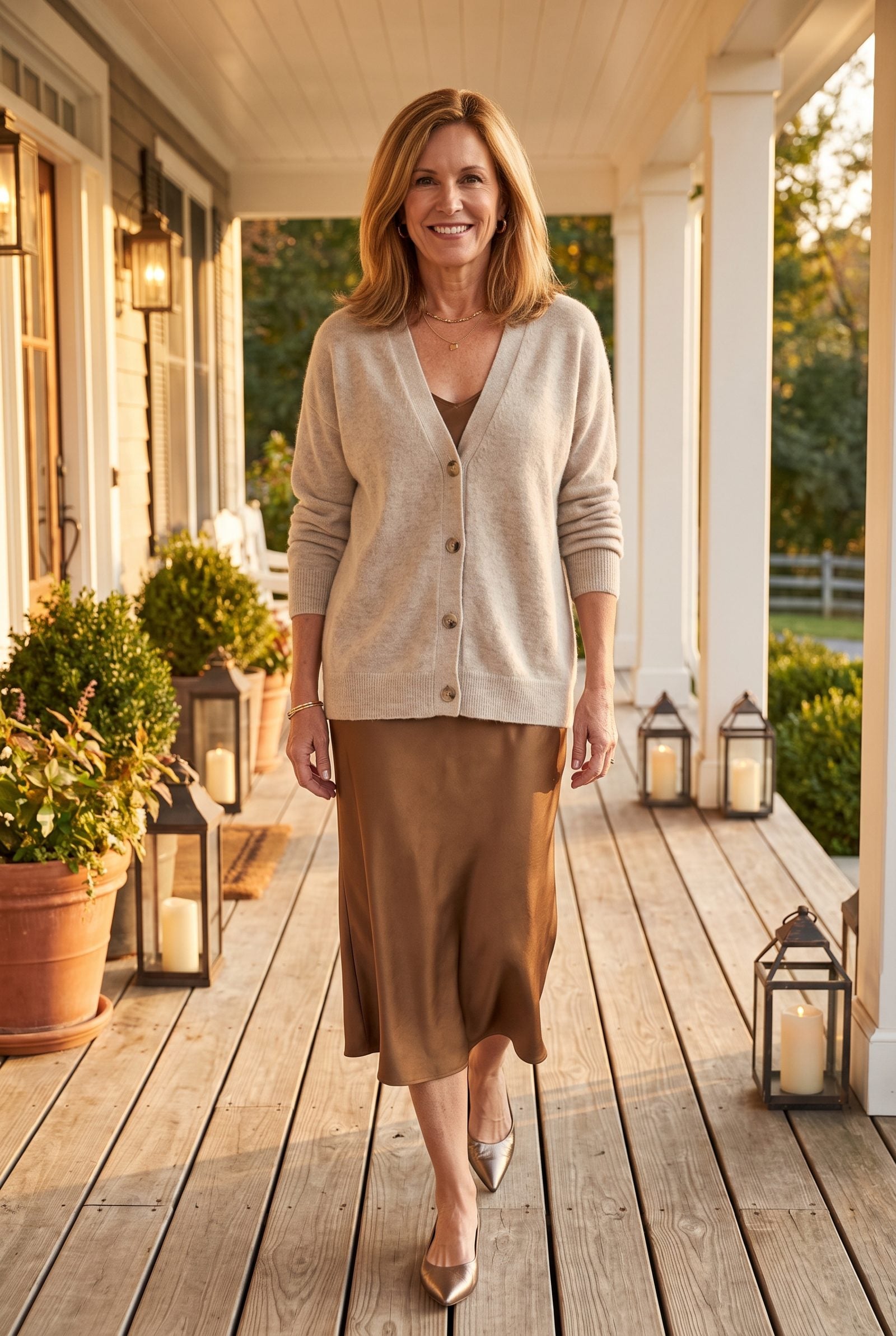
The fine-knit oatmeal cardigan was nothing special the day you bought it. Now it is the first thing you grab — softened at the elbows, shaped to your shoulders, warm in a way a new one never manages. You love it more precisely because you have put the time in.
That is the long-marriage version of style. Not fireworks, but earned comfort that deepens with wear. We value what we have invested ourselves into, a bias so well documented it has its own name in behavioral economics, and this cardigan is your proof of it.
Over a brown satin camisole and a bronze satin slip midi skirt, it does the proportional heavy lifting, the slouchy volume balanced by that fluid satin line. The metallic bronze pointed-toe flat keeps the whole thing easy and walkable. Style tip: push the sleeves to the forearm so the cardigan reads as styled, not as something you threw on over pajamas.
3. You Forgive Scratchy Sequins Because They Look Incredible
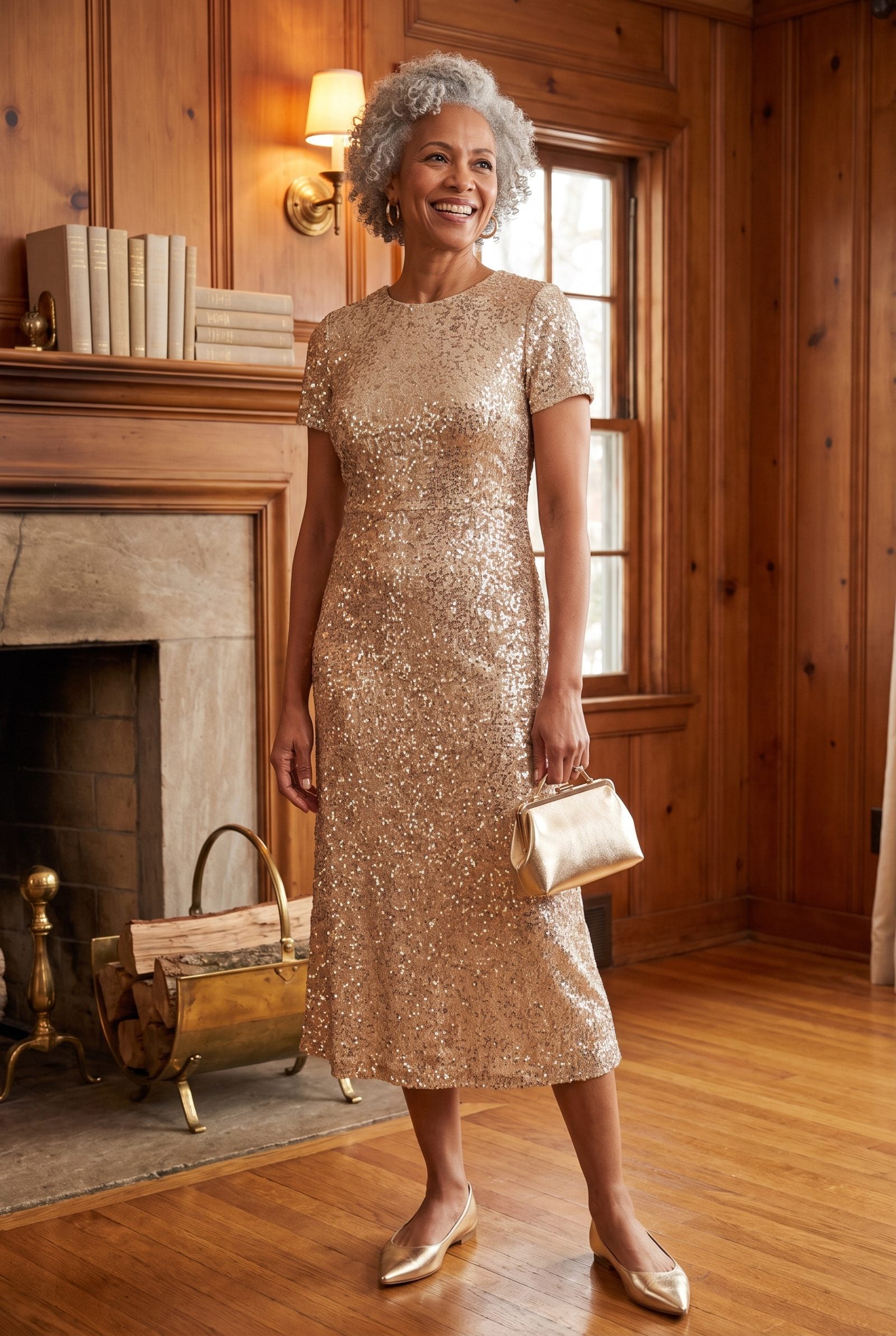
Sequins scratch. They snag your tights, catch on your rings, and leave faint red marks at the armholes by the end of the night. You know all this. You wear the champagne gold dress anyway, because the second you catch yourself in a mirror, every complaint evaporates.
That trade is the halo effect in a party dress. Something this beautiful convinces us the discomfort is minor, the way a dazzling face makes us assume a dazzling personality. We let looks vouch for the rest.
The flat gold shoe is the mercy, taking the pain out of at least one part of the equation so you can actually dance. Style tip: a thin smooth slip underneath kills the scratch at the body without dulling the shine.
2. That Faded Band Tee Survives on Shared History Alone

By any rational measure this shirt should be gone. The print is cracking, the cotton has gone sheer at the shoulder, and it fits nothing it used to. You keep it because it was there. The concert, the apartment, the decade. Throwing it out feels like deleting a chapter.
This is the friendship you maintain purely on history — the person you would never meet today but could never drop now. Nostalgia does the heavy lifting, assigning value that has nothing to do with the thing itself and everything to do with who you were in it.
Worn right, a faded tee has an ease you cannot buy new. Tucked loosely into straight-leg blue jeans with frayed hems and a black Chelsea ankle boot, the washed-out black looks deliberate. Style tip: a denim jacket slung over one shoulder keeps the look from tipping into actual pajama territory, and anchors all that softness with a little structure.
1. You Keep Styling the Blazer Because It Cost Too Much

The navy velvet blazer was the splurge. It still is, every time the number flashes back to you. So you keep finding ways to wear it — over dresses, over tees, buttoned, open — because the more outfits it joins, the less that price stings. You are trying to earn it back one cost-per-wear at a time.
That is the sunk-cost fallacy in fine tailoring. We fight hardest to justify what we have already paid the most for, in closets and in relationships alike.
Here is the thing, though: this blazer actually deserves the loyalty. Structured shoulders, a deep navy that anchors almost everything, the kind of piece that carries a whole look. Over a collared ivory button-front blouse with wide-leg navy trousers and metallic pointed pumps, it does exactly what it promised at checkout.