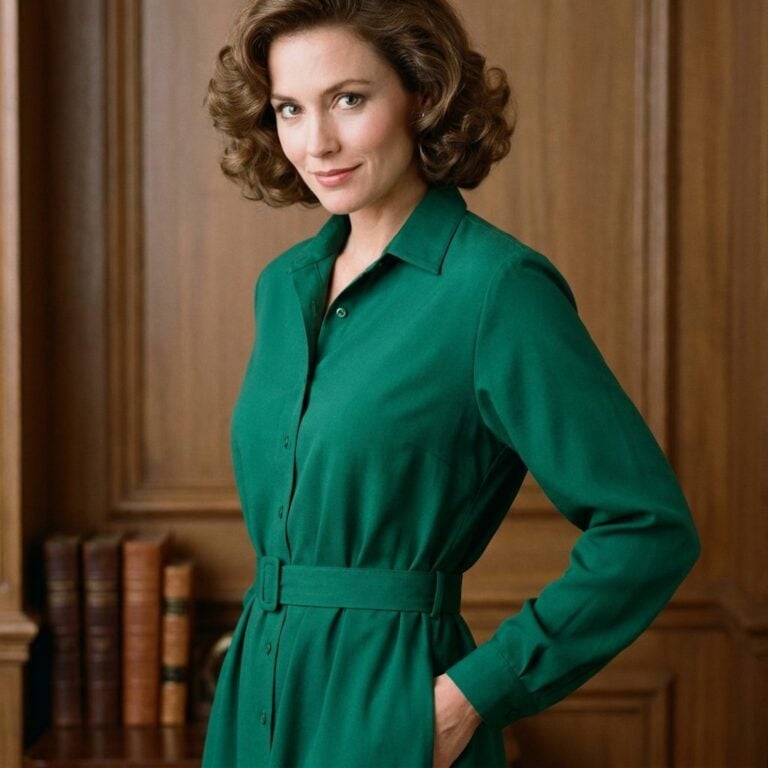
❤️ Would you like to save this?
There is a specific moment that happens in front of an open closet. You reach past three blazers you have not touched in years and realize you cannot remember the last time you bought something nobody else weighed in on. The clothes are a record. They hold old compromises, borrowed taste, and the ghost of who you were performing for. Clearing them out does the same work as putting your life back together after a marriage ends, and the same human wiring runs under both: loss aversion, identity signaling, the sunk-cost trap, the slow return of your own opinion. You will recognize yourself in these. Probably in several at once, which is fine. That is the whole process, laid out in cotton and wool.
FYI, thanks to AI imagery software, we’re able to create very specific fashion and hairstyle examples to illustrate the points being made. In some cases, imagery is exaggerated to hammer home the point. Also, assume links that take you off the site are affiliate links such as links to Amazon. this means we may earn a commission if you buy something.
17. You Find Clothes That Belonged to the Marriage, Not You

Half the closet is full of clothes chosen by committee. The sensible blazer for his work dinners. The beige cardigan nobody objected to because nobody noticed it. The dresses picked because they would not start a conversation. You open the doors and find a wardrobe built for a person who was always slightly managing someone else’s reaction.
Same reckoning that hits in the first weeks after a marriage ends, when you catch yourself wondering which opinions were ever actually yours. Psychologists call it identity fusion, the slow merging of your self-concept with a partner’s until you cannot see the seam. The clothes just make it visible. Fabric does not lie about compromise.
The work here is not throwing everything out. It is learning to tell the difference between what you kept and what you chose. Hold a piece up and ask who it was for. If the honest answer is him, you already have your answer.
16. You Keep One Ratty Sweater for Entirely Emotional Reasons

There is one sweater you will not get rid of, and it is the worst-looking thing you own. Pilled, stretched at the collar, a hole starting at the cuff. By every rational measure it should have gone years ago. You keep it anyway, and if someone asked you to explain, you couldn’t quite.
This is the endowment effect wearing wool. We value things far beyond their worth simply because they are ours, because they carry a story our hands remember. After a divorce it turns up everywhere, the chipped mug, the record you cannot play, the one object that holds a time when things were simpler. Keeping it is not weakness. It is proof you were really there.
So let yourself keep the sweater. One anchor to the old life is not clinging. It is the knot you tie before you let out the rope.
15. You Donate the Outfit Your Ex Loved Most

The dress he always asked you to wear goes in the donation pile, and you feel a jolt that is equal parts guilt and relief. It fit beautifully. You looked good in it. That is exactly why it has to go, because a garment can be objectively great and still carry a charge you no longer want running through your body.
This is associative conditioning, plain and simple. The brain staples a feeling to an object until you cannot touch one without summoning the other. You are not punishing the dress. You are cutting a wire. The same instinct drives people to repaint a bedroom or take a different route to work after a split, scrubbing the small triggers that keep pulling them backward.
Some people donate it quietly. Some make a small ceremony of it. Either way, the floral satin with its lace trim goes to a stranger who will have her own good night in it, free of all your history. Kindest possible ending for it, honestly.
14. You Buy the Coat Someone Else Always Vetoed

There was always a coat. The one with the big collar, the bold color, the shape that made a statement across a room. You wanted it for years, and every year someone told you it was too much, too loud, too impractical, so you bought the safe one instead.
Now you buy the loud one. The emerald-green wool statement coat swings as you walk and you feel taller in it. This is autonomy returning through the front door. Every small decision a marriage quietly outsourced, what you wear, what you eat, how loud you get to be, comes back to you one choice at a time.
Enclothed cognition is doing real work here too. We take on the traits of what we wear, and a coat built for a bold woman makes you move like one. You vetoed yourself for years on someone else’s behalf. The coat is you canceling the veto.
13. The First Shopping Spree Pretends to Be Closure

The first big haul feels like a decision. Four bags, a new everything, a card statement you will deal with later. You tell yourself this is the fresh start, the line drawn, the chapter closing, and it feels enormous while it is happening.
Then the bags come home and the feeling evaporates faster than you expected. That is hedonic adaptation, the way any new thrill returns to baseline almost on schedule. The spree was never closure. It was a shortcut your brain reached for because real closure is slow and shopping is fast.
The haul is not the healing. It is the thing you do while you wait to heal.
None of which makes it worthless. A few good pieces that actually fit the new you earn their keep for years. Just know what the spree is and what it is not. A nice afternoon, yes. A finish line, no.
12. The Revenge Dress Works Better Than It Heals

Everyone knows the revenge dress. The sharp black number, the red lip, the walk into a room where certain people will be. And here is the honest part: it works. You feel armored, visible, unmistakably in command of your own silhouette.
The armor effect is real. Structured tailoring changes your posture, and posture changes how you feel before you have thought a single thought about it. A fitted black tailored dress is genuine confidence you can put on with a zipper.
What it does not do is the inside work. The dress is a tool for the night, not the arc. It reclaims visibility beautifully and heals nothing by itself, and expecting it to do both is where people get disappointed. So wear it, feel ten feet tall, then take it off and do the quieter work tomorrow.
11. The Expensive Mistake Stays Because It Was Expensive

It still has the tags. You have worn it exactly never. It cost a lot, and you knew within a day it was wrong for you, too stiff, too ornate, too someone-else. And yet it hangs there, untouched, taking up room, because getting rid of it would make the money feel truly gone.
That is the sunk-cost fallacy, and it is the single most common reason bad things stay in good closets. The cash is already spent. Keeping the blazer does not bring it back. It just means you now lose the money and the closet space.
The same trap keeps people in situations long past their expiration, the lease, the plan, the thing you keep because you have already invested so much. Divorce teaches this one the hard way. A cost already paid is not a reason. The paisley brocade blazer can go, and so can the guilt stapled to it.
10. You Copy a Stylish Friend Until Your Taste Returns

You have a friend whose style just works, and for a while you borrow it wholesale. Her linen shirts, her wide-leg trousers, the way she stacks gold hoops. You are not sure what your own taste is anymore, so you run hers like a template until something clicks.
This is social proof plus a little identity scaffolding, exactly what the brain does when its own compass is spinning. We copy a trusted model to get moving again, the way you would follow a confident walker through an unfamiliar city. After a divorce, when the self you dressed for has dissolved, borrowing taste is how you buy time to grow your own.
And then, almost without noticing, you start to deviate. You keep the terracotta linen shirt but reach for different trousers. You add a color she would never wear. That drift is what you were after all along. The copy was never the destination, just the training wheels.
9. Solo Fitting Rooms Make Every Decision Entirely Yours

No one is waiting outside the curtain with an opinion. No one sighs. No one tells you the blue one is fine so you can both leave. It is just you, the mirror, and a decision that belongs entirely to you for maybe the first time in years.
The solitude feels strange before it feels good. Autonomy is a muscle, and if someone else made the calls for a long time, yours has gone soft. The empty fitting room is the gym, and every yes and no you make alone rebuilds it.
Same reclaiming happens when you finally arrange a room exactly how you want it, or plan a whole weekend around nobody’s preferences but your own. Small, private, yours. Buy the chambray shirt or don’t. The point is that the choosing has come home.
8. You Check New Outfits in Unforgiving Daylight

You stop trusting the gentle lighting. The dressing-room flattery, the dim bedroom, the mirror angle that always looked kind. Now you drag the outfit to the window and look at it in full, honest daylight, because you have decided you would rather know.
This is a real shift, and it mirrors something that happens after a marriage ends. For a long time you may have accepted a version of the truth that was easy on the eyes. Afterward comes a hunger for the real picture, even the unflattering parts, because clarity turns out to be more comforting than comfort.
Checking an outfit in brutal light is not insecurity. It is self-respect with the curtains open. You look at the fit, the fabric, the whole line, and you decide for yourself. The grey tailored trousers either earn their place or they don’t, and you are no longer afraid to see which.
7. You Tailor the Good Pieces Instead of Tossing Everything
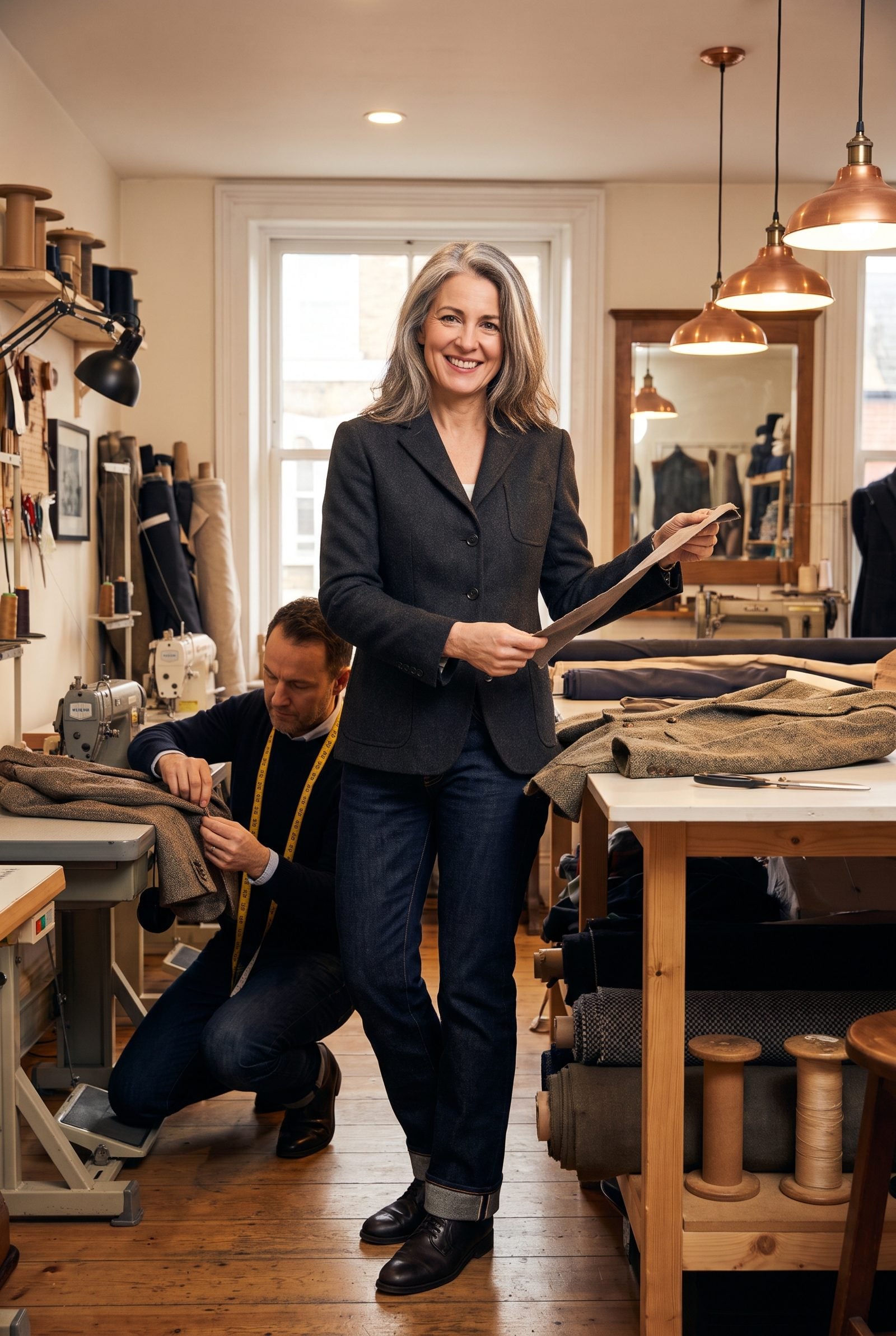
The instinct after everything falls apart is to purge: bin bags by the door, the whole closet dumped on the bed, start from zero. But the sharp move is slower. Pull the blazer that still has good bones and take it to someone who can bring the shoulder in. The wool is fine. The fit just stopped being yours somewhere along the way.
Same with a life. You don’t torch every habit and friendship because one structure collapsed — you keep what’s well made and alter the fit. The marriage ended, not your taste, not your competence, not the parts of you worth keeping. Tailoring is the quiet admission that most of what you own is salvageable and only needs adjusting to the body you have now.
6. Reliable Basics Matter More During the Messy Middle

When nothing else is certain, a white tee that fits and dark jeans that always work become load-bearing. You reach for them because they ask nothing of you. No decisions, no risk — just something that makes you look like a person who has it together on a day you absolutely do not.
There’s a reason the messy middle of any rebuild runs on blue wardrobe staples and plain knits. When your energy for choices is depleted, you ration it, and the good basics are pre-made decisions you can lean on while the bigger questions stay open.
5. A Capsule Wardrobe Makes Mornings Feel Manageable Again

❤️ Would you like to save this?
A dozen pieces that all talk to each other, hanging on matching hangers, evenly spaced — and getting dressed takes under two minutes because every combination already works. The capsule isn’t about owning less for its own sake. It removes the small daily negotiation that was draining you before coffee.
Routines do the same job after a split. You rebuild the morning on purpose: coffee, dressed, out the door, no spiraling. A limited set of reliable moves beats infinite options when your reserves are low.
A beige wardrobe of tonal neutrals is the easiest version to build, since almost nothing clashes. You buy yourself calm mornings for the price of a little restraint.
4. Color Returns Once Nobody Else Gets a Vote

The cobalt silk blouse that lived at the back for years — the one somebody once called a lot — suddenly migrates to the front of the rail. Rust, fuchsia, emerald. The neutrals get company. And it feels less like a style choice and more like a small door opening.
Color often disappears during a long partnership where another person’s taste quietly filed down your edges. Give yourself the only vote and the bright stuff comes back first, because it was never really about the clothes. It was about having an opinion nobody could veto.
One saturated piece against your quiet staples is all it takes. The emerald blazer over a plain tee says you’re back without you having to announce it.
3. You Start Dressing for Plans You Haven’t Made Yet
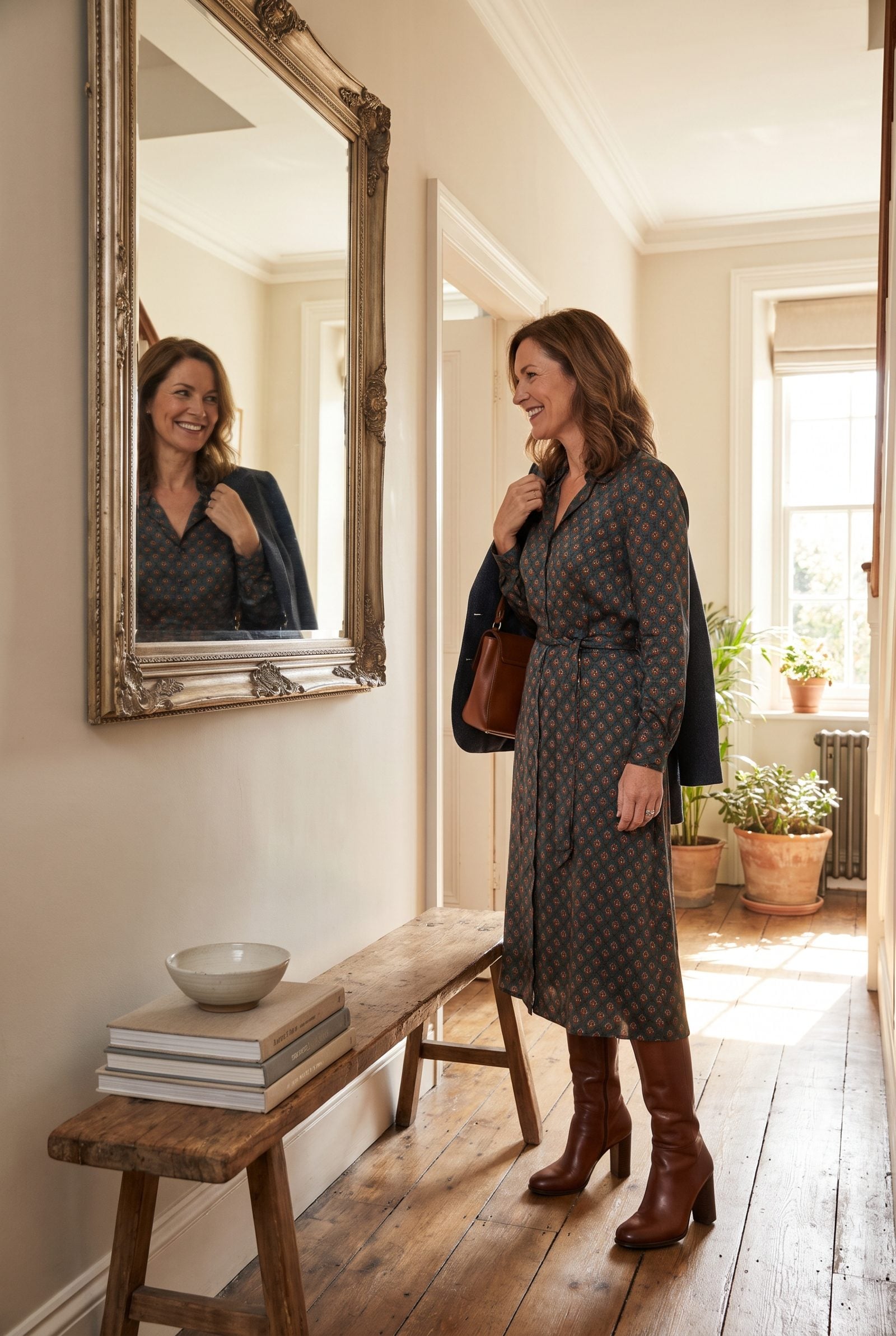
On a plain Tuesday with nothing on the calendar, you put on the good dress and the heeled boots anyway. You catch yourself doing it and half-laugh. There’s nowhere to be. But you’ve dressed like there might be, and that small bluff does something.
Rebuilding a social life after things fall apart works the same way. You say yes to the thing before you feel ready. Dress for the life you want before it fully arrives, and the dressing helps drag it toward you.
Enclothed cognition is the real engine here. Put on the clothes of the person you’re becoming and your behavior starts catching up to the costume. Not manifesting — just the simple fact that we act like whoever we’re dressed as.
2. Empty Hangers Stop Looking Like Problems to Solve
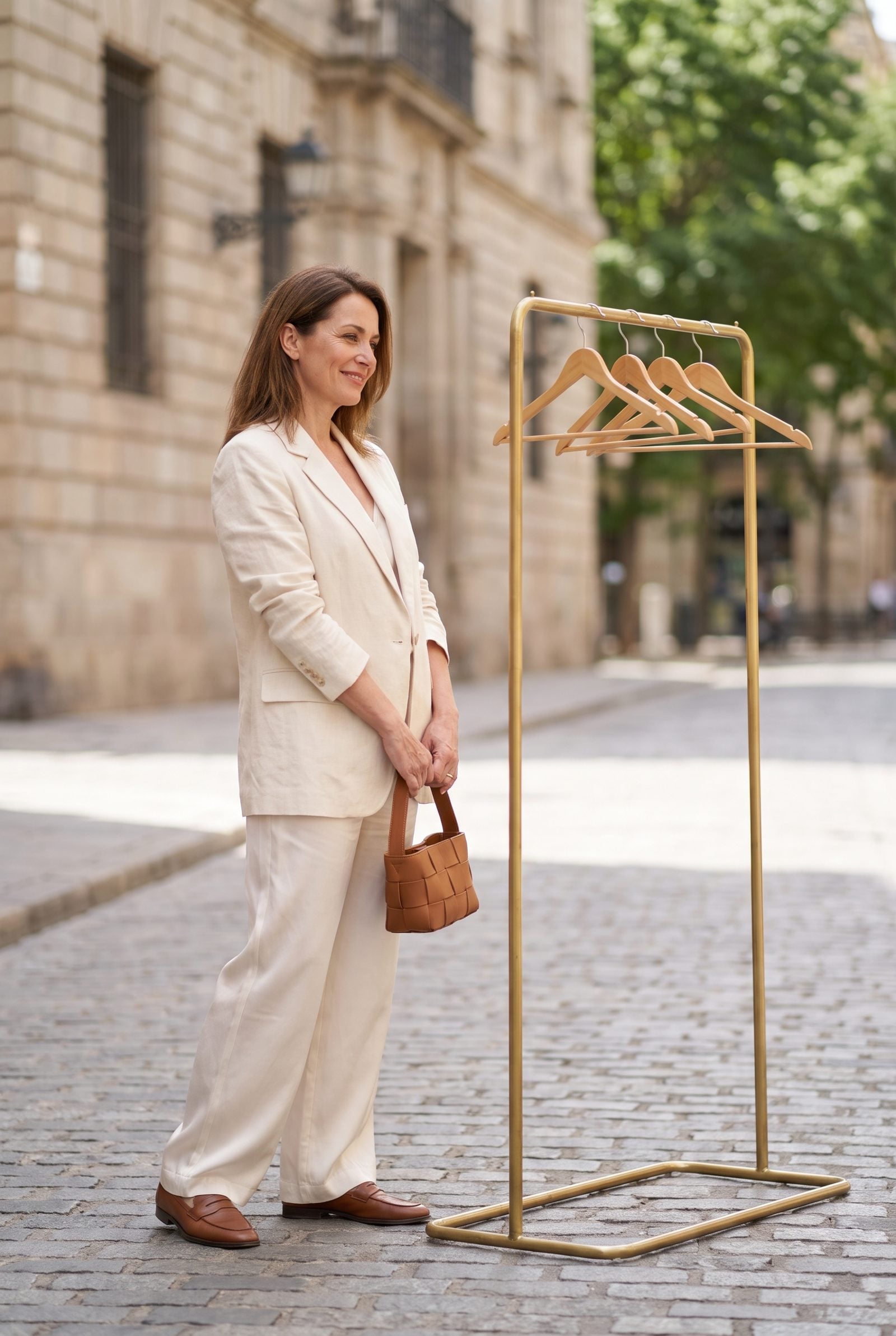
For a while the empty hangers felt like an accusation. Gaps to fill, holes to patch, evidence of what was missing. Then one day you open the closet and the space just looks like space. Room. Not a deficit.
That shift mirrors the bigger one. The empty chair, the quiet evenings, the half-used garage — at first they read as absence and loss, and later the same emptiness reads as capacity, room you haven’t decided what to do with yet. Nothing about the hangers changed. What changed is what you project onto them.
1. Closet Gaps Reveal the Life You’re Building Next

Stand back and read the gaps. A dozen soft weekend knits and not a single thing for dinner out. Plenty of work clothes, nothing for a trip. The holes in a closet aren’t random — they map what you’ve been avoiding and quietly point at the life you haven’t let yourself plan for.
A closet audit after divorce turns into a kind of self-interview. What’s missing tells you where you’ve been living small. No occasion wear can mean you stopped expecting occasions. The fix isn’t just shopping. It’s letting yourself want the evenings those clothes would be for.
Those empty spaces aren’t flaws. They’re the blueprint. Read them, then go build the life they’re waiting for.