❤️ Would you like to save this?
A silk scarf may be the most overqualified square of fabric in the closet. It gets bought for the print, folded beautifully, worn once at the neck — and then sentenced to a drawer as though somebody lost the second half of the instruction manual.
That is where these looks start. Silk can behave like jewelry at the wrist, become a belt without pretending to be leather, trail from a handbag, cover the head, interrupt a severe blazer, turn into a capelet or take over half an outfit as a skirt. Move the knot three inches and the entire attitude changes. Take the knot away altogether and suddenly the scarf is closer to tailoring than decoration.
The settings change too. Silk is not confined to sunny lunches and sensible daytime layers. It catches restaurant light beautifully, works against a black evening dress, slips under a winter coat, turns up at gallery openings and can cover considerably more territory than the little square at the throat suggests.
These 32 looks move from hot sidewalks to dark restaurants, from tailored coats to beach-town linen, and from nearly invisible details to enough silk to qualify as a garment. Same basic idea. Almost no agreement about where it belongs.
FYI, thanks to AI imagery software, we’re able to create very specific fashion and hairstyle examples to illustrate the points being made. In some cases, imagery is exaggerated to hammer home the point. Also, assume links that take you off the site are affiliate links such as links to Amazon. this means we may earn a commission if you buy something.
32. Hood the Silk Under a Wool Coat After Dark
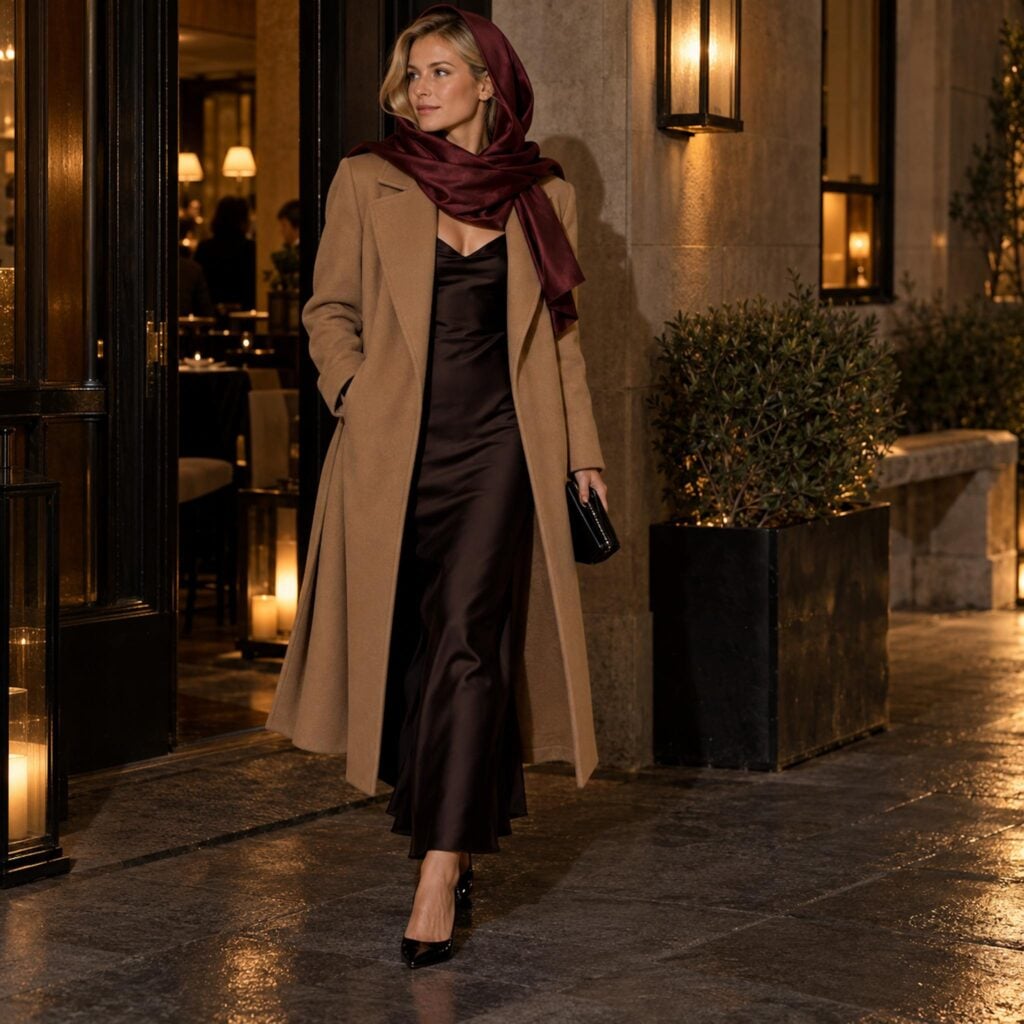
A large burgundy square draped over the head and carried loosely around the neck turns a streamlined camel coat into something considerably more cinematic. The silk does not need a visible knot. Let it fall around the crown, cross softly at the throat and allow one end to descend along the coat.
Evening light changes the material completely. Against matte wool and a dark slip dress, the burgundy picks up every warm reflection without becoming flashy. Keeping the coat long and architectural makes the hooded scarf feel sculptural rather than nostalgic.
31. Wrap It Around Your Wrist Instead of Stacking Bangles
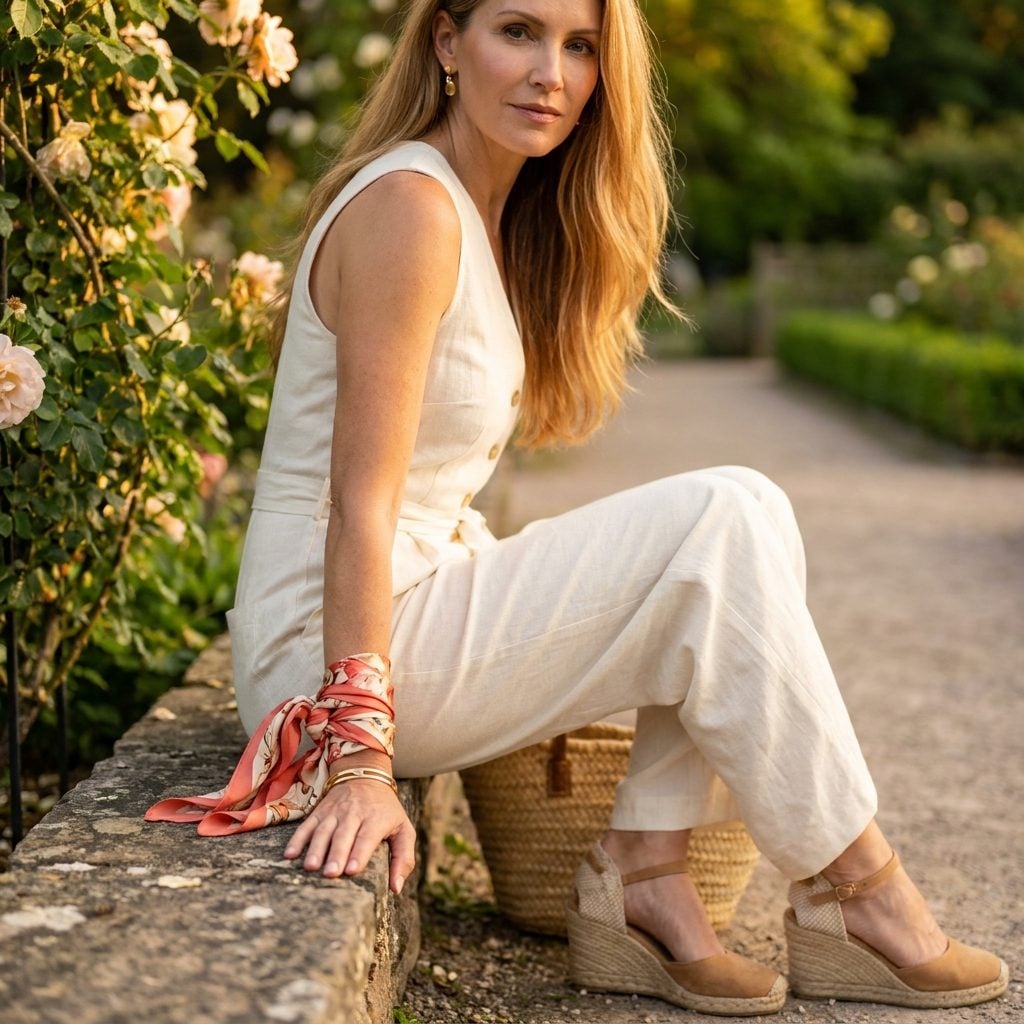
A small scarf can become a soft cuff with almost no fabric left hanging. Fold it narrowly, coil it around the wrist three or four times and secure it with a compact knot.
Against an ivory linen jumpsuit, coral print becomes the only concentrated color in the outfit. With no competing bracelet stack or bright bag nearby, the wrist becomes an unexpectedly strong focal point.
30. Turn a Large Scarf Into a Sarong-Style Midi Layer
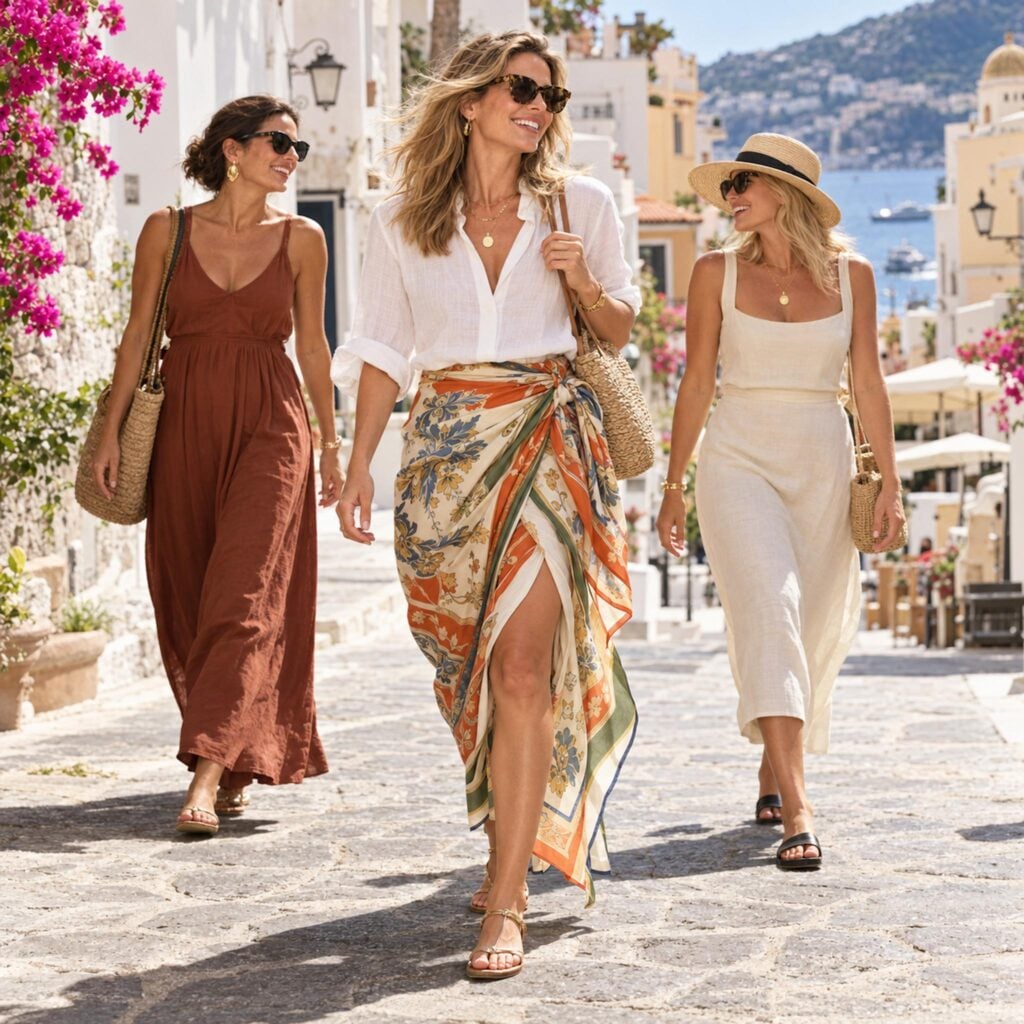
This is where the scarf stops behaving like an accessory and starts occupying serious acreage. Wrap a very large printed square low around the waist, overlap the front panels and knot it securely at one hip so the silk falls like an asymmetric midi skirt.
A white linen shirt gives the print a blank backdrop, while the light layer underneath keeps the wrap practical when the front opens with movement. Under hard vacation sun, the scarf supplies nearly all the pattern in the look — and enough sweep to move visibly with every step.
29. Knot It Through a Structured Bag Handle as a Loose Half-Bow
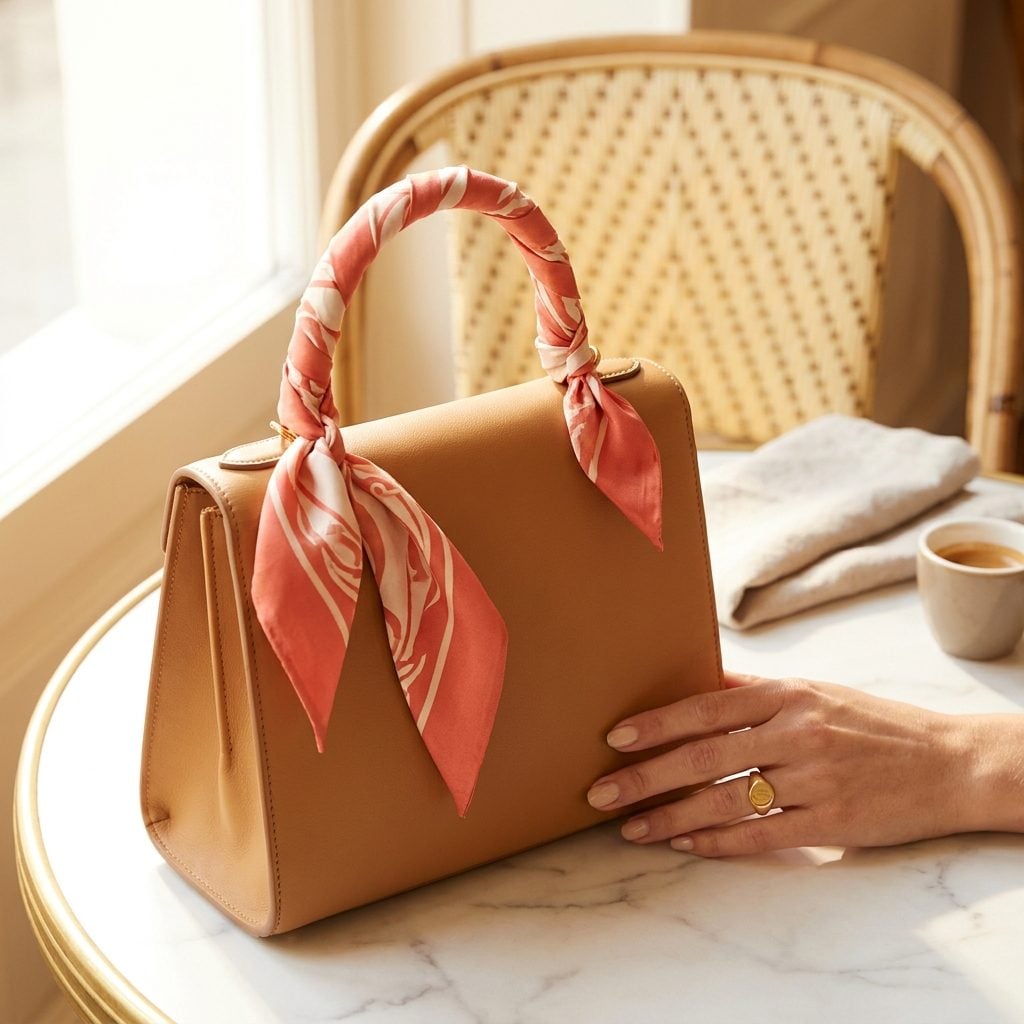
A structured tan bag already has plenty of shape. The scarf gives it movement. Loop a folded square once around the base of the handle and tie a loose half-bow, leaving the tails free instead of arranging them into a perfect symmetrical knot.
Coral silk against a tan leather handle bag works because glossy fabric interrupts matte leather without covering much of it. The bag remains recognizable; the scarf simply changes its temperature and mood.
28. Take a Jewel-Tone Neck Scarf to Dinner
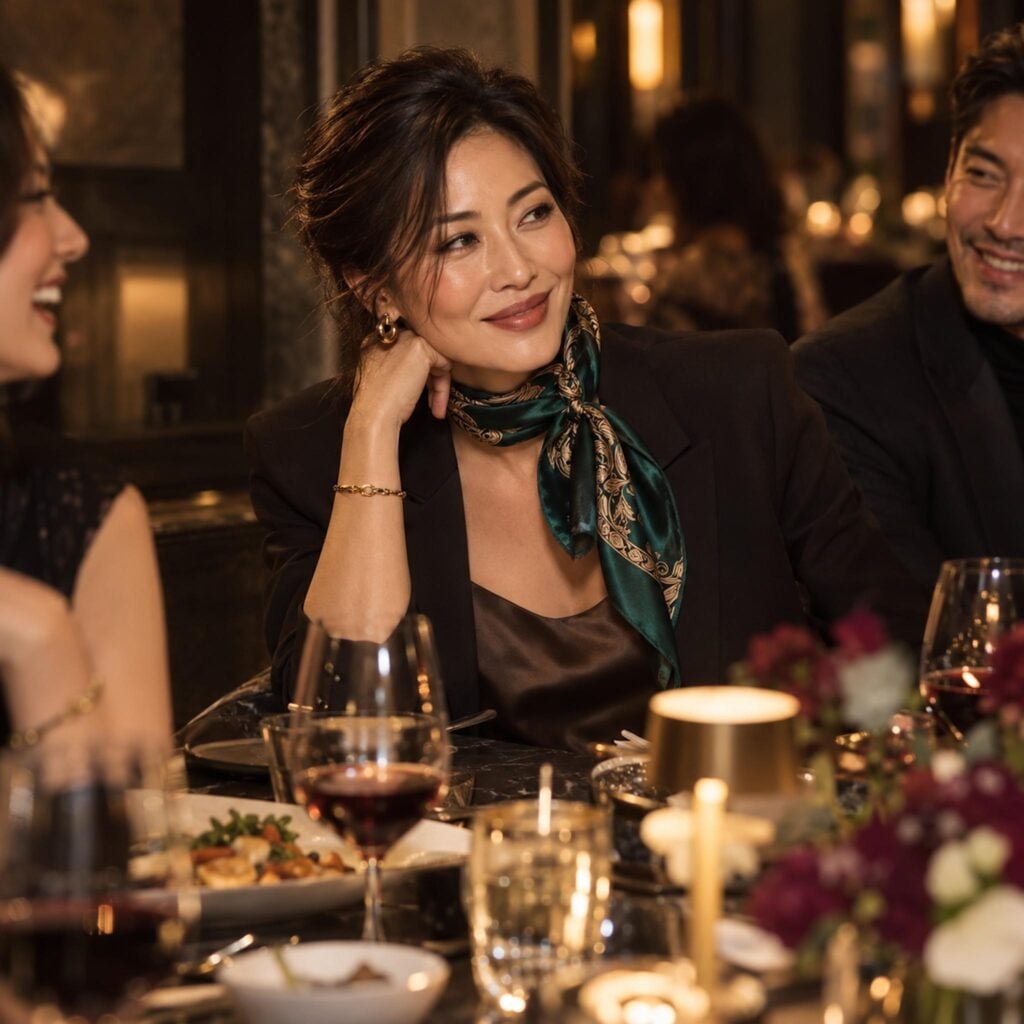
Silk does not have to get larger or louder simply because the lights go down. An emerald scarf tied close to the neck, with the knot shifted slightly to one side, brings enough shine to a black blazer and dark silk camisole without competing with the rest of an evening look.
Warm restaurant lighting brings out the depth of the green while the dark tailoring absorbs much of the surrounding glow. Gold earrings pick up the scarf’s warmer details without requiring another ornament at the neckline.
27. Turn It Into a Custom Hatband
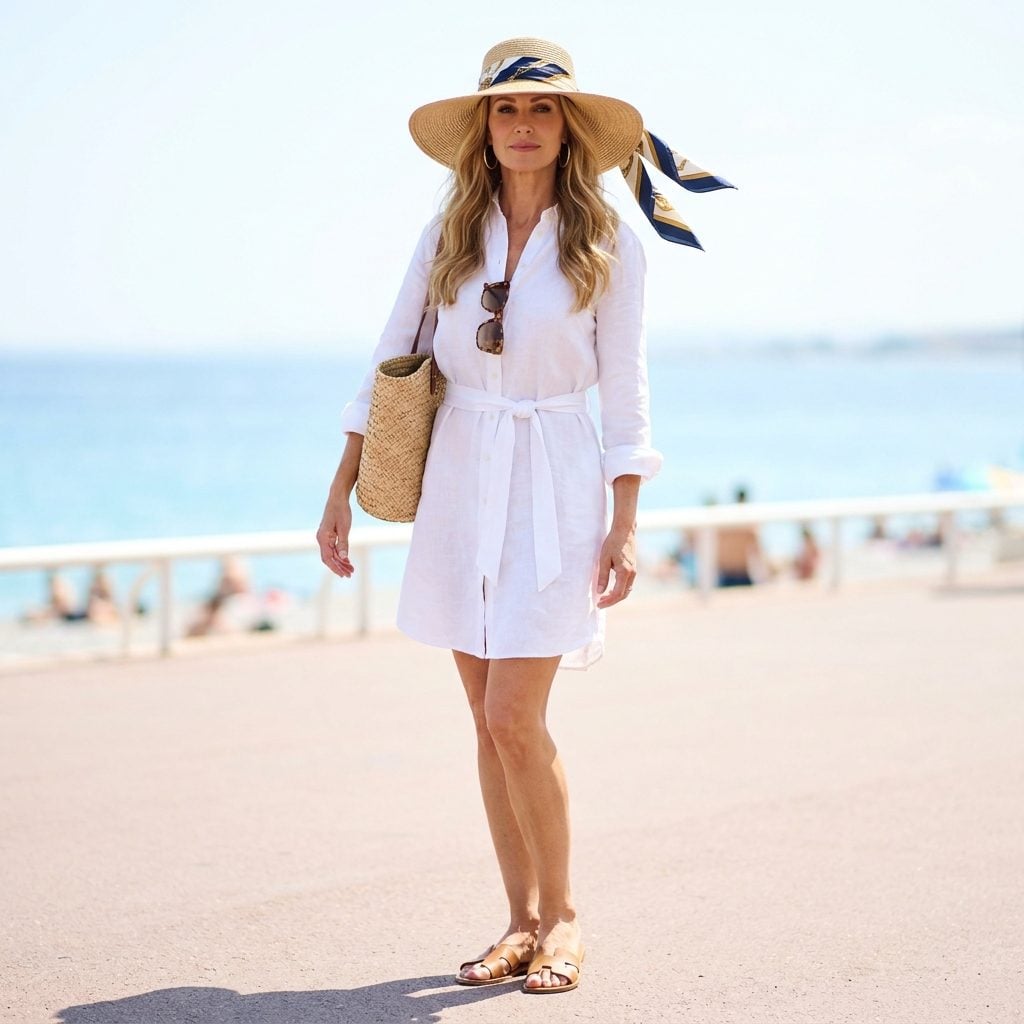
Fold the scarf into a narrow band, circle the crown of a wide-brim hat and tie it at the back or slightly to one side. Leave the ends free enough to move rather than tucking everything into a rigid little knot.
Navy, white and gold sit naturally against straw, especially with a white linen shirtdress and tan sandals below. The useful tension comes from the materials: coarse straw beside smooth silk.
26. Let a Long Skinny Scarf Fall Loose With an Evening Dress
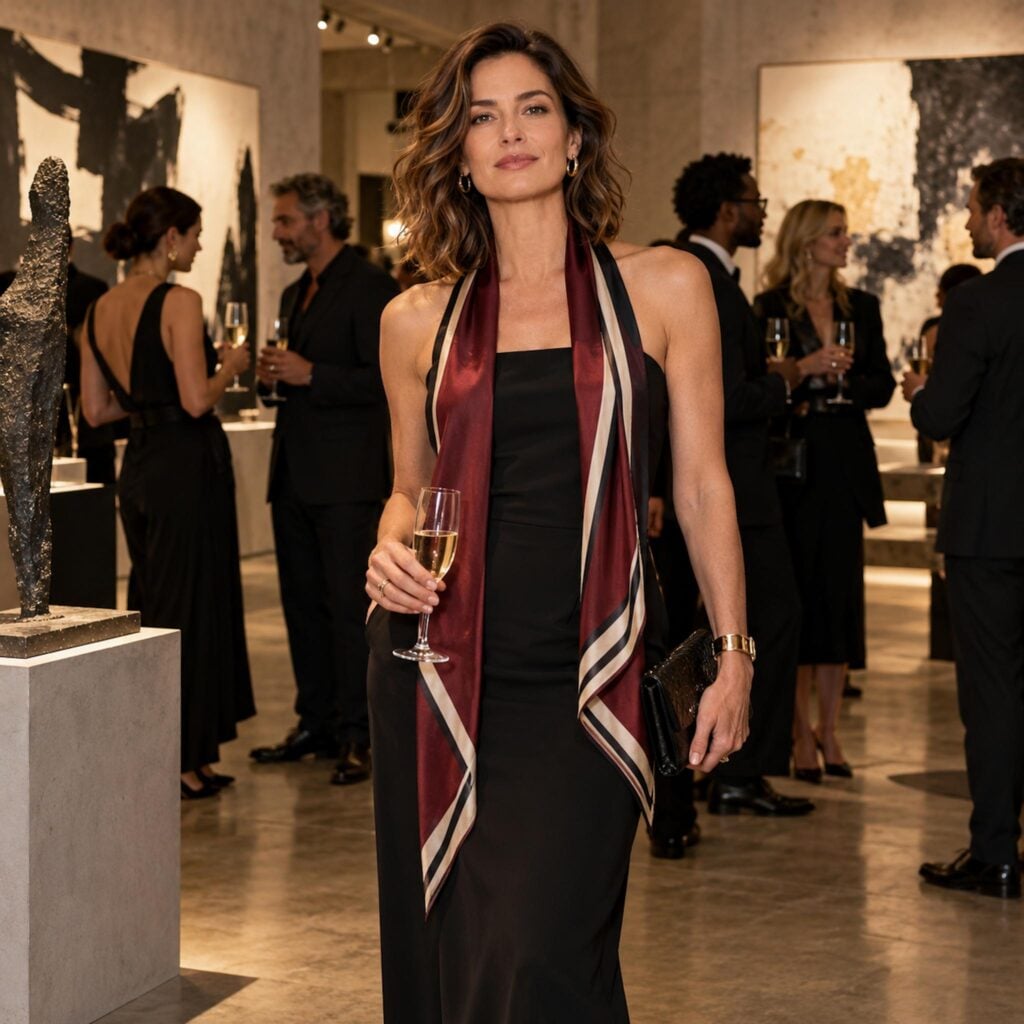
No bow. No knot. No elaborate folding. A long oxblood scarf simply drops from behind the neck over a narrow black column dress, creating two uninterrupted vertical ribbons of color almost to the knee.
That length is what makes the treatment feel evening-ready rather than office-adjacent. The dress provides one dark column, the scarf creates two brighter ones, and the silk moves when the wearer does. At a gallery opening, the restraint is the point.
25. Double-Wrap It Into a Soft Cowl Over a Camel Coat
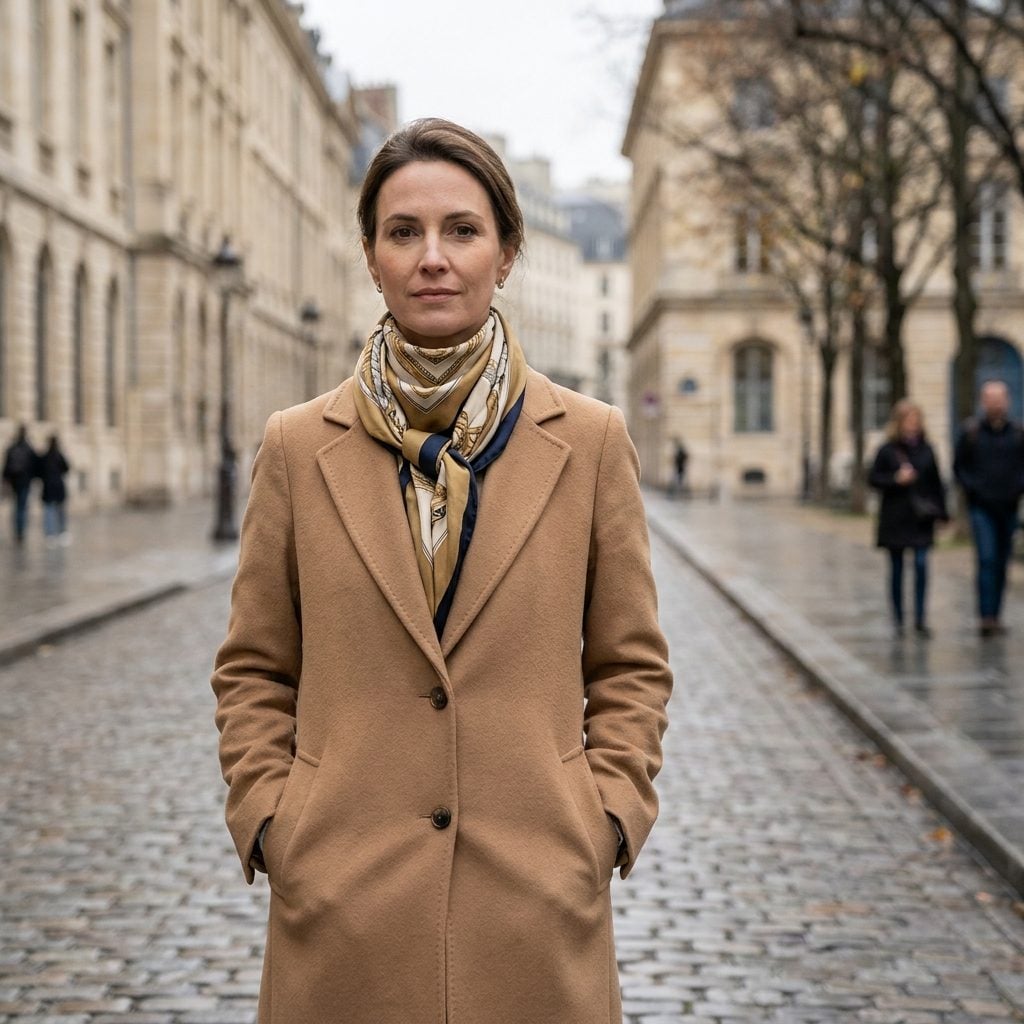
The camel coat supplies the long clean lines; the double-wrapped scarf breaks them at the neckline. Wrap a generous silk square twice, loosen both loops and push them slightly forward so the fabric sits full rather than tightening into a small neck knot.
The contrast is tactile as much as visual: structured wool beneath, liquid silk above. A larger scarf works best because it has enough fabric to create volume without pulling tight. Try it over a tailored camel coat and let the rest of the outfit stay comparatively quiet.
24. Tie It Around a Ponytail and Let the Ends Fall
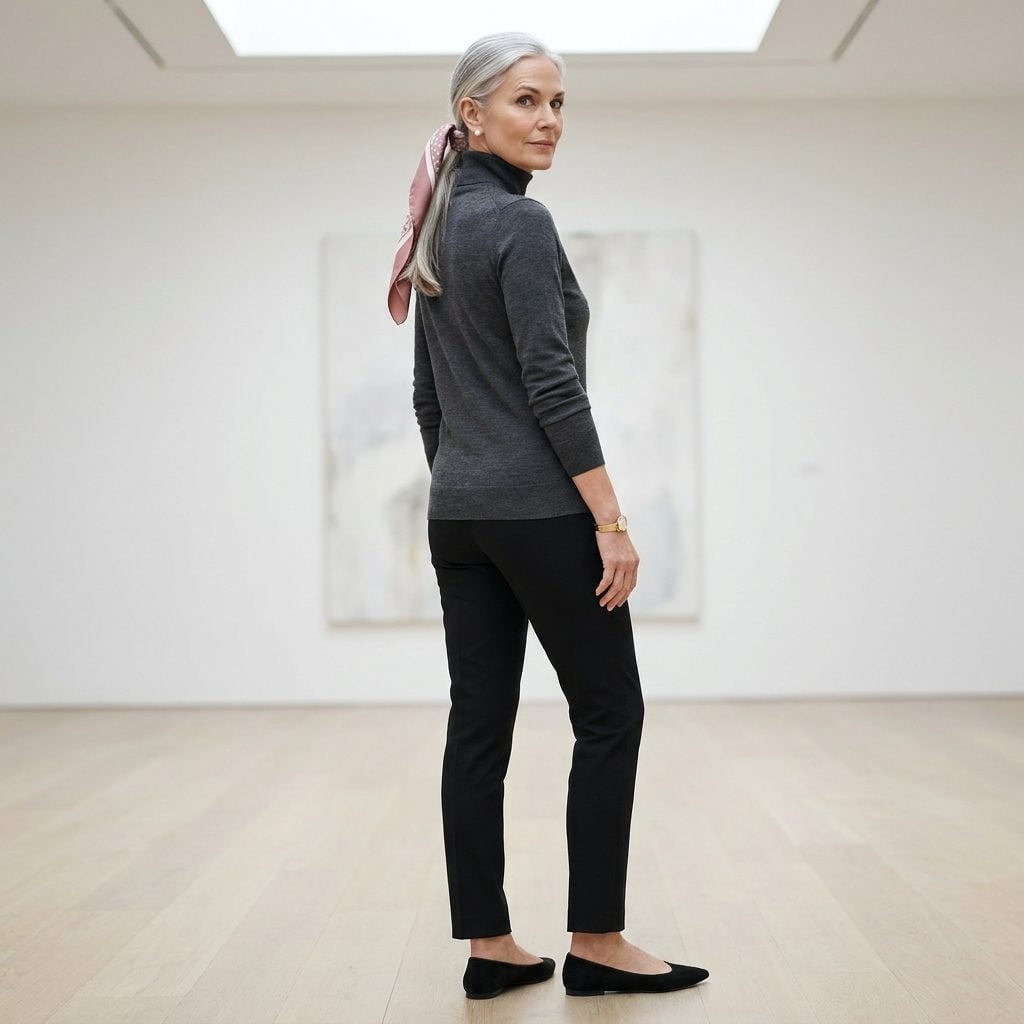
Wrap a small scarf around the base of a ponytail, knot it once and let the ends fall with the hair. The elastic still does the actual holding; the silk simply covers it and adds movement.
Dusty rose against silver hair creates a soft color contrast, while the charcoal turtleneck keeps the clothing underneath deliberately spare. Matte knit beside glossy silk gives the accessory enough distinction without requiring jewelry at the neckline.
23. Thread It Through Belt Loops Instead of Reaching for Leather
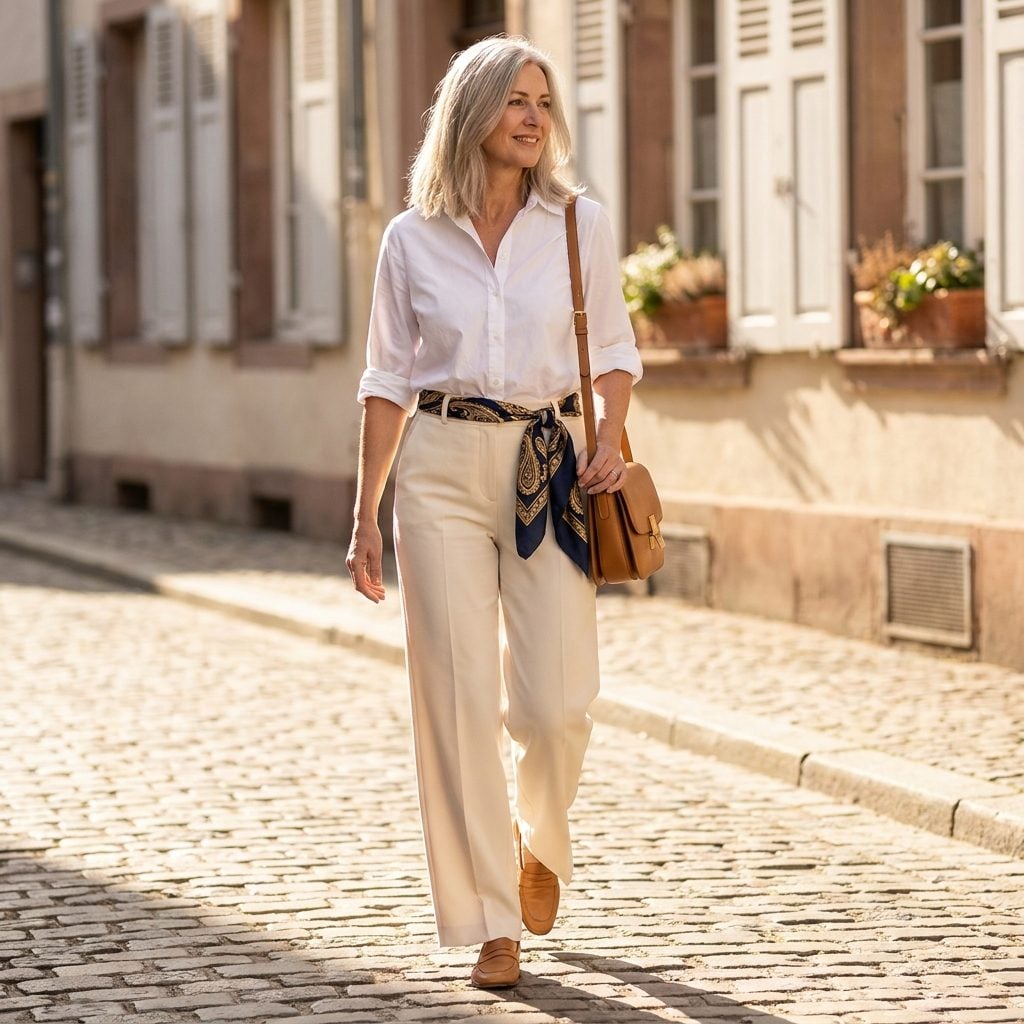
Thread a long folded scarf through trouser belt loops and knot it at one hip. Unlike a leather belt, the silk does not create one rigid horizontal line; the loose ends continue downward and move with the body.
Navy-and-gold paisley against cream trousers gives a neutral base a much sharper point of color. Keep the knot slightly uneven so the scarf still behaves like fabric rather than trying to imitate conventional belt hardware.
22. Wear the Headscarf With Tailoring, Not Nostalgia
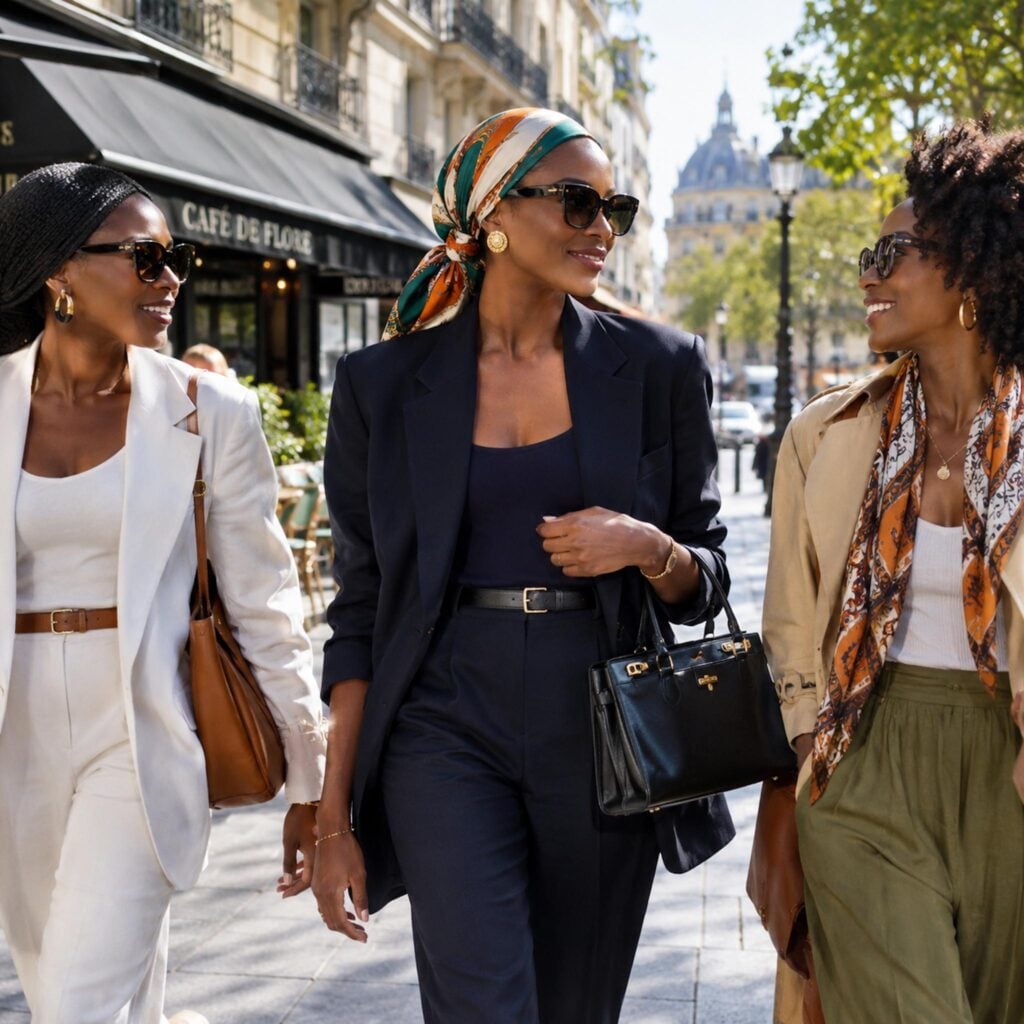
A broad silk square smoothed over the crown and tied low behind the head changes dramatically when everything beneath it is sharply tailored. Navy suiting, clean shoulders and dark sunglasses pull the scarf away from vintage sweetness and toward a sharper, more modern silhouette.
The orange, cream and green print does not need to match the suit. Its job is to interrupt all that navy with color and shine while leaving the tailoring intact. Keep the knot low and the crown close to the head so the scarf remains sleek rather than voluminous.
21. Fold It Into an Ascot and Tuck It Into a White Shirt
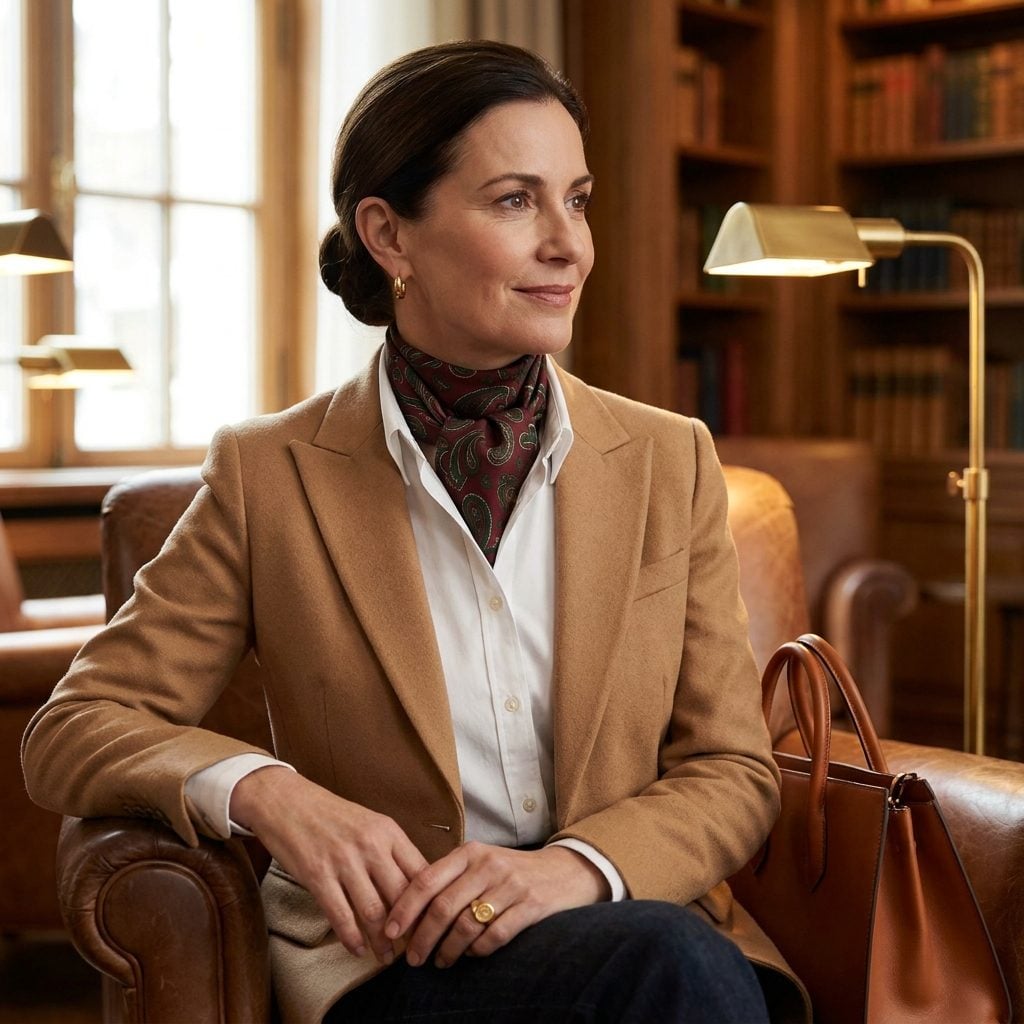
Fold the scarf into a soft band, wrap it once around the neck and tuck the ends inside an open white collar. Burgundy paisley brings pattern to the shirt without leaving long tails outside the neckline.
A camel blazer over the top turns the scarf into the warm bridge between two neutral pieces. Because most of the silk disappears inside the collar, the effect is more restrained than a conventional bow or neck knot.
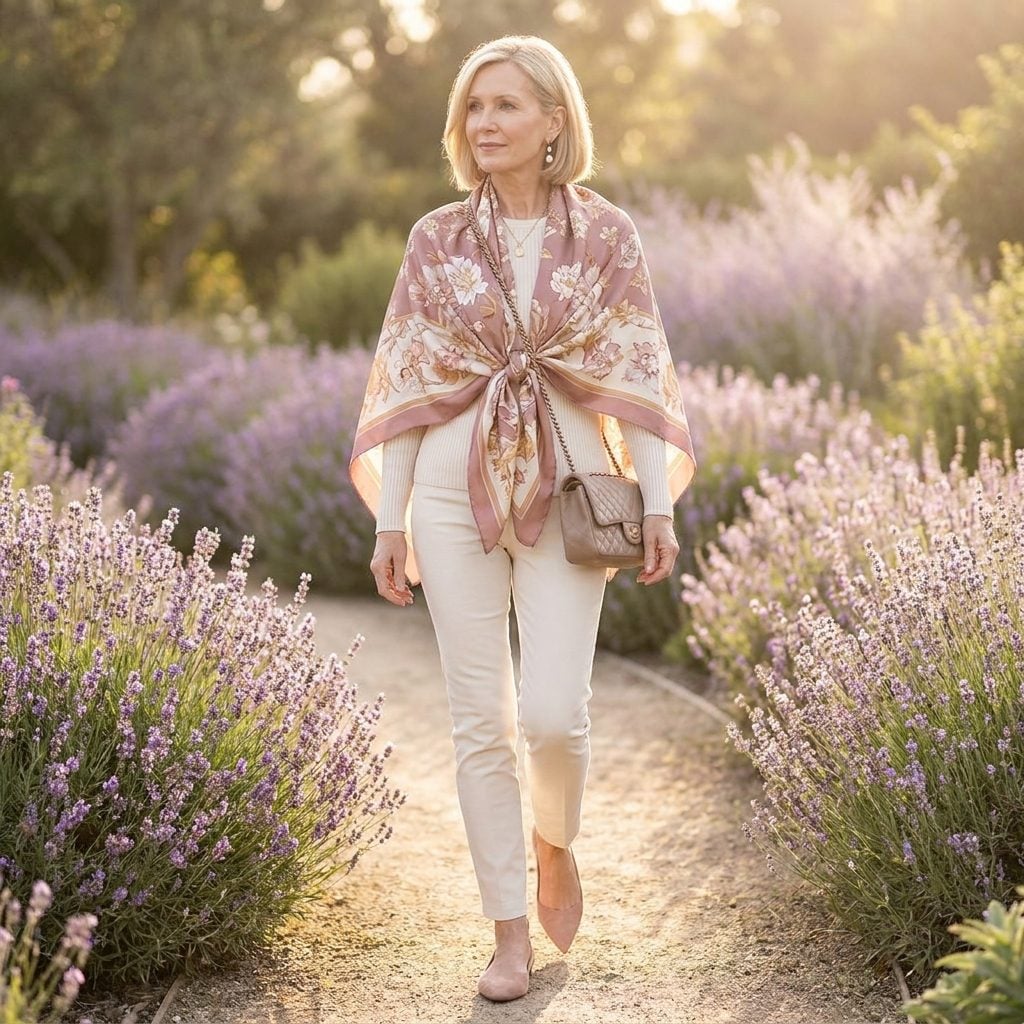
20. Drape It Across the Shoulders and Knot It Like a Capelet
❤️ Would you like to save this?
A sufficiently large silk square can become a miniature shoulder layer. Drape it evenly across the back, bring the front corners forward and knot them loosely at the chest.
The knot gives the fabric an anchor while the rest of the silk falls over the upper arms. Dusty-rose floral over cream keeps the palette tonal, so the capelet adds surface pattern and a soft layer without looking like an unrelated extra. Use a square large enough that the front corners meet comfortably without pulling across the shoulders.
19. Knot Two Small Scarves Together and Wear Them as One Long Piece
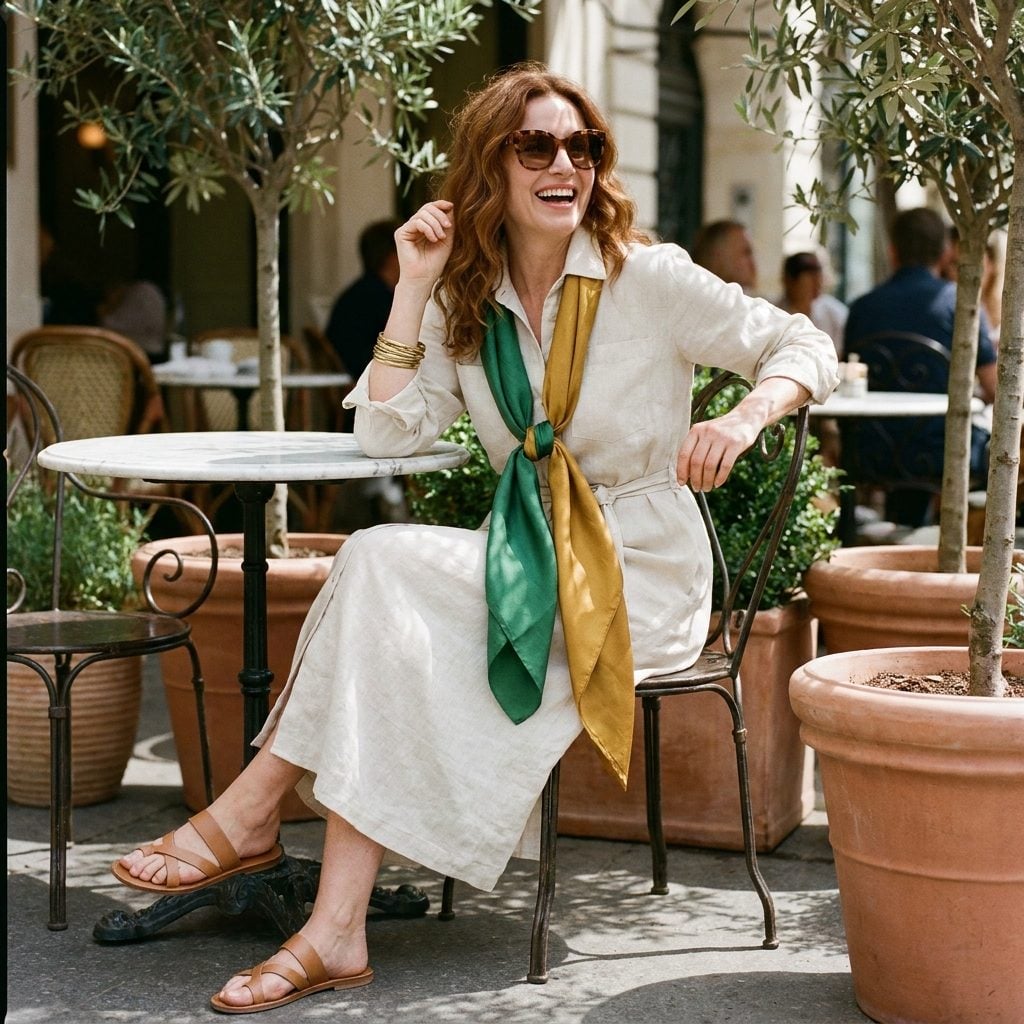
Two small scarves that cannot produce much drape individually become far more useful once they are joined. Knot one end of each together and leave the connection visible rather than trying to disguise it.
Emerald meeting mustard creates a deliberate color break midway down the strand. Worn long over an ecru linen dress, the joined scarves create a strong vertical line without cinching the body or adding another garment.
18. Cinch a Long Cardigan With a Soft Silk Sash
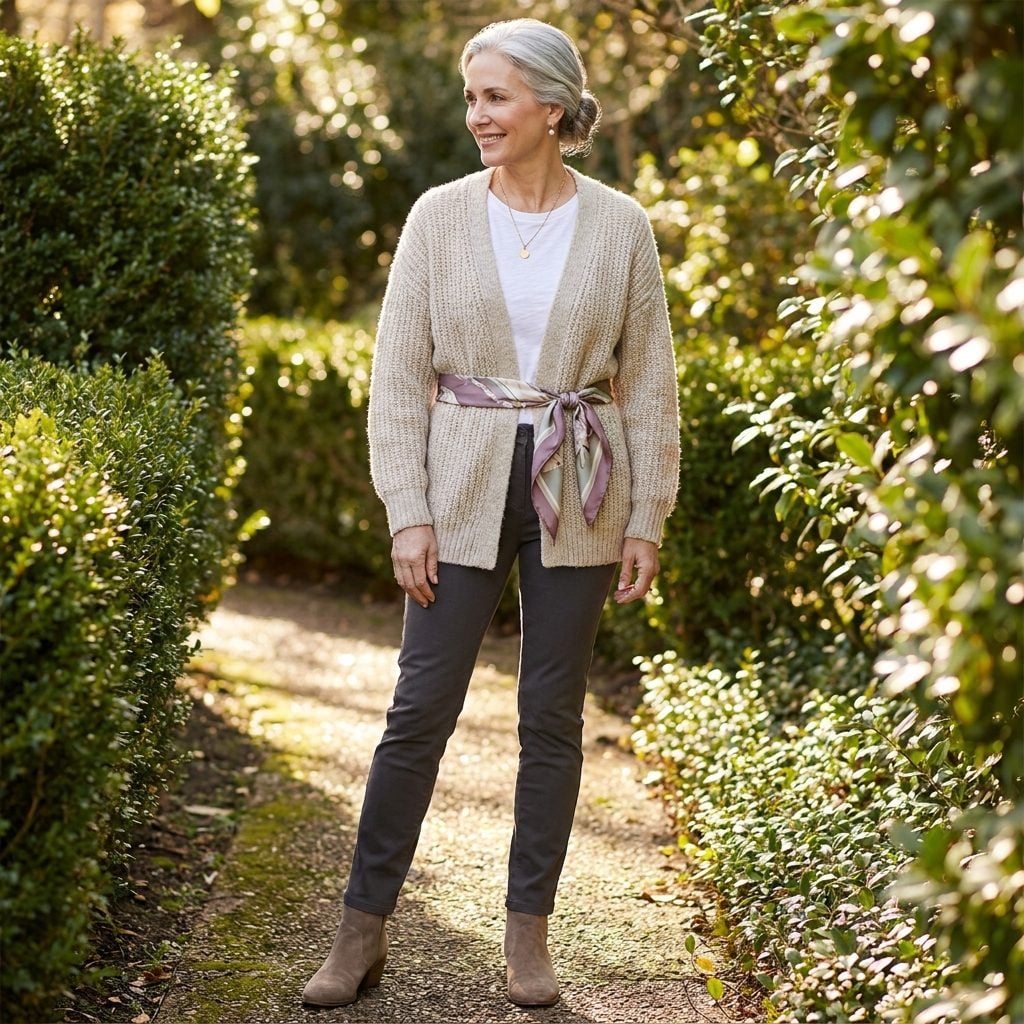
A long open cardigan creates one uninterrupted vertical column. A scarf tied at the waist interrupts that line and gives the knit a completely different silhouette without the hardness of a leather belt.
A fluid plum silk scarf against a chunky oatmeal cardigan sets up the more interesting contrast: loose wool against smooth silk. The knit stays relaxed while the sash gives the middle a clear boundary.
17. Make a Compact Neck Knot the Only Color in a Cream Suit
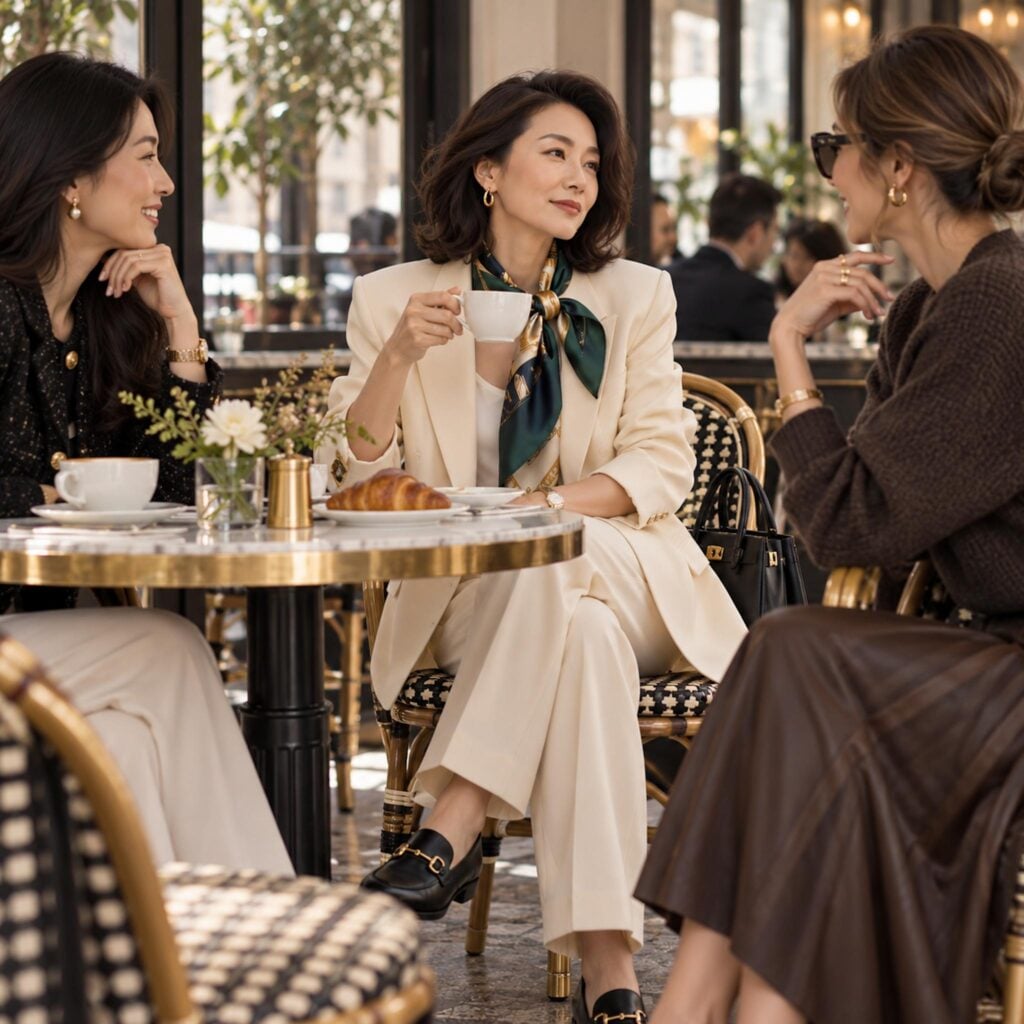
A cream suit leaves almost nowhere for an accessory to hide, which is exactly why a compact emerald scarf works so well with it. Fold the silk into a broad band, wrap it close to the neck and shift the knot slightly away from center so the ends fall asymmetrically over the lapel.
The café setting keeps the tailoring from feeling corporate. Loafers, relaxed trousers and the green-and-gold silk loosen up the suit while the scarf remains polished enough to stand against structured shoulders. This is the small neck knot at its most social rather than formal.
16. Fold It Into a Triangle and Tuck It Inside an Open Collar
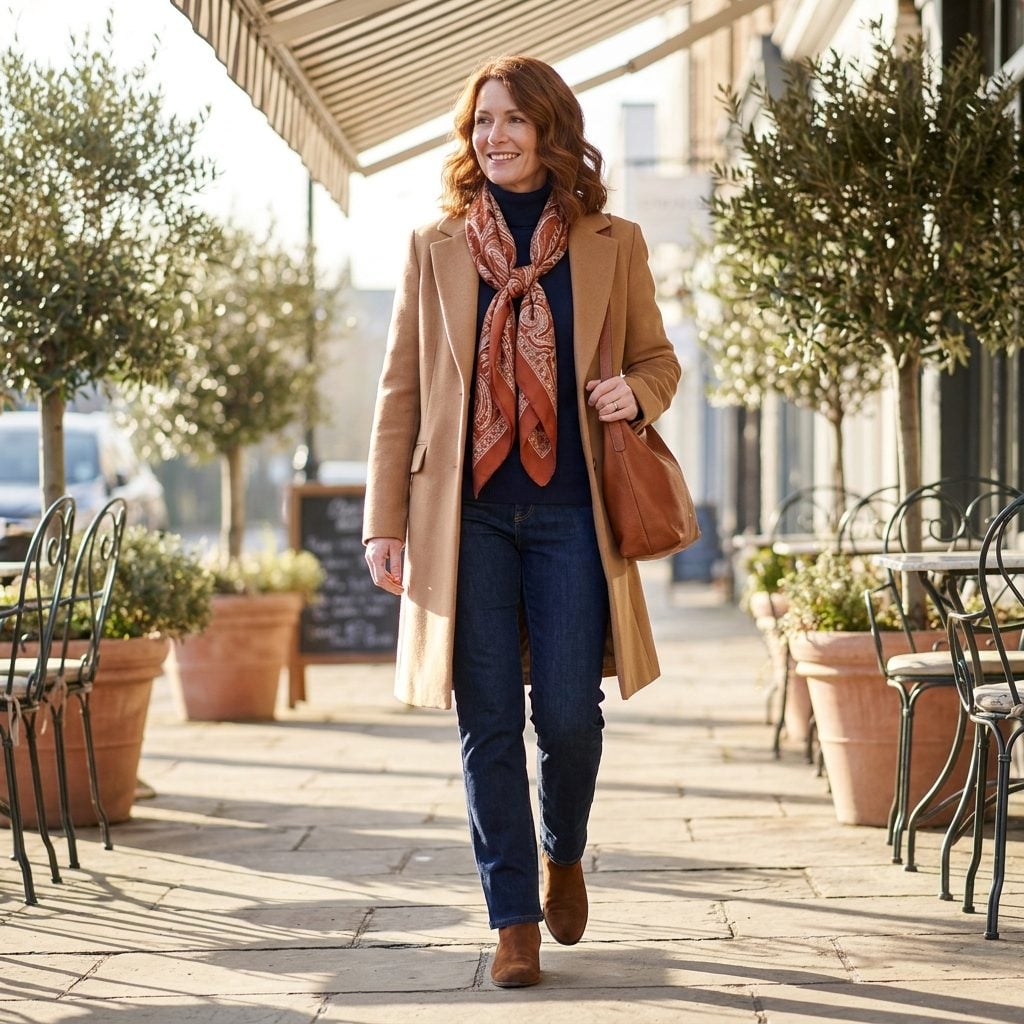
Instead of letting a scarf bunch around the neck, fold it into a broad triangle and tuck the point into an open coat collar. The silk fills the neckline without adding the bulk of another knit layer.
Rust paisley against camel and navy provides the contrast here. The scarf introduces pattern into a largely solid outfit and brings color close to the face while remaining mostly contained beneath the coat. It is an easy way to change a familiar outfit without changing the coat at all.
15. Weave It Through an Open-Knit Cardigan Like a Running Thread
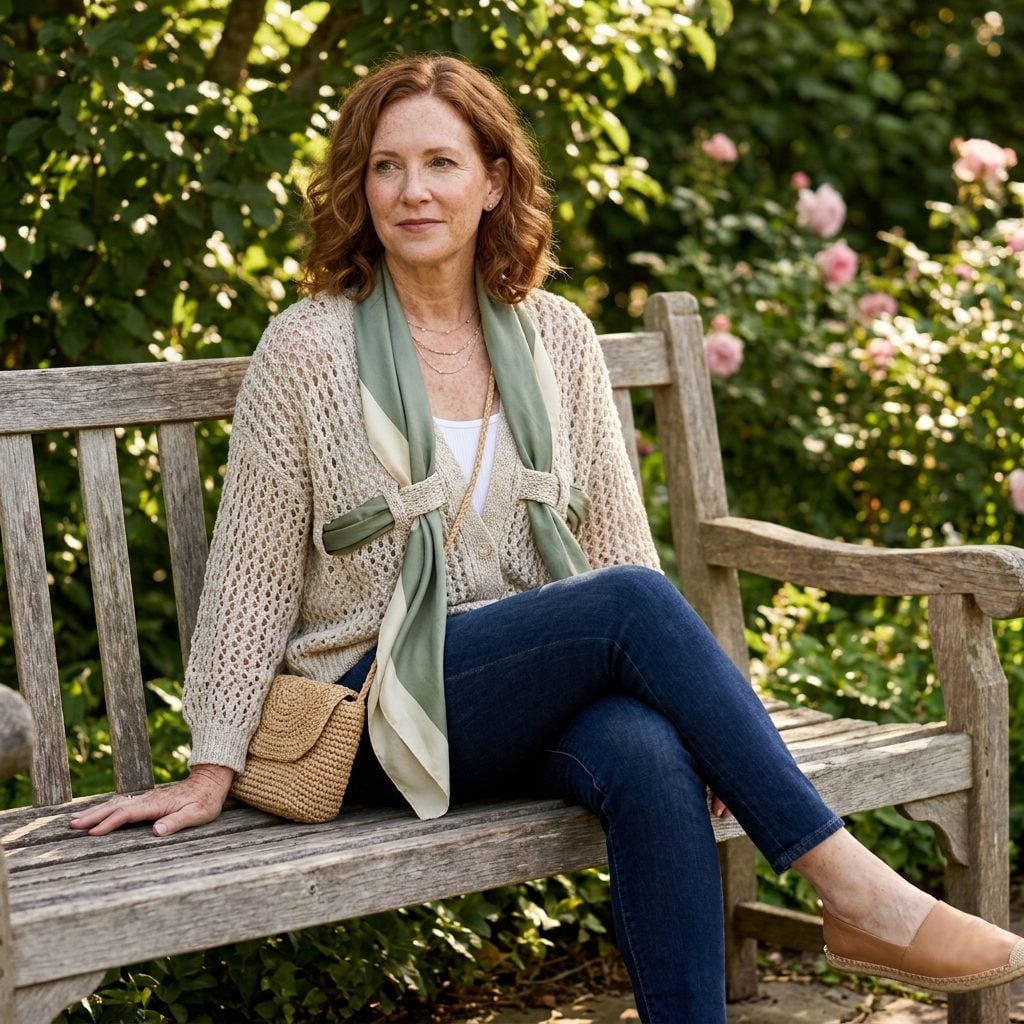
An open-knit cardigan can provide the structure for the scarf itself. Feed a long silk horizontally through selected openings so portions of the print appear, disappear and reappear across the knit.
Sage-and-cream silk against oatmeal wool creates interest through texture rather than strong color. The technique is best reserved for smooth-edged, generous knits: rough fibers or tight openings can catch delicate silk, so the scarf should slide through without resistance.
14. Turn a Large Square Into a Turban-Style Wrap
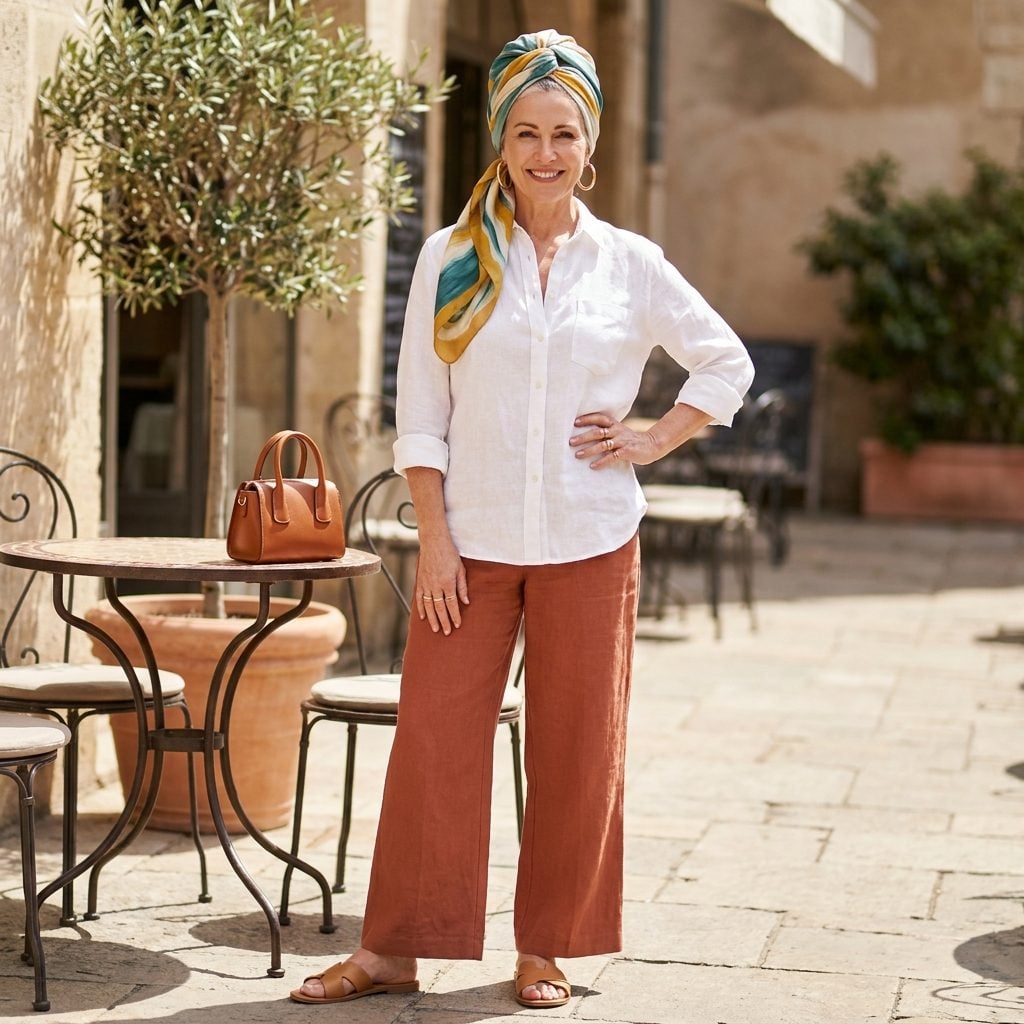
A large silk square can move almost all the color in an outfit above the neckline. Wrap it around the crown, twist or knot it at the front, then tuck the loose ends underneath so the shape remains compact.
Teal and mustard against a plain white linen shirt is enough color for the entire look. Keeping everything below the neck simple makes the head wrap feel graphic rather than crowded, while the extra volume alters the silhouette as decisively as the print changes the palette.
13. Thread It Through a Bow-Neck Blouse for a Built-In Effect
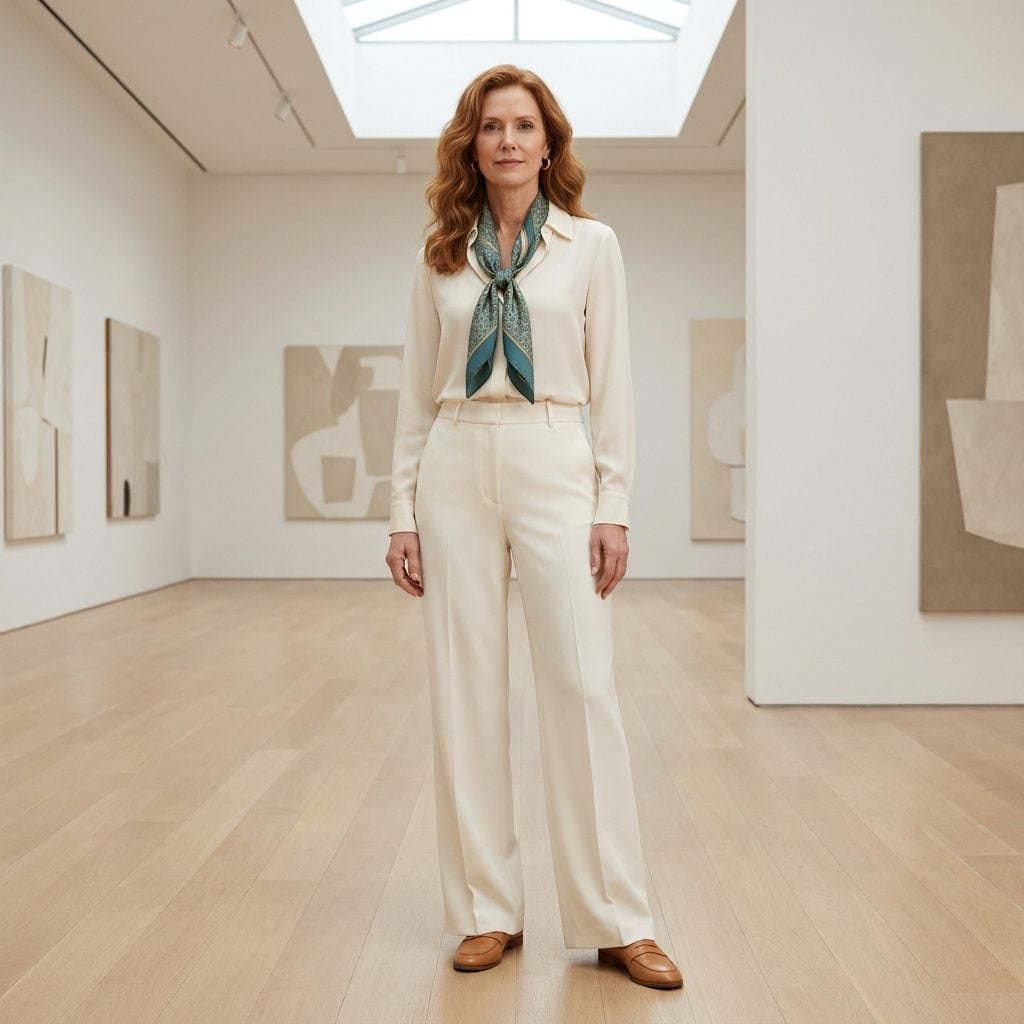
If a blouse already has a keyhole or tie opening at the collar, use that construction instead of adding another knot on top of it. Thread a narrow silk scarf through the opening and tie it where the blouse’s own neck detail would normally sit.
A scarf sharing one color with the blouse makes the substitution feel integrated. Teal and gold against cream works because the warm gold already has a relationship with the cream fabric, while teal supplies the sharper note.
12. Hide a Large Bow at the Back of the Neck
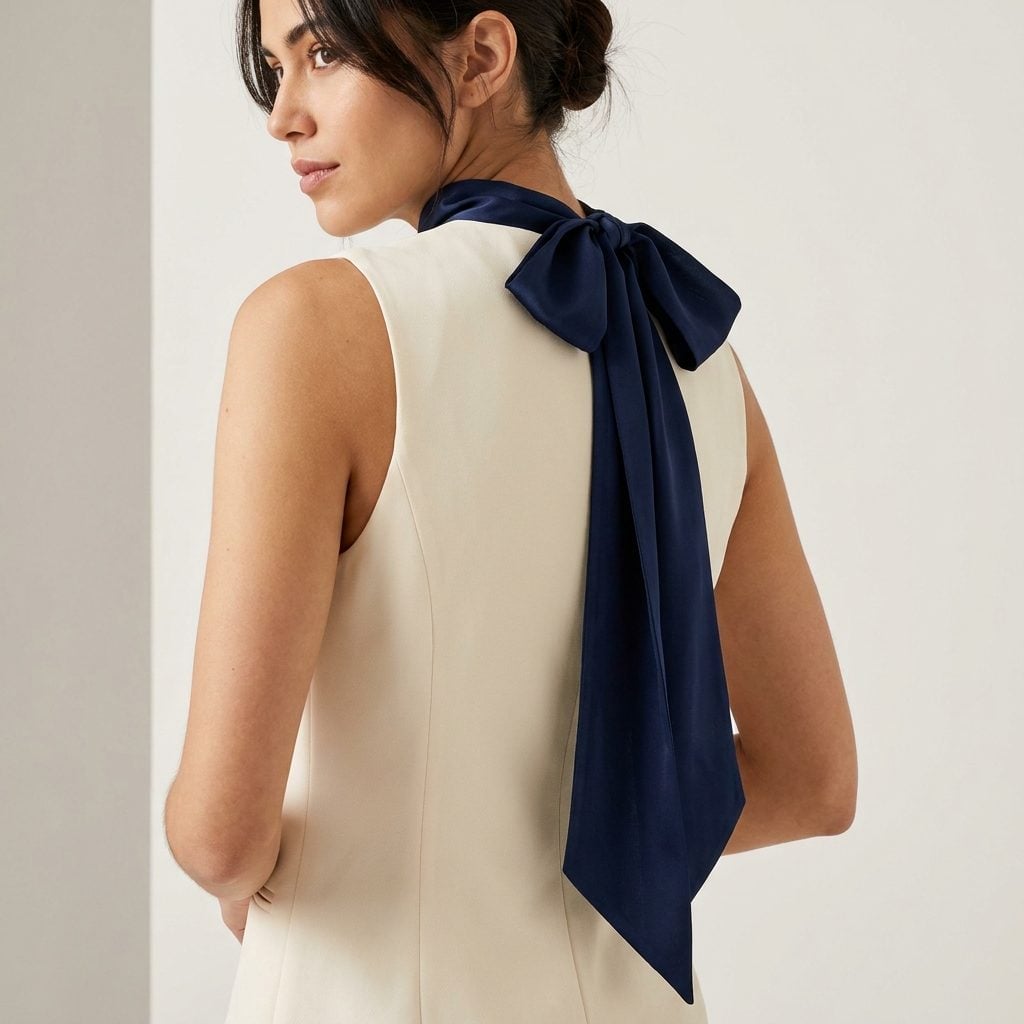
From the front, this can look almost minimal: a clean sleeveless top with no obvious accessory at the neckline. Turn slightly and the scarf appears as a full silk bow at the nape.
The sleeveless cut leaves enough bare space around the shoulders for the bow to register clearly. Blush silk against ivory ribbing keeps the contrast soft, while hair worn up or swept away from the neck makes the back detail easier to see. The move gives a simple outfit a surprise rather than another front-facing embellishment.
11. Use It as a Belt Over a Loose Shirtdress
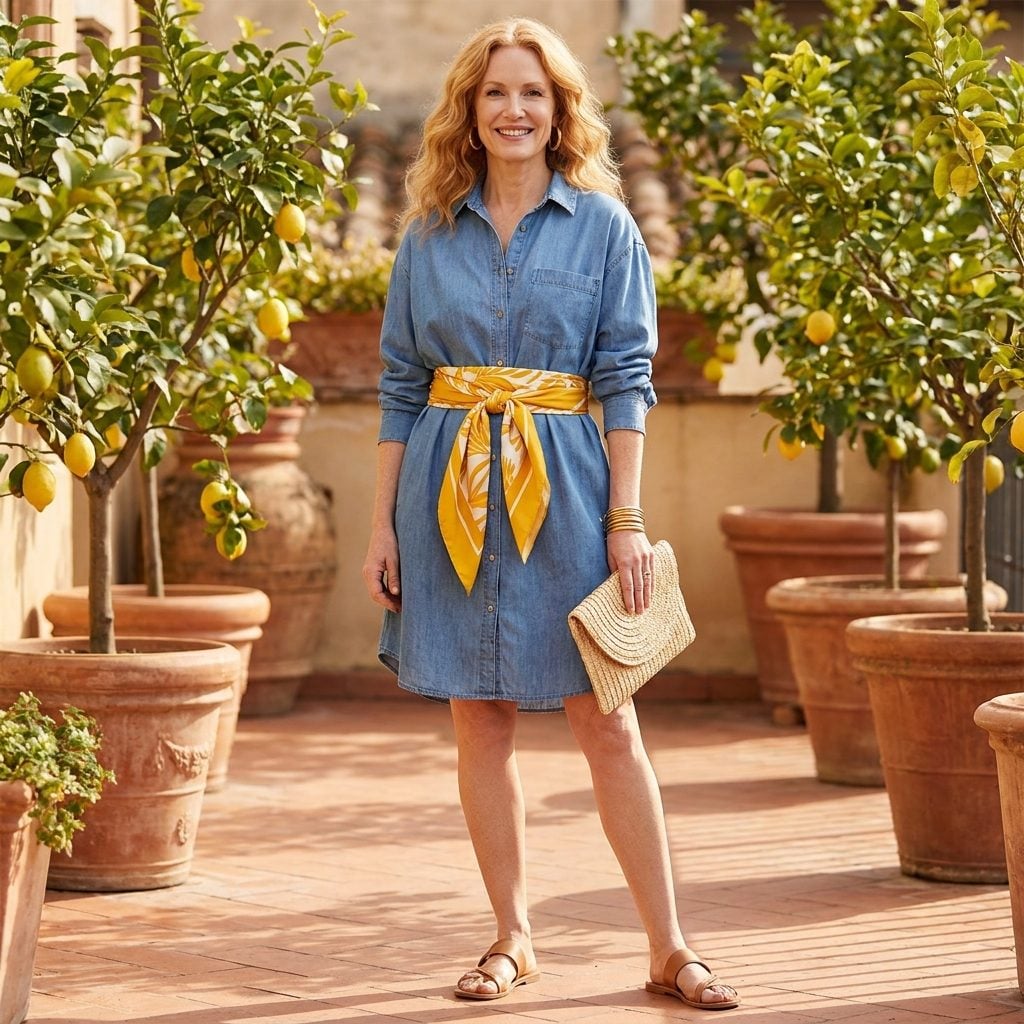
A loose shirtdress can change character completely once the waist is defined. Fold a long scarf into a broad band, circle the natural waist and knot it slightly off-center rather than fastening it like a conventional belt.
Sunflower yellow against washed chambray gives the middle of the outfit a concentrated hit of color while preserving the softness of the dress. The result is definition without introducing leather, buckles or another rigid material.
10. Knot It Asymmetrically at the Side of the Neck With a Blazer
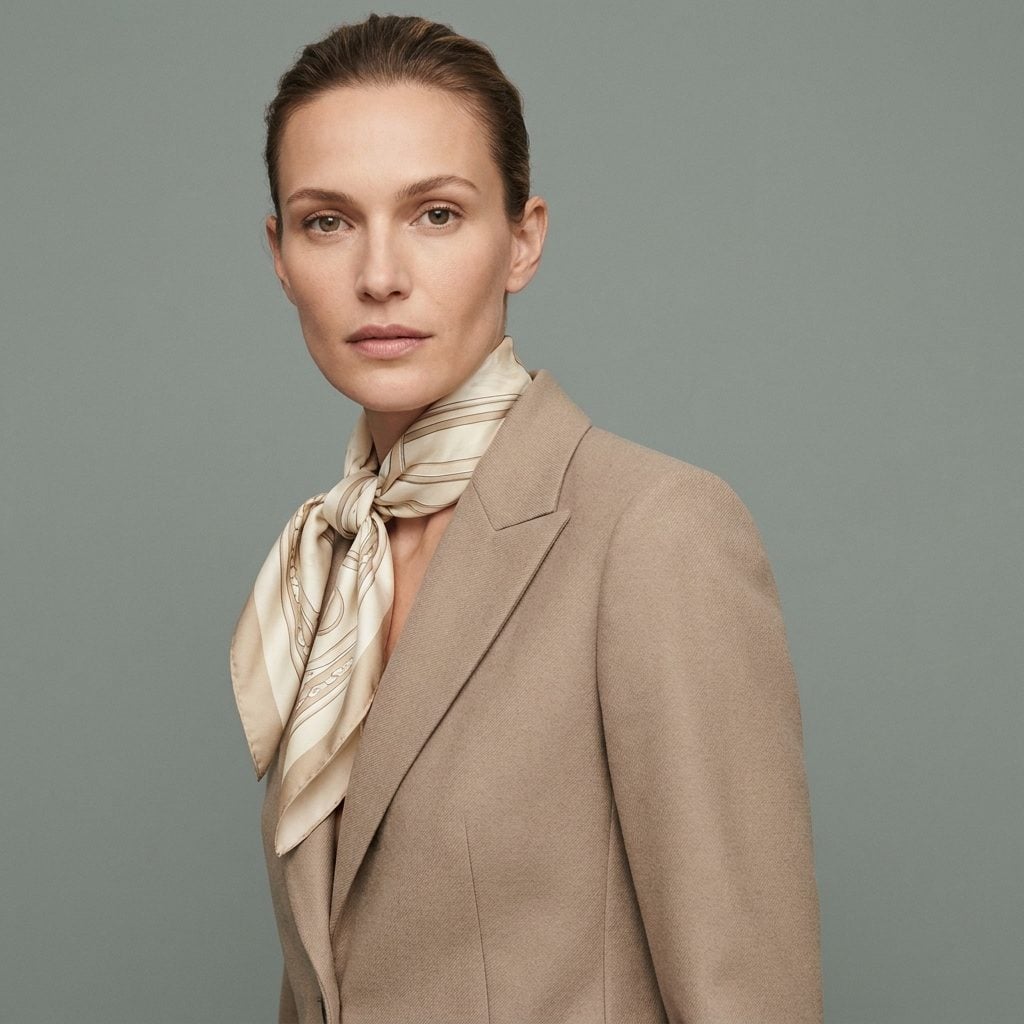
A centered knot creates symmetry. Shifting that knot several inches toward one shoulder changes the geometry immediately, especially against the straight lapels of a structured blazer.
The scarf interrupts the blazer’s center line without fighting the tailoring. Navy and rust pick up the warmth of camel, while navy trousers give the lower half a darker anchor. The result is polished but slightly off-center in exactly the useful way.
9. Pin It Diagonally Across One Shoulder Like a Textile Brooch
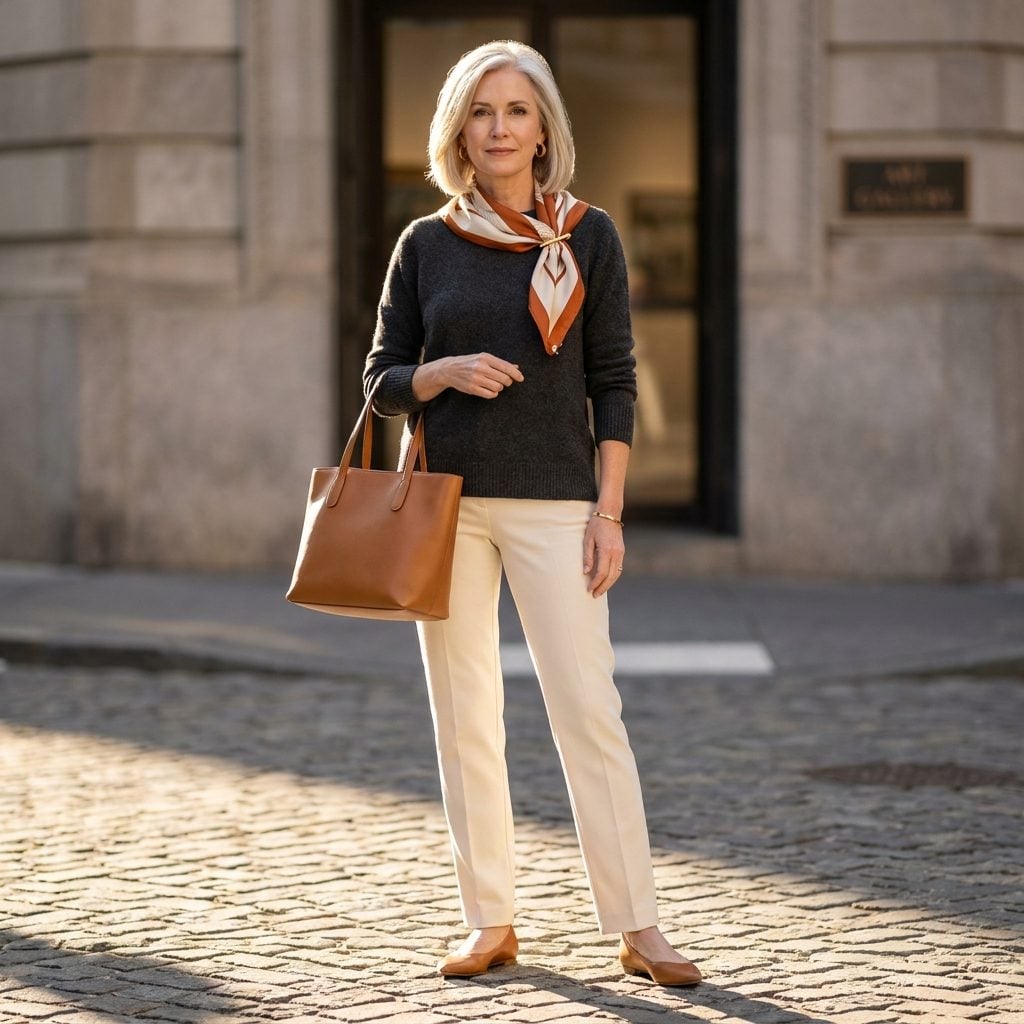
A slim scarf laid diagonally over one shoulder introduces a line where a plain sweater normally has none. Fold the scarf into a narrow band, position it sash-style and secure it so the ends remain flat.
Against a charcoal knit, the diagonal interrupts the broad shoulder line and sends the eye upward without requiring a necklace or traditional brooch.
8. Tie It as a Headscarf at the Nape and Let the Sunglasses Do the Rest
❤️ Would you like to save this?
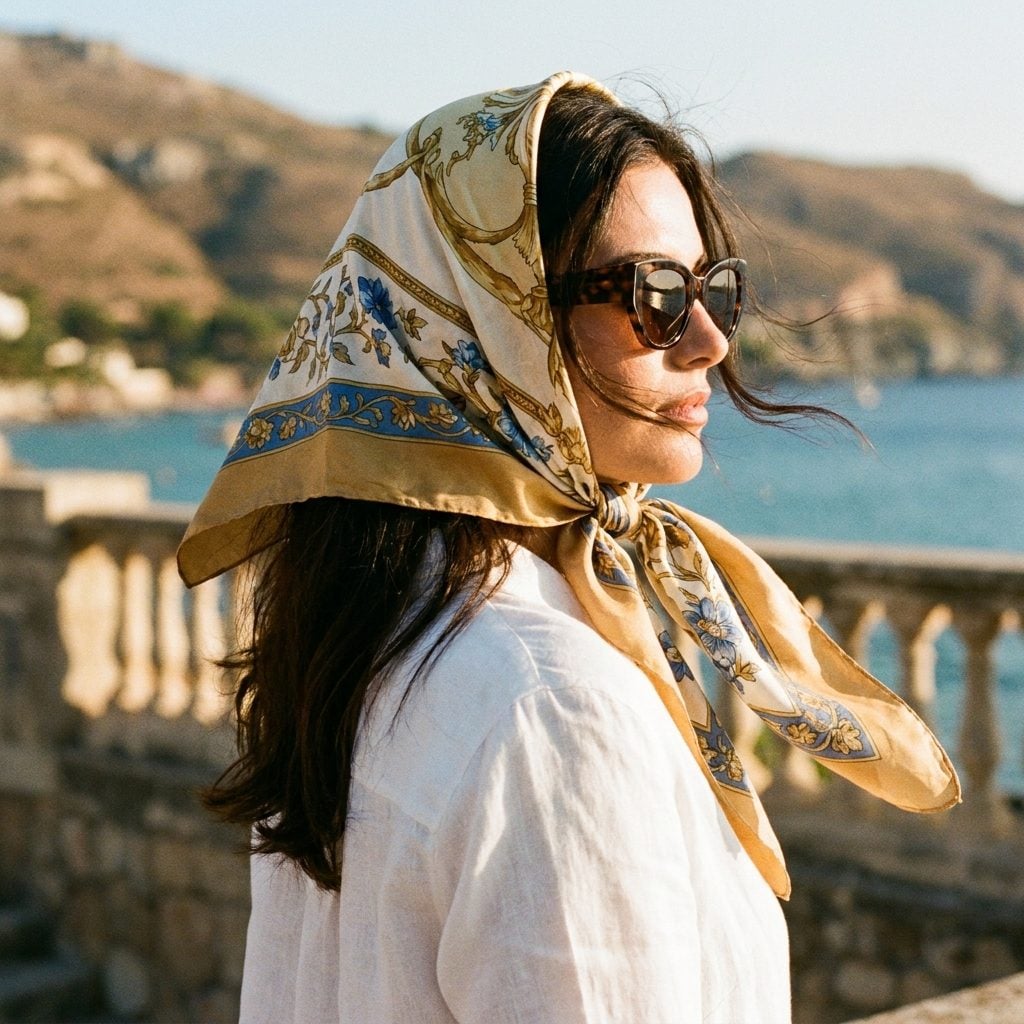
Folded into a wide band and knotted low behind the head, the emerald silk frames the face while leaving the edges of the silver hair visible. Tortoiseshell sunglasses and a boxy linen dress keep the rest of the look clean enough for the scarf to take center stage rather than looking like emergency hair control.
The low knot is what gives this version its midcentury flavor. Keeping the crown smooth and the ends contained prevents the scarf from turning into a large bow or turban and lets the color do most of the work.
7. Tuck It Into a V-Neck as a Soft Filler Panel
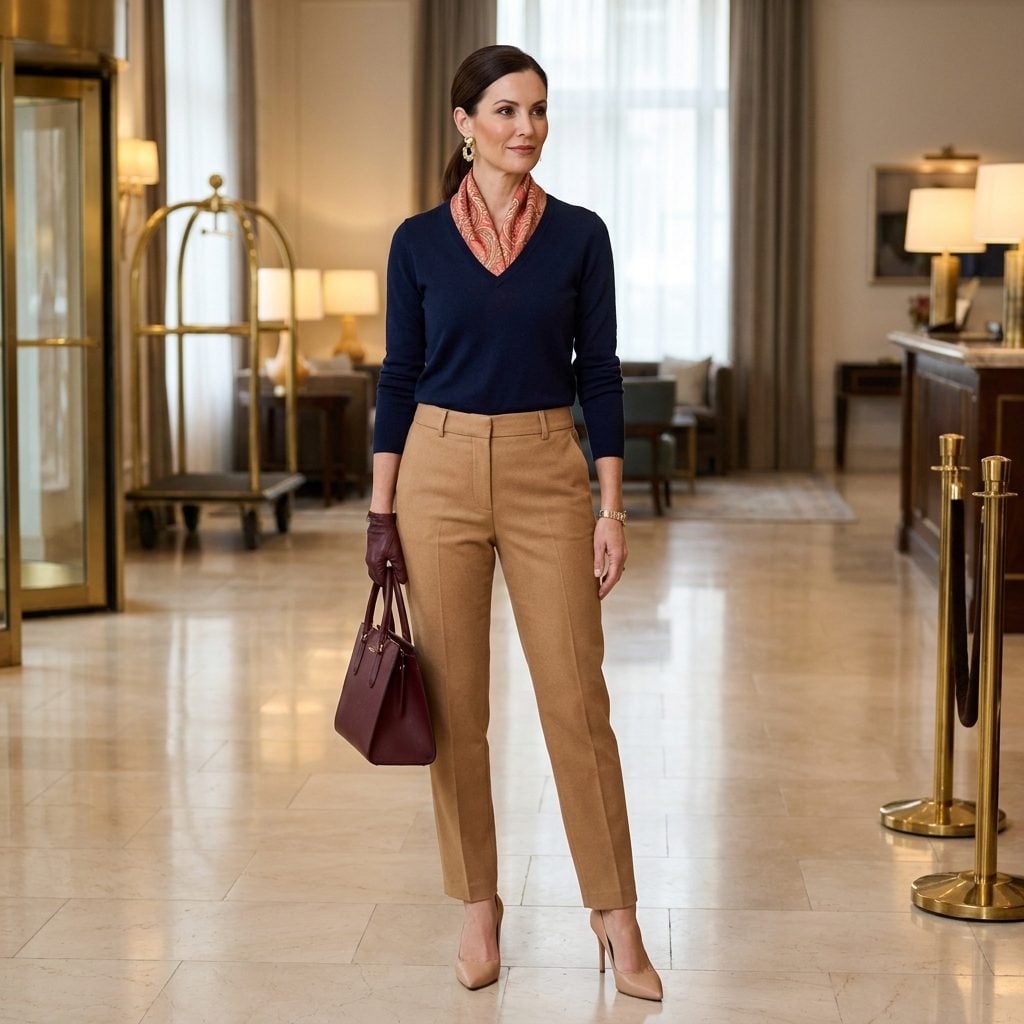
A deep V-neck creates a ready-made frame for color. Gather the scarf loosely and tuck enough of it inside the neckline to fill part of the opening while leaving the edges soft rather than perfectly flat.
Coral paisley against deep navy gives the neckline a warmer center and offers a little extra coverage without another camisole or shirt collar. Add camel wool trousers and the three colors settle into an easy warm-cool-neutral balance.
6. Tie It to a Bag Handle and Let the Ends Trail
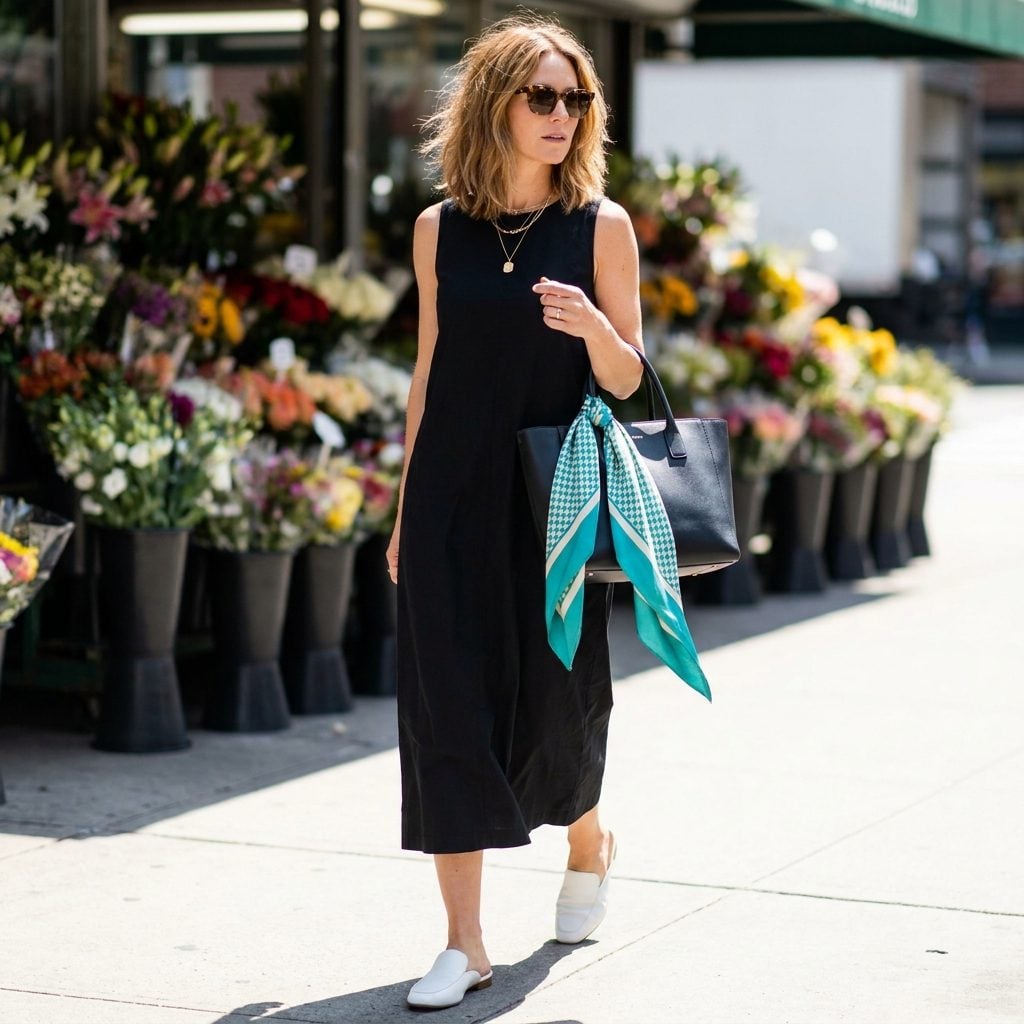
This is the looser cousin of the compact bag-handle bow. Tie the scarf once near the handle base and let both ends fall down one side, using length rather than the knot itself as the decoration.
Turquoise silk against black leather supplies the only vivid color in an otherwise dark look. The long tails respond to every movement of the bag, making this version less prim than a bow and much more graphic from a distance.
5. Loop It Into a Choker-Length Knot at the Collarbone
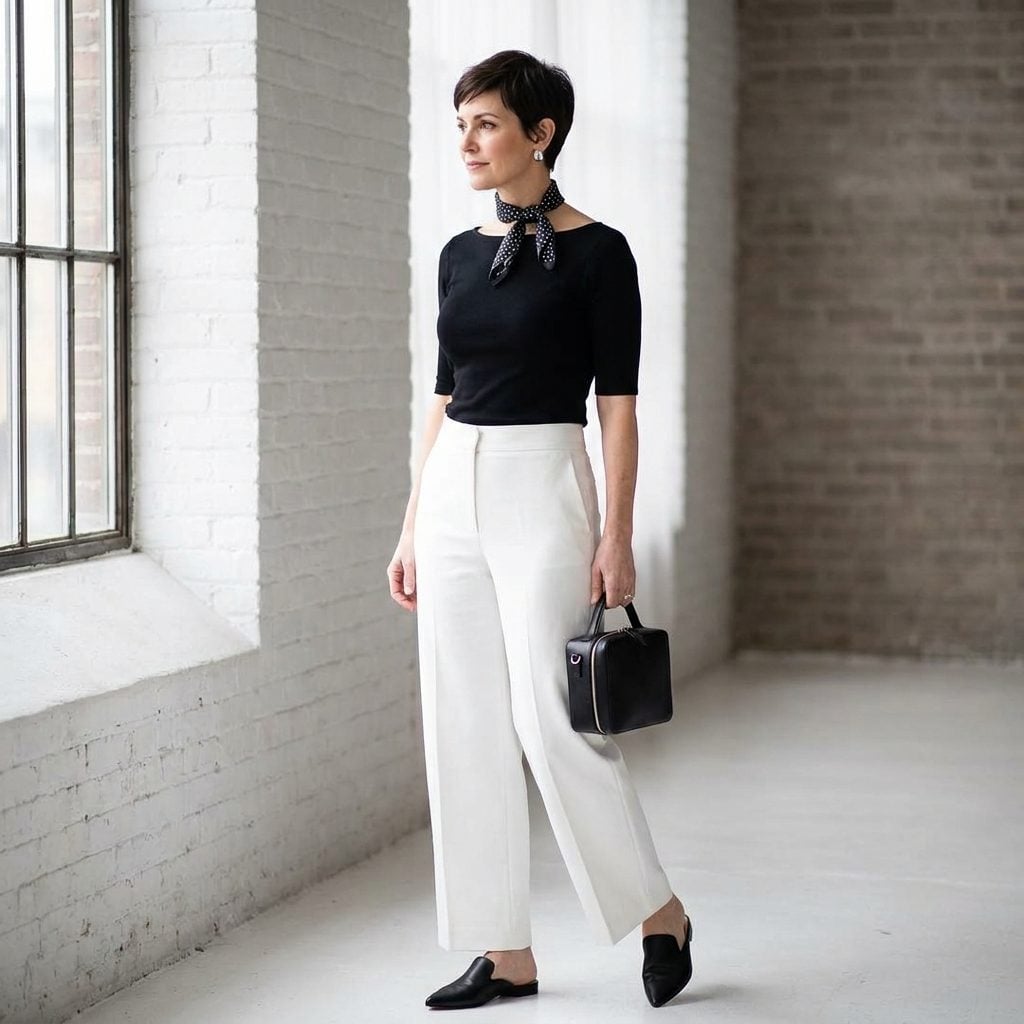
Tied short and high, a small scarf behaves more like a textile necklace than traditional neckwear. Fold it into a slim band, circle the neck once and finish with a compact knot close to the collarbone so no long tails remain.
Black-and-white polka dots against a black-and-white outfit keep the palette controlled while silk introduces a completely different surface. The glossy knot becomes the punctuation rather than another layer of color.
4. Let It Hang Long and Open Beneath a Blazer
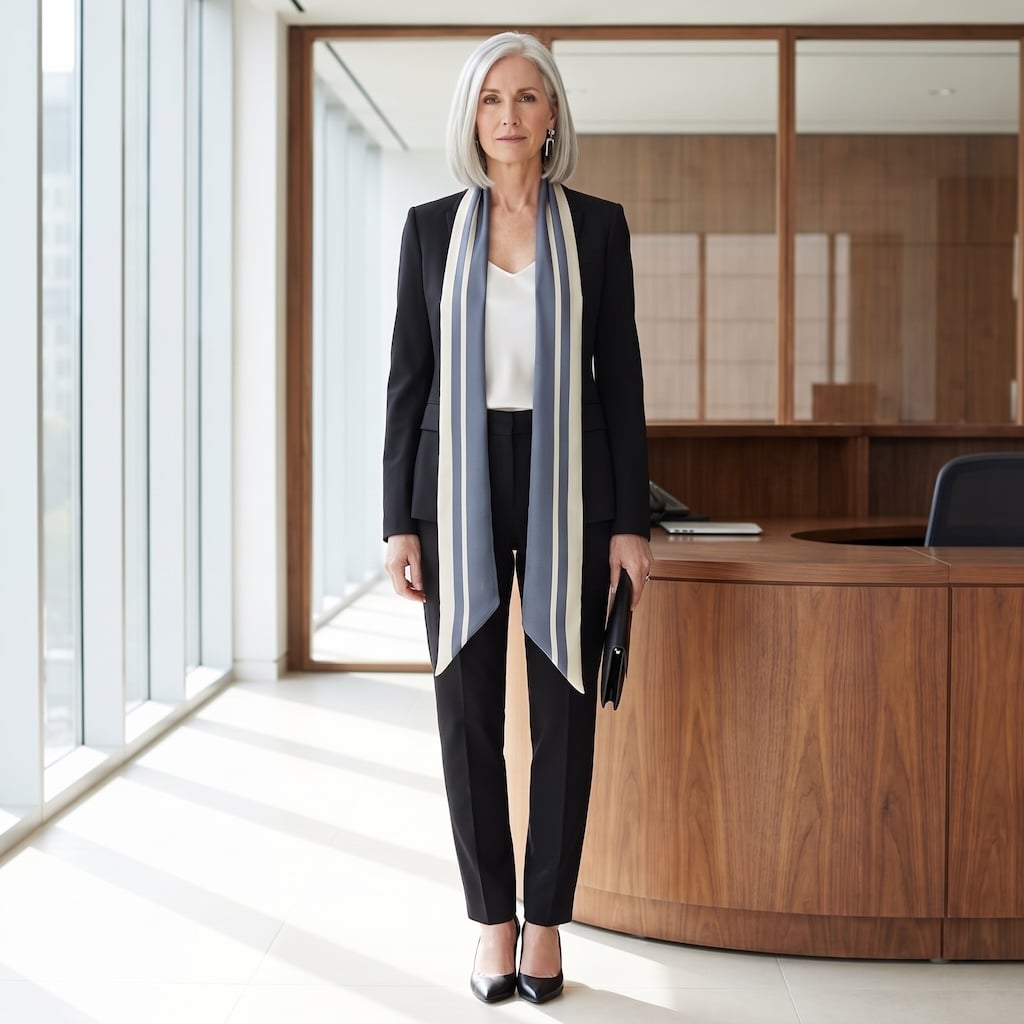
No knot is required here. Fold the scarf lengthwise, place it behind the neck and let both ends fall straight down inside the blazer, almost like a necktie pulled apart into two soft panels.
Slate-and-cream stripes against black introduce motion exactly where a blazer is most linear. The scarf breaks the severity of the lapels without obscuring them, making this one of the quieter ways to wear a print.
3. Layer It Under a Blazer Collar So Only the Ends Show
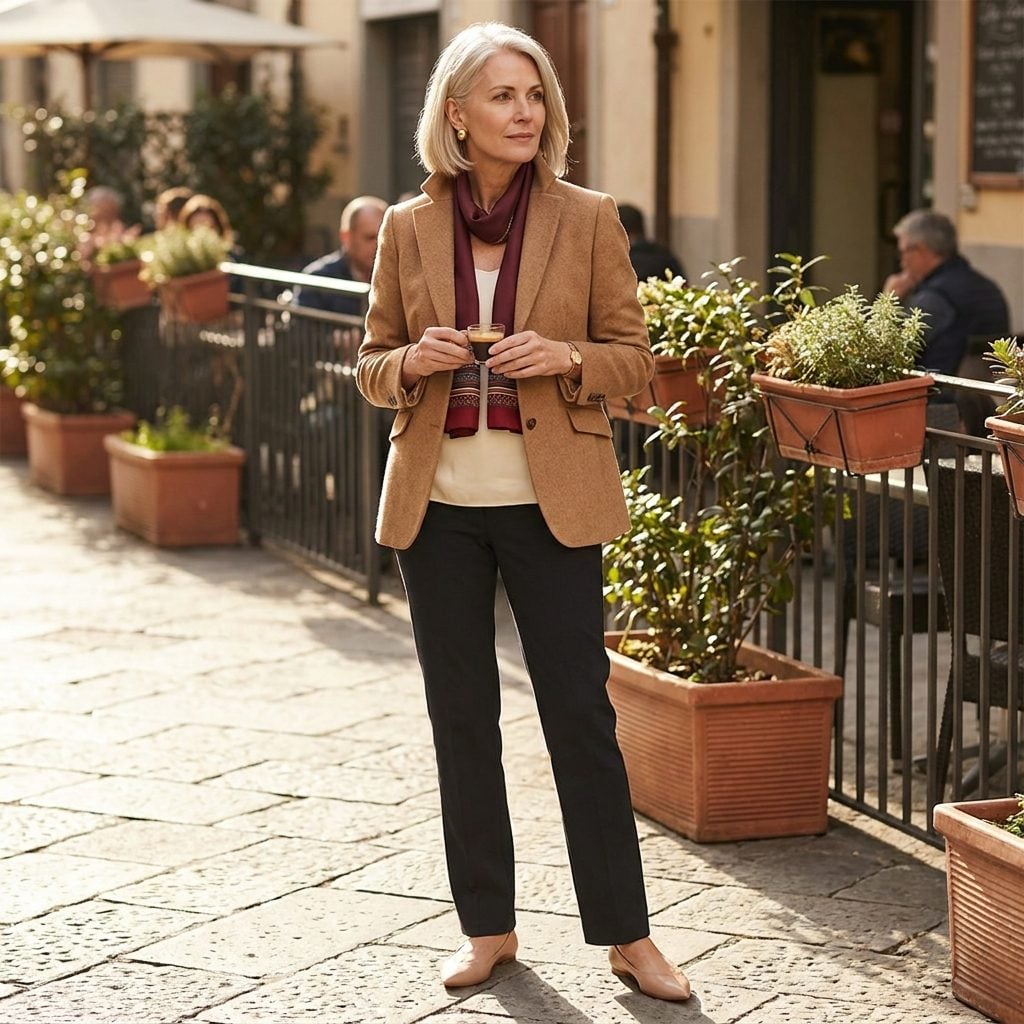
Fold the scarf into a long narrow band, place it beneath the blazer collar and allow only the printed ends to drop along the opening. The lapels hide most of the silk, creating two controlled flashes of pattern instead of a full neck treatment.
The wool provides structure while the scarf adds softness. A burgundy silk scarf against a camel wool blazer carries enough color that everything underneath can stay simple.
2. Rotate the Print to the Back and Show Only the Quiet Border in Front
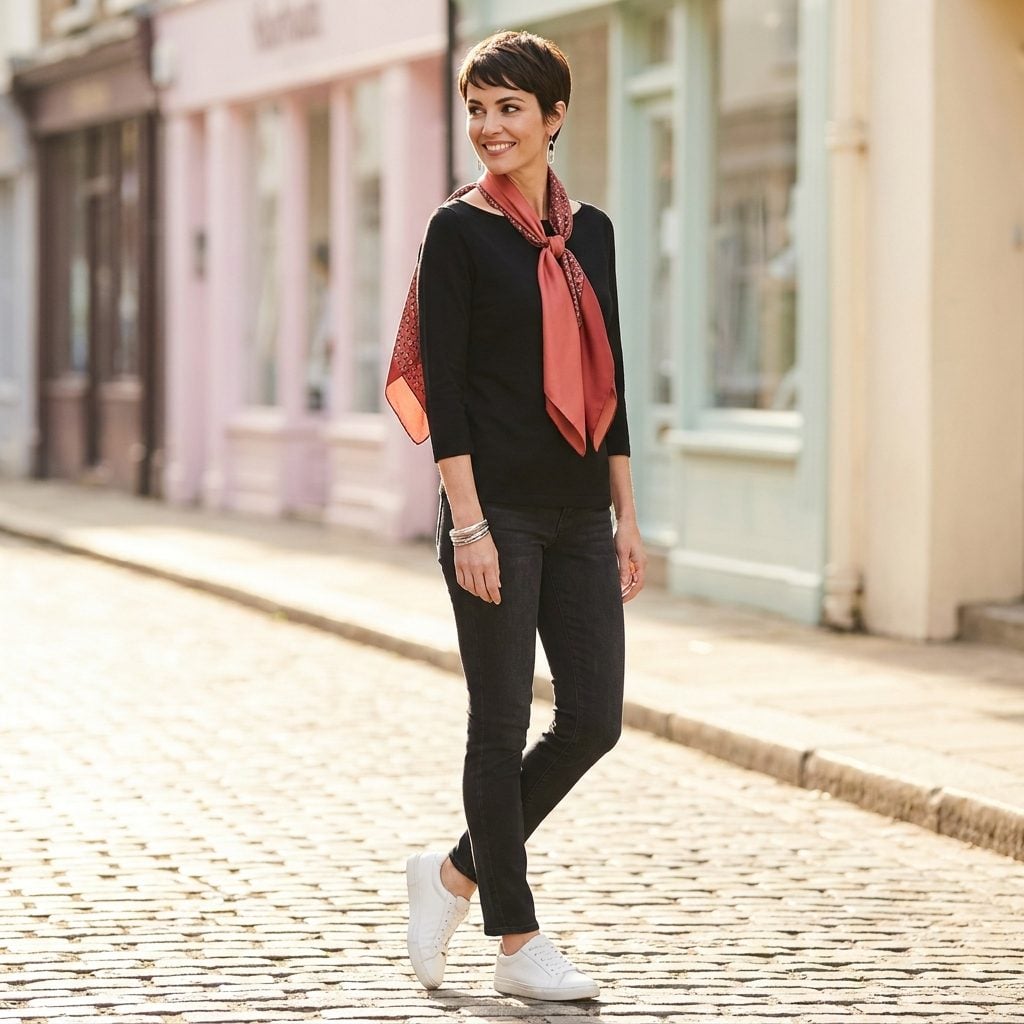
Tie the scarf normally, then rotate it so the busiest portion of the print sits at the nape while a calmer border or solid section faces forward. The scarf still brings color to the neckline, but the pattern becomes something seen mainly from the side and back.
This works especially well with prints that feel crowded beside earrings, glasses or a detailed neckline. Turning the busier portion backward keeps the front cleaner without sacrificing the scarf entirely.
1. Tie a Slim Band Across the Forehead for a Modern ’70s Kerchief
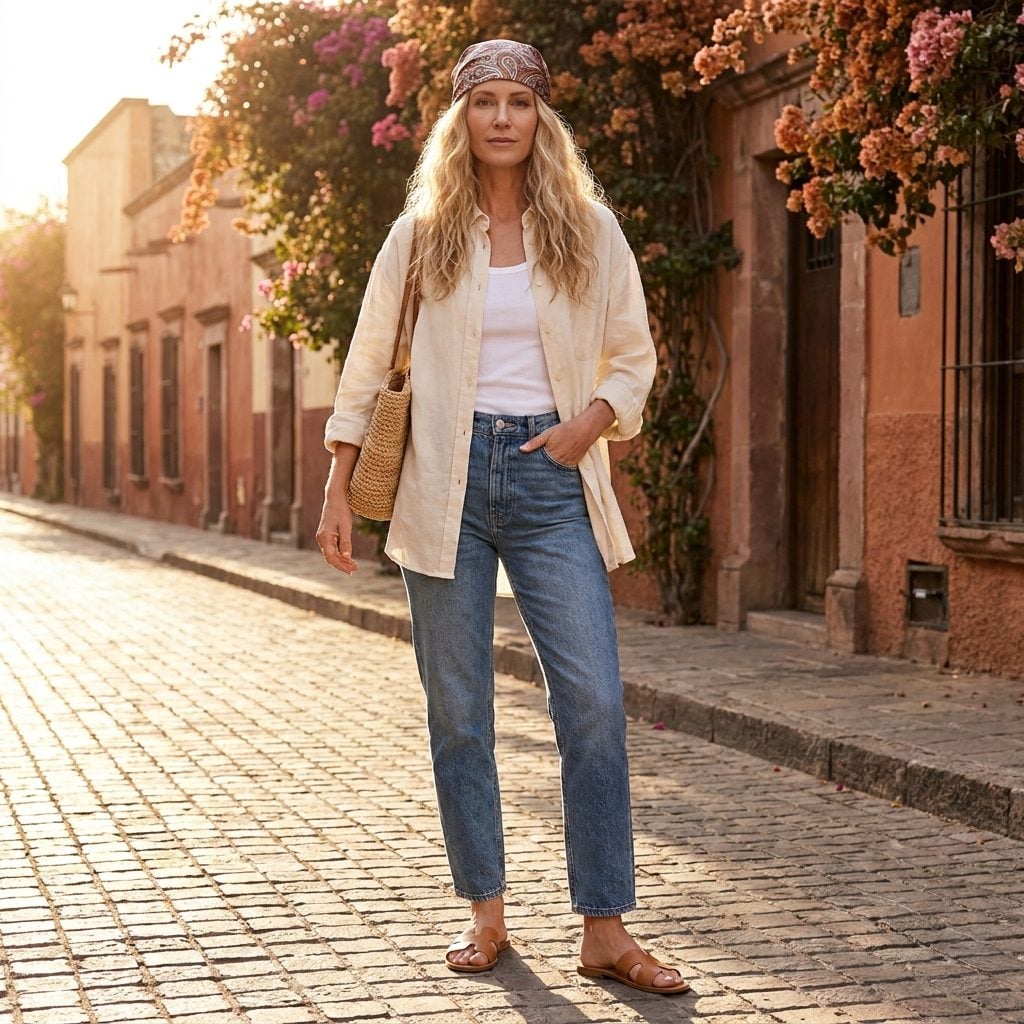
A narrow strip of silk across the brow carries an unmistakable 1970s reference, which is exactly why the clothing underneath should stay contemporary and restrained. Fold the scarf to roughly band width, lay it flat across the forehead and tie it under the hair at the nape.
A loose linen shirt and straight-leg jeans give the scarf plenty of empty visual space. Push the sleeves, add a straw shoulder bag, and the contrast between the retro head treatment and simple modern basics becomes the point rather than a costume effect.