
❤️ Would you like to save this?
You walked into the store with a plan. A real one. Black trousers, a crisp white shirt, something you’d actually wear to work. You walked out with an emerald sequin jacket, no returns accepted, zero occasions on the calendar. What happened in between is the same thing that happens in dating. We tell ourselves we want sensible, we want a list, and then something catches the light and the list evaporates. The way we fall for clothes maps almost perfectly onto the way we fall for people, right down to the self-deception, the friends’ approval, and the sale price that makes every flaw look like a feature. Here’s the recognition, item by item, plus the psychology running underneath both.
FYI, thanks to AI imagery software, we’re able to create very specific fashion and hairstyle examples to illustrate the points being made. In some cases, imagery is exaggerated to hammer home the point. Also, assume links that take you off the site are affiliate links such as links to Amazon. this means we may earn a commission if you buy something.
17. Your Outfit Checklist Disappears When Sequins Have Chemistry
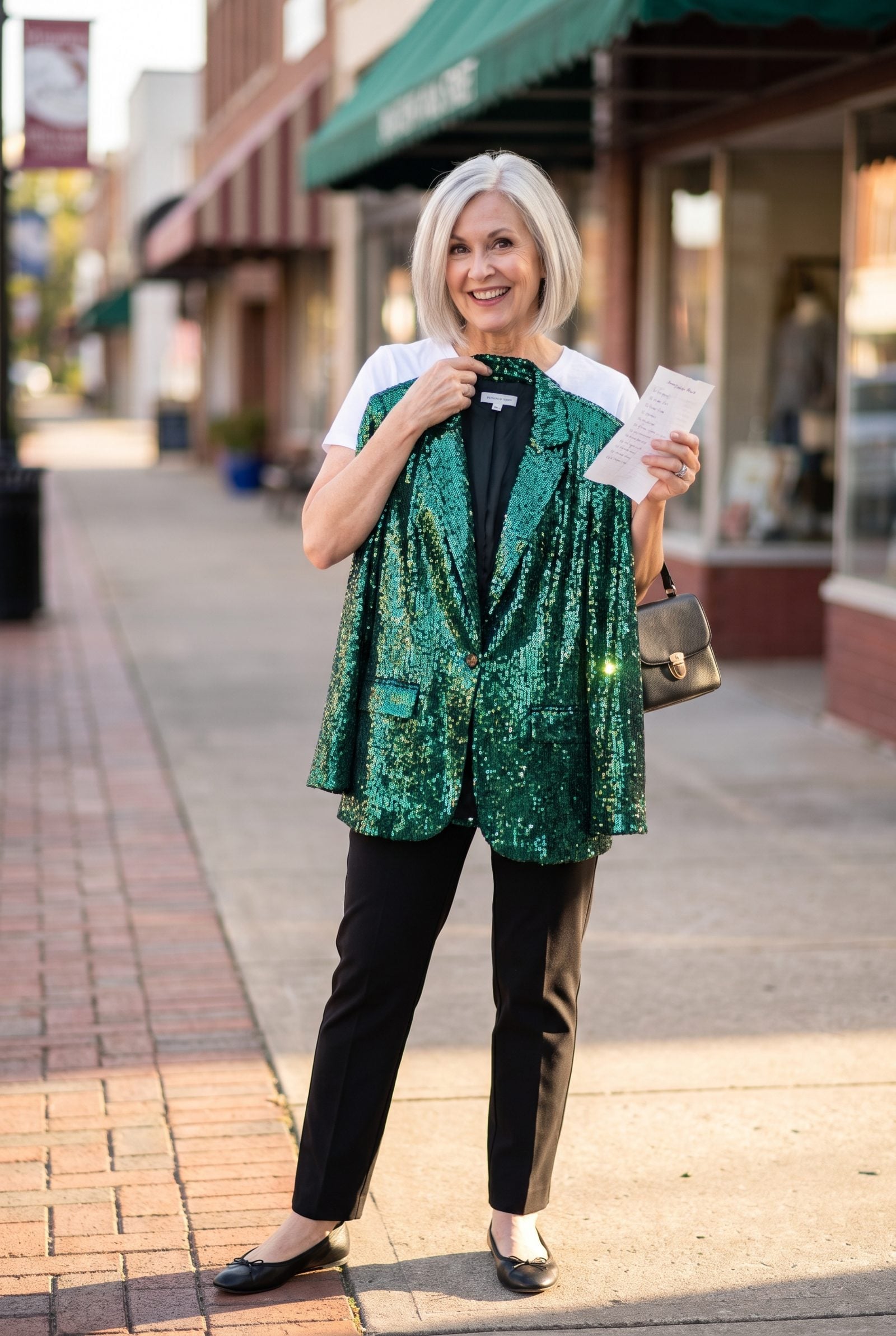
The emerald sequins did it. One minute you had a mental checklist that said neutral, versatile, machine washable, and the next, a jacket is shimmering under the lights and your spreadsheet brain goes offline. This is the fashion version of meeting someone who ticks none of your boxes and ignoring every box anyway.
Hold it against your frame and the whole outfit reorganizes itself around the shimmer, the flat black ballet shoes keeping it grounded enough to feel like you and not a costume. That contrast is why it works: the shoes say sensible, the sequins say otherwise, and the friction between them is the fun.
Styling tip: keep the sparkle piece and anchor it hard with matte neutrals, a flat shoe, and one metal only. Let the jacket be the loud one.
16. You Fall for the Mannequin Before Checking the Care Label

The mannequin has it sorted. The silk blouse tucked just so, the camel wide-leg trousers hanging like water, the whole thing styled by someone paid to make you want it. You fall for the picture. Nobody mentions that the blouse is dry clean only and the trousers wrinkle if you look at them wrong.
It’s falling for the profile, the good angle, the curated version. The care label, like the fine print on a person, comes later.
What makes it read so composed on the display is the way the high-waisted camel trousers meet the cream in a soft, warm column that lengthens the whole silhouette. On you it can still work, but the fabric comes with demands, and you’d better know them going in.
Styling tip: before you fall all the way, flip the label. A cream silk blouse you’ll hand-wash lives in your closet for years. One you’ll never dry clean lives there as guilt.
15. The Last Dress in Your Size Suddenly Feels Destined
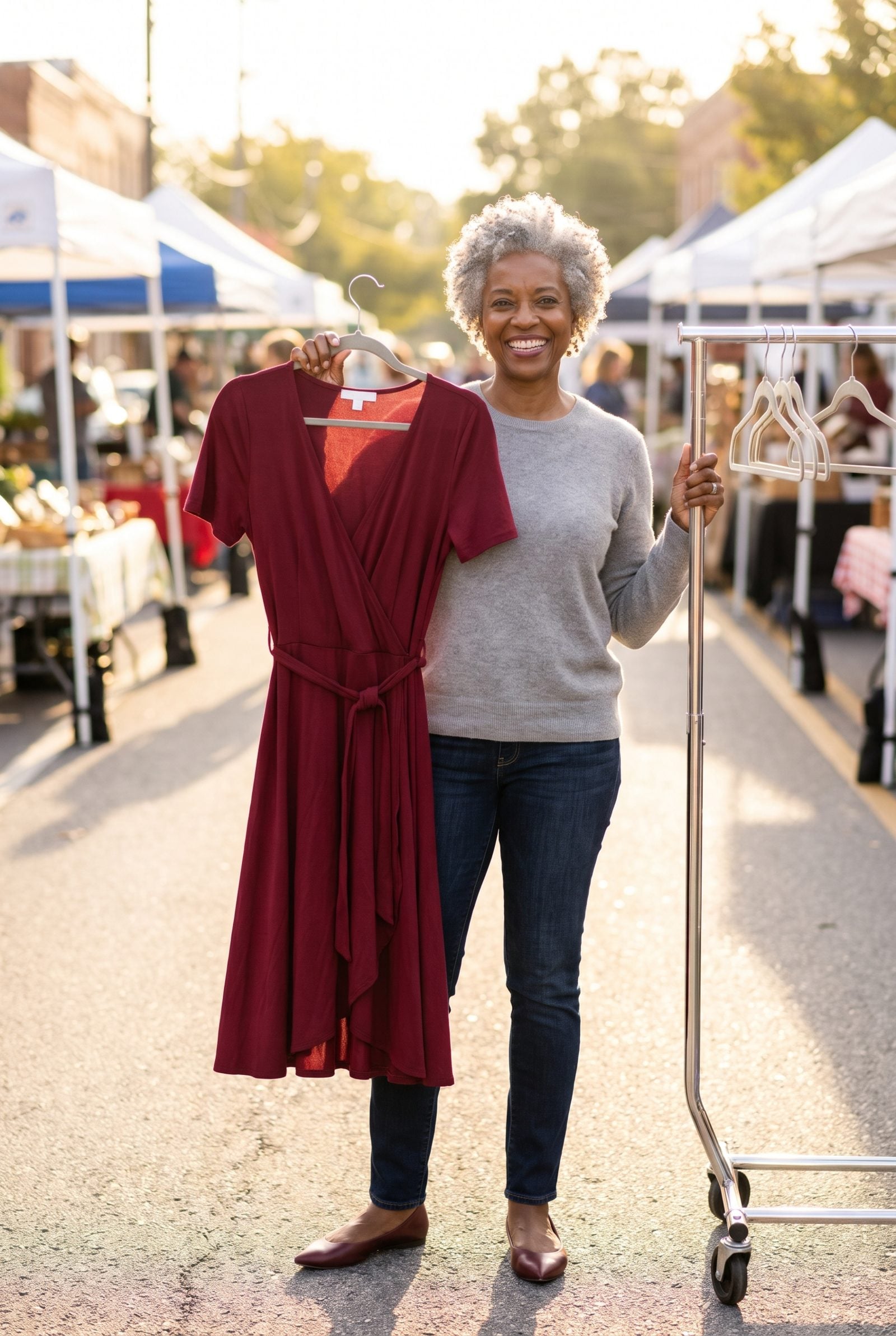
There’s one left. Your size. In the color you like. The rack beside it is picked clean, and somewhere in your chest a little voice says this was meant for me.
It wasn’t meant for anyone. It’s inventory. But scarcity rewrites meaning, the same way the last person left single at the reunion suddenly looks like fate instead of coincidence.
The wine-red wrap dress is a genuinely smart grab, mind you. The wrap defines the waist and the fluid jersey moves instead of clinging, which is why it flatters across such a wide range of bodies. The burgundy flats keep it in the same warm family without matching too hard.
Styling tip: if you’d buy it at full price with ten in stock, buy it now. If the only reason is that it’s the last one, walk away.
14. You Date the Same Striped Top in Different Colors

Open the closet and the evidence is damning. Striped top in navy. Striped top in black. Striped top in red. And here you are, wearing the forest green one and holding up yet another navy one like it’s a bold new direction.
It’s dating the same person over and over with a different haircut. We say we want variety. We keep choosing the thing that already feels safe.
Nothing wrong with a Breton stripe, for the record. The horizontal line broadens the shoulder and draws the eye outward, which balances a fuller hip beautifully, and the green keeps the formula while shifting the signal just enough to feel new.
Styling tip: if you’re going to repeat a winner, vary the proportion instead of only the color. A boxy cropped stripe reads completely different from a long fitted one, even in the exact same pattern.
13. A Designer Label Gets Away With Terrible Behavior
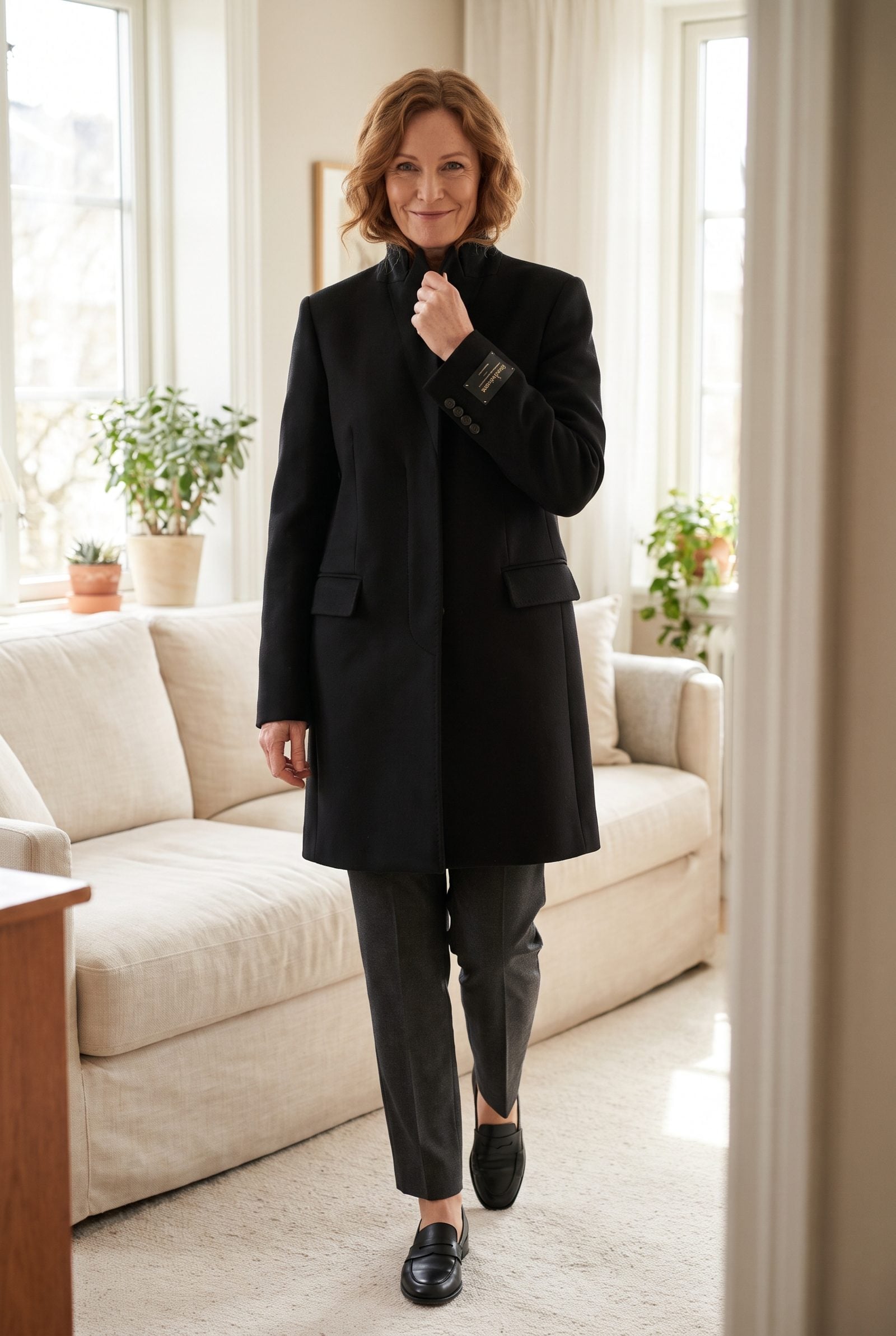
The coat is scratchy at the collar. The sleeves run a touch too long. It cost more than your first car’s down payment, and yet here you are excusing all of it, because the label is a name you respect.
Strip the tag off and you’d never tolerate that collar. With the tag on, you’re mentally drafting reasons. Call it the style version of forgiving someone’s worst habits because they’re charming or impressive on paper.
Now, a structured wool coat that genuinely fits is worth the splurge, because the shoulder and the line do work no cheap coat can fake. The point is that fit and comfort should earn the forgiveness, not the logo.
Styling tip: buy the name only when the cut is actually right. A perfect shoulder is the one luxury that photographs from across the room.
12. The Sales Associate’s Compliment Feels Suspiciously Like Courtship

“That is so you,” she says, and your heart does a small, embarrassing flip. Suddenly the jumpsuit you were on the fence about feels inevitable. You know, somewhere, that praise is part of her job, and the flattered part of you does not care one bit.
It lands exactly like early courtship. The attention feels personal even when you suspect it’s strategic. We’re wired to warm to people who warm to us.
To be fair, the navy linen jumpsuit earning the compliment is doing real work. The deep blue flatters the face, and the seamed waist defines the middle, which is why it reads so confident in the mirror.
Styling tip: a cropped jumpsuit wants a flat shoe like a woven loafer, with a camel trench layered over the top. Tan leather keeps it relaxed without stealing from the blue.
11. Your Friends’ Approval Turns Maybe Into Checkout

You weren’t sure about the jumpsuit. Then your friends gasped, one of them said “you have to get it,” and the tag was at the register before you’d finished thinking. A maybe became a yes because the room voted.
The same force runs through our love lives. The partner our friends adore gets a boost we didn’t give consciously. Group approval feels like proof.
And the rust-orange jumpsuit does deserve the fuss. A one-piece creates an uninterrupted vertical line that reads taller and bolder than separates, while the warm terracotta flatters most skin in warm light. The gold sandals keep it from tipping into severe.
Styling tip: a jumpsuit lives or dies on the torso length. If the crotch sits right and the waist hits your natural waist, it’ll look expensive no matter what it cost.
10. Fantasy-Life Heels Win Over Shoes You’d Actually Wear

The gold stilettos are for a life you don’t quite live yet. The cocktails, the gala, the version of your calendar that’s always booked. Meanwhile the comfortable tan flats sit on the floor, ignored, the shoes you’d actually walk in all week.
You buy for the fantasy self, not the Tuesday self. Same impulse that makes us chase the exciting, unavailable person over the steady one who’d actually show up.
Don’t get me wrong, the gold heel against a black midi dress is genuinely sharp, the metallic point elongating the leg and lifting the whole look. The question is just whether it’ll ever leave the box.
Styling tip: want the glamour without the regret? A block heel gives you lift and the same leg line, and you can wear it past the first hour.
9. You Believe the Right Tailor Can Change Those Trousers
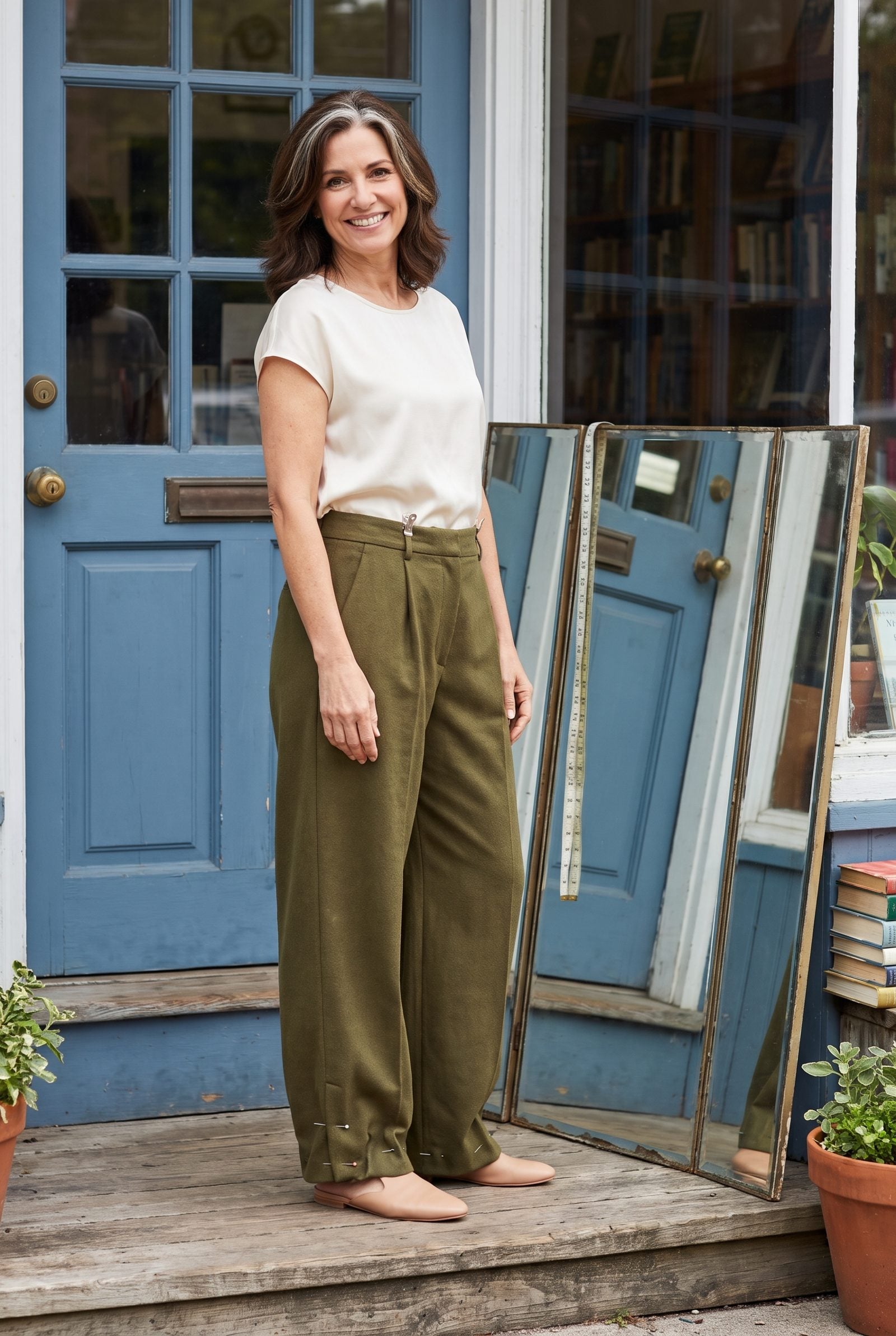
They’re not right. Hem not quite sitting right, loose in the waist, a little off through the hip. But you stand there pinning them in your mind, telling yourself the tailor can fix it. You’ll change them.
Sometimes that’s true. A good tailor really can rescue a hem or nip a waist. But “I’ll fix it later” is also the oldest story we tell ourselves about the thing, or person, that isn’t quite what we needed out of the box.
The olive wide-leg is worth the optimism when the fabric and rise are good, because once the hem is set to skim cleanly just above a flat nude mule, the leg looks a mile long. The tucked silk shell keeps the waist defined so the volume reads intentional.
Styling tip: a tailor can shorten, take in, and taper. A tailor cannot change a bad rise or a cheap fabric. Fix the hem, not the fundamentals, and know the difference before you pay for alterations on a lost cause.
8. The Sale Price Makes Every Red Flag Look Smaller
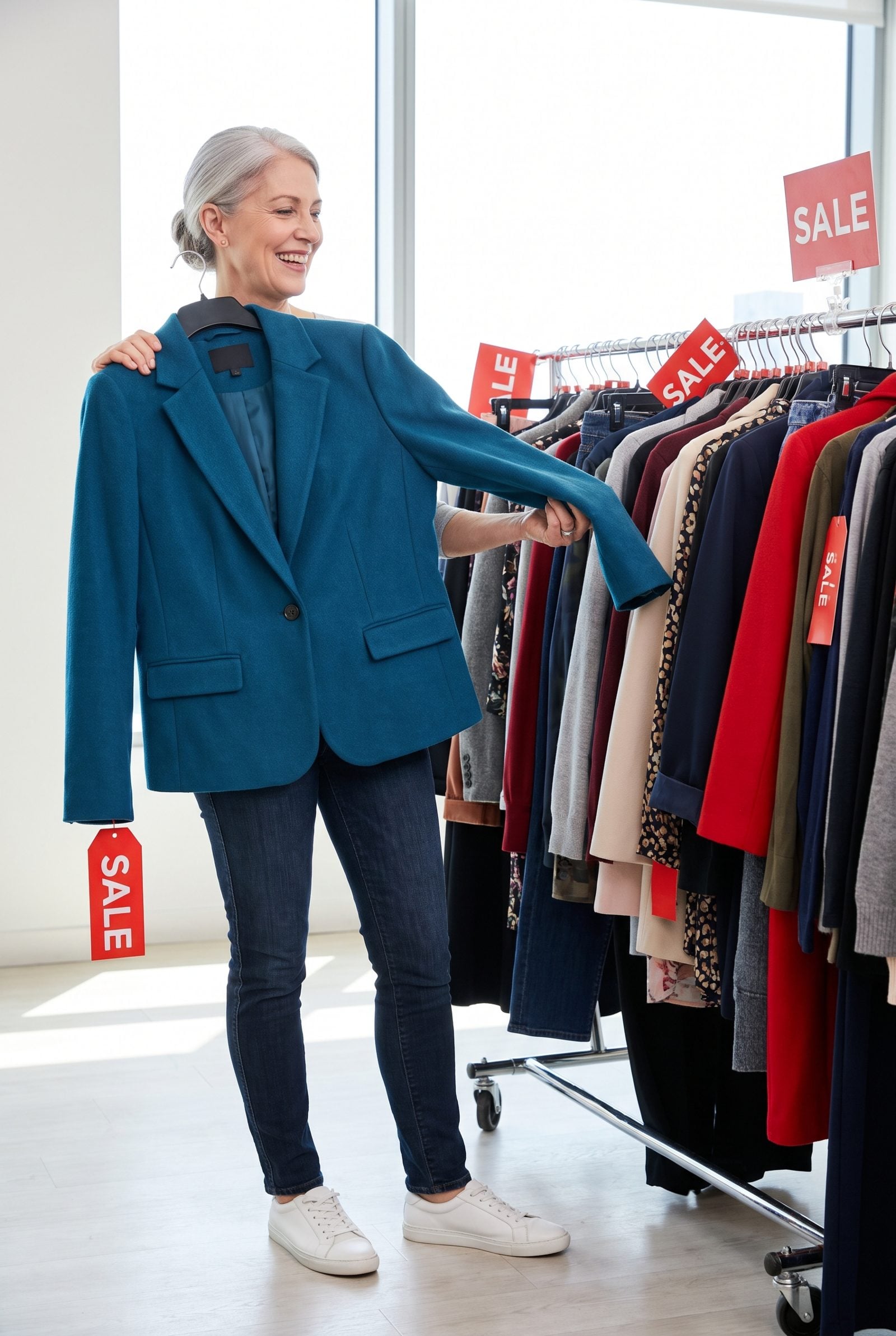
Deeply marked down. At that price, who cares that the shoulders sit a little funny and you own nothing that goes with teal? The discount shrinks every objection to a whisper. A full-price version of this blazer would’ve gotten a hard no.
This is where the wallet and the heart rhyme. A great deal, like a great first impression, makes us overlook the things we’d otherwise flag immediately.
If the teal blazer genuinely fits and the color lifts your complexion, then yes, a sharp-shouldered jacket at a discount is a real find, since structure is exactly where a blazer earns its keep. The teal reads fresh against denim and keeps the sneakers from looking too casual.
Styling tip: run one test at the register. Would you buy it at full price? If the only reason is the markdown, the markdown is the whole relationship, and that never ends well.
7. The Return Tag Stays On Until Commitment Feels Safer

The tag stays on for a reason. You wear the coat around the house, catch your reflection in the hallway mirror, and sit down carefully so the tag doesn’t crease. You’re auditioning it, not committing. That little paper square is your escape hatch, and keeping it attached means you haven’t technically chosen yet.
It mirrors the way people hold a new relationship at arm’s length, one foot near the door, refusing to delete the apps until they’re sure. Psychologists call it loss aversion. The pain of a wrong choice looms larger than the pleasure of the right one, so we stall the irreversible step as long as the store policy lets us.
The camel coat earns its keep because it does the heavy lifting on its own. A clean collar, a column of neutral underneath, cognac flats that ground the whole thing instead of fussing it up. Nothing competes.
6. You Compare the New Coat to One Still Online
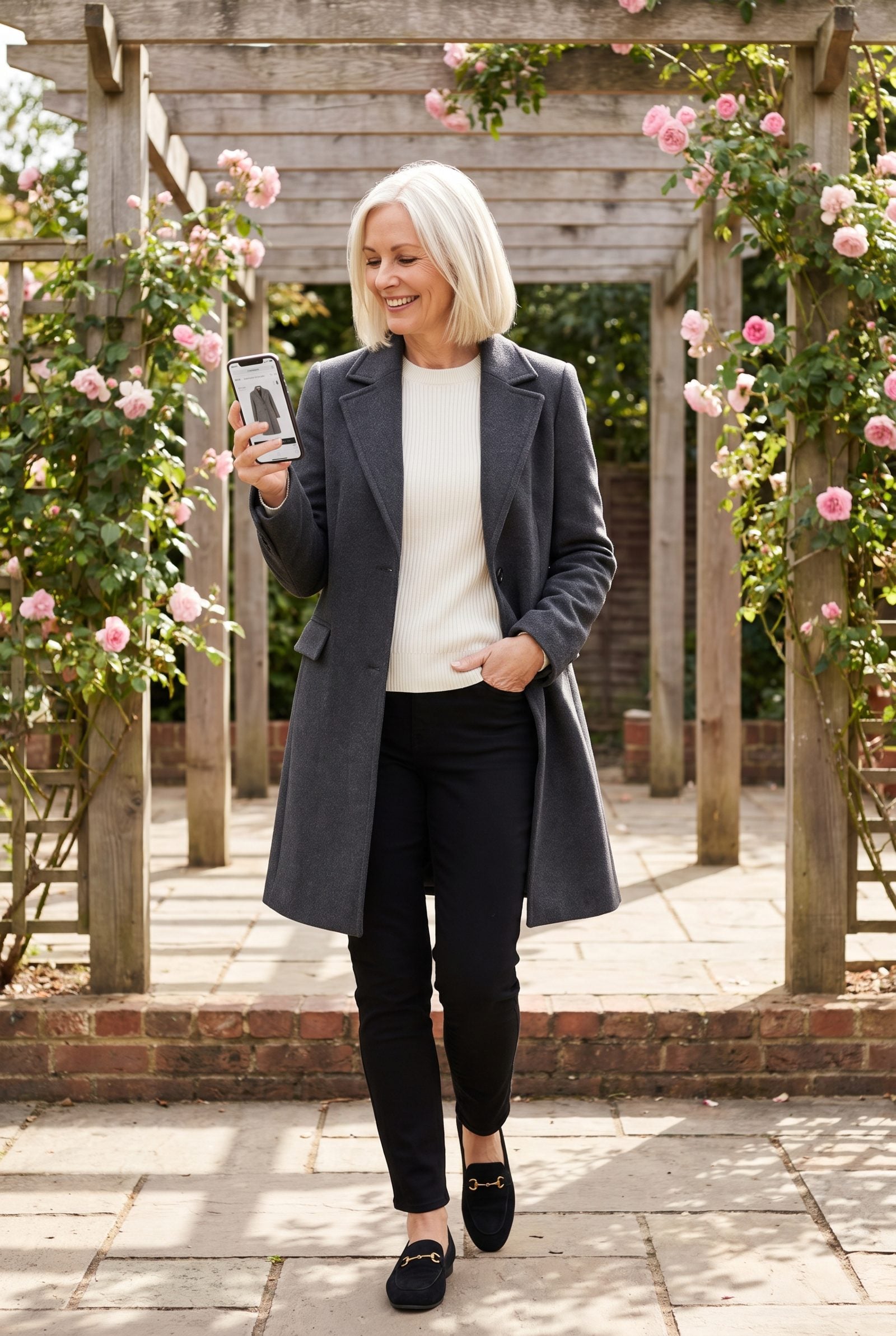
You bought the coat. It’s good. It fits. And yet here you are back on the site at nine at night, scrolling to the one you almost ordered instead, zooming in on its belt and wondering if the other collar sat a touch better.
This is the shopping version of standing next to someone wonderful and still wondering about the person you swiped past. Blame a cocktail of the grass-is-greener effect and the modern curse of infinite options. More choices don’t make us happier — they make us suspicious that the best one got away.
The charcoal coat on your shoulders deserves better than this treatment. Notched lapels, an ivory knit underneath, black suede loafers with a whisper of gold. Sticking to a tight palette is exactly what makes it read expensive instead of busy.
Here’s the plain truth. The coat you own will always lose a photo contest to the coat you don’t. One lives in your real closet. The other lives in perfect studio lighting with a model six inches taller than you.
5. One Great Party Gives a Mediocre Dress Legendary Status

❤️ Would you like to save this?
The dress itself is fine. A little tight through the shoulders, a hem you’ve never quite loved. But you wore it to the one night where everything went right, where the lighting was kind and someone told you that you looked like yourself again, and now that emerald slip can do no wrong in your eyes.
That’s the halo effect doing its quiet work. We transfer the glow of a single great memory onto whatever object was attached to it, and suddenly a so-so dress becomes “my lucky dress.” Same reason a mediocre relationship gets propped up on the memory of one perfect weekend three years back.
What actually works tonight is the fabric. Emerald satin catches light and moves like liquid, which forgives a lot and flatters more. Gold ballet flats keep the shine from tipping into costume. The dress isn’t legendary. The light on the satin is.
4. You Wear the New Skirt Everywhere Until the Thrill Fades
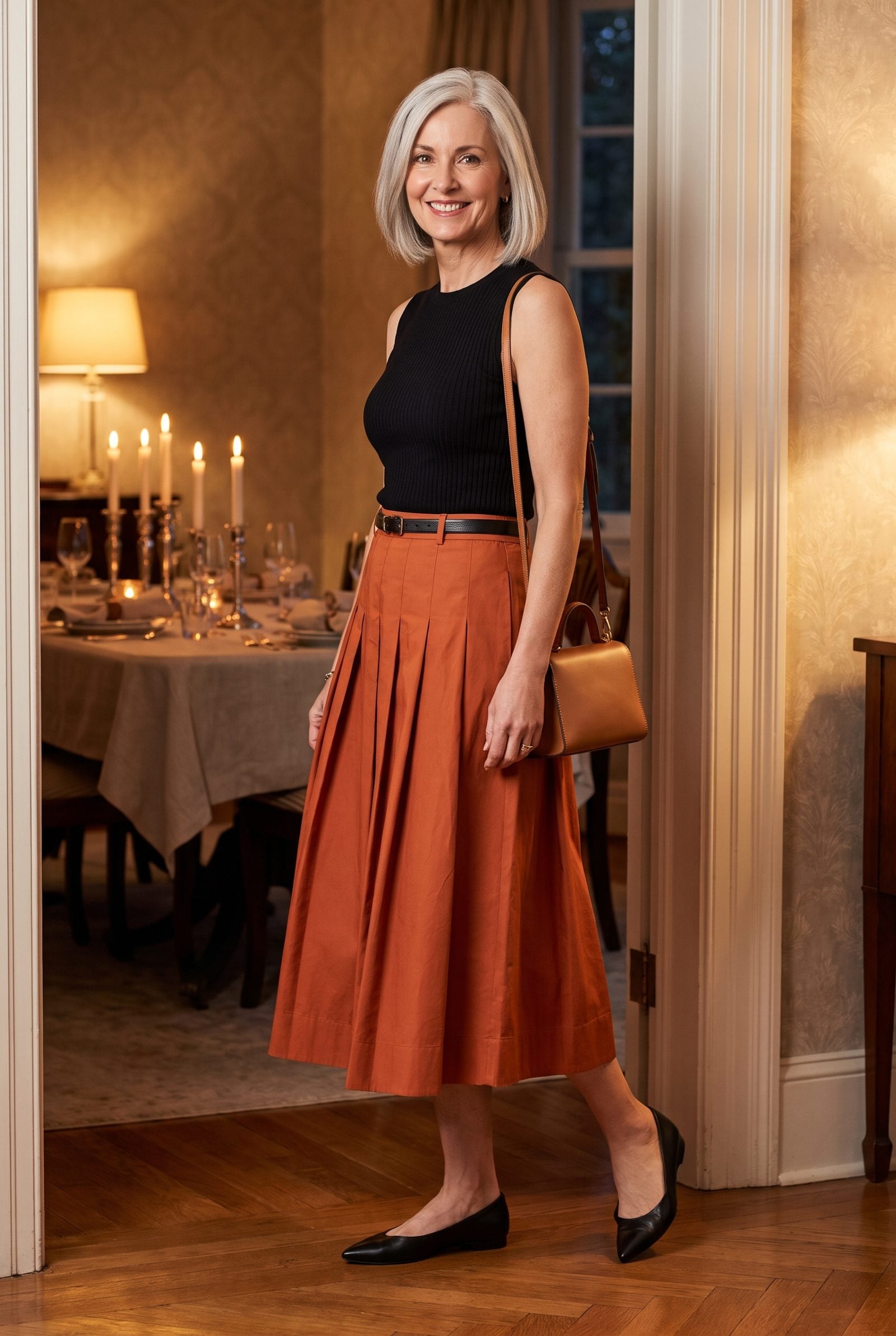
The first two weeks, that skirt went everywhere — grocery run, coffee with a friend, a work lunch it was slightly too dressy for. You couldn’t stop reaching for it. Then one Tuesday it was just a skirt again, hanging there like all the others.
Welcome to hedonic adaptation, the thing that cools every new thrill back down to baseline. It’s why the honeymoon ends, why the dream job becomes just a job, why the car stops smelling new. We adjust, and we adjust fast.
The rust pleated midi earns its early devotion fairly. Movement is the whole point. Pleats that swing against a fitted ribbed tank create tension between loose and tight, which beats either one alone, and black pointed flats sharpen the hemline so the volume reads intentional.
The thrill fading isn’t a flaw in the skirt. It’s a feature of being human. Rotate it out for a month and watch the spark come back.
3. Posting the Outfit Makes You Defend It Harder

Something shifts the moment you post the photo. Privately you had doubts about the royal-blue satin blazer. Publicly? You will defend that blazer to the grave. One lukewarm comment and you’re explaining why it works, as if your whole reputation rides on it.
Psychologists call this commitment and consistency. Once we declare a choice out loud, we feel pressure to keep acting like it was the right one — the same stubbornness that keeps people quiet about a relationship’s cracks after they’ve told everyone how happy they are.
The royal-blue satin powers this whole look. A single saturated injection against cream and white does more than a dozen neutral pieces could, and metallic pointed heels keep it from reading too serious.
You don’t actually need to defend it. The blazer’s doing fine. The need to defend comes from you, not the fabric.
2. You Keep the Old Dress for Who You Were
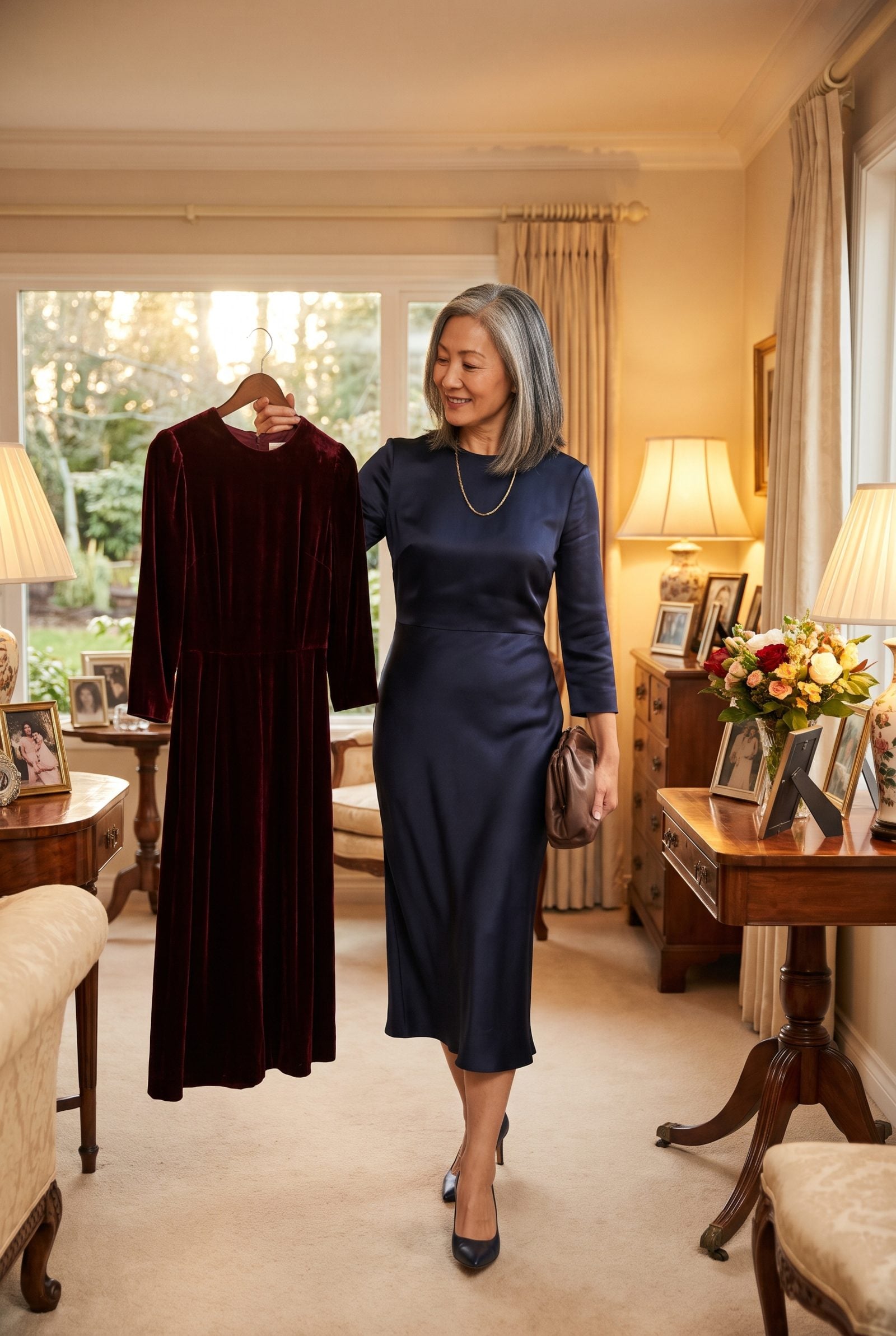
You’ve had it for a decade. You know this. And still the burgundy velvet dress survives every cull, because getting rid of it feels less like decluttering and more like evicting a version of yourself you’re not ready to lose.
That’s the endowment effect braided with pure nostalgia. We prize what we own more than its actual worth, and we prize it even higher when it holds a person we used to be. Closets become museums. So do old relationships we can’t quite close the book on.
The dress is lovely, genuinely. Velvet in a deep wine tone holds light the way almost nothing else does, and under a navy blazer it refuses to look dated. There’s nothing wrong with keeping it.
Keep it if it brings you joy. Just be honest about whether you’re keeping the dress or the woman who wore it.
1. A Closet Cleanout Sends You Into a Rebound Jumpsuit

You purged the closet. Two boxes stacked with clothes on the patio bench, a clean slate and a strange little ache. So you did what anyone does after clearing out the old — you bought something completely different. The emerald satin jumpsuit. Nothing like what you donated, and that was exactly the point.
This is the rebound, plain and simple. After a big clear-out we feel a void, and the fastest way to fill it is with something that signals a whole new chapter. Identity signaling through fabric. The jumpsuit announces that you’re not who you were last week.
And honestly? Good pick. A one-piece in glossy satin solves the hardest styling problem by deleting it — no top-to-bottom negotiation, just a single clean line from shoulder to ankle. The tie waist gives shape to all that fabric, and gold strappy block-heel sandals make it feel polished rather than precious.
Rebound or not, the jumpsuit stays. Some fresh starts are worth the impulse.