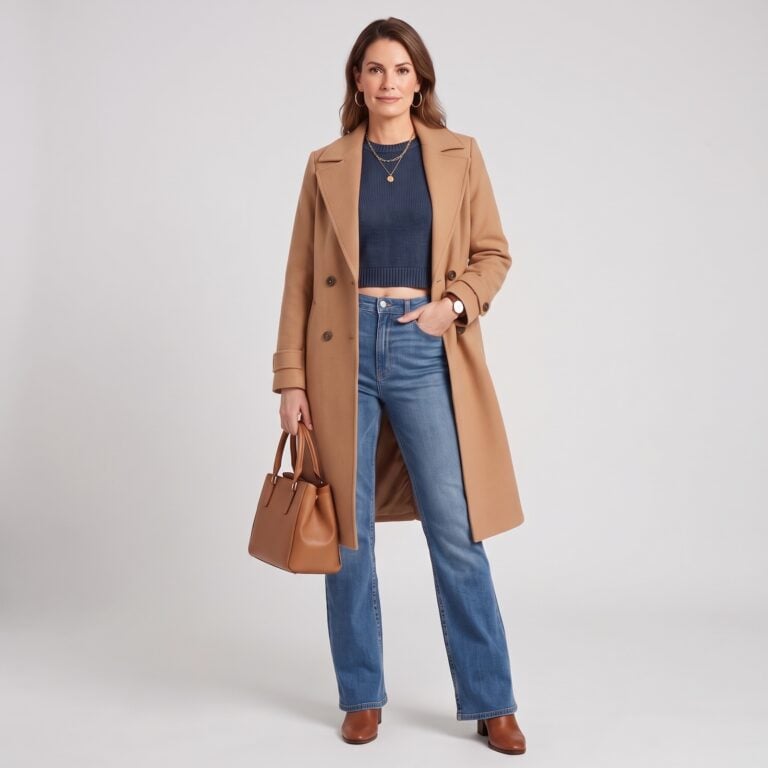

❤️ Would you like to save this?
The dress is still in the bag by the front door. Tags on. You wore it once, to a thing you don’t remember, and now it hangs in the limbo between returning and keeping. Somewhere in a drawer there’s a resignation letter you drafted at 11pm and never sent — same drawer, different month.
Here’s the uncomfortable truth: the part of you that keeps refreshing the sale page and the part that keeps updating your resume run on the same wiring. Identity hunger. Social comparison. An itch for novelty that never quite settles. We treat closets and careers like they can be shopped into rightness, which is a strange thing to admit out loud but there it is. Below, the moments you’ll recognize and the reasons underneath them.
FYI, thanks to AI imagery software, we’re able to create very specific fashion and hairstyle examples to illustrate the points being made. In some cases, imagery is exaggerated to hammer home the point. Also, assume links that take you off the site are affiliate links such as links to Amazon. this means we may earn a commission if you buy something.
18. One Bad Outfit Sends You Straight to the Shops

You catch yourself in a shop window and the blouse is wrong. Not tragic, just wrong, and suddenly the whole closet feels guilty by association. By lunch you’re browsing, and by evening there’s a cart.
Same reflex that turns one rough Monday into an open-the-job-boards spiral. A single bad fit gets read as proof the entire thing is broken. Psychologists call it the halo effect running backwards: one negative detail bleeds its color over everything attached to it. The frumpy top doesn’t mean you need a new wardrobe any more than one awful meeting means you need a new career.
The fix is boring and it works — separate the bad instance from the whole. One outfit flopped. That’s a Tuesday, not a crisis.
17. You Buy for the Woman You Plan to Become
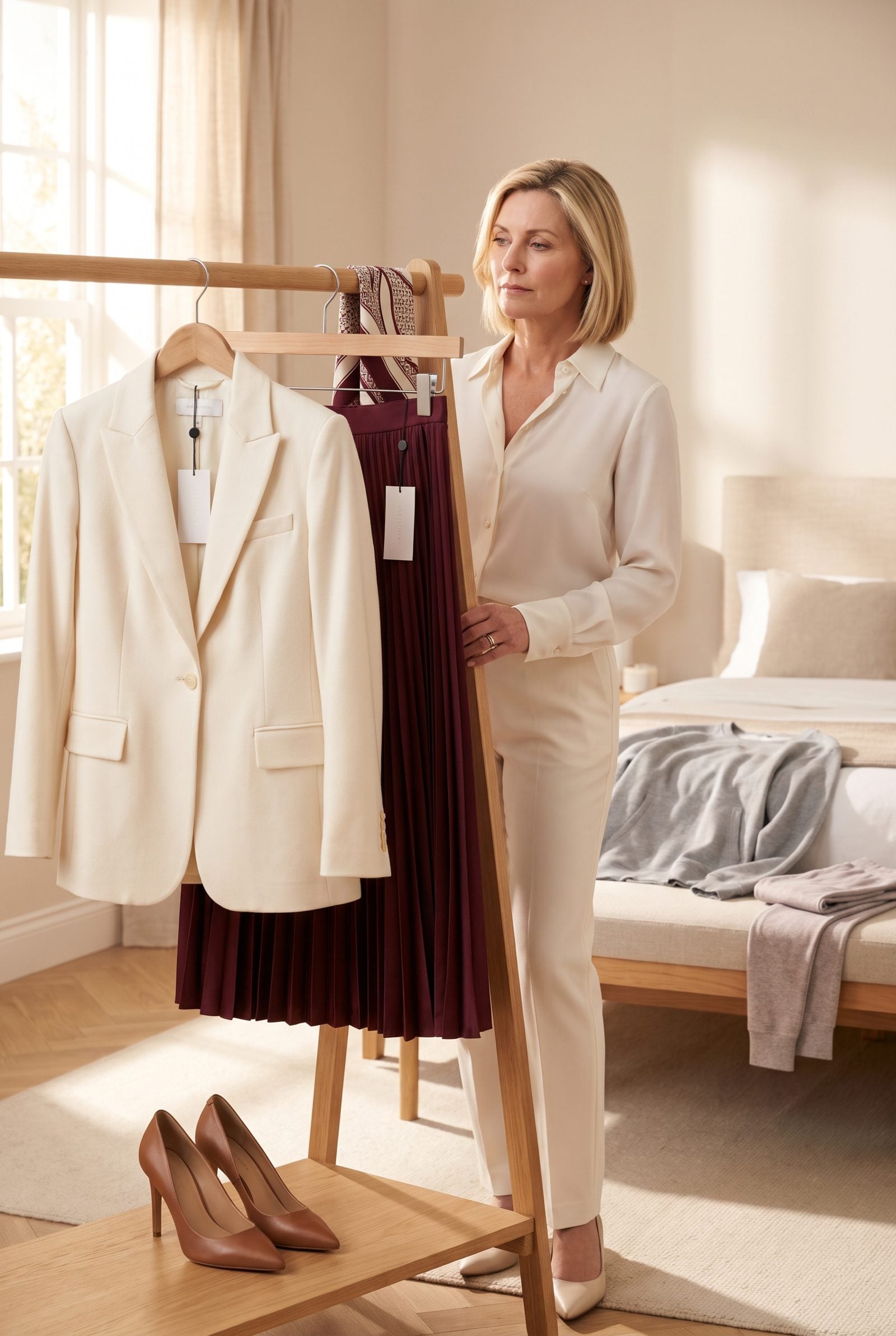
The ivory blazer wasn’t for your actual life. It was for the sharper, more organized version of you who takes meetings and never spills coffee. You bought her wardrobe. She hasn’t shown up.
Exact same move behind chasing the job with the fancier title — you’re not buying the role, you’re buying the person you imagine you’ll turn into once you have it. That structured ivory tailored blazer hanging there with its tags on is aspiration cut from wool. Nothing wrong with reaching. The trouble starts when you keep furnishing a future self instead of dressing the one who actually got up this morning.
Buy for the woman in the mirror. She’s more interesting than the hypothetical one anyway.
16. The New-Dress Thrill Fades Faster Every Time

Remember when a new dress carried you for a week? Now the high lasts until you’ve worn it once, maybe twice, and you keep buying faster to chase the shortening curve.
The same engine drives the job-hop cycle, where every fresh start feels thrilling for three months and then goes flat. It has a name: hedonic adaptation. We acclimate to anything good with ruthless speed, and the brain quietly resets to baseline no matter how pretty the purchase. So you buy again, hoping this one sticks. It won’t. Not that way.
15. A Famous Label Makes Ordinary Clothes Feel Important

The sweater is a plain black turtleneck. Nobody on the street can see the label tucked inside that rolled collar, yet knowing it’s there changes how it feels on your body. Same wool, different story.
This is status signaling at work, and it maps straight onto chasing the prestigious employer whose name you can drop at dinner. The brand isn’t buying you better quality — it’s buying you a shorthand for worth, a sticker other people can read. Nothing shameful about liking a nice label. Just notice when the name is doing the job the garment should be doing. A great black cashmere turtleneck earns its keep in your rotation. A mediocre one with a famous name earns its keep in your ego, and the ego gets bored fast.
14. Other Women’s Hauls Make Your Closet Look Hopeless

Ten minutes watching someone unbox their new arrivals and your closet, fine yesterday, suddenly reads as tired and small. The clothes didn’t change. Your yardstick did.
It’s the corrosive loop you fall into hearing a former colleague landed a shiny new role and instantly feeling stuck in yours. Social comparison is the oldest mental trap there is, and the feed pours gasoline on it by showing you only the highlight reel. You weigh your everyday Tuesday against someone else’s curated best, and of course you come up short. Rigged math.
13. A Huge Markdown Makes the Wrong Coat Seem Right
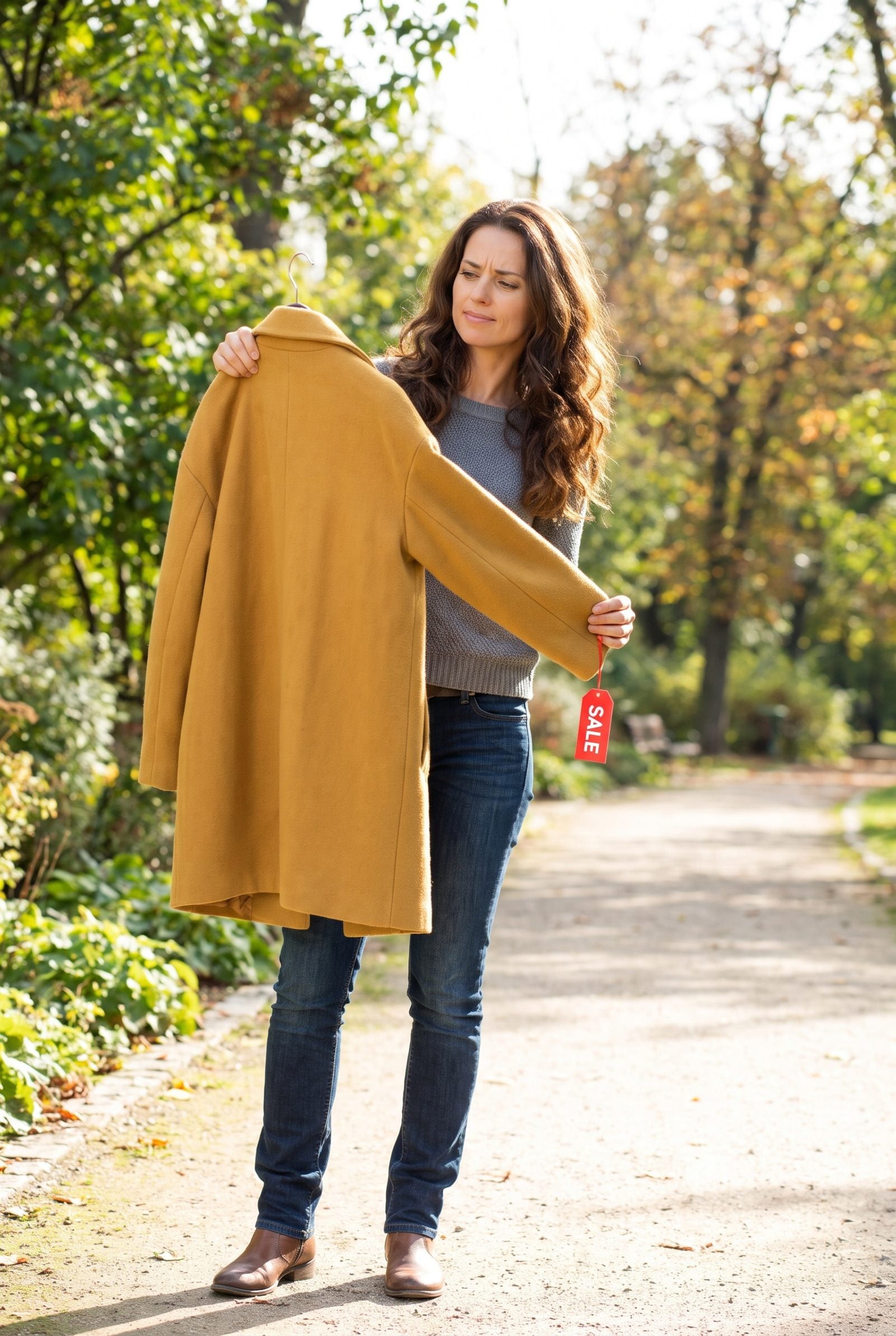
No markdown in sight. The beige trench suits your coloring, the cut sits cleanly on your shoulders, and you’d reach for it at full price. Compare that with the wrong coat you grab anyway because walking away from a big discount feels physically painful.
Loss aversion runs this. The sting of “missing a deal” lands harder than the dull ache of a coat you’ll never wear, so your brain weights the wrong loss. It’s the identical pull behind staying in a job purely for the benefits package while the work slowly drains you. The savings are real. The marked-down coat is still wrong. And a cheap coat you don’t wear cost you everything, not a fraction.
12. You Blame the Jeans Instead of the Fit Problem

Fourth pair of jeans today, same gap at the back waist, and the verdict keeps landing on the jeans. “These run weird.” “Bad cut.” “Nothing fits anymore.” You cycle through brands like they’re the villain.
The deeper issue is usually something proportional your body has going on — an uneven rise, a sway back, a waist-to-hip ratio most mass denim pretends doesn’t exist. Same as blaming four jobs in a row for being toxic without ever asking whether you keep walking into the same mismatch. Self-serving bias: we pin the fault on the external thing and skip our own pattern. Find the right rise and rear-rise for your shape, and suddenly most brands behave.
11. You Replace Clothes That a Tailor Could Rescue
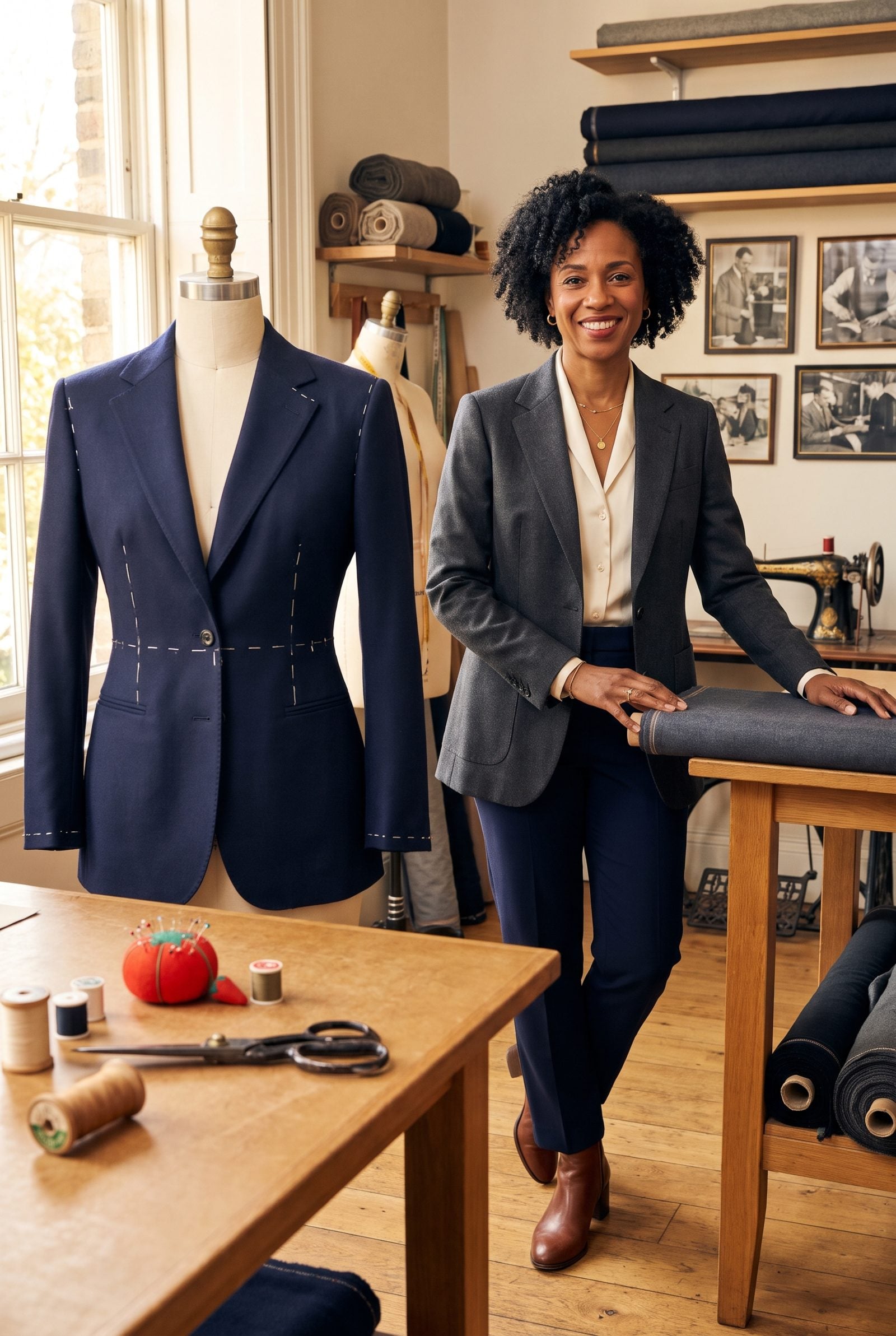
The navy blazer is good. Great fabric, right color, just a touch long in the sleeve and loose through the waist. So you buy a new one instead of spending a small sum to make this one yours — which, honestly, makes no sense when you say it out loud.
We vastly overvalue the fresh start and undervalue the fix in hand, the same mental shortcut that has people quitting a decent role over one solvable frustration. A tailor is the career coach of your closet. Take in a waist, shorten a hem, move a button — small edits that turn “almost” into “made for me.”
10. A New Dress Code Promises a Whole New You

You decide you’re going minimalist now. All black, clean lines, the whole philosophy. You order the starter kit and feel, for a glorious week, like a different woman with a different life.
Adopting a new aesthetic wholesale is the wardrobe version of changing careers to change your personality. The new look, like the new field, promises to hand you a fresh identity off the rack. Sometimes it genuinely clicks. Often the old you shows back up in two weeks wanting her soft knits and her prints, because clothes signal identity but they don’t manufacture it. A sharp white shirt and wide-leg trousers can absolutely sharpen how you feel and move. Just know you’re buying a tool, not a transplant.
9. Limited Drops Turn Browsing Into an Emergency

“Only a couple left.” “Drop ends at midnight.” Your coffee goes cold while you check out a scarf you didn’t want ninety seconds ago. Browsing became an emergency because the countdown told it to.
Manufactured scarcity hijacks the same panic that makes people jump at a job offer with an exploding deadline, saying yes before they’ve thought it through. Scarcity makes the brain stop evaluating and start grabbing — urgency shuts down the slow, sensible part of you on purpose. The limited drop isn’t rare. It’s a lever, and it’s pulling you.
The antidote is almost too simple: when a timer appears, close the tab. Still want the thing in a day? That was real desire. Forgotten it by dinner? That was the countdown talking. Nearly everything restocks. The pressure was the product.
8. Compliments Keep You Shopping for Another Winning Look

Someone tells you that green blouse makes your eyes look incredible, and something lights up. Not vanity — a tiny chemical reward. The next week you’re back online, hunting for the sequel.
It’s the same loop as the project that earned you praise at work, the one that had you quietly wondering whether a bigger title somewhere else might deliver that feeling on repeat. Approval is a drug with a short half-life, and we chase the hit, not the shirt.
The emerald silk here earns its compliments honestly. Jewel tones near the face do real work, bouncing warm light up onto the skin, and the gold belt cinches without strangling. The look isn’t the problem. The pattern is — expecting the next purchase to deliver the same jolt the first one did.
7. You Chase Trends That Never Suited You Anyway

The oversized check blazer was everywhere. Every feed, every window. So you bought it, wore it twice, and it’s been sulking on a hanger ever since because it fights your frame instead of working with it.
Same move as jumping to the industry everyone swore was booming — the one that was never really you. Trends and hot sectors both run on social proof: if everyone’s doing it, it must be right. Except right for the crowd rarely means right for you.
Compare that busy print to the navy single-breasted blazer she’s wearing here, over a cream silk blouse and camel trousers. One shouts a season. The other knows the woman wearing it. Chasing what’s loud is easy. Buying what suits you takes a harder, quieter kind of self-knowledge.
6. Life Changes, and Your Old Wardrobe Stops Cooperating
❤️ Would you like to save this?
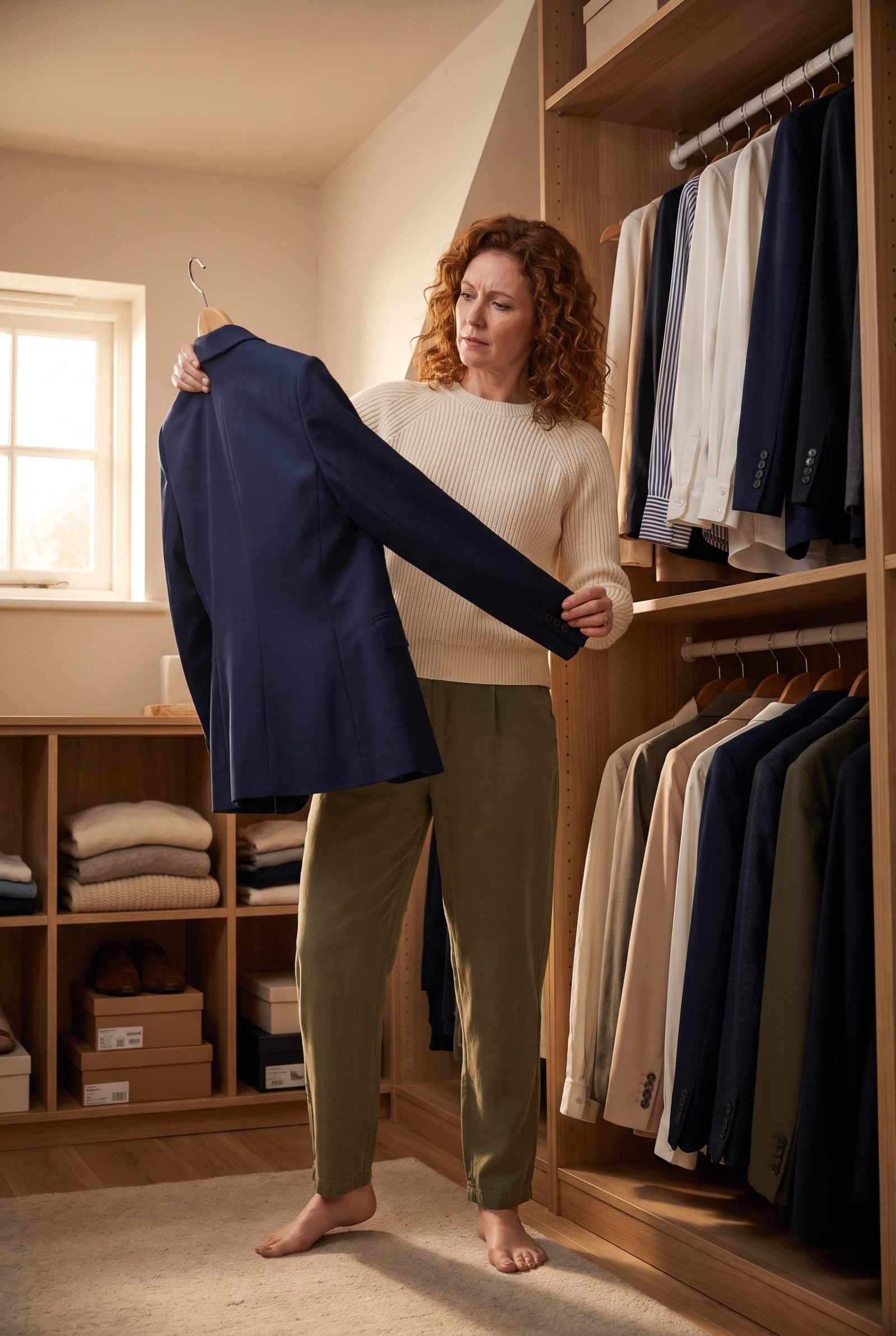
You open the closet and half of it belongs to a woman who no longer exists — the stiff commute suits, the heels for a job you left, the dresses sized for a body or a schedule that’s long since changed.
So begins the great replacement shop, which mirrors exactly why people quit jobs that were once a fine match. The role didn’t get worse. You outgrew it. Life moved, and the thing that fit the old shape stopped fitting the new one.
That navy jacket held out at arm’s length tells the whole story. Nothing wrong with it. It’s just loyal to a season of your life that ended, and a wardrobe, like a career, has to be allowed to change when you do.
5. The Product Photos Sell a Life, Not a Blazer

The trench coat in the photo is on a woman striding through a rain-slick city, laughing at something off-camera, looking like she’s never once stood in a kitchen at 6am hunting for a lost shoe. You’re not buying the coat. You’re buying her morning.
Job listings pull the identical sleight of hand. The posting isn’t selling tasks, it’s selling a version of you who has finally arrived. Collaborative team! Mission-driven! You read it and picture the life, not the Tuesday.
Which is why a red trench can feel like a personality upgrade in the cart and a plain coat once it’s hanging by your door. The image sold a story. The garment can only ever be a garment.
4. A Stuffed Closet Somehow Creates More Shopping
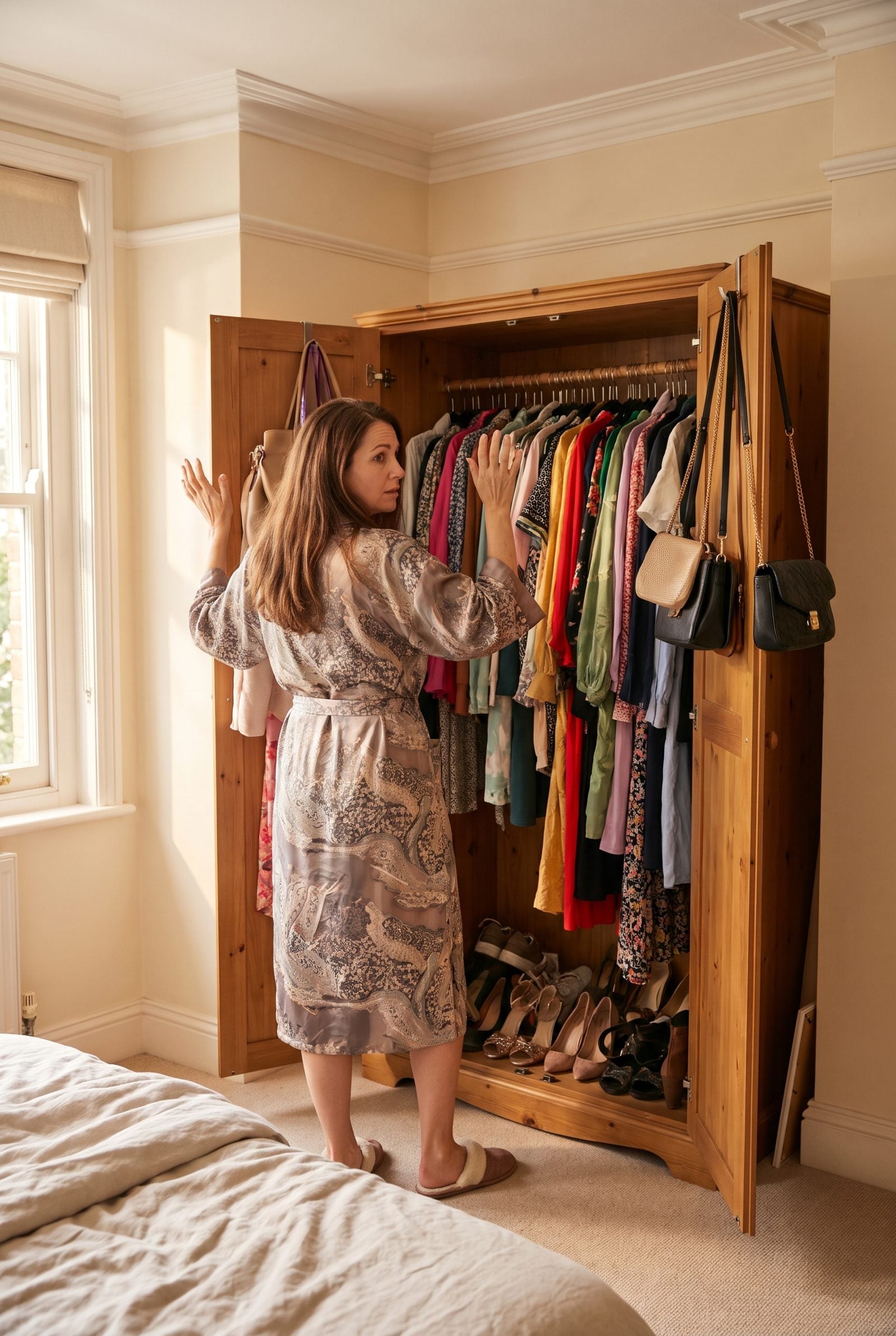
Here’s the cruel trick: the fuller the closet, the louder the voice that says you have nothing to wear. So you order more, and the more makes everything worse.
People do this with their careers too, collecting roles and side projects and still feeling like none of it adds up to a clear picture. Abundance doesn’t deliver clarity — too many options paralyze us. When everything is possible, choosing anything feels like loss.
That packed rail isn’t a wardrobe. It’s static. The fix is almost never another purchase; it’s editing down until what remains can actually speak.
3. You Keep Buying Versions of the Same Safe Outfit
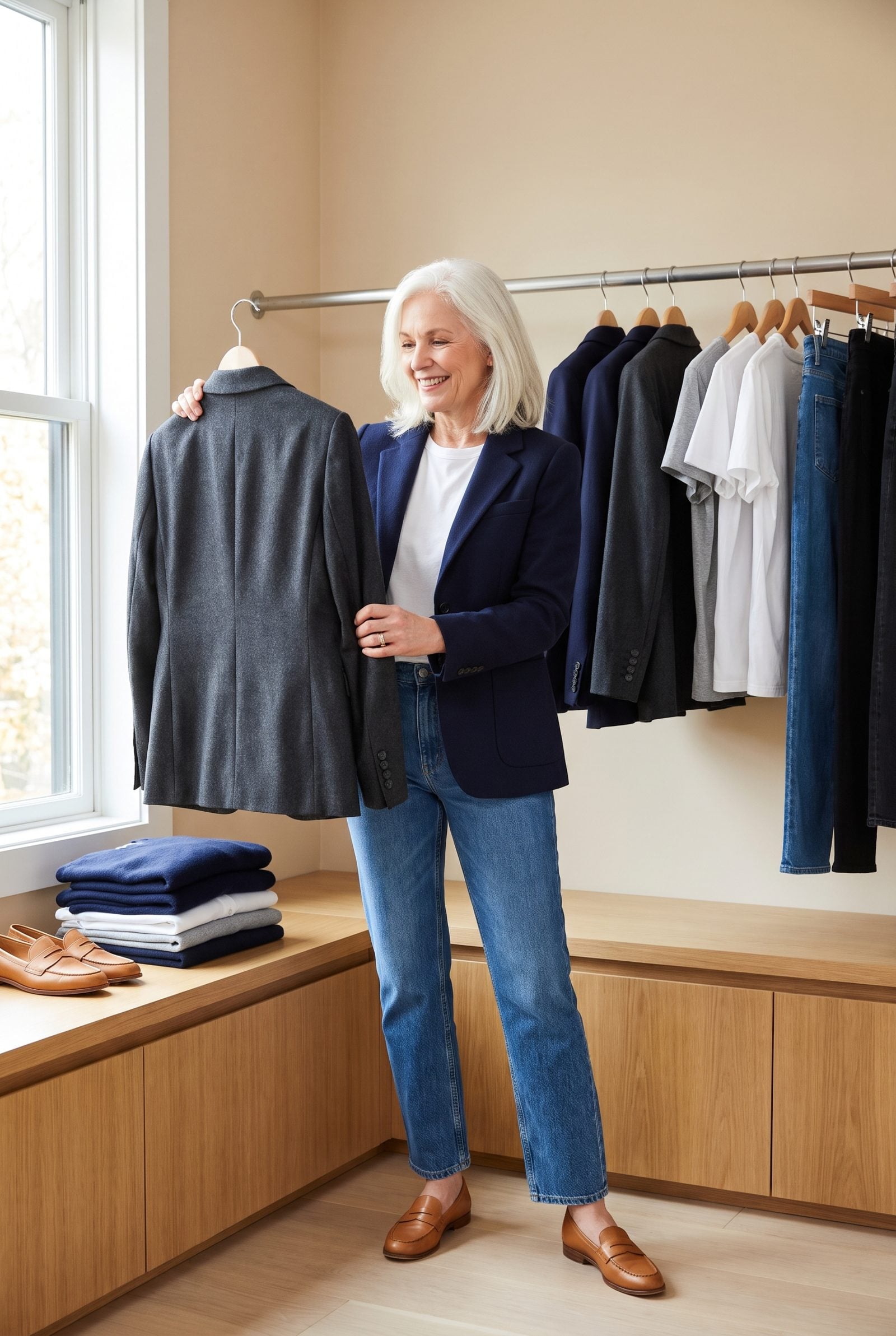
Five striped tops. Four pairs of the same dark jeans. You keep buying the outfit you already own, convinced each new version is meaningfully different. It is not.
This is the closet twin of staying in the same kind of job at a new company, telling yourself it’s a change when it’s a lateral move with fresher stationery. Comfort masquerading as progress. The safe pick feels like a decision while asking nothing of you.
The breton stripe isn’t a crime — it’s a workhorse, and the right one skims instead of clings. But repetition is a tell. We reach for the familiar when we’re afraid the bold choice won’t be forgiven.
2. Season Changes Make Reinvention Feel Practically Mandatory
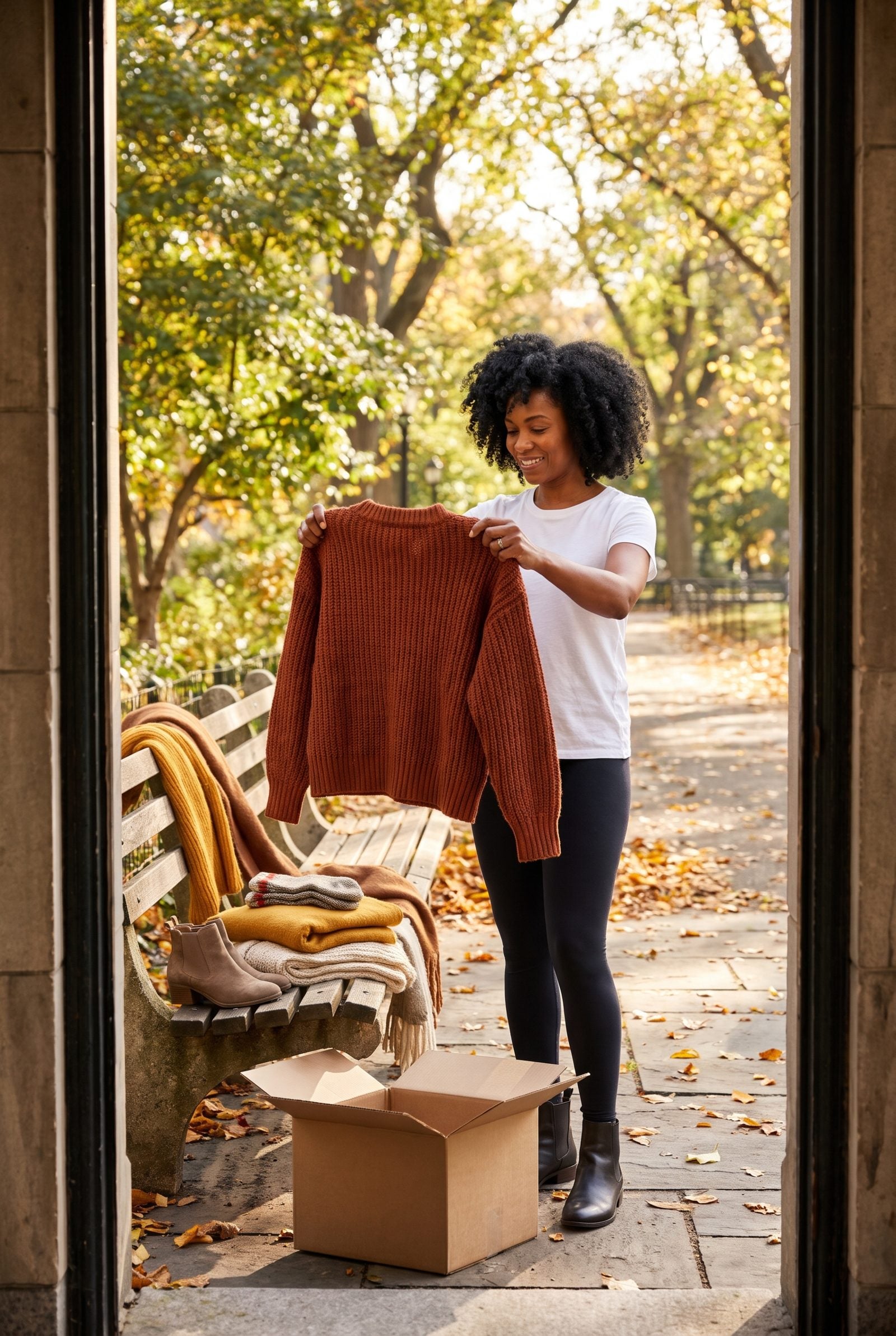
The first cool morning arrives and something in you wants to start over. New boots, new knits, a whole different self for a whole different sky. The calendar flips and so does the cart.
Fresh seasons hand us permission the same way a new year, a new address, or a new job does. A clean line in the sand. A chance to be the version of you who has it together this time. Psychologists call it the fresh start effect, and it’s real — if slippery.
Nothing wrong with leaning into it. That rust chunky knit genuinely belongs to fall, and warm earthy tones near the face flatter in low autumn light. Just notice when the urge to refresh is about the weather and when it’s about the restart you’re craving underneath it. Try building on the red layers you already own before adding more.
1. You Shop After Criticism to Prove Something Changed

Someone makes an offhand remark about your style, and twenty minutes later you’re buying something sharp enough to silence them. The purchase isn’t for you. It’s a rebuttal with buttons.
The same engine fires when a bad review or a dismissive boss sends someone straight to the job boards. We respond to criticism by trying to produce evidence that we’ve already fixed it — buy the proof, skip the slow work.
And here’s where it gets interesting: the red trench actually delivers. Red at full saturation reads as authority before you say a word, and a sharp coat worn with conviction changes how you carry yourself through a room. Real enclothed cognition at play. The warning is only about motive. Shop to feel like yourself, not to win an argument that already ended.