

❤️ Would you like to save this?
Open the closet and there it is. The dress that cost a month’s splurge, worn exactly once, hanging like a monument to a decision you’d rather not revisit. You won’t wear it again, and you also won’t let it go. That tug you feel, the one whispering keep it just in case, is the same tug that keeps people in relationships long past their expiration date. Psychology doesn’t care whether the attachment is to fabric or to a person. Sunk cost, loss aversion, nostalgia, the warm afterglow of one old compliment, they run the same programs on a wardrobe and a marriage. The ones below pair each closet behavior with its mirror in a long, unhappy union, and name the wiring underneath both. You’ll recognize yourself. That’s the point.
FYI, thanks to AI imagery software, we’re able to create very specific fashion and hairstyle examples to illustrate the points being made. In some cases, imagery is exaggerated to hammer home the point. Also, assume links that take you off the site are affiliate links such as links to Amazon. this means we may earn a commission if you buy something.
17. You Keep the Dress Because It Cost Too Much

That emerald silk dress is finally out on the sidewalk with you, its price tag still dangling like a receipt you can’t bring yourself to throw away. You spent real money. Letting it go would mean admitting the money is gone no matter what you do, so you keep it, and the keeping lets you pretend the purchase still counts.
Textbook sunk cost. We weigh what we’ve already spent as if holding on could recover it. It can’t. Wearing the dress out once, tag still swinging, won’t earn back its price, just as the years already poured into an unhappy marriage are not returned by pouring in more.
And here’s the cruel part. The more you invested, the harder it is to walk. Researchers have watched people stay in relationships explicitly because of time and effort already spent, not because the future looks good. The dress is just the easier confession.
16. Familiar Bad Jeans Feel Safer Than Shopping Again

The jeans sag where they should hold and bunch where they should lie flat. You know exactly how they fit, which is to say badly, and you reach for them anyway because the dressing room is a battlefield you’d rather not enter.
Familiarity does the heavy lifting here. The brain reads known as safe, even when known is objectively worse, and a bad fit you understand feels less threatening than a good fit you’d have to go find.
The same engine keeps people in a marriage they’ve outgrown. The fights, predictable. The silences, predictable. And predictable beats the terrifying unknown of starting over, so the status quo wins by default rather than by merit. Comfort and contentment aren’t the same thing, and the jeans knew it before you did.
15. You Blame Your Body Instead of the Bad Cut

The green blazer sits right, and there’s no blame to turn inward. The shoulder seam lands on the shoulder, and the cream wide-leg trousers fall cleanly to the loafer. Same you, same body. Yet when a garment sits wrong, you decide you’ve changed shape, when the truth is that garment was cut for a mannequin and never for a body that moves and breathes and has opinions.
This is the fundamental attribution error, aimed squarely at yourself. We credit bad outcomes to who we are rather than the situation that produced them, and a bad cut becomes a bad body in the mirror’s cruel math.
In an unhappy marriage the same reflex takes hold, quietly. The problem must be me. I’m too much, too difficult, too tired. Blaming yourself feels oddly safer than naming a dynamic that genuinely doesn’t fit, because a flaw you own feels fixable. The cut is the problem. It was always the cut.
14. One Old Compliment Keeps That Blazer in Rotation

Someone told you that navy blazer made you look powerful, years ago, possibly a decade, maybe at a job you’ve since left. The blazer is now wide in the shoulder and shiny at the elbows, and still it stays in rotation like a lease that never expires.
We hold onto praise far longer than it stays true. One warm remark gets filed away as a permanent fact about the thing, and we keep coming back for the hit.
Relationships lean on this too. One golden memory, something he said in year three, becomes the evidence you cite in year twenty-two. The compliment is real. It’s also expired. You can’t wear a thing well on the strength of how it looked before.
13. Your Friends Love the Coat You Secretly Hate

Every friend who sees the camel coat says the same thing. Gorgeous. Classic. You should wear it more. And you nod, because explaining that the collar chokes you and the weight drags at your shoulders feels ungrateful in the face of so much approval.
Social proof overrides your own verdict. Enough people praise a thing and you start doubting your own discomfort, trusting the crowd over the body that actually has to wear it.
This is how people stay in marriages everyone else admires. We look so good together. What a lovely couple. The applause from the cheap seats drowns out the private truth that something is wrong. You’re the only one who has to wear the coat all winter.
12. You Remember the Good Years, Not the Shoulder Pads

You pull out the blazer from the era you loved and your chest does something soft. You remember feeling unstoppable in it. What you conveniently forget is the shoulder pads that made you look like a linebacker and the color that hasn’t been flattering since the first Bush administration.
Nostalgia is a liar with excellent taste. It keeps the warm feelings and quietly edits out the specifics. We remember how a time made us feel, not the actual garment, or the actual relationship, we were living inside.
So the memory of the good years stays vivid while the shoulder pads blur. A struggling marriage files itself the same selective way: honeymoon in technicolor, the long gray stretch going soft at the edges. Memory isn’t a record. It’s a highlight reel with a generous editor.
11. The Tags Stay On While You Wait to Change

The tags are still on. You bought the piece for the version of yourself arriving any day now, the one who’ll be two sizes down, or braver, or finally the person you keep promising to become. Until then it waits, pristine, a little shrine to a future that stays six months away.
Optimism bias meets a commitment to some someday self. We overestimate how much we’ll change and how fast, which is why the aspirational purchase hangs unworn while real life stays exactly the same.
Plenty of people stay in a marriage on the identical logic. Things will get better when he changes, when I change, when the kids leave, when the pressure lifts. And the waiting becomes the life. The tags stay on.
10. You Defend the Shoes Even More After They Hurt

They hurt from the first block. Blisters by noon, a limp by evening. And instead of admitting the mistake, you praise them harder. But they’re such good shoes. Beautiful leather. The more they punish you, the louder you defend them.
Effort justification, doing its quiet work. When something costs us pain, we inflate its value to make the suffering feel worthwhile, so the hurt becomes proof the shoes must be special. Otherwise why endure it?
This is one of the quieter forces keeping people in unhappy marriages. The harder it gets, the more we talk ourselves into its worth, because admitting it hurts for nothing is unbearable. So we double down on the oxblood heels that bite, and the louder the defense, the surer you can be the shoes are winning.
9. A Gifted Sweater Feels Too Guilty to Donate
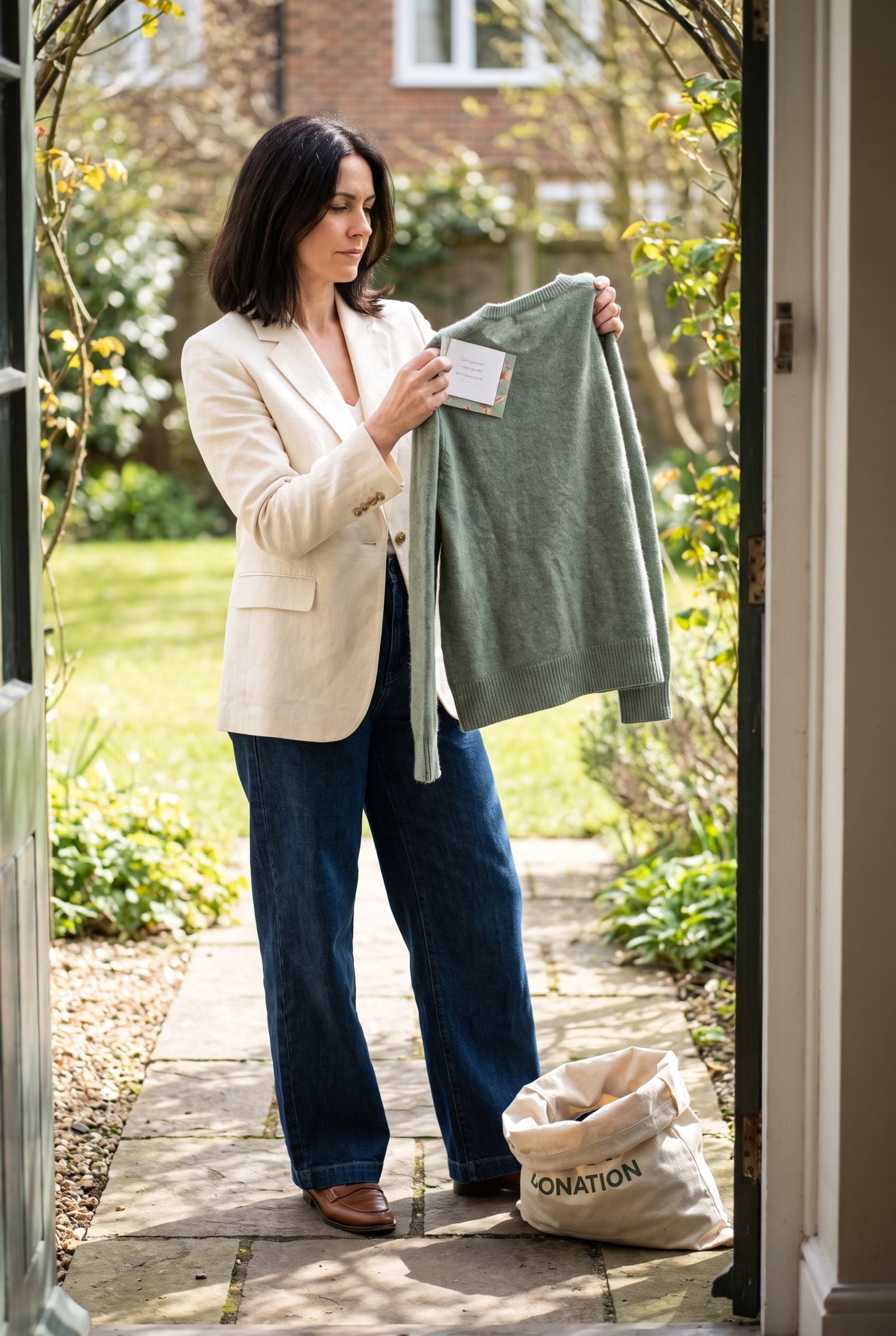
The sweater is scratchy and the green does you no favors. But it came wrapped, with a card, from someone who thought of you, so it survives every closet purge. You lift it toward the donation bag and something stops your hand. Getting rid of it feels like getting rid of the person.
We confuse an object with the relationship behind it. The sage sweater is no longer just wool. It’s your sister’s love, a friend’s remembering, and donating it feels like betraying both. Guilt is a strong adhesive.
It’s also what keeps people loyal to marriages held together by obligation rather than joy. After everything they did. After all this history. Leaving feels like erasing the gift of all those years. But the sweater is not your sister, and the years are not the marriage. Keeping what no longer fits, out of guilt, honors no one. Not even you.
8. You Stop Noticing How Badly the Trousers Fit

That first week, the trousers annoyed you — the waistband sat wrong, the hem dragged, and you clocked it every single time. By month three, nothing. Not because they fit better. Your brain just quietly filed the discomfort under normal and moved on.
That’s hedonic adaptation doing its thing. We acclimate to steady irritants until they vanish from view, which is exactly how a person wakes up twenty years into something that stopped working and honestly can’t tell you when it went flat. The slow fade is the trap. A sharp pain gets dealt with. A dull, ongoing one becomes wallpaper.
So interrupt it. Put the thing on again like a stranger would, cold, no history attached. Does it fit? Would you buy it today? If the answer is no, the only thing keeping it on the rail is that you stopped feeling the ache.
7. An Empty Hanger Feels Worse Than an Ugly Jacket

Closets do a strange thing to us. We’d rather keep a jacket we never wear than face the gap it would leave. The empty hanger reads as loss. The ugly jacket reads as having something.
Loss aversion means the pain of giving up outweighs the pleasure of what we might gain — roughly twice over, by most accounts. So the closet stays crammed with mistakes and the relationship stays occupied, because emptiness scares us more than mediocrity ever could.
But an empty hanger isn’t loss. It’s room.
6. You Wear It Publicly, Then Feel Stuck Defending It

The moment you wore that dress out and someone said something — even something perfectly neutral — it stopped being a garment and became a position. Now you can’t admit it was a mistake without admitting you were wrong in front of people.
Call it commitment bias. Once we plant a flag where others can see it, backing down feels like losing face, so we dig in harder instead. It’s why people defend a relationship to their friends long after they’ve privately given up on it. The public declaration becomes a cage you built with your own hands.
Nobody remembers your dress from three brunches ago. The only one keeping score is you.
5. The Alteration Plan Outlives the Unworn Skirt
❤️ Would you like to save this?
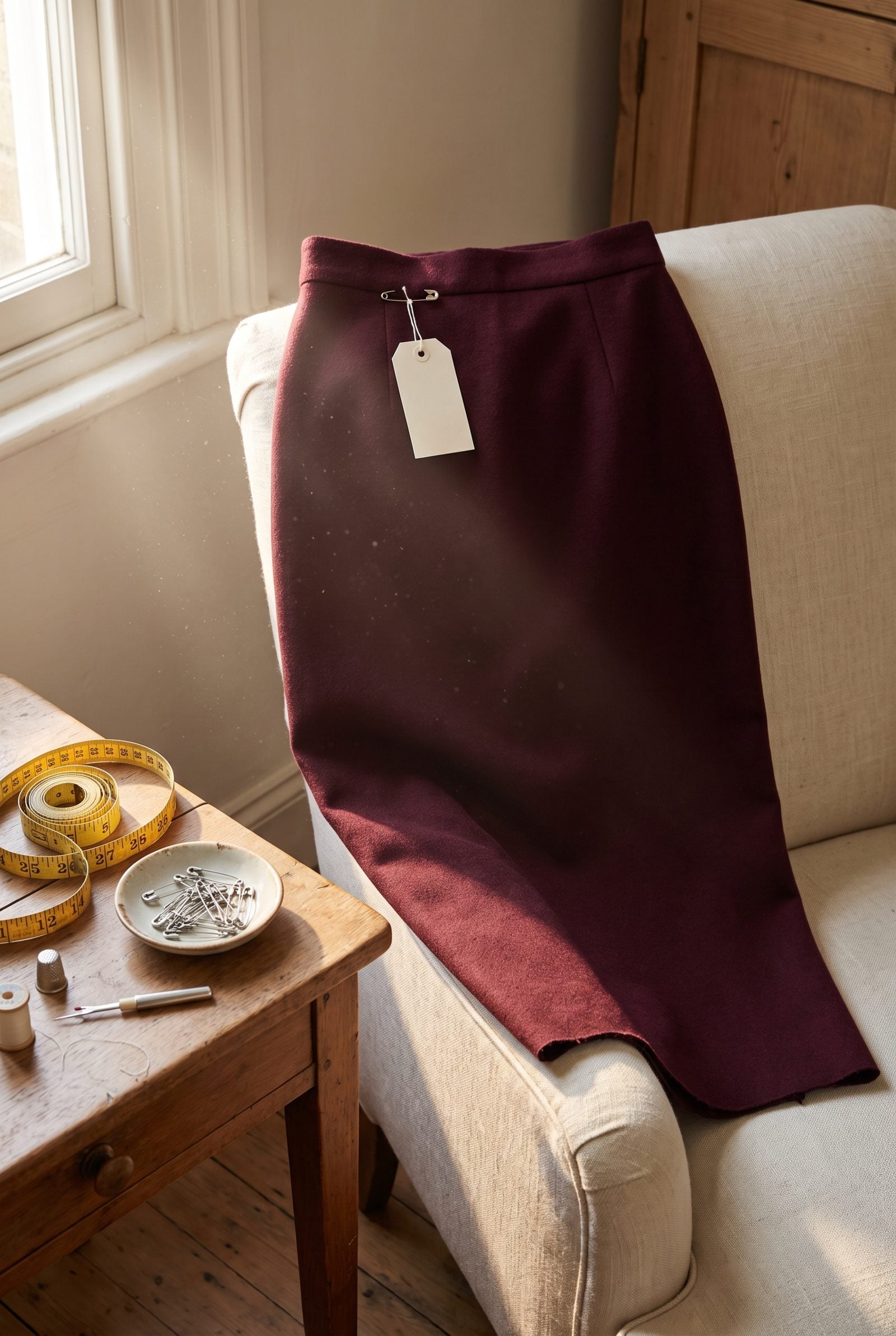
You bought the skirt knowing it needed taking in. Someday you’d hem it, nip the waist, make it yours. That was four years ago. The skirt has never once left the house — but the plan is alive and well, and the plan is the whole problem.
We cling to potential. The future version of this thing, once fixed, glows so brightly that we keep it around in service of a repair that never actually comes. Same engine that keeps people waiting for a partner to finally change, finally listen, finally become the person they promised to be. The someday is always more seductive than the right now.
A fix you’ve put off for years isn’t a plan. It’s an excuse you invented so you’d never have to let go.
The future version of a thing, once repaired, is almost always more appealing than the thing in front of you. That gap is where years disappear.
4. Limited-Edition Labels Make Mediocre Clothes Feel Irreplaceable

It isn’t a great blouse. Boxy cut, color that drains your face, worn maybe twice. But it came from a limited run, the label is one you almost never stumble across, and that fact alone drapes it in a glow it hasn’t earned.
Scarcity hijacks judgment. We assign value based on how rare a thing is, not how good it is. That whisper of exclusivity convinces us letting go means losing something irreplaceable. In relationships it wears a different costume — the quiet belief that nobody else could ever really understand you, so you stay, even though the understanding went missing ages ago.
Rare and good aren’t the same word. A hard-to-find mistake is still a mistake. For what it’s worth, the same instinct even shapes how we pick our wedding jewelry.
3. You Save the Wrong Dress for Imaginary Occasions
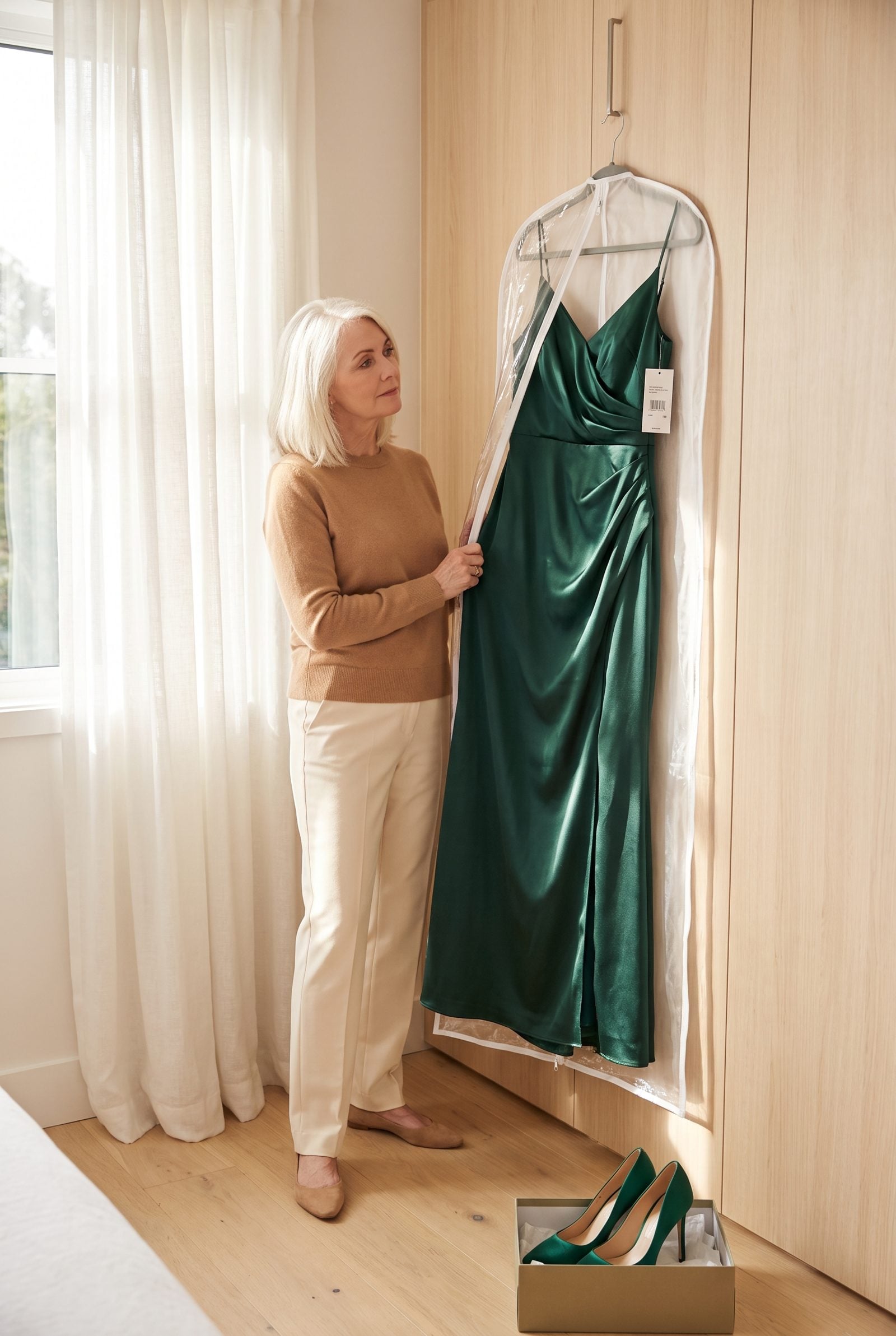
The emerald dress is stunning and it does not fit. You’re saving it anyway. For the gala you never go to. For the body you keep meaning to get back to. For the someday that stays stubbornly one season away.
Psychologists would call this the planning fallacy with a dusting of magical thinking. We overrate the future and massively underrate how seldom the perfect occasion actually shows up. People pull this exact move inside marriages — waiting for the right moment to feel happy, the trip that fixes everything, the empty nest that reconnects them.
Life isn’t a gala. The occasion you’re saving that dress for is the ordinary Tuesday you keep refusing to dress for.
2. You Hide the Fit Problems Under Another Layer

The top gaps at the bust, so you sling a long cardigan over it and call it solved. Except nothing’s solved — it’s covered. Now you own two garments collaborating to hide a third one that never fit in the first place.
Coping dressing. We build elaborate workarounds instead of addressing the core issue, because the workaround feels like progress while the real fix feels like failure. Couples pull the same trick with routines and distractions that quietly manage symptoms while the actual thing sits untouched for years.
A long oatmeal cardigan is a lovely layer — a good drapey knit is always worth defending, and you can build a whole look around one like this beige outfit. But it makes a terrible permanent disguise for something that should have been replaced long ago.
1. You Keep Buying Accessories to Rescue the Dress
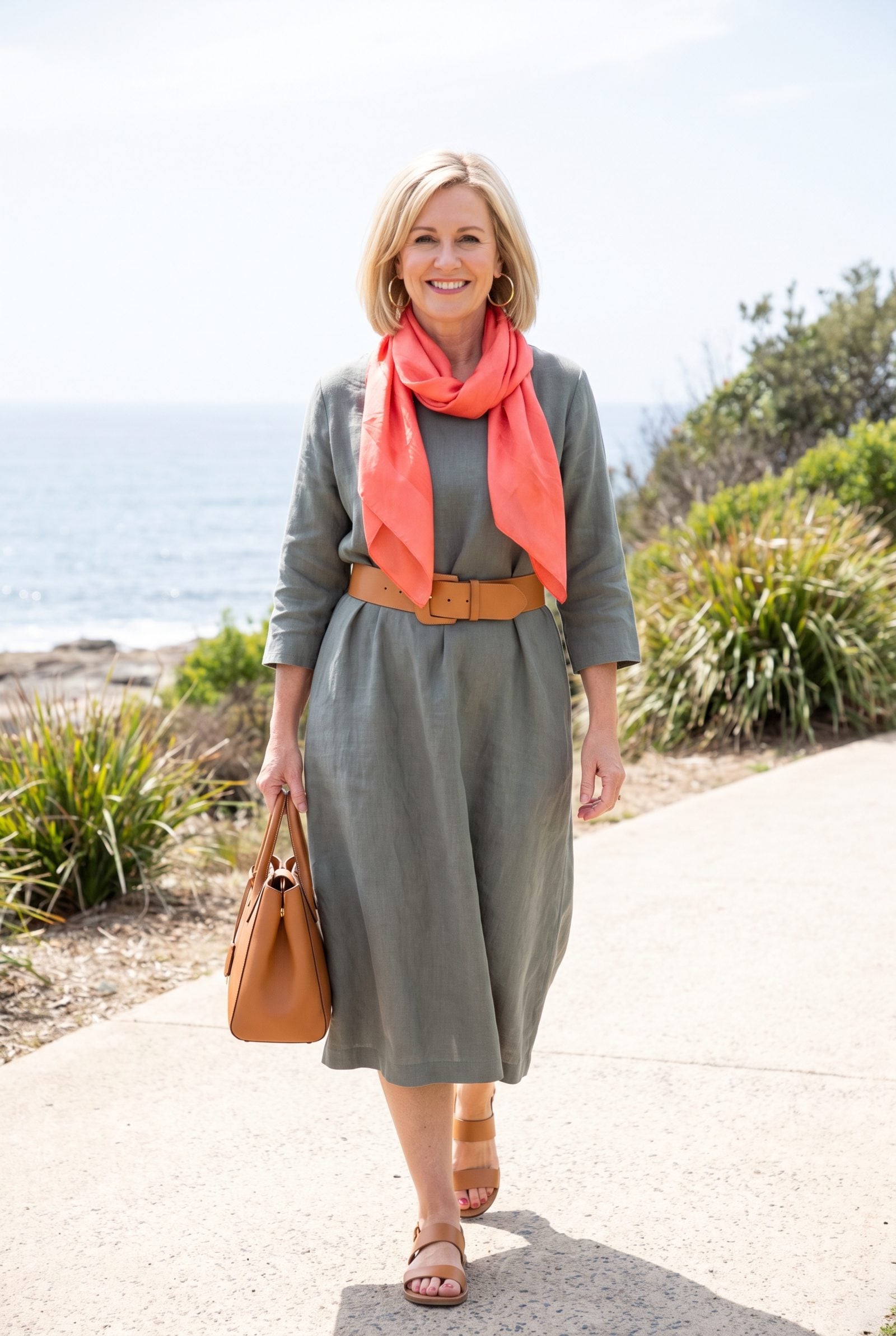
First it was a belt. Then a necklace, then a scarf, then earrings, then a new bag — each one bought in the hope that this time, finally, the dull dress would wake up. The dress hasn’t changed. Only your spending has.
Escalation of commitment. The sunk-cost fallacy wearing a party outfit. The more we throw at fixing something, the harder it gets to admit the thing itself is the problem, because walking away now means every bit of that investment was wasted. People pour years into relationships for precisely this reason, convinced the next gesture is the one that finally lands.
At some point the accessories cost more than a dress that actually works would have. And a dress that needs rescuing was never the right dress.