

❤️ Would you like to save this?
The first thing a lot of women do after the papers are signed isn’t legal, financial, or sensible. It’s cosmetic. You sit in the salon chair, look at your reflection, and feel the old length hanging on you like a decision someone else made. Hair is the one part of your appearance you can change in an afternoon, cheaply, dramatically, and with total permission. No wonder it carries so much weight when everything else feels up in the air. The way we cut, color, and relearn our hair after a split follows the same psychology as rebuilding a whole life: grief, reclamation, overcorrection, experimentation, and the slow, strange work of learning what we actually look like without someone else’s opinion in the mirror. The two run on exactly the same wiring, and that’s where we’re headed.
FYI, thanks to AI imagery software, we’re able to create very specific fashion and hairstyle examples to illustrate the points being made. In some cases, imagery is exaggerated to hammer home the point. Also, assume links that take you off the site are affiliate links such as links to Amazon. this means we may earn a commission if you buy something.
18. You Cut Off the Length That Belonged to Before
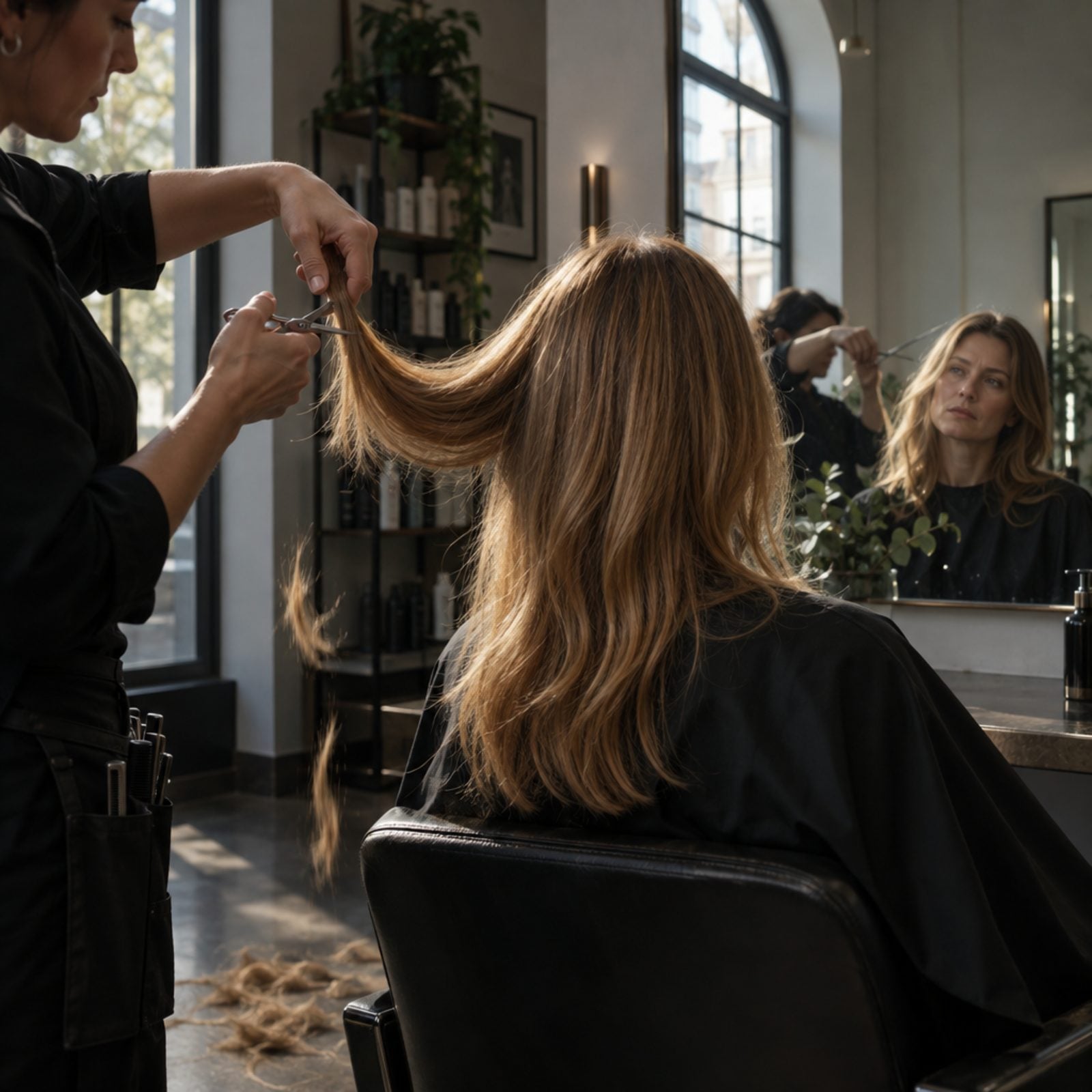
The length wasn’t the problem. The length was a time capsule that grew through the years you’d rather not relive, and every inch of it remembers who you were when you let it grow. So you ask for the chop, the stylist holds up a foot of hair like evidence, and something in your chest loosens that no amount of talking ever touched.
This is grief work disguised as a beauty appointment. Psychologists call it symbolic self-completion: when we lose a version of ourselves, we reach for physical actions that make the new version feel real and visible. Burning letters. Moving the furniture. Cutting the hair that belonged to a marriage. The scissors do what the heart is still catching up to.
17. You Finally Get the Bangs Your Ex Always Vetoed

He said bangs would make your face look round. Or too young. Or whatever the objection was that you absorbed without quite agreeing. Years go by. Then one Tuesday you tell a stylist to cut a blunt fringe straight across, you watch it fall into place, and the only person’s opinion in the room is yours.
It was never really about the bangs. It was about the long list of small preferences you shrank to accommodate, the ones so minor you forgot they were yours to make. Reclaiming the trivial decisions is how you practice reclaiming the big ones. A fringe is a low-stakes rehearsal for a life where your taste gets the final vote again.
16. You Switch Stylists When Yours Keeps Recreating Old You

Your old stylist was lovely. That was the problem. She’d memorized the version of you from a decade of appointments, and no matter what photo you showed up with, your hair somehow came out the same familiar shape she’d always known, preserving a person who no longer exists.
Leaving felt disloyal, which tells you something. We stay with people, places, and routines long past their usefulness because the familiar feels safer than the unknown, even when it’s quietly holding us in place. Behavioral folks call it the status quo bias. So you finally book the new chair across town, show up a stranger, and walk out looking like where you’re headed instead of where you’ve been.
15. You Learn What Your Natural Texture Actually Does

Decades of straightening, and you’d forgotten your hair even had an opinion. Then one morning you skip the flat iron, let it air-dry, and discover a wave pattern you’d been ironing flat since the Clinton administration. There it is. The texture was there the whole time, suppressed into a shape that was easier for everyone but you.
Finding out what your hair naturally does is exactly like finding out what you naturally want once there’s no one to perform for. A long or difficult marriage teaches you to iron yourself flat without noticing. Letting the texture come back is unsettling at first, and then it’s the most like yourself you’ve felt in years.
14. You Swing From Waist-Length Hair Straight Into a Pixie

There’s no such thing as a small change in the weeks after a split. You don’t trim two inches. You go from hair you could sit on to a pixie that fits in your palm, and you do it the same week you also seriously considered moving to Portugal.
The overcorrection is the point. When one enormous thing has been decided against your wishes, the psyche craves a decision so total it drowns out the loss. A moderate haircut leaves room to keep feeling the old ache. A pixie doesn’t. It’s a scorched-earth reset, and sometimes that’s exactly the medicine, even if you grow it back out in eighteen months.
13. You Test-Drive Copper With a Wash-Out Gloss

You’ve been brunette your whole adult life. Now you want copper, but not forever-copper, just copper-for-a-while copper. So you ask for a wash-out gloss that fades in a few weeks instead of a commitment that grows out for a year. Smart. You’re not sure who the redhead is yet. You just want to try her on.
This is how we test new identities after a rupture, in low-commitment doses. The temporary gloss is the hair equivalent of signing up for a pottery class, taking the solo trip, flirting with a self you’ve never met. You’re gathering evidence. Some experiments wash out, some become permanent, and you genuinely don’t know which until you’ve worn it a few weeks. Give yourself the semi-permanent option. That’s not indecision. That’s wisdom.
12. You Bring Three Reference Photos and One Firm Boundary
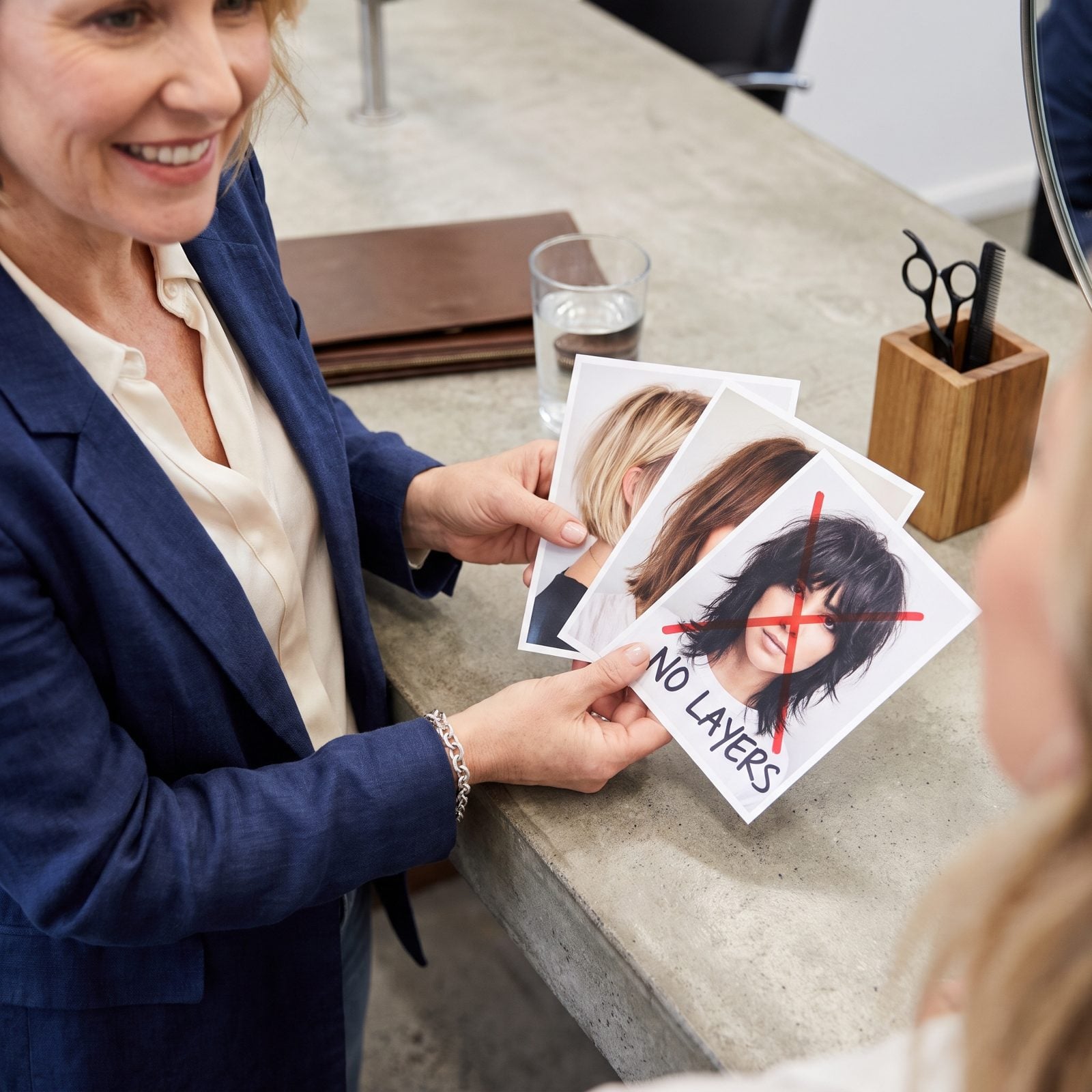
Old you walked into the salon, said “just do whatever you think,” and walked out crossing your fingers. New you arrives with three reference photos, a clear sentence about what you absolutely do not want, and the nerve to say “that’s shorter than we discussed” out loud.
Learning to direct your own haircut is small-batch boundary training. For years you may have outsourced your preferences to keep the peace, let other people decide, called it being easygoing. It wasn’t. It was self-erasure with good manners. Speaking up about your layers is a rehearsal for speaking up everywhere else, in a style in which your “no” gets to be a full sentence.
The ability to say “a little shorter, but no higher than the chin” is the same muscle that eventually says “no” to the things that cost you years.
11. You Post the Salon Selfie Before Going Home

Still in the cape, hair barely cool from the dryer, and the phone is already up. The salon selfie goes out before you’ve even paid, before you’ve driven home, before you’ve lived in the new look for a single hour. Breezy caption. The timing, though, is not accidental.
Announcing the change is how we make it official to ourselves by making it official to everyone else. Psychologists call it public commitment: we’re far more likely to hold onto a change once we’ve declared it out loud. The selfie isn’t vanity. It’s a small flag planted in new ground. “This is who I am now,” it says, to the audience and quietly to you.
10. You Donate the Ponytail Instead of Throwing It Away
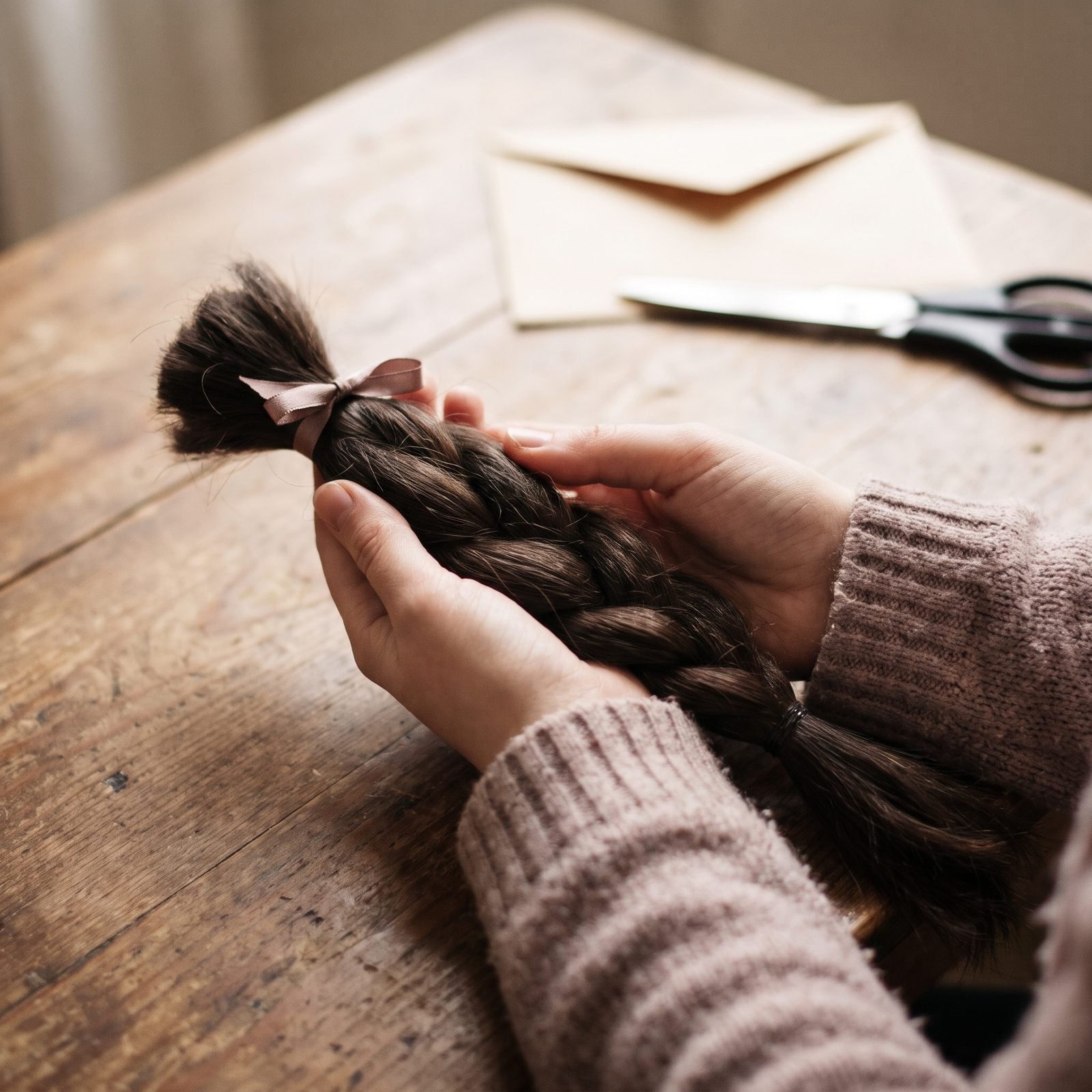
You could have swept it into the bin like every other haircut in your life. Instead you ask the stylist to braid it first, band both ends, and tuck it into an envelope bound for a wig charity. The length that belonged to a hard chapter is going to become part of something good for a stranger.
This is meaning-making, one of the most reliable ways humans metabolize loss. We don’t just want to end things. We want the ending to count for something. Turning the painful into the useful is the same instinct that eventually has you volunteering, mentoring, or warning a younger friend away from the mistakes you made. The hair had to go. Giving it a second life is how you give the whole chapter one.
9. You Panic the First Time You Wash It Yourself

The salon blowout was flawless. Then you went home, slept on it, washed it the next morning, and could not for the life of you make it do that thing again. You stand there with a round brush you don’t know how to use, the new hair looks nothing like it did yesterday, and a small voice wonders if the whole change was a mistake.
Nobody warns you about this part of any fresh start. The first time you have to maintain the new life all by yourself, without the professional, without the momentum of the big dramatic moment, it feels like you’ve ruined it. You haven’t. You’re just in the awkward stretch between deciding and knowing how. The blowout was the vision. Learning to do it yourself is the actual work, and it gets easier the third week, I promise.
8. Your New Bob Suddenly Makes Every Earring Look Wrong
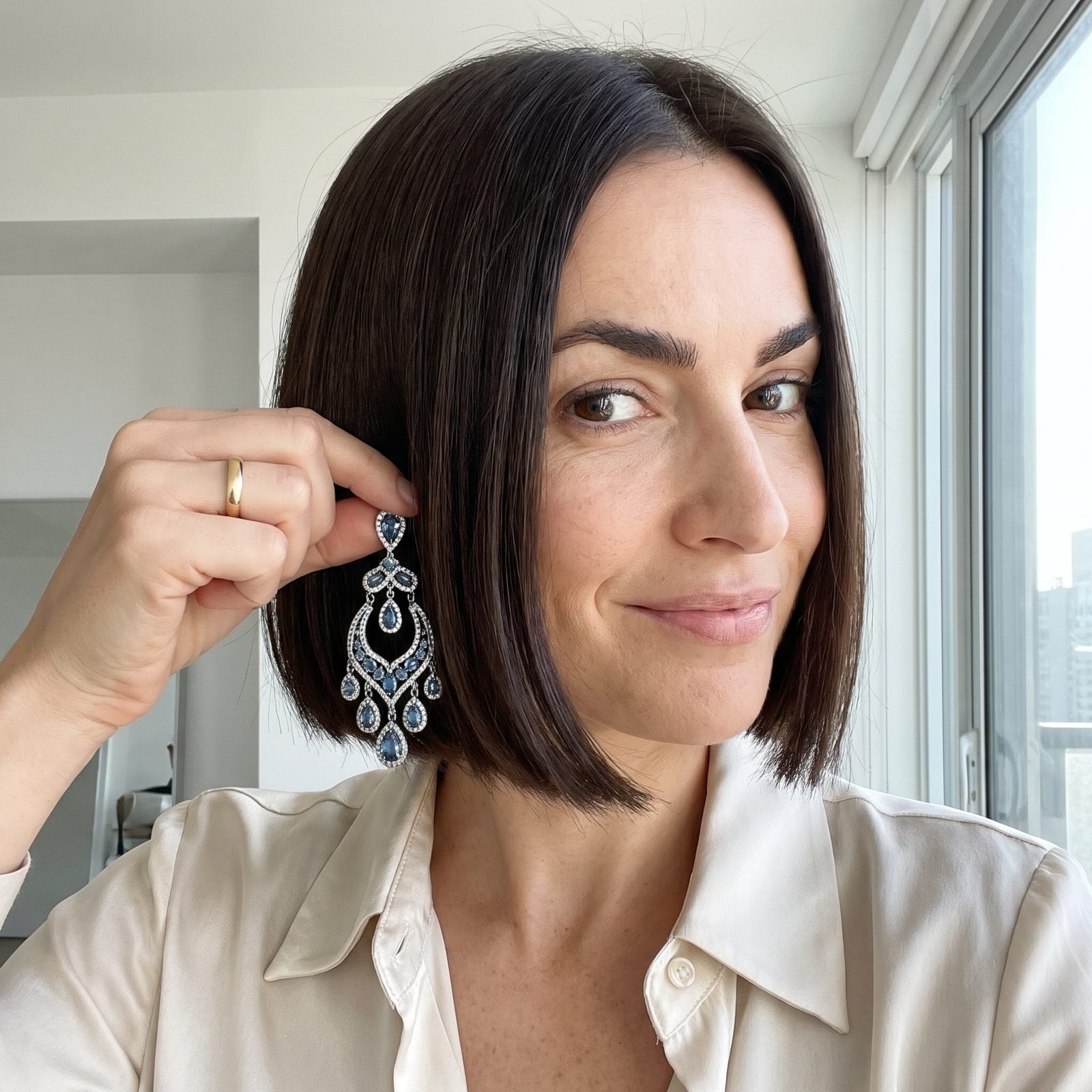
A fresh bob rewrites every rule you thought you had memorized. The long drops that grazed your collarbone for a decade now look loud, the tiny studs vanish entirely, and suddenly you’re standing at the dish holding a hoop to your ear like it owes you an explanation.
Same thing happens when a whole life changes shape at once. The restaurants you loved feel wrong. The couple friends go quiet. Half of what used to fit just doesn’t anymore — and it isn’t the earrings or the friends that changed, it’s the frame around them.
Psychologists call this the contrast effect. We don’t judge anything on its own; we judge it against whatever sits next to it. New haircut, new frame, and everything nearby gets re-read in an afternoon.
7. You Save Hair Photos Like They’re Apartment Listings

The screenshots folder fills up fast. A blunt lob here. Curtain bangs you will never commit to. A silver pixie you keep going back to at midnight. You zoom in on crowns and partings the way people zoom in on kitchen islands and good light.
Rebuilding a life runs on the same engine — you collect versions of the future before you pick one. Apartment listings, course catalogs, saved recipes for a dinner you’ll cook for one. The folder isn’t indecision. It’s rehearsal.
Call it the gentler cousin of the planning fallacy. We shop possibilities to feel the pleasure of choice without the risk of choosing, and you can browse a hundred bobs and feel almost as good as getting one. The saving feels like progress, and some days it genuinely is. You’re trying on who you might be next.
Want a lighter version of this? Our Palm Springs retro makeovers are a fine place to lose an afternoon.
6. You Keep One Familiar Layer So You Still Look Like You

❤️ Would you like to save this?
You’ll let the stylist take four inches. You’ll go darker, go shorter, go braver. But the center part stays, and so does the soft piece that falls by your cheekbone. There’s one layer you guard like a password.
Everyone rebuilding does this. You repaint the whole apartment but keep the mug. You change almost everything while your coffee order survives untouched. In the middle of becoming someone new, you hold onto one thing that proves you’re still you.
That’s continuity of identity, and it isn’t weakness — it’s the handrail. The research on major life change is consistent: people who hold one or two anchors adapt faster than people who blow up everything at once. The familiar layer is how your reflection still says hello.
5. You Let the Gray Show After Years of Negotiating

For years it was a negotiation. Root touch-ups every six weeks, the little panic at the first glint of silver, the running math of how long you could stretch between appointments. Then one day you just stop and let it come in.
People do the same thing with the story they’ve been coloring over — the brave face at parties, the version where everything is fine. At some point the upkeep costs more than the truth, and you let the real thing grow out in full view.
Economists call it loss aversion, and it keeps us dyeing long past the point of wanting to. We fear losing the old self more than we want the new one, so we maintain. Letting the gray show is the moment that math finally flips. And honestly? The silver usually looks better than the fight to hide it did.
4. You Change Your Part and Somehow Change Your Posture

Move the part an inch and watch what happens. The deep side sweep lands, you catch yourself in the mirror, and your shoulders go back without being asked. You stand like someone with a plan.
Small outward change, outsized inner shift. It’s the same reason a fresh start begins with a new coat, a new route to work, a lamp in the corner that was always dark — you adjust one visible thing and your whole body cosigns the new story.
Sometimes you don’t feel different until you look different, and then the feeling races to catch up.
This is enclothed cognition reaching all the way up to the scalp. We read our own appearance as evidence of who we are. Give yourself a slightly bolder reflection and your posture believes it before your head does.
3. You Choose a Style You Can Maintain Alone

The high-maintenance cut goes first. The one that needed a blowout you could never give yourself, the style that only looked right when someone else’s hands did it. You pick something you can run with alone — in a bottle, in five minutes.
Standing on your own two feet starts with small logistics exactly like this: the meal you can cook solo, the self-sufficiency that quietly becomes pride.
There’s a real principle underneath it. We value what we can control and sustain more than what dazzles once and leaves us stranded. A wash-and-go shag you manage yourself beats a showpiece that depends on an appointment. Independence, it turns out, likes a good air-dry.
2. You Book Trims Before Life Can Cancel Them Again
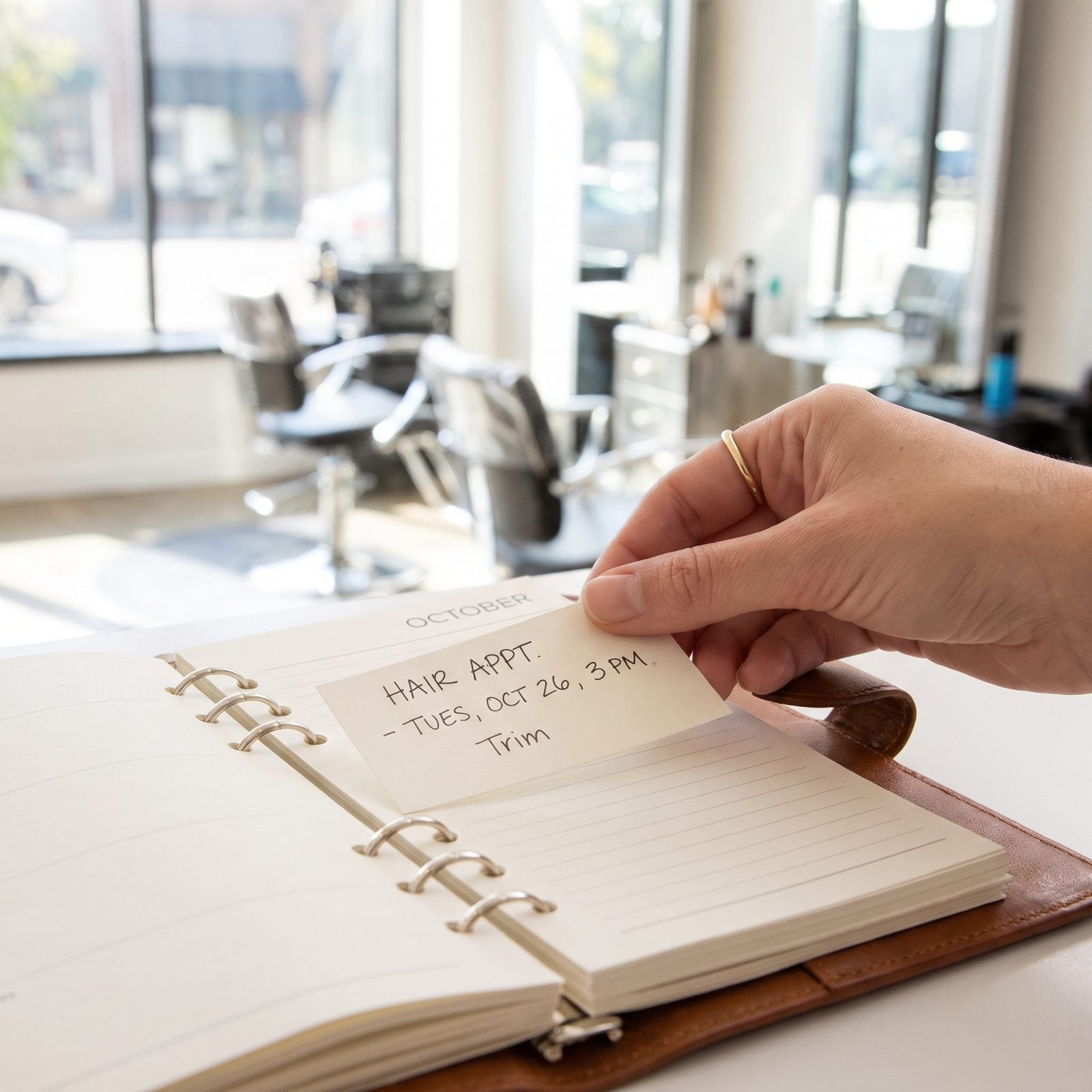
Here’s the new rule you made without telling anyone: book the next trim before you leave the chair. Six weeks out, in the calendar, in pen. For a long stretch there, every appointment got moved for someone else’s emergency, and you watched your ends split while everyone else got taken care of.
Protecting the maintenance is a small act of rebuilding. The gym slot that doesn’t get traded away. The standing coffee with a friend. You’re learning that keeping a promise to yourself isn’t selfish — it’s structural.
Behavioral science calls this precommitment. You lock in the good choice while you’re strong, so a weak day can’t talk you out of it. The booked trim is present you, protecting future you. She needs the backup.
1. You Grow It Out Without Knowing the Final Length

Growing it out is the least dramatic and most honest thing you do. No before-and-after reveal here. Just months of in-between — the awkward length, the itch to chop it all off again out of pure impatience. You don’t even know where you’re headed. Collarbone? Longer? You’ll decide when you get there.
This is the truest mirror of the whole business. Rebuilding has no finish line you can see from the start; you don’t know the final shape of the life yet, only that it’s coming in, inch by inch, and that cutting it short out of panic would cost you the very thing you’re waiting for.
Psychologists call the ability to sit in that unknown tolerance for ambiguity, and it’s one of the strongest predictors of coming out the other side well. Growing it out teaches the same patience by the inch. You stop needing to know the ending to keep going — you just keep going, and one morning it’s exactly long enough.