
❤️ Would you like to save this?
Sleeves have a habit of being treated like supporting players. They aren’t. Move a cuff six inches, uncover a shoulder, inflate the upper arm or let fabric spill past the wrist, and the same blouse can suddenly look sharper, softer, younger, grander or considerably more expensive than it did five minutes ago.
So we left the outfit alone and went after the sleeves. The rust blouse and white pants remain the constant while the arms cycle through bells, puffs, bishop shapes, slits, bare shoulders and a few flourishes that clearly believe restraint is somebody else’s problem.
The fun is in how quickly the proportions change. Some sleeves carve out the waist by widening the shoulder. Others lengthen the arm, expose just enough skin to lighten the silhouette or turn an agreeable blouse into something that suddenly expects dinner reservations. Twenty-five versions later, the sleeve makes a convincing case that it was never a minor detail.
FYI, thanks to AI imagery software, we’re able to create very specific fashion and hairstyle examples to illustrate the points being made. In some cases, imagery is exaggerated to hammer home the point. Also, assume links that take you off the site are affiliate links such as links to Amazon. this means we may earn a commission if you buy something.
25. A Single Cutout Rewrites the Blouse’s Geometry
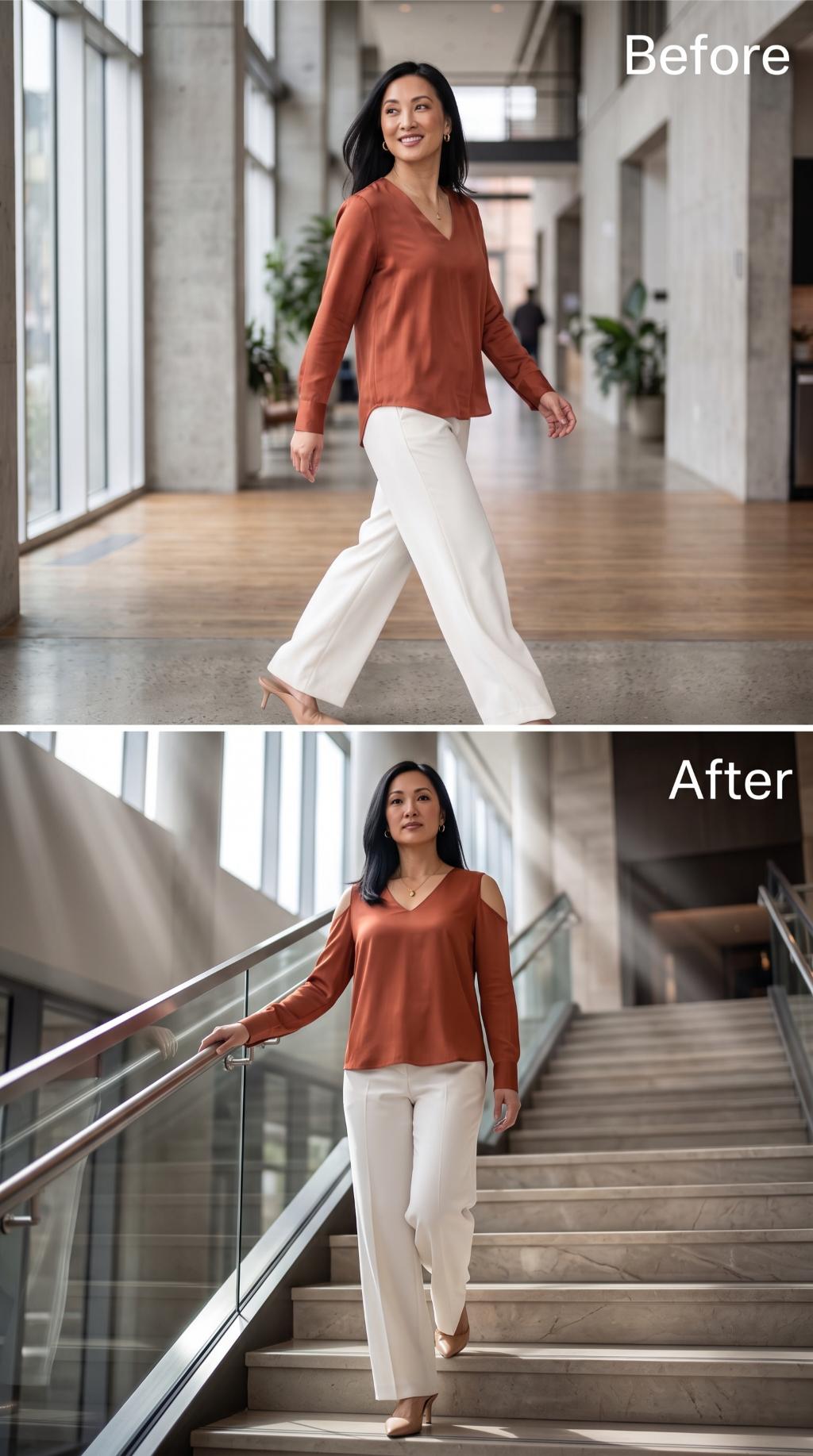
Keep most of the sleeve intact and open a single section at the shoulder instead. Cold-shoulder construction plays a clever trick—the arm is still mostly covered, yet that one exposed patch is enough to break the original silhouette into pieces.
Instead of one continuous shape, skin becomes part of the design. The shoulder gets more architecture, and nothing else in the outfit needs to work any harder to earn it.
24. Uneven Coverage Sends Symmetry Out the Door
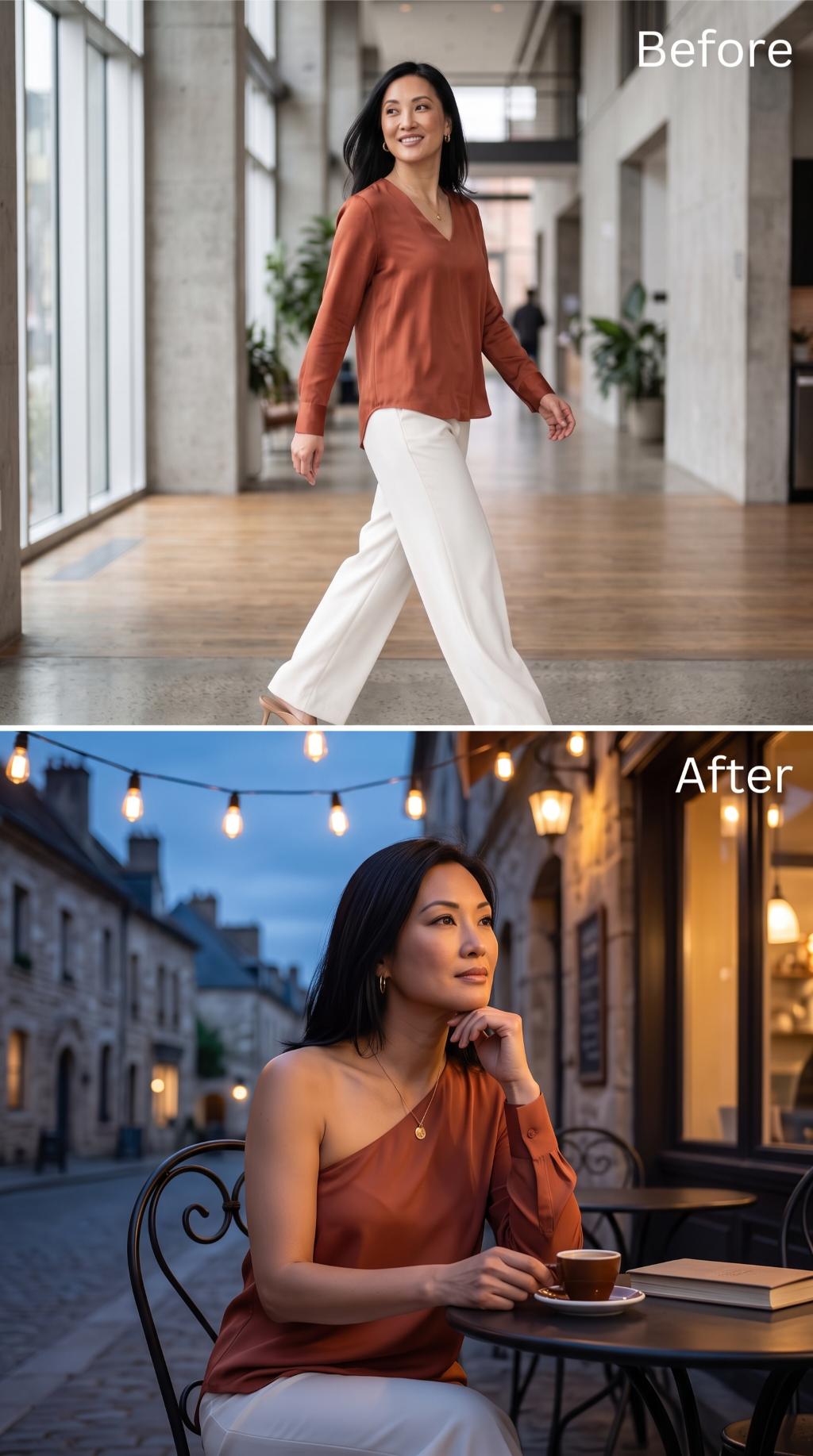
Clothing is so reliably symmetrical that breaking the pattern on purpose has an outsized effect. Cover one arm fully and bare the opposite shoulder, and the eye can’t help but travel the resulting diagonal across the chest.
The whole exercise comes down to one sleeve on, one shoulder off. That small imbalance gives the rust blouse a distinctly evening-ready mood that no amount of extra fabric would have supplied.
23. Full Bishop Volume Stays Composed Even at Its Fullest
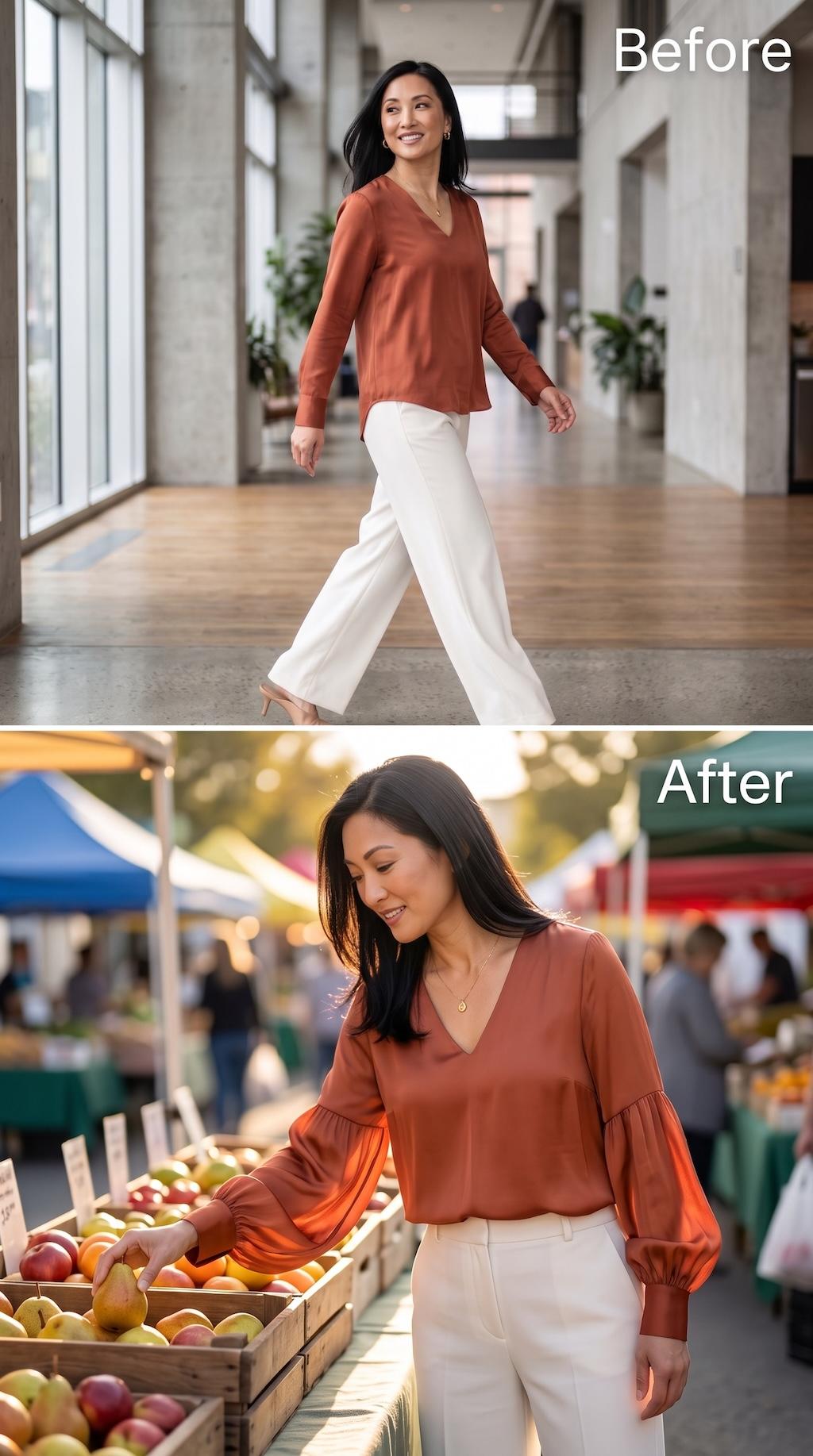
Full through the arm and gathered again at the wrist, a bishop sleeve lets fabric the original blouse kept under tight control finally breathe. The fullness builds gradually along the whole forearm rather than exploding from a single point, which keeps the effect fluid instead of costume-like.
It’s the most generous shape in this whole lineup, and somehow also one of the calmest.
What Our Readers Say
- When ThreadCurve readers picked a blouse as the one new top they would buy, 76% of those who gave a reason said it came down to looks.
- Asked which piece should be the statement in an outfit, our readers split almost evenly between the top and the bag, with shoes and bottoms trailing.
From ThreadCurve reader polls and votes.
22. A Sharp Triangular Flare Answers Bishop’s Softness
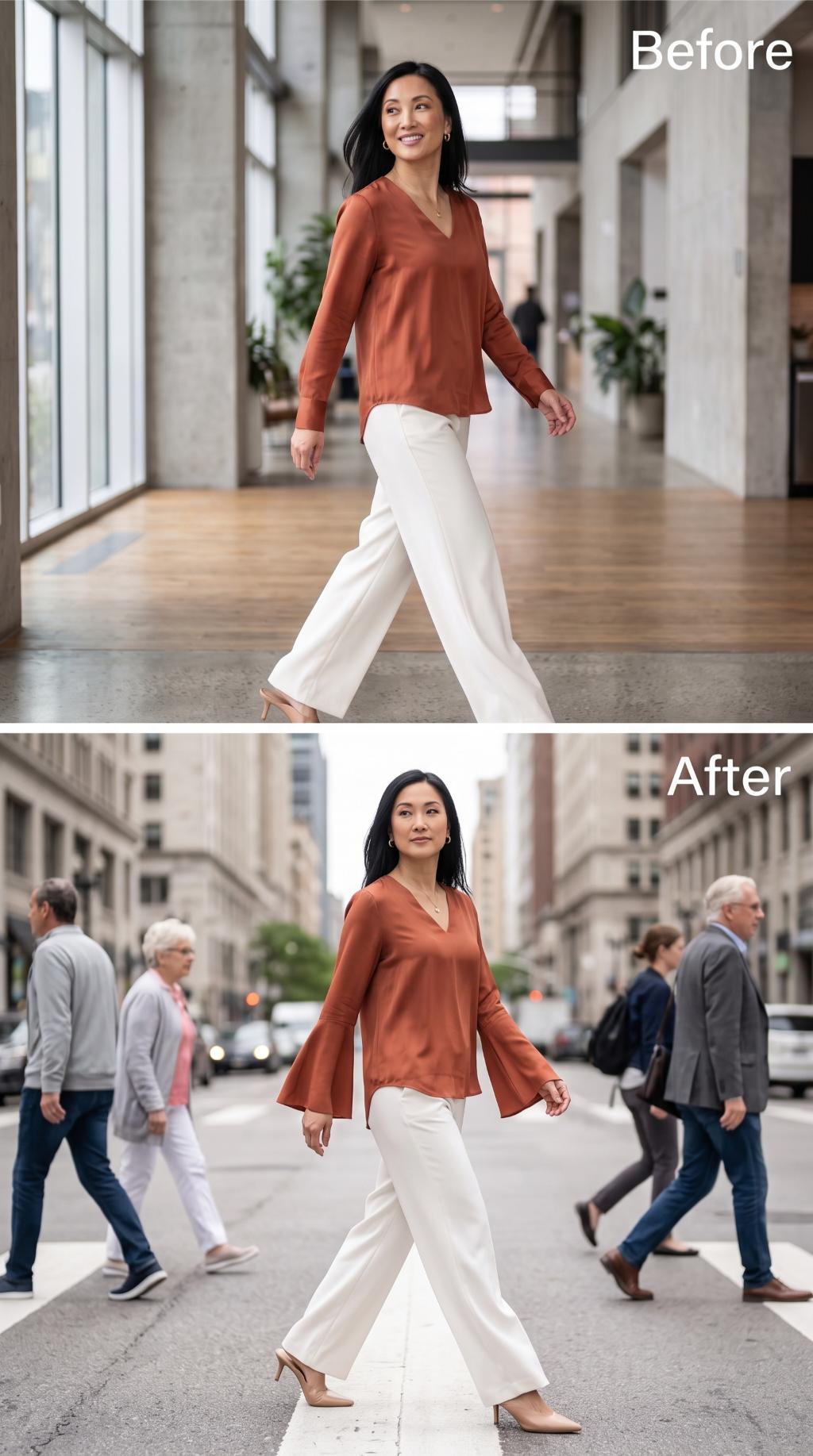
Where the bishop sleeve rounds and gathers, this one cuts a clean triangle. The flare arrives decisively below the elbow and finishes in a crisp, graphic edge rather than a soft cloud of fabric—the same basic idea as a bell sleeve, executed with entirely different intentions.
Bell shapes can lean romantic or retro depending on how gently they open. This one has no interest in either.
21. A Shorter Cuff Trades Formality for Ease
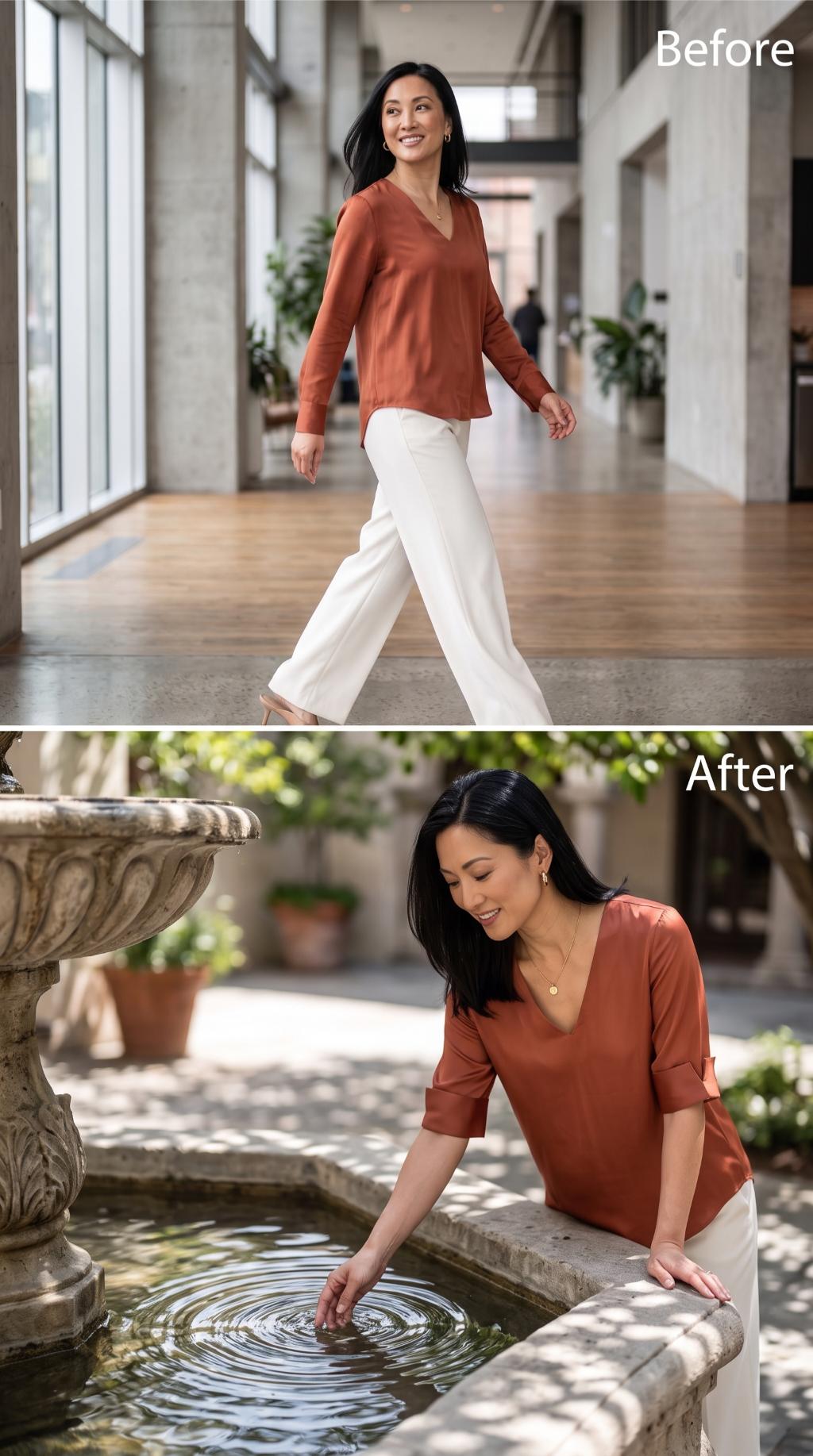
Not every sleeve needs architectural ambition. Cutting the length back while keeping a defined cuff gives the blouse a brisker, easier outline without giving up its polish.
The exposed forearm matters more than it sounds. That flash of skin interrupts the rust between shoulder and hand, so the upper half reads lighter and less buttoned-up while the tailoring underneath stays fully intact.
Sleeve length is a genuine coin toss for our readers: in one poll, wrist, bracelet and elbow lengths came out as a statistical tie.
20. Shortening the Sleeve Rebalances the Whole Palette
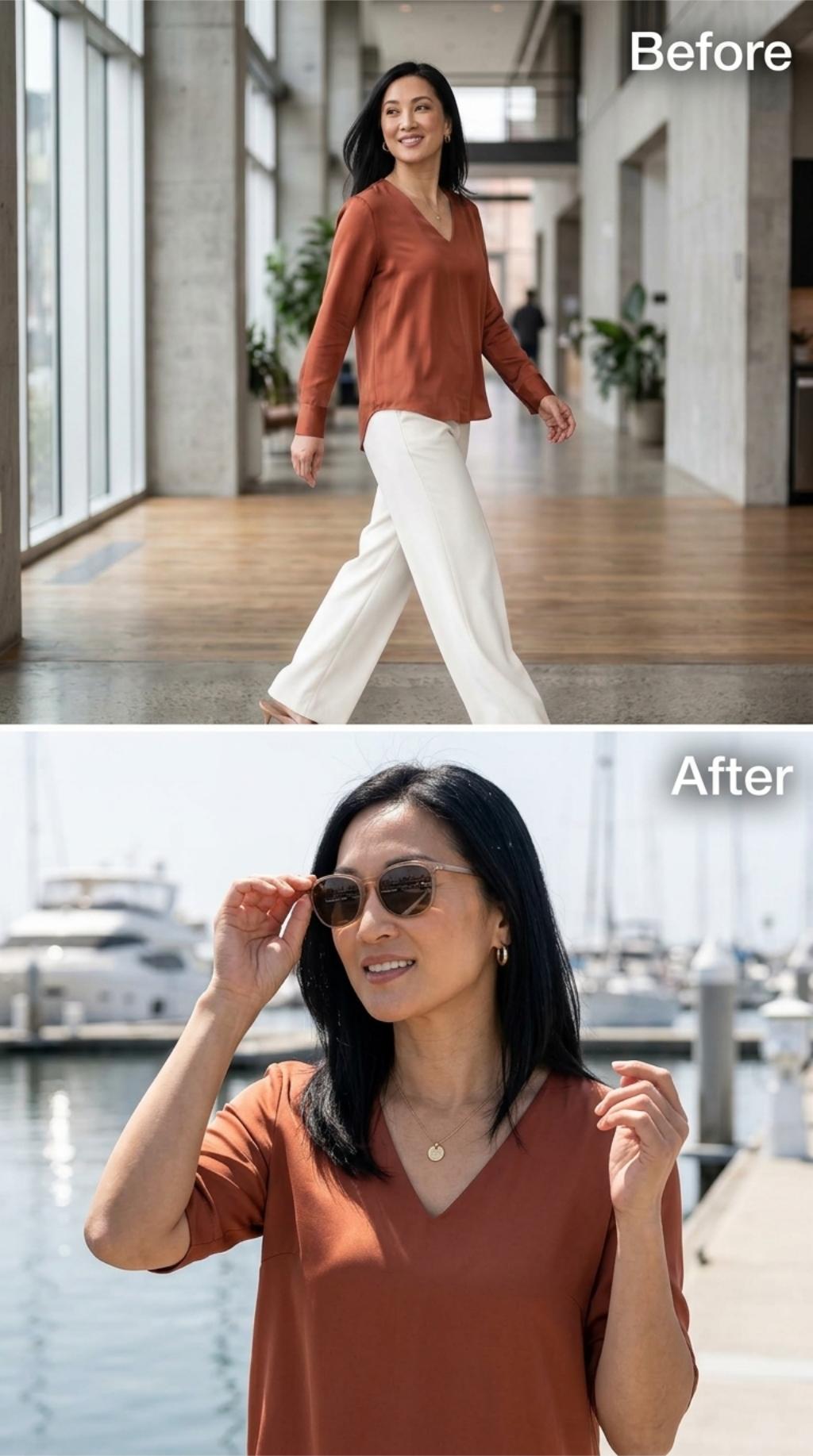
No cutouts, no billowing fabric, no complicated construction—the sleeve simply stops earlier, and the whole outfit feels lighter for it. Fashion doesn’t always need a complicated answer.
There’s a color story here too: less unbroken rust across the upper body hands the white trousers a bigger share of the silhouette than they had before.
19. Staying Close to the Arm Reads as Quietly Expensive
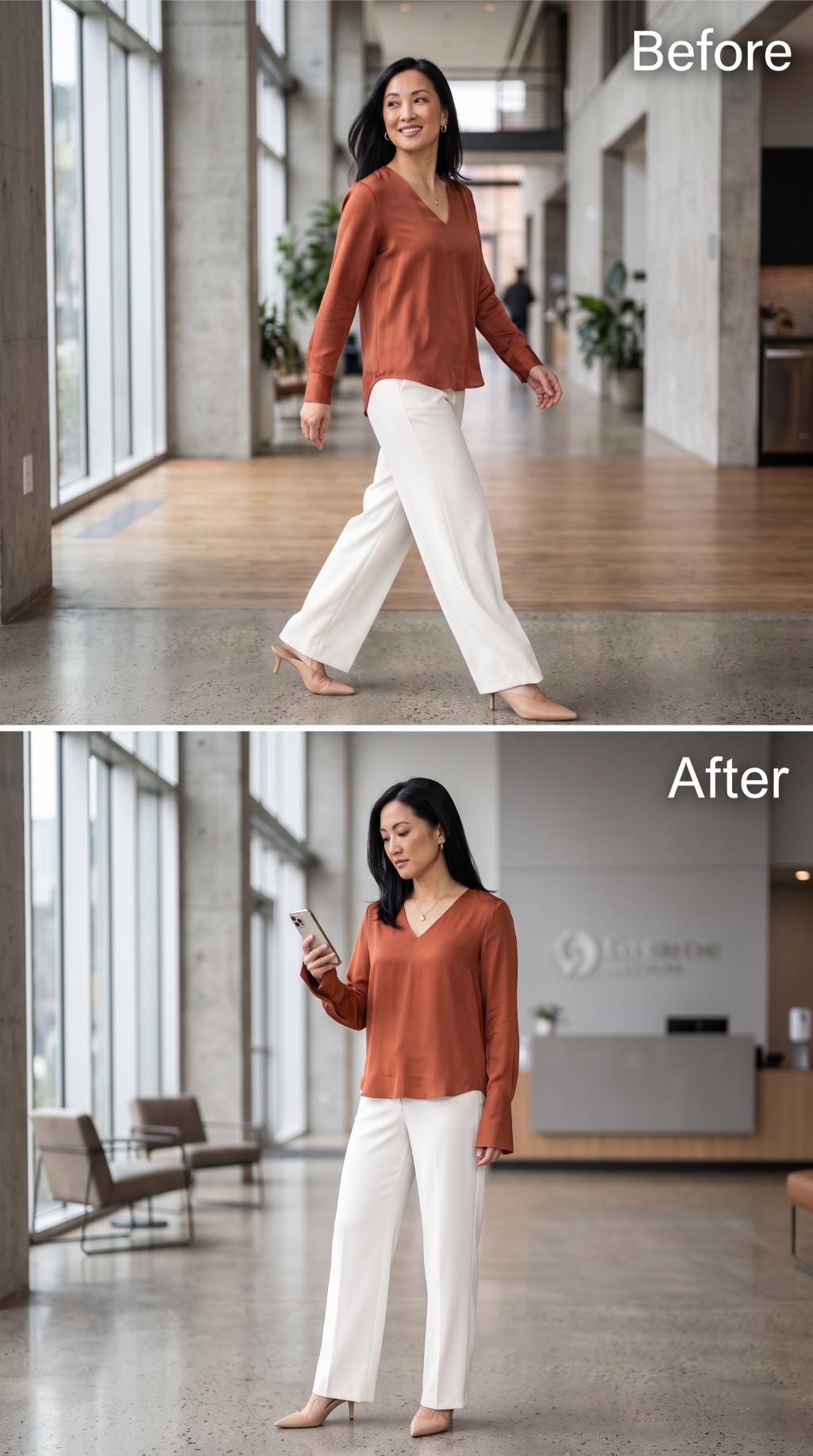
After several attention-seekers, restraint lands differently. This sleeve stays close to the arm, with just enough structure to look intentional but no obvious flourish demanding applause.
The effect is a cleaner, more expensive-looking finish—the kind of adjustment most people notice without being able to say exactly what changed.
18. Volume Concentrated at the Shoulder Builds a Stronger Frame
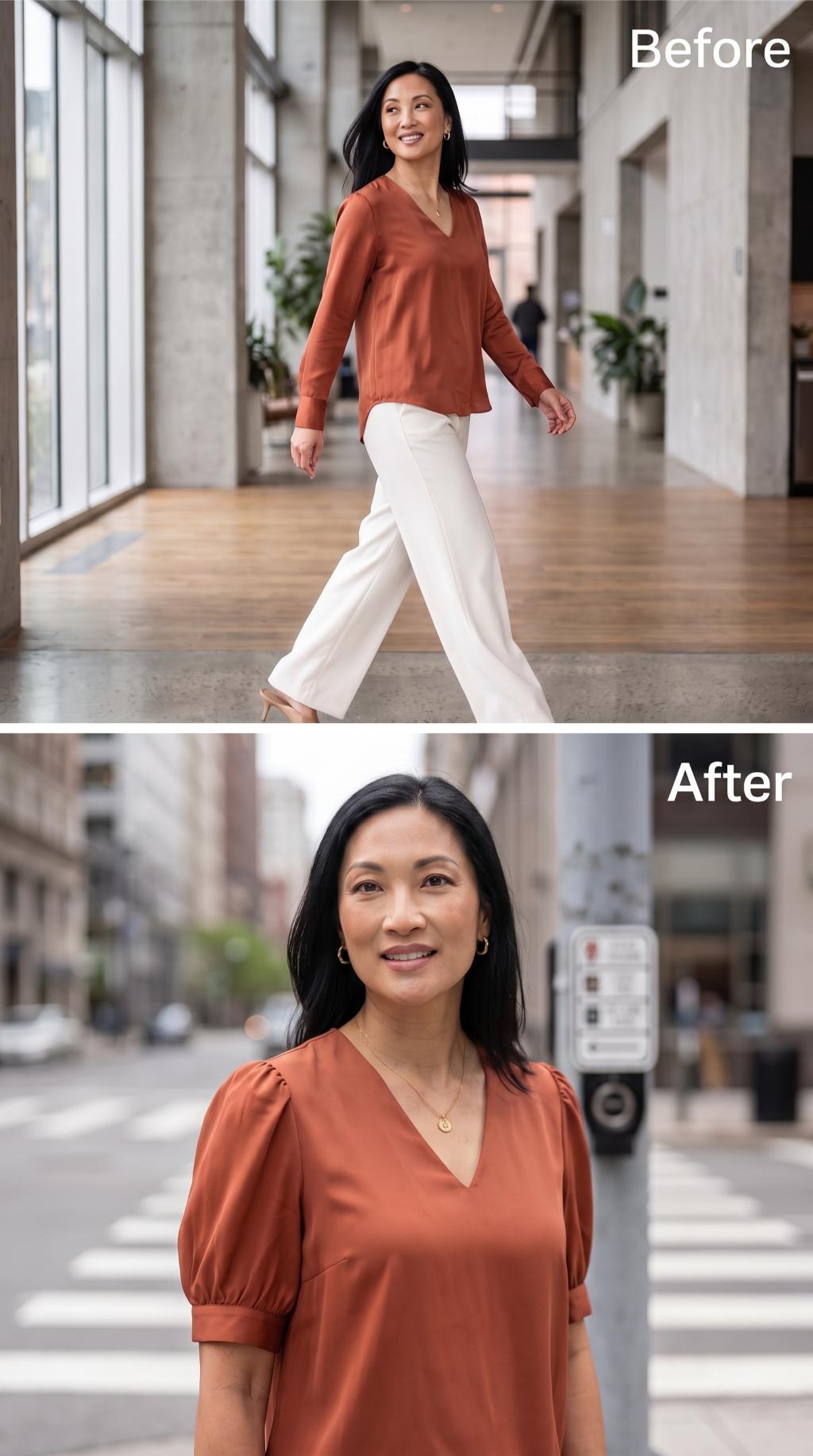
Instead of distributing fullness down the length of the arm, this shape concentrates it in a compact burst right at the shoulder. That gives the upper body a stronger frame and an entirely different posture than a sleeve that simply hangs straight.
The trick is knowing when to stop. There’s enough shape here to wake up the outfit without tipping into the kind of sweetness that would send the white trousers off to a garden party.
17. An Elbow-Level Slit Lets the Sleeve Open With the Arm
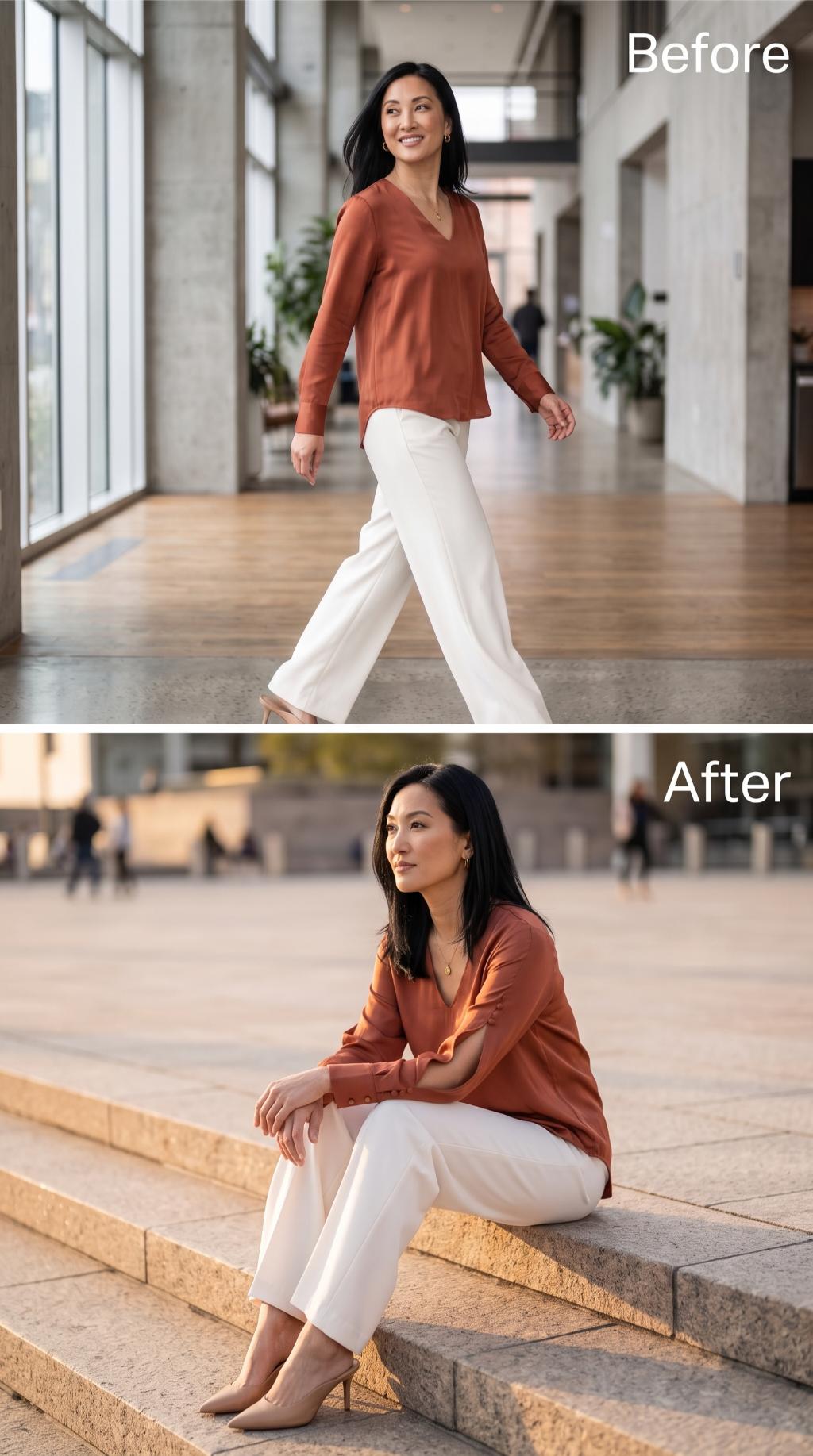
Here, a long sleeve keeps its full-length elegance without carrying all the visual weight. Open sections let skin flash between stretches of rust, tracing the arm rather than wrapping it in one uninterrupted line.
Movement is what sells the idea. Bend the elbow and the slit actually opens, rather than just bunching up, so the construction responds to the pose instead of ignoring it.
16. Losing the Armhole Seam Changes the Sleeve’s Whole Logic
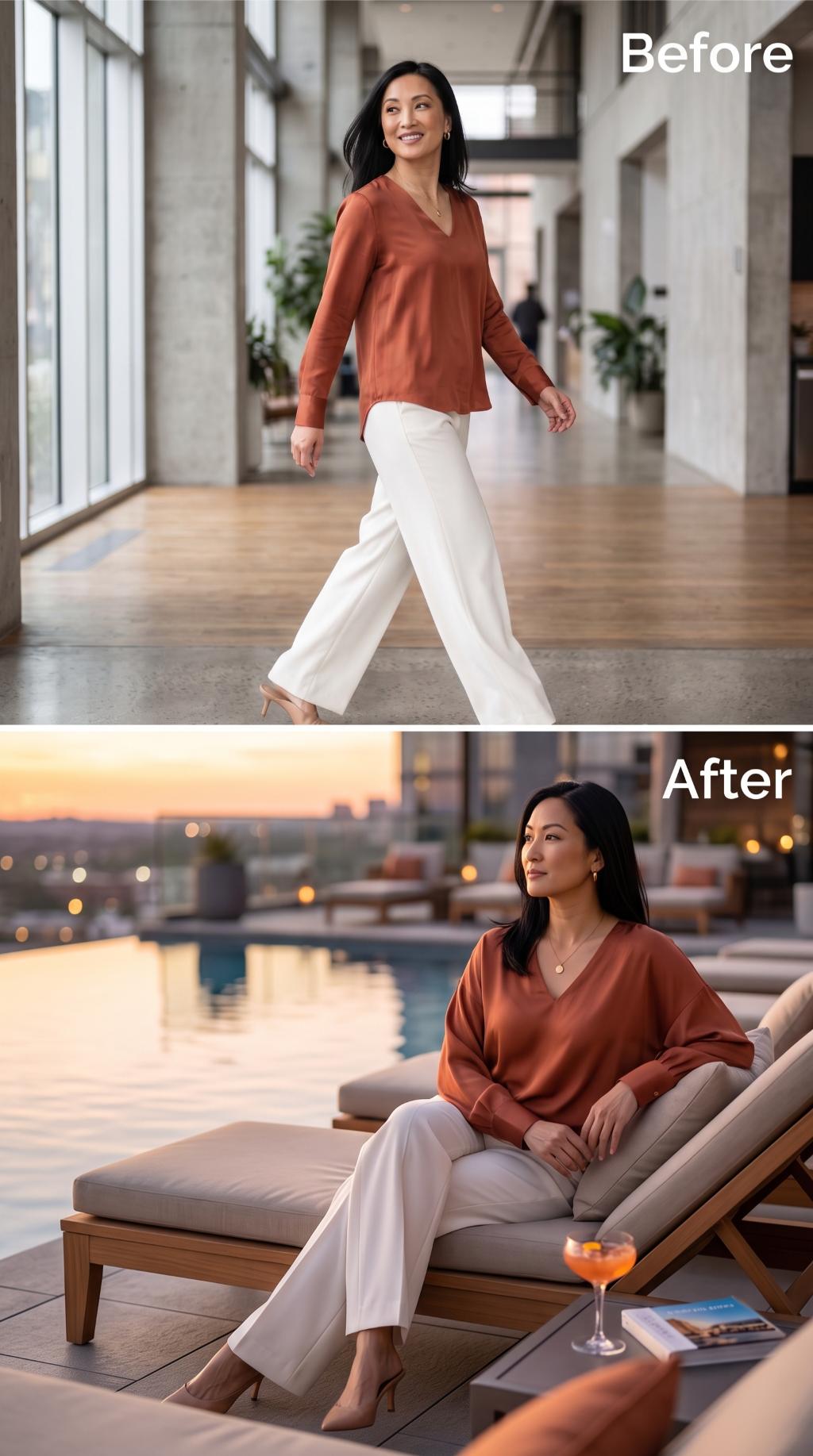
Dolman construction does something none of the other shapes on this list attempt: it removes the usual boundary between shoulder and sleeve entirely, letting fabric fall from the upper body in one uninterrupted sweep.
More fabric might sound heavier, but the absence of a tightly defined armhole actually makes the blouse look breezier rather than bulkier—proof that construction can matter as much as yardage.
15. Extra Ease Softens Every Hard Edge on the Blouse
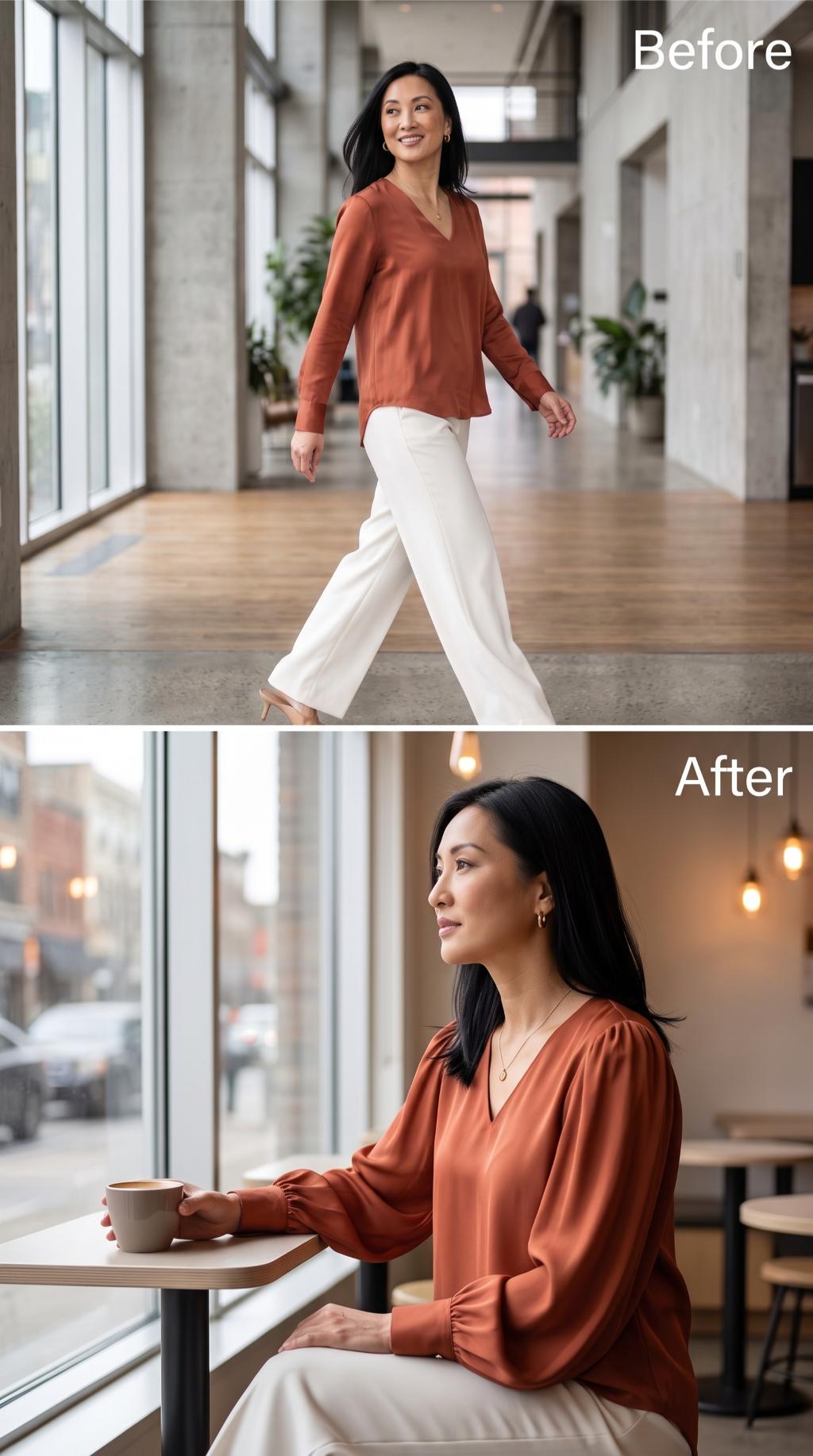
Fuller sleeves replace the original’s straight fall with something rounder and much more forgiving. Fabric drapes away from the arm instead of skimming it, taking the edge off the blouse’s cleaner lines without turning the whole thing into a confection.
Nothing here shouts. The change is closer to a mood shift—easier, more fluid and just romantic enough once the sleeve stops standing at attention.
14. A Structured Puff Trades Bishop’s Fluidity for Texture
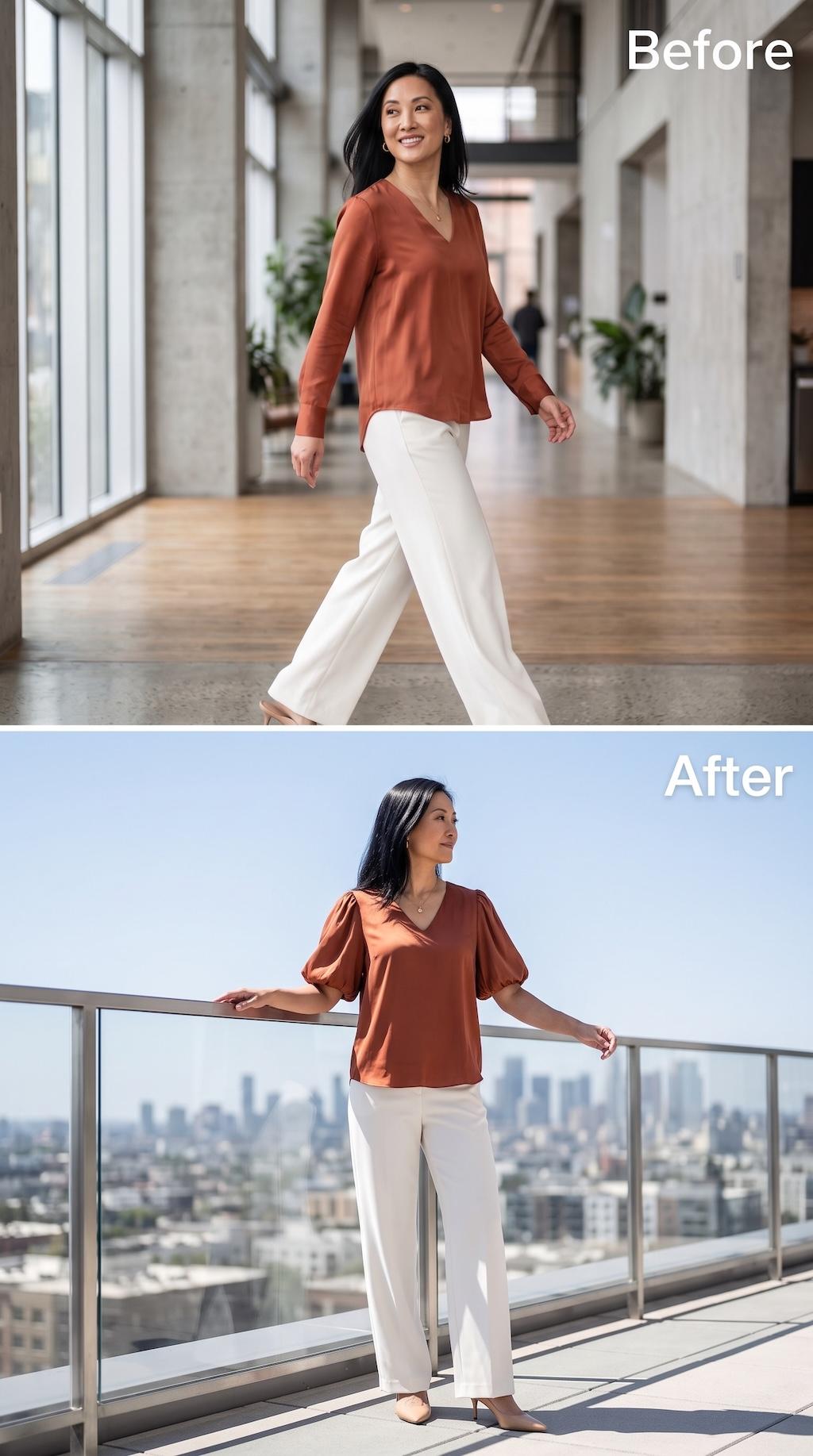
Volume returns to the top of the arm here, but with a firmer hand than the bishop sleeve earlier in this gallery. This version holds its shape rather than gathering loosely, so the fullness reads as structured texture instead of soft drape.
Everything below the shoulder stays comparatively clean, which is what keeps the whole thing from tipping into costume territory.
13. Multiple Gather Points Turn Fabric Into Soft Sculpture
❤️ Would you like to save this?
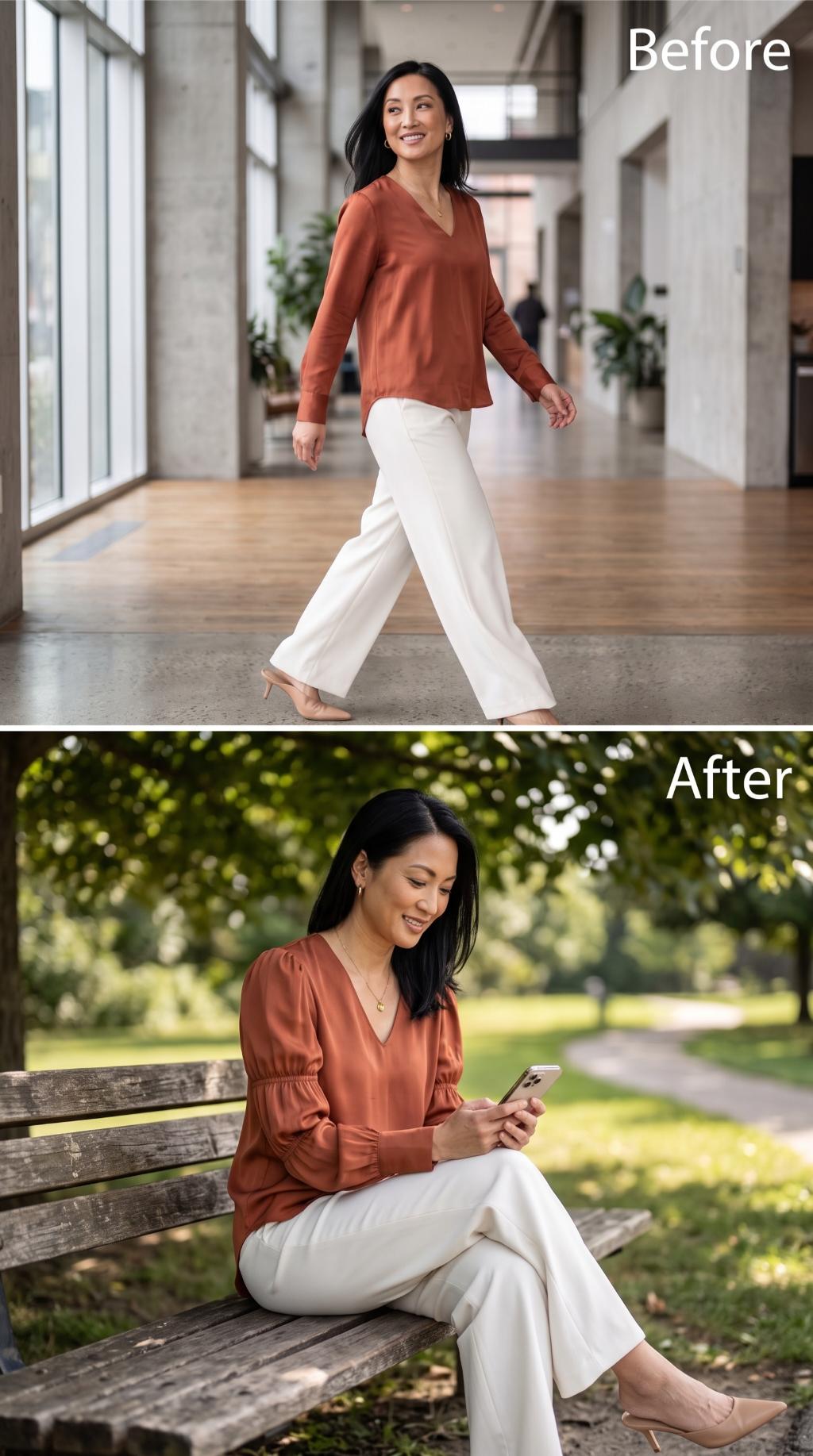
Gather fabric at several points along the arm and a sleeve stops behaving like a simple tube. Here it swells and contracts in sequence, producing dimension that feels sculptural without ever going stiff.
The blouse picks up considerably more presence this way—clearly ambitious, but kept in check by a pair of unfussy white trousers that refuse to get carried away with it.
12. Same Length, Different Cut, Completely Different Attitude
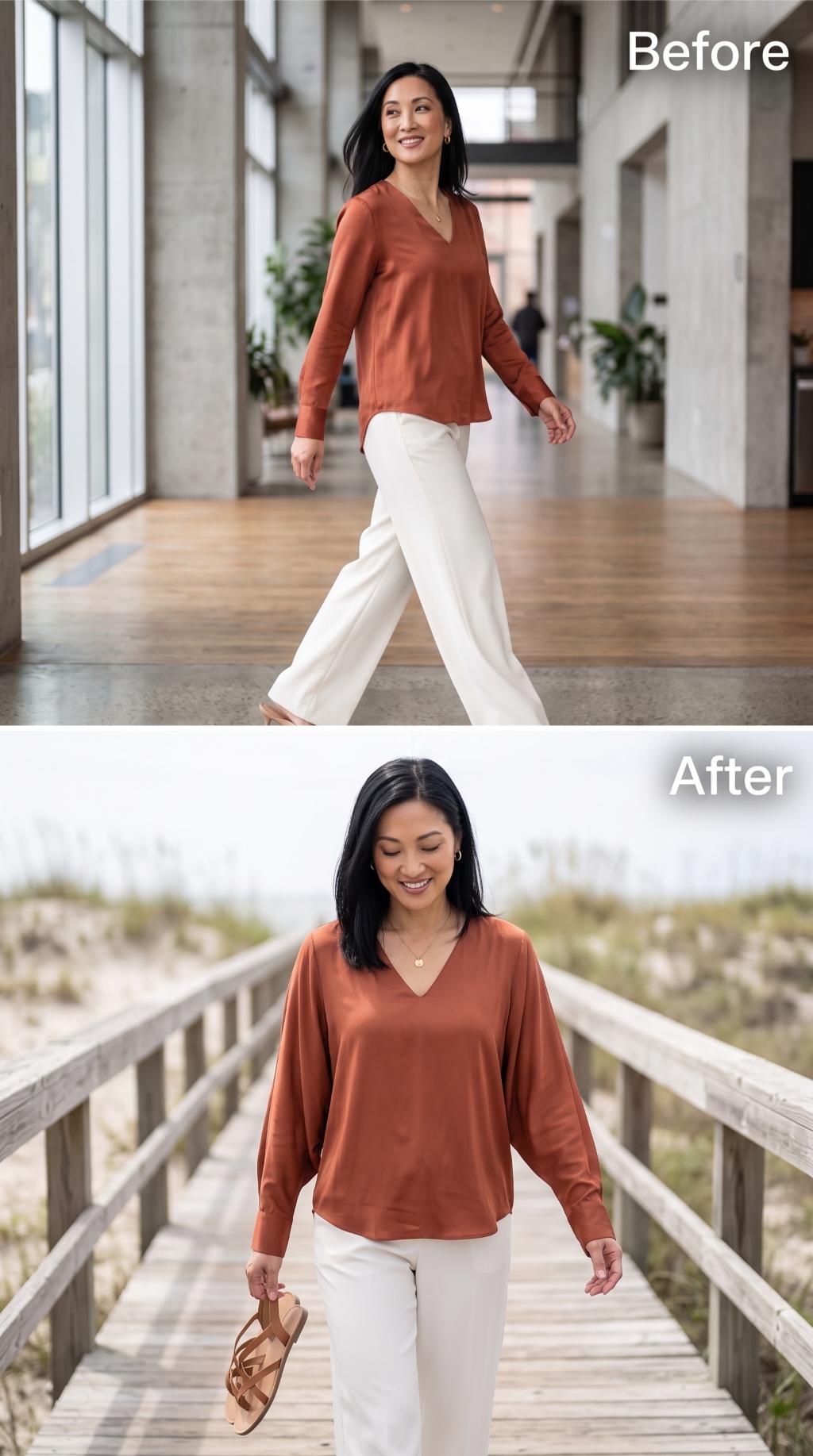
Long sleeve versus long sleeve sounds like a non-event until the cut changes underneath it. A little extra ease alters how the fabric hangs, where it folds and how closely the blouse relates to the body—all without moving the hem an inch.
It’s a useful reminder that “longer” or “shorter” isn’t the only lever available. Sometimes the quietest transformations are the ones that matter most.
11. Trimming Away Fabric Makes What’s Left Look More Deliberate
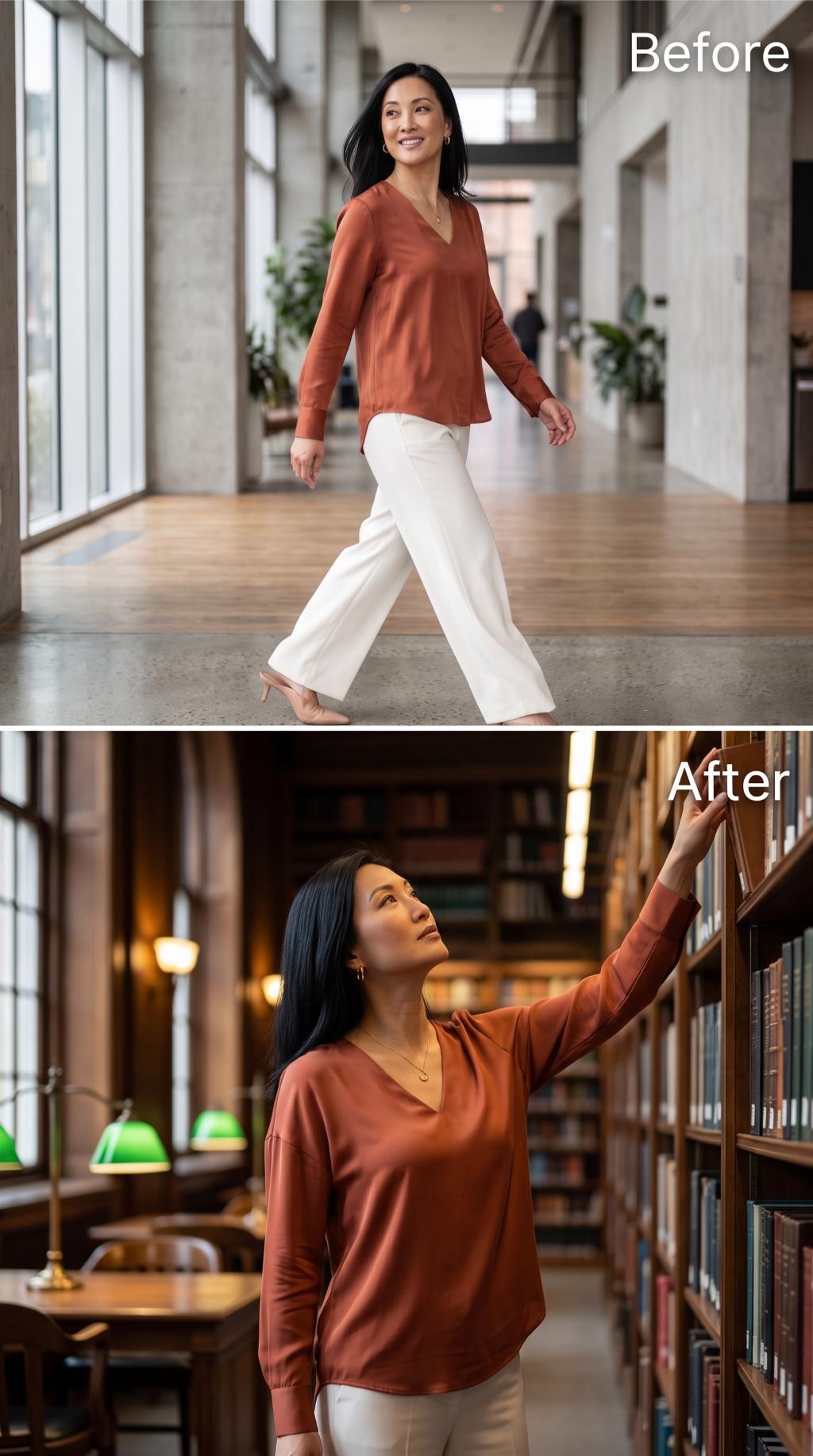
This is the opposite exercise from the gathered version a couple of entries back: instead of adding dimension, this sleeve strips it away. A cleaner line runs the length of the arm, and proportion—not fullness—does all the work.
Less fabric here doesn’t read as less effort. It reads as precision, the kind of negative space that only looks accidental.
10. Generous Fullness Stays on the Polished Side of the Line
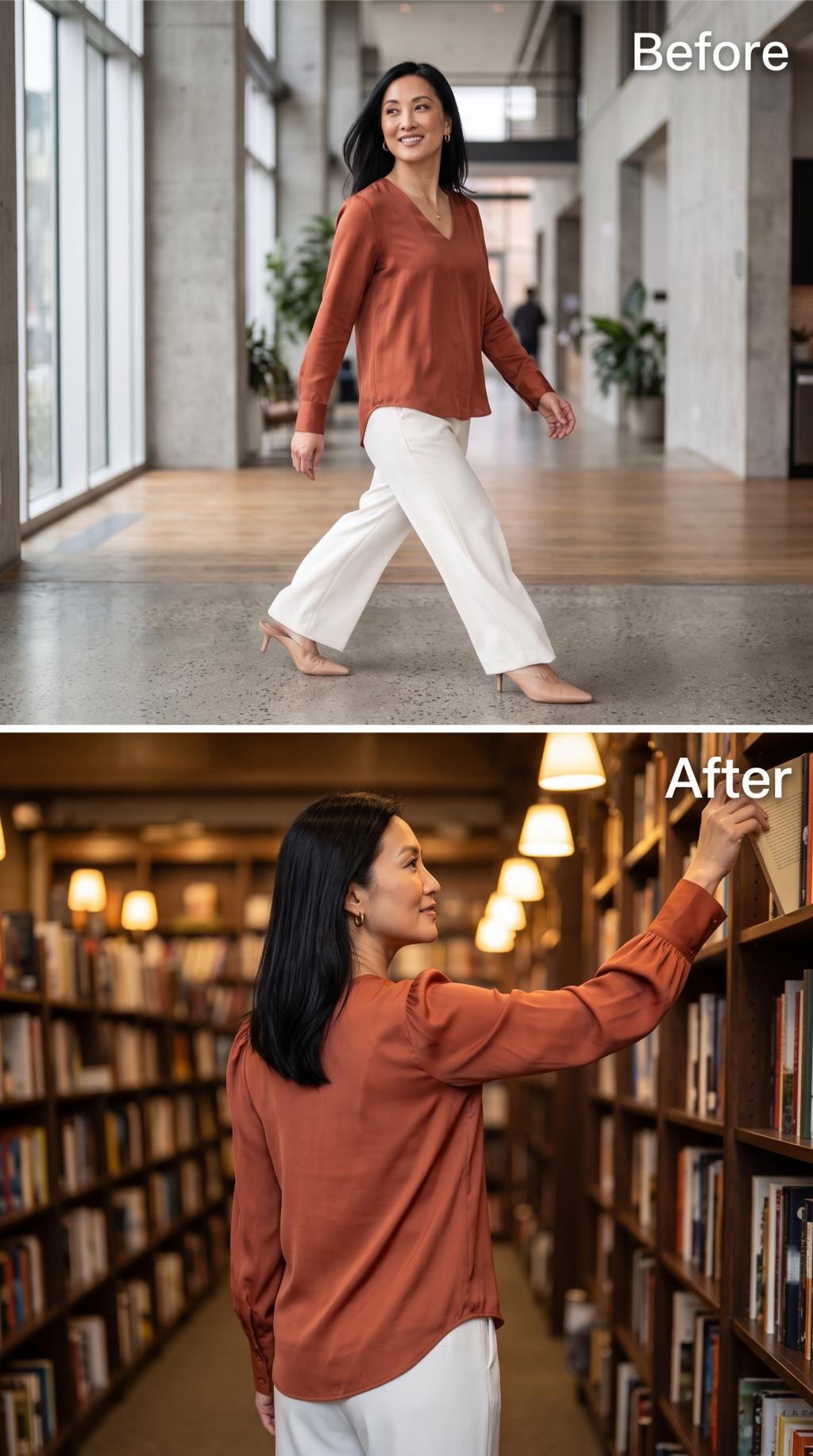
Fullness through the upper and middle arm creates real presence without letting the fabric overwhelm the body underneath. The sleeve expands generously, while the shoulder seam and cuff hold enough discipline to keep everything anchored.
That tension between drama and control is the whole trick—enough movement to notice, not so much that an ordinary day starts to feel like a costume change.
9. Loosening the Fit Lets Some of the Formality Go
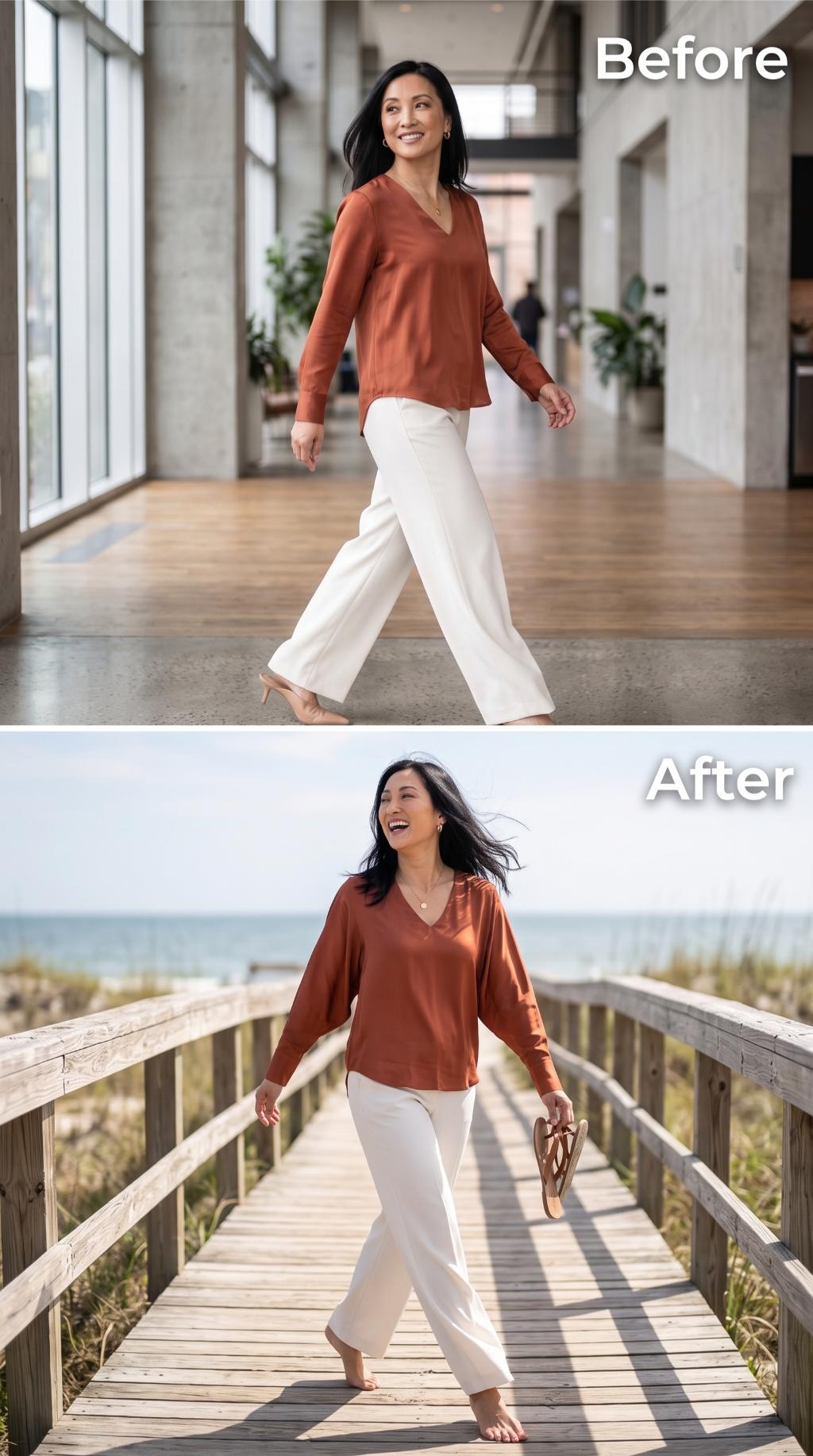
Nothing dramatic happens here—the sleeve simply relaxes, allowing a little more air between fabric and arm. That small adjustment takes a surprising amount of the blouse’s original stiffness along with it.
The result feels easier and more adaptable to wear, closer to a Saturday than a boardroom, without a single new seam added anywhere.
8. Loosened at the Top, Fabric Catches Air With Every Step
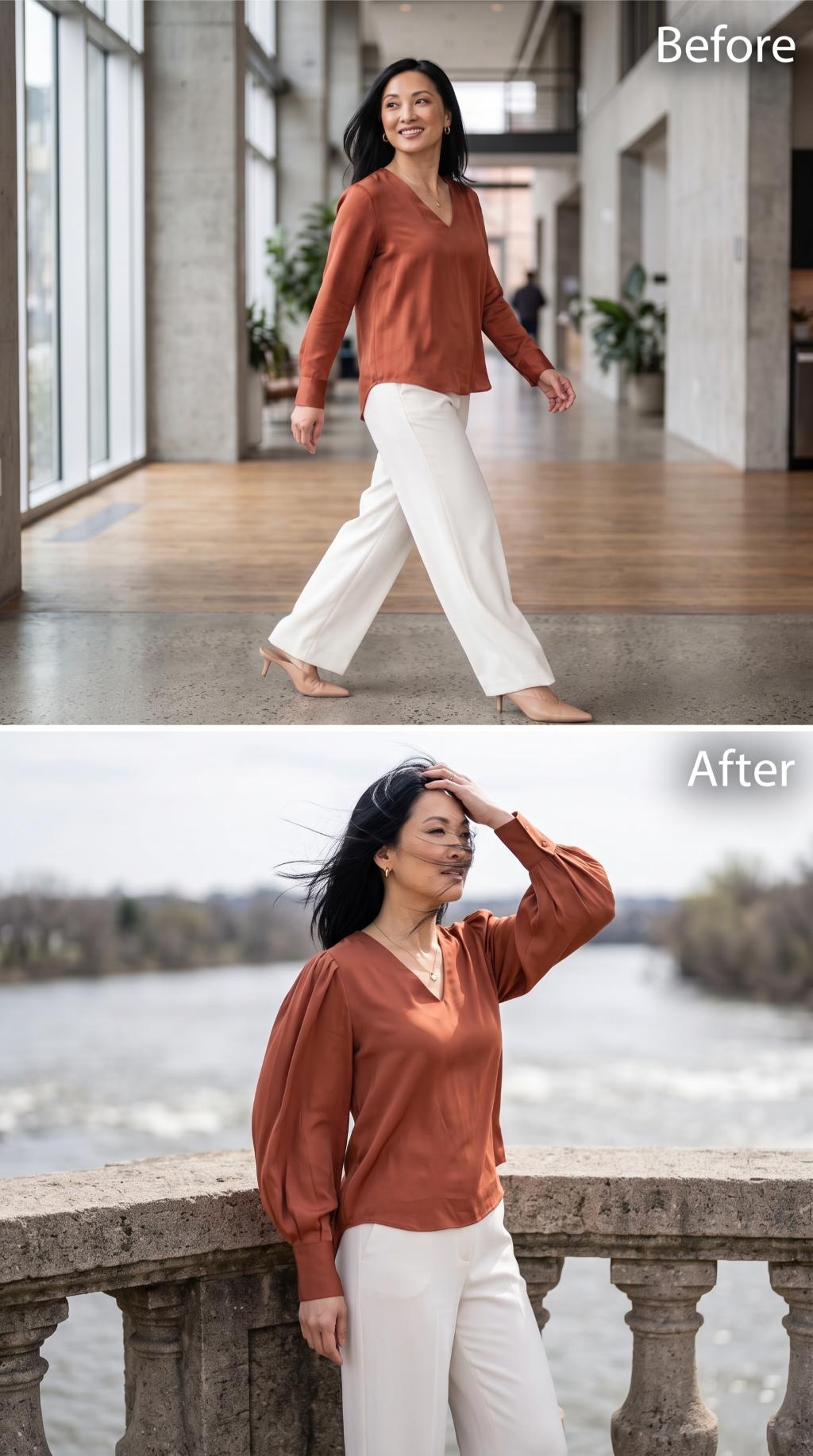
Long sleeves don’t have to follow the arm obediently. This one loosens almost immediately at the shoulder, letting fabric swell through the length before coming back under control closer to the wrist.
That changes more than the outline—the folds shift and catch air as the arm moves, giving a solid-colored blouse the kind of animation another garment might need a print to achieve.
7. Shoulder Definition Gives the Blouse Its Sharpest Posture Yet
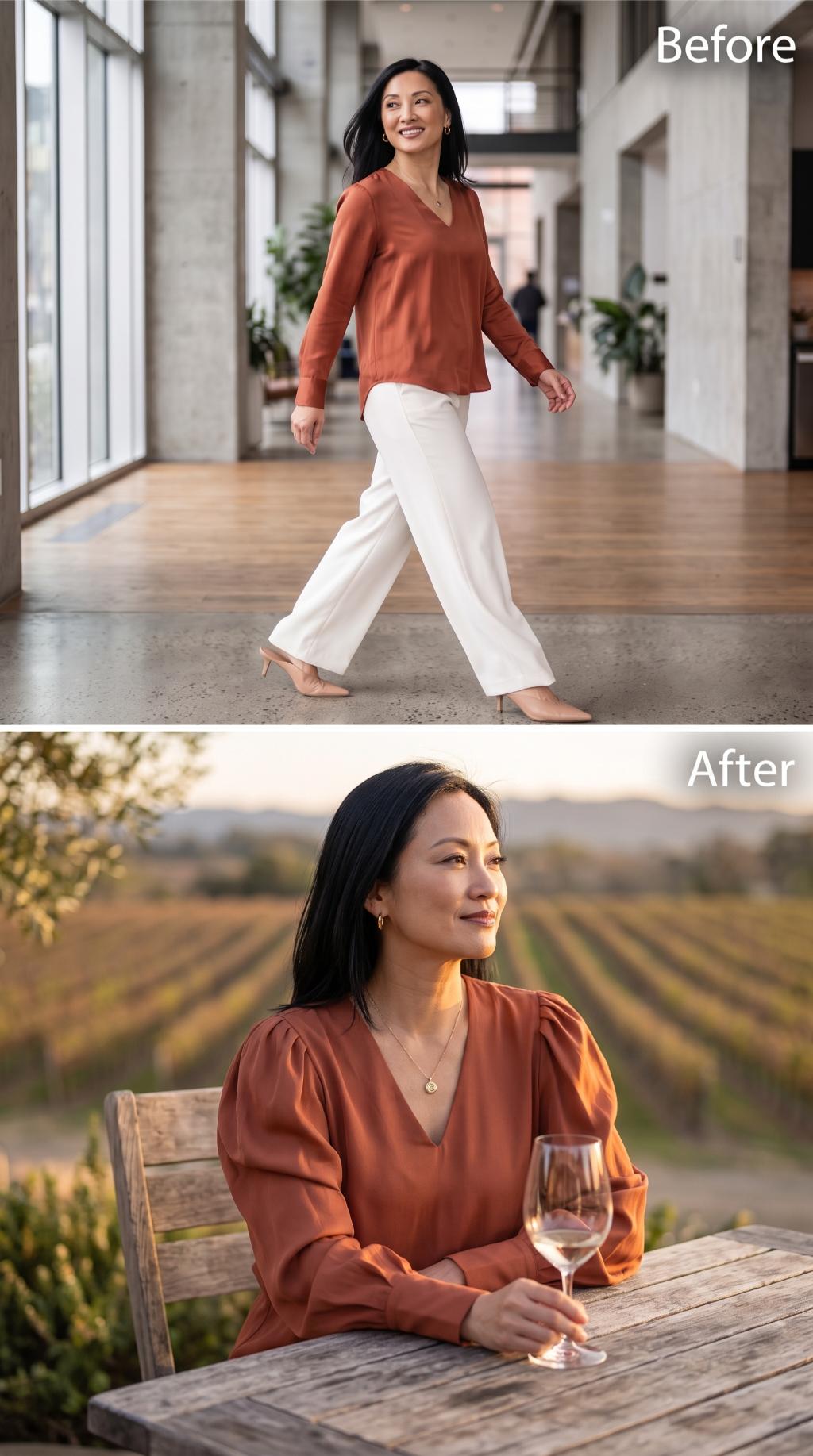
Push fullness all the way up to the shoulder point and the effect turns architectural rather than floaty. Extra width at the very top gives the torso more definition and, by extension, a noticeably straighter, more confident stance.
Of the three shoulder-forward shapes in this gallery, this is the one that behaves most like tailoring rather than styling.
6. Lowering the Seam Sends Daytime Shirting Off Duty
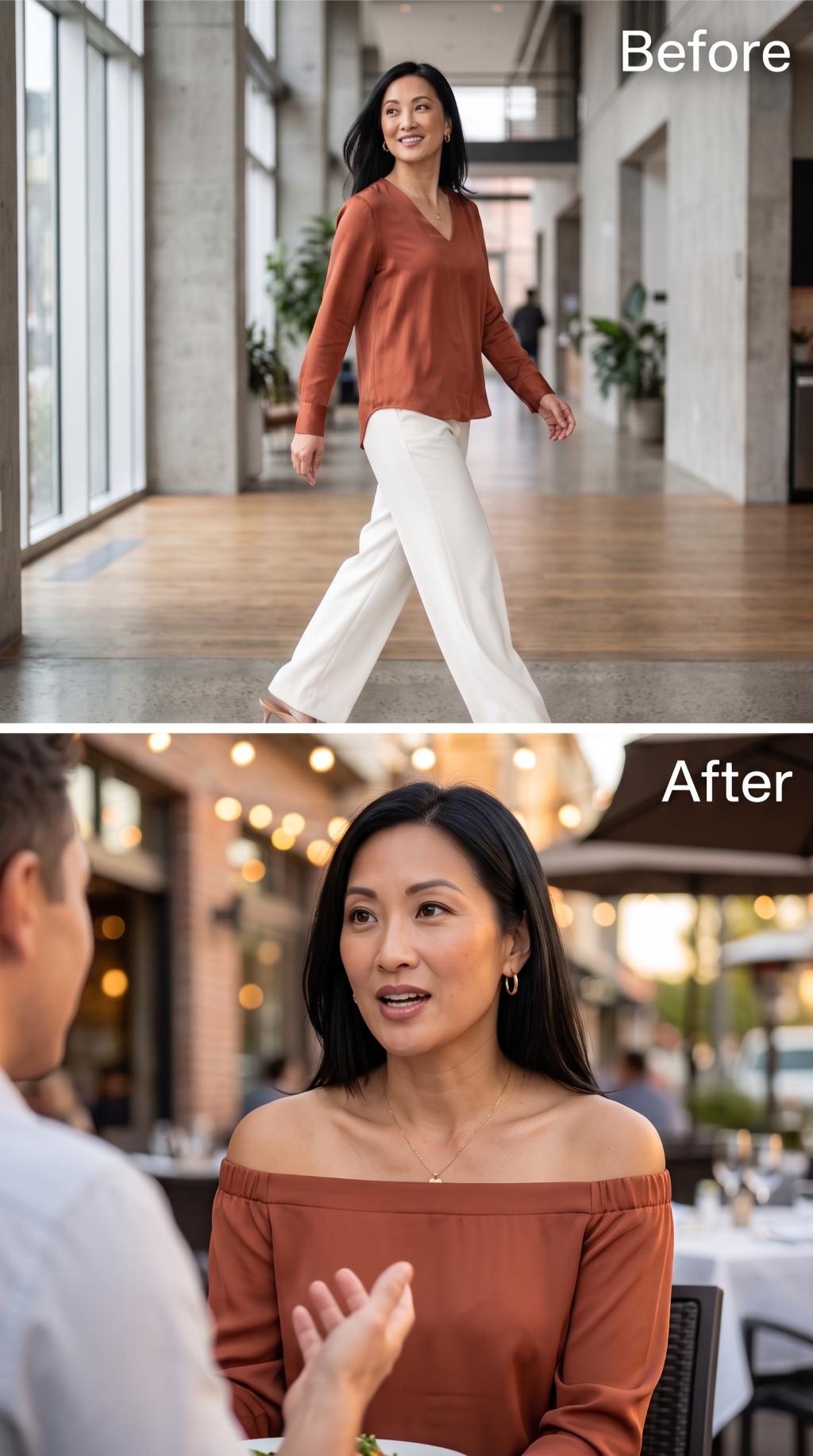
Drop the shoulder seam away from its natural point and conventional shirting starts to disappear almost immediately. The sleeve now hangs from lower on the arm, broadening the whole upper silhouette and giving the rust color a looser, more relaxed attitude.
The original blouse could handle a meeting without raising an eyebrow. This version has clearly clocked out for the weekend instead.
5. Extended Cape-Like Panels Redraw the Outer Silhouette
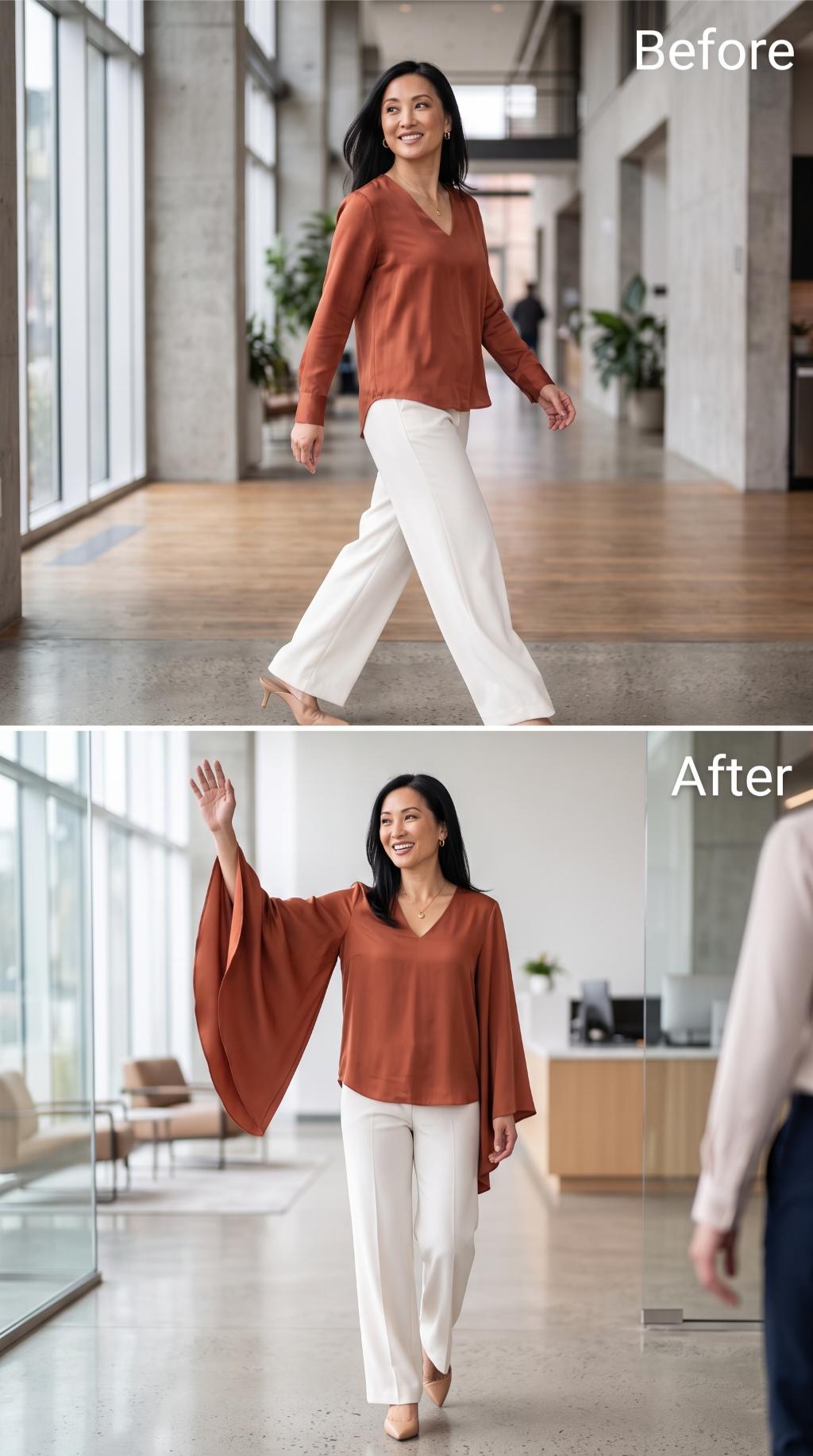
Subtlety has officially left the building here. Extended, cape-like sleeves create broad planes of fabric around the body, redrawing the outer silhouette instead of simply covering the arms underneath.
Most sleeves alter an outfit. This one arrives with a full redevelopment proposal—somewhere between blouse and runway piece, and clearly enjoying the attention.
4. Subtract the Sleeve Entirely and Everything Else Gets Louder
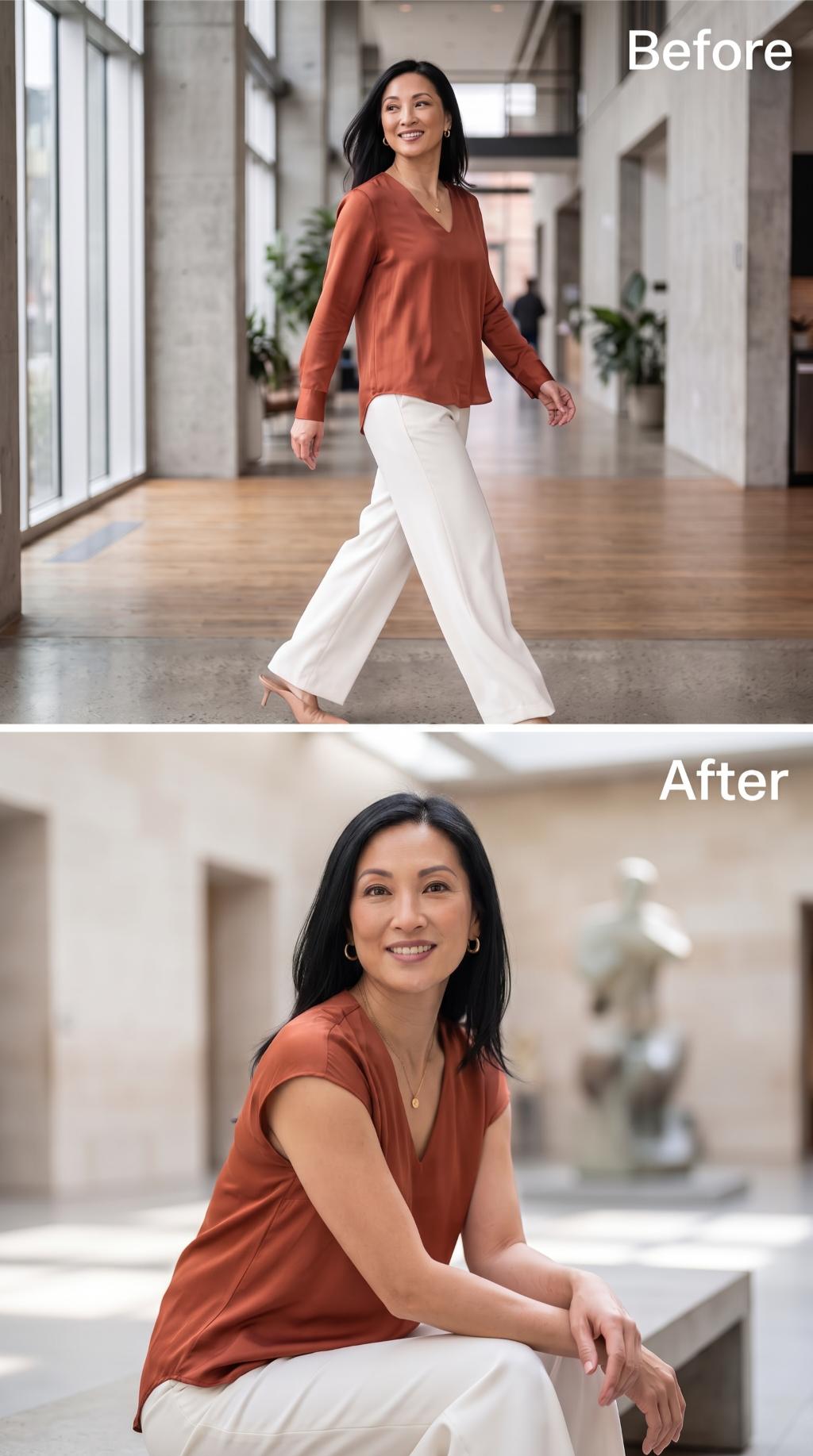
After that much fabric, the most extreme move left is removing the sleeve completely. Clearing that solid column of rust from each arm frees up a surprising amount of visual traffic—shoulders, neckline, jewelry and face all move to the front of the conversation because nothing is competing with them anymore.
What seemed like a familiar blouse now reads as a handful of deliberate lines. Subtraction, it turns out, is every bit as transformative as anything you could add.
3. A Flared Cuff Puts Swagger Into Every Resting Arm
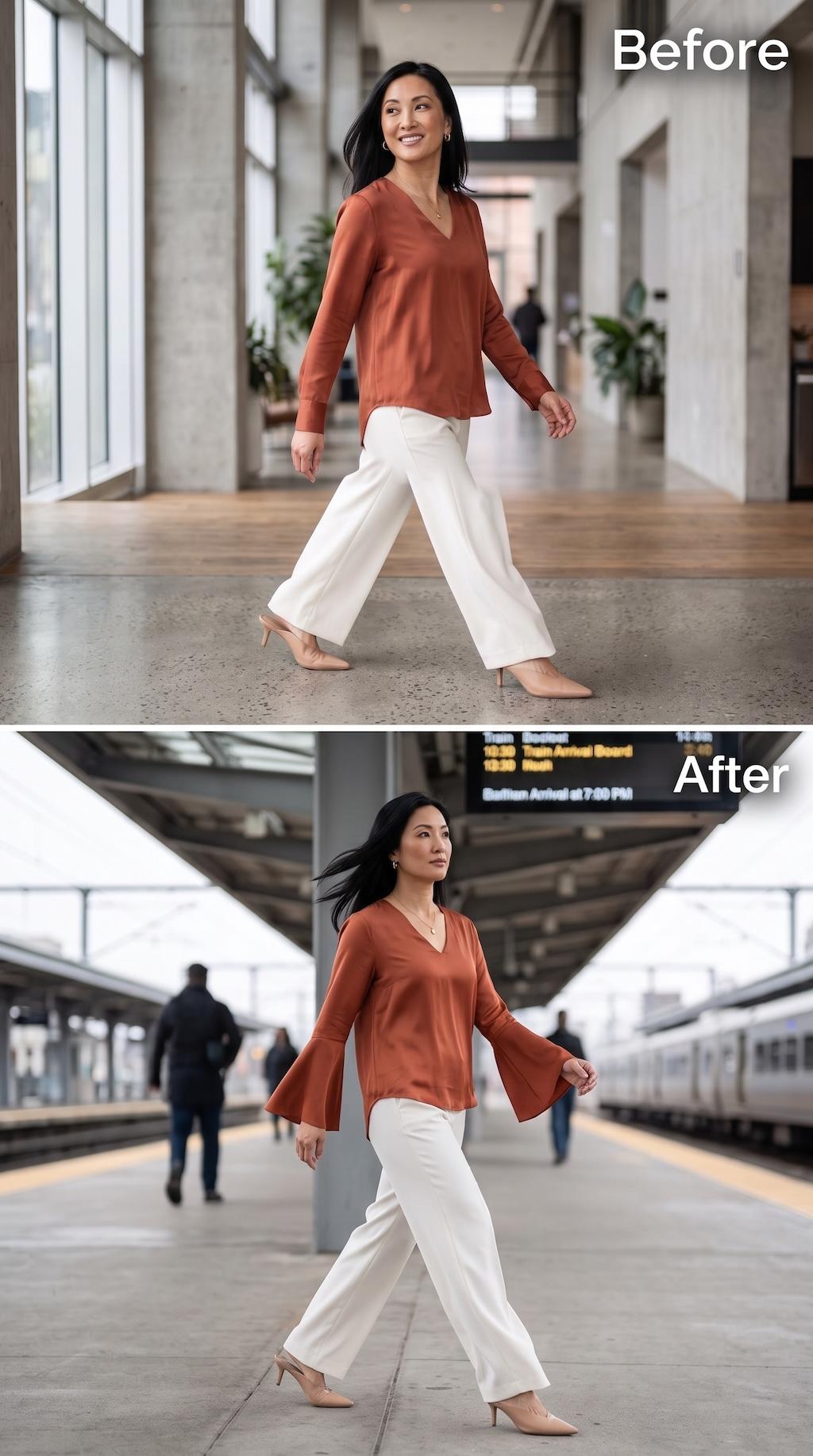
Drop the cuff and let it flare, and the blouse picks up movement even when the arm is simply hanging at rest. Fabric swings away from the wrist instead of following it, putting a little more attitude into a gesture as small as walking.
The extra width changes proportions above the waist too—arms read longer, the whole silhouette loosens and the blouse’s sensible daytime manners quietly leave the room.
2. The Same Flare, Mid-Gesture, Adds a Sense of Ceremony
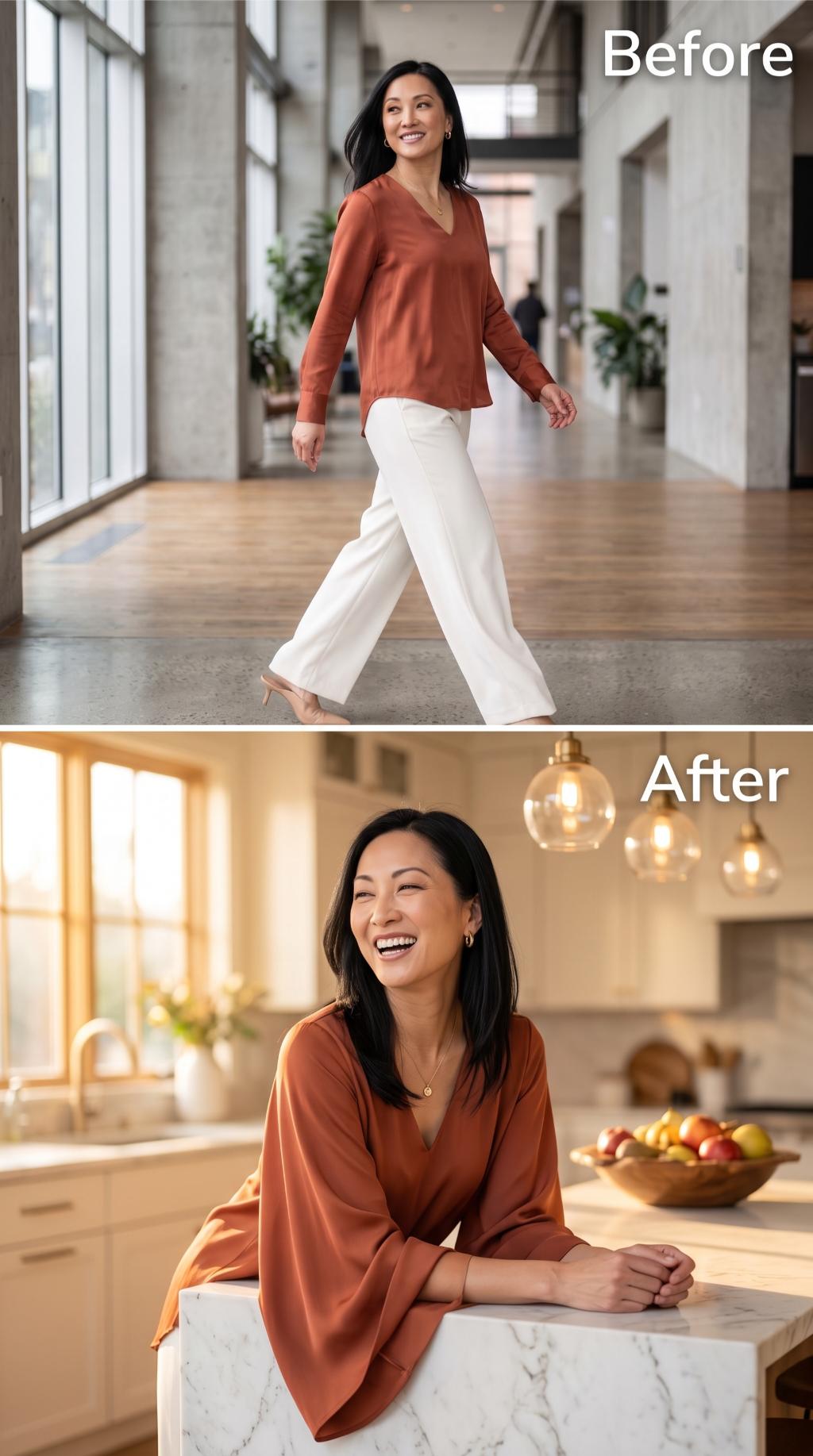
Here the drama waits until the lower arm is in motion, mid-gesture, then lets loose. As the arm lifts, the sleeve opens toward the hand and creates a long sweep of fabric that makes the whole arm look extended before it’s even finished moving.
Practicality may have left the conversation somewhere around the elbow, but the visual payoff is worth it—an ordinary gesture suddenly carries the kind of ceremony usually reserved for making an entrance.
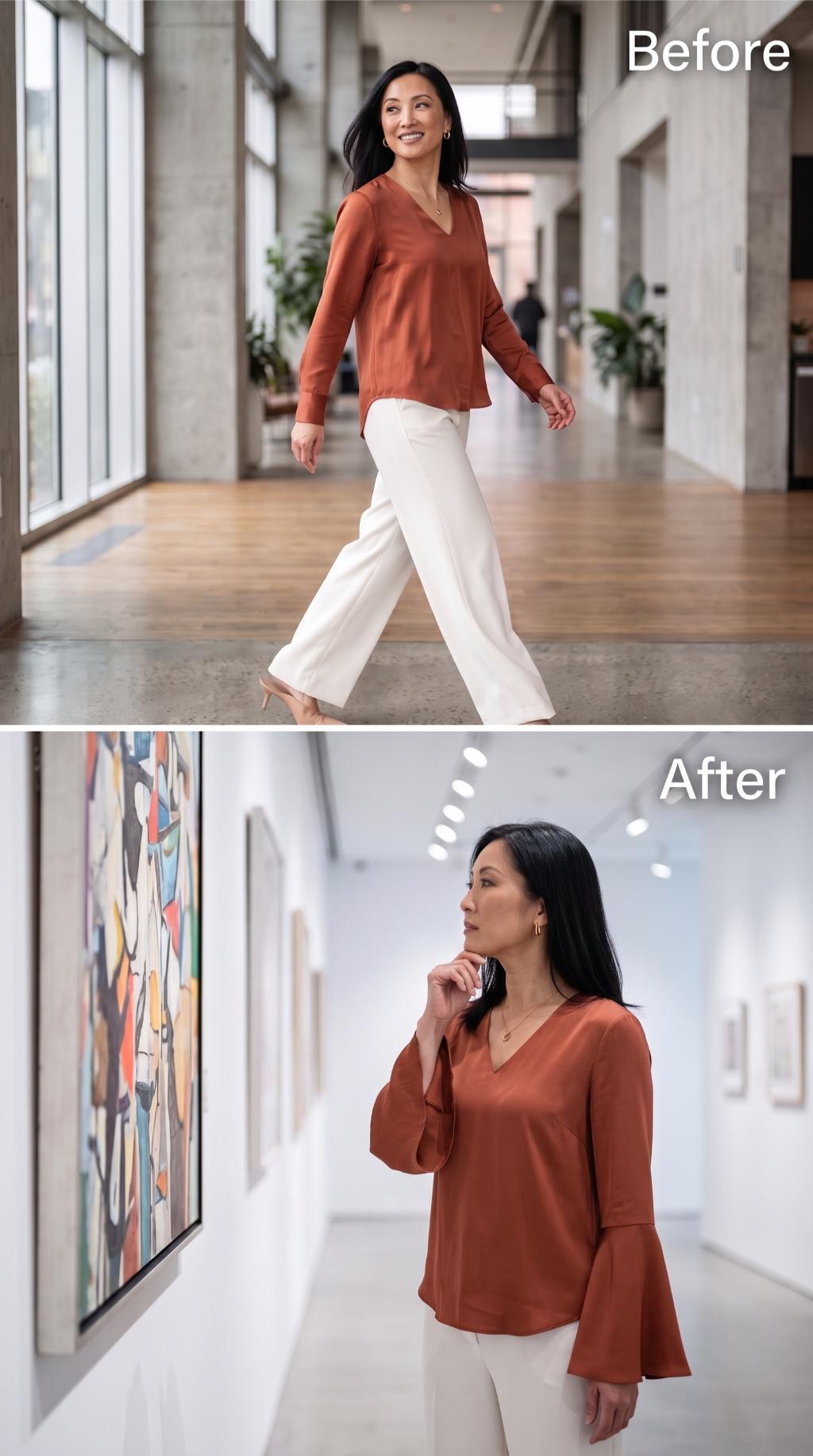
1. Raised Toward the Face, the Flare Frames the Whole Pose
❤️ Would you like to save this?
One last variation on the flared cuff, and the most controlled of the three: raised toward the face rather than hanging at the side, the hand lets the fabric fold in on itself instead of swinging freely. The cuff becomes part of the pose, framing the wrist and carrying the eye upward.
Twenty-five changes make the pattern difficult to miss. Sleeves can broaden shoulders, sharpen waists, lengthen arms, soften a blouse or send the whole outfit out for the evening. For something attached at the armhole, they wield an alarming amount of power.