
❤️ Would you like to save this?
The cardigan is the panic button of getting dressed. Cold restaurant, drafty office, one arm through the sleeve and you’re covered. Literally. That’s the problem. A dress you chose for its neckline, its waist, its whole shape disappears the second the wrong knit lands on top of it. We pulled cardigan-over-dress pairings that looked fine on the way out the door and read as a lump by the time they hit daylight, and every one made a single ordinary mistake. Once you see them, you can’t unsee them.
FYI, thanks to AI imagery software, we’re able to create very specific fashion and hairstyle examples to illustrate the points being made. In some cases, imagery is exaggerated to hammer home the point. Also, assume links that take you off the site are affiliate links such as links to Amazon. this means we may earn a commission if you buy something.
20. A Tunic-Length Cardigan That Nearly Hides a Ruched Mini Dress
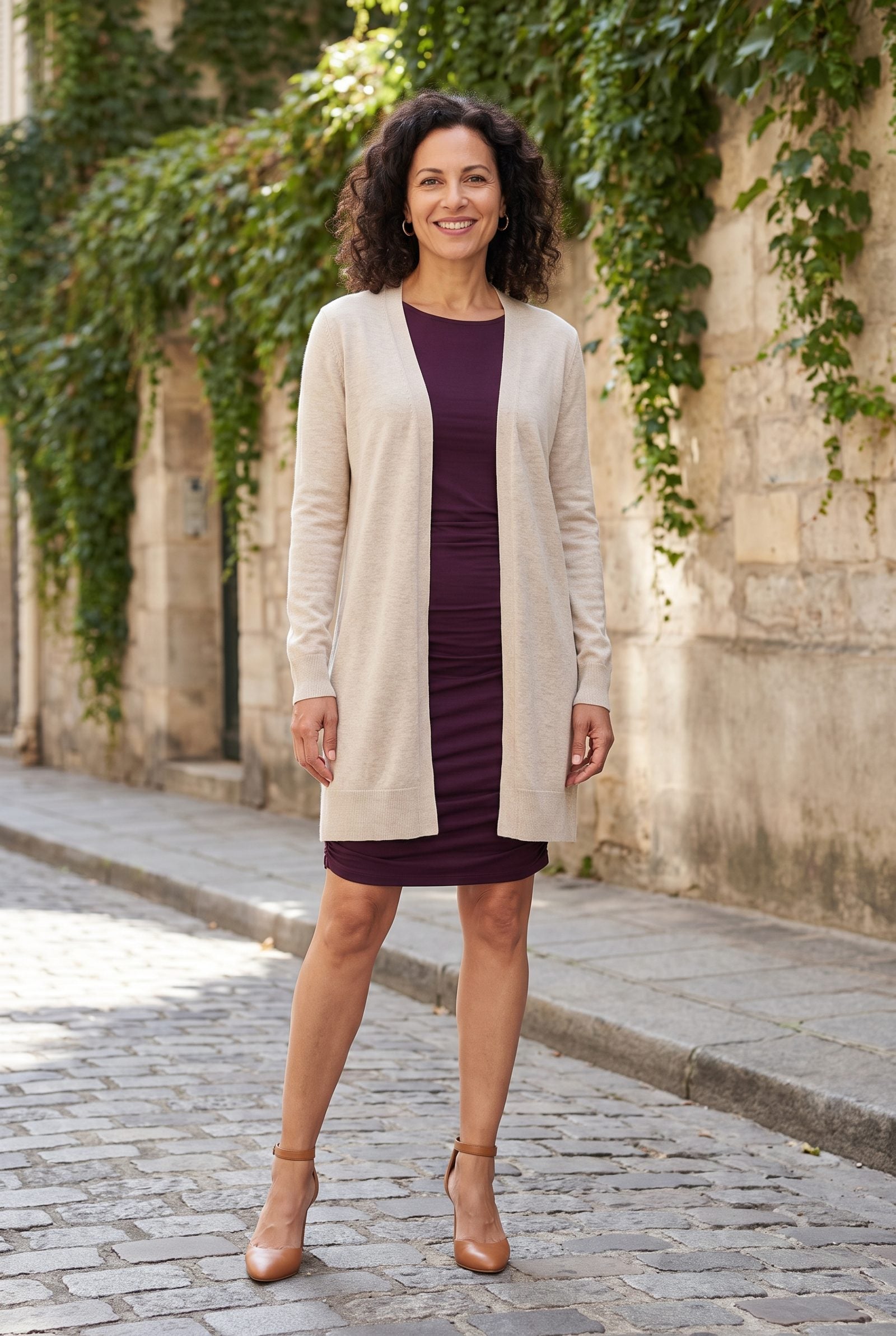
The whole point of a ruched mini is the ruching. It gathers, it flatters, it moves. Drop a knee-length cardigan over it and you’ve buried the one thing you paid for, and now the outfit reads as a long knit with mystery legs.
The fix is length. A cardigan that stops at the natural waist keeps the dress in the conversation. When the topper is longer than the dress, the dress stops existing.
19. A Drop-Shoulder Cardigan Hiding a One-Shoulder Dress
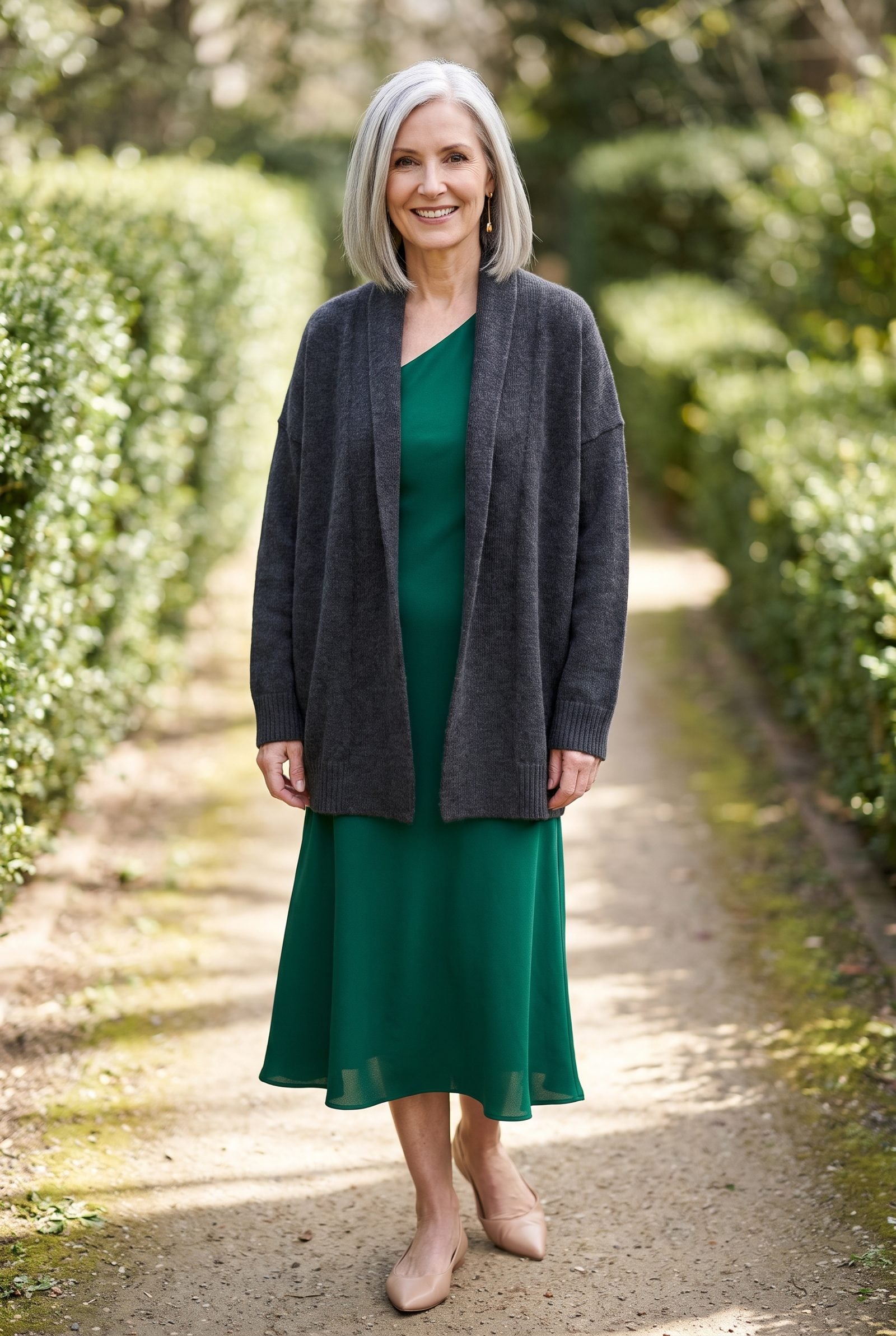
A one-shoulder dress is built around a single dramatic line: one shoulder up, one bare. Asymmetry as the whole event.
A drop-shoulder cardigan cancels it out. The dropped seams sit low and wide, the collar creeps up over the bare shoulder, and suddenly the neckline you chose vanishes under charcoal wool. You’re left with a shapeless cover-up and no memory of what’s underneath.
If you must layer over asymmetry, choose a cropped, set-in-shoulder cardigan you can leave open, so the neckline still reads. Better yet, swap the knit for a wrap you can push off both shoulders when you sit down.
18. A Chunky Fisherman Cardigan Over a Delicate Slip Dress
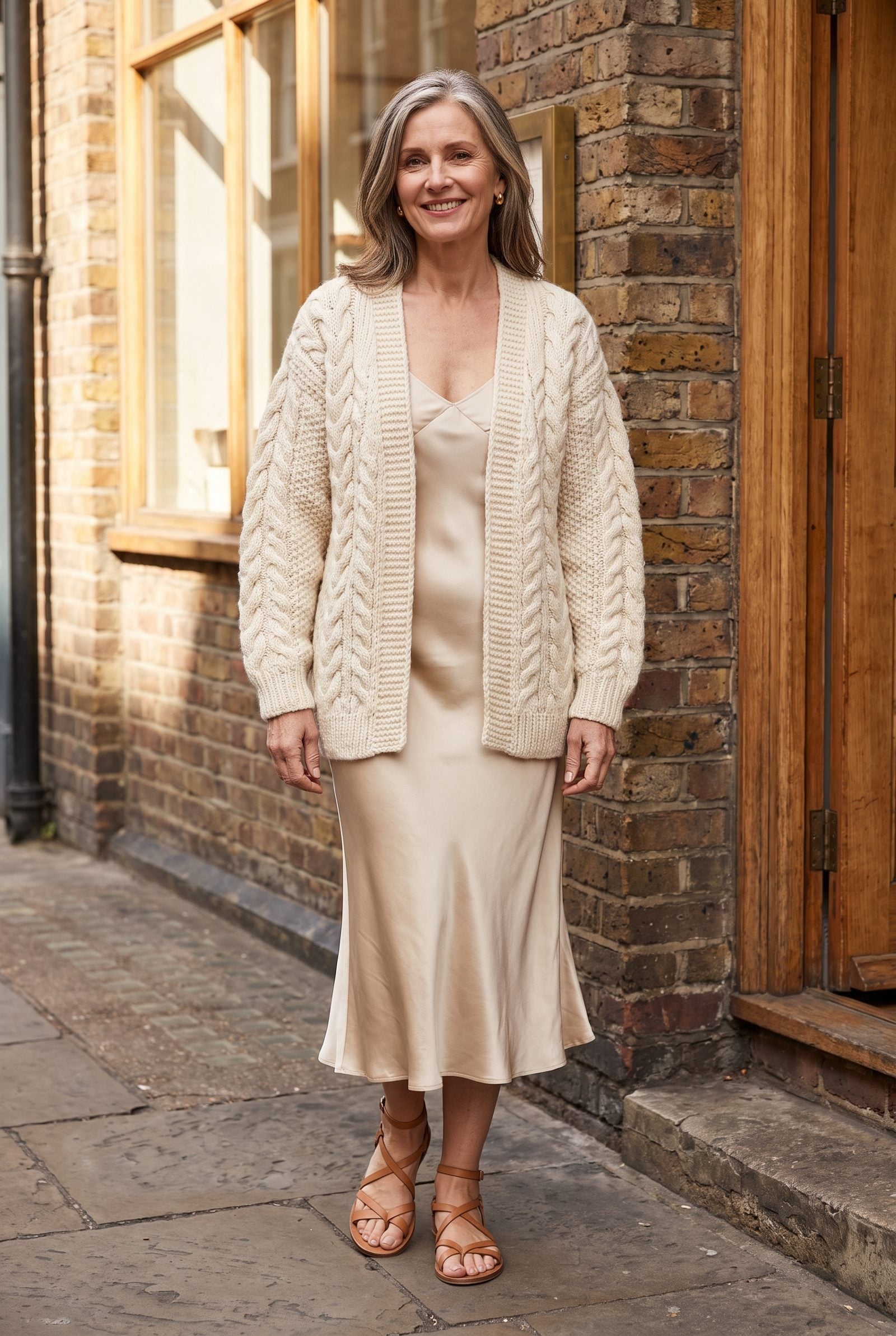
Featherweight silk. Heavyweight cable knit. This is a texture argument nobody wins.
The slip’s entire appeal is the way it skims and pours. A fisherman cardigan is architecture, all cable and rib and heft, and it sits on that liquid like a life vest. Your proportions go top-heavy, the silk drowns, and the two fabrics never once agree with each other.
17. A Longline Cardigan Hiding the Waist of a Wrap Dress
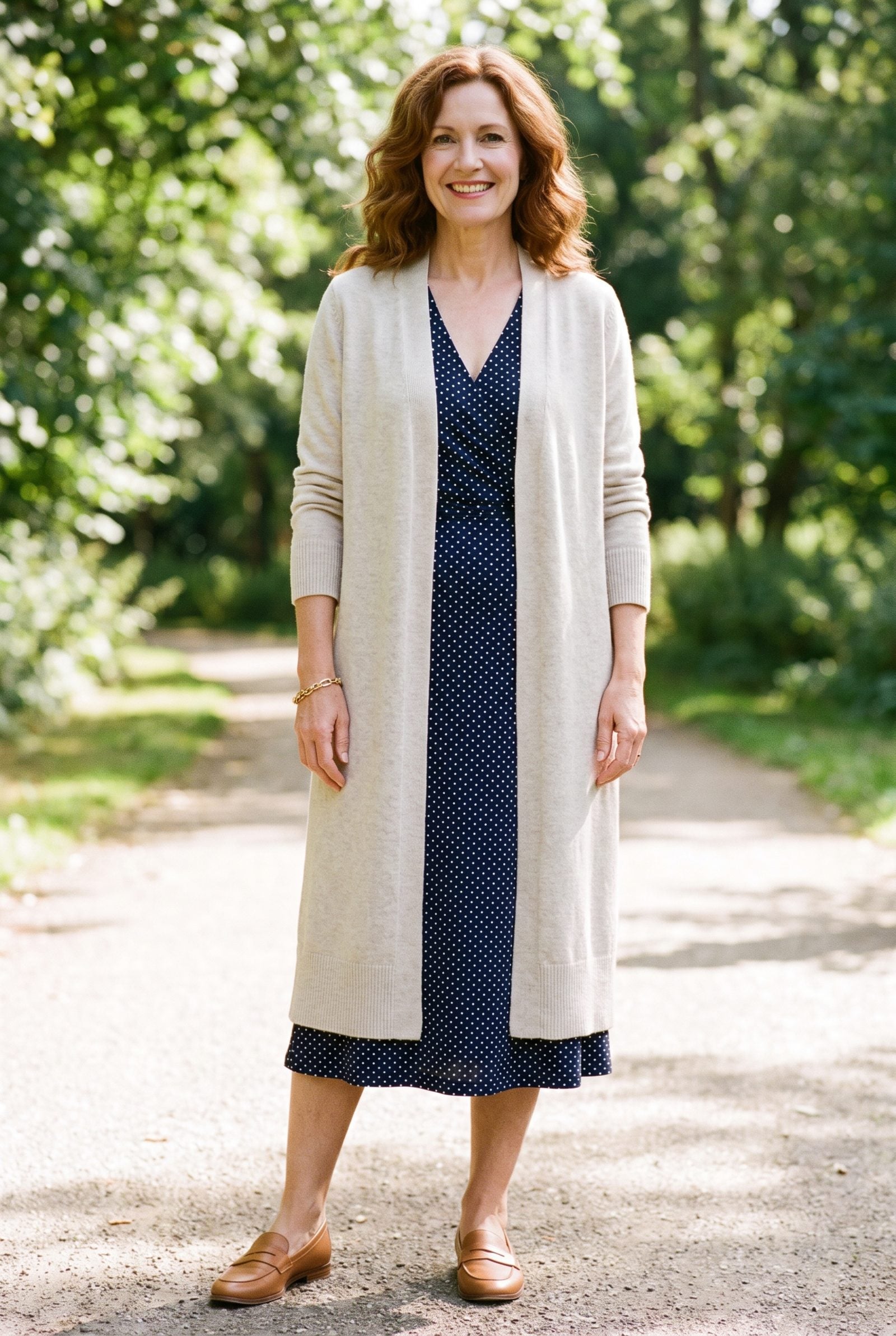
A wrap dress does one brilliant thing: it draws a waist. The tie cinches, the fabric crosses, and your shape appears out of nowhere.
An open longline cardigan erases it. Those two vertical panels of knit fall straight past the waist tie, framing the middle in shapeless fabric and turning an hourglass into a rectangle. All that waist definition, gone under oatmeal.
The move is to tie the cardigan belt over the dress, or wear a cropped knit that ends above the wrap. Whatever you do, don’t let the waist disappear. A wrap dress with a hidden waist is just a robe.
16. A Batwing Cardigan Over a Puff-Sleeve Dress
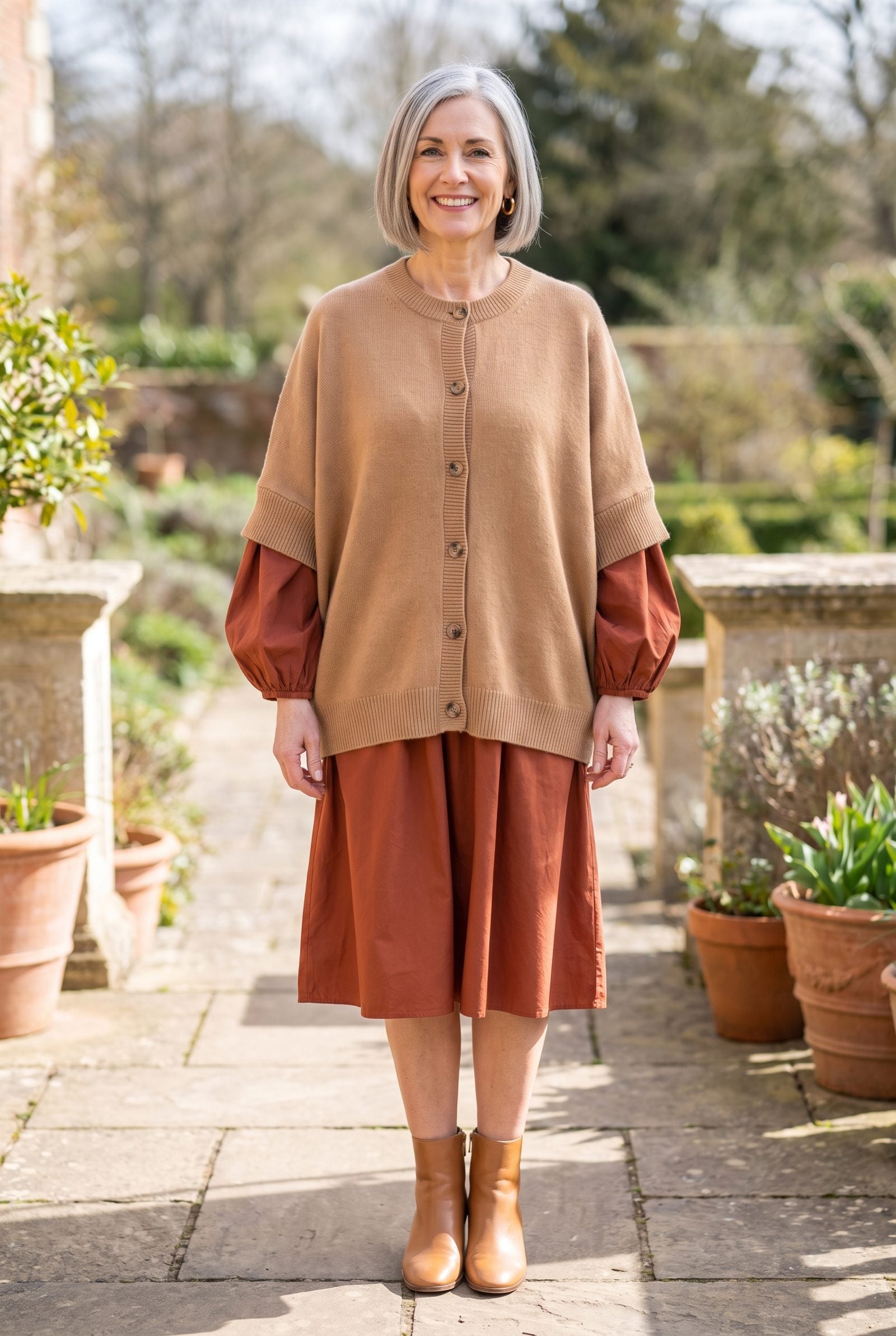
Volume on volume. That’s the trap here.
A puff sleeve is already a statement, all gathered fabric and lift at the shoulder. Stack a batwing cardigan on top, with its deep dropped armhole and yards of drape, and the two volumes compound. Your arms and shoulders balloon out while everything below vanishes.
One big shape per outfit. Pick the puff sleeve and layer a slim, close-sleeved cardigan over it, or drop the puff dress and let the batwing be the drama. Two large silhouettes fighting for the same real estate is a fight nobody wins.
15. A Shawl-Collar Cardigan Covering a Tailored Shirtdress
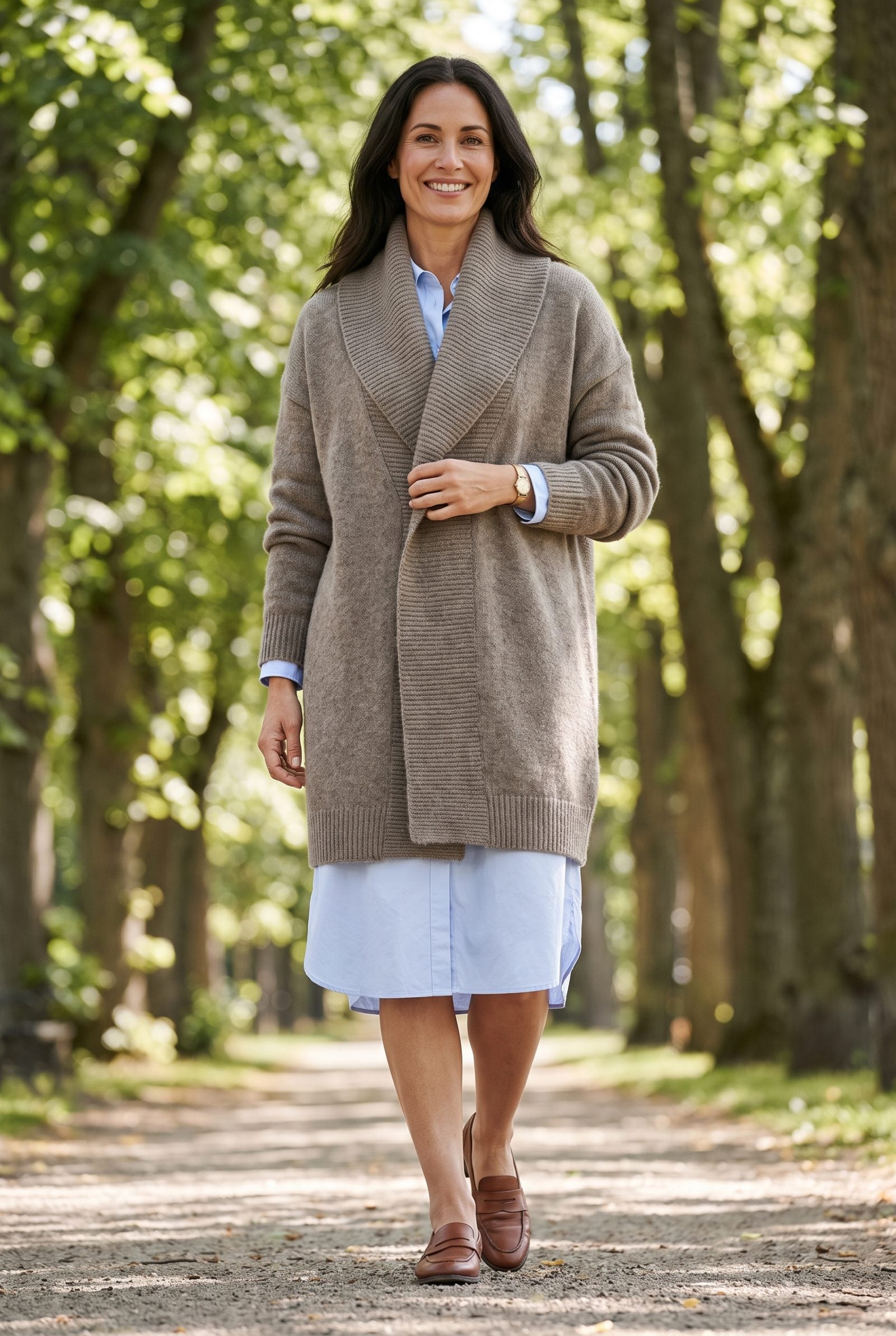
The shirtdress earns its keep with edges: the sharp collar, the button placket, the belt that snaps everything to attention. Precision is the point.
A shawl-collar cardigan is all soft roll and no edge. That big folded collar swallows the shirt collar, the bulk buries the belt, and the tailored dress goes from crisp to comfortable in the worst way.
14. A Draped Cocoon Cardigan Hiding an Asymmetric-Hem Dress
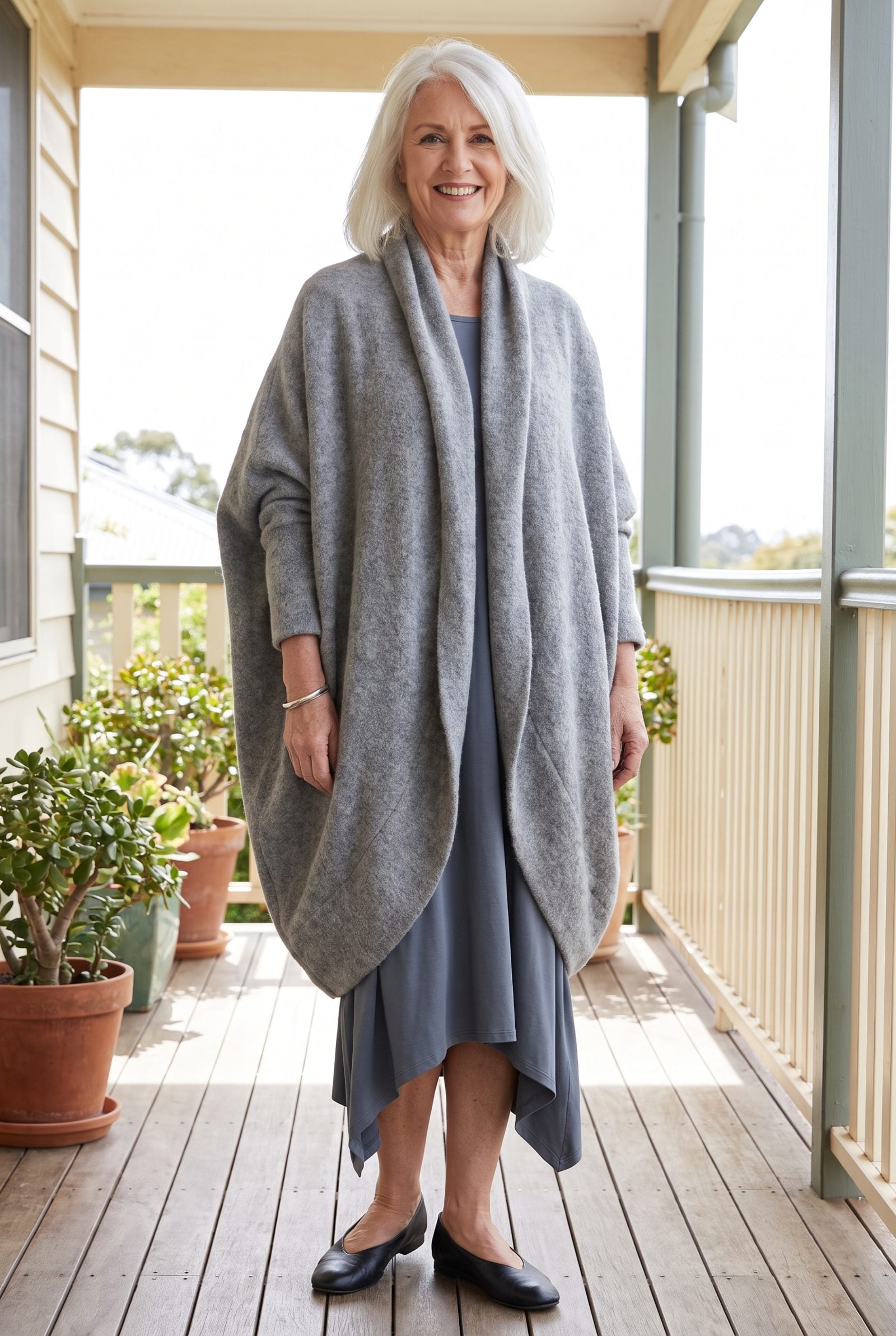
An asymmetric hem is a designed moment. It dips, it rises, it makes the dress feel deliberate. You want people to notice the line.
A cocoon cardigan has its own curved, rounded hem that swoops in toward the body. Layer the two and their edges collide, and nobody can tell where the cardigan ends and the dress begins, so the intentional asymmetry just reads as an accident.
Save the cocoon for a straight-hem dress where its curve is the only shaped edge. Over an uneven hemline, wear something with a clean horizontal edge so the dress can do its thing.
13. A Waterfall Cardigan Draped Across a Pleated Midi Dress
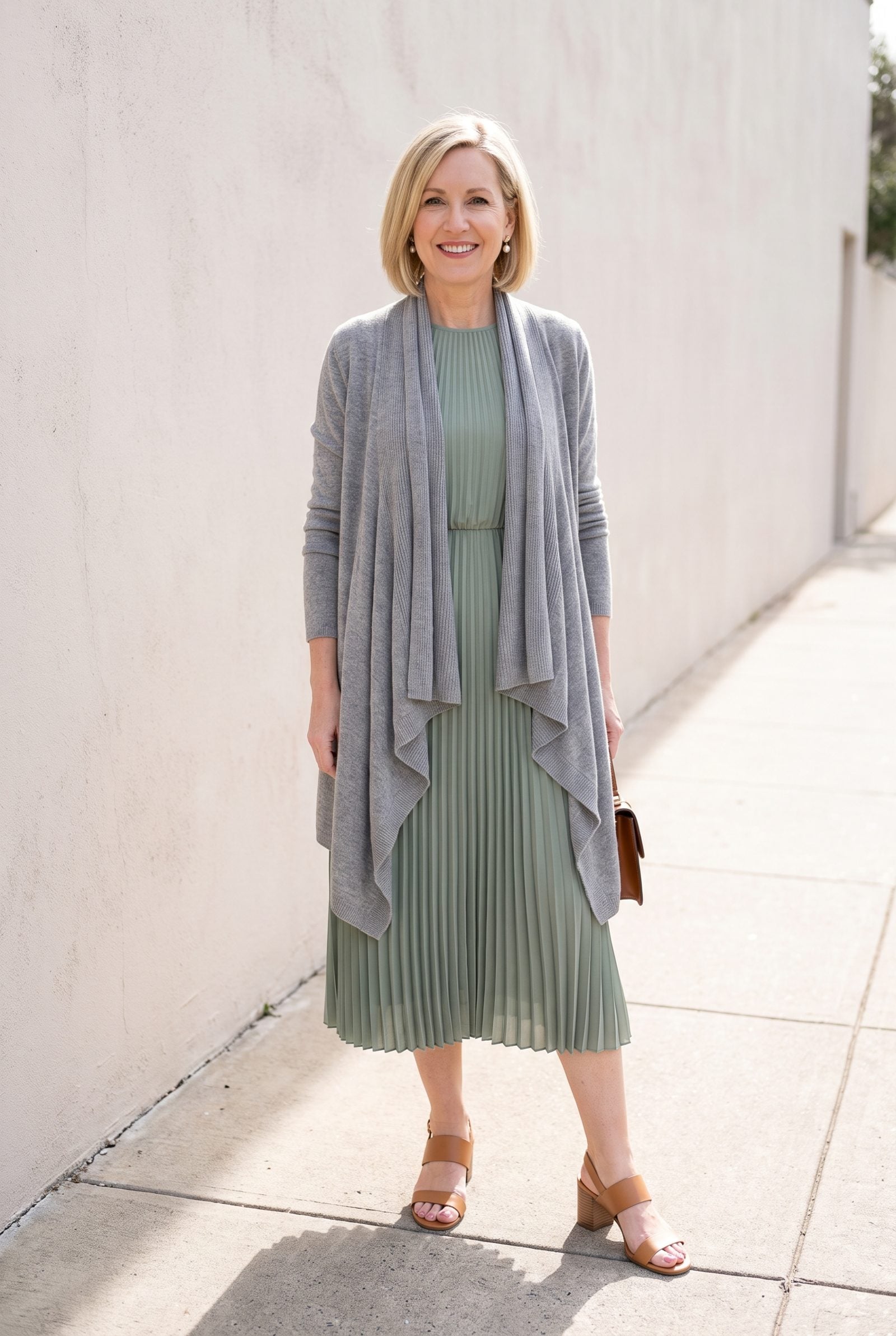
Two competing verticals, and neither wins.
Accordion pleats already create rhythm down the body, all those fine parallel lines. A waterfall cardigan adds its own cascade of draped folds right down the center. The eye can’t settle. Both textures cancel out, and the outfit reads as busy fabric with no clear shape.
Pleats want a quiet layer. A structured cropped cardigan or a slim cardigan in a flat knit lets the pleats stay the star. When you’ve got movement in the dress, keep the topper still.
12. A Fuzzy Mohair Cardigan Over a Ruffled Prairie Dress
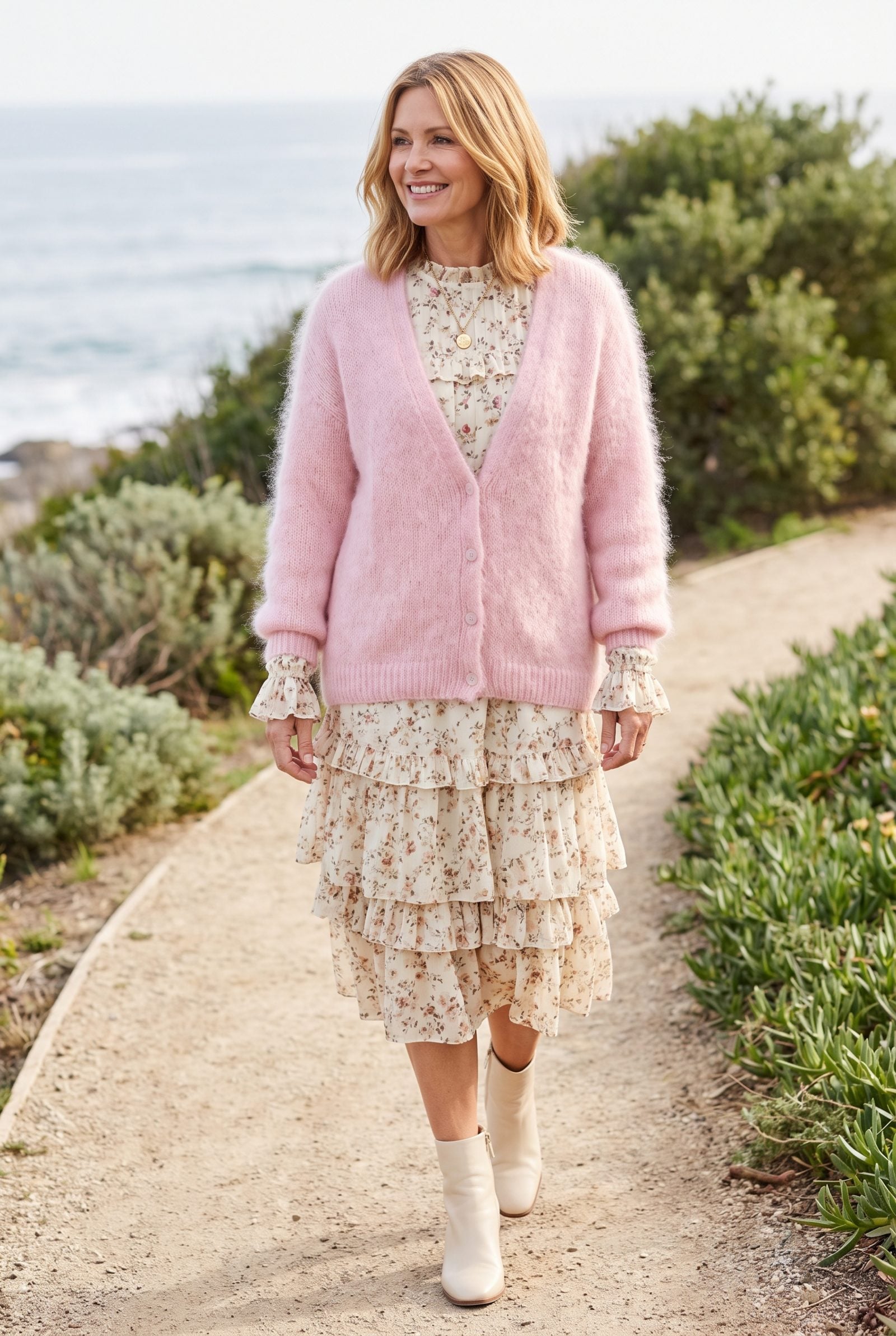
Fuzz over ruffles is texture on texture, and the fuzz always wins.
Mohair has a halo, that soft blur of fiber that softens everything it touches. Lay it over a prairie dress full of crisp tiered ruffles and the ruffles go fuzzy at the edges, their detail lost in the haze. Two soft, fussy textures compete and the result reads unfocused.
11. A Hooded Cardigan Over a Structured Sheath Dress
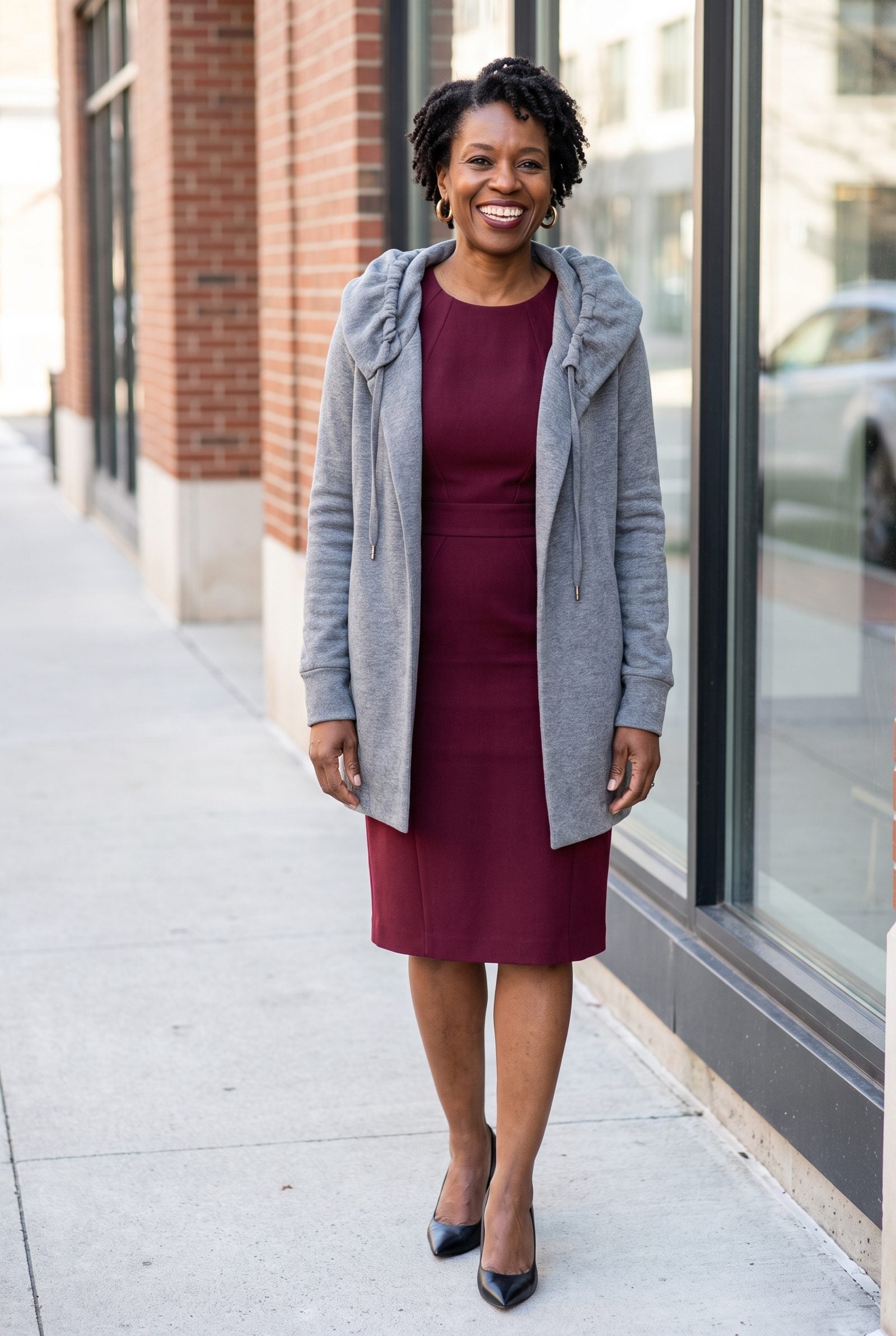
A sheath dress is polish in physical form: clean lines, a defined waist, sharp shoulders that mean business. It walks into a room and settles it.
A hooded cardigan is off-duty energy. That soft drawstring hood bunches thick at the back of the neck and pools over the sharp shoulders, dragging the whole look from boardroom to leggings-and-coffee. The register whiplash is what kills it.
Formality wants to match formality. Over a sheath, reach for a fine-gauge collarless cardigan, a tailored knit blazer, or a wrap you can leave clean at the neck. Save the hood for the weekend. A structured dress deserves a topper that respects its posture, honestly.
10. A Balloon-Sleeve Cardigan Over a Tiered Smock Dress
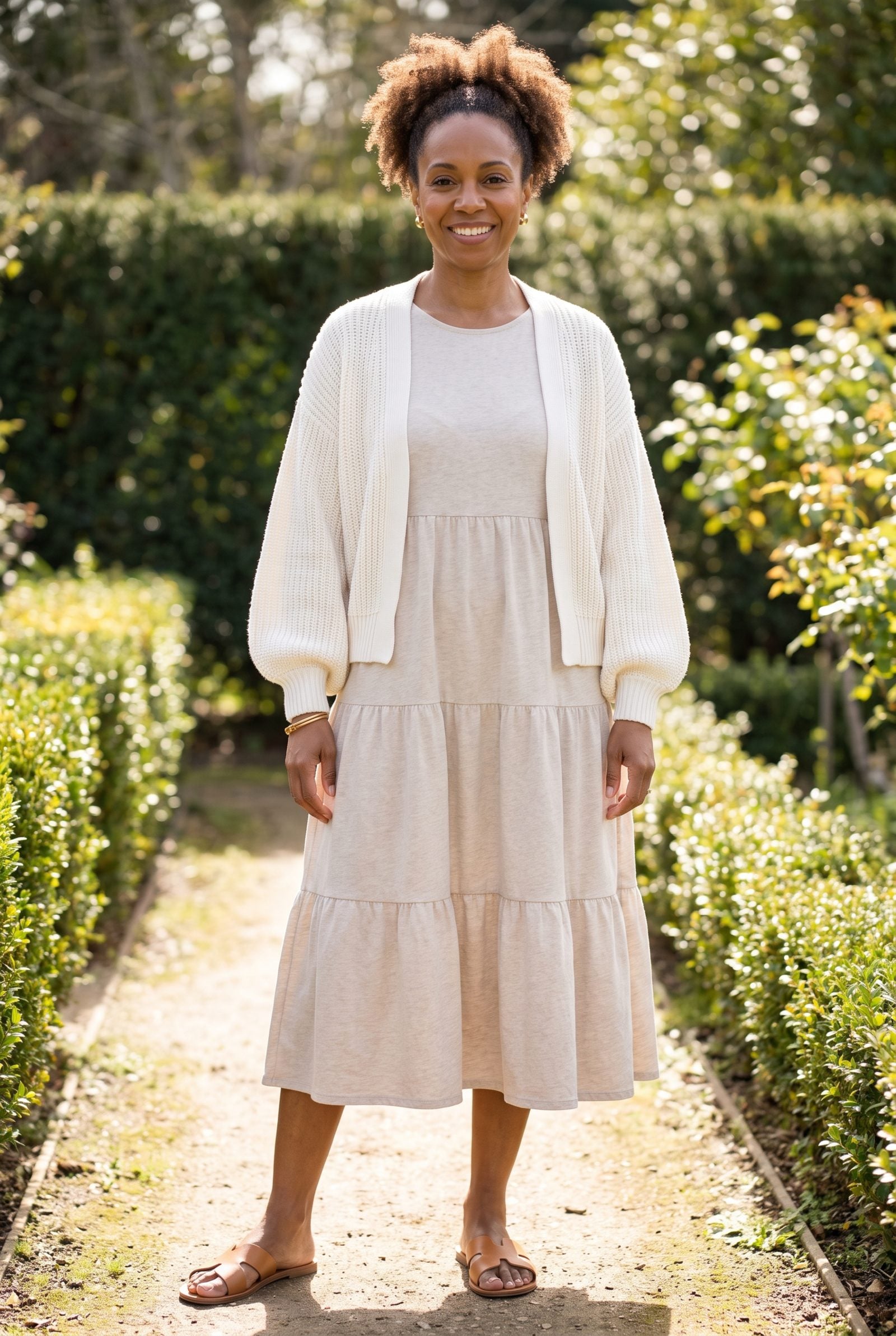
Two volume machines running at once. The smock dress already puffs at the chest and tiers out below, and the balloon sleeve piles a second dome of fabric right where your arms meet your torso. Nothing tapers, so the eye finds no line to follow down.
We took one look and the fix was obvious: pick a sleeve or a silhouette to be the loud one, never both. A slim ribbed cardigan over the same dress would let those tiers breathe. And a balloon sleeve? It wants a column dress underneath — something quiet enough to hold still while the arms do all the talking.
9. A Cardigan With Giant Patch Pockets Over a Minimal Column Dress
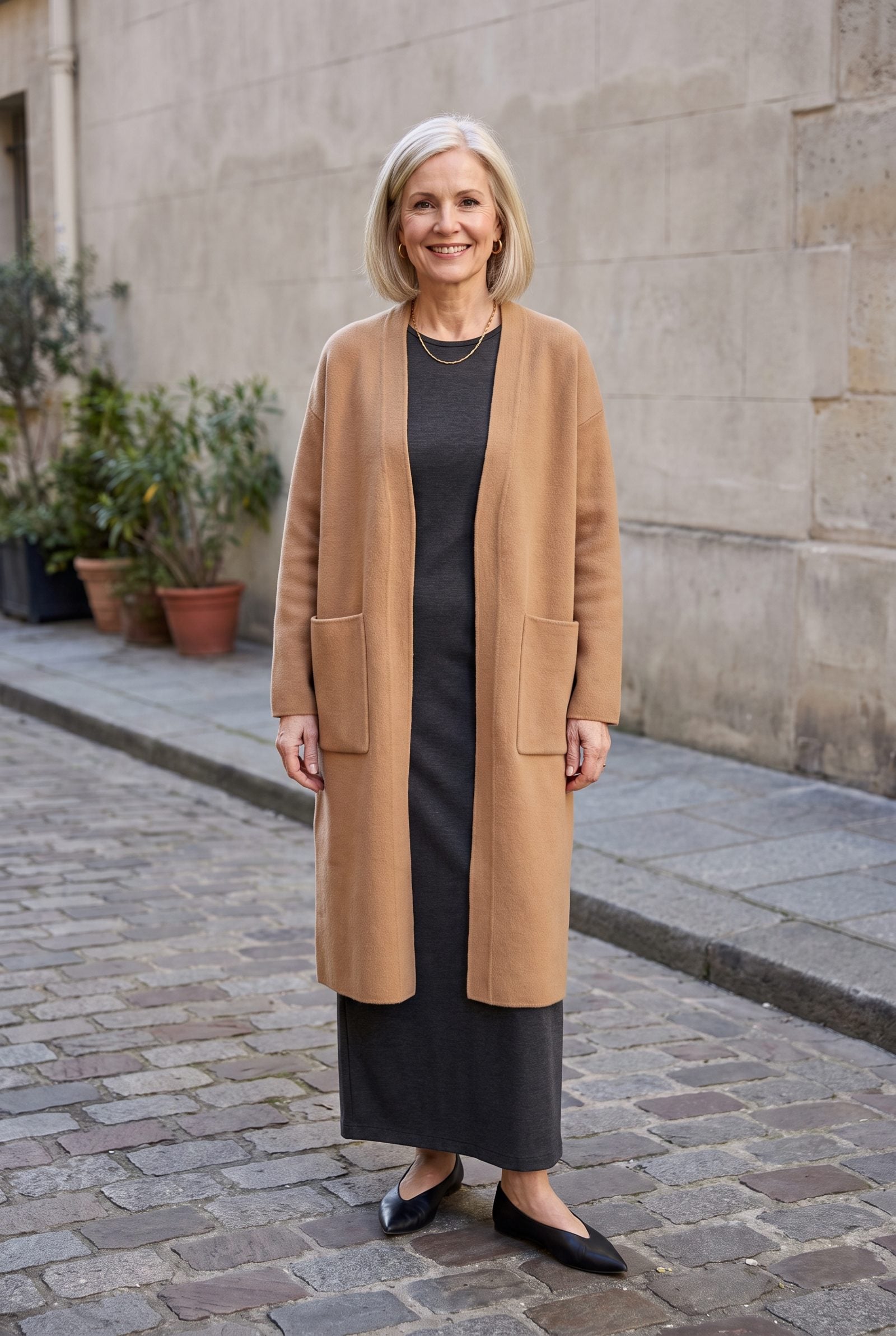
The dress underneath is doing everything right — clean charcoal jersey, a straight line from shoulder to ankle, the kind of narrow that adds height by default. Then the cardigan drops two boxy patch pockets at the widest part of the hip and hands all that vertical work straight back.
Patch pockets carry weight. Set them low and wide and they draw a hard horizontal line exactly where you’d rather have none. A slim cardigan with a clean placket keeps the column intact. And if you genuinely love the pockets? Size the dress up into something with its own drama, so the two pieces aren’t scrapping over the same real estate.
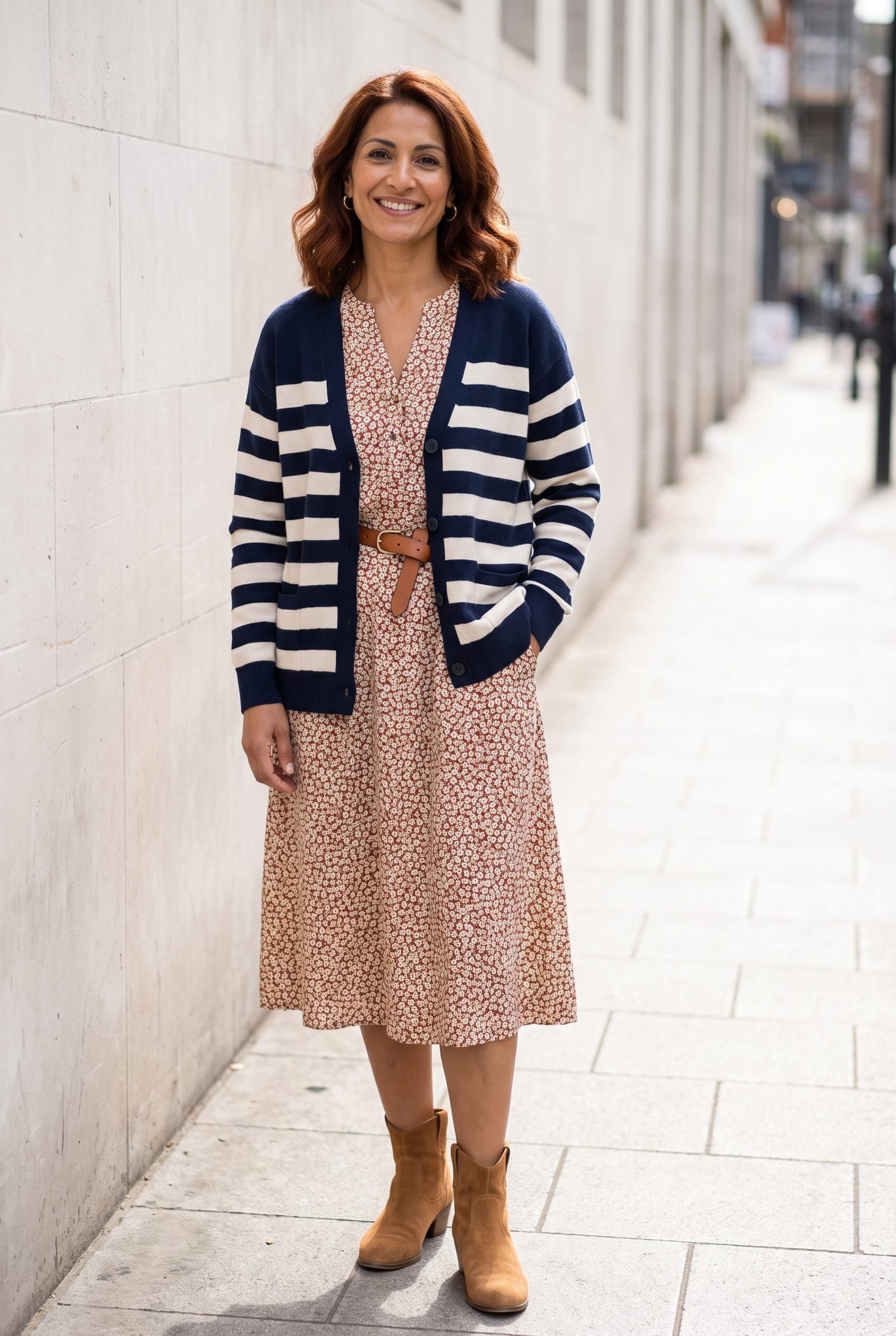
8. A Wide-Striped Cardigan Over a Small-Print Tea Dress
❤️ Would you like to save this?
Scale is the quiet rule most pattern-mixing breaks. A ditsy floral tea dress speaks in whispers, tiny rust blooms scattered close together — and then a wide horizontal stripe barges in shouting, and your eye can’t decide where to land, so it just registers busy.
The clash isn’t the two patterns. It’s the gap between their sizes. Pair that small floral with a fine pinstripe and they’d hum along together. Or drop the pattern up top entirely and let a solid cardigan frame the print like a mat around a painting.
7. A Thick Belted Cardigan Over a Belted Utility Dress
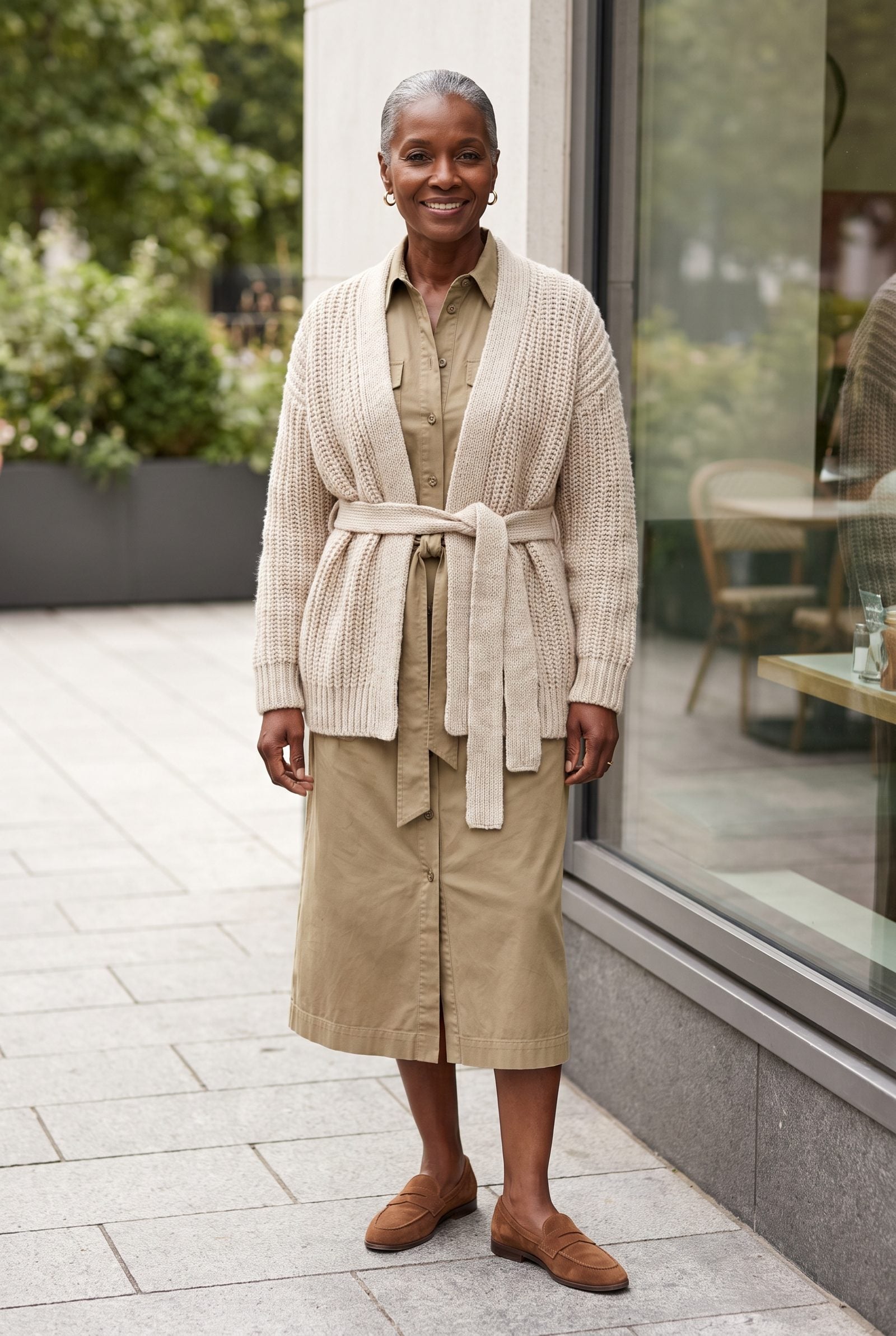
Two waists, one waistline. The utility dress already cinches with its own tie, and then a thick knit cardigan belts over the top, and now there’s a rope of bulky wool sitting exactly where you were trying to look defined.
Chunky knit and a belt are natural enemies. The fabric wants to bunch, the belt forces it into folds, and the whole midsection puffs outward. So skip the outer belt and let the cardigan hang open over the belted dress. The dress does the shaping. The open front drops two clean vertical lines down the middle. And your waist actually shows up.
6. A Cardigan Buttoned to the Neck Over a Collared Dress
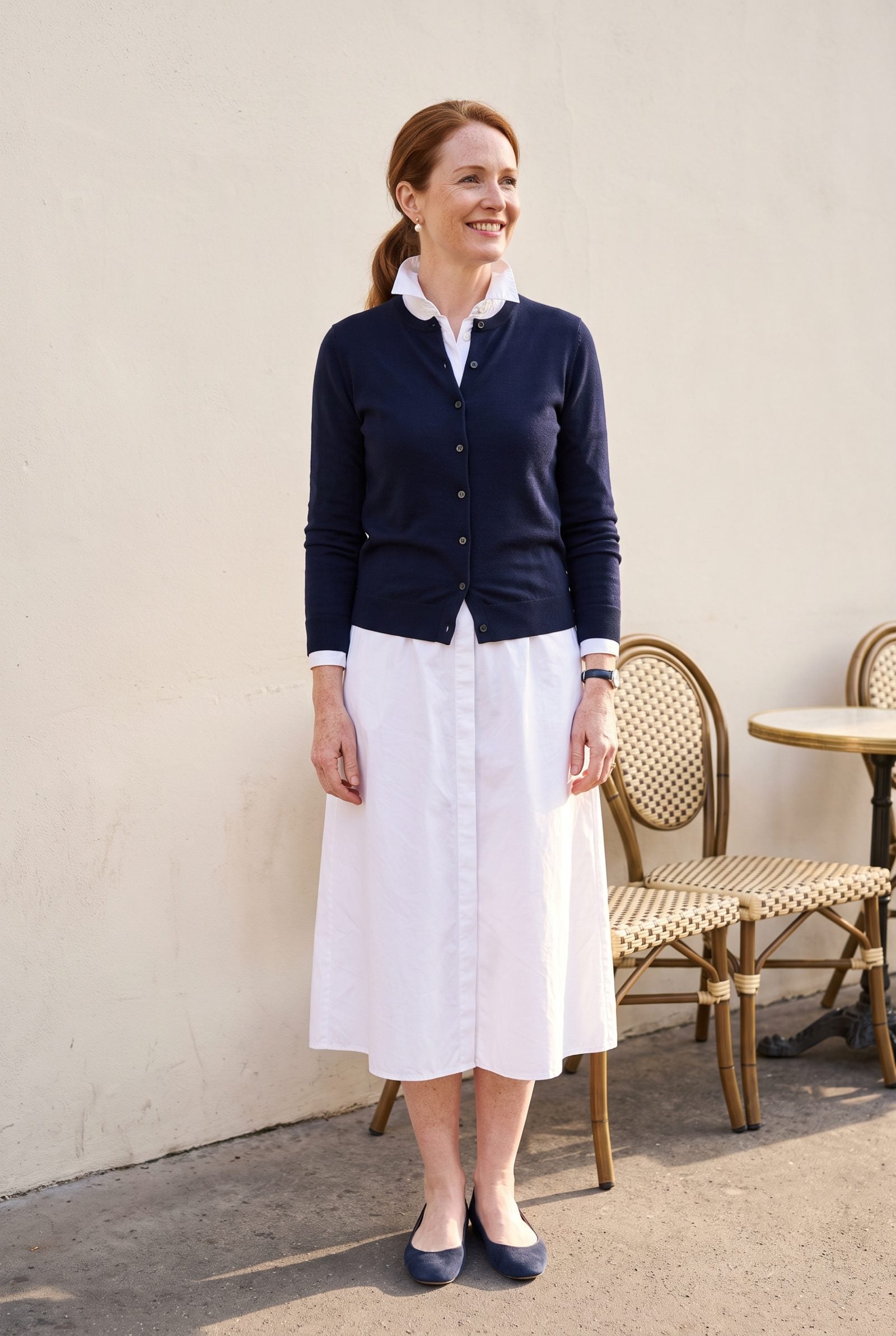
A collar wants air. Button a cardigan to the very top and you trap that collar underneath, where it buckles and pokes out sideways, and the whole neckline closes up like a fist — tight, warm, buttoned-up in the least appealing sense of the word.
Leave the top two or three buttons open and let the collar sit outside, framing your face. That open V lengthens the neck and hands the dress its structure back. Buttoned to the throat is a real look — it just belongs over a crewneck, not over a shirt collar that has nowhere to go.
5. A Fringed Cardigan Over an Embroidered Bohemian Dress
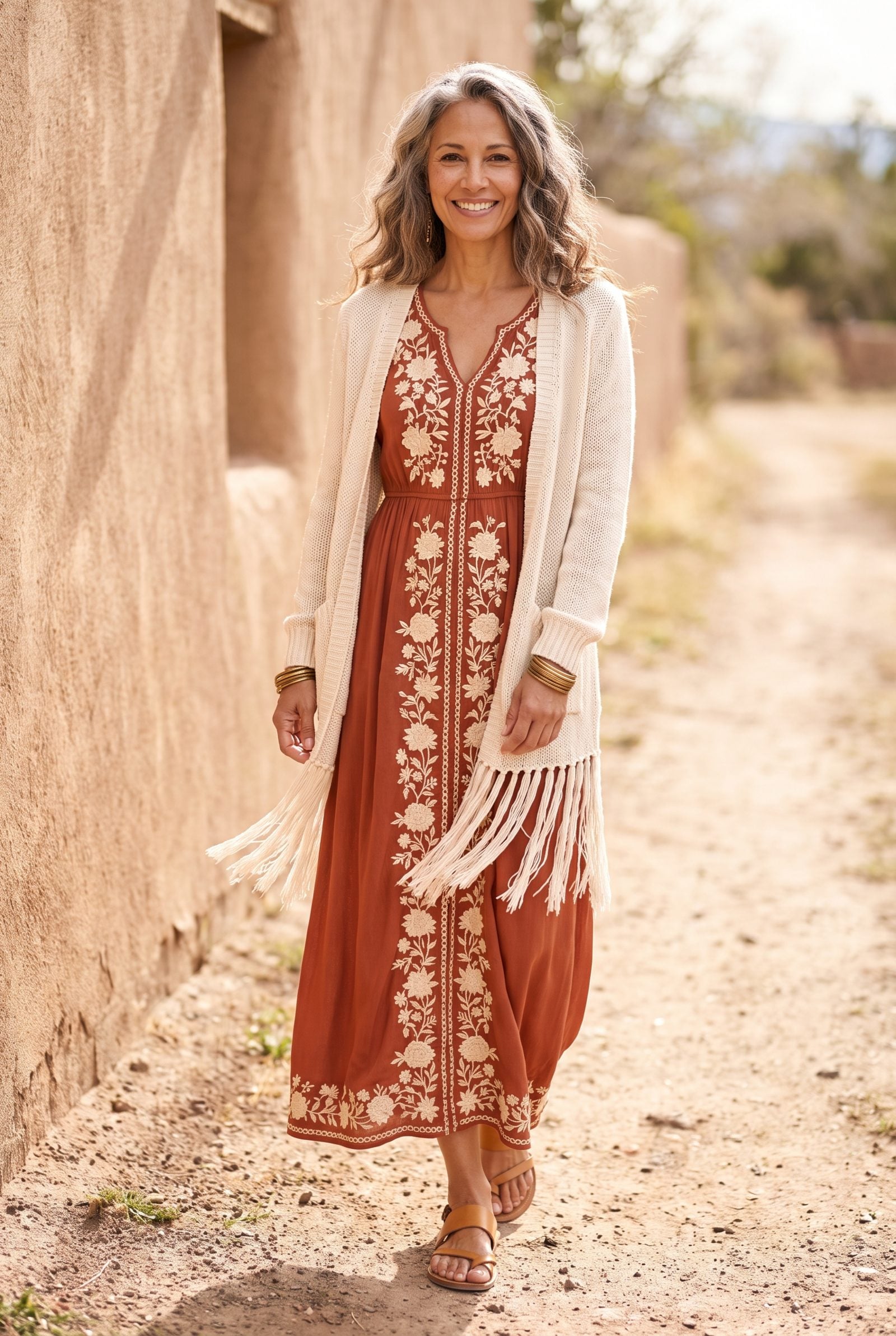
Texture on texture on texture. The bohemian dress already carries dense embroidery down the front, and the fringed cardigan drapes long tassels right over it, so the two most detailed surfaces in the whole outfit end up brawling for the same square foot of your torso.
Fringe moves. Embroidery holds still. Layer them and the eye never settles, and the beautiful hand-worked panel you paid good money for vanishes behind six inches of swinging yarn. One statement texture per outfit — that’s the whole rule. A smooth suede or plain knit cardigan over this dress would let the embroidery lead. Save the fringe for a solid slip.
4. A Peplum Cardigan Over a Peplum Dress

Peplum plus peplum equals a tutu you didn’t order. Both pieces flare out at the exact same waistline, so instead of one clean structured curve you get two ruffles jostling for the same air, doubling the width right at the hip.
A peplum is a strong, deliberate shape, and it only works solo. Put a peplum dress under a flat straight cardigan and the dress keeps its lines. Flip it — a peplum cardigan over a slim sheath — same deal. Stack two of them and you cancel the whole effect while adding inches nobody asked for.
3. A Cardigan With Oversized Lapels Over a Blazer Dress

The blazer dress already has a collar with a plan — sharp notch lapels, a structured shoulder, a whole tailored story unfolding at the neckline. Now layer a chunky cardigan with its own five-inch shawl lapels on top, and two collars start wrestling, one crisp and one soft, and the soft one wins by sheer bulk.
A tailored dress with a real lapel wants a collarless topper, or nothing. A round-neck cardigan. A shrug. A collarless knit jacket — anything without competing lapels. Pile two collars together and you just crowd the shoulders and blur the exact tailoring you got dressed up for.
2. A Thick Zip Cardigan Over a Satin Cocktail Dress
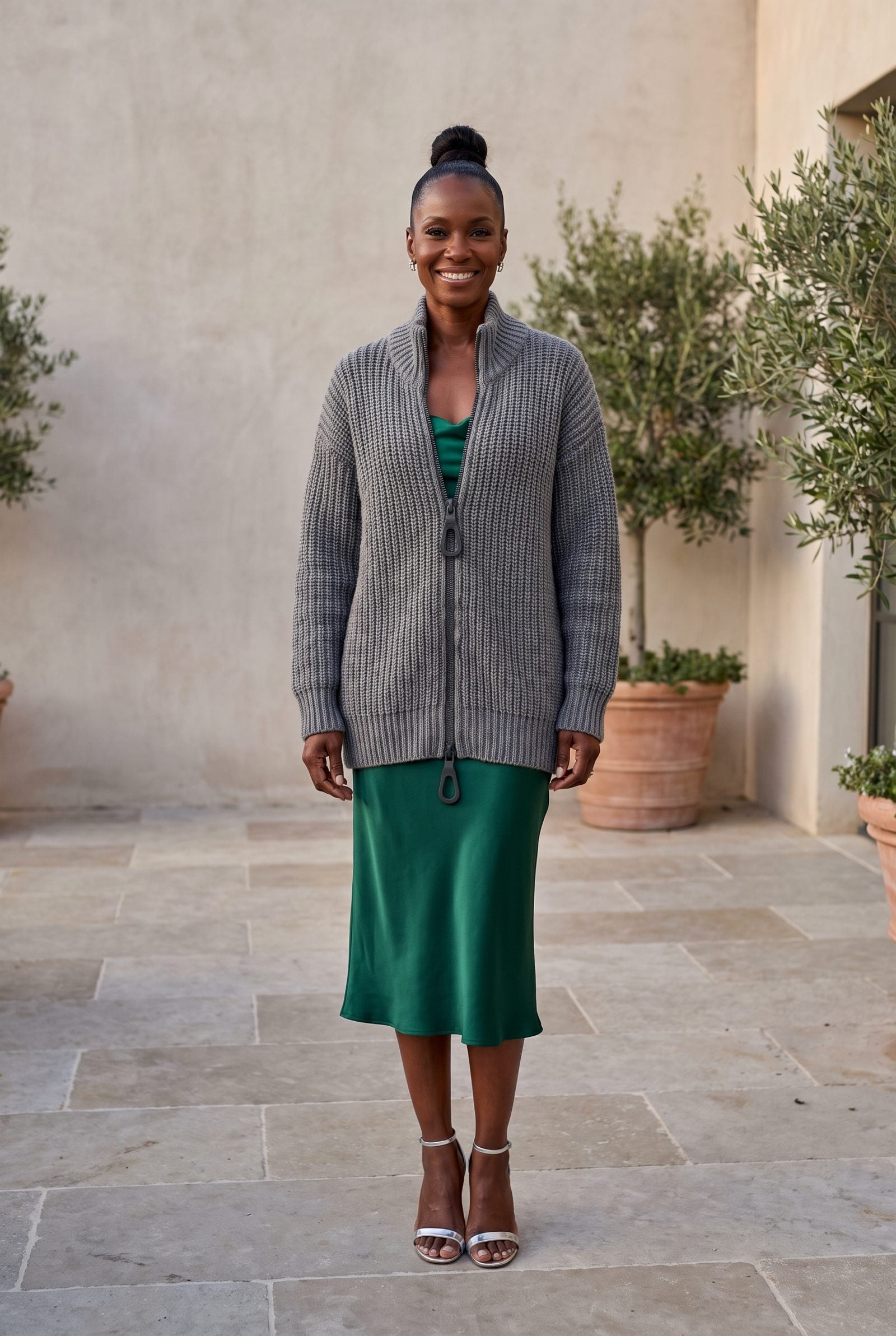
Satin lives in how it moves and catches light. Zip a heavy matte cardigan over it and you kill both at once. The dense knit flattens that fluid drape, the ribbed zip hem slices a hard line across a soft dress, and the gorgeous emerald sheen disappears under grey wool.
The weight mismatch is the real crime here. Delicate satin under bulky sportswear knit reads confused — like two different occasions collided in a coat check. If the room’s cold, reach for a fine silk-blend cardigan or a lightweight wrap, something that skims instead of smothers, and let the satin keep its shine.
1. A Floor-Skimming Cardigan Over a Floral Maxi Dress
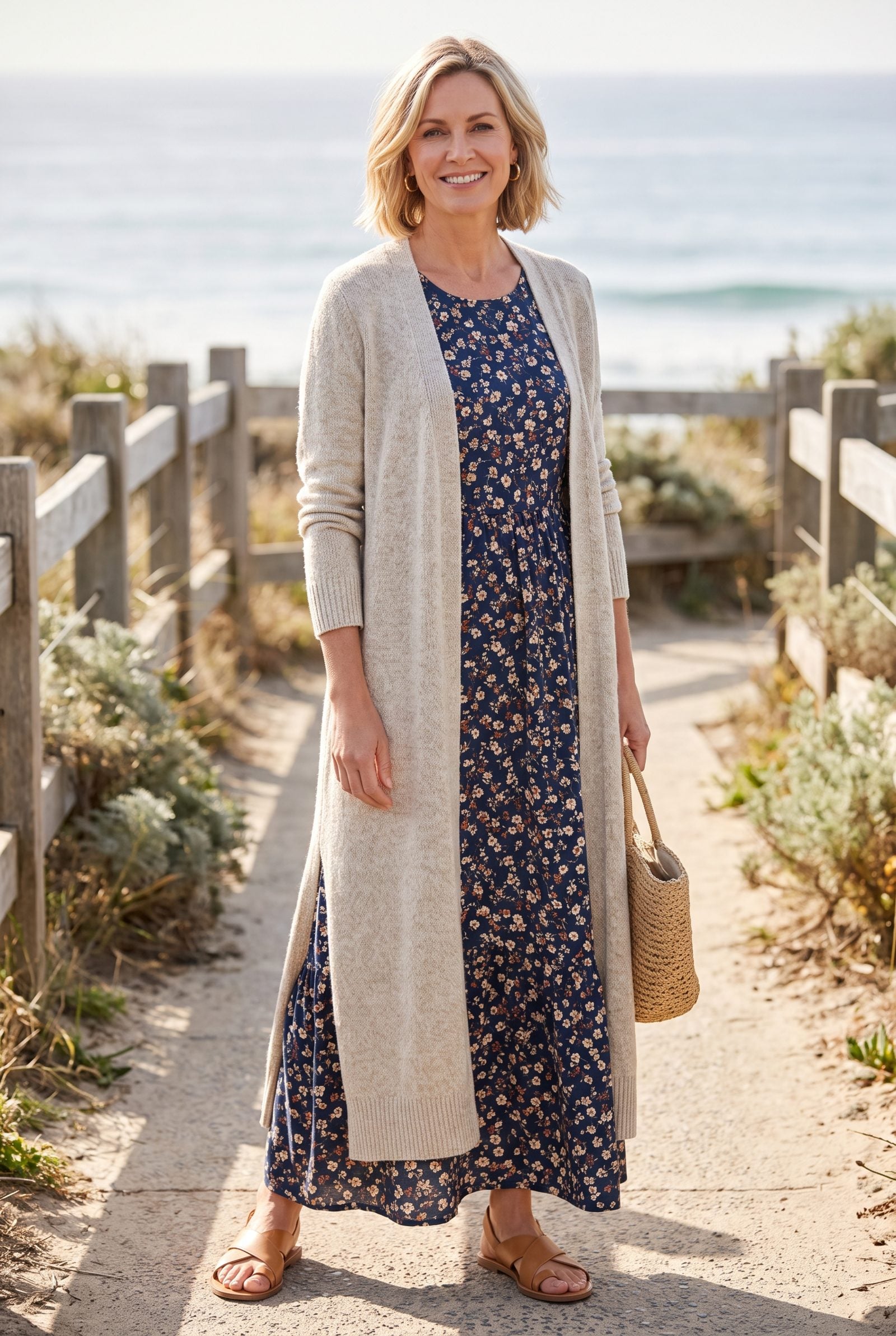
Length matching length erases the reveal. The duster falls to the floor, the maxi falls to the floor, and both hems land in the same spot — so the cardigan turns into a full-length curtain over the floral you actually wanted to show off. All anyone catches is a thin stripe of print down the middle.
A duster over a maxi needs contrast in the hemlines. Stop the cardigan at the knee or high thigh over a floor-length dress and you create two layers the eye can read, print peeking below solid knit. Same length top and bottom flattens the whole thing into one long tube. Break that line and the outfit gets its depth back, and the duster cardigan starts working with the dress instead of swallowing it whole.