

A turtleneck under a blazer should read as the easiest polish in your closet. Half the time it reads as armor instead. The neck bunches, the shoulders square off, and the whole thing stiffens into something braced for a photograph nobody asked for. The gap between sophisticated and starched is small. It almost always comes down to one decision — fabric weight, a collar that’s too tall, a proportion fighting itself. Below are the ones that trip up women who otherwise know exactly what they’re doing.
FYI, thanks to AI imagery software, we’re able to create very specific fashion and hairstyle examples to illustrate the points being made. In some cases, imagery is exaggerated to hammer home the point. Also, assume links that take you off the site are affiliate links such as links to Amazon. this means we may earn a commission if you buy something.
24. Chunky Cable Turtleneck Crammed Under a Shrunken Blazer
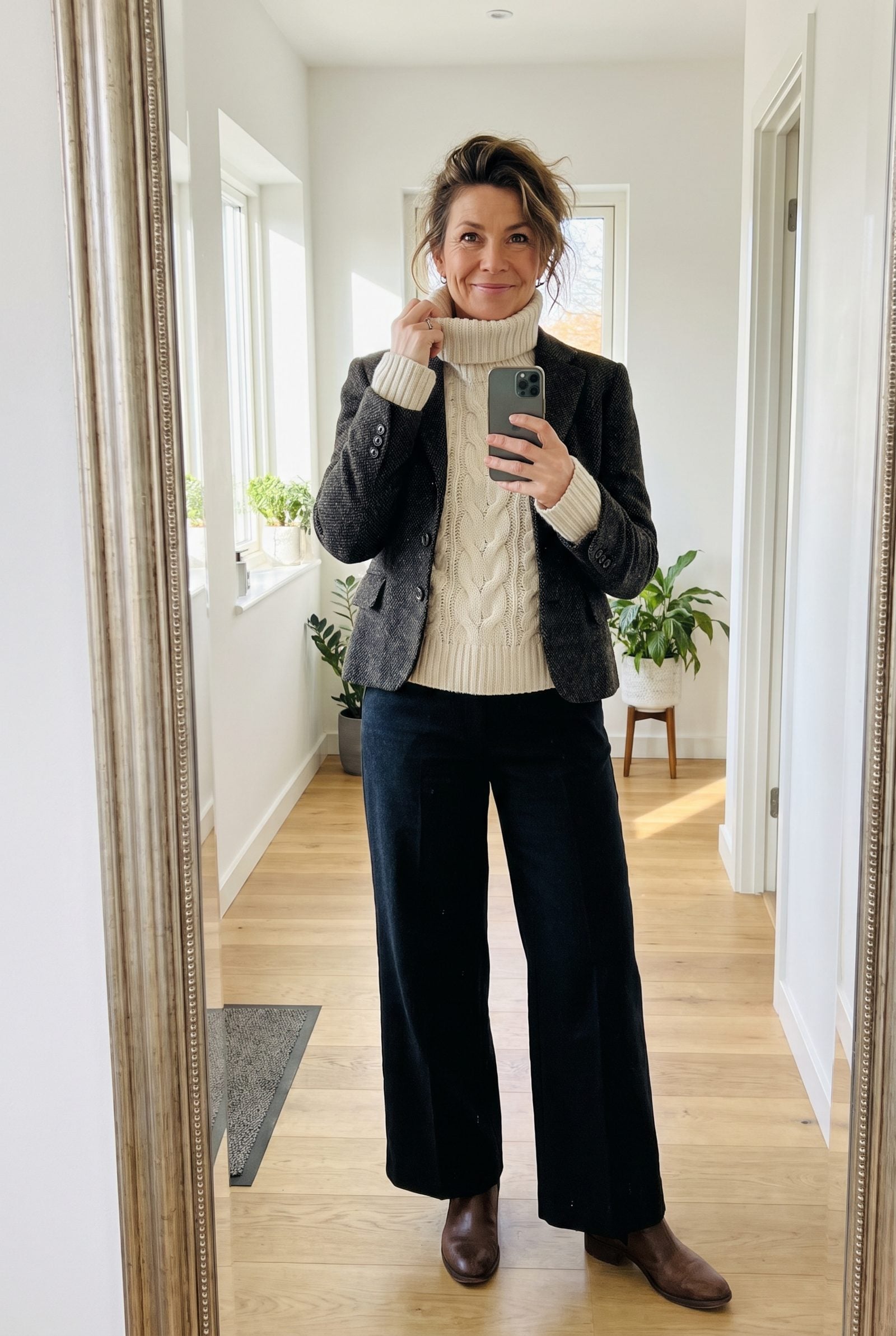
Heavy knit plus a shrunken jacket is a volume collision. The cable adds inches the blazer was never cut to hold, so the lapels gape, the chest pulls, and the whole thing looks like it’s holding its breath.
Fix it by going thin-gauge merino, or by choosing a blazer with real ease. One of the two has to give. When both pieces fight for the same space, sophistication loses.
Describing the fine-knit roll neck his store sells to wear under tailoring, one menswear shop co-founder says “It’s thin enough that it does not affect the jacket’s silhouette and can even be tucked into trousers for a very neat, sharp look.”
23. Shoulder-Padded Blazer Over a Sculpted Funnel Neck
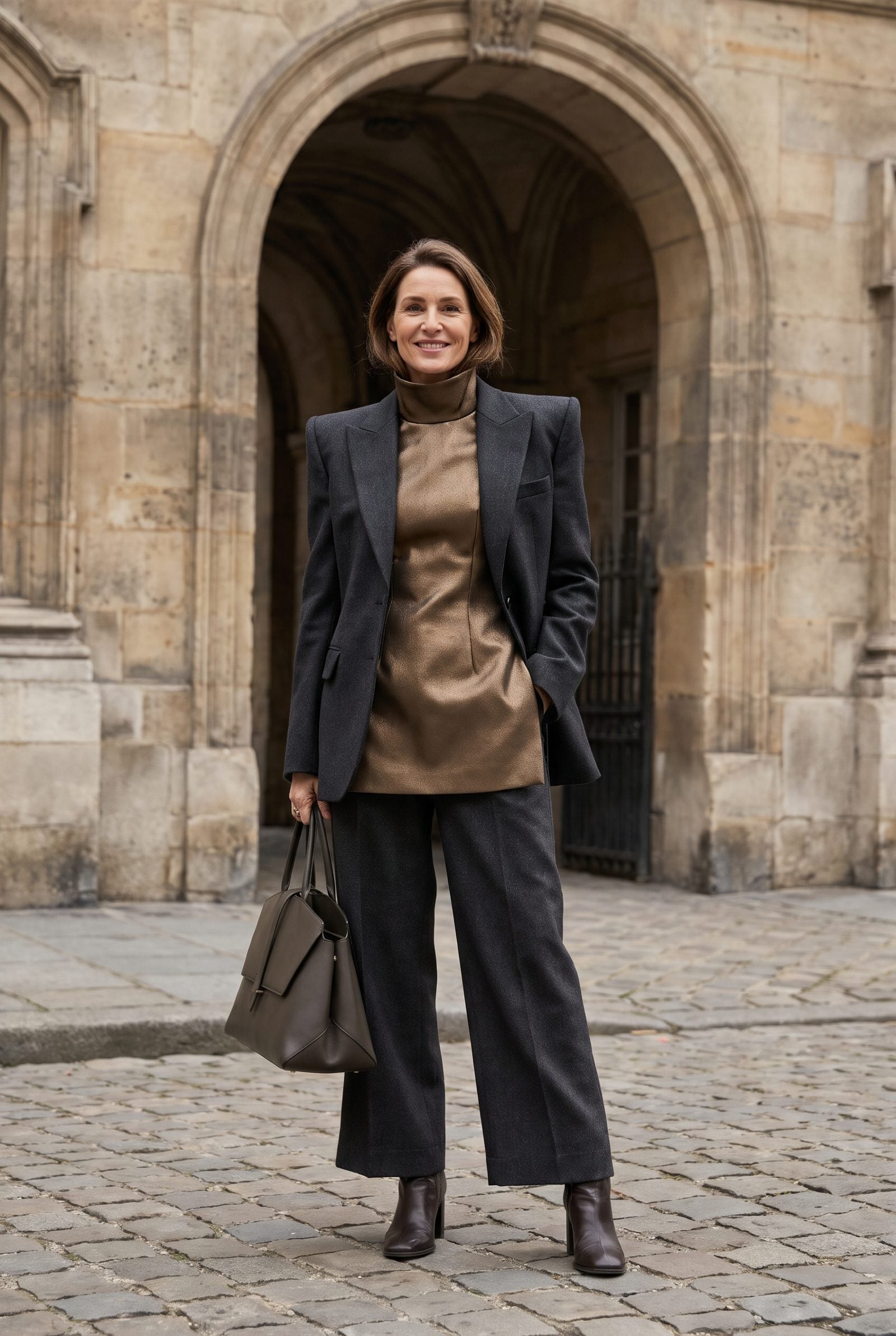
Two rigid elements stacked build a fortress, not a silhouette. A funnel neck already stands away from the body with structure of its own. Pile a padded shoulder on top and you’ve walled yourself in from jaw to arm.
Soft shoulders rescue a high neck. An unstructured or dropped-shoulder blazer lets the funnel be the sculptural moment without competition. Pick one point of rigidity and let everything around it breathe.
22. Double-Breasted Jacket Buttoned Tight Over Heavy Wool
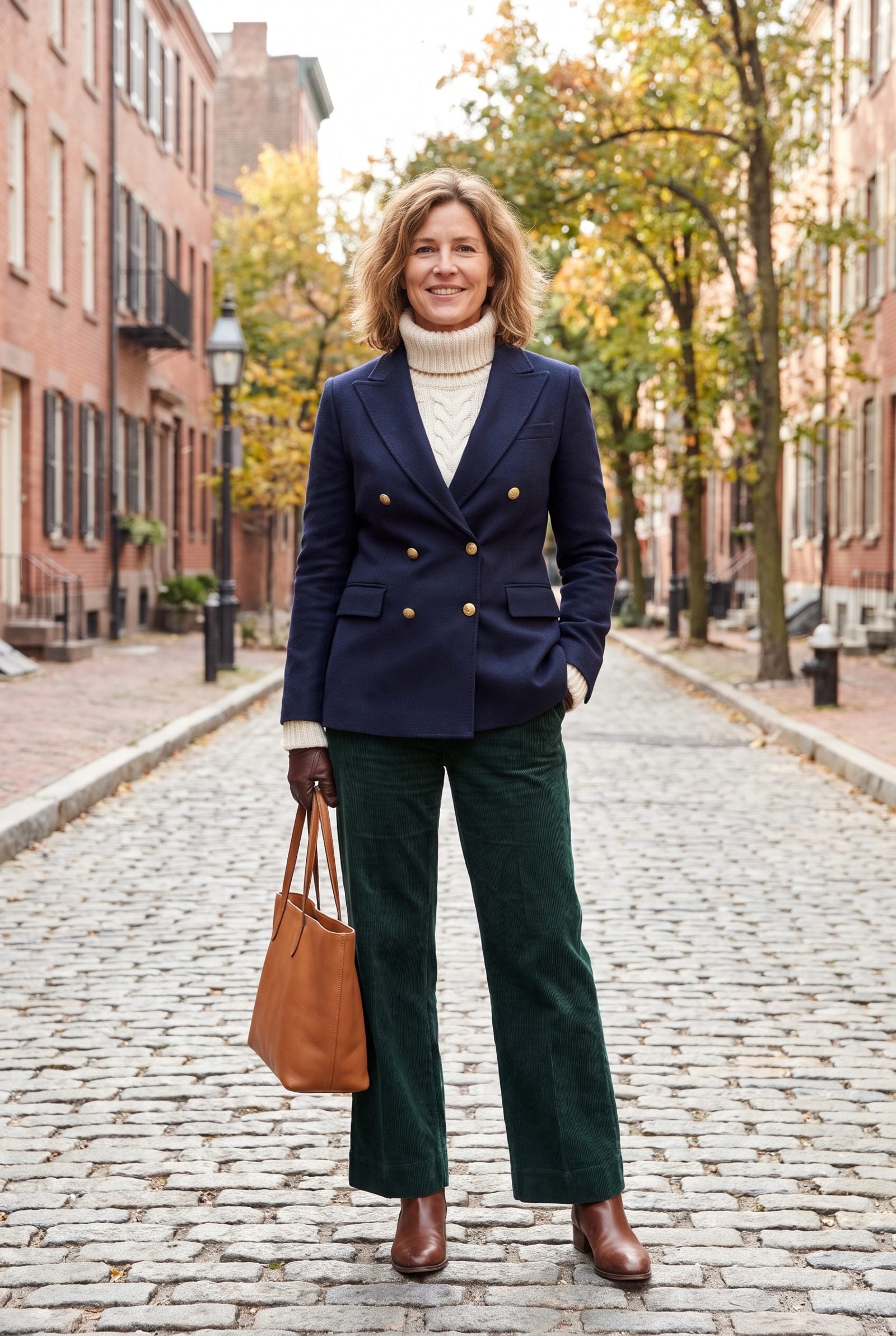
A double-breasted jacket already carries extra fabric across the front. Stack heavy wool underneath and you’ve doubled the bulk exactly where the body is widest. The pull lines give it away.
Save the double-breasted cut for a silk shell or a whisper-thin knit. Want heavy wool and a jacket together? Reach for a single-breasted blazer worn open. That vertical opening does the slimming the buttoned closure undoes.
21. Longline Blazer With an Untucked Tunic Turtleneck

Length on length erases the body. When the tunic and the blazer end at the same mid-thigh line, there’s no break, no waist, no information — just a column with a head.
A half-tuck fixes it in three seconds. Pull the front of the turtleneck into the waistband and let the back fall. Now there’s a visible waist under the long jacket, and the whole stack reads intentional instead of swallowed.
Defending the half tuck for long tunic sweaters, a style newsletter writer says “It breaks up the line of the tunic and makes it feel modern, not maternity-wear-adjacent.”
20. Stiff White Turtleneck Beneath a Black Interview Suit
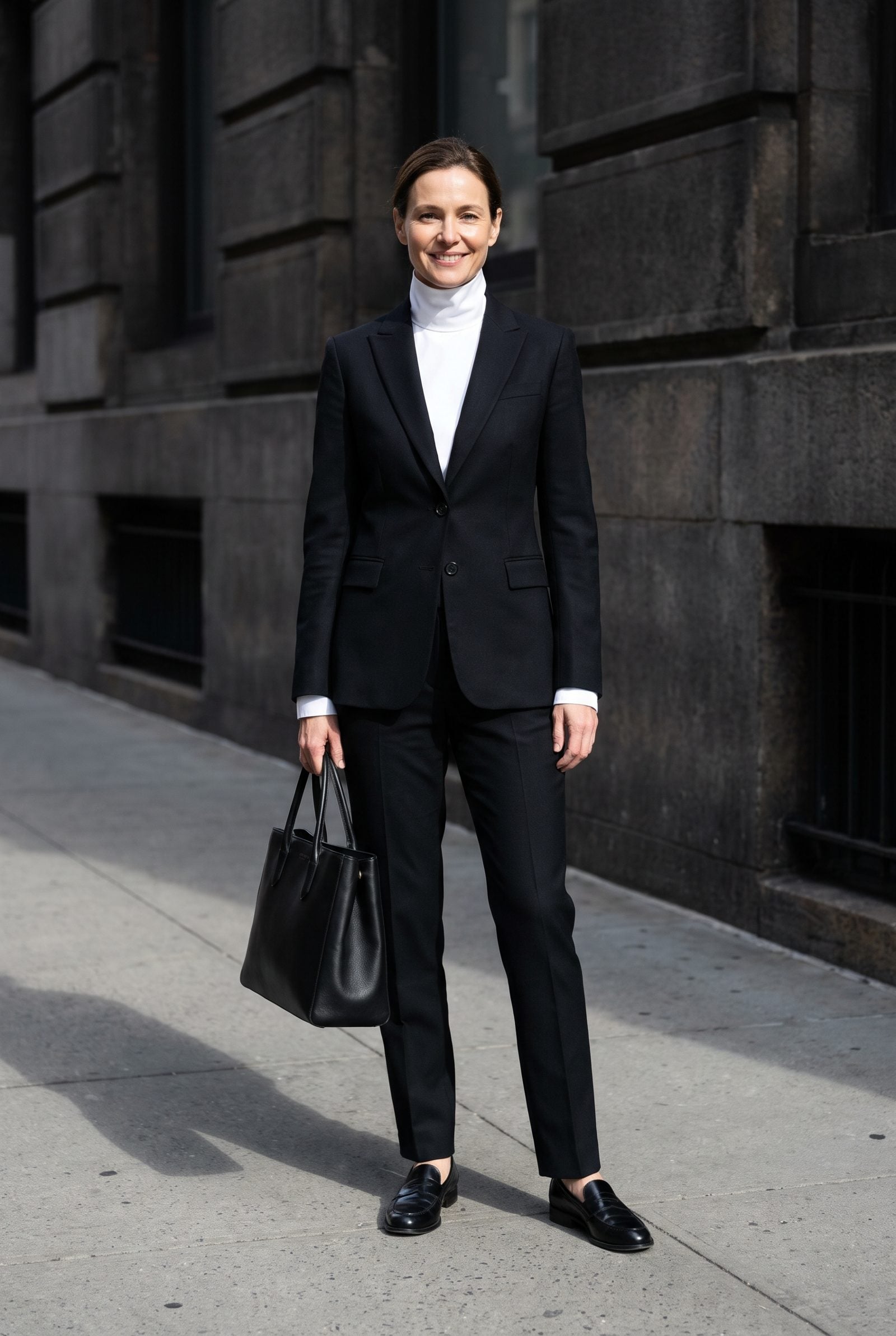
Crisp white against hard black with a rigid collar reads as a uniform. The contrast is so stark it flattens you into two blocks, and that stiff cotton collar standing at attention seals the severity.
Swap the white for cream or soft ecru in a fine merino. The warmer tone and the drape of knit over cotton soften everything. A holiday turtleneck in a muted shade does far more for a dark suit than a clinical white one.
19. Bright Red Turtleneck Fighting a Corporate Pinstripe Jacket

Pinstripe already carries a strong visual rhythm. Throw a loud red against it and the two colors shout over each other. The result feels busy and stiff, like the outfit can’t decide what it’s for.
A pinstripe suit wants a quiet neck. Burgundy, charcoal, deep teal — something that lets the stripe do its job. Save the bright red for a solid navy or camel blazer, where it can be the single deliberate trendy look moment instead of a competitor.
18. Busy Printed Turtleneck Colliding With a Plaid Blazer
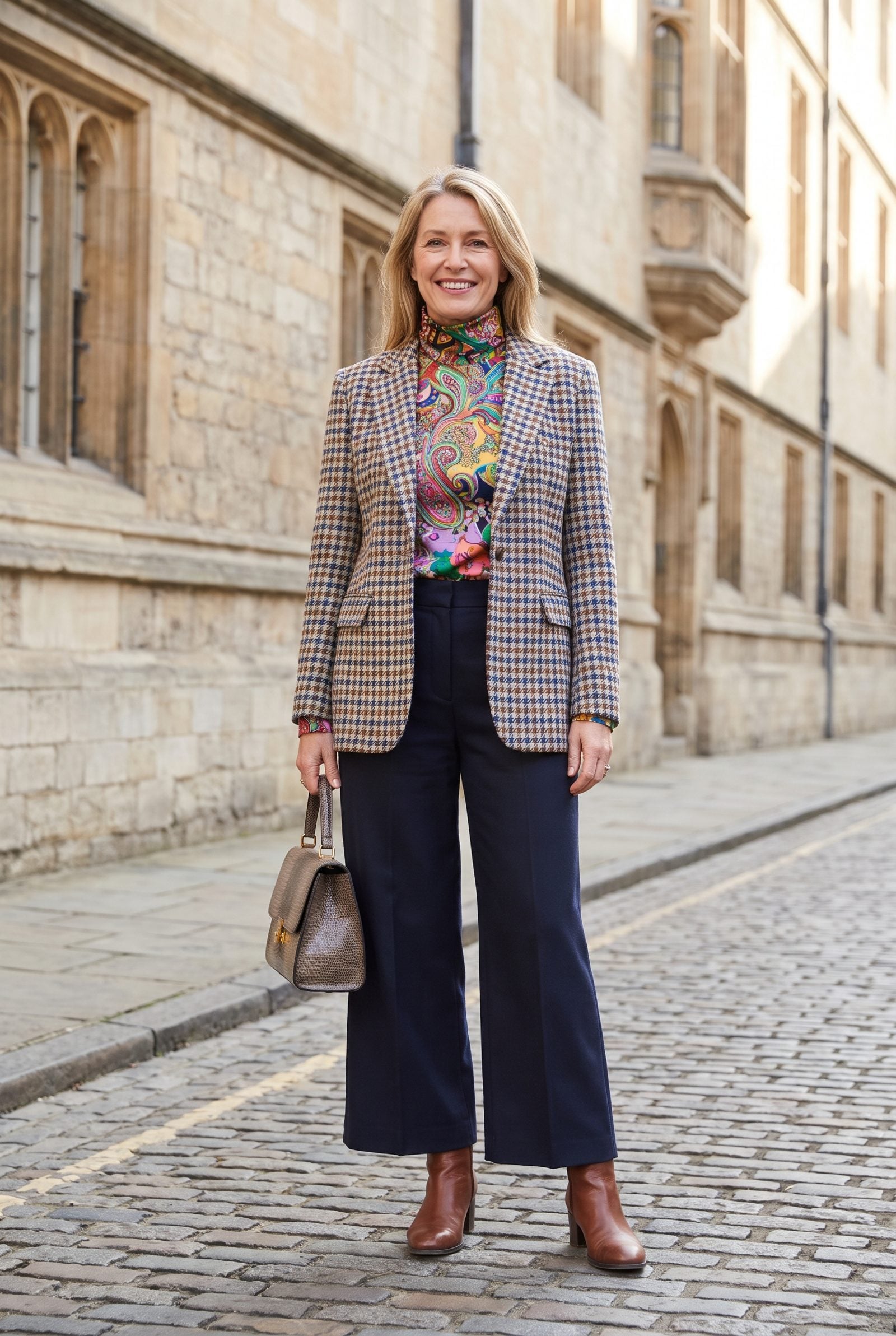
Two patterns at the same scale vibrate. The print and the plaid meet across the chest, the eye can’t settle anywhere, and a look that should feel considered ends up fussy and tense.
One pattern per pairing. Keep the plaid, go solid at the neck. And if the printed turtleneck is the piece you love, pair it with a plain blazer and let the print be the event.
17. Too-Tight Turtleneck Pulling Across the Bust

Horizontal pull lines across the bust are the clearest fit tell there is. A turtleneck that’s a size too small reads as straining, and strain never looks sophisticated no matter how good the blazer over it is.
If you see strain, size up. The right knit skims the body with a little ease — no tension wrinkles, no gaping. Comfort and confidence track together here, and a knit that isn’t fighting your frame lets you forget you’re wearing it.
16. Loose, Collapsing Neck Slumping Above Sharp Lapels

A stretched-out collar slumping over sharp lapels is a mismatch of intentions. The lapels say precision. The collapsed neck says laundry day. Together they cancel each other out.
Match structure to structure. A crisp blazer wants a turtleneck whose collar holds its stand — ribbed and springy, not washed to death. When the neck sits up with the same confidence as the lapel, the whole look finally agrees with itself.
15. Extra-Long Sleeves Bunching Below Blazer Cuffs
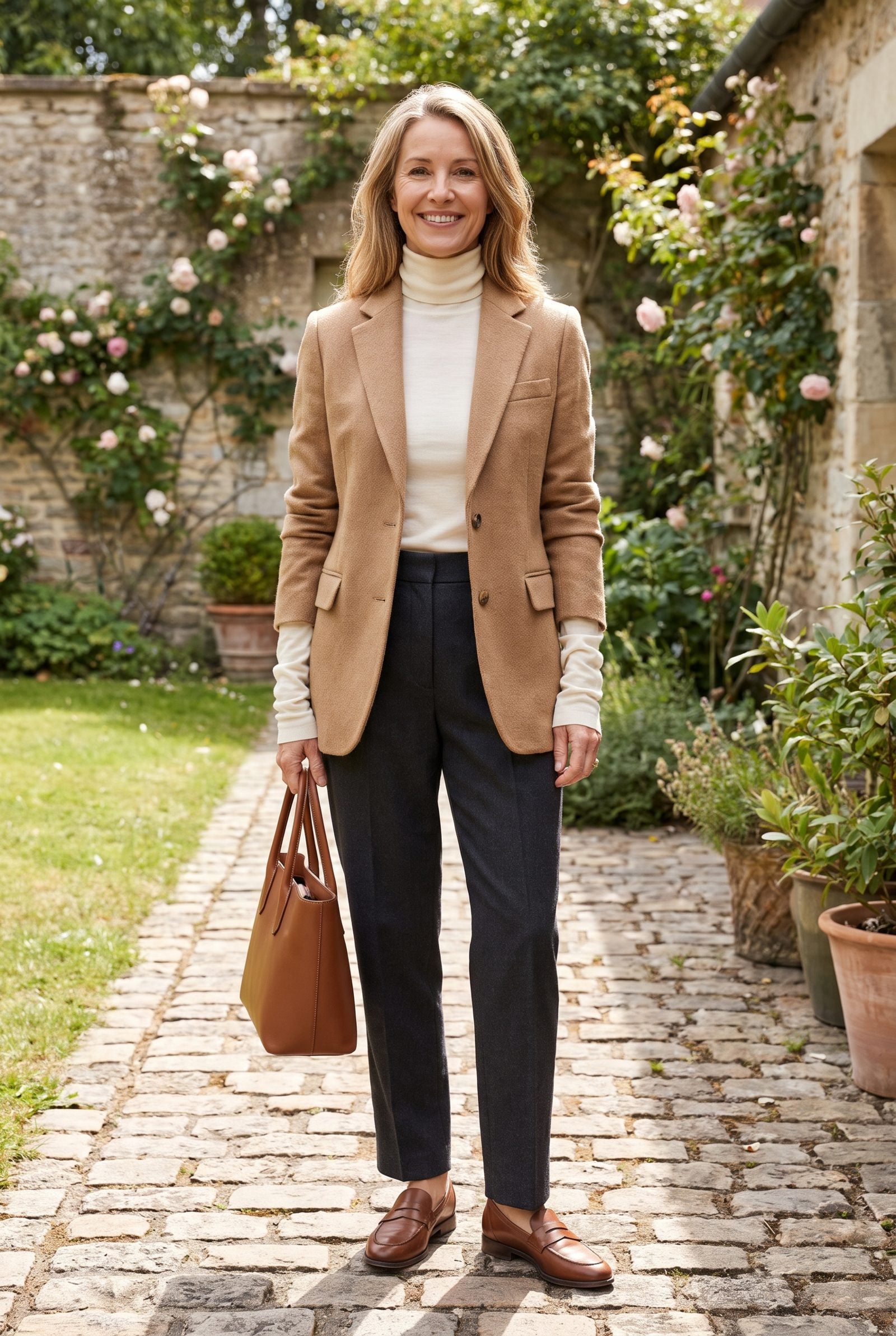
Sleeve length is the whole problem, and it’s such an easy one to miss in the mirror. A turtleneck meant to be worn alone comes with longer sleeves on purpose, so when you layer it under a blazer that extra fabric has nowhere to go and pools at the wrist, reading as borrowed rather than tailored.
The fix costs nothing. Push the knit sleeve up half an inch so a clean edge of blazer cuff shows, or buy your turtlenecks a size trimmer through the arm. A charcoal merino turtleneck with a neat wrist does more for a camel wool blazer than any accessory could.
14. Boxy Blazer and Straight Skirt With No Waist Definition
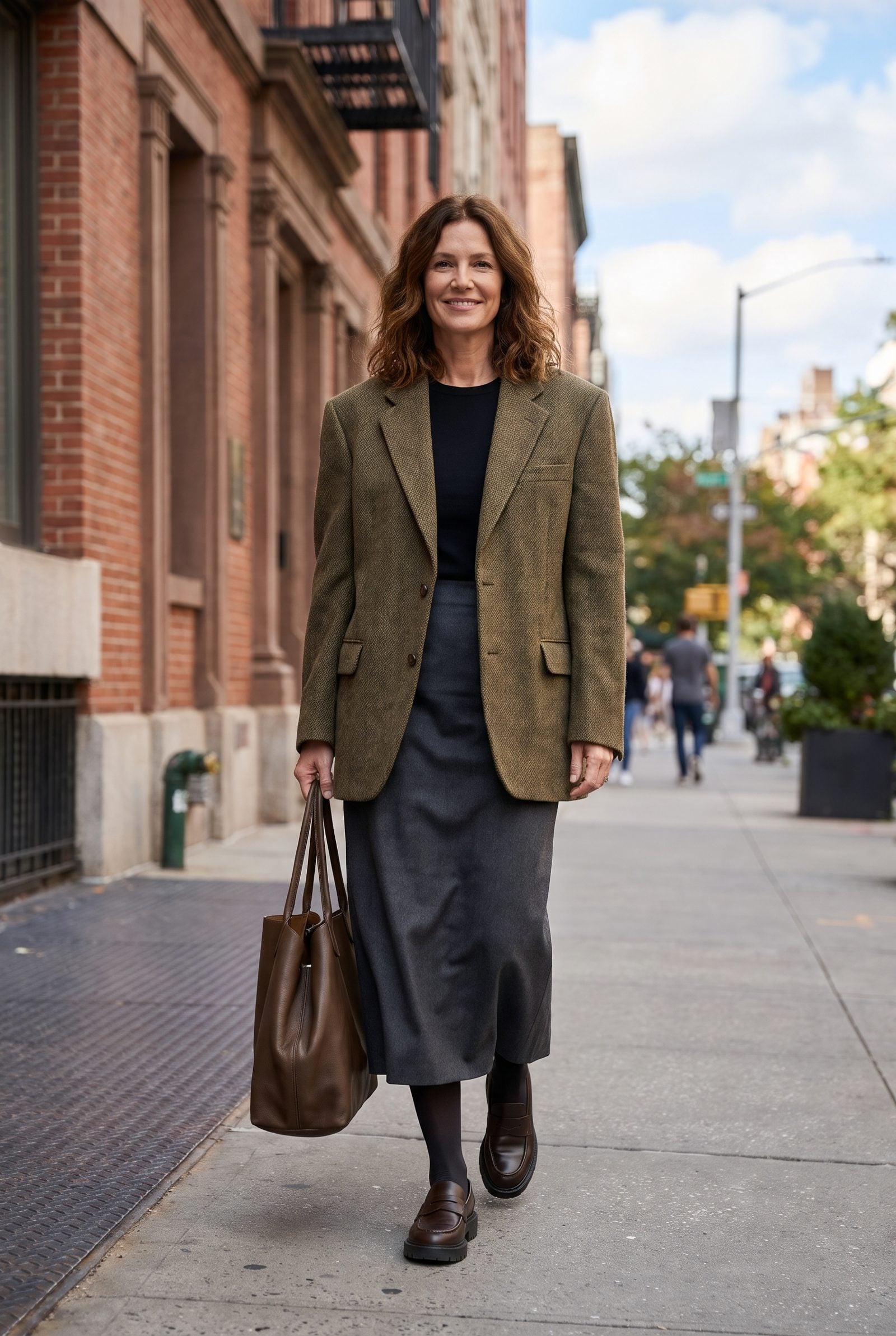
Two straight pieces stacked together make a box, and a box has no story. The blazer hangs square from the shoulder, the skirt drops straight from the hip, and your waist — the most interesting line you own — vanishes somewhere in between.
No corset required. A half-tuck of the crew-neck, a skirt with a hint of taper, or just a more fitted blazer brings the curve back. Better still, keep the boxy blazer and swap in an A-line skirt so the volume lives in two different places instead of stacking.
13. Full Midi Skirt Paired With a Long Closed Blazer
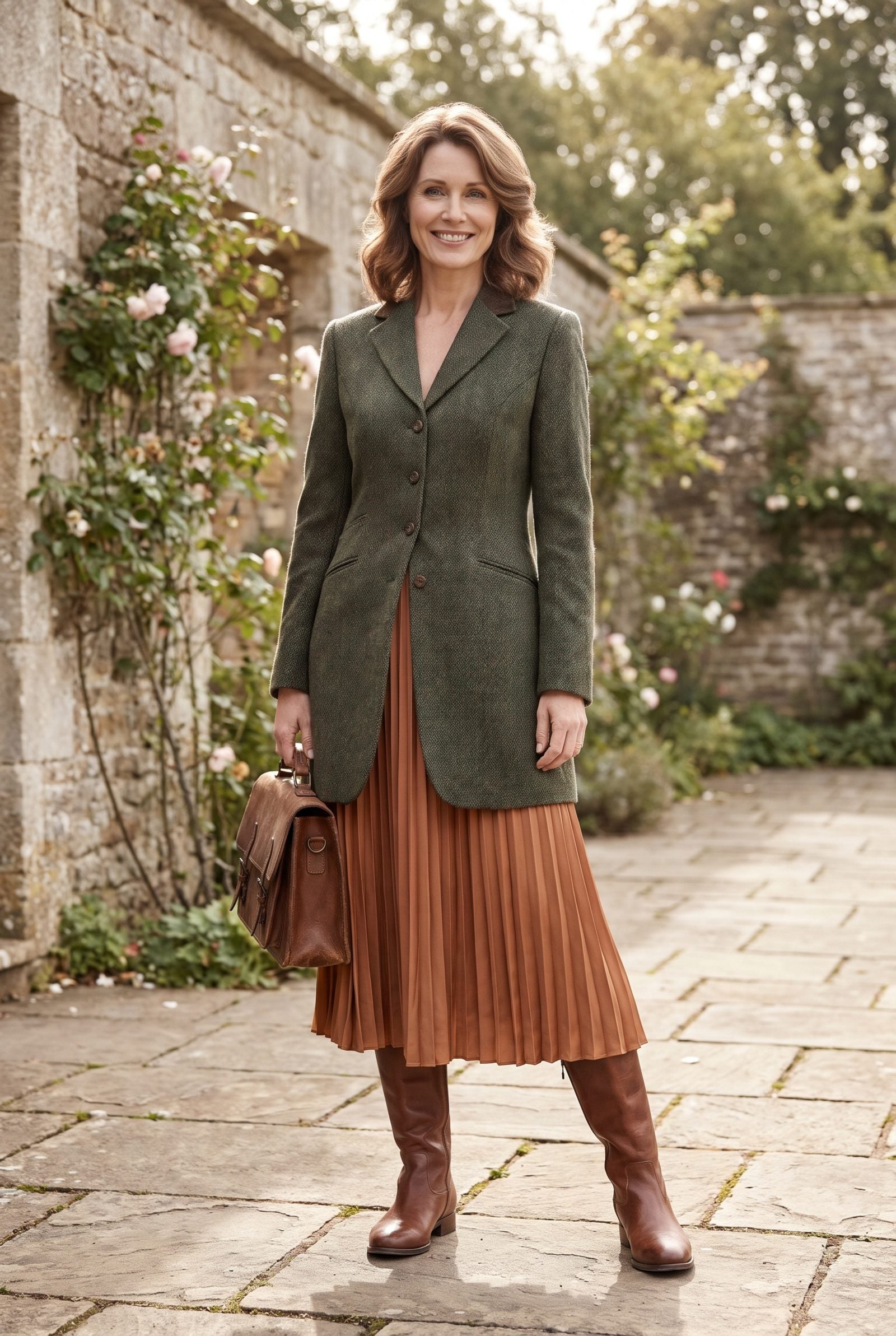
A full skirt needs to be seen from the waist down to read as graceful. Cover its top half with a long buttoned blazer and the pleats suddenly explode out from under the hem, chopping you in two and making the skirt look like it’s trying to escape.
Fuller skirts want shorter or open jackets that show the waist where the volume begins. Pair this pleated midi skirt with a cropped blazer, or leave a longer one open so the eye follows the full line all the way down. Movement has to be visible to be beautiful.
12. Wide-Leg Trousers With an Oversized Blazer and Bulky Neck
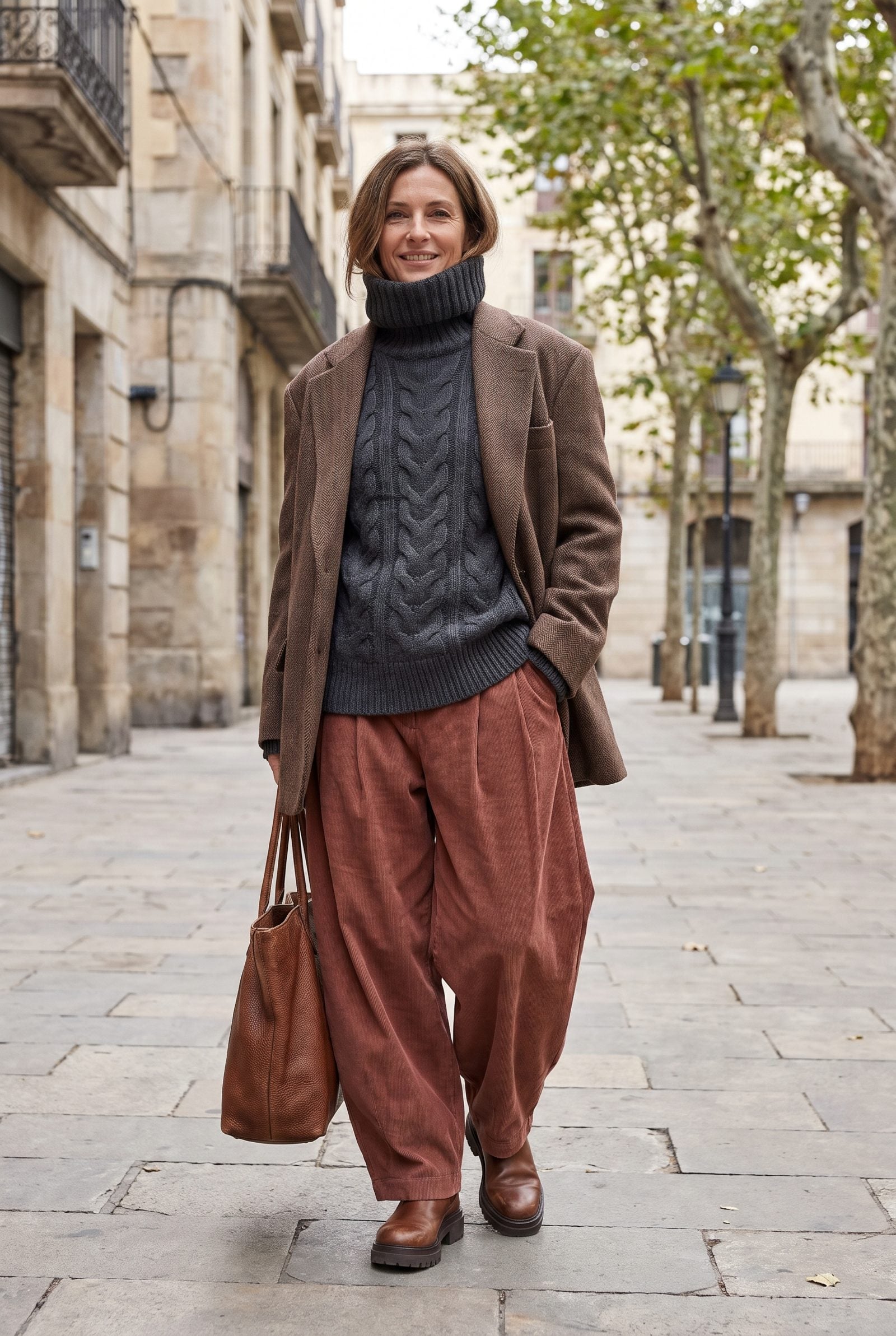
Volume everywhere is volume nowhere. When the neck is bulky, the blazer is oversized, and the trousers are wide, the eye has no slim anchor to rest on, so the whole silhouette reads as larger and softer than any single piece actually is.
Oversized works when it plays against something lean. Trade the thick rolled neck for a fine-gauge turtleneck, and all at once the wide trousers and the big blazer look intentional instead of engulfing. One place to go wide. One place to go slim. That little bit of tension does all the work.
11. Skinny Jeans Under an Extra-Long Structured Blazer
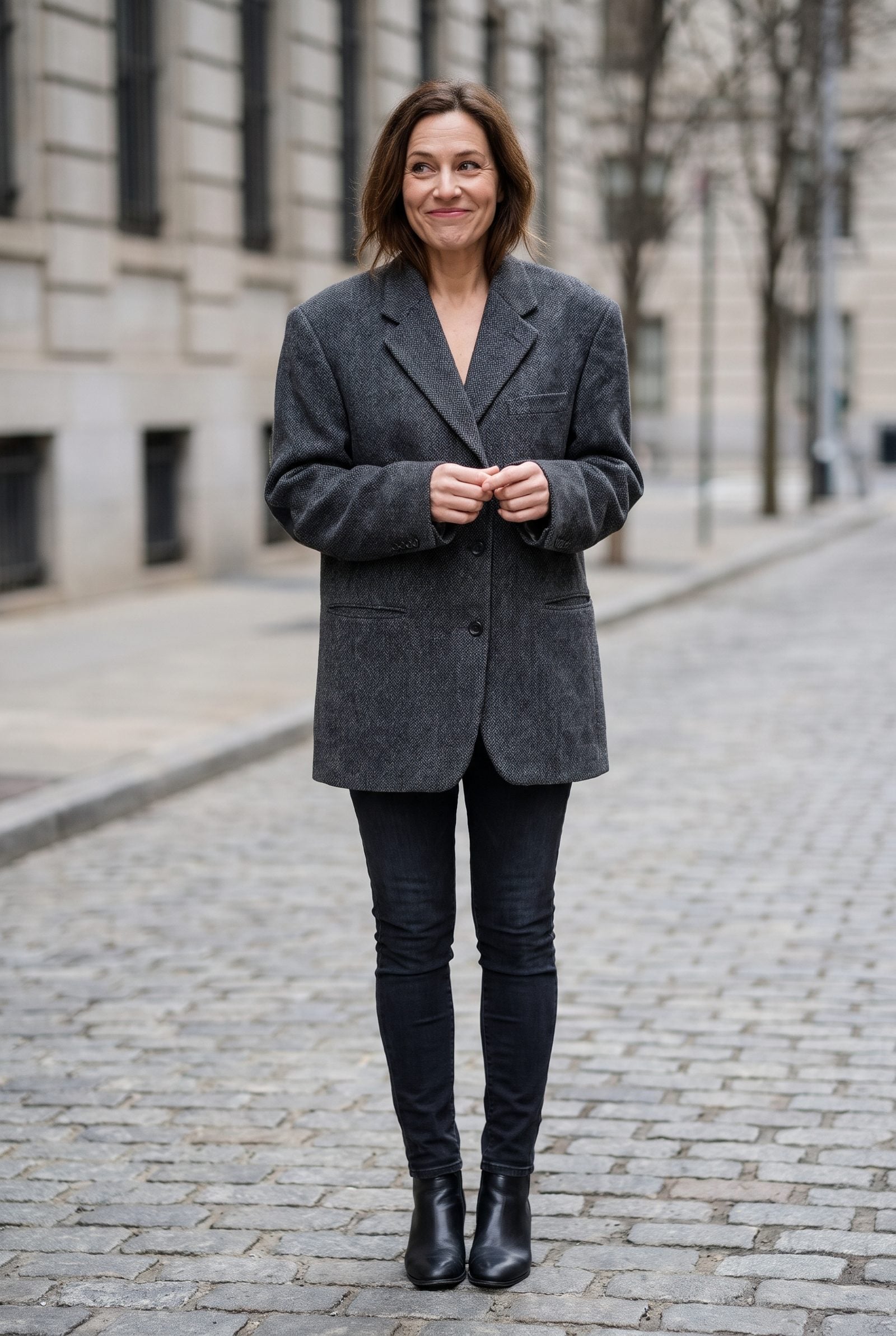
The math goes wrong at the hips. A long, stiff, structured blazer carries real visual weight, and skinny jeans give it nothing to balance against, so you end up top-heavy with legs that look like toothpicks holding up a crate.
Length and structure want a trouser with some presence of its own. Swap the skinny jeans for a straight or slightly flared leg and the whole thing settles into proportion. Love the skinny jean too much to give it up? Then shorten the blazer so it hits at the hip. Long over lean needs a counterweight down below.
10. Knee Boots Meeting a Long Blazer at the Same Line
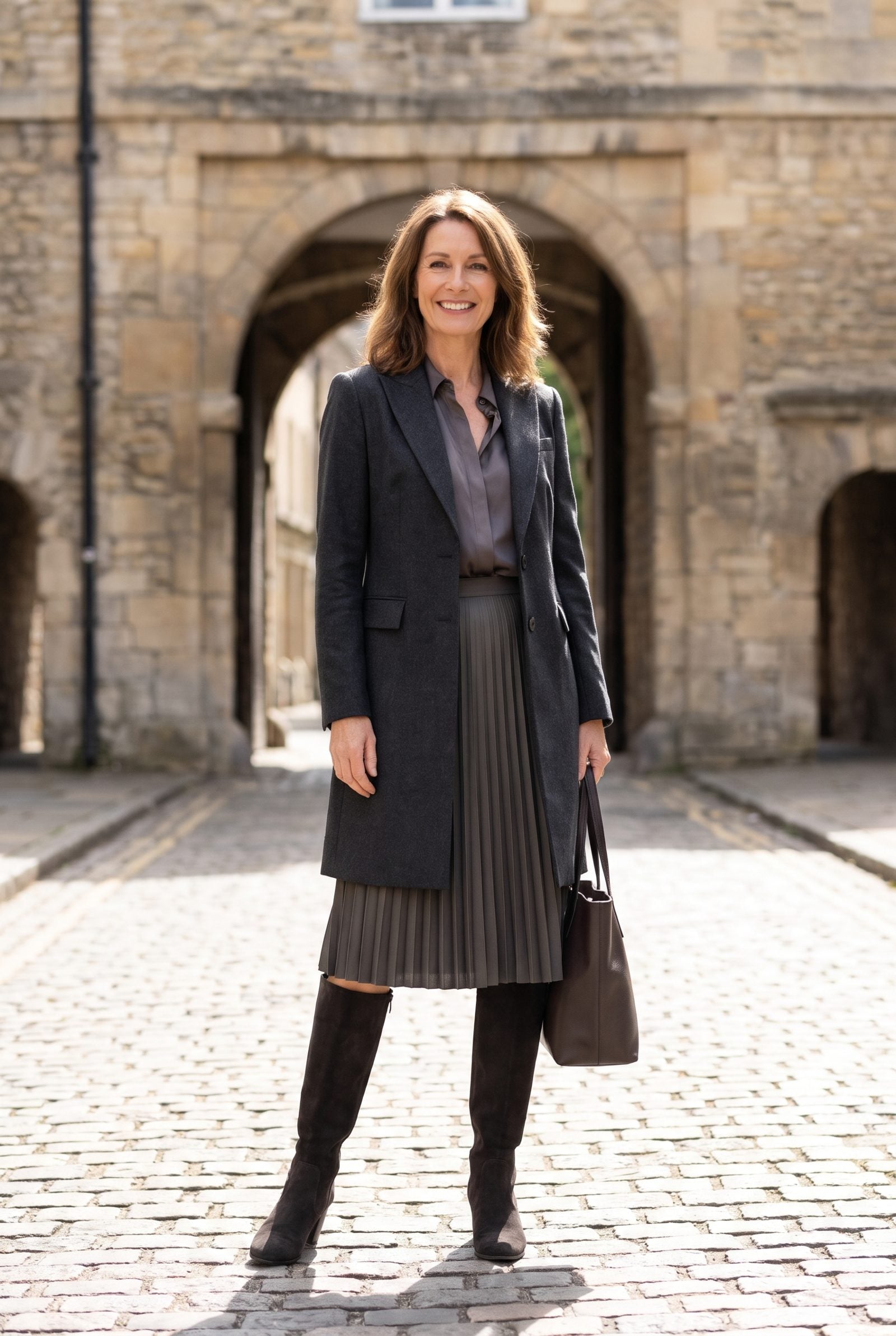
When a long blazer hem and a boot shaft land at the exact same height, they draw one hard horizontal line straight across your leg, and horizontal lines shorten everything they cross. Both pieces are lovely on their own. Together at that height, they amputate the leg visually.
You want a gap of skin, skirt or trouser between the hem and the boot, or at least a clear difference in where they stop. Shorten the blazer, choose an ankle boot, or let a sliver of leg show between the two edges. Even an inch of separation keeps the line long.
9. Silk Scarf Knotted Over the Turtleneck

A turtleneck already does the job a scarf usually does — it fills the neckline and frames the face. Pile a knotted silk scarf on top of the rollneck and you double the fabric at the throat, which pushes the chin up and makes the neck look shorter and thicker than it really is.
Save the scarf for an open collar or a crewneck, where it actually earns its place. Over a turtleneck, let the knit stand alone, or loop the scarf long and loose inside the blazer so it reads as a vertical line rather than a bundle. The throat only needs one event.
8. Brooch Cluster Competing With Blazer Lapels
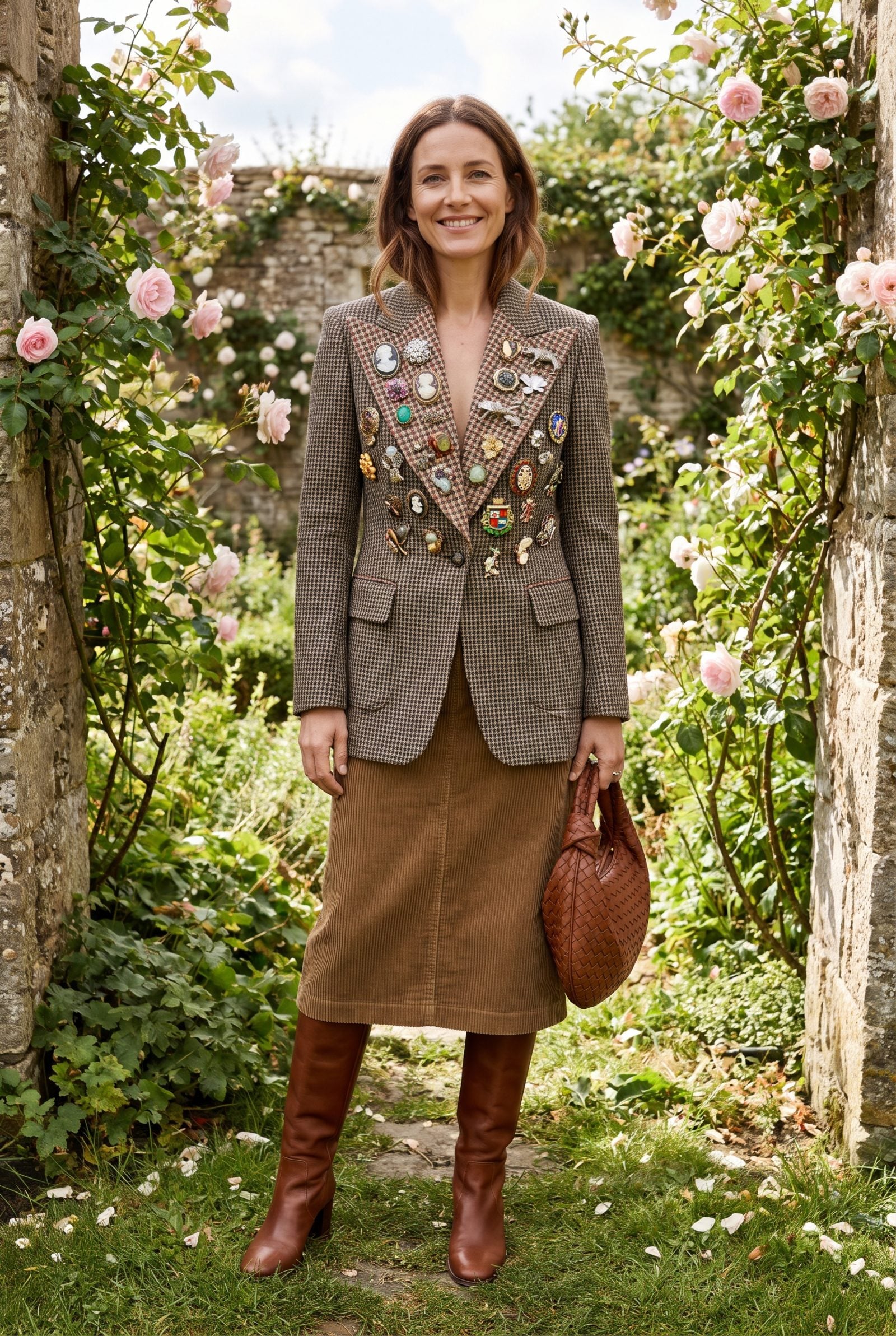
A blazer lapel is already a strong design line. Crowd it with a cluster of brooches and the jewelry fights the tailoring, so the eye doesn’t know where to land and the whole chest reads busy instead of polished.
One brooch, placed high on the lapel, honors the jacket’s clean notch and looks deliberate. A pile of them turns a sharp collar into a jumble. Edit down to a single piece you love. Restraint at the lapel is what separates considered from costume — and honestly, by now you’ve earned the confidence to wear just one thing beautifully.
7. The Turtleneck Collar Rolled Into a Thick Doughnut
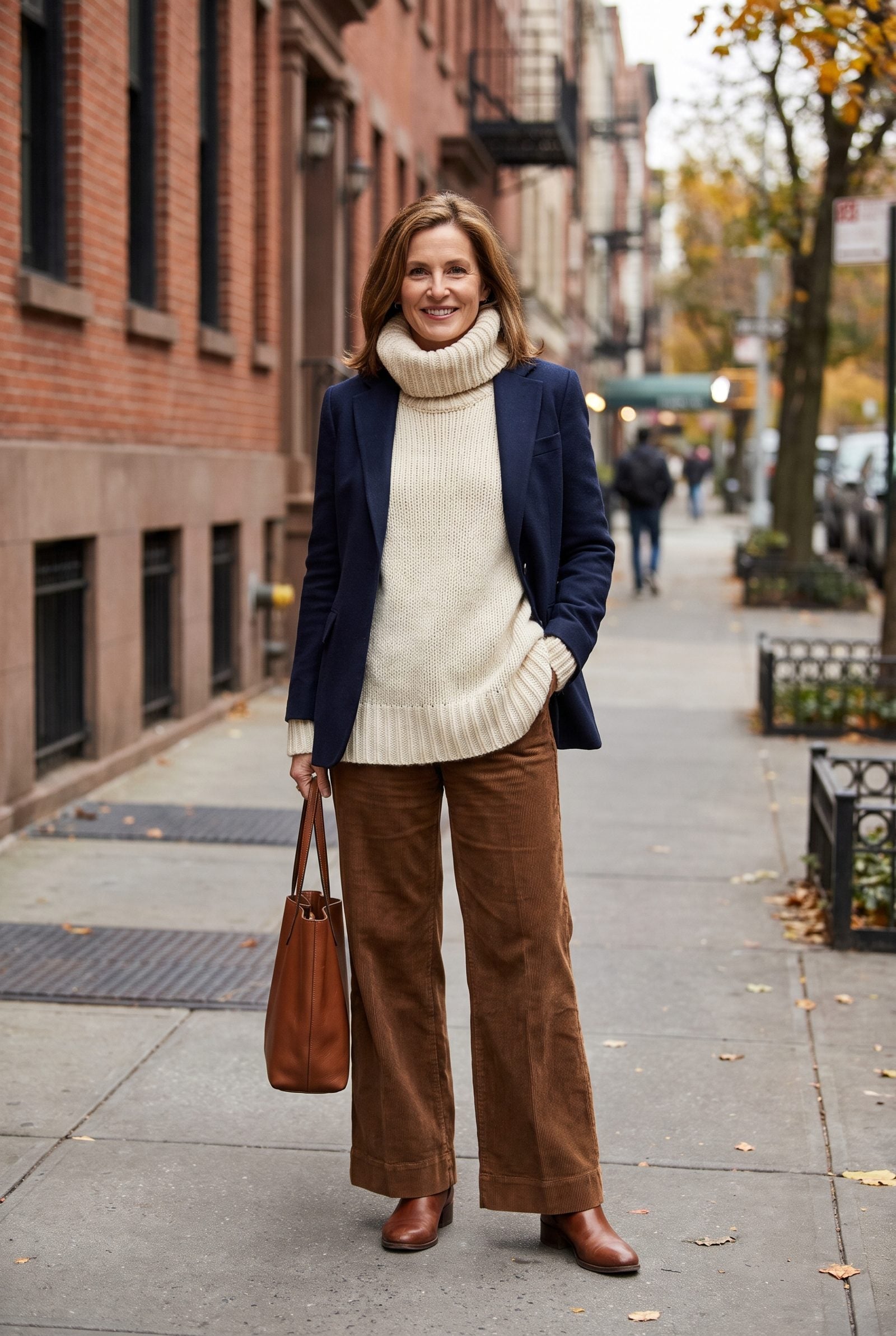
A turtleneck collar is supposed to frame the face, not swallow the chin. Folded three times into a padded ring, it shortens the neck and tips the whole look toward something stiff and upholstered — a life preserver you didn’t ask for.
The fix costs nothing. Unroll it once so the fabric sits soft and slightly slouched, or pick a finer-gauge knit that folds flat under a navy wool blazer. You want a clean line at the neck.
6. Jacket Sleeves Too Narrow for the Knit Beneath
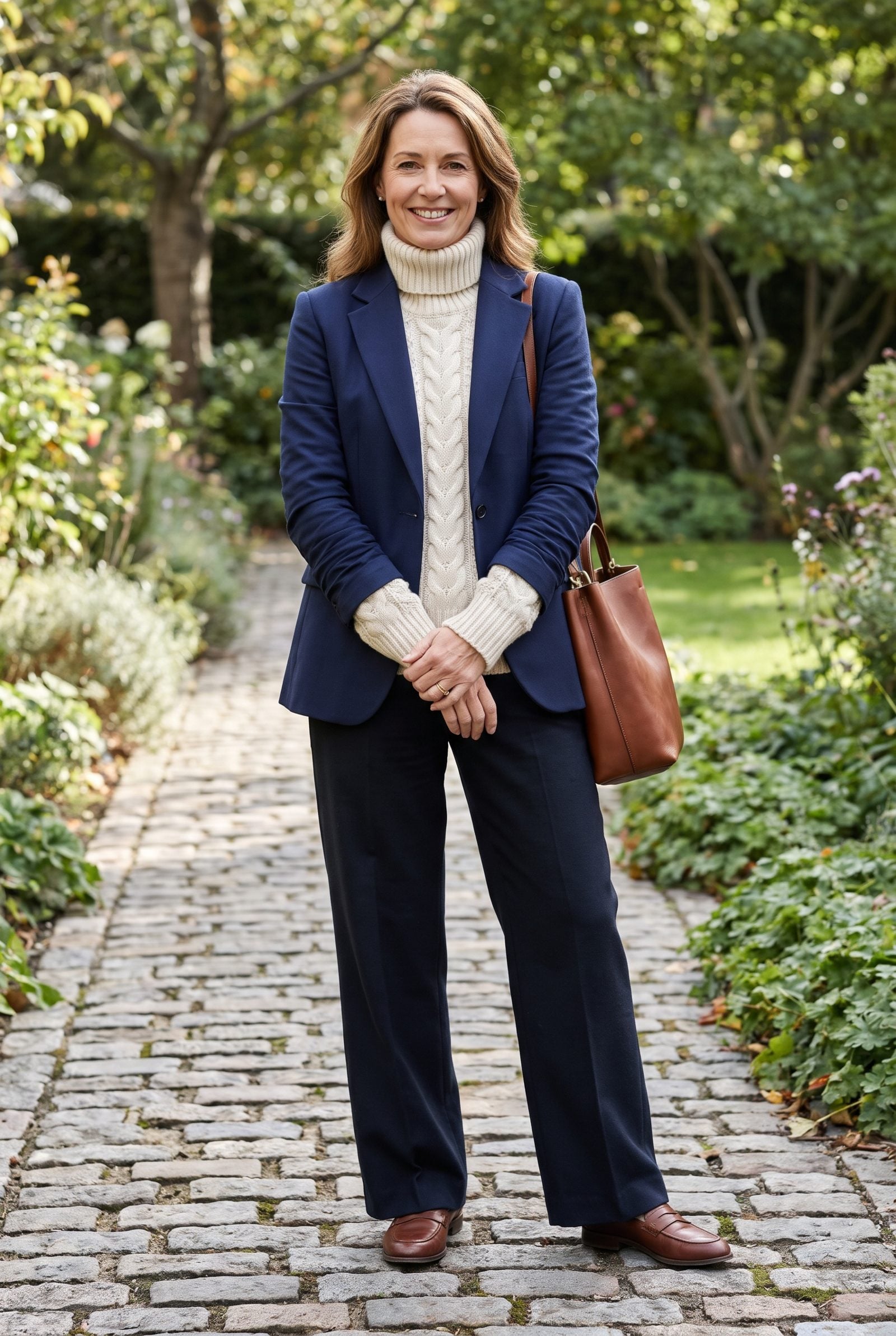
Nobody warns you about this layering trap. A blazer that fits beautifully over a silk blouse comes up short over a chunky cable knit — sleeves pushed up and turned back, thick sweater cuffs spilling out well below them, the jacket openly fighting the sweater it’s meant to cover.
A blazer built for layering needs more room through the arm and shoulder. So try the jacket on over the actual cable-knit crewneck before you buy. Raise your arms. Reach forward. If the sleeve rides up and the knit cuffs poke out far past it, the sleeve is too lean, and you either go up a size or find a cut with a roomier armhole.
5. Sweater Cuffs Pulled Over the Hands With Formal Tailoring
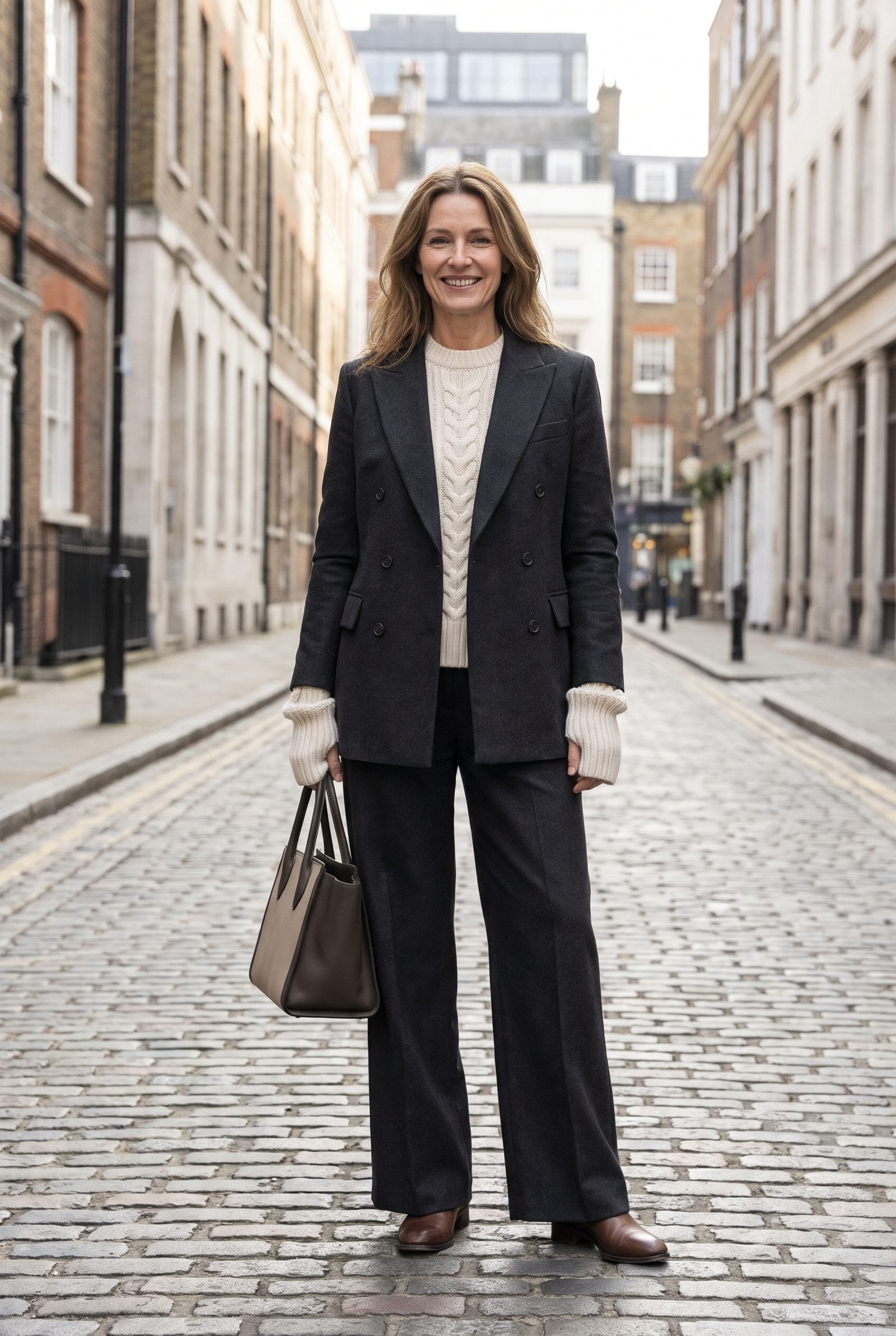
Cuffs over half the hand read as cozy on a lazy Saturday. Under a sharp blazer with a structured shoulder, that same slouch looks like the jacket is wearing you instead of the other way around.
Formal tailoring wants a clean wrist. Push the knit sleeve up a quarter inch so a sliver of wrist shows, or pick a charcoal fine-gauge turtleneck with a snug cuff that stays put. Precise tailoring beside a sloppy hand kills the polish.
4. A Crisp Linen Blazer Over a Fuzzy Winter Turtleneck
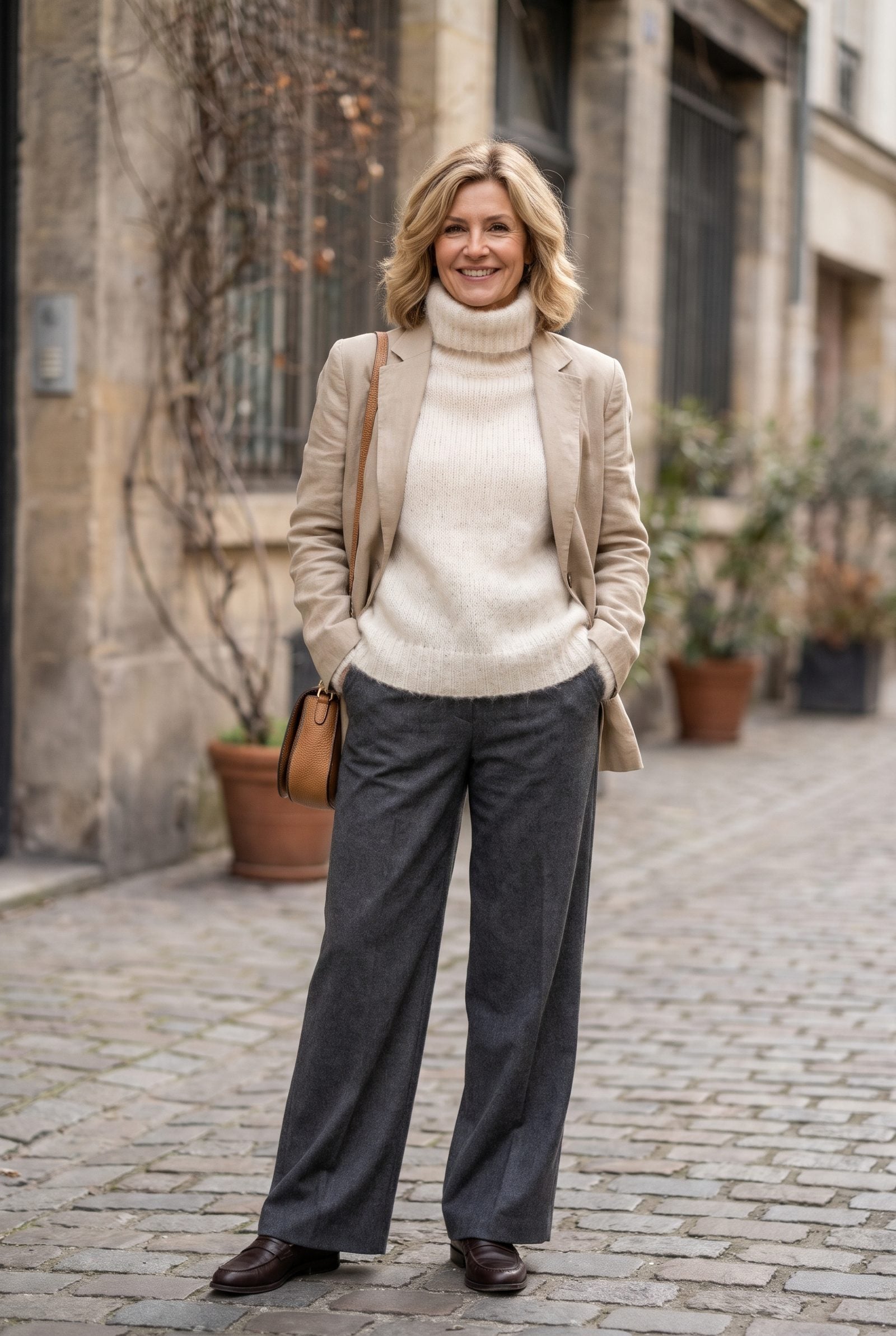
Linen says July. A fuzzy mohair turtleneck says February. Put them together and the outfit can’t decide what season it is, so it just looks confused.
Fabric weight has to agree with itself. A crisp warm-weather blazer belongs over something smooth and light — a cotton shell, a fine jersey roll-neck. Save the halo-fuzz knits for tweed, flannel, and wool outerwear that speaks their cold-weather language.
3. A Velvet Evening Blazer Over a Casual Cotton Roll-Neck
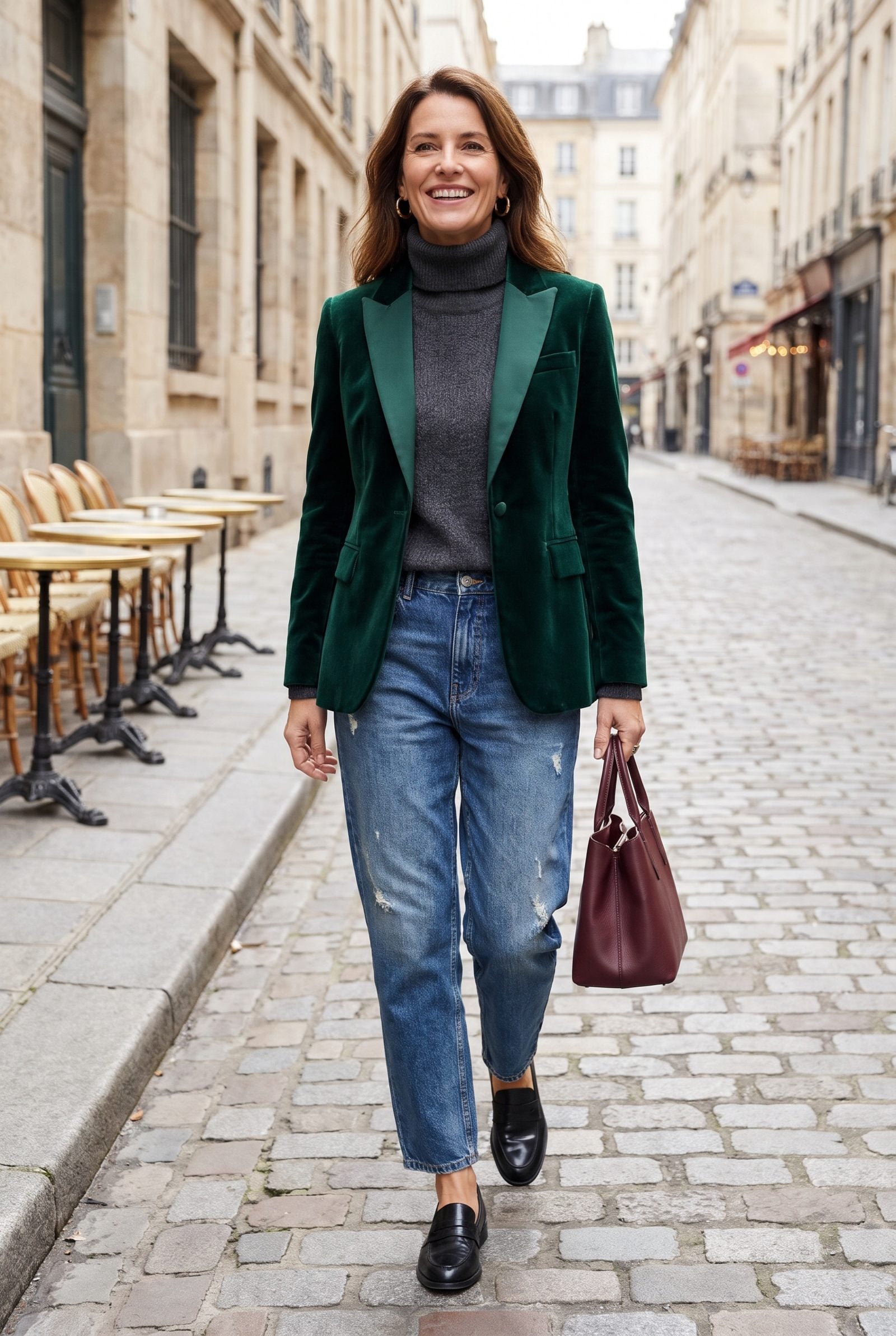
Velvet carries a dress code. Pair it with a heather-gray gym-weight cotton roll-neck and you drag an evening jacket straight into errand territory, where it goes flat.
A velvet evening blazer wants a partner with some shine or refinement underneath — fine merino, silk, cashmere, a knit with a smooth hand. The jacket already does the dressy work, so the layer beneath just needs to stay out of its way. You see this trap all over holiday party outfits, where a gorgeous blazer meets a sweatshirt-grade knit.
2. A Leather Blazer Over a Shiny Synthetic Turtleneck
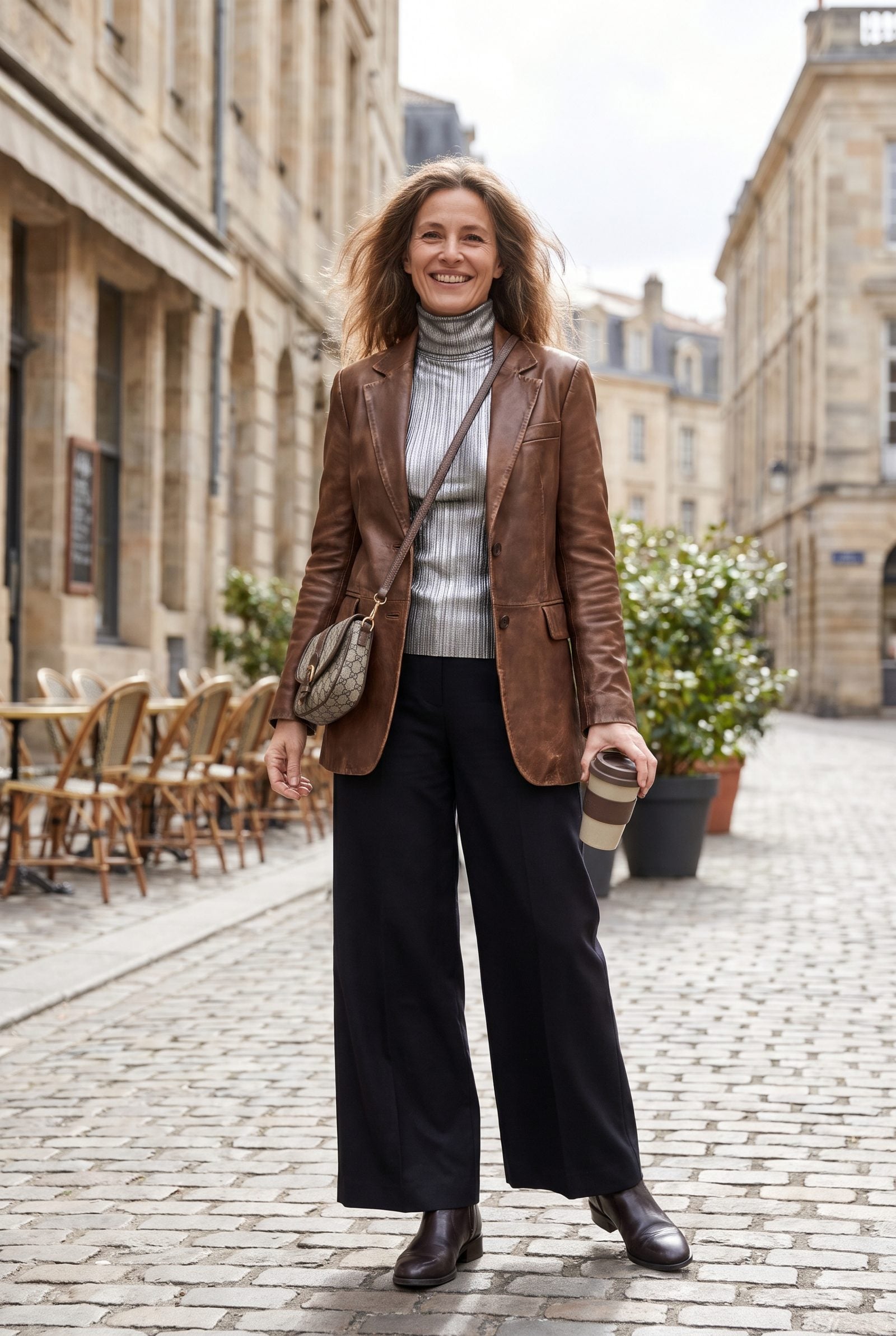
Two shiny surfaces stacked together cancel each other out. A glossy poly turtleneck under a leather blazer gives you a wall of hard reflection, and the synthetic sheen reads cheap next to real hide.
Leather needs a matte foil. A soft wool or cashmere roll-neck in a flat finish lets the jacket’s surface do the talking, and that texture contrast is exactly what makes leather look expensive. When the knit beneath has its own plastic shine, the eye files the whole outfit under costume.
1. An Office Blazer Over an Athletic Compression Turtleneck

Compression knits belong at the gym, where flatlock seams and a sporty mock-neck earn their keep. Drop one under a charcoal wool office blazer and the technical sheen, the stretch panels, the athletic finish all announce themselves against the tailoring.
A boardroom blazer wants a natural-fiber base — merino, cotton, a fine cashmere roll-neck that hangs with a little softness. Performance fabric clings and shines in a way that picks a fight with formal wool. Want the sleek look? Reach for a smooth jersey turtleneck in a real knit, not a leftover layer from spin class.