❤️ Would you like to save this?
Taffeta had a sound. That papery rustle when you crossed a church aisle in 1985, the whole pew turning to clock your shoulder pads. Guest dressing back then was loud and structural, unsubtle in the most glorious way — peplums, lamé, corsages the size of dinner plates. Then the volume dial moved. We took ten of the decade’s most recognizable wedding guest silhouettes and set each beside its modern descendant. Same occasion, same confidence, wildly different execution.
FYI, thanks to AI imagery software, we’re able to create very specific fashion and hairstyle examples to illustrate the points being made. In some cases, imagery is exaggerated to hammer home the point. Also, assume links that take you off the site are affiliate links such as links to Amazon. this means we may earn a commission if you buy something.
32. Puffed Taffeta Sleeves in 1985 vs. Sculptural Statement Sleeves Now
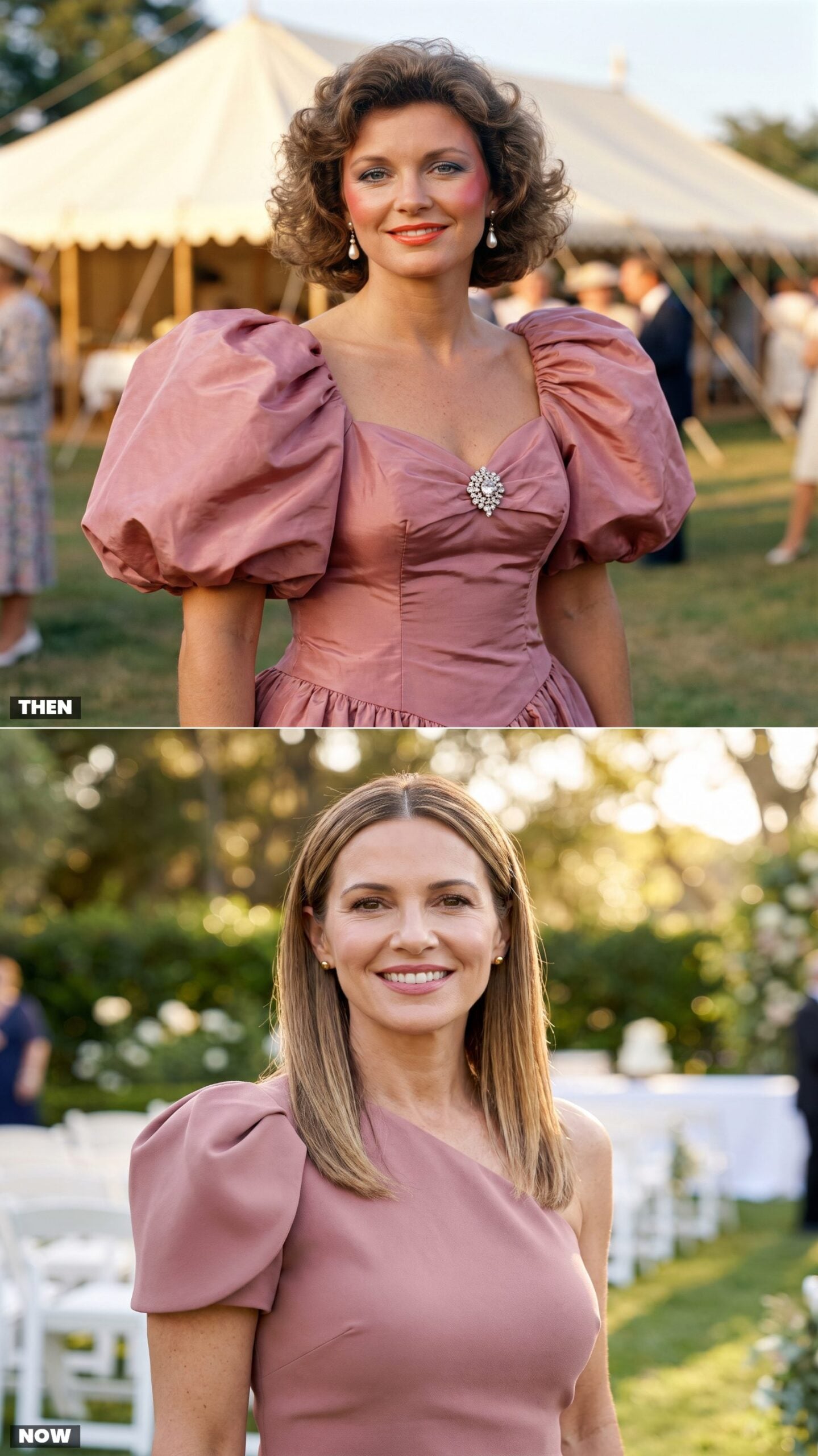
The 1985 sleeve wanted to be seen from three rooms away. Taffeta puffed at the shoulder, gathered into a tight cuff, structured enough to stand on its own if you took the dress off. It read as occasion the second you walked in.
The modern version keeps the drama but drops the noise. One clean sculptural sleeve in matte crepe does the proportional work, broadening the shoulder line to balance the hip without a single shiny gather. Volume up top, everything below quiet.
31. The Laura Ashley-Inspired Garden Dress vs. a Contemporary Botanical Gown
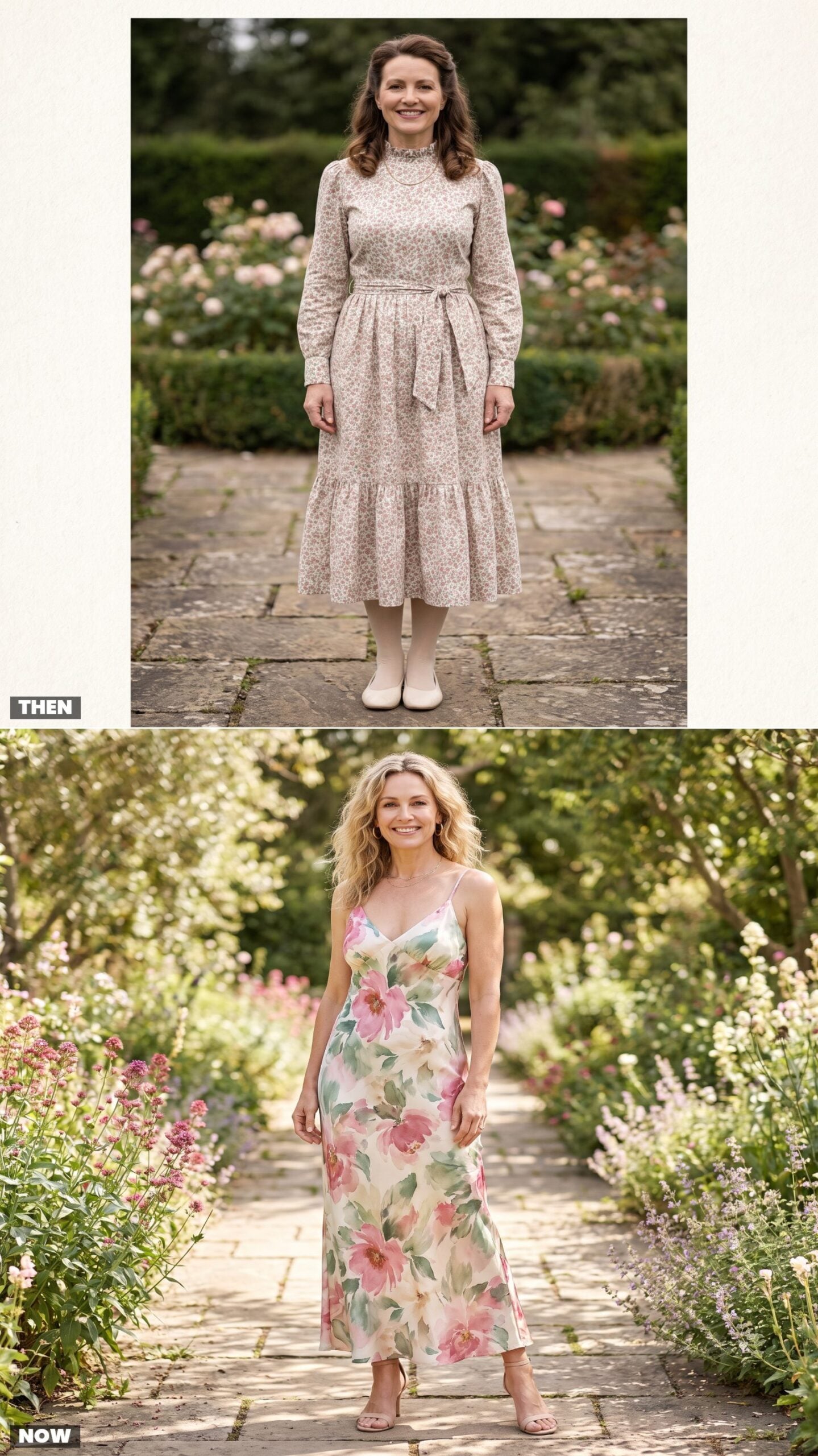
The Laura Ashley dress was all about covering up prettily — high ruffled neck, buttoned cuffs, a ditsy print so small it read as texture from across the churchyard. Modest and romantic, a little nostalgic even in its own time.
The contemporary botanical gown trades sprigs for scale. Big painterly florals on fluid silk, a bias skirt that moves when you do. The print went from wallpaper to gallery wall. Same garden-wedding romance, now with skin and movement doing the talking instead of ruffles and coverage.
30. The Oversized Floral Corsage Dress vs. a Dress With a Single Sculptural Rosette
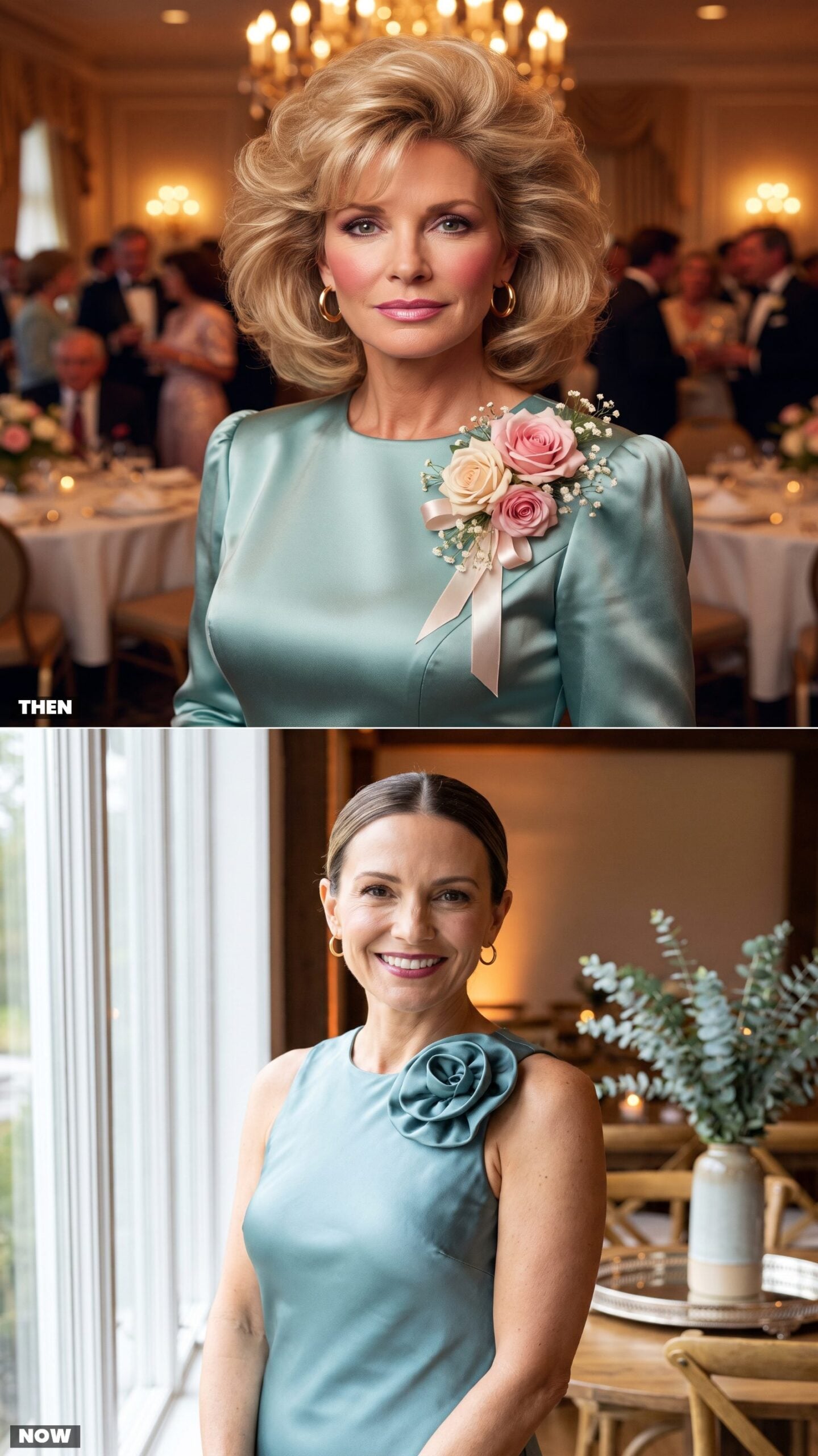
A corsage in 1985 was a commitment. Silk roses, trailing ribbon, a sprig of baby’s breath, the whole thing pinned to your shoulder like a boutonniere that got ambitious. It announced the occasion before you said a word.
The modern take folds that same flower into the dress itself — one tonal rosette, sculpted from the fabric, sitting at the shoulder as structure rather than decoration. The restraint is the point. One considered detail reads as more expensive than a whole bouquet’s worth of applied embellishment.
29. The Dropped-Waist Party Dress vs. Today’s Defined-Waist Midi
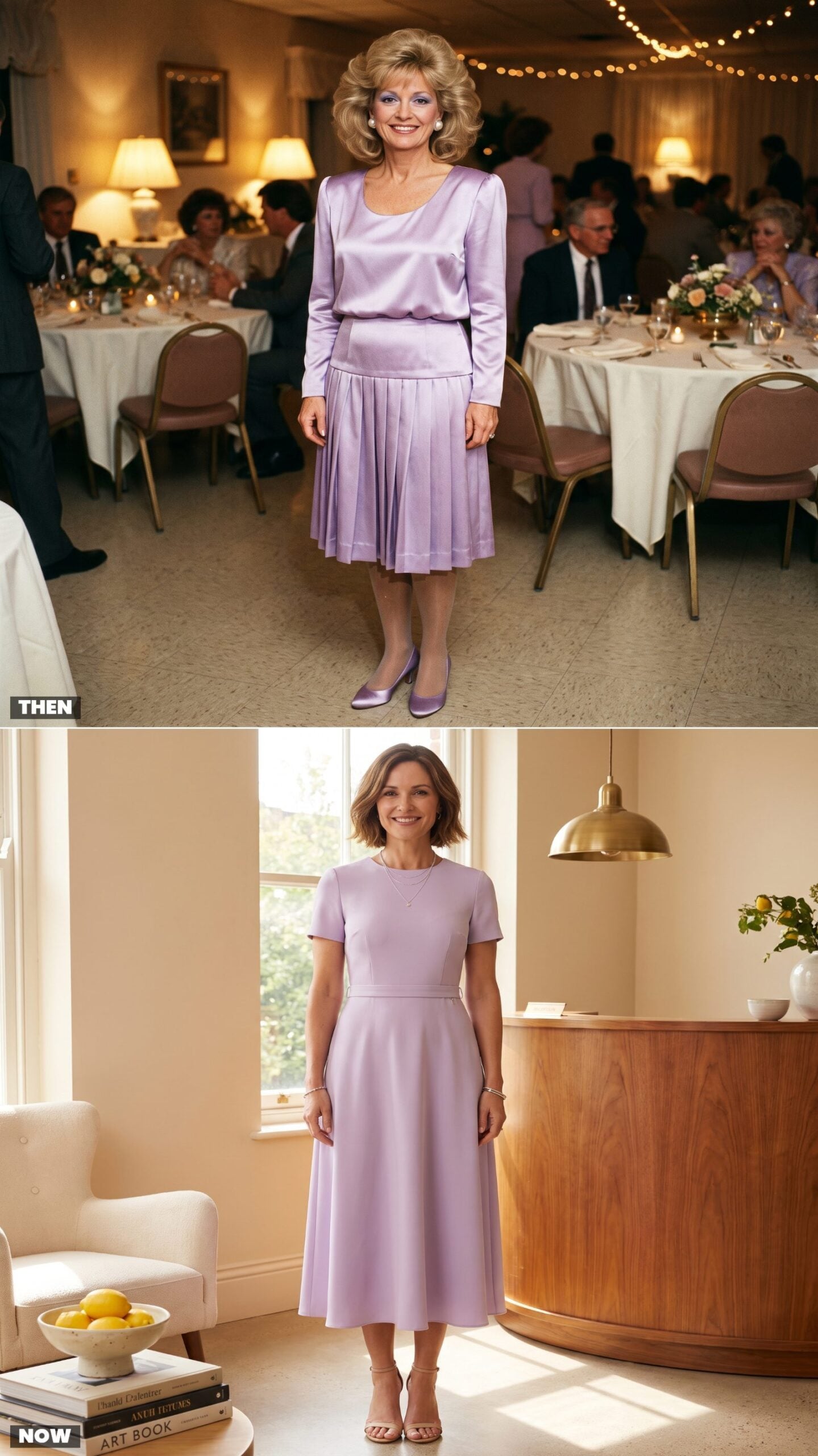
One seam moved, and the whole silhouette changed. The 1985 dropped waist sat the defining line low across the hips, letting the bodice blouse loose above it. Flapper-inspired and forgiving — but it tended to flatten the torso into a column.
Today’s midi puts the waist back where it does the most work, at the natural narrowest point. A fitted crepe bodice, a clean nip, then an A-line skirt that skims. Define the waist and the eye reads an hourglass, no matter what the hip is doing below.
28. The Pastel Chiffon Cape Dress vs. a Modern Sheer Overlay
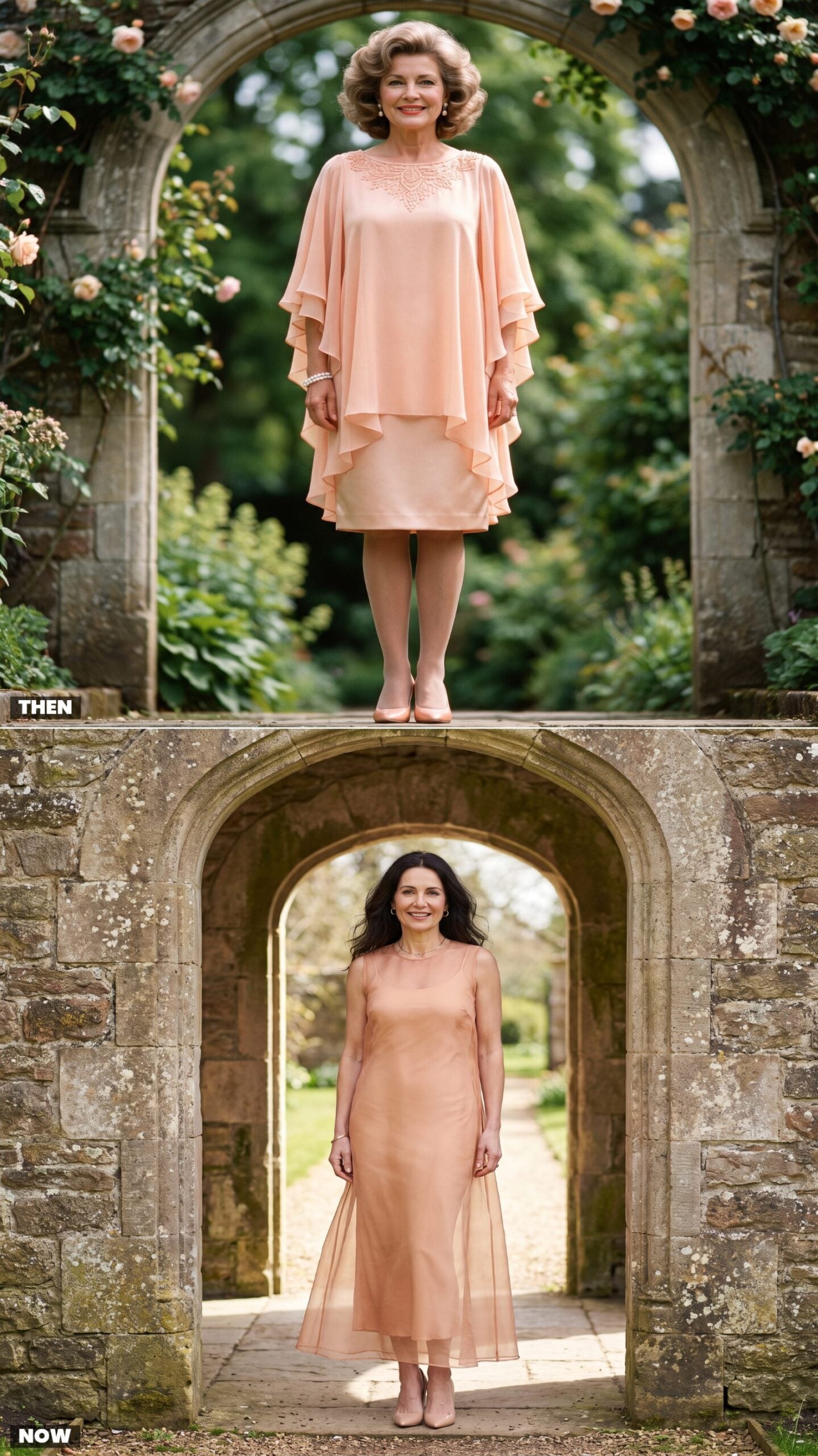
The chiffon cape was 1985’s answer to drama without a train — floating panels from the shoulders, frilled at the edges, drifting over a satin sheath. Lovely in theory. A bit curtain-like in practice.
The modern sheer overlay keeps the ethereal float and ditches the frills. A fully transparent organza layer runs long over a clean slip, raw-edged and fluid, and the contrast between matte slip and gauzy overlay is the whole look. It reads modern precisely because nothing is gathered or ruffled.
27. A Matching Dress and Bolero vs. a Minimal Dress With a Tailored Blazer
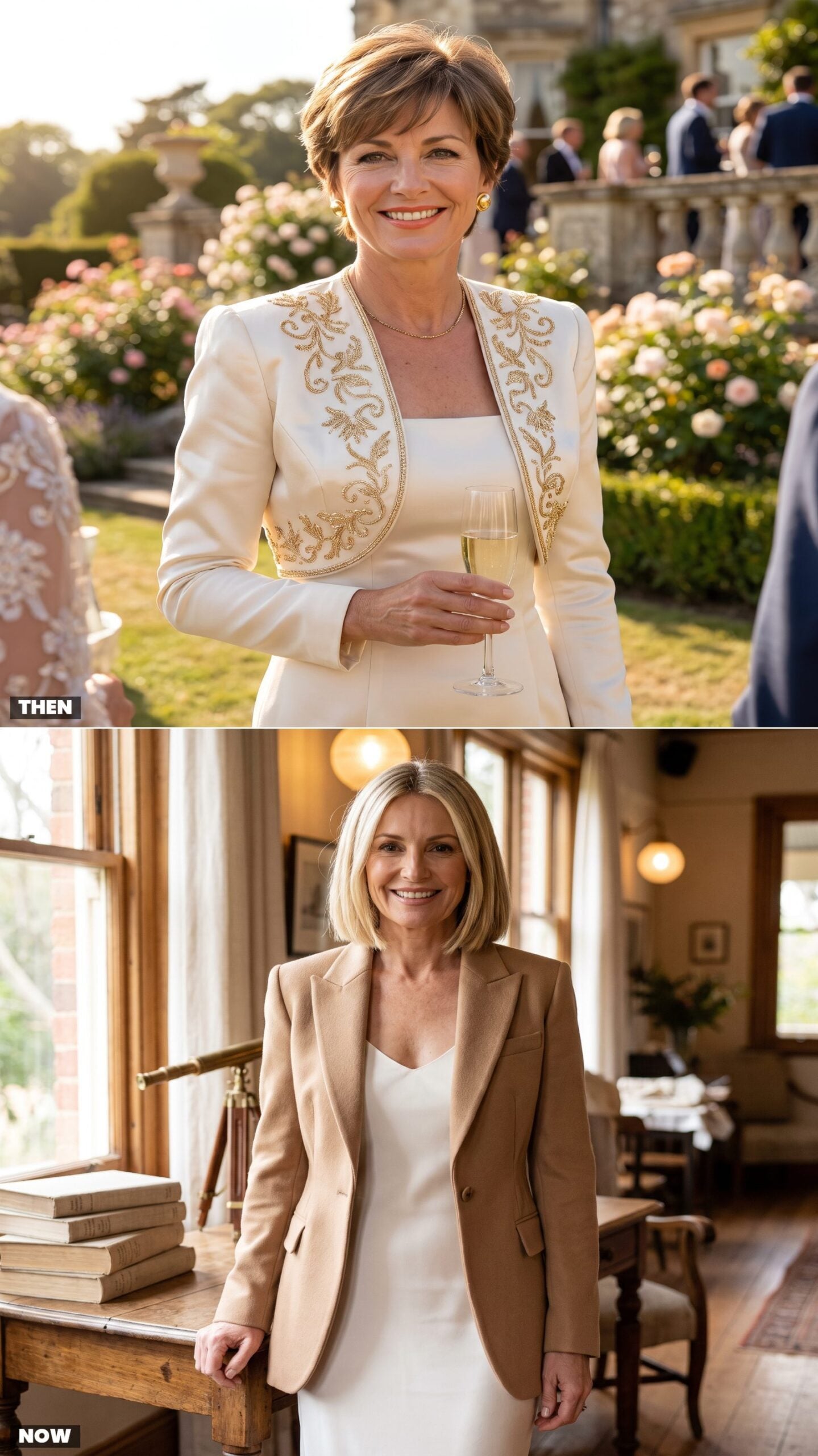
Matchy was the 1985 badge of honor. Dress and bolero cut from the same shiny fabric, same gold trim, same padded shoulder, the full coordinated set bought as one. It said you’d thought about this.
The modern move breaks the set on purpose — a plain slip dress plus a sharp androgynous dress-adjacent blazer in a contrasting tone. The tension between the soft slip and the structured jacket makes both pieces more interesting than a matched set ever could. Coordination now reads as a little too careful.
26. The Wide Portrait Collar vs. Today’s Off-the-Shoulder Neckline
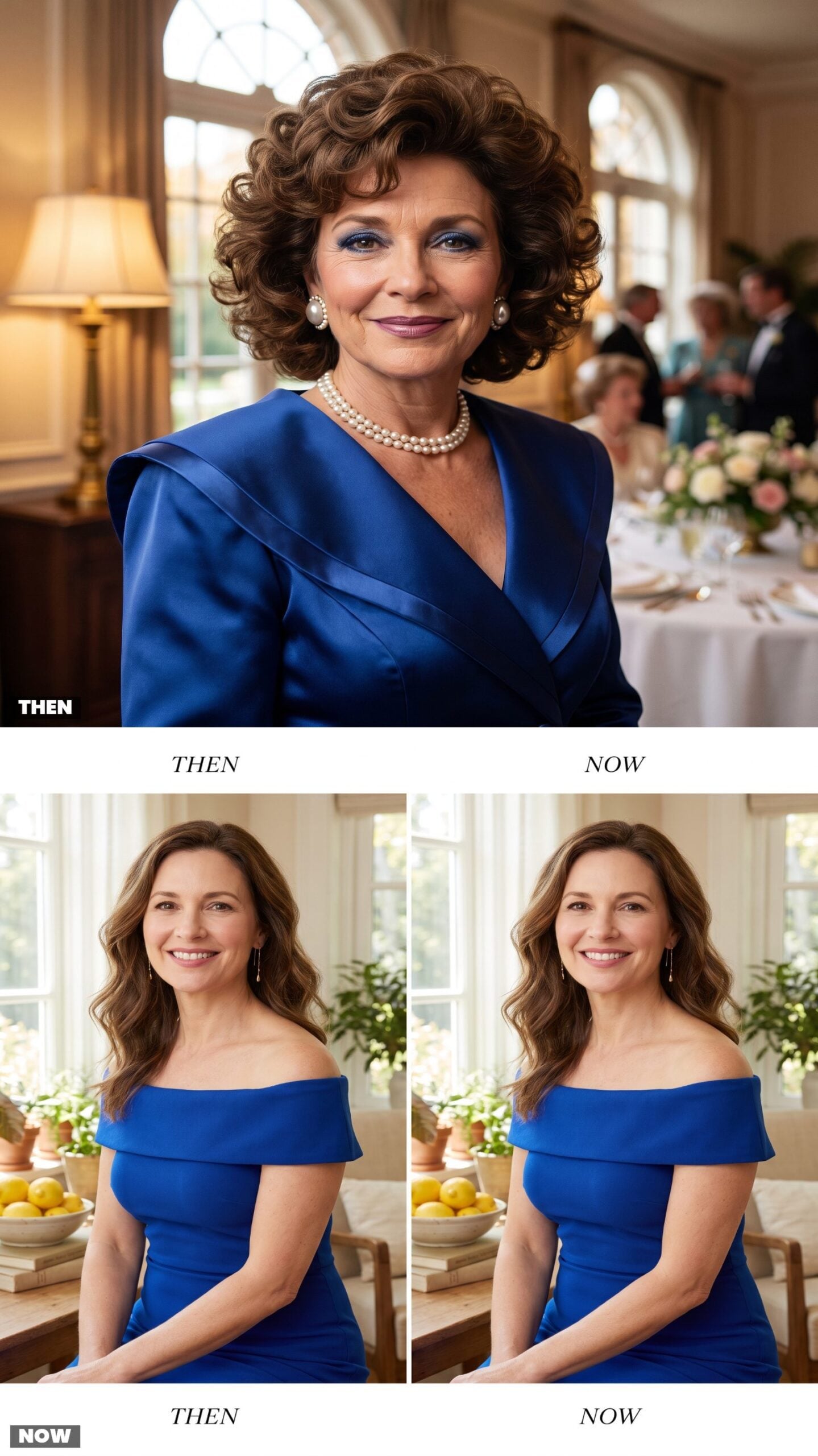
The portrait collar made a stage of your shoulders — a broad flat frame sweeping across the collarbone, usually over a padded shoulder, drawing every eye up to the face. Regal, and slightly severe.
The off-the-shoulder neckline does the same job with bare skin instead of fabric. It widens the shoulder line and draws the eye to the collarbone, softly and horizontally, no scaffolding required. Both flatter the décolletage. One does it with a collar, the other by simply getting out of the way.
25. The Peplum Cocktail Dress vs. a Modern Draped-Waist Dress
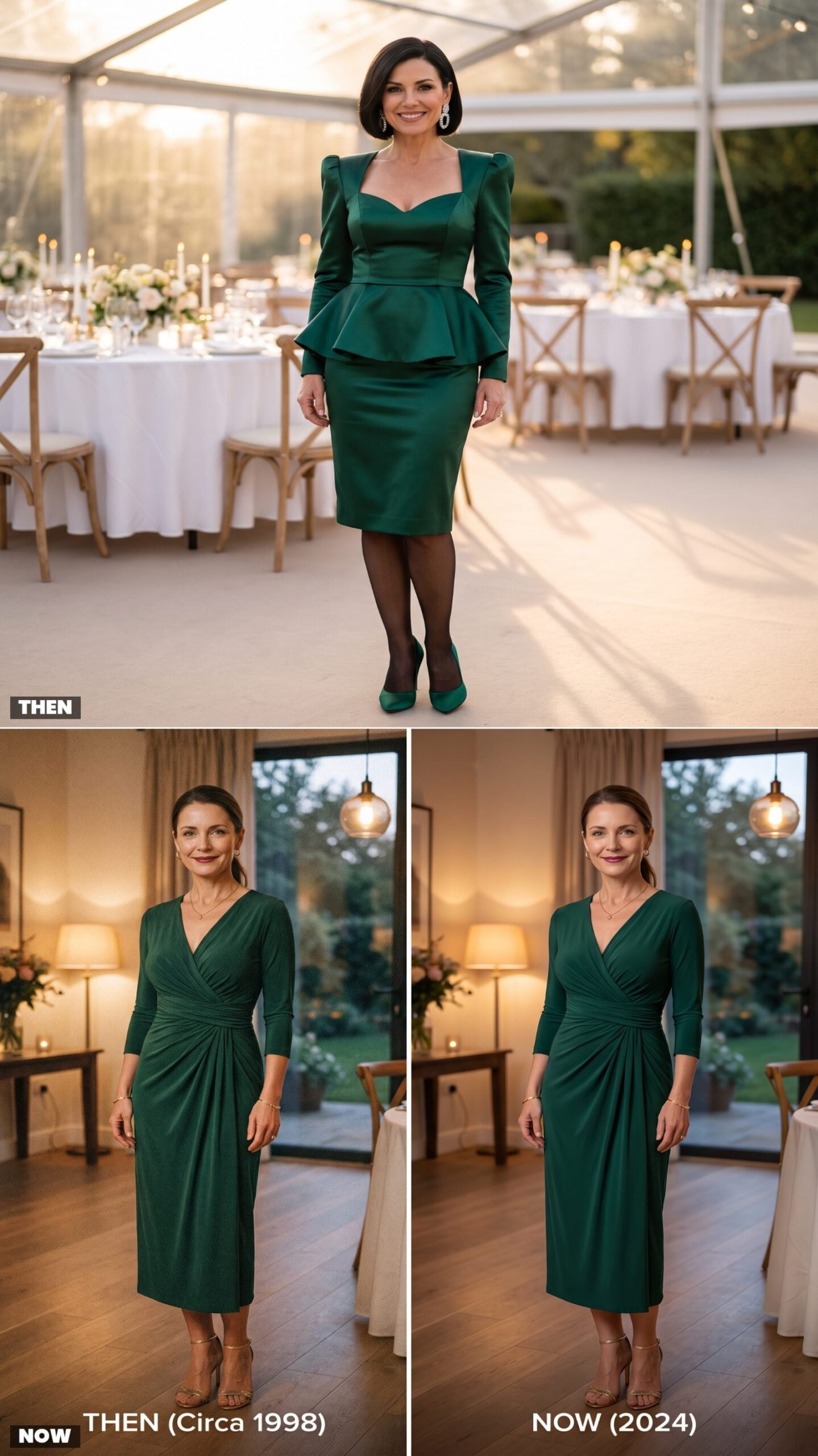
The peplum defined the 1985 hip, literally. A stiff ruffle flaring from the waist, broadening everything below it, paired with a padded shoulder for that hourglass-by-force effect. Bold. Not at all subtle about where your waist was.
The draped-waist dress gets the same waist definition from soft gathered fabric instead of rigid construction. The draping wraps and cinches, then falls into a clean column. You still get the nipped middle, but the line below is fluid rather than flared — softer silhouette, same confidence.
The peplum shouted where your waist was. The drape just lets you feel it.
24. The Metallic Lamé Party Dress vs. a Subtle Liquid-Satin Slip
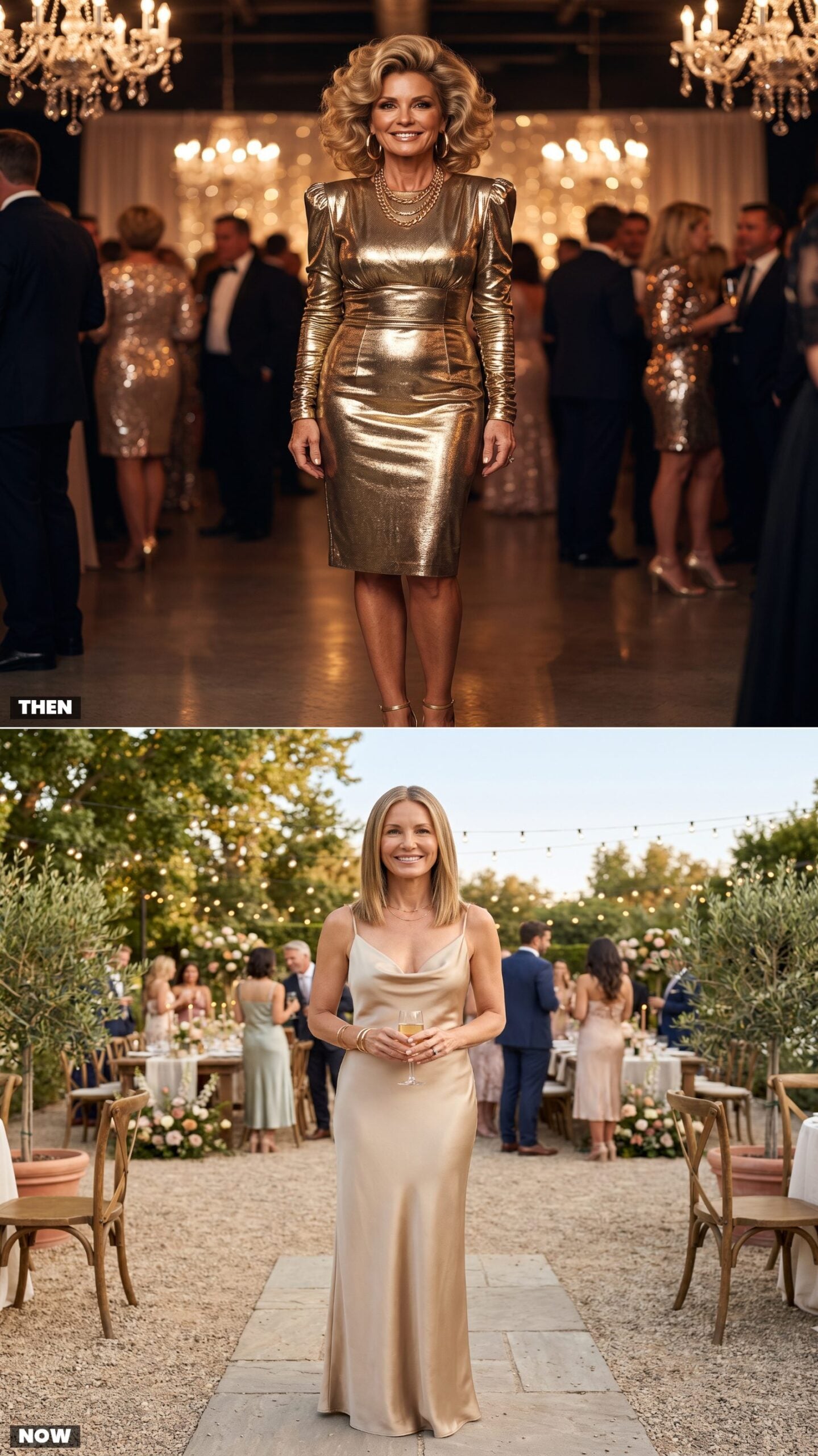
Lamé was the 1985 way to be the second-most-sparkly person in the room, right behind the bride who’d allowed it. Full metallic shine, padded shoulders, the dress practically its own light source under the chandeliers.
The liquid-satin slip keeps the gold and loses the glare. A muted champagne sheen on bias-cut satin, cowl neck, long and fluid, catching light softly instead of flinging it back. At a wedding, the modern guest glows rather than gleams.
23. The Blouson Dress With a Cinched Hip vs. a Bias-Cut Column
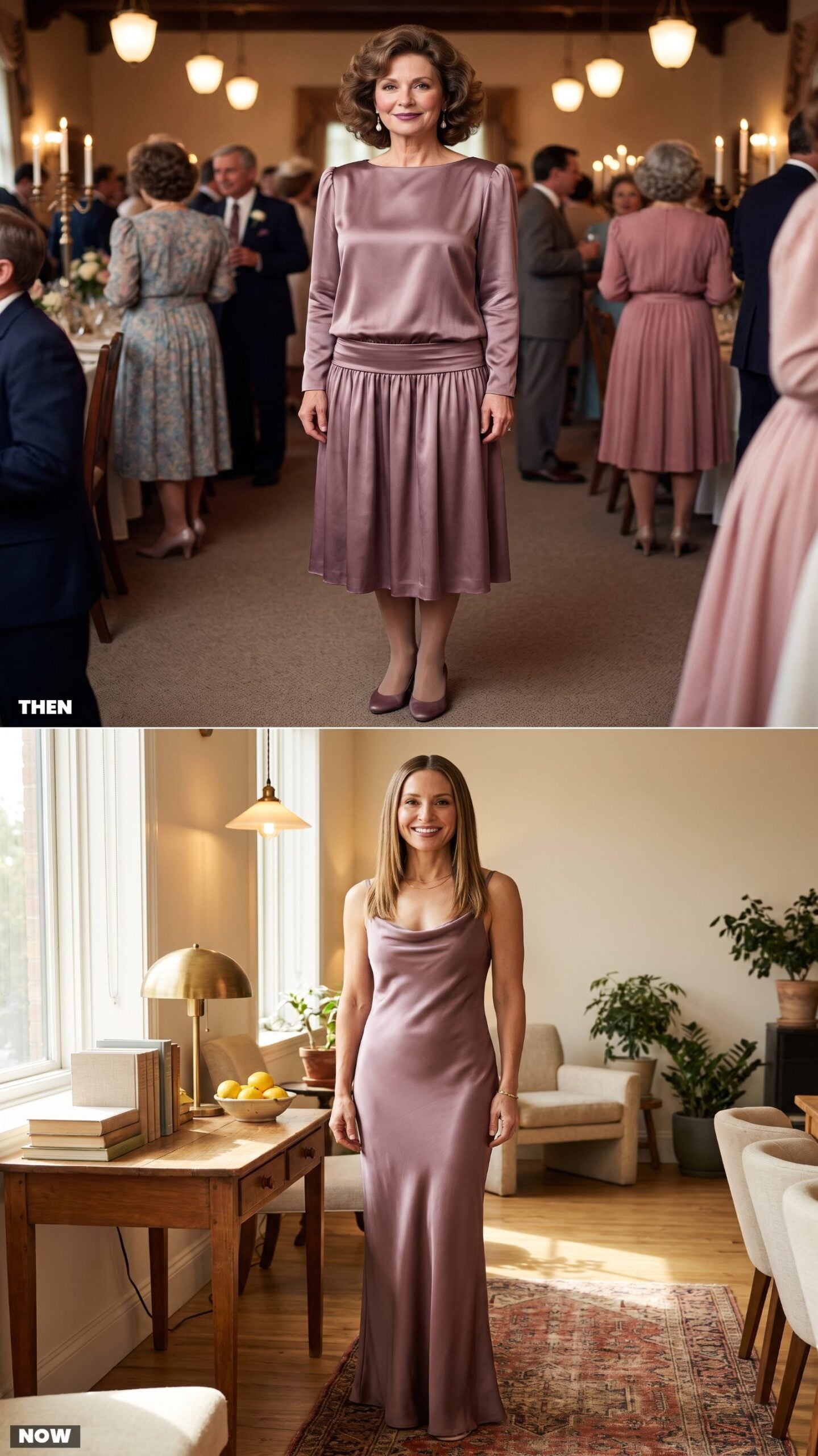
The blouson dress gathered fabric at the hip and let the bodice pouf above it, a soft balloon of satin cinched at the low waist. It added volume exactly where most people would rather not — which is the kind of styling logic that aged out fast.
The bias-cut column does the opposite. Fabric cut on the diagonal skims straight down the body, following every line without clinging to any one spot, elongating the whole frame into a single clean vertical. One dress adds. One streamlines. The streamline won.
22. A Tea-Length Floral With a Matching Belt vs. a Fluid Floral Midi
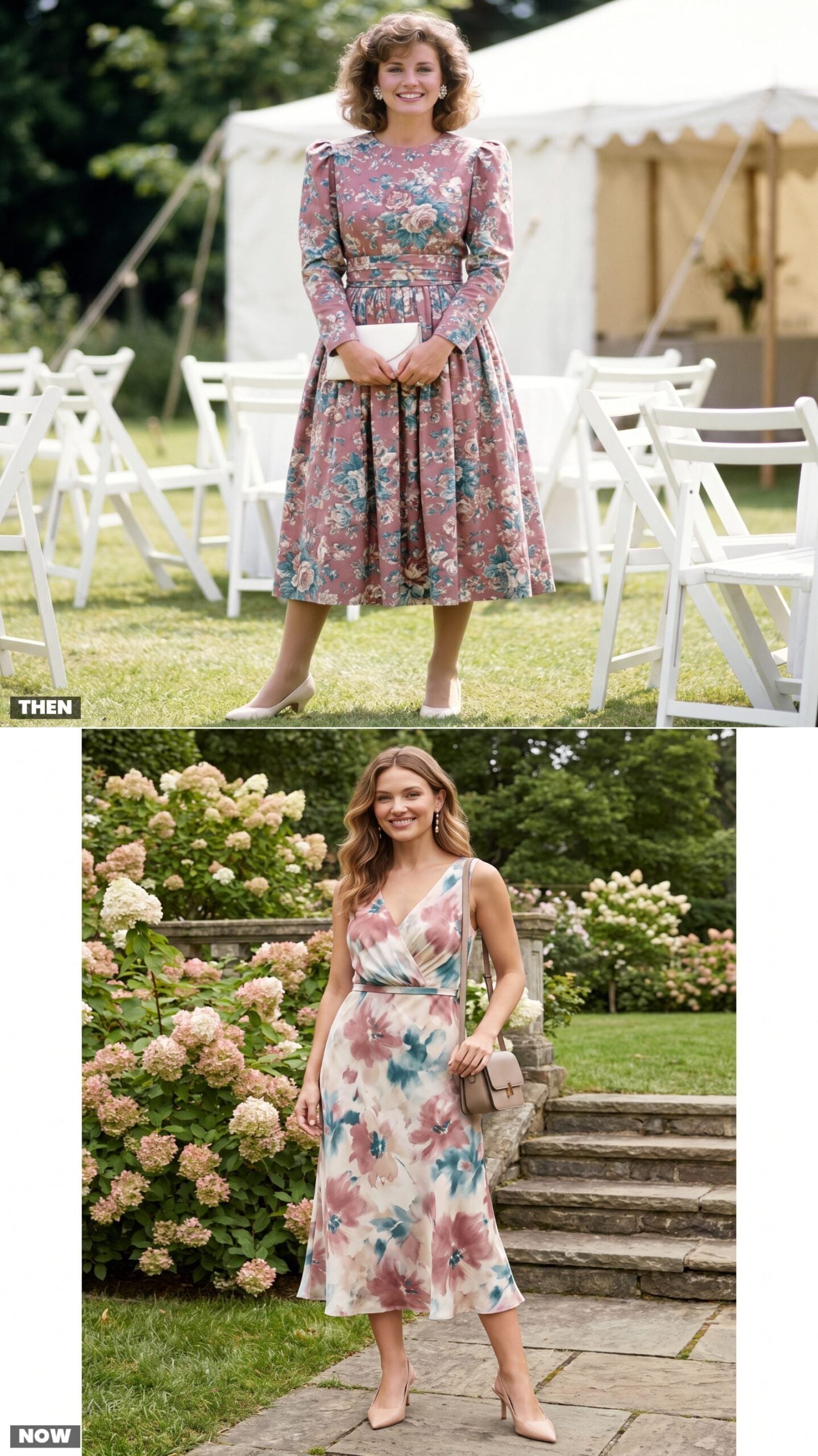
The 1985 version armoured you in print. That stiff chintz held its own shape, the matching belt drew a hard line at the waist, and the whole thing read as polite and contained. Pretty, sure. But the fabric did the standing, not the body.
The modern dress trades stiffness for movement. Silk crepe falls instead of holding, the bias skirt swings when you walk, and the print softens into watercolour so it reads as mood rather than wallpaper. Same florals, same waist emphasis — but one stands still while the other moves with you, and that single difference is why the new one looks expensive.
21. The Ruffled High-Neck Dress vs. a Sleek Halter Midi
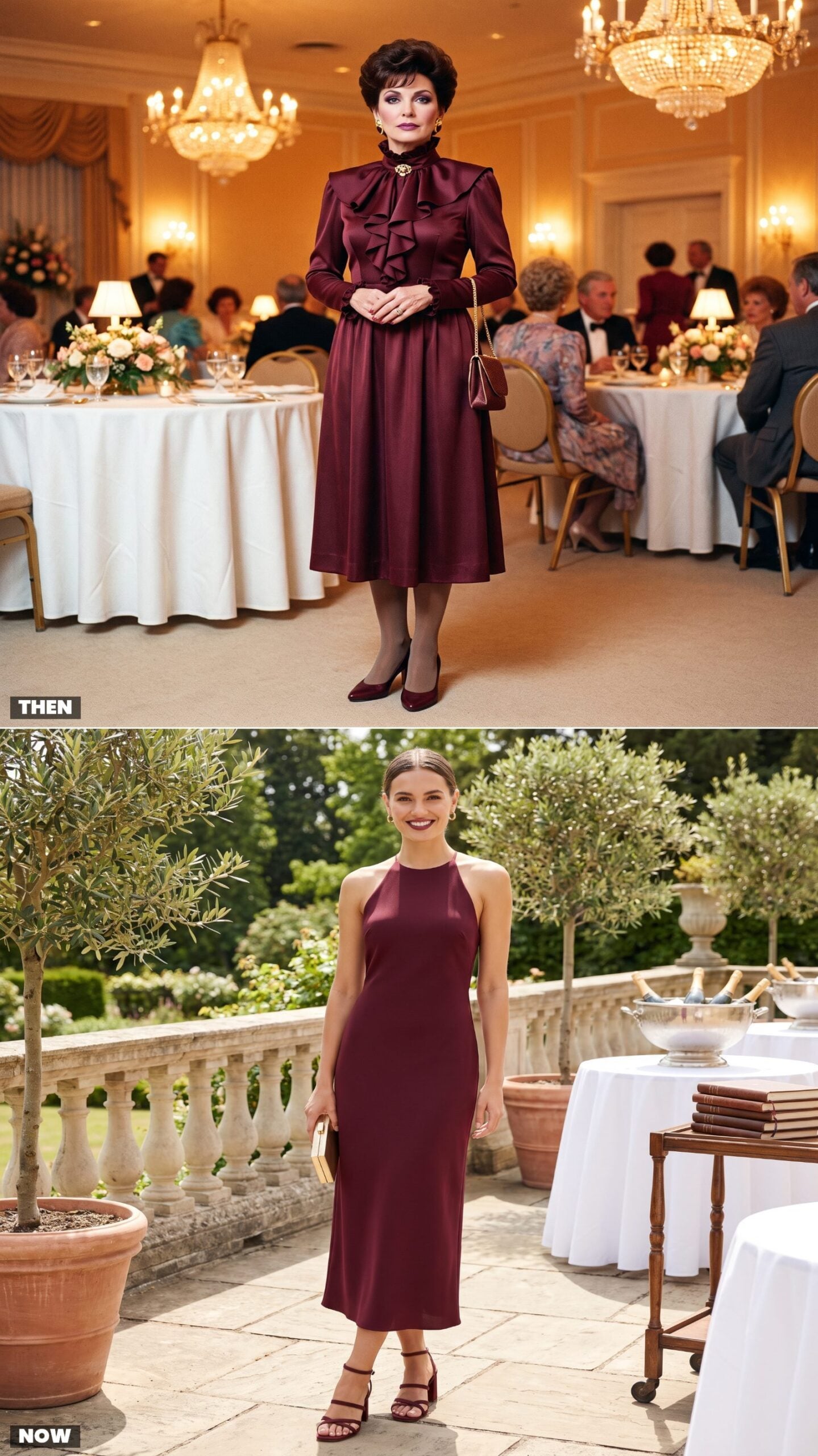
All that fabric at the neck in 1985 was doing one job: covering. The ruffle collar, the jabot, the long sleeves — modesty expressed as volume, and plenty of it.
The halter flips the logic. It bares the shoulders and collarbone, which happen to be two of the areas that stay elegant for decades, then lets the satin-back crepe do the rest in a clean column. Less fabric, more skin, more authority. Forty years of evening dressing boils down to this one move: we stopped hiding the décolletage and started framing it.
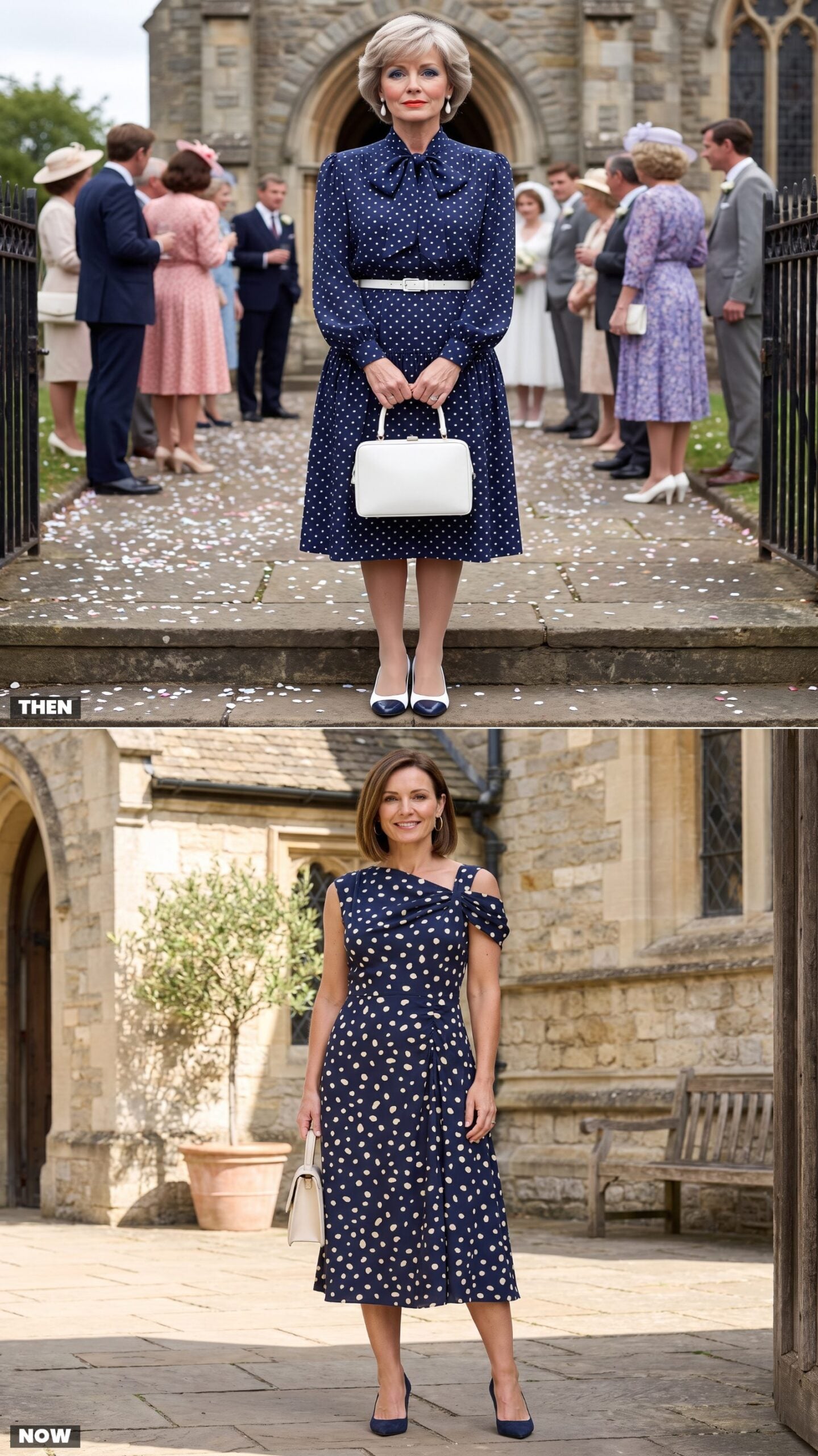
20. A Polka-Dot Dress With a Bow Collar vs. an Asymmetric Spot Print
❤️ Would you like to save this?
The bow did the talking in 1985. A polka dot with a pussy-bow at the throat was the uniform of the well-behaved wedding guest — tidy, symmetrical, buttoned to the chin.
Now the dots break ranks. Scatter them at irregular sizes, run the neckline on a diagonal, and a sweet print suddenly has a point of view. Same navy-and-cream spot, completely different attitude. The asymmetry does the whole trick, reading as a decision rather than a default.
19. The One-Shoulder Ruffle Dress vs. the Architectural One-Shoulder
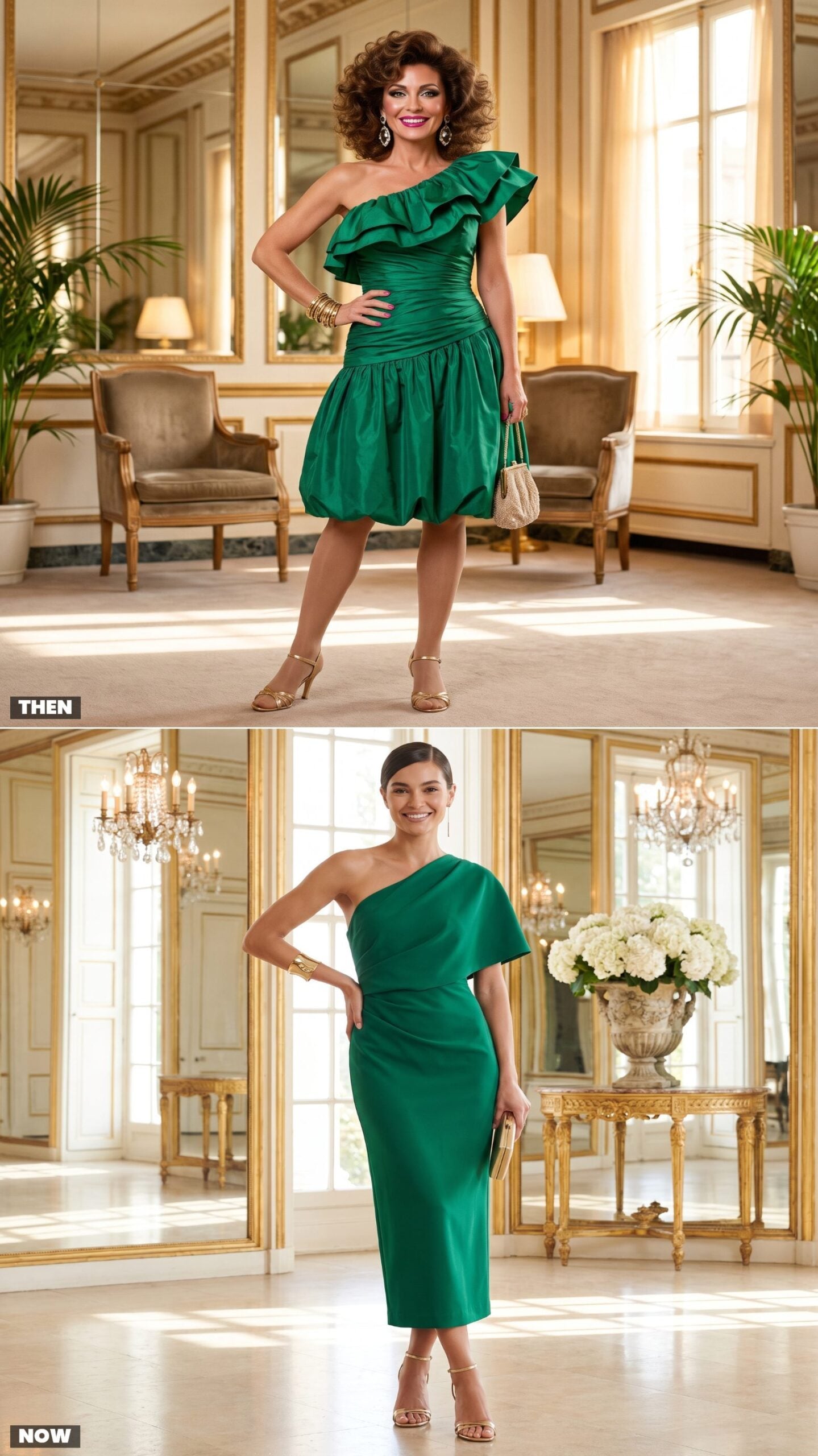
One-shoulder in 1985 meant a ruffle the size of a dinner plate riding up over the bare shoulder, then a taffeta pouf for good measure. Drama by accumulation — the more fabric you piled on the asymmetry, the more formal it was supposed to read.
The modern version gets its drama from restraint. A single clean diagonal across the bodice, one sculptural drape, nothing fussy competing with it. The bare shoulder is still the hero, but now the fabric gets out of its way instead of burying it. Emerald silk crepe falling in a smooth column says more than all that taffeta ever did.
18. A Ruched Taffeta Mini With Sheer Tights vs. a Draped Knee-Length Dress
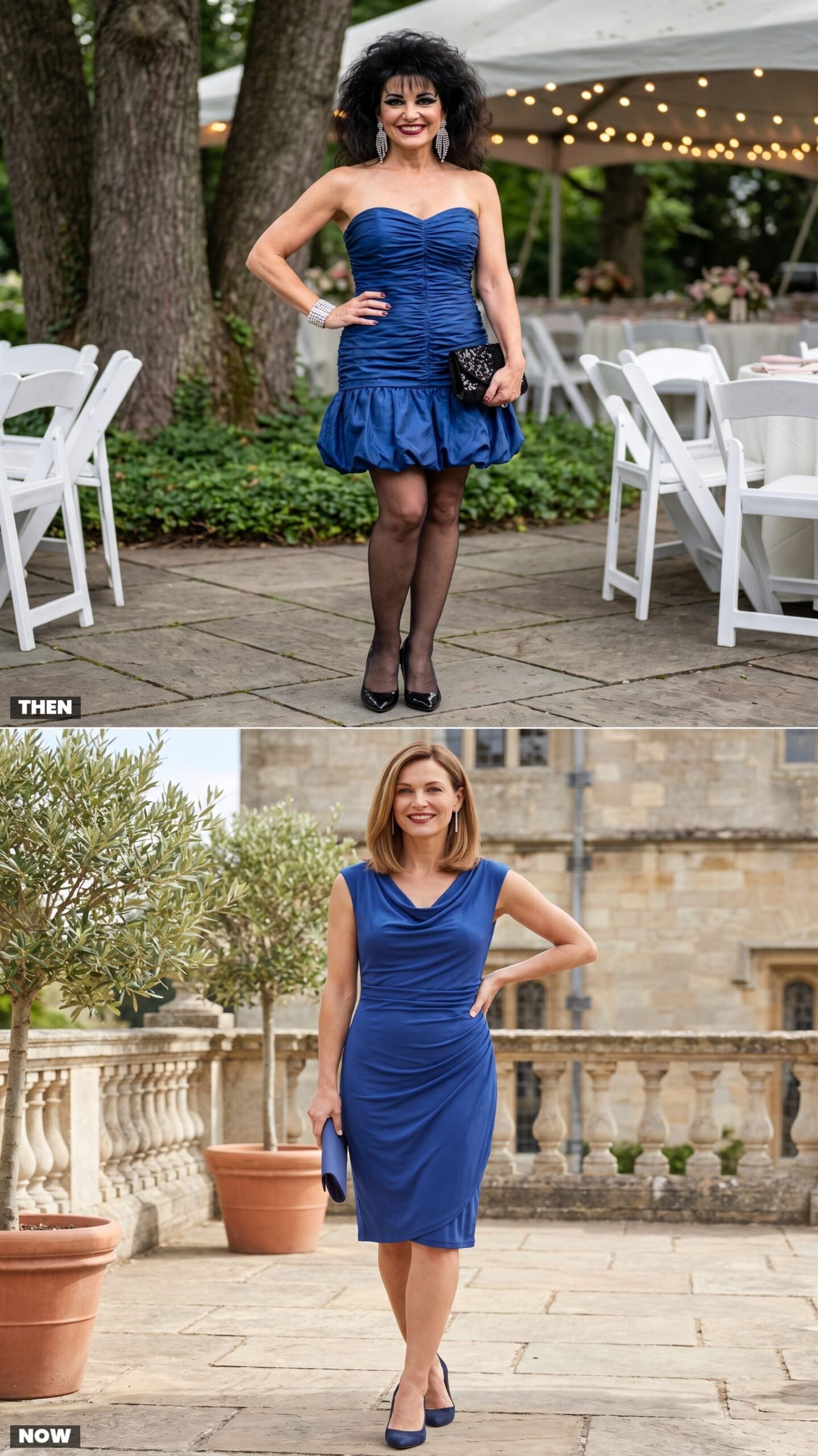
The mid-80s party mini was built like scaffolding. Boned bodice, taffeta gripping the hips in tight ruching, sheer dark tights holding the whole thing up. It wanted attention and it got it — comfort, though, was never on the invite list.
Today the same jewel-tone lives in a knee-length dress that drapes instead of grips. Silk jersey skims the body with a soft cowl and gathered side pleats, so the shape comes from flow rather than construction. The length drops below the knee, the legs go bare, and the whole look relaxes without losing a drop of the sapphire impact.
17. The Bubble-Hem Party Dress vs. Today’s Polished Bubble Midi
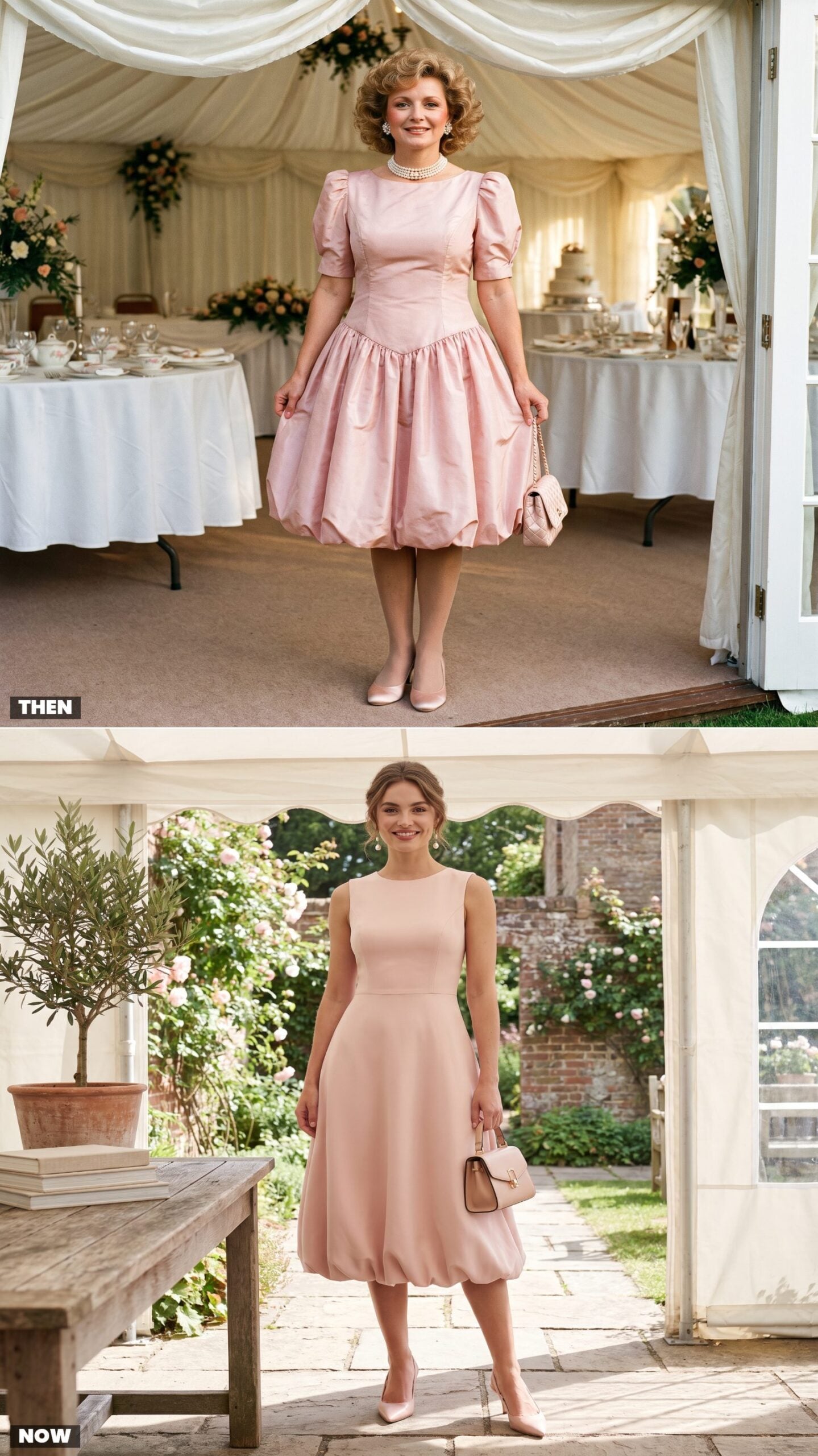
The bubble hem never actually left. In 1985 it ballooned out at the knee in crisp taffeta, paired with a dropped waist and puffed sleeves — cute, in a slightly cartoonish way.
The current take keeps the rounded hem but grows it up. Drop it to mid-shin, define the waist, switch to a duchess-finish crepe, and the novelty turns into something you’d call sculptural. Girlish becomes grown-up. That’s the whole shift.
16. A Pleated Georgette Dress With a Skinny Belt vs. a Knife-Pleat Midi
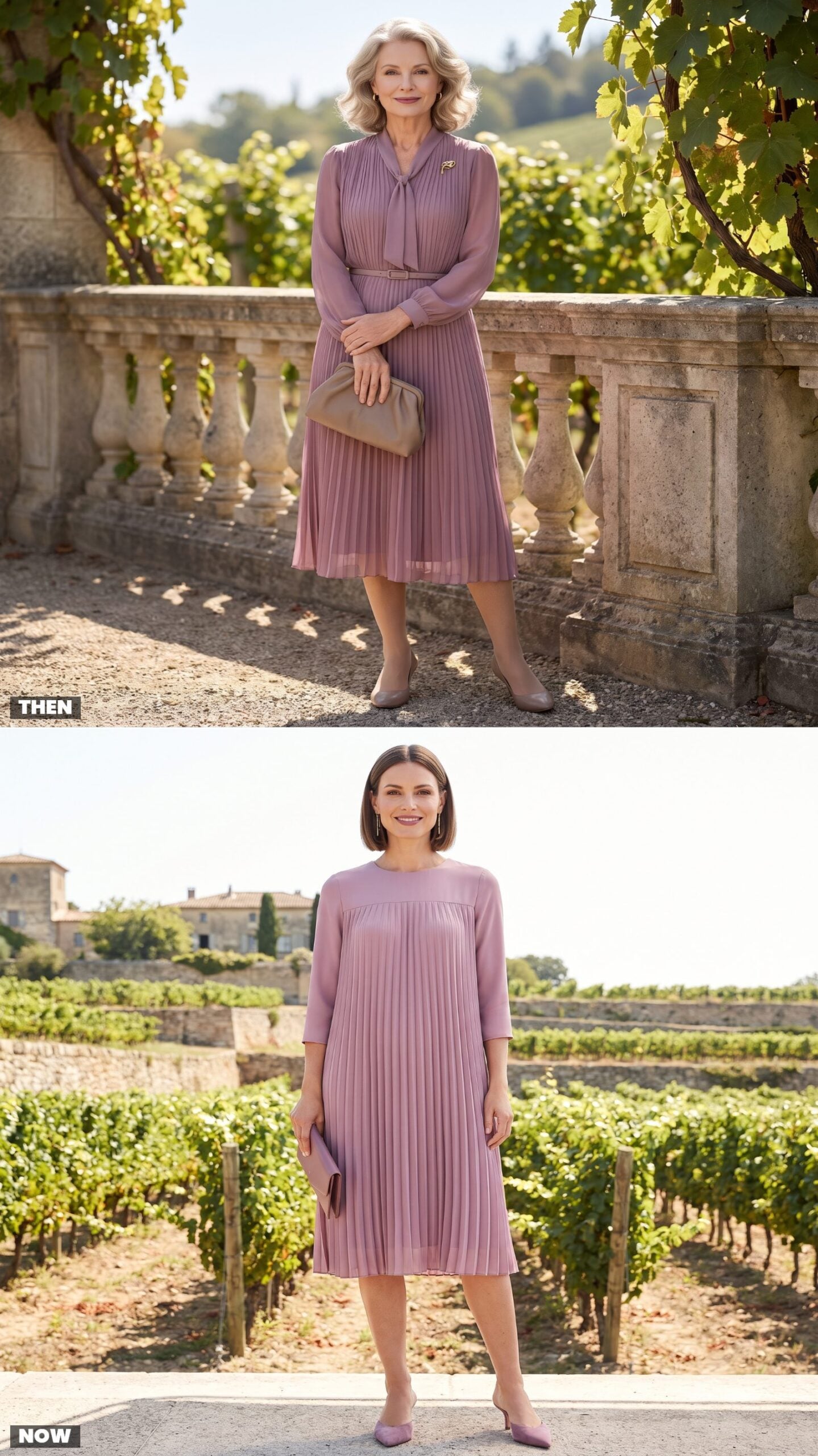
Pleats in 1985 came gathered soft and all over, cinched with a skinny belt so the floaty georgette didn’t float away entirely. Pretty, a little shapeless, held together at the waist by necessity.
Modern pleating goes sharp and vertical. Fine knife pleats fall in clean lines from a yoke, doing the lengthening work the belt used to do, which lets the waist stay unmarked while the dress still reads tall and tidy. The pleat went from decorative texture to load-bearing structure — and it ditched the belt on the way out.
15. The Sweetheart-Neck Taffeta Dress vs. a Corset-Seamed Midi
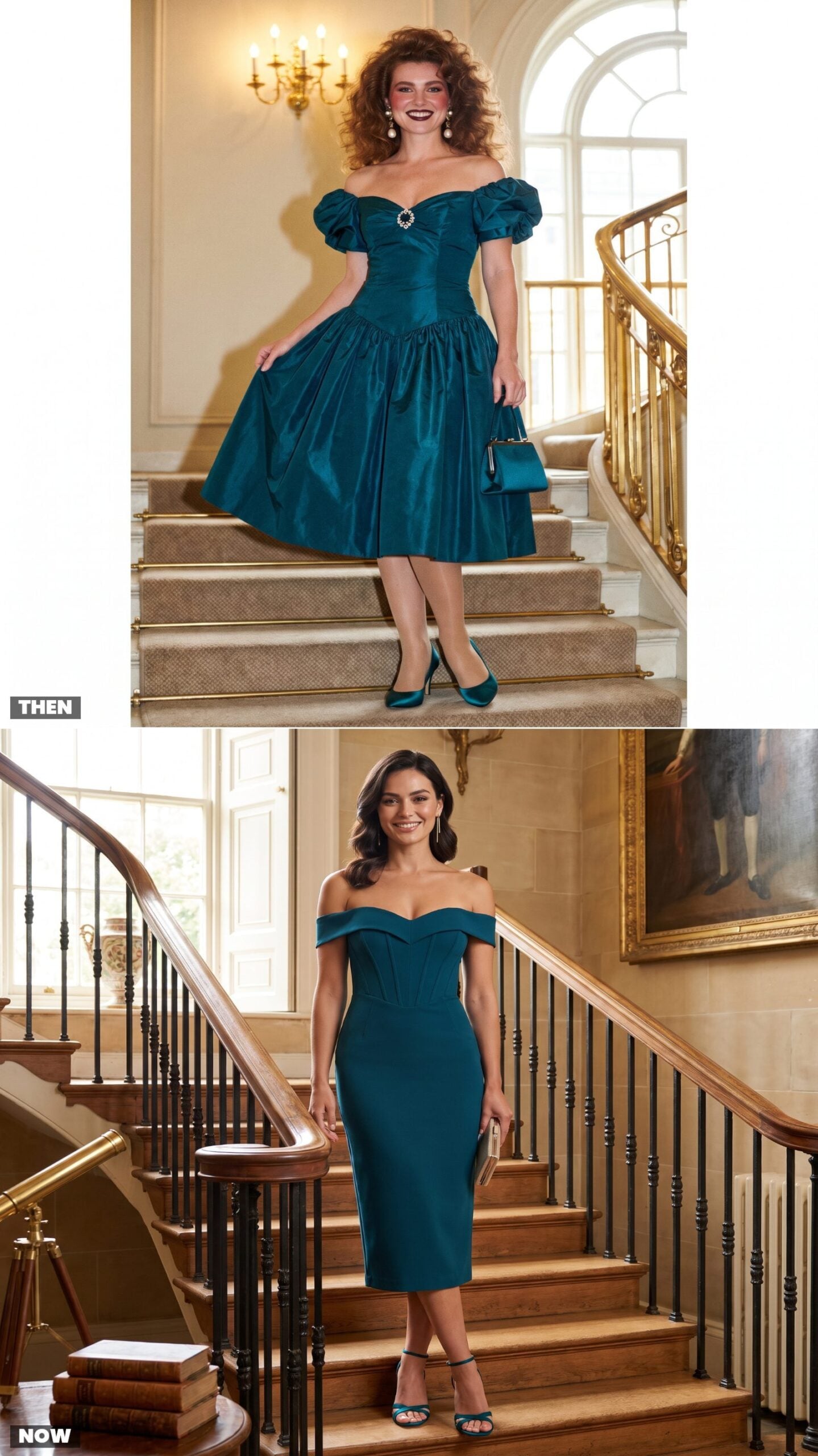
The sweetheart neckline has always flattered. In 1985 it sat on a boned taffeta bodice with a full pouf skirt — romantic but rigid, the whole thing built to hold a shape.
The current reading keeps the neckline and borrows the structure, but puts it on display instead of hiding it. Visible corset seaming shapes the bodice from the outside, matte crepe replaces the shine, and the skirt slims to a clean line. Same romantic curve at the top. What’s changed is that the construction has become the feature now, worn with confidence rather than buried under taffeta.
14. A Pastel Satin Guest Dress vs. a Muted Tonal Slip
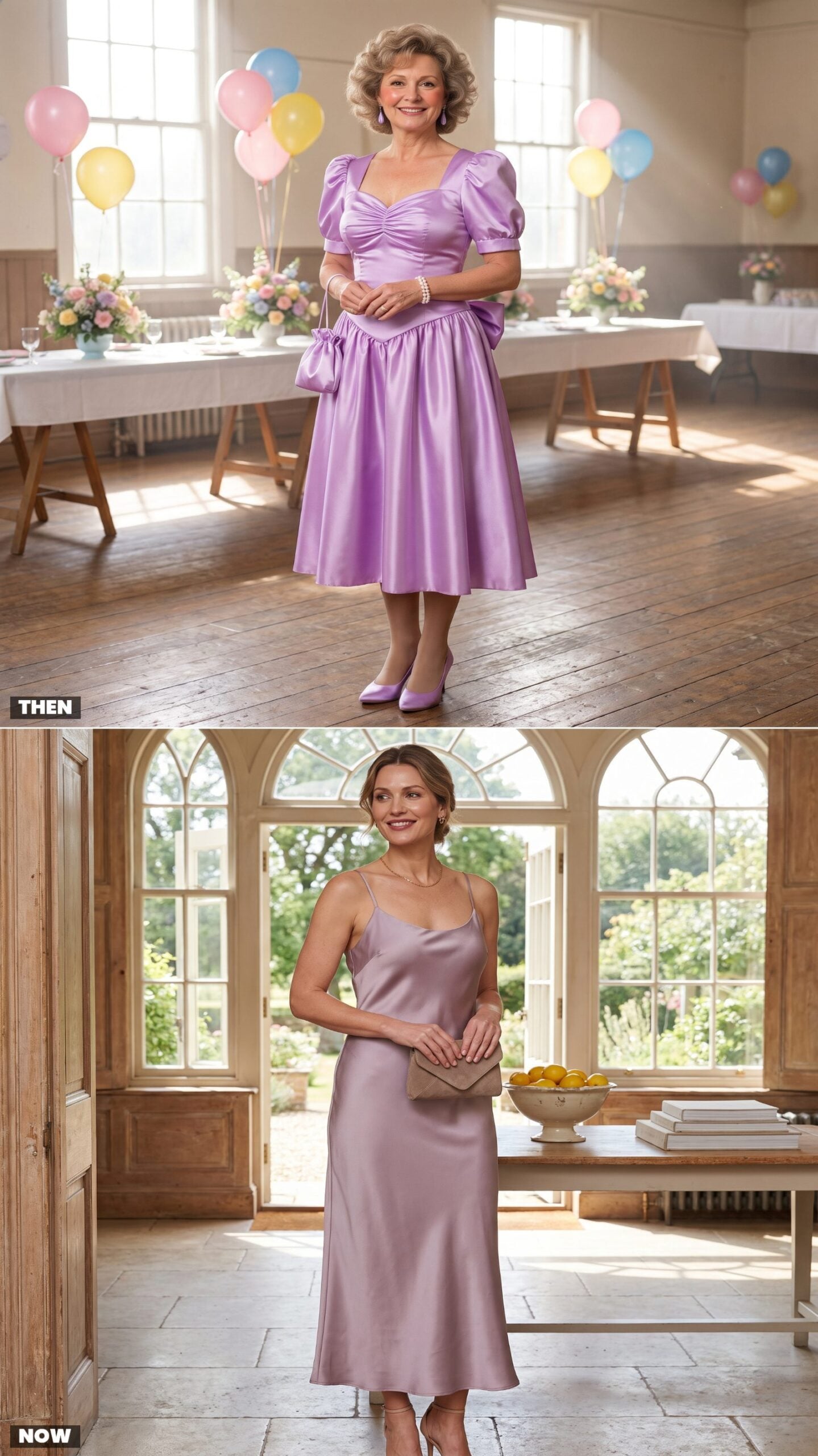
Bright lilac satin, shiny enough to catch every flashbulb, ruched bodice, puffed sleeves, a bow at the hip. The 1985 pastel guest dress leaned hard into sweetness, and the high-shine fabric made sure nobody missed it.
The contemporary pastel does the opposite. Mute the colour to a dusty, grown-up lilac, swap the shine for a soft low-sheen silk, let the bias cut skim the body in a long fluid column. Same soft hue, dialled from candy to smoke. That restraint is exactly what makes it read as luxurious instead of youthful.
13. A Black Velvet Dress With a White Lace Collar vs. a Velvet Column
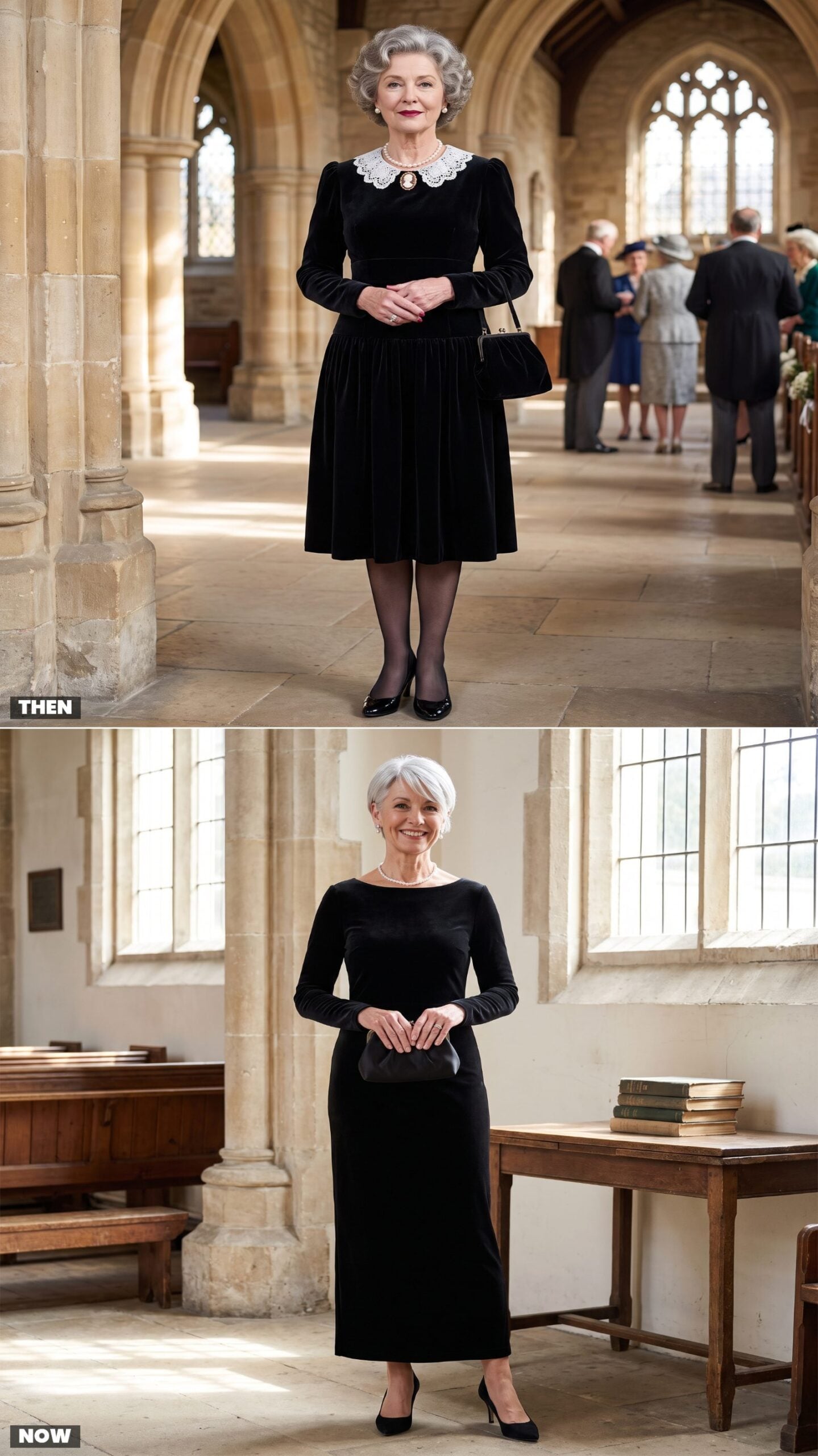
Black velvet with a white lace collar was the respectable winter-wedding uniform of 1985. The collar did a lot of work: it broke up the dark, framed the face, and signalled good taste with a faint whiff of the schoolroom. Add a cameo brooch and the message was complete.
Strip the collar away and velvet shows what it can really do. A clean V-neck, slim sleeves, a body-skimming column — and the fabric’s depth carries everything. No lace, no brooch, nothing breaking the line. Just one long stroke of velvet to the ankle, quietly powerful instead of prim.
12. The Handkerchief-Hem Dress vs. a Controlled Asymmetric Hem
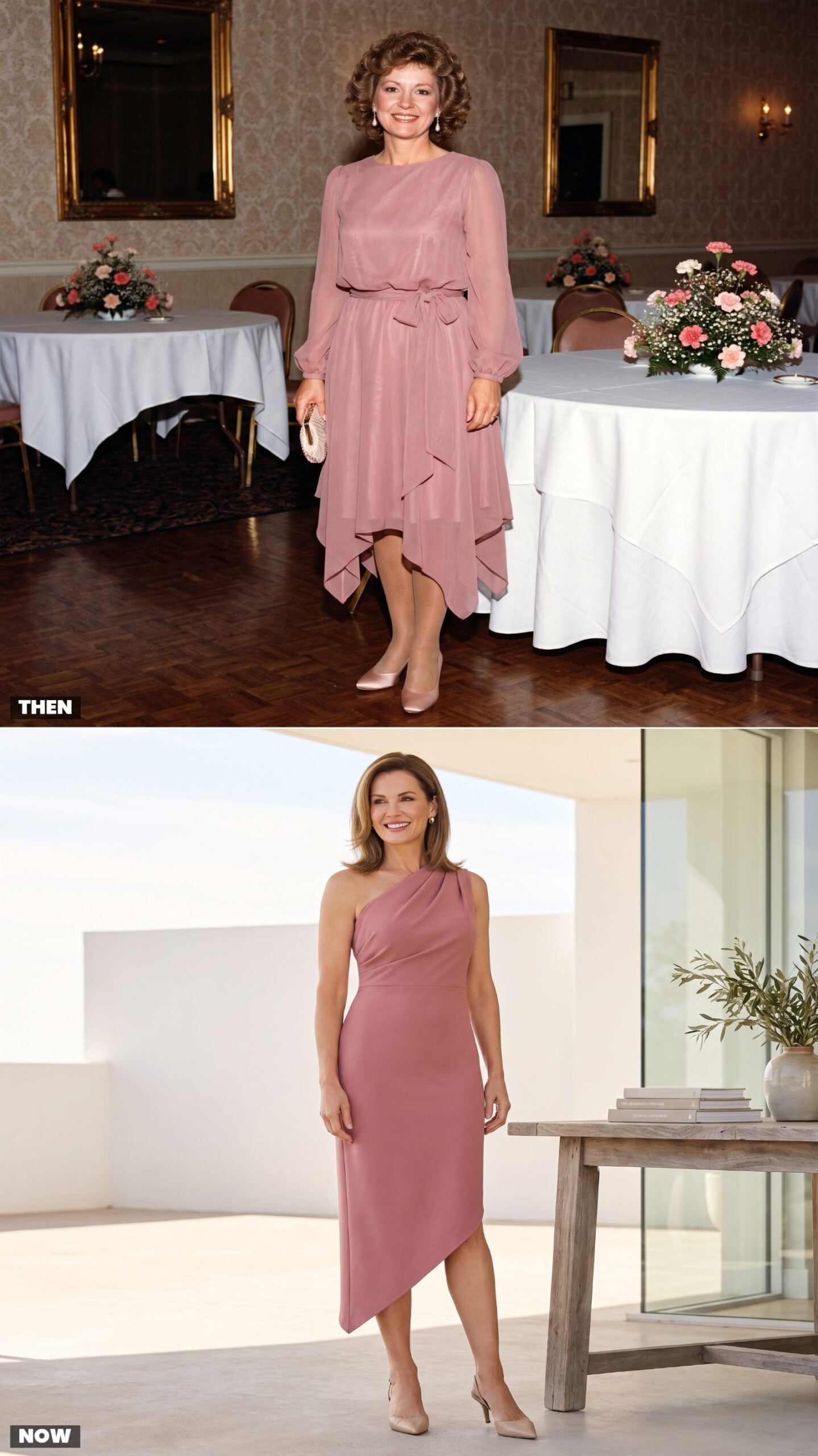
Four pointed panels of chiffon doing a little dance every time she turned. The 1985 handkerchief hem was movement for its own sake — charming, a bit chaotic, cinched with a self-tie sash so nobody missed the waist.
The modern version keeps one diagonal line and lets the crepe fall clean, so the asymmetry becomes a single confident decision instead of a flutter of them. That’s the whole shift. 1985 wanted motion everywhere; now wants one deliberate angle that lengthens the leg and calls it done.
11. A Cowl-Neck Disco Dress vs. a Refined Satin Cowl Midi
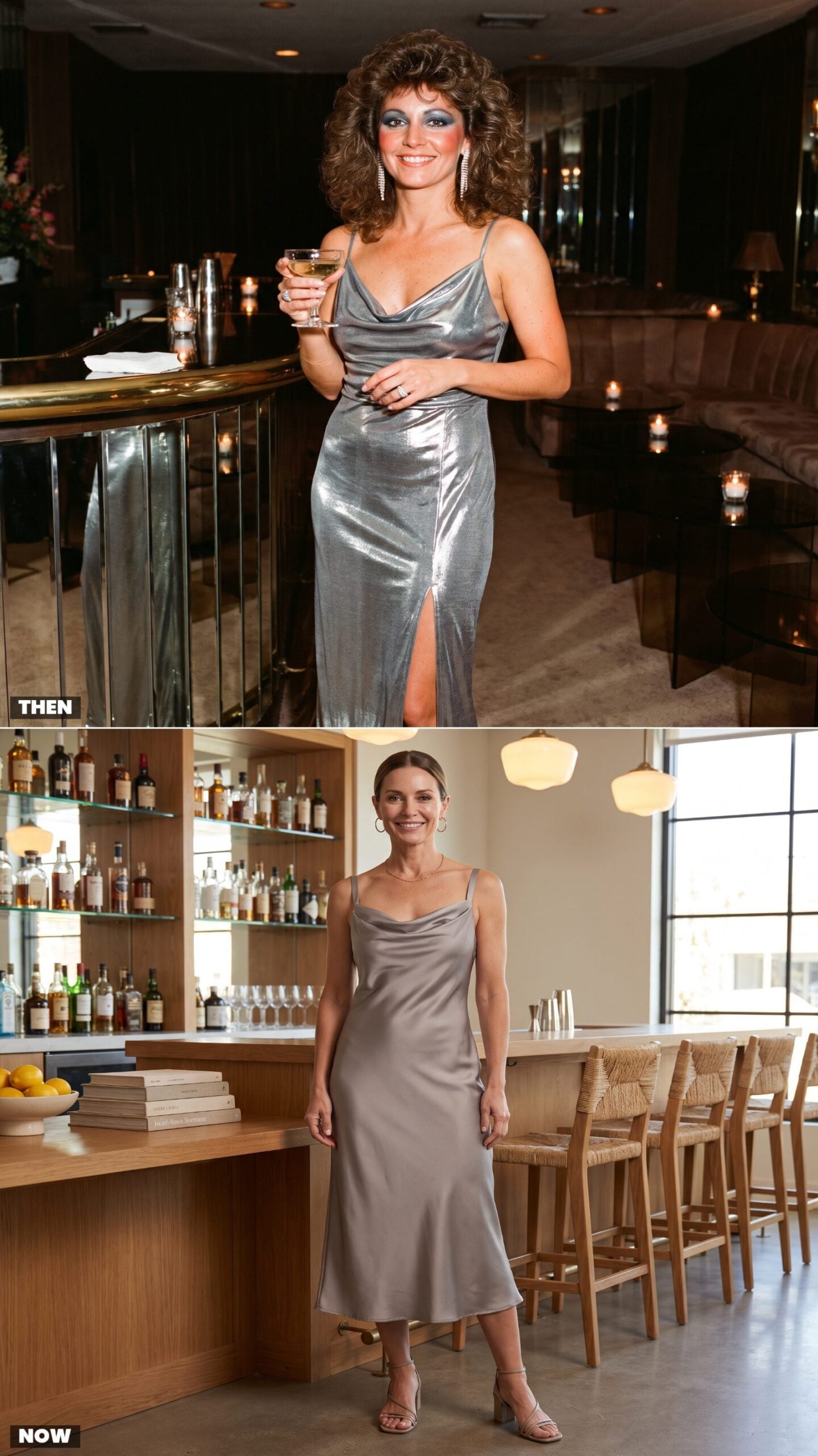
That lamé caught every light in the room and held on. The 1985 cowl was high-shine theater, meant to shimmer on a dance floor, cut to cling and slit to move.
Now the cowl trades glitter for drape. Bias-cut satin pools softly across the collarbone and skims rather than grips, and the dress still has shine — just the quiet kind, pewter instead of mirror-silver. Same neckline, completely different confidence. One shouted across the room; this one lets you lean in to catch it.
10. A Color-Blocked Cocktail Dress vs. Modern Minimalist Color Blocking
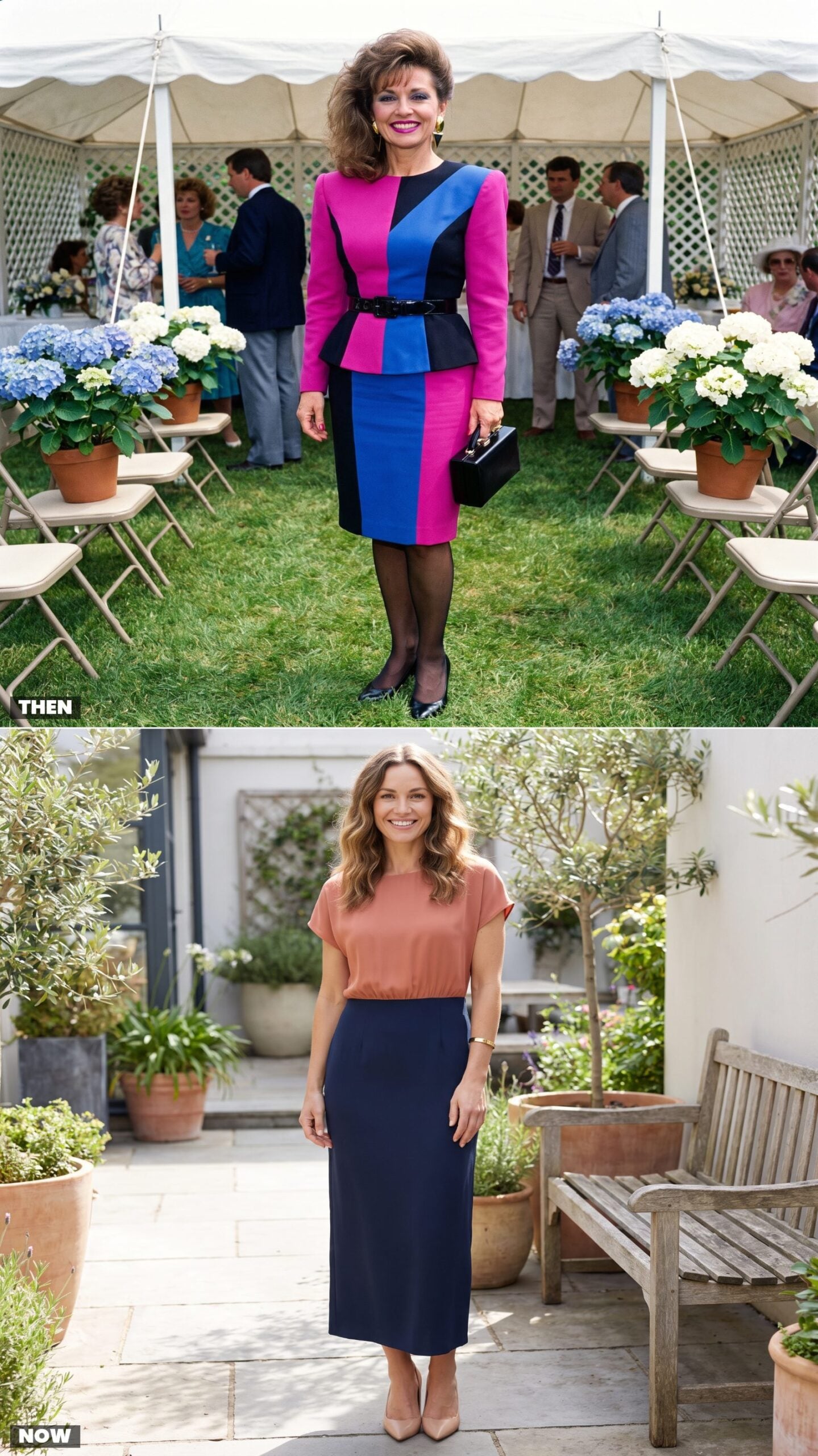
Fuchsia against electric blue against black, carved into panels sharp enough to cut bread. The 1985 color block was loud by design, propped up by padded shoulders and a patent belt that demanded attention.
The modern take picks two colors that actually get along — soft terracotta meeting ink navy — and lets a single seam do the dividing. Drama moves from contrast to proportion. Choosing your accessory colors to disappear rather than compete is the grown-up move here. Still color blocking. Just no longer yelling.
9. A Mandarin-Collar Brocade Dress vs. a Clean Jacquard Shift
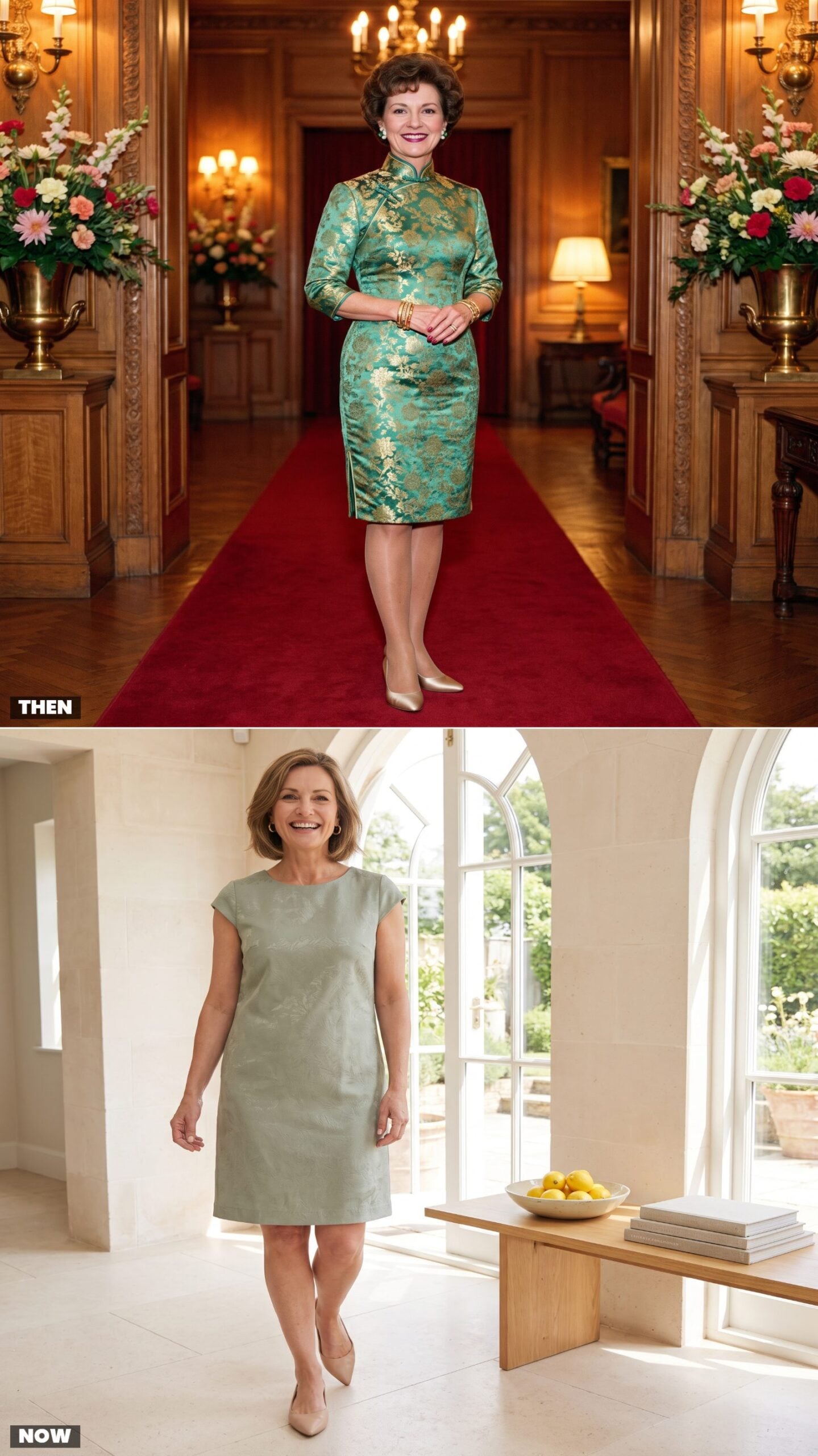
The brocade stood up on its own. Stiff jade and gold threadwork, a mandarin collar fastened with frog buttons, the kind of dress that photographed like an heirloom and was a little stiff to sit down in.
Today the same reference goes quiet. Tonal sage jacquard keeps the woven texture but loses the metallic shimmer, and the collar gives way to a soft round neck. The pattern whispers now. You feel the richness up close instead of across the room, which suits a woman who already knows the dress is good.
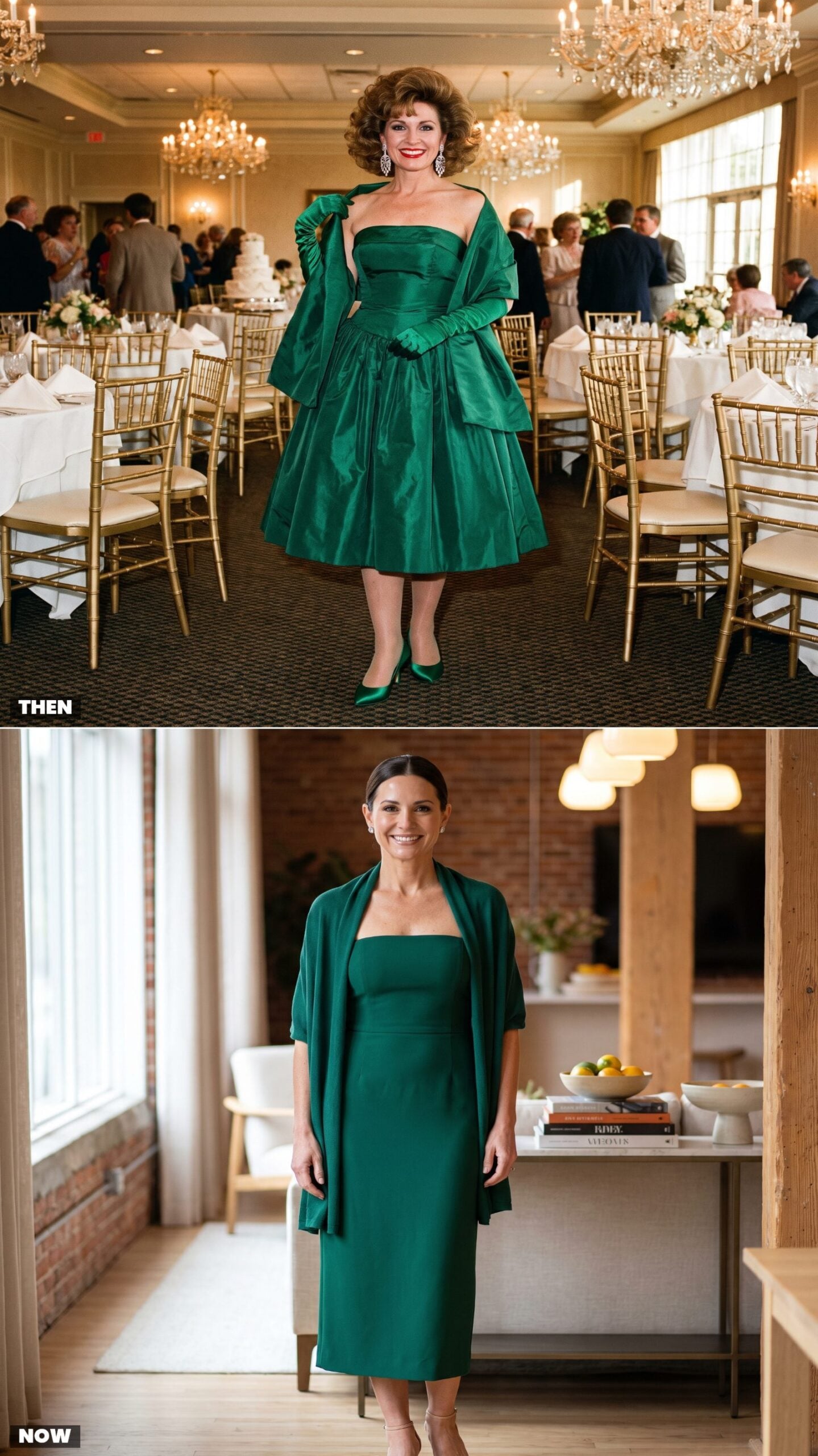
8. The Strapless Taffeta Dress With a Stole vs. a Strapless Midi With a Wrap
❤️ Would you like to save this?
Taffeta that rustled when she walked, a boned bodice holding everything upright, a matching stole for the inevitable over-air-conditioned ballroom. The 1985 strapless was feats of construction as much as fashion.
The modern version keeps the bare shoulders and the emerald but drops the scaffolding. Matte crepe skims instead of poufs, and the stole becomes a soft wrap you can actually throw on and forget. Same plan for a strapless neckline, far less armature. One required a whole support system. This one just needs you.
7. A Sailor-Bow Back Dress vs. a Minimal Open-Back Midi
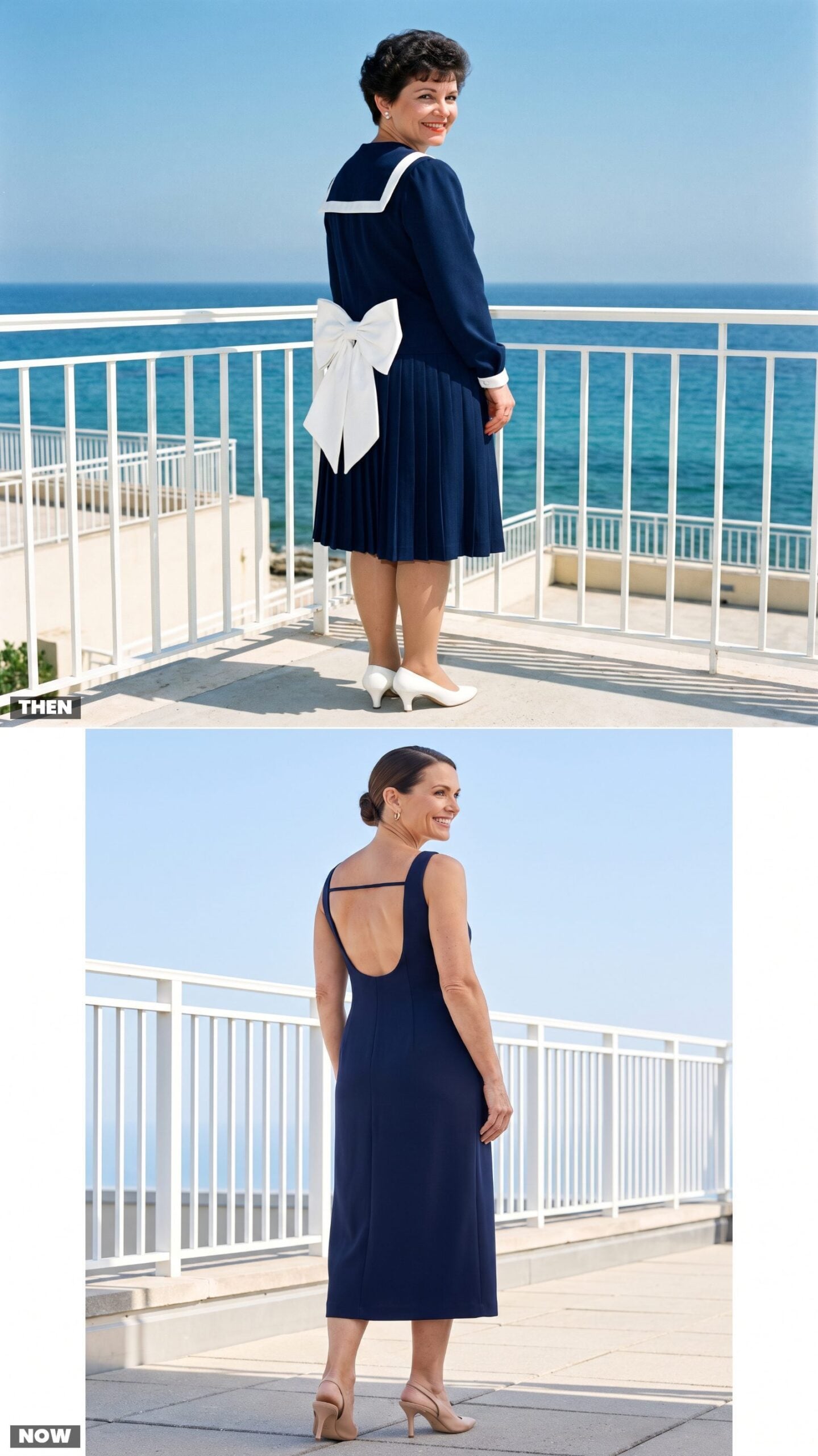
The whole back of the dress was the event. A giant grosgrain bow at the drop waist, a sailor collar for good measure, nautical and sweet and impossible to lean back against a chair.
The modern open back says the same thing with skin instead of ribbon. Clean scooped navy crepe lets the back become the surprise, held by one quiet strap. The detail moved from decoration to negative space — and a bare back shown on purpose carries a composure a bow never could.
6. A Rhinestone-Trimmed Party Dress vs. a Dress With Minimal Crystal Detailing
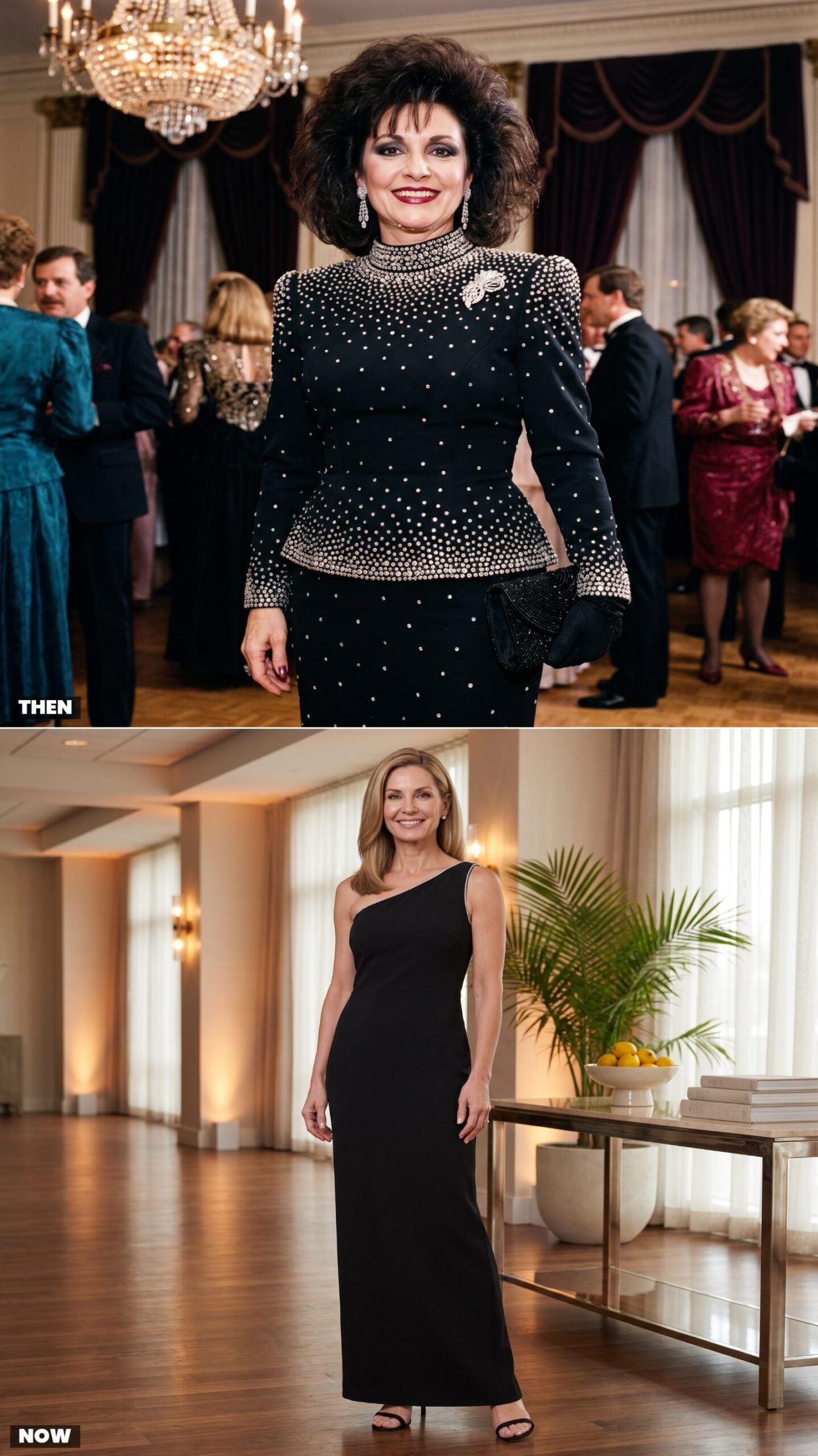
If it stood still, they put a rhinestone on it. Neckline, cuffs, peplum, brooch, earrings — the 1985 party dress treated sparkle like seasoning you could never overdo.
The modern dress rations the shine to a single line of tiny crystals tracing one shoulder, and the matte crepe does the rest. The restraint is the flex. One deliberate glint reads as far more expensive than a dress drowning in them. Less light, more impact. Funny how that works.
5. A Dolman-Sleeve Jersey Dress With a Wide Belt vs. a Fluid Belted Midi
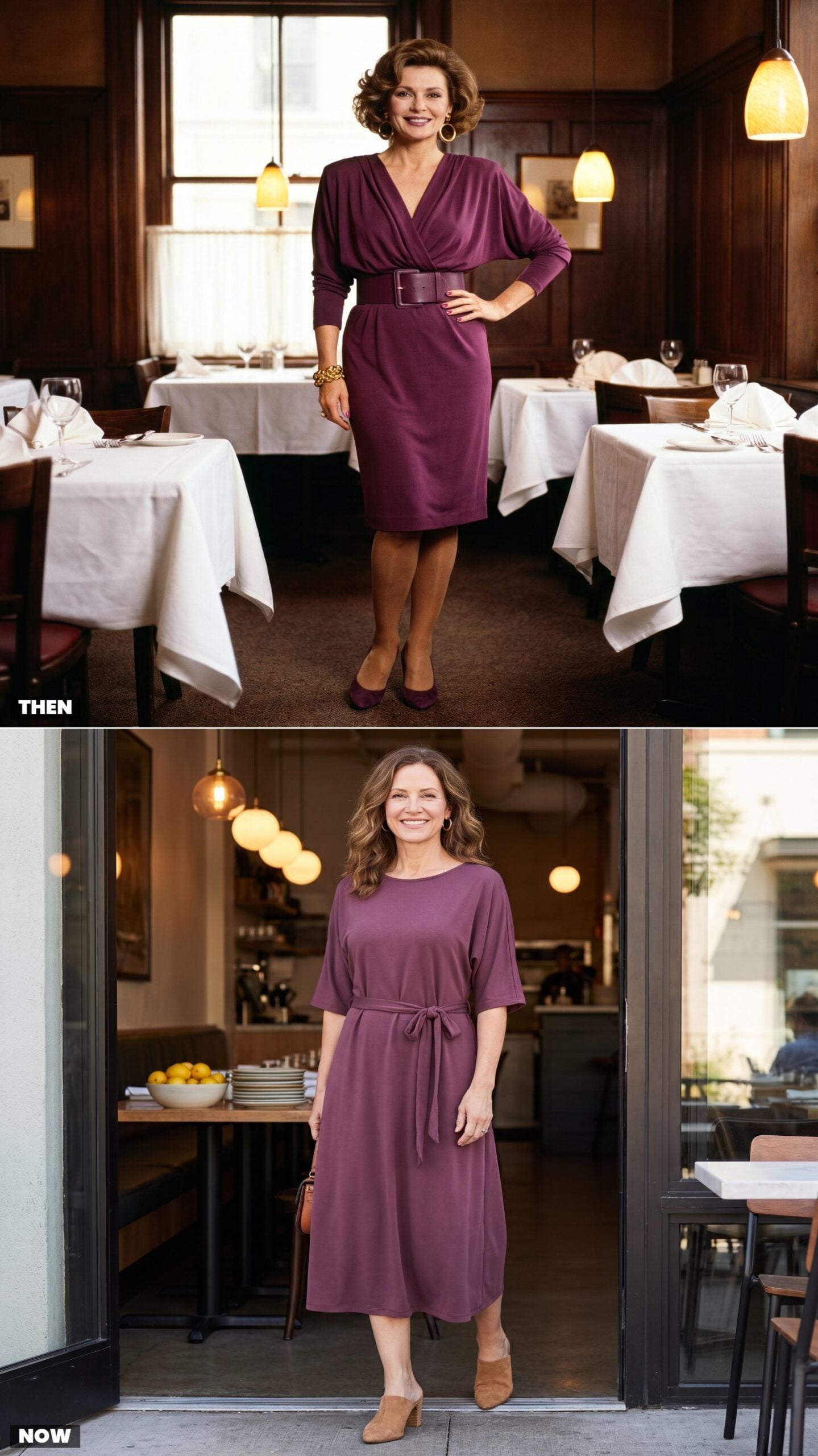
Batwing sleeves, and a belt cinched tight enough to make the jersey billow above it. The 1985 dolman dress was all about exaggerated top-to-waist drama, held together by a wide stiff belt doing heavy structural work.
The modern version softens every edge. Sleeves shrink to a relaxed elbow, the jersey drapes instead of balloons, and a slim self-tie belt suggests the waist rather than strangling it. Same silhouette logic — volume up top balanced by definition at the middle — just dialed from theatrical to easy.
4. The White-Piped Navy Dress vs. a Modern Graphic-Trim Column
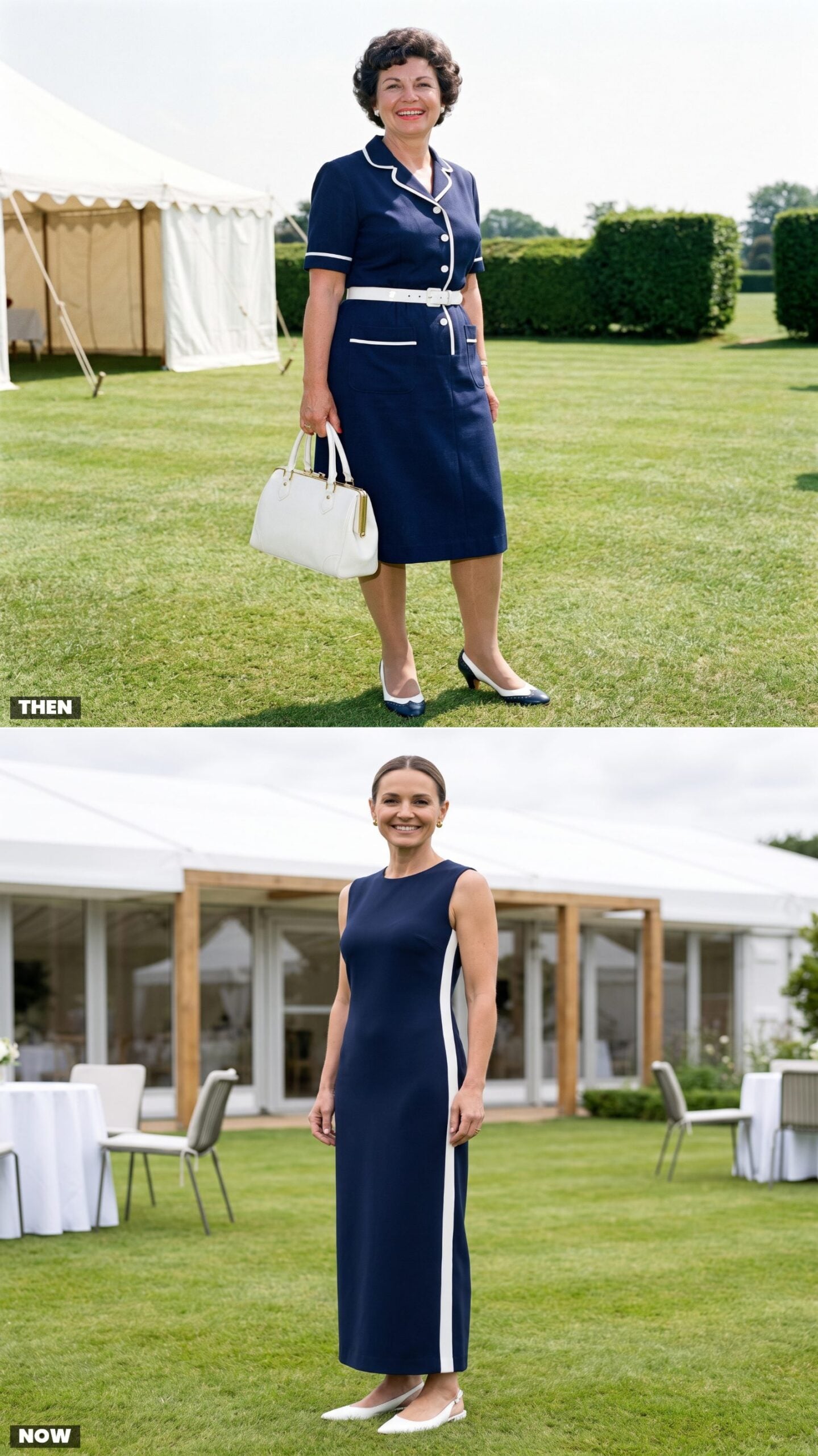
White piping everywhere — the collar, the placket, the cuffs, the pockets, each one outlined like a coloring book. The 1985 navy dress was crisp and preppy and extremely sure of its country-club setting.
The modern column keeps navy and white but reduces the idea to one clean graphic line running down a single seam. That line lengthens the whole body from shoulder to hem. Same two colors, same nautical DNA, now with the nerve to use one stroke where 1985 used six.
3. A Lavender Organza Dress With Layered Ruffles vs. a Sheer Lavender Column
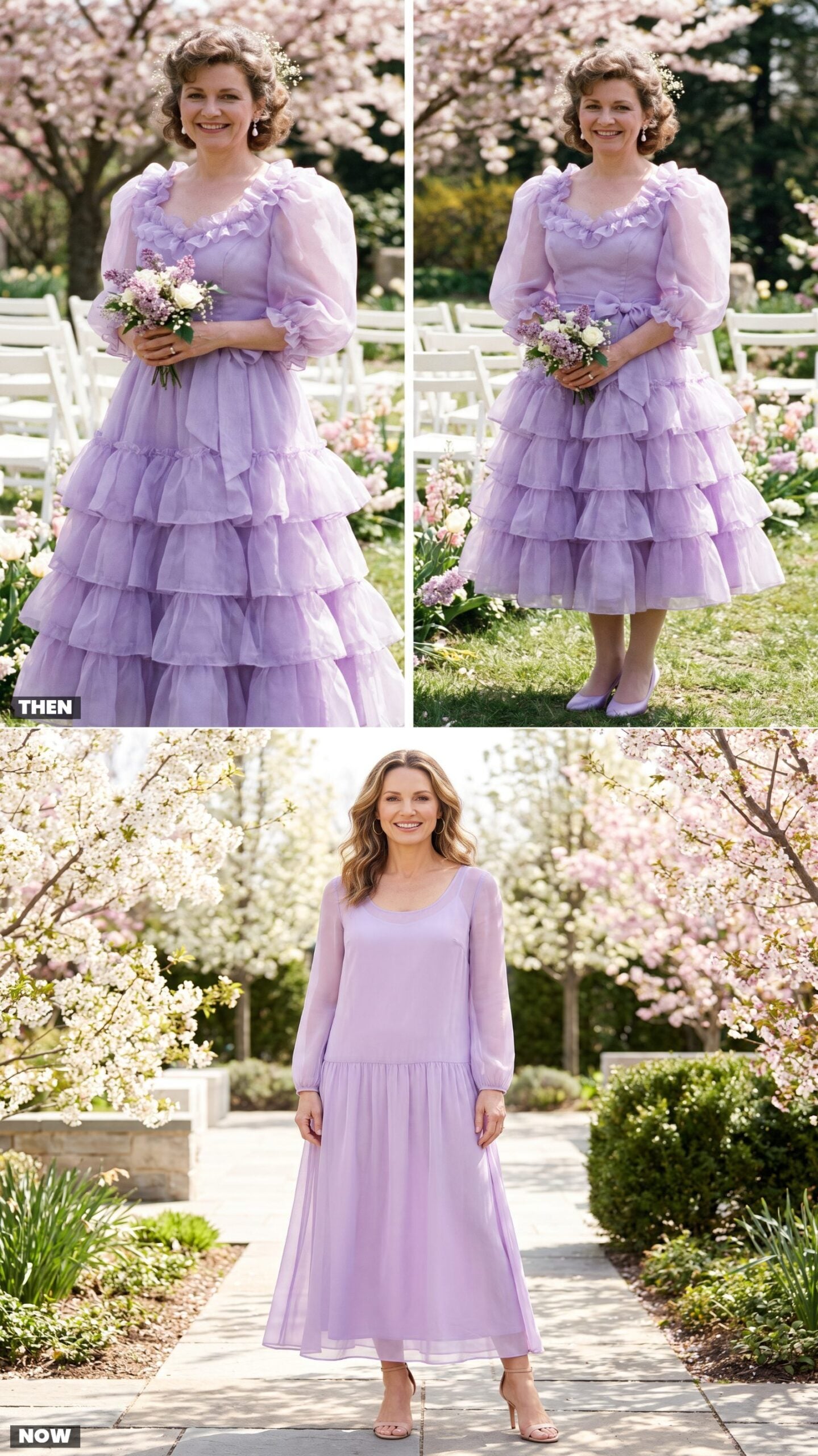
Ruffle upon ruffle upon ruffle. The 1985 lavender organza dress treated tiers like a dare — frills at the neck, the sleeves, and every layer of the skirt, finished with a bow because why stop.
The modern lavender goes airy instead of frothy. Fine chiffon falls in a clean column over a slip, the sheerness doing the softness that ruffles used to handle. Same romantic pastel, same spring-wedding spirit, stripped to a single fluid line. One looked like dessert. This one looks like morning light.
2. The Tunic-Over-Skirt Dress vs. a Contemporary Layered Two-Piece
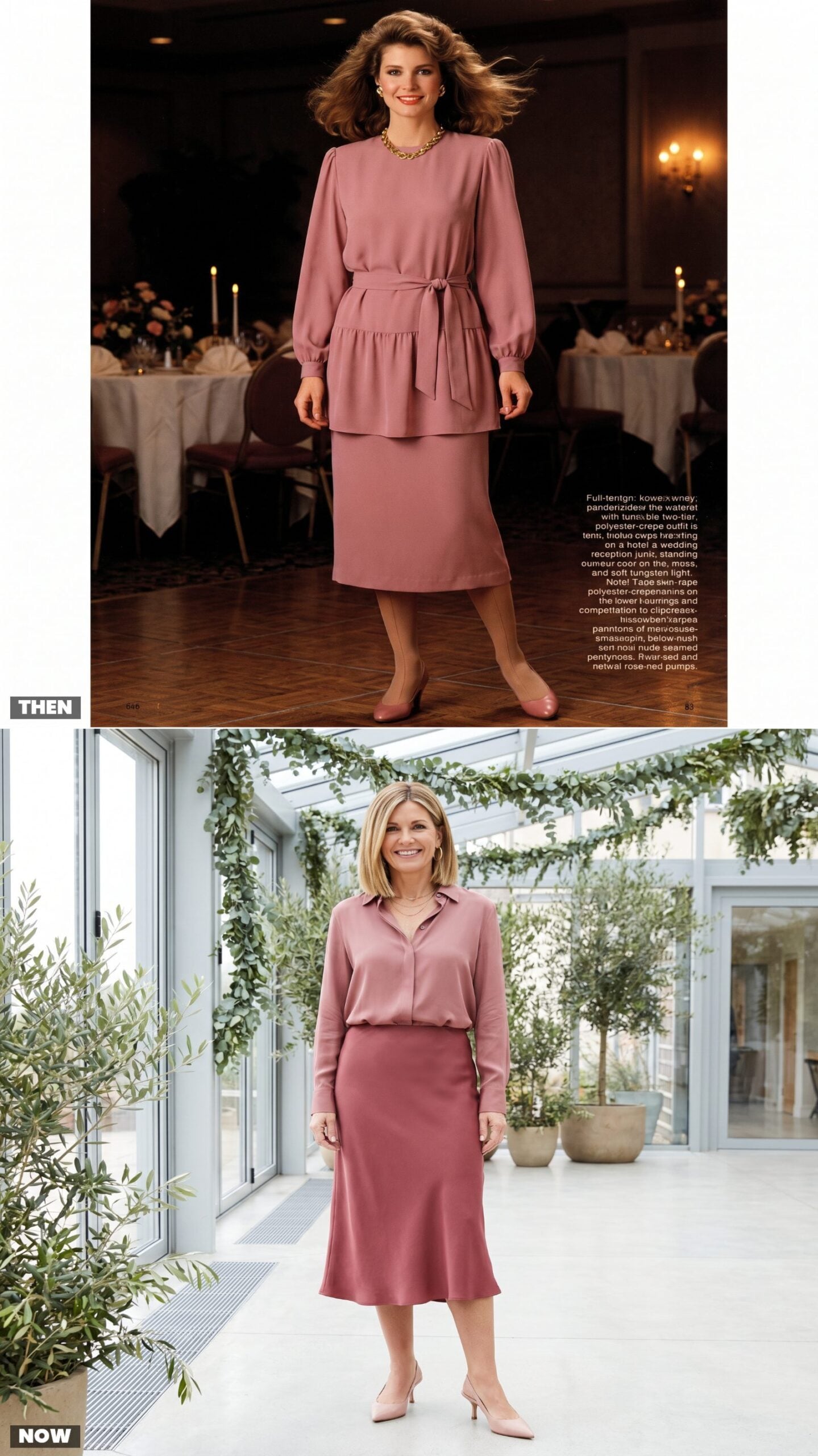
The 1985 version matched fabric top to bottom, so it reads as one continuous column of dusty-rose polyester-crepe. That dropped-waist tunic skimmed the hip and hid the waistline completely — the dominant silhouette move of the decade. Comfortable, forgiving, a little shapeless on purpose, and honestly nobody minded.
The modern take keeps the two-piece idea but lets the pieces talk to each other instead of matching. A fluid silk blouse half-tucked into a bias-cut midi defines the waist without squeezing it. The slight tonal shift between blouse and skirt adds a depth the old monochrome never had. Same relaxed ease, cleaner lines.
1. The Red Power Dress With Shoulder Pads vs. a Sharp Red Column
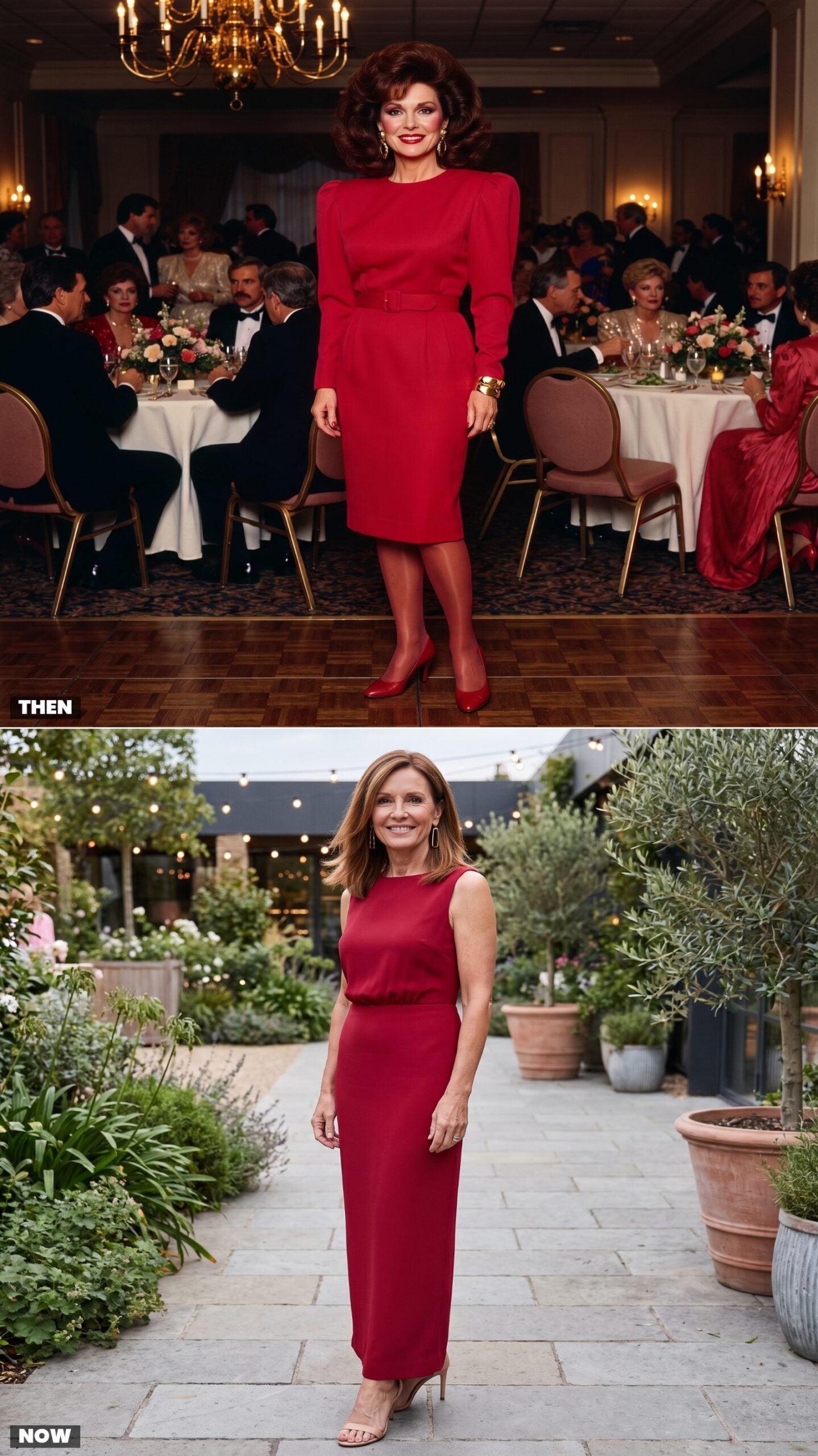
Red was the color of ambition in 1985, and the shoulder pads made sure everyone caught the memo from across the room. That squared-off silhouette borrowed its swagger from the boardroom and marched it straight to the reception. Belted waist, matte polyester sheen, a hemline that stopped politely below the knee — all business, even at a party.
The modern column keeps the red and ditches the padding. A floor-grazing silk-crepe line does the lengthening the shoulders used to handle, except now it reads as quiet confidence rather than armor. Same message, lower volume. And the color still does the heavy lifting, which is exactly right.