❤️ Would you like to save this?
For several months now we’ve been running a quiet little experiment on ThreadCurve.
Nothing fancy. Under a lot of our outfit photos there’s a row of reaction buttons. Love it. Hate it. Meh. You’ve probably tapped one without thinking twice about it.
Then, if you react strongly, we ask one more thing: why?
That’s the whole experiment. Two taps.
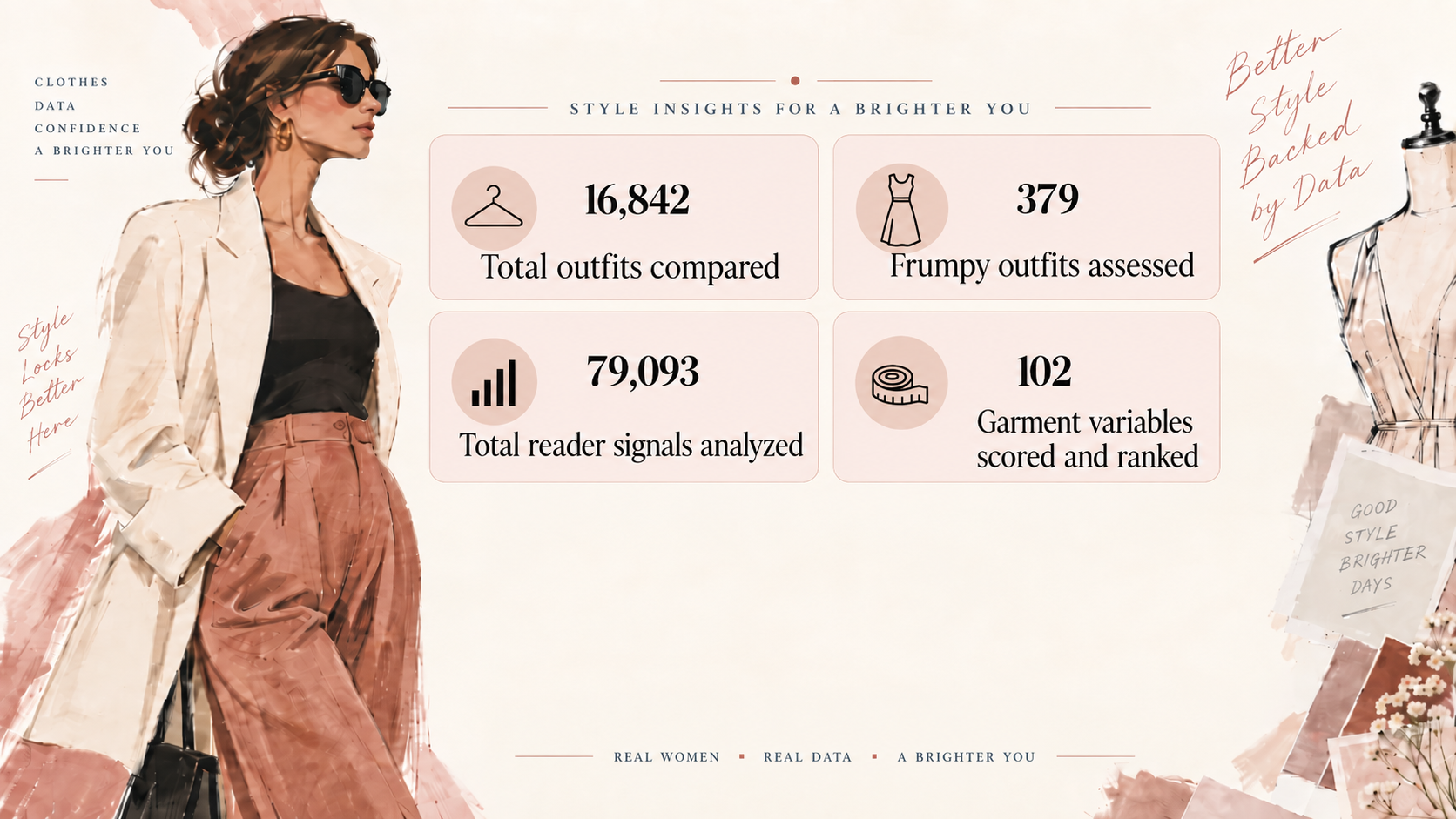
Here’s where it got interesting. We’ve now collected 79,093 individual reader signals across 16,842 photos. And because every outfit is tagged piece by piece (neckline, sleeve, hem, silhouette, fabric, shoe, colour, about seventeen things per outfit), we can line up what readers said against what they were actually looking at.
Full disclosure: I’m not the guy you want picking your outfit. I’ve worn roughly the same jeans for a decade.
Good news is none of what follows is my opinion. It’s yours.
The number one complaint is one word
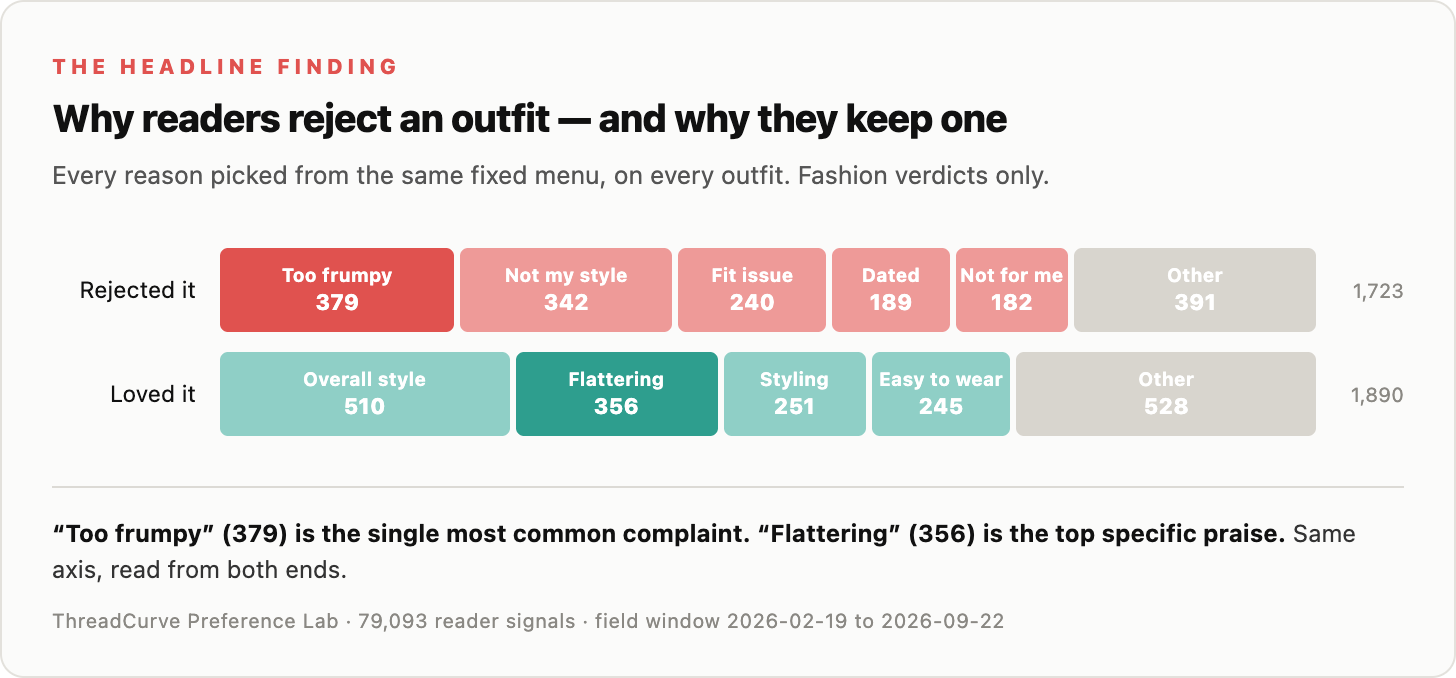
“Too frumpy” got picked 379 times. That’s 14.4% of every negative verdict we’ve recorded on clothing, and it’s the single most common complaint on the site. It beat “not my style” (342), “fit issue” (240) and “dated” (189).
On the other side, the top specific piece of praise was “flattering.” 356 votes.
Same axis. Read from both ends.
So readers aren’t mostly grading outfits on price, or trend, or whether the model is their age. They’re grading them on one question: does this make her look good or does it make her look frumpy?
Thing is, “frumpy” is one of those words everybody uses and nobody defines. So we took it apart.
We built a number for it
Simple one. Take every reader who gave a garment a shape verdict (frumpy or flattering) and report the share who said frumpy.
Across the whole site that number is 51.6%. Anything above reads frumpier than average. Anything below reads more flattering. We’ve been calling it the Frump Index because, again, we’re not very imaginative.
Then we ran every piece of clothing through it.
Frump is a waist problem
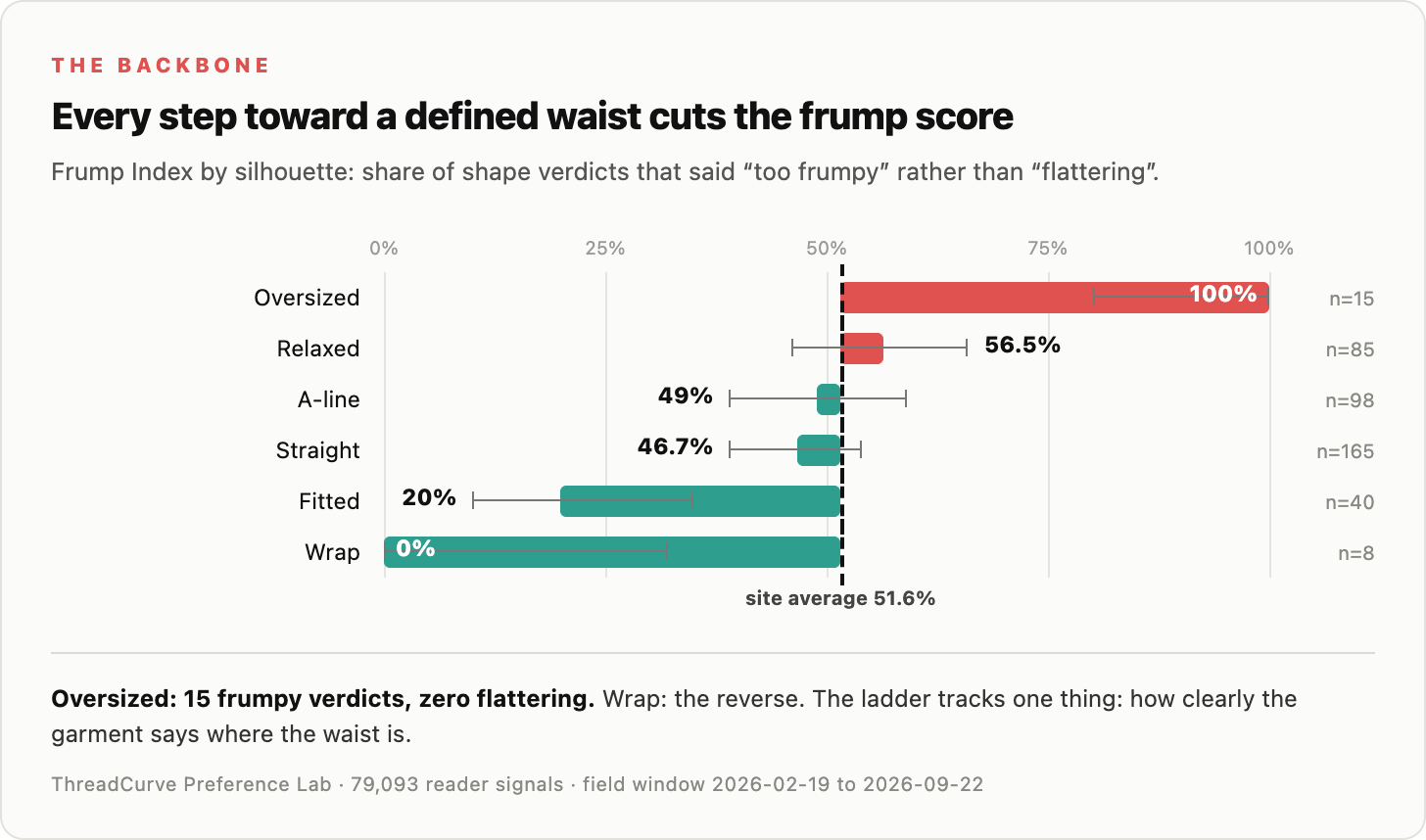
This is the backbone of the whole report.
Oversized: 100%. Fifteen frumpy verdicts, zero flattering. Relaxed: 56.5%. A-line: 49%. Straight: 46.7%. Fitted: 20%. Wrap: zero frumpy verdicts at all.
Every step toward a visible waist, the number drops. It’s almost too tidy.
Layers do the same thing. One layer scores 36.4%. Two layers, 53.8%. Three or more, 66.7%. Every layer you add thickens the outline and hides the waist a little more.
The shoe is the whole verdict
This one’s my favourite because it costs nothing. You already own the fix.
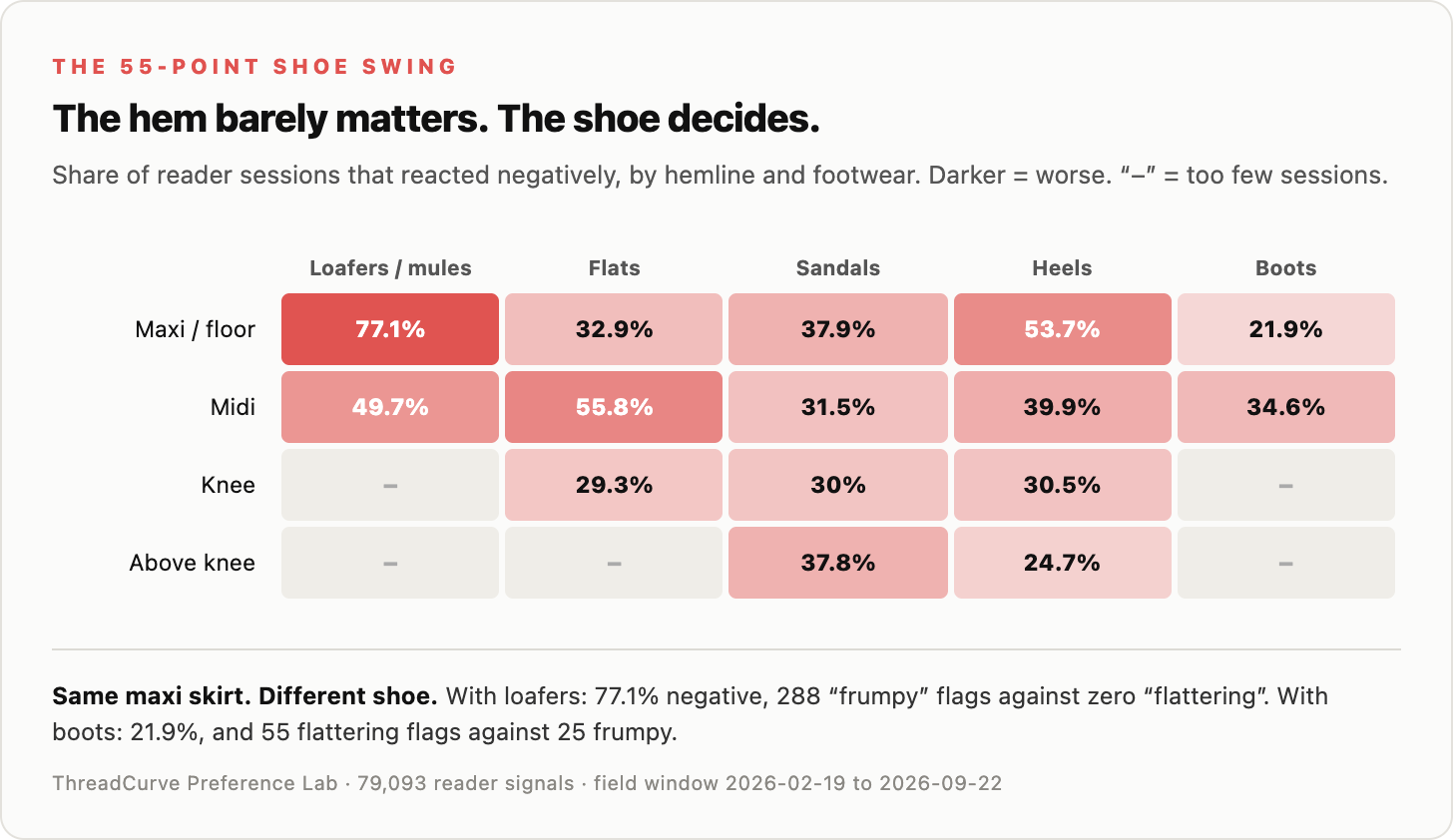
A maxi skirt worn with loafers: 77.1% of reader sessions reacted negatively. 288 “frumpy” flags. Zero “flattering.”
The same length of skirt with boots: 21.9%. And the flags flip. 55 flattering, 25 frumpy.
Nothing about the skirt changed. The shoe changed.
Read that grid across the rows, not down the columns. The hemline barely moves the number. The shoe moves it by up to 55 points. The midi tells the same story in miniature: 55.8% negative with flats, 39.9% with heels, 34.6% with boots.
I’ve read a lot of “what length skirt should you wear after 50” articles. I’ve never read one that said the length is fine, look at your feet.
The turtleneck test
Now here’s the finding that made me rethink what the word even means.
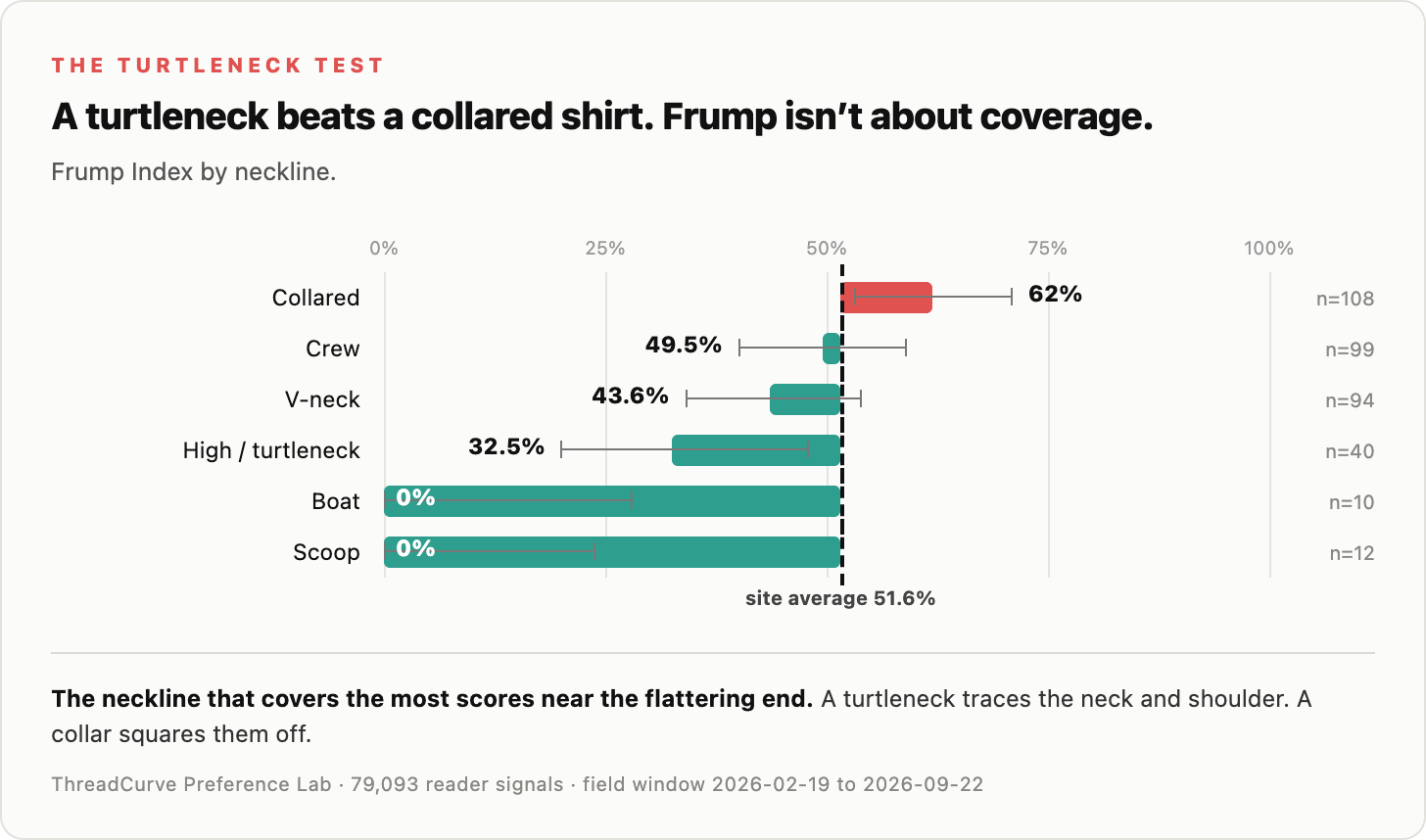
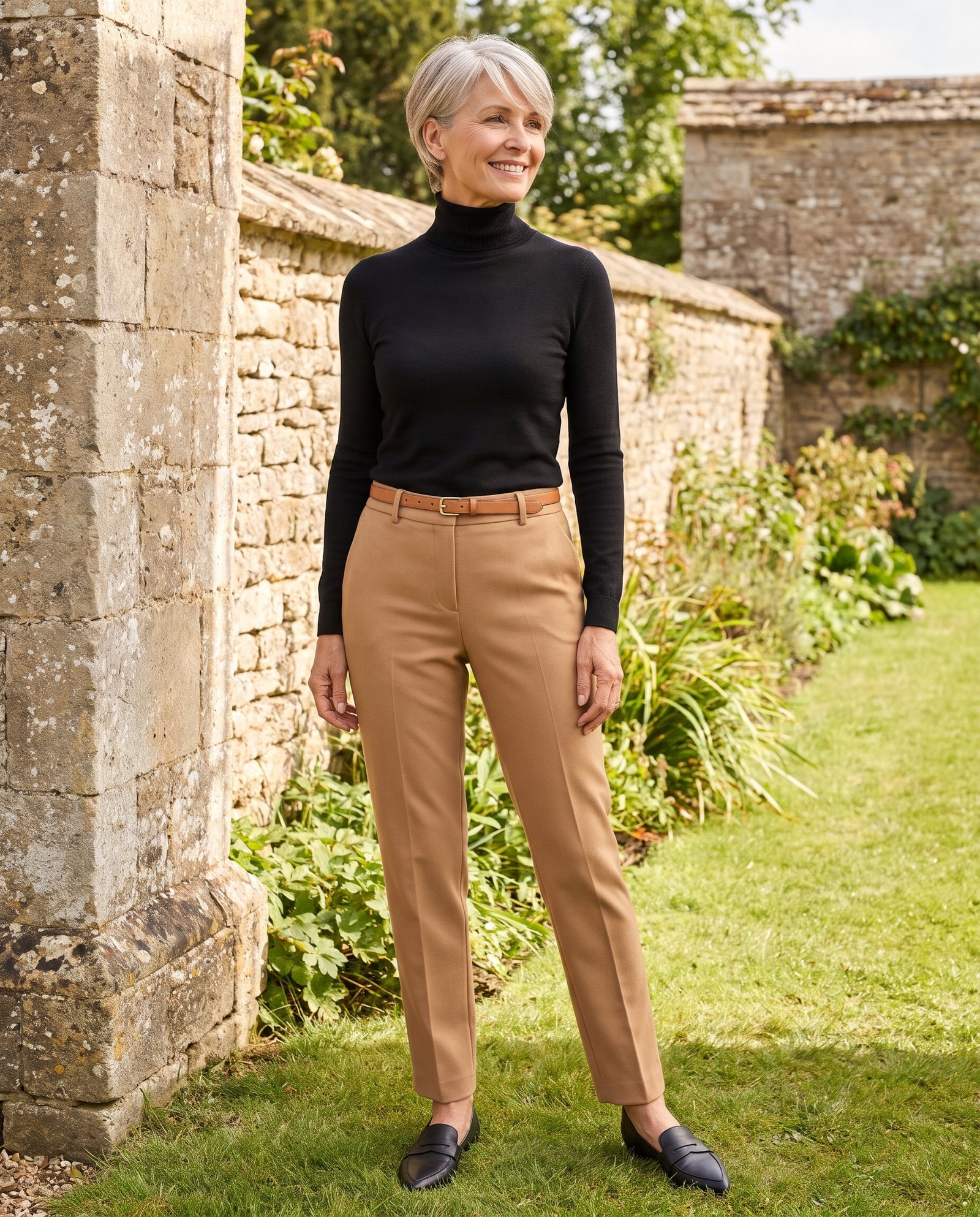
If frumpy were about covering up, the turtleneck would be the frumpiest neckline in the data. It covers the throat, the collarbone, the shoulders. Everything.
It scores 32.5%. Well below average.
The collared shirt, which shows more skin, scores 62%. The frumpiest neckline we measured, on the biggest sample.
The difference is shape. A fitted turtleneck traces the neck and shoulder. A collar squares them off. Same goes for the scoop and boat necks, which took zero frumpy verdicts between them. Both open the collarbone sideways and make everything below look narrower.
So frumpy isn’t modesty. It isn’t coverage. It’s the absence of a defined line: no waist, no shoulder, no ankle, no sheen.
Surface matters as much as cut
Quick one.
Linen is the frumpiest fabric at 73.7%. Wool and tweed come second at 58.8%. Silk and satin are the most flattering at 30.8%.
The pattern is how light hits the cloth. Matte, dry and slubby reads frumpy. Fabric that moves and catches a little light describes the body underneath it.
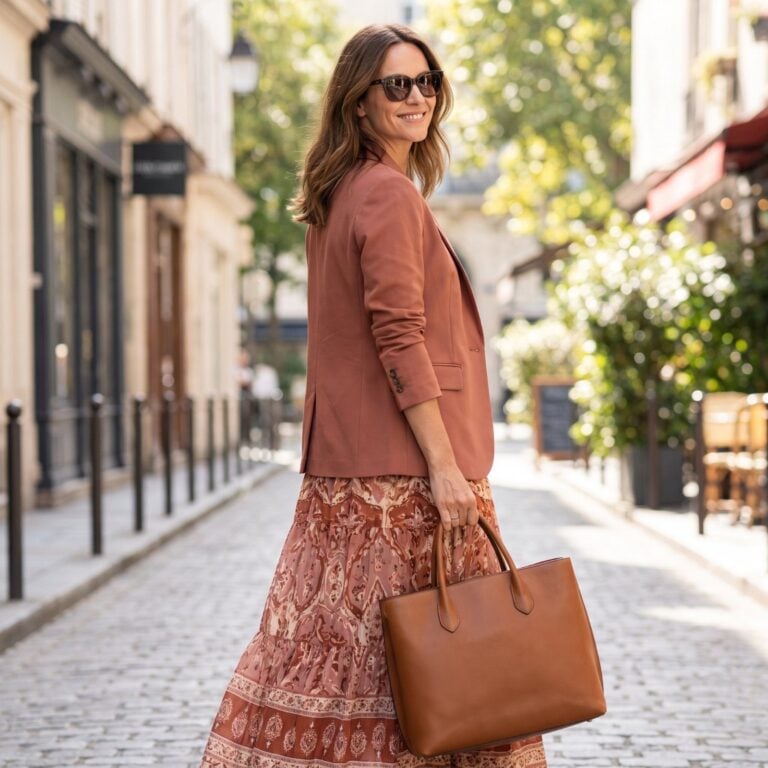
Colour follows the same logic. Beige and tan score 63%, grey 63.2%. Terracotta and orange score 22.2%. A colour with some life in it reads as a decision. A muted neutral reads as camouflage.
Which, I’ll be honest, is basically a description of every “elevated basics” outfit on the internet right now.
Now the part that surprised me
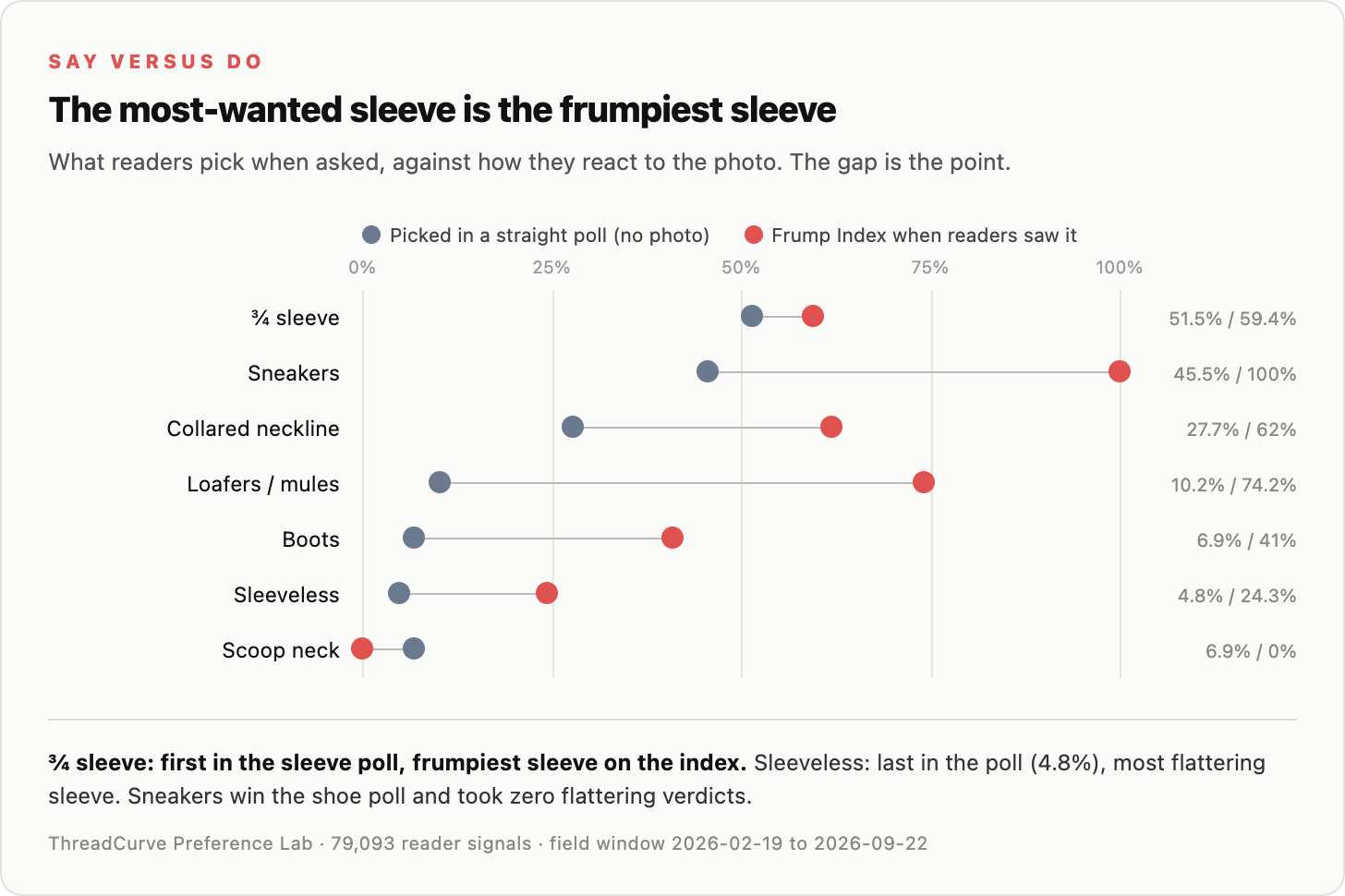
We don’t just watch reactions. We also ask readers straight up, with no photo attached. “Which sleeve do you prefer?” That kind of thing.
The three-quarter sleeve wins that poll outright. 51.5% pick it.
It’s also the frumpiest sleeve on the index at 59.4%.
Sleeveless comes dead last in the poll at 4.8%, and it’s the most flattering sleeve we measured.
Sneakers win the shoe poll at 45.5%. They took zero flattering verdicts. Boots finish near the bottom of the poll at 6.9% and are the second most flattering shoe on the site.
Readers aren’t wrong about any of this, by the way. They’re answering a different question. When you ask what someone wants to wear, you’re asking about comfort. When they see it on another woman, they’re judging the shape.
Which brings us to the comfort trap
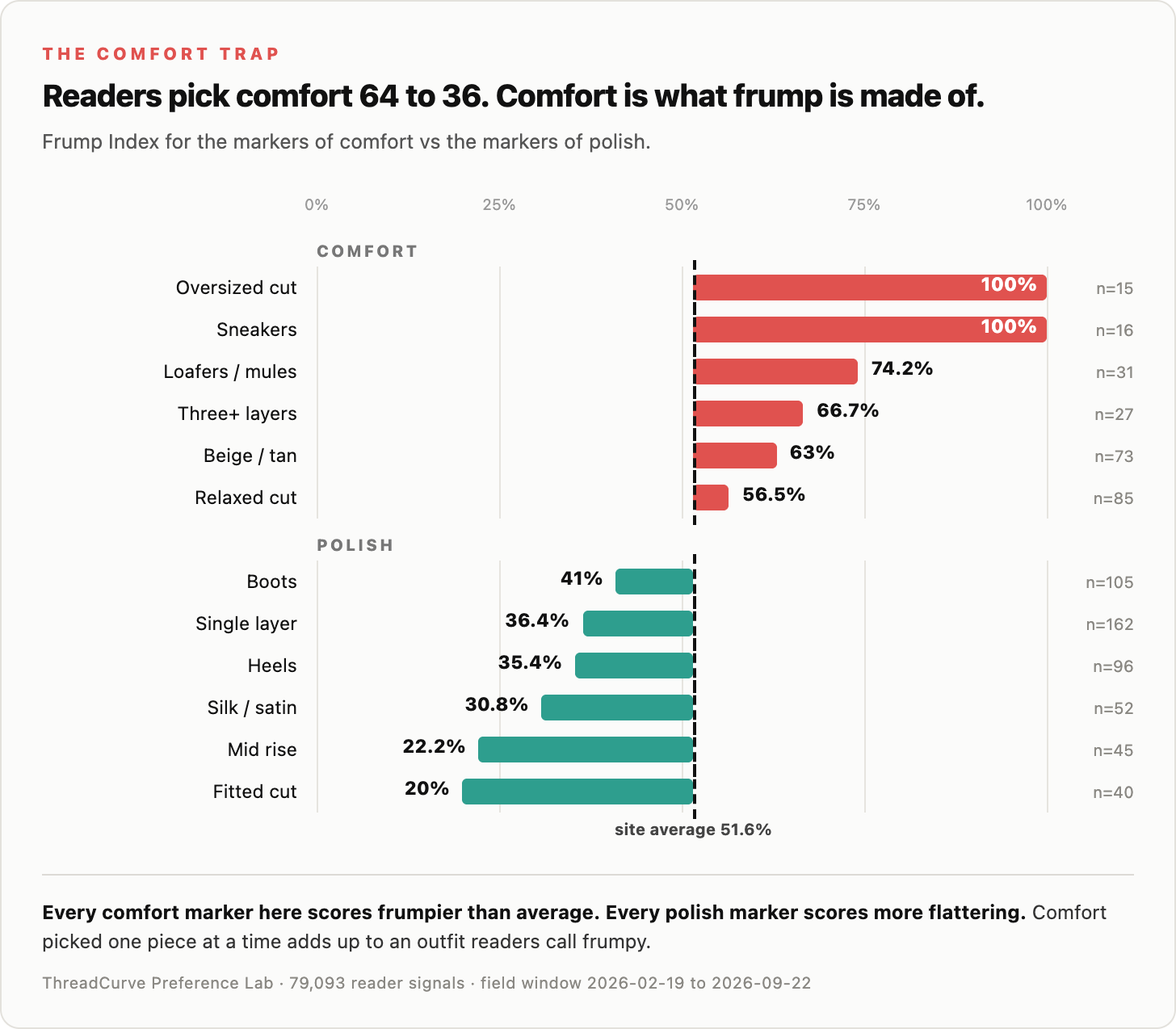
Asked directly, readers pick comfort over polish 63.6% to 36.4%.
Now look at what comfort is made of. Oversized cuts. Sneakers. Loafers. An extra layer. A beige knit. Every single one scores frumpier than average.
And every marker of polish, from boots and a single layer to silk and a fitted cut, scores more flattering.
Nobody chooses frumpy. They choose one comfortable thing at a time. Then the whole outfit adds up to a word nobody wanted.
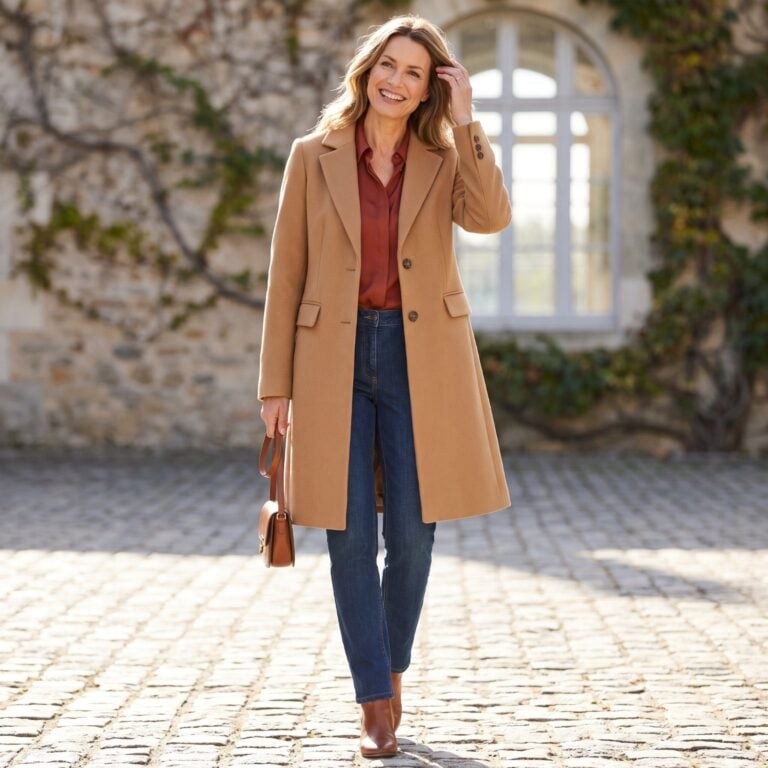
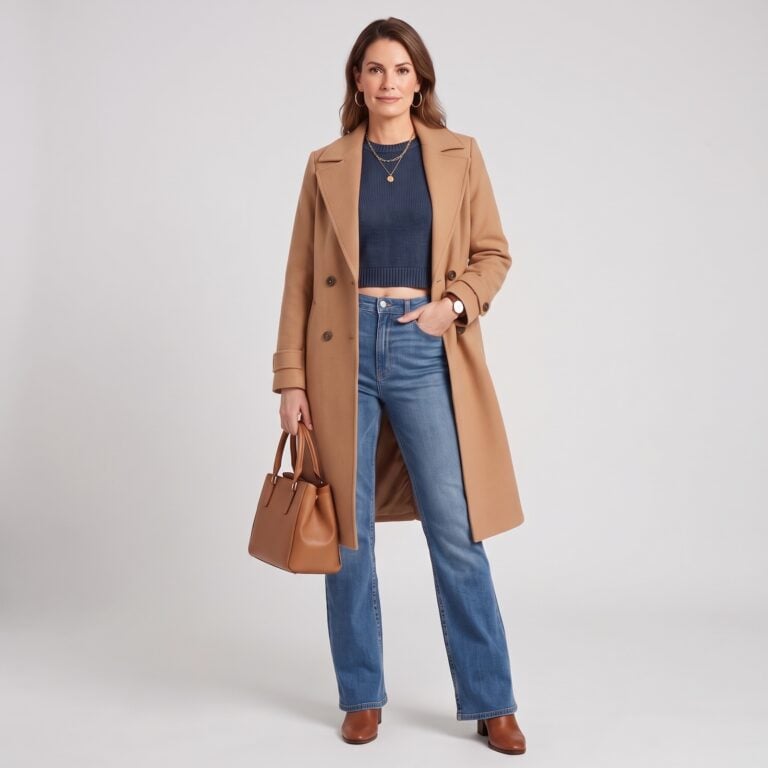
Here’s the good part. The outfits that pass both tests exist. A fine knit tucked into straight jeans with a boot. A wrap dress. A cropped jacket over a fitted base. Straight jeans with boots is the single most reliable combination on the site, with 735 flattering flags against 499 frumpy. Readers also want a belt (76.2%) and a tucked top (59.9%) when you ask them. Both do one thing. They put the waist back.
And the finding I’d frame on the wall
Frumpy is sold everywhere as an age problem. Something that “happens” to women past a certain birthday, fixed with “age-appropriate” advice.
In our data, it isn’t.
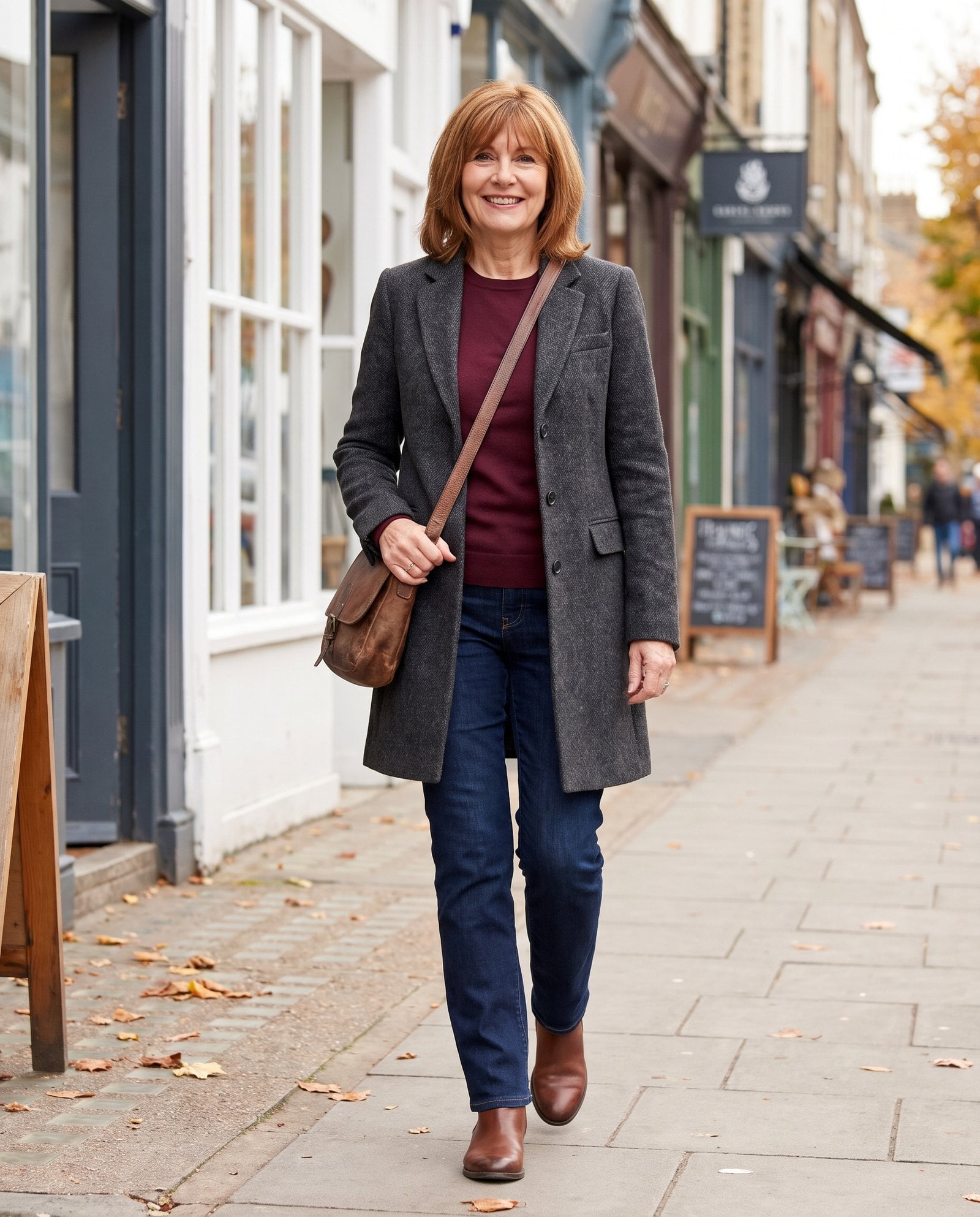
Outfits on models who read as 50-something scored 25% on the index. Flattering. Outfits on models who read as under 40 scored 100%: eleven frumpy verdicts, zero flattering.
Before anyone emails me: those are small numbers. Eleven verdicts and twenty. I’d treat it as a strong hunch, not a settled fact, and we’ll check it again next quarter.
But the direction is worth sitting with. Frumpy is a property of the clothes. Not the woman wearing them.
Fine. What do I actually change?
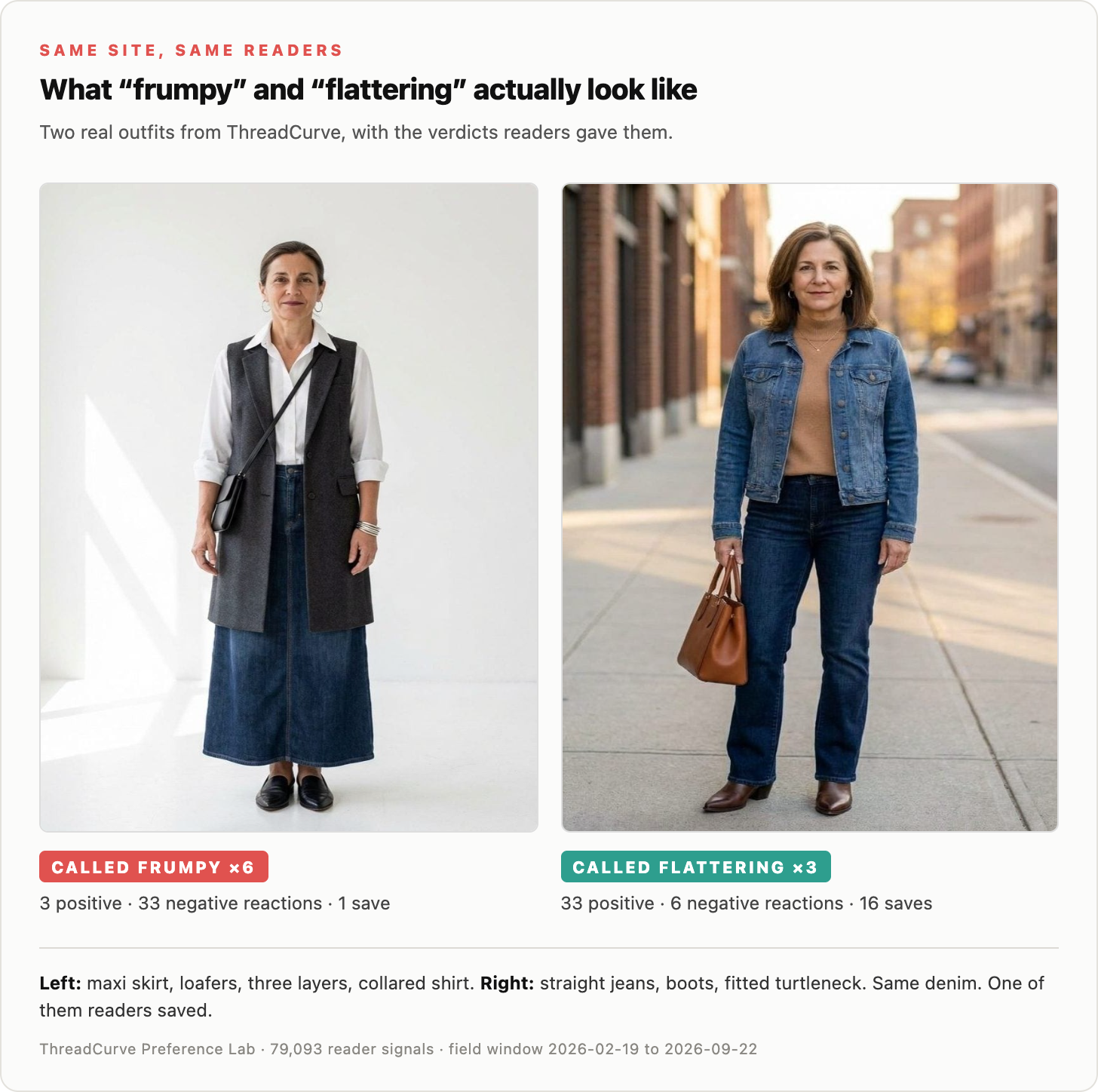
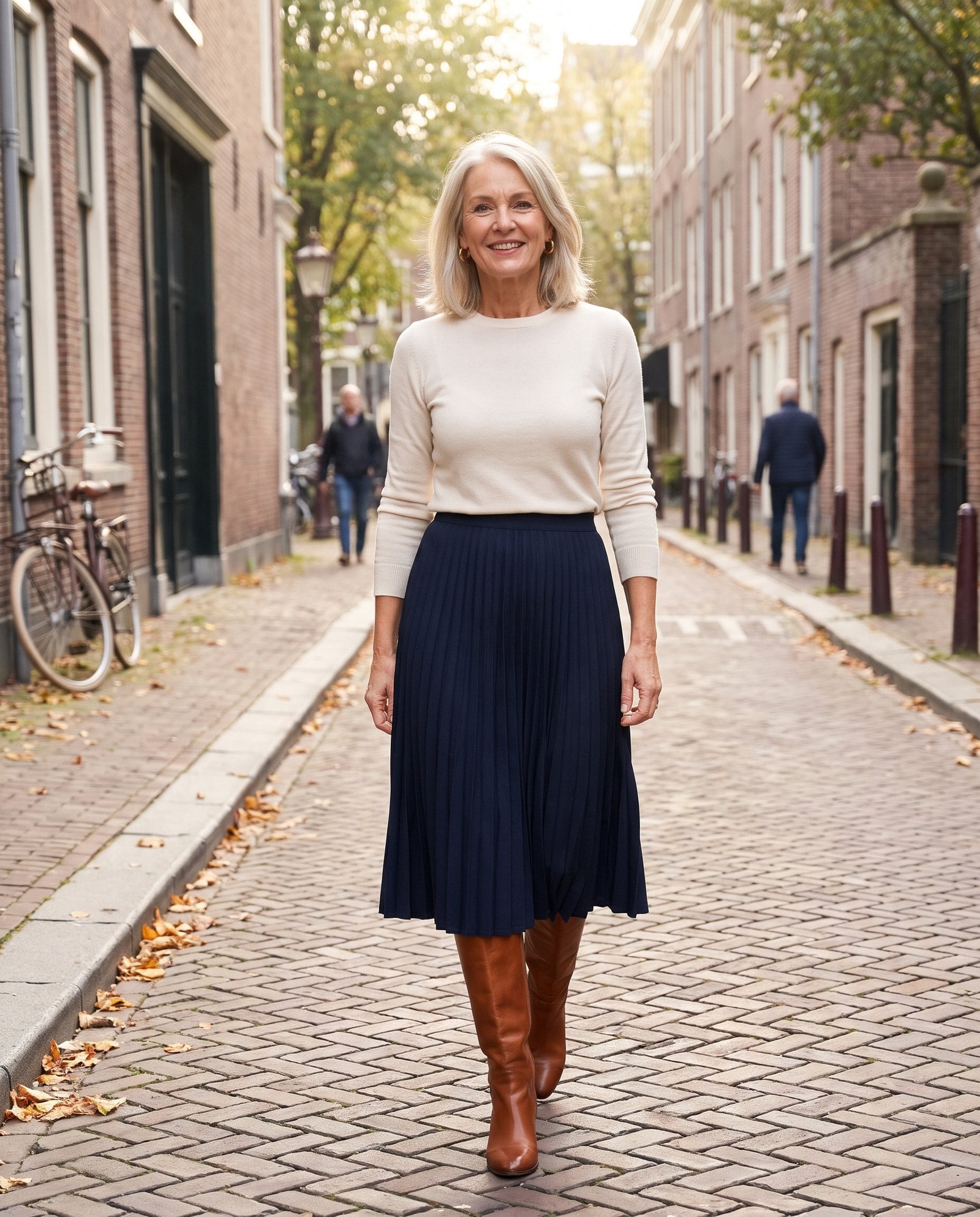
Same denim on both of those. Left is a maxi skirt with loafers, a collared shirt and a long vest over it. Right is straight jeans, boots and a fitted turtleneck. Readers saved the one on the right sixteen times.
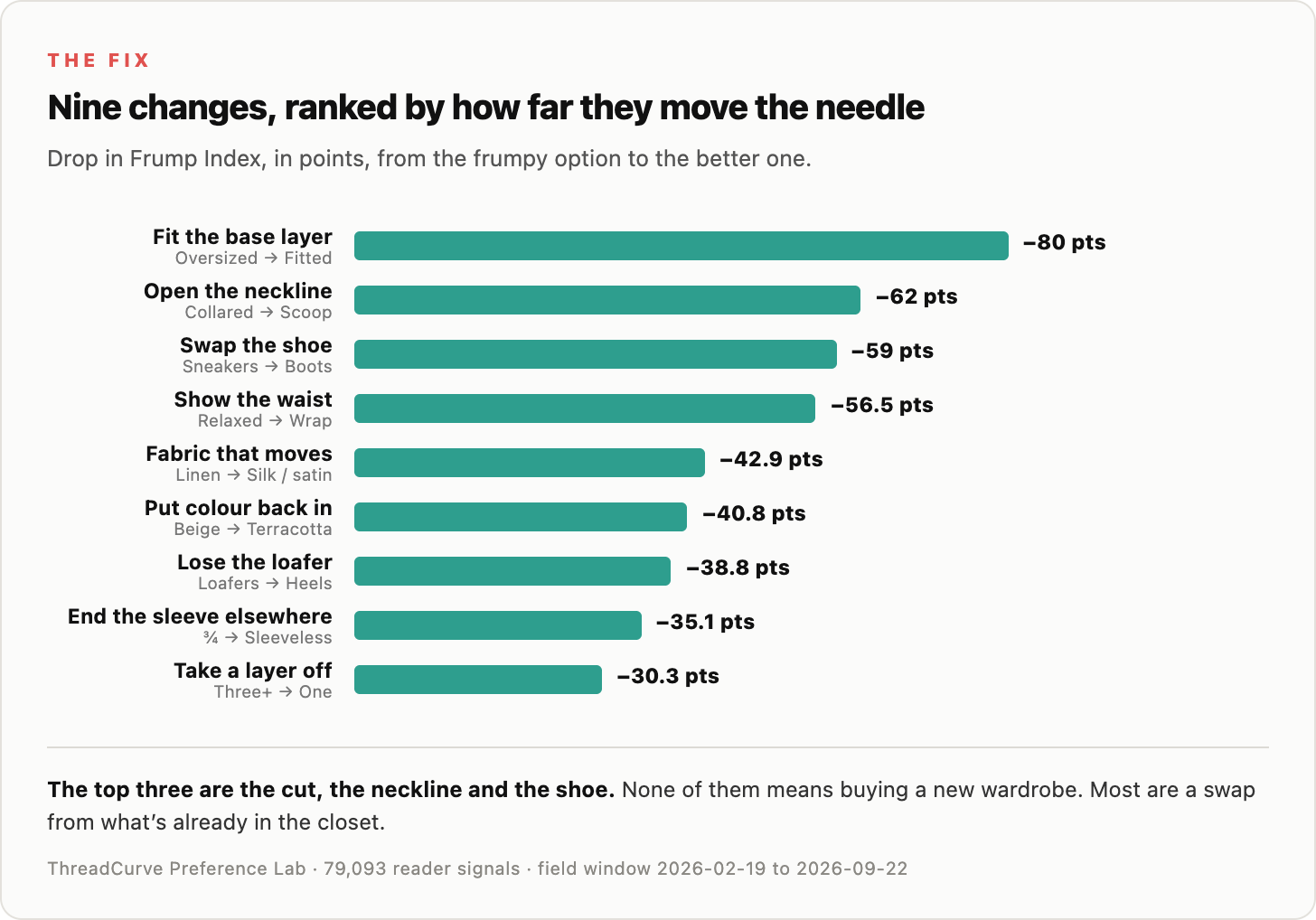
Top of that list is the cut, the neckline and the shoe. Not one of those means buying a new wardrobe.
A few more that didn’t make the chart:
- Full-length jeans beat cropped and cuffed combined. 71.1% pick full length.
- Fine knit beats chunky, 73.7% to 26.3%.
- A dress is the lowest-risk thing in your closet at 42.1% on the index. It solves the waist in one piece. The wrap dress wins the dress poll outright.
- Coats are the frumpiest garment type we can measure at 69%. If you want a jacket, readers pick cropped over long, and leather over wool.
This report first appeared in ThreadCurve on Substack, where Pro members get the full PDF report and the raw data behind it.
What’s in the paid version
The full report runs 55 pages and goes a lot deeper than this:
- The complete Frump Index: every garment variable ranked, 130 rows, every one with its confidence interval
- The full anatomy: neckline, sleeve, silhouette, hem, leg shape, rise, layering, fabric, pattern and colour, each with its own chart and table
- The interaction grids, including the combinations to stop wearing (A-line with loafers is one of them)
- The Frump Formula, a simple scoring system you can run on any outfit in about ten seconds
- Garment by garment: dresses, skirts, jeans, knitwear, outerwear and workwear
- Why “frumpy,” “dated” and “not my style” are three completely different problems with three different fixes
- Why the state-by-state cuts look amazing and are mostly garbage, with the arithmetic
- The entire raw dataset as CSV, so you can check every number in here yourself
If you’ve ever looked in the mirror, felt vaguely frumpy and couldn’t say why, this is the answer. Piece by piece.
Get the Full Report on Substack →