❤️ Would you like to save this?
A white button-down has spent decades being blamed for the office. Button it to the throat, add sensible trousers, and yes, the association is hard to escape. But the shirt itself was never the problem. The styling around it was.
Untuck it. Belt it like a tunic. Put satin underneath it, leather below it, a bustier over it, or a brooch exactly where a tie might have gone. Crisp white poplin is unusually good at taking on the character of whatever sits beside it, which is why the same shirt can swing from severe tailoring to weekend sneakers without changing the shirt itself.
These 31 looks push that range much further than the familiar tuck-and-jeans formula. Some change the proportions. Others change the shirt’s entire job. It becomes a jacket, an underlayer, a long tunic, a sharp white frame around a strapless dress, or the quiet foundation beneath something far more dramatic.
The point is not to make a white shirt look younger, trendier, or less “appropriate” after 40. It is to stop treating one of the most adaptable pieces in a wardrobe as though it comes with a conference badge attached.
FYI, thanks to AI imagery software, we’re able to create very specific fashion and hairstyle examples to illustrate the points being made. In some cases, imagery is exaggerated to hammer home the point. Also, assume links that take you off the site are affiliate links such as links to Amazon. this means we may earn a commission if you buy something.
31. Worn Open Over a Striped Knit Tank With Cropped Chinos and Sneakers
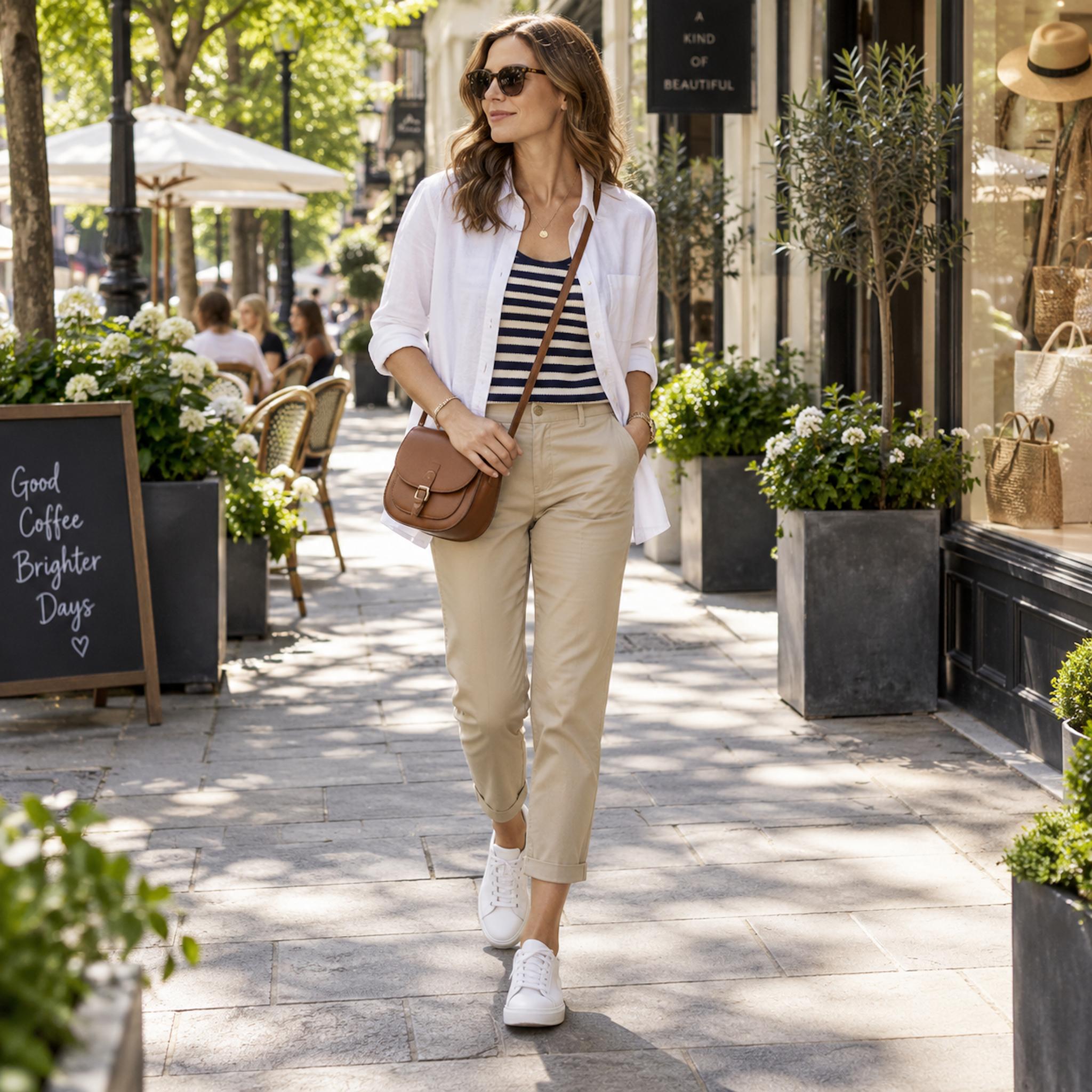
This is the white shirt completely off duty. Worn open over a navy-and-cream striped knit tank, it behaves more like a lightweight overshirt than anything remotely connected to office dressing.
Sand-colored cropped chinos keep the palette light, while white sneakers pull the proportions firmly toward daytime. The stripe supplies the pattern, the open shirt supplies movement, and the cognac crossbody adds enough warmth to stop all that navy, white, and khaki from becoming too polite.
30. Buttoned to the Neck With a Bold Vintage Brooch
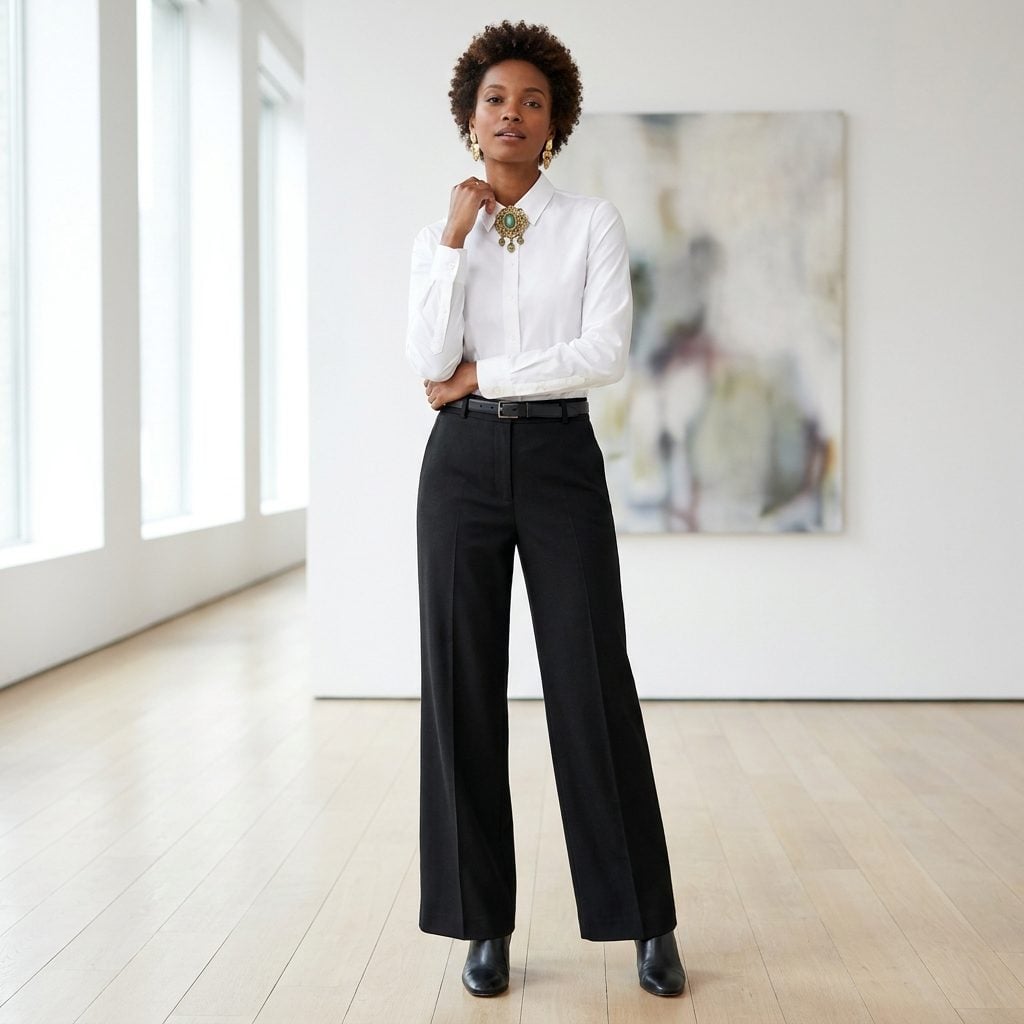
Buttoning a white shirt all the way to the throat makes the neckline unexpectedly architectural. Instead of softening that severity, this look leans into it with wide black trousers and one large gold-and-jade brooch pinned squarely at the collar.
The brooch works because the rest of the upper half stays disciplined. Small earrings preserve that hierarchy, while low block-heel boots continue the graphic black-and-white line below.
29. Belted Over Wide-Leg Trousers Like a Long Tunic
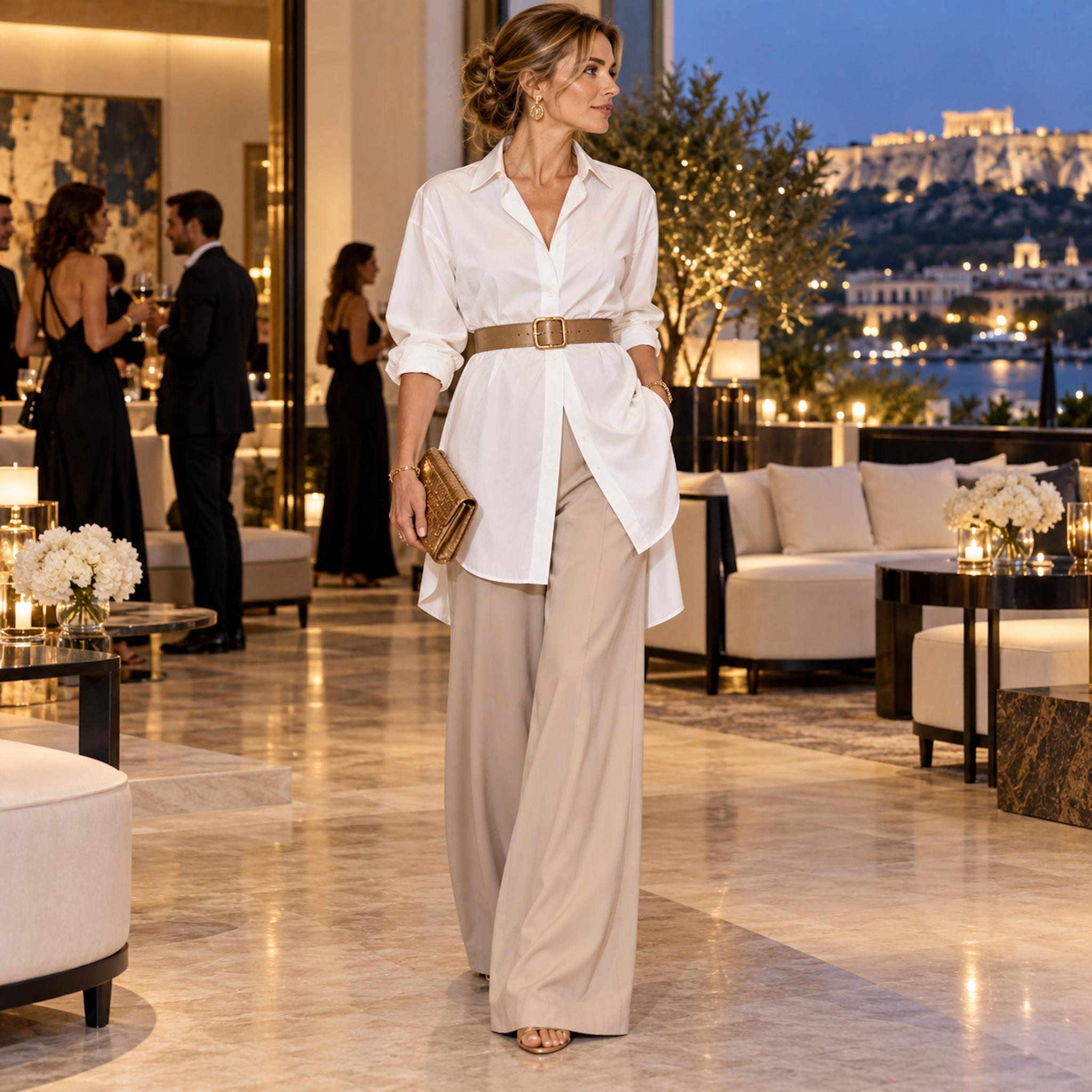
Instead of tucking away the length of the shirt, this look makes that length the point. A broad taupe belt cinches the white poplin over fluid wide-leg trousers, turning a familiar button-down into something closer to a sharply cut tunic.
The long shirttails and trousers both move vertically, while the belt interrupts them with one strong horizontal line. Soft stone and beige keep the palette quiet enough for the altered proportions to register first. The shirt is no longer simply worn with the trousers; it organizes the entire silhouette.
28. Styled With a Denim Midi Skirt and Ankle Boots
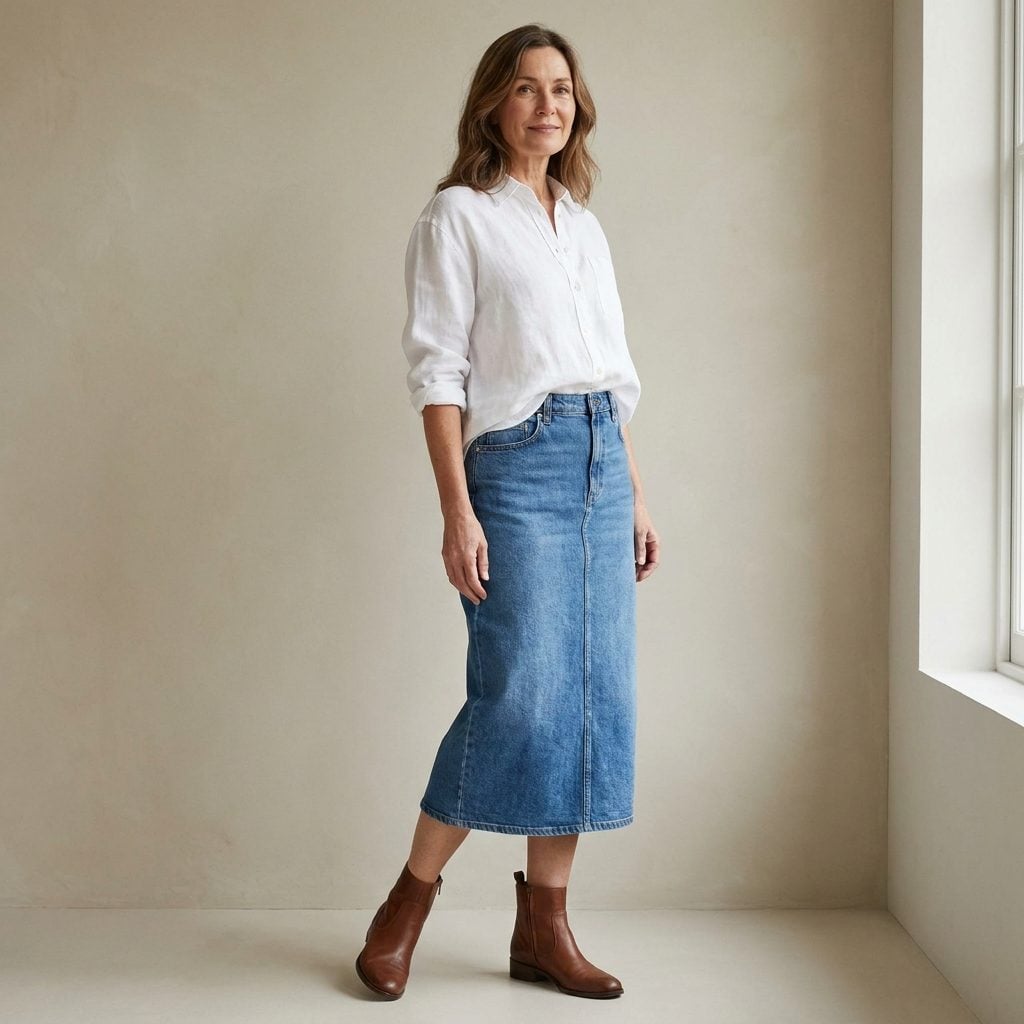
Denim changes the white shirt faster than almost anything else because its texture immediately strips away some of the formality. A loose front tuck keeps the top from hanging as one rigid rectangle over the skirt.
The blue denim midi skirt gives the outfit weight and structure, while cognac leather ankle boots introduce warmth against white and blue.
27. Tucked Into a Leather Midi Pencil Skirt
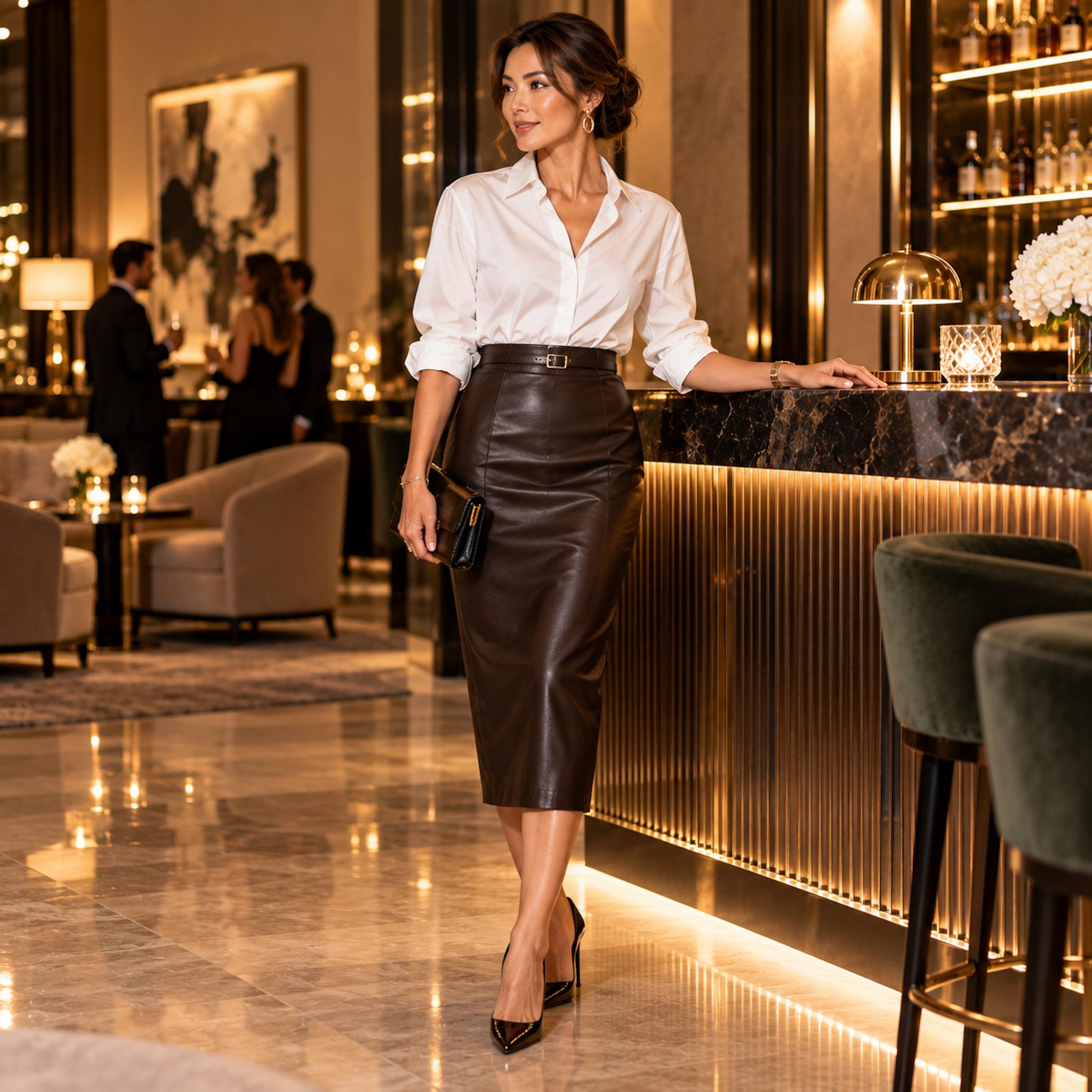
Leather changes direction completely when it moves into a narrow midi skirt. The dark brown pencil shape creates one sleek vertical surface below the waist, while rolled white sleeves keep the upper half comparatively loose and bright.
The contrast works on several levels at once: crisp against supple, white against chocolate, relaxed shirt against fitted skirt. A narrow belt, pointed pumps, and compact evening bag preserve the long line instead of interrupting it with unnecessary ornament.
26. Worn Open Over a Slip Dress as a Light Layer
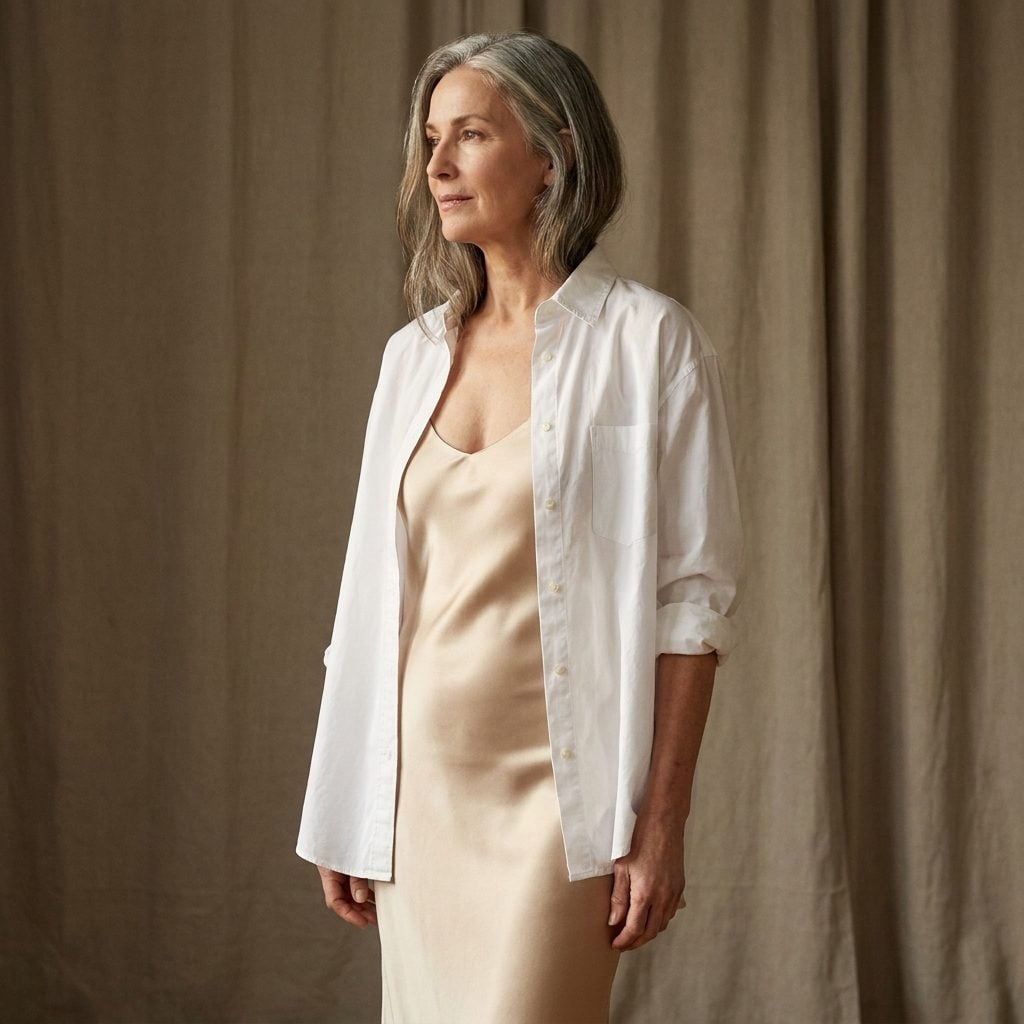
Satin under cotton immediately changes the role of both pieces. The champagne slip brings fluidity and sheen; the white shirt adds structure, opacity, and a sharper edge around all that softness.
Left open, the shirt behaves more like a lightweight jacket than workwear. It also pulls the slip dress into daylight without hiding what makes the dress interesting in the first place. The contrast between liquid satin and crisp poplin carries the look; very little else is needed.
25. Layered Beneath a Structured Blazer With Denim

This is the corporate escape hatch. Keep the shirt and blazer, then replace the expected trousers with straight-leg denim. The tailoring keeps its backbone, but the jeans interrupt the office uniform before it can fully form.
An oatmeal blazer and white shirt keep the upper half low-contrast and clean, while the blue denim provides the stronger break below. A red lip adds one saturated note against the neutrals without requiring another accessory to compete with the tailoring.
24. Paired With a Maxi Skirt and Woven Accessories
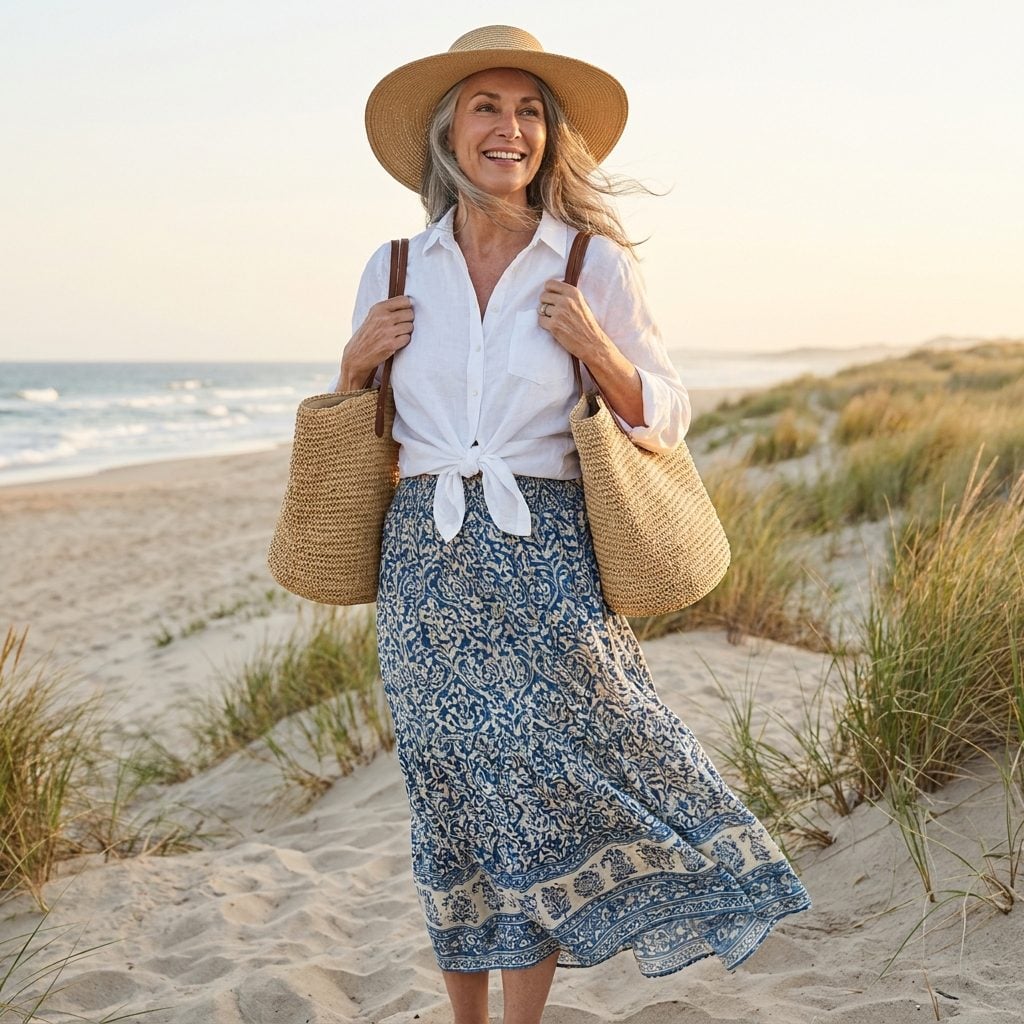
A loose knot at the waist cuts through the volume of a long skirt and gives the shirt a softer, more relaxed shape. A slightly rumpled shirt helps the button-down shed some of its formal edge.
Texture carries the rest: a pleated terracotta maxi skirt, woven straw accessories, and warm brass set up an earthy contrast against the white shirt. The result feels sun-washed rather than polished within an inch of its life.
23. Layered Under a Fine-Gauge V-Neck Sweater Vest
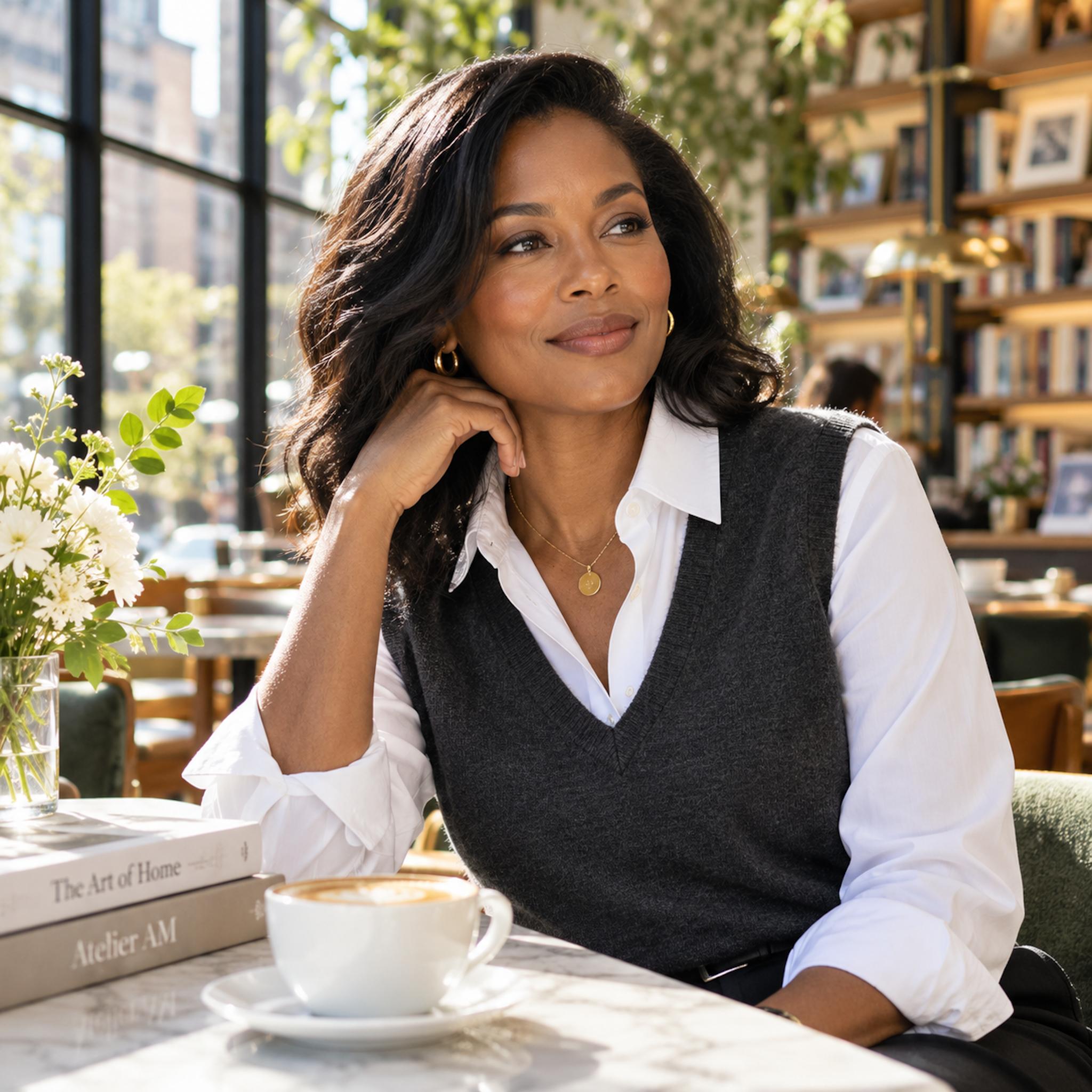
A charcoal V-neck vest reduces the white shirt to a set of beautifully useful edges. Collar, neckline, sleeves, and cuffs stay visible while the dark knit takes control of the torso.
The close contrast makes this version feel particularly sharp: white cotton against charcoal wool, open collar against a deep V, soft rolled sleeves against the vest’s compact shape. Small gold jewelry warms the black-and-white framework without disturbing the simplicity that makes the layering convincing.
22. Worn Off-Shoulder Over Faded Boyfriend Jeans
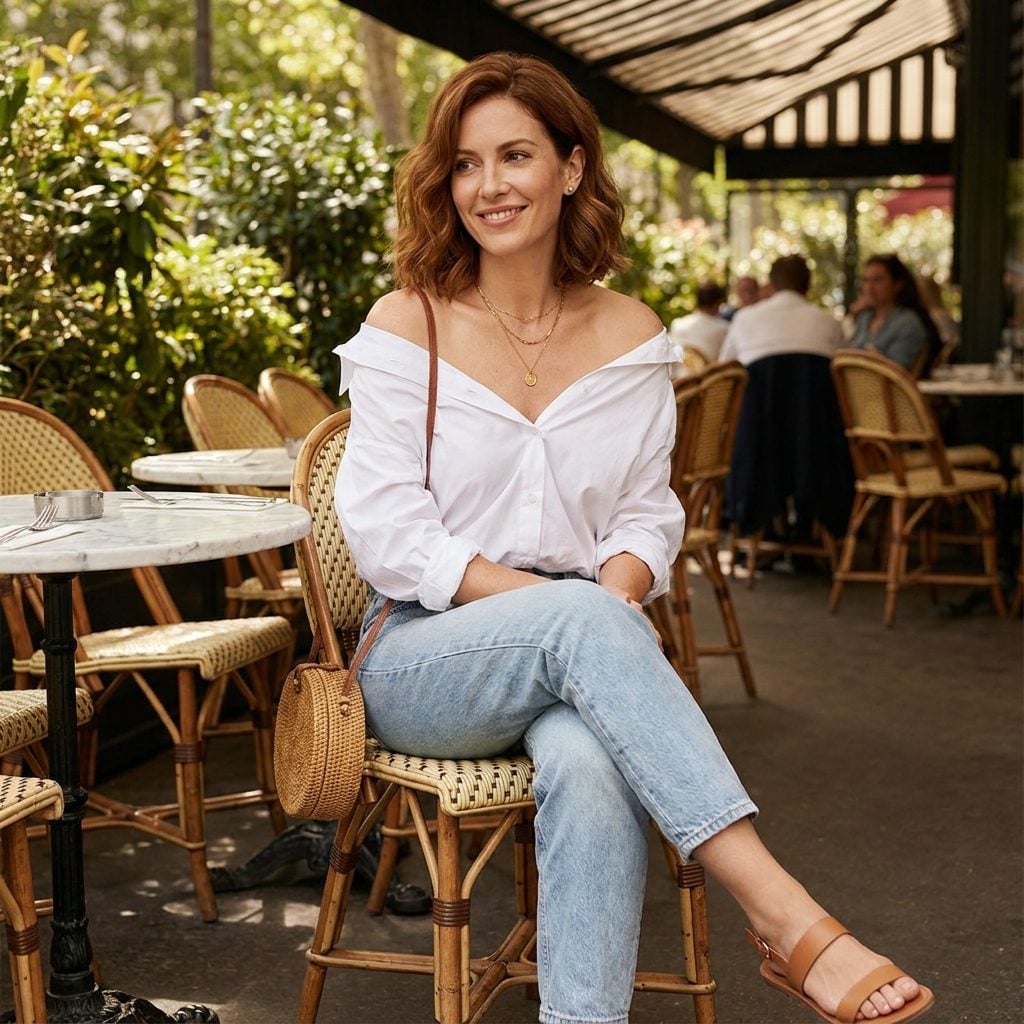
Pulling an oversized button-down off the shoulders dismantles almost every association the shirt has with workwear. The collar stops framing the neck, the neckline becomes horizontal, and faded boyfriend jeans take the rest of the outfit firmly into casual territory.
Delicate gold chains work well in the newly opened neckline because they follow the skin rather than competing with the shirt. A straw crossbody and flat sandals keep the materials light and informal.
21. Styled With a Satin Midi Skirt and Delicate Jewelry
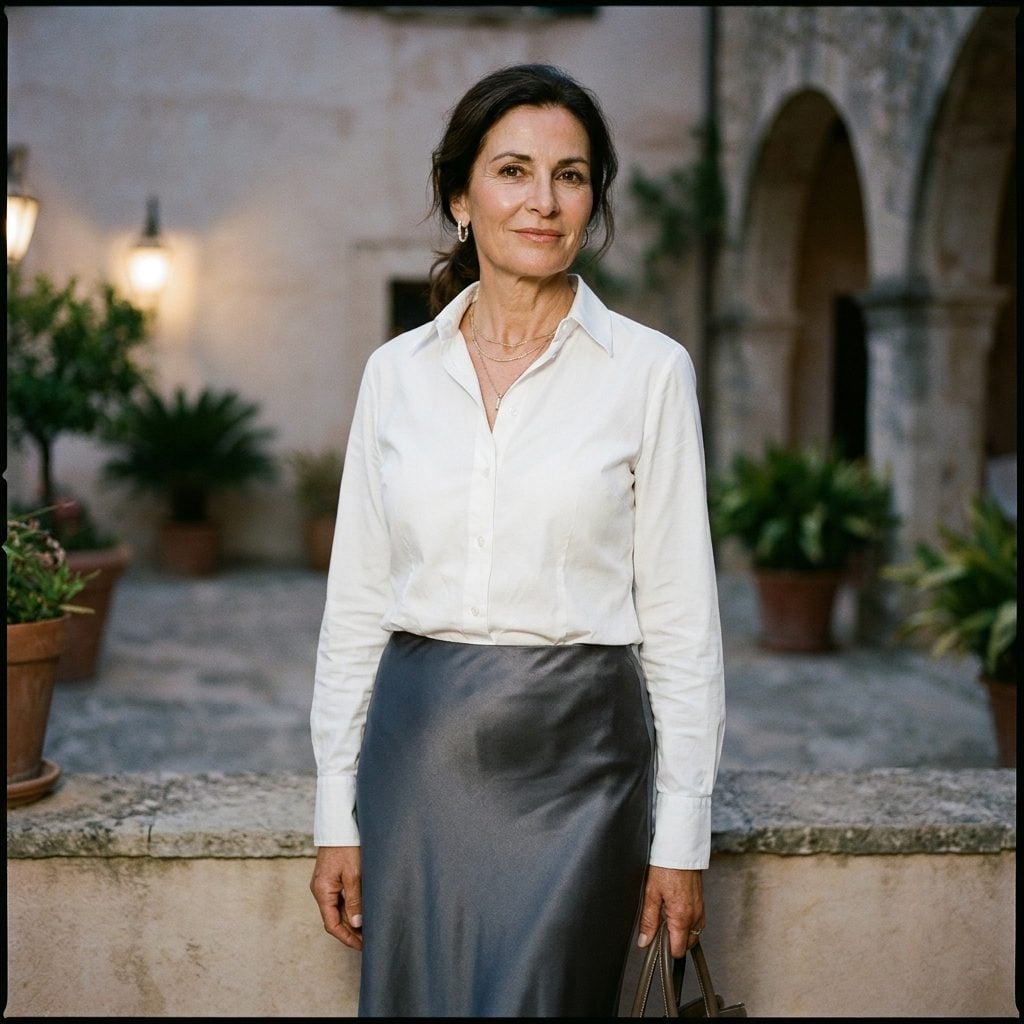
The shirt stays crisp and matte while the satin skirt moves and reflects light below it. That difference in finish turns two simple pieces into a much more deliberate composition.
A full tuck gives the upper half a clean ending at the waistband, while two open buttons loosen the collar. A thin gold chain and small studs add just enough detail near the face without competing with the skirt’s sheen.
20. Paired With Olive Utility Pants and Espadrilles
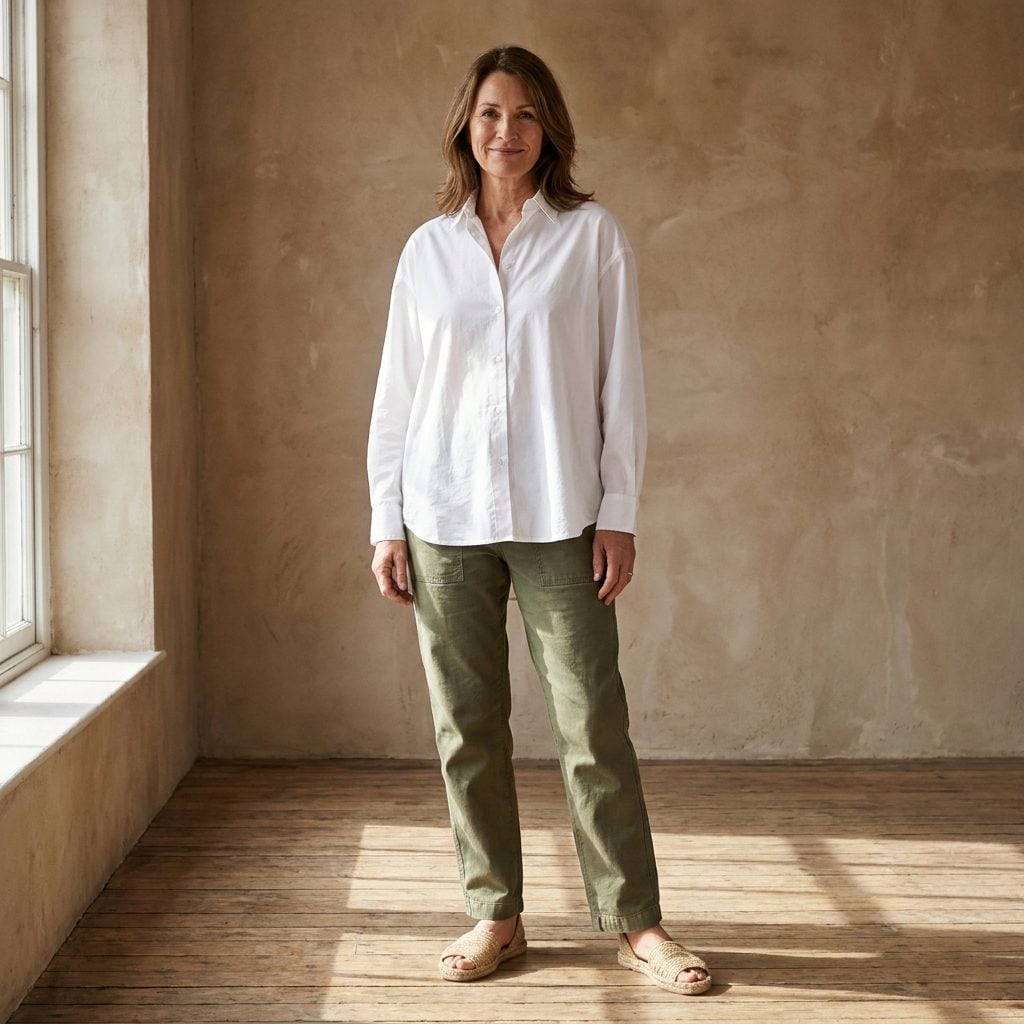
Olive utility pants bring pockets, seams, and a harder workwear texture. The white shirt cleans up that ruggedness without erasing it, which is exactly why the pairing works.
Espadrille wedges pull the trousers away from purely functional territory and add a softer summer texture at the foot. Rolled sleeves and a loose half-tuck keep the shirt equally relaxed, so neither piece looks as though it wandered in from a different outfit.
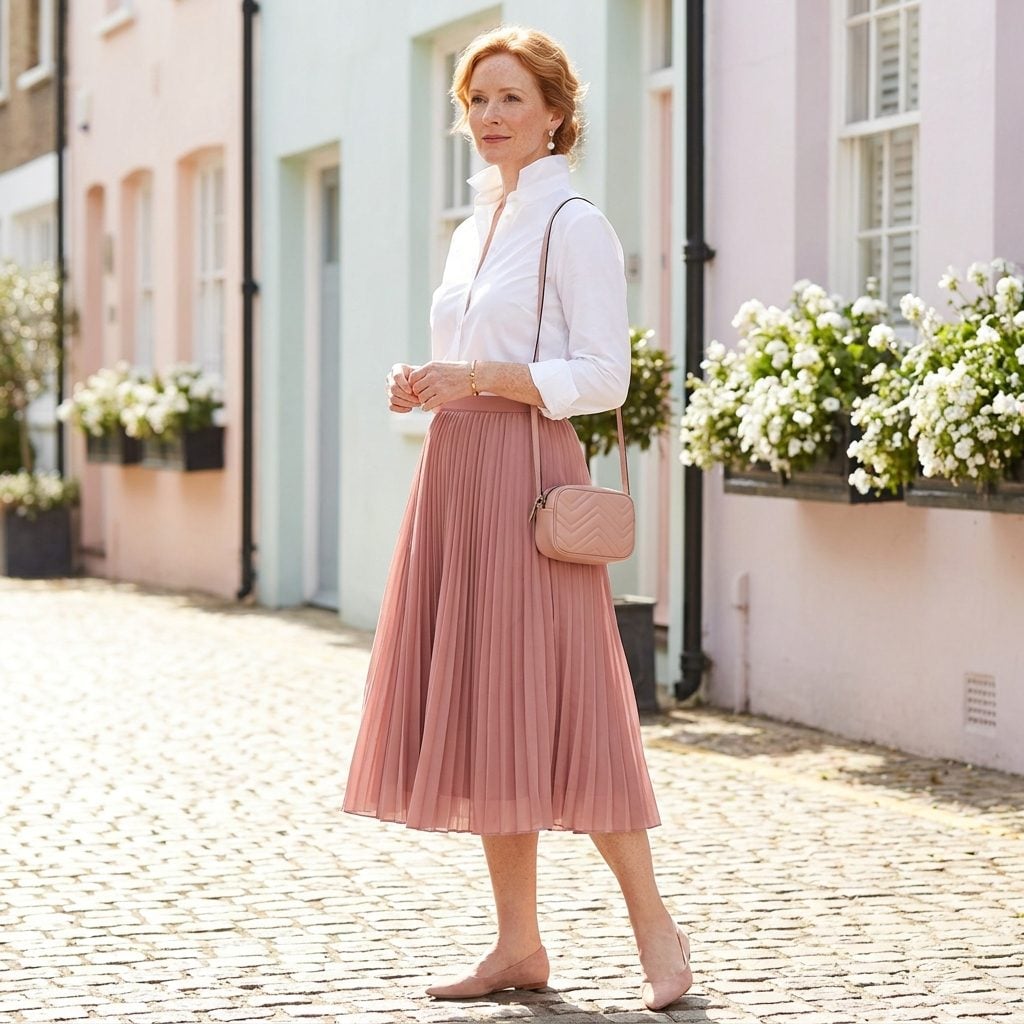
19. Worn Backwards as a Collared Blouse With a Full Midi Skirt
❤️ Would you like to save this?
With a softly cut or slightly oversized shirt, turning the button placket to the back can completely change the front. The familiar shirt opening disappears, leaving a cleaner high neckline that reads more like a purpose-designed blouse.
Tucked into a dusty-rose pleated midi, the reversed shirt gains enough volume below to make the stripped-back front feel intentional. Pearl drops, a slim bracelet, and blush flats reinforce the cleaner, dressier direction without overwhelming the trick itself.
18. Draped Under a Long Sleeveless Duster Vest
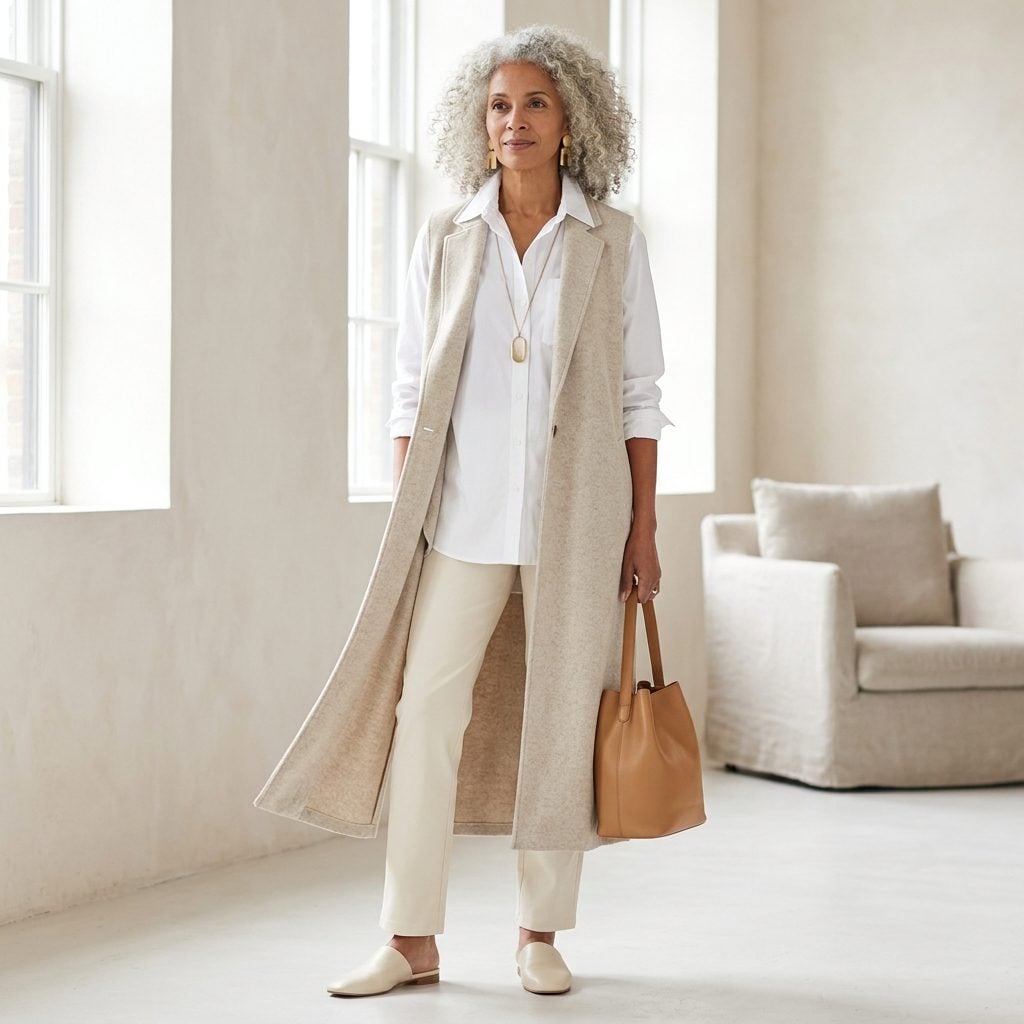
A floor-skimming sleeveless duster changes the white shirt by enclosing it within two long vertical edges. Soft oatmeal wool and cream trousers keep the surrounding palette close enough that the shirt becomes the brightest point at the center.
Matte gold geometric earrings and a long pendant introduce a little hardware without breaking the tonal calm. The movement comes from the open vest, which shifts around the comparatively crisp shirt underneath.
17. Tucked Into Cropped Cigarette Pants With Slingbacks
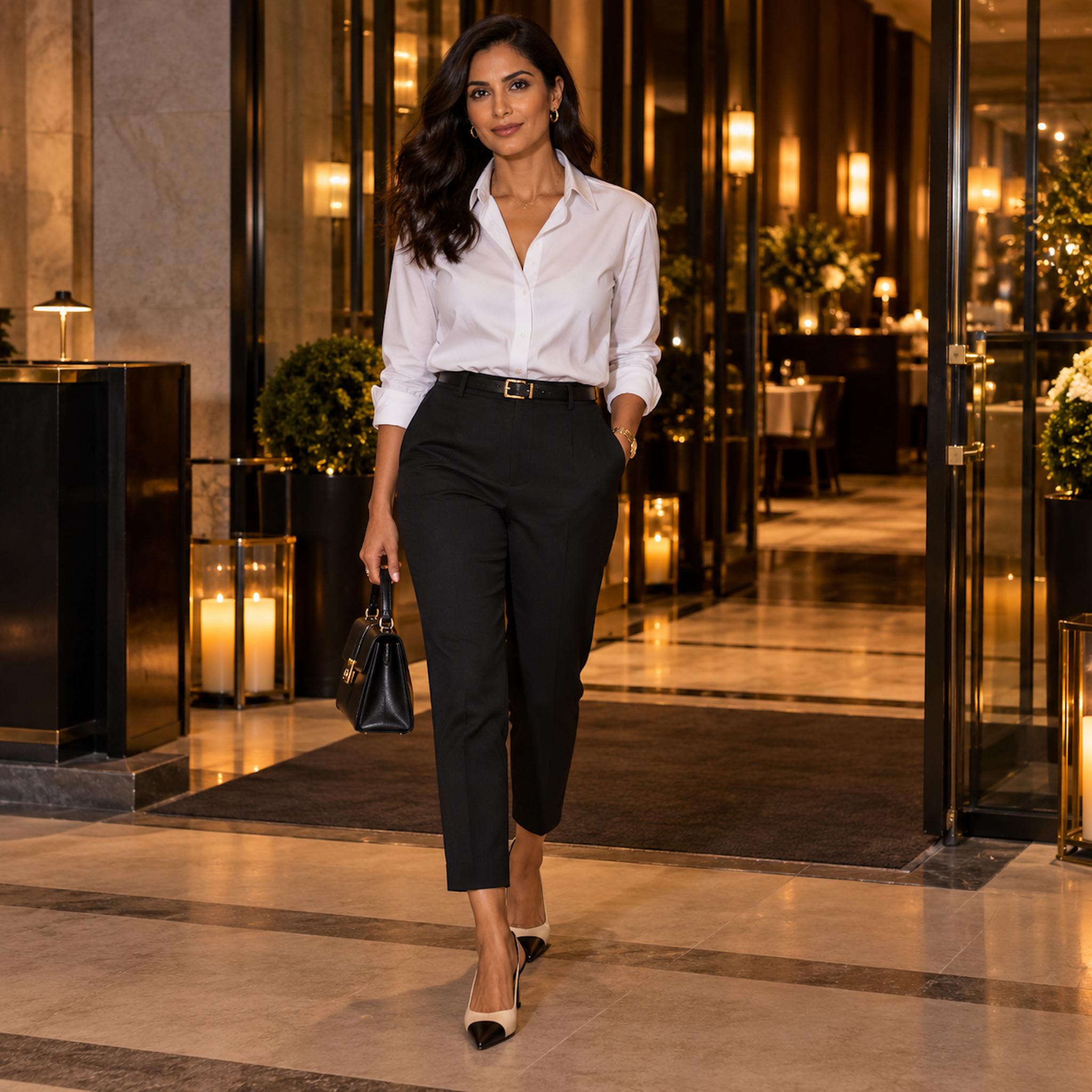
After all the wide legs and flowing skirts, a narrow cropped trouser changes the pace. Black cigarette pants skim close through the leg and stop above the ankle, leaving the slingback heel completely visible instead of allowing the shoe to disappear beneath fabric.
The shirt is tucked cleanly rather than bloused or knotted, which suits the precision of the trousers. A narrow black belt connects the two halves, while two-tone pointed slingbacks sharpen the final few inches. This is less about drama than exact proportion.
16. Worn Under a Strapless Midi Dress
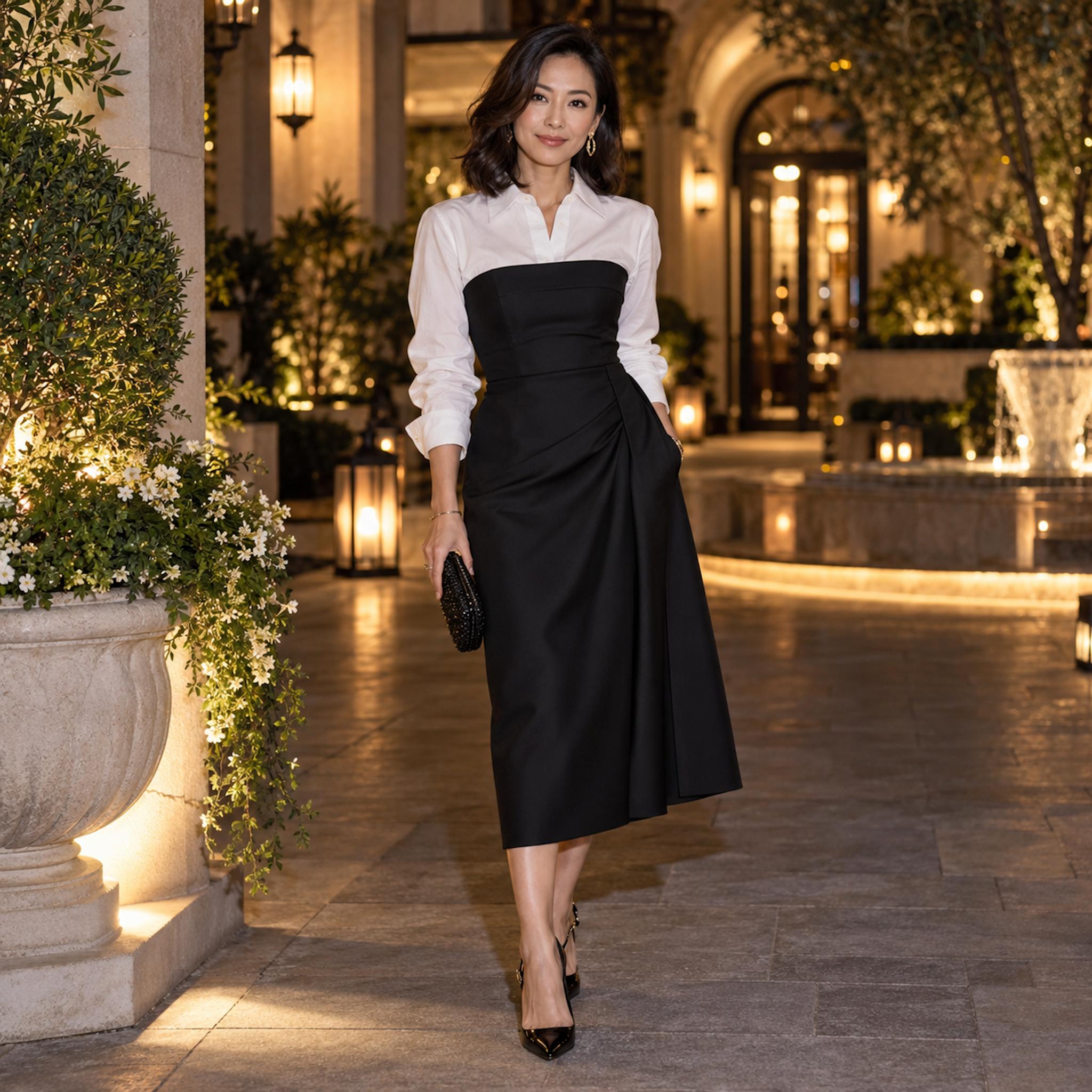
A strapless black dress over a white button-down reverses the usual hierarchy completely. The dress supplies the strong uninterrupted shape through the torso while the shirt appears only where it matters most: collar, shoulders, sleeves, and cuffs.
Black against white makes every seam easy to read, which is why the combination can handle such minimal styling. The dress turns the shirt into architecture rather than a background basic, while the exposed collar and sleeves keep the black midi from becoming another predictable evening dress.
15. Worn Untucked With Relaxed Linen Pants
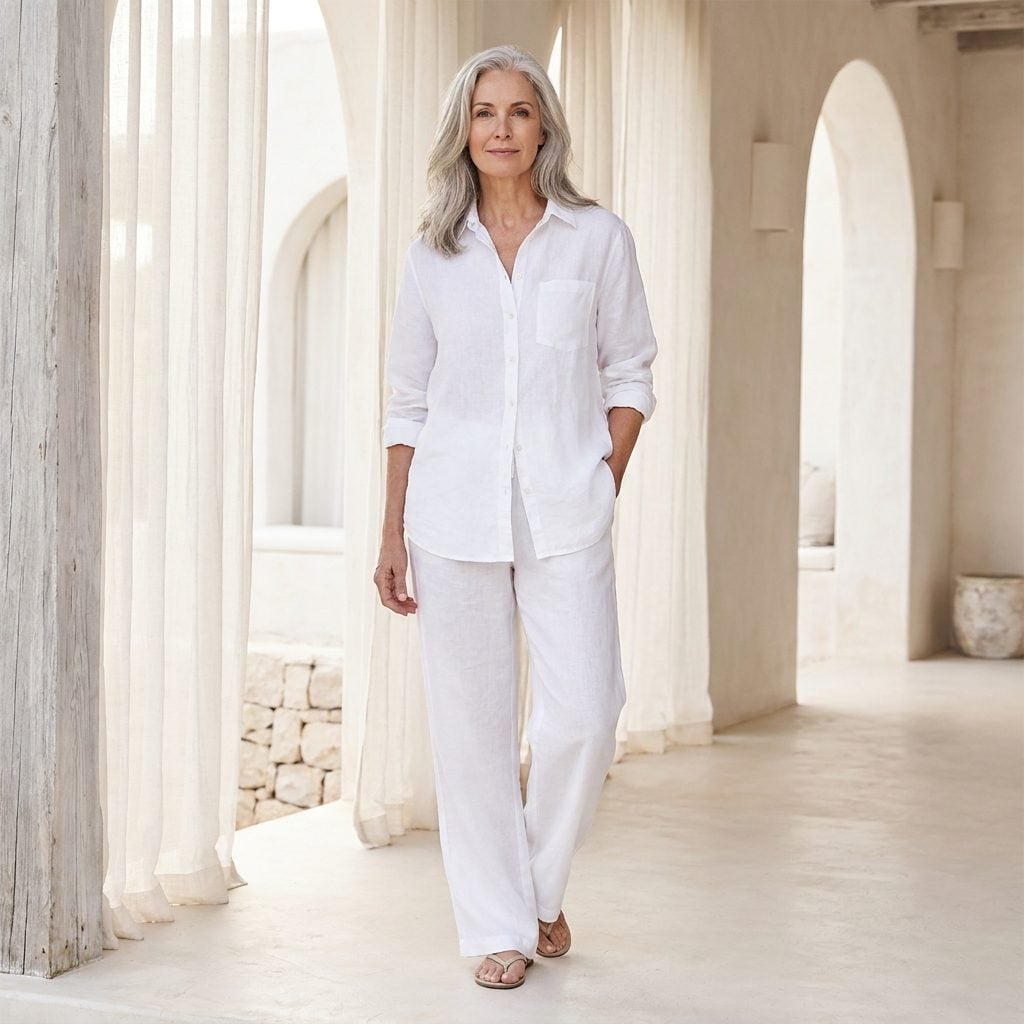
White over ivory keeps this loose-on-loose combination from collapsing into one undifferentiated shape. The shirt is brighter and crisper; the linen trousers are softer and warmer. That slight tonal shift gives each piece its own boundary.
The chunky amber necklace creates a concentrated point of warmth near the neckline, while rolled sleeves and a couple of open buttons keep the volume from feeling overly formal. Nothing is tightly fitted, yet the differences in texture and tone keep the outfit legible.
14. Layered Under a Sleeveless Tailored Waistcoat
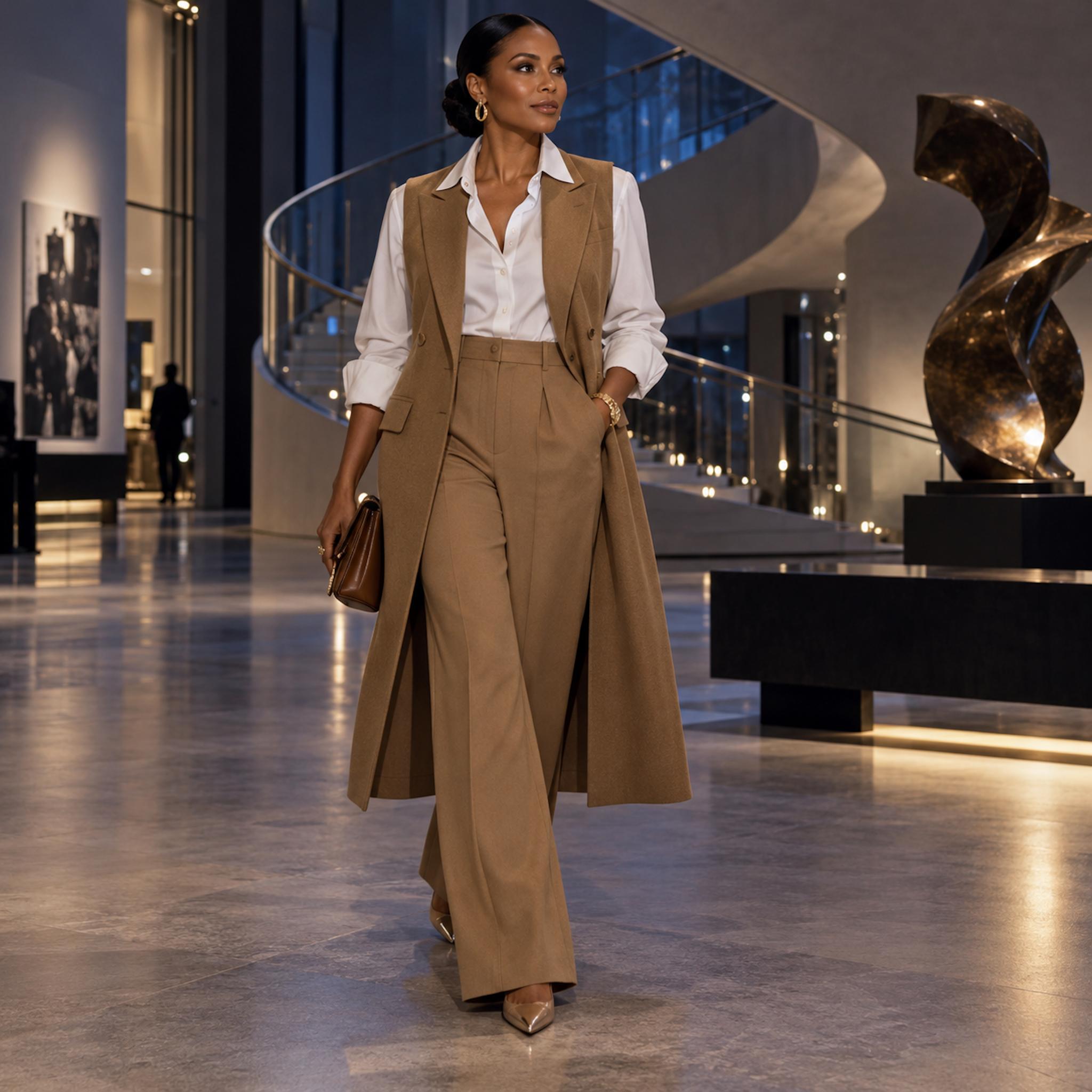
This is not the soft sweater-vest version of layering. A long camel waistcoat brings lapels, strong shoulders, and an almost coat-like vertical line over the white shirt, then continues into matching wide-leg trousers.
The white collar and sleeves keep that expanse of camel from becoming visually heavy. Because the waistcoat stays open, the shirt forms a bright central stripe through the tailoring. The result has the authority of a suit without simply repeating a blazer-and-trouser formula.
13. Knotted at the Front Over High-Waisted Wide-Leg Trousers
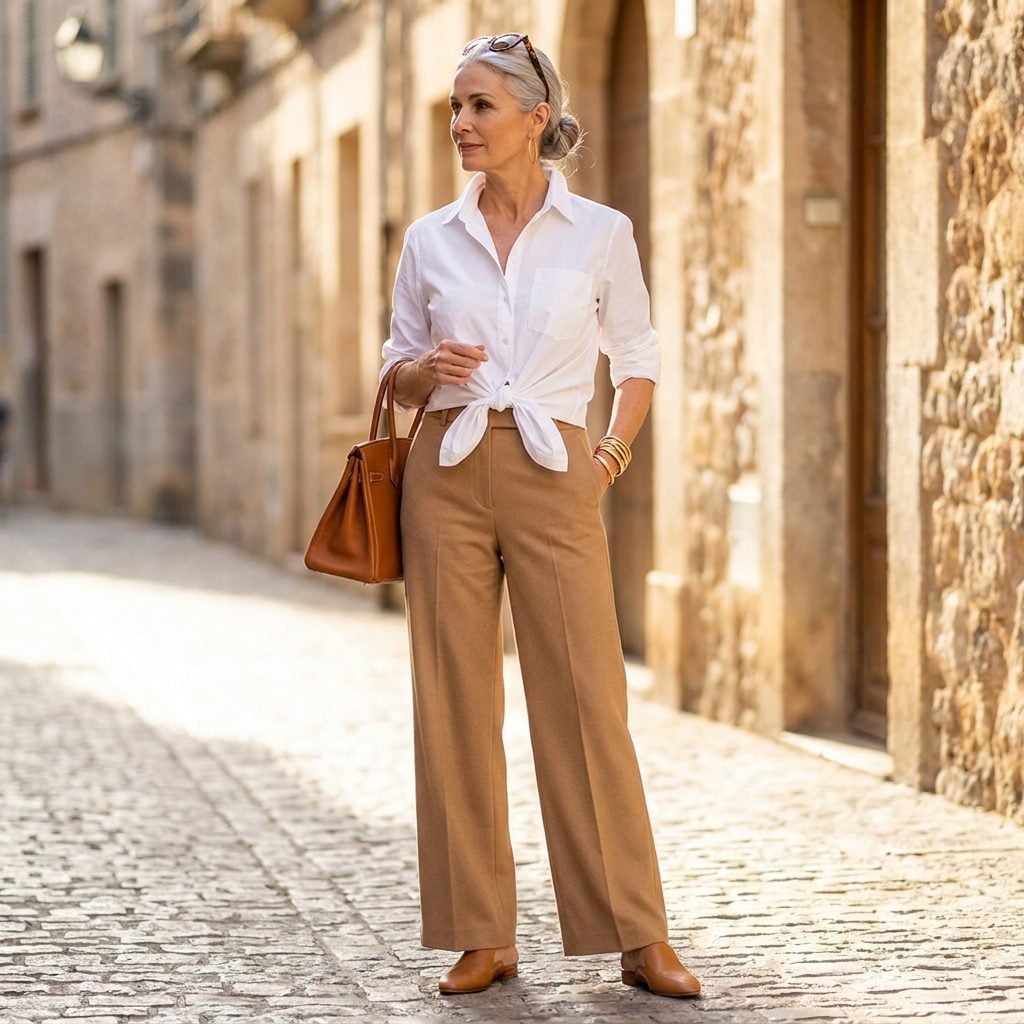
Knotting the hem at the waist shortens the shirt just enough to let high-waisted, wide-leg trousers dominate the proportions. The shirt becomes compact; the trousers provide the long sweep below.
Camel wool with fluid drape gives bright white poplin a warmer, softer partner. A cognac top-handle bag keeps the palette connected without turning the outfit into a matching exercise.
12. Layered Under a Sleeveless Sweater Dress
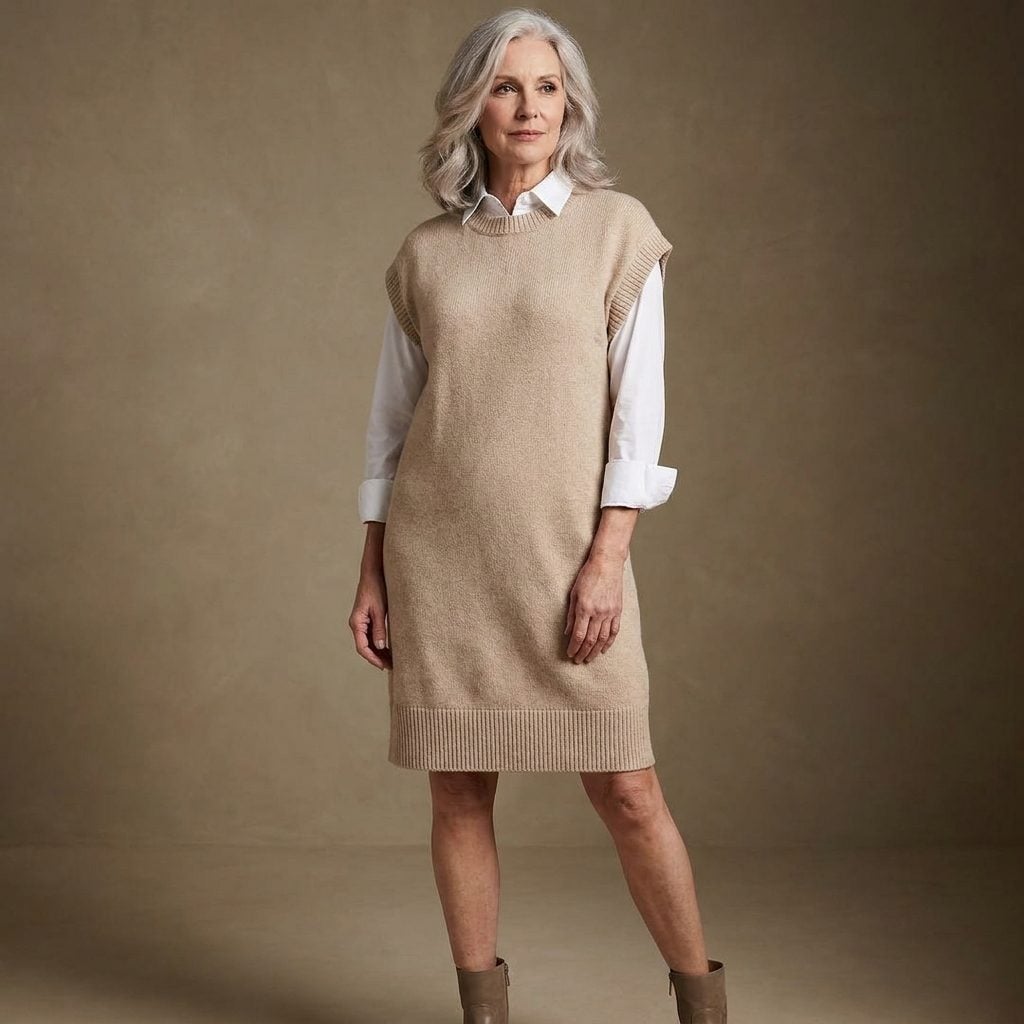
A white collar and cuffs give a sleeveless knit dress sharper edges, especially against rust-terracotta. The shirt provides structure at the neckline and wrists while the knit supplies the softer continuous body of color.
Knee boots continue the vertical line below the hem without adding another competing color. The combination works best with a fine- or medium-gauge knit, which leaves enough room for the shirt to sit underneath without bunching excessively.
11. Worn With Dark-Wash Bootcut Jeans and Block Heels
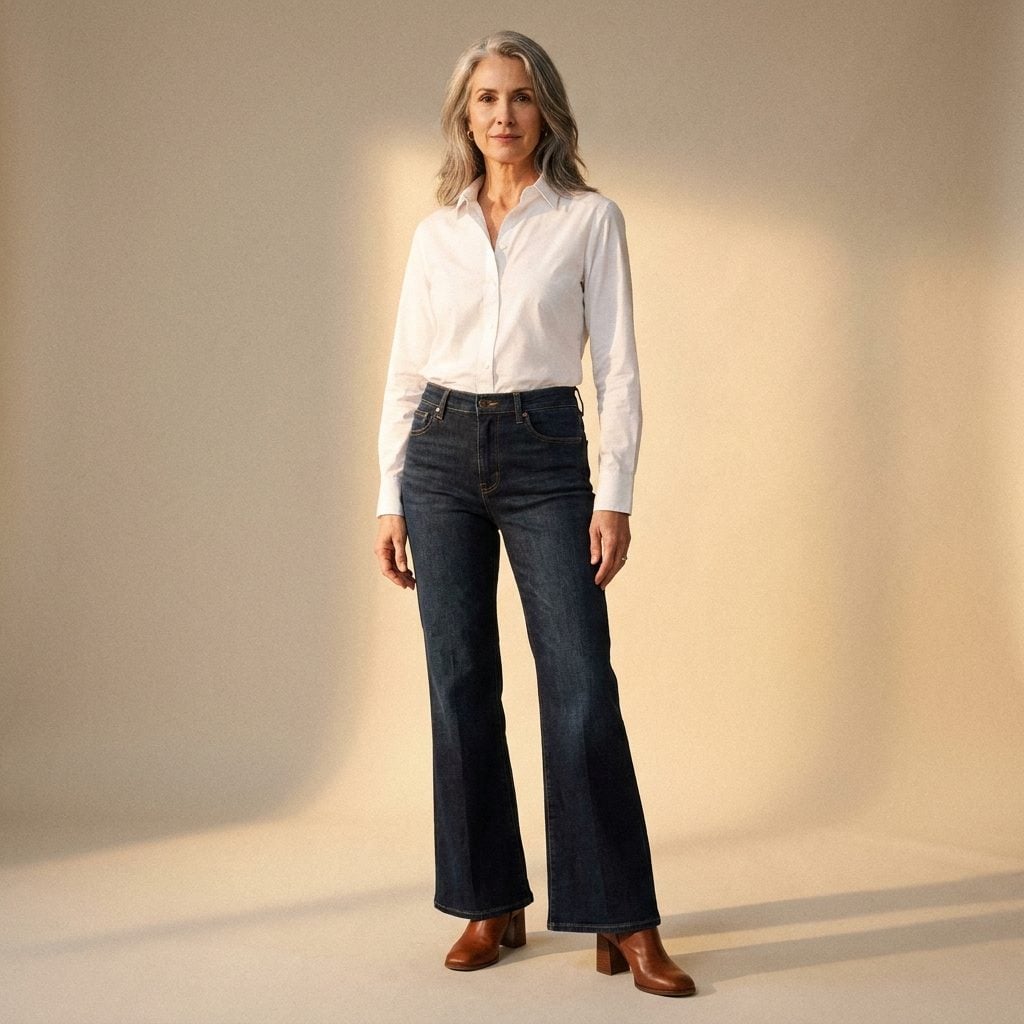
Bootcut works here because the slight flare meets the visual weight of a block heel instead of tapering away from it. Dark indigo keeps the jeans clean enough to sit comfortably beside a bright white shirt.
A loose front tuck keeps some definition at the waistband without making the shirt overly precise. Caramel suede boots and a cognac crossbody bag warm up the cool white-and-indigo combination.
10. Worn Open Over a White Tank and Linen Trousers
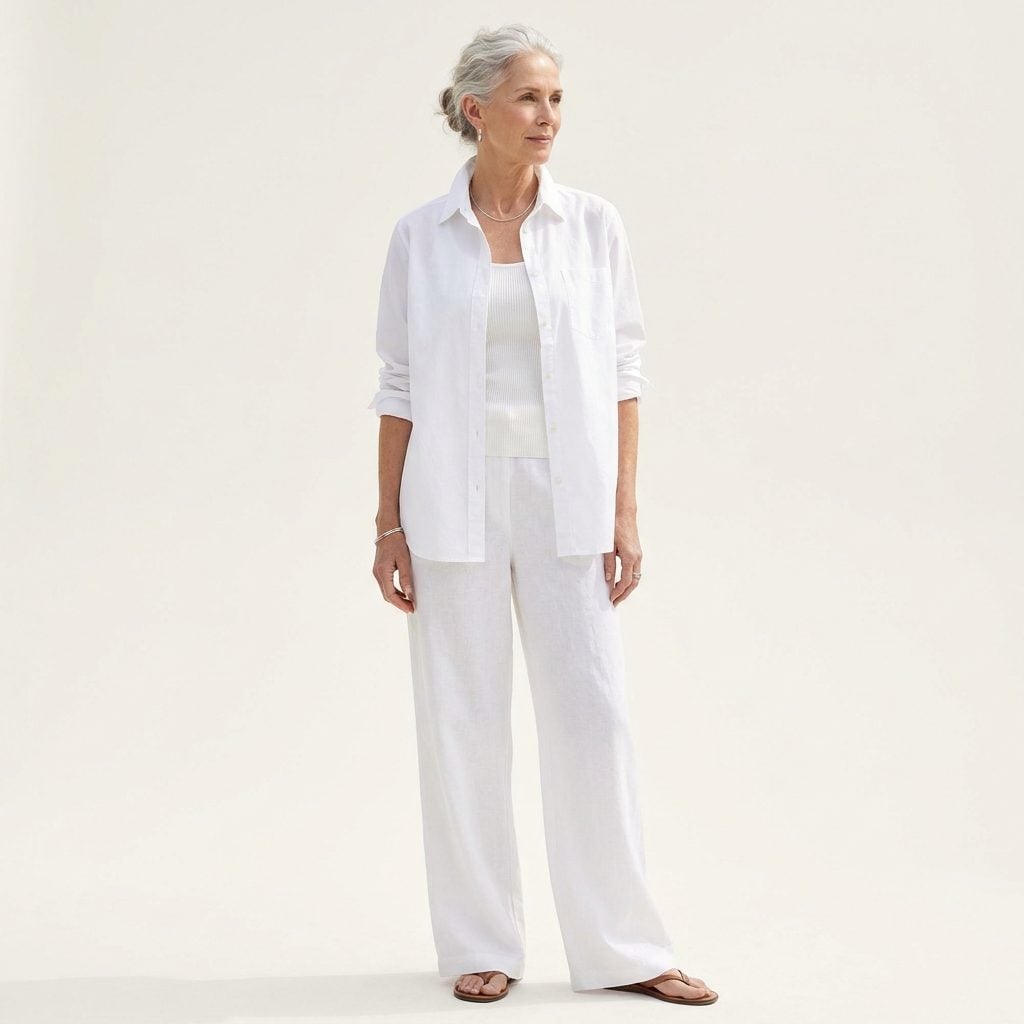
One color, three different surfaces. Crisp cotton on the shirt, ribbing on the tank, and the softer matte texture of linen trousers keep an all-white outfit from flattening into one block.
Worn open, the button-down becomes an outer layer rather than the centerpiece. The airy trousers carry most of the volume, while the tank provides a cleaner fitted line underneath the open shirt.
9. Worn as a Cropped Tie-Front Over a Pleated Trouser
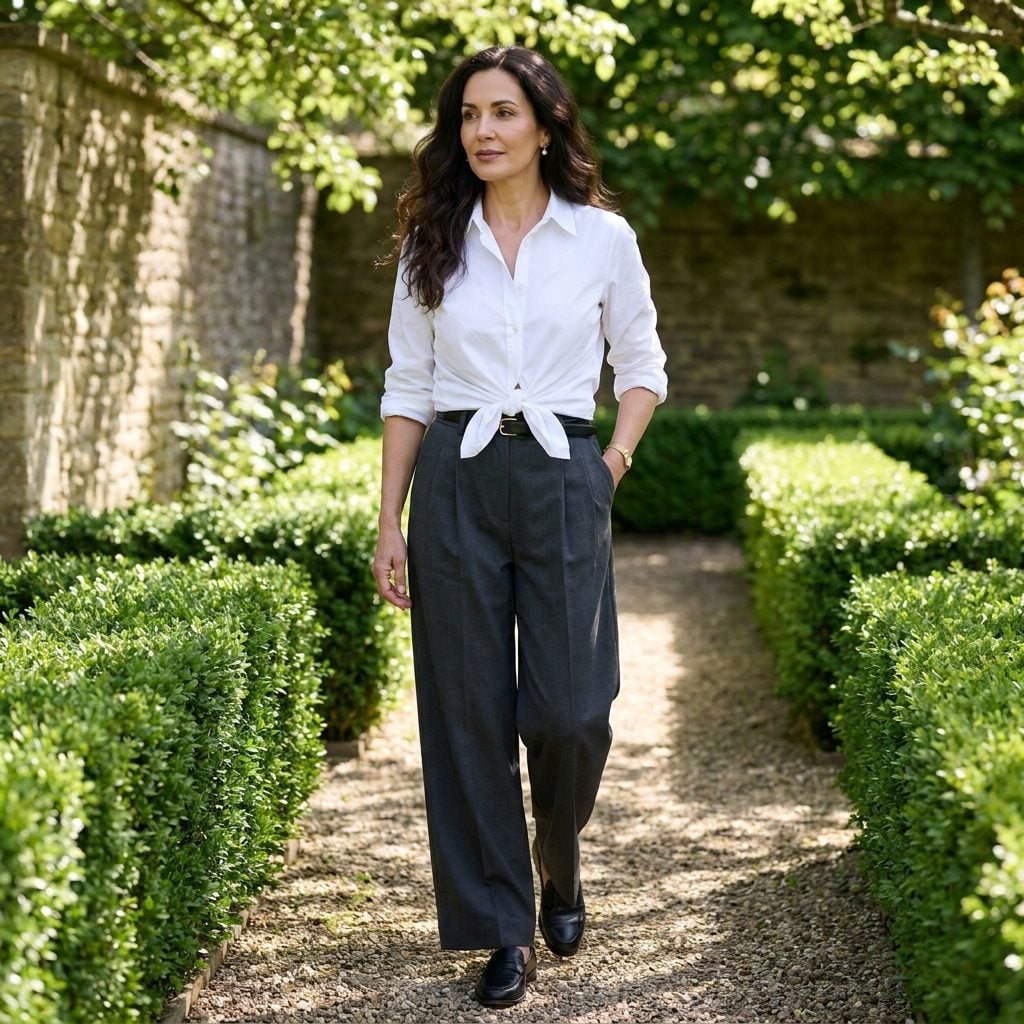
Tying the shirt so the knot meets the high waistband changes the balance immediately. The upper half becomes short and contained while the pleated trousers fall in a much longer, fuller line below.
The crease on the charcoal pleated wide trousers gives all that volume discipline. White poplin keeps the top crisp enough that the knot feels intentional rather than beachy.
8. Styled With Relaxed Tailored Shorts and Minimalist Sandals
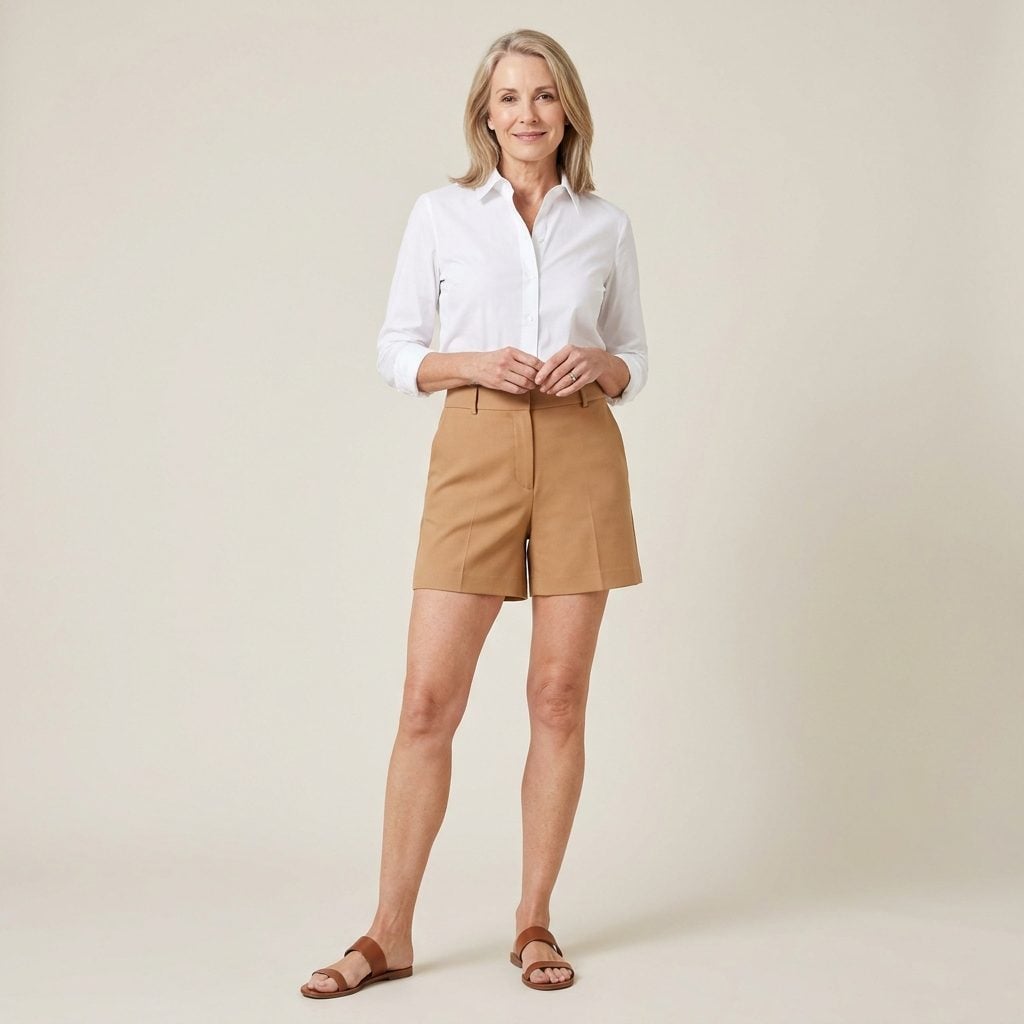
High-waisted camel shorts with a pressed crease borrow their structure directly from trousers, which keeps the shorter silhouette polished rather than purely casual.
A full tuck keeps the waistband visible, while minimalist tan sandals preserve the clean line rather than introducing another bulky shape at the foot. Camel and white need very little ornament to look finished.
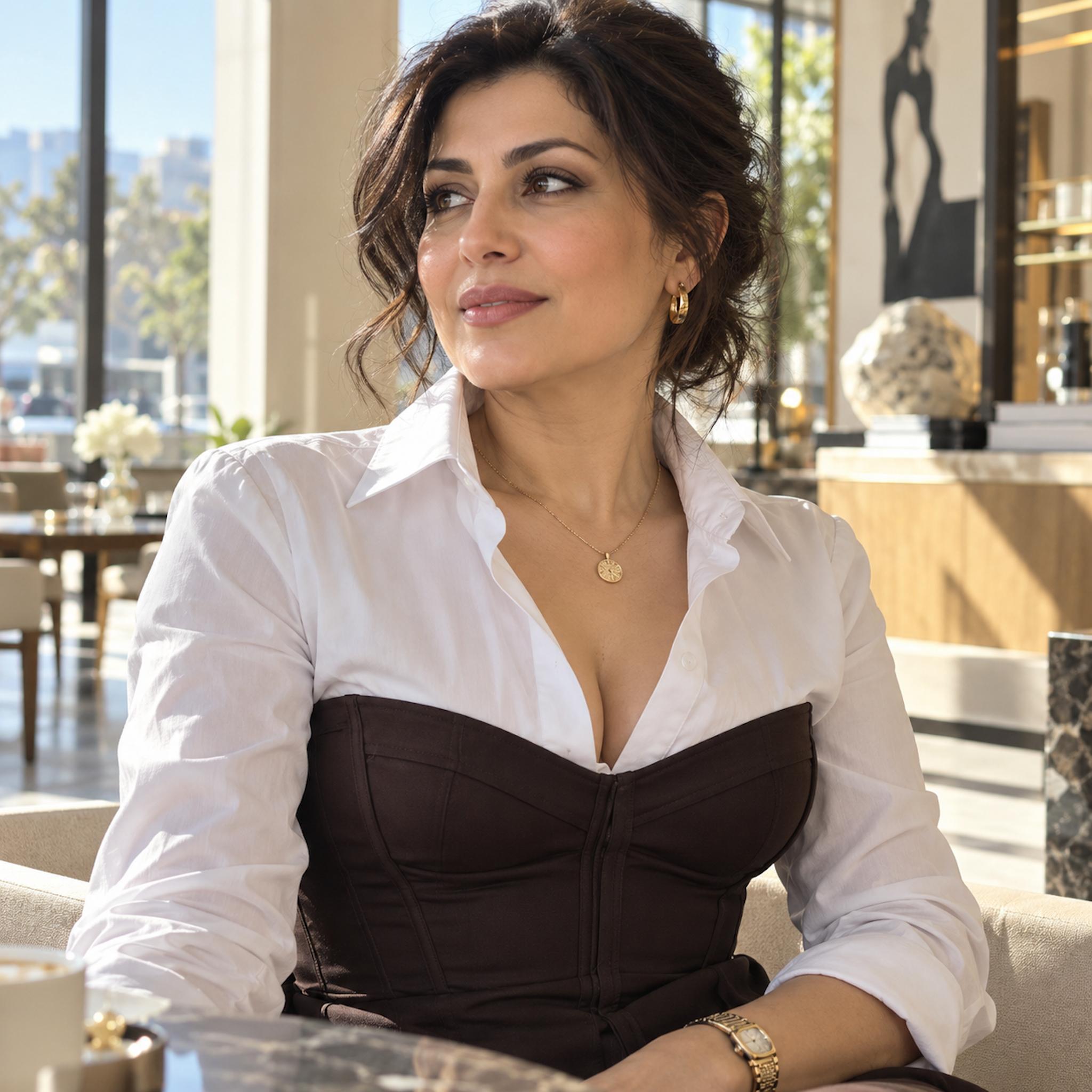
7. White Shirt Under a Structured Bustier Top
❤️ Would you like to save this?
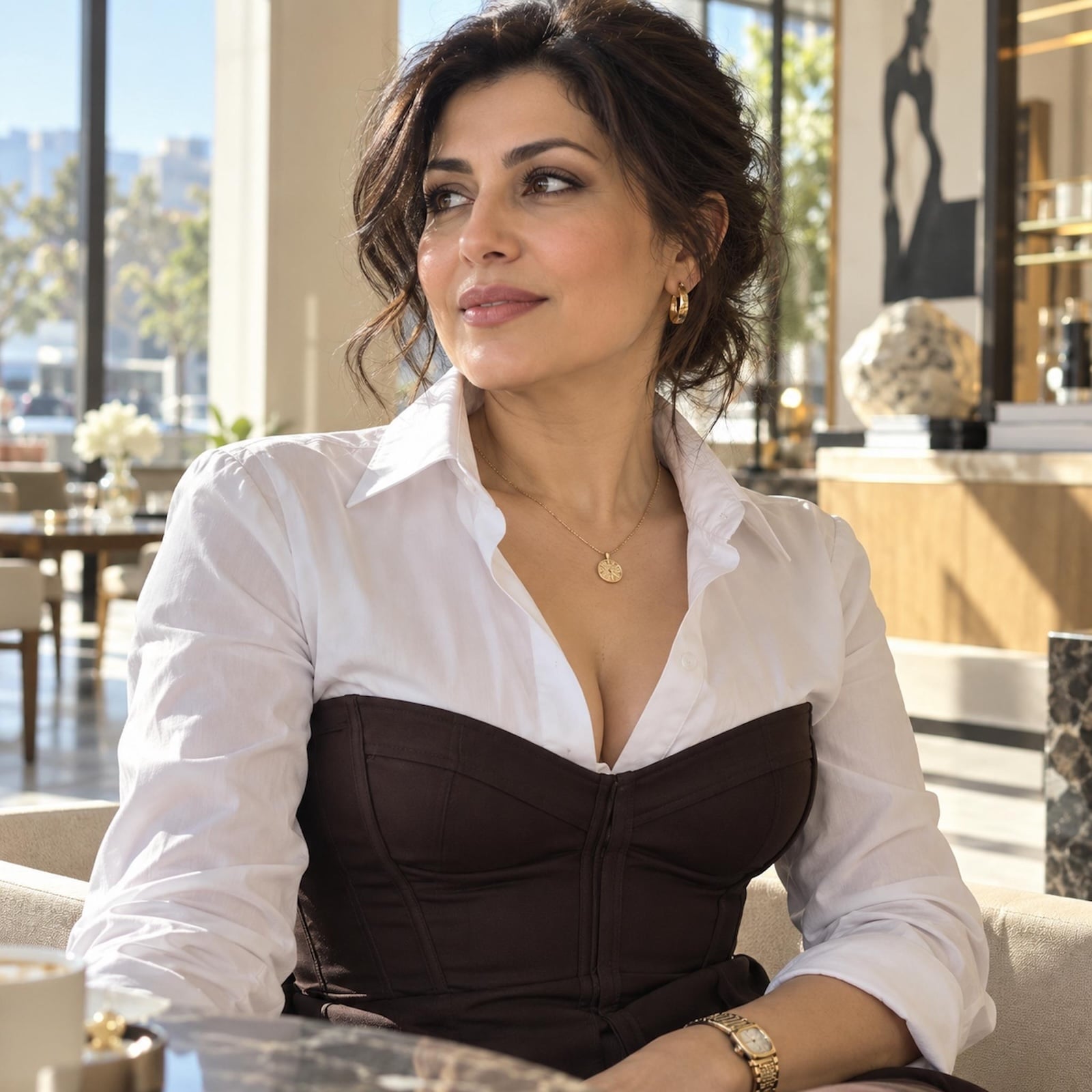
A dark structured bustier over crisp white poplin makes the shirt almost unrecognizable. The collar stays open and the sleeves remain loose, but the fitted layer across the torso introduces a hard, sculpted counterpoint to all that familiar cotton.
The contrast is strongest because the two pieces refuse to behave alike. The shirt wrinkles and folds; the bustier holds its shape. Deep chocolate rather than black softens the graphic effect slightly, while simple gold jewelry keeps attention on the unusual line where tailoring meets shirting.
6. Sleeves Rolled With Wide-Cuff Statement Jewelry and White Jeans
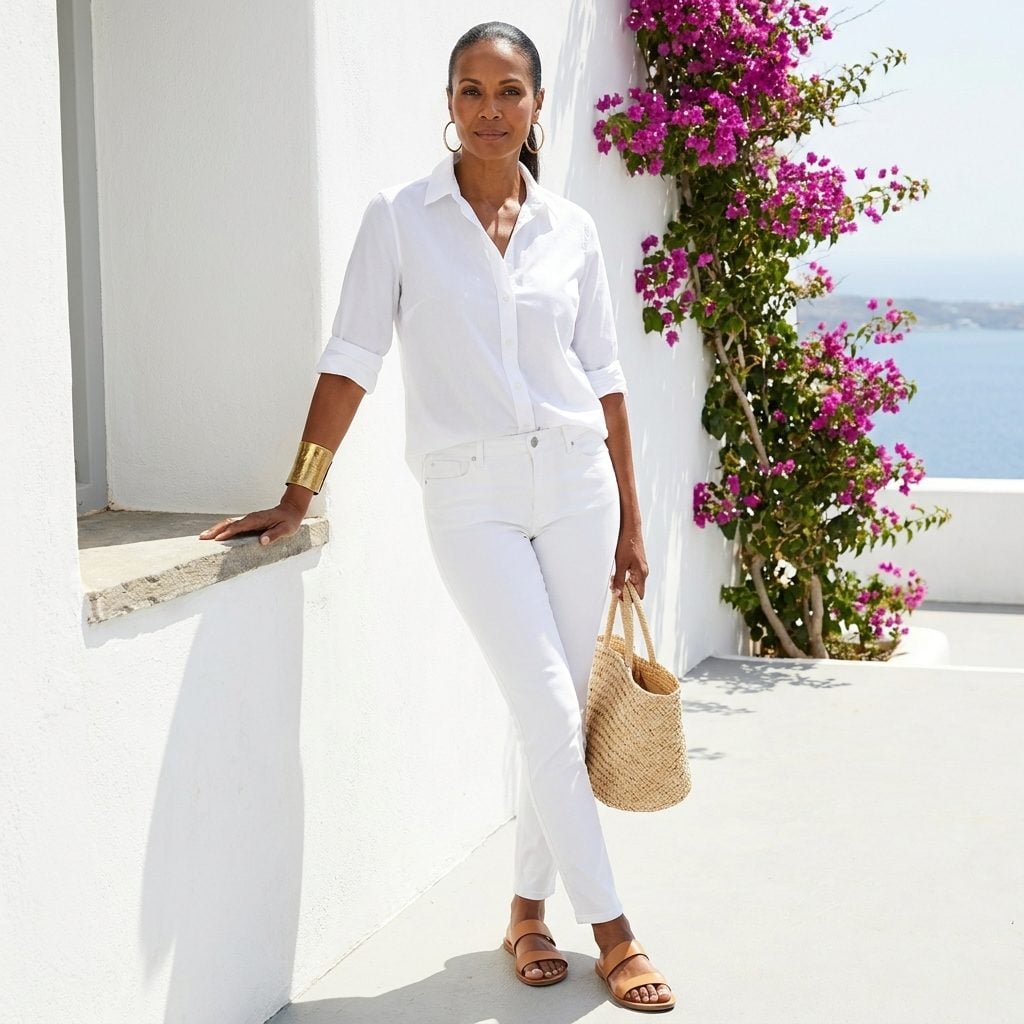
White shirt, white jeans, almost no color — which gives a hammered brass cuff far more visual force than it would have against a busy outfit. Rolled sleeves clear the forearm so the jewelry becomes part of the silhouette rather than an afterthought at the wrist.
Large gold hoops repeat the warm metal near the face, while flat sandals and a woven tote keep the rest of the look comparatively quiet. Tonal dressing turns texture and scale into the main sources of contrast.
5. Half-Tucked Into Straight-Leg Jeans With Loafers
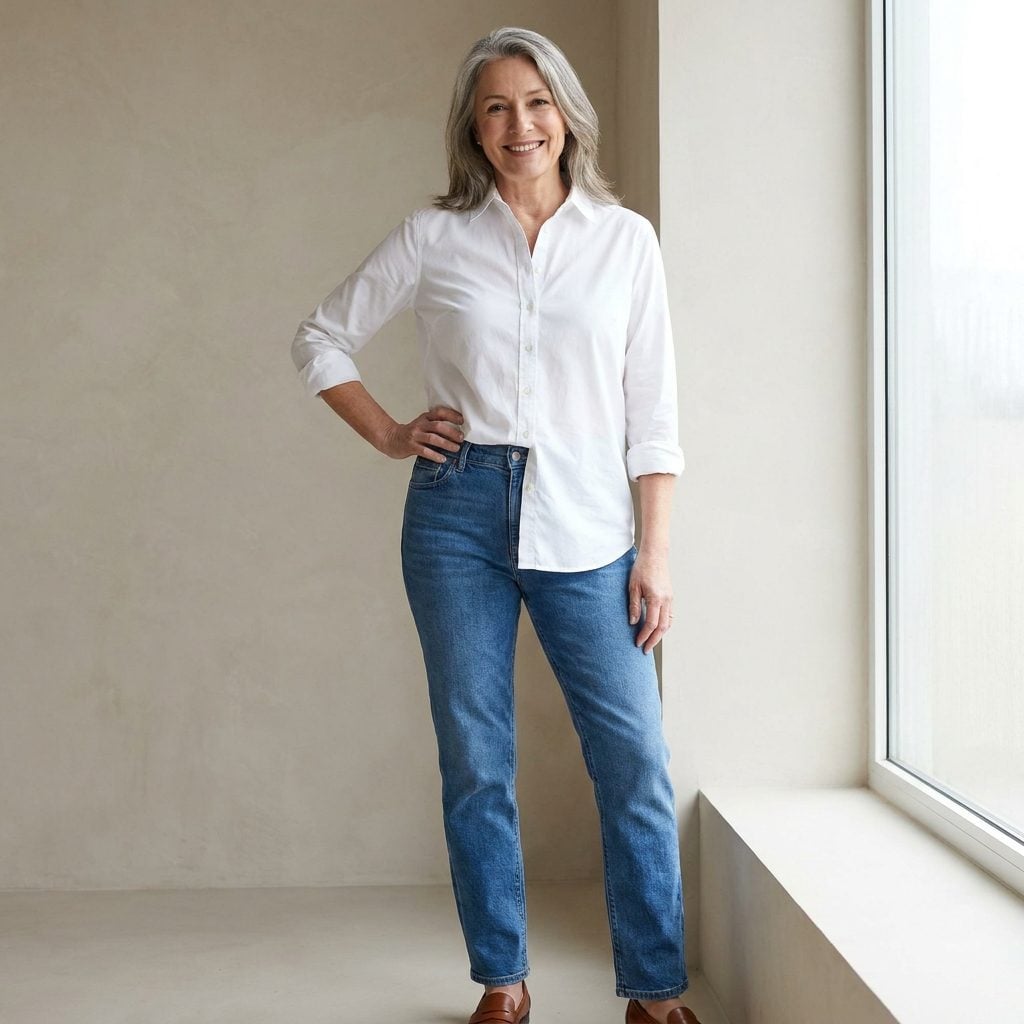
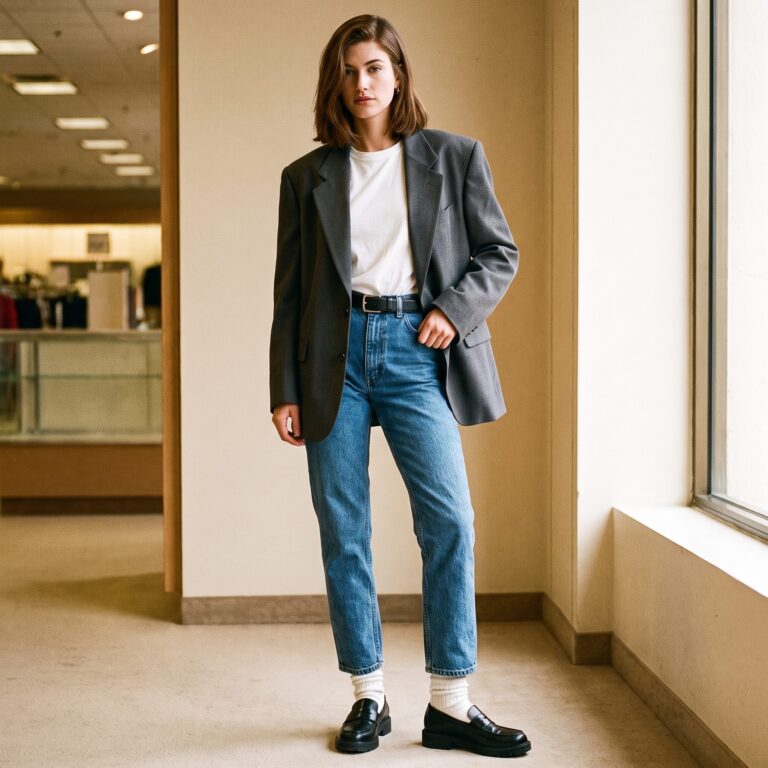
The appeal here is less about the half-tuck itself than the balance it creates between structure and looseness. Straight-leg jeans keep the lower half clean, while the shirt is allowed to blouse slightly above the waistband instead of sitting perfectly flat.
Loafers reinforce the tailored side of the outfit without pushing it all the way back toward office dressing. The result sits comfortably between polished and casual because neither side completely wins.
4. Layered Under a Camel Cardigan With White Jeans
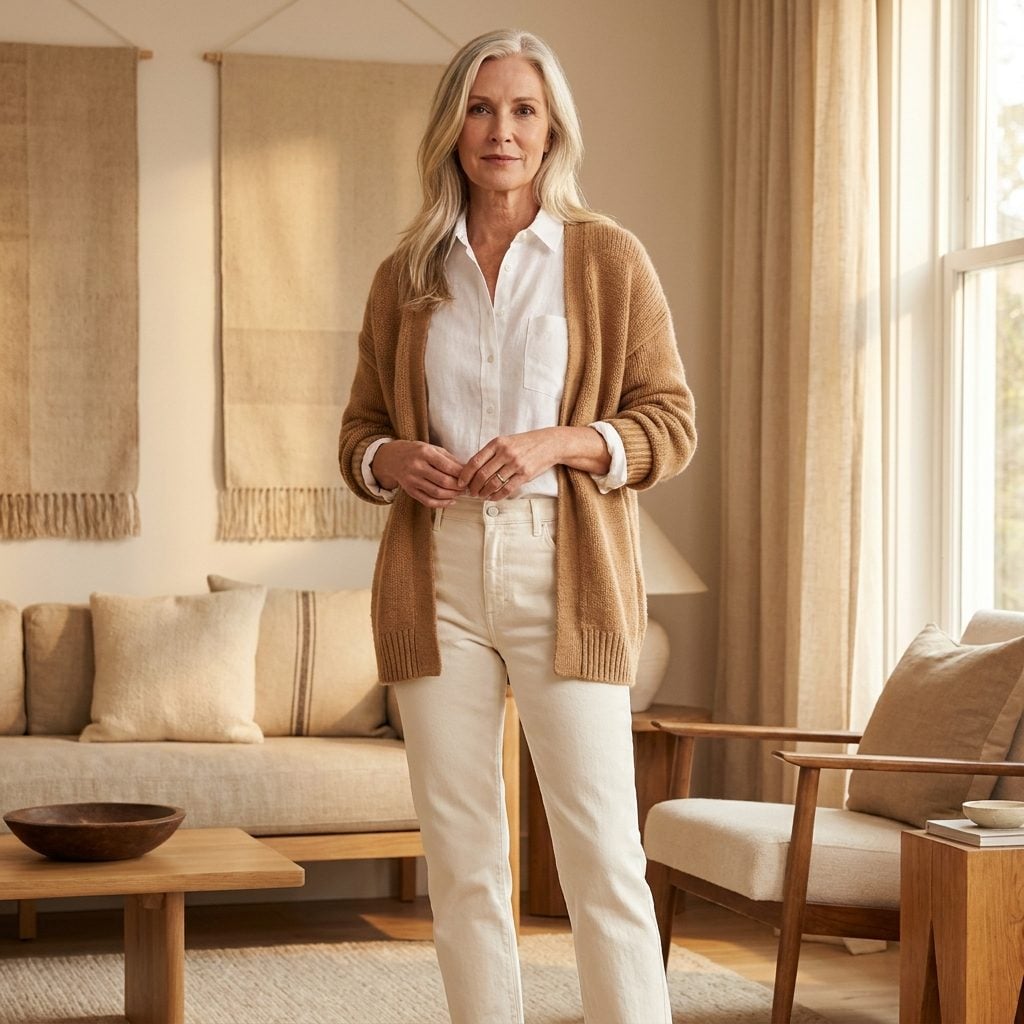
White on white with camel over the top creates a restrained neutral palette, but the shirt collar keeps all that softness from becoming vague. Its crisp edge gives the soft cardigan a much-needed point of definition.
A long camel wool cardigan creates two extended vertical lines down the body, while white jeans keep the lower half bright enough that the cardigan never feels visually heavy.
3. Tied at the Waist With a Flowing Midi Skirt
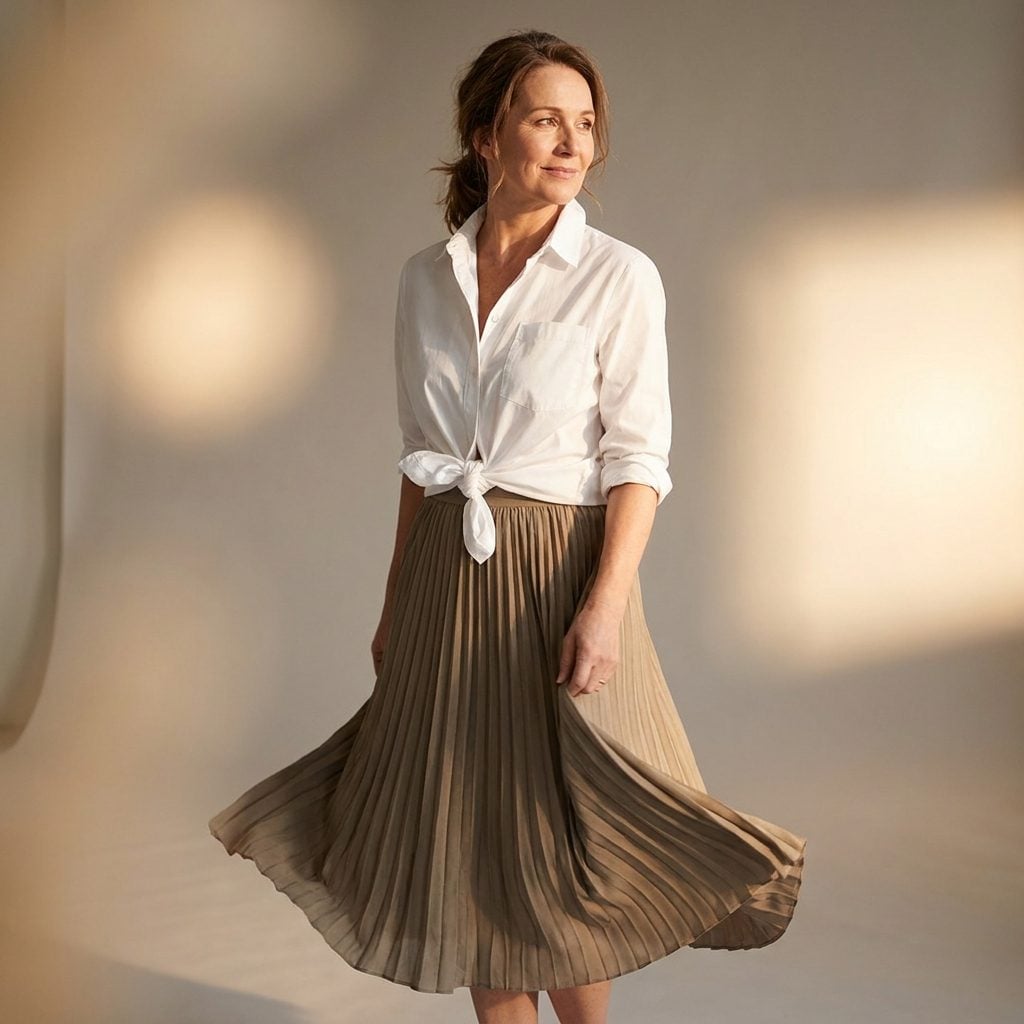
A front knot gives the shirt a firm stopping point before the midi skirt opens into fuller volume below. That contrast between compact and flowing is what keeps the two pieces from merging into one broad silhouette.
The shirt stays crisp enough to give the skirt structure, while the skirt supplies all the movement. Neither needs additional decoration; the change in proportion already gives the outfit its shape.
2. Knotted at the Hip Over a High-Slit Column Skirt
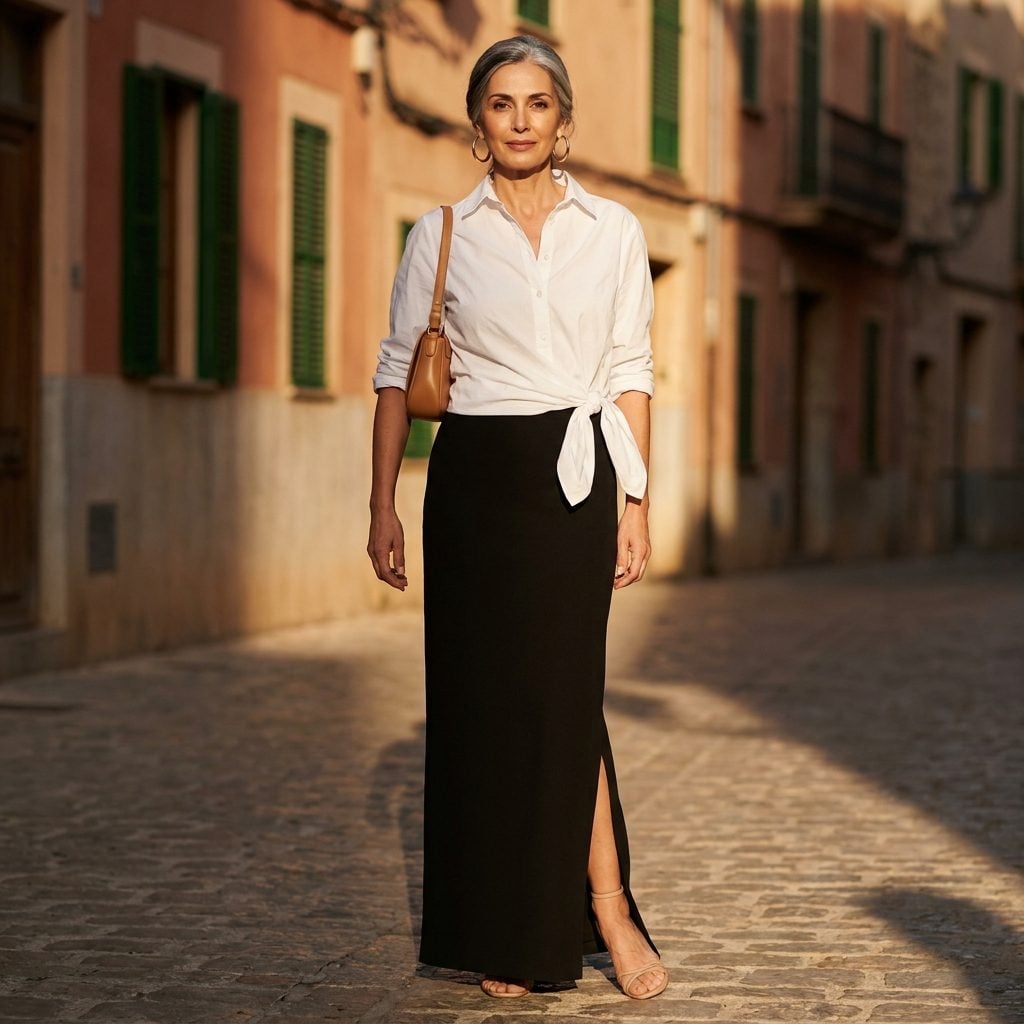
Moving the knot away from the center changes the geometry immediately. The shirt pulls diagonally across the torso while the black jersey column skirt drops in one long vertical line below.
The high slit introduces movement into an otherwise narrow silhouette, while the off-center knot stops the white shirt from looking too rigid against all that black. Horizontal, diagonal, and vertical lines are all working at once, which is why such a simple two-piece combination feels surprisingly designed.
1. Half-Buttoned Over a Bandeau With Printed Palazzo Pants
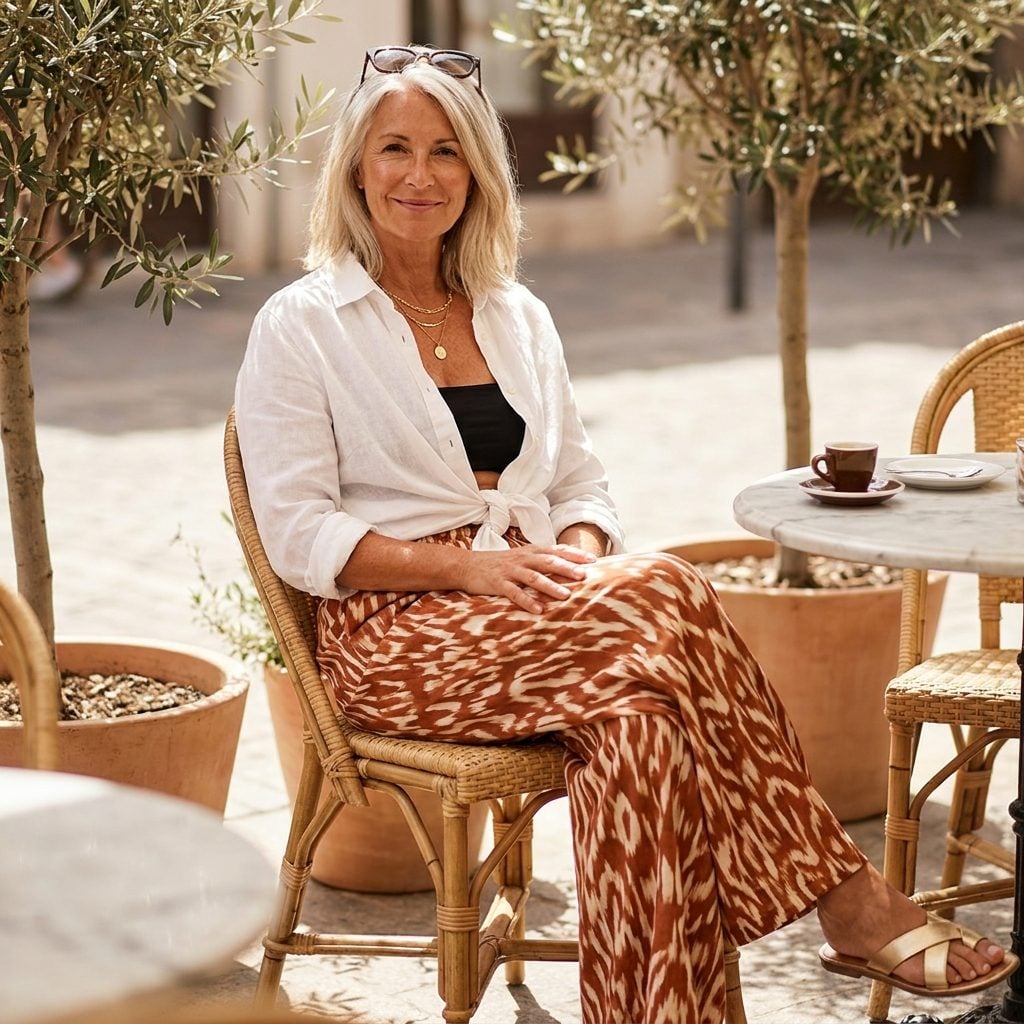
Half-buttoned and lightly knotted, the white shirt finishes about as far from office wear as it can get. A slim black bandeau creates a clean dark line inside the open neckline, giving all that white fabric a precise center.
The printed rust print palazzo pants carry the pattern and color, leaving the shirt to act as a bright neutral frame. Loud bottom, quiet top, black line between them: three distinct elements, each doing a different job.