❤️ Would you like to save this?
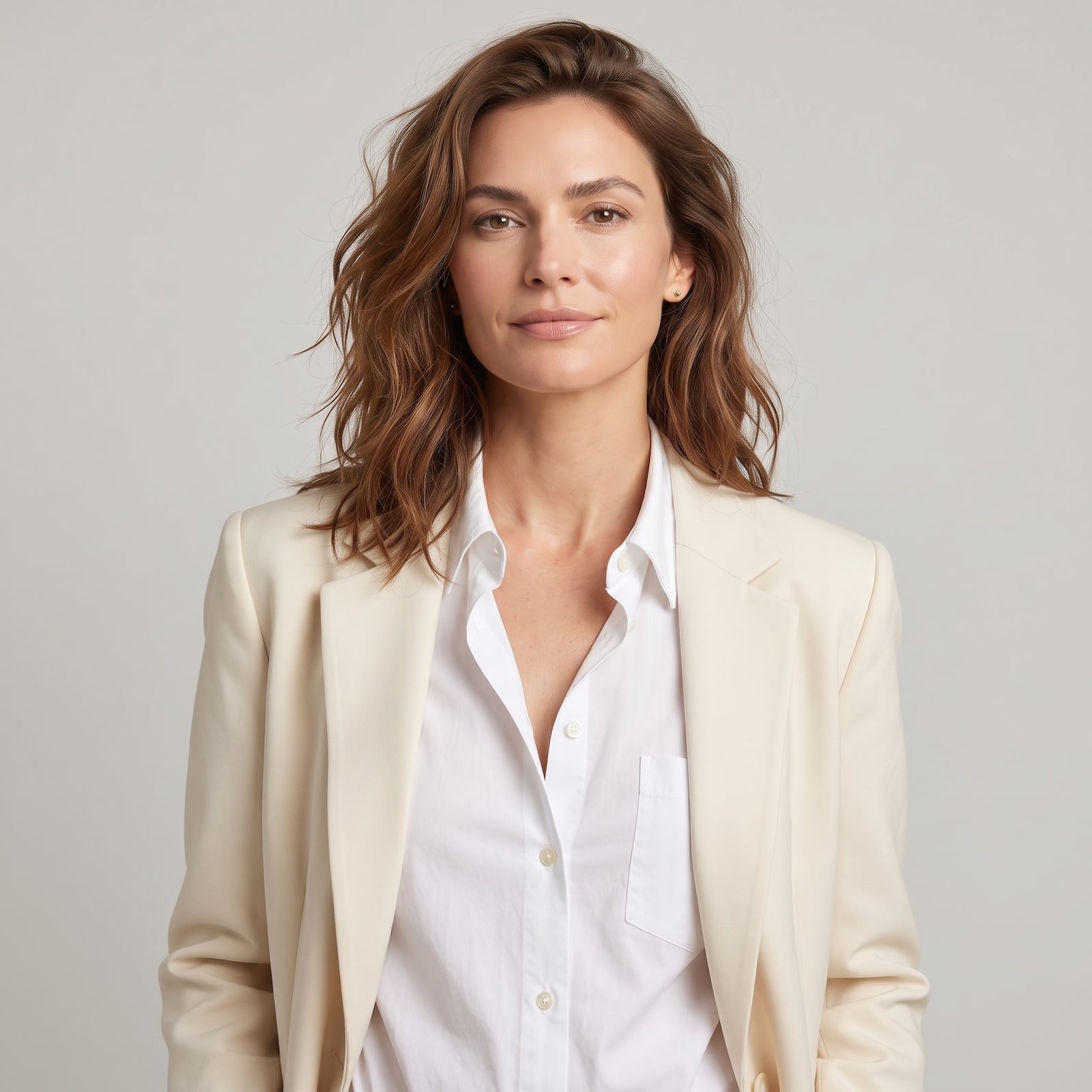
The white shirt may be fashion’s most convincing liar. It keeps calling itself basic while spending decade after decade infiltrating nearly every corner of the wardrobe: office armor, beach cover-up, borrowed menswear, eveningwear, workwear, Sunday uniform, and the sharp white interruption beneath satin, denim, leather, or tailoring. The collar barely moves. Everything around it does.
That constancy is what makes the button-down such a useful fashion time machine. Fasten one button and the mood changes. Roll a cuff and formality starts leaking out. Cinch the waist and the shirt behaves; leave the hem hanging and suddenly it has opinions about proportion. Across these 38 looks, shoulders inflate and collapse, waists disappear and return, sleeves become architecture, and fabrics that once had no business meeting become the entire reason an outfit works. Through every reinvention, the white shirt stands there looking suspiciously innocent, as though none of this was its idea.
FYI, thanks to AI imagery software, we’re able to create very specific fashion and hairstyle examples to illustrate the points being made. In some cases, imagery is exaggerated to hammer home the point. Also, assume links that take you off the site are affiliate links such as links to Amazon. this means we may earn a commission if you buy something.
38. The Office White Shirt
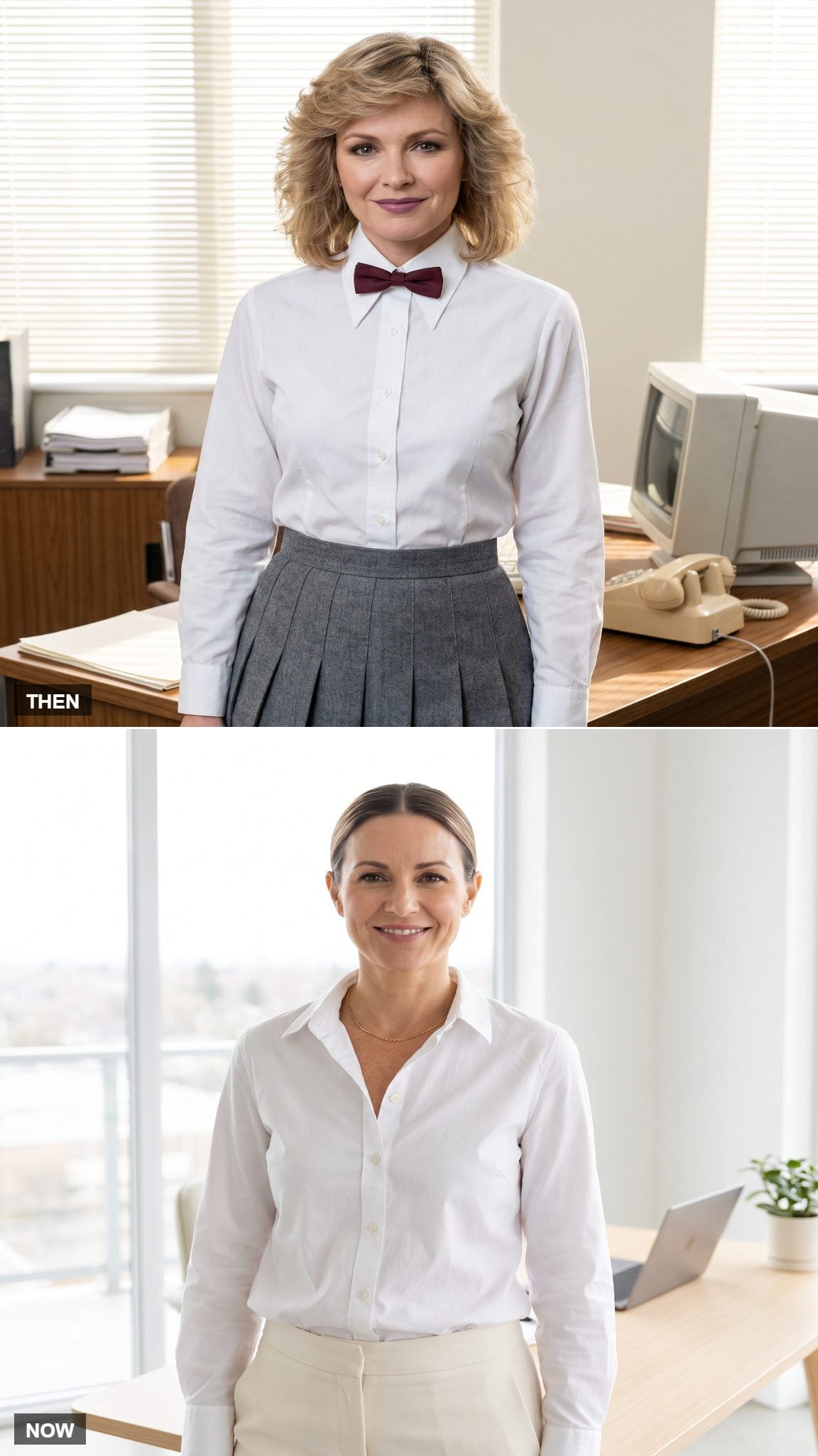
In the 1980s office, the white shirt often arrived highly controlled: collar closed, silk bow at the throat, cuffs neat, skirt pleated and belted. Structure was part of the language of professional dressing, and the shirt supplied plenty of it.
Now the same poplin shirt can work open at the throat, sleeves pushed up, half-tucked into wide cream trousers. The authority comes from proportion rather than containment. Crisp cotton still says business; the looser styling simply lets it breathe.
37. The Weekend Untucked White Shirt
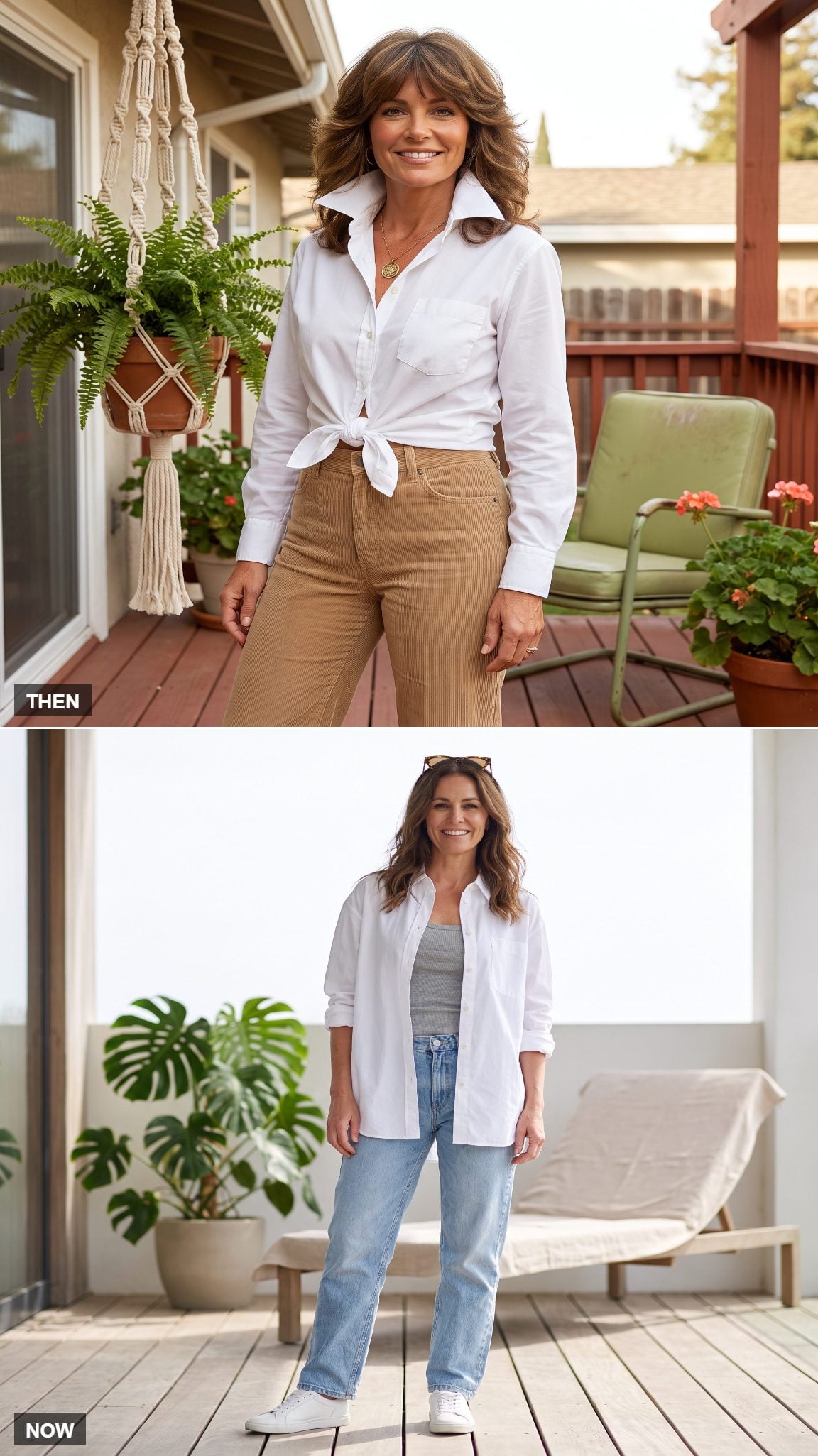
Casual white-shirt styling in the 1970s still loved a visible gesture: a tied hem, a broad collar, a waist deliberately marked even when the outfit was meant to look relaxed.
The contemporary version lets the shirt hang. Open over a tank, sleeves rolled, worn long over jeans with sneakers underneath, the oversized cut is no longer something to correct. The extra fabric is the point. Ease has become part of the design rather than something the wearer has to apologize for.
36. The White Shirt With Jeans
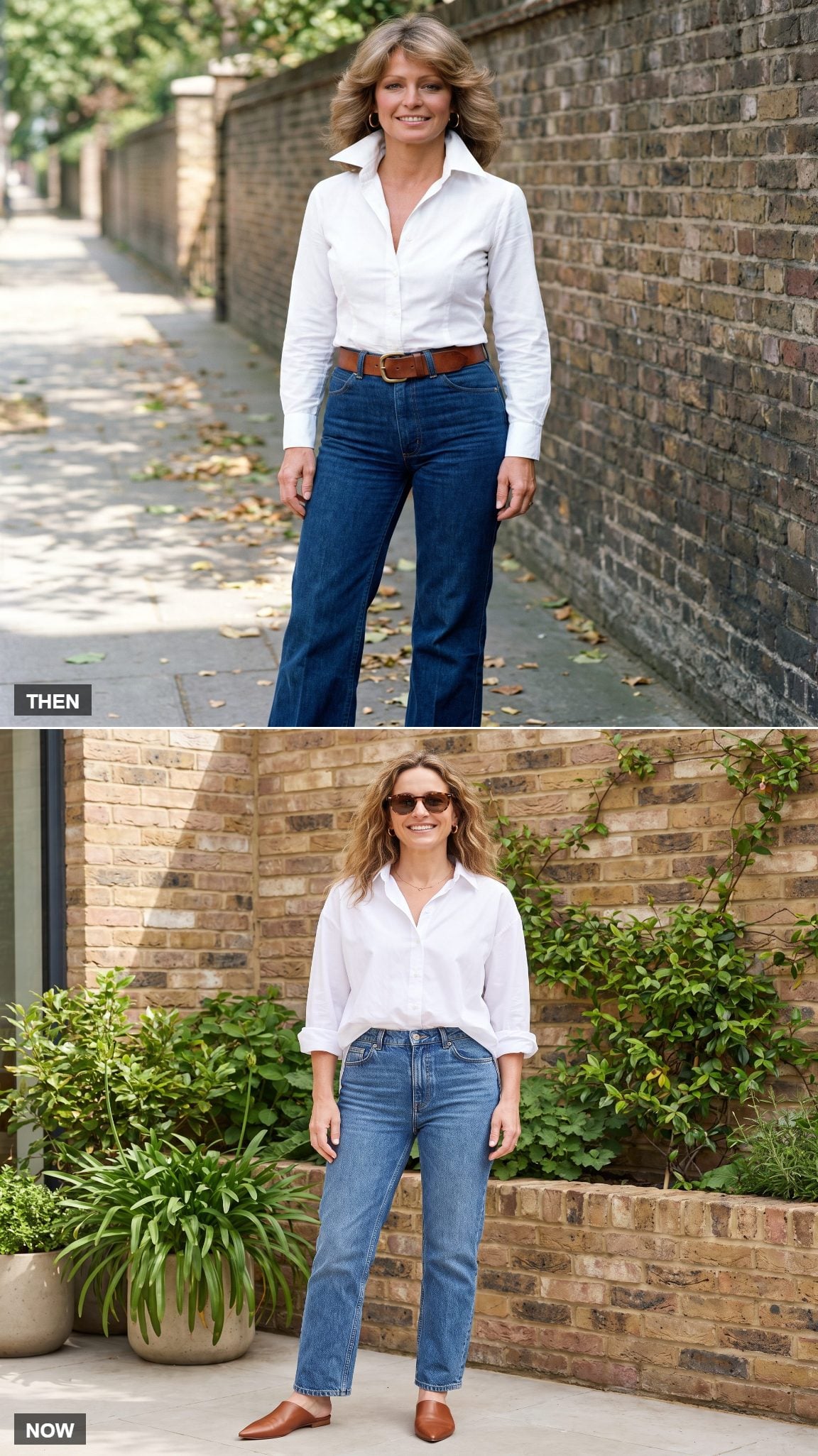
One familiar 1970s formula put the shirt fully into high-waisted denim, added a broad belt, and made the waist the center of the composition. The proportions were tidy and unmistakable.
Now the half-tuck does more ambiguous work. Front in, back loose, sleeves rolled, the shirt interrupts the waistband without surrendering all its volume. Add pointed leather mules and suddenly the most ordinary pairing in the closet has a little architecture.
35. The White Shirt Under a Blazer
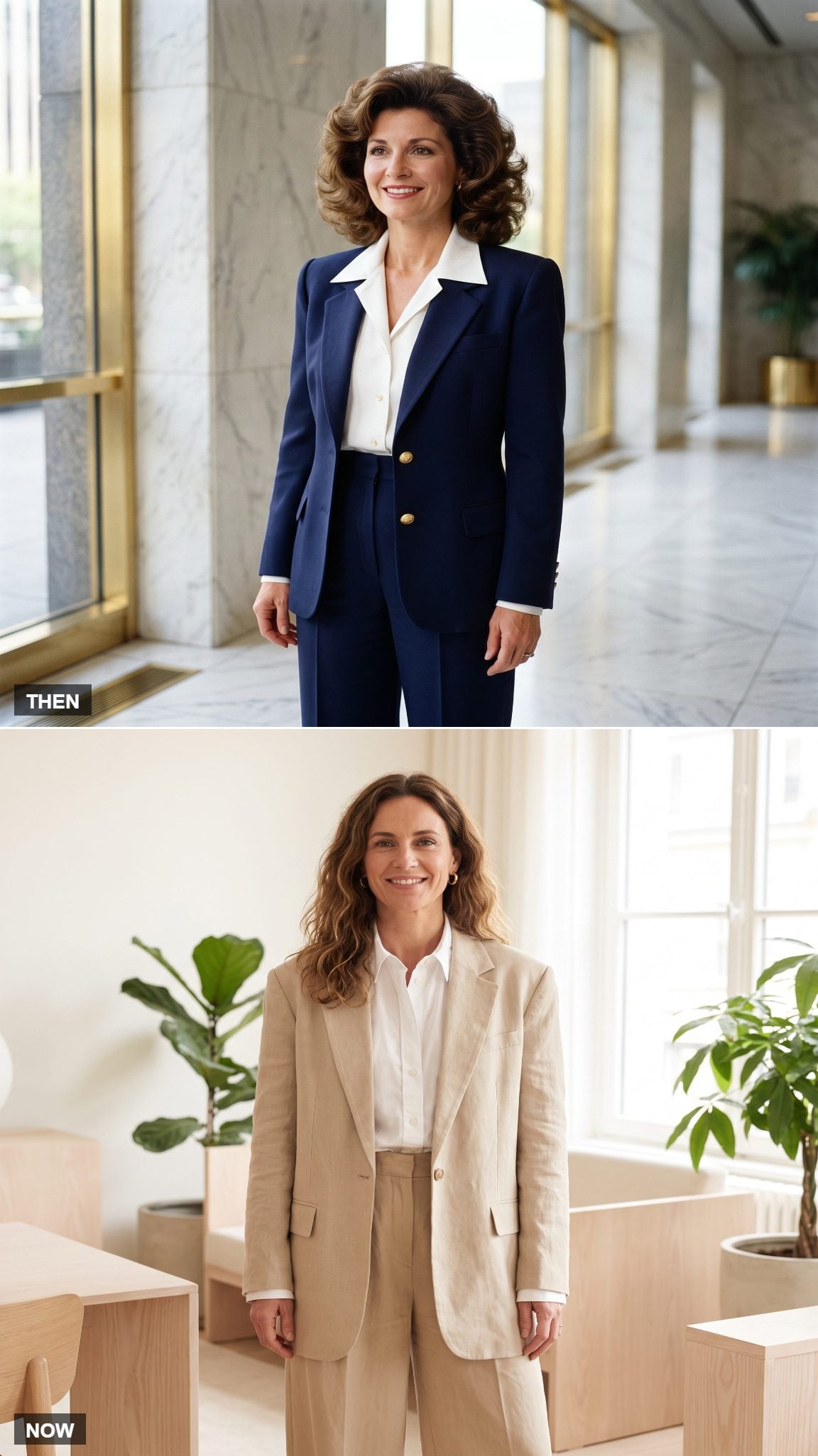
Under a 1980s power blazer, the white shirt often had to hold its own against formidable shoulders. Big lapels, pronounced padding, spread collars, and crisp cotton all competed for space.
The modern version quiets the outline. A relaxed beige look in unstructured linen lets the shirt sit inside the lapels instead of fighting them. Crisp poplin against slouchier linen gives the outfit enough contrast without making every seam shout.
34. The White Shirt as Beach Cover-Up
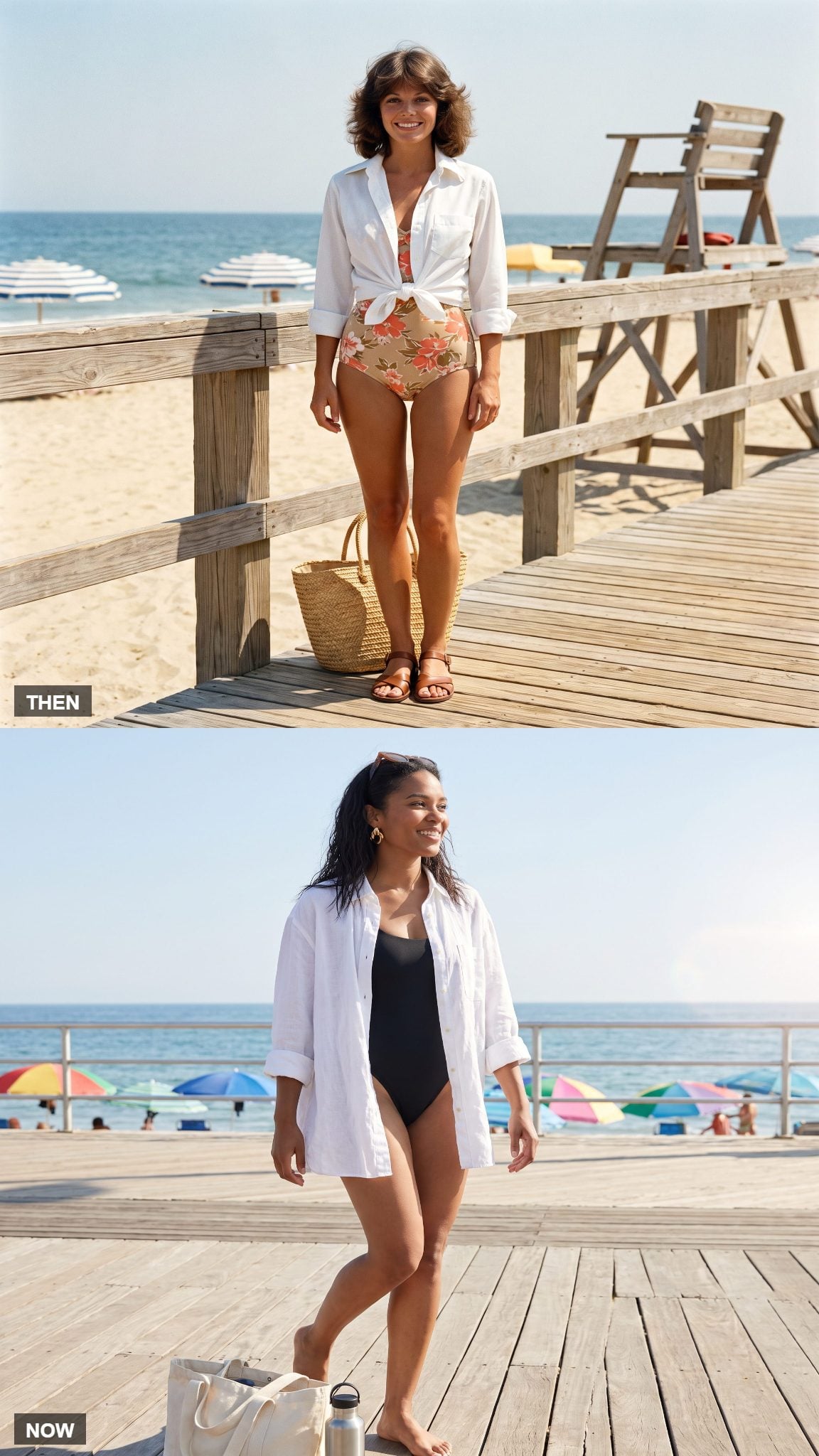
The beach shirt has always understood multitasking. In the 1970s it might be knotted over a swimsuit, partly buttoned, sleeves pushed up, useful as an extra layer between water and boardwalk.
Now the silhouette goes larger and looser. Linen replaces stiff poplin, the shirt hangs open, and a black suit underneath sharpens the contrast. The beach look feels less arranged because the volume is allowed to move instead of being tied back into submission.
33. The Top Button Decision
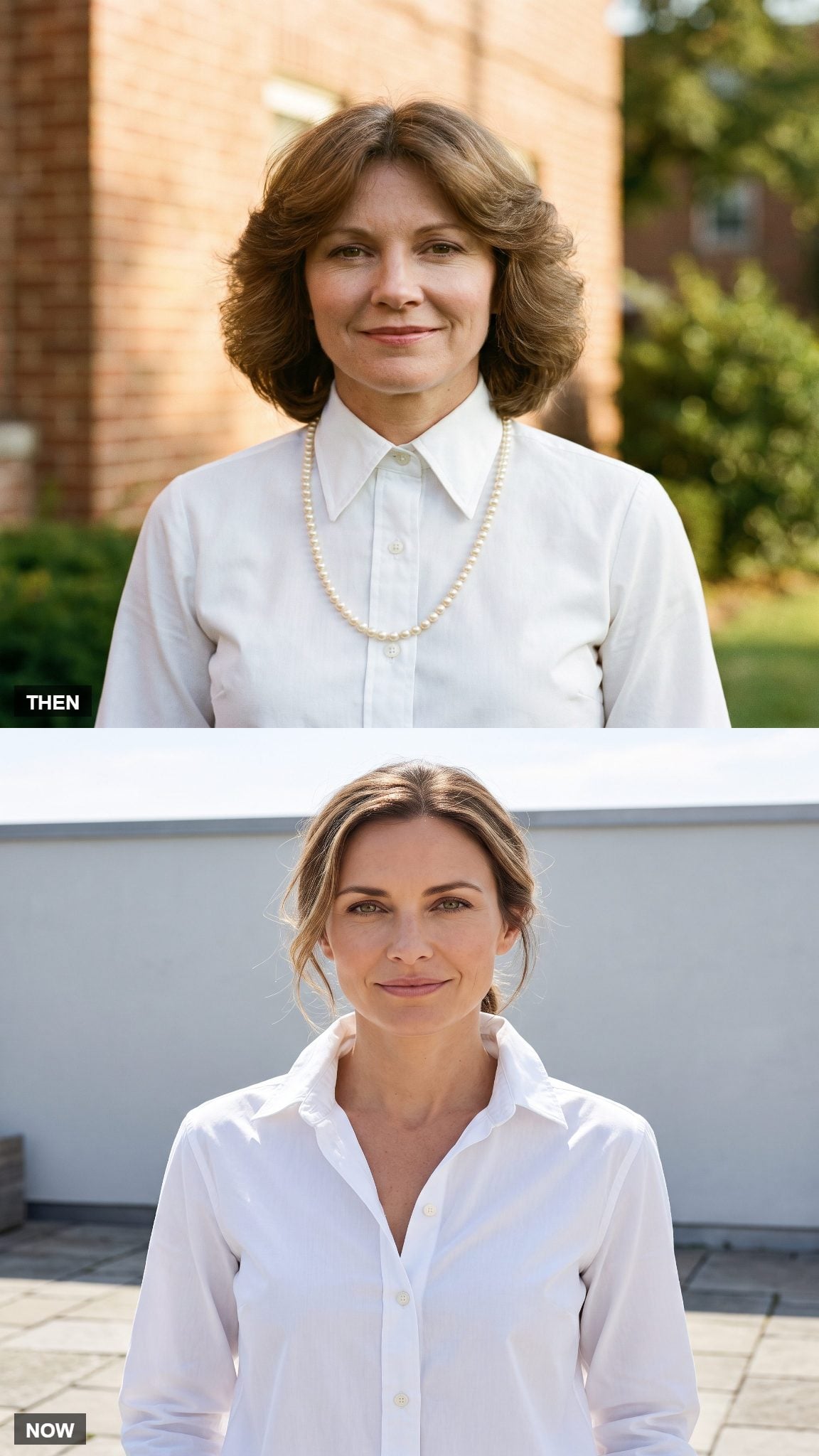
A fully fastened collar has long belonged to the more conservative end of professional and formal dressing. Add pearls, a ribbon tie, or a brooch and the effect becomes even more deliberate.
Open two or three buttons and the same shirt changes register immediately. Collarbone appears, the neckline widens, and the rigid rectangle of the front becomes a V. One tiny piece of hardware can decide whether the shirt feels buttoned-up in every sense or merely well cut.
32. The Tie Worn With It
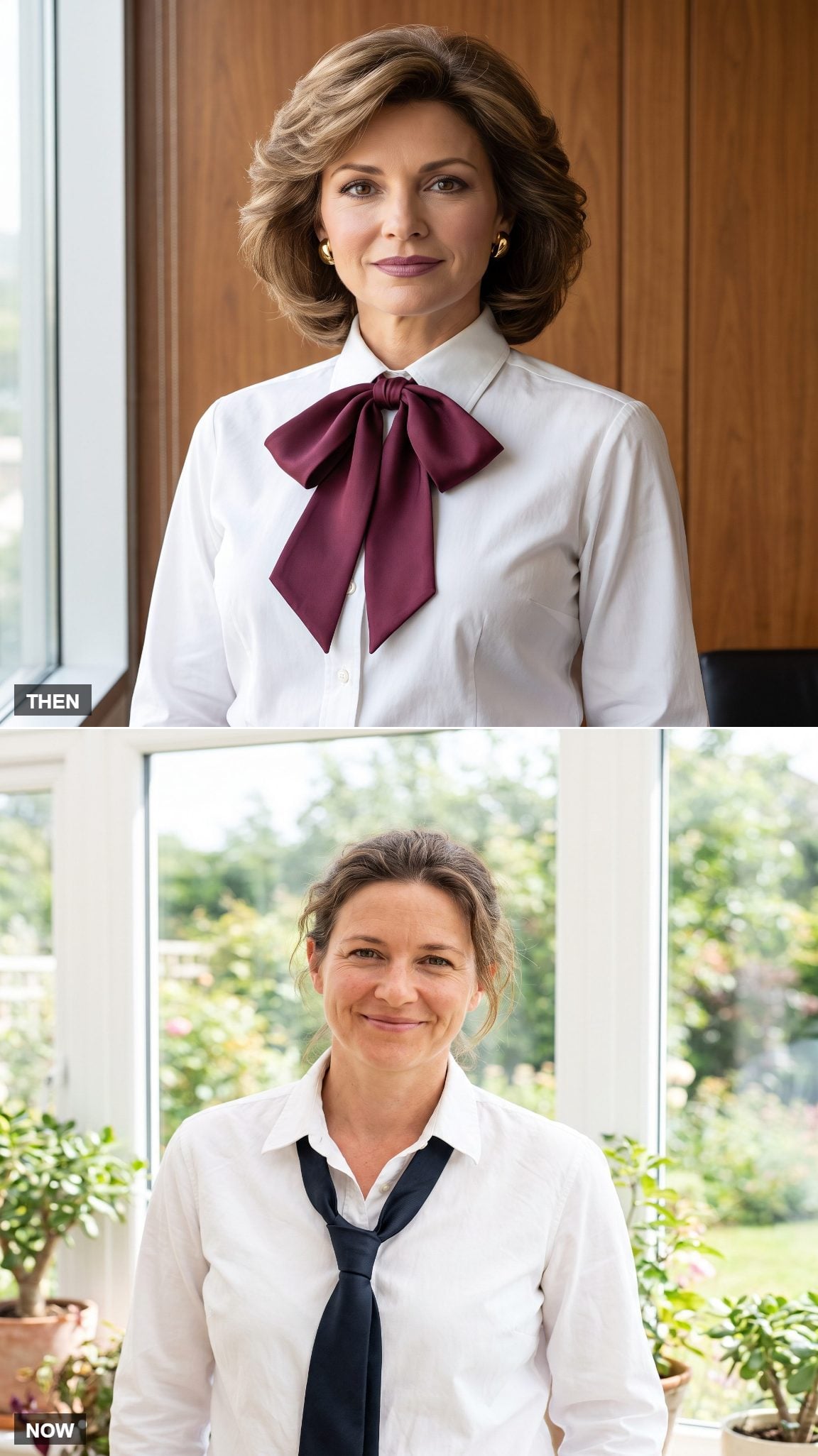
The pussy-bow blouse became a familiar part of late-20th-century professional dressing: silk at the throat, softness attached to a very formal shirt-and-suit vocabulary.
The current version borrows more directly from menswear. A slim dark necktie can sit low over an open collar, less boardroom uniform than deliberate friction. The androgynous look comes from refusing to resolve the argument between crisp tailoring and loosened styling.
31. The White Shirt Dress
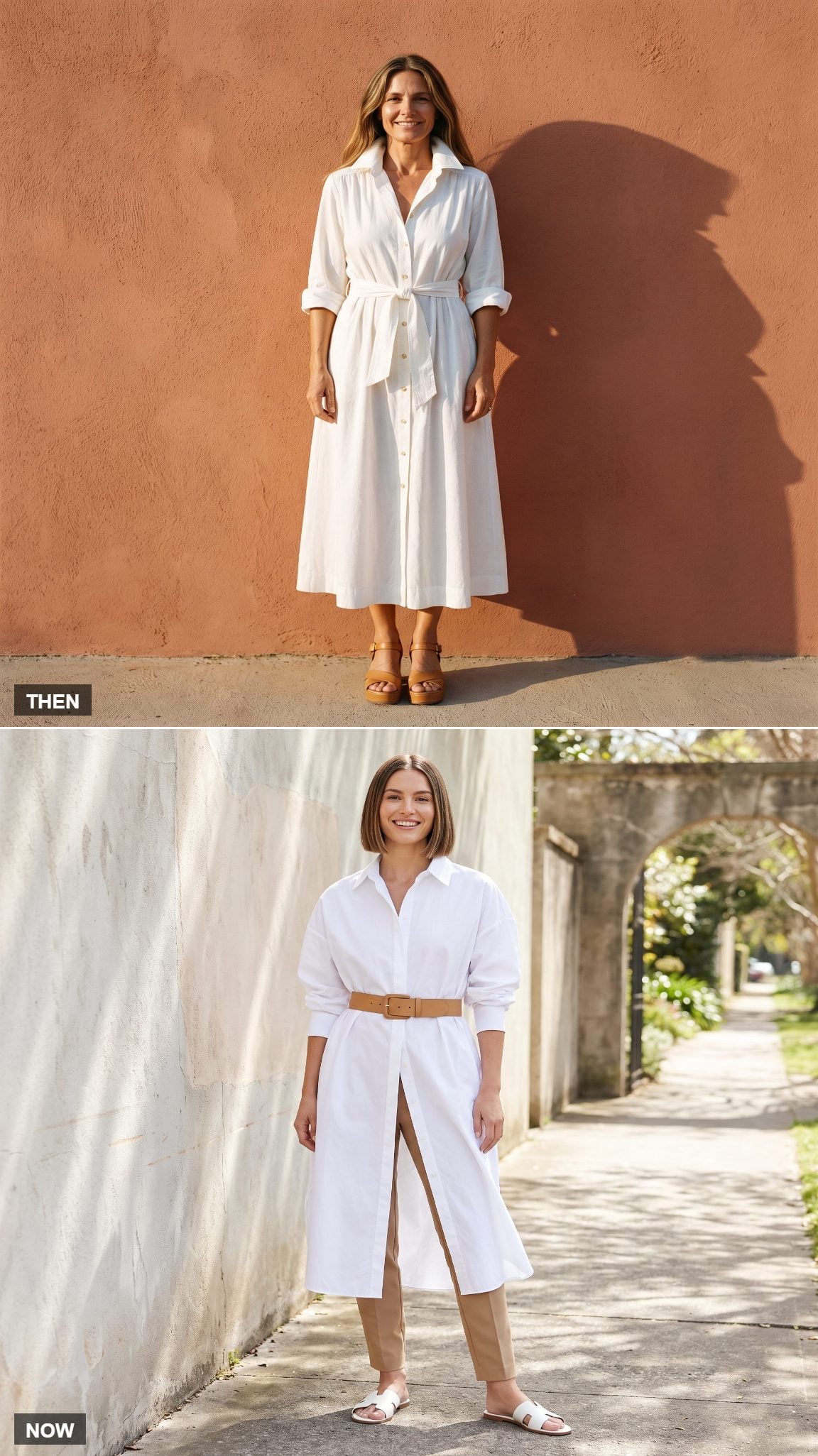
One color, one fabric, one idea. The shirtdress has always been the white shirt’s most ambitious promotion.
Earlier versions often emphasized the waist with belts and a more contained skirt. Contemporary versions can run longer, straighter, and looser, or open over trousers almost like a coat. The useful part is the scale: stretch the shirt far enough and suddenly a familiar collar has an entirely different relationship with the body.
30. The Shoulder Pad Era of the White Shirt
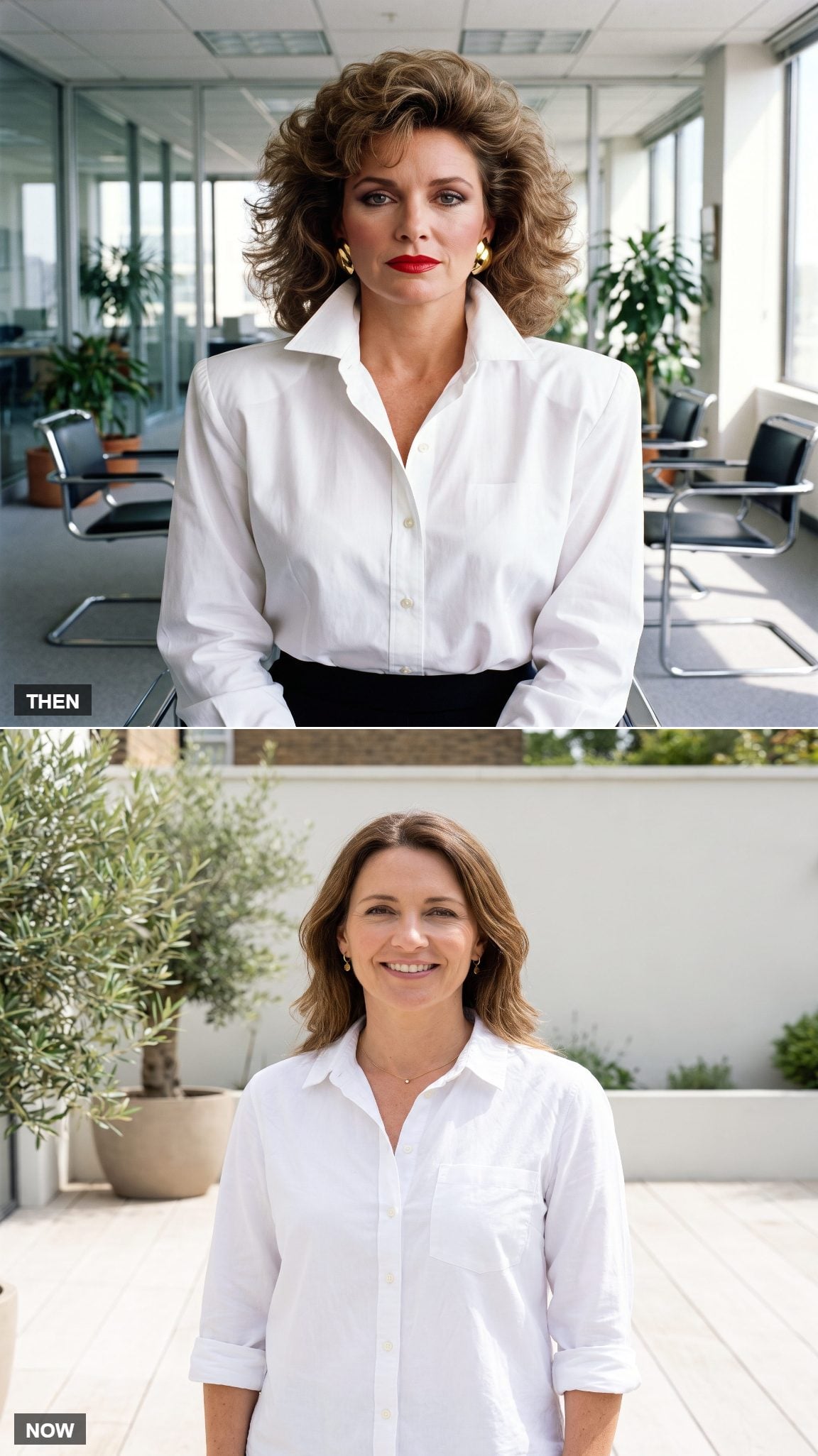
Shoulder pads turned the upper body into architecture. The line widened, the collar expanded to keep pace, and the shirt became part of a silhouette built around presence rather than delicacy.
Strip the padding away and the same white cotton falls differently. Natural shoulders narrow the outline, an open collar softens the neckline, and drape replaces geometry. Neither silhouette owns authority; they simply draw it with different tools.
29. The White Shirt Half-Tucked
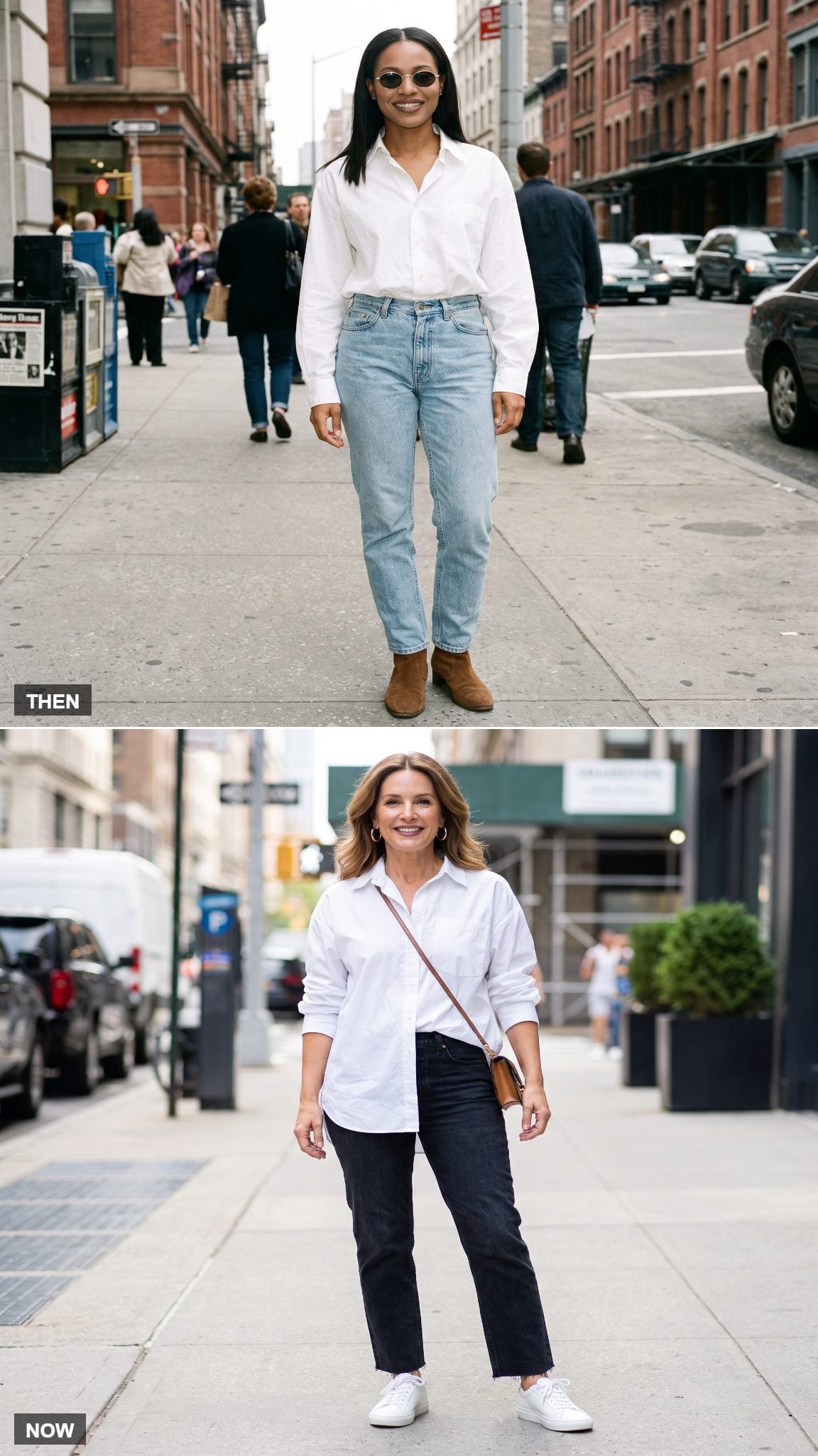
Loose, partly tucked shirts were already part of 1990s casual dressing, particularly once oversized proportions became fashionable enough that perfect symmetry stopped being the goal.
Today the half-tuck is less accident than technique. A small section of shirt enters the waistband while the rest stays loose, giving the eye one clear reference point for the waist without flattening all the volume around it.
28. The White Shirt Layered Over a Turtleneck
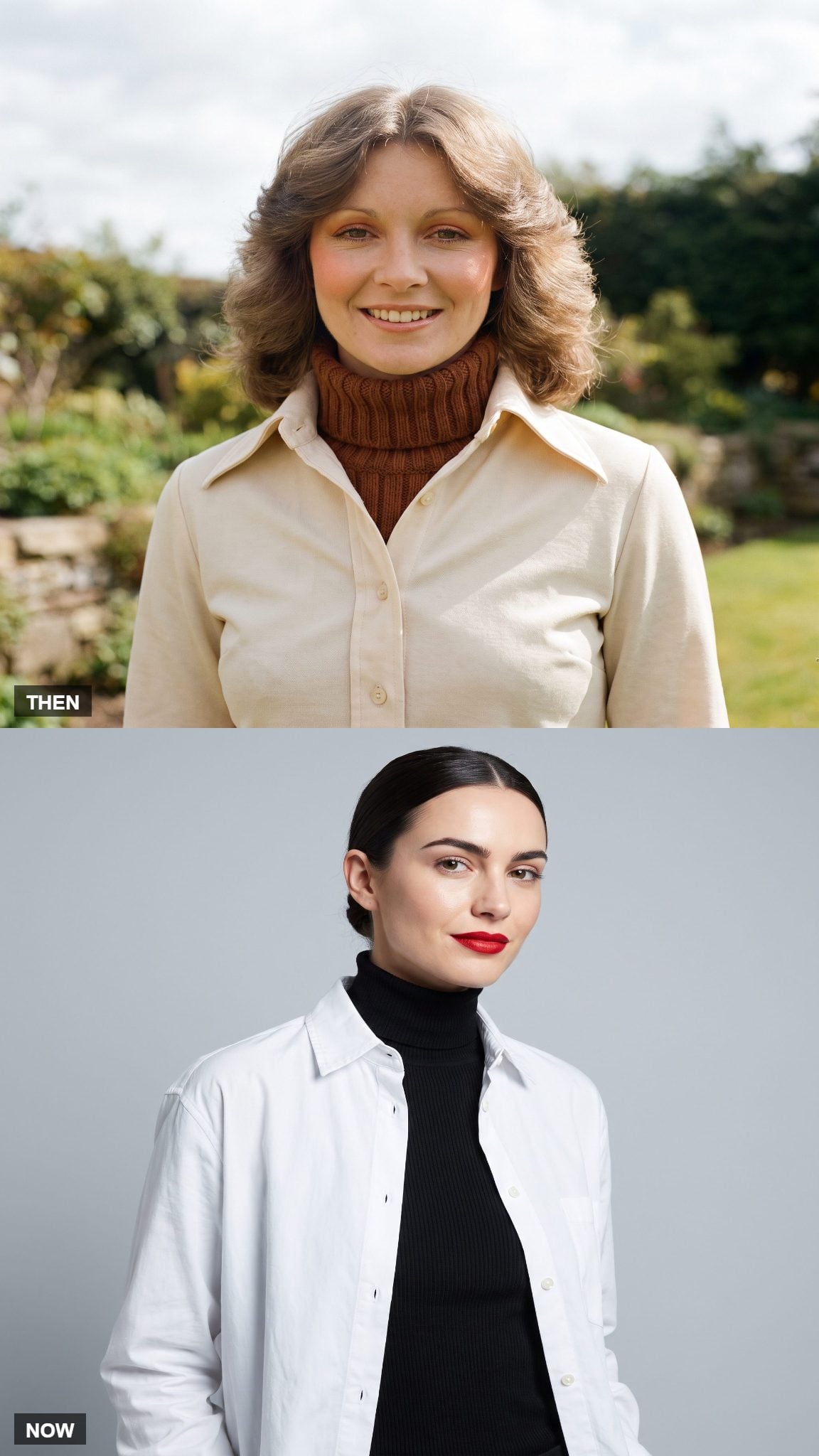
In the 1970s, a button-down over a ribbed turtleneck could function as both a styling move and a practical cold-weather layer. The resulting collar-on-collar situation was often substantial, earthy, and unmistakably layered.
The current version makes the contrast cleaner: crisp white poplin left open over a slim black knit. Matte against smooth, dark against light, fitted under loose. The warmth is still useful; the texture is what makes the composition interesting.
The strongest version is not really about warmth at all. It is about what matte knit does when crisp white cotton is laid over it.
27. The White Shirt With a Statement Necklace
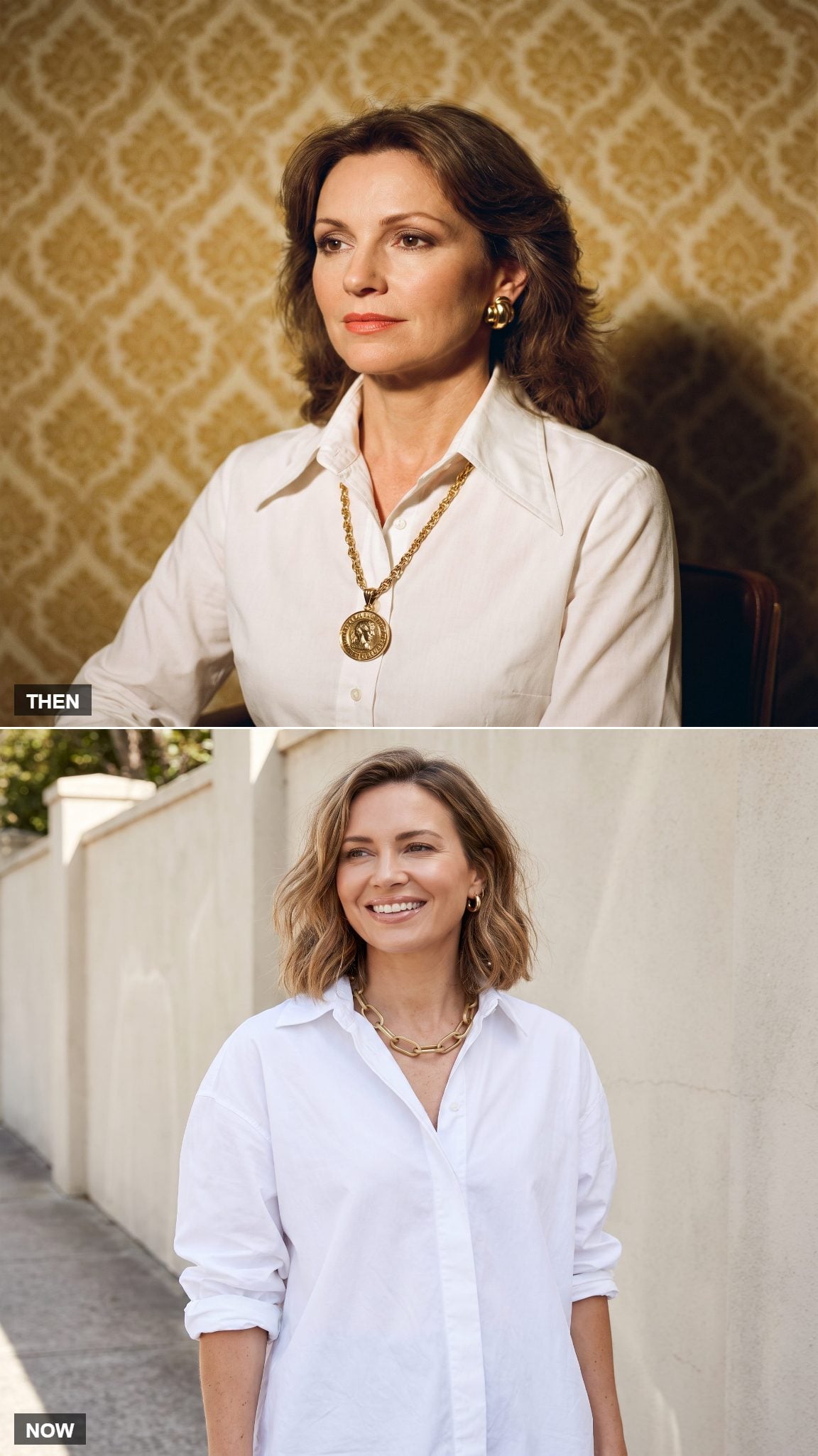
In the 1970s, a large medallion or heavy chain could turn a simple open collar into a frame for the jewelry. The shirt became negative space around something much louder.
Now a sculptural brass link can play against oversized poplin on more equal terms. Matte metal, bright cotton, broad collar, generous volume. The shirt does not disappear behind the necklace; it gives the necklace somewhere clean to land.
26. The Knotted-at-the-Waist White Shirt
❤️ Would you like to save this?
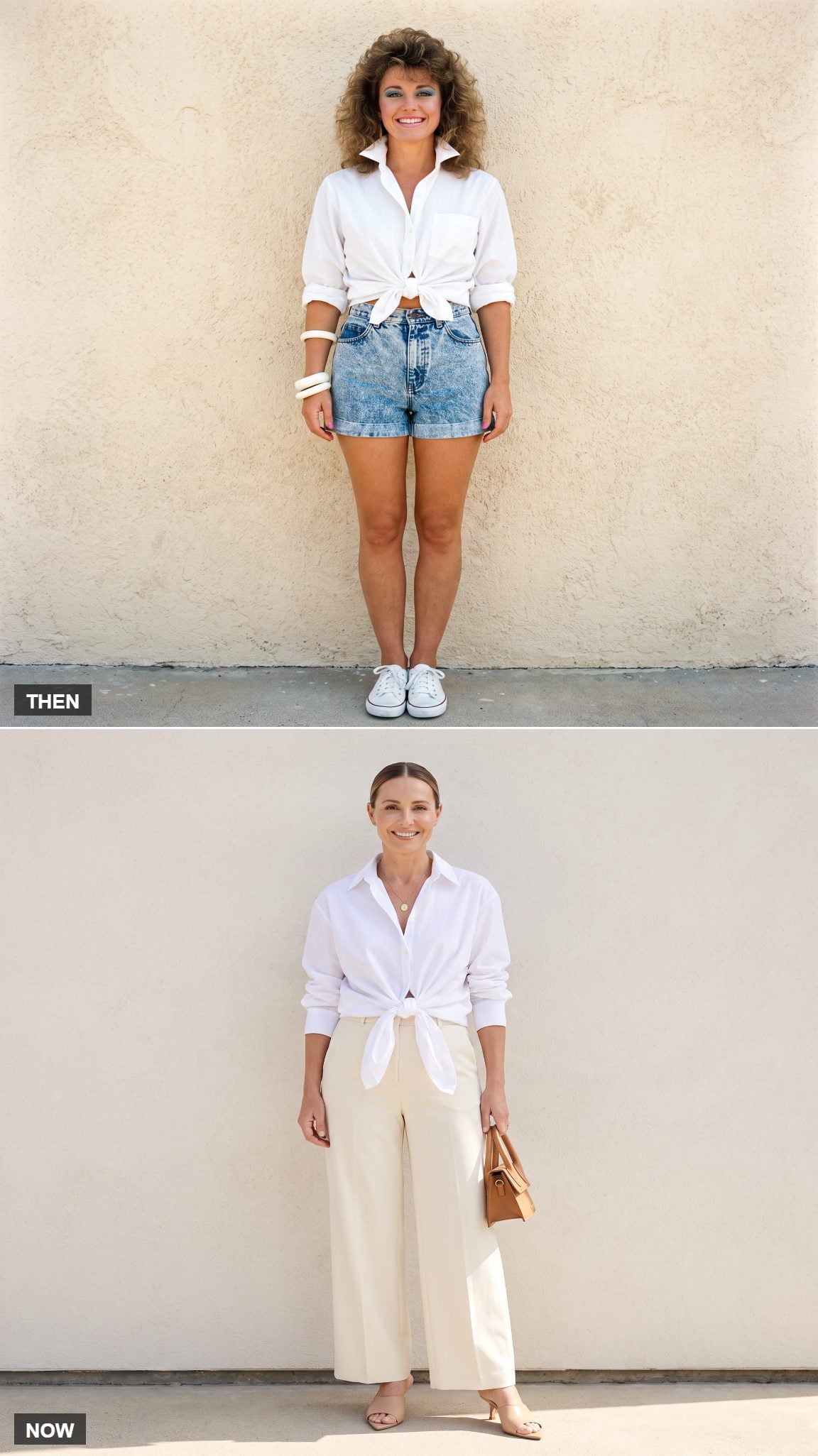
By the mid-to-late 1980s, knotting a shirt high at the waist could lean hard into the decade’s appetite for exposed midriffs, bright denim, strong accessories, and very visible styling gestures.
The modern knot tends to sit lower and looser. Instead of strangling the hem into a tight little bow, the fabric twists and blouses over wide trousers. The trick is still waist definition; the difference is how much air the shirt is allowed to keep around it.
25. The Cufflinks vs. the Rolled Cuff
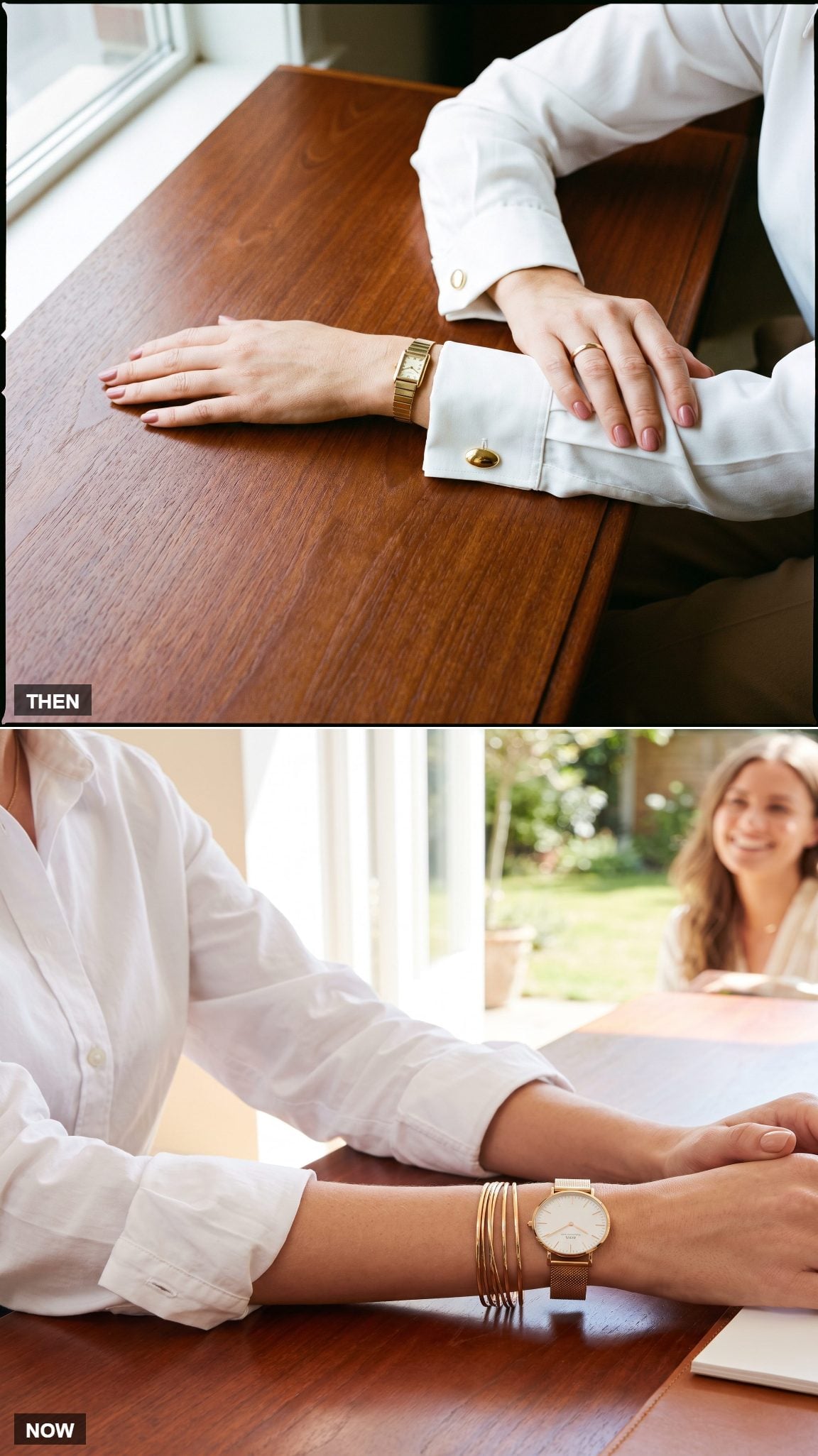
A French-cuff white shirt fastened with gold cufflinks brought unmistakable menswear formality into women’s wardrobes. The wrist became part of the tailoring, finished as carefully as the collar.
Roll the cuff twice instead and the entire mood loosens. Hardware disappears, forearm shows, a stack of thin bangles can take the cufflink’s place. Same sleeve, different social temperature.
24. The White Shirt Tucked Into a Skirt
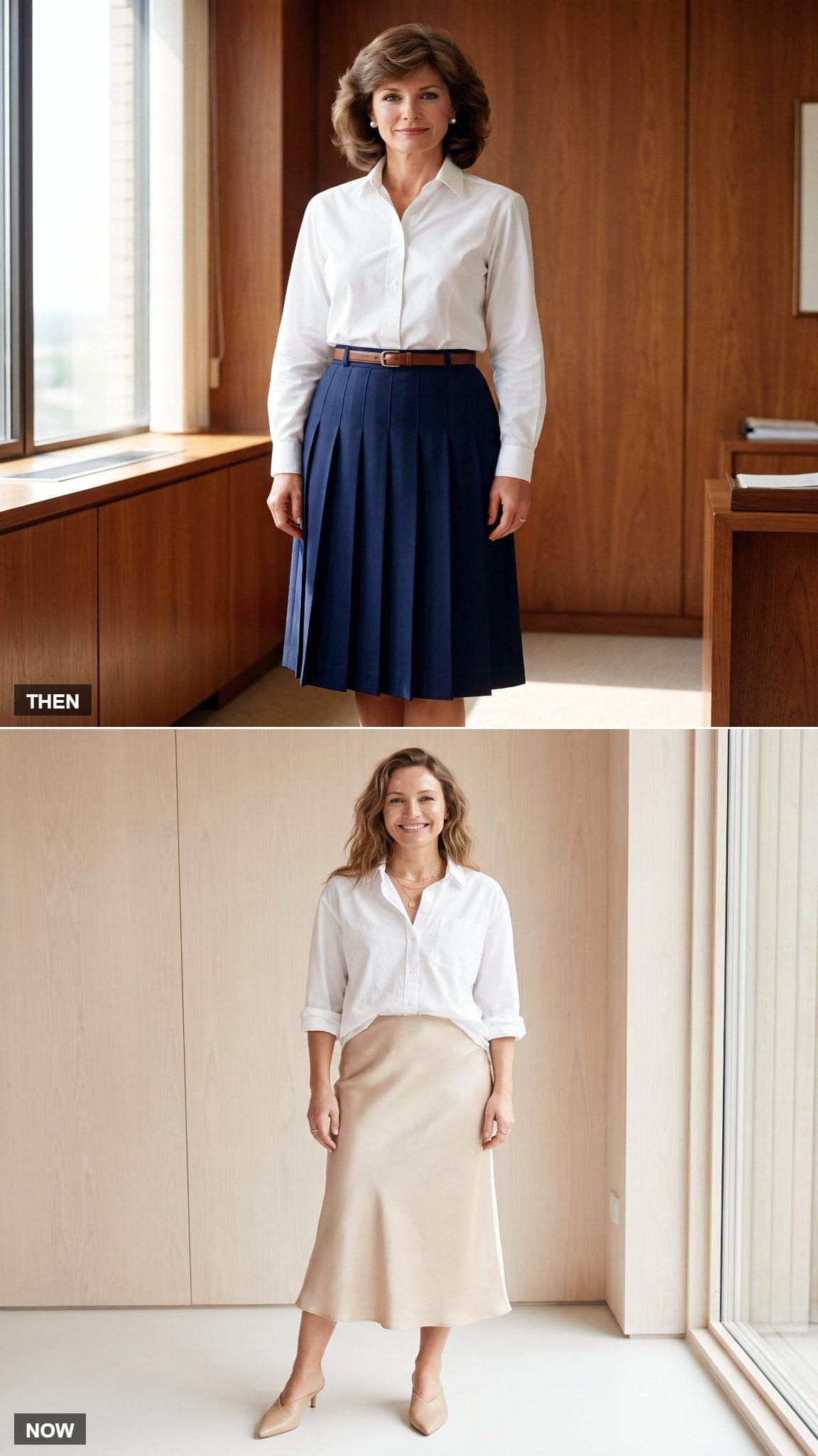
A pleated skirt and white shirt once made a very persuasive case for precision: clean waistband, smooth tuck, crisp cotton disappearing neatly into wool.
The contemporary combination gets more interesting by making the fabrics disagree. Crisp poplin meets a fluid satin midi skirt, while the tuck stays loose enough to let a little volume collect at the waist. Dry cotton against liquid shine gives both materials more character.
23. The White Shirt Under Overalls
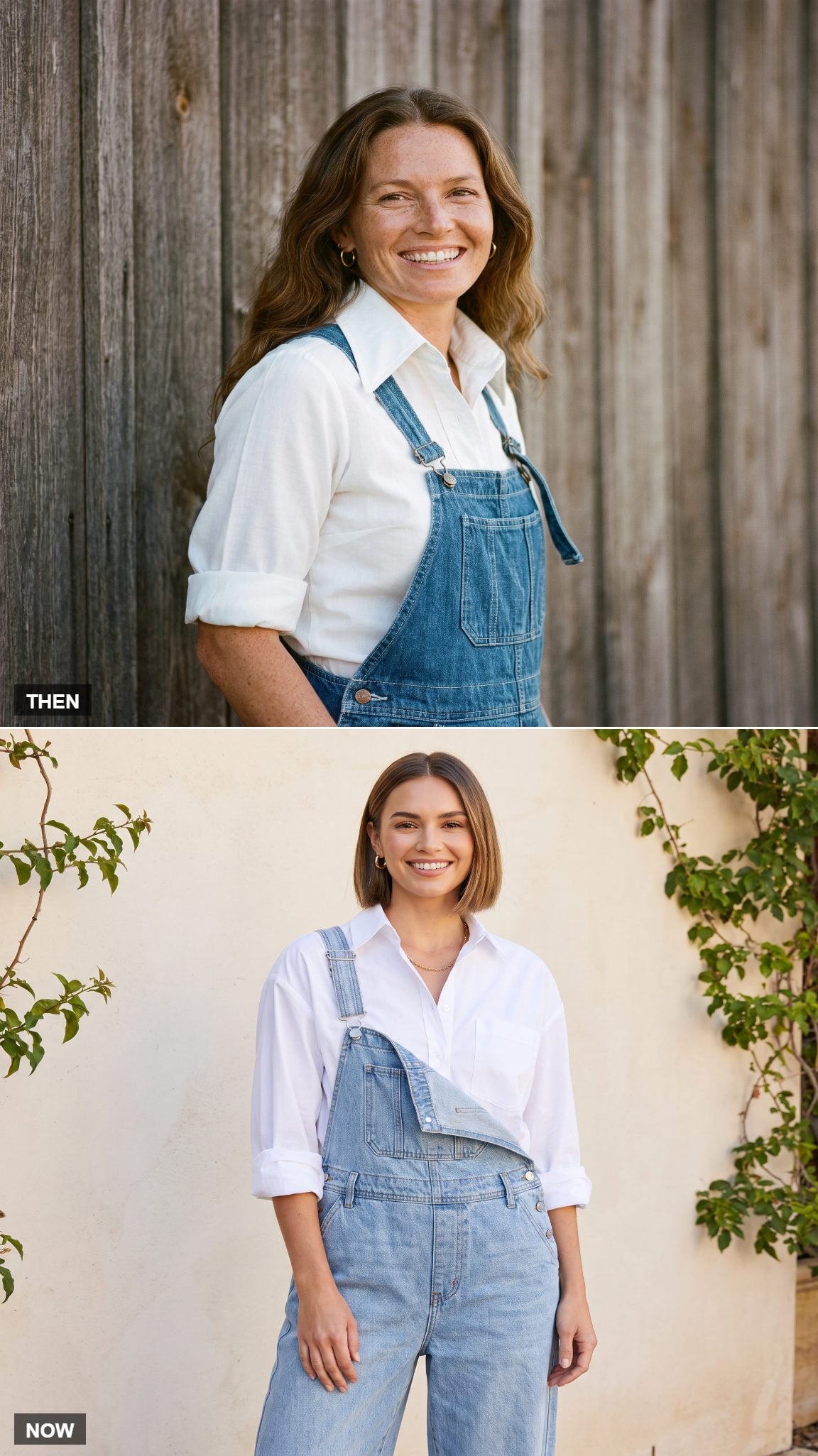
The combination carries obvious workwear roots: denim bib, practical layering, sturdy cotton underneath. By the 1970s, overalls had already crossed repeatedly between labor, youth culture, and casual fashion.
A crisp oversized shirt sharpens the contrast. The tailored collar poking above the bib makes the denim feel chosen rather than purely utilitarian, while the roomy shirt keeps the outfit from becoming too neat.
22. The White Shirt Worn Backward
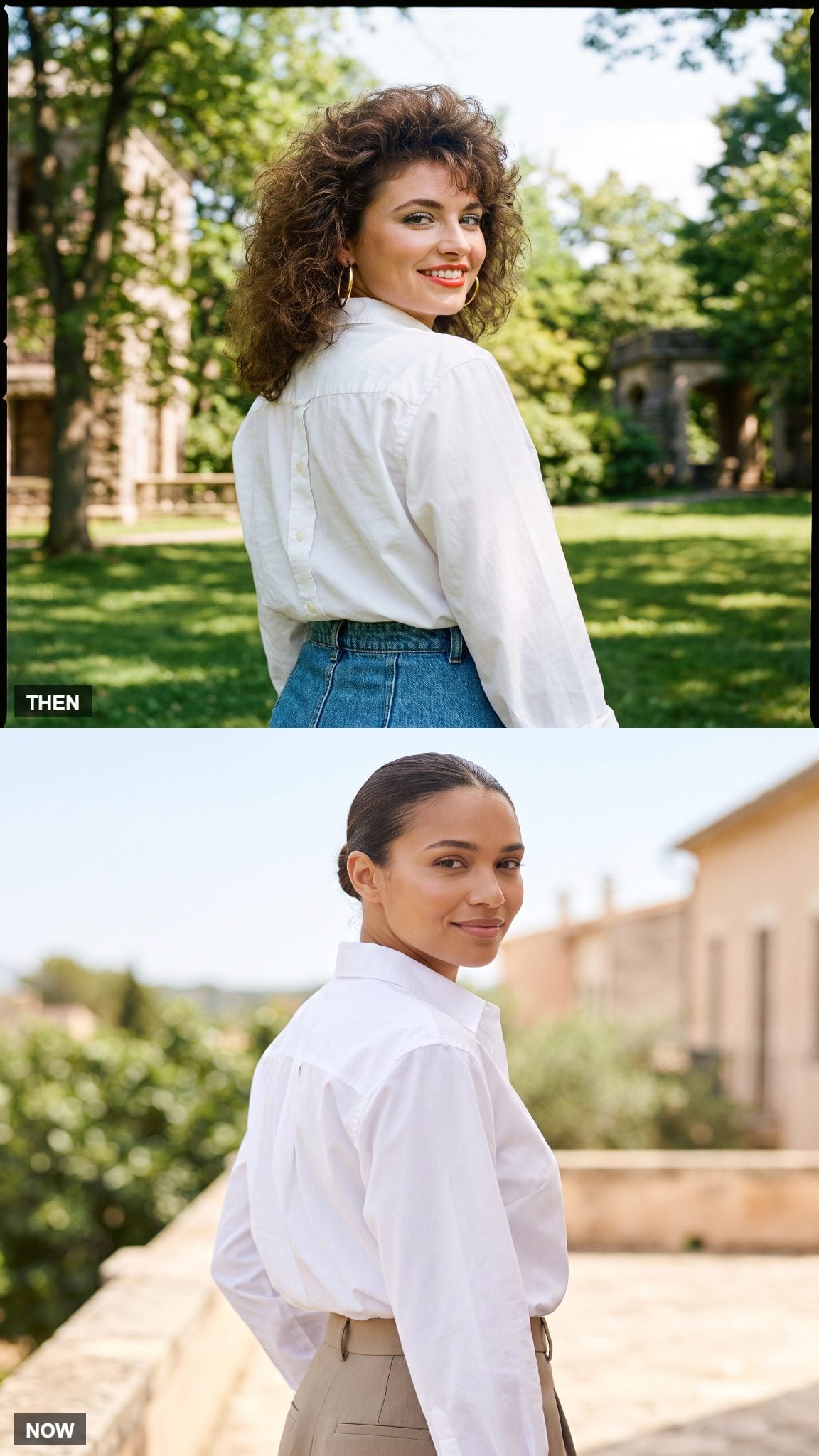
Turn a button-down around and the garment stops behaving like officewear almost immediately. Buttons march down the spine, the familiar collar changes orientation, and a conventional front becomes a surprisingly graphic back.
This version works by keeping the intervention simple: a few back buttons undone, clean trousers below, very little else competing. The interest comes from relocation. Move the opening and suddenly the most familiar shirt in the closet has a genuinely unexpected view.
21. The White Shirt With Trousers
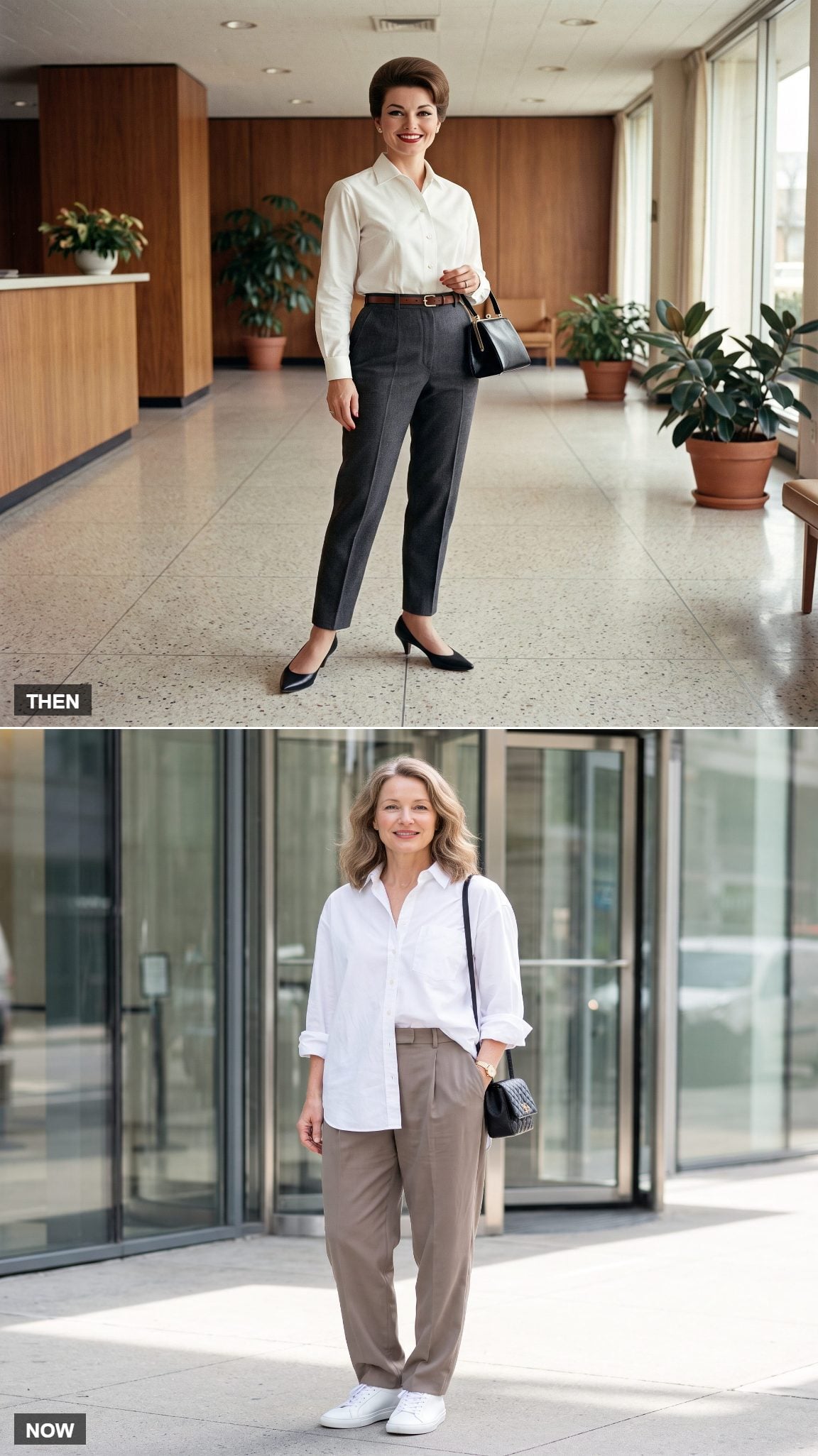
Midcentury shirt-and-trouser combinations often emphasized a clean tuck, defined waist, and relatively controlled silhouette. The shirt behaved almost like part of the trouser construction once it disappeared behind the waistband.
Modern tailoring has made room for much more volume. An oversized shirt can half-tuck into pleated trousers and let both pieces keep their fullness. The pairing still reads polished; it just gets there without ironing every centimeter of movement out of the clothes.
20. The Sheer White Shirt
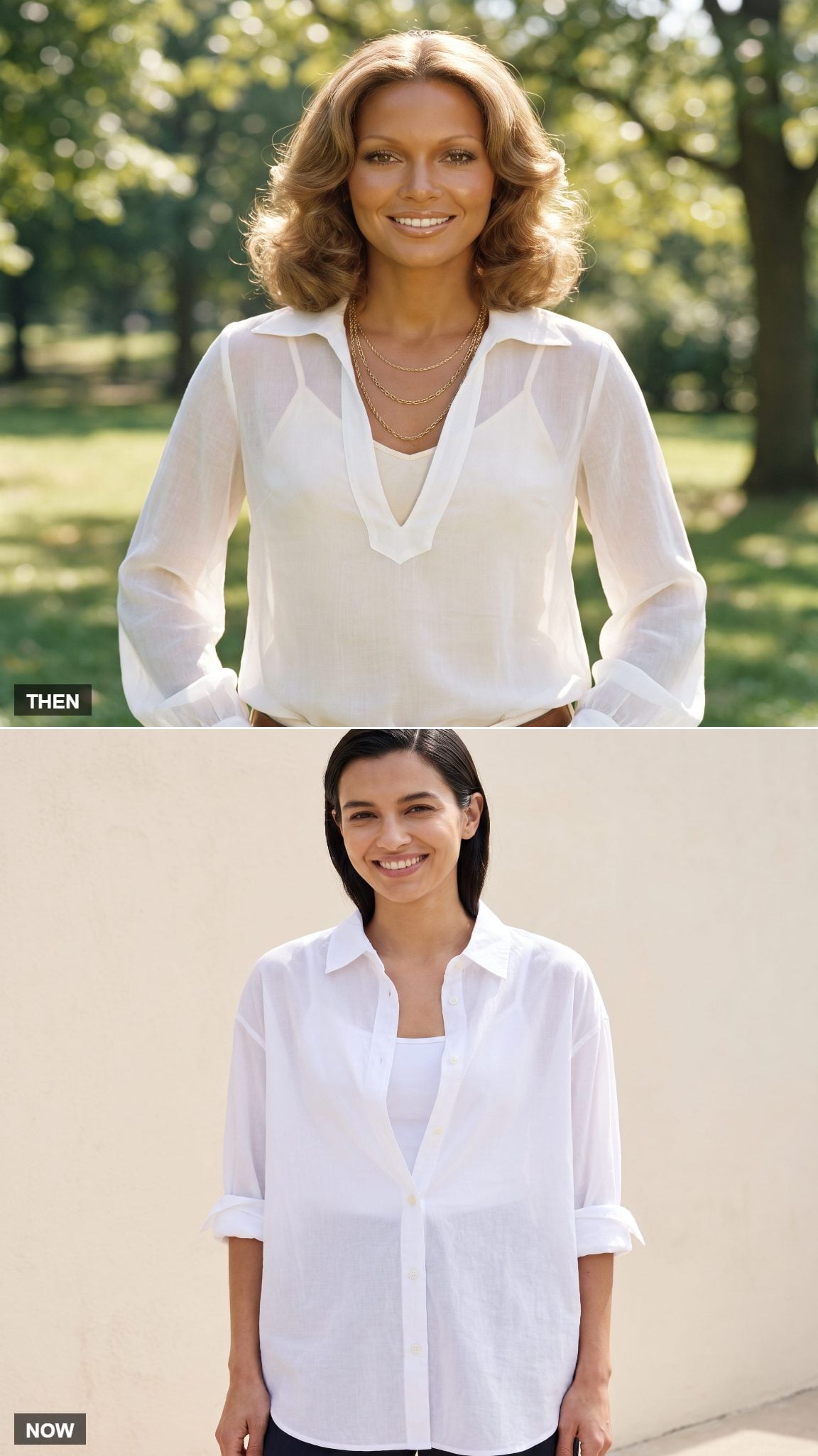
By the disco era, sheer shirts could lean fitted, glossy, and openly sensual: skin, gold chains, deep necklines, and transparency working as part of the nightlife vocabulary.
Today’s organza version can feel almost architectural. A clean bralette or fitted tank underneath gives the eye something solid to register while the translucent shirt floats around it. The tension is not modesty versus exposure so much as solid versus sheer.
19. The Collar Popped Up
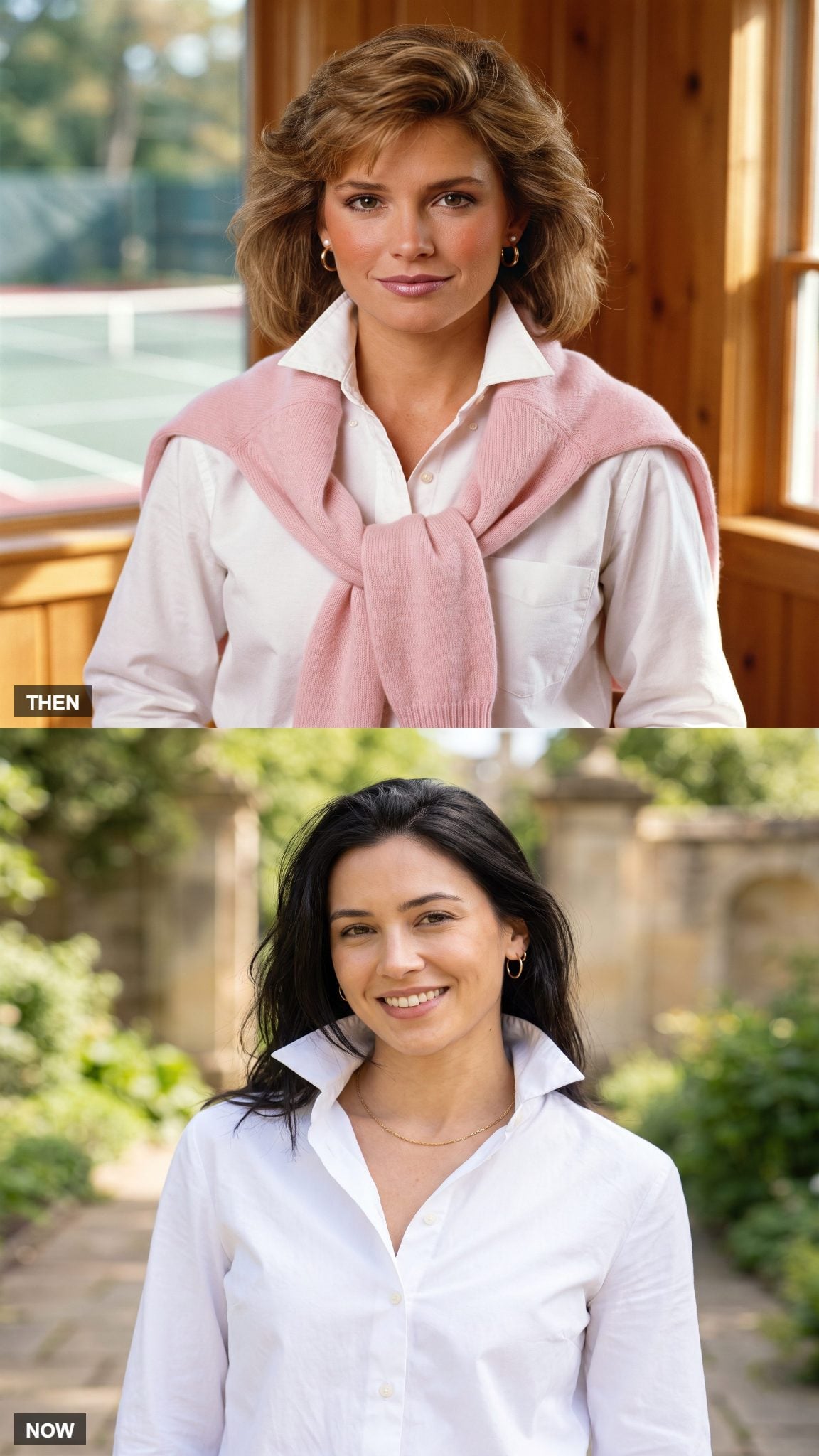
By the 1980s, the popped collar carried strong preppy associations, especially alongside sweaters over the shoulders, polos, and other pieces borrowed from country-club style.
Take away the social uniform and the gesture still works visually. An upturned white collar frames the jaw, adds height around the neck, and gives an otherwise soft shirt a sharper edge.
18. The White Shirt With a Belt
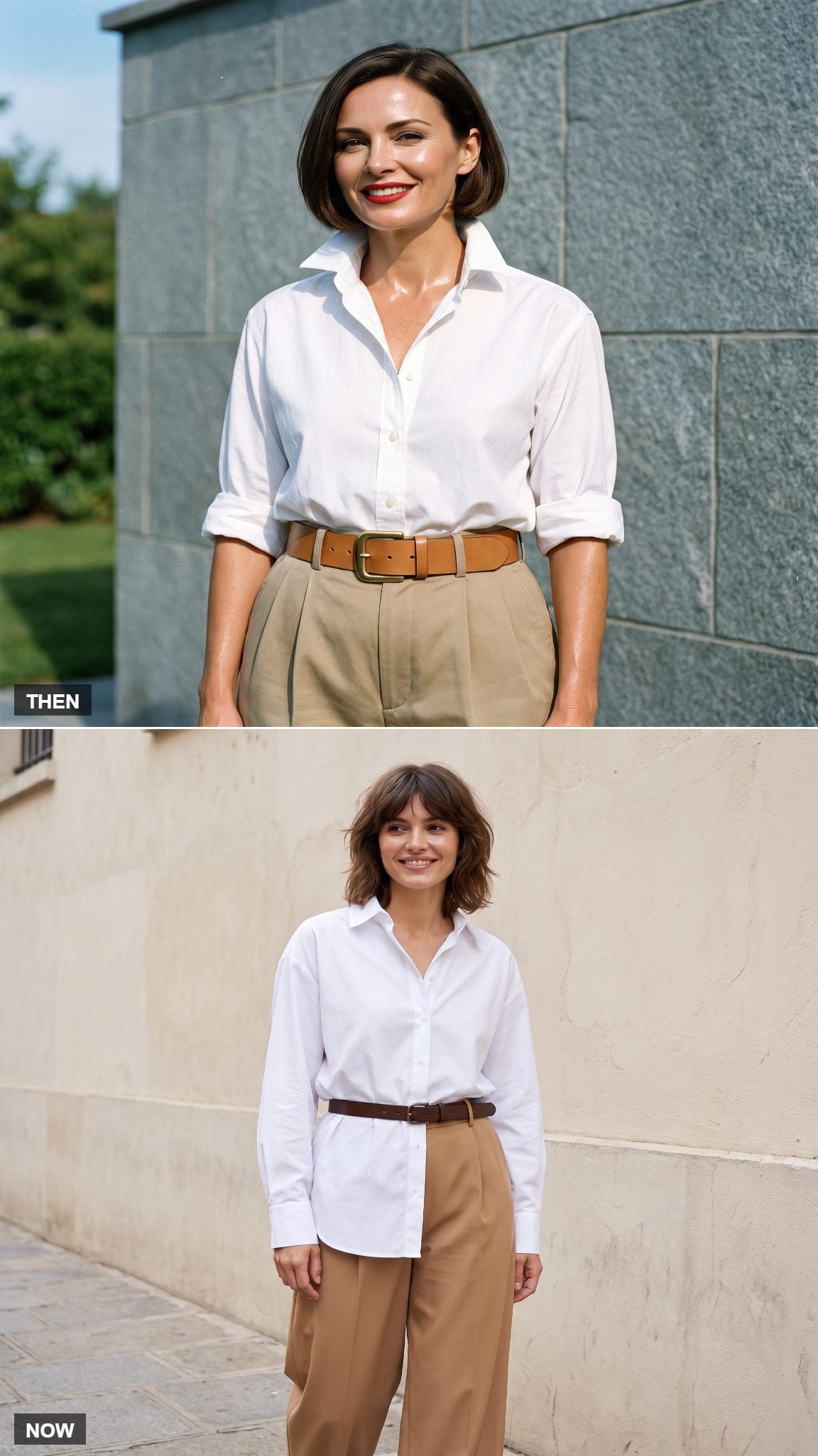
The old instinct was often to tuck the shirt first and let a trouser or skirt belt mark the waist from below.
The more interesting contemporary move is to belt the shirt itself. Cinch an oversized button-down at the natural waist and the fabric above and below stays visible instead of disappearing into the waistband. Fullness remains part of the silhouette, but the eye still knows exactly where the middle is.
17. The White Shirt Under a Slip Dress
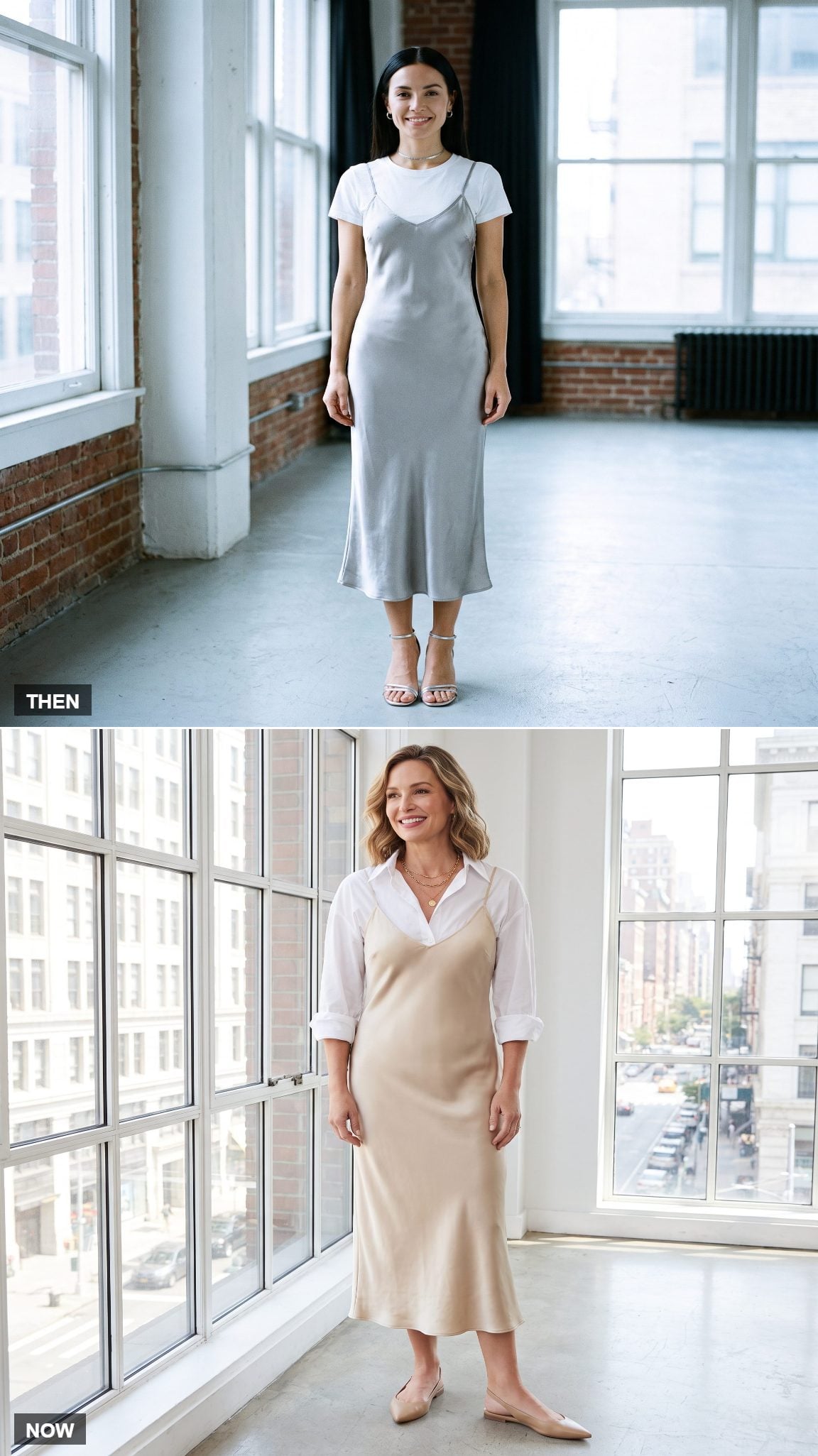
The 1990s made the white tee under a slip dress almost a uniform: thin cotton underneath, satin straps above, evening fabric pulled into daylight.
Swap the tee for a full button-down and the layer stops disappearing. Crisp collar, rolled sleeves, visible cuffs — the shirt becomes a structural part of the outfit rather than a modest little buffer underneath. Matte cotton against liquid satin, structure against slink: the disagreement is exactly what makes it interesting.
16. The White Shirt With Bike Shorts
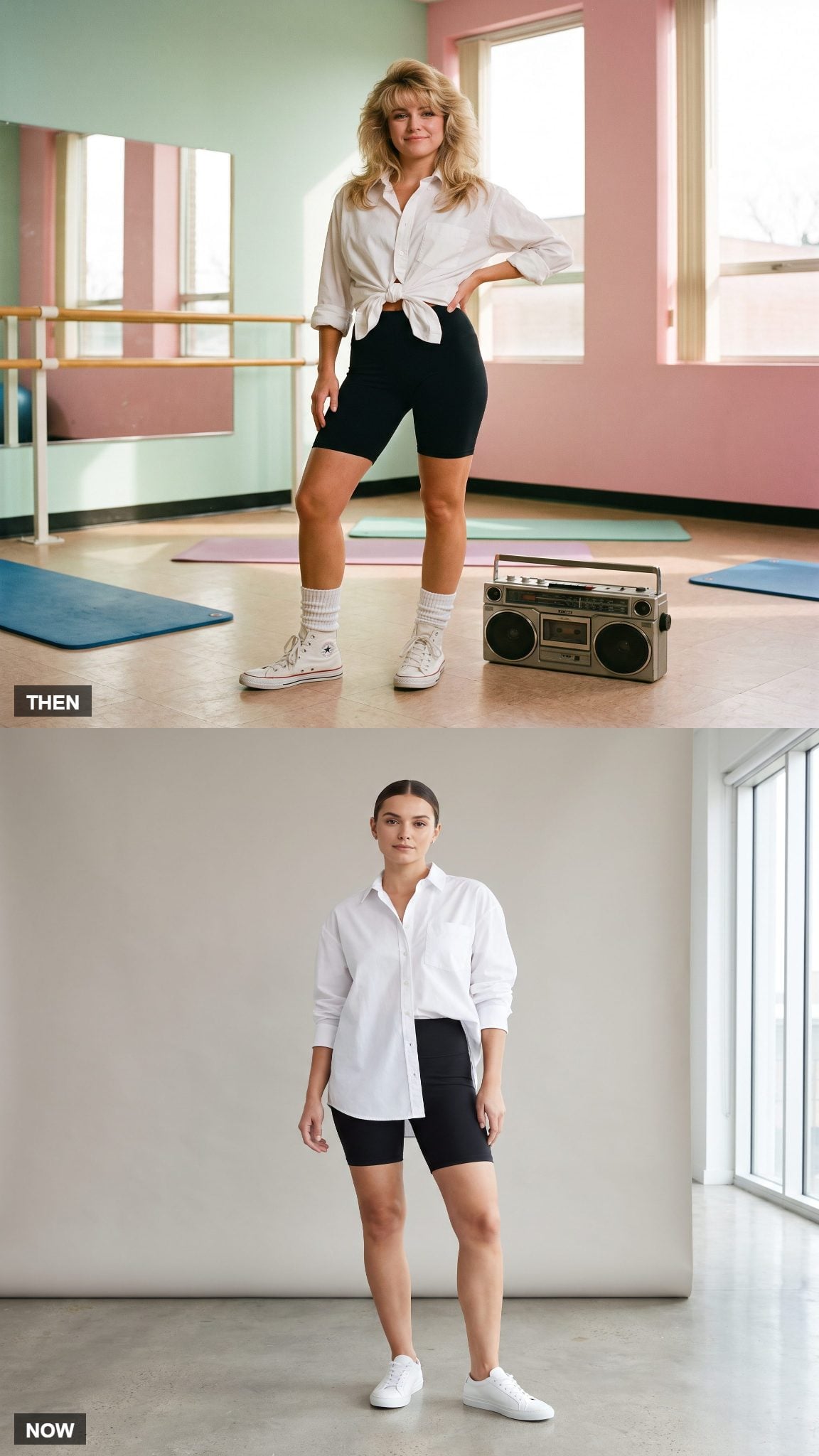
Bike shorts emerged from fitness culture before fashion started treating them as ordinary streetwear. By the late 1980s, the line between workout clothes and styling experiment was already beginning to blur.
Now the contrast is the entire outfit. Up top sits the crisp poplin shirt, oversized and roomy; below it, the cycling short stays close to the body. Add clean white leather sneakers and the proportions do more than any accessory could.
15. The White Shirt on the Red Carpet
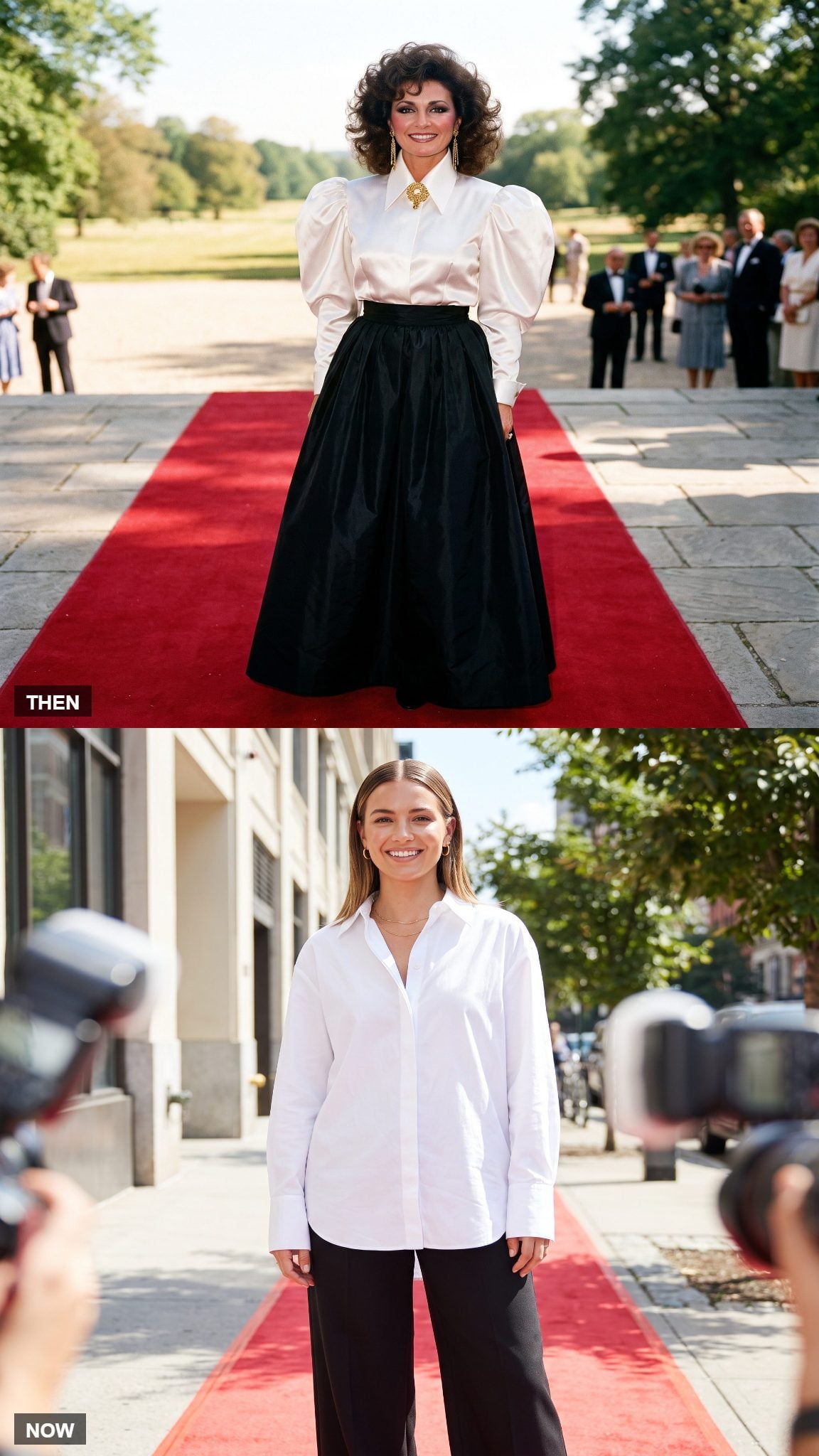
1980s formalwear often enjoyed volume, shine, satin, puffed sleeves, statement jewelry, and a generous understanding of the word occasion.
A crisp cotton button-down with tailored black trousers works by refusing nearly all of that. Against a setting built for spectacle, plain poplin becomes the surprising choice. Restraint gets louder because everything around it is expected to sparkle.
Sometimes the plainest garment in the room becomes the statement simply because nobody expected it to show up.
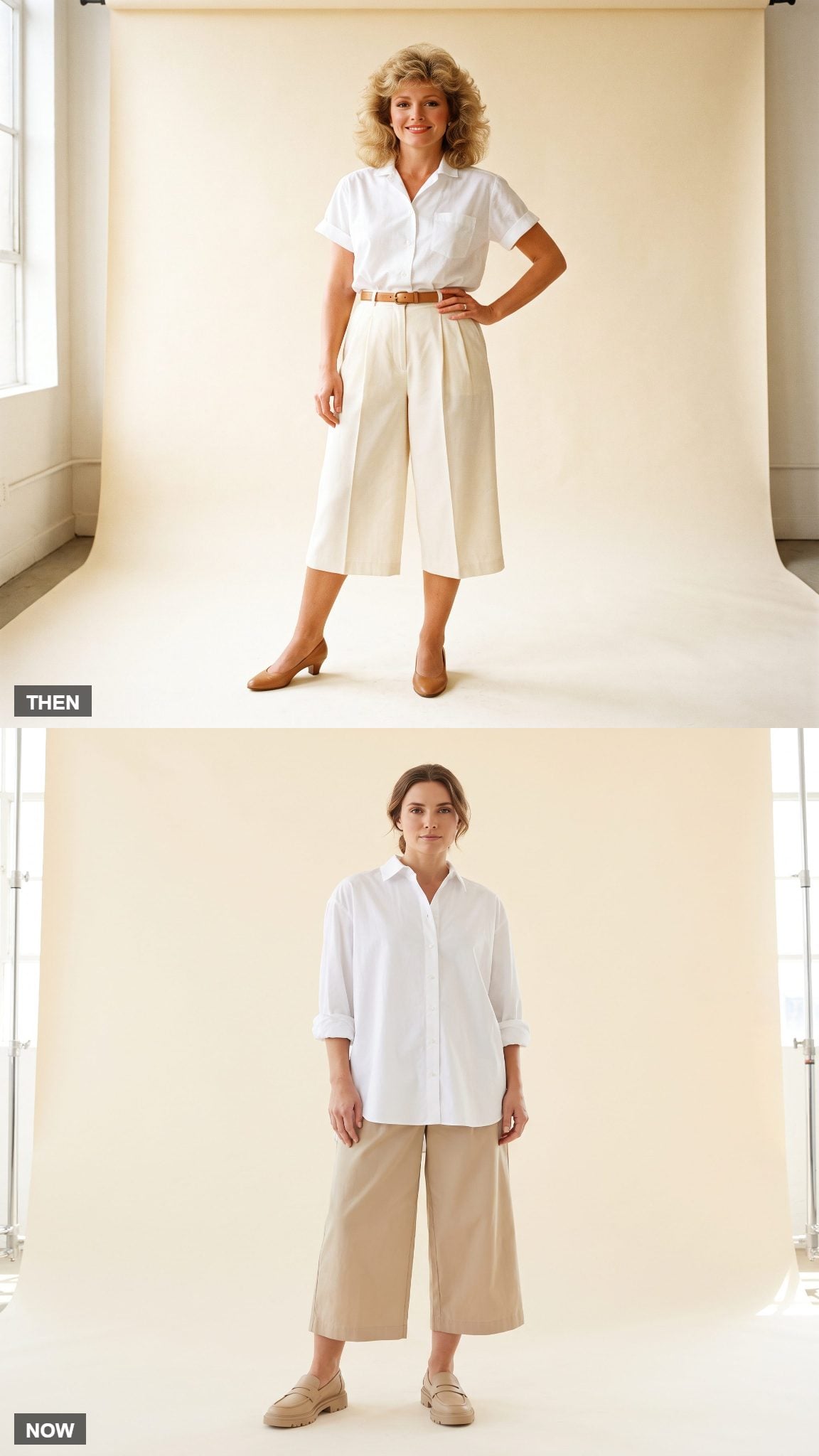
14. The White Shirt With Culottes
❤️ Would you like to save this?
Earlier culotte looks often leaned tidy: pleats, belt, tucked shirt, the volume below kept disciplined by a clearly marked waist.
The remix goes looser in both directions. An oversized shirt half-tucked into longer, fluid culottes lets the outfit move as one broad silhouette. A chunky loafer adds enough visual weight at the floor to keep all that fabric from floating away. Call it the beige look with considerably more swing.
13. The Off-the-Shoulder White Shirt
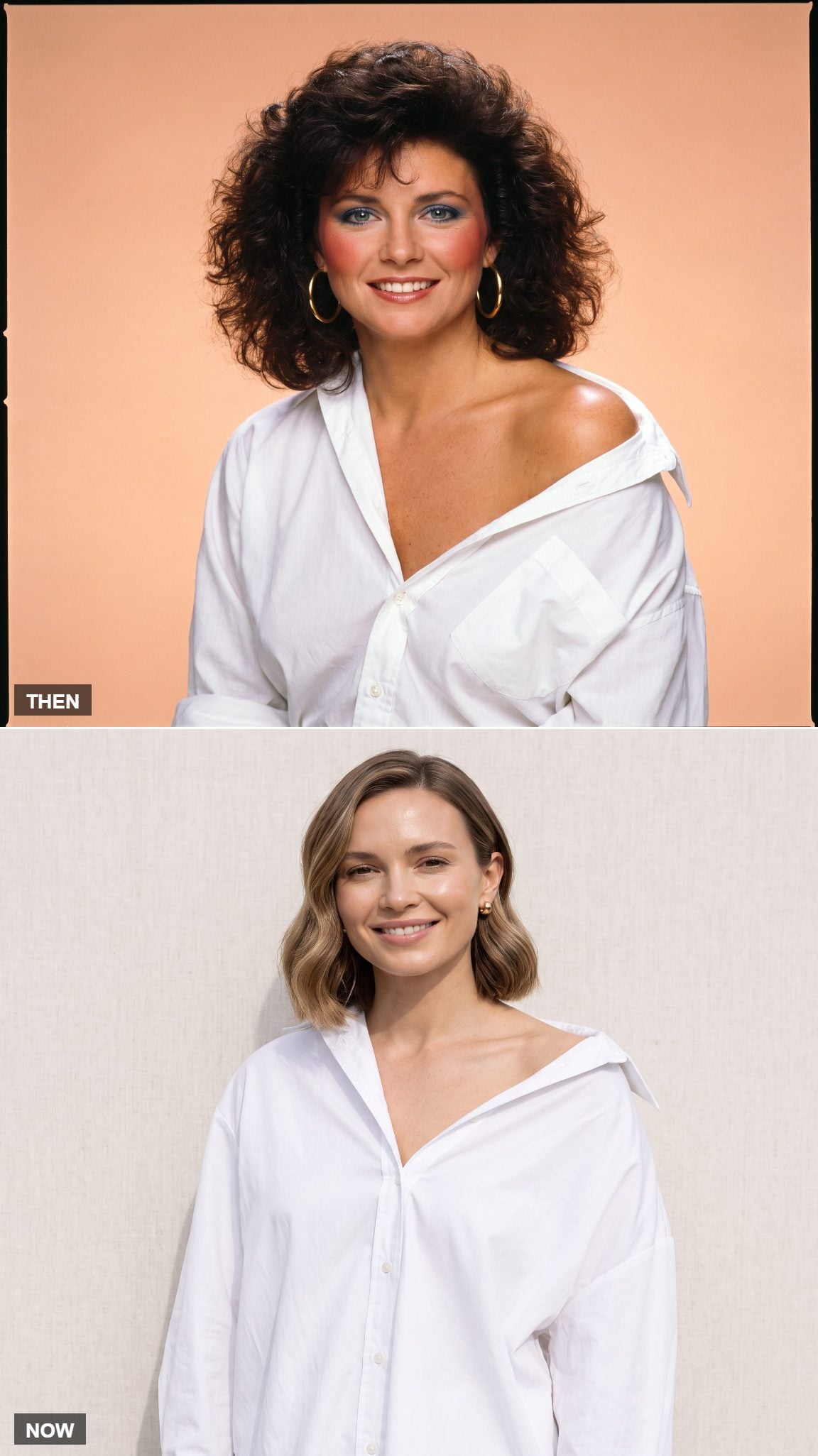
The 1980s could make an exposed shoulder feel thoroughly engineered: big hair, strong opposite shoulder, plenty of structure around the reveal.
An oversized shirt sliding off one shoulder now works almost because the construction seems to disappear. One side stays in place, the other drops, and the asymmetry keeps a plain expanse of white cotton from going flat. The trick is drape, not decoration.
12. The White Shirt at the Wedding
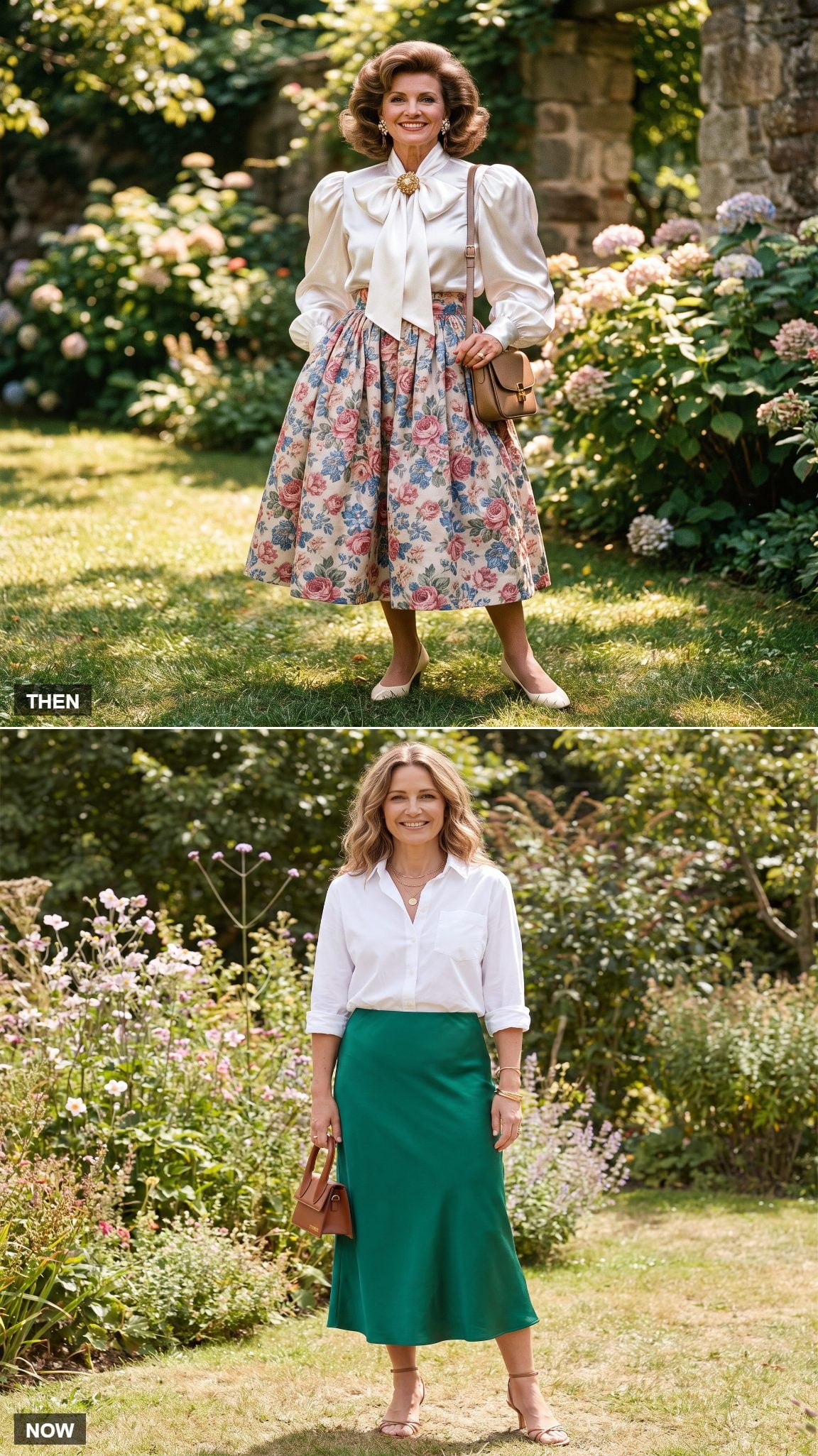
1980s occasion dressing often leaned toward satin, bows, brooches, shine, and formal blouses that wanted to be noticed from the next table.
The modern alternative lets texture carry the occasion. A cotton shirt tucked into an emerald satin slip skirt sets matte crispness against liquid shine. The shirt does not need sequins of its own because the skirt is already providing enough light.
11. The Cropped White Shirt
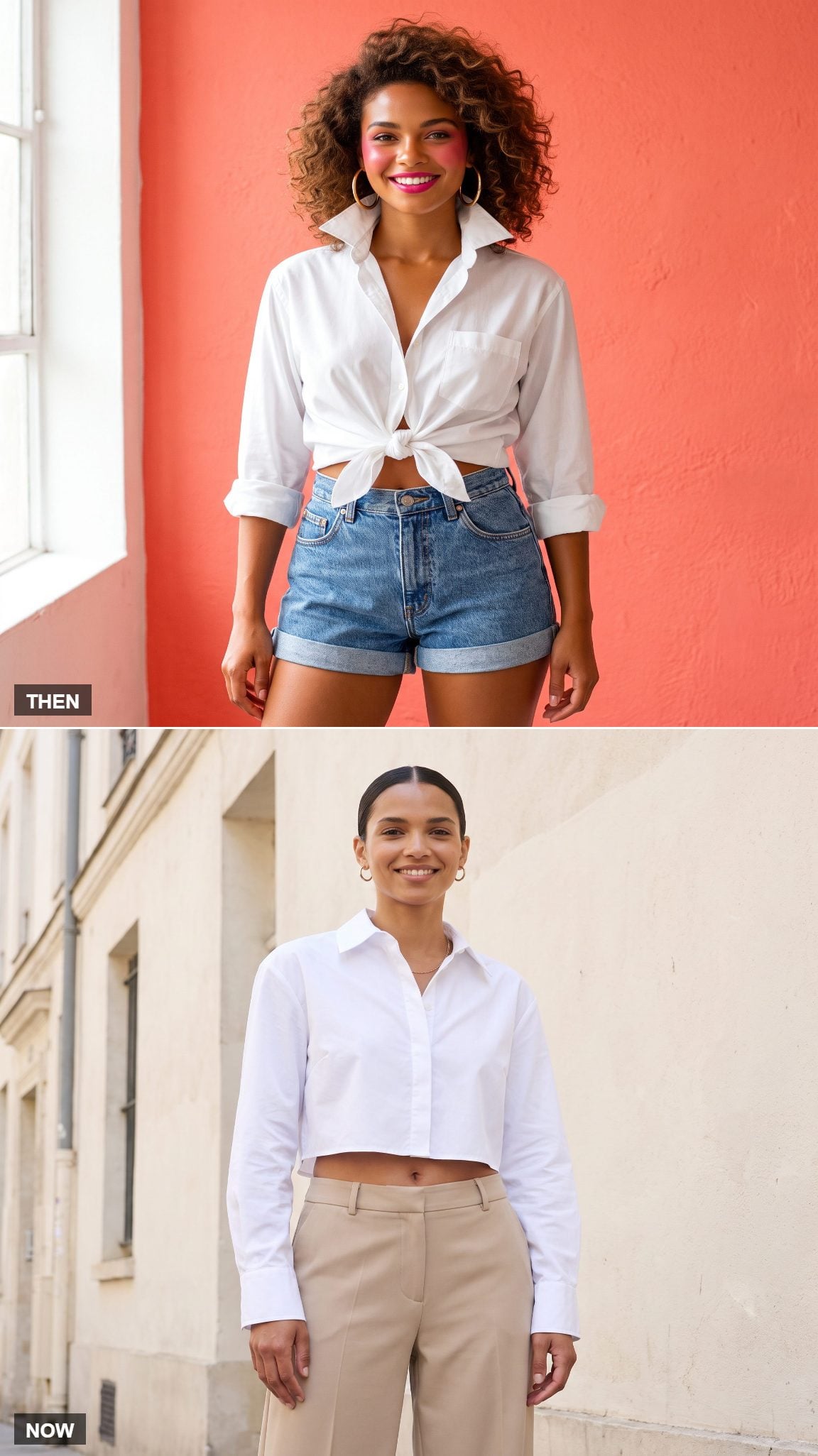
One familiar way to crop a white shirt in the 1980s was simply to knot it: fabric gathered at the waist, hem shortened by hand, midriff becoming part of the outfit.
The modern version often builds the crop into the cut. Boxy body, clean hem, high rise below. Nothing needs to be twisted or tied because the proportions were drafted that way from the start.
10. The White Shirt With Wide-Leg Denim
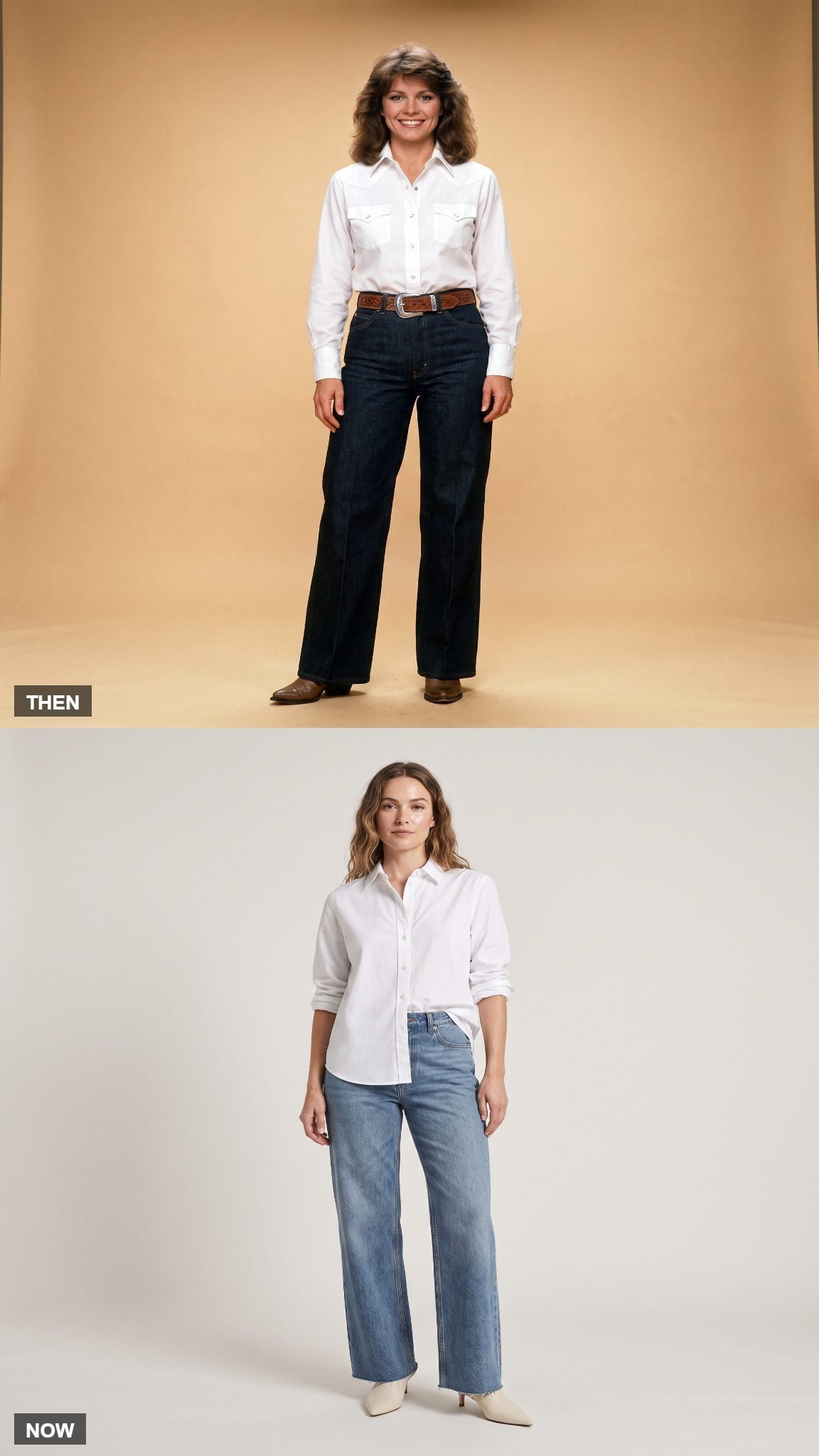
1980s denim styling could go hard on visible construction: sturdy fabric, western details, statement belts, high rises, and a shirt tucked firmly enough that the waistband became part of the show.
The contemporary version loosens both pieces. Soft wide-leg jeans pool slightly at the ankle while the shirt stays partly untucked. Pointed mules sharpen the floor line so the volume above them still feels deliberate.
9. The White Shirt Worn as a Jacket
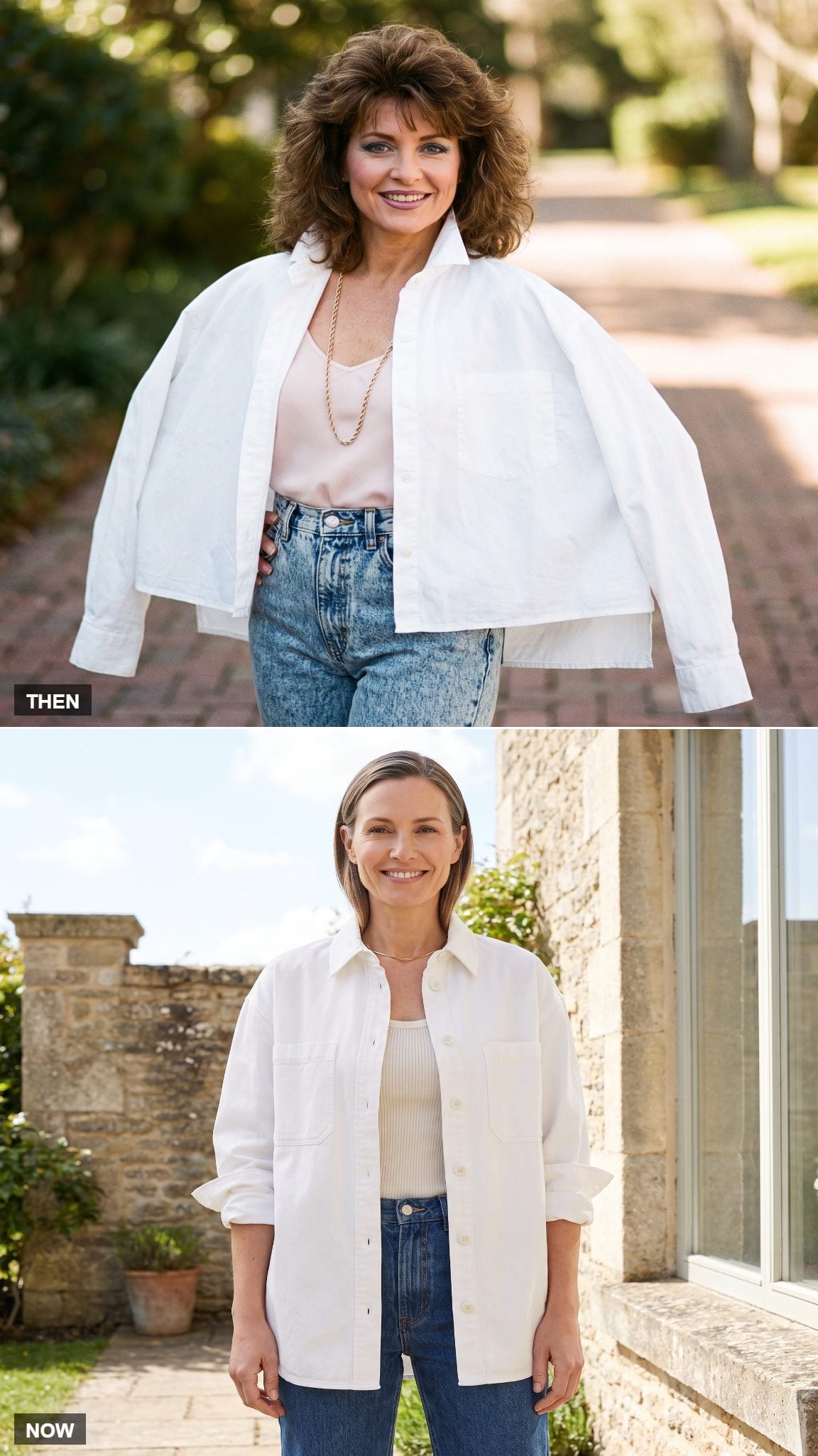
A white shirt has spent plenty of time acting like an accessory layer: draped, tied, thrown over shoulders, used whenever a sweater or cardigan felt like too much.
Now oversized versions can function as actual lightweight outerwear. Dropped shoulder, sleeves on, front open over a fitted tank — suddenly the shirt is doing the job of a soft blazer without pretending to be one. A white shirt has rarely looked happier about being promoted.
8. The White Shirt Buttoned to the Chin
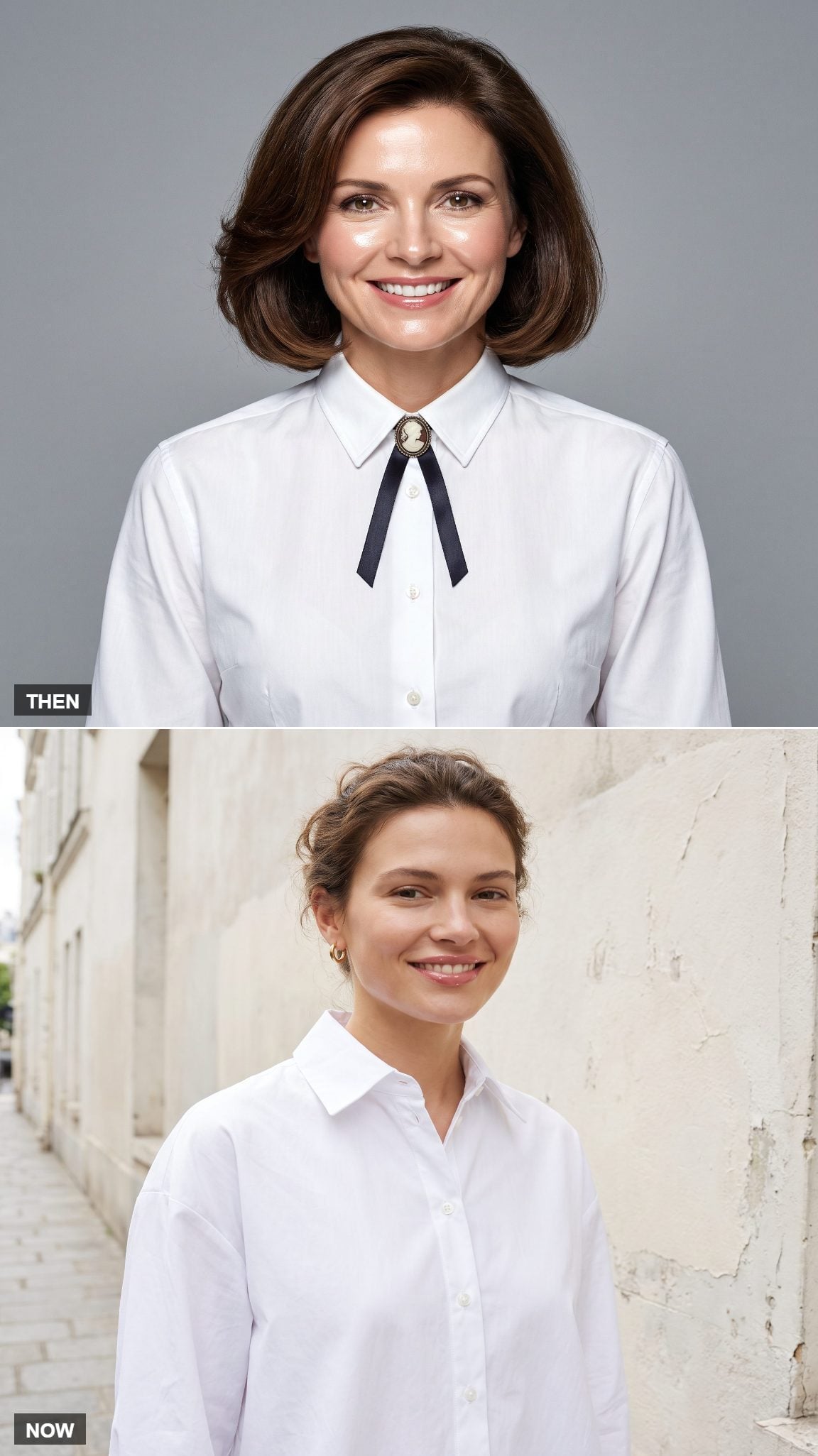
A closed collar once leaned easily toward primness when paired with ribbon ties, cameos, conservative skirts, or other deliberately proper details.
Remove the ornament and the same buttoned throat can become severe in a completely different way. Oversized poplin, clean collar, no necklace, no bow. The lack of softness becomes the styling move.
7. The White Shirt Sleeves as the Whole Look
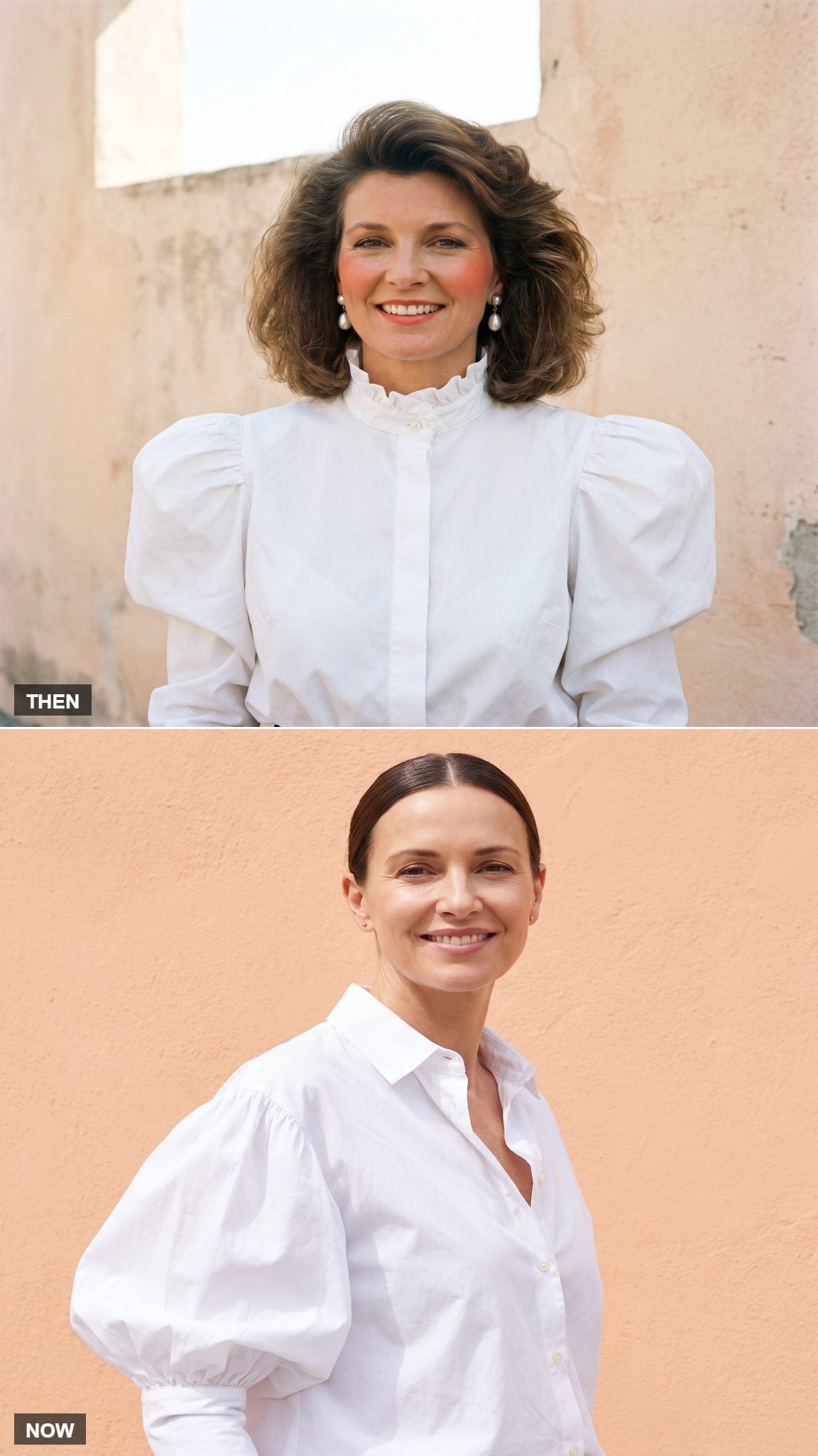
The 1980s did not always know when to stop at one romantic detail. Big sleeves could arrive with ruffles, pearls, high necks, bows, and enough volume to make the entire upper body part of the event.
The modern balloon sleeve often works better alone. Clean shoulder, soft volume, fitted cuff, open neck. Give the eye one exaggerated thing to understand and suddenly the exaggeration looks much more expensive.
6. The Oversized Boyfriend White Shirt
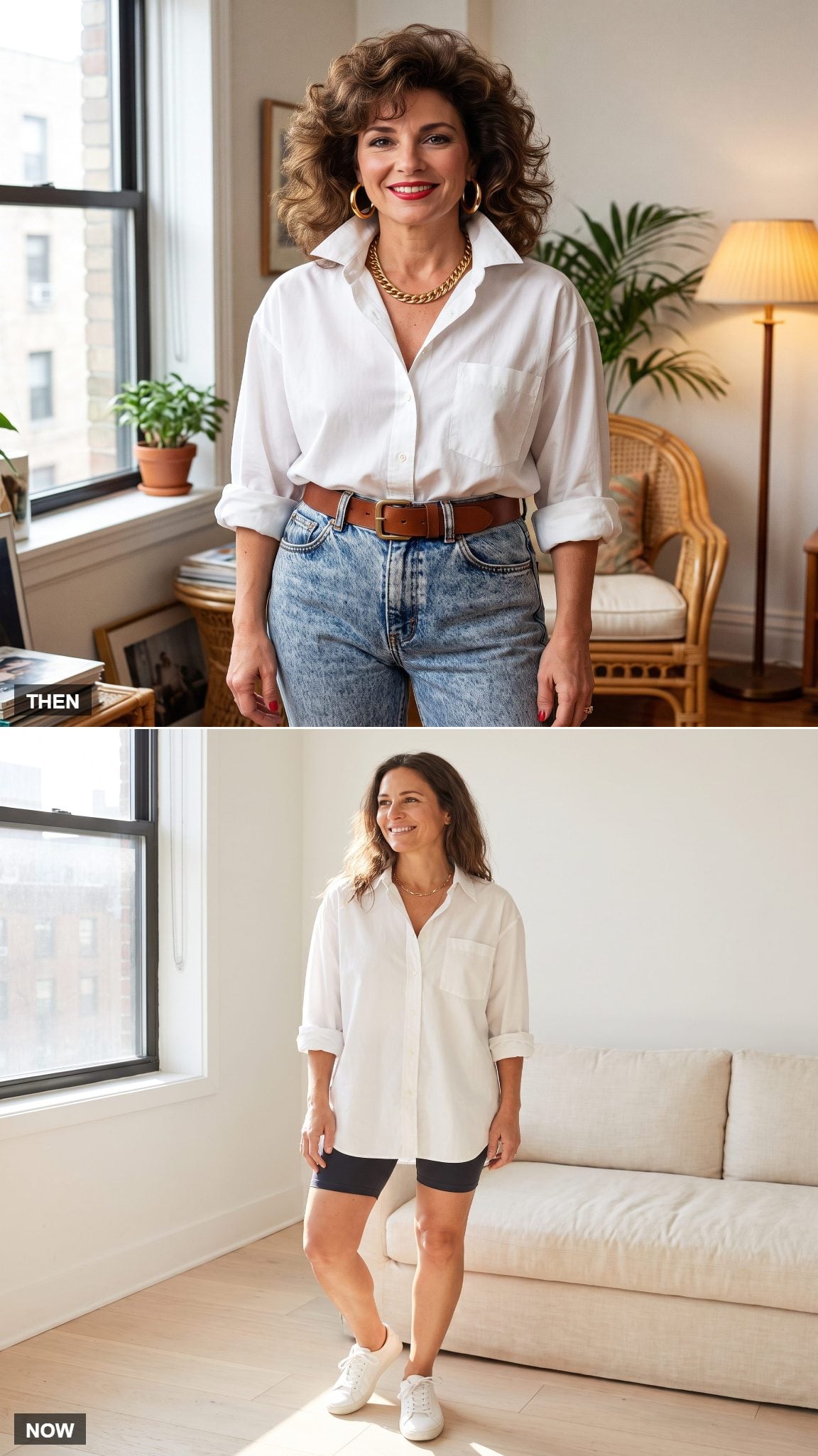
Even when 1980s fashion went oversized, it often found a way to reclaim the waist: belt it, tuck it, cinch it, remind everyone there was still a body under all that cloth.
The modern boyfriend shirt can simply stay enormous. Untucked, unbelted, dropped through the shoulder and long through the hem, it makes drape the entire proposition. Bare legs, bike shorts, slim trousers — whatever sits underneath mostly exists to let the shirt have the volume it asked for.
5. The White Shirt and Blazer, No Trousers
❤️ Would you like to save this?
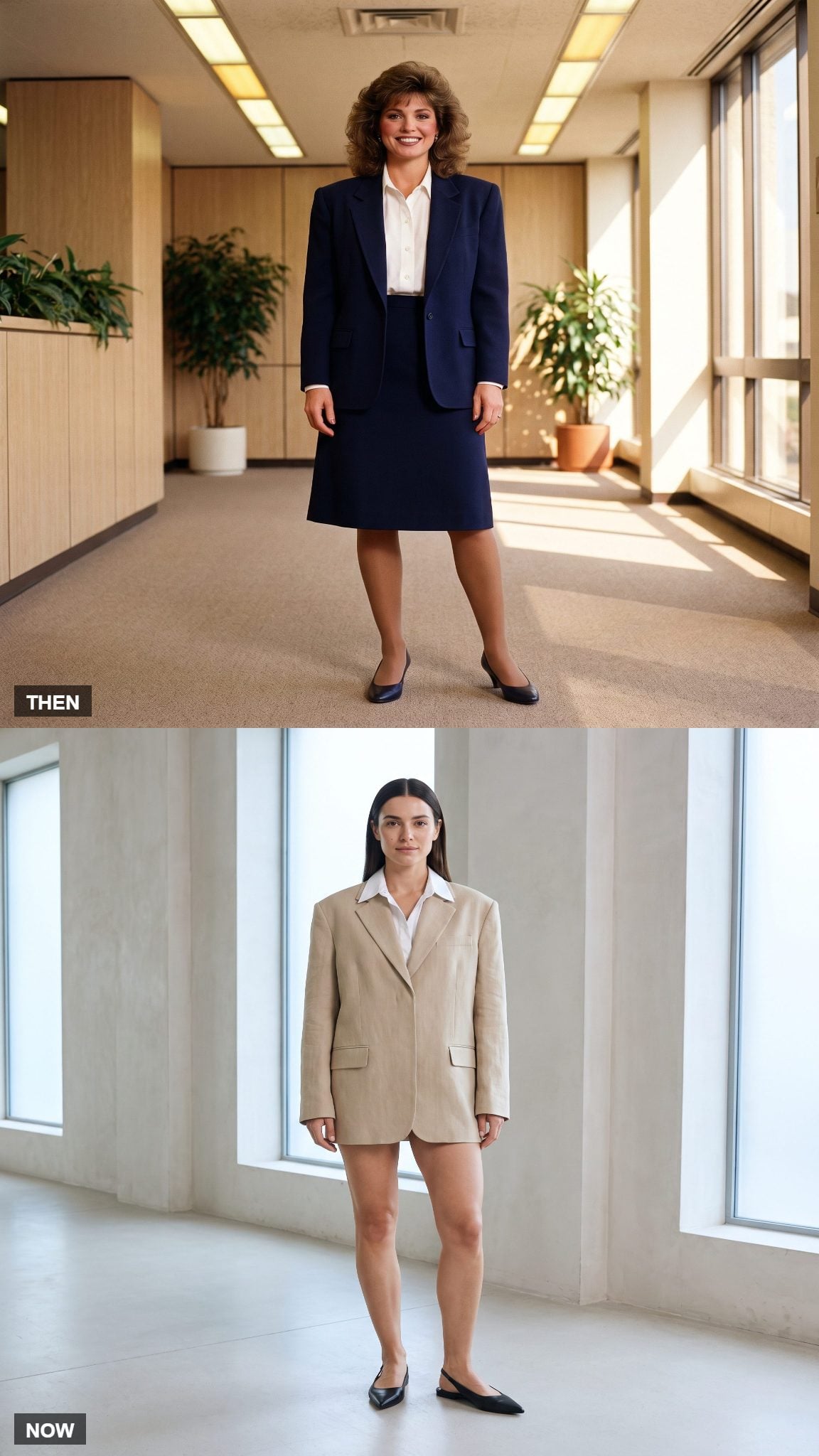
Traditional power dressing completed the sentence: shirt, blazer, skirt or trousers, shoes, everything accounted for.
The longline blazer version deliberately leaves the lower silhouette almost empty. A beige oversized blazer stretches toward minidress territory while the white collar remains visible at the neck. The outfit borrows the top half of a suit and then refuses to finish it in the expected way.
4. The Ruffled-Front White Shirt
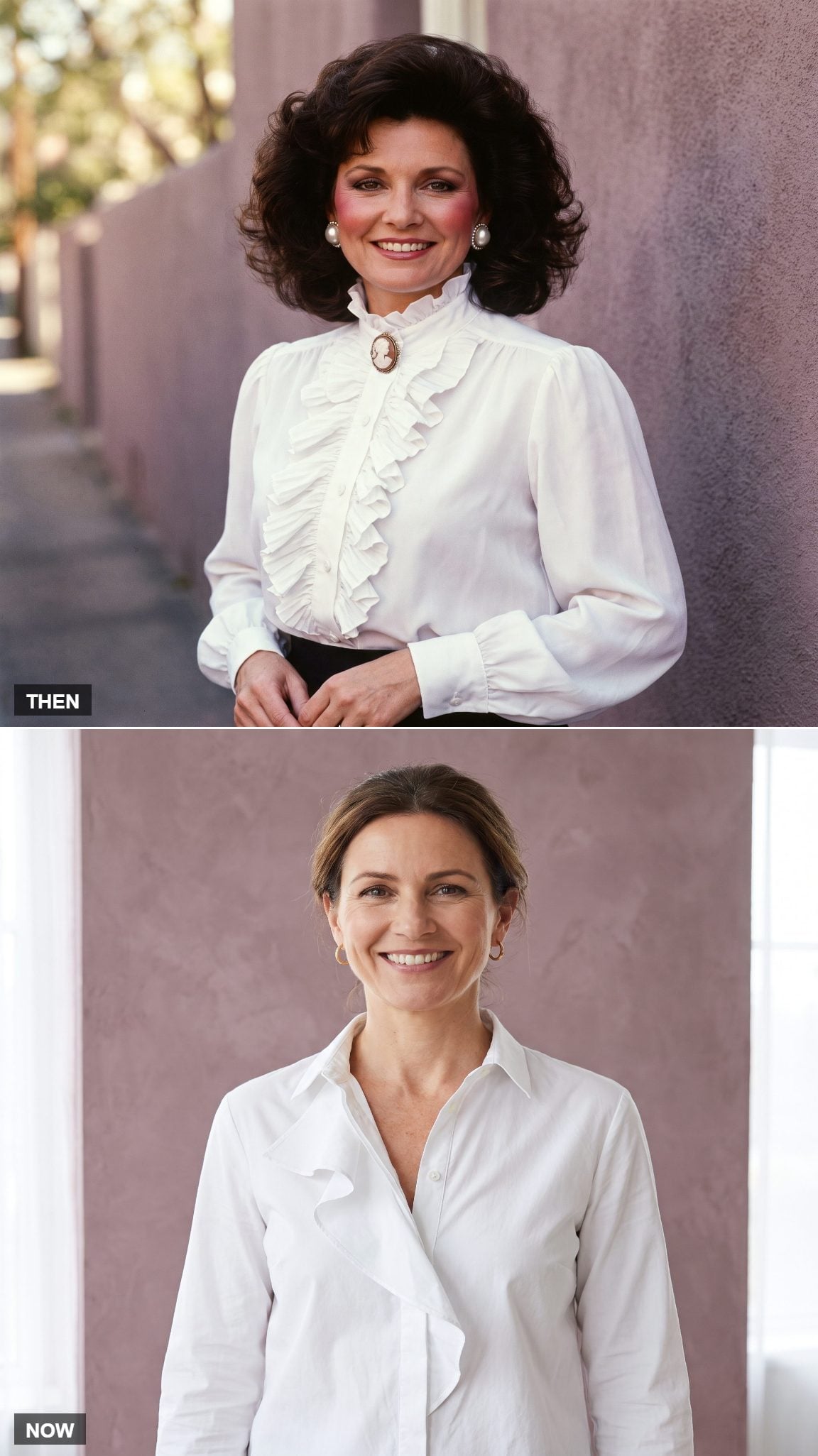
1980s ruffles often came in quantity. Cascades down the front, high collars, cameos, dramatic cuffs — romance was rarely asked to use its indoor voice.
The current ruffle gets edited down. One structural line, one controlled flourish, plenty of plain cotton around it. Restraint changes the detail from decoration into architecture.
3. The Way the Sleeves Get Rolled
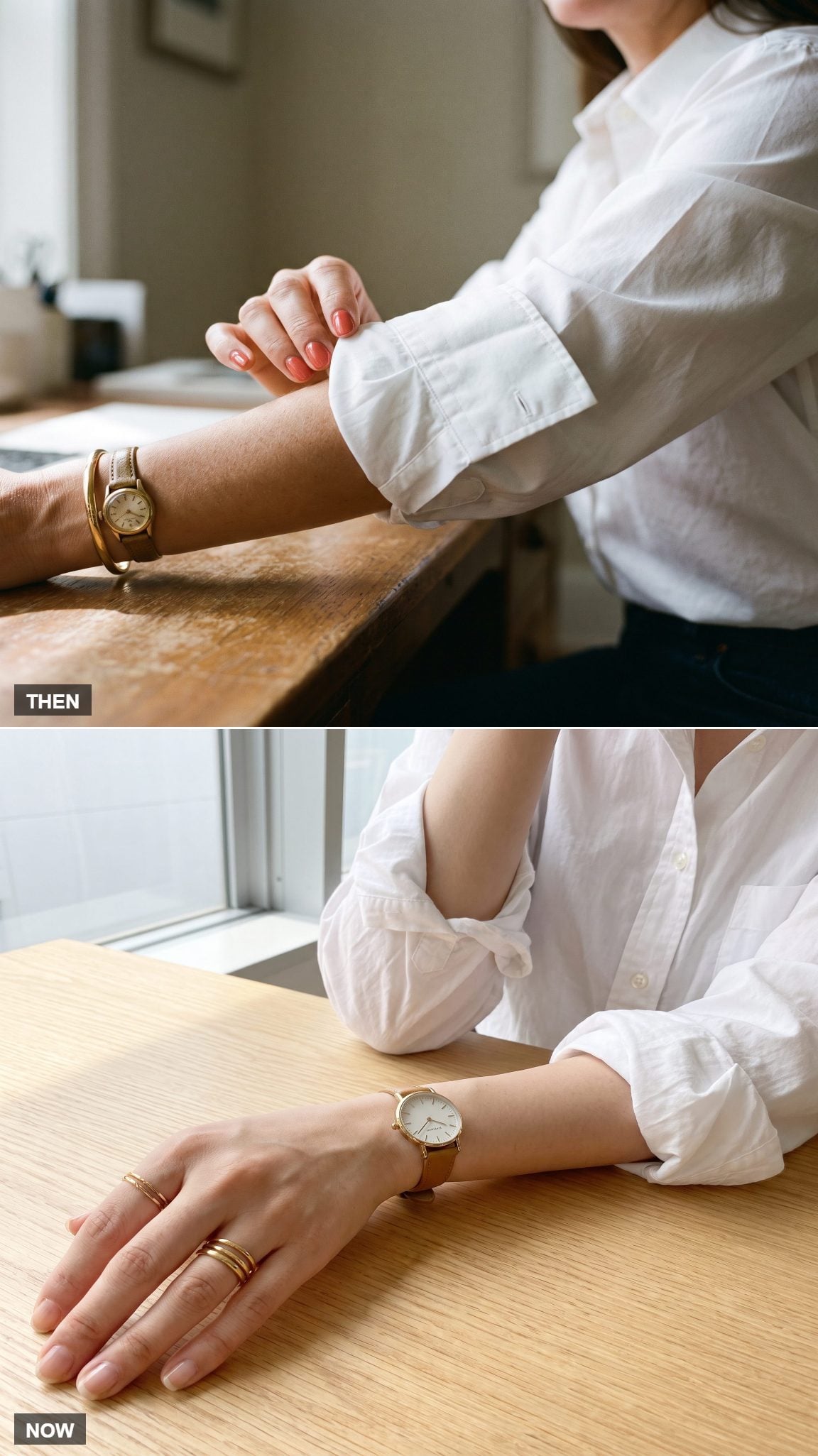
A neatly folded cuff gives the sleeve a crisp, deliberate finish. Two even turns, flat edge, controlled width — the kind of detail that works naturally with more formal styling.
Push the same sleeve toward the elbow and the geometry disappears. The fabric bunches, the cuff vanishes into folds, and suddenly the shirt looks active rather than arranged. Thin gold rings and bare forearm keep the looseness from feeling unfinished.
2. The Power Suit White Shirt
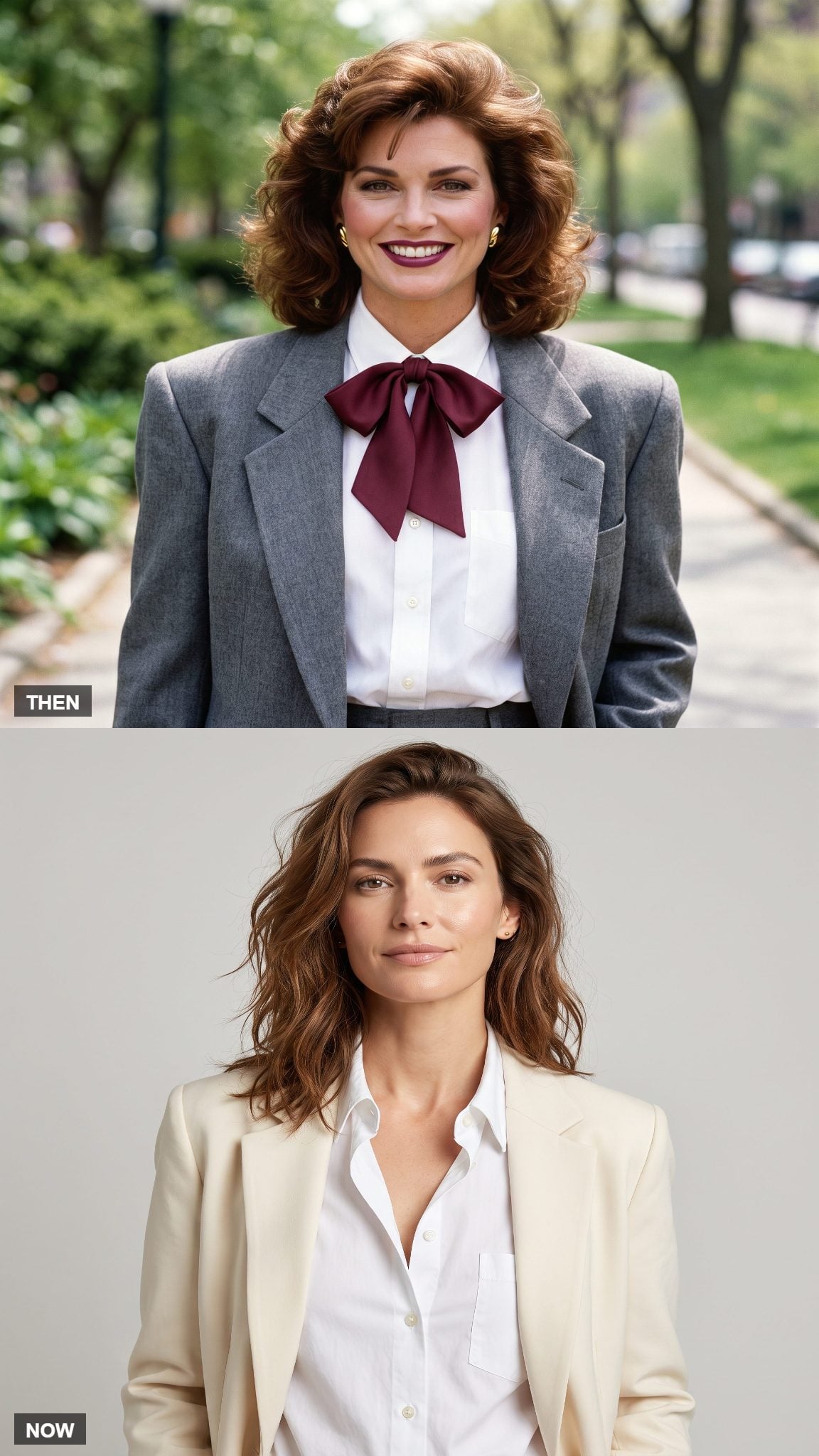
Power dressing in the 1980s favored structure, and the white shirt joined the operation enthusiastically: high collar, silk bow, strong shoulders, sharp gray jacket. The silhouette did not whisper because whispering was hardly the point.
Then look at what happens when nearly all of that scaffolding disappears. The collar opens. The bow goes. Shoulders return to their natural width. Gray becomes cream. The white shirt is still clearly professional, but instead of competing with the blazer for authority, it slips inside a softer frame and supplies the crispness from underneath.
That may be one of the clearest changes in the entire gallery. The shirt itself barely needed redesigning. What changed was the amount of visual force fashion decided to build around it.
One era built the silhouette outward. The other lets the shirt breathe inside it.
1. The White Shirt on a Gray Sunday Morning
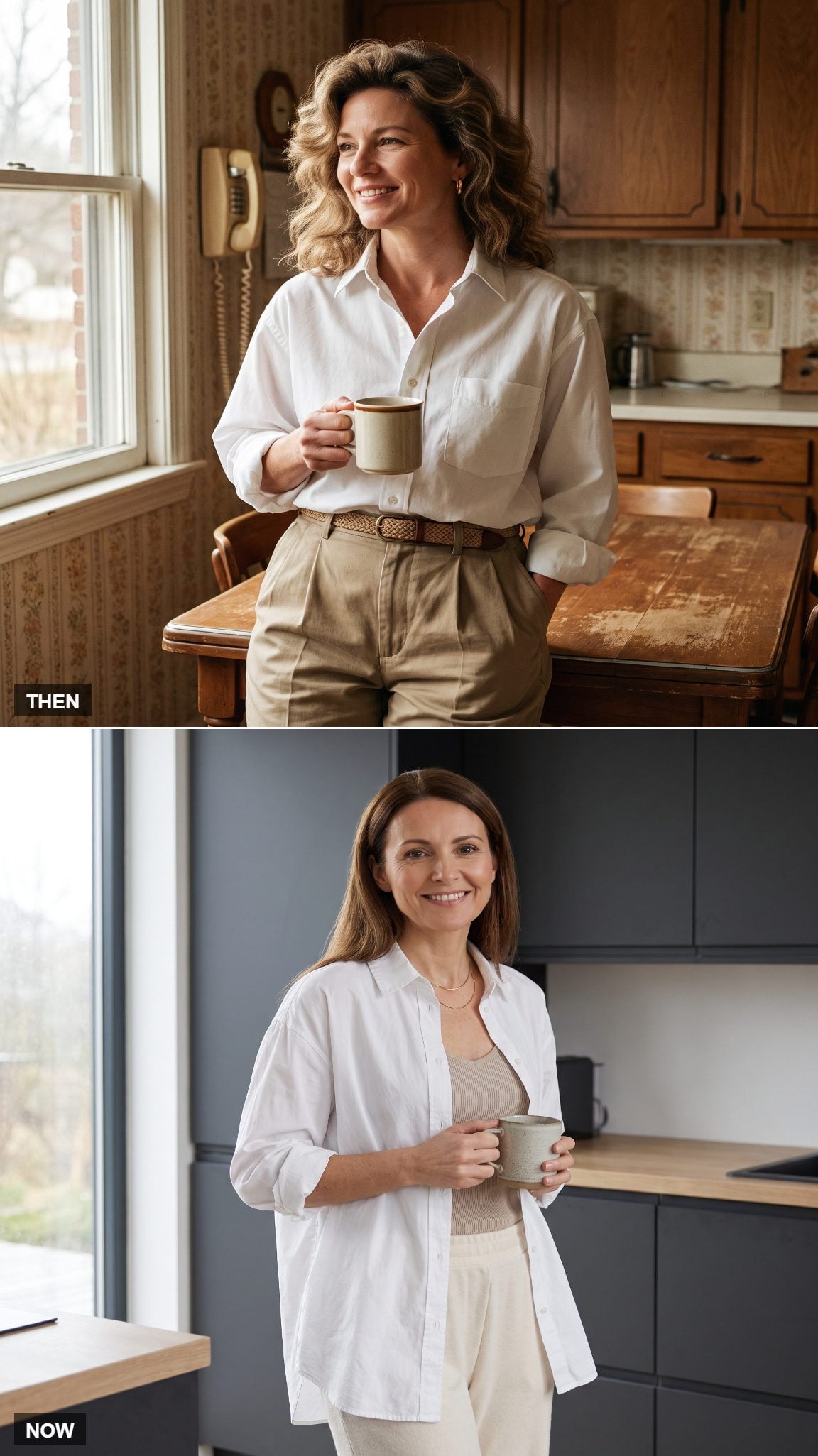
The white shirt has spent most of this gallery proving how many roles it can play. This may be the one where it finally stops auditioning.
Open over a ribbed tank, sleeves pushed up, cream lounge trousers underneath, the beige look barely asks the shirt to behave like tailoring at all. No precise tuck, no commanding collar, no jewelry required to explain it. After decades of being buttoned, bowed, belted, knotted, padded, layered, cropped, rolled, and rearranged, the most modern move may be simply letting the thing hang.