❤️ Would you like to save this?
Put a white shirt into a room full of seventies suede and it’s an easygoing classic. Send it to a nightclub with black satin trousers and a disco ball, and suddenly it has evening plans. London punk takes scissors to the hem; eighties New York piles on lace, chains, and enough jewelry to set off the metal detector. Fifty years of fashion experiments, cultural upheavals, and spectacular disagreements about the female silhouette, with one familiar garment somehow involved in practically all of them.
Some of those disagreements were architectural. The seventies liked swinging hems, platforms, and belts with serious hardware. The eighties enlarged the shoulder until jackets nearly needed building permits, while another side of the same decade mixed pop-star irreverence with secondhand finds. By the nineties, minimalists were stripping clothing back to fabric and cut even as experimental dressers twisted shirts beneath fitted asymmetric layers. Today’s wardrobes borrow from all of them: a sculptural silver corset can share closet space with uncomplicated denim, and a white shirt can accompany either without looking entirely out of place.
Across these 33 illustrated looks, pay particular attention to the details that usually escape notice. Watch collars migrate from discreet necklines to enormous lapels, shoulder seams move outward and retreat again, and trousers expand until they threaten to consume the shoes. Look at what happens when soft cotton meets distressed leather, liquid satin, or rigid metallic construction. These are styled interpretations rather than archival photographs, but the design experiments they explore tell a fascinating story. Sometimes the most dramatic changes involve the smallest pieces of fabric. Occasionally, they involve trousers that could accommodate an additional person.
FYI, thanks to AI imagery software, we’re able to create very specific fashion and hairstyle examples to illustrate the points being made. In some cases, imagery is exaggerated to hammer home the point. Also, assume links that take you off the site are affiliate links such as links to Amazon. this means we may earn a commission if you buy something.
1975: The White Shirt With Rust Wide-Leg Trousers
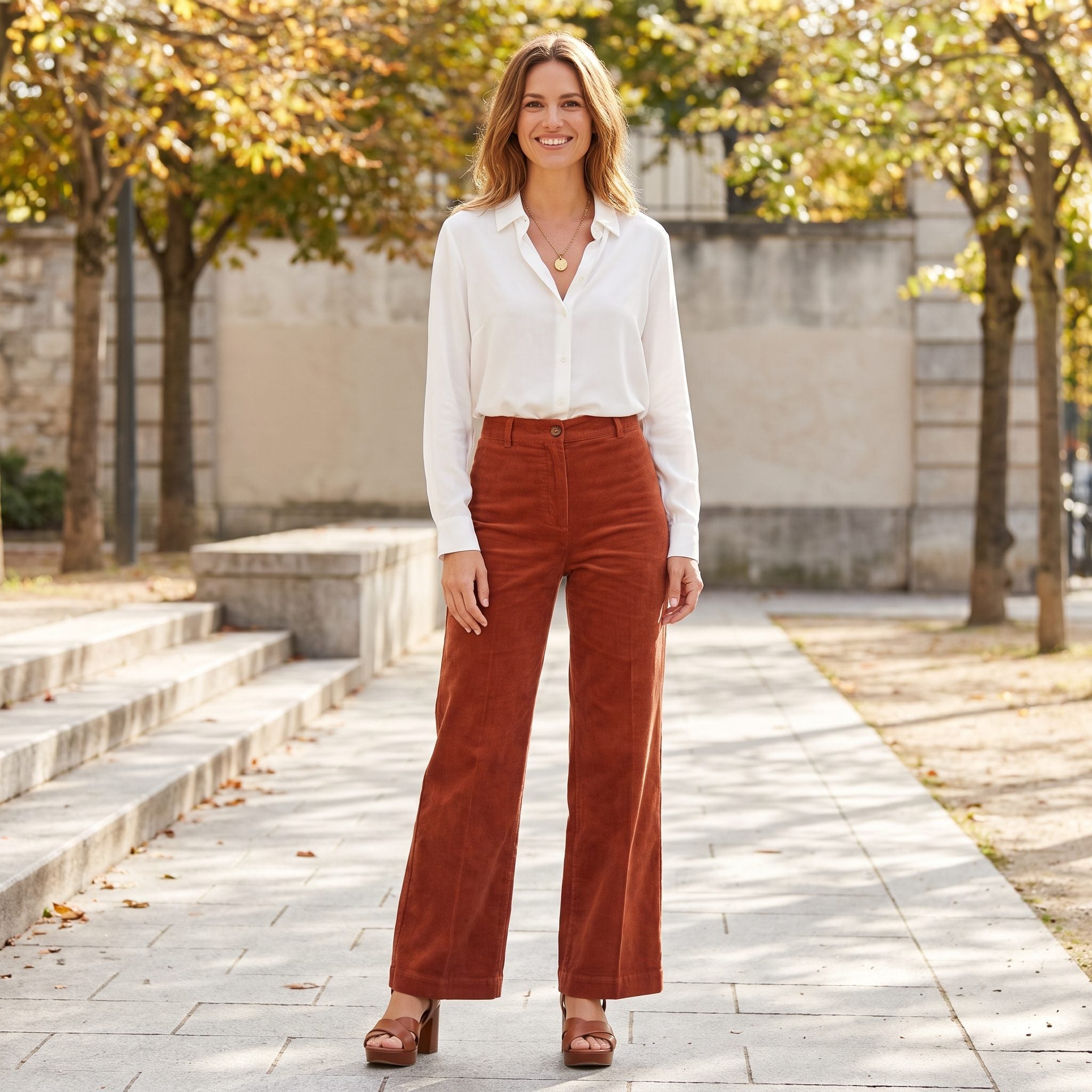
Certain seventies trousers appear to have been designed for the sole purpose of making an entrance. These rust-colored beauties announce themselves from the waist down, spreading into generous legs that make every step look vaguely theatrical. Against all that saturated color, the white shirt provides a welcome interruption. A clearly defined waist gives the outfit its shape before the fabric begins its considerable journey toward the floor.
Notice the tan platforms emerging beneath the hems. Their height allows the trousers to fall almost uninterrupted, emphasizing the dramatic width that made this silhouette so distinctive. The shirt, meanwhile, remains comparatively straightforward. No elaborate collar, decorative pattern, or competing color is necessary when the trousers have already claimed most of the available attention.
1975: The White Shirt Under a Camel Suede Vest
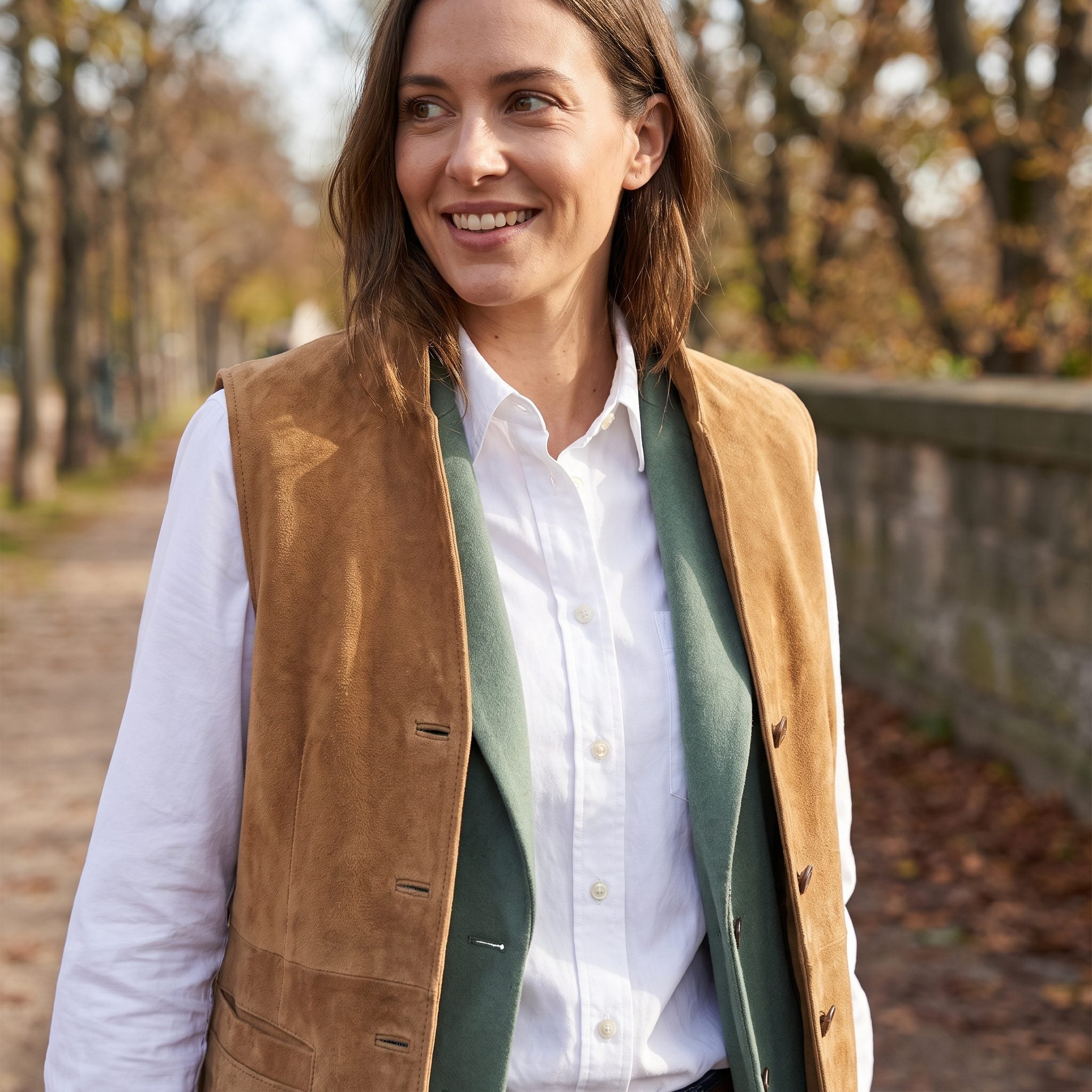
After saturated rust and extravagantly wide legs, camel suede offers the quieter side of seventies dressing. The softly textured camel vest has the earthy character associated with the decade’s enthusiasm for natural materials, while the white cotton underneath provides a crisp contrast. Against the smoother trousers, the vest introduces another surface without requiring another conspicuous color. The attraction comes from the materials themselves.
There’s something wonderfully practical about this arrangement. The vest delivers much of the visual interest of a jacket while leaving the shirt’s sleeves completely exposed. The collar and cuffs become important parts of the composition rather than details concealed beneath another layer. It’s a clever little piece of fashion engineering, giving an ordinary shirt and trousers considerably more personality without sacrificing their relaxed character.
1975: The White Shirt With a Long Denim Skirt

From polished suede to democratic denim. A long A-line skirt gives the white shirt an entirely different assignment, transforming something that could have come from an office wardrobe into an outfit ready for a Saturday afternoon. That broad cognac belt deserves particular attention. It’s practically a piece of furniture, drawing a decisive line between the soft blouse and the widening skirt.
The turned-back cuffs relax the shirt’s businesslike origins, while wooden clogs give the denim a distinctly seventies finish. Neither detail is particularly elaborate, yet together they make the outfit feel less like a shirt paired with a skirt and more like a complete approach to casual dressing. Even the movement matters: the A-line skirt has room to swing, something we’ll see considerably less of when the sharply tailored eighties make their entrance.
1975: The White Shirt Under an Olive Sweater Vest

Olive green, cream, white, and not a single color demanding to be the center of attention. The sweater vest brings the softer side of seventies layering into focus, replacing leather and suede with familiar knitwear. Against the cream trousers, those muted tones create an outfit that feels relaxed without being careless. The restraint of the palette allows the different fabrics to become more noticeable.
The exposed white collar introduces a crisp edge around the neckline, while the cuffs repeat that contrast at the wrists. It’s a small detail, but an important one: the sweater doesn’t completely conceal the garment beneath it. Remember this arrangement when we reach 1985. The sweater vest survives the intervening decade, but its next appearance involves considerably more geometric ambition.
1975: The White Shirt With a Midi Skirt and Tall Boots
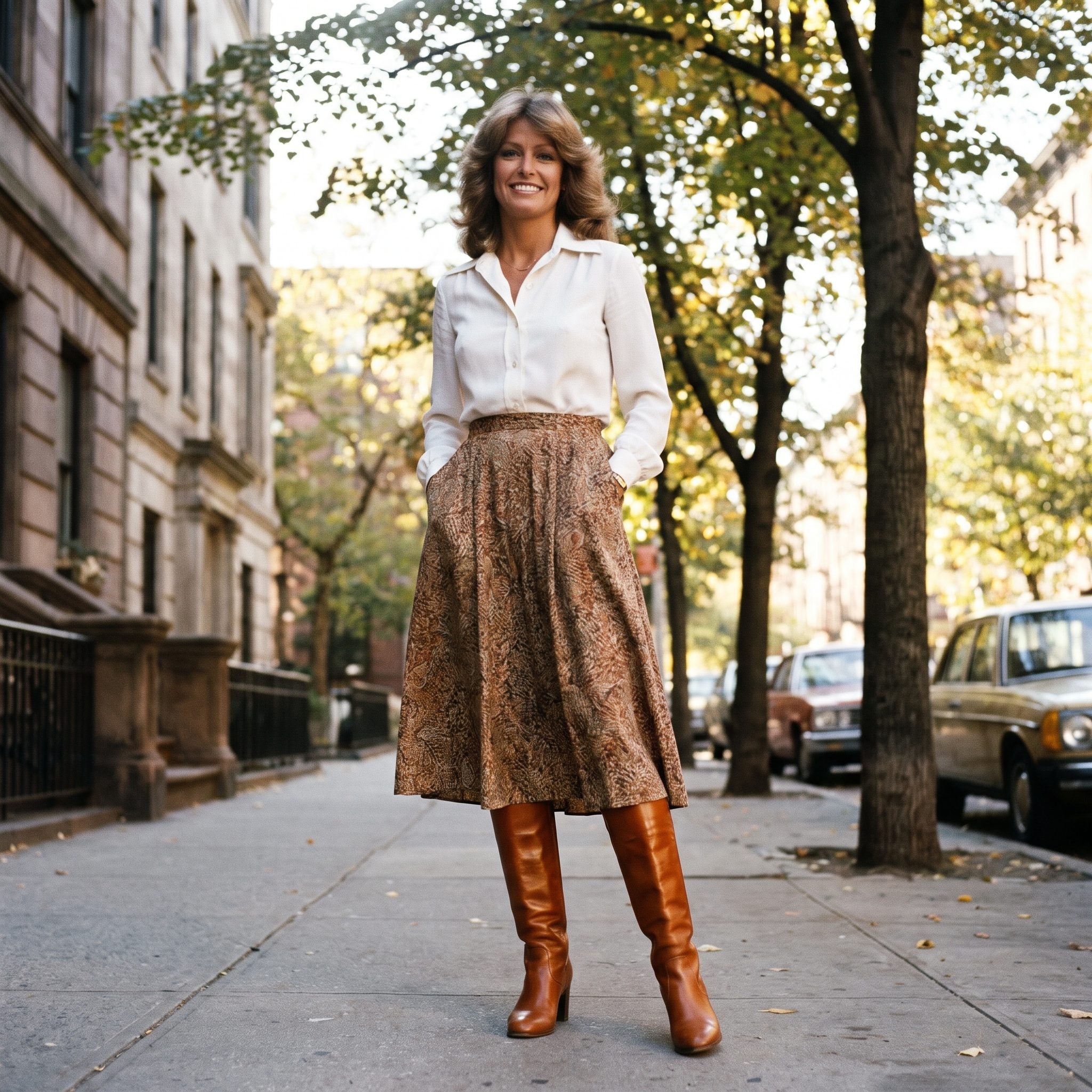
A pair of tall cognac boots can change the entire character of a skirt. Here, they disappear beneath a burnt orange midi, creating an almost continuous stretch of autumn color. Against that substantial lower half, the white shirt appears exceptionally light. The belt introduces another leather detail, connecting the separate garments without requiring their colors to match precisely.
Imagine replacing those boots with delicate sandals. The skirt would suddenly tell a very different story. Tall leather footwear gives the outfit substance and an outdoorsy confidence that reflects the decade’s enthusiasm for practical shapes dressed up in beautiful materials. Between the warm orange fabric, cognac leather, and pale shirt, the combination captures an especially appealing interpretation of seventies sophistication.
1975: The White Shirt With a Printed Neck Scarf

After substantial belts, generous skirts, and tall leather boots, a small piece of silk makes an altogether more discreet case. A geometric scarf knotted at the open collar changes the white shirt’s personality immediately. The otherwise restrained combination of white and camel suddenly acquires pattern, movement, and a focal point close to the face. No additional layers are required.
The scarf also introduces an interesting contradiction. The shirt borrows much of its traditional construction from menswear, while the neatly arranged silk brings an entirely different sensibility to the neckline. Together, they demonstrate how accessories can alter the character of a familiar garment without changing its cut. A relatively ordinary shirt becomes something more individual through one particularly well-placed addition.
Late 1970s: The White Shirt Hits the Disco Floor
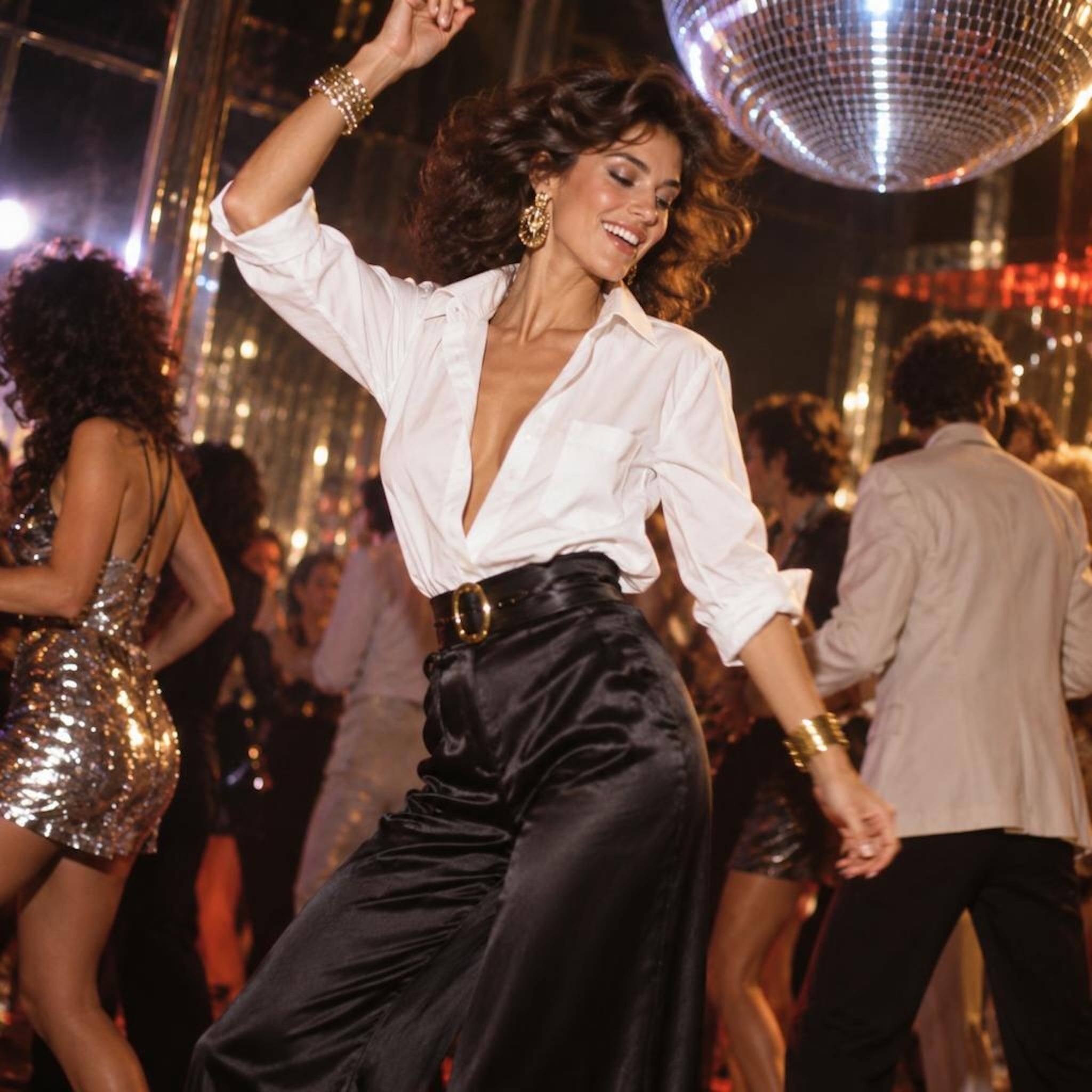
Enough restraint. The white shirt has evening plans. Under the disco ball, its open collar and rolled sleeves are a world away from tidy daytime tailoring. Black satin trousers catch every flash of light, a gold-buckled belt marks the waist, and oversized earrings refuse to remain inconspicuous. There’s nothing stiff about a shirt when the person wearing it is actually dancing.
The look borrows from the androgynous glamour associated with late-seventies nightlife, where traditionally masculine tailoring could become sensual without changing its basic construction. The satin trousers supply movement and sheen; the shirt keeps the outfit from dissolving into head-to-toe sparkle. Studio 54 opened in New York in 1977, and the nightclub’s association with glamorous, uninhibited dressing makes it an appropriate reference for this interpretation of the period. The familiar white collar has clearly left the office behind.
Late 1970s: London Punk Takes Apart the White Shirt
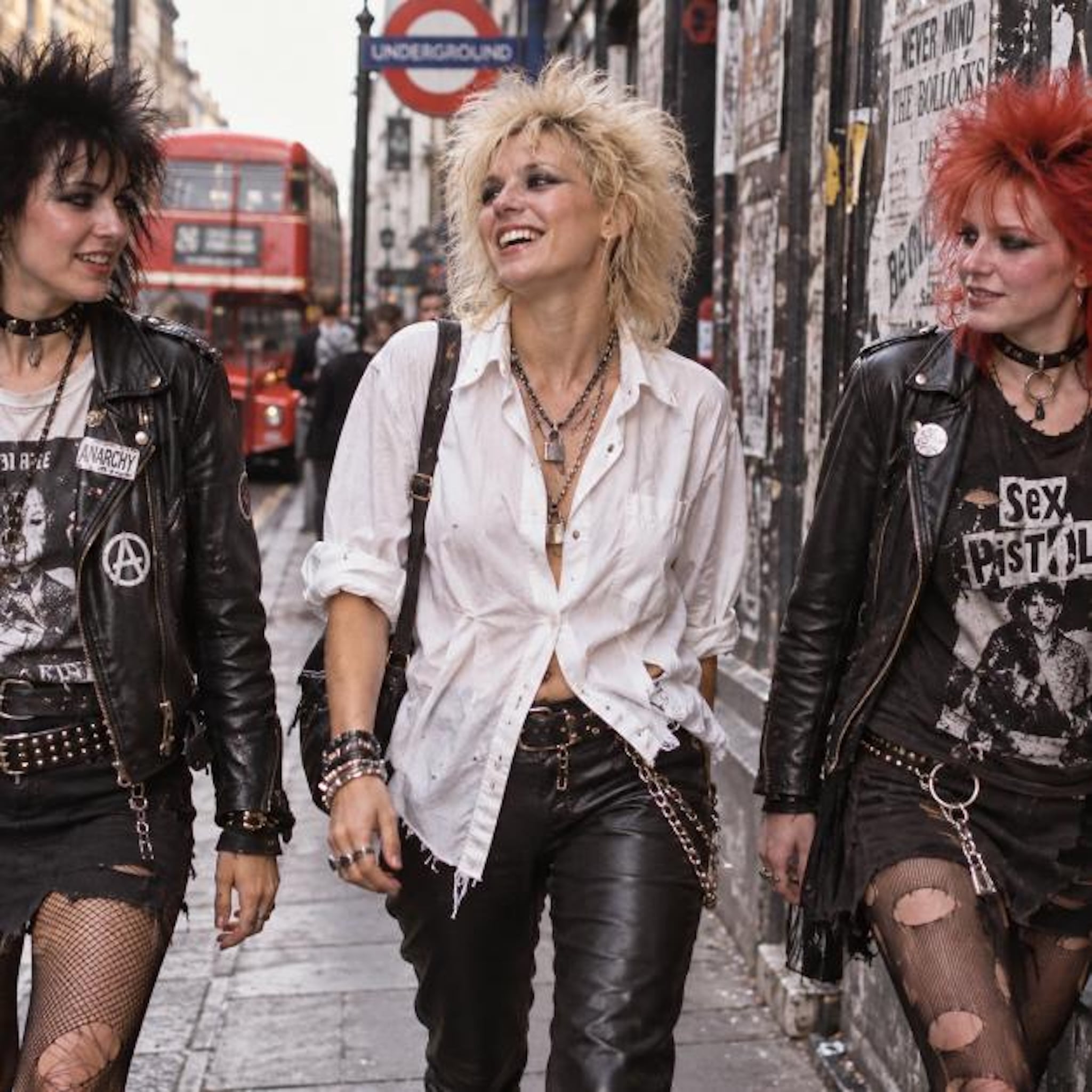
Across the Atlantic, the same white shirt has encountered a considerably less accommodating crowd. Its hem is frayed, its front hangs open, and leather trousers replace the disco’s gleaming satin. Chains swing against the fabric while the surrounding punk friends contribute spiked hair, leather jackets, and fishnets. Even the London sidewalk seems more interested in rebellion than good grooming. The orderly neck scarf and neatly arranged sweater vest from earlier in the gallery suddenly belong to another universe.
The deliberate damage deserves a closer look. Frayed edges expose a garment’s construction, while metal hardware interrupts the soft cotton with hard, industrial details. Unlike the disco outfit, which makes conventional clothing glamorous through luxurious materials, punk deliberately challenges conventional ideas about how clothing ought to look. The white shirt becomes something to alter rather than preserve. By the late seventies, an ordinary wardrobe staple could express a considerable amount of dissatisfaction with the wardrobe itself.
1985: The Shift From Soft to Structured

After punk’s frayed hems and deliberate disorder, the immaculate construction of eighties power dressing provides quite a change of scenery. One influential direction in women’s fashion embraced broader shoulders, sharply tailored jackets, and an unmistakably assertive silhouette. Where punk exposed and disrupted familiar clothing, corporate tailoring emphasized precision, structure, and carefully controlled proportions.
That corporate aesthetic was only part of the story. The same decade also embraced exuberant street fashion, conspicuous accessories, and preppy dressing. A crisp collar could belong to a business suit, a country-club wardrobe, or an outfit assembled from downtown vintage shops. The differences reflected competing ideas about professionalism, status, femininity, and how much attention clothes ought to attract.
One white shirt. A decade divided between the corner office and the downtown music club.
1985: The White Shirt With a Shoulder-Padded Blazer

Those shoulders aren’t making suggestions. They’re issuing instructions. The structured navy blazer establishes a strong horizontal line across the upper body, while its comparatively narrow waist creates the inverted-triangle silhouette associated with much of the decade’s power dressing. The jacket supplies the architecture; the white blouse provides a sharp contrast against all that dark tailoring.
Gold earrings and pointed pumps contribute the finishing touches. More interesting, however, is the relationship between this style and established menswear tailoring. Women had worn suits for generations, but the exaggerated shoulders popular during the eighties gave some of those suits a distinctive new appearance. The emphasis wasn’t simply on wearing a jacket. It was on creating a particular silhouette through deliberate manipulation of its construction.
1985: The White Shirt Trades the Boardroom for Downtown New York
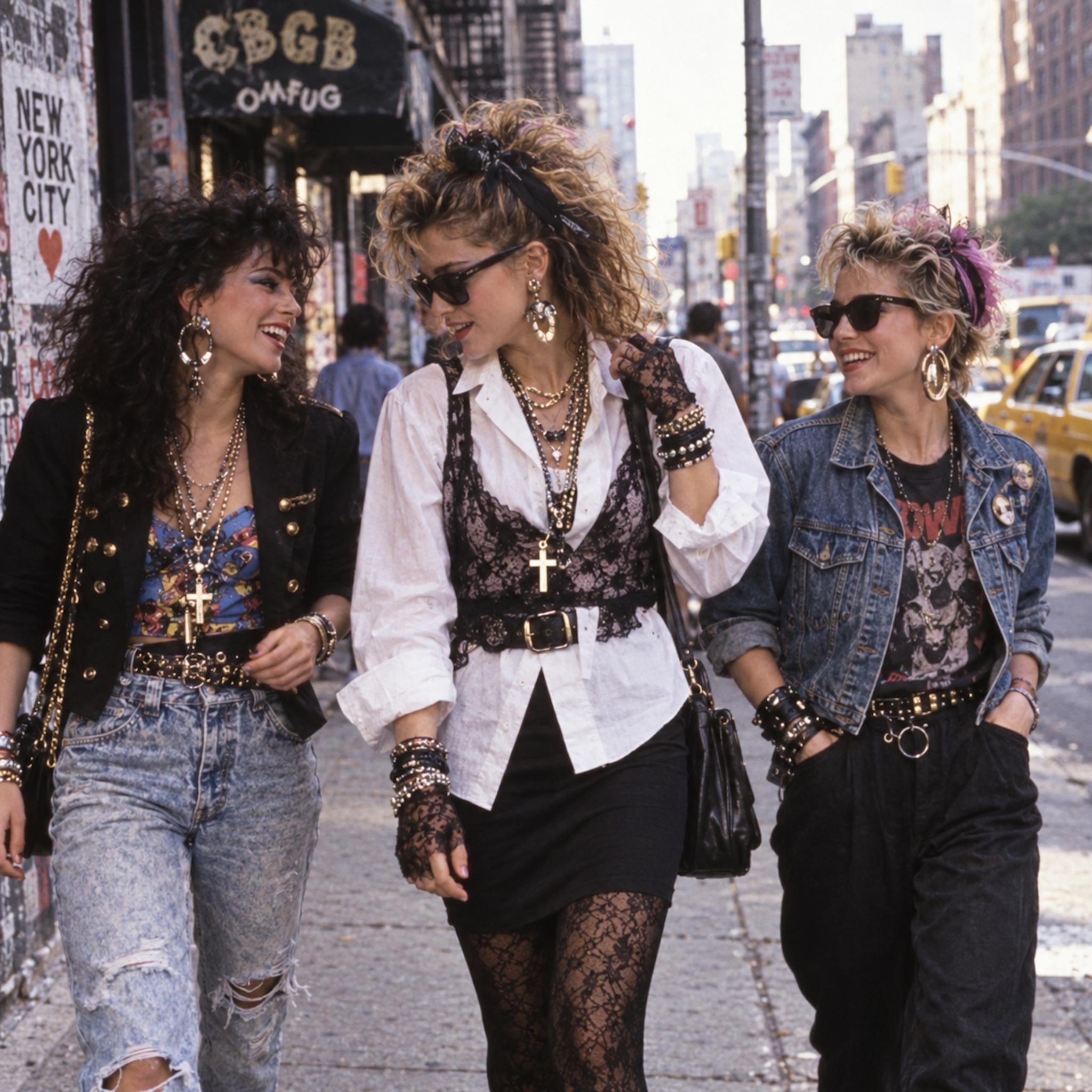
One subway ride away from power dressing, the white shirt has acquired an entirely different set of accessories. Black lace wraps across its front, a wide belt cinches everything together, and necklaces, bracelets, earrings, and fingerless gloves compete for the available real estate. Downtown New York’s pop and club-inspired style had little interest in following the corporate dress code. Why wear one accessory when six could make a much louder argument?
The friends on either side make the cultural contrast even clearer. Distressed denim, leather, graphic tees, and exuberant hair turn the sidewalk into an informal runway. The recognizable white shirt matters because it provides the conventional base that all those unexpected layers get to subvert. Compare the narrow black lace with the previous outfit’s expansive navy shoulders. The two looks could hardly have more different ideas about what constitutes a fashionable upper body.
1985: White Shirt With a Red Sweater Knotted Over the Shoulders

Apparently, the downtown crowd and the country club didn’t consult each other before getting dressed. The red sweater isn’t being worn so much as displayed, draped across the shoulders and loosely knotted in front. A perfectly practical garment has become an accessory, announcing its presence without bothering to perform its original function.
Against the white shirt and beige trousers, that saturated red provides a conspicuous splash of color. The raised shirt collar contributes another preppy detail. After the previous outfit’s layers of lace and jewelry, the calculated simplicity here is particularly entertaining. The sweater isn’t necessary. Naturally, that makes it essential.
1985: The White Shirt With a Charcoal Pencil Skirt

❤️ Would you like to save this?
Here’s what happens when the exaggerated shoulders of the decade meet a skirt with absolutely no intention of flaring out. The blouse introduces fullness across the upper body, while the charcoal pencil skirt follows a much narrower route below the waist. Between them sits a substantial belt, drawing attention to the sudden change in silhouette.
The pencil skirt had been part of women’s wardrobes for decades, but this interpretation belongs to the eighties through its particular combination of elements. Compare it with the seventies denim skirt and its softer A-line shape. Both outfits define the waist, but the earlier skirt expands toward the hem while this one maintains a considerably narrower outline. A familiar garment has acquired a very different supporting cast.
1985: White Oxford Under an Argyle Sweater Vest

Remember that soft olive sweater vest from 1975? Its eighties cousin has arrived, and apparently somebody gave it a country club membership. The muted earth tones have been replaced by a graphic arrangement of navy, burgundy, and cream diamonds. Where the earlier vest relied on understated texture, argyle makes the pattern itself the principal attraction.
The Oxford shirt brings the familiar button-down sensibility associated with American collegiate dressing. Its exposed collar and cuffs provide a crisp border around the knitwear, while the diamond pattern supplies considerably more decoration than its seventies predecessor. The comparison is revealing. Neither garment is particularly complicated, yet changes in color and pattern produce two very different interpretations of almost identical layering.
1985: White Shirt Under a Charcoal Double-Breasted Suit

Double-breasted tailoring brings a different kind of structure to the decade’s professional wardrobe. Unlike the earlier navy blazer, this charcoal jacket uses overlapping fronts and two rows of buttons to create additional visual weight through the torso. Pronounced shoulders reinforce the substantial construction, while the dark fabric emphasizes the jacket’s clearly defined outline.
The overlapping fronts also change how the white shirt appears: instead of forming a broad vertical panel, it is glimpsed at the neckline and cuffs against an expanse of charcoal. Compare that effect with the more open navy blazer earlier in the gallery. Both feature strong shoulders, but this one makes its case through the weight and coverage of the jacket itself. It’s a considerable amount of tailoring, with very little interest in disappearing into the background.
1985: White Shirt Tucked Into Deep-Pleated Trousers
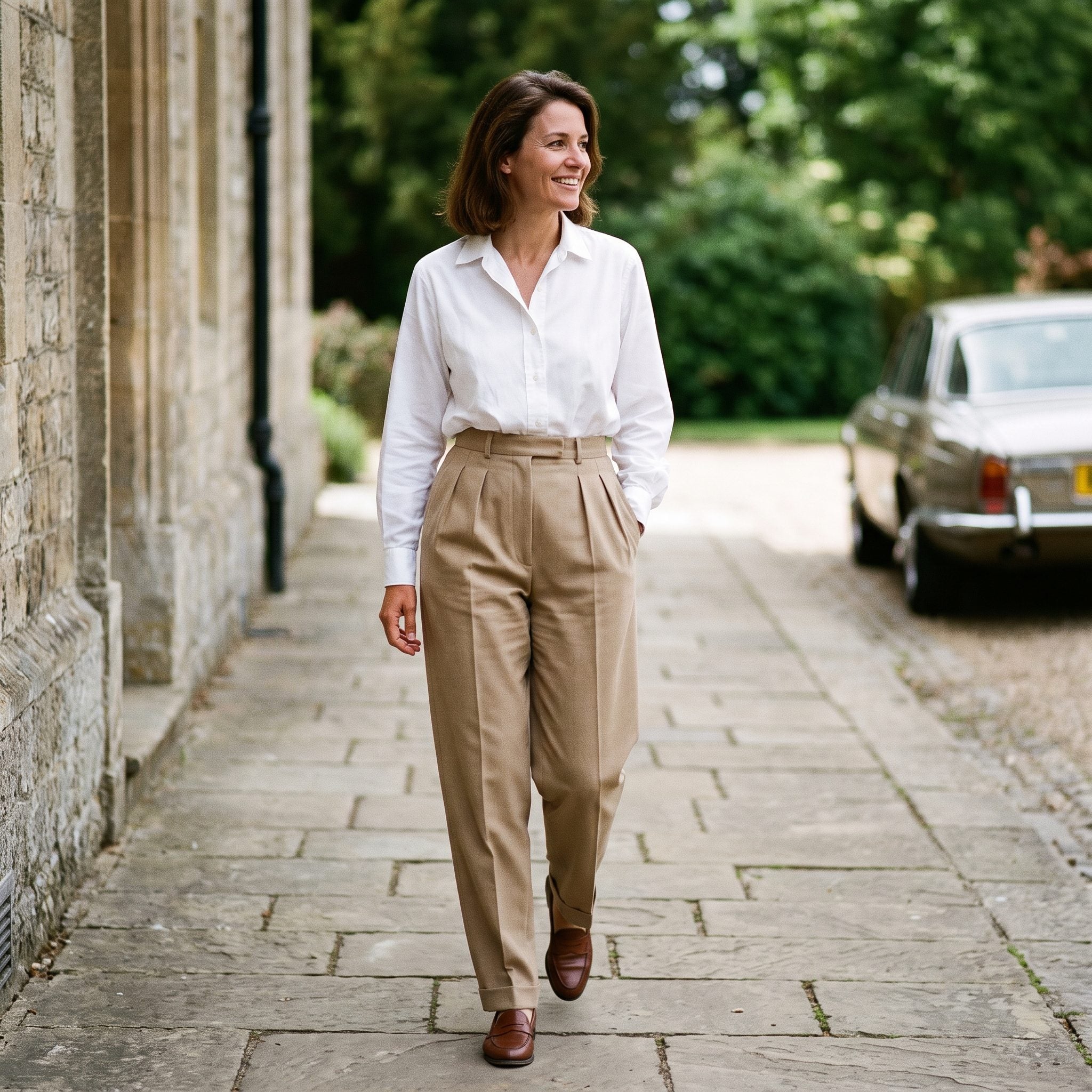
After all that disciplined suiting, these trousers introduce an interesting development: considerable freedom below the waistband. Deep front pleats allow fabric to expand through the upper leg before the silhouette narrows toward the ankle. The construction creates a distinctive shape, emphasizing the hips and giving the legs a softly sculpted appearance.
The firmly tucked white shirt keeps the waistband visible, revealing exactly where all that fabric originates. Rolled sleeves introduce a more informal attitude than the previous suit, making this an appropriate farewell to the decade’s experiments with proportion. The eighties didn’t always require a jacket to create an unmistakably eighties silhouette. Sometimes the trousers were perfectly capable of managing the entire performance.
1995: The Decade the White Shirt Learned to Whisper

Ten years later, one influential corner of fashion has decided that understatement deserves considerably more attention. Instead of announcing themselves through monumental shoulder pads and conspicuous accessories, designers are concentrating on the relationship between fabric, construction, and the body. A natural shoulder or a beautifully judged jacket length can now deliver the visual impact that previously required considerably more engineering.
Minimalism, however, is only half the story. Elsewhere, designers are pulling familiar garments apart, experimenting with asymmetrical construction and treating the conventional rules of layering as entirely optional. The white shirt is perfectly equipped for both approaches. Its familiar shape allows the minimalist wardrobe to dispense with decoration, while experimental designers can disrupt that same recognizable silhouette. By 1995, restraint and rebellion occasionally find themselves shopping in the same department.
1995: White Shirt With a Black Satin Slip Skirt

A business shirt paired with something resembling a luxurious piece of lingerie would once have presented a fairly unconventional wardrobe proposition. By 1995, the combination was part of a broader fashion movement that brought lingerie-inspired clothing into everyday and evening wardrobes. The crisp white cotton looks almost severe against the fluid black satin, which falls toward the ankle with considerably less interest in traditional office dressing.
The unlikely partnership captures one of the decade’s more interesting styling developments. Instead of dressing the satin up with something equally glamorous, the combination treats it almost casually. The shirt provides the familiar structure of everyday clothing, while the skirt introduces the movement and sheen associated with more intimate garments. The attraction lies in allowing both pieces to retain their individual identities.
1995: White Shirt With Straight-Leg Jeans

From slippery black satin to straightforward blue denim. Few combinations demonstrate the appeal of minimalist dressing more effectively than a white shirt and a pair of straight-leg jeans. There are no elaborate accessories demanding an explanation, no complicated layers, and certainly no shoulder pads attempting to improve the architecture.
What remains is a combination whose character depends heavily on the particular garments chosen. The shirt’s crisp cotton provides a sharper outline than a soft T-shirt would, while the straight denim introduces an easy, familiar shape. It’s an outfit that gives the impression of being assembled in approximately thirty seconds, although finding jeans that fit exactly as you want them can consume several weekends.
1995: White Shirt Under a Minimalist Taupe Suit

Put this taupe suit beside the charcoal double-breasted example from 1985 and the difference becomes fascinating. Both outfits rely on tailoring and a white shirt, yet their approaches to construction could hardly be further apart. Here, the shoulder follows a more natural line. The jacket’s restrained silhouette makes its statement without exaggerated width or an elaborate arrangement of buttons.
Color contributes to the change in character. Warm taupe creates a softer impression than the earlier charcoal, while the unembellished white shirt leaves the jacket’s construction clearly visible. This is still professional clothing, but its visual language belongs to another moment in fashion. Instead of emphasizing the body through conspicuous architectural additions, the tailoring allows the overall silhouette to appear more relaxed.
1995: The White Shirt Becomes an Experimental Canvas
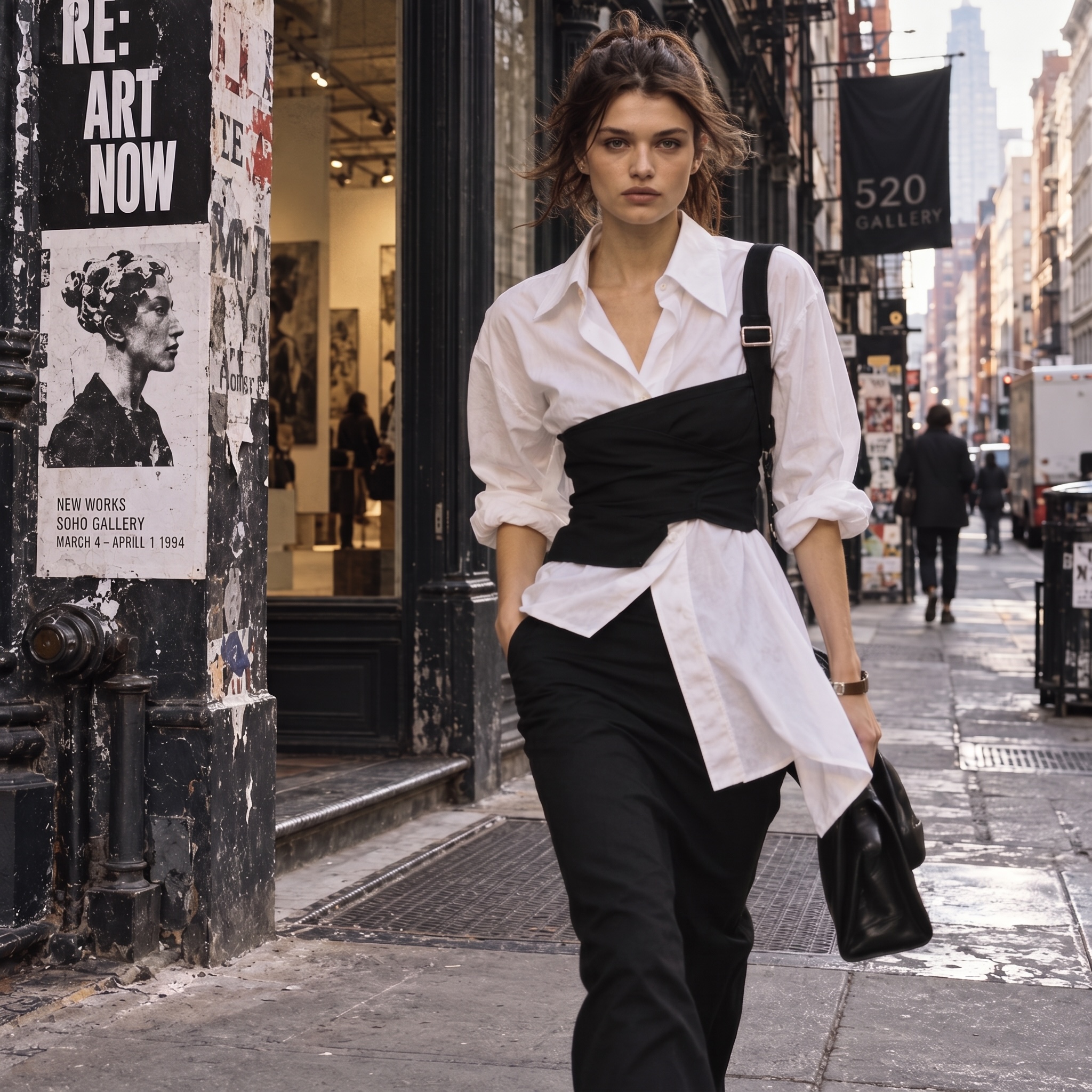
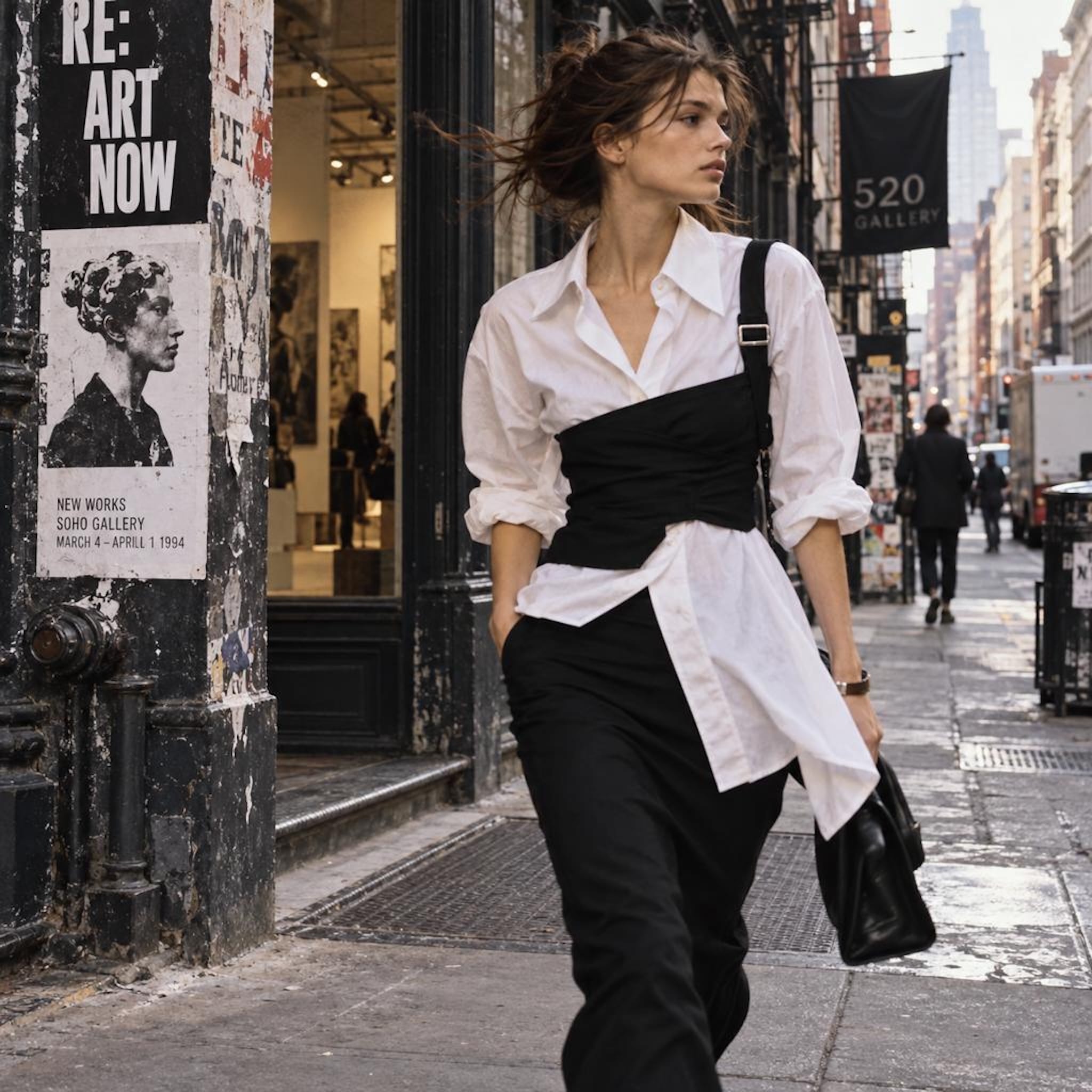
Outside an art gallery, the white shirt takes an unexpected detour beneath a black asymmetric wrap that crosses the torso like a garment still being designed. The shirt’s hem escapes at an angle, while the rolled sleeves refuse to participate in the otherwise controlled black-and-white arrangement. What might ordinarily count as a styling mistake becomes the principal feature. The garment underneath hasn’t changed nearly as much as our expectations about how it should be worn.
The difference between this outfit and the preceding taupe suit is particularly revealing. Both rely on relatively restrained colors, but the suit achieves its effect through conventional tailoring while the experimental ensemble deliberately interrupts the expected silhouette. The collar, placket, and sleeves remain familiar reference points amid the unusual layering. A little disorder, it turns out, can require a remarkable amount of design.
1995: Oversized White Shirt With Black Trousers

The borrowed-from-the-boyfriend silhouette offers an entirely different interpretation of nineties minimalism. Dropped shoulder seams, generous sleeves, and fabric falling loosely around the body create a deliberate sense of disproportion. Instead of altering the shirt through elaborate accessories or experimental layering, this outfit simply changes its size. The result makes the conventional fitted version suddenly look rather constrained.
Straight black trousers provide a controlled lower half, allowing the oversized shirt to establish the silhouette without interference. The monochromatic contrast is uncomplicated, but the proportions are anything but accidental. There’s an appealing contradiction in clothing carefully selected to suggest that absolutely no thought went into getting dressed. Achieving that particular kind of indifference has always required a little effort.
1995: White Shirt With a Bias-Cut Midi Skirt
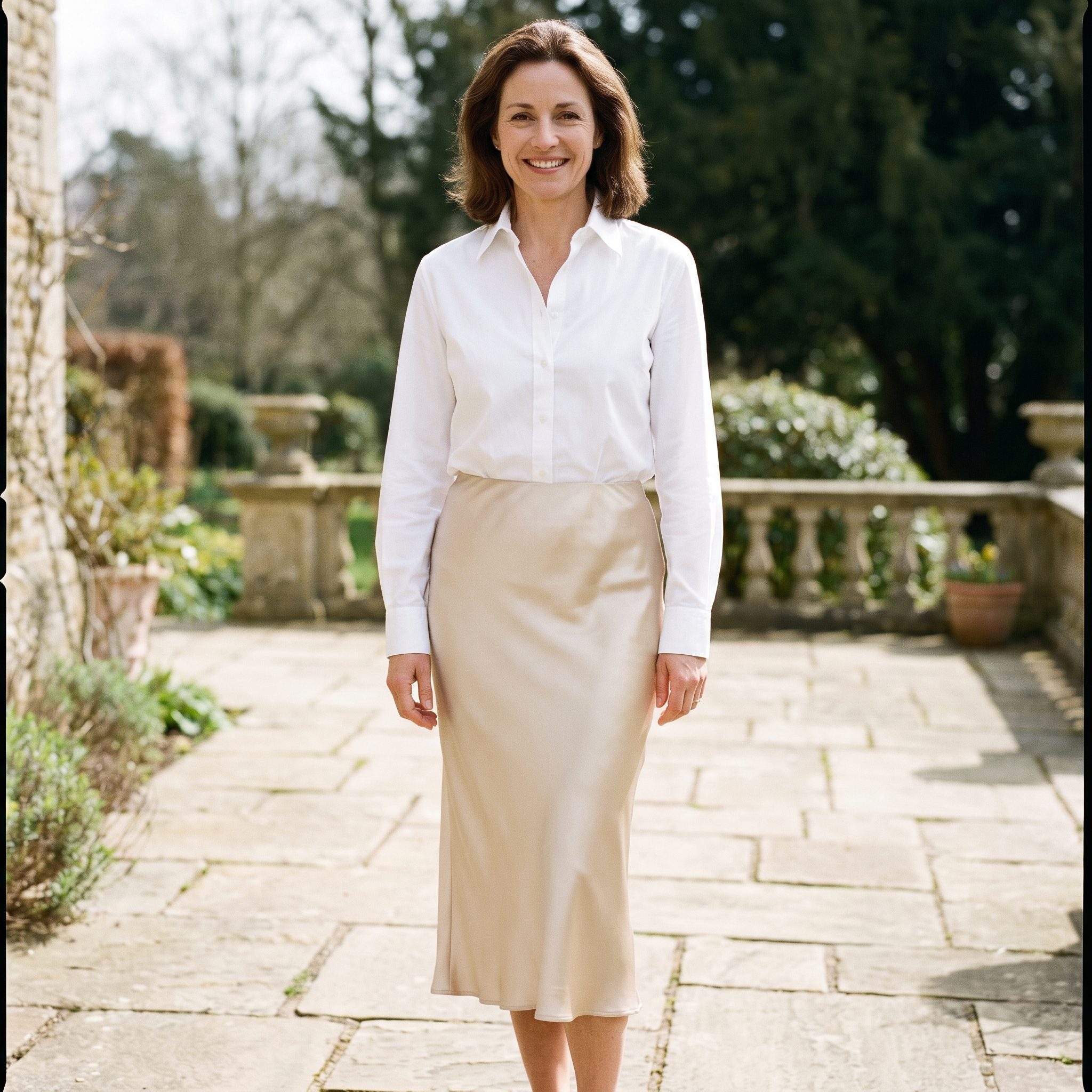
The champagne-colored skirt introduces a construction detail that deserves its own moment. Bias-cut fabric is positioned diagonally in relation to the fabric’s grain, allowing woven material to follow the body’s curves and move differently than it would in a conventional straight-grain cut. The result can be exceptionally fluid, particularly in a fabric with the characteristic sheen of satin.
The loosely tucked white cotton shirt makes a fitting companion. Its slightly bloused waist provides a relaxed transition into the skirt’s flowing shape. Unlike the earlier black slip skirt, this outfit places greater emphasis on the soft champagne color and the particular movement created by the bias cut. Two understated garments, with rather more happening in their construction than first meets the eye.
1995: White Shirt Worn Open Over a Ribbed Tank

For its final nineties appearance, the white shirt decides to stop behaving like a shirt altogether. Worn open over a black ribbed tank, it becomes a lightweight alternative to a jacket, providing coverage without concealing the simpler garment underneath. It’s a particularly straightforward arrangement, requiring nothing more complicated than leaving the buttons alone.
Mid-rise jeans and white leather sneakers complete an outfit that feels distinctly removed from the decade’s polished minimalist suiting. The interest lies in the relaxed combination of familiar casual garments rather than elaborate construction. Keep this image in mind. Three decades later, the open white shirt makes another appearance, although the clothes surrounding it have undergone a fairly substantial expansion.
Today: How the White Shirt Actually Changed

❤️ Would you like to save this?
By now, the white shirt has acquired enough experience to refuse a single job description. It can be enormous or neatly tailored, worn beneath a trench, paired with extravagantly shaped trousers, or left open over a tank. Contemporary fashion hasn’t invented oversized shirts or casual layering. What makes today’s wardrobe interesting is how freely it combines familiar ideas from earlier decades.
The most striking experiments involve both proportion and construction: pieces that curve, wrap, float, or seem to have borrowed their geometry from a sculpture gallery. Wide trousers meet generous shirts. Rounded legs accompany boxy tops. A shirt traditionally associated with professional clothing turns up with sneakers, shorts, or a flowing skirt. After fifty years of changing silhouettes, the white shirt seems increasingly happy to let everything around it get a little unpredictable.
The white shirt hasn’t abandoned its history. Today’s wardrobe simply gives it more ways to behave.
Today: White Shirt With Barrel-Leg Trousers

The trousers appear to have developed opinions about geometry. Curving outward through the leg before narrowing toward the ankle, these olive barrel-leg trousers create an unmistakably sculptural shape. They’re neither conventionally wide nor particularly narrow, which is precisely what makes them such an interesting companion for a boxy white shirt.
Instead of using fitted trousers to counterbalance the generous top, this outfit allows both garments to contribute their own distinctive shapes. The understated ballet flats keep the footwear from competing with the architectural trousers. Olive and white provide a restrained palette for a silhouette that’s anything but conventional. After all those years of straight legs, flared hems, and carefully controlled tailoring, the trousers have apparently decided to take a different route home.
Today: White Shirt With a Trench and Sneakers

Here’s an outfit in which almost everything has a long history. The trench coat brings its familiar tailored construction, the white shirt supplies another classic layer, and the jeans require virtually no introduction. Then the white sneakers arrive and make the whole arrangement considerably less formal.
Casual footwear with traditional outerwear isn’t a contemporary invention, but its prominence in modern everyday dressing makes combinations like this especially familiar. The trench provides the strongest structural element, allowing the shirt and denim to remain uncomplicated. It’s a practical combination for a full afternoon of walking, with the additional satisfaction of wearing a beautifully constructed coat.
Today: The White Shirt Gets an Architectural Makeover
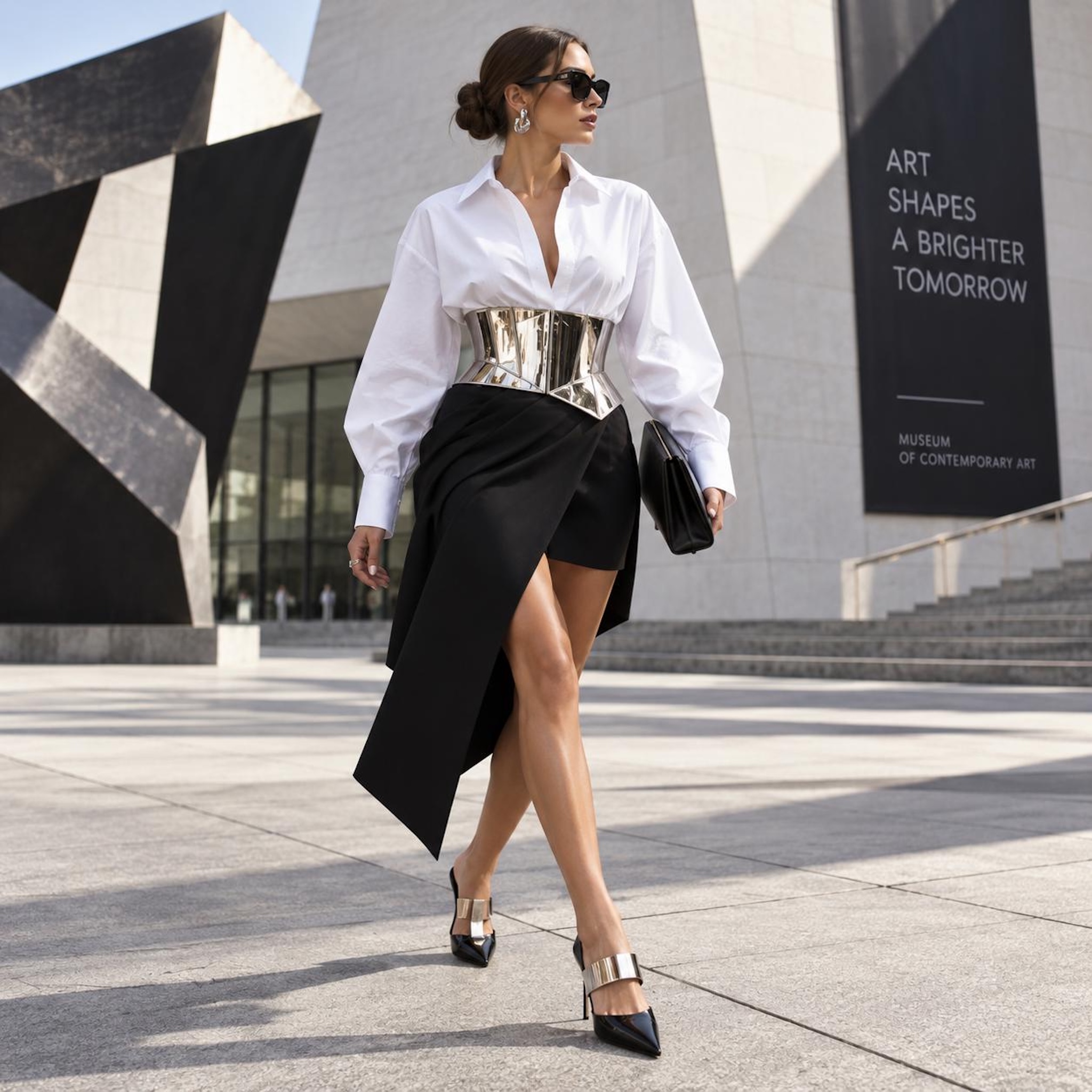
Silver metallic construction meets soft white cotton, and the relationship is anything but discreet. The rigid corset wraps around the oversized shirt’s middle, its reflective surface catching the daylight and creating a striking interruption in the familiar white silhouette. Beneath it, an asymmetric black skirt cuts diagonally across the legs. The surrounding museum’s angular forms provide an appropriate backdrop for clothing that appears to have developed a serious interest in industrial design.
Compare the metallic corset with the black fabric wrap worn over the experimental nineties shirt. Both interrupt the conventional garment, but their materials produce dramatically different effects. The earlier outfit relies on flexible fabric and irregular layering; this contemporary interpretation introduces reflective rigidity against the cotton’s natural movement. Even the location of the visual emphasis has shifted. Where eighties tailoring frequently concentrated its most conspicuous construction around the shoulders, this outfit makes the waist impossible to ignore.
Today: Oversized White Shirt With Wide-Leg Jeans

The white shirt has grown, the jeans have expanded, and apparently nobody is particularly interested in explaining themselves. This oversized combination embraces generous proportions above and below the waist, a considerable departure from the comparatively controlled pairing of a loose shirt and straight black trousers we saw in 1995.
One small detail prevents the outfit from becoming an uninterrupted expanse of fabric. The half-tuck reveals a portion of the waistband, establishing a point of definition amid all that volume. The dark wide-leg jeans bring visual substance to the lower half, while loafers introduce a polished finish. Nothing needs to fit particularly closely for the overall silhouette to feel considered.
Today: White Shirt With a Column Maxi Skirt

A chocolate-brown column skirt offers a welcome pause between more theatrical contemporary silhouettes. Its long, clean silhouette provides very little additional decoration, leaving the contrast between warm brown and crisp white to become the principal attraction. The uninterrupted length gives this outfit an elegance that doesn’t depend on elaborate tailoring or accessories.
Two undone buttons and pushed-up sleeves introduce a relaxed counterpoint to the skirt’s comparatively formal shape. The brown column skirt also offers a warmer alternative to the familiar black-and-white combination. The restrained palette and straightforward proportions make a particularly interesting contrast with the decade’s more adventurous trouser silhouettes. Not every contemporary outfit requires an architectural experiment to justify its existence.
Today: White Shirt With Tailored Bermuda Shorts

Just when the white shirt appears to have settled into a respectable relationship with long skirts and trousers, somebody takes a pair of tailored pants and removes approximately half the legs. The result is surprisingly sophisticated. These high-waisted Bermuda shorts borrow their construction from traditional tailoring, giving an otherwise casual summer garment the appearance of something considerably more polished.
The white shirt provides a natural companion because it belongs to the same tailoring tradition. Loosely tucked and worn with rolled cuffs, however, it introduces enough informality to make the combination suitable for an ordinary summer afternoon. Slingback flats offer an attractive alternative to heavier footwear, while gold earrings provide a little decoration without turning the outfit into an occasion. Sometimes removing fabric produces more interesting results than adding another layer.
Today: White Shirt Open Over a Fitted Tank

We’ve seen this combination before. Back in 1995, the white shirt was hanging open over a black ribbed tank, accompanied by mid-rise jeans and white sneakers. Three decades later, the arrangement has survived remarkably well, although the jeans have given way to a considerably more generous pair of taupe trousers.
Unlike the sculptural pieces elsewhere in the modern section, this contemporary shirt is simply oversized, with enough fabric to move independently of the fitted black tank underneath. The trousers continue that relaxed silhouette, while low-profile sneakers keep everything grounded. Compare this combination with its nineties predecessor and the change becomes especially interesting. The styling principle is virtually identical, but the proportions surrounding the body have expanded. Apparently, a good idea doesn’t need replacing every decade. Sometimes it just needs a bigger shirt.
Today: The White Shirt as the Only Thing That Never Left

After fifty years of wardrobe experiments, the white shirt finally gets an afternoon off. No shoulder pads. No suede vest. No complicated arrangements involving sweaters that aren’t actually being worn. Here, the shirt appears with ivory trousers and flat mules, its sleeves pushed back and its neckline casually unbuttoned. There’s nothing particularly revolutionary about the combination, which makes it an appropriate ending to a gallery devoted to a garment that has witnessed quite a few revolutions in fashion.
The interesting question is how differently this exact outfit might have been interpreted at various points along the way. The seventies could have added a substantial leather belt. The eighties might have introduced a blazer with enough shoulder construction to support a small balcony. The nineties would probably have approved of leaving everything precisely as it is. Contemporary fashion has the advantage of borrowing from all three without feeling particularly obliged to acknowledge its influences.
After fifty years of competing ideas about how women should dress, that unassuming white shirt is still here. The argument, apparently, is nowhere near finished.