
Winter is when good clothes start behaving badly. Cashmere crowds the shearling. Satin picks a fight with suede. A perfectly sensible wool coat meets a velvet skirt, and suddenly the outfit has more personalities than a dinner party with an open bar. The trouble isn’t too much texture. It’s too little discipline.
A forest-green bouclé coat with sculptural sleeves needs a different supporting cast than a blush mohair sweater tucked into cocoa leather. One demands restraint below the waist; the other thrives on the collision between softness and structure. Color can keep the peace, but proportion does the negotiating. A cropped jacket exposes the skirt. A belt interrupts the bulk. A tall boot rescues a troublesome hem.
Across these 36 looks, fringe swings, bouclé bristles, satin gleams and suede keeps its composure. Some stay within a single shade. Others invite an unexpected color into the argument. Every piece gets its say, and nobody raises a voice. Even the most unruly materials, it turns out, can be taught some manners.
FYI, thanks to AI imagery software, we’re able to create very specific fashion and hairstyle examples to illustrate the points being made. In some cases, imagery is exaggerated to hammer home the point. Also, assume links that take you off the site are affiliate links such as links to Amazon. this means we may earn a commission if you buy something.
36. Forest-Green Bouclé Builds a Coat Around Sculptural Sleeves
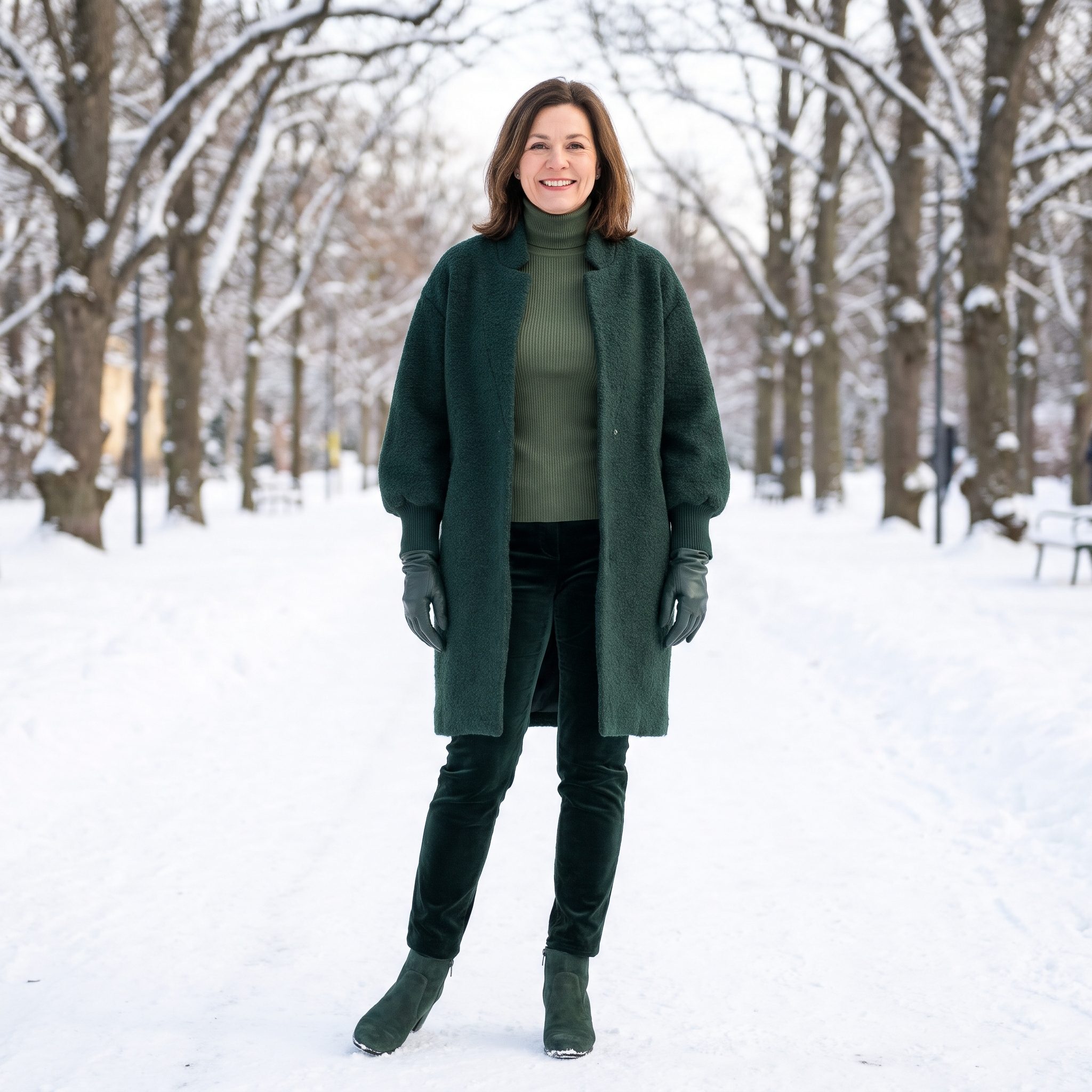
Those sleeves have architectural ambitions. Their rounded volume gives the forest-green bouclé coat a distinctive silhouette, while slim velvet trousers keep the lower half precise. The proportions are almost exaggerated, yet the narrow trouser line makes the unusual construction look entirely intentional.
Green leather gloves provide a smooth counterpoint to the nubby wool and soft velvet. The saturated color runs through the outfit without demanding an exact match between every piece. With so much happening in the shape of the coat, the restrained palette knows better than to compete.
35. Copper Fringe Gives Tailored Evening Trousers Something to Talk About
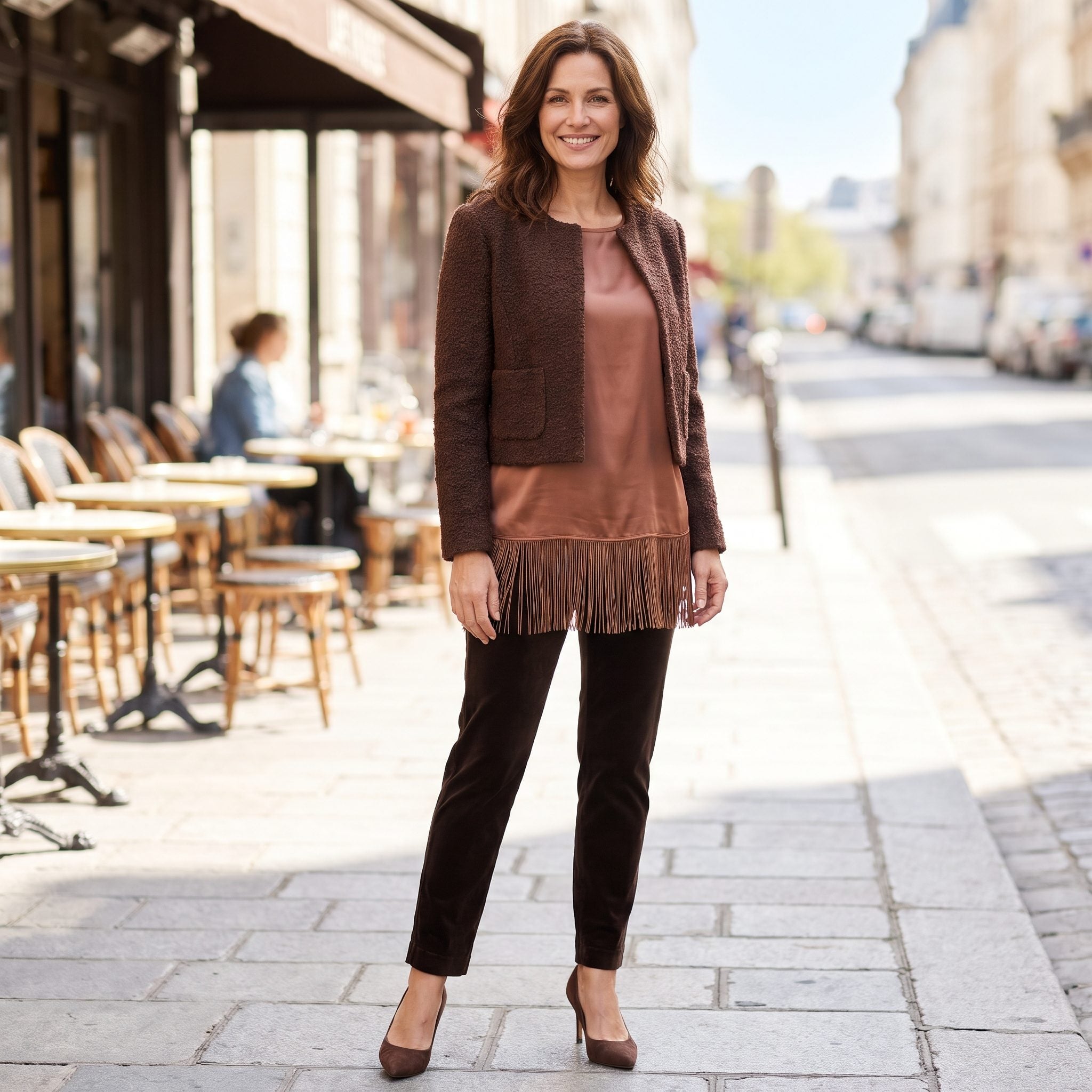
Copper satin has no intention of blending into the background. Its warm sheen illuminates the upper half, while darker brown tailoring provides a more measured response. The contrast gives the outfit an evening character without relying on sequins, glitter, or the usual formalwear machinery.
Fringe at the tunic’s hem supplies movement where the layers meet. A shorter jacket leaves the detail visible, and the long trouser line brings everything back under control. The effect is luxurious without being precious: polished tailoring with a little mischief around the edges.
34. Oat Bouclé Cuts Through the Richness of Burgundy Velvet
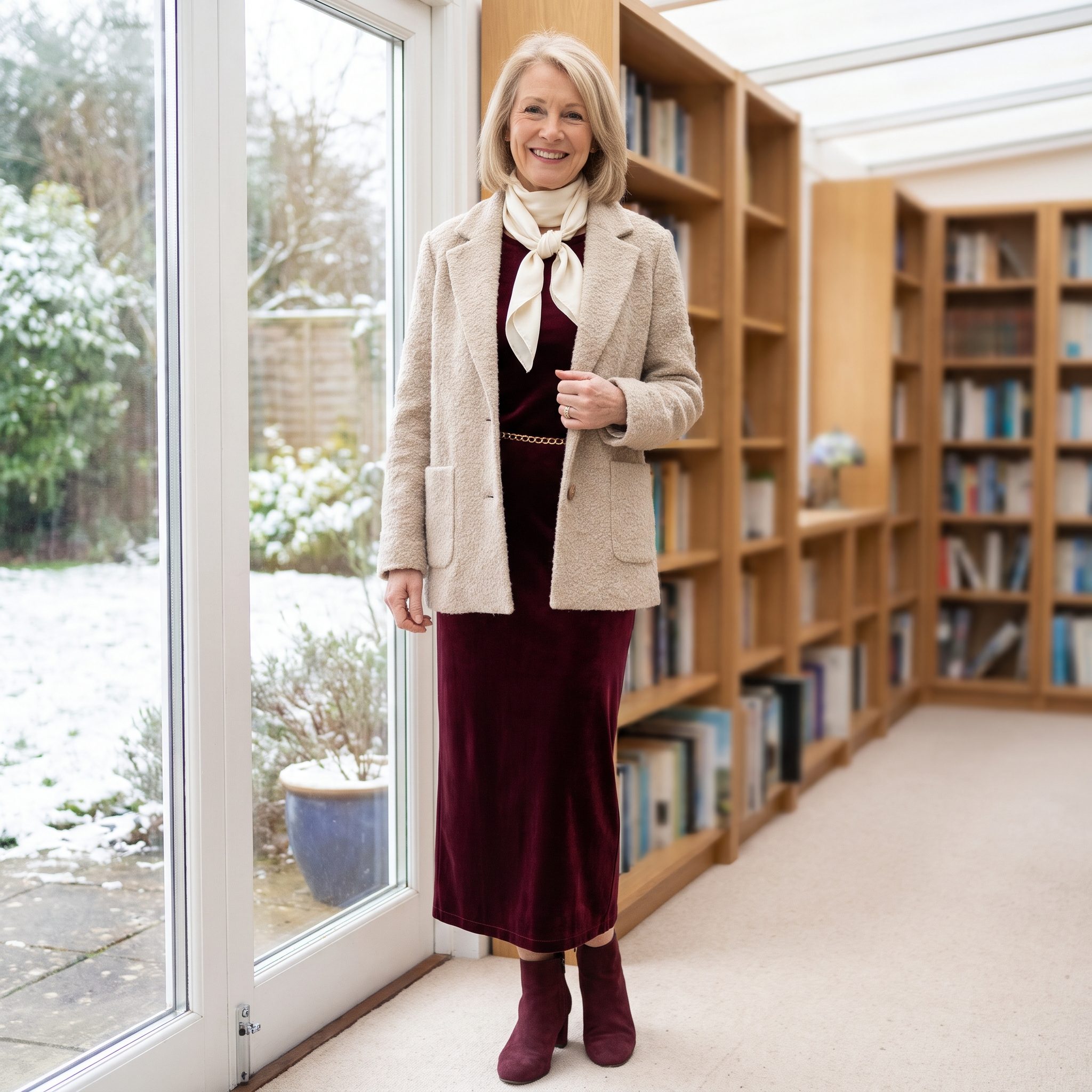
Burgundy velvet absorbs the light and deepens the color of the dress. The cropped oat bouclé jacket interrupts that darkness with a pale, irregular surface, giving the outfit a dramatic change in texture without a complicated silhouette.
A fine gold chain at the waist provides a restrained metallic accent. More important is the jacket’s length: it stops high enough to preserve the dress’s long column, allowing the velvet to remain the dominant fabric. Richness below, restraint above, and not an inch of unnecessary fuss.
What Our Readers Say
- In our reader polls, 80% of ThreadCurve readers said they rarely wear prints, which makes texture one of the most useful ways to add interest to a winter outfit.
- Asked to name their style era, about two out of three of our readers picked timeless over retro revival or current trends.
From ThreadCurve reader polls and votes.
33. Slate Appliqué Turns a Sweatshirt Into a Partner for Satin
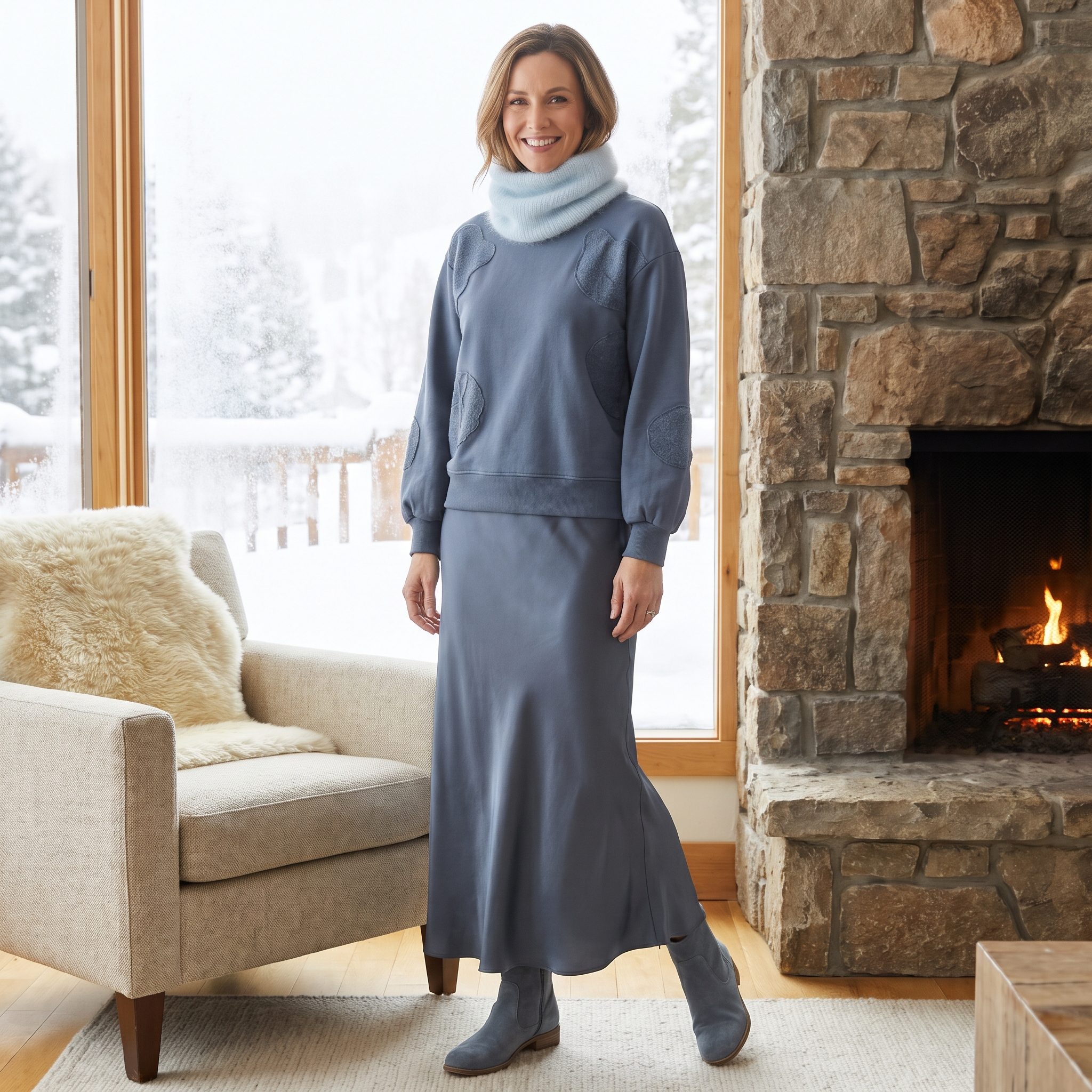
A sweatshirt and a satin maxi skirt would ordinarily have little reason to share a hanger. One belongs to casual dressing; the other brings a fluid, evening-ready sheen. Their unlikely partnership becomes convincing through a controlled silhouette and a closely related slate palette.
Tonal felt appliqué raises the sweatshirt above its everyday origins, introducing decoration without another competing color. The skirt falls in a long, smooth line beneath the substantial top. The fabrics remain unmistakably different, which is precisely what gives the pairing its character.
32. Rust Shearling Makes a Staircase Out of Winter Layers
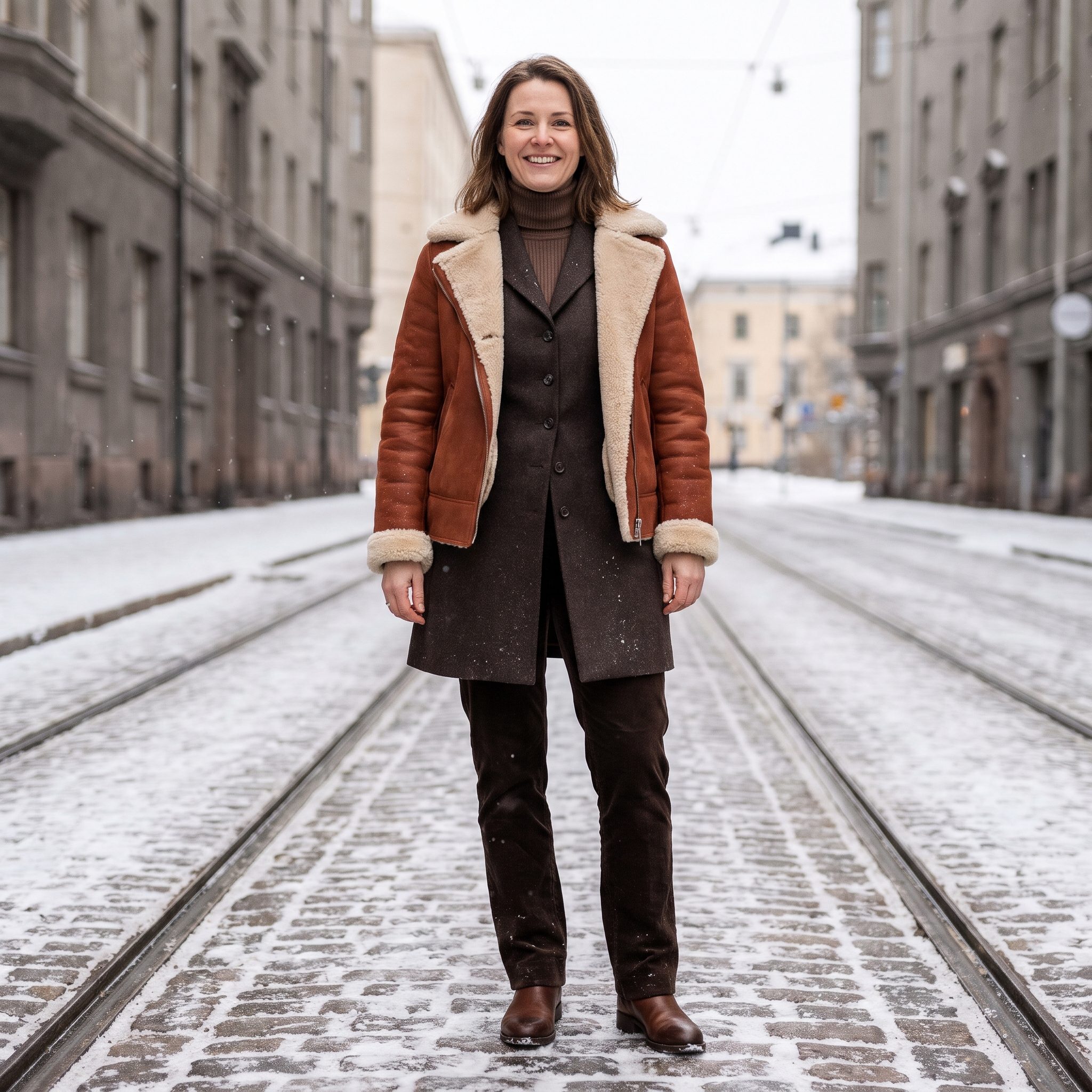
Three different lengths give this outfit its rhythm. The rust shearling jacket finishes first, revealing a longer waistcoat beneath it. Full-length trousers carry the line downward. Rather than piling one bulky layer over another, the arrangement gives every garment a visible edge.
Brushed wool, corduroy, fine ribbing, and shearling introduce their own variations in surface. The rust jacket provides the strongest color, while the deeper browns below keep the composition grounded. The staggered hems do more for the outfit than another accessory ever could.
31. Blush Mohair Finds an Unexpected Counterpart in Cocoa Leather
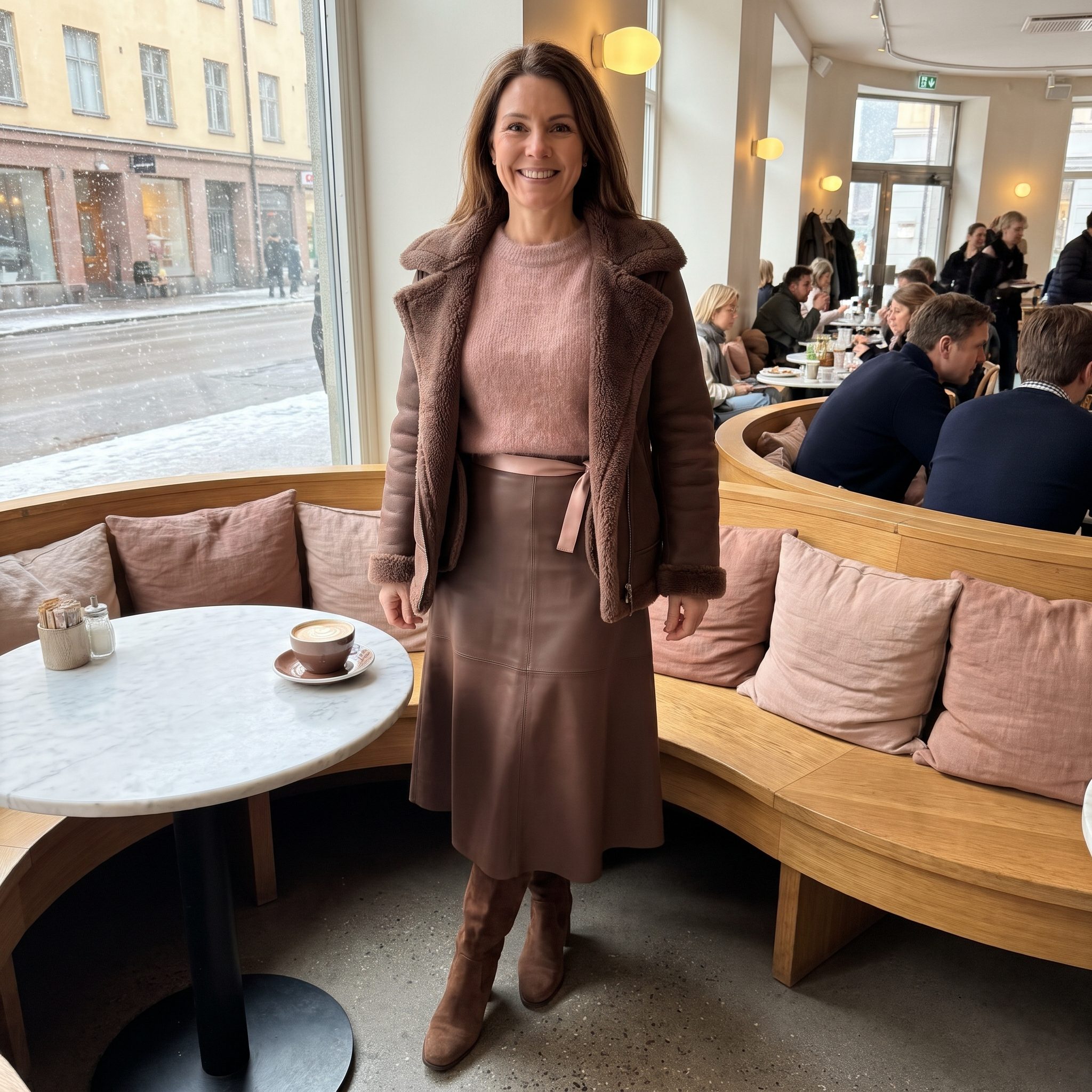
Blush mohair has all the softness of a winter cloud. The cocoa leather skirt has considerably firmer ideas. Its smooth, structured surface gives the fuzzy knit a convincing counterpart, while the chocolate-brown color prevents the pale pink from becoming overly delicate.
A flat satin belt marks the waist with a narrow flash of light. The leather establishes the outfit’s shape; the mohair softens its attitude. Neither fabric would have quite the same effect without the other.
30. Graphite Suede Gives a Full Wool Skirt a Sharper Edge
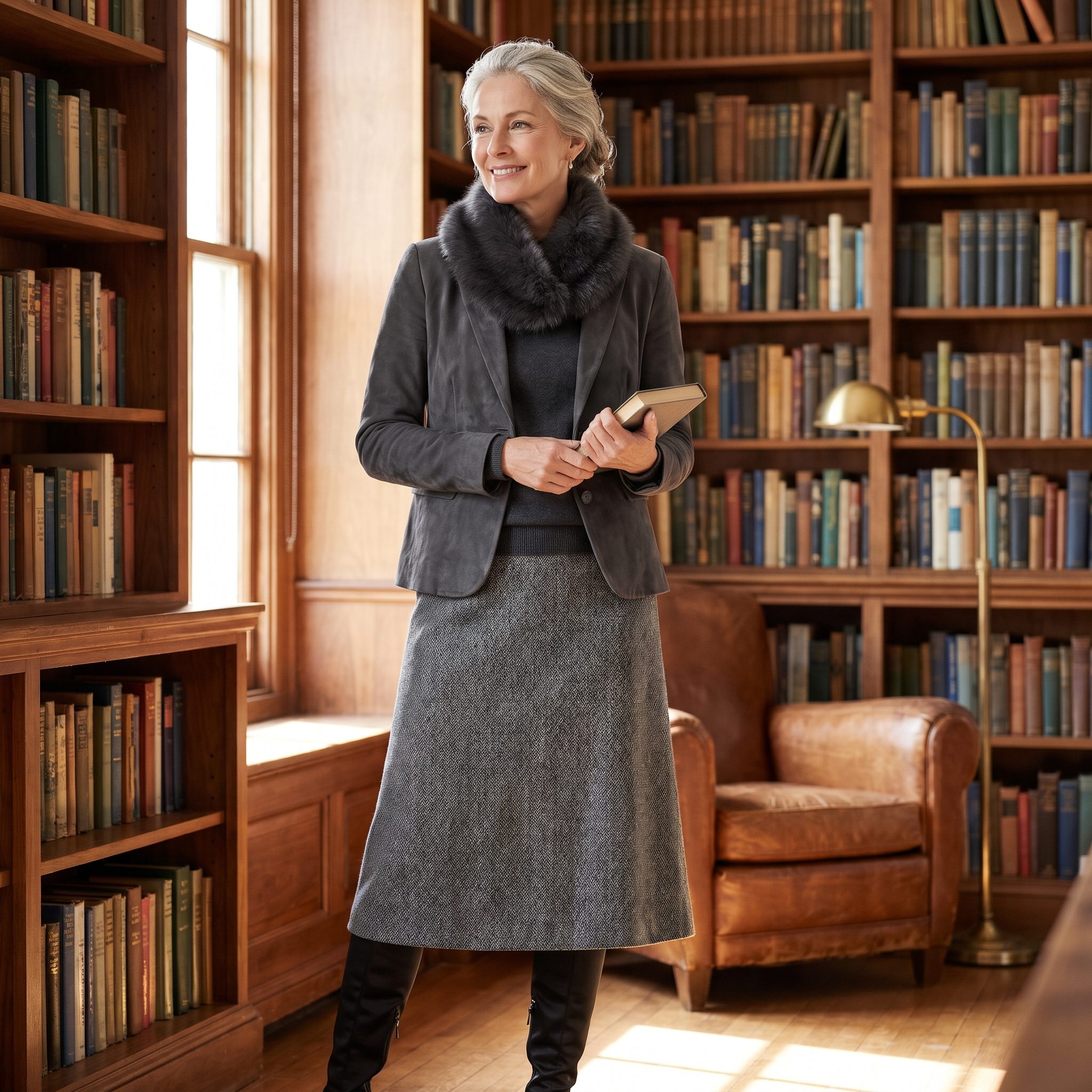
A full wool skirt brings generous movement to an otherwise disciplined graphite-gray outfit. The suede blazer supplies a tailored upper half, its matte surface sitting comfortably beside cashmere and the fine pattern of herringbone.
The black satin boots provide the sharpest reflection in the composition. With the blazer left open, the knit remains visible and the skirt retains its sweep. The interest lies in the competing finishes, not a complicated color scheme.
29. Teal Velvet Appliqué Makes One Sleeve the Center of Attention
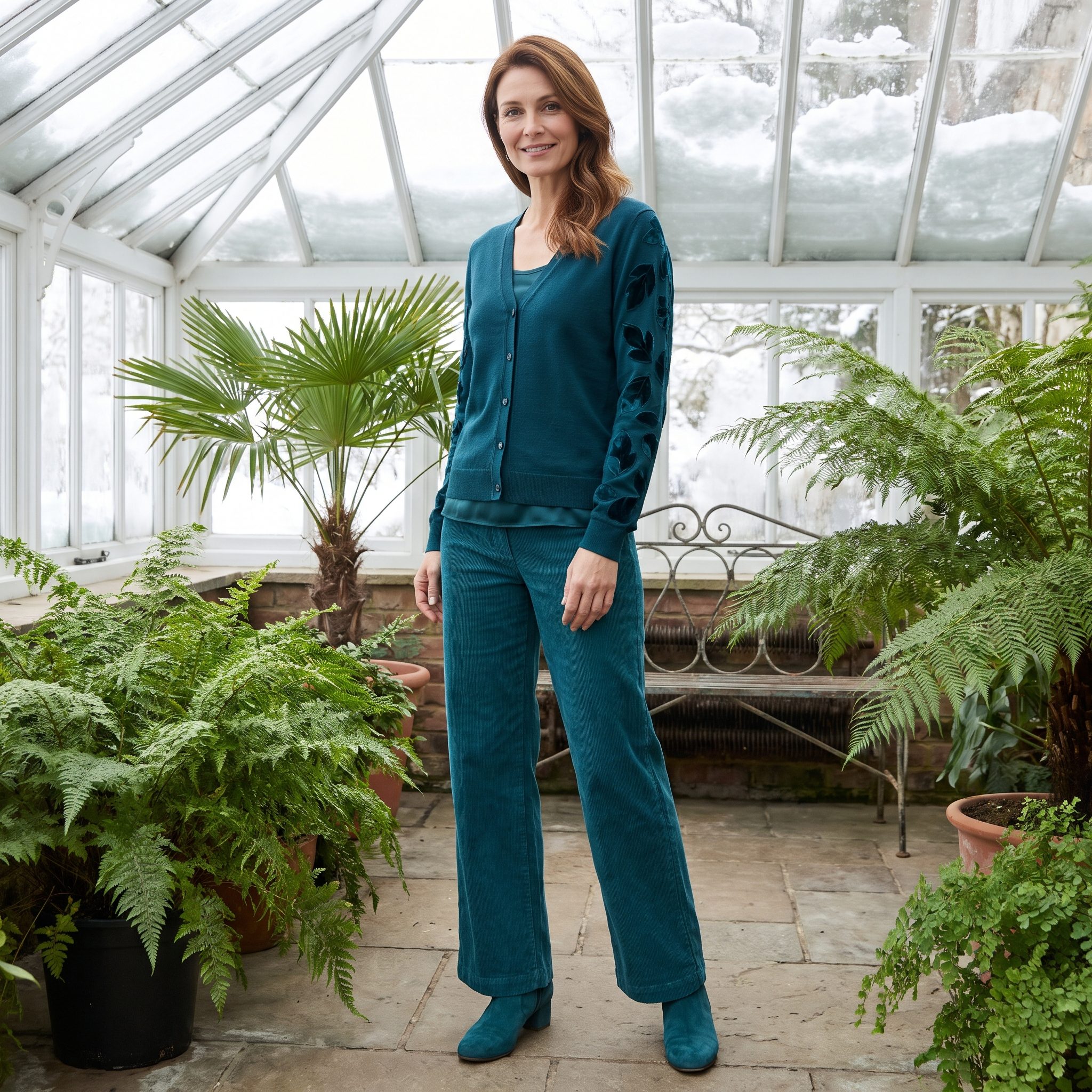
One sleeve carries raised velvet appliqué, giving an otherwise restrained teal knit an unexpected focal point. The asymmetry is the clever part. Decoration concentrated in one place has more impact than embellishment scattered indiscriminately across the garment.
Corduroy contributes fine parallel ridges, while the velvet leaves introduce a softer, sculptural surface. Everything remains within the same teal family, allowing the differences in texture and placement to command attention.
28. Stone Suede Keeps Its Fringe Under Wraps Until the Second Look
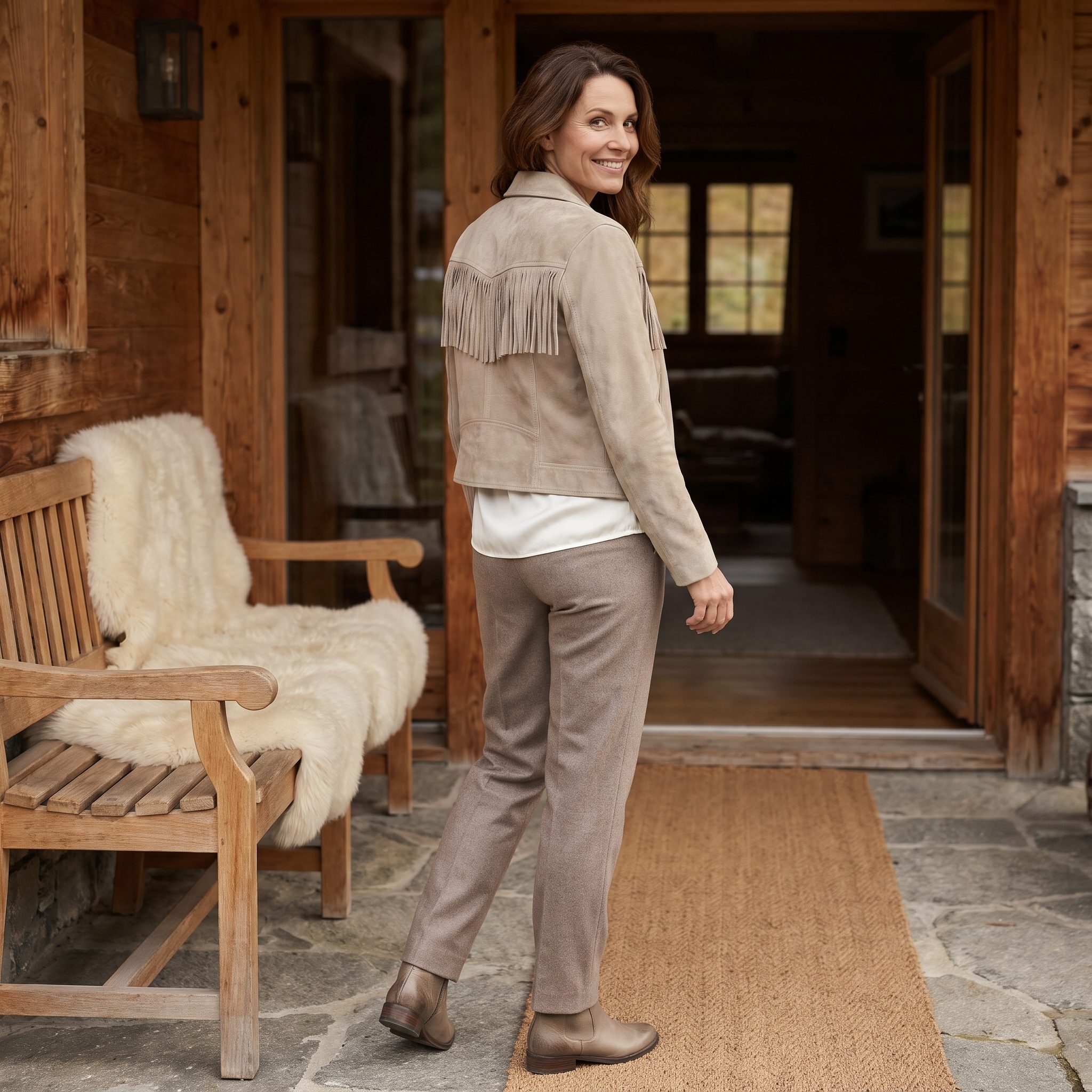
Fringe along the back yoke gives this stone suede jacket a decorative detail that doesn’t interfere with its tailored front. The placement is restrained, but the change in surface introduces movement to an otherwise clean and structured garment.
A silk blouse brings a measured sheen against the matte suede, while narrow trousers continue the silhouette toward the boots. The pale neutral palette leaves the jacket’s construction to do the interesting work. Not every statement needs to announce itself from across the room.
27. Ivory Fur and a Ribbed Knit Dress Play Opposite Sides of the Volume Game
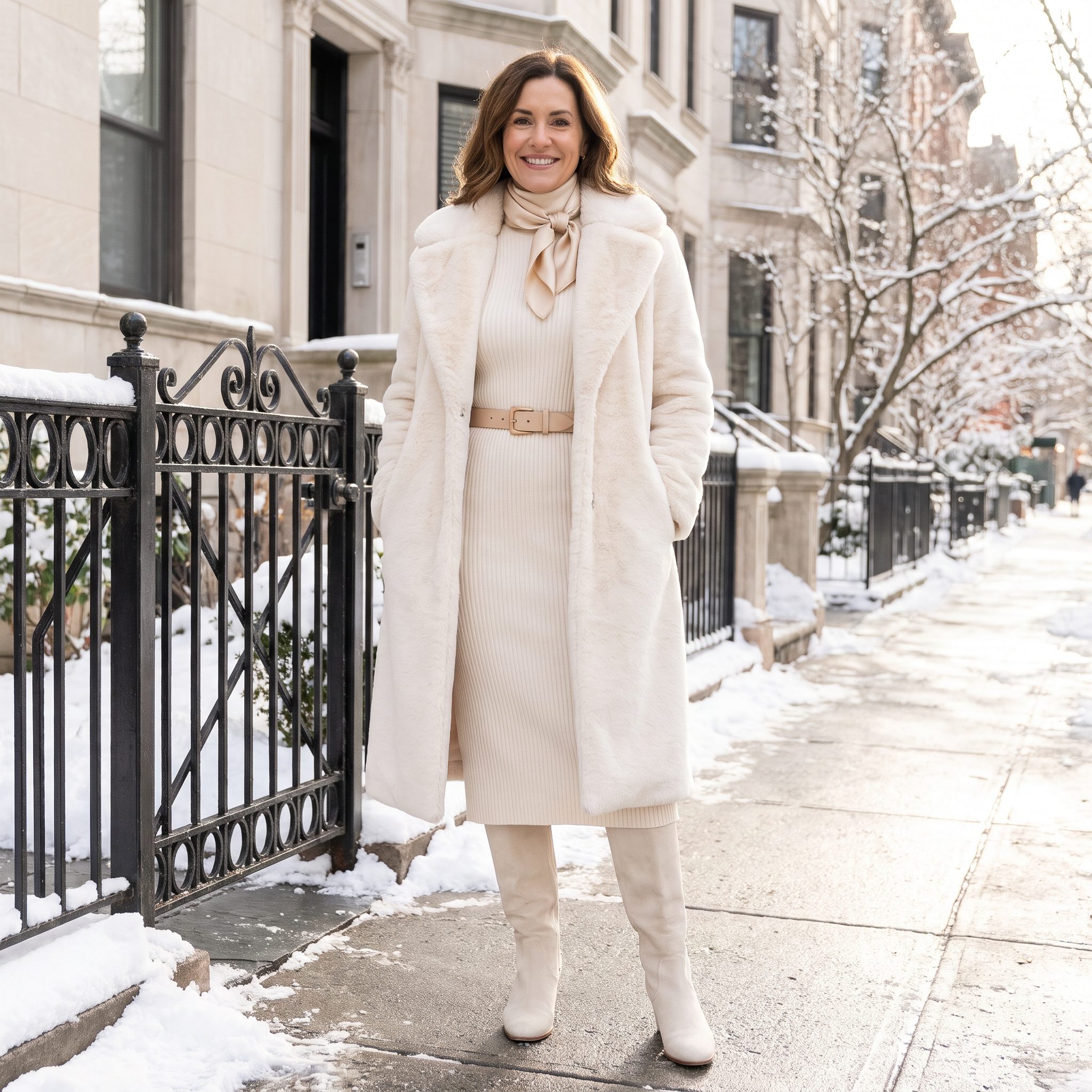
The fur coat brings an extravagant amount of softness to the upper half. Beneath it, a narrow ribbed knit dress follows a much straighter line. The difference in volume gives the coat room to make its entrance while the dress maintains the outfit’s underlying shape.
A satin neckerchief introduces a small reflective detail near the face, and a leather belt marks the waist. Suede boots complete the pale composition with a quieter finish. Cream and ivory may be close relatives, but their textures have entirely different personalities.
26. Plum Velvet Holds Its Own Beneath a Long Suede Coat
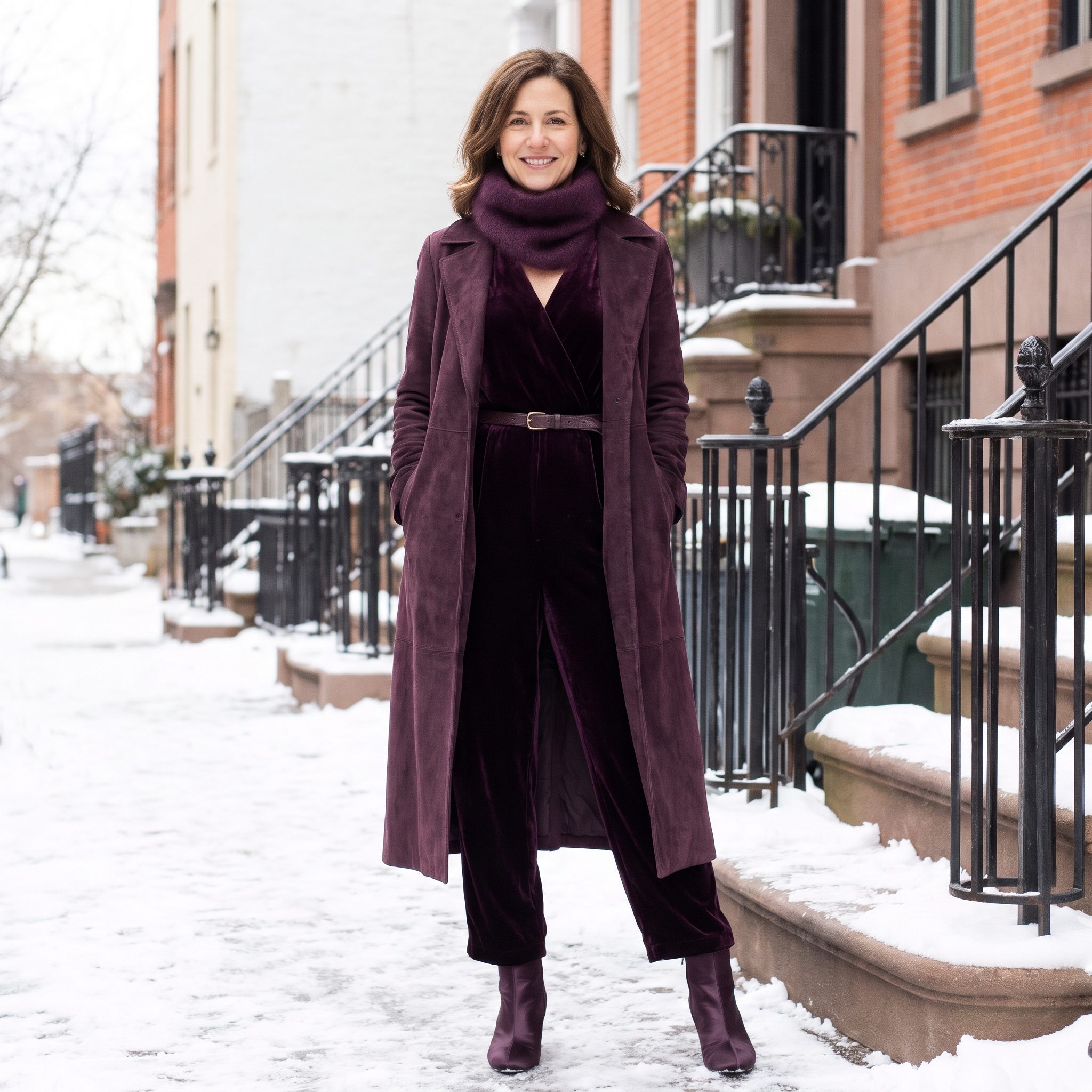
A plum velvet jumpsuit brings enough depth and richness to carry an evening outfit on its own. The long suede coat adds another dimension, its matte surface providing a substantial frame around the velvet’s darker, light-absorbing pile.
Worn open, the coat preserves the jumpsuit’s shape rather than concealing it. Mohair introduces a softer edge, while satin accessories catch the light more sharply. The closely related purples allow the fabrics to take turns attracting attention.
25. Espresso Fringe Turns a Brown Wrap Into Moving Architecture
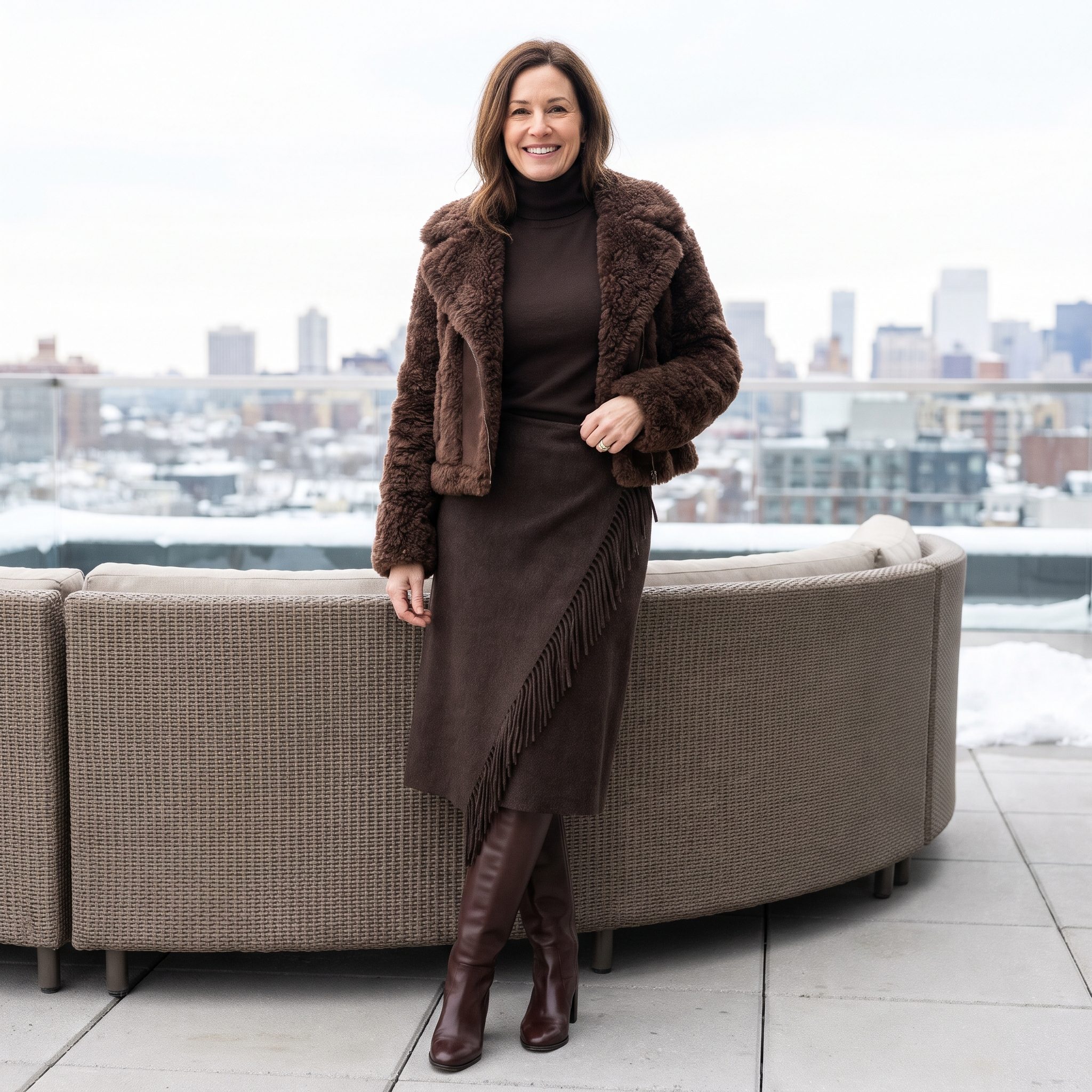
Fringe cuts diagonally across the wrap skirt, sending the eye in a direction that the surrounding layers deliberately resist. The slanting detail interrupts the vertical fall of the brown fabrics and introduces movement at the hip and hem.
Shearling, cashmere, brushed wool, fringe, and smooth leather offer markedly different surfaces within the espresso palette. The outfit remains tonal, but the diagonal skirt detail prevents the arrangement from becoming predictable.
24. Cream Fringe Gives an Architectural Tunic a Little Movement
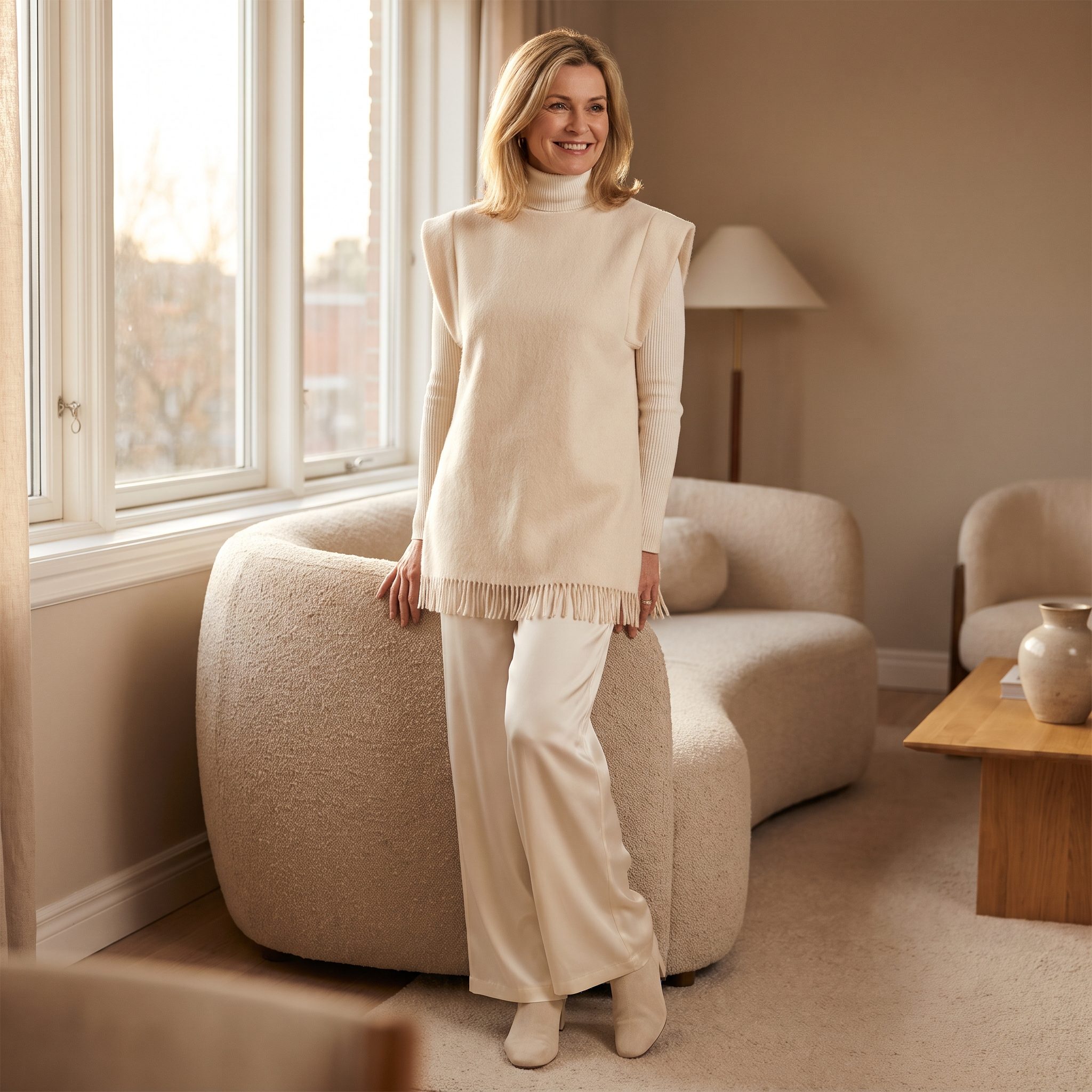
Squared shoulders give this cream tunic an almost architectural outline. The fringe along its hem has less formal intentions, introducing movement beneath an otherwise controlled shape. The contrast between rigid construction and loose decoration gives the garment its distinctive character.
Subtle changes in weave, softness, and finish separate the pale layers. The fringe supplies the most obvious texture, while the structured shoulders prevent the tunic from losing its definition. Cream-on-cream dressing rarely looks this decisive.
23. Olive Utility Meets a Satin Skirt With Other Plans
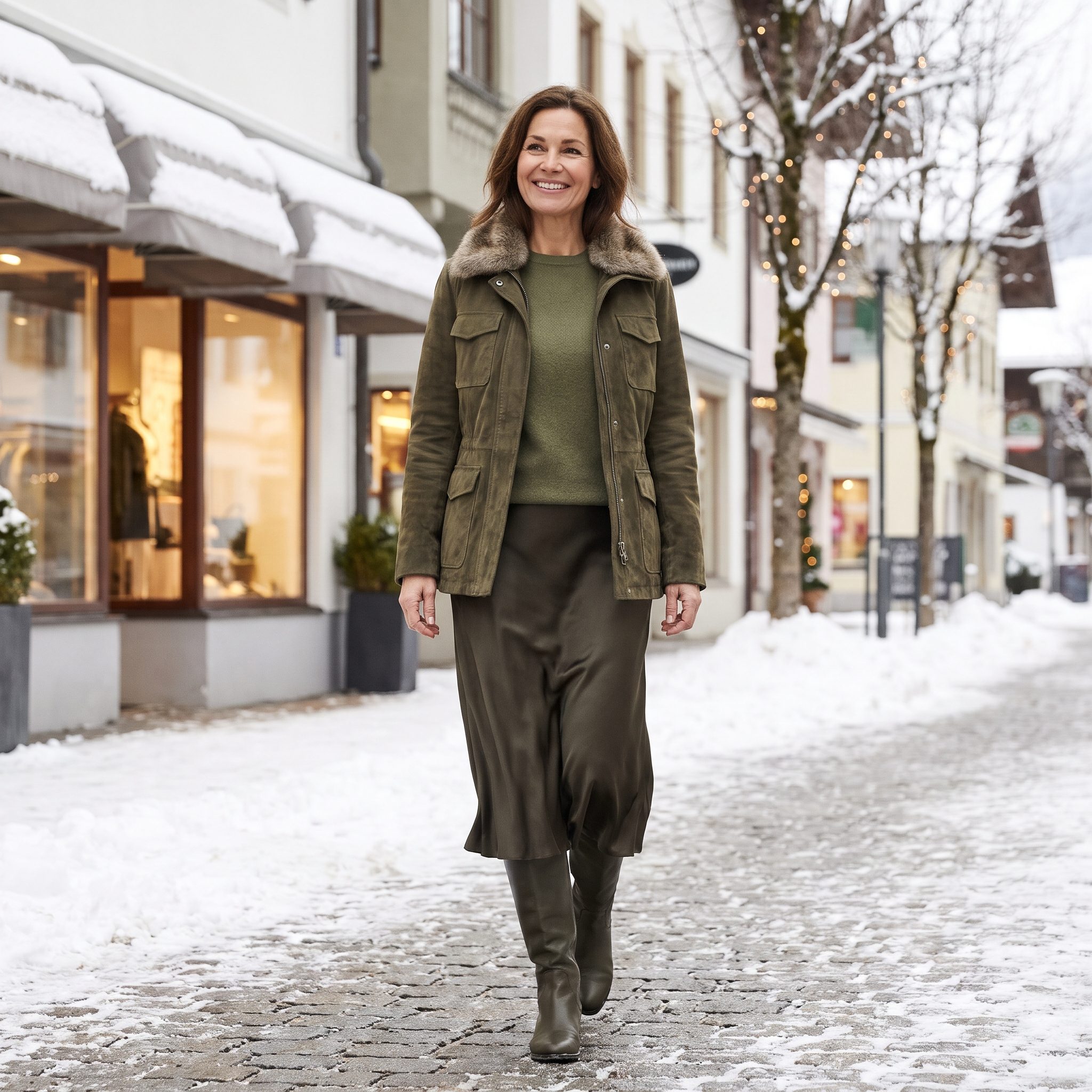
A field jacket arrives with practical pockets and a no-nonsense silhouette. The satin skirt beneath it has an entirely different agenda. Its bias-cut fluidity and reflective finish introduce elegance where the jacket supplies utility, creating a partnership that ought to be awkward but isn’t.
The shared olive palette connects the pieces without disguising their differences. Suede accessories add a softer matte finish, giving the satin a little company and the jacket a more polished context.
22. Silver Fur Meets the Precision of a Pleated Knit Dress
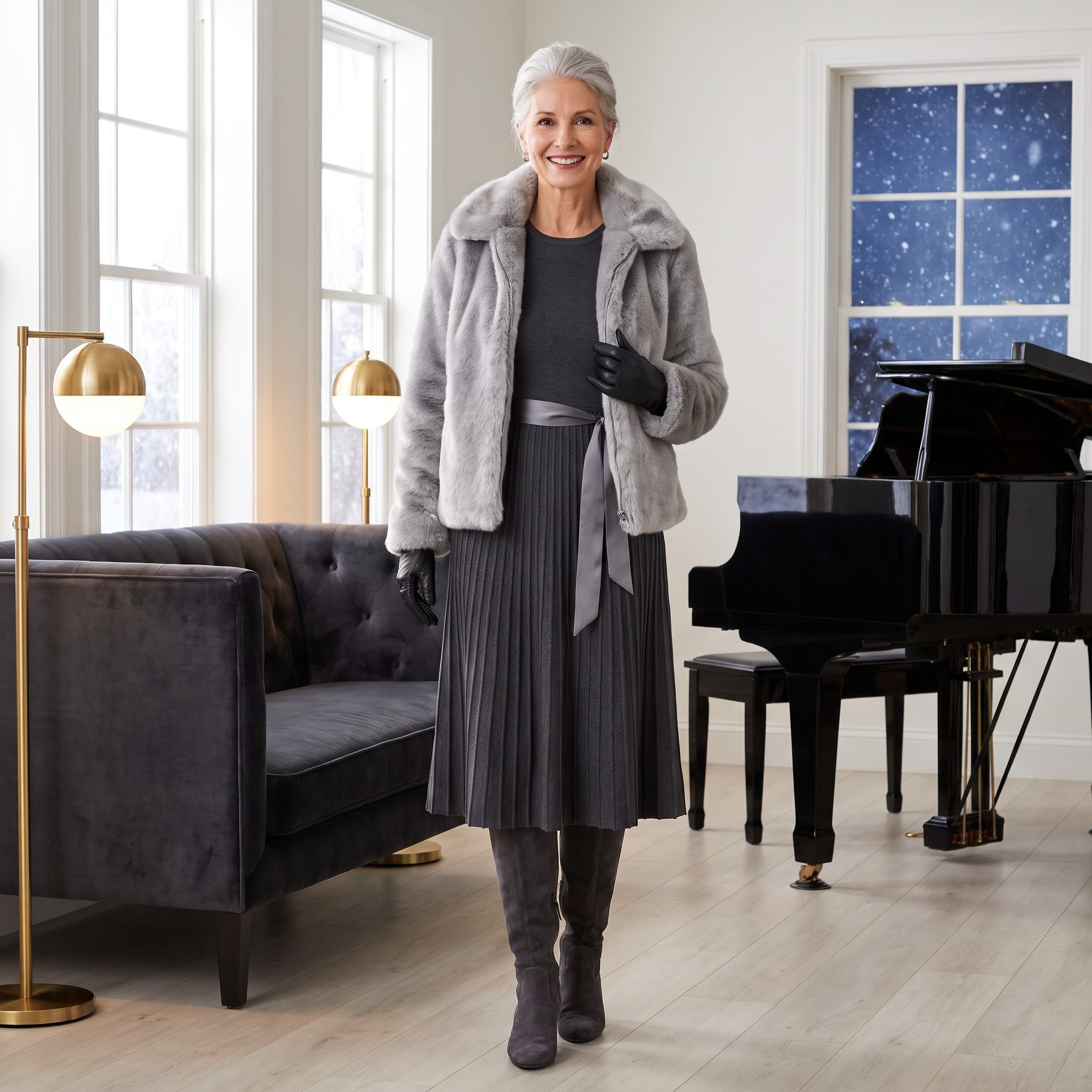
Fine vertical pleats give the charcoal knit dress a disciplined rhythm beneath the plush volume of a silver faux-fur jacket. The narrow folds continue below the waist, providing a sharp contrast to the jacket’s broad, irregular surface.
A satin sash introduces a restrained highlight at the middle. Silver and charcoal maintain a cool tonal relationship, but the fabrics refuse to look identical. The result is a winter outfit that finds its elegance in the tension between softness and precision.
21. Toffee Herringbone Gives Bouclé Culottes a Tailored Finish
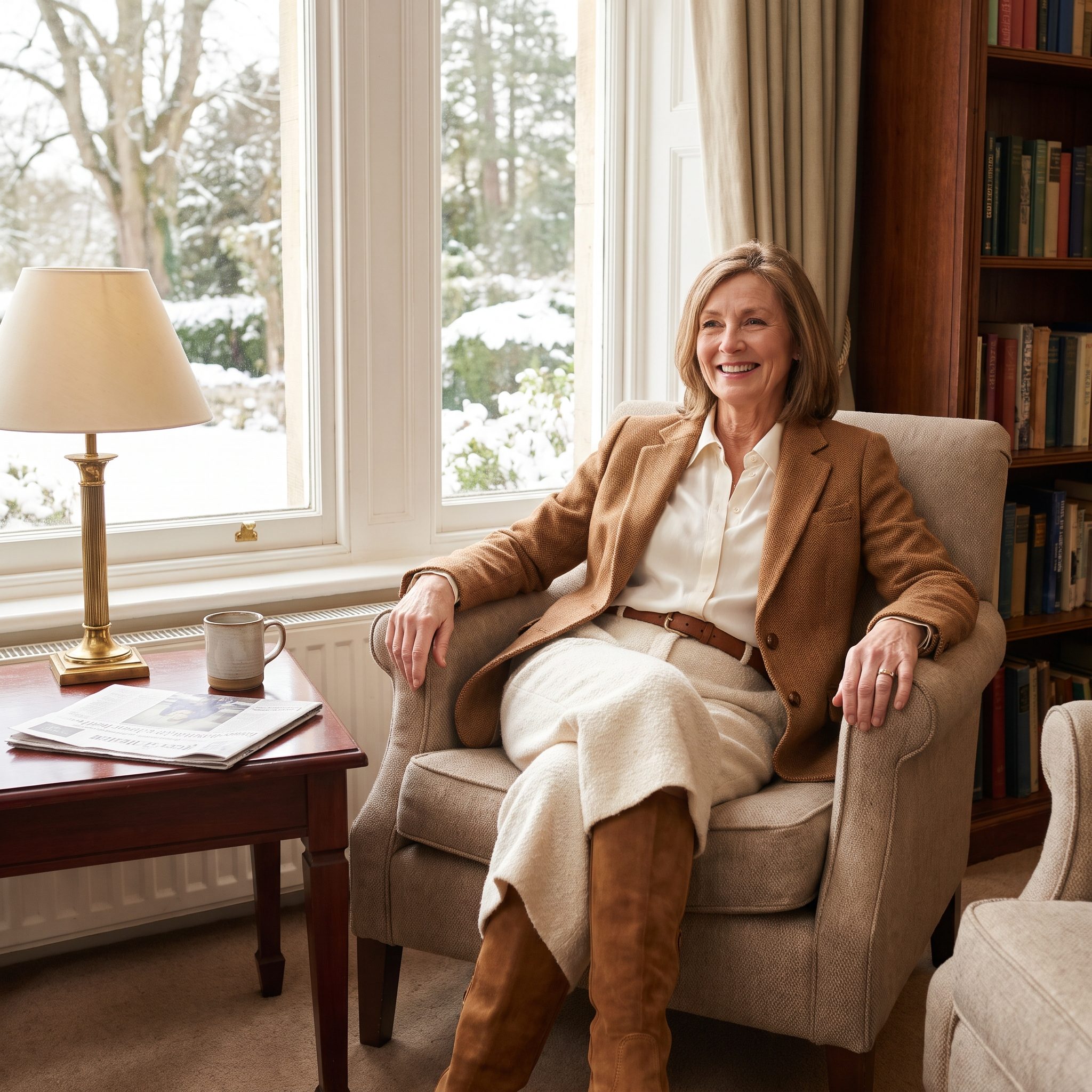
Mid-calf bouclé culottes bring an unusual proportion to this warm, tailored outfit. Tall boots continue the line beneath the hem, making the shorter trousers a deliberate feature rather than an interruption.
Herringbone contributes a fine directional pattern, bouclé supplies a rougher surface, and silk adds a measured sheen beneath the tailored layers. The toffee palette keeps the fabrics connected while their different structures provide the interest. The boots are especially important: they give the unconventional trouser length a confident finish.
20. Aubergine Bouclé Frames a Velvet Dress Without Hiding It
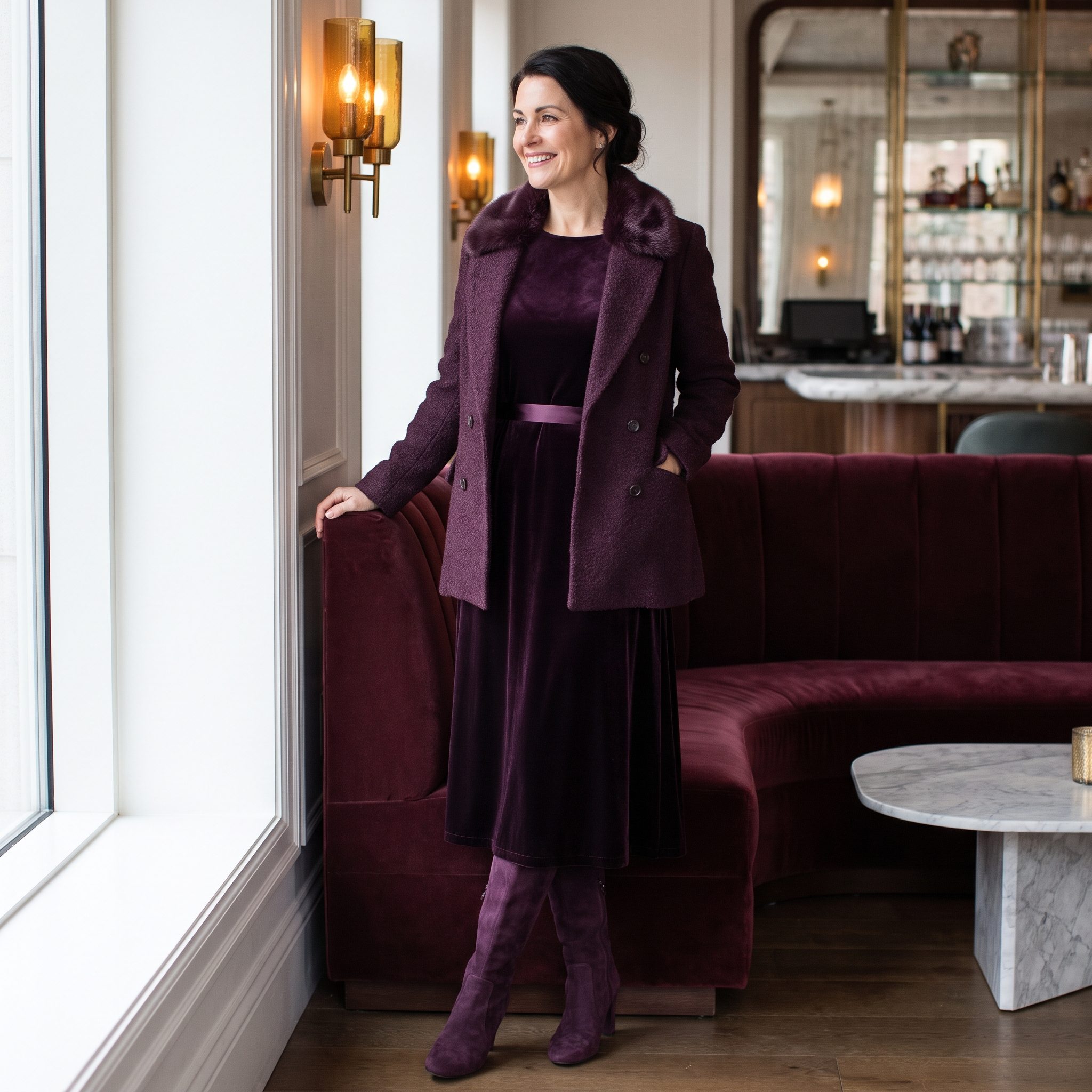
Plum, aubergine, and burgundy create a rich sequence of closely related colors. The nubby bouclé blazer interrupts the deep pile of the velvet dress, while softer fur details introduce another degree of depth.
The double-breasted blazer stays open, exposing the dress’s belted waist and allowing the skirt to retain its movement. Strong shoulders provide structure above the fluid velvet. The saturated colors make a statement; the tailoring ensures they remain coherent.
19. Winter-White Cable Knit Gets a Plush Finish at the Boots
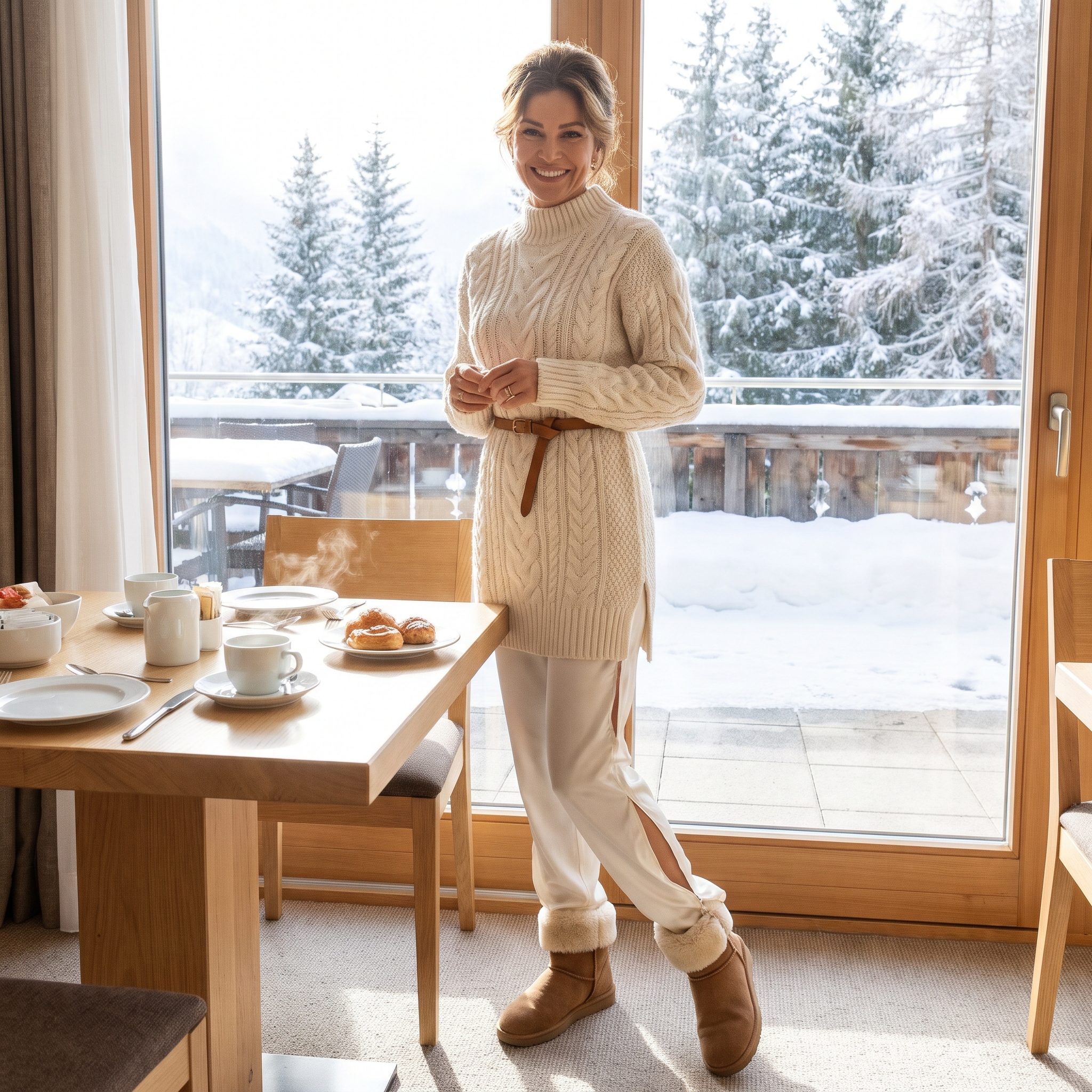
Shearling cuffs at the boots repeat the softness of the cable-knit sweater dress without imitating its texture. The detail gives the outfit a substantial finish at ground level, balancing the weight of the knit above.
A belt establishes the waist, while side slits reveal satin trousers beneath the dress. Those smooth panels introduce a reflective contrast to the pronounced cable pattern. The pale palette remains consistent, but the surfaces are anything but monotonous.
18. Wine Fringe Turns Sculptural Sleeves Into the Main Event
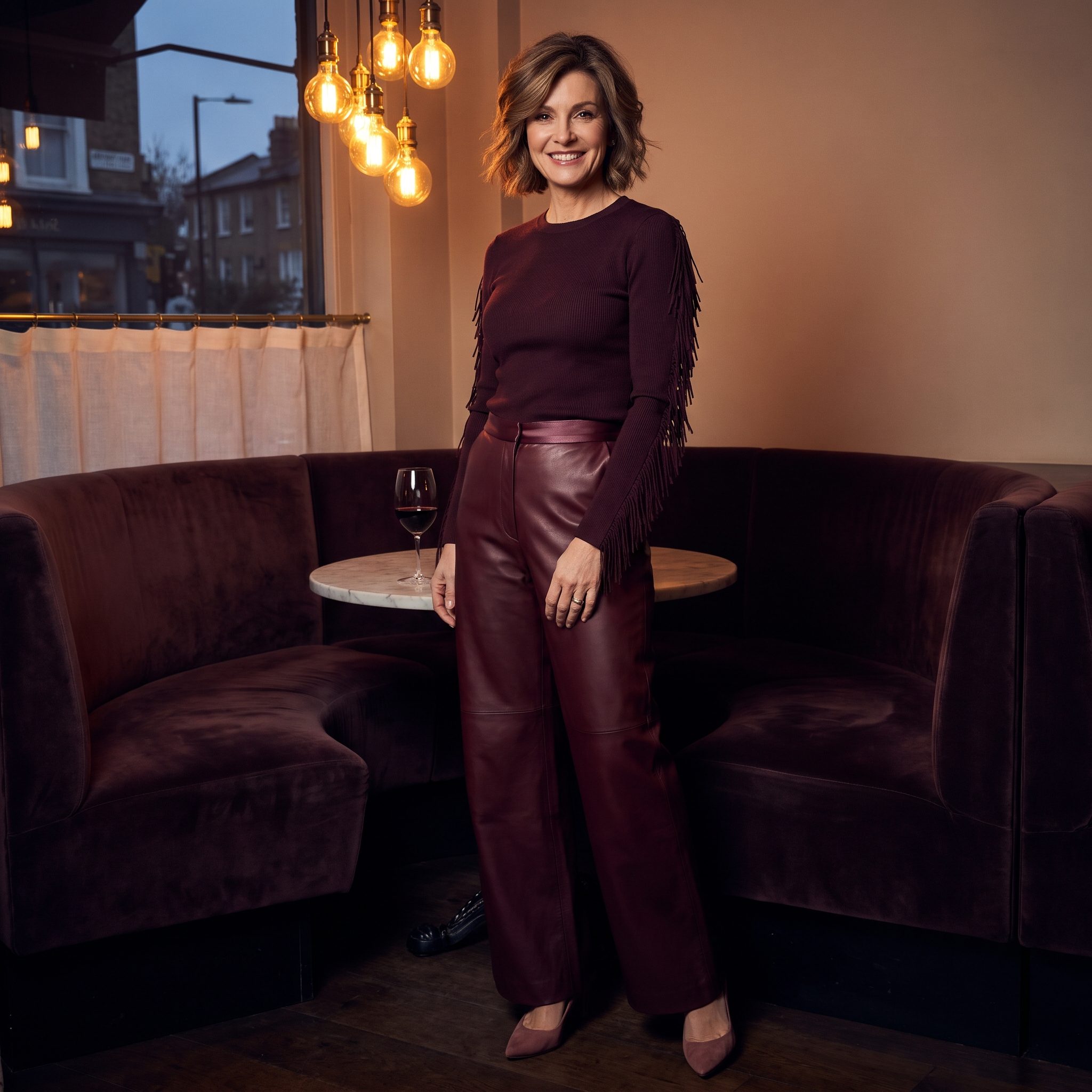
Fringe running along the forearms gives these sculptural sleeves a dramatic sense of movement. The detail directs attention away from the usual neckline-and-waist formula, making the arms the most expressive part of the outfit.
Wide-leg leather trousers supply weight and a smooth reflective surface below. Wine, burgundy, and rose stay within a closely related palette, while relatively plain shoulders leave the fringe room to make its point. Decoration has been concentrated rather than scattered, and the result is all the stronger for it.
17. Navy Shearling Meets Its Match in Knife-Sharp Pleats
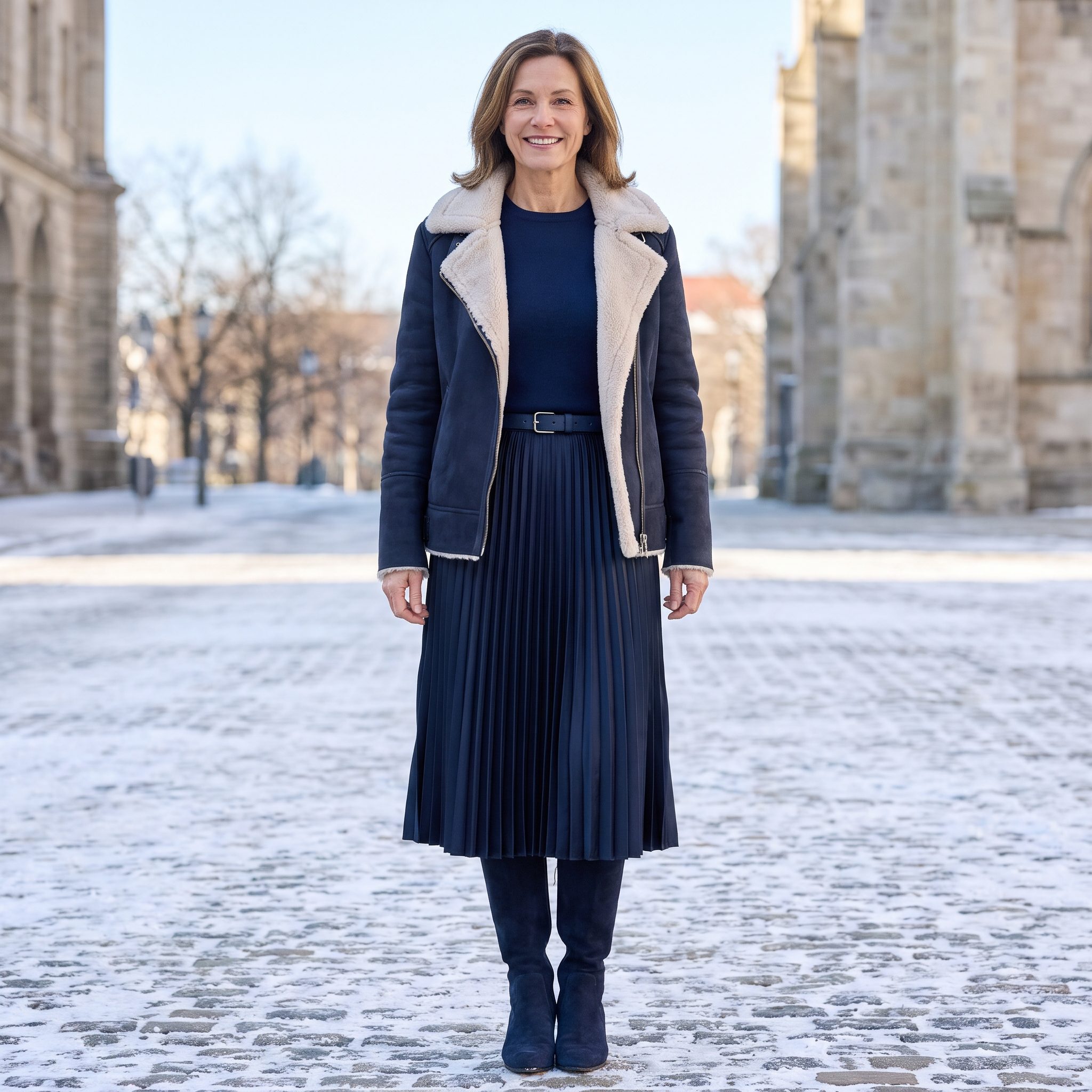
The pleats mean business. Each crisp fold in the navy midi skirt creates a narrow vertical shadow, bringing precision to an outfit dominated by the plush cream trim of a shearling jacket. A smooth navy knit keeps the center uncomplicated, while a slim belt establishes the waist beneath the jacket’s substantial collar.
Suede boots continue the dark blue line below the hem, giving the skirt a clean finish against the winter landscape. The combination succeeds because the textures have different jobs: shearling supplies volume, knit provides continuity, pleats establish direction, and suede grounds the silhouette. Nothing needs to shout to be noticed.
16. Mushroom Shearling Finds Its Sharpest Detail in Crisp Poplin
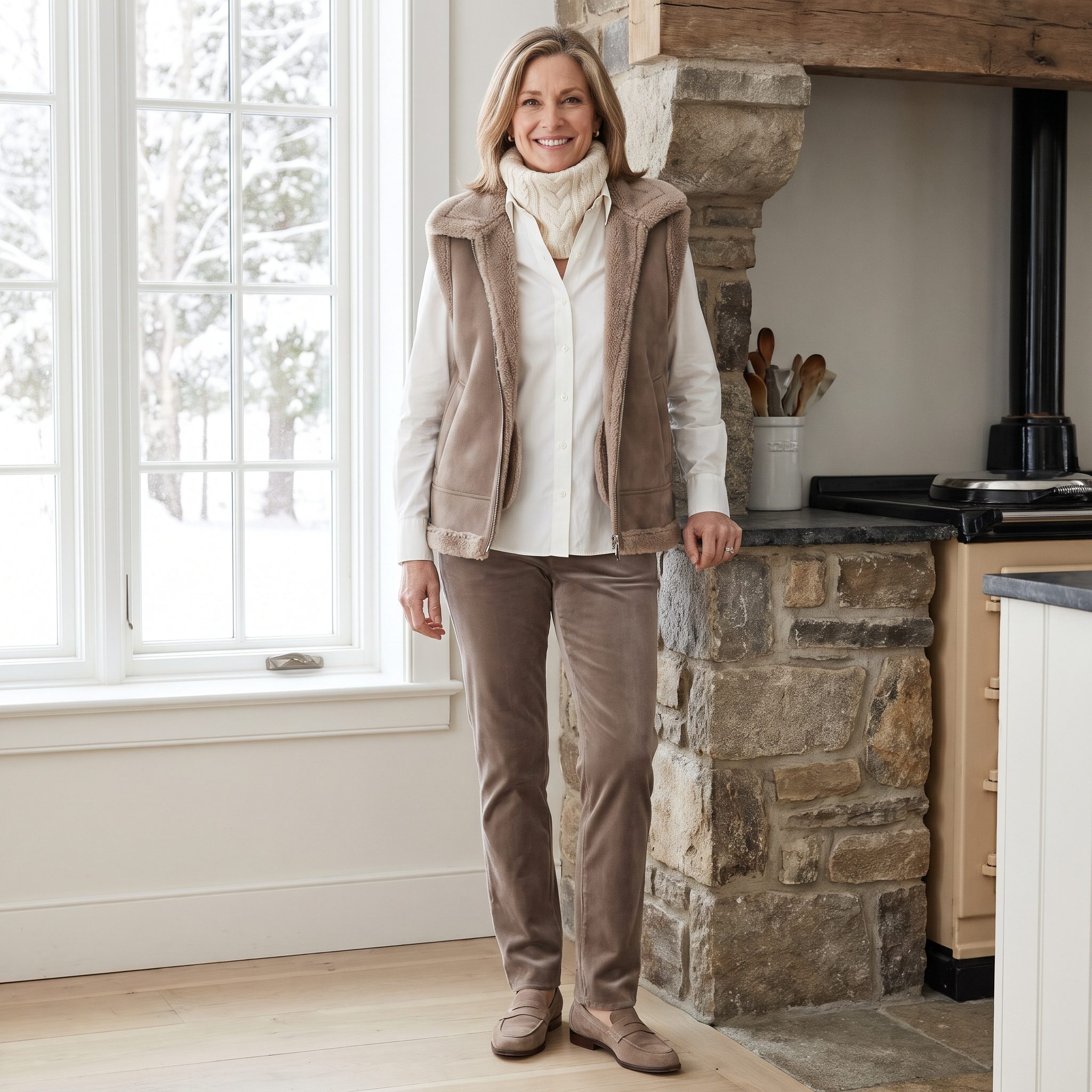
Mushroom, ivory, and taupe create a soft neutral palette, but the fabrics have no intention of becoming interchangeable. A shearling gilet brings plush volume, velvet trousers add depth, and the ivory poplin shirt supplies the crispest element in the outfit.
The visible collar and cuffs are essential. Their clean edges interrupt the softness of the surrounding layers, introducing a tailored note without a conventional blazer. The sleeveless gilet leaves the shirt’s construction exposed, making its precision part of the design.
15. Camel Fringe Lets Wide Wool Trousers Keep Their Sweep
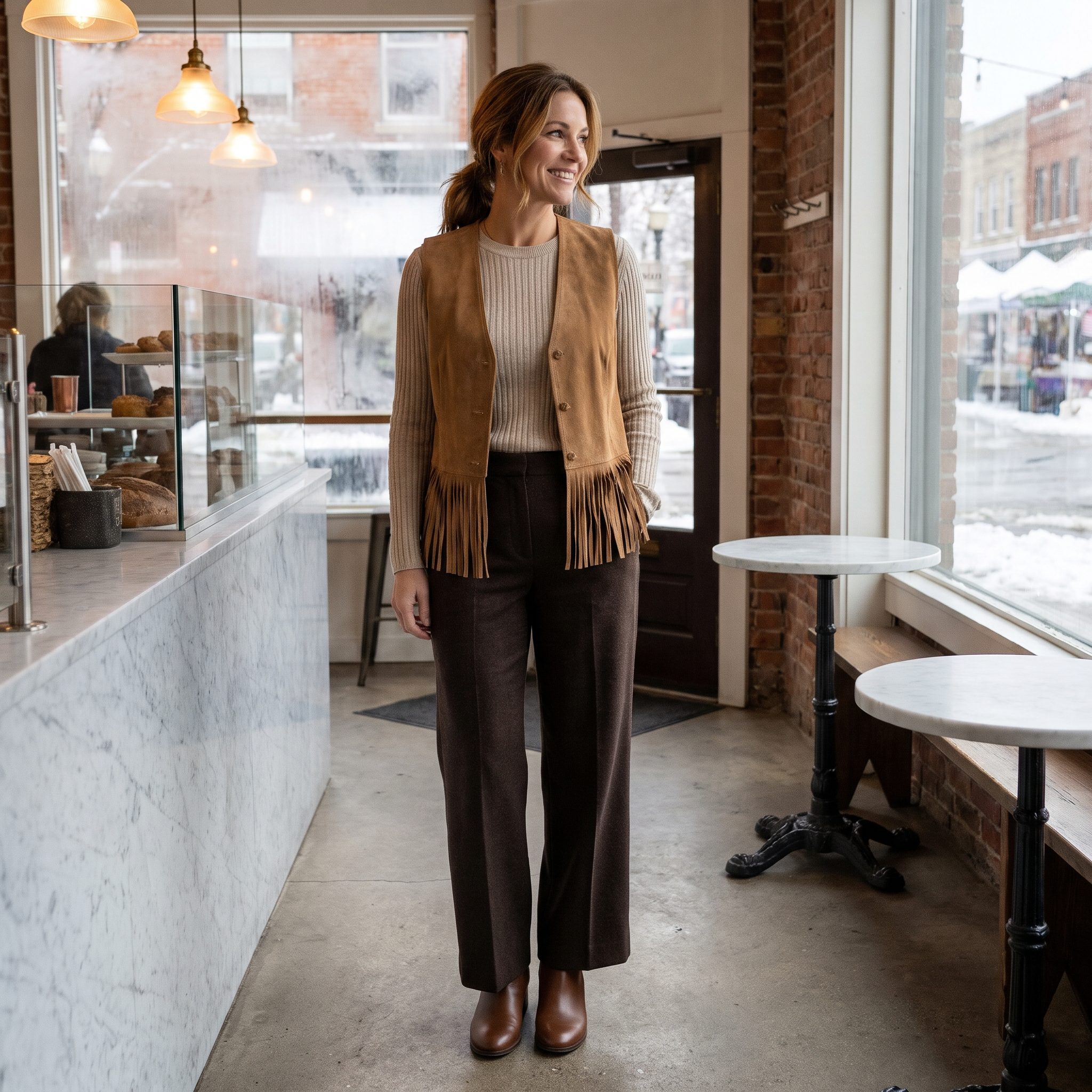
Fringe concentrated at the hem of a camel suede vest introduces movement without overwhelming the garment. The vest finishes near the high hip, leaving the pleats of the wide-leg wool trousers clearly visible.
The compact upper layer gives the trousers room to fall in a broad, uninterrupted shape. Suede and wool share a restrained matte finish, while the fringe supplies the only deliberately restless detail. The proportions are generous, but the waist remains firmly in charge.
14. Dove-Gray Fur Softens a Camel Knit Column
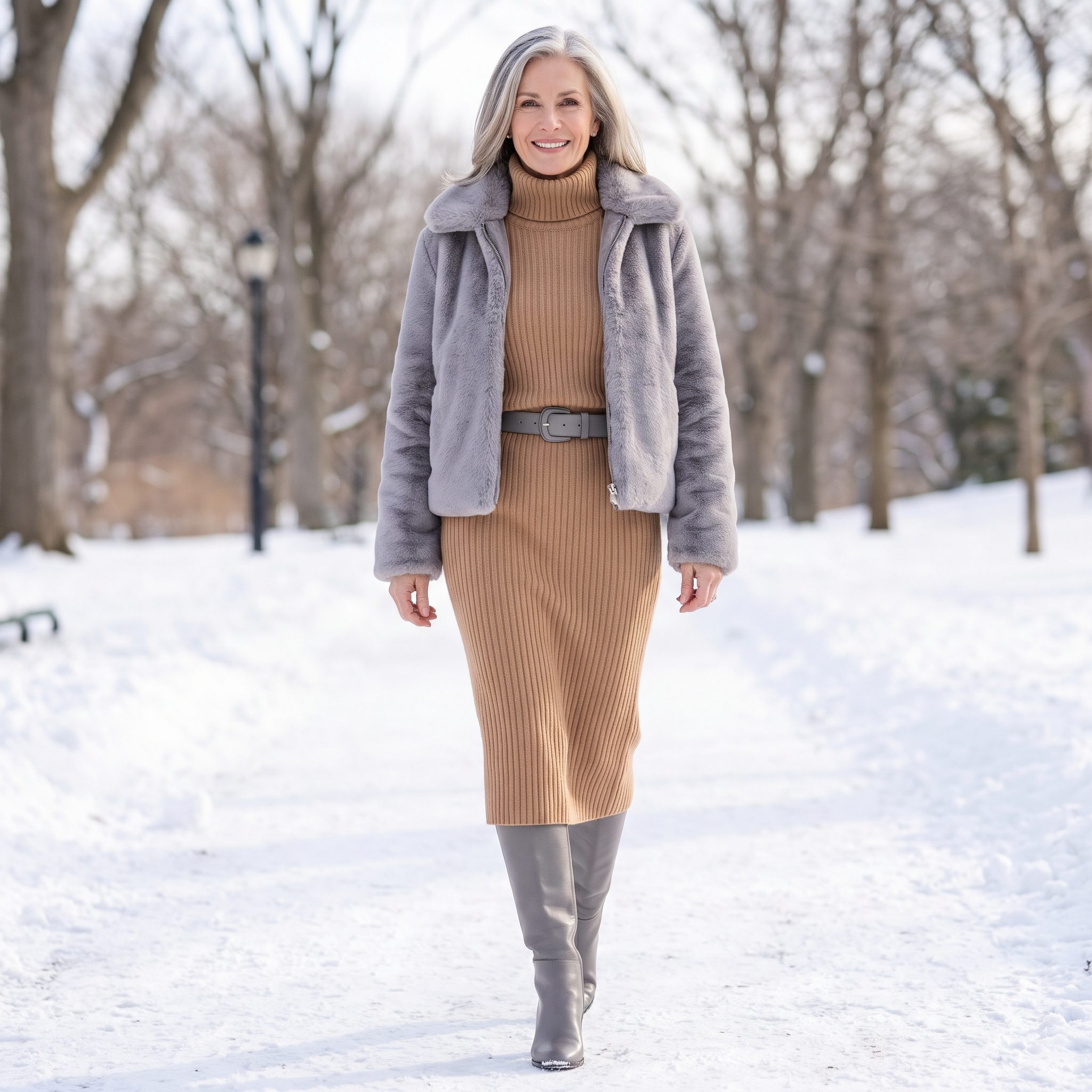
A dove-gray fur jacket brings a cool, plush surface to a warmer camel knit set. The combination avoids the predictability of matching neutrals, allowing the temperature difference between the colors to become part of the outfit’s appeal.
The ribbed sweater and skirt establish a continuous column beneath the cropped jacket. The fur broadens the upper half, while the knit follows a narrower line toward the hem. Two restrained colors, two very different silhouettes, and a surprisingly rich result.
13. Clay Mohair Takes the Uniform Out of a Suede Trouser Suit
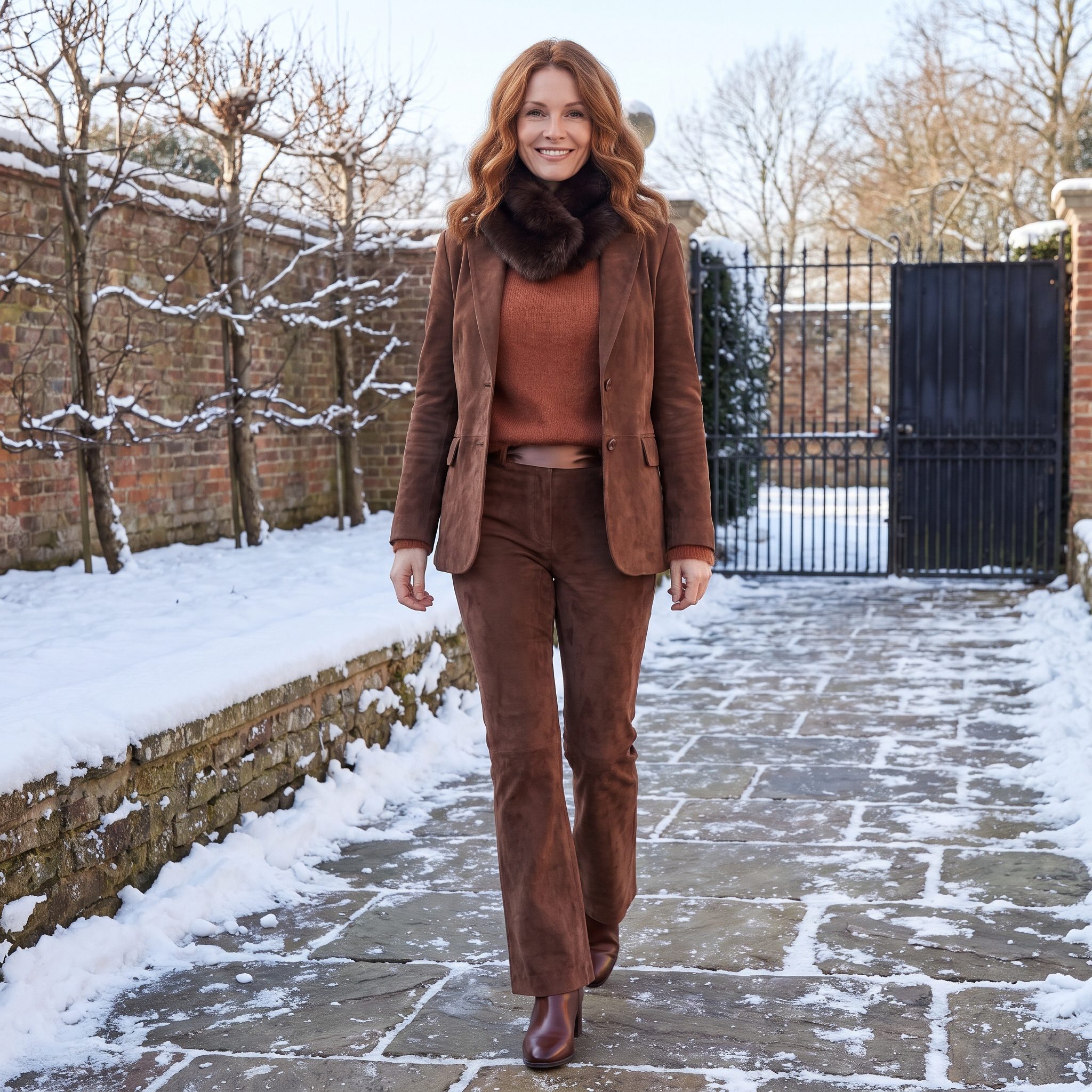
A suede trouser suit already possesses a coordinated appearance. Introducing a fuzzy clay mohair sweater changes the tone, replacing the expected smooth layer beneath the jacket with something considerably softer.
A satin belt provides a narrow flash of shine at the waist and defines the sweater’s tuck. The closely related clay colors preserve the suit’s unity, while the mohair gives the tailored pieces a more relaxed character. Matching fabrics would have been easier. They would also have been less interesting.
12. Pearl Fur Finds Its Shape With a Charcoal Sash
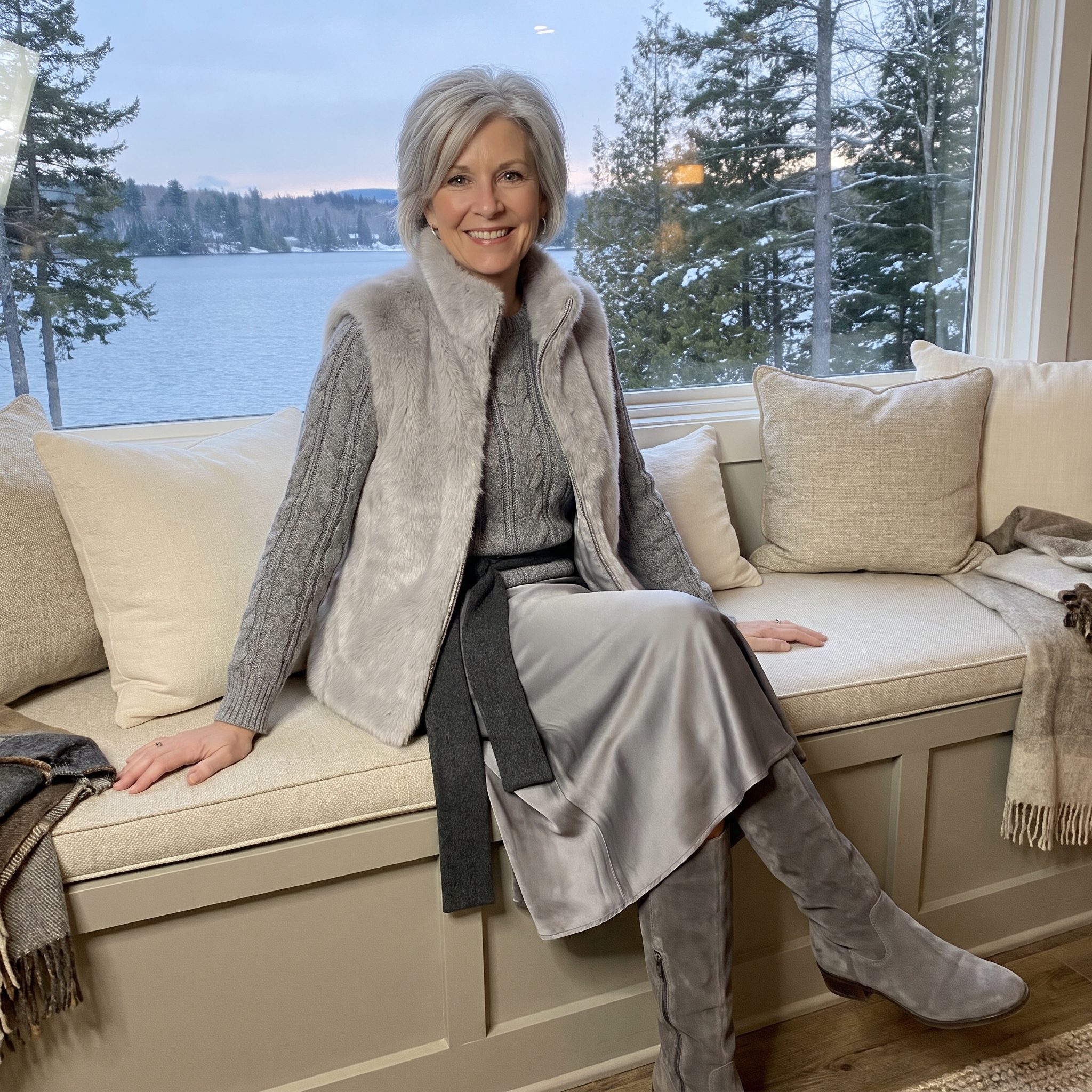
A pearl-gray fur vest brings considerable softness and volume to the upper body. A flat charcoal sash cuts across that plush surface, establishing a defined waist without requiring the structure of a jacket.
Cable knit, satin, suede, and brushed wool contribute their own finishes within the gray palette. The satin skirt supplies the clearest shine, while the darker sash creates a strong boundary against the pale fur. The outfit has plenty of softness, but its proportions are carefully controlled.
11. Black Velvet Appliqué Gives an All-Black Outfit Its Relief
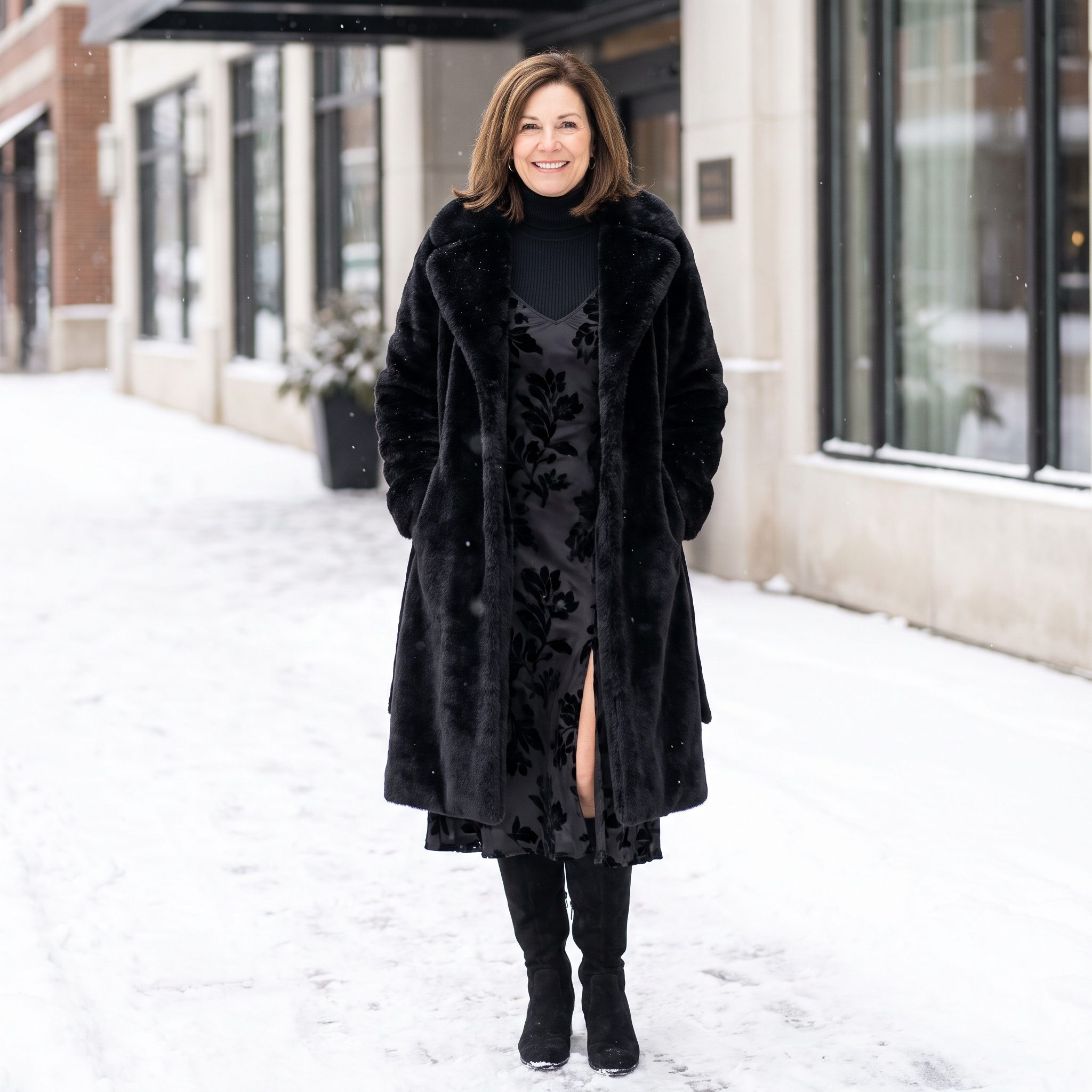
Black has a habit of swallowing the details that make clothes interesting. Raised velvet appliqué fights back, creating relief against smoother satin. The fur coat adds a deeper, more diffuse texture around the silhouette, making the outfit far more complex than its single color suggests.
A ribbed turtleneck introduces a finer pattern at the throat, separating the face from the plush outerwear. Each fabric handles light differently, giving the black layers their own boundaries. Monochrome dressing rarely needs more color. Sometimes it needs better surfaces.
10. Oatmeal Mohair Gets a Waistline Without Losing Its Softness
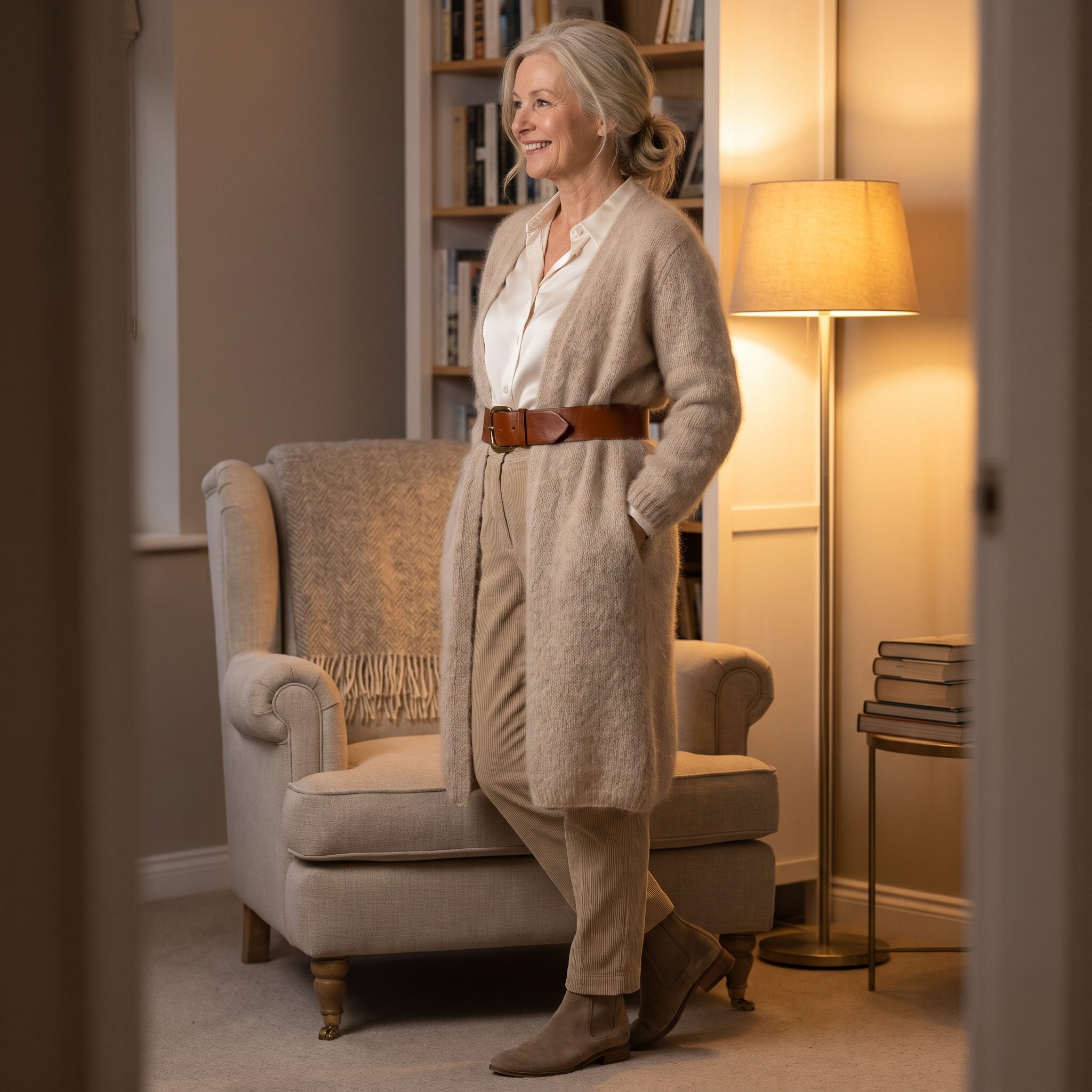
A calf-length mohair cardigan brings enough volume to dominate an outfit. The belt changes its direction, gathering the fabric at the waist while allowing the long, relaxed silhouette to remain intact.
Satin adds a smooth highlight, corduroy introduces narrow ridges, leather provides a firmer edge, and suede softens the finish near the feet. The oatmeal palette keeps the layers quiet, leaving the cardigan’s length and the defined waist to establish the composition.
9. Cream Mohair and Slate Leather Refuse to Play by the Same Rules
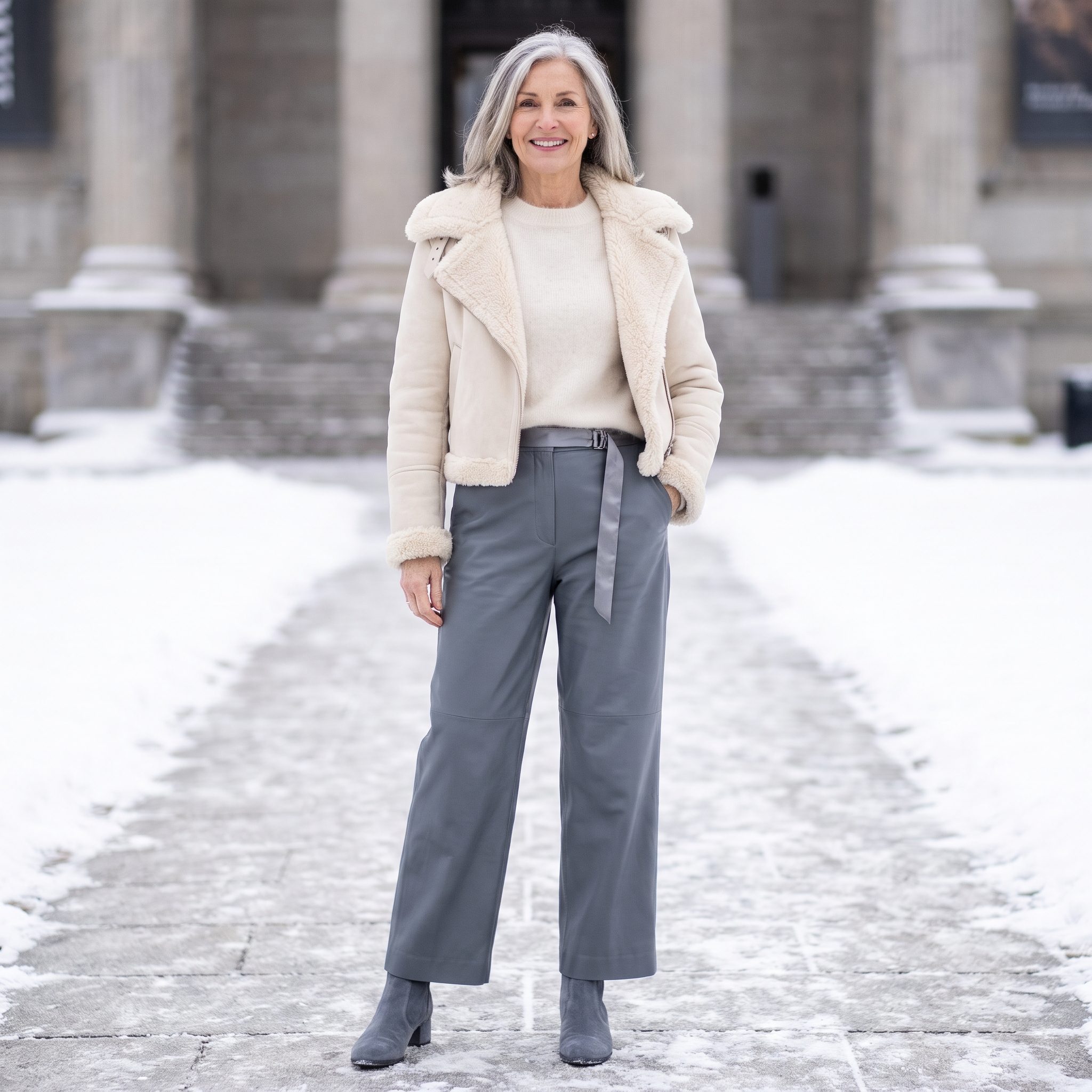
Soft cream outerwear meets slate leather trousers, creating a decisive contrast between plush volume and smooth structure. The cooler gray lower half gives the pale layers definition, making the change in material as important as the change in color.
An open jacket reveals the waistband and satin belt, establishing a clean break before the wide-leg trousers fall toward the boots. The silhouette remains generous without losing its shape. The leather provides the necessary firmness beneath all that softness.
8. Camel Appliqué Makes a Quiet Coat Worth a Second Look
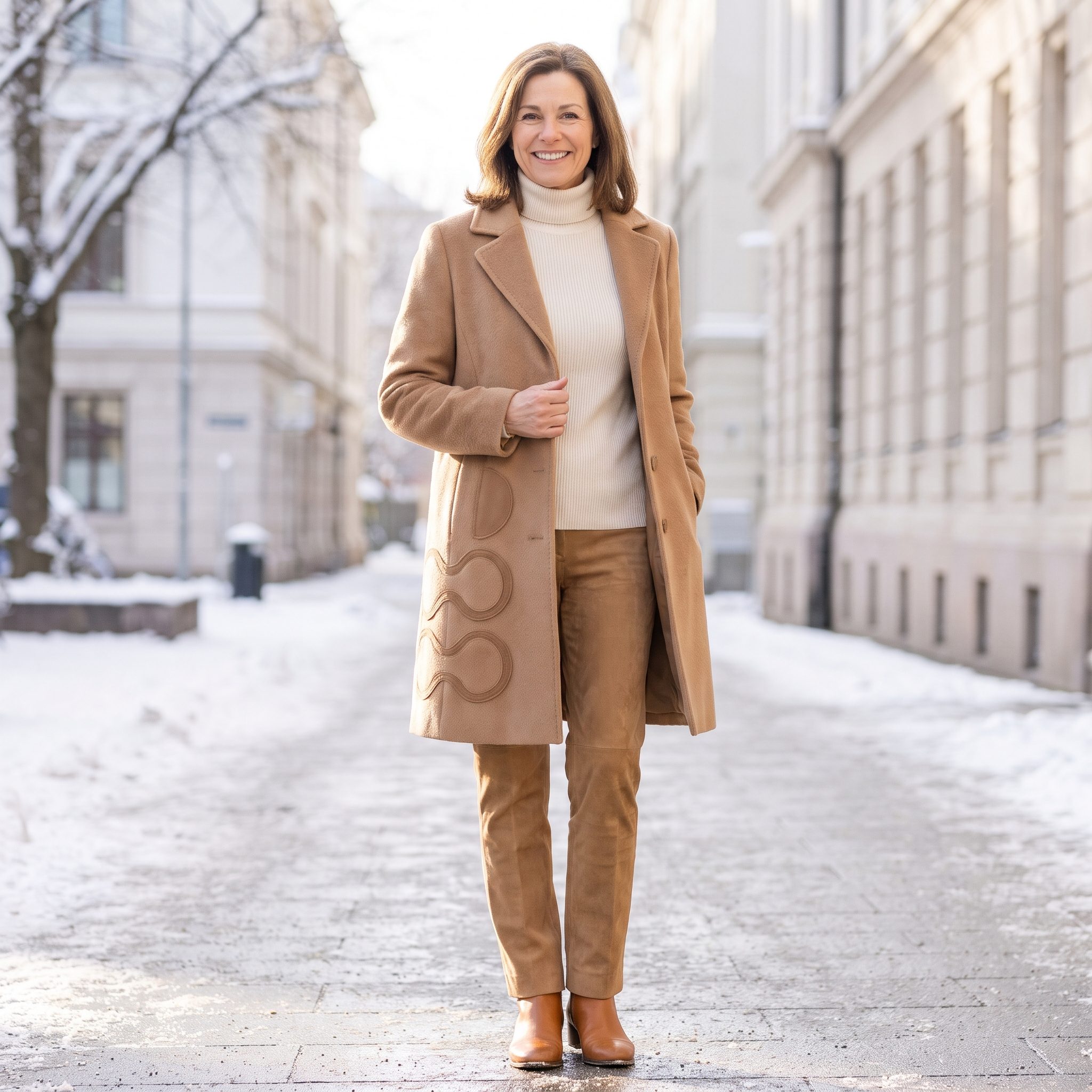
Three tonal appliqué shapes decorate one panel of an otherwise clean camel coat. Their placement is restrained, but the raised felt introduces a sculptural detail that changes the character of the garment without disturbing its tailored outline.
Brushed wool, ribbed knit, suede, and smooth leather bring additional variations in surface. The coat’s straight shoulders and relaxed opening provide a composed framework, allowing the appliqué to remain the most distinctive detail. Understatement, with a small but deliberate interruption.
7. Pale Camel Lets a Broad Fur Scarf Frame the Face
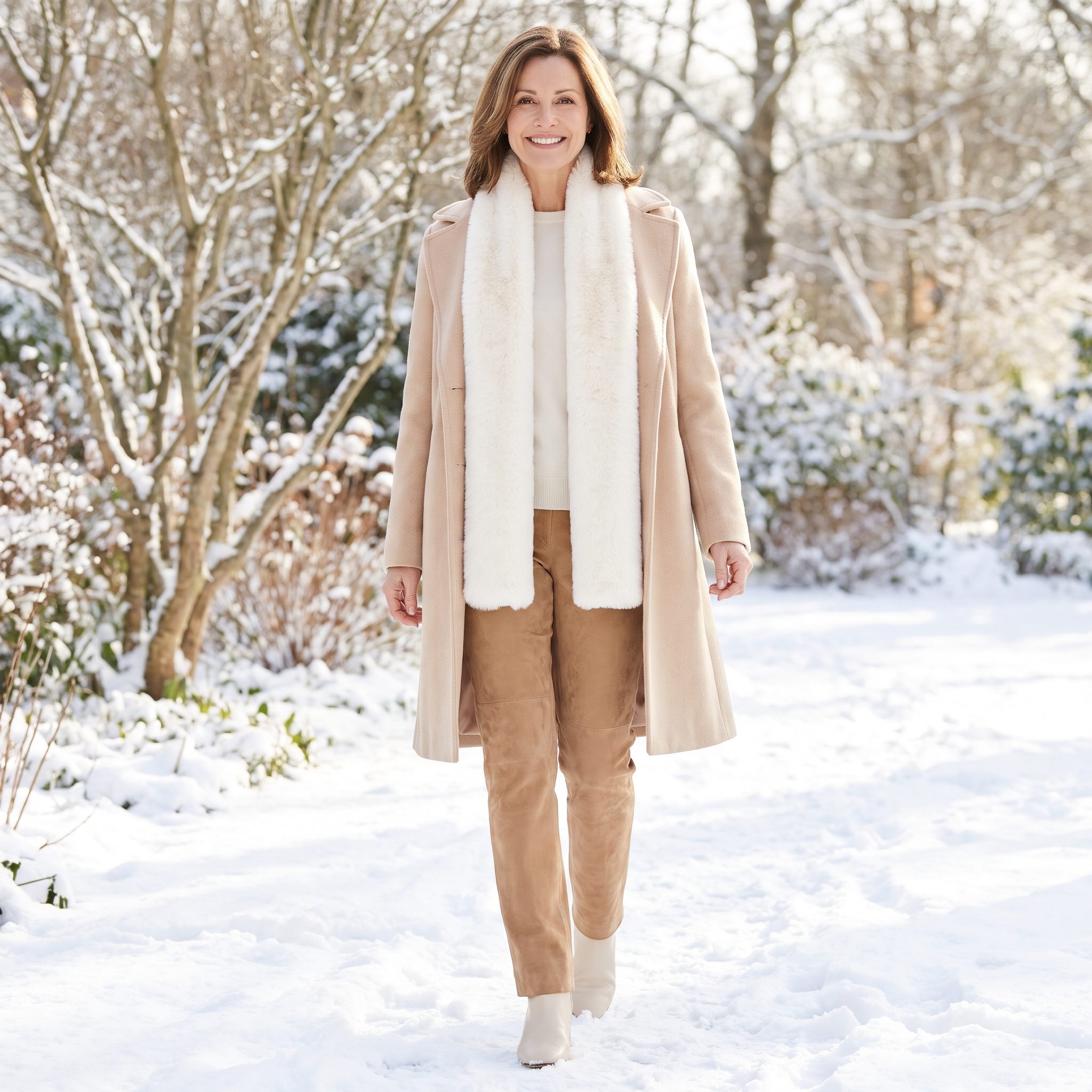
A broad ivory faux-fur scarf fills the opening of a pale camel coat, bringing a plush frame to the face without concealing the coat’s lapels. The scarf is the indulgence; the tailoring provides the restraint.
Cream and camel move through subtle changes in tone, while the fur’s generous pile contrasts with the smoother coat. The separate scarf also allows the proportions to change without altering the outerwear itself. An accessory doing considerably more than keeping out the cold.
Among our readers, those who picked camel over grey for a coat chose single-breasted 85% of the time, compared with 62% of readers who picked something else.
6. Burgundy Fringe Breaks Up a Winter Jacket’s Polished Lines
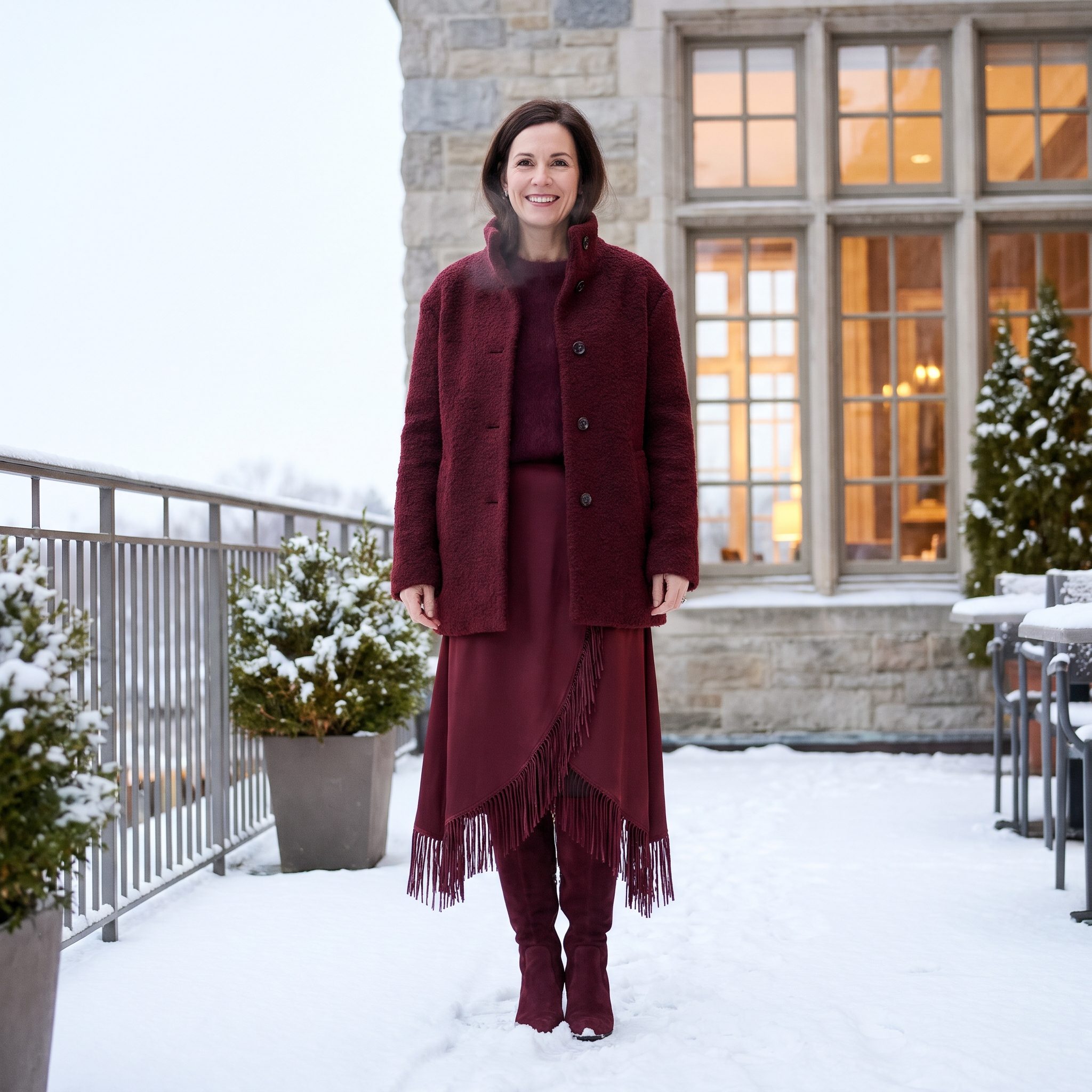
Deep wine tones move through bouclé, satin, and fringe, creating a richly coordinated outfit without resorting to identical fabrics. The jacket’s nubby surface absorbs light, while the burgundy satin midi skirt reflects it more readily.
Fringe along the hem interrupts the polished combination with movement. The saturated color holds the layers together, but the contrast between textured wool and smooth satin keeps the outfit from resembling a conventional matching set.
5. Caramel Shearling Balances a Generous Coat With Lean Leather
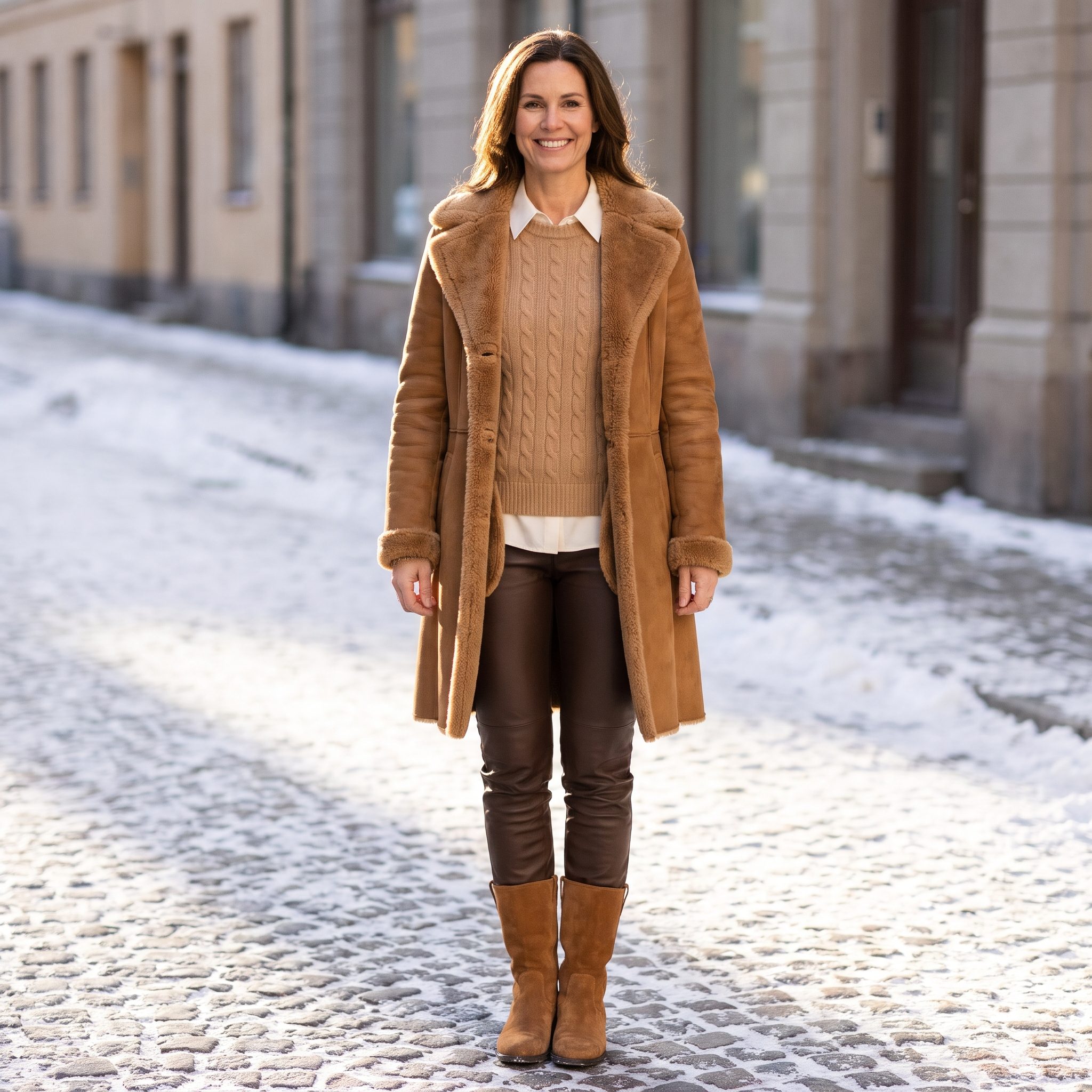
A generous caramel shearling coat establishes the outfit’s most substantial shape. Beneath it, cable knit introduces pronounced texture, while a silk collar provides a narrow reflective detail at the neckline.
Slim leather trousers tucked into suede boots create a leaner lower half, giving the coat’s volume a convincing counterweight. The warm brown palette keeps the materials connected, while the differences between plush shearling, patterned knit, smooth leather, and matte suede do the decorative work.
4. Ink Satin Lets One Appliqué Panel Do All the Talking
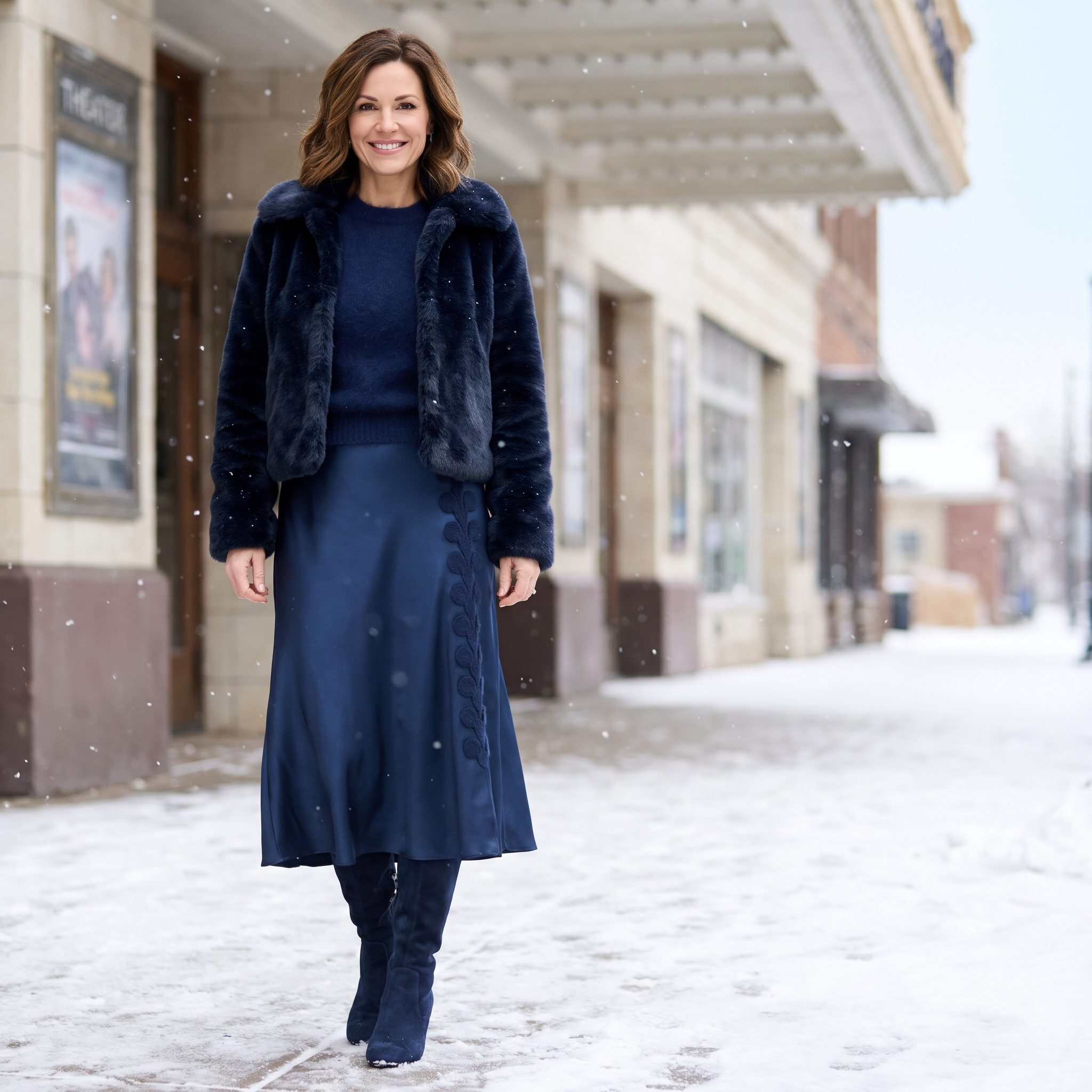
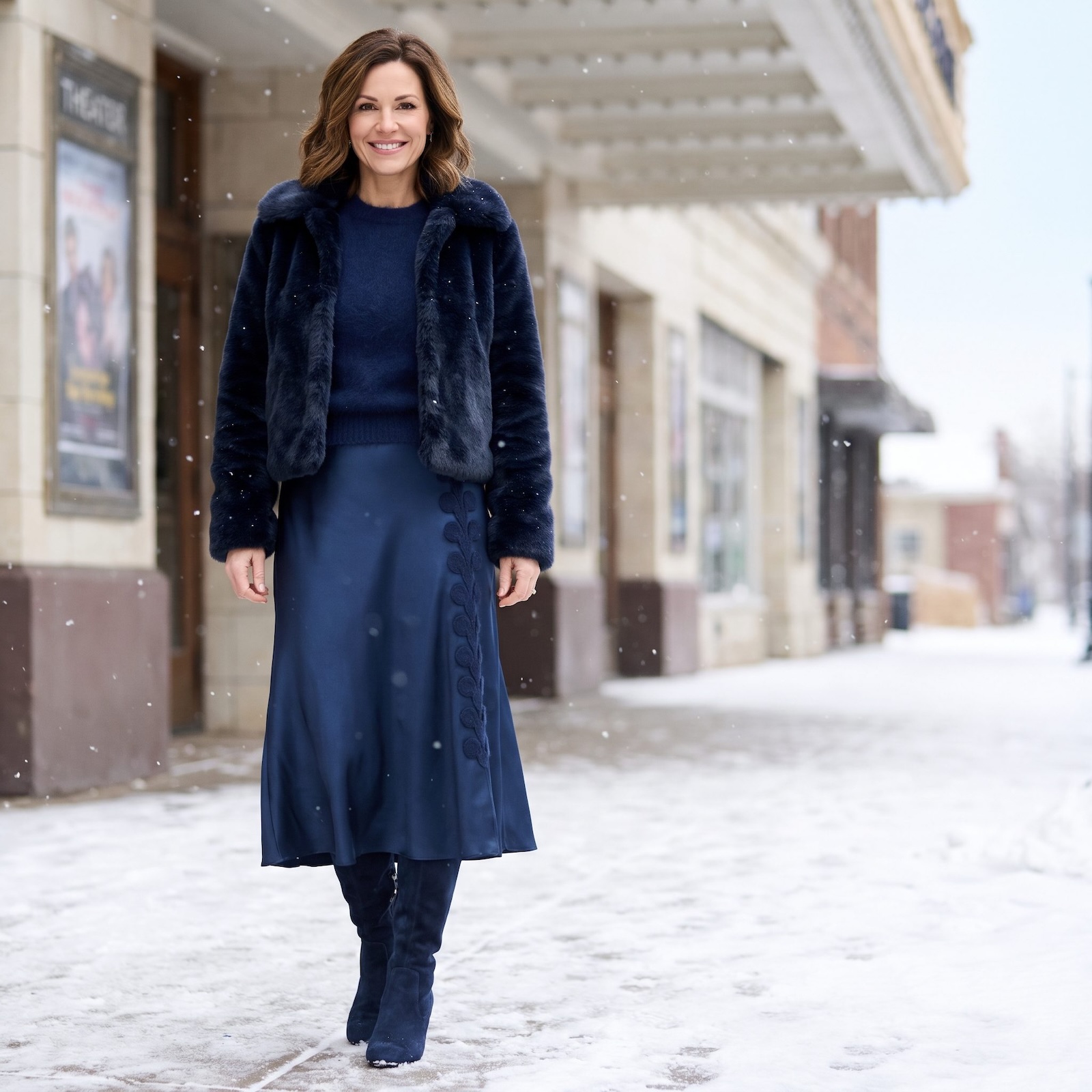
One side of the deep-navy skirt carries raised tonal felt appliqué, while the other remains smooth. The asymmetry gives the satin a distinctive focal point without covering the entire garment in decoration.
A cropped faux-fur jacket finishes above the panel, keeping the appliqué visible and preserving the skirt’s long line. Plush outerwear, reflective satin, and matte felt each respond differently to the light. The nearly monochromatic palette allows that contrast to become the outfit’s defining feature.
3. Toffee and Espresso Give Bouclé a More Substantial Partner
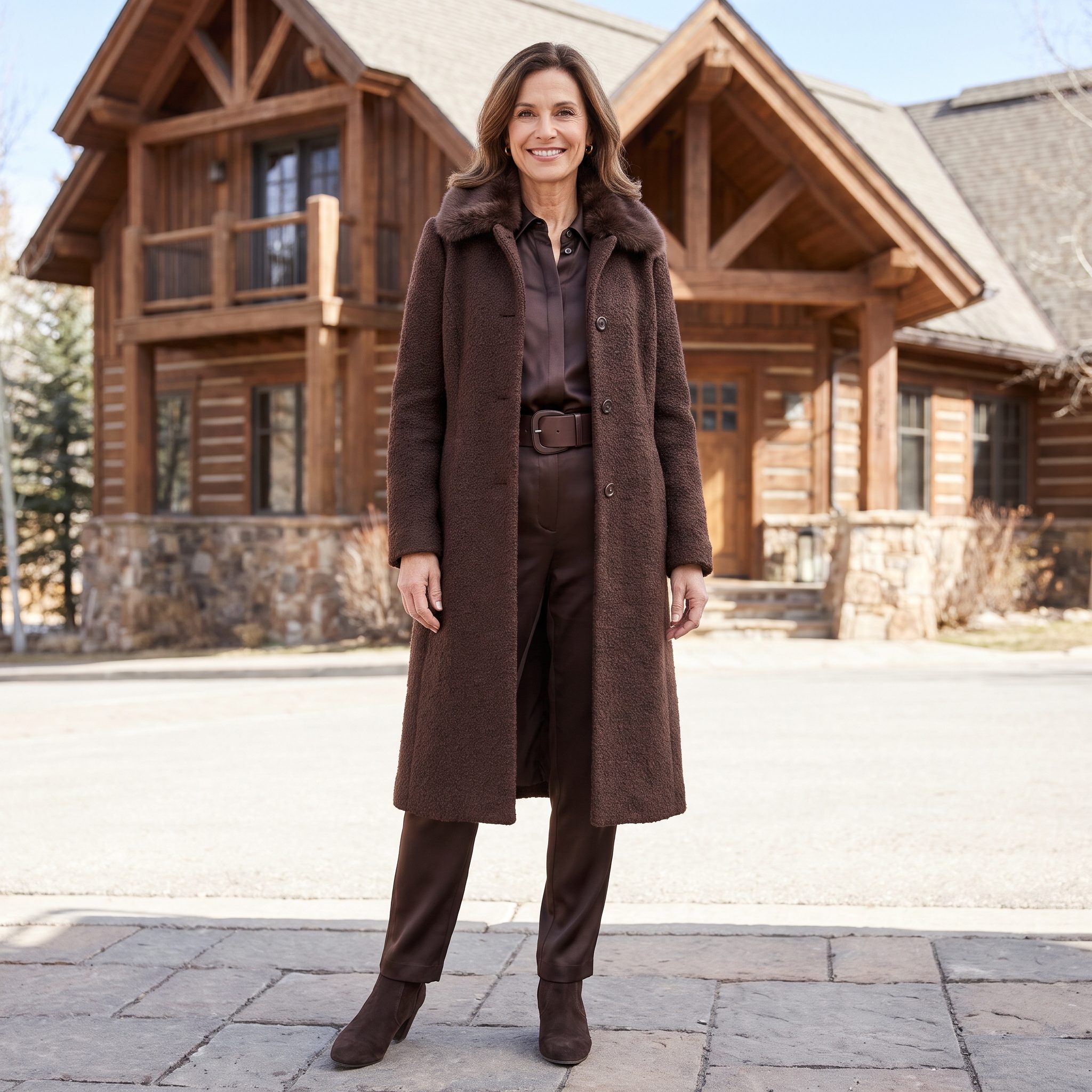
A substantial bouclé coat frames a long expanse of espresso satin, pairing irregular wool texture with a smoother, more reflective surface. A broad leather belt gathers the layers at the waist, giving the generous outerwear a definite shape.
Fur and suede introduce softer variations around the structured leather. The browns move from deep espresso to warmer toffee, creating enough tonal difference to distinguish the garments without interrupting the long silhouette. Rich materials, disciplined proportions, and no need for an elaborate color scheme.
2. Midnight Bouclé Makes Winter Bermuda Shorts Look Entirely Deliberate
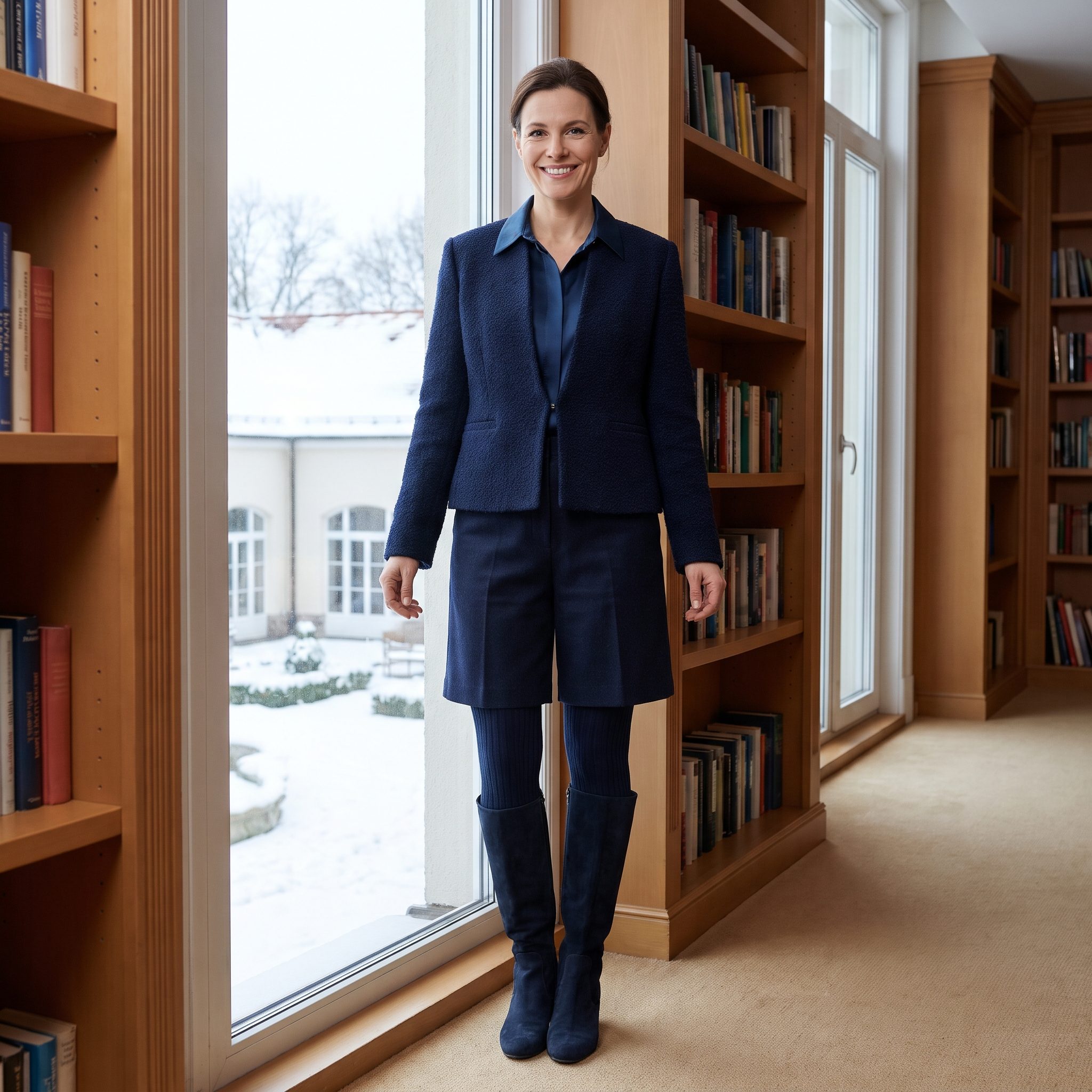
Tailored Bermuda shorts make an unconventional foundation for winter dressing. Thick ribbed tights and tall suede boots answer the obvious practical question, covering the legs while creating a continuous dark line beneath the abbreviated hem.
Midnight bouclé gives the tailored upper layers texture, while the close relationship between navy and black keeps the proportions coherent. The shorts introduce the surprise; the substantial winter fabrics make the idea convincing.
1. Teak Suede Gives a Cream Cable-Knit Column a Stronger Frame
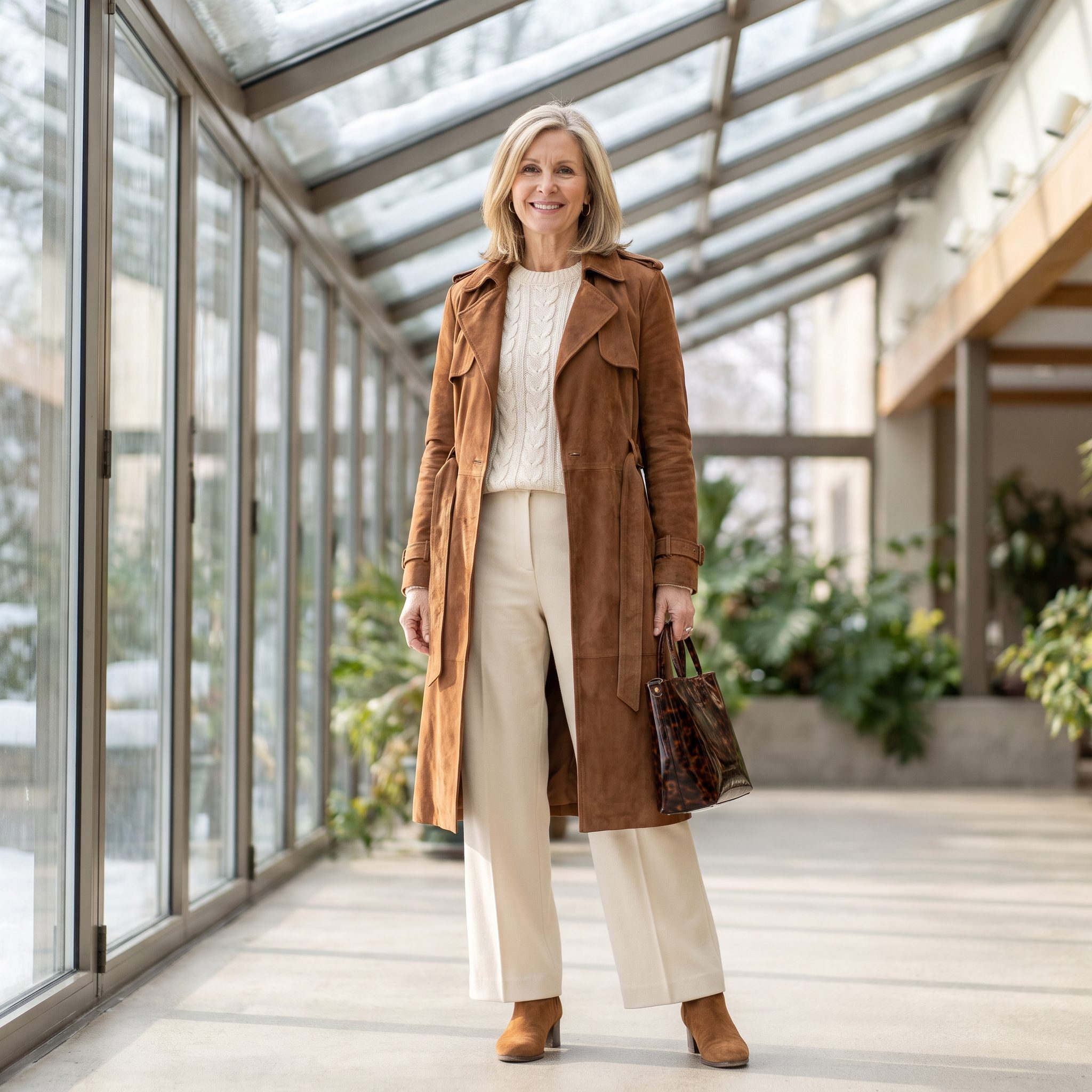
The teak suede coat draws a dark, warm outline around a column of cream cable knit. Its relaxed belt defines the waist, while the open front reveals the pale layers from neckline to hem. The contrast between substantial suede and textured knit gives this restrained palette a commanding silhouette.
Chunky cables interrupt the smooth fall of wide-leg wool trousers, giving two closely matched cream fabrics distinct personalities. A teak suede trench coat supplies the darker frame, while the long pale center keeps the layers looking deliberate rather than crowded. An elegant conclusion to an outfit built on contrasts that know exactly where to stop.