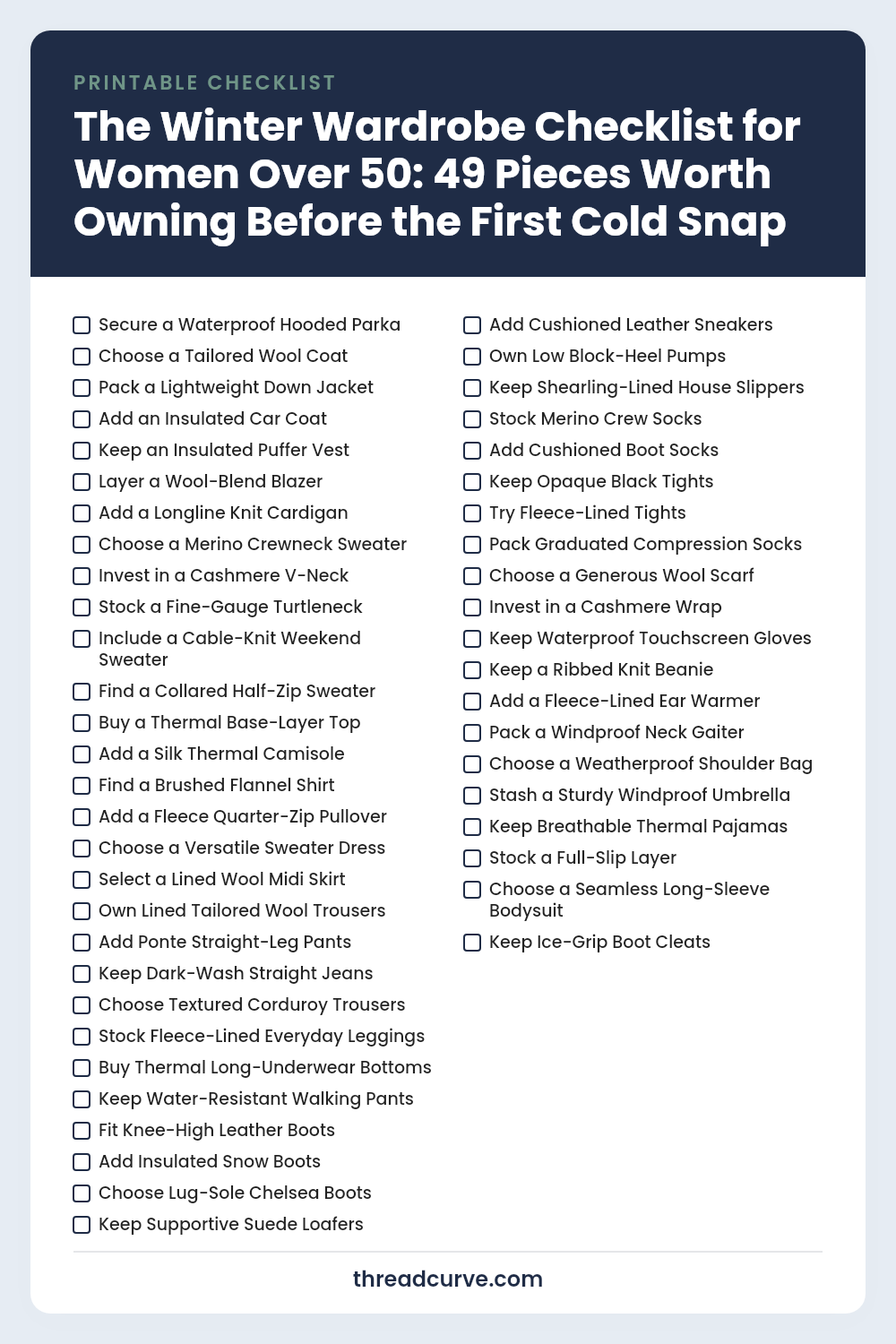

Cold weather doesn’t wait for you to get organized. One morning the frost is on the windshield and you’re reaching into the closet for something warm that also looks like you meant it. Skip this groundwork and you spend the whole season borrowing warmth from pieces that can’t carry it. What follows is the layering backbone — coats, knits, and the workhorses that get you from a dog walk to a dinner reservation without a wardrobe change. Tick each one off before November gets serious.
FYI, thanks to AI imagery software, we’re able to create very specific fashion and hairstyle examples to illustrate the points being made. In some cases, imagery is exaggerated to hammer home the point. Also, assume links that take you off the site are affiliate links such as links to Amazon. this means we may earn a commission if you buy something.
49. Secure a Waterproof Hooded Parka
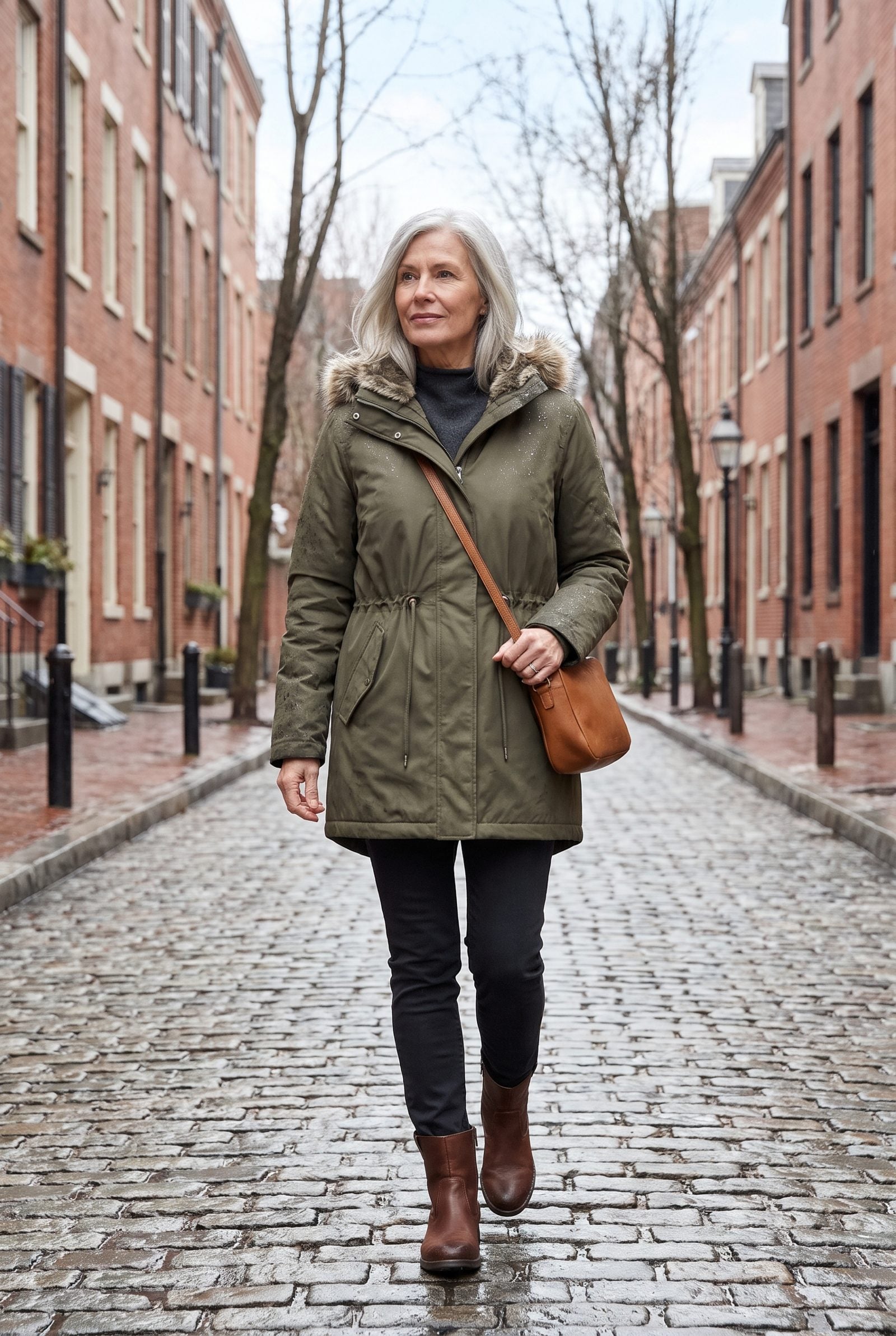
Start here, because this is the piece that fails you first. A wool coat in sideways sleet is a sponge, and once it soaks through you’re cold for the rest of the errand. A proper waterproof parka with a real hood earns its keep on exactly the miserable days you still have to be outside.
The olive drawstring parka does the clever thing — it cinches at the waist so the length reads as shape, not as a tent. That matters. Waterproof outerwear leans boxy, and the waist definition is what keeps this from swallowing you whole.
48. Choose a Tailored Wool Coat
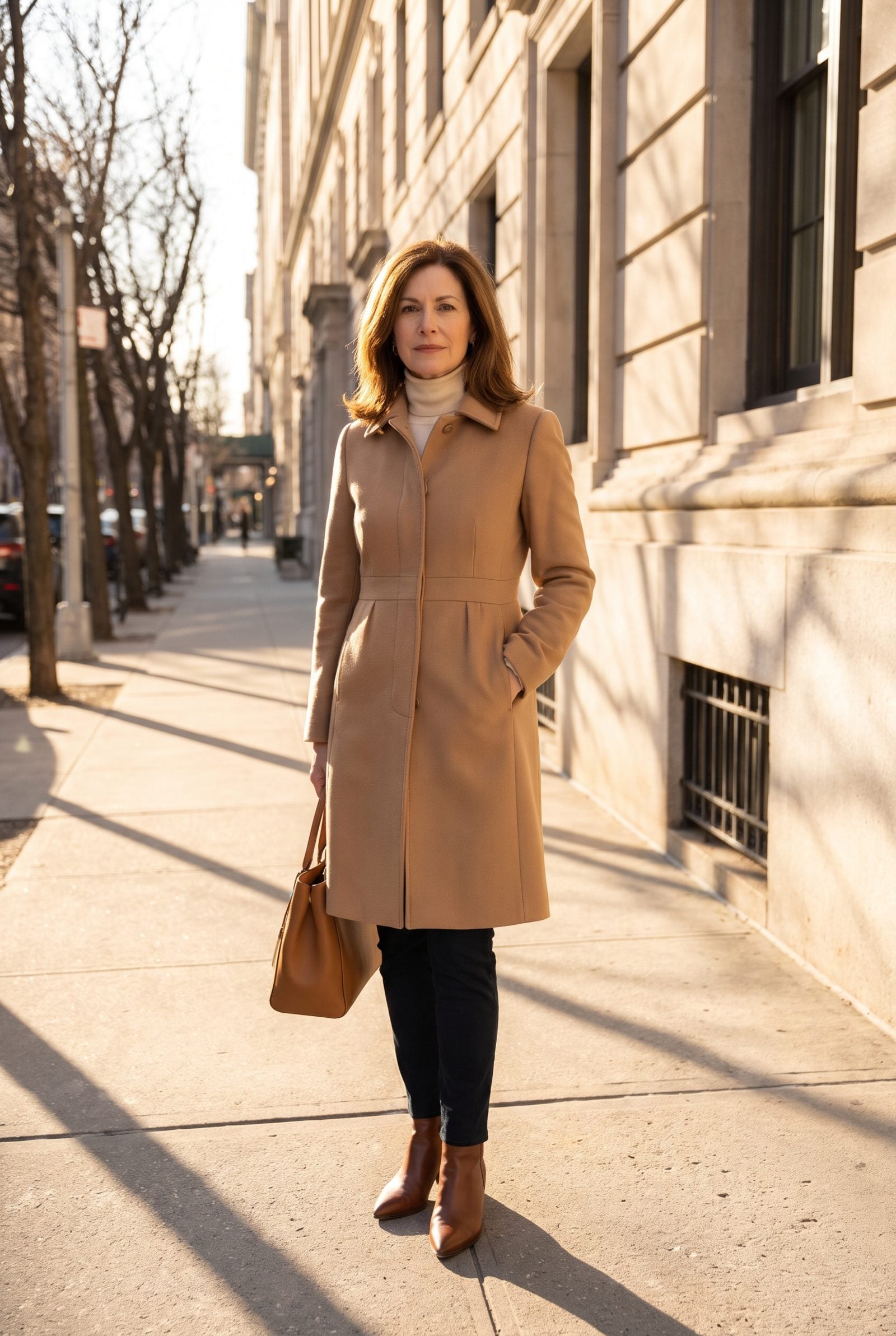
The camel wool coat makes everything underneath look deliberate. Throw it over leggings and a sweater and suddenly you’ve pulled yourself together without trying.
What’s doing the work? The shoulder seam. It ends exactly where your shoulder bone ends, which is why the whole coat hangs clean instead of collapsing into your arm. Try it on and check that one point in the mirror before anything else — a dropped shoulder on a tailored coat reads as borrowed.
Go for a wool content of 70 percent or higher. Dip below that and your wardrobe is getting a coat that pills by February and holds no warmth. A good camel wool coat is a ten-winter purchase. Price it that way.
What Our Readers Say
- Asked which era their style belongs to, two out of three ThreadCurve readers picked timeless over retro revival or current trends.
- In our reader polls, readers who would buy a fine knit as their one new top were more likely to choose a wool coat too, 59% versus 46% of everyone else.
From ThreadCurve reader polls and votes.
47. Pack a Lightweight Down Jacket
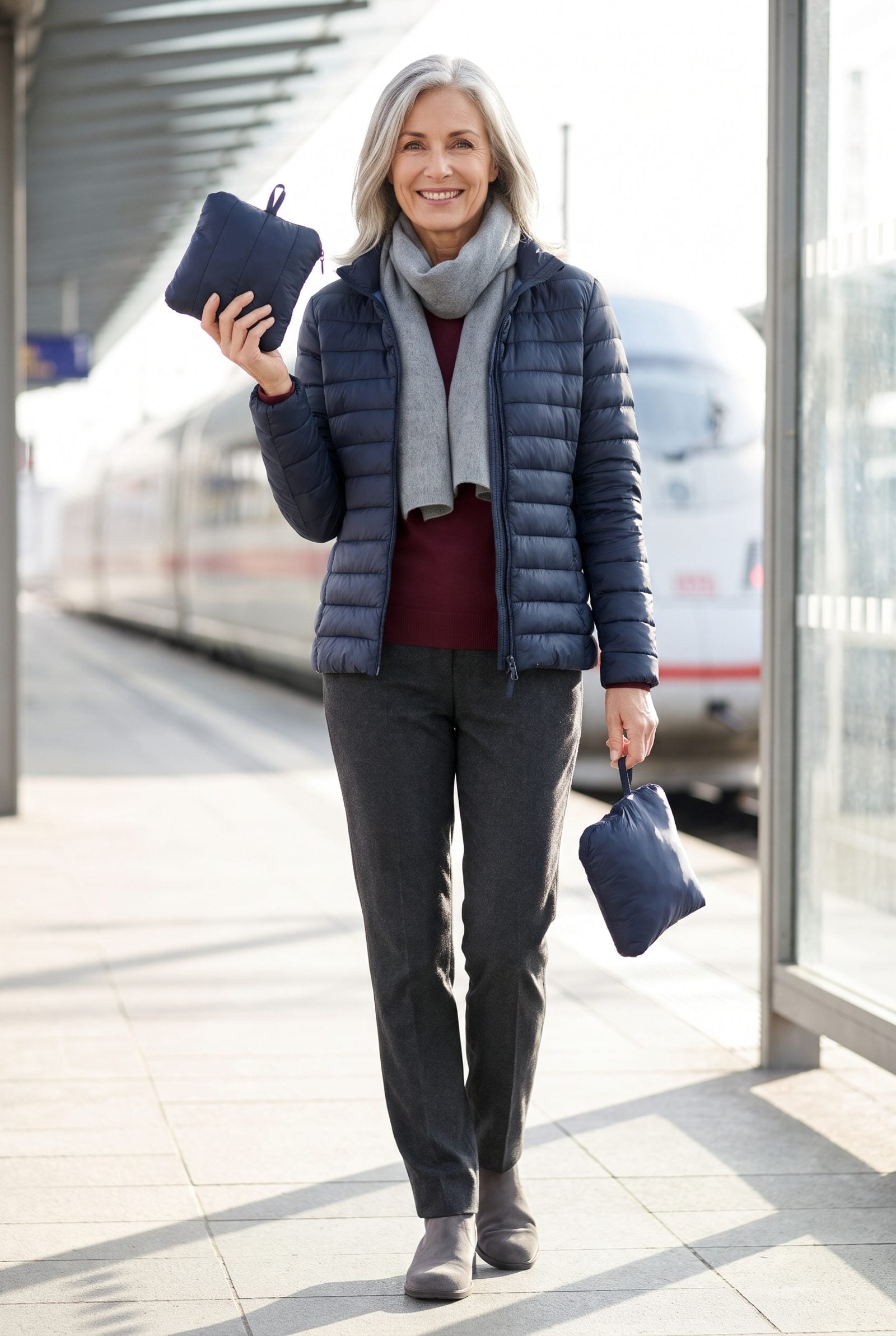
You’ll underrate this one until a cold snap catches you with no coat room in your bag. A slim packable down jacket folds into its own pocket and weighs almost nothing, so it lives in your tote from October on and bails you out every time the temperature drops without warning.
The navy jacket shown stays close to the body, which lets it layer under the wool coat without the marshmallow effect. Look for a fill power of 600 or above. Below that you’re carrying bulk for very little heat return.
46. Add an Insulated Car Coat
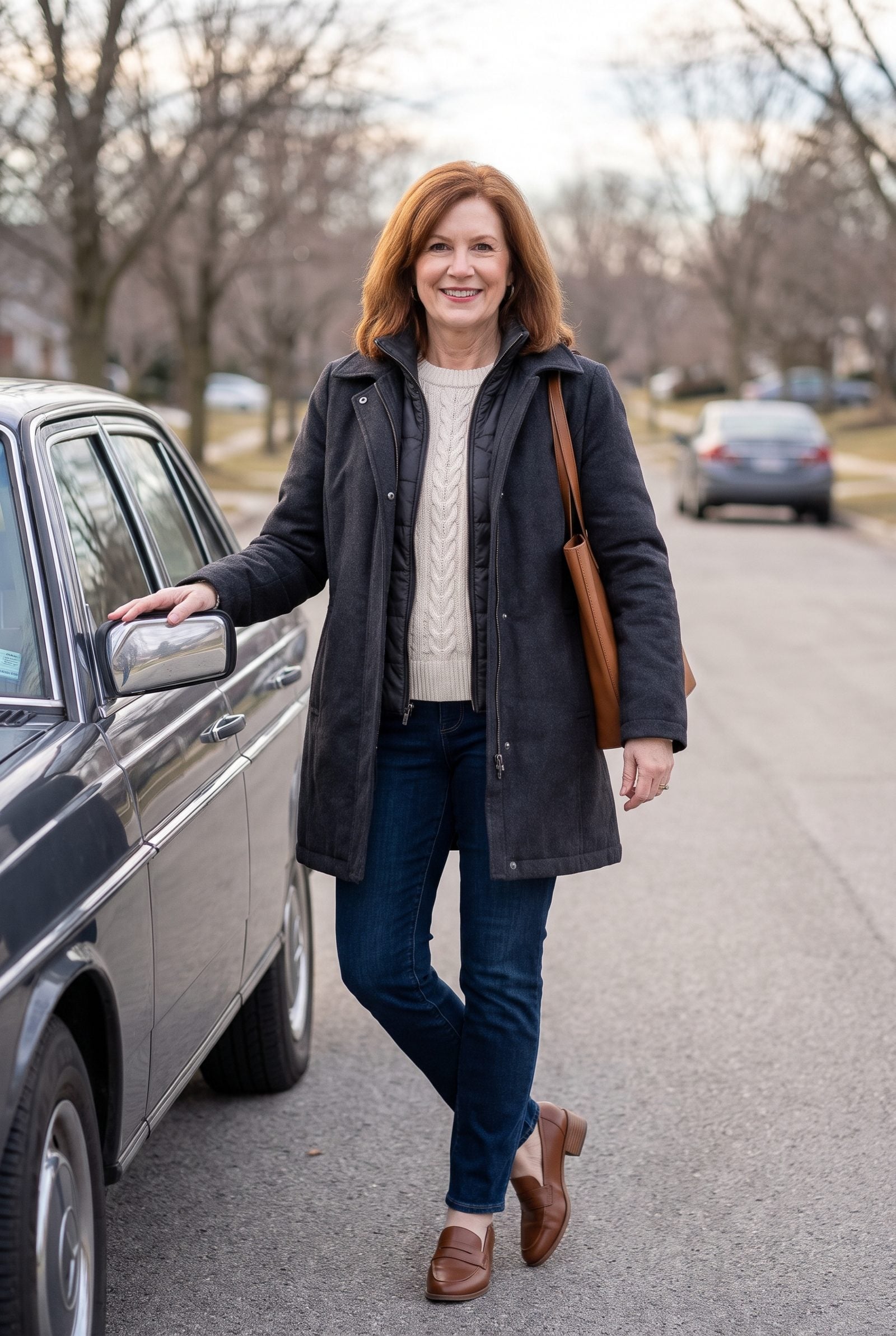
The car coat exists for one reason a full-length coat ignores: you have to sit down in it. A knee-length coat bunches under the seatbelt and you spend the whole drive fighting the fabric. This hip-length cut stops at the hip, so you slide into the driver’s seat and the coat stays flat.
The charcoal A-line version works because it skims past the hip instead of clinging — the move for errand days, school runs, the endless in-and-out of winter.
Insulation matters more than length here. A thin shell at hip length is just a jacket. Feel for a quilted lining or a brushed interior before you commit.
45. Keep an Insulated Puffer Vest
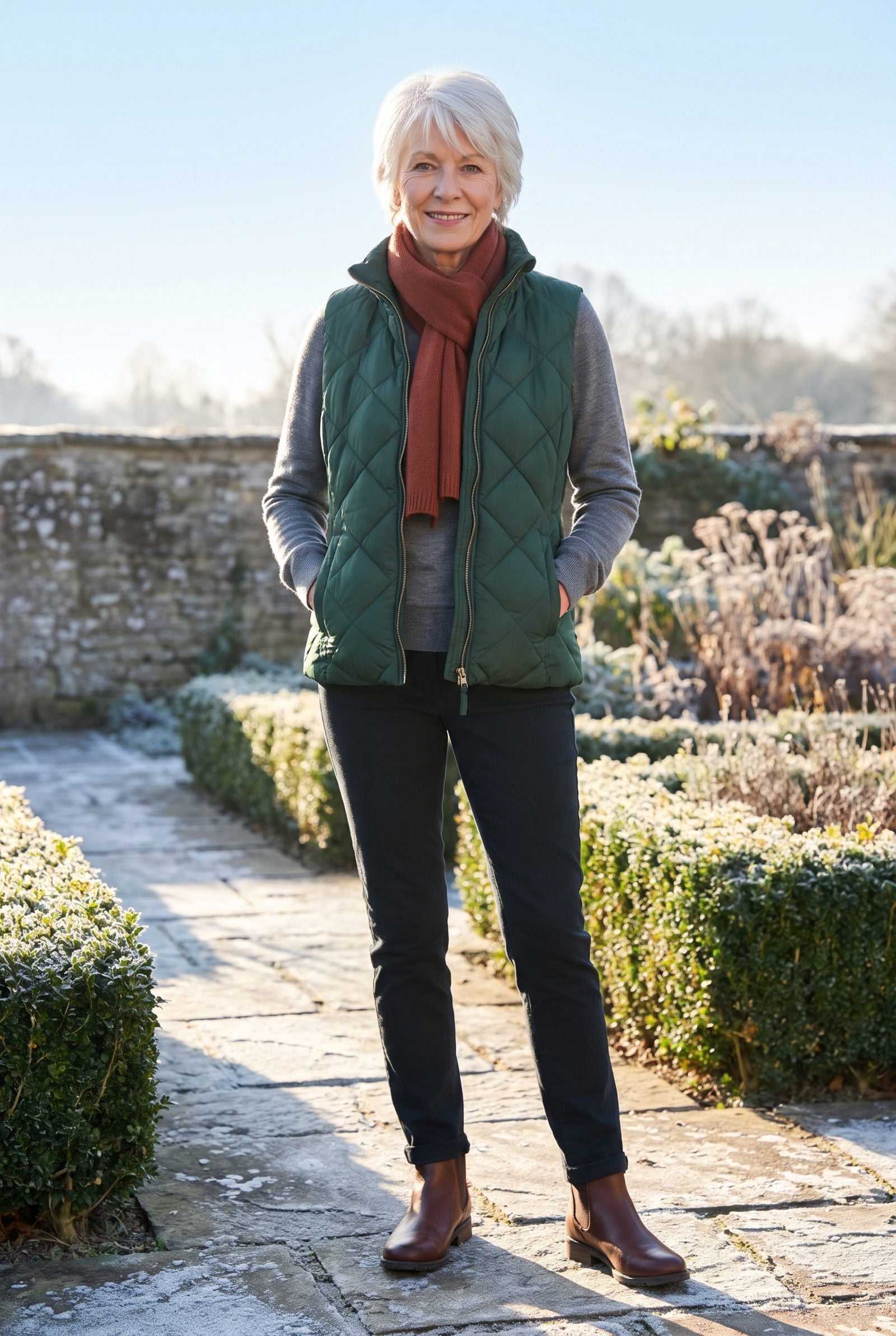
A vest keeps your core warm while your arms stay free, which is exactly what you need for raking, walking, loading groceries, anything where sleeves get in the way. Call it the layer that makes a sweater good enough for outside.
The forest-green quilted vest over grey merino reads as intentional because the colours sit in the same muted family. That’s the trick. Match the saturation of the vest to whatever’s underneath and the layering looks planned rather than piled on.
44. Layer a Wool-Blend Blazer
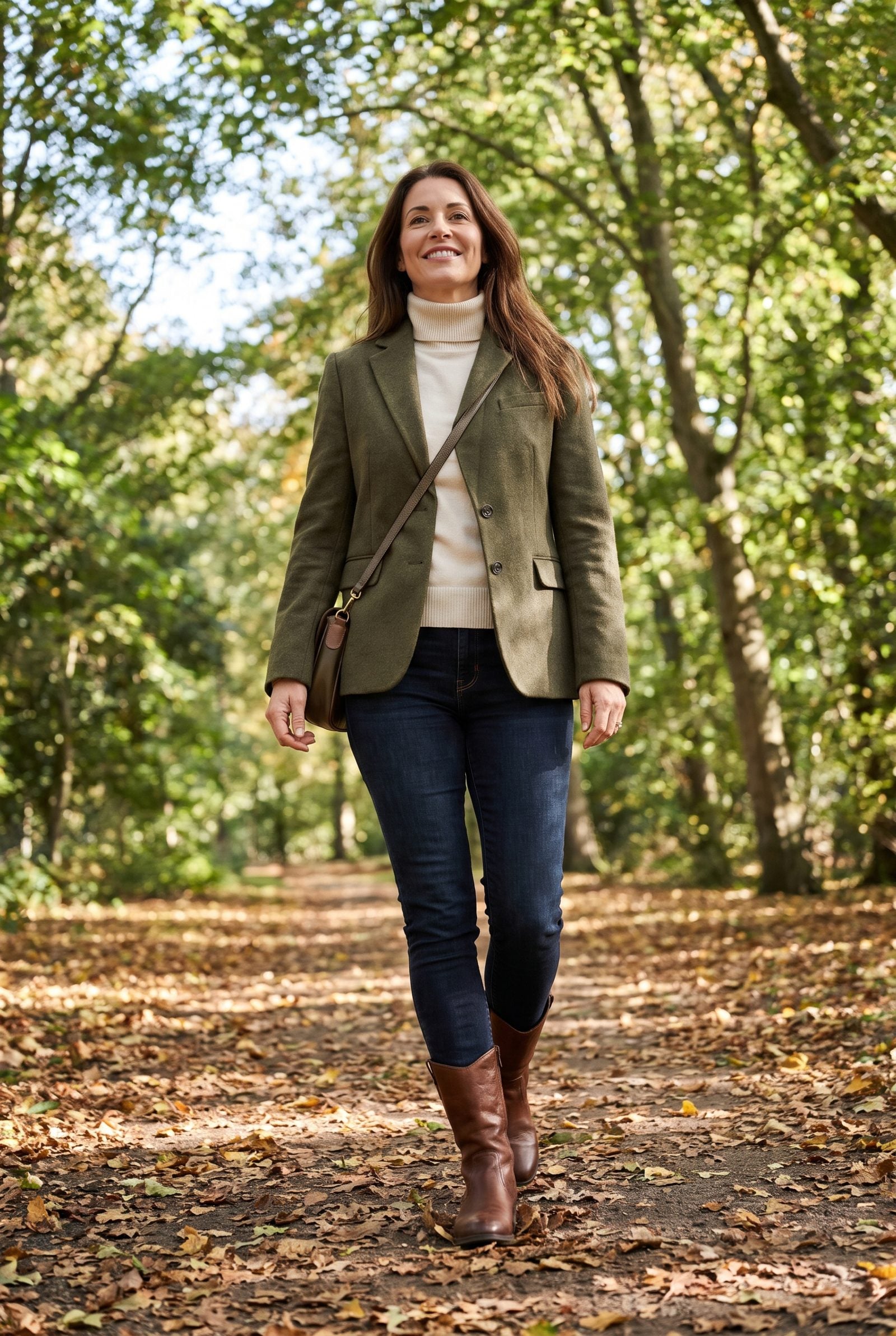
A wool-blend blazer turns a sweater and trousers into something you’d wear to lunch. It adds structure at the shoulder, where the eye goes first, and a strong shoulder line reads as authority before you’ve said a word.
The olive blazer over a cream turtleneck works because the knit softens the tailoring. All-structure can look stiff. Pair the sharp jacket with something that drapes and both pieces relax.
Check the sleeve. It should end right at your wrist bone, no further. A blazer sleeve that swallows your hand is the most common fit mistake going, and the one that ages a good jacket on the spot. This is where a good style is made or lost, and it costs nothing to have a tailor fix.
43. Add a Longline Knit Cardigan
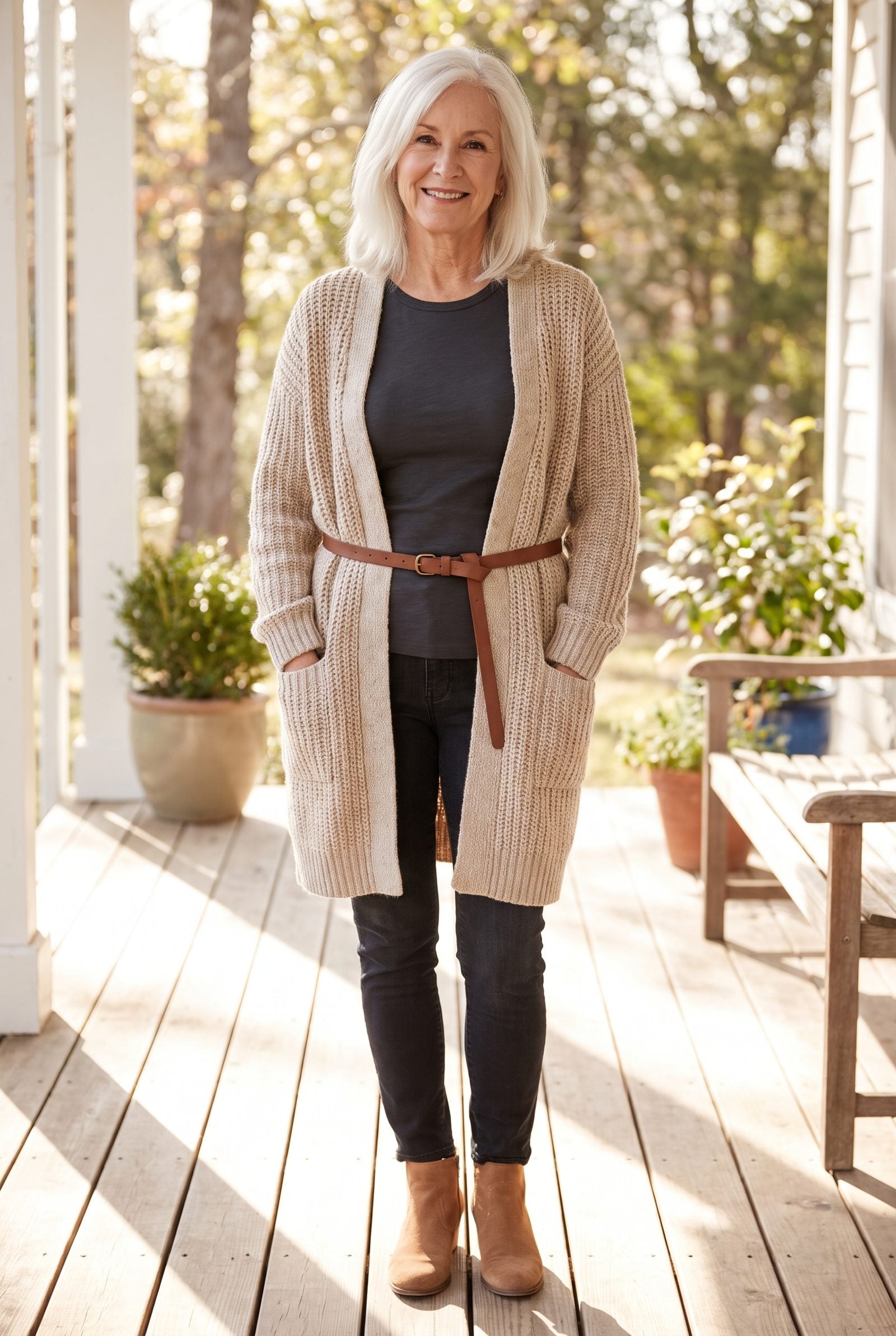
The longline cardigan is the hardest-working layer you’ll own all winter: warm as a jacket, soft as a blanket, dressed-up enough for the house or the shop. The open front creates one long vertical line from shoulder to hem, which draws the eye down and lengthens the whole frame.
Here’s the detail most people miss. A longline cardigan can swamp you if you let it hang loose over loose. The thin leather belt at the waist in the oatmeal version fixes that in two seconds, pulling in the shape so the length works for you instead of adding bulk.
42. Choose a Merino Crewneck Sweater

Merino does everything synthetic can’t. It breathes, it doesn’t itch, and it regulates temperature so you’re not sweating on the bus and freezing on the platform. A good merino crewneck is a base layer that happens to look finished on its own.
The burgundy version lives because of the ribbed hem sitting neatly over the trouser waistband, which defines the waist without the fuss of tucking anything in. Full-length ribbed cuffs and a thin gold chain do the rest.
41. Invest in a Cashmere V-Neck

A cashmere V-neck is the quietest flex in the closet. It doesn’t shout. It just sits on the skin like warm air and makes everything around it look better. The V neckline opens up the chest and pulls the eye upward to the face, which is exactly where you want it.
The cream version works against navy trousers because light knit over dark bottom brightens the whole upper half. If your winters run dim, that lift near the face earns its place.
Buy two-ply, not single. Single-ply cashmere feels luxe in the shop and pills into a sad state by January. Two-ply holds its shape for years. Check the label or ask. A real cashmere piece earns its price over a decade — that slow, confident style in cold weather that outlasts every trend.
When we asked readers which neckline they would buy, the V-neck came out on top with 51%, ahead of crew at 32% and scoop at 15%.
40. Stock a Fine-Gauge Turtleneck
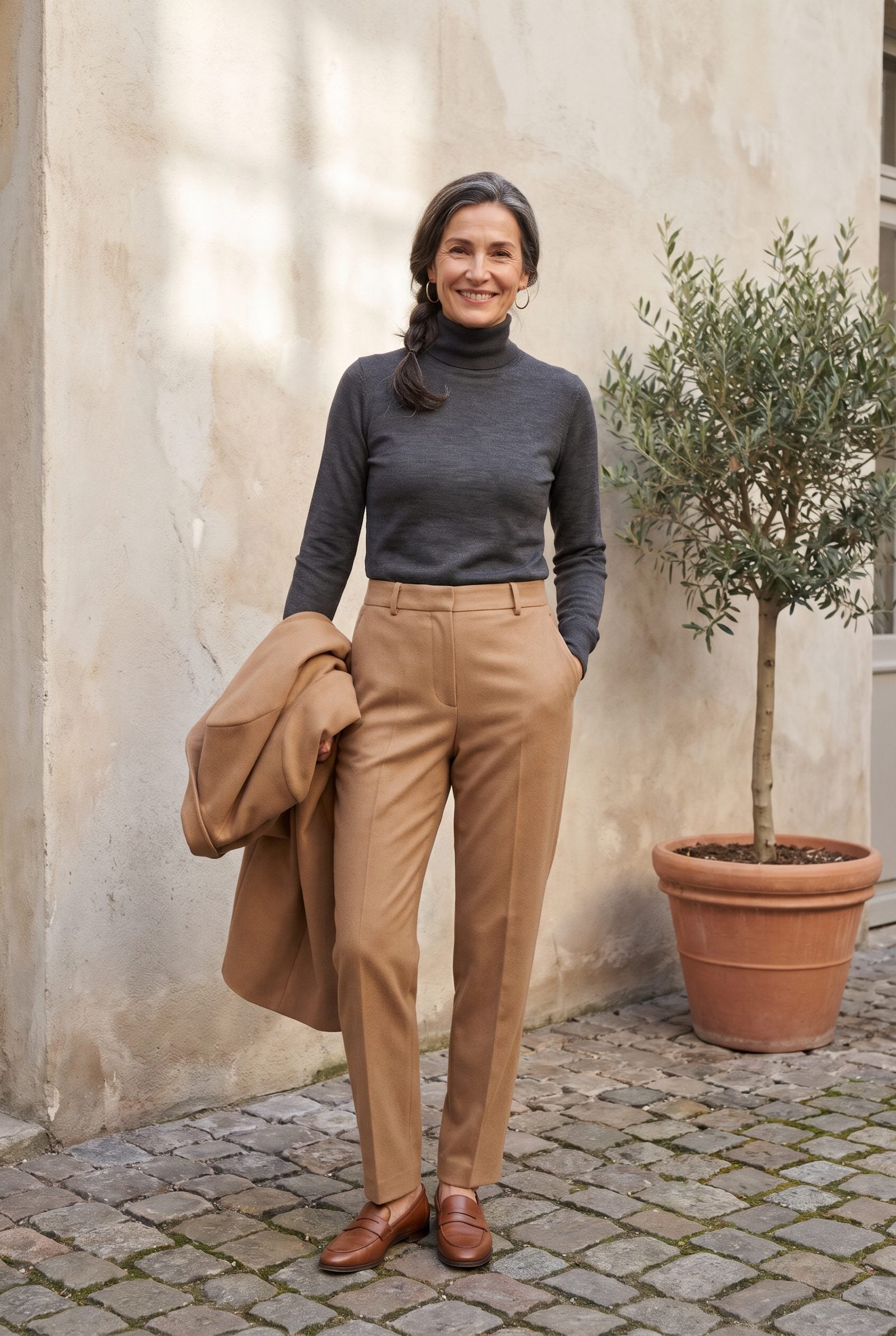
The fine-gauge turtleneck makes the rest of the list possible. It slides under the blazer, the wool coat, the cardigan, adding warmth at the neck without a scrap of bulk. On its own with good trousers, it’s a complete outfit.
The charcoal version reads so clean because the knit is thin enough to tuck. A chunky turtleneck fights the waistband and bulks you up at the stomach. Fine-gauge tucks flat, so the high-waisted camel trousers do their job and lengthen the leg.
One fit note: the neck should fold once and sit soft, not strangle. If it’s gripping your throat, size up. A turtleneck you keep tugging at is a turtleneck you won’t wear.
39. Include a Cable-Knit Weekend Sweater
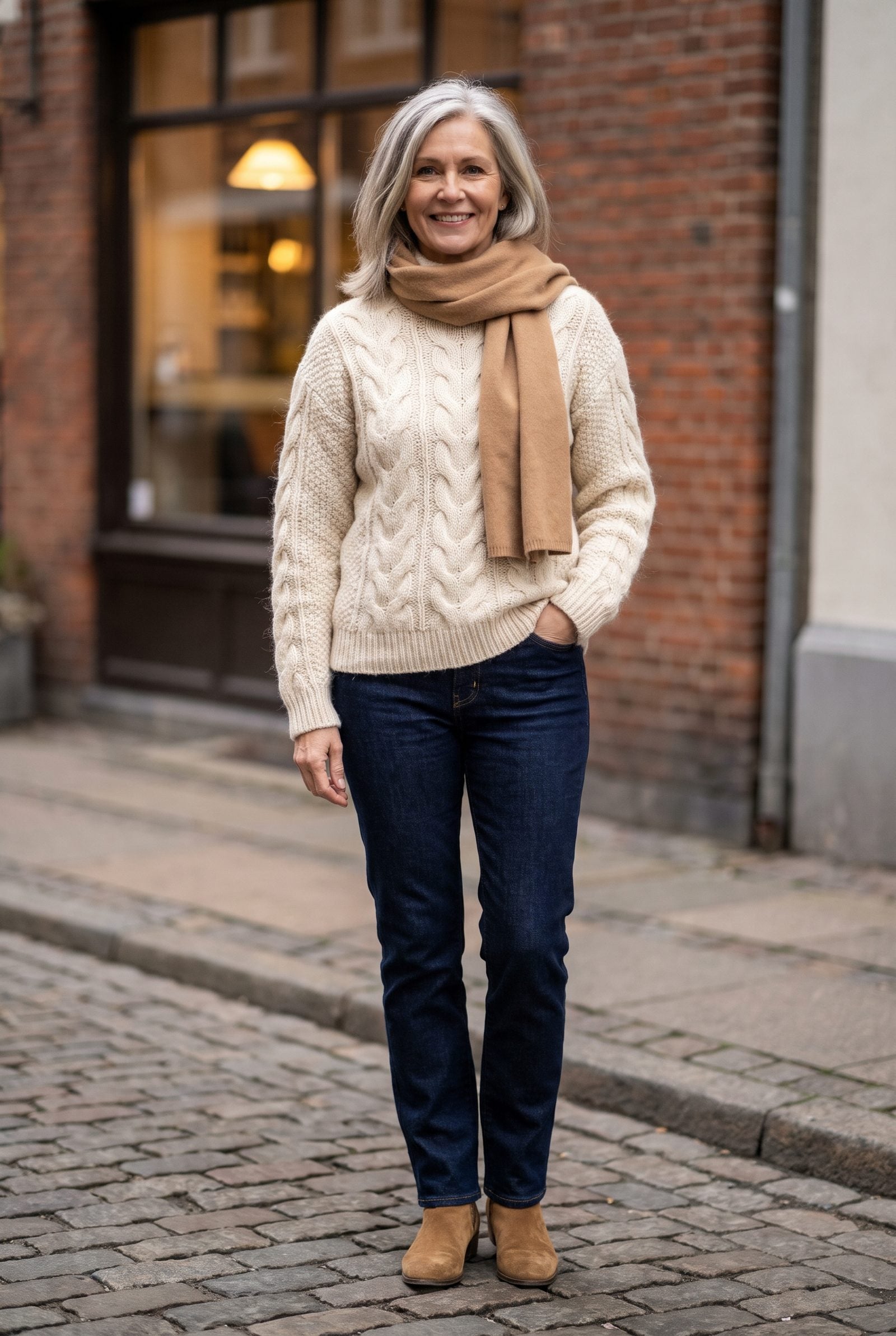
A cream cable-knit earns its place because the texture does all the talking. Those rope-twist cables throw shadow and light around, so even with plain indigo jeans and tan boots the eye never gets bored. Let one cream cable-knit sweater carry the visual weight and the rest of the outfit can stay quiet.
Size up half a step. A cable-knit that pulls across the chest reads as borrowed, while one that skims past the hip with a little slouch reads as yours — and it layers over a thermal without strangling you.
38. Find a Collared Half-Zip Sweater

The half-zip is the quiet overachiever of winter dressing. Zip it to the chin and the funnel collar frames your face like a soft turtleneck; drop it halfway and you get a flattering V that elongates the whole top half.
That adjustability is the main draw. One forest-green merino half-zip covers a brisk commute and a warm office without a costume change, and a fine merino gauge keeps it polished rather than sporty, so it slides under a blazer when you need it to.
37. Buy a Thermal Base-Layer Top
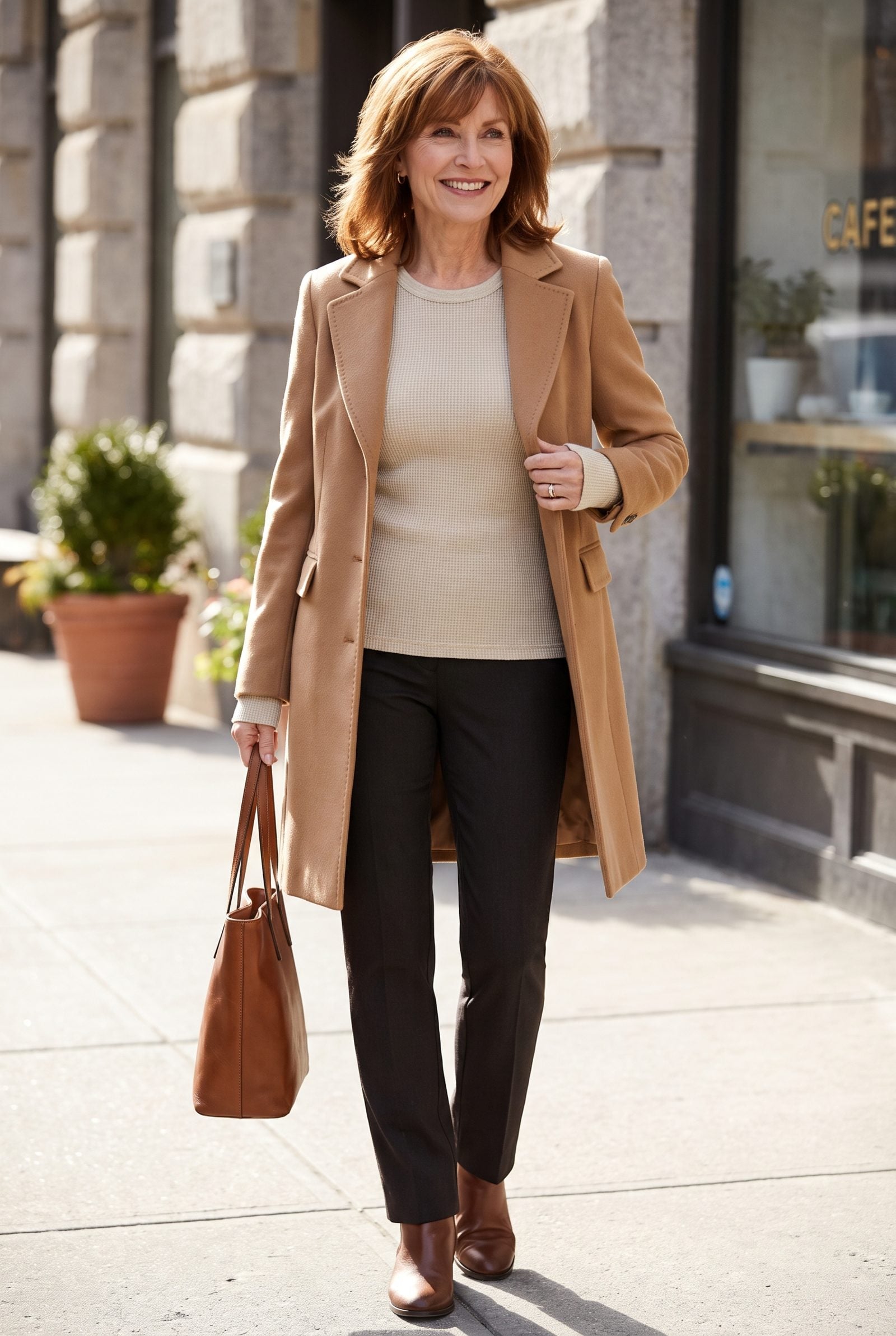
Nobody sees your base layer and that is exactly why it matters. A fitted merino thermal is the quiet machinery that makes a thin sweater warm enough to leave the house in — the close waffle knit traps heat without adding bulk, so your real outfit sits clean on top.
Skip cotton. It holds damp and turns cold the second you rush for a bus. Merino moves moisture away and does not reek by day three. Buy two, oatmeal and charcoal, and rotate.
36. Add a Silk Thermal Camisole
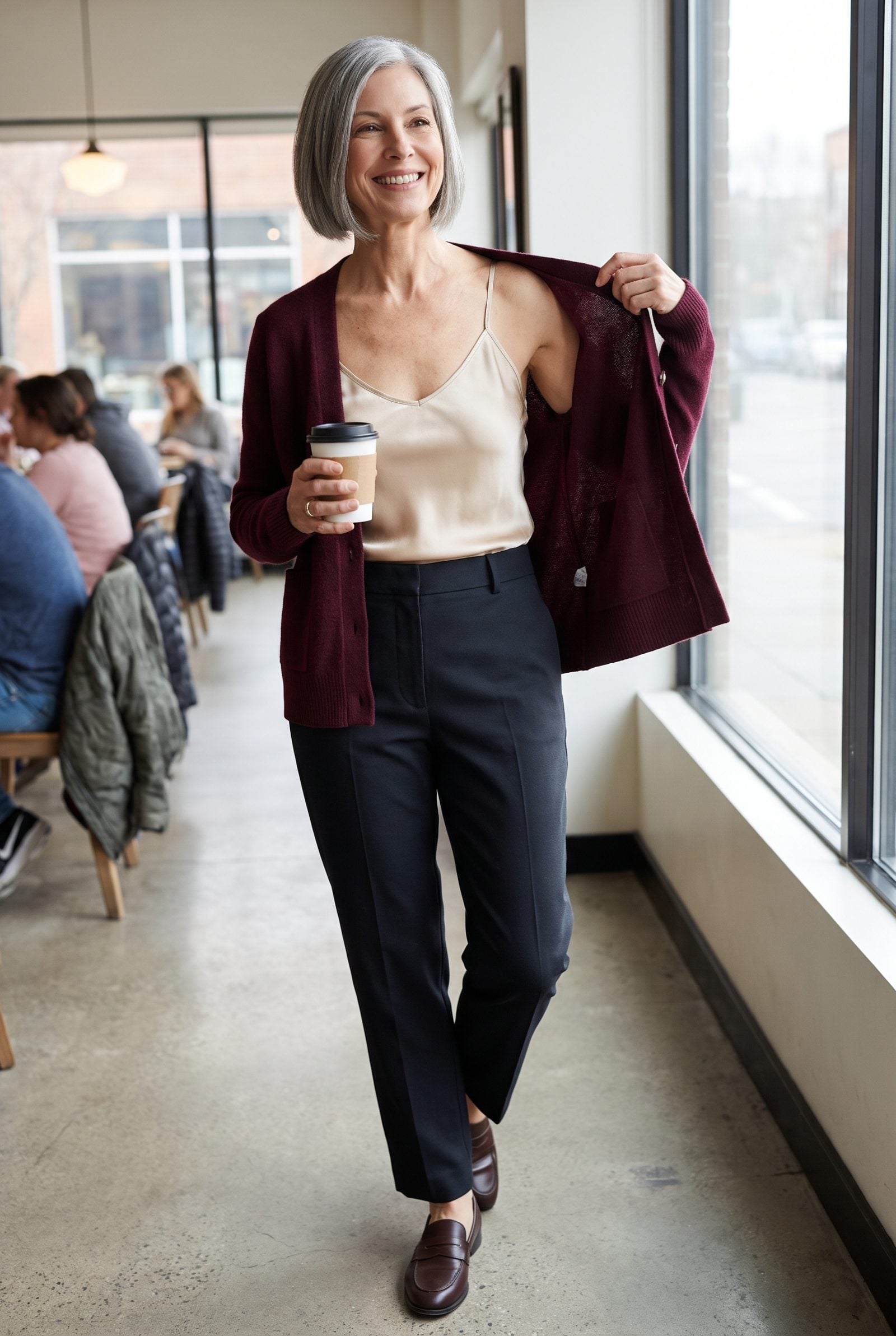
Silk is the sneaky warm one. It weighs almost nothing, disappears under everything, and holds body heat like a second skin. A champagne silk thermal camisole lets you wear a slightly sheer blouse or a scratchy wool sweater without goosebumps or itch.
The smooth hand does the real work. Silk glides under knits so nothing bunches or clings at the waist. Hand-wash it or use a mesh bag on cold, treat it gently, and one camisole outlasts three synthetic ones.
35. Find a Brushed Flannel Shirt
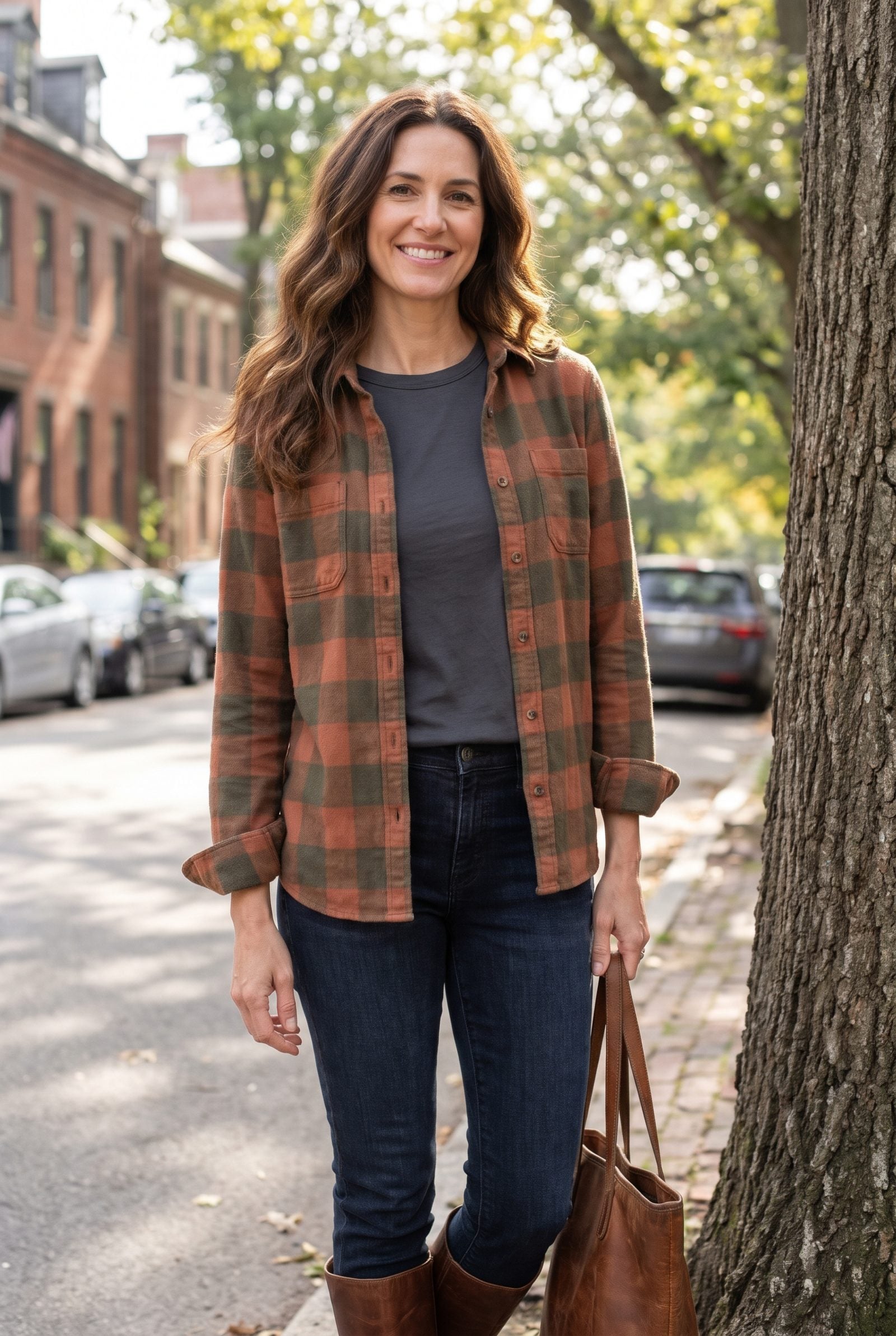
A brushed flannel is what you reach for when it is cold but not freezing, and it never looks like you tried too hard. The soft napped cotton has a warmth that regular shirting cannot touch, and a muted rust-and-olive check keeps it grounded instead of lumberjack-costume.
Wear it three ways: buttoned with jeans, open over a tee as a shacket, or layered under a wool coat as the collar that peeks out. A rust plaid flannel in a heavier weight does the most. Thin flannel pills in a season, so skip it.
34. Add a Fleece Quarter-Zip Pullover
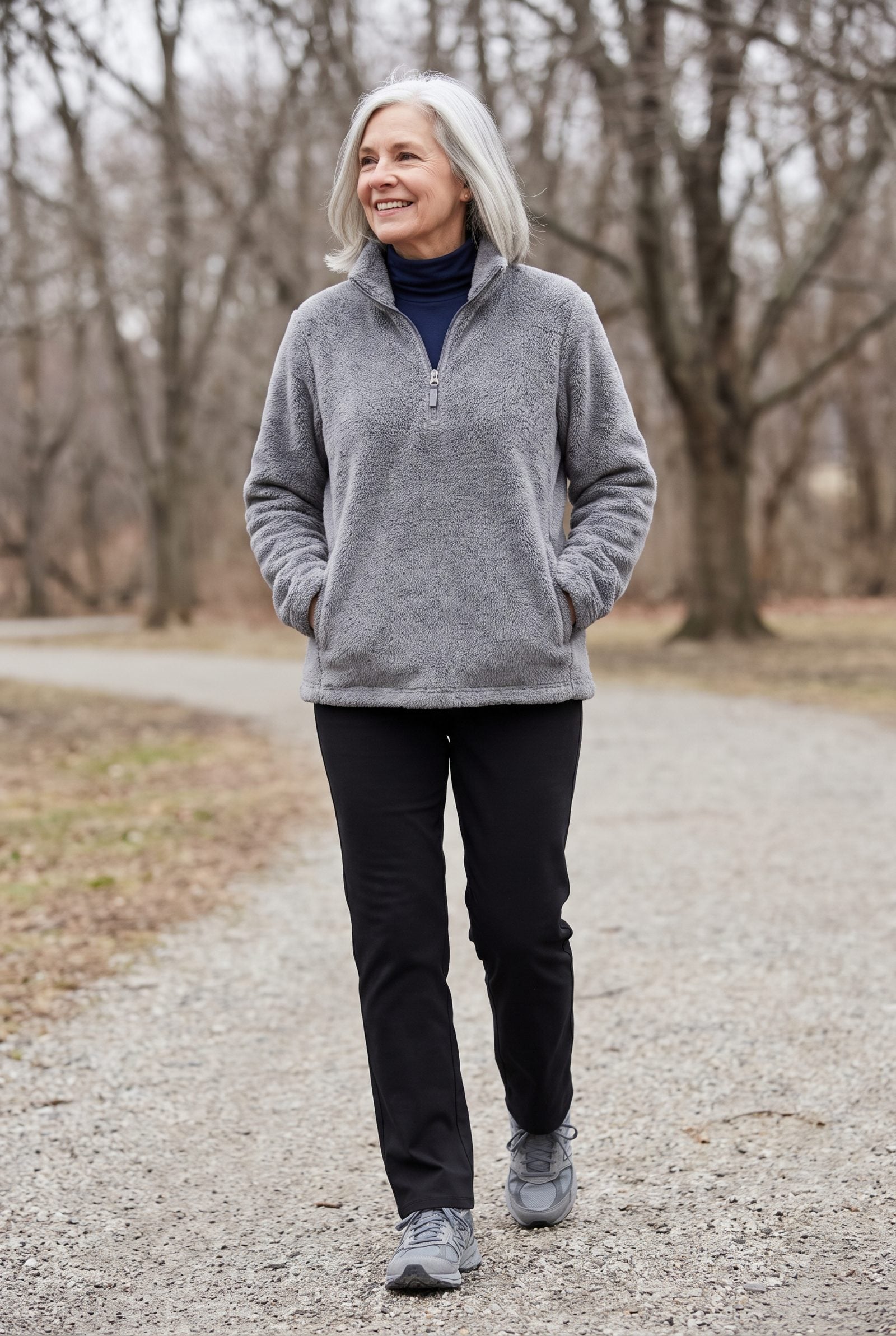
The fleece quarter-zip is pure function, and that is why it belongs in your rotation. Plush pile traps warm air the second you pull it on, so it carries dog walks, grocery runs, and that miserable cold stretch between the car and the front door.
Go for a trim cut, not a boxy men’s shape. A fitted heather-gray fleece pullover reads intentional rather than athletic-leftover. Pair it with real pants and supportive sneakers and it stops being gym gear.
33. Choose a Versatile Sweater Dress
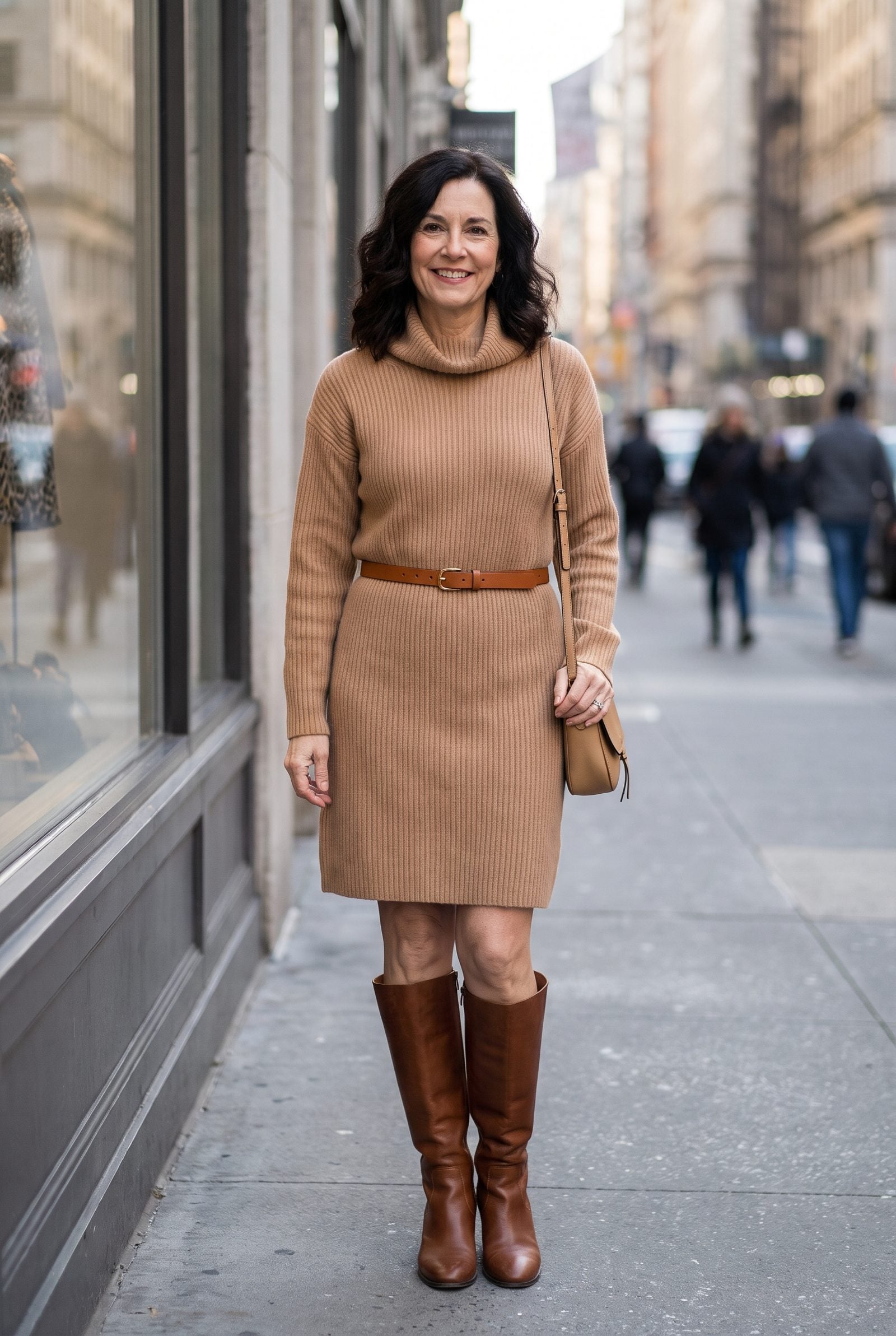
One zip and you are dressed. That is the sweater dress argument in full. But the belt does the heavy lifting: a ribbed knit falls straight, and a thin cognac leather belt at the natural waist carves an hourglass out of a column.
A camel ribbed sweater dress
with knee-high cognac boots and bare legs handles a lunch, a gallery, and a dinner without edits. Clothes do shift how you carry yourself — a dress that holds your shape makes you stand like you mean it.
32. Select a Lined Wool Midi Skirt
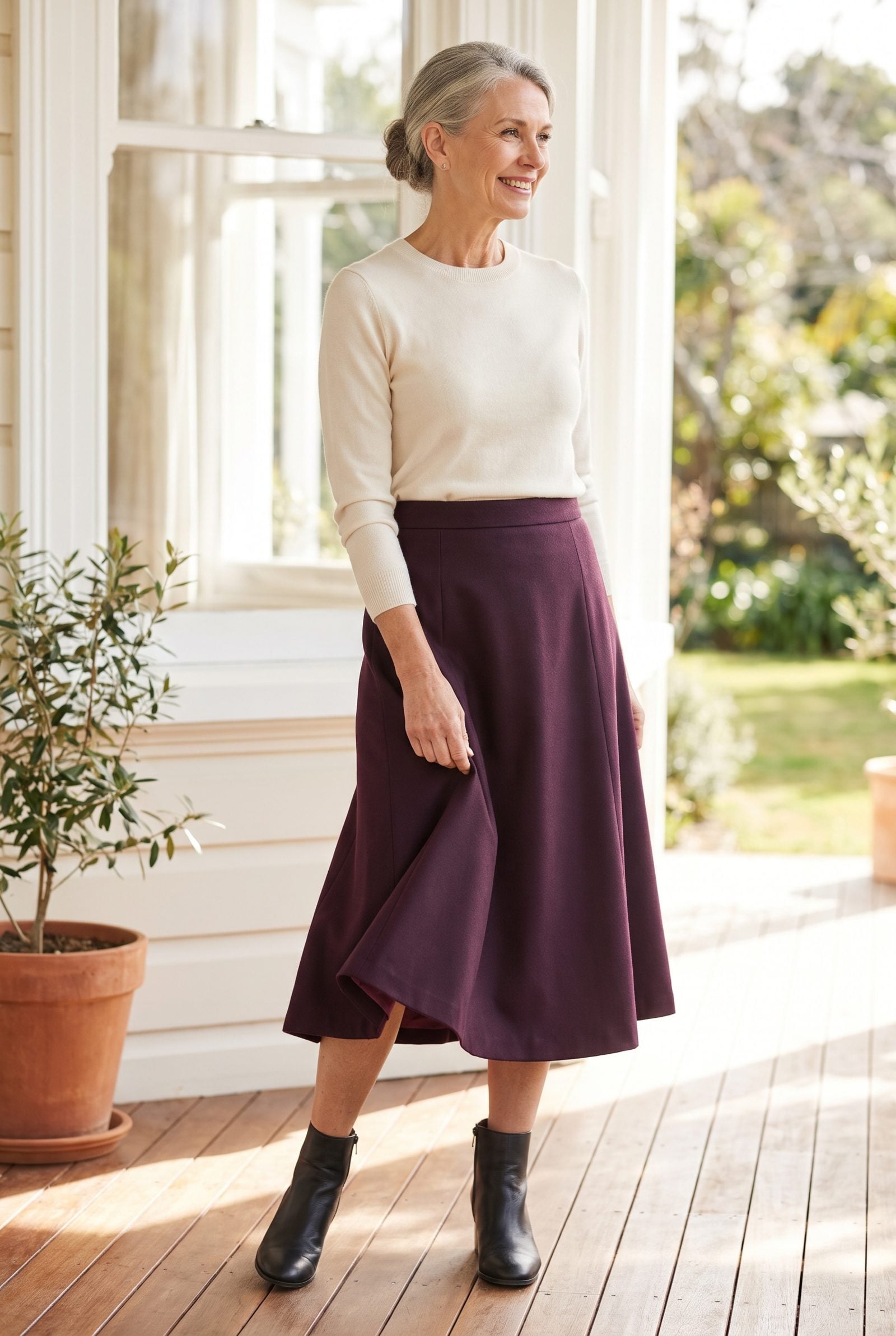
The lining is not a luxury. It is the whole reason the skirt survives winter. An unlined wool midi clings, rides up over tights, and itches at the knee by noon, while a lined one glides, keeps its A-line swing, and tucks a layer of warmth where you never see it.
Deep plum is the smart pick. It flatters more skin tones than black and still goes with cream, camel, charcoal, and gray. A plum wool midi skirt with a tucked knit and ankle boots is as easy as a dress but gives you two separates to replay all season.
31. Own Lined Tailored Wool Trousers

A sharp crease in heavy wool is quiet authority you can wear. Lined tailored trousers hang straight from the hip instead of pooling at the thigh, and the lining kills the itch and the static cling that ruin cheaper wool pants come January.
Charcoal earns its keep more than black. It softens under office light and plays with navy, cream, camel, and burgundy. A pair of charcoal wool trousers with a silk blouse and loafers is the backbone of a winter work wardrobe built to last.
30. Add Ponte Straight-Leg Pants
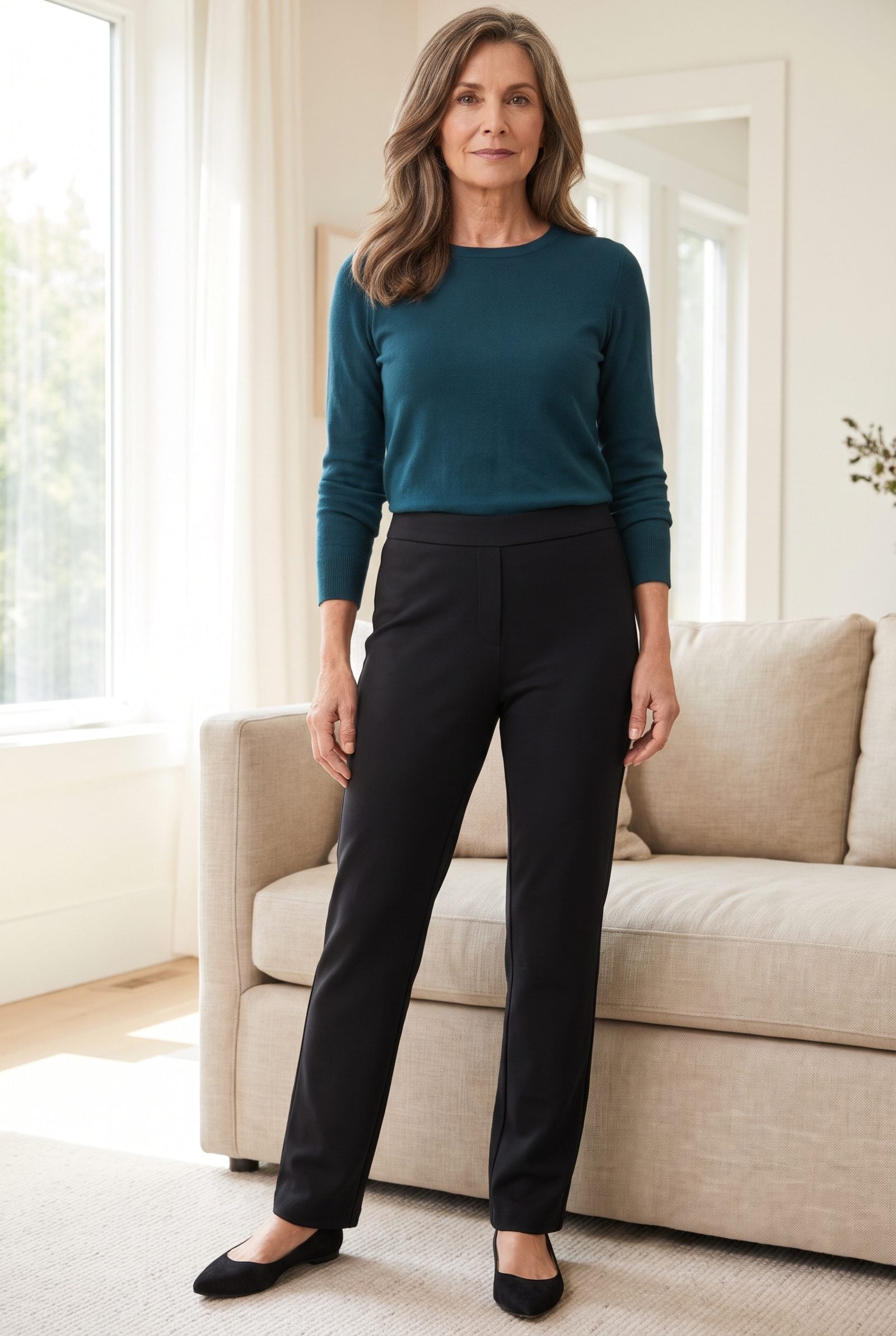
Ponte forgives a big lunch and still looks pressed. The thick double-knit holds its shape like tailoring but moves like a legging, which is why you grab these when the day runs long and the cold runs deep.
A flat waistband and a true straight leg keep black ponte straight-leg pants on the polished side of comfortable. Dress them up with a fine knit and pointed flats, down with a fleece pullover and sneakers. Owning more than one pair is no indulgence.
29. Keep Dark-Wash Straight Jeans
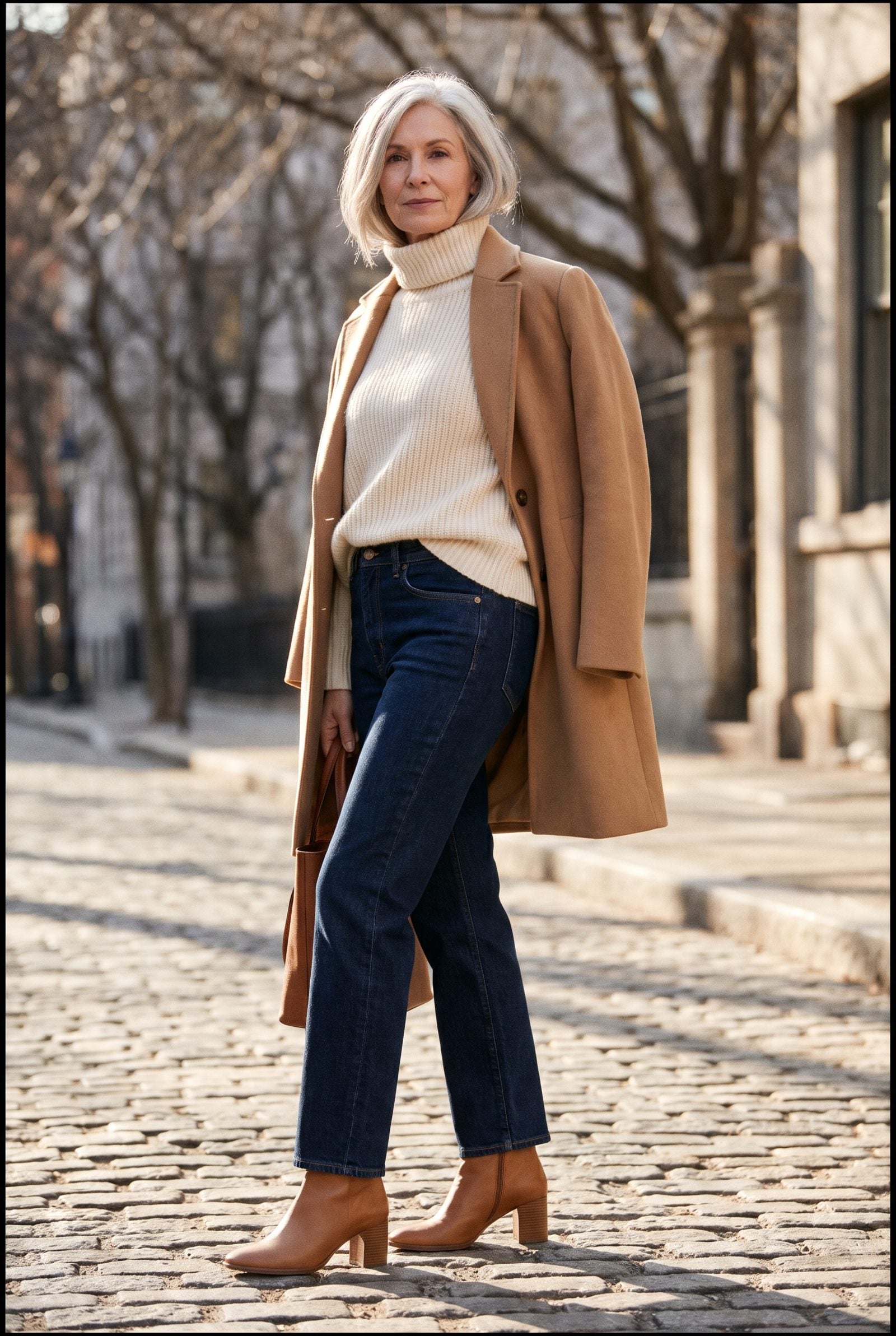
Dark-wash straight jeans do what skinny jeans never managed past fifty: they skim the leg without strangling it. The straight cut falls clean from hip to ankle, reads tidy under a coat, and never bunches at the knee when you sit through a long lunch.
Deep indigo with no fading is the whole game. A flat, saturated wash looks closer to a trouser than a weekend jean, so you can pair it with a wool coat and leather boots and walk into anywhere. Buy a pair that hits at the ankle bone, not the floor — puddled hems drag through slush and fray by February.
Asked which everyday bottoms they would buy, 58% of ThreadCurve readers chose jeans, well ahead of trousers at 29% and leggings at 12%.
28. Choose Textured Corduroy Trousers

Corduroy is the trouser fabric winter forgot it loved. Those raised vertical ridges throw a soft shadow that catches light, so a plain brown pant suddenly has depth and a little warmth without a single pattern.
Go wide-wale, not the thin pinwale that reads schoolboy. A rust, olive, or deep camel cord against an ivory blouse builds a quiet tonal outfit where the texture does the talking. And the wale adds visual weight to the leg, which flatters a fuller top half.
27. Stock Fleece-Lined Everyday Leggings
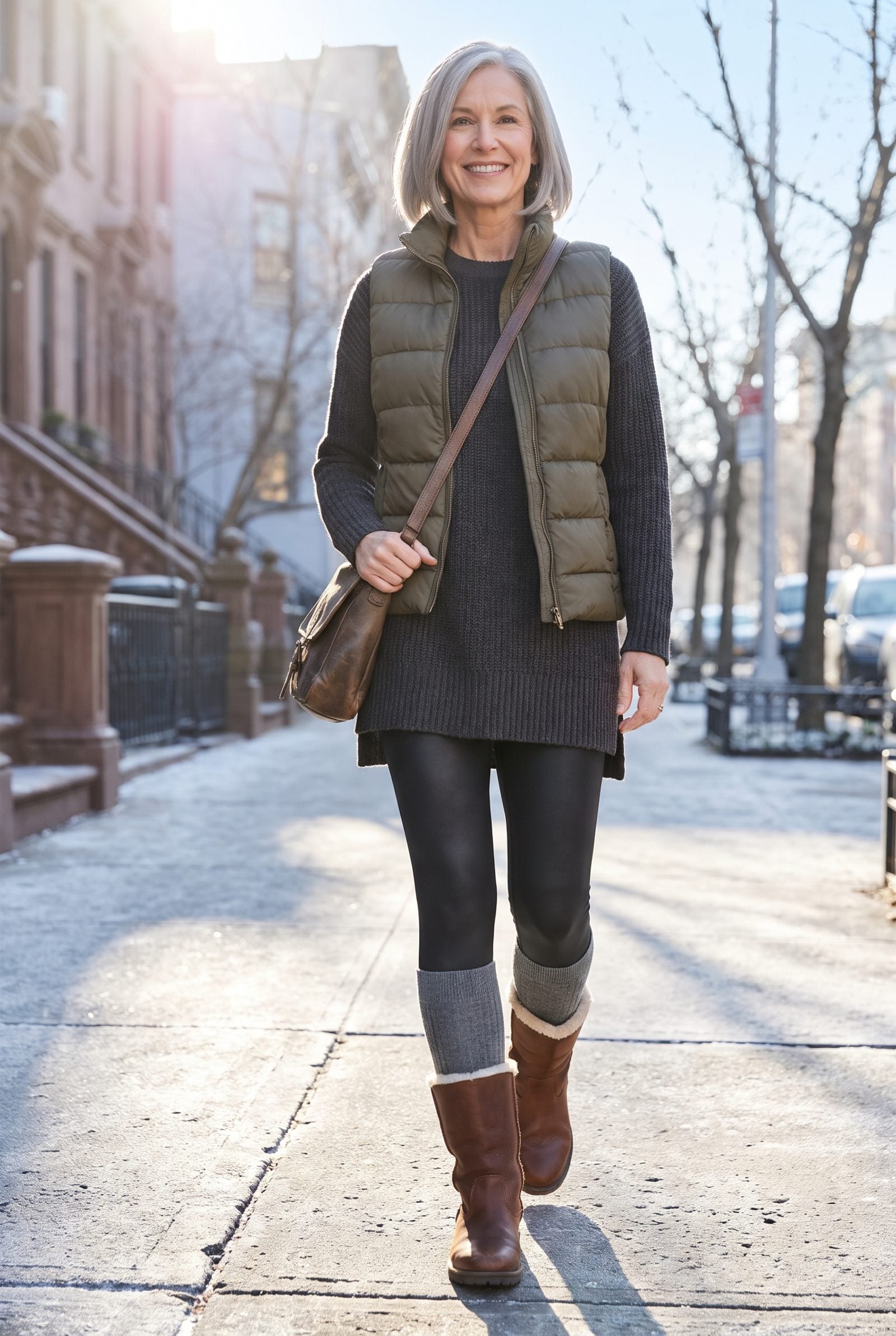
The dollar-store leggings go sheer in the cold and announce it the second you bend down. A proper fleece-lined pair is cut from a dense, brushed-back knit that stays opaque and traps a thin pocket of warm air against the skin.
Here’s the test. Pull the waistband and stretch the fabric over your hand in the shop — if you can see your palm through it, keep walking. You want a glossy, structured black with a faux-leather sheen that reads like a trouser under a long tunic, not a thin gym legging. Covered under a mid-thigh sweater and a vest, they do the work of thermal trousers while looking like you tried.
26. Buy Thermal Long-Underwear Bottoms
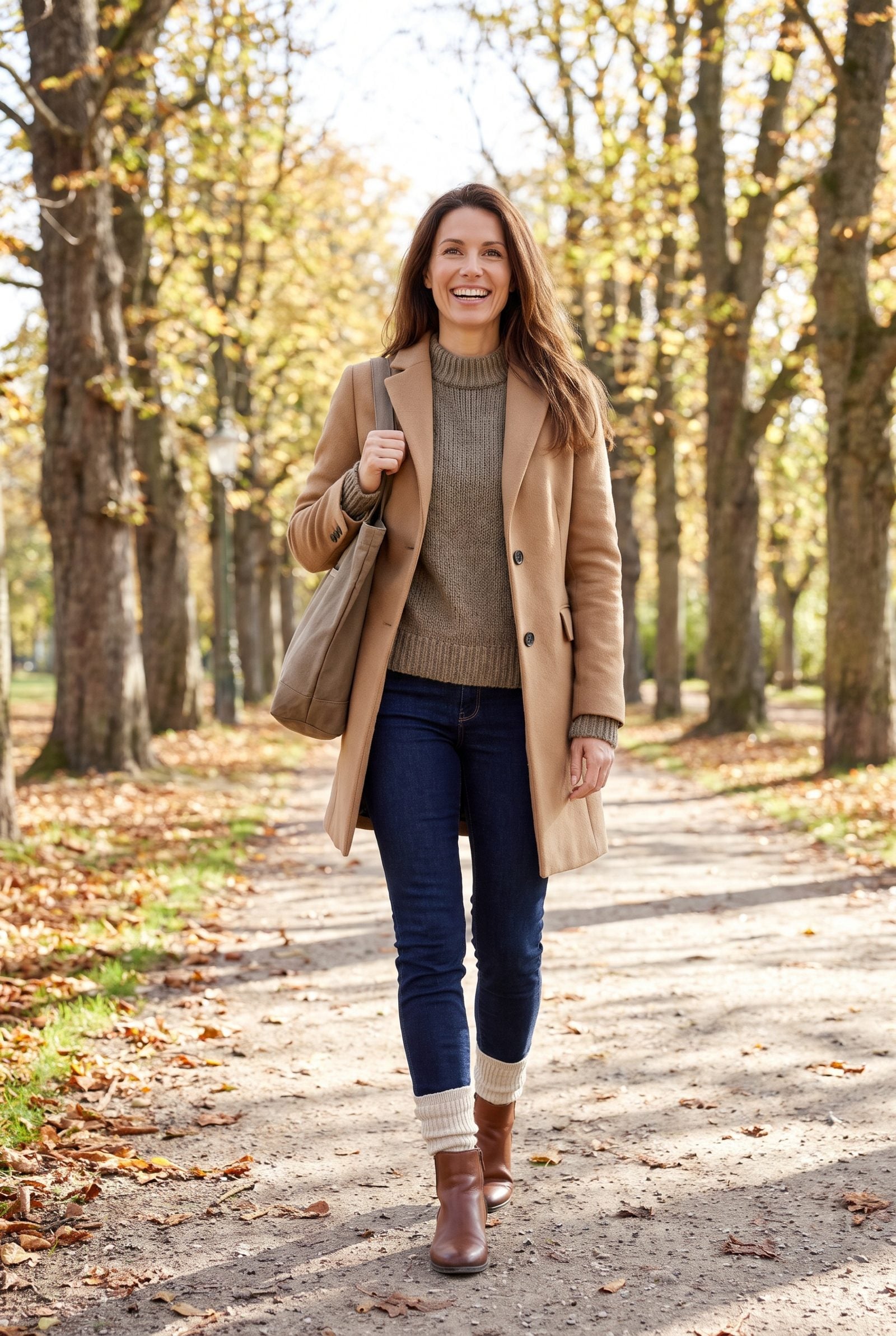
Nobody sees these, which is exactly why they get skipped — and then you spend January cold from the inside out. A thin thermal worn under your real trousers is the difference between enduring the cold and ignoring it.
Choose merino over cotton. Cotton holds damp and leaves you clammy, while fine merino wicks and keeps warming even when you work up a sweat waiting for a bus. You want a flat, slim base layer that vanishes under jeans, not waffle long johns that bunch at the knee.
25. Keep Water-Resistant Walking Pants
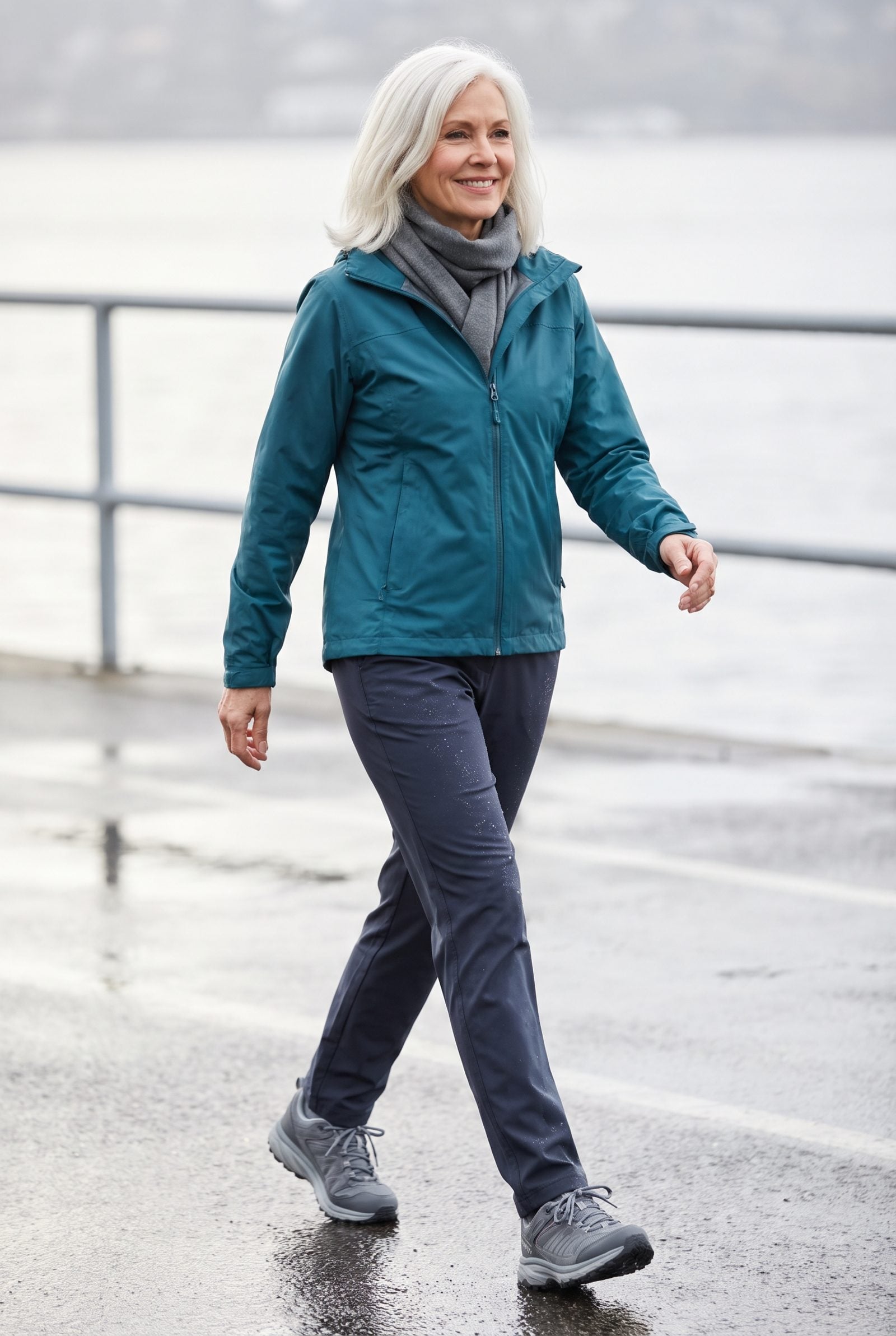
This is the pair you want for the two-mile loop when the sky can’t make up its mind. Water-resistant walking pants shed a drizzle and a splash from a passing car without soaking through, and they dry in the time it takes to make tea.
Look for a tapered leg over a boxy hiking cut. Tapered reads city, not summit, so you can run errands in them without looking like you came off a trail. A touch of stretch and an articulated knee matter more than any logo — you want to climb a hill without the fabric fighting you.
24. Fit Knee-High Leather Boots
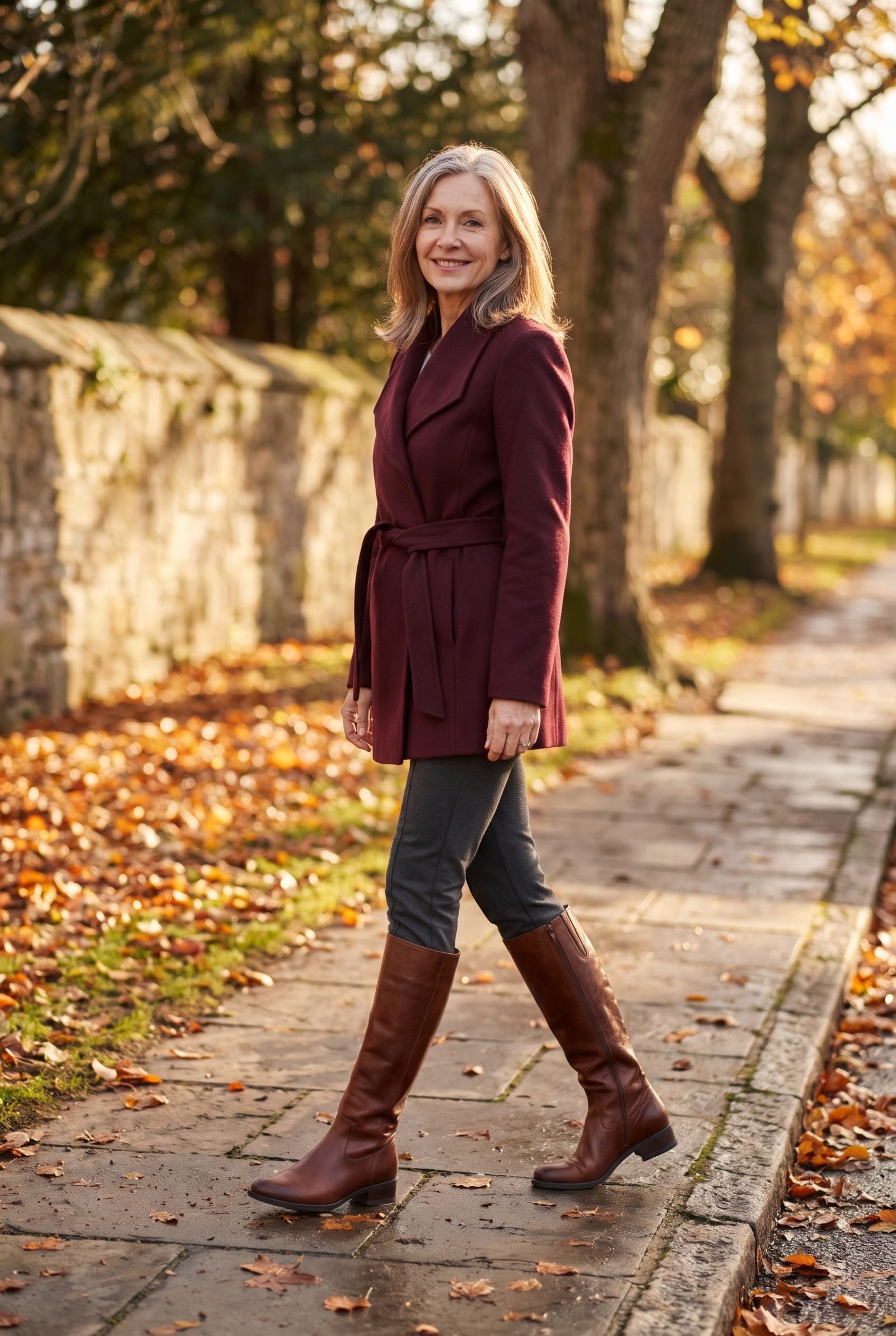
A knee-high boot lives or dies at the calf. Too wide and the shaft gapes and folds; too narrow and you’ll never get the zip past your calf while hopping on one leg in the hallway, swearing. Measure your calf at its widest and check the boot’s shaft circumference before you buy, especially online.
Cognac or chocolate leather on a low block heel earns its keep all winter. Tuck slim trousers or dark leggings straight in and the unbroken line from waist to toe lengthens you head to foot. Pick a stacked block heel over a stiletto — you want to cross a cobbled square without turning an ankle.
23. Add Insulated Snow Boots
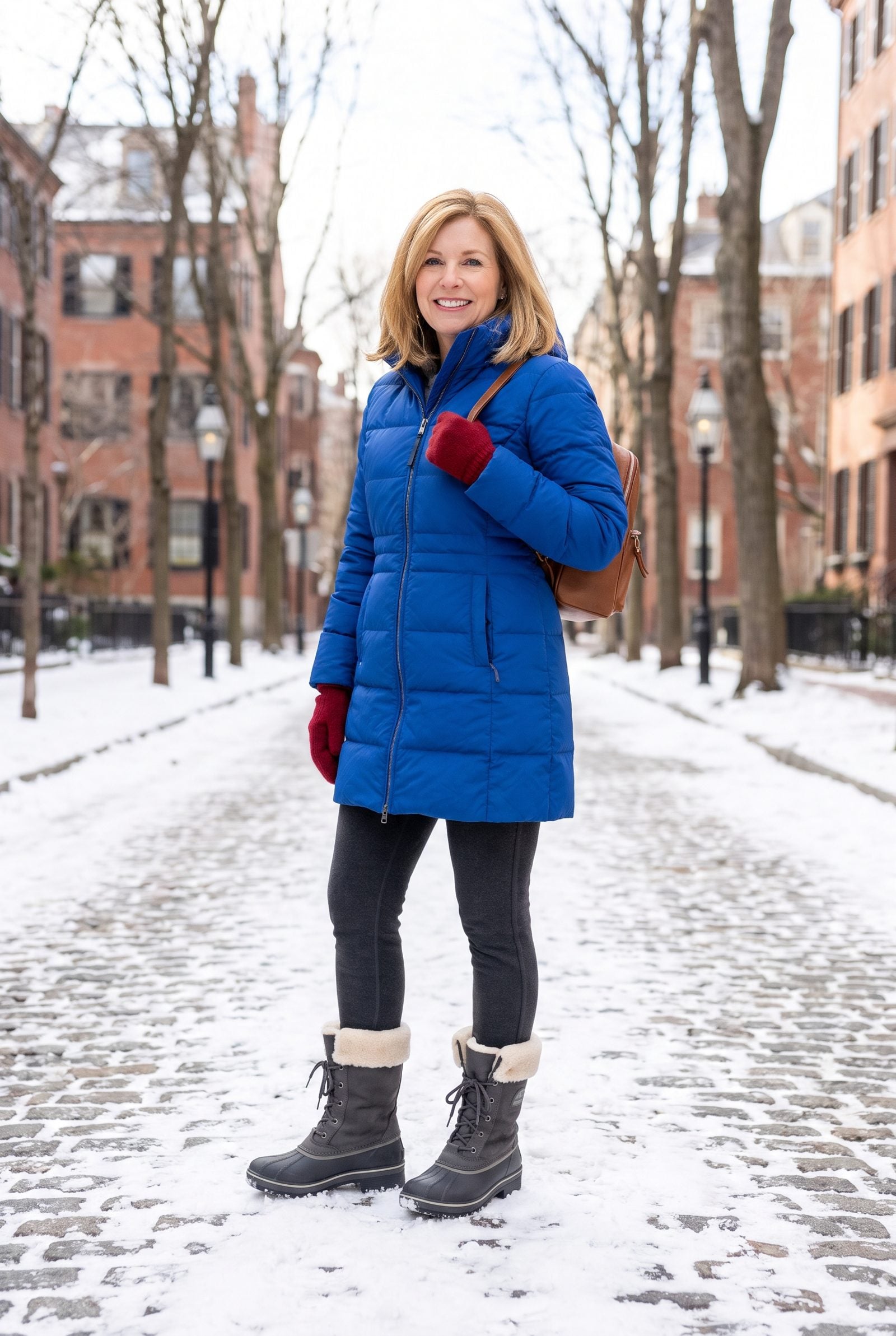
This is the one category where looks come second to not falling over. A real insulated snow boot has three jobs: keep water out, keep heat in, grip ice. Skip any of the three and you’ll regret it on the first slick morning.
Check for a sealed waterproof shell, a warmth rating if the brand gives one, and a deep lugged rubber sole that bites rather than skates. A shearling or faux-fur cuff seals the gap at the ankle where cold loves to climb in.
22. Choose Lug-Sole Chelsea Boots
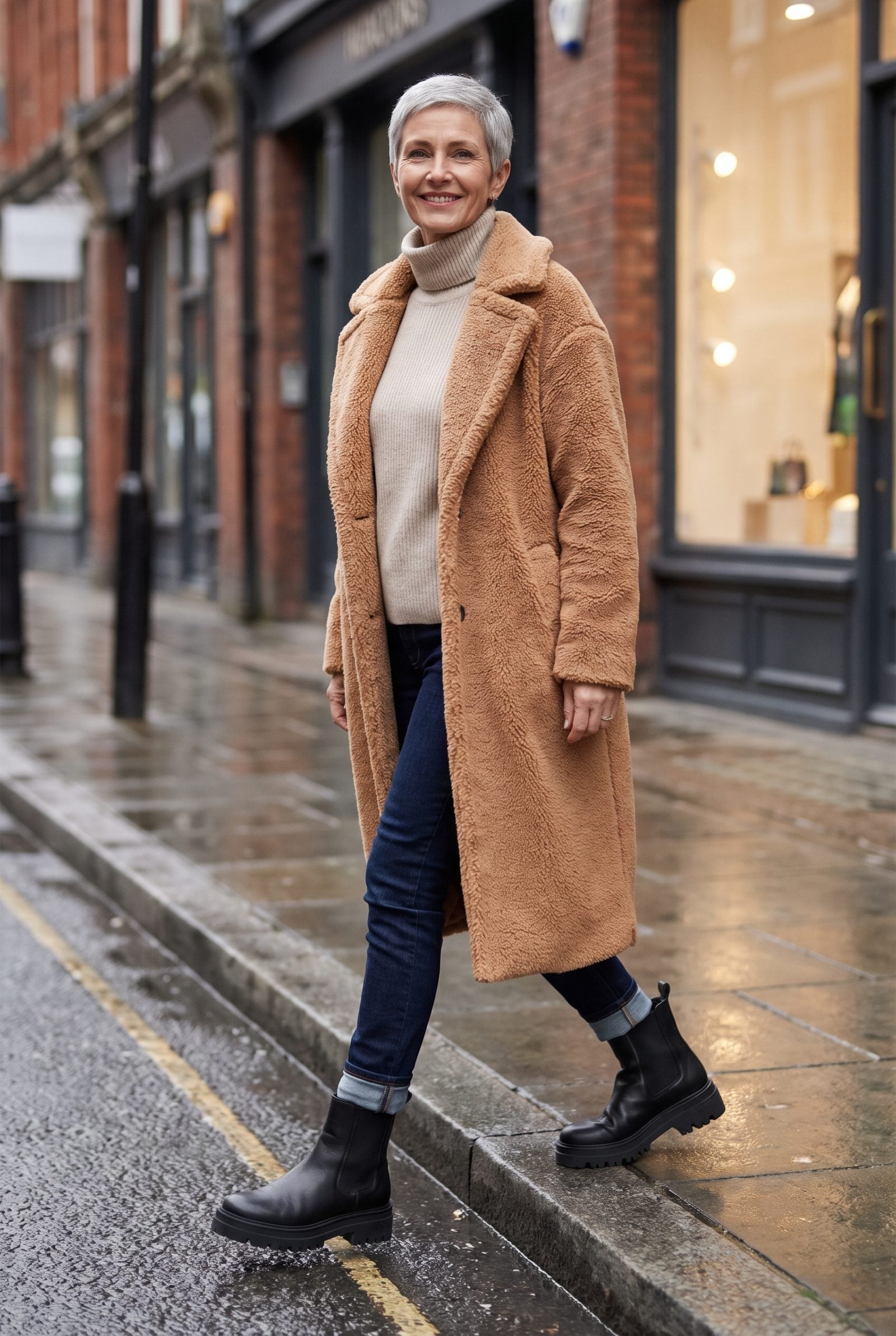
A lug sole takes the neat Chelsea and hands it traction and attitude at once. That chunky treaded base grips wet pavement, adds a little height, and grounds the slim profile so it never reads prissy.
Pull-on gussets mean no zip to fight and no laces to soak — which matters more than you’d think at a bus stop in the rain. Cuff an indigo jean once to show the sole off. Against a camel coat, the black boot anchors the whole outfit at the bottom and keeps a soft palette from floating away.
21. Keep Supportive Suede Loafers

The in-between shoe. Too mild for boots, too cold for anything open — a suede loafer keeps the foot covered and warm while staying far more polished than a sneaker.
Suede earns its place for the soft, matte nap that reads richer than smooth leather in dim winter light. Look for a cushioned footbed and a low stacked heel so you can stand at a gallery for an hour without wincing. A bottle-green or oxblood suede against grey flannel trousers adds colour without a single bright thing. Just mind the wet days: spray them with protector and keep a boot in reserve for the rain.
20. Add Cushioned Leather Sneakers

A white leather sneaker does what canvas never could in winter: it wipes clean, resists a splash, and still looks crisp after a month of city pavements. The leather upper is the detail that lifts it from gym shoe to something you’d wear to meet a friend for coffee.
The sole is where your knees will thank you. A thick cushioned midsole absorbs the hard flagstones and lets you clock a long day on your feet. Keep the design minimal — a clean upper, a tidy lace — so it pairs with jeans and a wool coat without shouting athletic.
19. Own Low Block-Heel Pumps

The low block heel is the quiet workhorse of a cold-weather closet. Two inches of stable, squared heel means you can cross wet brick and tram tracks without that hostage-negotiation shuffle a stiletto demands. And deep oxblood? It reads richer than black against winter neutrals, and it hides scuffs better too.
Against cropped charcoal trousers, the squared toe lengthens the leg without a single wobble. That support is what does the work here. It photographs as polish, never as compromise.
18. Keep Shearling-Lined House Slippers
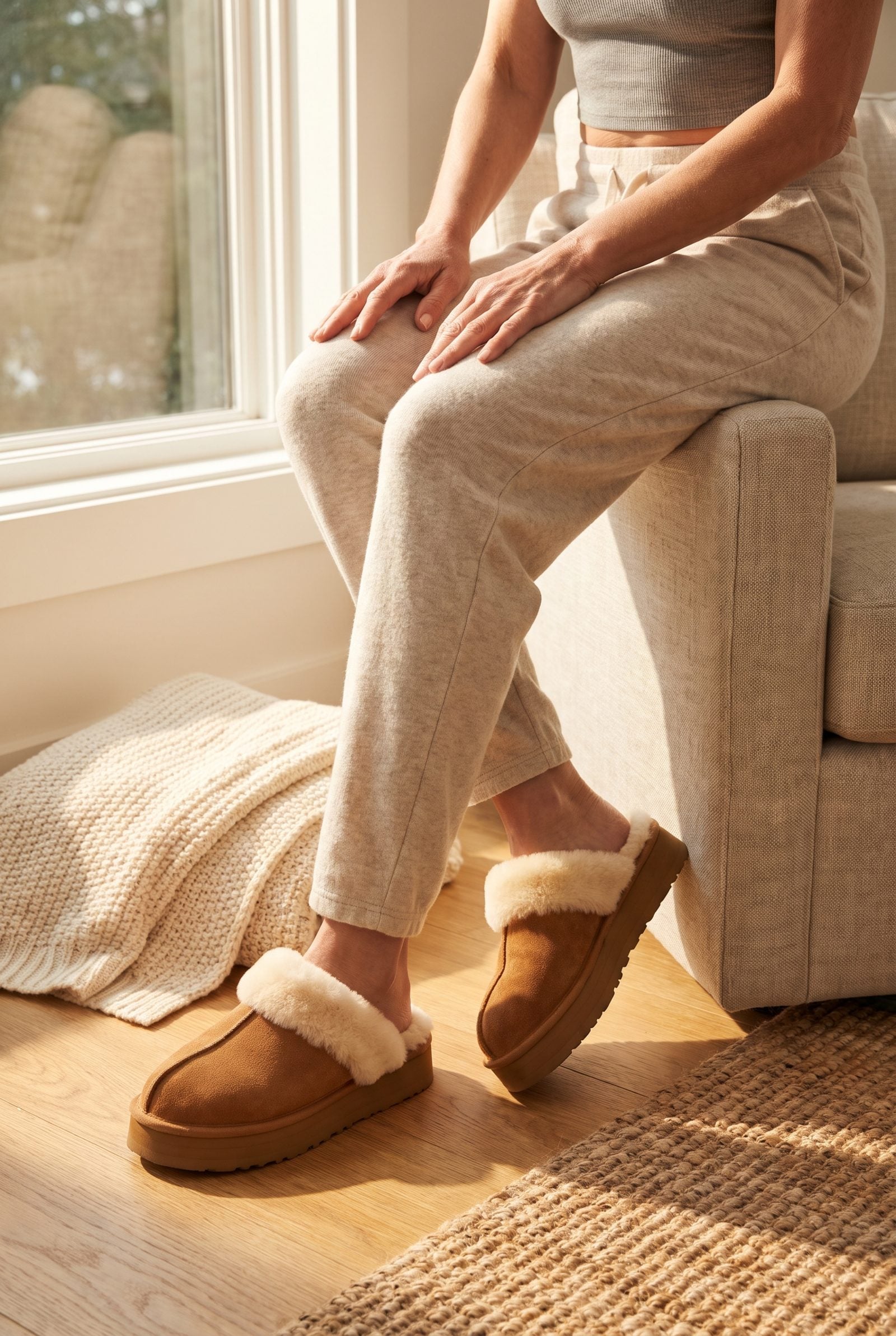
A proper house slipper has a sole with structure — not a flattened felt pancake that offers your arches nothing. Shearling lining traps warmth the second your foot slides in, and the firm rubber base means you can answer the door or carry a kettle across cold tile without flinching.
Caramel suede looks intentional rather than medicinal, which matters more than people admit. Cold feet wreck a whole evening. Warm feet quietly fix your mood, your circulation, and your willingness to leave the sofa.
17. Stock Merino Crew Socks

Merino does what cotton only pretends to. It wicks damp away, holds warmth even when you’re slightly sweaty, and dodges the swampy-then-freezing cycle that leaves cotton socks clammy by noon. The crew length tucks neatly under a polished jeans hem or a cropped trouser, no bunching.
Buy several pairs in one color so odd socks never sideline you on a frozen Tuesday.
16. Add Cushioned Boot Socks
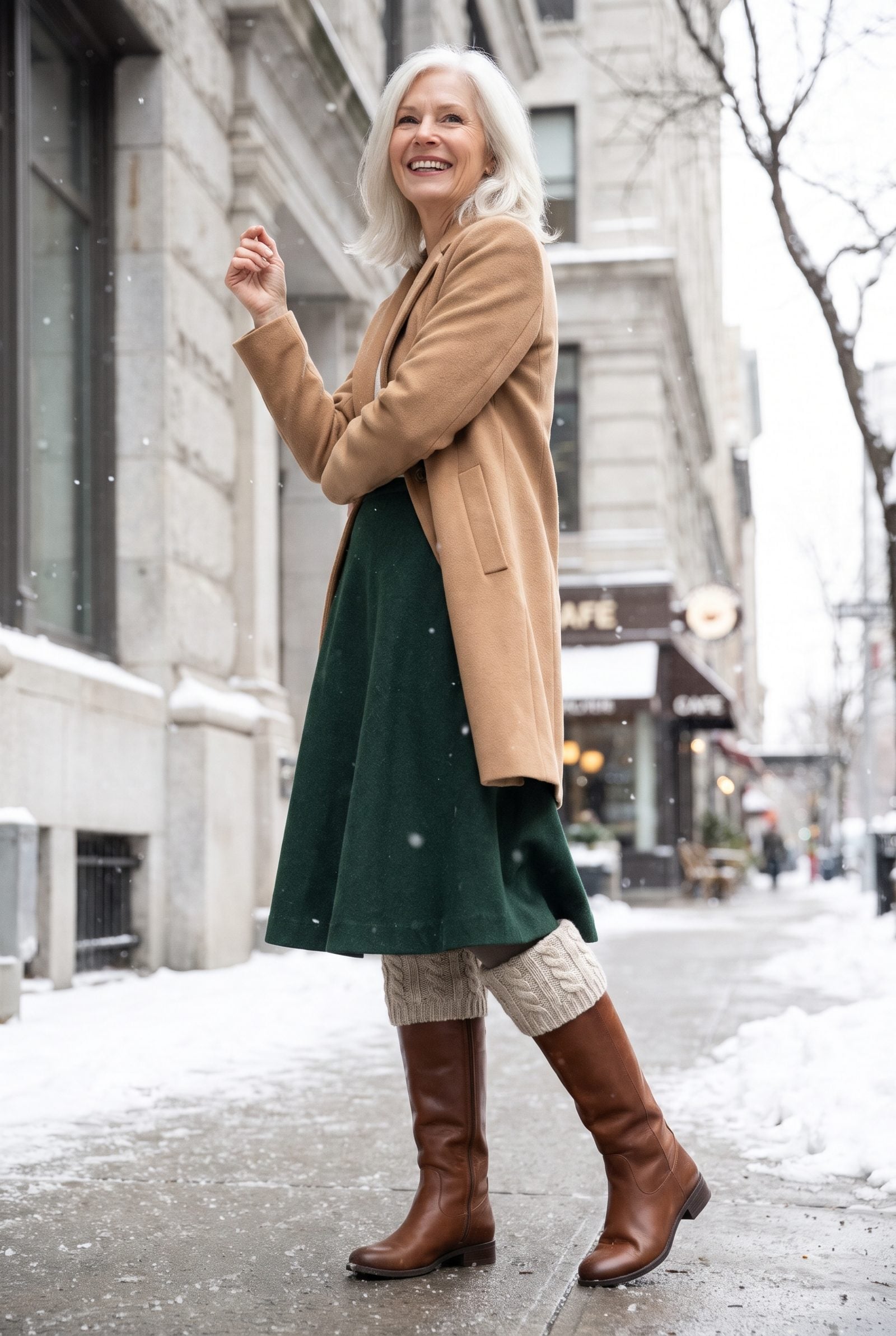
Boots feel like different boots with the right sock inside them. A cushioned pair adds a terry-loop underfoot that absorbs the pound of a long walk on frozen pavement, and the taller shaft fills the gap between hem and boot so no cold strip of ankle gets exposed.
Fold the cable cuff over the boot top and suddenly the sock is part of the outfit, not something hidden. Oatmeal knit against chestnut leather does the quiet work here — deliberate rustic layering, not an accident.
15. Keep Opaque Black Tights
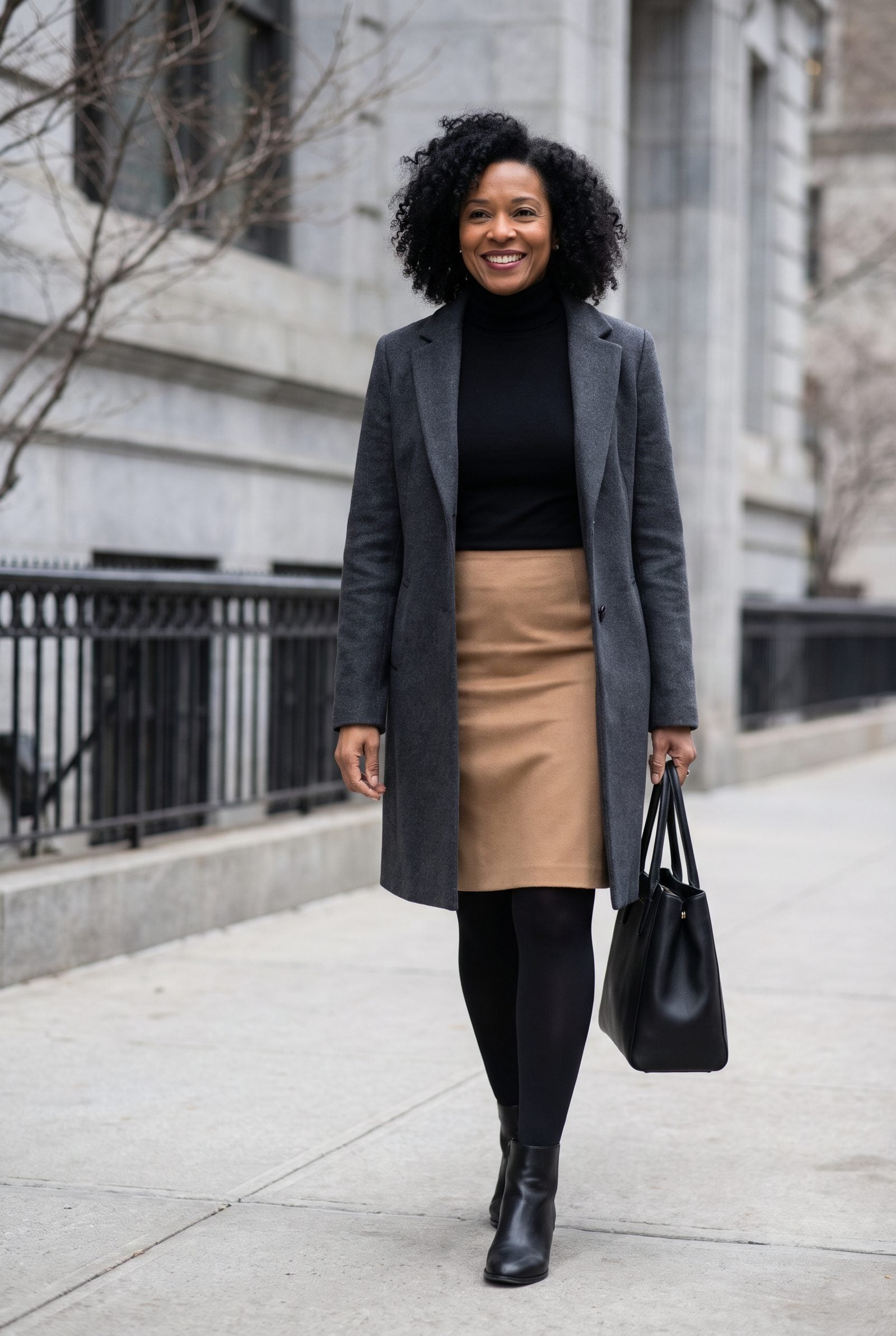
Opacity is the whole game. A thin tight that goes see-through at the thigh looks tired by lunch, so reach for a dense denier that stays matte and solid from waist to toe. Properly opaque black makes a skirt wearable in January and bridges the gap between a style that leans polished and one that just wants to stay warm.
Against a camel pencil skirt, that matte black grounds everything and pulls the leg into one clean column.
A good opaque tight is the difference between a skirt that survives winter and one that hibernates in a drawer.
14. Try Fleece-Lined Tights
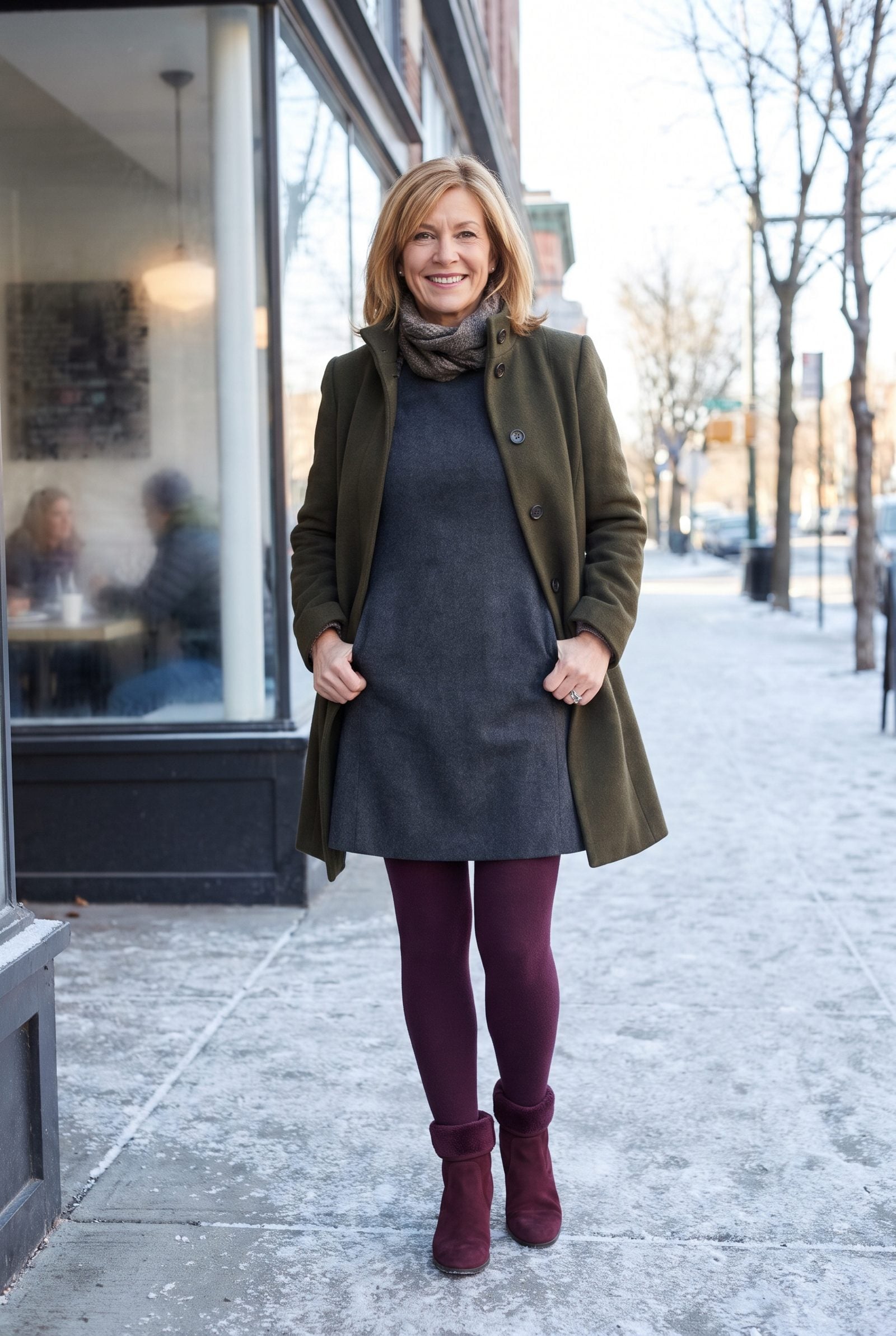
On the coldest days, fleece-lined tights feel like central heating you can wear. The brushed interior traps a layer of warm air against your legs, so a dress becomes a genuine option when the thermometer drops below freezing.
Plum instead of black adds depth under a grey dress, and the burgundy boots pick up the same warm family. Colour restraint across a tight plum-to-burgundy range is what keeps a heavy winter look from going flat and funereal.
13. Pack Graduated Compression Socks

Anyone who flies, drives long stretches, or stands through a holiday kitchen marathon knows the heavy-leg ache by evening. Graduated compression socks are firmest at the ankle and ease up the calf, nudging blood back upward so your legs feel lighter after a long day.
Modern pairs come in a refined navy rib that passes as regular trouser socks, not hospital issue. Tuck them under tailored navy trousers and no one knows but your tired legs.
12. Choose a Generous Wool Scarf
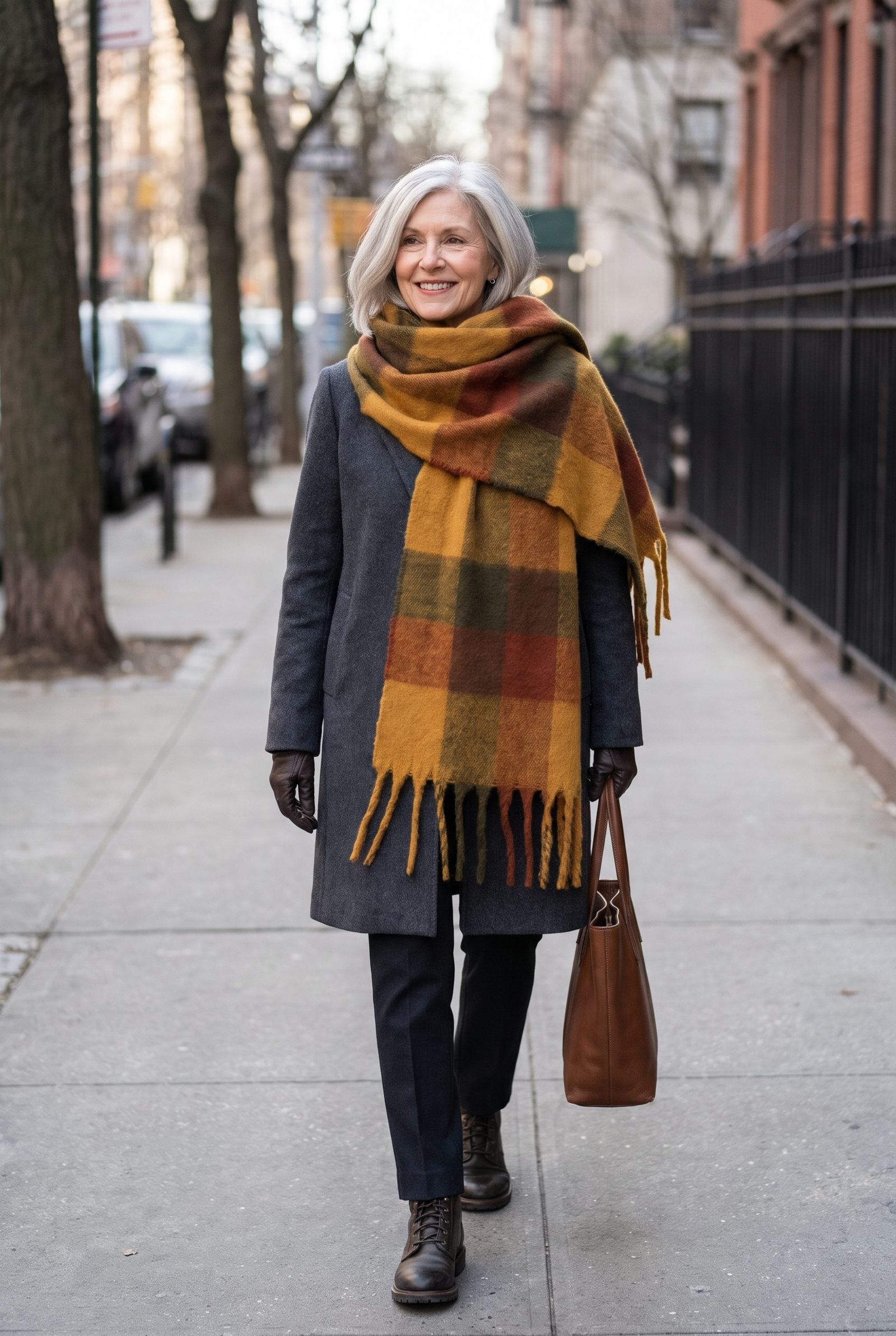
Scale is everything with a winter scarf. A skimpy strip strangles rather than warms, so go generous enough to loop twice and still cover your collarbones. A big mustard-and-rust plaid against a charcoal coat is the one bright move the whole look needs — which is how the scarf ends up leading instead of trailing along as an afterthought.
Wrapped high, it frames the face and bounces warm color up toward your skin. That does more for a tired winter complexion than most people realize.
11. Invest in a Cashmere Wrap
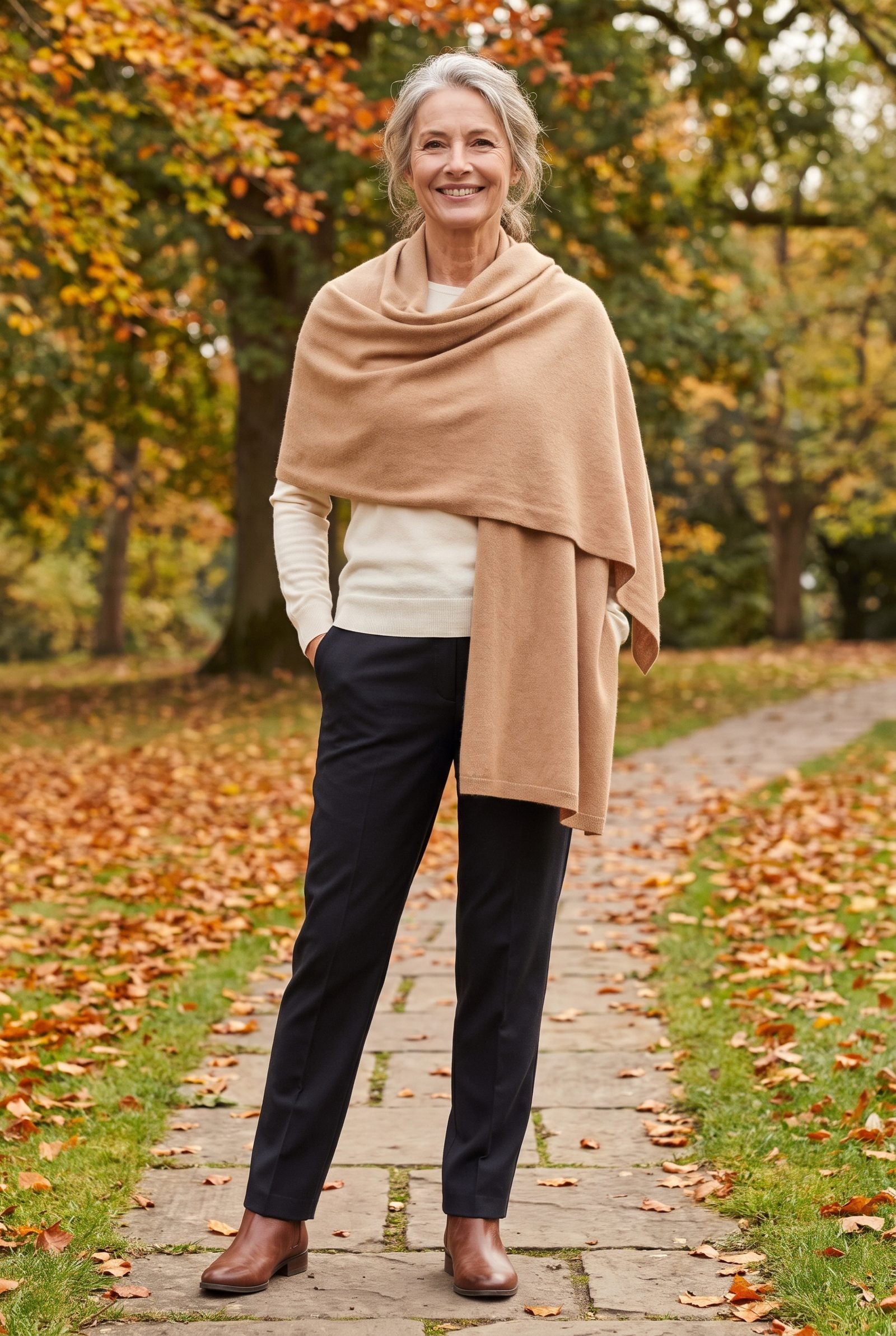
A cashmere wrap earns its price by doing three jobs. It layers over a coat without bulk, stands in as a blanket on a cold train, and rescues a thin dress the moment a room runs cold.
- Weightless warmth that packs into a handbag with room to spare.
- A fluid drape that softens structured tailoring and reads instantly expensive.
- A neutral camel that bridges everything already in your wardrobe.
That soft camel falling against a cream knit is what sells it. Texture and drape. No ornament required.
10. Keep Waterproof Touchscreen Gloves
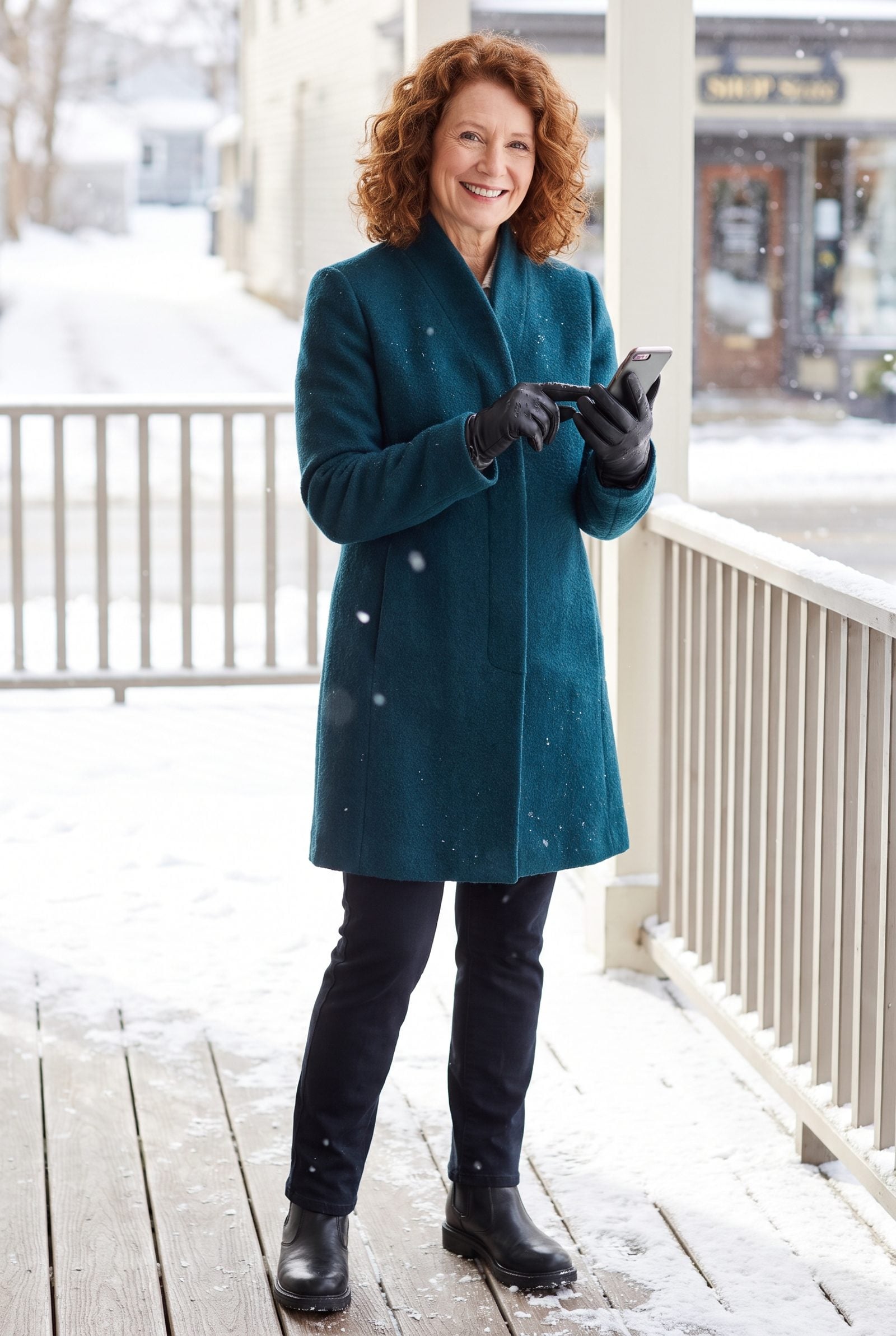
Cold hands are where polish falls apart. You tug a glove off at every text, drop it in slush, and arrive with one frozen hand and one lost glove. Waterproof touchscreen gloves solve both problems at once.
Look for conductive pads on thumb and index finger and a sealed finish that beads water instead of drinking it up. Supple black leather against a deep teal coat keeps them looking like a chosen accessory, not a utility afterthought.
9. Keep a Ribbed Knit Beanie
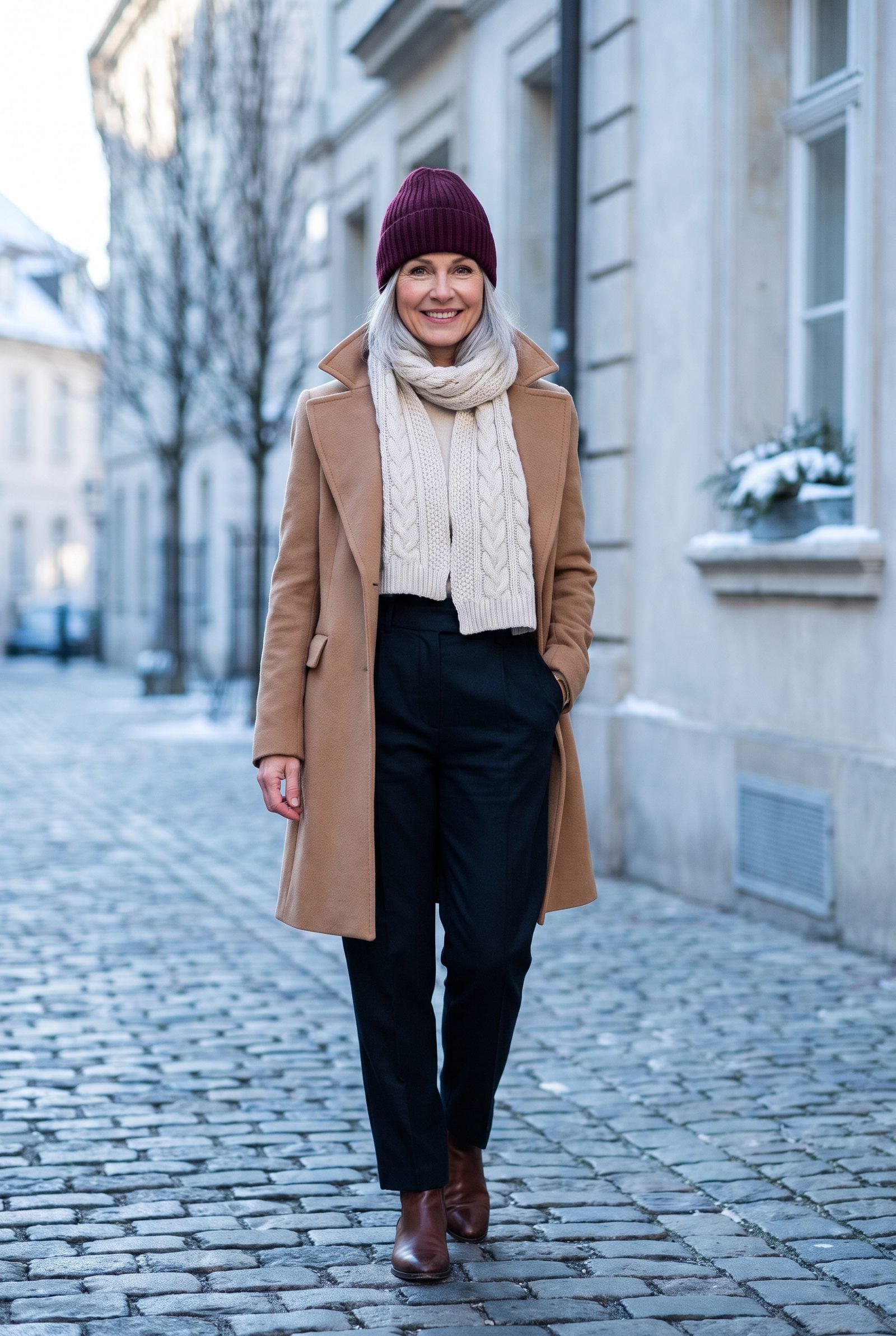
A ribbed knit beanie earns its spot because the rib does the work. Those vertical channels stretch to hug any head shape without the squeezed, pulled look a flat knit gives you by noon. Secure a merino or merino blend first — it warms without the itch wool gets blamed for, and it packs down to nothing in a coat pocket.
Now the fit check most people skip. Pull it on and watch where the front edge lands: just above the brow bone, with an inch or two of hairline showing. That little reveal keeps the beanie reading as a style choice rather than a cold-weather surrender. Burgundy, charcoal and camel flatter more hair colors than black ever will.
8. Add a Fleece-Lined Ear Warmer

The ear warmer is what you reach for when a full hat would flatten a blowout you actually like. It covers the ears, where the cold bites hardest, and leaves the crown free so your hair survives the walk.
Look for a fleece lining on the inside, not just a chunky outer knit. The outer knit is for show; the fleece is what stops wind cutting through the stitches. Width matters too. A band under two inches wide slides up and quits covering the ear within a block, so go wider than you think you need.
7. Pack a Windproof Neck Gaiter
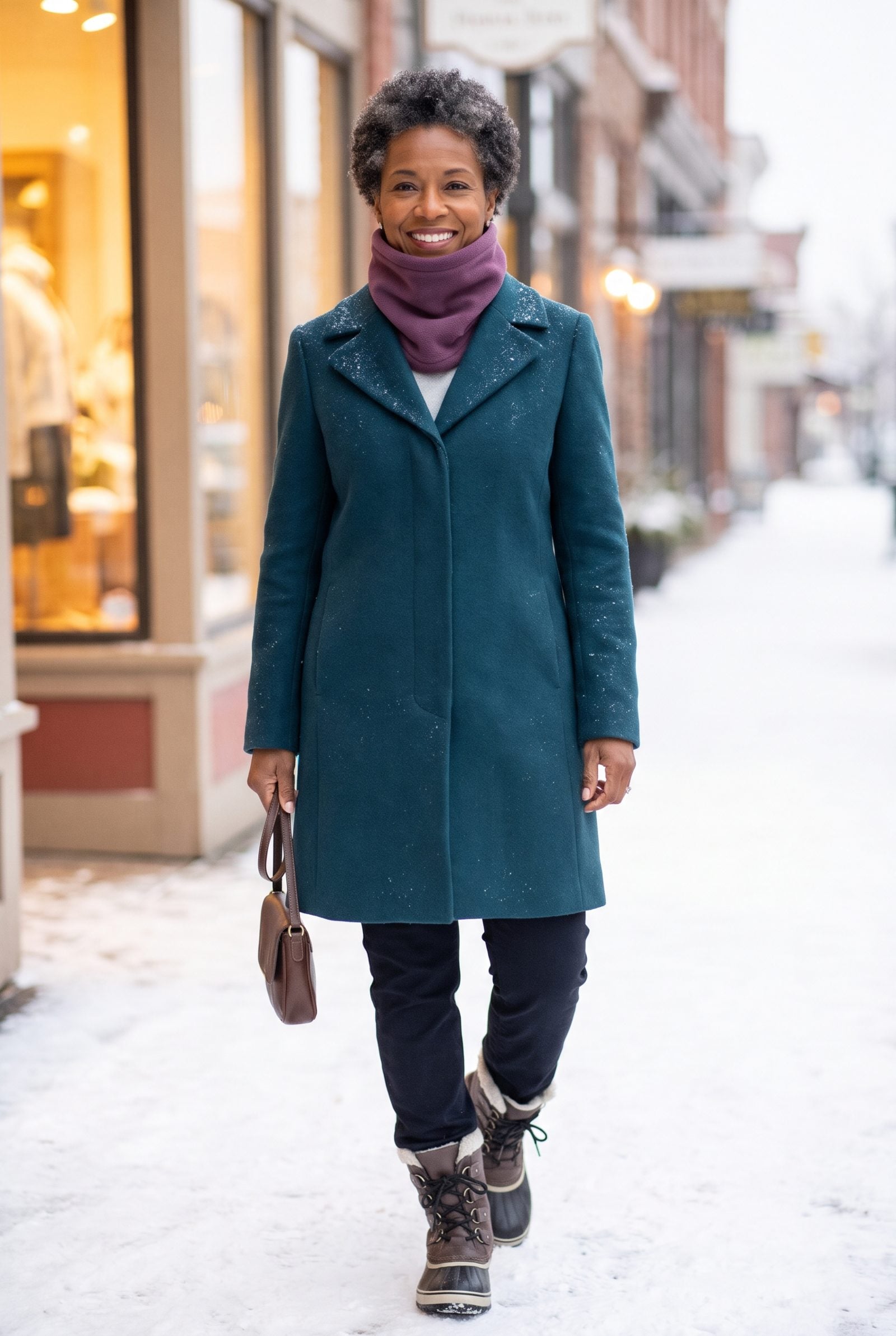
A gaiter beats a scarf on the two days a year the wind actually hurts. No loose ends to tuck, nothing to unravel, and you can yank it up over your chin at a bus stop and down again the second you step inside.
What separates a good one from a cheap one is the backing — a smooth wind-blocking face with fleece or microfiber against your skin. A single-layer cotton tube looks the part and does almost nothing. Pick a tonal color that reads with your coat instead of fighting it, and it passes for a deliberate layer rather than ski gear.
6. Choose a Weatherproof Shoulder Bag
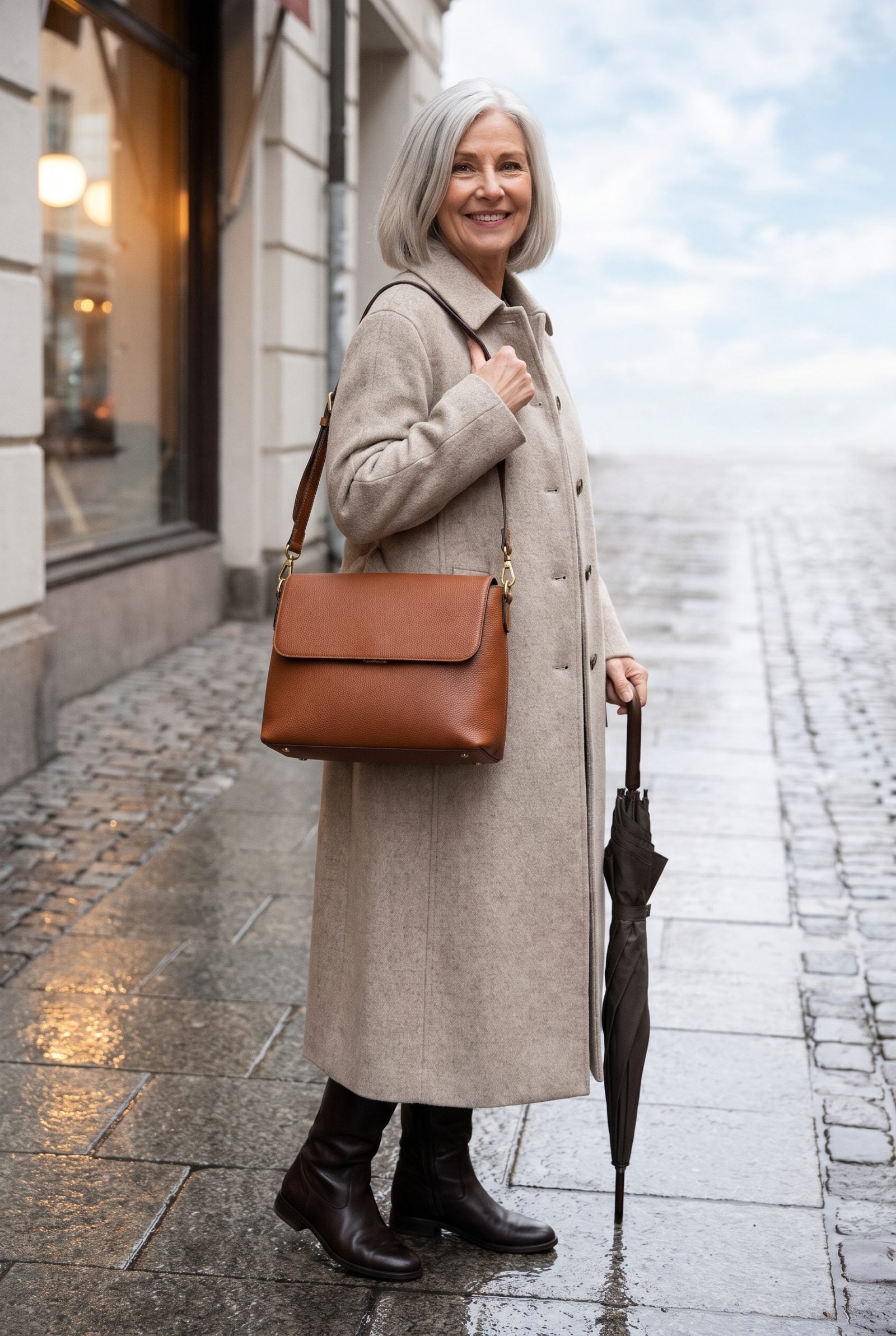
A weatherproof shoulder bag is the quiet workhorse that saves your leather from a ruined day. Cognac and dark brown take a few raindrops without spotting the way pale suede does, and a treated or coated grain sheds a drizzle instead of soaking it in.
The closure is what makes or breaks a winter bag. A flap or zip over the main compartment keeps rain and sleet off your phone and wallet, while an open tote invites all of it in. Check the strap drop too. With a bulky coat on, you want it long enough to clear the shoulder seam and sit at the hip — not strangling across your chest.
A grounded, hands-free bag reads as competence. It says you planned for the weather and the weather lost.
5. Stash a Sturdy Windproof Umbrella
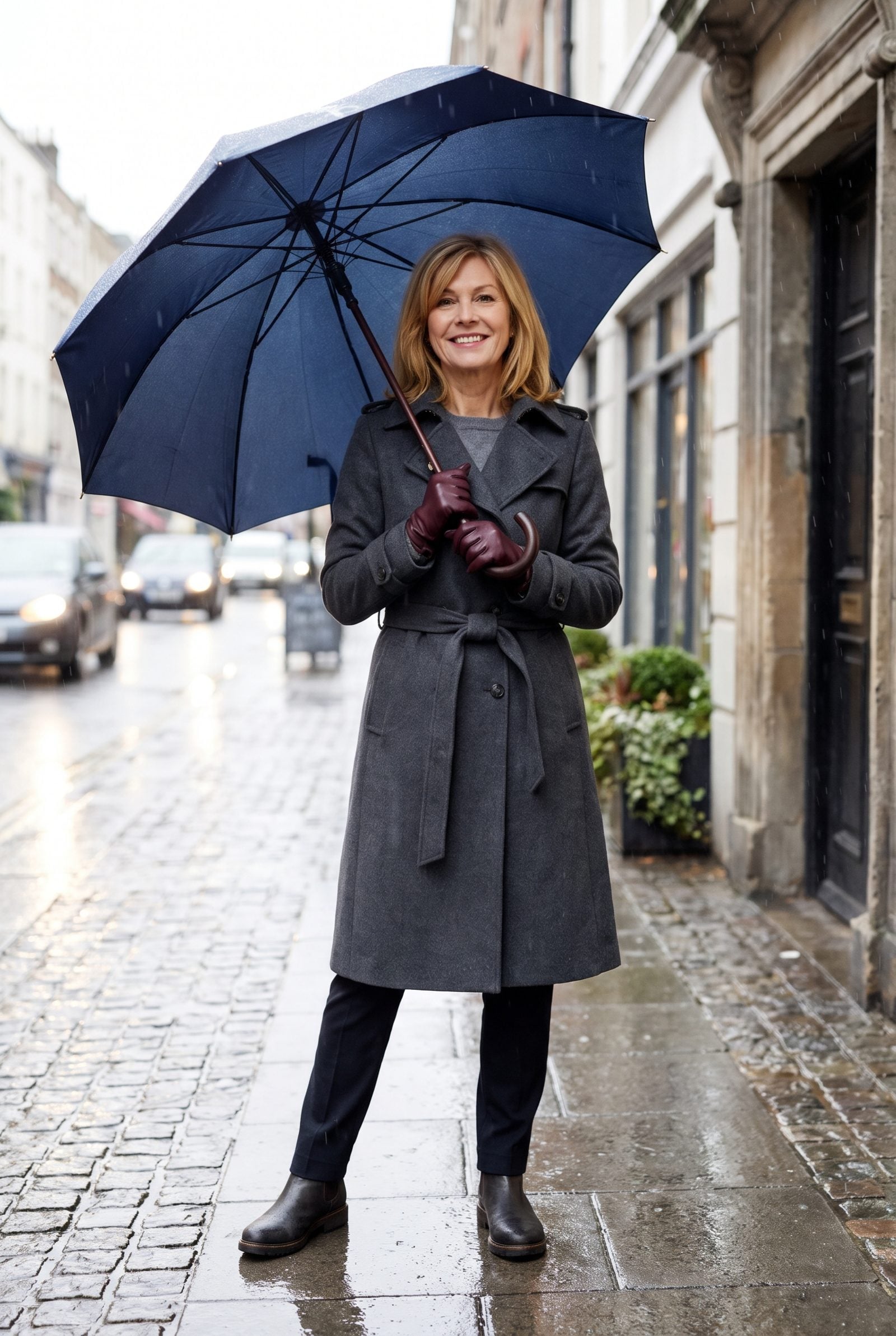
Cheap umbrellas die in the first real gust, and there you are on a corner fighting a flipped mess of bent spokes. A windproof build fixes the usual failure point.
What most buyers miss: a vented double-canopy. That little upper layer lets wind pass through instead of catching the dome like a sail, which is exactly what flips an umbrella inside out. Fiberglass ribs flex and spring back where metal ones crease for good. And a wider arc keeps your shoulders and bag dry, not just the top of your head.
4. Keep Breathable Thermal Pajamas
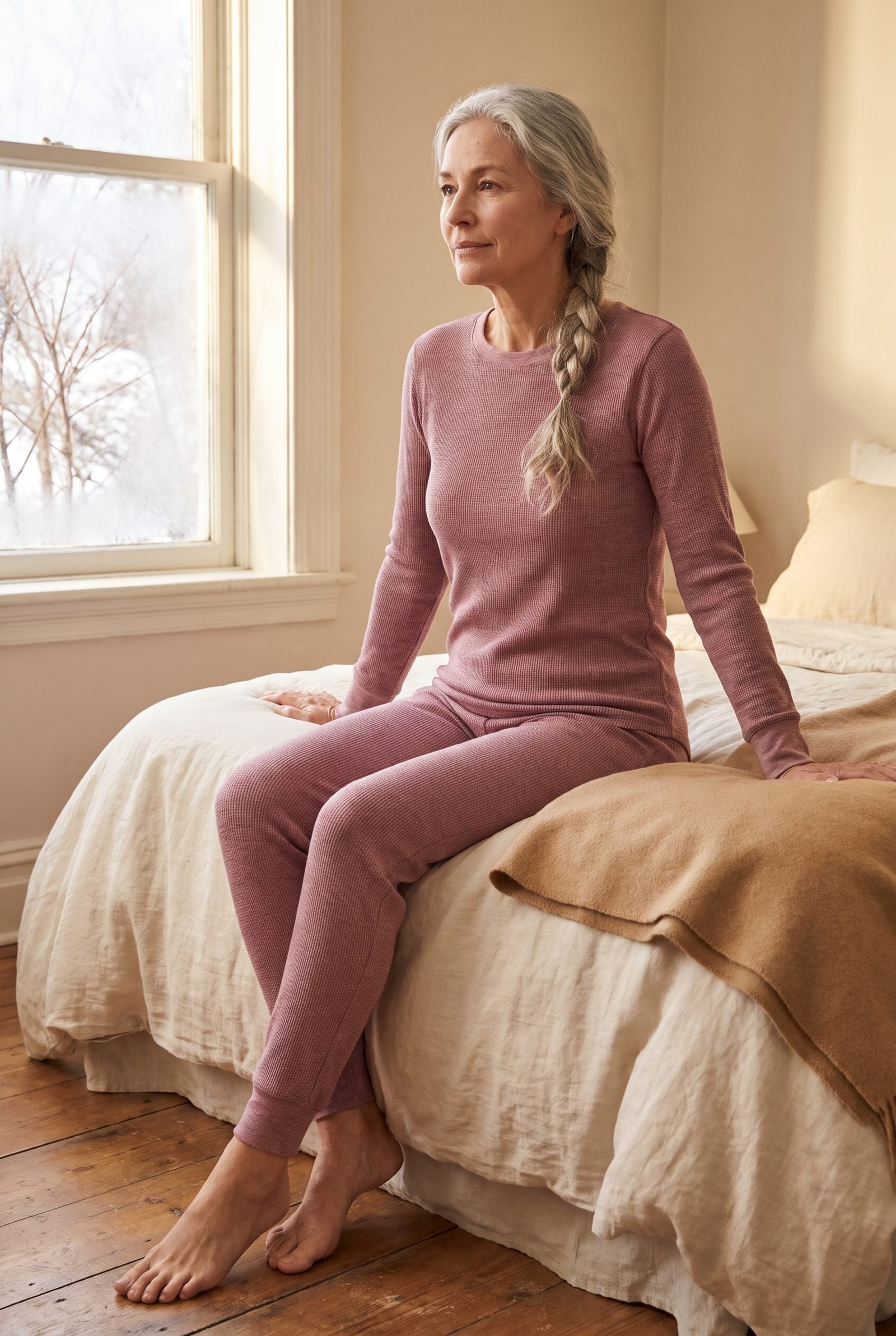
Flannel feels right in the shop and then roasts you awake at 2am, sweating under a duvet you can’t kick off fast enough. Breathable thermals solve that overheating problem.
Look for a waffle or fine rib knit in merino or a merino blend. It traps warm air in the texture but lets moisture move, so you stay warm without the clammy swing. A long-sleeve top and cuffed ankle give you full coverage through the coldest hours. Skip anything with a thick fleece interior if you run warm — that’s the fabric that starts the sweat cycle to begin with.
3. Stock a Full-Slip Layer
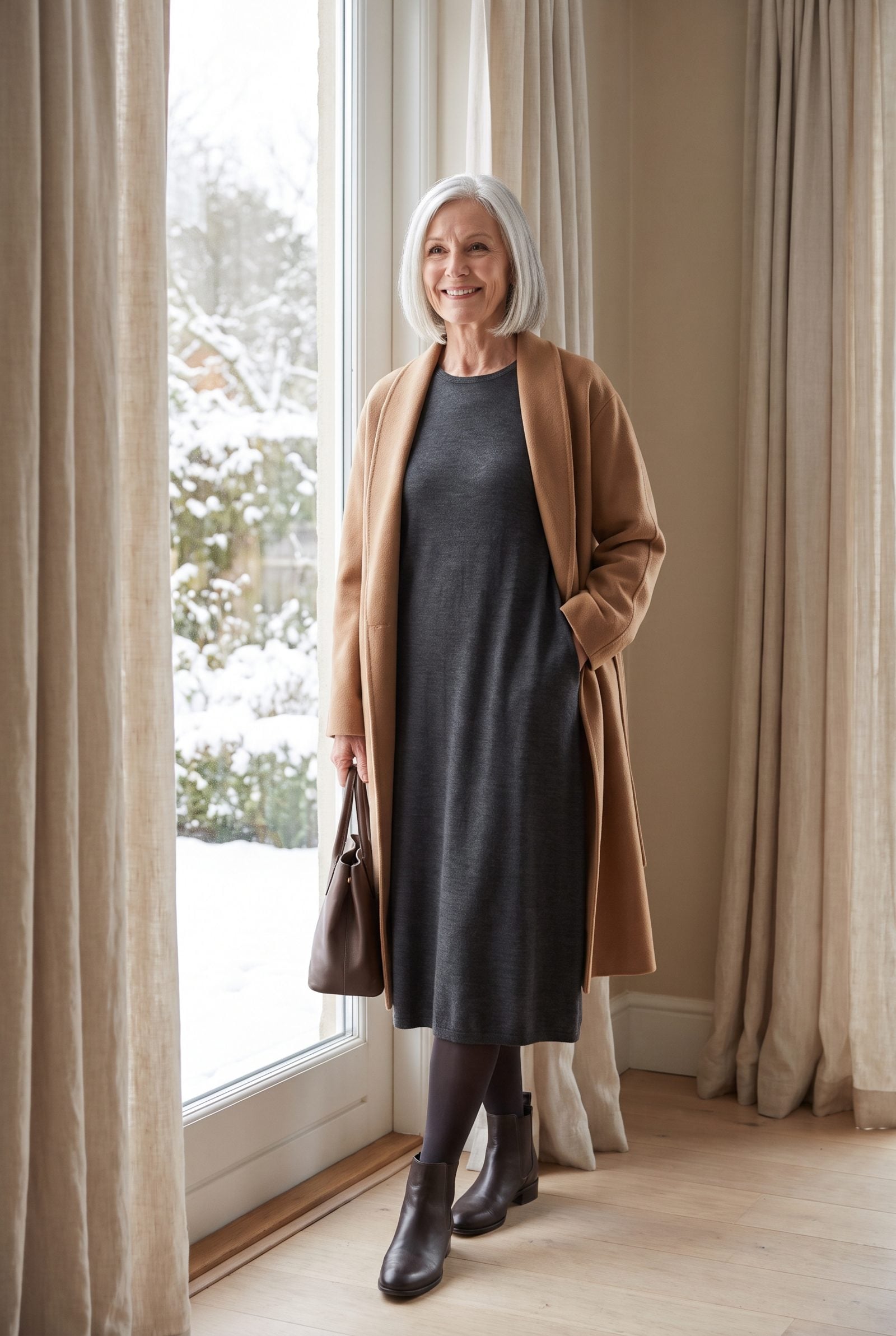
The full slip is the unsung layer that makes winter knits behave. Wool dresses and heavier skirts cling and ride up over tights by lunchtime; a smooth slip gives the fabric something to glide over, and the whole thing hangs the way it did on the hanger.
It pulls double duty in the cold, adding a quiet bit of warmth under a thin dress without a visible line. Choose a matte anti-static fabric in a nude close to your skin tone so it disappears. Length matters — it should end an inch or so above your hem so it never peeks when you sit.
2. Choose a Seamless Long-Sleeve Bodysuit

A seamless long-sleeve bodysuit is the base layer that never betrays you with a mid-back bunch. It stays tucked because there’s nothing to come untucked, so your waistline reads clean under every sweater and blazer you own.
That seamless build earns its keep most under fitted knits, where a standard tee’s side seams print right through. Look for a soft stretch fabric with a snap gusset, a flat neckline, and enough sleeve length to reach your wrist bone when you raise your arm. Espresso, ivory and charcoal cover the most outfits.
There’s a quiet confidence in knowing your base layer is locked. One less thing to tug at in a meeting — which is rather the whole point.
1. Keep Ice-Grip Boot Cleats
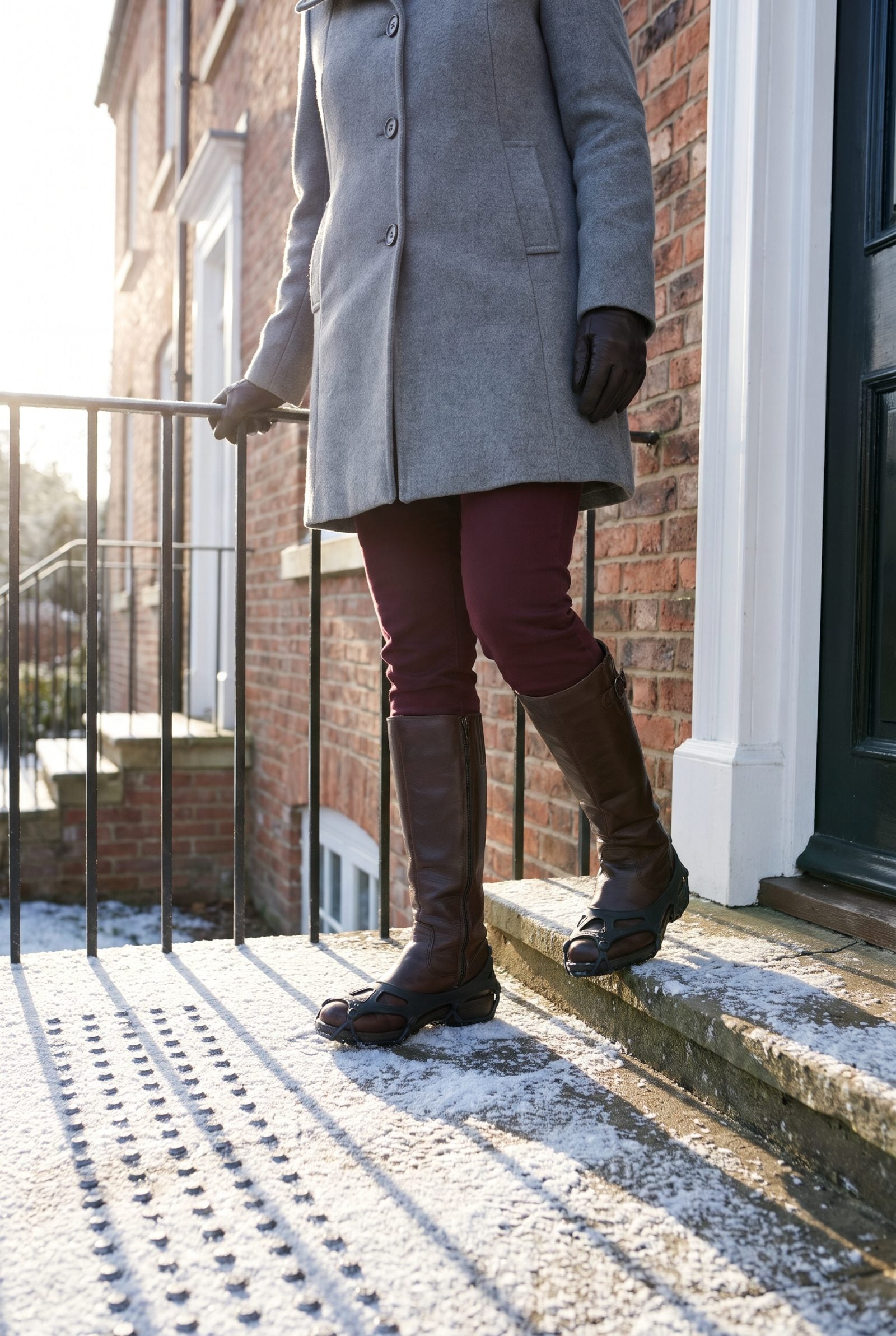
One slip on black ice can end your winter in an afternoon, and a broken wrist at this age is no minor inconvenience. Ice-grip cleats are the cheapest insurance you’ll buy all season.
They’re a stretchy rubber frame studded with metal spikes that pull over the sole of boots you already own, then peel off at the door so you don’t scratch floors or clatter around indoors. The ones people get wrong are the lightweight coil versions sold for casual walks. For real ice you want proper metal studs or spikes, not a thin wire wrapped under the arch.
Your Printable Checklist
Save it to Pinterest or print it — every check from the list above on one page.