
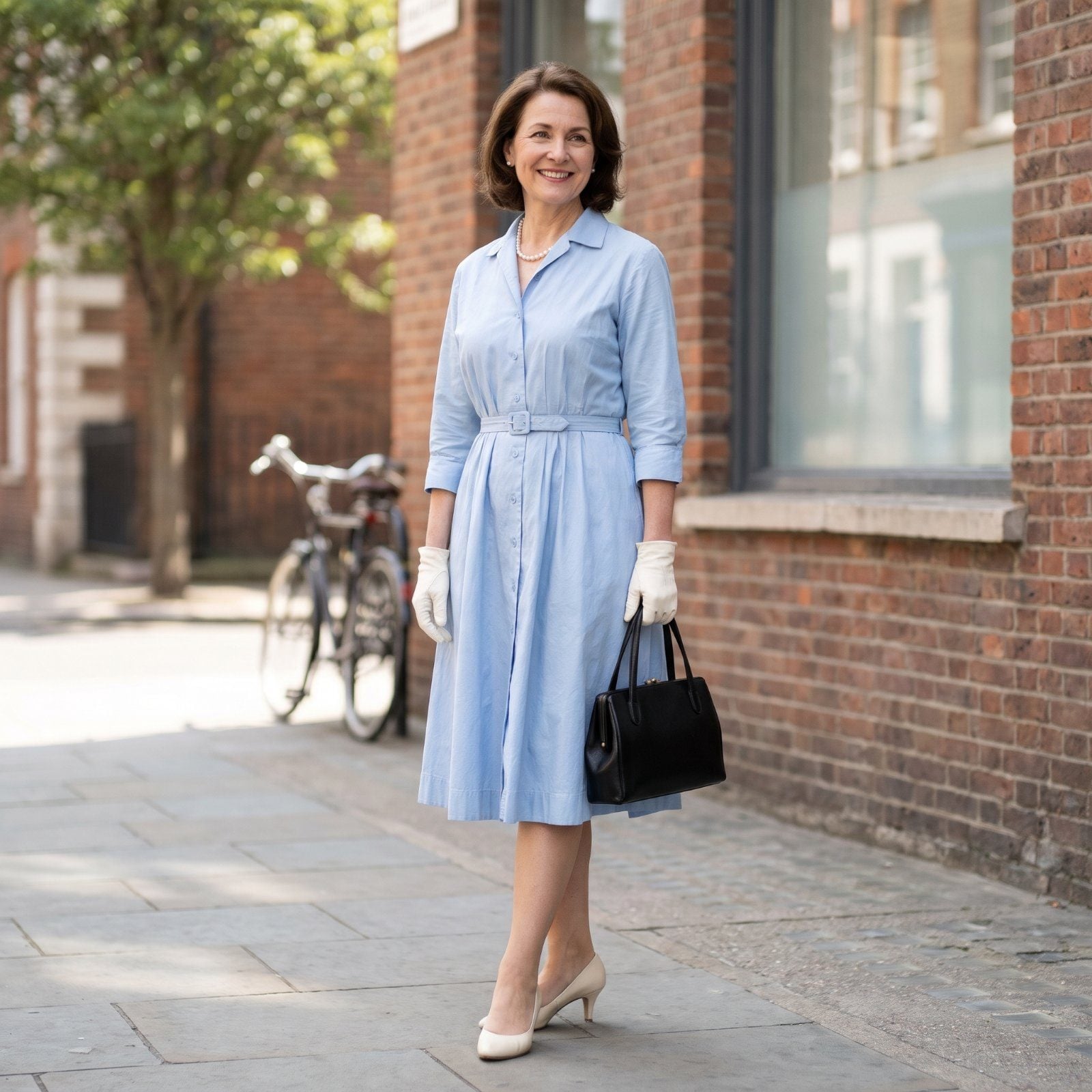
The hush of a mid-century typing pool. Nylon stockings catching on a wooden desk drawer. A pearl brooch pinned exactly where it caught the light. Before the office became a place of flat whites and standing desks, it ran on structure, both in the furniture and the clothing. Every hemline meant something, and every glove was a decision.
What follows is a walk through the outfits women actually wore to earn a living, back when getting dressed for work was its own quiet ceremony.
FYI, thanks to AI imagery software, we’re able to create very specific fashion and hairstyle examples to illustrate the points being made. In some cases, imagery is exaggerated to hammer home the point. Also, assume links that take you off the site are affiliate links such as links to Amazon. this means we may earn a commission if you buy something.
1950s: The Belted Shirtwaist Dress and Pumps
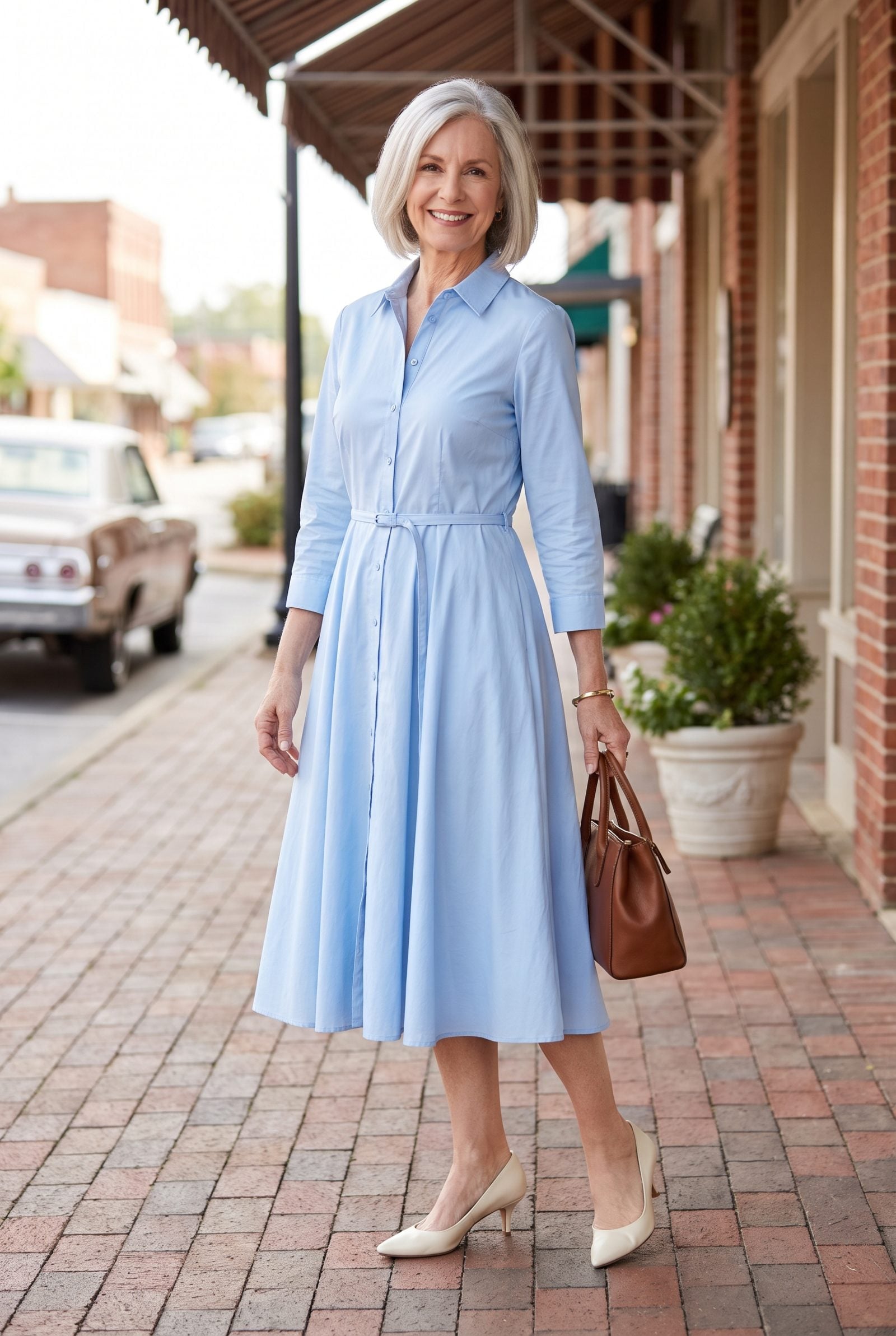
The belt is the whole argument. Pull it tight and the full skirt suddenly reads as deliberate hourglass instead of yardage, which is exactly why the shirtwaist outranked every other dress a working woman owned. One cotton dress, infinite mornings.
That pointed collar and buttoned placket borrowed authority straight from a man’s shirt, then softened it with a skirt built for movement. Paired with cream kitten-heel leather pumps, the look landed somewhere between capable and approachable — which was the goal.
1950s: The Cropped Cardigan and Pencil Skirt Set
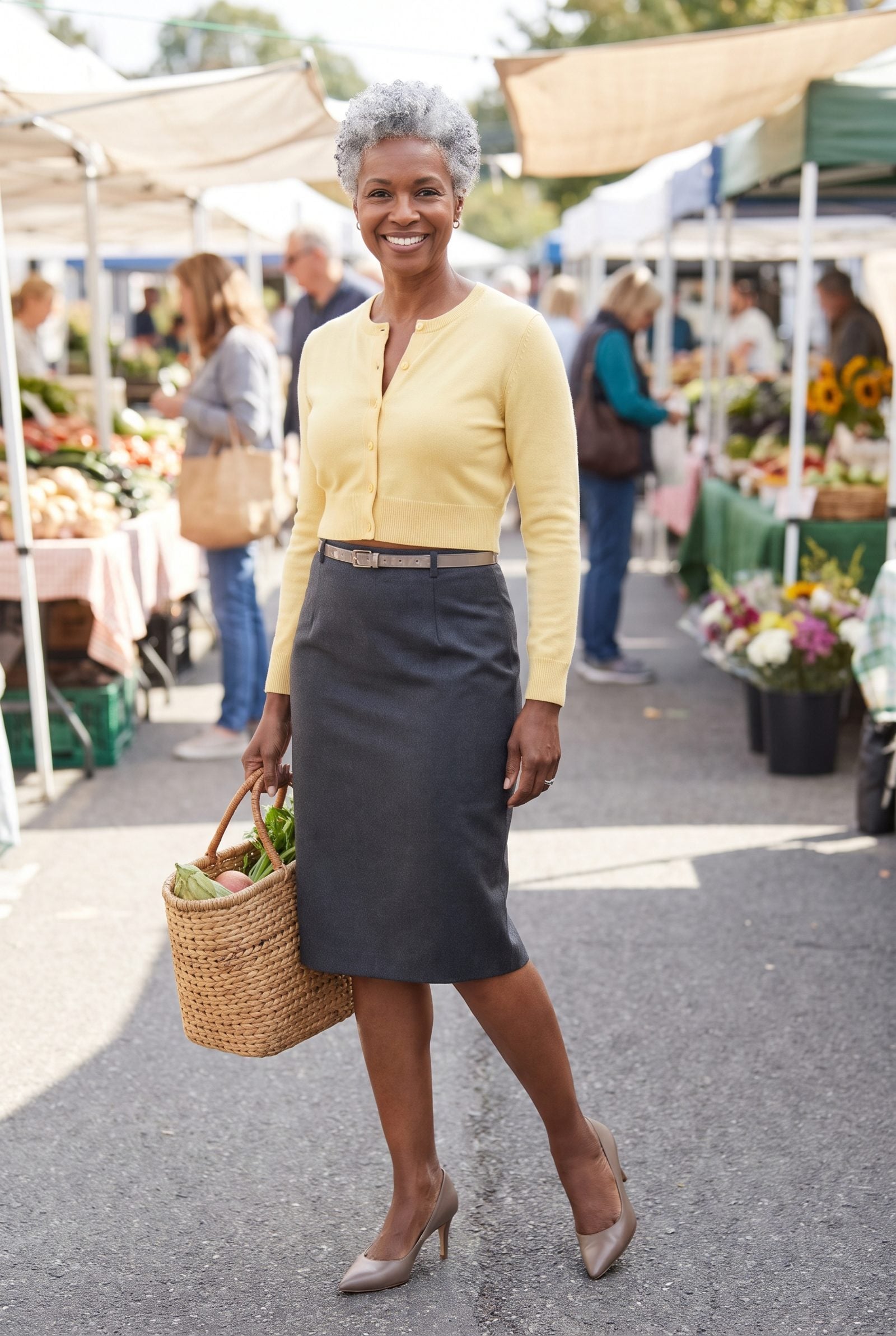
The proportional play is the engine here. A cropped cardigan worn open at the neck against a high-waisted pencil skirt stretches the leg line and makes the waist the smallest point in the whole silhouette. Twinsets built careers on that trick.
With its top buttons left undone in a relaxed V, the butter-yellow cardigan turned a soft knit into something easy yet purposeful. And the pencil skirt below demanded small steps, which is its own kind of period detail — elegant and faintly inconvenient in equal measure.
1950s: The Peter Pan Blouse With a Pleated Wool Skirt
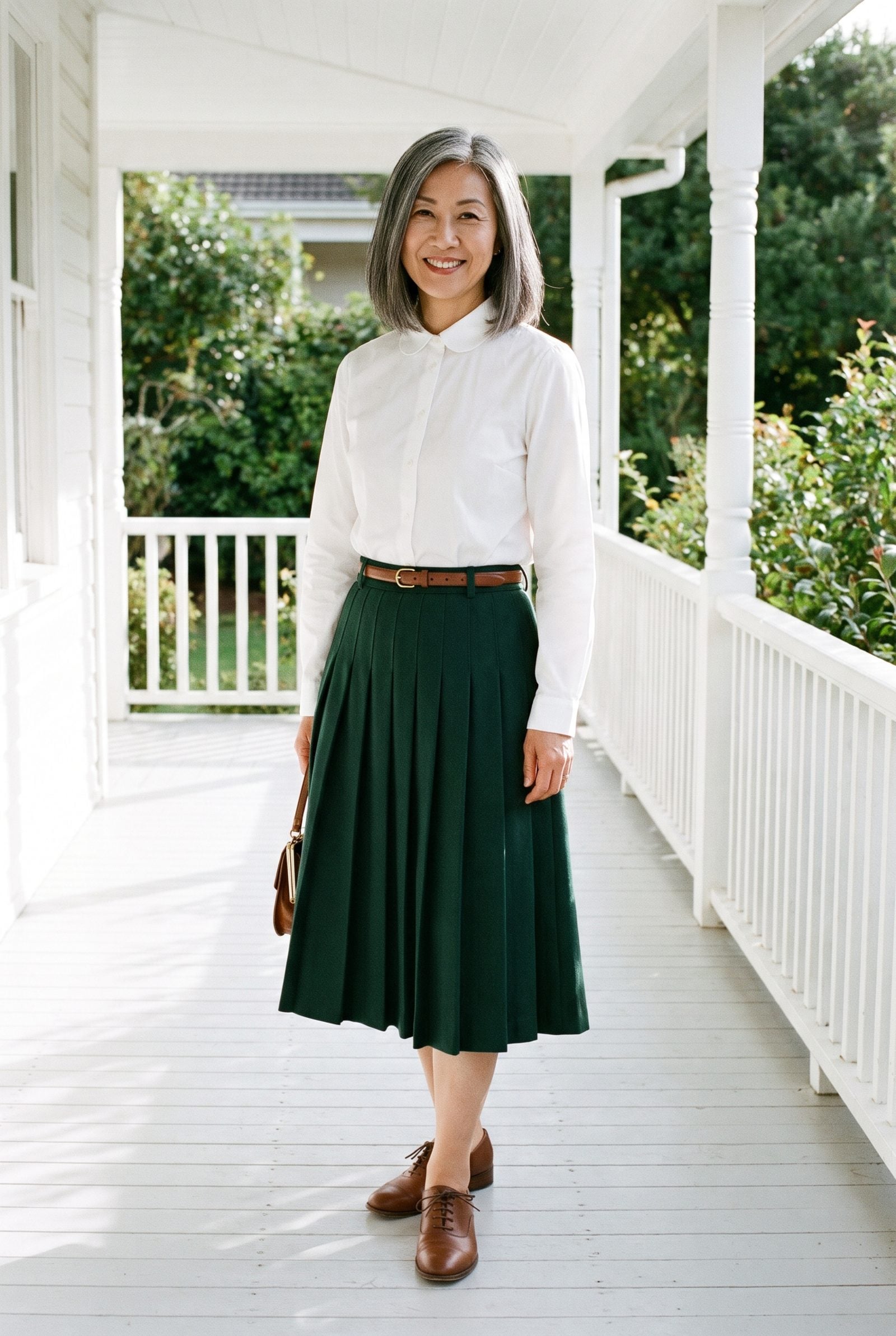
That rounded Peter Pan collar is doing something sneaky. It reads as demure, almost schoolgirl, which let younger women enter serious offices without appearing to challenge anyone — while the pleated wool skirt below added grown-up weight.
Knife pleats swing when you walk. There’s a specific satisfaction to a forest-green wool skirt that moves in neat folds, the kind of detail that made getting dressed feel like craft rather than chore.
1950s: The Tailored Sheath Dress and Wrist-Length Gloves
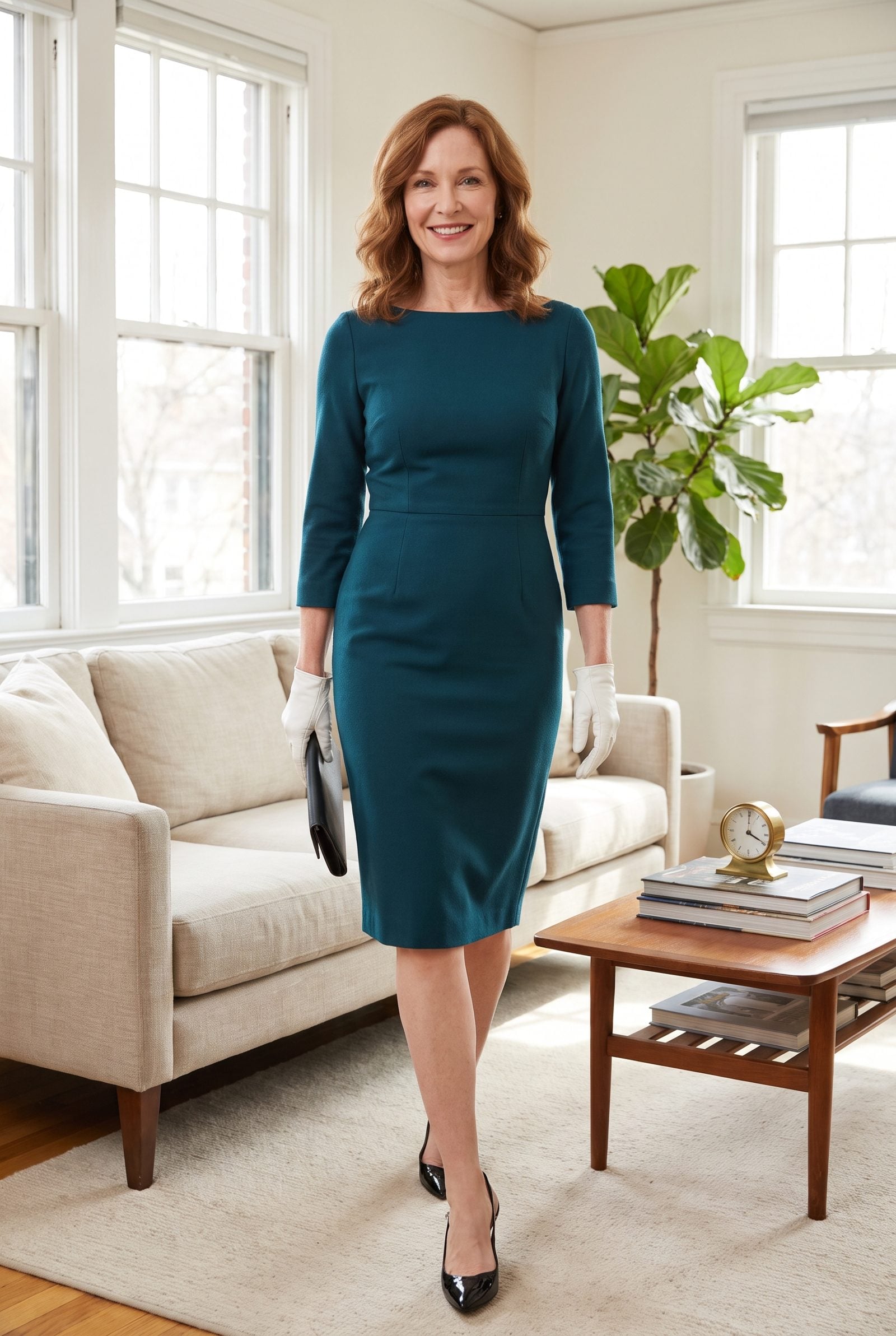
A sheath lives or dies on its darts, and this one is cut to skim rather than cling, so it reads as executive and never fussy. The straight column does the slimming while the boat neck keeps the eye level and confident.
Then the gloves. Wrist-length white kid gloves turned an ordinary teal dress into an occasion, a ritual of formality that today survives only at weddings and funerals. Back then a woman wore them to a meeting without a second thought. This is a work outfit that understood restraint as its own kind of power.
1950s: The Collared Day Dress With a Structured Top-Handle Bag
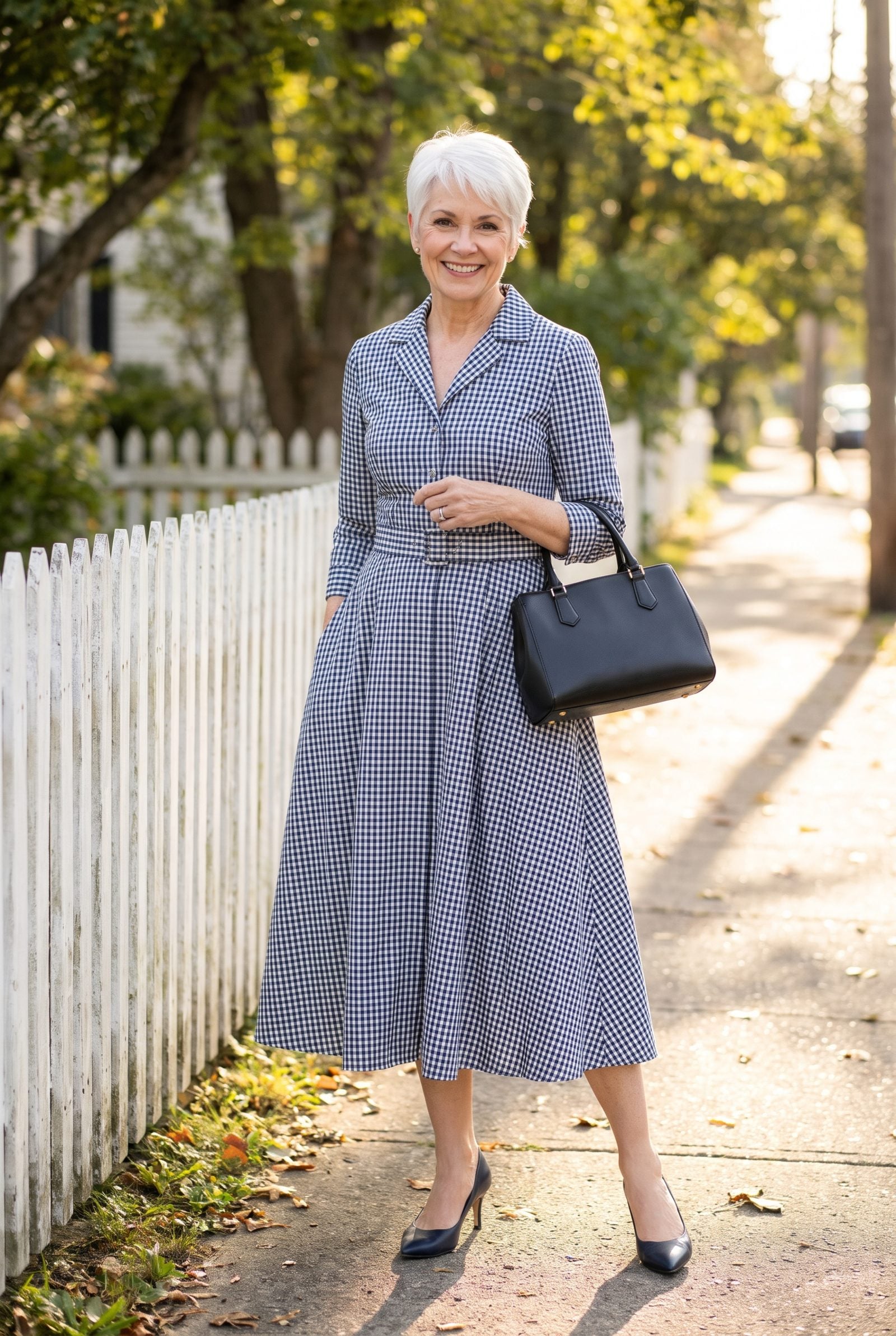
The bag anchors everything. A structured top-handle bag carried in the crook of the arm set the whole posture of the outfit — upright, held, deliberate, the way a woman walked when she had somewhere to be and knew it.
Navy gingham kept the day dress from reading too sweet. The small check added quiet energy without shouting, and the belted full skirt gave it that unmistakable 1950s swing. Workwear that still looked like it belonged at a weekend lunch, which was rather the genius of it.
1960s: The Jackie-Inspired Pastel Skirt Suit
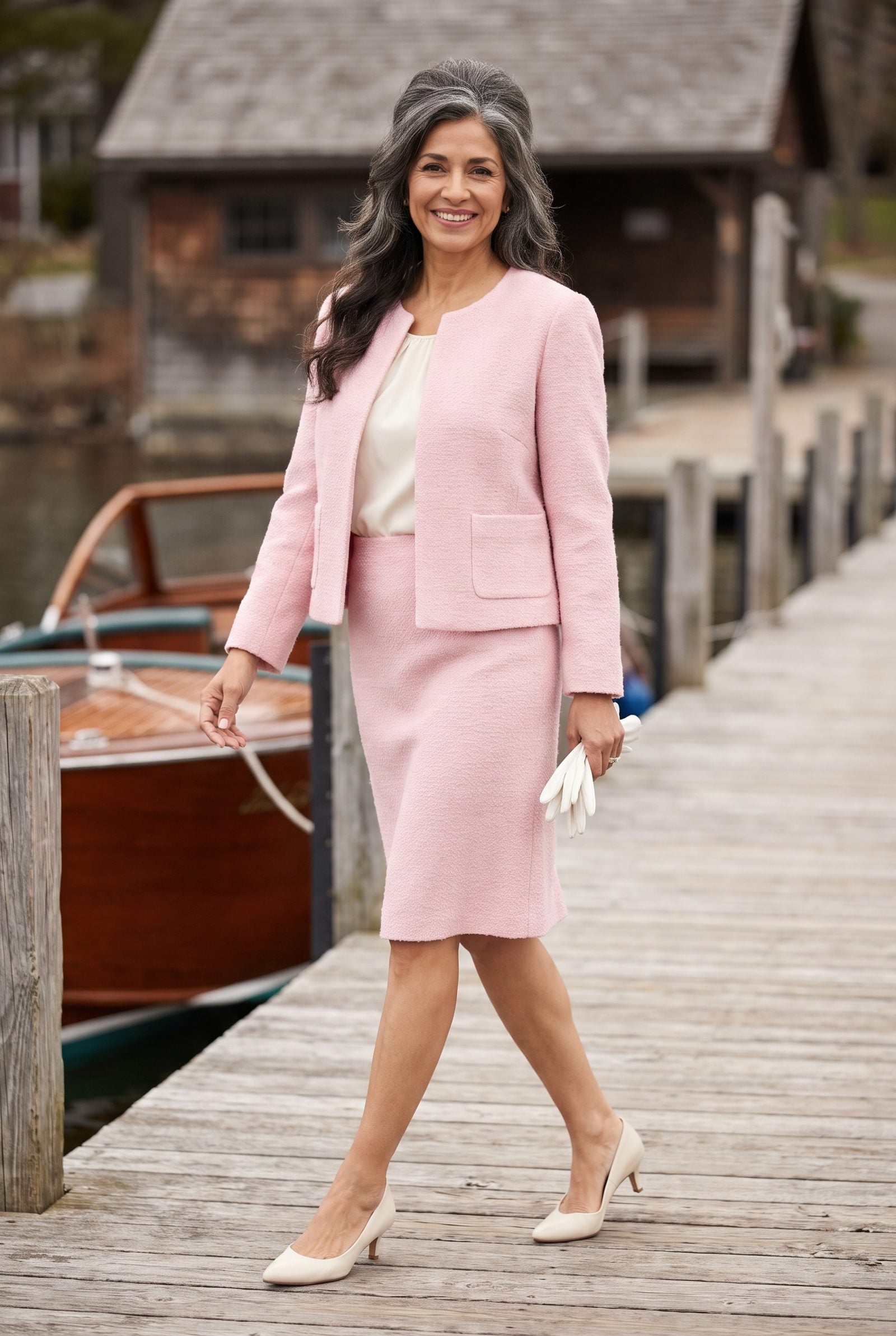
Nubby bouclé in a sweet pastel. The texture is the entire reason this suit still looks expensive: that nubby weave catches light and reads as substance, so a pale pink jacket comes across as polished rather than precious.
The collarless, cropped jacket with patch pockets, worn open, was the shape that defined early-sixties polish, borrowed wholesale from the most-photographed woman in America. Worn with a cream shell and low kitten heels, it told the office you dressed with intention. Want a modern holiday outfit that nods to this era? The bouclé jacket is still the move.
1960s: The Sleeveless Shift Dress Under a Collarless Jacket
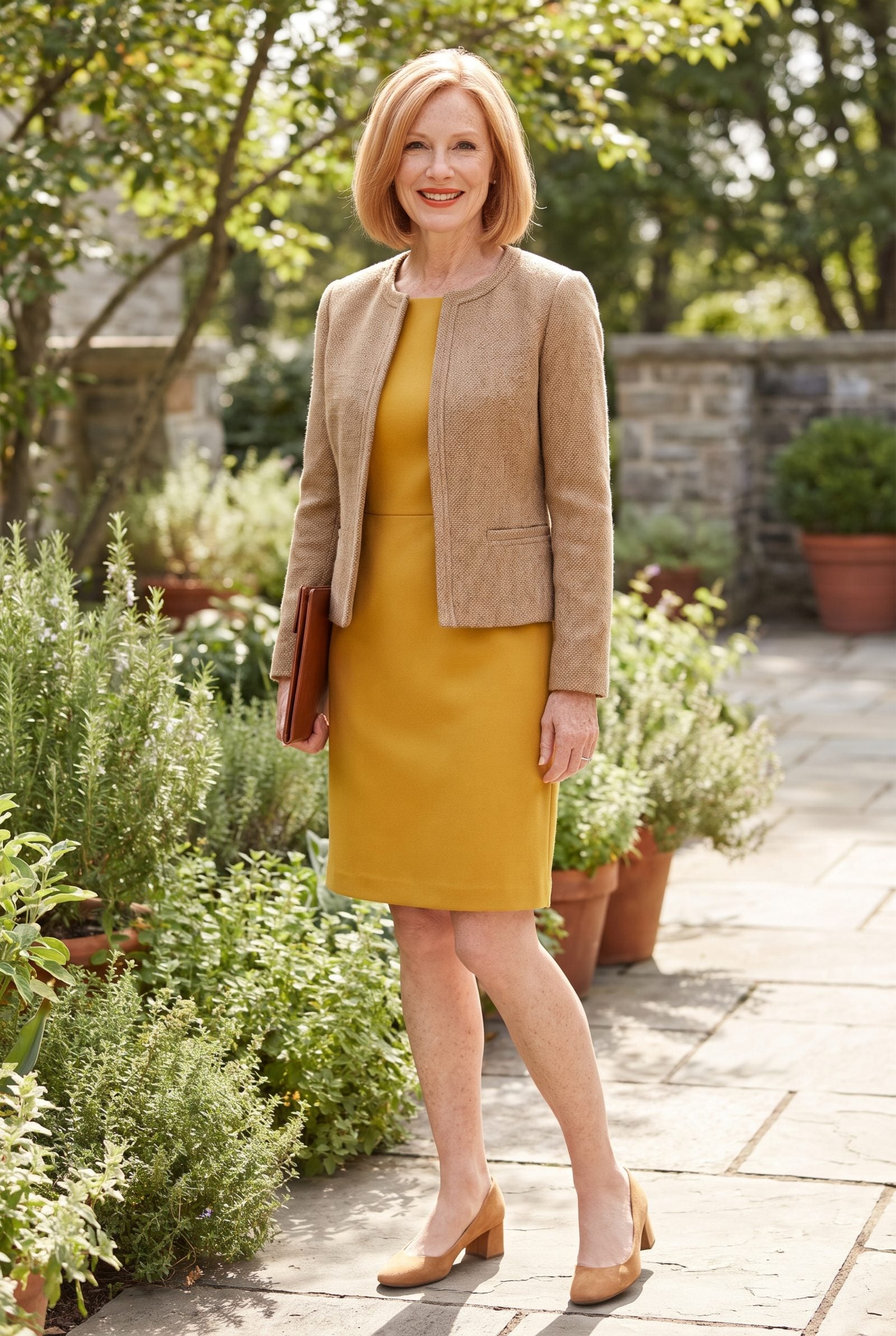
Pairing the mustard shift with a camel tweed jacket builds a warm, tonal palette, and that close color harmony is what makes the whole thing read tall and intentional rather than like two separate pieces that happened to meet.
This was the sixties loosening its grip. The sleeveless sheath kept only a light waist seam in place of the cinched waist, skimming the body in a fitted, streamlined line — a quiet shift toward comfort. The collarless jacket on top kept it office-appropriate while the hem crept upward. Freedom, buttoned.
1960s: The Geometric Mod Dress With Low Block Heels
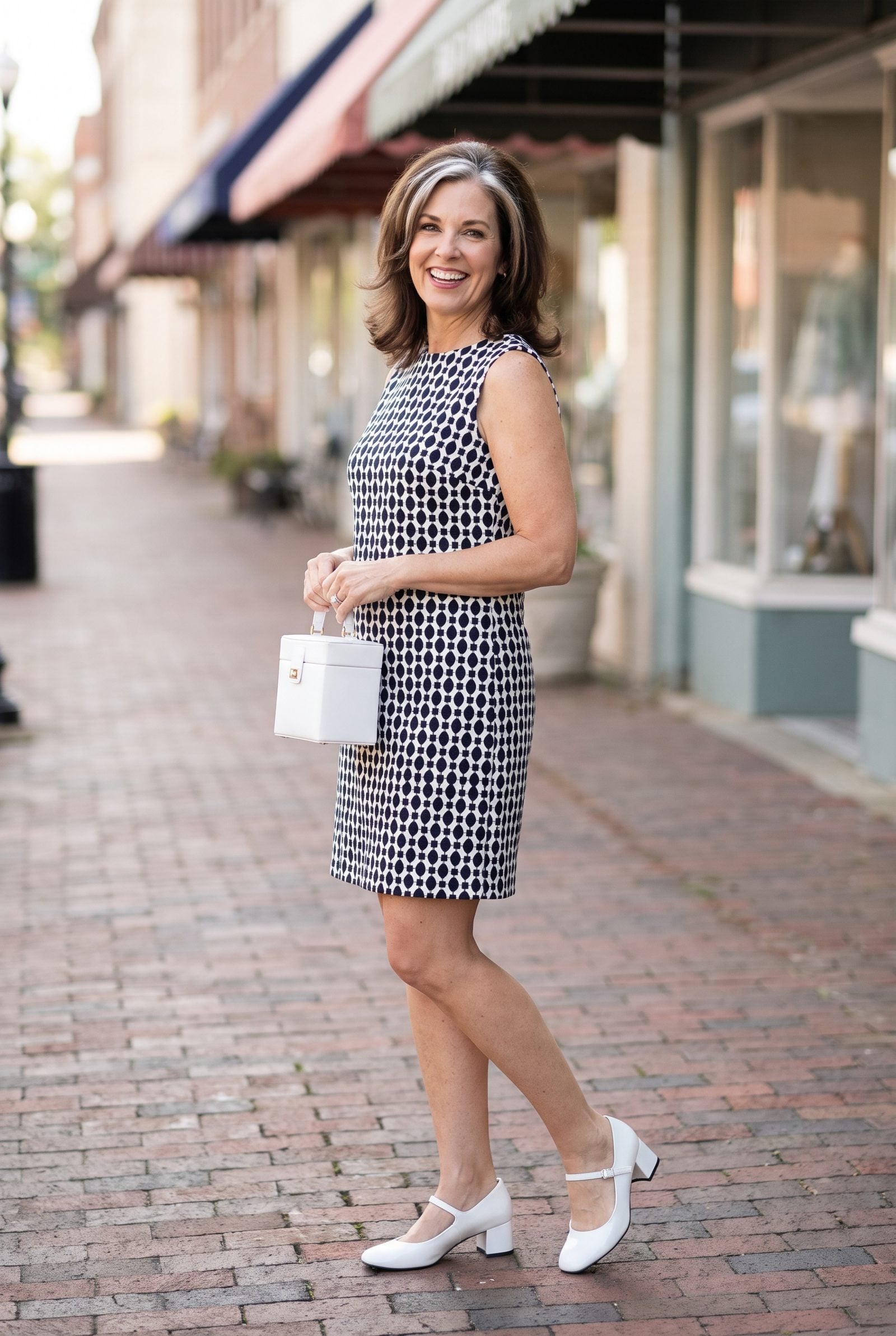
The print is the whole personality. A bold black-and-white geometric pattern turned a plain shift into a statement, and in a sea of grey wool suits, that graphic energy announced a younger, newer kind of working woman.
The low block heels mattered more than they look. After a decade of stilettos, a sturdy white block-heel Mary Jane said a woman could actually walk to the subway, stand all day, and still look pulled together. Mod fashion didn’t just change the hemline. It changed the shoe you survived the day in.
1960s: The Slim Cigarette Pants and Tucked-In Shell
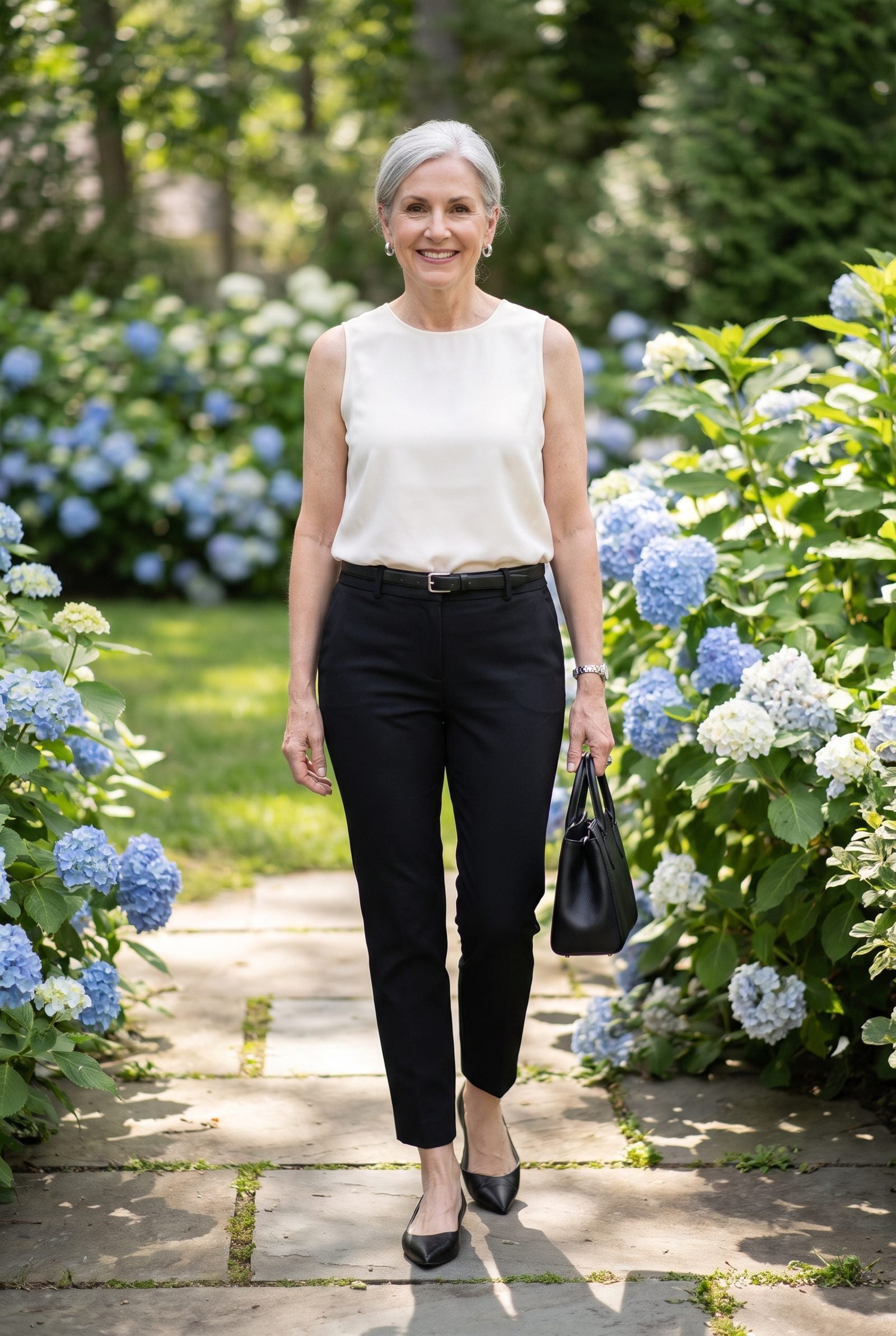
Here’s where the office quietly rewrote its own rules. Slim black cigarette pants on a woman at work were a small rebellion in the early sixties, and the cropped ankle length made them deliberate rather than borrowed from a husband’s closet.
The tuck is the finishing detail that makes it. A fluid cream silk shell tucked into high-waisted trousers and nipped with a thin belt kept the line sharp from shoulder to ankle, proving a woman could ditch the skirt entirely and still look every inch the professional.
Pair it with pointed flats and you had the first glimpse of the relaxed tailoring that would eventually take over every office in the decades ahead. It started right here, with a pair of trousers and the nerve to wear them.
1960s: The Matching Knit Shell and Cardigan With a Straight Skirt

The cardigan left fully unbuttoned and worn open over the matching shell, arms through the sleeves. That single move is the whole look, and it reads as effortless even though every woman who did it knew exactly how she wanted it to sit.
The matched knit set against the straight skirt is a study in restraint: one color family, two weights of wool, a clean column broken only by the slim lavender cardigan. The grey pencil skirt does the elongating. The pearls do the finishing.
1970s: The Pussy-Bow Blouse and High-Waisted Flared Trousers
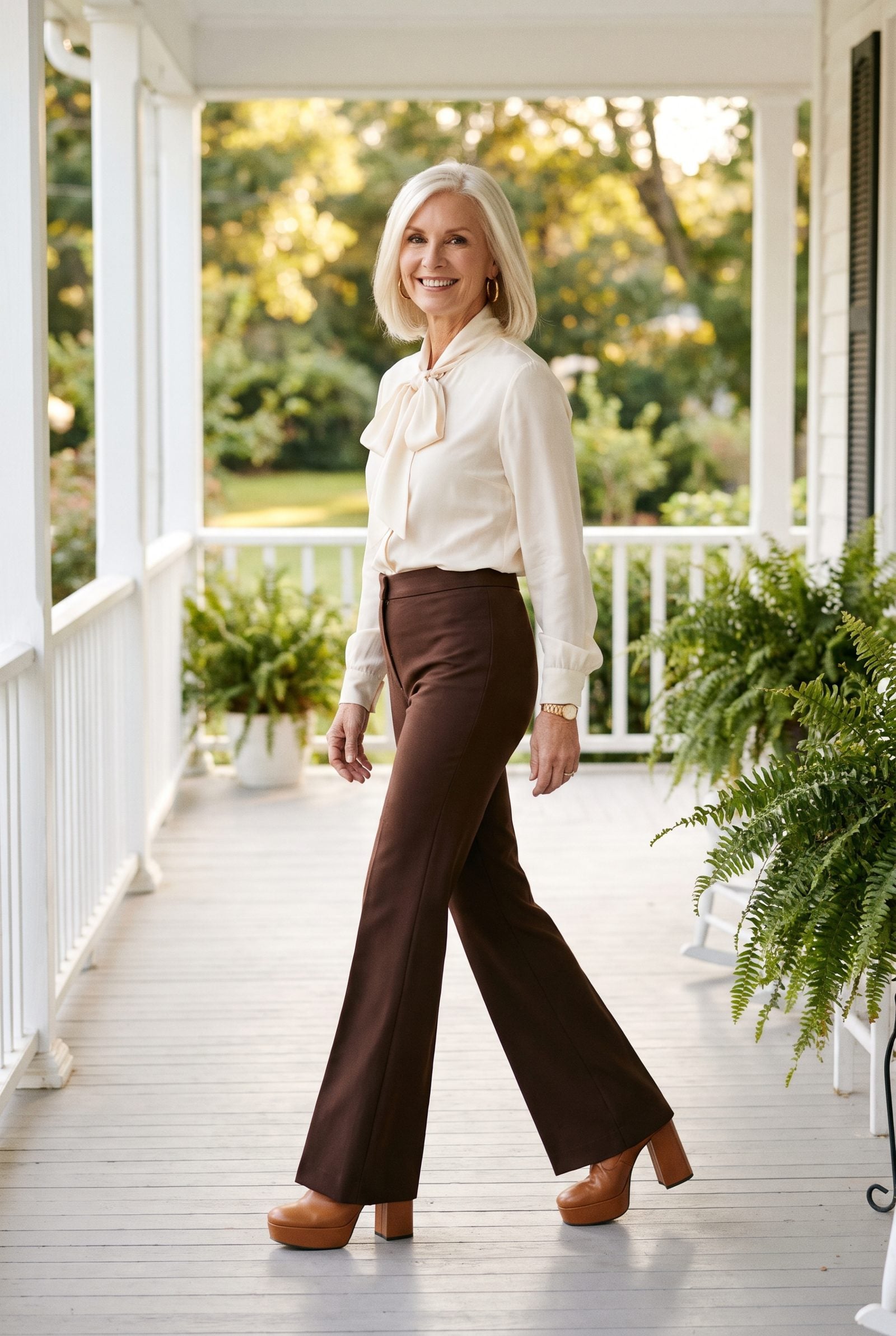
The bow does the talking. That soft knot at the throat softens the sharp vertical line of the high-waisted flare and keeps the whole thing from reading severe. Undo it and you’ve got a serious trouser suit; tie it and the look turns romantic without losing an ounce of authority.
What really drives it is proportion. The trouser sits high on the natural waist, the cream silk blouse tucks in clean, and the flare pours over the platform to create one long unbroken line from rib to floor. That’s why she looks a foot taller than she is.
1970s: The Wrap Dress With Leather Pumps
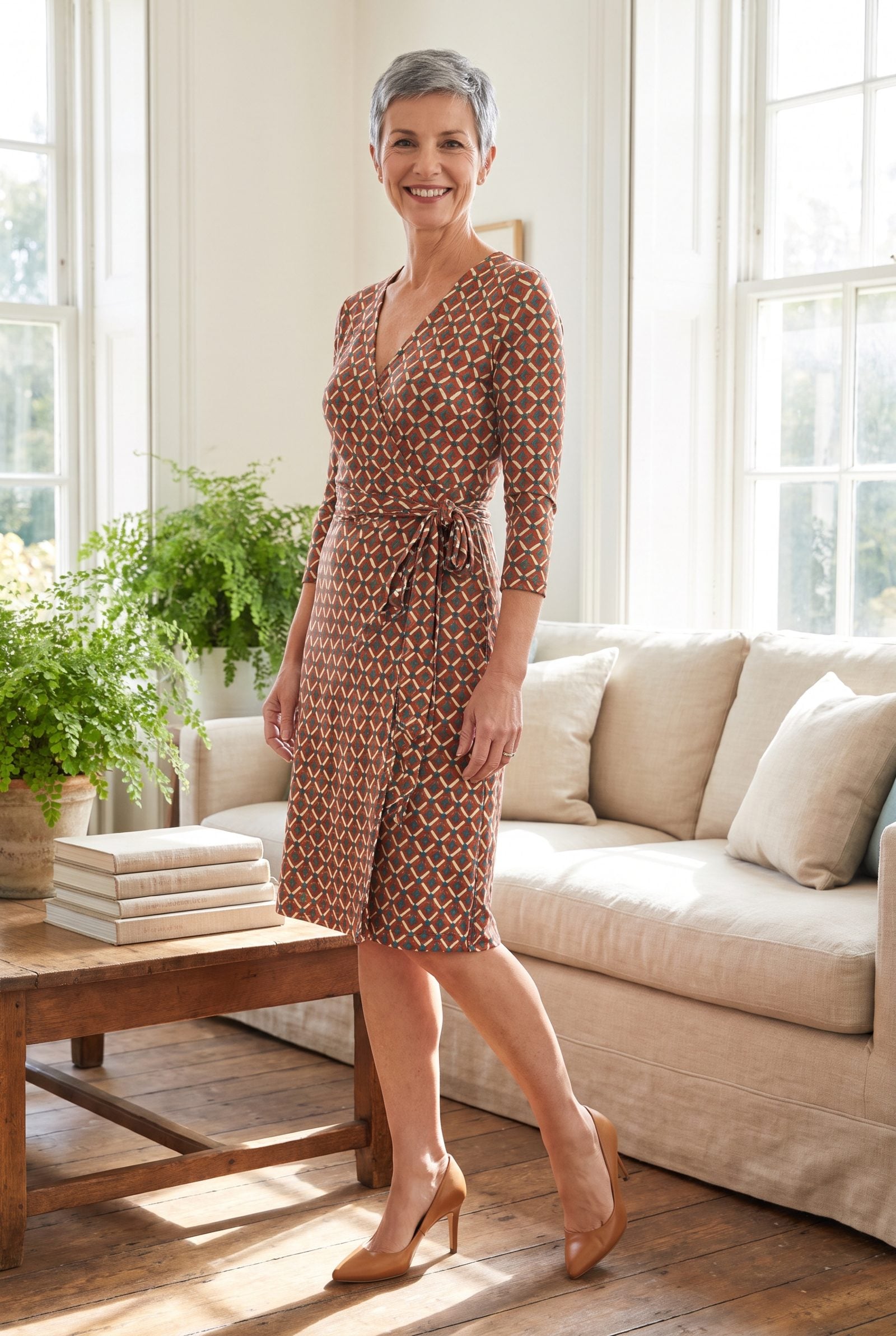
One tie at the waist and the entire silhouette resolves. The wrap dress defines the middle, lets the jersey drape where it wants, and never once fights the body wearing it. That’s why it conquered every office in America.
The small rust-and-teal geometric print carries the interest so the shape can stay simple. The tan leather pumps keep the leg warm-toned and uninterrupted, so the eye travels straight down without a hard stop at the ankle.
1970s: The Three-Piece Trouser Suit With a Fitted Waistcoat
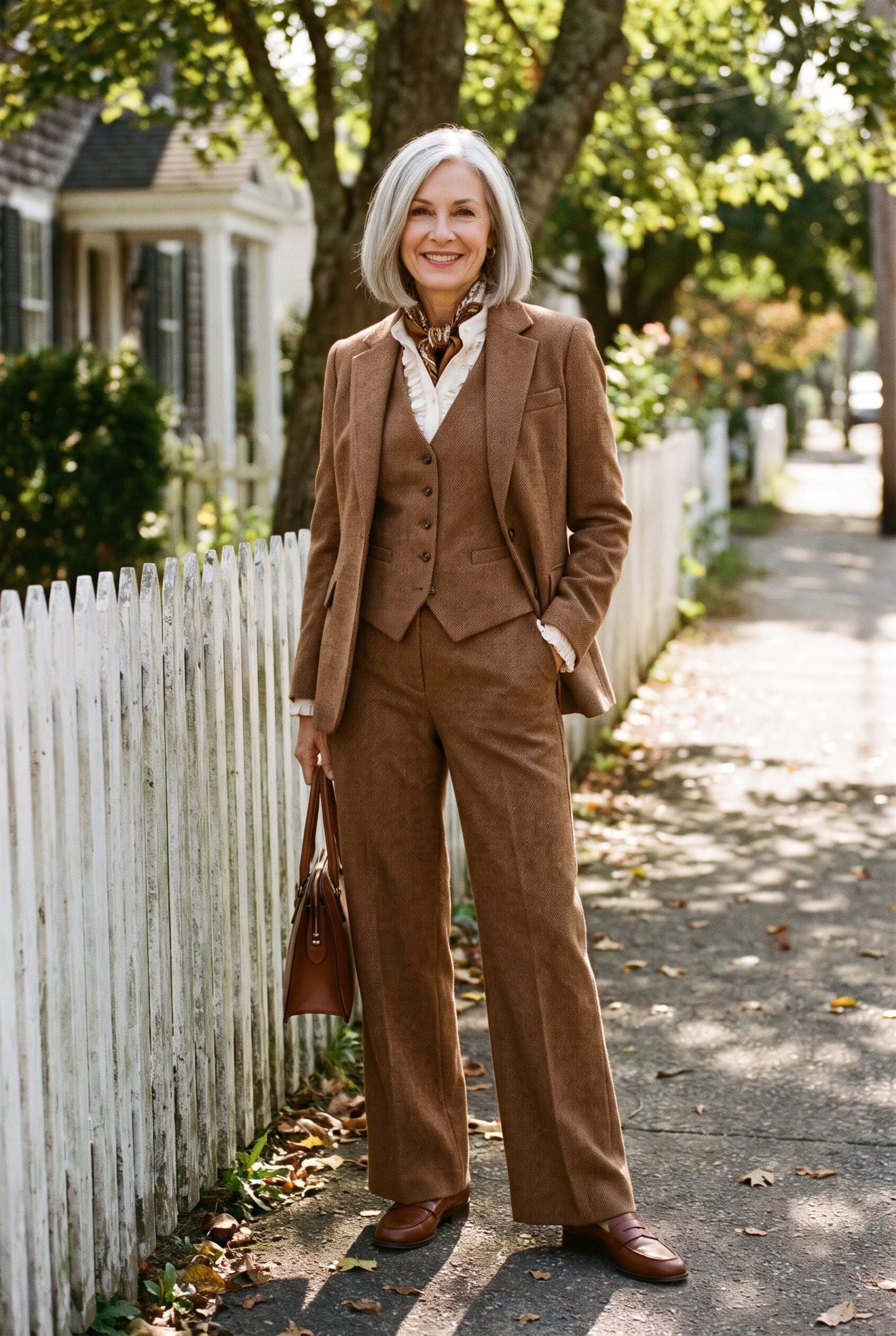
The waistcoat is the quiet power move. It cinches the middle under the open blazer, so the suit holds its shape whether the jacket is on or tossed over a chair. Three pieces, one fabric, zero wasted gestures.
Camel wool from collar to cuff keeps the whole thing tonal and long, and the burnt-orange scarf at the throat is the only loud note in the room. The brown leather loafers ground it without a heel she has to think about.
This was women borrowing the language of men’s tailoring and bending it to fit. The snug waistcoat makes sure nobody mistakes the borrowing for imitation.
1970s: The Plaid Blazer With Wide-Leg Pants
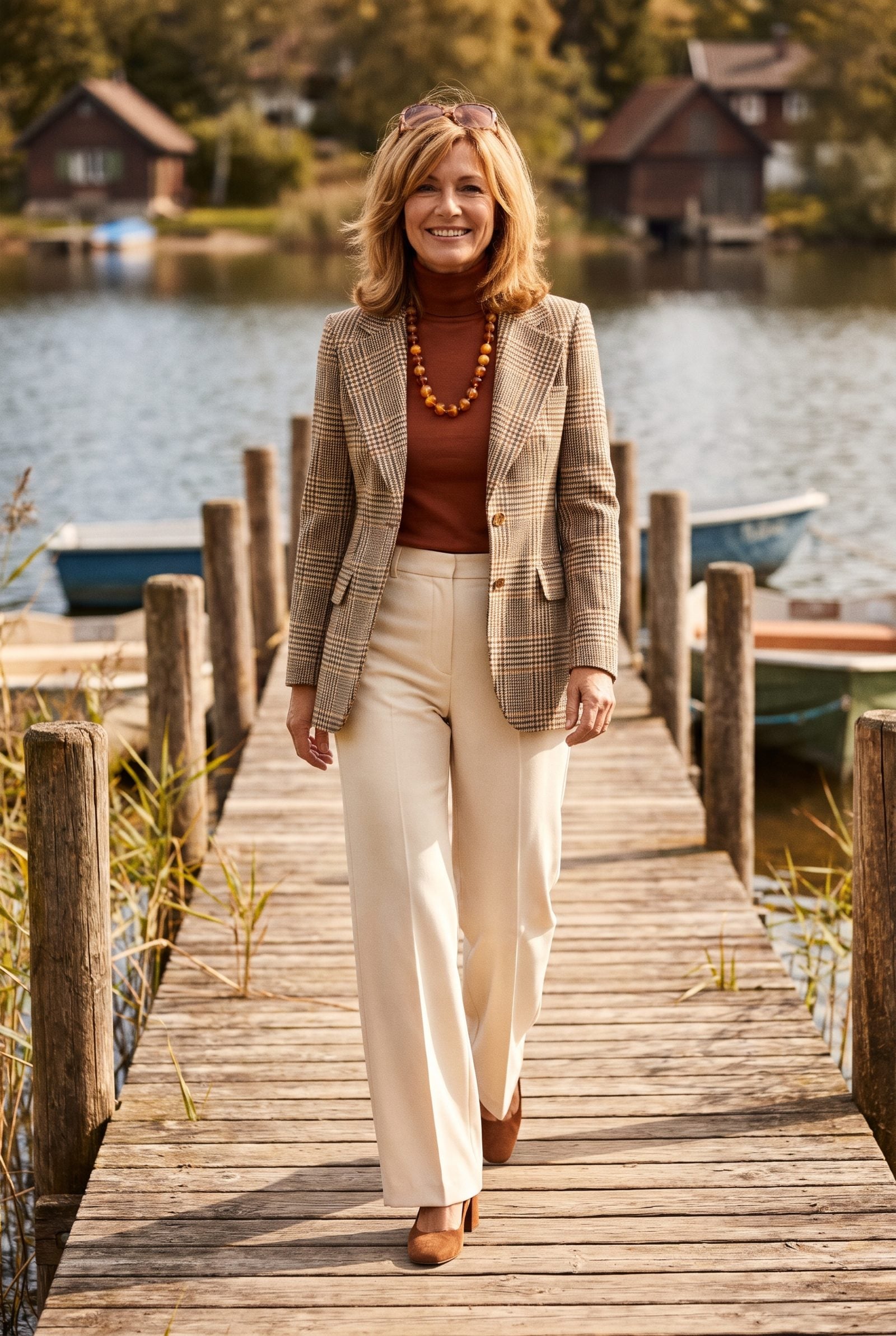
Pattern up top, clean volume below. The plaid blazer handles all the visual noise so the wide-leg cream trouser can swing free and uncomplicated underneath. Flip that ratio and the outfit collapses into chaos.
The rust turtleneck pulls one color out of the plaid and repeats it, which is the trick that makes everything feel deliberate rather than thrown together. Warm, textured, a little bohemian at the edges, all business in the shoulders.
1970s: The Belted Safari Dress With Knee-High Boots
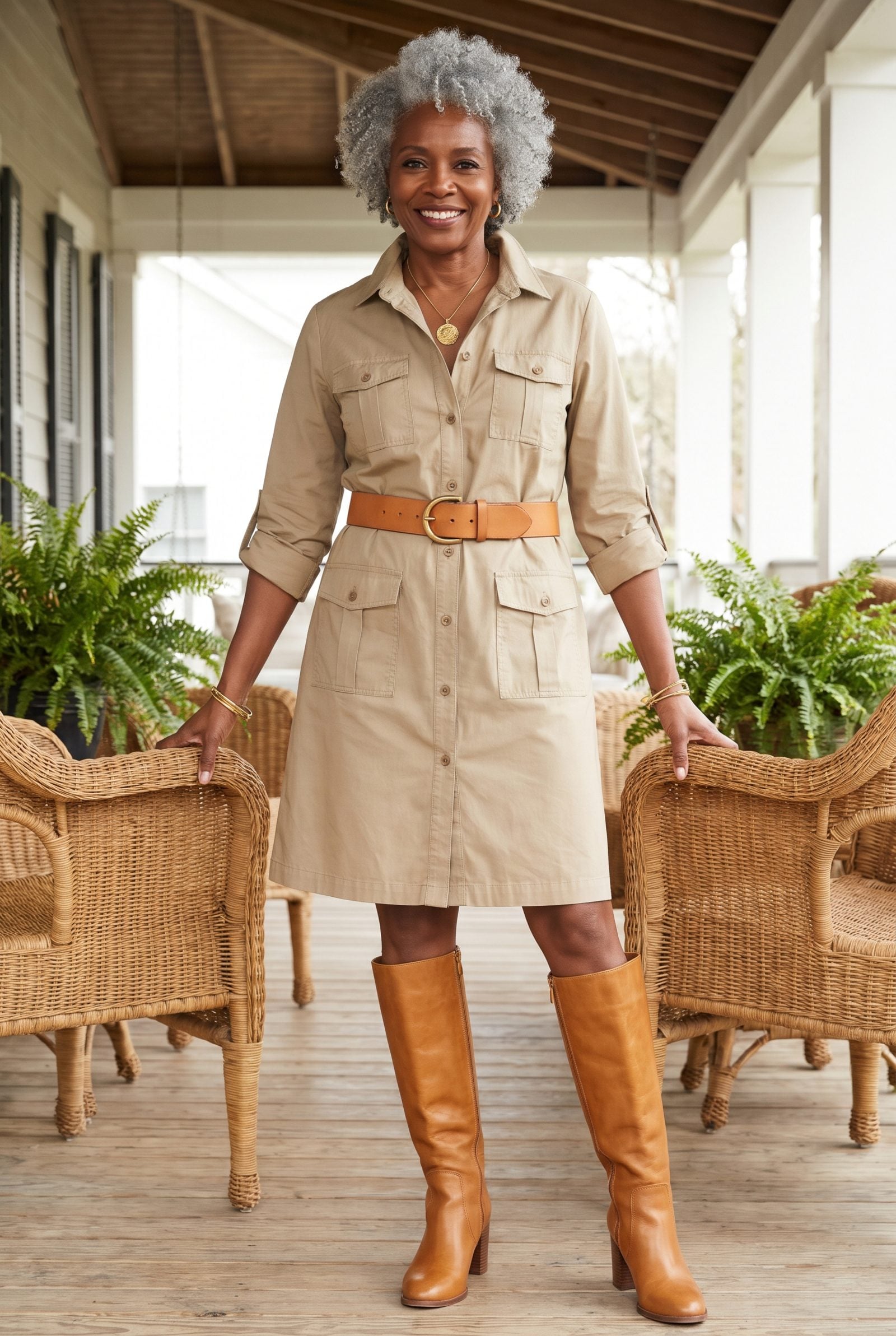
The belt is doing everything here. Loosen it and this is a shapeless sack of khaki; pull it tight and you get a waist, a shape, and a reason the whole look holds together.
Tonal khaki and honey brown keep the outfit grounded in earth, and the knee-high boot rises toward the knee-length hem, leaving just a flash of bare leg between the two. Roll-tab sleeves shoved to the elbow add the lived-in, ready-for-anything ease that made the safari dress feel like real clothes for a real day. Practical and a little glamorous, all at once.
1970s: The Secretary Blouse and Button-Front Corduroy Skirt
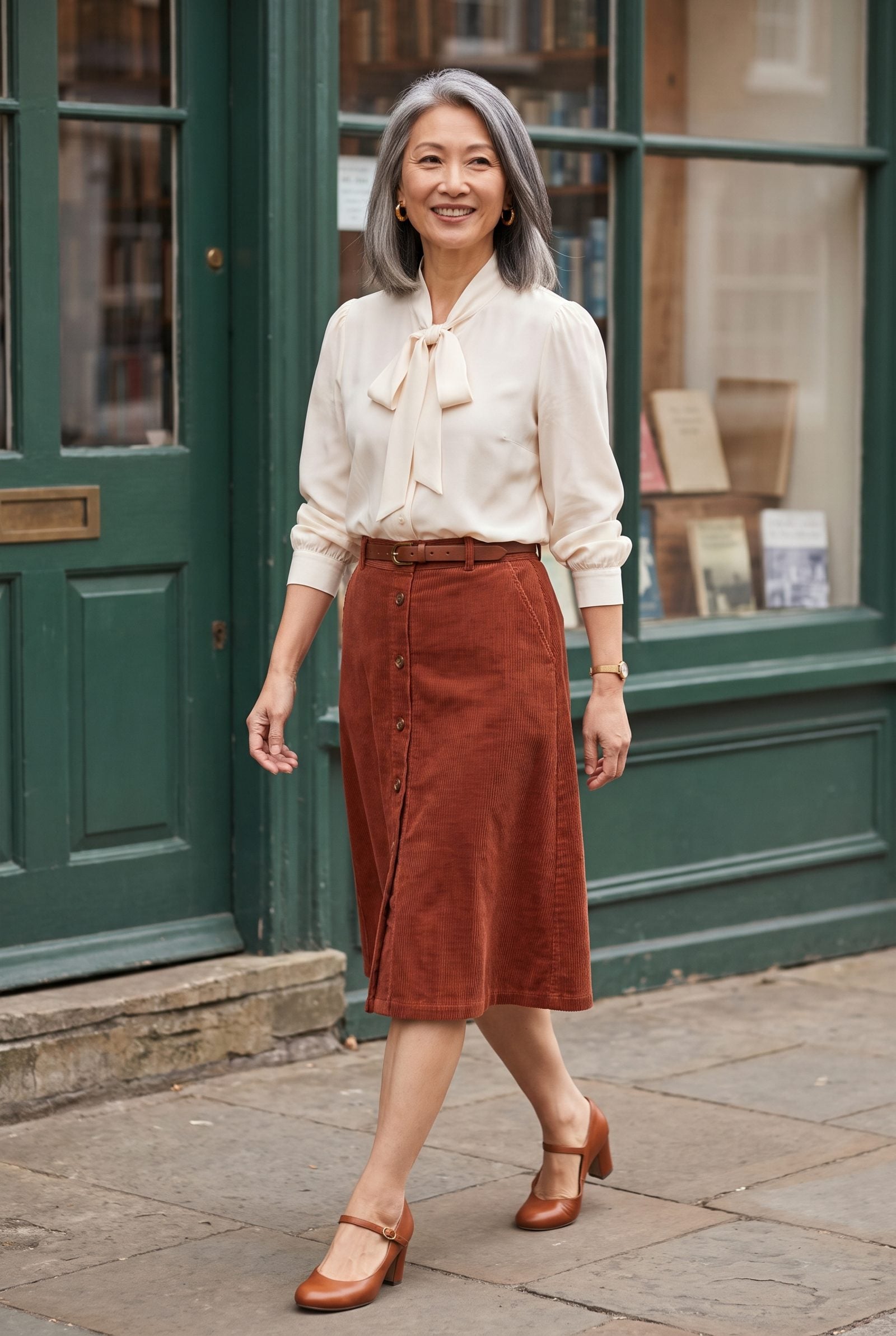
Corduroy for the office. The ribbed texture of that rust button-front skirt is the entire point, warm and tactile against the smooth cream blouse, so the outfit has depth even in a single photo.
Those front buttons run top to bottom like a column of punctuation, drawing the eye straight down and keeping the silhouette lean. The tie-neck bow on the cream blouse softens the top, while the cognac Mary Janes carry the warm tone all the way to the toe.
1980s: The Shoulder-Padded Power Suit With a Silk Blouse
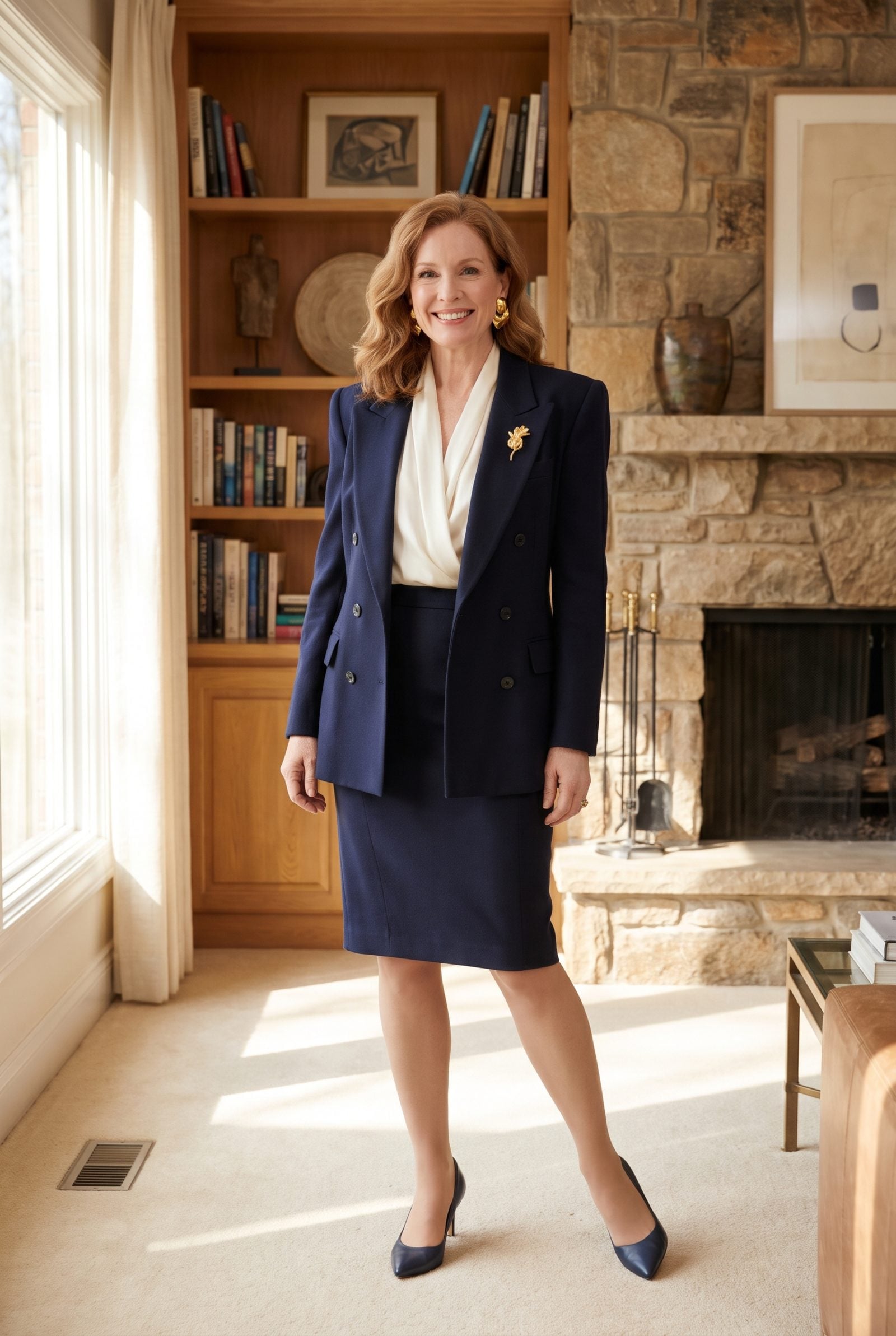
The shoulder is the thesis statement. That structured padded line widens the top, narrows everything below it, and builds the inverted triangle the entire decade was chasing. You can wear it like a blueprint.
The ivory silk blouse underneath is the mercy in the look, soft drape against hard tailoring, fluid against structured. Navy wool keeps it serious; the gold earrings and lapel brooch keep it from reading like a uniform. Pointed navy pumps finish with a clean point at the floor.
Call it armor, because everyone wearing it did. You put it on to take up space in a room that hadn’t planned on giving you any.
1980s: The Jewel-Tone Dress With a Wide Statement Belt
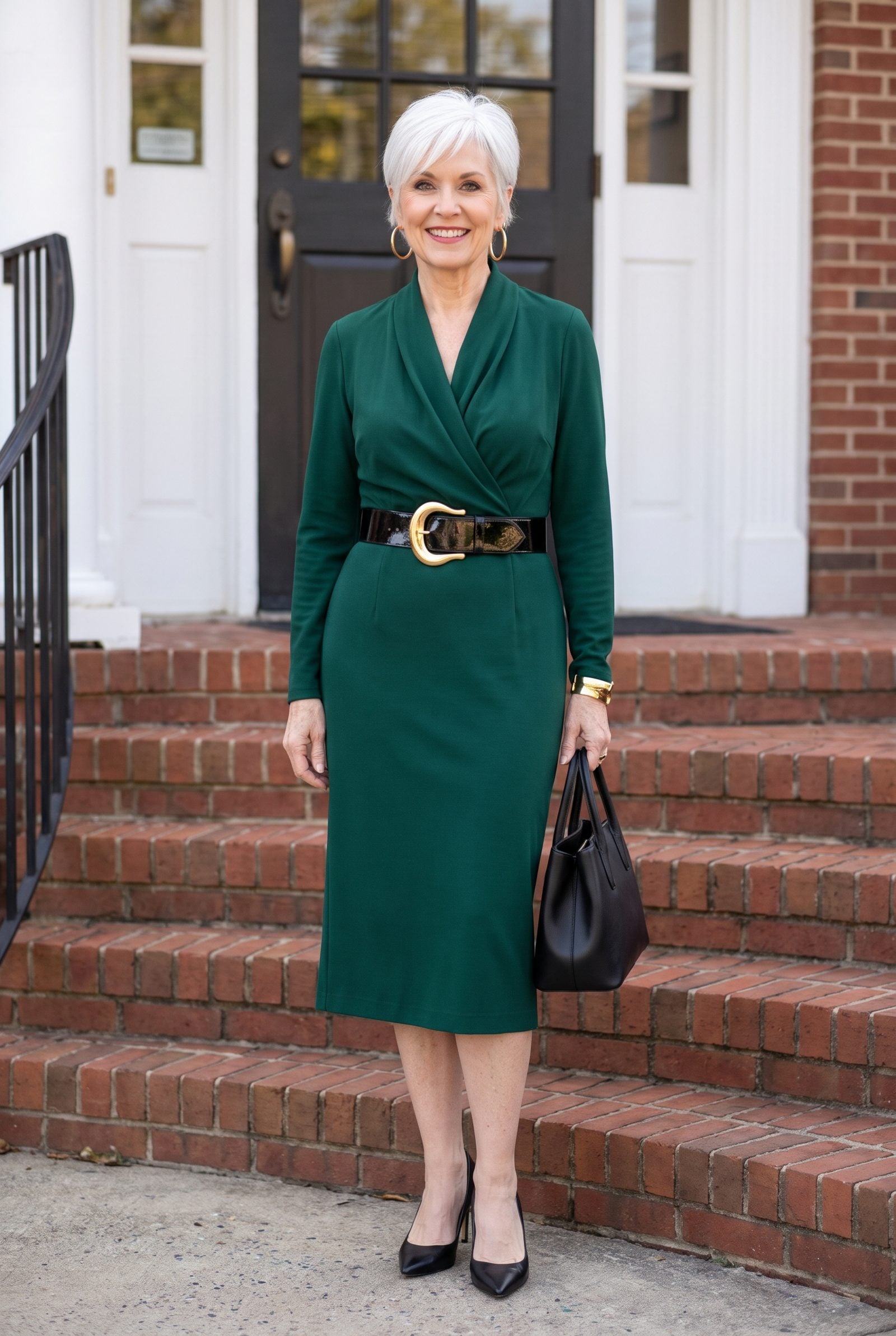
Color as the whole statement. That emerald crepe doesn’t need print or pattern because the saturation carries everything, and the draped surplice neckline keeps the richness from going stiff.
The wide black belt is the anchor. It breaks the column of green, marks the waist hard, and introduces the only contrast in the look through its gold buckle. One strong color, one strong belt, done.
1980s: The Peplum Jacket With a Straight Midi Skirt
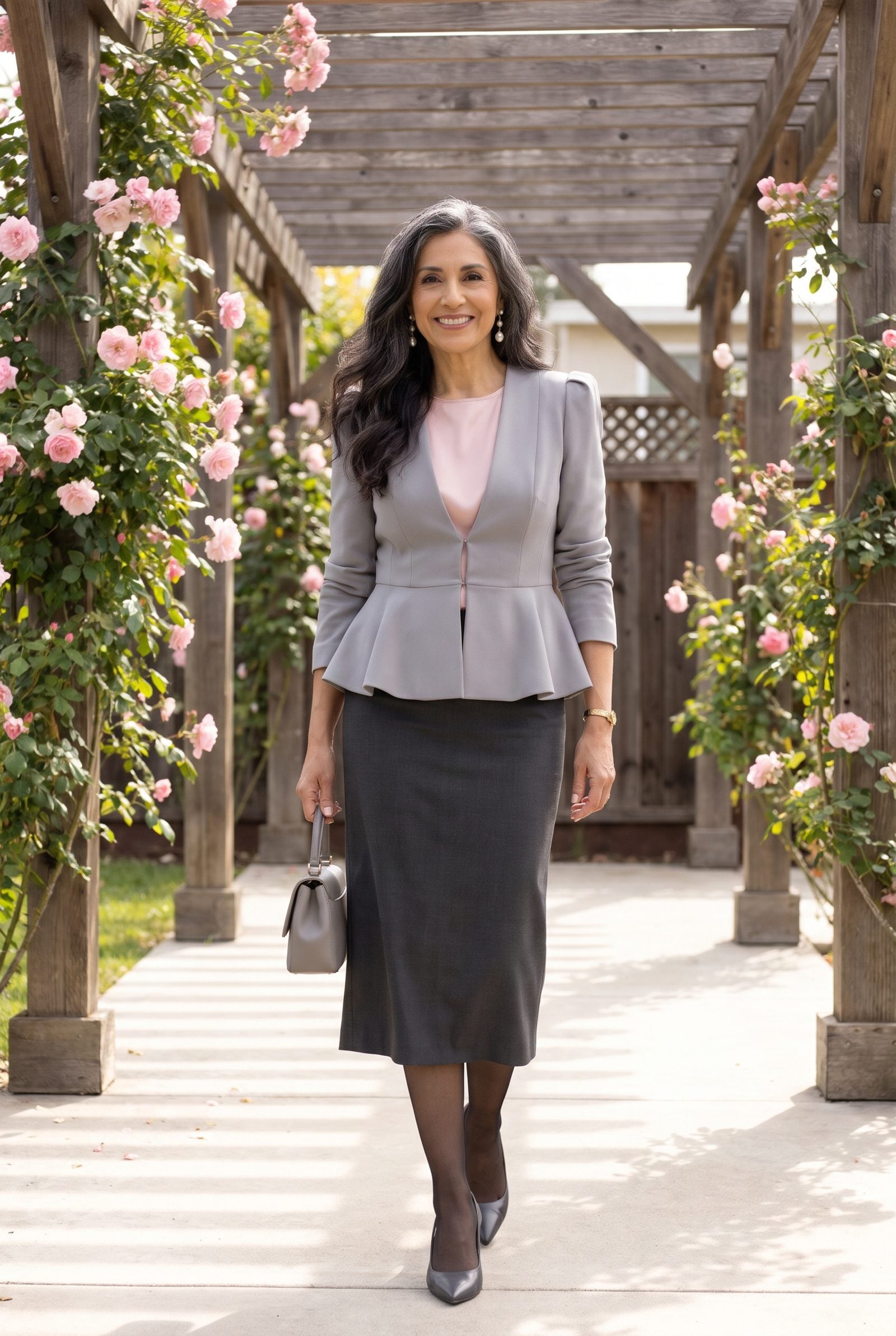
The peplum flares right at the hip, and that’s the whole silhouette strategy. It defines the waist above, skims the hip below, and gives the straight midi skirt a shape to hang off of. Hourglass in a single seam.
Dove grey over charcoal keeps it tonal and grown-up, and the blush silk shell softens the grey so it doesn’t go cold. The metallic grey pointed pumps pick up the dove grey of the jacket and carry it down to the floor.
This is the 1980s learning to flatter rather than just overpower. The shoulders stayed. But the peplum finally brought the waist back into the conversation.
1980s: The Color-Blocked Knit Dress and Matching Pumps
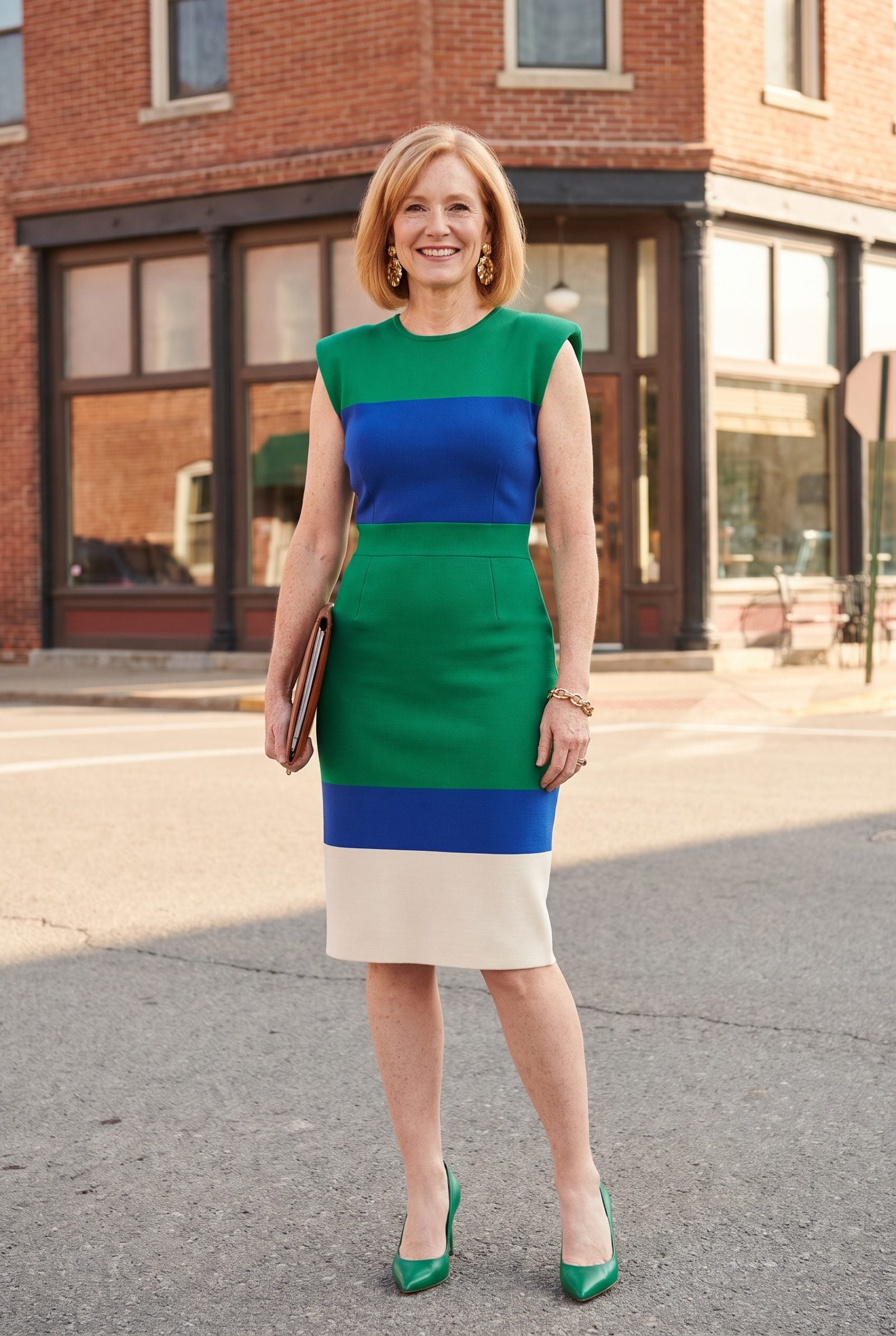
The color-blocking is the whole argument here. Three bold panels of knit do what a print never could — they give the body structure, drawing a clean vertical read while the horizontal bands keep the eye moving. A knit dress this structured was the 1980s answer to looking powerful without armor.
Then the matching emerald pumps close the loop, pulling one of the dress colors down to the floor so the silhouette reads as a single deliberate column. That’s the move. Keep earrings gold and bold, skip the necklace, and let the shoulders do the talking.
1980s: The Bow-Collar Blouse and Paperbag-Waist Trousers
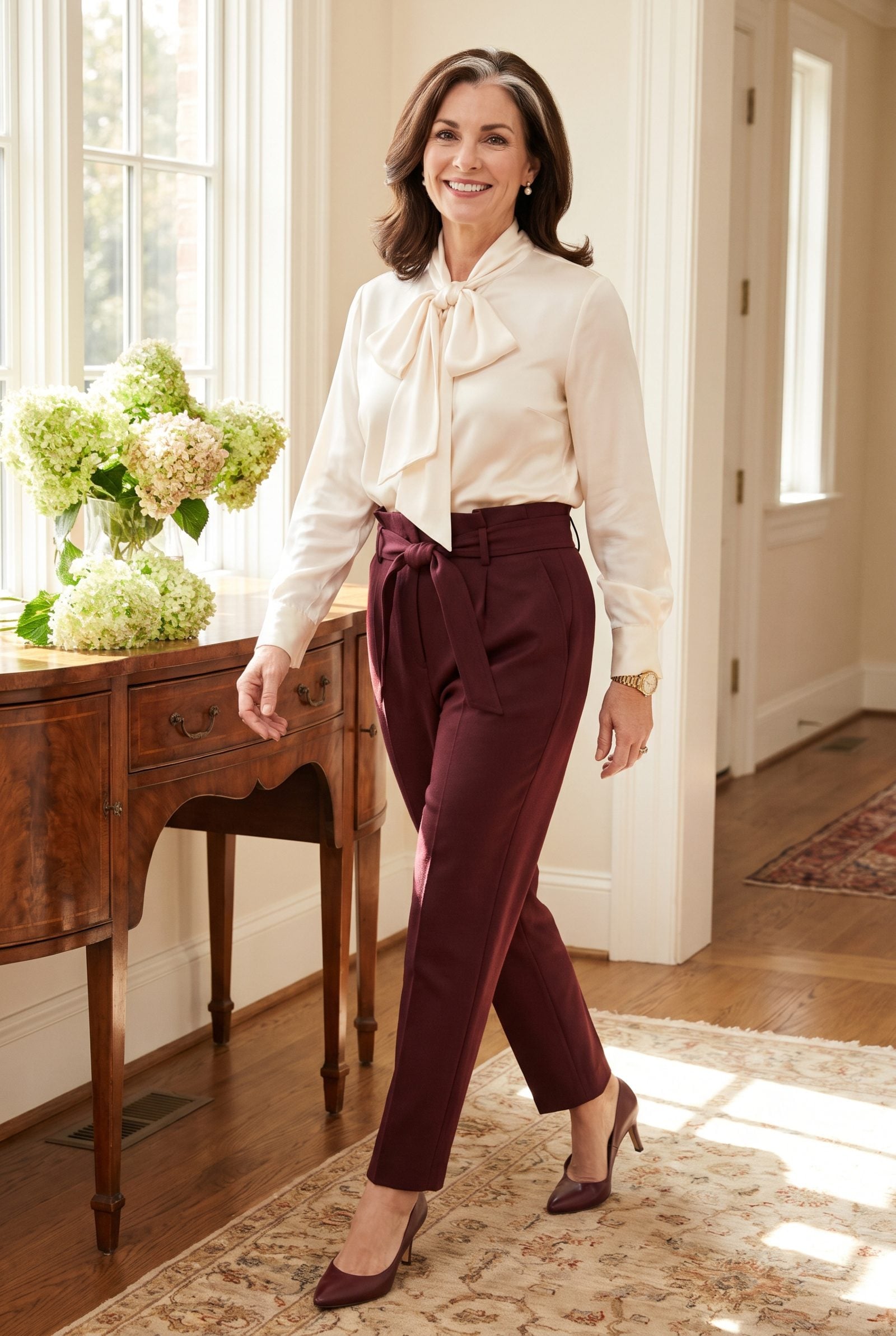
A pussy-bow blouse was the eighties’ quiet flex — soft at the neck, serious everywhere else. Cream silk against burgundy wool sets up a contrast that reads rich rather than loud, and the oversized bow keeps the face framed and open.
The paperbag waist does the structural work here. All that gathered fabric cinched high elongates the leg and gives the trousers a sculptural top that balances the blouse’s softness. Tuck fully, match the belt to the waistband, and let the bow sit a little undone for ease.
1980s: The Belted Jumpsuit With Pointed-Toe Heels
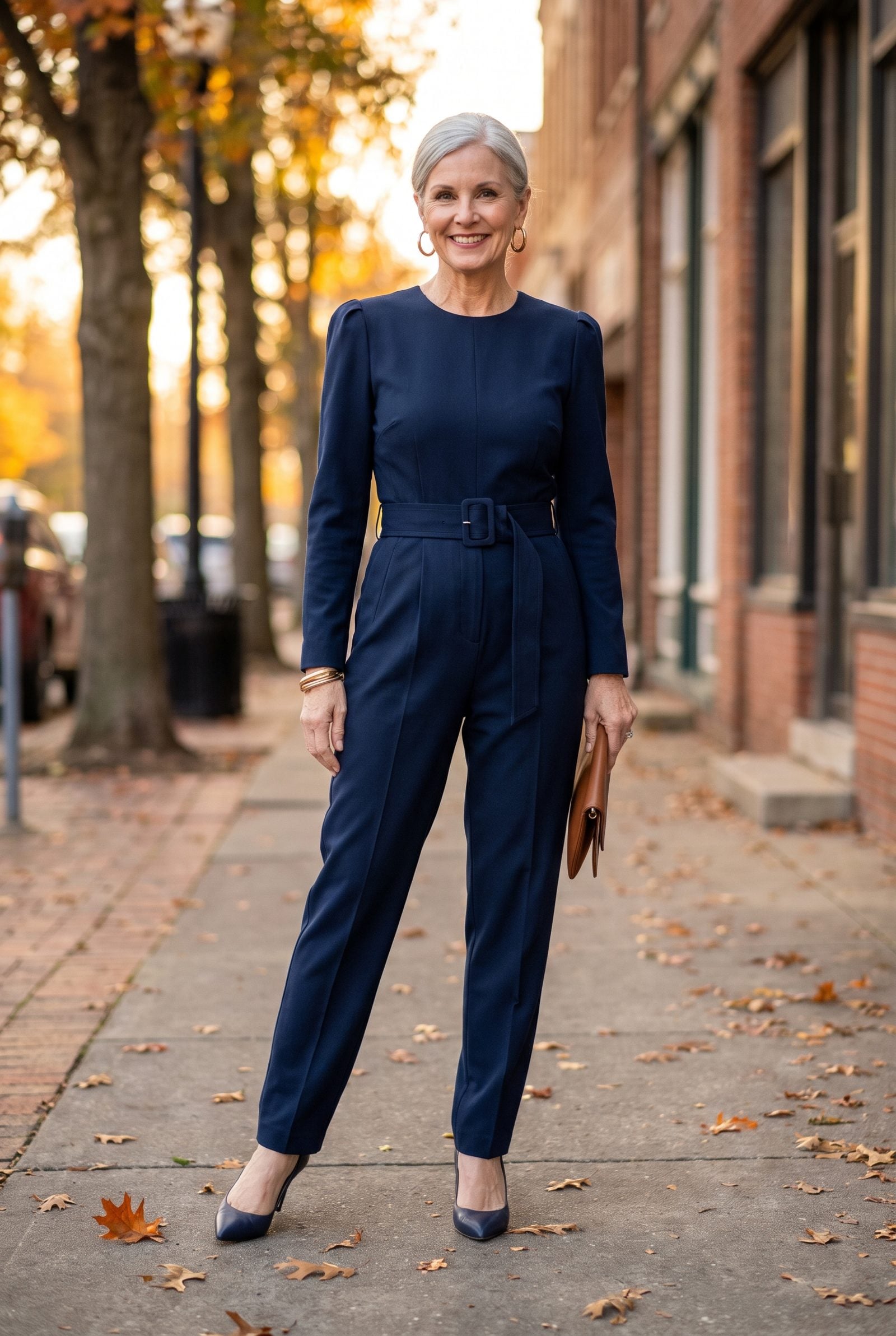
One garment, head to ankle, and the belt is what saves it from looking like a boiler suit. Cinched hard at the natural waist, that self-belt carves an hourglass out of a single column of navy gabardine and makes the padded shoulders read intentional instead of boxy.
The pointed-toe heel extends the line the trouser starts, so the whole look resolves into one long vertical. A jumpsuit signals a woman who got dressed in one decisive move and had better things to do than fuss. Keep accessories gold, keep the belt the same fabric, and let the shoulders stay sharp.
1990s: The Minimal Black Pantsuit and White Crewneck Tee

Strip everything away and this is the look the nineties built its reputation on. A black suit over a plain white tee, nothing shiny, nothing fussy, the restraint itself doing all the talking.
And the white crewneck is the quiet genius of it. Swapping a blouse for soft cotton jersey takes the formality down a notch and makes the sharp tailoring look like a choice rather than a uniform. Minimalism as confidence — a woman who doesn’t need the suit to try very hard. Keep the loafers clean, the trousers grazing the ankle, and lose the necklace entirely.
1990s: The Pinstriped Vest and Matching Pants
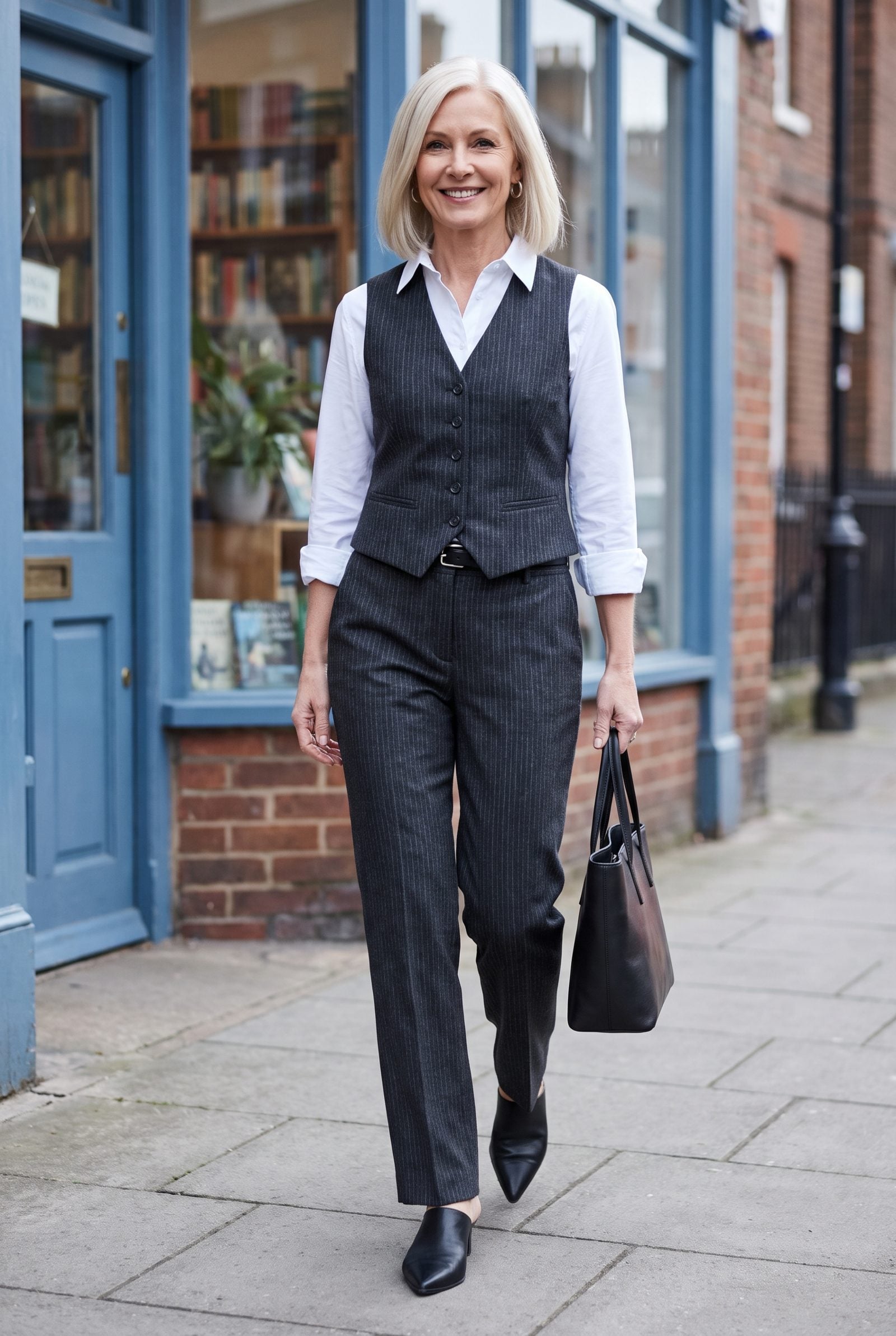
Skip the jacket, keep the vest, and suddenly menswear tailoring gets personal. The fitted pinstriped waistcoat traces the torso in a way a blazer never does, and rolling the white shirt sleeves adds the human touch that keeps it from reading too corporate.
Matching the vest to the trousers is the discipline that makes it work. That unbroken pinstripe running floor to collar reads as a full suit while showing more shape. A woman who took the boardroom dress code and bent it to flatter her. Half-tuck optional, pointed mule mandatory.
1990s: The Slip Dress Layered Over a Fitted Turtleneck
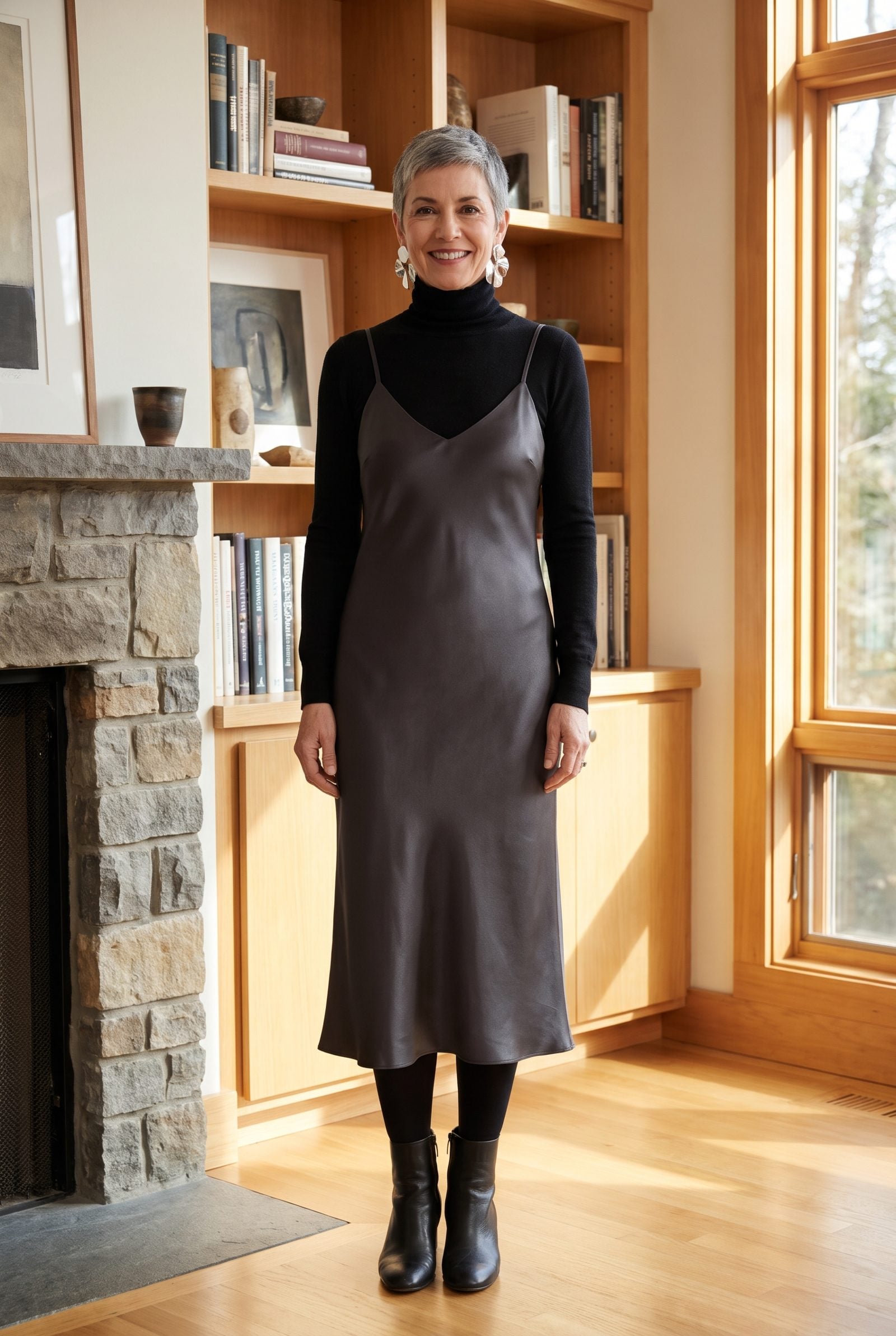
Here’s the trick: the layering flips the whole proposition. A satin slip dress reads as evening on its own, but pull it over a fitted turtleneck and it becomes something you can wear to an office with exposed brick and actually get taken seriously in.
The texture contrast is what drives it — liquid satin sliding over matte knit, soft and structured in the same breath. Opaque tights and an ankle boot ground the thing for daylight. The nineties at its most inventive, taking a going-out piece and making it work before noon. Keep the knit slim, the dress on the bias, and the boots low.
1990s: The Khaki Chinos and Oxford Button-Down
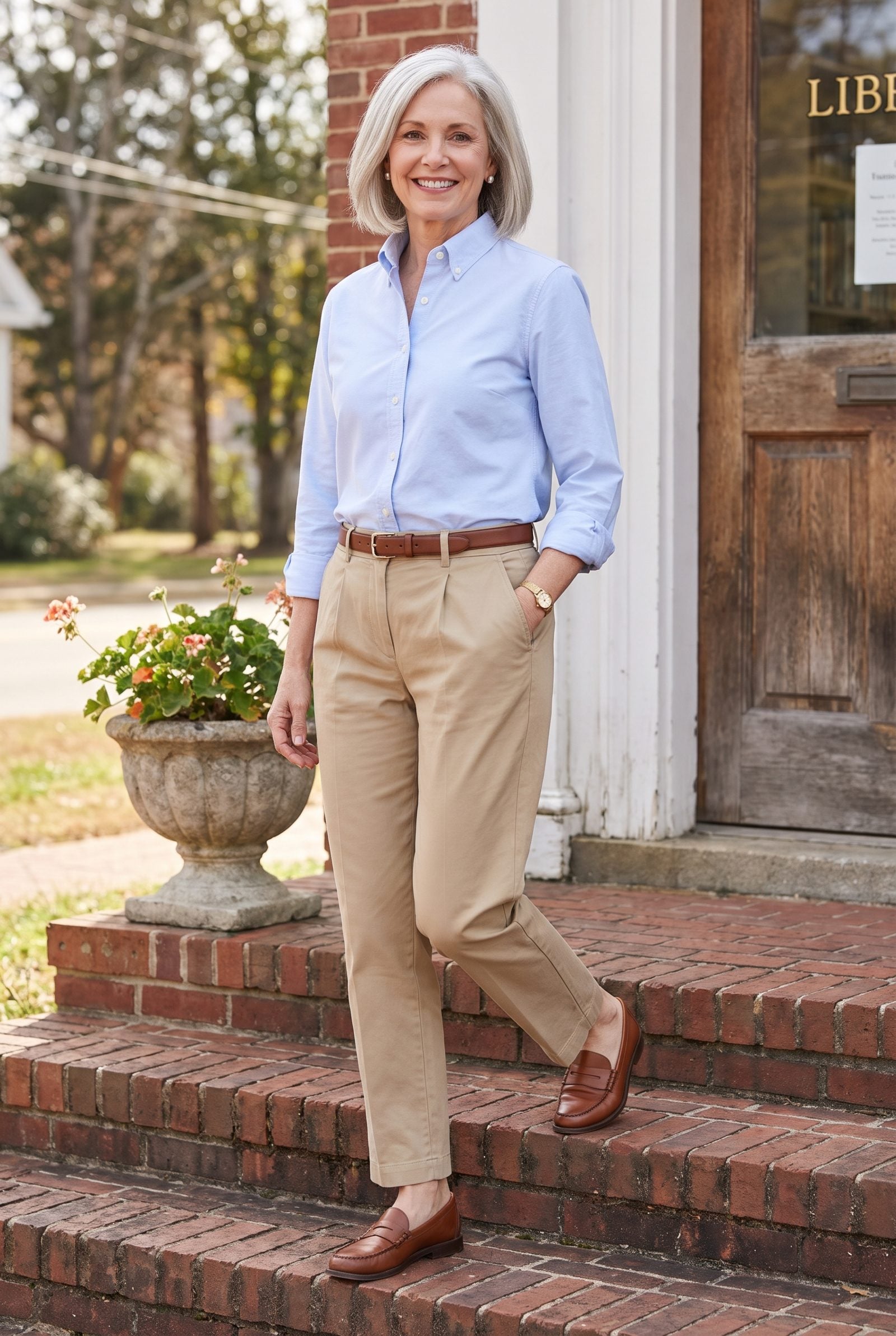
This is where business casual actually started, and the tan outfit still holds up. Khaki chinos and a pale blue oxford — the uniform of a decade that decided women could look professional without a single padded shoulder in sight.
The penny loafer worn sockless is the detail that lightens everything, pulling the look away from stiff and toward lived-in. Rolling the shirt sleeves does the same. Keep the chino pressed with a soft break, the belt brown to match the shoe, and the shirt tucked but not strangled.
1990s: The Square-Neck Sheath Dress With Slingback Pumps
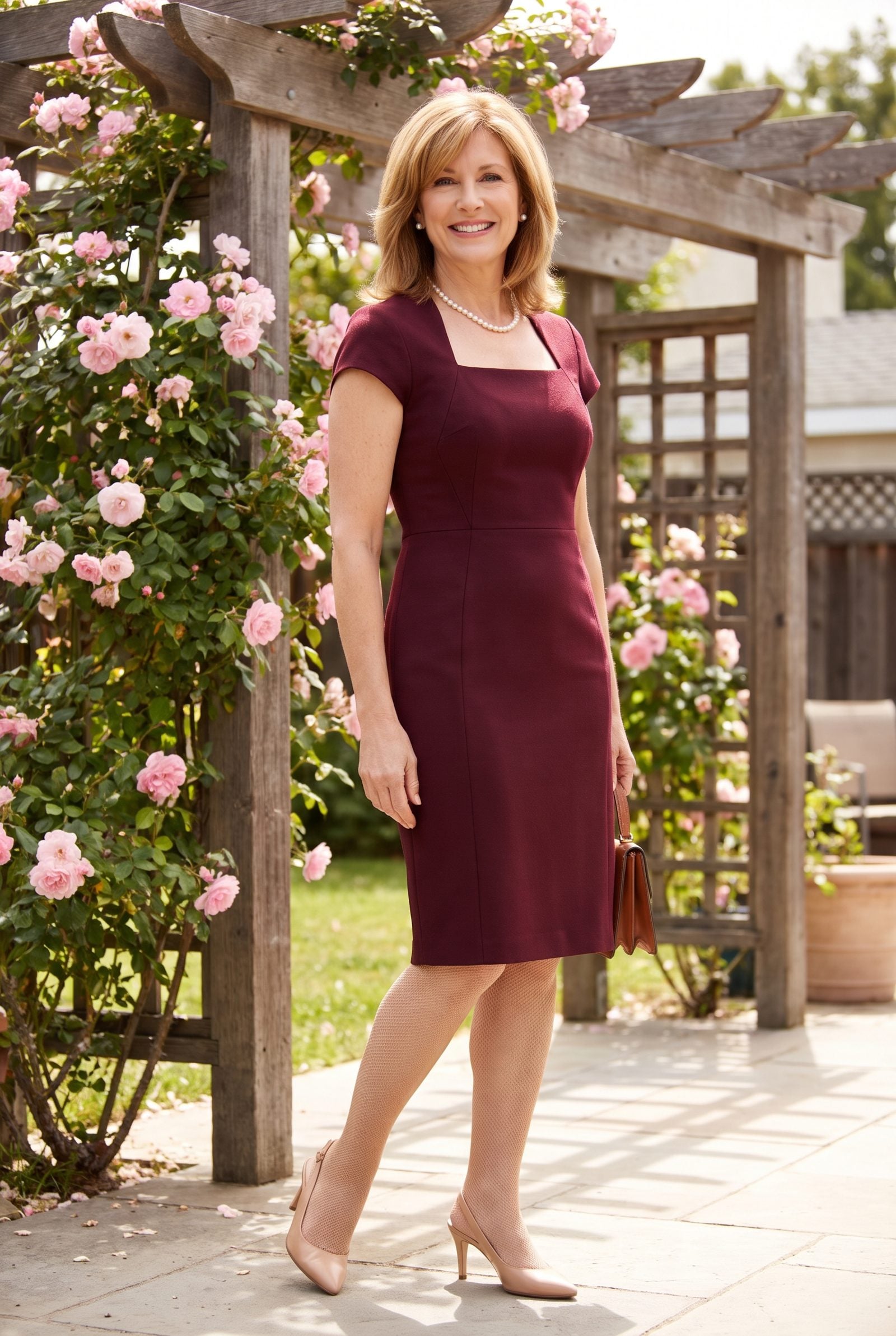
The square neckline is the quiet hero. It frames the collarbone and squares off the shoulders, giving a simple sheath a crisp geometric edge that a scoop or V never manages.
And the nude slingback pulls off a small miracle of proportion — the open heel and skin-tone leather extend the leg while keeping the whole look grounded in the burgundy. A sheath dress like this is pure composure, structured enough to command a room, clean enough to disappear into the work. Pearls or nothing, hem at the knee, and let the neckline carry it.
2000s: The Bootcut Trousers and Fitted Stretch Shirt
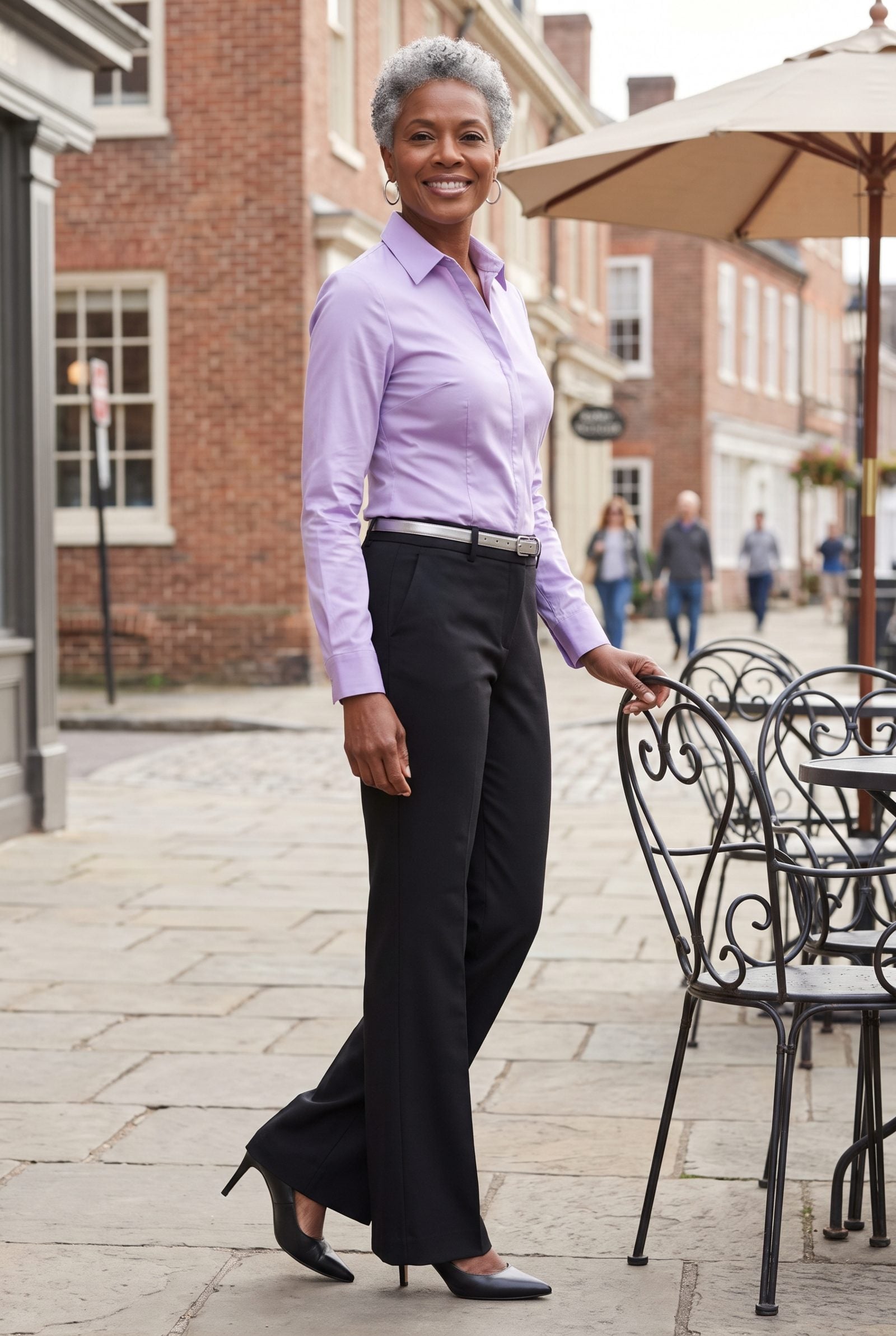
The bootcut is doing proportional math the whole office relied on in the early 2000s. That slight flare at the hem balances a fitted top half, drawing the leg long and keeping the silhouette from going top-heavy.
The fitted stretch shirt was the era’s signature — close to the body, faintly shiny, tucked to define the waist. Together they read as sharp and intentional, a woman who understood that a little stretch and a little flare could carry a whole workweek. Keep the hem long enough to cover the heel, the shirt tucked, and the belt thin.
2000s: The Cropped Cardigan Over a Satin Camisole
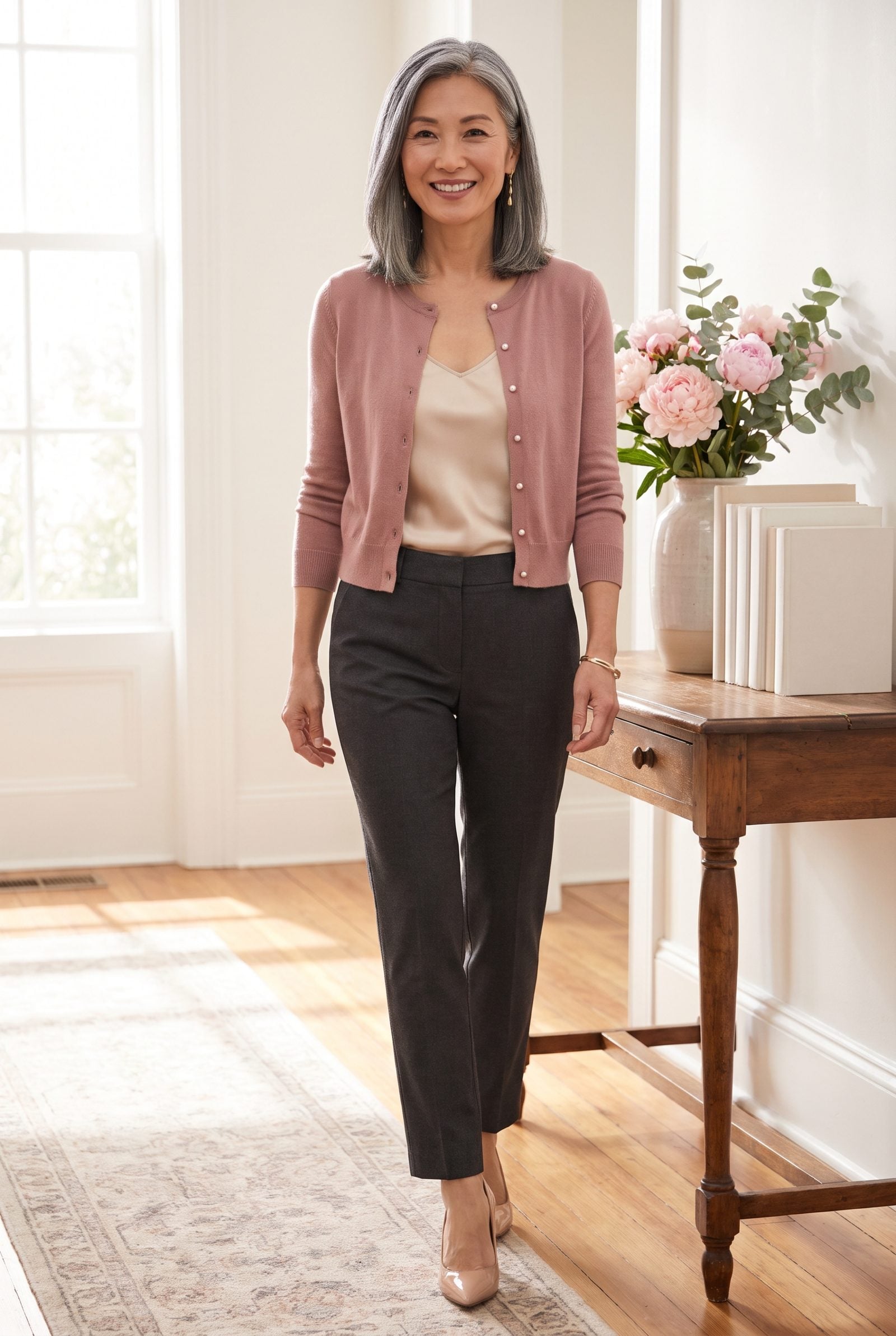
Texture carries this one. Matte knit over liquid satin, the cardigan softening the camisole’s shine just enough to make it office-appropriate without killing the shimmer.
The cropped cut hits right at the waistband, which keeps the eye high and the proportion clean over the slim trousers. A satin cami framed by an open, unbuttoned cardigan was the early 2000s doing feminine-but-professional, and honestly it still works better than most of what replaced it. Keep the cardigan fitted, the cami strap thin, and let the gold jewelry stay delicate.
2000s: The Pinstriped Low-Rise Pantsuit
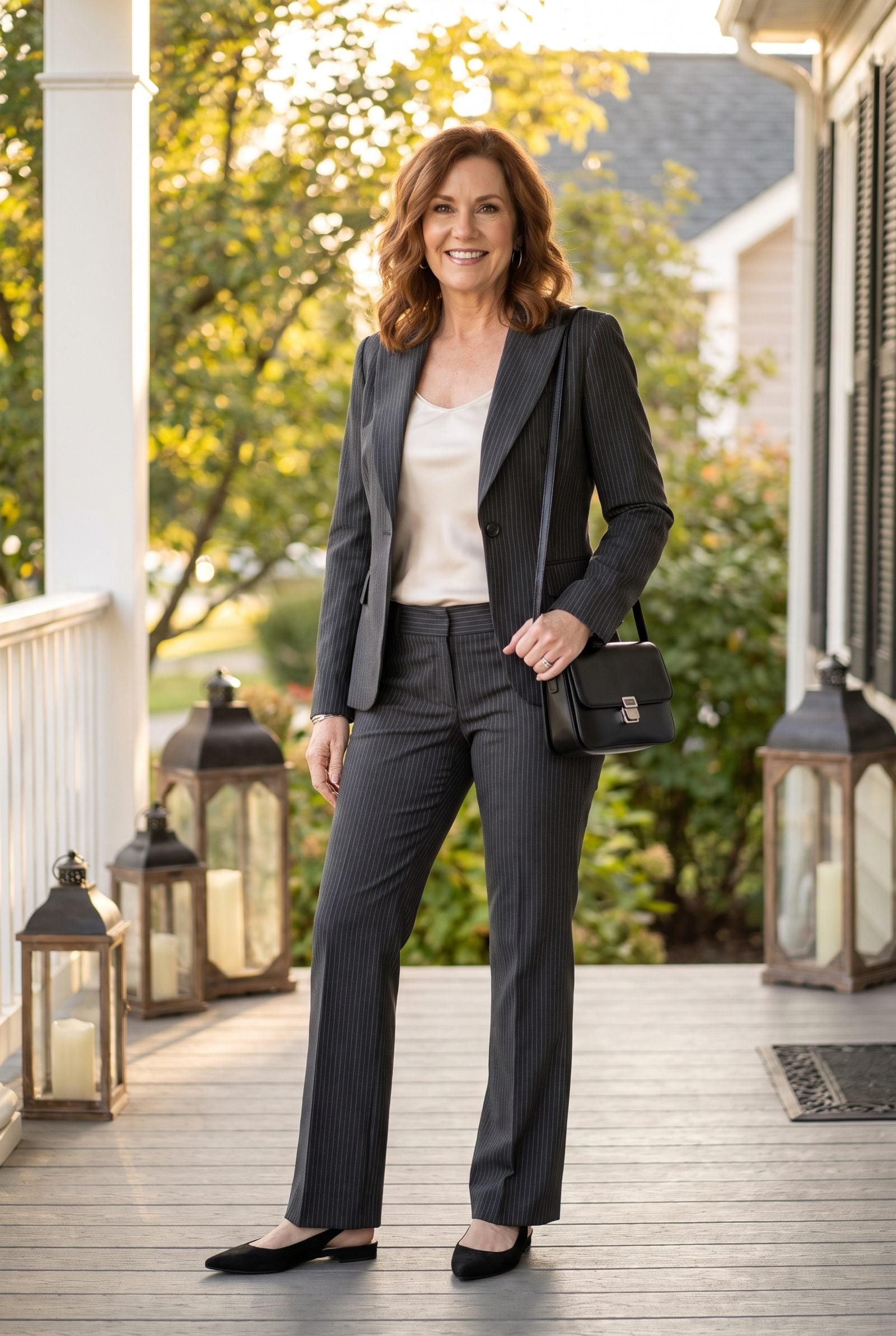
The pinstripe did the heavy lifting, pulling the eye into a long vertical line that made the low-rise waist read intentional instead of accidental. Paired with pointed slingback flats, the bootcut leg stayed clean through the ankle. And the whole thing kept its office authority without a single inch of heel.
This was the uniform of women who wanted to be taken seriously and look current at the same time, and the satin cami underneath softened the suit just enough to feel like a decision rather than a default. Keep the trouser hem long enough to skim the top of the shoe and the proportion holds.
2000s: The Belted Tunic With Slim Black Pants
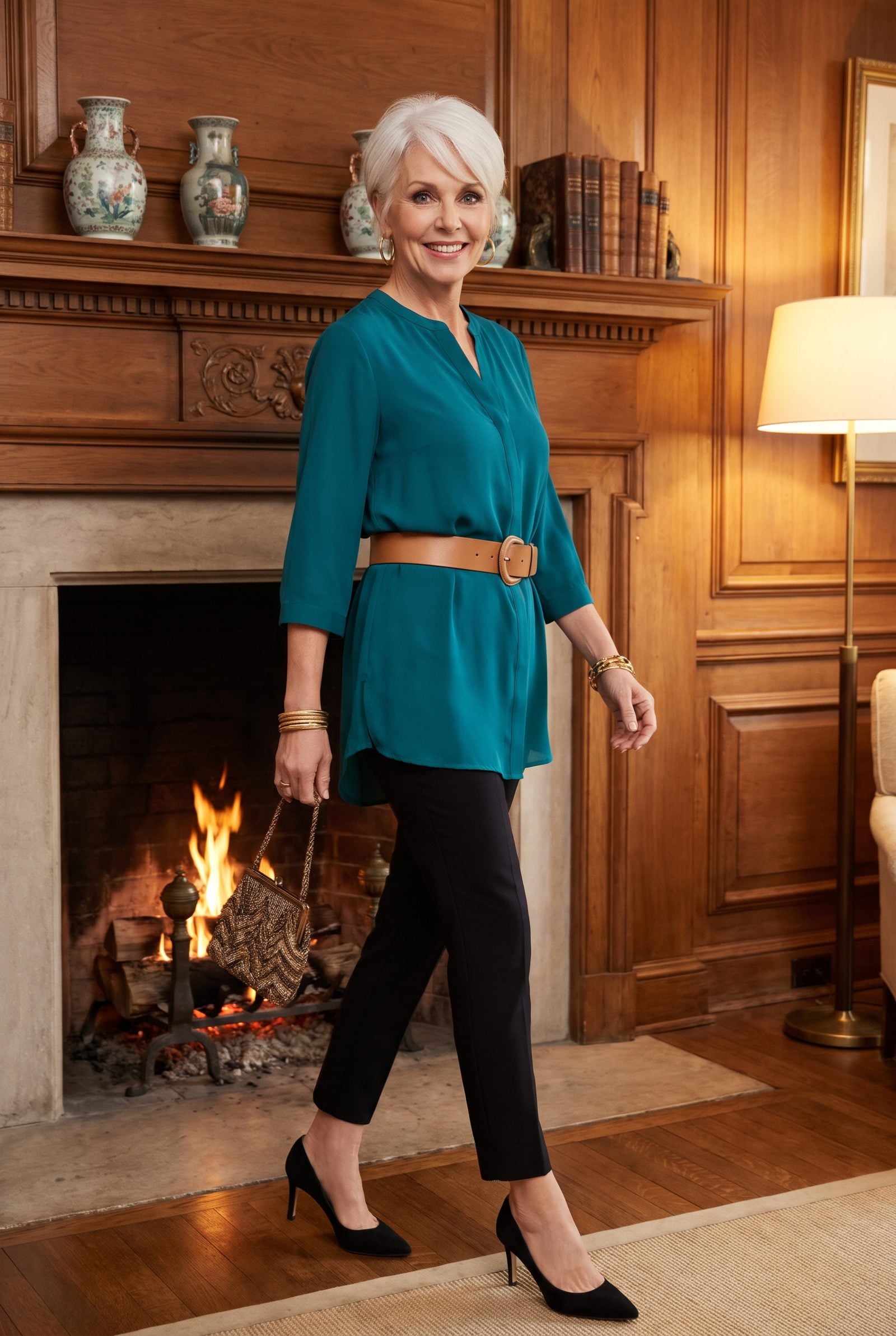
The belt is the engine here. Drop it and you’ve got a shapeless tunic over leggings-adjacent pants; cinch it at the natural waist and suddenly there’s an hourglass the floaty fabric would otherwise swallow.
Slim black pants did the quiet work of grounding all that drape, and the three-quarter sleeve kept the look office-ready without the bulk of a jacket. It was what you reached for when the morning got away from you and you still needed to look like you had it together.
2000s: The Ruffled Blouse With a Wide Waist Belt and Trousers
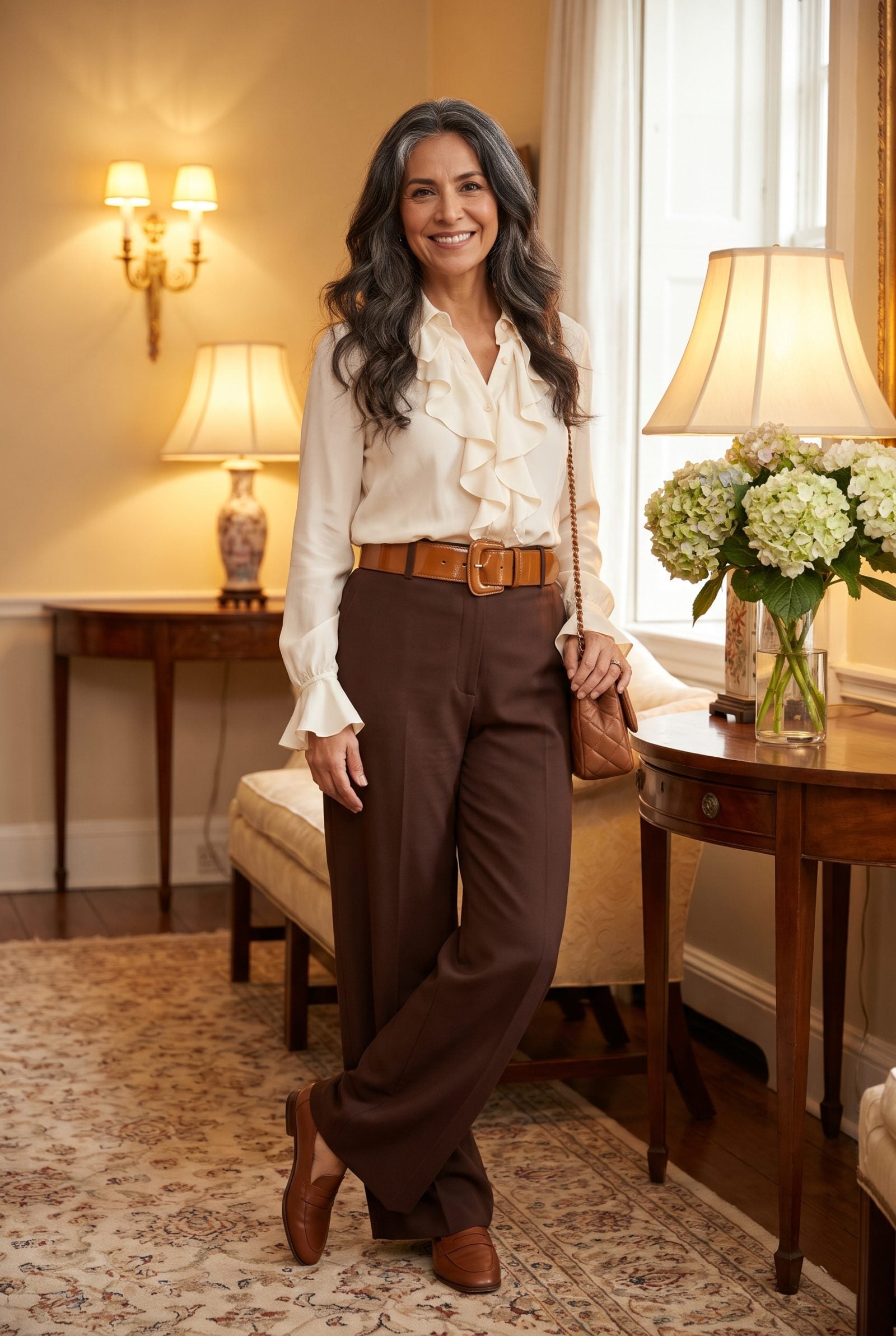
Ruffles and tailoring rarely sit together comfortably, which is exactly why this worked. The soft cascade down the front played against the sharp high waist and the wide belt, and that friction kept the blouse from reading as fussy.
A flat loafer anchored it, trading heel height for the all-day steadiness this outfit actually needed. Tuck the blouse fully, let the ruffle spill over the belt, and the balance between soft top and structured trouser does the rest.
2010s: The Collarless Blazer With an Ankle-Pant Suit
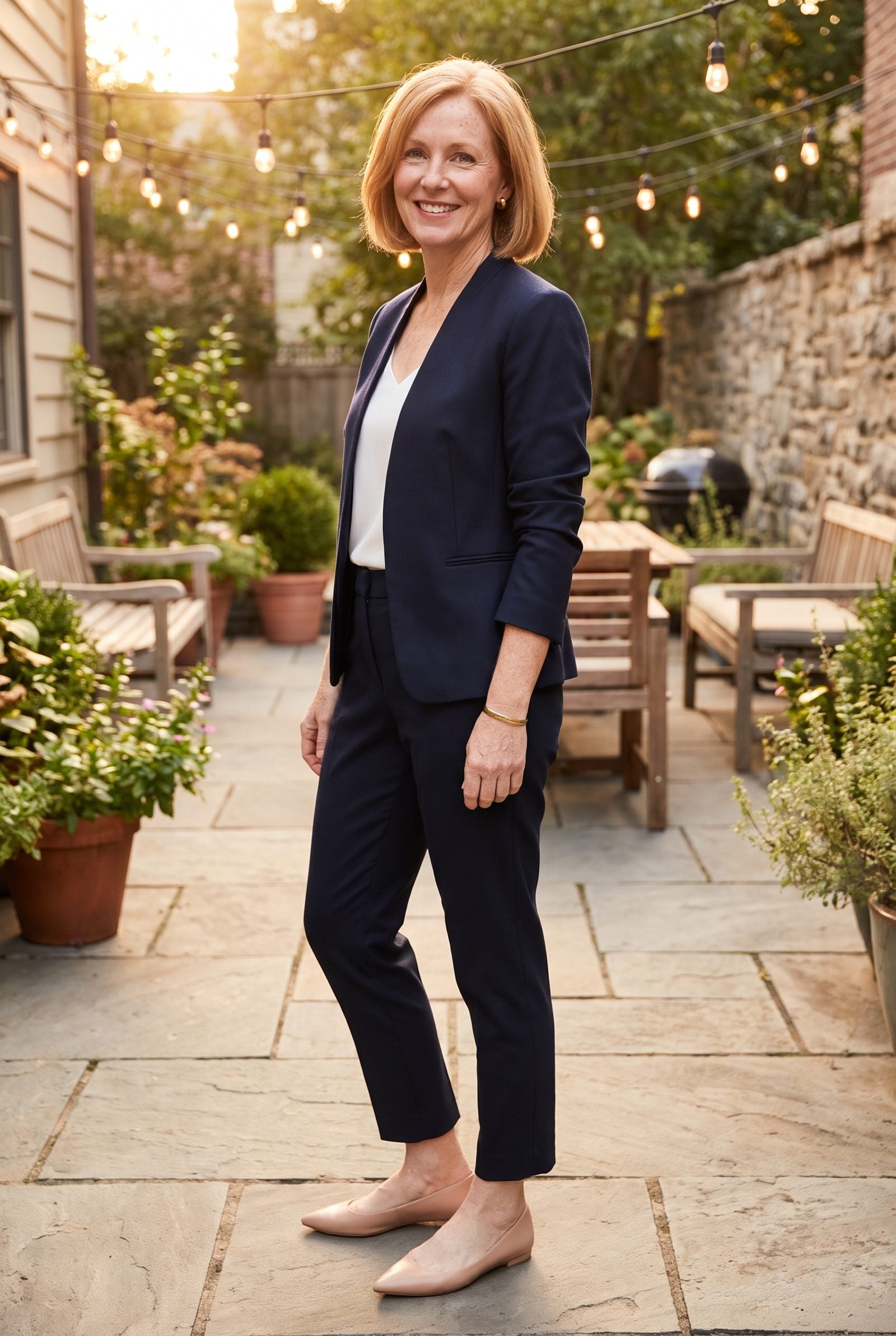
The missing collar does more than it looks like it should. That clean neckline reframes the whole suit as modern instead of corporate-boxy, and it opens up room for a bold lip or a statement earring to breathe.
The ankle crop was the decade’s great equalizer, showing just enough skin above a flat to keep the silhouette from feeling heavy. Keep the break clean at the ankle bone, skip the socks, and let the pointed flat carry the leg line to the floor.
2010s: The Peplum Top and Cropped Cigarette Trousers
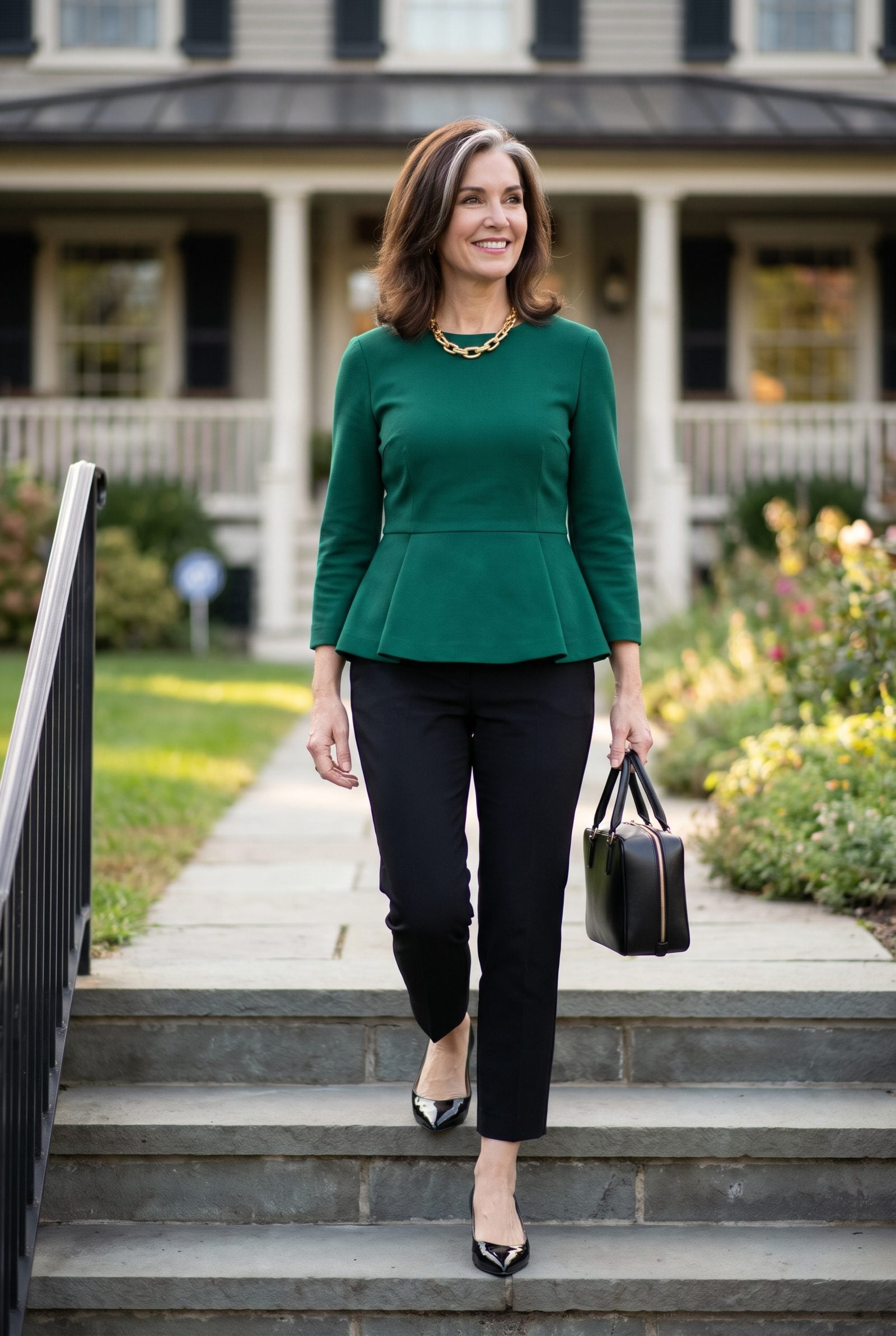
The peplum built a waist out of thin air. It flares at the hip to carve an hourglass regardless of what’s underneath, and that structured flare needs a slim leg beneath it to stay balanced.
Cropped cigarette trousers delivered exactly that, keeping the bottom half narrow so the top could do its dramatic thing. Match the hem to the ankle bone and let the flat finish the line without piling on weight.
On how a peplum creates a waist, a personal stylist writes “Rectangle shapes gain the illusion of curves and a defined waistline from the extra volume at the hips.”
2010s: The Fit-and-Flare Dress With a Skinny Belt
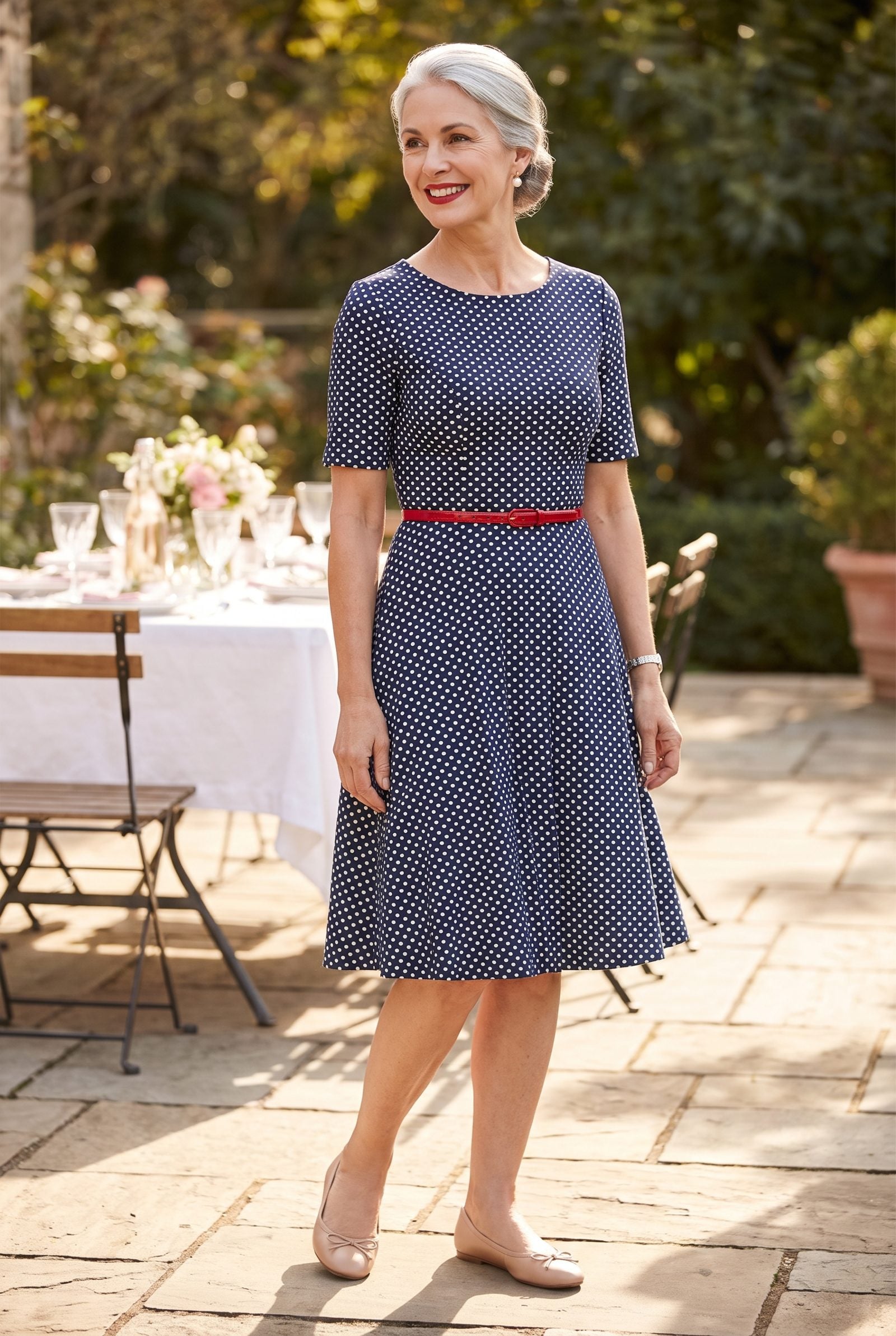
One print, one belt, one hit of red, and the whole thing sings. The skinny belt is the quiet hero, pulling the dress in at its narrowest point so the skirt can swing without the waist vanishing into it.
This was the office dress that moved with you, breakfast meeting to late-afternoon desk slump, never once needing a tug or an adjustment. Let the belt echo one accent color, keep the flat simple, and the dress stays the star.
2010s: The Longline Vest Over a Monochrome Base
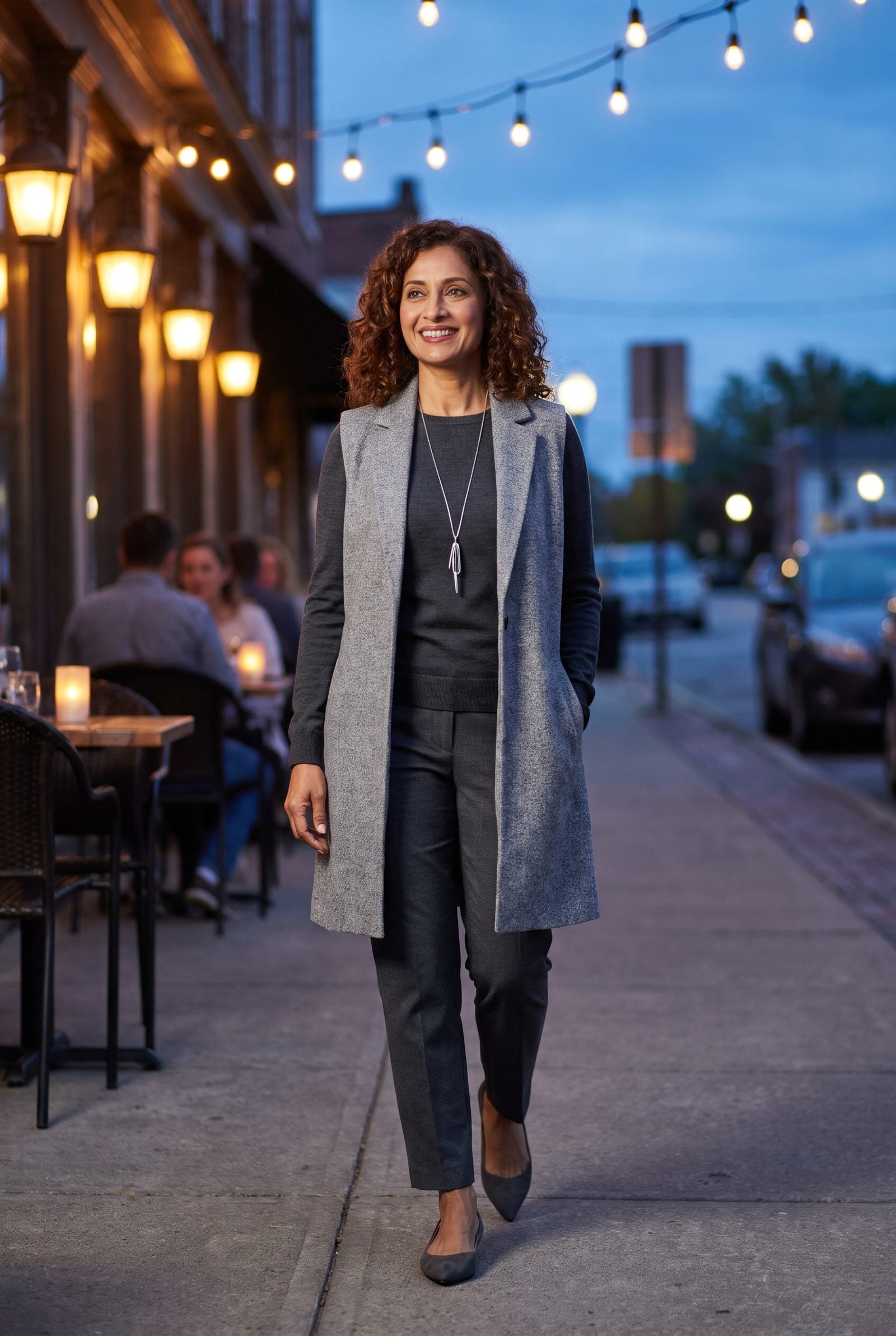
Tonal dressing from head to toe creates one uninterrupted column, and the longline vest stretches that line further down the body. The eye never catches on a waistband or a hem break, which is why the whole thing reads so tall and composed.
The vest leads. It adds a layer of structure without the warmth or bulk of a jacket, and a pointed flat keeps the column going right to the floor. Keep the base pieces slim so the vest has clean lines to hang against.
Explaining why tonal dressing makes you look taller, a style blogger notes “By removing the harsh horizontal lines that usually break up our silhouette, you create one continuous vertical column of color.”
2010s: The Midi Dress With a Moto Jacket and Ankle Boots
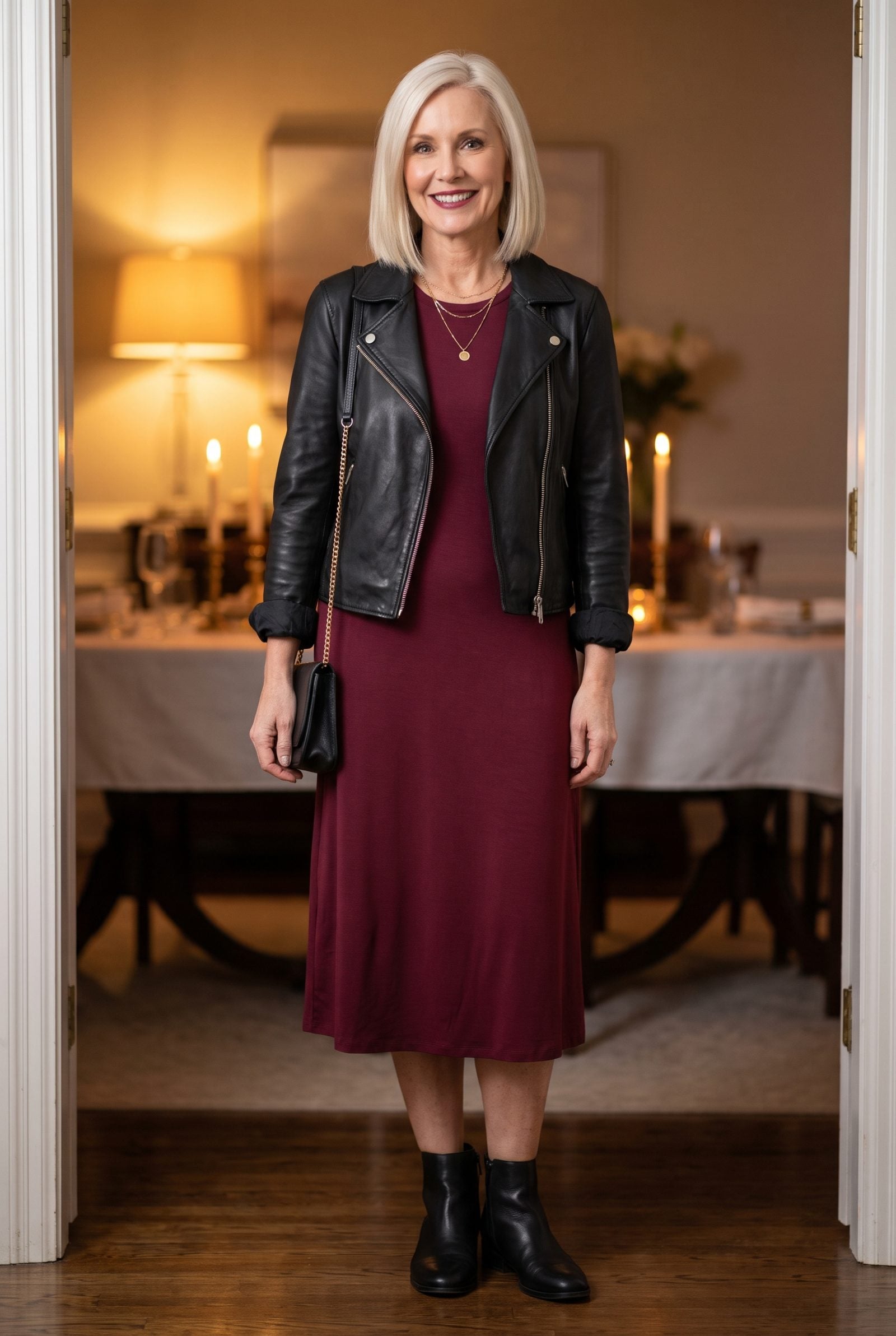
The moto jacket reframes everything. On its own, the soft burgundy midi is gentle and fluid; throw the leather over it and the outfit grows a spine, that casual-formal tension making both pieces more interesting than either would be alone.
Flat ankle boots were the natural landing point, grounding the softness of the jersey with a bit of edge. This was the look for the woman who left the office and kept going somewhere better.
2020s: The Oversized Blazer With a Knit Tank and Wide-Leg Pants
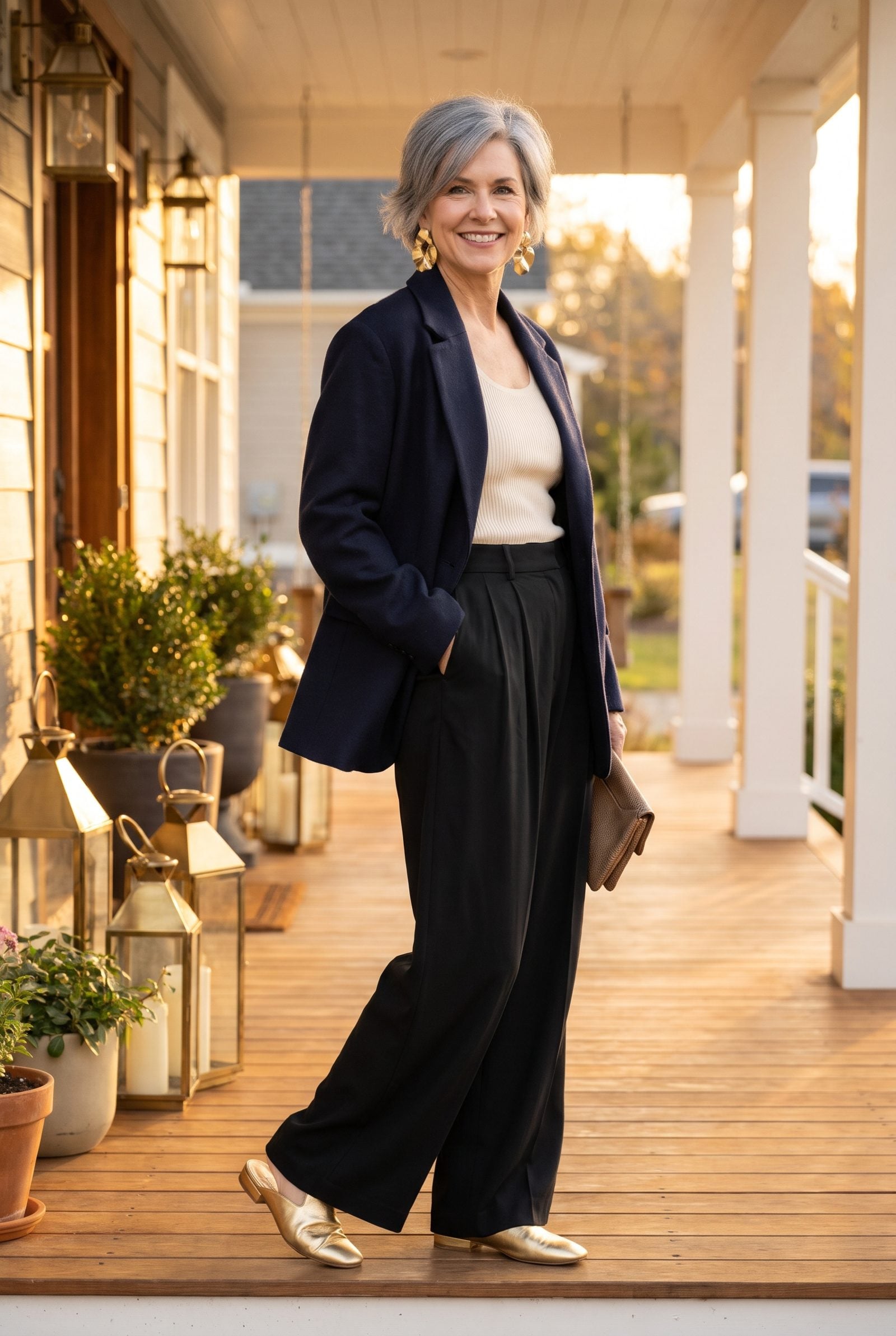
Volume on volume should collapse into a mess. It doesn’t here, because the fitted knit tank cuts a clean line through all that fabric. The oversized blazer and wide-leg trousers get their drama, and the body stays visible where it counts.
This is the shape of the hybrid-office decade: structured enough for a meeting, soft enough for a day that never quite leaves the house, and a flat mule keeps it grounded and easy. Let the tank skim the body and keep the trousers breaking just over the shoe.
2020s: The Relaxed Suit Worn With Clean White Sneakers
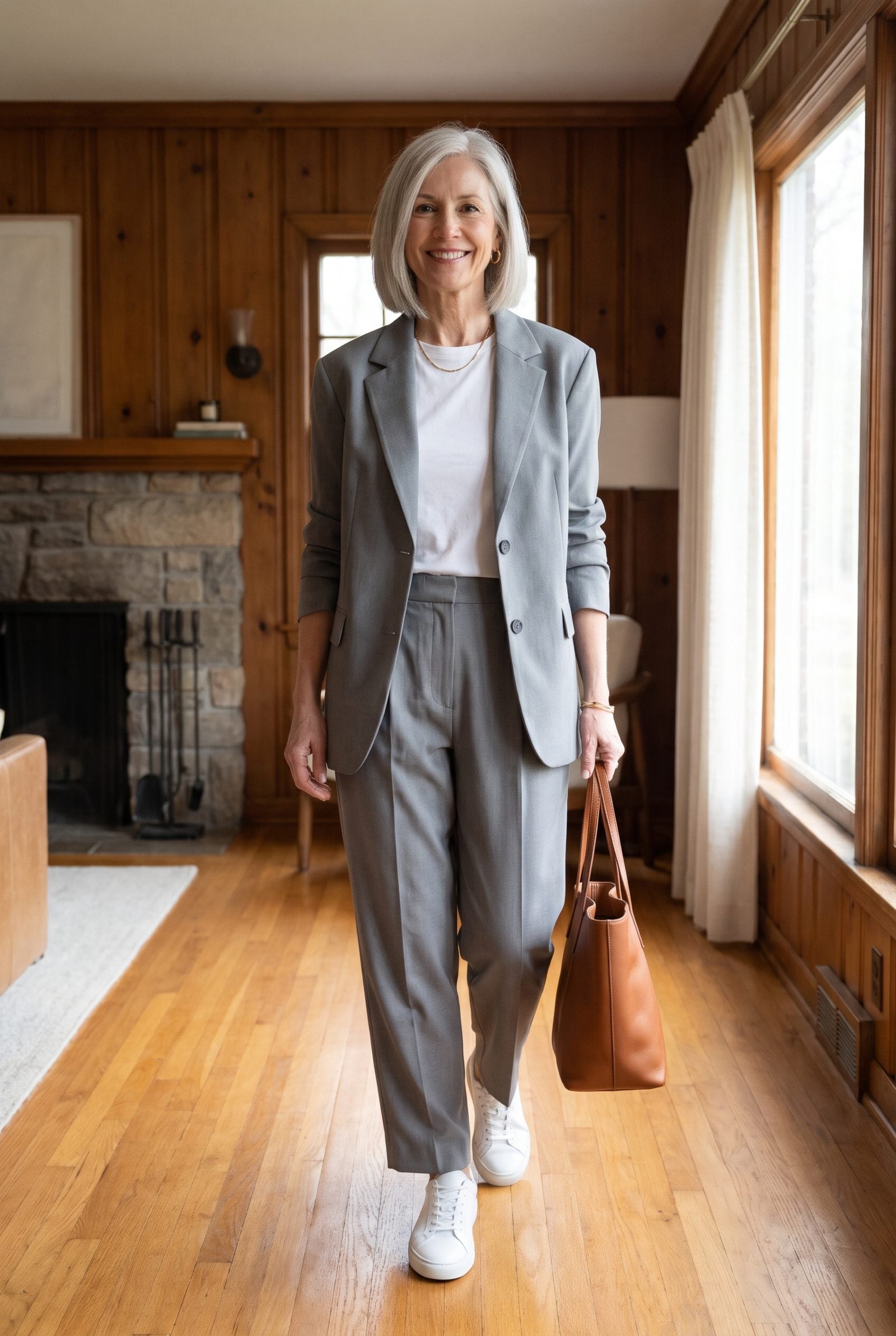
The sneaker is the whole statement. Put a heel here and it’s a conventional suit; put a clean white low-top here instead and it becomes a deliberate argument about how work is supposed to feel now.
A relaxed, unstructured cut was the only way this could land. Soft shoulders and an easy trouser matched the casual footing of the shoe, and the cognac tote slips in the only warm note against all that grey and white. Keep the trouser cropped above the ankle so the sneaker reads as the point, not an afterthought.
Describing why the pairing works, a stylist for professional women writes “The sneakers bring casualness to the suit while the suit elevates the casualness of the sneakers.”
2020s: The Matching Knit Set With Minimal Leather Loafers
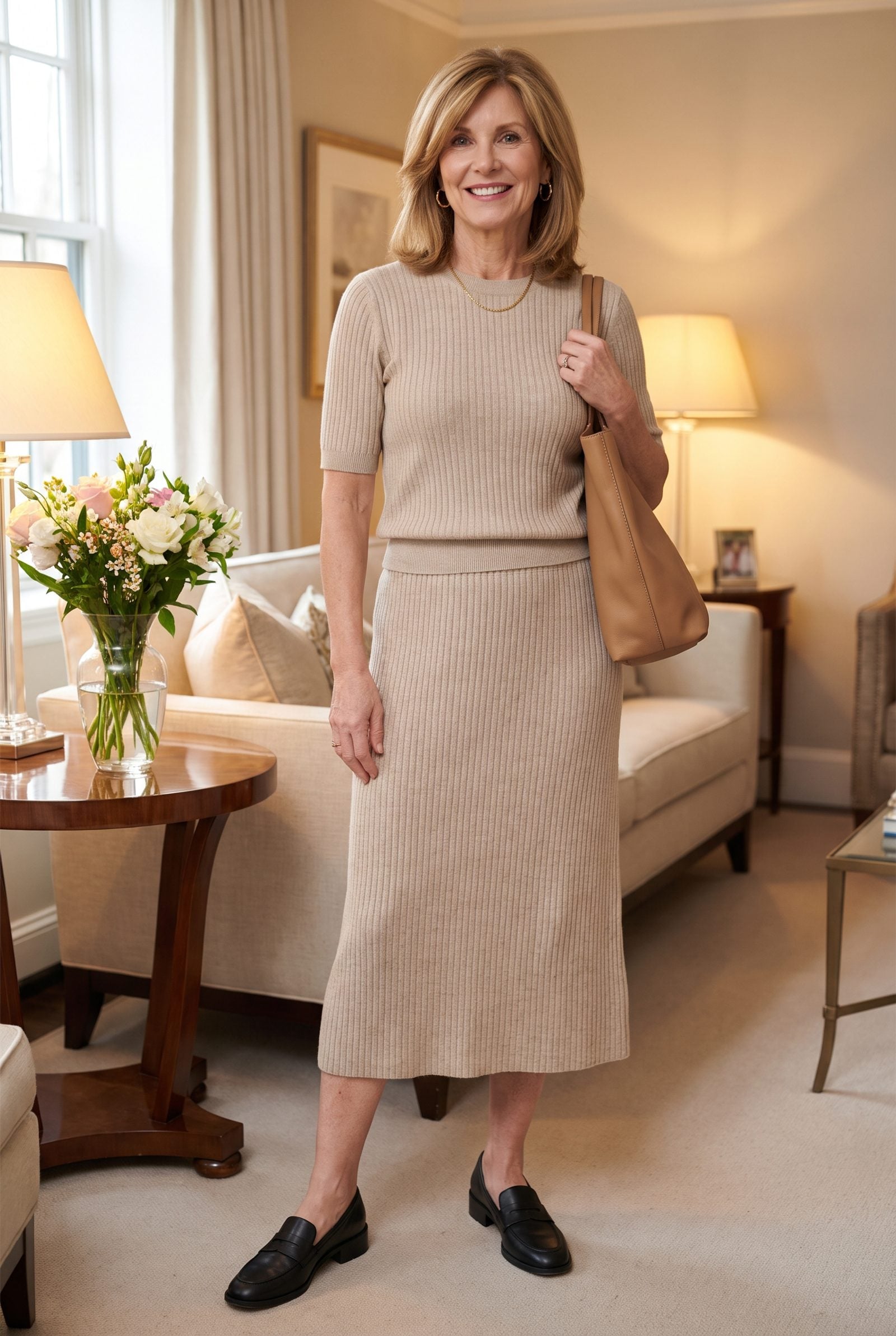
One fabric, head to toe, and that’s exactly why it reads deliberate rather than thrown together. The ribbed oatmeal knit set moves as a column, so the eye travels uninterrupted from shoulder to hem and the whole silhouette stretches long. That tonal match does the heavy lifting, turning two casual pieces into something that looks genuinely considered.
The minimal black leather loafer is the anchor. Soft knit wants a hard, clean shoe to keep it from sliding into loungewear, and the low block heel adds just enough lift to sharpen the line. There’s a quiet payoff for your posture, too, because comfort this complete tends to steady how you carry yourself through a day of back-to-back meetings.
Styling tip: let the top blouse slightly over the waistband instead of a hard tuck, keep ankles bare, and carry a structured tan leather tote so one firm shape balances all that softness.
2020s: The Belted Utility Jumpsuit With Sleek Mules
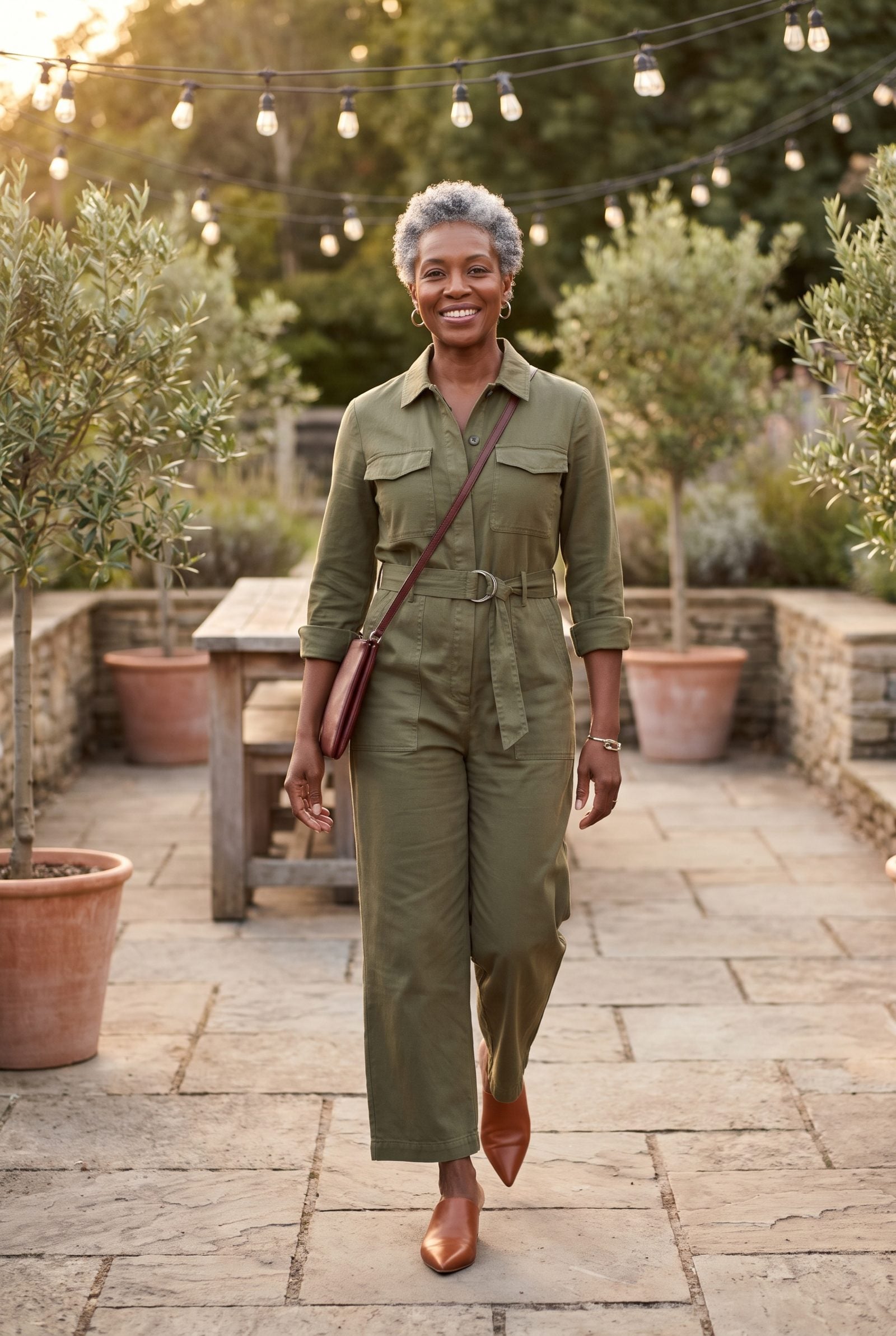
The belt is the whole trick. An unbelted utility jumpsuit looks like something you borrowed; cinch that self-fabric tie and suddenly there’s a waist, a shape, an hourglass pulled out of a boxy cut. One decision reorganizes the entire proportion.
Olive twill brings rugged texture, and the sleek cognac mule answers with something smooth and a little sharp. That rough-meets-refined push is what keeps the look from tipping into workwear costume, and the pointed toe lengthens the leg right where the cropped ankle might otherwise cut it short.
Styling tip: roll the sleeves to mid-forearm, skip socks with the mules, and keep jewelry minimal so the hardware on the jumpsuit stays the detail.
2020s: The Sweater Vest Layered Over an Oversized Button-Down
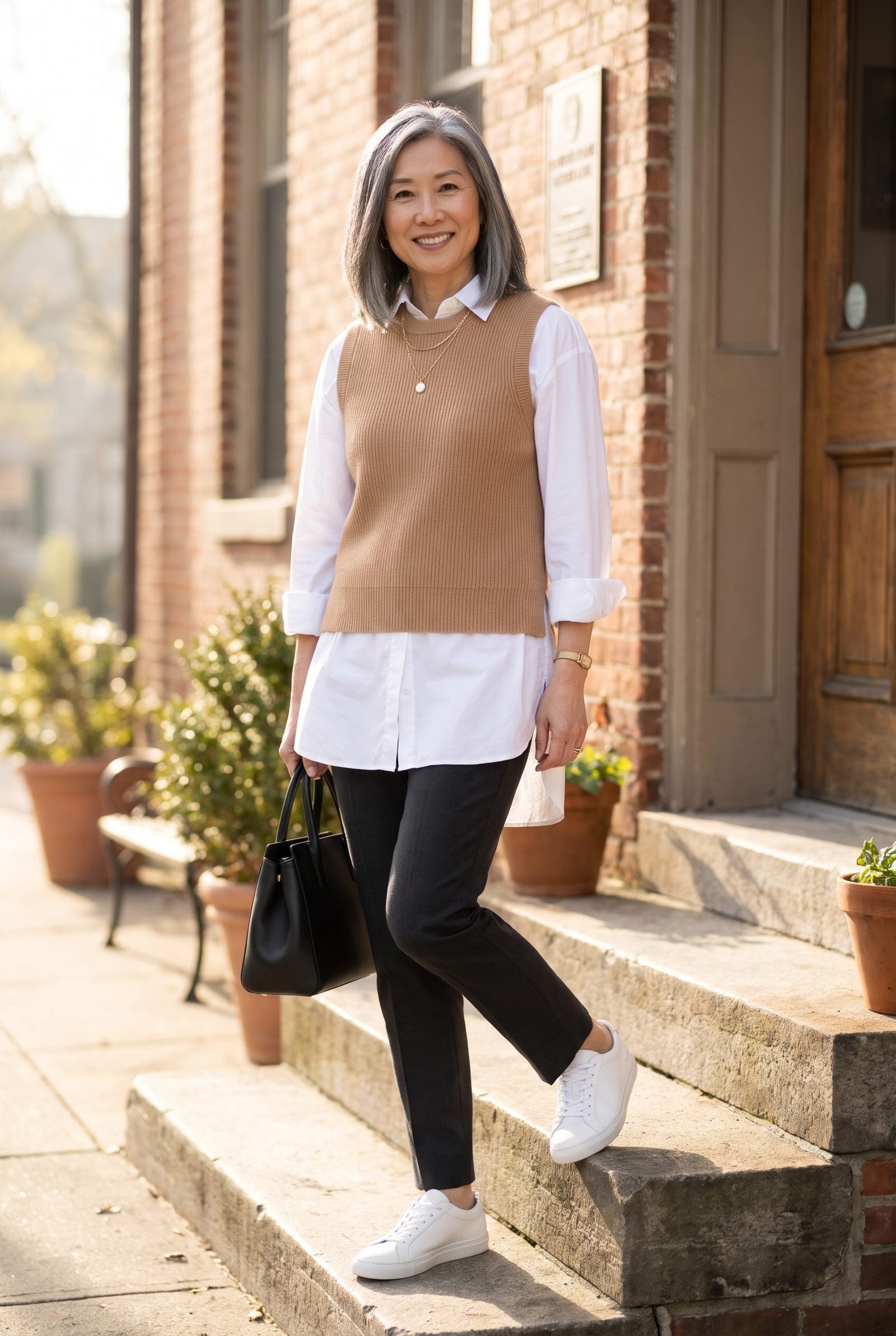
Layering carries this one, and the magic lives in the sleeves. An oversized white button-down under a camel sweater vest means crisp cotton sleeves and a long shirttail extend past the knit, building texture and movement where a single top would just sit flat.
The vest frames the shoulders and torso while the loose shirt keeps the whole thing from feeling buttoned-up. That’s a casual-formal tension that makes both pieces more interesting than either one solo. And camel over white? Soft, warm, photographs beautifully, flatters nearly everyone.
Styling tip: fold the shirt cuffs back once so they sit right at the wrists, leave the shirttail out over slim charcoal trousers, and let a pair of white leather sneakers ground a day that runs from desk to street.
2020s: The Video-Call Blouse With Polished Stretch Pants
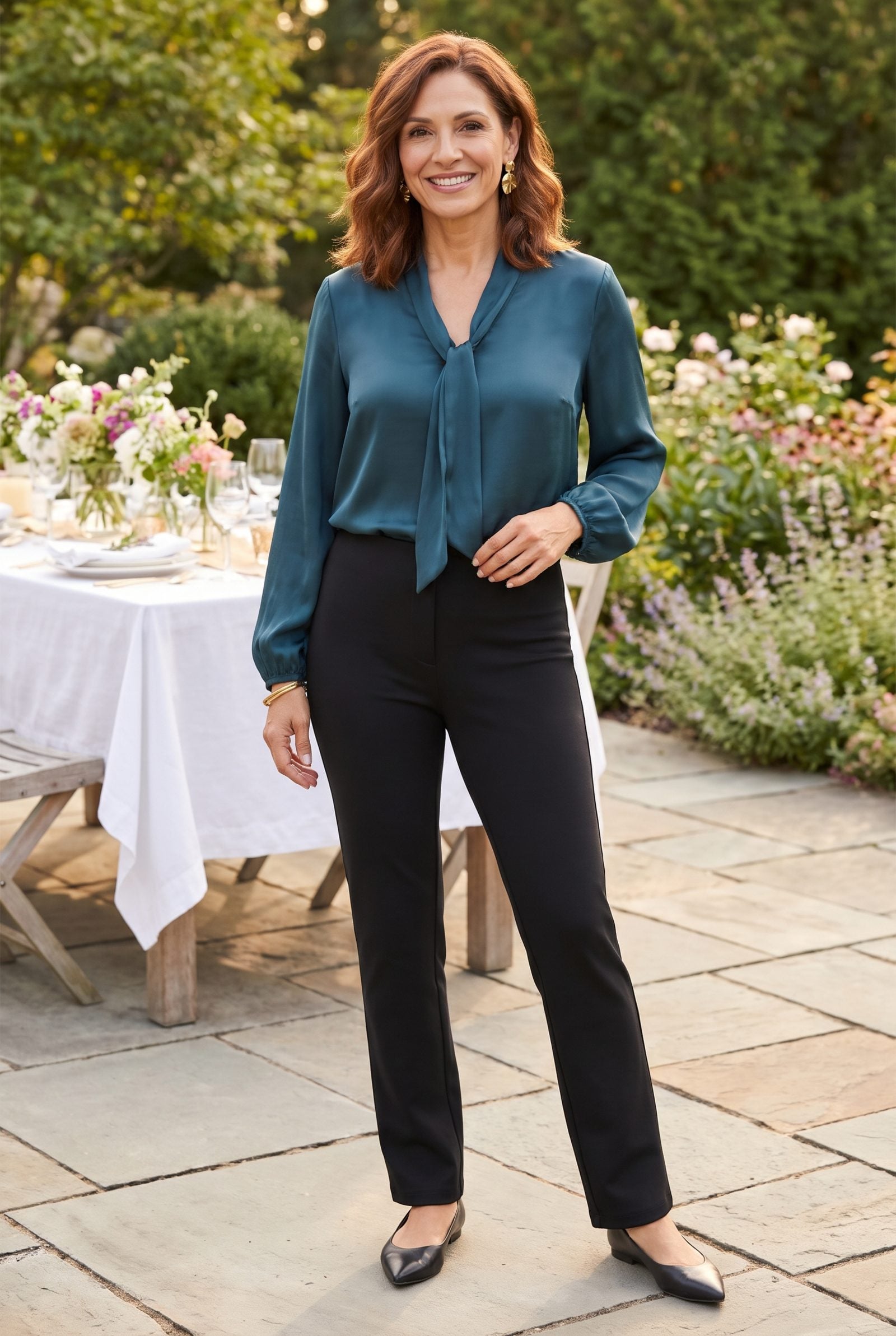
This is the outfit the pandemic invented and nobody wants to give back: camera-ready up top, genuinely comfortable below. The deep teal tie-neck blouse with blouson sleeves is built to carry a video frame, all rich color and a bit of drama at the shoulders, with a neckline that reads polished on screen.
Below the frame, the black ponte stretch pants do the quiet work. High-waisted, straight-legged, they look like real trousers and move like nothing at all. That’s the comfort-confidence sweet spot the whole decade has been chasing.
Styling tip: a soft half-tuck keeps the blouse from looking stiff, point the flats to stretch the leg under the straight pant, and let the blouse’s color stand as the one bold note.