

In the vocabulary of power dressing, a shoulder pad was a punctuation mark. Around 1990, a sharply tailored blazer could turn a wool suit into an architectural proposition: broad shoulders, a defined waist, lapels with the precision of a paper fold. The silhouette carried particular resonance in professional wardrobes, even as softer tailoring and casual separates were gaining ground.
Thirty-six years later, the blazer speaks more than one language. A navy double-breasted jacket can turn up with sneakers; velvet can slip from formal eveningwear into a fluid trouser ensemble; bouclé can retain its texture without the familiar cropped box. The strong shoulder and sculpted waist have not vanished, either. Contemporary tailoring makes room for both restraint and exuberance.
The most revealing changes occur at the points where a garment meets the body: the shoulder line, the stance of the buttons, the length of the sleeve and the distance between a jacket hem and a waistband. Color and fabric alter the equation, and the pieces worn underneath can transform the character of even a familiar cut. The power blazer hasn’t lost its power. What it has lost is the obligation to wear a matching skirt.
FYI, thanks to AI imagery software, we’re able to create very specific fashion and hairstyle examples to illustrate the points being made. In some cases, imagery is exaggerated to hammer home the point. Also, assume links that take you off the site are affiliate links such as links to Amazon. this means we may earn a commission if you buy something.
36. The Black Power Blazer Trades Its Hard Edges for Length
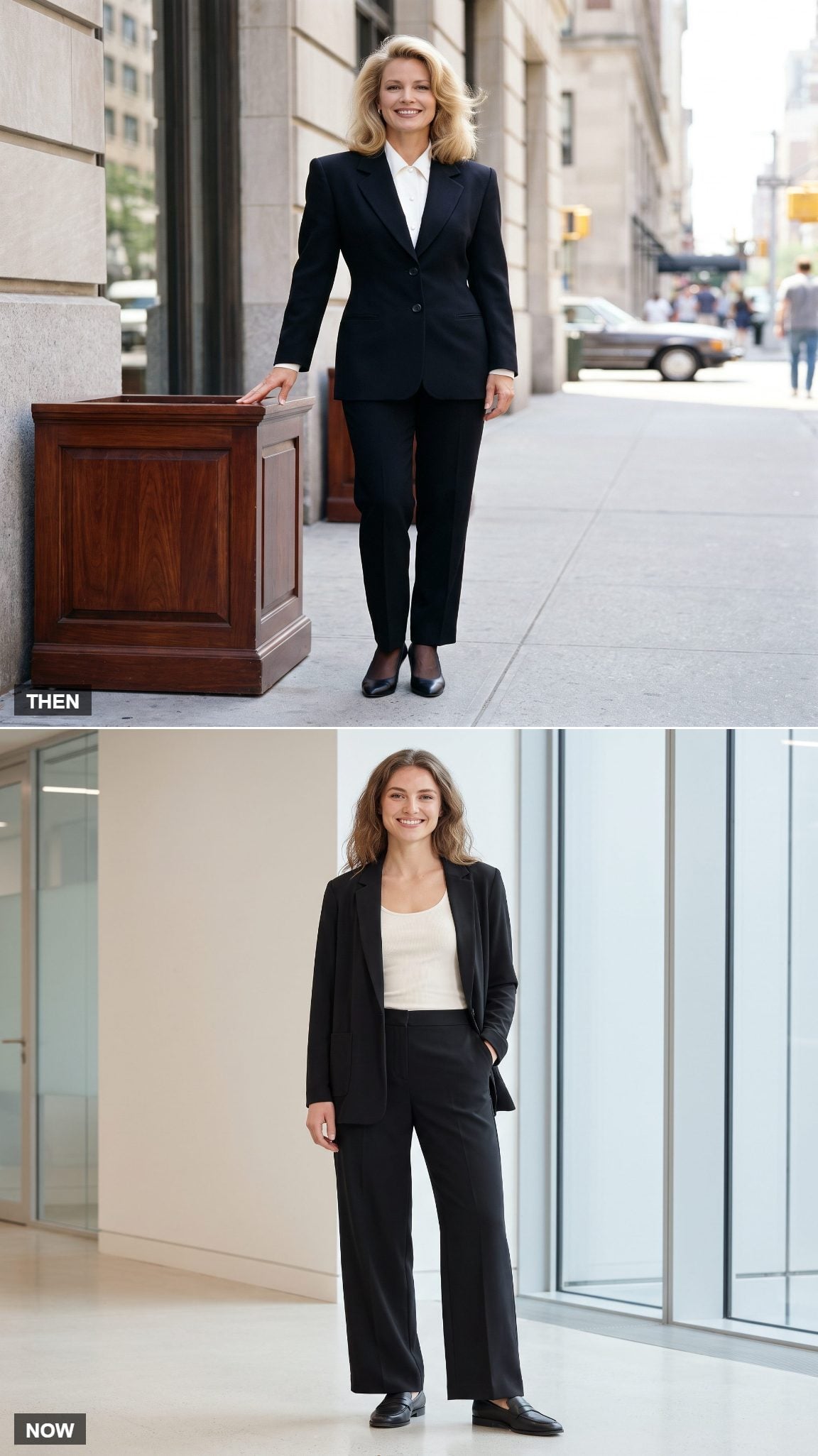
Broad shoulders and a strongly shaped waist give the 1990-inspired black blazer a distinctive hourglass. The newer silhouette shifts the emphasis from the breadth of the shoulder to the length of the jacket, allowing black tailoring to acquire a different kind of presence.
High-waisted, wide-leg black trousers carry the dark outer line almost to the ground, while the ivory tank opens a narrow, bright interval at the center. A natural-looking shoulder and a long, fluid trouser leg do not require the elimination of all internal support; the effect depends on how that support is distributed.
35. Cobalt Keeps the Color and Changes the Company
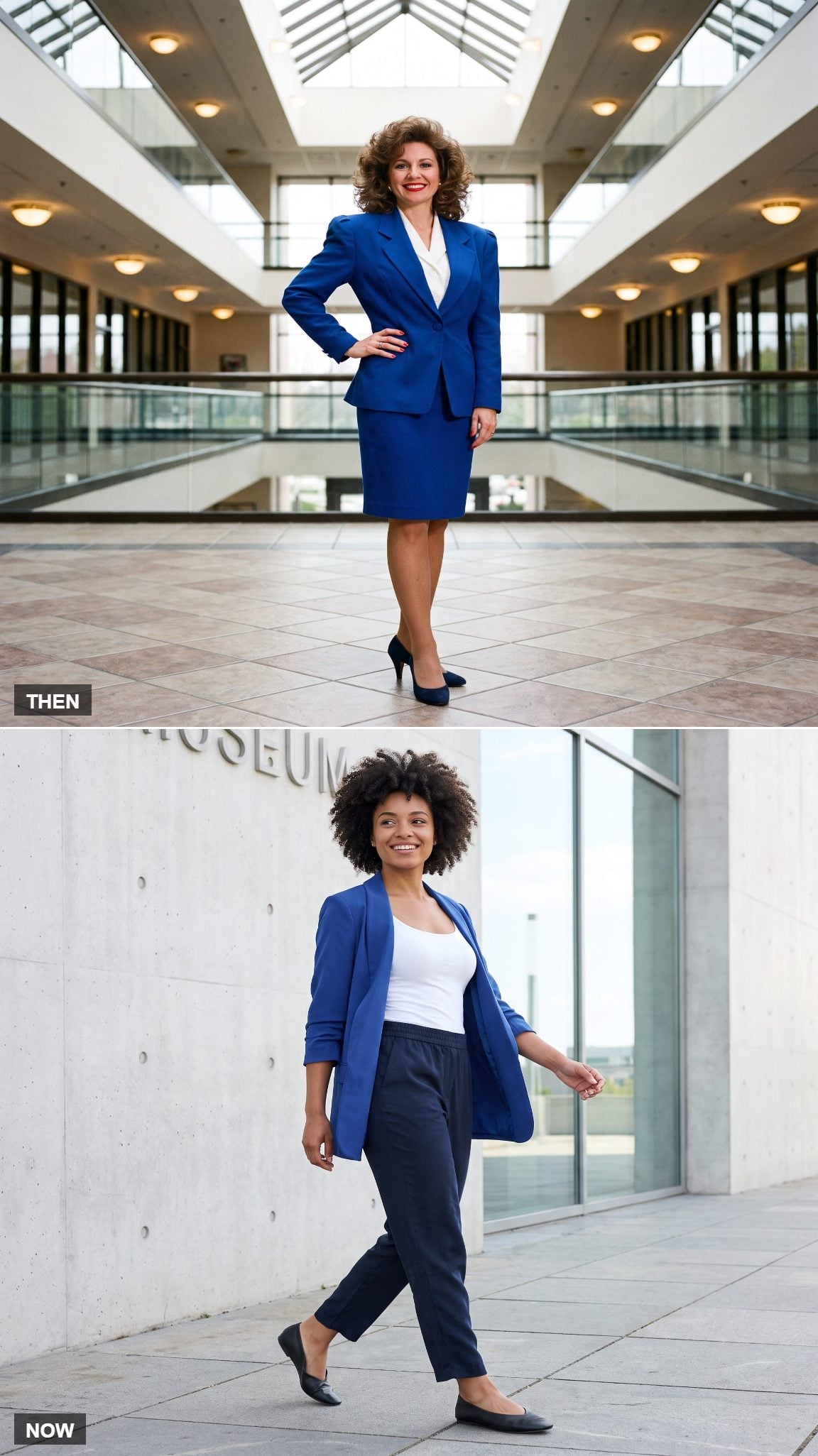
Royal blue makes the earlier skirt suit visually assertive before any attention turns to its hardware or tailoring. The later cobalt jacket retains a similarly saturated blue, changing the silhouette and the distribution of color instead of treating brightness as a relic of the past.
A white tank and dark navy trousers divide the palette into three distinct areas. Navy supports the cobalt without duplicating it, and the small white interval gives both blues a crisp edge. Strong color is no less at home in contemporary relaxed tailoring than in a sharply cut suit.
34. Bouclé Goes Long Without Losing Its Texture
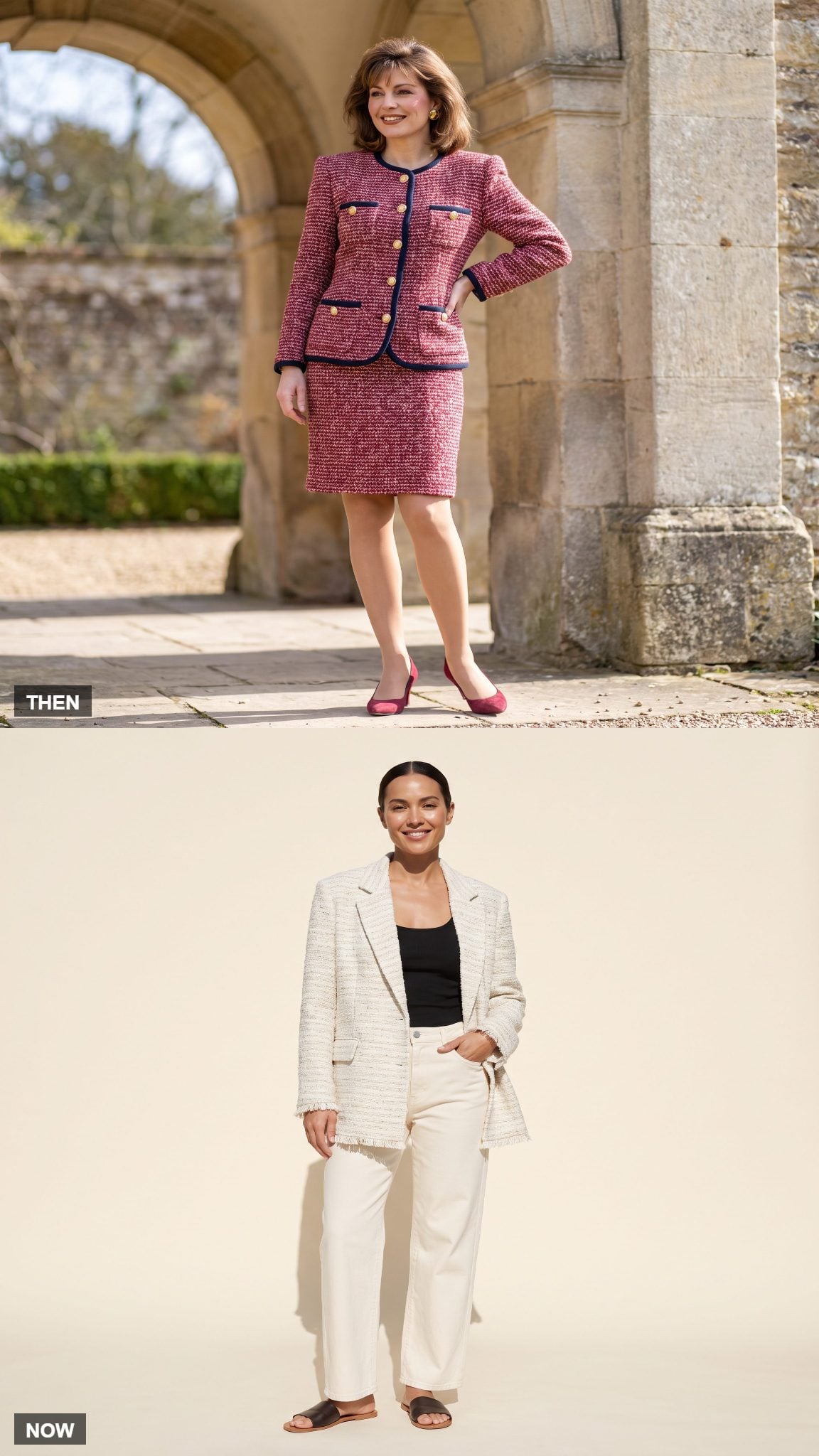
The earlier bouclé jacket uses a squared silhouette, contrasting trim and prominent buttons to frame the fabric. The contemporary cut extends the textured surface down the body and lets the nubby weave remain the main attraction.
A black tank and cream trousers provide smooth, quiet areas around the jacket. The visible fringe or irregular edge can become part of the design when it is intentionally finished, rather than evidence that the garment is unraveling. The length of the jacket changes how this familiar texture is distributed across the outfit.
33. The Cropped Blazer Keeps the High-Waist Equation
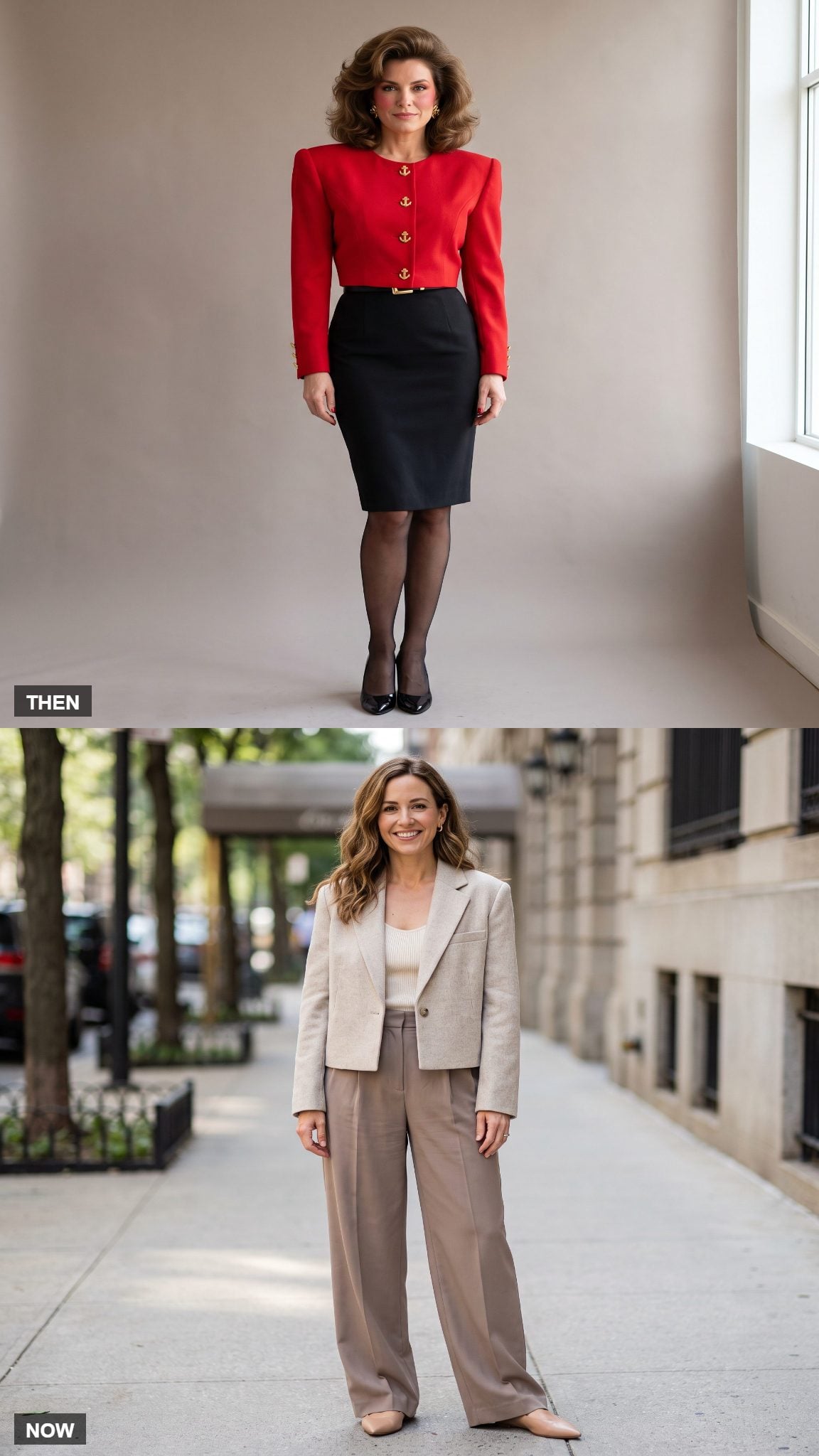
The earlier cropped jacket concentrates the visual weight around the shoulders and ends near the top of a high-rise skirt. Its contemporary counterpart keeps the short hem, using a gentler shoulder line and simpler closure to shift attention toward the waistband.
High-rise flowing trousers and pointed flats extend the line below the jacket, while a fitted tank reduces the bulk at the meeting point. A cropped blazer does not need to finish at the natural waist to work; what matters is its relationship to the rise of the garment underneath.
What Our Readers Say
- Asked whether they wear a jacket with every outfit, ThreadCurve readers split almost evenly, 52% yes and 48% rarely, a genuine coin toss.
From ThreadCurve reader polls and votes.
32. Evening Velvet Finds a More Fluid Silhouette
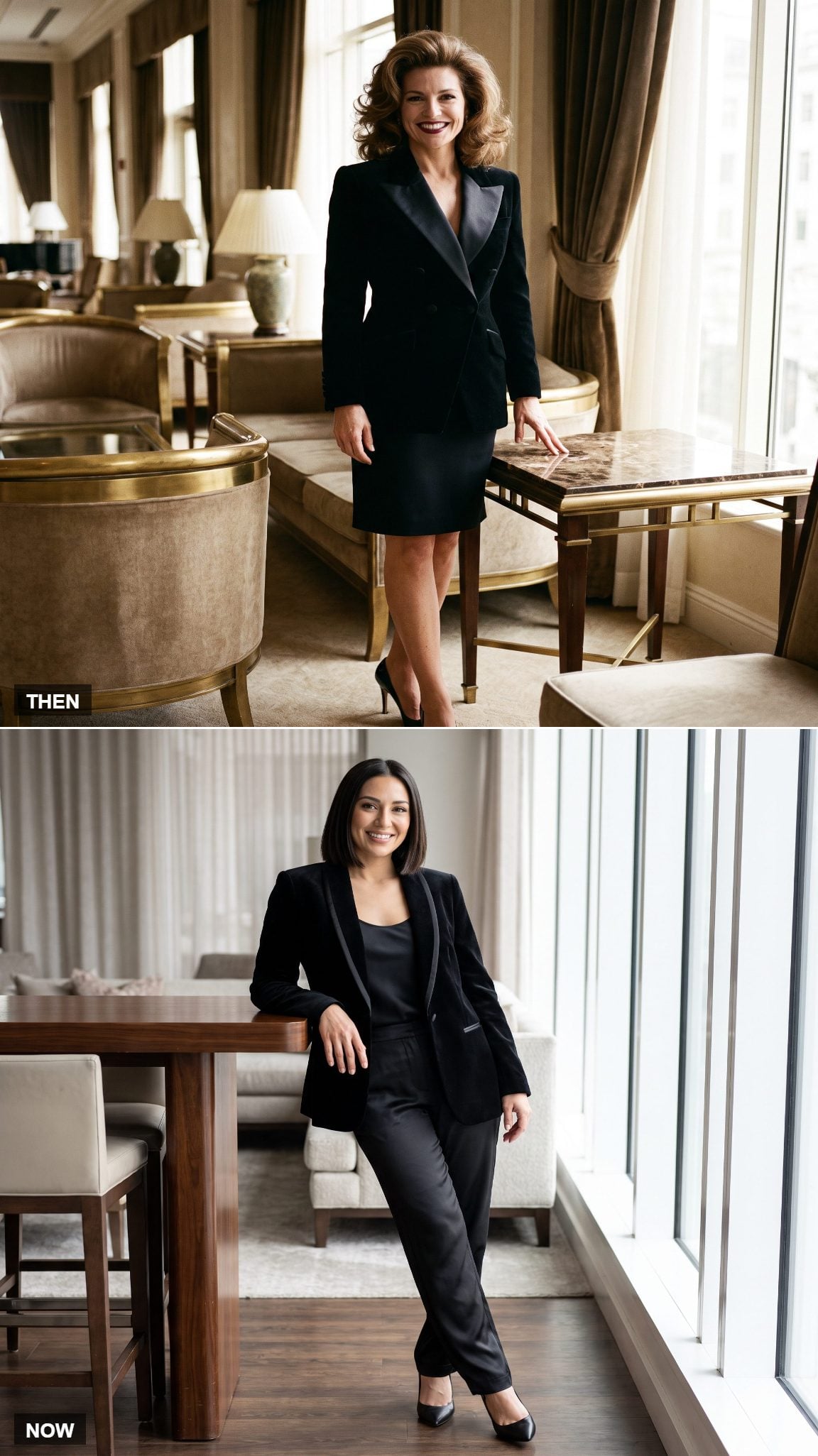
The earlier velvet jacket combines the rich surface of the pile with a pronounced shoulder line. The longer contemporary cut gives the fabric greater visual continuity, allowing the changing reflections across the velvet to supply much of the decoration.
Satin trousers introduce a different kind of shine: a smooth reflective surface against the directional luster of velvet. The low heels continue the fluid line without requiring a formal pump. Together, the fabrics give evening tailoring its distinction without making the jacket dependent on a rigid silhouette.
31. Glen Plaid Returns to Its Menswear Roots With Denim
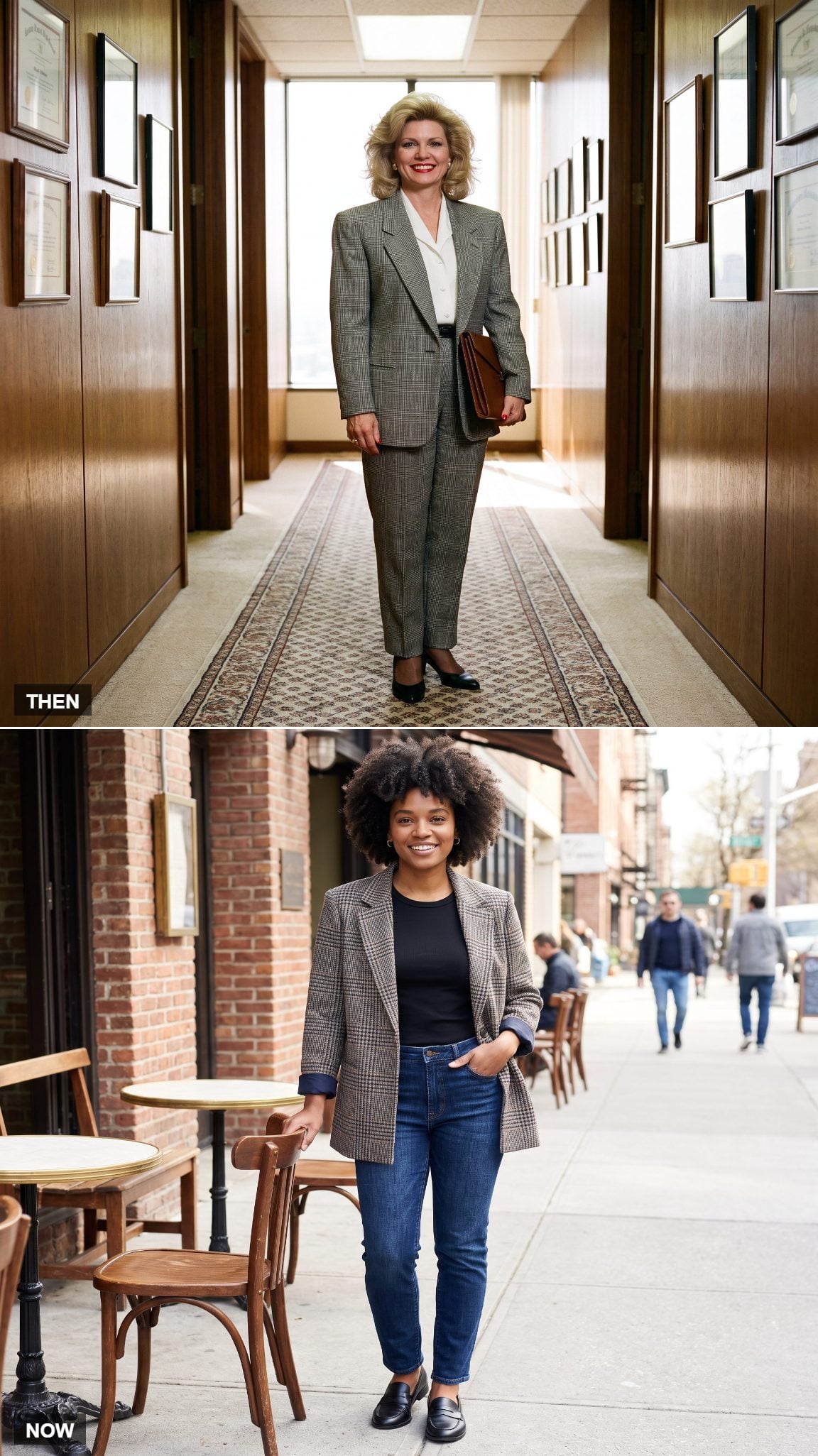
Glen plaid has a longstanding association with tailored menswear and has crossed freely into women’s wardrobes. The earlier coordinated suit emphasizes a shaped jacket, while the boyfriend interpretation gives the small-scale check more room around the shoulders and torso.
A fitted black tee and dark denim put the traditional pattern in a less formal setting. The quiet base leaves the different scales of check within the cloth visible. Unlike a fully matched suit, this combination treats the plaid jacket as an independent patterned layer.
30. A Fabric Tie Replaces the Statement Buckle
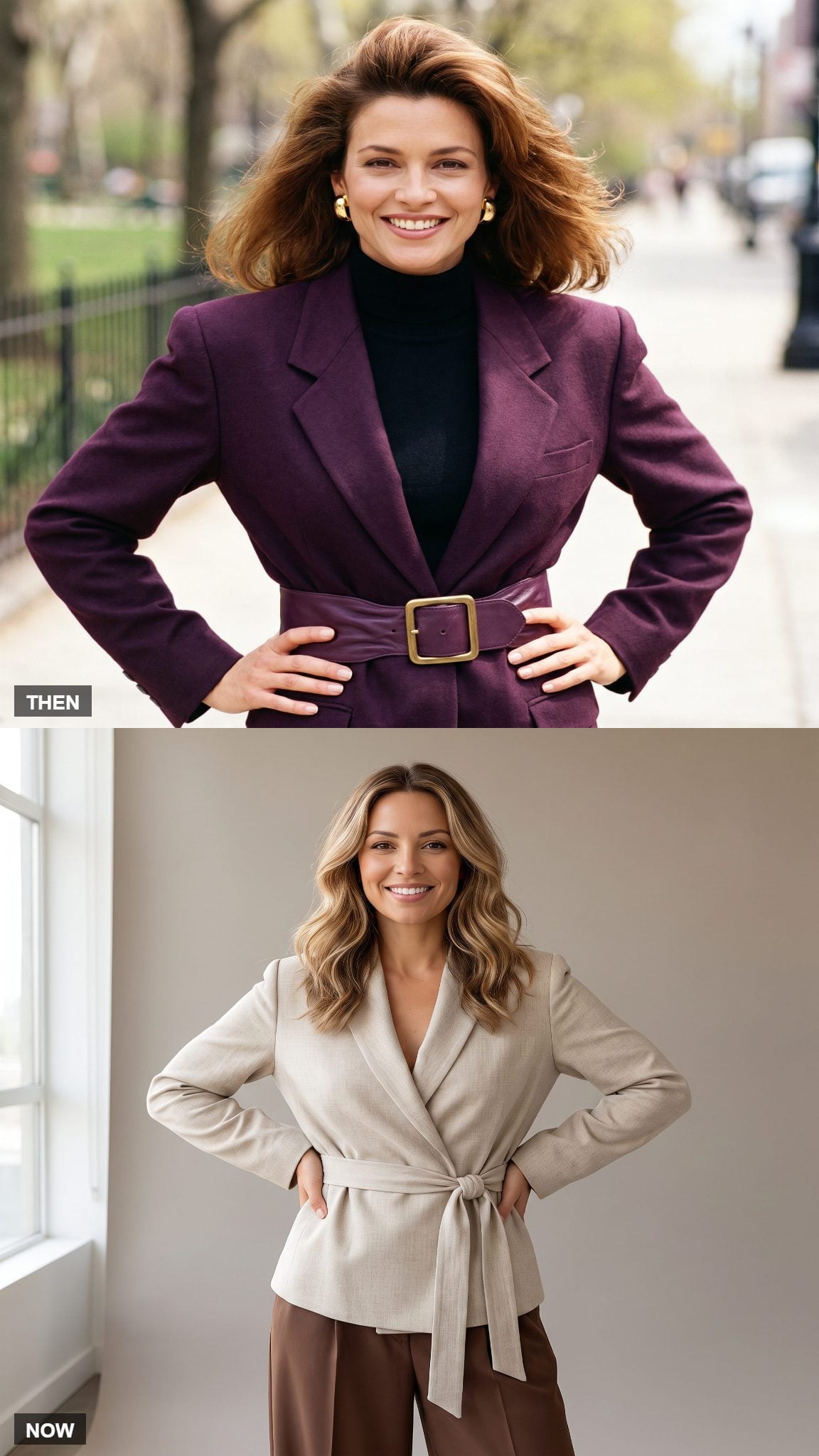
A wide contrasting belt draws a pronounced horizontal line around the earlier aubergine blazer, emphasizing the transition from broad shoulders to the waist. The later oatmeal wrap jacket shifts that line into the same fabric and color as the body of the garment.
A loose self-fabric knot creates gentle folds above chocolate trousers, rather than introducing a conspicuous band of another material. A wrap closure offers a different way to define the waist from fitted seams. The placement of the tie and the amount of overlap affect both the shape and the comfort of the jacket.
29. Powder Blue Gains Length and Lighter Layers
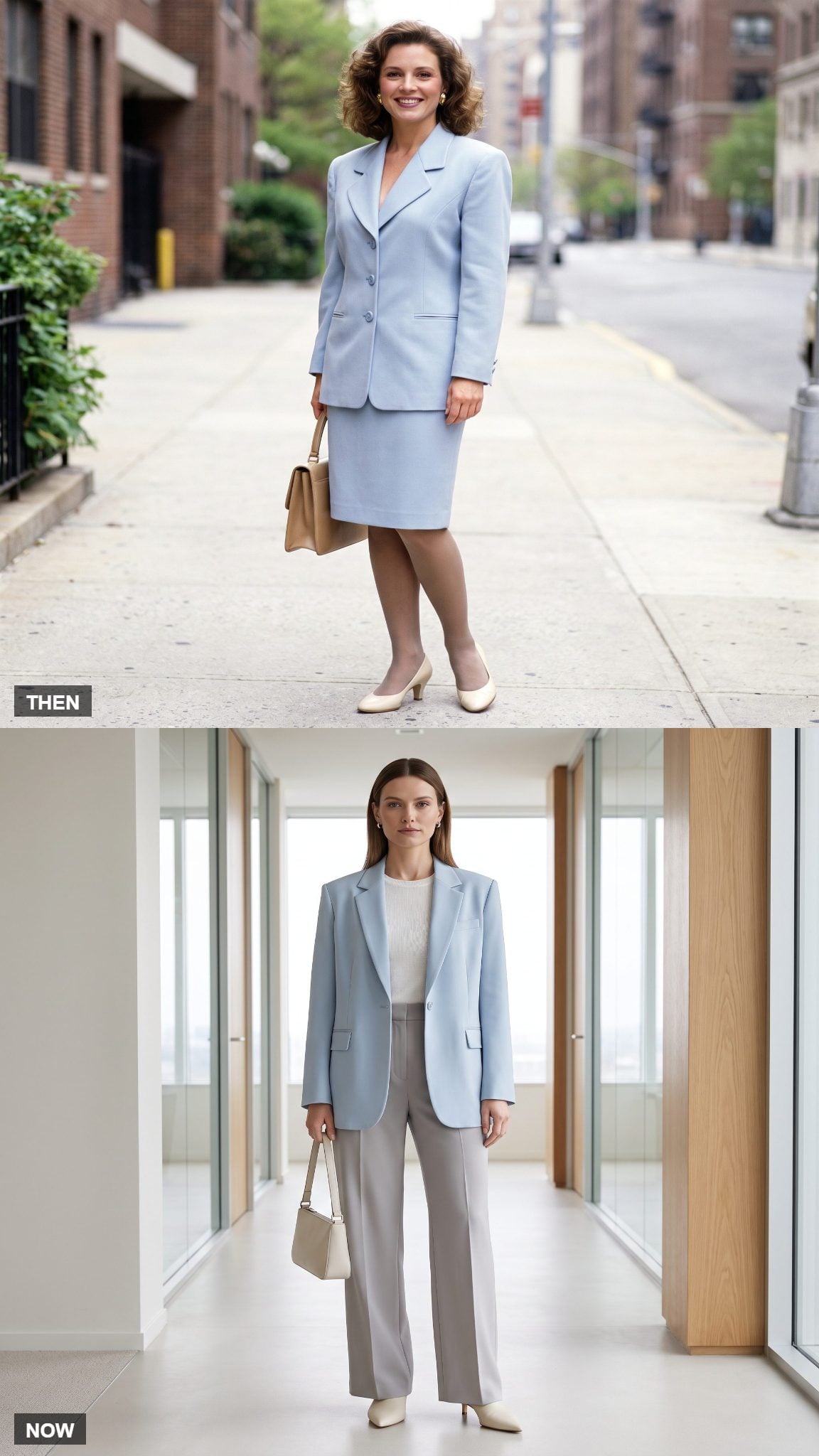
Covered buttons and padded shoulders give the earlier pastel-blue jacket a distinctly defined outline. The newer powder-blue interpretation takes a different route through longer proportions and more fluid sleeves, putting greater emphasis on the expanse of pale fabric.
Dove-gray wide-leg trousers and a slim structured bag complement the cool blue without demanding a perfect color match. The bag introduces one precise shape within an otherwise flowing silhouette. Warm-toned accessories could offer a contrasting approach; the quiet cool palette is the particular choice here.
28. Black Double-Breasted Tailoring Turns Down the Hardware
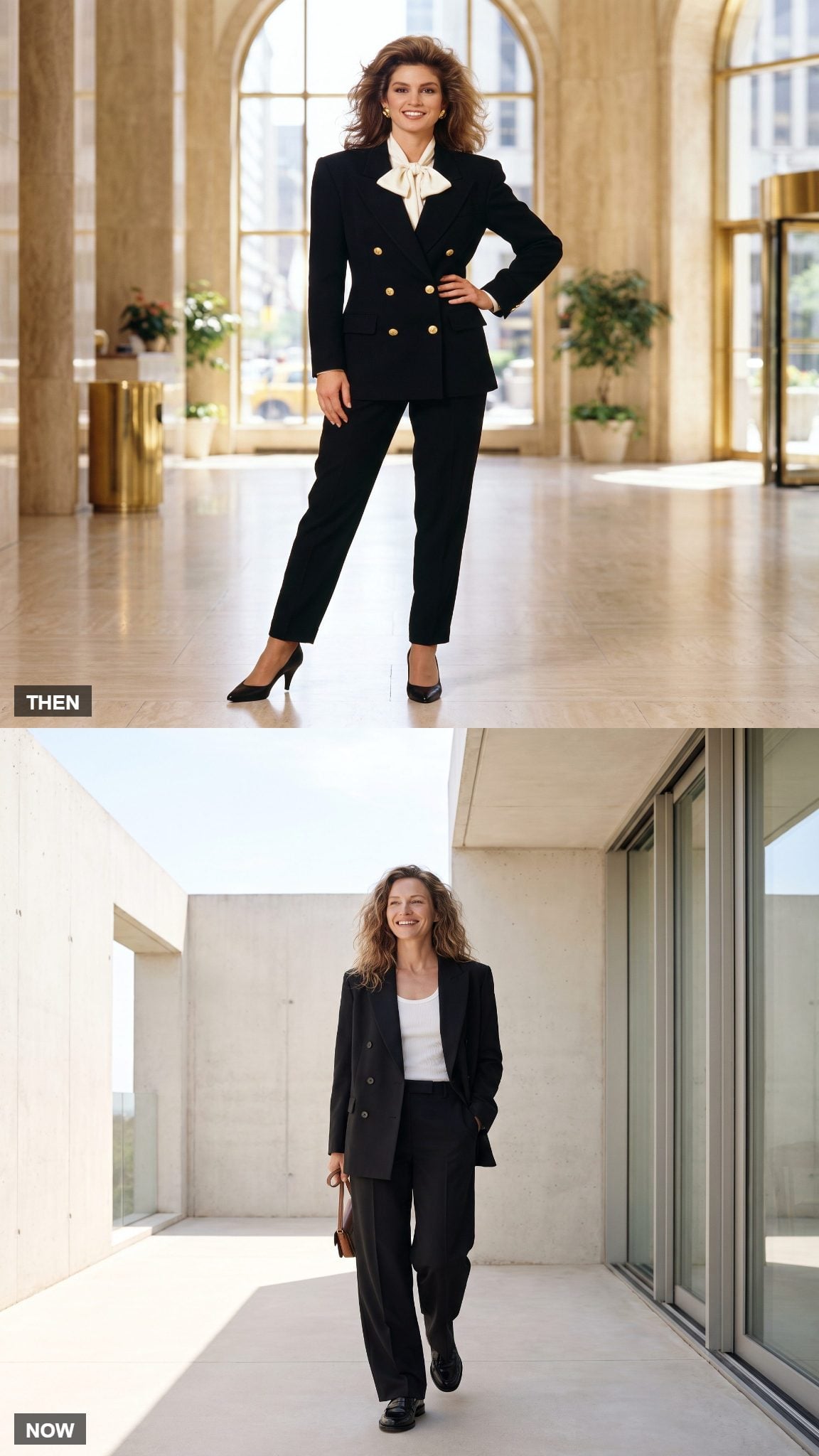
Gold buttons mark the overlap of the earlier double-breasted black jacket, adding a repeated pattern of highlights to the silhouette. In the contemporary version, matte buttons make the crossover less conspicuous and the gentler shoulder line changes its relationship to the torso.
A white tank and easy black trousers establish a lighter center against the dark outer frame, while polished loafers keep the styling close to traditional tailoring. The distinction from a single-breasted jacket remains important: the double-breasted front carries more overlap and a different distribution of visual weight.
27. Linen Lets Its Natural Texture Show
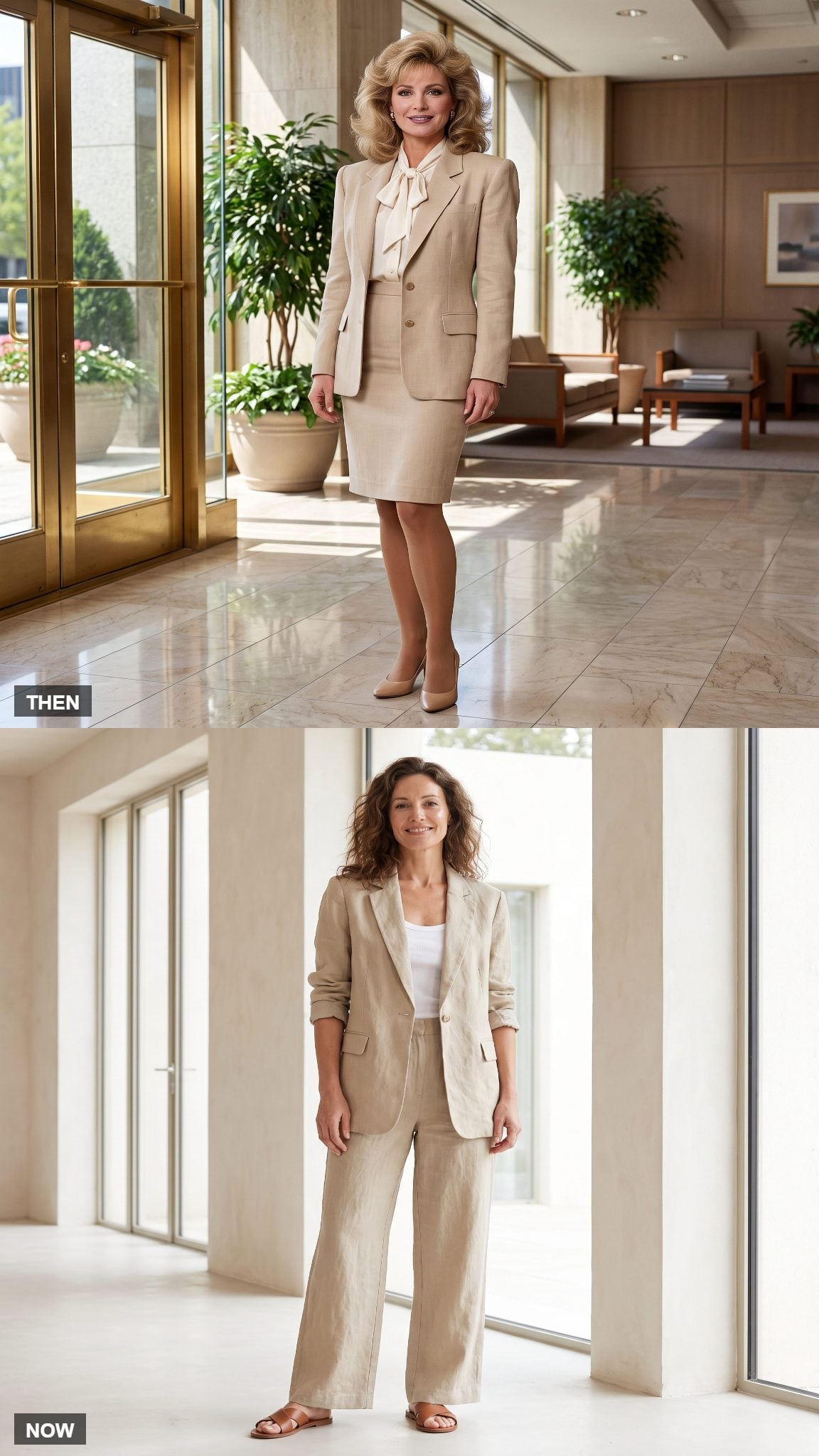
The earlier sand-colored linen jacket combines a sharply defined shoulder and waist with the irregular texture of the cloth. The contemporary interpretation makes those natural creases part of the silhouette, rather than relying on a closely fitted shape to establish its character.
Rolled cuffs, a white tank, flowing trousers and sandals put the linen in a warm-weather context. Linen has long been used for both formal and relaxed clothing. Its appearance depends on the weave, weight and construction; the softer outline shown here is one way of making use of its natural texture.
Not everyone warms to linen: in our readers’ heart votes, outfit images featuring linen got hearts 47% of the time, vs 52% for other images in the same articles.
26. Pinstripes Leave the Matching Suit Behind
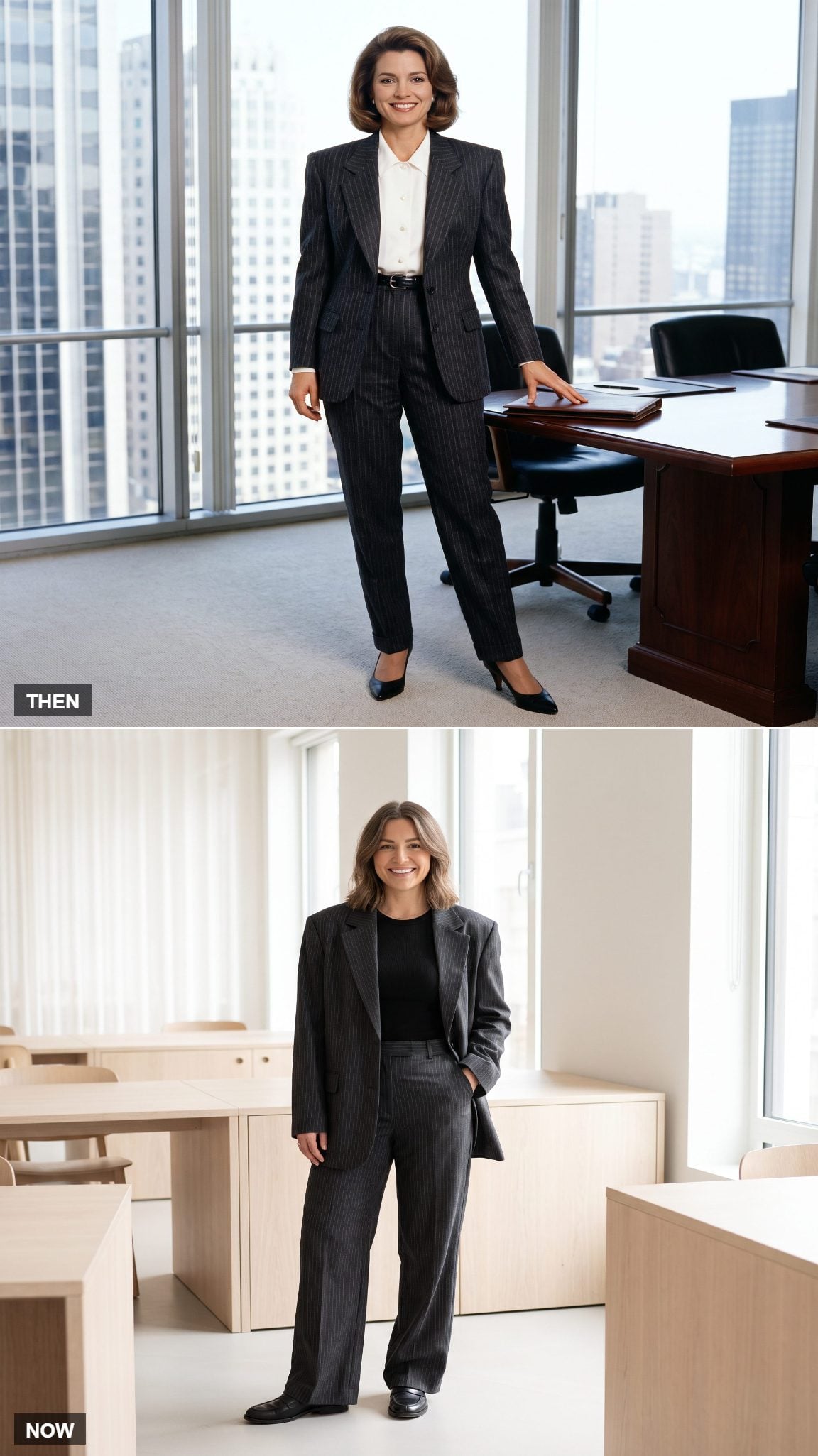
The earlier charcoal pinstripe channels a familiar menswear-derived form of corporate tailoring: a shaped jacket, prominent shoulders and a defined waist. In the looser interpretation, the stripes extend over a longer body, drawing attention to the vertical repeat rather than the outline of the torso.
A plain black crew-neck gives the pattern uninterrupted space, and wide-leg trousers carry the downward rhythm toward the loafers. The difference is not the disappearance of pinstripes from the office; it is the freedom to wear them in a less tightly coordinated ensemble. Long trouser hems should still clear the floor when walking.
25. From Brilliant Red to Brick and Chocolate
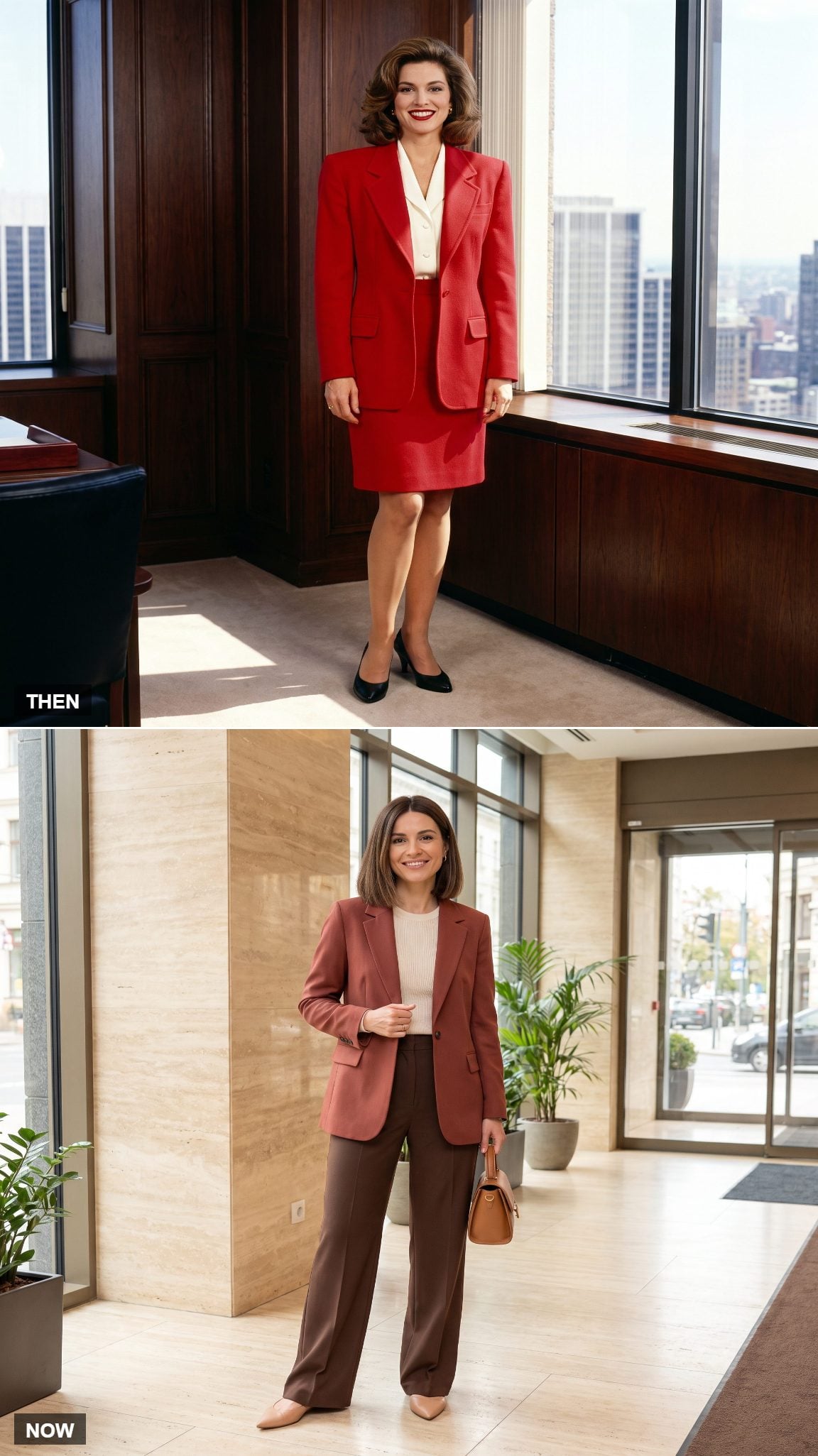
Bright red, gold buttons and a matching skirt make the earlier outfit an exercise in saturation. Its appeal is immediate: the color and the hardware are both visible from a distance. The later interpretation changes the palette as well as the cut, introducing a more earthy brick red.
The combination with chocolate wide-leg trousers brings out the warmth in both colors. A quieter surface finish gives the shape of the jacket more prominence than polished hardware would. Vivid red could work just as successfully in this relaxed silhouette; the brick-and-brown pairing is a separate design choice, not a requirement of contemporary tailoring.
24. Ivory Double-Breasted Tailoring Softens the Color Break
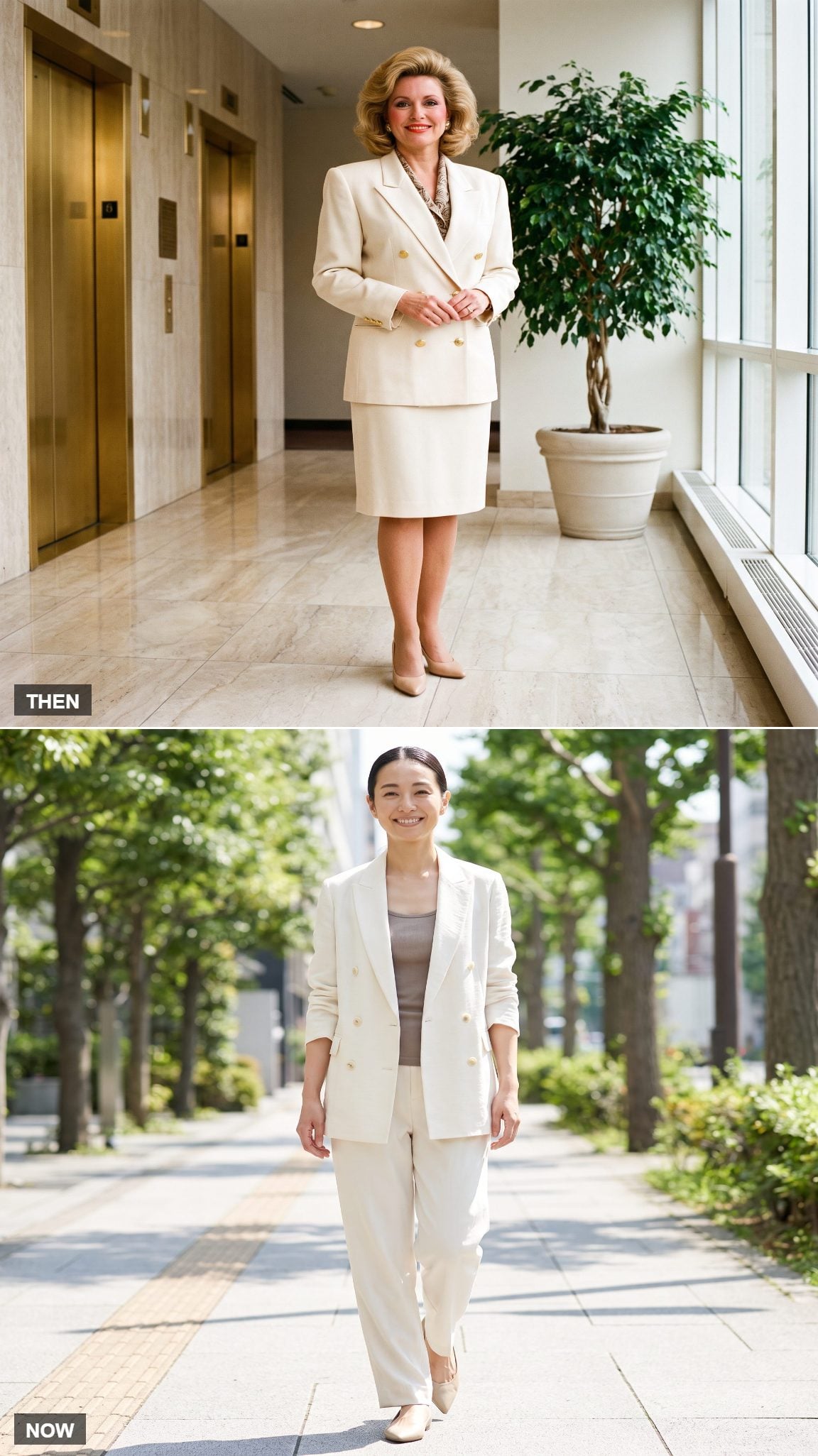
A cream double-breasted suit with prominent peak lapels makes the junction of pale fabric and dark shadows an important part of the earlier silhouette. The more fluid ivory jacket retains that overlapping front while reducing the visual emphasis on the shoulders and waist.
A taupe tank underneath introduces another warm, pale tone, so the open neckline becomes a gentle transition rather than a stark break. Ivory can look as sharp in structured tailoring as it does in draped cloth; here the interest lies in the way a subtle color difference emphasizes the softness of the lapels.
23. Olive Tailoring Exchanges Crest Buttons for Simpler Details
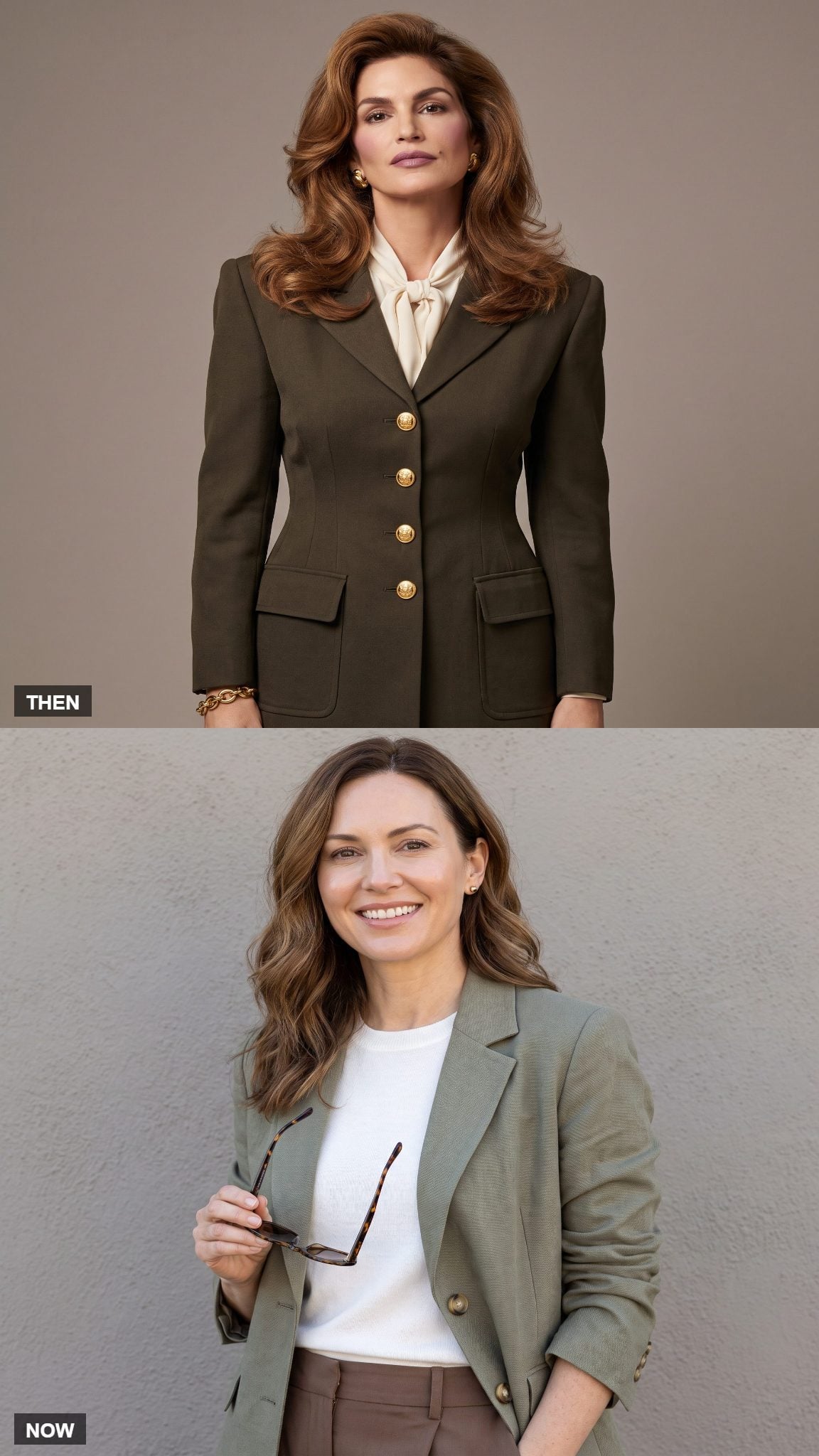
Heraldic gold buttons, flap pockets and a defined waist give the earlier dark olive jacket a decorative character with references to longstanding uniform and club-blazer traditions. The modern sage-olive version moves the emphasis toward the cloth and the shape of the pockets.
Matte buttons and clean patch pockets create a quieter front over a white knit and brown trousers. The looser outline suits those less formal pocket details. Decorative crests are not inherently dated, nor does a matte button establish its material; the meaningful change is the degree of visual ornament across the jacket.
22. The Gray Boyfriend Blazer Finds Denim
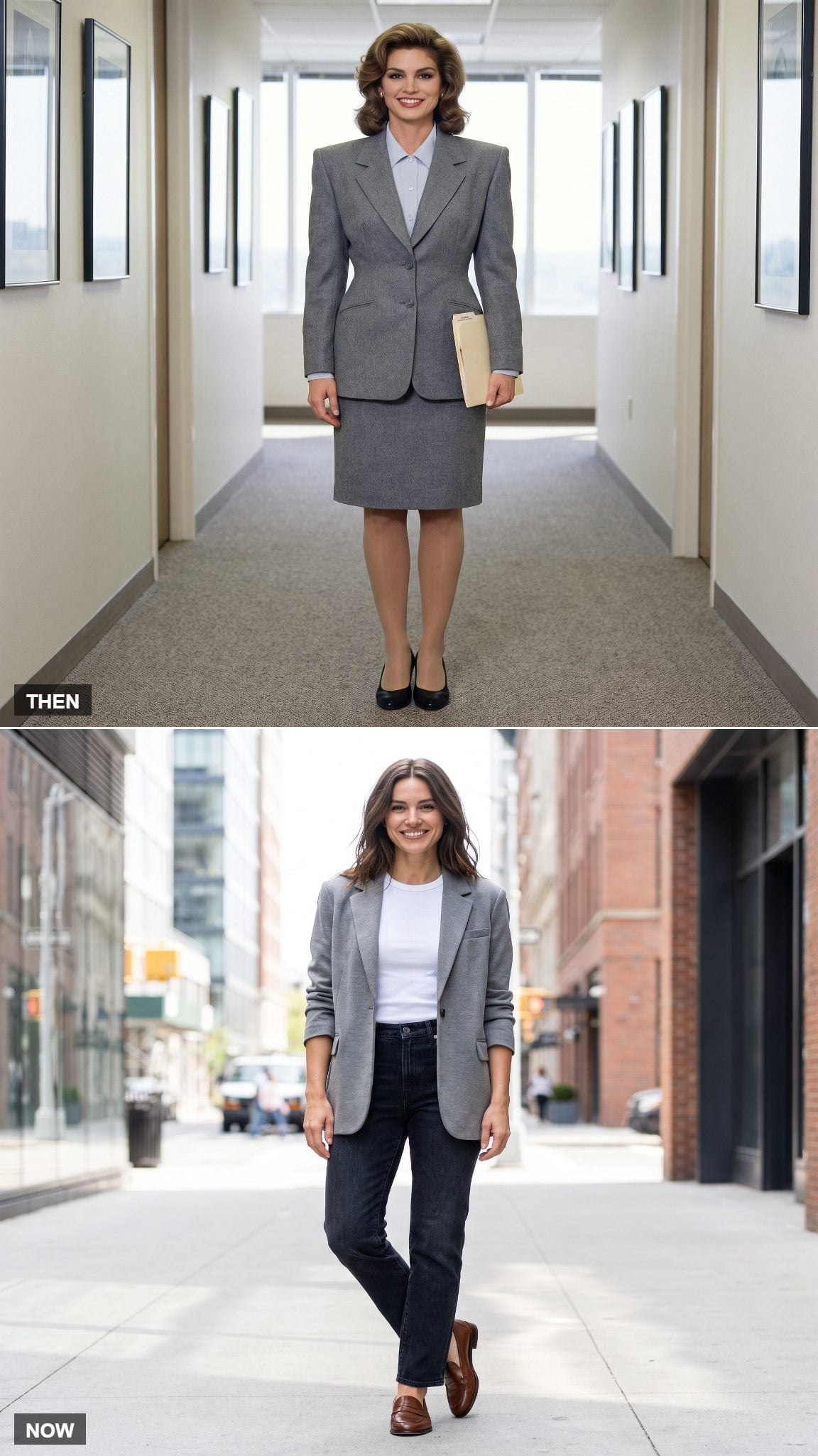
Gray tailoring was never confined to a single professional silhouette, yet the padded suit jacket is an especially recognizable reference to late-1980s and early-1990s power dressing. A longer boyfriend cut changes its relationship to the body, with a lower shoulder seam and more room through the torso.
A white tee and dark straight-leg jeans take gray wool in a casual direction. The jacket is no longer responsible for supplying the entire outfit’s shape. Rolling or pushing up the sleeves can expose the wrist if the fabric allows it, while a slim tee provides a quieter outline beneath the roomy jacket.
The blazer-and-denim pairing has fans: when we asked readers which travel-day outfit they would buy, jeans and a blazer took half the votes, ahead of a knit set.
21. The Collarless Teal Jacket Lets the Neckline Breathe
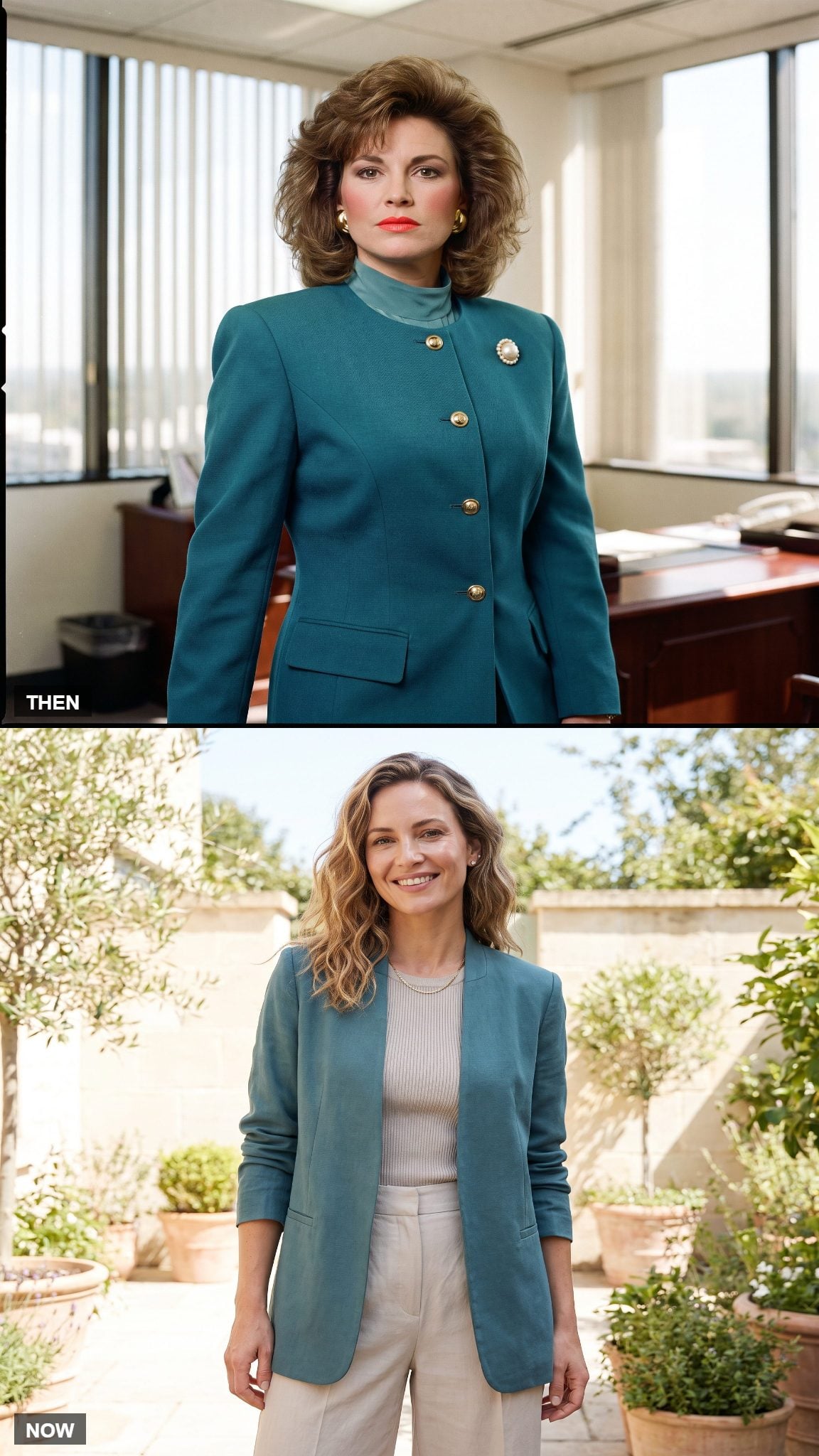
A high, collarless neckline gives the earlier teal jacket an uninterrupted surface above its row of buttons. The later interpretation retains the absence of lapels, yet introduces a softer rounded opening and a less rigid-looking shoulder.
Stone-colored trousers provide a calm backdrop for the deep teal. Without lapels to create vertical or diagonal accents, the shape of the neckline and the position of the fastening become especially important. Collarless tailoring can be formal or informal; this version gets its distinction from the rounded edge and the drape of the body.
20. Espresso Wool Finds Its Counterpart in Pale Blue
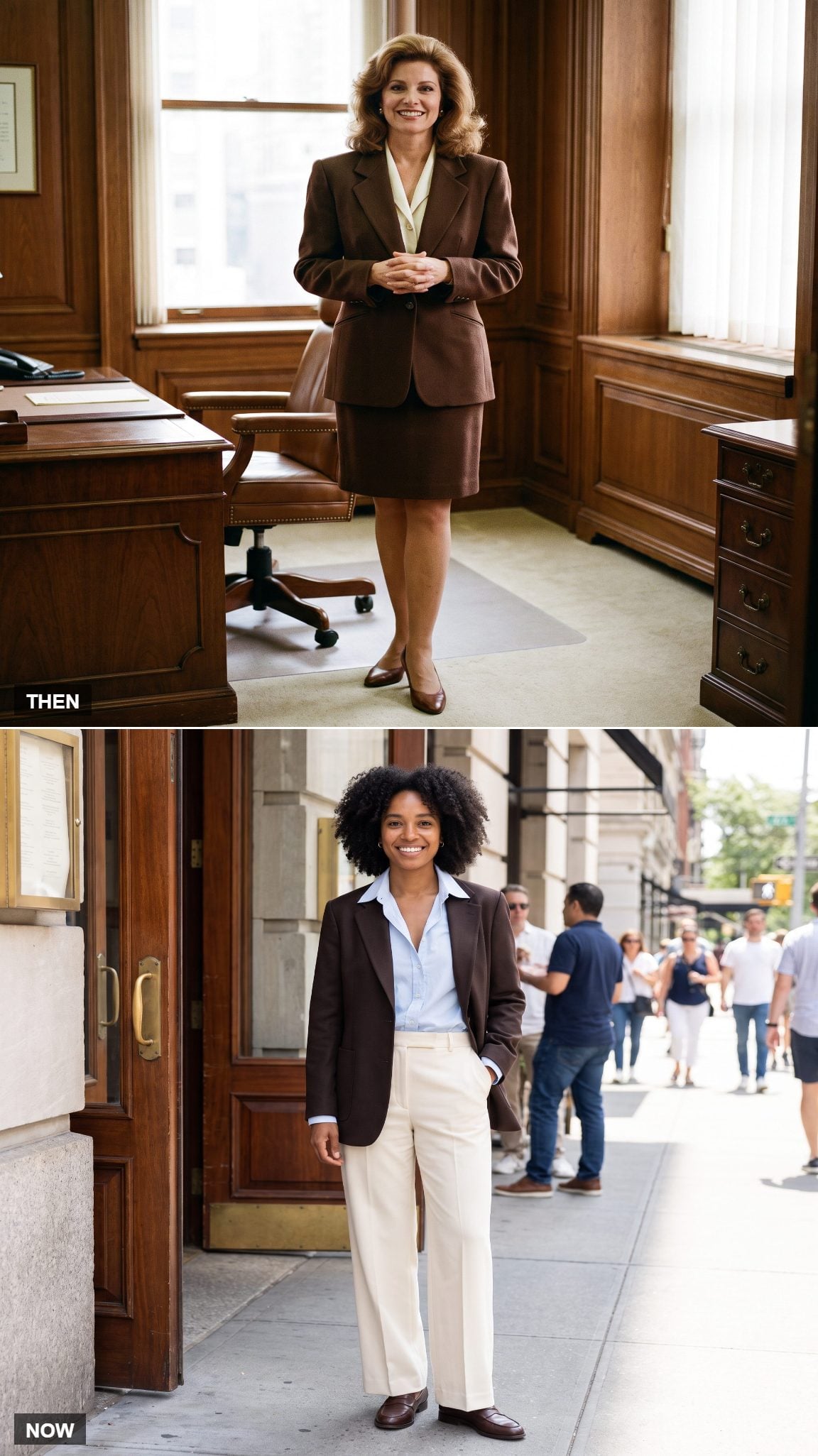
The earlier brown jacket relies on a squared shoulder and defined lapel to give its dark wool a firm outline. In the newer silhouette, the cloth appears to fall more readily from the shoulder. Fabric weight, weave and internal construction all contribute to that difference.
A pale-blue shirt with an open collar brings a cool note into the warm espresso palette. Cream wide-leg trousers extend the contrast and prevent the dark jacket from dominating the whole outfit. The interplay of brown, blue and cream is a useful alternative to matching every tailored piece in the same shade.
19. The Satin Lapel Gives Tailoring a Different Evening Role
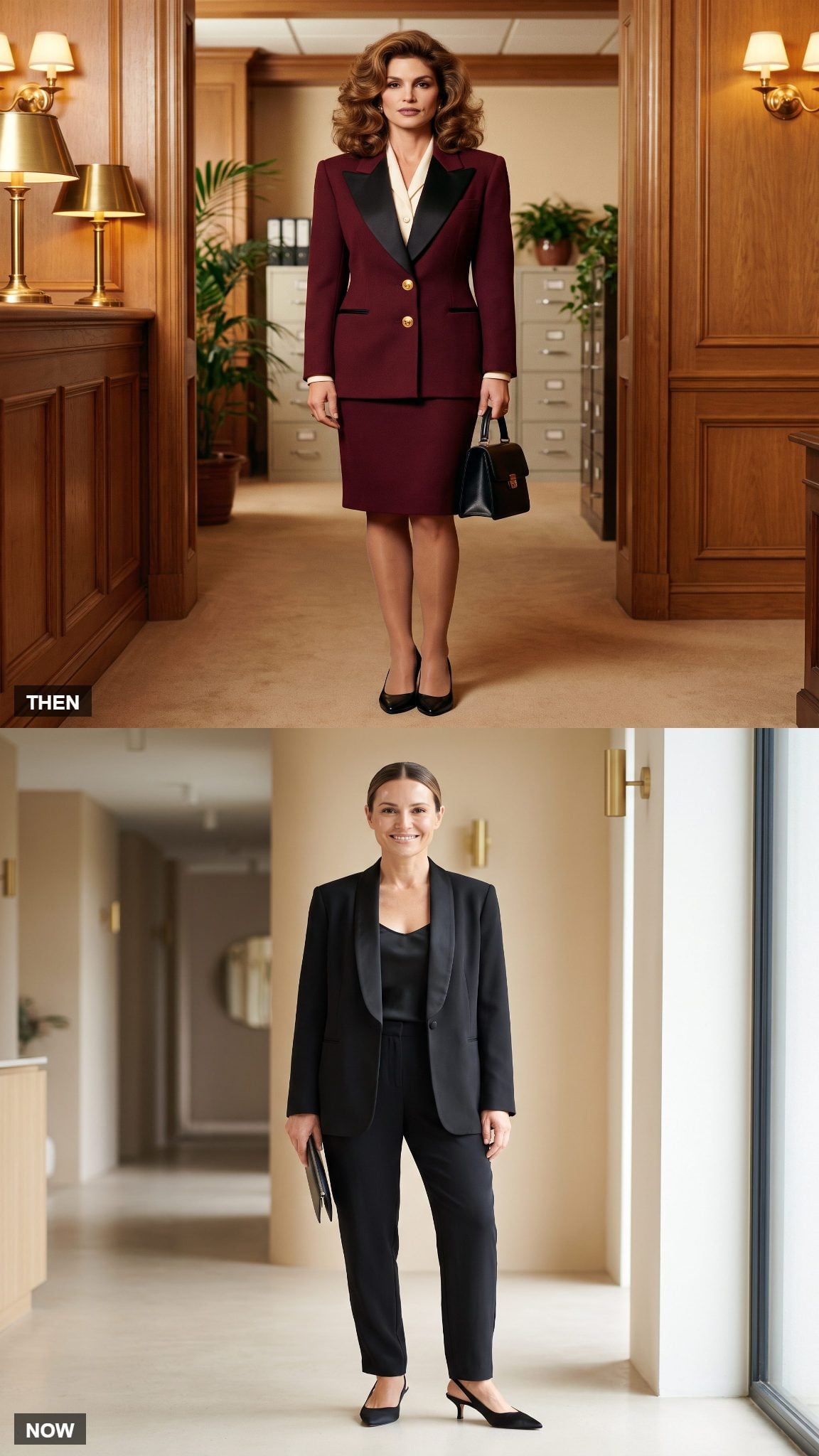
Contrasting satin lapels bring an evening reference to the earlier structured jacket, which is paired with a skirt suit. The contemporary tuxedo-inspired interpretation makes the lapel itself a softer, more continuous curve, with a single-button closure below it.
Fluid black trousers and kitten-heel slingbacks extend the evening vocabulary without repeating the corporate skirt-suit arrangement. The reflective lapel defines the open front against the darker fabric of the body. Tuxedo-inspired tailoring has a long history in women’s fashion; the change here is in the cut and the accompanying pieces.
18. Gray Plaid Tests the Possibilities of Oversized Tailoring
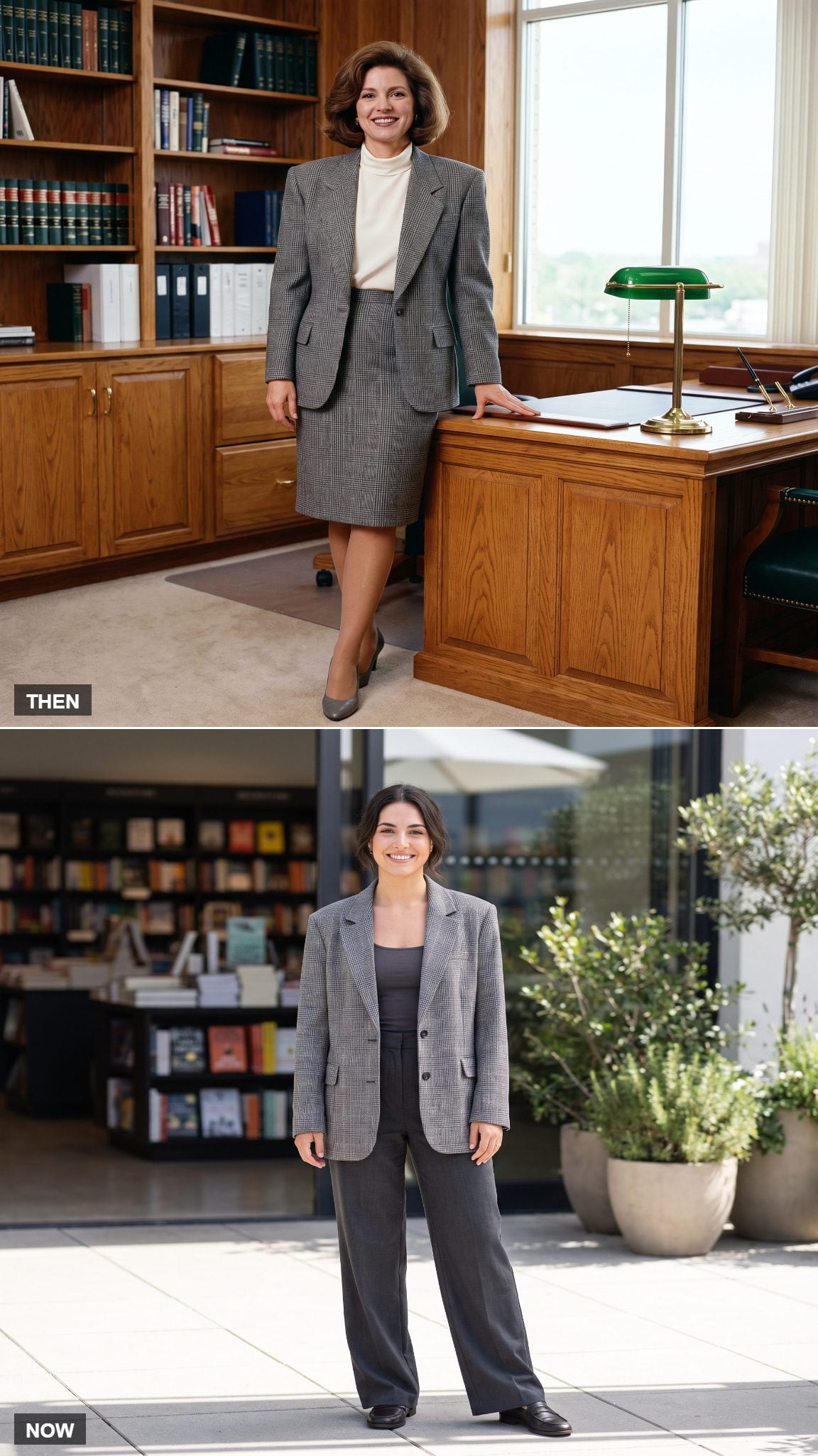
The earlier plaid blazer repeats the check in a coordinated skirt suit, with the fitted outline placing firm boundaries around the pattern. A larger jacket in the newer outfit gives the plaid a broader canvas and puts more distance between the cloth and the torso.
A fitted charcoal tank and solid wide-leg trousers let the check remain the principal motif. Roomy jackets do not invariably require narrow trousers; a restrained base layer, a deliberate hem length and enough definition in the shoulder or neckline can help relate two generous pieces.
17. Burgundy Keeps Its Depth Without the Matching Skirt
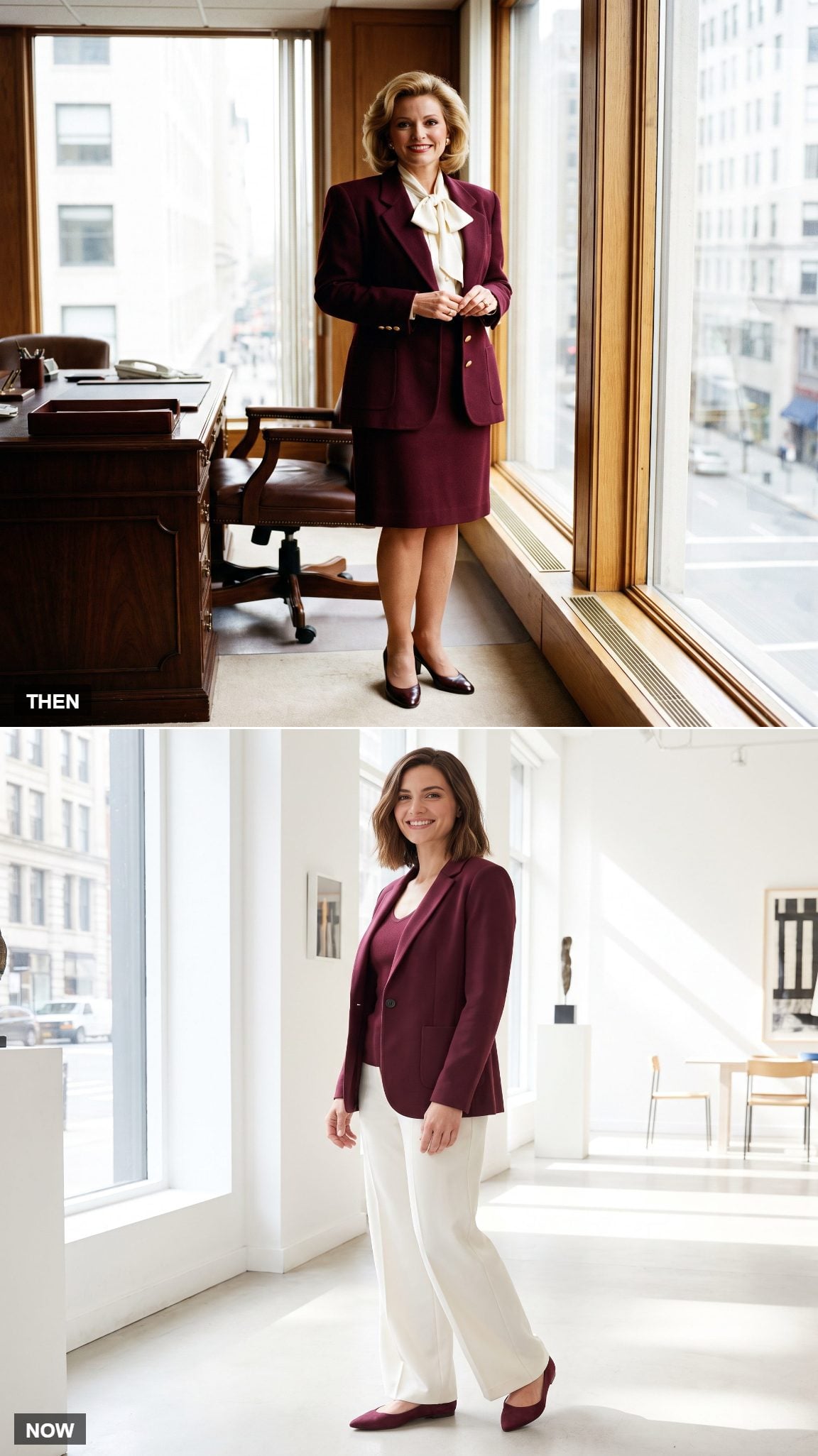
A burgundy skirt suit and pussy-bow blouse bring the richness of wine-colored tailoring into a coordinated formal ensemble. In the modern interpretation, the open jacket gives the same color a less uniform distribution across the outfit.
A tonal knit camisole extends the burgundy through the center, and ivory wide-leg trousers introduce a conspicuous change of value below. The deep color is as much a feature of the fabric as of the cut. Breaking the suit into separates creates a fresh arrangement without suggesting that a matching burgundy suit has lost its appeal.
16. Chalk Stripes Discover the Casual Side of Tailoring
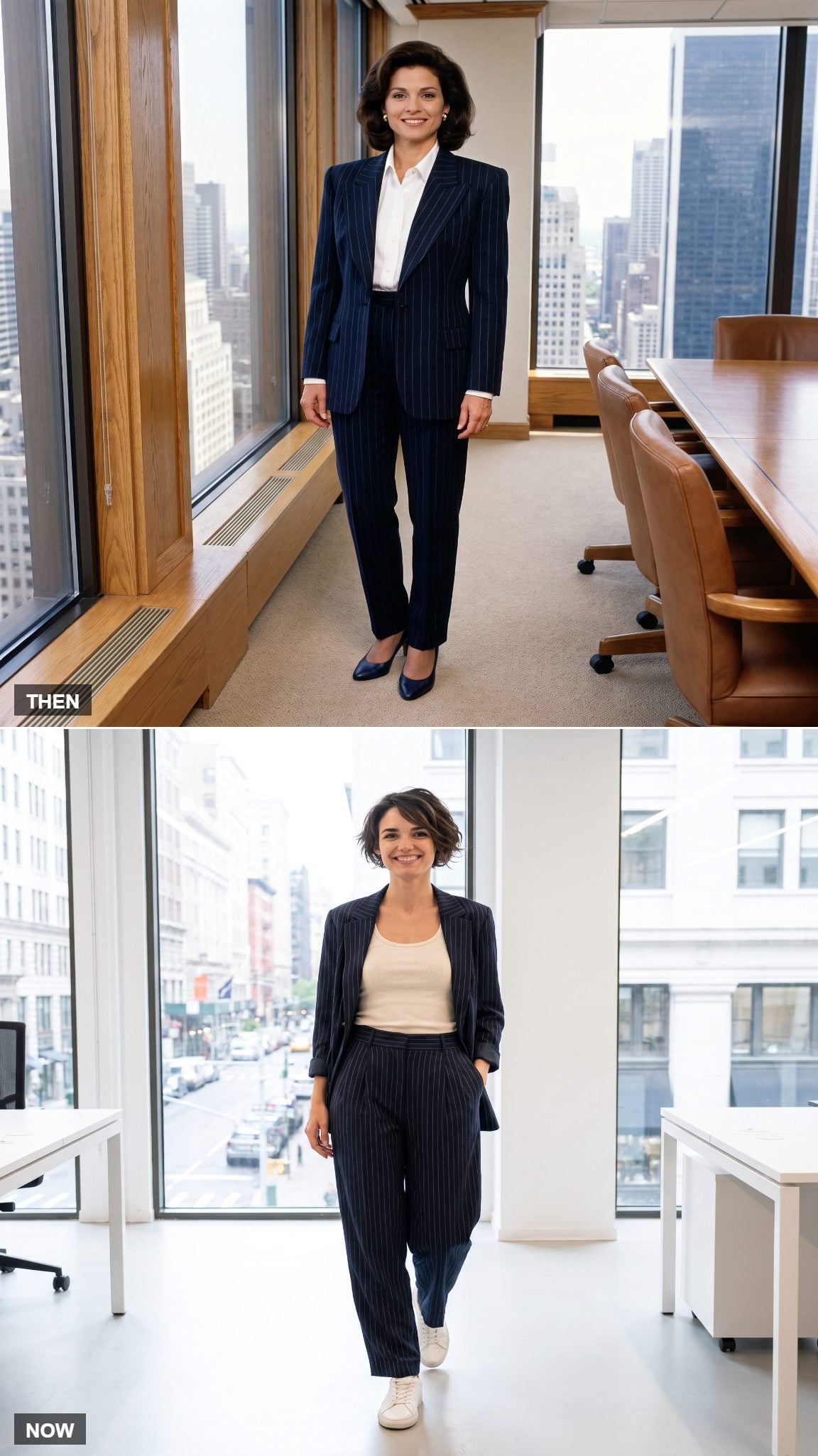
Broad, pale stripes and assertive peak lapels establish a strong pattern in the earlier navy ensemble. The contemporary jacket retains both features, yet allows its wide lapels to fall more easily along the front. The stripe can run through the silhouette without competing with an especially defined waist.
The footwear is the most conspicuous styling departure: leather sneakers replace pumps. That small change gives the tailored pieces a less formal context while keeping the contrast between their neat lines and the shoe’s rounded shape.
15. Mushroom Tailoring Redraws the Neutral Column
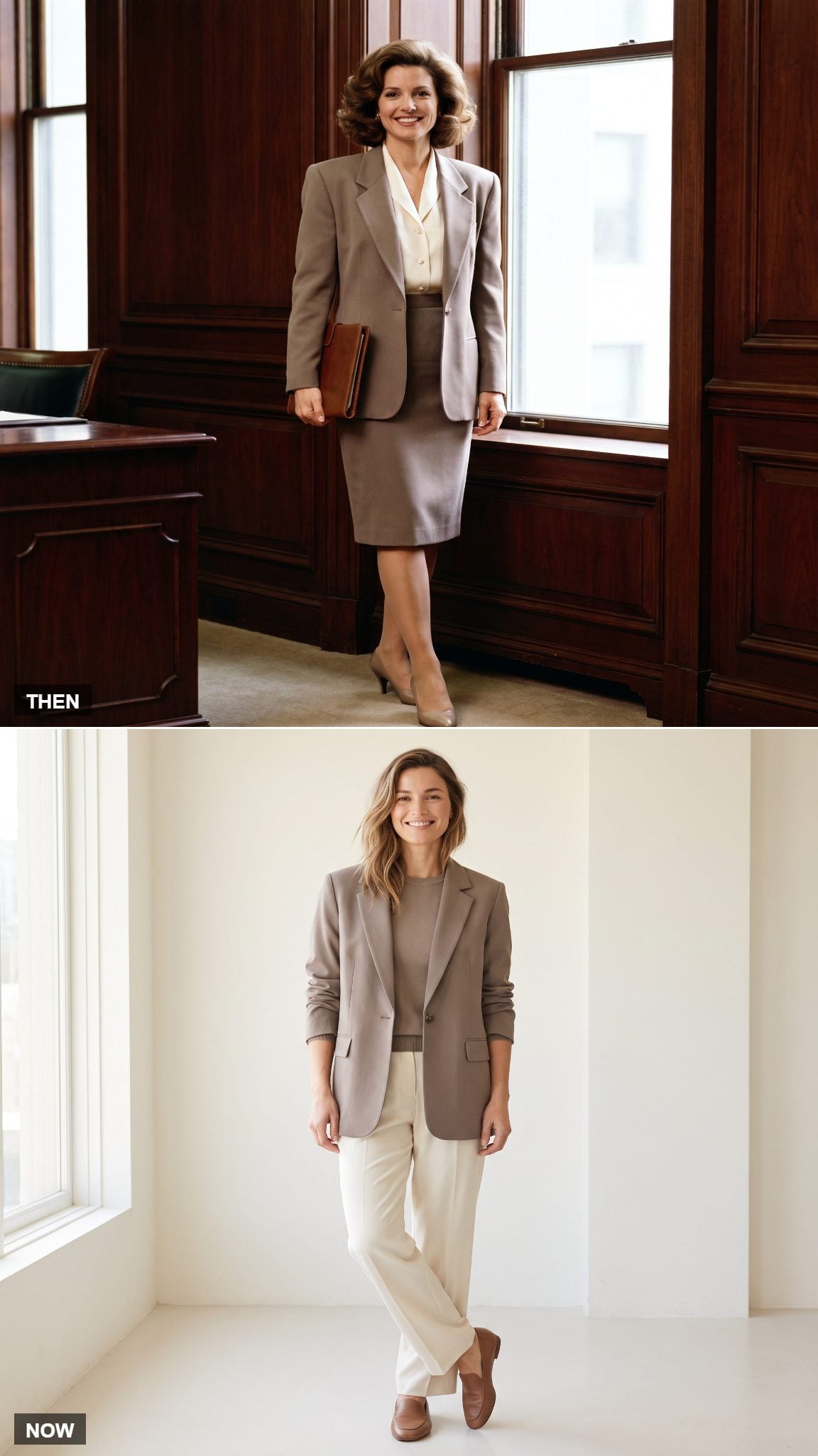
The earlier taupe jacket defines its silhouette through the shoulders and waist. The mushroom-colored interpretation takes a longer route, allowing the cloth to fall along the body with fewer abrupt changes in width. The neutral color makes these differences in construction particularly apparent.
A tonal knit and flowing cream trousers carry the vertical lines downward, with subtle variations in shade keeping the ensemble from becoming a single flat color. Soft tailoring can be visually precise when the length of the jacket and the width of the trousers are considered together.
14. The Three-Piece Suit Gets a New Layering Logic
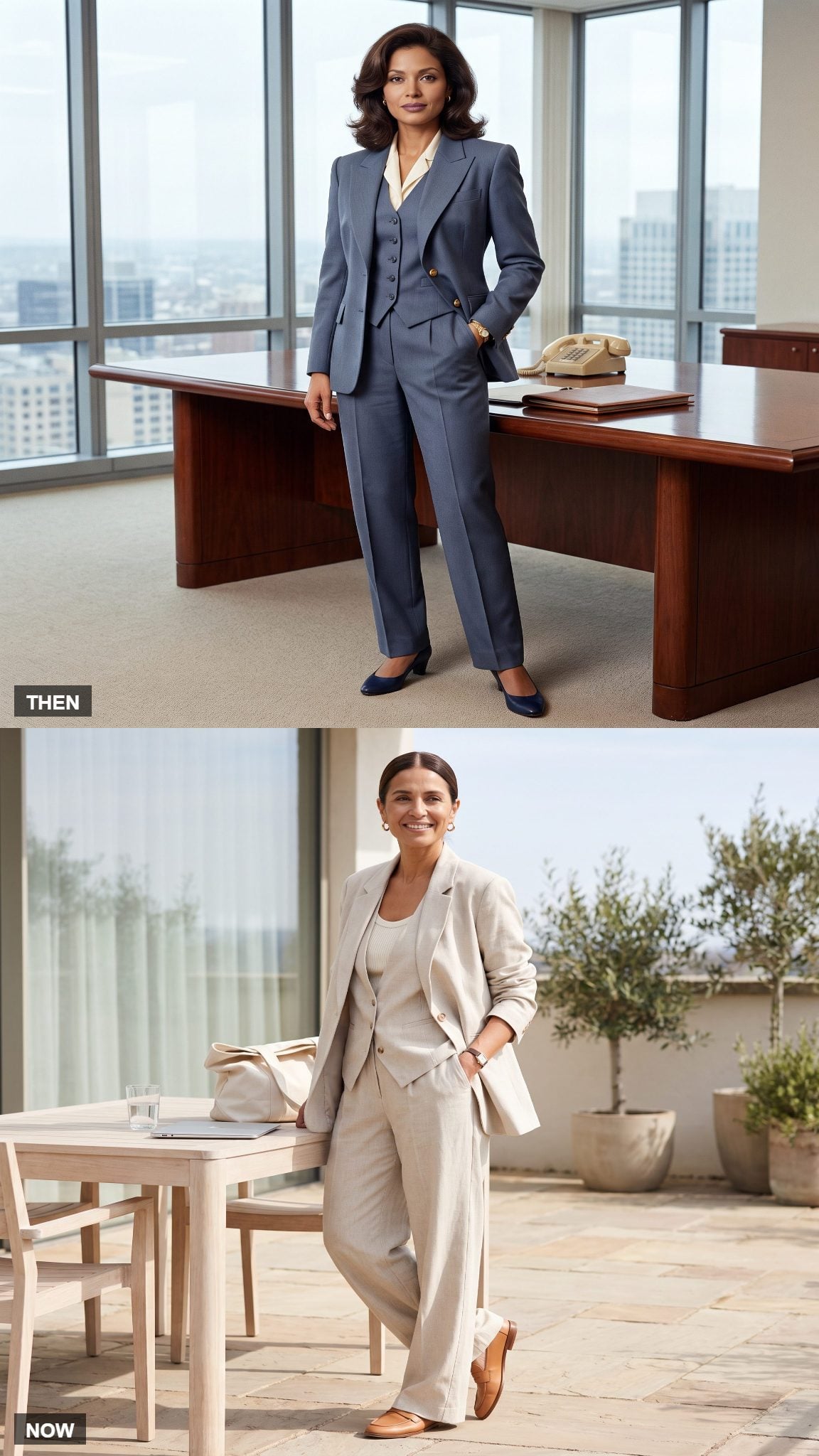
The earlier slate-blue ensemble brings a peak-lapel jacket, buttoned waistcoat and straight trousers into a coordinated three-piece suit. The modern interpretation retains all three pieces, changing their relative proportions instead of discarding the waistcoat.
A softly shaped blazer and a looser waistcoat over an ivory tank create separate visible layers above sweeping wide-leg trousers. The vest introduces a second neckline and a shorter hem beneath the jacket. That interplay makes the ensemble as much an exercise in layering as in matching fabric.
13. Dusty Plum Offers a Different Kind of Purple
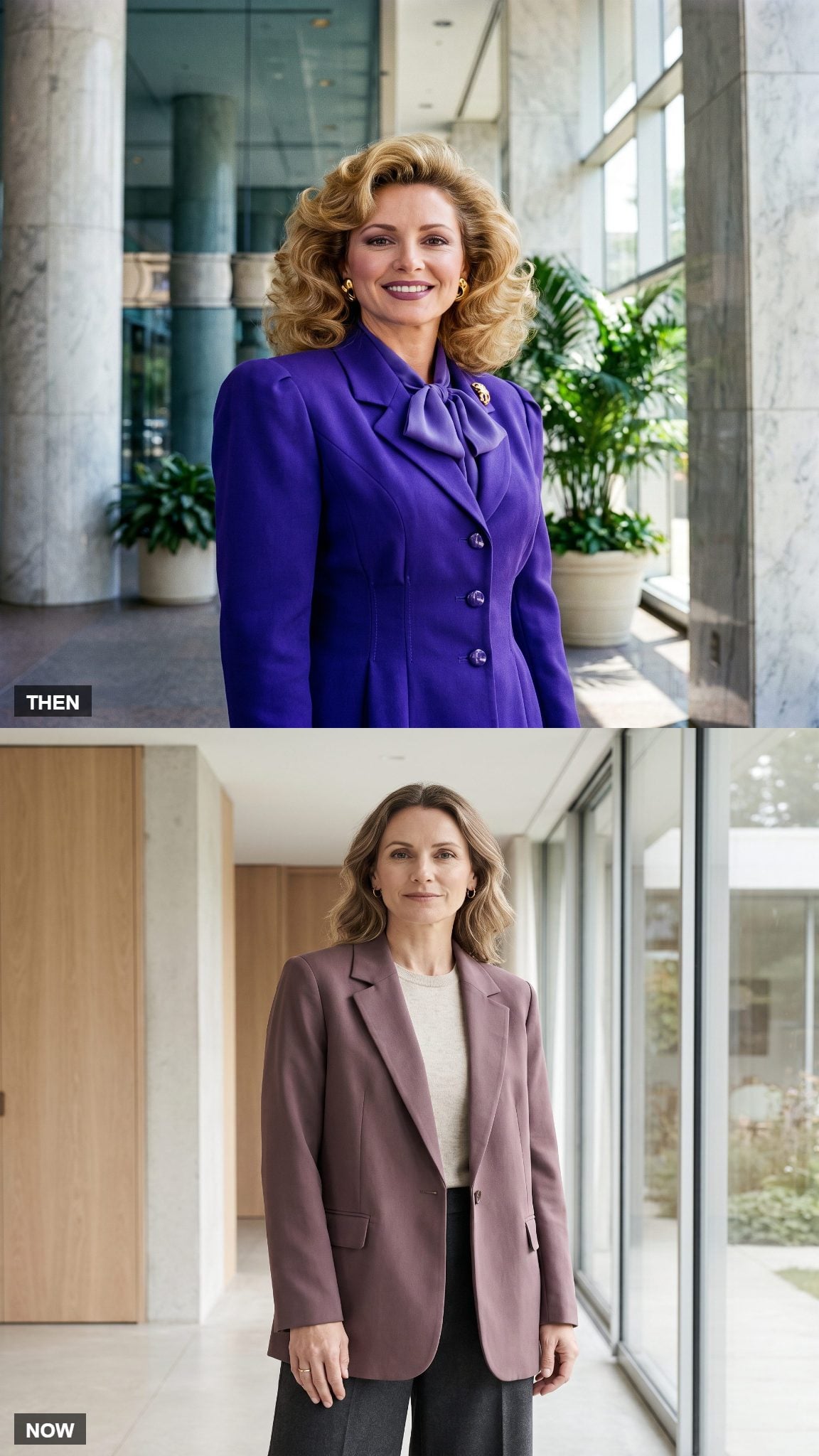
The earlier statement blazer sets vivid purple against a clearly shaped shoulder and waist. The muted plum interpretation changes the color as well as the outline, offering a softer transition from the jacket to the rest of the ensemble.
An oatmeal knit and charcoal trousers balance the dusty berry tone, with a single visible button leaving more of the surface uninterrupted. The useful lesson is the choice of neighboring neutrals, not a rule about which purple is more sophisticated or universally flattering. Different shades respond differently to skin tone and lighting.
12. The Navy Brass-Button Blazer Goes Off Duty
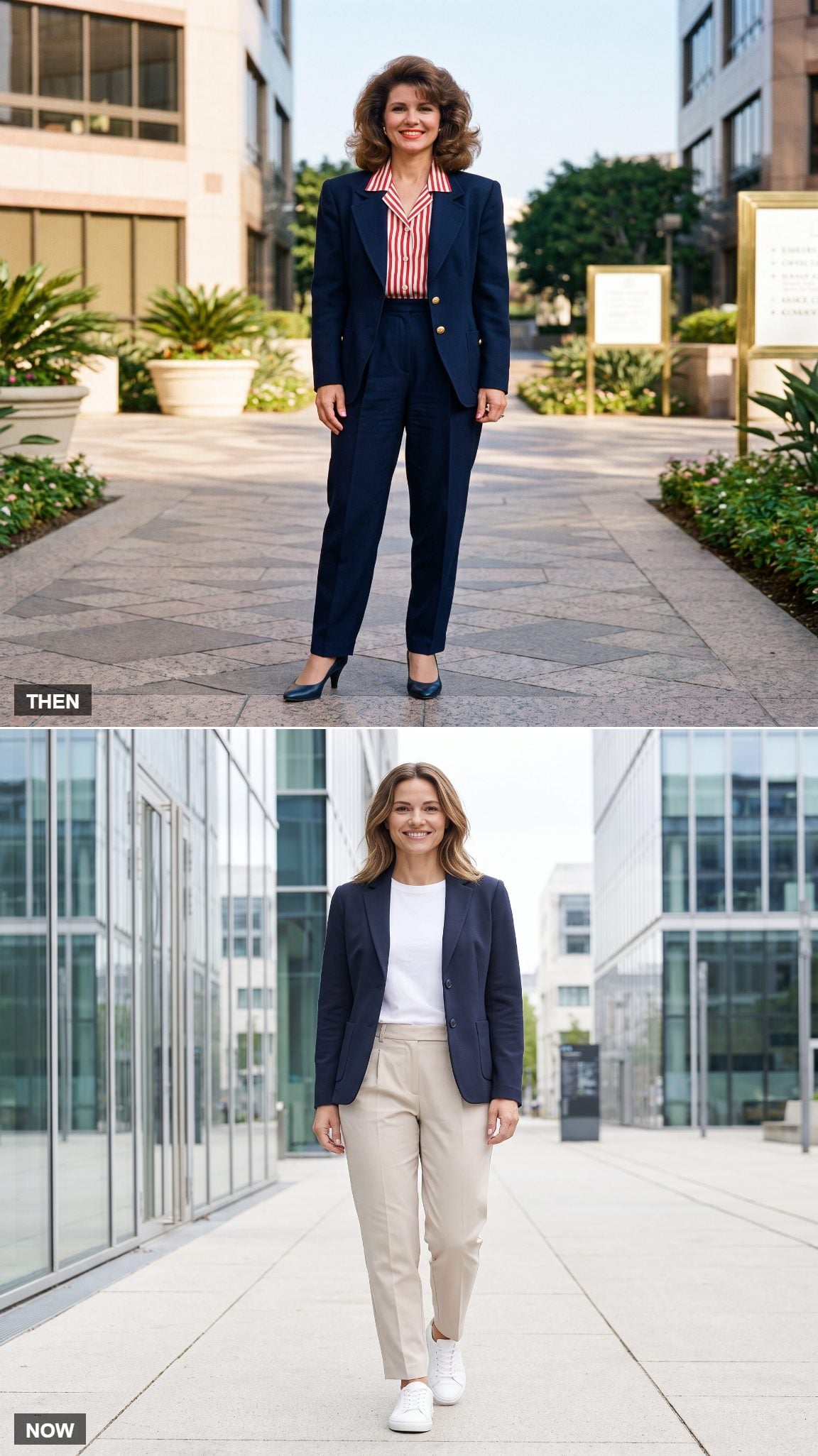
Contrasting brass buttons give the earlier navy jacket a familiar tailored, sometimes nautical, character. The later version replaces that sparkle with quieter hardware, leaving the shape of the front and the color of the cloth to establish the outline.
A plain white tee introduces an entirely different neckline from a conventional office blouse. White sneakers echo its brightness at the other end of the outfit. Much of the informality comes from the styling rather than the button substitution alone; a brass-button blazer can work equally well over denim and a tee.
11. Rust Takes a Lighter Turn in Terracotta
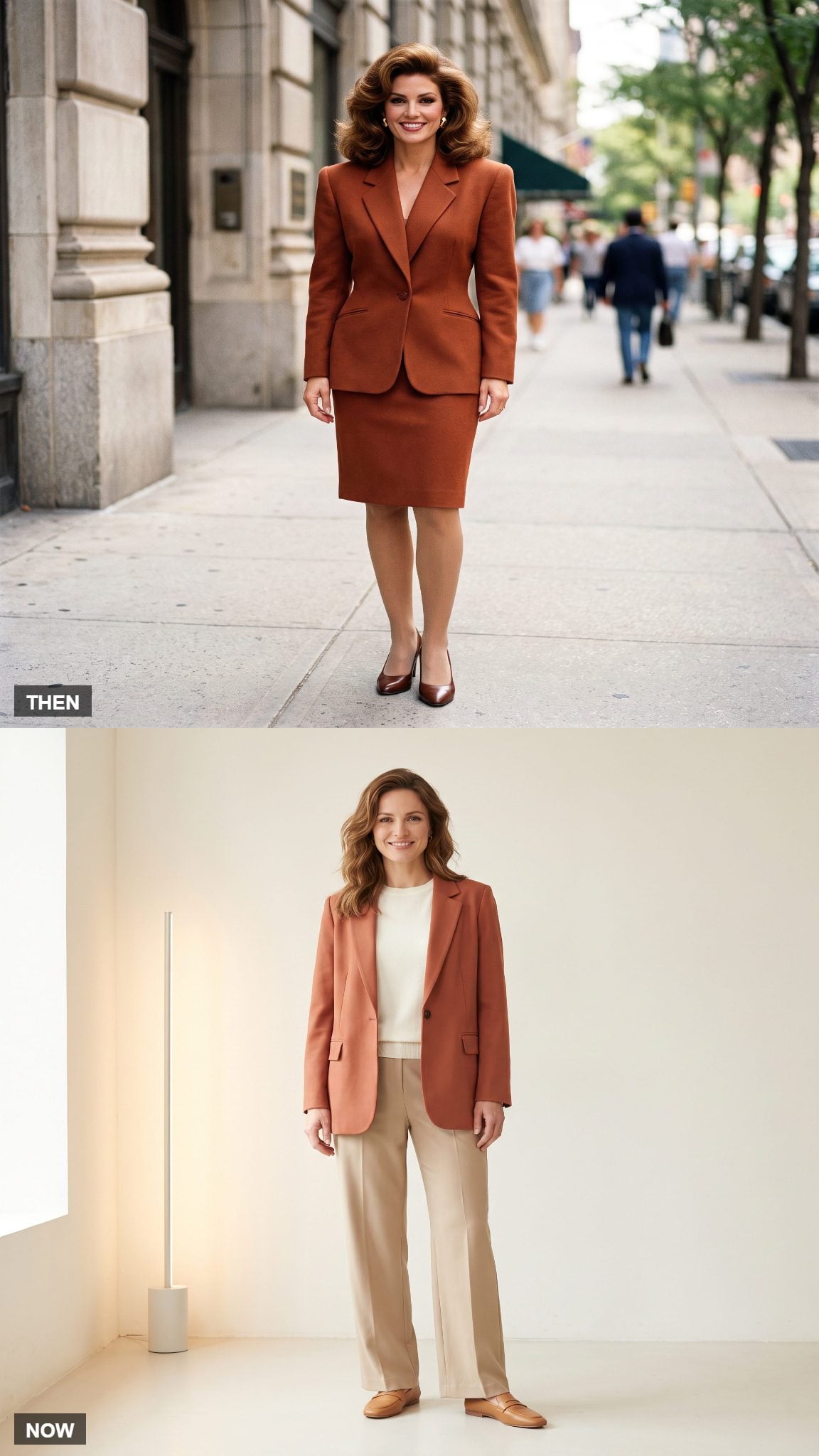
The earlier rust skirt suit uses its warm color across a strongly defined jacket and a knee-length skirt. Terracotta in the later interpretation is a close relative, so the more notable departure is the softer silhouette and less closely coordinated styling.
An ivory knit and beige wide-leg trousers allow the warm jacket to sit between lighter shades. A lighter-weight cloth can encourage the kind of drape shown here, though wool itself can be woven into remarkably supple fabrics. The choice of cloth and internal construction matters more than a blanket distinction between old wool and new fabric.
10. The Long Checked Jacket Takes a Looser Route
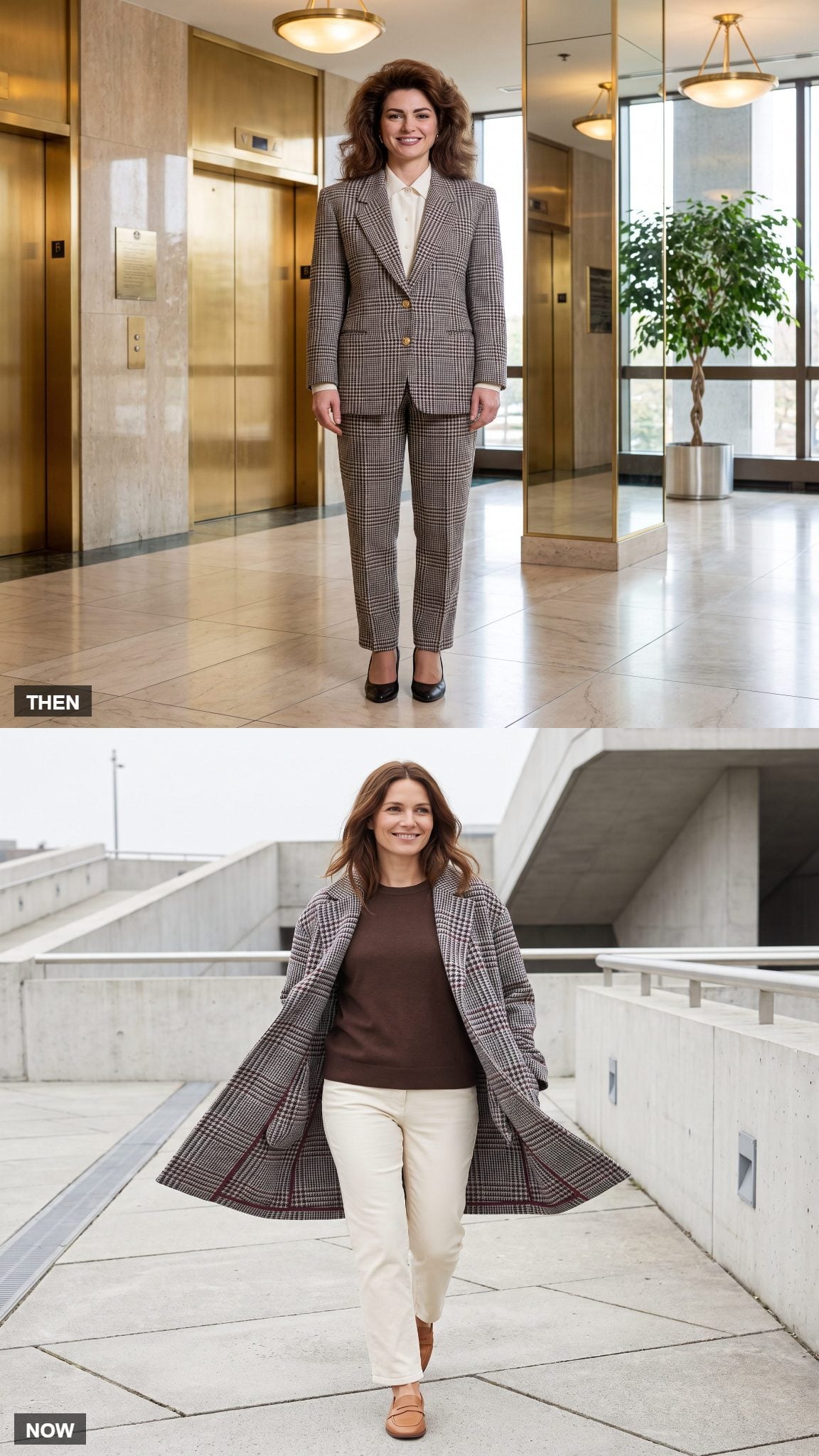
The earlier mid-thigh checked jacket combines considerable length with a pronounced shoulder line and a matching tailored base. In the updated version, the extended hem remains, though the more generous shoulder and open front change the balance of the garment.
Chocolate knitwear and cream straight-leg trousers create a broad contrast beneath the check. A long jacket can work with both straight and wide-leg pants, provided the hem and the layers beneath it allow comfortable movement. Here, the length is the constant; the amount of ease is the departure.
9. Off-White Changes the Temperature of Black and White
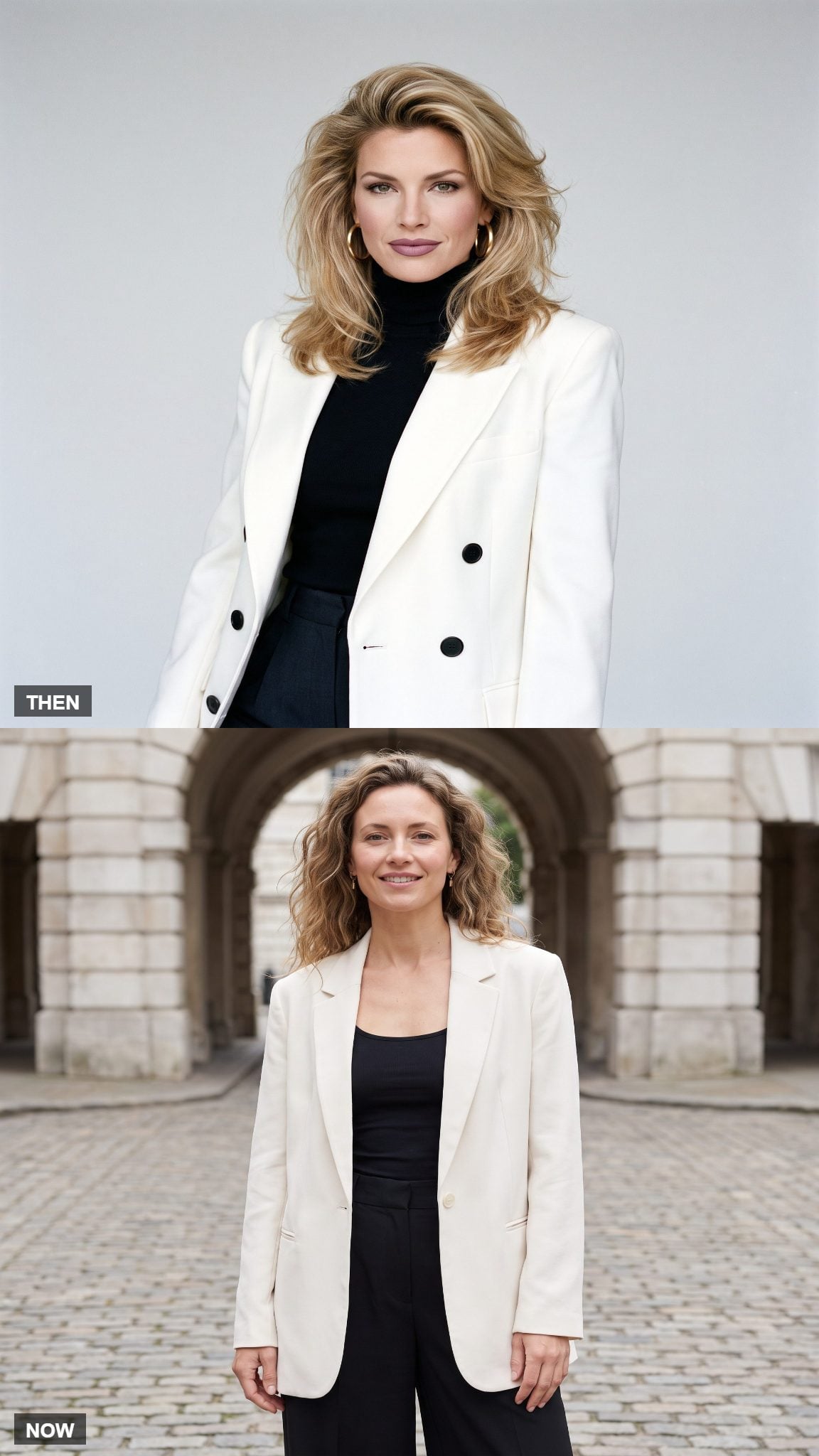
Bright white fabric, black buttons and strongly defined shoulders make the earlier jacket a study in contrast. The current interpretation shifts the white toward a warmer off-white, with tonal buttons and a straighter, more relaxed body.
The black tank and trousers preserve the graphic relationship between light and dark. Softening the white changes the color temperature without eliminating that contrast. The modern appeal comes from the proportions and the quieter hardware, rather than from any presumed psychological effect of ivory.
8. Houndstooth Gets More Room to Make Its Mark
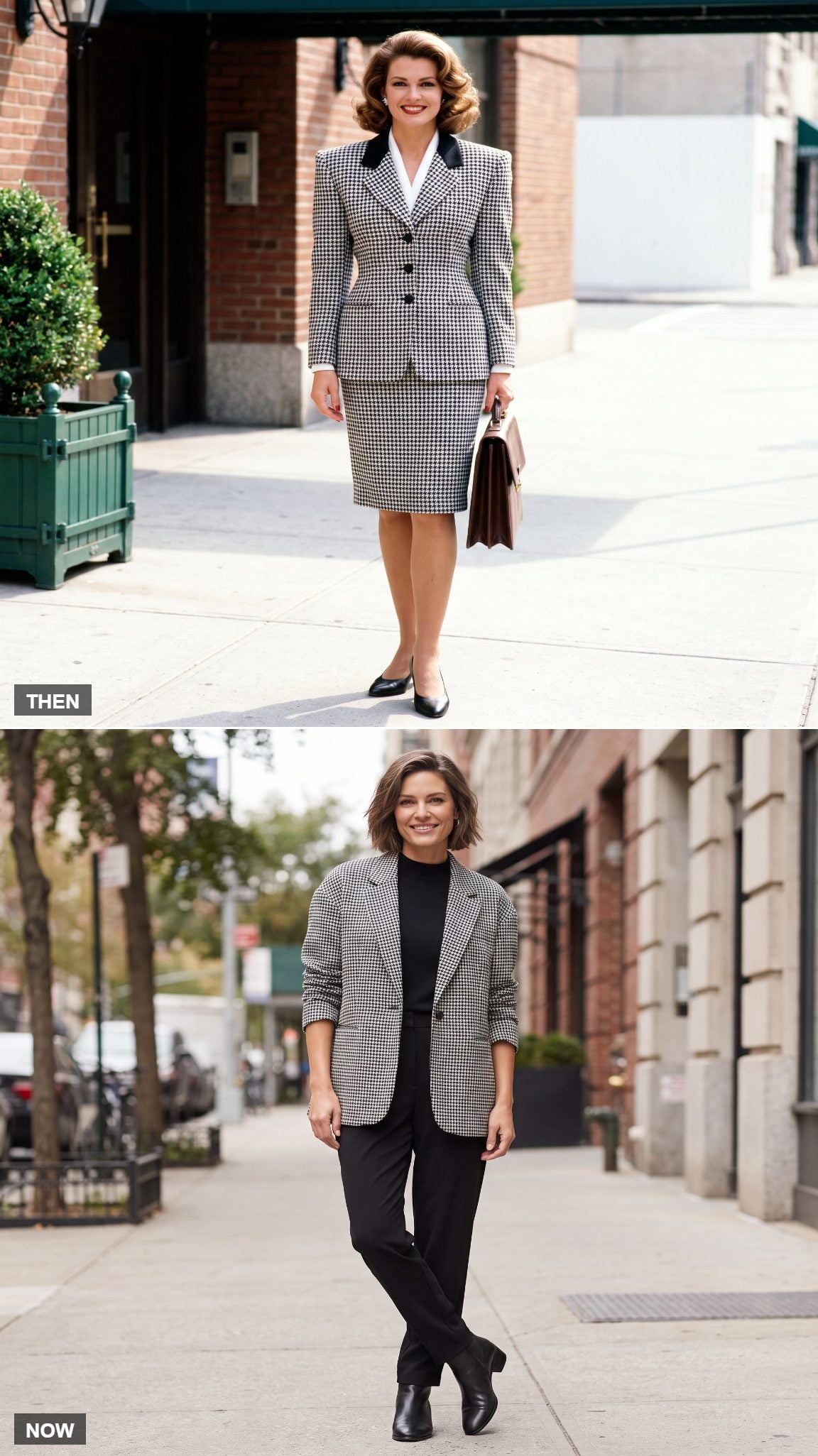
A coordinated houndstooth skirt suit repeats the broken-check motif over much of the earlier silhouette. In the contemporary pairing, the longer jacket becomes a concentrated area of pattern against a solid black base. Its scale remains the attraction even with a less sharply defined shoulder.
A black mock-neck and black ankle boots give the busy jacket a continuous dark backdrop. The effect comes from restricting the patterned area rather than from making houndstooth look less traditional. A matching houndstooth suit remains a viable option; this version explores what the jacket can do on its own.
7. Camel Tailoring Gains a Second Warm Neutral
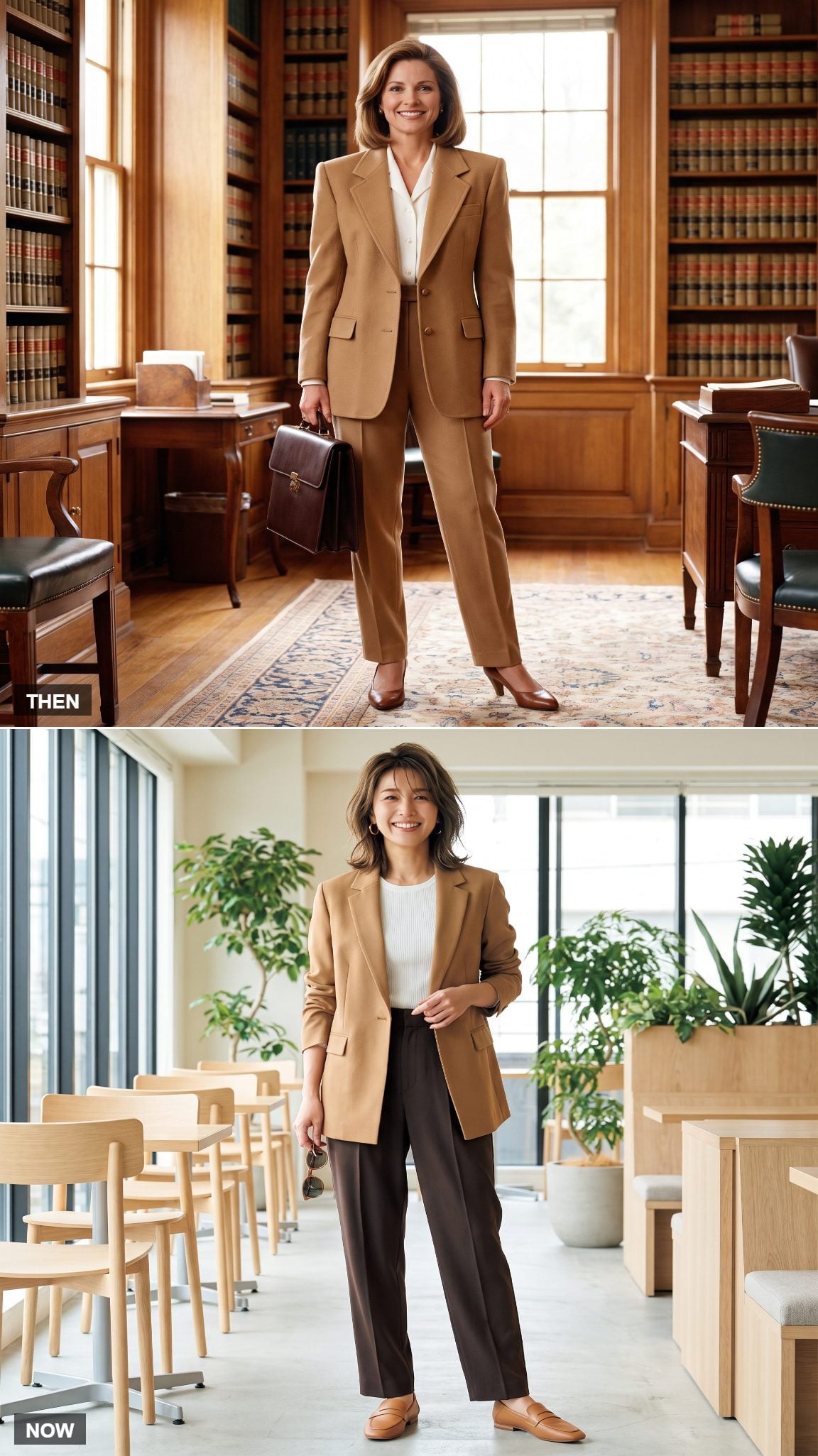
The earlier camel suit derives much of its precision from the shaped waist, crisp lapels and continuous color of the jacket and trousers. A more softly constructed camel jacket has a gentler outline and leaves the front open, turning the lapel into a frame for the layers underneath.
Against a white ribbed top, the camel acquires a light edge; chocolate trousers deepen the palette rather than repeat it exactly. The interplay of warm brown shades gives a familiar neutral jacket considerable range. Camel describes the color here, not necessarily the fiber content, and a soft silhouette may still rely on lightweight interfacing or lining.
6. Peak Lapels Stay Sharp Even When the Body Softens
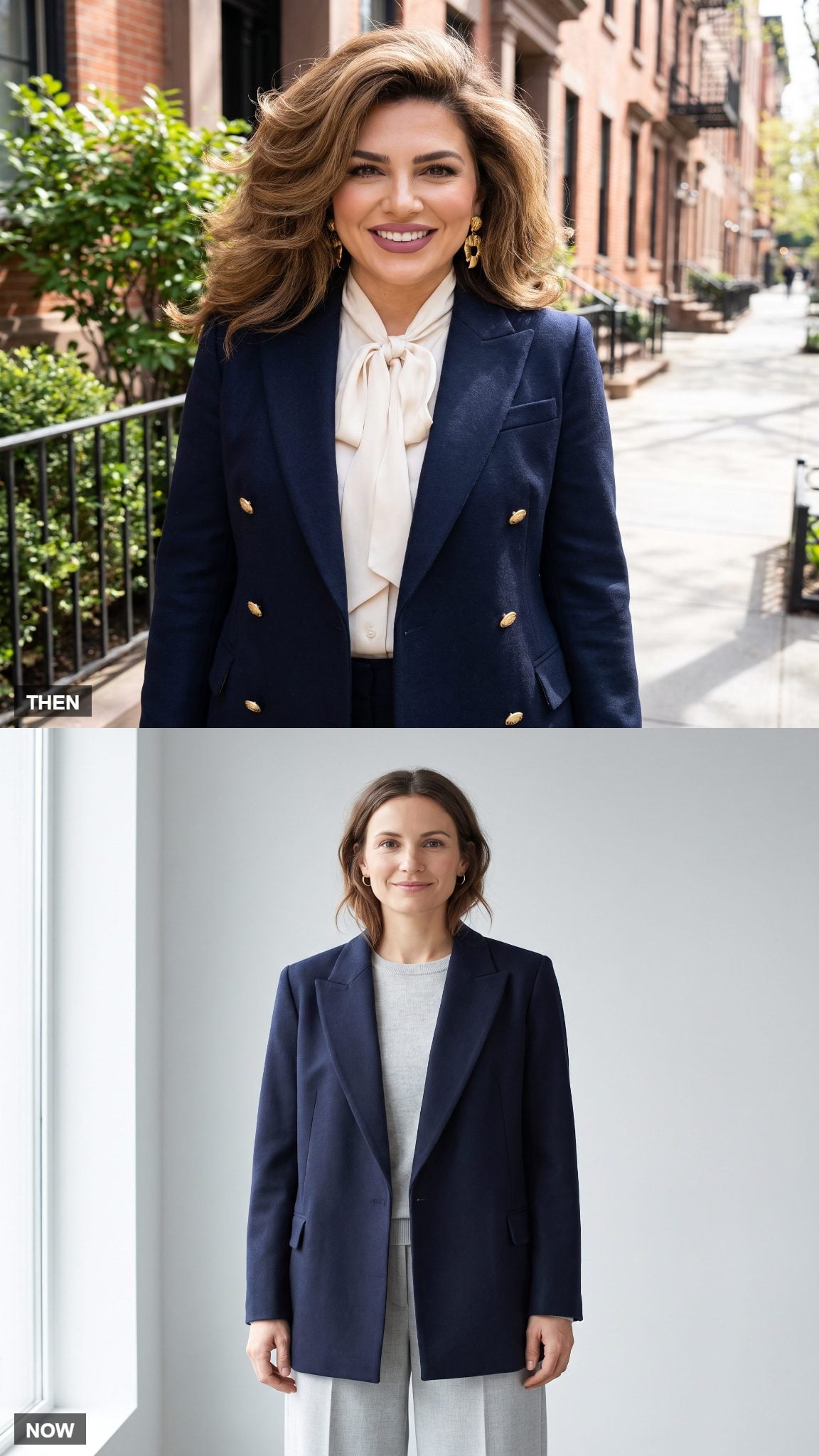
The peaked tips of the earlier navy blazer direct attention upward and outward toward the shoulders. The later jacket keeps that distinctive lapel geometry while adopting a gentler outline through the chest and waist. A peak lapel need not sit on an especially padded shoulder to make an impression.
Pale-gray knitwear and fluid trousers introduce softer textures around the crisp edges of the lapels. The contrast between the sharply angled detail and the easier body of the jacket is the interesting part of this transformation.
5. Prince of Wales Check Builds a Tonal Ensemble
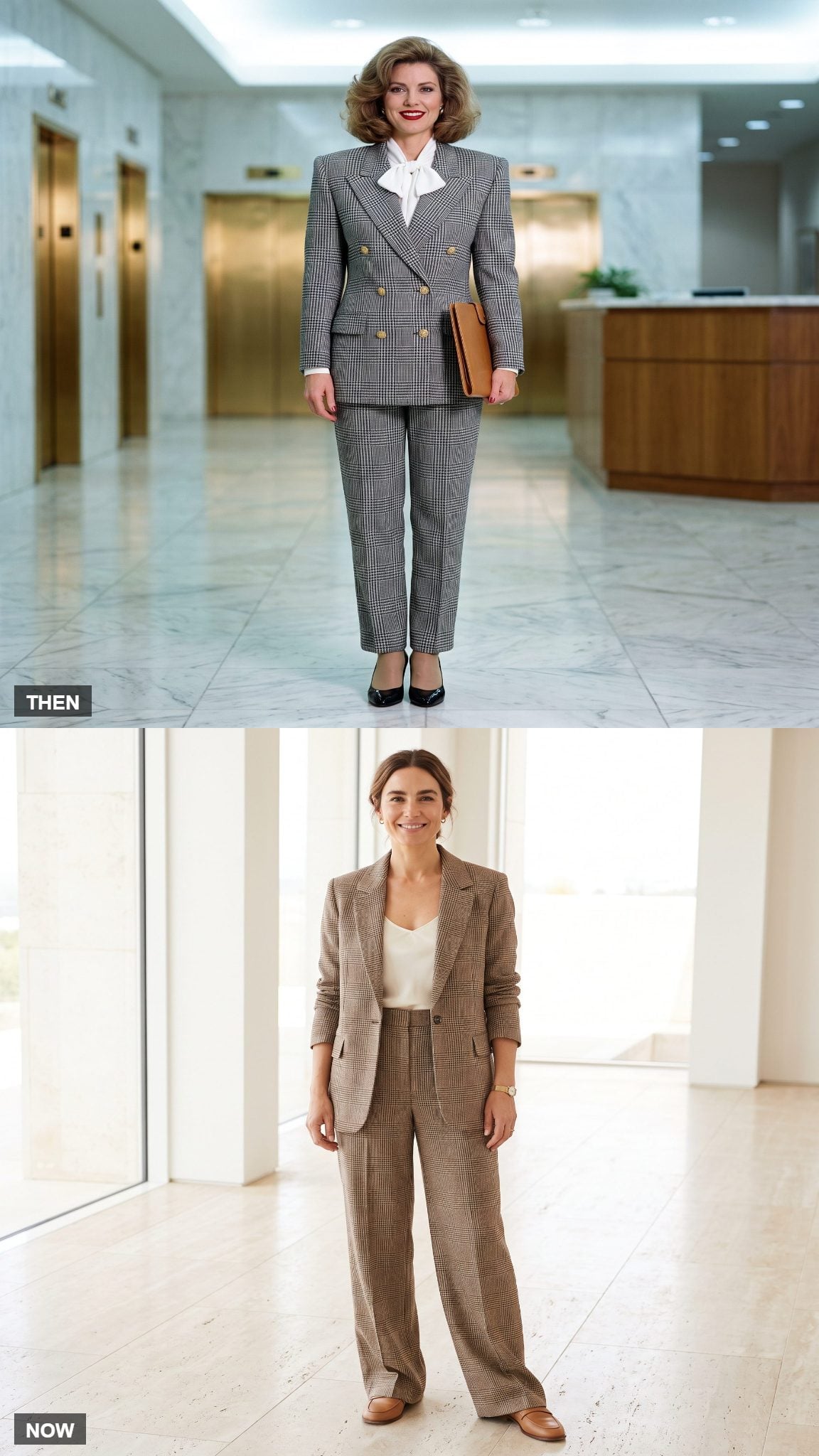
The earlier Prince of Wales-style checked suit pairs a firm shoulder line with trousers in the same pattern. The more relaxed interpretation keeps the heritage check in a mocha-and-tan palette but separates it from the trousers, allowing the pattern to occupy a single area of the ensemble.
Ivory pleated trousers pick up a lighter note in the check, while loafers maintain the connection to traditional tailoring. Unlike the glen plaid jacket worn with denim, the focus here is the subtle color relationship within an otherwise dressier arrangement.
4. The Nipped Waist Gives Way to Gentler Shaping
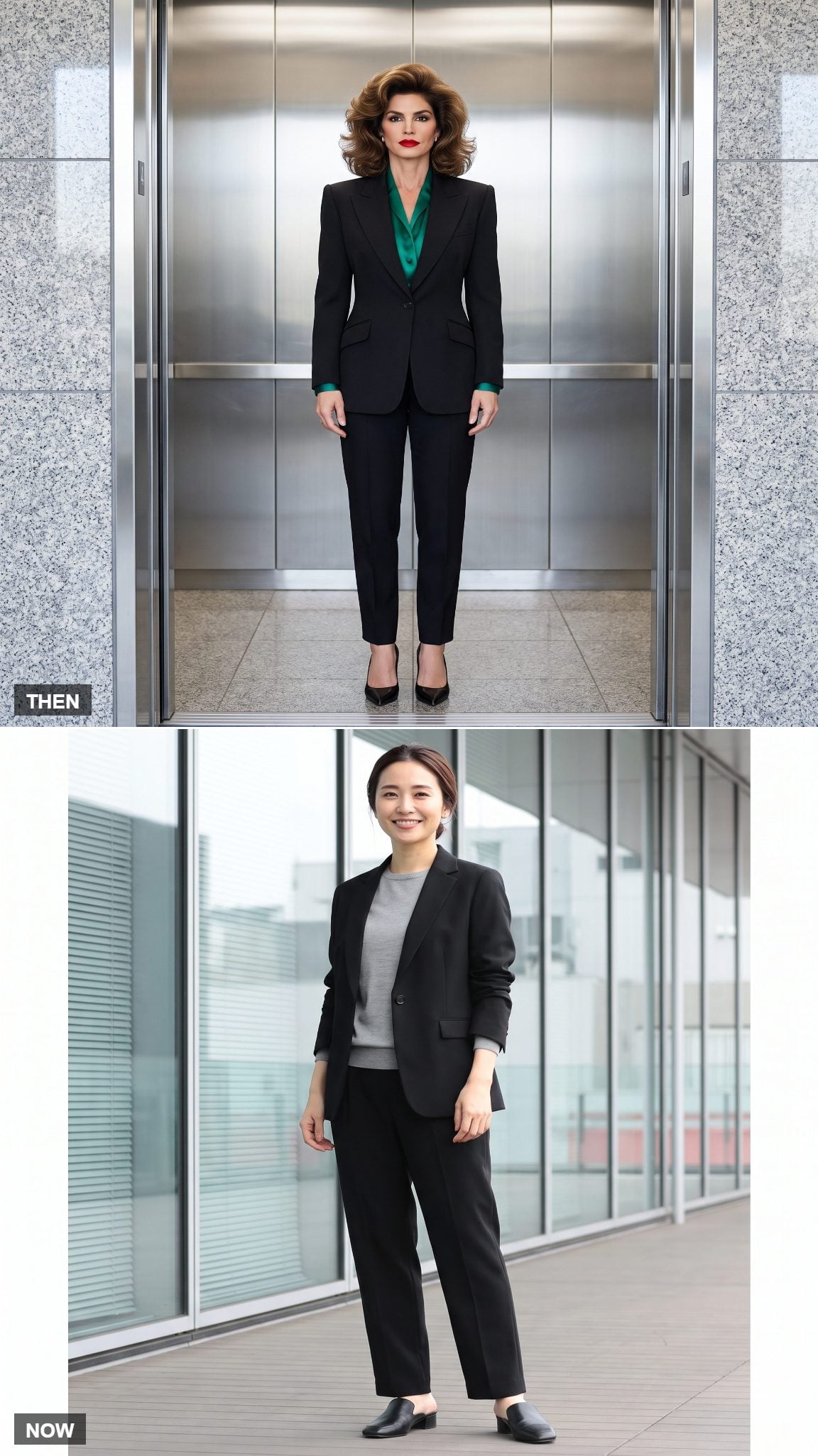
A sharply fitted black jacket with strong shoulders exaggerates the distance between the upper body and waist. That contrast can be achieved through shaped seams and darts as well as shoulder padding; boning is not a necessary feature of the silhouette.
The later black jacket retains a degree of waist definition, although its transitions are less abrupt. A gray knit introduces a softer layer at the center. Contemporary fitted tailoring can be every bit as sculptural as its predecessors, making the amount and placement of waist shaping a choice rather than a fixed historical rule.
3. Forest Green Moves the Emphasis From Gold to Cloth
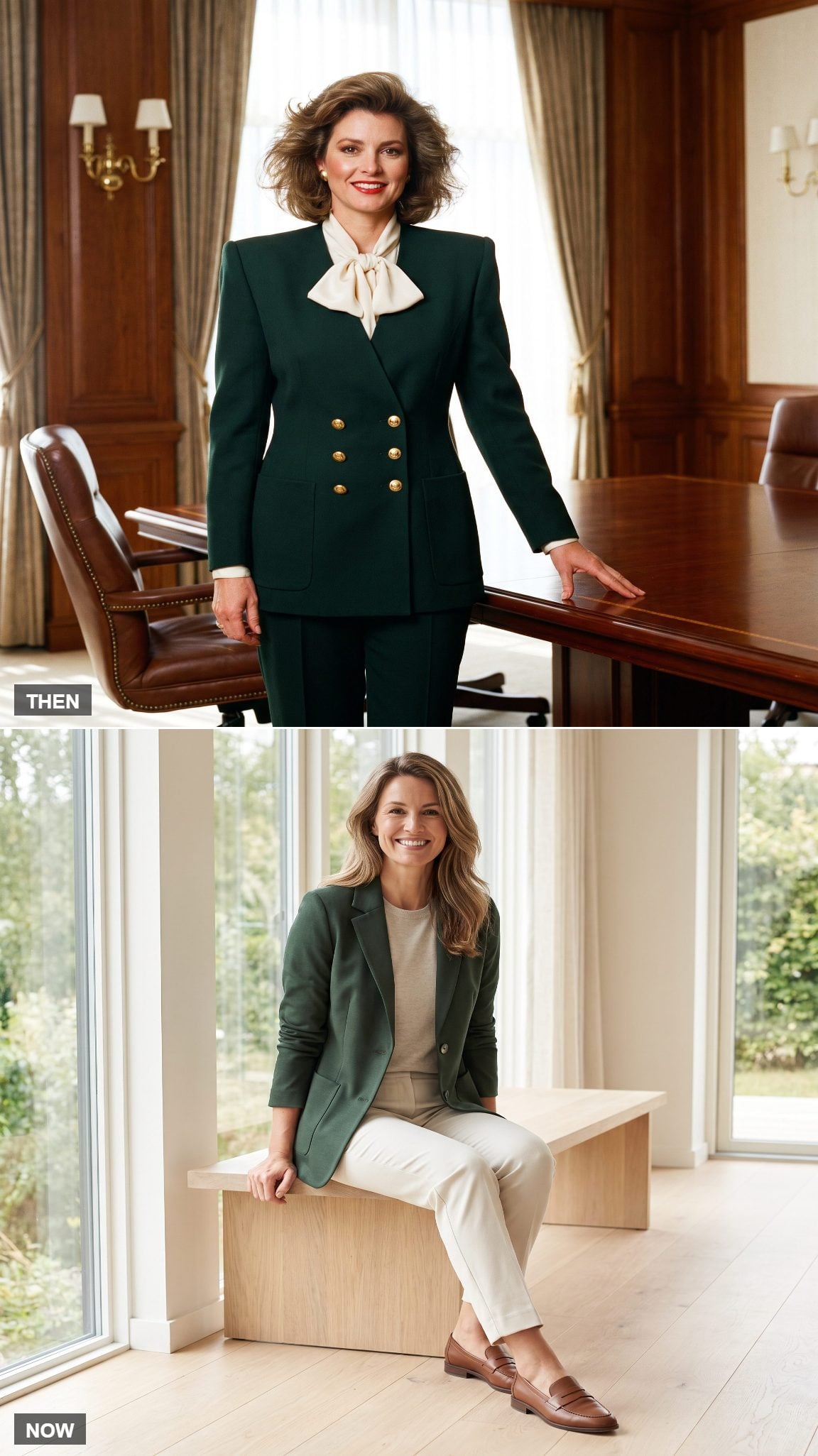
Bright gold buttons create a series of highlights on the earlier forest-green blazer, especially against the deep color of the wool. Reducing the contrast between buttons and jacket in the contemporary version makes the broad green surface and the fall of the lapels more noticeable.
Green and subdued neutrals give the later ensemble a quieter distribution of color. The important change is not that gold hardware has become obsolete; it is that a deep green can anchor an outfit without needing a metallic accent at every fastening. Similar greens can build a tonal look, while beige or stone can introduce a softer contrast.
2. Navy Double-Breasted Tailoring Changes Its Button Stance
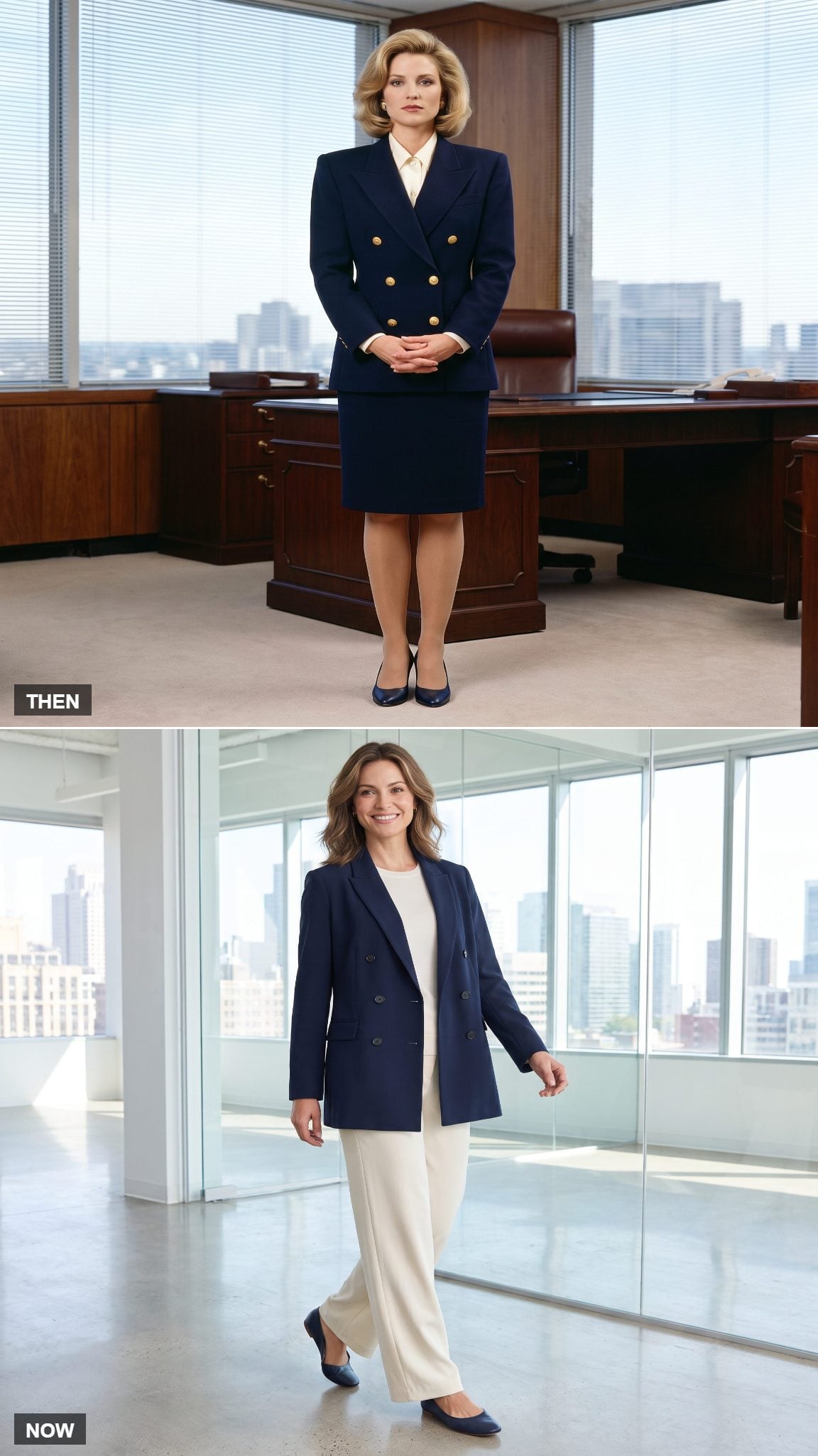
Two rows of gold buttons give the earlier navy jacket much of its graphic identity. In the contemporary version, tonal buttons recede into the cloth and a longer body changes the proportions of the crossover front. The double-breasted construction remains unmistakable.
The contrast with cream wide-leg trousers is especially effective because the navy stops being part of a single dark block. The softened peak lapels guide the eye down toward the pale trousers. A double-breasted jacket can look relaxed or rigorously tailored; button placement, ease and the way it is worn are all part of that equation.
1. The Power Suit Expands Its Vocabulary
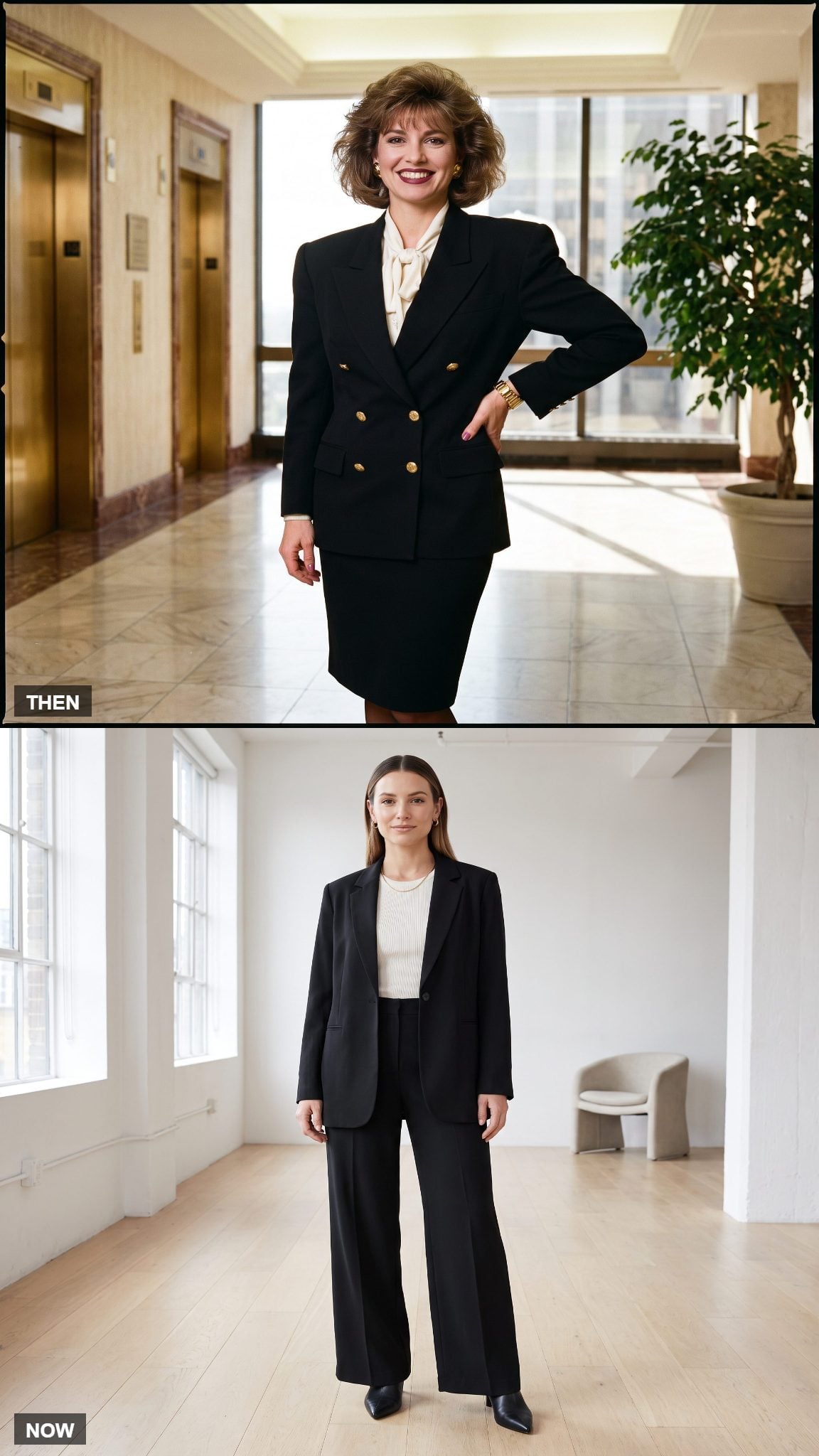
The earlier black suit brings several hallmarks of late-1980s and early-1990s corporate power dressing together: padded shoulders, pronounced waist shaping, contrasting double-breasted buttons and a tied ivory blouse. The contrast between the black tailoring and the blouse makes every change of direction in the cut visible.
A longer single-breasted jacket with natural-looking shoulders gives the contemporary outfit a different architecture. The fine ivory knit and high-rise wide-leg trousers bring the same black-and-ivory palette into a more fluid arrangement, with loafers completing the line. Neither silhouette has ceased to be an option. Thirty-six years of changing proportions have given the blazer more ways to express its character, not fewer.