❤️ Would you like to save this?
The seventies did not believe a jacket should mind its own business. Suede sprouted fringe. Leather grew lapels with ambitions. Nylon went metallic. Camel wool cinched itself at the waist. Prairie prints puffed at the shoulder, terry cloth wandered out of the cabana, and somebody decided a silver puffer was exactly what suburbia had been missing.
That glorious lack of restraint is what makes these 25 worth another look. The decade could swing from Alpine loden to disco sequins, safari pockets to powder-pink angora, patchwork suede to battered denim without losing the plot. Texture mattered. Color mattered. Silhouette absolutely mattered. Somewhere in that mix is probably the one you wore, borrowed, envied, or still wish you had kept.
FYI, thanks to AI imagery software, we’re able to create very specific fashion and hairstyle examples to illustrate the points being made. In some cases, imagery is exaggerated to hammer home the point. Also, assume links that take you off the site are affiliate links such as links to Amazon. this means we may earn a commission if you buy something.
25. The Fringed Suede Jacket That Never Stopped Moving
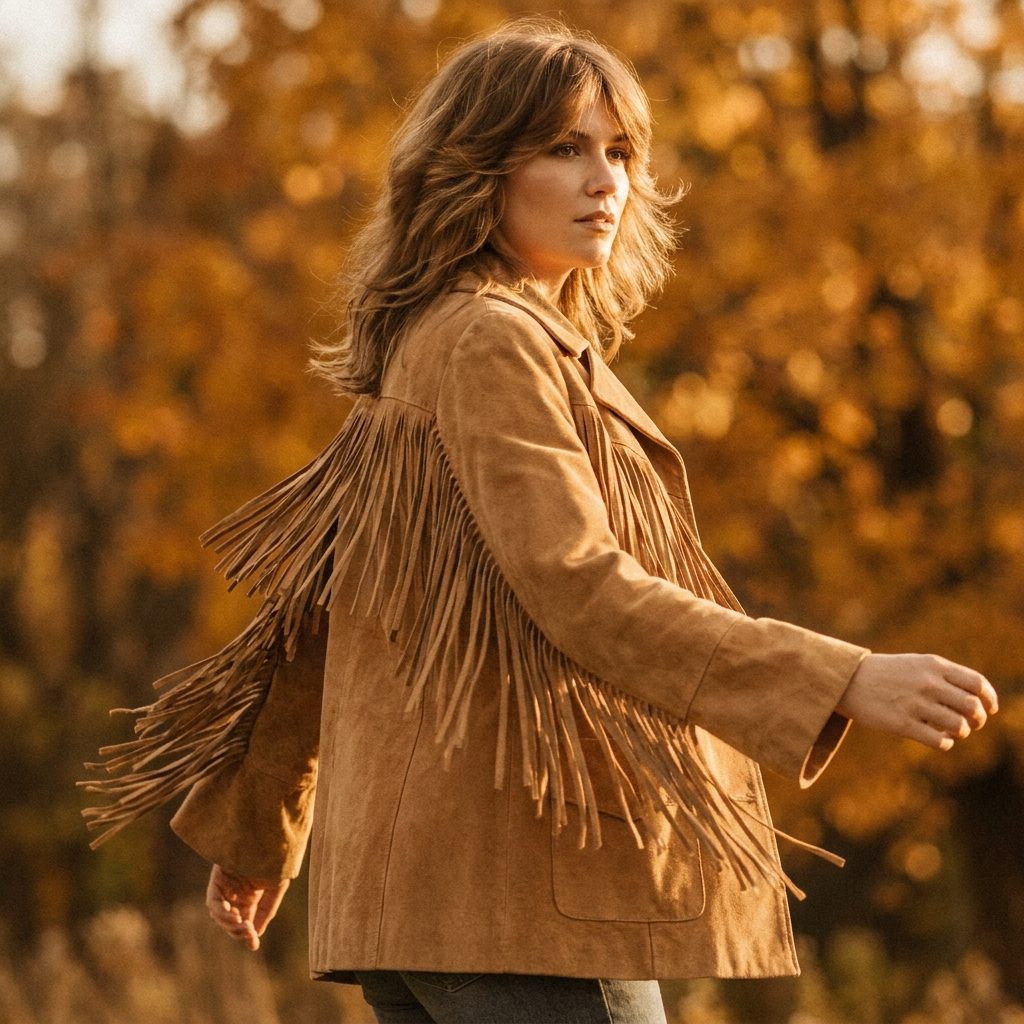
The fringed suede jacket was the 1970s in physical form. It moved when you moved. It made an entrance before you did. Every step across a parking lot, every turn toward a friend, every reach for the car door released another little ripple of fringe that said almost nothing practical and everything aesthetic.
Tobacco, caramel, and dusty tan were made for gauze blouses, turtlenecks, faded denim, and boots that had already seen some miles. Short fringe was decoration. Long fringe, sweeping toward the elbow or lower, was a commitment. Nobody bought this thing because it was sensible. They bought it because it looked like freedom and felt like the inside of a record store.
24. The Wide-Lapel Leather Blazer That Ran the Room
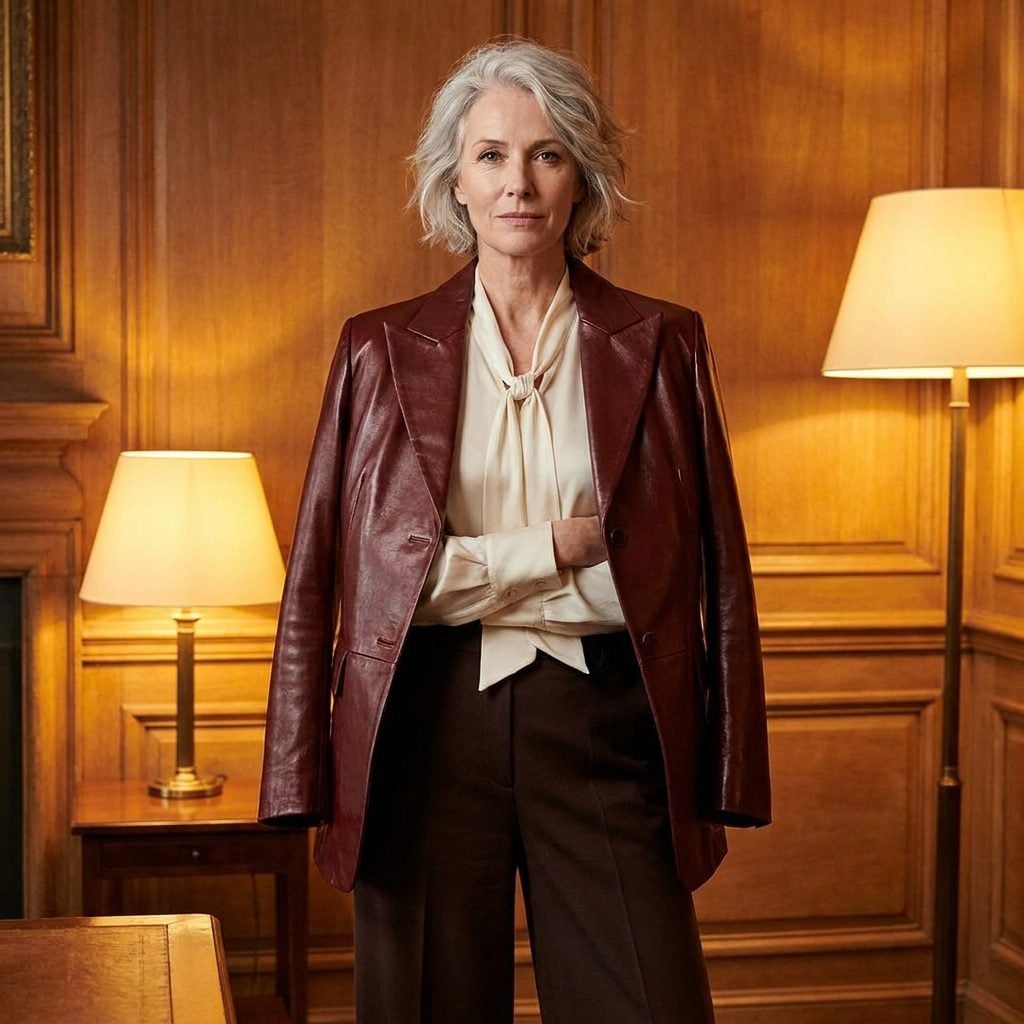
Leather blazers in the seventies had lapels you could land a plane on, and that exaggeration was the confidence. You didn’t disappear inside a jacket like this. You negotiated with it.
Oxblood leather over a cream pussy-bow blouse is texture contrast at full volume — glossy hide against fluid fabric, each making the other look more deliberate. A nipped waist gives those enormous lapels somewhere to resolve, so the whole jacket feels controlled rather than merely oversized. Put it on and standing quietly in the corner becomes considerably less likely.
23. The Moss-Green Quilted Nylon That Whispered When You Walked
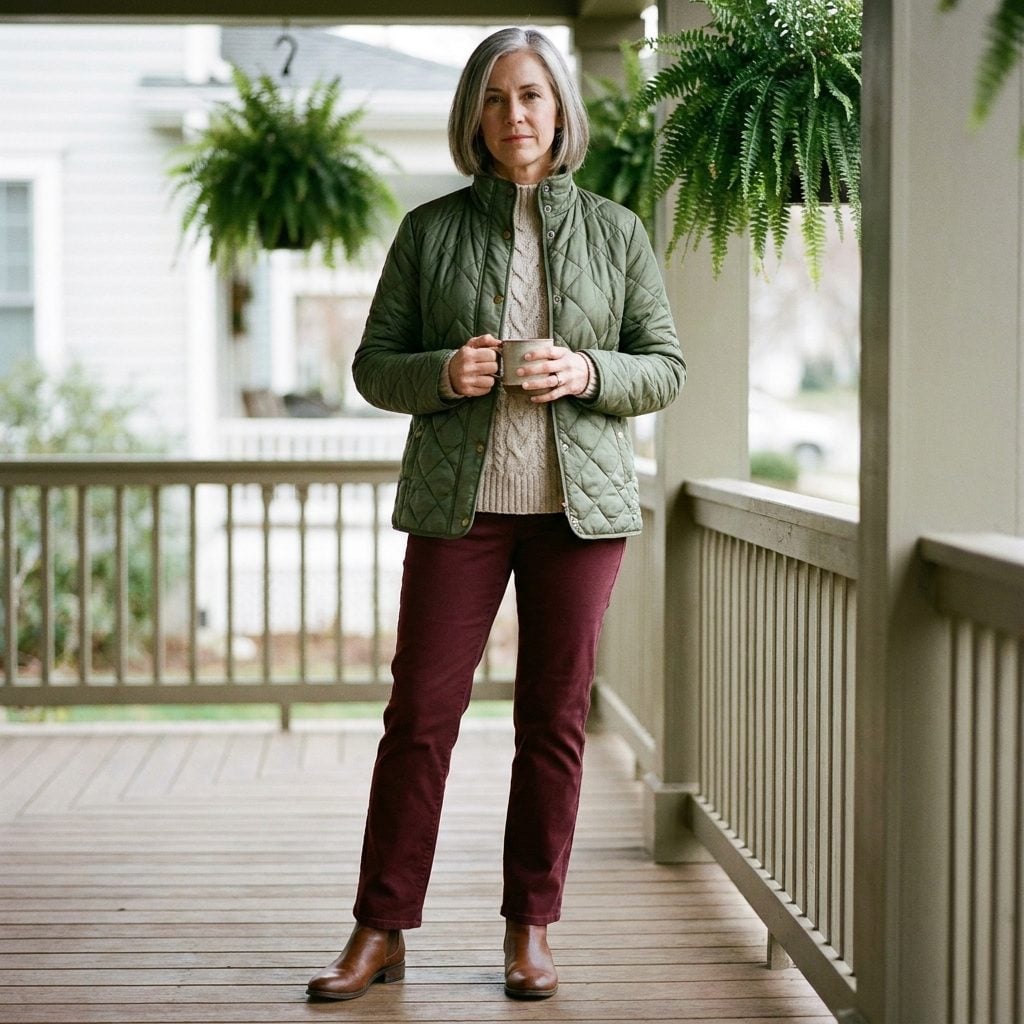
You heard it before you saw it — that quiet nylon swish that meant somebody was heading outside to start the car in January.
The quilted jacket was the workhorse nobody thought to photograph and everybody seemed to own. Light, warm, and uncomplicated, it made perfect sense over an oatmeal cable knit, where slick nylon met deep wool texture without either trying to become fashionable enough to spoil the usefulness.
22. The Camel Wrap Coat That Belted Instead of Buttoned
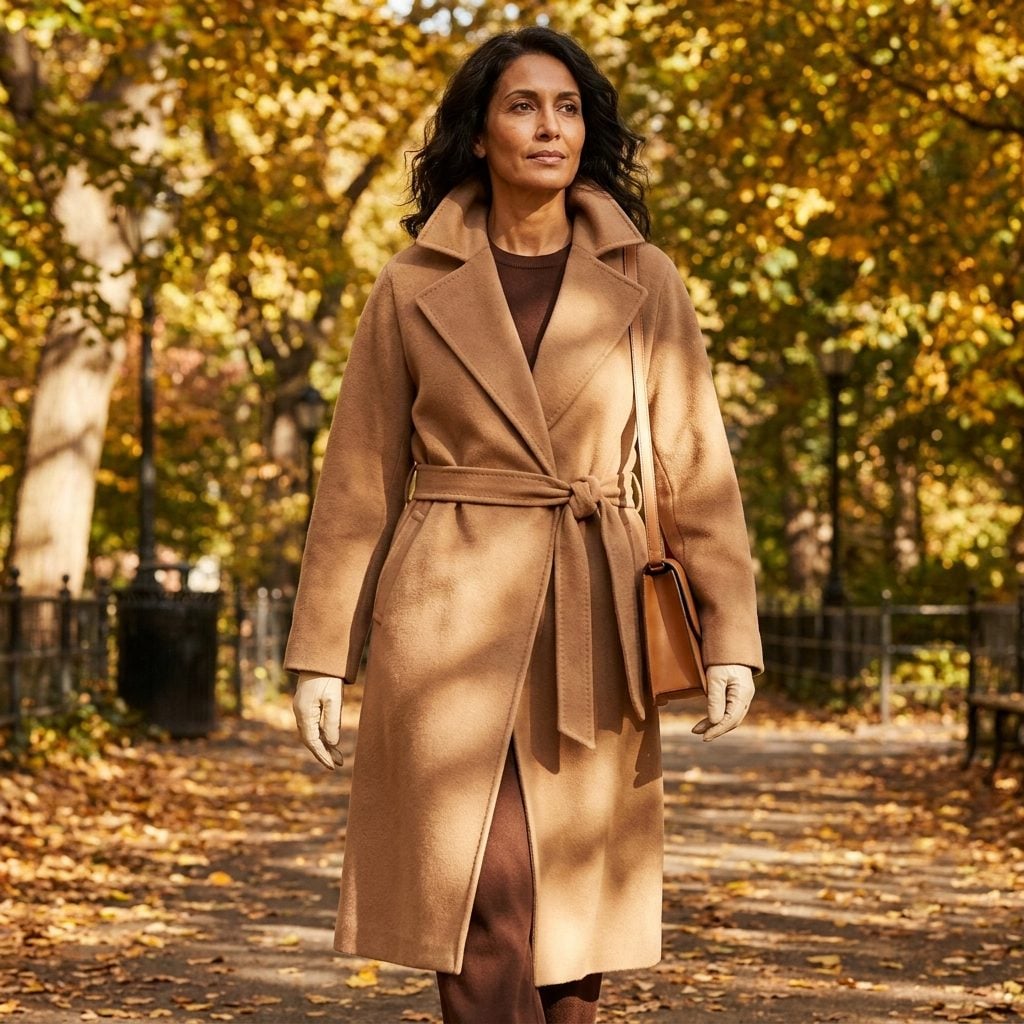
One color, one belt, and suddenly a coat has a waist. The camel wrap did the work of tailoring without all the hardware, and that self-tie sash adjusted whether you’d had a big lunch or not.
Camel over chocolate builds depth without relying on pattern. Cinched tightly, the coat becomes sharp and defined; worn looser, it relaxes into something softer. That ability to change shape with one knot is exactly why the wrap coat never really went away.
21. The Space-Age Silver Puffer Nobody Was Ready For
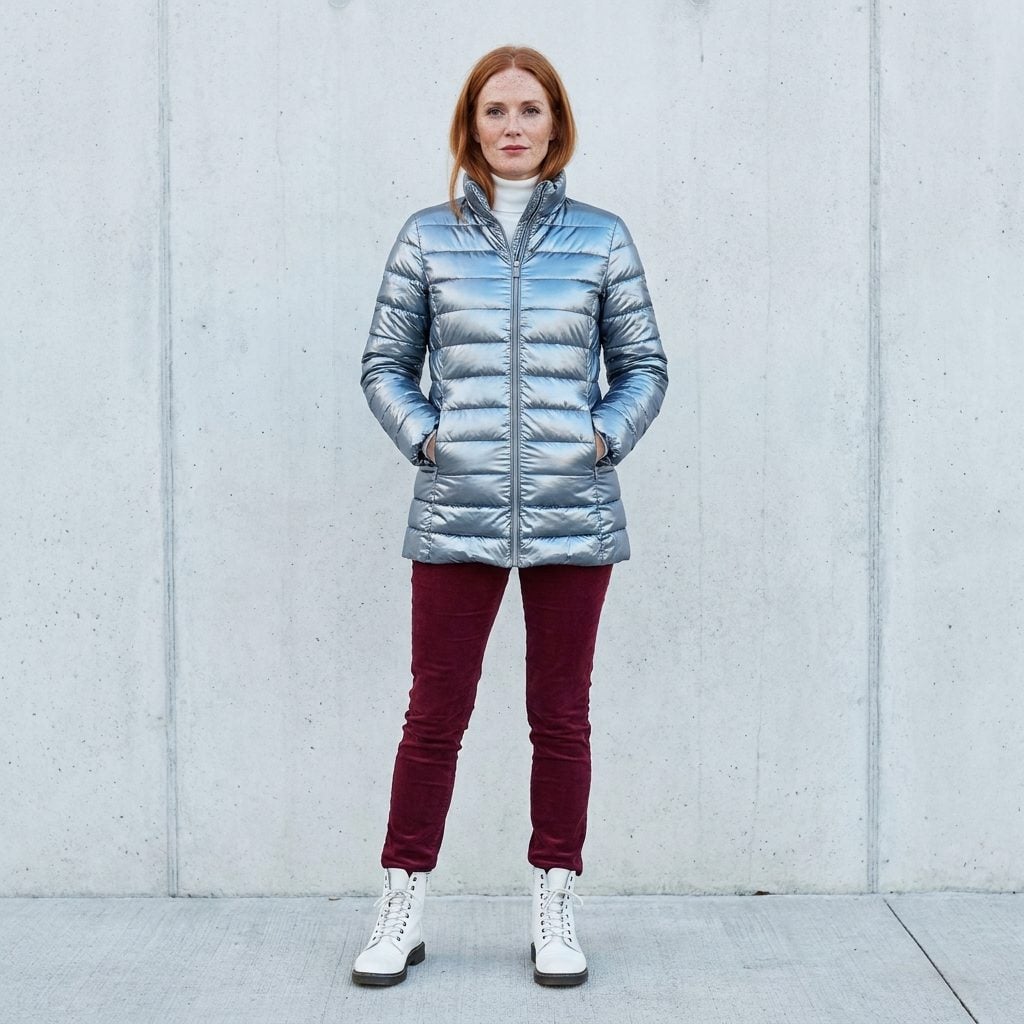
Somebody in every neighborhood owned the silver one, and everybody had an opinion about it. The metallic puffer was the seventies betting on a future that looked suspiciously like a spaceship. Half the block thought it was ridiculous. The other half secretly wanted one.
Liquid-silver nylon already supplies all the spectacle a jacket needs, so the smartest partners are matte and comparatively grounded. Wine corduroy and white boots pull it back toward Earth without making it behave. Horizontal quilting adds volume, the metallic surface catches every available scrap of light, and anonymity is officially off the table.
20. The Suede Fringe Vest Layered Over Everything
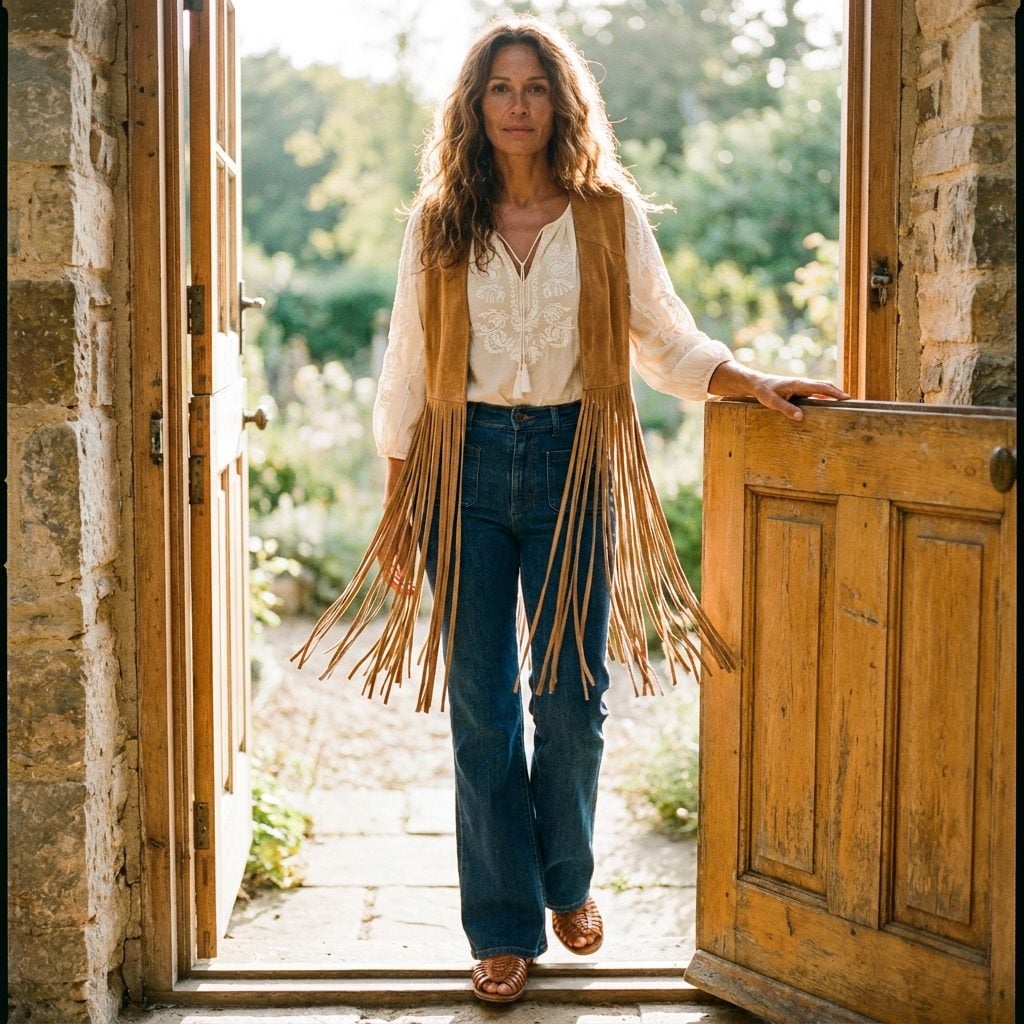
The jacket had sleeves. The vest had nerve. A swaying suede hem turned an otherwise ordinary blouse-and-jeans combination into something that kept moving even when the wearer wasn’t trying particularly hard.
Layered open over an embroidered peasant blouse, a tan suede fringe vest adds color, texture, and motion without adding much warmth. That was part of the appeal. The fringe answers the flare of the jeans below, creating one long visual conversation between shoulders and ankles.
19. The Safari Jacket With Four Patch Pockets and a Belt
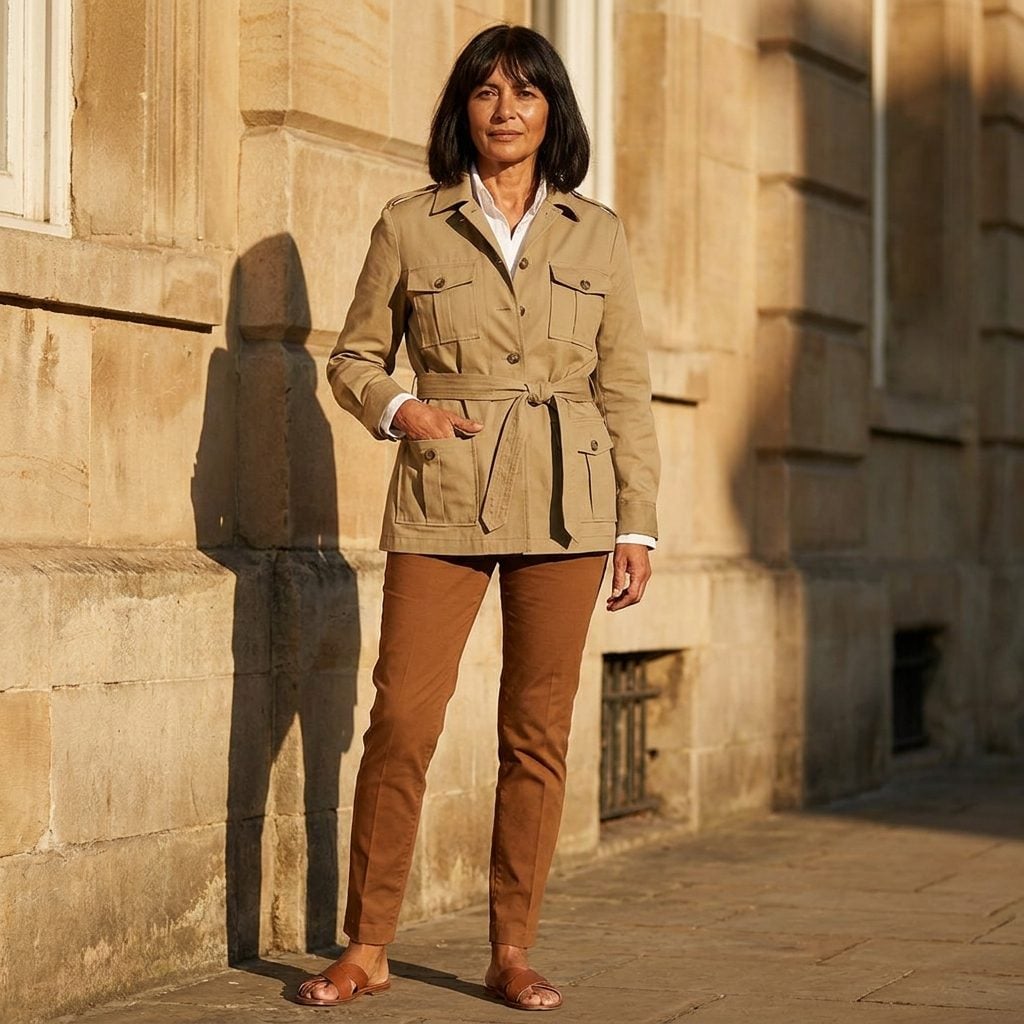
All those pockets meant business even when there was absolutely nothing in them. The safari jacket borrowed the vocabulary of expedition clothing — patch pockets, epaulets, khaki, belts — and somehow made it perfectly reasonable for a trip to the grocery store.
The self-belt changes everything. Cinched, it turns a boxy utility shape into something much more tailored, while four pockets and shoulder details keep beige from ever becoming plain. A beige jacket like this doesn’t need decoration because the construction is already doing plenty.
18. The Cropped Angora Cardigan-Jacket in Powder Pink
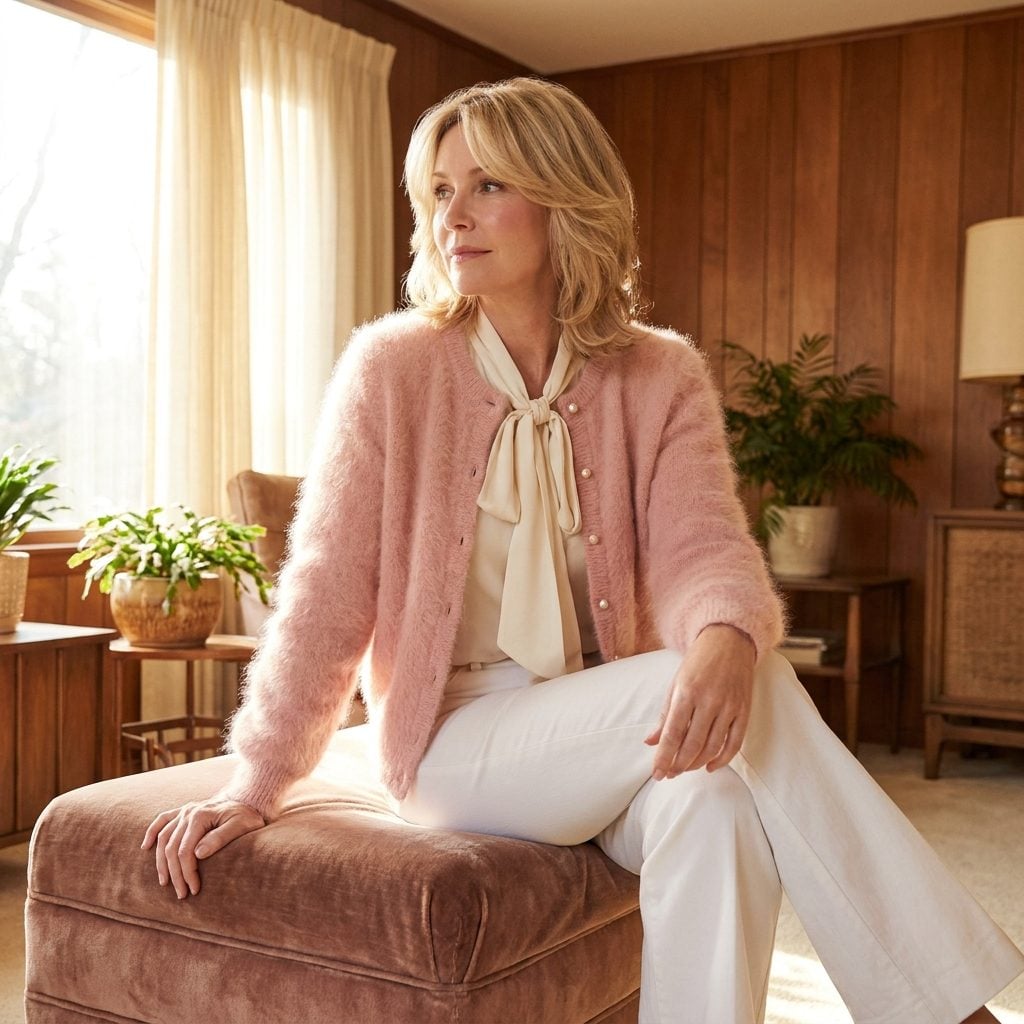
Angora had a party trick no ordinary wool could quite duplicate. Backlit near a window, that fuzzy halo of fiber seemed to glow around the wearer.
The cropped powder-pink jacket over a cream silk pussy-bow blouse turns the whole outfit into a study in texture: soft fuzz against smooth sheen, both living in the same pale family. Angora can be remarkably warm for its weight, but nobody remembers this jacket because of thermal efficiency. They remember the halo.
17. The Nylon Windbreaker With the Racing Stripe
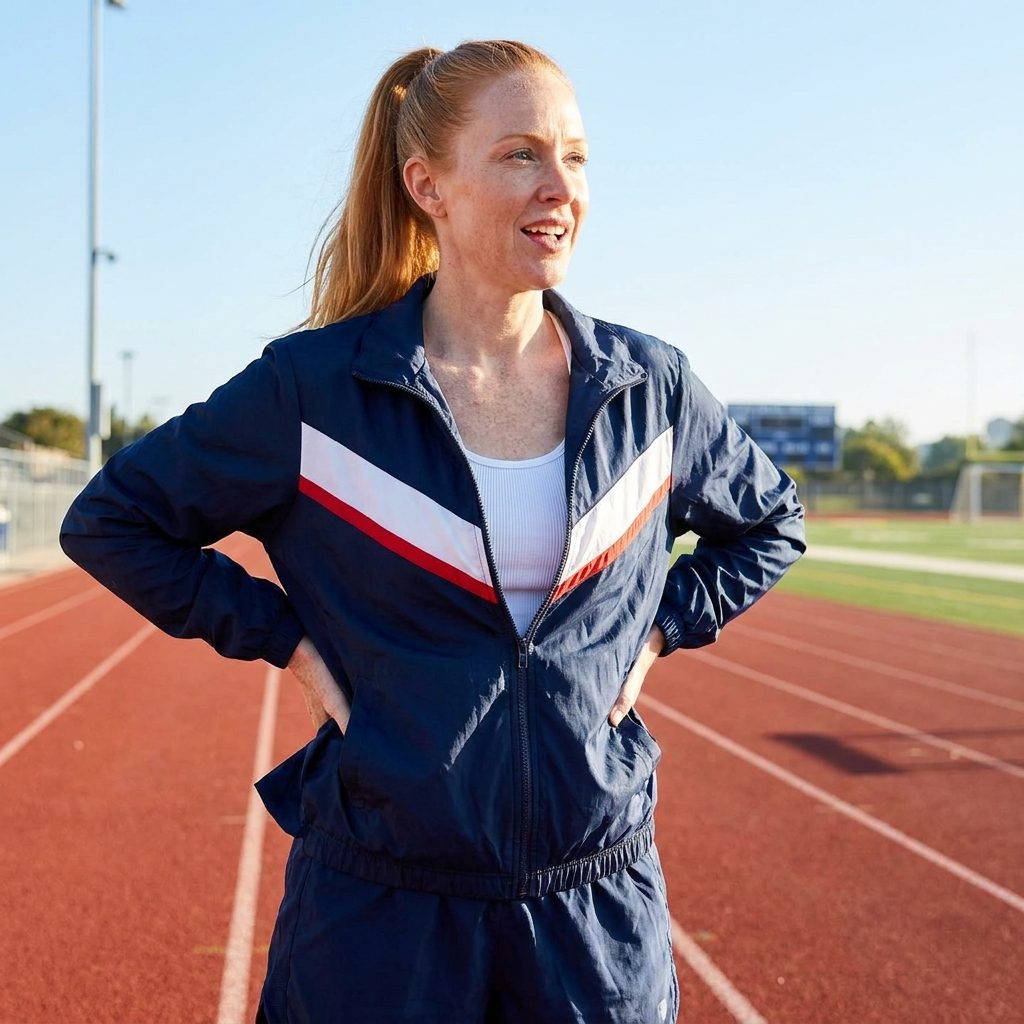
This one whispered when you moved and crinkled when you sat down. The nylon windbreaker was an early ancestor of what we’d now call athleisure, long before the category acquired boutiques, lifestyle branding, and $140 leggings.
One diagonal red-and-white stripe gives a flat navy shell direction and speed. Zip it halfway, shove up the sleeves, add a white tank, and something meant for movement suddenly looks perfectly at home nowhere near a track.
16. The Boiled-Wool Loden With Antler-Style Buttons
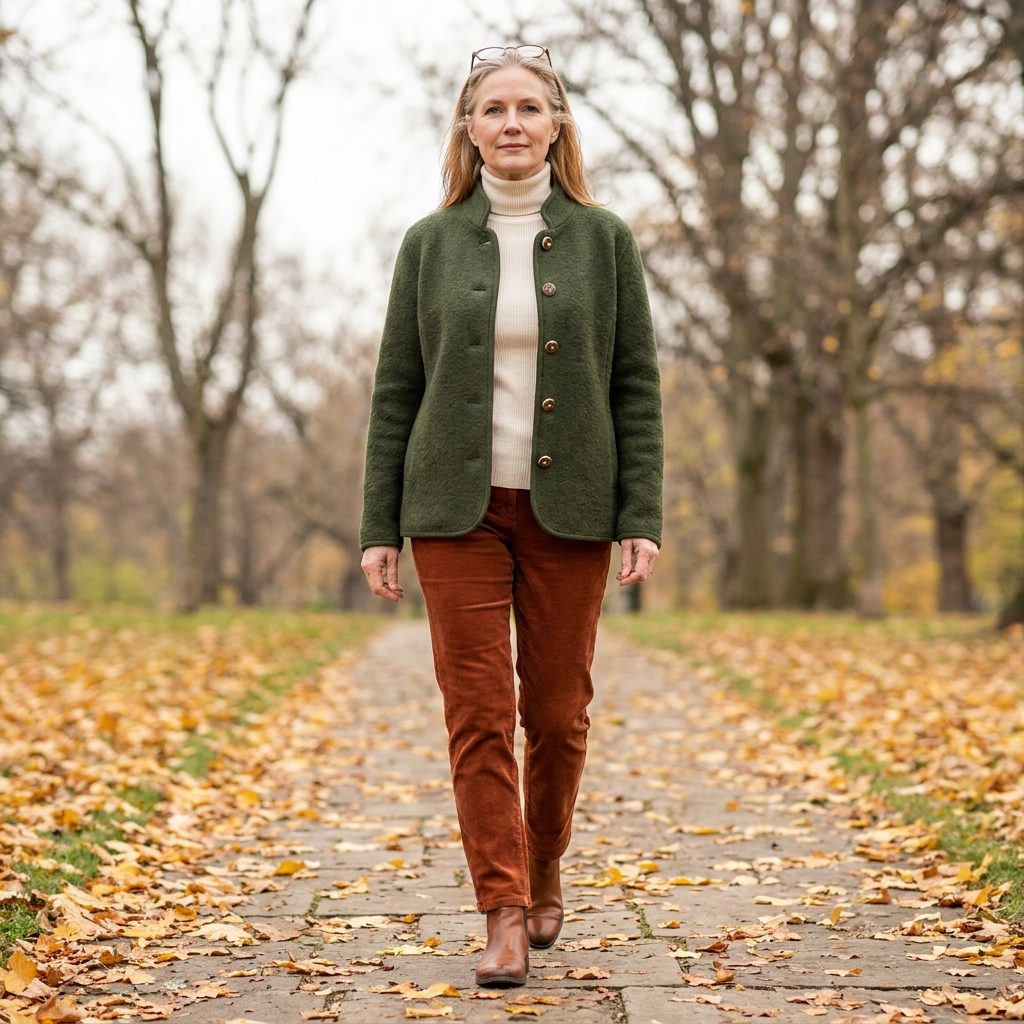
Alpine at heart, this was the jacket that seemed to come home from a trip or arrive from a catalog and then refuse to leave the rotation. Dense boiled wool gave it body without the crispness of conventional tailoring.
Loden green against rust corduroy is pure seventies earth-tone intelligence: different colors, similar depth, no shouting. Horn-style buttons supply just enough eccentricity to keep the whole thing from drifting into uniform territory. Better still, these jackets often looked more convincing after years of wear than they did on day one.
15. The Patchwork Suede That Looked Handmade on Purpose
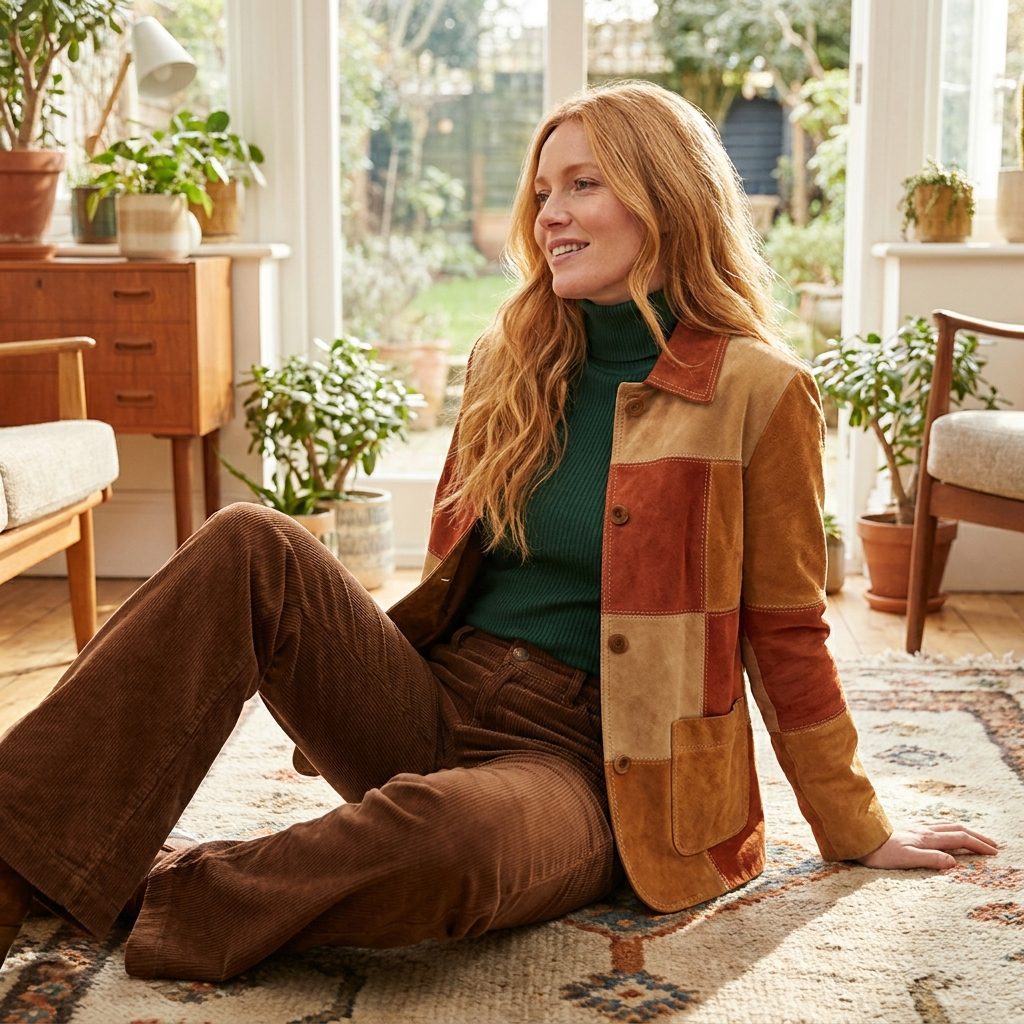
Patchwork was one of the decade’s favorite ways to make imperfection look expensive. Tan, rust, tobacco, and caramel panels met at visible seams, turning the jacket itself into the pattern.
The reason it doesn’t collapse into chaos is the narrow color range. Every panel belongs to the same warm family, so the eye notices grain, stitching, and variation before it notices mismatch. Against a forest-green turtleneck, those browns get deeper still. This one had personality before personality became branding copy.
14. The Terry-Cloth Zip Jacket That Went From Pool to Patio
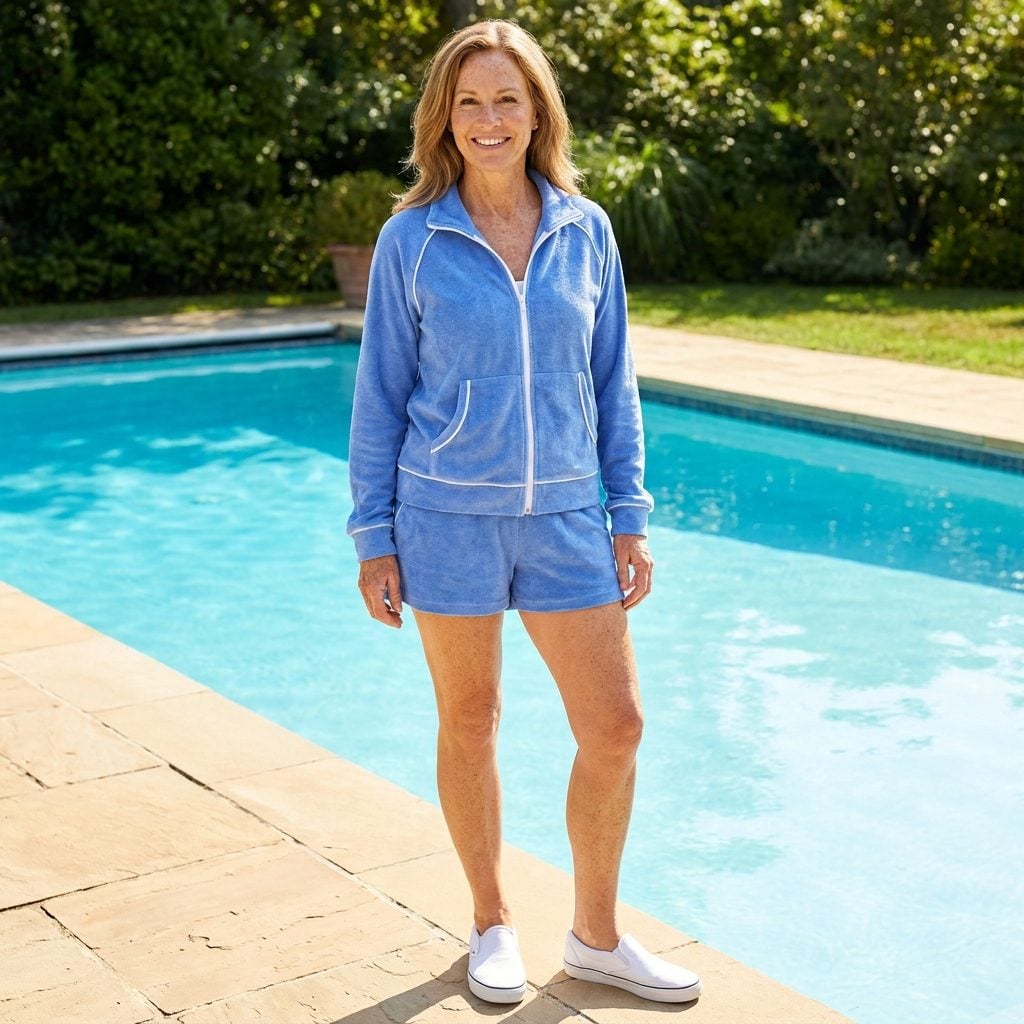
Terry cloth as outerwear sounds like something invented during a heat wave. In the seventies, it made perfect sense. A cornflower blue jacket with white piping could go over a swimsuit, soak up a little pool water, and stay on straight through drinks on the patio.
The white piping is what saves it from looking like a bath towel with a zipper. It traces the raglan seams, sharpens the shape, and gives all that looped cotton actual boundaries. Matching shorts complete the leisure-set fantasy with admirable commitment.
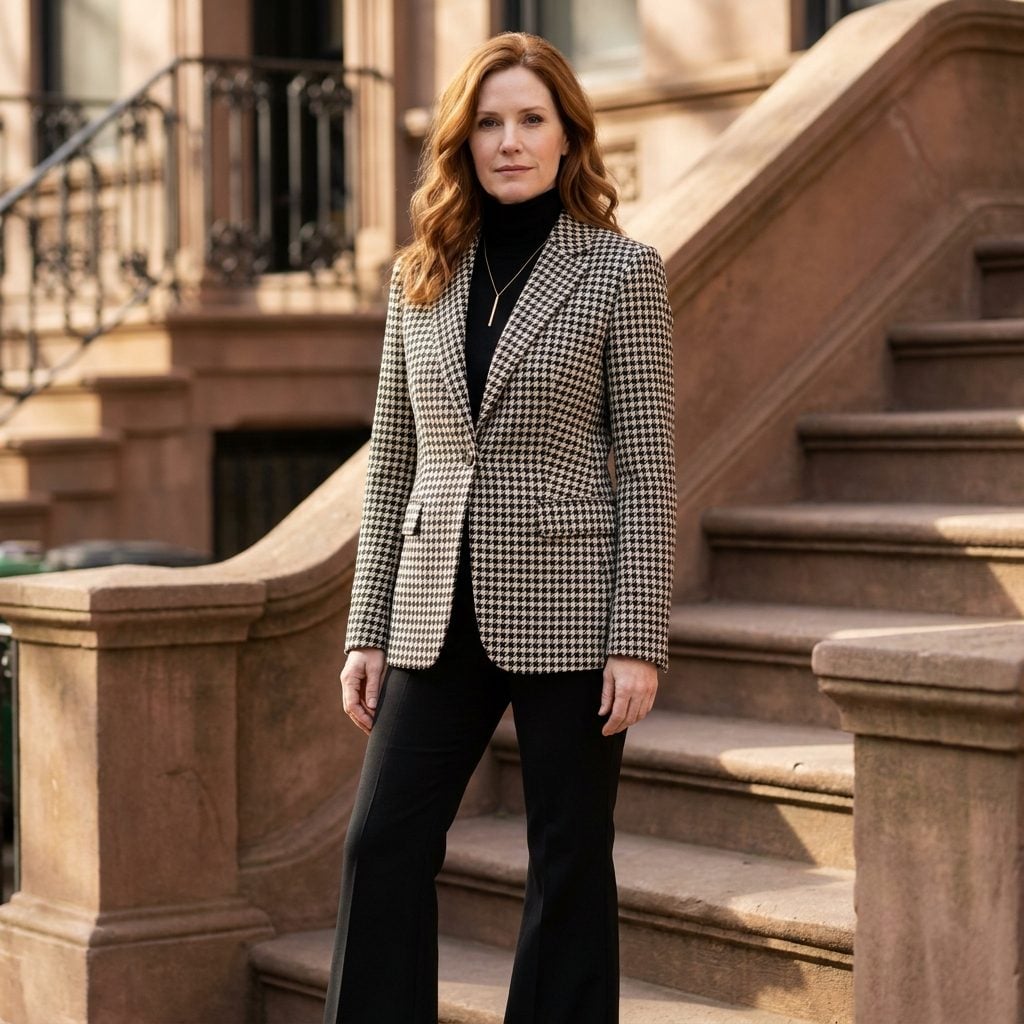
13. The Houndstooth Wool Blazer With the Nipped Waist
❤️ Would you like to save this?
The nipped waist runs this whole look. Let a big houndstooth jacket go boxy and the pattern can start wearing the woman. Pull the shape inward and suddenly the shoulders look deliberate, the print feels sharper, and the whole thing acquires authority.
Black-and-cream houndstooth over an all-black column keeps the palette under control. One pattern gets the attention; everything underneath gives it a clean background. No extra tricks required.
12. The Cropped Bolero for Summer Nights
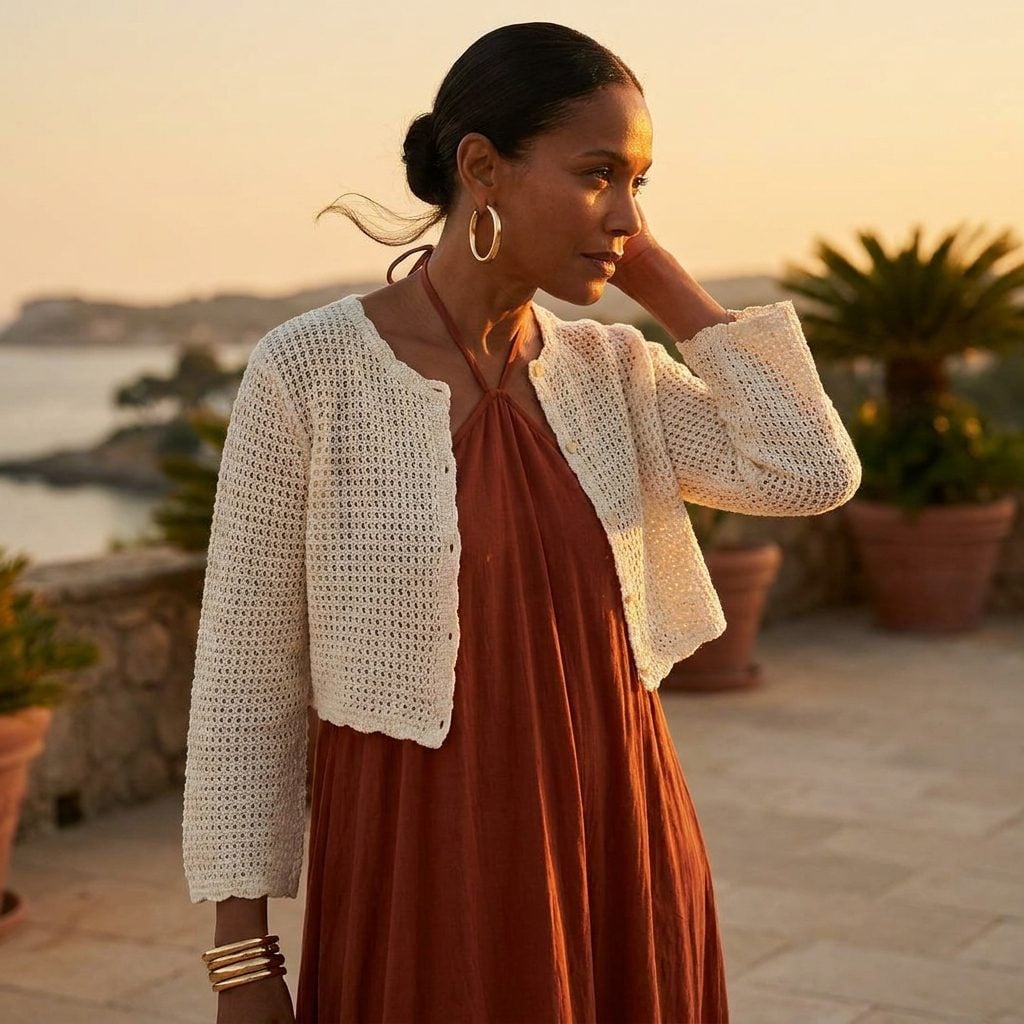
Not every jacket was built for weather. The bolero existed for that point after sunset when bare shoulders started reconsidering their choices.
Cropped ivory crochet over a rust maxi is a proportional gift. The jacket stops high, leaving the dress to carry the long line below, while the open weave adds texture without visually closing in the upper body. Technically a layer. Spiritually, barely.
11. The Ultrasuede Shirt-Jacket That Refused to Wrinkle
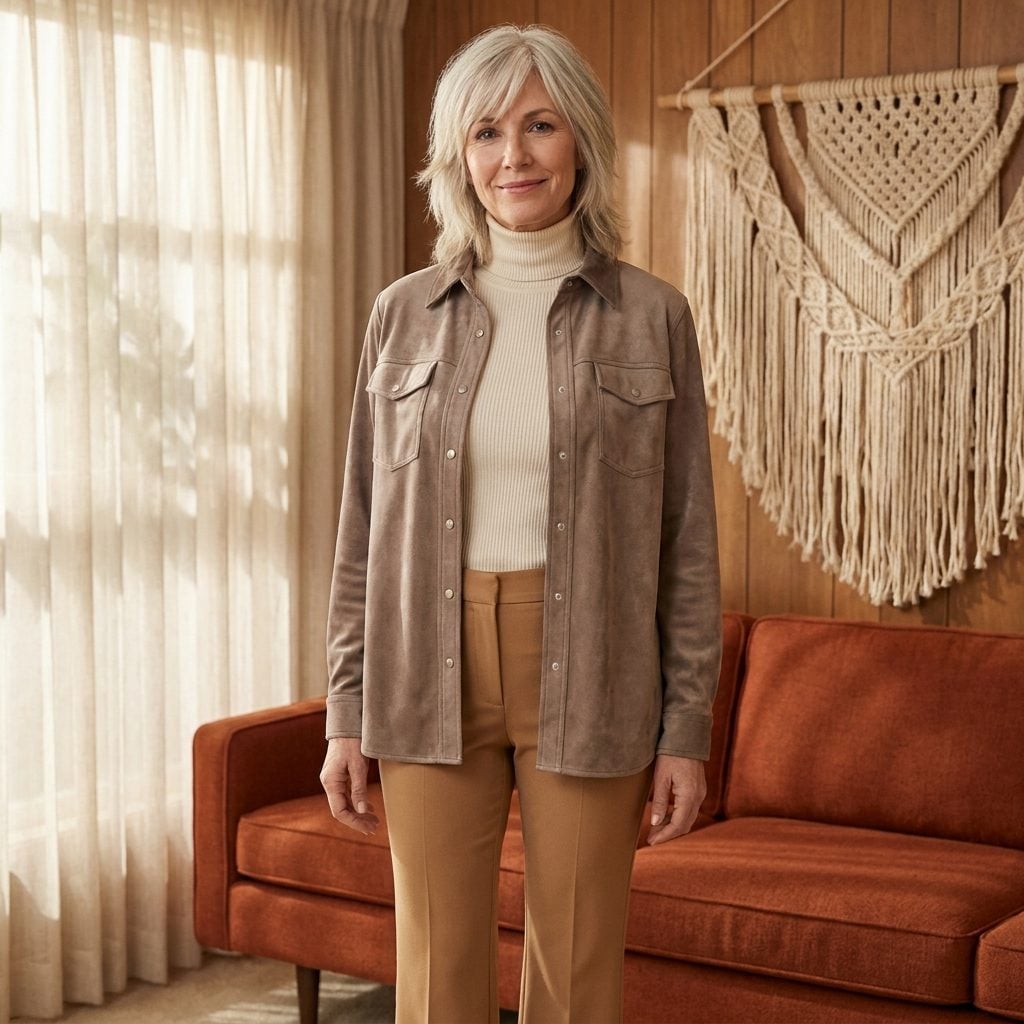
Halston helped turn Ultrasuede into one of the signature materials of seventies fashion, and the shirt-jacket may have been its most practical expression. It looked like suede, moved more easily, and brought far less anxiety to ordinary life.
Taupe against camel flares gives you two warm neutrals just far enough apart to avoid looking matched. Snapped closed, the jacket reads crisp; worn open, it loosens immediately. A taupe ultrasuede jacket could move from jeans to trousers without changing its personality.
10. The Cape-Sleeve Wool Poncho Coat That Swept the Whole Room
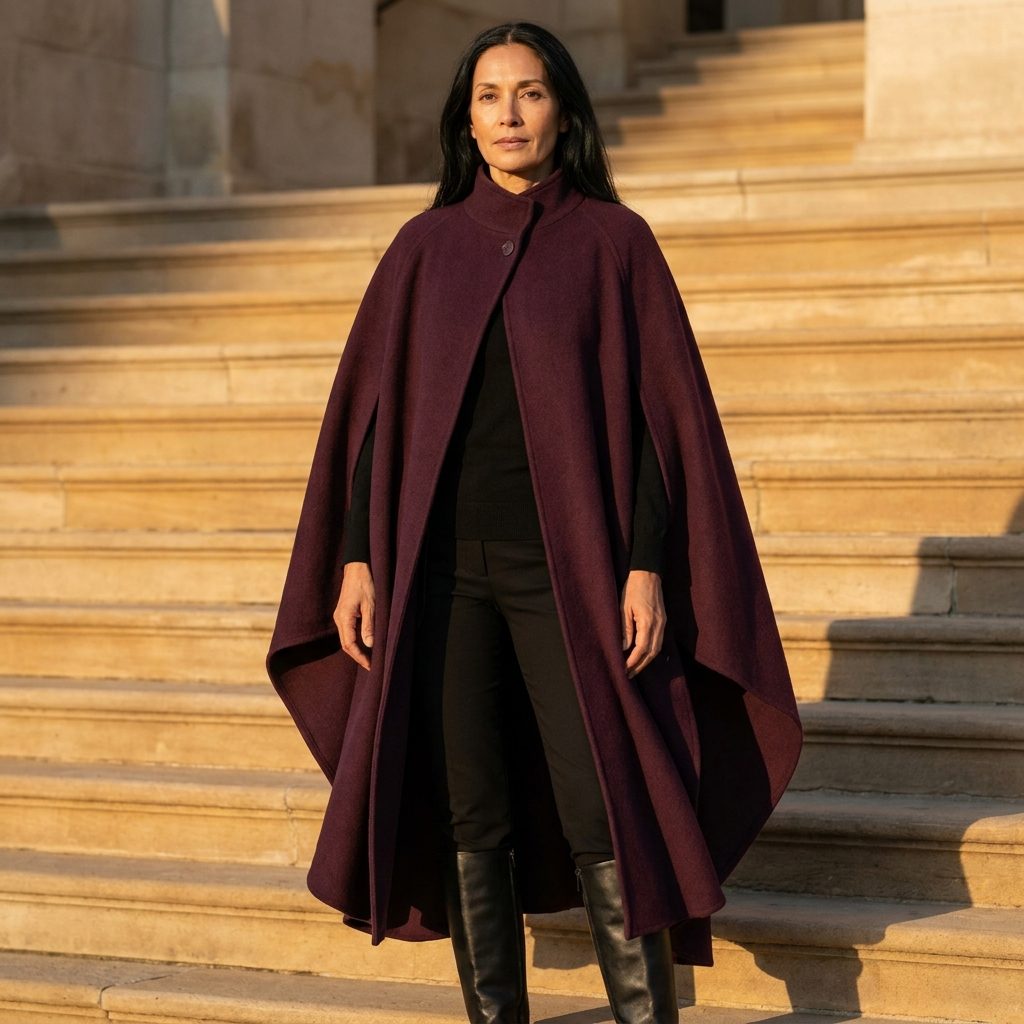
The poncho coat made an entrance whether you had scheduled one or not. Cape sleeves opened like wings, felted wool swung when you turned, and pockets became largely theoretical.
Plum-burgundy over narrow black separates keeps the drama from sliding into costume. The broad shoulder sweep gets to dominate because everything underneath stays slim and quiet. A plum wool cape coat like this doesn’t ask for much styling. It has already taken the room.
9. The Denim Gaucho Jacket With the Contrast Topstitching
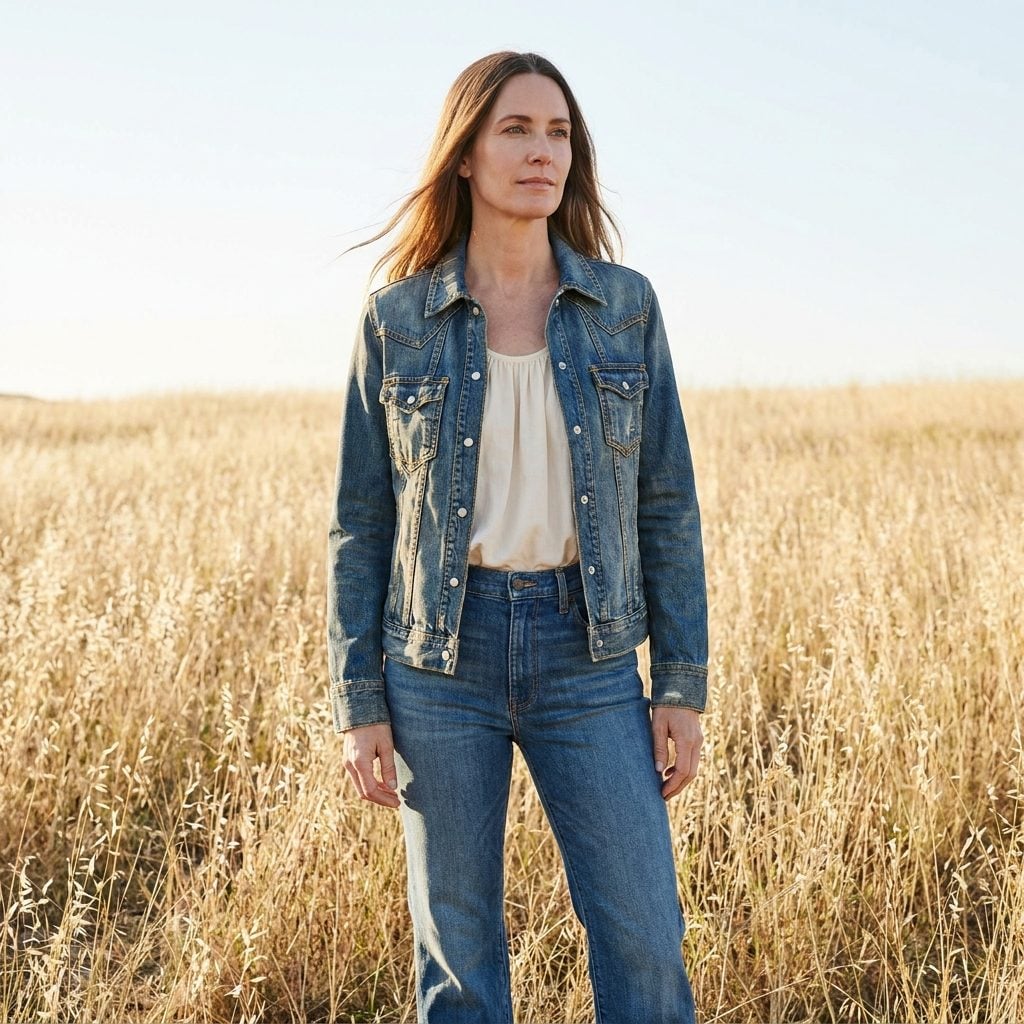
The seventies had considerably fewer reservations about double denim than later fashion rulebooks did. The important part was giving the pieces enough difference that they didn’t merge into one enormous blue object.
Marigold topstitching is the surprise here, a fine warm line threaded through all that indigo. A Western yoke firms up the shoulders and pearl snaps add tiny points of shine. Honestly, contrast stitching remains one of denim’s most underrated tricks — practically architecture done with thread.
8. The Suede Blazer the Color of Weak Coffee
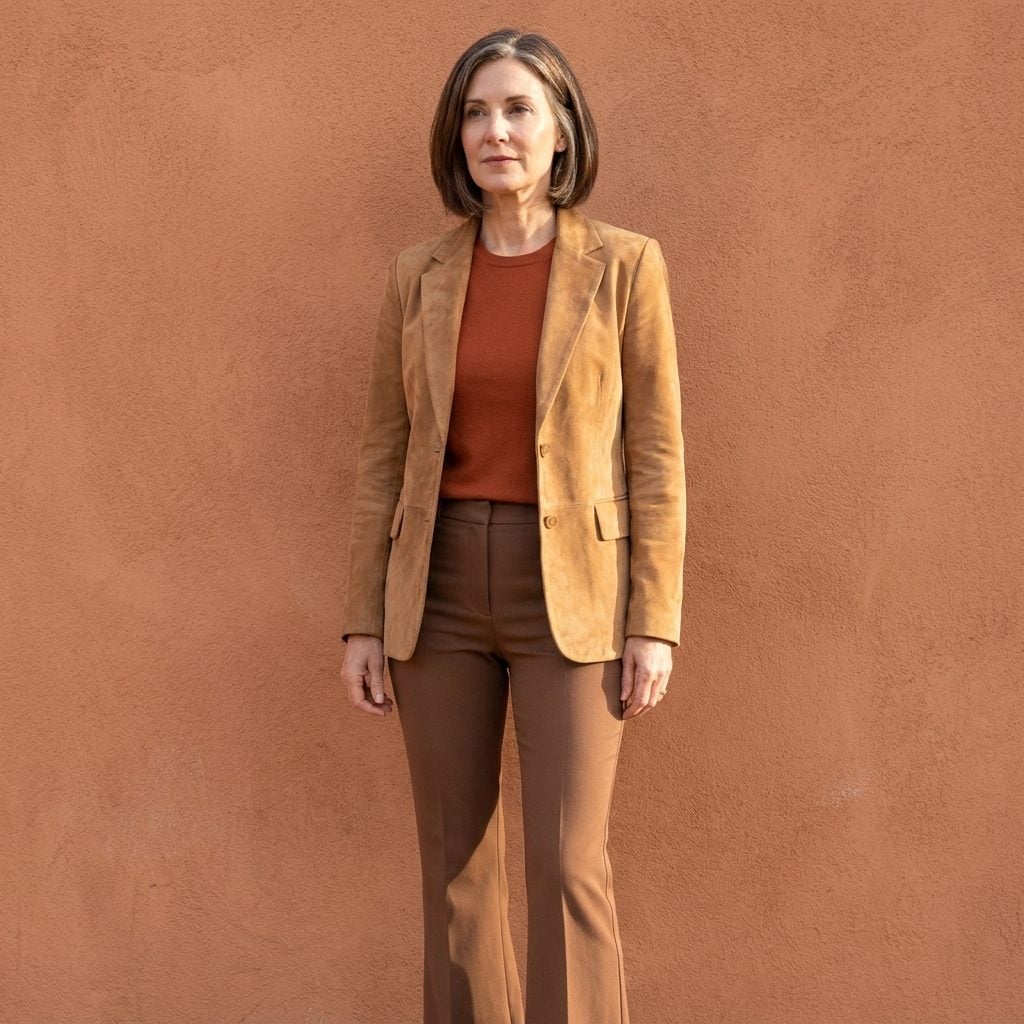
Weak coffee, plenty of milk. That’s the color. Pale suede landed somewhere between the decade’s rugged leather and its soft knitwear, which meant it could swing either way depending on what was underneath.
A lean single-button cut over burnt orange keeps the suede from reading Western or bohemian. Three browns and an orange share the same warm register, so the palette builds depth rather than noise. The jacket is quiet. The color isn’t.
7. The Ribbed Turtleneck Sweater-Jacket That Zipped to the Chin
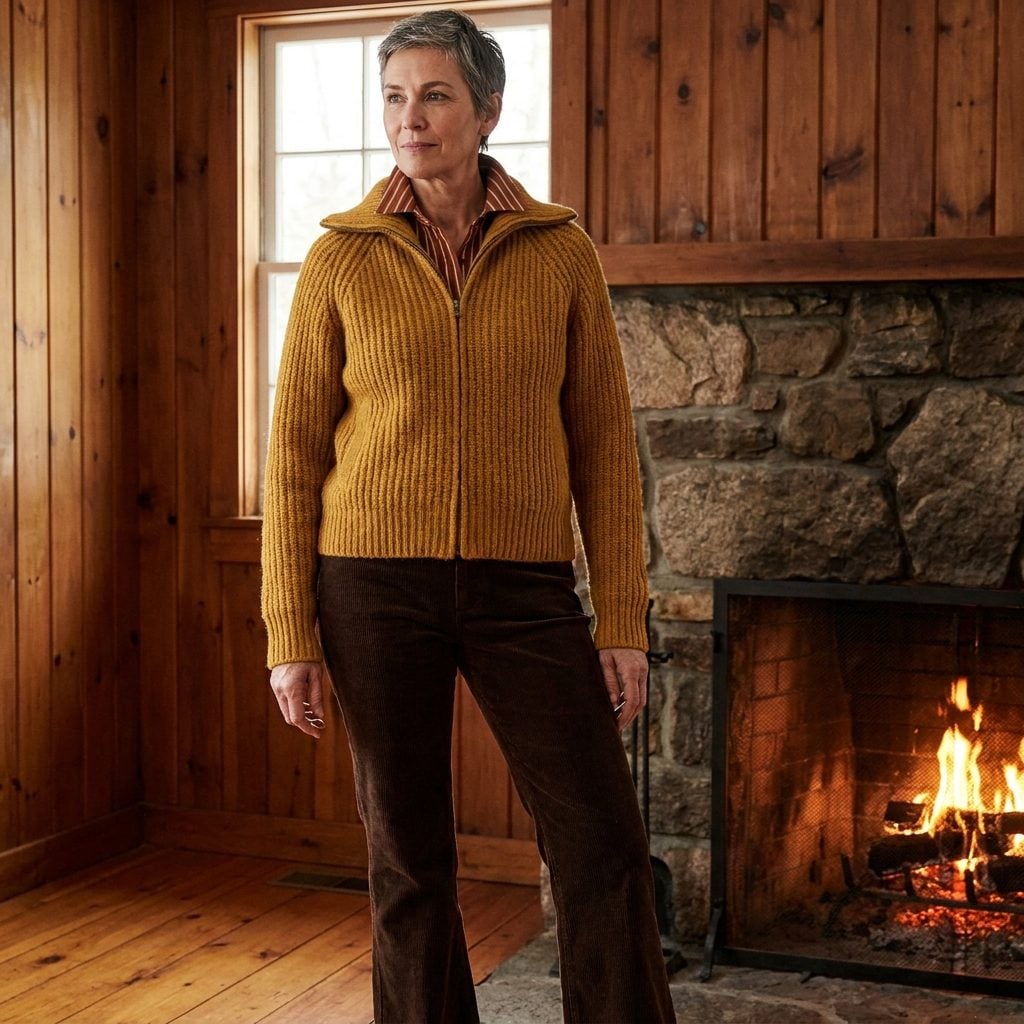
Half sweater, half jacket, completely suited to a house where somebody had turned the thermostat down again. The brass zip gave it a spine no cardigan could quite manage.
Mustard with chocolate corduroy is unapologetically autumnal, and the deep ribbing adds enough texture that the outfit doesn’t need much else. A mustard ribbed sweater-jacket like this still makes sense with jeans because its best feature was never trendiness. It was usefulness with better color.
6. The Puffed-Sleeve Prairie Jacket in Calico Print
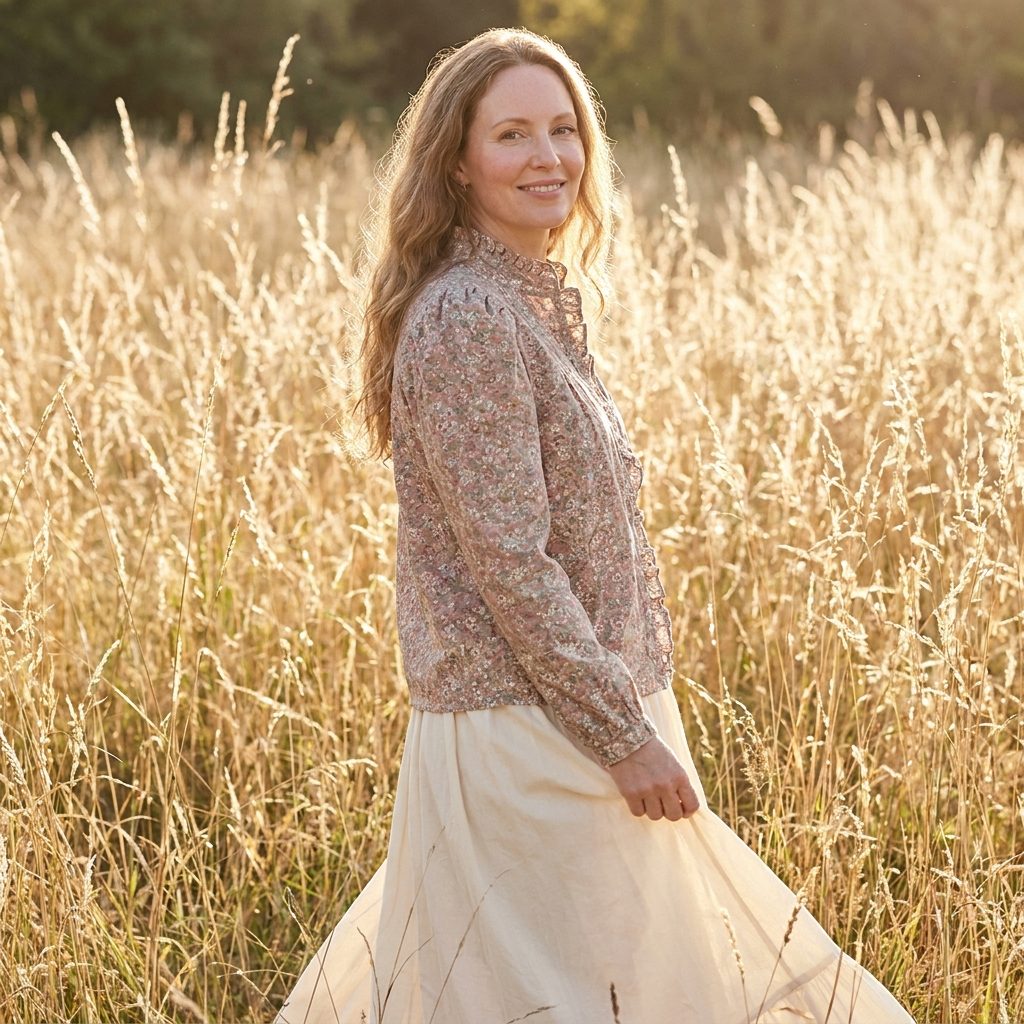
Little House on the Prairie didn’t invent the decade’s prairie revival, but once it arrived in 1974 it certainly didn’t hurt. Victorian references, folk dressing, calico florals, puffed shoulders, and ruffled collars were already circulating; television simply gave the fantasy a weekly appointment.
Dusty rose and sage keep the print soft, while the puffed shoulder adds volume high on the body and the fitted waist pulls everything back in below it. The result is romantic without becoming shapeless — a surprisingly structured little jacket hiding inside all those flowers.
5. The Belted Camel Car Coat That Stopped at the Knee
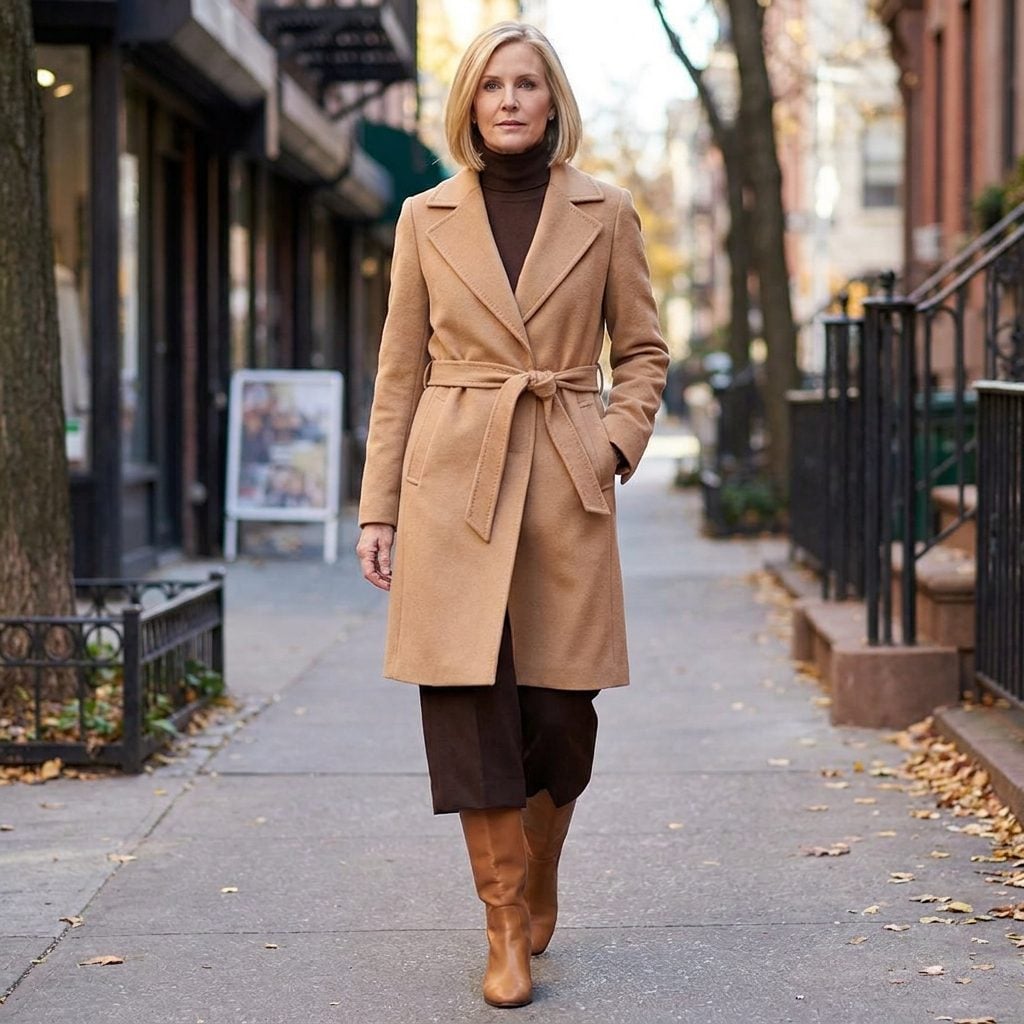
Longer than a jacket, less ceremonial than a full dress coat, the car coat was built for a life spent moving in and out of doors. This knee-length version adds a self-belt, giving all that practical wool a much more deliberate shape.
Camel is what makes it feel nearly indestructible as a style idea. Warmer than gray, gentler than black, it sits comfortably beside cream, rust, chocolate, denim, and almost every other color the seventies threw at it. A beige jacket or coat this uncomplicated can survive decades of fashion arguments without participating in any of them.
4. The Embroidered Afghan Coat That Smelled of Incense
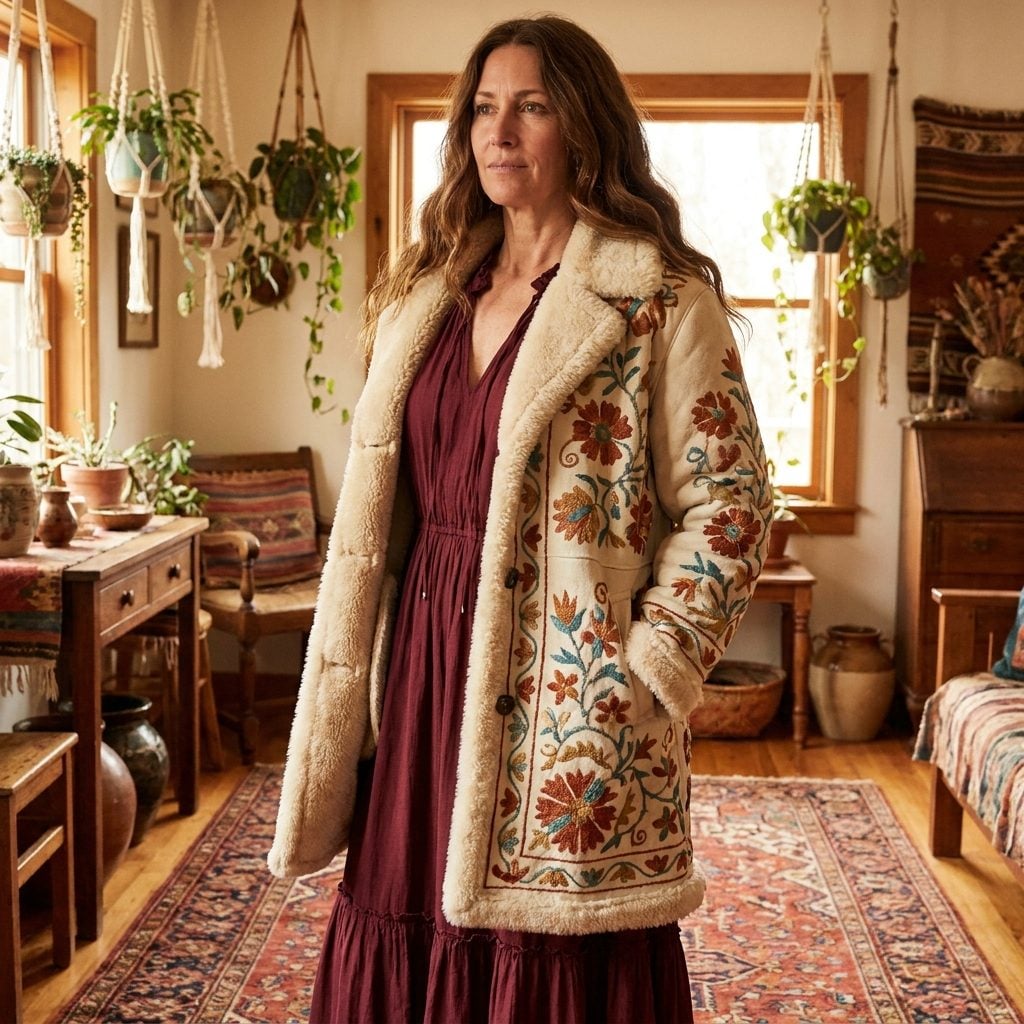
You knew someone who had one. Real or imitation, it always seemed to arrive already smelling faintly of patchouli and somebody else’s road trip.
The Afghan coat became one of the great counterculture outerwear statements: shaggy sheepskin-style trim, dense embroidery, rich earth colors, and enough detail to make jewelry almost beside the point. Rust and teal stitching against creamy fur gives the eye rough texture and fine pattern at the same time.
Worn now, one embroidered coat is plenty. Let it be the loudest object in the outfit and make everything underneath behave.
3. The Cropped Sequin Jacket for Disco Nights
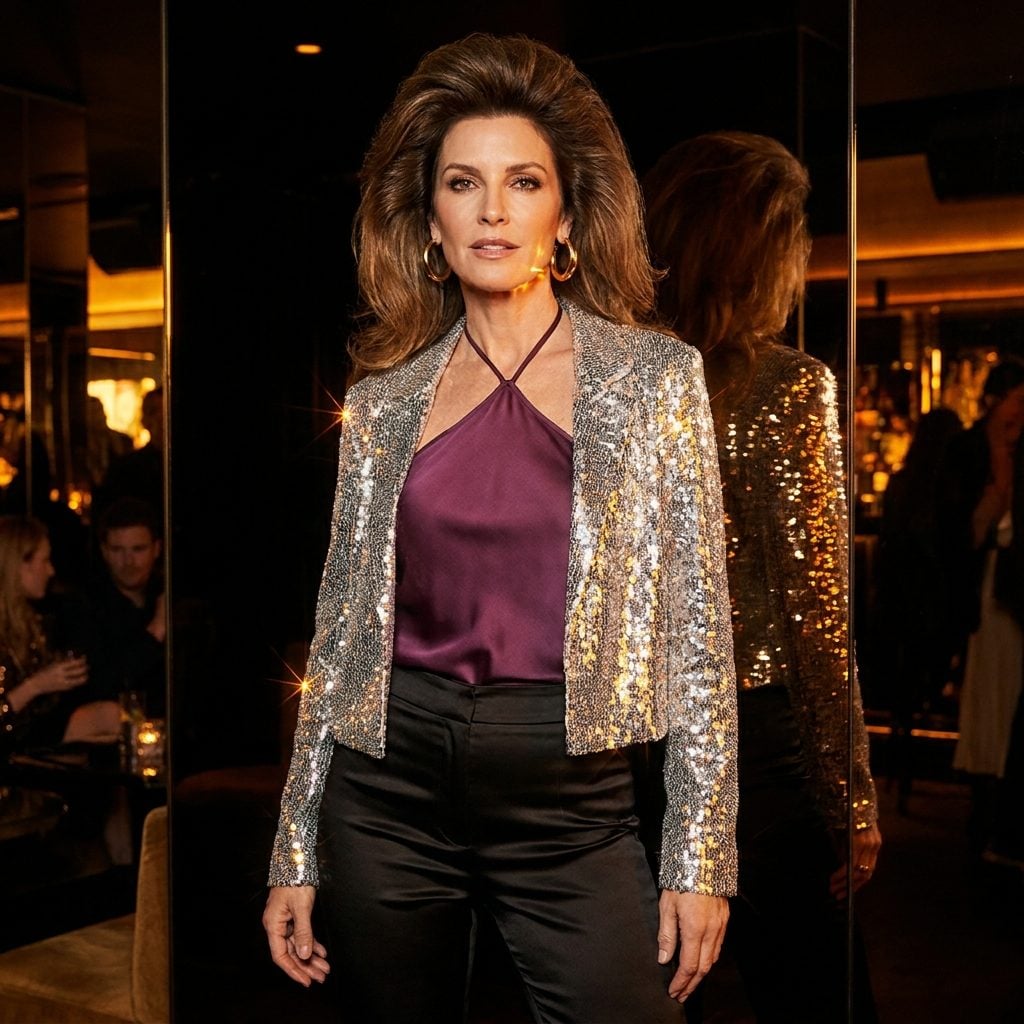
Studio 54 didn’t invent the sequin jacket, but it certainly provided suitable lighting. Cropped at the waist and finishing exactly where high-rise flares began, this was the piece capable of turning a perfectly innocent top into plans for later.
The outfit works because the surfaces disagree while the colors cooperate: hard sparkle, liquid plum silk, matte black satin. The palette stays nocturnal while the textures take turns catching the light. Costume territory is close, but never quite reached.
2. The Faded Denim Jacket Broken In by Somebody Else First
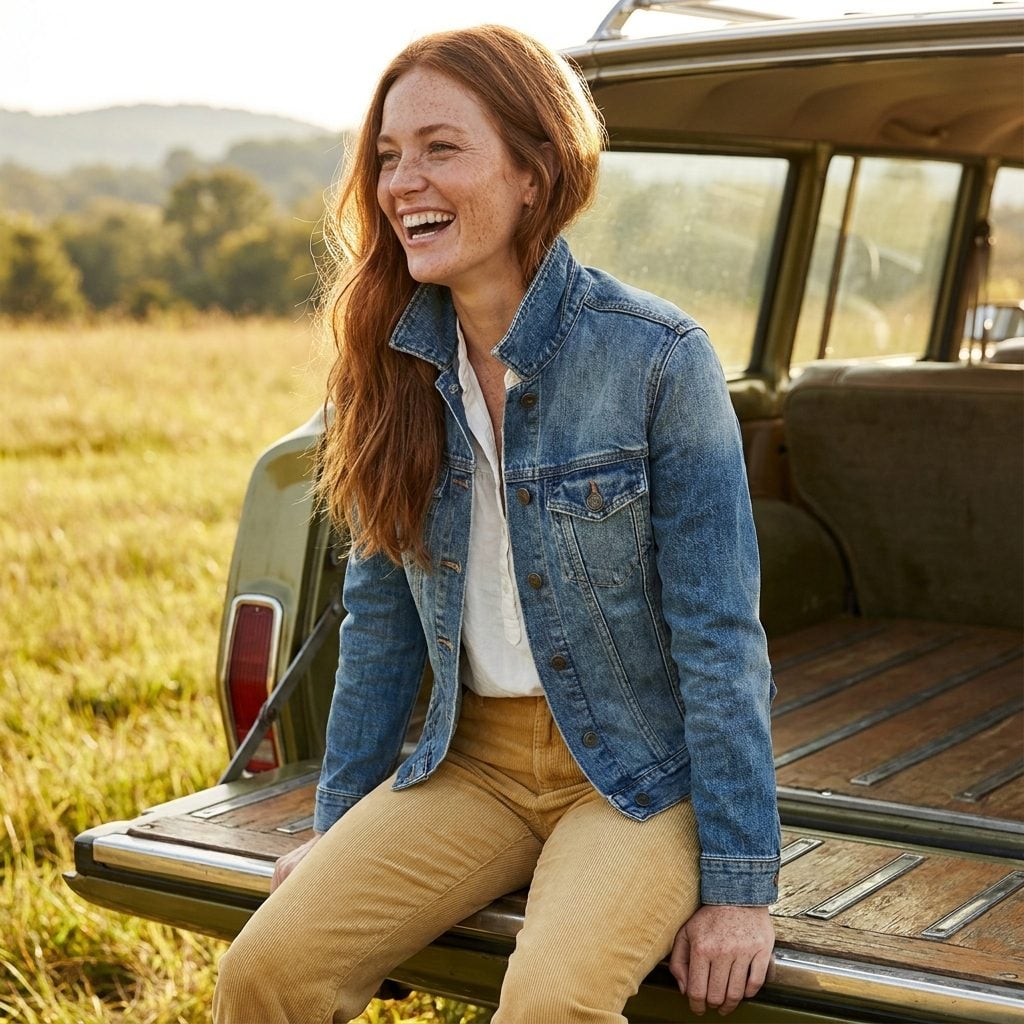
Nobody wanted a denim jacket that looked as though it had met denim five minutes earlier. The good one arrived already softened — indigo faded pale at the seams, collar trained to lie down, cuffs showing evidence of somebody else’s elbows.
Over a peasant blouse, the blue jacket captures one of the decade’s favorite collisions: rugged cotton against romantic fabric, workwear meeting softness without either side giving in. Popping the collar wasn’t about weather. It changed the frame around the face, and fifty years later it still does.
1. The Fitted Leather Motorcycle Jacket With the Asymmetric Zip
❤️ Would you like to save this?
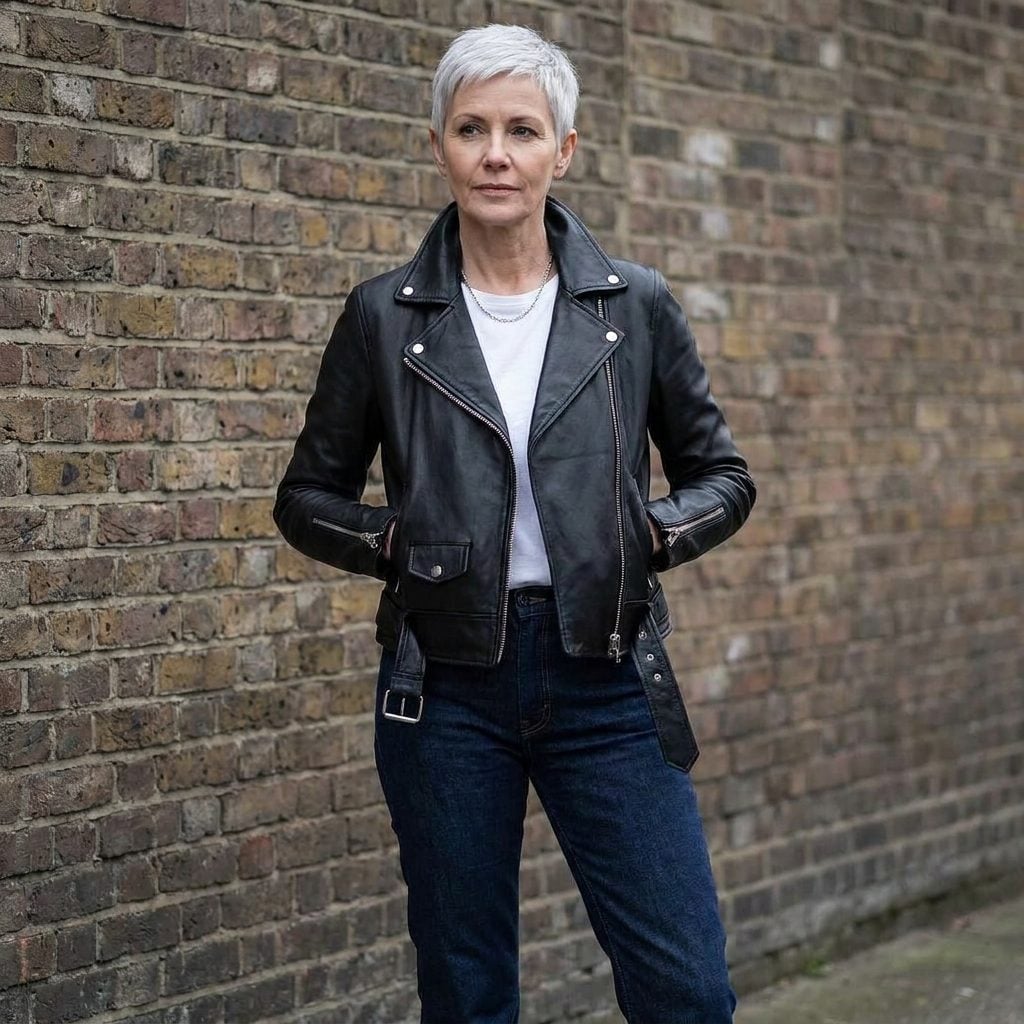
The biker jacket entered the seventies with history already attached and came out with even more. The asymmetric zip, broad collar, fitted waist, and battered black leather supplied an angled silhouette no polite blazer could imitate.
Here it doesn’t need much company. White tee, indigo jeans, and a good black jacket in leather. Remove the jacket and the outfit is basic. Put it back and suddenly the basics look deliberate.
If you’re buying one version meant to show its age rather than fight it, real leather still makes a persuasive case. Creases deepen, the surface softens, and the jacket gradually becomes less like the one on the hanger and more like yours. After 25 very different seventies personalities, that feels like the right one to leave by the door.